WO2017187970A1 - 潤滑剤、及び潤滑方法 - Google Patents
潤滑剤、及び潤滑方法 Download PDFInfo
- Publication number
- WO2017187970A1 WO2017187970A1 PCT/JP2017/014861 JP2017014861W WO2017187970A1 WO 2017187970 A1 WO2017187970 A1 WO 2017187970A1 JP 2017014861 W JP2017014861 W JP 2017014861W WO 2017187970 A1 WO2017187970 A1 WO 2017187970A1
- Authority
- WO
- WIPO (PCT)
- Prior art keywords
- lubricant
- carbon atoms
- group
- alkyl group
- oil
- Prior art date
- Legal status (The legal status is an assumption and is not a legal conclusion. Google has not performed a legal analysis and makes no representation as to the accuracy of the status listed.)
- Ceased
Links
- 0 *CC(CC1)C(*)C1=O Chemical compound *CC(CC1)C(*)C1=O 0.000 description 1
Classifications
-
- C—CHEMISTRY; METALLURGY
- C10—PETROLEUM, GAS OR COKE INDUSTRIES; TECHNICAL GASES CONTAINING CARBON MONOXIDE; FUELS; LUBRICANTS; PEAT
- C10M—LUBRICATING COMPOSITIONS; USE OF CHEMICAL SUBSTANCES EITHER ALONE OR AS LUBRICATING INGREDIENTS IN A LUBRICATING COMPOSITION
- C10M105/00—Lubricating compositions characterised by the base-material being a non-macromolecular organic compound
- C10M105/08—Lubricating compositions characterised by the base-material being a non-macromolecular organic compound containing oxygen
- C10M105/32—Esters
- C10M105/34—Esters of monocarboxylic acids
-
- C—CHEMISTRY; METALLURGY
- C10—PETROLEUM, GAS OR COKE INDUSTRIES; TECHNICAL GASES CONTAINING CARBON MONOXIDE; FUELS; LUBRICANTS; PEAT
- C10M—LUBRICATING COMPOSITIONS; USE OF CHEMICAL SUBSTANCES EITHER ALONE OR AS LUBRICATING INGREDIENTS IN A LUBRICATING COMPOSITION
- C10M125/00—Lubricating compositions characterised by the additive being an inorganic material
- C10M125/22—Compounds containing sulfur, selenium or tellurium
-
- C—CHEMISTRY; METALLURGY
- C10—PETROLEUM, GAS OR COKE INDUSTRIES; TECHNICAL GASES CONTAINING CARBON MONOXIDE; FUELS; LUBRICANTS; PEAT
- C10M—LUBRICATING COMPOSITIONS; USE OF CHEMICAL SUBSTANCES EITHER ALONE OR AS LUBRICATING INGREDIENTS IN A LUBRICATING COMPOSITION
- C10M129/00—Lubricating compositions characterised by the additive being an organic non-macromolecular compound containing oxygen
- C10M129/02—Lubricating compositions characterised by the additive being an organic non-macromolecular compound containing oxygen having a carbon chain of less than 30 atoms
- C10M129/04—Hydroxy compounds
- C10M129/10—Hydroxy compounds having hydroxy groups bound to a carbon atom of a six-membered aromatic ring
-
- C—CHEMISTRY; METALLURGY
- C10—PETROLEUM, GAS OR COKE INDUSTRIES; TECHNICAL GASES CONTAINING CARBON MONOXIDE; FUELS; LUBRICANTS; PEAT
- C10M—LUBRICATING COMPOSITIONS; USE OF CHEMICAL SUBSTANCES EITHER ALONE OR AS LUBRICATING INGREDIENTS IN A LUBRICATING COMPOSITION
- C10M129/00—Lubricating compositions characterised by the additive being an organic non-macromolecular compound containing oxygen
- C10M129/02—Lubricating compositions characterised by the additive being an organic non-macromolecular compound containing oxygen having a carbon chain of less than 30 atoms
- C10M129/04—Hydroxy compounds
- C10M129/10—Hydroxy compounds having hydroxy groups bound to a carbon atom of a six-membered aromatic ring
- C10M129/14—Hydroxy compounds having hydroxy groups bound to a carbon atom of a six-membered aromatic ring containing at least 2 hydroxy groups
-
- C—CHEMISTRY; METALLURGY
- C10—PETROLEUM, GAS OR COKE INDUSTRIES; TECHNICAL GASES CONTAINING CARBON MONOXIDE; FUELS; LUBRICANTS; PEAT
- C10M—LUBRICATING COMPOSITIONS; USE OF CHEMICAL SUBSTANCES EITHER ALONE OR AS LUBRICATING INGREDIENTS IN A LUBRICATING COMPOSITION
- C10M129/00—Lubricating compositions characterised by the additive being an organic non-macromolecular compound containing oxygen
- C10M129/02—Lubricating compositions characterised by the additive being an organic non-macromolecular compound containing oxygen having a carbon chain of less than 30 atoms
- C10M129/16—Ethers
-
- C—CHEMISTRY; METALLURGY
- C10—PETROLEUM, GAS OR COKE INDUSTRIES; TECHNICAL GASES CONTAINING CARBON MONOXIDE; FUELS; LUBRICANTS; PEAT
- C10M—LUBRICATING COMPOSITIONS; USE OF CHEMICAL SUBSTANCES EITHER ALONE OR AS LUBRICATING INGREDIENTS IN A LUBRICATING COMPOSITION
- C10M129/00—Lubricating compositions characterised by the additive being an organic non-macromolecular compound containing oxygen
- C10M129/02—Lubricating compositions characterised by the additive being an organic non-macromolecular compound containing oxygen having a carbon chain of less than 30 atoms
- C10M129/16—Ethers
- C10M129/20—Cyclic ethers having 4 or more ring atoms, e.g. furans, dioxolanes
-
- C—CHEMISTRY; METALLURGY
- C10—PETROLEUM, GAS OR COKE INDUSTRIES; TECHNICAL GASES CONTAINING CARBON MONOXIDE; FUELS; LUBRICANTS; PEAT
- C10M—LUBRICATING COMPOSITIONS; USE OF CHEMICAL SUBSTANCES EITHER ALONE OR AS LUBRICATING INGREDIENTS IN A LUBRICATING COMPOSITION
- C10M129/00—Lubricating compositions characterised by the additive being an organic non-macromolecular compound containing oxygen
- C10M129/02—Lubricating compositions characterised by the additive being an organic non-macromolecular compound containing oxygen having a carbon chain of less than 30 atoms
- C10M129/26—Carboxylic acids; Salts thereof
- C10M129/28—Carboxylic acids; Salts thereof having carboxyl groups bound to acyclic or cycloaliphatic carbon atoms
- C10M129/46—Carboxylic acids; Salts thereof having carboxyl groups bound to acyclic or cycloaliphatic carbon atoms cycloaliphatic
-
- C—CHEMISTRY; METALLURGY
- C10—PETROLEUM, GAS OR COKE INDUSTRIES; TECHNICAL GASES CONTAINING CARBON MONOXIDE; FUELS; LUBRICANTS; PEAT
- C10M—LUBRICATING COMPOSITIONS; USE OF CHEMICAL SUBSTANCES EITHER ALONE OR AS LUBRICATING INGREDIENTS IN A LUBRICATING COMPOSITION
- C10M129/00—Lubricating compositions characterised by the additive being an organic non-macromolecular compound containing oxygen
- C10M129/02—Lubricating compositions characterised by the additive being an organic non-macromolecular compound containing oxygen having a carbon chain of less than 30 atoms
- C10M129/68—Esters
- C10M129/74—Esters of polyhydroxy compounds
-
- C—CHEMISTRY; METALLURGY
- C10—PETROLEUM, GAS OR COKE INDUSTRIES; TECHNICAL GASES CONTAINING CARBON MONOXIDE; FUELS; LUBRICANTS; PEAT
- C10M—LUBRICATING COMPOSITIONS; USE OF CHEMICAL SUBSTANCES EITHER ALONE OR AS LUBRICATING INGREDIENTS IN A LUBRICATING COMPOSITION
- C10M129/00—Lubricating compositions characterised by the additive being an organic non-macromolecular compound containing oxygen
- C10M129/86—Lubricating compositions characterised by the additive being an organic non-macromolecular compound containing oxygen having a carbon chain of 30 or more atoms
- C10M129/88—Hydroxy compounds
- C10M129/91—Hydroxy compounds having hydroxy groups bound to a carbon atom of a six-membered aromatic ring
-
- C—CHEMISTRY; METALLURGY
- C10—PETROLEUM, GAS OR COKE INDUSTRIES; TECHNICAL GASES CONTAINING CARBON MONOXIDE; FUELS; LUBRICANTS; PEAT
- C10M—LUBRICATING COMPOSITIONS; USE OF CHEMICAL SUBSTANCES EITHER ALONE OR AS LUBRICATING INGREDIENTS IN A LUBRICATING COMPOSITION
- C10M145/00—Lubricating compositions characterised by the additive being a macromolecular compound containing oxygen
- C10M145/40—Polysaccharides, e.g. cellulose
-
- C—CHEMISTRY; METALLURGY
- C10—PETROLEUM, GAS OR COKE INDUSTRIES; TECHNICAL GASES CONTAINING CARBON MONOXIDE; FUELS; LUBRICANTS; PEAT
- C10M—LUBRICATING COMPOSITIONS; USE OF CHEMICAL SUBSTANCES EITHER ALONE OR AS LUBRICATING INGREDIENTS IN A LUBRICATING COMPOSITION
- C10M159/00—Lubricating compositions characterised by the additive being of unknown or incompletely defined constitution
- C10M159/02—Natural products
- C10M159/08—Fatty oils
Definitions
- the present invention relates to a lubricant and a lubrication method.
- the present invention particularly relates to a lubricant that can be suitably used between a rotor and a housing of a liquid ring vacuum pump or between a stationary ring and a rotating ring of a mechanical seal, and a lubrication method using the lubricant.
- a lubricant that can be suitably used between a rotor and a housing of a liquid ring vacuum pump or between a stationary ring and a rotating ring of a mechanical seal, and a lubrication method using the lubricant.
- Lubricants are used in a wide range of objects such as industrial machines because they can reduce friction and wear between two sliding objects. And conventionally, as the lubricant, a lubricant containing mineral oil as the base oil has been frequently used.
- Patent Document 1 with respect to a base oil composed of poly ⁇ -olefin, at least one selected from a sarcosine acid derivative and an acidic phosphate amine salt, an amine-based antioxidant, A lubricating oil composition containing a benzotriazole-based compound is disclosed. And in patent document 1, the environmental load is reduced by reducing the quantity of the metal element, phosphorus element, sulfur element, and nitrogen element which are contained in the lubricating oil composition.
- Patent Document 1 the conventional lubricating oil composition described in Patent Document 1 has low biodegradability and could not sufficiently reduce the load on the environment.
- an object of this invention is to provide the lubricant which has the outstanding biodegradability and can reduce environmental impact.
- Another object of the present invention is to provide a lubrication method having a low environmental load.
- the present inventors have intensively studied for the purpose of solving the above problems. Then, the present inventors have found that a lubricant having excellent biodegradability can be obtained by using a predetermined compound as a base oil, and have completed the present invention.
- the lubricant of the present invention has the following formula (1): [In Formula (1), R 1 is an alkyl group having 1 to 12 carbon atoms, an alkenyl group having 2 to 12 carbon atoms, or a halogenated alkyl group having 1 to 12 carbon atoms, and R 2 is hydrogen.
- R 3 and R 4 are a hydrogen atom, an alkyl group having 1 to 8 carbon atoms, or the following formula (6):
- R 5 is an alkyl group having 1 to 12 carbon atoms, an alkenyl group having 2 to 12 carbon atoms, or a halogenated alkyl group having 1 to 12 carbon atoms). It is a monovalent group, which may be the same or different, and “*” indicates a bond.
- a lubricant containing the above compound as a base oil has high biodegradability and can reduce the load on the environment.
- R 1 is preferably an n-pentyl group or a 2-pentenyl group. This is because the compound in which R 1 is the predetermined functional group is further excellent in biodegradability and safety.
- R 2 is preferably an alkyl group having 1 to 8 carbon atoms. This is because the compound in which R 2 is the predetermined functional group is further excellent in biodegradability and safety.
- the compound is preferably methyl jasmonate or methyl dihydrojasmonate. This is because methyl jasmonate or methyl dihydrojasmonate is particularly excellent in biodegradability, as well as safety and fluidity.
- the lubricant of the present invention further contains an antioxidant, and the antioxidant is ascorbic acid, tocopherol, sodium erythorbate, propyl gallate, sodium sulfite, chlorogenic acid, catechin, rosemary extract, dibutyl It is preferably at least one selected from the group consisting of hydroxytoluene and butylhydroxyanisole. It is because it can suppress that the biodegradability of a lubricant falls if the component mentioned above is used as antioxidant.
- the lubricant of the present invention further contains a viscosity modifier, and the viscosity modifier is preferably at least one selected from the group consisting of polysaccharides, vegetable oils, animal oils, and thickening polysaccharides. It is because it can suppress that the biodegradability of a lubricant falls if the component of the kind mentioned above is used as a viscosity modifier.
- the lubricant of the present invention preferably contains 80% by mass or more of the compound. This is because if the content ratio of the compound in the lubricant is not less than the above lower limit, the biodegradability can be sufficiently improved and the environmental load can be further reduced.
- the present invention aims to advantageously solve the above-mentioned problems, and the lubricating method of the present invention is characterized by using any of the above-described lubricants. If the above-described lubricant is used, a desired lubricating effect can be obtained with a low environmental load.
- the lubricant between the stationary ring and the rotating ring of the mechanical seal. This is because if the above-described lubricant is used at the predetermined location, a desired lubricating effect can be obtained with a low environmental load at the mechanical seal portion.
- the lubricant between the rotor of the liquid ring vacuum pump and the housing. This is because if the above-described lubricant is used at the predetermined location, a desired lubricating effect can be obtained with a low environmental load between the rotor and the housing of the liquid ring vacuum pump.
- the present invention it is possible to provide a lubricant that has excellent biodegradability and can reduce environmental load. Further, according to the present invention, it is possible to provide a lubrication method having a low environmental load.
- the lubricant of the present invention can be used to lubricate between arbitrary portions of an arbitrary object and reduce friction and wear between the portions.
- the lubricant of the present invention is suitably used, for example, in the lubrication method of the present invention.
- the lubricant of the present invention contains a compound represented by the following formula (1) as a base oil and is excellent in biodegradability.
- the lubricant of the present invention may optionally further contain an additive.
- R 1 is an alkyl group having 1 to 12 carbon atoms, an alkenyl group having 2 to 12 carbon atoms, or a halogenated alkyl group having 1 to 12 carbon atoms.
- the “halogenated alkyl group” refers to a group in which at least a part of hydrogen of an alkyl group is substituted with at least one selected from the group consisting of fluorine, chlorine, bromine and iodine.
- the above compound contained in the lubricant may be a cis isomer or a trans isomer, A mixture thereof may also be used.
- R 1 is an alkyl group having 1 to 8 carbon atoms, an alkenyl group having 2 to 8 carbon atoms, or a halogenated alkyl group having 1 to 8 carbon atoms. It is preferably an alkyl group having 1 to 8 carbon atoms, an alkenyl group having 2 to 8 carbon atoms, or a fluorinated alkyl group having 1 to 8 carbon atoms.
- R 1 is more preferably an alkyl group having 1 to 8 carbon atoms or an alkenyl group having 2 to 8 carbon atoms, and an n-pentyl group ( —CH 2 CH 2 CH 2 CH 2 CH 3 ) or a 2-pentenyl group (—CH 2 CH ⁇ CHCH 2 CH 3 ) is particularly preferred. Furthermore, from the viewpoint of reducing the cost of the lubricant, R 1 is preferably an alkyl group having 1 to 8 carbon atoms, and more preferably an n-pentyl group.
- R 2 represents a hydrogen atom, an alkyl group having 1 to 8 carbon atoms, or the following formulas (2) to (5):
- R 3 represents a hydrogen atom, an alkyl group having 1 to 8 carbon atoms, or the following formula (6):
- R 5 is an alkyl group having 1 to 12 carbon atoms, an alkenyl group having 2 to 12 carbon atoms, or a halogenated alkyl group having 1 to 12 carbon atoms).
- R 4 is a hydrogen atom, an alkyl group having 1 to 8 carbon atoms, or the following formula (6):
- R 5 is an alkyl group having 1 to 12 carbon atoms, an alkenyl group having 2 to 12 carbon atoms, or a halogenated alkyl group having 1 to 12 carbon atoms. It is a monovalent group, and in formula (5), R 3 and R 4 may be the same or different, and “*” represents a bond. ] Is a monovalent group represented by any one of
- R 1 in the above formula (1) and R 5 in the above formula (6) are preferably the same.
- the compound contained in the lubricant may be a cis isomer or a trans isomer, A mixture thereof may also be used.
- R 2 is preferably an alkyl group having 1 to 8 carbon atoms, and more preferably an alkyl group having 1 to 4 carbon atoms. More preferably, it is a methyl group.
- jasmonic acid ester and dihydrojasmonic acid ester are preferable, and methyl jasmonate and methyl dihydrojasmonate are more preferable. This is because these compounds are not only excellent in biodegradability but also low in flammability and toxicity, and also in safety. In addition, the chemical stability is high and the fluidity is excellent. Among these, from the viewpoint of availability and cost, methyl dihydrojasmonate is particularly preferable as the compound.
- the compound mentioned above may contain a small amount of impurities. When a compound contains an impurity, it is preferable that the content rate of the said impurity is 10 mass% or less with respect to 100 mass% of compounds.
- the content ratio of the above-mentioned compound is usually 50% by mass or more, preferably 80% by mass or more, more preferably 95% by mass or more, and 99% by mass with respect to 100% by mass of the lubricant. % Or more is more preferable, and may be 100% by mass. This is because if the content ratio of the compound is equal to or more than the above lower limit, the lubricant has further excellent biodegradability and can further reduce the environmental load.
- the lubricant of the present invention can further contain one or more additives in addition to the above-described predetermined compound as the base oil. If an additive is used in combination, desired properties can be further imparted to the lubricant.
- the additive is not particularly limited, for example, an antioxidant, a viscosity modifier, a viscosity index improver, a surfactant, an extreme pressure agent, a friction reducing agent, a pour point depressant, a dispersant, Detergents, carrier fluids, dyes, markers, corrosion inhibitors, biocides, antistatic additives, drag-reducing agents, demulsifiers, emulsifiers, anti-fogging agents, anti-icing additives, anti-knock additives, anti-valve seat sessions Additives, lubricating additives, antiwear agents, antifoaming agents and the like can be mentioned. In addition, from the viewpoint of ensuring high biodegradability of the lubricant and reducing environmental burden, an antioxidant, a vis
- the antioxidant having good biodegradability is not particularly limited.
- vitamin C ascorbic acid
- vitamin E tocopherol
- sodium erythorbate propyl gallate
- sodium sulfite coffee beans
- examples include an extract (chlorogenic acid), a green tea extract (catechin), a rosemary extract, dibutylhydroxytoluene (BHT), and butylhydroxyanisole (BHA).
- viscosity regulator with good biodegradability, it is not particularly limited, for example, polysaccharides such as cyclodextrin; salad oil, white squeezed oil, corn oil, soybean oil, sesame oil, rapeseed oil (canola oil), Rice oil, cocoon oil, cocoon oil, safflower oil (safflower oil), coconut oil (palm kernel oil), cottonseed oil, sunflower oil, sesame oil (pepper oil), flaxseed oil, olive oil, peanut oil, almond oil, avocado oil, Hazelnut oil, walnut oil, grape seed oil, cocoa butter, peanut butter, palm oil, castor oil and other vegetable oils; animal oils such as lard, beef tallow, chicken oil, linseed oil, sheep fat, horse tallow; pectin, guar gum (guar gum) ), Xanthan gum, tamarind gum, carrageenan, propylene glycol, carboxymethylcellulose, etc. Nebao sugars; and the
- the viscosity index improver having good biodegradability is not particularly limited, and examples thereof include polymethacrylate, starch, cellulose, polyvinyl alcohol, polylactic acid, polycaprolactone, and polyglycolic acid.
- biodegradable surfactant is not particularly limited, and examples thereof include glycerin fatty acid ester, sorbitan fatty acid ester, propylene glycol fatty acid ester, sucrose fatty acid ester, lecithin, saponin, sodium caseinate, and oxyethylene.
- examples include fatty acid alcohol, sodium oleate and morpholine fatty acid salt, polyoxyethylene higher fatty acid alcohol, and the like.
- additives may be used alone in any amount and may be used in combination of any two or more in any amount.
- the blending ratio of the additive that can be included in the lubricant of the present application is preferably 20% by mass or less, more preferably 5% by mass or less, and more preferably 1% by mass or less with respect to 100% by mass of the lubricant. More preferably, it may be 0% by mass. This is because, if the blending ratio of the additive is not more than the above upper limit, it is possible to ensure excellent biodegradability and reduce environmental burden while imparting desired characteristics to the lubricant.
- the lubricant of the present invention can be prepared by mixing and stirring the various components described above by any method.
- the lubricating method of the present invention is characterized by using the above-described lubricant.
- the lubricant can be used to lubricate, for example, a sliding surface between the rotating member and the fixed member.
- the mechanical seal stationary ring included in various devices such as a rotary pump, an oil diffusion pump, a turbo molecular pump (TMP), an ion pump, a compressor, a stirring thin film distiller, and a centrifugal thin film distiller
- TMP turbo molecular pump
- ion pump ion pump
- compressor a compressor
- stirring thin film distiller a centrifugal thin film distiller
- centrifugal thin film distiller a centrifugal thin film distiller
- Lubrication between the rotating ring and between the rotor of the liquid ring vacuum pump and the housing can be suitably lubricated.
- the lubricant of the present invention also exhibits a function as a seal liquid.
- Example 1 Preparation of lubricant> CLAIGEON (registered trademark, containing 98.0% by mass or more of methyl dihydrojasmonate) manufactured by Nippon Zeon Co., Ltd. was prepared as a lubricant.
- the prepared lubricant had a biodegradability of 88% after 28 days, determined from the biochemical oxygen demand, and showed good biodegradability.
- the degree of degradation is the measured value (BOD, mg) of the lubricant's biochemical oxygen demand relative to the theoretical oxygen demand (TOD, mg) required when the lubricant is completely oxidized. ) As a percentage (%).
- ⁇ Applying lubricant> the lubricant prepared as described above was applied to a mechanical seal portion of a thin film distiller (manufactured by Hitachi, Ltd., product name “centrifugal thin film distiller”). Specifically, a lubricant was applied using a petroleum pump and a beaker to a mechanical seal portion composed of a rotating ring installed on the rotating shaft of the thin-film distillation apparatus and a stationary ring adjacent to the rotating ring. .
- the condition for applying the lubricant was an environment at a temperature of 25 ° C.
- a thin-film distiller having a mechanical seal portion to which the lubricant was applied was continuously operated for one year at a rotational speed of 225 rpm under reduced pressure while blowing steam into the jacket portion.
- methyl dihydrojasmonate was introduced into the thin-film distiller in contact with the mechanical seal portion for thin-film distillation.
- the mechanical seal part was taken out from the thin film distiller operated as described above, and the part was visually observed. As a result, no wear was found on the sliding surface of the mechanical seal where the rotating ring and the stationary ring rub against each other, and it was confirmed that the lubricant had excellent wear resistance.
- the degree of leakage of the lubricant from the mechanical seal portion was on the order of several ppm, and a good sealing property comparable to that of mineral oil generally used as a lubricant was confirmed.
- Example 2 In applying the lubricant, a rotary pump (manufactured by Ebara Seisakusho, product name “Swirl Pump”) was used instead of the thin-film distiller. Further, a rotary pump having a mechanical seal portion provided with a lubricant was prepared in the same manner as in Example 1 except that the rotary pump was continuously operated for 1 year at a rotational speed of 1765 rpm under reduced pressure conditions. Granted. The prepared lubricant showed good biodegradability as in Example 1. In addition, methyl dihydrojasmonate was introduced into the rotary pump in contact with the mechanical seal portion. ⁇ Confirmation of wear resistance and sealability> Then, the mechanical seal portion was visually observed in the same manner as in Example 1.
- the present invention it is possible to provide a lubricant that has excellent biodegradability and can reduce environmental load. Further, according to the present invention, it is possible to provide a lubrication method having a low environmental load.
Landscapes
- Chemical & Material Sciences (AREA)
- Chemical Kinetics & Catalysis (AREA)
- General Chemical & Material Sciences (AREA)
- Oil, Petroleum & Natural Gas (AREA)
- Organic Chemistry (AREA)
- Inorganic Chemistry (AREA)
- Health & Medical Sciences (AREA)
- Emergency Medicine (AREA)
- Lubricants (AREA)
Abstract
優れた生分解性を有し、環境負荷を低減することが可能な潤滑剤を提供する。本発明の潤滑剤は、下記式(1)〔式(1)中、R1は、炭素数1以上12以下のアルキル基、炭素数2以上12以下のアルケニル基または炭素数1以上12以下のハロゲン化アルキル基であり、R2は、水素原子、炭素数1以上8以下のアルキル基または所定の一価の基である。〕で表される化合物を基油として含む。
Description
本発明は、潤滑剤、及び潤滑方法に関する。本発明は、特には、液封式真空ポンプのロータとハウジングとの間やメカニカルシールの固定環と回転環との間などにおいて好適に使用し得る潤滑剤、及び当該潤滑剤を用いた潤滑方法に関する。
潤滑剤は、滑り合う二つの固体間の摩擦、摩耗を減少させることができるため、産業機械をはじめとする幅広い対象物に使用されている。そして、従来、潤滑剤としては、基油として鉱油を含む潤滑剤が多用されていた。
しかし、昨今の地球環境問題に対する関心の高まりにつれ、潤滑剤には、より環境負荷が低いことが求められている。そのため、近年では、潤滑剤の組成について様々な検討がなされている。
具体的には、例えば、特許文献1には、ポリα-オレフィンからなる基油に対して、ザルコシン酸誘導体及び酸性リン酸エステルアミン塩から選ばれる少なくとも1種と、アミン系酸化防止剤と、ベンゾトリアゾール系化合物とを配合した潤滑油組成物が開示されている。そして、特許文献1では、潤滑油組成物中に含まれている金属元素、リン元素、硫黄元素、及び窒素元素の量を少なくすることにより、環境負荷を低減している。
しかし、特許文献1に記載の従来の潤滑油組成物は、生分解性が低く、環境に与える負荷を十分に低減することができなかった。
そこで、本発明は、優れた生分解性を有し、環境負荷を低減することが可能な潤滑剤を提供することを目的とする。
また、本発明は、環境負荷の低い潤滑方法を提供することを目的とする。
また、本発明は、環境負荷の低い潤滑方法を提供することを目的とする。
本発明者らは、上記課題を解決することを目的として鋭意検討を行った。そして、本発明者らは、基油として所定の化合物を使用することにより優れた生分解性を有する潤滑剤が得られることを見出し、本発明を完成させた。
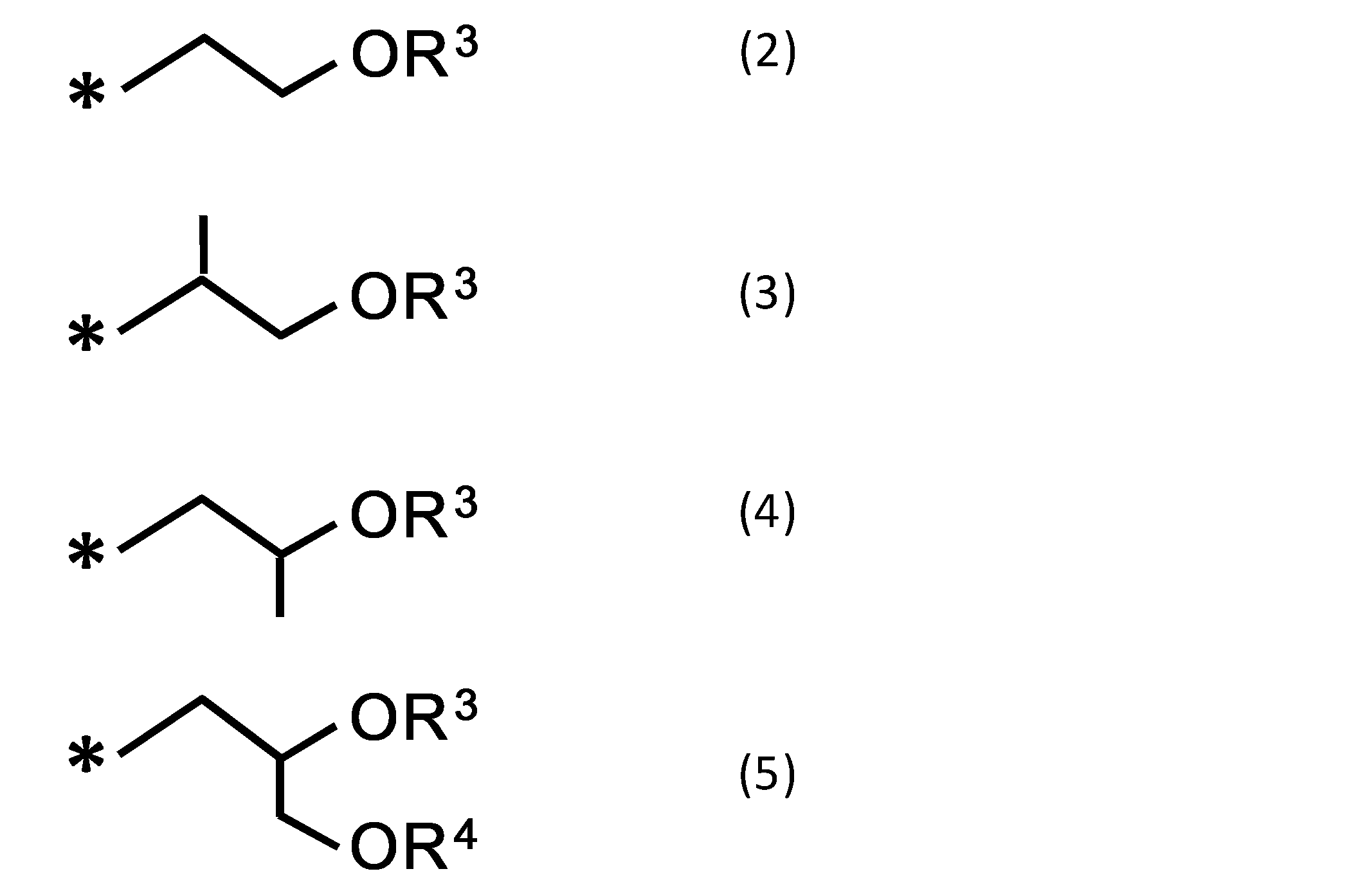
即ち、この発明は、上記課題を有利に解決することを目的とするものであり、本発明の潤滑剤は、下記式(1):
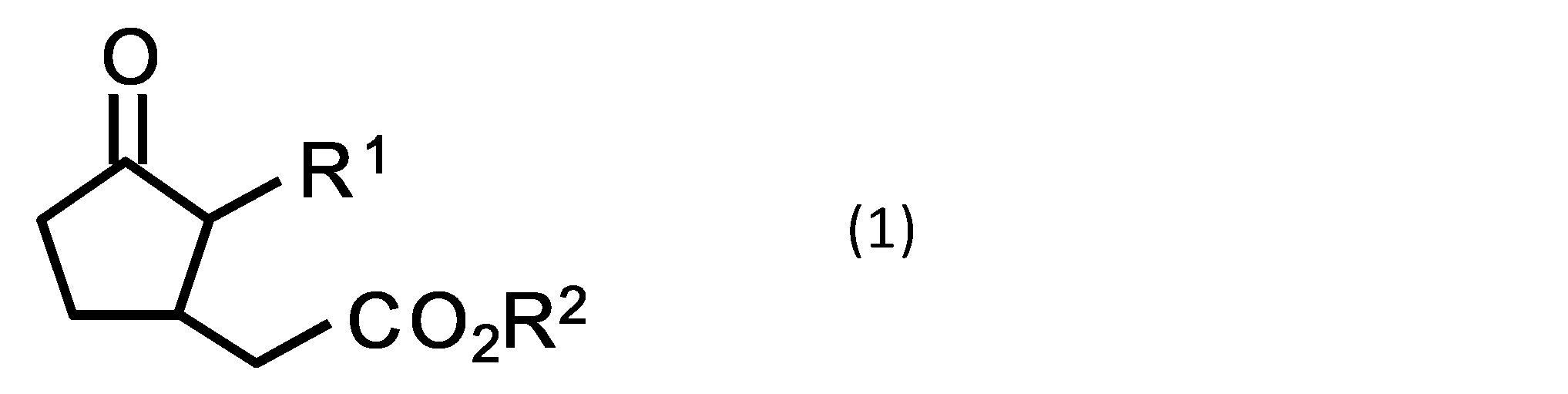
〔式(1)中、R1は、炭素数1以上12以下のアルキル基、炭素数2以上12以下のアルケニル基または炭素数1以上12以下のハロゲン化アルキル基であり、R2は、水素原子、炭素数1以上8以下のアルキル基または下記式(2)~(5):
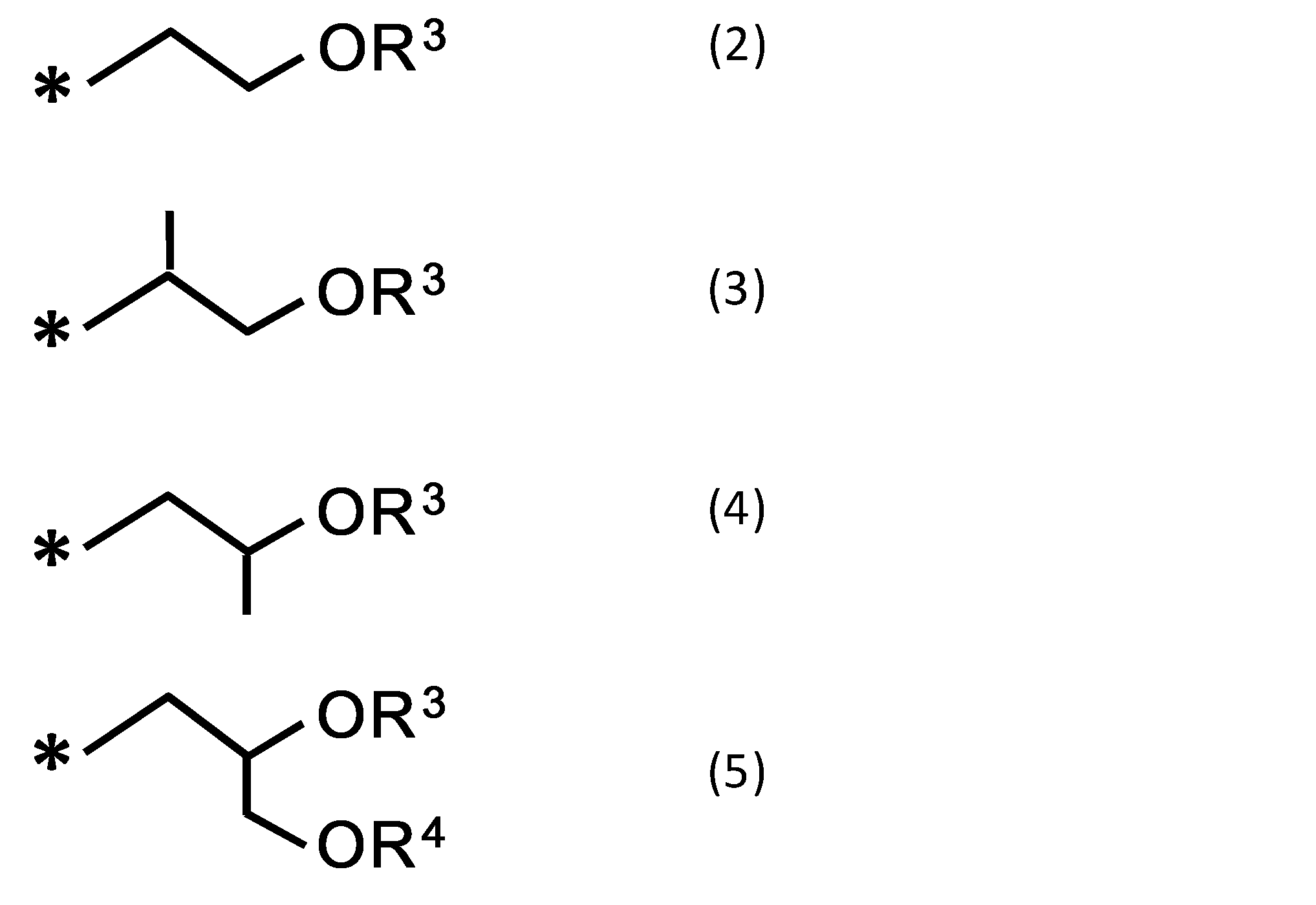
[式(2)~(5)中、R3およびR4は、水素原子、炭素数1以上8以下のアルキル基または下記式(6):
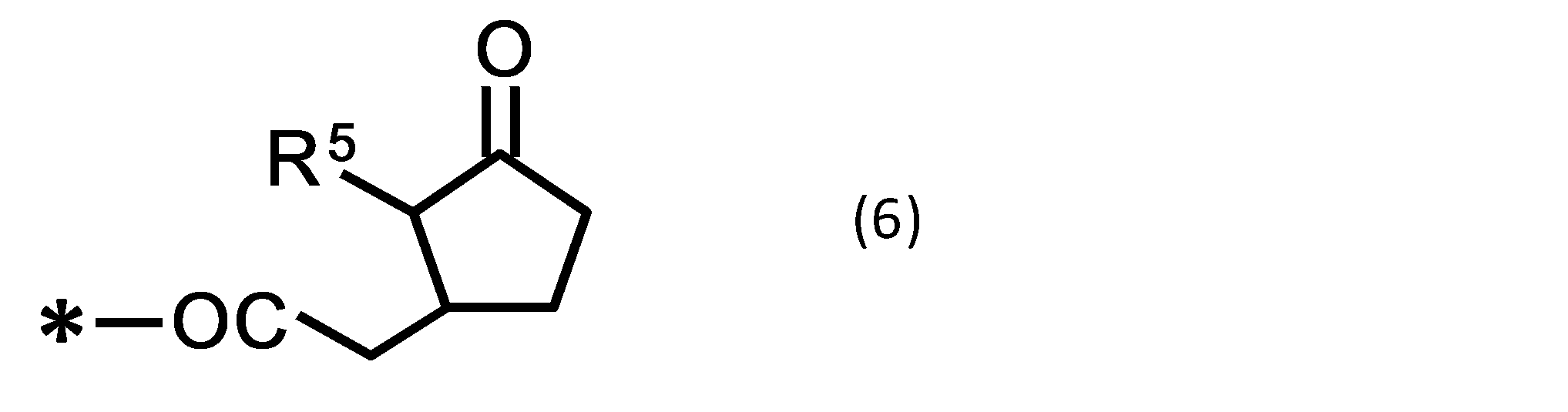
(式(6)中、R5は、炭素数1以上12以下のアルキル基、炭素数2以上12以下のアルケニル基または炭素数1以上12以下のハロゲン化アルキル基である。)で表される一価の基であり、同一でも異なっていてもよく、「*」は結合手であることを示す。]の何れかで表される一価の基である。〕で表される化合物を基油として含むことを特徴とする。基油として上記化合物を含む潤滑剤は、生分解性が高く、環境に与える負荷を低減することができる。
ここで、本発明の潤滑剤は、前記R1が、n-ペンチル基または2-ペンテニル基であることが好ましい。R1が上記所定の官能基である化合物は、生分解性が更に優れていると共に、安全性にも優れているからである。
また、本発明の潤滑剤は、前記R2が、炭素数1以上8以下のアルキル基であることが好ましい。R2が上記所定の官能基である化合物は、生分解性が更に優れていると共に、安全性にも優れているからである。
また、本発明の潤滑剤は、前記化合物が、ジャスモン酸メチルまたはジヒドロジャスモン酸メチルであることが好ましい。ジャスモン酸メチルまたはジヒドロジャスモン酸メチルは、生分解性に特に優れていると共に、安全性および流動性にも優れているからである。
また、本発明の潤滑剤は、酸化防止剤を更に含有し、前記酸化防止剤が、アスコルビン酸、トコフェロール、エリソルビン酸ナトリウム、没食子酸プロピル、亜硫酸ナトリウム、クロロゲン酸、カテキン、ローズマリー抽出物、ジブチルヒドロキシトルエン、およびブチルヒドロキシアニソールからなる群より選択される少なくとも一種であることが好ましい。酸化防止剤として上述した成分を使用すれば、潤滑剤の生分解性が低下するのを抑制することができるからである。
また、本発明の潤滑剤は、粘度調整剤を更に含有し、前記粘度調整剤が、多糖類、植物油、動物油、および増粘多糖類からなる群より選択される少なくとも一種であることが好ましい。粘度調整剤として上述した種類の成分を使用すれば、潤滑剤の生分解性が低下するのを抑制することができるからである。
そして、本発明の潤滑剤は、前記化合物を80質量%以上含有することが好ましい。潤滑剤中の上記化合物の含有割合が上記下限以上であれば、生分解性を十分に向上させ、環境負荷を更に低減することができるからである。
また、この発明は、上記課題を有利に解決することを目的とするものであり、本発明の潤滑方法は、上述したいずれかの潤滑剤を用いることを特徴とする。上述した潤滑剤を使用すれば、所望の潤滑効果を低い環境負荷で得られる。
ここで、本発明の潤滑方法は、メカニカルシールの固定環と回転環との間で前記潤滑剤を用いることが好ましい。上述した潤滑剤を上記所定箇所で使用すれば、メカニカルシール部分にて所望の潤滑効果を低い環境負荷で得られるからである。
また、本発明の潤滑方法は、液封式真空ポンプのロータとハウジングとの間で前記潤滑剤を用いることが好ましい。上述した潤滑剤を上記所定箇所で使用すれば、液封式真空ポンプのロータとハウジングとの間にて所望の潤滑効果を低い環境負荷で得られるからである。
本発明によれば、優れた生分解性を有し、環境負荷を低減することが可能な潤滑剤を提供することができる。
また、本発明によれば、環境負荷の低い潤滑方法を提供することができる。
また、本発明によれば、環境負荷の低い潤滑方法を提供することができる。
以下、本発明の実施形態について詳細に説明する。
ここで、本発明の潤滑剤は、任意の対象物における任意の箇所間を潤滑し、当該箇所間の摩擦および摩耗を低減させる際に用いることができる。そして、本発明の潤滑剤は、例えば本発明の潤滑方法において好適に使用される。
ここで、本発明の潤滑剤は、任意の対象物における任意の箇所間を潤滑し、当該箇所間の摩擦および摩耗を低減させる際に用いることができる。そして、本発明の潤滑剤は、例えば本発明の潤滑方法において好適に使用される。
(潤滑剤)
本発明の潤滑剤は、下記式(1)で表される化合物を基油として含んでおり、生分解性に優れている。なお、本発明の潤滑剤は、任意に添加剤を更に含有していてもよい。
本発明の潤滑剤は、下記式(1)で表される化合物を基油として含んでおり、生分解性に優れている。なお、本発明の潤滑剤は、任意に添加剤を更に含有していてもよい。
<化合物>

[R1]
ここで、上記式(1)中において、R1は、炭素数1以上12以下のアルキル基、炭素数2以上12以下のアルケニル基または炭素数1以上12以下のハロゲン化アルキル基である。なお、本発明において「ハロゲン化アルキル基」とは、アルキル基の水素の少なくとも一部が、フッ素、塩素、臭素およびヨウ素からなる群より選択される少なくとも一種で置換された基を指す。また、R1が炭素数2以上12以下のアルケニル基である場合には、潤滑剤中に含まれている上記化合物は、シス体であってもよいし、トランス体であってもよいし、それらの混合物であってもよい。
ここで、上記式(1)中において、R1は、炭素数1以上12以下のアルキル基、炭素数2以上12以下のアルケニル基または炭素数1以上12以下のハロゲン化アルキル基である。なお、本発明において「ハロゲン化アルキル基」とは、アルキル基の水素の少なくとも一部が、フッ素、塩素、臭素およびヨウ素からなる群より選択される少なくとも一種で置換された基を指す。また、R1が炭素数2以上12以下のアルケニル基である場合には、潤滑剤中に含まれている上記化合物は、シス体であってもよいし、トランス体であってもよいし、それらの混合物であってもよい。
中でも、潤滑剤の安全性の観点からは、R1は、炭素数1以上8以下のアルキル基、炭素数2以上8以下のアルケニル基または炭素数1以上8以下のハロゲン化アルキル基であることが好ましく、炭素数1以上8以下のアルキル基、炭素数2以上8以下のアルケニル基または炭素数1以上8以下のフッ素化アルキル基であることがより好ましい。また、潤滑剤の生分解性をより高める観点からは、R1は、炭素数1以上8以下のアルキル基または炭素数2以上8以下のアルケニル基であることが更に好ましく、n-ペンチル基(-CH2CH2CH2CH2CH3)または2-ペンテニル基(-CH2CH=CHCH2CH3)であることが特に好ましい。更に、潤滑剤のコストを低減する観点からは、R1は、炭素数1以上8以下のアルキル基であることが好ましく、n-ペンチル基であることがより好ましい。
[R2]
R2は、水素原子、炭素数1以上8以下のアルキル基または下記式(2)~(5):

[式(2)~(5)中、R3は、水素原子、炭素数1以上8以下のアルキル基または下記式(6):

(式(6)中、R5は、炭素数1以上12以下のアルキル基、炭素数2以上12以下のアルケニル基または炭素数1以上12以下のハロゲン化アルキル基である。)で表される一価の基であり、式(5)中、R4は、水素原子、炭素数1以上8以下のアルキル基または下記式(6):

(式(6)中、R5は、炭素数1以上12以下のアルキル基、炭素数2以上12以下のアルケニル基または炭素数1以上12以下のハロゲン化アルキル基である。)で表される一価の基であり、式(5)においてR3およびR4は同一でも異なっていてもよく、「*」は結合手であることを示す。]の何れかで表される一価の基である。
R2は、水素原子、炭素数1以上8以下のアルキル基または下記式(2)~(5):
ここで、潤滑剤をより容易に得る観点からは、上記式(1)中のR1および上記式(6)中のR5は同一であることが好ましい。
なお、R2が炭素数2以上12以下のアルケニル基を有する場合には、潤滑剤中に含まれている上記化合物は、シス体であってもよいし、トランス体であってもよいし、それらの混合物であってもよい。
中でも、潤滑剤の生分解性および安全性の観点からは、R2は、炭素数1以上8以下のアルキル基であることが好ましく、炭素数1以上4以下のアルキル基であることがより好ましく、メチル基であることが更に好ましい。
そして、上述した化合物としては、ジャスモン酸エステルおよびジヒドロジャスモン酸エステルが好ましく、ジャスモン酸メチルおよびジヒドロジャスモン酸メチルがより好ましい。これらの化合物は、生分解性に優れているだけでなく、引火性および毒性が低く、安全性にも優れているからである。また、化学的安定性も高く、流動性にも優れているからである。中でも、入手の容易性およびコストの観点からは、化合物としては、ジヒドロジャスモン酸メチルが特に好ましい。
なお、上述した化合物は、少量の不純物を含有していてもよい。化合物が不純物を含有する場合は、当該不純物の含有割合は、化合物100質量%に対して10質量%以下であることが好ましい。
なお、上述した化合物は、少量の不純物を含有していてもよい。化合物が不純物を含有する場合は、当該不純物の含有割合は、化合物100質量%に対して10質量%以下であることが好ましい。
[含有割合]
また、上述した化合物の含有割合は、潤滑剤100質量%に対して、通常50質量%以上であり、80質量%以上であることが好ましく、95質量%以上であることがより好ましく、99質量%以上であることが更に好ましく、100質量%であってもよい。化合物の含有割合が上記下限以上であれば、潤滑剤が更に優れた生分解性を有し、環境負荷を更に低減することが可能になるからである。
また、上述した化合物の含有割合は、潤滑剤100質量%に対して、通常50質量%以上であり、80質量%以上であることが好ましく、95質量%以上であることがより好ましく、99質量%以上であることが更に好ましく、100質量%であってもよい。化合物の含有割合が上記下限以上であれば、潤滑剤が更に優れた生分解性を有し、環境負荷を更に低減することが可能になるからである。
<添加剤>
本発明の潤滑剤は、基油としての上述した所定の化合物に加え、1種又は2種以上の添加剤を更に含むことができる。添加剤を併用すれば、潤滑剤に所望の特性を更に付与することができる。
ここで、添加剤としては、特に制限されることなく、例えば、酸化防止剤、粘度調整剤、粘度指数向上剤、界面活性剤、極圧剤、摩擦低減剤、流動点降下剤、分散剤、洗浄剤、担体流体、染料、マーカー、腐食抑制剤、殺生物剤、帯電防止添加剤、抗力低下剤、抗乳化剤、乳化剤、曇り防止剤、氷結防止添加剤、アンチノック添加剤、アンチバルブシートセッション添加剤、潤滑添加剤、摩耗防止剤、消泡剤等が挙げられる。
なお、潤滑剤が有する高い生分解性を確保し、環境負荷を低減する観点からは、添加剤としては、生分解性が良好な添加剤が好ましい。
本発明の潤滑剤は、基油としての上述した所定の化合物に加え、1種又は2種以上の添加剤を更に含むことができる。添加剤を併用すれば、潤滑剤に所望の特性を更に付与することができる。
ここで、添加剤としては、特に制限されることなく、例えば、酸化防止剤、粘度調整剤、粘度指数向上剤、界面活性剤、極圧剤、摩擦低減剤、流動点降下剤、分散剤、洗浄剤、担体流体、染料、マーカー、腐食抑制剤、殺生物剤、帯電防止添加剤、抗力低下剤、抗乳化剤、乳化剤、曇り防止剤、氷結防止添加剤、アンチノック添加剤、アンチバルブシートセッション添加剤、潤滑添加剤、摩耗防止剤、消泡剤等が挙げられる。
なお、潤滑剤が有する高い生分解性を確保し、環境負荷を低減する観点からは、添加剤としては、生分解性が良好な添加剤が好ましい。
ここで、生分解性の良好な酸化防止剤としては、特に制限されることなく、例えば、ビタミンC(アスコルビン酸)、ビタミンE(トコフェロール)、エリソルビン酸ナトリウム、没食子酸プロピル、亜硫酸ナトリウム、コーヒー豆抽出物(クロロゲン酸)、緑茶抽出物(カテキン)、ローズマリー抽出物、ジブチルヒドロキシトルエン(BHT)、ブチルヒドロキシアニソール(BHA)等が挙げられる。
また、生分解性の良好な粘度調整剤としては、特に制限されることなく、例えば、シクロデキストリン等の多糖類;サラダ油、白絞油、コーン油、大豆油、ごま油、菜種油(キャノーラ油)、こめ油、糠油、椿油、サフラワー油(ベニバナ油)、ヤシ油(パーム核油)、綿実油、ひまわり油、エゴマ油(荏油)、アマニ油、オリーブオイル、ピーナッツオイル、アーモンドオイル、アボカドオイル、ヘーゼルナッツオイル、ウォルナッツオイル、グレープシードオイル、カカオバター、ピーナッツバター、パーム油、ひまし油等の植物油;豚脂、牛脂、鶏油、兎脂、羊脂、馬脂等の動物油;ペクチン、グアーガム(グァーガム)、キサンタンガム、タマリンドガム、カラギーナン、プロピレングリコール、カルボキシメチルセルロース等の増粘多糖類;等が挙げられる。
また、生分解性の良好な粘度指数向上剤としては、特に制限されることなく、例えば、ポリメタクリレート、デンプン、セルロース、ポリビニルアルコール、ポリ乳酸、ポリカプロラクトン、ポリグリコール酸等が挙げられる。
更に、生分解性の良好な界面活性剤としては、特に制限されることなく、例えば、グリセリン脂肪酸エステル、ソルビタン脂肪酸エステル、プロピレングリコール脂肪酸エステル、ショ糖脂肪酸エステル、レシチン、サポニン、カゼインナトリウム、オキシエチレン脂肪酸アルコール、オレイン酸ナトリウム及びモルホリン脂肪酸塩、ポリオキシエチレン高級脂肪酸アルコール等が挙げられる。
これらの添加剤は、1種類を単独で任意の配合量で用いてもよく、任意の2種類以上を任意の配合量で組み合わせて併用してもよい。
[配合割合]
本願の潤滑剤に含まれ得る添加剤の配合割合は、潤滑剤100質量%に対して20質量%以下であることが好ましく、5質量%以下であることがより好ましく、1質量%以下であることが更に好ましく、0質量%であってもよい。添加剤の配合割合を上記上限以下にすれば、潤滑剤に所望の特性を付与しつつ、優れた生分解性を確保して環境負荷を低減することができるからである。
本願の潤滑剤に含まれ得る添加剤の配合割合は、潤滑剤100質量%に対して20質量%以下であることが好ましく、5質量%以下であることがより好ましく、1質量%以下であることが更に好ましく、0質量%であってもよい。添加剤の配合割合を上記上限以下にすれば、潤滑剤に所望の特性を付与しつつ、優れた生分解性を確保して環境負荷を低減することができるからである。
<調製方法>
本発明の潤滑剤は、上述した各種成分を任意の方法で混合、撹拌することにより調製することができる。
本発明の潤滑剤は、上述した各種成分を任意の方法で混合、撹拌することにより調製することができる。
(潤滑方法)
本発明の潤滑方法は、上述した潤滑剤を用いることを特徴とする。具体的には、本発明の潤滑方法では、前記潤滑剤を使用し、例えば回転部材と固定部材との間の摺動面などを潤滑することができる。
本発明の潤滑方法は、上述した潤滑剤を用いることを特徴とする。具体的には、本発明の潤滑方法では、前記潤滑剤を使用し、例えば回転部材と固定部材との間の摺動面などを潤滑することができる。
中でも、本発明の潤滑方法では、ロータリーポンプ、油拡散ポンプ、ターボ分子ポンプ(TMP)、イオンポンプ、コンプレッサー、撹拌式薄膜蒸留器、遠心薄膜蒸留器などの各種装置が有するメカニカルシールの固定環と回転環との間や、液封式真空ポンプのロータとハウジングとの間などを好適に潤滑することができる。
なお、液封式真空ポンプに用いる場合、本発明の潤滑剤は、シール液としての機能も発揮する。
なお、液封式真空ポンプに用いる場合、本発明の潤滑剤は、シール液としての機能も発揮する。
以下、本発明について実施例に基づき具体的に説明するが、本発明はこれら実施例に限定されない。
そして、潤滑剤を用いた対象箇所における耐摩耗性は目視観察により確認した。また、シール性については、ゲージから潤滑剤の液レベルを読み取ることにより液漏れの程度を確認した。
そして、潤滑剤を用いた対象箇所における耐摩耗性は目視観察により確認した。また、シール性については、ゲージから潤滑剤の液レベルを読み取ることにより液漏れの程度を確認した。
(実施例1)
<潤滑剤の準備>
潤滑剤として、日本ゼオン株式会社製CLAIGEON(登録商標、ジヒドロジャスモン酸メチルを98.0質量%以上含有)を準備した。
なお、準備した潤滑剤は、生物化学的酸素要求量から求めた28日後の分解度が88%であり、良好な生分解性を示していた。ここで、分解度は、潤滑剤が完全に酸化された場合に必要とされる酸素要求量の理論値(TOD、mg)に対する、潤滑剤の生物化学的酸素要求量の測定値(BOD、mg)の割合(%)として算出した。
<潤滑剤の付与>
次に、上述の通り準備した潤滑剤を、薄膜蒸留器(日立製作所製、製品名「遠心薄膜蒸留器」)が有するメカニカルシール部分に付与した。具体的には、当該薄膜蒸留装置の回転軸に設置した回転環と、当該回転環に相接する固定環とからなるメカニカルシール部分に対し、石油ポンプおよびビーカーを用いて、潤滑剤を付与した。ここで、潤滑剤の付与条件は、温度25℃の環境下とした。
続けて、当該潤滑剤を付与したメカニカルシール部分を有する薄膜蒸留器を、ジャケット部にスチームを吹き込みながら、減圧条件下で、回転速度225rpmで連続して1年間運転を行った。なお、メカニカルシール部分と接する当該薄膜蒸留器内部には、薄膜蒸留用にジヒドロジャスモン酸メチルが投入されていた。
<耐摩耗性およびシール性の確認>
そして、上述の通り運転を行った薄膜蒸留器からメカニカルシール部分を取り出して、当該部分を目視観察した。その結果、メカニカルシールにおける、回転環と固定環とが擦り合わさる摺動面に摩耗は見受けられず、潤滑剤が優れた耐摩耗性を有することが確認された。また、当該メカニカルシール部分からの潤滑剤の漏れ出しの程度は、数ppmオーダーであり、潤滑剤として一般的に用いられている鉱油の場合と同程度の良好なシール性が確認された。
<潤滑剤の準備>
潤滑剤として、日本ゼオン株式会社製CLAIGEON(登録商標、ジヒドロジャスモン酸メチルを98.0質量%以上含有)を準備した。
なお、準備した潤滑剤は、生物化学的酸素要求量から求めた28日後の分解度が88%であり、良好な生分解性を示していた。ここで、分解度は、潤滑剤が完全に酸化された場合に必要とされる酸素要求量の理論値(TOD、mg)に対する、潤滑剤の生物化学的酸素要求量の測定値(BOD、mg)の割合(%)として算出した。
<潤滑剤の付与>
次に、上述の通り準備した潤滑剤を、薄膜蒸留器(日立製作所製、製品名「遠心薄膜蒸留器」)が有するメカニカルシール部分に付与した。具体的には、当該薄膜蒸留装置の回転軸に設置した回転環と、当該回転環に相接する固定環とからなるメカニカルシール部分に対し、石油ポンプおよびビーカーを用いて、潤滑剤を付与した。ここで、潤滑剤の付与条件は、温度25℃の環境下とした。
続けて、当該潤滑剤を付与したメカニカルシール部分を有する薄膜蒸留器を、ジャケット部にスチームを吹き込みながら、減圧条件下で、回転速度225rpmで連続して1年間運転を行った。なお、メカニカルシール部分と接する当該薄膜蒸留器内部には、薄膜蒸留用にジヒドロジャスモン酸メチルが投入されていた。
<耐摩耗性およびシール性の確認>
そして、上述の通り運転を行った薄膜蒸留器からメカニカルシール部分を取り出して、当該部分を目視観察した。その結果、メカニカルシールにおける、回転環と固定環とが擦り合わさる摺動面に摩耗は見受けられず、潤滑剤が優れた耐摩耗性を有することが確認された。また、当該メカニカルシール部分からの潤滑剤の漏れ出しの程度は、数ppmオーダーであり、潤滑剤として一般的に用いられている鉱油の場合と同程度の良好なシール性が確認された。
(実施例2)
潤滑剤の付与において、薄膜蒸留器に替えて、ロータリーポンプ(荏原製作所製、製品名「渦巻ポンプ」)を用いた。また、潤滑剤を付与したメカニカルシール部分を有するロータリーポンプを、減圧条件下で、回転速度1765rpmで連続して1年間運転を行った以外は実施例1と同様にして、潤滑剤を準備し、付与した。
なお、準備した潤滑剤は、実施例1と同様に、良好な生分解性を示していた。また、メカニカルシール部分と接するロータリーポンプ内部にはジヒドロジャスモン酸メチルが投入されていた。
<耐摩耗性およびシール性の確認>
そして、実施例1と同様にしてメカニカルシール部分を目視観察した。その結果、メカニカルシールにおける摺動面に摩耗は見受けられず、潤滑剤が優れた耐摩耗性を有することが確認された。また、当該メカニカルシール部分からの潤滑剤の漏れ出しの程度は、数ppmオーダーであり、潤滑剤として一般的に用いられている鉱油の場合と同程度の良好なシール性が確認された。
潤滑剤の付与において、薄膜蒸留器に替えて、ロータリーポンプ(荏原製作所製、製品名「渦巻ポンプ」)を用いた。また、潤滑剤を付与したメカニカルシール部分を有するロータリーポンプを、減圧条件下で、回転速度1765rpmで連続して1年間運転を行った以外は実施例1と同様にして、潤滑剤を準備し、付与した。
なお、準備した潤滑剤は、実施例1と同様に、良好な生分解性を示していた。また、メカニカルシール部分と接するロータリーポンプ内部にはジヒドロジャスモン酸メチルが投入されていた。
<耐摩耗性およびシール性の確認>
そして、実施例1と同様にしてメカニカルシール部分を目視観察した。その結果、メカニカルシールにおける摺動面に摩耗は見受けられず、潤滑剤が優れた耐摩耗性を有することが確認された。また、当該メカニカルシール部分からの潤滑剤の漏れ出しの程度は、数ppmオーダーであり、潤滑剤として一般的に用いられている鉱油の場合と同程度の良好なシール性が確認された。
本発明によれば、優れた生分解性を有し、環境負荷を低減することが可能な潤滑剤を提供することができる。
また、本発明によれば、環境負荷の低い潤滑方法を提供することができる。
また、本発明によれば、環境負荷の低い潤滑方法を提供することができる。
Claims (10)
- 下記式(1):


- 前記R1が、n-ペンチル基または2-ペンテニル基である、請求項1に記載の潤滑剤。
- 前記R2が、炭素数1以上8以下のアルキル基である、請求項1または2に記載の潤滑剤。
- 前記化合物が、ジャスモン酸メチルまたはジヒドロジャスモン酸メチルである、請求項1~3のいずれか一項に記載の潤滑剤。
- 酸化防止剤を更に含有し、
前記酸化防止剤が、アスコルビン酸、トコフェロール、エリソルビン酸ナトリウム、没食子酸プロピル、亜硫酸ナトリウム、クロロゲン酸、カテキン、ローズマリー抽出物、ジブチルヒドロキシトルエン、およびブチルヒドロキシアニソールからなる群より選択される少なくとも一種である、請求項1~4のいずれか一項に記載の潤滑剤。 - 粘度調整剤を更に含有し、
前記粘度調整剤が、多糖類、植物油、動物油、および増粘多糖類からなる群より選択される少なくとも一種である、請求項1~5のいずれか一項に記載の潤滑剤。 - 前記化合物を80質量%以上含有する、請求項1~6のいずれか一項に記載の潤滑剤。
- 請求項1~7のいずれか一項に記載の潤滑剤を用いる、潤滑方法。
- メカニカルシールの固定環と回転環との間で前記潤滑剤を用いる、請求項8に記載の潤滑方法。
- 液封式真空ポンプのロータとハウジングとの間で前記潤滑剤を用いる、請求項8に記載の潤滑方法。
Priority Applications (1)
| Application Number | Priority Date | Filing Date | Title |
|---|---|---|---|
| JP2018514248A JP6908030B2 (ja) | 2016-04-28 | 2017-04-11 | 潤滑剤、及び潤滑方法 |
Applications Claiming Priority (2)
| Application Number | Priority Date | Filing Date | Title |
|---|---|---|---|
| JP2016091279 | 2016-04-28 | ||
| JP2016-091279 | 2016-04-28 |
Publications (1)
| Publication Number | Publication Date |
|---|---|
| WO2017187970A1 true WO2017187970A1 (ja) | 2017-11-02 |
Family
ID=60160416
Family Applications (1)
| Application Number | Title | Priority Date | Filing Date |
|---|---|---|---|
| PCT/JP2017/014861 Ceased WO2017187970A1 (ja) | 2016-04-28 | 2017-04-11 | 潤滑剤、及び潤滑方法 |
Country Status (2)
| Country | Link |
|---|---|
| JP (1) | JP6908030B2 (ja) |
| WO (1) | WO2017187970A1 (ja) |
Citations (5)
| Publication number | Priority date | Publication date | Assignee | Title |
|---|---|---|---|---|
| JPS4942647A (ja) * | 1972-07-06 | 1974-04-22 | ||
| JPS6137756A (ja) * | 1984-07-30 | 1986-02-22 | Sumitomo Chem Co Ltd | シクロペンチル酢酸類の製造法 |
| JPH03188194A (ja) * | 1989-08-25 | 1991-08-16 | Nippon Zeon Co Ltd | 香気性組成物 |
| JP2003238831A (ja) * | 2002-02-22 | 2003-08-27 | Fuji Photo Film Co Ltd | ロイコ染料および画像表示装置 |
| JP2007070425A (ja) * | 2005-09-06 | 2007-03-22 | Soda Aromatic Co Ltd | 香粧品用香料組成物 |
Family Cites Families (1)
| Publication number | Priority date | Publication date | Assignee | Title |
|---|---|---|---|---|
| JP2004018725A (ja) * | 2002-06-18 | 2004-01-22 | Nsk Ltd | 生分解性グリース組成物及び転がり軸受 |
-
2017
- 2017-04-11 JP JP2018514248A patent/JP6908030B2/ja active Active
- 2017-04-11 WO PCT/JP2017/014861 patent/WO2017187970A1/ja not_active Ceased
Patent Citations (5)
| Publication number | Priority date | Publication date | Assignee | Title |
|---|---|---|---|---|
| JPS4942647A (ja) * | 1972-07-06 | 1974-04-22 | ||
| JPS6137756A (ja) * | 1984-07-30 | 1986-02-22 | Sumitomo Chem Co Ltd | シクロペンチル酢酸類の製造法 |
| JPH03188194A (ja) * | 1989-08-25 | 1991-08-16 | Nippon Zeon Co Ltd | 香気性組成物 |
| JP2003238831A (ja) * | 2002-02-22 | 2003-08-27 | Fuji Photo Film Co Ltd | ロイコ染料および画像表示装置 |
| JP2007070425A (ja) * | 2005-09-06 | 2007-03-22 | Soda Aromatic Co Ltd | 香粧品用香料組成物 |
Also Published As
| Publication number | Publication date |
|---|---|
| JP6908030B2 (ja) | 2021-07-21 |
| JPWO2017187970A1 (ja) | 2019-02-28 |
Similar Documents
| Publication | Publication Date | Title |
|---|---|---|
| CN102220183B (zh) | 一种植物油基型水溶性切削液 | |
| CN103205301B (zh) | 一种齿轮油组合物及其制备方法 | |
| CN104520415B (zh) | 润滑油组合物 | |
| KR101819132B1 (ko) | 윤활제 조성물과 그 이용 및 지방족 에테르 화합물 | |
| CN103484224B (zh) | 一种齿轮油组合物及其制备方法 | |
| JP6777457B2 (ja) | 潤滑油組成物 | |
| EP3511399B1 (en) | Lubricating oil composition | |
| US20170096614A1 (en) | Halogen free ionic liquids as lubricant or lubricant additives and a process for the preparation thereof | |
| JP2013199549A (ja) | 潤滑油組成物およびこれを用いた機器 | |
| JP2013116991A (ja) | グリース組成物及び転がり軸受 | |
| US9206377B1 (en) | Solid lubricant blends for use in lubricating compositions | |
| TW201336983A (zh) | 油脂及油脂之軟化方法 | |
| CN108138065B (zh) | 具有甘油酯的润滑混合物 | |
| JP6908030B2 (ja) | 潤滑剤、及び潤滑方法 | |
| Joseph et al. | Improvement of thermooxidative stability of non‐edible vegetable oils of Indian origin for biodegradable lubricant application | |
| Abo-Hatab et al. | Eco-friendly multifunction petroleum additives: preparation, characterization and evaluation | |
| JP5074466B2 (ja) | 防錆性及び低摩擦性にすぐれた生分解性潤滑油組成物 | |
| FR3072969B1 (fr) | Composition lubrifiante grand froid | |
| JP5411455B2 (ja) | 全損給油型の農業用機械に用いられる生分解性潤滑油組成物 | |
| CA2654923A1 (en) | Synthetic phenolic ether lubricant base stocks and lubricating oils comprising such base stocks mixed with co-base stocks and/or additives | |
| JP2019099767A (ja) | グリース組成物 | |
| JP7078508B2 (ja) | グリース組成物、及びグリース組成物の製造方法 | |
| US2322209A (en) | Lubricating composition | |
| US3152990A (en) | Water-in-oil emulsions | |
| CN118994231B (zh) | 一种离子液体添加剂及其冷冻机油组合物 |
Legal Events
| Date | Code | Title | Description |
|---|---|---|---|
| WWE | Wipo information: entry into national phase |
Ref document number: 2018514248 Country of ref document: JP |
|
| NENP | Non-entry into the national phase |
Ref country code: DE |
|
| 121 | Ep: the epo has been informed by wipo that ep was designated in this application |
Ref document number: 17789257 Country of ref document: EP Kind code of ref document: A1 |
|
| 122 | Ep: pct application non-entry in european phase |
Ref document number: 17789257 Country of ref document: EP Kind code of ref document: A1 |