WO2017183454A1 - 絶縁部材及びその製造方法 - Google Patents
絶縁部材及びその製造方法 Download PDFInfo
- Publication number
- WO2017183454A1 WO2017183454A1 PCT/JP2017/014189 JP2017014189W WO2017183454A1 WO 2017183454 A1 WO2017183454 A1 WO 2017183454A1 JP 2017014189 W JP2017014189 W JP 2017014189W WO 2017183454 A1 WO2017183454 A1 WO 2017183454A1
- Authority
- WO
- WIPO (PCT)
- Prior art keywords
- insulating member
- less
- glass
- ion exchange
- compressive stress
- Prior art date
- Legal status (The legal status is an assumption and is not a legal conclusion. Google has not performed a legal analysis and makes no representation as to the accuracy of the status listed.)
- Ceased
Links
Images
Classifications
-
- C—CHEMISTRY; METALLURGY
- C03—GLASS; MINERAL OR SLAG WOOL
- C03C—CHEMICAL COMPOSITION OF GLASSES, GLAZES OR VITREOUS ENAMELS; SURFACE TREATMENT OF GLASS; SURFACE TREATMENT OF FIBRES OR FILAMENTS MADE FROM GLASS, MINERALS OR SLAGS; JOINING GLASS TO GLASS OR OTHER MATERIALS
- C03C3/00—Glass compositions
- C03C3/04—Glass compositions containing silica
- C03C3/076—Glass compositions containing silica with 40% to 90% silica, by weight
- C03C3/083—Glass compositions containing silica with 40% to 90% silica, by weight containing aluminium oxide or an iron compound
-
- C—CHEMISTRY; METALLURGY
- C03—GLASS; MINERAL OR SLAG WOOL
- C03C—CHEMICAL COMPOSITION OF GLASSES, GLAZES OR VITREOUS ENAMELS; SURFACE TREATMENT OF GLASS; SURFACE TREATMENT OF FIBRES OR FILAMENTS MADE FROM GLASS, MINERALS OR SLAGS; JOINING GLASS TO GLASS OR OTHER MATERIALS
- C03C21/00—Treatment of glass, not in the form of fibres or filaments, by diffusing ions or metals in the surface
-
- H—ELECTRICITY
- H01—ELECTRIC ELEMENTS
- H01B—CABLES; CONDUCTORS; INSULATORS; SELECTION OF MATERIALS FOR THEIR CONDUCTIVE, INSULATING OR DIELECTRIC PROPERTIES
- H01B17/00—Insulators or insulating bodies characterised by their form
- H01B17/56—Insulating bodies
Definitions
- the present invention relates to an insulating member used for a driving device and a method for manufacturing the same, and more specifically, to an insulating member that is lightweight, high-strength, low-cost, and excellent in workability, and a method for manufacturing the same.
- Patent Document 1 discloses the use of a hybrid insulating member in which a resin and ceramic are combined as an insulating member used in a high voltage generator for radiation technology.
- Patent Document 2 discloses that an insulating member such as a ceramic shaft is employed instead of the metal shaft.
- JP 2006-527907 A Japanese Utility Model Publication No. 05-062540 JP 2009-190959 A
- non-oxide ceramics such as silicon nitride are used as high-strength insulating members (see Patent Document 3).
- non-oxide ceramics are expensive, heavy, and have low workability.
- oxide glass with high workability is used as the insulating member.
- oxide glass is a brittle material and has a problem of low strength.
- the present invention has been made in view of the above circumstances, and its technical problem is to devise an insulating member that is lightweight, high-strength, low-cost, and excellent in workability, and a manufacturing method thereof.
- the present inventors can solve the above technical problem by providing a substantially circular cross-sectional profile to a low-density alkali-containing glass and forming a surface compressive stress layer by ion exchange.
- the insulating member of the present invention is an insulating member made of alkali-containing glass, has a substantially circular cross-sectional outer shape, a density of 2.60 g / cm 3 or less, and a surface compressive stress layer by ion exchange. And is incorporated in the drive device.
- alkali-containing glass refers to glass having a total content of alkali metal oxides (Li 2 O, Na 2 O, and K 2 O) in the glass composition of 3% by mass or more.
- the “cross-sectional outer shape that becomes a substantially perfect circle” may be that the cross-sectional outline from at least one direction is a substantially perfect circle.
- approximately true circle means that the dimensional tolerance of diameter is within 1% (preferably within 0.5%, within 0.1%, within 0.05%, within 0.01%, within 0.005%, especially 0.001% or less).
- the “diameter dimension tolerance” can be measured by, for example, image analysis using an image inspection apparatus.
- “Density” can be measured by the Archimedes method or the like.
- the insulating member of the present invention is composed of alkali-containing glass having a density of 2.60 g / cm 3 or less. Thereby, it becomes possible to improve workability, achieving weight reduction. On the other hand, alkali-containing glass has high brittleness and thus has low strength. Therefore, the strength of the insulating member of the present invention is increased by forming a surface compressive stress by ion exchange.
- the insulating member of the present invention has a cross-sectional outer shape that becomes a substantially perfect circle.
- a rolling element incorporated in a drive device it becomes possible to use suitably as a rolling element incorporated in a drive device. Further, it can be suitably used for a shaft of an electric vehicle or the like.
- the cross-sectional outer shape that becomes a substantially perfect circle does not have to exist in all the regions of the insulating member, and may exist only in a portion to be driven, for example.
- the insulating member of the present invention preferably has a volume resistivity of 10 5.0 ⁇ ⁇ cm or more at 150 ° C.
- the “volume electric resistance value at 150 ° C.” is a value measured based on ASTM C657-78, and is a glass plate having the same glass composition and the same thermal history as the insulating member (for example, a plate thickness of 0.7 mm). ) Are preferably subjected to ion exchange treatment under the same conditions, and the obtained glass plate is used as a measurement sample.
- the glass composition (including the glass composition in the minimum region of the compressive stress layer) was determined by standardless quantitative analysis by the ZAF method using SEM-EDX (eg, Hitachi High-Technologies S4300-SE, HORIBA, Ltd.
- EX-250 EX-250. Can be measured. In addition, if the heat treatment conditions of the glass plate are adjusted so that the density of the insulating member and the glass plate are the same and the density of both is the same, the same heat history as that of the insulating member is imparted to the glass plate. Can do.
- the insulating member of the present invention preferably has a volume electrical resistivity at 150 ° C. of 10 times or more of the volume electrical resistivity before ion exchange.
- the insulating member of the present invention preferably has a compressive stress value of the surface compressive stress layer on the substantially circular cross-sectional outer shape of 300 MPa or more and a stress depth of 25 ⁇ m or more.
- the “compressive stress value” and the “stress depth” are calculated based on the number of interference fringes observed and their intervals when the sample is observed using a surface stress meter (for example, FSM-6000 manufactured by Orihara Seisakusho). Can be calculated.
- the compressive stress value and the stress depth of the surface compressive stress layer of the flat portion are measured, the compressive stress value of the surface compressive stress layer on the substantially circular cross-sectional outline And the stress depth can be estimated accurately.
- the insulating member does not have a flat portion of 1 cm square or more, a glass plate having the same glass composition and the same thermal history as the insulating member is subjected to ion exchange treatment under the same conditions, and the compression of the surface compressive stress layer of the obtained glass plate By measuring the stress value and the stress depth, it is possible to accurately estimate the compressive stress value and the stress depth of the surface compressive stress layer on the substantially circular cross-sectional outline.
- the alkali-containing glass contains, as a glass composition, 40% to 75% SiO 2 , 10% to 30% Al 2 O 3 , and 5% to 25% Na 2 O as a glass composition. It is preferable.
- the method for manufacturing an insulating member according to the present invention is a method for manufacturing an insulating member made of alkali-containing glass, has a cross-sectional outer shape that is substantially circular, and has a density of 2.60 g / cm 3 or less. After the alkali-containing glass is produced, the alkali-containing glass is subjected to ion exchange treatment to form a surface compressive stress layer.
- the insulating member of the present invention has a cross-sectional outer shape that is a substantially perfect circle. In this way, stable driving can be expected even under severe conditions such as high-speed rotation, high friction, and high load. Furthermore, since such a cross-sectional shape can be easily formed from molten glass and can be polished while rotating the glass, scratches on the glass surface are reduced and the strength tends to be high.
- the insulating member of the present invention is preferably an annular (or cylindrical) insulating member having a substantially circular cross-sectional outer shape.
- the outer diameter of the ring is preferably 100 mm or less, 80 mm or less, 50 mm or less, particularly 30 mm or less, and preferably 1 mm or more, 2 mm or more, 4 mm or more, particularly 5 mm or more. If it does in this way, it becomes applicable suitably to the shaft etc. which are integrated in a drive device.
- the inner diameter of the ring is not particularly limited, and can be adjusted according to the design of the driving device.
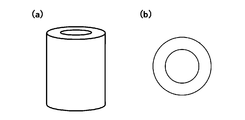
- FIG. 1 is a conceptual diagram showing an example of an insulating member according to the present invention.
- FIG. 1 (a) is a perspective conceptual view of an annular insulating member having a substantially circular cross-sectional outer shape
- FIG. FIG. 2 is a conceptual cross-sectional view when the insulating member shown in FIG.
- the insulating member of the present invention is preferably a cylindrical insulating member having a substantially circular cross-sectional outer shape.
- the diameter of the cylinder is preferably 100 mm or less, 80 mm or less, 50 mm or less, particularly 30 mm or less, and preferably 1 mm or more, 2 mm or more, 4 mm or more, particularly 5 mm or more. If it does in this way, it becomes applicable suitably to a roller, a shaft, etc. which are built in a drive device.
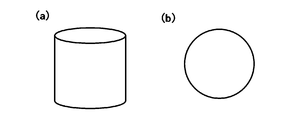
- FIG. 2 is a conceptual diagram showing an example of the insulating member of the present invention
- FIG. 2 (a) is a perspective conceptual view of a cylindrical insulating member having a substantially circular cross-sectional outer shape
- FIG. FIG. 3 is a conceptual cross-sectional view when the insulating member shown in FIG.
- the insulating member of the present invention is preferably a spherical insulating member having a substantially circular cross-sectional outer shape, that is, a substantially circular insulating member.
- the diameter of the sphere is preferably 100 mm or less, 80 mm or less, 50 mm or less, particularly 30 mm or less, and preferably 1 mm or more, 2 mm or more, 4 mm or more, particularly 5 mm or more. If it does in this way, it becomes applicable suitably to a drive device, especially a spacer, a sphere, etc. incorporated in a rolling device.
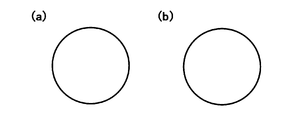
- FIG. 3 is a conceptual diagram showing an example of the insulating member of the present invention
- FIG. 3 (a) is a perspective conceptual view of a spherical insulating member having a substantially circular cross-sectional outer shape
- FIG. FIG. 4 is a conceptual cross-sectional view when the insulating member shown in FIG.
- the surface of the insulating member of the present invention is preferably a polished surface, and in particular, the surface on the substantially circular cross-sectional outline is preferably a polished surface.
- the surface roughness Ra of the polished surface is preferably 1 nm or less, 0.5 nm or less, 0.4 nm or less, 0.3 nm or less, particularly 0.2 nm or less. If the surface roughness Ra of the polished surface is too large, the insulating member is easily damaged under severe conditions such as high-speed rotation, high friction, and high load.
- the “surface roughness Ra” can be measured by a method based on JIS B0601: 2001 with the insulating member fixed with a jig or the like.
- the density is at 2.60 g / cm 3 or less, preferably 2.55 g / cm 3 or less, 2.5 g / cm 3 or less, 2.49 g / cm 3 or less, in particular 2.48 g / cm 3 or less.
- the content of SiO 2 , P 2 O 5 , B 2 O 3 in the glass composition is increased, alkali metal oxide, alkaline earth metal oxide, ZnO, ZrO 2 , or to decrease the content of TiO 2.
- the volume resistivity at 150 ° C. is preferably 10 5.0 ⁇ ⁇ cm or more, 10 5.5 ⁇ ⁇ cm or more, 10 6.0 ⁇ ⁇ cm or more, 10 6.5 ⁇ ⁇ cm or more, 10 7. 0 ⁇ ⁇ cm or more, 10 7.5 ⁇ ⁇ cm or more, 10 8.0 ⁇ ⁇ cm or more, 10 8.5 ⁇ ⁇ cm or more, 10 8.7 ⁇ ⁇ cm or more, 10 9.0 ⁇ ⁇ cm or more In particular, it is 10 9.5 ⁇ ⁇ cm or more. If the volume electrical resistivity is too low, the insulating property tends to be lowered.
- the volume resistivity at 150 ° C. is preferably 10 times or more, 50 times or more, 100 times or more, 200 times or more, 250 times or more, particularly 300 times or more of the volume resistivity before ion exchange. If the volume resistivity at 150 ° C. is less than 10 times the volume resistivity before ion exchange, it becomes difficult to achieve both strength and insulation at a high level.
- the thermal expansion coefficient in the temperature range of 30 to 380 ° C. is preferably 70 ⁇ 10 ⁇ 7 to 110 ⁇ 10 ⁇ 7 / ° C., 75 ⁇ 10 ⁇ 7 to 110 ⁇ 10 ⁇ 7 / ° C., 80 ⁇ 10 ⁇ 7 to 110 ⁇ 10 ⁇ 7 / ° C., particularly 85 ⁇ 10 ⁇ 7 to 110 ⁇ 10 ⁇ 7 / ° C.
- the coefficient of thermal expansion is regulated as described above, even if the surrounding metal member expands due to heat generated during high-speed rotation, it can be driven properly.
- the “thermal expansion coefficient” is an average value measured with a dilatometer in a temperature range of 30 to 380 ° C.
- the strain point is preferably 520 ° C. or higher, 550 ° C. or higher, 560 ° C. or higher, particularly 570 ° C. or higher.
- the higher the strain point the better the heat resistance. Also, if the strain point is high, stress relaxation is difficult to occur during the ion exchange treatment, so that it is easy to ensure a high compressive stress value.
- the temperature corresponding to the high temperature viscosity of 10 2.5 dPa ⁇ s is preferably 1650 ° C. or lower, 1600 ° C. or lower, 1580 ° C. or lower, 1550 ° C. or lower, 1540 ° C. or lower, especially 1530 ° C. or lower.
- Liquid phase temperature is preferably 1200 ° C. or lower, 1150 ° C. or lower, 1130 ° C. or lower, 1110 ° C. or lower, 1090 ° C. or lower, particularly 1070 ° C. or lower. If the liquidus temperature is too high, it becomes difficult to mold into a desired shape.
- the Young's modulus is 65 GPa or more, preferably 69 GPa or more, preferably 71 GPa or more, preferably 75 GPa or more, and particularly preferably 77 GPa or more. If the Young's modulus is too low, the insulating member is likely to be deformed, and drive is likely to be unstable under severe conditions such as high-speed rotation, high friction, and high load.
- the “Young's modulus” can be measured by, for example, a known resonance method.
- the insulating member of the present invention has a surface compressive stress layer by ion exchange. Thereby, the intensity
- a method for forming the surface compressive stress layer by ion exchange a method in which alkali-containing glass is immersed in an ion exchange solution and alkali ions having a large ion radius are introduced into the glass surface is preferable. In this way, the surface compressive stress layer can be formed in a short time.
- a method of forming a surface compressive stress layer by ion exchange a method of forming a surface compressive stress layer by ion-exchanging K ions in KNO 3 molten salt and Na component in alkali-containing glass is particularly preferable. If it does in this way, it will be in the state in which K ion and Na ion were mixed in the surface compressive-stress layer, and the volume electrical resistivity of the glass surface can be raised significantly by the mixed alkali effect.
- the compressive stress value of the surface compressive stress layer is preferably 300 MPa or more, 600 MPa or more, 800 MPa or more, 900 MPa or more, 1000 MPa or more, particularly 1100 MPa or more.
- the greater the compressive stress value the higher the mechanical strength of the insulating member.
- the compressive stress value of the compressive stress layer is preferably 2500 MPa or less. If the ion exchange time is shortened or the ion exchange temperature is lowered, the compressive stress value can be increased.
- the stress depth is preferably 25 ⁇ m or more, 30 ⁇ m or more, 40 ⁇ m or more, 50 ⁇ m or more, 60 ⁇ m or more, particularly 70 ⁇ m or more.
- the greater the stress depth the less likely the insulating member will crack even if the surface of the insulating member is deeply damaged due to wear or foreign matter during high rotation.
- the stress depth is preferably 500 ⁇ m or less, 300 ⁇ m or less, 200 ⁇ m or less, particularly 150 ⁇ m or less. Note that the stress depth can be increased by increasing the ion exchange time or increasing the ion exchange temperature.
- the internal tensile stress value is preferably 200 MPa or less, 150 MPa or less, 100 MPa or less, particularly 50 MPa or less.
- the smaller the internal tensile stress value the harder the insulating member is damaged due to internal defects in the insulating member.
- the internal tensile stress value is preferably 1 MPa or more, 10 MPa or more, particularly 15 MPa or more.
- the “internal tensile stress value” refers to a value calculated by the following mathematical formula 1.
- the thickness t of the insulating member in Formula 1 refers to the shortest distance among the distances between the opposing surfaces of the insulating member.
- a rod shape cylindrical shape
- a disc shape whose cross-sectional outer shape is a substantially perfect circle
- it refers to the thickness of the disc.
- CT CS ⁇ DOL / (t ⁇ 1000-2 ⁇ DOL)
- CT Internal tensile stress value (MPa)
- t thickness of insulating member (mm)
- CS Compressive stress value (MPa)
- DOL Depth of compressive stress layer ( ⁇ m)
- the alkali-containing glass preferably contains SiO 2 40 to 75%, Al 2 O 3 10 to 30%, and Na 2 O 5 to 25% in terms of glass composition.
- SiO 2 is a component that forms a glass network, and its content is preferably 40 to 75%, 45 to 70%, 45 to 65%, 45 to 63%, particularly 48 to 61%.
- content of SiO 2 is too large, meltability, moldability, thermal expansion coefficient is liable to lower.
- the content of SiO 2 is too small, it becomes difficult to vitrify and the thermal expansion coefficient becomes unreasonably high, so that it becomes difficult to match the thermal expansion coefficient of the peripheral members, and the thermal shock resistance tends to be lowered.
- Al 2 O 3 is a component that increases ion exchange performance, strain point, and Young's modulus. However, when the content of Al 2 O 3 is too large, devitrification crystal glass becomes easy to precipitate, hardly molded into a desired shape. Further, the meltability and the coefficient of thermal expansion are likely to decrease. Therefore, the preferred upper limit range of Al 2 O 3 is 30% or less, 28% or less, 24% or less, 23% or less, 22% or less, 21.5% or less, particularly 21% or less. 10% or more, 12% or more, 13% or more, 15% or more, 17% or more, particularly 18% or more.
- Na 2 O is an ion exchange component and a component that improves meltability and moldability. It is also a component that improves devitrification resistance.
- the content of Na 2 O is preferably 5 to 25%, 10 to 25%, 11 to 22%, 12 to 20%, 13 to 19%, particularly 14 to 18%.
- P 2 O 5 is a component that enhances the ion exchange performance, and particularly a component that increases the stress depth.
- increasing the amount of Al 2 O 3 is effective for improving the ion exchange performance.
- the content of Al 2 O 3 is too large, the devitrification resistance tends to decrease. Therefore, there is a limit to the amount of Al 2 O 3 introduced.
- P 2 O 5 is introduced, even if the amount of Al 2 O 3 is increased, it becomes difficult for the glass to devitrify, so that the allowable amount of introduction of Al 2 O 3 can be increased. As a result, ion exchange performance can be dramatically improved.
- the preferable upper limit range of P 2 O 5 is 17% or less, 10% or less, 9% or less, 8% or less, 7% or less, particularly 6% or less, and the preferable lower limit range is 0%. 1% or more, 0.5% or more, 1% or more, 2% or more, 3% or more, particularly 4% or more.
- B 2 O 3 is a component that lowers the liquidus temperature, high-temperature viscosity, and density, and is a component that increases ion exchange performance, particularly the compressive stress value. There is a possibility that burns may occur and the water resistance, liquid phase viscosity, and stress depth may decrease. Therefore, the content of B 2 O 3 is preferably 0 to 6%, 0 to 4%, 0 to 3%, 0 to 2%, particularly 0 to less than 1%.
- Li 2 O is an ion exchange component and a component that lowers the high-temperature viscosity to improve the meltability and moldability. Furthermore, it is a component that increases the Young's modulus. However, when the content of Li 2 O is too large, the volume electrical resistivity is likely to decrease. Moreover, liquidus viscosity falls and it becomes easy to devitrify glass. Furthermore, since the low-temperature viscosity is excessively reduced, stress relaxation is likely to occur during the ion exchange process, and the compressive stress value may be reduced. Therefore, the content of Li 2 O is preferably 0 to 10%, 0 to 8%, 0 to 5%, 0 to less than 3%, 0 to 2%, 0 to less than 1%, 0 to 0.1%. Less than, in particular, 0 to less than 0.01%.
- K 2 O is a component that promotes ion exchange, and is a component that has a high effect of increasing the stress depth, particularly in alkali metal oxides. Further, it is a component that lowers the high-temperature viscosity to increase meltability and moldability, and improve devitrification resistance.
- the content of K 2 O is too large, the volume electrical resistivity is likely to decrease.
- the thermal expansion coefficient is unreasonably high, it becomes difficult to match the thermal expansion coefficient of the peripheral member, and the thermal shock resistance is likely to be lowered.
- the strain point is excessively lowered, the balance of the glass composition is lost, and the devitrification resistance is reduced.
- the preferable upper limit range of K 2 O is 10% or less, 9% or less, 8% or less, 7% or less, particularly 6% or less, and the preferable lower limit range is 0% or more, 0.5% or more, 1% or more. 2% or more, 3% or more, particularly 4% or more.
- the preferable upper limit range of the total amount of Li 2 O, Na 2 O and K 2 O is 30% or less, 25% or less, particularly 22% or less, and the preferable lower limit range is 8% or more, 10% or more, 13%. Above, especially 15% or more.
- Li 2 O the total content of Na 2 O and K 2 O is too large, volume resistivity and devitrification resistance tend to decrease. Moreover, since the thermal expansion coefficient is unreasonably high, it becomes difficult to match the thermal expansion coefficient of the peripheral members, and the thermal shock resistance is likely to be reduced. On the other hand, if the total amount of Li 2 O, Na 2 O and K 2 O is too small, the ion exchange performance and the meltability tend to be lowered.
- K 2 O / Na 2 O is preferably 0 to 1, 0 to 0.8, 0.05 to 0.7, 0.1 to 0.5, 0.15 to 0.4, 0.15. To 0.3, in particular 0.15 to 0.25. If it does in this way, volume electrical resistivity can be raised by a mixed alkali effect.
- K 2 O / Na 2 O is a value obtained by dividing the content of K 2 O by the content of Na 2 O.
- MgO and CaO are components that lower high-temperature viscosity to increase meltability and moldability, and increase strain point and Young's modulus.
- MgO and CaO are highly effective in increasing ion exchange performance. It is an ingredient.
- the content of MgO is preferably 10% or less, 8% or less, 6% or less, 5% or less, particularly 4% or less.
- the content of CaO is preferably 8% or less, 6% or less, 4% or less, 2% or less, particularly less than 1%.
- SrO and BaO are components that lower the high-temperature viscosity to increase the meltability and formability, and increase the strain point and Young's modulus.
- the content of SrO is preferably 3% or less, 2% or less, 1% or less, 0.5% or less, and particularly less than 0.1%.
- the content of BaO is preferably 3% or less, 2% or less, 1% or less, 0.5% or less, particularly less than 0.1%.
- the total amount of MgO, CaO, SrO and BaO is preferably 0 to 15%, 0 to 9%, 0 to 6%, particularly 0 to 5%. If the total amount of MgO, CaO, SrO and BaO is too large, the density and thermal expansion coefficient will be unduly high, and the devitrification resistance and ion exchange performance will be liable to deteriorate.
- the mass ratio (MgO + CaO + SrO + BaO) / (Li 2 O + Na 2 O + K 2 O) is preferably 0.5 or less, 0.4 or less, particularly 0.3 or less, from the viewpoint of improving devitrification resistance.
- “(MgO + CaO + SrO + BaO) / (Li 2 O + Na 2 O + K 2 O)” is a value obtained by dividing the total amount of MgO, CaO, SrO and BaO by the total amount of Li 2 O, Na 2 O and K 2 O. .
- ZnO is a component that enhances ion exchange performance. Moreover, it is a component which reduces high temperature viscosity, without reducing low temperature viscosity. However, when ZnO is increased in the presence of P 2 O 5 , the glass is likely to undergo phase separation or devitrification. Therefore, the ZnO content is preferably 8% or less, 4% or less, 1% or less, 0.1% or less, and particularly 0.01% or less.
- ZrO 2 is a component that increases ion exchange performance, Young's modulus, and strain point, and is a component that decreases high temperature viscosity. However, when the content of ZrO 2 increases, the devitrification resistance tends to be lowered. Therefore, the content of ZrO 2 is preferably 0 to 10%, 0 to 5%, 0 to 3%, 0 to less than 1%, 0 to 0.4%, particularly 0 to less than 0.1%.
- TiO 2 is a component that enhances ion exchange performance and is a component that reduces high temperature viscosity. However, when the content of TiO 2 increases, the glass tends to devitrify. Therefore, the content of TiO 2 is preferably 0 to 4%, 0 to less than 1%, 0 to less than 0.1%, particularly 0 to less than 0.01%.
- SnO 2 is a component that increases the ion exchange performance, particularly the compressive stress value. However, when the content of SnO 2 increases, devitrification due to SnO 2 tends to occur. Thus, the content of SnO 2 is preferably 0-3% is from 0.01 to 2% from 0.05 to 1%, in particular from 0.1 to 0.5%.
- As a fining agent As a fining agent, As 2 O 3, Sb 2 O 3, CeO 2, F, Cl, may be contained selected one or two or more from the group of SO 3. However, from environmental considerations, it is preferred that no added As 2 O 3 and Sb 2 O 3, the content of As 2 O 3 and Sb 2 O 3 content of each less than 0.1%, particularly less than 0.01% Is preferred.
- the content of F is preferably less than 0.1%, particularly preferably less than 0.01%, in order to suppress stress relaxation due to a decrease in low-temperature viscosity.
- Rare earth oxides such as Nb 2 O 5 and La 2 O 3 are components that increase the Young's modulus. However, when the total amount of the rare earth oxide increases, the raw material cost increases, and the devitrification resistance tends to decrease. Therefore, the total amount of the rare earth oxide is preferably 3% or less, 2% or less, less than 1%, 0.5% or less, particularly 0.1% or less.
- the contents of PbO and Bi 2 O 3 are each preferably less than 0.1% in consideration of the environment.
- the content of K 2 O having a depth of 2.5 ⁇ m from the surface is preferably larger than the content of K 2 O in the inner region deeper than the surface compressive stress layer.
- the content of K 2 O having a depth of 2.5 ⁇ m from the surface is 1 mol% or more, 3 mol% or more, 5 mol% or more, 7 mol% or more, 8 mol% or more, 9 mol% or more than the content of K 2 O in the inner region. In particular, it is preferably 10 mol% or more.
- the K 2 O content of the content and the interior region of the K 2 O depth 2.5 ⁇ m from the surface was used SEM-EDX (e.g. manufactured by Hitachi High-Technologies S4300-SE, manufactured by Horiba, Ltd. EX-250) ZAF It can be measured by standardless quantitative analysis by the method.
- the insulating member of the present invention can be manufactured, for example, as follows. First, a glass batch prepared so as to become an alkali-containing glass having a specific composition is put into a continuous melting furnace, heated and melted at 1500 to 1600 ° C. to obtain a molten glass, and then via a clarification container and a stirring container, After being supplied to the forming container, it is formed into various shapes and slowly cooled. Next, the surface of the obtained alkali-containing glass is polished. Subsequently, the alkali-containing glass is immersed in an ion exchange solution to form a surface compressive stress layer by ion exchange on the surface of the alkali-containing glass.
- the molding method can be adopted as the molding method.
- the Danner method is preferable.
- a drawing method is preferred.
- a marble molding method or a droplet molding method is preferable. If it does in this way, the dimensional accuracy of an insulating member will improve and it will become easy to reduce the polish amount with respect to the glass surface.
- it can also be processed into a predetermined shape by grinding and polishing bulk glass.
- the ion exchange treatment can be performed, for example, by immersing alkali-containing glass in molten potassium nitrate at 360 to 480 ° C. for 1 to 100 hours. From the viewpoint of production efficiency, it is preferable that a plurality of insulating members be subjected to ion exchange treatment at the same time.
- the plurality of insulating members are arranged at equal intervals on a metal jig so that the insulating members do not contact each other. More preferably, the ion exchange treatment is performed in a state where the layers are stacked.
- Table 1 shows the glass composition and characteristics of Examples (Nos. 1 to 8) of the present invention.
- each sample shown in Table 1 was prepared as follows. First, the glass raw material was prepared so that it might become the glass composition in a table
- the density is a value measured by the well-known Archimedes method.
- the thermal expansion coefficient ⁇ is an average value measured with a dilatometer in a temperature range of 30 to 380 ° C.
- the Young's modulus E is a value measured by a well-known resonance method.
- strain point Ps and the annealing point Ta are values measured by the method of ASTM C336.
- the softening point Ts is a value measured by the method of ASTM C338.
- the temperature corresponding to the high temperature viscosity of 10 4.0 dPa ⁇ s, 10 3.0 dPa ⁇ s, 10 2.5 dPa ⁇ s is a value measured by the platinum ball pulling method.
- the liquid phase temperature TL passes through a standard sieve 30 mesh (a sieve opening of 500 ⁇ m), and the glass powder remaining in a 50 mesh (a sieve opening of 300 ⁇ m) is put in a platinum boat and kept in a temperature gradient furnace for 24 hours to obtain a crystal. It is the value which measured the temperature which deposits.
- the volume resistivity ⁇ before at 150 ° C. is a value measured in accordance with ASTM C657-78.
- ion exchange treatment was performed.
- the ion exchange treatment was performed by immersing each glass plate in KNO 3 molten salt at 430 ° C. for 4 hours. Similarly, the above ion exchange treatment was performed on each glass rod and glass sphere. After the ion exchange treatment, the surface of each glass plate is cleaned, and the compressive stress value CS and stress depth of the compressive stress layer are determined from the number of interference fringes observed and an interval thereof using a surface stress meter (FSM-6000 manufactured by Orihara Seisakusho). The DOL was calculated.
- the refractive index of each glass plate was set to 1.50, and the optical elastic constant was set to 30 [(nm / cm) / MPa].
- the glass composition of the glass surface layer fluctuates microscopically before and after the ion exchange treatment, the influence is slight when viewed from the whole glass.
- volume resistivity ⁇ after at 150 ° C. was measured for each glass plate after the ion exchange treatment in accordance with ASTM C657-78.
- the glass plates according to 1 to 8 had a low density and a large compressive stress value CS and stress depth DOL of the compressive stress layer.
- the glass plates according to 1 and 2 had high volume resistivity ⁇ after after the ion exchange treatment. Therefore, sample no.
- the glass rods and glass spheres according to 1 to 8 are also considered to have a low density, a large compressive stress value CS and a stress depth DOL of the compressive stress layer, and a high volume resistivity ⁇ after after the ion exchange treatment.
- the insulating member of the present invention is lightweight, high in strength and low in cost and excellent in workability. Therefore, the insulating member of the present invention is also suitable for an insulating member such as a rolling element, a shaft, a motor member, or a roller member used in a drive device, for example, an electric vehicle.
Landscapes
- Chemical & Material Sciences (AREA)
- Life Sciences & Earth Sciences (AREA)
- Engineering & Computer Science (AREA)
- Chemical Kinetics & Catalysis (AREA)
- General Chemical & Material Sciences (AREA)
- Geochemistry & Mineralogy (AREA)
- Materials Engineering (AREA)
- Organic Chemistry (AREA)
- Glass Compositions (AREA)
- Surface Treatment Of Glass (AREA)
- Inorganic Insulating Materials (AREA)
- Insulating Bodies (AREA)
Abstract
本発明の絶縁部材は、アルカリ含有ガラスからなる絶縁部材であって、略真円になる断面外形を有し、密度が2.60g/cm3以下であり、イオン交換による表面圧縮応力層を有し、且つ駆動装置に組み込まれることを特徴とする。
Description
本発明は、駆動装置に用いられる絶縁部材及びその製造方法に関し、具体的には軽量、高強度、低コストであり、且つ加工性に優れる絶縁部材及びその製造方法に関する。
高電圧印加下で高速回転する装置等には、絶縁部材が使用されている。例えば、特許文献1には、放射線技術用の高電圧発生器に使用される絶縁部材として、樹脂とセラミックを組み合わせたハイブリット絶縁部材を用いることが開示されている。特許文献2には、金属シャフトに代わって、セラミックシャフト等の絶縁部材を採用することが開示されている。
電気自動車の普及に伴い、誘導電流、誘導磁場の発生空間内で駆動する絶縁部材に対して、軽量、高強度等の要求が高まるものと予想される。
現在、高強度の絶縁部材として、窒化珪素等の非酸化物系セラミックが使用されている(特許文献3参照)。しかし、非酸化物系セラミックは、高価であり、重く、加工性が低いという問題がある。
また、絶縁部材として、加工性が高い酸化物系ガラスを使用することも想定される。しかし、酸化物系ガラスは、脆性材料であり、強度が低いという問題がある。
本発明は、上記事情に鑑みなされたものであり、その技術的課題は、軽量、高強度及び低コストであると共に、加工性に優れる絶縁部材及びその製造方法を創案することである。
本発明者等は、低密度のアルカリ含有ガラスに対して、略真円形状の断面外形を付与すると共に、イオン交換により表面圧縮応力層を形成することにより、上記技術的課題を解決し得ることを見出し、本発明として提案するものである。すなわち、本発明の絶縁部材は、アルカリ含有ガラスからなる絶縁部材であって、略真円になる断面外形を有し、密度が2.60g/cm3以下であり、イオン交換による表面圧縮応力層を有し、且つ駆動装置に組み込まれることを特徴とする。ここで、「アルカリ含有ガラス」とは、ガラス組成中のアルカリ金属酸化物(Li2O、Na2O及びK2O)の含有量が合量で3質量%以上のガラスを指す。「略真円になる断面外形」とは、少なくとも一方向からの断面外形が略真円であればよい。「略真円」とは、直径の寸法公差が1%以内(好ましくは0.5%以内、0.1%以内、0.05%以内、0.01%以内、0.005%以内、特に0.001%以内)であることを指す。「直径の寸法公差」は、例えば、画像検査装置を用いた画像解析等により測定可能である。「密度」は、アルキメデス法等により測定可能である。
本発明の絶縁部材は、密度が2.60g/cm3以下のアルカリ含有ガラスで構成される。これにより、軽量化を図りつつ、加工性を高めることが可能になる。一方、アルカリ含有ガラスは、脆性が高いため、強度が低い。そこで、本発明の絶縁部材は、イオン交換による表面圧縮応力を形成することにより、強度を高めている。
また、本発明の絶縁部材は、略真円になる断面外形を有する。これにより、駆動装置に組み込まれる転動体として好適に使用可能になる。また電気自動車等のシャフト等にも好適に使用可能になる。なお、略真円になる断面外形は、絶縁部材の全ての領域に存在する必要はなく、例えば、駆動させる部位にのみ存在していてもよい。
第二に、本発明の絶縁部材は、150℃における体積電気抵抗率が105.0Ω・cm以上であることが好ましい。ここで、「150℃における体積電気抵抗値」は、ASTM C657-78に基づいて測定した値であり、絶縁部材と同一のガラス組成、同一の熱履歴を有するガラス板(例えば板厚0.7mm)を同一条件でイオン交換処理し、得られたガラス板を測定試料とすることが好ましい。なお、ガラス組成(圧縮応力層の極小領域のガラス組成を含む)は、SEM-EDX(例えば日立ハイテクノロジーズ製S4300-SE、堀場製作所製EX-250)を用いたZAF法によるスタンダードレス定量分析で測定することができる。また、絶縁部材とガラス板のガラス組成を一致させた上で両者の密度が同一になるように、ガラス板の熱処理条件を調整すれば、ガラス板に絶縁部材と同様の熱履歴を付与することができる。
第三に、本発明の絶縁部材は、150℃における体積電気抵抗率が、イオン交換前の体積電気抵抗率の10倍以上であることが好ましい。
第四に、本発明の絶縁部材は、略真円の断面外形上の表面圧縮応力層の圧縮応力値が300MPa以上、且つ応力深さが25μm以上であることが好ましい。ここで、「圧縮応力値」と「応力深さ」は、表面応力計(例えば、折原製作所製FSM-6000)を用いて試料を観察した際に、観察される干渉縞の本数とその間隔から算出することができる。絶縁部材が1cm角以上の平坦部を有する場合、その平坦部の表面圧縮応力層の圧縮応力値と応力深さを測定すれば、略真円の断面外形上の表面圧縮応力層の圧縮応力値と応力深さを正確に見積もることができる。絶縁部材に1cm角以上の平坦部がない場合、絶縁部材と同一のガラス組成、同一の熱履歴を有するガラス板を同一条件でイオン交換処理し、得られたガラス板の表面圧縮応力層の圧縮応力値と応力深さを測定すれば、略真円の断面外形上の表面圧縮応力層の圧縮応力値と応力深さを正確に見積もることができる。
第五に、本発明の絶縁部材は、アルカリ含有ガラスが、ガラス組成として、質量%で、SiO2 40~75%、Al2O3 10~30%、Na2O 5~25%を含有することが好ましい。
第六に、本発明の絶縁部材の製造方法は、アルカリ含有ガラスからなる絶縁部材の製造方法であって、略真円になる断面外形を有し、密度が2.60g/cm3以下となるアルカリ含有ガラスを作製した後に、該アルカリ含有ガラスをイオン交換処理して、表面圧縮応力層を形成することを特徴とする。
本発明の絶縁部材は、略真円になる断面外形を有する。このようにすれば、高速の回転、高摩擦、高荷重等の過酷な条件でも、安定的な駆動が期待できる。更に、このような断面形状は、溶融ガラスから形成し易く、またガラスを回転させながら研磨し得るため、ガラス表面の傷が少なくなり、高強度になり易い。
本発明の絶縁部材は、断面外形が略真円になる円環状(又は円筒状)の絶縁部材であることが好ましい。この場合、円環の外径は、好ましくは100mm以下、80mm以下、50mm以下、特に30mm以下であり、また好ましくは1mm以上、2mm以上、4mm以上、特に5mm以上である。このようにすれば、駆動装置に組み込まれるシャフト等に好適に適用可能になる。なお、円環の内径は、特に限定されず、駆動装置の設計に応じて調整可能である。図1は本発明の絶縁部材の一例を示す概念図であり、図1(a)は、断面外形が略真円になる円環状の絶縁部材の斜視概念図であり、図1(b)は、図1(a)に示す絶縁部材を横方向に断面した時の断面概念図である。
本発明の絶縁部材は、断面外形が略真円になる円柱状の絶縁部材であることが好ましい。この場合、円柱の直径は、好ましくは100mm以下、80mm以下、50mm以下、特に30mm以下であり、また好ましくは1mm以上、2mm以上、4mm以上、特に5mm以上である。このようにすれば、駆動装置に組み込まれるローラー、シャフト等に好適に適用可能になる。図2は本発明の絶縁部材の一例を示す概念図であり、図2(a)は、断面外形が略真円になる円柱状の絶縁部材の斜視概念図であり、図2(b)は、図2(a)に示す絶縁部材を横方向に断面した時の断面概念図である。
本発明の絶縁部材は、断面外形が略真円になる球状の絶縁部材、つまり略真円状の絶縁部材であることが好ましい。この場合、球の直径は、好ましくは100mm以下、80mm以下、50mm以下、特に30mm以下であり、また好ましくは1mm以上、2mm以上、4mm以上、特に5mm以上である。このようにすれば、駆動装置、特に転動装置に組み込まれるスペーサー、球体等に好適に適用可能になる。図3は本発明の絶縁部材の一例を示す概念図であり、図3(a)は、断面外形が略真円になる球状の絶縁部材の斜視概念図であり、図3(b)は、図3(a)に示す絶縁部材を横方向に断面した時の断面概念図である。
本発明の絶縁部材は、表面が研磨面であること、特に略真円の断面外形上の表面が研磨面であることが好ましい。このようにすれば、バリ等の成形欠陥が除去されるため、強度を高めつつ、寸法精度を高めることができる。また研磨面の表面粗さRaは、好ましくは1nm以下、0.5nm以下、0.4nm以下、0.3nm以下、特に0.2nm以下である。研磨面の表面粗さRaが大き過ぎると、高速の回転、高摩擦、高荷重等の過酷な条件で、絶縁部材が破損し易くなる。ここで、「表面粗さRa」は、絶縁部材を治具等で固定した状態で、JIS B0601:2001年に準拠した方法で測定することができる。
本発明の絶縁部材において、密度は2.60g/cm3以下であり、好ましくは2.55g/cm3以下、2.5g/cm3以下、2.49g/cm3以下、特に2.48g/cm3以下である。密度が低い程、絶縁部材を軽量化することができる。なお、密度を低下させるには、ガラス組成中のSiO2、P2O5、B2O3の含有量を増加させたり、アルカリ金属酸化物、アルカリ土類金属酸化物、ZnO、ZrO2、TiO2の含有量を低減すればよい。
150℃における体積電気抵抗率は、好ましくは105.0Ω・cm以上、105.5Ω・cm以上、106.0Ω・cm以上、106.5Ω・cm以上、107.0Ω・cm以上、107.5Ω・cm以上、108.0Ω・cm以上、108.5Ω・cm以上、108.7Ω・cm以上、109.0Ω・cm以上、特に109.5Ω・cm以上である。体積電気抵抗率が低過ぎると、絶縁性が低下し易くなる。
150℃における体積電気抵抗率は、イオン交換前の体積電気抵抗率の10倍以上、50倍以上、100倍以上、200倍以上、250倍以上、特に300倍以上が好ましい。150℃における体積電気抵抗率がイオン交換前の体積電気抵抗率の10倍未満になると、強度と絶縁性を高いレベルで両立することが困難になる。
30~380℃の温度範囲における熱膨張係数は、好ましくは70×10-7~110×10-7/℃、75×10-7~110×10-7/℃、80×10-7~110×10-7/℃、特に85×10-7~110×10-7/℃である。上記のように熱膨張係数を規制すれば、高速回転時に発生する熱により周辺の金属部材が膨張したとしても、適正に駆動させることができる。ここで、「熱膨張係数」とは、30~380℃の温度範囲において、ディラトメーターで測定した平均値である。
歪点は、好ましくは520℃以上、550℃以上、560℃以上、特に570℃以上である。歪点が高い程、耐熱性が向上する。また歪点が高いと、イオン交換処理時に応力緩和が生じ難くなるため、高い圧縮応力値を確保し易くなる。
高温粘度102.5dPa・sに相当する温度は、好ましくは1650℃以下、1600℃以下、1580℃以下、1550℃以下、1540℃以下、特に1530℃以下である。高温粘度102.5dPa・sに相当する温度が低い程、低温でガラスを溶融することができる。よって、高温粘度102.5dPa・sに相当する温度が低い程、溶融窯等のガラス製造設備への負担が小さくなると共に、絶縁部材の泡品位を高めることができる。
液相温度は、好ましくは1200℃以下、1150℃以下、1130℃以下、1110℃以下、1090℃以下、特に1070℃以下である。液相温度が高過ぎると、所望の形状に成形し難くなる。
ヤング率は65GPa以上であって、好ましくは69GPa以上、好ましくは71GPa以上、好ましくは75GPa以上、特に好ましくは77GPa以上である。ヤング率が低過ぎると、絶縁部材が変形し易くなるため、高速の回転、高摩擦、高荷重等の過酷な条件で駆動が不安定になり易い。ここで、「ヤング率」は、例えば、周知の共振法等で測定可能である。
本発明の絶縁部材は、イオン交換による表面圧縮応力層を有する。これにより、絶縁部材の強度を高めることができる。イオン交換により表面圧縮応力層を形成する方法として、イオン交換液中にアルカリ含有ガラスを浸漬して、ガラス表面にイオン半径の大きいアルカリイオンを導入する方法が好ましい。このようにすれば、表面圧縮応力層を短時間に形成することができる。更に、イオン交換により表面圧縮応力層を形成する方法として、KNO3溶融塩中のKイオンとアルカリ含有ガラス中のNa成分とをイオン交換して、表面圧縮応力層を形成する方法が特に好ましい。このようにすれば、表面圧縮応力層中にKイオンとNaイオンが混在した状態になり、混合アルカリ効果により、ガラス表面の体積電気抵抗率を大幅に高めることができる。
本発明の絶縁部材において、表面圧縮応力層の圧縮応力値は、好ましくは300MPa以上、600MPa以上、800MPa以上、900MPa以上、1000MPa以上、特に1100MPa以上である。圧縮応力値が大きい程、絶縁部材の機械的強度が高くなる。しかし、圧縮応力値が大き過ぎると、絶縁部材に内在する引っ張り応力が極端に高くなる虞がある。よって、圧縮応力層の圧縮応力値は、好ましくは2500MPa以下である。なお、イオン交換時間を短くしたり、イオン交換温度を下げると、圧縮応力値を大きくすることができる。
応力深さは、好ましくは25μm以上、30μm以上、40μm以上、50μm以上、60μm以上、特に70μm以上である。応力深さが大きい程、高回転時の摩耗や異物により絶縁部材の表面に深い傷が付いても、絶縁部材が割れ難くなる。一方、応力深さが大き過ぎると、絶縁部材に内在する引っ張り応力が極端に高くなる虞がある。よって、応力深さは、好ましくは500μm以下、300μm以下、200μm以下、特に150μm以下である。なお、イオン交換時間を長くしたり、イオン交換温度を高めると、応力深さを大きくすることができる。
内部の引っ張り応力値は、好ましくは200MPa以下、150MPa以下、100MPa以下、特に50MPa以下である。内部の引っ張り応力値が小さい程、絶縁部材の内部欠陥によって絶縁部材が破損し難くなるが、内部の引っ張り応力値が極端に小さくなると、圧縮応力値や応力深さが低下して、絶縁部材の機械的強度が低下してしまう。よって、内部の引っ張り応力値は、好ましくは1MPa以上、10MPa以上、特に15MPa以上である。なお、「内部の引っ張り応力値」は、下記の数式1により算出した値を指す。なお、数式1でいう絶縁部材の厚みtとは、絶縁部材の対向する表面同士の距離の内、最も短い距離を指す。例えば、断面外形が略真円となる棒状(円柱状)の場合は、略真円の直径を指す。断面外形が略真円となる円盤状の場合、円盤の厚みを指す。
〔数式1〕
CT = CS×DOL/(t×1000-2×DOL)
CT:内部の引っ張り応力値(MPa)
t:絶縁部材の厚み(mm)
CS:圧縮応力値(MPa)
DOL:圧縮応力層の深さ(μm)
CT = CS×DOL/(t×1000-2×DOL)
CT:内部の引っ張り応力値(MPa)
t:絶縁部材の厚み(mm)
CS:圧縮応力値(MPa)
DOL:圧縮応力層の深さ(μm)
本発明の絶縁部材において、アルカリ含有ガラスが、ガラス組成として、質量%で、SiO2 40~75%、Al2O3 10~30%、Na2O 5~25%を含有することが好ましい。上記のように各成分の含有範囲を限定した理由を以下に説明する。なお、各成分の含有範囲の説明において、以下の%表示は、特に断りがない限り、質量%を指す。
SiO2は、ガラスのネットワークを形成する成分であり、その含有量は、好ましくは40~75%、45~70%、45~65%、45~63%、特に48~61%である。SiO2の含有量が多過ぎると、溶融性、成形性、熱膨張係数が低下し易くなる。一方、SiO2の含有量が少な過ぎると、ガラス化し難くなり、また熱膨張係数が不当に高くなるため、周辺部材の熱膨張係数に整合し難くなったり、耐熱衝撃性が低下し易くなる。
Al2O3は、イオン交換性能、歪点、ヤング率を高める成分である。しかし、Al2O3の含有量が多過ぎると、ガラスに失透結晶が析出し易くなって、所望の形状に成形し難くなる。また溶融性、熱膨張係数が低下し易くなる。よって、Al2O3の好適な上限範囲は30%以下、28%以下、24%以下、23%以下、22%以下、21.5%以下、特に21%以下であり、好適な下限範囲は10%以上、12%以上、13%以上、15%以上、17%以上、特に18%以上である。
Na2Oは、イオン交換成分であると共に、溶融性や成形性を高める成分である。また耐失透性を改善する成分でもある。しかし、Na2Oの含有量が多過ぎると、体積電気抵抗率が低くなったり、熱膨張係数が不当に高くなるため、周辺部材の熱膨張係数に整合し難くなったり、耐熱衝撃性が低下し易くなる。またガラス組成のバランスが崩れて、耐失透性が低下する虞がある。よって、Na2Oの含有量は、好ましくは5~25%、10~25%、11~22%、12~20%、13~19%、特に14~18%である。
上記成分以外にも、例えば、以下の成分を導入してもよい。
P2O5は、イオン交換性能を高める成分であり、特に応力深さを増大させる成分である。上記の通り、イオン交換性能を高めるためには、Al2O3の増量が有効であるが、Al2O3の含有量が多過ぎると、耐失透性が低下し易くなる。よって、Al2O3の導入量には限界がある。しかし、P2O5を導入すると、Al2O3を増量しても、ガラスが失透し難くなるため、Al2O3の導入許容量を高めることができる。結果として、イオン交換性能を飛躍的に高めることができる。一方、P2O5の含有量が多く過ぎると、ガラスが分相したり、耐水性や耐失透性が低下し易くなる。以上の点を踏まえると、P2O5の好適な上限範囲は17%以下、10%以下、9%以下、8%以下、7%以下、特に6%以下であり、好適な下限範囲は0.1%以上、0.5%以上、1%以上、2%以上、3%以上、特に4%以上である。
B2O3は、液相温度、高温粘度、密度を低下させる成分であると共に、イオン交換性能、特に圧縮応力値を高める成分であるが、その含有量が多過ぎると、イオン交換によって表面にヤケが発生したり、耐水性、液相粘度、応力深さが低下する虞がある。よって、B2O3の含有量は、好ましくは0~6%、0~4%、0~3%、0~2%、特に0~1%未満である。
Li2Oは、イオン交換成分であると共に、高温粘度を低下させて溶融性や成形性を高める成分である。更にヤング率を高める成分である。しかし、Li2Oの含有量が多過ぎると、体積電気抵抗率が低下し易くなる。また液相粘度が低下して、ガラスが失透し易くなる。更に低温粘性が低下し過ぎて、イオン交換処理の際に応力緩和が生じ易くなり、かえって圧縮応力値が低下する虞がある。よって、Li2Oの含有量は、好ましくは0~10%、0~8%、0~5%、0~3%未満、0~2%、0~1%未満、0~0.1%未満、特に0~0.01%未満である。
K2Oは、イオン交換を促進する成分であり、特にアルカリ金属酸化物の中では応力深さを増大させる効果が高い成分である。また高温粘度を低下させて、溶融性や成形性を高めたり、耐失透性を改善する成分である。しかし、K2Oの含有量が多過ぎると、体積電気抵抗率が低下し易くなる。また熱膨張係数が不当に高くなるため、周辺部材の熱膨張係数に整合し難くなったり、耐熱衝撃性が低下し易くなる。更に歪点が低下し過ぎたり、ガラス組成のバランスが崩れて、逆に耐失透性が低下する虞がある。K2Oの好適な上限範囲は10%以下、9%以下、8%以下、7%以下、特に6%以下であり、好適な下限範囲は0%以上、0.5%以上、1%以上、2%以上、3%以上、特に4%以上である。
Li2O、Na2O及びK2Oの合量の好適な上限範囲は30%以下、25%以下、特に22%以下であり、好適な下限範囲は8%以上、10%以上、13%以上、特に15%以上である。Li2O、Na2O及びK2Oの合量が多過ぎると、体積電気抵抗率や耐失透性が低下し易くなる。また熱膨張係数が不当に高くなるため、、周辺部材の熱膨張係数に整合し難くなったり、耐熱衝撃性が低下し易くなる。一方、Li2O、Na2O及びK2Oの合量が少な過ぎると、イオン交換性能と溶融性が低下し易くなる。
モル比K2O/Na2Oは、好ましくは0~1、0~0.8、0.05~0.7、0.1~0.5、0.15~0.4、0.15~0.3、特に0.15~0.25である。このようにすれば、混合アルカリ効果により体積電気抵抗率を高めることができる。なお、「K2O/Na2O」は、K2Oの含有量をNa2Oの含有量で割った値である。
MgOとCaOは、高温粘度を低下させて、溶融性や成形性を高めたり、歪点やヤング率を高める成分であり、アルカリ土類金属酸化物の中では、イオン交換性能を高める効果が大きい成分である。しかし、MgOとCaOの含有量が多くなると、密度や熱膨張係数が高くなったり、ガラスが失透し易くなる。よって、MgOの含有量は、好ましくは10%以下、8%以下、6%以下、5%以下、特に4%以下である。CaOの含有量は、好ましくは8%以下、6%以下、4%以下、2%以下、特に1%未満である。
SrOとBaOは、高温粘度を低下させて、溶融性や成形性を高めたり、歪点やヤング率を高める成分である。しかし、SrOとBaOの含有量が多くなると、密度や熱膨張係数が高くなったり、イオン交換性能が低下し易くなる。よって、SrOの含有量は、好ましくは3%以下、2%以下、1%以下、0.5%以下、特に0.1%未満である。BaOの含有量は、好ましくは3%以下、2%以下、1%以下、0.5%以下、特に0.1%未満である。
MgO、CaO、SrO及びBaOの合量は、好ましくは0~15%、0~9%、0~6%、特に0~5%である。MgO、CaO、SrO及びBaOの合量が多過ぎると、密度や熱膨張係数が不当に高くなったり、耐失透性やイオン交換性能が低下し易くなる。
質量比(MgO+CaO+SrO+BaO)/(Li2O+Na2O+K2O)は、耐失透性を高める観点から、好ましくは0.5以下、0.4以下、特に0.3以下である。なお、「(MgO+CaO+SrO+BaO)/(Li2O+Na2O+K2O)」は、MgO、CaO、SrO及びBaOの合量をLi2O、Na2O及びK2Oの合量で割った値である。
ZnOは、イオン交換性能を高める成分である。また低温粘性を低下させずに、高温粘性を低下させる成分である。しかし、P2O5の存在下でZnOを増量すると、ガラスが分相したり、失透し易くなる。よって、ZnOの含有量は、好ましくは8%以下、4%以下、1%以下、0.1%以下、特に0.01%以下である。
ZrO2は、イオン交換性能、ヤング率、歪点を高める成分であり、高温粘性を低下させる成分である。しかし、ZrO2の含有量が多くなると、耐失透性が低下し易くなる。よって、ZrO2の含有量は、好ましくは0~10%、0~5%、0~3%、0~1%未満、0~0.4%、特に0~0.1%未満である。
TiO2は、イオン交換性能を高める成分であり、高温粘性を低下させる成分である。しかし、TiO2の含有量が多くなると、ガラスが失透し易くなる。よって、TiO2の含有量は、好ましくは0~4%、0~1%未満、0~0.1%未満、特に0~0.01%未満である。
SnO2は、イオン交換性能、特に圧縮応力値を高める成分である。しかし、SnO2の含有量が多くなると、SnO2に起因する失透が発生し易くなる。よって、SnO2の含有量は、好ましくは0~3%、0.01~2%、0.05~1%、特に0.1~0.5%である。
清澄剤として、As2O3、Sb2O3、CeO2、F、Cl、SO3の群から選択された一種又は二種以上を含有させてもよい。但し、環境に対する配慮から、As2O3とSb2O3を添加しないことが好ましく、As2O3とSb2O3の含有量は、それぞれ0.1%未満、特に0.01%未満が好ましい。Fの含有量は、低温粘性の低下による応力緩和を抑制するため、0.1%未満、特に0.01%未満が好ましい。
Nb2O5、La2O3等の希土類酸化物は、ヤング率を高める成分である。しかし、希土類酸化物の合量が多くなると、原料コストが高騰し、耐失透性が低下し易くなる。よって、希土類酸化物の合量は、好ましくは3%以下、2%以下、1%未満、0.5%以下、特に0.1%以下である。
PbOとBi2O3の含有量は、環境に対する配慮から、それぞれ0.1%未満が好ましい。
本発明の絶縁部材において、表面から深さ2.5μmのK2Oの含有量は、表面圧縮応力層よりも深い内部領域のK2Oの含有量よりも多いことが好ましい。表面から深さ2.5μmのK2Oの含有量は、内部領域のK2Oの含有量よりも1mol%以上、3mol%以上、5mol%以上、7mol%以上、8mol%以上、9mol%以上、特に10mol%以上多いことが好ましい。表面から深さ2.5μmのK2Oの含有量と内部領域のK2Oの含有量は、SEM-EDX(例えば日立ハイテクノロジーズ製S4300-SE、堀場製作所製EX-250)を用いたZAF法によるスタンダードレス定量分析で測定することができる。
本発明の絶縁部材は、例えば、以下のようにして作製することができる。まず特定組成のアルカリ含有ガラスになるように調合したガラスバッチを連続溶融炉に投入し、1500~1600℃で加熱溶融して、溶融ガラスを得た後、清澄容器、攪拌容器を経由して、成形容器に供給した上で各種形状に成形し、徐冷する。次に、得られたアルカリ含有ガラスの表面を研磨処理する。続いて、アルカリ含有ガラスをイオン交換溶液に浸漬して、アルカリ含有ガラスの表面にイオン交換による表面圧縮応力層を形成する。
成形方法として、種々の成形方法を採択することができる。円環状(又は円筒状)に成形する場合はダンナー法が好ましい。円柱状に成形する場合は、ドローイング法が好ましい。球状に成形する場合は、マーブル成形法又は液滴成形法が好ましい。このようにすれば、絶縁部材の寸法精度が向上して、ガラス表面に対する研磨量を低減し易くなる。なお、バルク状のガラスを研削、研磨することにより、所定形状に加工することもできる。
イオン交換処理は、例えば360~480℃の硝酸カリウム溶融塩中にアルカリ含有ガラスを1~100時間浸漬することにより行うことができる。生産効率の観点から、複数の絶縁部材を同時にイオン交換処理することが好ましく、絶縁部材同士が接触しないように、複数の絶縁部材を金属製治具に等間隔に配列し、この金属製治具を積層した状態でイオン交換処理することが更に好ましい。
実施例に基づいて、本発明を説明する。但し、本発明は、以下の実施例に何ら限定されない。以下の実施例は、単なる例示である。
表1は、本発明の実施例(No.1~8)のガラス組成と特性を示している。

次のようにして、表1の各試料を作製した。まず、表中のガラス組成となるように、ガラス原料を調合し、白金容器を用いて1580℃で8時間溶融した。その後、溶融ガラスをカーボン板の上に流し出し板状に成形した後、所定形状に機械加工して、5cm角、板厚0.7mmのガラス板を得た。またガラス板を機械加工して、直径φ0.6mm(寸法公差0.01%以内)、長さ5cmのガラス棒及び直径φ0.6mm(寸法公差0.01%以内)のガラス球を得た。
各ガラス板の試料を用いて、下記特性を評価した。
密度は、周知のアルキメデス法によって測定した値である。
熱膨張係数αは、30~380℃の温度範囲において、ディラトメーターで測定した平均値である。
ヤング率Eは、周知の共振法によって測定した値である。
歪点Ps、徐冷点Taは、ASTM C336の方法によって測定した値である。
軟化点Tsは、ASTM C338の方法によって測定した値である。
高温粘度104.0dPa・s、103.0dPa・s、102.5dPa・sに相当する温度は、白金球引き上げ法によって測定した値である。
液相温度TLは、標準篩30メッシュ(篩目開き500μm)を通過し、50メッシュ(篩目開き300μm)に残るガラス粉末を白金ボートに入れ、温度勾配炉中に24時間保持して、結晶の析出する温度を測定した値である。
150℃における体積電気抵抗率ρbeforeは、ASTM C657-78に準拠して測定した値である。
続いて、各ガラス板の両表面に光学研磨を施した後、イオン交換処理を行った。イオン交換処理は430℃のKNO3溶融塩中に各ガラス板を4時間浸漬することで行った。同様にして、各ガラス棒及びガラス球についても上記イオン交換処理を行った。イオン交換処理後、各ガラス板の表面を洗浄し、表面応力計(折原製作所製FSM-6000)を用いて観察される干渉縞の本数とその間隔から圧縮応力層の圧縮応力値CSと応力深さDOLを算出した。算出に当たり、各ガラス板の屈折率を1.50、光学弾性定数を30[(nm/cm)/MPa]とした。なお、ガラス表層のガラス組成はイオン交換処理の前後で微視的に変動するものの、ガラス全体で見た場合、その影響は軽微である。
続いて、イオン交換処理後の各ガラス板について、ASTM C657-78に準拠して、150℃における体積電気抵抗率ρafterを測定した。
表1から分かるように、試料No.1~8に係るガラス板は、密度が低く、圧縮応力層の圧縮応力値CSと応力深さDOLが大きかった。また試料No.1、2に係るガラス板は、イオン交換処理後の体積抵抗率ρafterが高かった。よって、試料No.1~8に係るガラス棒とガラス球についても、密度が低く、圧縮応力層の圧縮応力値CSと応力深さDOLが大きく、イオン交換処理後の体積抵抗率ρafterが高いものと考えられる。
本発明の絶縁部材は、軽量、高強度及び低コストであると共に、加工性に優れる。よって、本発明の絶縁部材は、駆動装置に組み込まれる用途、例えば、電気自動車等に使用される転動体、シャフト、モーター部材、ローラー部材等の絶縁部材にも好適である。
Claims (6)
- アルカリ含有ガラスからなる絶縁部材であって、
略真円になる断面外形を有し、密度が2.60g/cm3以下であり、イオン交換による表面圧縮応力層を有し、且つ駆動装置に組み込まれることを特徴とする絶縁部材。 - 150℃における体積電気抵抗率が105.0Ω・cm以上であることを特徴とする請求項1に記載の絶縁部材。
- 150℃における体積電気抵抗率が、イオン交換前の体積電気抵抗率の10倍以上であることを特徴とする請求項1又は2に記載の絶縁部材。
- 略真円の断面外形上の表面圧縮応力層の圧縮応力値が300MPa以上、且つ応力深さが25μm以上であることを特徴とする請求項1~3の何れかに記載の絶縁部材。
- アルカリ含有ガラスが、ガラス組成として、質量%で、SiO2 40~75%、Al2O3 10~30%、Na2O 5~25%を含有することを特徴とする請求項1~4の何れかに記載の絶縁部材。
- アルカリ含有ガラスからなる絶縁部材の製造方法であって、
略真円になる断面外形を有し、密度が2.60g/cm3以下となるアルカリ含有ガラスを作製した後に、該アルカリ含有ガラスをイオン交換処理して、表面圧縮応力層を形成し、駆動装置に組み込まれることを特徴とする絶縁部材の製造方法。
Priority Applications (1)
| Application Number | Priority Date | Filing Date | Title |
|---|---|---|---|
| JP2018513103A JP6993617B2 (ja) | 2016-04-21 | 2017-04-05 | 絶縁部材及びその製造方法 |
Applications Claiming Priority (2)
| Application Number | Priority Date | Filing Date | Title |
|---|---|---|---|
| JP2016085029 | 2016-04-21 | ||
| JP2016-085029 | 2016-04-21 |
Publications (1)
| Publication Number | Publication Date |
|---|---|
| WO2017183454A1 true WO2017183454A1 (ja) | 2017-10-26 |
Family
ID=60115847
Family Applications (1)
| Application Number | Title | Priority Date | Filing Date |
|---|---|---|---|
| PCT/JP2017/014189 Ceased WO2017183454A1 (ja) | 2016-04-21 | 2017-04-05 | 絶縁部材及びその製造方法 |
Country Status (2)
| Country | Link |
|---|---|
| JP (1) | JP6993617B2 (ja) |
| WO (1) | WO2017183454A1 (ja) |
Cited By (1)
| Publication number | Priority date | Publication date | Assignee | Title |
|---|---|---|---|---|
| JP2019131428A (ja) * | 2018-01-31 | 2019-08-08 | 日本電気硝子株式会社 | 球状ガラス、ガラス転動体及びガラス転動体の製造方法 |
Citations (2)
| Publication number | Priority date | Publication date | Assignee | Title |
|---|---|---|---|---|
| JPH01157436A (ja) * | 1987-12-15 | 1989-06-20 | Canon Inc | 屈折率分布型光学素子の製造方法 |
| JPH10284217A (ja) * | 1997-04-01 | 1998-10-23 | Ricoh Co Ltd | 面発熱ローラ |
Family Cites Families (4)
| Publication number | Priority date | Publication date | Assignee | Title |
|---|---|---|---|---|
| JPS60122734A (ja) * | 1983-12-08 | 1985-07-01 | Toshiba Glass Co Ltd | 強化ガラスビ−ズ |
| JP4243781B2 (ja) * | 1998-04-03 | 2009-03-25 | 昌 松井 | 高速回転機器用の転がり軸受装置 |
| JP2011510903A (ja) | 2008-02-08 | 2011-04-07 | コーニング インコーポレイテッド | 損傷耐性の化学強化された保護カバーガラス |
| WO2010014163A1 (en) | 2008-07-29 | 2010-02-04 | Corning Incorporated | Dual stage ion exchange for chemical strengthening of glass |
-
2017
- 2017-04-05 JP JP2018513103A patent/JP6993617B2/ja active Active
- 2017-04-05 WO PCT/JP2017/014189 patent/WO2017183454A1/ja not_active Ceased
Patent Citations (2)
| Publication number | Priority date | Publication date | Assignee | Title |
|---|---|---|---|---|
| JPH01157436A (ja) * | 1987-12-15 | 1989-06-20 | Canon Inc | 屈折率分布型光学素子の製造方法 |
| JPH10284217A (ja) * | 1997-04-01 | 1998-10-23 | Ricoh Co Ltd | 面発熱ローラ |
Non-Patent Citations (1)
| Title |
|---|
| BANSAL, NAROTTAM P. ET AL., HANDBOOK OF GLASS PROPERTIES, 2007, pages 32 - 37 * |
Cited By (2)
| Publication number | Priority date | Publication date | Assignee | Title |
|---|---|---|---|---|
| JP2019131428A (ja) * | 2018-01-31 | 2019-08-08 | 日本電気硝子株式会社 | 球状ガラス、ガラス転動体及びガラス転動体の製造方法 |
| JP7106057B2 (ja) | 2018-01-31 | 2022-07-26 | 日本電気硝子株式会社 | 球状ガラス、ガラス転動体及びガラス転動体の製造方法 |
Also Published As
| Publication number | Publication date |
|---|---|
| JPWO2017183454A1 (ja) | 2019-02-28 |
| JP6993617B2 (ja) | 2022-01-13 |
Similar Documents
| Publication | Publication Date | Title |
|---|---|---|
| JP7651862B2 (ja) | 強化ガラス板及びその製造方法 | |
| US10173923B2 (en) | Tempered glass, tempered glass plate, and glass for tempering | |
| US11028015B2 (en) | Glass ball having specific Young's modulus and coefficient of thermal expansion | |
| TWI744530B (zh) | 混成式鹼石灰矽酸鹽及鋁矽酸鹽玻璃物件 | |
| TWI577648B (zh) | 強化玻璃的製造方法 | |
| JP5594444B2 (ja) | 強化ガラス基板及びその製造方法 | |
| JP5429684B2 (ja) | 強化ガラス基板及びその製造方法 | |
| TWI593654B (zh) | 強化玻璃板的製造方法 | |
| JP6850074B2 (ja) | フィクチベートされた(Fictivated)ガラス及び作製方法 | |
| JP4213077B2 (ja) | 情報記録媒体用ガラス基板およびその製造方法並びに情報記録媒体およびその製造方法 | |
| KR102560252B1 (ko) | 강화 유리 | |
| TW202130593A (zh) | 具高中心張力之高破壞韌性玻璃 | |
| WO2013187465A1 (ja) | 強化ガラス、強化ガラス板及び強化用ガラス | |
| JP6675592B2 (ja) | 強化ガラス | |
| JP2013043783A (ja) | 強化ガラス板の製造方法 | |
| TW201806901A (zh) | 化學強化玻璃 | |
| JP2014144905A (ja) | ガラス管及び強化ガラス管 | |
| JP2018100209A (ja) | 球状ガラス及びガラス転動体の製造方法 | |
| JP6959584B2 (ja) | ガラス転動体 | |
| JP6993617B2 (ja) | 絶縁部材及びその製造方法 | |
| JP2019151532A (ja) | 強化ガラス球の製造方法 | |
| WO2018110224A1 (ja) | 球状ガラス及びガラス転動体の製造方法 | |
| JP7106057B2 (ja) | 球状ガラス、ガラス転動体及びガラス転動体の製造方法 | |
| JP2018203562A (ja) | ガラス転動体の製造方法 | |
| JP7365004B2 (ja) | 強化ガラス板及び強化用ガラス板 |
Legal Events
| Date | Code | Title | Description |
|---|---|---|---|
| WWE | Wipo information: entry into national phase |
Ref document number: 2018513103 Country of ref document: JP |
|
| NENP | Non-entry into the national phase |
Ref country code: DE |
|
| 121 | Ep: the epo has been informed by wipo that ep was designated in this application |
Ref document number: 17785796 Country of ref document: EP Kind code of ref document: A1 |
|
| 122 | Ep: pct application non-entry in european phase |
Ref document number: 17785796 Country of ref document: EP Kind code of ref document: A1 |