WO2017179577A1 - ピッキング作業管理システム、及びプログラム - Google Patents
ピッキング作業管理システム、及びプログラム Download PDFInfo
- Publication number
- WO2017179577A1 WO2017179577A1 PCT/JP2017/014833 JP2017014833W WO2017179577A1 WO 2017179577 A1 WO2017179577 A1 WO 2017179577A1 JP 2017014833 W JP2017014833 W JP 2017014833W WO 2017179577 A1 WO2017179577 A1 WO 2017179577A1
- Authority
- WO
- WIPO (PCT)
- Prior art keywords
- picking
- unit
- picking work
- route
- work
- Prior art date
- Legal status (The legal status is an assumption and is not a legal conclusion. Google has not performed a legal analysis and makes no representation as to the accuracy of the status listed.)
- Ceased
Links
Images





Classifications
-
- B—PERFORMING OPERATIONS; TRANSPORTING
- B65—CONVEYING; PACKING; STORING; HANDLING THIN OR FILAMENTARY MATERIAL
- B65G—TRANSPORT OR STORAGE DEVICES, e.g. CONVEYORS FOR LOADING OR TIPPING, SHOP CONVEYOR SYSTEMS OR PNEUMATIC TUBE CONVEYORS
- B65G1/00—Storing articles, individually or in orderly arrangement, in warehouses or magazines
- B65G1/02—Storage devices
- B65G1/04—Storage devices mechanical
- B65G1/137—Storage devices mechanical with arrangements or automatic control means for selecting which articles are to be removed
-
- G—PHYSICS
- G06—COMPUTING OR CALCULATING; COUNTING
- G06Q—INFORMATION AND COMMUNICATION TECHNOLOGY [ICT] SPECIALLY ADAPTED FOR ADMINISTRATIVE, COMMERCIAL, FINANCIAL, MANAGERIAL OR SUPERVISORY PURPOSES; SYSTEMS OR METHODS SPECIALLY ADAPTED FOR ADMINISTRATIVE, COMMERCIAL, FINANCIAL, MANAGERIAL OR SUPERVISORY PURPOSES, NOT OTHERWISE PROVIDED FOR
- G06Q10/00—Administration; Management
- G06Q10/08—Logistics, e.g. warehousing, loading or distribution; Inventory or stock management
Definitions
- the present invention relates to a picking work management system and a program for realizing the picking work management system.
- the size of the zone Z is changed by changing the allocation of the frontage forming each zone and changing the number of collection containers to be charged in each zone. Can be changed. Thereby, the picking load of each worker is attempted to be leveled by reducing the burden on the worker having poor work ability.
- the present invention provides a picking work management system for enabling efficient picking work while minimizing the load generated by the picking work, and a program for realizing the picking work management system. It was aimed.
- a picking work management system is a picking work management system for managing a picking work for collecting articles of a kind and quantity specified in advance from a plurality of preparation parts in which articles are prepared.
- a preparation unit identifying information defining unit for defining a preparation unit identifying information for identifying the preparation unit, a preparation state defining unit for defining a relationship between a type of an article prepared in the preparation unit and the preparation unit identifying information, and picking
- a load index defining unit that defines the load associated with the work by an index, an instruction information receiving unit that receives instruction information that specifies the type and quantity of an article to be prepared by picking work, and a part or all of the article based on the instruction information
- a route candidate extraction unit that extracts route candidates to be collected from each preparation unit as route candidates, and an index defined in the load index definition unit
- a total load deriving unit that derives for each route candidate a load required to prepare a part or all of predesignated articles as a total load, and the total load from the route candidate extracted by the route candidate extract
- route candidates for collecting articles from each preparation unit are extracted by the route candidate extraction unit based on the instruction information, and the total load required for collecting items can be derived for each route candidate. Also, based on the total load derived for each route candidate, a route suitable for picking work can be selected as the optimum route, and a picking work schedule can be formulated so that articles are arranged on the optimum route. Therefore, according to the picking work management system of the present invention, it is possible to select a route that allows efficient picking work while minimizing the load caused by the picking work, and to create a schedule.
- the optimum route selection unit minimizes the total load derived by the total load deriving unit among the route candidates extracted by the route candidate extraction unit. A route for picking an article by a route is selected.
- the picking work management system selects a route that minimizes the total load as a means for picking an article, the burden on the work subject can be minimized.
- the picking work management system is characterized in that the load index defining unit includes a moving load table defined based on a load generated when moving to the preparation unit.
- the picking work management system of the present invention is provided with a moving load table in the load index defining part, picking on an optimum route while taking into consideration the load on the worker and the device that performs the work accompanying the movement. You can be guided to do the work.
- the preparation unit is configured by a plurality of sections, and the load index defining unit defines a load associated with the picking work for each of the one or a plurality of the sections.
- a load table is provided.
- a picking load table is provided in the load index defining part. Therefore, according to the picking work management system of the present invention, it is possible to optimize the picking work while taking into account the difference in load (stress) due to the difference in section.
- the picking work management system of the present invention is characterized in that the picking load table is defined in consideration of a height at which the sections are arranged.
- the picking load table is defined in consideration of the height at which the sections are arranged. Therefore, according to the picking work management system of the present invention, the picking work can be optimized while taking into account the difference in load (stress) due to the difference in the height of the sections.
- the picking work management system of the present invention manages picking work by a plurality of work subjects, and the load index defining unit is adapted to perform picking work by one work subject and picking work by another work subject. It is characterized by having a standby load table defined based on a load caused by a standby state due to influence.
- the load index defining unit includes a standby load table, and the picking work can be optimized in consideration of a load caused by a standby state due to the influence of the picking work by another work subject. .
- the “working subject” is a concept including a picking device in a case where not only a person (operator) who performs picking work but also a device (picking device) that performs picking work by mechanization is provided.
- the picking work management system of the present invention manages picking work by a plurality of work subjects, and has a schedule management unit for managing the relationship between the scheduled picking work execution time and the work subject. To do.
- the schedule management unit can manage the relationship between the scheduled picking work execution time and the work subject. Thereby, the picking work by each work subject can be optimized.
- the schedule management unit may define a minimum time delimiter unit as a time slice, and manage a scheduled picking work execution time based on the number of time slices.
- the scheduled picking work execution time can be managed based on the number of time slices, so that the schedule management can be performed easily and accurately.
- the picking work management system is the nth (n is a natural number) from the first picking position in order to collect articles to be sorted by the subsequent picking work among the articles specified by the instruction information.
- the number of route candidates assumed to collect all the items to be prepared by the subsequent picking operation exceeds the threshold value ⁇ .
- schedule formulation depth adjustment processing is performed to limit the schedule formulation range to a range from the first to the a-th (a is a natural number smaller than n) picking position.
- the number of candidate route candidates extracted by the route candidate extraction unit is less than or equal to the threshold ⁇ .
- the schedule formulation range is limited so as to be below.
- the schedule development depth adjustment process is performed on the condition that the number of route candidates assumed for collecting all articles to be sorted by the subsequent picking work exceeds the threshold value ⁇ .
- the schedule formulation range is limited so that the number of route candidate candidates is equal to or less than the threshold value ⁇ , and the processing capacity required for the schedule formulation processing can be reduced.
- the picking work management system includes a guidance instruction output unit that outputs a guidance instruction for guiding the picking work so that articles are arranged along the route selected by the optimum route selection unit.
- the picking work can be guided by the guidance instruction output from the guidance instruction output unit so as to collect articles on the route selected by the optimum route selection unit.
- the guidance instruction output unit so as to collect articles on the route selected by the optimum route selection unit.
- the picking work management system of the present invention is capable of inputting an article assortment status and a notifying unit for notifying the work subject of an article assembling method based on the guidance instruction output from the guidance instruction output unit.
- a situation input unit and when it is necessary to collect articles distributed at n locations via a route from the first picking position to the nth (n is a natural number) picking position, the notification
- the article sorting method is notified separately for each picking position in the section, and the article input at the next picking position is input on the condition input section that the article input is completed at each picking position.
- the sorting method is notified by the notification unit.
- the picking work can be advanced if articles are prepared as informed by the notifying unit at each picking position. Therefore, according to the picking work management system of the present invention, the picking work can be efficiently performed without depending on the ability and experience of the worker who is the main subject, and the load (stress) associated with the picking work is reduced. It can be minimized. Also, on the condition that an input to the effect input unit is made that an article has been completed at each picking position, the notification unit notifies the article picking method at the next picking position. There are no problems such as notification of how to arrange articles one after another with enough.
- the picking work management system of the present invention is characterized in that the notification unit and the status input unit are realized in a portable information terminal.
- the notification unit and the situation input unit are realized in a portable information terminal such as a smartphone, a mobile phone, or a PDA. Therefore, in the picking work management system of the present invention, it is possible to receive a notification from the notification unit or perform an input operation to the situation input unit by bringing the portable information terminal and performing the picking work.
- the picking work management system of the present invention includes an article collecting tool that collects articles dispersed at n locations through a route from the first picking position to the nth (n is a natural number) picking position.
- the article collecting tool is divided into n or more storage spaces, and the articles collected at each picking position can be collected by being classified into the respective pick-up positions in each storage space. To do.
- the picking work can be advanced by storing the articles arranged at each picking position in each storage space provided in the article collecting tool. Thereby, it is possible to reliably pick the articles to be collected without omission.
- a program of the present invention causes a computer to realize the function of the picking work management system described in any of (1) to (13) above.
- the above-described picking work management system of the present invention can be realized using a computer.
- the present invention it is possible to provide a picking work management system for enabling the picking work to be performed efficiently while minimizing a load caused by the picking work, and a program for realizing the picking work management system.
- the picking work management system 1 is for managing a work (picking work) of collecting articles of a type and quantity designated in advance from a plurality of preparation units 10 prepared by classifying articles for each type.
- the preparation unit 10 is for preparing an article in preparation for a picking operation.
- the preparation unit 10 can be configured by, for example, a shelf for storing articles in a distribution warehouse, a dispensing shelf for classifying and storing medicines for dispensing in a dispensing pharmacy or the like.
- the picking work management system 1 is mainly configured by a computer 2 in which a program for realizing management of picking work is installed.
- the computer 2 has a preparation unit identification information defining unit 21, a preparation state defining unit 22, a load index defining unit 23, an instruction information receiving unit 25, a schedule depth determining unit 26, a route candidate extracting unit. 27, a total load derivation unit 28, an optimum route selection unit 29, a schedule management unit 30, and a guidance instruction output unit 31 are formed.
- the preparation unit identification information defining unit 21 defines preparation unit identification information such as an ID number for identifying a plurality of preparation units 10 provided for preparing an article. For example, when 10 racks are prepared as the preparation unit 10, the preparation unit identification information defining unit 21 can store a table in which ID numbers such as R1 to R10 are assigned to each rack.
- the preparation state defining unit 22 defines the relationship between the type of article prepared in each preparation unit 10 and the preparation unit identification information.
- the preparation state defining unit 22 can define a table in which the ID number of each preparation unit 10 is associated with information such as a name and a product number for determining the type of article.
- the load index defining unit 23 defines a load (stress) associated with the picking work in the preparation unit 10 by an index.
- the load index defining unit 23 includes a table that defines the load with an index for work that is assumed to generate load accompanying the picking work, such as the moving load table 23a, the picking load table 23b, and the standby load table 23c.
- the load index defining unit 23 includes the three tables 23a, 23b, and 23c described above.
- the moving load table 23a is used to define the load generated by moving to the preparation unit 10 for picking work by an index (load index). For example, as shown in FIG. 3, the moving load table 23a defines a load (stress) due to movement by a load index based on the distance between the preparation unit 10 that is the starting point of movement and the preparation unit 10 that is the movement destination. can do.
- the picking load table 23b defines the load generated when the goods are prepared from the preparation unit 10 by an index (load index).
- the picking load table 23b assumes that the preparation unit 10 has a plurality of sections arranged in the vertical and horizontal directions like a so-called dispensing shelf, and as shown in FIG. It is a table that prescribes. Specifically, in the case where the preparation unit 10 has a plurality of sections arranged in the vertical and horizontal directions like a so-called dispensing shelf, even when articles are prepared from the same preparation unit 10, the difference in height, etc. Therefore, it is assumed that the load on the work subject is different.
- the picking load table 23b is a load when it is assumed that even when the same preparation unit 10 is used, the load generated when the articles are arranged may be different due to factors such as the position where the articles are arranged. Can be defined by a load index.
- the standby load table 23c is used to define, with an index (load index), a load generated when a picking work by another work subject enters a standby state in accordance with a picking work by one work subject.
- the standby load table 23c may be defined such that the load index increases as the standby time increases.
- the instruction information receiving unit 25 is a part that receives instruction information for designating the type and quantity of articles to be prepared by the picking work. For example, when the picking work management system 1 is used for dispensing, prescription information corresponds to instruction information received by the instruction information receiving unit 25. Further, when the picking work management system 1 is used in a distribution warehouse, delivery information that lists articles to be delivered to the same delivery destination corresponds to the instruction information.
- the schedule depth determination unit 26 performs a determination process (schedule development depth adjustment process) to determine the number of steps ahead when determining a route for collecting articles specified by the instruction information. . Specifically, in order to collect articles to be collected by the subsequent picking operation, it is necessary to collect articles dispersed at n locations via a route from the first picking position to the nth (n is a natural number) picking position. If there is, there is a need to formulate a schedule for performing picking work by moving a maximum of n locations. However, if an attempt is made to create a schedule for performing picking work by moving n locations, the number of candidate routes becomes enormous, which may lead to a decrease in the processing speed of the entire picking work management system 1.
- a determination process scheduling depth adjustment process
- the picking work management system 1 sets the schedule development range to the first on the condition that the number of route candidates assumed for collecting all articles to be sorted by the subsequent picking work exceeds the threshold value ⁇ . To the a-th (a is a natural number smaller than n) picking position, and processing for suppressing the number of route candidates to a threshold value ⁇ or less is performed.
- the process of deriving the number of route candidates assumed to prepare all of the articles by picking work can be realized by various algorithms.
- the concept of permutation is used.
- the threshold ⁇ can be set to a range that does not cause a decrease in the processing speed of the entire picking work management system 1, and the schedule formulation range can be limited.
- the route candidate extracting unit 27 extracts, as route candidates, route candidates for collecting part or all of articles to be prepared by the picking work from the respective preparation units 10.
- the process which performs is performed. For example, when three types of articles A, B, and C are prepared in the preparation unit 10 having ID numbers R1 to R3, when preparing the items A, B, and C, the route candidate extraction unit 27 (Route 1) R1-> R2-> R3, (Route 2) R1-> R3-> R2, (Route 3) R2-> R1-> R3, (Route 4) R2-> R3-> R1, (Route 5) R3-> R1-> R2 , (Route 6) A process of extracting six routes consisting of R3 ⁇ R2 ⁇ R1 as route candidates is performed.
- the total load deriving unit 28 performs a process of deriving, for each route candidate, a load required to prepare a part or all of the articles designated in advance as a total load based on the load index.
- Total load is calculated based on a simple sum of load indexes, an additive function optimized for derivation of total load, or a predetermined function for deriving total load defined based on psychology and sensitivity engineering It can be calculated by an appropriate method.
- the total load is derived from the simple sum of the load indexes. Specifically, when the three types of articles A, B, and C are prepared from the preparation unit 10 having ID numbers R1 to R3 as described above, the load index is as shown in the load summary table shown in FIG. The process of deriving is performed.
- the index is 1, the load index for assembling the articles A at the first picking position is 3, and the load index for waiting at the first picking position is 2.
- the load index is 1, and the load index obtained by waiting at the second picking position is 4.
- the load index is 0, the load index by waiting at the third picking position is 0, and the load index by moving back from the third picking position to a predetermined point is 11. Therefore, the total load when picking work is performed on (path 1) is 33.
- the total load deriving unit 28 can derive the total load for each route by the same calculation method for (route 2) to (route 6).
- the load index for assembling the articles A, B, and C in each preparation unit 10 is the same regardless of which route is passed.
- the optimum route selection unit 29 performs processing for selecting an optimum route from the route candidates extracted by the route candidate extraction unit 27 as an optimum route. Any algorithm may be used for selecting an optimum route by the optimum route selection unit 29. For example, a total load deriving unit such as a method for selecting a route having the minimum total load derived by the total load deriving unit 28 is used. It is possible to perform a process of selecting one route as the optimum route using the total load derived by 28 as an index.
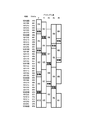
- the schedule management unit 30 can manage the relationship between the scheduled execution time of the picking work and the work subject for each preparation unit 10. More specifically, the schedule management unit 30 determines which schedule (for example, P1 to P5) each preparation unit 10 (R1 to R10 in this embodiment) is assigned to which work subject as shown in FIG. It can be managed over time with a table. Further, the schedule management unit 30 can also manage the transition of the preparation unit 10 in which each work subject (P1 to P5 in this embodiment) is engaged in work over time using a schedule table as shown in FIG. is there.
- the schedule management unit 30 includes a travel time table 30a as shown in FIG.
- the movement time table 30a defines the time (movement time) that is assumed to be required to move from the position that is the starting point of movement to the position that is the movement destination.
- the travel time table 30a can be set as appropriate. For example, as shown in FIG. 4, even if the travel is between the same points, the travel time is changed by changing the starting point, etc. It is preferable to set in consideration of the circumstances associated with movement. Specifically, in the example of FIG.
- the estimated travel time is different.
- the schedule management unit 30 can derive the estimated arrival time from each movement subject to the movement destination based on the above-described movement time table 30a. Further, the schedule management unit 30 can derive the waiting time for the moving subject to wait for the picking work based on the estimated arrival time.
- the schedule management unit 30 can perform time management based on an actual time (time) received from a separately provided clock or the like, an elapsed time after power-on, or the like.
- the unit is defined as a time slice, and the schedule is managed based on the concept of the time slice. More specifically, assuming that a predetermined time (for example, every 5 seconds) is a time slice, as shown in FIGS. 8 and 9, the states of the preparation units 10 and the work subjects are time-sequentially shown in FIG. Can be defined using
- the length of one unit of the time slice is not limited to the above-mentioned 5 seconds, and is appropriately determined in consideration of the circumstances of the picking work such as 1 second, 10 seconds, 1 minute, and 5 minutes. It can be set. For example, when the work in the dispensing room is a management target of the picking work management system 1, about 2 to 5 seconds is assumed to be appropriate.
- the schedule management unit 30 can perform schedule management for the allocation of each preparation unit 10 that can be a resource of picking work. Specifically, the schedule management unit 30 can manage the relationship between the time slice and the assigned work subject for each preparation unit 10 based on a schedule table as shown in FIG. In this table, when the column (owner ID column) indicating the ID of the work subject is a positive value, it indicates that the use of the preparation unit 10 is assigned to the work subject whose ID is the value. If the owner ID column is zero (0), the preparation unit is not assigned to any work subject, and if negative, the work subject performing maintenance such as replenishment of articles is prepared. This means that 10 uses are allocated. In the remaining time slice count column, information indicating how many unit slices are scheduled to be occupied at that time is input.
- the schedule management unit 30 refers to the owner ID column of the slice 7231 and the column of the remaining time slice number.
- the owner ID column and the remaining time slice number column are both zero (0). Since the owner ID field is zero (0), no reservation for use for other work subjects is registered in the preparation unit 10 at the time slice 7231. Further, since the remaining time in the time slice 7231 is zero (0), the preparation unit 10 can be used without limitation. Therefore, the schedule management unit 30 performs processing for assigning a time slice for the scheduled work time of the fifth worker to the fifth worker.
- the schedule management unit 30 sets the ID of the fifth worker in the owner ID column for each slice to be occupied (7231 to 7240 in the example of FIG. 10). Fill out. In addition, the schedule management unit 30 enters the remaining scheduled occupation period at that time in the number of time slices in the column of the number of remaining time slices from the first time slice to the last time slice of the period scheduled to be worked. Specifically, in the example of FIG. 10B, since the fifth worker occupies the preparation unit 10 over a period of 10 time slices from the time slice 7231, 10 to 1 over the time slices 7231 to 7240. Enter the number of remaining time slices to count down. Further, the remaining time goes back from the time slice 7231 allocated for the fifth worker and until the time when the previous schedule is encountered (up to the time slice 7222 in the example of FIG. 10B). Enter the number of slices. *
- the completion of work can be expected within this period. If there is a request for a task, the task can be assigned during this period. Specifically, in the example of FIG. 10B, when the work subject whose ID is No. 6 (hereinafter also referred to as “No. 6 worker”) can arrive at the time slice 7207, the owner ID column is zero. Since the number of remaining time slices is 7 and the number of remaining time slices is within 7 time slices, the reservation of the sixth worker can be registered. In this example, the sixth worker is scheduled to perform the work for the number of 6 slices, so as shown in FIG.
- the reservation is registered in the owner ID column from the time slice 7207 over the period of 6 slices.
- the ID of the work subject (“6” in this embodiment) is entered.
- the remaining time slice number column is updated so as to count down from 6 over 6 slices from the time slice 7207, and the period from the time slice 7206 to the time when the previous schedule is encountered (FIG. 10).
- the number of remaining time slices is entered for the time slice 7206).
- the guidance instruction output unit 31 outputs a guidance instruction for guiding the picking work so that articles are arranged along the route selected by the optimum route selection unit 29.
- a guidance instruction can be output from the guidance instruction output unit 31 toward the communication terminal 50 described in detail later.
- the picking work management system 1 includes a communication terminal 50 that can directly or indirectly communicate with the computer 2 described above.
- the communication terminal 50 is provided for each work subject.
- the communication terminal 50 may be capable of communicating with the computer 2 by wire, but can communicate with the computer 2 wirelessly so that the work subject can freely move and perform the picking work efficiently. It is desirable to be a thing.
- the communication terminal 50 is preferably a portable terminal such as a conventionally known smartphone, mobile phone, tablet terminal, notebook computer, or PDA that can be wirelessly communicated.
- the communication terminal 50 is preferably a portable information terminal that has high portability and expandability and excellent operability. Therefore, a smartphone or PDA can be suitably used for the communication terminal 50.
- the communication terminal 50 includes a notification unit 51 and a situation input unit 52.
- the notification unit 51 and the situation input unit 52 may be provided with members corresponding to the notification unit 51 and the situation input unit 52 by preparing the communication terminal 50 as a dedicated product for the picking work management system 1.
- the notification unit 51 and the status input unit 52 may be constructed by a method such as installing application software.
- the notification unit 51 notifies the work subject assigned to the communication terminal 50 of the article assembling method based on the guidance instruction output from the guidance instruction output unit 31 provided on the computer 2 side.
- the notification unit 51 needs to collect articles dispersed at n locations through a route from the first picking position (preparation unit 10) to the nth (n is a natural number) picking position (preparation unit 10). In such a case, the article sorting method is notified for each picking position (for each preparation unit 10).
- the notification unit 51 can notify the article sorting method by various methods such as display notification, voice notification, and vibration notification. For example, as shown in FIG. You may make it alert
- reporting part 51 is not restricted to what is alert
- the status input unit 52 is used to input the status of the goods that are picked up.
- the status input unit 52 can be configured by a mechanical button or the like provided in the communication terminal 50, but can be realized by a button or an input form displayed by an image on the display screen of the communication terminal 50, It can be realized by a technique such as voice input.
- the notification unit 51 51 switches the display screen of the communication terminal 50 to a notification instructing the type and quantity of articles to be prepared at the (m + 1) -th picking position (preparation unit 10) and the picking position.
- the notification notified by the notification unit 51 is the n-th item, that is, related to an article to be sorted at the final picking position
- the status input unit 52 inputs that the sorting is complete. And informing that the picking work has been completed.
- an article collecting tool 60 as shown in FIG. 14 is used for the picking work.
- the article collection tool 60 is configured by a portable container such as a basket.
- a storage space for storing articles is partitioned into a plurality of sections 61.
- Each section 61 is numbered. Therefore, it is possible to classify the goods while sorting them by notifying which section 61 the articles to be sorted should be put together with the name, image, quantity, etc. of the articles to be sorted by the notification unit 51.
- the number of sections 61 is arbitrary, but when collecting articles through a route from the first picking position (preparation unit 10) to the nth (n is a natural number) picking position (preparation unit 10). It is desirable to use an article collecting tool 60 having n or more compartments 61.
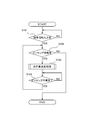
- FIG. 12 is a flowchart showing a flow when picking work is performed in the picking work management system 1. Hereinafter, the flow of picking work will be described with reference to this flowchart.
- Step S101 In step S101, whether or not the instruction information is input to the instruction information receiving unit 25 is confirmed. When the input of the instruction information is confirmed, the control proceeds to step S102.
- Step S102 it is confirmed whether or not there is a remaining number of articles to be collected by the picking operation. Here, if there is a remaining number, the control proceeds to step S103, and if there is no remaining number, the control ends.
- Step S103 a next work determination process is performed.
- the next work determination process relates to the picking work for the next article to be sorted, such as a process for selecting the optimum movement route, a process for determining the type and quantity of the article to be sorted, the determined path, the kind of article, the quantity, etc.
- a process for notifying information is performed.
- the next work determination process is performed in accordance with the subroutine shown in FIG. Thereafter, the control proceeds to step S104.
- Step S104 the implementation status of the picking work by the work method determined in step S103 is confirmed.
- the control remains in step S104 until it is confirmed that the picking work whose work method or the like has been determined in step S103, and when the completion of the picking work is confirmed, the process returns to step S102.
- step S102 by continuing the process until it is determined in step S102 that there is no remaining number of articles to be sorted, the articles to be sorted while minimizing the load (stress) applied to the work subject. Can be reliably picked without leakage.
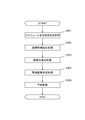
- FIG. 13 is a flowchart showing a process flow for the next work determination process. Hereinafter, the flow of the next work determination process will be described with reference to this flowchart.
- step S201 the schedule depth determination unit 26 determines the schedule formulation depth. Thereafter, the process proceeds to step S202.
- Step S202 a part or all of the articles to be prepared by the picking work are selected by the route candidate extraction unit 27 based on the instruction information received by the instruction information receiving unit 25 and the schedule development depth determined in step S201.
- a process of extracting route candidates to be collected from each preparation unit 10 as route candidates is performed.
- the schedule development depth is from the first to the a-th (a is a natural number smaller than n) picking positions. If it is limited to a range, processing for extracting route candidates is performed limited to the a-th range. Thereafter, the process proceeds to step 203.
- step S203 the total load deriving unit 28 performs total load deriving processing.
- the total load derivation process is performed for each route extracted in step S202. Thereafter, the process proceeds to step S204.
- Step S204 the optimum route selection unit 29 performs processing for determining an optimum route for the picking operation from the route candidates extracted in step S202. Specifically, in step S204, the total load derived for each route candidate by the total load derivation process in step S203 is compared, and the route with the smallest total load is determined as the optimum route. Thereafter, the process proceeds to step S205.
- Step S205 the schedule management unit 30 performs a process (reservation process) for making a reservation for using each preparation unit 10 so that the picking work can proceed based on the optimum route selected in step S204. .
- the relationship between the scheduled execution time and the work subject can be recorded for each preparation unit 10.
- the estimated work time is recorded from the time when the preparation unit 10 is expected to be reached to the time required to collect the articles.
- time management is performed using the concept of time slices, time slices corresponding to the time required to prepare the goods from the time slices corresponding to the expected arrival time to each preparation unit 10 are obtained.
- each preparation unit 10 (picking position) that is routed when performing the picking work on the optimum route is recorded in the reservation information database 32 as the scheduled work time, thereby using each preparation unit 10.
- a reservation is made.
- use reservations for other work subjects cannot be registered.
- the picking work management system 1 extracts route candidates for assembling articles from each preparation unit 10 based on the instruction information by the route candidate extraction unit 27, and calculates the total load required for assembling the articles for each route candidate. Can be derived. Also, based on the total load derived for each route candidate, a route suitable for picking work can be selected as the optimum route, and a picking work schedule can be formulated so that articles are arranged on the optimum route. Therefore, according to the picking work management system 1, it is possible to select a route that can efficiently perform the picking work while suppressing the load generated by the picking work to a minimum, and to perform schedule management.
- a route for picking an article is selected by a route that minimizes the total load derived by the total load deriving unit 28. Therefore, according to the picking work management system 1, it is possible to minimize the burden on the work subject due to the picking work.
- the route with the minimum total load derived by the total load deriving unit 28 is selected as the route for picking work is shown. However, the route other than the route with the minimum total load is picked. You may make it select as a path
- the picking work management system 1 includes the moving load table 23a, the picking load table 23b, and the standby load table 23c, the load on the work subject accompanying the occurrence of movement, picking work, and standby time is increased. Taking into account, the route of picking work can be optimized.
- the moving load table 23a, the picking load table 23b, and the standby load table 23c are provided, and an example of using a load associated with movement, picking work, and standby time as an index for route selection is shown.
- a configuration in which any one or a plurality of tables are not provided, or a table defining a load index in place of or in addition to these tables is provided and used as a route selection index. good.
- the picking load table 23b is defined in consideration of the height of the section where the article is prepared, but other factors are taken into consideration instead of or in addition to the height. It may be specified as follows.
- the schedule management unit 30 can manage the relationship between the picking work scheduled execution time and the work subject for the picking work by a plurality of work subjects performing the picking work. Therefore, according to the picking work management system 1, even when a plurality of work subjects are engaged in a single distribution warehouse or dispensing room, it is possible to manage so that the picking work by each work subject can be performed efficiently. it can.
- the schedule management unit 30 defines the minimum unit of time as a time slice, and manages the scheduled execution time of the picking work based on the number of time slices. Thereby, the schedule management by the schedule management unit 30 can be easily and accurately performed.
- the concept of time slice is introduced and schedule management is performed based on this concept. However, based on the actual time, elapsed time after power-on, etc. without using the concept of time slice. Schedule management may be performed.
- the schedule depth determination unit 26 performs the schedule formulation depth adjustment process so that the number of route candidate candidates extracted by the route candidate extraction unit 27 is equal to or less than the threshold value ⁇ .
- the scope of the schedule can be limited. Therefore, the picking work management system 1 can reduce the processing capacity required for the schedule formulation process.
- the schedule depth determination unit 26 can adjust the schedule formulation depth.
- the picking work management system 1 may not include the schedule depth determination unit 26.
- the method for adjusting the schedule development depth by the schedule depth determination unit 26 is not limited to the above-described method. For example, the user may arbitrarily set the schedule development depth.
- the picking work management system 1 by performing the picking work in accordance with the guidance instruction output from the guidance instruction output unit 31, it is possible to collect articles along the route selected by the optimum route selection unit 29. Therefore, according to the picking work management system 1, it is possible to efficiently perform the picking work without losing the work subject, and it is possible to minimize the load (stress) associated with the picking work.
- the notification unit 51 notifies the picking method of the articles separately for each picking position (preparation unit 10). Therefore, the picking work can be advanced if articles are prepared as notified by the notification unit 51 at each picking position (preparation part 10), and the picking work can be efficiently performed without depending on the ability or experience of the work subject. Can be done. In addition, on the condition that the input of the completion of article collection at each picking position is input to the status input unit 52, the notification unit 51 notifies the article selection method at the next picking position. However, there is no problem such as notification of how to arrange articles one after another with insufficient.
- the notification unit 51 and the situation input unit 52 are realized by a portable information terminal such as a so-called smartphone. Therefore, in the picking work management system 1, it is possible to receive notification from the notification unit 51 or perform input work to the situation input unit 52 by carrying the picking work with the portable information terminal.
- the articles collected at each picking position (preparation unit 10) using the article collecting tool 60 composed of a basket or the like are classified into each section 61 for each picking position. Can be collected. Thereby, it is possible to reliably pick the articles to be collected without omission.
- the picking work can be performed using the article collection tool 60.
- the picking work can be performed without using the article collection tool 60, or the picking work can be divided into sections 61.
- a general container such as a basket may be used instead of the article collecting tool 60.
- each function of the picking work management system 1 can be exhibited by installing the picking work management system 1 in the general-purpose computer 2.
- a control device that functions as a dedicated product for exhibiting the above may be used.
- the picking work management system and computer according to the present invention can be suitably used at a site where articles prepared in various places should be collected by picking work, such as a distribution warehouse or a dispensing room.
Landscapes
- Engineering & Computer Science (AREA)
- Business, Economics & Management (AREA)
- Economics (AREA)
- Quality & Reliability (AREA)
- Tourism & Hospitality (AREA)
- Human Resources & Organizations (AREA)
- Marketing (AREA)
- Operations Research (AREA)
- Development Economics (AREA)
- Strategic Management (AREA)
- Entrepreneurship & Innovation (AREA)
- Physics & Mathematics (AREA)
- General Business, Economics & Management (AREA)
- General Physics & Mathematics (AREA)
- Theoretical Computer Science (AREA)
- Mechanical Engineering (AREA)
- Management, Administration, Business Operations System, And Electronic Commerce (AREA)
Applications Claiming Priority (2)
| Application Number | Priority Date | Filing Date | Title |
|---|---|---|---|
| JP2016-094131 | 2016-04-15 | ||
| JP2016094131A JP6312003B2 (ja) | 2016-04-15 | 2016-04-15 | ピッキング作業管理システム、及びプログラム |
Publications (1)
| Publication Number | Publication Date |
|---|---|
| WO2017179577A1 true WO2017179577A1 (ja) | 2017-10-19 |
Family
ID=60041594
Family Applications (1)
| Application Number | Title | Priority Date | Filing Date |
|---|---|---|---|
| PCT/JP2017/014833 Ceased WO2017179577A1 (ja) | 2016-04-15 | 2017-04-11 | ピッキング作業管理システム、及びプログラム |
Country Status (2)
| Country | Link |
|---|---|
| JP (1) | JP6312003B2 (https=) |
| WO (1) | WO2017179577A1 (https=) |
Cited By (3)
| Publication number | Priority date | Publication date | Assignee | Title |
|---|---|---|---|---|
| WO2020082881A1 (zh) * | 2018-10-26 | 2020-04-30 | 北京极智嘉科技有限公司 | 集备货和拣选为一体的库存区域、库存管理系统及方法 |
| CN111758309A (zh) * | 2018-04-05 | 2020-10-09 | 株式会社富士 | 信息处理装置及信息处理方法 |
| WO2023116075A1 (zh) * | 2021-12-24 | 2023-06-29 | 北京京东振世信息技术有限公司 | 站点到货量预测方法、装置、电子设备和计算机可读介质 |
Families Citing this family (1)
| Publication number | Priority date | Publication date | Assignee | Title |
|---|---|---|---|---|
| KR102430897B1 (ko) * | 2022-04-04 | 2022-08-10 | 쿠팡 주식회사 | 아이템 피킹 정보 관리 방법 및 그 장치 |
Citations (6)
| Publication number | Priority date | Publication date | Assignee | Title |
|---|---|---|---|---|
| JPH0549712U (ja) * | 1991-12-11 | 1993-06-29 | 村田機械株式会社 | 携帯型作業指示装置 |
| JPH08329041A (ja) * | 1995-05-29 | 1996-12-13 | Toshiba Corp | 経路決定装置及び方法 |
| JP2001091284A (ja) * | 1999-07-19 | 2001-04-06 | Matsushita Electric Ind Co Ltd | 巡回経路選出方法 |
| JP2007289536A (ja) * | 2006-04-27 | 2007-11-08 | Shinko Seisakusho Co Ltd | 薬剤ピッキング方法及び装置 |
| JP2008201569A (ja) * | 2007-02-22 | 2008-09-04 | Hitachi Ltd | 作業管理システム、作業管理方法、及び管理計算機 |
| US20100121480A1 (en) * | 2008-09-05 | 2010-05-13 | Knapp Systemintegration Gmbh | Method and apparatus for visual support of commission acts |
-
2016
- 2016-04-15 JP JP2016094131A patent/JP6312003B2/ja active Active
-
2017
- 2017-04-11 WO PCT/JP2017/014833 patent/WO2017179577A1/ja not_active Ceased
Patent Citations (6)
| Publication number | Priority date | Publication date | Assignee | Title |
|---|---|---|---|---|
| JPH0549712U (ja) * | 1991-12-11 | 1993-06-29 | 村田機械株式会社 | 携帯型作業指示装置 |
| JPH08329041A (ja) * | 1995-05-29 | 1996-12-13 | Toshiba Corp | 経路決定装置及び方法 |
| JP2001091284A (ja) * | 1999-07-19 | 2001-04-06 | Matsushita Electric Ind Co Ltd | 巡回経路選出方法 |
| JP2007289536A (ja) * | 2006-04-27 | 2007-11-08 | Shinko Seisakusho Co Ltd | 薬剤ピッキング方法及び装置 |
| JP2008201569A (ja) * | 2007-02-22 | 2008-09-04 | Hitachi Ltd | 作業管理システム、作業管理方法、及び管理計算機 |
| US20100121480A1 (en) * | 2008-09-05 | 2010-05-13 | Knapp Systemintegration Gmbh | Method and apparatus for visual support of commission acts |
Cited By (4)
| Publication number | Priority date | Publication date | Assignee | Title |
|---|---|---|---|---|
| CN111758309A (zh) * | 2018-04-05 | 2020-10-09 | 株式会社富士 | 信息处理装置及信息处理方法 |
| WO2020082881A1 (zh) * | 2018-10-26 | 2020-04-30 | 北京极智嘉科技有限公司 | 集备货和拣选为一体的库存区域、库存管理系统及方法 |
| US12330873B2 (en) | 2018-10-26 | 2025-06-17 | Beijing Geekplus Technology Co. Ltd. | Inventory region integrating goods preparation and picking, and inventory management system and method |
| WO2023116075A1 (zh) * | 2021-12-24 | 2023-06-29 | 北京京东振世信息技术有限公司 | 站点到货量预测方法、装置、电子设备和计算机可读介质 |
Also Published As
| Publication number | Publication date |
|---|---|
| JP6312003B2 (ja) | 2018-04-18 |
| JP2017206317A (ja) | 2017-11-24 |
Similar Documents
| Publication | Publication Date | Title |
|---|---|---|
| Klodawski et al. | Simulation analysis of order picking efficiency with congestion situations | |
| JP6312003B2 (ja) | ピッキング作業管理システム、及びプログラム | |
| JP6795801B2 (ja) | ピッキング作業管理システム、及びプログラム | |
| JP2019077549A (ja) | 棚管理システム及び棚管理方法 | |
| KR20190085047A (ko) | 정보 처리 장치, 그 제어 방법 및 프로그램 | |
| CN106662874A (zh) | 控制运输设备移动的方法、系统和装置 | |
| JP6303071B2 (ja) | 間口設定システム | |
| JP6856144B2 (ja) | シミュレーションシステム、およびシミュレート方法 | |
| US11760574B2 (en) | Systems and methods for controlling order fulfillment using spatial batching | |
| Gagliardi et al. | On storage assignment policies for unit-load automated storage and retrieval systems | |
| Jain et al. | Dispatching strategies for managing uncertainties in automated manufacturing systems | |
| CN114723264A (zh) | 一种立体库任务调度方法、装置及系统 | |
| JP6214835B2 (ja) | 作業指導割当システム及び作業指導割当方法 | |
| JP2017206317A5 (https=) | ||
| US8489228B2 (en) | Path planning in a warehouse | |
| WO2020075872A1 (en) | Binning/picking work support method, and binning/picking work support system | |
| Yang et al. | Solution to the multidepot inventory slack-routing problem at the planning stage | |
| Eckrot et al. | A simulated annealing approach to optimal storing in a multi-level warehouse | |
| Gootzen et al. | Task scheduling in a full roaming shuttle system | |
| JP2022043323A (ja) | 在庫を管理する方法およびその装置 | |
| JP6781016B2 (ja) | 乗務員配置管理支援システム | |
| JP2017031690A (ja) | 機械式格納庫制御装置および機械式格納庫制御方法 | |
| US12288179B2 (en) | Dynamic logistics environment | |
| EP4432176A1 (en) | Optimisation of order item picking | |
| JP2009129089A (ja) | 生産計画作成装置 |
Legal Events
| Date | Code | Title | Description |
|---|---|---|---|
| NENP | Non-entry into the national phase |
Ref country code: DE |
|
| 121 | Ep: the epo has been informed by wipo that ep was designated in this application |
Ref document number: 17782390 Country of ref document: EP Kind code of ref document: A1 |
|
| 122 | Ep: pct application non-entry in european phase |
Ref document number: 17782390 Country of ref document: EP Kind code of ref document: A1 |