WO2017168783A1 - 船舶バラスト水の処理システム - Google Patents
船舶バラスト水の処理システム Download PDFInfo
- Publication number
- WO2017168783A1 WO2017168783A1 PCT/JP2016/075762 JP2016075762W WO2017168783A1 WO 2017168783 A1 WO2017168783 A1 WO 2017168783A1 JP 2016075762 W JP2016075762 W JP 2016075762W WO 2017168783 A1 WO2017168783 A1 WO 2017168783A1
- Authority
- WO
- WIPO (PCT)
- Prior art keywords
- disinfectant
- ballast water
- call
- order
- ship
- Prior art date
- Legal status (The legal status is an assumption and is not a legal conclusion. Google has not performed a legal analysis and makes no representation as to the accuracy of the status listed.)
- Ceased
Links
Images

Classifications
-
- C—CHEMISTRY; METALLURGY
- C02—TREATMENT OF WATER, WASTE WATER, SEWAGE, OR SLUDGE
- C02F—TREATMENT OF WATER, WASTE WATER, SEWAGE, OR SLUDGE
- C02F1/00—Treatment of water, waste water, or sewage
- C02F1/72—Treatment of water, waste water, or sewage by oxidation
- C02F1/76—Treatment of water, waste water, or sewage by oxidation with halogens or compounds of halogens
-
- B—PERFORMING OPERATIONS; TRANSPORTING
- B63—SHIPS OR OTHER WATERBORNE VESSELS; RELATED EQUIPMENT
- B63B—SHIPS OR OTHER WATERBORNE VESSELS; EQUIPMENT FOR SHIPPING
- B63B13/00—Conduits for emptying or ballasting; Self-bailing equipment; Scuppers
-
- B—PERFORMING OPERATIONS; TRANSPORTING
- B63—SHIPS OR OTHER WATERBORNE VESSELS; RELATED EQUIPMENT
- B63J—AUXILIARIES ON VESSELS
- B63J4/00—Arrangements of installations for treating ballast water, waste water, sewage, sludge, or refuse, or for preventing environmental pollution not otherwise provided for
- B63J4/002—Arrangements of installations for treating ballast water, waste water, sewage, sludge, or refuse, or for preventing environmental pollution not otherwise provided for for treating ballast water
-
- C—CHEMISTRY; METALLURGY
- C02—TREATMENT OF WATER, WASTE WATER, SEWAGE, OR SLUDGE
- C02F—TREATMENT OF WATER, WASTE WATER, SEWAGE, OR SLUDGE
- C02F1/00—Treatment of water, waste water, or sewage
- C02F1/008—Control or steering systems not provided for elsewhere in subclass C02F
-
- C—CHEMISTRY; METALLURGY
- C02—TREATMENT OF WATER, WASTE WATER, SEWAGE, OR SLUDGE
- C02F—TREATMENT OF WATER, WASTE WATER, SEWAGE, OR SLUDGE
- C02F1/00—Treatment of water, waste water, or sewage
- C02F1/50—Treatment of water, waste water, or sewage by addition or application of a germicide or by oligodynamic treatment
-
- C—CHEMISTRY; METALLURGY
- C02—TREATMENT OF WATER, WASTE WATER, SEWAGE, OR SLUDGE
- C02F—TREATMENT OF WATER, WASTE WATER, SEWAGE, OR SLUDGE
- C02F2103/00—Nature of the water, waste water, sewage or sludge to be treated
- C02F2103/008—Originating from marine vessels, ships and boats, e.g. bilge water or ballast water
-
- C—CHEMISTRY; METALLURGY
- C02—TREATMENT OF WATER, WASTE WATER, SEWAGE, OR SLUDGE
- C02F—TREATMENT OF WATER, WASTE WATER, SEWAGE, OR SLUDGE
- C02F2209/00—Controlling or monitoring parameters in water treatment
- C02F2209/29—Chlorine compounds
-
- C—CHEMISTRY; METALLURGY
- C02—TREATMENT OF WATER, WASTE WATER, SEWAGE, OR SLUDGE
- C02F—TREATMENT OF WATER, WASTE WATER, SEWAGE, OR SLUDGE
- C02F2303/00—Specific treatment goals
- C02F2303/04—Disinfection
Definitions
- the present invention relates to a ship ballast water treatment system, and more particularly, to a ship ballast water treatment system that makes it possible to order a ballast water treatment agent at an appropriate timing.
- the standard set by the International Maritime Organization (IMO) as a standard for the treatment of ship ballast water is that the number of organisms (mainly zooplankton) of 50 ⁇ m or more contained in the ship ballast water discharged from the ship is less than 10 in 1 m 3 , The number of organisms (mainly phytoplankton) of 10 ⁇ m or more and less than 50 ⁇ m is less than 10 in 1 ml, the number of Vibrio cholerae is less than 1 cfu in 100 ml, the number of E. coli is less than 250 cfu in 100 ml, and the number of enterococci in 100 ml Less than 100 cfu.
- IMO International Maritime Organization
- ship ballast water treatment systems include chlorine-based and oxygen-based active substance (disinfectant) storage devices or their onboard generators, and In many cases, a system is used that combines a ballast water adding device and a neutralizing agent adding device for neutralizing an active substance remaining in the ballast water when discharging the ballast water.
- Patent Document 1 discloses a method for treating ballast water in which microorganisms and the like are sterilized by adding a chlorine-based disinfectant such as sodium hypochlorite to ballast water and securing a residence time.
- a chlorine-based disinfectant As a disinfectant, a chlorine-based disinfectant is generally used.
- sodium hypochlorite is often used because it is widely used for disinfection and disinfection and can be obtained anywhere in the world.
- sodium sulfite and sodium bisulfite are used as a neutralizing agent.
- a sterilizing agent such as sodium hypochlorite is added to ballast water to sterilize microorganisms by ensuring residence time, and residual chlorine is removed from sodium sulfite, sodium bisulfite, and the like.
- sodium hypochlorite gradually deteriorates after production and the effective chlorine concentration decreases.
- the effective chlorine concentration is about 12% immediately after production, but gradually decreases after production and stabilizes at about 6%. Since this deterioration phenomenon is promoted when the temperature is high, the sodium hypochlorite is often stored and managed on the ship after the temperature is controlled.
- the ship ballast water treatment system should be tested by the method shown in the guidelines of the International Maritime Organization (IMO), receive final IMO certification for environmental impact, and be approved by the regulatory authorities of each country.
- the chlorine concentration also called active substance concentration, TRO concentration, etc.
- the required amount of sodium hypochlorite added to the volume of ballast water to be treated determined by the ship will be reduced. A situation arises where it must be increased.
- hypochlorous acid becomes toxic chloric acid when it deteriorates, but the concentration of chloric acid in the discharged water is limited in IMO examination. For this reason, depending on the degree of deterioration of sodium hypochlorite, it cannot be used by adding it to ship ballast water, and sodium hypochlorite that cannot be used in this way needs to be treated and disposed of on board or at the port of call. I will come.
- This invention is made in view of such a point, and it aims at providing the processing system of ship ballast water which makes it possible to receive delivery of the disinfectant which has not deteriorated as much as possible.
- the present invention provides a ship ballast water treatment system attached to a ship navigating a channel having a plurality of ports of call, wherein the disinfectant storage tank stores a disinfectant and the disinfectant Data acquisition means for acquiring stored germicide information relating to the remaining amount and effective chlorine concentration of the germicide stored in the fluid reservoir, ordering party information regarding the germicide supplier in each of the plurality of port calls, and the plurality Data storage means for storing the call order of the port of call and the route information regarding the port call schedule, and data calculation means for determining whether or not it is necessary to order a bactericidal agent based on the stored bactericidal agent information.
- the data calculation means determines that it is necessary to order a bactericidal agent, based on the order destination information and the route information, which port of call Determining whether to order fungicide vendor of definitive fungicides, it provides the processing system of the ship ballast water (Invention 1).
- invention 1 it is determined whether or not it is necessary to order a bactericidal agent based on the stored bactericidal agent information related to the remaining amount and effective chlorine concentration of the bactericide in the bactericide storage tank. Based on the supplier information and route information stored in the data storage means, it is possible to determine the supplier so that the disinfectant can be delivered at an appropriate timing at the port of call appropriate for delivery. It will be possible to receive a disinfectant that has not been used.
- the ship ballast water treatment system of the above invention (Invention 1) is suitably used particularly when the disinfectant is sodium hypochlorite (Invention 2).
- the ordering party information is necessary until a disinfectant that has not deteriorated has been delivered to the ship since the ordering party of the disinfectant at each of the plurality of port calls received the order. It is preferable to include information related to the lead time (Invention 3).
- the lead necessary for supplying the disinfectant that has not deteriorated since the disinfectant supplier at each of the plurality of port calls the disinfectant after receiving the order. Since it is possible to make decisions based on information about time, it is possible to receive disinfectants that have not deteriorated as much as possible at a more appropriate timing. It is possible to reduce the risk that it takes extra time and money to dispose of the disinfectant.
- the data calculation means may further comprise data communication means for placing an order for the disinfectant determined by the data calculation means (Invention 4). Moreover, in the said invention (invention 4), it is preferable that the said data communication means automatically orders disinfectant in conjunction with determination of the order place by the said data calculating means (invention 5).
- the supplier can be determined so that the disinfectant can be delivered at an appropriate timing in a port suitable for delivery, and the decision can be promptly communicated to the supplier. Therefore, it becomes possible to receive delivery of a bactericide that has not deteriorated as much as possible.
- the ship ballast water treatment system of the present invention it is possible to receive a disinfectant that has not deteriorated as much as possible.
- the ship ballast water treatment system 1 includes a water intake portion 11 for raw water W as ballast water, a main line 12 that supplies the raw water W connected to the water intake portion 11, and A ballast tank 13 provided at the end of the main line 12 is provided, and immediately after the intake section 11 is connected to the main line 12, a liquid feed pump 14 is provided as a means for feeding the raw water W. .
- the main line 12 branches to a discharge line 15 in the middle (before the ballast tank 13), and the end of the main line 12 is a drainage section 16.
- An on-off valve (not shown) for switching between the main line 12 and the discharge line 15 is provided at a branch point from the main line 12 to the discharge line 15.
- a sterilizing agent supply line including a sterilizing agent storage tank 21 and a liquid feed pump 22 is provided in the middle of the main line 12, and is configured so that the sterilizing agent can be injected into the raw water W flowing in the main line 12.
- a neutralizer solution supply line including a neutralizer solution storage tank 31 is provided in the middle of the discharge line 15, and with respect to drainage (discharge ballast water) from the ballast tank 13 flowing in the discharge line 15. The neutralizer solution can be injected.
- a first flow meter 41 for measuring the flow rate of the raw water W flowing through the main line 12 is provided on the main line 12 downstream of the liquid feed pump 14 and upstream of the sterilizing agent supply line connection.
- a second flow meter 42 for measuring the flow rate of the bactericide injected into the main line 12 is provided on the downstream side of the liquid feed pump 22 on the agent supply line.
- a first chlorine concentration meter 43 that measures the chlorine concentration in the ballast water (the raw water W is injected with the bactericidal agent) is provided on the downstream side of the connecting portion of the bactericidal agent supply line on the main line 12.
- a second chlorine concentration meter 44 for measuring the chlorine concentration in the discharged ballast water is provided on the downstream side of the connecting portion of the neutralizer solution supply line on the discharge line 15.
- sodium hypochlorite is used as the bactericidal agent, and sodium sulfite or sodium bisulfite is used as the neutralizing agent.
- the processing system 1 of this embodiment is not necessarily used only for those disinfectants and neutralizers, it is preferably used particularly when the disinfectant is sodium hypochlorite.
- the sterilant storage tank 21 has a temperature management function realized by a water-cooled chiller, an air-cooled chiller, or the like. By storing and managing the sterilant in a temperature-controlled state, the sterilizer is deteriorated due to high temperature on the ship. Suppress.
- the disinfectant storage tank 21 is of a size that can store a disinfectant that can be treated once for ballast water, but has a capacity that can be treated at least twice, preferably 3 times. It is preferable that By giving such a capacity
- a level meter 45 is installed in the sterilizing agent storage tank 21 so that the remaining amount of the sterilizing agent in the sterilizing agent storage tank 21 can be measured.
- a data processing device 50 is provided in a ship S on which the processing system 1 according to the present embodiment is mounted.
- the data processing device 50 is a general purpose installed in a bridge, a steering room, an engine room, etc. of the ship S, for example. Or a personal computer.
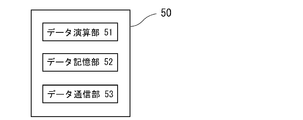
- the data processing device 50 includes a data calculation unit 51, a data storage unit 52, and a data communication unit 53.
- the data processing apparatus 50 includes four measuring instruments, that is, a first flow meter 41 that measures the flow rate of the raw water W flowing through the main line 12, and a second flow meter that measures the flow rate of the sterilizing agent added to the main line 12.
- the acquired measurement value data is configured to be received from each measuring instrument.
- the data calculation unit 51 needs to obtain the stored germicide information regarding the remaining amount and effective chlorine concentration of the germicide stored in the germicide reservoir 21 and order the germicide based on the stored germicide information. It fulfills the function of judging whether or not. In addition, when it is determined that it is necessary to order a bactericidal agent, a bactericidal agent is ordered from any of a plurality of ports of call on the basis of the vendor information and route information described later. It fulfills the function of determining.
- the stored germicide information is stored in the germicide reservoir 21 estimated from the remaining amount of germicide in the germicide reservoir 21 received from the level meter 45 and the chlorine concentration in the ballast water received from the first chlorine concentration meter 43. Contains information on the effective chlorine concentration of fungicides.
- the effective chlorine concentration of the bactericide in the bactericide storage tank 21 is estimated as follows.
- the ballast water treatment is performed so that the chlorine concentration in the ballast water measured by the first chlorine concentration meter 43 becomes a prescribed chlorine concentration T (mg / L as Cl 2 ).
- supplier information and route information are stored in advance.
- the ordering party information is information on the ordering party of the disinfectant in each of the plurality of ports of call of the ship S, and the sterilization that has not deteriorated since the order of the disinfectant in each of the plurality of ports of call of the ship S receives the order. Contains information on the lead time required to deliver the agent to the ship.
- the route information is information related to the calling order and the calling schedule of a plurality of calling places of the ship S.
- the data communication unit 53 determines that the data calculation unit 51 needs to order a bactericidal agent, and places an order for a bactericidal agent in any of the port of call P1, P2, P3, P4, P5, P6.
- the ordering data is transmitted to order the bactericidal agent from the sterilizing agent who has determined the order.
- the order data may be transmitted, for example, by sending an e-mail, sending data online in an online system dedicated to ordering, sending a fax, or using other communication means.
- the decision of the order is promptly communicated to the supplier, and deterioration is assured as much as possible. It may be possible to receive a disinfectant that has not been delivered.
- the level meter 45 measures the remaining amount V (m 3 ) of the bactericide in the bactericide storage tank 21, and the data calculation unit 51 acquires the measured value. . Further, the chlorine concentration T (mg / L as Cl 2 ) in the ballast water is measured by the first chlorine concentration meter 43, and the ballast water flow rate b (m 3 / h) measured by the first flow meter 41 and the second flow meter. The effective chlorine concentration c (g / L) in the sterilizing agent in the sterilizing agent storage tank 21 is estimated by using the sterilizing agent flow rate s (m 3 / h) measured in 42 together. The estimated value is acquired.
- Data calculation unit 51 compares the remaining quantity V fungicides fungicides in reservoir 21 (m 3) the amount of the required disinfectant V 0 (m 3), if for example V ⁇ 2V 0 sterilization Judge that it is necessary to order the agent.
- the data calculation unit 51 orders the place of sterilizing agent based on the route information and the ordering destination information stored in the data storage unit 52. To decide. For example, the required time from the current location to the next port of call P1 is T1, the required lead time at P1 is L1, and the required time from the port of call P1 to the next port of call P2 is required at T2 and P2. If the lead time is L2, if T1 ⁇ L1, it is possible to receive a disinfectant that has not deteriorated by placing an order for delivery at P1, which is the next port of call.
- the data calculation unit 51 determines that it is necessary to order a bactericidal agent, and orders a bactericidal agent from any of the ports of call P1, P2, P3, P4, P5, P6 at the place where the bactericide is ordered. If it is determined, the data communication unit 53 automatically transmits the ordering data to order the sterilizing agent to the sterilizing agent ordering party who has determined the ordering. As a result, the supplier can be determined so that the disinfectant can be delivered at an appropriate timing at the appropriate port for delivery, and the decision can be promptly communicated to the supplier. It becomes possible to receive delivery of no disinfectant. In addition, what is necessary is just to take the difference between the remaining amount V of the sterilizing agent in the sterilizing agent storage tank 21 and the tank capacity of the sterilizing agent storing tank 21 for the order quantity.
- the ordering party can be determined so that the disinfectant is delivered at an appropriate timing at a port of call suitable for delivery. It becomes possible to receive a disinfectant that has not deteriorated as much as possible.
- the disinfectant that has not deteriorated since the ordering party of the disinfectant at each of the plurality of calling places of the ship S receives the order is delivered to the ship.
- the lead time required to do so it will be possible to receive a fungicide that has not deteriorated as much as possible at a more appropriate time, increasing the cost burden by extending the staying time at the port, It is possible to reduce the risk that it takes extra time and money to dispose of disinfectants that are not used.
- the effective chlorine concentration of the bactericide in the bactericide storage tank 21 is estimated from the chlorine concentration in the ballast water received from the first chlorine concentration meter 43. It is good also as what measures the effective chlorine concentration of the disinfectant in 21 directly.
- the data acquisition unit, the data calculation unit, the data storage unit, and the data communication unit are configured to be realized by a single data processing device 50.
- a plurality of units are used.
- a system configuration may be adopted in which the functions of the data acquisition unit, the data calculation unit, the data storage unit, and the data communication unit are implemented separately.
- the data calculation unit 51 of the data processing device 50 cannot determine / select the disinfectant ordering party due to the order deadline, this is indicated by an audio output device (not shown), a liquid crystal monitor, etc.
- the system configuration may warn the sailors via the display device (not shown), and the sailor who has received the warnings can manually order the disinfectant at the optimal ordering party.
Landscapes
- Engineering & Computer Science (AREA)
- Chemical & Material Sciences (AREA)
- Environmental & Geological Engineering (AREA)
- Organic Chemistry (AREA)
- Water Supply & Treatment (AREA)
- Hydrology & Water Resources (AREA)
- Life Sciences & Earth Sciences (AREA)
- Combustion & Propulsion (AREA)
- Mechanical Engineering (AREA)
- Ocean & Marine Engineering (AREA)
- Health & Medical Sciences (AREA)
- General Health & Medical Sciences (AREA)
- Public Health (AREA)
- Toxicology (AREA)
- Treatment Of Water By Oxidation Or Reduction (AREA)
Abstract
船舶バラスト水の処理システム1は、複数の寄港地を有する航路を航行する船舶Sに付設され、殺菌剤を貯留する殺菌剤貯留槽21と、殺菌剤貯留槽21に貯留された殺菌剤の残量及び有効塩素濃度に関する貯留殺菌剤情報を取得するデータ取得手段と、複数の寄港地のそれぞれにおける殺菌剤の発注先に関する発注先情報と、複数の寄港地の寄港順及び寄港スケジュールに関する航路情報とが記憶されたデータ記憶手段と、貯留殺菌剤情報に基づいて殺菌剤を発注する必要があるかどうかを判断するデータ演算手段と、を備える。データ演算手段が、殺菌剤を発注する必要があると判断した場合には、発注先情報及び航路情報に基づいて、複数の寄港地のうちどの寄港地における殺菌剤の発注先に殺菌剤を発注するかを決定する。かかる船舶バラスト水の処理システムによれば、極力劣化していない殺菌剤の納入を受けることが可能となる。
Description
本発明は、船舶バラスト水の処理システムに関し、特に、適切なタイミングでバラスト水処理剤を発注することを可能とする船舶バラスト水の処理システムに関する。
一般に船舶、特に貨物船は、積載貨物などの重量を含めて設計されているため、空荷または積荷が少ない状態の船舶は、プロペラ没水深度の確保、空荷時における安全航行の確保等の必要性から、出港前に港において海水などを取水して船舶のバランスを取るが、このバラストとして用いられる水のことを船舶バラスト水とよぶ。この船舶バラスト水は、無積載で出港するとき、その出港地で港の海水などをバラストタンクに積み込む一方、逆に港内で積荷をするときには、船舶バラスト水の排出を行う。
ところで、環境の異なる荷積み港と荷下し港との間を往復する船舶によって船舶バラスト水の注排水が行われると、荷積み港と荷下し港における船舶バラスト水に含まれる微生物の差異により沿岸生態系に悪影響を及ぼすことが懸念されている。そこで、船舶の船舶バラスト水管理に関する国際会議において2004年2月に船舶の船舶バラスト水及び沈殿物の規制及び管理のための国際条約が採択され、船舶バラスト水の処理が義務付けられることとなった。
船舶バラスト水の処理基準として国際海事機構(IMO)が定める基準は、船舶から排出される船舶バラスト水に含まれる50μm以上の生物(主に動物プランクトン)の数が1m3中に10個未満、10μm以上50μm未満の生物(主に植物プランクトン)の数が1ml中に10個未満、コレラ菌の数が100ml中に1cfu未満、大腸菌の数が100ml中に250cfu未満、腸球菌の数が100ml中に100cfu未満となっている。
このような船舶バラスト水の処理基準を満たすために、船舶バラスト水の処理システムとして、塩素系、酸素系などの活性物質(殺菌剤)の貯蔵装置もしくはこれらの船上生成装置と、これら活性物質のバラスト水への添加装置と、バラスト水の排出時にバラスト水に残存する活性物質を中和するための中和剤添加装置とを組み合わせたシステムが採用されることが多い。例えば特許文献1には、バラスト水に次亜塩素酸ナトリウム等の塩素系の殺菌剤を添加して、滞留時間を確保することにより微生物等を殺菌するバラスト水の処理方法が開示されている。
殺菌剤としては一般的に塩素系のものが用いられ、特に、消毒や殺菌に広く使われており、世界中どこでも入手が可能であることから、次亜塩素酸ナトリウムが用いられることが多い。また、中和剤としては亜硫酸ナトリウムや重亜硫酸ナトリウムが用いられている。例えば特許文献1には、バラスト水に次亜塩素酸ナトリウム等の塩素系の殺菌剤を添加して、滞留時間を確保することにより微生物等を殺菌し、残留塩素を亜硫酸ナトリウムや重亜硫酸ナトリウム等で還元するバラスト水の処理方法が開示されている。
ところで、次亜塩素酸ナトリウムは製造後、次第に劣化して有効塩素濃度が低下していくことが知られている。通常であれば、製造直後は有効塩素濃度が12%程度であるが、製造後徐々に低下していき、約6%で安定化する。この劣化現象は温度が高いと促進されるため、船上では温度管理した上で次亜塩素酸ナトリウムを貯蔵管理していることが多い。
工業薬品は、通常、製造後は倉庫等で保管されており、その後客先に向けて出荷される。次亜塩素酸ナトリウムの場合、地域や製造業者によっては保管時の温度や保管期間の管理が適切でないこともあり、出荷時には既に有効塩素濃度が低下していることも珍しくない。
一方、船舶バラスト水の処理システムは、国際海事機構(IMO)によるガイドラインに示された方法で試験を実施し、環境影響に関するIMOの最終認証を受けるとともに、各国の監督官庁による型式承認を得なければならず、バラスト水処理工程における船舶バラスト水中の塩素濃度(活性物質濃度、TRO濃度等とも呼ばれる。)も明確に規定される。したがって、納入された次亜塩素酸ナトリウムが劣化しており、有効塩素濃度が低下していると、船舶によって決まる処理対象バラスト水の容量に対して添加される次亜塩素酸ナトリウムの必要量を増やさざるを得ない状況が生じる。
また、次亜塩素酸は劣化すると毒性を持つ塩素酸になるが、IMOの審査においては排出水中の塩素酸濃度が制限されている。このため、次亜塩素酸ナトリウムの劣化度合いによっては船舶バラスト水に添加して使用することができず、このように使用できない次亜塩素酸ナトリウムを船上又は寄港地で処理・処分する必要が出てきてしまう。
本発明は、このような点に鑑みてなされたものであり、極力劣化していない殺菌剤の納入を受けることを可能とする船舶バラスト水の処理システムを提供することを目的とする。
上記目的を達成するために、本発明は、複数の寄港地を有する航路を航行する船舶に付設される船舶バラスト水の処理システムであって、殺菌剤を貯留する殺菌剤貯留槽と、前記殺菌剤貯留槽に貯留された殺菌剤の残量及び有効塩素濃度に関する貯留殺菌剤情報を取得するデータ取得手段と、前記複数の寄港地のそれぞれにおける殺菌剤の発注先に関する発注先情報と、前記複数の寄港地の寄港順及び寄港スケジュールに関する航路情報とが記憶されたデータ記憶手段と、前記貯留殺菌剤情報に基づいて殺菌剤を発注する必要があるかどうかを判断するデータ演算手段と、を備え、前記データ演算手段が、殺菌剤を発注する必要があると判断した場合には、前記発注先情報及び前記航路情報に基づいて、前記複数の寄港地のうちどの寄港地における殺菌剤の発注先に殺菌剤を発注するかを決定する、船舶バラスト水の処理システムを提供する(発明1)。
上記発明(発明1)によれば、殺菌剤貯留槽における殺菌剤の残量及び有効塩素濃度に関する貯留殺菌剤情報に基づいて殺菌剤の発注の要否を判断し、必要な場合には、予めデータ記憶手段に記憶されている発注先情報と航路情報とに基づき、納入に適切な寄港地において、適切なタイミングで殺菌剤が納入されるように発注先を決定することができるため、極力劣化していない殺菌剤の納入を受けることが可能となる。
上記発明(発明1)の船舶バラスト水の処理システムは、特に前記殺菌剤が次亜塩素酸ナトリウムである場合に好適に用いられる(発明2)。
上記発明(発明1,2)においては、前記発注先情報が、前記複数の寄港地のそれぞれにおける殺菌剤の発注先が発注を受けてから劣化していない殺菌剤を船舶に納入するまでに必要なリードタイムに関する情報を含むことが好ましい(発明3)。
殺菌剤の発注先への発注から船舶へ殺菌剤が納入されるまでのリードタイムを考慮せずに殺菌剤の発注を行えば、寄港地に到着後、殺菌剤が納入されるまでに時間がかかる状況が発生し得るため、船舶バラスト水を処理するまで荷役作業ができない事態を招き、その結果、港での滞在時間の延長による経費負担が増加してしまう。また逆に、安全をみて殺菌剤を発注すれば、必要以上に前倒しで殺菌剤が納入されてしまう状況も起こり得るが、その結果、船上での保管中に殺菌剤が劣化してしまう可能性が生じ、使用しない殺菌剤の処理・処分に余計な手間と費用がかかってしまう。上記発明(発明3)によれば、殺菌剤の発注先を複数の寄港地のそれぞれにおける殺菌剤の発注先が発注を受けてから劣化していない殺菌剤を船舶に納入するまでに必要なリードタイムに関する情報に基づいて決定することができるため、より適切なタイミングで、極力劣化していない殺菌剤の納入を受けることが可能となり、港での滞在時間の延長による経費負担の増加や、使用しない殺菌剤の処理・処分に余計な手間と費用がかかるといったリスクの低減を図ることができる。
上記発明(発明1~3)においては、前記データ演算手段が決定した殺菌剤の発注先に対して殺菌剤を発注するデータ通信手段を更に備えていてもよい(発明4)。また、上記発明(発明4)においては、前記データ通信手段が、前記データ演算手段による発注先の決定に連動して殺菌剤の発注を自動で行うことが好ましい(発明5)。
上記発明(発明4,5)によれば、納入に適切な寄港地において、適切なタイミングで殺菌剤が納入されるように発注先を決定し、その決定を迅速に発注先に伝えることができるため、より確実に極力劣化していない殺菌剤の納入を受けることが可能となる。
本発明の船舶バラスト水の処理システムによれば、極力劣化していない殺菌剤の納入を受けることが可能となる。
以下、本発明の実施形態を図面に基づいて詳細に説明する。図1に示すように、本実施形態に係る船舶バラスト水処理システム1は、バラスト水としての原水Wの取水部11と、この取水部11に接続した原水Wを送給するメインライン12と、このメインライン12の末端に設けられたバラストタンク13とを備え、取水部11がメインライン12へ接続された直後には原水Wを送水するための手段としての送液ポンプ14が設けられている。メインライン12はその途中(バラストタンク13の手前)で排出ライン15に分岐しており、その末端が排水部16となっている。メインライン12から排出ライン15への分岐点には、メインライン12と排出ライン15とを切り替える開閉弁(図示しない)が設けられている。
メインライン12の途中には殺菌剤貯留槽21と送液ポンプ22とを備えた殺菌剤供給ラインが設けられており、メインライン12中を流れる原水Wに対して殺菌剤を注入可能に構成されている。また、排出ライン15の途中には中和剤溶液貯留槽31を備えた中和剤溶液供給ラインが設けられており、排出ライン15中を流れるバラストタンク13からの排水(排バラスト水)に対して中和剤溶液を注入可能に構成されている。
メインライン12上の送液ポンプ14の下流側かつ殺菌剤供給ラインの接続部の上流側には、メインライン12を流れる原水Wの流量を計測する第1流量計41が設けられており、殺菌剤供給ライン上の送液ポンプ22の下流側には、メインライン12へと注入される殺菌剤の流量を計測する第2流量計42が設けられている。また、メインライン12上の殺菌剤供給ラインの接続部の下流側には、バラスト水(原水Wに殺菌剤が注入されたもの)中の塩素濃度を計測する第1塩素濃度計43が設けられており、排出ライン15上の中和剤溶液供給ラインの接続部の下流側には、排バラスト水中の塩素濃度を計測する第2塩素濃度計44が設けられている。
なお、本実施形態においては、殺菌剤として次亜塩素酸ナトリウムが、中和剤として亜硫酸ナトリウム又は重亜硫酸ナトリウムが用いられる。本実施形態の処理システム1は、必ずしもそれらの殺菌剤及び中和剤に限って用いられるものではないものの、特に殺菌剤が次亜塩素酸ナトリウムである場合に好適に用いられる。
殺菌剤貯留槽21は、水冷チラー又は空冷チラー等によって実現される温度管理機能を有しており、温度管理した状態で殺菌剤を貯蔵管理することにより、船上で殺菌剤が高温によって劣化する現象を抑制する。
殺菌剤貯留槽21は、バラスト水の処理を1回行えるだけの殺菌剤を保存できる大きさであることはもちろんだが、少なくとも2回、好ましくは3回バラスト水の処理を行えるだけの容量を有しているものであることが好ましい。このような容量を持たせることにより、殺菌剤が保管中に万一劣化しても、船舶のバラスト水容量に対して必要な量の有効塩素を注入することができる。殺菌剤貯留槽21内にはレベル計45が設置されており、殺菌剤貯留槽21中の殺菌剤の残量を計測することができるようになっている。
本実施形態に係る処理システム1が搭載される船舶S内にはデータ処理装置50が備えられており、データ処理装置50は例えば、船舶Sの艦橋、操舵室、機関室等に設置された汎用のパーソナルコンピュータ等であってよい。データ処理装置50は、図2に示すように、データ演算部51、データ記憶部52、データ通信部53を有する。また、データ処理装置50は4つの計測器、すなわちメインライン12を流れる原水Wの流量を計測する第1流量計41、メインライン12へと添加される殺菌剤の流量を計測する第2流量計42、バラスト水中の塩素濃度を計測する第1塩素濃度計43、殺菌剤貯留槽21中の殺菌剤の残量を計測するレベル計45と電気通信可能に接続されており、それぞれの計測器が取得した計測値データをそれぞれの計測器から受信可能に構成されている。
データ演算部51は、殺菌剤貯留槽21に貯留された殺菌剤の残量及び有効塩素濃度に関する貯留殺菌剤情報を取得するとともに、貯留殺菌剤情報に基づいて殺菌剤を発注する必要があるかどうかを判断する機能を果たす。また、殺菌剤を発注する必要があると判断した場合には、後述する発注先情報及び航路情報に基づいて、複数の寄港地のうちどの寄港地における殺菌剤の発注先に殺菌剤を発注するかを決定する機能を果たす。
貯留殺菌剤情報は、レベル計45から受信した殺菌剤貯留槽21中の殺菌剤の残量と、第1塩素濃度計43から受信したバラスト水中の塩素濃度から推定される殺菌剤貯留槽21中の殺菌剤の有効塩素濃度に関する情報を含む。
殺菌剤貯留槽21中の殺菌剤の有効塩素濃度は本実施形態においては次のように推定される。バラスト水処理は、第1塩素濃度計43によって計測されるバラスト水中の塩素濃度が規定の塩素濃度T(mg/L as Cl2)になるように行われるが、この際に第1流量計41で計測したバラスト水流量b(m3/h)、第2流量計42で計測した殺菌剤流量s(m3/h)、殺菌剤貯留槽21中の殺菌剤中の有効塩素濃度c(g/L)を用いると、T=1000c×s/bの関係が成立する。ただし、殺菌剤の薬注点から第1塩素濃度計43で測定されるまでにバラスト水中の塩素濃度は初期減衰によりおよそ20%低下することを考慮すると、1.2×T=1000c×s/bとなり、殺菌剤貯留槽21中の殺菌剤中の有効塩素濃度はc=1.2Tb/1000sの式により求めることができる。
データ記憶部52には、発注先情報及び航路情報があらかじめ記憶されている。発注先情報は船舶Sの複数の寄港地のそれぞれにおける殺菌剤の発注先に関する情報であり、船舶Sの複数の寄港地のそれぞれにおける殺菌剤の発注先が発注を受けてから劣化していない殺菌剤を船舶に納入するまでに必要なリードタイムに関する情報を含む。航路情報は船舶Sの複数の寄港地の寄港順及び寄港スケジュールに関する情報である。
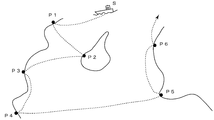
具体的には、例えば図3に示すように、船舶Sが複数の寄港地P1、P2、P3、P4、P5、P6において貨物の積み降ろしを行う場合、これらの寄港地をP1-P2-P3-P4-P5-P6の順に航行すること、これらの各寄港地への到着予定日、貨物の積み降ろしに要する日数、各寄港地からの出港予定日等が航路情報としてデータ記憶部52に保存される。また、それぞれの寄港地における殺菌剤の発注先、各発注先が殺菌剤の発注を受けてから劣化していない殺菌剤を船舶に納入するまでに必要なリードタイム等が発注先情報としてデータ記憶部52に保存される。
データ通信部53は、データ演算部51が殺菌剤を発注する必要があると判断し、複数の寄港地P1、P2、P3、P4、P5、P6の中のどの寄港地における殺菌剤の発注先に殺菌剤を発注するかを決定した場合に、当該発注を決定した殺菌剤の発注先に対して殺菌剤を発注すべく発注データを送信する。発注データの送信は例えば電子メールの送信、オンラインによる発注専用のオンラインシステム内でのデータ送信、ファックスの送付等で行ってもよいし、その他の通信手段を用いて行ってもよい。また、データ演算部51による発注先の決定に連動して殺菌剤の発注を自動で行うようにシステムを構築しておくことにより、発注の決定を迅速に発注先に伝え、より確実に極力劣化していない殺菌剤の納入を受けられるようにしておいてもよい。
以上説明したような構成を有する処理システム1によって、極力劣化していない殺菌剤の納入を受けるまでの処理フローを説明する。まず、ある寄港地でバラスト水処理を実施した後に、レベル計45により殺菌剤貯留槽21中の殺菌剤の残量V(m3)が計測され、データ演算部51が当該計測値を取得する。また、第1塩素濃度計43によりバラスト水中の塩素濃度T(mg/L as Cl2)が計測され、第1流量計41で計測したバラスト水流量b(m3/h)、第2流量計42で計測した殺菌剤流量s(m3/h)を併せて用いることにより、殺菌剤貯留槽21中の殺菌剤中の有効塩素濃度c(g/L)が推定され、データ演算部51が当該推定値を取得する。
次の寄港地でのバラスト水処理で、処理対象バラスト水B(m3)を規定濃度T(mg/L as Cl2)になるように処理するのに必要な殺菌剤の量V0(m3)は、T=1000c×V0/Bの関係式にバラスト水中の塩素濃度の初期減衰による20%の低下を考慮した関係式1.2T=1000c×V0/Bに基づいて、V0=1.2BT/1000cで求められる。
データ演算部51は、殺菌剤貯留槽21中の殺菌剤の残量V(m3)と必要な殺菌剤の量V0(m3)とを比較し、例えばV<2V0であれば殺菌剤を発注する必要があると判断する。
殺菌剤を発注する必要があると判断した場合、データ演算部51は、データ記憶部52に保存されている航路情報及び発注先情報に基づいてどの寄港地の発注先に殺菌剤を発注するかを決定する。例えば、現在地から一つ先の寄港地P1までの所要時間をT1、P1での必要リードタイムをL1、寄港地P1からさらに一つ先の寄港地P2までの所要時間をT2、P2での必要リードタイムをL2とすると、T1≧L1であれば、一つ先の寄港地であるP1での納入を発注することで、劣化していない殺菌剤の納入を受けることができる。
T1<L1かつT1+T2≧L2の場合、V0<V<2V0であれば、現在地から一つ先の寄港地であるP1では発注せず、二つ先の寄港地であるP2での納入を発注する。寄港地P1での荷降ろし後はV<V0となるが、その次の寄港地P2で劣化していない殺菌剤の納入を受けることができるため特に問題は生じない。
同じようにT1<L1かつT1+T2≧L2の場合であって、V<V0であれば、一つ先の寄港地P1でのバラスト水処理時に用いる殺菌剤が不足することになるため、寄港地P1でのバラスト水処理に不足する分の殺菌剤の納入を次の寄港地であるP1で発注するとともに、二つ先の寄港地P2での納入も併せて発注する。この場合、寄港地P1ではT1<L1であることから劣化していない殺菌剤の納入に必要なリードタイムが不足するため、ある程度劣化した殺菌剤が納入されることになってしまうが、二つ先の寄港地P2では劣化していない殺菌剤の納入を受けることができる。このように発注することにより、ある程度劣化した殺菌剤が納入される量を最低限に抑えることができる。もちろんこのような場合には寄港地P1である程度劣化した殺菌剤が納入されることを避けることができないため、なるべくこのような事態が生じないように制御することが好ましい。
データ演算部51が殺菌剤を発注する必要があると判断し、複数の寄港地P1、P2、P3、P4、P5、P6の中のどの寄港地における殺菌剤の発注先に殺菌剤を発注するかを決定すると、データ通信部53が当該発注を決定した殺菌剤の発注先に対して殺菌剤を発注すべく発注データを自動的に送信する。これにより、納入に適切な寄港地において、適切なタイミングで殺菌剤が納入されるように発注先を決定し、その決定を迅速に発注先に伝えることができるため、より確実に極力劣化していない殺菌剤の納入を受けることが可能となる。なお、発注量については通常、殺菌剤貯留槽21中の殺菌剤の残量Vと殺菌剤貯留槽21のタンク容量との差とすればよい。
このような処理システム1によれば、殺菌剤貯留槽21における殺菌剤の残量及び有効塩素濃度に関する貯留殺菌剤情報に基づいて殺菌剤の発注の要否を判断し、必要な場合には、予めデータ記憶部53に記憶されている発注先情報と航路情報とに基づき、納入に適切な寄港地において、適切なタイミングで殺菌剤が納入されるように発注先を決定することができるため、極力劣化していない殺菌剤の納入を受けることが可能となる。
特に、データ記憶部53に予め保存されている発注先情報の一つとして船舶Sの複数の寄港地のそれぞれにおける殺菌剤の発注先が発注を受けてから劣化していない殺菌剤を船舶に納入するまでに必要なリードタイムに関する情報を含めることにより、より適切なタイミングで、極力劣化していない殺菌剤の納入を受けることが可能となり、港での滞在時間の延長による経費負担の増加や、使用しない殺菌剤の処理・処分に余計な手間と費用がかかるといったリスクの低減を図ることができる。
以上説明した実施形態は、本発明の理解を容易にするために記載されたものであって、本発明を限定するために記載されたものではない。したがって、上記各実施形態に開示された各要素は、本発明の技術的範囲に属する全ての設計変更や均等物をも含む趣旨である。
例えば、本実施形態においては、殺菌剤貯留槽21中の殺菌剤の有効塩素濃度を、第1塩素濃度計43から受信したバラスト水中の塩素濃度から推定するようにしているが、殺菌剤貯留槽21中の殺菌剤の有効塩素濃度を直接計測するものとしてもよい。
また、本実施形態においては一台のデータ処理装置50によってデータ取得手段、データ演算手段、データ記憶手段、データ通信手段の各機能を実現するように構成しているが、複数台の装置を用いてデータ取得手段、データ演算手段、データ記憶手段、データ通信手段の各機能をばらばらに実現するようなシステム構成にしてもよい。
さらに、万一、発注期限等の関係でデータ処理装置50のデータ演算部51が殺菌剤の発注先を決定・選択できないような場合は、そのことを音声出力装置(不図示)や液晶モニタ等の表示装置(不図示)を介して船員に警告するようなシステム構成とし、警告を受けた船員が手動で最適な発注先に殺菌剤を発注できるようにしてもよい。
1 船舶バラスト水処理システム
11 取水部
12 メインライン
13 バラストタンク
14 送液ポンプ
15 排出ライン
16 排水部
21 殺菌剤貯留槽
22 送液ポンプ
31 中和剤溶液貯留槽
41 第1流量計
42 第2流量計
43 第1塩素濃度計
44 第2塩素濃度計
45 レベル計
50 データ処理装置
51 データ演算部
52 データ記憶部
53 データ通信部
11 取水部
12 メインライン
13 バラストタンク
14 送液ポンプ
15 排出ライン
16 排水部
21 殺菌剤貯留槽
22 送液ポンプ
31 中和剤溶液貯留槽
41 第1流量計
42 第2流量計
43 第1塩素濃度計
44 第2塩素濃度計
45 レベル計
50 データ処理装置
51 データ演算部
52 データ記憶部
53 データ通信部
Claims (5)
- 複数の寄港地を有する航路を航行する船舶に付設される船舶バラスト水の処理システムであって、
殺菌剤を貯留する殺菌剤貯留槽と、
前記殺菌剤貯留槽に貯留された殺菌剤の残量及び有効塩素濃度に関する貯留殺菌剤情報を取得するデータ取得手段と、
前記複数の寄港地のそれぞれにおける殺菌剤の発注先に関する発注先情報と、前記複数の寄港地の寄港順及び寄港スケジュールに関する航路情報とが記憶されたデータ記憶手段と、
前記貯留殺菌剤情報に基づいて殺菌剤を発注する必要があるかどうかを判断するデータ演算手段と、を備え、
前記データ演算手段が、殺菌剤を発注する必要があると判断した場合には、前記発注先情報及び前記航路情報に基づいて、前記複数の寄港地のうちどの寄港地における殺菌剤の発注先に殺菌剤を発注するかを決定する、船舶バラスト水の処理システム。 - 前記殺菌剤が次亜塩素酸ナトリウムである、請求項1に記載の船舶バラスト水の処理システム。
- 前記発注先情報が、前記複数の寄港地のそれぞれにおける殺菌剤の発注先が発注を受けてから劣化していない殺菌剤を船舶に納入するまでに必要なリードタイムに関する情報を含む、請求項1又は2に記載の船舶バラスト水の処理システム。
- 前記データ演算手段が決定した殺菌剤の発注先に対して殺菌剤を発注するデータ通信手段を更に備えた、請求項1~3のいずれか1項に記載の船舶バラスト水の処理システム。
- 前記データ通信手段が、前記データ演算手段による発注先の決定に連動して殺菌剤の発注を自動で行う、請求項4に記載の船舶バラスト水の処理システム。
Priority Applications (2)
| Application Number | Priority Date | Filing Date | Title |
|---|---|---|---|
| SG11201808654YA SG11201808654YA (en) | 2016-03-31 | 2016-09-02 | System for treating ships' ballast water |
| US16/089,557 US20190127249A1 (en) | 2016-03-31 | 2016-09-02 | System for treating ships' ballast water |
Applications Claiming Priority (2)
| Application Number | Priority Date | Filing Date | Title |
|---|---|---|---|
| JP2016-071288 | 2016-03-31 | ||
| JP2016071288A JP2017177050A (ja) | 2016-03-31 | 2016-03-31 | 船舶バラスト水の処理システム |
Publications (1)
| Publication Number | Publication Date |
|---|---|
| WO2017168783A1 true WO2017168783A1 (ja) | 2017-10-05 |
Family
ID=59963812
Family Applications (1)
| Application Number | Title | Priority Date | Filing Date |
|---|---|---|---|
| PCT/JP2016/075762 Ceased WO2017168783A1 (ja) | 2016-03-31 | 2016-09-02 | 船舶バラスト水の処理システム |
Country Status (4)
| Country | Link |
|---|---|
| US (1) | US20190127249A1 (ja) |
| JP (1) | JP2017177050A (ja) |
| SG (1) | SG11201808654YA (ja) |
| WO (1) | WO2017168783A1 (ja) |
Families Citing this family (4)
| Publication number | Priority date | Publication date | Assignee | Title |
|---|---|---|---|---|
| JP6388020B2 (ja) * | 2016-12-12 | 2018-09-12 | 栗田工業株式会社 | 船舶の設備管理システム、設備管理プログラムおよび設備管理方法 |
| JP6880509B2 (ja) * | 2017-10-23 | 2021-06-02 | Jfeエンジニアリング株式会社 | 固形殺菌剤の溶解装置及び方法 |
| JP2019126773A (ja) * | 2018-01-24 | 2019-08-01 | 栗田工業株式会社 | 船舶バラスト水処理装置用中和剤の発注管理システム |
| JP6562106B1 (ja) * | 2018-03-23 | 2019-08-21 | 栗田工業株式会社 | 水処理装置 |
Citations (8)
| Publication number | Priority date | Publication date | Assignee | Title |
|---|---|---|---|---|
| JPH08137970A (ja) * | 1994-11-11 | 1996-05-31 | Ricoh Co Ltd | 薬品在庫管理システム装置 |
| JP2002183341A (ja) * | 2000-12-18 | 2002-06-28 | Mitsubishi Heavy Ind Ltd | 舶用エンジンの診断・保守システム |
| US20040059477A1 (en) * | 2002-06-12 | 2004-03-25 | Kish Loretta Ann | Integrated vessel monitoring and control system |
| JP2008532190A (ja) * | 2005-03-07 | 2008-08-14 | クールガッツ,クラウス | 船舶の全体の管理のためのシステムおよびプロセス |
| JP2012238136A (ja) * | 2011-05-11 | 2012-12-06 | Iino Kaiun Kaisha Ltd | 船舶業務支援システム、サーバ及び船側端末 |
| WO2013146033A1 (ja) * | 2012-03-28 | 2013-10-03 | 栗田工業株式会社 | バラスト水処理システムの遠隔監視装置、及び遠隔監視方法 |
| JP5591429B1 (ja) * | 2013-10-31 | 2014-09-17 | 日本郵船株式会社 | 船舶に対する補油の港および補油量の決定を支援するための装置、プログラム、記録媒体および方法 |
| JP2015222562A (ja) * | 2014-04-15 | 2015-12-10 | ラルジェッタ リミテッド | 船舶運航管理システムおよびコンピュータプログラム製品 |
-
2016
- 2016-03-31 JP JP2016071288A patent/JP2017177050A/ja active Pending
- 2016-09-02 US US16/089,557 patent/US20190127249A1/en not_active Abandoned
- 2016-09-02 SG SG11201808654YA patent/SG11201808654YA/en unknown
- 2016-09-02 WO PCT/JP2016/075762 patent/WO2017168783A1/ja not_active Ceased
Patent Citations (8)
| Publication number | Priority date | Publication date | Assignee | Title |
|---|---|---|---|---|
| JPH08137970A (ja) * | 1994-11-11 | 1996-05-31 | Ricoh Co Ltd | 薬品在庫管理システム装置 |
| JP2002183341A (ja) * | 2000-12-18 | 2002-06-28 | Mitsubishi Heavy Ind Ltd | 舶用エンジンの診断・保守システム |
| US20040059477A1 (en) * | 2002-06-12 | 2004-03-25 | Kish Loretta Ann | Integrated vessel monitoring and control system |
| JP2008532190A (ja) * | 2005-03-07 | 2008-08-14 | クールガッツ,クラウス | 船舶の全体の管理のためのシステムおよびプロセス |
| JP2012238136A (ja) * | 2011-05-11 | 2012-12-06 | Iino Kaiun Kaisha Ltd | 船舶業務支援システム、サーバ及び船側端末 |
| WO2013146033A1 (ja) * | 2012-03-28 | 2013-10-03 | 栗田工業株式会社 | バラスト水処理システムの遠隔監視装置、及び遠隔監視方法 |
| JP5591429B1 (ja) * | 2013-10-31 | 2014-09-17 | 日本郵船株式会社 | 船舶に対する補油の港および補油量の決定を支援するための装置、プログラム、記録媒体および方法 |
| JP2015222562A (ja) * | 2014-04-15 | 2015-12-10 | ラルジェッタ リミテッド | 船舶運航管理システムおよびコンピュータプログラム製品 |
Also Published As
| Publication number | Publication date |
|---|---|
| JP2017177050A (ja) | 2017-10-05 |
| US20190127249A1 (en) | 2019-05-02 |
| SG11201808654YA (en) | 2018-11-29 |
Similar Documents
| Publication | Publication Date | Title |
|---|---|---|
| KR102037554B1 (ko) | 밸러스트수 처리 시스템의 원격 감시 장치, 및 원격 감시 방법 | |
| WO2017168783A1 (ja) | 船舶バラスト水の処理システム | |
| KR102133663B1 (ko) | 밸러스트 수 처리 장치 및 밸러스트 수 처리 방법 | |
| JP2012020218A (ja) | バラスト水処理システム及びバラスト水処理方法 | |
| JP5942373B2 (ja) | 船舶バラスト水の処理システム | |
| JP2015167937A (ja) | バラスト水処理装置およびバラスト水の処理方法 | |
| US9212073B2 (en) | Ballast water treatment agent and method of treating ballast water of ship using the same | |
| JP5776367B2 (ja) | 船舶バラスト水の処理方法 | |
| JP2019064409A (ja) | 船舶バラスト水処理薬品の監視・発注システム | |
| KR20150125375A (ko) | 밸러스트 수 처리 시스템용 약품 주입 장치 | |
| JP2019126773A (ja) | 船舶バラスト水処理装置用中和剤の発注管理システム | |
| JP2013006173A (ja) | 船舶バラスト水の処理方法 | |
| JP2021137710A (ja) | 水処理システム | |
| EP3290394B1 (en) | Ballast water treatment device and ballast water treatment method | |
| JP6504888B2 (ja) | バラスト水処理システム及びバラスト水処理方法 | |
| CN106573802A (zh) | 压载水的处理方法 | |
| JP6241321B2 (ja) | バラスト水の処理方法 | |
| JP6686424B2 (ja) | バラスト水の制御装置及びバラスト水処理システムの制御方法 | |
| KR101566520B1 (ko) | 밸러스트수 처리 장치 | |
| JP2012086200A (ja) | バラスト水処理システム及びバラスト水処理方法 | |
| KR101550019B1 (ko) | 통합형 설비를 포함하는 선박 평형수 처리 장치 및 유량 제어 방법 | |
| WO2019044769A1 (ja) | バラスト水処理方法 | |
| WO2013075219A1 (en) | Hybrid ballast water treatment system | |
| KR101415207B1 (ko) | 최적의 중화제 공급이 가능한 스마트 전기분해 밸러스트수 처리시스템 및 그 제어방법 | |
| JP6191255B2 (ja) | バラスト水の処理方法 |
Legal Events
| Date | Code | Title | Description |
|---|---|---|---|
| NENP | Non-entry into the national phase |
Ref country code: DE |
|
| 121 | Ep: the epo has been informed by wipo that ep was designated in this application |
Ref document number: 16897000 Country of ref document: EP Kind code of ref document: A1 |
|
| 122 | Ep: pct application non-entry in european phase |
Ref document number: 16897000 Country of ref document: EP Kind code of ref document: A1 |