WO2017154872A1 - アルミニウム合金クラッド板およびアルミニウム合金クラッド構造部材 - Google Patents
アルミニウム合金クラッド板およびアルミニウム合金クラッド構造部材 Download PDFInfo
- Publication number
- WO2017154872A1 WO2017154872A1 PCT/JP2017/008918 JP2017008918W WO2017154872A1 WO 2017154872 A1 WO2017154872 A1 WO 2017154872A1 JP 2017008918 W JP2017008918 W JP 2017008918W WO 2017154872 A1 WO2017154872 A1 WO 2017154872A1
- Authority
- WO
- WIPO (PCT)
- Prior art keywords
- aluminum alloy
- layers
- mass
- clad
- plate
- Prior art date
- Legal status (The legal status is an assumption and is not a legal conclusion. Google has not performed a legal analysis and makes no representation as to the accuracy of the status listed.)
- Ceased
Links
Images


Classifications
-
- B—PERFORMING OPERATIONS; TRANSPORTING
- B32—LAYERED PRODUCTS
- B32B—LAYERED PRODUCTS, i.e. PRODUCTS BUILT-UP OF STRATA OF FLAT OR NON-FLAT, e.g. CELLULAR OR HONEYCOMB, FORM
- B32B15/00—Layered products comprising a layer of metal
- B32B15/20—Layered products comprising a layer of metal comprising aluminium or copper
-
- C—CHEMISTRY; METALLURGY
- C22—METALLURGY; FERROUS OR NON-FERROUS ALLOYS; TREATMENT OF ALLOYS OR NON-FERROUS METALS
- C22C—ALLOYS
- C22C21/00—Alloys based on aluminium
-
- C—CHEMISTRY; METALLURGY
- C22—METALLURGY; FERROUS OR NON-FERROUS ALLOYS; TREATMENT OF ALLOYS OR NON-FERROUS METALS
- C22C—ALLOYS
- C22C21/00—Alloys based on aluminium
- C22C21/06—Alloys based on aluminium with magnesium as the next major constituent
-
- C—CHEMISTRY; METALLURGY
- C22—METALLURGY; FERROUS OR NON-FERROUS ALLOYS; TREATMENT OF ALLOYS OR NON-FERROUS METALS
- C22C—ALLOYS
- C22C21/00—Alloys based on aluminium
- C22C21/10—Alloys based on aluminium with zinc as the next major constituent
-
- B—PERFORMING OPERATIONS; TRANSPORTING
- B23—MACHINE TOOLS; METAL-WORKING NOT OTHERWISE PROVIDED FOR
- B23K—SOLDERING OR UNSOLDERING; WELDING; CLADDING OR PLATING BY SOLDERING OR WELDING; CUTTING BY APPLYING HEAT LOCALLY, e.g. FLAME CUTTING; WORKING BY LASER BEAM
- B23K20/00—Non-electric welding by applying impact or other pressure, with or without the application of heat, e.g. cladding or plating
- B23K20/04—Non-electric welding by applying impact or other pressure, with or without the application of heat, e.g. cladding or plating by means of a rolling mill
-
- C—CHEMISTRY; METALLURGY
- C22—METALLURGY; FERROUS OR NON-FERROUS ALLOYS; TREATMENT OF ALLOYS OR NON-FERROUS METALS
- C22F—CHANGING THE PHYSICAL STRUCTURE OF NON-FERROUS METALS AND NON-FERROUS ALLOYS
- C22F1/00—Changing the physical structure of non-ferrous metals or alloys by heat treatment or by hot or cold working
- C22F1/04—Changing the physical structure of non-ferrous metals or alloys by heat treatment or by hot or cold working of aluminium or alloys based thereon
Definitions
- the present invention relates to an aluminum alloy clad plate and an aluminum alloy clad structure member (hereinafter, aluminum is also referred to as aluminum or Al) formed by molding the material aluminum alloy clad plate.
- the clad plate is a laminated plate in which aluminum alloy layers are laminated with each other and joined together by rolling or the like.
- 7000 series aluminum alloys for structural members and ultra-duralumin are high strengths such as Zn and Mg as typical means for increasing the strength.
- the amount of chemical element is increased, there is a problem that ductility is lowered and it is difficult to form a structural member.
- the corrosion resistance is reduced, or the strength is increased by aging (aging hardening) at room temperature during storage, and the formability to the structural member or the ductility as the structural material is significantly reduced.
- the production efficiency of the plate such as a rolling process is low.
- an aluminum alloy clad plate laminated plate in which two to four aluminum alloy layers (plates) having different compositions and characteristics are laminated is known.
- a typical example of this is an aluminum alloy brazing sheet for a heat exchanger having a three-layer to four-layer structure in which a core material of a 3000 series aluminum alloy is clad with a sacrificial anode material of a 7000 series aluminum alloy and a brazing material of a 4000 series aluminum alloy. .
- an aluminum alloy material for an automobile fuel tank comprising a core material of 5000 series aluminum alloy material for increasing strength, a skin material of 7000 series aluminum alloy material for improving corrosion resistance, and a clad material, respectively. Proposed.
- the aluminum alloys are maximized by continuous casting using twin rolls utilizing the melting point difference of 1000 series, 3000 series, 4000 series, 5000 series, 6000 series, 7000 series, etc. aluminum alloys.
- a method for manufacturing a clad plate in which four layers are laminated and integrated is proposed.
- Patent Document 3 when a plurality of aluminum alloy layers are laminated, a Cu anticorrosion layer is interposed between the aluminum alloy layers, and Cu of the Cu anticorrosion layer is bonded to the aluminum alloy layer bonded by high-temperature heat treatment. It has also been proposed to improve the corrosion resistance of the clad plate by diffusing up to.
- Patent Document 4 a material aluminum alloy clad plate for a structural member such as an automobile having both of these characteristics, or an aluminum alloy clad structural member formed by press molding or the like using the clad plate as a material It has been proposed.
- Patent Document 4 Al—Mg alloy plates, Al—Zn alloy plates, or Al—Cu alloy plates are laminated to each other as aluminum alloy plates having different compositions. It is not possible to achieve both high strength and high press formability or ductility.
- a specific composition such as an Al—Mg alloy layer and an Al—Zn alloy layer. And 3 to 7 layers of Al alloy layers having different compositions, and a total plate thickness of 1 to 5 mm.
- the laminated plate is subjected to diffusion heat treatment so that Mg and Zn of the laminated aluminum alloy layers have a mutual diffusion region in which the laminated aluminum alloy layers diffuse to each other.
- the hardness of each has a structure that is higher than the hardness of each of the laminated aluminum alloy layers constituting the joint interface.
- Japanese Unexamined Patent Publication No. 2004-285391 Japanese Patent No. 5083862 Japanese Unexamined Patent Publication No. 2013-95980 Japanese Unexamined Patent Publication No. 2015-108163
- the characteristics such as an intensity
- VDA German Automobile Manufacturers Association
- the aluminum alloy clad plate of Patent Document 4 has room for further improving the crushing characteristics at the time of a vehicle body collision.
- effective means are still unknown and still unclear. There is room.
- an object of the present invention is to provide an aluminum alloy clad plate and an aluminum alloy clad structure member that satisfy the crushing characteristics at the time of automobile collision.
- the gist of the aluminum alloy clad plate excellent in the crushing characteristics of the present invention is an aluminum alloy clad plate comprising a plurality of aluminum alloy layers,
- the aluminum alloy layers inside the aluminum alloy layers on the outermost surface side of the aluminum alloy clad plate contain one or two of Mg: 3 to 10% by mass and Zn: 5 to 30% by mass, respectively.
- Both aluminum alloy layers on the outermost layer side have a composition containing Mg in a range of 3 to 10% by mass and Zn being 2% by mass or less (including 0% by mass),
- These aluminum alloy layers are adjacent to each other in the content of either Mg or Zn, the total number of laminated layers is 5 to 15, and the total plate thickness is 1 to 5 mm.
- Each average content of Mg and Zn in the aluminum alloy clad plate is a value obtained by averaging the contents of Mg and Zn in the laminated aluminum alloy layers.
- the average crystal grain size obtained by averaging the crystal grain sizes of the laminated aluminum alloy layers is 200 ⁇ m or less, and Mg and Zn of the laminated aluminum alloy layers are mutually Have interdiffused regions of Mg and Zn that diffuse together And when the aluminum alloy clad plate is subjected to an artificial aging treatment at 180 ° C.
- each of the average radii of inertia Rg measured by the X-ray small angle scattering method is 4 nm or more, and the average hardness of the outermost surfaces of both the outermost aluminum alloy layers is 100 HV or less,
- the average hardness of the central portion of the plate thickness in the aluminum alloy layer containing Zn: 5 to 30% by mass inside the aluminum alloy layer on the outermost layer side is 160 HV or more.
- the gist of the aluminum alloy clad structure member excellent in the crushing characteristics of the present invention for achieving the above object is an aluminum alloy clad structure member composed of a plurality of aluminum alloy layers,
- the aluminum alloy layers inside the aluminum alloy layers on the outermost surface side of the aluminum alloy clad structure member contain one or two of Mg: 3 to 10% by mass and Zn: 5 to 30% by mass, respectively.
- Both aluminum alloy layers on the outermost layer side have a composition containing Mg in a range of 3 to 10% by mass and Zn being 2% by mass or less (including 0% by mass)
- These aluminum alloy layers are adjacent to each other in the content of either Mg or Zn, the total number of laminated layers is 5 to 15, and the total plate thickness is 1 to 5 mm.
- the average contents of Mg and Zn in the aluminum alloy clad structure member are Mg: 2 to 8% by mass, Zn: 3 to 20% by mass,
- the average crystal grain size obtained by averaging the crystal grain sizes of the laminated aluminum alloy layers is 200 ⁇ m or less, and Mg and Zn of the laminated aluminum alloy layers are Having interdiffused regions of Mg and Zn that diffuse together
- each average thickness radius Rg measured by the X-ray small angle scattering method which shows the size of the artificial aging precipitate in each sheet thickness center part of both aluminum alloy layers of the above-mentioned outermost layer side is 4 nm or more
- the average hardness of the outermost surfaces of both aluminum alloy layers on the outermost layer side is 100 HV or less
- the average hardness of the central portion of the plate thickness in the aluminum alloy layer containing Zn: 5 to 30% by mass inside the aluminum alloy layer on the outermost layer side is 160 HV or more.
- the aluminum alloy clad plate referred to in the present invention is an aluminum alloy clad plate obtained by laminating aluminum alloy clad plates with each other as a material for a structural member and integrally joining them by rolling or the like.
- aluminum As a material aluminum alloy clad plate (before artificial aging treatment) subjected to diffusion heat treatment described later (hereinafter, aluminum is also referred to as aluminum or Al).
- the aluminum alloy clad structure member referred to in the present invention is made of the aluminum alloy clad plate subjected to the diffusion heat treatment, and the material aluminum alloy clad plate (material laminated plate) is formed into a product shape of the structural member by press molding or the like. This is a structural member that has been subjected to artificial aging treatment (paint baking hardening treatment).
- the material aluminum alloy clad plate (material laminated plate) is formed into a product shape of a structural member by press molding or the like, and then the diffusion is performed. It is a structural member that has been subjected to heat treatment and has undergone an artificial aging treatment (paint baking hardening treatment).
- the present invention provides an aluminum alloy clad plate or an aluminum alloy clad structural member with high strength, high formability (or high ductility) and excellent BH properties. It is assumed that the aluminum alloy layer to be clad has a specific composition containing a large amount of Mg, Zn, especially Zn.
- the aluminum alloy clad plate when the artificial aging treatment simulating the clad structural member is performed, or after the artificial aging treatment In this aluminum alloy clad structure member, the structure and hardness of the outermost aluminum alloy layer are defined.
- the size of the fine artificial aging precipitate of the outermost aluminum alloy layer is defined by the inertia radius measured by the X-ray small angle scattering method, and the innermost aluminum alloy layer on the innermost side of these outermost aluminum alloy layers.
- the average inertia radius Rg of the center part of the plate thickness in any one of the aluminum alloy layers, and the average hardness of the outermost surface of the aluminum alloy layer on the outermost layer side is larger than that of the aluminum alloy layer on the outermost layer side. It is lowered in relation to the average hardness in the aluminum alloy layer containing a large amount of Zn on the inner side.
- the aluminum alloy clad plate or the aluminum alloy clad structural member can have a crushing characteristic.
- FIGS. 1 and 2 only show a partial cross section in the width direction or rolling direction (longitudinal direction) of the clad plate of the present invention, and such a cross-sectional structure is the width direction or rolling direction of the clad plate of the present invention. It extends uniformly (uniformly) throughout.
- a plate before cladding is referred to as an aluminum alloy plate
- a layer in the aluminum alloy cladding plate after the plate is rolled and thinned is referred to as an aluminum alloy layer.
- the significance of the definition of the following aluminum alloy layer can be read as the significance of an aluminum alloy plate or ingot before being clad or the significance of a clad structure member.
- the clad plate of the present invention is an aluminum alloy layer that includes one or two of Mg and Zn, and aluminum alloy layers having different contents of either Mg or Zn are 5 to 5 each other. Up to 15 layers (sheets) are laminated (clad). Then, the thickness of the laminated clad plates as a whole is a relatively thin aluminum alloy clad plate in the range of 1 to 5 mm.
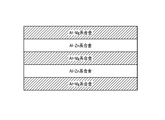
- FIG. 1 shows an Al—Mg-based plate (an aluminum alloy layer such as A in Table 1 described later) as the aluminum alloy layer (both outermost layers and two outermost layers) on the outermost layer side.
- Al alloy layers such as D or E in Table 1 which will be described later
- Al-Mg based plate Al alloy layer of A in Table 1 which will be described later
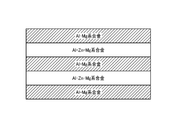
- FIG. 2 also shows that an Al—Mg—Mg-based plate (an aluminum alloy layer such as A in Table 1 described later) is used as the aluminum alloy layer (both outermost layers and two outermost layers) on the outermost layer side.
- an Al—Mg—Mg-based plate an aluminum alloy layer such as A in Table 1 described later
- Al—Mg based plate aluminum alloy layer such as A in Table 1 described later
- FIGS. 1 and 2 are aluminum alloy layers each including one or two of Mg and Zn within the ranges specified above, and each containing at least Mg or Zn. It is the example of this invention made into aluminum alloy layers from which quantity differs.
- the Al—Zn-based aluminum alloy layer of FIG. 1 and the Al—Zn—Mg-based aluminum alloy layer of FIG. 2 containing Zn in the specified content range are inferior in corrosion resistance. In order to ensure this, it is laminated so as to be inside the clad plate.
- these aluminum alloy layers containing Zn are laminated so as to be on the outer side (surface side, surface layer side) of the clad plate, the corrosion resistance of the clad plate and thus the clad structure member is lowered due to a large amount of Zn. .
- the aluminum alloy layer on the outermost layer side (both outermost side, both surface side, both surface layer side) of the clad plate contains Al in the content range of Mg, such as Al—Mg.
- An aluminum alloy layer containing (in the range of 3 to 10% by mass) and suppressing Zn to 2% by mass or less (including 0% by mass) is laminated.
- the layers to be laminated are more effective as multilayers in order to exhibit the characteristics of the clad plate, and should be 5 layers (5 or more). is necessary. With 4 layers or less, even if the method of lamination is devised, the aluminum alloy clad plate with a thickness of 1-5 mm and a relatively thin thickness is characteristically no different from a single plate (single plate). The meaning to do is lost. On the other hand, the characteristics of the clad plate can be expected to be improved by laminating more than 15 layers (15 sheets). However, considering the productivity in a practical manufacturing process, it is inefficient and impractical. Therefore, the upper limit is about 15 layers.
- the thicknesses of the two aluminum alloy layers on the outermost layer side are each an aluminum alloy clad plate or an aluminum alloy clad structure. It is preferable to make each so as to occupy 10 to 20% of the plate thickness of the entire member. This guarantees the thickness of the aluminum alloy layer on the outermost layer side, which defines the structure (size of fine precipitates) and the average hardness of the outermost surface, in order to improve the crushing characteristics required as a structural member of the transport aircraft. Thus, the effect of improving the crushing characteristics can be reliably ensured.
- the thicknesses of both the aluminum alloy layers on the outermost layer side are respectively aluminum alloy clad plates or aluminum. Even if it is less than 10% of the total thickness of the alloy clad structural member, the effect of improving the crushing characteristics and strength can be obtained by the alloy composition to be combined.
- a normal single plate (single plate) is made of a high alloy as in the present invention, such as 7000 series, Mg up to 10% by mass or Zn up to 30% by mass, the ductility is extremely high. Lowering causes rolling cracks and makes rolling impossible.
- the present invention since it is a laminated plate (laminated ingot) of thin plates with different compositions, the ductility is high even if the alloy is made high, so cold rolling to the clad of the thin plate Can be rolled. That is, it is an advantage that the clad plate of the present invention before being subjected to the diffusion heat treatment can be produced as a rolled clad plate by a normal rolling process.
- a clad plate by rolling it is an aluminum alloy ingot or plates that contain one or two of Mg and Zn, and the content of either Mg or Zn is mutually 5 to 15 different aluminum alloy ingots or plates are laminated (clad). And like a normal rolling process, after performing a homogenization heat treatment as needed, it can be hot-rolled to make a clad plate.
- cold rolling is performed while performing intermediate annealing as necessary.
- These rolled clad plates are subjected to tempering (heat treatment such as annealing and solution treatment) as necessary to produce the clad plates of the present invention.
- tempering heat treatment such as annealing and solution treatment
- the ingots laminated and laminated may be hot-rolled after being reheated to the hot rolling temperature.
- each aluminum alloy ingot is separately homogenized and heat-rolled separately, and then individually hot-rolled, and if necessary, each intermediate-annealed or cold-rolled, and each individually has an appropriate thickness. Then, the plate materials laminated and laminated may be further cold-rolled to form a clad plate.
- the thickness of the entire clad plate of the present invention is set to a relatively thin range of 1 to 5 mm is that this range is a plate thickness range that is widely used in the structural members of the above-described transport aircraft. If the plate thickness is less than 1 mm, the required properties such as rigidity, strength, workability, and weldability required as a structural member are not satisfied. On the other hand, if the plate thickness exceeds 5 mm, it becomes difficult to press-form the structural member of the transport aircraft, and the weight reduction required as the structural member of the transport aircraft cannot be achieved due to the increase in weight.
- the thickness of the ingot (plate thickness) for making the final clad plate thickness 1-5 mm by the rolling clad method depends on the number of layers (number of layers), the rolling rate, etc. However, it is about 50 to 200 mm.
- the thickness of each laminated alloy layer is 0.05 to 2.0 mm (50 to 50 mm) depending on the number of laminated layers (number of layers). About 2000 ⁇ m).
- the thickness of each plate material at the stage of lamination is the number of laminated sheets although it depends on the number of layers and the rolling rate, it is about 0.5 to 5.0 mm.
- composition of the outermost aluminum alloy layer contains 3 to 10 mass of Mg in order to improve strength and work hardening characteristics (formability and ductility). It is included in the range of%.
- the composition is made of an Al—Mg-based composition in which Zn is suppressed to 2% by mass or less (including 0% by mass).
- composition of aluminum alloy layer inside innermost aluminum alloy layer The composition of the aluminum alloy layer inside the aluminum alloy layer on the outermost layer side in the clad plate before diffusion heat treatment (before forming the structural member) is Mg: 3 to 10 mass%, Zn: 5 It is assumed to contain one or two of ⁇ 30% by mass. That is, the composition of the aluminum alloy plate or ingot before being clad (laminated) or the clad aluminum alloy layer is one or two of Mg: 3 to 10% by mass and Zn: 5 to 30% by mass. Shall be included.
- the aluminum alloy layer containing one or two of Mg: 3 to 10% by mass and Zn: 5 to 30% by mass may be an Al—Zn based or Al—Mg based binary aluminum alloy.
- selective additive elements such as Zn, Mg, Cu, Zr, and Ag are added, such as Al—Zn—Mg, Al—Zn—Cu, Al—Mg—Cu, and the like.
- a ternary system, a quaternary system such as Al—Zn—Cu—Zr, or a ternary system such as Al—Zn—Mg—Cu—Zr may be used.
- These aluminum alloy layers including the outermost aluminum alloy layer, are combined with each other such that aluminum alloy layers having different contents of either Mg or Zn are joined adjacent to each other (adjacently).
- the entire clad plate is laminated with a predetermined number of Mg and Zn or Cu, Zr, Ag selective additive elements and the like in the average content range.
- each element as the composition of the aluminum alloy layer or the clad plate to be clad will be described individually.
- the content of each element is determined from the content of each element in the aluminum alloy layer, by the average value of the content of each element in each laminated plate (all plates). Read as there is.
- the following% indication regarding content is the meaning of the mass%.
- Mg 3-10% Mg, together with Zn, forms clusters (fine precipitates) in the structure of the clad plate or clad structure member to improve work hardening characteristics (formability and ductility). Moreover, an aging precipitate is formed in the structure
- Zn 5-30% Zn, together with Mg, forms clusters (fine precipitates) in the structure of the clad plate or clad structure member to improve work hardening characteristics (formability and ductility). Moreover, an aging precipitate is formed in the structure
- Cu, Zr, and Ag Cu, Zr, and Ag are effective elements that improve the strength of clad plates and clad structural members, although there are some differences in the mechanism of action.
- Cu has an effect of improving the corrosion resistance in addition to the effect of improving the strength.
- Zr has an effect of improving the strength even if it is contained in a small amount by refining the crystal grains of the ingot and the clad plate, and Ag by refining the aging precipitates formed on the structure of the clad plate and the clad structure member and the bonding interface.
- the average content of Mg and Zn is defined as the average composition of the entire clad plate before the diffusion heat treatment, together with the composition of the outermost aluminum alloy layer and the inner aluminum alloy layer.
- the aluminum alloy layers (plates) having different contents of at least Mg or Zn are mutually adjacent. It is necessary for the aluminum alloy clad plate as a whole to contain both Mg and Zn in the content ranges in view of both formability and strength.
- the average content of Mg and Zn in the entire clad plate is obtained as a weighted arithmetic average value obtained by weighting the Mg and Zn contents of the laminated aluminum alloy layers according to the clad ratio.
- the average content of Mg and Zn in the entire clad plate is included in the range of Mg: 2 to 8 mass% and Zn: 3 to 20 mass%. That is, as an average composition of the entire clad plate, one or two of Mg and Zn are included in the above-defined average content range, respectively, and further, one or more of Cu, Zr, and Ag are included. It shall contain selectively, and shall consist of the composition which made the remainder aluminum and an unavoidable impurity.
- the average content of Mg and Zn in the entire clad plate is the weight corresponding to the clad ratio of the aluminum alloy layer to the Mg and Zn content of each aluminum alloy constituting each aluminum alloy layer of the clad plate
- the weighted arithmetic mean value obtained by performing For example, in a five-layer aluminum alloy clad plate, the clad ratio is 20% if the aluminum alloy layers have an equal thickness. Using this clad ratio, the weighted arithmetic mean value of the contents of Mg and Zn is calculated, and the average content of Mg and Zn in the entire clad plate is obtained.
- the clad plate As the average composition of the entire clad plate, when the average content of each of Mg and Zn is too small and less than the lower limit values, the clad plate was subjected to diffusion heat treatment at 500 ° C. for 4 hours. As the subsequent structure, the diffusion of Mg, Zn, and other laminated plates into the structure is insufficient. As a result, due to this diffusion, the amount of precipitation of new composite precipitates (aging precipitates) formed of these Mg, Zn, etc., at the joint interface portions is insufficient. Therefore, the total thickness in the plate thickness direction of the Mg and Zn interdiffusion regions in which the Mg and Zn concentrations are in the range of 30 to 70% is 40% of the plate thickness of the aluminum alloy clad plate.
- the strength of the aluminum alloy clad plate cannot be increased. Specifically, the aluminum alloy clad plate cannot have a 0.2% proof stress of 400 MPa or more as the strength of an aluminum alloy clad structure member obtained by performing diffusion heat treatment or artificial aging treatment.
- the average composition of the entire clad plate when the average content of each of Mg and Zn is too large and exceeds the above upper limit values, the ductility of the clad plate is remarkably lowered. Therefore, the press formability is lowered to the same level as the 7000 series aluminum alloy plate, ultra-super duralumin plate, 2000 series aluminum alloy plate and 8000 series aluminum alloy plate for the structural member, and the meaning of the clad plate is lost.
- the present invention is intended to replace aluminum alloy plates such as 7000 series, ultra-super duralumin (Al-5.5% Zn-2.5% Mg alloy), 2000 series, and 8000 series for structural members. That is, at the stage of the clad plate as a molding material, the ductility of these high strength materials is greatly improved, and after molding into a structural member, it is the same as the high strength materials made of these conventional single plates by diffusion heat treatment or artificial aging treatment. The main purpose is to increase the strength. Therefore, the final composition of the clad plate is the same as the composition of the 7000 series aluminum alloy plate, ultra-super duralumin plate, 2000 series aluminum alloy plate and 8000 series aluminum alloy plate for the structural member as the composition of the entire clad plate. Alternatively, it is necessary to make the composition close to this.
- the composition of the clad plate of the present invention close to a single plate of a conventional aluminum alloy plate such as 7000 series, ultra-super duralumin, 2000 series, and 8000 series. That is, it is significant to include one or two of Mg and Zn, which are the main elements of these conventional aluminum alloy plates, in the ranges of Mg: 2 to 8% by mass and Zn: 3 to 20% by mass, respectively.
- the clad plate or the aluminum alloy layer of the present invention may contain Si or Li which is selectively contained in the composition of the conventional aluminum alloy plate.
- the alloy composition itself or a combination of alloy compositions is used, and the mutual diffusion structure and the average grain size of the aluminum alloy clad plate and the aluminum alloy clad structure member after the diffusion heat treatment are defined. Further, the structure and hardness of the artificial aging precipitates of the aluminum alloy clad structure member further subjected to artificial aging treatment (T6 treatment) after the diffusion heat treatment, and the aluminum alloy plate simulated by artificial aging treatment (T6 treatment). Specifies the characteristics of
- Mg and Zn contained in the clad aluminum alloy layer are mutually diffused between the laminated (joined) aluminum alloy layers.
- new fine composite precipitates (aging precipitates) of Zn-Mg system formed with these Mg, Zn, etc. are deposited at high density on the joint interface part of each other, and the interface Control of microstructure (ultra high density dispersion of fine precipitates of nano level size).
- the elemental interdiffusion structure of the aluminum alloy clad plate of the present invention together with the average crystal grain size of the aluminum alloy layer, as defined in the claims of this application, the aluminum alloy clad plate after being subjected to a predetermined diffusion heat treatment
- this is the structure of the structural member after the aluminum alloy clad plate is formed and subjected to diffusion heat treatment or artificial aging treatment.
- the interdiffusion structure of elements interdiffusion region of Mg and Zn
- the element when the aluminum alloy clad plate is subjected to diffusion heat treatment so that it can be identified as the structure of the raw material aluminum alloy clad plate or It is defined as the average crystal grain size.
- the aluminum alloy clad plate is subjected to diffusion heat treatment as a characteristic test, as in the examples described later.
- the interdiffusion region of Mg and Zn and the average crystal grain size are defined before the artificial aging treatment.
- the aluminum alloy layers to be laminated are within a range that defines one or two of Mg and Zn. It is necessary that the aluminum alloy layers include aluminum alloy layers having different contents of at least Mg or Zn. That is, when the contents of Mg and Zn are the same as each other, even if the contents of other elements in the layers are different, mutual diffusion does not occur between the bonded layers of Mg and Zn. A new fine composite precipitate (aging precipitate) of Zn and Zn cannot be deposited at a high density at the joint interface portion of each other, and the strength cannot be increased.
- the clad aluminum alloy layer has the above-mentioned specific composition containing a large amount of Mg and Zn, and the layers to be laminated and bonded to each other are at least Mg or Zn containing different aluminum alloy layers. It is not only from the viewpoint of ductility, but also a composition for increasing the strength by precipitating composite precipitates by diffusion of the elements at the joint interface portions by diffusion heat treatment.
- the Mg and Zn concentration distribution in the structure and thickness direction of the aluminum alloy clad plate (or structural member) after the diffusion heat treatment is performed.
- the average crystal grain size of the laminated aluminum alloy layers is 200 ⁇ m or less, and Mg and Zn in the laminated aluminum alloy layers diffused to each other. It is assumed that it has a mutual diffusion region.
- Plate thickness center average crystal grain size averaged 0.05 mm (thickness 0.1 mm) crystal grain size in both thickness directions from the plate thickness center in the plane parallel to the rolling of the clad plate
- This average crystal grain size is the condition that the artificial aging treatment conditions are described later in the aluminum alloy clad plate after the diffusion heat treatment and before the artificial aging treatment or in the aluminum alloy clad structure member after the diffusion heat treatment and after the artificial aging treatment. As long as it is within the range, it will not change much. Therefore, the material plate after the diffusion heat treatment and the structural member after the artificial aging treatment have the same upper limit of 200 ⁇ m or less.
- the thickness of the clad plate of the present invention and the thickness of each aluminum alloy layer combined for lamination are large, the contribution of the average crystal grain size of the aluminum alloy layer per layer to strength and formability is small.
- 5-15 layers (sheets) of aluminum alloy layers are laminated (cladded) with each other, and the total thickness of these laminated clad plates is a thin plate of 1-5 mm. The contribution of the average crystal grain size of the aluminum alloy layer per layer to the strength and formability is remarkably increased.
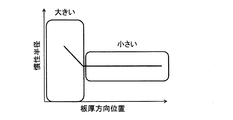
- FIG. 3 schematically shows the structure defined in the present invention.
- an aluminum alloy layer having a composition containing Mg on the outermost layer side in the range of 3 to 10% by mass and having Zn of 2% by mass or less is a vertically long rectangular circle on the left side (surface side) of the figure.
- the aluminum alloy layer containing a large amount of Zn (5 to 30% by mass) whose inner side is in the plate thickness direction on the horizontal axis is indicated by a horizontally-oriented rectangular circle on the right side (inner side) of FIG.
- the size defined by the measured inertial radius (vertical axis) is made larger than that of the aluminum alloy layer containing a large amount of Zn on the right side (inner side) in FIG.
- tissue in which the said fine precipitate exists is prescribed
- the aluminum alloy clad plate after the diffusion heat treatment contains Mg in a range of 3 to 10% by mass when subjected to artificial aging treatment at 180 ° C. for 30 minutes simulating a clad structure member, and
- the average inertia radii Rg at the center portions of the thicknesses of the two aluminum alloy layers on the outermost layer side having a composition of Zn of 2% by mass or less are 4 nm or more, respectively.
- the outermost layer side of the composition containing Mg in the range of 3 to 10% by mass and Zn of 2% by mass or less regardless of the artificial aging treatment conditions The average inertia radii Rg at the center portions of the thicknesses of both aluminum alloy layers are 4 nm or more.
- the average inertia radius Rg at each thickness center portion of both the aluminum alloy layers on the outermost layer side is set to the inner thickness of the aluminum alloy layer on the outermost layer side, in particular, the plate thickness of the aluminum alloy layer containing a large amount of Zn. It is larger than the average inertia radius Rg at the center.
- the average inertia radius Rg of the thickness center portion of the aluminum alloy layer on the outermost layer side is the average in the thickness direction of the aluminum alloy clad plate or the aluminum alloy clad structure member.
- the inertia radius Rg it is surely maximized as schematically shown in FIG.
- the average inertia radius Rg becomes smaller toward the inner side than the position of the central part of the thickness of the aluminum alloy layer on the outermost layer side, whereas no artificial aging precipitate exists on the surface layer side from this position. There is also an area.
- the average inertia radii Rg at the center portions of the thicknesses of both the aluminum alloy layers on the outermost layer side are each 4 nm or more, in the range of the artificial aging treatment conditions described later, from this position on the surface side or inside
- the average inertia radius Rg of an aluminum alloy layer containing a large amount of Zn (5 to 30% by mass), which is a side region, is inevitably smaller than this.
- the average inertia radii Rg at the center portions of the thicknesses of both the aluminum alloy layers on the outermost layer side are each 4 nm or more, the average inertia radii of the aluminum alloy layers on the surface side or the inner side region from this position.
- the surface layer portions of the aluminum alloy clad plate and the aluminum alloy clad structure member By controlling the inertia radii of the fine artificial aging precipitates at the center portions of the thicknesses of both the aluminum alloy layers on the outermost layer side within the respective ranges, the surface layer portions of the aluminum alloy clad plate and the aluminum alloy clad structure member The bendability of both of the aluminum alloy layers on the outermost layer side is improved, and the pressure resistance is improved.
- the artificial aging precipitate phase as described above, the greater the radius of inertia, the stronger the interaction with dislocations, not easily cut,
- the artificial aging precipitate controlled by the present invention is the size of a precipitate (cluster) at the nm (nanometer) level, which is smaller than the ⁇ m (micrometer) level.
- measurement means it is preferable to use the X-ray small angle scattering method from the viewpoint of accuracy, reproducibility, and measurement efficiency.
- a method of measuring and deriving the inertia radius Rg indicating the size of the artificial aging precipitate by the X-ray small angle scattering method will be described.
- the crystallite size can be obtained from the broadening of the diffraction peak that satisfies the Bragg condition, and is widely used in metal material research.
- the small-angle scattering measurement when the material is irradiated with X-rays, the incident X-rays reflect information on the electron density distribution inside the material, and the scattered X-rays generated around the incident X-rays are analyzed. Therefore, it is a representative technique for examining nanometer-order structural information with non-uniform particles and density in the material.
- the region where the scattering occurs is a region with a scattering angle 2 ⁇ of 3 to 5 ° or less, and the characteristic scale (information on average size, shape, interface structure) of the scatterer can be obtained with high accuracy. .
- a scattering vector q (or k or s is used depending on literature) (nm ⁇ 1 ) is used as a parameter corresponding to a scale in real space.
- q (4 ⁇ ⁇ sin ⁇ ) / ⁇ ⁇ : Scattering angle (°)
- ⁇ X-ray wavelength ( ⁇ )
- the inverse of the size of the scattering vector q corresponds to an approximate scale in real space.
- the scattering angle ⁇ is in the range of about 5 ° or less, and the wavelength ⁇ of X-rays varies depending on the X-ray source used.
- the scattering vector q Is in the range of about 7 nm ⁇ 1 or less.
- the larger the value of q the more information on a small scale is given, and the size, shape, and shape of scatterers (particles, concentration fluctuations, etc.) having a size from several to several tens of nm. Information about the distribution status can be obtained.
- the information on the size of the particle is reflected in the scattering intensity profile in the region where the scattering vector q is small.
- the scattering intensity profile Iq and the inertia radius of the particle The scattering intensity I0 (or rotation radius) is expressed by the following equation.
- Iq I0 ⁇ exp (-Rg 2 ⁇ q 2/3)
- I0 V 2 [ ⁇ (r) ⁇ 0] 2
- V is the volume of the particle
- ⁇ (r) is the electron density of the particle
- ⁇ 0 is the average electron density of the matrix
- ⁇ (r) ⁇ 0 which is the difference in electron density, is a constant. Therefore, I0 is proportional to the square of the volume of the particle, and the amount of the particle can be estimated from this value.
- X-ray scattering intensity profile In order to derive the average inertia radius Rg (nm) of the artificial aging precipitate, measurement was performed by the X-ray small angle scattering method at each thickness center portion (plate thickness center position) of both the aluminum alloy layers on the outermost layer side. Then, the X-ray scattering intensity profile in which the vertical axis is the X-ray scattering intensity (scattering X-ray scattering intensity) and the horizontal axis is the scattering vector q (nm ⁇ 1 ) is obtained.
- the peak position of the X-ray scattering intensity that is convex upward exists in the X-ray scattering intensity profile in order to interfere with each other or between the clusters.
- an X-ray scattering intensity profile is analyzed.
- an analysis method for obtaining the radii of inertia of Mg and Zn clusters (artificial aging precipitates)
- Schmidtrani et al. Is used for example, a known analysis method by Schmidtrani et al. Is used (I.S. 405, 1978).
- the method for obtaining the inertia radius and the scattering intensity I0 of the clusters (artificial aging precipitates) described above is based on the characteristic scale (average size, shape, and interface structure) of the precipitates from the X-ray scattering intensity profile of the metal.
- Koji Okuda The Crystallographic Society of Japan, Vol. 41, No. 6 (1999), pp. 327-334 and Hideki Matsuoka: Journal of the Crystallographic Society of Japan, Vol. 41, Vol. 4 No. (1999), pp. 213-226, Masato Onuma: Metal, Vol. 73, No. 12 (2003), p. 1233-1240, or Masato Onuma: Metal, Vol. 74, No. 1 (2004) 79-86 Page.
- the aluminum alloy layer on the outermost layer side in the aluminum alloy clad plate subjected to artificial aging treatment simulating the clad structure member and the aluminum alloy clad structure member after artificial aging treatment
- the average hardness of the center surface of the aluminum alloy layer containing Zn: 5 to 30% by mass inside the aluminum alloy layer on the outermost layer side is set to 160 HV. That's it.
- FIG. 4 schematically shows the hardness gradient defined in the present invention.
- the aluminum alloy layer on the outermost layer side is indicated by a vertically long rectangular circle on the left side (surface side) of the figure, and the aluminum alloy layer whose horizontal axis is in the thickness direction is the right side of the figure It is indicated by a horizontally long rectangular circle (inside).
- the outermost aluminum layer on the outermost layer side, the average hardness (vertical axis) of the outermost surface side of the aluminum alloy layer on the outermost layer side is the inner side (right side).
- the average hardness of the aluminum alloy layer containing a large amount of Zn inside the alloy layer is set lower.
- the average hardness from the outermost surface of the Mg-based aluminum alloy layer containing no Zn on the outermost layer side to the aluminum alloy layer containing much Zn on the inner side increases from the surface layer side toward the inner side, right An upward hardness (hardness) gradient is provided.
- the average grain size of the aluminum alloy clad plate and the aluminum alloy clad structure member averaged over the grain size of each of the laminated aluminum alloy layers is 200 ⁇ m or less, and high strength is guaranteed.
- the structural member clad plate is subjected to an aluminum alloy clad plate or an aluminum alloy clad structural member before artificial aging treatment (T6 treatment) under preferable conditions. It is necessary to perform a diffusion heat treatment.
- the structural member or the clad plate is heated in a heat treatment furnace, and preferably held at 470 ° C. to 550 ° C.
- the quenching means itself may be any known water cooling or air cooling.
- the average crystal grain is less than 50 ° C./second when the average cooling rate from the diffusion heat treatment temperature to room temperature is less than 50 ° C./second.
- the diameter may not be 200 ⁇ m or less, or the Mg and Zn interdiffusion region may be insufficient. For this reason, there is a possibility that the strength after the artificial aging treatment cannot be guaranteed.
- Patent Document 4 diffusion heat treatment at 450 ° C. ⁇ 1 hour is performed as in the example, the diffusion heat treatment temperature is low, the average cooling rate from the diffusion heat treatment temperature to room temperature is unknown, and aluminum There is a possibility that the mutual diffusion region of the alloy clad plate or the aluminum alloy clad structure member is insufficient, and the strength after the artificial aging treatment cannot be guaranteed.
- the mutual diffusion of Mg and Zn between the aluminum alloy layers by the diffusion heat treatment and the average crystal grain size after the diffusion heat treatment differ greatly depending on the composition of the aluminum alloy layers to be laminated, the number of laminations, and the combination to be laminated.
- the temperature may be too low or the holding time may be too short, and the prescribed structure may not be obtained.
- the temperature of the diffusion heat treatment is too high, or the holding time is too long, so that the specified structure can be obtained. It may disappear. Therefore, it is necessary to obtain (select) optimum conditions for the temperature and time of the diffusion heat treatment according to the composition of the aluminum alloy layers to be laminated, the number of laminated layers, and the combination to be laminated.
- the aluminum alloy clad plate or aluminum alloy clad structure member having the above structure (structure subjected to diffusion heat treatment) and the high strength necessary for a structural member such as an automobile, preferably artificial aging treatment, Alternatively, a paint baking and curing process is performed after painting on the structural member.
- the standard for increasing the strength is 0.2% proof stress of 400 MPa or more as the strength after the artificial aging treatment (after the paint baking and hardening treatment).
- the artificial aging treatment for obtaining such high strength for example, the same as the case of a normal single Al—Zn alloy plate (7000 alloy plate), for example, 120 ° C. ⁇ 24 hours. Therefore, artificial aging treatment at a low temperature for a long time is unnecessary.
- a coating baking and curing process artificial aging process which is performed after the coating, for example, 160 to 205 ° C. ⁇ 20 to 40 minutes, which is shortened to a high temperature and a short time, The required high strength can be obtained sufficiently. Therefore, it is a great advantage of the present invention that high-temperature and long-time artificial aging treatment can be omitted.
- the hardness and average crystal grain size of the aluminum alloy layer may vary greatly depending on the artificial aging treatment conditions. Therefore, depending on the conditions of the laminated aluminum alloy layer, even within the range of the artificial aging treatment conditions, the temperature is too low or the holding time is too short, the temperature is too high or the holding time is long. In some cases, it may be impossible to achieve the specified hardness and structure. For this reason, it is preferable to obtain (select) optimum conditions for the temperature and time of the artificial aging treatment according to the composition of the aluminum alloy layers to be laminated, the number of laminated layers, and the combination to be laminated.
- the above-mentioned interdiffusion structure of Mg and Zn and the average crystal grain size of the aluminum alloy layer defined by the aluminum alloy clad plate and the structural member of the present invention are depending on the artificial aging treatment in such a condition range, Almost no change. Therefore, the measurement of the thickness of the interdiffusion region of Mg and Zn and the average crystal grain size of the aluminum alloy layer defined by the aluminum alloy clad plate and the structural member of the present invention are performed after the diffusion heat treatment. Alternatively, after the diffusion heat treatment, the artificial aging treatment may be further performed.
- Aluminum alloy clad plates in which aluminum alloy layers having respective component compositions shown in Table 1 were laminated in combinations shown in Table 2 were produced. Then, as the structure after the diffusion heat treatment of these aluminum alloy clad plates, the average crystal grain size ( ⁇ m) obtained by averaging the crystal grain sizes of the laminated aluminum alloy layers, the Mg and Zn of the aluminum alloy clad plate Each average content (mass%) was measured as an average composition. These results are shown in Table 2, respectively. Furthermore, after the diffusion heat treatment, the structure, hardness, strength and bendability after high temperature and short time artificial aging treatment were measured and evaluated. These results are shown in Table 3, respectively. Moreover, the presence or absence of the mutual diffusion area
- the specific production of the aluminum alloy clad plate was as follows. Aluminum alloy ingots having the alloy composition shown in Table 1 are melted and cast, and separately subjected to homogenization heat treatment and hot rolling by a conventional method, and cold rolling as necessary, and the cladding ratio is an equal proportion corresponding to the number of layers. Each plate was adjusted to have the same plate thickness of 1 mm. These plate materials are laminated in the respective combinations shown in Table 2 and laminated, and this laminated plate material is subjected to clad heat by a rolling clad method in which hot rolling is started at that temperature after reheating at 400 ° C. for 30 minutes. It was a sheet. These clad hot-rolled plates were cold-rolled with further intermediate annealing at 400 ° C. for 1 second in each example to obtain clad plates having respective clad plate thicknesses (total thickness of each layer) shown in Table 2.
- the thickness of each laminated alloy plate was in the range of about 0.1 to 2.0 mm (100 to 2000 ⁇ m).
- the clad ratios of these clad plates are manufactured so that the thicknesses (clad ratios) of the aluminum alloy layers are equal.
- the thickness of both aluminum alloy layers on the outermost layer side is 10 to 20% of the total thickness of the aluminum alloy clad plate.
- Inventive Examples 1 to 3, 7, and 8 account for%.
- the aluminum alloy clad plate after aging at room temperature was subjected to diffusion heat treatment for cooling to room temperature at a cooling rate of 80 ° C./second after holding various temperatures (° C.) ⁇ time (h) shown in Table 2. Thereafter, a sample was taken from the aluminum alloy clad plate after holding at room temperature for another week (after aging at room temperature), and the composition and structure shown below, such as average composition and average crystal grain size, were investigated. In addition, a sample was taken from the aluminum alloy clad plate after the diffusion heat treatment, which had been subjected to a short artificial aging treatment, simulating a paint baking treatment as an automobile structural member under the conditions shown in Table 3. The following investigations were conducted on the structure and characteristics, such as the average radius of inertia, average hardness, strength, and pressure breakdown characteristics.
- the types of aluminum alloy layers (plates) A to I shown in Table 1 as combinations of the stacked plates are shown in order from the stacked upper side to the lower side.
- a clad plate in which odd layers of 5 to 15 layers are laminated in the order of ACACA, BDBDB, etc., the aluminum alloy layers of A and B in Table 1 are arranged on both outer sides (the uppermost side and the lowermost side). ), And the aluminum alloy layers such as C and D in Table 1 are laminated inside the clad plate.
- Each content of Mg and Zn which is an average composition of a sample aged at room temperature after the diffusion heat treatment, an average crystal grain size of each laminated aluminum alloy layer plate thickness center, Mg and Zn between laminated aluminum alloy layers Were measured by the following methods, respectively.
- Average crystal grain size The average crystal grain size of each laminated aluminum alloy layer in a sample aged at room temperature after the diffusion heat treatment was measured. That is, first, the same cross-section where the concentration distribution of Mg and Zn was measured at each thickness center part of all the laminated aluminum alloy layers was observed with five fields of view with a 100 ⁇ optical microscope to obtain crystal grains. Each diameter was measured by a section method. And from these measurement results, the average crystal grain size for each central portion of the thickness of each aluminum alloy layer was determined. Further, the average crystal grain size of each aluminum alloy layer for each plate thickness center is averaged over all the laminated aluminum alloy layers, and the crystal grain size of each laminated aluminum alloy layer defined in claim 1 is defined. Is the average grain size ( ⁇ m). The results are shown in Table 2.
- the X-rays were irradiated to the respective plate thickness centers (plate thickness centers) of both the aluminum alloy layers. Then, among the X-rays scattered from the test piece, the scattered X-rays at a minute angle in the range of 5 degrees or less were measured by a two-dimensional CCD detector, and the scattering intensity profile of each X-ray was obtained.
- the average inertia radius Rg at each thickness center portion of both the aluminum alloy layers on the outermost layer side is determined by the analysis method described above in accordance with the stacking combination of Table 2.
- A, B, G for the inventive example and A, B, C, H for the comparative example were selected and measured. This measurement was performed for each of five samples taken from any part of the manufactured aluminum alloy clad plate (after the diffusion heat treatment), and the obtained values of the inertial radius Rg were averaged for these five samples. To obtain an average inertia radius Rg. Further, as shown in FIG.
- the inertia radius Rg of the outermost layer side aluminum alloy layer was larger than that of the aluminum alloy layer containing a large amount of inner Zn.
- the average inertia radius Rg at the center of the thickness of the aluminum alloy layer containing a large amount of Zn immediately inside the uppermost outermost aluminum alloy layer in each example was measured in the manner described above.
- C, D, E, and F were selected for the invention examples and A, C, D, F, and I aluminum alloy layers were selected for the comparative examples according to the stacking combinations in Table 2.
- HV Average hardness Hardness of the outermost surface of the aluminum alloy layer on the outermost layer side of the sample subjected to artificial aging treatment after the diffusion heat treatment, Zn: 5 to 30 mass on the inner side of the aluminum alloy layer on the outermost layer side
- the hardness (HV) at the center of the thickness of the aluminum alloy layer containing% was measured and averaged with the measured values of the five samples.
- the measurement of the Mg and Zn interdiffusion region of the sample was carried out by measuring each of five samples taken from any five locations in the width direction of the clad plate of the sample subjected to artificial aging treatment after the diffusion heat treatment.
- the Mg and Zn concentrations in the plate thickness direction in the cross section in the plate thickness direction are measured using an electron beam microanalyzer (EPMA), and the diffusion heat treatment is performed from the Mg and Zn concentrations measured every 1 ⁇ m in the plate thickness direction.
- An interdiffusion region of Mg and Zn each having a range of 30 to 70% as compared with the maximum amount of each content of Mg and Zn in the aluminum alloy layer before being applied is laminated.
- the tensile test was performed by processing the sample into a JIS No. 5 test piece, performing a room temperature tensile test so that the tensile direction was parallel to the rolling direction, and measuring the total elongation (%) and 0.2% proof stress. (MPa) was measured.
- the room temperature tensile test was performed at a room temperature of 20 ° C. based on JIS2241 (1980), with a distance between scores of 50 mm, a tensile speed of 5 mm / min, and a constant speed until the test piece broke.
- the total elongation (%) of the clad plate after the production (before the T6 treatment) was also measured in this manner.
- FIG. 5 is a perspective view.
- a plate-like test piece prepared from a sample subjected to artificial aging treatment after the diffusion heat treatment is placed horizontally on two rolls as shown by dotted lines in FIG. Mount on equal length.
- the plate-shaped test piece is placed in the center of the roll gap so that the rolling direction and the extending direction of the plate-shaped pushing and bending jig arranged vertically are perpendicular to each other. It is placed horizontally and equally on the left and right on the two rolls so that the central part is located.
- the pushing and bending jig is pressed against the center portion of the plate-shaped test piece from above to apply a load, and the plate-like test piece is pushed and bent (bent) toward the narrow roll gap to bend and deform.
- the center part of the plate-shaped test piece is pushed into the narrow roll gap.
- the angle of the bending outside of the center part of the plate-like test piece when the load F from the pushing bending jig from the maximum is measured as a bending angle (°), and the magnitude of the bending angle.
- the plate-shaped test piece has a square shape of width b: 60 mm ⁇ length 1: 60 mm, and the two roll diameters D are 30 mm each.
- the roll gap L was 2.0 times the plate specimen thickness.
- S is the depth of intrusion into the roll gap at the center of the plate-like test piece when the load F is maximum.
- the plate-like pushing / bending jig has a sharp edge so that the lower end side pressed against the central portion of the plate-like test piece has a radius of 0.2 mm ⁇ at the tip (lower end). It has a tapered shape.
- Invention Examples 5 and 6 are different in thickness from other examples.
- the measured bending angle (°) is corrected by the following formula, and the corrected bending angle is set as a bending angle corresponding to a plate thickness of 2 mm. did.
- B represents a bending angle
- t represents board thickness.
- the VDA bending test was performed for each of the three plate-like test pieces (three times), and the average bending angle (°) was 60 ° or more.
- the aluminum alloy layer laminated on the inner side of the aluminum alloy clad plate contains one or two of Mg: 3 to 10% by mass and Zn: 5 to 30% by mass, respectively.
- the aluminum alloy layer on the surface layer side has a composition containing Mg in a range of 3 to 10% by mass and suppressing Zn to 2% by mass or less (including 0% by mass).
- these aluminum alloy layers have a total number of laminated layers of 5 to 15 and an overall plate thickness of 1 so that aluminum alloy layers having different contents of either Mg or Zn are adjacently joined. It is laminated so as to be ⁇ 5 mm.
- Each average content of Mg and Zn in the aluminum alloy clad plate is a value obtained by averaging the contents of Mg and Zn in the laminated aluminum alloy layers.
- Zn The range is 3 to 20% by mass.
- the average crystal grain size obtained by averaging the crystal grain sizes of the laminated aluminum alloy layers is 200 ⁇ m or less and laminated.
- the aluminum alloy layers have Mg and Zn interdiffusion regions in which Mg and Zn diffuse each other.
- the average inertia radius Rg at the center of the thickness of the aluminum alloy clad plate with respect to the depth from the outermost surface of the aluminum alloy layer on the outermost layer side after the artificial aging treatment in the invention example of Table 3 is 4 nm or more.
- the average hardness of the outermost surface of the outermost aluminum alloy layer is 100 HV or less.
- the average hardness of the central portion of the thickness of the aluminum alloy layer containing Zn: 5 to 30% by mass inside the aluminum alloy layer on the outermost layer side is 160 HV or more.
- each example of the invention shows a high strength with a 0.2% proof stress of 400 MPa or more after artificial aging treatment in a short time, simulating a paint baking process, and is excellent in BH property and VDA bending angle. It is 60 ° or more, has excellent VDA bendability, and has both strength and crushing properties.
- the thickness of both aluminum alloy layers on the outermost layer side is 10 to 20% of the total thickness of the aluminum alloy clad plate.
- Inventive Examples 1 to 3, 7, and 8 account for%.
- the aluminum alloy layer to be laminated is, for example, a multilayer of 10 layers or more, and the thicknesses of both aluminum alloy layers on the outermost layer side are each less than 10% of the total thickness of the aluminum alloy clad plate.
- the effect of improving the crushing characteristics and strength is obtained depending on the alloy composition of the combined aluminum alloy layer.
- the comparative example of Table 3 is the aluminum alloy layered on the inner side of the aluminum alloy layer on the outermost layer side of the clad plate or the composition of the outermost aluminum alloy layer of the clad plate as defined in the present invention. It deviates from the composition of the layers, or the average content of Mg and Zn in the clad plate, or deviates from the total number of layers.
- the composition of the outermost aluminum alloy layer is too large for Zn and deviates.
- the amount of Mg and Zn in the average composition is too low.
- the outermost layer is H and the amount of Mg is too small.
- the inside of the outermost layer is I, and the amount of Zn is too small.
- Comparative Example 11 the diffusion heat treatment conditions are too long. In Comparative Example 12, the total number of layers is too small. In Comparative Example 13, the diffusion heat treatment conditions are too low. Therefore, after the artificial aging treatment simulating an automobile structural member, the average inertia radius Rg and average hardness of the outermost aluminum alloy layer, the plate thickness in the aluminum alloy layer inside the outermost aluminum alloy layer Any of the average hardness at the center is out of the specified range. Comparative Example 13 does not have the Mg and Zn interdiffusion regions between the laminated aluminum alloy layers. As a result, the 0.2% proof stress after artificial aging treatment in a short time simulating a paint baking process is as low as less than 400 MPa, BH property is inferior, VDA bendability is inferior, and strength and crushing properties are combined. Not done.
- an aluminum alloy clad plate or a clad plate that solves the contradiction with the ductility at a high strength level of a conventional single plate such as a 7000 series aluminum alloy and satisfies the crushing characteristics at the time of automobile collision is provided.
- a molded structural member for a transport aircraft can be provided.
Landscapes
- Chemical & Material Sciences (AREA)
- Engineering & Computer Science (AREA)
- Materials Engineering (AREA)
- Mechanical Engineering (AREA)
- Metallurgy (AREA)
- Organic Chemistry (AREA)
- Laminated Bodies (AREA)
- Pressure Welding/Diffusion-Bonding (AREA)
Abstract
図1、2のように、複数のアルミニウム合金層が積層され、拡散熱処理が施されたアルミニウム合金クラッド板であって、特定組成のアルミニウム合金層をMgかZnの含有量が互いに異なるように積層し、拡散熱処理および人工時効処理後の組織として、MgとZnの相互拡散領域を有し、板厚方向における析出物の分布状態を示す指標として、アルミニウム合金層中の析出物のサイズを示す、X線小角散乱法で測定された特定の平均慣性半径Rgを有するようにして、圧壊特性を向上させる。
Description
本発明は、アルミニウム合金クラッド板および、この素材アルミニウム合金クラッド板を成形してなるアルミニウム合金クラッド構造部材(以下、アルミニウムをアルミやAlとも言う)に関するものである。ここでクラッド板とは、アルミニウム合金層同士を互いに積層し、圧延などで互いに一体に接合した積層板である。
自動車の車体や航空機の機体など、軽量化のためにアルミニウム合金板が素材として用いられる輸送機の構造部材では、高強度化のための高合金化と、構造部材への成形性あるいは構造材としての延性とが矛盾しやすい。
例えば、構造部材用の7000系アルミニウム合金や超々ジュラルミン(Al-5.5%Zn-2.5%Mg合金)などは、高強度化させるための典型的手段として、ZnやMgなどの高強度化元素量を増加させているが、延性が低下して構造部材に成形しにくい問題がある。また、このように高合金化すると、耐食性が低下したり、保管中に室温時効(時効硬化)して強度が増加して、構造部材への成形性あるいは構造材としての延性が著しく低下するという問題もある。また、圧延工程など板の生産効率も低いという問題もある。
このような高強度化と成形性(延性)との相矛盾する課題は、前記7000系アルミニウム合金板や、超々ジュラルミン板などの、アルミニウム合金板単体(単一の板、単板)の組成や組織、あるいは製法だけで解決することは非常に難しい。
この問題の解決の方向として、従来から、異なる組成や特性を有するアルミニウム合金層(板)同士を互いに2~4層積層させたアルミニウム合金クラッド板(積層板)が知られている。
この代表的な例は、3000系アルミニウム合金の心材に、7000系アルミニウム合金の犠牲陽極材、4000系アルミニウム合金のろう材をクラッドした3層~4層構造の熱交換器用アルミニウム合金ブレージングシートである。
この他、特許文献1では、心材を高強度化のための5000系アルミニウム合金材、皮材を耐食性向上のための7000系アルミニウム合金材と各々したクラッド材からなる自動車燃料タンク用アルミニウム合金材も提案されている。
また、特許文献2では、1000系、3000系、4000系、5000系、6000系、7000系などのアルミニウム合金の融点差を利用して、双ロールを用いた連続鋳造によって、アルミニウム合金同士を最大で4層積層して一体化させたクラッド板の製造方法も提案されている。
更に、特許文献3では、複数のアルミニウム合金層を積層する際に、これらアルミニウム合金層の層間にCu防食層を介在させ、このCu防食層のCuを高温の熱処理によって接合されたアルミニウム合金層にまで拡散させて、クラッド板の耐食性を向上させることも提案されている。
ただ、これら従来のアルミニウム合金クラッド板において、前記した輸送機などの構造部材用として使用するためには、前記した高強度化と成形性(延性)との相矛盾する課題を解決して、これら両方の特性を兼備する必要がある。
このため、特許文献4では、これら両方の特性を兼備した、自動車などの構造部材用の素材アルミニウム合金クラッド板、あるいは、このクラッド板を素材として、プレス成形などの成形加工したアルミニウム合金クラッド構造部材自体が提案されている。
この特許文献4では、各々異なる組成のアルミニウム合金板として、Al-Mg系合金板、Al-Zn系合金板、あるいはAl-Cu系合金板を互いに積層し、単一のアルミニウム合金板では到底兼備できない、高強度と高いプレス成形性あるいは延性の両立を図ることを目的としている。
このため、特許文献4では、これら両方の特性を兼備した、自動車などの構造部材用の素材アルミニウム合金クラッド板、あるいは、このクラッド板を素材として、プレス成形などの成形加工したアルミニウム合金クラッド構造部材自体が提案されている。
この特許文献4では、各々異なる組成のアルミニウム合金板として、Al-Mg系合金板、Al-Zn系合金板、あるいはAl-Cu系合金板を互いに積層し、単一のアルミニウム合金板では到底兼備できない、高強度と高いプレス成形性あるいは延性の両立を図ることを目的としている。
具体的には、後述する図1、2に示すように、Al-Mg系合金層とAl-Zn系合金層など、特定の組成(Mg:3~10質量%、Zn:5~30質量%の1種または2種を含む)で、かつ組成の互いに異なるAl合金層同士を、3~7層、全体の板厚が1~5mmで積層する。
そして、この積層板に拡散熱処理を施し、積層された前記アルミニウム合金層同士のMg、Znが互いに拡散し合った相互拡散領域を有するようにし、これら積層されたアルミニウム合金層同士の各接合界面部の硬度が、この接合界面部を構成する前記積層された各アルミニウム合金層の硬度よりも全て高い組織を有するようにしている。
そして、この積層板に拡散熱処理を施し、積層された前記アルミニウム合金層同士のMg、Znが互いに拡散し合った相互拡散領域を有するようにし、これら積層されたアルミニウム合金層同士の各接合界面部の硬度が、この接合界面部を構成する前記積層された各アルミニウム合金層の硬度よりも全て高い組織を有するようにしている。
前記特許文献4によって、自動車などの構造部材用のアルミニウム合金クラッド板、あるいはアルミニウム合金クラッド構造部材として、強度やプレス成形性などの特性の両立は図れる。
ただ、本発明が用途とする、前記したフレーム、ピラーなどの自動車構造部材では、車体衝突時の衝撃吸収性=耐圧壊性を新たに持たせるなどの、この用途特有の特性が要求される。
ただ、本発明が用途とする、前記したフレーム、ピラーなどの自動車構造部材では、車体衝突時の衝撃吸収性=耐圧壊性を新たに持たせるなどの、この用途特有の特性が要求される。
この一例として、近年の自動車の衝突安全基準のレベルアップ(厳格化)によって、ヨーロッパなどでは、前記フレーム、ピラーなどの自動車構造部材に、ドイツ自動車工業会(VDA)で規格化されている「VDA238-100 Plate bending test for metallic materials(以後、VDA曲げ試験と言う)」にて評価される、自動車の衝突時における圧壊特性(耐圧壊性、衝撃吸収性)を満たすことが求められるようになっている。
このような厳しい安全基準に対して、前記特許文献4のアルミニウム合金クラッド板は、車体衝突時の圧壊特性をより改善する余地がある。
また、前記特許文献4などのアルミニウム合金クラッド板に、構造部材への成形性を低下させずに、自動車の衝突時における圧壊特性を満たす手段については、未だ有効な手段が不明で、なお解明の余地がある。
また、前記特許文献4などのアルミニウム合金クラッド板に、構造部材への成形性を低下させずに、自動車の衝突時における圧壊特性を満たす手段については、未だ有効な手段が不明で、なお解明の余地がある。
このような状況に鑑み、本発明の目的は、自動車の衝突時における圧壊特性を満たした、アルミニウム合金クラッド板およびアルミニウム合金クラッド構造部材を提供することにある。
この目的を達成するために、本発明の圧壊特性に優れたアルミニウム合金クラッド板の要旨は、複数のアルミニウム合金層からなるアルミニウム合金クラッド板であって、
このアルミニウム合金クラッド板の最表層側の両方のアルミニウム合金層よりも内側のアルミニウム合金層が、各々Mg:3~10質量%、Zn:5~30質量%の1種または2種を含むとともに、前記最表層側の両方のアルミニウム合金層が、Mgを3~10質量%の範囲で含み、かつ、Znを2質量%以下(0質量%を含む)とした組成からなり、
これらのアルミニウム合金層は、MgかZnのいずれかの含有量が互いに異なるアルミニウム合金層同士が隣接するとともに、合計積層数が5~15層で、かつ全体の板厚が1~5mmであり、
前記アルミニウム合金クラッド板のMgとZnの各平均含有量が、前記積層された各アルミニウム合金層のMg、Znの各含有量を平均化した値として、Mg:2~8質量%、Zn:3~20質量%の範囲であり、
前記アルミニウム合金クラッド板の組織として、前記積層された各アルミニウム合金層の結晶粒径を平均化した平均結晶粒径が200μm以下であるとともに、積層されたアルミニウム合金層同士のMgとZnとが互いに拡散し合った、MgとZnの相互拡散領域を有しており、
かつ、前記アルミニウム合金クラッド板に180℃×30分の人工時効処理を施した際の、前記最表層側の両方のアルミニウム合金層の各板厚中心部における、人工時効析出物のサイズを示す、X線小角散乱法で測定された平均慣性半径Rgが各々4nm以上であるとともに、これら最表層側の両方のアルミニウム合金層の最表面の平均硬度が100HV以下であり、
前記最表層側のアルミニウム合金層よりも内側の、Zn:5~30質量%を含む前記アルミニウム合金層における板厚中心部の平均硬度が160HV以上であることとする。
このアルミニウム合金クラッド板の最表層側の両方のアルミニウム合金層よりも内側のアルミニウム合金層が、各々Mg:3~10質量%、Zn:5~30質量%の1種または2種を含むとともに、前記最表層側の両方のアルミニウム合金層が、Mgを3~10質量%の範囲で含み、かつ、Znを2質量%以下(0質量%を含む)とした組成からなり、
これらのアルミニウム合金層は、MgかZnのいずれかの含有量が互いに異なるアルミニウム合金層同士が隣接するとともに、合計積層数が5~15層で、かつ全体の板厚が1~5mmであり、
前記アルミニウム合金クラッド板のMgとZnの各平均含有量が、前記積層された各アルミニウム合金層のMg、Znの各含有量を平均化した値として、Mg:2~8質量%、Zn:3~20質量%の範囲であり、
前記アルミニウム合金クラッド板の組織として、前記積層された各アルミニウム合金層の結晶粒径を平均化した平均結晶粒径が200μm以下であるとともに、積層されたアルミニウム合金層同士のMgとZnとが互いに拡散し合った、MgとZnの相互拡散領域を有しており、
かつ、前記アルミニウム合金クラッド板に180℃×30分の人工時効処理を施した際の、前記最表層側の両方のアルミニウム合金層の各板厚中心部における、人工時効析出物のサイズを示す、X線小角散乱法で測定された平均慣性半径Rgが各々4nm以上であるとともに、これら最表層側の両方のアルミニウム合金層の最表面の平均硬度が100HV以下であり、
前記最表層側のアルミニウム合金層よりも内側の、Zn:5~30質量%を含む前記アルミニウム合金層における板厚中心部の平均硬度が160HV以上であることとする。
また、前記目的を達成するための、本発明の圧壊特性に優れたアルミニウム合金クラッド構造部材の要旨は、複数のアルミニウム合金層からなるアルミニウム合金クラッド構造部材であって、
このアルミニウム合金クラッド構造部材の最表層側の両方のアルミニウム合金層よりも内側の前記アルミニウム合金層が、各々Mg:3~10質量%、Zn:5~30質量%の1種または2種を含むとともに、
前記最表層側の両方のアルミニウム合金層が、Mgを3~10質量%の範囲で含み、かつ、Znを2質量%以下(0質量%を含む)とした組成からなり、
これらのアルミニウム合金層は、MgかZnのいずれかの含有量が互いに異なるアルミニウム合金層同士が隣接するとともに、合計積層数が5~15層で、かつ全体の板厚が1~5mmであり、
前記アルミニウム合金クラッド構造部材のMgとZnの各平均含有量が、前記積層された各アルミニウム合金層のMg、Znの各含有量を平均化した値として、Mg:2~8質量%、Zn:3~20質量%の範囲であり、
前記アルミニウム合金クラッド構造部材の組織として、前記積層された各アルミニウム合金層の結晶粒径を平均化した平均結晶粒径が200μm以下であるとともに、積層されたアルミニウム合金層同士のMgとZnとが互いに拡散し合った、MgとZnの相互拡散領域を有しており、
かつ、前記最表層側の両方のアルミニウム合金層の各板厚中心部における、人工時効析出物のサイズを示す、X線小角散乱法で測定された平均慣性半径Rgが各々4nm以上であるとともに、これら最表層側の両方のアルミニウム合金層の最表面の平均硬度が100HV以下であり、
前記最表層側のアルミニウム合金層よりも内側の、Zn:5~30質量%を含む前記アルミニウム合金層における板厚中心部の平均硬度が160HV以上であることとする。
このアルミニウム合金クラッド構造部材の最表層側の両方のアルミニウム合金層よりも内側の前記アルミニウム合金層が、各々Mg:3~10質量%、Zn:5~30質量%の1種または2種を含むとともに、
前記最表層側の両方のアルミニウム合金層が、Mgを3~10質量%の範囲で含み、かつ、Znを2質量%以下(0質量%を含む)とした組成からなり、
これらのアルミニウム合金層は、MgかZnのいずれかの含有量が互いに異なるアルミニウム合金層同士が隣接するとともに、合計積層数が5~15層で、かつ全体の板厚が1~5mmであり、
前記アルミニウム合金クラッド構造部材のMgとZnの各平均含有量が、前記積層された各アルミニウム合金層のMg、Znの各含有量を平均化した値として、Mg:2~8質量%、Zn:3~20質量%の範囲であり、
前記アルミニウム合金クラッド構造部材の組織として、前記積層された各アルミニウム合金層の結晶粒径を平均化した平均結晶粒径が200μm以下であるとともに、積層されたアルミニウム合金層同士のMgとZnとが互いに拡散し合った、MgとZnの相互拡散領域を有しており、
かつ、前記最表層側の両方のアルミニウム合金層の各板厚中心部における、人工時効析出物のサイズを示す、X線小角散乱法で測定された平均慣性半径Rgが各々4nm以上であるとともに、これら最表層側の両方のアルミニウム合金層の最表面の平均硬度が100HV以下であり、
前記最表層側のアルミニウム合金層よりも内側の、Zn:5~30質量%を含む前記アルミニウム合金層における板厚中心部の平均硬度が160HV以上であることとする。
本発明で言うアルミニウム合金クラッド板とは、構造部材用の素材として、アルミニウム合金クラッド板アルミニウム合金層同士を互いに積層し、圧延などで互いに一体に接合した、アルミニウム合金クラッド板であって、調質として、後述する拡散熱処理を施した(人工時効処理前の)素材アルミニウム合金クラッド板を言う(以下、アルミニウムをアルミやAlとも言う)。
本発明で言うアルミニウム合金クラッド構造部材とは、前記拡散熱処理を施したアルミニウム合金クラッド板を素材とし、この素材アルミニウム合金クラッド板(素材積層板)をプレス成形などで構造部材の製品形状に成形加工した構造部材であって、人工時効処理(塗装焼き付け硬化処理)された後の構造部材を言う。
また、前記拡散熱処理を施さないアルミニウム合金クラッド板を素材とする場合には、この素材アルミニウム合金クラッド板(素材積層板)をプレス成形などで構造部材の製品形状に成形加工した後で、前記拡散熱処理を施した構造部材であって、人工時効処理(塗装焼き付け硬化処理)された後の構造部材を言う。
本発明で言うアルミニウム合金クラッド構造部材とは、前記拡散熱処理を施したアルミニウム合金クラッド板を素材とし、この素材アルミニウム合金クラッド板(素材積層板)をプレス成形などで構造部材の製品形状に成形加工した構造部材であって、人工時効処理(塗装焼き付け硬化処理)された後の構造部材を言う。
また、前記拡散熱処理を施さないアルミニウム合金クラッド板を素材とする場合には、この素材アルミニウム合金クラッド板(素材積層板)をプレス成形などで構造部材の製品形状に成形加工した後で、前記拡散熱処理を施した構造部材であって、人工時効処理(塗装焼き付け硬化処理)された後の構造部材を言う。
本発明は、アルミニウム合金クラッド板やアルミニウム合金クラッド構造部材に、高強度、高成形性(あるいは高延性)とBH性にも優れさせたものとするために、前記した層数と板厚、互いにクラッドするアルミニウム合金層をMg、Zn、中でも特にZnを多く含む特定の組成とすることを前提とする。
その上で、素材アルミニウム合金クラッド板の段階か、アルミニウム合金クラッド構造部材(製品形状)にプレス成形した後で、拡散熱処理を施すことによって、積層されたアルミニウム合金層同士のMgとZnとが互いに拡散し合った、MgとZnの相互拡散領域を有する、アルミニウム合金クラッド構造部材とする。
そして、このような元素の拡散によって、これらMg、Znなどで形成する新たな複合析出物を、互いの接合界面部に析出させる。
そして、このような元素の拡散によって、これらMg、Znなどで形成する新たな複合析出物を、互いの接合界面部に析出させる。
更に、本発明では、前記輸送機の構造部材として必要な圧壊特性を向上、保証するために、クラッド構造部材を模擬した人工時効処理を施した際の前記アルミニウム合金クラッド板や、人工時効処理後のアルミニウム合金クラッド構造部材における、前記最表層側のアルミニウム合金層の組織や硬度を規定する。
言い換えると、前記最表層側のアルミニウム合金層の微細な人工時効析出物のサイズを、X線小角散乱法で測定された慣性半径によって規定して、これら最表層側のアルミニウム合金層よりも内側のいずれかのアルミニウム合金層における板厚中心部の平均慣性半径Rgよりも大きくし、かつ、前記最表層側のアルミニウム合金層の最表面の平均硬度を、前記最表層側の前記アルミニウム合金層よりも内側のZnを多く含むアルミニウム合金層における平均硬度との関係で低くする。
これによって、本発明は、アルミニウム合金クラッド板やアルミニウム合金クラッド構造部材に、圧壊特性を兼備させることができる。
本発明のアルミニウム合金クラッド板(以下、単にクラッド板とも言う)および、これを素材として成形されたアルミニウム合金クラッド構造部材(以下、単にクラッド構造部材とも言う)を実施するための最良の形態について、図1、2を用いて説明する。なお、図1、2は本発明クラッド板の幅方向あるいは圧延方向(長手方向)の一部の断面を示しているにすぎず、このような断面構造が本発明クラッド板の幅方向あるいは圧延方向の全般に亘って均一に(一様に)延在している。
また、以下の本発明実施態様の説明では、クラッドする前の板をアルミニウム合金板と称し、この板が圧延クラッドされて薄肉化された後のアルミニウム合金クラッド板における層をアルミニウム合金層と言う。
以下のアルミニウム合金層についての組成や積層の仕方などの規定の意義は、クラッドされる前のアルミニウム合金板や鋳塊の意義、あるいはクラッド構造部材の意義とも読み替えることができる。
以下のアルミニウム合金層についての組成や積層の仕方などの規定の意義は、クラッドされる前のアルミニウム合金板や鋳塊の意義、あるいはクラッド構造部材の意義とも読み替えることができる。
(クラッド板の積層の仕方)
本発明クラッド板は、Mg、Znの1種または2種を規定する範囲で含むアルミニウム合金層同士であって、MgかZnかのいずれかの含有量が互いに異なるアルミニウム合金層同士が、互いに5~15層(枚)積層(クラッド)されている。そして、これら積層されたクラッド板全体の板厚は1~5mmの範囲である、比較的薄いアルミニウム合金クラッド板である。
本発明クラッド板は、Mg、Znの1種または2種を規定する範囲で含むアルミニウム合金層同士であって、MgかZnかのいずれかの含有量が互いに異なるアルミニウム合金層同士が、互いに5~15層(枚)積層(クラッド)されている。そして、これら積層されたクラッド板全体の板厚は1~5mmの範囲である、比較的薄いアルミニウム合金クラッド板である。
本発明のクラッド板では、積層の際に組み合わせるアルミニウム合金層の互いの組成によって、積層の仕方を変えることが必要である。図1、2を用いて、このような積層の仕方を説明する。
図1は、Al-Mg系の板(後述する表1のAなどのアルミニウム合金層)を最表層側の前記アルミニウム合金層(両最外層、二つの最外層)として、Al-Zn系の板(後述する表1のDあるいはEなどのアルミニウム合金層)を各々その内側に積層し、中心にAl-Mg系の板(後述する表1などのAのアルミニウム合金層)を配置し、これらを合計で5層積層した例である。
図2は、やはりAl-Mg系の板(後述する表1のAなどのアルミニウム合金層)を最表層側の前記アルミニウム合金層(両最外層、二つの最外層)として、Al-Zn-Mg系の板を各々その内側に積層し、中心にAl-Mg系の板(後述する表1のAなどのアルミニウム合金層)を配置し、これらを合計で5層積層した例である。
これら図1、2はいずれも、互いに積層される板を、Mg、Znの1種または2種を前記規定する範囲で各々含むアルミニウム合金層同士であって、少なくともMgかZnかの互いの含有量が異なるアルミニウム合金層同士とした本発明例である。
これら組み合わせるアルミニウム合金層のうち、Znを前記規定含有量範囲で含む、図1のAl-Zn系、図2のAl-Zn-Mg系のアルミニウム合金層は、耐食性に劣るため、クラッド板の耐食性を確保するために、クラッド板の内側になるように積層している。これらZnを含むアルミニウム合金層を、クラッド板の外側(表面側、表層側)になるように積層した場合には、Znの含有量が多いために、クラッド板ひいてはクラッド構造部材の耐食性が低下する。
したがって、これら図1、2では、クラッド板の最表層側(両方の最外側、両表面側、両表層側)の両方のアルミニウム合金層には、Al-Mg系など、Mgを前記含有量範囲(3~10質量%の範囲)で含み、Znを2質量%以下(0質量%を含む)に抑制したアルミニウム合金層を積層している。
積層する層(後述する鋳塊あるいは板の枚数、積層数)は、クラッド板の特性を発揮させるためには、多層とするほど効果的で、5層(5枚)以上の層とすることが必要である。4層以下では、積層の仕方を工夫しても、板厚が1~5mmの範囲と比較的薄いアルミニウム合金クラッド板においては、特性的には単体の板(単板)と大差がなくなり、積層する意味が無くなる。一方で、クラッド板の特性としては、15層(15枚)を超えて積層すれば、より特性向上が望めるが、実用的な製造工程での生産性を考えると、非効率で非現実的になるため、15層程度が上限である。
(最表層側の両方のアルミニウム合金層の厚さ)
ここで、前記最表層側の両方のアルミニウム合金層(Mgを3~10質量%含み、Znを2質量%以下に抑制した組成)の厚さは各々、アルミニウム合金クラッド板、あるいはアルミニウム合金クラッド構造部材全体の板厚の10~20%を占めるように、それぞれすることが好ましい。
これによって、前記輸送機の構造部材として必要な圧壊特性を向上させるための、組織(微細析出物のサイズ)や最表面の平均硬度を規定した、前記最表層側のアルミニウム合金層の厚みを保証して、圧壊特性の向上効果を確実に保証することができる。
ここで、前記最表層側の両方のアルミニウム合金層(Mgを3~10質量%含み、Znを2質量%以下に抑制した組成)の厚さは各々、アルミニウム合金クラッド板、あるいはアルミニウム合金クラッド構造部材全体の板厚の10~20%を占めるように、それぞれすることが好ましい。
これによって、前記輸送機の構造部材として必要な圧壊特性を向上させるための、組織(微細析出物のサイズ)や最表面の平均硬度を規定した、前記最表層側のアルミニウム合金層の厚みを保証して、圧壊特性の向上効果を確実に保証することができる。
ただ、後述する実施例の通り、積層するアルミニウム合金層を、例えば10層以上の多層とした場合には、前記最表層側の両方のアルミニウム合金層の厚さが各々、アルミニウム合金クラッド板あるいはアルミニウム合金クラッド構造部材全体の板厚の10%未満となっても、組み合わせる合金組成によって、圧壊特性や強度の向上効果を得ることができる。
(クラッド板の製造方法)
拡散熱処理を施される前までの本発明アルミニウム合金クラッド板の製造方法につき説明する。
拡散熱処理を施される前までの本発明アルミニウム合金クラッド板の製造方法につき説明する。
通常の単体の板(単板)では、前記7000系などで、Mgを10質量%まで、あるいはZnを30質量%までなど、本発明のように高合金化した場合には、延性が極端に低下して、圧延割れなどを起こして圧延できなくなる。これに対して、本発明では、薄板同士の、しかも組成の互いに異なる薄板同士の積層板(積層鋳塊)としているため、前記高合金化しても延性が高いので、薄板のクラッドまで冷間圧延を含めて、圧延可能である。すなわち、拡散熱処理を施される前までの本発明クラッド板は、通常の圧延工程により、圧延クラッド板として製造できる点が利点でもある。
このため、圧延によりクラッド板とする前に、Mg、Znの1種または2種を規定する範囲で含むアルミニウム合金鋳塊あるいは板同士であって、MgかZnかのいずれかの含有量が互いに異なるアルミニウム合金鋳塊あるいは板同士を、互いに5~15枚積層(クラッド)する。そして、通常の圧延工程と同様に、必要に応じて均質化熱処理を施した後で、熱間圧延してクラッド板とできる。
前記板厚範囲で更に薄肉化するためには、これに加えて、中間焼鈍を必要により施しながら、冷間圧延する。これら圧延クラッド板に、必要により調質(焼鈍、溶体化などの熱処理)を施して、本発明クラッド板を製造する。
ここで、各アルミニウム合金鋳塊を各々別個に均質化熱処理した後に、互いに重ね合わせて積層した鋳塊を、熱延温度に再加熱後に熱間圧延しても良い。或いは、各アルミニウム合金鋳塊を各々別個に均質化熱処理した後に各々別個に熱間圧延を行い、さらに必要に応じて各々別個に中間焼鈍或いは冷間圧延を施して、各々別個に適当な板厚とした後に、互いに重ねあわせて積層した板材を、さらに冷間圧延を施してクラッド板とする工程でも良い。
ここで、各アルミニウム合金鋳塊を各々別個に均質化熱処理した後に、互いに重ね合わせて積層した鋳塊を、熱延温度に再加熱後に熱間圧延しても良い。或いは、各アルミニウム合金鋳塊を各々別個に均質化熱処理した後に各々別個に熱間圧延を行い、さらに必要に応じて各々別個に中間焼鈍或いは冷間圧延を施して、各々別個に適当な板厚とした後に、互いに重ねあわせて積層した板材を、さらに冷間圧延を施してクラッド板とする工程でも良い。
本発明のクラッド板全体の板厚を1~5mmの比較的薄い範囲とするのは、この範囲が、前記した輸送機の構造部材で汎用されている板厚範囲ゆえである。板厚が1mm未満であれば、構造部材として必要な剛性、強度、加工性、溶接性などの必要特性を満たさない。一方、板厚が5mmを超えた場合には、輸送機の構造部材へのプレス成形が困難となり、また重量増加によって、前記した輸送機の構造部材として必要な軽量化が図れない。
前記圧延クラッド法によって、最終的なクラッド板全体の板厚を1~5mmとするための、前記鋳塊の厚み(板厚)は、積層する枚数(層数)や圧延率などにも勿論よるが、50~200mm程度である。また、最終的なクラッド板全体の板厚が1~5mmの場合の、積層された各合金層の厚みは、積層する枚数(層数)にもよるが0.05~2.0mm(50~2000μm)程度である。
また、単体で均質化熱処理、熱間圧延、または冷間圧延を施した後に、積層して冷間圧延工程でクラッド板とするプロセスの場合、積層する段階の各板材の厚みは、積層する枚数(層数)や圧延率などにも勿論よるが、0.5~5.0mm程度である。
また、単体で均質化熱処理、熱間圧延、または冷間圧延を施した後に、積層して冷間圧延工程でクラッド板とするプロセスの場合、積層する段階の各板材の厚みは、積層する枚数(層数)や圧延率などにも勿論よるが、0.5~5.0mm程度である。
(最表層側のアルミニウム合金層の組成)
拡散熱処理前の(構造部材への成形前の)クラッド板における、最表層側の前記アルミニウム合金層は、強度や加工硬化特性(成形性や延性)を向上させるために、Mgを3~10質量%の範囲で含む。同時に、耐食性を大きく低下させないために、Znを2質量%以下(0質量%を含む)に抑制したAl-Mg系などの組成からなるものとする。
拡散熱処理前の(構造部材への成形前の)クラッド板における、最表層側の前記アルミニウム合金層は、強度や加工硬化特性(成形性や延性)を向上させるために、Mgを3~10質量%の範囲で含む。同時に、耐食性を大きく低下させないために、Znを2質量%以下(0質量%を含む)に抑制したAl-Mg系などの組成からなるものとする。
(最表層側アルミニウム合金層よりも内側のアルミニウム合金層の組成)
拡散熱処理前の(構造部材への成形前の)、クラッド板における、最表層側の前記アルミニウム合金層よりも内側の前記アルミニウム合金層の組成は、各々Mg:3~10質量%、Zn:5~30質量%の1種または2種を含むものとする。すなわち、クラッド(積層)される前のアルミニウム合金板や鋳塊、あるいはクラッドされたアルミニウム合金層の組成は、Mg:3~10質量%、Zn:5~30質量%の1種または2種を含むものとする。
拡散熱処理前の(構造部材への成形前の)、クラッド板における、最表層側の前記アルミニウム合金層よりも内側の前記アルミニウム合金層の組成は、各々Mg:3~10質量%、Zn:5~30質量%の1種または2種を含むものとする。すなわち、クラッド(積層)される前のアルミニウム合金板や鋳塊、あるいはクラッドされたアルミニウム合金層の組成は、Mg:3~10質量%、Zn:5~30質量%の1種または2種を含むものとする。
これらMg:3~10質量%、Zn:5~30質量%の1種または2種を含むアルミニウム合金層とは、Al-Zn系、Al-Mg系の2元系アルミニウム合金であっても良い。また、これら2元系に、更に、Zn、MgやCu、Zr、Agの選択的添加元素を加えた、Al-Zn-Mg系、Al-Zn-Cu系、Al-Mg-Cu系などの3元系、Al-Zn-Cu-Zrなどの4元系、Al-Zn-Mg―Cu-Zrなどの5元系などであっても良い。
これらのアルミニウム合金層を、前記最表層側アルミニウム合金層も含めて、MgかZnのいずれかの含有量が互いに異なるアルミニウム合金層同士が互いに隣接して(隣り合わせに)接合するように、互いに組み合わせて積層し、クラッド板全体としてはMgとZnとを、あるいはCu、Zr、Agの選択的添加元素などを、前記平均含有量範囲で含むように、所定枚数積層する。
以下に、クラッドされるアルミニウム合金層やクラッド板の組成としての、各元素の含有あるいは規制する意味につき個別に説明する。なお、クラッド板としての組成の場合は、各元素の含有量を、アルミニウム合金層の各元素の含有量から、積層される各板(全部の板)の各々の元素の含有量の平均値であると読み替える。含有量に関する以下の%表示は全て質量%の意味である。
Mg:3~10%
Mgは、Znとともに、クラッド板やクラッド構造部材の組織にクラスタ(微細析出物)を形成して加工硬化特性(成形性や延性)を向上させる。また、クラッド板やクラッド構造部材の組織や接合界面部に時効析出物を形成して強度を向上させる。Mg含有量が3%未満では強度が不足し、10%を超えると、鋳造割れが発生し、またクラッド板(鋳塊)の圧延性が低下し、クラッド板の製造が困難になる。
Mgは、Znとともに、クラッド板やクラッド構造部材の組織にクラスタ(微細析出物)を形成して加工硬化特性(成形性や延性)を向上させる。また、クラッド板やクラッド構造部材の組織や接合界面部に時効析出物を形成して強度を向上させる。Mg含有量が3%未満では強度が不足し、10%を超えると、鋳造割れが発生し、またクラッド板(鋳塊)の圧延性が低下し、クラッド板の製造が困難になる。
Zn:5~30%
Znは、Mgとともに、クラッド板やクラッド構造部材の組織にクラスタ(微細析出物)を形成して加工硬化特性(成形性や延性)を向上させる。また、クラッド板やクラッド構造部材の組織や接合界面部に時効析出物を形成して強度を向上させる。Zn含有量が5%未満では強度が不足し、強度と成形性とのバランスも低下する。一方Znが30%を超えると、鋳造割れが発生し、またクラッド板(鋳塊)の圧延性が低下し、クラッド板の製造が困難になる。製造可能な場合でも、粒界析出物MgZn2が増えて粒界腐食が起こりやすくなり、耐食性が著しく劣化するし、成形性も低下する。
Znは、Mgとともに、クラッド板やクラッド構造部材の組織にクラスタ(微細析出物)を形成して加工硬化特性(成形性や延性)を向上させる。また、クラッド板やクラッド構造部材の組織や接合界面部に時効析出物を形成して強度を向上させる。Zn含有量が5%未満では強度が不足し、強度と成形性とのバランスも低下する。一方Znが30%を超えると、鋳造割れが発生し、またクラッド板(鋳塊)の圧延性が低下し、クラッド板の製造が困難になる。製造可能な場合でも、粒界析出物MgZn2が増えて粒界腐食が起こりやすくなり、耐食性が著しく劣化するし、成形性も低下する。
Cu、Zr、Agのうちの1種または2種以上
Cu、Zr、Agは、作用機構に多少の差はあるが、共にクラッド板やクラッド構造部材の強度を向上させる同効元素であり、必要により含有させる。
Cuは強度向上効果の他に耐食性向上効果もある。Zrは鋳塊及びクラッド板の結晶粒微細化によって、Agはクラッド板やクラッド構造部材の組織や接合界面に形成される時効析出物の微細化によって、各々少量の含有でも強度向上効果がある。
ただ、これらCu、Zr、Agの含有量が多すぎると、クラッド板の製造が困難になったり、製造可能でも、耐SCC性などの耐食性が却って低下したり、延性や強度特性が却って低下するなどの、種々の問題が生じる。したがって、これらを選択的に含有させる場合は、Cu:0.5~5質量%、Zr:0.3質量%以下(但し0%を含まず)、Ag:0.8質量%以下(但し0%を含まず)とする。
Cu、Zr、Agは、作用機構に多少の差はあるが、共にクラッド板やクラッド構造部材の強度を向上させる同効元素であり、必要により含有させる。
Cuは強度向上効果の他に耐食性向上効果もある。Zrは鋳塊及びクラッド板の結晶粒微細化によって、Agはクラッド板やクラッド構造部材の組織や接合界面に形成される時効析出物の微細化によって、各々少量の含有でも強度向上効果がある。
ただ、これらCu、Zr、Agの含有量が多すぎると、クラッド板の製造が困難になったり、製造可能でも、耐SCC性などの耐食性が却って低下したり、延性や強度特性が却って低下するなどの、種々の問題が生じる。したがって、これらを選択的に含有させる場合は、Cu:0.5~5質量%、Zr:0.3質量%以下(但し0%を含まず)、Ag:0.8質量%以下(但し0%を含まず)とする。
その他の元素:
これら記載した以外のその他の元素は不可避的不純物である。溶解原料として、純アルミニウム地金以外に、アルミニウム合金スクラップの使用による、これら不純物元素の混入なども想定(許容)して含有を許容する。具体的には、Fe:0.5%以下、Si:0.5%以下、Li:0.1%以下、Mn:0.5%以下、Cr:0.3%以下、Sn:0.1%以下、Ti:0.1%以下の、各々の含有量であれば、本発明に係るクラッド板の延性や強度特性を低下させず、含有が許容される。
これら記載した以外のその他の元素は不可避的不純物である。溶解原料として、純アルミニウム地金以外に、アルミニウム合金スクラップの使用による、これら不純物元素の混入なども想定(許容)して含有を許容する。具体的には、Fe:0.5%以下、Si:0.5%以下、Li:0.1%以下、Mn:0.5%以下、Cr:0.3%以下、Sn:0.1%以下、Ti:0.1%以下の、各々の含有量であれば、本発明に係るクラッド板の延性や強度特性を低下させず、含有が許容される。
(クラッド板全体の組成)
本発明では、前記最表層側アルミニウム合金層や、これよりも内側の前記アルミニウム合金層の組成とともに、前記拡散熱処理前のクラッド板全体の平均組成として、MgとZnの平均含有量を規定する。
前記最表層側アルミニウム合金層や、これよりも内側の前記アルミニウム合金層を、少なくともMgかZnのいずれかの含有量が互いに異なるアルミニウム合金層(板)同士を互いに隣り合わせに積層した場合には、前記アルミニウム合金クラッド板全体として、MgとZnとを各々前記含有量範囲で含むことが、成形性と強度との兼備の上で必要となる。
本発明では、前記最表層側アルミニウム合金層や、これよりも内側の前記アルミニウム合金層の組成とともに、前記拡散熱処理前のクラッド板全体の平均組成として、MgとZnの平均含有量を規定する。
前記最表層側アルミニウム合金層や、これよりも内側の前記アルミニウム合金層を、少なくともMgかZnのいずれかの含有量が互いに異なるアルミニウム合金層(板)同士を互いに隣り合わせに積層した場合には、前記アルミニウム合金クラッド板全体として、MgとZnとを各々前記含有量範囲で含むことが、成形性と強度との兼備の上で必要となる。
このクラッド板全体のMgとZnの平均含有量は、積層された前記各アルミニウム合金層のMg、Znの各含有量を、前記したクラッド比率に対応した重み付けを行った加重相加平均値として求める。そして、この加重相加平均値として、クラッド板全体のMgとZnの平均含有量を、Mg:2~8質量%、Zn:3~20質量%の範囲で含むものとする。
すなわち、クラッド板全体の平均組成として、Mg、Znの1種または2種を前記規定する平均含有量範囲で各々含み、これに更に、Cu、Zr、Agのうちの1種または2種以上を選択的に含有し、残部をアルミニウムおよび不可避的不純物とした組成からなるものとする。
すなわち、クラッド板全体の平均組成として、Mg、Znの1種または2種を前記規定する平均含有量範囲で各々含み、これに更に、Cu、Zr、Agのうちの1種または2種以上を選択的に含有し、残部をアルミニウムおよび不可避的不純物とした組成からなるものとする。
ここで、クラッド板全体のMgとZnの平均含有量は、クラッド板の各アルミニウム合金層を構成する各々のアルミニウム合金のMg、Znの含有量に、当該アルミニウム合金層のクラッド比率に対応した重み付けを行って求めた加重相加平均値とする。なお、クラッド比率とは、例えば5層のアルミニウム合金クラッド板において、各アルミニウム合金層が均等な厚みであれば、各アルミニウム合金層のクラッド比率は全て20%となる。このクラッド比率を用いて、Mg、Znの含有量の加重相加平均値を算出し、クラッド板全体のMgとZnの平均含有量とする。
このクラッド板全体の平均組成として、Mg、Znの含有量の各々の平均含有量が少なすぎて、前記各下限値未満となった場合、クラッド板が500℃×4時間の拡散熱処理を施した後の組織として、Mg、Znなどの積層した互いの板の組織への拡散が不足する。
この結果、この拡散によって、これらMg、Znなどで形成する新たな複合析出物(時効析出物)の、互いの接合界面部への析出量が不足する。このため、MgとZnの濃度が各々30~70%の範囲となっているMgとZnの相互拡散領域の前記板厚方向での合計の厚さが、前記アルミニウム合金クラッド板の板厚の40%未満となって、前記アルミニウム合金クラッド板を高強度化できない。具体的には、このアルミニウム合金クラッド板に、拡散熱処理や人工時効処理を施してなる、アルミニウム合金クラッド構造部材の強度として、400MPa以上の0.2%耐力を有することができなくなる。
この結果、この拡散によって、これらMg、Znなどで形成する新たな複合析出物(時効析出物)の、互いの接合界面部への析出量が不足する。このため、MgとZnの濃度が各々30~70%の範囲となっているMgとZnの相互拡散領域の前記板厚方向での合計の厚さが、前記アルミニウム合金クラッド板の板厚の40%未満となって、前記アルミニウム合金クラッド板を高強度化できない。具体的には、このアルミニウム合金クラッド板に、拡散熱処理や人工時効処理を施してなる、アルミニウム合金クラッド構造部材の強度として、400MPa以上の0.2%耐力を有することができなくなる。
一方、このクラッド板全体の平均組成として、Mg、Znの含有量の各々の平均含有量が多すぎて、前記各上限値を超えた場合、クラッド板の延性が著しく低下する。したがって、前記構造部材用の7000系アルミニウム合金板や超々ジュラルミン板、2000系アルミニウム合金板や8000系アルミニウム合金板と同等のレベルに、プレス成形性が低下して、クラッド板とする意味が無くなる。
本発明は、構造部材用の7000系、超々ジュラルミン(Al-5.5%Zn-2.5%Mg合金)、2000系、8000系などのアルミニウム合金板の代替を意図している。すなわち、成形素材としてのクラッド板の段階では、これら高強度材の延性を大きく向上させるとともに、構造部材に成形後に、拡散熱処理や人工時効処理によって、これら従来の単板からなる高強度材並みに、高強度化させることを主眼としている。このため、最終的なクラッド板の組成は、クラッド板全体の組成として、前記構造部材用の7000系アルミニウム合金板や超々ジュラルミン板、2000系アルミニウム合金板や8000系アルミニウム合金板の組成と同一か、あるいは、これに近似する組成とする必要がある。
したがって、このような観点からも、本発明のクラッド板の組成を、従来の構造用の7000系、超々ジュラルミン、2000系、8000系などのアルミニウム合金板の単板に近づけることの意義がある。すなわち、これら従来のアルミニウム合金板の主要元素である、Mg、Znの1種または2種を、Mg:2~8質量%、Zn:3~20質量%の範囲で各々含むことの意義がある。
この点で、本発明クラッド板あるいはアルミニウム合金層は、前記従来のアルミニウム合金板の組成でも、選択的に含まれているSiやLiを含んでも良い。
この点で、本発明クラッド板あるいはアルミニウム合金層は、前記従来のアルミニウム合金板の組成でも、選択的に含まれているSiやLiを含んでも良い。
(クラッド板の組織)
本発明では、以上のように合金組成自体や、合金組成の組み合わせとした上で、拡散熱処理後のアルミニウム合金クラッド板やアルミニウム合金クラッド構造部材の、相互拡散組織や平均粒径を規定する。
また、前記拡散熱処理後に、更に人工時効処理(T6処理)したアルミニウム合金クラッド構造部材や、これを模擬して人工時効処理(T6処理)したアルミニウム合金板の、人工時効析出物の組織や硬度などの特性を規定する。
本発明では、以上のように合金組成自体や、合金組成の組み合わせとした上で、拡散熱処理後のアルミニウム合金クラッド板やアルミニウム合金クラッド構造部材の、相互拡散組織や平均粒径を規定する。
また、前記拡散熱処理後に、更に人工時効処理(T6処理)したアルミニウム合金クラッド構造部材や、これを模擬して人工時効処理(T6処理)したアルミニウム合金板の、人工時効析出物の組織や硬度などの特性を規定する。
拡散熱処理によって、クラッドしたアルミニウム合金層が含むMg、Znを、積層した(接合した)アルミニウム合金層同士で相互拡散させる。このような元素の相互拡散によって、これらMg、Znなどで形成する、Zn-Mg系の新たな微細複合析出物(時効析出物)を互いの接合界面部に、高密度に析出させて、界面部組織制御(ナノレベルのサイズの微細析出物の超高密度分散)を行う。これによって、拡散熱処理を施した後に、好ましくは更に人工時効処理を施した後の、クラッド板(構造部材)の高強度化を図ることができる。
したがって、本発明のアルミニウム合金クラッド板の元素の相互拡散組織とは、アルミニウム合金層の平均結晶粒径とともに、本願請求項で規定する通り、所定の拡散熱処理が施された後のアルミニウム合金クラッド板の組織であり、実際には、アルミニウム合金クラッド板を成形して、拡散熱処理や人工時効処理が施された後の構造部材の組織である。それを、本発明では、素材のアルミニウム合金クラッド板の組織としても判別できるよう、このアルミニウム合金クラッド板に拡散熱処理を施した場合の、元素の相互拡散組織(MgとZnの相互拡散領域)あるいは平均結晶粒径として規定している。
すなわち、構造部材とせずとも、素材のアルミニウム合金クラッド板の段階で、その組織が判別、評価できるように、後述する実施例の通り、このアルミニウム合金クラッド板に、いわば特性試験として、拡散熱処理を施した場合であって、人工時効処理前の、MgとZnの相互拡散領域や平均結晶粒径を規定している。
すなわち、構造部材とせずとも、素材のアルミニウム合金クラッド板の段階で、その組織が判別、評価できるように、後述する実施例の通り、このアルミニウム合金クラッド板に、いわば特性試験として、拡散熱処理を施した場合であって、人工時効処理前の、MgとZnの相互拡散領域や平均結晶粒径を規定している。
アルミニウム合金層が含むMg、Znを、積層したアルミニウム合金層同士で相互拡散させるためには、前提として、互いに積層されるアルミニウム合金層は、Mg、Znの1種または2種を規定する範囲で各々含むアルミニウム合金層同士であって、少なくともMgかZnの互いの含有量が異なるアルミニウム合金層同士である必要がある。
すなわち、互いに同じMg、Znの含有量では、互いの層の、その他の元素の含有量が例え違ったとしても、このMgとZnとの接合された層同士の相互拡散が生じないため、MgとZnとの新たな微細複合析出物(時効析出物)を互いの接合界面部に、高密度に析出させることができず、高強度化が図れない。
すなわち、互いに同じMg、Znの含有量では、互いの層の、その他の元素の含有量が例え違ったとしても、このMgとZnとの接合された層同士の相互拡散が生じないため、MgとZnとの新たな微細複合析出物(時効析出物)を互いの接合界面部に、高密度に析出させることができず、高強度化が図れない。
前記クラッドするアルミニウム合金層のMg、Znを多く含む前記特定の組成とすることや、互いに積層、接合される層を、少なくともMgかZnの互いの含有量が異なるアルミニウム合金層同士とすることは、単に延性の観点からだけではなく、拡散熱処理によって、前記元素の拡散による複合析出物が互いの接合界面部に析出させて高強度化するための組成でもある。
本発明では、このようなメカニズムの発現による高強度化を保証するために、拡散熱処理を施した後のアルミニウム合金クラッド板(あるいは構造部材)の、組織および板厚方向のMgとZnの濃度分布として、積層された前記アルミニウム合金層の平均結晶粒径が、後述する通り、いずれも200μm以下であるとともに、積層されたアルミニウム合金層同士のMgとZnとが互いに拡散し合った、MgとZnの相互拡散領域を有していることとする。
(平均結晶粒径)
前記拡散熱処理後で人工時効処理(T6処理)前のアルミニウム合金クラッド板や、前記拡散熱処理後で人工時効処理(T6処理)後のアルミニウム合金クラッド構造部材の、積層された前記各アルミニウム合金層の板厚中心部(クラッド板の圧延と平行な面における、板厚中心から両厚さ方向に0.05mm(厚さ0.1mm)の結晶粒径を平均化した平均結晶粒径を、200μm以下の微細結晶粒とする。
この平均結晶粒径は、前記拡散熱処理後で人工時効処理前のアルミニウム合金クラッド板でも、あるいは前記拡散熱処理後で人工時効処理後のアルミニウム合金クラッド構造部材でも、前記人工時効処理条件が後述する条件の範囲内である限り、あまり変化しない。
したがって、拡散熱処理後の素材板も、人工時効処理後の構造部材も、同じ上限規定である200μm以下とする。
前記拡散熱処理後で人工時効処理(T6処理)前のアルミニウム合金クラッド板や、前記拡散熱処理後で人工時効処理(T6処理)後のアルミニウム合金クラッド構造部材の、積層された前記各アルミニウム合金層の板厚中心部(クラッド板の圧延と平行な面における、板厚中心から両厚さ方向に0.05mm(厚さ0.1mm)の結晶粒径を平均化した平均結晶粒径を、200μm以下の微細結晶粒とする。
この平均結晶粒径は、前記拡散熱処理後で人工時効処理前のアルミニウム合金クラッド板でも、あるいは前記拡散熱処理後で人工時効処理後のアルミニウム合金クラッド構造部材でも、前記人工時効処理条件が後述する条件の範囲内である限り、あまり変化しない。
したがって、拡散熱処理後の素材板も、人工時効処理後の構造部材も、同じ上限規定である200μm以下とする。
積層された前記各アルミニウム合金層(板厚中心部)の結晶粒径の全てを平均化した平均結晶粒径が200μmを超えた場合、積層されたアルミニウム合金層のうちの多くの結晶粒径が、200μmを超えて粗大化していることを意味する。
このため、前記拡散熱処理後のアルミニウム合金層を積層したクラッド板やアルミニウム合金クラッド構造部材に、例えば180℃×30分などの短時間での人工時効処理を施した後の0.2%耐力が、400MPa以上であるBH性を有することができなくなる。
本発明クラッド板の厚みや積層のために組み合わせる各々のアルミニウム合金層の厚みが厚い場合には、1層当たりのアルミニウム合金層の平均結晶粒径の、強度や成形性への寄与は小さくなる。
しかし、本発明では、アルミニウム合金層同士が互いに5~15層(枚)積層(クラッド)されており、かつ、これら積層されたクラッド板全体の板厚が1~5mmの薄板であるので、1層当たりのアルミニウム合金層の平均結晶粒径の、強度や成形性への寄与が著しく大きくなる。
このため、前記拡散熱処理後のアルミニウム合金層を積層したクラッド板やアルミニウム合金クラッド構造部材に、例えば180℃×30分などの短時間での人工時効処理を施した後の0.2%耐力が、400MPa以上であるBH性を有することができなくなる。
本発明クラッド板の厚みや積層のために組み合わせる各々のアルミニウム合金層の厚みが厚い場合には、1層当たりのアルミニウム合金層の平均結晶粒径の、強度や成形性への寄与は小さくなる。
しかし、本発明では、アルミニウム合金層同士が互いに5~15層(枚)積層(クラッド)されており、かつ、これら積層されたクラッド板全体の板厚が1~5mmの薄板であるので、1層当たりのアルミニウム合金層の平均結晶粒径の、強度や成形性への寄与が著しく大きくなる。
(最表層側の両方のアルミニウム合金層の組織):
本発明では、前記輸送機の構造部材として必要な圧壊特性を向上、保証するために、クラッド構造部材を模擬した人工時効処理を施した際の前記アルミニウム合金クラッド板や、人工時効処理後のアルミニウム合金クラッド構造部材における、前記最表層側のアルミニウム合金層の組織を規定する。
図3に、本発明で規定する組織を模式的に示す。同図において、前記最表層側のMgを3~10質量%の範囲で含み、かつ、Znを2質量%以下とした組成のアルミニウム合金層は同図の左側(表面側)の縦長の矩形円で示すとともに、横軸の板厚方向位置が内側であるZnを多く(5~30質量%)含むアルミニウム合金層は、同図の右側(内部側)の横長の矩形円で示す。
本発明では、この図3に示す通り、同図の左側の最表層側の前記Mgを含むアルミニウム合金層の板厚中心部における微細析出物(人工時効析出物)の、X線小角散乱法で測定された慣性半径(縦軸)によって規定されるサイズを、同図の右側(内部側)の前記Znを多く含むアルミニウム合金層よりも大きくする。
本発明では、前記輸送機の構造部材として必要な圧壊特性を向上、保証するために、クラッド構造部材を模擬した人工時効処理を施した際の前記アルミニウム合金クラッド板や、人工時効処理後のアルミニウム合金クラッド構造部材における、前記最表層側のアルミニウム合金層の組織を規定する。
図3に、本発明で規定する組織を模式的に示す。同図において、前記最表層側のMgを3~10質量%の範囲で含み、かつ、Znを2質量%以下とした組成のアルミニウム合金層は同図の左側(表面側)の縦長の矩形円で示すとともに、横軸の板厚方向位置が内側であるZnを多く(5~30質量%)含むアルミニウム合金層は、同図の右側(内部側)の横長の矩形円で示す。
本発明では、この図3に示す通り、同図の左側の最表層側の前記Mgを含むアルミニウム合金層の板厚中心部における微細析出物(人工時効析出物)の、X線小角散乱法で測定された慣性半径(縦軸)によって規定されるサイズを、同図の右側(内部側)の前記Znを多く含むアルミニウム合金層よりも大きくする。
ここで、前記人工時効析出物は、前記元素の拡散により、元素の濃度分布が異なるアルミニウム合金クラッド板やアルミニウム合金クラッド構造部材では、通常のTEMなどによって直接測定することは困難である。したがって、本発明では、前記微細な析出物が存在する組織を、前記X線小角散乱法で測定された慣性半径によって規定する。
具体的に、前記拡散熱処理後の前記アルミニウム合金クラッド板に、クラッド構造部材を模擬した180℃×30分の人工時効処理を施した際の、Mgを3~10質量%の範囲で含み、かつ、Znを2質量%以下とした組成の前記最表層側の両方のアルミニウム合金層の各板厚中心部における平均慣性半径Rgが各々4nm以上とする。
また、人工時効処理後のアルミニウム合金クラッド構造部材では、人工時効処理条件に関わらず、Mgを3~10質量%の範囲で含み、かつ、Znを2質量%以下とした組成の前記最表層側の両方のアルミニウム合金層の各板厚中心部における平均慣性半径Rgが各々4nm以上であることとする。
これによって、前記最表層側の両方のアルミニウム合金層の各板厚中心部における平均慣性半径Rgを、最表層側のアルミニウム合金層よりも内側の、特に前記Znを多く含むアルミニウム合金層の板厚中心部における平均慣性半径Rgよりも大きくする。
また、人工時効処理後のアルミニウム合金クラッド構造部材では、人工時効処理条件に関わらず、Mgを3~10質量%の範囲で含み、かつ、Znを2質量%以下とした組成の前記最表層側の両方のアルミニウム合金層の各板厚中心部における平均慣性半径Rgが各々4nm以上であることとする。
これによって、前記最表層側の両方のアルミニウム合金層の各板厚中心部における平均慣性半径Rgを、最表層側のアルミニウム合金層よりも内側の、特に前記Znを多く含むアルミニウム合金層の板厚中心部における平均慣性半径Rgよりも大きくする。
ちなみに、後述する人工時効処理条件の範囲では、前記最表層側のアルミニウム合金層の板厚中心部の平均慣性半径Rgは、前記アルミニウム合金クラッド板や、アルミニウム合金クラッド構造部材の板厚方向の平均慣性半径Rgの分布において、図3に模式的に示す通り、確実に最大となる。
言い換えると、前記最表層側のアルミニウム合金層の板厚中心部の位置よりも内部側にいくほど平均慣性半径Rgは小さくなる一方で、この位置よりも表層側では、人工時効析出物が存在しない領域も存在する。
この点で、前記最表層側の両方のアルミニウム合金層の板厚中心部における平均慣性半径Rgが各々4nm以上でさえあれば、後述する人工時効処理条件の範囲では、この位置から表面側あるいは内部側領域である、Znを多く(5~30質量%)含むアルミニウム合金層などの平均慣性半径Rgは、必然的に、これよりも小さくなる。
また、前記最表層側の両方のアルミニウム合金層の板厚中心部における平均慣性半径Rgが各々4nm以上でさえあれば、この位置から表面側あるいは内部側領域のアルミニウム合金層の各々の平均慣性半径Rgが4nm未満となっても、耐圧壊性の作用効果に影響は無い。
したがって、測定の再現性の点からも、前記最表層側の両方のアルミニウム合金層の平均慣性半径Rgが4nm以上である規定は、前記最表層側の両方のアルミニウム合金層の各板厚中心部(板厚中央位置)のワンポイントの位置とする。
言い換えると、前記最表層側のアルミニウム合金層の板厚中心部の位置よりも内部側にいくほど平均慣性半径Rgは小さくなる一方で、この位置よりも表層側では、人工時効析出物が存在しない領域も存在する。
この点で、前記最表層側の両方のアルミニウム合金層の板厚中心部における平均慣性半径Rgが各々4nm以上でさえあれば、後述する人工時効処理条件の範囲では、この位置から表面側あるいは内部側領域である、Znを多く(5~30質量%)含むアルミニウム合金層などの平均慣性半径Rgは、必然的に、これよりも小さくなる。
また、前記最表層側の両方のアルミニウム合金層の板厚中心部における平均慣性半径Rgが各々4nm以上でさえあれば、この位置から表面側あるいは内部側領域のアルミニウム合金層の各々の平均慣性半径Rgが4nm未満となっても、耐圧壊性の作用効果に影響は無い。
したがって、測定の再現性の点からも、前記最表層側の両方のアルミニウム合金層の平均慣性半径Rgが4nm以上である規定は、前記最表層側の両方のアルミニウム合金層の各板厚中心部(板厚中央位置)のワンポイントの位置とする。
前記最表層側の両方のアルミニウム合金層の各板厚中心部における微細人工時効析出物の慣性半径を、各々前記範囲に制御することで、前記アルミニウム合金クラッド板やアルミニウム合金クラッド構造部材の表層部である、前記最表層側の両方のアルミニウム合金層の曲げ性が向上して、耐圧壊性が向上する。
人工時効処理による析出が進行して形成される、前記人工時効析出物相は、前記した規定の通り、前記慣性半径を大きくするほど、転位との相互作用が強くなり、容易に切断されず、またオロワン機構に変化するため、外圧が負荷されてもひずみ集中が発生しにくく、曲げ性=圧壊特性が向上する。前記平均慣性半径Rgが4nm未満では、このような機構が発現せず、曲げ性=圧壊特性が向上しない。
人工時効処理による析出が進行して形成される、前記人工時効析出物相は、前記した規定の通り、前記慣性半径を大きくするほど、転位との相互作用が強くなり、容易に切断されず、またオロワン機構に変化するため、外圧が負荷されてもひずみ集中が発生しにくく、曲げ性=圧壊特性が向上する。前記平均慣性半径Rgが4nm未満では、このような機構が発現せず、曲げ性=圧壊特性が向上しない。
(X線小角散乱法での析出物測定方法)
本発明で制御する人工時効析出物とは、μm(マイクロメートル)レベルよりも小さい、nm(ナノメートル)レベルの析出物(クラスタ)のサイズであり、これを求めるためには、種々の公知の測定手段の内、X線小角散乱法を用いることが、精度や再現性、測定効率の点で好ましい。
以下に、X線小角散乱法による前記人工時効析出物のサイズを示す慣性半径Rgの測定、導出方法を説明する。
本発明で制御する人工時効析出物とは、μm(マイクロメートル)レベルよりも小さい、nm(ナノメートル)レベルの析出物(クラスタ)のサイズであり、これを求めるためには、種々の公知の測定手段の内、X線小角散乱法を用いることが、精度や再現性、測定効率の点で好ましい。
以下に、X線小角散乱法による前記人工時効析出物のサイズを示す慣性半径Rgの測定、導出方法を説明する。
通常の回折条件(散乱角2θが5~10°以上の領域)では、Bragg条件を満たした回折ピークの広がりから結晶子サイズを求めることができ、金属材料研究では広く利用されている。
これに対し、小角散乱測定は、物質にX線を照射した際に、入射X線が物質内部の電子密度分布の情報を反映して、入射X線の周囲に発生する散乱X線を解析することで、物質中に存在する粒子や密度の不均一なナノメートルオーダーの構造情報を調べる代表的な手法である。
例えばアルミニウム合金などの金属材料であれば、アルミニウム合金中にnm(ナノメートル)オーダーの微細な析出物が存在すると、マトリックスと析出物の電子密度差に対応して、入射X線の周囲に散乱が発生する。
この散乱が発生する領域は、散乱角2θで3~5°以下の領域であり、散乱体の持つ特徴的なスケール(平均的なサイズ、形状、界面構造に関する情報)を精度良く求めることができる。
これに対し、小角散乱測定は、物質にX線を照射した際に、入射X線が物質内部の電子密度分布の情報を反映して、入射X線の周囲に発生する散乱X線を解析することで、物質中に存在する粒子や密度の不均一なナノメートルオーダーの構造情報を調べる代表的な手法である。
例えばアルミニウム合金などの金属材料であれば、アルミニウム合金中にnm(ナノメートル)オーダーの微細な析出物が存在すると、マトリックスと析出物の電子密度差に対応して、入射X線の周囲に散乱が発生する。
この散乱が発生する領域は、散乱角2θで3~5°以下の領域であり、散乱体の持つ特徴的なスケール(平均的なサイズ、形状、界面構造に関する情報)を精度良く求めることができる。
X線小角散乱解析を行う上で、実空間でのスケールに相当するパラメータとして、散乱ベクトルq(あるいは文献によってはkやsを使用)(nm-1)を用いる。
q=(4π・sinθ)/λ
θ:散乱角(°)
λ:X線の波長(Å)
q=(4π・sinθ)/λ
θ:散乱角(°)
λ:X線の波長(Å)
一般に、散乱ベクトルqの大きさの逆数が実空間のおよそのスケールに相当する。この散乱角θは、前述したように、およそ5°以下の範囲となり、X線の波長λは用いるX線源によって異なるが、例えば波長1.54ÅのX線の場合であれば、散乱ベクトルqはおよそ7nm-1以下の範囲となる。また、その散乱ベクトルqの定義から、qの値が大きいほど、小さなスケールに関する情報を与え、数Åから数10nm程度までの大きさを持つ散乱体(粒子、濃度ゆらぎなど)のサイズ、形状、分散状況についての情報を得ることができる。
特に、粒子のサイズに関する情報は、散乱ベクトルqが小さい領域の散乱強度プロファイルに反映され、散乱ベクトルqの小さい領域においては、粒子が球状と仮定した場合、散乱強度プロファイルIqとその粒子の慣性半径(あるいは回転半径)、散乱強度I0は、以下の式で表される。
Iq=I0・exp(-Rg2・q2 /3)
I0:均一な粒子においては、I0=V2[ρ(r)-ρ0 ]2
ここで、Vは粒子の体積、ρ(r)は粒子の電子密度、ρ0 はマトリックスの平均電子密度であり、粒子の種類が同じであれば、粒子の電子密度は一定であり、粒子とマトリックスの電子密度差となるρ(r)-ρ0 は定数となる。従い、I0は粒子の体積の2乗に比例し、この値から粒子の量を見積もることができる。
Iq=I0・exp(-Rg2・q2 /3)
I0:均一な粒子においては、I0=V2[ρ(r)-ρ0 ]2
ここで、Vは粒子の体積、ρ(r)は粒子の電子密度、ρ0 はマトリックスの平均電子密度であり、粒子の種類が同じであれば、粒子の電子密度は一定であり、粒子とマトリックスの電子密度差となるρ(r)-ρ0 は定数となる。従い、I0は粒子の体積の2乗に比例し、この値から粒子の量を見積もることができる。
この式より、Iqの対数ln{Iq}とq2をプロットすることで、その傾きから、慣性半径を、切片からI0を求めることができる。
なお、慣性半径を求めるためにIqの対数ln{Iq}とq2のプロットを行うqの範囲は、通常はqとRgの積が2以下となるようなqの範囲でプロットを行う。
また、析出物が半径Rの球の場合は慣性半径との間に以下の関係が成り立つ。
Rg2=3/5・R2
したがって、析出物が球の場合は、慣性半径から実態の大きさを見積もることができる。また、この時のRをギニエ半径と呼ぶ。
なお、慣性半径を求めるためにIqの対数ln{Iq}とq2のプロットを行うqの範囲は、通常はqとRgの積が2以下となるようなqの範囲でプロットを行う。
また、析出物が半径Rの球の場合は慣性半径との間に以下の関係が成り立つ。
Rg2=3/5・R2
したがって、析出物が球の場合は、慣性半径から実態の大きさを見積もることができる。また、この時のRをギニエ半径と呼ぶ。
(X線の散乱強度プロファイル)
前記人工時効析出物の平均慣性半径Rg(nm)を導出するために、前記最表層側の両方のアルミニウム合金層の各板厚中心部(板厚中央位置)における、X線小角散乱法で測定された、縦軸がX線の散乱強度(散乱X線の散乱強度)、横軸が散乱ベクトルq(nm-1)である、X線の散乱強度プロファイルを各々求める。
前記人工時効析出物の平均慣性半径Rg(nm)を導出するために、前記最表層側の両方のアルミニウム合金層の各板厚中心部(板厚中央位置)における、X線小角散乱法で測定された、縦軸がX線の散乱強度(散乱X線の散乱強度)、横軸が散乱ベクトルq(nm-1)である、X線の散乱強度プロファイルを各々求める。
例えば、前記人工時効析出物としてMg系クラスタが存在する場合、このクラスタ間あるいはクラスタ同士で干渉し合うために、X線の散乱強度プロファイルに存在する、上側に凸なX線散乱強度のピーク位置(前記散乱ベクトル)とX線の散乱強度とから、X線の散乱強度プロファイルを解析する。
Mg、Znクラスタ(人工時効析出物)の慣性半径を求める解析方法(解析ソフト)は、例えばSchmidtraniらによる公知の解析方法を用いる(I.S.Fedorovaand P.Schmidt:J.Appl.Cryst.11、405、1978参照)。
Mg、Znクラスタ(人工時効析出物)の慣性半径を求める解析方法(解析ソフト)は、例えばSchmidtraniらによる公知の解析方法を用いる(I.S.Fedorovaand P.Schmidt:J.Appl.Cryst.11、405、1978参照)。
以上説明したクラスタ(人工時効析出物)の慣性半径および散乱強度I0の求め方は、金属のX線の散乱強度プロファイルからの析出物の特徴的なスケール(平均的なサイズ、形状、界面構造に関する情報)の定量的な求め方を記載した、奥田浩司:日本結晶学会、第41巻、第6号(1999)、327~334頁や、松岡秀樹:日本結晶学会誌、第41巻、第4号(1999)、213~226頁、大沼正人:金属、第73巻、第12号(2003)、1233~1240頁、あるいは大沼正人:金属、第74巻、第1号(2004)79~86頁に記載されている。
(アルミニウム合金層の硬度勾配):
本発明では、これに加えて、クラッド構造部材を模擬した人工時効処理を施した際の前記アルミニウム合金クラッド板や、人工時効処理後のアルミニウム合金クラッド構造部材における、前記最表層側のアルミニウム合金層の最表面の平均硬度を100HV以下とするとともに、前記最表層側の前記アルミニウム合金層よりも内側の、Zn:5~30質量%を含む前記アルミニウム合金層における板厚中心部の平均硬度を160HV以上とする。
本発明では、これに加えて、クラッド構造部材を模擬した人工時効処理を施した際の前記アルミニウム合金クラッド板や、人工時効処理後のアルミニウム合金クラッド構造部材における、前記最表層側のアルミニウム合金層の最表面の平均硬度を100HV以下とするとともに、前記最表層側の前記アルミニウム合金層よりも内側の、Zn:5~30質量%を含む前記アルミニウム合金層における板厚中心部の平均硬度を160HV以上とする。
図4に、本発明で規定する硬度勾配を模式的に示す。同図において、前記最表層側のアルミニウム合金層は同図の左側(表面側)の縦長の矩形円で示すとともに、横軸の板厚方向位置が内側であるアルミニウム合金層は、同図の右側(内部側)の横長の矩形円で示す。
同図に示す通り、前記最表層側のアルミニウム合金層の最表面の平均硬度(縦軸)を、横軸で示す板厚方向位置がより内側(右側)である、前記最表層側の前記アルミニウム合金層よりも内側の、Znを多く含むアルミニウム合金層における平均硬度よりも低くする。言い換えると、前記最表層側のZnを含まないMg系のアルミニウム合金層の最表面から、前記内側のZnを多く含むアルミニウム合金層への、平均硬度の、表層側から内側に向かって上がる、右上りの硬度(硬さ)の勾配を設ける。
同図に示す通り、前記最表層側のアルミニウム合金層の最表面の平均硬度(縦軸)を、横軸で示す板厚方向位置がより内側(右側)である、前記最表層側の前記アルミニウム合金層よりも内側の、Znを多く含むアルミニウム合金層における平均硬度よりも低くする。言い換えると、前記最表層側のZnを含まないMg系のアルミニウム合金層の最表面から、前記内側のZnを多く含むアルミニウム合金層への、平均硬度の、表層側から内側に向かって上がる、右上りの硬度(硬さ)の勾配を設ける。
このように、前記拡散熱処理後のアルミニウム合金クラッド板やアルミニウム合金クラッド構造部材の、板厚方向の硬さ分布を制御することで、前記拡散熱処理後のアルミニウム合金クラッド板やアルミニウム合金クラッド構造部材表層が柔らかく、内部は硬くなるため、強度/曲げ性バランスに優れ、ひずみが集中しやすい表層(最表層側の両方のアルミニウム合金層)において、外圧が負荷されてもひずみ集中が発生しにくく、曲げ性=圧壊特性が向上する。
前記最表層側のアルミニウム合金層の最表面の平均硬度が100HV超で、前記Zn:5~30質量%を含む前記アルミニウム合金層における板厚中心部の平均硬度が160HV未満では、このような機構が発現せず、曲げ性=圧壊特性が向上しない、または強度が低くなる。
前記最表層側のアルミニウム合金層の最表面の平均硬度が100HV超で、前記Zn:5~30質量%を含む前記アルミニウム合金層における板厚中心部の平均硬度が160HV未満では、このような機構が発現せず、曲げ性=圧壊特性が向上しない、または強度が低くなる。
(拡散熱処理)
アルミニウム合金クラッド板やアルミニウム合金クラッド構造部材の組織を上記のように、積層された前記各アルミニウム合金層の結晶粒径を平均化した平均結晶粒径を200μm以下とするとともに、高強度化を保証するための前記MgとZnの相互拡散領域を有するようにするためには、構造部材クラッド板を、好ましい条件で、人工時効処理(T6処理)前のアルミニウム合金クラッド板やアルミニウム合金クラッド構造部材を拡散熱処理することが必要である。
この点で、構造部材あるいはクラッド板を、熱処理炉にて加熱して、好ましくは、板や部材の温度で470℃~550℃に0.1~24時間保持した後、この拡散熱処理温度から室温までの平均冷却速度を50℃/秒以上で急冷することが好ましい。この急冷手段自体は公知の水冷や空冷を問わない。
アルミニウム合金クラッド板やアルミニウム合金クラッド構造部材の組織を上記のように、積層された前記各アルミニウム合金層の結晶粒径を平均化した平均結晶粒径を200μm以下とするとともに、高強度化を保証するための前記MgとZnの相互拡散領域を有するようにするためには、構造部材クラッド板を、好ましい条件で、人工時効処理(T6処理)前のアルミニウム合金クラッド板やアルミニウム合金クラッド構造部材を拡散熱処理することが必要である。
この点で、構造部材あるいはクラッド板を、熱処理炉にて加熱して、好ましくは、板や部材の温度で470℃~550℃に0.1~24時間保持した後、この拡散熱処理温度から室温までの平均冷却速度を50℃/秒以上で急冷することが好ましい。この急冷手段自体は公知の水冷や空冷を問わない。
拡散熱処理温度が470℃未満では、また、保持時間が0.1時間未満、あるいは24時間を超えても、拡散熱処理温度から室温までの平均冷却速度が50℃/秒未満では、前記平均結晶粒径を200μm以下とできないか、前記MgとZnの相互拡散領域が不足する可能性がある。このため、人工時効処理後の強度を保証できない可能性がある。
この点で前記特許文献4では、その実施例の通り、450℃×1時間の拡散熱処理を施しており、拡散熱処理温度が低く、拡散熱処理温度から室温までの平均冷却速度が不明であり、アルミニウム合金クラッド板やアルミニウム合金クラッド構造部材の相互拡散領域が不足し、人工時効処理後の強度を保証できない可能性がある。
但し、当然ながら、積層するアルミニウム合金層の組成や、積層数、積層する組み合わせによって、拡散熱処理によるアルミニウム合金層同士のMgとZnの相互拡散や、拡散熱処理後の平均結晶粒径は大きく異なる。
このため、積層するアルミニウム合金層の前記条件によっては、前記条件範囲内であっても、温度が低すぎたり、保持時間が短すぎたりして、規定する前記組織とできなくなる場合がある。また、逆に、積層するアルミニウム合金層の前記条件によっては、前記条件範囲内であっても、拡散熱処理の温度が高すぎるか、あるいは保持時間が長すぎるかして、規定する前記組織とできなくなる場合もある。
したがって、積層するアルミニウム合金層の組成や、積層数、積層する組み合わせに応じて、拡散熱処理の温度や時間の最適な条件を求める(選択する)必要がある。
但し、当然ながら、積層するアルミニウム合金層の組成や、積層数、積層する組み合わせによって、拡散熱処理によるアルミニウム合金層同士のMgとZnの相互拡散や、拡散熱処理後の平均結晶粒径は大きく異なる。
このため、積層するアルミニウム合金層の前記条件によっては、前記条件範囲内であっても、温度が低すぎたり、保持時間が短すぎたりして、規定する前記組織とできなくなる場合がある。また、逆に、積層するアルミニウム合金層の前記条件によっては、前記条件範囲内であっても、拡散熱処理の温度が高すぎるか、あるいは保持時間が長すぎるかして、規定する前記組織とできなくなる場合もある。
したがって、積層するアルミニウム合金層の組成や、積層数、積層する組み合わせに応じて、拡散熱処理の温度や時間の最適な条件を求める(選択する)必要がある。
(人工時効処理)
以上のような組織(拡散熱処理を施した組織)としたアルミニウム合金クラッド板やアルミニウム合金クラッド構造部材を、更に自動車などの構造部材用に必要な高強度とするために、好ましくは人工時効処理、あるいは構造部材への塗装後の塗装焼き付け硬化処理を施す。
本発明では、高強度化の目安を、前記人工時効処理後(塗装焼き付け硬化処理後)の強度として、400MPa以上の0.2%耐力とする。
以上のような組織(拡散熱処理を施した組織)としたアルミニウム合金クラッド板やアルミニウム合金クラッド構造部材を、更に自動車などの構造部材用に必要な高強度とするために、好ましくは人工時効処理、あるいは構造部材への塗装後の塗装焼き付け硬化処理を施す。
本発明では、高強度化の目安を、前記人工時効処理後(塗装焼き付け硬化処理後)の強度として、400MPa以上の0.2%耐力とする。
ちなみに、本発明では、このような高強度を得るための人工時効処理として、通常の単一のAl-Zn系合金板(7000系合金板)の場合と同様な、例えば、120℃×24時間という低温で長時間の人工時効処理は不要である。
本発明では、現行の自動車などの構造部材において、その塗装後に施される、例えば160~205℃×20~40分という、高温、短時間化される塗装焼き付け硬化処理(人工時効処理)で、十分に前記必要な高強度を得ることができる。
したがって、高温長時間の人工時効処理を省略できる点も、本発明の大きな利点となる。
但し、当然ながら、積層するアルミニウム合金層の組成や、積層数、積層する組み合わせによって、人工時効処理条件によっては、アルミニウム合金層の硬度や平均結晶粒径は大きく異なる場合も生じる。このため、積層するアルミニウム合金層の前記条件によっては、前記人工時効処理条件範囲内であっても、温度が低すぎたり保持時間が短すぎたりして、また温度が高すぎたり保持時間が長すぎたりして、規定する硬度や組織とできなくなる場合も考えられる。
このため、積層するアルミニウム合金層の組成や、積層数、積層する組み合わせに応じて、人工時効処理の温度や時間の最適な条件を求める(選択する)ことが好ましい。
本発明では、現行の自動車などの構造部材において、その塗装後に施される、例えば160~205℃×20~40分という、高温、短時間化される塗装焼き付け硬化処理(人工時効処理)で、十分に前記必要な高強度を得ることができる。
したがって、高温長時間の人工時効処理を省略できる点も、本発明の大きな利点となる。
但し、当然ながら、積層するアルミニウム合金層の組成や、積層数、積層する組み合わせによって、人工時効処理条件によっては、アルミニウム合金層の硬度や平均結晶粒径は大きく異なる場合も生じる。このため、積層するアルミニウム合金層の前記条件によっては、前記人工時効処理条件範囲内であっても、温度が低すぎたり保持時間が短すぎたりして、また温度が高すぎたり保持時間が長すぎたりして、規定する硬度や組織とできなくなる場合も考えられる。
このため、積層するアルミニウム合金層の組成や、積層数、積層する組み合わせに応じて、人工時効処理の温度や時間の最適な条件を求める(選択する)ことが好ましい。
ここで、本発明のアルミニウム合金クラッド板や構造部材で規定する、前記したMgとZnの相互拡散組織やアルミニウム合金層の前記平均結晶粒径は、このような条件範囲の人工時効処理によっては、ほとんど変化しない。したがって、本発明のアルミニウム合金クラッド板や構造部材で規定する、前記したMgとZnの相互拡散領域の前記厚みや、アルミニウム合金層の前記平均結晶粒径の測定は、前記拡散熱処理後であっても、この拡散熱処理の後に更に前記人工時効処理を施した後であっても良い。
以下、実施例を挙げて本発明をより具体的に説明する。
表1に示す各成分組成のアルミニウム合金層を、表2に示す組み合わせで積層したアルミニウム合金クラッド板を各々製造した。
そして、これらアルミニウム合金クラッド板を拡散熱処理した後の組織として、前記積層された各アルミニウム合金層の結晶粒径を平均化した平均結晶粒径(μm)、前記アルミニウム合金クラッド板のMgとZnの各平均含有量(質量%)を平均組成として各々測定した。これらの結果を表2に各々示す。
更に、前記拡散熱処理後に、高温短時間の人工時効処理後の組織、硬度、強度や曲げ性を測定、評価した。これらの結果を各々表3に示す。また、積層されたアルミニウム合金層同士のMgとZnとが互いに拡散し合ったMgとZnの相互拡散領域の有無も確認した。
表1に示す各成分組成のアルミニウム合金層を、表2に示す組み合わせで積層したアルミニウム合金クラッド板を各々製造した。
そして、これらアルミニウム合金クラッド板を拡散熱処理した後の組織として、前記積層された各アルミニウム合金層の結晶粒径を平均化した平均結晶粒径(μm)、前記アルミニウム合金クラッド板のMgとZnの各平均含有量(質量%)を平均組成として各々測定した。これらの結果を表2に各々示す。
更に、前記拡散熱処理後に、高温短時間の人工時効処理後の組織、硬度、強度や曲げ性を測定、評価した。これらの結果を各々表3に示す。また、積層されたアルミニウム合金層同士のMgとZnとが互いに拡散し合ったMgとZnの相互拡散領域の有無も確認した。
アルミニウム合金クラッド板の具体的な製造は以下の通りとした。
表1に示す合金組成のアルミニウム合金鋳塊を溶解、鋳造し、別個に、常法により均質化熱処理及び熱間圧延、必要により冷間圧延を施し、クラッド比率が全て積層数に応じた均等割合となるように、板厚を同じ1mmに調整した板材を各々製造した。
これらの板材を、表2に示す各々の組み合わせで重ね合わせて積層し、この積層板材を、400℃×30分の再加熱後に、その温度で熱間圧延を開始する圧延クラッド法にてクラッド熱延板とした。
これらのクラッド熱延板を、各例とも更に400℃×1秒の中間焼鈍を施しつつ、冷間圧延し、表2に示す各クラッド板厚(各層の合計板厚)のクラッド板とした。
表1に示す合金組成のアルミニウム合金鋳塊を溶解、鋳造し、別個に、常法により均質化熱処理及び熱間圧延、必要により冷間圧延を施し、クラッド比率が全て積層数に応じた均等割合となるように、板厚を同じ1mmに調整した板材を各々製造した。
これらの板材を、表2に示す各々の組み合わせで重ね合わせて積層し、この積層板材を、400℃×30分の再加熱後に、その温度で熱間圧延を開始する圧延クラッド法にてクラッド熱延板とした。
これらのクラッド熱延板を、各例とも更に400℃×1秒の中間焼鈍を施しつつ、冷間圧延し、表2に示す各クラッド板厚(各層の合計板厚)のクラッド板とした。
これらクラッド板全体の板厚が1~5mmの場合の、積層された各合金板の厚みは、0.1~2.0mm(100~2000μm)程度の範囲であった。これらクラッド板のクラッド比率は、前記した通り、各アルミニウム合金層の厚み(クラッド比率)が各々均等になるように製造している。
ここで、最表層側の両方のアルミニウム合金層(Mgを3~10質量%含み、Znを2質量%以下に抑制した組成)の厚さが、アルミニウム合金クラッド板全体の板厚の10~20%を占めているのは、発明例1~3、7、8である。
ここで、最表層側の両方のアルミニウム合金層(Mgを3~10質量%含み、Znを2質量%以下に抑制した組成)の厚さが、アルミニウム合金クラッド板全体の板厚の10~20%を占めているのは、発明例1~3、7、8である。
さらに、前記室温時効後のアルミニウム合金クラッド板に、表2に示す種々の温度(℃)×時間(h)保持後に、冷却速度80℃/秒で室温まで冷却する、拡散熱処理を施した。その後、室温で更に1週間の保持後(室温時効後)のアルミニウム合金クラッド板から試料を採取して、平均組成、平均結晶粒径など、以下に示す、組成や組織の調査を行った。
また、この拡散熱処理後のアルミニウム合金クラッド板を、更に、表3に示す条件で、自動車構造部材として塗装焼き付け処理されることを模擬した、短時間の人工時効処理後したものから試料を採取して、平均慣性半径、平均硬度、強度、耐圧壊特性など、以下に示す、組織、特性の調査を行った。
また、この拡散熱処理後のアルミニウム合金クラッド板を、更に、表3に示す条件で、自動車構造部材として塗装焼き付け処理されることを模擬した、短時間の人工時効処理後したものから試料を採取して、平均慣性半径、平均硬度、強度、耐圧壊特性など、以下に示す、組織、特性の調査を行った。
表2のアルミニウム合金クラッド板の欄に、このアルミニウム合金クラッド板全体としての、MgとZnとの各平均含有量(平均組成)や平均結晶粒径、表1の板の合計積層数、板厚、積層した板の組み合わせとして表1に示すA~Iまでのアルミニウム合金層(板)の種別を、積層した上側から下側への順に示す。
例えば、ACACA、BDBDBなどの順に、5層から15層までの奇数層を積層したクラッド板は、表1のAやBのアルミニウム合金層が、各クラッド板の両外側(最上側と最下側)に各々積層されており、表1のC、Dなどの各アルミニウム合金層が、クラッド板の内側に積層されていることを意味する。
平均組成
前記拡散熱処理後に室温時効させた試料の、表2に記載した、アルミニウム合金クラッド板の平均組成であるMg、Znの各含有量は、各アルミニウム合金層(板)の厚みが均等なので、各アルミニウム合金層のクラッド比率は全て積層数に応じた均等割合とした加重相加平均値にて算出した。
前記拡散熱処理後に室温時効させた試料の、表2に記載した、アルミニウム合金クラッド板の平均組成であるMg、Znの各含有量は、各アルミニウム合金層(板)の厚みが均等なので、各アルミニウム合金層のクラッド比率は全て積層数に応じた均等割合とした加重相加平均値にて算出した。
前記拡散熱処理後に室温時効させた試料の平均組成であるMg、Znの各含有量、積層された各アルミニウム合金層板厚中心部の平均結晶粒径、積層されたアルミニウム合金層同士のMgとZnとが互いに拡散し合ったMgとZnの相互拡散領域を有するかどうかを、各々以下の方法で測定した。
平均結晶粒径
前記拡散熱処理後に室温時効させた試料における、積層された各アルミニウム合金層の平均結晶粒径を測定した。すなわち、先ず、積層した全てのアルミニウム合金層の各板厚中心部における、前記MgとZnの濃度分布を測定した同じ断面につき、100倍の光学顕微鏡にてそれぞれ5視野ずつ観察して、結晶粒径を切片法で各々測定した。そして、これらの測定結果から、各アルミニウム合金層の板厚中心部毎の平均結晶粒径を各々求めた。さらに、これら各アルミニウム合金層の板厚中心部毎の平均結晶粒径を、積層した全てのアルミニウム合金層で平均化して、請求項1で規定する「積層された各アルミニウム合金層の結晶粒径を平均化した平均結晶粒径」(μm)とした。この結果を表2に示す。
前記拡散熱処理後に室温時効させた試料における、積層された各アルミニウム合金層の平均結晶粒径を測定した。すなわち、先ず、積層した全てのアルミニウム合金層の各板厚中心部における、前記MgとZnの濃度分布を測定した同じ断面につき、100倍の光学顕微鏡にてそれぞれ5視野ずつ観察して、結晶粒径を切片法で各々測定した。そして、これらの測定結果から、各アルミニウム合金層の板厚中心部毎の平均結晶粒径を各々求めた。さらに、これら各アルミニウム合金層の板厚中心部毎の平均結晶粒径を、積層した全てのアルミニウム合金層で平均化して、請求項1で規定する「積層された各アルミニウム合金層の結晶粒径を平均化した平均結晶粒径」(μm)とした。この結果を表2に示す。
慣性半径
前記拡散熱処理後に人工時効処理した試料の、前記最表層側の両方のアルミニウム合金層の各板厚中心位置を、それぞれ含むように、測定用の試験片を採取して、この試験片の平均慣性半径Rg(nm)を、X線小角散乱法により得た散乱プロファイルから、前記した測定方法にて測定、算出した。
X線小角散乱法の測定は、各例とも共通して、試験装置として「SPring-8」の「BL40XU」を用い、エネルギー15keVのX線を用い、5μm×5μmの無散乱スリットによる微小ビームとして、前記両方のアルミニウム合金層の各板厚中心(板厚中央)位置にX線を照射した。
そして、前記試験片から散乱されるX線のうち、5度以下の範囲の微小角度の散乱X線を、2次元のCCD検出器によって測定し、各々のX線の散乱強度プロファイルを得た。
前記拡散熱処理後に人工時効処理した試料の、前記最表層側の両方のアルミニウム合金層の各板厚中心位置を、それぞれ含むように、測定用の試験片を採取して、この試験片の平均慣性半径Rg(nm)を、X線小角散乱法により得た散乱プロファイルから、前記した測定方法にて測定、算出した。
X線小角散乱法の測定は、各例とも共通して、試験装置として「SPring-8」の「BL40XU」を用い、エネルギー15keVのX線を用い、5μm×5μmの無散乱スリットによる微小ビームとして、前記両方のアルミニウム合金層の各板厚中心(板厚中央)位置にX線を照射した。
そして、前記試験片から散乱されるX線のうち、5度以下の範囲の微小角度の散乱X線を、2次元のCCD検出器によって測定し、各々のX線の散乱強度プロファイルを得た。
この得られた散乱強度プロファイルから、前記した解析方法で、前記最表層側の両方のアルミニウム合金層の各板厚中心部における平均慣性半径Rgを、表2の積層組合せに応じて、前記最表層側の両方のアルミニウム合金層として、発明例はA、B、G、比較例はA、B、C、Hを各々選択して測定した。
この測定を前記製造した(前記拡散熱処理後の)アルミニウム合金クラッド板の任意の部位から採取した試料5個について各々行い、得られた前記慣性半径Rgの各値を、これらの試料5個で平均化して、平均慣性半径Rgとした。
また、前記図3のように、最表層側アルミニウム合金層の慣性半径Rgが、内側のZnを多く含むアルミニウム合金層よりも大きくなっているか否かを確認した。このために、各例の最も上側の最表層側アルミニウム合金層の、すぐ内側のZnを多く含むアルミニウム合金層の板厚中心部における平均慣性半径Rgを、前記した要領にて各々測定した。この場合、表2の積層組合せに応じて、発明例はC、D、E、F、比較例はA、C、D、F、Iのアルミニウム合金層を選択した。
この測定を前記製造した(前記拡散熱処理後の)アルミニウム合金クラッド板の任意の部位から採取した試料5個について各々行い、得られた前記慣性半径Rgの各値を、これらの試料5個で平均化して、平均慣性半径Rgとした。
また、前記図3のように、最表層側アルミニウム合金層の慣性半径Rgが、内側のZnを多く含むアルミニウム合金層よりも大きくなっているか否かを確認した。このために、各例の最も上側の最表層側アルミニウム合金層の、すぐ内側のZnを多く含むアルミニウム合金層の板厚中心部における平均慣性半径Rgを、前記した要領にて各々測定した。この場合、表2の積層組合せに応じて、発明例はC、D、E、F、比較例はA、C、D、F、Iのアルミニウム合金層を選択した。
平均硬度
前記拡散熱処理後に人工時効処理した試料の、前記最表層側のアルミニウム合金層の最表面の硬度(HV)、前記最表層側の前記アルミニウム合金層よりも内側の、Zn:5~30質量%を含む前記アルミニウム合金層における板厚中心部の硬度(HV)を各々測定し、前記試料5個の測定値で平均化した。
前記拡散熱処理後に人工時効処理した試料の、前記最表層側のアルミニウム合金層の最表面の硬度(HV)、前記最表層側の前記アルミニウム合金層よりも内側の、Zn:5~30質量%を含む前記アルミニウム合金層における板厚中心部の硬度(HV)を各々測定し、前記試料5個の測定値で平均化した。
相互拡散領域
前記試料のMgとZnの相互拡散領域の測定は、前記拡散熱処理後に人工時効処理した試料の、クラッド板の幅方向の任意の5か所から採取した試料5個の、各々の各板厚方向の断面における板厚方向のMgとZnの濃度を、電子線マイクロアナライザー(EPMA)を用いて各々測定し、板厚方向に1μmごとに測定したMgとZnの濃度から、前記拡散熱処理を施す前のアルミニウム合金層のMgとZnとの各含有量のうちの各最大量と比較して、各々30~70%の範囲となっているMgとZnの相互拡散領域を、積層された各アルミニウム合金層間に各々有するかどうかで判断した。
この結果、全発明例や、比較例13を除く比較例は、前記拡散熱処理によって、前記MgとZnの相互拡散領域を積層された各アルミニウム合金層間に各々有していた。
前記試料のMgとZnの相互拡散領域の測定は、前記拡散熱処理後に人工時効処理した試料の、クラッド板の幅方向の任意の5か所から採取した試料5個の、各々の各板厚方向の断面における板厚方向のMgとZnの濃度を、電子線マイクロアナライザー(EPMA)を用いて各々測定し、板厚方向に1μmごとに測定したMgとZnの濃度から、前記拡散熱処理を施す前のアルミニウム合金層のMgとZnとの各含有量のうちの各最大量と比較して、各々30~70%の範囲となっているMgとZnの相互拡散領域を、積層された各アルミニウム合金層間に各々有するかどうかで判断した。
この結果、全発明例や、比較例13を除く比較例は、前記拡散熱処理によって、前記MgとZnの相互拡散領域を積層された各アルミニウム合金層間に各々有していた。
機械的特性
前記拡散熱処理後に人工時効処理した試料の、0.2%耐力(MPa)を引張試験により測定した。このような塗装焼き付け処理を模擬した、短時間での人工時効処理後の0.2%耐力は、400MPa以上で合格とする。
前記拡散熱処理後に人工時効処理した試料の、0.2%耐力(MPa)を引張試験により測定した。このような塗装焼き付け処理を模擬した、短時間での人工時効処理後の0.2%耐力は、400MPa以上で合格とする。
各例とも、引張試験は、前記試料をJIS5号試験片に加工し、圧延方向に対して、引張方向が平行となるように室温引張試験を行い、全伸び(%)や0.2%耐力(MPa)を測定した。室温引張試験はJIS2241(1980)に基づき、室温20℃で試験を行い、評点間距離50mmで引張速度5mm/分、試験片が破断するまで一定の速度で行った。前記製造後の(前記T6処理前の)クラッド板の全伸び(%)もこの要領にて測定した。
衝撃吸収性
衝撃吸収性を評価する曲げ試験は、前記VDA曲げ試験を実施した。この試験方法を、
図5に斜視図で示す。
先ず、前記拡散熱処理後に人工時効処理した試料から作成した板状試験片を、ロールギャップを設けて、互いに平行に配置した2個のロール上に、図5に点線で示すように、水平で左右均等の長さに載置する。
具体的には、前記板状試験片を、その圧延方向と、上方に垂直に立てて配置した板状の押し曲げ治具の延在方向とが、互いに直角になるように、ロールギャップ中央にその中央部が位置するよう、2個のロール上に、水平で左右均等の長さに載置する。
そして、上方から前記押し曲げ治具を前記板状試験片の中央部に押し当てて荷重を負し、この板状試験片を前記狭いロールギャップに向けて押し曲げ(突き曲げ)て、曲げ変形した板状試験片中央部を前記狭いロールギャップ内に押し込む。
衝撃吸収性を評価する曲げ試験は、前記VDA曲げ試験を実施した。この試験方法を、
図5に斜視図で示す。
先ず、前記拡散熱処理後に人工時効処理した試料から作成した板状試験片を、ロールギャップを設けて、互いに平行に配置した2個のロール上に、図5に点線で示すように、水平で左右均等の長さに載置する。
具体的には、前記板状試験片を、その圧延方向と、上方に垂直に立てて配置した板状の押し曲げ治具の延在方向とが、互いに直角になるように、ロールギャップ中央にその中央部が位置するよう、2個のロール上に、水平で左右均等の長さに載置する。
そして、上方から前記押し曲げ治具を前記板状試験片の中央部に押し当てて荷重を負し、この板状試験片を前記狭いロールギャップに向けて押し曲げ(突き曲げ)て、曲げ変形した板状試験片中央部を前記狭いロールギャップ内に押し込む。
この際に、上方からの押し曲げ治具からの荷重Fが最大となる時の板状試験片の中央部の曲げ外側の角度を曲げ角度(°)として測定して、その曲げ角度の大きさで衝撃吸収性を評価する。この曲げ角度が大きいほど、板状試験片は、途中で圧壊せずに、曲げ変形が持続しており、衝撃吸収性(圧壊特性)が高い。
このVDA曲げ試験の試験条件として、図5に記載した記号を用いて示すと、板状試験片は幅b:60mm×長さl:60mmの正方形形状とし、2個のロール直径Dは各々30mm、ロールギャップLは板状試験片板厚の2.0倍とした。Sは荷重Fが最大となる時の板状試験片中央部のロールギャップ内への押し込み深さである。
また、板状の押し曲げ治具は、図5に示すように、板状試験片の中央部に押し当たる下端側の辺が、その先端(下端)の半径が0.2mmφとなるように尖ったテーパ状とされている。
発明例5、6はほかの例と板厚が異なる。これを板厚2mm相当での曲げ角度(°)とするため、測定された曲げ角度(°)を以下の式により補正し、その補正された曲げ角度を板厚2mm相当の曲げ角度とし、評価した。

但し、上記式中で、Bは曲げ角度、tは板厚を表す。
上記VDA曲げ試験は、各例とも前記板状試験片3枚ずつ(3回)行い、曲げ角度(°)はこれらの平均値を採用し、60°以上を合格とした。これらの結果を表3に示す。
また、板状の押し曲げ治具は、図5に示すように、板状試験片の中央部に押し当たる下端側の辺が、その先端(下端)の半径が0.2mmφとなるように尖ったテーパ状とされている。
発明例5、6はほかの例と板厚が異なる。これを板厚2mm相当での曲げ角度(°)とするため、測定された曲げ角度(°)を以下の式により補正し、その補正された曲げ角度を板厚2mm相当の曲げ角度とし、評価した。
上記VDA曲げ試験は、各例とも前記板状試験片3枚ずつ(3回)行い、曲げ角度(°)はこれらの平均値を採用し、60°以上を合格とした。これらの結果を表3に示す。
表2の発明例は、アルミニウム合金クラッド板の内側に積層された前記アルミニウム合金層が各々Mg:3~10質量%、Zn:5~30質量%の1種または2種を含むとともに、前記最表層側のアルミニウム合金層が、Mgを3~10質量%の範囲で含み、かつ、Znを2質量%以下(0質量%を含む)に抑制した組成からなる。
また、これらのアルミニウム合金層が、MgかZnのいずれかの含有量が互いに異なるアルミニウム合金層同士が隣接して接合するよう、合計積層数が5~15層で、かつ全体の板厚が1~5mmとなるよう積層されている。
そして、前記アルミニウム合金クラッド板のMgとZnとの各平均含有量が、前記積層された各アルミニウム合金層のMg、Znの各含有量を平均化した値として、Mg:2~8質量%、Zn:3~20質量%の範囲である。
更に、前記特定の条件での拡散熱処理後の前記アルミニウム合金クラッド板の組織として、前記積層された各アルミニウム合金層の結晶粒径を平均化した平均結晶粒径が200μm以下であるとともに、積層されたアルミニウム合金層同士のMgとZnとが互いに拡散し合った、MgとZnの相互拡散領域を有している。
また、これらのアルミニウム合金層が、MgかZnのいずれかの含有量が互いに異なるアルミニウム合金層同士が隣接して接合するよう、合計積層数が5~15層で、かつ全体の板厚が1~5mmとなるよう積層されている。
そして、前記アルミニウム合金クラッド板のMgとZnとの各平均含有量が、前記積層された各アルミニウム合金層のMg、Znの各含有量を平均化した値として、Mg:2~8質量%、Zn:3~20質量%の範囲である。
更に、前記特定の条件での拡散熱処理後の前記アルミニウム合金クラッド板の組織として、前記積層された各アルミニウム合金層の結晶粒径を平均化した平均結晶粒径が200μm以下であるとともに、積層されたアルミニウム合金層同士のMgとZnとが互いに拡散し合った、MgとZnの相互拡散領域を有している。
そして、表3の発明例の、人工時効処理後の前記最表層側のアルミニウム合金層の最表面からの深さが前記アルミニウム合金クラッド板の板厚中心における平均慣性半径Rgは4nm以上であるとともに、前記最表層側のアルミニウム合金層の最表面の平均硬度が100HV以下である。
また、前記最表層側の前記アルミニウム合金層よりも内側の、Zn:5~30質量%を含む前記アルミニウム合金層における板厚中心部の平均硬度が160HV以上である。
また、前記最表層側の前記アルミニウム合金層よりも内側の、Zn:5~30質量%を含む前記アルミニウム合金層における板厚中心部の平均硬度が160HV以上である。
この結果、各発明例は、塗装焼き付け処理を模擬した、短時間での人工時効処理後の0.2%耐力が400MPa以上の高強度を示しており、BH性にも優れ、VDA曲げ角度も60°以上であり、VDA曲げ性にも優れ、強度と圧壊特性とを兼備できている。
ここで、最表層側の両方のアルミニウム合金層(Mgを3~10質量%含み、Znを2質量%以下に抑制した組成)の厚さが、アルミニウム合金クラッド板全体の板厚の10~20%を占めているのは、発明例1~3、7、8である。
ただ、積層するアルミニウム合金層を、例えば10層以上の多層とし、前記最表層側の両方のアルミニウム合金層の厚さが各々アルミニウム合金クラッド板全体の板厚の10%未満となった発明例4~6でも、組み合わせるアルミニウム合金層の合金組成によって、圧壊特性や強度の向上効果が得られている。
ここで、最表層側の両方のアルミニウム合金層(Mgを3~10質量%含み、Znを2質量%以下に抑制した組成)の厚さが、アルミニウム合金クラッド板全体の板厚の10~20%を占めているのは、発明例1~3、7、8である。
ただ、積層するアルミニウム合金層を、例えば10層以上の多層とし、前記最表層側の両方のアルミニウム合金層の厚さが各々アルミニウム合金クラッド板全体の板厚の10%未満となった発明例4~6でも、組み合わせるアルミニウム合金層の合金組成によって、圧壊特性や強度の向上効果が得られている。
これに対して、表3の比較例は、本発明で規定する、クラッド板の最表層のアルミニウム合金層の組成や、クラッド板の最表層側のアルミニウム合金層よりも内側に積層されたアルミニウム合金層の組成、またはクラッド板のMgとZnとの各平均含有量から外れるか、合計積層数から外れている。
比較例9は最表層のアルミニウム合金層の組成がZnが多すぎて外れている。
比較例10は平均組成のMg、Zn量が低すぎる。また、最表層がHであり、Mg量が少なすぎる。更に、最表層の内側がIであり、Zn量が少なすぎる。
比較例11は拡散熱処理条件が長時間すぎる。
比較例12は合計積層数が少なすぎる。
比較例13は拡散熱処理条件が低温すぎる。
このため、自動車構造部材を模擬した人工時効処理後の、前記最表層側のアルミニウム合金層の平均慣性半径Rgや平均硬度、最表層側の前記アルミニウム合金層よりも内側のアルミニウム合金層における板厚中心部の平均硬度のいずれかが、規定範囲から外れる。また、比較例13は、前記MgとZnの相互拡散領域を積層された各アルミニウム合金層間に有していない。
この結果、塗装焼き付け処理を模擬した、短時間での人工時効処理後の0.2%耐力が400MPa未満と低くBH性が劣るか、VDA曲げ性が劣っており、強度と圧壊特性とを兼備できていない。
比較例9は最表層のアルミニウム合金層の組成がZnが多すぎて外れている。
比較例10は平均組成のMg、Zn量が低すぎる。また、最表層がHであり、Mg量が少なすぎる。更に、最表層の内側がIであり、Zn量が少なすぎる。
比較例11は拡散熱処理条件が長時間すぎる。
比較例12は合計積層数が少なすぎる。
比較例13は拡散熱処理条件が低温すぎる。
このため、自動車構造部材を模擬した人工時効処理後の、前記最表層側のアルミニウム合金層の平均慣性半径Rgや平均硬度、最表層側の前記アルミニウム合金層よりも内側のアルミニウム合金層における板厚中心部の平均硬度のいずれかが、規定範囲から外れる。また、比較例13は、前記MgとZnの相互拡散領域を積層された各アルミニウム合金層間に有していない。
この結果、塗装焼き付け処理を模擬した、短時間での人工時効処理後の0.2%耐力が400MPa未満と低くBH性が劣るか、VDA曲げ性が劣っており、強度と圧壊特性とを兼備できていない。
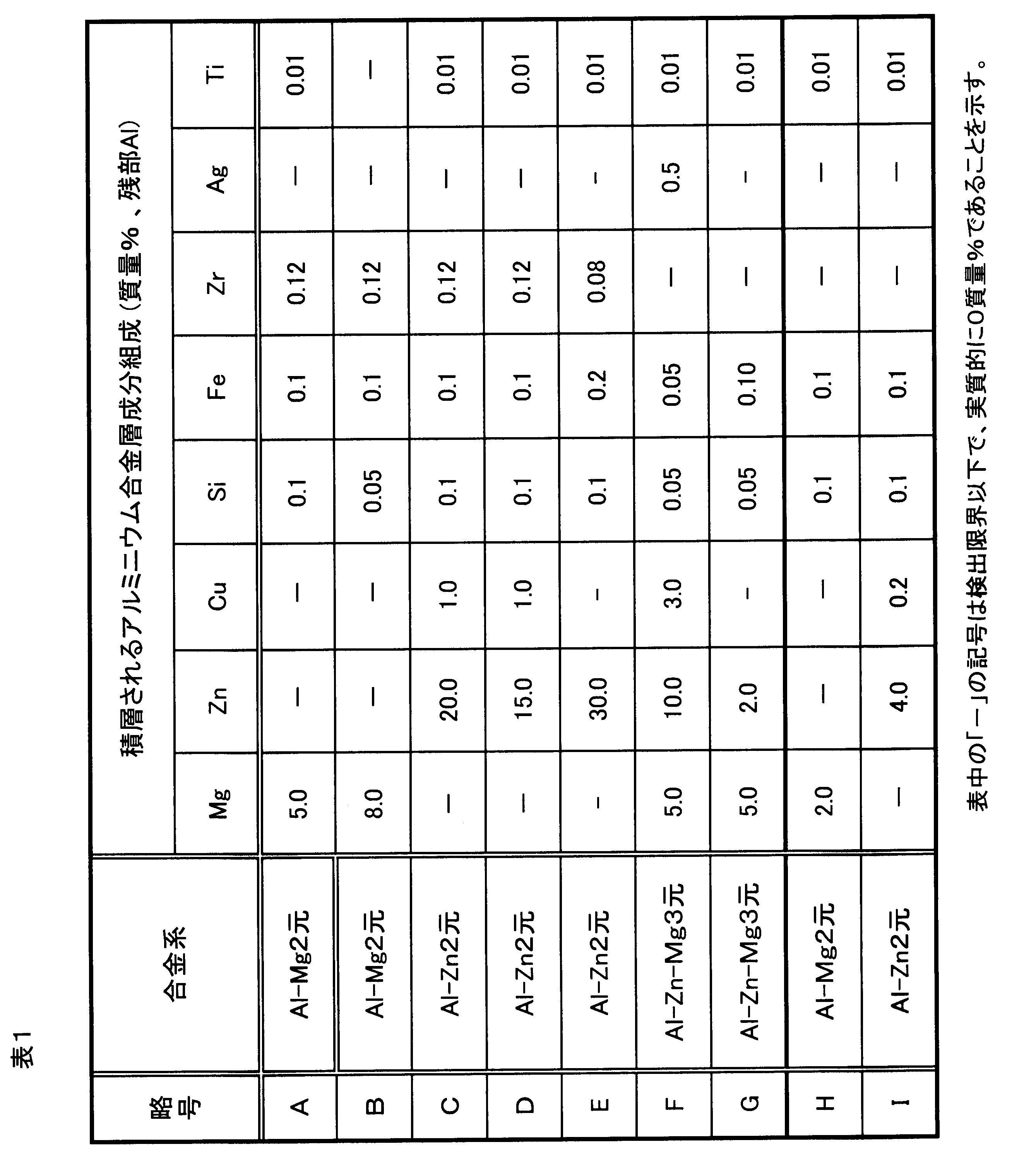

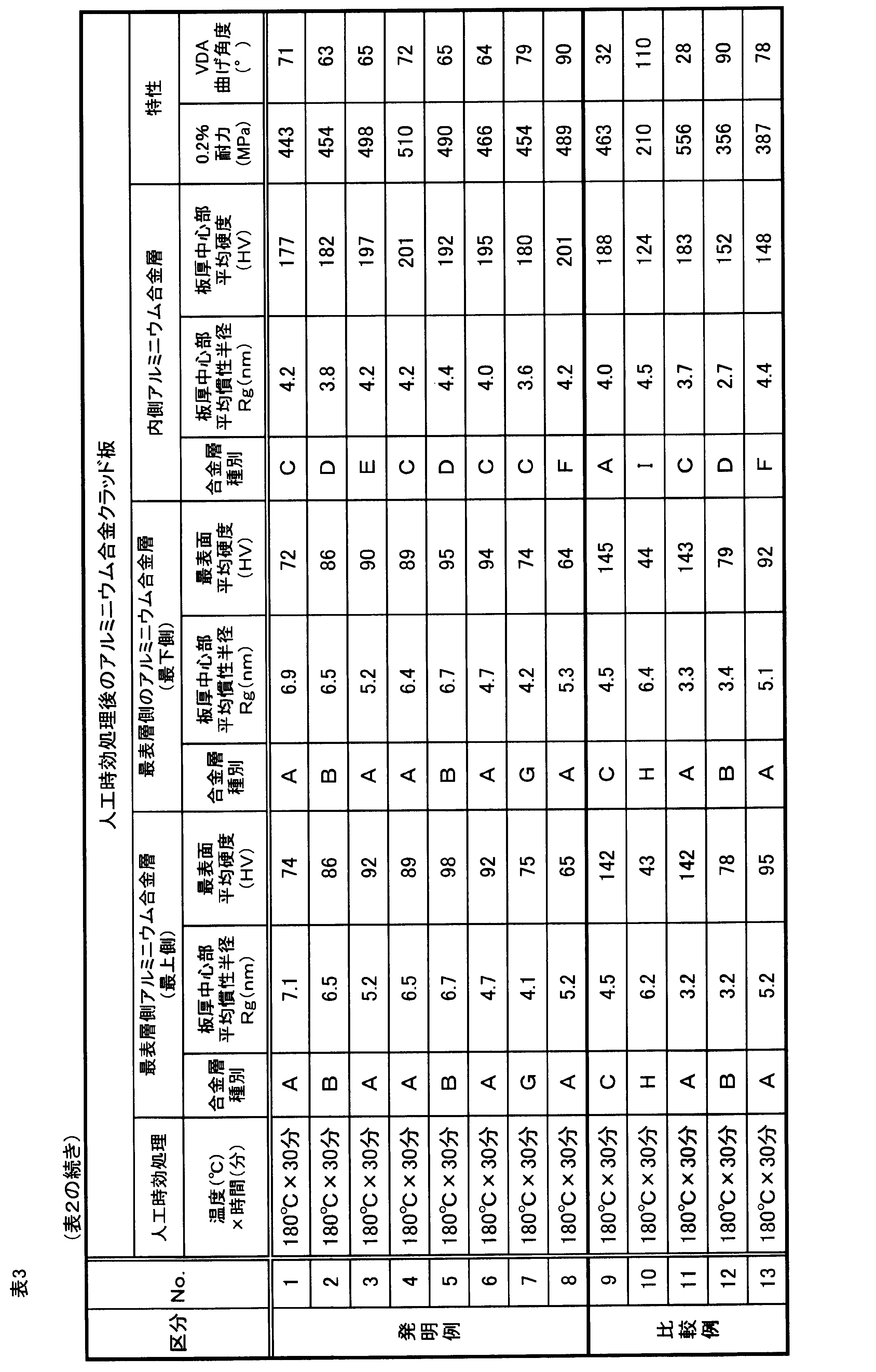
これらの実施例から、自動車の衝突時における圧壊特性を満たした、アルミニウム合金クラッド板あるいはアルミニウム合金クラッド構造部材とするための、本発明の各要件の意義が裏付けられる。
本発明を詳細にまた特定の実施態様を参照して説明したが、本発明の精神と範囲を逸脱することなく様々な変更や修正を加えることができることは当業者にとって明らかである。
本出願は、2016年3月7日出願の日本特許出願(特願2016-043262)に基づくものであり、その内容はここに参照として取り込まれる。
本出願は、2016年3月7日出願の日本特許出願(特願2016-043262)に基づくものであり、その内容はここに参照として取り込まれる。
本発明によれば、従来の7000系アルミニウム合金などの単板の、高い強度レベルにおける延性との矛盾を解決し、自動車の衝突時における圧壊特性を満たした、アルミニウム合金クラッド板あるいはこのクラッド板が成形された輸送機用の構造部材を提供できる。
Claims (2)
- 複数のアルミニウム合金層からなるアルミニウム合金クラッド板であって、
このアルミニウム合金クラッド板の最表層側の両方のアルミニウム合金層よりも内側のアルミニウム合金層が、各々Mg:3~10質量%、Zn:5~30質量%の1種または2種を含むとともに、前記最表層側の両方のアルミニウム合金層が、Mgを3~10質量%の範囲で含み、かつ、Znを2質量%以下(0質量%を含む)とした組成からなり、
これらのアルミニウム合金層は、MgかZnのいずれかの含有量が互いに異なるアルミニウム合金層同士が隣接するとともに、合計積層数が5~15層で、かつ全体の板厚が1~5mmであり、
前記アルミニウム合金クラッド板のMgとZnの各平均含有量が、前記積層された各アルミニウム合金層のMg、Znの各含有量を平均化した値として、Mg:2~8質量%、Zn:3~20質量%の範囲であり、
前記アルミニウム合金クラッド板の組織として、前記積層された各アルミニウム合金層の結晶粒径を平均化した平均結晶粒径が200μm以下であるとともに、積層されたアルミニウム合金層同士のMgとZnとが互いに拡散し合った、MgとZnの相互拡散領域を有しており、
かつ、前記アルミニウム合金クラッド板に180℃×30分の人工時効処理を施した際の、前記最表層側の両方のアルミニウム合金層の各板厚中心部における、人工時効析出物のサイズを示す、X線小角散乱法で測定された平均慣性半径Rgが各々4nm以上であるとともに、これら最表層側の両方のアルミニウム合金層の最表面の平均硬度が100HV以下であり、
前記最表層側のアルミニウム合金層よりも内側の、Zn:5~30質量%を含む前記アルミニウム合金層における板厚中心部の平均硬度が160HV以上であることを特徴とする、圧壊特性に優れたアルミニウム合金クラッド板。 - 複数のアルミニウム合金層からなるアルミニウム合金クラッド構造部材であって、
このアルミニウム合金クラッド構造部材の最表層側の両方のアルミニウム合金層よりも内側の前記アルミニウム合金層が、各々Mg:3~10質量%、Zn:5~30質量%の1種または2種を含むとともに、
前記最表層側の両方のアルミニウム合金層が、Mgを3~10質量%の範囲で含み、かつ、Znを2質量%以下(0質量%を含む)とした組成からなり、
これらのアルミニウム合金層は、MgかZnのいずれかの含有量が互いに異なるアルミニウム合金層同士が隣接するとともに、合計積層数が5~15層で、かつ全体の板厚が1~5mmであり、
前記アルミニウム合金クラッド構造部材のMgとZnの各平均含有量が、前記積層された各アルミニウム合金層のMg、Znの各含有量を平均化した値として、Mg:2~8質量%、Zn:3~20質量%の範囲であり、
前記アルミニウム合金クラッド構造部材の組織として、前記積層された各アルミニウム合金層の結晶粒径を平均化した平均結晶粒径が200μm以下であるとともに、積層されたアルミニウム合金層同士のMgとZnとが互いに拡散し合った、MgとZnの相互拡散領域を有しており、
かつ、前記最表層側の両方のアルミニウム合金層の各板厚中心部における、人工時効析出物のサイズを示す、X線小角散乱法で測定された平均慣性半径Rgが各々4nm以上であるとともに、これら最表層側の両方のアルミニウム合金層の最表面の平均硬度が100HV以下であり、
前記最表層側のアルミニウム合金層よりも内側の、Zn:5~30質量%を含む前記アルミニウム合金層における板厚中心部の平均硬度が160HV以上であることを特徴とする、圧壊特性に優れたアルミニウム合金クラッド構造部材。
Applications Claiming Priority (2)
| Application Number | Priority Date | Filing Date | Title |
|---|---|---|---|
| JP2016-043262 | 2016-03-07 | ||
| JP2016043262A JP2017160467A (ja) | 2016-03-07 | 2016-03-07 | アルミニウム合金クラッド板およびアルミニウム合金クラッド構造部材 |
Publications (1)
| Publication Number | Publication Date |
|---|---|
| WO2017154872A1 true WO2017154872A1 (ja) | 2017-09-14 |
Family
ID=59789439
Family Applications (1)
| Application Number | Title | Priority Date | Filing Date |
|---|---|---|---|
| PCT/JP2017/008918 Ceased WO2017154872A1 (ja) | 2016-03-07 | 2017-03-07 | アルミニウム合金クラッド板およびアルミニウム合金クラッド構造部材 |
Country Status (2)
| Country | Link |
|---|---|
| JP (1) | JP2017160467A (ja) |
| WO (1) | WO2017154872A1 (ja) |
Citations (4)
| Publication number | Priority date | Publication date | Assignee | Title |
|---|---|---|---|---|
| JP2011530657A (ja) * | 2008-08-13 | 2011-12-22 | ノベリス・インコーポレイテッド | 自動車用クラッドシート製品 |
| JP2015108163A (ja) * | 2013-10-24 | 2015-06-11 | 株式会社神戸製鋼所 | アルミニウム合金クラッド板およびアルミニウム合金クラッド構造部材 |
| WO2016152944A1 (ja) * | 2015-03-25 | 2016-09-29 | 株式会社神戸製鋼所 | アルミニウム合金クラッド板およびアルミニウム合金クラッド構造部材 |
| JP2017095750A (ja) * | 2015-11-20 | 2017-06-01 | 株式会社神戸製鋼所 | アルミニウム合金クラッド板およびアルミニウム合金クラッド構造部材 |
-
2016
- 2016-03-07 JP JP2016043262A patent/JP2017160467A/ja active Pending
-
2017
- 2017-03-07 WO PCT/JP2017/008918 patent/WO2017154872A1/ja not_active Ceased
Patent Citations (4)
| Publication number | Priority date | Publication date | Assignee | Title |
|---|---|---|---|---|
| JP2011530657A (ja) * | 2008-08-13 | 2011-12-22 | ノベリス・インコーポレイテッド | 自動車用クラッドシート製品 |
| JP2015108163A (ja) * | 2013-10-24 | 2015-06-11 | 株式会社神戸製鋼所 | アルミニウム合金クラッド板およびアルミニウム合金クラッド構造部材 |
| WO2016152944A1 (ja) * | 2015-03-25 | 2016-09-29 | 株式会社神戸製鋼所 | アルミニウム合金クラッド板およびアルミニウム合金クラッド構造部材 |
| JP2017095750A (ja) * | 2015-11-20 | 2017-06-01 | 株式会社神戸製鋼所 | アルミニウム合金クラッド板およびアルミニウム合金クラッド構造部材 |
Also Published As
| Publication number | Publication date |
|---|---|
| JP2017160467A (ja) | 2017-09-14 |
Similar Documents
| Publication | Publication Date | Title |
|---|---|---|
| US12043887B2 (en) | High strength 6xxx aluminum alloys and methods of making the same | |
| JP6771456B2 (ja) | アルミニウム合金製品及び調製方法 | |
| EP4056364B1 (en) | Clad aluminium alloy products and methods of making the same | |
| US20150218679A1 (en) | Aluminum alloy automobile part | |
| KR20150038678A (ko) | 자동차 부재용 알루미늄 합금판 | |
| KR20140116941A (ko) | 열교환기 핀용의 알루미늄 합금재 및 그 제조방법과 상기 알루미늄 합금재를 이용한 열교환기 | |
| WO2009101896A1 (ja) | アルミニウム合金積層板 | |
| WO2016152944A1 (ja) | アルミニウム合金クラッド板およびアルミニウム合金クラッド構造部材 | |
| JP6542649B2 (ja) | アルミニウム合金クラッド板およびアルミニウム合金クラッド構造部材 | |
| JP5923665B2 (ja) | 高成形性の耐粒界腐食性AlMgストリップ | |
| US20220010413A1 (en) | Magnesium alloy sheet and manufacturing method therefor | |
| JP6223669B2 (ja) | 自動車部材用アルミニウム合金板 | |
| JP6513449B2 (ja) | アルミニウム合金クラッド板およびアルミニウム合金クラッド構造部材 | |
| JP2018204116A (ja) | アルミニウム合金板 | |
| JP2019026876A (ja) | アルミニウム合金板およびその製造方法 | |
| WO2017154872A1 (ja) | アルミニウム合金クラッド板およびアルミニウム合金クラッド構造部材 | |
| US20170173742A1 (en) | Aluminum alloy clad plate, and aluminum alloy clad structural member | |
| JP2017095749A (ja) | アルミニウム合金クラッド板およびアルミニウム合金クラッド構造部材 | |
| JP6585436B2 (ja) | 耐糸錆性、塗装焼付け硬化性及び加工性に優れた自動車ボディパネル用アルミニウム合金板及びその製造方法、ならびに、これを用いた自動車ボディパネル及びその製造方法 | |
| JP2018100435A (ja) | アルミニウム合金板 | |
| JP4588338B2 (ja) | 曲げ加工性とプレス成形性に優れたアルミニウム合金板 | |
| JP5607215B2 (ja) | ヒートインシュレータ用アルミニウム合金板およびその製造方法 |
Legal Events
| Date | Code | Title | Description |
|---|---|---|---|
| NENP | Non-entry into the national phase |
Ref country code: DE |
|
| 121 | Ep: the epo has been informed by wipo that ep was designated in this application |
Ref document number: 17763212 Country of ref document: EP Kind code of ref document: A1 |
|
| 122 | Ep: pct application non-entry in european phase |
Ref document number: 17763212 Country of ref document: EP Kind code of ref document: A1 |