WO2017141876A1 - 有機エレクトロルミネッセンス素子及び電子機器 - Google Patents
有機エレクトロルミネッセンス素子及び電子機器 Download PDFInfo
- Publication number
- WO2017141876A1 WO2017141876A1 PCT/JP2017/005168 JP2017005168W WO2017141876A1 WO 2017141876 A1 WO2017141876 A1 WO 2017141876A1 JP 2017005168 W JP2017005168 W JP 2017005168W WO 2017141876 A1 WO2017141876 A1 WO 2017141876A1
- Authority
- WO
- WIPO (PCT)
- Prior art keywords
- group
- substituted
- unsubstituted
- carbon atoms
- ring
- Prior art date
- Legal status (The legal status is an assumption and is not a legal conclusion. Google has not performed a legal analysis and makes no representation as to the accuracy of the status listed.)
- Ceased
Links
- 0 C*c1cc(N(c2ccccc2)c2cc3ccc4-c5ccc(cccc6)c6c5C5(c6ccccc6-c6ccccc56)c4c3cc2)ccc1 Chemical compound C*c1cc(N(c2ccccc2)c2cc3ccc4-c5ccc(cccc6)c6c5C5(c6ccccc6-c6ccccc56)c4c3cc2)ccc1 0.000 description 8
- IJARDCZBQMIWDL-UHFFFAOYSA-N C1=C(c(cc2)ccc2-c(cc2C34c5ccccc5-c5ccccc35)c(cccc3)c3c2-c(cc2)c4c(cc3)c2cc3-c2cc(-c3nc(-c(cc4)ccc4-c4ccccc4)cc(-c(cc4)ccc4-c4c(cccc5)c5c5-c6ccc(cccc7)c7c6C6(c7ccccc7-c7ccccc67)c5c4)n3)ccc2)[N-](c2ccccc2)=C1c1cccc(-c2ccccc2)c1 Chemical compound C1=C(c(cc2)ccc2-c(cc2C34c5ccccc5-c5ccccc35)c(cccc3)c3c2-c(cc2)c4c(cc3)c2cc3-c2cc(-c3nc(-c(cc4)ccc4-c4ccccc4)cc(-c(cc4)ccc4-c4c(cccc5)c5c5-c6ccc(cccc7)c7c6C6(c7ccccc7-c7ccccc67)c5c4)n3)ccc2)[N-](c2ccccc2)=C1c1cccc(-c2ccccc2)c1 IJARDCZBQMIWDL-UHFFFAOYSA-N 0.000 description 1
- KDYUKILNORGVKU-UHFFFAOYSA-N C1=CC=C(c(cc2)ccc2-c2c(cccc3)c3c3-c4ccc(cccc5)c5c4C4(c5ccccc5-c5ccccc45)c3c2)[N-]C1c1ncccc1 Chemical compound C1=CC=C(c(cc2)ccc2-c2c(cccc3)c3c3-c4ccc(cccc5)c5c4C4(c5ccccc5-c5ccccc45)c3c2)[N-]C1c1ncccc1 KDYUKILNORGVKU-UHFFFAOYSA-N 0.000 description 1
- YMTNSXVCSXREKX-UHFFFAOYSA-N CC(C)c(cc1)ccc1N(c(cc1)ccc1C#N)c(cc1)cc(cc2)c1c1c2-c2cc(cccc3)c3cc2C11c2ccccc2-c2ccccc12 Chemical compound CC(C)c(cc1)ccc1N(c(cc1)ccc1C#N)c(cc1)cc(cc2)c1c1c2-c2cc(cccc3)c3cc2C11c2ccccc2-c2ccccc12 YMTNSXVCSXREKX-UHFFFAOYSA-N 0.000 description 1
- DXIWQPMNGSZRIN-UHFFFAOYSA-N CC(C)c(cc1)ccc1N(c(cc1)ccc1C#N)c1c(cccc2)c2c2-c3c(cccc4)c4c(cccc4)c4c3C3(c4ccccc4-c4ccccc34)c2c1 Chemical compound CC(C)c(cc1)ccc1N(c(cc1)ccc1C#N)c1c(cccc2)c2c2-c3c(cccc4)c4c(cccc4)c4c3C3(c4ccccc4-c4ccccc34)c2c1 DXIWQPMNGSZRIN-UHFFFAOYSA-N 0.000 description 1
- ZZUMVCIRGWOBLW-UHFFFAOYSA-N CC(C)c(cc1)ccc1N(c(cc1)ccc1C#N)c1cc2ccc3-c4c(cccc5)c5ccc4C4(c5ccccc5-c5ccccc45)c3c2cc1 Chemical compound CC(C)c(cc1)ccc1N(c(cc1)ccc1C#N)c1cc2ccc3-c4c(cccc5)c5ccc4C4(c5ccccc5-c5ccccc45)c3c2cc1 ZZUMVCIRGWOBLW-UHFFFAOYSA-N 0.000 description 1
- NYRPFQUZMFSZKA-UHFFFAOYSA-N CC(C)c(cc1)ccc1N(c(cc1)ccc1F)c(cc1)cc(cc2)c1c1c2-c2cc(cccc3)c3cc2C11c2ccccc2-c2ccccc12 Chemical compound CC(C)c(cc1)ccc1N(c(cc1)ccc1F)c(cc1)cc(cc2)c1c1c2-c2cc(cccc3)c3cc2C11c2ccccc2-c2ccccc12 NYRPFQUZMFSZKA-UHFFFAOYSA-N 0.000 description 1
- MEIUDRMYDANSPZ-UHFFFAOYSA-N CC(C)c(cc1)ccc1N(c(cc1)ccc1F)c1cc(C2(c3ccccc3-c3ccccc23)c2c(cccc3)c3c(cccc3)c3c2-2)c-2c2c1cccc2 Chemical compound CC(C)c(cc1)ccc1N(c(cc1)ccc1F)c1cc(C2(c3ccccc3-c3ccccc23)c2c(cccc3)c3c(cccc3)c3c2-2)c-2c2c1cccc2 MEIUDRMYDANSPZ-UHFFFAOYSA-N 0.000 description 1
- AEGBBNWIIYYQMB-UHFFFAOYSA-N CC(C)c(cc1)ccc1N(c(cc1)ccc1[Si](C)(C)C)c(cc1)cc(cc23)c1cc2-c1ccc(cccc2)c2c1C31C(C=CCC2)=C2c2ccccc12 Chemical compound CC(C)c(cc1)ccc1N(c(cc1)ccc1[Si](C)(C)C)c(cc1)cc(cc23)c1cc2-c1ccc(cccc2)c2c1C31C(C=CCC2)=C2c2ccccc12 AEGBBNWIIYYQMB-UHFFFAOYSA-N 0.000 description 1
- ILHALYOCWLMHCT-UHFFFAOYSA-N CC(C)c(cc1)ccc1N(c(cc1)ccc1[Si](C)(C)C)c1cc2ccc3-c4ccc(cccc5)c5c4C4(c5ccccc5-c5ccccc45)c3c2cc1 Chemical compound CC(C)c(cc1)ccc1N(c(cc1)ccc1[Si](C)(C)C)c1cc2ccc3-c4ccc(cccc5)c5c4C4(c5ccccc5-c5ccccc45)c3c2cc1 ILHALYOCWLMHCT-UHFFFAOYSA-N 0.000 description 1
- WISNLUZEXQMBGF-UHFFFAOYSA-N CC1(C)c(cc(cc2)-c3c(cccc4)c4c(-c(cc4)cc5c4[o]c4c5cc(cccc5)c5c4)c4c3cccc4)c2-c2c1cccc2 Chemical compound CC1(C)c(cc(cc2)-c3c(cccc4)c4c(-c(cc4)cc5c4[o]c4c5cc(cccc5)c5c4)c4c3cccc4)c2-c2c1cccc2 WISNLUZEXQMBGF-UHFFFAOYSA-N 0.000 description 1
- YZXIKVVTKMQICZ-UHFFFAOYSA-N CCC[n]1c(-c2cc(-c(ccc3c4)cc3cc3c4-c4ccc(cccc5)c5c4C33c4ccccc4-c4ccccc34)ccc2)nc2ccccc12 Chemical compound CCC[n]1c(-c2cc(-c(ccc3c4)cc3cc3c4-c4ccc(cccc5)c5c4C33c4ccccc4-c4ccccc34)ccc2)nc2ccccc12 YZXIKVVTKMQICZ-UHFFFAOYSA-N 0.000 description 1
- GZKHAKKRUPKUPW-UHFFFAOYSA-N CCC[n]1c(-c2cc(-c3cc(C4(c5ccccc5-c5ccccc45)c4c(cccc5)c5ccc4-4)c-4c4c3cccc4)ccc2)nc2ccccc12 Chemical compound CCC[n]1c(-c2cc(-c3cc(C4(c5ccccc5-c5ccccc45)c4c(cccc5)c5ccc4-4)c-4c4c3cccc4)ccc2)nc2ccccc12 GZKHAKKRUPKUPW-UHFFFAOYSA-N 0.000 description 1
- UFZQHQDYNHOXEL-UHFFFAOYSA-N CCCc1nc(cccc2)c2[n]1-c1cc(-c(ccc2c3)cc2cc2c3-c3c(cccc4)c4c(cccc4)c4c3C22c3ccccc3-c3ccccc23)ccc1 Chemical compound CCCc1nc(cccc2)c2[n]1-c1cc(-c(ccc2c3)cc2cc2c3-c3c(cccc4)c4c(cccc4)c4c3C22c3ccccc3-c3ccccc23)ccc1 UFZQHQDYNHOXEL-UHFFFAOYSA-N 0.000 description 1
- NTAUVQNFDXPEGT-UHFFFAOYSA-N CCCc1nc(cccc2)c2[n]1-c1cccc(-c(cc2)cc(cc3)c2c2c3-c3c(cccc4)c4c(cccc4)c4c3C22c3ccccc3-c3ccccc23)c1 Chemical compound CCCc1nc(cccc2)c2[n]1-c1cccc(-c(cc2)cc(cc3)c2c2c3-c3c(cccc4)c4c(cccc4)c4c3C22c3ccccc3-c3ccccc23)c1 NTAUVQNFDXPEGT-UHFFFAOYSA-N 0.000 description 1
- SJAUKQHERVISGT-UHFFFAOYSA-N CCCc1nc2ccccc2[n]1-c1cccc(-c(cc2)cc(cc3)c2c2c3-c3ccc(cccc4)c4c3C22c3ccccc3-c3ccccc23)c1 Chemical compound CCCc1nc2ccccc2[n]1-c1cccc(-c(cc2)cc(cc3)c2c2c3-c3ccc(cccc4)c4c3C22c3ccccc3-c3ccccc23)c1 SJAUKQHERVISGT-UHFFFAOYSA-N 0.000 description 1
- WMRFUDSQIXCGSZ-UHFFFAOYSA-N CC[n]1c(-c2cc(-c(ccc3c4)cc3cc3c4-c4ccc(cccc5)c5c4C33c4ccccc4-c4ccccc34)ccc2)nc2ccccc12 Chemical compound CC[n]1c(-c2cc(-c(ccc3c4)cc3cc3c4-c4ccc(cccc5)c5c4C33c4ccccc4-c4ccccc34)ccc2)nc2ccccc12 WMRFUDSQIXCGSZ-UHFFFAOYSA-N 0.000 description 1
- KQKSVHYDVPXCJH-UHFFFAOYSA-N CCc1nc(cccc2)c2[n]1-c1cc(-c(ccc2c3)cc2cc2c3-c3c(cccc4)c4c(cccc4)c4c3C22c3ccccc3-c3ccccc23)ccc1 Chemical compound CCc1nc(cccc2)c2[n]1-c1cc(-c(ccc2c3)cc2cc2c3-c3c(cccc4)c4c(cccc4)c4c3C22c3ccccc3-c3ccccc23)ccc1 KQKSVHYDVPXCJH-UHFFFAOYSA-N 0.000 description 1
- PPYFPJYCPQNORV-UHFFFAOYSA-N CCc1nc(cccc2)c2[n]1-c1cccc(-c(cc2)cc(cc3)c2c(C24c5ccccc5-c5ccccc25)c3-c2c4c(cccc3)c3c3c2cccc3)c1 Chemical compound CCc1nc(cccc2)c2[n]1-c1cccc(-c(cc2)cc(cc3)c2c(C24c5ccccc5-c5ccccc25)c3-c2c4c(cccc3)c3c3c2cccc3)c1 PPYFPJYCPQNORV-UHFFFAOYSA-N 0.000 description 1
- ZYTXRLLOYUOMIU-UHFFFAOYSA-N CCc1nc2ccccc2[n]1-c1cccc(-c(cc2)cc(cc3)c2c2c3-c3ccc(cccc4)c4c3C22c3ccccc3-c3ccccc23)c1 Chemical compound CCc1nc2ccccc2[n]1-c1cccc(-c(cc2)cc(cc3)c2c2c3-c3ccc(cccc4)c4c3C22c3ccccc3-c3ccccc23)c1 ZYTXRLLOYUOMIU-UHFFFAOYSA-N 0.000 description 1
- ZQYOIZXXGLYRFG-UHFFFAOYSA-N C[Si](C)(C)c(cc1)ccc1N(c1ccccc1)c1cc2ccc3-c4ccc(cccc5)c5c4C4(c5ccccc5-c5ccccc45)c3c2cc1 Chemical compound C[Si](C)(C)c(cc1)ccc1N(c1ccccc1)c1cc2ccc3-c4ccc(cccc5)c5c4C4(c5ccccc5-c5ccccc45)c3c2cc1 ZQYOIZXXGLYRFG-UHFFFAOYSA-N 0.000 description 1
- PHPKGSDMJHVPJV-UHFFFAOYSA-N C[Si](C)(C)c1ccccc1N(c1ccccc1)c1cc2ccc3-c4ccc(cccc5)c5c4C4(c5ccccc5-c5ccccc45)c3c2cc1 Chemical compound C[Si](C)(C)c1ccccc1N(c1ccccc1)c1cc2ccc3-c4ccc(cccc5)c5c4C4(c5ccccc5-c5ccccc45)c3c2cc1 PHPKGSDMJHVPJV-UHFFFAOYSA-N 0.000 description 1
- JQKIUTBFAJRJDX-UHFFFAOYSA-N C[n]1c(-c2cc(-c(ccc3c4)cc3cc3c4-c4ccc(cccc5)c5c4C33c4ccccc4-c4ccccc34)ccc2)nc2c1cccc2 Chemical compound C[n]1c(-c2cc(-c(ccc3c4)cc3cc3c4-c4ccc(cccc5)c5c4C33c4ccccc4-c4ccccc34)ccc2)nc2c1cccc2 JQKIUTBFAJRJDX-UHFFFAOYSA-N 0.000 description 1
- PRECVHSLUNYEHR-UHFFFAOYSA-N C[n]1c(-c2cccc(-c3cc(C4(c5ccccc5-c5ccccc45)c4c(cccc5)c5ccc4-4)c-4c4c3cccc4)c2)nc2ccccc12 Chemical compound C[n]1c(-c2cccc(-c3cc(C4(c5ccccc5-c5ccccc45)c4c(cccc5)c5ccc4-4)c-4c4c3cccc4)c2)nc2ccccc12 PRECVHSLUNYEHR-UHFFFAOYSA-N 0.000 description 1
- QLTPQOGKEHHMAM-UHFFFAOYSA-N Cc1nc(cccc2)c2[n]1-c1cc(-c(ccc2c3)cc2cc2c3-c3c(cccc4)c4c(cccc4)c4c3C22c3ccccc3-c3ccccc23)ccc1 Chemical compound Cc1nc(cccc2)c2[n]1-c1cc(-c(ccc2c3)cc2cc2c3-c3c(cccc4)c4c(cccc4)c4c3C22c3ccccc3-c3ccccc23)ccc1 QLTPQOGKEHHMAM-UHFFFAOYSA-N 0.000 description 1
- JCJBTVXSTHOTSO-UHFFFAOYSA-N Cc1nc(cccc2)c2[n]1-c1cccc(-c(cc2)cc(cc3)c2c(C24c5ccccc5-c5ccccc25)c3-c2c4c(cccc3)c3c3c2cccc3)c1 Chemical compound Cc1nc(cccc2)c2[n]1-c1cccc(-c(cc2)cc(cc3)c2c(C24c5ccccc5-c5ccccc25)c3-c2c4c(cccc3)c3c3c2cccc3)c1 JCJBTVXSTHOTSO-UHFFFAOYSA-N 0.000 description 1
- ZISGAIXEFGYAPK-UHFFFAOYSA-N Cc1nc(cccc2)c2[n]1-c1cccc(-c2cc3ccc4-c5ccc(cccc6)c6c5C5(c6ccccc6-c6ccccc56)c4c3cc2)c1 Chemical compound Cc1nc(cccc2)c2[n]1-c1cccc(-c2cc3ccc4-c5ccc(cccc6)c6c5C5(c6ccccc6-c6ccccc56)c4c3cc2)c1 ZISGAIXEFGYAPK-UHFFFAOYSA-N 0.000 description 1
- CYNZBTVAKWEEMP-UHFFFAOYSA-N Fc(cc1)ccc1N(c1ccccc1)c(cc1)cc(cc2)c1c1c2-c2cc(cccc3)c3cc2C11c2ccccc2-c2ccccc12 Chemical compound Fc(cc1)ccc1N(c1ccccc1)c(cc1)cc(cc2)c1c1c2-c2cc(cccc3)c3cc2C11c2ccccc2-c2ccccc12 CYNZBTVAKWEEMP-UHFFFAOYSA-N 0.000 description 1
- LKONOZGJXPUZQT-UHFFFAOYSA-N Fc(cc1)ccc1N(c1ccccc1)c1cc(C2(c3ccccc3-c3ccccc23)c2c(cccc3)c3c(cccc3)c3c2-2)c-2c2c1cccc2 Chemical compound Fc(cc1)ccc1N(c1ccccc1)c1cc(C2(c3ccccc3-c3ccccc23)c2c(cccc3)c3c(cccc3)c3c2-2)c-2c2c1cccc2 LKONOZGJXPUZQT-UHFFFAOYSA-N 0.000 description 1
- XRKQIDJGFAAMQK-UHFFFAOYSA-N Fc(cccc1)c1N(c1ccccc1)c1cc(C2(c3ccccc3-c3ccccc23)c2c(cccc3)c3c(cccc3)c3c2-2)c-2c2c1cccc2 Chemical compound Fc(cccc1)c1N(c1ccccc1)c1cc(C2(c3ccccc3-c3ccccc23)c2c(cccc3)c3c(cccc3)c3c2-2)c-2c2c1cccc2 XRKQIDJGFAAMQK-UHFFFAOYSA-N 0.000 description 1
- FAGMCQVPZBTPDN-UHFFFAOYSA-N Fc1cc(N(c2ccccc2)c2ccc(c3c(cc4)-c5cc(cccc6)c6cc5C33c5ccccc5-c5ccccc35)c4c2)ccc1 Chemical compound Fc1cc(N(c2ccccc2)c2ccc(c3c(cc4)-c5cc(cccc6)c6cc5C33c5ccccc5-c5ccccc35)c4c2)ccc1 FAGMCQVPZBTPDN-UHFFFAOYSA-N 0.000 description 1
- HXDMLKHAGOMOFN-UHFFFAOYSA-N Fc1cccc(N(c2ccccc2)c2c(cccc3)c3c3-c4c(cccc5)c5c(cccc5)c5c4C4(c5ccccc5-c5ccccc45)c3c2)c1 Chemical compound Fc1cccc(N(c2ccccc2)c2c(cccc3)c3c3-c4c(cccc5)c5c(cccc5)c5c4C4(c5ccccc5-c5ccccc45)c3c2)c1 HXDMLKHAGOMOFN-UHFFFAOYSA-N 0.000 description 1
- SODUUXUGRKYOEM-UHFFFAOYSA-N Fc1ccccc1N(c1ccccc1)c(cc1)cc(cc2)c1c1c2-c2cc(cccc3)c3cc2C11c2ccccc2-c2ccccc12 Chemical compound Fc1ccccc1N(c1ccccc1)c(cc1)cc(cc2)c1c1c2-c2cc(cccc3)c3cc2C11c2ccccc2-c2ccccc12 SODUUXUGRKYOEM-UHFFFAOYSA-N 0.000 description 1
- OXQZINNKIFEDAT-UHFFFAOYSA-N N#Cc(cc1)ccc1N(c1ccccc1)c(ccc1c2C34c5ccccc5-c5ccccc35)cc1ccc2-c1c4ccc2c1cccc2 Chemical compound N#Cc(cc1)ccc1N(c1ccccc1)c(ccc1c2C34c5ccccc5-c5ccccc35)cc1ccc2-c1c4ccc2c1cccc2 OXQZINNKIFEDAT-UHFFFAOYSA-N 0.000 description 1
- IUJNWTAGPBAKHQ-UHFFFAOYSA-N N#Cc(cc1)ccc1N(c1ccccc1)c1cc(C2(c3ccccc3-c3ccccc23)c2c(cccc3)c3c(cccc3)c3c2-2)c-2c2c1cccc2 Chemical compound N#Cc(cc1)ccc1N(c1ccccc1)c1cc(C2(c3ccccc3-c3ccccc23)c2c(cccc3)c3c(cccc3)c3c2-2)c-2c2c1cccc2 IUJNWTAGPBAKHQ-UHFFFAOYSA-N 0.000 description 1
- RWTQMTKUZBDGNO-UHFFFAOYSA-N N#Cc(cc1)ccc1N(c1ccccc1)c1cc2ccc3-c4cc(cccc5)c5cc4C4(c5ccccc5-c5ccccc45)c3c2cc1 Chemical compound N#Cc(cc1)ccc1N(c1ccccc1)c1cc2ccc3-c4cc(cccc5)c5cc4C4(c5ccccc5-c5ccccc45)c3c2cc1 RWTQMTKUZBDGNO-UHFFFAOYSA-N 0.000 description 1
- PTEKJOHGDUAPMH-UHFFFAOYSA-N N#Cc(cccc1)c1N(c1ccccc1)c1cc(C2(c3ccccc3-c3ccccc23)c2c(cccc3)c3c(cccc3)c3c2-2)c-2c2c1cccc2 Chemical compound N#Cc(cccc1)c1N(c1ccccc1)c1cc(C2(c3ccccc3-c3ccccc23)c2c(cccc3)c3c(cccc3)c3c2-2)c-2c2c1cccc2 PTEKJOHGDUAPMH-UHFFFAOYSA-N 0.000 description 1
- XWWXYHFPNJTGIR-UHFFFAOYSA-N N#Cc(cccc1)c1N(c1ccccc1)c1cc2ccc3-c4cc(cccc5)c5cc4C4(c5ccccc5-c5ccccc45)c3c2cc1 Chemical compound N#Cc(cccc1)c1N(c1ccccc1)c1cc2ccc3-c4cc(cccc5)c5cc4C4(c5ccccc5-c5ccccc45)c3c2cc1 XWWXYHFPNJTGIR-UHFFFAOYSA-N 0.000 description 1
- DKHNGUNXLDCATP-UHFFFAOYSA-N N#Cc1c(C#N)nc2c3nc(C#N)c(C#N)nc3c3nc(C#N)c(C#N)nc3c2n1 Chemical compound N#Cc1c(C#N)nc2c3nc(C#N)c(C#N)nc3c3nc(C#N)c(C#N)nc3c2n1 DKHNGUNXLDCATP-UHFFFAOYSA-N 0.000 description 1
- QNXYIKUEWMDNJW-UHFFFAOYSA-N N#Cc1cc(N(c2ccccc2)c2cc3ccc4-c5c(cccc6)c6ccc5C5(c6ccccc6-c6ccccc56)c4c3cc2)ccc1 Chemical compound N#Cc1cc(N(c2ccccc2)c2cc3ccc4-c5c(cccc6)c6ccc5C5(c6ccccc6-c6ccccc56)c4c3cc2)ccc1 QNXYIKUEWMDNJW-UHFFFAOYSA-N 0.000 description 1
- VIHDMXHDGQUREU-UHFFFAOYSA-N N#Cc1cc(N(c2ccccc2)c2cc3ccc4-c5cc(cccc6)c6cc5C5(c6ccccc6-c6ccccc56)c4c3cc2)ccc1 Chemical compound N#Cc1cc(N(c2ccccc2)c2cc3ccc4-c5cc(cccc6)c6cc5C5(c6ccccc6-c6ccccc56)c4c3cc2)ccc1 VIHDMXHDGQUREU-UHFFFAOYSA-N 0.000 description 1
- HGDWEHRXCAMXIF-UHFFFAOYSA-N N#Cc1cccc(N(c2ccccc2)c2cc(C3(c4ccccc4-c4ccccc34)c3c(cccc4)c4c(cccc4)c4c3-3)c-3c3c2cccc3)c1 Chemical compound N#Cc1cccc(N(c2ccccc2)c2cc(C3(c4ccccc4-c4ccccc34)c3c(cccc4)c4c(cccc4)c4c3-3)c-3c3c2cccc3)c1 HGDWEHRXCAMXIF-UHFFFAOYSA-N 0.000 description 1
- VJWYGNOQJGHHEF-UHFFFAOYSA-N N#Cc1ccccc1N(c1ccccc1)c1ccc(c(C23c4ccccc4-c4ccccc24)c(cc2)-c4c3ccc3c4cccc3)c2c1 Chemical compound N#Cc1ccccc1N(c1ccccc1)c1ccc(c(C23c4ccccc4-c4ccccc24)c(cc2)-c4c3ccc3c4cccc3)c2c1 VJWYGNOQJGHHEF-UHFFFAOYSA-N 0.000 description 1
- DKAPVCHMHJMLAG-UHFFFAOYSA-N c(cc1)cc(c2c3)c1[o]c2ccc3-c1c(cccc2)c2c(-c(cc2)cc3c2[o]c2c(cccc4)c4ccc32)c2c1cccc2 Chemical compound c(cc1)cc(c2c3)c1[o]c2ccc3-c1c(cccc2)c2c(-c(cc2)cc3c2[o]c2c(cccc4)c4ccc32)c2c1cccc2 DKAPVCHMHJMLAG-UHFFFAOYSA-N 0.000 description 1
- JUEAGDKCHRAXQG-UHFFFAOYSA-N c(cc1)cc(cc2)c1cc2-c1c(cccc2)c2c(-c(cc2)cc3c2[o]c2c(cccc4)c4ccc32)c2c1cccc2 Chemical compound c(cc1)cc(cc2)c1cc2-c1c(cccc2)c2c(-c(cc2)cc3c2[o]c2c(cccc4)c4ccc32)c2c1cccc2 JUEAGDKCHRAXQG-UHFFFAOYSA-N 0.000 description 1
- TXCDCPKCNAJMEE-UHFFFAOYSA-N c(cc1)cc2c1[o]c1ccccc21 Chemical compound c(cc1)cc2c1[o]c1ccccc21 TXCDCPKCNAJMEE-UHFFFAOYSA-N 0.000 description 1
- IYYZUPMFVPLQIF-UHFFFAOYSA-N c(cc1)cc2c1[s]c1ccccc21 Chemical compound c(cc1)cc2c1[s]c1ccccc21 IYYZUPMFVPLQIF-UHFFFAOYSA-N 0.000 description 1
- SGTVHOQMVBZJEP-UHFFFAOYSA-N c(cc1)ccc1-[n](c(cccc1)c1c1c2)c1ccc2-c1c(cccc2)c2c(-c(cc2)cc3c2[o]c2ccc(cccc4)c4c32)c2c1cccc2 Chemical compound c(cc1)ccc1-[n](c(cccc1)c1c1c2)c1ccc2-c1c(cccc2)c2c(-c(cc2)cc3c2[o]c2ccc(cccc4)c4c32)c2c1cccc2 SGTVHOQMVBZJEP-UHFFFAOYSA-N 0.000 description 1
- QNACWYQEPBXYJH-UHFFFAOYSA-N c(cc1)ccc1-[n]1c(-c2cc(-c(ccc3c4)cc3cc3c4-c4ccc(cccc5)c5c4C33c4ccccc4-c4ccccc34)ccc2)nc2ccccc12 Chemical compound c(cc1)ccc1-[n]1c(-c2cc(-c(ccc3c4)cc3cc3c4-c4ccc(cccc5)c5c4C33c4ccccc4-c4ccccc34)ccc2)nc2ccccc12 QNACWYQEPBXYJH-UHFFFAOYSA-N 0.000 description 1
- GPMZAXIBSMNKEC-UHFFFAOYSA-N c(cc1)ccc1-[n]1c(-c2cccc(-c3cc(C4(c5ccccc5-c5c4cccc5)c4c(cccc5)c5ccc4-4)c-4c4c3cccc4)c2)nc2ccccc12 Chemical compound c(cc1)ccc1-[n]1c(-c2cccc(-c3cc(C4(c5ccccc5-c5c4cccc5)c4c(cccc5)c5ccc4-4)c-4c4c3cccc4)c2)nc2ccccc12 GPMZAXIBSMNKEC-UHFFFAOYSA-N 0.000 description 1
- QDBXXEAMKVDJML-UHFFFAOYSA-N c(cc1)ccc1-c1c(cccc2)c2c(-c(cc2)cc3c2[o]c2c(cccc4)c4ccc32)c2c1cccc2 Chemical compound c(cc1)ccc1-c1c(cccc2)c2c(-c(cc2)cc3c2[o]c2c(cccc4)c4ccc32)c2c1cccc2 QDBXXEAMKVDJML-UHFFFAOYSA-N 0.000 description 1
- DFRPRIUFLDNBKD-UHFFFAOYSA-N c(cc1)ccc1-c1c(cccc2)c2c(-c(cc2)cc3c2[o]c2c3cc(cccc3)c3c2)c2c1cccc2 Chemical compound c(cc1)ccc1-c1c(cccc2)c2c(-c(cc2)cc3c2[o]c2c3cc(cccc3)c3c2)c2c1cccc2 DFRPRIUFLDNBKD-UHFFFAOYSA-N 0.000 description 1
- LNCJWUCXEOFQSE-UHFFFAOYSA-N c(cc1)ccc1-c1c(cccc2)c2c(-c(cc2)cc3c2[o]c2ccc(cccc4)c4c32)c2c1cccc2 Chemical compound c(cc1)ccc1-c1c(cccc2)c2c(-c(cc2)cc3c2[o]c2ccc(cccc4)c4c32)c2c1cccc2 LNCJWUCXEOFQSE-UHFFFAOYSA-N 0.000 description 1
- OYKMITZKDGPRRD-UHFFFAOYSA-N c(cc1)ccc1-c1cc(-c2cc(-c(cc3)cc(cc4)c3c3c4-c4c(cccc5)c5c(cccc5)c5c4C33c4ccccc4-c4ccccc34)ccc2)nc(-c2ccccc2)n1 Chemical compound c(cc1)ccc1-c1cc(-c2cc(-c(cc3)cc(cc4)c3c3c4-c4c(cccc5)c5c(cccc5)c5c4C33c4ccccc4-c4ccccc34)ccc2)nc(-c2ccccc2)n1 OYKMITZKDGPRRD-UHFFFAOYSA-N 0.000 description 1
- SIWFKPUCCLTSLE-UHFFFAOYSA-N c(cc1)ccc1-c1cc(-c2cc(-c(ccc3c4)cc3cc3c4-c4c(cccc5)c5c(cccc5)c5c4C33c4ccccc4-c4ccccc34)ccc2)nc(-c2ccccc2)n1 Chemical compound c(cc1)ccc1-c1cc(-c2cc(-c(ccc3c4)cc3cc3c4-c4c(cccc5)c5c(cccc5)c5c4C33c4ccccc4-c4ccccc34)ccc2)nc(-c2ccccc2)n1 SIWFKPUCCLTSLE-UHFFFAOYSA-N 0.000 description 1
- AZUNEMSOOKBWON-UHFFFAOYSA-N c(cc1)ccc1-c1ccc(-c2ccccc2)c(N(c2ccccc2)c2cc3ccc4-c5cc(cccc6)c6cc5C5(c6ccccc6-c6ccccc56)c4c3cc2)c1 Chemical compound c(cc1)ccc1-c1ccc(-c2ccccc2)c(N(c2ccccc2)c2cc3ccc4-c5cc(cccc6)c6cc5C5(c6ccccc6-c6ccccc56)c4c3cc2)c1 AZUNEMSOOKBWON-UHFFFAOYSA-N 0.000 description 1
- YFRRBFVQVXFUGH-UHFFFAOYSA-N c(cc1)ccc1-c1nc(-c(cc2)cc3c2cc2-c4ccc(cccc5)c5c4C4(c5ccccc5-c5ccccc45)c2c3)nc(-c2ccccc2)n1 Chemical compound c(cc1)ccc1-c1nc(-c(cc2)cc3c2cc2-c4ccc(cccc5)c5c4C4(c5ccccc5-c5ccccc45)c2c3)nc(-c2ccccc2)n1 YFRRBFVQVXFUGH-UHFFFAOYSA-N 0.000 description 1
- IXOMLPLNXYCLHU-UHFFFAOYSA-N c(cc1)ccc1-c1nc(-c(cc2)ccc2-c2cc(C3(c4ccccc4-c4ccccc34)c3c(cccc4)c4ccc3-3)c-3c3c2cccc3)nc(-c2ccccc2)n1 Chemical compound c(cc1)ccc1-c1nc(-c(cc2)ccc2-c2cc(C3(c4ccccc4-c4ccccc34)c3c(cccc4)c4ccc3-3)c-3c3c2cccc3)nc(-c2ccccc2)n1 IXOMLPLNXYCLHU-UHFFFAOYSA-N 0.000 description 1
- BIMIFNLKKXHMLS-UHFFFAOYSA-N c(cc1)ccc1-c1nc(-c2cc(cccc3)c3cc2)cc(-c(cc2)ccc2-c2c(cccc3)c3c3-c4ccc(cccc5)c5c4C4(c5ccccc5-c5ccccc45)c3c2)n1 Chemical compound c(cc1)ccc1-c1nc(-c2cc(cccc3)c3cc2)cc(-c(cc2)ccc2-c2c(cccc3)c3c3-c4ccc(cccc5)c5c4C4(c5ccccc5-c5ccccc45)c3c2)n1 BIMIFNLKKXHMLS-UHFFFAOYSA-N 0.000 description 1
- AJGHEHRXKWKSES-UHFFFAOYSA-N c(cc1)ccc1-c1nc(-c2cccc3c2cccc3)cc(-c(cc2)ccc2-c2c(cccc3)c3c3-c4ccc(cccc5)c5c4C4(c5ccccc5-c5ccccc45)c3c2)n1 Chemical compound c(cc1)ccc1-c1nc(-c2cccc3c2cccc3)cc(-c(cc2)ccc2-c2c(cccc3)c3c3-c4ccc(cccc5)c5c4C4(c5ccccc5-c5ccccc45)c3c2)n1 AJGHEHRXKWKSES-UHFFFAOYSA-N 0.000 description 1
- NKAKQIZXHNBGSM-UHFFFAOYSA-N c(cc1)ccc1-c1nc(-c2ccccc2)nc(-c2cc(-c(cc3)cc(cc4)c3c3c4-c4c(cccc5)c5c(cccc5)c5c4C33c4ccccc4-c4ccccc34)ccc2)n1 Chemical compound c(cc1)ccc1-c1nc(-c2ccccc2)nc(-c2cc(-c(cc3)cc(cc4)c3c3c4-c4c(cccc5)c5c(cccc5)c5c4C33c4ccccc4-c4ccccc34)ccc2)n1 NKAKQIZXHNBGSM-UHFFFAOYSA-N 0.000 description 1
- QGKWZJZKTVVPAV-UHFFFAOYSA-N c(cc1)ccc1-c1nc(-c2ccccc2)nc(-c2cc(-c(cc3)cc(cc4)c3c3c4-c4ccc(cccc5)c5c4C33c4ccccc4-c4ccccc34)ccc2)n1 Chemical compound c(cc1)ccc1-c1nc(-c2ccccc2)nc(-c2cc(-c(cc3)cc(cc4)c3c3c4-c4ccc(cccc5)c5c4C33c4ccccc4-c4ccccc34)ccc2)n1 QGKWZJZKTVVPAV-UHFFFAOYSA-N 0.000 description 1
- XGNLTBMRZZAZAV-UHFFFAOYSA-N c(cc1)ccc1-c1nc(-c2ccccc2)nc(-c2cc(-c(ccc3c4)cc3cc3c4-c4c(cccc5)c5c(cccc5)c5c4C33c4ccccc4-c4ccccc34)ccc2)n1 Chemical compound c(cc1)ccc1-c1nc(-c2ccccc2)nc(-c2cc(-c(ccc3c4)cc3cc3c4-c4c(cccc5)c5c(cccc5)c5c4C33c4ccccc4-c4ccccc34)ccc2)n1 XGNLTBMRZZAZAV-UHFFFAOYSA-N 0.000 description 1
- SYYVOOJLLWUTOR-UHFFFAOYSA-N c(cc1)ccc1-c1nc(cccc2)c2[n]1-c1cc(-c(ccc2c3)cc2cc2c3-c3c(cccc4)c4c(cccc4)c4c3C22c3ccccc3-c3ccccc23)ccc1 Chemical compound c(cc1)ccc1-c1nc(cccc2)c2[n]1-c1cc(-c(ccc2c3)cc2cc2c3-c3c(cccc4)c4c(cccc4)c4c3C22c3ccccc3-c3ccccc23)ccc1 SYYVOOJLLWUTOR-UHFFFAOYSA-N 0.000 description 1
- VHQVGKHAKNUKNQ-UHFFFAOYSA-N c(cc1)ccc1-c1nc(cccc2)c2[n]1-c1cccc(-c(cc2)cc(cc3)c2c(C24c5ccccc5-c5ccccc25)c3-c2c4c(cccc3)c3c3c2cccc3)c1 Chemical compound c(cc1)ccc1-c1nc(cccc2)c2[n]1-c1cccc(-c(cc2)cc(cc3)c2c(C24c5ccccc5-c5ccccc25)c3-c2c4c(cccc3)c3c3c2cccc3)c1 VHQVGKHAKNUKNQ-UHFFFAOYSA-N 0.000 description 1
- KMJQMIIETHJTOT-UHFFFAOYSA-N c(cc1)ccc1-c1nc(cccc2)c2[n]1-c1cccc(-c(cc2)cc(cc3)c2c2c3-c3ccc(cccc4)c4c3C22c3ccccc3-c3ccccc23)c1 Chemical compound c(cc1)ccc1-c1nc(cccc2)c2[n]1-c1cccc(-c(cc2)cc(cc3)c2c2c3-c3ccc(cccc4)c4c3C22c3ccccc3-c3ccccc23)c1 KMJQMIIETHJTOT-UHFFFAOYSA-N 0.000 description 1
- BCBRTLRONLUIJG-UHFFFAOYSA-N c(cc1)ccc1C(N=C1c2cc(C3(c4ccccc4-c4ccccc34)c3c(cccc4)c4ccc3-3)c-3c3c2cccc3)=[N-]1c1ccccc1 Chemical compound c(cc1)ccc1C(N=C1c2cc(C3(c4ccccc4-c4ccccc34)c3c(cccc4)c4ccc3-3)c-3c3c2cccc3)=[N-]1c1ccccc1 BCBRTLRONLUIJG-UHFFFAOYSA-N 0.000 description 1
- UOPFRCBZSYEYIB-UHFFFAOYSA-N c(cc1)ccc1N(c(cc1)cc(c2c3cccc2)c1[n]3-c1ccccc1)c1cc2ccc3-c4cc(cccc5)c5cc4C4(c5ccccc5-c5ccccc45)c3c2cc1 Chemical compound c(cc1)ccc1N(c(cc1)cc(c2c3cccc2)c1[n]3-c1ccccc1)c1cc2ccc3-c4cc(cccc5)c5cc4C4(c5ccccc5-c5ccccc45)c3c2cc1 UOPFRCBZSYEYIB-UHFFFAOYSA-N 0.000 description 1
- CYCKRAMNXYCVGK-UHFFFAOYSA-N c(cc1)ccc1N(c(cc1)cc(c2c3cccc2)c1[n]3-c1ccccc1)c1cc2ccc3-c4ccc(cccc5)c5c4C4(c5ccccc5-c5ccccc45)c3c2cc1 Chemical compound c(cc1)ccc1N(c(cc1)cc(c2c3cccc2)c1[n]3-c1ccccc1)c1cc2ccc3-c4ccc(cccc5)c5c4C4(c5ccccc5-c5ccccc45)c3c2cc1 CYCKRAMNXYCVGK-UHFFFAOYSA-N 0.000 description 1
- NWTONKGRHRZYBL-UHFFFAOYSA-N c(cc1)ccc1N(c(cc1)cc(cc2)c1c1c2-c2cc(cccc3)c3cc2C11c2ccccc2-c2ccccc12)c1c2[s]c(cccc3)c3c2ccc1 Chemical compound c(cc1)ccc1N(c(cc1)cc(cc2)c1c1c2-c2cc(cccc3)c3cc2C11c2ccccc2-c2ccccc12)c1c2[s]c(cccc3)c3c2ccc1 NWTONKGRHRZYBL-UHFFFAOYSA-N 0.000 description 1
- NCHJIRBKFOVJPF-UHFFFAOYSA-N c(cc1)ccc1N(c(cc1)cc(cc2)c1c1c2-c2cc(cccc3)c3cc2C11c2ccccc2-c2ccccc12)c1cccc2c1c1ccccc1[o]2 Chemical compound c(cc1)ccc1N(c(cc1)cc(cc2)c1c1c2-c2cc(cccc3)c3cc2C11c2ccccc2-c2ccccc12)c1cccc2c1c1ccccc1[o]2 NCHJIRBKFOVJPF-UHFFFAOYSA-N 0.000 description 1
- FFNXDGNSMVDHFZ-UHFFFAOYSA-N c(cc1)ccc1N(c(cc1)cc2c1[o]c1c2cccc1)c1cc2ccc3-c4cc(cccc5)c5cc4C4(c5ccccc5-c5ccccc45)c3c2cc1 Chemical compound c(cc1)ccc1N(c(cc1)cc2c1[o]c1c2cccc1)c1cc2ccc3-c4cc(cccc5)c5cc4C4(c5ccccc5-c5ccccc45)c3c2cc1 FFNXDGNSMVDHFZ-UHFFFAOYSA-N 0.000 description 1
- QJBMFZVAZHCJBB-UHFFFAOYSA-N c(cc1)ccc1N(c(cc1)cc2c1[o]c1c2cccc1)c1cc2ccc3-c4ccc(cccc5)c5c4C4(c5ccccc5-c5ccccc45)c3c2cc1 Chemical compound c(cc1)ccc1N(c(cc1)cc2c1[o]c1c2cccc1)c1cc2ccc3-c4ccc(cccc5)c5c4C4(c5ccccc5-c5ccccc45)c3c2cc1 QJBMFZVAZHCJBB-UHFFFAOYSA-N 0.000 description 1
- LYRIUXGCZOIZOU-UHFFFAOYSA-N c(cc1)ccc1N(c(cc1)cc2c1[s]c1c2cccc1)c1cc2ccc3-c4cc(cccc5)c5cc4C4(c5ccccc5-c5ccccc45)c3c2cc1 Chemical compound c(cc1)ccc1N(c(cc1)cc2c1[s]c1c2cccc1)c1cc2ccc3-c4cc(cccc5)c5cc4C4(c5ccccc5-c5ccccc45)c3c2cc1 LYRIUXGCZOIZOU-UHFFFAOYSA-N 0.000 description 1
- AVCJPQFNTQCNTP-UHFFFAOYSA-N c(cc1)ccc1N(c(cc1)cc2c1[s]c1c2cccc1)c1cc2ccc3-c4ccc(cccc5)c5c4C4(c5ccccc5-c5c4cccc5)c3c2cc1 Chemical compound c(cc1)ccc1N(c(cc1)cc2c1[s]c1c2cccc1)c1cc2ccc3-c4ccc(cccc5)c5c4C4(c5ccccc5-c5c4cccc5)c3c2cc1 AVCJPQFNTQCNTP-UHFFFAOYSA-N 0.000 description 1
- NRHIDXLLBUQXBK-UHFFFAOYSA-N c(cc1)ccc1N(c(cc1)cc2c1c1ccccc1[o]2)c1cc2ccc3-c4ccc(cccc5)c5c4C4(c5ccccc5-c5ccccc45)c3c2cc1 Chemical compound c(cc1)ccc1N(c(cc1)cc2c1c1ccccc1[o]2)c1cc2ccc3-c4ccc(cccc5)c5c4C4(c5ccccc5-c5ccccc45)c3c2cc1 NRHIDXLLBUQXBK-UHFFFAOYSA-N 0.000 description 1
- YSIVLPWPJAEIMI-UHFFFAOYSA-N c(cc1)ccc1N(c1cc2ccc3-c4cc(cccc5)c5cc4C4(c5ccccc5-c5ccccc45)c3c2cc1)c1cccc2c1[o]c1ccccc21 Chemical compound c(cc1)ccc1N(c1cc2ccc3-c4cc(cccc5)c5cc4C4(c5ccccc5-c5ccccc45)c3c2cc1)c1cccc2c1[o]c1ccccc21 YSIVLPWPJAEIMI-UHFFFAOYSA-N 0.000 description 1
- RXBFKXTYMUZUSQ-UHFFFAOYSA-N c(cc1)ccc1N(c1cc2ccc3-c4ccc(cccc5)c5c4C4(c5ccccc5-c5c4cccc5)c3c2cc1)c1c(c2ccccc2[o]2)c2ccc1 Chemical compound c(cc1)ccc1N(c1cc2ccc3-c4ccc(cccc5)c5c4C4(c5ccccc5-c5c4cccc5)c3c2cc1)c1c(c2ccccc2[o]2)c2ccc1 RXBFKXTYMUZUSQ-UHFFFAOYSA-N 0.000 description 1
- JMMDAGBIOCBQKO-UHFFFAOYSA-N c(cc1)ccc1N(c1cc2ccc3-c4ccc(cccc5)c5c4C4(c5ccccc5-c5c4cccc5)c3c2cc1)c1cccc2c1[s]c1c2cccc1 Chemical compound c(cc1)ccc1N(c1cc2ccc3-c4ccc(cccc5)c5c4C4(c5ccccc5-c5c4cccc5)c3c2cc1)c1cccc2c1[s]c1c2cccc1 JMMDAGBIOCBQKO-UHFFFAOYSA-N 0.000 description 1
- MBYYPXIPEPAOKR-UHFFFAOYSA-N c(cc1)ccc1N(c1cc2ccc3-c4ccc(cccc5)c5c4C4(c5ccccc5-c5ccccc45)c3c2cc1)c1cccc2c1[o]c1c2cccc1 Chemical compound c(cc1)ccc1N(c1cc2ccc3-c4ccc(cccc5)c5c4C4(c5ccccc5-c5ccccc45)c3c2cc1)c1cccc2c1[o]c1c2cccc1 MBYYPXIPEPAOKR-UHFFFAOYSA-N 0.000 description 1
- HFCDLTOLOWMPIJ-UHFFFAOYSA-N c(cc1)ccc1N(c1ccc(c2ccccc2[o]2)c2c1)c(cc1)cc(cc2)c1c1c2-c2cc(cccc3)c3cc2C11c2ccccc2-c2ccccc12 Chemical compound c(cc1)ccc1N(c1ccc(c2ccccc2[o]2)c2c1)c(cc1)cc(cc2)c1c1c2-c2cc(cccc3)c3cc2C11c2ccccc2-c2ccccc12 HFCDLTOLOWMPIJ-UHFFFAOYSA-N 0.000 description 1
- ZHNUIPKSZNEFRO-UHFFFAOYSA-N c(cc1)ccc1N(c1ccccc1)c(c1c2)cc(C3(c4ccccc4-c4ccccc34)c3cc(N(c4ccccc4)c4ccccc4)c(cc4[o]c5ccccc5c4c4)c4c3-3)c-3c1cc1c2[o]c2c1cccc2 Chemical compound c(cc1)ccc1N(c1ccccc1)c(c1c2)cc(C3(c4ccccc4-c4ccccc34)c3cc(N(c4ccccc4)c4ccccc4)c(cc4[o]c5ccccc5c4c4)c4c3-3)c-3c1cc1c2[o]c2c1cccc2 ZHNUIPKSZNEFRO-UHFFFAOYSA-N 0.000 description 1
- SDRJXKKTJAPXRD-UHFFFAOYSA-N c(cc1)ccc1N(c1ccccc1)c(cc1C2(c3ccccc3-c3c2cccc3)c2c3)c(cc(c(cccc4)c4[o]4)c4c4)c4c1-c2c(cc1[o]c(cccc2)c2c1c1)c1c3N(c1ccccc1)c1ccccc1 Chemical compound c(cc1)ccc1N(c1ccccc1)c(cc1C2(c3ccccc3-c3c2cccc3)c2c3)c(cc(c(cccc4)c4[o]4)c4c4)c4c1-c2c(cc1[o]c(cccc2)c2c1c1)c1c3N(c1ccccc1)c1ccccc1 SDRJXKKTJAPXRD-UHFFFAOYSA-N 0.000 description 1
- OSDNIJCMBACBKV-UHFFFAOYSA-N c(cc1)ccc1N(c1ccccc1)c(cc1C2(c3ccccc3-c3ccccc23)c2c3)c(c4c(cc5)c6ccccc6[o]4)c5c1-c2c(ccc1c2[o]c4ccccc14)c2c3N(c1ccccc1)c1ccccc1 Chemical compound c(cc1)ccc1N(c1ccccc1)c(cc1C2(c3ccccc3-c3ccccc23)c2c3)c(c4c(cc5)c6ccccc6[o]4)c5c1-c2c(ccc1c2[o]c4ccccc14)c2c3N(c1ccccc1)c1ccccc1 OSDNIJCMBACBKV-UHFFFAOYSA-N 0.000 description 1
- IYROBXXRIBFODH-UHFFFAOYSA-N c(cc1)ccc1N(c1ccccc1)c(cc1C2(c3ccccc3-c3ccccc23)c2c3)c(cc(c(cccc4)c4[o]4)c4c4)c4c1-c2c(ccc1c2c4ccccc4[o]1)c2c3N(c1ccccc1)c1ccccc1 Chemical compound c(cc1)ccc1N(c1ccccc1)c(cc1C2(c3ccccc3-c3ccccc23)c2c3)c(cc(c(cccc4)c4[o]4)c4c4)c4c1-c2c(ccc1c2c4ccccc4[o]1)c2c3N(c1ccccc1)c1ccccc1 IYROBXXRIBFODH-UHFFFAOYSA-N 0.000 description 1
- GPSONVDVONJYBI-UHFFFAOYSA-N c(cc1)ccc1N(c1ccccc1)c(cc1C2(c3ccccc3-c3ccccc23)c2c3)c(cc(c4ccccc4[o]4)c4c4)c4c1-c2c(cc(c(cccc1)c1[o]1)c1c1)c1c3N(c1ccccc1)c1ccccc1 Chemical compound c(cc1)ccc1N(c1ccccc1)c(cc1C2(c3ccccc3-c3ccccc23)c2c3)c(cc(c4ccccc4[o]4)c4c4)c4c1-c2c(cc(c(cccc1)c1[o]1)c1c1)c1c3N(c1ccccc1)c1ccccc1 GPSONVDVONJYBI-UHFFFAOYSA-N 0.000 description 1
- HVGZFIUHSCQGAX-UHFFFAOYSA-N c(cc1)ccc1N(c1ccccc1)c(cc1C23c4ccccc4-c4ccccc24)c(c2c(cc4)[o]c5c2cccc5)c4c1-c(c(cc1)c2c4c1c1ccccc1[o]4)c3cc2N(c1ccccc1)c1ccccc1 Chemical compound c(cc1)ccc1N(c1ccccc1)c(cc1C23c4ccccc4-c4ccccc24)c(c2c(cc4)[o]c5c2cccc5)c4c1-c(c(cc1)c2c4c1c1ccccc1[o]4)c3cc2N(c1ccccc1)c1ccccc1 HVGZFIUHSCQGAX-UHFFFAOYSA-N 0.000 description 1
- OSIJCEZSIJWNGV-UHFFFAOYSA-N c(cc1)ccc1N(c1ccccc1)c(cc1C23c4ccccc4-c4ccccc24)c(cc(c(cccc2)c2[o]2)c2c2)c2c1-c(c1ccc(c(cccc2)c2[o]2)c2c11)c3cc1N(c1ccccc1)c1ccccc1 Chemical compound c(cc1)ccc1N(c1ccccc1)c(cc1C23c4ccccc4-c4ccccc24)c(cc(c(cccc2)c2[o]2)c2c2)c2c1-c(c1ccc(c(cccc2)c2[o]2)c2c11)c3cc1N(c1ccccc1)c1ccccc1 OSIJCEZSIJWNGV-UHFFFAOYSA-N 0.000 description 1
- GVTCWWCLBOKVMV-UHFFFAOYSA-N c(cc1)ccc1N(c1ccccc1)c(cc1C23c4ccccc4-c4ccccc24)c(cccc2)c2c1-c(c1c2cc(c(cccc4)c4[o]4)c4c1)c3cc2N(c1ccccc1)c1ccccc1 Chemical compound c(cc1)ccc1N(c1ccccc1)c(cc1C23c4ccccc4-c4ccccc24)c(cccc2)c2c1-c(c1c2cc(c(cccc4)c4[o]4)c4c1)c3cc2N(c1ccccc1)c1ccccc1 GVTCWWCLBOKVMV-UHFFFAOYSA-N 0.000 description 1
- VMNTXXRQVCCSRW-UHFFFAOYSA-N c(cc1)ccc1N(c1ccccc1)c(cc1C23c4ccccc4-c4ccccc24)c(cccc2)c2c1-c(c1c2ccc4c1[o]c1ccccc41)c3cc2N(c1ccccc1)c1ccccc1 Chemical compound c(cc1)ccc1N(c1ccccc1)c(cc1C23c4ccccc4-c4ccccc24)c(cccc2)c2c1-c(c1c2ccc4c1[o]c1ccccc41)c3cc2N(c1ccccc1)c1ccccc1 VMNTXXRQVCCSRW-UHFFFAOYSA-N 0.000 description 1
- SCWFUWNPEQFAHI-UHFFFAOYSA-N c(cc1)ccc1N(c1ccccc1)c(cc1C23c4ccccc4-c4ccccc24)c(cccc2)c2c1-c(c1ccc2[o]c4ccccc4c2c11)c3cc1N(c1ccccc1)c1ccccc1 Chemical compound c(cc1)ccc1N(c1ccccc1)c(cc1C23c4ccccc4-c4ccccc24)c(cccc2)c2c1-c(c1ccc2[o]c4ccccc4c2c11)c3cc1N(c1ccccc1)c1ccccc1 SCWFUWNPEQFAHI-UHFFFAOYSA-N 0.000 description 1
- YCKHEFVZJBXBSV-UHFFFAOYSA-N c(cc1)ccc1N(c1ccccc1)c1cc(C2(c3ccccc3-c3c2cccc3)c2cc(N(c3ccccc3)c3ccccc3)c(c3c(cc4)c5ccccc5[o]3)c4c2-2)c-2c2c1cccc2 Chemical compound c(cc1)ccc1N(c1ccccc1)c1cc(C2(c3ccccc3-c3c2cccc3)c2cc(N(c3ccccc3)c3ccccc3)c(c3c(cc4)c5ccccc5[o]3)c4c2-2)c-2c2c1cccc2 YCKHEFVZJBXBSV-UHFFFAOYSA-N 0.000 description 1
- PBGCVAMZCDWKRU-UHFFFAOYSA-N c(cc1)ccc1N(c1ccccc1)c1cc(C2(c3ccccc3-c3ccccc23)c(cc(c2c3)N(c4ccccc4)c4ccccc4)c-4c2cc2c3[o]c3ccccc23)c-4c2c1cccc2 Chemical compound c(cc1)ccc1N(c1ccccc1)c1cc(C2(c3ccccc3-c3ccccc23)c(cc(c2c3)N(c4ccccc4)c4ccccc4)c-4c2cc2c3[o]c3ccccc23)c-4c2c1cccc2 PBGCVAMZCDWKRU-UHFFFAOYSA-N 0.000 description 1
- SOPVNCPFLMWKSI-UHFFFAOYSA-N c(cc1)ccc1N(c1ccccc1)c1cc(C2(c3ccccc3-c3ccccc23)c2cc(N(c3ccccc3)c3ccccc3)c(c3c(cc4)[o]c5c3cccc5)c4c2-2)c-2c(cc2)c1c1c2[o]c2c1cccc2 Chemical compound c(cc1)ccc1N(c1ccccc1)c1cc(C2(c3ccccc3-c3ccccc23)c2cc(N(c3ccccc3)c3ccccc3)c(c3c(cc4)[o]c5c3cccc5)c4c2-2)c-2c(cc2)c1c1c2[o]c2c1cccc2 SOPVNCPFLMWKSI-UHFFFAOYSA-N 0.000 description 1
- ZIFCGYAPECEQDP-UHFFFAOYSA-N c(cc1)ccc1N(c1ccccc1)c1cc(C2(c3ccccc3-c3ccccc23)c2cc(N(c3ccccc3)c3ccccc3)c(c3c(cc4)[o]c5c3cccc5)c4c2-2)c-2c2c1ccc1c2[o]c2c1cccc2 Chemical compound c(cc1)ccc1N(c1ccccc1)c1cc(C2(c3ccccc3-c3ccccc23)c2cc(N(c3ccccc3)c3ccccc3)c(c3c(cc4)[o]c5c3cccc5)c4c2-2)c-2c2c1ccc1c2[o]c2c1cccc2 ZIFCGYAPECEQDP-UHFFFAOYSA-N 0.000 description 1
- AHRSGKCRLCDIHF-UHFFFAOYSA-N c(cc1)ccc1N(c1ccccc1)c1cc(C2(c3ccccc3-c3ccccc23)c2cc(N(c3ccccc3)c3ccccc3)c(c3c(cc4)[o]c5ccccc35)c4c2-2)c-2c2c1cc1[o]c3ccccc3c1c2 Chemical compound c(cc1)ccc1N(c1ccccc1)c1cc(C2(c3ccccc3-c3ccccc23)c2cc(N(c3ccccc3)c3ccccc3)c(c3c(cc4)[o]c5ccccc35)c4c2-2)c-2c2c1cc1[o]c3ccccc3c1c2 AHRSGKCRLCDIHF-UHFFFAOYSA-N 0.000 description 1
- LYFSIVPRUMQWFB-UHFFFAOYSA-N c(cc1)ccc1N(c1ccccc1)c1cc(C2(c3ccccc3-c3ccccc23)c2cc(N(c3ccccc3)c3ccccc3)c(c3c(cc4)c5ccccc5[o]3)c4c2-2)c-2c2c1cc1[o]c(cccc3)c3c1c2 Chemical compound c(cc1)ccc1N(c1ccccc1)c1cc(C2(c3ccccc3-c3ccccc23)c2cc(N(c3ccccc3)c3ccccc3)c(c3c(cc4)c5ccccc5[o]3)c4c2-2)c-2c2c1cc1[o]c(cccc3)c3c1c2 LYFSIVPRUMQWFB-UHFFFAOYSA-N 0.000 description 1
- ZALXLSSOZKFQJJ-UHFFFAOYSA-N c(cc1)ccc1N(c1ccccc1)c1cc(C2(c3ccccc3-c3ccccc23)c2cc(N(c3ccccc3)c3ccccc3)c(c3c(cc4)c5ccccc5[o]3)c4c2-2)c-2c2c1ccc1c2[o]c2c1cccc2 Chemical compound c(cc1)ccc1N(c1ccccc1)c1cc(C2(c3ccccc3-c3ccccc23)c2cc(N(c3ccccc3)c3ccccc3)c(c3c(cc4)c5ccccc5[o]3)c4c2-2)c-2c2c1ccc1c2[o]c2c1cccc2 ZALXLSSOZKFQJJ-UHFFFAOYSA-N 0.000 description 1
- UTPXLDRUXSCPJB-UHFFFAOYSA-N c(cc1)ccc1N(c1ccccc1)c1cc(C2(c3ccccc3-c3ccccc23)c2cc(N(c3ccccc3)c3ccccc3)c(cc(c(cccc3)c3[o]3)c3c3)c3c2-2)c-2c2c1ccc1c2[o]c2c1cccc2 Chemical compound c(cc1)ccc1N(c1ccccc1)c1cc(C2(c3ccccc3-c3ccccc23)c2cc(N(c3ccccc3)c3ccccc3)c(cc(c(cccc3)c3[o]3)c3c3)c3c2-2)c-2c2c1ccc1c2[o]c2c1cccc2 UTPXLDRUXSCPJB-UHFFFAOYSA-N 0.000 description 1
- XSCHHHBWYBFJOF-UHFFFAOYSA-N c(cc12)ccc1-c1ccccc1C2(c1c-2ccc3cc(-c4cc(-c5ccccn5)ncc4)ccc13)c1c-2c(cccc2)c2c2ccccc12 Chemical compound c(cc12)ccc1-c1ccccc1C2(c1c-2ccc3cc(-c4cc(-c5ccccn5)ncc4)ccc13)c1c-2c(cccc2)c2c2ccccc12 XSCHHHBWYBFJOF-UHFFFAOYSA-N 0.000 description 1
- PGOQCTLBXJFNMI-UHFFFAOYSA-N c(cc12)ccc1-c1ccccc1C2(c1c-2ccc3cc(-c4ccc(-c5ncccc5)nc4)ccc13)c1c-2c(cccc2)c2c2ccccc12 Chemical compound c(cc12)ccc1-c1ccccc1C2(c1c-2ccc3cc(-c4ccc(-c5ncccc5)nc4)ccc13)c1c-2c(cccc2)c2c2ccccc12 PGOQCTLBXJFNMI-UHFFFAOYSA-N 0.000 description 1
- YPRJLTFVUGADBK-UHFFFAOYSA-N c(cc12)ccc1-c1ccccc1C2(c1c2)c3c(cccc4)c4c(cccc4)c4c3-c1cc(cc1)c2cc1-c(cccc1)c1-c1ccc(ccc2c3nccc2)c3n1 Chemical compound c(cc12)ccc1-c1ccccc1C2(c1c2)c3c(cccc4)c4c(cccc4)c4c3-c1cc(cc1)c2cc1-c(cccc1)c1-c1ccc(ccc2c3nccc2)c3n1 YPRJLTFVUGADBK-UHFFFAOYSA-N 0.000 description 1
- FCXPYEOVCFUWOW-UHFFFAOYSA-N c(cc12)ccc1-c1ccccc1C2(c1c2)c3c(cccc4)c4ccc3-c1c(cccc1)c1c2-c(cc1)ccc1-c1ccc(ccc2cccnc22)c2n1 Chemical compound c(cc12)ccc1-c1ccccc1C2(c1c2)c3c(cccc4)c4ccc3-c1c(cccc1)c1c2-c(cc1)ccc1-c1ccc(ccc2cccnc22)c2n1 FCXPYEOVCFUWOW-UHFFFAOYSA-N 0.000 description 1
- LVKZTCWWUIGLNT-UHFFFAOYSA-N c(cc12)ccc1-c1ccccc1C2(c1c2)c3c(cccc4)c4ccc3-c1c(cccc1)c1c2-c1ccc(ccc2cccnc22)c2n1 Chemical compound c(cc12)ccc1-c1ccccc1C2(c1c2)c3c(cccc4)c4ccc3-c1c(cccc1)c1c2-c1ccc(ccc2cccnc22)c2n1 LVKZTCWWUIGLNT-UHFFFAOYSA-N 0.000 description 1
- RGIIDGIDMWRLQU-UHFFFAOYSA-N c(cc12)ccc1-c1ccccc1C2(c1c2)c3c(cccc4)c4ccc3-c1c(cccc1)c1c2-c1cccc(-c2ncccc2)n1 Chemical compound c(cc12)ccc1-c1ccccc1C2(c1c2)c3c(cccc4)c4ccc3-c1c(cccc1)c1c2-c1cccc(-c2ncccc2)n1 RGIIDGIDMWRLQU-UHFFFAOYSA-N 0.000 description 1
- ORNBCOAQEAQEFC-UHFFFAOYSA-N c(cc12)ccc1-c1ccccc1C2(c1cc(cc(cc2)-c3ccc(-c4ccccn4)nc3)c2cc1-1)c2c-1c(cccc1)c1c1ccccc21 Chemical compound c(cc12)ccc1-c1ccccc1C2(c1cc(cc(cc2)-c3ccc(-c4ccccn4)nc3)c2cc1-1)c2c-1c(cccc1)c1c1ccccc21 ORNBCOAQEAQEFC-UHFFFAOYSA-N 0.000 description 1
- LFJKEBIBGDCUDT-UHFFFAOYSA-N c(cc12)ccc1-c1ccccc1C2(c1cc2cc(-c3cc(-c4ccccn4)ncc3)ccc2cc1-1)c2c-1c(cccc1)c1c1c2cccc1 Chemical compound c(cc12)ccc1-c1ccccc1C2(c1cc2cc(-c3cc(-c4ccccn4)ncc3)ccc2cc1-1)c2c-1c(cccc1)c1c1c2cccc1 LFJKEBIBGDCUDT-UHFFFAOYSA-N 0.000 description 1
- NAFTWQRAJNWORQ-UHFFFAOYSA-N c(cc12)ccc1-c1ccccc1C21c(c(c(cc2)c3)ccc3-c3cc(-c4ccccn4)ncc3)c2-c2c1c1ccccc1cc2 Chemical compound c(cc12)ccc1-c1ccccc1C21c(c(c(cc2)c3)ccc3-c3cc(-c4ccccn4)ncc3)c2-c2c1c1ccccc1cc2 NAFTWQRAJNWORQ-UHFFFAOYSA-N 0.000 description 1
- ONQMQUSVLGSVTJ-UHFFFAOYSA-N c(cc12)ccc1-c1ccccc1C21c(c(c(cc2)c3)ccc3-c3ccc(-c4ccccn4)nc3)c2-c2c1c1ccccc1cc2 Chemical compound c(cc12)ccc1-c1ccccc1C21c(c(c(cc2)c3)ccc3-c3ccc(-c4ccccn4)nc3)c2-c2c1c1ccccc1cc2 ONQMQUSVLGSVTJ-UHFFFAOYSA-N 0.000 description 1
- SGGDVEJSDHDJET-UHFFFAOYSA-N c(cc12)ccc1-c1ccccc1C21c(c(cc2)c(cc3)cc2-c(cccc2)c2-c2ccc(ccc4cccnc44)c4n2)c3-c2ccc(cccc3)c3c12 Chemical compound c(cc12)ccc1-c1ccccc1C21c(c(cc2)c(cc3)cc2-c(cccc2)c2-c2ccc(ccc4cccnc44)c4n2)c3-c2ccc(cccc3)c3c12 SGGDVEJSDHDJET-UHFFFAOYSA-N 0.000 description 1
- GQNHJQWMIYLTNV-UHFFFAOYSA-N c(cc12)ccc1-c1ccccc1C21c(c(cc2)c(cc3)cc2-c(cccc2)c2-c2nc(-c4ncccc4)ccc2)c3-c2ccc(cccc3)c3c12 Chemical compound c(cc12)ccc1-c1ccccc1C21c(c(cc2)c(cc3)cc2-c(cccc2)c2-c2nc(-c4ncccc4)ccc2)c3-c2ccc(cccc3)c3c12 GQNHJQWMIYLTNV-UHFFFAOYSA-N 0.000 description 1
- JUKJGNXUBTXVHX-UHFFFAOYSA-N c(cc12)ccc1-c1ccccc1C21c(c(cc2)c(cc3)cc2-c2cccc(-c4ccc(ccc5cccnc55)c5n4)c2)c3-c2ccc(cccc3)c3c12 Chemical compound c(cc12)ccc1-c1ccccc1C21c(c(cc2)c(cc3)cc2-c2cccc(-c4ccc(ccc5cccnc55)c5n4)c2)c3-c2ccc(cccc3)c3c12 JUKJGNXUBTXVHX-UHFFFAOYSA-N 0.000 description 1
- GJXQGMCVSJEADQ-UHFFFAOYSA-N c(cc12)ccc1-c1ccccc1C21c(c(cc2)c(cc3)cc2-c2cccc(-c4cccc(-c5ncccc5)n4)c2)c3-c2ccc(cccc3)c3c12 Chemical compound c(cc12)ccc1-c1ccccc1C21c(c(cc2)c(cc3)cc2-c2cccc(-c4cccc(-c5ncccc5)n4)c2)c3-c2ccc(cccc3)c3c12 GJXQGMCVSJEADQ-UHFFFAOYSA-N 0.000 description 1
- FMVTZYFXCZRMJP-UHFFFAOYSA-N c(cc12)ccc1-c1ccccc1C21c2c(cccc3)c3c(cccc3)c3c2-c(cc2)c1c(cc1)c2cc1-c(cccc1)c1-c1ccc(ccc2cccnc22)c2n1 Chemical compound c(cc12)ccc1-c1ccccc1C21c2c(cccc3)c3c(cccc3)c3c2-c(cc2)c1c(cc1)c2cc1-c(cccc1)c1-c1ccc(ccc2cccnc22)c2n1 FMVTZYFXCZRMJP-UHFFFAOYSA-N 0.000 description 1
- NKOBUZBNUWAYLO-UHFFFAOYSA-N c(cc12)ccc1-c1ccccc1C21c2c(cccc3)c3c(cccc3)c3c2-c(cc2)c1c(cc1)c2cc1-c(cccc1)c1-c1nc(-c2ncccc2)ccc1 Chemical compound c(cc12)ccc1-c1ccccc1C21c2c(cccc3)c3c(cccc3)c3c2-c(cc2)c1c(cc1)c2cc1-c(cccc1)c1-c1nc(-c2ncccc2)ccc1 NKOBUZBNUWAYLO-UHFFFAOYSA-N 0.000 description 1
- IMQSBGNSAJQYOU-UHFFFAOYSA-N c(cc12)ccc1-c1ccccc1C21c2c(cccc3)c3c(cccc3)c3c2-c(cc2)c1c(cc1)c2cc1-c1cccc(-c2ccc(ccc3cccnc33)c3n2)c1 Chemical compound c(cc12)ccc1-c1ccccc1C21c2c(cccc3)c3c(cccc3)c3c2-c(cc2)c1c(cc1)c2cc1-c1cccc(-c2ccc(ccc3cccnc33)c3n2)c1 IMQSBGNSAJQYOU-UHFFFAOYSA-N 0.000 description 1
- NVMKSWNDQJQIMS-UHFFFAOYSA-N c(cc12)ccc1-c1ccccc1C21c2c(cccc3)c3c(cccc3)c3c2-c2c1cc(cc(cc1)-c(cccc3)c3-c3cccc(-c4ncccc4)n3)c1c2 Chemical compound c(cc12)ccc1-c1ccccc1C21c2c(cccc3)c3c(cccc3)c3c2-c2c1cc(cc(cc1)-c(cccc3)c3-c3cccc(-c4ncccc4)n3)c1c2 NVMKSWNDQJQIMS-UHFFFAOYSA-N 0.000 description 1
- NDJBTCNFJWHGIA-UHFFFAOYSA-N c(cc12)ccc1-c1ccccc1C21c2c(cccc3)c3c(cccc3)c3c2-c2c1cc(cc(cc1)-c3cc(-c4cccc(-c5ccccn5)n4)ccc3)c1c2 Chemical compound c(cc12)ccc1-c1ccccc1C21c2c(cccc3)c3c(cccc3)c3c2-c2c1cc(cc(cc1)-c3cc(-c4cccc(-c5ccccn5)n4)ccc3)c1c2 NDJBTCNFJWHGIA-UHFFFAOYSA-N 0.000 description 1
- BNGOHNAJHNCORS-UHFFFAOYSA-N c(cc12)ccc1-c1ccccc1C21c2c(cccc3)c3c(cccc3)c3c2-c2c1cc(cc(cc1)-c3cc(-c4nc(c(nccc5)c5cc5)c5cc4)ccc3)c1c2 Chemical compound c(cc12)ccc1-c1ccccc1C21c2c(cccc3)c3c(cccc3)c3c2-c2c1cc(cc(cc1)-c3cc(-c4nc(c(nccc5)c5cc5)c5cc4)ccc3)c1c2 BNGOHNAJHNCORS-UHFFFAOYSA-N 0.000 description 1
- BALIBTYQNGMFEY-UHFFFAOYSA-N c(cc12)ccc1-c1ccccc1C21c2c(cccc3)c3c(cccc3)c3c2-c2ccc(cc(cc3)-c4cccc(-c5cccc(-c6ncccc6)n5)c4)c3c12 Chemical compound c(cc12)ccc1-c1ccccc1C21c2c(cccc3)c3c(cccc3)c3c2-c2ccc(cc(cc3)-c4cccc(-c5cccc(-c6ncccc6)n5)c4)c3c12 BALIBTYQNGMFEY-UHFFFAOYSA-N 0.000 description 1
- AQSQUILWRFHWKN-UHFFFAOYSA-N c(cc12)ccc1-c1ccccc1C21c2c(cccc3)c3ccc2-c2c1cc(-c1cc(-c3nc(cccc4)c4[nH]3)ccc1)c1c2cccc1 Chemical compound c(cc12)ccc1-c1ccccc1C21c2c(cccc3)c3ccc2-c2c1cc(-c1cc(-c3nc(cccc4)c4[nH]3)ccc1)c1c2cccc1 AQSQUILWRFHWKN-UHFFFAOYSA-N 0.000 description 1
- BKSWXBVKXWPNLU-UHFFFAOYSA-N c(cc12)ccc1-c1ccccc1C21c2c(cccc3)c3ccc2-c2c1cc(cc(cc1)-c(cc3)ccc3-c3nc(c(nccc4)c4cc4)c4cc3)c1c2 Chemical compound c(cc12)ccc1-c1ccccc1C21c2c(cccc3)c3ccc2-c2c1cc(cc(cc1)-c(cc3)ccc3-c3nc(c(nccc4)c4cc4)c4cc3)c1c2 BKSWXBVKXWPNLU-UHFFFAOYSA-N 0.000 description 1
- IXVUEXWQBKUOFJ-UHFFFAOYSA-N c(cc12)ccc1-c1ccccc1C21c2c(cccc3)c3ccc2-c2c1cc(cc(cc1)-c3cccc(-c4ncccc4)n3)c1c2 Chemical compound c(cc12)ccc1-c1ccccc1C21c2c(cccc3)c3ccc2-c2c1cc(cc(cc1)-c3cccc(-c4ncccc4)n3)c1c2 IXVUEXWQBKUOFJ-UHFFFAOYSA-N 0.000 description 1
- MXFQYKKXKMAKRT-UHFFFAOYSA-N c(cc12)ccc1-c1ccccc1C21c2c(cccc3)c3ccc2-c2c1cc(cc(cc1)-c3nc(c(nccc4)c4cc4)c4cc3)c1c2 Chemical compound c(cc12)ccc1-c1ccccc1C21c2c(cccc3)c3ccc2-c2c1cc(cc(cc1)-c3nc(c(nccc4)c4cc4)c4cc3)c1c2 MXFQYKKXKMAKRT-UHFFFAOYSA-N 0.000 description 1
- NKSBYKAHDLSFDF-UHFFFAOYSA-N c(ccc1c2)cc1cc1c2[o]c(cc2)c1cc2-c1c(cccc2)c2c(-c2cccc3c2cccc3)c2c1cccc2 Chemical compound c(ccc1c2)cc1cc1c2[o]c(cc2)c1cc2-c1c(cccc2)c2c(-c2cccc3c2cccc3)c2c1cccc2 NKSBYKAHDLSFDF-UHFFFAOYSA-N 0.000 description 1
- YSPAGMUCMYGWMX-UHFFFAOYSA-N c1cc2ccc3[o]c(ccc(-c(c4c5cccc4)c(cccc4)c4c5-c4cc(cccc5)c5c5c4cccc5)c4)c4c3c2cc1 Chemical compound c1cc2ccc3[o]c(ccc(-c(c4c5cccc4)c(cccc4)c4c5-c4cc(cccc5)c5c5c4cccc5)c4)c4c3c2cc1 YSPAGMUCMYGWMX-UHFFFAOYSA-N 0.000 description 1
Images

Classifications
-
- C—CHEMISTRY; METALLURGY
- C07—ORGANIC CHEMISTRY
- C07C—ACYCLIC OR CARBOCYCLIC COMPOUNDS
- C07C13/00—Cyclic hydrocarbons containing rings other than, or in addition to, six-membered aromatic rings
- C07C13/28—Polycyclic hydrocarbons or acyclic hydrocarbon derivatives thereof
- C07C13/32—Polycyclic hydrocarbons or acyclic hydrocarbon derivatives thereof with condensed rings
- C07C13/72—Spiro hydrocarbons
-
- C—CHEMISTRY; METALLURGY
- C07—ORGANIC CHEMISTRY
- C07C—ACYCLIC OR CARBOCYCLIC COMPOUNDS
- C07C211/00—Compounds containing amino groups bound to a carbon skeleton
- C07C211/43—Compounds containing amino groups bound to a carbon skeleton having amino groups bound to carbon atoms of six-membered aromatic rings of the carbon skeleton
- C07C211/57—Compounds containing amino groups bound to a carbon skeleton having amino groups bound to carbon atoms of six-membered aromatic rings of the carbon skeleton having amino groups bound to carbon atoms of six-membered aromatic rings being part of condensed ring systems of the carbon skeleton
- C07C211/61—Compounds containing amino groups bound to a carbon skeleton having amino groups bound to carbon atoms of six-membered aromatic rings of the carbon skeleton having amino groups bound to carbon atoms of six-membered aromatic rings being part of condensed ring systems of the carbon skeleton with at least one of the condensed ring systems formed by three or more rings
-
- C—CHEMISTRY; METALLURGY
- C07—ORGANIC CHEMISTRY
- C07D—HETEROCYCLIC COMPOUNDS
- C07D209/00—Heterocyclic compounds containing five-membered rings, condensed with other rings, with one nitrogen atom as the only ring hetero atom
- C07D209/56—Ring systems containing three or more rings
- C07D209/80—[b, c]- or [b, d]-condensed
- C07D209/82—Carbazoles; Hydrogenated carbazoles
- C07D209/86—Carbazoles; Hydrogenated carbazoles with only hydrogen atoms, hydrocarbon or substituted hydrocarbon radicals, directly attached to carbon atoms of the ring system
-
- C—CHEMISTRY; METALLURGY
- C07—ORGANIC CHEMISTRY
- C07D—HETEROCYCLIC COMPOUNDS
- C07D213/00—Heterocyclic compounds containing six-membered rings, not condensed with other rings, with one nitrogen atom as the only ring hetero atom and three or more double bonds between ring members or between ring members and non-ring members
- C07D213/02—Heterocyclic compounds containing six-membered rings, not condensed with other rings, with one nitrogen atom as the only ring hetero atom and three or more double bonds between ring members or between ring members and non-ring members having three double bonds between ring members or between ring members and non-ring members
- C07D213/04—Heterocyclic compounds containing six-membered rings, not condensed with other rings, with one nitrogen atom as the only ring hetero atom and three or more double bonds between ring members or between ring members and non-ring members having three double bonds between ring members or between ring members and non-ring members having no bond between the ring nitrogen atom and a non-ring member or having only hydrogen or carbon atoms directly attached to the ring nitrogen atom
- C07D213/06—Heterocyclic compounds containing six-membered rings, not condensed with other rings, with one nitrogen atom as the only ring hetero atom and three or more double bonds between ring members or between ring members and non-ring members having three double bonds between ring members or between ring members and non-ring members having no bond between the ring nitrogen atom and a non-ring member or having only hydrogen or carbon atoms directly attached to the ring nitrogen atom containing only hydrogen and carbon atoms in addition to the ring nitrogen atom
- C07D213/16—Heterocyclic compounds containing six-membered rings, not condensed with other rings, with one nitrogen atom as the only ring hetero atom and three or more double bonds between ring members or between ring members and non-ring members having three double bonds between ring members or between ring members and non-ring members having no bond between the ring nitrogen atom and a non-ring member or having only hydrogen or carbon atoms directly attached to the ring nitrogen atom containing only hydrogen and carbon atoms in addition to the ring nitrogen atom containing only one pyridine ring
-
- C—CHEMISTRY; METALLURGY
- C07—ORGANIC CHEMISTRY
- C07D—HETEROCYCLIC COMPOUNDS
- C07D213/00—Heterocyclic compounds containing six-membered rings, not condensed with other rings, with one nitrogen atom as the only ring hetero atom and three or more double bonds between ring members or between ring members and non-ring members
- C07D213/02—Heterocyclic compounds containing six-membered rings, not condensed with other rings, with one nitrogen atom as the only ring hetero atom and three or more double bonds between ring members or between ring members and non-ring members having three double bonds between ring members or between ring members and non-ring members
- C07D213/04—Heterocyclic compounds containing six-membered rings, not condensed with other rings, with one nitrogen atom as the only ring hetero atom and three or more double bonds between ring members or between ring members and non-ring members having three double bonds between ring members or between ring members and non-ring members having no bond between the ring nitrogen atom and a non-ring member or having only hydrogen or carbon atoms directly attached to the ring nitrogen atom
- C07D213/06—Heterocyclic compounds containing six-membered rings, not condensed with other rings, with one nitrogen atom as the only ring hetero atom and three or more double bonds between ring members or between ring members and non-ring members having three double bonds between ring members or between ring members and non-ring members having no bond between the ring nitrogen atom and a non-ring member or having only hydrogen or carbon atoms directly attached to the ring nitrogen atom containing only hydrogen and carbon atoms in addition to the ring nitrogen atom
- C07D213/22—Heterocyclic compounds containing six-membered rings, not condensed with other rings, with one nitrogen atom as the only ring hetero atom and three or more double bonds between ring members or between ring members and non-ring members having three double bonds between ring members or between ring members and non-ring members having no bond between the ring nitrogen atom and a non-ring member or having only hydrogen or carbon atoms directly attached to the ring nitrogen atom containing only hydrogen and carbon atoms in addition to the ring nitrogen atom containing two or more pyridine rings directly linked together, e.g. bipyridyl
-
- C—CHEMISTRY; METALLURGY
- C07—ORGANIC CHEMISTRY
- C07D—HETEROCYCLIC COMPOUNDS
- C07D231/00—Heterocyclic compounds containing 1,2-diazole or hydrogenated 1,2-diazole rings
- C07D231/54—Heterocyclic compounds containing 1,2-diazole or hydrogenated 1,2-diazole rings condensed with carbocyclic rings or ring systems
- C07D231/56—Benzopyrazoles; Hydrogenated benzopyrazoles
-
- C—CHEMISTRY; METALLURGY
- C07—ORGANIC CHEMISTRY
- C07D—HETEROCYCLIC COMPOUNDS
- C07D235/00—Heterocyclic compounds containing 1,3-diazole or hydrogenated 1,3-diazole rings, condensed with other rings
- C07D235/02—Heterocyclic compounds containing 1,3-diazole or hydrogenated 1,3-diazole rings, condensed with other rings condensed with carbocyclic rings or ring systems
- C07D235/04—Benzimidazoles; Hydrogenated benzimidazoles
- C07D235/18—Benzimidazoles; Hydrogenated benzimidazoles with aryl radicals directly attached in position 2
-
- C—CHEMISTRY; METALLURGY
- C07—ORGANIC CHEMISTRY
- C07D—HETEROCYCLIC COMPOUNDS
- C07D237/00—Heterocyclic compounds containing 1,2-diazine or hydrogenated 1,2-diazine rings
- C07D237/02—Heterocyclic compounds containing 1,2-diazine or hydrogenated 1,2-diazine rings not condensed with other rings
- C07D237/06—Heterocyclic compounds containing 1,2-diazine or hydrogenated 1,2-diazine rings not condensed with other rings having three double bonds between ring members or between ring members and non-ring members
- C07D237/08—Heterocyclic compounds containing 1,2-diazine or hydrogenated 1,2-diazine rings not condensed with other rings having three double bonds between ring members or between ring members and non-ring members with only hydrogen atoms, hydrocarbon or substituted hydrocarbon radicals, directly attached to ring carbon atoms
-
- C—CHEMISTRY; METALLURGY
- C07—ORGANIC CHEMISTRY
- C07D—HETEROCYCLIC COMPOUNDS
- C07D239/00—Heterocyclic compounds containing 1,3-diazine or hydrogenated 1,3-diazine rings
- C07D239/02—Heterocyclic compounds containing 1,3-diazine or hydrogenated 1,3-diazine rings not condensed with other rings
- C07D239/24—Heterocyclic compounds containing 1,3-diazine or hydrogenated 1,3-diazine rings not condensed with other rings having three or more double bonds between ring members or between ring members and non-ring members
- C07D239/26—Heterocyclic compounds containing 1,3-diazine or hydrogenated 1,3-diazine rings not condensed with other rings having three or more double bonds between ring members or between ring members and non-ring members with only hydrogen atoms, hydrocarbon or substituted hydrocarbon radicals, directly attached to ring carbon atoms
-
- C—CHEMISTRY; METALLURGY
- C07—ORGANIC CHEMISTRY
- C07D—HETEROCYCLIC COMPOUNDS
- C07D239/00—Heterocyclic compounds containing 1,3-diazine or hydrogenated 1,3-diazine rings
- C07D239/70—Heterocyclic compounds containing 1,3-diazine or hydrogenated 1,3-diazine rings condensed with carbocyclic rings or ring systems
- C07D239/72—Quinazolines; Hydrogenated quinazolines
- C07D239/74—Quinazolines; Hydrogenated quinazolines with only hydrogen atoms, hydrocarbon or substituted hydrocarbon radicals, attached to ring carbon atoms of the hetero ring
-
- C—CHEMISTRY; METALLURGY
- C07—ORGANIC CHEMISTRY
- C07D—HETEROCYCLIC COMPOUNDS
- C07D241/00—Heterocyclic compounds containing 1,4-diazine or hydrogenated 1,4-diazine rings
- C07D241/02—Heterocyclic compounds containing 1,4-diazine or hydrogenated 1,4-diazine rings not condensed with other rings
- C07D241/10—Heterocyclic compounds containing 1,4-diazine or hydrogenated 1,4-diazine rings not condensed with other rings having three double bonds between ring members or between ring members and non-ring members
- C07D241/12—Heterocyclic compounds containing 1,4-diazine or hydrogenated 1,4-diazine rings not condensed with other rings having three double bonds between ring members or between ring members and non-ring members with only hydrogen atoms, hydrocarbon or substituted hydrocarbon radicals, directly attached to ring carbon atoms
-
- C—CHEMISTRY; METALLURGY
- C07—ORGANIC CHEMISTRY
- C07D—HETEROCYCLIC COMPOUNDS
- C07D251/00—Heterocyclic compounds containing 1,3,5-triazine rings
- C07D251/02—Heterocyclic compounds containing 1,3,5-triazine rings not condensed with other rings
- C07D251/12—Heterocyclic compounds containing 1,3,5-triazine rings not condensed with other rings having three double bonds between ring members or between ring members and non-ring members
- C07D251/14—Heterocyclic compounds containing 1,3,5-triazine rings not condensed with other rings having three double bonds between ring members or between ring members and non-ring members with hydrogen or carbon atoms directly attached to at least one ring carbon atom
- C07D251/24—Heterocyclic compounds containing 1,3,5-triazine rings not condensed with other rings having three double bonds between ring members or between ring members and non-ring members with hydrogen or carbon atoms directly attached to at least one ring carbon atom to three ring carbon atoms
-
- C—CHEMISTRY; METALLURGY
- C07—ORGANIC CHEMISTRY
- C07D—HETEROCYCLIC COMPOUNDS
- C07D307/00—Heterocyclic compounds containing five-membered rings having one oxygen atom as the only ring hetero atom
- C07D307/77—Heterocyclic compounds containing five-membered rings having one oxygen atom as the only ring hetero atom ortho- or peri-condensed with carbocyclic rings or ring systems
- C07D307/92—Naphthofurans; Hydrogenated naphthofurans
-
- C—CHEMISTRY; METALLURGY
- C07—ORGANIC CHEMISTRY
- C07D—HETEROCYCLIC COMPOUNDS
- C07D333/00—Heterocyclic compounds containing five-membered rings having one sulfur atom as the only ring hetero atom
- C07D333/50—Heterocyclic compounds containing five-membered rings having one sulfur atom as the only ring hetero atom condensed with carbocyclic rings or ring systems
- C07D333/74—Naphthothiophenes
-
- C—CHEMISTRY; METALLURGY
- C07—ORGANIC CHEMISTRY
- C07D—HETEROCYCLIC COMPOUNDS
- C07D333/00—Heterocyclic compounds containing five-membered rings having one sulfur atom as the only ring hetero atom
- C07D333/50—Heterocyclic compounds containing five-membered rings having one sulfur atom as the only ring hetero atom condensed with carbocyclic rings or ring systems
- C07D333/76—Dibenzothiophenes
-
- C—CHEMISTRY; METALLURGY
- C07—ORGANIC CHEMISTRY
- C07D—HETEROCYCLIC COMPOUNDS
- C07D471/00—Heterocyclic compounds containing nitrogen atoms as the only ring hetero atoms in the condensed system, at least one ring being a six-membered ring with one nitrogen atom, not provided for by groups C07D451/00 - C07D463/00
- C07D471/02—Heterocyclic compounds containing nitrogen atoms as the only ring hetero atoms in the condensed system, at least one ring being a six-membered ring with one nitrogen atom, not provided for by groups C07D451/00 - C07D463/00 in which the condensed system contains two hetero rings
- C07D471/04—Ortho-condensed systems
-
- C—CHEMISTRY; METALLURGY
- C09—DYES; PAINTS; POLISHES; NATURAL RESINS; ADHESIVES; COMPOSITIONS NOT OTHERWISE PROVIDED FOR; APPLICATIONS OF MATERIALS NOT OTHERWISE PROVIDED FOR
- C09K—MATERIALS FOR MISCELLANEOUS APPLICATIONS, NOT PROVIDED FOR ELSEWHERE
- C09K11/00—Luminescent materials, e.g. electroluminescent or chemiluminescent
- C09K11/06—Luminescent materials, e.g. electroluminescent or chemiluminescent containing organic luminescent materials
-
- H—ELECTRICITY
- H10—SEMICONDUCTOR DEVICES; ELECTRIC SOLID-STATE DEVICES NOT OTHERWISE PROVIDED FOR
- H10K—ORGANIC ELECTRIC SOLID-STATE DEVICES
- H10K50/00—Organic light-emitting devices
- H10K50/10—OLEDs or polymer light-emitting diodes [PLED]
- H10K50/14—Carrier transporting layers
- H10K50/15—Hole transporting layers
-
- H—ELECTRICITY
- H10—SEMICONDUCTOR DEVICES; ELECTRIC SOLID-STATE DEVICES NOT OTHERWISE PROVIDED FOR
- H10K—ORGANIC ELECTRIC SOLID-STATE DEVICES
- H10K50/00—Organic light-emitting devices
- H10K50/10—OLEDs or polymer light-emitting diodes [PLED]
- H10K50/14—Carrier transporting layers
- H10K50/16—Electron transporting layers
-
- H—ELECTRICITY
- H10—SEMICONDUCTOR DEVICES; ELECTRIC SOLID-STATE DEVICES NOT OTHERWISE PROVIDED FOR
- H10K—ORGANIC ELECTRIC SOLID-STATE DEVICES
- H10K85/00—Organic materials used in the body or electrodes of devices covered by this subclass
- H10K85/60—Organic compounds having low molecular weight
- H10K85/615—Polycyclic condensed aromatic hydrocarbons, e.g. anthracene
- H10K85/623—Polycyclic condensed aromatic hydrocarbons, e.g. anthracene containing five rings, e.g. pentacene
-
- H—ELECTRICITY
- H10—SEMICONDUCTOR DEVICES; ELECTRIC SOLID-STATE DEVICES NOT OTHERWISE PROVIDED FOR
- H10K—ORGANIC ELECTRIC SOLID-STATE DEVICES
- H10K85/00—Organic materials used in the body or electrodes of devices covered by this subclass
- H10K85/60—Organic compounds having low molecular weight
- H10K85/615—Polycyclic condensed aromatic hydrocarbons, e.g. anthracene
- H10K85/624—Polycyclic condensed aromatic hydrocarbons, e.g. anthracene containing six or more rings
-
- H—ELECTRICITY
- H10—SEMICONDUCTOR DEVICES; ELECTRIC SOLID-STATE DEVICES NOT OTHERWISE PROVIDED FOR
- H10K—ORGANIC ELECTRIC SOLID-STATE DEVICES
- H10K85/00—Organic materials used in the body or electrodes of devices covered by this subclass
- H10K85/60—Organic compounds having low molecular weight
- H10K85/615—Polycyclic condensed aromatic hydrocarbons, e.g. anthracene
- H10K85/626—Polycyclic condensed aromatic hydrocarbons, e.g. anthracene containing more than one polycyclic condensed aromatic rings, e.g. bis-anthracene
-
- H—ELECTRICITY
- H10—SEMICONDUCTOR DEVICES; ELECTRIC SOLID-STATE DEVICES NOT OTHERWISE PROVIDED FOR
- H10K—ORGANIC ELECTRIC SOLID-STATE DEVICES
- H10K85/00—Organic materials used in the body or electrodes of devices covered by this subclass
- H10K85/60—Organic compounds having low molecular weight
- H10K85/631—Amine compounds having at least two aryl rest on at least one amine-nitrogen atom, e.g. triphenylamine
- H10K85/633—Amine compounds having at least two aryl rest on at least one amine-nitrogen atom, e.g. triphenylamine comprising polycyclic condensed aromatic hydrocarbons as substituents on the nitrogen atom
-
- H—ELECTRICITY
- H10—SEMICONDUCTOR DEVICES; ELECTRIC SOLID-STATE DEVICES NOT OTHERWISE PROVIDED FOR
- H10K—ORGANIC ELECTRIC SOLID-STATE DEVICES
- H10K85/00—Organic materials used in the body or electrodes of devices covered by this subclass
- H10K85/60—Organic compounds having low molecular weight
- H10K85/649—Aromatic compounds comprising a hetero atom
- H10K85/654—Aromatic compounds comprising a hetero atom comprising only nitrogen as heteroatom
-
- C—CHEMISTRY; METALLURGY
- C07—ORGANIC CHEMISTRY
- C07C—ACYCLIC OR CARBOCYCLIC COMPOUNDS
- C07C2603/00—Systems containing at least three condensed rings
- C07C2603/02—Ortho- or ortho- and peri-condensed systems
- C07C2603/04—Ortho- or ortho- and peri-condensed systems containing three rings
- C07C2603/06—Ortho- or ortho- and peri-condensed systems containing three rings containing at least one ring with less than six ring members
- C07C2603/10—Ortho- or ortho- and peri-condensed systems containing three rings containing at least one ring with less than six ring members containing five-membered rings
- C07C2603/12—Ortho- or ortho- and peri-condensed systems containing three rings containing at least one ring with less than six ring members containing five-membered rings only one five-membered ring
- C07C2603/18—Fluorenes; Hydrogenated fluorenes
-
- C—CHEMISTRY; METALLURGY
- C07—ORGANIC CHEMISTRY
- C07C—ACYCLIC OR CARBOCYCLIC COMPOUNDS
- C07C2603/00—Systems containing at least three condensed rings
- C07C2603/02—Ortho- or ortho- and peri-condensed systems
- C07C2603/52—Ortho- or ortho- and peri-condensed systems containing five condensed rings
-
- C—CHEMISTRY; METALLURGY
- C07—ORGANIC CHEMISTRY
- C07C—ACYCLIC OR CARBOCYCLIC COMPOUNDS
- C07C2603/00—Systems containing at least three condensed rings
- C07C2603/93—Spiro compounds
- C07C2603/94—Spiro compounds containing "free" spiro atoms
-
- C—CHEMISTRY; METALLURGY
- C07—ORGANIC CHEMISTRY
- C07C—ACYCLIC OR CARBOCYCLIC COMPOUNDS
- C07C2603/00—Systems containing at least three condensed rings
- C07C2603/93—Spiro compounds
- C07C2603/95—Spiro compounds containing "not free" spiro atoms
- C07C2603/96—Spiro compounds containing "not free" spiro atoms containing at least one ring with less than six members
- C07C2603/97—Spiro compounds containing "not free" spiro atoms containing at least one ring with less than six members containing five-membered rings
-
- C—CHEMISTRY; METALLURGY
- C09—DYES; PAINTS; POLISHES; NATURAL RESINS; ADHESIVES; COMPOSITIONS NOT OTHERWISE PROVIDED FOR; APPLICATIONS OF MATERIALS NOT OTHERWISE PROVIDED FOR
- C09K—MATERIALS FOR MISCELLANEOUS APPLICATIONS, NOT PROVIDED FOR ELSEWHERE
- C09K2211/00—Chemical nature of organic luminescent or tenebrescent compounds
- C09K2211/10—Non-macromolecular compounds
- C09K2211/1003—Carbocyclic compounds
- C09K2211/1011—Condensed systems
-
- C—CHEMISTRY; METALLURGY
- C09—DYES; PAINTS; POLISHES; NATURAL RESINS; ADHESIVES; COMPOSITIONS NOT OTHERWISE PROVIDED FOR; APPLICATIONS OF MATERIALS NOT OTHERWISE PROVIDED FOR
- C09K—MATERIALS FOR MISCELLANEOUS APPLICATIONS, NOT PROVIDED FOR ELSEWHERE
- C09K2211/00—Chemical nature of organic luminescent or tenebrescent compounds
- C09K2211/10—Non-macromolecular compounds
- C09K2211/1003—Carbocyclic compounds
- C09K2211/1014—Carbocyclic compounds bridged by heteroatoms, e.g. N, P, Si or B
-
- C—CHEMISTRY; METALLURGY
- C09—DYES; PAINTS; POLISHES; NATURAL RESINS; ADHESIVES; COMPOSITIONS NOT OTHERWISE PROVIDED FOR; APPLICATIONS OF MATERIALS NOT OTHERWISE PROVIDED FOR
- C09K—MATERIALS FOR MISCELLANEOUS APPLICATIONS, NOT PROVIDED FOR ELSEWHERE
- C09K2211/00—Chemical nature of organic luminescent or tenebrescent compounds
- C09K2211/10—Non-macromolecular compounds
- C09K2211/1018—Heterocyclic compounds
-
- C—CHEMISTRY; METALLURGY
- C09—DYES; PAINTS; POLISHES; NATURAL RESINS; ADHESIVES; COMPOSITIONS NOT OTHERWISE PROVIDED FOR; APPLICATIONS OF MATERIALS NOT OTHERWISE PROVIDED FOR
- C09K—MATERIALS FOR MISCELLANEOUS APPLICATIONS, NOT PROVIDED FOR ELSEWHERE
- C09K2211/00—Chemical nature of organic luminescent or tenebrescent compounds
- C09K2211/10—Non-macromolecular compounds
- C09K2211/1018—Heterocyclic compounds
- C09K2211/1025—Heterocyclic compounds characterised by ligands
- C09K2211/1088—Heterocyclic compounds characterised by ligands containing oxygen as the only heteroatom
-
- H—ELECTRICITY
- H10—SEMICONDUCTOR DEVICES; ELECTRIC SOLID-STATE DEVICES NOT OTHERWISE PROVIDED FOR
- H10K—ORGANIC ELECTRIC SOLID-STATE DEVICES
- H10K2101/00—Properties of the organic materials covered by group H10K85/00
- H10K2101/10—Triplet emission
-
- H—ELECTRICITY
- H10—SEMICONDUCTOR DEVICES; ELECTRIC SOLID-STATE DEVICES NOT OTHERWISE PROVIDED FOR
- H10K—ORGANIC ELECTRIC SOLID-STATE DEVICES
- H10K2101/00—Properties of the organic materials covered by group H10K85/00
- H10K2101/27—Combination of fluorescent and phosphorescent emission
-
- H—ELECTRICITY
- H10—SEMICONDUCTOR DEVICES; ELECTRIC SOLID-STATE DEVICES NOT OTHERWISE PROVIDED FOR
- H10K—ORGANIC ELECTRIC SOLID-STATE DEVICES
- H10K2102/00—Constructional details relating to the organic devices covered by this subclass
- H10K2102/301—Details of OLEDs
- H10K2102/351—Thickness
-
- H—ELECTRICITY
- H10—SEMICONDUCTOR DEVICES; ELECTRIC SOLID-STATE DEVICES NOT OTHERWISE PROVIDED FOR
- H10K—ORGANIC ELECTRIC SOLID-STATE DEVICES
- H10K50/00—Organic light-emitting devices
- H10K50/10—OLEDs or polymer light-emitting diodes [PLED]
- H10K50/11—OLEDs or polymer light-emitting diodes [PLED] characterised by the electroluminescent [EL] layers
-
- H—ELECTRICITY
- H10—SEMICONDUCTOR DEVICES; ELECTRIC SOLID-STATE DEVICES NOT OTHERWISE PROVIDED FOR
- H10K—ORGANIC ELECTRIC SOLID-STATE DEVICES
- H10K50/00—Organic light-emitting devices
- H10K50/10—OLEDs or polymer light-emitting diodes [PLED]
- H10K50/14—Carrier transporting layers
- H10K50/15—Hole transporting layers
- H10K50/156—Hole transporting layers comprising a multilayered structure
-
- H—ELECTRICITY
- H10—SEMICONDUCTOR DEVICES; ELECTRIC SOLID-STATE DEVICES NOT OTHERWISE PROVIDED FOR
- H10K—ORGANIC ELECTRIC SOLID-STATE DEVICES
- H10K50/00—Organic light-emitting devices
- H10K50/10—OLEDs or polymer light-emitting diodes [PLED]
- H10K50/14—Carrier transporting layers
- H10K50/16—Electron transporting layers
- H10K50/165—Electron transporting layers comprising dopants
-
- H—ELECTRICITY
- H10—SEMICONDUCTOR DEVICES; ELECTRIC SOLID-STATE DEVICES NOT OTHERWISE PROVIDED FOR
- H10K—ORGANIC ELECTRIC SOLID-STATE DEVICES
- H10K50/00—Organic light-emitting devices
- H10K50/10—OLEDs or polymer light-emitting diodes [PLED]
- H10K50/14—Carrier transporting layers
- H10K50/16—Electron transporting layers
- H10K50/166—Electron transporting layers comprising a multilayered structure
-
- H—ELECTRICITY
- H10—SEMICONDUCTOR DEVICES; ELECTRIC SOLID-STATE DEVICES NOT OTHERWISE PROVIDED FOR
- H10K—ORGANIC ELECTRIC SOLID-STATE DEVICES
- H10K50/00—Organic light-emitting devices
- H10K50/10—OLEDs or polymer light-emitting diodes [PLED]
- H10K50/18—Carrier blocking layers
-
- H—ELECTRICITY
- H10—SEMICONDUCTOR DEVICES; ELECTRIC SOLID-STATE DEVICES NOT OTHERWISE PROVIDED FOR
- H10K—ORGANIC ELECTRIC SOLID-STATE DEVICES
- H10K71/00—Manufacture or treatment specially adapted for the organic devices covered by this subclass
-
- H—ELECTRICITY
- H10—SEMICONDUCTOR DEVICES; ELECTRIC SOLID-STATE DEVICES NOT OTHERWISE PROVIDED FOR
- H10K—ORGANIC ELECTRIC SOLID-STATE DEVICES
- H10K71/00—Manufacture or treatment specially adapted for the organic devices covered by this subclass
- H10K71/10—Deposition of organic active material
- H10K71/16—Deposition of organic active material using physical vapour deposition [PVD], e.g. vacuum deposition or sputtering
- H10K71/164—Deposition of organic active material using physical vapour deposition [PVD], e.g. vacuum deposition or sputtering using vacuum deposition
Definitions
- the present invention relates to an organic electroluminescence element and an electronic device including the organic electroluminescence element. Furthermore, it is related with the compound which can be used as a material for organic electroluminescent elements.
- an organic electroluminescence (EL) element is composed of an anode, a cathode, and one or more organic thin film layers sandwiched between the anode and the cathode.
- a voltage is applied between both electrodes, electrons from the cathode side and holes from the anode side are injected into the light emitting region, and the injected electrons and holes recombine in the light emitting region to generate an excited state, which is excited.
- Light is emitted when the state returns to the ground state.
- organic EL elements can be obtained in various light emitting colors by using various light emitting materials for the light emitting layer, and therefore, researches for practical application to displays and the like are active. In particular, research on light emitting materials of the three primary colors of red, green, and blue is the most active, and intensive research has been conducted with the aim of improving characteristics.
- One of the biggest problems in organic EL devices is to obtain high luminous efficiency.
- a means for obtaining a light-emitting element with high luminous efficiency a method of forming a light-emitting layer by doping a host material with a dopant material by several percent is known.
- materials for such an organic EL element for example, compounds described in Patent Documents 1 to 5 are known.
- an object of the present invention is to provide an organic EL element having a low voltage, high luminous efficiency and a long lifetime, an electronic device provided with the organic EL element, and a compound that can provide the organic EL element.
- a compound represented by the following formula (1) [In Formula (1), A and B represent a substituted or unsubstituted naphthalene ring or a substituted or unsubstituted phenanthrene ring, respectively.
- the substituent on the naphthalene ring or phenanthrene ring is a fluorine atom, a cyano group, a substituted or unsubstituted alkyl group having 1 to 20 carbon atoms, a substituted or unsubstituted cycloalkyl group having 3 to 20 ring carbon atoms, Substituted or unsubstituted alkoxy group having 1 to 20 carbon atoms, substituted or unsubstituted fluoroalkyl group having 1 to 20 carbon atoms, substituted or unsubstituted fluoroalkoxy group having 1 to 20 carbon atoms, substituted or unsubstituted ring An aryloxy group having 6 to 30 carbon atoms, a substituted or unsubstituted alkylthio group having 1 to 20 carbon atoms, a substituted or unsubstituted arylthio group having 6 to 30 ring carbon atoms, —Si (R 101 )
- R 1 and R 2 each independently represents a hydrogen atom, a fluorine atom, a cyano group, a substituted or unsubstituted alkyl group having 1 to 20 carbon atoms, or a substituted or unsubstituted cycloalkyl group having 3 to 20 ring carbon atoms.
- An aryl group having 6 to 30 atoms, a substituted or unsubstituted heteroaryl group having 5 to 30 ring carbon atoms, or —Si (R 101 ) (R 102 ) (R 10 3 ) is a group represented by If having a plurality of R 1, R 2, R 1 , R 2 of the plurality of may
- R 1 and R 2 may be bonded to each other to form a ring structure.
- Z is a single bond, a substituted or unsubstituted arylene group having 6 to 30 ring carbon atoms, a substituted or unsubstituted heteroarylene group having 5 to 30 ring atoms, or a combination of 2 to 4 of these.
- the bivalent coupling group made is shown. When two or more Z exists, each may be the same or different.
- R a represents a group represented by —N (R 104 ) (R 105 ), a substituted or unsubstituted aryl group having 6 to 30 ring carbon atoms, or a substituted or unsubstituted ring atom having 5 to 30 ring atoms.
- a heteroaryl group When a plurality of R a are present, each may be the same or different.
- R 101 to R 105 are each independently a hydrogen atom, a substituted or unsubstituted alkyl group having 1 to 20 carbon atoms, a substituted or unsubstituted cycloalkyl group having 3 to 20 ring carbon atoms, a substituted or unsubstituted group.
- An aryl group having 6 to 50 ring carbon atoms or a substituted or unsubstituted heteroaryl group having 5 to 50 ring atoms is shown. However, at least one of the substituents on A and B is a group represented by —Z—R a .
- each —Z—R a may be the same or different.
- n1 and n2 are each an integer of 0 to 4.
- [2] A material for an organic electroluminescence device containing the compound according to [1] above.
- [3] In the organic electroluminescence element in which an organic thin film layer composed of one or more layers including at least a light emitting layer is sandwiched between a cathode and an anode, at least one layer of the organic thin film layer is described in the above [1] An organic electroluminescence device containing a compound.
- the organic EL device of the present invention has a high luminous efficiency at a low voltage and a long life.
- the compound of the present invention used as the material of the organic EL device of the present invention has high carrier mobility, and is useful as an electron transport material, a hole transport material, etc. in addition to the host material of the light emitting layer.
- high luminous efficiency is obtained at a low voltage and the lifetime is long.
- the “carbon number XX to YY” in the expression “substituted or unsubstituted ZZ group having XX to YY” represents the number of carbon atoms in the case where the ZZ group is unsubstituted. The carbon number of the substituent in the case where it is present is not included.
- “atom number XX to YY” in the expression “ZZ group of substituted or unsubstituted atoms XX to YY” represents the number of atoms when the ZZ group is unsubstituted. In the case of substitution, the number of substituent atoms is not included.
- the number of ring-forming carbon atoms constitutes the ring itself of a compound having a structure in which atoms are bonded cyclically (for example, a monocyclic compound, a condensed ring compound, a bridged compound, a carbocyclic compound, or a heterocyclic compound). Represents the number of carbon atoms in the atom.
- the carbon contained in the substituent is not included in the number of ring-forming carbons.
- the “ring-forming carbon number” described below is the same unless otherwise specified.
- the benzene ring has 6 ring carbon atoms
- the naphthalene ring has 10 ring carbon atoms
- the pyridinyl group has 5 ring carbon atoms
- the furanyl group has 4 ring carbon atoms.
- the carbon number of the alkyl group is not included in the number of ring-forming carbons.
- the carbon number of the fluorene ring as a substituent is not included in the number of ring-forming carbons.
- the number of ring-forming atoms refers to a compound (for example, a monocyclic compound, a condensed ring compound, a bridged compound, or a carbocyclic compound) having a structure in which atoms are bonded in a cyclic manner (for example, a single ring, a condensed ring, or a ring assembly).
- a heterocyclic compound represents the number of atoms constituting the ring itself. Atoms that do not constitute a ring or atoms included in a substituent when the ring is substituted by a substituent are not included in the number of ring-forming atoms.
- the “number of ring-forming atoms” described below is the same unless otherwise specified.
- the number of ring-forming atoms in the pyridine ring is 6, the number of ring-forming atoms in the quinazoline ring is 10, and the number of ring-forming atoms in the furan ring is 5.
- a hydrogen atom bonded to a carbon atom of a pyridine ring or a quinazoline ring or an atom constituting a substituent is not included in the number of ring-forming atoms.
- a fluorene ring is bonded to the fluorene ring as a substituent (including a spirofluorene ring)
- the number of atoms of the fluorene ring as a substituent is not included in the number of ring-forming atoms.
- hydrogen atom includes isotopes having different numbers of neutrons, that is, light hydrogen (protium), deuterium (deuterium), and tritium (tritium).
- the “heteroaryl group”, “heteroarylene group” and “heterocyclic group” are groups containing at least one heteroatom as a ring-forming atom, and the heteroatom is a nitrogen atom , Oxygen atom, sulfur atom, silicon atom and selenium atom are preferable.
- the “substituted or unsubstituted carbazolyl group” means the following carbazolyl group, And a substituted carbazolyl group having an optional substituent with respect to the above group.
- the substituted carbazolyl group may be condensed by bonding arbitrary substituents to each other, and may contain a hetero atom such as a nitrogen atom, an oxygen atom, a sulfur atom, a silicon atom and a selenium atom, The bonding position may be any of the 1st to 9th positions. Specific examples of such a substituted carbazolyl group include the groups shown below.
- substituted or unsubstituted dibenzofuranyl group and “substituted or unsubstituted dibenzothiophenyl group” include the following dibenzofuranyl group and dibenzothiophenyl group, And a substituted dibenzofuranyl group and a substituted dibenzothiophenyl group further having an optional substituent with respect to the above group.
- the substituted dibenzofuranyl group and the substituted dibenzothiophenyl group may be bonded to each other and condensed to form a heterocycle such as a nitrogen atom, an oxygen atom, a sulfur atom, a silicon atom and a selenium atom.
- An atom may be contained, and the bonding position may be any of the 1st to 8th positions.
- Specific examples of such a substituted dibenzofuranyl group and a substituted dibenzothiophenyl group include the following groups.
- X represents an oxygen atom or a sulfur atom
- Y represents an oxygen atom, a sulfur atom, NH, NR a (R a is an alkyl group or an aryl group), CH 2 , or CR b 2 ( R b represents an alkyl group or an aryl group. ]
- substituted or unsubstituted is an alkyl group having 1 to 50 carbon atoms (preferably 1 to 18 and more preferably 1 to 8); A cycloalkyl group having 3 to 50 (preferably 3 to 10, more preferably 3 to 8, more preferably 5 or 6); 6 to 50 ring carbon atoms (preferably 6 to 25, more preferably 6 to 18) An aryl group having 7 to 51 (preferably 7 to 30, more preferably 7 to 20) carbon atoms having an aryl group having 6 to 50 ring carbon atoms (preferably 6 to 25, more preferably 6 to 18).
- substituents may be further substituted with the above-mentioned arbitrary substituents.
- substituents may be bonded to each other to form a ring.
- unsubstituted in the case of “substituted or unsubstituted” means that a hydrogen atom is bonded without being substituted with the substituent.
- a substituted or unsubstituted alkyl group having 1 to 50 carbon atoms preferably 1 to 18, more preferably 1 to 8
- substituted or unsubstituted ring carbon atoms having 3 to 50 carbon atoms preferably 1 to 18, more preferably 1 to 8.
- cycloalkyl group substituted or unsubstituted 6 to 50 ring carbon atoms (preferably 6 to 25, more preferably 6 to 6) 18) an aryl group, a substituted or unsubstituted alkyl group having 1 to 50 carbon atoms (preferably 1 to 18, more preferably 1 to 8), and a substituted or unsubstituted ring carbon atom number 6 to 50 (preferably 6).
- preferred embodiments eg. compounds, various groups, numerical ranges, etc.
- any other embodiments eg. compounds, various groups, numerical ranges, etc.
- the combination of the embodiments including more preferred embodiments, further preferred embodiments, and particularly preferred embodiments is more preferred.
- the compound of the present invention is represented by the following formula (1).
- a and B represent a substituted or unsubstituted naphthalene ring or a substituted or unsubstituted phenanthrene ring, respectively.
- the substituent on the naphthalene ring or phenanthrene ring is a fluorine atom, a cyano group, a substituted or unsubstituted alkyl group having 1 to 20 carbon atoms, a substituted or unsubstituted cycloalkyl group having 3 to 20 ring carbon atoms, Substituted or unsubstituted alkoxy group having 1 to 20 carbon atoms, substituted or unsubstituted fluoroalkyl group having 1 to 20 carbon atoms, substituted or unsubstituted fluoroalkoxy group having 1 to 20 carbon atoms, substituted or unsubstituted ring An aryloxy group having 6 to 30 carbon atoms, a substituted or unsubstituted alkylthio group having 1 to 20 carbon atoms, a substituted or unsubstituted arylthio group having 6 to 30 ring carbon atoms, —Si (R 101 )
- R 1 and R 2 each independently represents a hydrogen atom, a fluorine atom, a cyano group, a substituted or unsubstituted alkyl group having 1 to 20 carbon atoms, or a substituted or unsubstituted cycloalkyl group having 3 to 20 ring carbon atoms.
- An aryl group having 6 to 30 atoms, a substituted or unsubstituted heteroaryl group having 5 to 30 ring carbon atoms, or —Si (R 101 ) (R 102 ) (R 10 3 ) is a group represented by If having a plurality of R 1, R 2, R 1 , R 2 of the plurality of may
- R 1 and R 2 may be bonded to each other to form a ring structure.
- Z is a single bond, a substituted or unsubstituted arylene group having 6 to 30 ring carbon atoms, a substituted or unsubstituted heteroarylene group having 5 to 30 ring atoms, or a combination of 2 to 4 of these.
- the bivalent coupling group made is shown. When two or more Z exists, each may be the same or different.
- R a represents a group represented by —N (R 104 ) (R 105 ), a substituted or unsubstituted aryl group having 6 to 30 ring carbon atoms, or a substituted or unsubstituted ring atom having 5 to 30 ring atoms.
- a heteroaryl group When a plurality of R a are present, each may be the same or different.
- R 101 to R 105 are each independently a hydrogen atom, a substituted or unsubstituted alkyl group having 1 to 20 carbon atoms, a substituted or unsubstituted cycloalkyl group having 3 to 20 ring carbon atoms, a substituted or unsubstituted group.
- An aryl group having 6 to 50 ring carbon atoms or a substituted or unsubstituted heteroaryl group having 5 to 50 ring atoms is shown.
- at least one of the substituents on A and B is a group represented by —Z—R a .
- each —Z—R a may be the same or different.
- n1 and n2 are each an integer of 0 to 4. ]
- R 1 and R 2 , the substituents of A and B, and the alkyl group having 1 to 20 carbon atoms (preferably 1 to 10, more preferably 1 to 6) represented by R 101 to R 105 include For example, methyl group, ethyl group, n-propyl group, isopropyl group, n-butyl group, isobutyl group, s-butyl group, t-butyl group, pentyl group (including isomer group), hexyl group (isomer) Group), heptyl group (including isomer group), octyl group (including isomer group), nonyl group (including isomer group), decyl group (including isomer group), undecyl group (isomer) Group), dodecyl group (including isomer group), and the like.
- a methyl group, an ethyl group, an n-propyl group, an isopropyl group, an n-butyl group, an isobutyl group, an s-butyl group, a t-butyl group, and a pentyl group (all including an isomer group) are preferable.
- Methyl group, ethyl group, n-propyl group, isopropyl group, n-butyl group, isobutyl group, s-butyl group and t-butyl group are more preferable, and methyl group, ethyl group, isopropyl group and t-butyl group are particularly preferable. preferable.
- Examples of the substituent for R 1 and R 2 , A and B, and the cycloalkyl group having 3 to 20 ring carbon atoms (preferably 3 to 6, more preferably 5 or 6) represented by R 101 to R 105 include, for example, Examples include a cyclopropyl group, a cyclobutyl group, a cyclopentyl group, a cyclohexyl group, a cycloheptyl group, a cyclooctyl group, an adamantyl group, and the like. Among these, a cyclopentyl group and a cyclohexyl group are preferable.
- Examples of the alkoxy group having 1 to 20 carbon atoms (preferably 1 to 10, more preferably 1 to 6) represented by the substituents R 1 and R 2 , A and B include an alkyl group moiety having 1 to 20 carbon atoms.
- the alkoxy group which is an alkyl group is mentioned.
- Specific examples of preferred alkoxy groups include those in which the alkyl group moiety is the preferred alkyl group.
- the fluoroalkyl group having 1 to 20 carbon atoms (preferably 1 to 10, more preferably 1 to 6) represented by the substituents of R 1 and R 2 and A and B the hydrogen atom of the alkyl group is substituted with fluorine.
- the preferable alkyl group in this case is the same as described above.
- the fluoroalkoxy group having 1 to 20 carbon atoms (preferably 1 to 10, more preferably 1 to 6) represented by the substituents of R 1 and R 2 , A and B the hydrogen atom of the alkoxy group is substituted with fluorine.
- the preferable alkoxy group in that case is the same as described above.
- the aryloxy group having 6 to 30 ring carbon atoms (preferably 6 to 24, more preferably 6 to 18, more preferably 6 to 10) represented by the substituents R 1 and R 2 and A and B is aryl. Examples thereof include those in which the group site is an aryl group having 6 to 30 ring carbon atoms of R 1 and R 2 and R 101 to R 105 described later.
- preferred aryloxy groups include those in which the aryl group moiety is a preferred aryl group described below.
- the alkylthio group having 1 to 20 carbon atoms (preferably 1 to 10 carbon atoms, more preferably 1 to 6 carbon atoms) represented by the substituents of R 1 and R 2 , A and B is an alkyl group moiety having the above carbon number. Examples include an alkoxy group having 1 to 20 alkyl groups. Specific examples of preferred alkylthio groups include those in which the alkyl group moiety is the preferred alkyl group.
- the arylthio group having 6 to 30 ring carbon atoms (preferably 6 to 24, more preferably 6 to 18, more preferably 6 to 10) represented by the substituents R 1 and R 2 and A and B is an aryl group. Examples thereof include those in which the moiety is an aryl group having 6 to 30 ring carbon atoms of R 1 and R 2 and R 101 to R 105 described later. Specific examples of preferred arylthio groups include those in which the aryl group moiety is a preferred aryl group described below.
- R 101 ) (R 102 ) (R 103 ) examples include a monoalkylsilyl group and a dialkylsilyl group.
- the carbon number of the alkyl group moiety is preferably 1 to 20, more preferably 1 to 10, and still more preferably 1 to 6, respectively.
- the number of ring-forming carbon atoms at the aryl group site is preferably 6 to 30, more preferably 6 to 24, still more preferably 6 to 18, and particularly preferably 6 to 10.
- a trialkylsilyl group and a triarylsilyl group are preferable, and a trimethylsilyl group, a triethylsilyl group, a triisopropylsilyl group, a t-butyldimethylsilyl group, a triphenylsilyl group, and a tolylsilylsilyl group are more preferable.
- R a represented by R a as "-N (R 104) group represented by (R 105)” specifically, monoalkylamino group, a dialkylamino group, a mono-arylamino group, diaryl Examples include an amino group, a monoheteroarylamino group, a diheteroarylamino group, a monoalkylmonoarylamino group, a monoalkylmonoheteroarylamino group, and a monoarylmonoheteroarylamino group.
- the aryl group site in these substituted amino groups may be substituted with an alkyl group having 1 to 20 carbon atoms (preferably 1 to 10, more preferably 1 to 6).
- the carbon number of the alkyl group moiety is preferably 1 to 20, more preferably 1 to 10, and still more preferably 1 to 6, respectively.
- the number of ring-forming carbon atoms at the aryl group site is preferably 6 to 30, more preferably 6 to 24, still more preferably 6 to 18, and particularly preferably 6 to 10.
- the number of ring-forming atoms at the heteroaryl group site is preferably 5 to 30, more preferably 5 to 24, and still more preferably 5 to 12, respectively.
- a dialkylamino group, a diarylamino group, a diheteroarylamino group, and a monoarylmonoheteroarylamino group are preferable, and a dimethylamino group, a diethylamino group, a diisopropylamino group, a diphenylamino group, and a bis (alkyl-substituted phenyl) amino group. And more preferably a bis (aryl-substituted phenyl) amino group.
- —Si (R 101 ) (R 102 ) (R 103 ) when a plurality of groups represented by —Si (R 101 ) (R 102 ) (R 103 ) are present, these may be the same as or different from each other.
- a plurality of groups represented by —N (R 104 ) (R 105 ) are present, these may be the same or different.
- the aryl group having 6 to 30 ring carbon atoms (preferably 6 to 24, more preferably 6 to 18, more preferably 6 to 10) represented by R 1 and R 2 and R 101 to R 105 is a condensed ring. Or a non-fused ring.
- the aryl group include phenyl group, biphenylyl group, terphenylyl group, naphthyl group, acenaphthylenyl group, anthryl group, benzoanthryl group, aceanthryl group, phenanthryl group, benzo [c] phenanthryl group, phenalenyl group, fluorenyl group.
- Picenyl group pentaphenyl group, pyrenyl group, chrysenyl group, benzo [g] chrysenyl group, s-indacenyl group, as-indacenyl group, fluoranthenyl group, benzo [k] fluoranthenyl group, triphenylenyl group, benzo [ b] A triphenylenyl group, a perylenyl group, and the like.
- a phenyl group, a biphenylyl group, a terphenylyl group, a naphthyl group, an anthryl group, a pyrenyl group, and a fluoranthenyl group are preferable, a phenyl group, a biphenylyl group, and a terphenylyl group are more preferable, and a phenyl group is more preferable.
- R 1 and R 2 , R 101 to R 105 represent at least one heteroaryl group having 5 to 30 ring atoms (preferably 5 to 24, more preferably 5 to 12), preferably 1 to 5 More preferably 1 to 4 and even more preferably 1 to 3 heteroatoms.
- this hetero atom a nitrogen atom, a sulfur atom, and an oxygen atom are mentioned, for example, A nitrogen atom and an oxygen atom are preferable.
- heteroaryl group examples include pyrrolyl group, furyl group, thienyl group, pyridyl group, imidazopyridyl group, pyridazinyl group, pyrimidinyl group, pyrazinyl group, triazinyl group, imidazolyl group, oxazolyl group, thiazolyl group, pyrazolyl group, isoxazolyl group.
- pyridyl group imidazopyridyl group, pyridazinyl group, pyrimidinyl group, pyrazinyl group, triazinyl group, benzimidazolyl group, dibenzofuranyl group, dibenzothiophenyl group, carbazolyl group, 9-phenylcarbazolyl group, phenant A rolinyl group and a quinazolinyl group are preferable.
- the arylene group having 6 to 30 ring carbon atoms (preferably 6 to 24, more preferably 6 to 18, and further preferably 6 to 10) represented by Z represents a hydrogen atom from the aryl group. Examples thereof include a divalent group obtained by removing one.
- a phenylene group, a naphthylene group, an anthrylene group, a phenanthrylene group, a pyrenylene group, and a fluorenylene group having two substituents at the 9-position are preferable, and a 1,4-phenylene group, a 1,3-phenylene group, -Phenylene group, 1,4-naphthylene group, 2,6-naphthylene group, 9,9-dimethyl-2,7-fluorenylene group, 9,9-diphenyl-2,7-fluorenylene group are more preferable.
- Examples of the heteroarylene group having 5 to 30 ring atoms (preferably 5 to 24, more preferably 5 to 12) represented by Z include divalent groups obtained by removing one hydrogen atom from the heteroaryl group. It is done. Among these, pyridinylene group, pyrimidinylene group, pyrazinylene group, pyridazinylene group, triazinylene group, phenanthrolinylene group, dibenzofuranylene group, dibenzothiophenylene group are preferable, pyridinylene group, pyrimidinylene group, triazinylene group, dibenzofuranylene group A dibenzothiophenylene group is more preferable.
- an aryl group having 6 to 30 ring carbon atoms is preferable, an aryl group having 6 to 24 ring carbon atoms is more preferable, and a ring forming carbon number 6
- An aryl group of ⁇ 12 is more preferred, and a phenyl group is particularly preferred.
- Z may be a divalent group constituted by connecting 2 to 4 of the arylene group and the heteroarylene group.
- Examples of the divalent group formed by linking two to four of the arylene group and the heteroarylene group include -arylene group-heteroarylene group-, -heteroarylene group-arylene group-, -arylene group-heteroarylene Group-arylene group, -heteroarylene group-arylene group-heteroarylene group-, -arylene group-heteroarylene group-arylene group-heteroarylene group-, -heteroarylene group-arylene group-heteroarylene group-arylene group-, etc. Is mentioned.
- examples of the aryl group and heteroaryl group represented by R a are the same as those of R 1 and R 2, and preferred examples are also the same.
- the compound represented by the formula (1) is preferably a compound represented by any of the following formulas (2-1) to (2-10).
- R 1 , R 2 , n1, and n2 are the same as those in the formula (1).
- R 11 to R 16 , R 21 to R 26 , R 31 to R 38 , and R 41 to R 48 are each independently a hydrogen atom, a fluorine atom, a cyano group, or a substituted or unsubstituted alkyl group having 1 to 20 carbon atoms.
- substituted or unsubstituted cycloalkyl group having 3 to 20 carbon atoms in the ring substituted or unsubstituted alkoxy group having 1 to 20 carbon atoms, substituted or unsubstituted fluoroalkyl group having 1 to 20 carbon atoms, substituted or An unsubstituted fluoroalkoxy group having 1 to 20 carbon atoms, a substituted or unsubstituted aryloxy group having 6 to 30 carbon atoms, a substituted or unsubstituted alkylthio group having 1 to 20 carbon atoms, a substituted or unsubstituted ring An arylthio group having 6 to 30 carbon atoms formed, a group represented by —Si (R 101 ) (R 102 ) (R 103 ), or a group represented by —Z—R a .
- R 101 to R 103 , Z and R a are the same as described above.
- R 11 to R 16 and at least one of R 21 to R 26 is a group represented by —Z—R a
- R 11 At least one of —R 16 and R 31 to R 38 is a group represented by —Z—R a
- R 41 to R 48 and R 31 to R 38 At least one is a group represented by —Z—R a . If having a plurality of R 1, R 2, R 1 , R 2 of the plurality of may be the same or different from each other.
- R 1 and R 2 may be bonded to each other to form a ring structure.
- Adjacent ones of R 11 to R 16 , R 21 to R 26 , R 31 to R 38 , and R 41 to R 48 may be bonded to each other to form a ring structure.
- R 11 to R 16 It is preferable that one of them is a group represented by —Z—R a or one of R 21 to R 26 is a group represented by —Z—R a .
- one of R 11 to R 16 is a group represented by —Z—R a , or R 31 to One of R 38 is preferably a group represented by —Z—R a .
- one of R 41 to R 48 is a group represented by —Z—R a
- one of R 31 to R 38 is represented by —Z—R a . It is preferable that it is a group.
- R 11 to R 16 one out but a group represented by -Z-R a, and preferably one of R 21 ⁇ R 26 is a group represented by -Z-R a.
- formula (2-7), formula (2-8), and formula (2-9) one of R 11 to R 16 is a group represented by —Z—R a , and R 31 to R One of 38 is preferably a group represented by —Z—R a .
- one of R 41 to R 48 is a group represented by —Z—R a
- one of R 31 to R 38 is represented by —Z—R a. It is preferable that it is a group.
- R 1 and R 2 are the same as those in the formula (1), and preferred groups are also the same.
- Examples of each group of R 11 to R 16 , R 21 to R 26 , R 31 to R 38 , and R 41 to R 48 include the same as the substituents of A and B described above, and preferred groups Is the same.
- the group represented by —Z—R a is preferably a group represented by any of the following formulas (a) to (c).
- Z 1 to Z 3 each independently represents a single bond, a substituted or unsubstituted arylene group having 6 to 30 ring carbon atoms, or a substituted or unsubstituted ring forming atom number. 5 to 30 heteroarylene groups or a divalent linking group formed by connecting 2 to 4 heteroarylene groups and 2 to 4 heteroarylene groups.
- L 1 and L 2 are each independently a single bond, a substituted or unsubstituted arylene group having 6 to 30 ring carbon atoms, a substituted or unsubstituted heteroarylene group having 5 to 30 ring atoms, or the arylene group.
- Ar 2 and Ar 3 each independently represent a substituted or unsubstituted aryl group having 6 to 30 ring carbon atoms or a substituted or unsubstituted heteroaryl group having 5 to 30 ring atoms.
- HAr represents a substituted or unsubstituted heteroaryl group having 5 to 30 ring atoms.
- Ar 1 represents a substituted or unsubstituted aryl group having 14 to 30 ring carbon atoms.
- Z 1 to Z 3 in the formulas (a) to (c) are all the same as the definition of Z in the formula (1), and preferred ones are also the same.
- Z 1 is preferably a single bond or an arylene group having 6 to 30 ring carbon atoms, and more preferably a single bond.
- Z 2 is preferably a single bond or an arylene group having 6 to 30 ring carbon atoms.
- Z 3 is preferably a single bond or an arylene group having 6 to 30 ring carbon atoms, and more preferably an arylene group having 6 to 30 ring carbon atoms.
- Specific examples of the heteroarylene group of 1 to 30 (preferably 5 to 24, more preferably 5 to 12) are the same as the arylene group and heteroarylene group represented by Z in the formula (1). Is the same.
- L 1 and L 2 represent “a divalent group formed by linking 2 to 4 of the arylene group and the heteroarylene group”: —arylene group—heteroarylene group—, —heteroarylene group— Arylene group-,-arylene group-heteroarylene group-arylene group, -heteroarylene group-arylene group-heteroarylene group-,-arylene group-heteroarylene group-arylene group-heteroarylene group-,-heteroarylene group-arylene Group-heteroarylene group-arylene Group-heteroarylene group-arylene group- and the like.
- Examples of the aryl group having 6 to 30 ring carbon atoms (preferably 6 to 20, more preferably 6 to 14) represented by Ar 2 and Ar 3 in the formula (a) include, for example, a phenyl group, a biphenylyl group (2- Biphenylyl group, 4-biphenylyl group), terphenylyl group, naphthyl group, acenaphthylenyl group, anthryl group, benzoanthryl group, aceanthryl group, phenanthryl group, benzo [c] phenanthryl group, phenalenyl group, fluorenyl group, picenyl group, penta Phenyl, pyrenyl, chrysenyl, benzo [g] chrysenyl, s-indacenyl, as-indacenyl, fluoranthenyl, benzo [k] fluoranthenyl, triphenylenyl, benzo [b]
- a phenyl group, a biphenylyl group (2-biphenylyl group, 4-biphenylyl group), a terphenylyl group, a naphthyl group, and an anthryl group are preferable, and a phenyl group, a biphenylyl group ( 2-biphenylyl group and 4-biphenylyl group) are more preferable, biphenylyl group (2-biphenylyl group, 4-biphenylyl group) is more preferable, and 4-biphenylyl group is particularly preferable.
- the aryl group preferably has a substituent.
- aryl group is a phenyl group
- a substituent preferably an alkyl group having 1 to 20 carbon atoms, And having a ring-forming carbon number 3 to 20 cycloalkyl group, carbon number 1 to 30 alkoxy group, etc.
- the heteroaryl group having 5 to 30 (preferably 5 to 20, more preferably 5 to 14) ring-forming atoms represented by Ar 2 and Ar 3 include a heteroaryl group represented by R 1 in the formula (1) The same thing is mentioned, A preferable thing is also the same.
- Ar 2 and Ar 3 are preferably a substituted or unsubstituted aryl group having 6 to 30 ring carbon atoms.
- L 1 and L 2 are both a single bond, and Ar 2 and Ar 3 are each independently a substituted or unsubstituted phenyl group, a substituted or unsubstituted naphthyl group, a substituted or unsubstituted phenanthryl group.
- Each of L 1 and L 2 is preferably a single bond, that is, the formula (a) is preferably the following formula (a ′). [In formula (a ′), Z 1 , Ar 2 and Ar 3 are the same as those in formula (a). ]
- examples of the heteroaryl group having 5 to 30 ring atoms represented by HAr in the formula (b) include the same heteroaryl groups as those represented by R 1 and R 2 in the formula (1).
- HAr is more preferably a pyridinyl group, a pyrimidinyl group, a triazinyl group, a dibenzofuranyl group, or a dibenzothiophenyl group.
- the aryl group having 14 to 30 ring carbon atoms represented by Ar 1 in the formula (c) is an aryl group having 14 to 30 ring carbon atoms among the aryl groups represented by R 1 and R 2 in the formula (1). The same thing is mentioned.
- an aryl group having 14 to 25 ring carbon atoms is preferable, and an aryl group having 14 to 20 ring carbon atoms is more preferable.
- the aryl group is preferably an anthryl group, a phenanthryl group, a pyrenyl group, a fluoranthenyl group, a benzo [k] fluoranthenyl group, and more preferably an anthryl group.
- Ar 1 preferably has a substituent. In particular, when Z 3 is a single bond, Ar 1 has a substituent.
- an aryl group having 6 to 25 ring carbon atoms as a substituent, and an aryl group having 6 to 12 ring carbon atoms such as a phenyl group, a naphthyl group, or a biphenylyl group. Is more preferable as a substituent.
- —HAr in the formula (b) is preferably any one of groups selected from the following group.
- R c is independently a fluorine atom, a cyano group, a substituted or unsubstituted alkyl group having 1 to 20 carbon atoms, a substituted or unsubstituted cycloalkyl group having 3 to 20 ring carbon atoms, substituted or unsubstituted.
- R d represents a hydrogen atom, a substituted or unsubstituted alkyl group having 1 to 20 carbon atoms, a substituted or unsubstituted cycloalkyl group having 3 to 20 ring carbon atoms, a substituted or unsubstituted ring carbon atom having 6 to 30 carbon atoms. Or a substituted or unsubstituted heteroaryl group having 5 to 30 ring atoms.
- p1 is independently an integer from 0 to 4
- p2 is independently an integer from 0 to 3
- p3 is an integer from 0 to 2
- p4 is an integer from 0 to 7
- p5 is an integer from 0 to 5.
- the bond “—” in any of the above groups can be bonded to any atom that forms Z 2 .
- R c can be substituted with any carbon atom on the ring.
- R c and R d are the same as those represented by R 1 and R 2 in formula (1), and preferred ones are also the same.
- Each of p1 to p5 is preferably an integer of 0 to 2.
- —HAr in the formula (b) is preferably the following group. (Wherein R c and p3 are as defined above.)
- R 11 to R 16 One of them is a group represented by any one of the above formulas (a) to (c), or one of R 21 to R 26 is represented by any one of the above formulas (a) to (c). It is preferable that it is a group.
- Formula (2-7), Formula (2-8), and Formula (2-9) one of R 11 to R 16 is a group represented by any one of Formulas (a) to (c). It is preferable that one of R 31 to R 38 is a group represented by any one of the above formulas (a) to (c).
- one of R 41 to R 48 is a group represented by any one of the above formulas (a) to (c), or one of R 31 to R 38 is A group represented by any one of the formulas (a) to (c) is preferable.
- R 11 to R 16 One of them is a group represented by any one of the above formulas (a) to (c), and one of R 21 to R 26 is represented by any one of the above formulas (a) to (c). It is preferable that it is a group.
- one of R 11 to R 16 is a group represented by any one of Formulas (a) to (c).
- one of R 31 to R 38 is preferably a group represented by any one of the formulas (a) to (c).
- one of R 41 to R 48 is a group represented by any one of the formulas (a) to (c)
- one of R 31 to R 38 is the above A group represented by any one of formulas (a) to (c) is preferable.
- the compound of the present invention is useful as a material for an organic EL device.
- the organic EL device of the present invention has an organic thin film layer containing a light emitting layer between a cathode and an anode, and at least one of the organic thin film layers contains the compound of the present invention described above.
- the organic EL element of the present invention includes those that can be driven at a low voltage and those that have a long element lifetime.
- the organic EL element includes one that can emit light with high blue purity. Examples of the organic thin film layer containing the compound of the present invention include a hole transport layer, a light emitting layer, an electron transport layer, a space layer, and a barrier layer, but are not particularly limited thereto.
- a compound containing an amino group is preferably contained in the light emitting layer, and particularly preferably contained in the light emitting layer as a dopant material.
- the compound containing a heteroaryl group, particularly a nitrogen-containing heteroaryl group is particularly preferably contained in the electron transport layer or the barrier layer between the light emitting layer and the electron transport layer.
- the compound having an anthracene skeleton is preferably contained in the light emitting layer, and is preferably contained in the light emitting layer as a host material, particularly a fluorescent host material.
- the organic EL element of the present invention may be a fluorescent or phosphorescent monochromatic light emitting element, a fluorescent / phosphorescent hybrid white light emitting element, or a simple type having a single light emitting unit.
- a tandem type having a plurality of light emitting units may be used.
- the “light emitting unit” refers to a minimum unit that includes one or more organic layers, one of which is a light emitting layer, and can emit light by recombination of injected holes and electrons.
- typical element configurations of simple organic EL elements include the following element configurations.
- Anode / light emitting unit / cathode The above light emitting unit may be a laminated type having a plurality of phosphorescent light emitting layers and fluorescent light emitting layers. In that case, the light emitting unit is generated by a phosphorescent light emitting layer between the light emitting layers. In order to prevent the excitons from diffusing into the fluorescent light emitting layer, a space layer may be provided. A typical layer structure of the light emitting unit is shown below.
- A Hole transport layer / light emitting layer (/ electron transport layer)
- B Hole transport layer / first fluorescent light emitting layer / second fluorescent light emitting layer (/ electron transport layer)
- C Hole transport layer / phosphorescent layer / space layer / fluorescent layer (/ electron transport layer)
- D Hole transport layer / first phosphorescent light emitting layer / second phosphorescent light emitting layer / space layer / fluorescent light emitting layer (/ electron transport layer)
- E Hole transport layer / first phosphorescent light emitting layer / space layer / second phosphorescent light emitting layer / space layer / fluorescent light emitting layer (/ electron transport layer)
- F Hole transport layer / phosphorescent layer / space layer / first fluorescent layer / second fluorescent layer (/ electron transport layer)
- Each phosphorescent or fluorescent light-emitting layer may have a different emission color.
- a layer structure such as an electron transport layer can be used.
- An electron barrier layer may be appropriately provided between each light emitting layer and the hole transport layer or space layer.
- a hole blocking layer may be appropriately provided between each light emitting layer and the electron transport layer.
- the following element structure can be mentioned as a typical element structure of a tandem type organic EL element.
- the intermediate layer is generally called an intermediate electrode, an intermediate conductive layer, a charge generation layer, an electron extraction layer, a connection layer, or an intermediate insulating layer, and has electrons in the first light emitting unit and holes in the second light emitting unit.
- a known material structure to be supplied can be used.
- FIG. 1 shows a schematic configuration of an example of the organic EL element of the present invention.
- the organic EL element 1 includes a substrate 2, an anode 3, a cathode 4, and a light emitting unit (organic thin film layer) 10 disposed between the anode 3 and the cathode 4.
- the light emitting unit 10 includes a light emitting layer 5 including at least one fluorescent light emitting layer including a fluorescent host material and a fluorescent dopant material.
- a hole injection layer / hole transport layer 6 or the like may be formed between the light emitting layer 5 and the anode 3, and an electron injection layer / electron transport layer 7 or the like may be formed between the light emitting layer 5 and the cathode 4.
- an electron barrier layer may be provided on the anode 3 side of the light emitting layer 5, and a hole barrier layer may be provided on the cathode 4 side of the light emitting layer 5.
- a host material combined with a fluorescent dopant material is referred to as a fluorescent host material
- a host material combined with a phosphorescent dopant material is referred to as a phosphorescent host material.
- the fluorescent host material and the phosphorescent host material are not classified only by the molecular structure. That is, the fluorescent host material means a material constituting the fluorescent light emitting layer containing the fluorescent dopant material, and does not mean that it cannot be used as a material constituting the phosphorescent light emitting layer. The same applies to the phosphorescent host material.
- the organic EL element of the present invention is produced on a translucent substrate.
- the light-transmitting substrate is a substrate that supports the organic EL element, and is preferably a smooth substrate having a light transmittance in the visible region of 400 nm to 700 nm of 50% or more.
- a glass plate, a polymer plate, etc. are mentioned.
- the glass plate include those using soda lime glass, barium / strontium-containing glass, lead glass, aluminosilicate glass, borosilicate glass, barium borosilicate glass, quartz and the like as raw materials.
- the polymer plate include those using polycarbonate, acrylic, polyethylene terephthalate, polyether sulfide, polysulfone and the like as raw materials.
- the anode of the organic EL element plays a role of injecting holes into the hole transport layer or the light emitting layer, and it is effective to use a material having a work function of 4.5 eV or more.
- Specific examples of the anode material include indium tin oxide alloy (ITO), tin oxide (NESA), indium zinc oxide, gold, silver, platinum, and copper.
- ITO indium tin oxide alloy
- NESA tin oxide
- the anode can be produced by forming a thin film of these electrode materials by a method such as vapor deposition or sputtering. When light emitted from the light emitting layer is extracted from the anode, it is preferable that the transmittance of light in the visible region of the anode is greater than 10%.
- the sheet resistance of the anode is preferably several hundred ⁇ / ⁇ or less.
- the film thickness of the anode depends on the material, but is usually selected in the range of 10 nm to 1 ⁇ m, preferably 10 nm to 200 nm.
- the cathode plays a role of injecting electrons into the electron injection layer, the electron transport layer or the light emitting layer, and is preferably formed of a material having a small work function.
- the cathode material is not particularly limited, and specifically, indium, aluminum, magnesium, magnesium-indium alloy, magnesium-aluminum alloy, aluminum-lithium alloy, aluminum-scandium-lithium alloy, magnesium-silver alloy and the like can be used.
- the cathode can also be produced by forming a thin film by a method such as vapor deposition or sputtering. Moreover, you may take out light emission from the cathode side as needed.
- An organic layer having a light emitting function includes a host material and a dopant material.
- the host material mainly has a function of encouraging recombination of electrons and holes and confining excitons in the light emitting layer, and the dopant material efficiently emits excitons obtained by recombination. It has a function.
- the host material mainly has a function of confining excitons generated from the dopant material in the light emitting layer.
- the light emitting layer is made of, for example, a double host (also referred to as host cohost) material that adjusts the carrier balance in the light emitting layer by combining an electron transporting host material and a hole transporting host material. It may be adopted. Moreover, you may employ
- a double host also referred to as host cohost
- the double dopant material which each dopant material light-emits by putting two or more types of dopant materials with a high quantum yield.
- the host material, the red dopant material, and the green dopant material may be co-evaporated to form a common light emitting layer and realize yellow light emission.
- the above light-emitting layer is a laminate in which a plurality of light-emitting layers are stacked, so that electrons and holes are accumulated at the light-emitting layer interface, and the recombination region is concentrated at the light-emitting layer interface to improve quantum efficiency. Can do.
- the ease of injecting holes into the light emitting layer may be different from the ease of injecting electrons, and the hole transport ability and electron transport ability expressed by the mobility of holes and electrons in the light emitting layer may be different. May be different.
- the light emitting layer can be formed by a known method such as a vapor deposition method, a spin coating method, or an LB method.
- the light emitting layer can also be formed by thinning a solution obtained by dissolving a binder such as a resin and a material compound in a solvent by a spin coating method or the like.
- the light emitting layer is preferably a molecular deposited film.
- the molecular deposited film is a thin film formed by deposition from a material compound in a gas phase state or a film formed by solidifying from a material compound in a solution state or a liquid phase state.
- the thin film (molecular accumulation film) formed by the LB method can be classified by the difference in the aggregation structure and the higher-order structure, and the functional difference resulting therefrom.
- the thickness of the light emitting layer is preferably 5 to 50 nm, more preferably 7 to 50 nm, and still more preferably 10 to 50 nm. When the thickness is 5 nm or more, it is easy to form a light emitting layer, and when the thickness is 50 nm or less, an increase in driving voltage is avoided.
- the fluorescent dopant material (fluorescent light-emitting material) forming the light-emitting layer is a compound that can emit light from a singlet excited state and is not particularly limited as long as it emits light from a singlet excited state.
- a fluoranthene derivative, a styrylarylene derivative, and a pyrene derivative Arylacetylene derivatives, fluorene derivatives, boron complexes, perylene derivatives, oxadiazole derivatives, anthracene derivatives, styrylamine derivatives, arylamine derivatives, etc., preferably anthracene derivatives, fluoranthene derivatives, styrylamine derivatives, arylamine derivatives , Styrylarylene derivatives, pyrene derivatives, boron complexes, more preferably anthracene derivatives, fluoranthene derivatives, styrylamine derivatives, arylamine derivatives, boron complex compounds.
- the content of the fluorescent dopant material in the light emitting layer is not particularly limited and may be appropriately selected depending on the intended purpose. For example, it is preferably 0.1 to 70% by mass, more preferably 1 to 30% by mass, and 1 to 20%. % By mass is more preferable, and 1 to 10% by mass is even more preferable. When the content of the fluorescent dopant material is 0.1% by mass or more, sufficient light emission can be obtained, and when it is 70% by mass or less, concentration quenching can be avoided.
- the host material for the light-emitting layer examples include anthracene derivatives and polycyclic aromatic skeleton-containing compounds, and anthracene derivatives are preferable.
- an anthracene derivative represented by the following formula (5) can be used as a host material for the blue light emitting layer.
- Ar 11 and Ar 12 are each independently a substituted or unsubstituted monocyclic group having 5 to 50 ring atoms, or a substituted or unsubstituted condensed ring having 8 to 50 ring atoms. It is a group.
- R 101 to R 108 each independently represents a hydrogen atom, a monocyclic ring having 5 to 50 (preferably 5 to 30, more preferably 5 to 20, and still more preferably 5 to 12) ring atoms that are substituted or unsubstituted.
- the monocyclic group in the formula (5) is a group composed only of a ring structure having no fused ring structure.
- Specific examples of the monocyclic group having 5 to 50 ring atoms include aromatic groups such as phenyl group, biphenylyl group, terphenylyl group, quarterphenylyl group, pyridyl group, pyrazyl group, pyrimidyl group, triazinyl group, furyl group.
- heterocyclic groups such as a thienyl group are preferred.
- a phenyl group, a biphenylyl group, and a terphenylyl group are preferable.
- the condensed ring group is a group in which two or more ring structures are condensed.
- the condensed ring group having 8 to 50 ring atoms include naphthyl group, phenanthryl group, anthryl group, chrysenyl group, benzoanthryl group, benzophenanthryl group, triphenylenyl group, benzocrienyl group, indenyl group, Condensed aromatic ring groups such as fluorenyl group, 9,9-dimethylfluorenyl group, benzofluorenyl group, dibenzofluorenyl group, fluoranthenyl group, benzofluoranthenyl group, benzofuranyl group, benzothiophenyl Group, indolyl group, dibenzofuranyl group, dibenzothiophenyl group, carbazolyl group, quinolyl group, phenanthrolinyl group and other condensed heterocyclic groups are preferred
- condensed ring group examples include naphthyl group, phenanthryl group, anthryl group, 9,9-dimethylfluorenyl group, fluoranthenyl group, benzoanthryl group, dibenzothiophenyl group, dibenzofuranyl group, and carbazolyl group. Is preferred.
- the above-mentioned monocyclic group or condensed ring group is preferable as the substituent for Ar 11 and Ar 12 .
- alkyl group, aryl group, aryloxy group, and substituted silyl group (alkylsilyl group, arylsilyl group) of the alkyl group, cycloalkyl group, alkoxy group, and aralkyl group in the formula (5) are the above formulas ( The same as those mentioned for R 1 and R 2 in 1), and examples of the halogen atom include a fluorine atom, a chlorine atom, a bromine atom, and an iodine atom.
- R 101 ⁇ R 108 is a hydrogen atom
- one of R 101 and R 108, one of R 104 and R 105, both of R 101 and R 105, or, R 108 and R 104 is a monocyclic group having 5 to 50 ring atoms (preferably a phenyl group, a biphenylyl group, a terphenylyl group), a substituted or unsubstituted alkyl group having 1 to 50 carbon atoms (preferably a methyl group, It is preferably a group selected from an ethyl group, an n-propyl group, an isopropyl group, an n-butyl group, an isobutyl group, an s-butyl group, a t-butyl group) and a substituted silyl group (preferably a trimethylsilyl group).
- R 101 to R 108 are all preferably hydrogen atoms.
- the anthracene derivative represented by the formula (5) is preferably any of the following anthracene derivatives (A), (B), and (C), and is selected depending on the configuration of the organic EL element to be applied and the required characteristics. .
- Anthracene derivative (A) in the anthracene derivative Ar 11 and Ar 12 in formula (5) are each independently a substituted or unsubstituted condensed ring group having 8 to 50 ring atoms. As the anthracene derivative, Ar 11 and Ar 12 may be the same or different.
- Anthracene derivatives which are substituted or unsubstituted fused ring groups in which Ar 11 and Ar 12 in formula (5) are different (including the difference in the position to which the anthracene ring is bonded) are particularly preferred, and preferred specific examples of the fused ring are as described above. It is. Of these, naphthyl group, phenanthryl group, benzanthryl group, 9,9-dimethylfluorenyl group, and dibenzofuranyl group are preferable.
- Anthracene derivative (B) In the anthracene derivative, one of Ar 11 and Ar 12 in Formula (5) is a substituted or unsubstituted monocyclic group having 5 to 50 ring atoms, and the other is a substituted or unsubstituted ring atom having 8 to 8 ring atoms. 50 condensed ring groups.
- Ar 12 is a naphthyl group, phenanthryl group, benzoanthryl group, 9,9-dimethylfluorenyl group, dibenzofuranyl group, and Ar 11 is an unsubstituted phenyl group, a monocyclic group or a condensed group.
- a phenyl group substituted with a ring group for example, a phenyl group, a biphenyl group, a naphthyl group, a phenanthryl group, a 9,9-dimethylfluorenyl group, a dibenzofuranyl group.
- a ring group for example, a phenyl group, a biphenyl group, a naphthyl group, a phenanthryl group, a 9,9-dimethylfluorenyl group, a dibenzofuranyl group.
- a ring group for example, a phenyl group, a biphenyl group, a naphthyl group, a phenanthryl group, a 9,9-dimethylfluorenyl group, a dibenzofuranyl group.
- Ar 11 and Ar 12 in formula (5) are each independently a substituted or unsubstituted monocyclic group having 5 to 50 ring atoms.
- both Ar 11 and Ar 12 are substituted or unsubstituted phenyl groups.
- Ar 11 and Ar 12 are each independently a monocyclic group or It may be a phenyl group substituted with a condensed ring group.
- a monocyclic group as a substituent is a phenyl group, a biphenyl group, and a condensed ring group is a naphthyl group, a phenanthryl group, a 9,9-dimethylfluorenyl group, a dibenzofuranyl group, or a benzoanthryl group.
- anthracene derivative represented by the formula (5) include the following.
- the organic EL device of the present invention preferably has an electron donating dopant material in the interface region between the cathode and the light emitting unit. According to such a configuration, it is possible to improve the light emission luminance and extend the life of the organic EL element.
- the electron donating dopant material means a material containing a metal having a work function of 3.8 eV or less, and specific examples thereof include alkali metals, alkali metal complexes, alkali metal compounds, alkaline earth metals, alkaline earths. And at least one selected from the group consisting of an alkali metal complex, an alkaline earth metal compound, a rare earth metal, a rare earth metal complex, and a rare earth metal compound.
- alkali metal examples include Na (work function: 2.36 eV), K (work function: 2.28 eV), Rb (work function: 2.16 eV), Cs (work function: 1.95 eV), and the like.
- a function of 2.9 eV or less is particularly preferable.
- examples of the alkaline earth metal include Ca (work function: 2.9 eV), Sr (work function: 2.0 eV to 2.5 eV), Ba (work function: 2.52 eV), and the like.
- the thing below 9 eV is especially preferable.
- the rare earth metal examples include Sc, Y, Ce, Tb, and Yb, and those having a work function of 2.9 eV or less are particularly preferable.
- alkali metal compound examples include alkali oxides such as Li 2 O, Cs 2 O, and K 2 O, and alkali halides such as LiF, NaF, CsF, and KF, and LiF, Li 2 O, and NaF are preferable.
- alkaline earth metal compound examples include BaO, SrO, CaO, and Ba x Sr 1-x O (0 ⁇ x ⁇ 1), Ba x Ca 1-x O (0 ⁇ x ⁇ 1) mixed with these. BaO, SrO, and CaO are preferable.
- the rare earth metal compound, YbF 3, ScF 3, ScO 3, Y 2 O 3, Ce 2 O 3, GdF 3, etc. TbF 3 are exemplified, YbF 3, ScF 3, TbF 3 are preferable.
- the alkali metal complex, alkaline earth metal complex, and rare earth metal complex are not particularly limited as long as each metal ion contains at least one of an alkali metal ion, an alkaline earth metal ion, and a rare earth metal ion.
- the ligand includes quinolinol, benzoquinolinol, acridinol, phenanthridinol, hydroxyphenyl oxazole, hydroxyphenyl thiazole, hydroxydiaryl oxadiazole, hydroxydiaryl thiadiazole, hydroxyphenyl pyridine, hydroxyphenyl benzimidazole, hydroxybenzotriazole, Examples thereof include hydroxyfulborane, bipyridyl, phenanthroline, phthalocyanine, porphyrin, cyclopentadiene, ⁇ -diketones, azomethines, and derivatives thereof.
- the electron donating dopant material it is preferable to form a layered or island shape in the interface region.
- a forming method while depositing an electron donating dopant material by resistance heating vapor deposition, an organic compound (light emitting material or electron injecting material) that forms an interface region is simultaneously deposited, and the electron donating dopant material is dispersed in the organic compound.
- the reducing dopant material is vapor-deposited alone by resistance heating vapor deposition, preferably the layer It is formed with a thickness of 0.1 nm to 15 nm.
- the electron donating dopant material is vapor-deposited by a resistance heating vapor deposition method alone, The island is formed with a thickness of 0.05 nm to 1 nm.
- an organic layer close to the cathode may be defined as an electron injection layer.
- the electron injection layer has a function of efficiently injecting electrons from the cathode into the organic layer unit.
- an aromatic heterocyclic compound containing one or more heteroatoms in the molecule is preferably used, and a nitrogen-containing ring derivative is particularly preferable.
- the nitrogen-containing ring derivative is preferably an aromatic ring having a nitrogen-containing 6-membered ring or 5-membered ring skeleton, or a condensed aromatic ring compound having a nitrogen-containing 6-membered ring or 5-membered ring skeleton.
- a nitrogen-containing ring metal chelate complex represented by the following formula (A) is preferable.
- R 2 to R 7 in the formula (A) are each independently a hydrogen atom, a halogen atom, an oxy group, an amino group, 1 to 40 carbon atoms (preferably 1 to 20, more preferably 1 to 10, more preferably 1 to 6) hydrocarbon group, 1 to 40 carbon atoms (preferably 1 to 20, more preferably 1 to 10 and even more preferably 1 to 6) alkoxy group, and 6 to 40 ring carbon atoms (preferably 6 carbon atoms).
- aryloxy group 2-40 carbon atoms (preferably 2-20, more preferably 2-10, more preferably 2-5) alkoxycarbonyl groups or ring-forming atoms 9 to 40 (preferably 9 to 30, more preferably 9 to 20) aromatic heterocyclic groups, which may be substituted.
- M is aluminum (Al), gallium (Ga) or indium (In), preferably In.
- L is a group represented by the following formula (A ′) or (A ′′).
- R 8 to R 12 are each independently a hydrogen atom or a substituted or unsubstituted carbon number of 1 to 40 (preferably 1 to 20, more preferably 1 to 10, more preferably 1). To 6), and the groups adjacent to each other may form a cyclic structure.
- R 13 to R 27 are each independently a hydrogen atom or a substituted or unsubstituted carbon number of 1 to 40 (preferably 1 to 20, more preferably 1 to 10, more preferably Are hydrocarbon groups of 1 to 6), and groups adjacent to each other may form a cyclic structure.
- Examples of the hydrocarbon group having 1 to 40 carbon atoms represented by R 8 to R 12 and R 13 to R 27 in the formula (A ′) and the formula (A ′′) include R 2 to R 7 in the formula (A).
- examples of the divalent group include a tetramethylene group, a pentamethylene group, a hexamethylene group, diphenylmethane-2,2 Examples include a '-diyl group, a diphenylethane-3,3'-diyl group, and a diphenylpropane-4,4'-diyl group.
- 8-hydroxyquinoline or a metal complex of its derivative, an oxadiazole derivative, or a nitrogen-containing heterocyclic derivative is preferable.
- electron transfer compounds those having good thin film forming properties are preferably used.
- Specific examples of these electron transfer compounds include the following.
- nitrogen-containing heterocyclic derivative as the electron transfer compound examples include nitrogen-containing compounds that are not metal complexes.
- a compound having a nitrogen-containing heterocyclic group represented by the following formula is preferably exemplified.
- R is an aromatic hydrocarbon group or condensed aromatic hydrocarbon group having 6 to 40 carbon atoms, an aromatic heterocyclic group having 3 to 40 carbon atoms or a condensed aromatic heterocyclic group.
- the electron transport layer of the organic EL device of the present invention particularly preferably contains at least one nitrogen-containing heterocyclic derivative represented by the following formulas (60) to (62).
- Z ⁇ 11 >, Z ⁇ 12 > and Z ⁇ 13 > are a nitrogen atom or a carbon atom each independently.
- R A and R B are each independently a substituted or unsubstituted aryl group having 6 to 50 ring carbon atoms (preferably 6 to 30, more preferably 6 to 20, more preferably 6 to 12), A heterocyclic group having 5 to 50 unsubstituted ring atoms (preferably 5 to 30, more preferably 5 to 20 and even more preferably 5 to 12), substituted or unsubstituted carbon atoms having 1 to 20 (preferably 1) -10, more preferably 1-6) alkyl group, substituted or unsubstituted haloalkyl group of 1-20 (preferably 1-10, more preferably 1-6) or substituted or unsubstituted 1 carbon atom.
- n is an integer of 0 to 5, and when n is an integer of 2 or more, a plurality of R A may be the same or different from each other. Moreover, by combining two R A, where adjacent, they may form a substituted or unsubstituted hydrocarbon ring.
- Ar 11 represents a substituted or unsubstituted aryl group having 6 to 50 ring carbon atoms (preferably 6 to 30, more preferably 6 to 20, more preferably 6 to 12), or a substituted or unsubstituted ring atom number. 5 to 50 (preferably 5 to 30, more preferably 5 to 20, and still more preferably 5 to 12) heterocyclic groups.
- Ar 12 is a hydrogen atom, a substituted or unsubstituted alkyl group having 1 to 20 carbon atoms (preferably 1 to 10, more preferably 1 to 6), a substituted or unsubstituted carbon atom having 1 to 20 carbon atoms (preferably 1 to 1 carbon atoms).
- any one of Ar 11 and Ar 12 is a substituted or unsubstituted condensed aromatic group having 10 to 50 ring carbon atoms (preferably 10 to 30, more preferably 10 to 20, more preferably 10 to 14).
- Ar 13 represents a substituted or unsubstituted arylene group having 6 to 50 ring carbon atoms (preferably 6 to 30, more preferably 6 to 20, more preferably 6 to 12) or a substituted or unsubstituted ring-forming atom number.
- 5 to 50 preferably 5 to 30, more preferably 5 to 20, and still more preferably 5 to 12
- L 11 , L 12 and L 13 are each independently a single bond, a substituted or unsubstituted ring-forming carbon number of 6 to 50 (preferably 6 to 30, more preferably 6 to 20, more preferably 6 to 12). Or a divalent condensed aromatic heterocyclic group having 9 to 50 (preferably 9 to 30, more preferably 9 to 20, more preferably 9 to 14) ring-forming atoms that are substituted or unsubstituted. . )
- nitrogen-containing heterocyclic derivative represented by the above formulas (60) to (62) include the following.
- the electron transport layer of the organic EL device of the present invention may have a two-layer structure of a first electron transport layer (anode side) and a second electron transport layer (cathode side).
- the thickness of the electron transport layer is not particularly limited, but is preferably 1 nm to 100 nm.
- the thickness of the first electron transport layer is preferably 5 to 60 nm. More preferably, the thickness is 10 to 40 nm, and the film thickness of the second electron transport layer is preferably 1 to 20 nm, more preferably 1 to 10 nm.
- an insulator or a semiconductor as an inorganic compound in addition to the nitrogen-containing ring derivative as a constituent component of the electron injection layer that can be provided adjacent to the electron transport layer. If the electron injection layer is made of an insulator or a semiconductor, current leakage can be effectively prevented and the electron injection property can be improved.
- an insulator it is preferable to use at least one metal compound selected from the group consisting of alkali metal chalcogenides, alkaline earth metal chalcogenides, alkali metal halides and alkaline earth metal halides. If the electron injection layer is composed of these alkali metal chalcogenides or the like, it is preferable in that the electron injection property can be further improved.
- preferable alkali metal chalcogenides include, for example, Li 2 O, K 2 O, Na 2 S, Na 2 Se, and Na 2 O
- preferable alkaline earth metal chalcogenides include, for example, CaO, BaO. , SrO, BeO, BaS and CaSe.
- preferable alkali metal halides include, for example, LiF, NaF, KF, LiCl, KCl, and NaCl.
- preferable alkaline earth metal halides include fluorides such as CaF 2 , BaF 2 , SrF 2 , MgF 2 and BeF 2 , and halides other than fluorides.
- the inorganic compound constituting the electron injection layer is preferably a microcrystalline or amorphous insulating thin film. If the electron injection layer is composed of these insulating thin films, a more uniform thin film is formed, and pixel defects such as dark spots can be reduced. Examples of such inorganic compounds include alkali metal chalcogenides, alkaline earth metal chalcogenides, alkali metal halides, and alkaline earth metal halides.
- the preferred thickness of the layer is about 0.1 nm to 15 nm.
- the electron injection layer in the present invention is preferable even if it contains the aforementioned electron donating dopant material.
- an organic layer close to the anode may be defined as a hole injection layer.
- the hole injection layer has a function of efficiently injecting holes from the anode into the organic layer unit.
- an aromatic amine compound for example, an aromatic amine derivative represented by the following formula (I) is preferably used.
- Ar 1 to Ar 4 are substituted or unsubstituted aromatic carbon atoms having 6 to 50 ring carbon atoms (preferably 6 to 30, more preferably 6 to 20, more preferably 6 to 12).
- L represents a substituted or unsubstituted aromatic hydrocarbon group having 6 to 50 ring carbon atoms (preferably 6 to 30, more preferably 6 to 20, and further preferably 6 to 12).
- a condensed aromatic hydrocarbon group having 6 to 50 ring carbon atoms (preferably 6 to 30, more preferably 6 to 20, more preferably 6 to 12) which may have a substituent, or a substituted or unsubstituted ring Aromatic heterocyclic group having 5 to 50 substituted ring atoms (preferably 5 to 30, more preferably 5 to 20 and even more preferably 5 to 12) or substituted or unsubstituted ring atoms having 5 to 50 ( It preferably represents a condensed aromatic heterocyclic group of 5 to 30, more preferably 5 to 20, and still more preferably 5 to 12.
- an aromatic amine of the following formula (II) is also preferably used for forming the hole transport layer.
- the hole transport layer of the organic EL device of the present invention may have a two-layer structure of a first hole transport layer (anode side) and a second hole transport layer (cathode side).
- the film thickness of the hole transport layer is not particularly limited, but is preferably 10 to 200 nm.
- the thickness of the first hole transport layer is preferably 50 to The thickness is 150 nm, more preferably 50 to 110 nm, and the thickness of the second hole transport layer is preferably 5 to 50 nm, more preferably 5 to 30 nm.
- a layer containing an acceptor material may be bonded to the anode side of the hole transport layer or the first hole transport layer. This is expected to reduce drive voltage and manufacturing costs.
- the thickness of the layer containing the acceptor material is not particularly limited, but is preferably 5 to 20 nm.
- n doping is a method of doping an electron transport material with a metal such as Li or Cs
- p doping is a method of doping an acceptor material such as F 4 TCNQ into a hole transport material. Is mentioned.
- the space layer is a fluorescent layer for the purpose of adjusting the carrier balance so that excitons generated in the phosphorescent layer are not diffused into the fluorescent layer. It is a layer provided between the layer and the phosphorescent light emitting layer.
- the space layer can be provided between the plurality of phosphorescent light emitting layers. Since the space layer is provided between the light emitting layers, a material having both electron transport properties and hole transport properties is preferable. In order to prevent diffusion of triplet energy in the adjacent phosphorescent light emitting layer, the triplet energy is preferably 2.6 eV or more. Examples of the material used for the space layer include the same materials as those used for the above-described hole transport layer.
- the organic EL device of the present invention preferably has a barrier layer such as an electron barrier layer, a hole barrier layer, or a triplet barrier layer in a portion adjacent to the light emitting layer.
- the electron barrier layer is a layer that prevents electrons from leaking from the light emitting layer to the hole transporting layer, and is a layer provided between the light emitting layer and the hole transporting layer.
- the hole blocking layer is a layer that prevents holes from leaking from the light emitting layer to the electron transporting layer, and is a layer provided between the light emitting layer and the electron transporting layer.
- the triplet barrier layer prevents the triplet excitons generated in the light emitting layer from diffusing into the surrounding layers, and confines the triplet excitons in the light emitting layer, thereby emitting the triplet excitons. It has a function of suppressing energy deactivation on the molecule of the electron transport layer other than the dopant material.
- the electron injection layer is desirably 10 ⁇ 6 cm 2 / Vs or more in the range of electric field strength of 0.04 to 0.5 MV / cm. This facilitates the injection of electrons from the cathode into the electron transport layer, and also promotes the injection of electrons into the adjacent barrier layer and the light emitting layer, thereby enabling driving at a lower voltage.
- the organic EL device obtained using the compound of the present invention has further improved luminous efficiency. For this reason, it can be used for electronic devices such as display components such as organic EL panel modules; display devices such as televisions, mobile phones, and personal computers; lighting devices, and light emitting devices for vehicle lamps.
- Example 1 A glass substrate with an ITO transparent electrode of 25 mm ⁇ 75 mm ⁇ thickness 1.1 mm (manufactured by Geomatic Co., Ltd.) was subjected to ultrasonic cleaning in isopropyl alcohol for 5 minutes and then UV ozone cleaning for 30 minutes. The film thickness of the ITO transparent electrode was 130 nm.
- the glass substrate with the transparent electrode line after washing is mounted on the substrate holder of the vacuum deposition apparatus, and the following electron-accepting (acceptor) compound is first formed so as to cover the transparent electrode on the surface on which the transparent electrode line is formed.
- HI was vapor-deposited to form a 5 nm-thick compound HI film.
- the following aromatic amine derivative (compound HT-1) was deposited as a first hole transport material to form a first hole transport layer having a thickness of 100 nm.
- the following aromatic amine derivative (compound HT-2) was deposited as a second hole transport material to form a second hole transport layer having a thickness of 5 nm.
- the following compound BH as a host material and the following compound BD as a fluorescent light emitting dopant material were co-evaporated to form a light emitting layer having a thickness of 15 nm.
- the concentration of Compound BD in the light emitting layer was 3.0% by mass. This co-deposited film functions as a light emitting layer.
- the compound E1 was formed to a thickness of 5 nm.
- This compound E1 film functions as a first electron transport layer.
- the following compound ET-2 and the following compound Liq were co-evaporated to form a second electron transport layer having a thickness of 25 nm.
- the concentration of the compound Liq in the second electron transport layer was 50% by mass.
- the compound Liq was used as an electron injecting electrode (cathode), and the film thickness was 1 nm at a film forming rate of 0.1 angstrom / min.
- Metal Al was vapor-deposited on this Liq film, and a metal cathode was formed with a film thickness of 80 nm.
- the organic EL element of Example 1 has the following layer configuration. ITO (130 nm) / HI (5 nm) / HT-1 (100 nm) / HT-2 (5 nm) / BH: BD (15 nm: 3% by mass) / E1 (5 nm) / ET-2: Liq (25 nm: 50 mass) %) / Liq (1 nm) / Al (80 nm)
- Comparative Examples 1 and 2 An organic EL device was prepared and evaluated in the same manner as in Example 1 except that the first electron transport layer was formed using Comparative Compounds 1 and 2 shown in Table 1 instead of Compound 1. The results are shown in Table 1.
- the organic EL device using the comparative compound 1 or 2 for the electron transport layer has low voltage and high efficiency among the prior arts, but the organic EL device using E1 for the electron transport layer has lower voltage and high efficiency. is there.
- Example 2 A glass substrate with an ITO transparent electrode of 25 mm ⁇ 75 mm ⁇ thickness 1.1 mm (manufactured by Geomatic Co., Ltd.) was subjected to ultrasonic cleaning in isopropyl alcohol for 5 minutes and then UV ozone cleaning for 30 minutes. The film thickness of the ITO transparent electrode was 130 nm.
- the cleaned glass substrate with a transparent electrode line is mounted on a substrate holder of a vacuum deposition apparatus, and the electron accepting compound is first covered so that the transparent electrode is first covered on the surface on which the transparent electrode line is formed.
- HI was vapor-deposited to form a 5 nm-thick compound HI film.
- the following aromatic amine derivative (compound HT-3) was deposited as a first hole transport material to form a first hole transport layer having a thickness of 100 nm.
- the aromatic amine derivative (Compound HT-2) was deposited as a second hole transport material to form a second hole transport layer having a thickness of 5 nm.
- the compound BH as a host material and the compound B1 as a fluorescent light-emitting dopant material were co-evaporated to form a light-emitting layer having a thickness of 25 nm.
- the concentration of Compound B1 in the light emitting layer was 4.0% by mass.
- This co-deposited film functions as a light emitting layer.
- the following compound ET-3 was formed to a thickness of 10 nm.
- This compound ET-3 film functions as a first electron transport layer.
- the following compound ET-4 was deposited to form a second electron transport layer having a thickness of 15 nm.
- the compound LiF was used as an electron injecting electrode (cathode), and the film thickness was 1 nm at a film forming rate of 0.1 angstrom / min.
- Metal Al was vapor-deposited on this LiF film, and a metal cathode was formed with a film thickness of 80 nm.
- the organic EL element of Example 2 has the following layer configuration.
- Comparative Example 3 An organic EL device was prepared and evaluated in the same manner as in Example 2 except that the light emitting layer was formed using the comparative compound 3 instead of the compound B1 as the dopant material. The results are shown in Table 2.
- the organic EL device using Compound B1 as the dopant has higher efficiency and longer life than the device using Comparative Compound 3.
Landscapes
- Chemical & Material Sciences (AREA)
- Organic Chemistry (AREA)
- Engineering & Computer Science (AREA)
- Materials Engineering (AREA)
- Physics & Mathematics (AREA)
- Spectroscopy & Molecular Physics (AREA)
- Optics & Photonics (AREA)
- Electroluminescent Light Sources (AREA)
- Organic Low-Molecular-Weight Compounds And Preparation Thereof (AREA)
- Devices For Indicating Variable Information By Combining Individual Elements (AREA)
Abstract
Description
また、有機EL素子は、発光層に種々の発光材料を用いることにより、多様な発光色を得ることが可能であることから、ディスプレイなどへの実用化研究が盛んである。特に赤色、緑色、青色の三原色の発光材料の研究が最も活発であり、特性向上を目指して鋭意研究がなされている。
このような有機EL素子用の材料として、例えば特許文献1~5に記載の化合物などが知られている。
そこで、本発明の課題は、低電圧で発光効率が高く寿命が長い有機EL素子及び該有機EL素子を備えた電子機器、並びに前記有機EL素子を提供し得る化合物を提供することにある。
[1]下記式(1)で表される化合物。
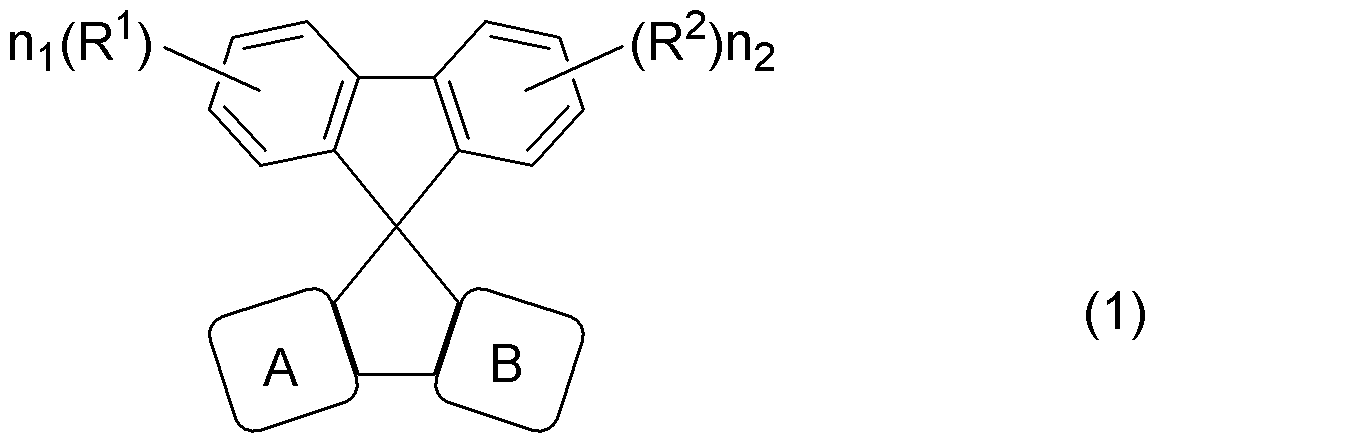
[式(1)において、A及びBは、それぞれ置換もしくは無置換のナフタレン環、または置換もしくは無置換のフェナントレン環を表す。該ナフタレン環、またはフェナントレン環上の置換基は、フッ素原子、シアノ基、置換もしくは無置換の炭素数1~20のアルキル基、置換もしくは無置換の環形成炭素数3~20のシクロアルキル基、置換もしくは無置換の炭素数1~20のアルコキシ基、置換もしくは無置換の炭素数1~20のフルオロアルキル基、置換もしくは無置換の炭素数1~20のフルオロアルコキシ基、置換もしくは無置換の環形成炭素数6~30のアリールオキシ基、置換もしくは無置換の炭素数1~20のアルキルチオ基、置換もしくは無置換の環形成炭素数6~30のアリールチオ基、-Si(R101)(R102)(R103)で表される基、又は-Z-Raで表される基である。
A及びBの示すナフタレン環及びフェナントレン環上の置換基が複数ある場合、該置換基は互いに結合して、環構造を形成してもよい。
R1及びR2は、それぞれ独立に、水素原子、フッ素原子、シアノ基、置換もしくは無置換の炭素数1~20のアルキル基、置換もしくは無置換の環形成炭素数3~20のシクロアルキル基、置換もしくは無置換の炭素数1~20のアルコキシ基、置換もしくは無置換の炭素数1~20のフルオロアルキル基、置換もしくは無置換の炭素数1~20のフルオロアルコキシ基、置換もしくは無置換の環形成炭素数6~30のアリールオキシ基、置換もしくは無置換の炭素数1~20のアルキルチオ基、置換もしくは無置換の環形成炭素数6~30のアリールチオ基、置換もしくは無置換の環形成炭素数6~30のアリール基、置換もしくは無置換の環形成炭素数5~30のヘテロアリール基、又は-Si(R101)(R102)(R103)で表される基である。
R1、R2を複数有する場合、該複数のR1、R2は、互いに同一でも異なっていてもよい。また、R1、R2同士が、それぞれ互いに結合して、環構造を形成してもよい。
Zは、単結合、置換もしくは無置換の環形成炭素数6~30のアリーレン基、置換もしくは無置換の環形成原子数5~30のヘテロアリーレン基、又はこれらが2~4個連結して構成される2価の連結基を示す。
Zが複数存在する場合は、それぞれが同一でも異なっていてもよい。
Raは、-N(R104)(R105)で表される基、置換もしくは無置換の環形成炭素数6~30のアリール基、又は置換もしくは無置換の環形成原子数5~30のヘテロアリール基を示す。
Raが複数存在する場合は、それぞれが同一でも異なっていてもよい。
R101~R105は、それぞれ独立に、水素原子、置換もしくは無置換の炭素数1~20のアルキル基、置換もしくは無置換の環形成炭素数3~20のシクロアルキル基、置換もしくは無置換の環形成炭素数6~50のアリール基、又は置換もしくは無置換の環形成原子数5~50のヘテロアリール基を示す。
ただし、A及びB上の置換基のうち少なくとも1つは、-Z-Raで表される基である。
また、-Z-Raが複数存在するとき、それぞれの-Z-Raは同一であっても異なっていてもよい。
n1及びn2は、それぞれ0~4の整数である。]
[2]上記[1]に記載の化合物を含有する有機エレクトロルミネッセンス素子用材料。
[3]陰極と陽極間に少なくとも発光層を含む一層又は複数層からなる有機薄膜層が挟持されている有機エレクトロルミネッセンス素子において、該有機薄膜層の少なくとも1層が、上記[1]に記載の化合物を含有する有機エレクトロルミネッセンス素子。
[4]上記[3]に記載の有機エレクトロルミネッセンス素子を備えた電子機器。
また、本明細書において、「置換もしくは無置換の原子数XX~YYのZZ基」という表現における「原子数XX~YY」は、ZZ基が無置換である場合の原子数を表すものであり、置換されている場合の置換基の原子数は含めない。
本明細書中において、「ヘテロアリール基」、「ヘテロアリーレン基」及び「複素環基」は、環形成原子として、少なくとも1つのヘテロ原子を含む基であり、該へテロ原子としては、窒素原子、酸素原子、硫黄原子、ケイ素原子及びセレン原子から選ばれる1種以上であることが好ましい。

及び上記の基に対して、さらに任意の置換基を有する置換カルバゾリル基を表す。
なお、当該置換カルバゾリル基は、任意の置換基同士が互いに結合して縮環してもよく、窒素原子、酸素原子、硫黄原子、ケイ素原子及びセレン原子等のヘテロ原子を含んでもよく、また、結合位置は1位~9位のいずれであってもよい。このような置換カルバゾリル基の具体例として、例えば、下記に示す基が挙げられる。
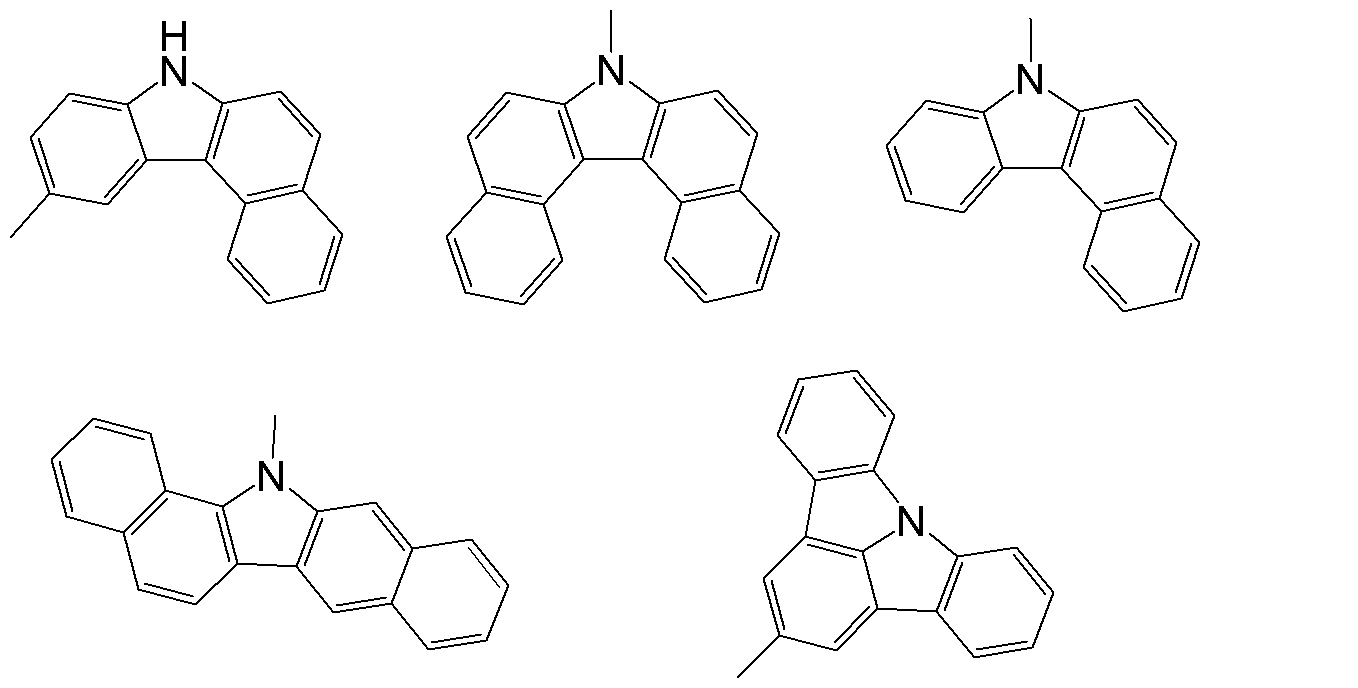

及び上記の基に対して、さらに任意の置換基を有する置換ジベンゾフラニル基及び置換ジベンゾチオフェニル基を表す。
なお、当該置換ジベンゾフラニル基及び置換ジベンゾチオフェニル基は、任意の置換基同士が互いに結合して縮環してもよく、窒素原子、酸素原子、硫黄原子、ケイ素原子及びセレン原子等のヘテロ原子を含んでもよく、また、結合位置は1位~8位のいずれであってもよい。
このような置換ジベンゾフラニル基及び置換ジベンゾチオフェニル基の具体例として、例えば、下記に示す基が挙げられる。
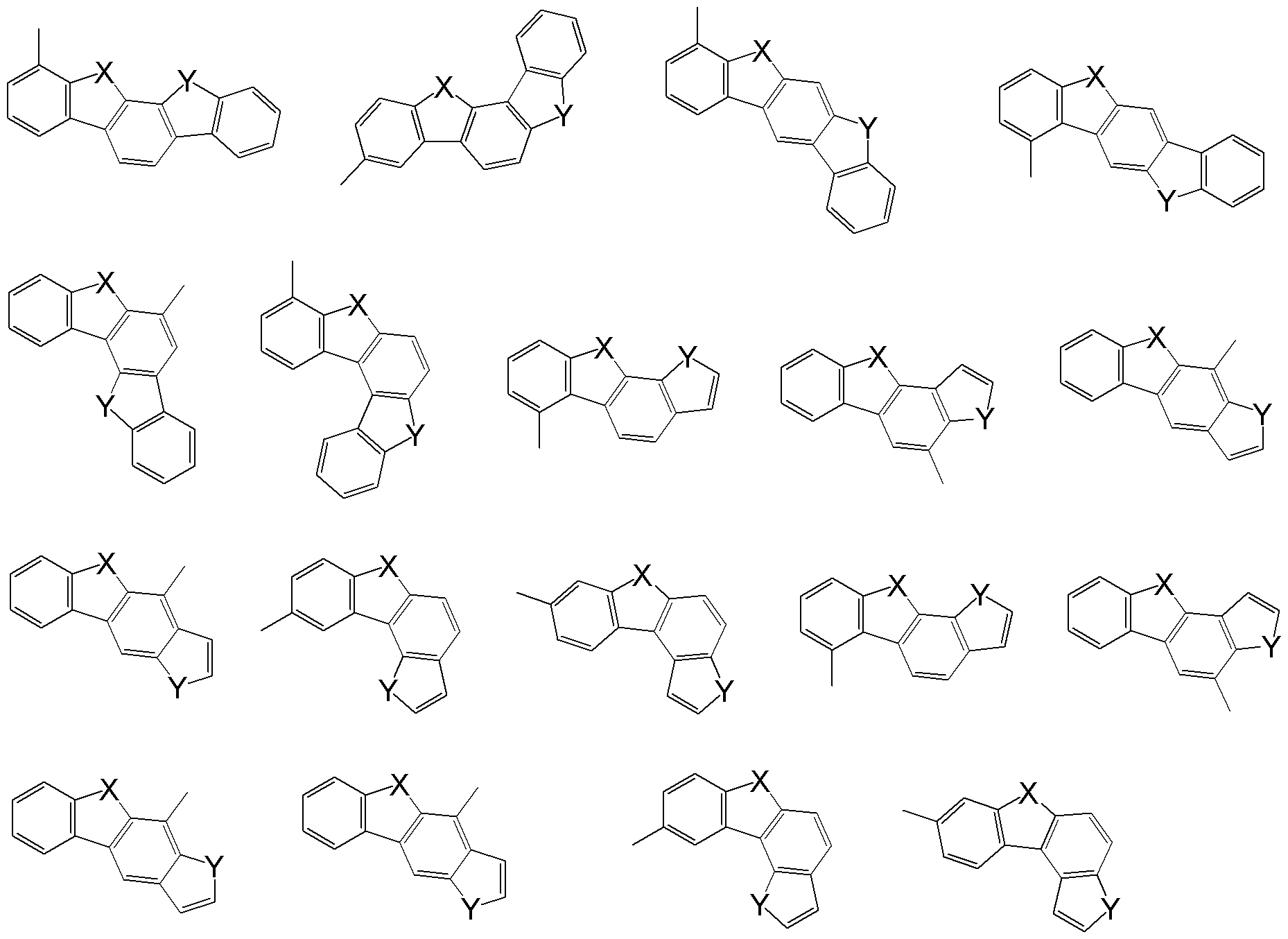
[上記式中、Xは酸素原子又は硫黄原子を表し、Yは酸素原子、硫黄原子、NH、NRa(Raはアルキル基又はアリール基である。)、CH2、又は、CRb 2(Rbはアルキル基又はアリール基である。)を表す。]
これらの置換基は、さらに上述の任意の置換基により置換されていてもよい。また、これらの置換基は、複数の置換基が互いに結合して環を形成していてもよい。
「置換もしくは無置換の」という場合における「無置換」とは前記置換基で置換されておらず、水素原子が結合していることを意味する。
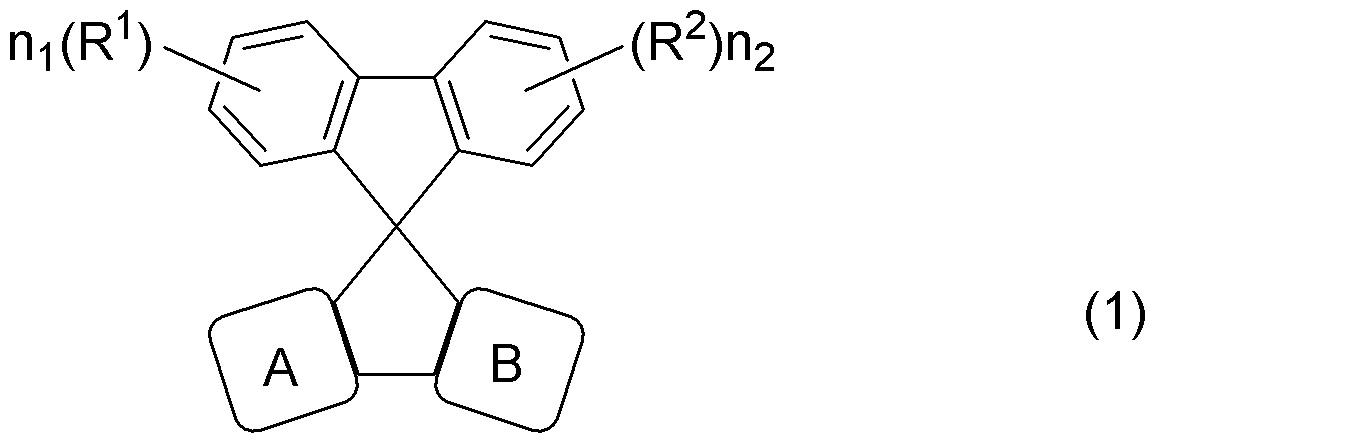
[式(1)において、A及びBは、それぞれ置換もしくは無置換のナフタレン環、または置換もしくは無置換のフェナントレン環を表す。該ナフタレン環、またはフェナントレン環上の置換基は、フッ素原子、シアノ基、置換もしくは無置換の炭素数1~20のアルキル基、置換もしくは無置換の環形成炭素数3~20のシクロアルキル基、置換もしくは無置換の炭素数1~20のアルコキシ基、置換もしくは無置換の炭素数1~20のフルオロアルキル基、置換もしくは無置換の炭素数1~20のフルオロアルコキシ基、置換もしくは無置換の環形成炭素数6~30のアリールオキシ基、置換もしくは無置換の炭素数1~20のアルキルチオ基、置換もしくは無置換の環形成炭素数6~30のアリールチオ基、-Si(R101)(R102)(R103)で表される基、又は-Z-Raで表される基である。
A及びBの示すナフタレン環及びフェナントレン環上の置換基が複数ある場合、該置換基は互いに結合して、環構造を形成してもよい。
R1及びR2は、それぞれ独立に、水素原子、フッ素原子、シアノ基、置換もしくは無置換の炭素数1~20のアルキル基、置換もしくは無置換の環形成炭素数3~20のシクロアルキル基、置換もしくは無置換の炭素数1~20のアルコキシ基、置換もしくは無置換の炭素数1~20のフルオロアルキル基、置換もしくは無置換の炭素数1~20のフルオロアルコキシ基、置換もしくは無置換の環形成炭素数6~30のアリールオキシ基、置換もしくは無置換の炭素数1~20のアルキルチオ基、置換もしくは無置換の環形成炭素数6~30のアリールチオ基、置換もしくは無置換の環形成炭素数6~30のアリール基、置換もしくは無置換の環形成炭素数5~30のヘテロアリール基、又は-Si(R101)(R102)(R103)で表される基である。
R1、R2を複数有する場合、該複数のR1、R2は、互いに同一でも異なっていてもよい。また、R1、R2同士が、それぞれ互いに結合して、環構造を形成してもよい。
Zは、単結合、置換もしくは無置換の環形成炭素数6~30のアリーレン基、置換もしくは無置換の環形成原子数5~30のヘテロアリーレン基、又はこれらが2~4個連結して構成される2価の連結基を示す。
Zが複数存在する場合は、それぞれが同一でも異なっていてもよい。
Raは、-N(R104)(R105)で表される基、置換もしくは無置換の環形成炭素数6~30のアリール基、又は置換もしくは無置換の環形成原子数5~30のヘテロアリール基を示す。
Raが複数存在する場合は、それぞれが同一でも異なっていてもよい。
R101~R105は、それぞれ独立に、水素原子、置換もしくは無置換の炭素数1~20のアルキル基、置換もしくは無置換の環形成炭素数3~20のシクロアルキル基、置換もしくは無置換の環形成炭素数6~50のアリール基、又は置換もしくは無置換の環形成原子数5~50のヘテロアリール基を示す。
但し、A及びB上の置換基のうち少なくとも1つは、-Z-Raで表される基である。
また、-Z-Raが複数存在するとき、それぞれの-Z-Raは同一であっても異なっていてもよい。
n1及びn2は、それぞれ0~4の整数である。]
R1及びR2、A及びBの置換基並びにR101~R105が示す環形成炭素数3~20(好ましくは3~6、より好ましくは5又は6)のシクロアルキル基としては、例えば、シクロプロピル基、シクロブチル基、シクロペンチル基、シクロヘキシル基、シクロヘプチル基、シクロオクチル基、アダマンチル基などが挙げられる。これらの中でも、シクロペンチル基、シクロヘキシル基が好ましい。
R1及びR2、A及びBの置換基が示す炭素数1~20(好ましくは1~10、より好ましくは1~6)のアルコキシ基としては、アルキル基部位が前記炭素数1~20のアルキル基であるアルコキシ基が挙げられる。好ましいアルコキシ基の具体例としては、アルキル基部位が、前記好ましいアルキル基であるものが挙げられる。
R1及びR2、A及びBの置換基が示す炭素数1~20(好ましくは1~10、より好ましくは1~6)のフルオロアルキル基としては、前記アルキル基の水素原子がフッ素で置換された基が挙げられ、その場合の好ましいアルキル基としては前記と同じである。
R1及びR2、A及びBの置換基が示す炭素数1~20(好ましくは1~10、より好ましくは1~6)のフルオロアルコキシ基としては、前記アルコキシ基の水素原子がフッ素で置換された基が挙げられ、その場合の好ましいアルコキシ基としては前記と同じである。
R1及びR2、A及びBの置換基が示す環形成炭素数6~30(好ましくは6~24、より好ましくは6~18、さらに好ましくは6~10)のアリールオキシ基としては、アリール基部位が、後述するR1及びR2、R101~R105の環形成炭素数6~30のアリール基であるものが挙げられる。好ましいアリールオキシ基の具体例としては、アリール基部位が、後述の好ましいアリール基であるものが挙げられる。
R1及びR2、A及びBの置換基が示す炭素数1~20(好ましくは炭素数1~10、より好ましくは炭素数1~6)のアルキルチオ基としては、アルキル基部位が前記炭素数1~20のアルキル基であるアルコキシ基が挙げられる。好ましいアルキルチオ基の具体例としては、アルキル基部位が、前記好ましいアルキル基であるものが挙げられる。
R1及びR2、A及びBの置換基が示す環形成炭素数6~30(好ましくは6~24、より好ましくは6~18、さらに好ましくは6~10)のアリールチオ基としては、アリール基部位が、後述するR1及びR2、R101~R105の環形成炭素数6~30のアリール基であるものが挙げられる。好ましいアリールチオ基の具体例としては、アリール基部位が、後述の好ましいアリール基であるものが挙げられる。
これら置換シリル基において、アルキル基部位の炭素数は、それぞれ、好ましくは1~20、より好ましくは1~10、さらに好ましくは1~6である。アリール基部位の環形成炭素数は、それぞれ、好ましくは6~30、より好ましくは6~24、さらに好ましくは6~18、特に好ましくは6~10である。
これらの中でも、トリアルキルシリル基、トリアリールシリル基が好ましく、トリメチルシリル基、トリエチルシリル基、トリイソプロピルシリル基、t-ブチルジメチルシリル基、トリフェニルシリル基、トリトリルシリル基がより好ましい。
これら置換アミノ基において、アルキル基部位の炭素数は、それぞれ、好ましくは1~20、より好ましくは1~10、さらに好ましくは1~6である。アリール基部位の環形成炭素数は、それぞれ、好ましくは6~30、より好ましくは6~24、さらに好ましくは6~18、特に好ましくは6~10である。ヘテロアリール基部位の環形成原子数は、それぞれ、好ましくは5~30、より好ましくは5~24、さらに好ましくは5~12である。
これらの中でも、ジアルキルアミノ基、ジアリールアミノ基、ジヘテロアリールアミノ基、モノアリールモノヘテロアリールアミノ基が好ましく、ジメチルアミノ基、ジエチルアミノ基、ジイソプロピルアミノ基、ジフェニルアミノ基、ビス(アルキル置換フェニル)アミノ基、ビス(アリール置換フェニル)アミノ基がより好ましい。
なお、式(1)中、-Si(R101)(R102)(R103)で表される基が複数存在する場合、これらは互いに同一でも異なっていてもよい。また、式(1)中、-N(R104)(R105)で表される基が複数存在する場合、これらは互いに同一でも異なっていてもよい。
該ヘテロアリール基としては、例えば、ピロリル基、フリル基、チエニル基、ピリジル基、イミダゾピリジル基、ピリダジニル基、ピリミジニル基、ピラジニル基、トリアジニル基、イミダゾリル基、オキサゾリル基、チアゾリル基、ピラゾリル基、イソオキサゾリル基、イソチアゾリル基、オキサジアゾリル基、チアジアゾリル基、トリアゾリル基、テトラゾリル基、インドリル基、イソインドリル基、ベンゾフラニル基、イソベンゾフラニル基、ベンゾチオフェニル基、イソベンゾチオフェニル基、インドリジニル基、キノリジニル基、キノリル基、イソキノリル基、シンノリル基、フタラジニル基、キナゾリニル基、キノキサリニル基、ベンズイミダゾリル基、ベンズオキサゾリル基、ベンズチアゾリル基、インダゾリル基、ベンズイソキサゾリル基、ベンズイソチアゾリル基、ジベンゾフラニル基、ジベンゾチオフェニル基、カルバゾリル基、9-フェニルカルバゾリル基、フェナントリジニル基、アクリジニル基、フェナントロリニル基、フェナジニル基、フェノチアジニル基、フェノキサジニル基及びキサンテニル基などが挙げられる。これらの中でも、ピリジル基、イミダゾピリジル基、ピリダジニル基、ピリミジニル基、ピラジニル基、トリアジニル基、ベンズイミダゾリル基、ジベンゾフラニル基、ジベンゾチオフェニル基、カルバゾリル基、9-フェニルカルバゾリル基、フェナントロリニル基、キナゾリニル基が好ましい。
Zが表す環形成原子数5~30(好ましくは5~24、より好ましくは5~12)のヘテロアリーレン基としては、前記ヘテロアリール基から水素原子を1つ除いてなる2価の基が挙げられる。これらの中でも、ピリジニレン基、ピリミジニレン基、ピラジニレン基、ピリダジニレン基、トリアジニレン基、フェナントロリニレン基、ジベンゾフラニレン基、ジベンゾチオフェニレン基が好ましく、ピリジニレン基、ピリミジニレン基、トリアジニレン基、ジベンゾフラニレン基、ジベンゾチオフェニレン基がより好ましい。なお、該ヘテロアリーレン基の置換基としては、前記置換基の中でも、環形成炭素数6~30のアリール基が好ましく、環形成炭素数6~24のアリール基がより好ましく、環形成炭素数6~12のアリール基がさらに好ましく、フェニル基が特に好ましい。
Zは、該アリーレン基及び該ヘテロアリーレン基が2~4個連結して構成される2価の基であってもよい。該アリーレン基及び該ヘテロアリーレン基が2~4個連結して構成される2価の基としては、-アリーレン基-ヘテロアリーレン基-、-ヘテロアリーレン基-アリーレン基-、-アリーレン基-ヘテロアリーレン基-アリーレン基、-ヘテロアリーレン基-アリーレン基-ヘテロアリーレン基-、-アリーレン基-ヘテロアリーレン基-アリーレン基-ヘテロアリーレン基-、-ヘテロアリーレン基-アリーレン基-ヘテロアリーレン基-アリーレン基-などが挙げられる。
式(1)中、Raが示す、アリール基、ヘテロアリール基の例としては、いずれも、R1及びR2と同じものが挙げられ、好ましいものも同じである。

R11~R16、R21~R26、R31~R38、R41~R48は、それぞれ独立に、水素原子、フッ素原子、シアノ基、置換もしくは無置換の炭素数1~20のアルキル基、置換もしくは無置換の環形成炭素数3~20のシクロアルキル基、置換もしくは無置換の炭素数1~20のアルコキシ基、置換もしくは無置換の炭素数1~20のフルオロアルキル基、置換もしくは無置換の炭素数1~20のフルオロアルコキシ基、置換もしくは無置換の環形成炭素数6~30のアリールオキシ基、置換もしくは無置換の炭素数1~20のアルキルチオ基、置換もしくは無置換の環形成炭素数6~30のアリールチオ基、-Si(R101)(R102)(R103)で表される基、又は-Z-Raで表される基である。
R101~R103、Z及びRaは、前記と同じである。
ただし、前記式(2-1)、式(2-2)、式(2-3)、式(2-4)、式(2-5)、式(2-6)において、R11~R16及びR21~R26のうちの少なくとも1つが-Z-Raで表される基であり、式(2-7)、式(2-8)、式(2-9)において、R11~R16及びR31~R38のうちの少なくとも1つが-Z-Raで表される基であり、式(2-10)において、R41~R48及びR31~R38のうちの少なくとも1つが-Z-Raで表される基である。
R1、R2を複数有する場合、該複数のR1、R2は、互いに同一でも異なっていてもよい。また、R1、R2同士が、それぞれ互いに結合して、環構造を形成してもよい。
R11~R16、R21~R26、R31~R38、R41~R48の隣接するものは、互いに結合して、環構造を形成してもよい。]
式(2-7)、式(2-8)、式(2-9)において、R11~R16のうちの1つが-Z-Raで表される基であるか、又はR31~R38のうちの1つが-Z-Raで表される基であると好ましい。
式(2-10)において、R41~R48のうちの1つが-Z-Raで表される基であるか、又はR31~R38のうちの1つが-Z-Raで表される基であると好ましい。
式(2-7)、式(2-8)、式(2-9)において、R11~R16のうちの1つが-Z-Raで表される基であり、かつR31~R38のうちの1つが-Z-Raで表される基であると好ましい。
式(2-10)において、R41~R48のうちの1つが-Z-Raで表される基であり、かつR31~R38のうちの1つが-Z-Raで表される基であると好ましい。
また、R11~R16、R21~R26、R31~R38、R41~R48の各基の例としては、前述のA及びBの置換基と同じものが挙げられ、好ましい基も同じである。
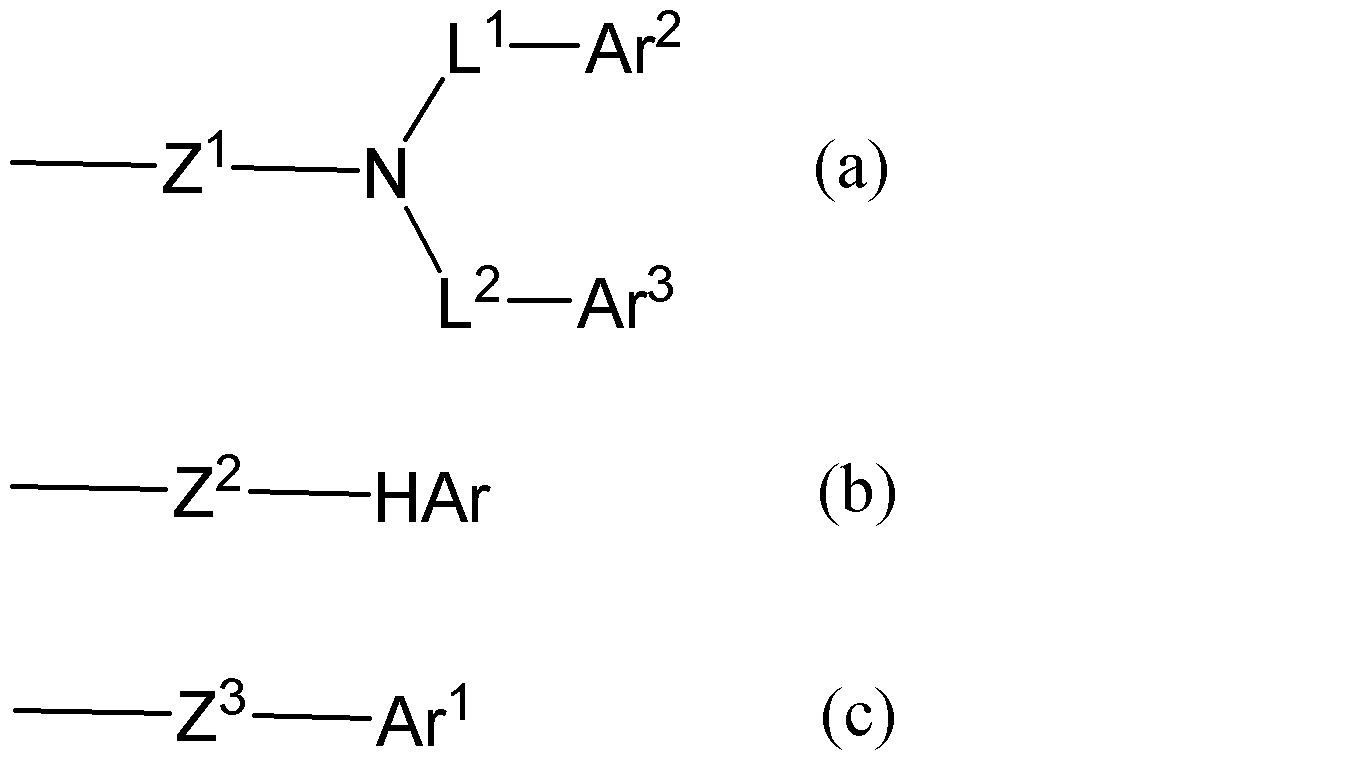
L1及びL2は、それぞれ独立に、単結合、置換もしくは無置換の環形成炭素数6~30のアリーレン基、置換もしくは無置換の環形成原子数5~30のヘテロアリーレン基、又は該アリーレン基及び該ヘテロアリーレン基が2~4個連結して構成される2価の連結基を示す。
Ar2及びAr3は、それぞれ独立に、置換もしくは無置換の環形成炭素数6~30のアリール基、又は置換もしくは無置換の環形成原子数5~30のヘテロアリール基を示す。
HArは、置換もしくは無置換の環形成原子数5~30のヘテロアリール基を示す。
Ar1は、置換もしくは無置換の環形成炭素数14~30のアリール基を示す。)
式(a)中のL1及びL2が示す環形成炭素数6~30(好ましくは6~24、より好ましくは6~18、さらに好ましくは6~10)のアリーレン基及び環形成原子数5~30(好ましくは5~24、より好ましくは5~12)のヘテロアリーレン基の具体例としては、式(1)中のZが示すアリーレン基及びヘテロアリーレン基と同じものが挙げられ、好ましいものも同じである。L1及びL2が示す、「該アリーレン基及び該ヘテロアリーレン基が2~4個連結して構成される2価の基」としては、-アリーレン基-ヘテロアリーレン基-、-ヘテロアリーレン基-アリーレン基-、-アリーレン基-ヘテロアリーレン基-アリーレン基、-ヘテロアリーレン基-アリーレン基-ヘテロアリーレン基-、-アリーレン基-ヘテロアリーレン基-アリーレン基-ヘテロアリーレン基-、-ヘテロアリーレン基-アリーレン基-ヘテロアリーレン基-アリーレン基-などが挙げられる。
特に、素子寿命の観点から該アリール基は置換基を有していることが好ましく、特に、該アリール基がフェニル基である場合には、置換基(好ましくは炭素数1~20のアルキル基、環形成炭素数3~20のシクロアルキル基、炭素数1~30のアルコキシ基など)を有することによって、素子寿命が大きく改善される傾向にあり好ましい。
Ar2及びAr3が示す環形成原子数5~30(好ましくは5~20、より好ましくは5~14)のヘテロアリール基としては、前記式(1)中のR1が示すヘテロアリール基と同じものが挙げられ、好ましいものも同じである。
式(a)において、Ar2及びAr3としては、置換もしくは無置換の環形成炭素数6~30のアリール基が好ましい。
また、L1及びL2がいずれも単結合であって、Ar2及びAr3が、それぞれ独立に、置換もしくは無置換のフェニル基、置換もしくは無置換のナフチル基、置換もしくは無置換のフェナントリル基、置換もしくは無置換のフルオレニル基、置換もしくは無置換のジベンゾフラニル基又は置換もしくは無置換のジベンゾチオフェニル基であると好ましい。
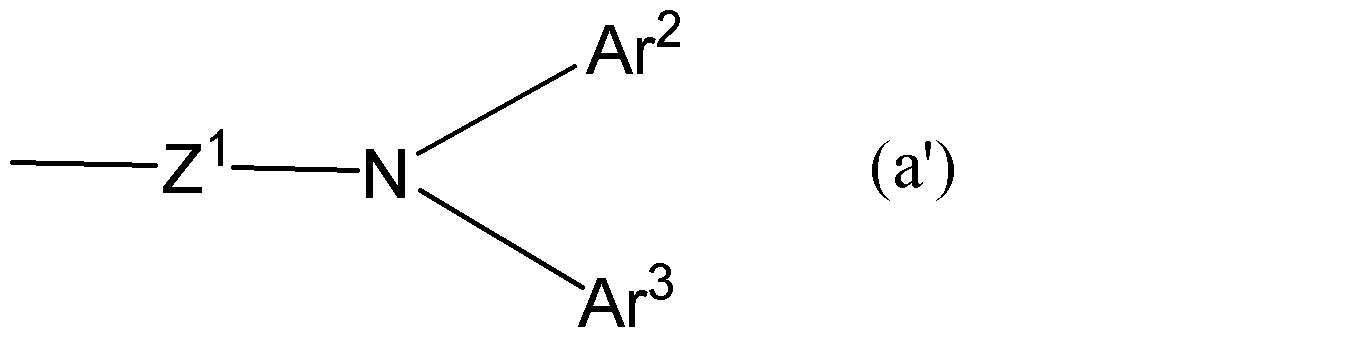
[式(a’)中、Z1、Ar2及びAr3は、式(a)中のものと同じである。]
式(c)中のAr1が示す環形成炭素数14~30のアリール基としては、前記式(1)中のR1及びR2が示すアリール基のうち、環形成炭素数が14~30のものと同じものが挙げられる。好ましくは環形成炭素数14~25のアリール基、より好ましくは環形成炭素数14~20のアリール基である。該アリール基としては、具体的には、好ましくはアントリル基、フェナントリル基、ピレニル基、フルオランテニル基、ベンゾ[k]フルオランテニル基、より好ましくはアントリル基である。なお、特に制限されるものではないが、該Ar1は置換基を有していることが好ましく、特に、前記Z3が単結合である場合には該Ar1は置換基を有していることがより好ましく、その場合、環形成炭素数6~25のアリール基を置換基として有していることが好ましく、フェニル基、ナフチル基、ビフェニリル基などの環形成炭素数6~12のアリール基を置換基として有していることがより好ましい。
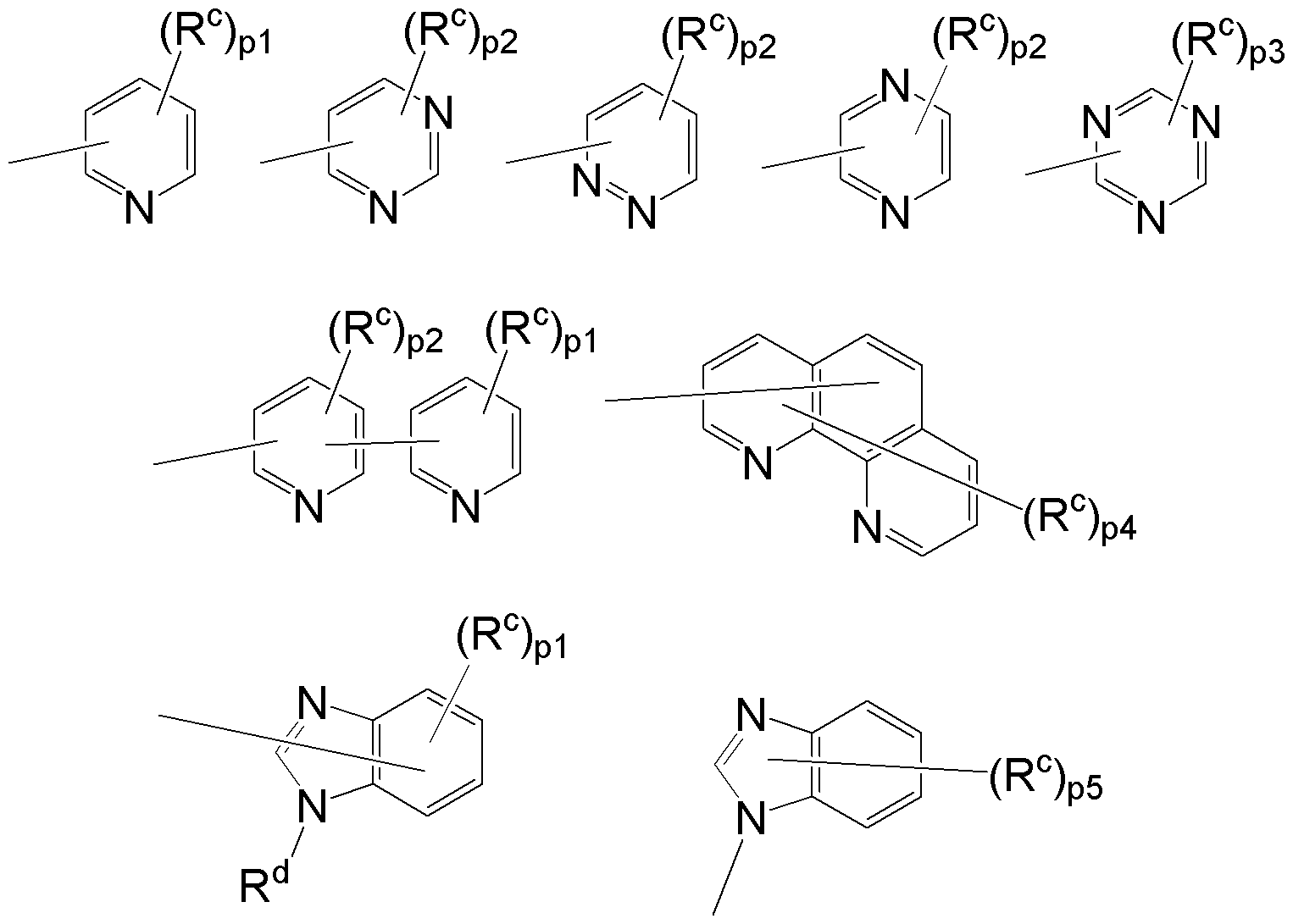
(Rcは、それぞれ独立に、フッ素原子、シアノ基、置換もしくは無置換の炭素数1~20のアルキル基、置換もしくは無置換の環形成炭素数3~20のシクロアルキル基、置換もしくは無置換の環形成炭素数6~30のアリール基、環形成炭素数6~30のアリール基を有する置換もしくは無置換の炭素数7~30のアラルキル基、アミノ基、炭素数1~20のアルキル基を有するモノ-又はジアルキルアミノ基、環形成炭素数6~30のアリール基を有するモノ又はジアリールアミノ基、置換もしくは無置換の炭素数1~30のアルコキシ基、置換もしくは無置換の環形成炭素数6~30のアリールオキシ基、置換もしくは無置換の炭素数1~20のアルキルチオ基、置換もしくは無置換の環形成炭素数6~30のアリールチオ基、炭素数1~20のアルキル基及び環形成炭素数6~30のアリール基から選ばれる基を有するモノ-、ジ-又はトリ置換シリル基、置換もしくは無置換の環形成原子数5~30のヘテロアリール基、ハロゲン原子、シアノ基又はニトロ基を示す。
各基においてRcが複数存在する場合は、それぞれが同一でも異なっていてもよい。
Rdは、水素原子、置換もしくは無置換の炭素数1~20のアルキル基、置換もしくは無置換の環形成炭素数3~20のシクロアルキル基、置換もしくは無置換の環形成炭素数6~30のアリール基、又は置換もしくは無置換の環形成原子数5~30のヘテロアリール基を示す。
p1は、それぞれ独立に0~4の整数、p2は、それぞれ独立に0~3の整数、p3は0~2の整数、p4は0~7の整数、p5は0~5の整数である。)
上記のいずれの基における結合手「-」は、Z2を形成する任意の原子に結合し得る。また、上記Rcは、いずれの基においても、環上の任意の炭素原子に置換し得る。
p1~p5は、いずれも好ましくは0~2の整数である。

(式中、Rc及びp3は前記定義の通りである。)
式(2-7)、式(2-8)、式(2-9)において、R11~R16のうちの1つが前記式(a)~(c)のいずれかで表される基であるか、又はR31~R38のうちの1つが前記式(a)~(c)のいずれかで表される基であると好ましい。
式(2-10)において、R41~R48のうちの1つが前記式(a)~(c)のいずれかで表される基であるか、又はR31~R38のうちの1つが前記式(a)~(c)のいずれかで表される基であると好ましい。
式(2-7)、式(2-8)、式(2-9)において、R11~R16のうちの1つが前記式(a)~(c)のいずれかで表される基であり、かつR31~R38のうちの1つが前記式(a)~(c)のいずれかで表される基であると好ましい。
式(2-10)において、R41~R48のうちの1つが前記式(a)~(c)のいずれかで表される基であり、かつR31~R38のうちの1つが前記式(a)~(c)のいずれかで表される基であると好ましい。
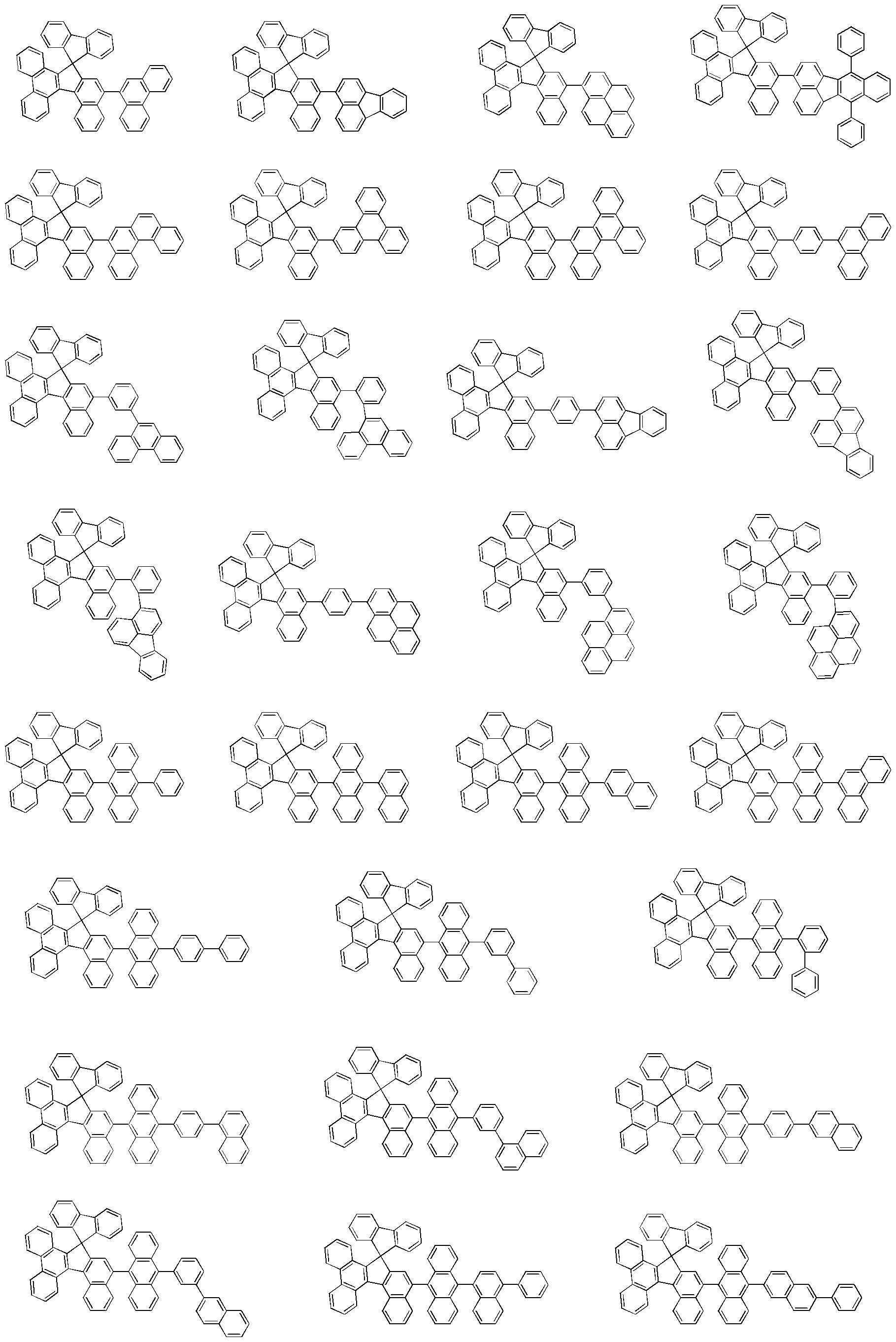
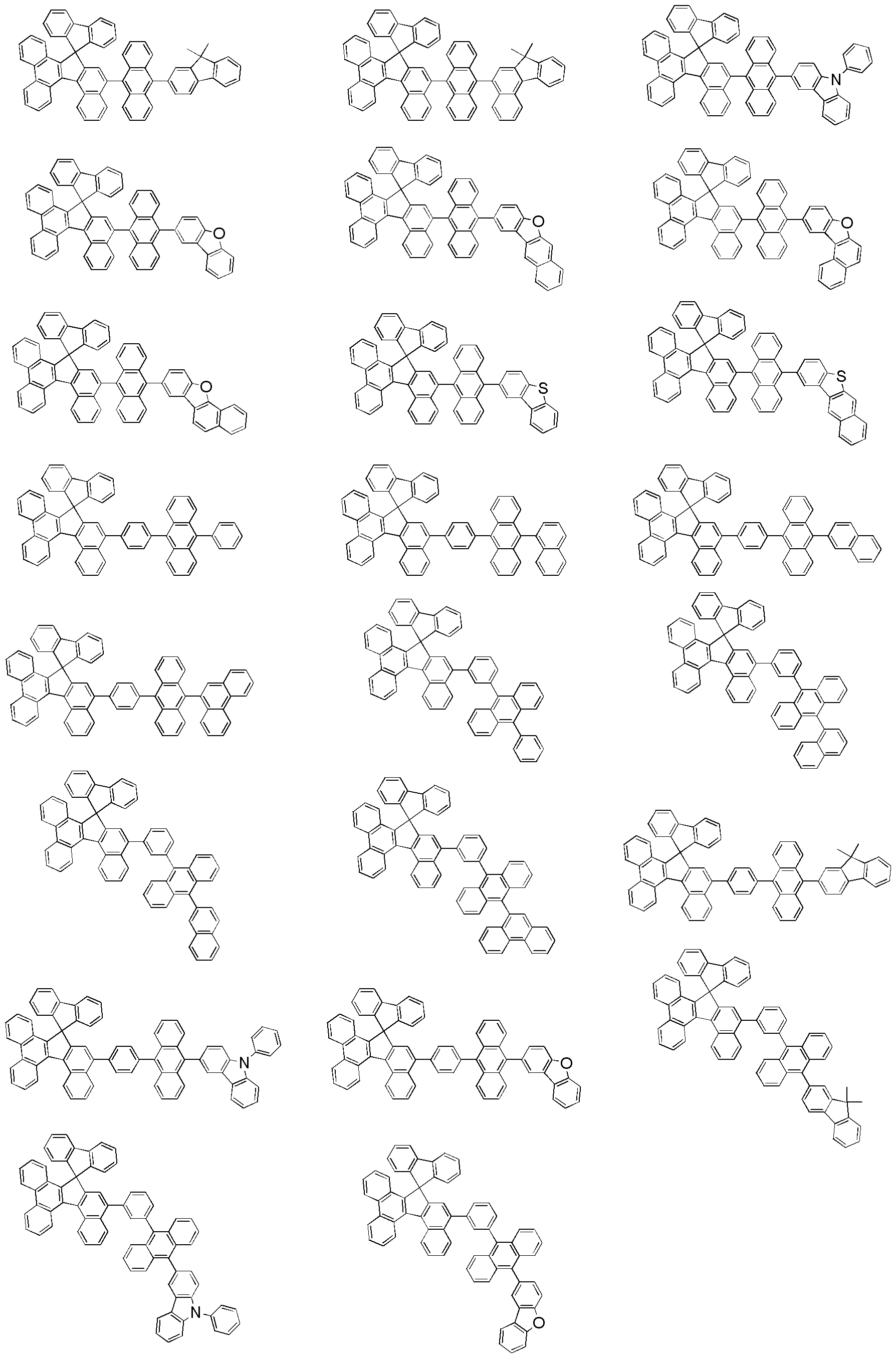


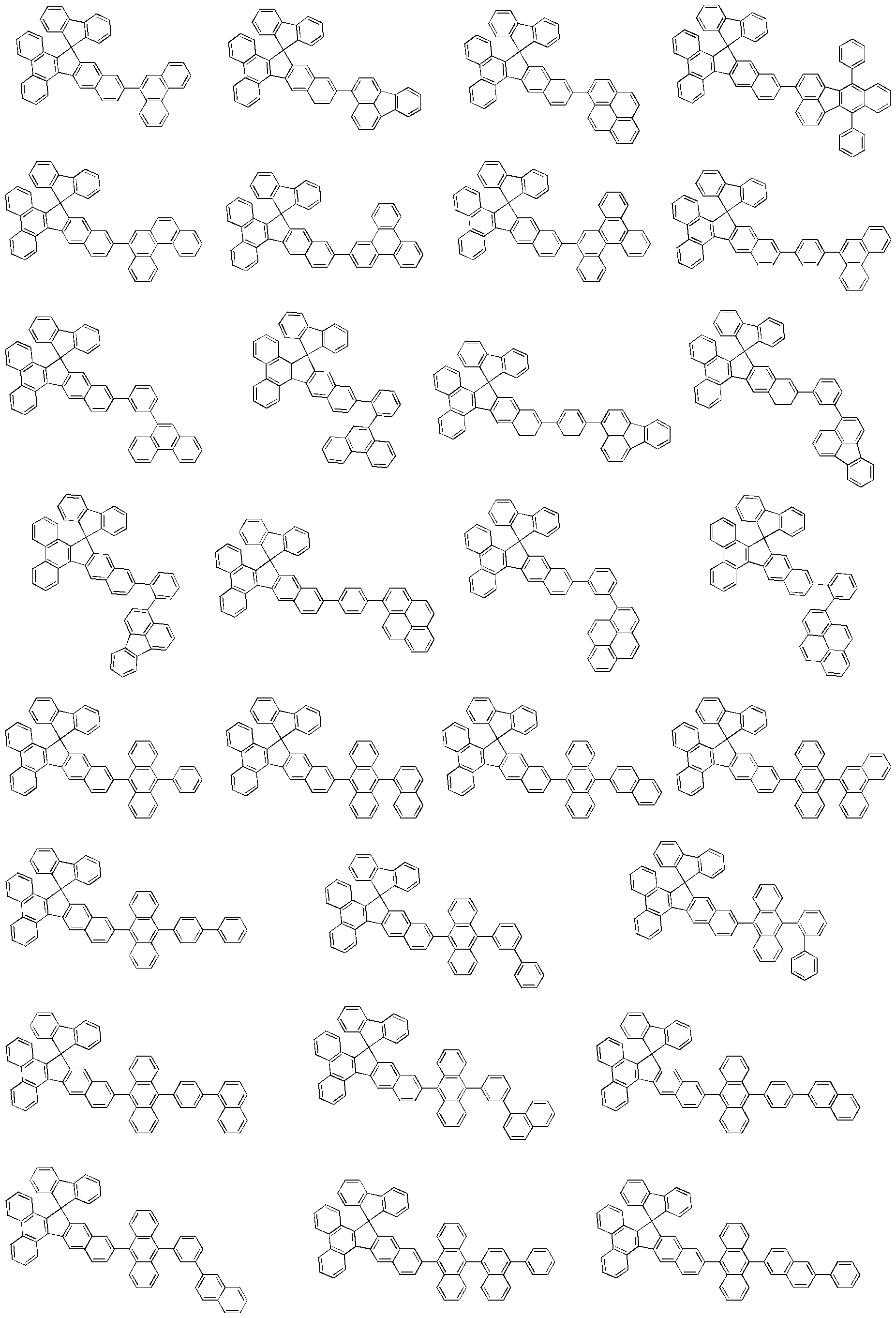


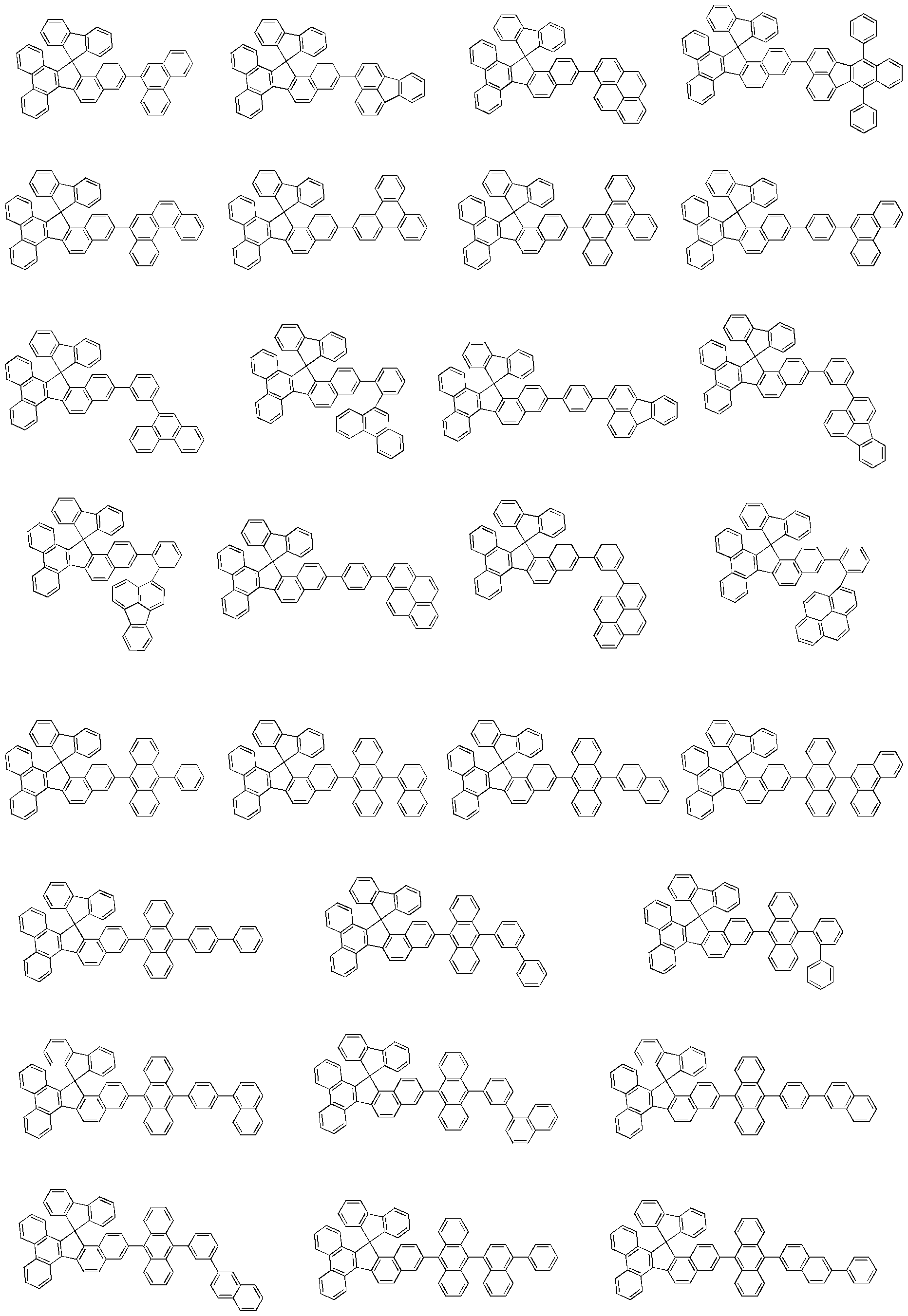
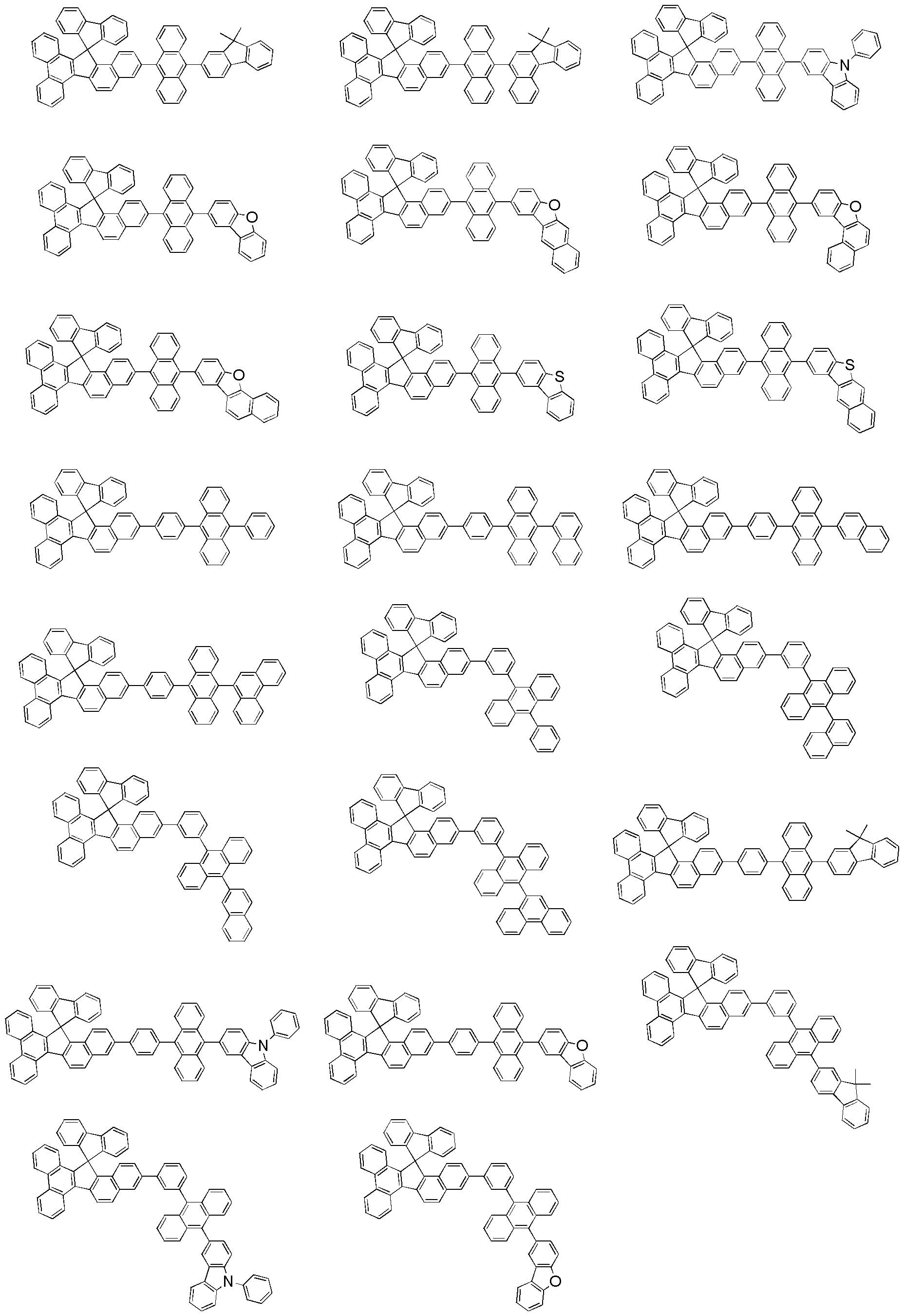
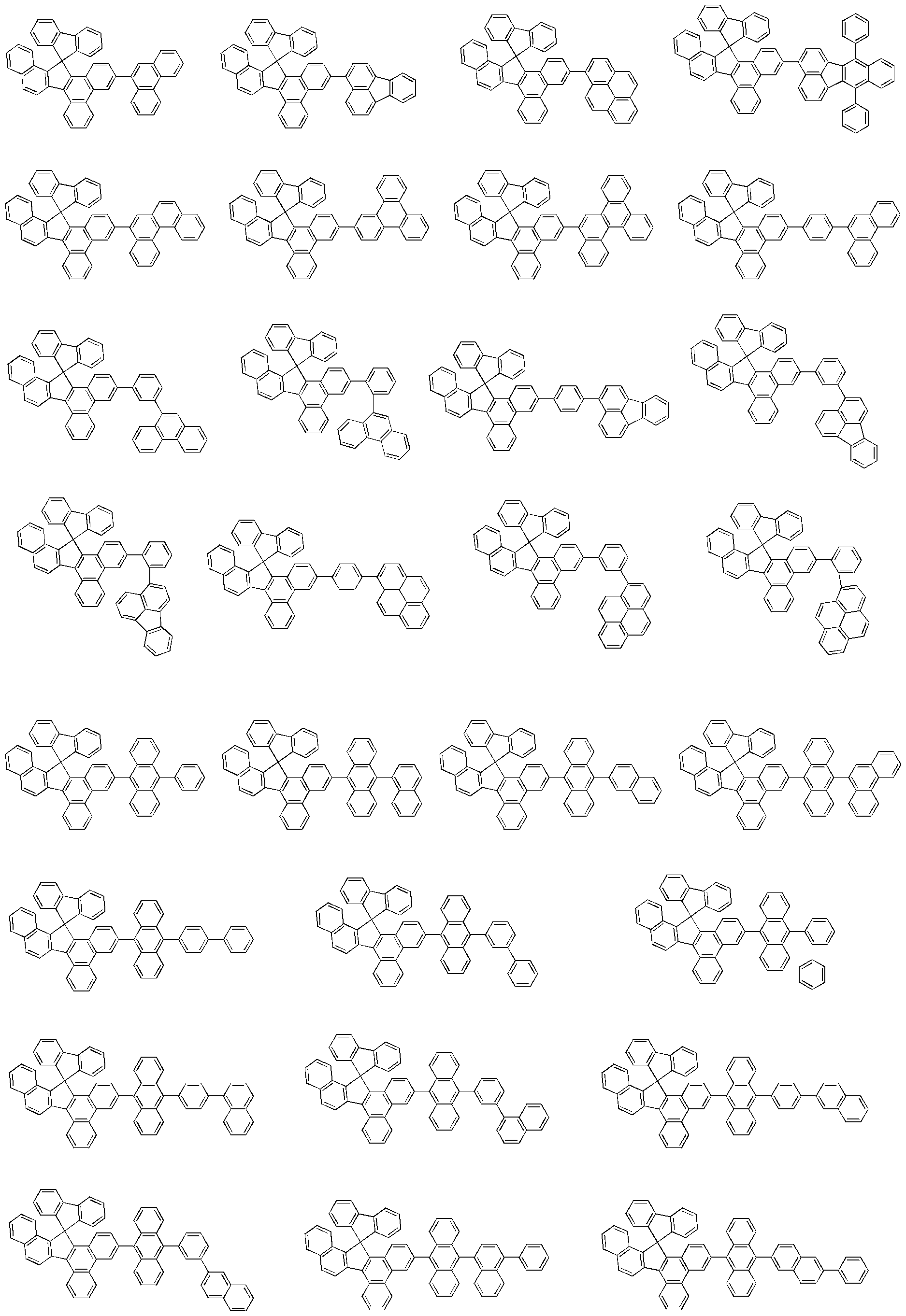

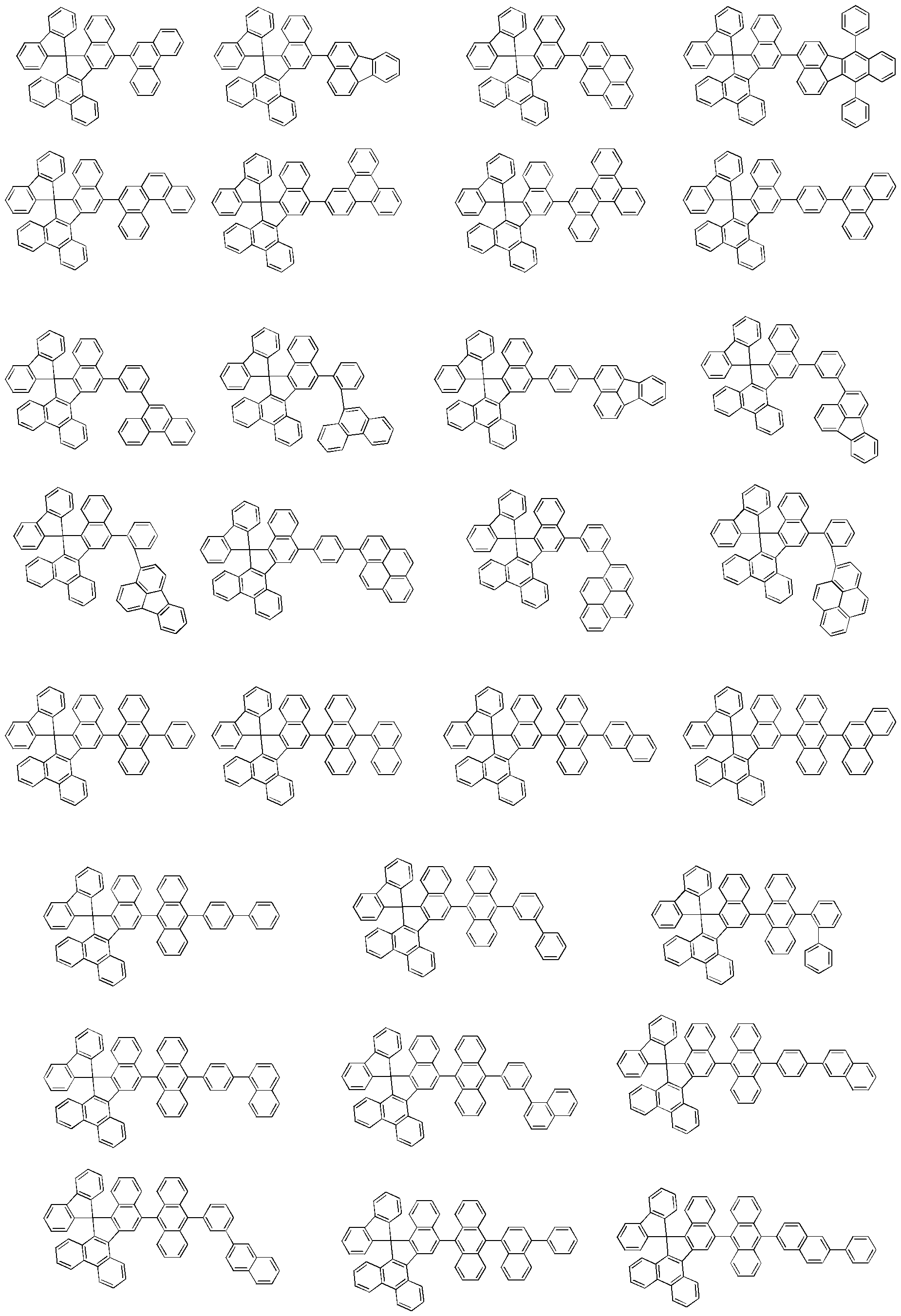
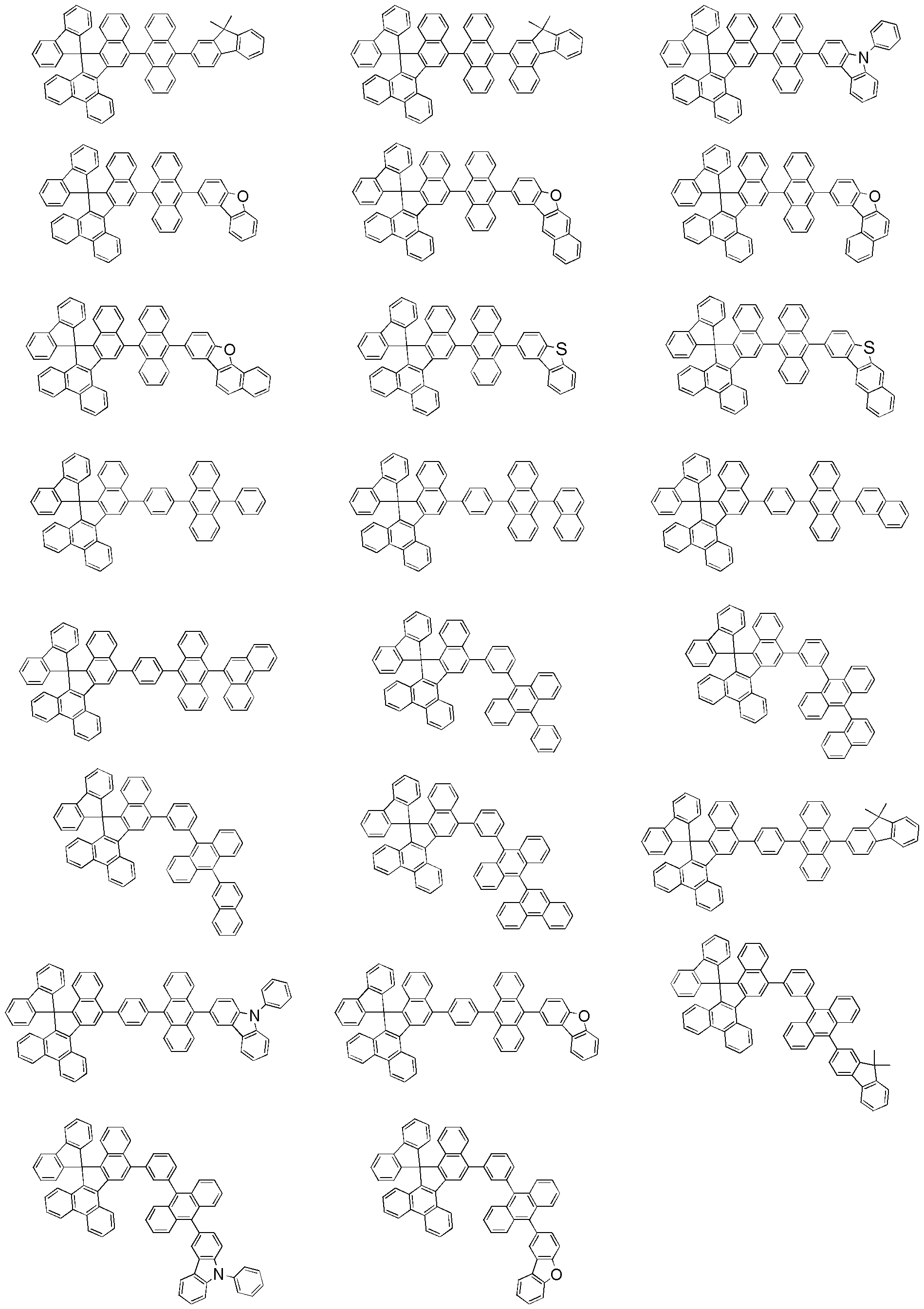


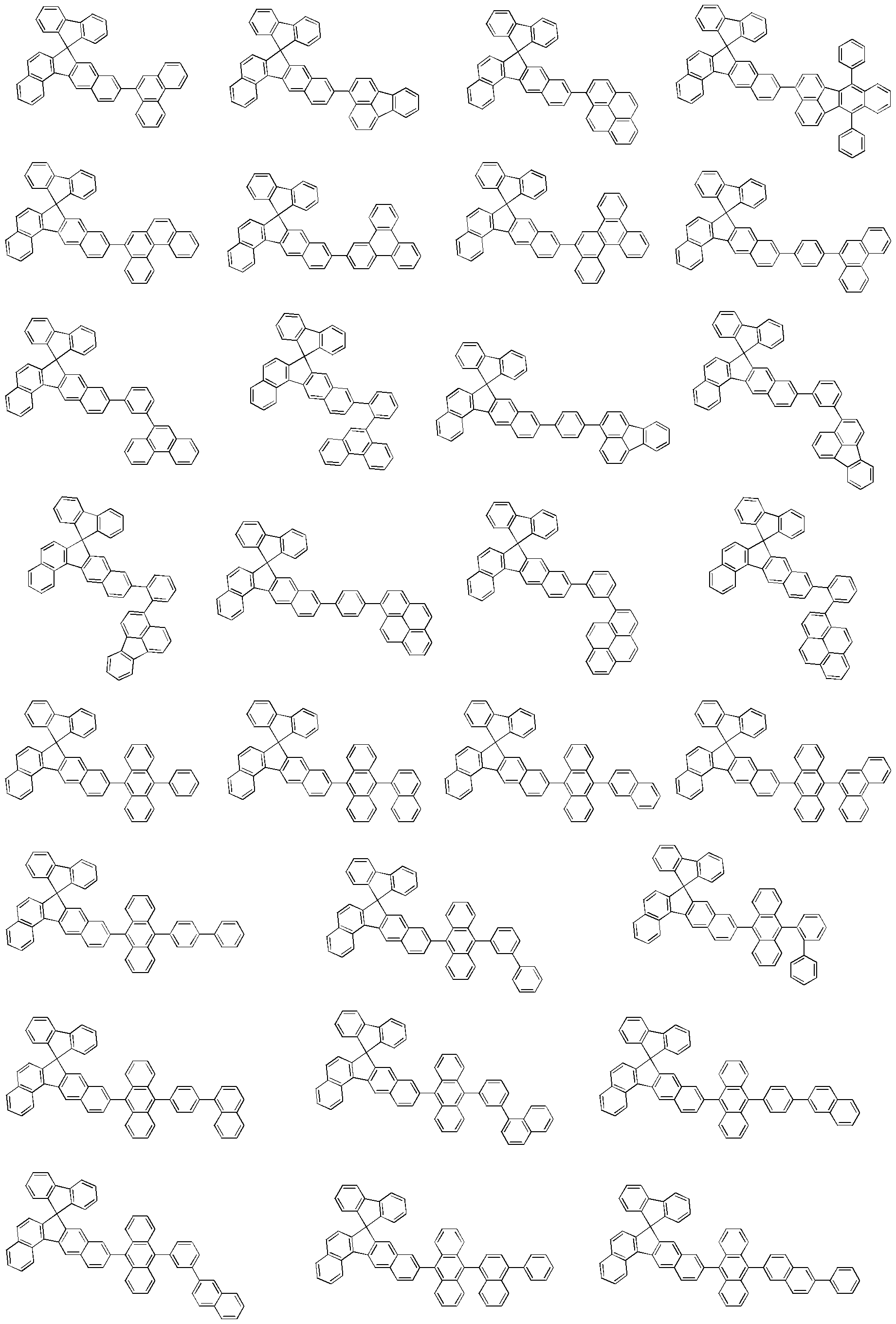

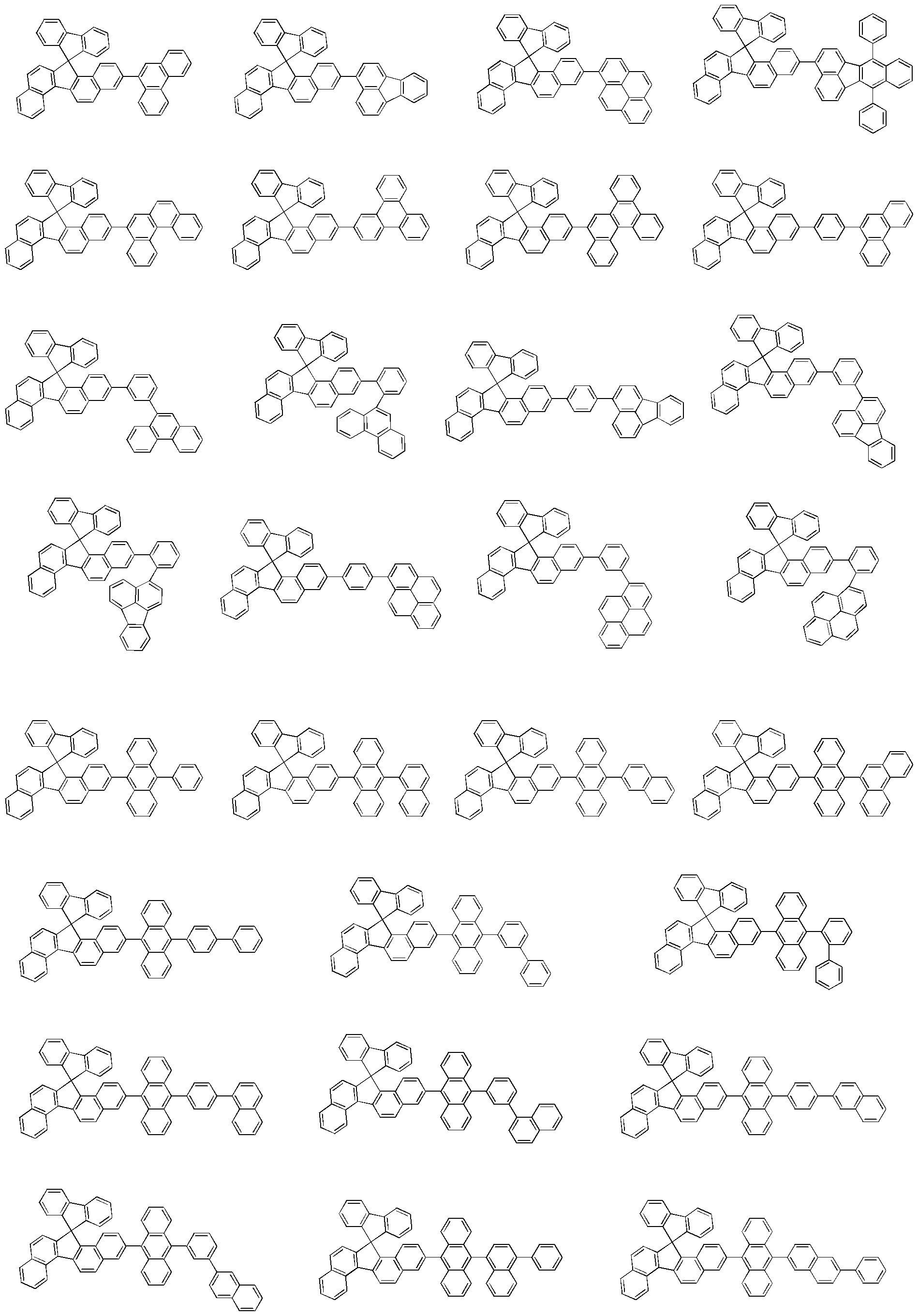
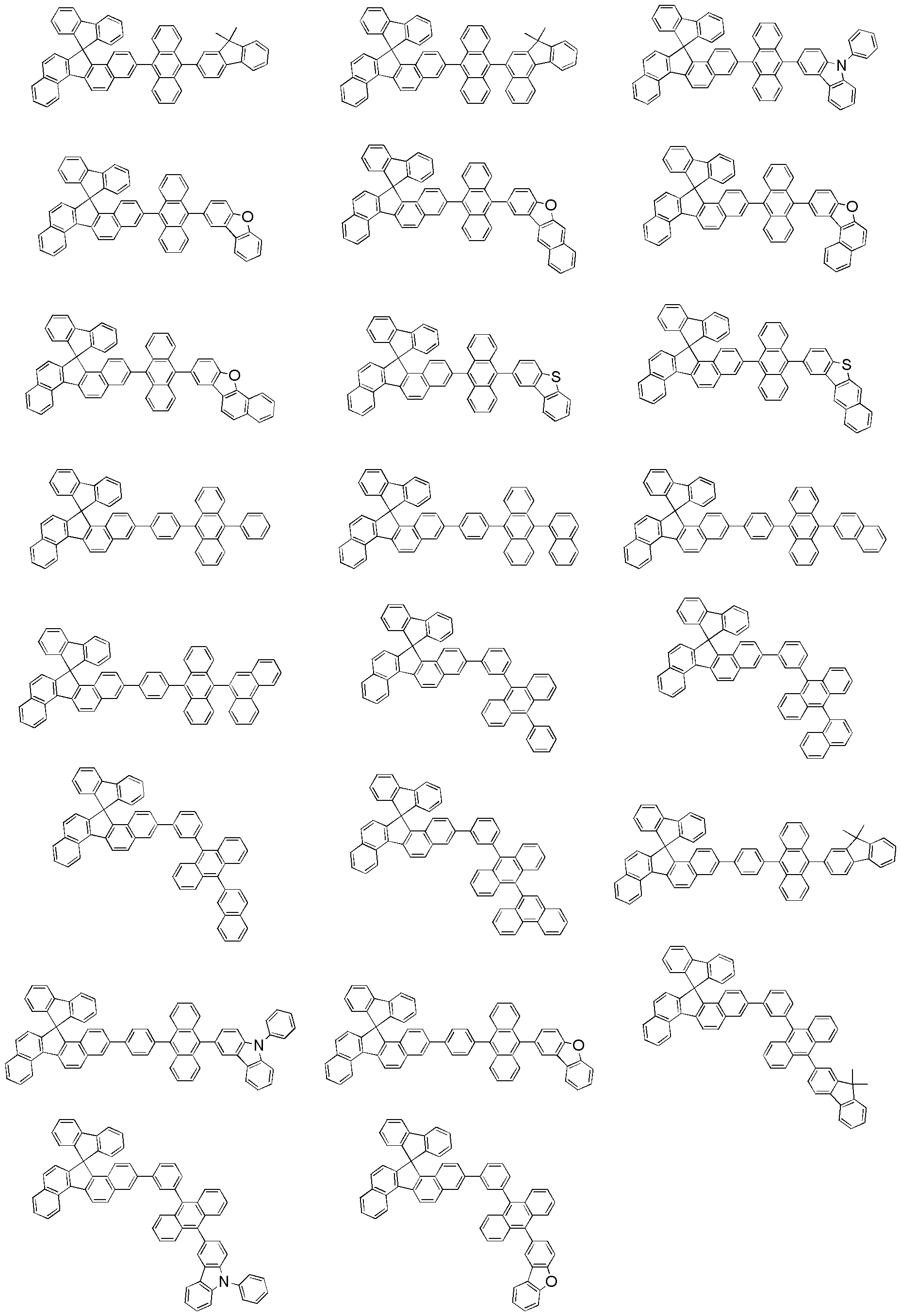


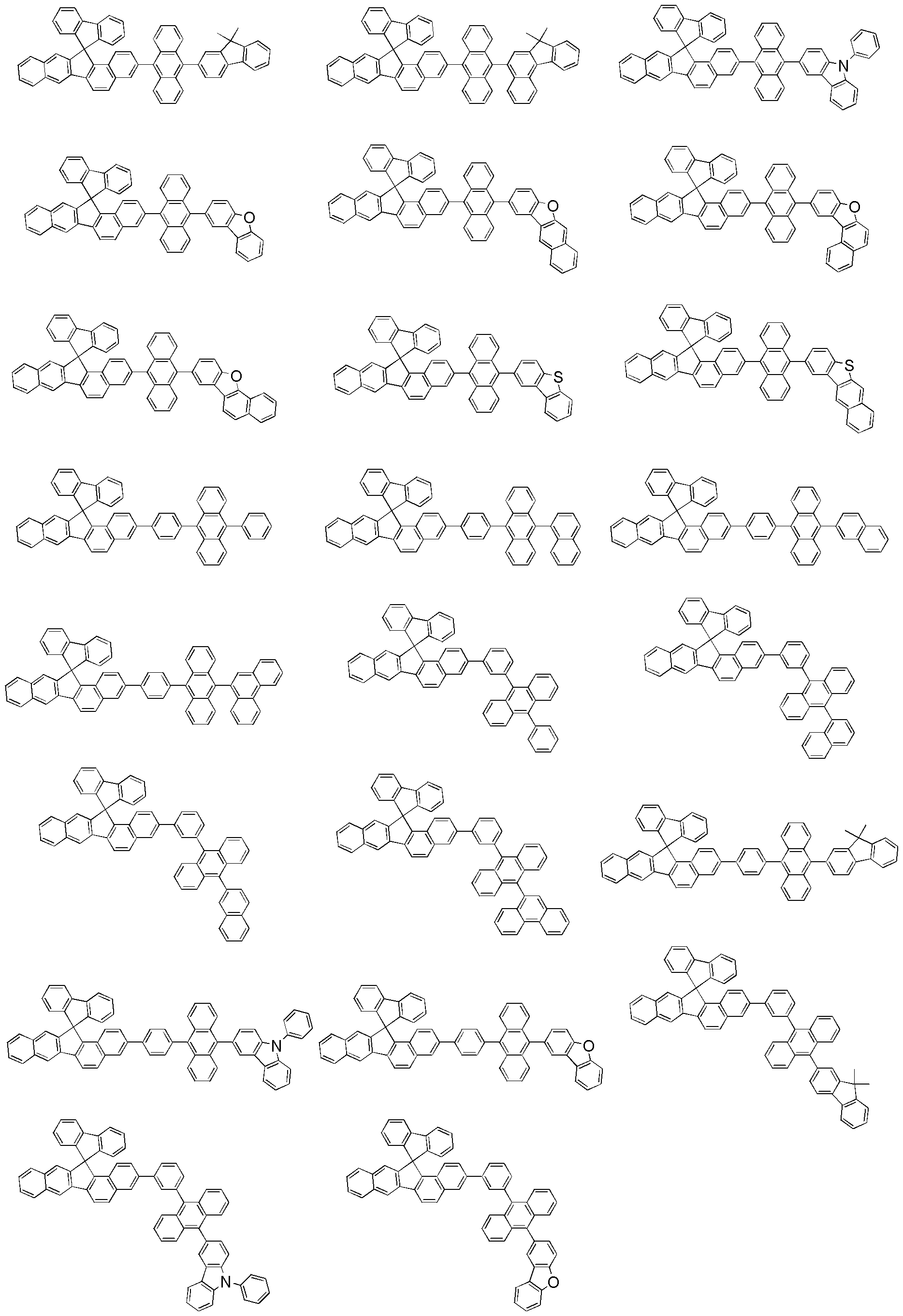


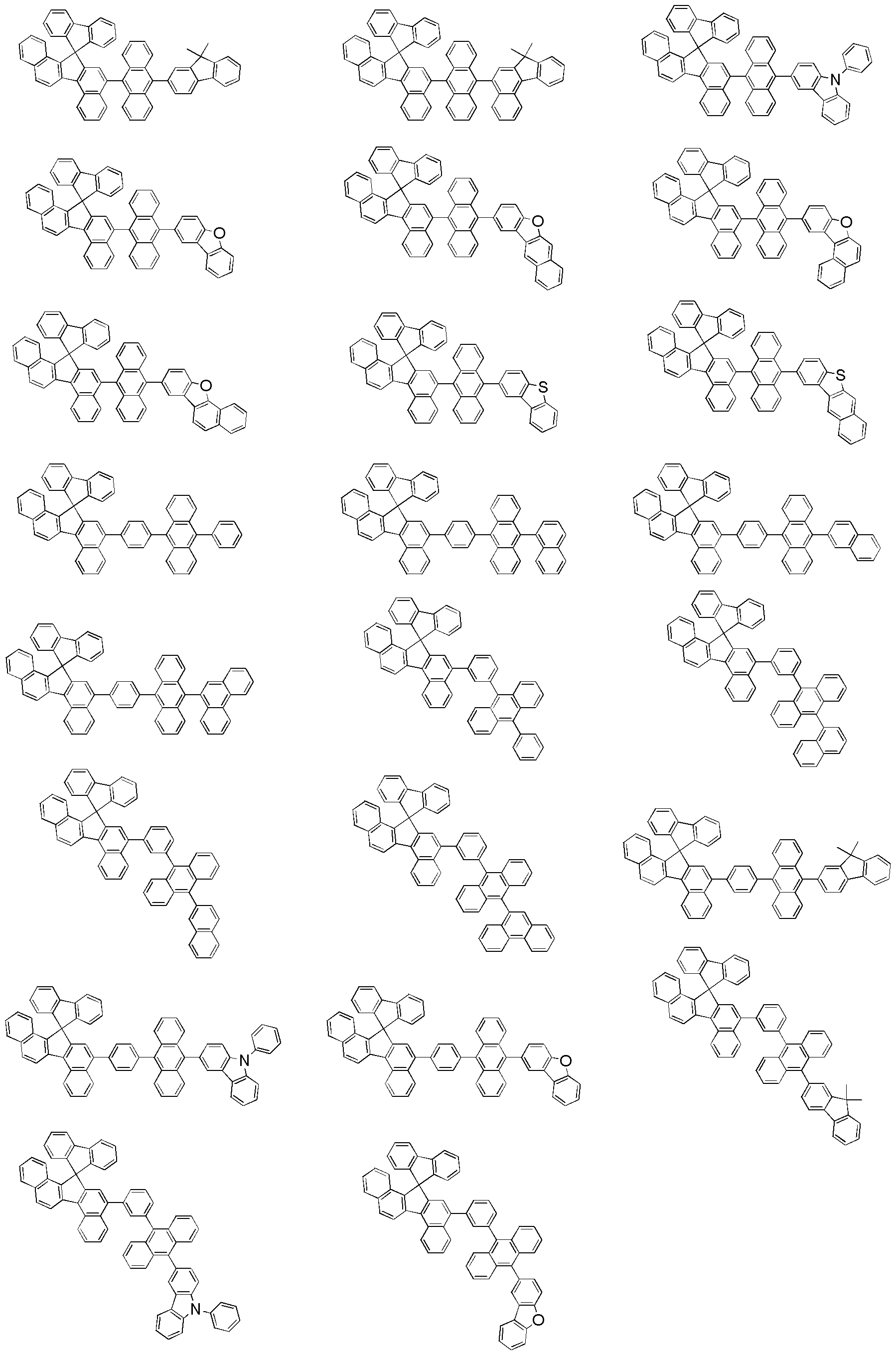
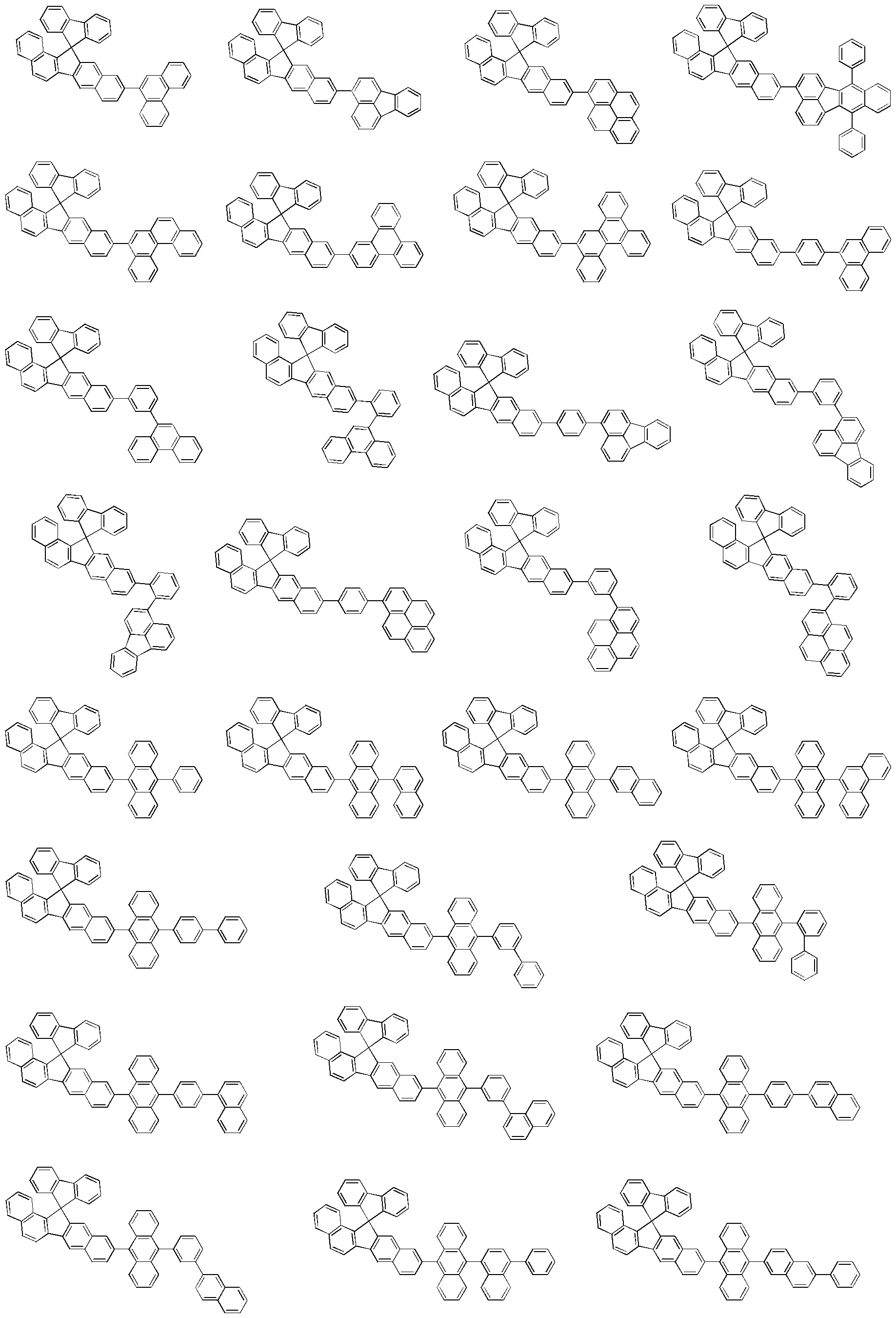

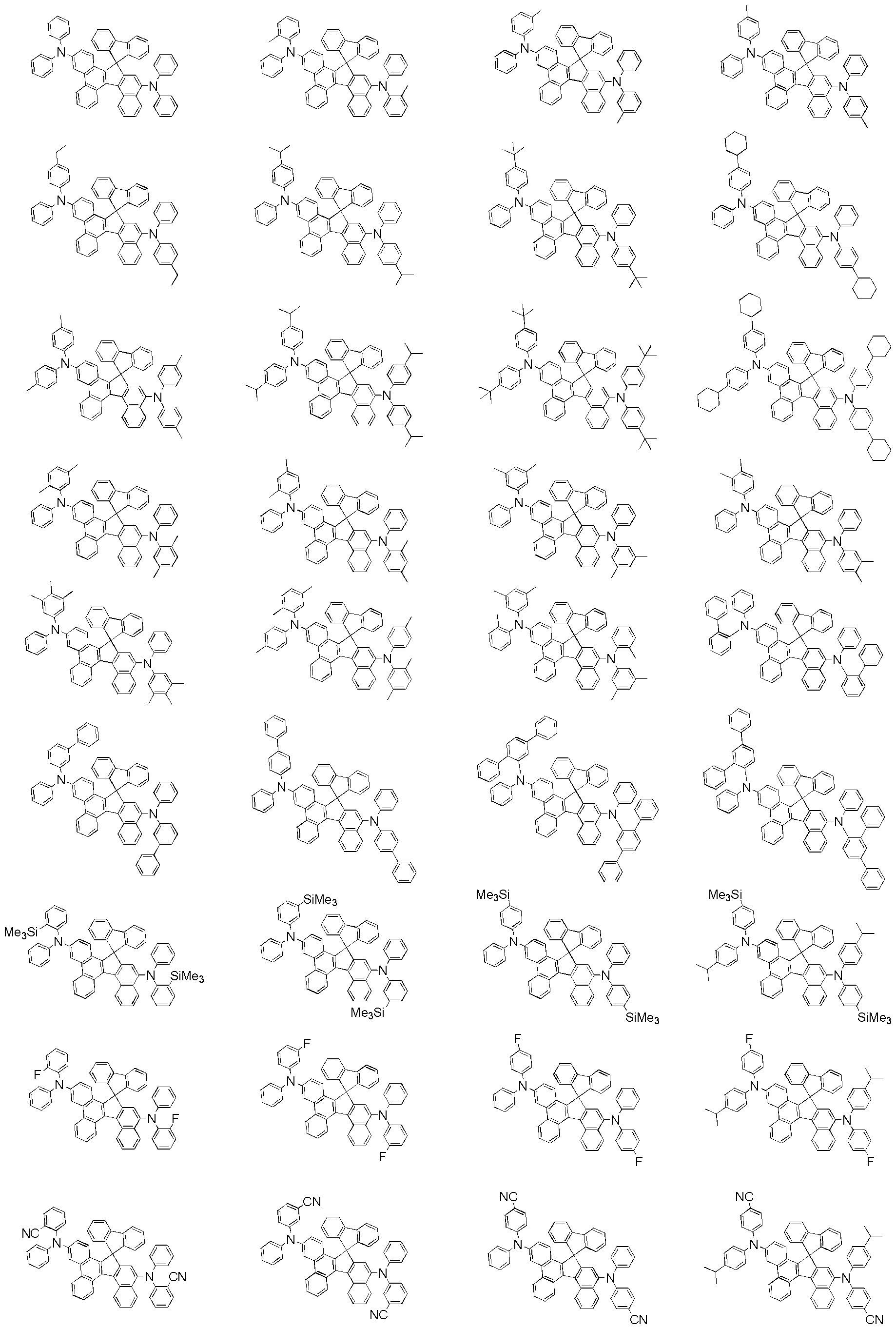


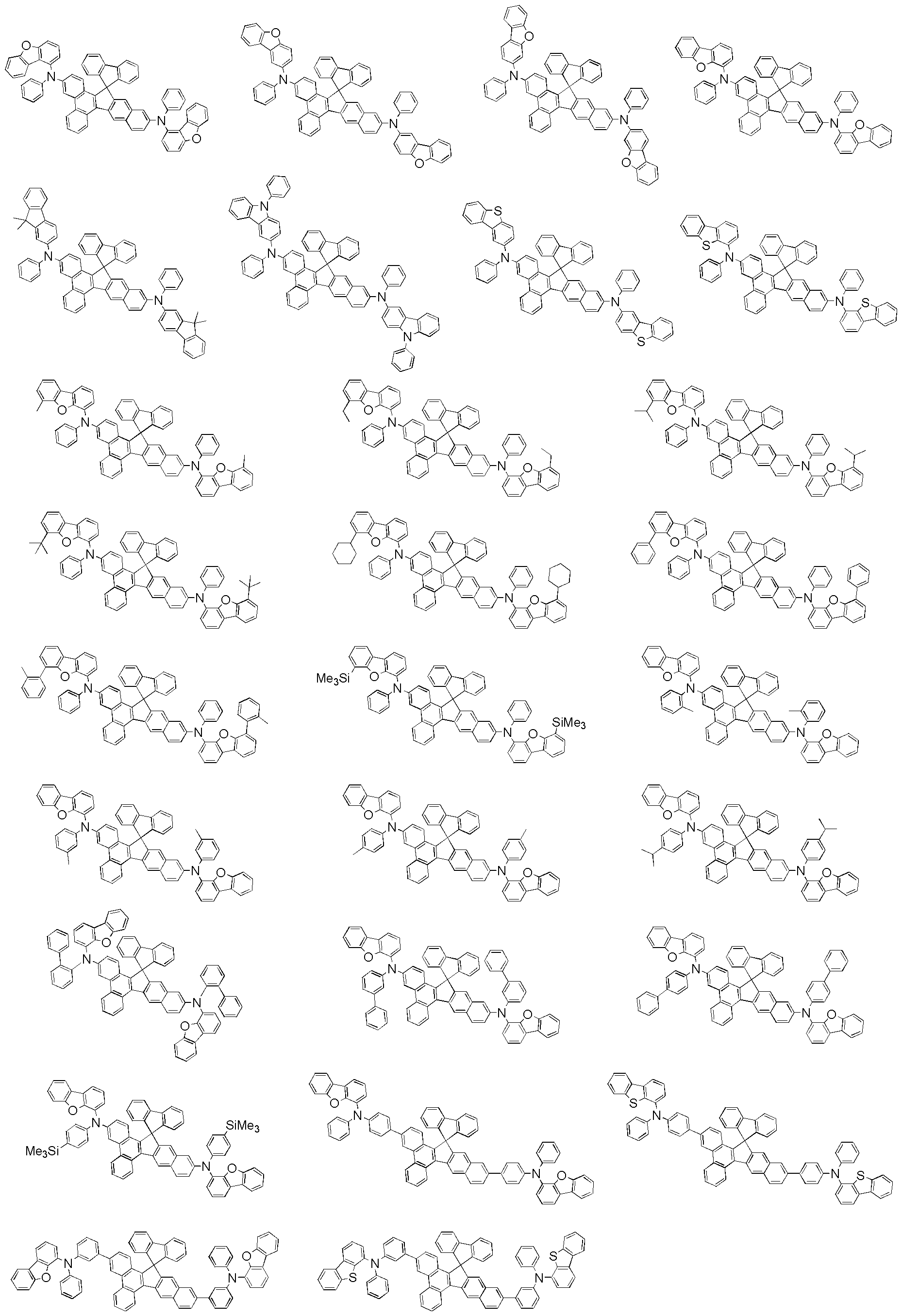
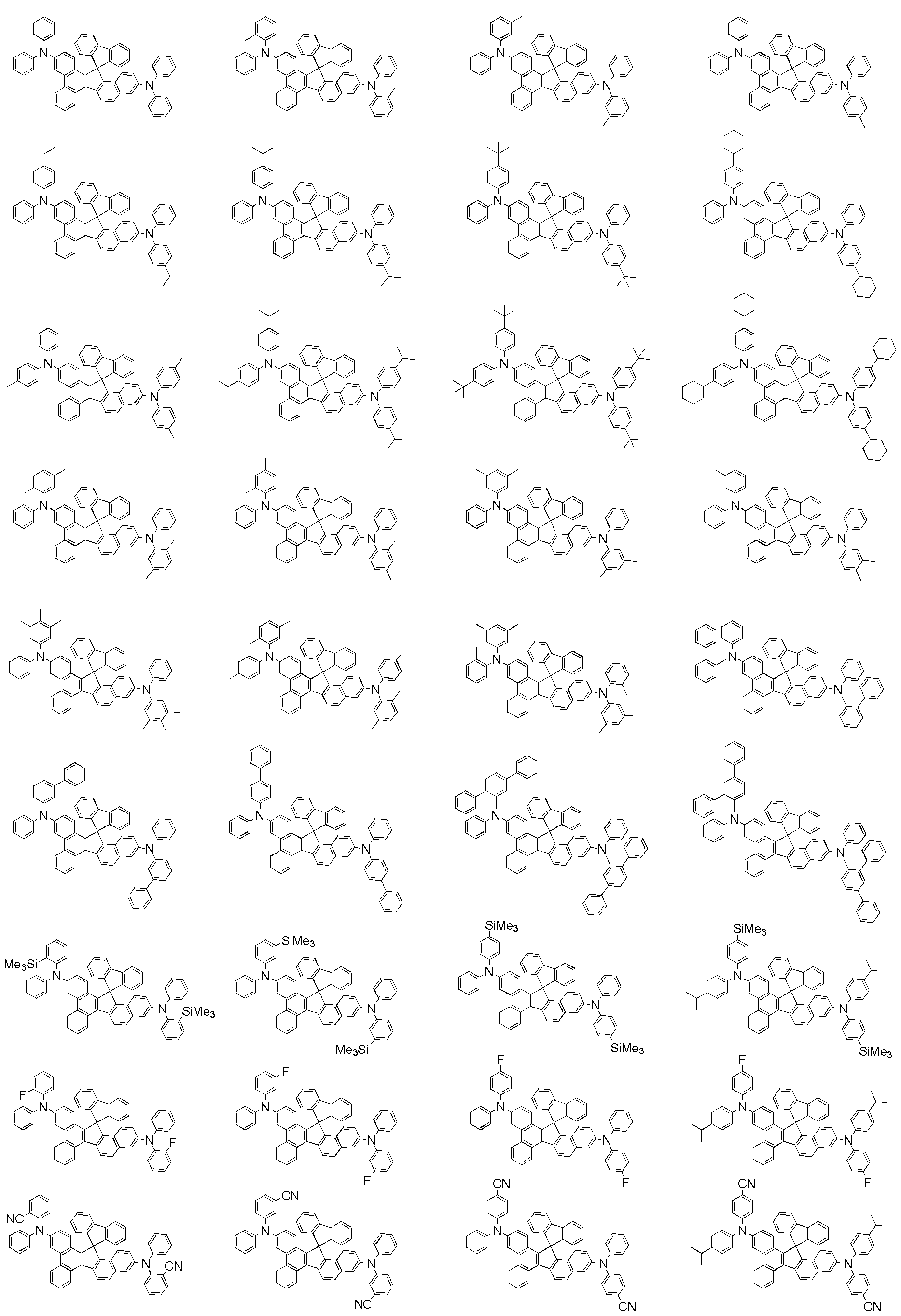
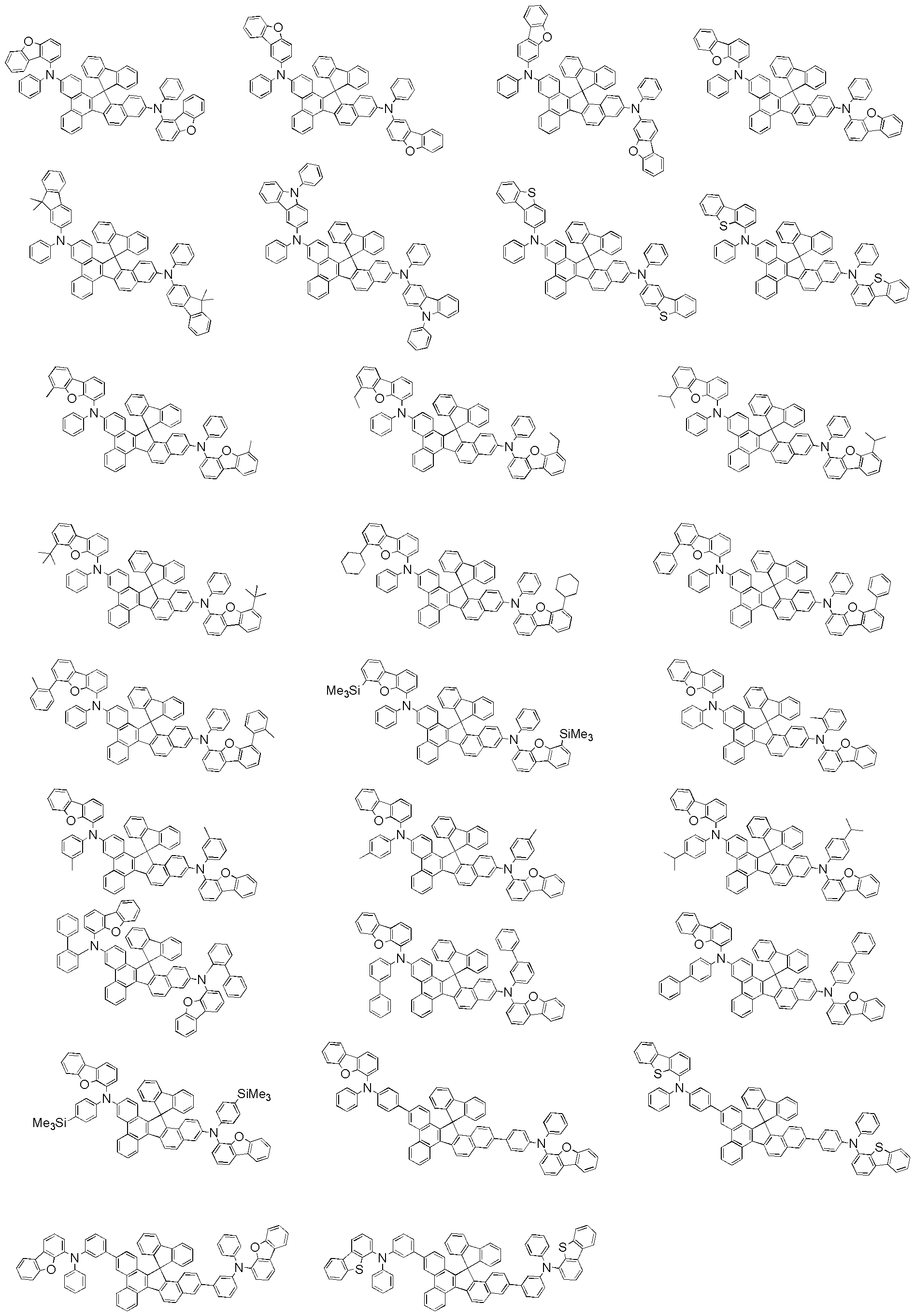
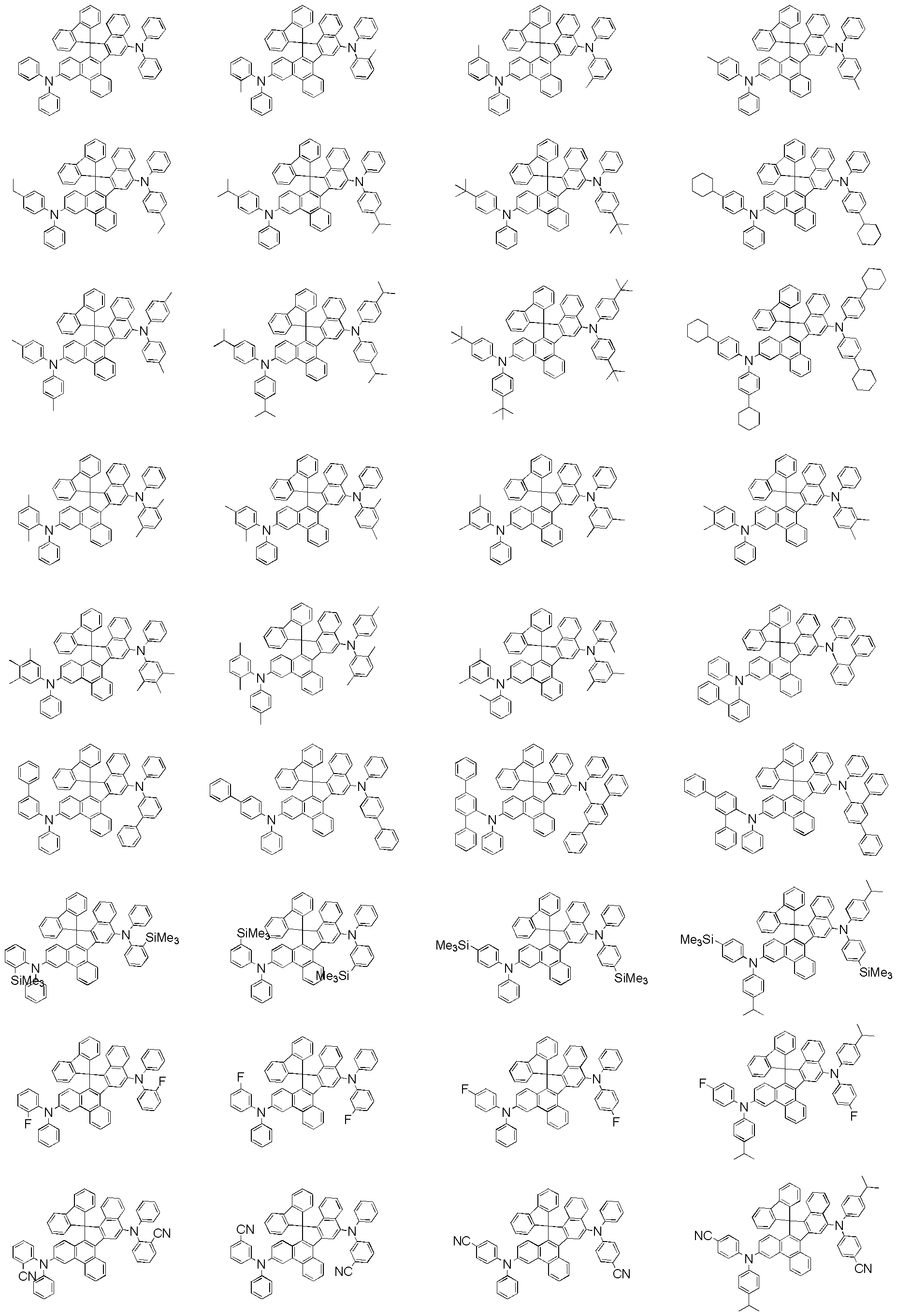

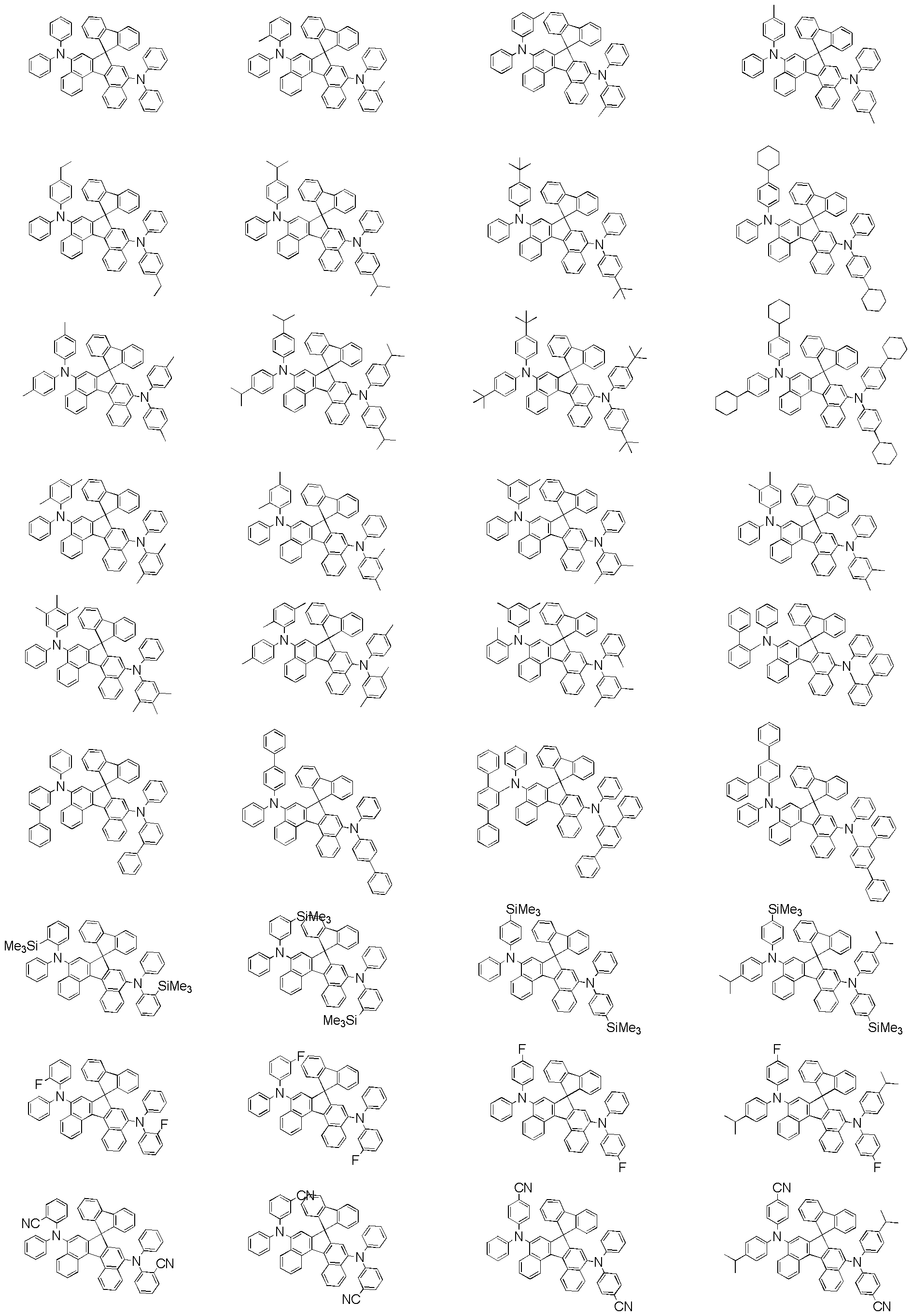
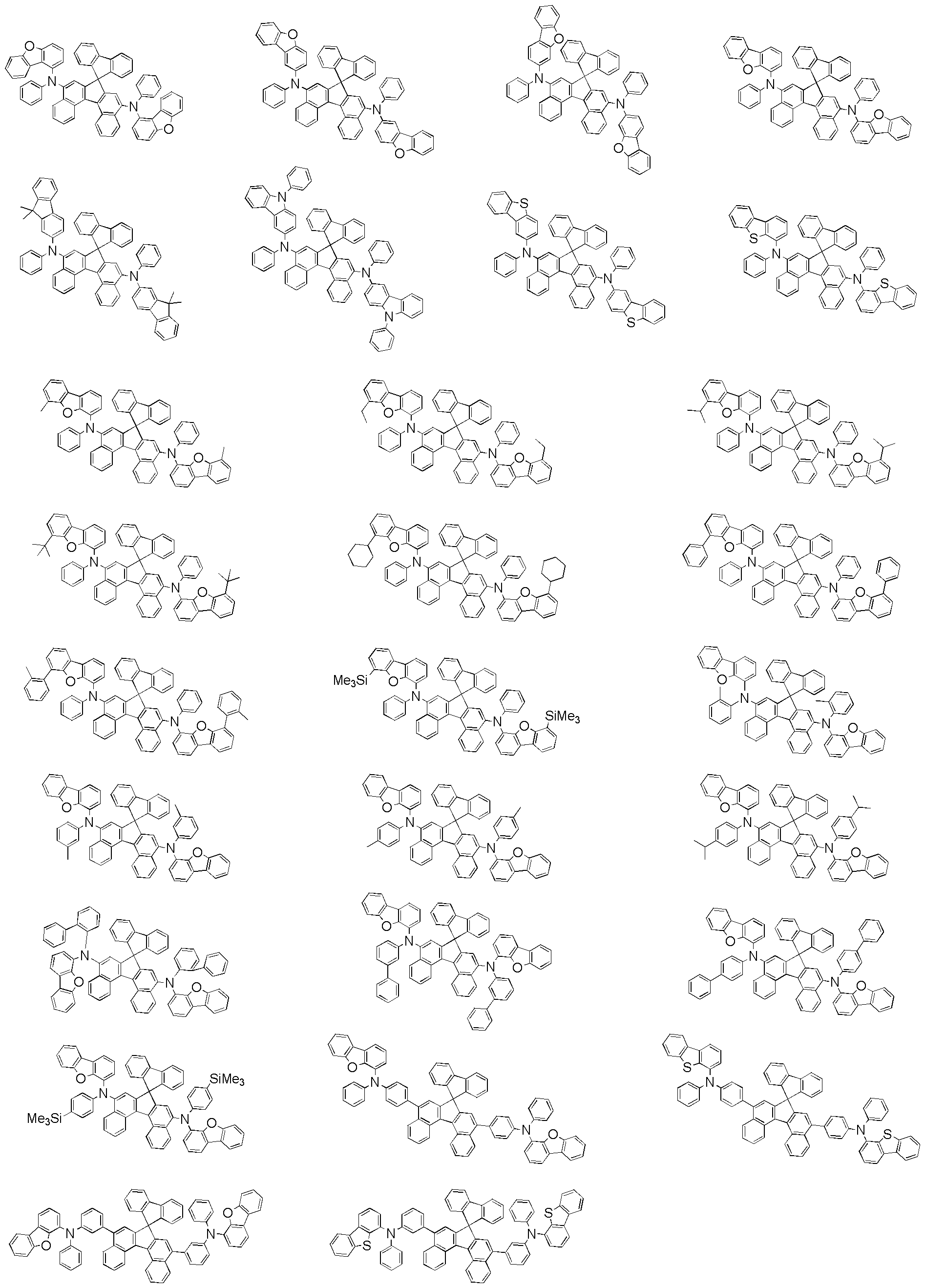
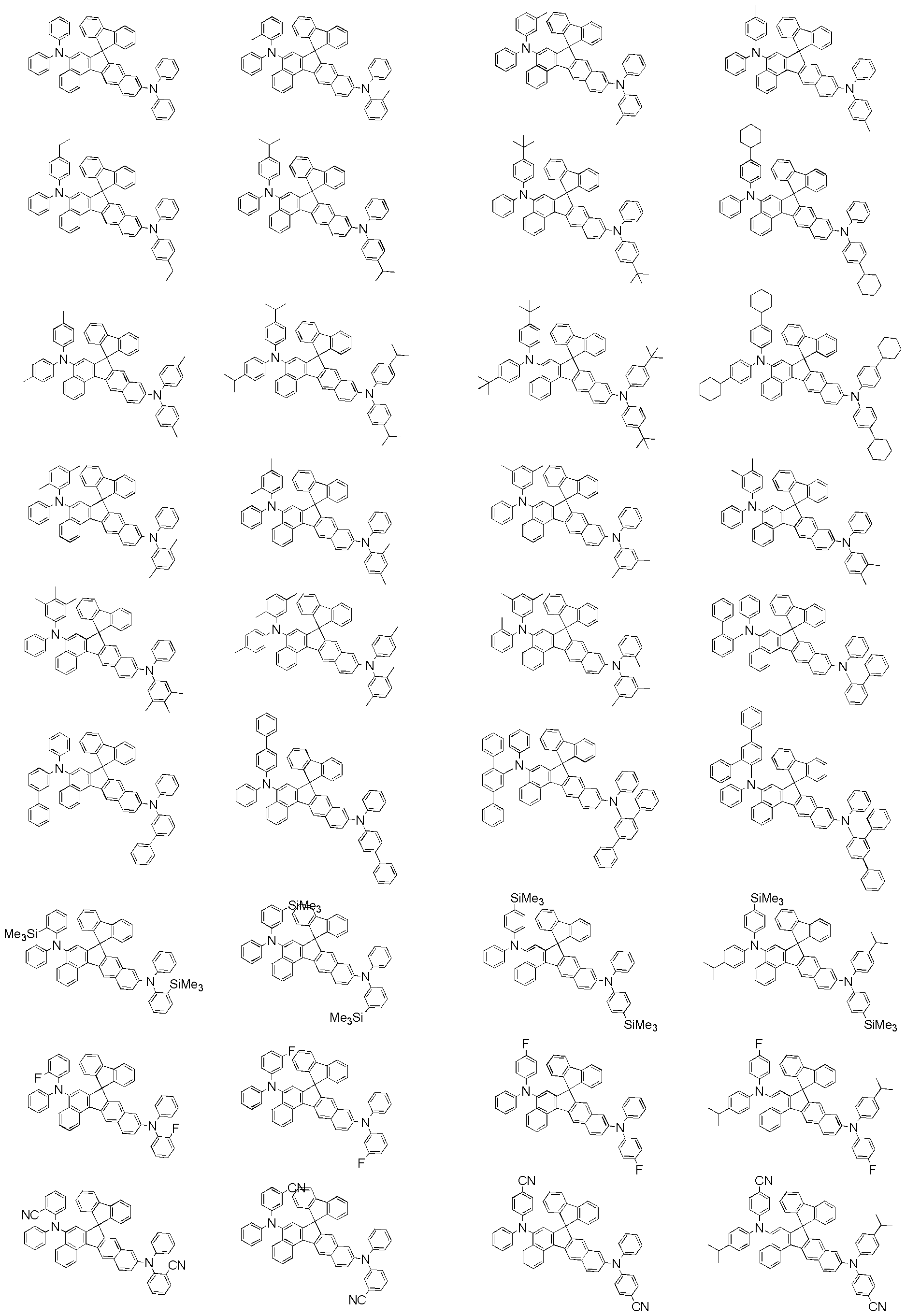

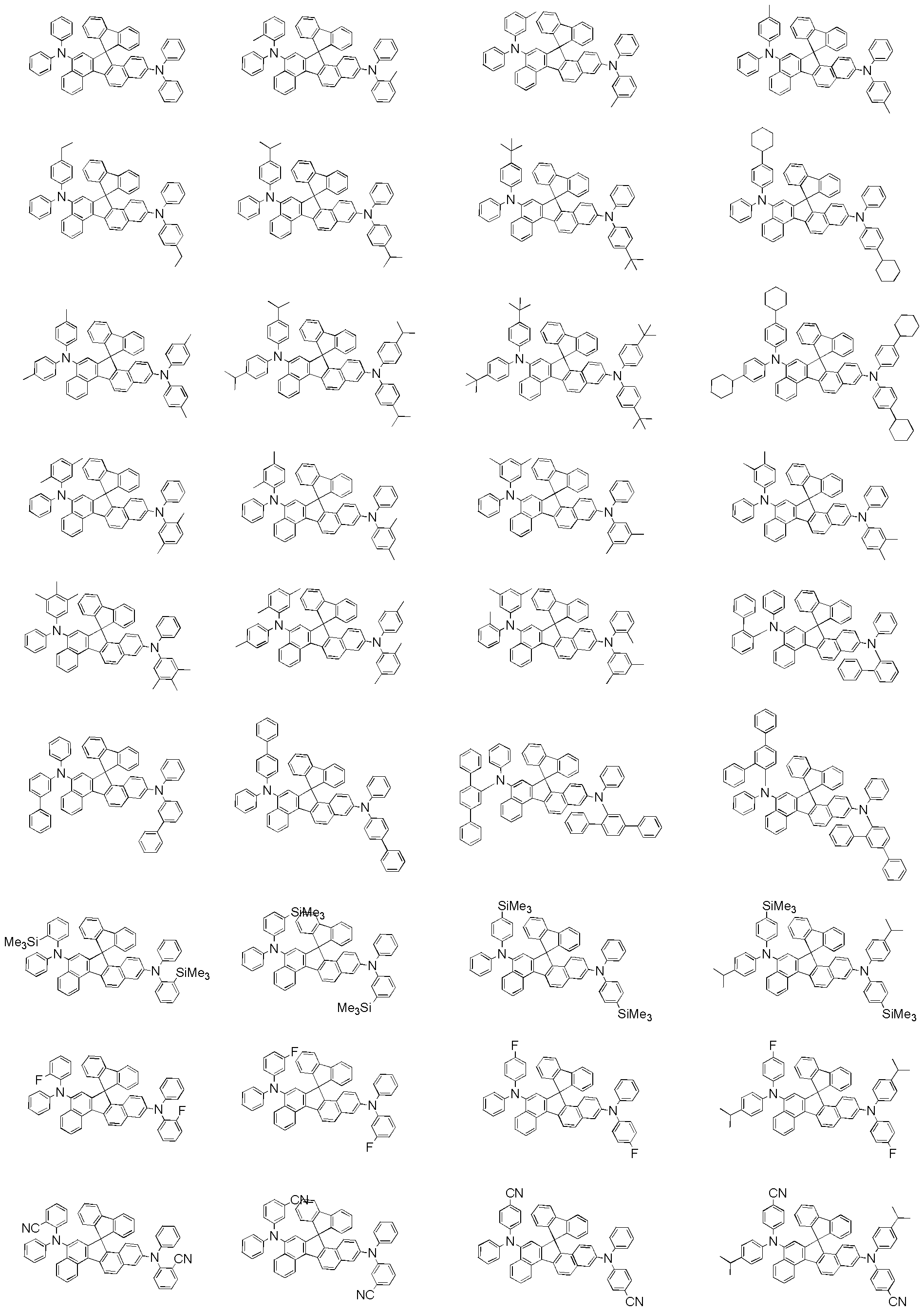

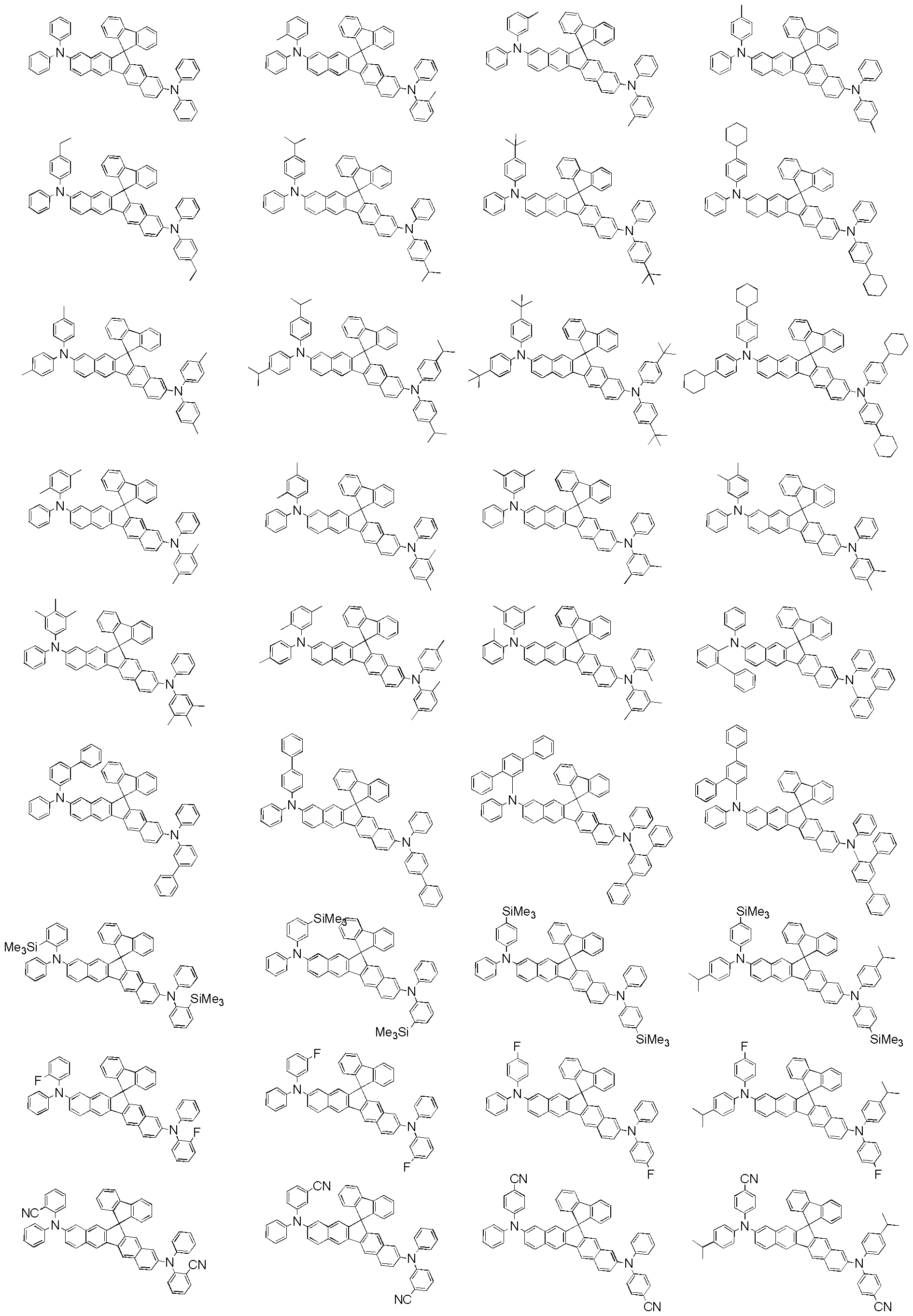

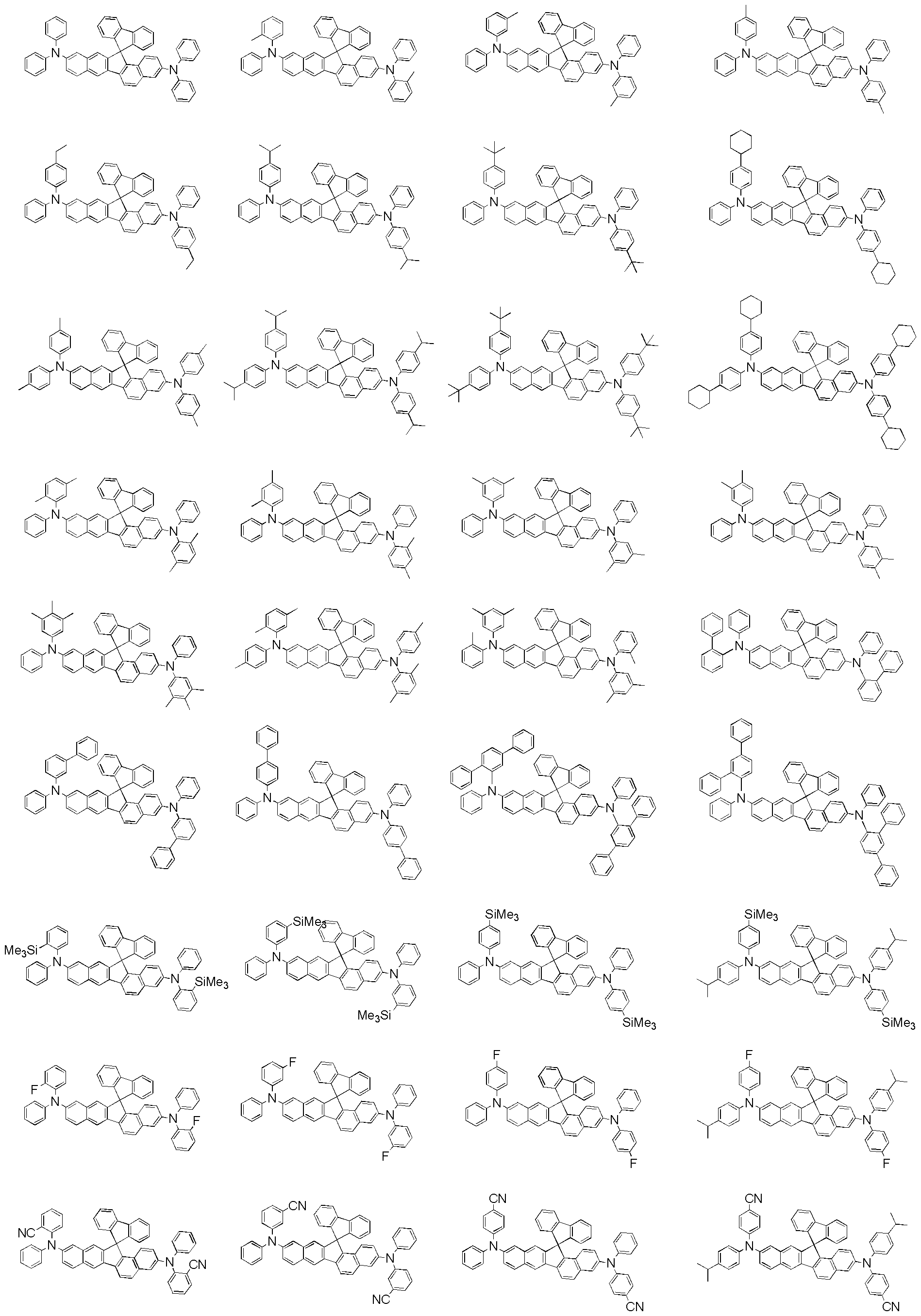
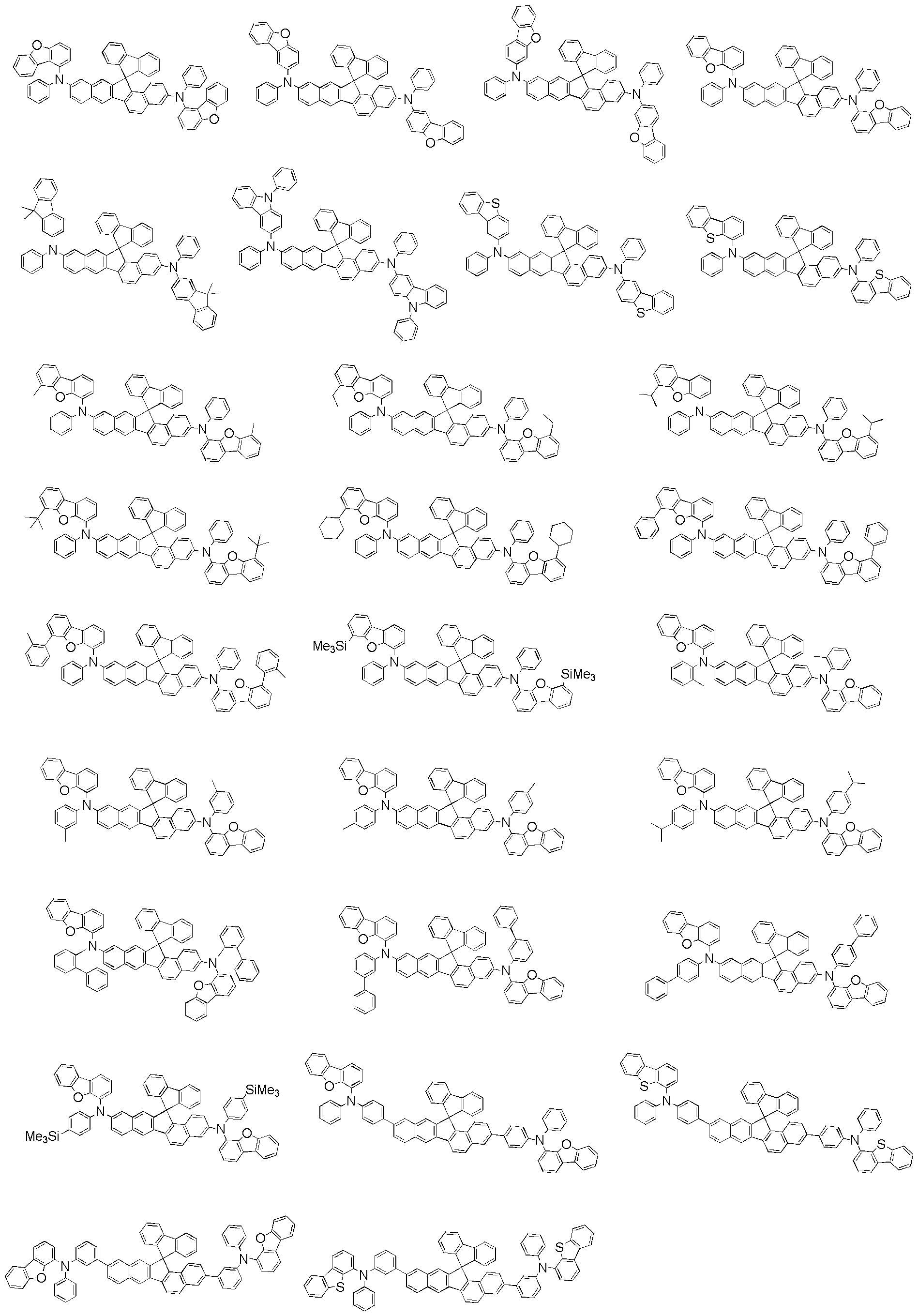
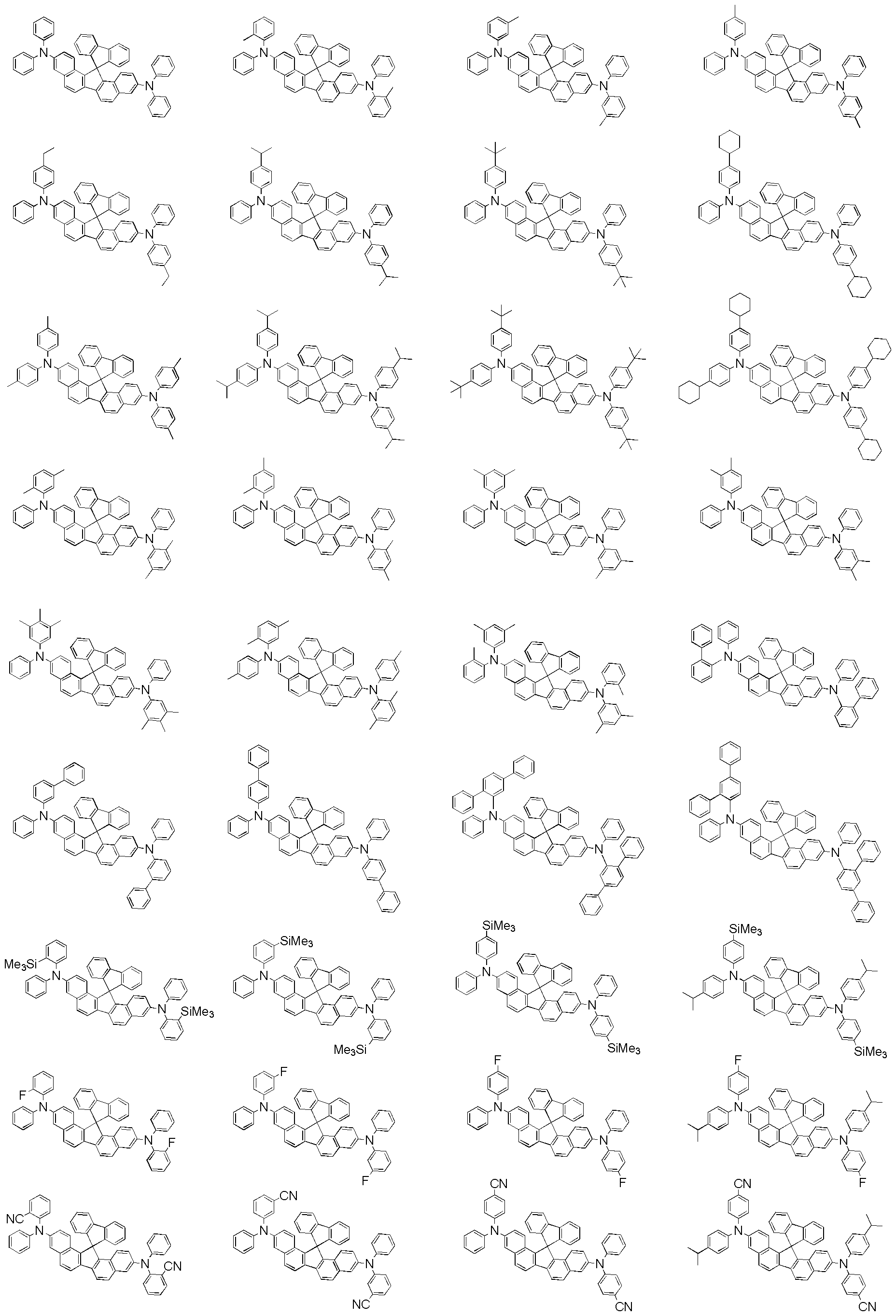

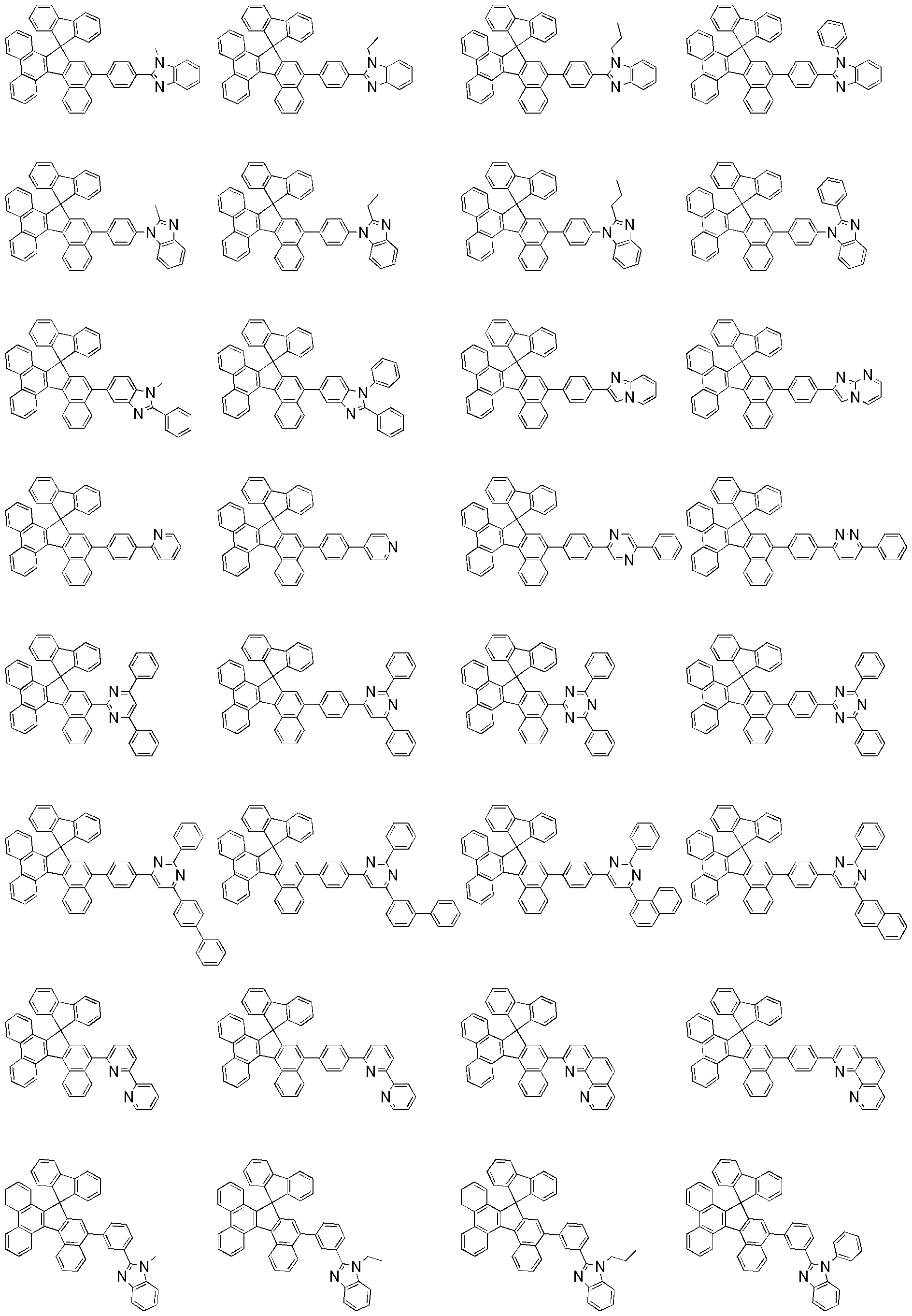
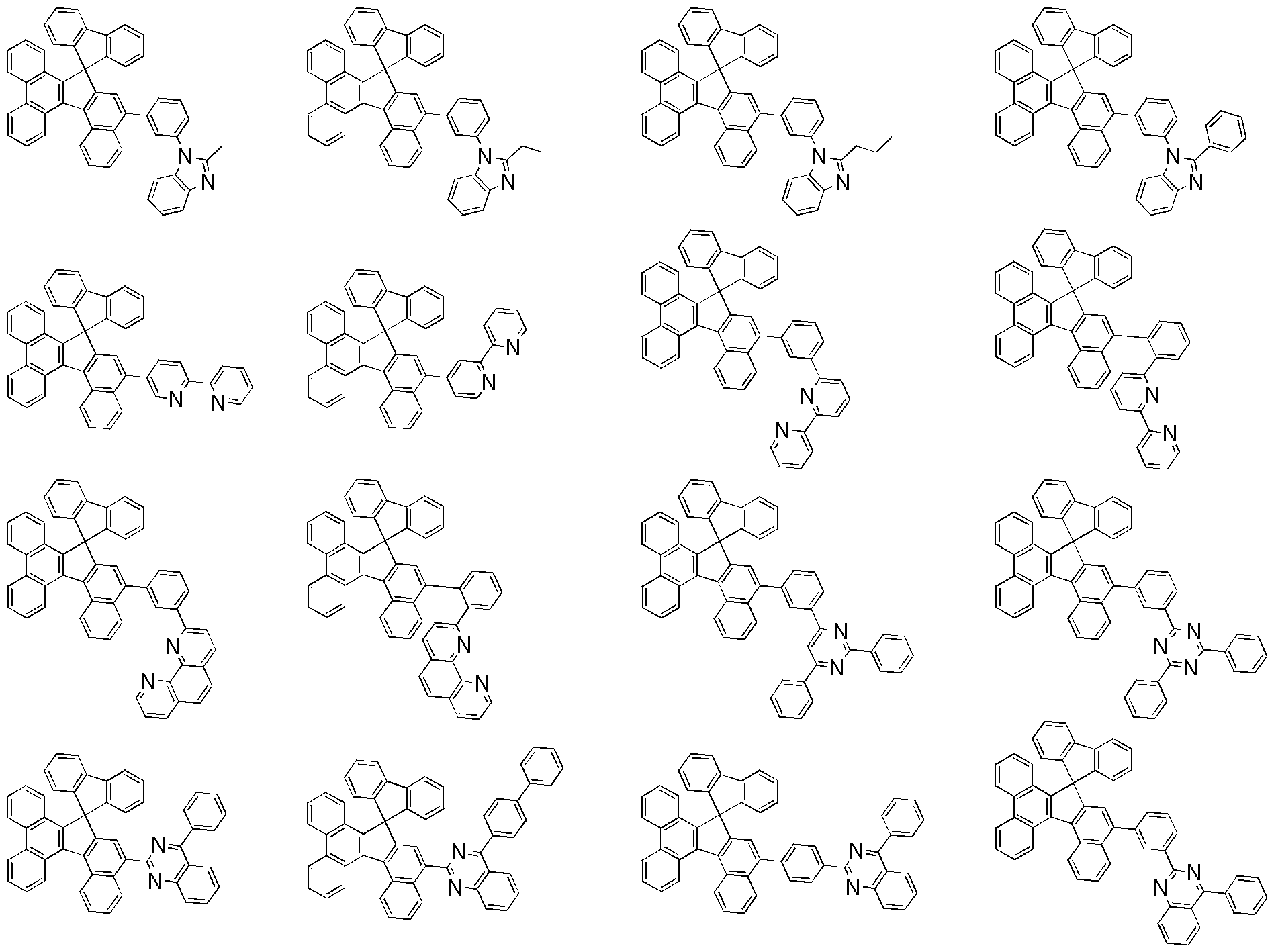
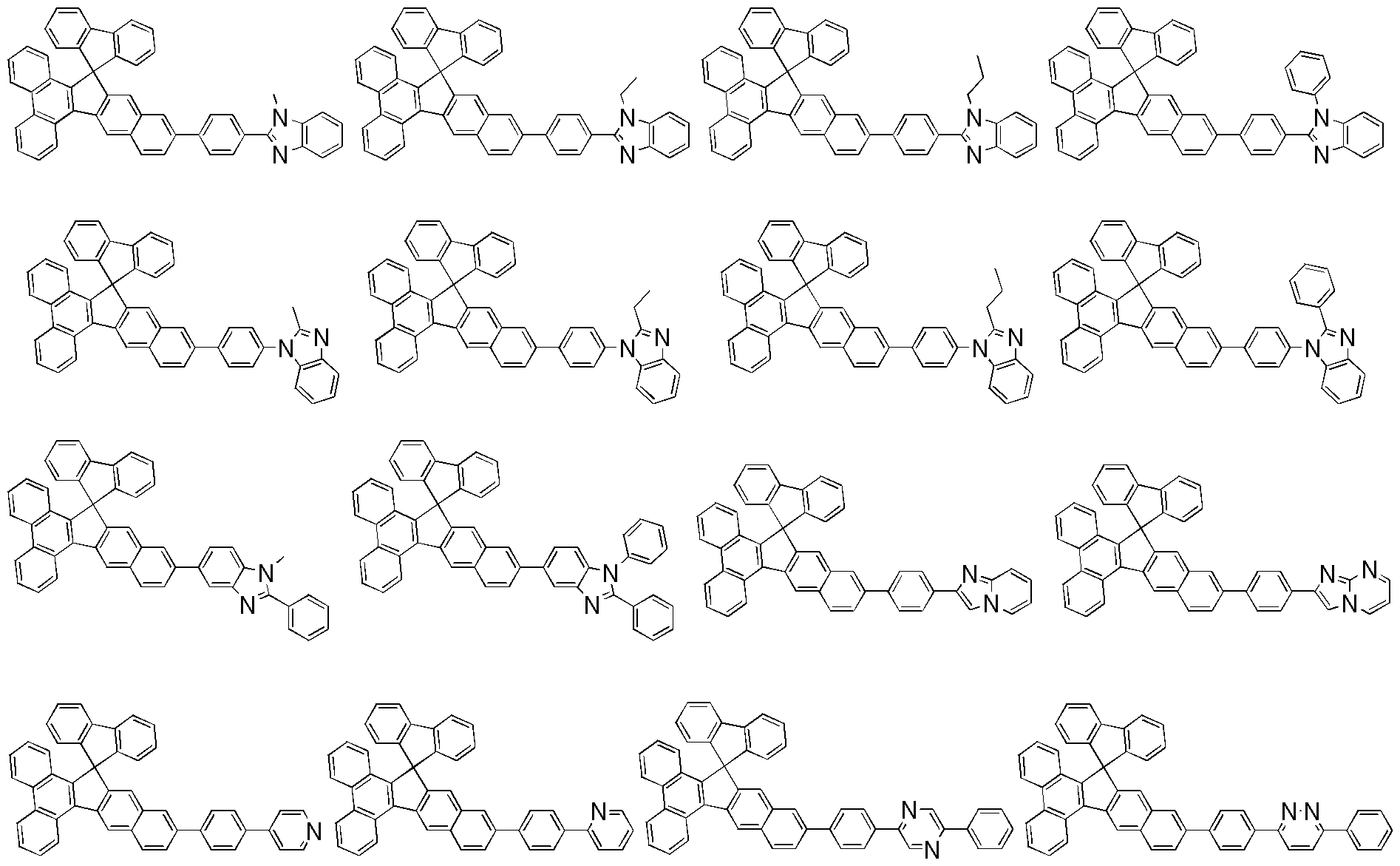
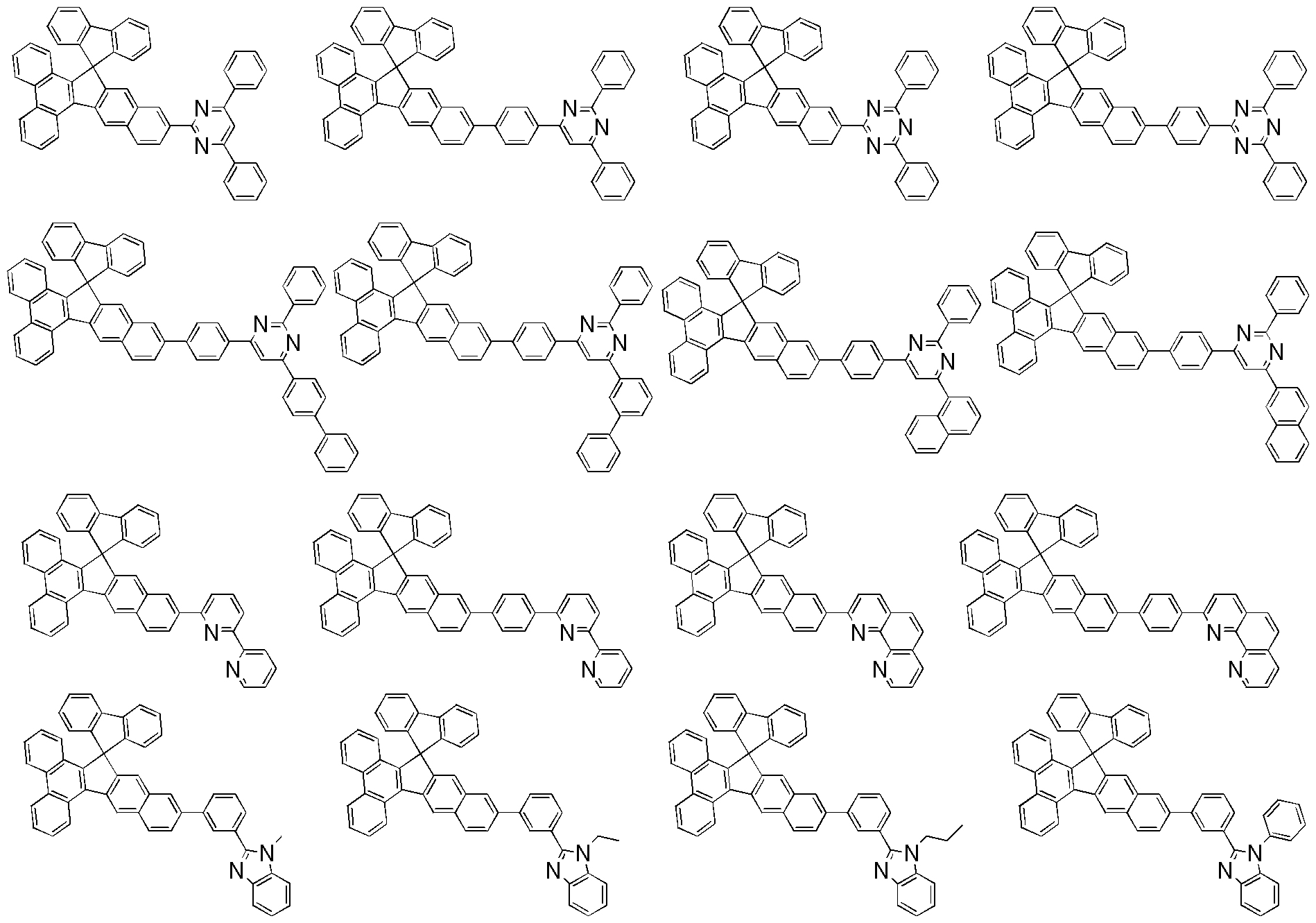

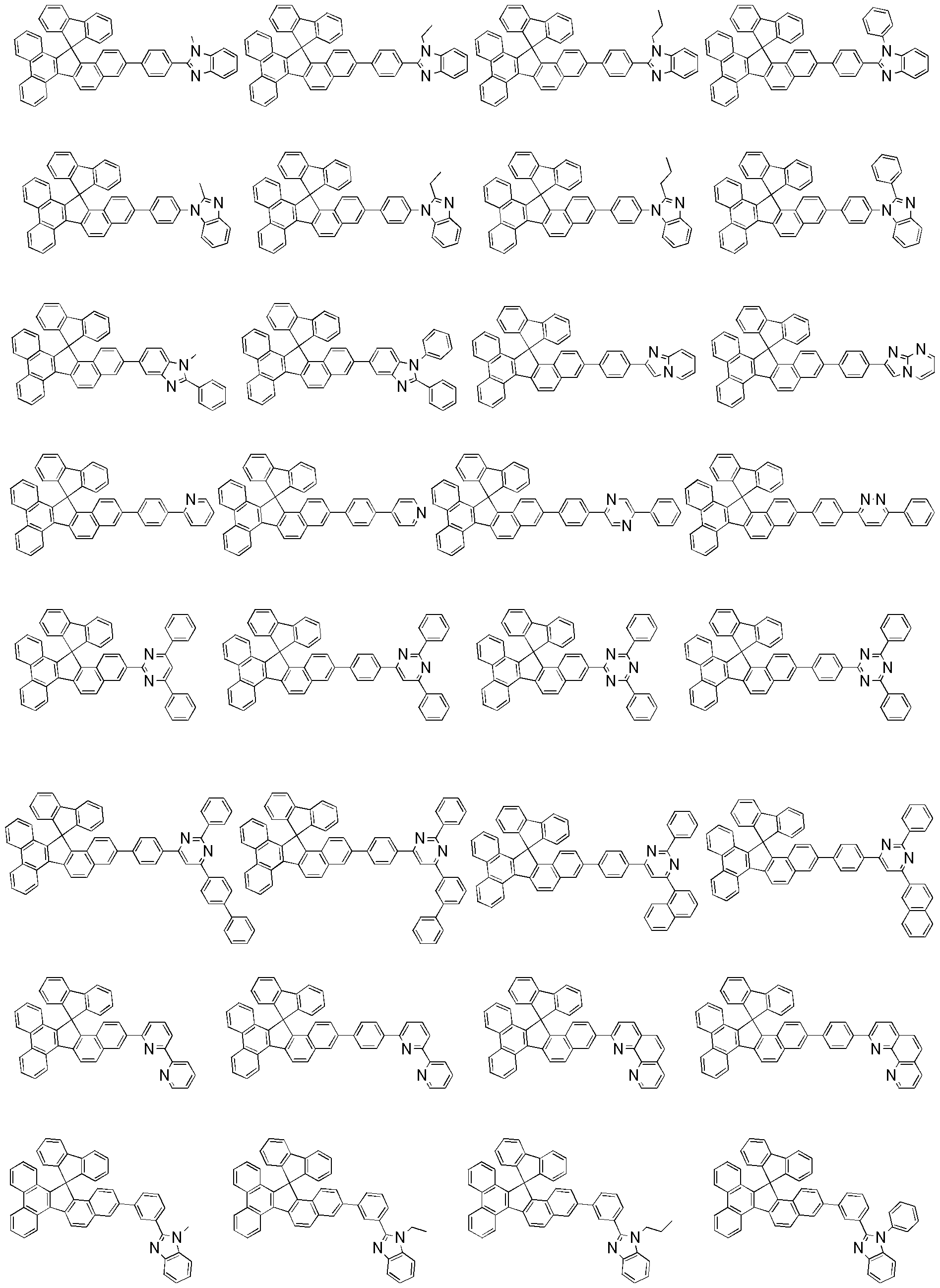


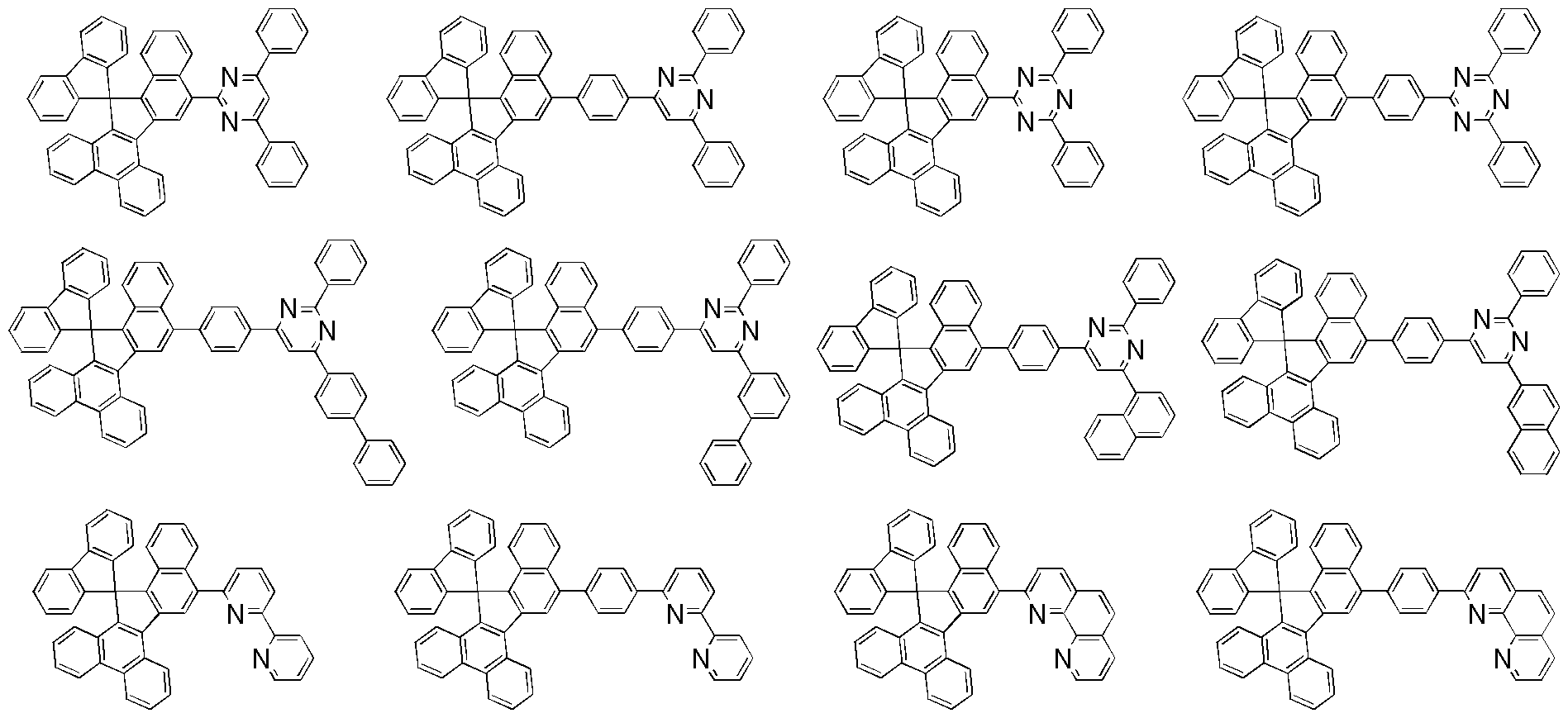
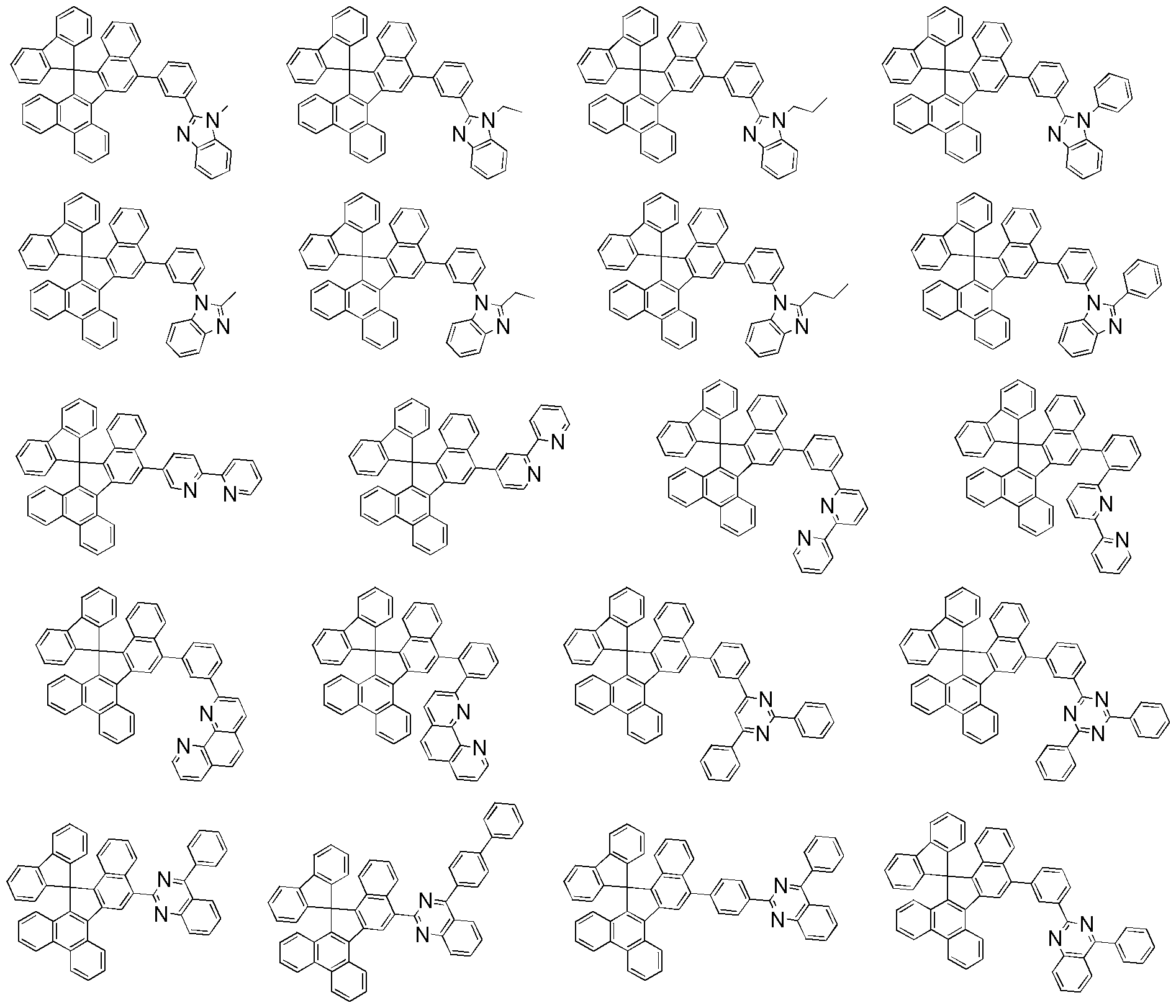
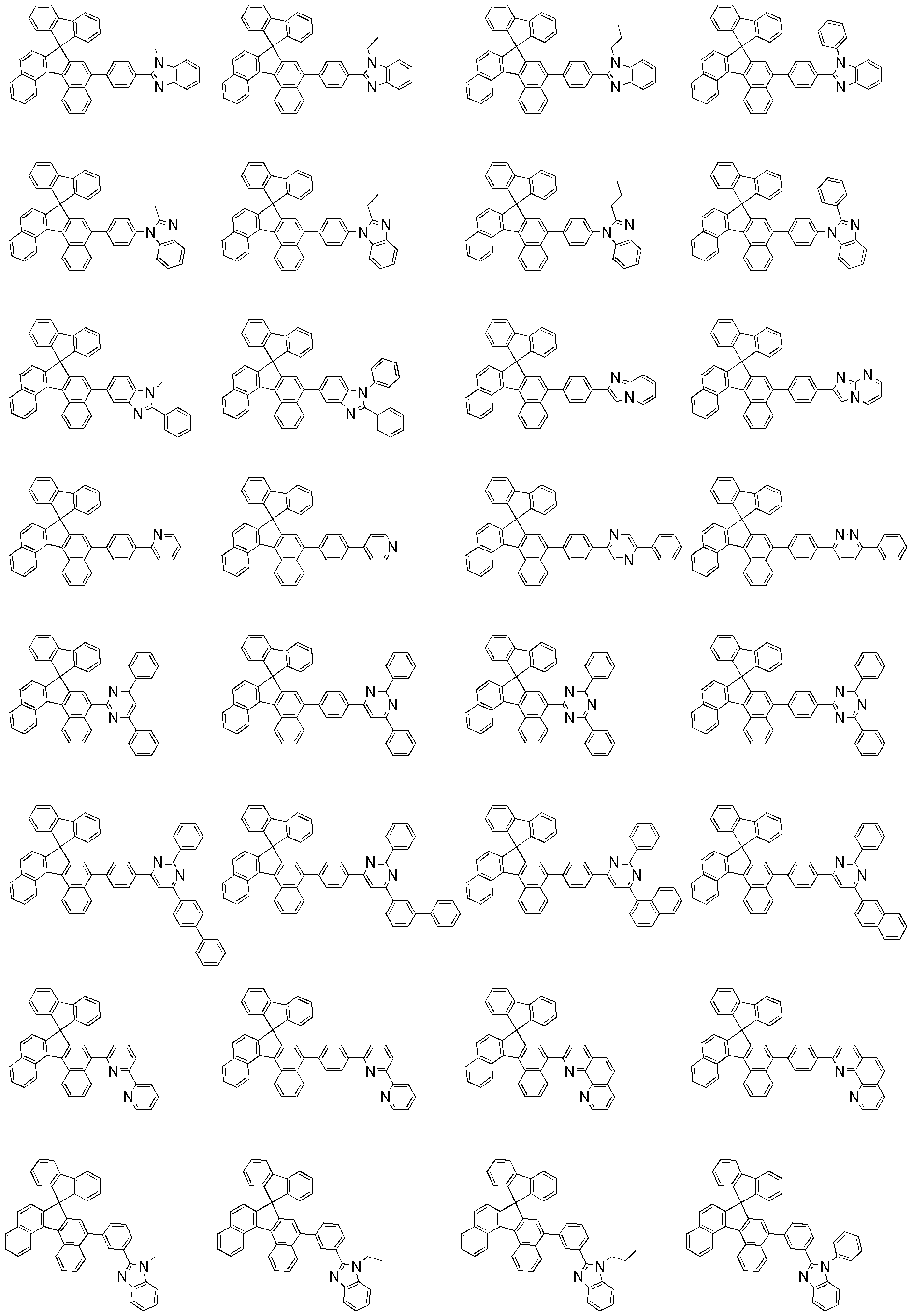

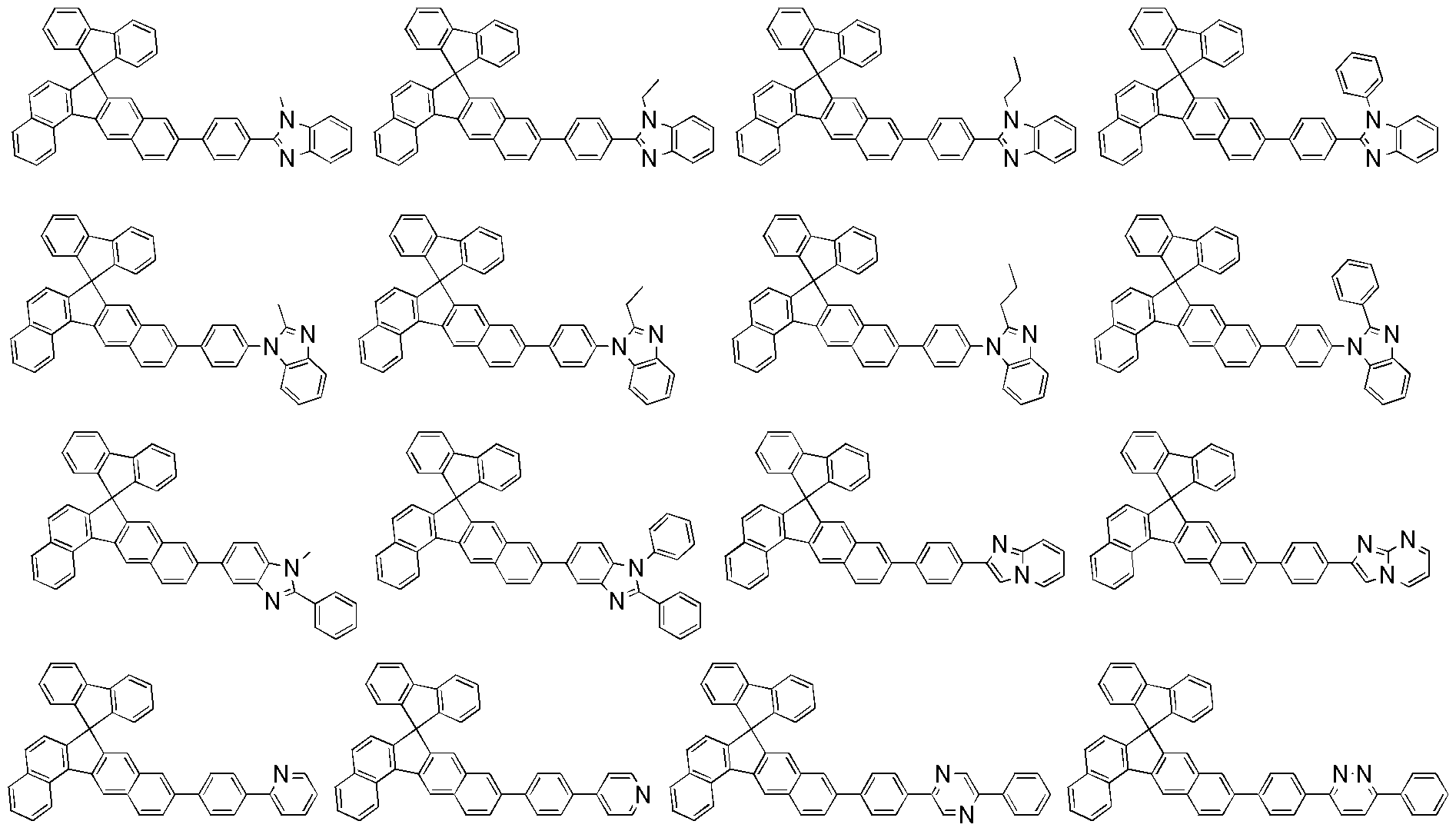


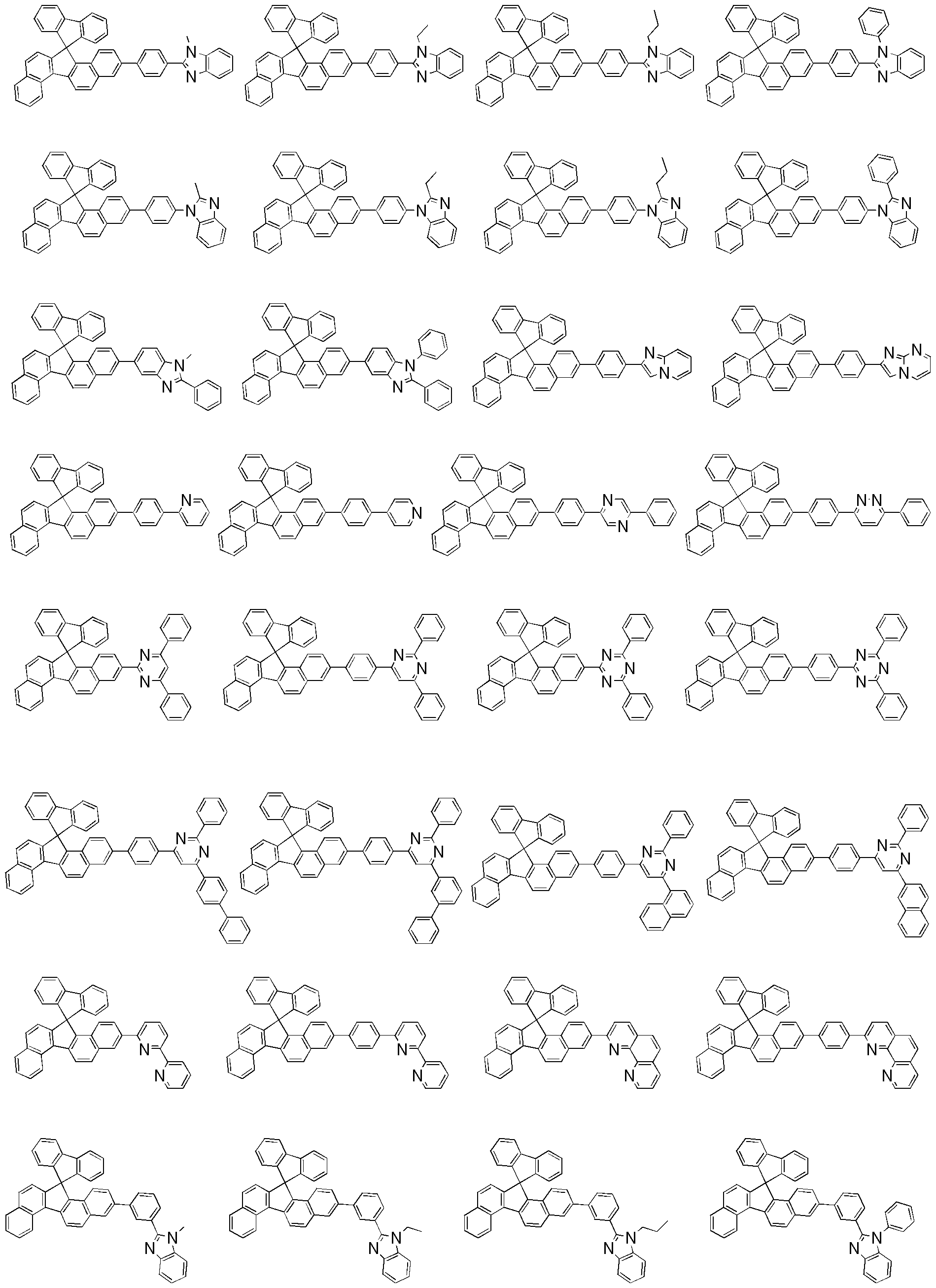
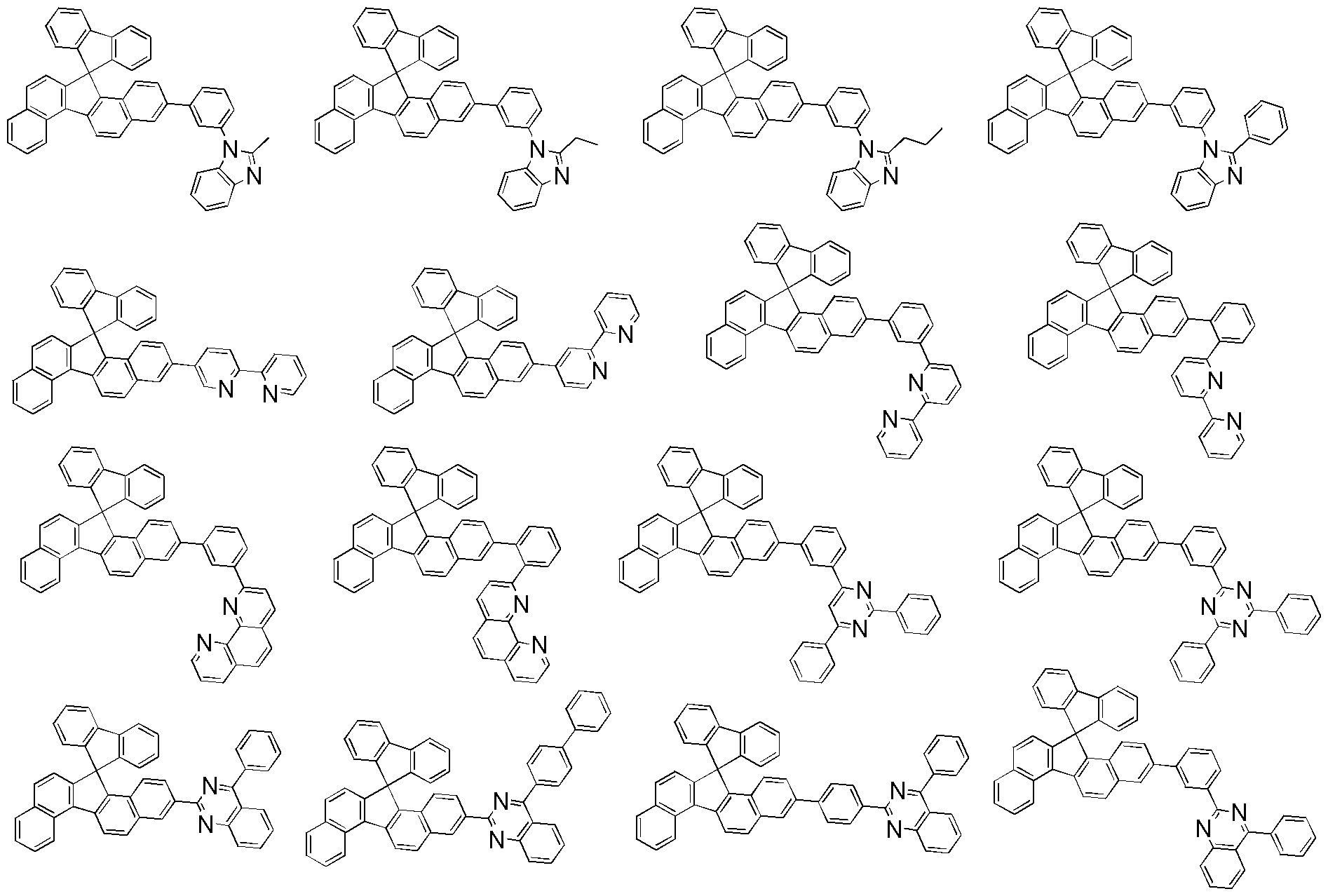


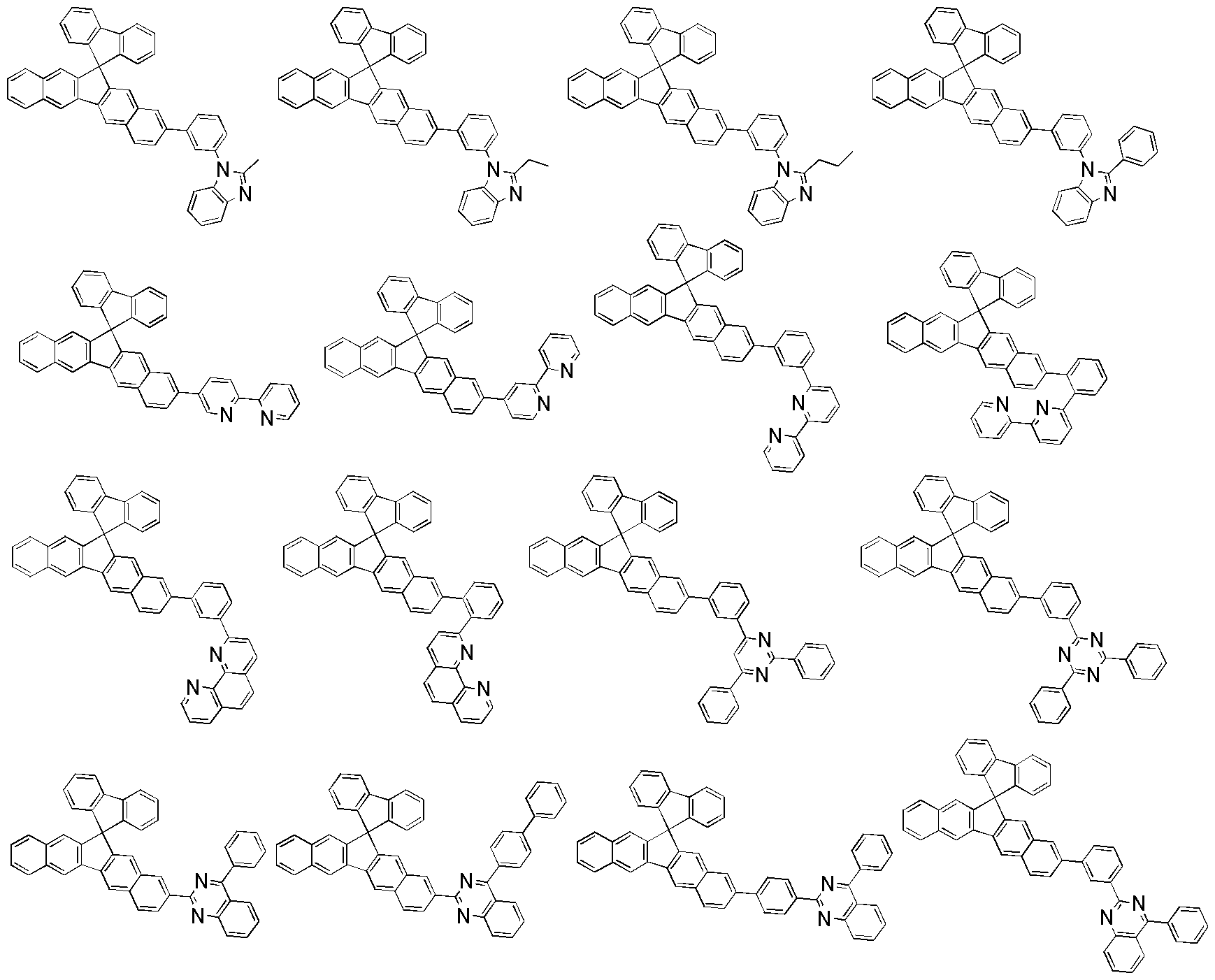
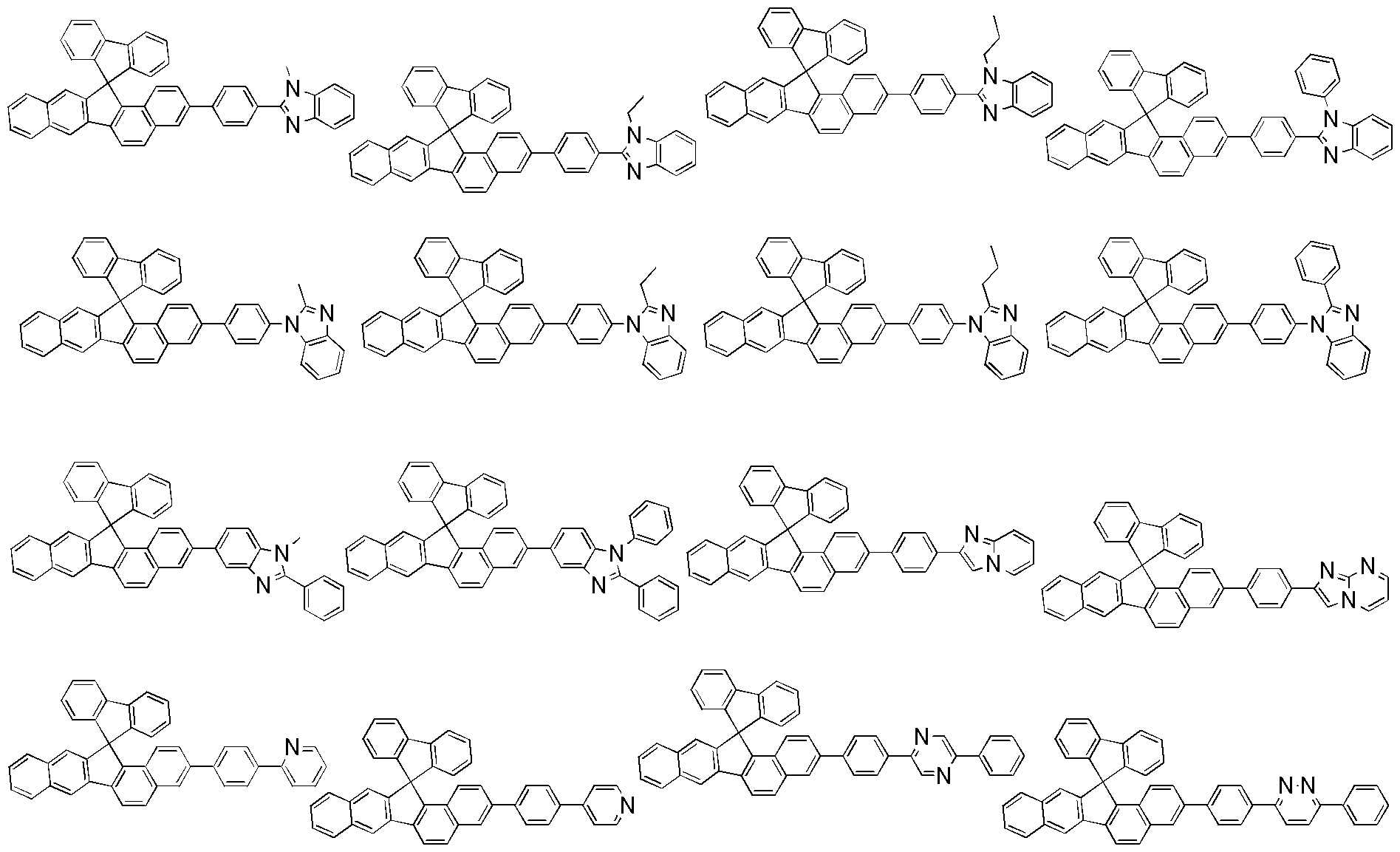

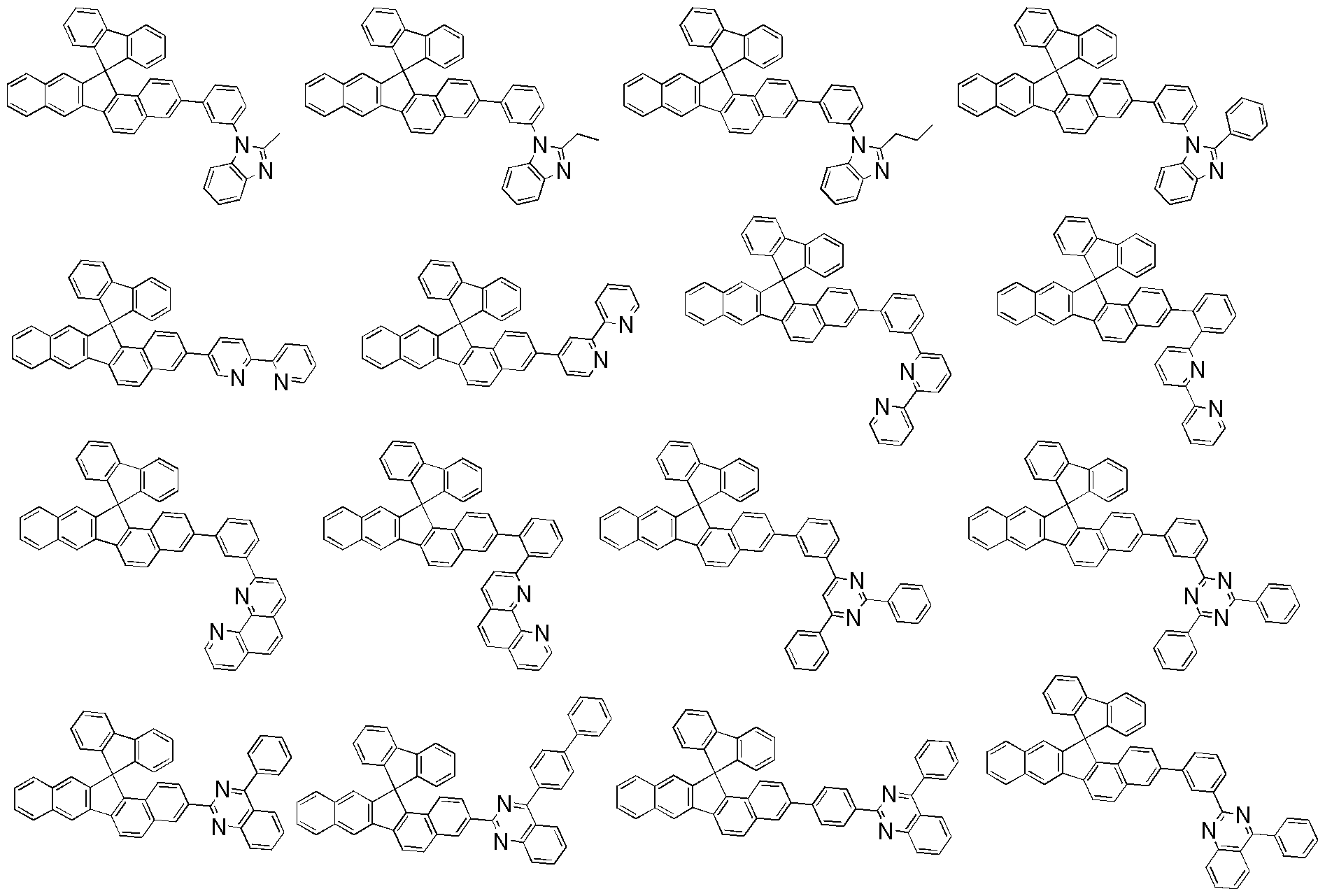
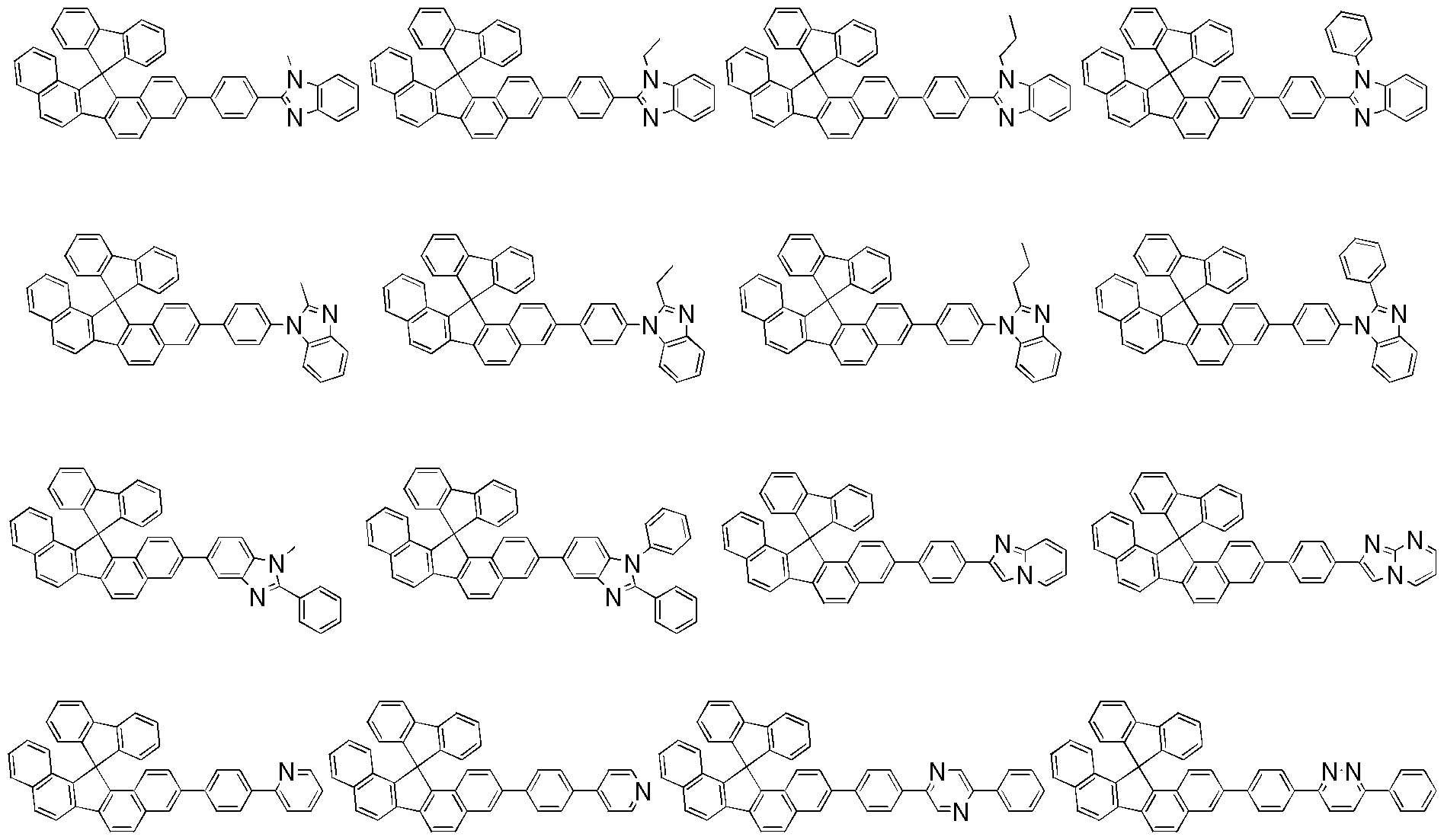
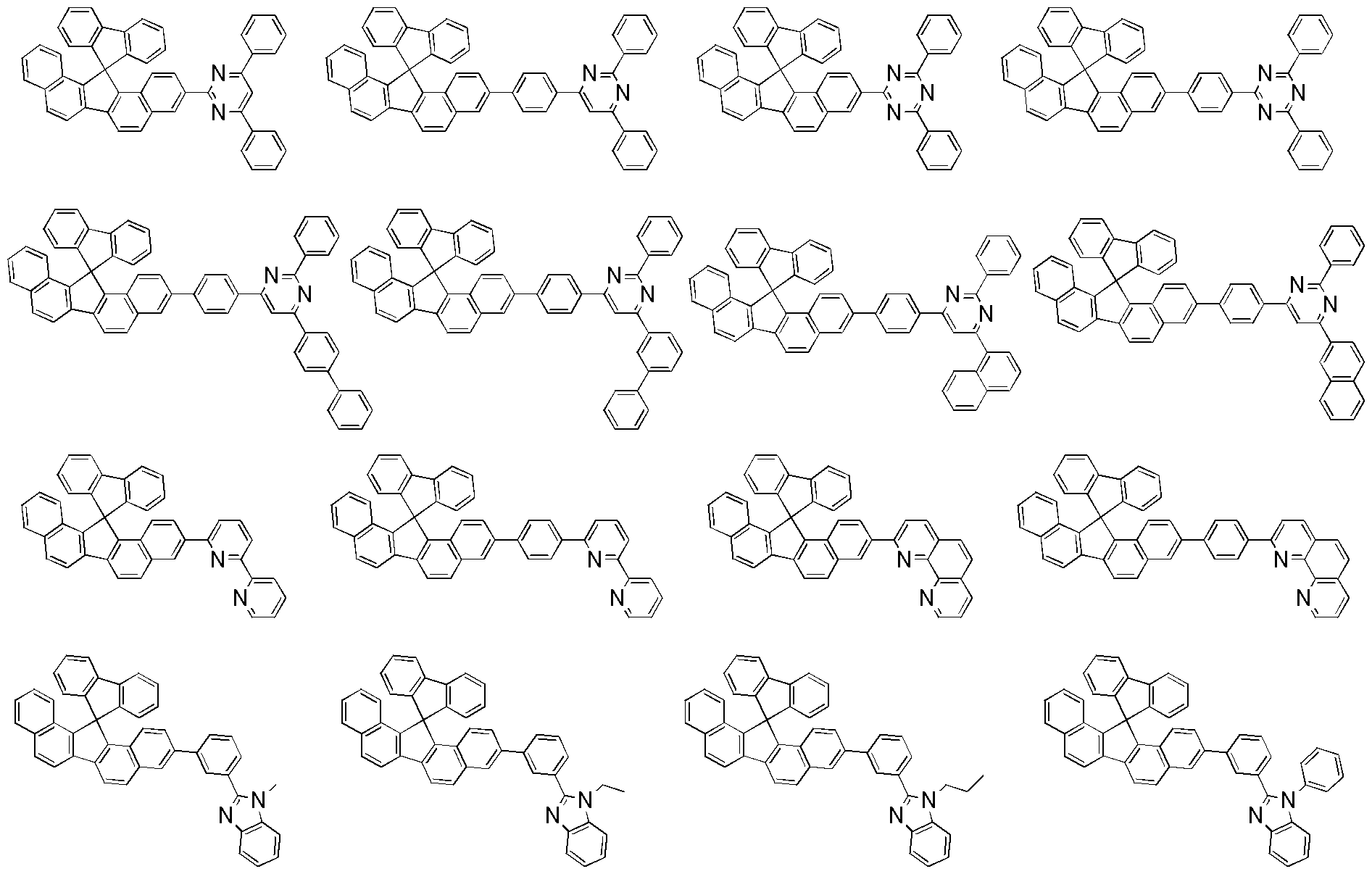
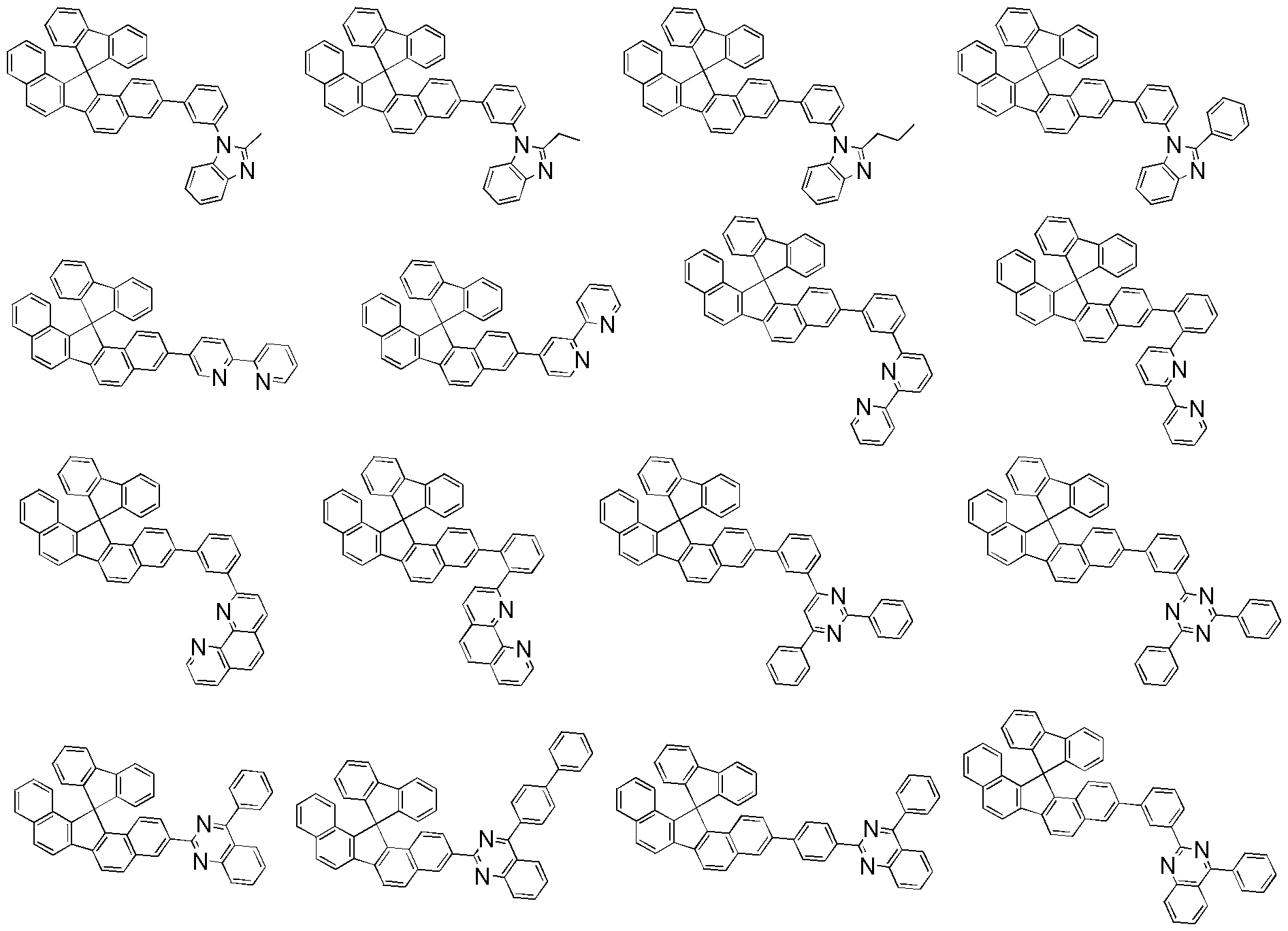

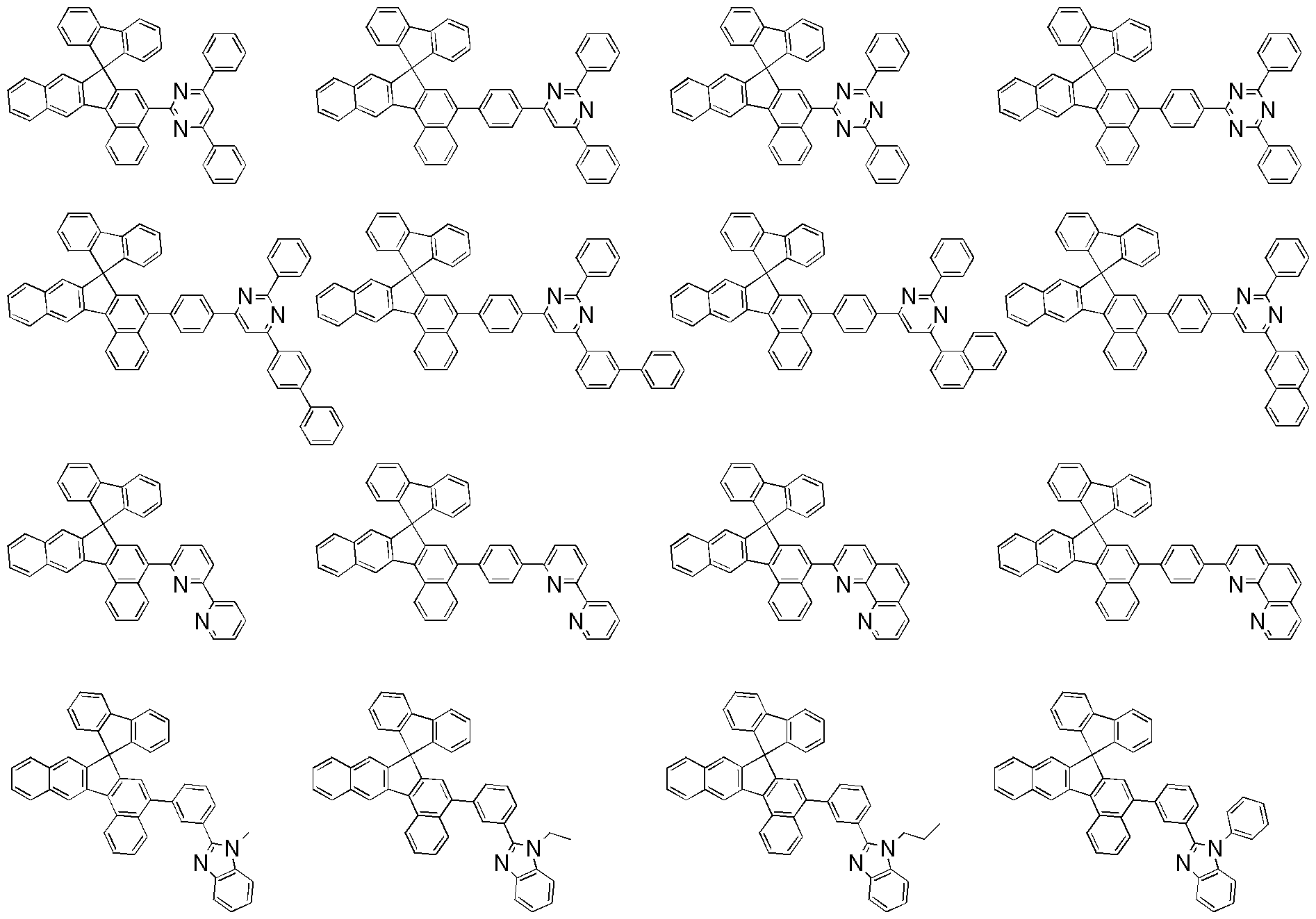


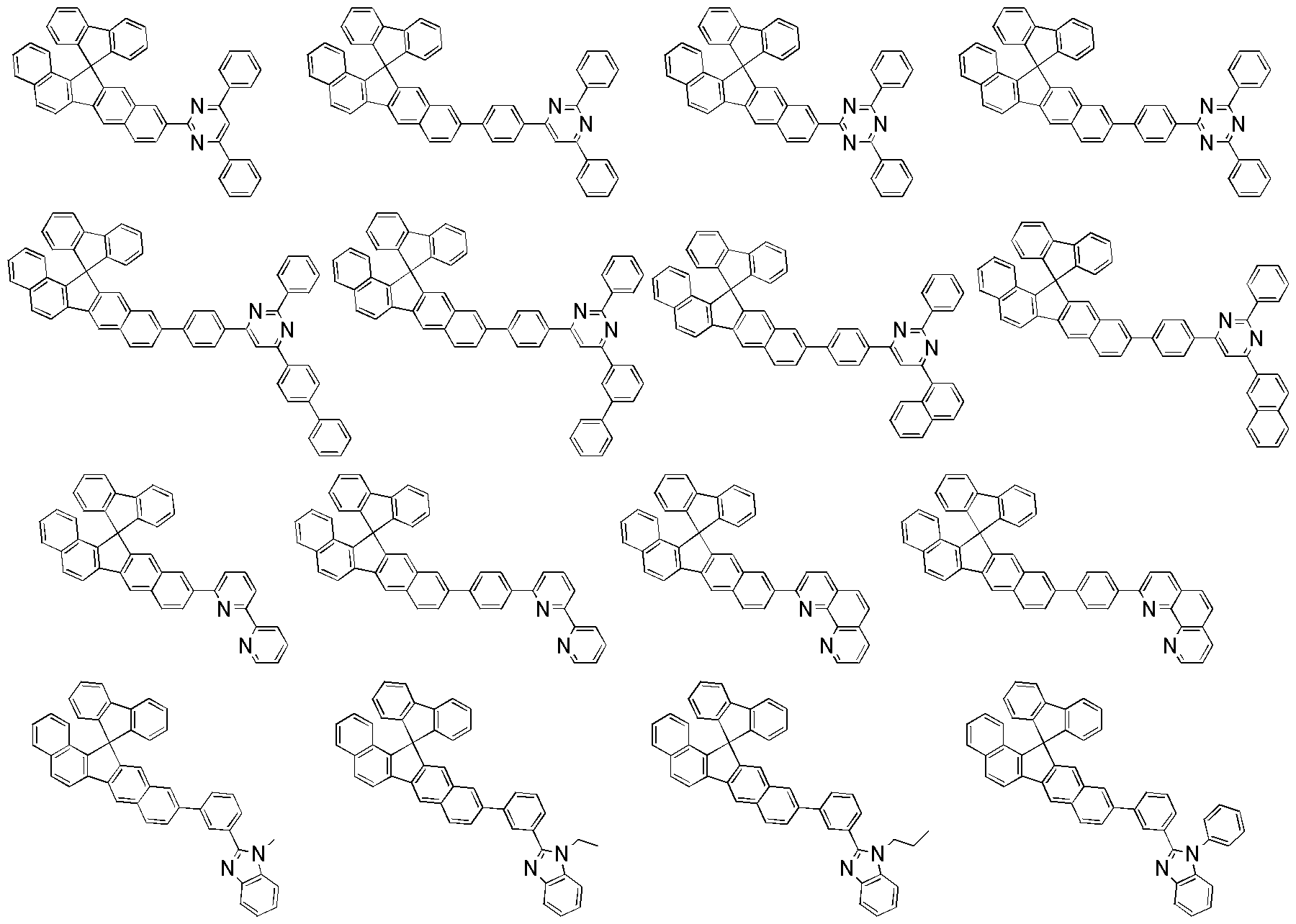
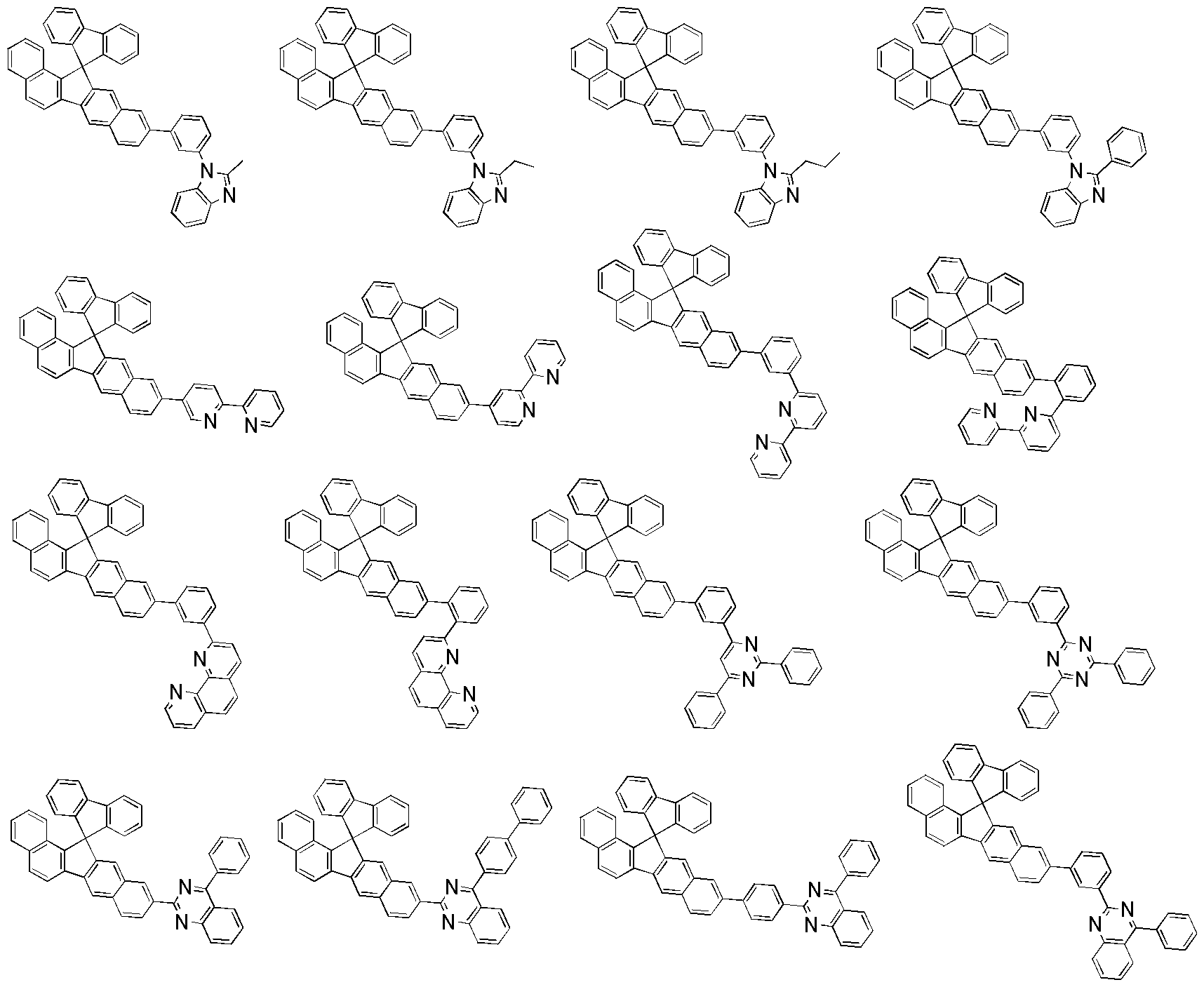
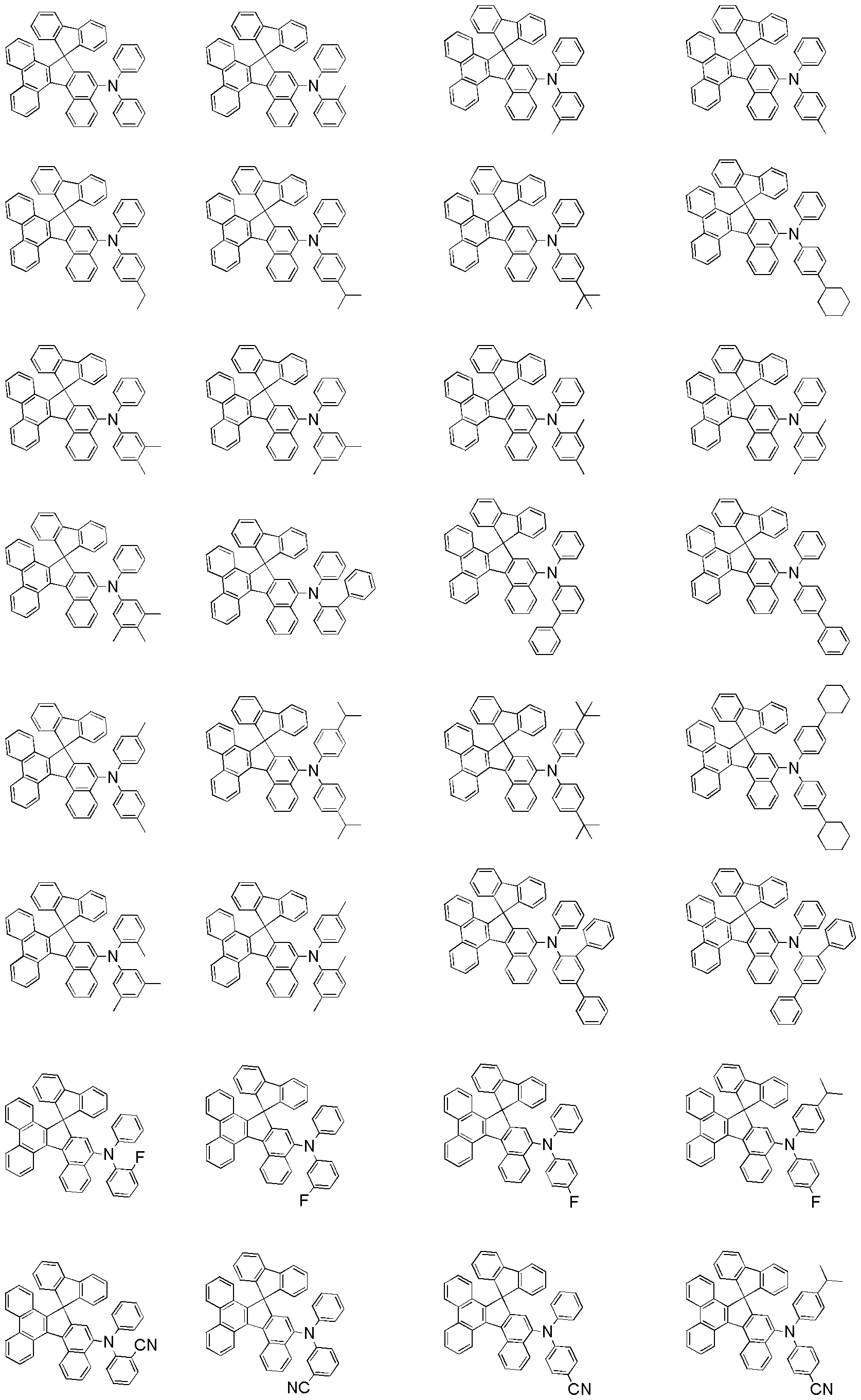
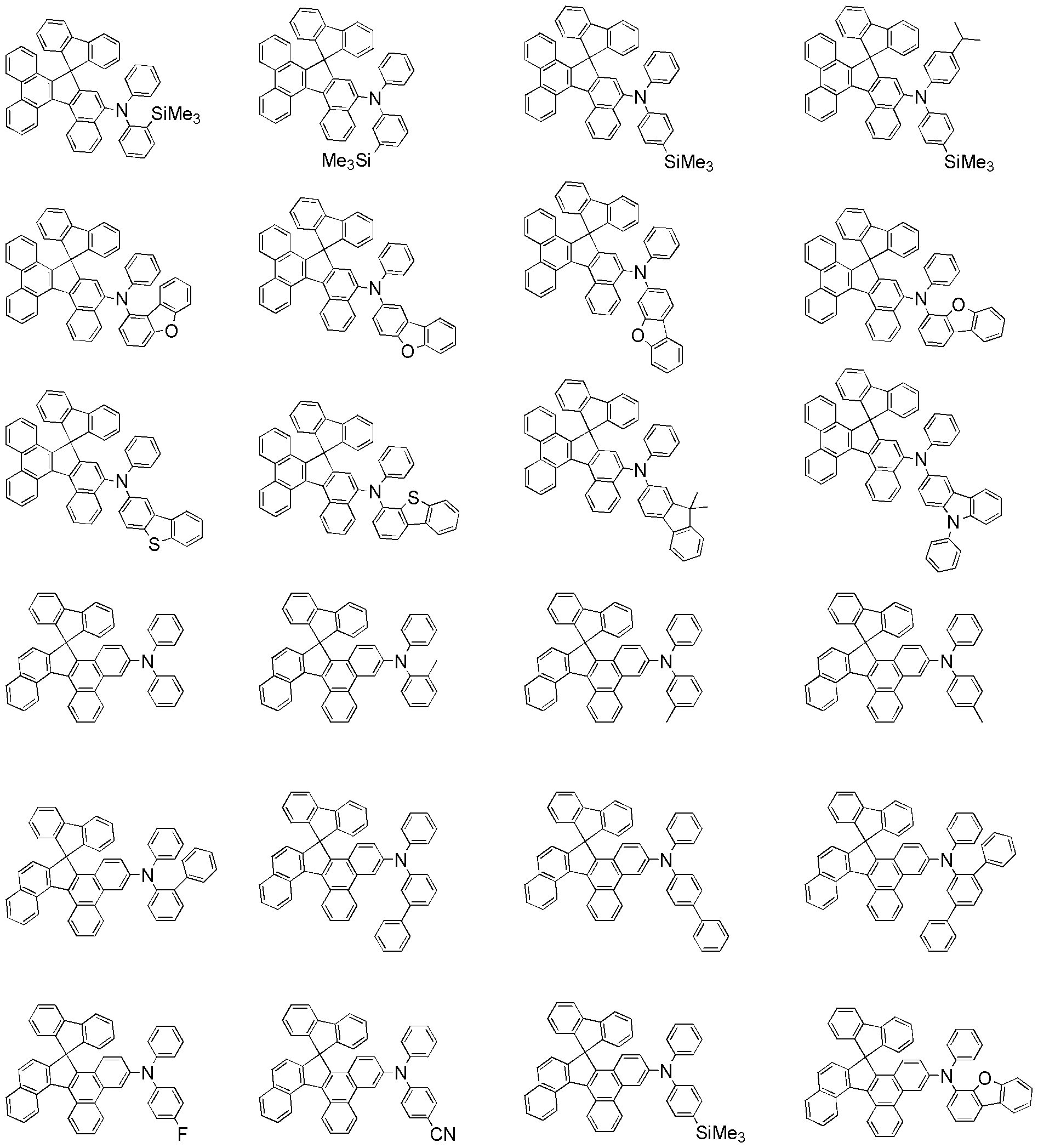
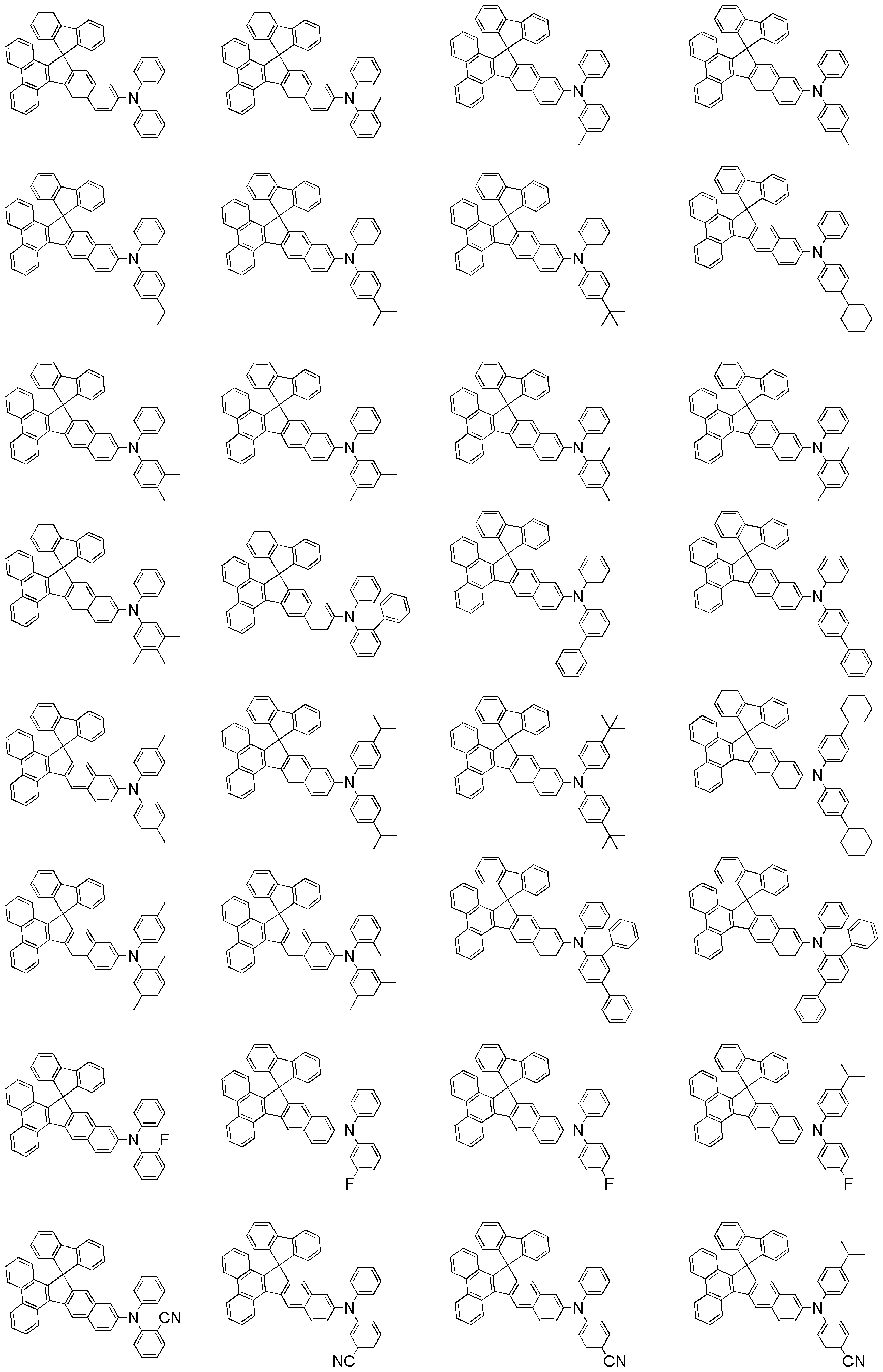


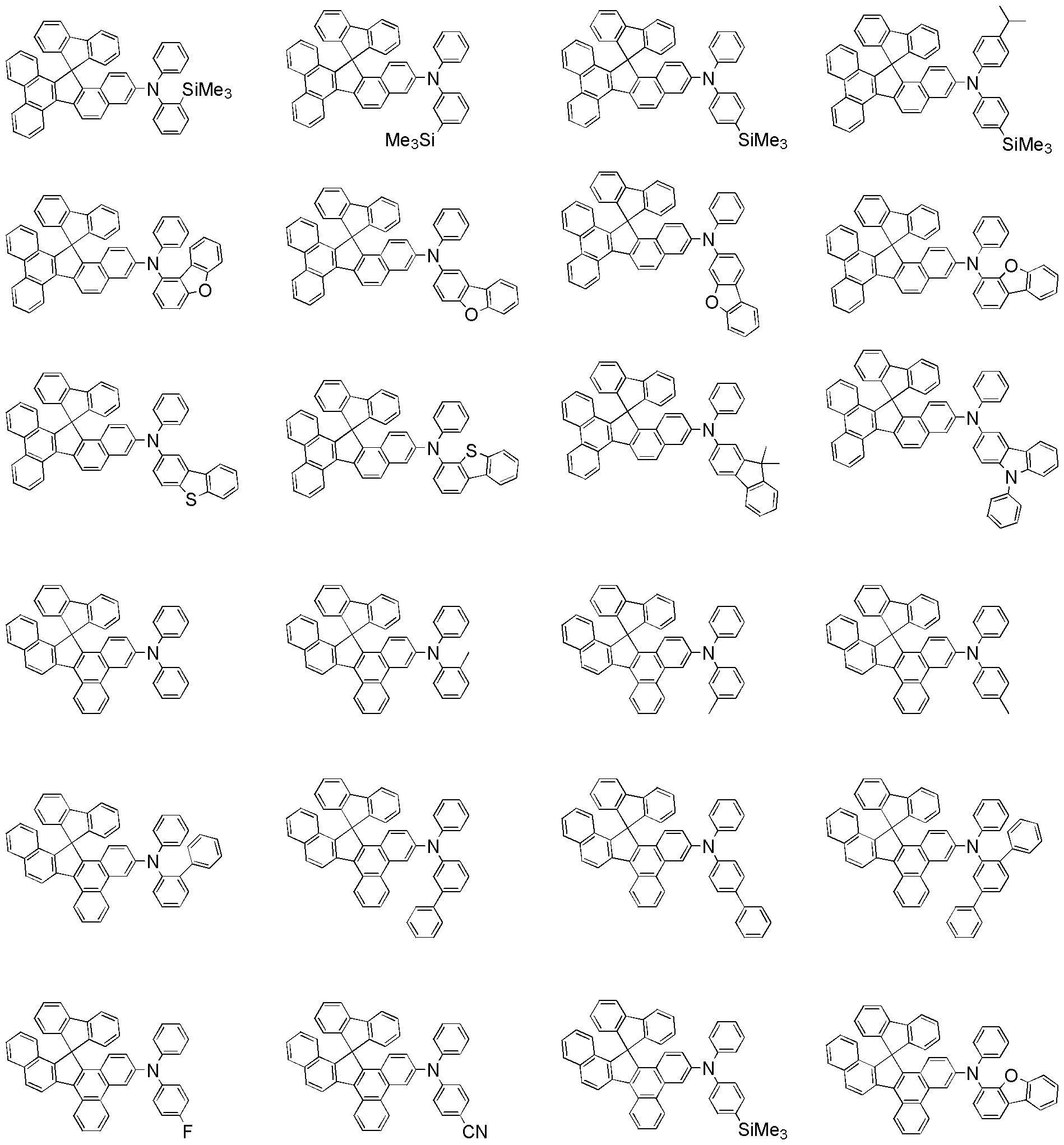

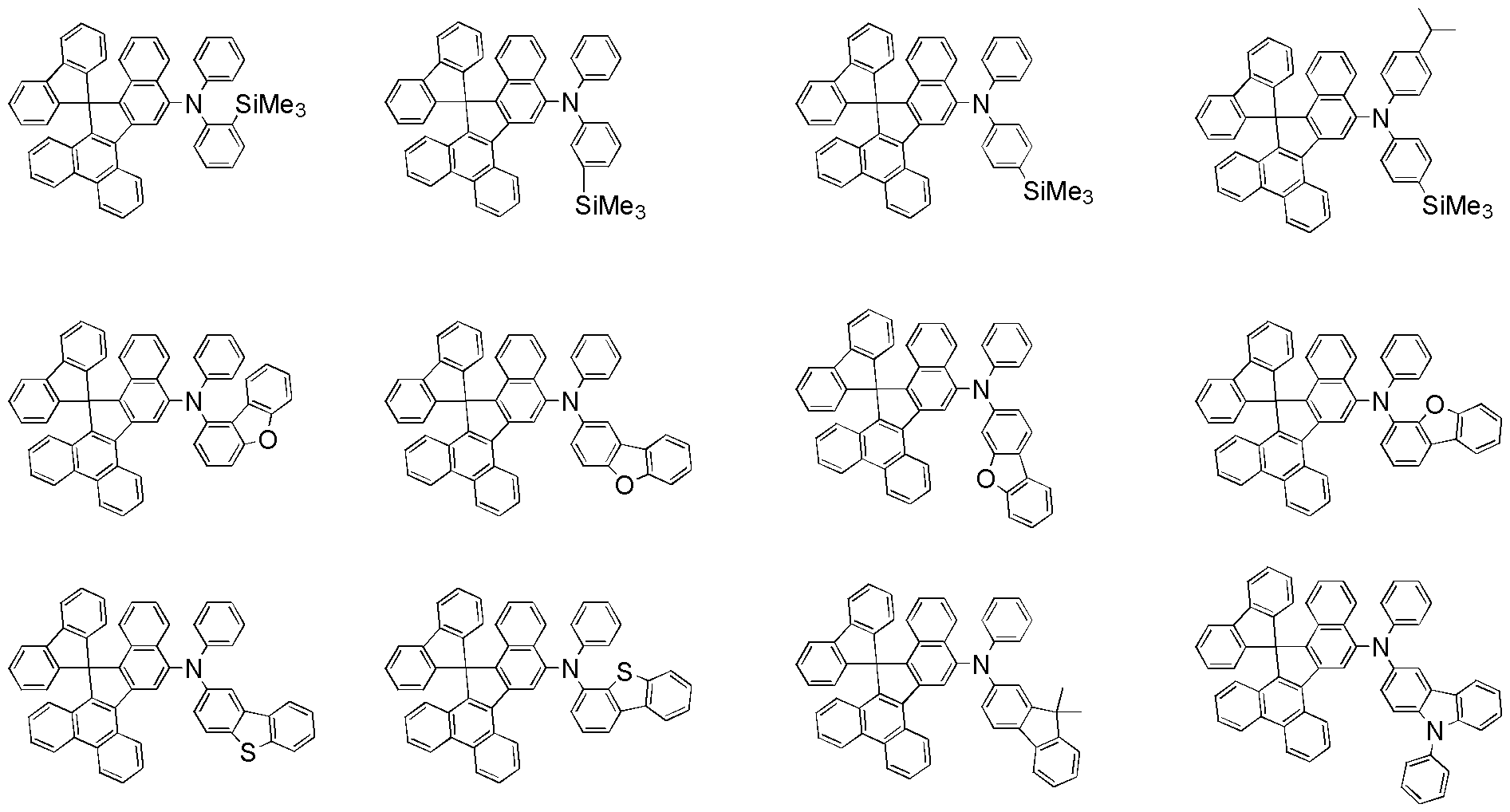
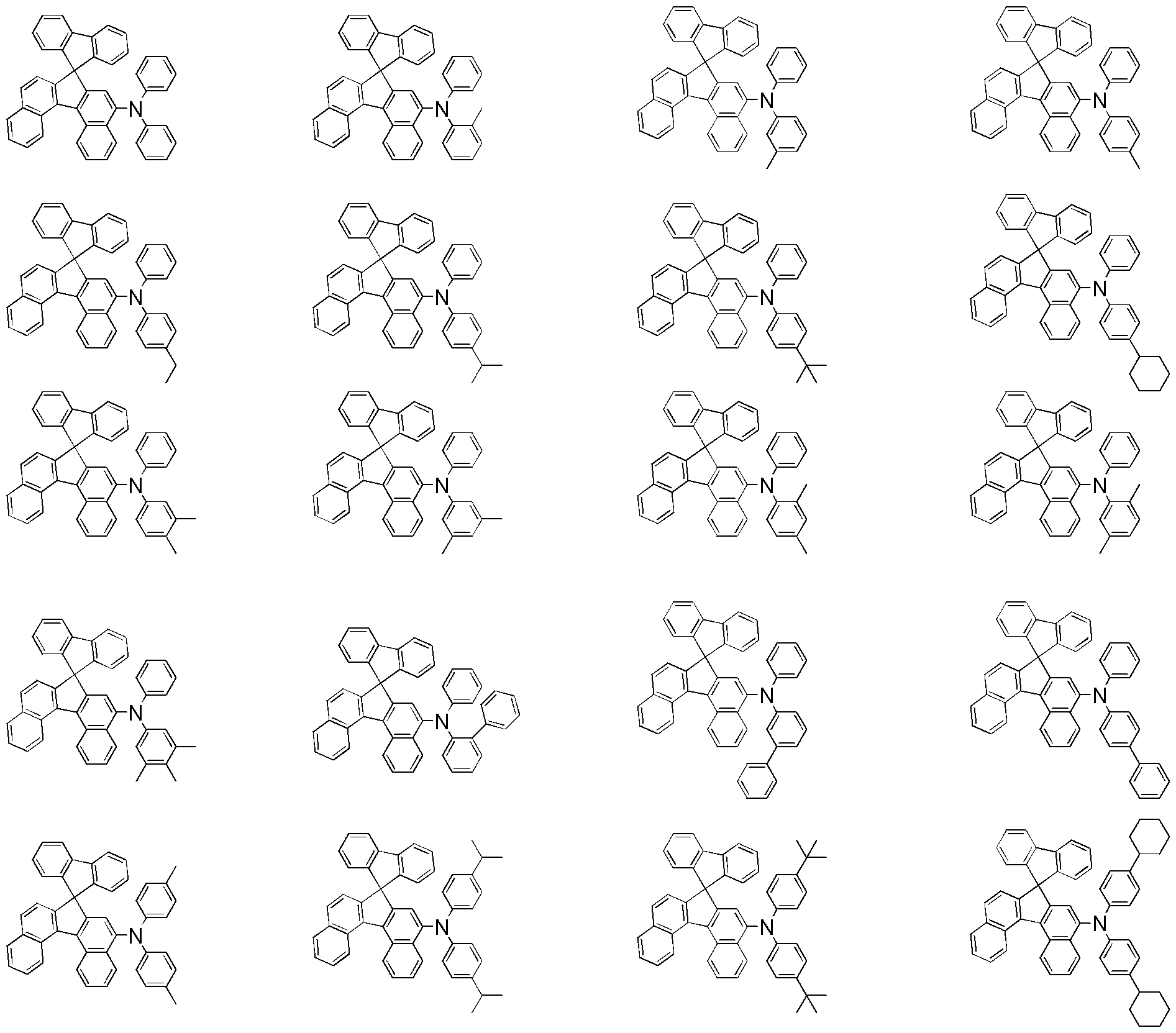

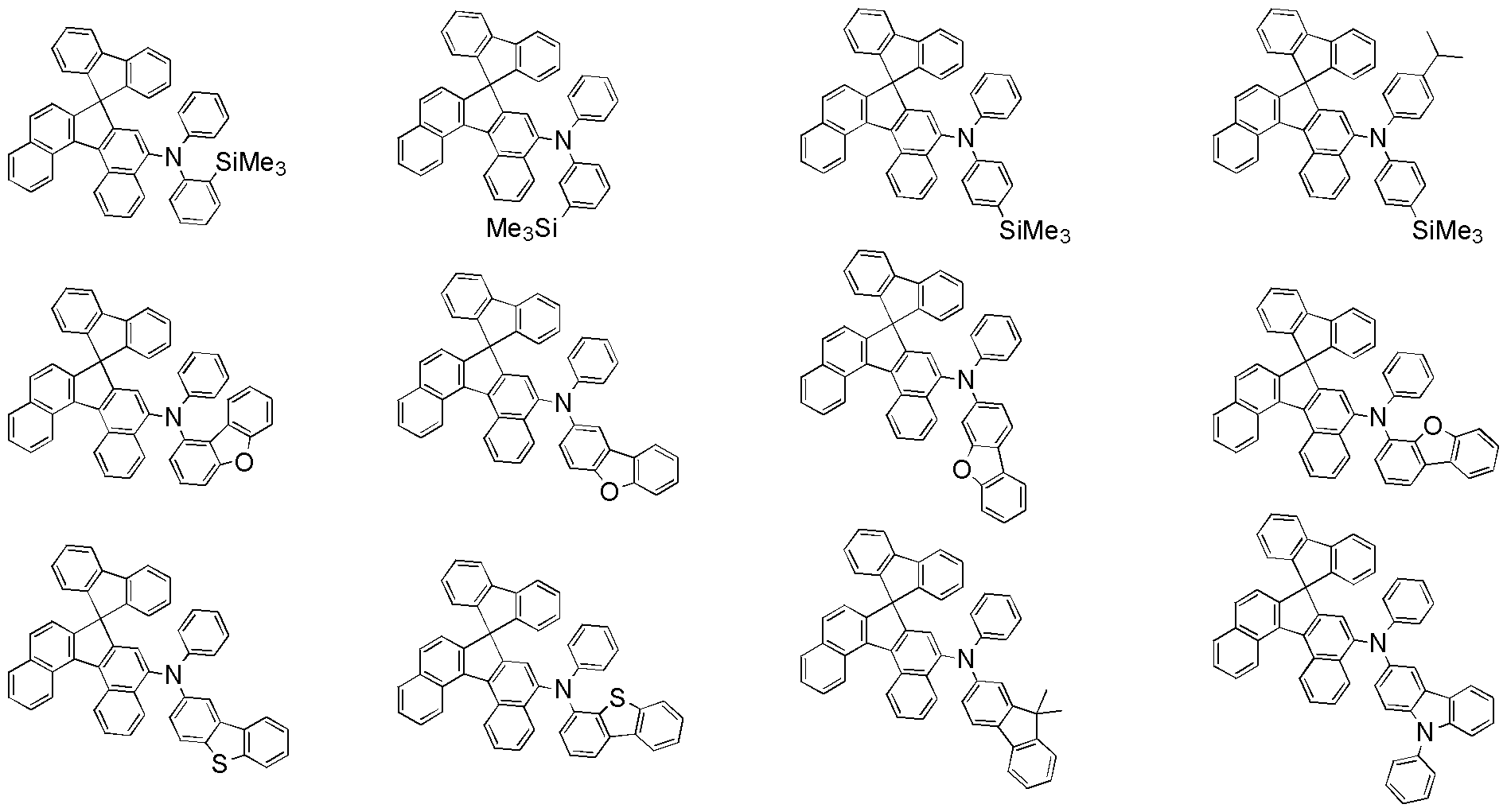




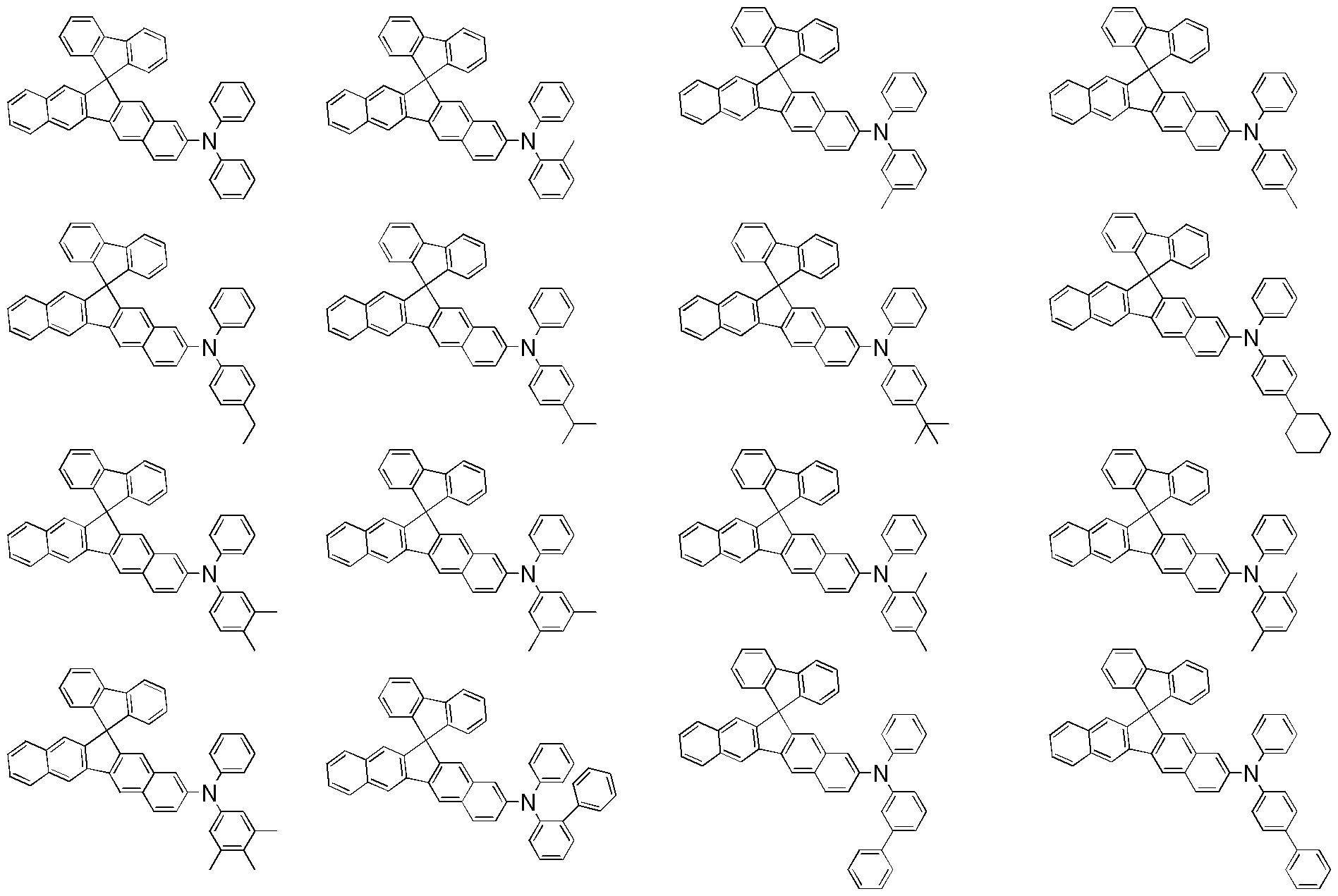

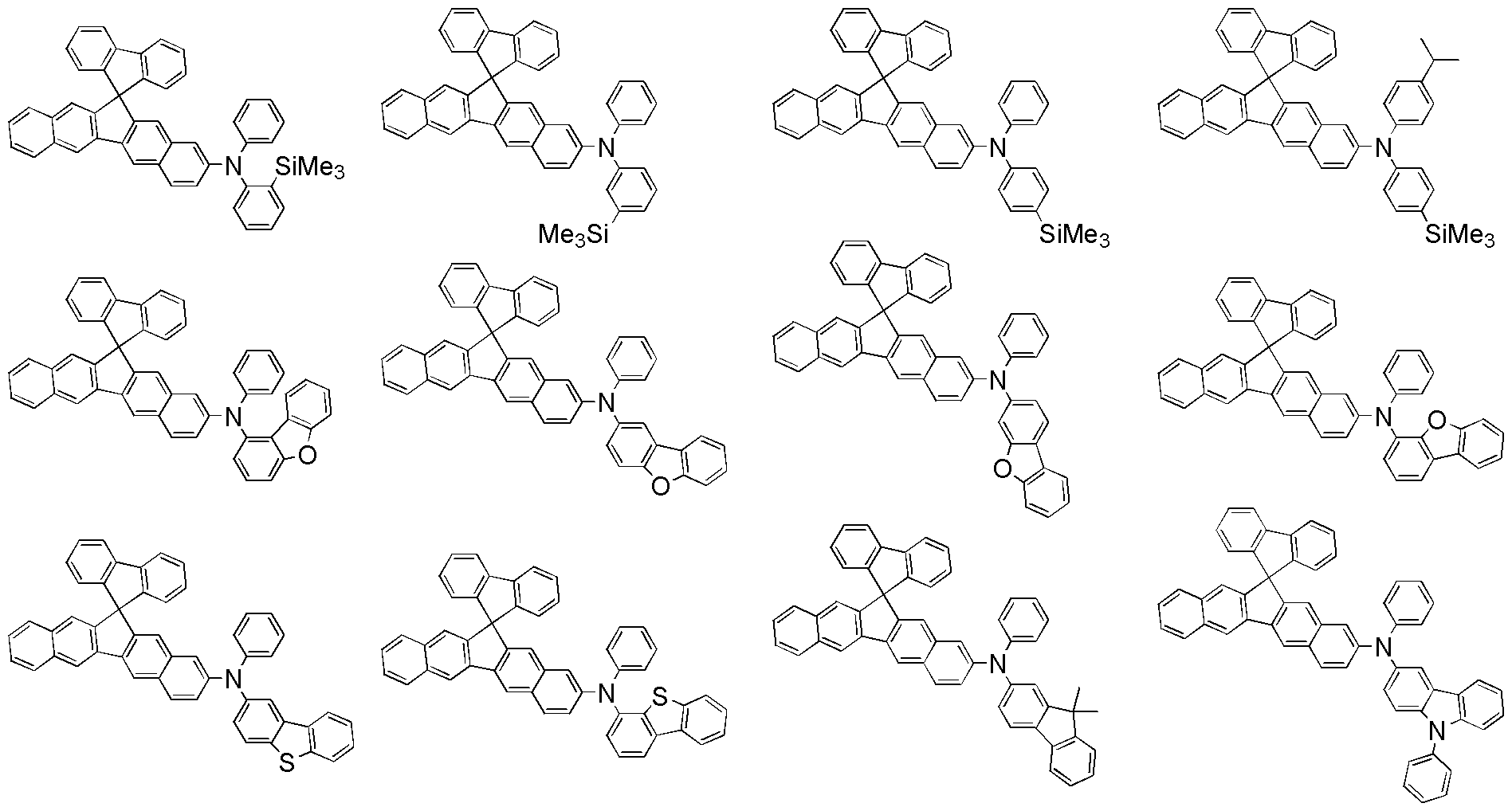

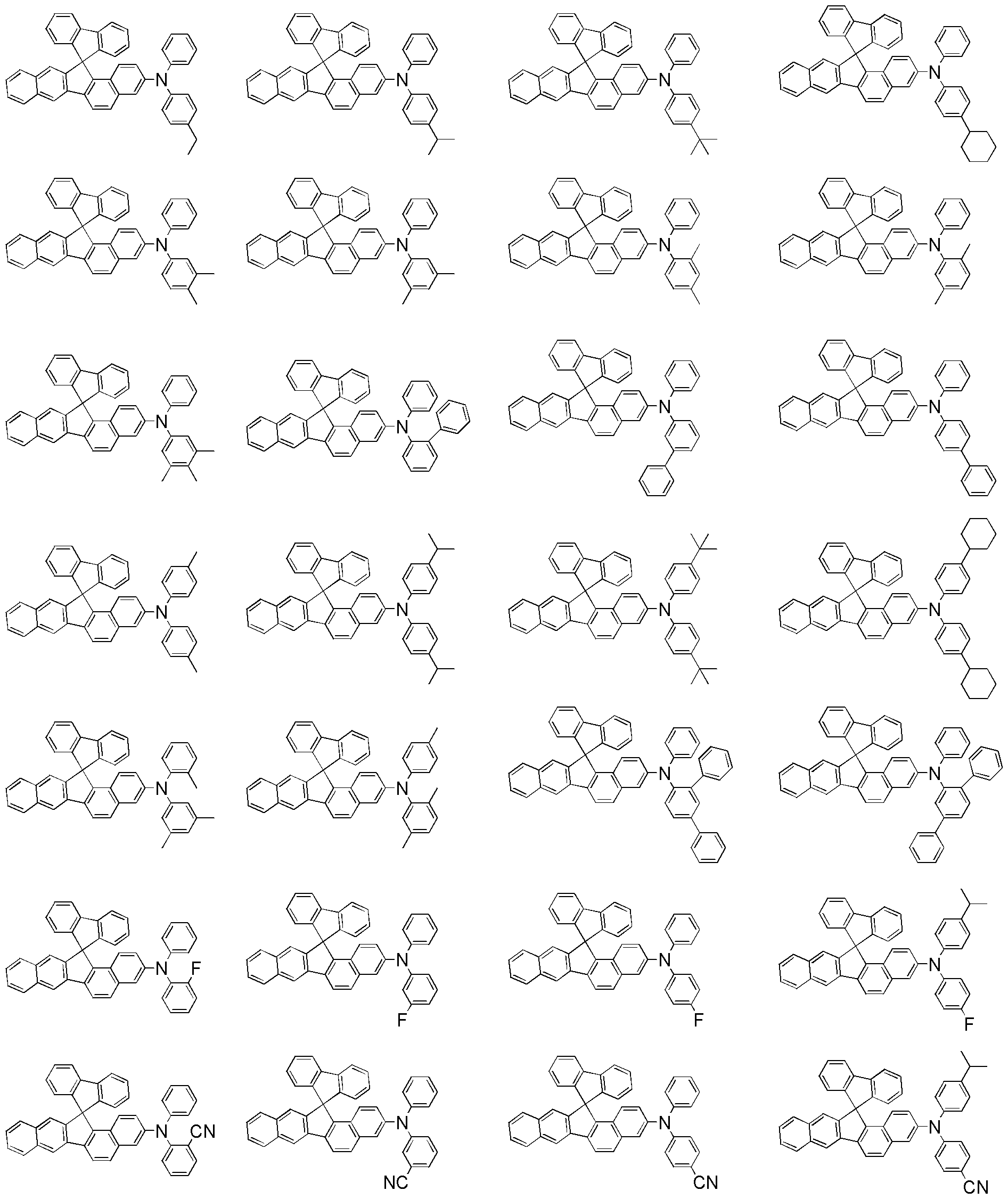

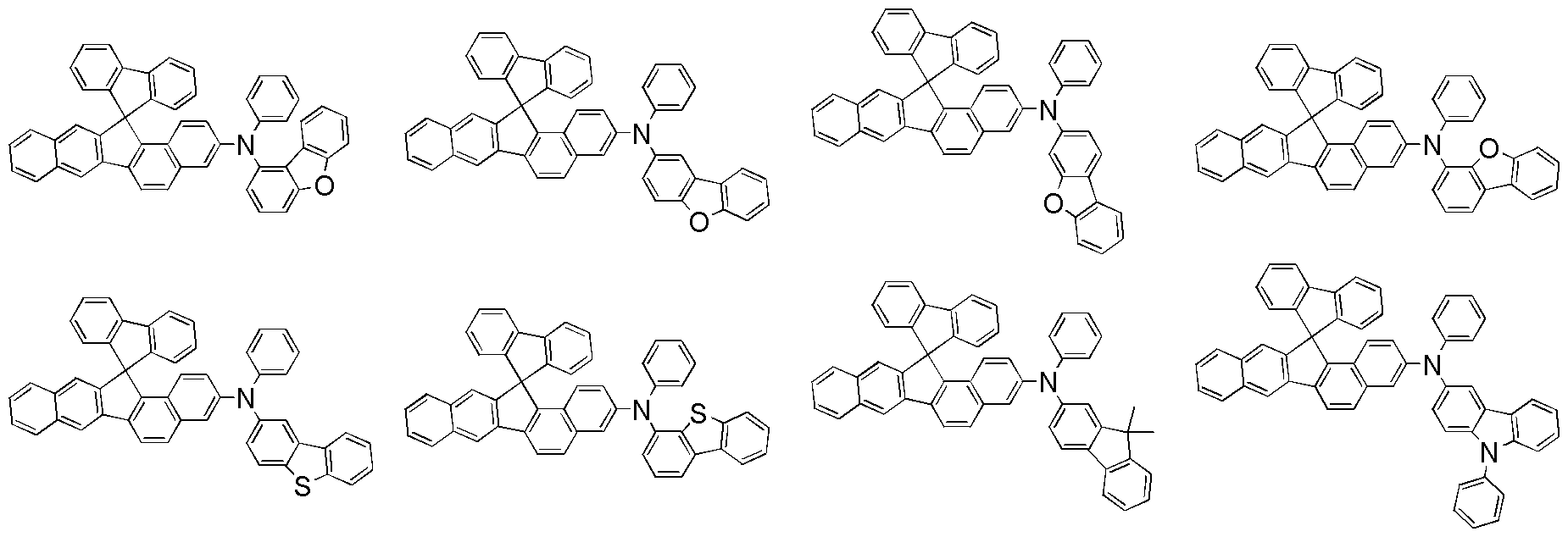
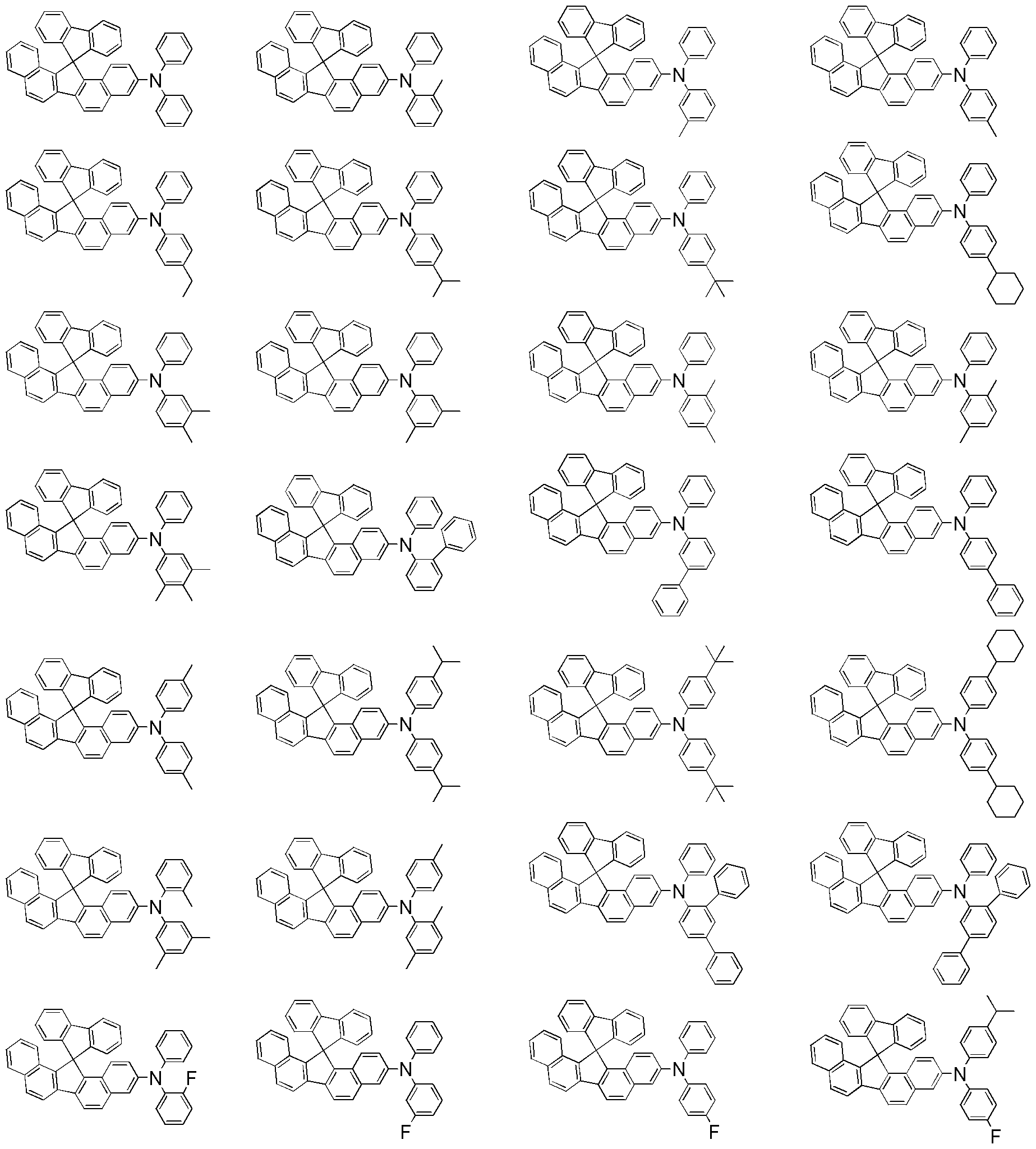
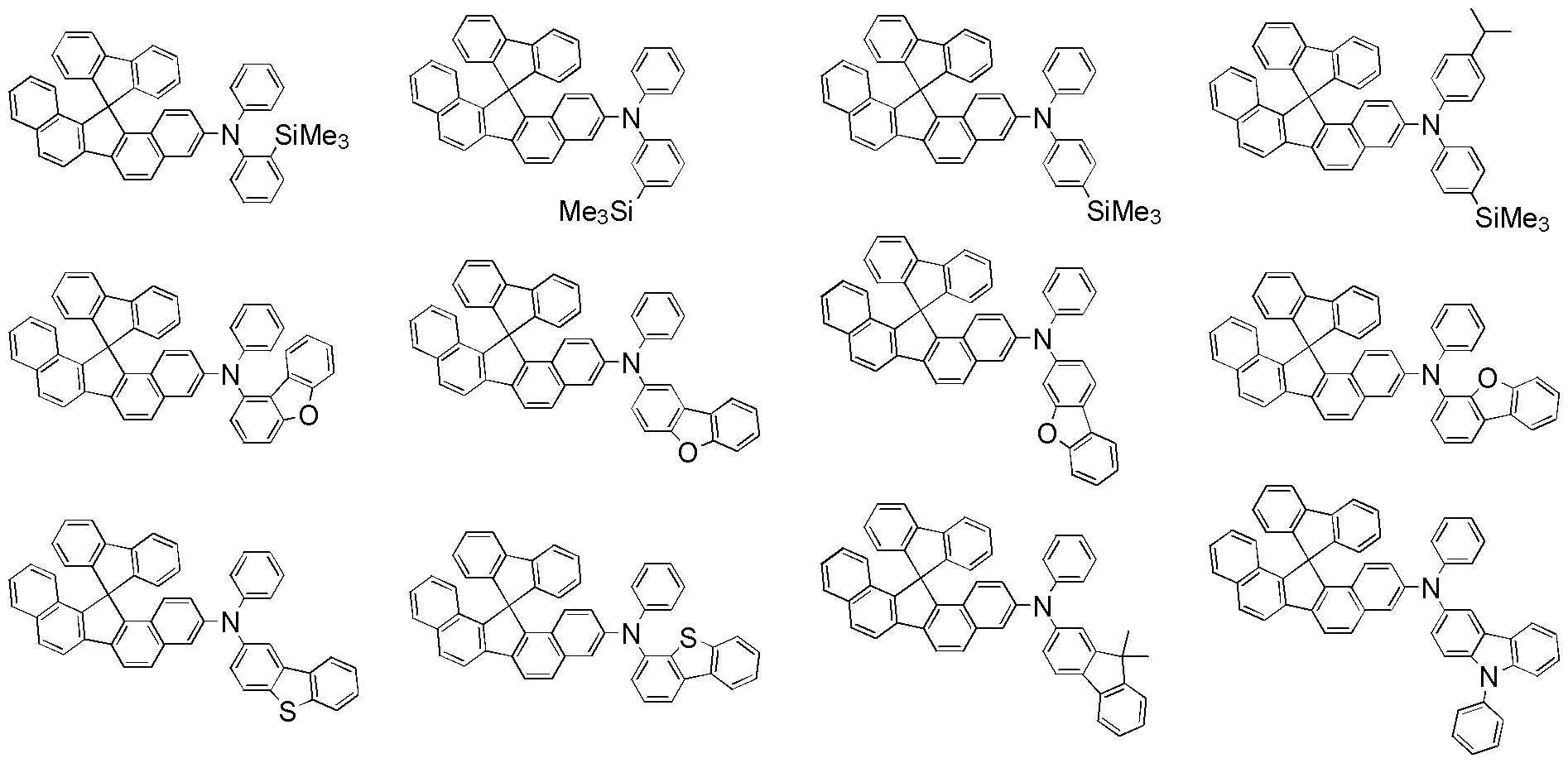
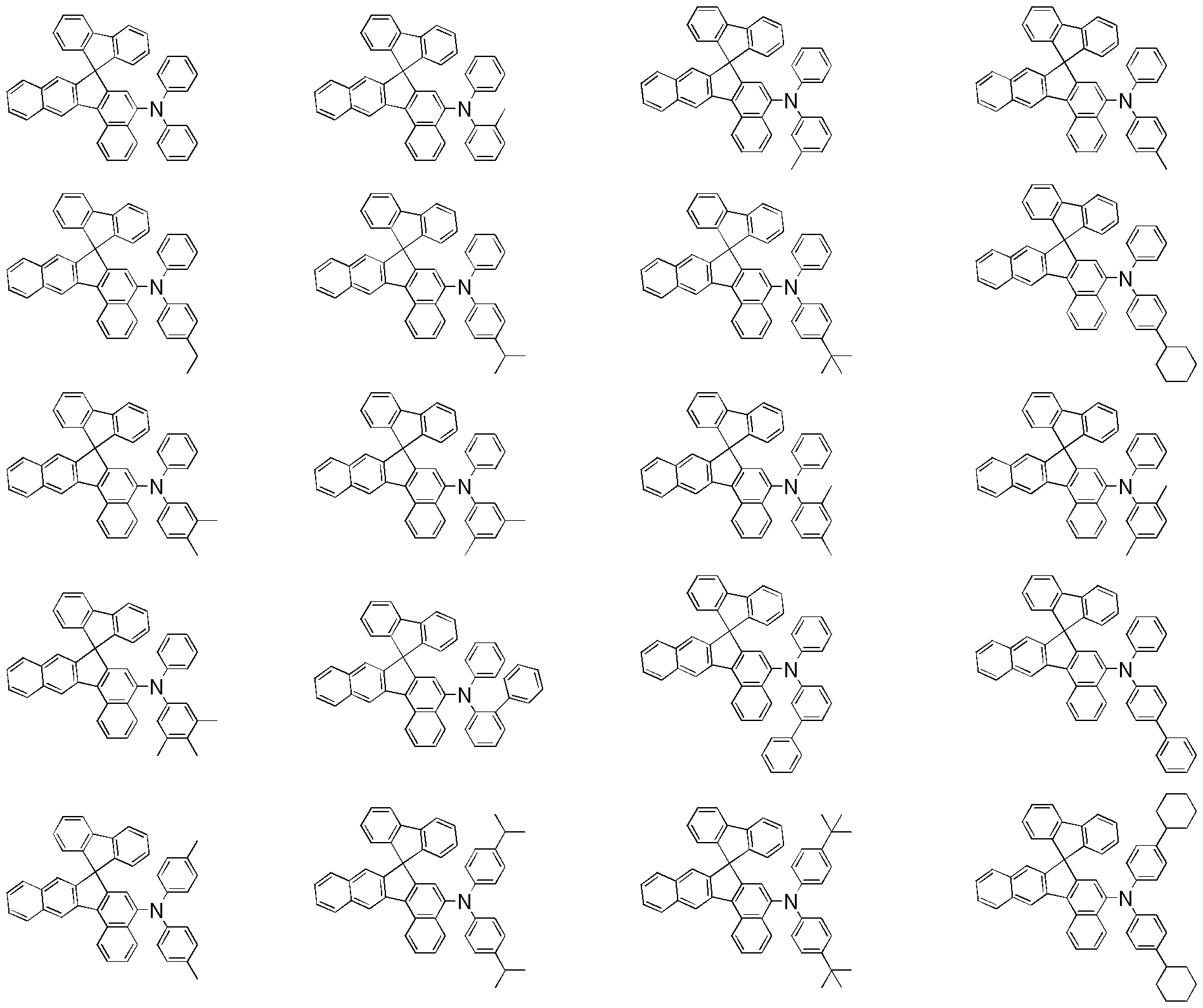
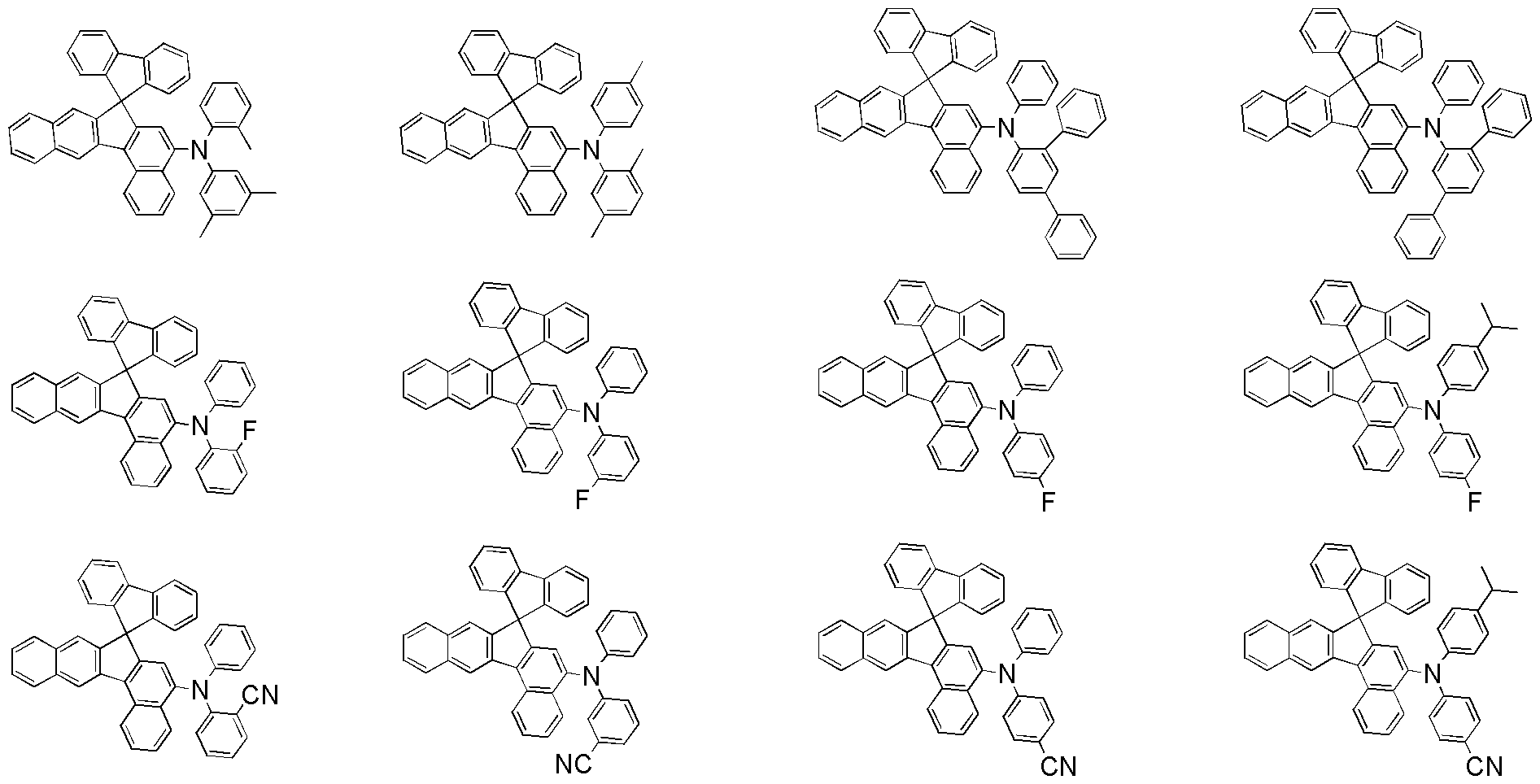
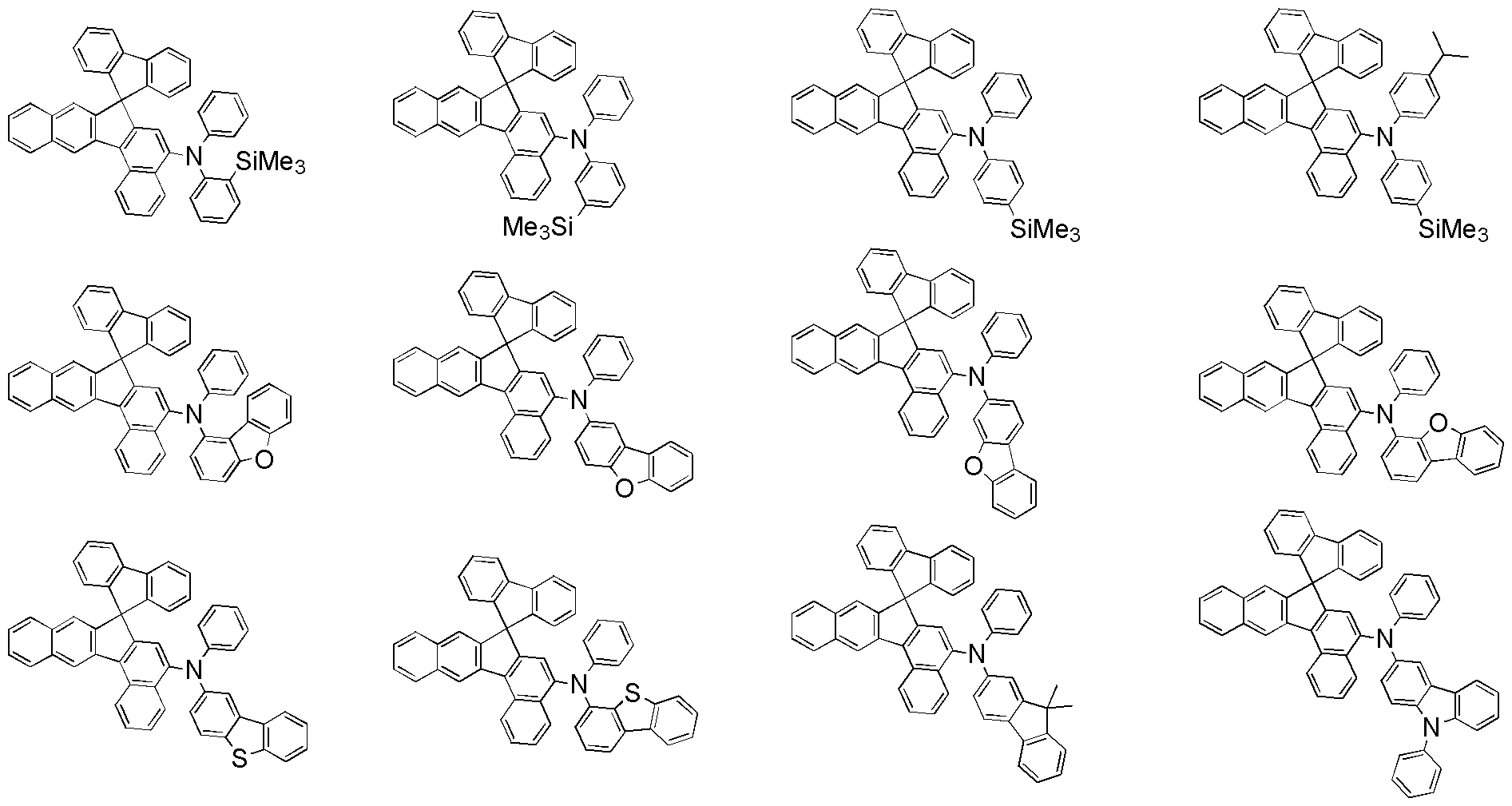
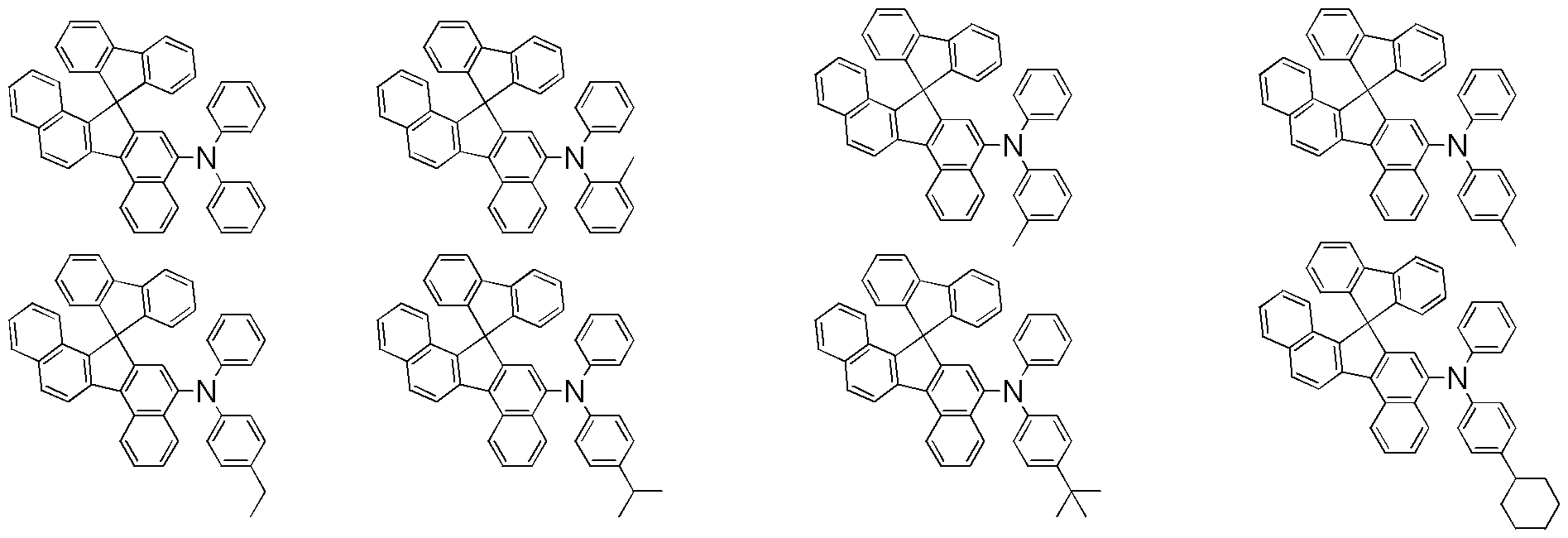

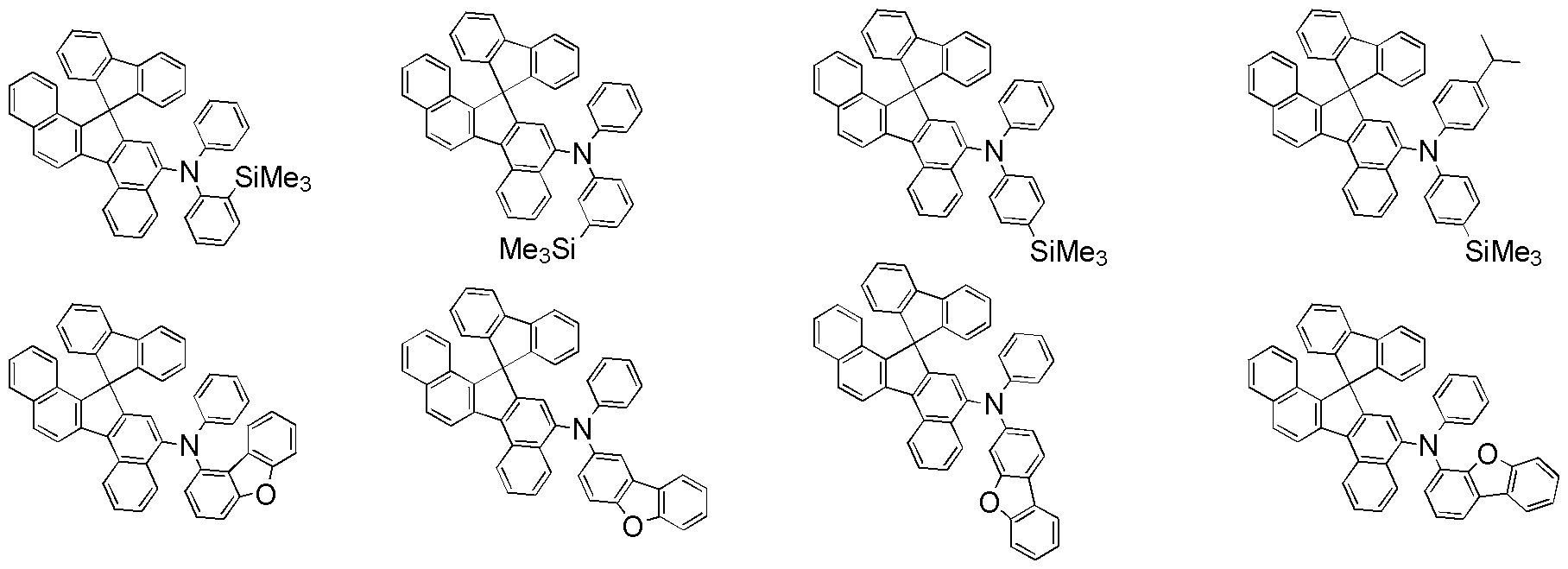


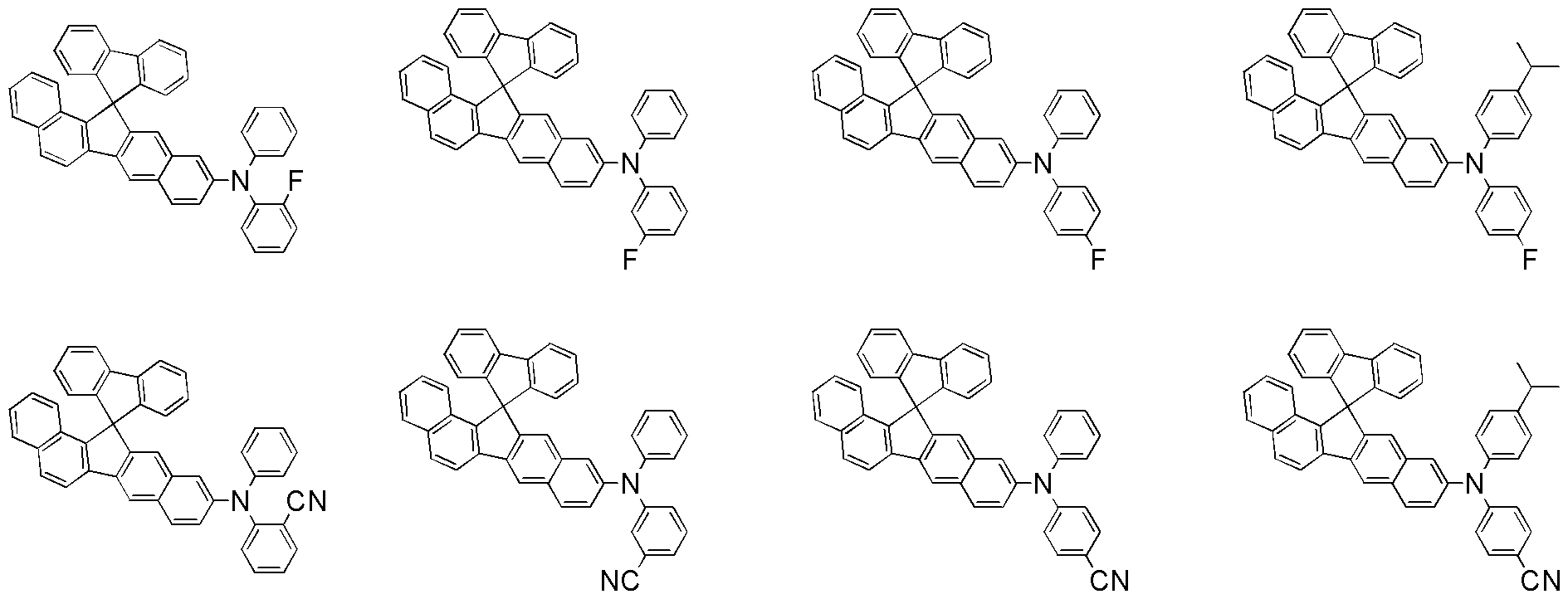


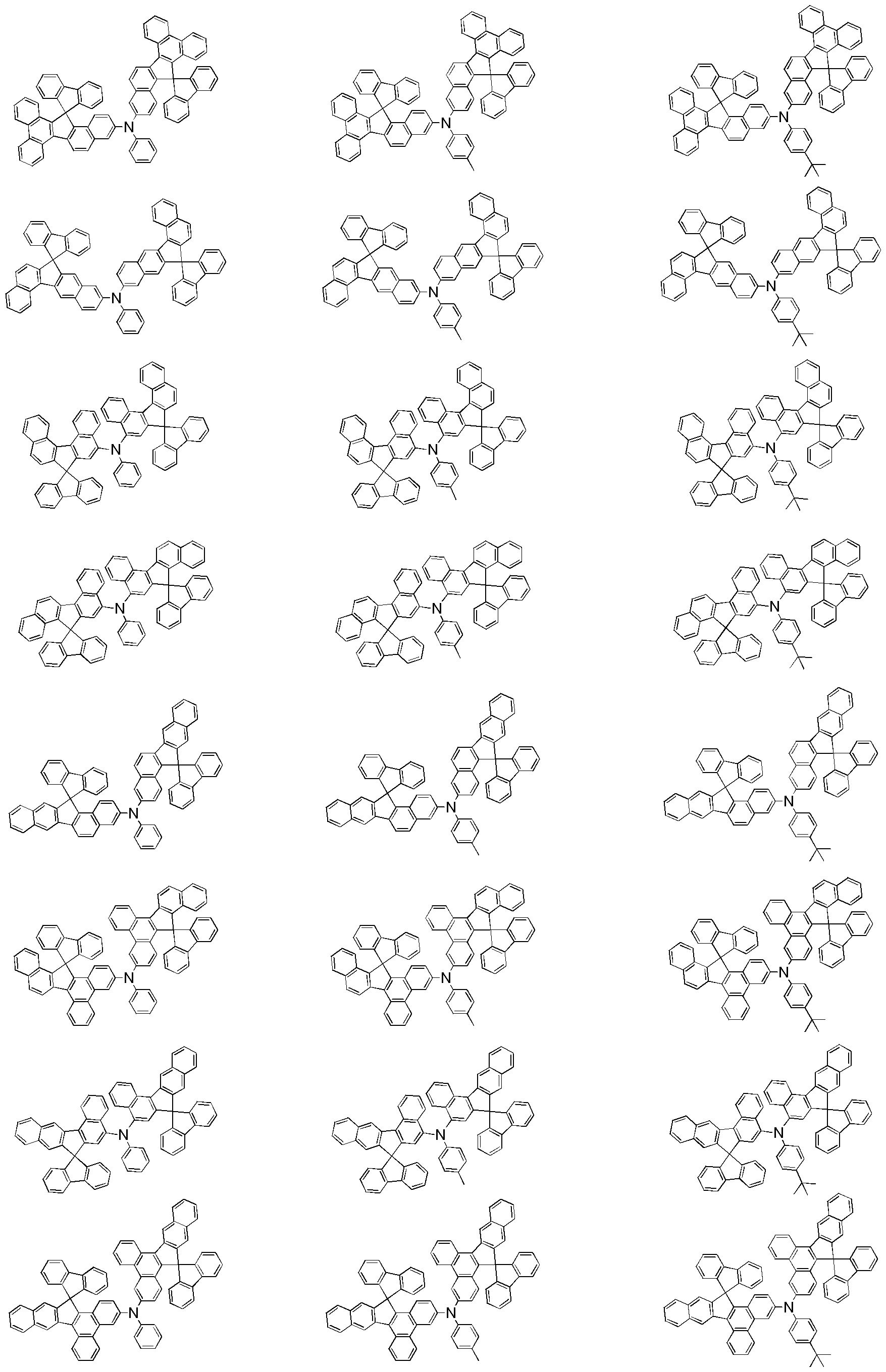
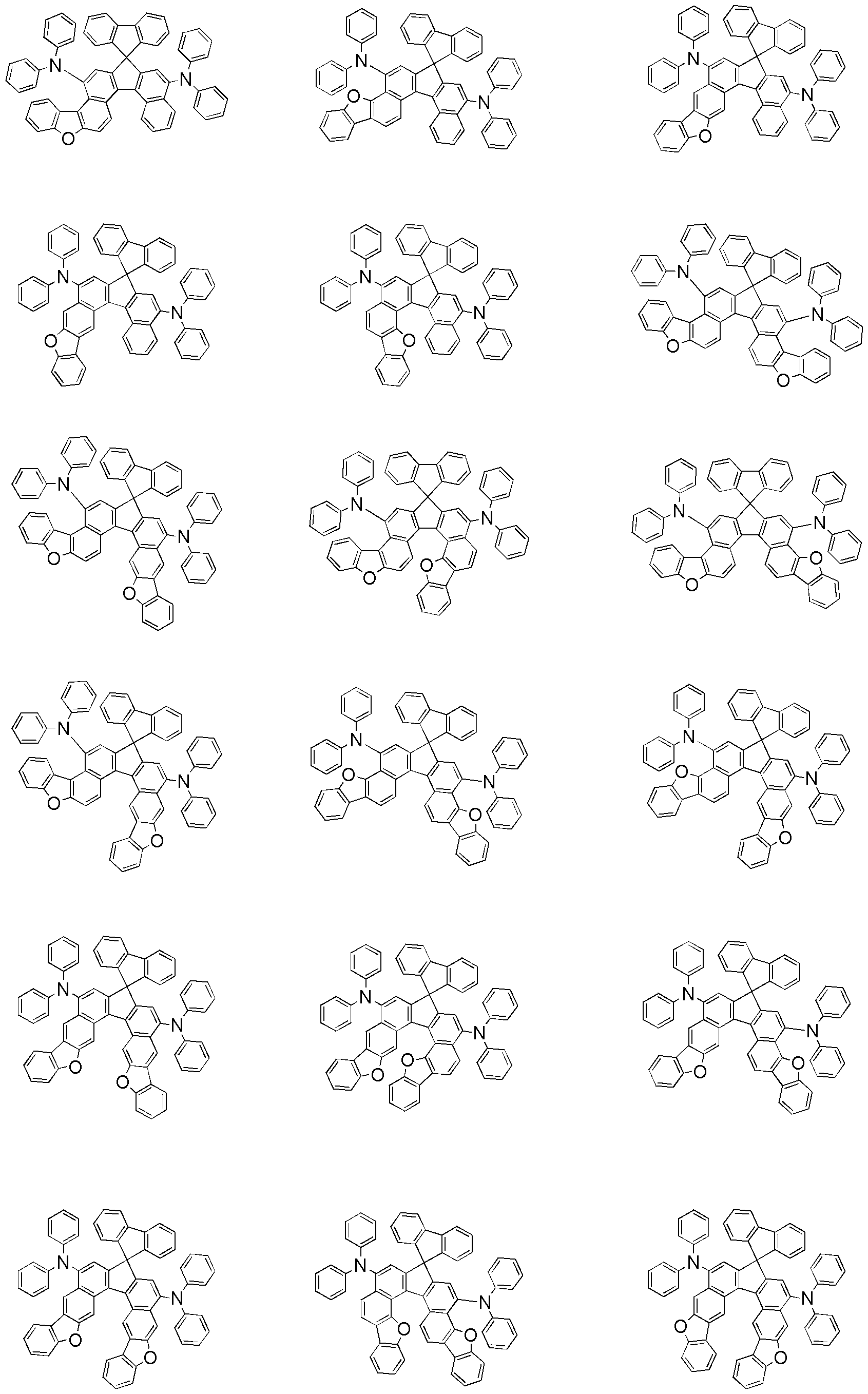
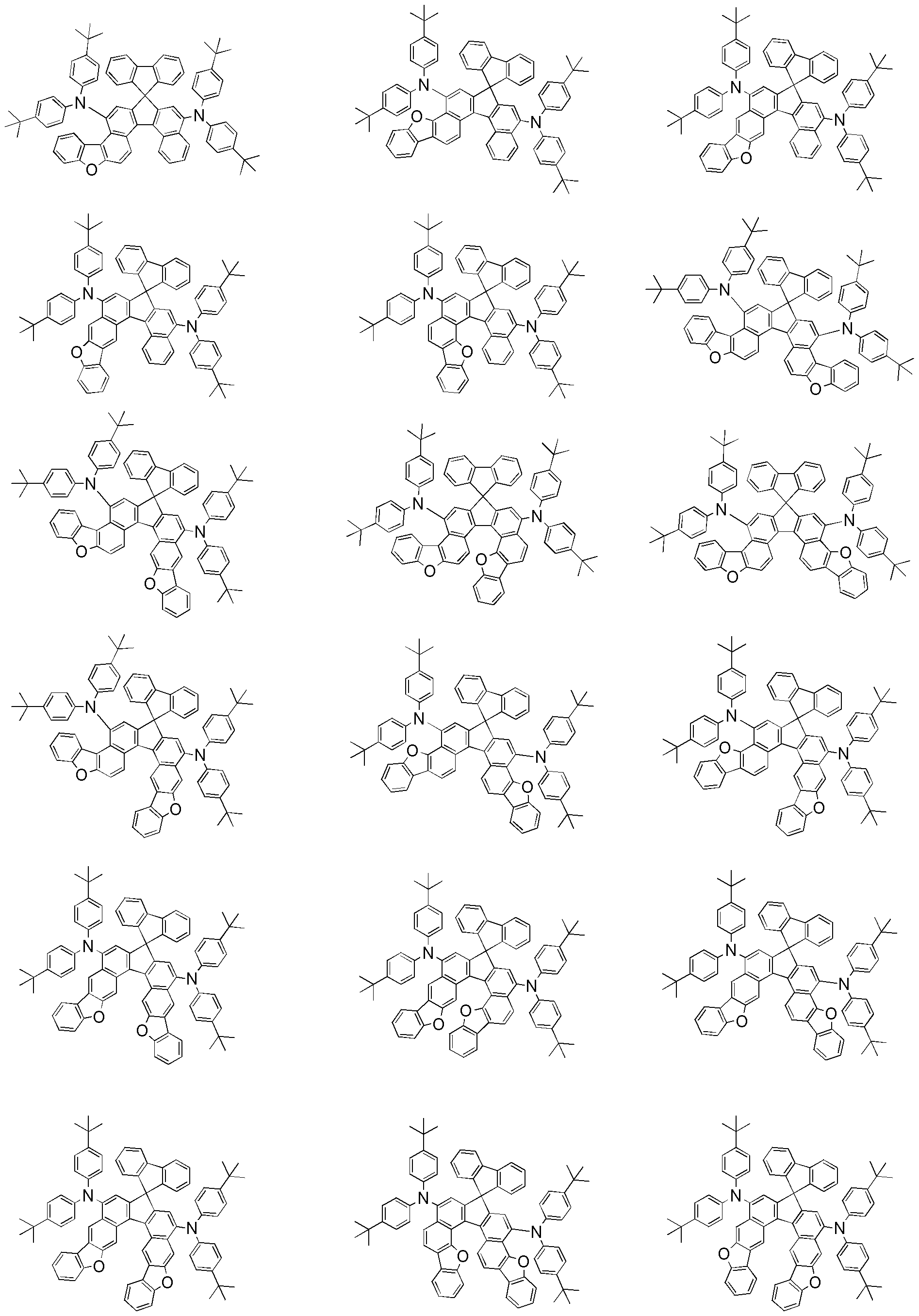
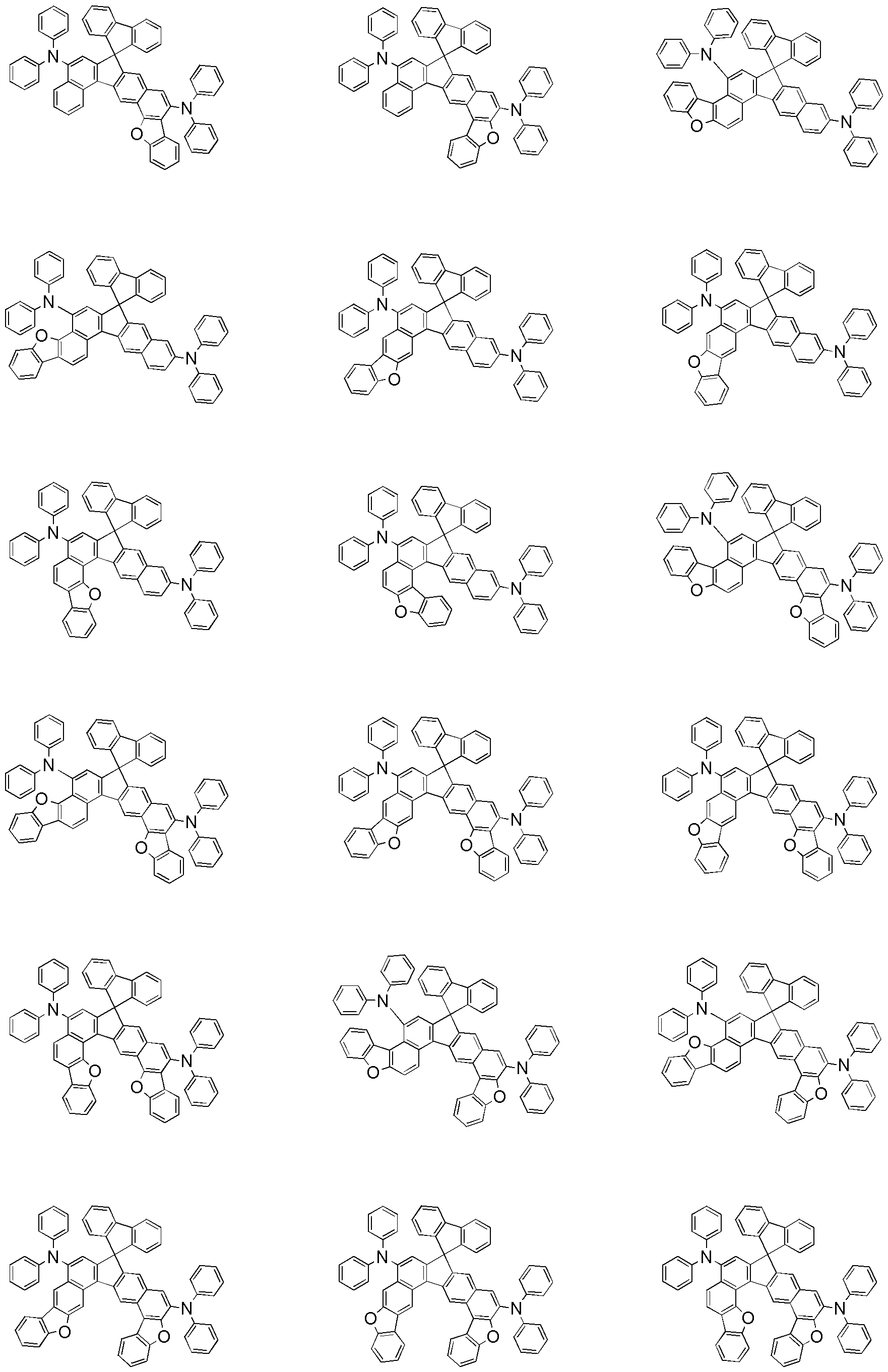
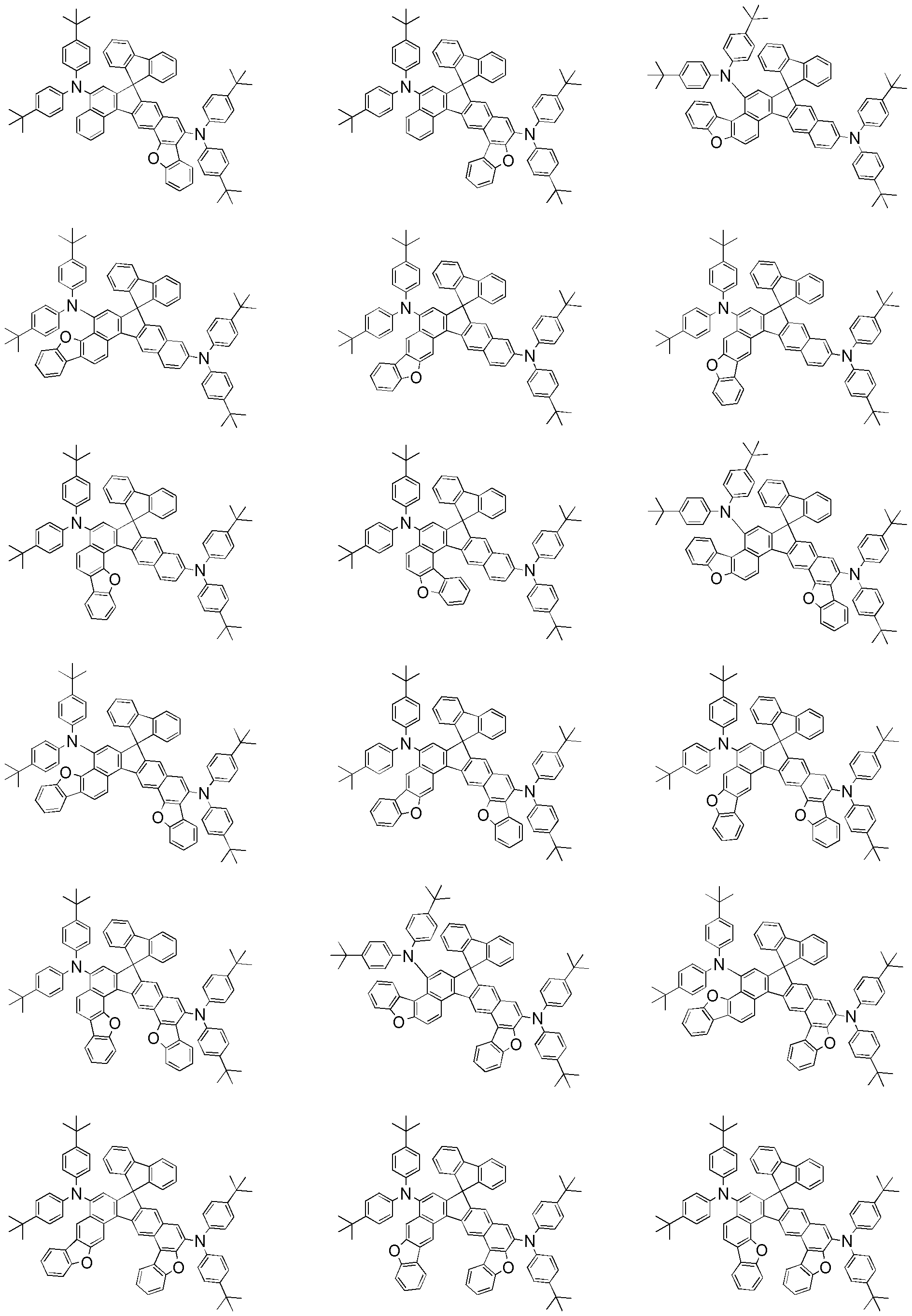
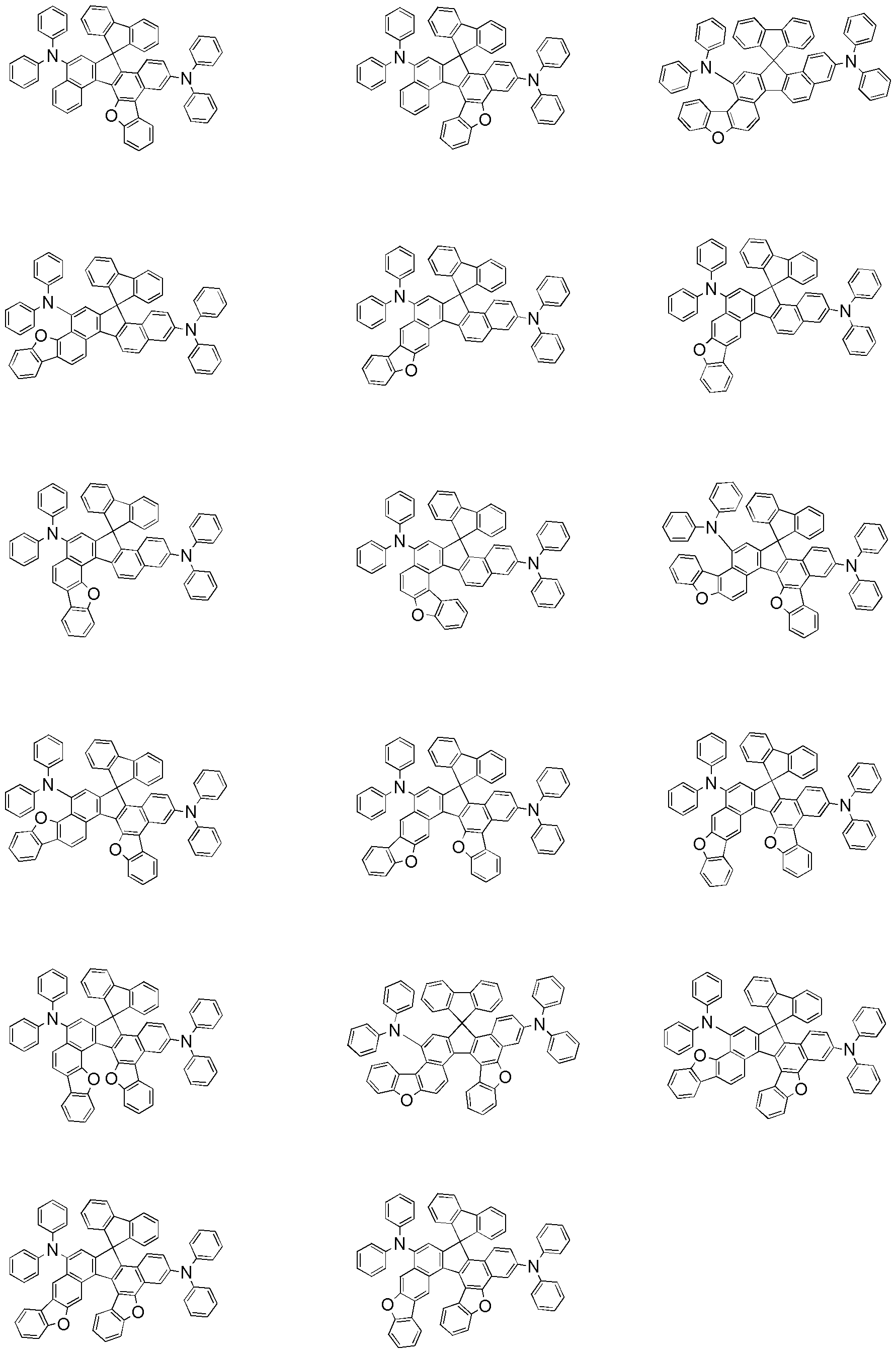


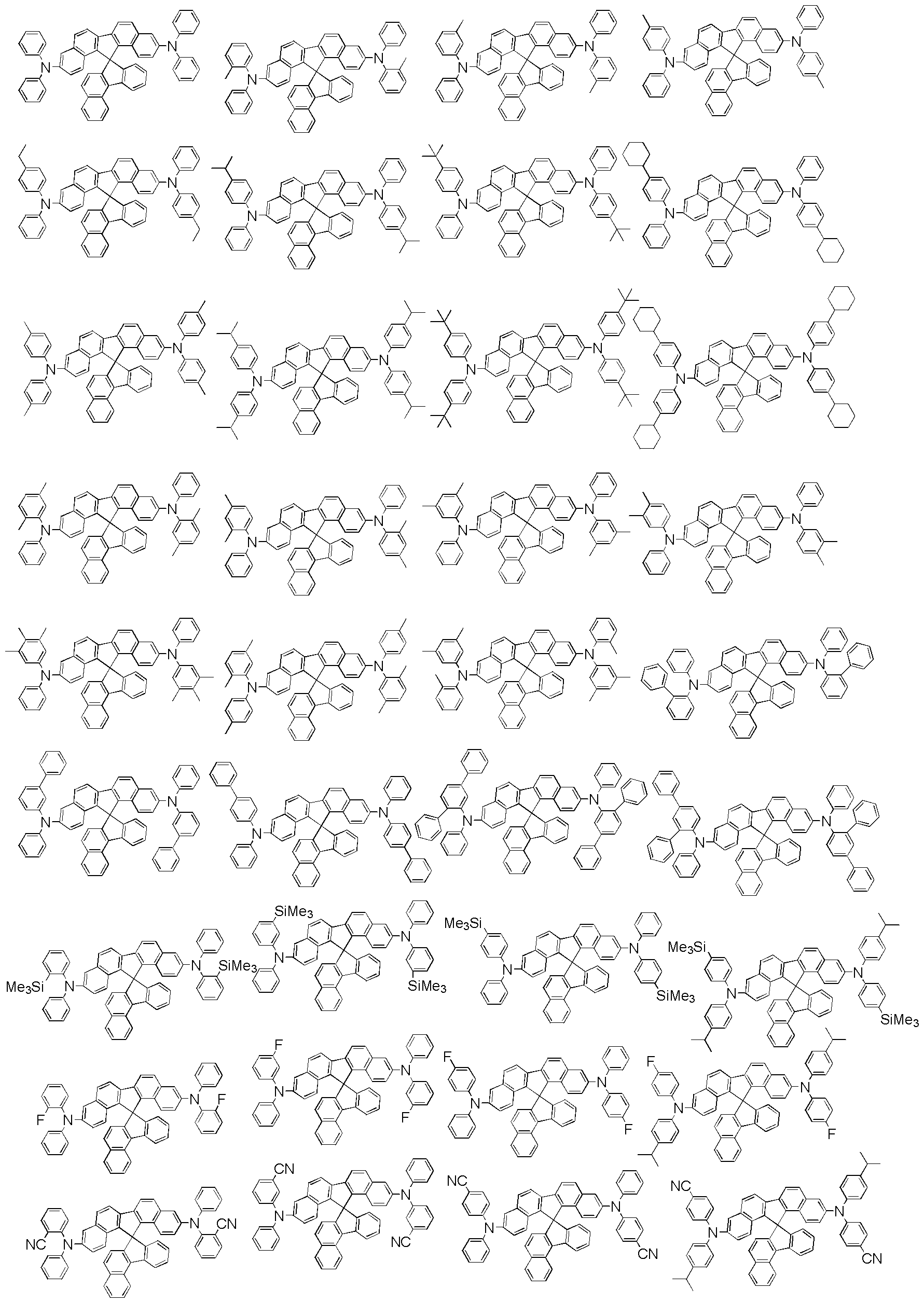

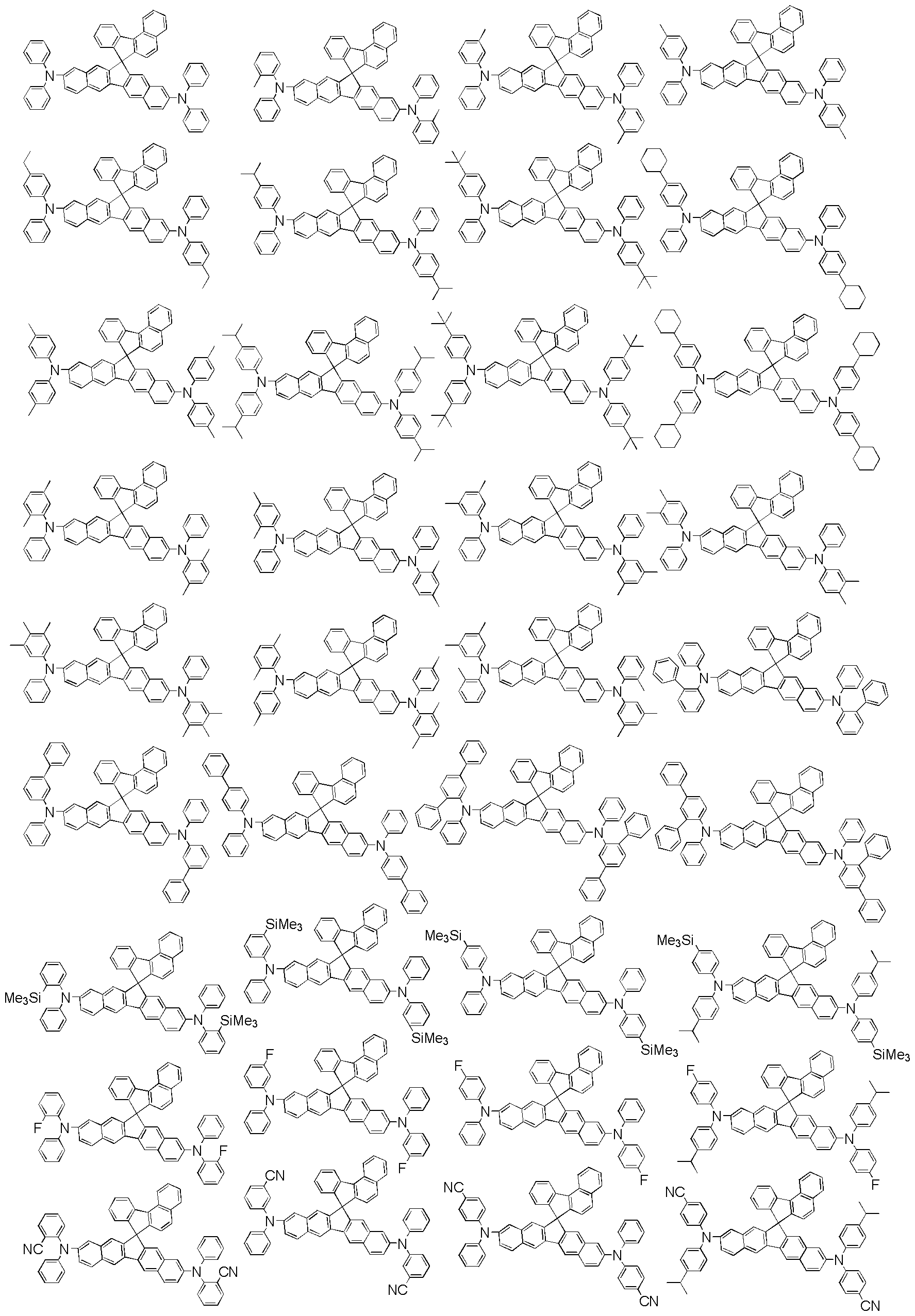


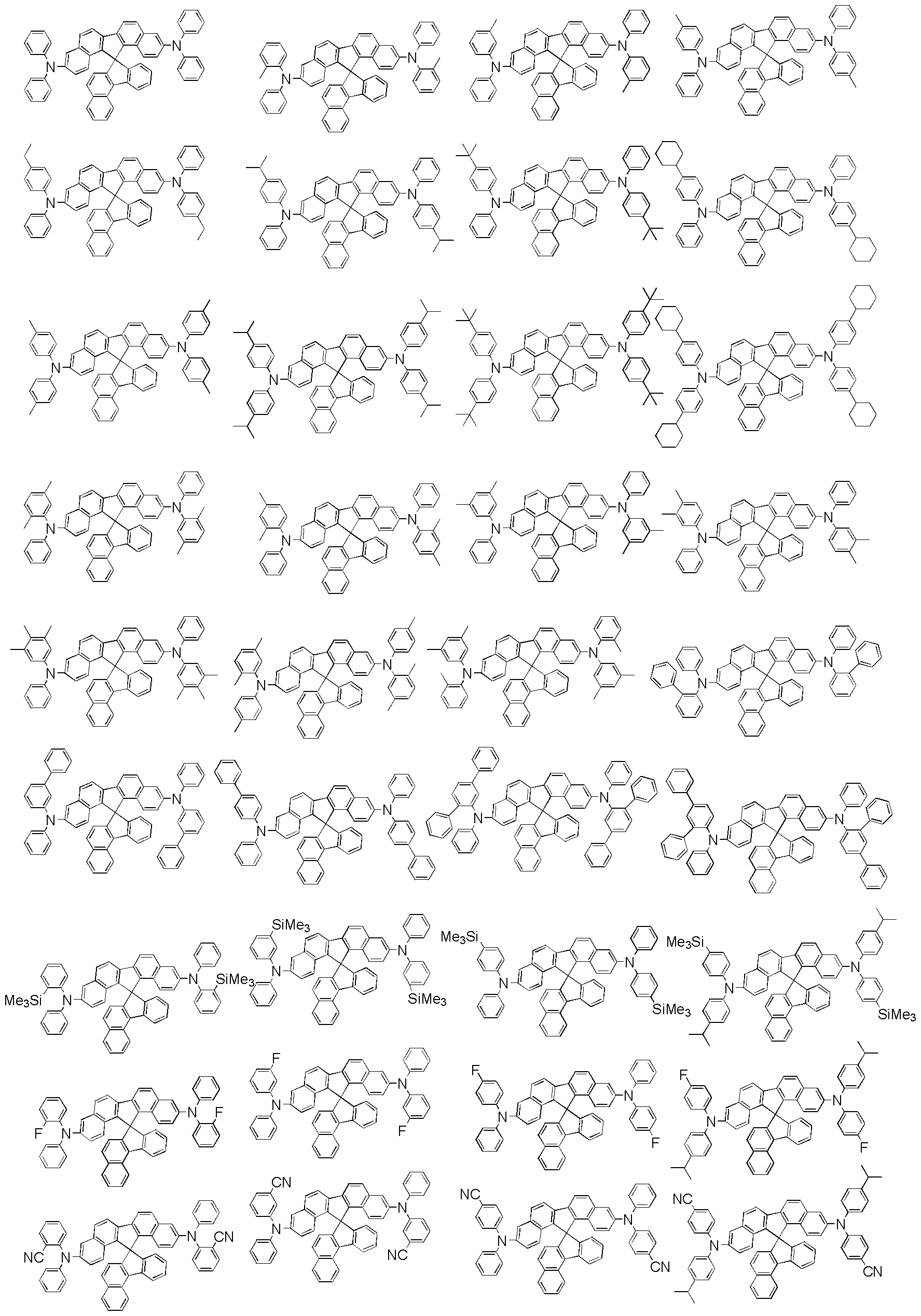
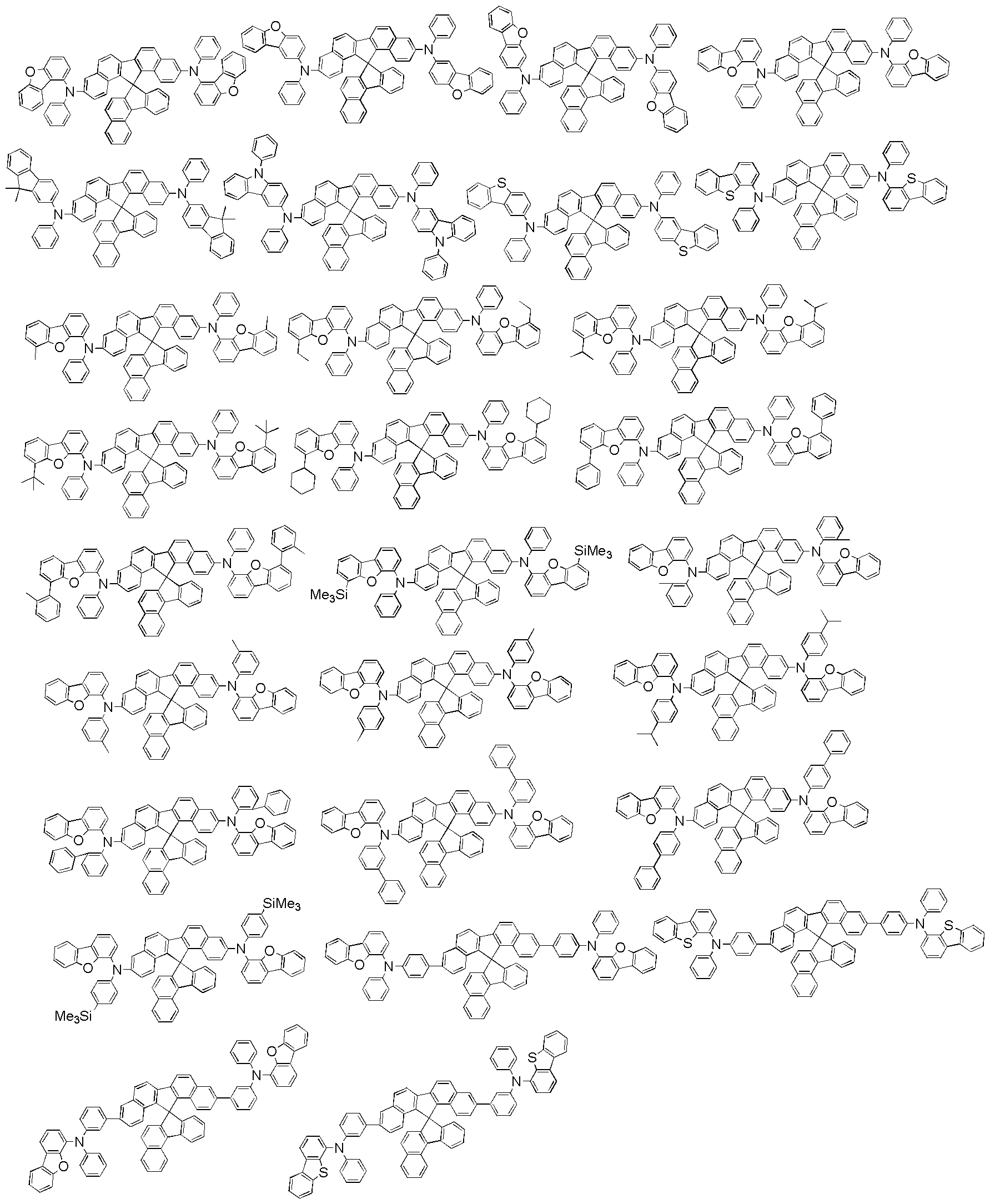

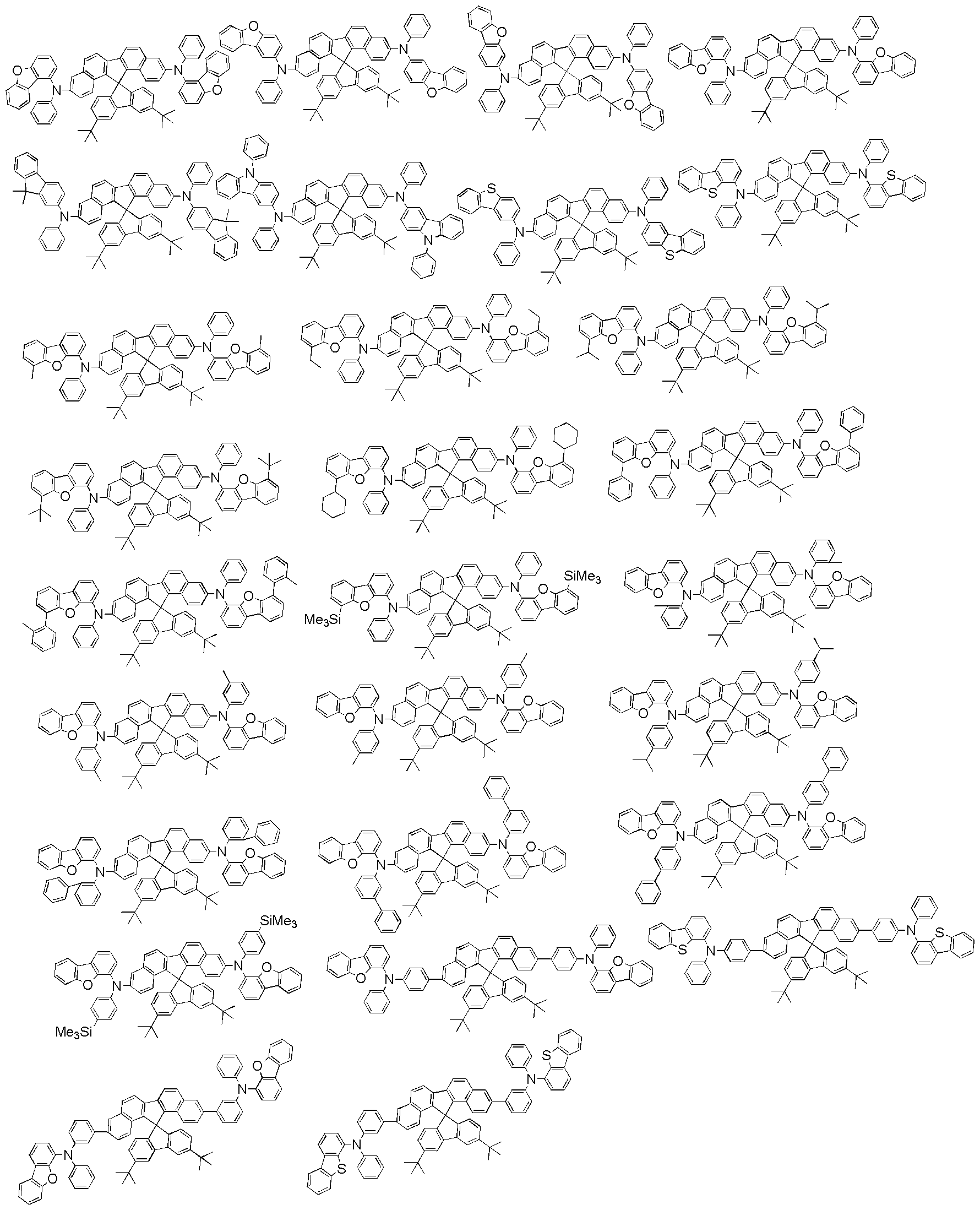

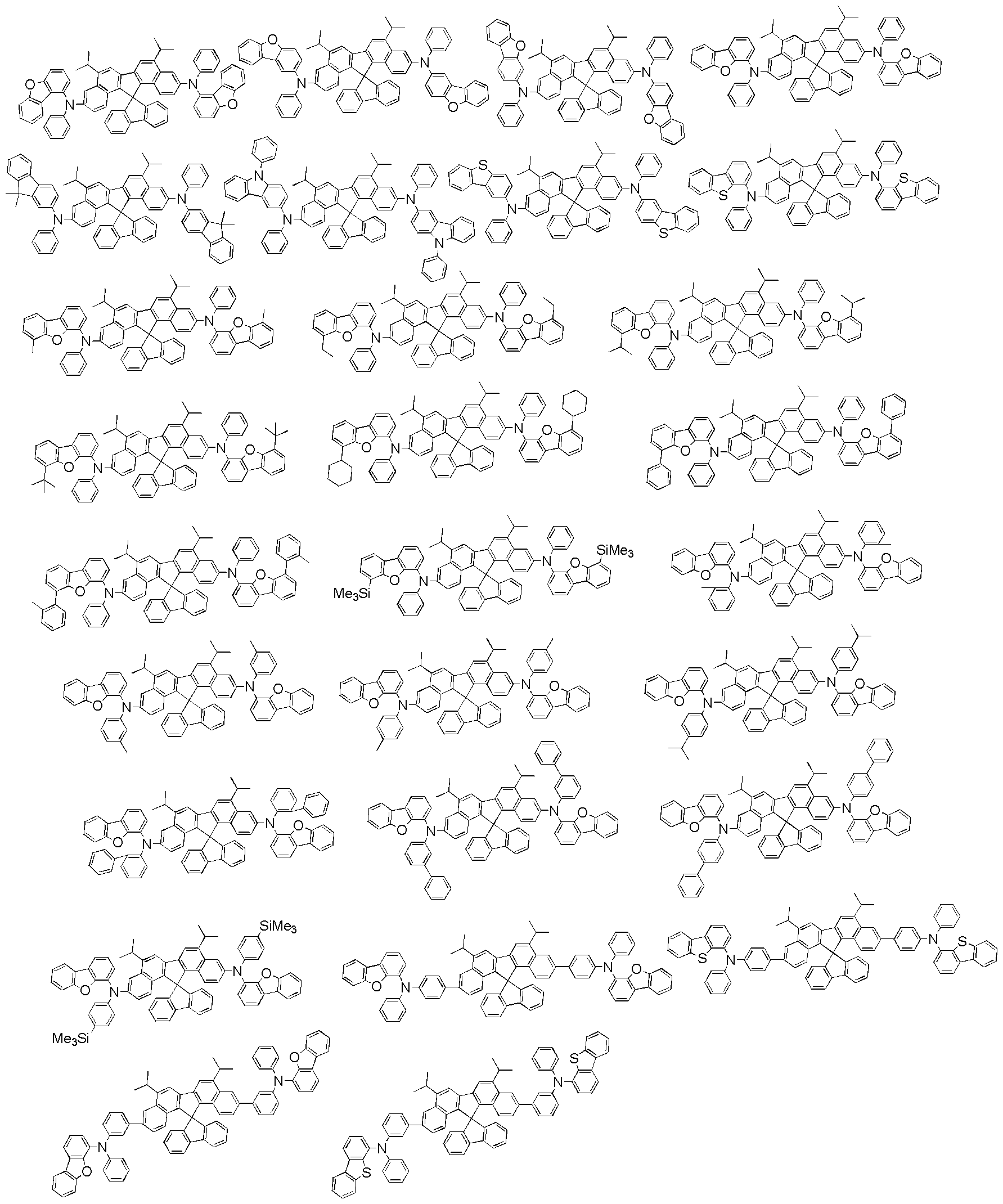


なお、本発明の化合物の製造方法に特に制限はなく、本明細書の実施例等を参照しながら、公知の合成反応を適宜利用及び変更して容易に製造することができる。
次に、本発明の有機EL素子について説明する。
本発明の有機EL素子は、陰極と陽極の間に発光層を含有する有機薄膜層を有し、この有機薄膜層のうちの少なくとも1層が前述した本発明の化合物を含む。本発明の有機EL素子には、低電圧駆動が可能なものが含まれ、且つ素子寿命が長いものも含まれる。また、該有機EL素子には、青色純度の高い発光が可能なものも含まれる。
前述の本発明の化合物が含まれる有機薄膜層の例としては、正孔輸送層、発光層、電子輸送層、スペース層及び障壁層などが挙げられるが、特にこれらに限定されるものではない。
本発明の化合物の中でも、特に発光効率及び素子寿命の観点から、アミノ基を含有する化合物は、発光層に含まれることが好ましく、特にドーパント材料として発光層に含まれることが好ましい。また、ヘテロアリール基、特に含窒素ヘテロアリール基を含有する化合物は、特に、電子輸送層や、発光層と電子輸送層との間の障壁層に含まれることが好ましい。さらに、特に駆動電圧及び発光効率の観点から、アントラセン骨格を有する化合物は、発光層に含まれることが好ましく、ホスト材料、特に蛍光ホスト材料として発光層に含まれることが好ましい。
(1)陽極/発光ユニット/陰極
また、上記発光ユニットは、燐光発光層や蛍光発光層を複数有する積層型であってもよく、その場合、各発光層の間に、燐光発光層で生成された励起子が蛍光発光層に拡散することを防ぐ目的で、スペース層を有していてもよい。発光ユニットの代表的な層構成を以下に示す。
(a)正孔輸送層/発光層(/電子輸送層)
(b)正孔輸送層/第一蛍光発光層/第二蛍光発光層(/電子輸送層)
(c)正孔輸送層/燐光発光層/スペース層/蛍光発光層(/電子輸送層)
(d)正孔輸送層/第一燐光発光層/第二燐光発光層/スペース層/蛍光発光層(/電子輸送層)
(e)正孔輸送層/第一燐光発光層/スペース層/第二燐光発光層/スペース層/蛍光発光層(/電子輸送層)
(f)正孔輸送層/燐光発光層/スペース層/第一蛍光発光層/第二蛍光発光層(/電子輸送層)
なお、各発光層と正孔輸送層あるいはスペース層との間には、適宜、電子障壁層を設けてもよい。また、各発光層と電子輸送層との間には、適宜、正孔障壁層を設けてもよい。電子障壁層や正孔障壁層を設けることで、電子又は正孔を発光層内に閉じ込めて、発光層における電荷の再結合確率を高め、発光効率を向上させることができる。
(2)陽極/第一発光ユニット/中間層/第二発光ユニット/陰極
ここで、上記第一発光ユニット及び第二発光ユニットとしては、例えば、それぞれ独立に上述の発光ユニットと同様のものを選択することができる。
上記中間層は、一般的に、中間電極、中間導電層、電荷発生層、電子引抜層、接続層、中間絶縁層とも呼ばれ、第一発光ユニットに電子を、第二発光ユニットに正孔を供給する、公知の材料構成を用いることができる。
本発明の有機EL素子は、透光性基板上に作製する。透光性基板は有機EL素子を支持する基板であり、400nm~700nmの可視領域の光の透過率が50%以上で平滑な基板が好ましい。具体的には、ガラス板、ポリマー板などが挙げられる。ガラス板としては、特にソーダ石灰ガラス、バリウム・ストロンチウム含有ガラス、鉛ガラス、アルミノケイ酸ガラス、ホウケイ酸ガラス、バリウムホウケイ酸ガラス、石英などを原料として用いてなるものを挙げられる。またポリマー板としては、ポリカーボネート、アクリル、ポリエチレンテレフタレート、ポリエーテルサルファイド、ポリサルフォンなどを原料として用いてなるものを挙げることができる。
有機EL素子の陽極は、正孔を正孔輸送層又は発光層に注入する役割を担うものであり、4.5eV以上の仕事関数を有するものを用いることが効果的である。陽極材料の具体例としては、酸化インジウム錫合金(ITO)、酸化錫(NESA)、酸化インジウム亜鉛酸化物、金、銀、白金、銅などが挙げられる。陽極はこれらの電極物質を蒸着法やスパッタリング法などの方法で薄膜を形成させることにより作製することができる。発光層からの発光を陽極から取り出す場合、陽極の可視領域の光の透過率を10%より大きくすることが好ましい。また、陽極のシート抵抗は、数百Ω/□以下が好ましい。陽極の膜厚は、材料にもよるが、通常10nm~1μm、好ましくは10nm~200nmの範囲で選択される。
陰極は電子注入層、電子輸送層又は発光層に電子を注入する役割を担うものであり、仕事関数の小さい材料により形成するのが好ましい。陰極材料は特に限定されないが、具体的にはインジウム、アルミニウム、マグネシウム、マグネシウム-インジウム合金、マグネシウム-アルミニウム合金、アルミニウム-リチウム合金、アルミニウム-スカンジウム-リチウム合金、マグネシウム-銀合金などが使用できる。陰極も、陽極と同様に、蒸着法やスパッタリング法などの方法で薄膜を形成させることにより作製することができる。また、必要に応じて、陰極側から発光を取り出してもよい。
(発光層)
発光機能を有する有機層であって、ドーピングシステムを採用する場合、ホスト材料とドーパント材料を含んでいる。このとき、ホスト材料は、主に電子と正孔の再結合を促し、励起子を発光層内に閉じ込める機能を有し、ドーパント材料は、再結合で得られた励起子を効率的に発光させる機能を有する。
燐光素子の場合、ホスト材料は主にドーパント材料で生成された励起子を発光層内に閉じ込める機能を有する。
また、量子収率の高いドーパント材料を二種類以上入れることによって、それぞれのドーパント材料が発光するダブルドーパント材料を採用してもよい。具体的には、ホスト材料、赤色ドーパント材料及び緑色ドーパント材料を共蒸着することによって、発光層を共通化して黄色発光を実現する態様が挙げられる。
発光層の膜厚は、好ましくは5~50nm、より好ましくは7~50nm、さらに好ましくは10~50nmである。5nm以上であると発光層の形成が容易であり、50nm以下であると駆動電圧の上昇が避けられる。
発光層を形成する蛍光ドーパント材料(蛍光発光材料)は一重項励状態から発光することのできる化合物であり、一重項励状態から発光する限り特に限定されないが、フルオランテン誘導体、スチリルアリーレン誘導体、ピレン誘導体、アリールアセチレン誘導体、フルオレン誘導体、ホウ素錯体、ペリレン誘導体、オキサジアゾール誘導体、アントラセン誘導体、スチリルアミン誘導体、アリールアミン誘導体などが挙げられ、好ましくは、アントラセン誘導体、フルオランテン誘導体、スチリルアミン誘導体、アリールアミン誘導体、スチリルアリーレン誘導体、ピレン誘導体、ホウ素錯体、より好ましくはアントラセン誘導体、フルオランテン誘導体、スチリルアミン誘導体、アリールアミン誘導体、ホウ素錯体化合物である。
発光層のホスト材料としては、アントラセン誘導体や多環芳香族骨格含有化合物などが挙げられ、好ましくはアントラセン誘導体である。
青色発光層のホスト材料として、例えば、下記式(5)で表されるアントラセン誘導体を使用できる。

環形成原子数5~50の単環基の具体例としては、フェニル基、ビフェニリル基、ターフェニリル基、クォーターフェニリル基などの芳香族基と、ピリジル基、ピラジル基、ピリミジル基、トリアジニル基、フリル基、チエニル基などの複素環基が好ましい。
上記単環基としては、中でも、フェニル基、ビフェニリル基、ターフェニリル基が好ましい。
前記環形成原子数8~50の縮合環基として具体的には、ナフチル基、フェナントリル基、アントリル基、クリセニル基、ベンゾアントリル基、ベンゾフェナントリル基、トリフェニレニル基、ベンゾクリセニル基、インデニル基、フルオレニル基、9,9-ジメチルフルオレニル基、ベンゾフルオレニル基、ジベンゾフルオレニル基、フルオランテニル基、ベンゾフルオランテニル基などの縮合芳香族環基や、ベンゾフラニル基、ベンゾチオフェニル基、インドリル基、ジベンゾフラニル基、ジベンゾチオフェニル基、カルバゾリル基、キノリル基、フェナントロリニル基などの縮合複素環基が好ましい。
上記縮合環基としては、中でも、ナフチル基、フェナントリル基、アントリル基、9,9-ジメチルフルオレニル基、フルオランテニル基、ベンゾアントリル基、ジベンゾチオフェニル基、ジベンゾフラニル基、カルバゾリル基が好ましい。
尚、Ar11及びAr12の置換基は、上述の単環基又は縮合環基が好ましい。
当該アントラセン誘導体は、式(5)におけるAr11及びAr12が、それぞれ独立に、置換若しくは無置換の環形成原子数8~50の縮合環基となっている。当該アントラセン誘導体としては、Ar11及びAr12は同一でも異なっていてもよい。
当該アントラセン誘導体は、式(5)におけるAr11及びAr12の一方が置換若しくは無置換の環形成原子数5~50の単環基であり、他方が置換若しくは無置換の環形成原子数8~50の縮合環基となっている。
好ましい形態として、Ar12がナフチル基、フェナントリル基、ベンゾアントリル基、9,9-ジメチルフルオレニル基、ジベンゾフラニル基であり、Ar11が無置換フェニル基、又は、単環基又は縮合環基(例えば、フェニル基、ビフェニル基、ナフチル基、フェナントリル基、9,9-ジメチルフルオレニル基、ジベンゾフラニル基)で置換されたフェニル基である。
好ましい単環基、縮合環基の具体的な基は上述した通りである。
別の好ましい形態として、Ar12が置換若しくは無置換の環形成原子数8~50の縮合環基であり、Ar11が無置換のフェニル基である。この場合、縮合環基として、フェナントリル基、9,9-ジメチルフルオレニル基、ジベンゾフラニル基、ベンゾアントリル基が特に好ましい。
当該アントラセン誘導体は、式(5)におけるAr11及びAr12が、それぞれ独立に、置換若しくは無置換の環形成原子数5~50の単環基となっている。
好ましい形態として、Ar11、Ar12ともに置換若しくは無置換のフェニル基である。
さらに好ましい形態として、Ar11が無置換のフェニル基であり、Ar12が単環基又は縮合環基で置換されたフェニル基である場合と、Ar11、Ar12がそれぞれ独立に単環基又は縮合環基で置換されたフェニル基である場合がある。
前記置換基としての好ましい単環基、縮合環基の具体例は上述した通りである。さらに好ましくは、置換基としての単環基としてフェニル基、ビフェニル基、縮合環基として、ナフチル基、フェナントリル基、9,9-ジメチルフルオレニル基、ジベンゾフラニル基、ベンゾアントリル基である。


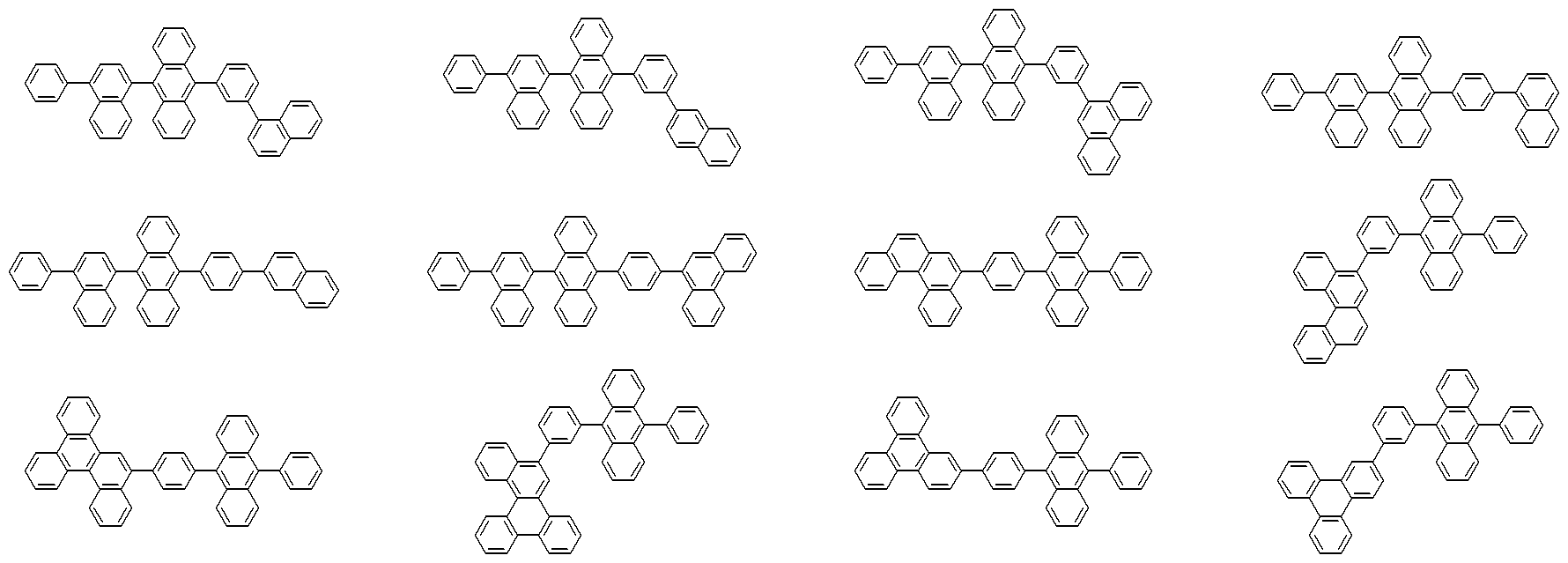

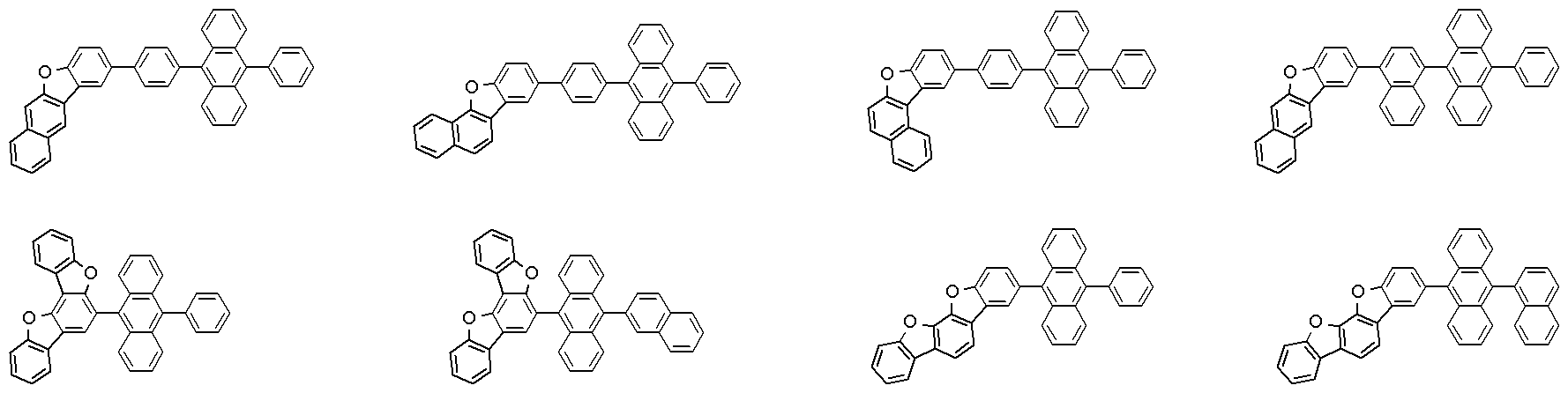
本発明の有機EL素子は、陰極と発光ユニットとの界面領域に電子供与性ドーパント材料を有することも好ましい。このような構成によれば、有機EL素子における発光輝度の向上や長寿命化が図られる。ここで、電子供与性ドーパント材料とは、仕事関数3.8eV以下の金属を含有するものをいい、その具体例としては、アルカリ金属、アルカリ金属錯体、アルカリ金属化合物、アルカリ土類金属、アルカリ土類金属錯体、アルカリ土類金属化合物、希土類金属、希土類金属錯体、及び希土類金属化合物などから選ばれた少なくとも一種類が挙げられる。
本発明の有機EL素子における、主成分と電子供与性ドーパント材料の割合は、モル比で主成分:電子供与性ドーパント材料=5:1~1:5であると好ましい。
発光層と陰極との間に形成される有機層であって、電子を陰極から発光層へ輸送する機能を有する。電子輸送層が複数層で構成される場合、陰極に近い有機層を電子注入層と定義することがある。電子注入層は、陰極から電子を効率的に有機層ユニットに注入する機能を有する。
この含窒素環誘導体としては、例えば、下記式(A)で表される含窒素環金属キレート錯体が好ましい。

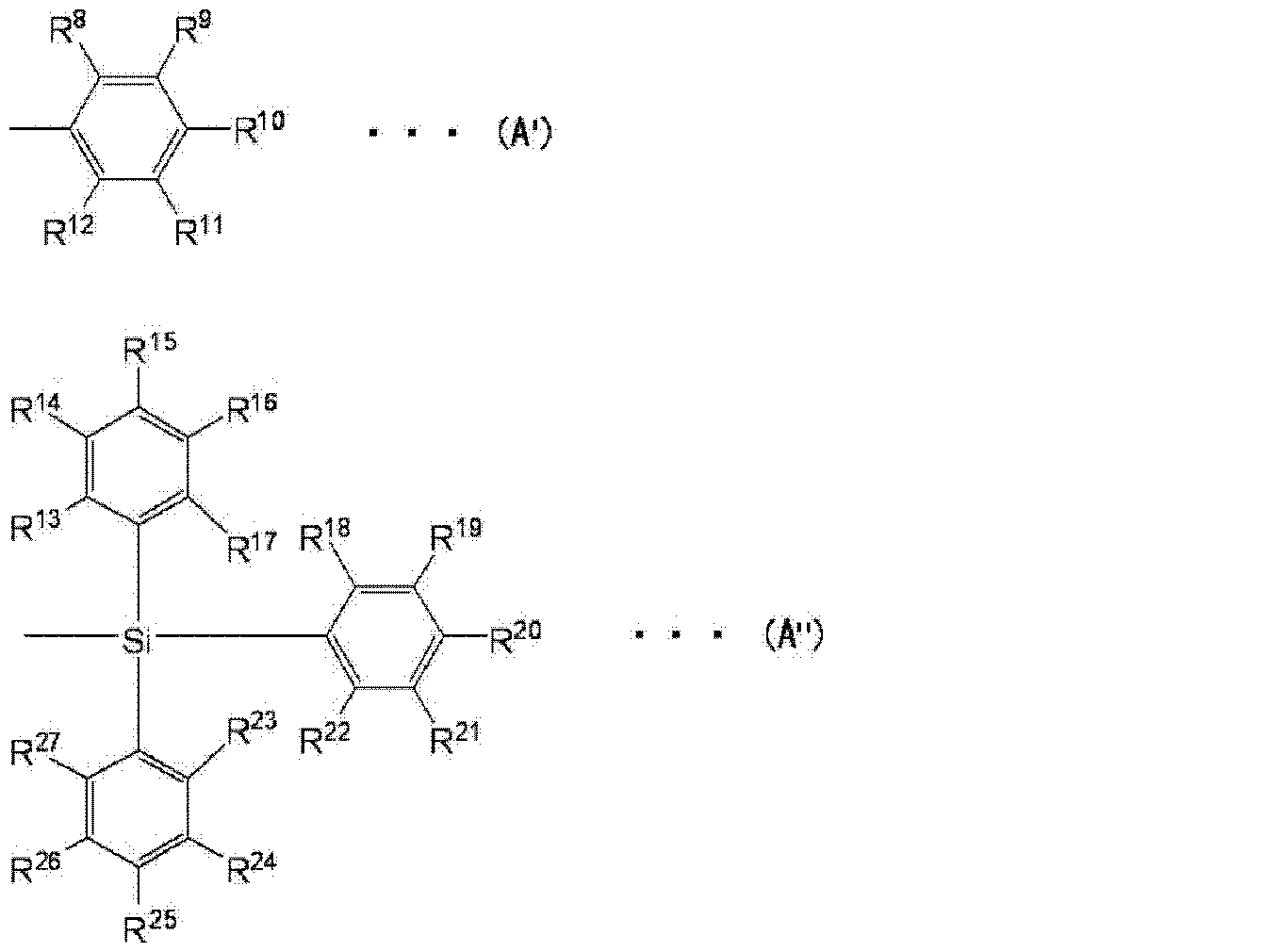
前記式(A’)及び式(A”)のR8~R12及びR13~R27が示す炭素数1~40の炭化水素基としては、前記式(A)中のR2~R7の具体例と同様のものが挙げられる。
また、R8~R12及びR13~R27の互いに隣接する基が環状構造を形成した場合の2価の基としては、テトラメチレン基、ペンタメチレン基、ヘキサメチレン基、ジフェニルメタン-2,2’-ジイル基、ジフェニルエタン-3,3’-ジイル基、ジフェニルプロパン-4,4’-ジイル基等が挙げられる。
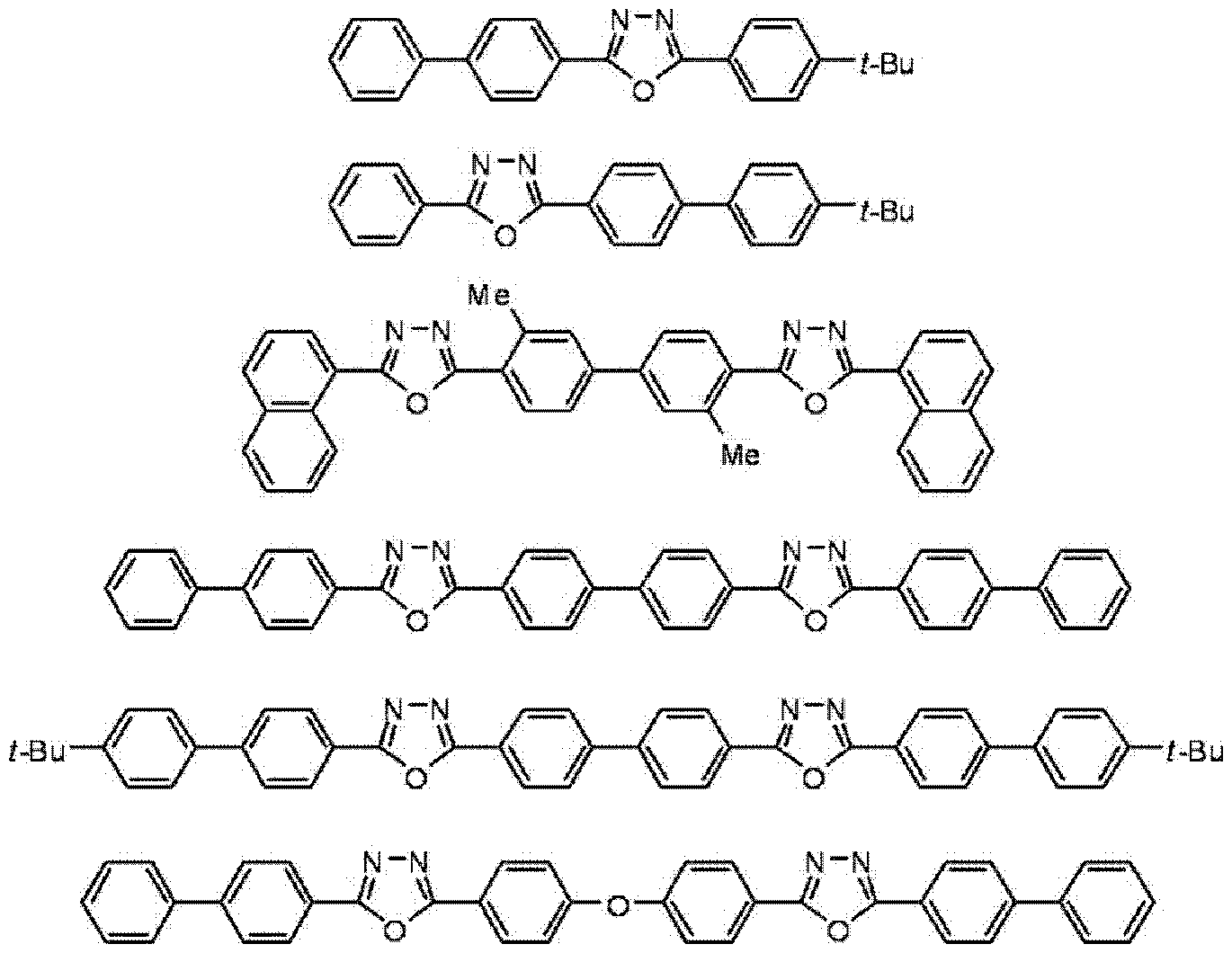

(上記式中、前記各式中、Rは、炭素数6~40の芳香族炭化水素基又は縮合芳香族炭化水素基、炭素数3~40の芳香族複素環基又は縮合芳香族複素環基、炭素数1~20のアルキル基、または炭素数1~20のアルコキシ基であり、nは0~5の整数であり、nが2以上の整数であるとき、複数のRは互いに同一又は異なっていてもよい)
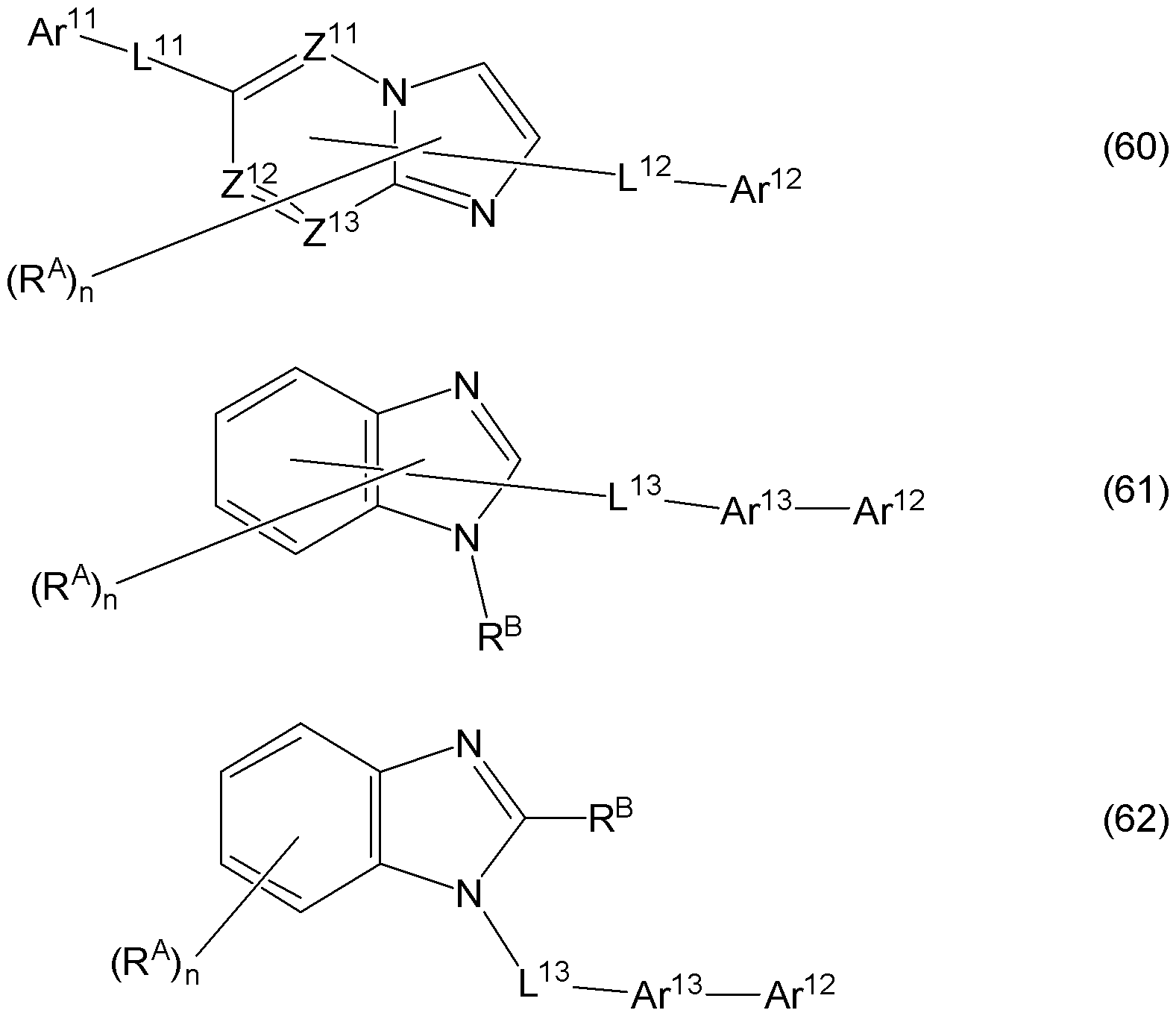
RA及びRBは、それぞれ独立に、置換もしくは無置換の環形成炭素数6~50(好ましくは6~30、より好ましくは6~20、さらに好ましくは6~12)のアリール基、置換もしくは無置換の環形成原子数5~50(好ましくは5~30、より好ましくは5~20、さらに好ましくは5~12)の複素環基、置換もしくは無置換の炭素数1~20(好ましくは1~10、より好ましくは1~6)のアルキル基、置換もしくは無置換の炭素数1~20(好ましくは1~10、より好ましくは1~6)のハロアルキル基又は置換もしくは無置換の炭素数1~20(好ましくは1~10、より好ましくは1~6)のアルコキシ基である。
nは、0~5の整数であり、nが2以上の整数であるとき、複数のRAは互いに同一でも異なっていてもよい。また、隣接する2つのRA同士が互いに結合して、置換もしくは無置換の炭化水素環を形成していてもよい。
Ar11は、置換もしくは無置換の環形成炭素数6~50(好ましくは6~30、より好ましくは6~20、さらに好ましくは6~12)のアリール基又は置換もしくは無置換の環形成原子数5~50(好ましくは5~30、より好ましくは5~20、さらに好ましくは5~12)の複素環基である。
Ar12は、水素原子、置換もしくは無置換の炭素数1~20(好ましくは1~10、より好ましくは1~6)のアルキル基、置換もしくは無置換の炭素数1~20(好ましくは1~10、より好ましくは1~6)のハロアルキル基、置換もしくは無置換の炭素数1~20(好ましくは1~10、より好ましくは1~6)のアルコキシ基、置換もしくは無置換の環形成炭素数6~50(好ましくは6~30、より好ましくは6~20、さらに好ましくは6~12)のアリール基又は置換もしくは無置換の環形成原子数5~50(好ましくは5~30、より好ましくは5~20、さらに好ましくは5~12)の複素環基である。
但し、Ar11、Ar12のいずれか一方は、置換もしくは無置換の環形成炭素数10~50(好ましくは10~30、より好ましくは10~20、さらに好ましくは10~14)の縮合芳香族炭化水素環基又は置換もしくは無置換の環形成原子数9~50(好ましくは9~30、より好ましくは9~20、さらに好ましくは9~14)の縮合芳香族複素環基である。
Ar13は、置換もしくは無置換の環形成炭素数6~50(好ましくは6~30、より好ましくは6~20、さらに好ましくは6~12)のアリーレン基又は置換もしくは無置換の環形成原子数5~50(好ましくは5~30、より好ましくは5~20、さらに好ましくは5~12)のヘテロアリーレン基である。
L11、L12及びL13は、それぞれ独立に、単結合、置換もしくは無置換の環形成炭素数6~50(好ましくは6~30、より好ましくは6~20、さらに好ましくは6~12)のアリーレン基、又は置換もしくは無置換の環形成原子数9~50(好ましくは9~30、より好ましくは9~20、さらに好ましくは9~14)の2価の縮合芳香族複素環基である。)

電子輸送層の膜厚は、特に限定されないが、好ましくは1nm~100nmである。有機EL素子の電子輸送層は第1電子輸送層(陽極側)と第2電子輸送層(陰極側)の2層構造である場合、第1電子輸送層の膜厚は、好ましくは5~60nm、より好ましくは10~40nmであり、第2電子輸送層の膜厚は、好ましくは1~20nm、より好ましくは1~10nmである。
発光層と陽極との間に形成される有機層であって、正孔を陽極から発光層へ輸送する機能を有する。正孔輸送層が複数層で構成される場合、陽極に近い有機層を正孔注入層と定義することがある。正孔注入層は、陽極から正孔を効率的に有機層ユニットに注入する機能を有する。

Ar1とAr2、Ar3とAr4で環を形成してもよい。
また、前記式(I)において、Lは置換もしくは無置換の環形成炭素数6~50(好ましくは6~30、より好ましくは6~20、さらに好ましくは6~12)の芳香族炭化水素基もしくは置換基を有していてもよい環形成炭素数6~50(好ましくは6~30、より好ましくは6~20、さらに好ましくは6~12)の縮合芳香族炭化水素基、又は置換もしくは無置換の環形成原子数5~50(好ましくは5~30、より好ましくは5~20、さらに好ましくは5~12)の芳香族複素環基もしくは置換もしくは無置換の環形成原子数5~50(好ましくは5~30、より好ましくは5~20、さらに好ましくは5~12)の縮合芳香族複素環基を表す。

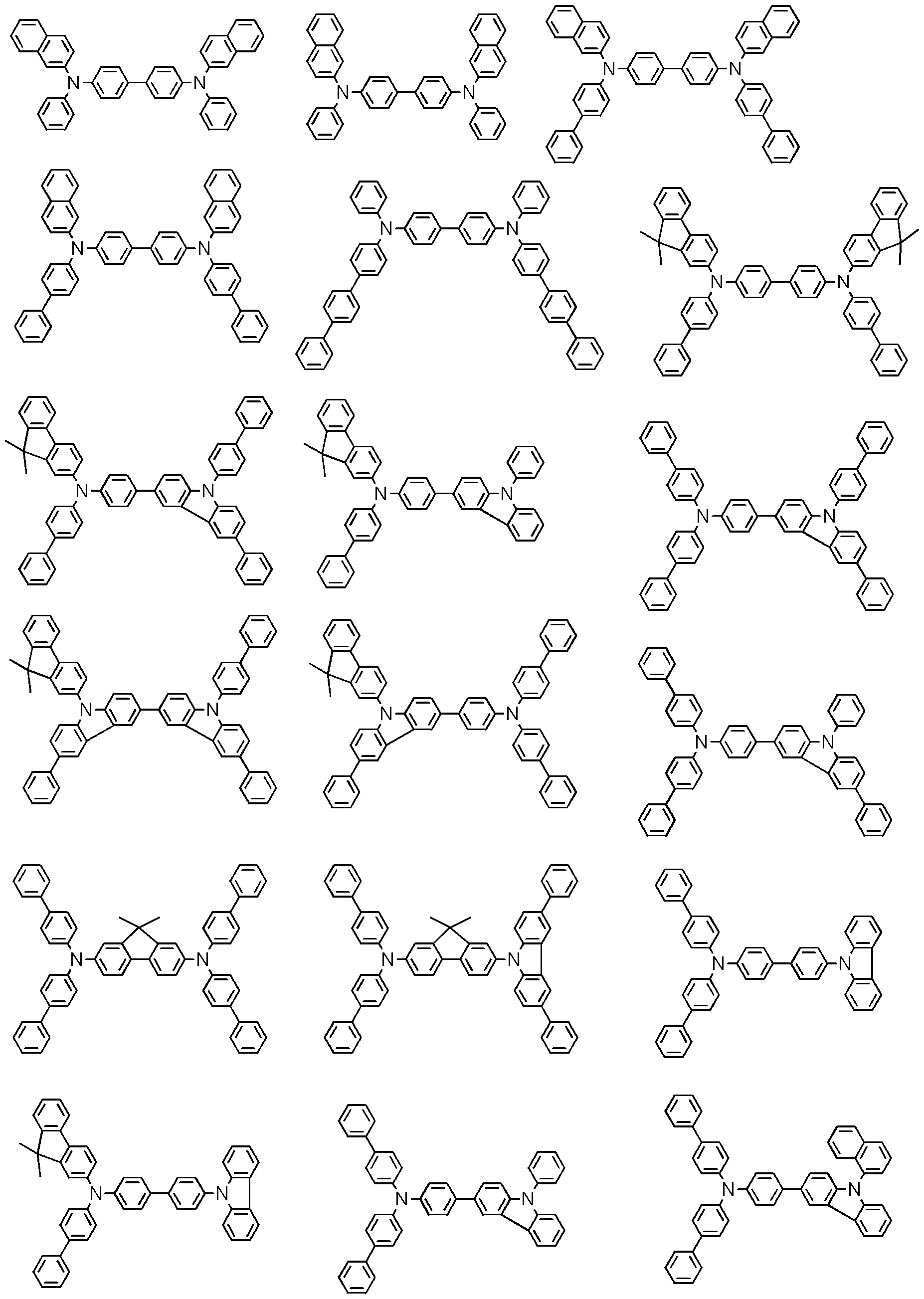


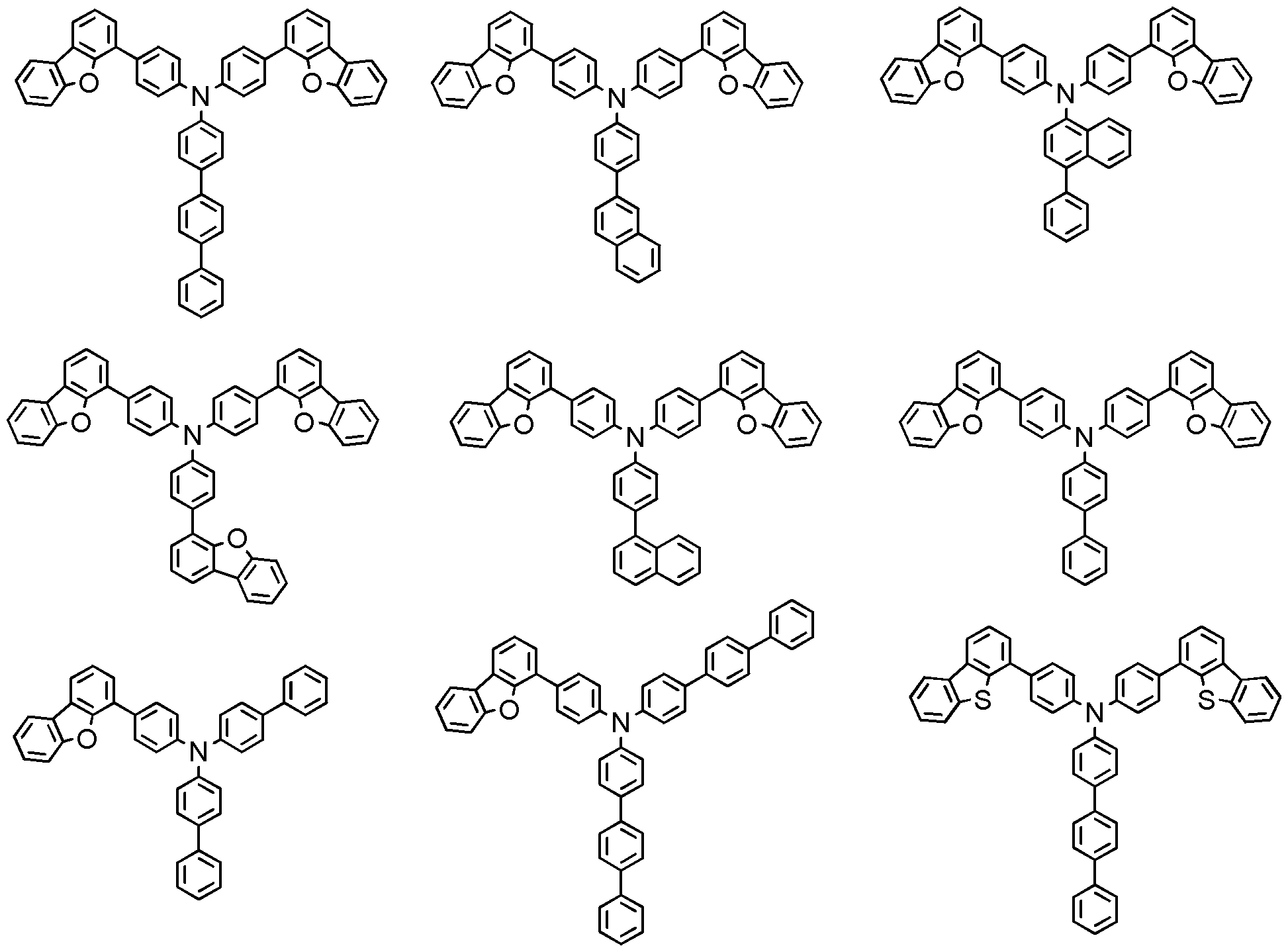
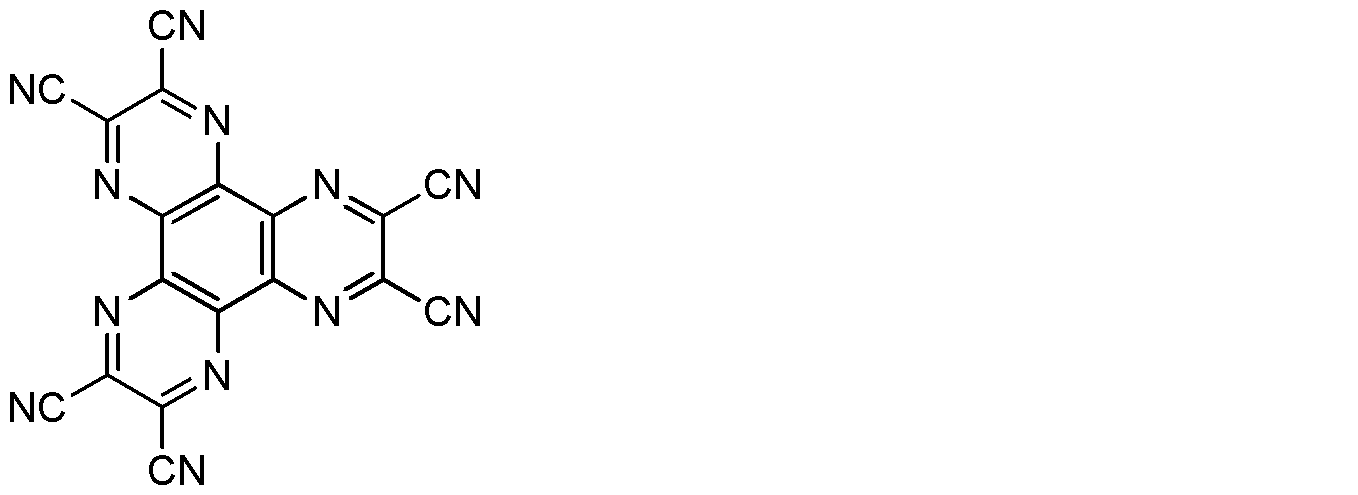
上述の正孔輸送層や電子輸送層においては、特許第3695714号明細書に記載されているように、ドナー性材料のドーピング(n)やアクセプター性材料のドーピング(p)により、キャリア注入能を調整することができる。
nドーピングの代表例としては、電子輸送材料にLiやCsなどの金属をドーピングする方法が挙げられ、pドーピングの代表例としては、正孔輸送材料にF4TCNQなどのアクセプター材料をドーピングする方法が挙げられる。
上記スペース層とは、例えば、蛍光発光層と燐光発光層とを積層する場合に、燐光発光層で生成する励起子を蛍光発光層に拡散させない、あるいは、キャリアバランスを調整する目的で、蛍光発光層と燐光発光層との間に設けられる層である。また、スペース層は、複数の燐光発光層の間に設けることもできる。
スペース層は発光層間に設けられるため、電子輸送性と正孔輸送性を兼ね備える材料であることが好ましい。また、隣接する燐光発光層内の三重項エネルギーの拡散を防ぐため、三重項エネルギーが2.6eV以上であることが好ましい。スペース層に用いられる材料としては、上述の正孔輸送層に用いられるものと同様のものが挙げられる。
本発明の有機EL素子は、発光層に隣接する部分に、電子障壁層、正孔障壁層、トリプレット障壁層といった障壁層を有することが好ましい。ここで、電子障壁層とは、発光層から正孔輸送層へ電子が漏れることを防ぐ層であり、発光層と正孔輸送層との間に設けられる層である。また、正孔障壁層とは、発光層から電子輸送層へ正孔が漏れることを防ぐ層であり、発光層と電子輸送層との間に設けられる層である。
トリプレット障壁層は、後述するように、発光層で生成する三重項励起子が、周辺の層へ拡散することを防止し、三重項励起子を発光層内に閉じ込めることによって三重項励起子の発光ドーパント材料以外の電子輸送層の分子上でのエネルギー失活を抑制する機能を有する。
電子注入層は、電界強度0.04~0.5MV/cmの範囲において、10-6cm2/Vs以上であることが望ましい。これにより陰極からの電子輸送層への電子注入が促進され、ひいては隣接する障壁層、発光層への電子注入も促進し、より低電圧での駆動を可能にするためである。
本発明の化合物を用いて得られる有機EL素子は、発光効率がさらに改善されている。このため、有機ELパネルモジュールなどの表示部品;テレビ、携帯電話、パーソナルコンピュータなどの表示装置;照明、車両用灯具の発光装置、などの電子機器に使用できる。
合成実施例1(芳香族ヘテロ環誘導体(E1)の製造)
(1)中間体1の合成
アルゴン雰囲気下、1-ブロモナフタレン110.5g(533.6mmol)をテトラヒドロフラン溶液1Lに溶かし、マグネシウム14.0g(576.0mmol)に滴下した。その溶液を25℃で1時間攪拌した後、1-ナフトアルデヒド113.1g(724.2mmol)のテトラヒドロフラン溶液100mLを室温で滴下して加え、20℃で1.5時間攪拌した。反応終了後、2N塩酸300mLを加え30分攪拌し、トルエン800mLで抽出した。有機層を集め、濃縮し得られた固体をエタノールで洗浄し、白色固体91.3gを得た。FD-MS分析(電界脱離質量分析)により、下記中間体1と同定した。分子量284.35に対し、m/e=284であった。(収率60%)

150℃に加熱したリン酸1.65Lに対し、中間体1 87.8g(308.8mmol)を少しずつ加え、40時間加熱攪拌した。反応終了後室温まで放冷し、反応液を氷水1Lに注ぎ、トルエンで抽出した。有機層を濃縮し得られた固体をシリカゲルカラムクロマトグラフィーで精製し、白色固体36.9gを得た。FD-MS分析により、下記中間体2と同定した。分子量266.34に対し、m/e=266であった。(収率45%)

中間体2 15.0g(56.3mmol)をピリジン1Lに溶かし、ベンジルトリメチルアンモニウムヒドロキシド(Triton-B)(40%メタノール溶液)60mLを室温で滴下した。30時間攪拌した後、氷冷下、濃塩酸にゆっくりと注ぎ、ジクロロメタンで抽出した。有機層を濃縮し、得られた固体をシリカゲルカラムクロマトグラフィーで精製し、茶色固体9.3gを得た。FD-MS分析により、下記中間体3と同定した。分子量280.32に対し、m/e=280であった。(収率59%)

アルゴン雰囲気下、2-ビフェニルマグネシウムブロミド 0.5Mジエチルエーテル溶液60.8mL(30.4mmol)を-20℃に冷却した。中間体3 6.0g(21.4mmol)を少しずつ加え、反応溶液を徐々に室温まで昇温させ、室温で5時間攪拌した。さらに、5時間加熱還流攪拌した。反応終了後、室温に冷却し、飽和塩化アンモニウム水溶液を加え、酢酸エチルで抽出した。有機層を濃縮し、得られた固体をシリカゲルカラムクロマトグラフィーで精製し、白色固体6.5gを得た。FD-MS分析により、下記中間体4と同定した。分子量434.53に対し、m/e=434であった。(収率58%)
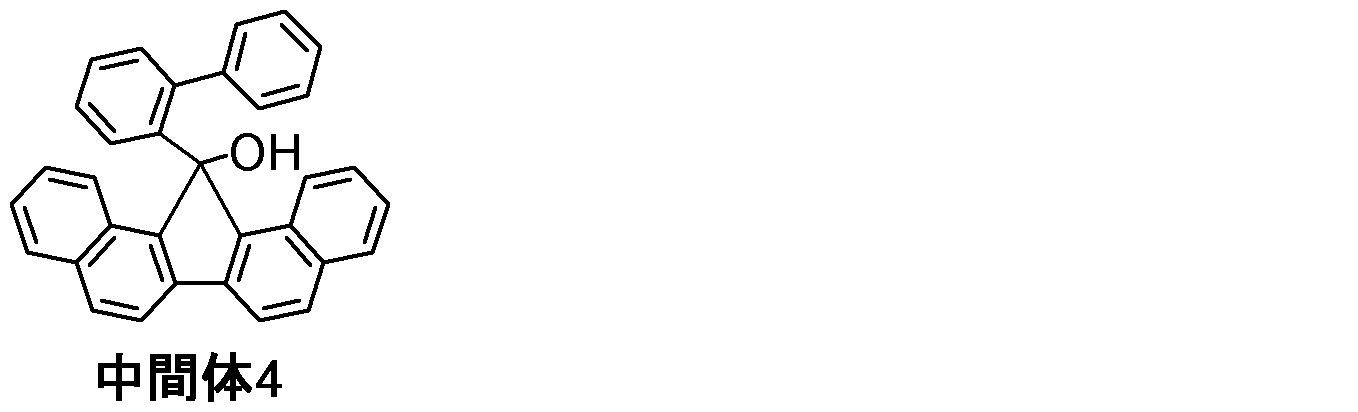
中間体4 5.0g(11.5mmol)に酢酸500mLを加え、140℃で加熱攪拌しながら、濃塩酸10mLを滴下して加え、140℃で8時間反応させた。反応終了後、室温まで放冷し、析出した固体をろ取した。得られた固体をエタノールで洗浄し、白色固体2.8gを得た。FD-MS分析により、下記中間体5と同定した。分子量416.51に対し、m/e=416であった。(収率58%)
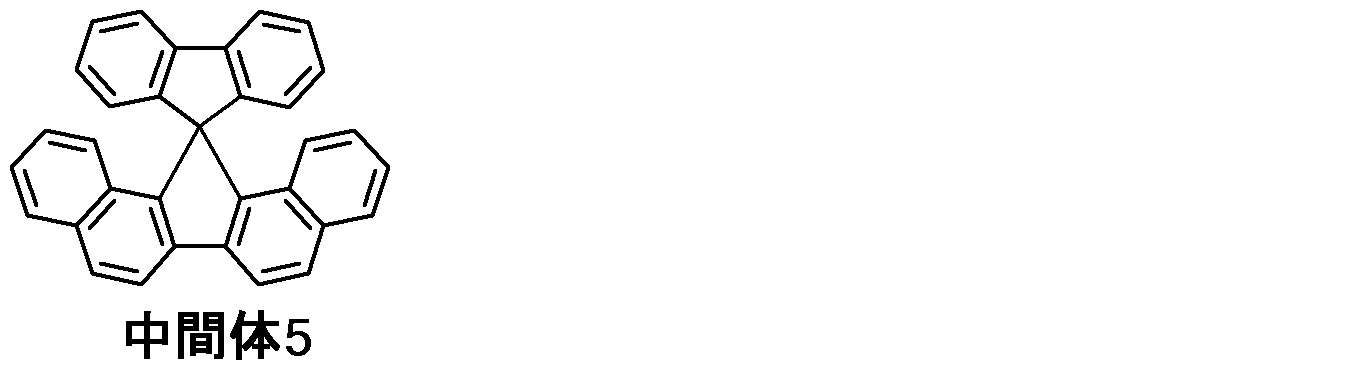
アルゴン雰囲気下、中間体5 2.8g(6.7mmol)をジクロロメタン(22mL)に溶解し、氷冷下、臭素0.90g(5.6mmol)のジクロロメタン(18mL)溶液を滴下し、終夜反応を行った。得られた反応混合物に重曹水を加え、ジクロロメタンで抽出を行い減圧下で溶媒を留去した。得られた残渣を再結晶にて精製し、白色固体1.33gを得た。FD-MS分析により、下記中間体6と同定した。分子量495.41に対し、m/e=495であった。(収率40%)
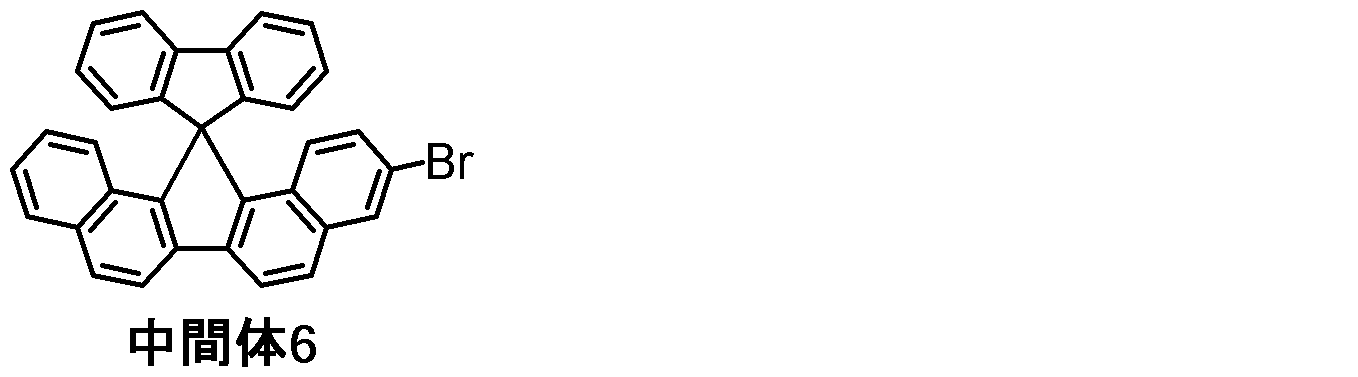
アルゴン雰囲気下、中間体6 0.99g(2.0mmol)に無水THF20ミリリットルを加え、-40℃で撹拌中に、1.6M濃度のn-ブチルリチウムのヘキサン溶液3.2mL(2.0mmol)を加えた。反応溶液を0℃まで加温しながら1時間攪拌した。反応溶液を再び-78℃まで冷却し、ホウ酸トリメチル0.52g(5.0mmol)の乾燥THFの5mL溶液を滴下した。反応溶液を室温で5時間攪拌した。1N塩酸20ミリリットルを加え、1時間攪拌後、水層を除去した。
有機層を硫酸マグネシウムで乾燥させ、溶媒を減圧留去した。得られた固体をトルエンで洗浄し、白色固体0.66gを得た。(収率72%)

アルゴン雰囲気下、中間体7 0.66g(1.4mmol)、2-クロロ-4,6-ジフェニルトリアジン0.40g(1.5mmol)、Pd[PPh3]4(テトラキス(トリフェニルホスフィン)パラジウム)0.033g(0.029mmol)にトルエン5mL、ジメトキシエタン5mL、2M Na2CO3水溶液5mL(10.0mmol)を加え、10時間加熱還流攪拌した。
反応終了後、室温に冷却し、試料を分液ロートに移しジクロロメタンにて抽出した。有機層をMgSO4で乾燥後、ろ過、濃縮した。濃縮残渣をシリカゲルカラムクロマトグラフィーにて精製し、0.66gの白色固体を得た。FD-MS分析(電界脱離質量分析)により、下記芳香族ヘテロ環誘導体(E1)と同定した。分子量647.76に対し、m/e=647であった。(収率71%)

(1)中間体8の合成
アルゴン雰囲気下、中間体5 2.8g(6.7mmol)をジクロロメタン(22mL)に溶解し、氷冷下、臭素1.8g(11.2mmol)のジクロロメタン(36mL)溶液を滴下し、終夜反応を行った。得られた反応混合物に重曹水を加え、ジクロロメタンで抽出を行い減圧下で溶媒を留去した。得られた残渣を再結晶にて精製し、白色固体1.1gを得た。FD-MS分析により、下記中間体8と同定した。分子量574.30に対し、m/e=574であった。(収率29%)
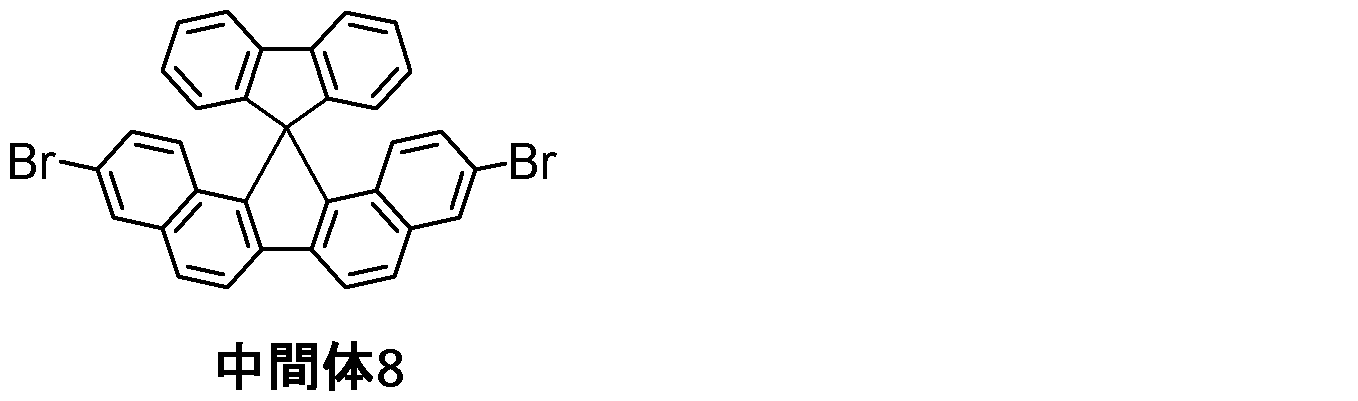
アルゴン雰囲気下、ビス(4-tert-ブチルフェニル)アミン1.1g(4.0mmol)、中間体8 1.1g(2.0mmol)、Pd2(dba)3 0.028g(0.03mmol)、P(tBu)3HBF4 0.017g(0.06mmol)、t-ブトキシナトリウム0.38g(4.0mmol)に、無水キシレン10mlを加えて8時間加熱還流した。
反応終了後、反応液を50℃に冷却し、セライト/シリカゲルを通して濾過を行い、濾液を濃縮した。得られた濃縮残渣をシリカゲルカラムクロマトグラフィーにて精製し白色固体を得た。粗生成物をトルエンにて再結晶し、1.3gの白色結晶を得た。FD-MSの分析により、下記芳香族アミン誘導体(B1)と同定した。分子量975.35に対し、m/e=975であった。(収率65%)
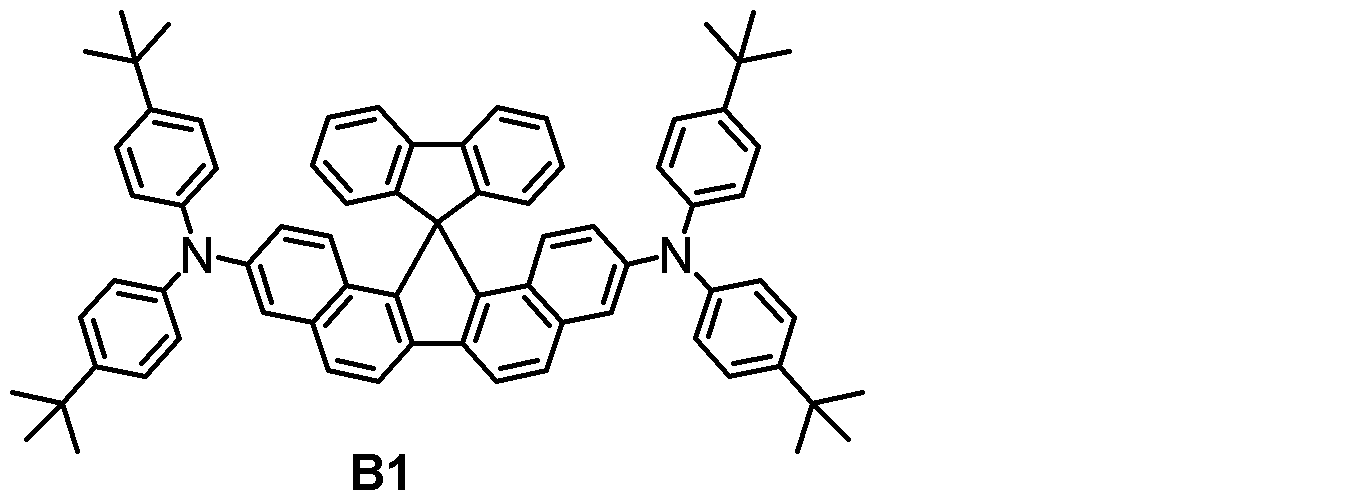
25mm×75mm×厚さ1.1mmのITO透明電極付きガラス基板(ジオマティック株式会社製)をイソプロピルアルコール中で超音波洗浄を5分間行なった後、UVオゾン洗浄を30分間行った。ITO透明電極の膜厚は、130nmとした。
洗浄後の透明電極ライン付きガラス基板を真空蒸着装置の基板ホルダーに装着し、まず透明電極ラインが形成されている側の面上に前記透明電極を覆うようにして下記電子受容性(アクセプター)化合物HIを蒸着し、膜厚5nmの化合物HI膜を成膜した。
この化合物HI膜上に、第1正孔輸送材料として下記芳香族アミン誘導体(化合物HT-1)を蒸着し、膜厚100nmの第1正孔輸送層を成膜した。
第1正孔輸送層の成膜に続けて、第2正孔輸送材料として下記芳香族アミン誘導体(化合物HT-2)を蒸着し、膜厚5nmの第2正孔輸送層を成膜した。
さらに、この第2正孔輸送層上に、ホスト材料として下記化合物BHと、蛍光発光ドーパント材料としての下記化合物BDとを共蒸着し、膜厚15nmの発光層を成膜した。発光層内における化合物BDの濃度は3.0質量%であった。この共蒸着膜は発光層として機能する。
そして、この発光層成膜に続けて上記化合物E1を膜厚5nmで成膜した。この化合物E1膜は第1電子輸送層として機能する。
この第1電子輸送層上に、下記化合物ET-2と、下記化合物Liqとを共蒸着し、膜厚25nmの第2電子輸送層を成膜した。第2電子輸送層内における化合物Liqの濃度は50質量%であった。
次に、化合物Liqを電子注入性電極(陰極)として成膜速度0.1オングストローム/minで膜厚を1nmとした。このLiq膜上に金属Alを蒸着させ、金属陰極を膜厚80nmで形成した。
実施例1の有機EL素子は、下記層構成を有している。
ITO(130nm)/HI(5nm)/HT-1(100nm)/HT-2(5nm)/BH:BD(15nm:3質量%)/E1(5nm)/ET-2:Liq(25nm:50質量%)/Liq(1nm)/Al(80nm)
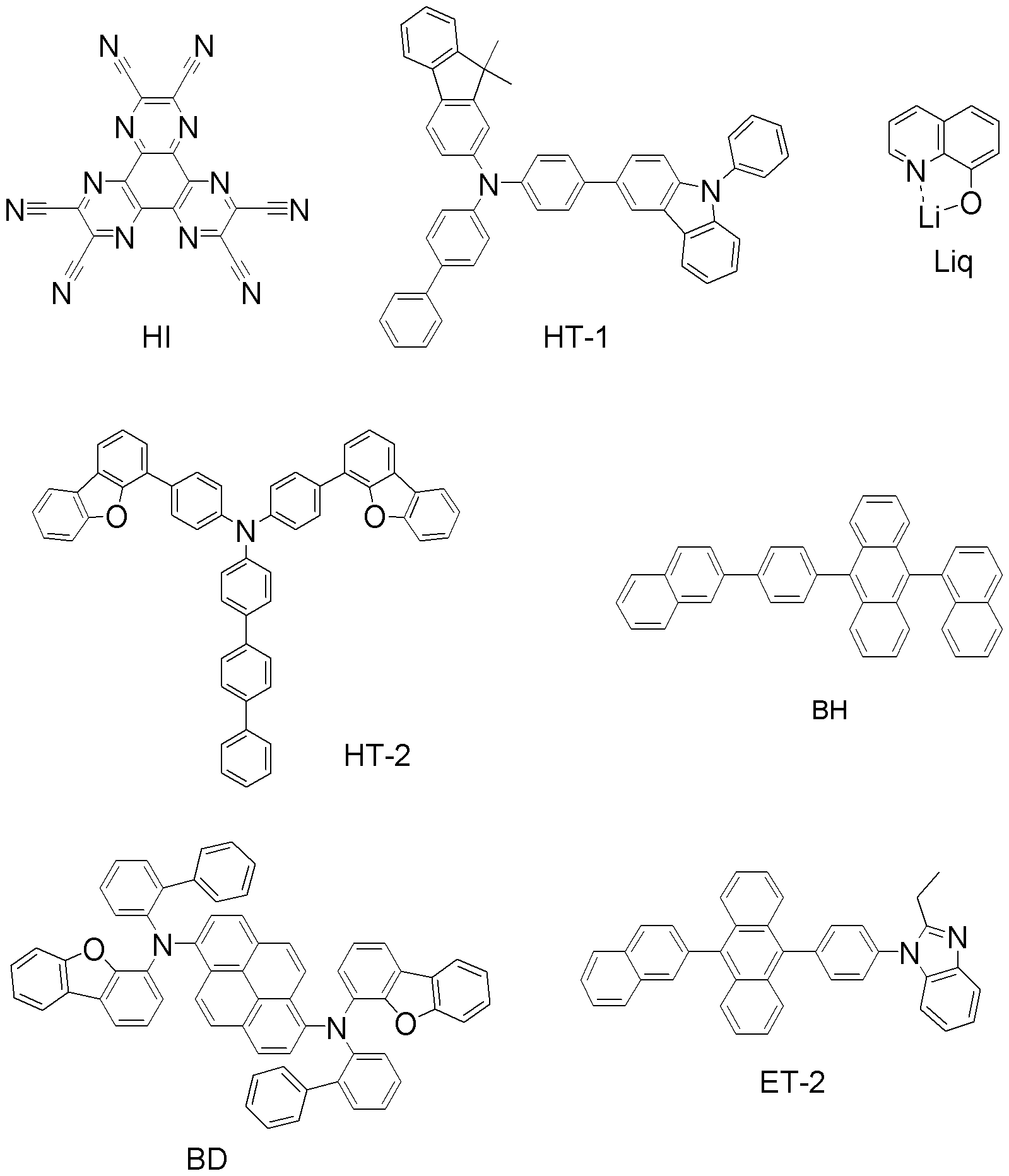
得られた有機EL素子について、下記評価を行った。結果を表1に示す。
(1)駆動電圧(V)
電流密度が10mA/cm2となるようにITO透明電極と金属Al陰極との間に通電したときの電圧(単位:V)を計測した。
電流密度が10mA/cm2となるように素子に電圧を印加したときの分光放射輝度スペクトルを、分光放射輝度計「CS-1000」(製品名、コニカミノルタ社製)で計測した。
得られた上記分光放射輝度スペクトルから、ランバシアン放射を行ったと仮定し、外部量子効率(EQE)(単位:%)を算出した。
化合物1の代わりに、表1に記載の比較化合物1、2を用いて第1電子輸送層を形成した以外は実施例1と同様にして有機EL素子を作製し、評価した。結果を表1に示す。


25mm×75mm×厚さ1.1mmのITO透明電極付きガラス基板(ジオマティック株式会社製)をイソプロピルアルコール中で超音波洗浄を5分間行なった後、UVオゾン洗浄を30分間行った。ITO透明電極の膜厚は、130nmとした。
洗浄後の透明電極ライン付きガラス基板を真空蒸着装置の基板ホルダーに装着し、まず透明電極ラインが形成されている側の面上に前記透明電極を覆うようにして上記電子受容性(アクセプター)化合物HIを蒸着し、膜厚5nmの化合物HI膜を成膜した。
この化合物HI膜上に、第1正孔輸送材料として下記芳香族アミン誘導体(化合物HT-3)を蒸着し、膜厚100nmの第1正孔輸送層を成膜した。
第1正孔輸送層の成膜に続けて、第2正孔輸送材料として上記芳香族アミン誘導体(化合物HT-2)を蒸着し、膜厚5nmの第2正孔輸送層を成膜した。
さらに、この第2正孔輸送層上に、ホスト材料として上記化合物BHと、蛍光発光ドーパント材料としての上記化合物B1とを共蒸着し、膜厚25nmの発光層を成膜した。発光層内における化合物B1の濃度は4.0質量%であった。この共蒸着膜は発光層として機能する。
そして、この発光層成膜に続けて下記化合物ET-3を膜厚10nmで成膜した。この化合物ET-3膜は第1電子輸送層として機能する。
この第1電子輸送層上に、下記化合物ET-4を蒸着し、膜厚15nmの第2電子輸送層を成膜した。
次に、化合物LiFを電子注入性電極(陰極)として成膜速度0.1オングストローム/minで膜厚を1nmとした。このLiF膜上に金属Alを蒸着させ、金属陰極を膜厚80nmで形成した。
実施例2の有機EL素子は、下記層構成を有している。
ITO(130nm)/HI(5nm)/HT-3(100nm)/HT-2(5nm)/BH:B1(25nm:4質量%)/ET-3(10nm)/ET-4(15nm)/LiF(1nm)/Al(80nm)
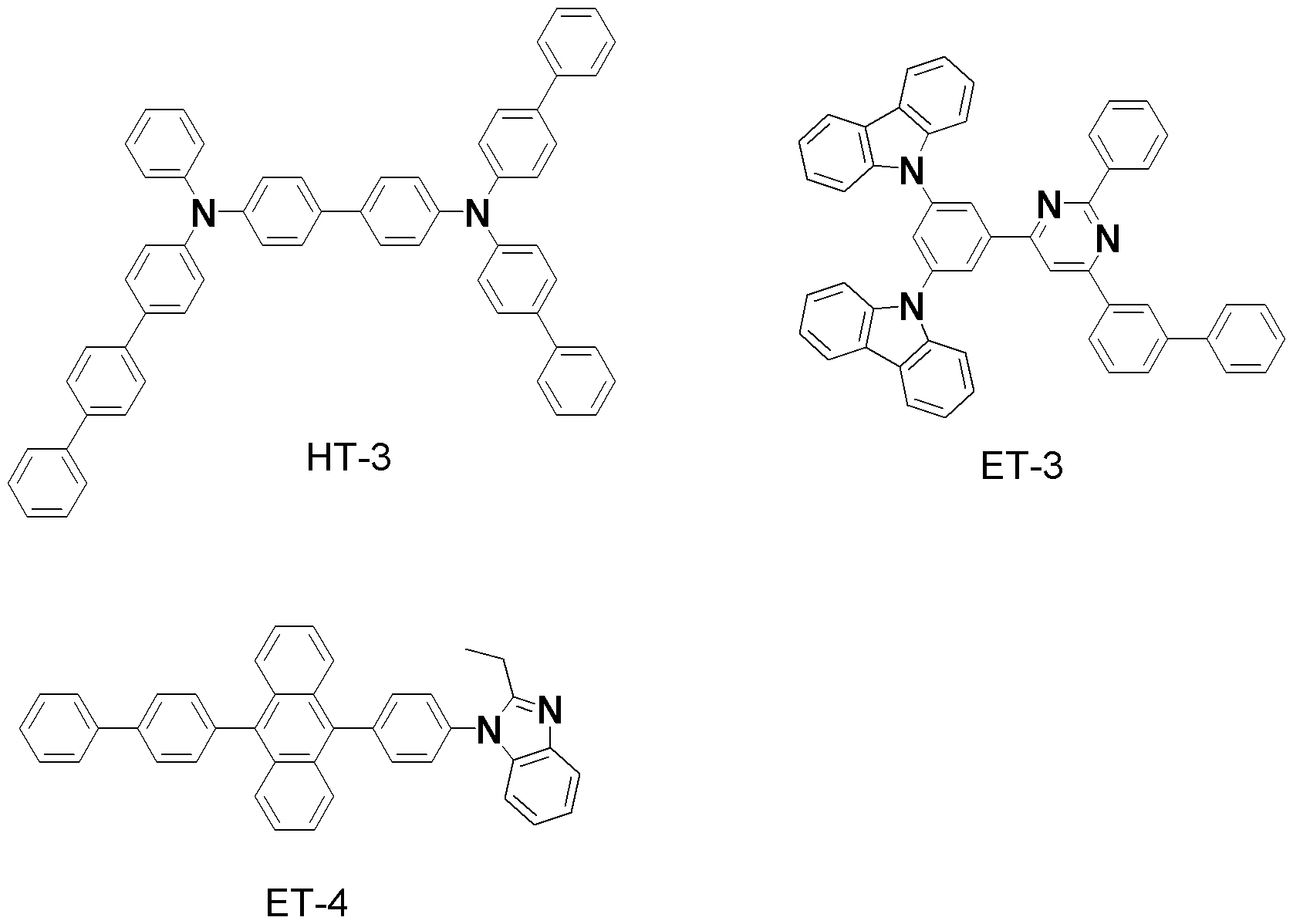
得られた有機EL素子について、下記評価を行った。結果を表2に示す。
(1)外部量子効率(EQE;%)
電流密度が10mA/cm2となるように素子に電圧を印加したときの分光放射輝度スペクトルを、分光放射輝度計「CS-1000」(製品名、コニカミノルタ社製)で計測した。
得られた上記分光放射輝度スペクトルから、ランバシアン放射を行ったと仮定し、外部量子効率(EQE)(単位:%)を算出した。
(2)寿命(LT95)
初期電流密度を50mA/cm2に設定して直流の連続通電試験を行い、試験開始時の輝度に対して、輝度が95%まで減少する時間を測定し、その測定時間を寿命(LT95)とした。
ドーパント材料を化合物B1の代わりに比較化合物3を用いて発光層を形成した以外は実施例2と同様にして有機EL素子を作製し、評価した。結果を表2に示す。
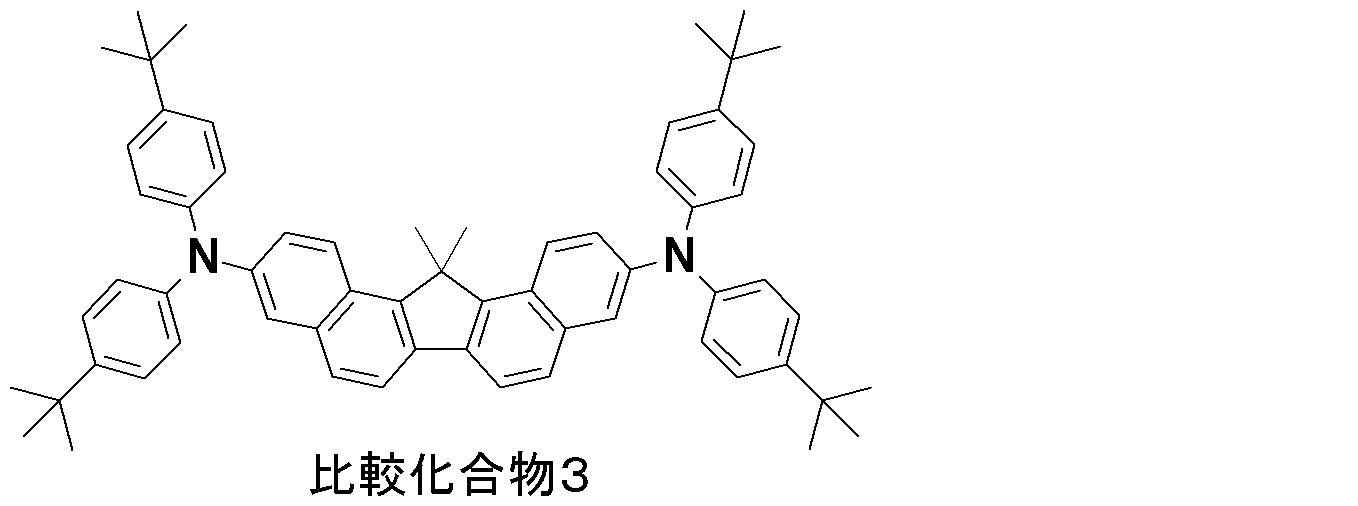
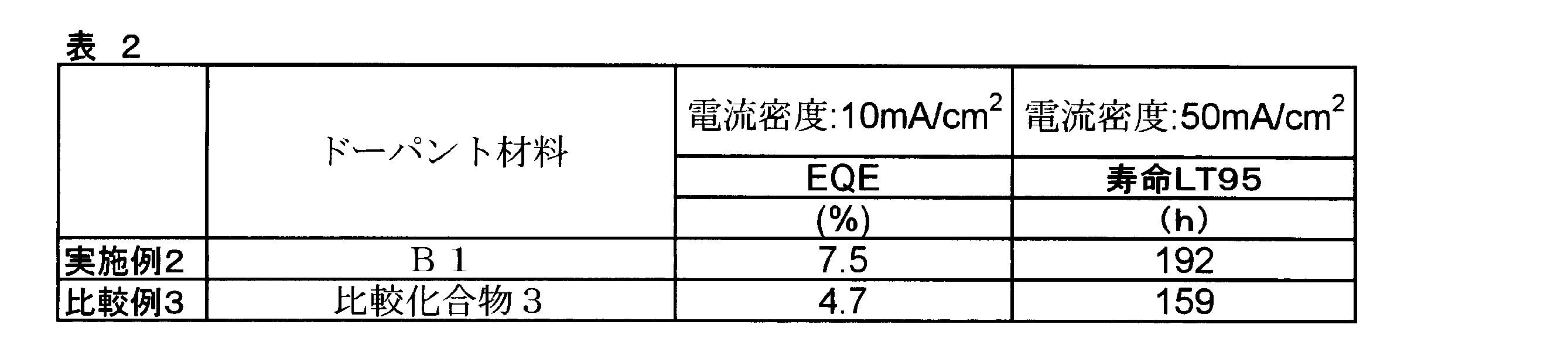
2 基板
3 陽極
4 陰極
5 発光層
6 正孔注入層/正孔輸送層
7 電子注入層/電子輸送層
10 発光ユニット
Claims (23)
- 下記式(1)で表される化合物。
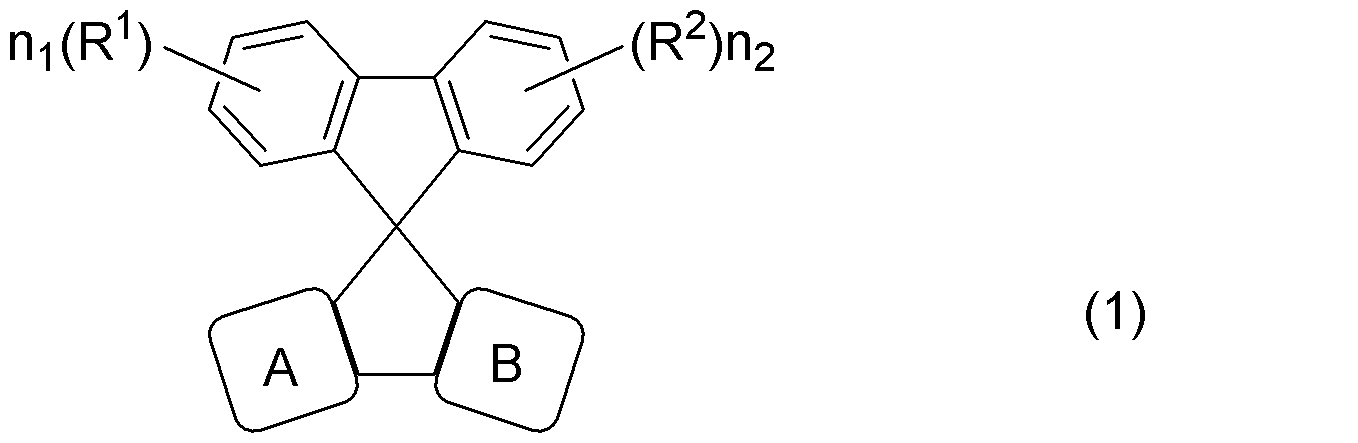
[式(1)において、A及びBは、それぞれ置換もしくは無置換のナフタレン環、または置換もしくは無置換のフェナントレン環を表す。該ナフタレン環、またはフェナントレン環上の置換基は、フッ素原子、シアノ基、置換もしくは無置換の炭素数1~20のアルキル基、置換もしくは無置換の環形成炭素数3~20のシクロアルキル基、置換もしくは無置換の炭素数1~20のアルコキシ基、置換もしくは無置換の炭素数1~20のフルオロアルキル基、置換もしくは無置換の炭素数1~20のフルオロアルコキシ基、置換もしくは無置換の環形成炭素数6~30のアリールオキシ基、置換もしくは無置換の炭素数1~20のアルキルチオ基、置換もしくは無置換の環形成炭素数6~30のアリールチオ基、-Si(R101)(R102)(R103)で表される基、又は-Z-Raで表される基である。
A及びBの示すナフタレン環及びフェナントレン環上の置換基が複数ある場合、該置換基は互いに結合して、環構造を形成してもよい。
R1及びR2は、それぞれ独立に、水素原子、フッ素原子、シアノ基、置換もしくは無置換の炭素数1~20のアルキル基、置換もしくは無置換の環形成炭素数3~20のシクロアルキル基、置換もしくは無置換の炭素数1~20のアルコキシ基、置換もしくは無置換の炭素数1~20のフルオロアルキル基、置換もしくは無置換の炭素数1~20のフルオロアルコキシ基、置換もしくは無置換の環形成炭素数6~30のアリールオキシ基、置換もしくは無置換の炭素数1~20のアルキルチオ基、置換もしくは無置換の環形成炭素数6~30のアリールチオ基、置換もしくは無置換の環形成炭素数6~30のアリール基、置換もしくは無置換の環形成炭素数5~30のヘテロアリール基、又は-Si(R101)(R102)(R103)で表される基である。
R1、R2を複数有する場合、該複数のR1、R2は、互いに同一でも異なっていてもよい。また、R1、R2同士が、それぞれ互いに結合して、環構造を形成してもよい。
Zは、単結合、置換もしくは無置換の環形成炭素数6~30のアリーレン基、置換もしくは無置換の環形成原子数5~30のヘテロアリーレン基、又はこれらが2~4個連結して構成される2価の連結基を示す。
Zが複数存在する場合は、それぞれが同一でも異なっていてもよい。
Raは、-N(R104)(R105)で表される基、置換もしくは無置換の環形成炭素数6~30のアリール基、又は置換もしくは無置換の環形成原子数5~30のヘテロアリール基を示す。
Raが複数存在する場合は、それぞれが同一でも異なっていてもよい。
R101~R105は、それぞれ独立に、水素原子、置換もしくは無置換の炭素数1~20のアルキル基、置換もしくは無置換の環形成炭素数3~20のシクロアルキル基、置換もしくは無置換の環形成炭素数6~50のアリール基、又は置換もしくは無置換の環形成原子数5~50のヘテロアリール基を示す。
ただし、A及びB上の置換基のうち少なくとも1つは、-Z-Raで表される基である。
また、-Z-Raが複数存在するとき、それぞれの-Z-Raは同一であっても異なっていてもよい。
n1及びn2は、それぞれ0~4の整数である。] - 下記式(2-1)~(2-10)のいずれかで表される、請求項1に記載の化合物。

[式(2-1)~(2-10)において、R1、R2、n1、n2は前記式(1)と同じである。
R11~R16、R21~R26、R31~R38、R41~R48は、それぞれ独立に、水素原子、フッ素原子、シアノ基、置換もしくは無置換の炭素数1~20のアルキル基、置換もしくは無置換の環形成炭素数3~20のシクロアルキル基、置換もしくは無置換の炭素数1~20のアルコキシ基、置換もしくは無置換の炭素数1~20のフルオロアルキル基、置換もしくは無置換の炭素数1~20のフルオロアルコキシ基、置換もしくは無置換の環形成炭素数6~30のアリールオキシ基、置換もしくは無置換の炭素数1~20のアルキルチオ基、置換もしくは無置換の環形成炭素数6~30のアリールチオ基、-Si(R101)(R102)(R103)で表される基、又は-Z-Raで表される基である。
R101~R103、Z及びRaは、前記と同じである。
ただし、前記式(2-1)、式(2-2)、式(2-3)、式(2-4)、式(2-5)、式(2-6)において、R11~R16及びR21~R26のうちの少なくとも1つが-Z-Raで表される基であり、式(2-7)、式(2-8)、式(2-9)において、R11~R16及びR31~R38のうちの少なくとも1つが-Z-Raで表される基であり、式(2-10)において、R41~R48及びR31~R38のうちの少なくとも1つが-Z-Raで表される基である。
R1、R2を複数有する場合、該複数のR1、R2は、互いに同一でも異なっていてもよい。また、R1、R2同士が、それぞれ互いに結合して、環構造を形成してもよい。
R11~R16、R21~R26、R31~R38、R41~R48の隣接するものは、互いに結合して、環構造を形成してもよい。] - 下記式(2-1)~(2-6)のいずれかで表される、請求項1又は2に記載の化合物。
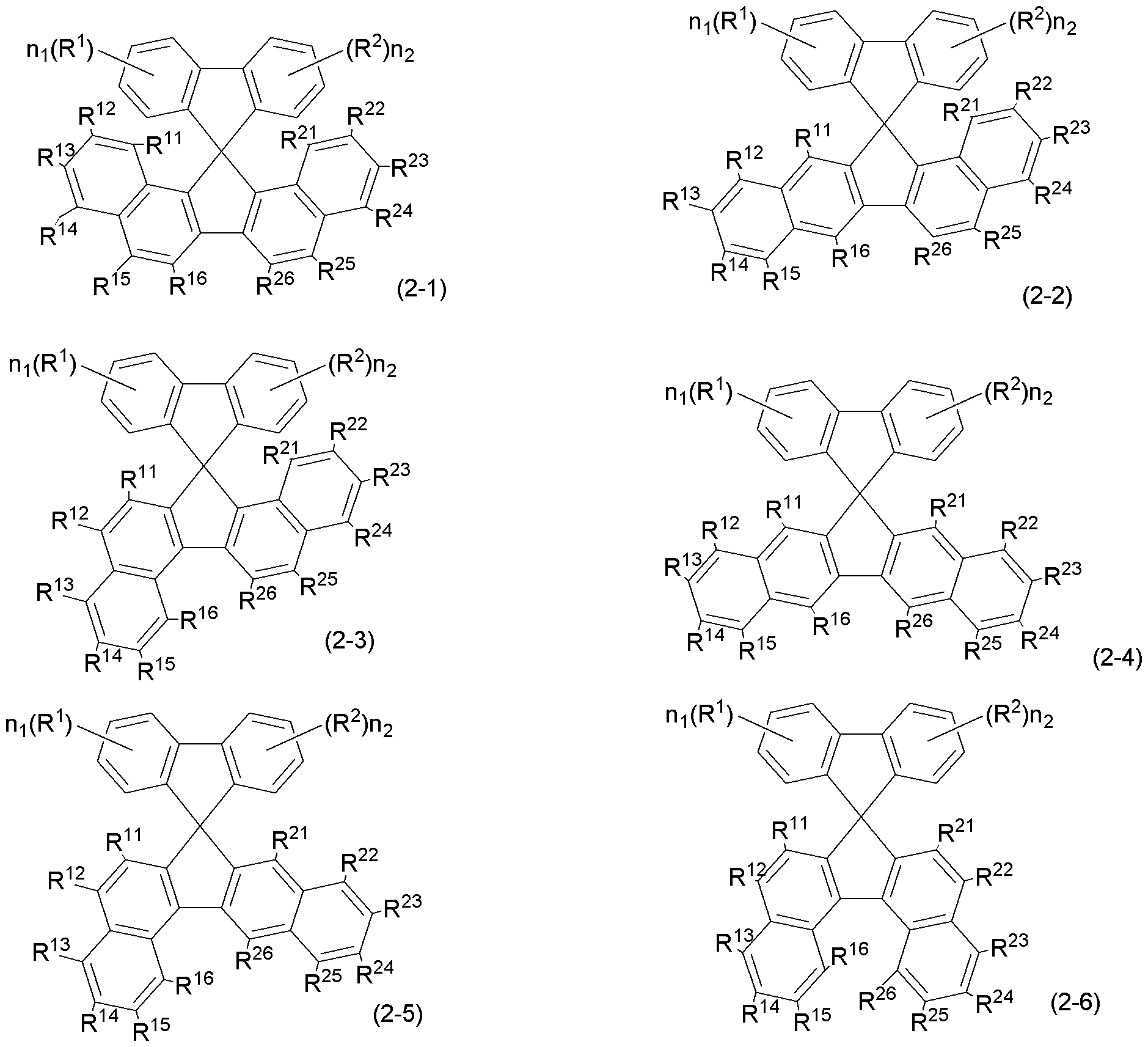
[式(2-1)~(2-6)において、R1、R2、n1、n2は前記式(1)と同じである。
R11~R16、R21~R26は、それぞれ独立に、水素原子、フッ素原子、シアノ基、置換もしくは無置換の炭素数1~20のアルキル基、置換もしくは無置換の環形成炭素数3~20のシクロアルキル基、置換もしくは無置換の炭素数1~20のアルコキシ基、置換もしくは無置換の炭素数1~20のフルオロアルキル基、置換もしくは無置換の炭素数1~20のフルオロアルコキシ基、置換もしくは無置換の環形成炭素数6~30のアリールオキシ基、置換もしくは無置換の炭素数1~20のアルキルチオ基、置換もしくは無置換の環形成炭素数6~30のアリールチオ基、-Si(R101)(R102)(R103)で表される基、又は-Z-Raで表される基である。
R101~R103、Z及びRaは、前記と同じである。
ただし、前記式(2-1)、式(2-2)、式(2-3)、式(2-4)、式(2-5)、式(2-6)において、R11~R16及びR21~R26のうちの少なくとも1つが-Z-Raで表される基である。
R1、R2を複数有する場合、該複数のR1、R2は、互いに同一でも異なっていてもよい。また、R1、R2同士が、それぞれ互いに結合して、環構造を形成してもよい。
R11~R16、R21~R26の隣接するものは、互いに結合して、環構造を形成してもよい。] - 下記式(2-7)~(2-10)のいずれかで表される、請求項1又は2に記載の化合物。

[式(2-7)~(2-10)において、R1、R2、n1、n2は前記式(1)と同じである。
R11~R16、R31~R38、R41~R48は、それぞれ独立に、水素原子、フッ素原子、シアノ基、置換もしくは無置換の炭素数1~20のアルキル基、置換もしくは無置換の環形成炭素数3~20のシクロアルキル基、置換もしくは無置換の炭素数1~20のアルコキシ基、置換もしくは無置換の炭素数1~20のフルオロアルキル基、置換もしくは無置換の炭素数1~20のフルオロアルコキシ基、置換もしくは無置換の環形成炭素数6~30のアリールオキシ基、置換もしくは無置換の炭素数1~20のアルキルチオ基、置換もしくは無置換の環形成炭素数6~30のアリールチオ基、-Si(R101)(R102)(R103)で表される基、又は-Z-Raで表される基である。
R101~R103、Z及びRaは、前記と同じである。
ただし、前記式(2-7)、式(2-8)、式(2-9)において、R11~R16及びR31~R38のうちの少なくとも1つが-Z-Raで表される基であり、式(2-10)において、R41~R48及びR31~R38のうちの少なくとも1つが-Z-Raで表される基である。
R1、R2を複数有する場合、該複数のR1、R2は、互いに同一でも異なっていてもよい。また、R1、R2同士が、それぞれ互いに結合して、環構造を形成してもよい。
R11~R16、R31~R38、R41~R48の隣接するものは、互いに結合して、環構造を形成してもよい。] - 前記-Z-Raで表される基が、下記式(a)~(c)のいずれかで表される基である、請求項2~4のいずれかに記載の化合物。
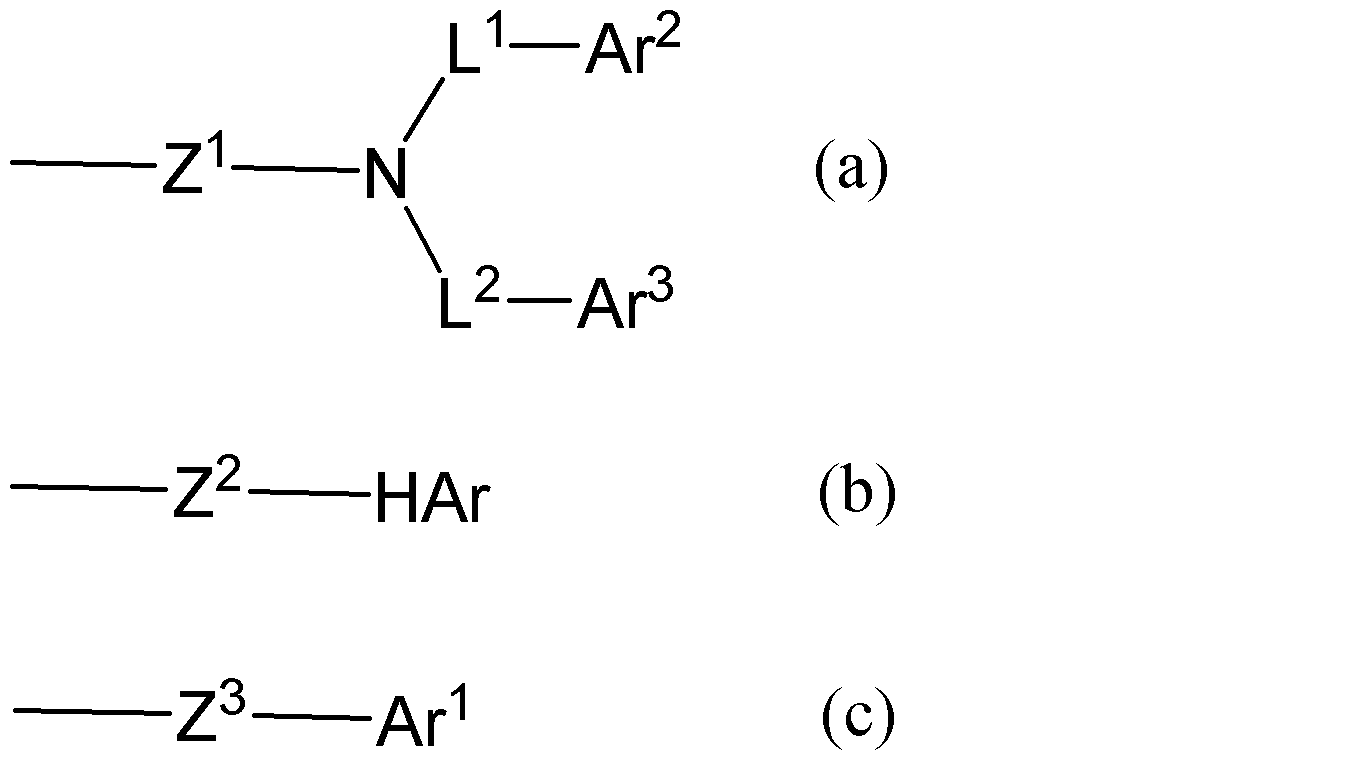
(式(a)~(c)において、Z1~Z3は、それぞれ独立に、単結合、置換もしくは無置換の環形成炭素数6~30のアリーレン基、置換もしくは無置換の環形成原子数5~30のヘテロアリーレン基又は該アリーレン基及び該ヘテロアリーレン基が2~4個連結して構成される2価の連結基を示す。
L1及びL2は、それぞれ独立に、単結合、置換もしくは無置換の環形成炭素数6~30のアリーレン基、置換もしくは無置換の環形成原子数5~30のヘテロアリーレン基、又は該アリーレン基及び該ヘテロアリーレン基が2~4個連結して構成される2価の連結基を示す。
Ar2及びAr3は、それぞれ独立に、置換もしくは無置換の環形成炭素数6~30のアリール基、又は置換もしくは無置換の環形成原子数5~30のヘテロアリール基を示す。
HArは、置換もしくは無置換の環形成原子数5~30のヘテロアリール基を示す。
Ar1は、置換もしくは無置換の環形成炭素数14~30のアリール基を示す。) - 前記式(b)中の -HArが、下記の群から選択される基のいずれかである、請求項5に記載の化合物。
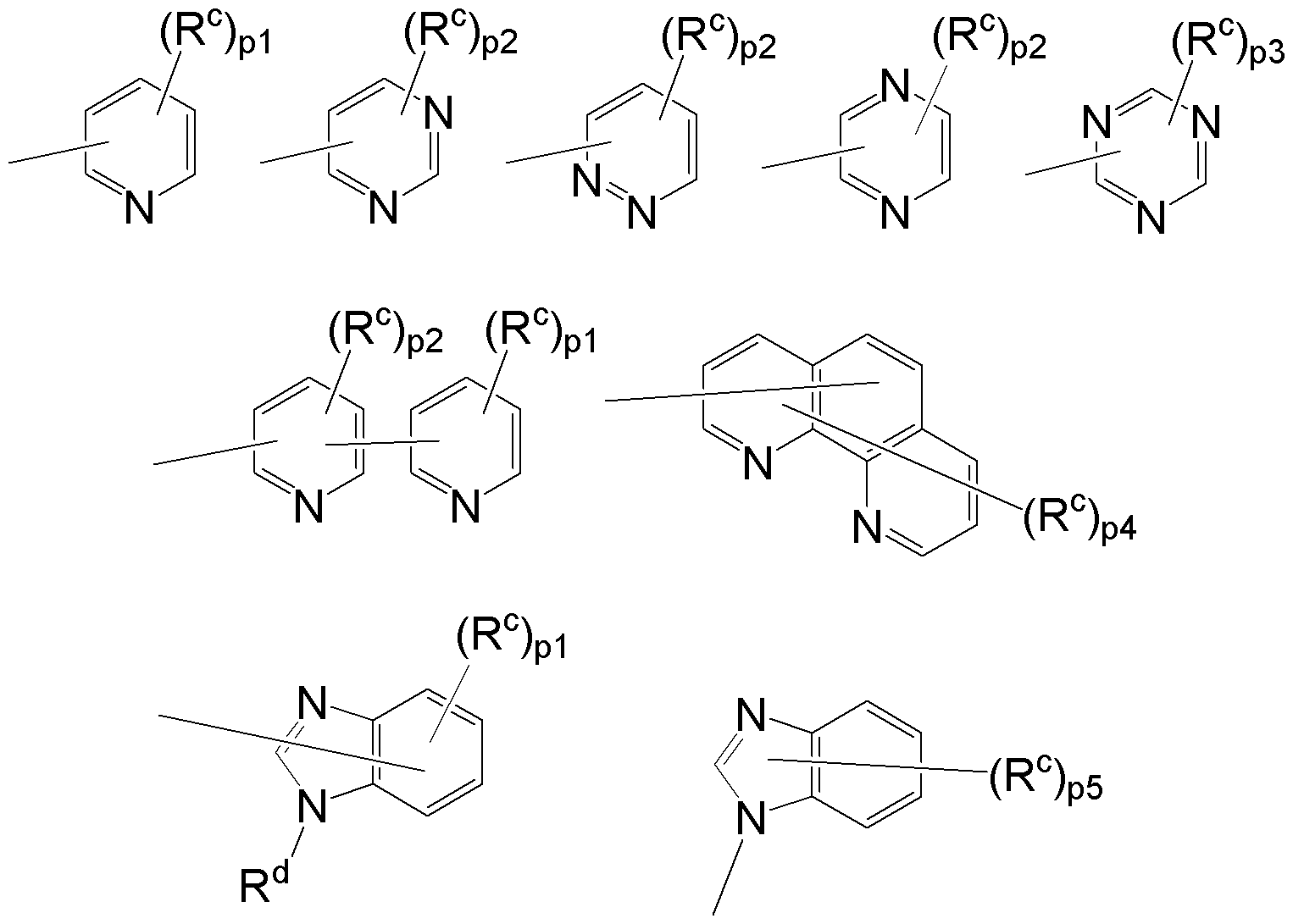
(Rcは、それぞれ独立に、フッ素原子、シアノ基、置換もしくは無置換の炭素数1~20のアルキル基、置換もしくは無置換の環形成炭素数3~20のシクロアルキル基、置換もしくは無置換の環形成炭素数6~30のアリール基、環形成炭素数6~30のアリール基を有する置換もしくは無置換の炭素数7~30のアラルキル基、アミノ基、炭素数1~20のアルキル基を有するモノ-又はジアルキルアミノ基、環形成炭素数6~30のアリール基を有するモノ又はジアリールアミノ基、置換もしくは無置換の炭素数1~30のアルコキシ基、置換もしくは無置換の環形成炭素数6~30のアリールオキシ基、置換もしくは無置換の炭素数1~20のアルキルチオ基、置換もしくは無置換の環形成炭素数6~30のアリールチオ基、炭素数1~20のアルキル基及び環形成炭素数6~30のアリール基から選ばれる基を有するモノ-、ジ-又はトリ置換シリル基、置換もしくは無置換の環形成原子数5~30のヘテロアリール基、ハロゲン原子、シアノ基又はニトロ基を示す。
各基においてRcが複数存在する場合は、それぞれが同一でも異なっていてもよい。
Rdは、水素原子、置換もしくは無置換の炭素数1~20のアルキル基、置換もしくは無置換の環形成炭素数3~20のシクロアルキル基、置換もしくは無置換の環形成炭素数6~30のアリール基、又は置換もしくは無置換の環形成原子数5~30のヘテロアリール基を示す。
p1は、それぞれ独立に0~4の整数、p2は、それぞれ独立に0~3の整数、p3は0~2の整数、p4は0~7の整数、p5は0~5の整数である。) - 前記式(2-1)、式(2-2)、式(2-3)、式(2-4)、式(2-5)、式(2-6)において、R11~R16のうちの1つが前記式(a)~(c)のいずれかで表される基であるか、又はR21~R26のうちの1つが前記式(a)~(c)のいずれかで表される基である、請求項5又は6に記載の化合物。
- 式(2-7)、式(2-8)、式(2-9)において、R11~R16のうちの1つが前記式(a)~(c)のいずれかで表される基であるか、又はR31~R38のうちの1つが前記式(a)~(c)のいずれかで表される基である、請求項5又は6に記載の化合物。
- 式(2-10)において、R41~R48のうちの1つが前記式(a)~(c)のいずれかで表される基であるか、又はR31~R38のうちの1つが前記式(a)~(c)のいずれかで表される基である、請求項5又は6に記載の化合物。
- 前記式(2-1)、式(2-2)、式(2-3)、式(2-4)、式(2-5)、式(2-6)において、R11~R16のうちの1つが前記式(a)~(c)のいずれかで表される基であり、かつR21~R26のうちの1つが前記式(a)~(c)のいずれかで表される基である、請求項5又は6に記載の化合物。
- 式(2-7)、式(2-8)、式(2-9)において、R11~R16のうちの1つが前記式(a)~(c)のいずれかで表される基であり、かつR31~R38のうちの1つが前記式(a)~(c)のいずれかで表される基である、請求項5又は6に記載の化合物。
- 式(2-10)において、R41~R48のうちの1つが前記式(a)~(c)のいずれかで表される基であり、かつR31~R38のうちの1つが前記式(a)~(c)のいずれかで表される基である、請求項5又は6に記載の化合物。
- Z1が単結合である、請求項5及び7~12のいずれかに記載の化合物。
- Ar2及びAr3が、置換もしくは無置換の環形成炭素数6~30のアリール基である、請求項5及び7~13のいずれかに記載の化合物。
- L1及びL2がいずれも単結合であって、Ar2及びAr3が、それぞれ独立に、置換もしくは無置換のフェニル基、置換もしくは無置換のナフチル基、置換もしくは無置換のフェナントリル基、置換もしくは無置換のフルオレニル基、置換もしくは無置換のジベンゾフラニル基又は置換もしくは無置換のジベンゾチオフェニル基である、請求項5及び7~14のいずれかに記載の化合物。
- 請求項1~15のいずれかに記載の化合物を含有する有機エレクトロルミネッセンス素子用材料。
- 陰極と陽極間に少なくとも発光層を含む一層又は複数層からなる有機薄膜層が挟持されている有機エレクトロルミネッセンス素子において、該有機薄膜層の少なくとも1層が、請求項1~15のいずれかに記載の化合物を含有する有機エレクトロルミネッセンス素子。
- 前記発光層が請求項1~15のいずれかに記載の化合物を含有する、請求項17に記載の有機エレクトロルミネッセンス素子。
- 前記少なくとも一層が、請求項1~15のいずれかに記載の化合物と、下記式(5)で表されるアントラセン誘導体とを含有する、請求項17又は18に記載の有機エレクトロルミネッセンス素子。

(式(5)において、Ar11及びAr12は、それぞれ独立に、置換もしくは無置換の環形成原子数5~50の単環基、又は置換もしくは無置換の環形成原子数8~50の縮合環基であり、R101~R108は、それぞれ独立に、水素原子、置換もしくは無置換の環形成原子数5~50の単環基、置換もしくは無置換の環形成原子数8~50の縮合環基、前記単環基と前記縮合環基との組合せから構成される基、置換もしくは無置換の炭素数1~50のアルキル基、置換もしくは無置換の環形成炭素数3~50のシクロアルキル基、置換もしくは無置換の炭素数1~50のアルコキシ基、置換もしくは無置換の炭素数7~50のアラルキル基、置換もしくは無置換の環形成炭素数6~50のアリールオキシ、置換もしくは無置換のシリル基、ハロゲン原子、シアノ基から選ばれる基である。) - 前記該有機薄膜層が電子輸送層を含有し、該電子輸送層が請求項1~15のいずれかに記載の化合物を含有する、請求項17に記載の有機エレクトロルミネッセンス素子。
- 前記該有機薄膜層が正孔輸送層を含有し、該正孔輸送層が請求項1~15のいずれかに記載の化合物を含有する、請求項17に記載の有機エレクトロルミネッセンス素子。
- 前記該有機薄膜層が電子輸送層を含有し、更に該電子輸送層と発光層との間に障壁層を有し、該障壁層が請求項1~15のいずれかに記載の化合物を含有する、請求項17に記載の有機エレクトロルミネッセンス素子。
- 請求項17~22のいずれかに記載の有機エレクトロルミネッセンス素子を備えた電子機器。
Priority Applications (6)
| Application Number | Priority Date | Filing Date | Title |
|---|---|---|---|
| JP2018500104A JPWO2017141876A1 (ja) | 2016-02-18 | 2017-02-13 | 有機エレクトロルミネッセンス素子及び電子機器 |
| CN201780011490.7A CN108602783A (zh) | 2016-02-18 | 2017-02-13 | 有机电致发光元件和电子设备 |
| KR1020187023492A KR20180111850A (ko) | 2016-02-18 | 2017-02-13 | 유기 전기발광 소자 및 전자 기기 |
| US16/077,966 US11552251B2 (en) | 2016-02-18 | 2017-02-13 | Organic electroluminescent element and electronic device |
| US17/733,306 US12022728B2 (en) | 2016-02-18 | 2022-04-29 | Organic electroluminescent element and electronic device |
| US18/645,413 US12492162B2 (en) | 2016-02-18 | 2024-04-25 | Organic electroluminescent element and electronic device |
Applications Claiming Priority (2)
| Application Number | Priority Date | Filing Date | Title |
|---|---|---|---|
| JP2016029057 | 2016-02-18 | ||
| JP2016-029057 | 2016-02-18 |
Related Child Applications (2)
| Application Number | Title | Priority Date | Filing Date |
|---|---|---|---|
| US16/077,966 A-371-Of-International US11552251B2 (en) | 2016-02-18 | 2017-02-13 | Organic electroluminescent element and electronic device |
| US17/733,306 Continuation US12022728B2 (en) | 2016-02-18 | 2022-04-29 | Organic electroluminescent element and electronic device |
Publications (1)
| Publication Number | Publication Date |
|---|---|
| WO2017141876A1 true WO2017141876A1 (ja) | 2017-08-24 |
Family
ID=59625123
Family Applications (1)
| Application Number | Title | Priority Date | Filing Date |
|---|---|---|---|
| PCT/JP2017/005168 Ceased WO2017141876A1 (ja) | 2016-02-18 | 2017-02-13 | 有機エレクトロルミネッセンス素子及び電子機器 |
Country Status (5)
| Country | Link |
|---|---|
| US (3) | US11552251B2 (ja) |
| JP (1) | JPWO2017141876A1 (ja) |
| KR (1) | KR20180111850A (ja) |
| CN (1) | CN108602783A (ja) |
| WO (1) | WO2017141876A1 (ja) |
Cited By (2)
| Publication number | Priority date | Publication date | Assignee | Title |
|---|---|---|---|---|
| WO2021065772A1 (ja) * | 2019-10-04 | 2021-04-08 | 出光興産株式会社 | 有機エレクトロルミネッセンス素子及び電子機器 |
| CN113121408A (zh) * | 2019-12-31 | 2021-07-16 | 陕西莱特光电材料股份有限公司 | 含氮化合物、电子元件和电子装置 |
Families Citing this family (7)
| Publication number | Priority date | Publication date | Assignee | Title |
|---|---|---|---|---|
| EP3196187A4 (en) | 2014-09-19 | 2018-04-18 | Idemitsu Kosan Co., Ltd | Novel compound |
| WO2017141876A1 (ja) | 2016-02-18 | 2017-08-24 | 出光興産株式会社 | 有機エレクトロルミネッセンス素子及び電子機器 |
| CA3298593A1 (en) * | 2016-12-02 | 2026-03-02 | The Research Foundation For The State University Of New York | Fabrication method for fused multi-layer amorphous selenium sensor |
| CN107394051B (zh) * | 2017-08-14 | 2019-12-27 | 上海天马有机发光显示技术有限公司 | 一种发光器件及显示装置 |
| EP4299564A4 (en) | 2021-02-25 | 2025-04-23 | Idemitsu Kosan Co.,Ltd. | Compound, material for organic electroluminescent elements, organic electroluminescent element and electronic device |
| CN115322189B (zh) * | 2021-09-28 | 2023-11-28 | 四川阿格瑞新材料有限公司 | 一种螺环化合物及其应用 |
| CN117069562A (zh) * | 2023-08-17 | 2023-11-17 | 北京慧采通科技有限公司 | 一种二-1-萘甲醇的合成方法 |
Citations (4)
| Publication number | Priority date | Publication date | Assignee | Title |
|---|---|---|---|---|
| KR20140115636A (ko) * | 2013-03-21 | 2014-10-01 | 덕산하이메탈(주) | 유기전기 소자용 화합물, 이를 이용한 유기전기소자 및 그 전자 장치 |
| CN105440004A (zh) * | 2015-11-10 | 2016-03-30 | 中节能万润股份有限公司 | 一种有机电致发光材料及其应用 |
| KR20160111559A (ko) * | 2015-03-16 | 2016-09-27 | 덕산네오룩스 주식회사 | 유기전기소자용 신규 화합물, 이를 이용한 유기전기소자 및 그 전자장치 |
| US20160351817A1 (en) * | 2015-05-27 | 2016-12-01 | Samsung Display Co., Ltd. | Organic light-emitting device |
Family Cites Families (10)
| Publication number | Priority date | Publication date | Assignee | Title |
|---|---|---|---|---|
| US6900458B2 (en) * | 2003-02-21 | 2005-05-31 | Universal Display Corporation | Transflective display having an OLED backlight |
| JP5030534B2 (ja) | 2006-11-01 | 2012-09-19 | 出光興産株式会社 | アミノジベンゾフルオレン誘導体及びそれを用いた有機エレクトロルミネッセンス素子 |
| CN101104676A (zh) | 2007-07-12 | 2008-01-16 | 复旦大学 | 一类含有螺旋苯并芴结构的有机聚合物材料及其应用 |
| DE102008064200A1 (de) | 2008-12-22 | 2010-07-01 | Merck Patent Gmbh | Organische Elektrolumineszenzvorrichtung |
| US9238623B2 (en) | 2011-01-17 | 2016-01-19 | Samsung Display Co., Ltd. | Condensed-cyclic compound and organic light-emitting diode including the same |
| MY171220A (en) * | 2012-06-18 | 2019-10-03 | Perusahaan Otomobil Nasional Sdn Bhd | Method and apparatus for cooling a cylinder head |
| KR20150035780A (ko) * | 2012-07-02 | 2015-04-07 | 바스프 에스이 | 가연성 가스운을 희석 및/또는 배출시키는 방법 |
| US10396288B2 (en) | 2013-09-20 | 2019-08-27 | Idemitsu Kosan Co., Ltd. | Organic electroluminescent element and electronic device |
| KR20160141361A (ko) | 2015-05-27 | 2016-12-08 | 삼성디스플레이 주식회사 | 유기 발광 소자 |
| WO2017141876A1 (ja) | 2016-02-18 | 2017-08-24 | 出光興産株式会社 | 有機エレクトロルミネッセンス素子及び電子機器 |
-
2017
- 2017-02-13 WO PCT/JP2017/005168 patent/WO2017141876A1/ja not_active Ceased
- 2017-02-13 US US16/077,966 patent/US11552251B2/en active Active
- 2017-02-13 CN CN201780011490.7A patent/CN108602783A/zh active Pending
- 2017-02-13 KR KR1020187023492A patent/KR20180111850A/ko not_active Ceased
- 2017-02-13 JP JP2018500104A patent/JPWO2017141876A1/ja active Pending
-
2022
- 2022-04-29 US US17/733,306 patent/US12022728B2/en active Active
-
2024
- 2024-04-25 US US18/645,413 patent/US12492162B2/en active Active
Patent Citations (4)
| Publication number | Priority date | Publication date | Assignee | Title |
|---|---|---|---|---|
| KR20140115636A (ko) * | 2013-03-21 | 2014-10-01 | 덕산하이메탈(주) | 유기전기 소자용 화합물, 이를 이용한 유기전기소자 및 그 전자 장치 |
| KR20160111559A (ko) * | 2015-03-16 | 2016-09-27 | 덕산네오룩스 주식회사 | 유기전기소자용 신규 화합물, 이를 이용한 유기전기소자 및 그 전자장치 |
| US20160351817A1 (en) * | 2015-05-27 | 2016-12-01 | Samsung Display Co., Ltd. | Organic light-emitting device |
| CN105440004A (zh) * | 2015-11-10 | 2016-03-30 | 中节能万润股份有限公司 | 一种有机电致发光材料及其应用 |
Cited By (3)
| Publication number | Priority date | Publication date | Assignee | Title |
|---|---|---|---|---|
| WO2021065772A1 (ja) * | 2019-10-04 | 2021-04-08 | 出光興産株式会社 | 有機エレクトロルミネッセンス素子及び電子機器 |
| CN113121408A (zh) * | 2019-12-31 | 2021-07-16 | 陕西莱特光电材料股份有限公司 | 含氮化合物、电子元件和电子装置 |
| CN113121408B (zh) * | 2019-12-31 | 2022-03-11 | 陕西莱特光电材料股份有限公司 | 含氮化合物、电子元件和电子装置 |
Also Published As
| Publication number | Publication date |
|---|---|
| US12492162B2 (en) | 2025-12-09 |
| CN108602783A (zh) | 2018-09-28 |
| US20220278283A1 (en) | 2022-09-01 |
| US20240306490A1 (en) | 2024-09-12 |
| US12022728B2 (en) | 2024-06-25 |
| JPWO2017141876A1 (ja) | 2018-12-06 |
| US11552251B2 (en) | 2023-01-10 |
| US20190051835A1 (en) | 2019-02-14 |
| KR20180111850A (ko) | 2018-10-11 |
Similar Documents
| Publication | Publication Date | Title |
|---|---|---|
| JP6346187B2 (ja) | 有機エレクトロルミネッセンス素子及び電子機器 | |
| JP6251841B1 (ja) | 新規な化合物、有機エレクトロルミネッセンス素子及び電子機器 | |
| JP6298769B2 (ja) | 含酸素縮合環アミン化合物、含硫黄縮合環アミン化合物及び有機エレクトロルミネッセンス素子 | |
| JP6278894B2 (ja) | 有機エレクトロルミネッセンス素子 | |
| KR101720444B1 (ko) | 비스카바졸 유도체 및 그것을 이용한 유기 전기발광 소자 | |
| JP6270735B2 (ja) | 芳香族アミン誘導体及び有機エレクトロルミネッセンス素子 | |
| US12492162B2 (en) | Organic electroluminescent element and electronic device | |
| JP6446362B2 (ja) | アミン化合物及び有機エレクトロルミネッセンス素子 | |
| KR20190132645A (ko) | 유기 전기발광 소자 및 전자 기기 | |
| KR20190132646A (ko) | 유기 전기발광 소자 및 전자 기기 | |
| WO2018151065A1 (ja) | 有機エレクトロルミネッセンス素子及び電子機器 | |
| KR20190132644A (ko) | 유기 전기발광 소자 및 전자 기기 | |
| KR20160018458A (ko) | 유기 전계발광소자용 재료, 이것을 이용한 유기 전계발광소자 및 전자 기기 | |
| WO2013011891A1 (ja) | 含窒素芳香族複素環誘導体およびそれを用いた有機エレクトロルミネッセンス素子 | |
| KR20180097573A (ko) | 신규 화합물, 유기 전기발광 소자용 재료 및 유기 전기발광 소자 | |
| JPWO2014192950A1 (ja) | 縮合フルオランテン化合物、これを含む有機エレクトロルミネッセンス素子用材料、並びにこれを用いた有機エレクトロルミネッセンス素子及び電子機器 | |
| WO2014054263A1 (ja) | 有機エレクトロルミネッセンス素子用材料、及びそれを用いた有機エレクトロルミネッセンス素子 | |
| JP2018046154A (ja) | 有機エレクトロルミネッセンス素子、電子機器及び化合物 |
Legal Events
| Date | Code | Title | Description |
|---|---|---|---|
| 121 | Ep: the epo has been informed by wipo that ep was designated in this application |
Ref document number: 17753133 Country of ref document: EP Kind code of ref document: A1 |
|
| ENP | Entry into the national phase |
Ref document number: 2018500104 Country of ref document: JP Kind code of ref document: A |
|
| ENP | Entry into the national phase |
Ref document number: 20187023492 Country of ref document: KR Kind code of ref document: A |
|
| NENP | Non-entry into the national phase |
Ref country code: DE |
|
| 122 | Ep: pct application non-entry in european phase |
Ref document number: 17753133 Country of ref document: EP Kind code of ref document: A1 |