WO2017138658A1 - 走行支援装置 - Google Patents
走行支援装置 Download PDFInfo
- Publication number
- WO2017138658A1 WO2017138658A1 PCT/JP2017/005008 JP2017005008W WO2017138658A1 WO 2017138658 A1 WO2017138658 A1 WO 2017138658A1 JP 2017005008 W JP2017005008 W JP 2017005008W WO 2017138658 A1 WO2017138658 A1 WO 2017138658A1
- Authority
- WO
- WIPO (PCT)
- Prior art keywords
- moving object
- host vehicle
- support device
- driving support
- vehicle
- Prior art date
- Legal status (The legal status is an assumption and is not a legal conclusion. Google has not performed a legal analysis and makes no representation as to the accuracy of the status listed.)
- Ceased
Links
Images


Classifications
-
- B—PERFORMING OPERATIONS; TRANSPORTING
- B60—VEHICLES IN GENERAL
- B60R—VEHICLES, VEHICLE FITTINGS, OR VEHICLE PARTS, NOT OTHERWISE PROVIDED FOR
- B60R21/00—Arrangements or fittings on vehicles for protecting or preventing injuries to occupants or pedestrians in case of accidents or other traffic risks
-
- G—PHYSICS
- G08—SIGNALLING
- G08G—TRAFFIC CONTROL SYSTEMS
- G08G1/00—Traffic control systems for road vehicles
- G08G1/09—Arrangements for giving variable traffic instructions
-
- G—PHYSICS
- G08—SIGNALLING
- G08G—TRAFFIC CONTROL SYSTEMS
- G08G1/00—Traffic control systems for road vehicles
- G08G1/16—Anti-collision systems
Definitions
- This disclosure relates to a technique for avoiding a collision between the host vehicle and a moving object around the host vehicle.
- a technique for avoiding a collision between the own vehicle and a moving object around the own vehicle is known. For example, when the possibility of collision between the host vehicle and the moving object is calculated based on the position and vehicle speed as the traveling information of the own vehicle and the position and speed as the movement information of the moving object, and the possibility of collision is high What operates a brake is known.
- the movement information of the moving object is detected by a detection device such as a camera or a millimeter wave radar mounted on the host vehicle.
- alarm information is sent from the first vehicle to the second vehicle.
- a technique for transmitting by wireless communication is described.
- the alarm information includes the collision risk, the position information of the first vehicle, and the traveling direction of the first vehicle.
- the second vehicle When the second vehicle receives the alarm information from the communication device of the first vehicle that is an external device, if the first vehicle that transmitted the alarm information is located behind, the vehicle starts, stops and cancels the release, or accelerates. By doing so, it tries to avoid collision with the first vehicle or reduce collision damage.
- the moving object is indirectly detected by wireless communication or the like as in the technique described in Patent Document 1.
- the reliability of the acquired movement information is considered to be low.
- One aspect of the present disclosure is directed to the host vehicle in order to avoid a collision between the host vehicle and the moving object without causing anxiety to the occupant when the in-vehicle detection device cannot detect the moving object around the host vehicle. It is desirable to be able to provide a technique for performing appropriate control on the control.
- a travel support device includes a travel information unit, a first information unit, a second information unit, a collision determination unit, a travel control unit, a presence determination unit, an early control unit, It has.
- the travel information unit acquires at least the position of the host vehicle and the vehicle speed as the travel information of the host vehicle.
- the first information unit acquires at least the position and speed of the moving object from the detection device mounted on the own vehicle as the first movement information of the moving object around the own vehicle.
- the second information unit acquires at least the position and speed of the moving object from the outside device outside the host vehicle as the second movement information of the moving object.
- the collision determination unit determines whether the host vehicle and the moving object collide based on the traveling information acquired by the traveling information unit and the first movement information acquired by the first information unit.
- the traveling control unit controls the traveling of the host vehicle to avoid the collision between the host vehicle and the moving object.
- the presence determination unit determines whether there is a moving object ahead of the traveling direction of the host vehicle based on the travel information and the second movement information acquired by the second information unit when the detection device cannot detect the moving object. Determine whether.
- the early control unit detects the moving object and the traveling control unit becomes the host vehicle. Execute early control to speed up the avoidance travel.
- the early control unit executes the early control so that the own vehicle Run avoidance at an early timing.
- the possibility of avoiding a collision is improved by appropriate control for avoiding a collision between the host vehicle and a moving object at an early stage.
- damage to the own vehicle and the moving object can be reduced.
- the host vehicle since the host vehicle does not travel avoiding until the detection device detects a moving object, it prevents the passenger from feeling uneasy when the host vehicle avoids traveling with respect to the moving object that is not detected by the detection device. Or it can be suppressed.
- symbol in the parenthesis described in the claim shows the correspondence with the specific means as described in embodiment mentioned later as one aspect, Comprising: It does not limit the technical scope of this indication. Absent.
- the block diagram which shows the driving assistance system by this embodiment.
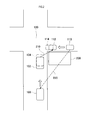
- the schematic diagram which shows the difference in the object detection timing by the presence or absence of early control.
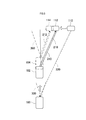
- the other schematic diagram which shows the difference in the object detection timing by the presence or absence of early control.
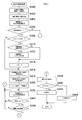
- the flowchart which shows a driving assistance process.
- the time chart which shows the process of recognizing a moving object and determining presence.
- a driving support system 2 shown in FIG. 1 is mounted on a vehicle, and includes a wireless device 10, a camera 12, a millimeter wave radar 14, a vehicle speed sensor 16, a GPS 18, a map DB device 20, and a driving support device 30.
- the own vehicle represents a vehicle on which the driving support system 2 is mounted.
- the wireless device 10 communicates wirelessly with an external device outside the host vehicle.
- the external device may be installed in any of a human, a bicycle, another vehicle having a drive source, a roadside device, and a management center.
- the camera 12 images the front, side, and rear of the host vehicle. By analyzing the image data captured by the camera 12 with an image analysis device (not shown), a moving object existing in front, side, and rear of the host vehicle is detected.
- Millimeter wave radar 14 scans a range of a predetermined angle by outputting millimeter waves to the front, side, and rear of the vehicle.
- the millimeter wave radar 14 detects the reflected wave of the irradiated millimeter wave, determines the distance to the object from the time required for the millimeter wave to reciprocate with the object that reflected the millimeter wave, and detects the reflected wave.
- the direction in which an object exists is determined from the direction of irradiation with millimeter waves.
- the vehicle speed sensor 16 detects the current vehicle speed of the host vehicle.
- the GPS 18 receives a positioning signal from a GPS satellite and measures the position of the host vehicle.
- the map data stored in the map DB device 20 includes links and nodes representing roads.
- a link connects nodes representing intersections, branch points, junctions, and the like.
- a road is constructed by connecting the links.
- Registered in the link are data such as an identification number, a link length, a latitude / longitude indicating coordinates of a start point and an end point, a road type indicating a highway, a national road, and the like, and the number of lanes.
- the driving support device 30 includes a microcomputer including a CPU and a semiconductor memory such as a RAM, a ROM, and a flash memory.
- the driving support device 30 may be equipped with one microcomputer or a plurality of microcomputers.
- Each function of the driving support device 30 is realized by the CPU executing a program stored in a non-transitional physical recording medium such as a ROM or a flash memory. By executing this program, a method corresponding to the program is executed.
- the driving support device 30 includes a driving information unit 32, a map acquisition unit 34, a first information unit 36, a second information unit 38, and a function configuration realized by the CPU executing the program.
- a presence determination unit 40, a collision determination unit 42, an avoidance amount setting unit 44, an early control unit 46, and a travel control unit 48 are provided.
- the method of realizing these elements constituting the driving support device 30 is not limited to software, and some or all of the elements are realized using hardware that combines logic circuits, analog circuits, and the like. Also good.
- the travel information unit 32, the map acquisition unit 34, the first information unit 36, the second information unit 38, the presence determination unit 40, the collision determination unit 42, the avoidance amount setting unit 44, and the early control unit The functions executed by 46 and the traveling control unit 48 will be described later.
- the powertrain system 50 controls the opening degree of the throttle device and the fuel injection amount in accordance with the drive output commanded from the driving support device 30, and the motor is used as the drive source. If it is installed, the power supplied to the motor is controlled.
- the brake system 52 controls, for example, an actuator provided in a hydraulic circuit of a hydraulic brake as a brake device according to the braking force commanded from the driving support device 30.
- the brake system 52 When the host vehicle is equipped with a motor as a drive source, the brake system 52 generates a braking force by regenerative braking by controlling power supplied to the motor in accordance with the braking force commanded from the driving support device 30. May be.
- the steering system 54 drives the steering wheel according to the torque commanded from the driving support device 30 and controls the traveling direction of the host vehicle.
- the light system 56 controls the irradiation direction and the amount of light in the case of turning on / off a light installed in the host vehicle 100 and a headlight.
- the host vehicle 100 is a vehicle that includes wheels, uses at least one of an internal combustion engine and a motor as a drive source, and can control at least one of the vehicle speed and the traveling direction by the travel support device 30.
- the moving object 110 may be any object as long as it moves.
- a human, a bicycle, and a vehicle having wheels and a drive source correspond to the moving object 110.
- the camera 12 and the millimeter wave radar 14 cannot detect the moving object 110 while the moving object 110 is blocked by the shielding object 200 with respect to the host vehicle 100.
- the camera 12 and the millimeter wave radar 14 can detect the moving object 110 moving to the position 112 as indicated by reference numeral 210.
- the hydraulic brake is activated and the braking force is increased by the own vehicle 100. There is a time delay before joining.
- the recognition coincidence for recognizing the moving object 110 is greater than or equal to the threshold value, It recognizes that the moving object 110 exists.
- the recognition coincidence is a probability when the driving support device 30 recognizes that the moving object 110 exists based on the first movement information, and is expressed as a percentage, for example.
- the driving support device 30 determines the presence of the moving object 110 when the number of times of recognition that the moving object 110 is present exceeds the threshold value because the recognition matching degree is equal to or greater than the threshold value.
- the driving support device 30 instructs at least one of the brake system 52 and the steering system 54 to cause the host vehicle 100 to avoid the vehicle by braking force or steering. Therefore, the host vehicle 100 cannot execute avoidance driving until the number of times of recognition becomes equal to or greater than the threshold value.
- the moving object 110 is moving outside the irradiation range 300 of the headlight that illuminates the front at night, at least the camera 12 of the camera 12 and the millimeter wave radar 14 is moved. Cannot be detected.
- the host vehicle 100 reaches the position 104 and the moving object 110 moves to the position 114, the moving object 110 moves to the headlight irradiation range 300, so that the camera 12 can detect the moving object 110.
- the camera 12 detects the moving object 110, and the travel support device 30 controls the travel of the host vehicle 100 so as to cause the host vehicle 100 to avoid travel by braking force or steering.
- the host vehicle 100 and the moving object 110 are close to each other. Therefore, it becomes difficult to avoid a collision between the host vehicle 100 and the moving object 110.
- the driving support device 30 wirelessly transmits the second movement information of the moving object 110 including at least the position and the moving speed of the moving object 110 from an outside apparatus other than the host vehicle 100. Obtained indirectly by communication 220. With respect to the second movement information, the movement information including at least the position and movement speed of the moving object 110 that the travel support device 30 directly acquires from the camera 12 and the millimeter wave radar 14 is set as the first movement information.
- the travel support device 30 acquires the vehicle speed of the host vehicle 100 from the vehicle speed sensor 16 and acquires the position of the host vehicle 100 based on the GPS 18 and the map data stored in the map DB device 20.
- Information including at least the position of the host vehicle 100 and the vehicle speed is travel information of the host vehicle 100.
- the driving support device 30 can detect the traveling directions of the host vehicle 100 and the moving object 110 from the change in position.
- the external device may be installed on any object as long as it is a wireless device that can wirelessly transmit the second movement information of the moving object 110.
- the moving object 110 itself may detect the position and moving speed of the moving object 110 and transmit the detected position by the wireless device.
- a roadside device that detects the position and moving speed of the moving object 110 may transmit the wireless device.
- the management center that receives the position and moving speed from the moving object 110 may transmit the wireless device.
- the driving support device 30 is based on the driving information and the second moving information. It is determined whether or not there is a moving object 110 ahead of 100 in the traveling direction.
- the traveling support device 30 when the moving object 110 exists ahead of the traveling direction of the host vehicle 100, the traveling support device 30 does not change the vehicle speed and the traveling direction as the traveling state of the host vehicle 100. And early control for avoiding a collision with the moving object 110 at an early stage.
- At least one of the camera 12 and the millimeter wave radar 14 can detect the moving object 110 in FIG. 2, and the camera 12 can detect the moving object 110 in FIG. 3, and avoid the collision between the own vehicle 100 and the moving object 110. This is control for advancing the timing at which the travel support device 30 causes the host vehicle 100 to execute travel.
- the millimeter wave radar 14 can detect the moving object 110 even when the camera 12 cannot detect the moving object 110 at night.
- the reliability of the first movement information is higher when both the camera 12 and the millimeter wave radar 14 detect the moving object 110.
- both the camera 12 and the millimeter wave radar 14 are blocked by the shield 200 and cannot detect the moving object 110, and the moving object 110 exists ahead of the traveling direction of the host vehicle 100 by the wireless communication 220. Then, the following (1) to (3) can be considered as the early control executed when the driving support device 30 determines.
- the driving support device 30 instructs the brake system 52 to apply a driving force to the brake device from the drive source of the brake device within a range where the brake device does not operate. For example, if the brake device is a hydraulic brake, the travel support device 30 applies hydraulic pressure to the hydraulic brake within a range where the hydraulic brake is activated and no braking force is applied to the host vehicle 100.
- the driving support device 30 acquires the first movement information of the moving object 110 from at least one of the camera 12 and the millimeter wave radar 14, and detects the presence of the moving object 110 based on the acquired first movement information. In order to recognize and determine the presence, the threshold value to be compared with the recognition coincidence of the moving object 110 is reduced.
- the driving support device 30 acquires the first movement information from at least one of the camera 12 and the millimeter wave radar 14, and recognizes the presence of the moving object 110 based on the acquired first movement information.
- the threshold value of the number of times of recognition of the moving object 110 required for determining is reduced.
- the moving object 110 moves to the position 112, and at least one of the camera 12 and the millimeter wave radar 14 can detect the moving object 110, (2
- the presence of the moving object 110 can be recognized at an early timing by early control.
- the moving object 110 moves to the position 112, and at least one of the camera 12 and the millimeter wave radar 14 can detect the moving object 110, (3 The presence of the moving object 110 can be determined at an early timing by the early control of).
- the driving support device 30 instructs the brake system 52 to apply the hydraulic pressure to the hydraulic brake, the hydraulic brake is activated earlier.
- the driving support device 30 instructs the steering system 54, and the timing for starting the steering in a direction to avoid the collision with the moving object 110 is advanced. That is, the host vehicle 100 can execute avoidance traveling at an early stage.
- the support device 30 executes the following early control (4).
- the driving support device 30 irradiates the headlight in the direction in which the moving object 110 exists based on the driving information of the host vehicle 100 and the second movement information.
- the moving object 110 is illuminated in the irradiation range 310 of the headlight, so that the camera 12 that has not detected the moving object 110 can move the moving object 110.
- the timing at which it becomes possible to detect is earlier.
- the camera 12 quickly moves the moving object 110 as indicated by reference numeral 210. It can be detected.
- the hydraulic brake operation timing and the steering start timing are advanced, so that the host vehicle 100 can execute avoidance travel at an early stage.
- the driving support device 30 acquires and executes the second movement information from the outside device by the non-communication communication 220.
- the driving support device 30 increases the light amount of the headlight, for example, by using a high beam.
- the driving support device 30 executes the early control (5), the amount of light of the headlight irradiated on the moving object 110 increases.
- the camera 12 can detect the moving object 110 earlier than the amount of the headlight irradiated to the moving object 110 increases as the distance between the own vehicle 100 and the moving object 110 approaches. 100 can execute avoidance traveling at an early stage.
- Driving support processing The driving support processing executed by the driving support device 30 to avoid a collision between the host vehicle 100 and the moving object 110 will be described based on the flowchart shown in FIG.
- early control is executed when at least the camera 12 of the camera 12 and the millimeter wave radar 14 cannot detect the moving object 110.
- the driving support process in FIG. 4 is always executed.
- “S” represents a step.
- the map acquisition unit 34 acquires the current position of the host vehicle 100 from the GPS 18, and maps the position of the host vehicle 100 on the map data acquired from the map DB device 20.
- the travel information unit 32 acquires the vehicle speed of the host vehicle 100 from the vehicle speed sensor 16, and acquires the position of the host vehicle 100 mapped on the map data by the map acquisition unit 34.
- the second information unit 38 acquires second movement information that the wireless device 10 receives from the device outside the vehicle by wireless communication.
- the presence determination unit 40 determines whether the moving object 110 to be avoided exists ahead of the traveling direction of the host vehicle 100 when at least the camera 12 of the camera 12 and the millimeter wave radar 14 cannot detect the moving object 110. Determine whether. The presence determination unit 40 determines whether or not the moving object 110 exists based on the traveling information and the second movement information.
- the early control unit 46 is lighting the headlight in S408. It is determined whether or not. If the determination in S408 is No and the headlight is not lit, the process proceeds to S416.
- the early control unit 46 determines whether or not the position of the moving object 110 has been acquired from the second movement information. Depending on the second movement information, there may be a case where only the moving object 110 exists in front of the traveling direction of the host vehicle 100 and the accurate position is not shown.
- the early control unit 46 instructs the light system 56 in S412 to irradiate the moving object 110 with a headlight.
- the early control unit 46 instructs the light system 56 to change to a high beam if the headlight is a low beam.
- the early control unit 46 reduces the threshold to be compared with the recognition coincidence of the moving object 110 in order to recognize the presence of the moving object 110 based on the first movement information and determine the presence.
- the early control unit 46 recognizes the presence of the moving object 110 based on the first movement information, and reduces the threshold of the number of times the moving object 110 is recognized to determine the presence.
- the recognition of the moving object 110 when the threshold value to be compared with the recognition coincidence degree of the moving object 110 is reduced in S416 and the threshold value of the number of times of recognition of the moving object 110 is reduced in S418 will be described based on FIG. .
- FIG. 5 is a time chart showing the state in which the moving object 110 comes out from behind the shield 200 as time passes, and the process in which the moving object 110 is recognized and the existence of the moving object 110 is determined. Shown in the bottom row.
- the threshold value to be compared with the recognition coincidence does not change, and the number of times of recognition for determining the presence of the moving object 110 remains unchanged at 5 times surrounded by a square frame.
- the collision determination unit 42 receives the timing T3. First, it is recognized that the moving object 110 exists.
- the collision determination unit 42 recognizes that the moving object 110 is first present at the timing T5. Therefore, if the threshold value compared with the recognition coincidence of the moving object 110 is reduced, the moving object 110 can be recognized at an early timing. As a result, even when the recognition threshold value is the same five times, the timing at which the moving object 110 is determined to be in front of the traveling direction of the host vehicle 100 is accelerated from T9 to T7.
- the timing for recognizing that the moving object 110 exists remains T3.
- the timing at which the moving object 110 is determined to be in front of the traveling direction of the host vehicle 100 is accelerated from T7 to T5.
- the early control unit 46 instructs the brake system 52 to preliminarily apply hydraulic pressure as a driving force to the hydraulic brake within a range where the hydraulic brake is not activated.
- the first information unit 36 acquires first movement information from the camera 12 and the millimeter wave radar 14.
- the collision determination unit 42 determines whether the moving object 110 is recognized and detected based on the first movement information.
- the collision determination unit 42 in S424 has an earlier timing of the moving object 110 than when the threshold value to be compared with the recognition coincidence degree is not reduced. Recognize existence. If the determination in S424 is No and the moving object 110 has not been detected, the process returns to S422.
- the determination of the collision determination unit 42 in S426 reduces the threshold of the number of times of recognition. It becomes Yes at a timing earlier than the case where it is not. If the determination in S426 is Yes, the presence of the moving object 110 is confirmed.
- the collision determination unit 42 calculates the possibility of collision between the host vehicle 100 and the moving object 110 in S428. Specifically, the collision determination unit 42 is based on the first movement information of the moving object 110 acquired from the camera 12 and the millimeter wave radar 14 and the traveling information of the own vehicle 100, TTC, which is the estimated time until the collision occurs. TTC is an abbreviation for Time to Collision. The collision determination unit 42 determines that the first possibility that the host vehicle 100 and the moving object 110 collide is higher as the TTC is shorter.
- the collision determination unit 42 determines whether or not the host vehicle 100 and the moving object 110 collide. When the possibility of collision between the host vehicle 100 and the moving object 110 is high and is equal to or higher than a predetermined threshold, the collision determination unit 42 determines that the host vehicle 100 and the moving object 110 collide.
- a process transfers to S434.
- the traveling control unit 48 determines the own vehicle 100 and the moving object 110 based on the avoidance amount set by the avoidance amount setting unit 44.
- the host vehicle 100 is caused to perform avoidance traveling that avoids a collision with the vehicle.
- the avoidance amount setting unit 44 controls the travel of the host vehicle 100 by the travel control unit 48 in order to avoid a collision between the host vehicle 100 and the moving object 110 based on the collision possibility determined by the collision determination unit 42. Set the avoidance amount for avoiding travel.
- the driving support device 30 sets the accelerator off state even if the driver depresses the accelerator pedal by instructing the powertrain system 50 as the first avoidance driving by the braking force. That is, when the drive source is an internal combustion engine, the throttle opening is fully closed and the injection amount of the injector becomes zero.
- the driving support device 30 cuts off power supply to the motor when the drive source is a motor.
- the travel support device 30 instructs the brake system 52 to operate the hydraulic brake as avoidance travel by braking force.
- the traveling support device 30 commands the steering system 54 as the avoidance traveling by steering, and operates the steering in a direction avoiding the moving object 110.
- the support device 30 executes early control that accelerates the timing of executing avoidance travel.
- the host vehicle 100 is driven at an earlier timing than when the host vehicle 100 is controlled to avoid and travel without performing early control. 100 can be avoided.
- the possibility of avoiding the collision is improved by appropriate control for avoiding the collision between the host vehicle 100 and the moving object 110.
- damage to the host vehicle 100 and the moving body 110 can be reduced.
- the moving object 110 can be detected at an early timing by a detection device itself mounted on the own vehicle such as the camera 12 and the millimeter wave radar 14, thereby avoiding the own vehicle 100 at an early timing. It is also conceivable to execute traveling.
- a camera when a position where a moving object is present is acquired from a roadside device or the like by wireless communication, it may be possible to narrow the viewing angle of the camera toward the position where the moving object exists.
- the number of pixels assigned to the narrowed viewing angle becomes larger than before narrowing the viewing angle.
- the detected wave signal intensity of the radar is increased in the direction in which the moving object exists in the direction in which the moving object does not exist. Can be considered.
- the distance over which the moving object can be detected by the radar becomes longer, so that a distant moving object can be detected at an early timing.
- the detection device itself such as the camera or radar moves It is necessary to have a function that can change the detection accuracy for an object. Therefore, a detection apparatus that does not have a function capable of changing the detection accuracy cannot detect a moving object at an early timing by changing the detection accuracy.
- the detection accuracy of the detection device itself such as the camera 12 and the millimeter wave radar 14 is not changed, and the presence of the moving object 110 is recognized at an earlier timing by processing other than the change of the detection accuracy of the detection device. Thus, the presence of the moving object 110 is confirmed.
- the host vehicle 100 can perform avoidance traveling at an early timing even when a detection device that does not have a function of changing detection accuracy is used.
- the detection accuracy of the detection device itself can be changed, the presence of the moving object 110 can be determined by recognizing the presence of the moving object 110 at an earlier timing by improving the detection accuracy.
- the host vehicle 100 Since the host vehicle 100 does not travel avoiding until the camera 12 and the millimeter wave radar 14 detect the moving object 110, the host vehicle 100 does not detect the moving object 110 detected by the camera 12 and the millimeter wave radar 14. It is possible to prevent or suppress 100 from executing avoidance travel and giving an uneasiness to the occupant.
- the camera 12 and the millimeter wave radar 14 correspond to a detection device.
- S402 corresponds to the processing as the travel information unit 32
- S404 corresponds to the processing as the second information unit 38
- S406 corresponds to the processing as the presence determination unit 40
- S408 to S420 and S434 are early.
- S422 corresponds to processing as the first information unit 36
- S424 to S430 correspond to processing as the collision determination unit 42
- S432 as processing as the travel control unit 48.
- the driving support device 30 may execute at least one early control instead of all the early controls (1) to (5) described in the above embodiment.
- the driving support device 30 is used when at least the camera 12 of the camera 12 and the millimeter wave radar 14 cannot detect the moving object 110 regardless of the cause that the moving object 110 cannot be detected. Performed early control.
- the cause that the moving object 110 cannot be detected may be classified into, for example, a cause caused by the shield 200 and a cause caused by the night. And if it is a cause resulting from the shielding object 200, when both the camera 12 and the millimeter wave radar 14 cannot detect the moving object 110, the driving assistance device 30 performs early control. If the cause is due to the night, the driving support device 30 executes early control at least when the camera 12 cannot detect the moving object 110.
- a plurality of functions of one constituent element in the above embodiment may be realized by a plurality of constituent elements, or a single function of one constituent element may be realized by a plurality of constituent elements. Further, a plurality of functions possessed by a plurality of constituent elements may be realized by one constituent element, or a single function possessed by a plurality of constituent elements may be realized by one constituent element. Moreover, you may abbreviate
- a driving support system including the driving support device, a driving support program for causing a computer to function as the driving support device, a recording medium storing the driving support program, a driving support method, and the like
- the present disclosure can be realized in various forms.
Landscapes
- Physics & Mathematics (AREA)
- General Physics & Mathematics (AREA)
- Engineering & Computer Science (AREA)
- Mechanical Engineering (AREA)
- Traffic Control Systems (AREA)
Abstract
走行支援装置(30)は、走行情報部(32、S402)と、第1の情報部(36、S422)と、第2の情報部(38、S404)と、衝突判定部(42、S424~S430)と、走行制御部(48、S432)と、存在判定部(40、S406)と、早期制御部(46、S408~S420、S434)とを備える。早期制御部は、自車両に搭載された検出装置が移動物体を検出できない場合に自車両の進行方向前方に移動物体が存在すると存在判定部が判定すると、検出装置が移動物体を検出して走行制御部が自車両に回避走行をさせるタイミングを早くする早期制御を実行する。
Description
本国際出願は、2016年2月10日に日本国特許庁に出願された日本国特許出願第2016-023908号と、2017年1月24日に日本国特許庁に出願された日本国特許出願第2017-010549号とに基づく優先権を主張するものであり、日本国特許出願第2016-023908号の全内容と第2017-010549号の全内容とを参照により本国際出願に援用する。
本開示は、自車両と自車両の周囲の移動物体との衝突を回避する技術に関する。
自車両と自車両の周囲の移動物体との衝突を回避する技術が知られている。例えば、自車両の走行情報である位置と車速、ならびに移動物体の移動情報である位置と速度に基づいて、自車両と移動物体とが衝突する可能性を算出し、衝突可能性が高い場合にブレーキを作動させるものが知られている。移動物体の移動情報は、自車両に搭載されたカメラ、ミリ波レーダ等の検出装置により検出される。
下記特許文献1には、第1の車両と第1の車両の進行方向に存在する第2の車両との衝突危険度が閾値以上の場合、第1の車両から第2の車両に警報情報を無線通信により送信する技術が記載されている。警報情報には、衝突危険度と、第1の車両の位置情報と、第1の車両の進行方向と、が含まれる。
第2の車両は、車外装置である第1の車両の通信装置から警報情報を受信すると、警報情報を送信した第1の車両が後方に位置している場合、発進、停止保持解除または加速を行うことにより、第1の車両との衝突を回避するか衝突被害を軽減しようとしている。
カメラ、ミリ波レーダ等の車載の検出装置から自車両の周囲の移動物体の移動情報を直接取得する場合に比べ、特許文献1に記載の技術のように無線通信等により間接的に移動物体の移動情報を取得する場合、取得する移動情報の信頼性は低いと考えられる。
発明者の詳細な検討の結果、間接的に取得する自車両の周囲の移動物体の移動情報に基づいて、自車両自体がブレーキや操舵を制御して移動物体との衝突を回避すると、衝突しない移動物体に対して自車両に不要な回避走行をさせる可能性があるという課題が見出された。さらに、検出装置が検出できていない移動物体に対して自車両が回避走行を実行すると、乗員が不安を感じるという課題が見出された。
一方、間接的に取得する移動物体の移動情報の信頼性は低いとはいえ、自車両と移動物体とが衝突する可能性はあるから、自車両と移動物体とが衝突することを回避するために何らかの制御をすることが望ましい。
本開示の一態様は、車載の検出装置が自車両の周囲の移動物体を検出できない場合に、乗員に不安感を与えることなく、自車両と移動物体との衝突を回避するために自車両に対して適切な制御を実行する技術を提供できることが望ましい。
本開示の一態様における走行支援装置は、走行情報部と、第1の情報部と、第2の情報部と、衝突判定部と、走行制御部と、存在判定部と、早期制御部と、を備えている。
走行情報部は、自車両の走行情報として少なくとも自車両の位置と車速とを取得する。第1の情報部は、自車両の周囲の移動物体の第1の移動情報として少なくとも移動物体の位置と速度とを自車両に搭載された検出装置から取得する。第2の情報部は、移動物体の第2の移動情報として少なくとも移動物体の位置と速度とを自車両の外部の車外装置から取得する。
走行情報部は、自車両の走行情報として少なくとも自車両の位置と車速とを取得する。第1の情報部は、自車両の周囲の移動物体の第1の移動情報として少なくとも移動物体の位置と速度とを自車両に搭載された検出装置から取得する。第2の情報部は、移動物体の第2の移動情報として少なくとも移動物体の位置と速度とを自車両の外部の車外装置から取得する。
衝突判定部は、走行情報部が取得する走行情報と第1の情報部が取得する第1の移動情報とに基づいて、自車両と移動物体とが衝突するか否かを判定する。走行制御部は、衝突判定部が自車両と移動物体とが衝突すると判定すると、自車両と移動物体との衝突を回避するために自車両の走行を制御して回避走行をさせる。
存在判定部は、検出装置が移動物体を検出できない場合に走行情報と第2の情報部が取得する第2の移動情報とに基づいて、自車両の進行方向前方に移動物体が存在するか否かを判定する。早期制御部は、検出装置が移動物体を検出できない場合に自車両の進行方向前方に移動物体が存在すると存在判定部が判定すると、検出装置が移動物体を検出して走行制御部が自車両に回避走行をさせるタイミングを早くする早期制御を実行する。
この構成によれば、検出装置が移動物体を検出できない場合に自車両の進行方向前方に移動物体が存在すると存在判定部が判定すると、早期制御部が早期制御を実行することにより、自車両は早いタイミングで回避走行を実行する。このように、本開示の一態様では、自車両と移動物体との衝突を早期に回避するための適切な制御により、衝突を回避する可能性が向上する。また、たとえ自車両と移動物体とが衝突したとしても自車両および移動物体への損害を低減できる。
また、検出装置が移動物体を検出するまで自車両は回避走行をしないので、検出装置が検出していない移動物体に対して自車両が回避走行をすることにより乗員に不安感を与えることを防止または抑制できる。
尚、請求の範囲に記載した括弧内の符号は、一つの態様として後述する実施形態に記載の具体的手段との対応関係を示すものであって、本開示の技術的範囲を限定するものではない。
尚、請求の範囲に記載した括弧内の符号は、一つの態様として後述する実施形態に記載の具体的手段との対応関係を示すものであって、本開示の技術的範囲を限定するものではない。
以下、本開示が適用された実施形態を図に基づいて説明する。
[1.構成]
図1に示す走行支援システム2は、車両に搭載されており、無線装置10と、カメラ12と、ミリ波レーダ14と、車速センサ16と、GPS18と、地図DB装置20と、走行支援装置30と、パワートレインシステム50と、ブレーキシステム52と、ステアリングシステム54と、ライトシステム56とを備えている。自車両は、走行支援システム2を搭載している車両を表している。
[1.構成]
図1に示す走行支援システム2は、車両に搭載されており、無線装置10と、カメラ12と、ミリ波レーダ14と、車速センサ16と、GPS18と、地図DB装置20と、走行支援装置30と、パワートレインシステム50と、ブレーキシステム52と、ステアリングシステム54と、ライトシステム56とを備えている。自車両は、走行支援システム2を搭載している車両を表している。
無線装置10は、自車両の外部の車外装置と無線通信する。車外装置は、人間、自転車、駆動源を備える他車両、路側装置、管理センターのいずれに設置されていてもよい。
カメラ12は自車両の前方と側方と後方とを撮像するものである。カメラ12が撮像した画像データが図示しない画像解析装置で解析されることにより、自車両の前方と側方と後方とに存在する移動物体が検出される。
カメラ12は自車両の前方と側方と後方とを撮像するものである。カメラ12が撮像した画像データが図示しない画像解析装置で解析されることにより、自車両の前方と側方と後方とに存在する移動物体が検出される。
ミリ波レーダ14は、自車両の前方と側方と後方とにミリ波を出力して所定角度の範囲をスキャンする。ミリ波レーダ14は、照射したミリ波の反射波を検出し、ミリ波を反射した物体との間をミリ波が往復するのに要した時間から物体までの距離を求め、反射波を検出したときにミリ波を照射した方向から物体が存在する方位を求める。
尚、ミリ波レーダ14等の電磁波を照射するレーダに代えて、レーザ光を照射するLIDARを使用してもよい。
車速センサ16は自車両の現在車速を検出する。GPS18は、GPS衛星から測位信号を受信して自車両の位置を測位する。
車速センサ16は自車両の現在車速を検出する。GPS18は、GPS衛星から測位信号を受信して自車両の位置を測位する。
地図DB装置20に記憶されている地図データには、道路を表わすリンクとノードとが含まれる。リンクは、交差点、分岐点、合流点等を表すノード間を接続するものである。各リンクを接続することにより道路が構成される。リンクには、識別番号、リンク長、始点および終点の座標を表わす緯度経度、高速道路や国道等を表わす道路種別、車線数等のデータが登録されている。
走行支援装置30は、CPUと、RAM、ROM、フラッシュメモリ等の半導体メモリとを備えるマイクロコンピュータを搭載している。尚、走行支援装置30は、1つのマイクロコンピュータを搭載してもよいし、複数のマイクロコンピュータを搭載してもよい。
走行支援装置30の各機能は、CPUがROMまたはフラッシュメモリ等の非遷移的実体的記録媒体に記憶されているプログラムを実行することにより実現される。このプログラムが実行されることにより、プログラムに対応する方法が実行される。
走行支援装置30は、CPUがプログラムを実行することで実現される機能の構成として、走行情報部32と、地図取得部34と、第1の情報部36と、第2の情報部38と、存在判定部40と、衝突判定部42と、回避量設定部44と、早期制御部46と、走行制御部48とを備えている。
走行支援装置30を構成するこれらの要素を実現する手法は、ソフトウェアに限るものではなく、一部の要素または全部の要素を、論理回路やアナログ回路等を組み合わせたハードウェアを用いて実現してもよい。走行情報部32と、地図取得部34と、第1の情報部36と、第2の情報部38と、存在判定部40と、衝突判定部42と、回避量設定部44と、早期制御部46と、走行制御部48と、がそれぞれ実行する機能については後述する。
パワートレインシステム50は、走行支援装置30から指令される駆動出力にしたがって、駆動源として内燃機関を搭載している場合にはスロットル装置の開度および燃料噴射量を制御し、駆動源としてモータを搭載している場合にはモータへの供給電力を制御する。
ブレーキシステム52は、走行支援装置30から指令される制動力にしたがって、ブレーキ装置として、例えば油圧ブレーキの液圧回路に設けられたアクチュエータを制御する。自車両が駆動源としてモータを搭載している場合には、ブレーキシステム52は、走行支援装置30から指令される制動力にしたがって、モータへの供給電力を制御して回生ブレーキによる制動力を生成してもよい。
ステアリングシステム54は、走行支援装置30から指令されるトルクにしたがってステアリングハンドルを駆動し、自車両の進行方向を制御する。
ライトシステム56は、自車両100に設置されているライトの点灯、消灯、ヘッドライトの場合には照射方向と光量とを制御する。
ライトシステム56は、自車両100に設置されているライトの点灯、消灯、ヘッドライトの場合には照射方向と光量とを制御する。
[2.処理]
(1)処理の概略
図2と図3とに示す状況を例にして、走行支援装置30が実行する走行支援処理について説明する。
(1)処理の概略
図2と図3とに示す状況を例にして、走行支援装置30が実行する走行支援処理について説明する。
図2では、自車両100が例えば建造物等の遮蔽物200のために見通しの悪い交差点120に向かって走行しているときに、自車両100の進行方向前方の移動物体110が、遮蔽物200の陰から同じ交差点120に向かって移動している。
図3では、例えば夜間にヘッドライトを点灯している場合、自車両100の進行方向前方を進行方向と交差する方向に移動物体110が移動している。
自車両100は、車輪を備え、内燃機関およびモータの少なくとも一方を駆動源とし、少なくとも車速と進行方向とのいずれかを走行支援装置30が制御できる車両である。
自車両100は、車輪を備え、内燃機関およびモータの少なくとも一方を駆動源とし、少なくとも車速と進行方向とのいずれかを走行支援装置30が制御できる車両である。
移動物体110は、移動するものであればどのような物体でもよい。例えば、人間と、自転車と、車輪と駆動源とを有する車両とが移動物体110に対応する。
図2に示すように、自車両100に対し移動物体110が遮蔽物200に遮られている間、カメラ12とミリ波レーダ14とは移動物体110を検出できない。自車両100が位置102に到達すると、カメラ12とミリ波レーダ14とは位置112に移動している移動物体110を符号210が示すように検出できる。
図2に示すように、自車両100に対し移動物体110が遮蔽物200に遮られている間、カメラ12とミリ波レーダ14とは移動物体110を検出できない。自車両100が位置102に到達すると、カメラ12とミリ波レーダ14とは位置112に移動している移動物体110を符号210が示すように検出できる。
しかし、位置102でカメラ12とミリ波レーダ14との少なくとも一方が移動物体110を検出し、走行支援装置30がブレーキシステム52に指令しても、油圧ブレーキが作動して制動力が自車両100に加わるまでに時間遅れが生じる。
その結果、自車両100が位置104に到達し、移動物体110が位置114に移動してから制動力が遅れて自車両100に加わるので、自車両100と移動物体110との衝突を回避することが困難になる。
また、走行支援装置30は、カメラ12とミリ波レーダ14との少なくとも一方から第1の移動情報を取得する毎に、移動物体110であると認識するための認識一致度が閾値以上の場合、移動物体110が存在すると認識する。
認識一致度は、第1の移動情報に基づいて移動物体110が存在すると走行支援装置30が認識するときの確からしさであり、例えばパーセント等の割合で表される。そして、走行支援装置30は、認識一致度が閾値以上であるから移動物体110が存在すると認識する認識回数が閾値以上になると移動物体110の存在を確定する。
移動物体110の存在が確定すると、走行支援装置30は、ブレーキシステム52とステアリングシステム54との少なくとも一方に指令して、制動力や操舵で自車両100に回避走行をさせる。したがって、認識回数が閾値以上になるまで、自車両100は回避走行を実行できない。
図3では、夜間に前方を照らしているヘッドライトの照射範囲300から外れた位置を移動物体110が移動しているために、カメラ12とミリ波レーダ14とのうち少なくともカメラ12が移動物体110を検出できない。自車両100が位置104に達し、移動物体110が位置114に移動すると、ヘッドライトの照射範囲300に移動物体110が移動するので、カメラ12は動物体110を検出できる。
しかし、位置104で符号212が示すようにカメラ12が移動物体110を検出し、走行支援装置30が自車両100の走行を制御して制動力や操舵で自車両100に回避走行をさせようとしても、自車両100と移動物体110とは接近している。したがって、自車両100と移動物体110との衝突を回避することが困難になる。
そこで、図2および図3に示すように、走行支援装置30は、移動物体110の位置と移動速度とを少なくとも含む移動物体110の第2の移動情報を、自車両100以外の車外装置から無線通信220により間接的に取得する。第2の移動情報に対し、走行支援装置30がカメラ12とミリ波レーダ14とから直接取得する移動物体110の位置と移動速度とを少なくとも含む移動情報を第1の移動情報とする。
走行支援装置30は、自車両100の車速を車速センサ16から取得し、自車両100の位置をGPS18と地図DB装置20に記憶されている地図データとに基づいて取得する。自車両100の位置と車速とを少なくとも含む情報が、自車両100の走行情報である。
走行支援装置30は、自車両100と移動物体110とのそれぞれの進行方向を、位置の変化から検出できる。
車外装置は、移動物体110の第2の移動情報を無線で送信できる無線装置であれば、どのような物体に設置されていてもよい。図2および図3に示すように、移動物体110自身が移動物体110の位置と移動速度とを検出して無線装置で送信してもよい。移動物体110の位置と移動速度とを検出する路側機が無線装置で送信してもよい。移動物体110から位置および移動速度を受信する管理センターが無線装置で送信してもよい。
車外装置は、移動物体110の第2の移動情報を無線で送信できる無線装置であれば、どのような物体に設置されていてもよい。図2および図3に示すように、移動物体110自身が移動物体110の位置と移動速度とを検出して無線装置で送信してもよい。移動物体110の位置と移動速度とを検出する路側機が無線装置で送信してもよい。移動物体110から位置および移動速度を受信する管理センターが無線装置で送信してもよい。
走行支援装置30は、図2ではカメラ12とミリ波レーダ14との両方が、図3ではカメラ12が移動物体110を検出できない場合、走行情報と第2の移動情報とに基づいて、自車両100の進行方向前方に移動物体110が存在するか否かを判定する。
そして、図2および図3において走行支援装置30は、自車両100の進行方向前方に移動物体110が存在する場合、自車両100の走行状態として車速および進行方向を変化させずに、自車両100と移動物体110との衝突を早期に回避するための早期制御を実行する。
早期制御は、図2ではカメラ12とミリ波レーダ14との少なくとも一方が、図3ではカメラ12が移動物体110を検出できるようになり、自車両100と移動物体110との衝突を回避する回避走行を走行支援装置30が自車両100に実行させるタイミングを早めるための制御である。
尚、図3に示すように、夜間でカメラ12が移動物体110を検出できない場合にも、ミリ波レーダ14は移動物体110を検出できる。しかし、カメラ12とミリ波レーダ14との両方が移動物体110を検出する方が第1の移動情報の信頼性は高くなる。また、カメラ12だけを搭載し、ミリ波レーダ14を搭載しない車両の場合には、カメラ12が移動物体110を早く検出できるようにすることが望ましい。
図2に示すように、遮蔽物200に遮られてカメラ12とミリ波レーダ14との両方が移動物体110を検出できず、無線通信220により自車両100の進行方向前方に移動物体110が存在すると走行支援装置30が判定する場合に実行される早期制御として、以下の(1)~(3)が考えられる。
(1)走行支援装置30は、ブレーキシステム52に指令して、ブレーキ装置が作動しない範囲内で、ブレーキ装置の駆動源からブレーキ装置に駆動力を加える。例えば、ブレーキ装置が油圧ブレーキであれば、走行支援装置30は、油圧ブレーキが作動して自車両100に制動力が加わらない範囲で油圧ブレーキに油圧を加える。
(2)走行支援装置30は、カメラ12とミリ波レーダ14との少なくとも一方から移動物体110の第1の移動情報を取得し、取得した第1の移動情報に基づいて移動物体110の存在を認識して存在を確定するために移動物体110の認識一致度と比較する閾値を低減する。
(3)走行支援装置30は、カメラ12とミリ波レーダ14との少なくとも一方から第1の移動情報を取得し、取得した第1の移動情報に基づいて移動物体110の存在を認識して存在を確定するために要する移動物体110の認識回数の閾値を低減する。
図2において、自車両100が位置102に到達し、移動物体110が位置112に移動し、カメラ12とミリ波レーダ14との少なくとも一方が移動物体110を検出すると、(1)の早期制御により速やかに油圧ブレーキが作動する。
また、図2において、自車両100が位置102に到達し、移動物体110が位置112に移動し、カメラ12とミリ波レーダ14との少なくとも一方が移動物体110を検出できるようになると、(2)の早期制御により早いタイミングで移動物体110の存在を認識できる。
さらに、図2において、自車両100が位置102に到達し、移動物体110が位置112に移動し、カメラ12とミリ波レーダ14との少なくとも一方が移動物体110を検出できるようになると、(3)の早期制御により早いタイミングで移動物体110の存在を確定できる。
これにより、走行支援装置30がブレーキシステム52に指令して油圧ブレーキに油圧を加えるタイミングが早くなるので、油圧ブレーキの作動タイミングが早くなる。また、走行支援装置30がステアリングシステム54に指令し、移動物体110との衝突を避ける方向に操舵を開始するタイミングが早くなる。つまり、自車両100は早期に回避走行を実行できる。
図3に示すように、ヘッドライトの点灯中に移動物体110が照射範囲300から外れているために、カメラ12とミリ波レーダ14とのうち少なくともカメラ12が移動物体110を検出できない場合、走行支援装置30が以下の(4)の早期制御を実行することが考えられる。
(4)ヘッドライトを点灯している場合、走行支援装置30は、自車両100の走行情報と第2の移動情報とに基づいて、移動物体110が存在する方向にヘッドライトを照射する。
図3において、走行支援装置30が(4)の早期制御を実行することにより、ヘッドライトの照射範囲310で移動物体110が照らされるので、移動物体110を検出できていないカメラ12が移動物体110を検出できるようになるタイミングが早くなる。
したがって、位置104よりも手前の位置102に自車両100が到達し、位置114よりも手前の位置112に移動物体110が移動すると、符号210が示すように、カメラ12は移動物体110を早期に検出できる。これにより、(2)、(3)の早期制御と同様に、油圧ブレーキの作動タイミング、操舵の開始タイミングが早くなるので、自車両100は早期に回避走行を実行できる。
また、図3と同様に、夜間に自車両100の進行方向前方をヘッドライトが照らしている場合、ヘッドライトの光量が不足しているためにカメラ12が移動物体110を検出できないことがある。この場合、走行支援装置30が車外装置から無縁通信220により第2の移動情報を取得して実行する早期制御として、以下の(5)が考えられる。
(5)夜間でヘッドライトを点灯している場合、走行支援装置30は、例えばハイビームにしてヘッドライトの光量を増加する。
走行支援装置30が(5)の早期制御を実行することにより、移動物体110に照射されるヘッドライトの光量が増加する。その結果、自車両100と移動物体110との距離が接近することにより移動物体110に照射されるヘッドライトの光量が増加するよりも、カメラ12は移動物体110を早期に検出できるので、自車両100は早期に回避走行を実行できる。
走行支援装置30が(5)の早期制御を実行することにより、移動物体110に照射されるヘッドライトの光量が増加する。その結果、自車両100と移動物体110との距離が接近することにより移動物体110に照射されるヘッドライトの光量が増加するよりも、カメラ12は移動物体110を早期に検出できるので、自車両100は早期に回避走行を実行できる。
(2)走行支援処理
図4に示すフローチャートに基づいて、走行支援装置30が自車両100と移動物体110との衝突を回避するために実行する走行支援処理を説明する。図4の走行支援処理では、カメラ12とミリ波レーダ14とのうち少なくともカメラ12が移動物体110を検出できない場合、早期制御が実行される。図4の走行支援処理は常時実行される。尚、図4において、「S」はステップを表している。
図4に示すフローチャートに基づいて、走行支援装置30が自車両100と移動物体110との衝突を回避するために実行する走行支援処理を説明する。図4の走行支援処理では、カメラ12とミリ波レーダ14とのうち少なくともカメラ12が移動物体110を検出できない場合、早期制御が実行される。図4の走行支援処理は常時実行される。尚、図4において、「S」はステップを表している。
S400において地図取得部34は、GPS18から自車両100の現在位置を取得し、地図DB装置20から取得する地図データ上における自車両100の位置をマッピングする。
S402において、走行情報部32は、車速センサ16から自車両100の車速を取得し、地図取得部34が地図データ上にマッピングした自車両100の位置を取得する。
S404において第2の情報部38は、無線装置10が車外装置から無線通信により受信する第2の移動情報を取得する。
S404において第2の情報部38は、無線装置10が車外装置から無線通信により受信する第2の移動情報を取得する。
S406において存在判定部40は、カメラ12とミリ波レーダ14とのうち少なくともカメラ12が移動物体110を検出できない場合に、自車両100の進行方向前方に回避対象の移動物体110が存在するか否かを判定する。存在判定部40は、走行情報と第2の移動情報とに基づいて、移動物体110が存在するか否かを判定する。
S406の判定がNoであり、カメラ12が移動物体110を検出できない場合に自車両100の進行方向前方に回避対象の移動物体110が存在しないと、処理はS422に移行する。
S406の判定がYesであり、カメラ12が移動物体110を検出できない場合に自車両100の進行方向前方に回避対象の移動物体110が存在すると、S408において早期制御部46は、ヘッドライトが点灯中か否かを判定する。S408の判定がNoであり、ヘッドライトが点灯中ではない場合、処理はS416に移行する。
S408の判定がYesであり、ヘッドライトが点灯中の場合、S410において早期制御部46は、第2の移動情報から移動物体110の位置を取得できたか否かを判定する。第2の移動情報によっては、自車両100の進行方向前方に移動物体110が存在することを示すだけで、正確な位置まで示していない場合がある。
S410の判定がNoであり、移動物体110の位置を取得できなかった場合、移動物体110の存在する方向にヘッドライトを照射することはできないので、処理はヘッドライトをハイビームに変えるS414に移行する。
S410の判定がYesであり、移動物体110の位置を取得できた場合、S412において早期制御部46は、ライトシステム56に指令し、移動物体110に向けてヘッドライトを照射させる。
S414において早期制御部46は、ライトシステム56に指令し、ヘッドライトがロービームであればハイビームに変えさせる。
S416において早期制御部46は、第1の移動情報に基づいて移動物体110の存在を認識して存在を確定するために移動物体110の認識一致度と比較する閾値を低減する。
S416において早期制御部46は、第1の移動情報に基づいて移動物体110の存在を認識して存在を確定するために移動物体110の認識一致度と比較する閾値を低減する。
S418において早期制御部46は、第1の移動情報に基づいて移動物体110の存在を認識して存在を確定するために要する移動物体110の認識回数の閾値を低減する。
次に、S416において移動物体110の認識一致度と比較する閾値が低減され、S418において移動物体110の認識回数の閾値が低減されるときの移動物体110の認識について、図5に基づいて説明する。図5には、遮蔽物200の陰から移動物体110が時間経過に応じて出てくる状態、ならびに移動物体110が認識され移動物体110の存在が確定する過程を示すタイムチャートが上段、中段、下段に示されている。
次に、S416において移動物体110の認識一致度と比較する閾値が低減され、S418において移動物体110の認識回数の閾値が低減されるときの移動物体110の認識について、図5に基づいて説明する。図5には、遮蔽物200の陰から移動物体110が時間経過に応じて出てくる状態、ならびに移動物体110が認識され移動物体110の存在が確定する過程を示すタイムチャートが上段、中段、下段に示されている。
図5の上段のタイムチャートでは、認識一致度と比較する閾値は変化しておらず、移動物体110の存在を確定するための認識回数も四角枠で囲んだ5回のまま変化していない。
ここで、図5の中段のタイムチャートに示すように、移動物体110の認識一致度と比較する閾値を早期制御部46が点線から実線のように低減すると、衝突判定部42は、タイミングT3で最初に移動物体110が存在すると認識する。
これに対し、認識一致度と比較する閾値が低減されていない図5の上段では、衝突判定部42は、タイミングT5で最初に移動物体110が存在すると認識する。したがって、移動物体110の認識一致度と比較する閾値を低減すると、早いタイミングで移動物体110を認識できる。その結果、認識回数の閾値が同じ5回であっても、自車両100の進行方向前方に移動物体110が存在することが確定するタイミングはT9からT7へと早くなる。
認識一致度と比較する閾値に加え、認識回数の閾値が図5の中段のタイムチャートが示す5回から、図5の下段のタイムチャートに示す3回に低減しても、衝突判定部42が最初に移動物体110が存在すると認識するタイミングはT3のままである。しかし、自車両100の進行方向前方に移動物体110が存在することが確定するタイミングはT7からT5へと早くなる。
S420において早期制御部46は、ブレーキシステム52に指令し、油圧ブレーキが作動しない範囲で油圧ブレーキに予備的に駆動力として油圧を加える。
S422において第1の情報部36は、カメラ12とミリ波レーダ14とから第1の移動情報を取得する。S424において衝突判定部42は、第1の移動情報に基づいて移動物体110を認識して検出したか否かを判定する。
S422において第1の情報部36は、カメラ12とミリ波レーダ14とから第1の移動情報を取得する。S424において衝突判定部42は、第1の移動情報に基づいて移動物体110を認識して検出したか否かを判定する。
S416において移動物体110の認識一致度と比較する閾値が低減されている場合、S424において衝突判定部42は、認識一致度と比較する閾値が低減されていない場合よりも早いタイミングで移動物体110の存在を認識する。S424の判定がNoであり、移動物体110を検出していなかった場合、処理はS422に戻る。
S424の判定がYesであり、移動物体110が認識されて検出された場合、S426における衝突判定部42の判定がYesになり、移動物体110を検出して移動物体110の存在を認識した回数が閾値以上になるまで、S422、S424が実行される。
S418において移動物体110の存在を認識して移動物体110の存在を確定するために要する認識回数の閾値が低減されている場合、S426における衝突判定部42の判定は、認識回数の閾値が低減されていない場合よりも早いタイミングでYesになる。S426の判定がYesになると、移動物体110の存在が確定する。
S426の判定がYesになり、移動物体110の存在が確定すると、S428において衝突判定部42は、自車両100と移動物体110との衝突可能性を算出する。
具体的には、衝突判定部42は、カメラ12およびミリ波レーダ14から取得する移動物体110の第1の移動情報と自車両100の走行情報とに基づいて、自車両100と移動物体110とが衝突するまでの予測時間であるTTCを算出する。TTCはTime to Collisionの略である。衝突判定部42は、TTCが短いほど、自車両100と移動物体110とが衝突する第1の可能性は高いと判定する。
具体的には、衝突判定部42は、カメラ12およびミリ波レーダ14から取得する移動物体110の第1の移動情報と自車両100の走行情報とに基づいて、自車両100と移動物体110とが衝突するまでの予測時間であるTTCを算出する。TTCはTime to Collisionの略である。衝突判定部42は、TTCが短いほど、自車両100と移動物体110とが衝突する第1の可能性は高いと判定する。
S430において衝突判定部42は、自車両100と移動物体110とが衝突するか否かを判定する。自車両100と移動物体110との衝突可能性が高く所定の閾値以上の場合、衝突判定部42は、自車両100と移動物体110とが衝突すると判定する。
S430の判定がNoであり、自車両100と移動物体110とが衝突しない場合、処理はS434に移行する。
S430の判定がYesであり、自車両100と移動物体110とが衝突する場合、S432において走行制御部48は、回避量設定部44が設定する回避量に基づいて、自車両100と移動物体110との衝突を回避する回避走行を自車両100に実行させる。
S430の判定がYesであり、自車両100と移動物体110とが衝突する場合、S432において走行制御部48は、回避量設定部44が設定する回避量に基づいて、自車両100と移動物体110との衝突を回避する回避走行を自車両100に実行させる。
回避量設定部44は、衝突判定部42が判定する衝突可能性に基づいて、自車両100と移動物体110との衝突を回避するために走行制御部48が自車両100の走行を制御して回避走行させるときの回避量を設定する。
例えば、走行支援装置30は、制動力による第1の回避走行として、パワートレインシステム50に指令してドライバがアクセルペダルを踏んでいても、アクセルオフ状態とする。つまり、駆動源が内燃機関の場合にはスロットル開度が全閉になり、インジェクタの噴射量は0になる。走行支援装置30は、駆動源がモータの場合にはモータへの電力供給を遮断する。
スロットル開度を全閉にし、インジェクタの噴射量を0にすることにより、エンジンブレーキが作動して制動力が加わる。モータへの電力供給を遮断することにより、回生ブレーキが作動して制動力が加わる。
さらに、走行支援装置30は、制動力による回避走行として、ブレーキシステム52に指令して油圧ブレーキを作動させる。
走行支援装置30は、操舵による回避走行として、ステアリングシステム54に指令し、移動物体110を避ける方向に操舵を作動させる。
走行支援装置30は、操舵による回避走行として、ステアリングシステム54に指令し、移動物体110を避ける方向に操舵を作動させる。
S434において早期制御部46は、早期制御を実行中であれば、早期制御を終了する。
[3.効果]
以上説明した上記実施形態によると、以下の効果を得ることができる。
[3.効果]
以上説明した上記実施形態によると、以下の効果を得ることができる。
(1)カメラ12とミリ波レーダ14とが両方とも、あるいは少なくともカメラ12が移動物体110を検出できない場合に、無線通信により自車両100の進行方向前方に移動物体110が存在すると判定すると、走行支援装置30は回避走行を実行するタイミングを早くする早期制御を実行する。
これにより、カメラ12とミリ波レーダ14とが移動物体110を検出できるようになってから早期制御を実行せずに自車両100の走行を制御して回避走行させるよりも、早いタイミングで自車両100に回避走行をさせることができる。このように、自車両100と移動物体110との衝突を回避する適切な制御により、衝突を回避する可能性が向上する。また、たとえ自車両100と移動物体110とが衝突したとしても、自車両100および移動体110への損害を低減できる。
上記実施形態に対し、カメラ12とミリ波レーダ14とのような自車両に搭載された検出装置自体で移動物体110を早いタイミングで検出できるようにすることにより、自車両100に早いタイミングで回避走行を実行させることも考えられる。
例えば、カメラの場合には、路側機等から無線通信により移動物体が存在する位置を取得すると、移動物体が存在する位置に向けてカメラの視野角を絞ることが考えられる。カメラの視野角を絞ることにより、絞った視野角に割り当てられる画素数が視野角を絞る前に比べて多くなる。これにより、遠方の移動物体を検出する精度が向上するので、遠方の移動物体を早いタイミングで検出できる。
レーダの場合には、路側機等から無線通信により移動物体が存在する位置を取得すると、移動物体が存在する方向に、移動物体が存在しない方向よりもレーダの検出波信号の強度を増加させることが考えられる。検出波信号の強度を増加させることにより、レーダで移動物体を検出できる距離が長くなるので、遠方の移動物体を早いタイミングで検出できる。
しかしながら、カメラの視野角を絞ったり、移動物体が存在する方向と移動物体が存在しない方向とでレーダの検出波信号の強度を変化させたりする場合、カメラ、レーダ等の検出装置自体が、移動物体に対する検出精度を変更できる機能を備えている必要がある。したがって、検出精度を変更できる機能を備えていない検出装置では、検出精度を変更して移動物体を早いタイミングで検出できない。
これに対し、上記実施形態では、カメラ12、ミリ波レーダ14等の検出装置自体の検出精度を変更せず、検出装置の検出精度の変更以外の処理により早いタイミングで移動物体110の存在を認識して移動物体110の存在を確定させる。
これにより、上記実施形態では、検出精度を変更する機能を備えていない検出装置を使用しても、自車両100に早いタイミングで回避走行を実行させることができる。当然のことながら、検出装置自体の検出精度を変更できるのであれば、検出精度を向上させることにより、さらに早いタイミングで移動物体110の存在を認識して移動物体110の存在を確定できる。
(2)カメラ12とミリ波レーダ14とが移動物体110を検出するまで自車両100は回避走行をしないので、カメラ12とミリ波レーダ14とが検出していない移動物体110に対して自車両100が回避走行を実行して乗員に不安感を与えることを防止または抑制できる。
以上説明した上記実施形態において、カメラ12とミリ波レーダ14とが検出装置に対応する。
また、S402が走行情報部32としての処理に対応し、S404が第2の情報部38としての処理に対応し、S406が存在判定部40としての処理に対応し、S408~S420、S434が早期制御部46としての処理に対応し、S422が第1の情報部36としての処理に対応し、S424~S430が衝突判定部42としての処理に対応し、S432が走行制御部48としての処理に対応する。
また、S402が走行情報部32としての処理に対応し、S404が第2の情報部38としての処理に対応し、S406が存在判定部40としての処理に対応し、S408~S420、S434が早期制御部46としての処理に対応し、S422が第1の情報部36としての処理に対応し、S424~S430が衝突判定部42としての処理に対応し、S432が走行制御部48としての処理に対応する。
[4.他の実施形態]
(1)走行支援装置30は、上記実施形態で説明した(1)~(5)のすべての早期制御ではなく、少なくとも一つの早期制御を実行してもよい。
(1)走行支援装置30は、上記実施形態で説明した(1)~(5)のすべての早期制御ではなく、少なくとも一つの早期制御を実行してもよい。
(2)図4に示す走行支援処理では、移動物体110を検出できない原因に関わらず、カメラ12とミリ波レーダ14とのうち少なくともカメラ12が移動物体110を検出できない場合に、走行支援装置30は早期制御を実行した。
これに対し、移動物体110を検出できない原因を、例えば遮蔽物200に起因する原因と、夜間に起因する原因とに分類してもよい。そして、遮蔽物200に起因する原因であれば、カメラ12とミリ波レーダ14との両方が移動物体110を検出できない場合に、走行支援装置30は早期制御を実行する。夜間に起因する原因であれば、少なくともカメラ12が移動物体110を検出できない場合に、走行支援装置30は早期制御を実行する。
(3)ヘッドライトの光量を増加する場合、必ずハイビームにする必要はなく、照射範囲を変えずに光量だけを増加してもよい。
(4)上記実施形態における一つの構成要素が有する複数の機能を複数の構成要素によって実現したり、一つの構成要素が有する一つの機能を複数の構成要素によって実現したりしてもよい。また、複数の構成要素が有する複数の機能を一つの構成要素によって実現したり、複数の構成要素が有する一つの機能を一つの構成要素によって実現したりしてもよい。また、上記実施形態の構成の一部を省略してもよい。また、上記実施形態の構成の少なくとも一部を、他の上記実施形態の構成に対して付加または置換してもよい。尚、特許請求の範囲に記載した文言のみによって特定される技術思想に含まれるあらゆる態様が本開示の実施形態である。
(4)上記実施形態における一つの構成要素が有する複数の機能を複数の構成要素によって実現したり、一つの構成要素が有する一つの機能を複数の構成要素によって実現したりしてもよい。また、複数の構成要素が有する複数の機能を一つの構成要素によって実現したり、複数の構成要素が有する一つの機能を一つの構成要素によって実現したりしてもよい。また、上記実施形態の構成の一部を省略してもよい。また、上記実施形態の構成の少なくとも一部を、他の上記実施形態の構成に対して付加または置換してもよい。尚、特許請求の範囲に記載した文言のみによって特定される技術思想に含まれるあらゆる態様が本開示の実施形態である。
(5)上述した走行支援装置の他、当該走行支援装置を備える走行支援システム、当該走行支援装置としてコンピュータを機能させるための走行支援プログラム、この走行支援プログラムを記録した記録媒体、走行支援方法など、種々の形態で本開示を実現することもできる。
Claims (6)
- 走行支援装置(30)であって、
自車両(100)の走行情報として少なくとも前記自車両の位置と車速とを取得するように構成された走行情報部(32、S402)と、
前記自車両の周囲の移動物体(110)の第1の移動情報として少なくとも前記移動物体の位置と速度とを前記自車両に搭載された検出装置(12、14)から取得するように構成された第1の情報部(36、S422)と、
前記移動物体の第2の移動情報として少なくとも前記移動物体の位置と速度とを前記自車両の外部の車外装置から取得するように構成された第2の情報部(38、S404)と、
前記走行情報部が取得する前記走行情報と前記第1の情報部が取得する前記第1の移動情報とに基づいて、前記自車両と前記移動物体とが衝突するか否かを判定するように構成された衝突判定部(42、S424~S430)と、
前記衝突判定部が前記自車両と前記移動物体とが衝突すると判定すると、前記自車両と前記移動物体との衝突を回避するために前記自車両の走行を制御して回避走行をさせるように構成された走行制御部(48、S432)と、
前記検出装置が前記移動物体を検出できない場合に前記走行情報と前記第2の情報部が取得する前記第2の移動情報とに基づいて、前記自車両の進行方向前方に前記移動物体が存在するか否かを判定するように構成された存在判定部(40、S406)と、
前記検出装置が前記移動物体を検出できない場合に前記自車両の進行方向前方に前記移動物体が存在すると前記存在判定部が判定すると、前記検出装置が前記移動物体を検出して前記走行制御部が前記自車両に前記回避走行をさせるタイミングを早くする早期制御を実行するように構成された早期制御部(46、S408~S420、S434)と、
を備える走行支援装置。 - 請求項1に記載の走行支援装置であって、
前記早期制御部(S418)は、前記衝突判定部が前記第1の移動情報に基づいて前記移動物体の存在を認識して前記存在を確定するために要する前記移動物体の認識回数の閾値を低減することを前記早期制御として実行するように構成されている、
走行支援装置。 - 請求項1または2に記載の走行支援装置であって、
前記早期制御部(S416)は、前記衝突判定部が前記第1の移動情報に基づいて前記移動物体の存在を認識して前記存在を確定するために前記移動物体の認識一致度と比較する閾値を低減することを前記早期制御として実行するように構成されている、
走行支援装置。 - 請求項1から3のいずれか一項に記載の走行支援装置であって、
前記早期制御部(S420)は、前記自車両に制動力を加えるブレーキ装置が作動しない範囲で前記ブレーキ装置の駆動源から前記ブレーキ装置に駆動力を加えることを前記早期制御として実行するように構成されている、
走行支援装置。 - 請求項1から4のいずれか一項に記載の走行支援装置であって、
前記早期制御部(S412、S414)は、前記移動物体の存在する方向にヘッドライトを照射すること、ならびに前記ヘッドライトの光量を増加することの少なくとも一方を前記早期制御として実行するように構成されている、走行支援装置。 - 請求項1から5のいずれか一項に記載の走行支援装置であって、
前記第2の情報部は、前記車外装置から無線通信により第2の移動情報を取得するように構成されている、
走行支援装置。
Priority Applications (2)
| Application Number | Priority Date | Filing Date | Title |
|---|---|---|---|
| US16/076,452 US10836381B2 (en) | 2016-02-10 | 2017-02-10 | Driving assistance device |
| DE112017000736.4T DE112017000736T5 (de) | 2016-02-10 | 2017-02-10 | Fahrassistenzvorrichtung |
Applications Claiming Priority (4)
| Application Number | Priority Date | Filing Date | Title |
|---|---|---|---|
| JP2016-023908 | 2016-02-10 | ||
| JP2016023908 | 2016-02-10 | ||
| JP2017010549A JP6493422B2 (ja) | 2016-02-10 | 2017-01-24 | 走行支援装置 |
| JP2017-010549 | 2017-01-24 |
Publications (1)
| Publication Number | Publication Date |
|---|---|
| WO2017138658A1 true WO2017138658A1 (ja) | 2017-08-17 |
Family
ID=59563483
Family Applications (1)
| Application Number | Title | Priority Date | Filing Date |
|---|---|---|---|
| PCT/JP2017/005008 Ceased WO2017138658A1 (ja) | 2016-02-10 | 2017-02-10 | 走行支援装置 |
Country Status (1)
| Country | Link |
|---|---|
| WO (1) | WO2017138658A1 (ja) |
Cited By (3)
| Publication number | Priority date | Publication date | Assignee | Title |
|---|---|---|---|---|
| WO2019049733A1 (ja) * | 2017-09-07 | 2019-03-14 | 日立建機株式会社 | 安全運転支援装置 |
| CN110271549A (zh) * | 2018-03-14 | 2019-09-24 | 本田技研工业株式会社 | 车辆控制装置、车辆控制方法及存储介质 |
| CN116895177A (zh) * | 2022-03-30 | 2023-10-17 | 本田技研工业株式会社 | 通知装置、通知方法及存储介质 |
Citations (4)
| Publication number | Priority date | Publication date | Assignee | Title |
|---|---|---|---|---|
| JP2004524214A (ja) * | 2001-04-12 | 2004-08-12 | ローベルト ボッシュ ゲゼルシャフト ミット ベシュレンクテル ハフツング | 車両衝突防止方法 |
| JP2006195641A (ja) * | 2005-01-12 | 2006-07-27 | Nissan Motor Co Ltd | 車両用情報提供装置 |
| JP2009230389A (ja) * | 2008-03-21 | 2009-10-08 | Denso Corp | 認識システム |
| WO2016104198A1 (ja) * | 2014-12-25 | 2016-06-30 | クラリオン株式会社 | 車両制御装置 |
-
2017
- 2017-02-10 WO PCT/JP2017/005008 patent/WO2017138658A1/ja not_active Ceased
Patent Citations (4)
| Publication number | Priority date | Publication date | Assignee | Title |
|---|---|---|---|---|
| JP2004524214A (ja) * | 2001-04-12 | 2004-08-12 | ローベルト ボッシュ ゲゼルシャフト ミット ベシュレンクテル ハフツング | 車両衝突防止方法 |
| JP2006195641A (ja) * | 2005-01-12 | 2006-07-27 | Nissan Motor Co Ltd | 車両用情報提供装置 |
| JP2009230389A (ja) * | 2008-03-21 | 2009-10-08 | Denso Corp | 認識システム |
| WO2016104198A1 (ja) * | 2014-12-25 | 2016-06-30 | クラリオン株式会社 | 車両制御装置 |
Cited By (6)
| Publication number | Priority date | Publication date | Assignee | Title |
|---|---|---|---|---|
| WO2019049733A1 (ja) * | 2017-09-07 | 2019-03-14 | 日立建機株式会社 | 安全運転支援装置 |
| JP2019049776A (ja) * | 2017-09-07 | 2019-03-28 | 日立建機株式会社 | 安全運転支援装置 |
| US10967789B2 (en) | 2017-09-07 | 2021-04-06 | Hitachi Construction Machinery Co., Ltd. | Safe driving assistance device |
| CN110271549A (zh) * | 2018-03-14 | 2019-09-24 | 本田技研工业株式会社 | 车辆控制装置、车辆控制方法及存储介质 |
| CN116895177A (zh) * | 2022-03-30 | 2023-10-17 | 本田技研工业株式会社 | 通知装置、通知方法及存储介质 |
| US12609031B2 (en) | 2022-03-30 | 2026-04-21 | Honda Motor Co., Ltd. | Notification device, notification method, and program |
Similar Documents
| Publication | Publication Date | Title |
|---|---|---|
| JP6493422B2 (ja) | 走行支援装置 | |
| JP7474314B2 (ja) | 車両制御装置、車両制御方法、およびプログラム | |
| US10576972B2 (en) | Vehicle driving assist control method and control device | |
| US10503985B2 (en) | Pedestrian determination method and determination device | |
| CN108604423B (zh) | 行驶辅助装置 | |
| US11364888B2 (en) | Driving assistance apparatus | |
| WO2018105226A1 (ja) | 運転交代制御装置、及び運転交代制御方法 | |
| US20210402998A1 (en) | Control device and control method | |
| JP7804459B2 (ja) | 車両の運転支援装置 | |
| US20200307380A1 (en) | Display control device, display control method, and storage medium | |
| JP7698057B2 (ja) | 走行制御装置 | |
| US20220292963A1 (en) | Driving assistance device, driving assistance method, and program | |
| US12084082B2 (en) | Determination device, vehicle control device, determination method, and storage medium | |
| JP2022138790A (ja) | 移動体の制御装置、移動体の制御方法、およびプログラム | |
| WO2017138658A1 (ja) | 走行支援装置 | |
| US20210255631A1 (en) | Travel route generation system and vehicle driving assistance system | |
| CN113335275B (zh) | 行驶辅助装置 | |
| CN115214633B (zh) | 驾驶支援装置、驾驶支援方法及存储介质 | |
| CN116749972A (zh) | 驾驶辅助装置 | |
| JP7431081B2 (ja) | 車両制御装置、車両制御方法、およびプログラム | |
| US11305772B2 (en) | Driving assistance apparatus | |
| US20240116509A1 (en) | Traveling control apparatus | |
| CN114830206A (zh) | 驾驶辅助装置以及驾驶辅助程序 | |
| JP7638116B2 (ja) | 移動体の制御装置、移動体の制御方法、およびプログラム | |
| CN115892004A (zh) | 车辆的驾驶辅助装置 |
Legal Events
| Date | Code | Title | Description |
|---|---|---|---|
| 121 | Ep: the epo has been informed by wipo that ep was designated in this application |
Ref document number: 17750379 Country of ref document: EP Kind code of ref document: A1 |
|
| 122 | Ep: pct application non-entry in european phase |
Ref document number: 17750379 Country of ref document: EP Kind code of ref document: A1 |