WO2017138491A1 - 光反射用硬化性樹脂組成物及びその硬化物、並びに光半導体装置 - Google Patents
光反射用硬化性樹脂組成物及びその硬化物、並びに光半導体装置 Download PDFInfo
- Publication number
- WO2017138491A1 WO2017138491A1 PCT/JP2017/004216 JP2017004216W WO2017138491A1 WO 2017138491 A1 WO2017138491 A1 WO 2017138491A1 JP 2017004216 W JP2017004216 W JP 2017004216W WO 2017138491 A1 WO2017138491 A1 WO 2017138491A1
- Authority
- WO
- WIPO (PCT)
- Prior art keywords
- resin composition
- group
- curable resin
- weight
- cured product
- Prior art date
- Legal status (The legal status is an assumption and is not a legal conclusion. Google has not performed a legal analysis and makes no representation as to the accuracy of the status listed.)
- Ceased
Links
Images


Classifications
-
- C—CHEMISTRY; METALLURGY
- C08—ORGANIC MACROMOLECULAR COMPOUNDS; THEIR PREPARATION OR CHEMICAL WORKING-UP; COMPOSITIONS BASED THEREON
- C08G—MACROMOLECULAR COMPOUNDS OBTAINED OTHERWISE THAN BY REACTIONS ONLY INVOLVING UNSATURATED CARBON-TO-CARBON BONDS
- C08G59/00—Polycondensates containing more than one epoxy group per molecule; Macromolecules obtained by polymerising compounds containing more than one epoxy group per molecule using curing agents or catalysts which react with the epoxy groups
- C08G59/18—Macromolecules obtained by polymerising compounds containing more than one epoxy group per molecule using curing agents or catalysts which react with the epoxy groups ; e.g. general methods of curing
- C08G59/40—Macromolecules obtained by polymerising compounds containing more than one epoxy group per molecule using curing agents or catalysts which react with the epoxy groups ; e.g. general methods of curing characterised by the curing agents used
- C08G59/42—Polycarboxylic acids; Anhydrides, halides or low molecular weight esters thereof
- C08G59/4246—Polycarboxylic acids; Anhydrides, halides or low molecular weight esters thereof polymers with carboxylic terminal groups
- C08G59/4253—Rubbers
-
- C—CHEMISTRY; METALLURGY
- C08—ORGANIC MACROMOLECULAR COMPOUNDS; THEIR PREPARATION OR CHEMICAL WORKING-UP; COMPOSITIONS BASED THEREON
- C08G—MACROMOLECULAR COMPOUNDS OBTAINED OTHERWISE THAN BY REACTIONS ONLY INVOLVING UNSATURATED CARBON-TO-CARBON BONDS
- C08G59/00—Polycondensates containing more than one epoxy group per molecule; Macromolecules obtained by polymerising compounds containing more than one epoxy group per molecule using curing agents or catalysts which react with the epoxy groups
- C08G59/18—Macromolecules obtained by polymerising compounds containing more than one epoxy group per molecule using curing agents or catalysts which react with the epoxy groups ; e.g. general methods of curing
- C08G59/20—Macromolecules obtained by polymerising compounds containing more than one epoxy group per molecule using curing agents or catalysts which react with the epoxy groups ; e.g. general methods of curing characterised by the epoxy compounds used
- C08G59/22—Di-epoxy compounds
- C08G59/24—Di-epoxy compounds carbocyclic
-
- C—CHEMISTRY; METALLURGY
- C08—ORGANIC MACROMOLECULAR COMPOUNDS; THEIR PREPARATION OR CHEMICAL WORKING-UP; COMPOSITIONS BASED THEREON
- C08G—MACROMOLECULAR COMPOUNDS OBTAINED OTHERWISE THAN BY REACTIONS ONLY INVOLVING UNSATURATED CARBON-TO-CARBON BONDS
- C08G59/00—Polycondensates containing more than one epoxy group per molecule; Macromolecules obtained by polymerising compounds containing more than one epoxy group per molecule using curing agents or catalysts which react with the epoxy groups
- C08G59/18—Macromolecules obtained by polymerising compounds containing more than one epoxy group per molecule using curing agents or catalysts which react with the epoxy groups ; e.g. general methods of curing
- C08G59/40—Macromolecules obtained by polymerising compounds containing more than one epoxy group per molecule using curing agents or catalysts which react with the epoxy groups ; e.g. general methods of curing characterised by the curing agents used
- C08G59/50—Amines
- C08G59/5046—Amines heterocyclic
- C08G59/5053—Amines heterocyclic containing only nitrogen as a heteroatom
- C08G59/508—Amines heterocyclic containing only nitrogen as a heteroatom having three nitrogen atoms in the ring
-
- C—CHEMISTRY; METALLURGY
- C08—ORGANIC MACROMOLECULAR COMPOUNDS; THEIR PREPARATION OR CHEMICAL WORKING-UP; COMPOSITIONS BASED THEREON
- C08K—Use of inorganic or non-macromolecular organic substances as compounding ingredients
- C08K3/00—Use of inorganic substances as compounding ingredients
-
- C—CHEMISTRY; METALLURGY
- C08—ORGANIC MACROMOLECULAR COMPOUNDS; THEIR PREPARATION OR CHEMICAL WORKING-UP; COMPOSITIONS BASED THEREON
- C08K—Use of inorganic or non-macromolecular organic substances as compounding ingredients
- C08K3/00—Use of inorganic substances as compounding ingredients
- C08K3/18—Oxygen-containing compounds, e.g. metal carbonyls
- C08K3/20—Oxides; Hydroxides
- C08K3/22—Oxides; Hydroxides of metals
-
- C—CHEMISTRY; METALLURGY
- C08—ORGANIC MACROMOLECULAR COMPOUNDS; THEIR PREPARATION OR CHEMICAL WORKING-UP; COMPOSITIONS BASED THEREON
- C08K—Use of inorganic or non-macromolecular organic substances as compounding ingredients
- C08K3/00—Use of inorganic substances as compounding ingredients
- C08K3/28—Nitrogen-containing compounds
-
- C—CHEMISTRY; METALLURGY
- C08—ORGANIC MACROMOLECULAR COMPOUNDS; THEIR PREPARATION OR CHEMICAL WORKING-UP; COMPOSITIONS BASED THEREON
- C08K—Use of inorganic or non-macromolecular organic substances as compounding ingredients
- C08K3/00—Use of inorganic substances as compounding ingredients
- C08K3/30—Sulfur-, selenium- or tellurium-containing compounds
-
- C—CHEMISTRY; METALLURGY
- C08—ORGANIC MACROMOLECULAR COMPOUNDS; THEIR PREPARATION OR CHEMICAL WORKING-UP; COMPOSITIONS BASED THEREON
- C08K—Use of inorganic or non-macromolecular organic substances as compounding ingredients
- C08K5/00—Use of organic ingredients
- C08K5/0008—Organic ingredients according to more than one of the "one dot" groups of C08K5/01 - C08K5/59
- C08K5/0041—Optical brightening agents, organic pigments
-
- C—CHEMISTRY; METALLURGY
- C08—ORGANIC MACROMOLECULAR COMPOUNDS; THEIR PREPARATION OR CHEMICAL WORKING-UP; COMPOSITIONS BASED THEREON
- C08K—Use of inorganic or non-macromolecular organic substances as compounding ingredients
- C08K9/00—Use of pretreated ingredients
-
- C—CHEMISTRY; METALLURGY
- C08—ORGANIC MACROMOLECULAR COMPOUNDS; THEIR PREPARATION OR CHEMICAL WORKING-UP; COMPOSITIONS BASED THEREON
- C08L—COMPOSITIONS OF MACROMOLECULAR COMPOUNDS
- C08L21/00—Compositions of unspecified rubbers
-
- C—CHEMISTRY; METALLURGY
- C08—ORGANIC MACROMOLECULAR COMPOUNDS; THEIR PREPARATION OR CHEMICAL WORKING-UP; COMPOSITIONS BASED THEREON
- C08L—COMPOSITIONS OF MACROMOLECULAR COMPOUNDS
- C08L63/00—Compositions of epoxy resins; Compositions of derivatives of epoxy resins
-
- H—ELECTRICITY
- H10—SEMICONDUCTOR DEVICES; ELECTRIC SOLID-STATE DEVICES NOT OTHERWISE PROVIDED FOR
- H10H—INORGANIC LIGHT-EMITTING SEMICONDUCTOR DEVICES HAVING POTENTIAL BARRIERS
- H10H20/00—Individual inorganic light-emitting semiconductor devices having potential barriers, e.g. light-emitting diodes [LED]
- H10H20/80—Constructional details
- H10H20/85—Packages
- H10H20/855—Optical field-shaping means, e.g. lenses
- H10H20/856—Reflecting means
Definitions
- the present invention relates to a light-reflective curable resin composition and a cured product thereof, and an optical semiconductor device having a reflector formed of the cured product and an optical semiconductor element.
- optical semiconductor devices in various indoor or outdoor display boards, image reading light sources, traffic signals, large display units, etc., light emitting devices (optical semiconductor devices) using optical semiconductor elements (LED elements) as light sources have been increasingly adopted.
- an optical semiconductor device in general, an optical semiconductor device in which an optical semiconductor element is mounted on a substrate (substrate for mounting an optical semiconductor element) and the optical semiconductor element is sealed with a transparent sealing material is widespread. is doing.
- a member (reflector) for reflecting light is formed in order to improve the extraction efficiency of light emitted from the optical semiconductor element.
- the reflector is required to have high light reflectivity.
- a resin composition in which an inorganic filler or the like is dispersed in a polyamide resin (polyphthalamide resin) having a terephthalic acid unit as an essential constituent unit is known. (See Patent Documents 1 to 3).
- thermosetting resin for light reflection containing a specific ratio of a thermosetting resin containing an epoxy resin and an inorganic oxide having a refractive index of 1.6 to 3.0, for example.
- Resin compositions are known (see Patent Document 4).
- it contains a thermosetting resin component and one or more filler components, the difference between the refractive index of the entire thermosetting resin component and the refractive index of each filler component, and the volume of each filler component
- thermosetting resin composition for light reflection in which a parameter calculated from a ratio is controlled within a specific range (see Patent Document 5).
- Reflectors made from the materials described in Patent Documents 1 to 5 described above are yellowed over time due to light and heat emitted from a semiconductor element in an optical semiconductor device using a high-power blue light semiconductor or white light semiconductor as a light source. Etc., and the light reflectivity decreases with time. Furthermore, with the adoption of lead-free solder, the heating temperature in the reflow process (solder reflow process) during the manufacture of the light-emitting device tends to be higher, and the reflector is also deteriorated over time due to the heat applied in such a manufacturing process. There was also a problem that the light reflectivity was deteriorated due to deterioration.
- the present situation is that a material excellent in heat resistance and light resistance in which light reflectivity is less likely to deteriorate with time even for higher output, shorter wavelength light and high temperature is required.
- the reflector is generally manufactured by subjecting a material (resin composition) for forming the reflector to transfer molding or compression molding.
- a material for forming the reflector to transfer molding or compression molding.
- resin composition resin composition
- a reflector formed from the resin composition is excellent in heat resistance, but a reflector formed by compression molding has heat resistance. Many were relatively inferior.
- an object of the present invention is to form a cured product having high light reflectivity, excellent heat resistance and light resistance, and light reflectivity is less likely to deteriorate with time, and in particular, a cured product is formed by compression molding. It is in providing the curable resin composition for light reflections which the said effect is exhibited notably at the time.
- Another object of the present invention is to provide a cured product having excellent productivity, high light reflectivity, excellent heat resistance and light resistance, and the light reflectivity is less likely to deteriorate with time. .
- another object of the present invention is to provide a highly reliable optical semiconductor device in which the luminance of light is less likely to decrease over time.
- the above reflector is less susceptible to cracking when subjected to stress due to cutting or temperature change (for example, heating at a very high temperature such as a reflow process or a cooling cycle). Such a characteristic is sometimes referred to as “crack resistance”). This is because if the reflector is cracked, the light reflectivity is lowered (that is, the light extraction efficiency is lowered), and it is difficult to ensure the reliability of the light emitting device.
- the present inventors have found that the alicyclic epoxy compound (A), the rubber particles (B), the white pigment (C), the inorganic filler (D), and the curing agent (E). , A curing accelerator (F), an isocyanuric acid derivative (H) having one or more oxirane rings in the molecule, and a siloxane derivative (I) having two or more epoxy groups in the molecule, which are liquid at 25 ° C.
- a light-reflective curable resin composition containing an isocyanuric acid derivative (H) having one or more oxirane rings and a siloxane derivative (I) having two or more epoxy groups in the molecule and being liquid at 25 ° C. is high. Light reflective and heat resistant And excellent light resistance, light reflectivity can be formed a cured product hardly decreases with time, the effect was found to be remarkably exhibited particularly when forming a cured product compression molding. The present invention has been completed based on these findings.
- the present invention relates to an alicyclic epoxy compound (A), rubber particles (B), a white pigment (C), an inorganic filler (D), an isocyanuric acid derivative (H) having one or more oxirane rings in the molecule. ) And a siloxane derivative (I) having two or more epoxy groups in the molecule, and further contains a curing agent (E) and a curing accelerator (F) or a curing catalyst (G), 25
- a light-reflective curable resin composition characterized by being liquid at a temperature of 0 ° C.
- the rubber particle (B) is composed of a polymer containing (meth) acrylic acid ester as an essential monomer component, and has a hydroxy group and / or a carboxy group on the surface, and the rubber particle (B Is provided with a mean particle size of 10 to 500 nm and a maximum particle size of 50 to 1000 nm.
- the alicyclic epoxy compound (A) is represented by the following formula (I-1):
- the curable resin composition for light reflection containing the compound represented by these is provided.
- the isocyanuric acid derivative (H) is represented by the following formula (III-1): [In Formula (III-1), R 7 and R 8 are the same or different and each represents a hydrogen atom or an alkyl group having 1 to 8 carbon atoms. ]
- the curable resin composition for light reflection which is a compound represented by these is provided.
- the white pigment (C) is at least one selected from the group consisting of titanium oxide, zirconium oxide, zinc oxide, and barium sulfate
- the inorganic filler (D) is silica
- a curable resin composition for light reflection which is at least one selected from the group consisting of alumina, silicon nitride, aluminum nitride, and boron nitride.
- the present invention provides the curable resin composition for light reflection, which is a resin composition for transfer molding or compression molding.
- this invention provides the said curable resin composition for light reflections which is a resin composition for reflector formation.
- the present invention also provides a cured product of the light reflecting curable resin composition.
- the present invention also provides an optical semiconductor device comprising at least an optical semiconductor element and a reflector made of the cured product.
- the present invention relates to the following.
- a curable resin composition for light reflection characterized by: [2] The light reflection according to [1], wherein the rubber particle (B) is a rubber particle having a multilayer structure including a core portion having rubber elasticity and at least one shell layer covering the core portion.
- Curable resin composition [3] The curable resin composition for light reflection according to [1] or [2], wherein the rubber particles (B) are composed of a polymer having (meth) acrylic acid ester as an essential monomer component. [4] The polymer constituting the rubber-elastic core portion of the rubber particle (B) is selected from the group consisting of aromatic vinyl, nitrile, and conjugated diene together with (meth) acrylic acid ester as a monomer component.
- the curable resin composition for light reflection according to any one of [2] or [3], which includes one or a combination of two or more.
- the polymer constituting the shell layer of the rubber particles (B) is one or two selected from the group consisting of a hydroxy group-containing monomer and a carboxy group-containing monomer together with a (meth) acrylic acid ester as a monomer component
- the siloxane derivative (I) is a cyclic siloxane having two or more epoxy groups in the molecule and / or a linear silicone having two or more epoxy groups in the molecule.
- the white pigment (C) according to any one of [1] to [12], wherein the white pigment (C) is at least one selected from the group consisting of titanium oxide, zirconium oxide, zinc oxide, and barium sulfate. Curable resin composition for light reflection.
- the inorganic filler (D) is at least one selected from the group consisting of silica, alumina, silicon nitride, aluminum nitride, and boron nitride. The curable resin composition for light reflection as described.
- the content (blending amount) of the alicyclic epoxy compound (A) is 0.1 to 60% by weight, 0.3 to 50% by weight with respect to the curable resin composition (100% by weight). Or the curable resin composition for light reflection according to any one of [1] to [15], which is 0.5 to 40% by weight.
- the content (blending amount) of the rubber particles (B) is 0.01 to 20% by weight, 0.05 to 15% by weight, or 0 with respect to the curable resin composition (100% by weight).
- the content (blending amount) of the white pigment (C) is 0.1 to 50% by weight, 1 to 40% by weight, or 5 to 35 with respect to the curable resin composition (100% by weight).
- the content (blending amount) of the inorganic filler (D) is 10 to 90% by weight, 13 to 75% by weight, 15 to 70% by weight with respect to the curable resin composition (100% by weight).
- the curable resin composition for light reflection according to any one of [1] to [18] which is 20 to 70% by weight.
- the content (blending amount) of the curing agent (E) is 1 to 40% by weight, 3 to 35% by weight, or 5 to 30% by weight with respect to the curable resin composition (100% by weight).
- the curable resin composition for light reflection according to any one of [1] to [19].
- the content (blending amount) of the curing accelerator (F) is 0.0001 to 5% by weight, or 0.001 to 1% by weight with respect to the curable resin composition (100% by weight).
- the light-reflective curable resin composition according to any one of [1] to [20].
- the content (blending amount) of the curing catalyst (G) is 0.0001 to 5% by weight or 0.001 to 1% by weight with respect to the curable resin composition (100% by weight).
- the content (blending amount) of the isocyanuric acid derivative (H) is 0.05 to 15% by weight, 0.1 to 10% by weight with respect to the curable resin composition (100% by weight), or The curable resin composition for light reflection according to any one of [1] to [22], which is 0.3 to 5% by weight.
- the content (blending amount) of the siloxane derivative (I) is 0.1 to 30% by weight, 0.5 to 20% by weight, or 1 with respect to the curable resin composition (100% by weight).
- An optical semiconductor device comprising at least an optical semiconductor element and a reflector made of a cured product of the curable resin composition for light reflection described in [27].
- the curable resin composition of the present invention has the above-described configuration, it can form a cured product having high light reflectivity, excellent heat resistance and light resistance, and light reflectivity hardly decreasing over time. Especially, when the cured product is formed by compression molding, the above-mentioned effect is remarkably exhibited. Therefore, it is possible to provide a highly reliable optical semiconductor device in which the luminance of light hardly decreases over time.
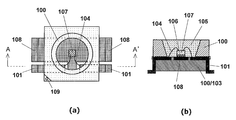
- the left figure (a) is a perspective view, and the right figure (b) is a sectional view.
- It is the schematic (sectional drawing) which shows an example of the optical semiconductor device of this invention.
- It is the schematic (sectional drawing; when it has a heat sink) which shows another example of the optical semiconductor device of this invention.
- the left figure (a) is a top view, and the right figure (b) is a cross-sectional view along AA 'in (a).
- the light-reflective curable resin composition of the present invention (sometimes simply referred to as “the curable resin composition of the present invention”) includes an alicyclic epoxy compound (A), rubber particles (B), a white pigment (C ), An inorganic filler (D), an isocyanuric acid derivative (H) having one or more oxirane rings in the molecule, and a siloxane derivative (I) having two or more epoxy groups in the molecule, and a curing agent A curable resin composition containing (E) and a curing accelerator (F) or a curing catalyst (G) and being liquid at 25 ° C.
- the isocyanuric acid derivative (H) having one or more oxirane rings in the molecule may be referred to as “isocyanuric acid derivative (H)”.
- siloxane derivative (I) having two or more epoxy groups in the molecule may be referred to as “siloxane derivative (I)”.
- the curable resin composition of the present invention comprises an alicyclic epoxy compound (A), rubber particles (B), a white pigment (C), an inorganic filler (D), a curing agent (E), and a curing accelerator.
- (F) isocyanuric acid derivative (H), and siloxane derivative (I) as essential components, a light-reflective curable resin composition that is liquid at 25 ° C.
- the curable resin composition of this invention may contain the other component as needed other than the said essential component.
- the curable resin composition of this invention can be used as a thermosetting composition (thermosetting epoxy resin composition) which can form hardening by heating.
- the “curable resin composition for light reflection” refers to a curable resin composition capable of forming a cured product having light reflectivity. Specifically, for example, it refers to a curable resin composition capable of forming a cured product having a reflectance of 50% or more (preferably 80% or more, more preferably 90% or more) with respect to light having a wavelength of 450 nm.
- liquid at 25 ° C.” means that the viscosity measured at 25 ° C. at normal pressure is 1000000 mPa ⁇ s or less (preferably 800000 mPa ⁇ s or less).
- the above viscosity is measured using, for example, a digital viscometer (model number “DVU-EII type”, manufactured by Tokimec Co., Ltd.), rotor: standard 1 ° 34 ′ ⁇ R24, temperature: 25 ° C., rotational speed: 0.00. It can be measured at 5 to 10 rpm.
- the curable resin composition of the present invention which is liquid at 25 ° C. includes, for example, components (for example, alicyclic epoxy compound (A), curing agent (E), curing accelerator (F), curing catalyst (G) and the like. ), It is easy to obtain by using a liquid component at 25 ° C.
- a solid component may be used as a said component at 25 degreeC, the content is adjusted so that the curable resin composition of this invention may become a liquid state at 25 degreeC. It can also be obtained by adjusting the content of components that are solid at 25 ° C., such as rubber particles (B), white pigment (C), and inorganic filler (D), within a range that does not impair the effects of the present invention. It becomes easy.
- the alicyclic epoxy compound (alicyclic epoxy resin) (A) which is an essential component of the curable resin composition of the present invention, has an alicyclic (aliphatic hydrocarbon ring) structure and epoxy in the molecule (in one molecule). It is a compound which has a group (oxiranyl group) at least, and a publicly known thru / or usual alicyclic epoxy compound can be used. However, those corresponding to the isocyanuric acid derivative (H) and the siloxane derivative (I) are excluded from the alicyclic epoxy compound (A).
- alicyclic epoxy compound (A) for example, (i) an epoxy group (alicyclic epoxy group) composed of two adjacent carbon atoms and oxygen atoms constituting the alicyclic ring And (ii) a compound having an epoxy group directly bonded to the alicyclic ring with a single bond.
- the alicyclic epoxy group is preferably a cyclohexene oxide group from the viewpoints of curability of the curable resin composition and heat resistance and light resistance of the cured product (reflector).
- a compound having two or more cyclohexene oxide groups in the molecule is preferable, and a compound represented by the following formula (I) is more preferable.
- X represents a single bond or a linking group (a divalent group having one or more atoms).
- the linking group include a divalent hydrocarbon group, an alkenylene group in which part or all of a carbon-carbon double bond is epoxidized (sometimes referred to as an “epoxidized alkenylene group”), a carbonyl group, Examples include an ether bond, an ester bond, a carbonate group, an amide group, and a group in which a plurality of these are linked.
- a substituent such as an alkyl group may be bonded to one or more carbon atoms constituting the cyclohexane ring (cyclohexene oxide group) in the formula (I).
- Examples of the compound in which X in the formula (I) is a single bond include 3,4,3 ′, 4′-diepoxybicyclohexane and the like.
- Examples of the divalent hydrocarbon group include a linear or branched alkylene group having 1 to 18 carbon atoms, a divalent alicyclic hydrocarbon group, and the like.
- Examples of the linear or branched alkylene group having 1 to 18 carbon atoms include a methylene group, a methylmethylene group, a dimethylmethylene group, an ethylene group, a propylene group, and a trimethylene group.
- divalent alicyclic hydrocarbon group examples include 1,2-cyclopentylene group, 1,3-cyclopentylene group, cyclopentylidene group, 1,2-cyclohexylene group, 1,3-cyclopentylene group, And cycloalkylene groups (including cycloalkylidene groups) such as cyclohexylene group, 1,4-cyclohexylene group, and cyclohexylidene group.
- alkenylene group in the alkenylene group in which part or all of the carbon-carbon double bond is epoxidized examples include, for example, vinylene group, propenylene group, 1-butenylene group, 2-butenylene group, butadienylene.
- linear or branched alkenylene groups having 2 to 8 carbon atoms such as a group, a pentenylene group, a hexenylene group, a heptenylene group, and an octenylene group.
- the epoxidized alkenylene group is preferably an alkenylene group in which all of the carbon-carbon double bonds are epoxidized, more preferably 2 to 4 carbon atoms in which all of the carbon-carbon double bonds are epoxidized. Alkenylene group.
- the linking group in X is particularly preferably a linking group containing an oxygen atom, specifically, —CO—, —O—CO—O—, —COO—, —O—, —CONH—, epoxy.
- Representative examples of the compound represented by the above formula (I) include compounds represented by the following formulas (I-1) to (I-10), 2,2-bis (3,4-epoxycyclohexane- 1-yl) propane, 1,2-bis (3,4-epoxycyclohexane-1-yl) ethane, 1,2-epoxy-1,2-bis (3,4-epoxycyclohexane-1-yl) ethane, And bis (3,4-epoxycyclohexylmethyl) ether.
- l and m each represents an integer of 1 to 30.
- R in the following formula (I-5) is an alkylene group having 1 to 8 carbon atoms, and is a methylene group, ethylene group, propylene group, isopropylene group, butylene group, isobutylene group, s-butylene group, pentylene group, hexylene.
- linear or branched alkylene groups such as a group, a heptylene group, and an octylene group.
- linear or branched alkylene groups having 1 to 3 carbon atoms such as a methylene group, an ethylene group, a propylene group, and an isopropylene group are preferable.
- N1 to n6 in the following formulas (I-9) and (I-10) each represents an integer of 1 to 30.
- Examples of the compound (ii) having an epoxy group bonded directly to the alicyclic ring with a single bond include a compound (epoxy resin) represented by the following formula (II).
- R 1 represents a p-valent organic group.
- p represents an integer of 1 to 20.
- Examples of the p-valent organic group include a p-valent organic group having a structure formed by removing p hydroxy groups from the structural formula of an organic compound having p hydroxy groups described later.
- q represents an integer of 1 to 50.
- p is an integer greater than or equal to 2
- several q may be the same and may differ.
- the sum (total) of q in the formula (II) is an integer of 3 to 100.
- R 2 is a substituent on the cyclohexane ring shown in the formula, and represents any of the groups represented by the following formulas (IIa) to (IIc).
- the bonding position of R 2 on the cyclohexane ring is not particularly limited. Usually, when the positions of the two carbon atoms of the cyclohexane ring bonded to the oxygen atom are the 1st and 2nd positions, the 4th or 5th carbon atom It is.
- the bonding positions of R 2 in each cyclohexane ring may be the same or different.
- At least one R 2 in the formula (II) is a group (epoxy group) represented by the formula (IIa).
- the compound represented by the formula (II) has two or more R 2, to a plurality of R 2 may be the same or different.
- R 3 represents a hydrogen atom, a substituted or unsubstituted alkyl group, a substituted or unsubstituted alkylcarbonyl group, or a substituted or unsubstituted arylcarbonyl group.
- alkyl group include methyl group, ethyl group, n-propyl group, isopropyl group, butyl group, isobutyl group, s-butyl group, t-butyl group, pentyl group, hexyl group, octyl group, and 2-ethylhexyl. Examples thereof include straight-chain or branched alkyl groups having 1 to 20 carbon atoms.
- alkylcarbonyl group examples include methylcarbonyl group (acetyl group), ethylcarbonyl group, n-propylcarbonyl group, isopropylcarbonyl group, n-butylcarbonyl group, isobutylcarbonyl group, s-butylcarbonyl group, t-butyl.
- alkylcarbonyl group examples include methylcarbonyl group (acetyl group), ethylcarbonyl group, n-propylcarbonyl group, isopropylcarbonyl group, n-butylcarbonyl group, isobutylcarbonyl group, s-butylcarbonyl group, t-butyl.
- alkylcarbonyl group examples include methylcarbonyl group (acetyl group), ethylcarbonyl group, n-propylcarbonyl group, isopropylcarbonyl group, n-butylcarbonyl group, iso
- arylcarbonyl group examples include arylcarbonyl groups having 6 to 20 carbon atoms such as a phenylcarbonyl group (benzoyl group), 1-naphthylcarbonyl group, 2-naphthylcarbonyl group, and the like.
- Examples of the substituent that the above-described alkyl group, alkylcarbonyl group, and arylcarbonyl group may have include a substituent having 0 to 20 carbon atoms (more preferably 0 to 10 carbon atoms).
- Examples of the substituent include halogen atoms such as fluorine atom, chlorine atom, bromine atom and iodine atom; hydroxy group; alkoxy group such as methoxy group, ethoxy group, propoxy group, isopropyloxy group, butoxy group and isobutyloxy group (Preferably C 1-6 alkoxy group, more preferably C 1-4 alkoxy group); alkenyloxy group such as allyloxy group (preferably C 2-6 alkenyloxy group, more preferably C 2-4 alkenyloxy group)
- An acyloxy group such as an acetyloxy group, a propionyloxy group and a (meth) acryloyloxy group (preferably a C 1-12
- examples of the substituent that the above-described arylcarbonyl group may have include the above-described substituted or unsubstituted alkyl group and the above-described substituted or unsubstituted alkylcarbonyl group.
- the ratio of the group (epoxy group) represented by the formula (IIa) to the total amount (100 mol%) of R 2 in the compound represented by the formula (II) is not particularly limited, but is 40 mol% or more (for example, 40 to 100 mol%) is preferable, more preferably 60 mol% or more, and still more preferably 80 mol% or more.
- the ratio is 40 mol% or more, the heat resistance, light resistance, mechanical properties, etc. of the cured product tend to be further improved.
- the above ratio can be calculated by, for example, 1 H-NMR spectrum measurement, oxirane oxygen concentration measurement, or the like.
- the compound represented by the formula (II) is not particularly limited.
- an organic compound [R 1 (OH) p ] having p hydroxy groups in the molecule is used as an initiator (ie, the hydroxy group of the compound). (Starting with active hydrogen)), 1,2-epoxy-4-vinylcyclohexane (3-vinyl-7-oxabicyclo [4.1.0] heptane) is subjected to ring-opening polymerization (cationic polymerization), and then Manufactured by epoxidation with an oxidizing agent.
- Examples of the organic compound [R 1 (OH) p ] having p hydroxy groups in the molecule include aliphatic alcohols such as methanol, ethanol, propanol, butanol, pentanol, hexanol, octanol; ethylene glycol, diethylene glycol , Triethylene glycol, polyethylene glycol, propylene glycol, dipropylene glycol, 1,3-butanediol, 1,4-butanediol, pentanediol, 1,6-hexanediol, neopentyl glycol, neopentyl glycol ester, cyclohexanedi Methanol, glycerin, diglycerin, polyglycerin, trimethylolpropane, pentaerythritol, dipentaerythritol, hydrogenated bisphenol A, hydrogenated bisphenol F, water Polyhydric alcohols such as bisphenol S; polyvin
- the 1,2-epoxy-4-vinylcyclohexane can be produced by a known or commonly used method, and is not particularly limited.
- 4-vinylcyclohexene obtained by dimerization reaction of butadiene is replaced with an oxidizing agent such as peracetic acid. Obtained by partial epoxidation using.
- 1,2-epoxy-4-vinylcyclohexane a commercially available product can be used.
- the oxidant may be a known or conventional oxidant such as hydrogen peroxide or organic peracid, and is not particularly limited.
- the organic peracid include performic acid, peracetic acid, peroxygen. Examples include benzoic acid and trifluoroperacetic acid. Among them, peracetic acid is preferable because it is industrially available at low cost and has high stability.
- the standard polystyrene equivalent weight average molecular weight of the compound represented by the formula (II) is not particularly limited, but is preferably 300 to 100,000, more preferably 1,000 to 10,000.
- the weight average molecular weight is 300 or more, the mechanical strength, heat resistance, and light resistance of the cured product tend to be improved.
- the weight average molecular weight is 100,000 or less, the viscosity does not become too high and the fluidity during molding tends to be maintained low.
- the weight average molecular weight is measured by a gel permeation chromatography (GPC) method.
- the equivalent (epoxy equivalent) of the epoxy group of the compound represented by the formula (II) is not particularly limited, but is preferably 50 to 1000, more preferably 100 to 500.
- the epoxy equivalent is 50 or more, the cured product tends not to be brittle.
- the epoxy equivalent is 1000 or less, the mechanical strength of the cured product tends to be improved.
- the epoxy equivalent is measured according to JIS K7236: 2001.
- the alicyclic epoxy compound (A) can be used singly or in combination of two or more.
- the alicyclic epoxy compound (A) can also be produced by a known or conventional method.
- commercial names such as trade names “Celoxide 2021P” and “Celoxide 2081” (manufactured by Daicel Corporation) are available. Can also be used.
- the alicyclic epoxy compound (A) preferably exhibits a liquid state at normal temperature (25 ° C.) from the viewpoint of workability during preparation and casting. Moreover, even if it is an alicyclic epoxy compound (A) which is solid at normal temperature (25 degreeC), as long as it shows liquid state after mix
- the curable resin composition of this invention contains at least the compound which has (i) alicyclic epoxy group from a viewpoint which the light reflectivity of a hardened
- the content (blending amount) of the alicyclic epoxy compound (A) in the curable resin composition of the present invention is not particularly limited, but is 0.1 to 60 with respect to the curable resin composition (100% by weight). % By weight is preferable, more preferably 0.3 to 50% by weight, still more preferably 0.5 to 40% by weight.
- the content of the alicyclic epoxy compound (A) By setting the content of the alicyclic epoxy compound (A) to 0.1% by weight or more, the heat resistance and light resistance of the cured product (reflector) tend to be further improved.
- the content of the alicyclic epoxy compound (A) to 60% by weight or less, the heat resistance and light resistance of the cured product (reflector) are further improved, the linear expansion coefficient is reduced, and the optical semiconductor element is mounted. There is a tendency that the occurrence of defects such as lead frame warpage in the circuit board is suppressed.
- the alicyclic epoxy compound (A) When the epoxy compound other than the alicyclic epoxy compound (A) is contained, the alicyclic epoxy compound (A) with respect to the total amount (100% by weight) of the compound having an epoxy group contained in the curable resin composition of the present invention.
- the ratio is not particularly limited, but is preferably 1 to 90% by weight, more preferably 5 to 80% by weight, and still more preferably 10 to 70% by weight. By making it in the said range, there exists a tendency for the heat resistance and light resistance of hardened
- an alicyclic epoxy compound (A), an isocyanuric acid derivative (H), a siloxane derivative (I), etc. are mentioned, for example. .
- each component for example, alicyclic epoxy compound (A), rubber particle (B), white pigment (C), inorganic filler (D) contained in the curable resin composition of the present invention.
- Curing agent (E), curing accelerator (F), curing catalyst (G), isocyanuric acid derivative (H), siloxane derivative (I), etc. respectively, so that the total content is 100% by weight or less.
- it can select suitably from the description range.
- the rubber particles (B) that are essential components of the curable resin composition of the present invention are particles having rubber elasticity.
- the rubber particles (B) are alicyclic epoxy compound (A), white pigment (C), inorganic filler (D), isocyanuric acid derivative (H), and siloxane derivative (I). ),
- the cured product formed is excellent in light reflectivity, heat resistance, light resistance, and crack resistance, and the above effect is remarkably exhibited particularly when the cured product is formed by compression molding. Tend.
- the rubber particles (B) include rubber particles such as particulate NBR (acrylonitrile-butadiene rubber), reactive terminal carboxy group NBR (CTBN), metal-free NBR, particulate SBR (styrene-butadiene rubber). .
- the rubber particles (B) have a core part having rubber elasticity and at least one shell covering the core part from the viewpoint of good dispersibility and an effect of improving toughness (crack resistance improvement). Rubber particles having a multilayer structure (core-shell structure) composed of layers (hereinafter sometimes referred to as “core-shell type rubber particles”) are preferred.
- the rubber particles (B) are particularly composed of a polymer (polymer) having (meth) acrylic acid ester as an essential monomer component, and an alicyclic ring on the surface. Rubber particles having a hydroxy group and / or a carboxy group (either one or both of a hydroxy group and a carboxy group) as a functional group capable of reacting with a compound having an epoxy group such as the formula epoxy compound (A) are preferred. That is, the rubber particles (B) are particularly preferably core-shell type rubber particles composed of a polymer (acrylic polymer) containing (meth) acrylic acid ester as an essential monomer component. In the curable resin composition of the present invention, the rubber particles (B) can be used singly or in combination of two or more.
- the polymer constituting the core portion having rubber elasticity is not particularly limited, but methyl (meth) acrylate, ethyl (meth) acrylate, (meth) acrylic A polymer containing a (meth) acrylic acid ester such as butyl acid as an essential monomer component is preferable.
- the polymer constituting the core part having rubber elasticity includes, for example, aromatic vinyl such as styrene and ⁇ -methylstyrene; nitrile such as acrylonitrile and methacrylonitrile; conjugated diene such as butadiene and isoprene; ethylene, propylene, An ⁇ -olefin such as isobutene may be included as a monomer component.
- the polymer constituting the core portion having rubber elasticity is combined with one or more selected from the group consisting of aromatic vinyl, nitrile, and conjugated diene together with (meth) acrylic acid ester as a monomer component. It is preferable to include. That is, as the polymer constituting the core part, for example, (meth) acrylic acid ester / aromatic vinyl, (meth) acrylic acid ester / conjugated diene and other binary copolymers; (meth) acrylic acid ester / aromatic And terpolymers such as group vinyl / conjugated dienes.
- the polymer constituting the core portion may contain silicone such as polydimethylsiloxane and polyphenylmethylsiloxane, polyurethane, and the like.
- the polymer constituting the core part includes, as other monomer components, divinylbenzene, allyl (meth) acrylate, ethylene glycol di (meth) acrylate, diallyl maleate, triallyl cyanurate, diallyl phthalate, butylene glycol diacrylate, etc.
- a reactive crosslinking monomer having two or more reactive functional groups in the molecule may be contained.
- the core-shell type rubber is preferably a core portion composed of a binary or ternary copolymer containing (meth) acrylic acid ester and aromatic vinyl (particularly butyl acrylate and styrene). This is preferable in that the refractive index of the particles can be easily adjusted.
- the glass transition temperature of the polymer constituting the core portion is not particularly limited, but is preferably ⁇ 100 to 10 ° C., more preferably ⁇ 80 to ⁇ 10 ° C., and further preferably ⁇ 60 to ⁇ 20 ° C. There exists a tendency for the crack resistance of hardened
- the glass transition temperature of the polymer which comprises the said core part means the calculated value calculated by the formula of the following Fox (refer Bull. Am. Phys. Soc., 1 (3) 123 (1956)).
- Tg glass transition temperature (unit: K) of the polymer constituting the core portion indicates, W i is the weight fraction of the monomer i for the monomer total amount constituting the polymer constituting the core portion Indicates the rate. Further, Tg i is the glass transition temperature of the homopolymer of monomer i (unit: K) shows a.
- the glass transition temperature of the homopolymer values described in various documents can be adopted, for example, values described in “POLYMER HANDBOOK 3rd edition” (published by John Wiley & Sons, Inc.) can be adopted. In addition, about the thing which is not described in literature, the value of the glass transition temperature measured by DSC method of the homopolymer obtained by superposing
- the core part can be produced by a commonly used method.
- the core part can be produced by a method of polymerizing the monomer by an emulsion polymerization method.
- the whole amount of the monomer may be charged all at once and polymerized, or after polymerizing a part of the monomer, the remainder may be added continuously or intermittently for polymerization.
- a polymerization method using seed particles may be used.
- the rubber particle which does not have a core shell structure as a rubber particle (B)
- the rubber particle etc. which consist only of the said core part can be used, for example.
- the polymer constituting the shell layer of the core-shell type rubber particles is preferably a polymer different from the polymer constituting the core portion (a polymer having a different monomer composition).
- the shell layer preferably has a hydroxy group and / or a carboxy group as a functional group capable of reacting with a compound having an epoxy group such as an alicyclic epoxy compound (A).
- the polymer constituting the shell layer is preferably a polymer containing (meth) acrylic acid ester such as methyl (meth) acrylate, ethyl (meth) acrylate, and butyl (meth) acrylate as an essential monomer component.
- (meth) acrylic acid ester such as methyl (meth) acrylate, ethyl (meth) acrylate, and butyl (meth) acrylate
- (meth) acrylic acid esters other than butyl acrylate for example, ( (Meth) methyl acrylate, ethyl (meth) acrylate, butyl methacrylate, etc.
- the monomer component that may be contained in addition to the (meth) acrylic acid ester examples include aromatic vinyl such as styrene and ⁇ -methylstyrene; nitrile such as acrylonitrile and methacrylonitrile.
- the monomer component constituting the shell layer includes the (meth) acrylic acid ester alone or in combination of two or more, particularly at least aromatic vinyl. It is preferable in that the refractive index of the core-shell type rubber particles can be easily adjusted.
- the polymer constituting the shell layer forms a hydroxy group and / or a carboxy group as a functional group capable of reacting with a compound having an epoxy group such as an alicyclic epoxy compound (A) as a monomer component.
- Hydroxy group-containing monomers eg, hydroxyalkyl (meth) acrylates such as 2-hydroxyethyl (meth) acrylate
- carboxy group-containing monomers eg, ⁇ , ⁇ -unsaturated acids such as (meth) acrylic acid; ⁇ , ⁇ -unsaturated acid anhydrides such as maleic anhydride
- the polymer constituting the shell layer preferably contains, as a monomer component, one or two or more selected from the above monomers in combination with (meth) acrylic acid ester. That is, the shell layer is composed of, for example, a ternary copolymer such as (meth) acrylic acid ester / aromatic vinyl / hydroxyalkyl (meth) acrylate, (meth) acrylic acid ester / aromatic vinyl / ⁇ , ⁇ -unsaturated acid.
- a shell layer composed of a polymer or the like is preferable.
- the polymer constituting the shell layer includes, as the other monomer components, divinylbenzene, allyl (meth) acrylate, ethylene glycol di (meth) acrylate, diallyl maleate, trimethyl, as well as the above-described monomer.
- a reactive crosslinking monomer having two or more reactive functional groups may be contained in the molecule such as allyl cyanurate, diallyl phthalate, butylene glycol diacrylate.
- the glass transition temperature of the polymer constituting the shell layer is not particularly limited, but is preferably 20 to 200 ° C, more preferably 40 to 180 ° C, and still more preferably 60 to 160 ° C.
- the glass transition temperature of the polymer is not particularly limited, but is preferably 20 to 200 ° C, more preferably 40 to 180 ° C, and still more preferably 60 to 160 ° C.
- the glass transition temperature of the polymer is 20 ° C. or higher, the heat resistance and light resistance of the cured product tend to be further improved.
- the glass transition temperature of the polymer is 200 ° C. or lower, the dispersibility of the rubber particles (B) and the crack resistance of the cured product tend to be improved.
- the glass transition temperature of the polymer which comprises the said shell layer means the calculated value computed by the said Formula of Fox, For example, it can measure similarly to the glass transition temperature of the polymer which comprises the above-mentioned core.
- Core-shell type rubber particles are obtained by covering the core part with a shell layer.
- the method for coating the core part with the shell layer include a method of coating the surface of the core part having rubber elasticity obtained by the above method by applying a polymer constituting the shell layer;
- Examples thereof include a graft polymerization method in which the core portion having rubber elasticity is a trunk component and each component constituting the shell layer is a branch component.
- the average particle size of the rubber particles (B) is not particularly limited, but is preferably 10 to 500 nm, more preferably 20 to 400 nm.
- the maximum particle size of the rubber particles (B) is not particularly limited, but is preferably 50 to 1000 nm, and more preferably 100 to 800 nm.
- the average particle size is 500 nm or less (or the maximum particle size is 1000 nm or less)
- the dispersibility of the rubber particles (B) in the cured product is improved and the crack resistance tends to be improved.
- the average particle size is 10 nm or more (or the maximum particle size is 50 nm or more)
- the crack resistance of the cured product tends to be improved.
- the refractive index of the rubber particles (B) is not particularly limited, but is preferably 1.40 to 1.60, more preferably 1.42 to 1.58.
- the difference between the refractive index of the rubber particles (B) and the refractive index of the cured product obtained by curing the curable resin composition (the curable resin composition of the present invention) containing the rubber particles (B) is It is preferably within ⁇ 0.03.
- the refractive index of the rubber particles (B) is, for example, 1 g of rubber particles (B) is cast into a mold and compression molded at 210 ° C. and 4 MPa to obtain a flat plate having a thickness of 1 mm. ⁇ A 6 mm wide test piece was cut out, and a multi-wavelength Abbe refractometer (trade name “DR-M2”, Atago Co., Ltd.) was used in a state where the prism and the test piece were in close contact using monobromonaphthalene as an intermediate solution. And the refractive index at 20 ° C. and sodium D line can be measured.
- the refractive index of the cured product of the curable resin composition of the present invention is, for example, a test piece having a length of 20 mm ⁇ width of 6 mm ⁇ thickness of 1 mm from a cured product obtained by the heat curing method described in the section of cured product below.
- a multi-wavelength Abbe refractometer (trade name “DR-M2”, manufactured by Atago Co., Ltd.) in a state where the prism and the test piece are in close contact using monobromonaphthalene as an intermediate solution, 20 It can obtain
- the content (blending amount) of the rubber particles (B) in the curable resin composition of the present invention is not particularly limited, but is 0.01 to 20% by weight with respect to the curable resin composition (100% by weight). Preferably, it is 0.05 to 15% by weight, more preferably 0.1 to 10% by weight.
- the content (blending amount) of the rubber particles (B) in the curable resin composition of the present invention is not particularly limited, but with respect to 100 parts by weight of the total amount of compounds having an epoxy group contained in the curable resin composition,
- the amount is preferably 0.5 to 30 parts by weight, more preferably 1 to 20 parts by weight.
- the white pigment (C) which is an essential component of the curable resin composition of the present invention, mainly imparts high light reflectivity to the cured product (reflector), and also functions to reduce its linear expansion coefficient. Have.
- white pigment (C) known or commonly used white pigments can be used, and are not particularly limited.
- Organic white pigments plastic pigments, etc.
- resin pigments such as resin-based resins; hollow particles having a hollow structure (balloon structure), and the like.
- the white pigment (C) it is preferable to use a white pigment having a high refractive index in order to increase the reflectance of the reflector.
- a white pigment having a refractive index of 1.5 or more is preferable.
- the shell portion may be made of a material having a refractive index lower than 1.5.
- those corresponding to the inorganic filler (D) are those having a refractive index of 1.5 or more as the white pigment (C) and having a refractive index of 1.5. The smaller one is the inorganic filler (D).
- Examples of the inorganic oxide include aluminum oxide (alumina), magnesium oxide, antimony oxide, titanium oxide [eg, rutile titanium oxide, anatase titanium oxide, brookite titanium oxide, etc.], zirconium oxide, zinc oxide, and the like. Can be mentioned.
- Examples of the alkaline earth metal salt include magnesium carbonate, calcium carbonate, barium carbonate, magnesium silicate, calcium silicate, magnesium hydroxide, magnesium phosphate, magnesium hydrogen phosphate, magnesium sulfate, calcium sulfate, and sulfuric acid. Barium etc. are mentioned.
- Examples of the metal salt other than the alkaline earth metal salt include aluminum silicate, aluminum hydroxide, and zinc sulfide.
- inorganic glass For example, silicate glass, aluminum silicate glass, sodium borosilicate glass, quartz, etc.], metal oxides, such as silica and alumina, calcium carbonate, barium carbonate, Inorganic hollow particles composed of inorganic materials such as nickel carbonate, calcium silicate and other metal salts (including natural products such as shirasu balloon); styrene resins, acrylic resins, silicone resins, acrylic-styrene resins, vinyl chloride -Based resins, vinylidene chloride-based resins, amide-based resins, urethane-based resins, phenol-based resins, styrene-conjugated diene-based resins, acrylic-conjugated diene-based resins, olefin-based polymers (including cross-linked products of these polymers), etc.
- silicate glass aluminum silicate glass, sodium borosilicate glass, quartz, etc.
- metal oxides such as silica and alumina, calcium
- the said hollow particle may be comprised from the single material, and may be comprised from 2 or more types of materials.
- the hollow portion of the hollow particles (the space inside the hollow particles) may be in a vacuum state or may be filled with a medium.
- a medium for example, an inert gas such as nitrogen or argon or air
- the white pigment (C) is subjected to a known or conventional surface treatment [for example, a surface treatment with a surface treatment agent such as a metal oxide, a silane coupling agent, a titanium coupling agent, an organic acid, a polyol, or silicone]. It may be what was done. By performing such a surface treatment, there are cases where compatibility and dispersibility with other components in the curable resin composition can be improved.
- a surface treatment agent such as a metal oxide, a silane coupling agent, a titanium coupling agent, an organic acid, a polyol, or silicone.
- the white pigment (C) from the viewpoint of availability, heat resistance, light resistance, and high reflectance of the cured product (reflector) and light reflectance increase rate with respect to the addition amount, inorganic oxides, inorganic Hollow particles are preferred, more preferably aluminum oxide, magnesium oxide, antimony oxide, titanium oxide, zirconium oxide, zinc oxide, barium sulfate, inorganic hollow particles, and more preferably titanium oxide, zirconium oxide, zinc oxide, barium sulfate.
- the white pigment (C) is preferably titanium oxide because it has a higher refractive index.
- the shape of the white pigment (C) is not particularly limited, and examples thereof include a spherical shape, a crushed shape, a fibrous shape, a needle shape, and a scale shape.
- spherical titanium oxide is preferable from the viewpoint of dispersibility, and spherical titanium oxide (for example, spherical titanium oxide having an aspect ratio of 1.2 or less) is particularly preferable.
- the center particle diameter of the white pigment (C) is not particularly limited, but is preferably 0.1 to 50 ⁇ m from the viewpoint of improving the light reflectivity of the cured product (reflector).
- the center particle diameter of the titanium oxide is not particularly limited, but is preferably 0.1 to 50 ⁇ m, more preferably 0.1 to 30 ⁇ m, and still more preferably 0. .1 to 20 ⁇ m, particularly preferably 0.1 to 10 ⁇ m, most preferably 0.1 to 5 ⁇ m.
- the center particle diameter of the hollow particles is not particularly limited, but is preferably 0.1 to 50 ⁇ m, more preferably 0.1 to 30 ⁇ m.
- the said center particle size means the particle size (median diameter) in the integrated value 50% in the particle size distribution measured by the laser diffraction / scattering method.
- the white pigment (C) can be used alone or in combination of two or more.
- the white pigment (C) can also be produced by a known or conventional method.
- the white pigment (C) the product names “R-62N”, “CR-60”, “DCF-T-17007”, especially from the viewpoint of improving the light reflectivity and heat resistance of the cured product (reflector), “DCF-T-17008”, “DCF-T-17050”, and “FTR-700” are preferable.
- the content (blending amount) of the white pigment (C) in the curable resin composition of the present invention is not particularly limited, but is 0.1 to 50% by weight with respect to the curable resin composition (100% by weight). Preferably, it is 1 to 40% by weight, more preferably 5 to 35% by weight.
- cured material (reflector) to improve more by making content of a white pigment (C) 0.1 weight% or more.
- the content of the white pigment (C) is 60% by weight or less, the moldability of the cured product (reflector) is improved and tends to be more suitable for mass production.
- the content (blending amount) of the white pigment (C) in the curable resin composition of the present invention is not particularly limited, but is based on 100 parts by weight of the total amount of compounds having an epoxy group contained in the curable resin composition.
- the amount is preferably 10 to 600 parts by weight, more preferably 30 to 500 parts by weight, still more preferably 30 to 400 parts by weight.
- the content of the white pigment (C) is 600 parts by weight or less, the moldability of the cured product (reflector) is improved and tends to be more suitable for mass production.
- the ratio of titanium oxide to the total amount (100% by weight) of the white pigment (C) and the inorganic filler (D) is not particularly limited, but a cured product ( From the viewpoint of the balance between heat resistance and light reflectivity of the reflector, the content is preferably 5 to 70% by weight, more preferably 10 to 60% by weight.
- the ratio of titanium oxide 5% by weight or more the light reflectivity of the cured product (reflector) tends to be further improved.
- the proportion of titanium oxide to 70% by weight or less the moldability of the cured product (reflector) is improved and tends to be more suitable for mass production.
- the curable resin composition of the present invention contains an inorganic filler (D) as an essential component separately from the white pigment (C).
- the inorganic filler (D) mainly imparts excellent heat resistance and light resistance (particularly excellent heat resistance) to the cured product (reflector). Moreover, it has the function to reduce the linear expansion coefficient of hardened
- the inorganic filler (D) a known or conventional inorganic filler can be used, and is not particularly limited.
- Examples of the inorganic filler (D) include those obtained by subjecting the above-described inorganic filler to a known or conventional surface treatment. Among these, silica, alumina, silicon nitride, aluminum nitride, and boron nitride are preferable as the inorganic filler (D) from the viewpoint of heat resistance, light resistance, and fluidity of the cured product (reflector).
- the silica is not particularly limited, and for example, known or commonly used silica such as fused silica, crystalline silica, high-purity synthetic silica or the like can be used.
- Silica has been subjected to a known or conventional surface treatment [for example, surface treatment with a surface treatment agent such as a metal oxide, a silane coupling agent, a titanium coupling agent, an organic acid, a polyol, or silicone]. Can also be used.
- the shape of silica is not particularly limited, and examples thereof include powder, spherical shape, crushed shape, fibrous shape, needle shape, scale shape, and the like. Among these, spherical silica is preferable from the viewpoint of dispersibility, and spherical silica (for example, spherical silica having an aspect ratio of 1.2 or less) is particularly preferable.
- the center particle diameter of silica is not particularly limited, but is preferably 0.1 to 50 ⁇ m, more preferably 0.1 to 30 ⁇ m from the viewpoint of improving the light reflectivity of the cured product (reflector).
- the said center particle size means the particle size (median diameter) in the integrated value 50% in the particle size distribution measured by the laser diffraction / scattering method.
- the inorganic filler (D) can be used alone or in combination of two or more.
- the inorganic filler (D) can also be produced by a known or conventional production method. For example, trade names “FB-910”, “FB-940”, “FB-950”, “FB-105” can be used.
- the content (blending amount) of the inorganic filler (D) in the curable resin composition of the present invention is not particularly limited, but is preferably 10 to 90% by weight with respect to the curable resin composition (100% by weight). More preferably, it is 13 to 75% by weight, more preferably 15 to 70% by weight, and still more preferably 20 to 70% by weight.
- the content of the inorganic filler (D) is 10% by weight or more, the heat resistance and light resistance (particularly excellent heat resistance) of the cured product tend to be further improved.
- the linear expansion coefficient of the cured product (reflector) tends to be low, and problems such as lead frame warpage in an optical semiconductor element mounting substrate using the reflector tend not to occur.
- the content of the inorganic filler (D) is 90% by weight or less, the moldability of the cured product (reflector) is improved and tends to be more suitable for mass production.
- the content (blending amount) of the inorganic filler (D) in the curable resin composition of the present invention is not particularly limited, but is based on 100 parts by weight of the total amount of compounds having an epoxy group contained in the curable resin composition.
- the amount is preferably 10 to 1500 parts by weight, more preferably 50 to 1200 parts by weight, and still more preferably 100 to 1000 parts by weight.
- the content of the inorganic filler (D) is 10 parts by weight or more, the heat resistance and light resistance (particularly excellent heat resistance) of the cured product tend to be further improved.
- the linear expansion coefficient of the cured product (reflector) tends to be low, and problems such as lead frame warpage in an optical semiconductor element mounting substrate using the reflector tend not to occur.
- the content of the inorganic filler (D) is 1500 parts by weight or less, the moldability of the cured product (reflector) is improved and tends to be more suitable for mass production.
- the maximum particle size of the white pigment (C) and the inorganic filler (D) in the curable resin composition of the present invention is not particularly limited, but is preferably 200 ⁇ m or less, more preferably 185 ⁇ m or less, still more preferably 175 ⁇ m or less, particularly Preferably it is 150 micrometers or less.
- the maximum particle size is 200 ⁇ m or less, the cured product has heat resistance, light resistance, and crack resistance (especially excellent heat resistance) as compared with the case of using a white pigment or an inorganic filler having a maximum particle size exceeding 200 ⁇ m. ) Tends to be even better.
- the white pigment (C) and the inorganic filler (D) having a small maximum particle size it is possible to increase their contents, and the light reflectivity, heat resistance and light resistance of the cured product are further increased. There is a tendency to improve.
- the lower limit of the maximum particle size is, for example, 0.01 ⁇ m or more.
- the maximum particle size is the total maximum particle size of the white pigment (C) and the inorganic filler (D) contained in the curable resin composition of the present invention.
- the maximum particle size means the maximum particle size in the particle size distribution measured by the laser diffraction / scattering method.
- the curing agent (E) in the curable resin composition of the present invention is a compound having a function of curing the curable resin composition by reacting with a compound having an epoxy group such as an alicyclic epoxy compound (A). is there.
- a known or conventional epoxy resin curing agent can be used, and is not particularly limited.
- acid anhydrides (acid anhydride curing agents), amines (amine curing) Agents), polyamide resins, imidazoles (imidazole-based curing agents), polymercaptans (polymercaptan-based curing agents), phenols (phenol-based curing agents), polycarboxylic acids, dicyandiamides, organic acid hydrazides and the like.
- acid anhydrides as the curing agent (E), known or conventional acid anhydride curing agents can be used, and are not particularly limited.
- methyltetrahydrophthalic anhydride (4 -Methyltetrahydrophthalic anhydride, 3-methyltetrahydrophthalic anhydride, etc.
- methylhexahydrophthalic anhydride such as 4-methylhexahydrophthalic anhydride, 3-methylhexahydrophthalic anhydride
- dodecenyl succinic anhydride methyl Endomethylenetetrahydrophthalic anhydride, phthalic anhydride, maleic anhydride, tetrahydrophthalic anhydride, hexahydrophthalic anhydride, methylcyclohexene dicarboxylic anhydride, pyromellitic anhydride, trimellitic anhydride, benzophenonetetracarboxylic anhydride, anhydrous Nadic acid
- the curing agent (E) in the curable resin composition of the present invention is prepared by dissolving in a liquid acid anhydride at 25 ° C. to form a liquid mixture.
- the handling property tends to be improved.
- anhydrides of saturated monocyclic hydrocarbon dicarboxylic acids including those having a substituent such as an alkyl group bonded to the ring are preferable. .
- amines (amine-based curing agent) as the curing agent (E) a known or conventional amine-based curing agent can be used, and is not particularly limited.
- ethylenediamine, diethylenetriamine, triethylenetetramine, tetraethylenepentamine Aliphatic polyamines such as dipropylenediamine, diethylaminopropylamine, polypropylenetriamine; mensendiamine, isophoronediamine, bis (4-amino-3-methyldicyclohexyl) methane, diaminodicyclohexylmethane, bis (aminomethyl) cyclohexane, N-amino Cycloaliphatic polyamines such as ethylpiperazine, 3,9-bis (3-aminopropyl) -3,4,8,10-tetraoxaspiro [5,5] undecane; m-phenylenediamine, p-phenylenediamine, Len-2
- phenols phenolic curing agents
- known or conventional phenolic curing agents can be used, and are not particularly limited.
- novolac type phenol resins novolac type cresol resins
- paraxylylene-modified phenols examples thereof include aralkyl resins such as resins, paraxylylene / metaxylylene-modified phenol resins, terpene-modified phenol resins, dicyclopentadiene-modified phenol resins, and triphenol propane.
- polyamide resin as the curing agent (E) examples include a polyamide resin having one or both of a primary amino group and a secondary amino group in the molecule.
- imidazole curing agent as the curing agent (E), a known or commonly used imidazole curing agent can be used, and is not particularly limited, and examples thereof include 2-methylimidazole and 2-ethyl-4-methylimidazole.
- Examples of the polymercaptans (polymercaptan-based curing agent) as the curing agent (E) include liquid polymercaptan and polysulfide resin.
- polycarboxylic acids examples include adipic acid, sebacic acid, terephthalic acid, trimellitic acid, carboxy group-containing polyester, and the like.
- the curing agent (E) acid anhydrides (acid anhydride curing agents) are preferable from the viewpoints of heat resistance, light resistance, and light reflectivity of the cured product.
- curing agent (E) can also be used individually by 1 type in the curable resin composition of this invention, and can also be used in combination of 2 or more type.
- the curing agent can be produced by a known or conventional method.
- trade names “Licacid MH-700”, “Licacid MH-700F”, “Licacid MH-700G”, “Licacid TH”, “Licacid CI” "HH”, “Licacid HNA-100” (manufactured by Shin Nippon Rika Co., Ltd.); trade name “HN-5500” (manufactured by Hitachi Chemical Co., Ltd.); trade names “H-TMAn-S”, "H Commercially available products such as “TMAn” (Mitsubishi Gas Chemical Co., Ltd.); trade name “YH1120” (Mitsubishi Chemical Co., Ltd.) can also be used.
- the curable resin composition of this invention contains a hardening
- curing agent (E) is although it does not specifically limit, With respect to curable resin composition (100 weight%)
- the content is preferably 1 to 40% by weight, more preferably 3 to 35% by weight, and still more preferably 5 to 30% by weight.
- the content (blending amount) of the curing agent (E) is not particularly limited, but has an epoxy group contained in the curable resin composition.
- the amount is preferably 40 to 200 parts by weight, more preferably 50 to 150 parts by weight with respect to 100 parts by weight of the total amount of the compound. More specifically, when acid anhydrides are used as the curing agent (E), 0.5 to 0.5 per equivalent of epoxy group in the compound having all epoxy groups contained in the curable resin composition of the present invention. It is preferable to use it at a ratio of 1.5 equivalents.
- the curable resin composition of the present invention may contain a curing accelerator (F).
- the curing accelerator (F) is a compound having an epoxy group contained in the curable resin composition of the present invention (for example, alicyclic epoxy compound (A), isocyanuric acid derivative (H), and siloxane derivative (I)). Is a compound having a function of accelerating the reaction rate when reacting with a curing agent such as curing agent (E).
- a known or conventional curing accelerator can be used as the curing accelerator (F).
- 1,8-diazabicyclo [5.4.0] undecene-7 DBU or a salt thereof (for example, phenol) Salt, octylate, p-toluenesulfonate, formate, tetraphenylborate, etc.); 1,5-diazabicyclo [4.3.0] nonene-5 (DBN) or a salt thereof (eg, phenol salt, Octylate, p-toluenesulfonate, formate, tetraphenylborate, etc.); benzyldimethylamine, 2,4,6-tris (dimethylaminomethyl) phenol, N, N-dimethylcyclohexylamine, etc.
- DBU 1,8-diazabicyclo [5.4.0] undecene-7
- DBN 1,5-diazabicyclo [4.3.0] nonene-5
- DBN 1,5-diazabicyclo [4.3.0] nonene-5
- imidazoles such as 2-ethyl-4-methylimidazole and 1-cyanoethyl-2-ethyl-4-methylimidazole
- Ether phosphines such as triphenyl phosphine
- phosphonium compounds such as tetraphenylphosphonium tetra (p- tolyl) borate
- organometallic salts such as zinc octylate and tin octylate
- metal chelate and the like.
- the curing accelerator (F) can be used singly or in combination of two or more.
- the curing accelerator (F) can be produced by a known or conventional method.
- trade names “U-CAT SA 506”, “U-CAT SA 102”, “U-CAT 5003”, “U-CAT 18X”, “12XD” developed product) (San Apro Co., Ltd.); trade names “TPP-K”, “TPP-MK” (Hokuko Chemical Co., Ltd.); Commercial products such as the name “PX-4ET” (manufactured by Nippon Chemical Industry Co., Ltd.) can also be used.
- the content (blending amount) of the curing accelerator (F) is not particularly limited, but the curable resin composition (100% by weight).
- the content is preferably 0.0001 to 5% by weight, more preferably 0.001 to 1% by weight.
- the curing reaction tends to proceed more efficiently.
- the content of the curing accelerator (F) is set to 5% by weight or less, the storability of the curable resin composition is further improved, or a cured product (reflector) that is more suppressed in coloring and excellent in hue. There is a tendency to obtain easily.
- the content (blending amount) of the curing accelerator (F) is not particularly limited, but is an epoxy group contained in the curable resin composition. Is preferably 0.05 to 15 parts by weight, more preferably 0.1 to 12 parts by weight, still more preferably 0.2 to 10 parts by weight, and most preferably 0.25 parts by weight with respect to 100 parts by weight of the total amount of the compounds having the above. ⁇ 8 parts by weight.
- the content of the curing accelerator By setting the content of the curing accelerator to 0.05 parts by weight or more, the curing reaction tends to proceed more efficiently.
- the content of the curing accelerator is 15 parts by weight or less, the storability of the curable resin composition is further improved, or a cured product (reflector) that is more suppressed in coloring and excellent in hue is easily obtained.
- the curing catalyst (G) in the curable resin composition of the present invention is a curable resin by initiating and / or accelerating a curing reaction (polymerization reaction) of a cationically polymerizable compound such as an alicyclic epoxy compound (A). It is a compound having a function of curing the composition.
- the curing catalyst (G) is not particularly limited.
- a cationic polymerization initiator photo cationic polymerization initiator, thermal cationic polymerization
- Lewis acid / amine complexes Bronsted acid salts, imidazoles and the like.
- Examples of the photocationic polymerization initiator as the curing catalyst (G) include hexafluoroantimonate salts, pentafluorohydroxyantimonate salts, hexafluorophosphate salts, hexafluoroarsenate salts, and more specifically.
- triarylsulfonium hexafluorophosphate eg, p-phenylthiophenyldiphenylsulfonium hexafluorophosphate
- sulfonium salts such as triarylsulfonium hexafluoroantimonate (particularly, triarylsulfonium salts)
- diaryl iodonium hexafluorophosphate Diaryl iodonium hexafluoroantimonate, bis (dodecylphenyl) iodonium tetrakis (pentafluorophenyl) borate, iodine Iodonium salts such as nium [4- (4-methylphenyl-2-methylpropyl) phenyl] hexafluorophosphate; phosphonium salts such as tetrafluorophosphonium hexafluorophosphate; pyridinium salts such as N-he
- cationic photopolymerization initiator examples include, for example, trade names “UVACURE 1590” (manufactured by Daicel Cytec Co., Ltd.); trade names “CD-1010”, “CD-1011”, “CD-1012” (above, the United States).
- Commercial products such as Sartomer); trade name “Irgacure 264” (manufactured by BASF); trade name “CIT-1682” (manufactured by Nippon Soda Co., Ltd.) can be preferably used.
- thermal cationic polymerization initiator as the curing catalyst (G) include aryldiazonium salts, aryliodonium salts, arylsulfonium salts, allene-ion complexes, etc., and trade names “PP-33”, “CP-66”.
- thermal cationic polymerization initiator a compound of a chelate compound of a metal such as aluminum or titanium and acetoacetic acid or diketone and a silanol such as triphenylsilanol, or a metal such as aluminum or titanium and acetoacetic acid or diketone
- a compound of a chelate compound with a phenol and a phenol such as bisphenol S.
- a known or commonly used Lewis acid / amine complex-based curing catalyst can be used, and is not particularly limited.
- a known or commonly used Lewis acid / amine complex-based curing catalyst can be used, and is not particularly limited.
- Bronsted acid salt as the curing catalyst (G), known or commonly used Bronsted acid salts can be used, and are not particularly limited.
- imidazole as the curing catalyst (G), known or conventional imidazoles can be used, and are not particularly limited.
- the curing catalyst (G) can be used singly or in combination of two or more.
- a commercial item can also be used as a curing catalyst (G).
- the content (blending amount) of the curing catalyst (G) is not particularly limited, but relative to the curable resin composition (100% by weight).
- the content is preferably 0.0001 to 5% by weight, more preferably 0.001 to 1% by weight.
- the content (blending amount) of the curing catalyst (G) in the curable resin composition of the present invention is not particularly limited.
- the amount is preferably 0.0001 to 15 parts by weight, more preferably 0.01 to 12 parts by weight, and still more preferably 0.05 to 10 parts by weight with respect to 100 parts by weight of the total amount of compounds having an epoxy group contained in the composition.
- Particularly preferred is 0.05 to 8 parts by weight.
- the isocyanuric acid derivative (H) that is an essential component of the curable resin composition of the present invention is a derivative of isocyanuric acid and is a compound having at least one oxirane ring in the molecule.
- the curable resin composition of the present invention contains the isocyanuric acid derivative (H)
- the light reflectivity, heat resistance, and light resistance of the cured product are improved, and the curable resin composition is simultaneously formed with the siloxane derivative (I) described later.
- the number of oxirane rings in the molecule of the isocyanuric acid derivative (H) may be one or more and is not particularly limited, but is preferably 1 to 6, more preferably 1 to 3.
- Examples of the isocyanuric acid derivative (H) include compounds represented by the following formula (III).
- R 4 to R 6 are the same or different and each represents a hydrogen atom or a monovalent organic group. However, at least one of R 4 to R 6 is a monovalent organic group containing an epoxy group.
- the monovalent organic group include a monovalent aliphatic hydrocarbon group (for example, an alkyl group and an alkenyl group); a monovalent aromatic hydrocarbon group (for example, an aryl group); A cyclic group; a monovalent group formed by combining two or more of an aliphatic hydrocarbon group, an alicyclic hydrocarbon group, and an aromatic hydrocarbon group.
- the monovalent organic group may have a substituent (for example, a substituent such as a hydroxy group, a carboxy group, or a halogen atom).
- a substituent for example, a substituent such as a hydroxy group, a carboxy group, or a halogen atom.
- Examples of the monovalent organic group containing an epoxy group include a monovalent organic group containing an epoxy group described later such as an epoxy group, a glycidyl group, a 2-methylepoxypropyl group, and a cyclohexene oxide group.
- R 4 ⁇ R 6 in formula (III) may be the same or different, a group represented by the group or the following formula represented by the following formula (IIIa) (IIIb), the R 4 ⁇ R 6 At least one is preferably a group represented by the formula (IIIa).
- R 7 and R 8 in the above formulas (IIIa) and (IIIb) are the same or different and each represents a hydrogen atom or an alkyl group having 1 to 8 carbon atoms.
- alkyl group having 1 to 8 carbon atoms include methyl, ethyl, propyl, isopropyl, butyl, isobutyl, s-butyl, pentyl, hexyl, heptyl, octyl and the like. Examples thereof include a chain or branched alkyl group.
- R 7 and R 8 in formula (IIIa) and formula (IIIb) are particularly preferably hydrogen atoms.
- the isocyanuric acid derivative (H) includes a compound represented by the following formula (III-1), a compound represented by the following formula (III-2), and a compound represented by the following formula (III-3): And the like.
- R 7 and R 8 are the same or different and are the same as those in the formulas (IIIa) and (IIIb).
- Representative examples of the compound represented by the formula (III-1) include monoallyldiglycidyl isocyanurate, 1-allyl-3,5-bis (2-methylepoxypropyl) isocyanurate, 1- (2 -Methylpropenyl) -3,5-diglycidyl isocyanurate, 1- (2-methylpropenyl) -3,5-bis (2-methylepoxypropyl) isocyanurate and the like.
- Representative examples of the compound represented by the above formula (III-2) include diallyl monoglycidyl isocyanurate, 1,3-diallyl-5- (2-methylepoxypropyl) isocyanurate, 1,3-bis ( 2-methylpropenyl) -5-glycidyl isocyanurate, 1,3-bis (2-methylpropenyl) -5- (2-methylepoxypropyl) isocyanurate and the like.
- Representative examples of the compound represented by the above formula (III-3) include triglycidyl isocyanurate, tris (2-methylepoxypropyl) isocyanurate and the like.
- the above isocyanuric acid derivative (H) can be modified in advance by adding a compound that reacts with an epoxy group such as alcohol or acid anhydride.
- the isocyanuric acid derivative (H) is preferably a compound represented by the above formulas (III-1) to (III-3) from the viewpoint of light reflectivity, heat resistance, and solubility of the cured product.
- a compound represented by the above formula (III-1) is preferable.
- an isocyanuric acid derivative (H) can also be used individually by 1 type, and can also be used in combination of 2 or more type.
- isocyanuric acid derivative (H) examples include trade names “TEPIC” (manufactured by Nissan Chemical Industries, Ltd.); trade names “MA-DGIC”, “DA-MGIC” (above, Shikoku Kasei Kogyo Co., Ltd.) (Commercially available) can also be used.
- the content (blending amount) of the isocyanuric acid derivative (H) in the curable resin composition of the present invention is preferably 0.05 to 15% by weight, more preferably relative to the curable resin composition (100% by weight). Is 0.1 to 10% by weight, more preferably 0.3 to 5% by weight.
- the content (blending amount) of the isocyanuric acid derivative (H) in the curable resin composition of the present invention is not particularly limited, but is 100 parts by weight based on the total amount of compounds having an epoxy group contained in the curable resin composition.
- the amount is preferably 1 to 60 parts by weight, more preferably 1 to 50 parts by weight, and still more preferably 1 to 30 parts by weight.
- the siloxane derivative (I) which is an essential component of the curable resin composition of the present invention, has a skeleton composed of siloxane bonds (—Si—O—Si—) having two or more epoxy groups in the molecule. It is a compound (siloxane compound).
- the siloxane skeleton (Si—O—Si skeleton) in the siloxane derivative (I) is not particularly limited, and examples thereof include cyclic siloxane skeletons; linear silicones, cage-type and ladder-type polysilsesquioxanes, and the like. Examples include a polysiloxane skeleton.
- the siloxane skeleton a cyclic siloxane skeleton and a linear silicone skeleton are preferable from the viewpoint of improving the light reflectivity, heat resistance, and light resistance of the cured product and suppressing the light intensity reduction of the optical semiconductor device.
- the siloxane derivative (I) is preferably a cyclic siloxane having two or more epoxy groups in the molecule and a linear silicone having two or more epoxy groups in the molecule.
- the siloxane derivative (I) is a cyclic siloxane having two or more epoxy groups in the molecule
- the number of Si—O units forming the siloxane ring is particularly Although not limited, it is preferably 2 to 12, more preferably 4 to 8, from the viewpoint of improving the heat resistance and light resistance of the cured product.
- the weight average molecular weight of the siloxane derivative (I) is not particularly limited, but is preferably 100 to 3000, more preferably 180 to 2000, from the viewpoint of improving the heat resistance and light resistance of the cured product.
- the said weight average molecular weight of siloxane derivative (I) is computed from the molecular weight of standard polystyrene conversion measured by GPC (gel permeation chromatography) method.
- the number of epoxy groups in the molecule of the siloxane derivative (I) is not particularly limited as long as it is 2 or more. However, from the viewpoint of improving the heat resistance and light resistance of the cured product, 2 to 4 (2, 3 or 4) is preferred.
- the epoxy equivalent of the siloxane derivative (I) is not particularly limited, but is preferably 180 to 2000, more preferably 180 to 1500, and still more preferably 180 to 1000 from the viewpoint of improving the heat resistance and light resistance of the cured product. .
- the epoxy equivalent is a value measured according to JIS K7236.
- the epoxy group possessed by the siloxane derivative (I) is not particularly limited, but from the viewpoint of improving the heat resistance and light resistance of the cured product, an epoxy composed of two adjacent carbon atoms and oxygen atoms constituting the alicyclic ring.
- Group (alicyclic epoxy group) is preferable, and among them, a cyclohexene oxide group is particularly preferable.
- siloxane derivative (I) examples include a siloxane compound represented by the following formula (IV).
- R a is the same or different and represents an epoxy group-containing group or an alkyl group.
- at least two R a in formula (IV) e.g., 2 to four
- the above-mentioned group containing an epoxy group is a group containing at least one epoxy group (oxirane ring).
- a linear or branched aliphatic group having a carbon-carbon unsaturated double bond such as an alkenyl group.
- a group in which at least one double bond of a hydrocarbon group is epoxidized, or a cyclic aliphatic hydrocarbon group having a carbon-carbon unsaturated double bond for example, a cycloalkenyl group; a cyclohexenylethyl group, etc.
- a group in which at least one double bond of the alkenylalkyl group or the like is epoxidized is epoxidized.
- 1,2-epoxyethyl group epoxy group
- 1,2-epoxypropyl group 2,3-epoxypropyl group
- 2,3-epoxy-2-methylpropyl Groups methyl glycidyl group
- 3,4-epoxybutyl group 3-glycidyloxypropyl group, 3,4-epoxycyclohexylmethyl group, 2- (3,4-epoxycyclohexyl) ethyl group and the like.
- a group in which at least one double bond of a cyclic aliphatic hydrocarbon group having a carbon-carbon unsaturated double bond is epoxidized is preferable.
- alkyl group examples include straight-chain or branched chain groups having 1 to 20 carbon atoms such as methyl group, ethyl group, propyl group, isopropyl group, butyl group, hexyl group, octyl group, isooctyl group, decyl group, and dodecyl group.
- An alkyl group etc. are mentioned. Of these, a linear or branched alkyl group having 1 to 10 carbon atoms is preferable.
- n represents an integer of 2 to 12.
- n is preferably 4 to 8, more preferably 4 or 5, from the viewpoint of thermal shock resistance of the cured product, reflow resistance and thermal shock resistance of the optical semiconductor device.
- examples of the siloxane derivative (I) include 2,4-di [2- (3- ⁇ oxabicyclo [4.1.0] heptyl ⁇ ) ethyl] -2,4,6,6. , 8,8-Hexamethyl-cyclotetrasiloxane, 4,8-di [2- (3- ⁇ oxabicyclo [4.1.0] heptyl ⁇ ) ethyl] -2,2,4,6,6,8- Hexamethyl-cyclotetrasiloxane, 2,4-di [2- (3- ⁇ oxabicyclo [4.1.0] heptyl ⁇ ) ethyl] -6,8-dipropyl-2,4,6,8-tetramethyl- Cyclotetrasiloxane, 4,8-di [2- (3- ⁇ oxabicyclo [4.1.0] heptyl ⁇ ) ethyl] -2,6-dipropyl-2,4,6,8-tetramethyl-cyclotetra
- siloxane derivative (I) examples include alicyclic epoxy group-containing silicone resins described in JP-A-2008-248169 and at least two epoxy resins in one molecule described in JP-A-2008-19422.
- An organopolysilsesquioxane resin having a functional group can also be used.
- the siloxane derivative (I) can be used alone or in combination of two or more.
- Siloxane derivatives (I) are, for example, trade names “X-40-2678”, “X-40-2670”, “X-40-2720” (and above) which are cyclic siloxanes having two or more epoxy groups in the molecule. Commercial products such as Shin-Etsu Chemical Co., Ltd.) are available.
- the siloxane derivative (I) can be produced by a known or conventional method.
- the content (blending amount) of the siloxane derivative (I) in the curable resin composition of the present invention is preferably 0.1 to 30% by weight, more preferably relative to the curable resin composition (100% by weight). It is 0.5 to 20% by weight, more preferably 1.0 to 10% by weight.
- the content (blending amount) of the siloxane derivative (I) in the curable resin composition of the present invention is not particularly limited, but with respect to 100 parts by weight of the total amount of compounds having an epoxy group contained in the curable resin composition, The amount is preferably 5 to 99 parts by weight, more preferably 10 to 95 parts by weight, and still more preferably 20 to 80 parts by weight.
- the amount is preferably 5 to 99 parts by weight, more preferably 10 to 95 parts by weight, and still more preferably 20 to 80 parts by weight.
- the curable resin composition of the present invention may further contain a release agent.
- a release agent By including a release agent, continuous molding by a molding method using a mold such as transfer molding is facilitated, and a cured product (reflector) can be produced with high productivity.
- a known or commonly used release agent can be used, and is not particularly limited.
- a fluorine-based release agent fluorine atom-containing compound
- Silicone release agents silicone compounds; for example, silicone oil, silicone wax, silicone resin, polyorganosiloxane having polyoxyalkylene units
- wax release agents wax release agents
- animal waxes such as wool wax, paraffins such as paraffin wax, polyethylene wax, oxidized polyethylene wax, etc.
- higher fatty acids or salts thereof for example, metal salts
- higher fatty acid esters higher fatty acid amides, mineral oils, etc.
- one type of release agent can be used alone, or two or more types can be used in combination.
- a mold release agent can also be manufactured by a well-known thru
- the content (blending amount) of the release agent is not particularly limited, but the total amount of compounds having epoxy groups contained in the curable resin composition is 100.
- the amount is preferably 1 to 12 parts by weight, more preferably 2 to 10 parts by weight with respect to parts by weight.
- content of a mold release agent 1 weight part or more there exists a tendency which the mold release property of hardened
- the content of the release agent is 12 parts by weight or less, there is a tendency that good adhesion to the lead frame of the reflector in the substrate for mounting an optical semiconductor element can be secured.
- the curable resin composition of the present invention may contain an antioxidant.
- an antioxidant By containing an antioxidant, it becomes possible to produce a cured product (reflector) with even better heat resistance.
- known or commonly used antioxidants can be used, and are not particularly limited. For example, phenolic antioxidants (phenolic compounds), hindered amine antioxidants (hindered amine compounds), phosphorus System antioxidants (phosphorus compounds), sulfur antioxidants (sulfur compounds), and the like.
- phenolic antioxidants examples include 2,6-di-t-butyl-p-cresol, butylated hydroxyanisole, 2,6-di-t-butyl-p-ethylphenol, stearyl- ⁇ - (3 , 5-di-tert-butyl-4-hydroxyphenyl) propionate and the like; 2,2′-methylenebis (4-methyl-6-tert-butylphenol), 2,2′-methylenebis (4-ethyl- 6-t-butylphenol), 4,4'-thiobis (3-methyl-6-t-butylphenol), 4,4'-butylidenebis (3-methyl-6-t-butylphenol), 3,9-bis [1 , 1-Dimethyl-2- ⁇ - (3-tert-butyl-4-hydroxy-5-methylphenyl) propionyloxy ⁇ ethyl] 2,4,8,10-tetraoxaspir [5.5] Bisphenols such as undecane; 1,1,3-tris (2-methyl-4-hydroxy
- hindered amine antioxidants include bis (1,2,2,6,6-pentamethyl-4-piperidyl) [[3,5-bis (1,1-dimethylethyl) -4-hydroxyphenyl] methyl. ] Butyl malonate, bis (1,2,2,6,6-pentamethyl-4-piperidyl) sebacate, methyl-1,2,2,6,6-pentamethyl-4-piperidyl sebacate, 4-benzoyloxy- Examples include 2,2,6,6-tetramethylpiperidine.
- phosphorus antioxidants include triphenyl phosphite, diphenylisodecyl phosphite, phenyl diisodecyl phosphite, tris (nonylphenyl) phosphite, diisodecylpentaerythritol phosphite, tris (2,4-di-t- Butylphenyl) phosphite, cyclic neopentanetetrayl bis (octadecyl) phosphite, cyclic neopentanetetrayl bis (2,4-di-t-butylphenyl) phosphite, cyclic neopentanetetrayl bis (2 , 4-di-tert-butyl-4-methylphenyl) phosphite, bis [2-tert-butyl-6-methyl-4- ⁇ 2- (octade
- sulfur-based antioxidant examples include dodecanethiol, dilauryl-3,3′-thiodipropionate, dimyristyl-3,3′-thiodipropionate, distearyl-3,3′-thiodipropionate Is mentioned.
- the antioxidant can be used alone or in combination of two or more.
- Antioxidants can also be produced by known or conventional methods. For example, trade names “Irganox 1010” (manufactured by BASF, phenolic antioxidants), trade names “AO-60”, “AO-80”.
- the content (blending amount) of the antioxidant is not particularly limited, but the total amount of compounds having an epoxy group contained in the curable resin composition is 100.
- the amount is preferably 0.1 to 5 parts by weight, more preferably 0.5 to 3 parts by weight with respect to parts by weight.
- the curable resin composition of the present invention may contain various additives in addition to the above-described components as long as the effects of the present invention are not impaired.
- a compound having a hydroxy group especially an aliphatic polyhydric alcohol
- ethylene glycol, diethylene glycol, propylene glycol, or glycerin is contained as the additive, the reaction can be allowed to proceed slowly.
- antifoaming agents, leveling agents, silane coupling agents such as ⁇ -glycidoxypropyltrimethoxysilane and 3-mercaptopropyltrimethoxysilane, and surfactants, as long as the viscosity and light reflectivity are not impaired.
- Conventional additives such as flame retardants, colorants, ion adsorbents, ultraviolet absorbers, light stabilizers, and pigments other than the white pigment (C) can be used.
- the content of these additives is not particularly limited and can be appropriately selected.
- the curable resin composition of the present invention comprises an alicyclic epoxy compound (A), rubber particles (B), a white pigment (C), an inorganic filler (D), a curing agent (E), and a curing accelerator (F). , Isocyanuric acid derivative (H), and siloxane derivative (I), alicyclic epoxy compound (A), rubber particle (B), curing agent (E), curing accelerator (F), isocyanuric acid derivative
- the viscosity at 25 ° C. of the mixture comprising (H) and the siloxane derivative (I) is not particularly limited, but is preferably 5000 mPa ⁇ s or less.
- the curable resin composition of the present invention may contain the above-described aliphatic polyhydric alcohol such as ethylene glycol.
- the above-described mixture includes the alicyclic epoxy compound (A), rubber particles ( B), a curing agent (E), a curing accelerator (F), an isocyanuric acid derivative (H), a siloxane derivative (I), and an aliphatic polyhydric alcohol.
- the curable resin composition of the present invention comprises an alicyclic epoxy compound (A), rubber particles (B), a white pigment (C), an inorganic filler (D), a curing catalyst (G), an isocyanuric acid derivative (
- a siloxane derivative (I) it comprises an alicyclic epoxy compound (A), rubber particles (B), a curing catalyst (G), an isocyanuric acid derivative (H), and a siloxane derivative (I).
- the viscosity of the mixture at 25 ° C. is not particularly limited, but is preferably 5000 mPa ⁇ s or less. In the present specification, the viscosity at 25 ° C. of the above-mentioned two kinds of mixtures may be collectively referred to as “resin viscosity”.
- the resin viscosity is a viscosity measured at 25 ° C. at normal pressure.
- the resin viscosity is preferably 5000 mPa ⁇ s or less, more preferably 4000 mPa ⁇ s or less, further preferably 3500 mPa ⁇ s or less, and particularly preferably 3000 mPa ⁇ s or less.
- the resin viscosity is 5000 mPa ⁇ s or less, the heat resistance, light resistance, and crack resistance (particularly excellent heat resistance) of the cured product tend to be more excellent than when the resin viscosity exceeds 5000 mPa ⁇ s. is there.
- the resin viscosity is relatively low, it is possible to increase the content of other components such as white pigment (C) and inorganic filler (D), and the light reflectivity, heat resistance and light resistance of the cured product. There is a tendency for sex to be further improved.
- the lower limit of the resin viscosity is, for example, 100 mPa ⁇ s or more.
- the resin viscosity is measured using, for example, a digital viscometer (model number “DVU-EII type”, manufactured by Tokimec Co., Ltd.), rotor: standard 1 ° 34 ′ ⁇ R24, temperature: 25 ° C., rotational speed: 0 It can be measured under the condition of 5 to 10 rpm.
- the resin viscosity is, for example, the components used (for example, alicyclic epoxy compound (A), curing agent (E), curing accelerator (F), curing catalyst (G), isocyanuric acid derivative (H), and siloxane derivative. (I), etc.) can be easily obtained by using a liquid component at 25 ° C.
- a solid component may be used as said component at 25 degreeC, the content is adjusted so that the said resin viscosity may be 5000 mPa * s or less.
- the curable resin composition of the present invention is obtained by heating and reacting a part of the alicyclic epoxy compound (A) and the curing agent (E) in the curable resin composition to be a B-stage. It may be a curable resin composition (a curable resin composition in a B-stage state).
- the curable resin composition of the present invention is excellent in light reflectivity, heat resistance and light resistance after curing, it can be preferably used particularly as a resin composition for transfer molding or a resin composition for compression molding.
- the curable resin composition of the present invention is particularly excellent in the light reflectivity, heat resistance, and light resistance of a cured product (reflector) formed by compression molding, and thus is particularly a resin composition for compression molding. preferable.
- the curable resin composition of the present invention is not particularly limited, but can be prepared by stirring and mixing each of the above components in a heated state as necessary.
- the curable resin composition of the present invention can be used as a one-component composition in which each component is mixed in advance, for example, two or more stored separately. It can also be used as a multi-component (for example, two-component) composition in which the components are mixed at a predetermined ratio before use.
- the stirring / mixing method is not particularly limited, and for example, known or conventional stirring / mixing means such as various mixers such as a dissolver and a homogenizer, a kneader, a roll, a bead mill, a self-revolving stirrer and the like can be used. Further, after stirring and mixing, defoaming may be performed under vacuum.
- the rubber particles (B) are blended in a state of being preliminarily dispersed in the alicyclic epoxy compound (A) (the composition may be referred to as “rubber particle dispersed epoxy compound”). It is preferable to do. That is, the curable resin composition of the present invention includes the rubber particle-dispersed epoxy compound, the white pigment (C), the inorganic filler (D), the curing agent (E) and the curing accelerator (F), or It is preferable to prepare by mixing the curing catalyst (G) and other components as necessary. Such a preparation method can particularly improve the dispersibility of the rubber particles (B) in the curable resin composition.
- the blending method of the rubber particles (B) is not limited to the above method, and may be a method of blending alone.
- the rubber particle-dispersed epoxy compound is obtained by dispersing rubber particles (B) in an alicyclic epoxy compound (A).
- the alicyclic epoxy compound (A) in the rubber particle-dispersed epoxy compound may be the total amount or a partial amount of the alicyclic epoxy compound (A) constituting the curable resin composition. May be.
- the rubber particles (B) in the rubber particle-dispersed epoxy compound may be the total amount or a partial amount of the rubber particles (B) constituting the curable resin composition.
- the viscosity of the rubber particle-dispersed epoxy compound can be adjusted, for example, by using a reactive diluent together (that is, the rubber particle-dispersed epoxy compound may further contain a reactive diluent).
- a reactive diluent for example, an aliphatic polyglycidyl ether having a viscosity at room temperature (25 ° C.) of 200 mPa ⁇ s or less can be preferably used.
- Examples of the aliphatic polyglycidyl ether having a viscosity (25 ° C.) of 200 mPa ⁇ s or less include cyclohexanedimethanol diglycidyl ether, cyclohexanediol diglycidyl ether, neopentyl glycol diglycidyl ether, and 1,6-hexanediol diglycidyl ether. , Trimethylolpropane triglycidyl ether, polypropylene glycol diglycidyl ether, and the like.
- the amount of the reactive diluent used can be appropriately adjusted and is not particularly limited, but is preferably 30 parts by weight or less, more preferably 25 parts by weight or less, with respect to 100 parts by weight of the total amount of the rubber particle-dispersed epoxy compound. (For example, 5 to 25 parts by weight). When the amount used is 30 parts by weight or less, desired performance such as improvement of toughness (crack resistance) tends to be easily obtained.
- the method for producing the rubber particle-dispersed epoxy compound is not particularly limited, and a well-known and commonly used method can be used. For example, after the rubber particles (B) are dehydrated and dried to form a powder, the rubber particles (B) are mixed and dispersed in the alicyclic epoxy compound (A), or the emulsion of the rubber particles (B) and the alicyclic epoxy compound (A And the like, followed by dehydration and the like.
- the viscosity of the curable resin composition of the present invention at 25 ° C. is not particularly limited, but is preferably 100 to 1000000 mPa ⁇ s, more preferably 200 to 800000 mPa ⁇ s, and still more preferably 300 to 800000 mPa ⁇ s.
- the viscosity at 25 ° C. is set to 100 mPa ⁇ s or more, workability during casting is improved, and heat resistance and light resistance of the cured product tend to be further improved.
- the viscosity at 25 ° C. is set to 1000000 mPa ⁇ s or less, workability during casting is improved, and defects due to casting defects tend not to occur in the cured product.
- cured product of the present invention By curing the curable resin composition of the present invention by heating, a cured product having excellent light reflectivity and excellent heat resistance, light resistance, and crack resistance can be obtained.
- a cured product obtained by curing the curable resin composition of the present invention that is, a cured product of the curable resin composition of the present invention may be referred to as “cured product of the present invention”.
- the heating temperature (curing temperature) during curing is not particularly limited, but is preferably 50 to 200 ° C, more preferably 80 to 180 ° C.
- the heating time (curing time) at the time of curing is not particularly limited, but is preferably 60 to 1800 seconds, and more preferably 90 to 900 seconds.
- the curing conditions depend on various conditions, for example, when the curing temperature is increased, the curing time can be shortened, and when the curing temperature is decreased, the curing time can be appropriately increased. Further, the curing process may be performed in one stage (for example, compression molding only), for example, in multiple stages (for example, further heating in an oven or the like as post-curing (secondary curing) after compression molding). Also good.
- the heating temperature at this time is preferably 50 to 200 ° C., more preferably 60 to 180 ° C., and more preferably about the same as the curing temperature.
- the post-curing time is preferably 0.5 to 10 hours, more preferably 1 to 8 hours.
- the cured product of the present invention has high light reflectivity and is excellent in heat resistance and light resistance. For this reason, the said hardened
- the reflectance (initial reflectance) of the cured product of the present invention is not particularly limited.
- the reflectance of light having a wavelength of 450 nm is preferably 93% or more, more preferably 94% or more, and still more preferably. 95% or more.
- the reflectance of light at 450 to 800 nm is preferably 93% or more, more preferably 94% or more, and still more preferably 95% or more.
- the retention ratio of the light reflectance at a wavelength of 450 nm after heating for 250 hours at 120 ° C. (sometimes referred to as “reflectance after heat aging”) to the initial reflectance ([heat aging (Reflectance after) / [Initial reflectance] ⁇ 100) is not particularly limited, but is preferably 80% or more, more preferably 85% or more, and further preferably 90% or more.
- the retention in the case of 450 to 800 nm light is preferably 80% or more, more preferably 85% or more, and further preferably 90% or more.
- the curable resin composition of the present invention the cured product formed by compression molding can have the above-mentioned retention rate of 90% or more.
- Maintaining the reflectance of the cured product of the present invention with respect to light having a wavelength of 450 nm after irradiation with ultraviolet rays having an intensity of 10 mW / cm 2 for 250 hours (sometimes referred to as “reflectance after ultraviolet ray aging”) relative to the initial reflectance.
- the rate ([reflectance after ultraviolet ray aging] / [initial reflectivity] ⁇ 100) is not particularly limited, but is preferably 80% or more, more preferably 85% or more, and further preferably 90% or more.
- the retention in the case of 450 to 800 nm light is preferably 80% or more, more preferably 85% or more, and further preferably 90% or more.
- the reflectance is measured using, for example, a spectrophotometer (trade name “spectrophotometer UV-2450”, manufactured by Shimadzu Corporation) using the cured product of the present invention (thickness: 3 mm) as a test piece. can do.
- a spectrophotometer trade name “spectrophotometer UV-2450”, manufactured by Shimadzu Corporation
- the curable resin composition of the present invention is a curable resin composition for a reflector in an optical semiconductor device
- the curable resin composition of the present invention is a substrate of an optical semiconductor element (for mounting an optical semiconductor element) in an optical semiconductor device.
- This is a molding material (material used for molding with a mold or the like) used for forming a reflector (light reflecting member) included in the substrate. Therefore, by molding (and curing) the curable resin composition of the present invention, it has high light reflectivity, excellent heat resistance and light resistance, and has a high-quality reflector having excellent crack resistance.
- a substrate for mounting an optical semiconductor element (for example, highly durable) can be manufactured.
- the reflector is a member for reflecting light emitted from the optical semiconductor element in the optical semiconductor device to increase the directivity and luminance of the light and improve the light extraction efficiency.
- a substrate used for mounting an optical semiconductor element having at least a reflector formed of the cured product of the present invention may be referred to as “optical semiconductor element mounting substrate of the present invention”.
- the substrate for mounting an optical semiconductor element of the present invention is a reflector (white reflector) formed of a cured product of the curable resin composition of the present invention (cured product obtained by curing the curable resin composition of the present invention).
- a substrate having at least FIG. 1 is a schematic view showing an example of a substrate for mounting an optical semiconductor element of the present invention, where (a) is a perspective view and (b) is a cross-sectional view.
- 100 is a white reflector
- 101 is a metal wiring (lead frame)
- 102 is an optical semiconductor element mounting region
- 103 is a package substrate.
- a metal wiring 101 and a white reflector 100 are attached to the package substrate 103.
- An optical semiconductor element 107 is placed in the center (optical semiconductor element mounting region 102) and die-bonded. And the metal wiring 101 on the package substrate 103 are connected by wire bonding.
- As the material of the package substrate 103 resin, ceramic, or the like is used, but it may be the same as the white reflector.
- the upper white reflector 100 in the optical semiconductor element mounting substrate of the present invention has a concave shape that surrounds the optical semiconductor element mounting region 102 in an annular shape and is inclined so that the diameter of the ring increases upward. Have.
- the substrate for mounting an optical semiconductor element of the present invention is only required to have the inner surface of the concave shape formed of at least a cured product of the curable resin composition of the present invention. Further, as shown in FIG.
- the portion surrounded by the metal wiring 101 may be the package substrate 103 or the white reflector 100 (that is, “100/103 in FIG. 1). "Means the white reflector 100 or the package substrate 103).
- the optical semiconductor element mounting substrate of the present invention is not limited to the embodiment shown in FIG.
- a known or conventional molding method for example, compression molding or the like
- examples include a method of subjecting the functional resin composition to various molding methods such as transfer molding, compression molding, injection molding, LIM molding (injection molding), and dam molding by dispensing.
- the curing conditions for forming the reflector can be appropriately selected from, for example, the conditions for forming the cured product described above. In the present invention, among other things, it is possible to prevent foaming due to a rapid curing reaction, relax stress strain due to curing, and improve toughness (crack resistance). It is preferable to cure it.
- the optical semiconductor device of the present invention can be obtained by using the optical semiconductor element mounting substrate of the present invention as a substrate in an optical semiconductor device and mounting the optical semiconductor element on the substrate.
- the optical semiconductor device of the present invention is an optical semiconductor device comprising at least an optical semiconductor element as a light source and a reflector (reflecting material) made of a cured product of the curable resin composition of the present invention. More specifically, the optical semiconductor device of the present invention is an optical semiconductor device having at least the optical semiconductor element mounting substrate of the present invention and an optical semiconductor element mounted on the substrate. Since the optical semiconductor device of the present invention has a reflector formed of a cured product of the curable resin composition of the present invention as a reflector, the luminance of light is unlikely to decrease with time and the reliability is high.
- FIG. 2 is a schematic view (cross-sectional view) showing an example of the optical semiconductor device of the present invention. In FIG.
- 100 is a white reflector
- 101 is a metal wiring (lead frame)
- 103 is a package substrate
- 104 is a bonding wire
- 105 is a sealing material
- 106 is die bonding
- 107 is an optical semiconductor element (LED element).
- the light emitted from the optical semiconductor element 107 is reflected by the surface (reflecting surface) of the white reflector 100, so that the light from the optical semiconductor element 107 is extracted with high efficiency.
- the optical semiconductor element in the optical semiconductor device of the present invention is usually sealed with a transparent sealing material (105 in FIG. 2).
- FIGS. 3 and 4 are diagrams showing another example of the optical semiconductor device of the present invention.
- Reference numeral 108 in FIGS. 3 and 4 denotes a heat sink (case heat sink), and by having such a heat sink 108, the heat radiation efficiency in the optical semiconductor device is improved.
- FIG. 3 is an example in which the heat dissipation path of the heat sink is located immediately below the optical semiconductor element
- FIG. 4 is an example in which the heat dissipation path of the heat sink is positioned in the lateral direction of the optical semiconductor device [(a) is a top view, (B) shows a cross-sectional view along AA ′ in (a)].
- the heat sink 108 protruding from the side surface of the optical semiconductor device in FIG. 4 may be referred to as a heat radiating fin.
- reference numeral 109 in FIG. 4 denotes a cathode mark.
- the optical semiconductor device of the present invention is not limited to the embodiment shown in FIGS.
- the present invention will be described in more detail based on examples, but the present invention is not limited to these examples.
- the unit of the amount of each component of the curable resin composition is parts by weight.
- “-” means that the component was not blended.
- Production Example 1 Manufacture of rubber particles
- 500 g of ion-exchanged water and 0.68 g of sodium dioctylsulfosuccinate were charged, and the temperature was raised to 80 ° C. while stirring under a nitrogen stream.
- a monomer mixture composed of 9.5 g of butyl acrylate, 2.57 g of styrene, and 0.39 g of divinylbenzene corresponding to about 5% by weight of the amount required to form the core portion of the rubber particles.
- the obtained latex was frozen at ⁇ 30 ° C., dehydrated and washed with a suction filter, and then blown and dried at 60 ° C. overnight to obtain rubber particles.
- the resulting rubber particles had an average particle size of 108 nm and a maximum particle size of 289 nm.
- the average particle size and the maximum particle size of the rubber particles are determined based on a nanotrac TM particle size distribution measuring device (trade name “UPA-EX150”, manufactured by Nikkiso Co., Ltd.) using the dynamic light scattering method as a measurement principle. ) was used to measure the sample, and in the obtained particle size distribution curve, the average particle size, which is the particle size when the cumulative curve becomes 50%, is the average particle size, and the frequency (%) of the particle size distribution measurement result is 0 The maximum particle size at the time of exceeding 0.000 was defined as the maximum particle size.
- a nanotrac TM particle size distribution measuring device (trade name “UPA-EX150”, manufactured by Nikkiso Co., Ltd.) using the dynamic light scattering method as a measurement principle. ) was used to measure the sample, and in the obtained particle size distribution curve, the average particle size, which is the particle size when the cumulative curve becomes 50%, is the average particle size, and the frequency (%) of the particle size distribution measurement result is 0
- Production Example 2 Manufacture of rubber particle-dispersed epoxy compounds
- the product name “Celoxide 2021P” (3,4-epoxycyclohexylmethyl (3,4) -Epoxy) cyclohexanecarboxylate (manufactured by Daicel Corporation) and dispersed in 100 parts by weight (1000 rpm, 60 minutes) and vacuum degassed to obtain a rubber particle-dispersed epoxy compound (viscosity at 25 ° C .: 1036 mPa ⁇ s). It was. The viscosity at 25 ° C.
- Example 1 According to the blending ratio (unit: parts by weight) shown in Table 1, the rubber particle-dispersed epoxy compound obtained in Production Example 2, isocyanuric acid derivative (monoallyl diglycidyl isocyanurate; trade name “MA-DGIC”, Shikoku Kasei Kogyo Co., Ltd. ), A siloxane derivative (a siloxane derivative having two epoxy groups in the molecule; a trade name “X-40-2678”, a self-revolving stirrer (a trade name “Awatori Nerita AR-250”, The mixture was uniformly mixed and defoamed using a product manufactured by Shinky Co., Ltd., and the mixture was stirred at 80 ° C. for 1 hour in order to dissolve the MA-DGIC.
- isocyanuric acid derivative diallyl diglycidyl isocyanurate
- MA-DGIC Shikoku Kasei Kogyo Co., Ltd.
- a siloxane derivative a siloxane derivative having two epoxy groups in the
- the kneaded product obtained above and the curing agent composition obtained in Production Example 3 so as to have the blending ratio (unit: parts by weight) shown in Table 1 were mixed with a self-revolving stirrer (trade name “Awatori”
- the mixture was uniformly mixed (2000 rpm, 5 minutes) using Nertaro AR-250 "(Sinky Corp.) and defoamed to obtain a curable resin composition.
- the curable resin composition is sandwiched between release films made of polyester, placed in a mold for compression molding at 150 ° C., heated and pressurized at a pressure of 3.0 MPa for 600 seconds, and then post-cured (5 at 150 ° C. Time), a cured product was obtained.
- Examples 2 to 14 and Comparative Examples 1 to 15 A cured product was obtained in the same manner as in Example 1 except that the composition of the curable resin composition was changed as shown in Table 1 or Table 2.
- the alicyclic ring shown in Table 1 or Table 2 is used instead of or in addition to the rubber particle-dispersed epoxy compound obtained in Production Example 2.
- the formula epoxy compound was used.
- Example 15 According to the blending ratio (unit: parts by weight) shown in Table 1, the rubber particle-dispersed epoxy compound obtained in Production Example 2, isocyanuric acid derivative (monoallyl diglycidyl isocyanurate; trade name “MA-DGIC”, Shikoku Kasei Kogyo Co., Ltd. )), A siloxane derivative (a siloxane derivative having two epoxy groups in the molecule; trade name “X-40-2678”, manufactured by Shin-Etsu Chemical Co., Ltd.), a self-revolving stirrer (trade name “Awatori” Using Nertaro AR-250 "(manufactured by Shinky Co., Ltd.), the mixture was uniformly mixed and defoamed to prepare a mixture.
- isocyanuric acid derivative diallyl diglycidyl isocyanurate
- MA-DGIC Shikoku Kasei Kogyo Co., Ltd.
- a siloxane derivative a siloxane derivative having two epoxy groups in the
- the curing catalyst trade name “Sun-Aid SI-100L”, manufactured by Sanshin Chemical Industry Co., Ltd.
- a self-revolving stirrer trade name “Awatori Nertaro AR-250”, manufactured by Shinky Co., Ltd.
- uniformly mix 2000 rpm, 5 minutes
- defoam and curable resin composition Obtained.
- the curable resin composition is sandwiched between release films made of polyester, placed in a mold for compression molding at 150 ° C., heated and pressurized at a pressure of 3.0 MPa for 600 seconds, and then post-cured (5 at 150 ° C. Time), a cured product was obtained.
- Example 16 and Comparative Examples 16 to 24 A cured product was obtained in the same manner as in Example 15 except that the composition of the curable resin composition was changed as shown in Tables 1 and 3. In some examples and comparative examples, the alicyclic rings shown in Table 1 or Table 3 are used instead of or in addition to the rubber particle-dispersed epoxy compound obtained in Production Example 2 as a constituent of the curable resin composition. The formula epoxy compound was used.
- MA-DGIC Trade name “MA-DGIC” [monoallyl diglycidyl isocyanurate], Shikoku Kasei Kogyo DA- MGIC: Trade name “DA-MGIC” [diallyl monoglycidyl isocyanurate], manufactured by Shikoku Chemicals Co., Ltd.
- X-40-2678 Trade name “X-40-2678” (siloxane derivative having two epoxy groups in the molecule), Shin-Etsu Chemical Co., Ltd.
- X-40-2720 Trade name “X-40-2720” "(Siloxane derivative having three epoxy groups in the molecule), X-40-2670 manufactured by Shin-Etsu Chemical Co., Ltd .: trade name” X-40-2670 "(siloxane derivative having four epoxy groups in the molecule) , Shin-Etsu Chemical Co., Ltd. (curing agent composition) MH-700: Trade name “Licacid MH-700” (4-methylhexahydrophthalic anhydride / hexahydrophthalic anhydride), manufactured by Shin Nippon Rika Co., Ltd. 18X: Trade name “U-CAT 18X” (curing accelerator) , San Apro Co., Ltd.
- Ethylene glycol Trade name “Ethylene glycol”, Wako Pure Chemical Industries, Ltd.
- curing catalyst Sun-Aid SI-100L: Trade name “Sun-Aid SI-100L”, manufactured by Sanshin Chemical Industry Co., Ltd.
- white pigment DCF-T-17050: Trade name “DCF-T-17050” (titanium oxide, average particle size 0.3 ⁇ m, maximum particle size 1 ⁇ m or less), manufactured by Resino Color Industry Co., Ltd.
- FB-970FD Trade name “FB-970FD” (silica, no surface treatment, average particle size 16.7 ⁇ m, maximum particle size 70 ⁇ m), manufactured by Denka Corp.
- DAW-1025 Trade name “DAW-1025” (alumina, (Average particle size 7.9 ⁇ m, maximum particle size 32 ⁇ m), manufactured by Denka Co., Ltd.
- HF-05 trade name “HF-05” (alumina nitride, average particle size 5 ⁇ m, maximum particle size 5 ⁇ m), manufactured by Denka Co., Ltd.
- the curable resin composition of the present invention has the above-described configuration, it can form a cured product having high light reflectivity, excellent heat resistance and light resistance, and light reflectivity hardly decreasing over time. Especially, when the cured product is formed by compression molding, the above-mentioned effect is remarkably exhibited. Therefore, it is possible to provide a highly reliable optical semiconductor device in which the luminance of light hardly decreases over time.
- White reflector 101 Metal wiring (electrode) 102: Mounting area of optical semiconductor element 103: Package substrate 104: Bonding wire 105: Sealing material for optical semiconductor element 106: Die bonding 107: Optical semiconductor element 108: Heat sink 109: Cathode mark
Landscapes
- Chemical & Material Sciences (AREA)
- Health & Medical Sciences (AREA)
- Chemical Kinetics & Catalysis (AREA)
- Medicinal Chemistry (AREA)
- Polymers & Plastics (AREA)
- Organic Chemistry (AREA)
- Compositions Of Macromolecular Compounds (AREA)
- Led Device Packages (AREA)
Abstract
Description
また、本発明の他の目的は、生産性に優れ、高い光反射性を有し、且つ、耐熱性及び耐光性に優れ、光反射性が経時で低下しにくい硬化物を提供することにある。
さらに、本発明の他の目的は、経時で光の輝度が低下しにくく、信頼性の高い光半導体装置を提供することにある。
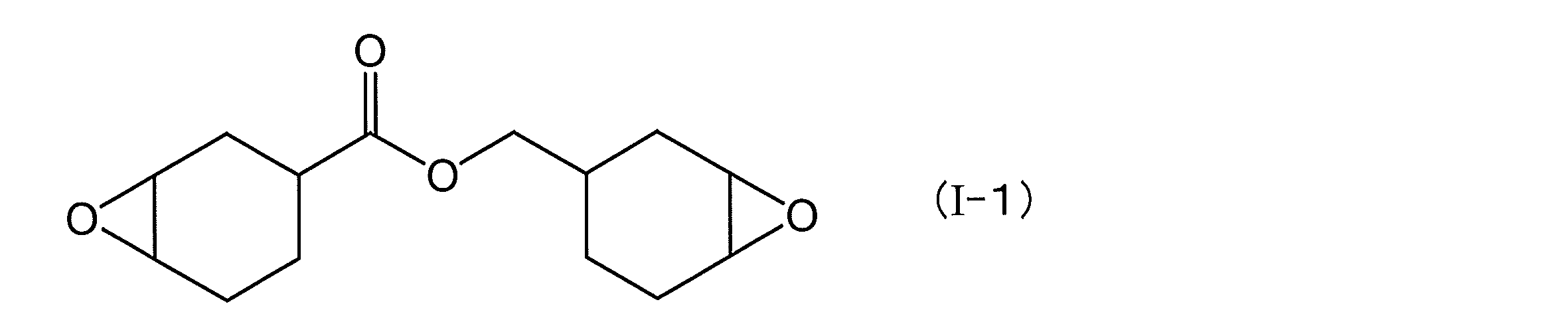
で表される化合物を含む光反射用硬化性樹脂組成物を提供する。
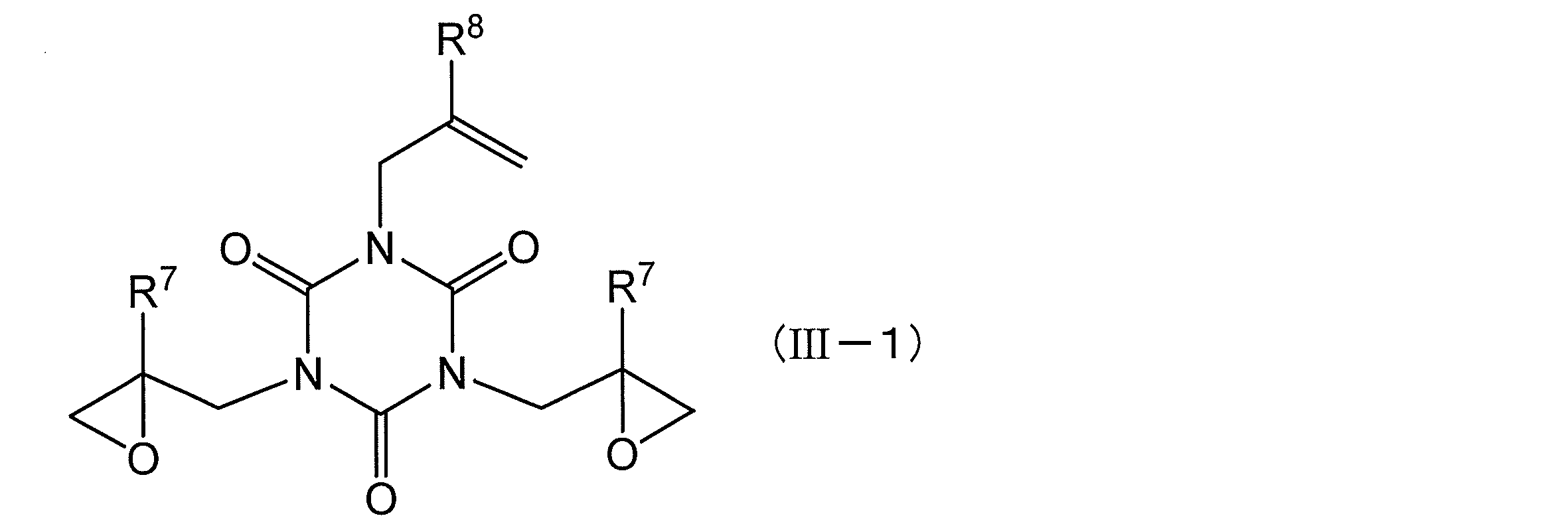
[式(III-1)中、R7及びR8は、同一又は異なって、水素原子又は炭素数1~8のアルキル基を示す。]
で表される化合物である光反射用硬化性樹脂組成物を提供する。
[1]脂環式エポキシ化合物(A)、ゴム粒子(B)、白色顔料(C)、無機充填剤(D)、分子内に1個以上のオキシラン環を有するイソシアヌル酸誘導体(H)、及び分子内に2以上のエポキシ基を有するシロキサン誘導体(I)を含有し、さらに、硬化剤(E)、及び硬化促進剤(F)、又は、硬化触媒(G)を含有し、25℃において液状であることを特徴とする光反射用硬化性樹脂組成物。
[2]前記ゴム粒子(B)が、ゴム弾性を有するコア部分と、該コア部分を被覆する少なくとも1層のシェル層とからなる多層構造を有するゴム粒子である[1]に記載の光反射用硬化性樹脂組成物。
[3]前記ゴム粒子(B)が、(メタ)アクリル酸エステルを必須のモノマー成分とするポリマーで構成される[1]又は[2]に記載の光反射用硬化性樹脂組成物。
[4]前記ゴム粒子(B)のゴム弾性を有するコア部分を構成するポリマーが、モノマー成分として、(メタ)アクリル酸エステルと共に、芳香族ビニル、ニトリル、及び共役ジエンからなる群より選択された一種又は二種以上を組み合わせて含む[2]又は[3]のいずれか1つに記載の光反射用硬化性樹脂組成物。
[5]前記ゴム粒子(B)のシェル層を構成するポリマーが、モノマー成分として、(メタ)アクリル酸エステルと共に、ヒドロキシ基含有モノマー及びカルボキシ基含有モノマーからなる群より選択された一種又は二種以上を組み合わせて含む[2]~[4]のいずれか1つに記載の光反射用硬化性樹脂組成物。
[6]前記ゴム粒子(B)が、表面にヒドロキシ基及び/又はカルボキシ基を有する[1]~[5]のいずれか1つに記載の光反射用硬化性樹脂組成物。
[7]前記ゴム粒子(B)の平均粒子径が10~500nmであり、最大粒子径が50~1000nmである[1]~[6]のいずれか1つに記載の光反射用硬化性樹脂組成物。
[8]前記脂環式エポキシ化合物(A)が、後述の式(I)で表される化合物を含む[1]~[7]のいずれか1つに記載の光反射用硬化性樹脂組成物。
[9]前記脂環式エポキシ化合物(A)が、後述の式(I-1)で表される化合物を含む[1]~[8]のいずれか1つに記載の光反射用硬化性樹脂組成物。
[10]前記イソシアヌル酸誘導体(H)が、後述の式(III)で表される化合物である[1]~[9]のいずれか1つに記載の光反射用硬化性樹脂組成物。
[11]前記イソシアヌル酸誘導体(H)が、後述の式(III-1)で表される化合物である[1]~[10]のいずれか1つに記載の光反射用硬化性樹脂組成物。
[12]前記シロキサン誘導体(I)が、分子内に2以上のエポキシ基を有する環状シロキサン及び/又は分子内に2以上のエポキシ基を有する直鎖状シリコーンである[1]~[11]のいずれか1つに記載の光反射用硬化性樹脂組成物。
[13]前記白色顔料(C)が、酸化チタン、酸化ジルコニウム、酸化亜鉛、及び硫酸バリウムからなる群より選択される少なくとも1種である[1]~[12]のいずれか1つに記載の光反射用硬化性樹脂組成物。
[14]前記無機充填剤(D)が、シリカ、アルミナ、窒化ケイ素、窒化アルミニウム、及び窒化ホウ素からなる群より選択される少なくとも1種である[1]~[13]のいずれか1つに記載の光反射用硬化性樹脂組成物。
[15]前記シロキサン誘導体(I)が、後述の式(IV)で表されるシロキサン化合物である[1]~[14]のいずれか1つに記載の光反射用硬化性樹脂組成物。
[16]前記脂環式エポキシ化合物(A)の含有量(配合量)が、硬化性樹脂組成物(100重量%)に対して、0.1~60重量%、0.3~50重量%、又は0.5~40重量%である[1]~[15]のいずれか1つに記載の光反射用硬化性樹脂組成物。
[17]前記ゴム粒子(B)の含有量(配合量)が、硬化性樹脂組成物(100重量%)に対して、0.01~20重量%、0.05~15重量%、又は0.1~10重量%である[1]~[16]のいずれか1つに記載の光反射用硬化性樹脂組成物。
[18]前記白色顔料(C)の含有量(配合量)が、硬化性樹脂組成物(100重量%)に対して、0.1~50重量%、1~40重量%、又は5~35重量%である[1]~[17]のいずれか1つに記載の光反射用硬化性樹脂組成物。
[19]前記無機充填剤(D)の含有量(配合量)が、硬化性樹脂組成物(100重量%)に対して、10~90重量%、13~75重量%、15~70重量%、又は20~70重量%である[1]~[18]のいずれか1つに記載の光反射用硬化性樹脂組成物。
[20]前記硬化剤(E)の含有量(配合量)が、硬化性樹脂組成物(100重量%)に対して、1~40重量%、3~35重量%、又は5~30重量%である[1]~[19]のいずれか1つに記載の光反射用硬化性樹脂組成物。
[21]前記硬化促進剤(F)の含有量(配合量)が、硬化性樹脂組成物(100重量%)に対して、0.0001~5重量%、又は0.001~1重量%である[1]~[20]のいずれか1つに記載の光反射用硬化性樹脂組成物。
[22]前記硬化触媒(G)の含有量(配合量)が、硬化性樹脂組成物(100重量%)に対して、0.0001~5重量%、又は0.001~1重量%である[1]~[21]のいずれか1つに記載の光反射用硬化性樹脂組成物。
[23]前記イソシアヌル酸誘導体(H)の含有量(配合量)が、硬化性樹脂組成物(100重量%)に対して、0.05~15重量%、0.1~10重量%、又は0.3~5重量%である[1]~[22]のいずれか1つに記載の光反射用硬化性樹脂組成物。
[24]前記シロキサン誘導体(I)の含有量(配合量)が、硬化性樹脂組成物(100重量%)に対して、0.1~30重量%、0.5~20重量%、又は1.0~10重量%である[1]~[23]のいずれか1つに記載の光反射用硬化性樹脂組成物。
[25]トランスファー成型用又はコンプレッション成型用樹脂組成物である[1]~[24]のいずれか1つに記載の光反射用硬化性樹脂組成物。
[26]リフレクター形成用樹脂組成物である[1]~[25]のいずれか1つに記載の光反射用硬化性樹脂組成物。
[27][1]~[26]のいずれか1つに記載の光反射用硬化性樹脂組成物の硬化物。
[28]光半導体素子と、[27]に記載の光反射用硬化性樹脂組成物の硬化物からなるリフレクターとを少なくとも備えることを特徴とする光半導体装置。
本発明の光反射用硬化性樹脂組成物(単に「本発明の硬化性樹脂組成物」と称する場合がある)は、脂環式エポキシ化合物(A)、ゴム粒子(B)、白色顔料(C)、無機充填剤(D)、分子内に1個以上のオキシラン環を有するイソシアヌル酸誘導体(H)、及び分子内に2以上のエポキシ基を有するシロキサン誘導体(I)を含有し、さらに硬化剤(E)及び硬化促進剤(F)、又は硬化触媒(G)を含有し、25℃において液状であることを特徴とする硬化性樹脂組成物である。なお、前記分子内に1個以上のオキシラン環を有するイソシアヌル酸誘導体(H)を「イソシアヌル酸誘導体(H)」と称する場合がある。また、分子内に2以上のエポキシ基を有するシロキサン誘導体(I)を「シロキサン誘導体(I)」と称する場合がある。
本発明の硬化性樹脂組成物の必須成分である脂環式エポキシ化合物(脂環式エポキシ樹脂)(A)は、分子内(一分子中)に脂環(脂肪族炭化水素環)構造とエポキシ基(オキシラニル基)とを少なくとも有する化合物であり、公知乃至慣用の脂環式エポキシ化合物を使用することができる。ただし、脂環式エポキシ化合物(A)からはイソシアヌル酸誘導体(H)、及びシロキサン誘導体(I)に該当するものが除かれる。脂環式エポキシ化合物(A)としては、より具体的には、例えば、(i)脂環を構成する隣接する2つの炭素原子と酸素原子とで構成されるエポキシ基(脂環式エポキシ基)を有する化合物、(ii)脂環に直接単結合で結合しているエポキシ基を有する化合物が挙げられる。

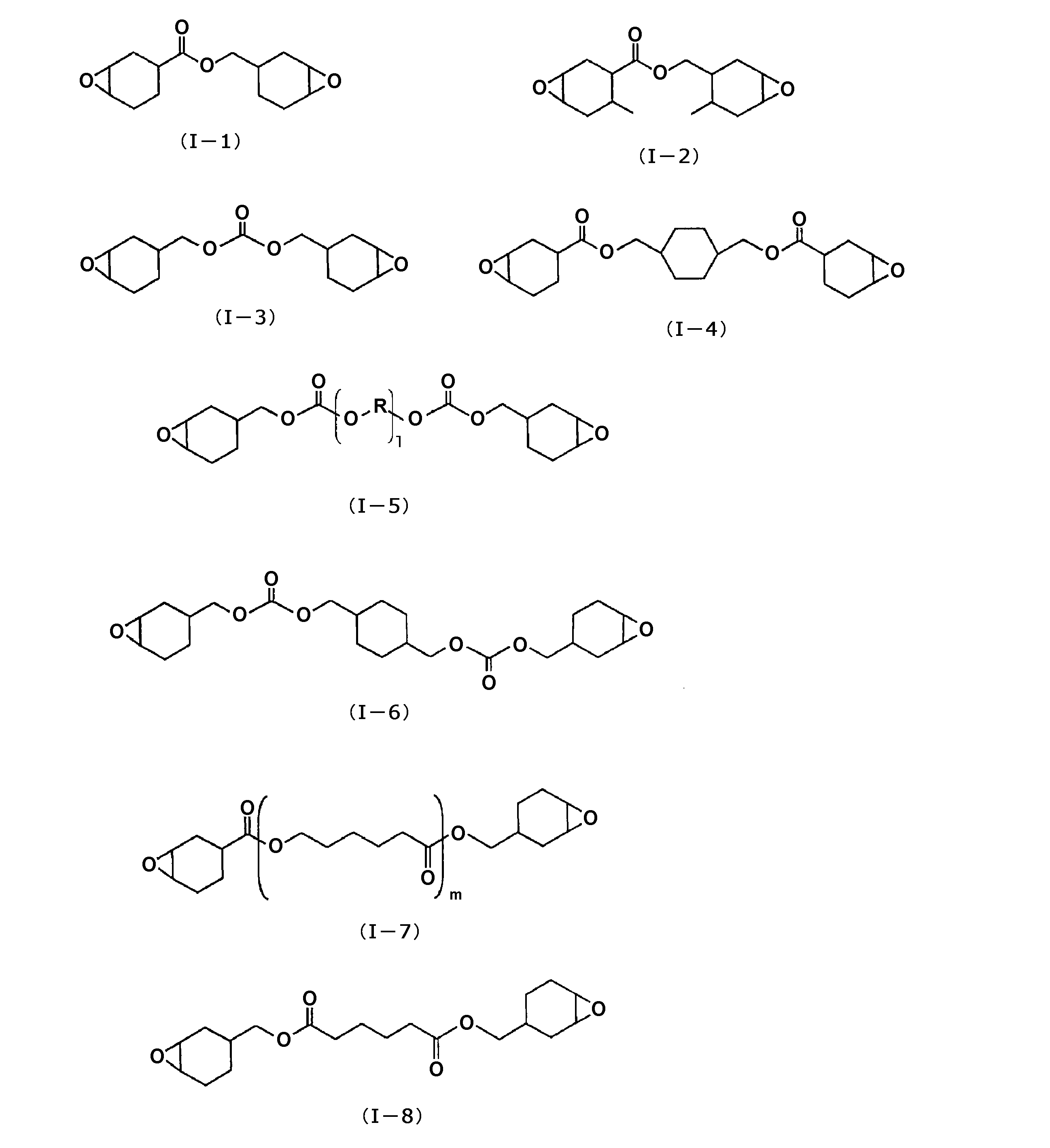
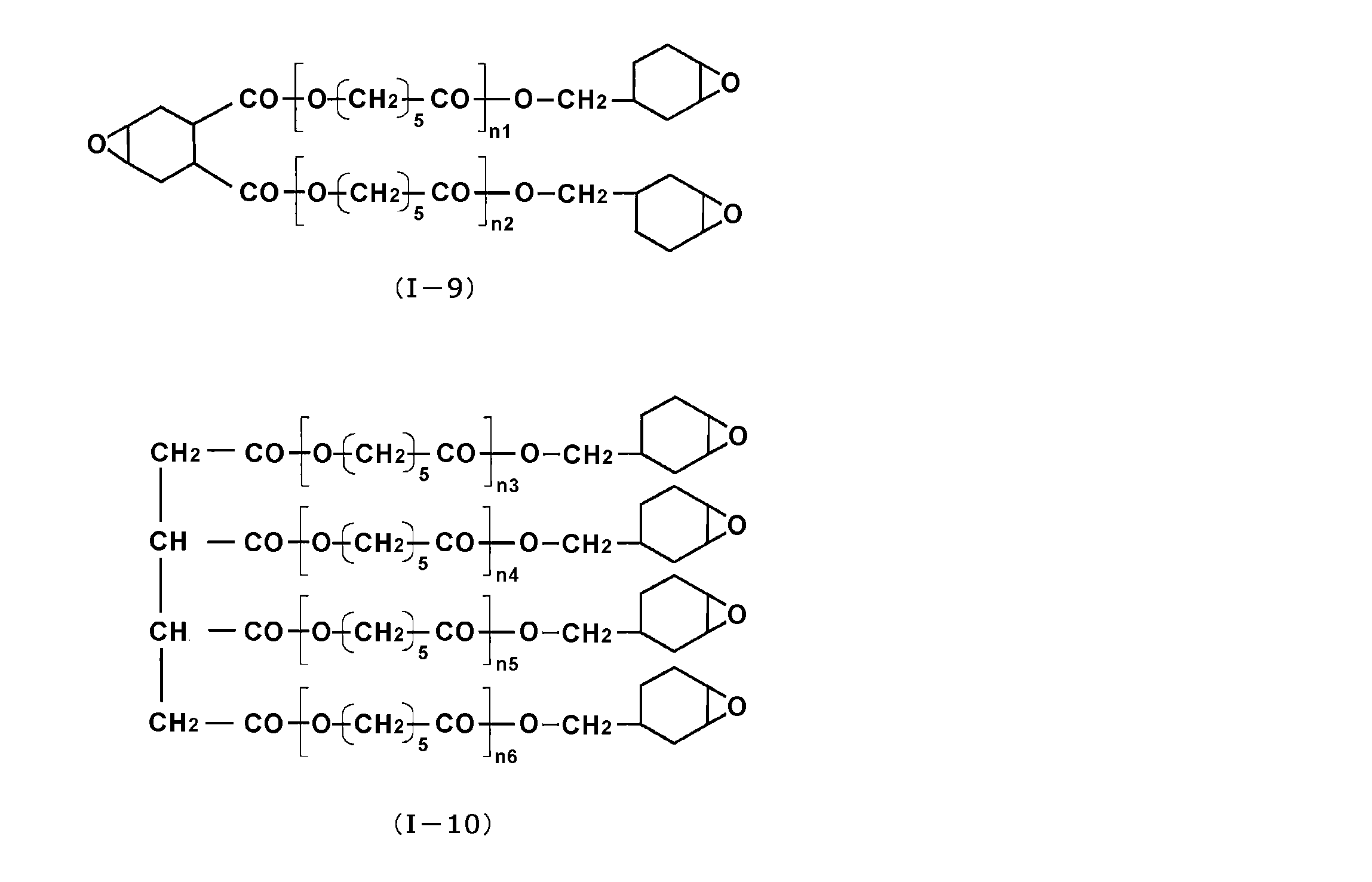
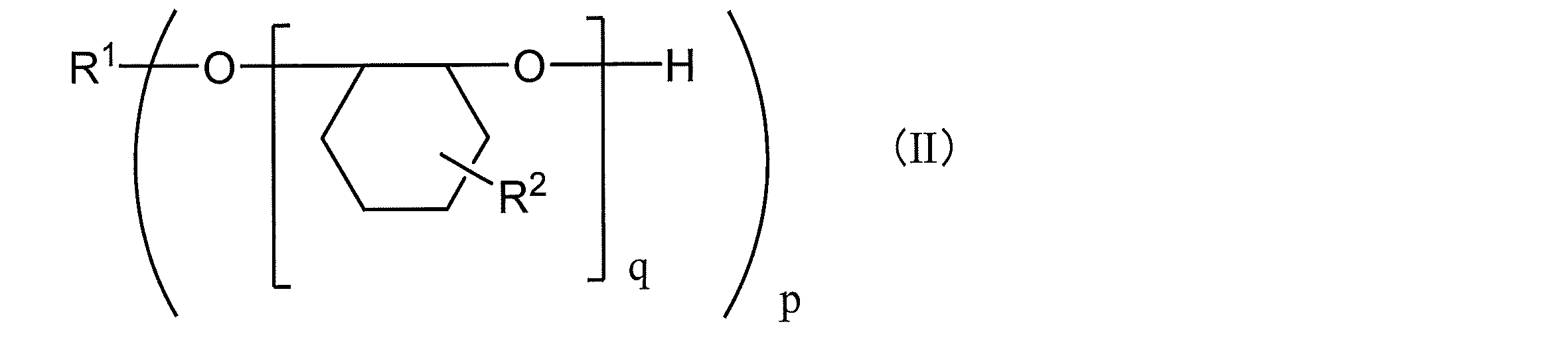



本発明の硬化性樹脂組成物の必須成分であるゴム粒子(B)は、ゴム弾性を有する粒子である。本発明の硬化性樹脂組成物は、ゴム粒子(B)を脂環式エポキシ化合物(A)、白色顔料(C)、無機充填剤(D)、イソシアヌル酸誘導体(H)、及びシロキサン誘導体(I)と組み合わせて用いることにより、形成される硬化物の光反射性、耐熱性、耐光性、及び耐クラック性に優れ、特にコンプレッション成型により硬化物を形成した際に上記効果が顕著に発揮される傾向がある。
1/Tg=W1/Tg1+W2/Tg2+・・・・+Wn/Tgn
上記単独重合体のガラス転移温度は、各種文献に記載の値を採用することができ、例えば、「POLYMER HANDBOOK 第3版」(John Wiley & Sons,Inc.発行)に記載の値を採用できる。なお、文献に記載のないものについては、単量体を常法により重合して得られる単独重合体の、DSC法により測定されるガラス転移温度の値を採用することができる。
本発明の硬化性樹脂組成物の必須成分である白色顔料(C)は、主に、硬化物(リフレクター)に対して高い光反射性を付与し、また、その線膨張率を低減させる働きを有する。白色顔料(C)としては、公知乃至慣用の白色顔料を使用することができ、特に限定されないが、例えば、ガラス、クレー、雲母、タルク、カオリナイト(カオリン)、ハロイサイト、ゼオライト、酸性白土、活性白土、ベーマイト、擬ベーマイト、無機酸化物、金属塩[例えば、アルカリ土類金属塩等]等の無機白色顔料;スチレン系樹脂、ベンゾグアナミン系樹脂、尿素-ホルマリン系樹脂、メラミン-ホルマリン系樹脂、アミド系樹脂等の樹脂顔料等の有機白色顔料(プラスチックピグメント等);中空構造(バルーン構造)を有する中空粒子等が挙げられる。
本発明の硬化性樹脂組成物は、白色顔料(C)とは別に、無機充填剤(D)を必須成分として含む。無機充填剤(D)は、主に、硬化物(リフレクター)に優れた耐熱性及び耐光性(特に、優れた耐熱性)を付与する。また、硬化物(リフレクター)の線膨張率を低減させる働きを有する。また、無機充填剤(D)の種類によっては、硬化物(リフレクター)に対して優れた光反射性を付与できる場合もある。
本発明の硬化性樹脂組成物における硬化剤(E)は、脂環式エポキシ化合物(A)等のエポキシ基を有する化合物と反応することにより、硬化性樹脂組成物を硬化させる働きを有する化合物である。硬化剤(E)としては、公知乃至慣用のエポキシ樹脂用硬化剤を使用することができ、特に限定されないが、例えば、酸無水物類(酸無水物系硬化剤)、アミン類(アミン系硬化剤)、ポリアミド樹脂、イミダゾール類(イミダゾール系硬化剤)、ポリメルカプタン類(ポリメルカプタン系硬化剤)、フェノール類(フェノール系硬化剤)、ポリカルボン酸類、ジシアンジアミド類、有機酸ヒドラジド等が挙げられる。
本発明の硬化性樹脂組成物は、硬化促進剤(F)を含んでいてもよい。硬化促進剤(F)は、本発明の硬化性樹脂組成物に含まれるエポキシ基を有する化合物(例えば、脂環式エポキシ化合物(A)、イソシアヌル酸誘導体(H)、及びシロキサン誘導体(I))が硬化剤(E)等の硬化剤と反応する際、その反応速度を促進する機能を有する化合物である。硬化促進剤(F)としては、公知乃至慣用の硬化促進剤を使用することができ、例えば、1,8-ジアザビシクロ[5.4.0]ウンデセン-7(DBU)又はその塩(例えば、フェノール塩、オクチル酸塩、p-トルエンスルホン酸塩、ギ酸塩、テトラフェニルボレート塩等);1,5-ジアザビシクロ[4.3.0]ノネン-5(DBN)又はその塩(例えば、フェノール塩、オクチル酸塩、p-トルエンスルホン酸塩、ギ酸塩、テトラフェニルボレート塩等);ベンジルジメチルアミン、2,4,6-トリス(ジメチルアミノメチル)フェノール、N,N-ジメチルシクロヘキシルアミン等の第3級アミン;2-エチル-4-メチルイミダゾール、1-シアノエチル-2-エチル-4-メチルイミダゾール等のイミダゾール;リン酸エステル、トリフェニルホスフィン等のホスフィン類;テトラフェニルホスホニウムテトラ(p-トリル)ボレート等のホスホニウム化合物;オクチル酸亜鉛やオクチル酸スズ等の有機金属塩;金属キレート等が挙げられる。
本発明の硬化性樹脂組成物における硬化触媒(G)は、脂環式エポキシ化合物(A)等のカチオン重合性化合物の硬化反応(重合反応)を開始及び/又は促進させることにより、硬化性樹脂組成物を硬化させる働きを有する化合物である。硬化触媒(G)としては、特に限定されないが、例えば、光照射や加熱処理等を施すことによりカチオン種を発生して、重合を開始させるカチオン重合開始剤(光カチオン重合開始剤、熱カチオン重合開始剤等)や、ルイス酸・アミン錯体、ブレンステッド酸塩類、イミダゾール類等が挙げられる。
本発明の硬化性樹脂組成物の必須成分であるイソシアヌル酸誘導体(H)は、イソシアヌル酸の誘導体であって、分子内に1個以上のオキシラン環を少なくとも有する化合物である。本発明の硬化性樹脂組成物がイソシアヌル酸誘導体(H)を含むことにより、硬化物の光反射性、耐熱性、耐光性が向上し、後述のシロキサン誘導体(I)と同時に硬化性樹脂組成物に含まれることで、硬化物の光反射性、耐熱性、耐光性がさらに向上する。イソシアヌル酸誘導体(H)が分子内に有するオキシラン環の数は、1個以上であればよく、特に限定されないが、1~6個が好ましく、より好ましくは1~3個である。
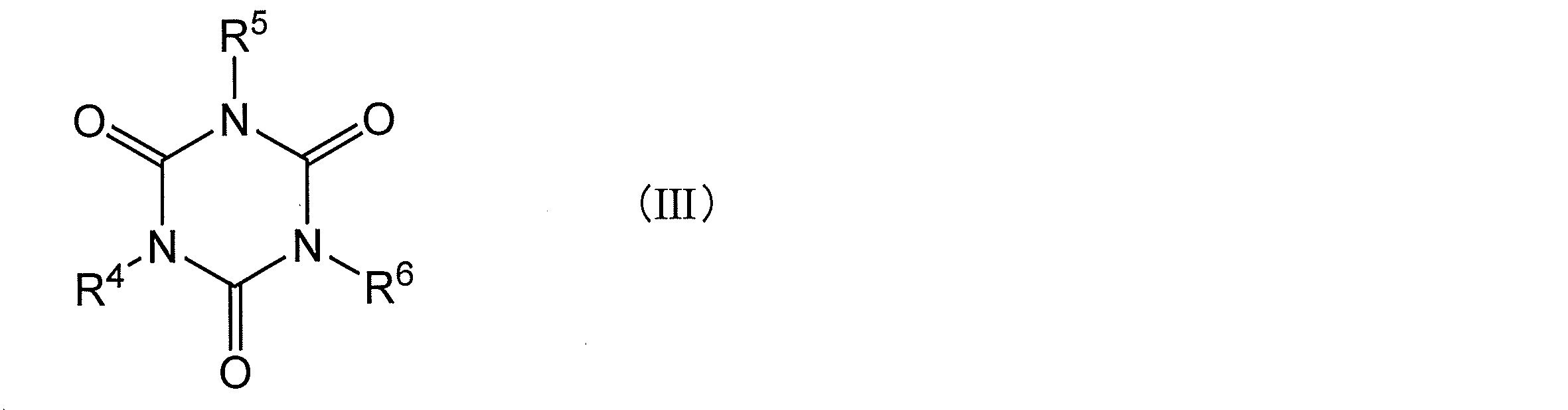


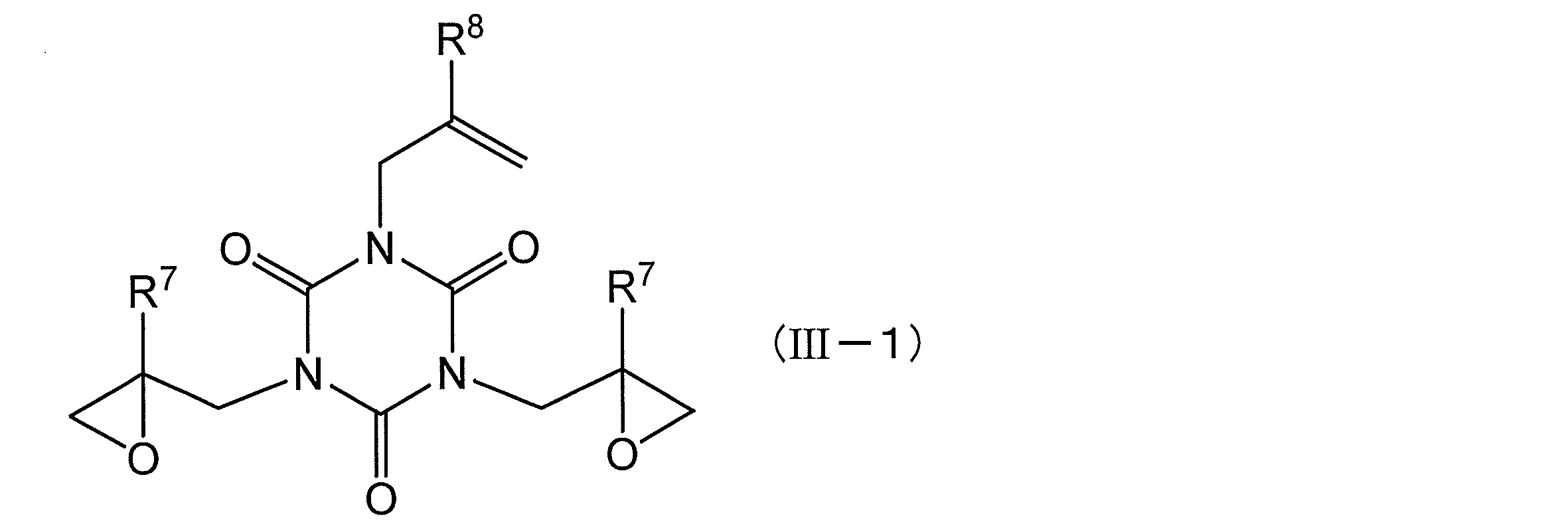
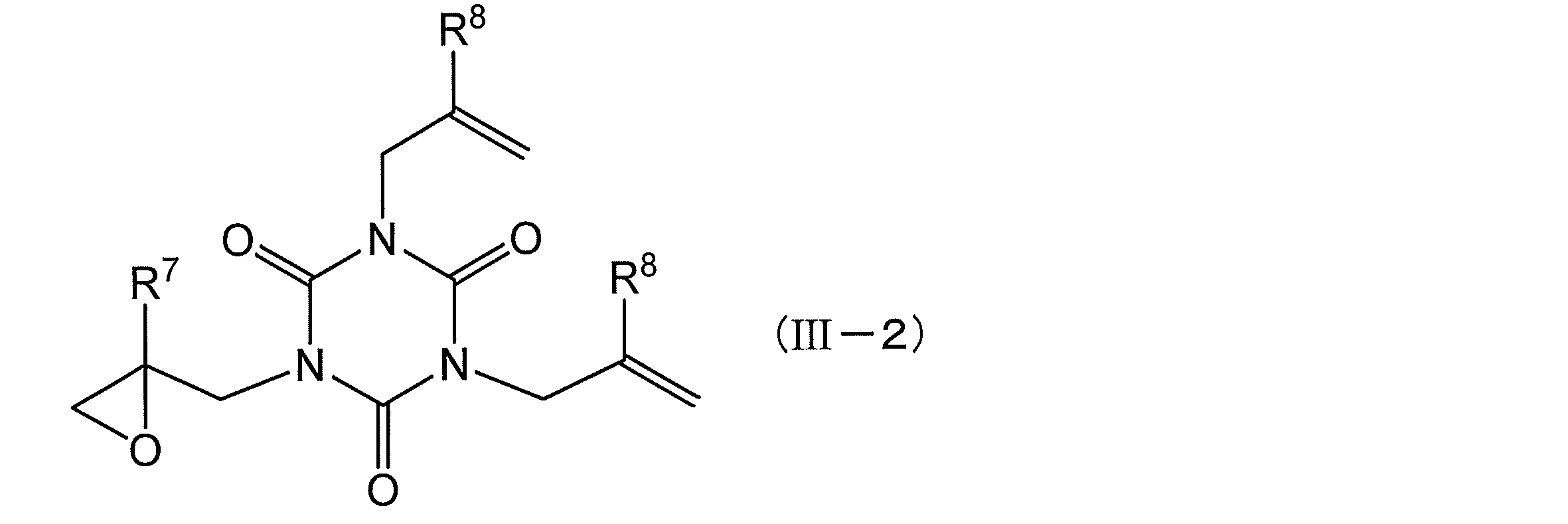

本発明の硬化性樹脂組成物の必須成分であるシロキサン誘導体(I)は、分子内に2以上のエポキシ基を有し、シロキサン結合(-Si-O-Si-)により構成された骨格を有する化合物(シロキサン化合物)である。シロキサン誘導体(I)におけるシロキサン骨格(Si-O-Si骨格)としては、特に限定されないが、例えば、環状シロキサン骨格;直鎖状のシリコーンや、かご型やラダー型のポリシルセスキオキサン等のポリシロキサン骨格等が挙げられる。中でも、上記シロキサン骨格としては、硬化物の光反射性、耐熱性、耐光性を向上させて光半導体装置の光度低下を抑制する観点で、環状シロキサン骨格、直鎖状シリコーン骨格が好ましい。即ち、シロキサン誘導体(I)としては、分子内に2以上のエポキシ基を有する環状シロキサン、分子内に2以上のエポキシ基を有する直鎖状シリコーンが好ましい。
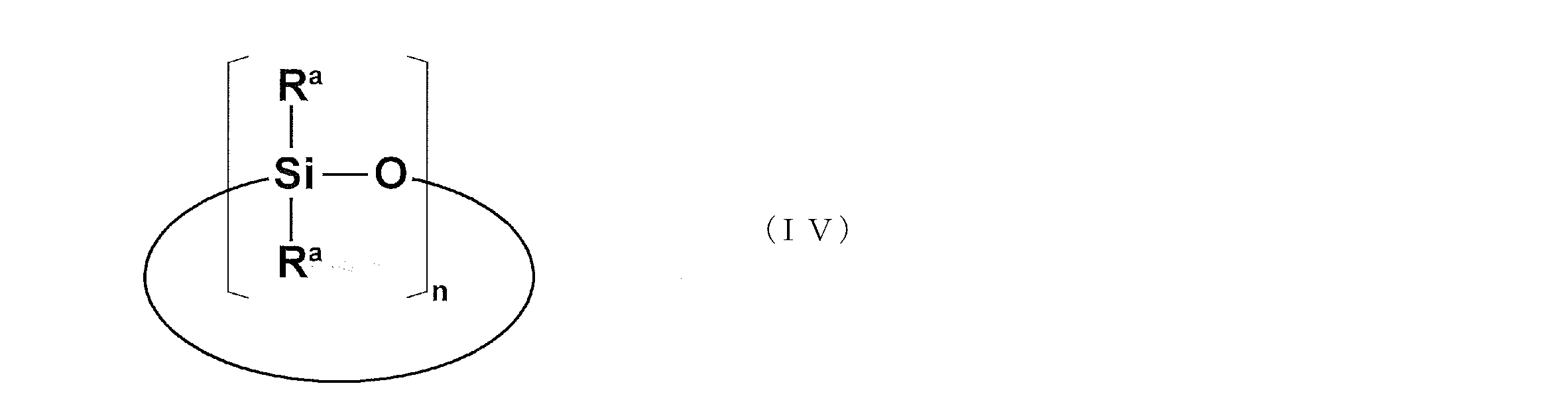

本発明の硬化性樹脂組成物は、さらに、離型剤を含んでいてもよい。離型剤を含むことにより、トランスファー成型等の金型を使用した成型法による連続成型が容易となり、高い生産性で硬化物(リフレクター)を製造することが可能となる。離型剤としては、公知乃至慣用の離型剤を使用することができ、特に限定されないが、例えば、フッ素系離型剤(フッ素原子含有化合物;例えば、フッ素オイル、ポリテトラフルオロエチレン等)、シリコーン系離型剤(シリコーン化合物;例えば、シリコーンオイル、シリコーンワックス、シリコーン樹脂、ポリオキシアルキレン単位を有するポリオルガノシロキサン等)、ワックス系離型剤(ワックス類;例えば、カルナウバワックス等の植物ロウ、羊毛ワックス等の動物ロウ、パラフィンワックス等のパラフィン類、ポリエチレンワックス、酸化ポリエチレンワックス等)、高級脂肪酸又はその塩(例えば、金属塩等)、高級脂肪酸エステル、高級脂肪酸アミド、鉱油等が挙げられる。
本発明の硬化性樹脂組成物は、酸化防止剤を含んでいてもよい。酸化防止剤を含むことにより、いっそう耐熱性に優れた硬化物(リフレクター)を製造することが可能となる。酸化防止剤としては、公知乃至慣用の酸化防止剤を使用することができ、特に限定されないが、例えば、フェノール系酸化防止剤(フェノール系化合物)、ヒンダードアミン系酸化防止剤(ヒンダードアミン系化合物)、リン系酸化防止剤(リン系化合物)、イオウ系酸化防止剤(イオウ系化合物)等が挙げられる。
本発明の硬化性樹脂組成物は、上述の成分以外にも、本発明の効果を損なわない範囲で各種添加剤を含有していてもよい。上記添加剤として、例えば、エチレングリコール、ジエチレングリコール、プロピレングリコール、グリセリン等のヒドロキシ基を有する化合物(特に、脂肪族多価アルコール)を含有させると、反応を緩やかに進行させることができる。その他にも、粘度や光反射性を損なわない範囲内で、消泡剤、レベリング剤、γ-グリシドキシプロピルトリメトキシシランや3-メルカプトプロピルトリメトキシシラン等のシランカップリング剤、界面活性剤、難燃剤、着色剤、イオン吸着体、紫外線吸収剤、光安定剤、白色顔料(C)以外の顔料等の慣用の添加剤を使用することができる。これら添加剤の含有量は特に限定されず、適宜選択可能である。
上記ゴム粒子分散エポキシ化合物は、ゴム粒子(B)を脂環式エポキシ化合物(A)に分散させることによって得られる。なお、上記ゴム粒子分散エポキシ化合物における脂環式エポキシ化合物(A)は、硬化性樹脂組成物を構成する脂環式エポキシ化合物(A)の全量であってもよいし、一部の量であってもよい。同様に、上記ゴム粒子分散エポキシ化合物におけるゴム粒子(B)は、硬化性樹脂組成物を構成するゴム粒子(B)の全量であってもよいし、一部の量であってもよい。
本発明の硬化性樹脂組成物を加熱によって硬化させることにより、光反射性に優れ、耐熱性、耐光性、及び耐クラック性に優れた硬化物を得ることができる。なお、本発明の硬化性樹脂組成物を硬化させた硬化物、即ち本発明の硬化性樹脂組成物の硬化物を「本発明の硬化物」と称する場合がある。硬化の際の加熱温度(硬化温度)は、特に限定されないが、50~200℃が好ましく、より好ましくは80~180℃である。また、硬化の際に加熱する時間(硬化時間)は、特に限定されないが、60~1800秒が好ましく、より好ましくは90~900秒である。硬化温度と硬化時間が上記範囲の下限値より低い場合は硬化が不十分となり、逆に上記範囲の上限値より高い場合は熱分解による黄変が発生するので好ましくない。硬化条件は種々の条件に依存するが、例えば、硬化温度を高くした場合は硬化時間を短く、硬化温度を低くした場合は硬化時間を長くする等により、適宜調整することができる。また、硬化処理は一段階(例えば、コンプレッション成型のみ)で行ってもよいし、例えば、多段階(例えば、コンプレッション成型後にポストキュアー(二次硬化)としてオーブン等でさらに加熱する等)で行ってもよい。また、ポストキュアーを行う場合、この際の加熱温度は、50~200℃が好ましく、より好ましくは60~180℃、より好ましくは硬化温度と同程度の温度である。また、ポストキュアーを行う時間は、0.5~10時間が好ましく、より好ましくは1~8時間である。
本発明の光半導体素子搭載用基板は、本発明の硬化性樹脂組成物の硬化物(本発明の硬化性樹脂組成物を硬化させることにより得られる硬化物)により形成されたリフレクター(白色リフレクター)を少なくとも有する基板である。図1は、本発明の光半導体素子搭載用基板の一例を示す概略図であり、(a)は斜視図、(b)は断面図を示す。図1における100は白色リフレクター、101は金属配線(リードフレーム)、102は光半導体素子の搭載領域、103はパッケージ基板を示す。なお、パッケージ基板103には、金属配線101、さらに白色リフレクター100が取り付けられており、その中央(光半導体素子の搭載領域102)に光半導体素子107が置かれてダイボンディングされ、光半導体素子107とパッケージ基板103上の金属配線101の間はワイヤボンディングで接続される。パッケージ基板103の材質としては、樹脂、セラミックなどが使用されるが、白色リフレクターと同じものであってもよい。本発明の光半導体素子搭載用基板における上側の白色リフレクター100は、光半導体素子の搭載領域102の周囲を環状に取り囲み、上方に向かってその環の径が拡大するように傾斜した凹状の形状を有している。本発明の光半導体素子搭載用基板は、上記凹状の形状の内側の表面が少なくとも本発明の硬化性樹脂組成物の硬化物により形成されていればよい。また、図1に示すように、金属配線101に囲まれた部分(102の下部)は、パッケージ基板103の場合もあるし、白色リフレクター100の場合もある(即ち、図1における「100/103」は、白色リフレクター100であってもよいし、パッケージ基板103であってもよいことを意味する)。但し、本発明の光半導体素子搭載用基板は、図1に示す態様には限定されない。
本発明の光半導体装置は、光源としての光半導体素子と、本発明の硬化性樹脂組成物の硬化物からなるリフレクター(反射材)とを少なくとも備える光半導体装置である。より具体的には、本発明の光半導体装置は、本発明の光半導体素子搭載用基板と、該基板に搭載された光半導体素子とを少なくとも有する光半導体装置である。本発明の光半導体装置は、リフレクターとして本発明の硬化性樹脂組成物の硬化物により形成されたリフレクターを有するため、経時で光の輝度が低下しにくく、信頼性が高い。図2は、本発明の光半導体装置の一例を示す概略図(断面図)である。図2における100は白色リフレクター、101は金属配線(リードフレーム)、103はパッケージ基板、104はボンディングワイヤ、105は封止材、106はダイボンディング、107は光半導体素子(LED素子)を示す。図2に示す光半導体装置においては、光半導体素子107から発せられた光が白色リフレクター100の表面(反射面)で反射するため、高い効率で光半導体素子107からの光が取り出される。なお、図2に示すように、本発明の光半導体装置における光半導体素子は、通常、透明な封止材(図2における105)によって封止されている。
(ゴム粒子の製造)
還流冷却器付きの1L重合容器に、イオン交換水500g、及びジオクチルスルホコハク酸ナトリウム0.68gを仕込み、窒素気流下に撹拌しながら、80℃に昇温した。ここに、ゴム粒子のコア部分を形成するために必要とする量の約5重量%分に該当するアクリル酸ブチル9.5g、スチレン2.57g、及びジビニルベンゼン0.39gからなる単量体混合物を一括添加し、20分間撹拌して乳化させた後、ペルオキソ二硫酸カリウム9.5mgを添加し、1時間撹拌して最初のシード重合を行った。続いて、ペルオキソ二硫酸カリウム180.5mgを添加し、5分間撹拌した。ここに、コア部分を形成するために必要とする量の残り(約95重量%分)のアクリル酸ブチル180.5g、スチレン48.89g、及びジビニルベンゼン7.33gにジオクチルスルホコハク酸ナトリウム0.95gを溶解させてなる単量体混合物を2時間かけて連続的に添加し、2度目のシード重合を行い、その後、1時間熟成してコア部分を得た。
次いで、ペルオキソ二硫酸カリウム60mgを添加して5分間撹拌し、ここに、メタクリル酸メチル60g、アクリル酸1.5g、及びアリルメタクリレート0.3gにジオクチルスルホコハク酸ナトリウム0.3gを溶解させてなる単量体混合物を30分かけて連続的に添加し、シード重合を行った。その後、1時間熟成し、コア部分を被覆するシェル層を形成した。
次いで、室温(25℃)まで冷却し、目開き120μmのプラスチック製網で濾過することにより、コアシェル構造を有するゴム粒子を含むラテックスを得た。得られたラテックスをマイナス30℃で凍結し、吸引濾過器で脱水洗浄した後、60℃で一昼夜送風乾燥してゴム粒子を得た。得られたゴム粒子の平均粒子径は108nm、最大粒子径は289nmであった。
(ゴム粒子分散エポキシ化合物の製造)
製造例1で得られたゴム粒子5重量部を、窒素気流下、60℃に加温した状態でディゾルバーを使用して、商品名「セロキサイド2021P」(3,4-エポキシシクロヘキシルメチル(3,4-エポキシ)シクロヘキサンカルボキシレート、(株)ダイセル製)100重量部に分散させ(1000rpm、60分間)、真空脱泡して、ゴム粒子分散エポキシ化合物(25℃での粘度:1036mPa・s)を得た。
なお、製造例2で得られたゴム粒子分散エポキシ化合物(5重量部のゴム粒子を100重量部のセロキサイド2021Pに分散させたもの)の25℃での粘度は、デジタル粘度計(商品名「DVU-EII型」、(株)トキメック製)を使用して測定した。
表1及び表2に示す配合割合(単位:重量部)で、商品名「リカシッドMH-700」(新日本理化(株)製)、商品名「U-CAT 18X」(サンアプロ(株)製)、及びエチレングリコール(和光純薬工業(株)製)を、自公転式撹拌装置(商品名「あわとり練太郎 AR-250」、(株)シンキー製)を使用して均一に混合し、脱泡して硬化剤組成物を得た。
表1に示す配合割合(単位:重量部)に従って、製造例2で得たゴム粒子分散エポキシ化合物、イソシアヌル酸誘導体(モノアリルジグリシジルイソシアヌレート;商品名「MA-DGIC」、四国化成工業(株)製)、シロキサン誘導体(分子内に2つのエポキシ基を有するシロキサン誘導体;商品名「X-40-2678」を、自公転式撹拌装置(商品名「あわとり練太郎AR-250」、(株)シンキー製)を使用して均一に混合し、脱泡して、混合物を作製した。なお、上記混合は、MA-DGICを溶解させるために、80℃で1時間攪拌して実施した。
次に、表1に示す配合割合(単位:重量部)に従って、上記で得た混合物と、白色顔料(酸化チタン;商品名「DCF-T-17050」、レジノカラー工業(株)製)、無機充填剤(シリカ;商品名「FB-970FD」、デンカ(株)製)を、ディゾルバーを使用して均一に混合し、ロールミルによって所定条件下(ロールピッチ:0.2mm、回転数:25ヘルツ、3パス)で溶融混練して混練物を得た。
次に、表1に示す配合割合(単位:重量部)となるように上記で得た混練物と、製造例3で得た硬化剤組成物とを自公転式撹拌装置(商品名「あわとり練太郎AR-250」、(株)シンキー製)を使用して均一に混合し(2000rpm、5分間)、脱泡して、硬化性樹脂組成物を得た。
上記硬化性樹脂組成物をポリエステルからなる離型フィルムで挟み込み、150℃のコンプレッション成型用金型内に置き、3.0MPaの圧力で600秒間加熱及び加圧し、その後、ポストキュアー(150℃で5時間)を行うことによって、硬化物を得た。
硬化性樹脂組成物の配合組成を表1又は表2に示すように変更したこと以外は、実施例1と同様にして硬化物を得た。なお、一部の実施例及び比較例においては、硬化性樹脂組成物の構成成分として、製造例2で得たゴム粒子分散エポキシ化合物に代えて又は合わせて、表1又は表2に示す脂環式エポキシ化合物を使用した。
表1に示す配合割合(単位:重量部)に従って、製造例2で得たゴム粒子分散エポキシ化合物、イソシアヌル酸誘導体(モノアリルジグリシジルイソシアヌレート;商品名「MA-DGIC」、四国化成工業(株)製)、シロキサン誘導体(分子内に2つのエポキシ基を有するシロキサン誘導体;商品名「X-40-2678」、信越化学工業(株)製)を、自公転式撹拌装置(商品名「あわとり練太郎AR-250」、(株)シンキー製)を使用して均一に混合し、脱泡して、混合物を作製した。なお、上記混合は、MA-DGICを溶解させるために、80℃で1時間攪拌して実施した。
次に、表1に示す配合割合(単位:重量部)に従って、上記で得た混合物と、白色顔料(酸化チタン;商品名「DCF-T-17050」、レジノカラー工業(株)製)、無機充填剤(シリカ;商品名「FB-970FD」、デンカ(株)製)を、ディゾルバーを使用して均一に混合し、ロールミルによって所定条件下(ロールピッチ:0.2mm、回転数:25ヘルツ、3パス)で溶融混練して混練物を得た。
次に、表1に示す配合割合(単位:重量部)となるように上記で得た混練物と、硬化触媒(商品名「サンエイド SI-100L」、三新化学工業(株)製)とを自公転式撹拌装置(商品名「あわとり練太郎AR-250」、(株)シンキー製)を使用して均一に混合し(2000rpm、5分間)、脱泡して、硬化性樹脂組成物を得た。
上記硬化性樹脂組成物をポリエステルからなる離型フィルムで挟み込み、150℃のコンプレッション成型用金型内に置き、3.0MPaの圧力で600秒間加熱及び加圧し、その後、ポストキュアー(150℃で5時間)を行うことによって、硬化物を得た。
硬化性樹脂組成物の配合組成を表1、表3に示すように変更したこと以外は、実施例15と同様にして硬化物を得た。なお、一部の実施例及び比較例においては、硬化性樹脂組成物の構成成分として、製造例2で得たゴム粒子分散エポキシ化合物に代えて又は合わせて、表1又は表3に示す脂環式エポキシ化合物を使用した。
実施例及び比較例で得られた硬化物について、下記の評価を実施した。
実施例及び比較例で得られた硬化物を切削加工して、長さ30mm×幅30mm×厚み3mmの試験片を作製した。次いで、分光光度計(商品名「分光光度計 UV-2450」、(株)島津製作所製)を用いて、波長450nmの光に対する各試験片の反射率(「初期反射率」とする)を測定した。結果を表1~3に示す。
なお、初期反射率が95%以上であれば、光反射用材料として特に優れていると言える。
初期反射率の評価を行った試験片(硬化物;長さ30mm×幅30mm×3mm厚)を用いて、当該試験片を120℃の乾燥機に入れて250時間放置する試験(耐熱試験)を行った後、波長450nmの光の反射率を初期反射率と同様に測定した。そして、下記式により、反射率保持率(加熱エージング前後)を算出した。結果を表1~3に示す。
[反射率保持率(加熱エージング前後)]=([加熱エージング後の反射率]/[初期反射率])×100
この反射率保持率が高いほど、硬化物が耐熱性に優れることが示唆される。なお、120℃、250時間加熱後の反射率保持率が90%以上であれば、光反射用材料として耐熱性に特に優れていると言える。
初期反射率の評価を行った試験片(硬化物;長さ30mm×幅30mm×3mm厚)を用いて、当該試験片に対し、強度10mW/cm2の紫外線を250時間照射する試験(耐光試験)を行った後、波長450nmの光の反射率を初期反射率と同様に測定した。そして、下記式により、反射率保持率(紫外線エージング前後)を算出した。結果を表1~3に示す。
[反射率保持率(紫外線エージング前後)]=([紫外線エージング後の反射率]/[初期反射率])×100
この反射率保持率が高いほど、硬化物が耐光性に優れることが示唆される。なお、強度10mW/cm2、250時間照射後の反射率保持率が90%以上であれば、光反射用材料として耐光性に特に優れていると言える。
実施例及び比較例で得られた硬化物を切削加工して、幅5mm×長さ5mm×厚さ3mmの試験片を作製した。上記硬化物の切削加工には、マイクロ・カッティング・マシン(商品名「BS-300CL」、メイワフォーシス(株)製)を使用し、切削加工の際に硬化物にクラックが生じたか否かを、デジタルマイクロスコープ(商品名「VHX-900」、(株)キーエンス製)を用いて観察し、確認した。表1~3には、1サンプルにつき10個の試験片を作製し、そのうちクラックの発生が確認された試験片の個数[個/10個]を評価結果として示す。
上記切削加工により得られた試験片(幅5mm×長さ5mm×厚さ3mm)に対し、リフロー炉(商品名「UNI-5016F」、日本アントム(株)製)を用いて、260℃を最高温度として5秒間、全リフロー時間を90秒としてリフロー処理を施した。その後、当該リフロー処理により試験片にクラックが生じたか否かを、デジタルマイクロスコープ(商品名「VHX-900」、(株)キーエンス製)を用いて観察し、確認した。表1~3には、1サンプルにつき10個の試験片のリフロー処理を行い、そのうちクラックの発生が確認された試験片の個数[個/10個]を評価結果として示す。
各試験の結果、下記(1)~(5)をいずれも満たすものを○(良好)と判定した。一方、下記(1)~(5)のいずれかを満たさない場合には×(不良)と判定した。
(1)初期反射率:光反射率が95%以上
(2)加熱エージング前後の反射率保持率:反射率保持率が90%以上
(3)紫外線エージング前後の反射率保持率:反射率保持率が90%以上
(4)切削加工時のクラック有無評価:クラックが発生した個数が0個
(5)リフロー時のクラック有無評価:クラックが発生した個数が0個
結果を表1~3の「総合判定」の欄に示す。
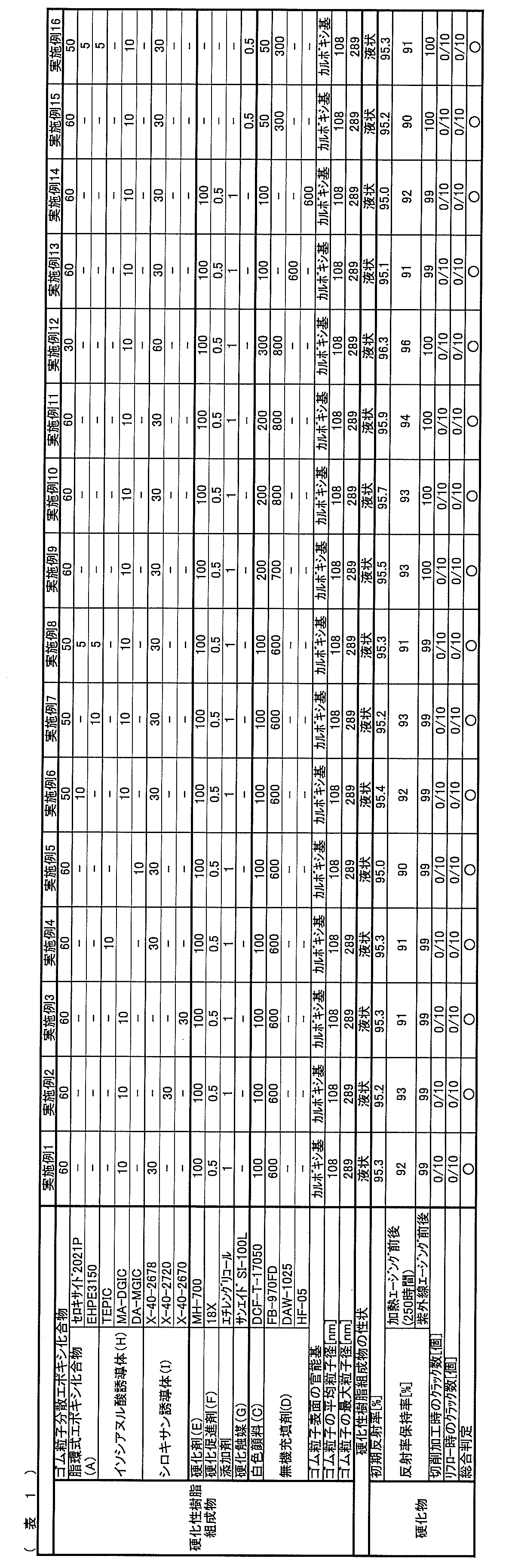
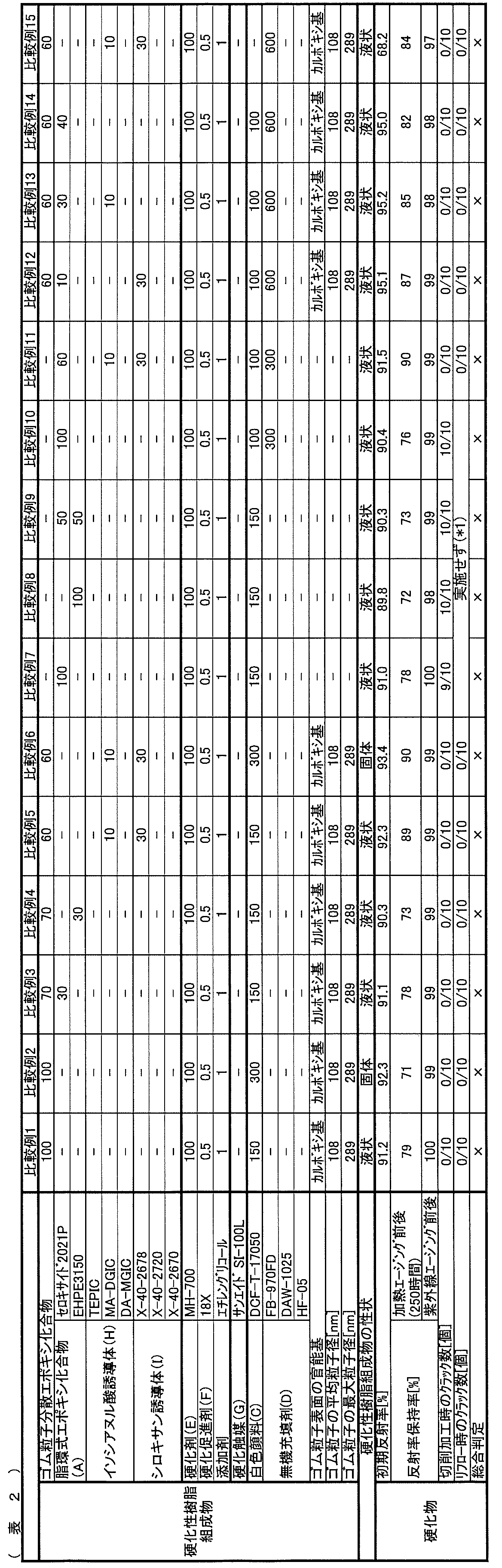

(ゴム粒子分散エポキシ化合物)
製造例2で得られたゴム粒子分散エポキシ化合物
(エポキシ化合物)
セロキサイド2021P:商品名「セロキサイド2021P」(3,4-エポキシシクロヘキシルメチル(3,4-エポキシ)シクロヘキサンカルボキシレート)、(株)ダイセル製
EHPE3150:商品名「EHPE3150」(2,2-ビス(ヒドロキシメチル)-1-ブタノールの1,2-エポキシ-4-(2-オキシラニル)シクロヘキサン付加物)、(株)ダイセル製
(イソシアヌル酸誘導体)
TEPIC:商品名「TEPIC」[トリグリシジルイソシアヌレート]、日産化学工業(株)製
MA-DGIC:商品名「MA-DGIC」[モノアリルジグリシジルイソシアヌレート]、四国化成工業(株)製
DA-MGIC:商品名「DA-MGIC」[ジアリルモノグリシジルイソシアヌレート]、四国化成工業(株)製
(シロキサン誘導体)
X-40-2678:商品名「X-40-2678」(分子内に2つのエポキシ基を有するシロキサン誘導体)、信越化学工業(株)製
X-40-2720:商品名「X-40-2720」(分子内に3つのエポキシ基を有するシロキサン誘導体)、信越化学工業(株)製
X-40-2670:商品名「X-40-2670」(分子内に4つのエポキシ基を有するシロキサン誘導体)、信越化学工業(株)製
(硬化剤組成物)
MH-700:商品名「リカシッドMH-700」(4-メチルヘキサヒドロ無水フタル酸/ヘキサヒドロ無水フタル酸)、新日本理化(株)製
18X:商品名「U-CAT 18X」(硬化促進剤)、サンアプロ(株)製
(添加剤)
エチレングリコール:商品名「エチレングリコール」、和光純薬工業(株)製
(硬化触媒)
サンエイド SI-100L:商品名「サンエイド SI-100L」、三新化学工業(株)製
(白色顔料)
DCF-T-17050:商品名「DCF-T-17050」(酸化チタン、平均粒子径0.3μm、最大粒子径1μm以下)、レジノカラー工業(株)製
(無機充填剤)
FB-970FD:商品名「FB-970FD」(シリカ、表面処理なし、平均粒子径16.7μm、最大粒子径70μm)、デンカ(株)製
DAW-1025:商品名「DAW-1025」(アルミナ、平均粒子径7.9μm、最大粒子径32μm)、デンカ(株)製
HF-05:商品名「HF-05」(窒化アルミナ、平均粒子径5μm、最大粒子径5μm)、デンカ(株)製
101:金属配線(電極)
102:光半導体素子の搭載領域
103:パッケージ基板
104:ボンディングワイヤ
105:光半導体素子の封止材
106:ダイボンディング
107:光半導体素子
108:ヒートシンク
109:カソードマーク
Claims (9)
- 脂環式エポキシ化合物(A)、ゴム粒子(B)、白色顔料(C)、無機充填剤(D)、分子内に1個以上のオキシラン環を有するイソシアヌル酸誘導体(H)、及び分子内に2以上のエポキシ基を有するシロキサン誘導体(I)を含有し、さらに、硬化剤(E)、及び硬化促進剤(F)、又は、硬化触媒(G)を含有し、25℃において液状であることを特徴とする光反射用硬化性樹脂組成物。
- 前記ゴム粒子(B)が、(メタ)アクリル酸エステルを必須のモノマー成分とするポリマーで構成され、表面にヒドロキシ基及び/又はカルボキシ基を有し、前記ゴム粒子(B)の平均粒子径が10~500nmであり、最大粒子径が50~1000nmである請求項1に記載の光反射用硬化性樹脂組成物。
- 前記脂環式エポキシ化合物(A)が、下記式(I-1)
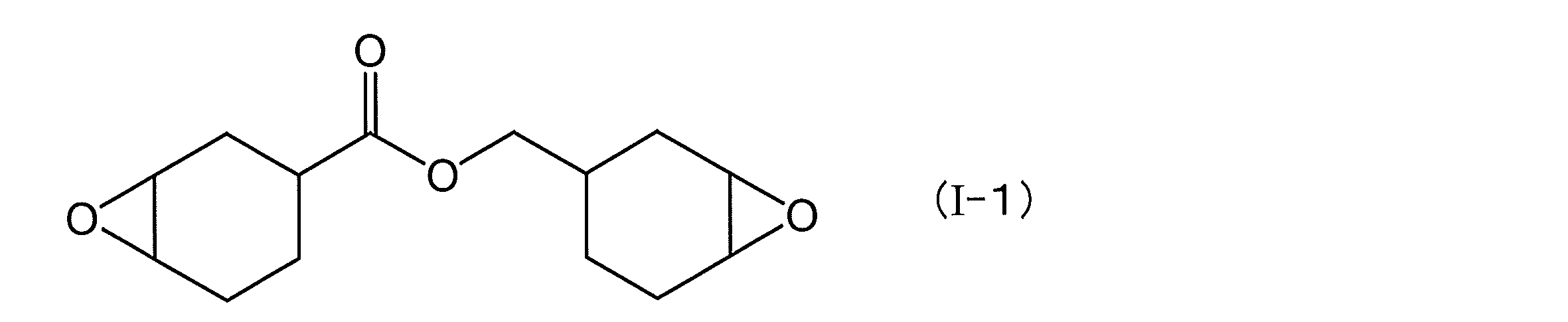
で表される化合物を含む請求項1又は2に記載の光反射用硬化性樹脂組成物。 - 前記イソシアヌル酸誘導体(H)が、下記式(III-1)
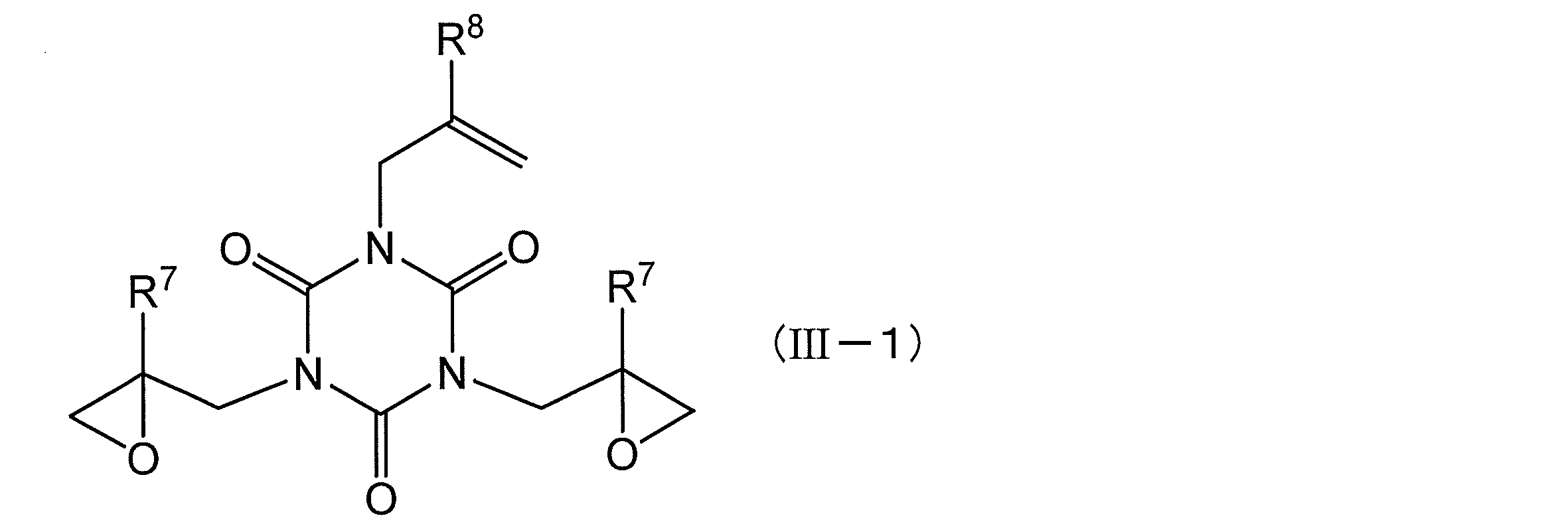
[式(III-1)中、R7及びR8は、同一又は異なって、水素原子又は炭素数1~8のアルキル基を示す。]
で表される化合物である請求項1~3のいずれか1項に記載の光反射用硬化性樹脂組成物。 - 前記白色顔料(C)が、酸化チタン、酸化ジルコニウム、酸化亜鉛、及び硫酸バリウムからなる群より選択される少なくとも1種であり、
前記無機充填剤(D)が、シリカ、アルミナ、窒化ケイ素、窒化アルミニウム、及び窒化ホウ素からなる群より選択される少なくとも1種である請求項1~4のいずれか1項に記載の光反射用硬化性樹脂組成物。 - トランスファー成型用又はコンプレッション成型用樹脂組成物である請求項1~5のいずれか1項に記載の光反射用硬化性樹脂組成物。
- リフレクター形成用樹脂組成物である請求項1~6のいずれか1項に記載の光反射用硬化性樹脂組成物。
- 請求項1~7のいずれか1項に記載の光反射用硬化性樹脂組成物の硬化物。
- 光半導体素子と、請求項8に記載の光反射用硬化性樹脂組成物の硬化物からなるリフレクターとを少なくとも備えることを特徴とする光半導体装置。
Priority Applications (2)
| Application Number | Priority Date | Filing Date | Title |
|---|---|---|---|
| KR1020187025517A KR20180107227A (ko) | 2016-02-12 | 2017-02-06 | 광 반사용 경화성 수지 조성물 및 그의 경화물, 그리고 광반도체 장치 |
| CN201780010306.7A CN108603010A (zh) | 2016-02-12 | 2017-02-06 | 光反射用固化性树脂组合物及其固化物、以及光半导体装置 |
Applications Claiming Priority (2)
| Application Number | Priority Date | Filing Date | Title |
|---|---|---|---|
| JP2016025329A JP2017141415A (ja) | 2016-02-12 | 2016-02-12 | 光反射用硬化性樹脂組成物及びその硬化物、並びに光半導体装置 |
| JP2016-025329 | 2016-02-12 |
Publications (1)
| Publication Number | Publication Date |
|---|---|
| WO2017138491A1 true WO2017138491A1 (ja) | 2017-08-17 |
Family
ID=59563851
Family Applications (1)
| Application Number | Title | Priority Date | Filing Date |
|---|---|---|---|
| PCT/JP2017/004216 Ceased WO2017138491A1 (ja) | 2016-02-12 | 2017-02-06 | 光反射用硬化性樹脂組成物及びその硬化物、並びに光半導体装置 |
Country Status (5)
| Country | Link |
|---|---|
| JP (1) | JP2017141415A (ja) |
| KR (1) | KR20180107227A (ja) |
| CN (1) | CN108603010A (ja) |
| TW (1) | TW201739817A (ja) |
| WO (1) | WO2017138491A1 (ja) |
Cited By (2)
| Publication number | Priority date | Publication date | Assignee | Title |
|---|---|---|---|---|
| WO2018135557A1 (ja) * | 2017-01-23 | 2018-07-26 | 株式会社ダイセル | 硬化性エポキシ樹脂組成物 |
| WO2019124476A1 (ja) * | 2017-12-21 | 2019-06-27 | 株式会社ダイセル | 硬化性エポキシ樹脂組成物及びその硬化物、並びに光半導体装置 |
Families Citing this family (2)
| Publication number | Priority date | Publication date | Assignee | Title |
|---|---|---|---|---|
| CN111040702B (zh) * | 2019-12-31 | 2022-10-11 | 无锡创达新材料股份有限公司 | 一种led反射杯用的有机硅环氧树脂组合物及其固化物 |
| CN116685617A (zh) * | 2020-12-22 | 2023-09-01 | 亨斯迈先进材料许可(瑞士)有限公司 | 可固化的两部分树脂体系 |
Citations (4)
| Publication number | Priority date | Publication date | Assignee | Title |
|---|---|---|---|---|
| WO2013002052A1 (ja) * | 2011-06-27 | 2013-01-03 | 株式会社ダイセル | 光反射用硬化性樹脂組成物及び光半導体装置 |
| WO2013008680A1 (ja) * | 2011-07-13 | 2013-01-17 | 株式会社ダイセル | 硬化性エポキシ樹脂組成物 |
| JP2013100410A (ja) * | 2011-11-09 | 2013-05-23 | Daicel Corp | 硬化性エポキシ樹脂組成物 |
| JP2013129798A (ja) * | 2011-12-22 | 2013-07-04 | Nippon Zeon Co Ltd | 光反射部材用樹脂組成物、光反射部材及び発光素子 |
Family Cites Families (2)
| Publication number | Priority date | Publication date | Assignee | Title |
|---|---|---|---|---|
| JP2011060819A (ja) * | 2009-09-07 | 2011-03-24 | Nitto Denko Corp | 光半導体素子収納用実装パッケージ用樹脂組成物およびそれを用いて得られる光半導体発光装置 |
| JP2015152643A (ja) * | 2014-02-10 | 2015-08-24 | パナソニックIpマネジメント株式会社 | 光反射体用熱硬化性樹脂組成物、光反射体、及び発光装置 |
-
2016
- 2016-02-12 JP JP2016025329A patent/JP2017141415A/ja active Pending
-
2017
- 2017-02-06 KR KR1020187025517A patent/KR20180107227A/ko not_active Withdrawn
- 2017-02-06 WO PCT/JP2017/004216 patent/WO2017138491A1/ja not_active Ceased
- 2017-02-06 CN CN201780010306.7A patent/CN108603010A/zh active Pending
- 2017-02-10 TW TW106104345A patent/TW201739817A/zh unknown
Patent Citations (4)
| Publication number | Priority date | Publication date | Assignee | Title |
|---|---|---|---|---|
| WO2013002052A1 (ja) * | 2011-06-27 | 2013-01-03 | 株式会社ダイセル | 光反射用硬化性樹脂組成物及び光半導体装置 |
| WO2013008680A1 (ja) * | 2011-07-13 | 2013-01-17 | 株式会社ダイセル | 硬化性エポキシ樹脂組成物 |
| JP2013100410A (ja) * | 2011-11-09 | 2013-05-23 | Daicel Corp | 硬化性エポキシ樹脂組成物 |
| JP2013129798A (ja) * | 2011-12-22 | 2013-07-04 | Nippon Zeon Co Ltd | 光反射部材用樹脂組成物、光反射部材及び発光素子 |
Cited By (4)
| Publication number | Priority date | Publication date | Assignee | Title |
|---|---|---|---|---|
| WO2018135557A1 (ja) * | 2017-01-23 | 2018-07-26 | 株式会社ダイセル | 硬化性エポキシ樹脂組成物 |
| JPWO2018135557A1 (ja) * | 2017-01-23 | 2019-11-14 | 株式会社ダイセル | 硬化性エポキシ樹脂組成物 |
| JP7146643B2 (ja) | 2017-01-23 | 2022-10-04 | 株式会社ダイセル | 硬化性エポキシ樹脂組成物 |
| WO2019124476A1 (ja) * | 2017-12-21 | 2019-06-27 | 株式会社ダイセル | 硬化性エポキシ樹脂組成物及びその硬化物、並びに光半導体装置 |
Also Published As
| Publication number | Publication date |
|---|---|
| TW201739817A (zh) | 2017-11-16 |
| CN108603010A (zh) | 2018-09-28 |
| JP2017141415A (ja) | 2017-08-17 |
| KR20180107227A (ko) | 2018-10-01 |
Similar Documents
| Publication | Publication Date | Title |
|---|---|---|
| CN103492482B (zh) | 光反射用固化性树脂组合物及光半导体装置 | |
| JP2018119032A (ja) | 光反射用硬化性樹脂組成物及びその硬化物、並びに光半導体装置 | |
| WO2018135558A1 (ja) | 光反射用硬化性樹脂組成物及びその硬化物、並びに光半導体装置 | |
| TWI753994B (zh) | 硬化性環氧樹脂組成物 | |
| WO2017131152A1 (ja) | 白色リフレクター用硬化性エポキシ樹脂組成物及びその硬化物、光半導体素子搭載用基板、並びに光半導体装置 | |
| WO2017138491A1 (ja) | 光反射用硬化性樹脂組成物及びその硬化物、並びに光半導体装置 | |
| JP6376907B2 (ja) | 硬化性エポキシ樹脂組成物 | |
| JP6174836B2 (ja) | 白色リフレクター成型用硬化性エポキシ樹脂組成物及びその硬化物、光半導体素子搭載用基板、並びに光半導体装置 | |
| WO2017138487A1 (ja) | 白色リフレクター用硬化性エポキシ樹脂組成物及びその硬化物、光半導体素子搭載用基板、光半導体装置、並びに製造方法 | |
| WO2017138490A1 (ja) | 光反射用硬化性樹脂組成物及びその硬化物、並びに光半導体装置 | |
| WO2015030089A1 (ja) | 硬化性樹脂組成物、粉体成形用硬化性樹脂組成物、及び光半導体装置 | |
| JP6899198B2 (ja) | 光反射用硬化性樹脂組成物及びその硬化物、並びに光半導体装置 | |
| JP2017141413A (ja) | 光反射用硬化性樹脂組成物及びその硬化物、並びに光半導体装置 | |
| JP2016210897A (ja) | 白色リフレクター用硬化性エポキシ樹脂組成物及びその硬化物、光半導体素子搭載用基板、並びに光半導体装置 | |
| JP6929069B2 (ja) | 光反射用硬化性樹脂組成物及びその硬化物、並びに光半導体装置 | |
| JP2020070392A (ja) | 硬化性エポキシ樹脂組成物 | |
| JP2017141414A (ja) | 光反射用硬化性樹脂組成物及びその硬化物、並びに光半導体装置 | |
| JP7329320B2 (ja) | 硬化性エポキシ樹脂組成物 | |
| JP2017155145A (ja) | 光学材料用硬化性エポキシ樹脂組成物 | |
| JP6899199B2 (ja) | 光反射用硬化性樹脂組成物及びその硬化物、並びに光半導体装置 | |
| JP2016210896A (ja) | 白色リフレクター用硬化性エポキシ樹脂組成物及びその硬化物、光半導体素子搭載用基板、並びに光半導体装置 | |
| JP7329319B2 (ja) | 硬化性エポキシ樹脂組成物 | |
| JP6472754B2 (ja) | 硬化性エポキシ樹脂組成物 |
Legal Events
| Date | Code | Title | Description |
|---|---|---|---|
| 121 | Ep: the epo has been informed by wipo that ep was designated in this application |
Ref document number: 17750214 Country of ref document: EP Kind code of ref document: A1 |
|
| NENP | Non-entry into the national phase |
Ref country code: DE |
|
| ENP | Entry into the national phase |
Ref document number: 20187025517 Country of ref document: KR Kind code of ref document: A |
|
| WWE | Wipo information: entry into national phase |
Ref document number: 1020187025517 Country of ref document: KR |
|
| 122 | Ep: pct application non-entry in european phase |
Ref document number: 17750214 Country of ref document: EP Kind code of ref document: A1 |