WO2017104832A1 - アイドルストップ制御装置、及び故障診断システム - Google Patents
アイドルストップ制御装置、及び故障診断システム Download PDFInfo
- Publication number
- WO2017104832A1 WO2017104832A1 PCT/JP2016/087646 JP2016087646W WO2017104832A1 WO 2017104832 A1 WO2017104832 A1 WO 2017104832A1 JP 2016087646 W JP2016087646 W JP 2016087646W WO 2017104832 A1 WO2017104832 A1 WO 2017104832A1
- Authority
- WO
- WIPO (PCT)
- Prior art keywords
- idle stop
- prohibition
- count
- control device
- factor
- Prior art date
- Legal status (The legal status is an assumption and is not a legal conclusion. Google has not performed a legal analysis and makes no representation as to the accuracy of the status listed.)
- Ceased
Links
Images


Classifications
-
- F—MECHANICAL ENGINEERING; LIGHTING; HEATING; WEAPONS; BLASTING
- F02—COMBUSTION ENGINES; HOT-GAS OR COMBUSTION-PRODUCT ENGINE PLANTS
- F02D—CONTROLLING COMBUSTION ENGINES
- F02D17/00—Controlling engines by cutting out individual cylinders; Rendering engines inoperative or idling
- F02D17/04—Controlling engines by cutting out individual cylinders; Rendering engines inoperative or idling rendering engines inoperative or idling, e.g. caused by abnormal conditions
-
- F—MECHANICAL ENGINEERING; LIGHTING; HEATING; WEAPONS; BLASTING
- F02—COMBUSTION ENGINES; HOT-GAS OR COMBUSTION-PRODUCT ENGINE PLANTS
- F02N—STARTING OF COMBUSTION ENGINES; STARTING AIDS FOR SUCH ENGINES, NOT OTHERWISE PROVIDED FOR
- F02N11/00—Starting of engines by means of electric motors
- F02N11/08—Circuits specially adapted for starting of engines
- F02N11/0814—Circuits specially adapted for starting of engines comprising means for controlling automatic idle-start-stop
- F02N11/0818—Conditions for starting or stopping the engine or for deactivating the idle-start-stop mode
-
- F—MECHANICAL ENGINEERING; LIGHTING; HEATING; WEAPONS; BLASTING
- F02—COMBUSTION ENGINES; HOT-GAS OR COMBUSTION-PRODUCT ENGINE PLANTS
- F02D—CONTROLLING COMBUSTION ENGINES
- F02D29/00—Controlling engines, such controlling being peculiar to the devices driven thereby, the devices being other than parts or accessories essential to engine operation, e.g. controlling of engines by signals external thereto
- F02D29/02—Controlling engines, such controlling being peculiar to the devices driven thereby, the devices being other than parts or accessories essential to engine operation, e.g. controlling of engines by signals external thereto peculiar to engines driving vehicles; peculiar to engines driving variable pitch propellers
-
- F—MECHANICAL ENGINEERING; LIGHTING; HEATING; WEAPONS; BLASTING
- F02—COMBUSTION ENGINES; HOT-GAS OR COMBUSTION-PRODUCT ENGINE PLANTS
- F02D—CONTROLLING COMBUSTION ENGINES
- F02D41/00—Electrical control of supply of combustible mixture or its constituents
- F02D41/02—Circuit arrangements for generating control signals
- F02D41/04—Introducing corrections for particular operating conditions
- F02D41/042—Introducing corrections for particular operating conditions for stopping the engine
-
- F—MECHANICAL ENGINEERING; LIGHTING; HEATING; WEAPONS; BLASTING
- F02—COMBUSTION ENGINES; HOT-GAS OR COMBUSTION-PRODUCT ENGINE PLANTS
- F02D—CONTROLLING COMBUSTION ENGINES
- F02D41/00—Electrical control of supply of combustible mixture or its constituents
- F02D41/02—Circuit arrangements for generating control signals
- F02D41/04—Introducing corrections for particular operating conditions
- F02D41/08—Introducing corrections for particular operating conditions for idling
-
- F—MECHANICAL ENGINEERING; LIGHTING; HEATING; WEAPONS; BLASTING
- F02—COMBUSTION ENGINES; HOT-GAS OR COMBUSTION-PRODUCT ENGINE PLANTS
- F02D—CONTROLLING COMBUSTION ENGINES
- F02D41/00—Electrical control of supply of combustible mixture or its constituents
- F02D41/22—Safety or indicating devices for abnormal conditions
-
- F—MECHANICAL ENGINEERING; LIGHTING; HEATING; WEAPONS; BLASTING
- F02—COMBUSTION ENGINES; HOT-GAS OR COMBUSTION-PRODUCT ENGINE PLANTS
- F02N—STARTING OF COMBUSTION ENGINES; STARTING AIDS FOR SUCH ENGINES, NOT OTHERWISE PROVIDED FOR
- F02N11/00—Starting of engines by means of electric motors
- F02N11/10—Safety devices
-
- F—MECHANICAL ENGINEERING; LIGHTING; HEATING; WEAPONS; BLASTING
- F02—COMBUSTION ENGINES; HOT-GAS OR COMBUSTION-PRODUCT ENGINE PLANTS
- F02D—CONTROLLING COMBUSTION ENGINES
- F02D41/00—Electrical control of supply of combustible mixture or its constituents
- F02D41/22—Safety or indicating devices for abnormal conditions
- F02D2041/228—Warning displays
-
- F—MECHANICAL ENGINEERING; LIGHTING; HEATING; WEAPONS; BLASTING
- F02—COMBUSTION ENGINES; HOT-GAS OR COMBUSTION-PRODUCT ENGINE PLANTS
- F02D—CONTROLLING COMBUSTION ENGINES
- F02D2200/00—Input parameters for engine control
- F02D2200/50—Input parameters for engine control said parameters being related to the vehicle or its components
- F02D2200/501—Vehicle speed
-
- F—MECHANICAL ENGINEERING; LIGHTING; HEATING; WEAPONS; BLASTING
- F02—COMBUSTION ENGINES; HOT-GAS OR COMBUSTION-PRODUCT ENGINE PLANTS
- F02D—CONTROLLING COMBUSTION ENGINES
- F02D2200/00—Input parameters for engine control
- F02D2200/60—Input parameters for engine control said parameters being related to the driver demands or status
- F02D2200/602—Pedal position
-
- F—MECHANICAL ENGINEERING; LIGHTING; HEATING; WEAPONS; BLASTING
- F02—COMBUSTION ENGINES; HOT-GAS OR COMBUSTION-PRODUCT ENGINE PLANTS
- F02N—STARTING OF COMBUSTION ENGINES; STARTING AIDS FOR SUCH ENGINES, NOT OTHERWISE PROVIDED FOR
- F02N2200/00—Parameters used for control of starting apparatus
- F02N2200/08—Parameters used for control of starting apparatus said parameters being related to the vehicle or its components
-
- F—MECHANICAL ENGINEERING; LIGHTING; HEATING; WEAPONS; BLASTING
- F02—COMBUSTION ENGINES; HOT-GAS OR COMBUSTION-PRODUCT ENGINE PLANTS
- F02N—STARTING OF COMBUSTION ENGINES; STARTING AIDS FOR SUCH ENGINES, NOT OTHERWISE PROVIDED FOR
- F02N2200/00—Parameters used for control of starting apparatus
- F02N2200/08—Parameters used for control of starting apparatus said parameters being related to the vehicle or its components
- F02N2200/0801—Vehicle speed
-
- F—MECHANICAL ENGINEERING; LIGHTING; HEATING; WEAPONS; BLASTING
- F02—COMBUSTION ENGINES; HOT-GAS OR COMBUSTION-PRODUCT ENGINE PLANTS
- F02N—STARTING OF COMBUSTION ENGINES; STARTING AIDS FOR SUCH ENGINES, NOT OTHERWISE PROVIDED FOR
- F02N2200/00—Parameters used for control of starting apparatus
- F02N2200/08—Parameters used for control of starting apparatus said parameters being related to the vehicle or its components
- F02N2200/0814—Bonnet switches
-
- F—MECHANICAL ENGINEERING; LIGHTING; HEATING; WEAPONS; BLASTING
- F02—COMBUSTION ENGINES; HOT-GAS OR COMBUSTION-PRODUCT ENGINE PLANTS
- F02N—STARTING OF COMBUSTION ENGINES; STARTING AIDS FOR SUCH ENGINES, NOT OTHERWISE PROVIDED FOR
- F02N2200/00—Parameters used for control of starting apparatus
- F02N2200/10—Parameters used for control of starting apparatus said parameters being related to driver demands or status
- F02N2200/102—Brake pedal position
-
- F—MECHANICAL ENGINEERING; LIGHTING; HEATING; WEAPONS; BLASTING
- F02—COMBUSTION ENGINES; HOT-GAS OR COMBUSTION-PRODUCT ENGINE PLANTS
- F02N—STARTING OF COMBUSTION ENGINES; STARTING AIDS FOR SUCH ENGINES, NOT OTHERWISE PROVIDED FOR
- F02N2200/00—Parameters used for control of starting apparatus
- F02N2200/10—Parameters used for control of starting apparatus said parameters being related to driver demands or status
- F02N2200/106—Driver presence, e.g. detected by door lock, seat sensor or belt sensor
-
- F—MECHANICAL ENGINEERING; LIGHTING; HEATING; WEAPONS; BLASTING
- F02—COMBUSTION ENGINES; HOT-GAS OR COMBUSTION-PRODUCT ENGINE PLANTS
- F02N—STARTING OF COMBUSTION ENGINES; STARTING AIDS FOR SUCH ENGINES, NOT OTHERWISE PROVIDED FOR
- F02N2300/00—Control related aspects of engine starting
- F02N2300/30—Control related aspects of engine starting characterised by the use of digital means
- F02N2300/302—Control related aspects of engine starting characterised by the use of digital means using data communication
-
- Y—GENERAL TAGGING OF NEW TECHNOLOGICAL DEVELOPMENTS; GENERAL TAGGING OF CROSS-SECTIONAL TECHNOLOGIES SPANNING OVER SEVERAL SECTIONS OF THE IPC; TECHNICAL SUBJECTS COVERED BY FORMER USPC CROSS-REFERENCE ART COLLECTIONS [XRACs] AND DIGESTS
- Y02—TECHNOLOGIES OR APPLICATIONS FOR MITIGATION OR ADAPTATION AGAINST CLIMATE CHANGE
- Y02T—CLIMATE CHANGE MITIGATION TECHNOLOGIES RELATED TO TRANSPORTATION
- Y02T10/00—Road transport of goods or passengers
- Y02T10/10—Internal combustion engine [ICE] based vehicles
- Y02T10/40—Engine management systems
Definitions
- the present invention relates to an idle stop control device that controls an idle stop of a vehicle engine, and a failure diagnosis system including the idle stop control device.
- the vehicle diagnosis system disclosed in Patent Document 1 communicates between a plurality of electronic control devices in the vehicle and an external diagnosis device to perform vehicle failure diagnosis.
- the external diagnostic device a plurality of idle stop conditions for performing idle stop registered in any of the plurality of electronic control devices are registered. Then, when the vehicle is driven with the external diagnostic device connected to the vehicle, an idle stop condition that is not satisfied when the idle stop is not executed is displayed on a predetermined display unit.
- One embodiment provides an idle stop control device capable of accurately and quickly performing a diagnosis about non-execution of an idle stop, and a failure diagnosis system including the idle stop control device.
- the idle stop control device includes an idle stop condition establishment determining unit that determines that an idle stop condition that is a predetermined condition for stopping idling of the engine of the vehicle is established, and the idle stop condition is established.
- An idle stop prohibition determination unit that determines that an idle stop prohibition condition is satisfied due to occurrence of one or more specific prohibition factors that prohibit execution of idle stop, and the idle stop prohibition determination unit And a prohibition count counter that counts the prohibition count that is the number of times it is determined that the idle stop prohibition condition is satisfied.
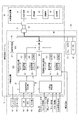
- FIG. 1 is an overall configuration diagram of a failure diagnosis system according to an embodiment.
- FIG. The time chart of the various count processing by an idle stop control apparatus.
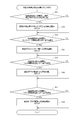
- FIG. 4 is a sub-flowchart of “the latest factor-by-factor prohibition count counting process” in FIG. 3.
- FIG. 1 shows the overall configuration of the failure diagnosis system 10.
- Failure diagnosis system 10 includes an idle stop control device 20 that is mounted on vehicle 90 and controls an idle stop of engine 91, and an external diagnosis device 30.
- the external diagnostic device 30 is connected to the idle stop control device 20 and exchanges information with the idle stop control device 20 to diagnose the vehicle 90.
- the idle stop control device 20 includes an idle stop condition establishment determination unit 21, an idle stop prohibition determination unit 22, a condition establishment number counter 230, a factor-by-factor prohibition number counter 250, a failure determination unit 27, an input / output unit 28, and the like.
- the idle stop condition establishment determination unit 21 is configured to shift information from a TCM (Transmission Control Module) 93, wheel pulses from an ESC (Electronic Stability Control, ie, skid prevention device) 94, stop master cylinder pressure information, and other information sources 95. Get each information from. Based on the acquired information, the idle stop condition establishment determination unit 21 determines that the vehicle stop condition is established as an “idle stop condition” that is a predetermined condition for stopping idling of the engine 91.
- TCM Transmission Control Module
- ESC Electronic Stability Control, ie, skid prevention device
- the idle stop prohibition determination unit 22 When the idle stop condition is satisfied, the idle stop prohibition determination unit 22 further generates one or more specific “idle stop prohibition factors” (hereinafter referred to as “prohibition factors”) that prohibit the execution of the idle stop. Then, it is determined that the idle stop prohibition condition is satisfied.
- specific prohibition factor include stop master cylinder pressure, engine hood opening, light drive, blower drive, and the like.
- the master cylinder pressure condition for stop is caused by insufficient pressure for the user to depress the brake pedal.
- the brake is not fully depressed by the user while the vehicle is stopped and the master cylinder pressure for stopping is less than a predetermined value, idle stop is not executed.
- This factor is considered to be mainly based on the user's daily usage of the car or user characteristics that should be called ⁇ . In this way, the prohibition factor based on the user characteristics is referred to as “user characteristic factor”.
- the engine hood opening condition occurs, for example, when you forget to close the hood after daily inspection. Also in this case, idle stop is not executed. It is considered that accidental factors unintended by the user, such as forgetting to close the hood, are not limited to any user and may occur in the same manner. In this way, a prohibition factor that is not based on user characteristics is referred to as a “non-user characteristic factor”. In addition, environmental factors such as weather also correspond to non-user characteristic factors.
- Light drive and blower drive are prohibited factors generated by prioritizing continuation of engine drive to ensure the supply of power for auxiliary equipment when driving auxiliary equipment such as various lights and air conditioner blowers while the vehicle is stopped. is there. It should be noted that factors such as light driving and blower driving cannot be generally discriminated whether they are user characteristic factors or non-user characteristic factors depending on conditions such as the vehicle usage region and season. For example, in an area where it is natural to cool while riding in a country with a tropical climate, the use of a blower while stopped is considered to be a non-user characteristic factor that does not depend on user characteristics. On the other hand, in regions with a warm climate that does not require air conditioning on a daily basis, the use of a blower while stopped is considered to be a user characteristic factor. Thus, the distinction between user characteristic factors and non-user characteristic factors is not absolute, and is appropriately determined according to the region, season, and the like.
- the idle stop prohibition determination unit 22 notifies the idle stop condition satisfaction determination unit 21 to prohibit the idle stop when the idle stop prohibition factor is further generated when the idle stop condition is satisfied. In this case, even when the vehicle is stopped and the idle stop condition is satisfied, the idle stop is not executed.
- the idle stop condition satisfaction determination unit 21 requests to stop the engine 91 and Execute. This contributes to fuel efficiency reduction and environmental protection.
- the idle stop condition establishment determining unit 21 drives the starter 92 to start the engine 91. Since such idle stop control is a well-known technique, detailed description is abbreviate
- the condition satisfaction number counter 230 counts “the number of times that the idle stop condition is satisfied”, which is “the number of times that the idle stop condition satisfaction determination unit 21 determines that the idle stop condition is satisfied”.
- the number of times the idle stop condition is satisfied is simply referred to as “the number of conditions satisfied”.
- the factor-based prohibition counter 250 counts “idle stop prohibition count” (hereinafter referred to as “prohibition count”), which is “the number of times the idle stop prohibition determination unit 22 determines that the idle stop prohibition condition is satisfied”. .
- the factor-by-factor prohibition count counter 250 of this embodiment counts the number of prohibitions by factor for a plurality of prohibition factors.
- the “prohibition count counter 250” will be referred to as appropriate wherever it is not necessarily “by factor”.
- condition establishment number counter 230 and the prohibition number counter 250 occupant authentication information indicating whether or not the occupant as a driver is the main user is input. When a user different from the main user gets on as a driver, the counting of various times is prohibited.
- the condition satisfaction number counter 230 and the prohibition number counter 250 are respectively the latest number counters 23 and 25 for counting the latest number of occurrences, and the past number counter 24 for counting the past number of occurrences before the start of counting the latest number of occurrences. , 26.
- the condition satisfaction number counter 230 includes nonvolatile memories 231 and 241 for storing and holding the count values of the latest number counter 23 and the past number counter 24, respectively.
- the factor-by-factor prohibited number counter 250 has nonvolatile memories 251 and 261 that store and hold the count values of the latest number counter 25 and the past number counter 26, respectively.
- the non-volatile memories 231, 241, 251, and 261 as “storage units” are composed of, for example, an EEPROM, and can store and hold the count values of the respective counters even when the vehicle 90 is powered off.
- the failure determination unit 27 has the same configuration as the conventional one, determines that a failure related to the idle stop control device has occurred, and stores a DTC (Diagnostic Trouble Code) corresponding to the failure content.
- the input / output unit 28 is connected to a network bus 40 as a communication path and can be accessed from the outside. In the present embodiment, it is possible to read and reset the number of established conditions and the number of prohibitions from the outside via the input / output unit 28. In other embodiments, it is sufficient that at least the number of prohibitions can be read or reset.
- the DTC stored by the failure determination unit 27 can also be read from the outside via the input / output unit 28.
- various input / output information related to the idle stop condition establishment determination unit 21 and the idle stop prohibition determination unit 22 is actually communicated with other control devices and the like via the input / output unit 28.
- illustration of those communication paths is omitted.
- the network bus 40 is an electronic network transmission path composed of a plurality of control devices mounted in the vehicle 90.
- the idle stop control device 20 is provided to be able to communicate with other control devices such as the brake ECU 41 and the AT-ECU (that is, automatic transmission ECU) 42 via the network bus 40.
- CAN is used as a network protocol.
- the idle stop control device 20 and a plurality of control devices in the vehicle 90 may be provided so as to communicate with each other via individual communication paths.
- the external diagnostic device 30 is connected to the idle stop control device 20 via a communication cable 52 or the like connected to the data link connector 51 of the vehicle 90, and exchanges information with the idle stop control device 20 to diagnose the vehicle 90. .
- wireless communication may be used instead of connection of the communication cable 52.
- the external diagnostic device 30 includes an input / output unit 31, an operation unit 32, a calculation unit 33, and a display unit 34.
- the input / output unit 31 inputs / outputs information to / from the vehicle 90. Further, information may be input / output to / from an external device other than the vehicle 90 (for example, an external server).
- the operation unit 32 includes a keyboard, a mouse, a touch pad, etc. (not shown).
- the calculation unit 33 executes various calculations related to the diagnosis of the vehicle 90. For example, the frequency for each factor is calculated based on the number of prohibitions for each factor.
- the display unit 34 displays an operation screen of the external diagnostic device 30 and a diagnostic result. The diagnosis result can be displayed not only as a numerical value but also as a graph.
- the external diagnostic device 30 is used by service personnel of an automobile dealer.
- the external diagnostic device 30 is not limited to a dedicated machine, and may be configured with a general-purpose notebook personal computer, a tablet computer, or a smartphone.
- the external diagnostic device 30 is not limited to a configuration as a single device, and may be configured from, for example, a personal computer as a main body and a slave unit (that is, a tester) as an interface with the vehicle 90.
- FIG. 2 shows time charts of (a) vehicle speed, (b) number of times the condition is satisfied, (c) number of idle stop non-executions, and (d) number of prohibition by factor in various count processing.
- the time axis represents a period from the past to the present through the latest.
- Various count processing is executed at the timing of transition from the time of stopping to the time of departure.
- the number of inhibitions by factor is counted for each inhibition factor, such as a stop master cylinder pressure condition, an engine hood opening condition, a light driving condition, and a blower driving condition.
- the condition satisfaction count and the factor-by-factor prohibition count are output as a result of “various count count processing” by the idle stop control device 20. Assuming that the idle stop condition is always satisfied when the vehicle is stopped, the number of satisfied conditions coincides with the number of stops, and increases once for each stop.
- the idle stop non-execution count is the number of times that the idle stop is not executed even though the idle stop condition is satisfied. Note that the idle stop non-execution count is only shown for reference, and may not be output as a result of the count process.
- the number of times the condition is satisfied and the number of prohibitions by factor are stored separately for the most recent number and the past number.
- the upper limit is restricted with respect to the most recent number of conditions established.
- the most recent condition establishment count reaches the upper limit
- the most recent condition establishment count and the latest factor-by-factor prohibition count are set to the past condition satisfaction count and the past factor-by-factor prohibition count, respectively.
- the most recent condition satisfaction count and the most recent factor-by-factor prohibition count are reset to zero.
- “past” and “most recent” on the time axis are distinguished from each other at the switching time tx when the most recent condition establishment count reaches the upper limit.
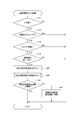
- S ⁇ b> 11 it is determined whether the user is currently on the vehicle 90 from the history of opening the door.
- “the user gets on” means that the user gets on the driver's seat as a driver, and basically does not mean that the user gets on the passenger seat or the rear seat.
- S ⁇ b> 12 it is determined whether or not the boarded user is the main user of the vehicle 90.
- the determination method of being a main user may be any method such as execution of a secret operation known only by the main user, password input, face image authentication, and the like.
- S13 it is determined whether or not the engine 91 has been started.
- S14 it is determined whether or not the stoppage determination has changed from “present” to “not present”, that is, whether or not the vehicle 90 has started to travel from a stopped state. If YES in all of S11 to S14, the process proceeds to S20. On the other hand, if any of S11 to S14 is NO, the process is terminated.
- the latest number counter 23 for the number of satisfied conditions counts the latest number of satisfied conditions determined by the idle stop condition satisfaction determining unit 21.
- the latest number counter 25 for the number of prohibitions by factor counts the latest number of prohibitions by factor determined by the idle stop prohibition determination unit 22.
- FIG. 4 is referred to for details of the “most recent factor-by-factor prohibition count processing” in S30. 4 exemplifies the determination of presence / absence of the determination by the idle stop prohibition determination unit 22 and the counting step by the latest count counter 25 for the prohibition factors of the four items. However, the same steps may be repeated for other prohibition factors, and the execution order is not limited. Further, in each determination step after S31, the history through the period of “stop determination is present” is evaluated retroactively from the present when the stop determination is changed from “present” to “none” in S14.
- S31 it is determined whether or not the master cylinder pressure for stoppage was not always determined during the “stop determination is present” period.
- S32 the latest “number of prohibitions due to the master cylinder pressure for stop” is counted.
- S33 it is determined whether or not the prohibition condition of “engine hood open determination is present” is satisfied even once during the period of “stop determination is present”. In the case of YES in S33, the most recent “number of prohibitions due to opening of the engine hood” is counted in S34.
- S35 it is determined whether or not the prohibition condition of “with light drive determination” is satisfied even once during the period of “with stop determination”. If YES in S35, the most recent "prohibition number by write drive” is counted in S36.
- S37 it is determined whether or not the prohibition condition “with blower drive determination” is satisfied even once during the period “with stop determination”. In the case of YES in S37, the most recent “prohibition number by blower drive” is counted in S38. When the counting for all the prohibition factor items is completed, the “most recent factor-specific prohibition count counting process” in S30 ends.
- S ⁇ b> 41 it is determined whether or not the most recent condition establishment count, that is, the count value of the latest count counter 23 for the condition establishment count is less than the upper limit value. If YES in S41, the process ends. On the other hand, when the most recent number of satisfied conditions reaches the upper limit value, NO is determined in S41, and the process proceeds to S42.
- various recent counts are set as past counts. In other words, the count value of the latest count counter 23 for the number of conditions satisfied is set in the past count counter 24, and the count value of the latest count counter 25 for the number of prohibition by factor is set in the past count counter 26. The various count processing routines are thus completed.
- the idle stop control device 20 does not execute the idle stop when the idle stop prohibition factor is generated even if the idle stop condition is satisfied.
- the idle stop prohibition factor is generated even if the idle stop condition is satisfied.
- users who have just purchased the vehicle 90 often do not grasp the idle stop prohibition factor. Therefore, the user cannot determine whether the non-execution of idle stop is due to normal control based on the prohibition factor or due to a vehicle failure, and makes an inquiry to the car dealer from anxiety. Many cases arise.
- the external diagnosis device 30 is connected to the idle stop control device 20 directly or via the electronic network of the vehicle 90 and is configured to be able to read at least the number of prohibitions. ing.
- the external diagnostic device 30 can read out the condition establishment count, idle stop non-execution count, and prohibition count by factor.
- Information on the number of established conditions, the number of idle stop non-executions, and the number of prohibited times by factor acquired by the input / output unit 31 of the external diagnostic device 30 is notified to the calculation unit 33 and the display unit 34.
- the calculation unit 33 calculates the cause-by-factor prohibition factor occurrence frequency based on the factor-by-factor prohibition count. Alternatively, the ratio of the idle stop non-execution count to the condition satisfaction count can be calculated.
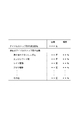
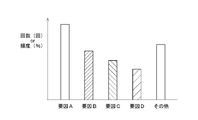
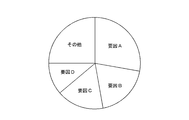
- the display unit 34 displays, for example, the condition establishment count, the factor-by-factor prohibition count, and the occurrence frequency in a table format as shown in FIG. Alternatively, for example, graphs may be displayed in order from the most frequent factors in the form of a bar graph or a pie chart shown in FIGS. 6A and 6B. Note that there may be only one type of specific prohibition factor that occurs during the diagnosis target period. The serviceman looks at this display and compares, for example, the number of times the condition is satisfied and the number of prohibitions for a plurality of factors, and says, “How often does this user cause idle stop non-execution? " As a result, the cause of idle stop non-execution can be diagnosed accurately and in a short time.
- steps S65 to S67 that are characteristic steps of the present embodiment.
- various count value information is read from the idle stop control device 20, and the number of forbidden factors and occurrence frequency are displayed on the screen.
- S66 the service person analyzes factors based on the displayed number of times and frequency information.
- the service person re-interrogates the user based on the analysis result. For example, if the number of prohibition times due to stop master cylinder pressure determination is large, check how much the user steps on the brake while the vehicle is stopped, and if it is not easy to step, inform that it is a prohibition factor . For example, when the number of prohibitions due to opening of the engine hood is large, an inquiry is made as to whether or not you forget to close the hood after daily inspection. In this way, based on the result of the re-interrogation, the service person specifies the cause of the idle stop failure in S68.
- Patent Document 1 Japanese Patent No. 5714132
- an external diagnostic device is connected to a vehicle, and a fault code written in each of a plurality of ECUs is read by the external diagnostic device.
- the operator needs to have the user reproduce the driving state that “the idle stop often does not work” in order to determine whether the idle stop is normally executed while driving the vehicle. , Interview takes time.
- the burden on the user is increased because the driving state is reproduced by the user traveling together.
- the idle stop control device 20 and the failure diagnosis system 10 of the present embodiment have the following operational effects.
- the idle stop control device 20 includes a prohibition number counter 250 that counts the number of times that execution of idle stop is prohibited due to occurrence of one or more specific prohibition factors.
- the count value of occurrence of a specific prohibition factor can be used as diagnostic information. Therefore, in the diagnosis of “the factor that the idle stop is not executed even though the idle stop condition is satisfied”, by using the information on the number of prohibition factor occurrences, it becomes unnecessary to reproduce the driving state by the user, and the diagnosis time is reduced. It can be shortened. In addition, it is possible to appropriately deal with problems that cannot be solved by the conventional DTC.
- the prohibition count counter 250 of the present embodiment counts the number of prohibitions determined to have generated any of the prohibition factors among a plurality of specific prohibition factors. Is. As a result, the cause of idle stop non-execution can be widely diagnosed for each prohibited factor.
- the count value of the prohibition count by the factor-specific prohibition count counter 250 is stored and held in the nonvolatile memories 251 and 261. If the relationship between the operating factor and the idle stop non-execution state is stored in association with the time axis, the storage capacity of the memory increases. On the other hand, the storage capacity of the memory can be reduced by storing the number of prohibitions for each factor. In addition, since a nonvolatile memory is used as the storage unit, the count value of the number of prohibitions can be stored and held even when the vehicle 90 is powered off.
- the idle stop control device 20 further includes a condition satisfaction number counter 230 that counts the number of times the condition is determined to have been determined that the idle stop condition is satisfied. Thereby, it is possible to make a determination by comparing the number of times the condition is satisfied and the number of prohibitions.
- the condition satisfaction number counter 230 also has the nonvolatile memories 231 and 241 that can store and hold the condition satisfaction number in the same manner as the factor-by-factor prohibition number counter 250, so that the number of condition satisfaction times when the vehicle 90 is powered off. The count value can be stored and held.
- the condition satisfaction count counter 230 and the factor-based prohibition count counter 250 count the latest occurrence counts 23 and 25 for counting the most recent occurrence count, and the past occurrence count before the start of the latest occurrence count count, respectively.
- Past number counters 24 and 26 to be included.
- the factor-by-factor prohibition counter 250 prohibits counting the factor-by-factor prohibition count when it is detected that a user different from the main user of the vehicle 90 has boarded.
- the condition satisfaction number counter 230 similarly compares the number of times the condition is satisfied and the number of prohibitions by prohibiting the count of the condition satisfaction number. The reliability of data in judgment can be improved.
- the prohibition factors include user characteristic factors that are factors based on user characteristics, such as a stop master cylinder pressure condition. That is, each prohibition factor based on the user's daily usage of the car and the trap is grasped as one of the factor groups of idle stop execution.
- the prohibited factors include non-user characteristic factors that are factors that are not based on user characteristics, such as engine hood opening conditions. That is, each forbidden factor that is generated without the intention of the user is grasped as one of the factor groups of idle stop non-execution.
- the idle stop control device 20 includes an input / output unit 28 that can be accessed from the outside so as to read or reset at least the number of prohibitions. Thereby, the service person can read and diagnose the number of prohibitions while the idle stop control device 20 is mounted on the vehicle 90, and can perform initialization after completion of the diagnosis. Therefore, the operability is improved and the diagnosis time is shortened. It is also useful for debugging during development.
- the input / output unit 28 of the idle stop control device 20 is another one via an individual communication path or an electronic network 40 constructed by a plurality of control devices mounted in the vehicle 90. It is provided to be able to communicate with the control devices 41 and 42 described above. Thereby, the internal information of the idle stop control device 20 can be read and written from other control devices of the vehicle 90, and diagnosis can be performed without using the dedicated external diagnostic device 30. In addition, there is no need to set a diagnostic-only communication means.
- the failure diagnosis system 10 includes an idle stop control device 20 and an external diagnosis device 30 that is connected to the idle stop control device 20 and exchanges information with the idle stop control device 20 to diagnose the vehicle 90. , "Factor that idle stop is not executed when idle stop condition is satisfied" is diagnosed.
- the external diagnostic device 30 is connected to the idle stop control device 20 directly or via the network of the vehicle 90 and can read at least the number of prohibitions. Thereby, failure diagnosis can be executed while the idle stop control device 20 is mounted on the vehicle. Moreover, since the cause of idle stop non-execution can be analyzed based on the read prohibition count, the diagnosis time can be shortened.
- the display unit 34 of the external diagnostic device 30 displays information including the number of prohibitions read from the idle stop control device 20 on the screen. Further, in the present embodiment in which the prohibition count counter 250 of the idle stop control device 20 counts the prohibition count for each factor with respect to a plurality of prohibition factors, the calculation unit 33 determines the frequency of prohibition factor generation for each factor based on the prohibition count for each factor. Is calculated. And the display part 34 displays the prohibition factor generation frequency according to the factor which the calculating part 33 computed with a numerical value or a graph. Thereby, the cause analysis of idle stop non-execution by the service person becomes easy, and the diagnosis time can be shortened.
- the calculation unit 33 calculates the ratio of the factor-by-factor prohibition number to the condition satisfaction number, and the display unit 34 displays the ratio. It is also possible. As a result, the service person can analyze the cause of idle stop non-execution based on the comprehensive information of the number of times the condition is satisfied and the number of prohibitions by factor. Therefore, a more accurate diagnosis can be performed in a short time.
- the idle stop control device may not include the condition satisfaction number counter, and may count only the number of prohibitions by the prohibition number counter. By minimizing the information used for diagnosis, it is possible to reduce the burden on the service person and the calculation load on the apparatus.
- the prohibition count counter is not limited to counting the number of prohibitions for each factor for a plurality of prohibition factors.
- the prohibition counter may count only the number of occurrences of one specific prohibition factor, and the service person may grasp the number of times. Thereby, the diagnosis specialized to one specific factor can be implemented more rapidly.
- the prohibition count counter may count the number of idle stop non-executions, which is the logical sum of the prohibition factors, as the prohibition count for a plurality of prohibition factors. In this case, the service person can grasp how often idle stop non-execution occurs, for example, by comparing the number of times of prohibition with the number of times the condition is satisfied.
- condition satisfaction number counter and the prohibition number counter may not be provided with the latest number counter and the past number counter separately, and the counter processing from the past to the latest may be performed with one counter. Alternatively, a plurality of past number counters may be provided, for example, every predetermined period.
- D The configuration related to information input / output of the idle stop control device 20 in the vehicle 90, the configuration related to the connection between the vehicle 90 and the external diagnostic device 30, the display configuration of the external diagnostic device 30, etc. are not limited to those described in each figure. Instead, any known technique may be combined.
- the specific idle stop prohibition factors are not limited to those exemplified in the above embodiment, and any prohibition factors may be applied depending on vehicle performance, use area, season, and the like.
- the idle stop control device of the present embodiment includes an idle stop condition establishment determination unit (21), an idle stop prohibition determination unit (22), and a prohibition count counter (250).
- the idle stop condition establishment determining unit determines that an idle stop condition that is a predetermined condition for stopping idling of the engine (91) of the vehicle (90) is established.
- the idle stop prohibition determination unit further determines that the idle stop prohibition condition is satisfied by occurrence of one or more specific prohibition factors that prohibit the execution of the idle stop. To do.
- the prohibition count counter counts “prohibition count” which is “the number of times the idle stop prohibition determination unit determines that the idle stop prohibition condition is satisfied”.
- the prohibition count counter may count only the number of occurrences of one specific prohibition factor, or may count only the idle stop non-execution count that is a logical sum of a plurality of prohibition factors. However, preferably, the prohibition count counter counts the prohibition count for each factor for a plurality of prohibition factors. As a result, the cause of idle stop non-execution can be widely diagnosed for each prohibited factor.
- the idle stop control device of the present invention includes a condition establishment number counter (230) that counts “condition establishment number” that is “the number of times that the idle stop condition establishment determination unit determines that the idle stop condition is established”. May be further provided. Thereby, it is possible to make a determination by comparing the number of times the condition is satisfied and the number of prohibitions.
- the failure diagnosis system of the present embodiment includes the above-described idle stop control device and an external diagnosis device (30) that is connected to the idle stop control device and exchanges information with the idle stop control device to diagnose the vehicle.
- the cause of the non-execution of the idle stop when the idle stop condition is satisfied is diagnosed.
- this failure diagnosis system it is possible to analyze the cause of the idle stop not being executed using the information on the number of occurrences of the specific prohibition factor, so that the diagnosis time can be shortened.
- this invention is not limited to the said embodiment at all, In the range which does not deviate from the meaning of invention, it can implement with a various form.
Landscapes
- Engineering & Computer Science (AREA)
- Chemical & Material Sciences (AREA)
- Combustion & Propulsion (AREA)
- Mechanical Engineering (AREA)
- General Engineering & Computer Science (AREA)
- Control Of Vehicle Engines Or Engines For Specific Uses (AREA)
- Combined Controls Of Internal Combustion Engines (AREA)
Priority Applications (3)
| Application Number | Priority Date | Filing Date | Title |
|---|---|---|---|
| US16/062,750 US10578068B2 (en) | 2015-12-18 | 2016-12-16 | Idling stop control apparatus and failure diagnosis system |
| CN201680074541.6A CN108496069B (zh) | 2015-12-18 | 2016-12-16 | 怠速停止控制装置及故障诊断系统 |
| DE112016005806.3T DE112016005806B4 (de) | 2015-12-18 | 2016-12-16 | Leerlaufstoppsteuerungsvorrichtung und fehlerdiagnosesystem |
Applications Claiming Priority (2)
| Application Number | Priority Date | Filing Date | Title |
|---|---|---|---|
| JP2015247194A JP6512090B2 (ja) | 2015-12-18 | 2015-12-18 | アイドルストップ制御装置、及び故障診断システム |
| JP2015-247194 | 2015-12-18 |
Publications (1)
| Publication Number | Publication Date |
|---|---|
| WO2017104832A1 true WO2017104832A1 (ja) | 2017-06-22 |
Family
ID=59056653
Family Applications (1)
| Application Number | Title | Priority Date | Filing Date |
|---|---|---|---|
| PCT/JP2016/087646 Ceased WO2017104832A1 (ja) | 2015-12-18 | 2016-12-16 | アイドルストップ制御装置、及び故障診断システム |
Country Status (5)
| Country | Link |
|---|---|
| US (1) | US10578068B2 (https=) |
| JP (1) | JP6512090B2 (https=) |
| CN (1) | CN108496069B (https=) |
| DE (1) | DE112016005806B4 (https=) |
| WO (1) | WO2017104832A1 (https=) |
Families Citing this family (2)
| Publication number | Priority date | Publication date | Assignee | Title |
|---|---|---|---|---|
| US11085389B1 (en) | 2020-05-19 | 2021-08-10 | Ford Global Technologies, Llc | Methods and system for automatic engine stopping |
| FR3165855A1 (fr) * | 2024-09-02 | 2026-03-06 | Stellantis Auto Sas | Surveillance d’une fonction d’arrêt temporaire automatique d’une machine motrice thermique d’un véhicule terrestre, et analyse d’interdictions d’arrêt |
Citations (3)
| Publication number | Priority date | Publication date | Assignee | Title |
|---|---|---|---|---|
| WO2014034088A1 (ja) * | 2012-08-29 | 2014-03-06 | マツダ株式会社 | 車両用エンジンの自動停止装置 |
| JP5714132B2 (ja) * | 2011-12-28 | 2015-05-07 | 本田技研工業株式会社 | 車両診断システム、車両診断方法及び外部診断装置 |
| JP2015143518A (ja) * | 2013-12-25 | 2015-08-06 | 株式会社デンソー | 車両診断システム及び車両診断方法 |
Family Cites Families (8)
| Publication number | Priority date | Publication date | Assignee | Title |
|---|---|---|---|---|
| JPH09325156A (ja) * | 1996-06-05 | 1997-12-16 | Sawafuji Electric Co Ltd | 自動車の車速検出方法 |
| KR20040021879A (ko) * | 2002-09-05 | 2004-03-11 | 현대자동차주식회사 | 하이브리드 전기자동차의 엔진 제어 시스템 및 제어방법 |
| DE102009010925B4 (de) | 2009-02-27 | 2019-08-08 | Dr. Ing. H.C. F. Porsche Aktiengesellschaft | Verfahren zum Betreiben einer Brennkraftmaschine |
| JP5284943B2 (ja) * | 2009-12-24 | 2013-09-11 | 富士通テン株式会社 | 制御装置、及び、制御方法 |
| KR101189380B1 (ko) * | 2010-11-30 | 2012-10-10 | 현대자동차주식회사 | Isg 진입 장치 및 방법 |
| JP6488636B2 (ja) * | 2013-12-26 | 2019-03-27 | 株式会社デンソー | 車両診断システム |
| US9677529B2 (en) * | 2013-12-25 | 2017-06-13 | Denso Corporation | Vehicle diagnosis system and method |
| US11164405B2 (en) * | 2015-09-09 | 2021-11-02 | Cummins Inc. | Methods to identify missed engine stops and serviceability |
-
2015
- 2015-12-18 JP JP2015247194A patent/JP6512090B2/ja active Active
-
2016
- 2016-12-16 US US16/062,750 patent/US10578068B2/en active Active
- 2016-12-16 CN CN201680074541.6A patent/CN108496069B/zh not_active Expired - Fee Related
- 2016-12-16 DE DE112016005806.3T patent/DE112016005806B4/de not_active Expired - Fee Related
- 2016-12-16 WO PCT/JP2016/087646 patent/WO2017104832A1/ja not_active Ceased
Patent Citations (3)
| Publication number | Priority date | Publication date | Assignee | Title |
|---|---|---|---|---|
| JP5714132B2 (ja) * | 2011-12-28 | 2015-05-07 | 本田技研工業株式会社 | 車両診断システム、車両診断方法及び外部診断装置 |
| WO2014034088A1 (ja) * | 2012-08-29 | 2014-03-06 | マツダ株式会社 | 車両用エンジンの自動停止装置 |
| JP2015143518A (ja) * | 2013-12-25 | 2015-08-06 | 株式会社デンソー | 車両診断システム及び車両診断方法 |
Also Published As
| Publication number | Publication date |
|---|---|
| DE112016005806B4 (de) | 2023-09-21 |
| JP2017111079A (ja) | 2017-06-22 |
| US20190128231A1 (en) | 2019-05-02 |
| US10578068B2 (en) | 2020-03-03 |
| CN108496069A (zh) | 2018-09-04 |
| CN108496069B (zh) | 2020-09-04 |
| JP6512090B2 (ja) | 2019-05-15 |
| DE112016005806T5 (de) | 2018-08-30 |
Similar Documents
| Publication | Publication Date | Title |
|---|---|---|
| EP3767406B1 (en) | Controller area network and connectivity health troubleshooting system | |
| JP5278498B2 (ja) | データ記憶装置 | |
| US20120047458A1 (en) | System and Method for Selecting Individual Parameters to Transition from Text-to-Graph or Graph-to-Text | |
| JP2019524523A (ja) | 車両診断方法、端末装置及びコンピュータ可読記憶媒体 | |
| US20230110616A1 (en) | Fault model editor and diagnostic tool | |
| CN108291491B (zh) | 由车载诊断系统自动适配建立诊断的条件的方法 | |
| EP2803049A1 (en) | System and method for providing diagnostic fault information | |
| CN114967642A (zh) | 车辆故障分级处理方法、装置、设备及可读存储介质 | |
| CN118375536B (zh) | 一种开关阀虚接故障诊断方法、装置、设备以及汽车 | |
| WO2017104832A1 (ja) | アイドルストップ制御装置、及び故障診断システム | |
| JP6310331B2 (ja) | 車両診断用のデータ収集装置及びデータ収集方法 | |
| JP7007697B2 (ja) | 装置およびプログラム | |
| RU2424573C2 (ru) | Способ усовершенствованного диагностирования возможной неисправности в транспортном средстве | |
| US10740204B2 (en) | Method and apparatus for monitoring memory and for displaying use in electronic control device | |
| CN112783141A (zh) | 一种用于挖掘机的故障诊断系统及方法 | |
| US7809986B2 (en) | Fault diagnosis | |
| KR101673309B1 (ko) | Can 통신 진단 방법, 시스템 및 이를 실행하기 위한 컴퓨터 판독 가능한 매체 | |
| JP2017111079A5 (https=) | ||
| US20200043255A1 (en) | Vehicle diagnostic apparatus | |
| CN115004266B (zh) | 用于机动车的诊断系统 | |
| CN121473987A (zh) | 节气门控制方法、装置、可读存储介质及电子设备 | |
| Tan et al. | Design of fault diagnosis module based on automotive open system architecture | |
| CN119682668A (zh) | 车辆控制方法、装置、车辆及存储介质 | |
| CN119126757A (zh) | 用于车辆远程控制的方法、装置、设备和存储介质 | |
| CN118636659A (zh) | 应用于车辆的加油口盖控制方法、装置、电子设备及介质 |
Legal Events
| Date | Code | Title | Description |
|---|---|---|---|
| 121 | Ep: the epo has been informed by wipo that ep was designated in this application |
Ref document number: 16875806 Country of ref document: EP Kind code of ref document: A1 |
|
| WWE | Wipo information: entry into national phase |
Ref document number: 112016005806 Country of ref document: DE |
|
| 122 | Ep: pct application non-entry in european phase |
Ref document number: 16875806 Country of ref document: EP Kind code of ref document: A1 |