WO2017104330A1 - 自動運転制御装置および自動運転制御方法 - Google Patents
自動運転制御装置および自動運転制御方法 Download PDFInfo
- Publication number
- WO2017104330A1 WO2017104330A1 PCT/JP2016/083762 JP2016083762W WO2017104330A1 WO 2017104330 A1 WO2017104330 A1 WO 2017104330A1 JP 2016083762 W JP2016083762 W JP 2016083762W WO 2017104330 A1 WO2017104330 A1 WO 2017104330A1
- Authority
- WO
- WIPO (PCT)
- Prior art keywords
- automatic
- driver
- driving
- mode
- driving mode
- Prior art date
- Legal status (The legal status is an assumption and is not a legal conclusion. Google has not performed a legal analysis and makes no representation as to the accuracy of the status listed.)
- Ceased
Links
Images




Classifications
-
- B—PERFORMING OPERATIONS; TRANSPORTING
- B60—VEHICLES IN GENERAL
- B60W—CONJOINT CONTROL OF VEHICLE SUB-UNITS OF DIFFERENT TYPE OR DIFFERENT FUNCTION; CONTROL SYSTEMS SPECIALLY ADAPTED FOR HYBRID VEHICLES; ROAD VEHICLE DRIVE CONTROL SYSTEMS FOR PURPOSES NOT RELATED TO THE CONTROL OF A PARTICULAR SUB-UNIT
- B60W60/00—Drive control systems specially adapted for autonomous road vehicles
- B60W60/005—Handover processes
- B60W60/0053—Handover processes from vehicle to occupant
-
- B—PERFORMING OPERATIONS; TRANSPORTING
- B60—VEHICLES IN GENERAL
- B60W—CONJOINT CONTROL OF VEHICLE SUB-UNITS OF DIFFERENT TYPE OR DIFFERENT FUNCTION; CONTROL SYSTEMS SPECIALLY ADAPTED FOR HYBRID VEHICLES; ROAD VEHICLE DRIVE CONTROL SYSTEMS FOR PURPOSES NOT RELATED TO THE CONTROL OF A PARTICULAR SUB-UNIT
- B60W50/00—Details of control systems for road vehicle drive control not related to the control of a particular sub-unit, e.g. process diagnostic or vehicle driver interfaces
- B60W50/08—Interaction between the driver and the control system
- B60W50/14—Means for informing the driver, warning the driver or prompting a driver intervention
-
- B—PERFORMING OPERATIONS; TRANSPORTING
- B62—LAND VEHICLES FOR TRAVELLING OTHERWISE THAN ON RAILS
- B62D—MOTOR VEHICLES; TRAILERS
- B62D6/00—Arrangements for automatically controlling steering depending on driving conditions sensed and responded to, e.g. control circuits
-
- G—PHYSICS
- G01—MEASURING; TESTING
- G01C—MEASURING DISTANCES, LEVELS OR BEARINGS; SURVEYING; NAVIGATION; GYROSCOPIC INSTRUMENTS; PHOTOGRAMMETRY OR VIDEOGRAMMETRY
- G01C21/00—Navigation; Navigational instruments not provided for in groups G01C1/00 - G01C19/00
- G01C21/26—Navigation; Navigational instruments not provided for in groups G01C1/00 - G01C19/00 specially adapted for navigation in a road network
-
- G—PHYSICS
- G08—SIGNALLING
- G08G—TRAFFIC CONTROL SYSTEMS
- G08G1/00—Traffic control systems for road vehicles
- G08G1/16—Anti-collision systems
Definitions
- the present invention relates to an automatic operation control device and an automatic operation control method.
- This type of automatic operation control device switches to the manual operation mode when the driver performs an operation during the automatic operation mode.
- An example related to the technique described above is described in Patent Document 1.
- An object of the present invention is to provide an automatic operation control device and an automatic operation control method that can prompt the driver to easily switch from the automatic operation mode to the manual operation mode.
- the driver is prompted to switch to the manual operation mode in conjunction with the course change guidance during the automatic operation mode.
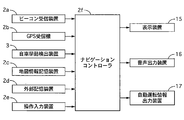
- FIG. 1 is a configuration diagram of a navigation system 2 of Example 1.
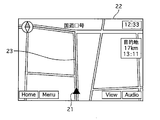
- FIG. 4 is an example of a map screen 22 displayed on the display device 15 by the navigation system 2.
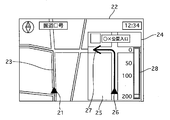
- 4 is an example of a turn-by-turn screen 24 displayed on the display device 15 by the navigation system 2.
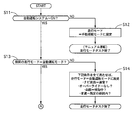
- FIG. 3 is a flowchart illustrating a task flow related to automatic driving according to the first embodiment.
- 3 is a flowchart illustrating a task flow related to traveling mode switching according to the first exemplary embodiment. It is a flowchart which shows the flow of the task regarding driving mode switching of Example 1 and Example 2.
- FIG. 1 is a configuration diagram of a navigation system 2 of Example 1.
- FIG. 4 is an example of a map screen 22 displayed on the display device 15 by the navigation system 2.
- 4 is an example of a turn-by-turn screen 24 displayed on the display device 15 by the navigation system 2.
- FIG. 3 is a flowchart illustrating a task flow related to automatic driving according to the first embodiment.
- 3 is a flowchar
- FIG. 1 is a configuration diagram of the automatic operation control apparatus according to the first embodiment.
- the automatic operation control apparatus of Embodiment 1 is mounted on a vehicle that uses an engine as a power source.
- the external environment recognition device 1 recognizes the surrounding environment (road shape, white lines, obstacles, etc.) of the vehicle from a camera, a laser radar, or the like mounted on the vehicle.
- the navigation system (route guidance unit) 2 sets a recommended route (target route) from the current position of the vehicle to the destination set by the driver, and provides route guidance to the driver. Details will be described later.
- the own vehicle behavior detection device 3 includes a steering angle sensor that detects a steering angle of a front wheel, a vehicle speed sensor that detects a vehicle speed, a lateral G sensor that detects a lateral G, a yaw rate sensor that detects a yaw rate, and a turn signal. Detect car behavior.
- the automatic operation controller 4 sets the traveling mode to the automatic operation mode when a predetermined automatic operation start condition including selection of automatic operation by the driver (for example, automatic operation selection button ON) is satisfied.
- the automatic operation control controller 4 performs steering control and vehicle speed control so that the host vehicle automatically travels based on the recommended route regardless of the driver's driving operation (handle operation, pedal operation) during the automatic driving mode.
- the automatic operation controller 4 calculates the target rudder angle of the front wheel in the steering control based on the surrounding environment of the own vehicle and the behavior of the own vehicle during the automatic operation mode, and the target rudder of the own vehicle in the vehicle speed control. Calculate the corner.
- the steering control device 5 drives the steering device 8 that steers the front wheels so that the steering angle of the front wheels becomes the target steering angle.
- the throttle control device 6 drives a throttle device 9 that opens and closes the throttle valve so that the vehicle speed of the host vehicle becomes the target vehicle speed.
- the brake control device 7 drives the brake device 10 that applies a braking force to each wheel so that the vehicle speed of the host vehicle becomes the target vehicle speed.
- the HUD device 11 displays vehicle information such as the vehicle speed and route guidance of the navigation system 2 as a virtual image on the front window of the own vehicle.
- the voice utterance device 12 utters various alarms, route guidance of the navigation system 2 and the like as synthesized speech.
- the alarm device 13 emits an alarm sound and performs various alarms.
- the steering vibration device 14 performs various alarms by vibrating the steering wheel.
- switching from the automatic operation mode to the manual operation mode is also referred to as “automatic ⁇ manual mode switching”, and switching from the manual operation mode to the automatic operation mode is also referred to as “manual ⁇ automatic mode switching”.
- the manual driving mode the vehicle is controlled in accordance with the driving operation of the driver, as in the case of normal driving where the driver does not select automatic driving.
- the automatic operation controller 4 performs manual ⁇ automatic mode switching when the automatic operation start condition is satisfied during the manual operation mode.
- FIG. 2 is a configuration diagram of the navigation system 2 according to the first embodiment.
- the beacon receiving device 2a acquires traffic information from radio waves or optical beacons.
- the GPS receiver 2b receives the longitude / latitude of the vehicle from a plurality of satellites (GPS satellites).
- the map information storage device 2c stores road map information (node and link information to which road attributes are assigned).
- the information held by the node includes the name of the intersection (kanji / reading) and the presence / absence of a traffic light.
- the information held by the link is the type of link (the “main link” that represents the main road section, the “link link” for connecting the main roads such as highways, JCT, and the intersection of ordinary roads.
- the external storage device 2d stores information related to the state of the vehicle.
- the operation input device 2e is, for example, a touch panel or a switch, and is operated when the driver inputs a destination or changes a display.
- the navigation controller 2f performs various processes for providing route guidance to the driver. For example, as shown in FIG.
- the current position of the own vehicle is detected from the longitude / latitude of the own vehicle and road map information, the road map around the own vehicle is developed in graphics, and a mark 21 indicating the current position is overlaid.
- the map screen 22 is displayed on the display device 15 as a normal screen of the navigation screen.
- the GPS receiver 2b cannot receive the longitude / latitude of the host vehicle, the current position is estimated by dead reckoning from the behavior of the host vehicle input from the host vehicle behavior detection device 3.
- the display device 15 is, for example, a liquid crystal display or an organic EL display.
- the navigation controller searches for an optimal recommended route 23 that connects the current position and the destination in consideration of traffic information, etc., and displays the recommended route superimposed on the map screen 22 as well as display and audio output by the display device 15.
- the driver is guided using the utterance by the device 16.
- the voice utterance device 12 may be used as the voice output device 16.
- the navigation controller 2f displays a navigation screen as shown in FIG. 4 until the branch exits when the distance to the branch (intersection, etc.) that the vehicle is to change its course is below a predetermined turn-by-turn display threshold.
- the turn-by-turn screen 24 is displayed, and the route change is urged by using the speech by the audio output device 16 (route change guidance).
- the turn-by-turn is a type of user interface of the navigation system 2 and is a display method that displays a traveling direction at an intersection or the like by voice or an arrow icon.
- the turn-by-turn screen 24 displays a map screen 25 from the current position to the branch, a mark 26 indicating the current position, an arrow 27 indicating the course direction, and a memory 28 indicating the distance to the branch.
- the turn-by-turn screen 24 may be displayed on the front window using the HUD device 11.
- the automatic driving information output device 17 outputs, as navigation information, information held by each node and each link in the recommended route, and display start and end timing of the turn-by-turn screen 24 to a CAN communication line (not shown).
- the automatic driving according to the first embodiment is a partial automatic driving that performs only a monotonous road on the recommended route.
- automatic driving the vehicle is maintained at the approximate center of the lane (running lane) while maintaining the distance from the preceding vehicle as appropriate, and obstacle avoidance (passing through, overtaking) is performed if necessary.
- the number of sensors is increased and control is complicated.
- automatic driving is difficult. Therefore, automatic driving is limited to monotonous roads and the number of sensors is reduced compared to the case of automatic driving all recommended routes by leaving the driver to change the course when turning left or right at the intersection. Cost reduction and safety improvement by reduction and simplification of control can be realized.
- the automatic ⁇ manual mode switching is performed at the timing when the driver override is detected.
- the driver can perform automatic ⁇ manual mode switching at an arbitrary timing, and the effect of avoiding the end of automatic driving at an unexpected timing of the driver can be achieved.
- the driver needs to switch from the automatic mode to the manual mode whenever the course is changed.
- the following tasks related to automatic driving are performed with the aim of prompting the driver to easily switch the automatic mode to the manual mode.
- automatic driving is continued as much as possible, so that the vehicle can be stopped and lane departure can be suppressed and traffic flow is not hindered.
- the recommended route is reset by the navigation system 2.
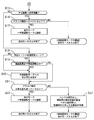
- FIG. 5 is a flowchart illustrating a flow of tasks related to automatic driving according to the first embodiment. This process is repeated in the automatic operation controller 4 at a predetermined control cycle (for example, 10 ms).
- a predetermined control cycle for example, 10 ms.
- step S1 the sensing result of the external environment recognition device 1 (the recognition result of the surrounding environment of the vehicle) is read.
- the vehicle behavior detected by the vehicle behavior detection device 3 is read.
- step S3 the navigation information output to the CAN communication line from the automatic driving information output device 17 of the navigation system 2 is read.
- step S4 a task relating to driving mode switching is executed as an interrupt process. Details will be described later.
- step S5 it is determined whether or not the travel mode is an automatic operation mode.
- step S6 If YES, the process proceeds to step S6. If NO, the process proceeds to step S7.
- step S6 control calculation for automatic operation is performed. That is, a target rudder angle and a target vehicle speed for automatically driving the vehicle based on the recommended route are calculated, the steering device 8 is driven according to the target rudder angle, and the throttle device 9 and the brake device 10 according to the target vehicle speed. Drive.
- step S7 a failure or the like is diagnosed.
- the automatic operation control controller 4 includes an operation mode switching unit 4a and an operation mode switching promotion unit 4b as configurations for performing the following tasks.
- the operation mode switching unit 4a determines whether or not the automatic driving system is ON, that is, whether or not the driver has selected automatic driving. If YES, the process proceeds to step S13. If NO, the process proceeds to step S13.
- the operation mode switching unit 4a sets the travel mode to the manual operation mode and ends the task.
- the operation mode switching unit 4a determines whether or not the travel mode in the previous control cycle was the automatic operation mode.
- step S14 in the operation mode switching unit 4a, the traveling mode is set to the automatic operation mode when all of the following four conditions that are the automatic operation start conditions are satisfied, and otherwise, the task is terminated.
- the display screen of navigation system 2 is the normal screen (map screen 22) 2. No override 3.
- the external recognition device 1 is detecting a white line 4.
- the vehicle speed is within a predetermined range
- the display screen of the navigation system 2 is determined from the navigation information. Whether or not there is an override is determined from the driver's steering torque, accelerator operation amount, and brake operation amount. Whether or not a white line is being detected is determined from the sensing result. Whether the vehicle speed is within a predetermined range is determined from the behavior of the host vehicle.
- step S15 the operation mode switching promotion unit 4b determines whether or not the navigation screen is a normal screen (a state in which the map screen 22 is displayed). If YES, the process proceeds to step S16. If NO, the process proceeds to step S18. In step S16, the operation mode switching unit 4a determines whether or not the driver has overridden. If YES, the process proceeds to step S17. If NO, the task is terminated. In step S17, the operation mode switching unit 4a sets the travel mode to the manual operation mode and ends the task. In step S18, the driving mode switching promotion unit 4b determines whether or not the current travel lane is a course change lane, that is, whether or not a lane change for changing the course is unnecessary.
- step S19 the operation mode switching promotion unit 4b determines whether or not the distance from the navigation information to the course change (branch) is a predetermined distance or less. If YES, the process proceeds to step S20. If NO, the process proceeds to step S21.
- the predetermined distance is a distance shorter than the turn-by-turn display threshold.
- step S20 the driving mode switching promotion unit 4b prompts the driver to switch from the automatic mode to the manual mode, that is, override.
- step S21 the operation mode switching unit 4a determines whether or not the driver has overridden. If YES, the process proceeds to step S22. If NO, the task is terminated. In step S22, the operation mode switching unit 4a sets the travel mode to the manual operation mode and ends the task.
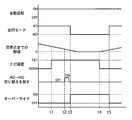
- FIG. 8 is a time chart showing the operation of the task relating to the travel mode switching of the first embodiment when turning left at the intersection from the state of traveling in the left turn lane in the automatic operation mode.
- the turn-by-turn screen 24 is displayed on the navigation screen.
- the current driving lane is a left turn lane, and the distance to the intersection is larger than the predetermined distance. Therefore, in the flowcharts of FIGS. 6 and 7, the flow is S11 ⁇ S13 ⁇ S15 ⁇ S18 ⁇ S19 ⁇ S21.
- the operation mode is continued.
- the flow is S11 ⁇ S13 ⁇ S15 ⁇ S18 ⁇ S19 ⁇ S20 ⁇ S21, and the driver is prompted to switch from the automatic mode to the manual mode. Since the turn-by-turn screen 24 is displayed from before the intersection, the driver recognizes that the turn-by-turn screen 24 is displayed and that there is a branch that requires a course change (turn left). Accordingly, by prompting the driver to perform an override necessary for switching from the automatic mode to the manual mode in conjunction with the display timing of the turn-by-turn screen 24, the driver can promptly switch the automatic mode to the manual mode.
- the automatic ⁇ manual mode switching is urged until just before the intersection where the course needs to be changed. Thereby, since the automatic driving is continued until just before the intersection, the automatic driving function can be used for a longer period of time and the convenience can be improved.
- the flow goes from S11 ⁇ S13 ⁇ S15 ⁇ S18 ⁇ S19 ⁇ S20 ⁇ S21 ⁇ S22, and automatic ⁇ manual mode switching is performed.
- the vehicle reaches the exit of the intersection, and the turn-by-turn screen 24 disappears from the navigation screen.
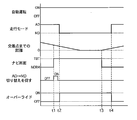
- FIG. 9 is a time chart showing the operation of the task relating to the travel mode switching of the first embodiment when turning left at the intersection from the state of traveling in the straight lane in the automatic operation mode.
- the turn-by-turn screen 24 is displayed on the navigation screen.
- the current driving lane is a straight lane, in the flowcharts of FIG.
- the flow is S11 ⁇ S13 ⁇ S15 ⁇ S18 ⁇ S20 ⁇ S21 ⁇ S21. It is.
- the driver can promptly understand the automatic ⁇ manual mode switching.
- the automatic ⁇ manual mode switching is prompted simultaneously with the display of the turn-by-turn screen 24.
- the section from time t2 to t4 is the same as the section from time t3 to t5 in FIG.
- Example 1 has the following effects.
- An operation mode switching unit 4a that switches to a manual operation mode in which the vehicle travels according to the driving operation when the driver performs a driving operation during the automatic operation mode in which the own vehicle automatically travels along the recommended route;
- the navigation system 2 that guides the route including the route change guidance such as the display of the turn-by-turn screen 24 to the driver, and the driver enters the manual operation mode in conjunction with the route change guidance during the automatic operation mode.
- An operation mode switching facilitating unit 4b that prompts switching. Therefore, it is possible to prompt the driver to easily switch from the automatic operation mode to the manual operation mode.
- the automatic driving mode is a driving mode in which the vehicle is automatically driven only on a portion of the recommended route that can be driven along the road. Therefore, compared with the case where all of the recommended routes are automatically operated, the cost can be reduced by reducing the number of sensors and simplifying the control.
- the driving mode switching promotion unit 4b prompts the driver to switch to the manual driving mode when the route change guidance is given. Therefore, the driver can be more easily understood to switch from the automatic operation mode to the manual operation mode.
- the driving mode switching promotion unit 4b changes the timing for prompting the driver to switch to the manual driving mode depending on whether or not the lane in which the vehicle is traveling is a lane corresponding to the route change destination by the route change guidance. Make it. Therefore, the driver can be prompted to switch to the manual operation mode at a timing according to the traveling state of the host vehicle.
- Example 2 Next, Example 2 will be described.
- the task in the second embodiment is different from that in the first embodiment in terms of driving mode switching.
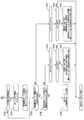
- [Tasks related to driving mode switching] 7, 10, and 11 are flowcharts illustrating a task flow related to the traveling mode switching according to the second embodiment.
- the same step number is attached
- step S31 the operation mode switching unit 4a determines whether or not the system is first turned on after the ignition switch is turned on. If YES, the process proceeds to step S32. If NO, the process proceeds to step S33.
- step S32 the first counter m and the second counter n are initialized (zero cleared) in the operation mode switching promotion unit 4b.
- step S33 the operation mode switching promotion unit 4b determines whether or not the navigation screen is a course change screen, that is, whether or not the turn-by-turn screen 24 is displayed. If YES, the process proceeds to step S34, and if NO, the process proceeds to step S35.
- step S34 the operation mode switching promotion unit 4b initializes the first counter m and the second counter n, and ends the task.
- step S35 the operation mode switching unit 4a determines whether or not an indispensable condition for transitioning to the automatic operation mode is satisfied.
- the essential conditions are the following three conditions based on the driving environment, and it is determined that the essential conditions are satisfied when all the three conditions are satisfied. 1.
- the road type is a major national highway or highway 2.
- the speed limit is a specified vehicle speed (eg 40km / h) or more 3. No traffic restrictions due to bad weather, etc.
- the road type and speed limit are determined from the navigation information.
- the traffic regulation is determined from the traffic information of the beacon receiving device 2a.
- the operation mode switching unit 4a determines whether or not the recommended condition for transitioning to the automatic operation mode is satisfied (half or more).
- step S38 the driving mode is set to the automatic driving mode in the driving mode switching unit 4a, and the task ends.
- step S40 the operation mode switching promotion unit 4b determines whether or not the first counter m is less than 500. If YES, the process proceeds to step S41, and if NO, the task is terminated.
- step S41 the driving mode switching promotion unit 4b prompts the driver to weaken the condition for transitioning to the automatic driving mode, and the task is terminated. Specifically, a warning sound is generated only once by the alarm device 13, and only recommended conditions that are not satisfied by the HUD device 11 or the display device 15 are displayed briefly.
- step S42 the operation mode switching promotion unit 4b determines whether or not the second counter n is less than 1,000. If YES, the process proceeds to step S43, and if NO, the task is terminated.
- step S43 the driving mode switching promotion unit 4b strongly urges the driver to satisfy the condition for transitioning to the automatic driving mode, and the task is terminated. Specifically, the alarm device 13 generates a warning sound twice, speaks only the essential conditions that are not satisfied by the voice speaking device 12, and completes only the essential conditions that are not satisfied by the HUD device 11 or the display device 15. indicate.
- the driver when the turn-by-turn screen 24 disappears during the manual driving mode, the driver is prompted to switch from the manual mode to the automatic mode. Since the display of the turn-by-turn screen 24 disappears when exiting from a branch such as an intersection, the driver recognizes that the branch that needs to be changed is completed when the turn-by-turn screen 24 disappears. Accordingly, by prompting the driver to satisfy the conditions necessary for manual-to-automatic mode switching in conjunction with the timing when the turn-by-turn screen 24 disappears, manual-to-automatic mode switching can be urged to be easily understood by the driver.
- the driver until the second counter n reaches 1,000, that is, 10 seconds elapses after the turn-by-turn screen 24 disappears. Strongly urge you to meet all of the essential requirements. Accordingly, the driver can recognize the reason why the manual ⁇ automatic mode switching is not performed (the driving environment in which switching to the automatic driving mode is impossible).
- the operation is continued until the first counter m reaches 500 after the turn-by-turn screen 24 disappears, that is, until 5 seconds elapse. Encourage people to meet more than half of the recommended conditions.
- the driver can learn from the body how the vehicle state (the distance from the preceding vehicle, the position in the lane, the position of the traveling lane) can be switched manually to the automatic mode. In other words, you can grasp the tips for using the automatic driving function for a long time. If more than half of the recommended conditions are not satisfied, the driver is weakened more than when all the essential conditions are not satisfied, so that the driver is not bothered or nervous.
- the second embodiment has the following effects.
- the operation mode switching unit 4a switches to the automatic operation mode when the driver stops the operation operation or turns on the automatic operation selection button during the manual operation mode, and the operation mode switching promotion unit 4b performs the manual operation.
- the driver is prompted to switch to the automatic driving mode in conjunction with the end of the route change guidance in the mode. Therefore, it is possible to prompt the driver to easily switch from the manual operation mode to the automatic operation mode.
- the driving mode switching promotion unit 4b prompts the driver to switch to the automatic driving mode when the course change guidance is completed. Therefore, it is possible to prompt the driver to easily switch from the manual operation mode to the automatic operation mode.
- the operation mode switching unit 4a satisfies both the essential condition based on the traveling environment of the own vehicle and the recommended condition based on the traveling state of the own vehicle.
- the driving mode switching promoting unit 4b changes the method for prompting the driver to switch to the automatic driving mode depending on whether only the essential conditions are satisfied or not. Accordingly, the driver can recognize whether the reason why the switching to the automatic driving mode is impossible is in the traveling environment or the vehicle state.
- Example 3 Next, Example 3 will be described.
- the task in the third embodiment is different from that in the first and second embodiments in terms of driving mode switching.
- FIG. 11 and FIG. 12 are flowcharts showing the flow of tasks related to the travel mode switching of the third embodiment.
- the same step number is attached
- the operation mode switching unit 4a determines whether or not the driver has overridden both hands and feet, that is, whether or not both the steering wheel operation and the pedal operation are performed. If YES, the process proceeds to step S22.
- step S52 in the operation mode switching unit 4a, the control amount of the actuator related to the operation not performed by the driver is gradually reduced with zero as a target, and the task is terminated. Specifically, when there is no steering operation, the steering current for steering control is gradually reduced to zero, and when there is no pedal operation, the throttle opening for vehicle speed control is gradually reduced to zero.
- the throttle opening is gradually increased. Decrease gradually to zero. This makes it easier for the driver to understand that the automatic ⁇ manual mode switching is required due to a decrease in vehicle speed. Therefore, the driver can be strongly encouraged to switch from automatic to manual mode.
- the steering current for control is not gradually reduced, and the steering angle control according to the steering wheel operation is continued, so that mode confusion can be suppressed.
- step S41 may be anything that prompts weaker than step S43. That is, “strongly urge” in step S43 may be anything that strongly urges than step S41.
- the visibility is increased when the display is strongly urged (the display is enlarged or highlighted), and the visibility is decreased when the display is urged weakly.
- the vibration of the steering wheel may be used. In this case, the vibration is increased when strongly urged, and the vibration is decreased when weakly urged. It may be strongly urged by increasing the transmission means and weakly urged by reducing the transmission means.
- the automatic driving control device travels the vehicle according to the driving operation when the driver performs a driving operation during the automatic driving mode in which the vehicle automatically runs along the target route.
- An operation mode switching unit that switches to a manual operation mode, a route guidance unit that guides a driver including a route change guide according to the target route, and a driver in conjunction with the route change guide in the automatic operation mode.
- an operation mode switching facilitating section that prompts switching to the manual operation mode.
- the automatic driving mode is a traveling mode in which the host vehicle is automatically traveled only by a portion of the target route that can travel along a road.
- the driving mode switching promotion unit prompts the driver to switch to the manual driving mode when the route change guidance is given.
- the operation mode switching promotion unit may determine whether the lane in which the host vehicle is traveling is a lane corresponding to a course change destination by the course change guidance. If the timing to prompt the driver to switch to the manual operation mode is different.
- the driving mode switching promoting unit may be configured such that the lane in which the host vehicle is traveling is a lane corresponding to a course change destination by the course change guidance.
- the operation mode switching unit is configured to operate a steering wheel after the driver is prompted to switch to the manual operation mode by the operation mode switching promotion unit. Of the pedal operation, the control amount of the actuator of the vehicle corresponding to the driving operation not performed by the driver is gradually reduced.
- the operation mode switching unit is configured such that the driver stops the driving operation or turns on an automatic driving selection button during the manual operation mode.
- the driving mode switching promoting unit prompts the driver to switch to the automatic driving mode in conjunction with the end of the route change guidance in the manual driving mode.
- the driving mode switching promotion unit prompts the driver to switch to the automatic driving mode when the route change guidance is completed.
- the operation mode switching unit is provided with an essential condition based on the traveling environment of the host vehicle when the driver stops the driving operation during the manual operation mode. And the recommended condition based on the traveling state of the host vehicle are both switched to the automatic driving mode, and the driving mode switching promoting unit is operated in a case where only the essential condition is satisfied and a case where the essential condition is not satisfied.
- the driving mode switching promoting unit when not satisfying the essential condition, allows the driver to perform the automatic driving rather than satisfying only the essential condition. The switch to the mode is strongly encouraged.
- the automatic driving control method follows the driving operation when the driver performs the driving operation in the automatic driving mode in which the host vehicle automatically travels along the target route.
- the driver is urged to switch to the manual driving mode in conjunction with the course change guidance to the driver in the automatic driving mode.
- the driver is prompted to switch to the manual operation mode.
- the driver is allowed to switch to the manual operation mode depending on whether the traveling lane is a lane corresponding to a route change destination by the route change guide.
- the driver stops the driving operation during the manual driving mode or switches to the automatic driving mode by turning on an automatic driving selection button. The driver is urged to switch to the automatic operation mode in conjunction with the end of the route change guidance in the manual operation mode.
- the essential condition based on the traveling environment of the own vehicle and the traveling state of the own vehicle
- the mode is switched to the automatic driving mode, and the method for prompting the driver to switch to the automatic driving mode is different depending on whether only the essential conditions are satisfied or not.
- the driver is more strongly urged to switch to the automatic operation mode than when only the essential condition is satisfied.
Landscapes
- Engineering & Computer Science (AREA)
- Automation & Control Theory (AREA)
- Mechanical Engineering (AREA)
- Transportation (AREA)
- Human Computer Interaction (AREA)
- Remote Sensing (AREA)
- Radar, Positioning & Navigation (AREA)
- General Physics & Mathematics (AREA)
- Physics & Mathematics (AREA)
- Chemical & Material Sciences (AREA)
- Combustion & Propulsion (AREA)
- Control Of Driving Devices And Active Controlling Of Vehicle (AREA)
- Traffic Control Systems (AREA)
- Navigation (AREA)
- Steering Control In Accordance With Driving Conditions (AREA)
Abstract
自動運転モードから手動運転モードへの切り替えを運転者にわかりやすく促せる自動運転制御装置および自動運転制御方法を提供する。自動運転制御コントローラ(4)は、推奨経路に沿って自車を自動的に走行させる自動運転モード中に運転者が運転操作を行うと当該運転操作に従い自車を走行させる手動運転モードに切り替える運転モード切り替え部(4a)と、推奨経路に従って、運転者にターンバイターン画面(24)の表示等の進路変更案内を含む経路誘導を行うナビゲーションシステム(2)と、自動運転モード中の進路変更案内に連動して運転者に手動運転モードへの切り替えを促す運転モード切り替え促進部(4b)と、を備える。
Description
本発明は、自動運転制御装置および自動運転制御方法に関する。
この種の自動運転制御装置では、自動運転モード中に運転者が運転操作を行うと手動運転モードに切り替えている。上記説明の技術に関係する一例は、特許文献1に記載されている。
自動運転による進路変更は技術難度が高く、自動運転が継続困難なシーンも想定されるため、手動運転モードへの切り替えが必要な場合がある。このため、自動運転モードから手動運転モードへの切り替えを運転者にわかりやすく促して欲しいとのニーズがある。
本発明の目的は、自動運転モードから手動運転モードへの切り替えを運転者にわかりやすく促せる自動運転制御装置および自動運転制御方法を提供することにある。
本発明の目的は、自動運転モードから手動運転モードへの切り替えを運転者にわかりやすく促せる自動運転制御装置および自動運転制御方法を提供することにある。
本発明の一実施形態では、自動運転モード中の進路変更案内に連動して運転者に手動運転モードへの切り替えを促す。
よって、本発明の一実施形態によれば、自動運転モードから手動運転モードへの切り替えを運転者にわかりやすく促せる。
〔実施例1〕
[自動運転制御装置]
図1は、実施例1の自動運転制御装置の構成図である。
実施例1の自動運転制御装置は、エンジンを動力源とする車両に搭載されている。外界認識装置1は、自車に搭載されたカメラやレーザレーダ等から自車の周辺環境(道路形状、白線、障害物等)を認識する。ナビゲーションシステム(経路誘導部)2は、自車の現在位置から運転者が設定した目的地までの推奨経路(目標経路)を設定し、運転者に経路案内を行う。詳細は後述する。自車挙動検出装置3は、前輪の舵角を検出する舵角センサ、車速を検出する車速センサ、横Gを検出する横Gセンサ、ヨーレイトを検出するヨーレイトセンサやターンシグナル等の各信号から自車の挙動を検出する。自動運転制御コントローラ4は、運転者による自動運転の選択(例えば、自動運転選択ボタンON)を含む所定の自動運転開始条件が成立すると、走行モードを自動運転モードとする。自動運転制御コントローラ4は、自動運転モード中、運転者の運転操作(ハンドル操作、ペダル操作)に依らず、自車が推奨経路に基づき自動で走行するよう操舵制御および車速制御を行う。具体的には、自動運転制御コントローラ4は、自動運転モード中、自車の周辺環境や自車の挙動に基づいて操舵制御における前輪の目標舵角を演算すると共に車速制御における自車の目標舵角を演算する。ステアリング制御装置5は、前輪の舵角が目標舵角となるよう前輪を転舵するステアリング装置8を駆動する。スロットル制御装置6は、自車の車速が目標車速となるようスロットルバルブを開閉するスロットル装置9を駆動する。ブレーキ制御装置7は、自車の車速が目標車速となるよう各輪に制動力を付与するブレーキ装置10を駆動する。HUD装置11は、車速等の車両情報やナビゲーションシステム2の経路案内等を虚像として自車のフロントウィンドウに表示する。音声発話装置12は、各種警報やナビゲーションシステム2の経路案内等を合成音声として発話する。警報装置13は警報音を発して各種警報を行う。ステアリング振動装置14は、ステアリングホイールを振動させて各種警報を行う。
自動運転制御コントローラ4は、自動運転モード中に運転者の運転操作(ハンドル操作やペダル操作であり、以下、オーバーライドとも称す。)が検出されると、走行モードを自動運転モードから手動運転モードへ切り替える。以下、自動運転モードから手動運転モードへの切り替えを「自動⇒手動モード切り替え」、手動運転モードから自動運転モードへの切り替えを「手動⇒自動モード切り替え」とも記載する。手動運転モードでは、運転者が自動運転を選択していない通常走行と同様に、運転者の運転操作に従い車両を制御する。また、自動運転制御コントローラ4は、手動運転モード中に自動運転開始条件が成立すると、手動⇒自動モード切り替えを行う。
[ナビゲーションシステム]
図2は、実施例1のナビゲーションシステム2の構成図である。
ビーコン受信装置2aは、電波や光ビーコンなどから交通情報を取得する。
GPS受信機2bは、複数のサテライト(GPS衛星)から自車の経度・緯度を受信する。地図情報記憶装置2cは、道路地図の情報(道路属性が付与されたノード、リンクの情報)を記憶する。ノードが保持する情報は、交差点の名称(漢字・読み)や信号機の有無等である。リンクが保持する情報は、リンクの種別(車道本線部分を表す「本線リンク」、高速などの出入口やJCTなど本線間を結ぶための「連結路リンク」、一般道の交差点の内部であることを明示する「交差点内リンク」など)、道路種別、道路管理者(国・都道府県・市区町村など)、道路幅員、車線数、道路名称、道路番号(国道□号線など)、交通規制(一方通行・通行禁止など)、VICS(Vehicle Information and Communication System:登録商標)情報、制限速度(最高速度)等である。外部記憶装置2dは、自車の状態に関する情報を記憶する。操作入力装置2eは、例えば、タッチパネルやスイッチであり、運転者が目的地の入力や表示の変更等を行う際に操作される。
ナビゲーションコントローラ2fは、運転者に経路案内を行うための様々な処理を行う。例えば、図3に示すように、自車の経度・緯度と道路地図の情報から自車の現在位置を検出し、自車周辺の道路地図をグラフィックス展開し、現在位置を示すマーク21を重ねた地図画面22を表示装置15にナビ画面の通常画面として表示する。なお、GPS受信機2bが自車の経度・緯度を受信できない場合には、自車挙動検出装置3から入力した自車の挙動からデッドレコニングにより現在位置を推定する。表示装置15は、例えば液晶ディスプレイや有機ELディスプレイである。また、ナビゲーションコントローラは、交通情報等を考慮して現在位置と目的地とを結ぶ最適な推奨経路23を探索し、推奨経路を地図画面22に重畳表示すると共に、表示装置15による表示や音声出力装置16による発話を用いて運転者を誘導する。音声出力装置16として音声発話装置12を用いてもよい。
さらに、ナビゲーションコントローラ2fは、自車が進路変更すべき分岐(交差点等)までの距離が所定のターンバイターン表示閾値以下になると、分岐を出るまでの間、図4に示すようにナビ画面にターンバイターン画面24を表示すると共に、音声出力装置16による発話を用いて進路変更を促す(進路変更案内)。ターンバイターンとは、ナビゲーションシステム2のユーザーインターフェースの一種で、交差点などでの進行方向を音声や矢印アイコンなどで表示する表示方式のことである。ターンバイターン画面24には、現在位置から分岐までを地図画面25に、現在位置を示すマーク26、進路方向を示す矢印27、分岐までの距離を表すメモリ28が表示される。ターンバイターン画面24は、HUD装置11を用いてフロントウィンドウに表示してもよい。
自動運転情報出力装置17は、ナビゲーション情報として、推奨経路における各ノードおよび各リンクが保持する情報、ターンバイターン画面24の表示開始や終了のタイミングを図外のCAN通信線に出力する。
[部分的自動運転について]
実施例1の自動運転は、推奨経路のうち単調な道なり走行のみを行う部分的自動運転である。自動運転では、先行車との距離を適宜保ちつつ自車をレーン(走行車線)の略中央に維持し、必要な場合は障害物回避(すり抜け、追い越し)等を行う。ここで、推奨経路の全てを自動運転とした場合、センサ数の増加や制御の複雑化を伴う。また、自動運転が困難なケースも考えられる。よって、自動運転を単調な道なり走行に限定し、交差点右左折時等の進路変更については運転者の操作に委ねることにより、推奨経路の全てを自動運転する場合と比較して、センサ数の低減および制御の簡素化による低コスト化および安全性の向上を実現できる。なお、一般的に、総運転時間の大部分(9割程度)は単調な道なり走行であり、進路変更が占める時間は僅か(1割り程度)である。このため、自動運転を道なり走行のみに限定した場合であっても、総運転時間の大部分をカバーでき、自動運転の利便性が大きく損なわれることはない。
上記部分的自動運転において、自動⇒手動モード切り替えは、運転者のオーバーライドが検出されたタイミングで行われる。これにより、運転者は任意のタイミングで自動⇒手動モード切り替えを実施でき、運転者の予期せぬタイミングで自動運転が終了するのを回避できるという効果を奏する。一方、運転者は進路変更の都度、自動⇒手動モード切り替えを行う必要がある。したがって、進路変更が必要なシーンでは、予め運転者に自動⇒手動モード切り替えに必要となるオーバーライドを促す必要がある。そこで、実施例1では、自動⇒手動モード切り替えを運転者にわかりやすく促すことを狙いとし、以下に示すような自動運転に関するタスクを実施する。なお、交差点等で運転者のオーバーライドがない場合には、自動運転を可能な限り継続して道なり走行を行うため、停車や車線逸脱を抑制でき、交通流の妨げとはならない。自車が推奨経路から外れると、ナビゲーションシステム2により推奨経路が再設定される。
[自動運転に関するタスク]
図5は、実施例1の自動運転に関するタスクの流れを示すフローチャートである。この処理は、自動運転制御コントローラ4において所定の制御周期(例えば10ms)で繰り返される。
ステップS1では、外界認識装置1のセンシング結果(自車の周辺環境の認識結果)を読み込む。
ステップS2では、自車挙動検出装置3により検出された自車挙動を読み込む。
ステップS3では、ナビゲーションシステム2の自動運転情報出力装置17からCAN通信線に出力されたナビゲーション情報を読み込む。
ステップS4では、割り込み処理として走行モード切り替えに関するタスクを実行する。詳細は後述する。
ステップS5では、走行モードが自動運転モードであるか否かを判定する。YESの場合はステップS6へ進み、NOの場合はステップS7へ進む。
ステップS6では、自動運転用の制御演算を行う。すなわち、自車を推奨経路に基づき自動で走行させるための目標舵角および目標車速を演算し、目標舵角に応じてステアリング装置8を駆動すると共に目標車速に応じてスロットル装置9およびブレーキ装置10を駆動する。
ステップS7では、故障等の診断を行う。
[走行モード切り替えに関するタスク]
図6および図7は、実施例1の走行モード切り替えに関するタスクの流れを示すフローチャートである。自動運転制御コントローラ4は、下記のタスクを実施するための構成として、運転モード切り替え部4aおよび運転モード切り替え促進部4bを備える。
ステップS11では、運転モード切り替え部4aにおいて、自動運転システムがONであるか否か、すなわち、運転者が自動運転を選択しているか否かを判定する。YESの場合はステップS13へ進み、NOの場合にはステップS13へ進む。
ステップS12では、運転モード切り替え部4aにおいて、走行モードを手動運転モードに設定し、タスクを終了する。
ステップS13では、運転モード切り替え部4aにおいて、前回の制御周期における走行モードが自動運転モードであったか否かを判定する。YESの場合はステップS15へ進み、NOの場合はステップS14へ進む。
ステップS14では、運転モード切り替え部4aにおいて、自動運転開始条件である下記4条件を全て満たす場合は走行モードを自動運転モードに設定し、それ以外の場合はタスクを終了する。
1. ナビゲーションシステム2の表示画面が通常画面(地図画面22)
2. オーバーライドなし
3. 外界認識装置1が白線を検出中
4. 車速が所定範囲内
ナビゲーションシステム2の表示画面は、ナビゲーション情報から判断する。オーバーライドの有無は、運転者の操舵トルク、アクセル操作量およびブレーキ操作量から判断する。白線を検出中か否かは、センシング結果から判断する。車速が所定範囲内か否かは、自車挙動から判断する。
ステップS15では、運転モード切り替え促進部4bにおいて、ナビ画面が通常画面(地図画面22が表示された状態)であるか否かを判定する。YESの場合はステップS16へ進み、NOの場合はステップS18へ進む。
ステップS16では、運転モード切り替え部4aにおいて、運転者がオーバーライドしたか否かを判定する。YESの場合はステップS17へ進み、NOの場合はタスクを終了する。
ステップS17では、運転モード切り替え部4aにおいて、走行モードを手動運転モードに設定し、タスクを終了する。
ステップS18では、運転モード切り替え促進部4bにおいて、現在の走行レーンが進路変更レーンであるか否か、すなわち、進路変更するための車線変更が不要であるか否かを判定する。YESの場合はステップS19へ進み、NOの場合はステップS20へ進む。
ステップS19では、運転モード切り替え促進部4bにおいて、ナビゲーション情報から、進路変更(分岐)まで所定距離以下であるか否かを判定する。YESの場合はステップS20へ進み、NOの場合はステップS21へ進む。ここで、所定距離は、ターンバイターン表示閾値よりも短い距離とする。
ステップS20では、運転モード切り替え促進部4bにおいて、運転者に自動⇒手動モード切り替え、すなわちオーバーライドを促す。ここでは、例えば、HUD装置11や表示装置15による表示、音声発話装置12による発話、ステアリング振動装置14によるステアリングホイールの振動の少なくとも1つの方法を用いて手動運転モードへの切り替えを促す。
ステップS21では、運転モード切り替え部4aにおいて、運転者がオーバーライドしたか否かを判定する。YESの場合はステップS22へ進み、NOの場合はタスクを終了する。
ステップS22では、運転モード切り替え部4aにおいて、走行モードを手動運転モードに設定し、タスクを終了する。
次に、実施例1の走行モード切り替えに関するタスクの動作例を説明する。
図8は、自動運転モードで左折レーンを走行している状態から交差点を左折する際の実施例1の走行モード切り替えに関するタスクの動作を示すタイムチャートである。
時刻t1では、前方交差点までの距離がターンバイターン表示閾値となったため、ナビ画面にターンバイターン画面24が表示される。このとき、現在の走行レーンは左折レーンであり、交差点までの距離は所定距離よりも大きいため、図6および図7のフローチャートでは、S11→S13→S15→S18→S19→S21の流れとなり、自動運転モードが継続される。
時刻t2では、交差点までの距離が所定距離となったため、S11→S13→S15→S18→S19→S20→S21の流れとなり、運転者に自動⇒手動モード切り替えが促される。ターンバイターン画面24は交差点の手前から表示されるため、運転者はターンバイターン画面24の表示をもって前方に進路変更(左折)が必要な分岐があることを認識する。よって、ターンバイターン画面24の表示タイミングに連動して自動⇒手動モード切り替えに必要なオーバーライドを運転者に促すことで、自動⇒手動モード切り替えを運転者にわかりやすく促せる。このとき、進路変更のための車線変更が不要な場合には、進路変更が必要となる交差点進入直前まで待って自動⇒手動モード切り替えを促す。これにより、交差点進入直前まで自動運転が継続されるため、自動運転機能をより長期間利用して利便性を向上できる。
時刻t3では、運転者がオーバーライドを開始したため、S11→S13→S15→S18→S19→S20→S21→S22の流れとなり、自動⇒手動モード切り替えが行われる。
時刻t4では、自車が交差点の出口に達し、ナビ画面からターンバイターン画面24の表示が消える。このとき、運転者はオーバーライドを継続しているため、S11→S13→S15→S16→S17の流れとなり、手動運転モードが維持される。
時刻t5では、運転者のオーバーライドが終了したため、S11→S13→S14の流れとなり、手動⇒自動モード切り替えが行われる。
図9は、自動運転モードで直進レーンを走行している状態から交差点を左折する際の実施例1の走行モード切り替えに関するタスクの動作を示すタイムチャートである。
時刻t1では、前方交差点までの距離がターンバイターン表示閾値となったため、ナビ画面にターンバイターン画面24が表示される。このとき、現在の走行レーンは直進レーンであるため、図6および図7のフローチャートでは、S11→S13→S15→S18→S20→S21→S21の流れとなり、運転者に自動⇒手動モード切り替えが促される。ターンバイターン画面24の表示タイミングに連動して自動⇒手動モード切り替えに必要なオーバーライドを運転者に促すことで、自動⇒手動モード切り替えを運転者にわかりやすく促せる。このとき、進路変更のための車線変更が必要な場合には、ターンバイターン画面24の表示と同時に自動⇒手動モード切り替えを促す。これにより、運転者に車線変更の必要性を早期に喚起できるため、運転者は余裕を持って車線変更を行える。
時刻t2~t4の区間は、図8の時刻t3~t5の区間と同じ動作であるため説明は省略する。
次に、効果を説明する。
実施例1にあっては、以下の効果を奏する。
(1) 推奨経路に沿って自車を自動的に走行させる自動運転モード中に運転者が運転操作を行うと当該運転操作に従い自車を走行させる手動運転モードに切り替える運転モード切り替え部4aと、推奨経路に従って、運転者にターンバイターン画面24の表示等の進路変更案内を含む経路誘導を行うナビゲーションシステム2と、自動運転モード中の進路変更案内に連動して運転者に手動運転モードへの切り替えを促す運転モード切り替え促進部4bと、を備える。
よって、自動運転モードから手動運転モードへの切り替えを運転者にわかりやすく促せる。
(2) 自動運転モードは、推奨経路のうち道なりに走行可能な部分のみで自車を自動的に走行させる走行モードである。
よって、推奨経路の全てを自動運転する場合と比較して、センサ数の低減および制御の簡素化による低コスト化を実現できる。
(3) 運転モード切り替え促進部4bは、進路変更案内がなされたとき、運転者に手動運転モードへの切り替えを促す。
よって、自動運転モードから手動運転モードへの切り替えを運転者により一層わかりやすく促せる。
(4) 運転モード切り替え促進部4bは、自車が走行中のレーンが進路変更案内による進路変更先に対応するレーンであるか否かにより運転者に手動運転モードへの切り替えを促すタイミングを異ならせる。
よって、自車の走行状態に応じたタイミングで運転者に手動運転モードへの切り替えを促せる。
〔実施例2〕
次に、実施例2について説明する。実施例2は、走行モード切り替えに関するタスクが実施例1と異なる。
[走行モード切り替えに関するタスク]
図7、図10および図11は、実施例2の走行モード切り替えに関するタスクの流れを示すフローチャートである。なお、実施例1と同じ処理を行うステップには同じステップ番号を付して説明は省略する。
ステップS31では、運転モード切り替え部4aにおいて、イグニッションスイッチのON後、最初のシステムONか否かを判定する。YESの場合はステップS32へ進み、NOの場合はステップS33へ進む。
ステップS32では、運転モード切り替え促進部4bにおいて、第1カウンタmおよび第2カウンタnを初期化(ゼロクリア)する。
ステップS33では、運転モード切り替え促進部4bにおいて、ナビ画面が進路変更画面か否か、すなわち、ターンバイターン画面24が表示されているか否かを判定する。YESの場合はステップS34へ進み、NOの場合はステップS35へ進む。
ステップS34では、運転モード切り替え促進部4bにおいて、第1カウンタmおよび第2カウンタnを初期化し、タスクを終了する。
ステップS35では、運転モード切り替え部4aにおいて、自動運転モードへ遷移するための必須条件を満足するか否かを判定する。YESの場合はステップS36へ進み、NOの場合はステップS37へ進む。必須条件は、走行環境に基づく以下の3条件であり、3条件を全て満たした場合に必須条件を満足したと判定する。
1. 道路種別が主要国道または高速道路
2. 制限速度が所定車速(例えば40km/h)以上
3. 悪天候等による交通規制なし
道路種別および制限速度はナビゲーション情報から判断する。交通規制はビーコン受信装置2aの交通情報から判断する。
ステップS36では、運転モード切り替え部4aにおいて、自動運転モードへ遷移するための推奨条件を(半分以上)満足するか否かを判定する。YESの場合はステップS38へ進み、NOの場合はステップS39へ進む。推奨条件は、車両状態に基づく以下の3条件であり、3条件のうち2つ以上を満たした場合に推奨条件を満足したと判定する。
1. 自車と先行車との車間距離が所定距離以上
2. 自車の車線内位置が中央付近
3. 走行車線が次の車線変更位置(例えば、次が右折の場合は右折車線)
車間距離、車線内位置および走行車線はナビゲーション情報から判断する。
ステップS37では、運転モード切り替え促進部4bにおいて、第2カウンタnをインクリメント(n=n+1)する。
ステップS38では、運転モード切り替え部4aにおいて、走行モードを自動運転モードに設定し、タスクを終了する。
ステップS39では、運転モード切り替え促進部4bにおいて、第1カウンタmをインクリメント(m=m+1)する。
ステップS40では、運転モード切り替え促進部4bにおいて、第1カウンタmが500未満であるか否かを判定する。YESの場合はステップS41へ進み、NOの場合はタスクを終了する。
ステップS41では、運転モード切り替え促進部4bにおいて、運転者に自動運転モードに遷移するための条件を満たすように弱く促し、タスクを終了する。具体的には、警報装置13により注意喚起音を1回のみ発生させ、HUD装置11や表示装置15により満たしていない推奨条件のみを簡潔に表示する。
ステップS42では、運転モード切り替え促進部4bにおいて、第2カウンタnが1,000未満であるか否かを判定する。YESの場合はステップS43へ進み、NOの場合はタスクを終了する。
ステップS43では、運転モード切り替え促進部4bにおいて、運転者に自動運転モードに遷移するための条件を満たすように強く促し、タスクを終了する。具体的には、警報装置13により注意喚起音を2回発生させ、音声発話装置12により満たしていない必須条件のみを発話し、HUD装置11や表示装置15により満たしていない必須条件のみを完結に表示する。
実施例2の走行モード切り替えに関するタスクでは、手動運転モード中にターンバイターン画面24の表示が消えると、運転者に手動⇒自動モード切り替えを促す。ターンバイターン画面24の表示は交差点等の分岐から出たときに消えるため、運転者はターンバイターン画面24が消えることをもって進路変更が必要な分岐が終了したことを認識する。よって、ターンバイターン画面24が消えるタイミングに連動して手動⇒自動モード切り替えに必要な条件を満たすよう運転者に促すことにより、手動⇒自動モード切り替えを運転者にわかりやすく促せる。このとき、自動運転モードに遷移するための必須条件を全て満たしていない場合には、ターンバイターン画面24が消えてから第2カウンタnが1,000に達するまで、すなわち10秒が経過するまで運転者に必須条件の全てを満たすように強く促す。これにより、運転者は手動⇒自動モード切り替えが行われない理由(自動運転モードへの切り替えが不可能な走行環境であること)を認識できる。一方、自動運転モードへ遷移するための推奨条件の半分以上を満たしていない場合には、ターンバイターン画面24が消えてから第1カウンタmが500に達するまで、すなわち5秒が経過するまで運転者に推奨条件の半分以上を満たすように弱く促す。これにより、運転者は車両状態(先行車との車間距離、車線内位置、走行車線の位置)をどのようにすれば手動⇒自動モード切り替えが行われるのかを体で覚えられる。つまり、自動運転機能を長期間使うコツを掴める。なお、推奨条件の半分以上を満たしていない場合は、必須条件の全てを満たしていない場合よりも運転者に弱く促すため、運転者に煩わしさや緊張感を与えることはない。
次に、効果を説明する。
実施例2にあっては、以下の効果を奏する。
(5) 運転モード切り替え部4aは、手動運転モード中に運転者が運転操作を停止、または自動運転選択ボタンをオンとすることで自動運転モードに切り替え、運転モード切り替え促進部4bは、手動運転モード中の進路変更案内の終了に連動して運転者に自動運転モードへの切り替えを促す。
よって、手動運転モードから自動運転モードへの切り替えを運転者にわかりやすく促せる。
(6) 運転モード切り替え促進部4bは、進路変更案内が終了したとき、運転者に自動運転モードへの切り替えを促す。
よって、手動運転モードから自動運転モードへの切り替えを運転者により一層わかりやすく促せる。
(7) 運転モード切り替え部4aは、手動運転モード中に運転者が運転操作を停止した場合、自車の走行環境に基づく必須条件と自車の走行状態に基づく推奨条件とを共に満たしたとき自動運転モードに切り替え、運転モード切り替え促進部4bは、必須条件のみを満たす場合と必須条件を満たさない場合とで運転者に自動運転モードへの切り替えを促す方法を異ならせる。
よって、自動運転モードへの切り替えが不可能な理由が、走行環境と車両状態のどちらにあるのかを運転者に認識させられる。
〔実施例3〕
次に、実施例3について説明する。実施例3は、走行モード切り替えに関するタスクが実施例1および実施例2と異なる。
[走行モード切り替えに関するタスク]
図10、図11および図12は、実施例3の走行モード切り替えに関するタスクの流れを示すフローチャートである。なお、実施例1または実施例2と同じ処理を行うステップには同じステップ番号を付して説明は省略する。
ステップS13でYESの場合にはステップS15へ進む。
ステップS51では、運転モード切り替え部4aにおいて、運転者が手も足もオーバーライドしているか否か、すなわち、ハンドル操作およびペダル操作を共に行っているか否かを判定する。YESの場合はステップS22へ進み、NOの場合はステップS52へ進む。
ステップS52では、運転モード切り替え部4aにおいて、運転者が行っていない操作に係るアクチュエータの制御量を、ゼロを目標として徐々に減らし、タスクを終了する。具体的には、ハンドル操作がない場合には操舵制御用の操舵電流をゼロまで漸減し、ペダル操作がない場合には車速制御用のスロットル開度をゼロまで漸減する。
実施例3の走行モード切り替えに関するタスクでは、運転者に自動⇒手動モード切り替えを促した後、例えば、運転者がハンドル操作のみを行い、ペダル操作を行わない場合には、スロットル開度を徐々にゼロまで漸減する。これにより、運転者は車速の低下によって自動⇒手動モード切り替えを行う必要があることを理解しやすくなる。よって、運転者に自動⇒手動モード切り替えを強く促せる。このとき、制御用の操舵電流は漸減されず、ハンドル操作に応じた舵角制御は継続されるため、モードコンフュージョンを抑制できる。
〔他の実施例〕
以上、本発明を実施するための形態を実施例に基づいて説明したが、本発明の具体的な構成は実施例に示した構成に限定されるものではなく、発明の要旨を逸脱しない範囲の設計変更等があっても本発明に含まれる。
ステップS41の「弱く促す」は、ステップS43よりも弱く促すものであればよい。つまり、ステップS43の「強く促す」は、ステップS41よりも強く促すものであればよい。表示を用いる場合、強く促すときには視認性を高くし(表示を大きく、強調表示等)、弱く促すときには視認性を低くする。発話や注意喚起音を用いる場合、強く促すときには音量を大きくし、弱く促すときには音量を小さくする。また、ステアリングホイールの振動を用いてもよい。この場合、強く促すときには振動を大きくし、弱く促すときには振動を小さくする。伝達手段を増やすことで強く促し、伝達手段を減らすことで弱く促してもよい。
以上説明した実施例から把握しうる技術的思想について、以下に記載する。
(1)自動運転制御装置は、その一つの態様において、目標経路に沿って自車を自動的に走行させる自動運転モード中に運転者が運転操作を行うと当該運転操作に従い前記自車を走行させる手動運転モードに切り替える運転モード切り替え部と、前記目標経路に従って、運転者に進路変更案内を含む経路誘導を行う経路誘導部と、前記自動運転モード中の前記進路変更案内に連動して運転者に前記手動運転モードへの切り替えを促す運転モード切り替え促進部と、を備える。
(2)より好ましい態様では、前記態様において、前記自動運転モードは、前記目標経路のうち道なりに走行可能な部分のみで前記自車を自動的に走行させる走行モードである。
(3)別の好ましい態様では、前記態様のいずれかにおいて、前記運転モード切り替え促進部は、前記進路変更案内がなされたとき、運転者に前記手動運転モードへの切り替えを促す。
(4)さらに別の好ましい態様では、前記態様のいずれかにおいて、前記運転モード切り替え促進部は、前記自車が走行中のレーンが前記進路変更案内による進路変更先に対応するレーンであるか否かにより運転者に前記手動運転モードへの切り替えを促すタイミングを異なら。
(5)さらに別の好ましい態様では、前記態様のいずれかにおいて、前記運転モード切り替え促進部は、前記自車が走行中のレーンが前記進路変更案内による進路変更先に対応するレーンである場合には、対応しないレーンである場合よりも運転者に前記手動運転モードへの切り替えを促すタイミングを遅らせる。
(6)さらに別の好ましい態様では、前記態様のいずれかにおいて、前記運転モード切り替え部は、前記運転モード切り替え促進部により運転者に前記手動運転モードへの切り替えが促された後、ハンドル操作とペダル操作のうち運転者が行っていない運転操作に対応する車両のアクチュエータの制御量を徐々に小さくする。
(7)さらに別の好ましい態様では、前記態様のいずれかにおいて、前記運転モード切り替え部は、前記手動運転モード中に運転者が運転操作を停止、または自動運転選択ボタンをオンとすることで前記自動運転モードに切り替え、前記運転モード切り替え促進部は、前記手動運転モード中の前記進路変更案内の終了に連動して運転者に前記自動運転モードへの切り替えを促す。
(8)さらに別の好ましい態様では、前記態様のいずれかにおいて、前記運転モード切り替え促進部は、前記進路変更案内が終了したとき、運転者に前記自動運転モードへの切り替えを促す。
(9)さらに別の好ましい態様では、前記態様のいずれかにおいて、前記運転モード切り替え部は、前記手動運転モード中に運転者が運転操作を停止した場合、前記自車の走行環境に基づく必須条件と前記自車の走行状態に基づく推奨条件とを共に満たしたとき前記自動運転モードに切り替え、前記運転モード切り替え促進部は、前記必須条件のみを満たす場合と前記必須条件を満たさない場合とで運転者に前記自動運転モードへの切り替えを促す方法を異ならせる。
(10)さらに別の好ましい態様では、前記態様のいずれかにおいて、前記運転モード切り替え促進部は、前記必須条件を満たさない場合には、前記必須条件のみを満たす場合よりも運転者に前記自動運転モードへの切り替えを強く促す。
(11)また、他の観点から、自動運転制御方法は、ある態様において、目標経路に沿って自車を自動的に走行させる自動運転モード中に運転者が運転操作を行うと当該運転操作に従い前記自車を走行させる手動運転モードに切り替える自動運転制御方法において、前記自動運転モード中の運転者への進路変更案内に連動して運転者に前記手動運転モードへの切り替えを促す。
(12)より好ましい態様では、前記態様において、前記進路変更案内がなされたとき、運転者に前記手動運転モードへの切り替えを促す。
(13)別の好ましい態様では、前記態様のいずれかにおいて、走行中のレーンが前記進路変更案内による進路変更先に対応するレーンであるか否かにより運転者に前記手動運転モードへの切り替えを促すタイミングを異ならせる。
(14)さらに別の好ましい態様では、前記態様のいずれかにおいて、前記自車が走行中のレーンが前記進路変更案内による進路変更先に対応するレーンである場合には、対応しないレーンである場合よりも運転者に前記手動運転モードへの切り替えを促すタイミングを遅らせる。
(15)さらに別の好ましい態様では、前記態様のいずれかにおいて、前記手動運転モード中に運転者が運転操作を停止、または自動運転選択ボタンをオンとすることで前記自動運転モードに切り替え、前記手動運転モード中の前記進路変更案内の終了に連動して運転者に前記自動運転モードへの切り替えを促す。
(16)さらに別の好ましい態様では、前記態様のいずれかにおいて、前記手動運転モード中に運転者が運転操作を停止した場合、前記自車の走行環境に基づく必須条件と前記自車の走行状態に基づく推奨条件とを共に満たしたとき前記自動運転モードに切り替え、前記必須条件のみを満たす場合と前記必須条件を満たさない場合とで運転者に前記自動運転モードへの切り替えを促す方法を異ならせる。
(17)さらに別の好ましい態様では、前記態様のいずれかにおいて、前記必須条件を満たさない場合には、前記必須条件のみを満たす場合よりも運転者に前記自動運転モードへの切り替えを強く促す。
以上、本発明の幾つかの実施形態のみを説明したが、本発明の新規の教示や利点から実質的に外れることなく例示の実施形態に、多様な変更または改良を加えることが可能であることが当業者には容易に理解できるであろう。従って、その様な変更または改良を加えた形態も本発明の技術的範囲に含むことを意図する。上記実施形態を任意に組み合わせても良い。
本願は、2015年12月18日付出願の日本国特許出願第2015-246921号に基づく優先権を主張する。2015年12月18日付出願の日本国特許出願第2015-246921号の明細書、特許請求の範囲、図面、及び要約書を含む全開示内容は、参照により本願に全体として組み込まれる。
2 ナビゲーションシステム(経路誘導部)4a 運転モード切り替え部4b 運転モード切り替え促進部
Claims (17)
- 目標経路に沿って自車を自動的に走行させる自動運転モード中に運転者が運転操作を行うと当該運転操作に従い前記自車を走行させる手動運転モードに切り替える運転モード切り替え部と、
前記目標経路に従って、運転者に進路変更案内を含む経路誘導を行う経路誘導部と、
前記自動運転モード中の前記進路変更案内に連動して運転者に前記手動運転モードへの切り替えを促す運転モード切り替え促進部と、
を備えたことを特徴とする自動運転制御装置。 - 請求項1に記載の自動運転制御装置において、
前記自動運転モードは、前記目標経路のうち道なりに走行可能な部分のみで前記自車を自動的に走行させる走行モードであることを特徴とする自動運転制御装置。 - 請求項1に記載の自動運転制御装置において、
前記運転モード切り替え促進部は、前記進路変更案内がなされたとき、運転者に前記手動運転モードへの切り替えを促すことを特徴とする自動運転制御装置。 - 請求項3に記載の自動運転制御装置において、
前記運転モード切り替え促進部は、前記自車が走行中のレーンが前記進路変更案内による進路変更先に対応するレーンであるか否かにより運転者に前記手動運転モードへの切り替えを促すタイミングを異ならせることを特徴とする自動運転制御装置。 - 請求項4に記載の自動運転制御装置において、
前記運転モード切り替え促進部は、前記自車が走行中のレーンが前記進路変更案内による進路変更先に対応するレーンである場合には、対応しないレーンである場合よりも運転者に前記手動運転モードへの切り替えを促すタイミングを遅らせることを特徴とする自動運転制御装置。 - 請求項5に記載の自動運転制御装置において、
前記運転モード切り替え部は、前記運転モード切り替え促進部により運転者に前記手動運転モードへの切り替えが促された後、ハンドル操作とペダル操作のうち運転者が行っていない運転操作に対応する車両のアクチュエータの制御量を徐々に小さくすることを特徴とする自動運転制御装置。 - 請求項1に記載の自動運転制御装置において、
前記運転モード切り替え部は、前記手動運転モード中に運転者が運転操作を停止する、または自動運転選択ボタンをオンとすることで前記自動運転モードに切り替え、
前記運転モード切り替え促進部は、前記手動運転モード中の前記進路変更案内の終了に連動して運転者に前記自動運転モードへの切り替えを促すことを特徴とする自動運転制御装置。 - 請求項7に記載の自動運転制御装置において、
前記運転モード切り替え促進部は、前記進路変更案内が終了したとき、運転者に前記自動運転モードへの切り替えを促すことを特徴とする自動運転制御装置。 - 請求項7に記載の自動運転制御装置において、
前記運転モード切り替え部は、前記手動運転モード中に運転者が運転操作を停止した場合、前記自車の走行環境に基づく必須条件と前記自車の走行状態に基づく推奨条件とを共に満たしたとき前記自動運転モードに切り替え、
前記運転モード切り替え促進部は、前記必須条件のみを満たす場合と前記必須条件を満たさない場合とで運転者に前記自動運転モードへの切り替えを促す方法を異ならせることを特徴とする自動運転制御装置。 - 請求項9に記載の自動運転制御装置において、
前記運転モード切り替え促進部は、前記必須条件を満たさない場合には、前記必須条件のみを満たす場合よりも運転者に前記自動運転モードへの切り替えを強く促すことを特徴とする自動運転制御装置。 - 目標経路に沿って自車を自動的に走行させる自動運転モード中に運転者が運転操作を行うと当該運転操作に従い前記自車を走行させる手動運転モードに切り替える自動運転制御方法において、
前記自動運転モード中の運転者への進路変更案内に連動して運転者に前記手動運転モードへの切り替えを促すことを特徴とする自動運転制御方法。 - 請求項11に記載の自動運転制御方法において、
前記進路変更案内がなされたとき、運転者に前記手動運転モードへの切り替えを促すことを特徴とする自動運転制御方法。 - 請求項12に記載の自動運転制御方法において、
走行中のレーンが前記進路変更案内による進路変更先に対応するレーンであるか否かにより運転者に前記手動運転モードへの切り替えを促すタイミングを異ならせることを特徴とする自動運転制御方法。 - 請求項13に記載の自動運転制御方法において、
前記自車が走行中のレーンが前記進路変更案内による進路変更先に対応するレーンである場合には、対応しないレーンである場合よりも運転者に前記手動運転モードへの切り替えを促すタイミングを遅らせることを特徴とする自動運転制御方法。 - 請求項11に記載の自動運転制御方法において、
前記手動運転モード中に運転者が運転操作を停止する、または自動運転選択ボタンをオンとすることで前記自動運転モードに切り替え、
前記手動運転モード中の前記進路変更案内の終了に連動して運転者に前記自動運転モードへの切り替えを促すことを特徴とする自動運転制御方法。 - 請求項15に記載の自動運転制御方法において、
前記手動運転モード中に運転者が運転操作を停止した場合、前記自車の走行環境に基づく必須条件と前記自車の走行状態に基づく推奨条件とを共に満たしたとき前記自動運転モードに切り替え、
前記必須条件のみを満たす場合と前記必須条件を満たさない場合とで運転者に前記自動運転モードへの切り替えを促す方法を異ならせることを特徴とする自動運転制御方法。 - 請求項16に記載の自動運転制御方法において、
さらに別の好ましい態様では、前記態様のいずれかにおいて、前記必須条件を満たさない場合には、前記必須条件のみを満たす場合よりも運転者に前記自動運転モードへの切り替えを強く促すことを特徴とする自動運転制御方法。
Applications Claiming Priority (2)
| Application Number | Priority Date | Filing Date | Title |
|---|---|---|---|
| JP2015-246921 | 2015-12-18 | ||
| JP2015246921A JP6614573B2 (ja) | 2015-12-18 | 2015-12-18 | 自動運転制御装置および自動運転制御方法 |
Publications (1)
| Publication Number | Publication Date |
|---|---|
| WO2017104330A1 true WO2017104330A1 (ja) | 2017-06-22 |
Family
ID=59056291
Family Applications (1)
| Application Number | Title | Priority Date | Filing Date |
|---|---|---|---|
| PCT/JP2016/083762 Ceased WO2017104330A1 (ja) | 2015-12-18 | 2016-11-15 | 自動運転制御装置および自動運転制御方法 |
Country Status (2)
| Country | Link |
|---|---|
| JP (1) | JP6614573B2 (ja) |
| WO (1) | WO2017104330A1 (ja) |
Cited By (4)
| Publication number | Priority date | Publication date | Assignee | Title |
|---|---|---|---|---|
| CN109823343A (zh) * | 2017-11-23 | 2019-05-31 | 本田技研工业株式会社 | 车辆的控制装置 |
| CN112352269A (zh) * | 2018-06-26 | 2021-02-09 | 日产自动车株式会社 | 驾驶辅助方法及驾驶辅助装置 |
| US11137264B2 (en) | 2018-09-27 | 2021-10-05 | Honda Motor Co., Ltd. | Display system, display method, and storage medium |
| CN117241973A (zh) * | 2021-09-02 | 2023-12-15 | 本田技研工业株式会社 | 车辆控制装置、车辆控制方法及程序 |
Families Citing this family (7)
| Publication number | Priority date | Publication date | Assignee | Title |
|---|---|---|---|---|
| JP6493923B2 (ja) * | 2016-11-08 | 2019-04-03 | 本田技研工業株式会社 | 情報表示装置、情報表示方法、および情報表示プログラム |
| JP2019051783A (ja) * | 2017-09-14 | 2019-04-04 | 株式会社東海理化電機製作所 | ステアリング装置 |
| WO2019082980A1 (ja) * | 2017-10-26 | 2019-05-02 | 株式会社小糸製作所 | 車両用前照灯システム、車両用ランプシステム |
| JP2019139627A (ja) * | 2018-02-14 | 2019-08-22 | パイオニア株式会社 | 表示装置 |
| JP7087878B2 (ja) * | 2018-02-26 | 2022-06-21 | トヨタ自動車株式会社 | 車両制御システム |
| JP6678905B1 (ja) * | 2019-09-13 | 2020-04-15 | 山内 和博 | 自動運転車 |
| CN119773766B (zh) * | 2025-01-24 | 2025-10-14 | 东风汽车股份有限公司 | 基于大数据的驾驶模式自动选择方法、装置、设备及介质 |
Citations (8)
| Publication number | Priority date | Publication date | Assignee | Title |
|---|---|---|---|---|
| JPH09161196A (ja) * | 1995-12-05 | 1997-06-20 | Toyota Motor Corp | 車両の自動運転制御装置 |
| JPH09222922A (ja) * | 1995-12-04 | 1997-08-26 | Toyota Motor Corp | 車両の自動運転制御装置 |
| JP2000276690A (ja) * | 1999-03-26 | 2000-10-06 | Pub Works Res Inst Ministry Of Constr | 自動運転制御装置 |
| JP2004326730A (ja) * | 2003-04-22 | 2004-11-18 | Hyundai Motor Co Ltd | 高速道路自律走行システム及びその制御方法 |
| JP2007276777A (ja) * | 2002-02-26 | 2007-10-25 | Nissan Motor Co Ltd | 車両用運転操作補助装置 |
| JP2010188976A (ja) * | 2009-02-20 | 2010-09-02 | Nissan Motor Co Ltd | 運転操作支援装置、自動車及び運転操作支援方法 |
| JP2015044432A (ja) * | 2013-08-27 | 2015-03-12 | 株式会社デンソー | 運転支援装置、および運転支援方法 |
| JP2015182525A (ja) * | 2014-03-21 | 2015-10-22 | アイシン・エィ・ダブリュ株式会社 | 自動運転支援装置、自動運転支援方法及びプログラム |
Family Cites Families (2)
| Publication number | Priority date | Publication date | Assignee | Title |
|---|---|---|---|---|
| JP4509434B2 (ja) * | 2001-07-12 | 2010-07-21 | 株式会社東芝 | 隊列走行システム及び方法 |
| JP2006118893A (ja) * | 2004-10-19 | 2006-05-11 | Denso Corp | ナビゲーション装置、ナビゲーション装置における経路案内方法、及びプログラム |
-
2015
- 2015-12-18 JP JP2015246921A patent/JP6614573B2/ja active Active
-
2016
- 2016-11-15 WO PCT/JP2016/083762 patent/WO2017104330A1/ja not_active Ceased
Patent Citations (8)
| Publication number | Priority date | Publication date | Assignee | Title |
|---|---|---|---|---|
| JPH09222922A (ja) * | 1995-12-04 | 1997-08-26 | Toyota Motor Corp | 車両の自動運転制御装置 |
| JPH09161196A (ja) * | 1995-12-05 | 1997-06-20 | Toyota Motor Corp | 車両の自動運転制御装置 |
| JP2000276690A (ja) * | 1999-03-26 | 2000-10-06 | Pub Works Res Inst Ministry Of Constr | 自動運転制御装置 |
| JP2007276777A (ja) * | 2002-02-26 | 2007-10-25 | Nissan Motor Co Ltd | 車両用運転操作補助装置 |
| JP2004326730A (ja) * | 2003-04-22 | 2004-11-18 | Hyundai Motor Co Ltd | 高速道路自律走行システム及びその制御方法 |
| JP2010188976A (ja) * | 2009-02-20 | 2010-09-02 | Nissan Motor Co Ltd | 運転操作支援装置、自動車及び運転操作支援方法 |
| JP2015044432A (ja) * | 2013-08-27 | 2015-03-12 | 株式会社デンソー | 運転支援装置、および運転支援方法 |
| JP2015182525A (ja) * | 2014-03-21 | 2015-10-22 | アイシン・エィ・ダブリュ株式会社 | 自動運転支援装置、自動運転支援方法及びプログラム |
Cited By (6)
| Publication number | Priority date | Publication date | Assignee | Title |
|---|---|---|---|---|
| CN109823343A (zh) * | 2017-11-23 | 2019-05-31 | 本田技研工业株式会社 | 车辆的控制装置 |
| CN112352269A (zh) * | 2018-06-26 | 2021-02-09 | 日产自动车株式会社 | 驾驶辅助方法及驾驶辅助装置 |
| CN112352269B (zh) * | 2018-06-26 | 2022-07-12 | 日产自动车株式会社 | 驾驶辅助方法及驾驶辅助装置 |
| US11137264B2 (en) | 2018-09-27 | 2021-10-05 | Honda Motor Co., Ltd. | Display system, display method, and storage medium |
| CN117241973A (zh) * | 2021-09-02 | 2023-12-15 | 本田技研工业株式会社 | 车辆控制装置、车辆控制方法及程序 |
| CN117241973B (zh) * | 2021-09-02 | 2024-03-19 | 本田技研工业株式会社 | 车辆控制装置、车辆控制方法 |
Also Published As
| Publication number | Publication date |
|---|---|
| JP2017109666A (ja) | 2017-06-22 |
| JP6614573B2 (ja) | 2019-12-04 |
Similar Documents
| Publication | Publication Date | Title |
|---|---|---|
| JP6728558B2 (ja) | 自動運転制御装置および自動運転制御方法 | |
| JP6614573B2 (ja) | 自動運転制御装置および自動運転制御方法 | |
| JP6137212B2 (ja) | 運転支援装置 | |
| CN103879406B (zh) | 用于辅助驾驶员的方法和系统 | |
| JP6365390B2 (ja) | 車線変更支援装置 | |
| JP4450028B2 (ja) | 経路案内装置 | |
| JP4737519B2 (ja) | 車両制御補助装置及び車両制御補助方法 | |
| CN111619573B (zh) | 车辆控制装置 | |
| JP4847178B2 (ja) | 車両用運転支援装置 | |
| US20190084579A1 (en) | Autonomous driving assistance device and computer program | |
| EP3816966B1 (en) | Driving assistance method and driving assistance device | |
| US20180120844A1 (en) | Autonomous driving assistance system, autonomous driving assistance method, and computer program | |
| JP2018094960A (ja) | 車両制御装置 | |
| KR20200029587A (ko) | 주행 지원 방법 및 주행 지원 장치 | |
| WO2019031407A1 (ja) | 判定装置、判定方法、及び、プログラム | |
| CN107532916A (zh) | 路径搜索装置及路径搜索方法 | |
| WO2018168329A1 (ja) | 運転支援制御装置 | |
| JP2020052658A (ja) | 自動運転システム | |
| JP4893517B2 (ja) | 車両用走行支援システム | |
| WO2015045112A1 (ja) | 運転支援装置、制御方法、プログラム、及び記憶媒体 | |
| JP2022156078A (ja) | 交通システム | |
| JP5614079B2 (ja) | 運転支援装置 | |
| CN112455442A (zh) | 用于辅助驾驶车辆中的语音控制操纵的方法和装置 | |
| US20060178810A1 (en) | Navigation system | |
| JP7307566B2 (ja) | 自動運転支援装置 |
Legal Events
| Date | Code | Title | Description |
|---|---|---|---|
| 121 | Ep: the epo has been informed by wipo that ep was designated in this application |
Ref document number: 16875314 Country of ref document: EP Kind code of ref document: A1 |
|
| NENP | Non-entry into the national phase |
Ref country code: DE |
|
| 122 | Ep: pct application non-entry in european phase |
Ref document number: 16875314 Country of ref document: EP Kind code of ref document: A1 |