WO2017056545A1 - 自動取引装置、自動取引システム及び自動計数方法 - Google Patents
自動取引装置、自動取引システム及び自動計数方法 Download PDFInfo
- Publication number
- WO2017056545A1 WO2017056545A1 PCT/JP2016/064829 JP2016064829W WO2017056545A1 WO 2017056545 A1 WO2017056545 A1 WO 2017056545A1 JP 2016064829 W JP2016064829 W JP 2016064829W WO 2017056545 A1 WO2017056545 A1 WO 2017056545A1
- Authority
- WO
- WIPO (PCT)
- Prior art keywords
- automatic
- cassette
- automatic transaction
- transaction apparatus
- money
- Prior art date
- Legal status (The legal status is an assumption and is not a legal conclusion. Google has not performed a legal analysis and makes no representation as to the accuracy of the status listed.)
- Ceased
Links
Images













Classifications
-
- G—PHYSICS
- G06—COMPUTING OR CALCULATING; COUNTING
- G06Q—INFORMATION AND COMMUNICATION TECHNOLOGY [ICT] SPECIALLY ADAPTED FOR ADMINISTRATIVE, COMMERCIAL, FINANCIAL, MANAGERIAL OR SUPERVISORY PURPOSES; SYSTEMS OR METHODS SPECIALLY ADAPTED FOR ADMINISTRATIVE, COMMERCIAL, FINANCIAL, MANAGERIAL OR SUPERVISORY PURPOSES, NOT OTHERWISE PROVIDED FOR
- G06Q20/00—Payment architectures, schemes or protocols
- G06Q20/08—Payment architectures
- G06Q20/18—Payment architectures involving self-service terminals [SST], vending machines, kiosks or multimedia terminals
Definitions
- the present invention relates to an automatic transaction apparatus, an automatic transaction system, and an automatic counting method, and more particularly to an automatic transaction apparatus, an automatic transaction system, and an automatic counting method capable of automatic counting processing.
- automatic transaction devices are used in large quantities to improve the service to customers by reducing the burden on attendants and automating operations such as customer deposit processing or withdrawal processing. Yes.
- Various automatic transaction apparatuses are also widely used for customers to perform predetermined services (for example, services such as paying for electricity) in a self-service manner.
- predetermined services for example, services such as paying for electricity
- the amount of money stored in the automatic transaction apparatus is determined so as to avoid the occurrence of an error during processing. Must be done. Such scrutiny is performed at an arbitrary frequency, for example, once a week or once a month.
- Automatic scrutiny involves mainly two steps.
- the money in the recycling cassette is automatically reciprocated between the recycling cassette and the operation cassette, and the money inside the recycling cassette is mechanically determined by re-discrimination inside the apparatus, that is, automatic counting. Is to do.
- the second step is to automatically collate the automatic counting result with the data on the amount of the host.
- the present invention employs the following technical means in order to solve at least one of the above technical problems in the prior art.
- the present invention provides an automatic transaction apparatus, which stores money for performing deposit / withdrawal transactions, a recycling cassette in which the amount of money is counted by an automatic counting process, and money conveyed in the automatic transaction apparatus.
- a discriminating unit that discriminates against the recycle cassette, a currency that is discriminated as a rejected currency when performing the money deposit / withdrawal transaction with respect to the recycling cassette, and a discriminating unit that rejects the currency when automatic counting is performed.
- a reject cassette that stores money that has been identified as money, an operation cassette that, in an automatic counting process, the money in the recycling cassette is discriminated by the discrimination section, transported to an empty operation cassette, and counted.
- an automatic scrutiny is performed by flexibly switching an appropriate automatic counting mode based on the stock information of the automatic transaction apparatus and executing automatic counting based on the appropriate automatic counting mode. It is possible to improve the usage rate and operational efficiency of the automatic transaction apparatus, improve the efficiency of collecting money from the automatic transaction apparatus, and reduce the money transport cost.
- control unit is configured to calculate the current balance information of the automatic transaction apparatus, or the predicted balance amount generated from the current balance information and transaction prediction information up to a specific time in the future of the automatic transaction apparatus.
- the automatic counting mode used in the automatic counting process by the automatic transaction apparatus may be determined by using the information as the stock information.
- the control unit further uses the automatic transaction apparatus in automatic counting processing based on money collection necessity information indicating whether or not it is necessary to collect money from the automatic transaction apparatus. Decide on automatic counting mode and plan to collect money from the automatic transaction device, if you need to go to the location of the automatic transaction device for reasons other than collecting money, and specify to the automatic transaction device In the case of at least one of the types of money stored, the money collection necessity information may indicate that it is necessary to collect money from the automatic transaction apparatus.
- the various automatic counting modes may be configured such that, at least based on the state of a plurality of recycling cassettes included in the automatic transaction apparatus after the automatic counting process, the deposit priority and / or withdrawal of each recycling cassette.
- An automatic counting mode for changing the priority an automatic counting mode for changing the depositing / withdrawing priority, and an automatic counting process to prepare a loading reserve for storing money as a reserve for loading from the recycling cassette of the automatic transaction apparatus to the operation cassette.
- an automatic counting mode for storing for storing.
- the recycling cassette In the automatic counting mode in which the deposit / withdrawal priority is changed, the recycling cassette can easily maintain a fixed state, and the operational efficiency of the automatic transaction apparatus can be improved.
- the automatic counting mode for storing the reserve for loading it is possible to improve the operational efficiency of cash and reduce the operation burden, and to minimize the suspension time of the automatic transaction apparatus.
- the automatic counting mode determination condition is a cash out threshold indicating that the balance of the automatic transaction apparatus is close to “out”, and a maximum value that the balance of the automatic transaction apparatus can accommodate.
- the control unit determines that the automatic transaction apparatus uses an automatic counting mode for changing the deposit / withdrawal priority in an automatic counting process, and the automatic transaction apparatus Current balance information or predicted balance information is smaller than the cash out threshold or larger than the cash overflow threshold, or the money collection necessity information needs to collect money from the automatic transaction apparatus
- the control unit may decide to use the automatic counting mode where the automatic transaction apparatus for accommodating a reserve for the loading in the automatic counting process.
- the automatic change of the deposit / withdrawal priority when the amount of money in the automatic transaction apparatus indicates that the automatic transaction apparatus can maintain continuous operation and that it is not necessary to collect money from the automatic transaction apparatus, the automatic change of the deposit / withdrawal priority
- a reserve for loading is provided when using the counting mode.
- the control unit in the automatic counting mode for changing the deposit / withdrawal priority, is configured to store the recycling cassette after the automatic counting process with respect to a plurality of recycling cassettes included in the automatic transaction apparatus.
- the withdrawal priority may be changed from high to low, and the payment priority may be changed from low to high.
- the control unit automatically counts the recycling cassettes in the descending order of the amount of the recycling cassettes with respect to each recycling cassette in a fixed state.
- the automatic transaction apparatus transfers the money from the recycling cassette in the unconfirmed state to the operation cassette and then transfers the money from the operation cassette to the recycling cassette with the high loading priority in the confirmation state. May be transported preferentially.
- the control unit for each recycle cassette in an indeterminate state, in order from the closest transport distance from the recycle cassette to the operation cassette. Therefore, the conveyance priority in the automatic counting process may be lowered from high to low, and the automatic transaction apparatus may preferentially convey money from a recycling cassette having a high conveyance priority in an unconfirmed state to an operation cassette.
- the total transport distance in the automatic counting process is shortened by preferentially transporting from the recycling cassette that is in an unconfirmed state where the transport distance is close, and the banknote jam is included in the automatic counting process. This is advantageous in reducing the possibility of occurrence, and the operational efficiency of the automatic transaction apparatus is improved.
- the control unit uses the automatic transaction apparatus in the automatic counting process.
- the executed mode information including information indicating the automatic counting mode may be generated.
- the automatic transaction apparatus makes the loading plan more rational according to the actual operating status of the automatic transaction apparatus by generating executed mode information for the host system to generate the automatic transaction apparatus loading plan. This can improve the operational efficiency and usage rate of the automatic transaction apparatus.
- the executed mode information may further include information related to a stock of at least one of the recycling cassette, the reject cassette, and the operation cassette of the automatic transaction apparatus, and / or the Information related to the current state of the automatic transaction apparatus may be included.
- the automatic transaction apparatus generates a more rational loading plan by generating executed mode information including various types of information for the host system to generate a loading plan for the automatic transaction apparatus. be able to.
- the present invention provides an automatic transaction system including an automatic transaction device, a host system, and a control device, wherein the automatic transaction device stores money for deposit / withdrawal transactions, and a stock amount is counted by an automatic counting process.
- the automatic counting process when the automatic counting process is performed, the reject cassette that stores the money that has been identified as the rejected currency is identified in the recycling cassette, and the emptying operation is performed.
- An operation cassette that is transported to a cassette and counted, and the control device performs automatic counting processing by the automatic transaction device from various automatic counting modes.
- a storage unit for storing an automatic counting mode determination condition for determining an automatic counting mode to be used, and based on the stock information of the automatic transaction apparatus and the automatic counting mode determination condition, among various automatic counting modes,
- a control unit that determines an automatic counting mode used in the automatic counting process by the automatic transaction apparatus, the automatic transaction apparatus performs an automatic counting process based on the automatic counting mode determined by the control unit, and the automatic counting process The result is reported to the host system.
- the automatic transaction system can also obtain the corresponding technical effect by applying each method of the automatic transaction apparatus.
- control device may be provided inside the automatic transaction device or may be a device independent of the automatic transaction device.
- a control apparatus can be flexibly provided according to an actual situation, and the processing load of each part of the system can be rationally controlled.
- the automatic transaction apparatus represents an automatic counting mode used in the automatic counting process after the automatic transaction apparatus performs automatic counting processing based on the automatic counting mode determined by the control apparatus.
- the executed mode information including information may be generated and reported to the host system, and the host system may make a loading plan for loading into the automatic transaction apparatus based on the executed mode information.
- the host system uses the executed mode information that represents the automatic counting mode used by the automatic transaction apparatus in automatic counting to generate a loading plan for the automatic transaction apparatus, so that the actual operating status of the automatic transaction apparatus is restored. Accordingly, the loading plan can be made more rationally, and the operational efficiency and usage rate of the automatic transaction apparatus can be improved.
- the higher-level system may further generate dispatch request information for requesting an attendant or CIT to go to the location of the automatic transaction apparatus based on the executed mode information.
- the present invention further provides an automatic counting method for an automatic transaction apparatus, wherein the automatic transaction apparatus stores money for deposit / withdrawal transactions, a recycling cassette in which a stock is counted by an automatic counting process, and an automatic transaction apparatus A discrimination unit that discriminates against the currency transported in the above, a currency that is determined as a reject currency by the discrimination unit when performing the money deposit / withdrawal transaction with respect to the recycling cassette, and the automatic counting process
- the reject cassette that stores the money that has been identified as reject money by the discrimination section, and the operation in which, in the automatic counting process, the money in the recycling cassette is discriminated by the discrimination section, transported to an empty operation cassette, and counted.
- the automatic counting method includes a step of obtaining the amount information of the automatic transaction apparatus, the amount information of the automatic transaction apparatus, and various automatic counts. Based on the automatic counting mode determination conditions for determining the automatic counting mode used by the automatic transaction apparatus in the automatic counting process, the automatic transaction apparatus performs the automatic counting process from among various automatic counting modes. A step of determining an automatic counting mode used in the step, a step of performing an automatic counting process based on the determined automatic counting mode, and an executed mode including information indicating the automatic counting mode used by the automatic transaction apparatus in the automatic counting process Generating information.
- the automatic transaction method can also obtain the corresponding technical effects by applying each method of the automatic transaction apparatus.
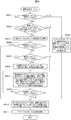
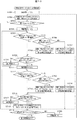
- FIG. 1 is a schematic external view of an automatic transaction apparatus. It is a schematic diagram of the internal structure of an automatic transaction apparatus. It is a flowchart of the payment transaction process of an automatic transaction apparatus. It is a flowchart of the withdrawal transaction process of an automatic transaction apparatus. It is a flowchart of the automatic counting process of the automatic transaction apparatus concerning 1st Embodiment. It is a flowchart of the automatic counting mode 1 which can set the automatic transaction apparatus concerning 1st Embodiment. It is a flowchart of the automatic counting mode 2 which can set the automatic transaction apparatus concerning 1st Embodiment.
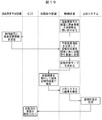
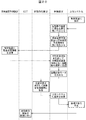
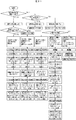
- 10 is a flowchart of a scrutiny process corresponding to automatic counting mode 5; It is a flowchart of the automatic counting process of the automatic transaction apparatus concerning 2nd Embodiment. It is a time series figure of the 1st example of the automatic transaction system concerning a 3rd embodiment. It is a time series figure of the 2nd example of the automatic transaction system concerning a 3rd embodiment. It is a time series figure of the 3rd example of the automatic transaction system concerning a 3rd embodiment. It is a flowchart of one specific example with which the automatic transaction system concerning 3rd Embodiment performs scrutiny.
- FIG. 1 is a conceptual diagram of an automatic transaction system of an automatic transaction apparatus according to this embodiment.
- the automatic transaction system 1000 includes a host system 100, a network 101, and automatic transaction apparatuses 1-1, 1-2, 1-3, and 1-4.
- the host system 100 is, for example, an ATMP system (bank integrated service front system).
- the network 101 is various communication networks such as a wired communication network or a wireless communication network, and can transmit data.
- the automatic transaction apparatuses 1-1, 1-2, 1-3, and 1-4 communicate with the host system 100 via the network 101.
- each automatic transaction apparatus has the same or similar structure, and both will be described below as the automatic transaction apparatus 1.
- the automatic transaction system 1000 further predicts the transaction status of the automatic transaction apparatus 1 in a future specific time zone as transaction prediction information, and the automatic transaction apparatus 1 is required by a predetermined future time based on the transaction prediction information.
- a money demand prediction device 102 for further predicting the amount of money as money demand prediction information may be included.
- the transaction prediction information of the automatic transaction apparatus 1 is predicted based on, for example, transaction history information of the automatic transaction apparatus 1 so far, operation prediction information from the present to a predetermined time in the future, and user usage prediction information. The prediction may be made using other information depending on the actual situation, and is not limited here.
- the money demand forecasting apparatus 102 may be an independent apparatus connected to the host system 100 and the automatic transaction apparatus 1 via the network 101 as shown in FIG. 1 or may be provided in the automatic transaction apparatus 1. However, the present invention is not limited here.
- FIG. 2 is a schematic external view of the automatic transaction apparatus according to the present embodiment.
- the installation positions and shapes of the respective structures are merely illustrated, and do not limit the present invention. In practice, various appropriate installation positions and shapes can be adopted depending on the situation.
- the automatic transaction apparatus 1 is an apparatus (automatic transaction apparatus) used for transactions such as deposits and withdrawals at a bank or the like.
- the automatic transaction apparatus 1 includes an operation panel (for example, a touch panel display) 2, operation keys 3, and a password input unit 4, and a user operates them to perform a transaction.
- a card entrance 6, a deposit / withdrawal port 7, a statement slip discharge port 8, and the like are installed on the front surface.
- a receiving unit 12 and a transmitting unit 13 that communicate with the remote host system 100 or the money demand prediction device 102 via the banknote processing mechanism 9, the control unit 10, and the network 101 are housed.
- an attendant operation panel 5 for example, a touch panel display operated by an attendant is disposed on the rear surface of the automatic transaction apparatus 1.
- the automatic transaction apparatus 1 further includes a storage unit 11.
- the storage unit 11 can be composed of various storage devices such as a RAM, a hard disk memory, and a flash memory.
- the control unit 10 can write data to the storage unit 11 and read data from the storage unit 11.
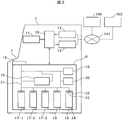
- FIG. 3 is a schematic diagram of the internal structure of the automatic transaction apparatus according to the present embodiment.
- the installation positions and shapes of the respective structures are merely illustrated, and do not limit the present invention. In practice, various appropriate installation positions and shapes can be adopted depending on the situation.
- the automatic transaction apparatus 1 has a deposit / withdrawal port 7 (see FIG. 2).
- the deposit / withdrawal port 7 is provided with an openable / closable shutter 14. In the case of deposit, money (cash) is inserted into the deposit / withdrawal port 7, and in the case of withdrawal, money is taken out from the deposit / withdrawal port 7.
- the automatic transaction apparatus 1 includes a discrimination unit 15 for discriminating the authenticity of money and the denomination of money, a stacker 16, and recycling cassettes 17-1 to 17-3 (collectively referred to as recycling cassette 17).
- a reject cassette 18 and a replenishment / collection cassette 19 are also provided.
- a transport path 21 for transporting money is further provided inside the automatic transaction apparatus 1.
- a second reject cassette 20 may be further provided inside the automatic transaction apparatus 1.
- the banknotes are stored in the recycling cassette 17 by denomination.
- the denominations may be different face values such as 100 yuan banknotes or 50 yuan banknotes, may be different currency types such as renminbi or US dollars, and are different face values of different currency types and different currency types. May be included.
- an operation detection unit 22 and a remaining capacity detection unit 23 are provided for each cassette inside the apparatus. In FIG. 3, the operation detection unit 22 and the remaining amount detection unit 23 are described only for the replenishment / collection cassette 19, but similarly, the operation detection unit 22 and the remaining amount are also included in each recycle cassette 17 and reject cassette 18.
- the quantity empty detector 23 may be provided, and of course, the operation detector 22 and the remaining capacity detector 23 may not be provided in each cassette.
- the operation detection unit 22 detects whether or not the cassette is operated by someone (for example, a staff member).
- the remaining capacity detector 23 detects a situation where the remaining capacity in the cassette is empty.
- the fixing means 24 is described only for the replenishment / collection cassette 19, but each recycling cassette 17 and reject cassette 18 may also be provided with the fixing means 24, and of course, fixed for each cassette.
- the fixing means 24 may be provided in any of the cassettes according to demand without providing the means 24.
- the fixing means 24 does not fix the cassette to be recovered, but fixes the cassette that should not be recovered. As a result, it is possible to prevent the cassette that the clerk should not collect from being erroneously collected.
- the automatic transaction apparatus 1 can perform, for example, a deposit transaction and a withdrawal transaction.
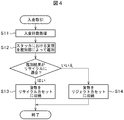
- FIG. 4 is a flowchart of the deposit transaction process of the automatic transaction apparatus according to this embodiment.
- the deposit transaction process is roughly divided into two parts: deposit count and deposit receipt.
- money is inserted into the deposit / withdrawal port 7, subjected to a discrimination process by the discrimination unit 15, and then stored in the stacker 16.
- excluding items such as unidentifiable money or other papers are returned to the deposit / withdrawal port 7.
- the returned exclusion is taken out by the end user, and then the shutter 14 of the deposit / withdrawal port 7 is closed, and the discrimination result of the money stored in the stacker 16 is displayed on the operation panel 2.
- the end user confirms the discrimination result displayed as the inserted money, and inputs the confirmation result by the operation panel 2 or the operation key 3 when the deposit is confirmed without any problem. Thereafter, the automatic transaction apparatus 1 and the host system 100 communicate to establish a payment transaction.
- the process before the deposit transaction is established is referred to as a deposit count (S11).
- the money in the stacker 16 is re-differentiated by the discrimination unit 15 (S12).
- the discrimination result is suitable for reuse, money is stored in the recycling cassette 17.
- money is preferentially stored in the recycling cassette 17 having a high deposit priority (S13).
- the failure of discrimination or money that cannot be discriminated is stored in the reject cassette 18 as reject money (S14).
- the above-described process (S12 to S14) for storing deposit money is referred to as deposit storage.
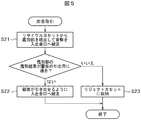
- FIG. 5 is a flowchart of a withdrawal transaction process of the automatic transaction apparatus according to this embodiment.
- the end user inputs the withdrawal details using the operation panel 2, the operation key 3, and the personal identification number input unit 4, and when the withdrawal is confirmed without any problem, the automatic transaction apparatus 1 and the host system 100 Communication is made and a withdrawal transaction is established.
- the money is discriminated from the recycling cassette 17 by the discrimination unit 15 and conveyed to the deposit / withdrawal port 7.
- money is preferentially conveyed from the recycling cassette 17 having a high withdrawal priority (S21).
- the shutter 14 is opened and the end user takes out money (S22).
- the currency identified as not to be reused in the transport is stored in the reject cassette 18 as reject currency (S23).
- the automatic transaction apparatus 1 can further perform automatic scrutiny processing.
- the automatic scrutiny process is a process of comparing and comparing the total value of the bank account balance based on the record of the host system 100 with the total value of the monetary value in the bank account calculated and recorded by the automatic transaction apparatus 1. This is also referred to as reconsideration scrutiny or reconsideration bill replenishment scrutiny.
- the money conveyed or stored in the automatic transaction apparatus 1 is divided into bank account non-bank money (in-machine money) and bank account money (in-machine money).
- the money outside the bank account is a money whose ownership does not belong to the bank in the automatic transaction apparatus 1, and the money within the bank account is a money whose ownership belongs to the bank in the automatic transaction apparatus 1. .
- the amount of money in an automatic transaction apparatus is generally the amount of money in a bank account.
- the money stored in the stacker 16 in the deposit counting process (that is, before the end user confirmation) at the time of the deposit transaction is a currency outside the bank account, and is transported in the deposit storage process (that is, after the end user confirmation).
- the money stored in the recycling cassette 17 or the reject cassette 18 is money in the bank account.
- the operation detection unit 22 detects whether the reject cassette 18 has been operated by someone (for example, a staff member), and the control unit 10 records the detection result of the operation detection unit 22. If someone rejects the reject cassette 18 during the period after the previous scrutiny, it is recorded as a bank check failure in the bank account.
- the automatic transaction apparatus 1 receives the instruction by the receiving unit 12, pauses the transaction, and performs an automatic review process.
- the suspension of the transaction means that at least the banknote-related transaction of the automatic transaction apparatus 1 is stopped, and other transactions such as transfer and PIN change may be normally performed.
- Automatic scrutiny mainly includes two steps. In the first step, the money in the recycling cassette is automatically reciprocated between the recycling cassette and the operation cassette, re-identified in the apparatus, and the money in the deposit cassette is mechanically determined. In the second step, the automatic counting result is automatically collated with the inventory data of the host.
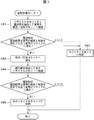
- FIG. 6 is a flowchart of the automatic counting process of the automatic transaction apparatus according to the first embodiment.
- step S31 current cash amount information of the automatic transaction apparatus 1 is acquired.
- the control unit 10 of the automatic transaction apparatus 1 can calculate the current balance of the automatic transaction apparatus 1 based on the balance determined by the automatic transaction apparatus 1 at the previous scrutiny and the transaction history from the previous scrutiny to the present.
- the data based on the calculation of the current stock information of the automatic transaction apparatus 1 by the control unit 10 may be acquired from the storage unit 11 of the automatic transaction apparatus 1 or acquired from the host system 100 via the network 101. May be.
- step S32 the automatic counting mode determination condition of the automatic transaction apparatus 1 is read.
- the automatic counting mode determination condition associates a plurality of automatic counting modes of the automatic transaction apparatus 1 and a plurality of ranges of the current transaction amount of the automatic transaction apparatus 1, respectively. Can be read from the storage unit 11.
- step S33 the automatic counting mode employed in the current automatic counting process is determined based on the acquired current stock information of the automatic transaction apparatus 1 and the automatic counting mode determination condition. For example, the control unit 10 of the automatic transaction apparatus 1 determines an automatic counting mode corresponding to the current amount of the automatic transaction apparatus 1 based on the read automatic counting mode determination condition.
- step S34 the automatic transaction apparatus 1 executes the current automatic counting process based on the determined automatic counting mode.
- the automatic scrutiny is performed by automatically comparing the result of the automatic counting with the data in the host.
- the sum of the stock amount of the reject cassette 18 and the stock value of the recycle cassette determined by the automatic counting process is used as the examination result.
- the amount of the reject cassette 18 is determined, it is not necessary to count the reject cassette 18. If the amount of the reject cassette 18 is uncertain, the reject cassette 18 is taken out and money is collected from the reject cassette 18, and the amount of the reject cassette 18 is counted, and then a new reject cassette 18 is loaded or after counting. Return the reject cassette 18.
- the automatic transaction apparatus 1 transmits whether the amount of money in the bank account and the amount of money in the bank account of the recycling cassette 17 and the reject cassette 18 have been determined or whether there is an amount outside the bank account. To the host system 100. In addition, the automatic transaction apparatus 1 controls whether the bank account of the recycling cassette 17 and the reject cassette 18 and the bank account are determined, or whether the bank account is present. The information may be recorded in the storage unit 11 by the unit 10. Based on the report from the automatic transaction apparatus 1, the host system 100 is reported as the total value of the loading record, the reject record, and the transaction record in the host system 100 when the amount in the bank book is determined. An automatic scrutiny is performed by comparing the total amount of money in the bank account. When the above two total values match, the automatic scrutiny is completed, and there is no need for the clerk to dispatch to the automatic transaction apparatus 1, and the automatic transaction apparatus 1 continues to execute the transaction until the next scrutiny.
- the automatic transaction apparatus 1 uses the empty replenishment / collection cassette 19 as a substitute reject cassette and continues to execute the transaction. Similarly, it is dispatched to the automatic transaction apparatus 1 and manually scrutinized. At the time of scrutiny by the staff, the amount of money at the time of the automatic counting is confirmed based on the record of the counting result of each recycling cassette 17 and the actual result confirmation result in the reject cassette 18. After the clerk collects the reject cassette 18, the control unit 10 confirms that the remaining amount of the reject cassette 18 is empty by the remaining amount detection unit 23, and if the confirmation result is empty, it is used as a substitute reject cassette.
- an appropriate automatic counting mode is flexibly switched according to the current amount of the automatic transaction apparatus 1, and based on the appropriate automatic counting mode.
- automatic scrutiny can be performed, improving the usage rate and operational efficiency of the automatic transaction apparatus 1, and improving the efficiency of collecting money from the automatic transaction apparatus 1, thereby reducing the cost of transporting money. Can be reduced.
- the automatic transaction apparatus 1 determines an appropriate automatic counting mode from among the following automatic counting modes based on the current stock information and the automatic counting mode determination conditions, and automatically based on the determined automatic counting mode. Perform counting.
- the present embodiment is not limited to switching between the following several automatic counting modes, and may be switched only between at least two of the following automatic counting modes depending on the actual situation. Or, other automatic counting modes may be added.
- the automatic counting mode 1 that can be set by the automatic transaction apparatus according to the first embodiment will be specifically described below with reference to the drawings.
- the following automatic counting mode 1 is also referred to as a normal automatic counting mode.
- FIG. 7 is a flowchart of the automatic counting mode 1 that can be set by the automatic transaction apparatus according to the first embodiment.
- the automatic counting mode 1 the money stored in the recycling cassette 17 in an unconfirmed state is conveyed to the replenishment / collection cassette 19 via the discrimination unit 15 (S41).
- the discrimination result of the discrimination unit 15 can determine the denomination and number of money and the money is suitable for reuse
- the money amount is counted and the money is conveyed to the replenishment / collection cassette 19 (S42).
- the discrimination result of the discrimination unit 15 cannot determine the denomination and number of money and the money is not suitable for reuse, the money is stored in the reject cassette 18 (S43).
- step S42 the money in the replenishment / collection cassette 19 is conveyed again to the original recycling cassette 17 via the discrimination unit 15 (S44). If the discrimination result of the discrimination unit 15 can determine the denomination and number of money and the money is suitable for reuse, the money is stored in the original recycling cassette 17 (S45). Even when the discrimination result of the discrimination unit 15 cannot determine the denomination and number of money and the money is not suitable for reuse, the money is stored in the reject cassette 18 (S43).
- the discrimination level of the discrimination unit 15 can be relaxed (to increase the acceptable range during discrimination), and money can be conveyed between the recycling cassette 17 and the replenishment / collection cassette 19 Then, the counting is sequentially performed on each recycling cassette 17, thereby confirming the amount of money in each recycling cassette 17, and the automatic counting process is ended.
- the automatic counting mode 1 can be associated with a condition that the current transaction amount of the automatic transaction apparatus 1 is equal to or less than a predetermined threshold, and the predetermined threshold is appropriately determined according to an actual situation. Can be set to That is, when the current transaction amount of the automatic transaction apparatus 1 is small, the automatic transaction apparatus 1 can adopt the automatic counting mode 1 by automatic counting. Generally, when the current transaction amount of the automatic transaction apparatus 1 is small, it is not necessary to collect money from the automatic transaction apparatus 1 to a cash center or the like, and the automatic counting mode 1 completes automatic counting within a short time. The usage rate and operational efficiency of the automatic transaction apparatus 1 can be improved.
- FIG. 8 is a flowchart of the automatic counting mode 2 that can be set by the automatic transaction apparatus according to the first embodiment.
- the control unit 10 of the automatic transaction apparatus 1 determines whether or not an unconfirmed recycling cassette 17 exists.
- the cassette is in a confirmed state is a state in which the cassette amount is confirmed
- the unconfirmed state is a state in which, for example, reject money has been generated, so that the cassette amount is not confirmed. (S51).
- the control unit 10 When there is a recycling cassette 17 whose determination result in step S51 is in an unconfirmed state, the control unit 10 further has a remaining amount of zero in the unconfirmed recycling cassette 17 and the remaining amount detection unit 23 determines the remaining amount of the cassette. It is determined whether or not there is a recycling cassette 17 detected as being empty (S52). If the determination result in step S52 is that there is an unconfirmed recycle cassette 17 in which the stock amount is zero and the remaining amount detection unit 23 detects that the remaining amount of the cassette is empty, the control unit 10 The amount of the recycling cassette 17 is determined to be zero, and the recycling cassette 17 is thereby determined (S53). Subsequently, the control unit 10 determines whether or not there is an undetermined recycling cassette 17 (S54).
- step S54 If there is a recycling cassette 17 whose determination result in step S54 is in an indeterminate state, money is reciprocated between the recycling cassette 17 and the replenishment / collection cassette 19 with respect to each indefinite state recycling cassette 17, An automatic counting process is executed, thereby determining the stock of the recycling cassette 17.
- the automatic counting for example, the specific steps described in the automatic counting mode 1 can be adopted (S55). Further, when the determination result in step S52 is that there is no unconfirmed recycle cassette 17 in which the stock amount is zero and the remaining amount detection unit 23 detects that the remaining amount of the cassette is empty, step S55 is also performed. The automatic counting process is executed.
- step S55 after the automatic counting is performed for each recycling cassette 17 in an indeterminate state, the control unit 10 sets the withdrawal priority for each recycling cassette 17 in descending order of the amount of the recycling cassette 17.
- the deposit / withdrawal priority is changed so that the deposit priority becomes lower and higher (S57).
- the changed withdrawal priority and deposit priority (sometimes collectively referred to as deposit / withdrawal priority) are stored in, for example, the storage unit 11. If it is determined in step S51 that there is no unconfirmed recycling cassette 17, the recycling cassette 17 is not counted via the replenishment / collection cassette 19 that is the operation cassette, and the amount of each recycling cassette 17 is determined. As a final value, each recycling cassette 17 is in a final state (S56).
- step S57 is executed to change the deposit priority and withdrawal priority of each recycling cassette 17. Further, even when there is no recycling cassette 17 whose determination result in step S54 is indeterminate, step S57 is executed to change the deposit priority and withdrawal priority of each recycling cassette 17.
- the control unit 10 records the amount of the recycle cassette (S58), and ends the automatic counting process related to the automatic counting mode 2. Moreover, after completion of the automatic scrutiny, the automatic transaction apparatus 1 resumes the transaction based on the deposit priority and the withdrawal priority of the recycled cassette 17 after the change.
- the automatic counting mode 2 can be associated with a condition that the current transaction amount of the automatic transaction apparatus 1 is equal to or less than a predetermined threshold, and the predetermined threshold is appropriately determined according to an actual situation. Can be set to That is, when the current transaction amount of the automatic transaction apparatus 1 is small, the automatic transaction apparatus 1 can adopt the automatic counting mode 2 described above by automatic counting. Generally, when the current transaction amount of the automatic transaction apparatus 1 is small, it is not necessary to collect money from the automatic transaction apparatus 1 to a cash center or the like, and the automatic counting mode 2 completes automatic counting within a short time. The usage rate and operational efficiency of the automatic transaction apparatus 1 can be improved.
- the withdrawal priority is set in descending order of the amount of the recycling cassette 17 after the automatic scrutiny processing. Change from high to low and deposit priority from low to high.
- money for withdrawal is transported from the recycling cassette 17 with a large amount of money, and the deposited money is stored in the recycling cassette 17 with a small amount of money (close to an empty box). it can.
- the recycled cassette 17 can be maintained in a definite state by storing the deposited money in the recycle cassette 17 having a low balance (close to an empty box). It becomes easy.
- the recycling cassette 17 in the finalized state is not counted via the replenishment / collection cassette 19 that is the operation cassette, and is in the finalized state during the automatic scrutiny process.
- the stock amount of the recycling cassette 17 is defined as the stock amount determination result of the recycling cassette 17.
- the automatic counting mode 3 that can be set by the automatic transaction apparatus according to the first embodiment will be specifically described below with reference to the drawings.
- the following automatic counting mode 3 is also referred to as an automatic counting mode for changing the deposit / withdrawal priority and for the collective conveyance.
- FIG. 9 is a flowchart of the automatic counting mode 3 that can be set by the automatic transaction apparatus according to the first embodiment.
- the control unit 10 of the automatic transaction apparatus 1 determines whether there is an unconfirmed recycling cassette 17 (S601). When there is a recycling cassette 17 whose determination result in step S601 is in an unconfirmed state, the control unit 10 further determines that the remaining amount of the cassette is zero by the remaining amount detection unit 23 and the remaining amount is zero among the unconfirmed recycling cassettes 17. It is determined whether or not there is a recycling cassette 17 detected as being empty (S602).
- step S602 determines whether there is an unconfirmed recycle cassette 17 in which the balance is zero and the remaining amount detection unit 23 detects that the remaining amount of the cassette is empty.
- the control unit 10 determines whether there is an unconfirmed recycling cassette 17 (S604). If there is a recycling cassette 17 whose determination result in step S604 is undetermined, it is subsequently determined whether or not there is a recycling cassette 17 in the determined state (S605).
- step S605 is also performed. Is executed to determine whether or not there is a recycle cassette 17 in a fixed state.
- the control unit 10 increases the order of priority for depositing the recycling cassettes 17 in descending order of the amount of the recycling cassettes 17 in descending order. In this manner, the deposit priority order is determined (S606). Subsequently, money is conveyed from the recycling cassette 17 to the replenishment / collection cassette 19 for each unresolved recycling cassette 17, and from the replenishment / collection cassette 19 to the finalized recycling cassette 17 according to the deposit priority. Preferentially transport money. That is, money is preferentially conveyed to the recycling cassette 17 having a high deposit priority.
- step S607 If there is still surplus money in the replenishment / collection cassette 19, the surplus money is transported to the recycle cassette 17 in an undefined state (for example, the original recycle cassette 17). Thereby, the automatic counting process including the collective conveyance is executed to determine the amount of the recycling cassette 17 (S607). If there is no recycling cassette 17 whose determination result in step S605 is in a definite state, step S607 is executed, and money is transported from the recycling cassette 17 to be counted to the replenishment / collection cassette 19, and from the replenishment / collection cassette 19 Money is conveyed to the recycling cassette 17 (for example, the original recycling cassette 17) in an indeterminate state, and an automatic counting process is executed.
- the control unit 10 determines whether or not there is an undefined recycling cassette 17 (S608).
- the process returns to the previous step and continues to execute step S607, and an automatic counting process is executed for the recycling cassette 17 in an indeterminate state.
- the control unit 10 sets the recycling priority for each recycling cassette 17 in descending order of the amount of the recycling cassette 17, and from low to high. The deposit / withdrawal priority is changed so that the deposit priority becomes low to high (S610).
- step S601 The changed withdrawal priority and deposit priority (sometimes collectively referred to as deposit / withdrawal priority) are stored in, for example, the storage unit 11. If it is determined in step S601 that there are no unconfirmed recycling cassettes 17, money is not conveyed from each recycling cassette 17 and counting is performed, and the stock of each recycling cassette 17 is set to a fixed value. As a result, each recycling cassette 17 is determined (S609). Also after step S609, step S610 is executed to change the deposit priority and withdrawal priority of each recycling cassette 17. Further, even when there is no recycling cassette 17 whose determination result in step S604 is indeterminate, step S610 is executed to change the depositing priority and withdrawal priority of each recycling cassette 17.
- control unit 10 records the amount of the recycling cassette (S611), and ends the automatic counting process related to the automatic counting mode 3. Moreover, after completion of the automatic scrutiny, the automatic transaction apparatus 1 resumes the transaction based on the deposit priority and the withdrawal priority of the recycled cassette 17 after the change.
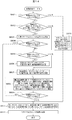
- FIG. 10 is a flowchart of a specific example of the automatic counting mode 3 that can be set by the automatic transaction apparatus according to the first embodiment.
- the specific example (aggregate conveyance process) shown in FIG. 10 corresponds to steps S607 to S608 in FIG.
- the unconfirmed recycle cassette Li represents the i-th unconfirmed recycle cassette 17, and the order of the unconfirmed recycle cassettes 17 is based on, for example, the numerical order (S702). Subsequently, the control unit 10 determines whether or not the replenishment / collection cassette 19 is empty (S703). If the result of determination in step S703 is that the replenishment / collection cassette 19 is empty, the control unit 10 determines whether or not there is an undetermined recycling cassette 17 (S719).
- step S719 When there is a recycling cassette 17 for which the determination result in step S719 is still unconfirmed, the control unit 10 adds 1 to the number of times of conveyance i (S720), returns to the previous step, executes step S702, and other unconfirmed states Money is transported from the recycle cassette Li to the replenishment / collection cassette 19. If there is no recycling cassette 17 whose determination result in step S719 is indeterminate, the automatic counting process is terminated, and for example, the process proceeds to step S610 in FIG.
- the finalized recycling cassette Kh represents the hth finalized recycling cassette 17, and the order of the finalized recycling cassette 17 is based on the above-mentioned deposit priority order, that is, the order in which the finalized recycling cassette 17 has a large stock. . Further, the maximum stock value M of the recycling cassette can be appropriately set in advance according to the actual situation (S705).
- step S706 determines whether the amount of the replenishment / collection cassette 19 is equal to or less than M-ah. If the result of determination in step S706 is that the stock of the replenishment / collection cassette 19 is equal to or less than M-ah, the money of the total stock of the replenishment / collection cassette 19 is transported to the determined recycling cassette Kh (S707) and continues. Step S719 is executed, and it is determined whether or not there is an unconfirmed recycling cassette 17 still.
- step S706 when the result of determination in step S706 is that the stock of the replenishment / collection cassette 19 exceeds M-ah, the M-ah money is transported from the replenishment / collection cassette 19 to the finalized recycling cassette Kh. Then, the withdrawal cassette Kh becomes the maximum value M (S708), and then the control unit 10 determines whether or not there is a cassette whose stock amount is not the maximum value M among the determined recycling cassettes 17 (S709). Further, step S709 is also executed when the stock value ah of the recycling cassette Kh whose determination result in step S705 has been confirmed has reached the maximum value M.
- control unit 10 When there is a cassette whose stock amount is not the maximum value M among the recycle cassettes 17 in which the determination result in step S709 is determined, the control unit 10 adds 1 to the input count h (S710), and returns to the previous and executes step S705. To do. As a result, the collective process for the recycle cassette 17 in the determined state is executed.
- the undecided recycle cassette Lh represents the hth undecided recycle cassette 17.
- the control unit 10 determines whether or not the stock amount of the replenishment / collection cassette 19 is equal to or less than M-bh. Judgment is made (S713).
- step S713 If the result of determination in step S713 is that the stock of the replenishment / collection cassette 19 is less than or equal to M-bh, the money of the entire stock of the replenishment / collection cassette 19 is transported to the unconfirmed recycling cassette Lh (S714), and continues. Step S719 is executed. Also, if the result of determination in step S713 is that the stock of the replenishment / collection cassette 19 exceeds M-bh, the M-bh money is transferred from the replenishment / collection cassette 19 to the undetermined recycling cassette Lh.
- step S716 is also executed when the stock amount bh of the recycling cassette Lh whose determination result in step S712 is in an unconfirmed state has reached the maximum value M.
- the control unit 10 adds 1 to the input count h (S717), and returns to the previous and executes step S712. To do.
- step S716 When there is no cassette whose stock amount is not the maximum value M among the recycling cassettes 17 whose determination result in step S716 is indeterminate, money is transported from the replenishment / collection cassette 19 to the recycling cassette Lh in an indeterminate state (S718). Subsequently, step S719 is executed. Thereby, automatic counting processing including collective conveyance is executed.
- the automatic counting mode 3 can be associated with a condition that the current transaction amount of the automatic transaction apparatus 1 is equal to or less than a predetermined threshold, and the predetermined threshold is appropriately determined according to an actual situation. Can be set to That is, when the current transaction amount of the automatic transaction apparatus 1 is small, the automatic transaction apparatus 1 can adopt the automatic counting mode 3 described above by automatic counting. Generally, when the current transaction amount of the automatic transaction apparatus 1 is small, it is not necessary to collect money from the automatic transaction apparatus 1 to a cash center or the like, and the automatic counting mode 3 completes automatic counting within a short time. The usage rate and operational efficiency of the automatic transaction apparatus 1 can be improved.
- the order of receipt priority (payment priority) in the counting order of the recycling cassette 17 increases. (Rank) from high to low.
- the recycle cassette 17 in the confirmed state having a high deposit priority from the operation cassette Transport money to As a result, the collective conveyance in the automatic counting process preferentially conveys to the recycling cassette 17 with a large stock amount at the time of automatic scrutiny. Money can be conveyed and the operational efficiency of the automatic transaction apparatus 1 can be improved.
- the money deposited after the transaction is resumed is stored in the recycle cassette 17 with a small amount of money, and since the rejected money is rarely generated in the depositing process, the amount of money received is small ( By storing in the recycling cassette 17 (which is close to an empty box), it becomes easy to maintain the recycling cassette 17 in a fixed state.
- the automatic transaction apparatus 1 includes three recycling cassettes (cassette numbers 1 to 3), one reject cassette (cassette number 4), and one replenishment / collection reject (cassette number 5).
- the maximum balance of each recycling cassette is 3000, and for convenience of explanation, the denomination of money stored in each recycling cassette is the same (for example, 1). That is, the amount of money in the cassette may be understood as the number of money stored in the cassette.
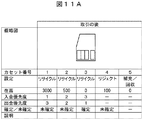
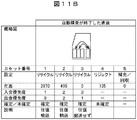
- FIG. 11A to FIG. 11H are schematic views of the operation status as an automatic transaction apparatus in a comparative example of the prior art.
- FIG. 11A shows the state after the transaction.
- rectangular cassettes from left to right indicate recycling cassettes 1 to 3 and replenishment / collection rejection.
- Recycle cassette No. 1 is 3000
- Recycle cassette No. 2 is 500
- Recycle cassette No. 3 is 0,
- Reject cassette is 100
- Replenishment / Recovery reject is empty .
- the order of priority for deposits decreases sequentially in order of recycling cassettes 1 to 3, and the priority for withdrawals increases sequentially (1 indicates the highest priority, and the priority decreases as the number increases).
- the recycling cassettes 1 and 2 are in an unconfirmed state
- the recycling cassette 3 is in a confirmed state
- the reject cassette is in an unconfirmed state.
- FIG. 11B shows a state immediately after the automatic scrutiny is completed.
- the money in the recycle cassette No. 1 is reciprocated between the replenishment / collection reject by automatic counting, whereby 30 reject money is generated, the recycle cassette No. 1 is in a fixed state, and the stock is 2970.
- the money in the recycle cassette 2 is reciprocated between the replenishment / collection reject by automatic counting, thereby generating 5 reject money, the recycle cassette 2 is in a finalized state, and the stock is 495.
- the amount of the reject cassette is 135, which is in an indeterminate state.
- FIG. 11C shows the state after the replacement of the reject cassette.
- the new reject cassette is empty and in a final state.
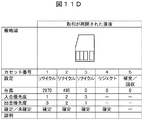
- FIG. 11D shows a state immediately after the transaction is resumed, and is the same as the state after the replacement of the reject cassette shown in FIG. 11C.
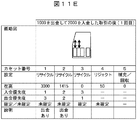
- FIG. 11E shows a state after the first “1000 withdrawal and 2000 deposit transaction” is performed. Based on the withdrawal priority of each recycling cassette, withdrawals occur sequentially from the recycling cassette No. 2 and the recycling cassette No. 1, and based on the depositing priority of each recycling cassette, the recycling cassette No. 1 and the recycling cassette No. 2 Deposits occur sequentially. Since both the recycle cassette No. 1 and the recycle cassette No. 2 are withdrawn, there is a possibility that reject money will be generated and an unconfirmed state will be generated. For convenience of explanation, in this and the following explanation, the case where there is a possibility that reject money is generated and the state becomes an undetermined state is referred to as an undetermined state. In addition, the amount of the reject cassette is 50, which is in an undetermined state.
- FIG. 11F shows a state after the second “1000 withdrawal and 2000 deposit transaction” is performed. Based on the withdrawal priority of each recycling cassette, withdrawal occurs from the recycling cassette No. 2, and depositing occurs to the recycling cassette No. 2 based on the receipt priority of each recycling cassette. Since the withdrawal of the recycling cassette No. 2 occurred, reject money was generated, and the stock of the reject cassette was 100.
- FIG. 11G shows a state after the “2000 deposit and 1000 withdrawal transaction” has been performed. Based on the deposit priority of each recycling cassette, deposits are sequentially generated into the recycling cassette No. 2 and the recycling cassette No. 3, and withdrawals are generated from the recycling cassette No. 3 based on the withdrawal priority of each recycling cassette. . Since the withdrawal of the recycle cassette No. 3 occurred, reject money was generated, the recycle cassette No. 3 also became unconfirmed, and the stock of the reject cassette is 150.
- FIG. 11H shows a state immediately after the second automatic inspection is completed.
- Recycle cassettes Nos. 1 to 3 are all indeterminate until automatic scrutiny, and must be automatically counted by reciprocating transport. Since the money in the recycle cassette 1 is reciprocated between the replenishment / collection reject by automatic counting, 30 reject money is generated, the recycle cassette 1 is in a fixed state, and the stock is 2970. Since the money in the recycle cassette 2 is reciprocated between the replenishment / collection reject by automatic counting, 30 reject money is generated, the recycle cassette 2 is in a fixed state, and the stock is 2730. Since the money in the recycle cassette No. 3 is reciprocated between the replenishment / collection reject by automatic counting, 3 reject money is generated, the recycle cassette No. 3 is determined, and the stock amount is 312. The amount of the reject cassette is 213, which is in an indeterminate state.
- FIG. 12A to FIG. 12H are schematic views of the operation status of the automatic transaction apparatus in the automatic counting mode 3 according to the first embodiment.
- Fig. 12A shows the state after the transaction.
- the recycle cassette number 1 is 3000
- the recycle cassette number 2 is 500
- the recycle cassette number 3 is 0,
- the reject cassette number is 100.
- / Recovery reject is empty.
- the order of priority for deposits decreases sequentially in order of recycling cassettes 1 to 3, and the priority for withdrawals increases sequentially (1 indicates the highest priority, and the priority decreases as the number increases).
- the recycling cassettes 1 and 2 are in an unconfirmed state
- the recycling cassette 3 is in a confirmed state
- the reject cassette is in an unconfirmed state.
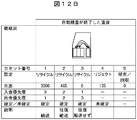
- FIG. 12B shows a state immediately after the automatic scrutiny is completed.
- the recycling cassette No. 1 money is collected and conveyed by automatic counting, the recycling cassette No. 1 is in a fixed state, and the stock is 3000.
- the coins in the recycling cassette 2 are reciprocated between the replenishment / collection reject by automatic counting, thereby generating 5 rejected coins, the recycling cassette 2 is in a finalized state, and a part of the money is recycled to the recycling cassette 1.
- the stock amount is 465 because it is gathered and transported to the number. Since the recycle cassette No. 3 is in a fixed state, it is not reciprocated.
- the amount of the reject cassette is 135, which is in an indeterminate state.
- the deposit / withdrawal priority is changed according to the amount of each recycling cassette. In the order of the recycling cassettes Nos. 1 to 3, the deposit priority after the change is sequentially increased and the withdrawal priority is sequentially decreased.
- FIG. 12C shows the state after the replacement of the reject cassette.
- the new reject cassette is empty and in a final state.
- FIG. 12D shows a state immediately after the transaction is resumed, and is the same as the state after the reject cassette replacement shown in FIG. 12C.
- FIG. 12E shows a state after the first “1000 withdrawal and 2000 deposit transaction” is performed. Based on the withdrawal priority of each recycling cassette, withdrawal is generated from the recycling cassette No. 1, and on the recycling cassette No. 3 is deposited based on the depositing priority of each recycling cassette. Since the withdrawal of the recycle cassette No. 1 occurred, reject money was generated and it became an unconfirmed state, and the stock of the reject cassette becomes 50 and an unconfirmed state. Recycle cassette No. 2 and recycle cassette No. 3 are in a fixed state as they are.
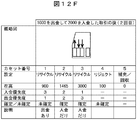
- FIG. 12F shows a state after the second “1000 withdrawal and 2000 deposit transaction” is performed. Based on the withdrawal priority of each recycling cassette, withdrawal occurs from the recycling cassette No. 1, and based on the depositing priority of each recycling cassette, deposits occur sequentially to the recycling cassette No. 3 and the recycling cassette No. 2. . Since the recycle cassette No. 1 has been withdrawn, reject money is generated, and the stock of the reject cassette is 100. According to the deposit transaction process as described above, it is difficult for reject money to be generated in the deposit transaction, and the recycling cassette into which money has been deposited during the deposit transaction can easily maintain a fixed state.
- FIG. 12G shows a state after the “2000 deposit and 1000 withdrawal transaction” has been performed. Based on the deposit priority of each recycling cassette, deposits are sequentially generated into the No. 2 recycling cassette and the No. 1 recycling cassette, and withdrawals are generated from the No. 1 recycling cassette based on the withdrawal priority of each recycling cassette. . Since the withdrawal of the recycling cassette No. 1 occurred, reject money was generated and the stock of the reject cassette was 150. Recycle cassette No. 2 and recycle cassette No. 3 are in a fixed state as they are.
- FIG. 12H shows a state immediately after the second automatic inspection is completed.
- Recycle cassettes No. 2 and No. 3 are both in a definitive state until automatic inspection, so there is no need to perform automatic inspection by reciprocating conveyance. Since the money in the recycle cassette No. 1 was reciprocated between the replenishment / collection reject by automatic counting, reject money was generated, the recycle cassette No. 1 was determined, and the stock amount was 282. The amount of the reject cassette is 183, which is in an indeterminate state.
- the automatic counting mode 4 that can be set by the automatic transaction apparatus according to the first embodiment will be specifically described below with reference to the drawings.
- the automatic counting mode 4 described below is also referred to as an automatic counting mode in consideration of change in deposit / withdrawal priority, collective conveyance, and conveyance distance.
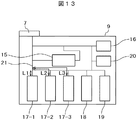
- FIG. 13 is a schematic diagram of the transport distance in the automatic transaction apparatus according to this embodiment.
- FIG. 13 only the internal structure of the banknote processing mechanism 9 is shown, and the other structure of the automatic transaction apparatus 1 is referred to FIG.
- the installation position and shape of each structure are only illustrations, and do not limit the present invention. In practice, various appropriate installation positions and shapes can be adopted depending on the situation.
- FIG. 11 when the money in each of the recycle cassettes 17-1 to 17-3 is transported by the automatic counting process, the transport distances of the banknotes in the transport path 21 are different from each other.
- the transport distance of money in the recycling cassette 17-1 is a common distance added to L1. Therefore, the transport distance of money in the recycling cassette 17-2 is the sum of L2 and the common distance, and the transport distance of money in the recycling cassette 17-3 is the sum of L3 and the common distance. As shown in FIG. 13, L1 is smaller than L2, and L2 is smaller than L3. The longer the money transport distance in the transport path 21 is, the greater the possibility of occurrence of a jam in the transport process. Therefore, this embodiment further considers the transport distance in the automatic counting process.
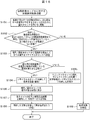
- FIG. 14 is a flowchart of the automatic counting mode 4 that can be set by the automatic transaction apparatus according to the first embodiment.
- the control unit 10 of the automatic transaction apparatus 1 determines whether there is an unconfirmed recycling cassette 17 (S801). When there is a recycling cassette 17 whose determination result in step S801 is in an unconfirmed state, the control unit 10 further determines that the remaining amount in the cassette is zero by the remaining amount detection unit 23 and the remaining amount is zero among the unconfirmed recycling cassettes 17. It is determined whether or not there is a recycling cassette 17 detected as being empty (S802).
- step S802 When the determination result in step S802 is that there is an unconfirmed recycle cassette 17 in which the stock amount is zero and the remaining amount in the cassette is detected to be empty by the remaining amount detection unit 23, the control unit 10 The amount of the recycling cassette 17 is determined to be zero, and the recycling cassette 17 is thereby determined (S803). Subsequently, the control unit 10 determines whether or not there is an undetermined recycling cassette 17 (S804). If there is a recycling cassette 17 whose determination result in step S804 is in an indeterminate state, it is subsequently determined whether there is a recycling cassette 17 in a final state (S805).
- step S805 is executed, It is determined whether or not there is a recycling cassette 17 in a final state.
- the control unit 10 has a higher priority for depositing the recycling cassettes 17 in the descending order with respect to each recycling cassette 17 in the confirmed state.
- the deposit priority order is determined so as to be lower (S806).
- the control unit 10 gives priority to withdrawal for each recycling cassette 17 in an unconfirmed state so that the withdrawal priority is lowered from the highest to the lowest in the transport distance from the recycling cassette 17 to the replenishment / collection cassette 19.
- the order is determined (S807).
- money is conveyed from the unconfirmed recycling cassette 17 to the replenishment / collection cassette 19 according to the above-mentioned withdrawal priority order, and from the replenishment / collection cassette 19 to the finalized recycling cassette 17 according to the deposit priority order.
- Preferentially transport money That is, money is preferentially conveyed to the recycle cassette 17 in a fixed state with a high deposit priority. If there is still surplus money in the replenishment / collection cassette 19, the surplus money is conveyed to the unconfirmed recycling cassette 17 based on the above withdrawal priority. That is, surplus money is preferentially transported to the unconfirmed recycling cassette 17 having a high withdrawal priority.
- step S808 is executed, based on the above withdrawal priority.
- Money is transported from the recycle cassette 17 in the state to the replenishment / collection cassette 19, and money is transported from the replenishment / collection cassette 19 to the recycle cassette 17 in the unconfirmed state based on the above-mentioned withdrawal priority, and automatic counting processing is performed. Execute.
- the control unit 10 determines whether or not there is an undecided recycling cassette 17 (S809). If there is still an unconfirmed recycling cassette 17 in step S809, the process returns to the previous step and continues to execute step S808, and automatically determines the unconfirmed recycling cassette 17 based on the above withdrawal priority. Execute the counting process. If there is no recycling cassette 17 for which the determination result in step S809 is indeterminate, the control unit 10 sets the withdrawal priority for each recycling cassette 17 in descending order of the amount of the recycling cassette 17, and from low to high. The deposit / withdrawal priority is changed so that the deposit priority becomes low to high (S811).
- the changed withdrawal priority and deposit priority are stored in, for example, the storage unit 11. If it is determined in step S801 that there is no recycling cassette 17 in an indeterminate state, the recycling cassette 17 is not counted via the replenishment / collection cassette 19 that is an operation cassette, and the amount of recycling for each recycling cassette 17 is not counted. Is set as a definite value, whereby each recycling cassette 17 is brought into a definite state (S810). Also after step S810, step S811 is executed to change the deposit priority and withdrawal priority of each recycling cassette 17. Even when there is no recycling cassette 17 whose determination result in step S804 is indeterminate, step S811 is executed to change the deposit priority and withdrawal priority of each recycling cassette 17.
- control unit 10 records the amount of the recycle cassette (S812), and ends the automatic counting process related to the automatic counting mode 4. In addition, after the automatic scrutiny is completed, the automatic transaction apparatus 1 resumes the transaction based on the deposit priority and withdrawal priority of the changed recycling cassette 17.
- the automatic counting mode 4 of the present embodiment will be specifically described.
- the flow of this specific example is similar to the above-described specific example of the automatic counting mode 3, and will be described with reference to FIG.
- the difference between this specific example and the above specific example of the automatic counting mode 3 is that, in the above specific example of the automatic counting mode 3, the undecided recycling cassette Li represents the i-th undecided recycling cassette 17.
- the order of the unconfirmed recycling cassettes 17 is based on, for example, the numerical order.
- the unconfirmed recycling cassette Li represents the i-th unconfirmed recycling cassette 17, and in the figure, the order of the unconfirmed recycling cassette 17 is the above-mentioned withdrawal priority.
- the order that is, the transport distance from the recycling cassette 17 to the replenishment / collection cassette 19 is based on the shortest order.
- the automatic counting mode 4 can be associated with a condition that the current transaction amount of the automatic transaction apparatus 1 is equal to or less than a predetermined threshold, and the predetermined threshold is appropriately determined according to an actual situation. Can be set to That is, when the current transaction amount of the automatic transaction apparatus 1 is small, the automatic transaction apparatus 1 can employ the automatic counting mode 4 described above by automatic counting. Generally, when the current transaction amount of the automatic transaction apparatus 1 is small, it is not necessary to collect money from the automatic transaction apparatus 1 to a cash center or the like, and the automatic counting mode 4 completes automatic counting within a short time. The usage rate and operational efficiency of the automatic transaction apparatus 1 can be improved.
- the transport from the recycling cassette 17 to the empty operation cassette (for example, the replenishment / collection cassette 19) is performed for each recycling cassette 17.
- the withdrawal priority (withdrawal priority) in the automatic counting process is made higher to lower.
- money is preferentially conveyed from the unconfirmed recycling cassette 17 having a high withdrawal priority to an operation cassette (for example, the replenishment / collection cassette 19) that is an empty cassette.
- the banknote is preferentially transported from the operation cassette to the unconfirmed recycling cassette 17 having a high withdrawal priority.
- the automatic counting mode 5 that can be set by the automatic transaction apparatus according to the first embodiment will be specifically described below with reference to the drawings.
- the automatic counting mode 5 described below is also referred to as an automatic counting mode for storing a reserve for loading.
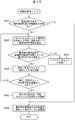
- FIG. 15 is a flowchart of the automatic counting mode 5 that can be set by the automatic transaction apparatus according to the first embodiment.
- the reusable bank account balance of the automatic transaction apparatus 1 by the control unit 10 of the automatic transaction apparatus 1 indicates the reserve for initial loading from the host system 100. It is determined whether or not the amount is greater than or equal to the amount (S91).
- the amount of money in the bank account of the recycling cassette 17 in the automatic transaction apparatus 1 is equal to or larger than the initial loading reserve amount from the upper system 100, the initial loading from any recycling cassette 17 to the replenishment / collection cassette 19 is performed.
- An amount of money, that is, a reserve for loading is counted and conveyed (S92).
- the counting at this time is to discriminate the denominations and the number of all the moneys through the discrimination unit 15 in the process of transporting the money.
- the reusable money whose denomination result and the number of coins determined by the discrimination unit 15 are confirmed is stored in the replenishment / collection cassette 19 and the amount of money is recorded (S94). Are excluded and stored in the reject cassette 18 (S93).
- money may be conveyed from the plurality of recycling cassettes 17 until a reserve for loading can be secured. If the amount of the replenishment / collection cassette recorded in step S94 does not reach the initial loading amount, the process returns to step S92, and the refill / collection cassette 19 is continuously conveyed while counting money.
- step S94 When the amount of the replenishment / recovery cassette recorded in step S94 reaches the initial loading amount, the control unit 10 sets the replenishment / recovery cassette 19 in which the reserve for loading is stored in the transaction to stop using ( S95), the sending unit 13 reports to the host system 100 the stock of each recycling cassette 17 and the replenishment / collection cassette 19 and the status of securing the reserve for loading. After the report, the transaction service is started (S96).
- step S96 is executed, and the control unit 10
- the sending unit 13 reports to the host system 100 the result that the amount of money in the recycling cassette 17 and the money of the next initial loading amount cannot be stored as reserves, and the transaction service is subsequently started.
- the automatic transaction apparatus 1 determines the initial loading amount based on the initial loading reserve instruction amount from the host system 100.
- the automatic counting mode is not limited to this.
- the money demand prediction apparatus 102 The initial loading amount may be determined based on the predicted initial loading amount predicted by the above, or the initial loading amount may be determined based on a preset initial loading amount setting value, or may be combined with the above method to be initialized. The loading amount may be determined.
- the replenishment / collection cassette 19 is used as the operation cassette for storing the reserve for loading, the present invention is not limited to this, and other empty cassettes can be used according to the actual situation.
- the automatic transaction apparatus 1 continues to start a transaction service based on internal reusable money. Thereafter, the clerk is dispatched to the site where the automatic transaction apparatus 1 is installed at an appropriate timing based on the above report of the automatic transaction apparatus 1 and conducts reconstitution inspection of the automatic transaction apparatus 1.
- FIG. 16 is a flowchart of the refilling and loading inspection process corresponding to the automatic counting mode 5.
- the clerk is dispatched to the site where the automatic transaction apparatus 1 is installed at any point in time for the refilling and loading operation, and operates the operation panel 2 or the clerk operation panel 5 to perform the washing.
- the loading inspection process is started.
- the control unit 10 reports the operation content to the host system 100 by the transmission unit 13.
- the control unit 10 displays information on the replenishment / collection cassette 19 and other cassettes that can determine (confirm) that the reserve for loading has been stored on the operation panel 2 or the staff operation panel 5. According to the display, take out the cassette and collect the money to be collected.
- a cassette containing money to be collected may be substituted using an empty cassette directly (S101). This step is also called washing.
- the control unit 10 confirms whether or not the replenishment / collection cassette 19 has been operated by someone based on the record of the operation detection unit 22, and based on the record of the remaining amount detection unit 23, the reserve for loading The remaining amount of money in the cassette other than the replenishment / collection cassette 19 in which is stored is confirmed (S102). If the replenishment / collection cassette 19 is not operated by anybody from the successful storage of the reserve for loading until the scrutiny processing period, and the remaining amount of money in the other recycling cassette 17 and reject cassette 18 is empty Is transferred from the replenishment / collection cassette 19 via the discrimination section 15 to one of the recycling cassettes 17 (S103), and if the confirmation in step S102 is negative, it indicates that the process has failed. Report to the system 100 (S109).
- step S103 the reusable money whose denomination and number of sheets are determined by the discrimination unit 15 are stored in the recycle cassette 17, and the stock amount is recorded (S104).
- This step is also referred to as loading.
- Money and other paper exclusions that cannot be identified in step S103 are stored in the reject cassette 18.
- the amount of the reject cassette is obtained by subtracting the amount of money stored in the recycle cassette from the initial loading amount (S105). ).
- step S24 is completed, the replenishment / collection cassette 19 set to be suspended in the previous transaction is changed to a normal transactionable state (S106).
- control unit 10 reports to the host system 100 by the transmission unit 13 whether the amount of each cassette is present and whether or not the above processing is successful, and the automatic transaction apparatus 1 resumes the transaction service (S107).
- the clerk refers to the records of the host system 100, the report on the start of the scrutiny process, the result of the initial loading process, etc., and performs the scrutiny process by counting the collected money (S108). Further, if the reserve for loading cannot be stored by automatic washing, the clerk moves to the automatic transaction apparatus 1 with replenishment money or exchange money as usual, and replenishes or replaces.
- the automatic counting mode 5 can be associated with a condition that the current transaction amount of the automatic transaction apparatus 1 is larger than a predetermined threshold, and the predetermined threshold is appropriately determined according to an actual situation.
- the automatic transaction apparatus 1 can adopt the automatic counting mode 5 by automatic counting.
- the reserve for loading can be stored in the operation cassette so that other cassettes are collected and money is collected from the automatic transaction apparatus 1 at this point.
- each recycling cassette 17 can be used for both withdrawal and depositing.
- the present invention is not limited to this, and each recycling cassette 17 Each may be used only for withdrawals or only for deposits.
- the priority of withdrawal of each recycling cassette 17 also referred to as withdrawal cassette
- the deposit priority of 17 also referred to as deposit cassette
- each recycling cassette 17 In the automatic counting modes 2 to 4, the deposit priority and withdrawal priority of each recycling cassette 17 are changed based on the state of each recycling cassette 17 at the time of automatic scrutiny, but each recycling cassette 17 at the time of automatic scrutiny is changed. Only the deposit priority may be changed or only the withdrawal priority may be changed based on the state.
- the storage unit 11 stores, for each currency stored in each recycling cassette 17, a conveyance failure level indicating the possibility of a conveyance failure caused by the currency, and automatically scrutinizes it.
- the recycle cassette 17 in which money having a transport failure level higher than a predetermined level is stored, or of the stored money, the proportion of money having a transport failure level higher than the predetermined level is higher than the predetermined ratio.
- the predetermined level and the predetermined ratio can be appropriately set according to an actual situation or experience. As a result, it is possible to reduce the possibility of the occurrence of a jam in the conveyance from the operation cassette to the recycling cassette 17.
- the failure history data of the recycle cassette 17 may be stored in the storage unit 11, and the control unit 10 recycles the recycle cassette having a large failure history according to the failure history data of the recycle cassette 17.
- the withdrawal priority of 17 may be lowered.
- reject money is more likely to be generated at the time of withdrawal, and the recycling cassette 17 is likely to be in an unconfirmed state. Therefore, after the transaction is resumed, the recycling cassette 17 with a lot of failure history is not used for withdrawal as much as possible. Only, and maintain it in a definite state as much as possible, without the need for reciprocal transport in the automatic counting process, thereby reducing the potential for potential jamming in the automatic counting process.
- the control unit 10 lowers the deposit priority and / or withdrawal priority of the recycling cassette 17 having a large failure history in the automatic counting process based on the failure history data of the recycling cassette 17. May be.
- the amount of the recycling cassette 17 having a failure history as much as possible can be reduced by collective transportation by automatic counting processing, and after the transaction is resumed, it can be used only for depositing and not for withdrawal as much as possible. It is maintained in a definite state as much as possible and does not require reciprocal conveyance in the automatic counting process, thereby reducing the possibility of potential jamming in the automatic counting process.
- the automatic counting mode 5 if the amount of money in the reusable bank account of the automatic transaction apparatus 1 is equal to or greater than the initial loading reserve amount of the host system 100, it is replenished from any recycling cassette 17 Although it is transported while counting the reserve for loading to the recovery cassette 19, the cassette for storing the reserve for loading is not limited to the replenishment / recovery cassette 19, and a recycling cassette 17 may be used. At this time, similarly to the replenishment / collection cassette 19 in the above-described embodiment, the recycling cassette 17 in which the reserve for loading is stored is not used for the transaction until the scrutiny process by the staff starts. To resume. A plurality of cassettes may be used to cope with a large initial loading amount.
- the control unit 10 determines a cassette that is distant from the operation position of the attendant, and determines the recycling cassette 17 that stores the reserve for loading at the time of counting.
- the automatic counting mode used for the current automatic counting process is determined based on the current stock information of the automatic transaction apparatus 1 and the automatic counting mode determination condition.
- the automatic counting mode used for the current automatic counting process is determined based on the predicted amount information of the automatic transaction apparatus 1 and the automatic counting mode determination condition. In the present embodiment, description of the same or similar contents as those in the first embodiment will be omitted.
- FIG. 17 is a flowchart of the automatic counting process of the automatic transaction apparatus according to the second embodiment.
- step S ⁇ b> 111 first, the predicted amount information of the automatic transaction apparatus 1 is acquired, and the predicted amount information until the next examination of the automatic transaction apparatus 1 is preferentially acquired.
- the money demand prediction apparatus 102 predicts transaction prediction information until the next scrutiny of the automatic transaction apparatus 1 and predicts money demand prediction information until the next scrutiny of the automatic transaction apparatus 1.
- the money demand forecasting apparatus 102 may be connected to the automatic transaction apparatus 1 via the net 101, and is provided in the automatic transaction apparatus 1, and realized by the control unit 10 of the automatic transaction apparatus 1, for example. Also good.
- the control unit 10 of the automatic transaction apparatus 1 acquires the money demand prediction information, compares it with the current monetary amount of the automatic transaction apparatus 1, and acquires the predicted amount information until the next scrutiny of the automatic transaction apparatus 1. . Or the control part 10 of the automatic transaction apparatus 1 acquires the said transaction prediction information directly, produces
- step S112 the automatic counting mode determining condition of the automatic transaction apparatus 1 is read.
- the automatic counting mode determination condition associates a plurality of automatic counting modes of the automatic transaction apparatus 1 with a plurality of ranges of the predicted stock of the automatic transaction apparatus 1, and for example, the automatic transaction apparatus 1 by the control unit 10 of the automatic transaction apparatus 1 Can be read from the storage unit 11.
- step S113 the automatic counting mode used for the current automatic counting process is determined based on the predicted amount information of the automatic transaction apparatus 1 and the automatic counting mode determination condition. For example, the control unit 10 of the automatic transaction apparatus 1 determines the automatic counting mode corresponding to the predicted stock amount of the automatic transaction apparatus 1 based on the read automatic counting mode determination condition.
- step S114 the automatic transaction apparatus 1 executes the current automatic counting process based on the determined automatic counting mode.
- the automatic transaction apparatus 1 the automatic transaction system 1000, and the automatic counting method of the present embodiment, by using the predicted stock information, a more appropriate automatic counting mode is determined under more accurate conditions.
- the usage rate and operational efficiency can be further improved, and the efficiency of collecting money from the automatic transaction apparatus 1 can be improved to reduce the money transport cost.
- the determination condition is whether or not the predicted stock until the next scrutiny of the automatic transaction apparatus 1 is larger than the cash out threshold and smaller than the cash overflow threshold.
- one of the automatic counting modes 1 to 4 described above is associated with a condition in which the predicted balance until the next scrutiny of the automatic transaction apparatus 1 is greater than the cash out threshold and smaller than the cash overflow threshold.
- Mode 5 is associated with a condition in which the predicted balance until the next scrutiny of the automatic transaction apparatus 1 is a cash out threshold value or a cash overflow threshold value or more.
- the cash out threshold indicates that the balance of the automatic transaction apparatus is close to “out”, and may be zero, or may be a value obtained by adding a predetermined margin to zero.
- the cash overflow threshold indicates that the balance of the automatic transaction apparatus is close to the maximum value that can be accommodated, and may be the maximum value of money that can be accommodated in the automatic transaction apparatus 1, and a predetermined free amount from the maximum value. It may be a value obtained by subtracting.
- the automatic counting mode used for the current automatic counting process may be determined by substituting the predicted cash amount information using the money collection necessity information or in combination with the predicted cash amount information.
- the money collection necessity information indicates whether or not it is necessary to collect money from the automatic transaction apparatus 1 until the next scrutiny, and may be generated by the control unit 10 of the automatic transaction apparatus 1, May be generated by the apparatus. For example, when the predicted amount until the next scrutiny of the automatic transaction apparatus 1 is larger than the cash out threshold and smaller than the cash overflow threshold, the money collection necessity information needs to collect money from the automatic transaction apparatus 1 until the next scrutiny. If the predicted amount until the next scrutiny of the automatic transaction apparatus 1 is less than the cash out threshold or more than the cash overflow threshold, the money collection necessity information will be sent from the automatic transaction apparatus 1 until the next scrutiny. Indicates that it needs to be recovered.
- the money collection necessity information and the predicted stock information may be independent of each other.
- the money collection necessity information may indicate that it is necessary to collect money from the automatic transaction apparatus 1.
- the slip sheet is cut out to the automatic transaction apparatus 1 or a card or the like needs to be collected from the automatic transaction apparatus 1, that is, a clerk or a security guard is forced to move to the automatic transaction apparatus 1 due to reasons other than money collection.
- it may be displayed in the money collection necessity information that it is necessary to collect money from the automatic transaction apparatus 1.
- the automatic transaction apparatus 1 stores a specified type of money, such as a special note that is not suitable for continuous distribution due to a print error or painting, even if it is a true note, whether or not the money should be collected. Information may indicate that it is necessary to collect money from the automatic transaction apparatus 1.
- the money collection necessity information does not need to collect money from the automatic transaction apparatus 1 until the next scrutiny.
- the automatic counting process this time is determined to use the automatic counting mode 5.
- an automatic counting mode suitable for the current examination can be selected.
- the automatic transaction apparatus 1 and its automatic counting method may be any of the systems described in the first embodiment or the second embodiment.
- the automatic transaction system 1000 includes, for example, a money demand prediction apparatus 102, an automatic transaction apparatus 1, a host system 100, and a control apparatus. Further, the security guard is responsible for transporting money loaded into the automatic transaction apparatus 1 or money collected from the automatic transaction apparatus 1.
- the money demand prediction apparatus 102 may be realized by the control unit 10 of the automatic transaction apparatus 1, may be an independent apparatus, or may be realized by the host system 100.
- FIG. 18 is a time series diagram of a first example of an automatic transaction system according to the third embodiment. As shown in FIG. 18, first, the automatic transaction apparatus 1 determines that the automatic transaction apparatus 1 needs automatic scrutiny, and reports that fact to the control apparatus.
- the determination is made based on, for example, an instruction from the host system 100, based on a setting trigger of a timer built in the automatic transaction apparatus 1, or based on a predetermined transaction number or transaction number / denomination by the automatic transaction apparatus 1. It is defeated when it is detected that it has reached. Subsequently, the control device requests money demand prediction information of the automatic transaction apparatus 1 from the money demand prediction apparatus 102.
- the money demand forecasting apparatus 102 generates money demand forecast information until the next scrutiny of the automatic transaction apparatus 1 by the method described in the first embodiment and the second embodiment in response to a request from the control apparatus, and controls the control apparatus. Send to.
- the control device Based on the money demand prediction information received from the money demand prediction device 102 and the current stock information of the automatic transaction apparatus 1, the control device adds, for example, the money demand amount and the current stock amount, for example, predicts the presence until the next scrutiny. Get high information. Further, the control device automatically operates as described in the second embodiment based on the situation of the automatic transaction apparatus 1, for example, whether or not a predetermined money that is not suitable for continuous distribution to the automatic transaction apparatus 1 is stored. Money collection necessity information indicating whether or not it is necessary to collect money from the transaction apparatus 1 is generated. And a control apparatus determines the automatic scrutiny mode employ
- the automatic transaction apparatus 1 performs automatic counting and automatic scrutiny based on the determined automatic counting mode. Thereafter, the automatic transaction apparatus 1 reports a scrutiny result including executed mode information indicating an automatic counting mode used in automatic counting to the control apparatus.
- the control device reports the examination result including the executed mode information to the host system 100.
- the host system 100 generates a loading plan to be loaded into the automatic transaction apparatus 1 based on the examination result including the executed mode information, and notifies the security guard.
- the security guard is dispatched to the automatic transaction apparatus based on the above loading plan.
- FIG. 19 is a time series diagram of a second example of the automatic transaction system according to the third embodiment. As shown in FIG. 19, first, the control device is based on an instruction from the host system 100, or based on an instruction from the control device or a built-in timer setting trigger, or the automatic transaction device 1 has a predetermined number of transactions.
- the automatic transaction apparatus 1 determines that automatic scrutiny is necessary, and bills the money demand prediction apparatus 102 for money demand prediction information of the automatic transaction apparatus 1.
- the subsequent process is the same as in the first example, and the description thereof is omitted here.
- FIG. 20 is a time series diagram of a third example of the automatic transaction system according to the third embodiment. As shown in FIG. 20, first, the host system 100 determines whether or not the automatic transaction apparatus 1 needs to be automatically scrutinized based on a timer setting trigger or its own instruction, and instructs the control apparatus.
- control apparatus charges the automatic transaction apparatus 1 with the current amount of the automatic transaction apparatus 1 and charges the money demand prediction apparatus 102 with the money demand prediction information of the automatic transaction apparatus 1. Subsequent processes are the same as those in the first and second examples described above, and a description thereof is omitted here.
- FIG. 21 is a flowchart of a specific example in which the automatic transaction system according to the third embodiment performs a detailed examination.
- the control device acquires money demand prediction information from the money demand prediction device 102 based on any of the first to third examples described above, and then performs the next examination of the automatic transaction device 1. Predicted stock information is generated. Thereafter, the control device determines whether or not the predicted amount indicated in the predicted amount information is larger than a cash out threshold.
- the money collection necessity information is displayed. Subsequently, it is determined whether or not a value obtained by subtracting a predetermined margin amount from the current amount of the automatic transaction apparatus 1 is larger than a cash out threshold. If it is determined that the value obtained by subtracting a predetermined margin from the current cash balance is not greater than the cash out threshold, the control device determines that the automatic transaction device 1 is out of cash without performing automatic counting, and automatic counting is not executed. In addition, the executed mode information 1 indicating the out of cash is generated. Thereafter, the automatic transaction apparatus 1 is restarted and can be traded.
- the host system 100 generates a loading plan including dispatch request information based on the reported execution mode information 1 described above.
- the security guard dispatches to the automatic transaction apparatus 1 based on the above loading plan, temporarily stops the automatic transaction apparatus 1, and collects cassettes other than the replenishment / collection cassette 19 which are operation cassettes, that is, the recycling cassette 17 and the rejection cassette 18. Exchange. At this time, the newly exchanged recycle cassette 17 is loaded with loaded money. Thereafter, the automatic transaction apparatus 1 performs a cleaning process and a scrutiny for resetting the stock. Subsequently, automatic counting is performed on the newly-recycled recycling cassette 17 so as to determine the initial loading amount. Thereafter, the automatic transaction apparatus 1 is restarted.
- the security guard returns to the cash center, counts the cassettes other than the collected operation cassettes, that is, the recycling cassette 17 and the rejection cassette 18, and the recycling cassette stock and rejection cassette in which the host stock at the time of scrutiny is counted. Check whether it is the same as the sum of the amount of money in the bank. This completes the scrutiny process.
- the predicted balance until the next scrutiny by the control device is not larger than the cash shortage threshold, and the value obtained by subtracting a predetermined margin from the current cash balance of the automatic transaction apparatus 1 is larger than the cash shortage threshold. If it is determined, it is displayed in the money collection necessity information that it is necessary to collect the money, and it is determined that the automatic counting mode 5 is used by automatic counting, for example. Subsequently, the automatic transaction apparatus 1 performs automatic counting based on the automatic counting mode 5 described above, and the automatic counting executed in the automatic counting mode 5, the cash out of the automatic transaction apparatus 1, and the storage stored in the operation cassette by the automatic counting. The executed mode information 2 indicating the quantity is generated. Thereafter, the automatic transaction apparatus 1 is restarted and can be traded.
- the host system 100 generates a loading plan including dispatch request information based on the reported execution mode information 2 described above.
- the security guard dispatches to the automatic transaction apparatus 1 based on the above loading plan, temporarily stops the automatic transaction apparatus 1, and collects cassettes other than the replenishment / collection cassette 19 which are operation cassettes, that is, the recycling cassette 17 and the rejection cassette 18. Exchange. At this time, the newly exchanged recycle cassette 17 is loaded with loaded money. Thereafter, the automatic transaction apparatus 1 performs a cleaning process and a scrutiny for resetting the stock. Subsequently, the automatic transaction apparatus 1 automatically counts the newly replaced recycling cassette 17 and automatically loads money from the replenishment / collection cassette 19 which is an operation cassette into the recycling cassette 17. Thereafter, the automatic transaction apparatus 1 is restarted.
- the security guard returns to the cash center, counts the cassettes other than the collected operation cassettes, that is, the recycling cassette 17 and the rejection cassette 18, and the recycling cassette stock and rejection cassette in which the host stock at the time of scrutiny is counted. Check whether it is the same as the sum of the amount of money in the bank. This completes the scrutiny process.
- the automatic transaction apparatus 1 performs automatic counting based on the automatic counting mode 5 described above, and generates executed mode information 3 that indicates automatic counting in the automatic counting mode 5 and cash overflow of the automatic transaction apparatus 1. Thereafter, the automatic transaction apparatus 1 is restarted and can be traded.
- the host system 100 generates a loading plan including dispatch request information based on the reported execution mode information 3 described above.
- the security guard dispatches to the automatic transaction apparatus 1 based on the above loading plan, temporarily stops the automatic transaction apparatus 1, and collects cassettes other than the replenishment / collection cassette 19 which are operation cassettes, that is, the recycling cassette 17 and the rejection cassette 18. Exchange. Thereafter, the automatic transaction apparatus 1 performs a cleaning process and a scrutiny for resetting the stock. Subsequently, the replenishment / collection cassette 19 which is an operation cassette is automatically loaded into the recycling cassette 17. Thereafter, the automatic transaction apparatus 1 restarts.
- the security guard returns to the cash center, counts the cassettes other than the collected operation cassettes, that is, the recycling cassette 17 and the rejection cassette 18, and the recycling cassette stock and rejection cassette in which the host stock at the time of scrutiny is counted. Check whether it is the same as the sum of the amount of money in the bank. This completes the scrutiny process.
- the controller determines that the predicted amount until the next scrutiny is greater than the cash out threshold and the predicted amount until the next scrutiny is less than the cash overflow threshold, Information indicating that there is no need to collect is displayed, and it is determined that one of the automatic counting modes 1 to 4 described above is used in automatic counting. Subsequently, the automatic transaction apparatus 1 performs automatic counting based on any of the automatic counting modes 1 to 4 described above. If the result report does not indicate that all cassettes in the automatic transaction apparatus 1 are determined to be in stock, the amount in the recycling cassette is determined in the automatic counting mode and automatic counting used, and the amount in the reject cassette is determined. Execution completed mode information 4 indicating indefiniteness is generated.
- the automatic transaction apparatus 1 After that, the automatic transaction apparatus 1 performs a reconsideration process for resetting the stock amount and scrutinizes it, sets the initial value to the stock amount determined by automatic counting of the recycle cassette, and sets the stock amount of the reject cassette to zero. . Subsequently, the automatic transaction apparatus 1 temporarily stops the use of the original reject cassette 18 and uses the replenishment / collection cassette 19 which is an operation cassette as a reject cassette. Thereafter, the automatic transaction apparatus 1 is restarted and can be traded.
- the host system 100 generates a loading plan including dispatch request information based on the reported execution mode information 4 described above. The security guard dispatches to the automatic transaction apparatus 1 based on the above loading plan, temporarily stops the automatic transaction apparatus 1, collects only the original reject cassette 18, and replaces it with an empty new reject cassette 18.
- the automatic transaction apparatus 1 automatically loads the reject money stored in the replenishment / collection cassette 19 which is an operation cassette into a new reject cassette 18 and uses the new reject cassette 18 as a reject cassette. Thereafter, the automatic transaction apparatus 1 is restarted.
- the security guard returns to the cash center and manually counts the original reject cassette 18 that has been collected.
- the host inventory at the time of automatic counting is manually counted and the inventory of the recycling cassette is automatically counted. Check whether the sum is the same. This completes the scrutiny process.
- the controller determines that the predicted amount until the next scrutiny is greater than the cash out threshold and the predicted amount until the next scrutiny is less than the cash overflow threshold, Information indicating that there is no need to collect is displayed, and it is determined that one of the automatic counting modes 1 to 4 described above is used in automatic counting. Subsequently, the automatic transaction apparatus 1 performs automatic counting based on any of the automatic counting modes 1 to 4 described above.
- the result report confirms the balance of all cassettes in the automatic transaction apparatus 1, the balance of all cassettes is confirmed in the automatic counting mode and automatic counting used (recycle cassette and reject cassette).
- the executed mode information 5 is generated to indicate that the amount of money is determined).
- the automatic transaction apparatus 1 performs a reconsideration process for resetting the stock amount and scrutinizes it, sets an initial value based on the automatic counting result, restarts, and enters a state where it can be traded.
- the automatic transaction apparatus 1 reports the executed mode information to the host system 100 via the control apparatus.
- the host system 100 generates a loading plan for the automatic transaction apparatus 1 using the executed mode information indicating the automatic counting mode used in the automatic counting of the automatic transaction apparatus 1. To do.
- a loading plan can be made more rationally according to the actual operating status of the automatic transaction apparatus, thereby improving the operational efficiency and usage rate of the automatic transaction apparatus.
- a staff member or a security guard can be dispatched to the automatic transaction apparatus 1 based on the loading plan generated as described above, further improving the operational efficiency of cash and reducing the transport cost.
- the executed mode information represents not only the automatic counting mode used in the automatic counting of the automatic transaction apparatus 1, but also the stock of the recycle cassette 17, the stock of the reject cassette 18, and the replenishment / It may include at least one of the contents of the collection cassette 19. Further, the executed mode information may include at least one of the stock determination / unconfirmation status of each of the recycle cassette 17, the reject cassette 18, and the replenishment / collection cassette 19 that is an operation cassette. In addition, the executed mode information is information on the current state of the automatic transaction apparatus 1, for example, whether the automatic transaction apparatus 1 can continue to operate, whether dispatchers / guards need to be dispatched to the automatic transaction apparatus 1, May include at least one of the charge amount claims. Of course, any combination of the various information described above may be used mode information. As a result, the host system 100 can generate a more rational loading plan based on the executed mode information including various information.
- the automatic transaction apparatus 1 automatically counts the automatic counting modes 1 to 5 on the basis of the cash balance information that is the current cash balance information or the predicted cash balance information and / or the money collection necessity information.
- the present invention is not limited to this, and other automatic counting modes may be determined depending on the actual situation.
- other automatic counting modes such as an automatic counting mode called “reject cassette stock input after automatic counting” may be used.
- the reject cassette stock is temporarily stored in, for example, the storage unit 11 before auto-counting, and generated in the auto-counting process with the reject cassette stock temporarily stored after auto-counting. The amount of the reject cassette is updated with the amount of rejected money.
- control unit 10 and the banknote processing mechanism 9 are independent of each other, but the control unit 10 may be provided in the banknote processing mechanism 9.
- the operation detection unit 22 when the operation detection unit 22 is applied to the reject cassette 18 and the detection result of the operation detection unit 22 is operated by someone during the period after the previous scrutiny, although it is recorded that there is a confirmation failure of the internal amount, the operation detection unit 22 may be applied to the recycling cassette 17 and the detection result of the operation detection unit 22 may be recorded by the control unit 10.
- the recycling cassette 17 is operated by someone during the immediately preceding (previous) scrutiny or after the automatic scrutiny, it is recorded for each cassette that the confirmation status of the state of the bank book in the cassette is a confirmation failure.
- the automatic transaction apparatus 1 reports to the host system 100 the confirmation status of the bank account balance status of the recycling cassette 17 and the reject cassette 18 and the confirmed bank account balance status. In addition, the automatic transaction apparatus 1 may report the presence / absence of the bank account surplus to the higher system 100. Further, the automatic transaction apparatus 1 records the discrimination result information in the bank account book amount by the control unit 10, and further obtains it based on the discrimination result information in which the denomination or number of sheets is determined for the bank book book value. The amount acquired and the amount acquired based on the discrimination result information for which the denomination or number of sheets has not been determined may be reported to the host system 100. This makes it possible to determine the denomination that should be noted by the scrutinizer when the clerk finally scrutinizes.
- the automatic transaction apparatus 1 has been described as an example of an apparatus used for transactions such as deposits at a bank or the like.
- the automatic transaction apparatus is not limited to this, and can be used for various deposit and withdrawal handling operations. It may be a device to be used, or may be various automatic transaction devices in which a customer performs an automatic transaction for a predetermined operation (for example, an electricity bill payment operation).
- a predetermined operation for example, an electricity bill payment operation.
- the automatic transaction apparatus 1 handles a banknote
- the automatic transaction apparatus 1 is not limited to this, The apparatus which handles not only a banknote but coins, such as a coin, may be sufficient.
Landscapes
- Business, Economics & Management (AREA)
- Accounting & Taxation (AREA)
- Finance (AREA)
- Strategic Management (AREA)
- Physics & Mathematics (AREA)
- General Business, Economics & Management (AREA)
- General Physics & Mathematics (AREA)
- Engineering & Computer Science (AREA)
- Theoretical Computer Science (AREA)
- Financial Or Insurance-Related Operations Such As Payment And Settlement (AREA)
Abstract
本発明は自動取引装置、自動取引システム及び自動計数方法を提供する。自動取引装置はリサイクルカセット、鑑別部、リジェクトカセット及び運用カセットを備える。また、自動取引装置はさらに、多種の自動計数モードの中から、自動取引装置が自動計数処理において用いる自動計数モードを決めるための自動計数モード決定条件を記憶する記憶部と、自動取引装置の在高情報と自動計数モード決定条件に基づいて、多種の自動計数モードの中から、自動取引装置が自動計数処理において用いる自動計数モードを決める制御部とを備える。自動取引装置は、制御部により決められた自動計数モードに基づいて自動計数処理を行う。これにより、自動取引装置の使用率と運用効率を向上させると共に自動取引装置から貨幣を回収する効率を向上し、貨幣の搬送コストを低減することができる。
Description
本発明は自動取引装置、自動取引システム及び自動計数方法に関し、特に自動計数処理が可能な自動取引装置、自動取引システム及び自動計数方法に関する。
銀行等の金融機関において、係員の負担を軽減し、顧客の入金処理又は出金処理等の業務を自動化させることにより、顧客へのサービスを向上させるために、自動取引装置が大量に使用されている。また、顧客が所定の業務(例えば、電気代を払う等の業務)をセルフサービス的に行うための各種の自動取引装置も広く用いられている。このような自動取引装置を自動的に稼動させるために、該自動取引装置のリサイクルカセットに、ある程度の数の貨幣を収納して使用に備える必要がある。収納された貨幣が足りない場合に、外部から貨幣を補充する。一方、前記リサイクルカセットに、貨幣を過剰に収納した場合に、自動取引装置から貨幣を現金センターに回収する必要がある。さらに、自動取引装置が適切な期間に稼動した後に、処理中のエラーの発生を回避するように、該自動取引装置に収納された貨幣の在高を確定することにより、精査(清機精査)を行わなければならない。このような精査は、例えば、週に1回或いは月に1回の任意の頻度で行われる。
前記自動取引装置について、従来は精査を行うために、例えば自動取引装置が設けられた現場に係員等が行き、自動取引装置に収納された貨幣を手動的に計数する。或いは、自動取引装置に用いられたカセットを取り換えて、回収したカセットに収納された貨幣を計数する。しかし、前記これらの手動精査の方式では、係員等が自ら現場に行く必要があるため、人力コストが増加する。且つ、係員が自動取引装置に対し操作を行う間に、自動取引装置は正常にサービスを提供することができないため、自動取引装置の有効な使用を妨げるという技術課題ももたらしている。
従って、取引を一時的に中止して、自動精査を実行することにより効率を向上させる方法が提供されている。自動精査は主に2つのステップを含む。第1ステップは、リサイクルカセットの貨幣をリサイクルカセットと運用カセットとの間で自動的に往復搬送し、装置内部で改めて鑑別することにより、リサイクルカセット内部の貨幣を機械的に確定し、即ち自動計数を行うものである。第2ステップは、自動計数結果とホストの在高データとを自動的に照合するものである。
しかし、前記従来の自動取引装置及びその自動精査には、以下の早急に解決を要する技術課題が存在している。
即ち、自動取引装置の自動精査において自動計数を行う際に、自動取引装置に収納された貨幣の在高が少ないと、該貨幣を自動計数するために所要の時間も少なく、自動計数処理は短時間内に終了できる。しかしながら、この場合に、CITが該自動取引装置から貨幣を現金センターに回収すると、毎回回収できる貨幣が少なく、CITが毎回搬送する貨幣搬送量も少ないため、自動取引装置から貨幣を回収する効率が低下し、搬送コストが増加する。
一方、自動取引装置の自動精査において自動計数を行う際に、自動取引装置に収納された貨幣の在高が多いと、該自動取引装置から貨幣を現金センターに回収する際に、CITが毎回搬送する貨幣搬送量が多い。しかしながら、この場合に、自動取引装置に収納された貨幣を自動計数するために所要の時間が長くなるため、自動取引装置が取引を中止する時間が長くなり、自動取引装置の使用率と運用効率に影響する。
本発明は従来の技術における上記技術課題の少なくとも一つを解決するために、以下のような技術手段を採用する。
本発明は自動取引装置を提供し、該自動取引装置は、入出金取引するための貨幣を収納し、在高が自動計数処理により計数されるリサイクルカセットと、自動取引装置内で搬送された貨幣に対し鑑別を行う鑑別部と、前記リサイクルカセットに対し貨幣の入出金取引を行う際に前記鑑別部にてリジェクト貨幣と判別された貨幣と、自動計数処理を行う際に前記鑑別部にてリジェクト貨幣と判別された貨幣とを収納するリジェクトカセットと、自動計数処理において、リサイクルカセット中の貨幣が前記鑑別部にて鑑別され、空の運用カセットに搬送されて計数される運用カセットと、多種の自動計数モードの中から、前記自動取引装置が自動計数処理において用いる自動計数モードを決めるための自動計数モード決定条件を記憶する記憶部と、前記自動取引装置の在高情報と前記自動計数モード決定条件に基づいて、多種の自動計数モードの中から、前記自動取引装置が自動計数処理において用いる自動計数モードを決める制御部とを備え、前記自動取引装置は、前記制御部により決められた自動計数モードに基づいて自動計数処理を行うことを特徴とする。
本発明の自動取引装置によれば、自動取引装置の在高情報に基づいて、適切な自動計数モードを柔軟に切り替え、該適切な自動計数モードに基づいて自動計数を実行することにより自動精査を行うことができ、自動取引装置の使用率と運用効率を向上させると共に、自動取引装置から貨幣を回収する効率を向上させて貨幣の搬送コストを低減することができる。
上記の自動取引装置において、前記制御部は、前記自動取引装置の現在在高情報、又は前記現在在高情報と前記自動取引装置の未来の特定時点までの取引予測情報により生成された予測在高情報を前記在高情報として、前記自動取引装置が自動計数処理において用いる自動計数モードを決めてもよい。
これにより、現在在高情報、特に予測在高情報を用いることで、より正確な条件でより適切な自動計数モードを決め、さらに自動取引装置の使用率と運用効率を向上させると共に、自動取引装置から貨幣を回収する効率を向上させて貨幣の搬送コストを低減することができる。
上記の自動取引装置において、前記制御部は、さらに、前記自動取引装置から貨幣を回収する必要があるか否かを示す貨幣回収要否情報に基づいて、前記自動取引装置が自動計数処理において用いる自動計数モードを決め、前記自動取引装置から貨幣を回収することを計画する場合、貨幣を回収する以外の原因のため前記自動取引装置の箇所に行く必要がある場合、及び前記自動取引装置に指定類型の貨幣が収納された場合中の少なくとも1種の場合に、貨幣回収要否情報は前記自動取引装置から貨幣を回収する必要があることを示してもよい。
これにより、貨幣回収要否情報に基づいて、係員又はCITが自動取引装置の箇所に行く必要があるか否かをより正確に判断し、これにより適切な自動計数モードを選択することができる。
上記の自動取引装置において、前記多種の自動計数モードは、少なくとも、自動計数処理後の前記自動取引装置に有する複数のリサイクルカセットの状態に基づいて、各リサイクルカセットの入金優先度及び/又は出金優先度を変更する、入出金優先度を変更する自動計数モードと、自動計数処理によって、前記自動取引装置のリサイクルカセットから運用カセットへ貨幣を装填用の準備金として収納する装填用の準備金を収納する自動計数モードと、を含んでもよい。
入出金優先度を変更する自動計数モードにおいて、リサイクルカセットは確定状態を保持し易く、自動取引装置の運用効率を向上可能である。装填用の準備金を収納する自動計数モードにおいて、現金の運用効率を向上させて操作負担を軽減させると共に、自動取引装置の中止時間の最小化を実現することができる。この2種の自動計数モードを合理的に切り替えることにより、前記2種の自動計数モードの利点を同時に得ることができる。
上記の自動取引装置において、前記自動計数モード決定条件は、前記自動取引装置の在高が「切れ」に近いことを示す現金切れ閾値と、前記自動取引装置の在高が収容可能な最大値に近いことを示す現金あふれ閾値とを含み、前記自動取引装置の現在在高情報又は予測在高情報が現金切れ閾値より大きく現金あふれ閾値より小さく、且つ前記貨幣回収要否情報が前記自動取引装置から貨幣を回収する必要がないことを示す場合に、前記制御部は、前記自動取引装置が自動計数処理において前記入出金優先度を変更する自動計数モードを用いることを決め、前記自動取引装置の現在在高情報又は予測在高情報が現金切れ閾値より小さく又は現金あふれ閾値より大きく、或いは前記貨幣回収要否情報が前記自動取引装置から貨幣を回収する必要があることを示す場合に、前記制御部は、前記自動取引装置が自動計数処理において前記装填用の準備金を収納する自動計数モードを用いることを決めてもよい。
上記の自動取引装置において、前記自動計数モード決定条件は、前記自動取引装置の在高が「切れ」に近いことを示す現金切れ閾値と、前記自動取引装置の在高が収容可能な最大値に近いことを示す現金あふれ閾値とを含み、前記自動取引装置の現在在高情報又は予測在高情報が現金切れ閾値より大きく現金あふれ閾値より小さく、且つ前記貨幣回収要否情報が前記自動取引装置から貨幣を回収する必要がないことを示す場合に、前記制御部は、前記自動取引装置が自動計数処理において前記入出金優先度を変更する自動計数モードを用いることを決め、前記自動取引装置の現在在高情報又は予測在高情報が現金切れ閾値より小さく又は現金あふれ閾値より大きく、或いは前記貨幣回収要否情報が前記自動取引装置から貨幣を回収する必要があることを示す場合に、前記制御部は、前記自動取引装置が自動計数処理において前記装填用の準備金を収納する自動計数モードを用いることを決めてもよい。
これにより、自動取引装置の在高が、自動取引装置が継続的な稼動を保持でき、且つ前記自動取引装置から貨幣を回収する必要がないことを示す場合に、入出金優先度を変更する自動計数モードを用い、自動取引装置の在高が、自動取引装置が継続的な稼動を保持できない、又は前記自動取引装置から貨幣を回収する必要があることを示す場合に、装填用の準備金を収納する自動計数モードを用い、自動取引装置の使用率と運用効率を向上させると共に、自動取引装置から貨幣を回収する効率を向上させて貨幣の搬送コストを低減することができる。
上記の自動取引装置において、前記入出金優先度を変更する自動計数モードにて、前記制御部は、前記自動取引装置に有する複数のリサイクルカセットに対し、自動計数処理後のリサイクルカセットの在高の多い順で、出金優先度が高くから低くなり、入金優先度が低くから高くなるように変更してもよい。
これにより、取引が再開した後に、積極的に在高の多いリサイクルカセットから引出用の貨幣を搬送すると共に、在高の少ない(「切れ」に近い)リサイクルカセットに入金した貨幣を収納することができる。
上記の自動取引装置において、前記入出金優先度を変更する自動計数モードにて、前記制御部は、確定状態にある各リサイクルカセットに対し、リサイクルカセットの在高の多い順で、自動計数処理における装填優先度を高くから低くし、前記自動取引装置は、未確定状態にあるリサイクルカセットから運用カセットへ貨幣を搬送した後に、運用カセットから、確定状態にある装填優先度の高いリサイクルカセットへ貨幣を優先的に搬送してもよい。
これにより、自動計数処理における集合搬送によって、確定状態にある在高の多いリサイクルカセットに優先的に装填し、自動計数処理において取引が再開した後に出金優先度の高いリサイクルカセットに優先的に搬送することにより、取引が再開した後に在高の多いリサイクルカセット引出用の貨幣を搬送させることができ、自動取引装置の運用効率が向上している。
上記の自動取引装置において、前記入出金優先度を変更する自動計数モードにて、前記制御部は、未確定状態にある各リサイクルカセットに対し、リサイクルカセットから運用カセットまでの搬送距離の近い順で、自動計数処理における搬送優先度を高くから低くし、前記自動取引装置は、未確定状態にある搬送優先度の高いリサイクルカセットから運用カセットへ貨幣を優先的に搬送してもよい。
これにより、自動計数処理において搬送距離を考慮し、搬送距離の近い未確定状態にあるリサイクルカセットから優先的に搬送することにより、自動計数処理における総搬送距離を縮め、自動計数処理に紙幣ジャムが発生する可能性を低減することに有利であり、自動取引装置の運用効率が向上している。
上記の自動取引装置において、前記自動取引装置が、前記制御部により決められた自動計数モードに基づいて自動計数処理を行った後に、前記制御部は、前記自動取引装置が該自動計数処理において用いる自動計数モードを表す情報を含む実行済モード情報を生成してもよい。
これにより、自動取引装置は、上位システムが自動取引装置の装填計画を生成するための、実行済モード情報を生成することにより、自動取引装置の実際の稼動状況に応じて装填計画をより合理的に立てることができ、これで自動取引装置の運用効率と使用率を向上可能である。
上記の自動取引装置において、前記実行済モード情報は、さらに、前記自動取引装置の前記リサイクルカセット、前記リジェクトカセット及び前記運用カセット中の少なくとも1つのカセットの在高に関連する情報、及び/又は前記自動取引装置の現在状態に関連する情報を含んでもよい。
これにより、自動取引装置は、上位システムが自動取引装置の装填計画を生成するための、多種の情報が含まれている実行済モード情報を生成することにより、より合理的な装填計画を生成することができる。
本発明は自動取引装置と、上位システムと、制御装置とを備える自動取引システムを提供し、前記自動取引装置は、入出金取引するための貨幣を収納し、在高が自動計数処理により計数されるリサイクルカセットと、自動取引装置内で搬送された貨幣に対し鑑別を行う鑑別部と、前記リサイクルカセットに対し貨幣の入出金取引を行う際に前記鑑別部にてリジェクト貨幣と判別された貨幣と、自動計数処理を行う際に前記鑑別部にてリジェクト貨幣と判別された貨幣とを収納するリジェクトカセットと、自動計数処理において、リサイクルカセット中の貨幣が前記鑑別部にて鑑別され、空の運用カセットに搬送されて計数される運用カセットとを備え、前記制御装置は、多種の自動計数モードの中から、前記自動取引装置が自動計数処理において用いる自動計数モードを決めるための自動計数モード決定条件を記憶する記憶部と、前記自動取引装置の在高情報と前記自動計数モード決定条件に基づいて、多種の自動計数モードの中から、前記自動取引装置が自動計数処理において用いる自動計数モードを決める制御部とを備え、前記自動取引装置は、前記制御部により決められた自動計数モードに基づいて自動計数処理を行い、且つ前記自動計数処理の結果を前記上位システムに報告することを特徴とする。
前記自動取引システムも、前記自動取引装置の各方式を適用し、対応する技術効果を得ることができる。
また、上記の自動取引システムにおいて、前記制御装置は前記自動取引装置の内部に設けられているか、或いは前記自動取引装置とは独立した装置であってもよい。
これにより、実際の状況に応じて制御装置を柔軟に設け、システムの各部分の処理負荷を合理的に制御することができる。
これにより、実際の状況に応じて制御装置を柔軟に設け、システムの各部分の処理負荷を合理的に制御することができる。
上記の自動取引システムにおいて、前記自動取引装置が、前記制御装置により決められた自動計数モードに基づいて自動計数処理を行った後に、前記自動取引装置が該自動計数処理において用いる自動計数モードを表す情報を含む実行済モード情報を生成して前記上位システムに報告し、前記上位システムは前記実行済モード情報に基づいて、前記自動取引装置へ装填するための装填計画を立ててもよい。
これにより、上位システムは、自動取引装置が自動計数において用いた自動計数モードを表す実行済モード情報を用いて、自動取引装置の装填計画を生成することで、自動取引装置の実際の稼動状況に応じて装填計画をより合理的に立てることができ、自動取引装置の運用効率と使用率を向上可能である。
上記の自動取引システムにおいて、前記上位システムは、さらに、前記実行済モード情報に基づいて、係員又はCITを前記自動取引装置の箇所に行かせることを請求する派遣請求情報を生成してもよい。
これにより、CIT又は係員は、合理的な装填計画に基づいて、自動取引装置の箇所に行くことができ、さらに現金の運用効率を向上させると共に搬送コストを低減している。
本発明はさらに自動取引装置の自動計数方法を提供し、前記自動取引装置は、入出金取引するための貨幣を収納し、在高が自動計数処理により計数されるリサイクルカセットと、自動取引装置内で搬送された貨幣に対し鑑別を行う鑑別部と、前記リサイクルカセットに対し貨幣の入出金取引を行う際に前記鑑別部にてリジェクト貨幣と判別された貨幣と、自動計数処理を行う際に前記鑑別部にてリジェクト貨幣と判別された貨幣とを収納するリジェクトカセットと、自動計数処理において、リサイクルカセット中の貨幣が前記鑑別部にて鑑別され、空の運用カセットに搬送されて計数される運用カセットとを備え、前記自動計数方法は、前記自動取引装置の在高情報を取得するステップと、前記自動取引装置の在高情報と、多種の自動計数モードの中から、前記自動取引装置が自動計数処理において用いる自動計数モードを決めるための自動計数モード決定条件とに基づいて、多種の自動計数モードの中から、前記自動取引装置が自動計数処理において用いる自動計数モードを決めるステップと、決められた自動計数モードに基づいて、自動計数処理を行うステップと、前記自動取引装置が該自動計数処理において用いる自動計数モードを表す情報を含む実行済モード情報を生成するステップとを含むことを特徴とする。
前記自動取引方法も、前記自動取引装置の各方式を適用し、対応する技術効果を得ることができる。
以下、図面及び実施形態に基づいて本発明についてさらに詳しく説明する。また、図面において同一又は対応部分については同じ記号を付し、重複する説明を省略する。
(第1実施形態)
先ず、図面に基づいて本実施形態に係わる自動取引装置を含む自動取引システムについて説明する。図1は本実施形態に係わる自動取引装置の自動取引システムの概念図である。図1に示すように、自動取引システム1000は上位システム100、ネットワーク101及び自動取引装置1-1、1-2、1-3、1-4を含む。上位システム100は、例えばATMPシステム(銀行統合サービスフロントシステム)などである。ネットワーク101は、例えば、有線通信ネットワーク又は無線通信ネットワークなどの様々な通信ネットワークであり、データの送信を実現することができる。自動取引装置1-1、1-2、1-3、1-4はネットワーク101を介して上位システム100と通信を行う。図において、自動取引装置1-1、1-2、1-3、1-4は四つ示されているが、その数については限定せず、必要に応じて任意に設置可能である。各自動取引装置は構造が同じであるか又は似ており、以下、共に自動取引装置1として説明する。
先ず、図面に基づいて本実施形態に係わる自動取引装置を含む自動取引システムについて説明する。図1は本実施形態に係わる自動取引装置の自動取引システムの概念図である。図1に示すように、自動取引システム1000は上位システム100、ネットワーク101及び自動取引装置1-1、1-2、1-3、1-4を含む。上位システム100は、例えばATMPシステム(銀行統合サービスフロントシステム)などである。ネットワーク101は、例えば、有線通信ネットワーク又は無線通信ネットワークなどの様々な通信ネットワークであり、データの送信を実現することができる。自動取引装置1-1、1-2、1-3、1-4はネットワーク101を介して上位システム100と通信を行う。図において、自動取引装置1-1、1-2、1-3、1-4は四つ示されているが、その数については限定せず、必要に応じて任意に設置可能である。各自動取引装置は構造が同じであるか又は似ており、以下、共に自動取引装置1として説明する。
また、自動取引システム1000は、さらに、未来の特定時間帯における自動取引装置1の取引状況を取引予測情報として予測すると共に取引予測情報に基づいて自動取引装置1が未来の所定時刻までに必要な貨幣量を貨幣需要予測情報としてさらに予測するための貨幣需要予測装置102を含んでもよい。そのうち、自動取引装置1の取引予測情報は、例えば自動取引装置1の今までの取引履歴情報、現在から未来の所定時刻までの間の運用予測情報及びユーザの使用予測情報に基づいて予測してもよく、実際の状況に応じてその他の情報を用いて予測してもよく、ここでは限定しない。幣需要予測装置102は、図1に示すようにネットワーク101を介して上位システム100及び自動取引装置1に接続される独立した装置であってもよく、自動取引装置1内に設けられてもよく、上位システム100によって実現してもよく、ここでは限定しない。
図面に基づいて本実施形態に係わる自動取引装置について具体的に説明する。図2は本実施形態に係わる自動取引装置の外観略図である。図2において、各構造の設置位置及び形状は図示にすぎず、本発明を限定するものではない。実際においては状況に応じて様々な適宜な設置位置及び形状を採用することができる。図2に示すように、自動取引装置1は、例えば、銀行などで入出金などの取引に使用される装置(自動取引装置)である。該自動取引装置1は操作パネル(例えばタッチパネルディスプレイ)2、操作キー3及び暗証番号入力部4を備え、ユーザがそれらを操作して取引を行う。自動取引装置1には、例えば、前面にカード出入口6、入出金口7及び明細票排出口8などが設置されている。自動取引装置1内には紙幣処理機構9、制御部10及びネットワーク101を介して遠隔の上位システム100又は貨幣需要予測装置102と通信を行う受信部12と送信部13が収納されている。また、自動取引装置1の後面には、例えば係員が操作する係員操作パネル5(例えばタッチパネルディスプレイ)が配置されている。また、自動取引装置1はさらに記憶部11を備える。該記憶部11はRAM、ハードディスクメモリ、フラッシュメモリなどの様々な記憶装置から構成することができる。制御部10は記憶部11にデータを書き込んだり、記憶部11からデータを読み出したりすることができる。
図3は本実施形態に係わる自動取引装置の内部構造の略図である。図3において、各構造の設置位置及び形状は図示にすぎず、本発明を限定するものではない。実際においては状況に応じて様々な適宜な設置位置及び形状を採用することができる。図3に示すように、自動取引装置1は、入出金口7(図2を参照)を有する。入出金口7には開閉可能なシャッタ14が設けられている。入金の場合には入出金口7に貨幣(現金)を投入し、出金の場合には入出金口7から貨幣を取り出す。自動取引装置1の内部には貨幣の真偽及び貨幣の金種などを鑑別するための鑑別部15、スタッカ(stacker)16、リサイクルカセット17-1~17-3(リサイクルカセット17と総称する場合もある)、リジェクトカセット18、及び補充/回収カセット19が設けられている。また、自動取引装置1の内部にはさらに貨幣を搬送するための搬送路21が設けられている。状況に応じて、自動取引装置1の内部にはさらに第2リジェクトカセット20を設けてもよい。
リサイクルカセット17には紙幣が金種別に収納される。ここで、金種とは100元紙幣又は50元紙幣などの異なる額面であってもよく、人民元又はアメリカドルなどの異なる貨幣種類であってもよく、異なる貨幣種類及び異なる貨幣種類の異なる額面を含んでもよい。また、装置内部にはカセットごとに操作検出部22と残量空検出部23が設けられている。図3においては補充/回収カセット19に対してのみ操作検出部22と残量空検出部23が記載されているが、各リサイクルカセット17とリジェクトカセット18にも同様にそれぞれ操作検出部22と残量空検出部23を設けてもよく、勿論それぞれのカセットに操作検出部22と残量空検出部23を設けなくてもよい。さらには必要に応じていずれかのカセットに操作検出部22と残量空検出部23の少なくとも一つを設置してもよい。操作検出部22は該カセットが誰か(例えば係員)に操作されたか否かを検出する。残量空検出部23は該カセット内の残量が空である状況を検出する。また、各カセットを任意に固定又は解除することができる固定手段24を設置してもよい。図3においては、補充/回収カセット19に対してのみ固定手段24が記載されているが、各リサイクルカセット17とリジェクトカセット18にも同じく固定手段24が設けられてよく、当然ながらカセットごとに固定手段24を設けず、需要に応じていずれかのカセットに固定手段24を設けてもよい。例えば、係員がカセットの回収操作を行う際に、固定手段24は回収すべきカセットを固定せず、回収すべきでないカセットを固定する。これにより、係員が回収すべきでないカセットを誤って回収することを防止することができる。
自動取引装置1は、例えば入金取引と出金取引を行うことができる。図4は本実施形態に係わる自動取引装置の入金取引処理のフローチャートである。入金取引過程は大体入金計数と入金収納の二つの部分に分けられる。入金取引時に、貨幣は入出金口7に投入され、鑑別部15によって鑑別処理され、その後スタッカ16に収納される。この際、鑑別不能な貨幣又はその他の紙類などの除外物は入出金口7に戻される。戻された除外物はエンドユーザによって取り出され、その後入出金口7のシャッタ14が閉じ、スタッカ16に収納された貨幣の鑑別結果が操作パネル2に表示される。エンドユーザは投入した貨幣と表示された鑑別結果を確認し、問題なく入金が確認された場合に、操作パネル2又は操作キー3により確認結果を入力する。その後、自動取引装置1と上位システム100は通信を行い、入金取引が成立する。この入金取引成立前の過程を入金計数(S11)と称する。入金取引の成立後に、スタッカ16内の貨幣は鑑別部15により再鑑別される(S12)。鑑別結果が再利用に適する場合、貨幣をリサイクルカセット17に収納する。例えば、入金優先度が高いリサイクルカセット17に貨幣を優先的に収納する(S13)。また、鑑別失敗又は鑑別できない貨幣などはリジェクト貨幣としてリジェクトカセット18に収納される(S14)。入金貨幣を収納する上記の過程(S12~S14)を入金収納と称する。
図5は本実施形態に係わる自動取引装置の出金取引処理のフローチャートである。出金取引過程において、エンドユーザは操作パネル2、操作キー3及び暗証番号入力部4により出金内容を入力し、問題なく出金が確認された場合に、自動取引装置1と上位システム100は通信を行い、出金取引が成立する。その後、貨幣をリサイクルカセット17から鑑別部15にて鑑別し、入出金口7に搬送する。例えば、出金優先度が高いリサイクルカセット17から優先的に貨幣を搬送する(S21)。鑑別部15の鑑別結果がユーザの取り出しに適する場合、シャッタ14が開き、エンドユーザが貨幣を取り出す(S22)。搬送にて、再利用すべきでないと鑑別された貨幣などはリジェクト貨幣としてリジェクトカセット18に収納される(S23)。
自動取引装置1はさらに自動精査処理を行うことができる。自動精査処理とは上位システム100の記録に基づく銀行帳務内在高の合計値と自動取引装置1によって算出し記録された銀行帳務内の貨幣在高の合計値とを比較して照合する処理のことであり、洗い替え精査又は洗い替え紙幣装填精査とも称する。自動取引装置1内に搬送又は収納される貨幣は銀行帳務外貨幣(機外貨幣)と、銀行帳務内貨幣(機内貨幣)とに分けられる。銀行帳務外の貨幣とは自動取引装置1において所有権が銀行に属さない貨幣のことであり、銀行帳務内の貨幣とは自動取引装置1において所有権が銀行に属する貨幣のことである。本出願の明細書では自動取引装置の在高とは一般的に銀行帳務内の貨幣の在高のことである。例えば、入金取引時に、入金計数過程において(即ち、エンドユーザ確認前)搬送又はスタッカ16に収納された貨幣は銀行帳務外の貨幣であり、入金収納過程において(即ち、エンドユーザ確認後)搬送又はリサイクルカセット17又はリジェクトカセット18に収納された貨幣は銀行帳務内の貨幣である。上記の期間中に、操作検出部22はリジェクトカセット18が誰か(例えば係員)に操作されたか否かを検出し、制御部10は操作検出部22の検出結果を記録する。前回の精査後の期間中にリジェクトカセット18が誰かに操作された場合、銀行帳務内の在高確認失敗として記録する。
例えば、リモートモードで自動計数を実行する指示を上位システム100から送信したときに、自動取引装置1は受信部12により該指示を受信して取引を一時停止し、自動精査処理を行う。ここで、取引の一時停止とは、少なくとも自動取引装置1の紙幣関連取引を停止し、その他の振り替え、暗証番号変更などの取引は正常に行われてもよいことである。自動精査は主に二つのステップを含む。第1ステップは、自動的にリサイクルカセットの貨幣をリサイクルカセットと運用カセットとの間で往復搬送し、装置内で再鑑別し、機械的に入金カセット内の貨幣を確定する。第2ステップは、自動計数結果をホストの在高データと自動的に照合する。
以下、図面に基づいて第1実施形態の自動取引装置の自動計数処理について具体的に説明する。図6は第1実施形態に係わる自動取引装置の自動計数処理のフローチャートである。図6に示すように、ステップS31において先ず自動取引装置1の現在在高情報を取得する。例えば自動取引装置1の制御部10は自動取引装置1が前回精査時に確定した在高と前回の精査から現在に至る取引履歴に基づいて自動取引装置1の現在在高を算出できる。そのうち、制御部10が自動取引装置1の現在在高情報を算出する際に基づいたデータは自動取引装置1の記憶部11から取得してもよく、ネットワーク101を介して上位システム100から取得してもよい。ステップS32において、自動取引装置1の自動計数モード決定条件を読み取る。自動計数モード決定条件は自動取引装置1の複数の自動計数モードと自動取引装置1の現在在高の複数の範囲をそれぞれ対応付けて、例えば、自動取引装置1の制御部10が自動取引装置1の記憶部11から読み取ることができる。ステップS33において、取得した自動取引装置1の現在在高情報と自動計数モード決定条件に基づいて、今回の自動計数処理に採用される自動計数モードを決定する。例えば、自動取引装置1の制御部10は読み出した自動計数モード決定条件に基づいて、自動取引装置1の現在在高に対応する自動計数モードを決定する。ステップS34において、自動取引装置1は決定した自動計数モードに基づいて今回の自動計数処理を実行する。
自動取引装置1の自動計数処理終了後に、自動計数の結果をホストの在高データと自動的に照合することにより自動精査を行う。
例えば、リジェクトカセット18の在高と自動計数処理により確定されたリサイクルカセットの在高確定値の和を精査結果とする。ここで、リジェクトカセット18の在高が確定された場合、リジェクトカセット18に対して計数を行わなくてよい。また、リジェクトカセット18の在高が不確定の場合、リジェクトカセット18を取り出してその中から貨幣を回収し、リジェクトカセット18の在高を計数し、その後新しいリジェクトカセット18を装填するか或いは計数後のリジェクトカセット18を戻す。
さらに、自動取引装置1はリサイクルカセット17とリジェクトカセット18の銀行帳務内在高、及び銀行帳務内の在高が確定されたか、銀行帳務外在高が存在するか否かを送信部13から上位システム100に報告する。また、自動取引装置1はリサイクルカセット17とリジェクトカセット18の銀行帳務内の在高、及び銀行帳務内の在高が確定されたか、銀行帳務の在高が存在するか否かを制御部10により記憶部11に記録してもよい。上位システム100は自動取引装置1からの報告に基づいて、銀行帳務内の在高が確定された場合、上位システム100内の装填記録、リジェクト記録、及び取引記録の合計値と、報告された銀行帳務内の貨幣在高の合計値とを比較して自動精査を行う。上記の二つの合計値が一致する場合は自動精査が完了し、係員による自動取引装置1への出動が不必要であり、自動取引装置1は次回の精査まで引き続き取引を実行する。
上記の銀行帳務内在高の確定失敗又は二つの合計値が一致しない場合、自動取引装置1は空の補充/回収カセット19を代用リジェクトカセットとして使用すると共に引き続き取引を実行し、係員が従来と同様に自動取引装置1に出動して手動で精査を行う。係員による精査時に、各リサイクルカセット17の計数結果の記録及びリジェクトカセット18内の現物確認結果に基づいて、上記自動計数実行時の貨幣量を確認する。係員がリジェクトカセット18を回収した後に、制御部10は残量空検出部23によってリジェクトカセット18の残量が空であることを確認し、確認結果が残量空である場合、代用リジェクトカセットとして使用した補充/回収カセット19内のすべての貨幣をリジェクトカセット18内に搬送すると共に、制御部10は前回の補充/回収カセット19の貨幣在高値をリジェクトカセット18の新たな貨幣在高値とし、補充/回収カセット19の貨幣在高値を空(ゼロ)に変更する。
本実施形態の自動取引装置1、自動取引システム1000及び自動計数方法によれば、自動取引装置1の現在在高に応じて適切な自動計数モードを柔軟に切り替え、該適切な自動計数モードに基づいて自動計数を実行することにより自動精査を行うことができ、自動取引装置1の使用率と運用効率を向上させると共に、自動取引装置1から貨幣を回収する効率を向上させて貨幣の搬送コストを低減することができる。
以下、本実施形態の自動取引装置1、自動取引システム1000及び自動計数方法において採用可能な幾つかの代表的な自動計数モードについて具体的に説明する。自動取引装置1は現在在高情報と自動計数モード決定条件に基づいて、以下の幾つかの自動計数モードの中から適切な自動計数モードを決定すると共に、該決定した自動計数モードに基づいて自動計数を実行する。もちろん、本実施形態は以下の幾つかの自動計数モード間の切り替えに限定されず、実際の状況に応じて以下の幾つかの自動計数モードのうち少なくとも二つの自動計数モード間でのみ切換えてもよく、或いはさらにその他の自動計数モードを追加してもよい。
(自動計数モード1)
以下、図面に基づいて第1実施形態に係わる自動取引装置が設定可能な自動計数モード1について具体的に説明する。下記の自動計数モード1は普通自動計数モードとも称する。
以下、図面に基づいて第1実施形態に係わる自動取引装置が設定可能な自動計数モード1について具体的に説明する。下記の自動計数モード1は普通自動計数モードとも称する。
図7は第1実施形態に係わる自動取引装置が設定可能な自動計数モード1のフローチャートである。図7に示すように、自動計数モード1において、未確定状態のリサイクルカセット17に収納された貨幣を鑑別部15を介して補充/回収カセット19に搬送する(S41)。鑑別部15の鑑別結果が貨幣の金種と枚数を確定可能であり且つ貨幣が再利用に適する場合、貨幣在高を計数し、該貨幣を補充/回収カセット19に搬送する(S42)。鑑別部15の鑑別結果が貨幣の金種と枚数を確定不可能であり且つ貨幣が再利用に適さない場合、該貨幣をリジェクトカセット18に収納する(S43)。また、ステップS42の後に、補充/回収カセット19内の貨幣を再び鑑別部15を介して元のリサイクルカセット17に搬送する(S44)。鑑別部15の鑑別結果が貨幣の金種と枚数を確定可能であり且つ貨幣が再利用に適する場合、貨幣を元のリサイクルカセット17に収納する(S45)。鑑別部15の鑑別結果が貨幣の金種と枚数を確定不可能であり且つ貨幣が再利用に適さない場合にも該貨幣をリジェクトカセット18に収納する(S43)。上記の自動計数時に、鑑別部15の鑑別レベルを緩和させて(鑑別中の合格許容範囲を拡大する)鑑別を行うことができ、リサイクルカセット17から補充/回収カセット19までの間で貨幣を搬送し、順次各リサイクルカセット17に対して計数を行い、これにより各リサイクルカセット17の貨幣の在高を確認し、自動計数処理を終了する。
本実施形態の自動計数モード決定条件において、例えば上記の自動計数モード1を自動取引装置1の現在在高が所定閾値以下の条件と対応付けることができ、該所定閾値は実際の状況に応じて適宜に設定することができる。即ち、自動取引装置1の現在在高が少ない場合、自動取引装置1は自動計数にて上記の自動計数モード1を採用することができる。一般的には、自動取引装置1の現在在高が少ない場合、自動取引装置1から現金センターなどに貨幣を回収する必要がなく、上記の自動計数モード1によって、短い時間内に自動計数を完成することができ、自動取引装置1の使用率と運用効率を向上させることができる。
(自動計数モード2)
以下、図面に基づいて第1実施形態に係わる自動取引装置が設定可能な自動計数モード2について具体的に説明する。下記の自動計数モード2は入出金優先度を変更する自動計数モードとも称する。
図8は第1実施形態に係わる自動取引装置が設定可能な自動計数モード2のフローチャートである。図8に示すように、自動計数モード2において、自動取引装置1の制御部10は未確定状態のリサイクルカセット17が存在するか否かを判断する。本実施形態において、カセットが確定状態であるとはカセットの在高が確定された状態のことであり、未確定状態とは例えばリジェクト貨幣が発生したため、カセットの在高が確定されていない状態のことである(S51)。ステップS51における判断結果が未確定状態のリサイクルカセット17が存在する場合、制御部10はさらに未確定状態のリサイクルカセット17のうち在高がゼロで且つ残量空検出部23により該カセットの残量が空であると検出されたリサイクルカセット17が存在するか否かを判断する(S52)。ステップS52における判断結果が、在高がゼロで且つ残量空検出部23により該カセットの残量が空であると検出された未確定状態のリサイクルカセット17が存在する場合、制御部10は該リサイクルカセット17の在高をゼロと確定し、これにより該リサイクルカセット17が確定状態になる(S53)。続いて、制御部10は未確定状態のリサイクルカセット17が存在するか否かを判断する(S54)。ステップS54における判断結果が未確定状態のリサイクルカセット17が存在する場合、各未確定状態のリサイクルカセット17に対して、該リサイクルカセット17と補充/回収カセット19との間で貨幣を往復搬送し、自動計数処理を実行し、これにより該リサイクルカセット17の在高を確定する。そのうち、自動計数は、例えば上記の自動計数モード1で説明した具体的なステップを採用することができる(S55)。また、ステップS52における判断結果が、在高がゼロで且つ残量空検出部23により該カセットの残量が空であると検出された未確定状態のリサイクルカセット17が存在しない場合にもステップS55の自動計数処理を実行する。
以下、図面に基づいて第1実施形態に係わる自動取引装置が設定可能な自動計数モード2について具体的に説明する。下記の自動計数モード2は入出金優先度を変更する自動計数モードとも称する。
図8は第1実施形態に係わる自動取引装置が設定可能な自動計数モード2のフローチャートである。図8に示すように、自動計数モード2において、自動取引装置1の制御部10は未確定状態のリサイクルカセット17が存在するか否かを判断する。本実施形態において、カセットが確定状態であるとはカセットの在高が確定された状態のことであり、未確定状態とは例えばリジェクト貨幣が発生したため、カセットの在高が確定されていない状態のことである(S51)。ステップS51における判断結果が未確定状態のリサイクルカセット17が存在する場合、制御部10はさらに未確定状態のリサイクルカセット17のうち在高がゼロで且つ残量空検出部23により該カセットの残量が空であると検出されたリサイクルカセット17が存在するか否かを判断する(S52)。ステップS52における判断結果が、在高がゼロで且つ残量空検出部23により該カセットの残量が空であると検出された未確定状態のリサイクルカセット17が存在する場合、制御部10は該リサイクルカセット17の在高をゼロと確定し、これにより該リサイクルカセット17が確定状態になる(S53)。続いて、制御部10は未確定状態のリサイクルカセット17が存在するか否かを判断する(S54)。ステップS54における判断結果が未確定状態のリサイクルカセット17が存在する場合、各未確定状態のリサイクルカセット17に対して、該リサイクルカセット17と補充/回収カセット19との間で貨幣を往復搬送し、自動計数処理を実行し、これにより該リサイクルカセット17の在高を確定する。そのうち、自動計数は、例えば上記の自動計数モード1で説明した具体的なステップを採用することができる(S55)。また、ステップS52における判断結果が、在高がゼロで且つ残量空検出部23により該カセットの残量が空であると検出された未確定状態のリサイクルカセット17が存在しない場合にもステップS55の自動計数処理を実行する。
ステップS55では各未確定状態のリサイクルカセット17に対して自動計数を行った後に、制御部10が各リサイクルカセット17に対して、リサイクルカセット17の在高の多い順で、出金優先度が高くから低くなり、入金優先度が低くから高くなるように入出金優先度を変更する(S57)。該変更後の出金優先度と入金優先度(入出金優先度と総称する場合もある)は例えば記憶部11に記憶される。また、ステップS51において未確定状態のリサイクルカセット17が存在しないと判断された場合、運用カセットである補充/回収カセット19を介して該リサイクルカセット17を計数せず、各リサイクルカセット17の在高を確定値とし、これにより各リサイクルカセット17が確定状態になる(S56)。ステップS56の後にもステップS57を実行して各リサイクルカセット17の入金優先度と出金優先度を変更する。また、ステップS54における判断結果が未確定状態のリサイクルカセット17が存在しない場合にもステップS57を実行して各リサイクルカセット17の入金優先度と出金優先度を変更する。ステップS57の後に、制御部10はリサイクルカセットの在高を記録し(S58)、自動計数モード2に係わる自動計数処理を終了する。また、自動精査終了後に、自動取引装置1は変更後のリサイクルカセット17の入金優先度と出金優先度に基づいて取引を再開する。
本実施形態の自動計数モード決定条件において、例えば上記の自動計数モード2を自動取引装置1の現在在高が所定閾値以下の条件と対応付けることができ、該所定閾値は実際の状況に応じて適宜に設定することができる。即ち、自動取引装置1の現在在高が少ない場合、自動取引装置1は自動計数にて上記の自動計数モード2を採用することができる。一般的には、自動取引装置1の現在在高が少ない場合、自動取引装置1から現金センターなどに貨幣を回収する必要がなく、上記の自動計数モード2によって、短い時間内に自動計数を完成することができ、自動取引装置1の使用率と運用効率を向上させることができる。
特に、上記の自動計数モード2によって、上記の自動計数モード1を基にして、各リサイクルカセット17に対して、自動精査処理後のリサイクルカセット17の在高が多い順で、出金優先度が高くから低くなり、入金優先度が低くから高くなるように変更する。これにより、取引が再開された後に在高が多いリサイクルカセット17から出金のための貨幣を搬送し、入金された貨幣を在高が少ない(空箱に近い)リサイクルカセット17に収納することができる。入金過程においてはリジェクト貨幣が発生することが少ないので、入金された貨幣を在高が少ない(空箱に近い)リサイクルカセット17に収納することで、該リサイクルカセット17を確定状態に維持することが容易になる。
また、自動精査処理にて、確定状態であるリサイクルカセット17に対して、運用カセットである補充/回収カセット19を介して該リサイクルカセット17を計数せず、自動精査処理時の該確定状態であるリサイクルカセット17の在高を該リサイクルカセット17の在高確定結果とする。これにより、自動精査まで確定状態に維持されたリサイクルカセット17に対してその中の貨幣を往復搬送する過程を省き、自動精査過程における自動取引装置の取引停止の時間を短縮すると共に、自動精査にて貨幣を往復搬送する際に発生するジャムを低減し、自動取引装置1の運用効率を向上させることができる。
(自動計数モード3)
以下、図面に基づいて第1実施形態に係わる自動取引装置が設定可能な自動計数モード3について具体的に説明する。下記の自動計数モード3は入出金優先度変更且つ集合搬送の自動計数モードとも称する。
以下、図面に基づいて第1実施形態に係わる自動取引装置が設定可能な自動計数モード3について具体的に説明する。下記の自動計数モード3は入出金優先度変更且つ集合搬送の自動計数モードとも称する。
図9は第1実施形態に係わる自動取引装置が設定可能な自動計数モード3のフローチャートである。図9に示すように、自動計数モード3において、自動取引装置1の制御部10は未確定状態のリサイクルカセット17が存在するか否かを判断する(S601)。ステップS601における判断結果が未確定状態のリサイクルカセット17が存在する場合、制御部10はさらに未確定状態のリサイクルカセット17のうち在高がゼロで且つ残量空検出部23により該カセットの残量が空であると検出されたリサイクルカセット17が存在するか否かを判断する(S602)。ステップS602における判断結果が、在高がゼロで且つ残量空検出部23により該カセットの残量が空であると検出された未確定状態のリサイクルカセット17が存在する場合、制御部10は該リサイクルカセット17の在高をゼロと確定し、これにより該リサイクルカセット17が確定状態になる(S603)。続いて、制御部10は未確定状態のリサイクルカセット17が存在するか否かを判断する(S604)。ステップS604における判断結果が未確定状態のリサイクルカセット17が存在する場合、続いて確定状態のリサイクルカセット17が存在するか否かを判断する(S605)。また、ステップS602における判断結果が、在高がゼロで且つ残量空検出部23により該カセットの残量が空であると検出された未確定状態のリサイクルカセット17が存在しない場合にもステップS605を実行し、確定状態のリサイクルカセット17が存在するか否かを判断する。
ステップS605における判断結果が確定状態のリサイクルカセット17が存在する場合、制御部10は各リサイクルカセット17に対して、リサイクルカセット17の在高の多い順で、入金される優先順位が高くから低くなるように入金優先順位を決定する(S606)。続いて、各未確定状態のリサイクルカセット17に対して、貨幣を該リサイクルカセット17から補充/回収カセット19に搬送し、補充/回収カセット19から入金優先順位に応じて確定状態のリサイクルカセット17へ貨幣を優先的に搬送する。即ち、入金優先順位が高いリサイクルカセット17へ貨幣を優先的に搬送する。補充/回収カセット19にまだ剰余貨幣があると、未確定状態の上記リサイクルカセット17(例えば、元のリサイクルカセット17)へ剰余貨幣を搬送する。これにより、集合搬送を含む自動計数処理を実行して該リサイクルカセット17の在高を確定する(S607)。また、ステップS605における判断結果が確定状態のリサイクルカセット17が存在しない場合、ステップS607を実行し、計数対象であるリサイクルカセット17から補充/回収カセット19へ貨幣を搬送し、補充/回収カセット19から未確定状態の上記リサイクルカセット17(例えば、元のリサイクルカセット17)へ貨幣を搬送して、自動計数処理を実行する。
続いて、制御部10は未確定状態のリサイクルカセット17がまだ存在するか否かを判断する(S608)。ステップS608における判断結果が未確定状態のリサイクルカセット17がまだ存在する場合、前に戻って引き続きステップS607を実行し、未確定状態のリサイクルカセット17に対して自動計数処理を実行する。ステップS608における判断結果が未確定状態のリサイクルカセット17が存在しない場合、制御部10は各リサイクルカセット17に対して、リサイクルカセット17の在高が多い順で、出金優先度が高くから低く且つ入金優先度が低くから高くなるように入出金優先度を変更する(S610)。該変更後の出金優先度と入金優先度(入出金優先度を総称する場合もある)は、例えば記憶部11に記憶される。また、ステップS601において、未確定状態のリサイクルカセット17が存在しないと判断された場合、各リサイクルカセット17から貨幣を搬送して計数を行わず、各リサイクルカセット17の在高を確定値とすることにより、各リサイクルカセット17が確定状態になる(S609)。ステップS609の後にも、ステップS610を実行して各リサイクルカセット17の入金優先度と出金優先度を変更する。また、ステップS604における判断結果が未確定状態のリサイクルカセット17が存在しない場合にもステップS610を実行して各リサイクルカセット17の入金優先度と出金優先度を変更する。ステップS610の後、制御部10はリサイクルカセットの在高を記録し(S611)、自動計数モード3に係わる自動計数処理を終了する。また、自動精査終了後に、自動取引装置1は変更後のリサイクルカセット17の入金優先度と出金優先度に基づいて取引を再開する。
以下、本実施形態の自動計数モード3の一具体例について具体的に説明する。図10は第1実施形態に係わる自動取引装置が設定可能な自動計数モード3の一具体例のフローチャートである。ここで、図10に示す具体例(集合搬送過程)は図9のステップS607~S608に該当する。図10に示すように、先ず、制御部10は、搬送回数i=1とする(S701)。その後、未確定状態のリサイクルカセットLiから補充/回収カセット19へ貨幣を搬送する。ここで、未確定状態のリサイクルカセットLiは、i番目の未確定状態のリサイクルカセット17を表し、図において、未確定状態のリサイクルカセット17の順序は、例えば番号順に基づく(S702)。続いて、制御部10は補充/回収カセット19が空であるか否かを判断する(S703)。ステップS703における判断結果が補充/回収カセット19が空である場合、制御部10はまだ未確定状態のリサイクルカセット17が存在するか否かを判断する(S719)。ステップS719における判断結果がまだ未確定状態のリサイクルカセット17が存在する場合、制御部10は搬送回数iに1を足して(S720)、前に戻ってステップS702を実行し、他の未確定状態のリサイクルカセットLiから補充/回収カセット19へ貨幣を搬送する。ステップS719における判断結果が未確定状態のリサイクルカセット17が存在しない場合、自動計数処理を終了し、例えば図8のステップS610に進む。
ステップS703における判断結果が補充/回収カセット19が空でない場合、制御部10は入力回数h=1とする(S704)。その後、制御部10は確定状態のリサイクルカセットKhの在高ahが予め設けられた最大値Mであるか否かを判断する。ここで、確定状態のリサイクルカセットKhはh番目の確定状態のリサイクルカセット17を表し、確定状態のリサイクルカセット17の順序は上記入金優先順序、即ち確定状態のリサイクルカセット17の在高が多い順に基づく。また、リサイクルカセットの在高の最大値Mは予め実際の状況に応じて適宜に設けることができる(S705)。ステップS705における判断結果が確定状態のリサイクルカセットKhの在高ahが最大値Mに達しなかった場合、制御部10は補充/回収カセット19の在高がM-ah以下であるか否かを判断する(S706)。ステップS706における判断結果が補充/回収カセット19の在高がM-ah以下である場合、補充/回収カセット19の全在高分の貨幣を確定状態のリサイクルカセットKhに搬送し(S707)、引き続きステップS719を実行し、まだ未確定状態のリサイクルカセット17が存在するか否かを判断する。また、ステップS706における判断結果が補充/回収カセット19の在高がM-ahを超えた場合、補充/回収カセット19から確定状態のリサイクルカセットKhにM-ah分の貨幣を搬送し、これにより、出金カセットKhが最大値Mとなり(S708)、続いて制御部10は確定状態のリサイクルカセット17のうち在高が最大値Mでないカセットが存在するか否かを判断する(S709)。また、ステップS705における判断結果が確定状態のリサイクルカセットKhの在高ahが最大値Mに達した場合にもステップS709を実行する。ステップS709における判断結果が確定状態のリサイクルカセット17のうち在高が最大値Mでないカセットが存在する場合、制御部10は入力回数hに1を足し(S710)、前に戻ってステップS705を実行する。これにより、確定状態のリサイクルカセット17に対する集合処理を実行する。
ステップS709における判断結果が確定状態のリサイクルカセット17に在高が最大値Mでないカセットが存在しない場合、制御部10は入力回数h=1とする(S711)。その後、制御部10は未確定状態のリサイクルカセットLhの在高bhが予め設けられた最大値Mであるか否かを判断する。ここで、未確定状態のリサイクルカセットLhはh番目の未確定状態のリサイクルカセット17を表す。ステップS712における判断結果が未確定状態のリサイクルカセットLhの在高bhが最大値Mに達しなかった場合、制御部10は補充/回収カセット19の在高がM-bh以下であるか否かを判断する(S713)。ステップS713における判断結果が補充/回収カセット19の在高がM-bh以下の場合、補充/回収カセット19の全在高分の貨幣を未確定状態のリサイクルカセットLhに搬送し(S714)、引き続きステップS719を実行する。また、ステップS713における判断結果が補充/回収カセット19の在高がM-bhを超えた場合、補充/回収カセット19から未確定状態のリサイクルカセットLhにM-bh分の貨幣を搬送することにより、出金カセットLhが最大値Mとなり(S715)、続いて制御部10は未確定状態のリサイクルカセット17のうち在高が最大値Mでないカセットが存在するか否かを判断する(S716)。また、ステップS712における判断結果が未確定状態のリサイクルカセットLhの在高bhが最大値Mに達した場合にもステップS716を実行する。ステップS716における判断結果が未確定状態のリサイクルカセット17に在高が最大値Mでないカセットが存在する場合、制御部10は入力回数hに1を足し(S717)、前に戻ってステップS712を実行する。ステップS716における判断結果が未確定状態のリサイクルカセット17のうち在高が最大値Mでないカセットが存在しない場合、補充/回収カセット19から未確定状態のリサイクルカセットLhへ貨幣を搬送し(S718)、引き続きステップS719を実行する。これにより、集合搬送を含む自動計数処理を実行する。
本実施形態の自動計数モード決定条件において、例えば上記の自動計数モード3を自動取引装置1の現在在高が所定閾値以下の条件と対応付けることができ、該所定閾値は実際の状況に応じて適宜に設定することができる。即ち、自動取引装置1の現在在高が少ない場合、自動取引装置1は自動計数にて上記の自動計数モード3を採用することができる。一般的には、自動取引装置1の現在在高が少ない場合、自動取引装置1から現金センターなどに貨幣を回収する必要がなく、上記の自動計数モード3によって、短い時間内に自動計数を完成することができ、自動取引装置1の使用率と運用効率を向上させることができる。
特に、上記の自動計数モード3によって、上記の自動計数モード2を基にして、各リサイクルカセット17に対して、リサイクルカセット17の在高が多い順で、自動計数処理における入金優先度(入金優先順位)を高くから低くなるようにする。その後、自動計数処理にて未確定状態のリサイクルカセット17から空カセットである運用カセット(例えば補充/回収カセット19)へ貨幣を搬送した後、運用カセットから入金優先度が高い確定状態のリサイクルカセット17へ貨幣を搬送する。これにより、自動計数処理における集合搬送により、自動精査時に在高が多いリサイクルカセット17へ優先的に搬送し、これにより取引が再開された後に、在高が多いリサイクルカセット17から出金のための貨幣を搬送し、自動取引装置1の運用効率を向上させることができる。そして、取引が再開された後に入金された貨幣を在高が少ないリサイクルカセット17に収納するようにし、入金過程においてはリジェクト貨幣が発生することが少ないので、入金された貨幣を在高が少ない(空箱に近い)リサイクルカセット17に収納することで、該リサイクルカセット17を確定状態に維持することが容易になる。
上記の自動計数モード3の効果をより理解し易くするために、以下では、自動計数モード3において自動取引装置1が自動計数及び精査を行った後の運用状況の一例を示す。自動取引装置1が三つのリサイクルカセット(カセット番号1~3)、一つのリジェクトカセット(カセット番号4)及び一つの補充/回収リジェクト(カセット番号5)を備えるとする。それぞれのリサイクルカセットの最大在高をいずれも3000とし、説明の便宜上、各リサイクルカセットに収納された貨幣の金種が同じ(例えば1)だとする。即ち、カセット在高をカセットに収納された貨幣の枚数として理解してもよい。自動精査処理が終了した後に「1000出金且つ2000入金の取引」が二回と「2000入金且つ1000出金の取引」が一回行われ、続いてまた自動精査処理が行われた。また、上記のような入金取引過程によれば、入金取引にてリジェクト貨幣が発生し難く、入金取引時に貨幣が入金されたリサイクルカセットが確定状態を維持し易くなる。したがって、説明の便宜上、ここで、入金取引時にリジェクト貨幣が発生しないとし、該入金取引時に貨幣が入金されたリサイクルカセットが直前まで確定状態である場合、該リサイクルカセットは該入金取引後にも確定状態を維持するとする。出金取引時には、1000出金ごとに50リジェクト貨幣が発生し、自動精査時には1000自動計数ごとに(リサイクルカセットと補充/回収リジェクトの間の往復搬送時)、10リジェクト貨幣が発生するとする。
先ず、上記の状況において、従来技術の処理、即ちリサイクルカセットの入出金優先度を変更せず且つ集合搬送を行わない場合を比較例として挙げる。図11A~図11Hは従来技術の比較例における自動取引装置としての運用状況の略図である。
図11Aは取引後の状態を示す。略図において左から右へ長方形枠でリサイクルカセット1番~3番と補充/回収リジェクトを示す。リサイクルカセット1番の在高は3000で、リサイクルカセット2番の在高は500で、リサイクルカセット3番の在高は0で、リジェクトカセットの在高は100で、補充/回収リジェクトは空である。リサイクルカセット1番~3番の順に入金優先度が順次低くなり、出金優先度が順次高くなる(1は優先度が最高であることを示し、数字が大きくなるにつれて優先度が低くなる)。また、リサイクルカセット1番、2番は未確定状態で、リサイクルカセット3番は確定状態で、リジェクトカセットは未確定状態である。
図11Bは自動精査が終了した直後の状態を示す。リサイクルカセット1番の貨幣は自動計数にて補充/回収リジェクトとの間で往復搬送され、これにより、30リジェクト貨幣が発生し、リサイクルカセット1番は確定状態になり、在高は2970である。リサイクルカセット2番の貨幣は自動計数にて補充/回収リジェクトとの間で往復搬送され、これにより、5リジェクト貨幣が発生し、リサイクルカセット2番は確定状態になり、在高は495である。リジェクトカセットの在高は135となり、そのまま未確定状態である。
図11Cはリジェクトカセット交換後の状態を示す。新しいリジェクトカセットは空で、確定状態である。
図11Dは取引が再開された直後の状態を示し、図11Cに示すリジェクトカセットの交換後の状態と同じである。
図11Eは一回目の「1000出金且つ2000入金の取引」が行われた後の状態を示す。各リサイクルカセットの出金優先度に基づいて、リサイクルカセット2番とリサイクルカセット1番から順次出金が発生し、そして各リサイクルカセットの入金優先度に基づいて、リサイクルカセット1番とリサイクルカセット2番へ順次入金が発生する。リサイクルカセット1番とリサイクルカセット2番にはいずれも出金が発生したため、リジェクト貨幣が発生して未確定状態になる可能性がある。説明の便宜上、ここと後での説明においては、リジェクト貨幣が発生して未確定状態になる可能性がある場合を統一して未確定状態と標記する。また、リジェクトカセットの在高は50で未確定状態になる。
図11Fは二回目の「1000出金且つ2000入金の取引」が行われた後の状態を示す。各リサイクルカセットの出金優先度に基づいて、リサイクルカセット2番から出金が発生し、また各リサイクルカセットの入金優先度に基づいて、リサイクルカセット2番へ入金が発生する。リサイクルカセット2番は出金が発生したため、リジェクト貨幣が発生し、リジェクトカセットの在高は100である。
図11Gは「2000入金且つ1000出金の取引」が行われた後の状態を示す。各リサイクルカセットの入金優先度に基づいて、リサイクルカセット2番とリサイクルカセット3番へ順次入金が発生し、また各リサイクルカセットの出金優先度に基づいて、リサイクルカセット3番から出金が発生する。リサイクルカセット3番は出金が発生したため、リジェクト貨幣が発生してリサイクルカセット3番も未確定状態になり、リジェクトカセットの在高は150である。
図11Hは二回目の自動精査が終了した直後の状態を示す。リサイクルカセット1番~3番は自動精査までいずれも未確定状態であるため、往復搬送によって自動計数しなければならない。リサイクルカセット1番の貨幣は自動計数にて補充/回収リジェクトとの間で往復搬送されたため、30リジェクト貨幣が発生し、リサイクルカセット1番は確定状態になり、在高は2970である。リサイクルカセット2番の貨幣は自動計数にて補充/回収リジェクトとの間で往復搬送されたため、30リジェクト貨幣が発生し、リサイクルカセット2番は確定状態になり、在高は2730であある。リサイクルカセット3番の貨幣は自動計数にて補充/回収リジェクトとの間で往復搬送されたため、3リジェクト貨幣が発生し、リサイクルカセット3番は確定状態になり、在高は312である。リジェクトカセットの在高は213となり、そのまま未確定状態である。
上記のように、比較例は二回目の自動精査まで、三つのリサイクルカセットがいずれも未確定状態であり、往復搬送によって自動計数しなければならず、自動取引装置の運用効率を低下させてしまう。
図12A~図12Hは第1実施形態に係わる自動計数モード3における自動取引装置の運用状況の略図である。
図12Aは取引後の状態を示す。上記の比較例と同じく、リサイクルカセット1番の在高は3000で、リサイクルカセット2番の在高は500で、リサイクルカセット3番の在高は0で、リジェクトカセットの在高は100で、補充/回収リジェクトは空である。リサイクルカセット1番~3番の順に入金優先度が順次低くなり、出金優先度が順次高くなる(1は優先度が最高であることを示し、数字が大きくなるにつれて優先度が低くなる)。また、リサイクルカセット1番、2番は未確定状態で、リサイクルカセット3番は確定状態で、リジェクトカセットは未確定状態である。
図12Bは自動精査が終了した直後の状態を示す。リサイクルカセット1番は自動計数にて貨幣が集合搬送され、リサイクルカセット1番は確定状態になり、在高は3000である。リサイクルカセット2番の貨幣が自動計数にて補充/回収リジェクトとの間で往復搬送され、これにより5リジェクト貨幣が発生し、リサイクルカセット2番は確定状態になり、一部の貨幣がリサイクルカセット1番に集合搬送されたので、在高は465である。リサイクルカセット3番は確定状態であるため、往復搬送しない。リジェクトカセットの在高は135となり、そのまま未確定状態である。また、各リサイクルカセットの在高に応じて入出金優先度を変更し、リサイクルカセット1番~3番の順で、変更後の入金優先度が順次高くなり、出金優先度が順次低くなる。
図12Cはリジェクトカセットの交換後の状態を示す。新しいリジェクトカセットは空で、確定状態である。
図12Dは取引が再開される直後の状態を示し、図12Cに示すリジェクトカセット交換後の状態と同じである。
図12Eは一回目の「1000出金且つ2000入金の取引」が行われた後の状態を示す。各リサイクルカセットの出金優先度に基づいて、リサイクルカセット1番から出金が発生し、また各リサイクルカセットの入金優先度に基づいて、リサイクルカセット3番へ入金が発生する。リサイクルカセット1番は出金が発生したため、リジェクト貨幣が発生して未確定状態になり、リジェクトカセットの在高は50で未確定状態になる。リサイクルカセット2番とリサイクルカセット3番はそのまま確定状態である。
図12Fは二回目の「1000出金且つ2000入金の取引」が行われた後の状態を示す。各リサイクルカセットの出金優先度に基づいて、リサイクルカセット1番から出金が発生し、また各リサイクルカセットの入金優先度に基づいて、リサイクルカセット3番とリサイクルカセット2番へ順次入金が発生する。リサイクルカセット1番は出金が発生したため、リジェクト貨幣が発生し、リジェクトカセットの在高は100である。上記のような入金取引過程によれば、入金取引にてリジェクト貨幣が発生し難く、入金取引時に貨幣が入金されたリサイクルカセットが確定状態を維持し易くなる。したがって、説明の便宜上、ここでは入金取引時にリジェクト貨幣が発生しないとし、該入金取引時に貨幣が入金されたリサイクルカセットが直前まで確定状態である場合、該リサイクルカセットは該入金取引後にも確定状態を維持するとする。したがって、このときリサイクルカセット2番とリサイクルカセット3番はそのまま確定状態である。
図12Gは「2000入金且つ1000出金の取引」が行われた後の状態を示す。各リサイクルカセットの入金優先度に基づいて、リサイクルカセット2番とリサイクルカセット1番へ順次入金が発生し、また各リサイクルカセットの出金優先度に基づいて、リサイクルカセット1番から出金が発生する。リサイクルカセット1番は出金が発生したため、リジェクト貨幣が発生してリジェクトカセットの在高は150である。リサイクルカセット2番とリサイクルカセット3番はそのまま確定状態である。
図12Hは二回目の自動精査が終了した直後の状態を示す。リサイクルカセット2番と3番は自動精査までいずれも確定状態であるため、往復搬送によって自動精査を行う必要がない。リサイクルカセット1番の貨幣は自動計数にて補充/回収リジェクトとの間で往復搬送されたため、リジェクト貨幣が発生し、リサイクルカセット1番は確定状態になり、在高は282である。リジェクトカセットの在高は183となり、そのまま未確定状態である。
上記のように、自動計数モード3に基づいて自動計数及び自動精査が行われた後に二回目の自動精査までに、リサイクルカセット1番~3番のうち、リサイクルカセット1番のみが未確定状態であり、リサイクルカセット2番とリサイクルカセット3番に対しては往復搬送して自動計数を行う必要がないため、自動計数にて搬送される貨幣の枚数を大幅に減らし、自動精査に消耗する時間を節約し、自動精査にてジャム発生の可能性を低減し、自動取引装置1の運用効率を大幅に向上させることができる。
(自動計数モード4)
以下、図面に基づいて第1実施形態に係わる自動取引装置が設定可能な自動計数モード4について具体的に説明する。下記の自動計数モード4は入出金優先度変更、集合搬送且つ搬送距離を考慮した自動計数モードとも称する。
以下、図面に基づいて第1実施形態に係わる自動取引装置が設定可能な自動計数モード4について具体的に説明する。下記の自動計数モード4は入出金優先度変更、集合搬送且つ搬送距離を考慮した自動計数モードとも称する。
図13は本実施形態に係わる自動取引装置内の搬送距離の略図である。図13においては紙幣処理機構9の内部構造のみを示し、自動取引装置1のその他の構造は図3を参照する。また、各構造の設置位置及び形状は図示にすぎず、本発明を限定するものではない。実際においては状況に応じて様々な適宜な設置位置及び形状を採用することができる。図11に示すように、自動計数処理にて、各リサイクルカセット17-1~17-3内の貨幣を搬送する際に、搬送路21における紙幣の搬送距離は互いに異なる。例えば、各リサイクルカセット17-1~17-3から鑑別部15を介して補充/回収カセット19へ貨幣を搬送する際に、リサイクルカセット17-1における貨幣の搬送距離はL1に共通距離を足したもので、リサイクルカセット17-2における貨幣の搬送距離はL2に共通距離を足したもので、リサイクルカセット17-3における貨幣の搬送距離はL3に共通距離を足したものである。図13に示すように、L1はL2より小さく、L2はL3より小さい。搬送路21における貨幣の搬送距離が長いほど搬送過程におけるジャム発生の可能性が大きいため、本実施形態は自動計数処理においてさらに搬送距離を考慮する。
図14は第1実施形態に係わる自動取引装置が設定可能な自動計数モード4のフローチャートである。図14に示すように、自動計数モード4において、自動取引装置1の制御部10は未確定状態のリサイクルカセット17が存在するか否かを判断する(S801)。ステップS801における判断結果が未確定状態のリサイクルカセット17が存在する場合、制御部10はさらに未確定状態のリサイクルカセット17のうち在高がゼロで且つ残量空検出部23によって該カセット内残量が空であると検出されたリサイクルカセット17が存在するか否かを判断する(S802)。ステップS802における判断結果が、在高がゼロで且つ残量空検出部23によって該カセット内残量が空であると検出された未確定状態のリサイクルカセット17が存在する場合、制御部10は該リサイクルカセット17の在高をゼロと確定し、これにより該リサイクルカセット17は確定状態になる(S803)。続いて、制御部10は未確定状態のリサイクルカセット17が存在するか否かを判断する(S804)。ステップS804における判断結果が未確定状態のリサイクルカセット17が存在する場合、引き続き確定状態のリサイクルカセット17が存在するか否かを判断する(S805)。また、ステップS802における判断結果が、在高がゼロで且つ残量空検出部23によって該カセット内残量が空であると検出されたリサイクルカセット17が存在しない場合にもステップS805を実行し、確定状態のリサイクルカセット17が存在するか否かを判断する。
ステップS805における判断結果が確定状態のリサイクルカセット17が存在する場合、制御部10は確定状態の各リサイクルカセット17に対して、リサイクルカセット17の在高が多い順で、入金される優先順位が高くから低くなるように入金優先順位を決定する(S806)。また、制御部10は未確定状態の各リサイクルカセット17に対して、リサイクルカセット17から補充/回収カセット19までの搬送距離が近い順で、出金優先順位が高くから低くなるように出金優先順位を決定する(S807)。
続いて、上記の出金優先順位に応じて未確定状態のリサイクルカセット17から補充/回収カセット19へ貨幣を搬送し、補充/回収カセット19から入金優先順位に応じて確定状態のリサイクルカセット17へ貨幣を優先的に搬送する。即ち、入金優先順位が高い確定状態のリサイクルカセット17へ貨幣を優先的に搬送する。補充/回収カセット19にまだ剰余貨幣があると、上記の出金優先順位に基づいて未確定状態のリサイクルカセット17へ剰余貨幣を搬送する。即ち、出金優先順位が高い未確定状態のリサイクルカセット17へ剰余貨幣を優先的に搬送する。これにより、集合搬送を含み且つ搬送距離を考慮した自動計数処理を実行して該リサイクルカセット17の在高を確定する(S808)。また、ステップS805における判断結果が確定状態のリサイクルカセット17が存在しない場合、ステップS807を実行して出金優先順位を決定し、ステップS808を実行し、上記の出金優先順位に基づいて未確定状態のリサイクルカセット17から補充/回収カセット19へ貨幣を搬送し、上記の出金優先順位に基づいて補充/回収カセット19から未確定状態のリサイクルカセット17へ貨幣を搬送して、自動計数処理を実行する。
続いて、制御部10は未確定状態のリサイクルカセット17がまだ存在するか否かを判断する(S809)。ステップS809における判断結果が未確定状態のリサイクルカセット17がまだ存在する場合、前に戻って引き続きステップS808を実行し、上記の出金優先順位に基づいて未確定状態のリサイクルカセット17に対して自動計数処理を実行する。ステップS809における判断結果が未確定状態のリサイクルカセット17が存在しない場合、制御部10は各リサイクルカセット17に対して、リサイクルカセット17の在高が多い順で、出金優先度が高くから低く且つ入金優先度が低くから高くなるように入出金優先度を変更する(S811)。該変更後の出金優先度と入金優先度(入出金優先度と総称する場合もある)は、例えば記憶部11に記憶される。また、ステップS801において、未確定状態のリサイクルカセット17が存在しないと判断された場合、運用カセットである補充/回収カセット19を介して該リサイクルカセット17を計数せず、各リサイクルカセット17の在高を確定値とし、これにより各リサイクルカセット17が確定状態になる(S810)。ステップS810の後にもステップS811を実行して各リサイクルカセット17の入金優先度と出金優先度を変更する。また、ステップS804における判断結果が未確定状態のリサイクルカセット17が存在しない場合にもステップS811を実行して各リサイクルカセット17の入金優先度と出金優先度を変更する。ステップS811の後に、制御部10はリサイクルカセットの在高を記録して(S812)、自動計数モード4に係わる自動計数処理を終了する。また、自動精査終了後に、自動取引装置1は変更後のリサイクルカセット17の入金優先度と出金優先度に基づいて取引が再開される。
以下、本実施形態の自動計数モード4の一具体例について具体的に説明する。本具体例の流れは自動計数モード3の上記の具体例に似ており、同じく図10を参照して説明し、同じ部分に対する説明は省略する。本具体例と自動計数モード3の上記の具体例との異なる点は、自動計数モード3の上記の具体例において、未確定状態のリサイクルカセットLiはi番目の未確定状態のリサイクルカセット17を表し、図において、未確定状態のリサイクルカセット17の順序は、例えば番号順に基づく。これに対して、本具体例において、未確定状態のリサイクルカセットLiはi番目の未確定状態のリサイクルカセット17を表し、図において、未確定状態のリサイクルカセット17の順序は、上記の出金優先順位、即ちリサイクルカセット17から補充/回収カセット19までの搬送距離が近い順に基づく。
本実施形態の自動計数モード決定条件において、例えば上記の自動計数モード4を自動取引装置1の現在在高が所定閾値以下の条件と対応付けることができ、該所定閾値は実際の状況に応じて適宜に設定することができる。即ち、自動取引装置1の現在在高が少ない場合、自動取引装置1は自動計数にて上記の自動計数モード4を採用することができる。一般的には、自動取引装置1の現在在高が少ない場合、自動取引装置1から現金センターなどに貨幣を回収する必要がなく、上記の自動計数モード4によって、短い時間内に自動計数を完成することができ、自動取引装置1の使用率と運用効率を向上させることができる。
特に、上記の自動計数モード4によって、上記の自動計数モード3を基にして、各リサイクルカセット17に対して、リサイクルカセット17から空カセットである運用カセット(例えば補充/回収カセット19)までの搬送距離が近い順で、自動計数処理における出金優先度(出金優先順位)を高くから低くなるようにする。その後、自動計数処理にて、出金優先度が高い未確定状態のリサイクルカセット17から空カセットである運用カセット(例えば補充/回収カセット19)へ貨幣を優先的に搬送する。これにより、自動計数処理にて搬送距離を考慮し、搬送距離が近い未確定状態のリサイクルカセット17から優先的に搬送することにより、自動計数処理における総搬送距離を短縮し、自動計数処理にてジャムが発生する可能性を低減することができ、自動取引装置1の運用効率を向上させることができる。
また、未確定状態のリサイクルカセット17から運用カセットへ貨幣を搬送した後に、運用カセットから出金優先度が高い未確定状態のリサイクルカセット17へ紙幣を優先的に搬送する。これにより、自動計数処理において搬送距離を考慮し、搬送距離が近い未確定状態のリサイクルカセット17に対して集合搬送を実行し、自動計数処理における総搬送距離を短縮し、自動計数処理にてジャムが発生する可能性を低減することができ、自動取引装置1の運用効率を向上させることができる。
(自動計数モード5)
以下、図面に基づいて第1実施形態に係わる自動取引装置が設定可能な自動計数モード5について具体的に説明する。下記の自動計数モード5は装填用の準備金を収納する自動計数モードとも称する。
以下、図面に基づいて第1実施形態に係わる自動取引装置が設定可能な自動計数モード5について具体的に説明する。下記の自動計数モード5は装填用の準備金を収納する自動計数モードとも称する。
図15は第1実施形態に係わる自動取引装置が設定可能な自動計数モード5のフローチャートである。図15に示すように、自動計数モード5において、例えば、自動取引装置1の制御部10により自動取引装置1の再利用可能な銀行帳務内在高が上位システム100からの初期装填用準備金指示量以上であるか否かを判断する(S91)。自動取引装置1内のリサイクルカセット17の銀行帳務内貨幣在高が上位システム100からの初期装填用準備金指示量以上である場合、何れかのリサイクルカセット17から補充/回収カセット19へ初期装填量の貨幣、即ち装填用の準備金を計数しながら搬送する(S92)。このときの計数とは、貨幣が搬送される過程において鑑別部15を介してすべての貨幣の金種と枚数を鑑別することである。鑑別部15の鑑別結果が貨幣の金種と枚数が確定された再利用可能な貨幣は補充/回収カセット19に収納されると共に在高を記録し(S94)、鑑別できない貨幣とその他の紙類の除外物はリジェクトカセット18に収納される(S93)。このとき、装填用の準備金が確保できるまで、複数のリサイクルカセット17から貨幣を搬送してもよい。ステップS94で記録した補充/回収カセットの在高が初期装填量に達しなかった場合、ステップS92に戻って、引き続きリサイクルカセット17から補充/回収カセット19へ貨幣を計数しながら搬送する。ステップS94で記録した補充/回収カセットの在高が初期装填量に達した場合、制御部10は取引にて該装填用の準備金が収納された補充/回収カセット19を使用停止に設定し(S95)、各リサイクルカセット17と補充/回収カセット19の在高及び装填用の準備金の確保状況を送信部13により上位システム100に報告する。報告後に、取引サービスを開始する(S96)。また、上位システム100から初期装填指示を受信した際に、自動取引装置1の銀行帳務内貨幣が初期装填用の準備金指示量に満たないと、ステップS96を実行し、制御部10は各リサイクルカセット17の在高及び次回の初期装填量の貨幣を予備として保存できない結果を送信部13により上位システム100に報告し、引き続き取引サービスを開始する。
上記の説明において、自動取引装置1は上位システム100からの初期装填用準備金指示量に基づいて初期装填量を確定するが、本自動計数モードはこれに限定されず、例えば貨幣需要予測装置102により予測された初期装填量予測値に基づいて初期装填量を確定するか又は予め設けられた初期装填量設定値に基づいて初期装填量を確定してもよく、或いは上記の方法を組み合わせて初期装填量を確定してもよい。また、装填用の準備金を収納する運用カセットとして補充/回収カセット19を使用したが、これに限定されず、実際の状況に応じてその他の空カセットを使用することができる。
上記のように、自動取引装置1は内部の再利用可能な貨幣に基づいて引き続き取引サービスを開始する。その後、係員は自動取引装置1の上記報告に基づいて、適切なタイミングで自動取引装置1が設置された現場に出動して、自動取引装置1の洗い替え装填精査を行う。
以下、係員(又は警備員)が自動取引装置1に出動して洗い替え、装填精査を行う過程について具体的に説明する。図16は自動計数モード5に対応する洗い替え装填精査過程のフローチャートである。図16に示すように、係員は洗い替え装填精査のために、任意の時点で自動取引装置1が設置された現場に出動して、操作パネル2又は係員操作パネル5などを操作し、洗い替え装填精査処理を開始する。先ず、制御部10は該操作内容を送信部13により上位システム100に報告する。さらに、制御部10は装填用の準備金が収納されたことを判別(確認)できる補充/回収カセット19とその他のカセットの情報を操作パネル2又は係員操作パネル5などに表示し、係員は該表示に従って、カセットを取り出して回収すべき貨幣を回収する。このとき、直接空のカセットを用いて回収すべき貨幣が入っているカセットを代替してもよい(S101)。このステップは洗い替えとも称する。
その後、制御部10は操作検出部22の記録に基づいて、補充/回収カセット19が誰かに操作されていないかを確認し、残量空検出部23の記録に基づいて、装填用の準備金が収納された補充/回収カセット19以外のカセット内の貨幣残量を確認する(S102)。装填用の準備金の収納が成功してから該精査処理期間まで補充/回収カセット19が誰かに操作されず、且つその他のリサイクルカセット17とリジェクトカセット18の貨幣残量が空である場合、装填用の準備金を補充/回収カセット19から鑑別部15を介して計数しながら何れかのリサイクルカセット17へ搬送し(S103)、ステップS102での確認が否の場合、処理失敗であることを上位システム100に報告する(S109)。ステップS103において、鑑別部15の鑑別結果が金種と枚数が確定された再利用可能な貨幣はリサイクルカセット17に収納され、在高を記録し(S104)、このステップは装填とも称する。ステップS103において鑑別できない貨幣とその他の紙類の除外物はリジェクトカセット18に収納され、このときリジェクトカセットの在高は初期装填量からリサイクルカセットに収納された貨幣量を引いたものとなる(S105)。ステップS24が完成した後、この前取引にて使用停止に設定された該補充/回収カセット19を通常の取引可能な状態に変更する(S106)。その後、制御部10は各カセットの在高及び上記の処理が成功したか否かを送信部13により上位システム100に報告し、自動取引装置1は取引サービスを再開する(S107)。最後に、係員は、ほかに上位システム100の記録、上記の精査処理開始の報告、上記初期装填処理の結果などを参照して、回収した貨幣を計数して精査処理を行う(S108)。また、自動洗い替えにて装填用の準備金が収納できなかった場合、係員は従来通りに補充用の貨幣又は取替え用の貨幣を持って自動取引装置1に出動して補充又は取替えを行う。
本実施形態の自動計数モード決定条件において、例えば上記の自動計数モード5を自動取引装置1の現在在高が所定閾値より大きい条件と対応付けることができ、該所定閾値は実際の状況に応じて適宜に設定することができる。即ち、自動取引装置1の現在在高が多い場合、自動取引装置1は自動計数にて上記の自動計数モード5を採用することができる。一般的には、自動取引装置1の現在在高が多い場合、自動取引装置1から現金センターなどに貨幣を回収する必要があり、上記の自動計数モード5によって、係員/警備員がその後の任意の時点でその他のカセットを回収して自動取引装置1から貨幣を回収するように、自動計数過程において装填用の準備金を運用カセットに収納することができる。これにより、自動取引装置1から貨幣を回収する効率を向上させ、貨幣を回収する搬送コストを低減し、現金の運用効率を向上し、操作負担を減らし、自動取引装置の停止時間の最小化を図ることができる。
(自動計数モードの変形例)
上記の自動計数モード2~4においては、各リサイクルカセット17がいずれも出金にも入金にも使用できる所謂循環運用の状況について説明したが、本発明はこれに限らず、各リサイクルカセット17はそれぞれ出金のみに使用されるか又は入金のみに使用されてもよい。このような場合、上記の各自動計数モードによって、出金に使用される各リサイクルカセット17(出金カセットとも称する)の出金優先度を変更し、及び/又は入金に使用される各リサイクルカセット17(入金カセットとも称する)の入金優先度を変更することができる。
上記の自動計数モード2~4においては、各リサイクルカセット17がいずれも出金にも入金にも使用できる所謂循環運用の状況について説明したが、本発明はこれに限らず、各リサイクルカセット17はそれぞれ出金のみに使用されるか又は入金のみに使用されてもよい。このような場合、上記の各自動計数モードによって、出金に使用される各リサイクルカセット17(出金カセットとも称する)の出金優先度を変更し、及び/又は入金に使用される各リサイクルカセット17(入金カセットとも称する)の入金優先度を変更することができる。
上記の自動計数モード2~4においては、自動精査時の各リサイクルカセット17の状態に基づいて各リサイクルカセット17の入金優先度と出金優先度を変更するが、自動精査時の各リサイクルカセット17の状態に基づいて入金優先度のみを変更するか又は出金優先度のみを変更してもよい。
上記の自動計数モード2~4においては、未確定状態のリサイクルカセット17から鑑別部15を介して運用カセットへ貨幣を搬送するときに、鑑別部15の合格許容範囲を小さくしてもよい。これにより、真札であっても搬送故障が起きる可能性がある貨幣を積極的にリジェクトカセット18に回収して、運用カセットからリサイクルカセット17への搬送にてジャム発生の可能性を低減することができる。
上記の自動計数モード2~4においては、運用カセットから鑑別部15を介してリサイクルカセット17へ貨幣を搬送するときに、鑑別部15の合格許容範囲を小さくしてもよい。これにより、真札であっても搬送故障が起きる可能性がある貨幣を積極的にリジェクトカセット18に回収して、次回の自動精査時にリサイクルカセット17から運用カセットへの搬送にてジャム発生の可能性を低減することができる。
上記の自動計数モード2~4においては、記憶部11に各リサイクルカセット17に収納された貨幣に対して、該貨幣により搬送故障が起きる可能性を表す搬送故障レベルをそれぞれ記憶し、自動精査処理にて、搬送故障レベルが所定のレベルより高い貨幣が収納されているリサイクルカセット17、又は、収納されている貨幣のうち、搬送故障レベルが所定のレベルより高い貨幣が占める割合が所定の割合より高いリサイクルカセット17に対し、該リサイクルカセット17に収納されている貨幣が全てリジェクトカセット18へ搬送可能な場合、自動計数処理にて、リサイクルカセット17から運用カセットへ貨幣を搬送せず、リジェクトカセット18へ貨幣を搬送してもよい。ここで、上記の所定のレベルと所定の割合は実際の状況又は経験に応じて適宜に設定することができる。これにより、運用カセットからリサイクルカセット17への搬送にてジャム発生の可能性を低減することができる。
上記の自動計数モード2~4においては、記憶部11にリサイクルカセット17の故障履歴データを記憶してもよく、制御部10はリサイクルカセット17の故障履歴データに応じて、故障履歴の多いリサイクルカセット17の出金優先度を低くしてもよい。上記のように、出金時にリジェクト貨幣がより発生し易くリサイクルカセット17が未確定状態になりやすいので、取引が再開された後に故障履歴の多いリサイクルカセット17ができる限り出金に使用せず入金にのみ使用し、それをできる限り確定状態で維持し、自動計数処理において往復搬送を必要とせず、これにより自動計数処理における潜在のジャム発生の可能性を低減することができる。
上記の自動計数モード3~4においては、制御部10がリサイクルカセット17の故障履歴データに基づいて、自動計数処理における故障履歴の多いリサイクルカセット17の入金優先度及び/又は出金優先度を低くしてもよい。これにより、自動計数処理にて集合搬送によってできる限り故障履歴の多いリサイクルカセット17の在高を減少させ、取引が再開された後にできる限り出金に使用せず、入金にのみ使用することができ、それをできる限り確定状態で維持し、自動計数処理において往復搬送を必要とせず、これにより自動計数処理における潜在のジャム発生の可能性を低減することができる。
上記の自動計数モード2~4においては、自動計数処理が終了した後に、係員によってリジェクトカセット18が回収された後に、代用リジェクトカセットとして使用される補充/回収カセット19内の貨幣をすべてリジェクトカセット18に搬送して自動的にその在高を変更するが、搬送せずに手動で補充/回収カセット19内の貨幣をすべてリジェクトカセット18に新たに装填してもよい。このとき、自動でも手動でも在高の継承を行うことができる。特に、代用リジェクトカセットとして使用される補充/回収カセット19がリジェクトカセット18へ貨幣を搬送する前に、補充/回収カセット19に収納された貨幣の金種を確認し、補充/回収カセット19に同じ内部空間設定に従ってリジェクトカセット18へ搬送可能な金種の貨幣だけが収納された場合のみ、自動的に補充/回収カセット19内に収納された貨幣をリジェクトカセット18へ搬送する。これにより、搬送中のジャムの発生を前もって防止することができる。
上記の自動計数モード5においては、自動取引装置1の再利用可能な銀行帳務内貨幣在高が上位システム100の初期装填用準備金指示量以上である場合、何れかのリサイクルカセット17から補充/回収カセット19へ装填用の準備金を計数しながら搬送するが、装填用の準備金を収納するカセットは補充/回収カセット19に限定されず、リサイクルカセット17を使用してもよい。このとき、装填用の準備金が収納されたリサイクルカセット17は上記の実施例における補充/回収カセット19と同様に、係員による精査処理開始までに取引に使用されず、自動取引装置1は取引サービスを再開する。複数のカセットを使用して初期装填量の多い状況に対応してもよい。そして、係員が洗い替えの後に補充/回収カセット19からリサイクルカセット17へ装填用の現金を搬送する過程を短縮することができるので、洗い替え後の自動取引装置の取引サービス復帰時間を短縮することができる。また、係員の操作利便性を向上させるために、装填用の準備金が収納されるリサイクルカセット17は係員の操作位置から離れたカセットを優先的に選択することが好ましい。制御部10が自動取引装置1の装置情報に基づいて係員の操作位置から離れたカセットを判断して、計数時に装填用の準備金が収納されるリサイクルカセット17と決定する。
(第2実施形態)
第1実施形態においては、自動取引装置1の現在在高情報と自動計数モード決定条件に基づいて、今回の自動計数処理に用いられる自動計数モードを決定する。本実施形態においては、自動取引装置1の予測在高情報と自動計数モード決定条件に基づいて、今回の自動計数処理に用いられる自動計数モードを決定する。本実施形態では第1実施形態と同じか似ている内容について説明を省略する。
第1実施形態においては、自動取引装置1の現在在高情報と自動計数モード決定条件に基づいて、今回の自動計数処理に用いられる自動計数モードを決定する。本実施形態においては、自動取引装置1の予測在高情報と自動計数モード決定条件に基づいて、今回の自動計数処理に用いられる自動計数モードを決定する。本実施形態では第1実施形態と同じか似ている内容について説明を省略する。
図17は第2実施形態に係わる自動取引装置の自動計数処理のフローチャートである。図17に示すように、ステップS111では先ず自動取引装置1の予測在高情報を取得し、自動取引装置1の次回精査までの予測在高情報を優先的に取得する。例えば、貨幣需要予測装置102は自動取引装置1の次回精査までの取引予測情報を予測すると共に、自動取引装置1の次回精査までの貨幣需要予測情報を予測する。上記のように、貨幣需要予測装置102はネット101を介して自動取引装置1に接続してもよく、自動取引装置1内に設けられて、例えば自動取引装置1の制御部10によって実現してもよい。自動取引装置1の制御部10は該貨幣需要予測情報を取得し、該自動取引装置1の現在の貨幣在高と比較し、自動取引装置1の次回の精査までの予測在高情報を取得する。或いは、自動取引装置1の制御部10は直接上記取引予測情報を取得し、貨幣需要予測情報を生成すると共に、該自動取引装置1の現在の貨幣在高と比較して自動取引装置1の次回精査までの予測在高情報を取得してもよい。
ステップS112において、自動取引装置1の自動計数モード決定条件を読み取る。自動計数モード決定条件は自動取引装置1の複数の自動計数モードを自動取引装置1の予測在高の複数の範囲にそれぞれ対応付けて、例えば、自動取引装置1の制御部10により自動取引装置1の記憶部11から読み取ることができる。ステップS113において、取得された自動取引装置1の予測在高情報と自動計数モード決定条件に基づいて、今回の自動計数処理に用いられる自動計数モードを決定する。例えば、自動取引装置1の制御部10は読み出した自動計数モード決定条件に基づいて、自動取引装置1の予測在高に対応する自動計数モードを決定する。ステップS114において、自動取引装置1は決定された自動計数モードに基づいて、今回の自動計数処理を実行する。
本実施形態の自動取引装置1、自動取引システム1000及び自動計数方法によれば、予測在高情報を用いることで、より正確な条件でより適切な自動計数モードを決定し、自動取引装置1の使用率と運用効率をさらに向上させると共に、自動取引装置1から貨幣を回収する効率を向上させて貨幣の搬送コストを低減することができる。
本実施形態の自動計数モード決定条件において、自動取引装置1の次回の精査までの予測在高が現金切れ閾値より大きく且つ現金あふれ閾値より小さいか否かを決定条件とする。例えば、上記の自動計数モード1~4のうち何れかを自動取引装置1の次回の精査までの予測在高が現金切れ閾値より大きく且つ現金あふれ閾値より小さい条件に対応付けて、上記の自動計数モード5を自動取引装置1の次回の精査までの予測在高が現金切れ閾値以下又は現金あふれ閾値以上の条件に対応付ける。そのうち、現金切れ閾値は自動取引装置の在高が「切れ」に近いことを示し、ゼロであってもよく、ゼロに所定の余裕量を加算した値であってもよい。また、現金あふれ閾値は自動取引装置の在高が収容可能な最大値に近いことを示し、自動取引装置1に収容可能な貨幣の最大値であってもよく、該最大値から所定の空き量を減算して得られた値であってもよい。
これにより、次回の精査までの予測在高に基づいて、今回の精査から次回の精査までの期間中に係員又は警備員が自動取引装置1へ出動する可能性を正確に判断して、今回の精査における適切な自動計数モードを選択することができる。
また、本実施形態において、貨幣回収要否情報を用いて予測在高情報を代替するか又は予測在高情報と組み合わせて、今回の自動計数処理に用いられる自動計数モードを決定してもよい。貨幣回収要否情報は次回の精査までに自動取引装置1から貨幣を回収する必要があるか否かを示し、自動取引装置1の制御部10により生成されてもよく、上位システム100などの他の装置により生成されてもよい。例えば、自動取引装置1の次回の精査までの予測在高が現金切れ閾値より大きく且つ現金あふれ閾値より小さい場合、貨幣回収要否情報は次回の精査までに自動取引装置1から貨幣を回収する必要がないことを示し、自動取引装置1の次回の精査までの予測在高が現金切れ閾値以下又は現金あふれ閾値以上の場合、貨幣回収要否情報は次回の精査までに自動取引装置1から貨幣を回収する必要があることを示す。
また、貨幣回収要否情報と予測在高情報とは互いに独立してもよい。例えば、自動取引装置1から貨幣を回収することを計画する場合、貨幣回収要否情報に自動取引装置1から貨幣を回収する必要があることを表示させてよい。また、自動取引装置1に明細票用紙が切れ、或いは自動取引装置1からカードなどを回収する必要がある場合、即ち係員又は警備員が貨幣回収以外の原因でやむを得ず自動取引装置1へ出動する場合にも貨幣回収要否情報に自動取引装置1から貨幣を回収する必要があることを表示させてよい。また、自動取引装置1に指定類型の貨幣、例えば真札であってもプリントエラーや絵塗りなどの原因で継続して流通するのに適さない特殊札が収納された場合にも貨幣回収要否情報に自動取引装置1から貨幣を回収する必要があることを表示させてよい。
貨幣回収要否情報を用いて今回の自動計数処理に用いられる自動計数モードを決定するときに、貨幣回収要否情報が次回の精査までに自動取引装置1から貨幣を回収する必要がないことが示す場合、例えば今回の自動計数処理は自動計数モード1~4のうち何れかを用いることを決定し、貨幣回収要否情報が次回の精査までに自動取引装置1から貨幣を回収する必要があることを示す場合、例えば今回の自動計数処理は自動計数モード5を用いることを決定する。
これにより、さらに貨幣を回収する以外の原因で自動取引装置へ出動することに基づいて、今回の精査から次回の精査までの期間中に係員又は警備員が自動取引装置1へ出動する可能性をより正確に判断して、今回の精査において適した自動計数モードを選択することができる。
(第3実施形態)
以下、自動取引システム1000に本実施形態の自動取引装置1及びその自動計数方法を適用することについて具体的に説明する。自動取引装置1及びその自動計数方法は第1実施形態或いは第2実施形態で説明した何れかの方式であってよい。
以下、自動取引システム1000に本実施形態の自動取引装置1及びその自動計数方法を適用することについて具体的に説明する。自動取引装置1及びその自動計数方法は第1実施形態或いは第2実施形態で説明した何れかの方式であってよい。
本実施形態において、自動取引システム1000は例えば貨幣需要予測装置102、自動取引装置1、上位システム100及び制御装置を含む。また、警備員が責任を持って自動取引装置1に装填する貨幣或いは自動取引装置1から回収する貨幣を搬送する。上記のように、貨幣需要予測装置102は自動取引装置1の制御部10によって実現してもよく、独立した装置であってもよく、上位システム100によって実現してもよい。以下、自動取引システム1000に本実施形態の自動取引装置1及びその自動計数方法を適用する幾つかの具体例について具体的に説明する。
先ず、自動取引システム1000に本実施形態の自動取引装置1及びその自動計数方法を適用する第1例について説明する。該第1例は自動取引装置1を本体とした例であり、制御装置は例えば自動取引装置1の制御部10と記憶部11によって実現し、独立した装置であってもよい。図18は第3実施形態に係わる自動取引システムの第1例の時系列図である。図18に示すように、先ず、自動取引装置1は、自動取引装置1は自動精査が必要であると判断し、制御装置にその旨を報告する。該判断は、例えば上位システム100からの指示に基づいて、或いは自動取引装置1に内蔵されたタイマーの設定トリガーに基づいて、或いは自動取引装置1が所定の取引件数或いは取引枚数/金種などに達したと検出した場合に、下される。続いて、制御装置は貨幣需要予測装置102に自動取引装置1の貨幣需要予測情報を請求する。貨幣需要予測装置102は制御装置の請求に応じて、第1実施形態と第2実施形態に記載した方法により、自動取引装置1の例えば次回の精査までの貨幣需要予測情報を生成して制御装置へ送信する。制御装置は貨幣需要予測装置102から受信した貨幣需要予測情報と自動取引装置1の現在在高情報に基づいて、例えば貨幣需要量と現在在高を加算して、例えば次回の精査までの予測在高情報を取得する。また、制御装置は自動取引装置1の状況、例えば自動取引装置1に継続して流通するのに適さない所定の貨幣が収納されたか否かに基づいて、第2実施形態に説明したように自動取引装置1から貨幣を回収する必要があるか否かを示す貨幣回収要否情報を生成する。そして、制御装置は予測在高情報と貨幣回収要否情報に応じて、自動計数モード決定条件に基づいて、自動取引装置1の今回の精査に採用する自動精査モードを決定する。そして、自動取引装置1は該決定された自動計数モードに基づいて自動計数及び自動精査を行う。その後、自動取引装置1は自動計数にて用いられる自動計数モードを表す実行済モード情報が含まれている精査結果を制御装置に報告する。制御装置は実行済モード情報が含まれている精査結果を上位システム100に報告する。上位システム100は実行済モード情報が含まれている精査結果に基づいて、自動取引装置1に装填する装填計画を生成して警備員に通知する。警備員は上記装填計画に基づいて自動取引装置へ出動する。
続いて、自動取引システム1000に本実施形態の自動取引装置1及びその自動計数方法を適用する第2例について説明する。該第2例は制御装置を本体とした例であり、該制御装置は例えば自動取引装置1とは独立した装置であってもよく、自動取引装置1に内蔵され、例えば制御部10と記憶部11によって実現してもよい。図19は第3実施形態に係わる自動取引システムの第2例の時系列図である。図19に示すように、先ず、制御装置は、上位システム100からの指示に基づいて、或いは制御装置の指示又は内蔵されたタイマーの設定トリガーに基づいて、或いは自動取引装置1が所定の取引件数或いは取引枚数/金種などに達したと検出した場合に、自動取引装置1は自動精査が必要であると判断し、貨幣需要予測装置102に自動取引装置1の貨幣需要予測情報を請求する。その後の過程は上記の第1例と同じであり、ここでは説明を省略する。
続いて、自動取引システム1000に本実施形態の自動取引装置1及びその自動計数方法を適用する第3例について説明する。該第3例は上位システム100を本体とした例であり、制御装置は例えば自動取引装置1とは独立した装置であり、上位システム100によって実現してもよく、自動取引装置1に内蔵され、例えば制御部10と記憶部11によって実現してもよい。図20は第3実施形態に係わる自動取引システムの第3例の時系列図である。図20に示すように、先ず、上位システム100は、タイマーの設定トリガー又は自身の指示などに基づいて、自動取引装置1は自動精査が必要であるか判断し、制御装置に指示する。その後、制御装置は自動取引装置1に該自動取引装置1の現在在高を請求すると共に貨幣需要予測装置102に自動取引装置1の貨幣需要予測情報を請求する。その後の過程は上記の第1例及び第2例と同じであり、ここでは説明を省略する。
以下、自動取引システム1000に本実施形態の自動取引装置1及びその自動計数方法を適用する一具体例について説明する。該具体例は上記の第1例~第3例までのいずれの例にも適用することができる。図21は第3実施形態に係わる自動取引システムが精査を行う一具体例のフローチャートである。図21に示すように、制御装置は上記の第1例~第3例のいずれかに基づいて貨幣需要予測装置102から貨幣需要予測情報を取得した後、自動取引装置1の次回の精査までの予測在高情報を生成する。その後、制御装置は該予測在高情報に示す予測在高が現金切れ閾値より大きいか否かを判断する。次回の精査までの予測在高が現金切れ閾値より大きくないと判断された場合、貨幣回収要否情報に回収する必要があることを表示させる。続いて、自動取引装置1の現在在高から所定の余裕量を減算した値が現金切れ閾値より大きいか否かを判断する。現在在高から所定の余裕量を減算した値が現金切れ閾値より大きくないと判断された場合、制御装置は自動計数を行わずに自動取引装置1が現金切れと判断し、自動計数の未実行且つ現金切れを示す実行済モード情報1を生成する。その後、自動取引装置1は再稼働し、取引が可能な状態になる。上位システム100は報告された上記の実行済モード情報1に基づいて、派遣請求情報を含む装填計画を生成する。警備員は上記の装填計画に基づいて自動取引装置1へ出動して自動取引装置1を一時停止させ、運用カセットである補充/回収カセット19以外のカセット即ちリサイクルカセット17とリジェクトカセット18を回収し交換する。このとき、新たに交換されたリサイクルカセット17には装填貨幣が装填されている。その後、自動取引装置1は在高をリセットする洗い替え処理と精査を行う。続いて、初期装填量を確定するように新たに交換されたリサイクルカセット17に対して自動計数を行う。その後、自動取引装置1は再稼働する。警備員が現金センターに戻って、回収された運用カセット以外のカセット即ちリサイクルカセット17とリジェクトカセット18に対して計数を行い、精査時のホスト在高が計数されたリサイクルカセットの在高とリジェクトカセットの在高の和と同じであるか否かを照合する。これにより精査処理を完成する。
第2の状況として、制御装置により、次回の精査までの予測在高が現金切れ閾値より大きくなく、且つ自動取引装置1の現在在高から所定の余裕量を減算した値が現金切れ閾値より大きいと判断された場合、貨幣回収要否情報に回収する必要があることを表示させ、自動計数にて例えば上記の自動計数モード5を用いることを決定する。続いて、自動取引装置1は上記の自動計数モード5に基づいて自動計数を行い、自動計数モード5により実行した自動計数、自動取引装置1の現金切れ及び自動計数により運用カセットに収納された収納量を示す実行済モード情報2を生成する。その後、自動取引装置1は再稼働して取引可能な状態になる。上位システム100は報告された上記の実行済モード情報2に基づいて、派遣請求情報を含む装填計画を生成する。警備員は上記の装填計画に基づいて自動取引装置1へ出動して自動取引装置1を一時停止させ、運用カセットである補充/回収カセット19以外のカセット即ちリサイクルカセット17とリジェクトカセット18を回収し交換する。このとき、新たに交換されたリサイクルカセット17には装填貨幣が装填されている。その後、自動取引装置1は在高をリセットする洗い替え処理と精査を行う。続いて、自動取引装置1は新たに交換されたリサイクルカセット17に対して自動計数を行い、運用カセットである補充/回収カセット19からリサイクルカセット17に貨幣を自動的に装填する。その後、自動取引装置1は再稼働する。警備員が現金センターに戻って、回収された運用カセット以外のカセット即ちリサイクルカセット17とリジェクトカセット18に対して計数を行い、精査時のホスト在高が計数されたリサイクルカセットの在高とリジェクトカセットの在高の和と同じであるか否かを照合する。これにより精査処理を完成する。
第3の状況として、制御装置により、次回の精査までの予測在高が現金切れ閾値より大きいと判断された場合、さらに次回の精査までの予測在高が現金あふれ閾値より小さいかどうかを判断する。予測在高が現金あふれ閾値より小さくないと判断された場合、貨幣回収要否情報に回収する必要があることを表示させ、自動計数にて例えば上記の自動計数モード5を用いることを決定する。続いて、自動取引装置1は上記の自動計数モード5に基づいて自動計数を行い、自動計数モード5による自動計数且つ自動取引装置1の現金あふれを示す実行済モード情報3を生成する。その後、自動取引装置1は再稼働し、取引可能な状態になる。上位システム100は報告された上記の実行済モード情報3に基づいて、派遣請求情報を含む装填計画を生成する。警備員は上記の装填計画に基づいて自動取引装置1へ出動して自動取引装置1を一時停止させ、運用カセットである補充/回収カセット19以外のカセット即ちリサイクルカセット17とリジェクトカセット18を回収し交換する。その後、自動取引装置1は在高をリセットする洗い替え処理と精査を行う。続いて、運用カセットである補充/回収カセット19からリサイクルカセット17に自動的に装填する。その後、自動取引装置1は再運転する。警備員が現金センターに戻って、回収された運用カセット以外のカセット即ちリサイクルカセット17とリジェクトカセット18に対して計数を行い、精査時のホスト在高が計数されたリサイクルカセットの在高とリジェクトカセットの在高の和と同じであるか否かを照合する。これにより精査処理を完成する。
第4の状況として、制御装置により、次回の精査までの予測在高が現金切れ閾値より大きく、且つ次回の精査までの予測在高が現金あふれ閾値より小さいと判断された場合、貨幣回収要否情報に回収する必要がないことを表示させ、自動計数にて例えば上記の自動計数モード1~4のいずれかを用いることを決定する。続いて、自動取引装置1は上記の自動計数モード1~4のいずれかに基づいて自動計数を行う。結果報告が自動取引装置1内のすべてのカセットの在高が確定されている状態ではない場合、用いられた自動計数モード、自動計数にてリサイクルカセットの在高が確定しリジェクトカセットの在高が不確定したことを示す実行済モード情報4を生成する。その後、自動取引装置1は在高をリセットする洗い替え処理と精査を行い、初期値をリサイクルカセットの在高が自動計数によって確定された在高に設定し、リジェクトカセットの在高はゼロとする。続いて、自動取引装置1は元のリジェクトカセット18の使用を一時停止させ、運用カセットである補充/回収カセット19をリジェクトカセットして使用する。その後、自動取引装置1は再稼働し、取引可能な状態になる。上位システム100は報告された上記の実行済モード情報4に基づいて、派遣請求情報を含む装填計画を生成する。警備員は上記の装填計画に基づいて自動取引装置1へ出動して自動取引装置1を一時停止させ、元のリジェクトカセット18のみを回収し、空の新しいリジェクトカセット18に交換する。続いて、自動取引装置1は運用カセットである補充/回収カセット19に収納されたリジェクト貨幣を新しいリジェクトカセット18へ自動装填し、新しいリジェクトカセット18をリジェクトカセットとして使用する。その後、自動取引装置1は再稼働する。警備員が現金センターに戻って、回収した元のリジェクトカセット18を手動で計数し、自動計数時のホスト在高が手動で計数されたリジェクトカセットの在高と自動計数されたリサイクルカセットの在高の和と同じであるか否かを照合する。これにより、精査処理を完成する。
第5の状況として、制御装置により、次回の精査までの予測在高が現金切れ閾値より大きく、且つ次回の精査までの予測在高が現金あふれ閾値より小さいと判断された場合、貨幣回収要否情報に回収する必要がないことを表示させ、自動計数にて例えば上記の自動計数モード1~4のいずれかを用いることを決定する。続いて、自動取引装置1は上記の自動計数モード1~4のいずれかに基づいて自動計数を行う。結果報告が自動取引装置1内のすべてのカセットの在高が確定された場合、用いられた自動計数モード、自動計数にてすべてのカセットの在高が確定した(リサイクルカセットの在高とリジェクトカセットの在高がいずれも確定)ことを示す実行済モード情報5を生成する。その後、自動取引装置1は在高をリセットする洗い替え処理と精査を行い、自動計数結果に基づいて初期値を設定し、再稼働し、取引可能な状態になる。
即ち、上記の第1の状況から第4の状況において、係員又は警備員による自動取引装置1への出動が必要である。また、上記のすべての状況において、自動取引装置1はいずれも制御装置を介して実行済モード情報を上位システム100へ報告する。
本実施形態の自動取引システム1000によれば、上位システム100は自動取引装置1の自動計数にて用いられた自動計数モードを表す実行済モード情報を用いて、自動取引装置1の装填計画を生成する。これにより、自動取引装置の実際の稼動状況に応じて装填計画をより合理的に立てることができ、これで自動取引装置の運用効率と使用率を向上可能である。また、係員又は警備員が上記のように生成された装填計画に基づいて自動取引装置1へ出動することができ、さらに現金の運用効率を向上させ、搬送コストを低減することができる。
上記において、実行済モード情報は、自動取引装置1の自動計数にて用いられた自動計数モードを表すだけでなく、リサイクルカセット17の在高、リジェクトカセット18の在高、運用カセットである補充/回収カセット19の在高の少なくとも一つを含んでもよい。また、実行済モード情報は、リサイクルカセット17、リジェクトカセット18、運用カセットである補充/回収カセット19のそれぞれの在高確定/不確定状況の少なくとも一つを含んでもよい。また、実行済モード情報は、自動取引装置1の現在の状態に関する情報、例えば自動取引装置1が引き続き稼働可能か、係員/警備員による自動取引装置1への出動が必要か、自動取引装置1の装填金額請求の少なくとも一つを含んでもよい。もちろん、上記の様々な情報の任意の組み合わせを実行済モード情報としてもよい。これにより、上位システム100は様々な情報が含まれた実行済モード情報に基づいて、より合理的な装填計画を生成可能である。
(その他の実施例)
上記の各実施形態においては、現在在高情報又は予測在高情報である在高情報、及び/又は貨幣回収要否情報に基づいて、自動取引装置1が自動計数にて自動計数モード1~5のいずれかを用いることを決定することについて説明したが、本発明はこれに限定されず、実際の状況に応じてその他の自動計数モードを用いることを決定してもよい。例えば、自動計数後リジェクトカセット在高入力と呼ばれている自動計数モードなどのその他の自動計数モードを用いてもよい。上記の自動計数後リジェクトカセット在高入力モードにおいて、自動計数前にリジェクトカセットの在高を例えば記憶部11に一時保存し、自動計数後に一時保存されたリジェクトカセットの在高と自動計数過程で発生したリジェクト貨幣金額でリジェクトカセットの在高を更新する。
上記の各実施形態においては、現在在高情報又は予測在高情報である在高情報、及び/又は貨幣回収要否情報に基づいて、自動取引装置1が自動計数にて自動計数モード1~5のいずれかを用いることを決定することについて説明したが、本発明はこれに限定されず、実際の状況に応じてその他の自動計数モードを用いることを決定してもよい。例えば、自動計数後リジェクトカセット在高入力と呼ばれている自動計数モードなどのその他の自動計数モードを用いてもよい。上記の自動計数後リジェクトカセット在高入力モードにおいて、自動計数前にリジェクトカセットの在高を例えば記憶部11に一時保存し、自動計数後に一時保存されたリジェクトカセットの在高と自動計数過程で発生したリジェクト貨幣金額でリジェクトカセットの在高を更新する。
上記の各実施形態においては、制御部10と紙幣処理機構9が互いに独立しているが、制御部10を紙幣処理機構9内に設けてもよい。
上記の各実施形態においては、リジェクトカセット18に操作検出部22を適用し、操作検出部22の検出結果が前回の精査後の期間中にリジェクトカセット18が誰かに操作された場合、銀行帳務内在高の確認失敗と記録するが、リサイクルカセット17に操作検出部22を適用し、制御部10により該操作検出部22の検出結果を記録してもよい。直前(前回)精査又は自動精査後の期間中にリサイクルカセット17が誰かに操作された場合、カセットごとに該カセットの銀行帳務内在高状態の確認状況が確認失敗であると記録する。
上記の各実施形態においては、自動取引装置1がリサイクルカセット17とリジェクトカセット18の銀行帳務内在高状態の確認状況及び確認した銀行帳務内在高を上位システム100に報告する。このほかに、自動取引装置1は銀行帳務外在高の有無を上位システム100に報告してもよい。また、自動取引装置1は制御部10により銀行帳務内在高のうちの鑑別結果情報を記録し、さらに銀行帳務内在高に対して金種又は枚数が確定された鑑別結果情報に基づいて取得した金額と、金種又は枚数が確定しなかった鑑別結果情報に基づいて取得した金額とを上位システム100に報告してもよい。これにより、最終的に係員が精査する際に、精査員が注意すべき金種を確定することができる。
上記の各実施形態においては、自動取引装置1として銀行などで入金などの取引に使用される装置を例にして説明したが、自動取引装置はこれに限定されず、様々な入出金取扱業務に使用される装置であってもよく、顧客が所定の業務(例えば電気料金支払い業務)の自動取引を行う各種自動取引装置であってもよい。そして、上記の実施形態において、自動取引装置1は紙幣を取り扱うが、自動取引装置1はこれに限定されず、紙幣を取り扱うのみならず、硬貨などの貨幣を取り扱う装置であってもよい。
以上、図面に基づいて本発明の実施形態及び実施例について説明したが、本実施形態及び実施例は本発明を理解するための具体例に過ぎず、本発明の範囲を限定するためのものではない。本分野の技術者は本発明の技術内容に基づいて、各実施形態及び実施例について様々な変形、組み合わせ及び要素の合理的な省略を行うことができるが、これにより得られた形態も本発明の範囲に含まれる。
1(1-1~1-4)…自動取引装置、2…操作パネル、3…操作キー、4…暗証番号入力部、5…係員操作パネル、6…カード出入口、7…入出金口、8…明細票排出口、9…紙幣処理機構、10…制御部、11…記憶部、12…受信部、13…送信部、14…シャッタ、15…鑑別部、16…スタッカ(一時保管部)、17(17-1~17-3)…リサイクルカセット、18…リジェクトカセット、19…補充/回収カセット、20…第2リジェクトカセット、21…搬送路、22…操作検出部、23…残量空検出部、24…固定手段、100…上位システム、101…ネットワーク、102…貨幣需要予測装置、1000…自動取引システム
Claims (23)
- 自動取引装置であって、
入出金取引するための貨幣を収納し、在高が自動計数処理により計数されるリサイクルカセットと、
自動取引装置内で搬送された貨幣に対し鑑別を行う鑑別部と、
前記リサイクルカセットに対し貨幣の入出金取引を行う際に前記鑑別部にてリジェクト貨幣と判別された貨幣と、自動計数処理を行う際に前記鑑別部にてリジェクト貨幣と判別された貨幣とを収納するリジェクトカセットと、
自動計数処理において、リサイクルカセット中の貨幣が前記鑑別部に鑑別され、空の運用カセットに搬送されて計数される運用カセットと、
多種の自動計数モードの中から、前記自動取引装置が自動計数処理において用いる自動計数モードを決めるための自動計数モード決定条件を記憶する記憶部と、
前記自動取引装置の在高情報と前記自動計数モード決定条件に基づいて、多種の自動計数モードの中から、前記自動取引装置が自動計数処理において用いる自動計数モードを決める制御部とを備え、
前記自動取引装置は、前記制御部により決められた自動計数モードに基づいて自動計数処理を行うことを特徴とする、自動取引装置。 - 請求項1に記載の自動取引装置であって、
前記制御部は、前記自動取引装置の現在在高情報、又は前記現在在高情報と前記自動取引装置の未来の特定時点までの取引予測情報により生成された予測在高情報を前記在高情報として、前記自動取引装置が自動計数処理において用いる自動計数モードを決めることを特徴とする、自動取引装置。 - 請求項2に記載の自動取引装置であって、
前記制御部は、さらに、前記自動取引装置から貨幣を回収する必要があるか否かを示す貨幣回収要否情報に基づいて、前記自動取引装置が自動計数処理において用いる自動計数モードを決め、
前記自動取引装置から貨幣を回収することを計画する場合、貨幣を回収する以外の原因のため前記自動取引装置の箇所に行く必要がある場合、及び前記自動取引装置に指定類型の貨幣が収納された場合中の少なくとも1種の場合に、貨幣回収要否情報は前記自動取引装置から貨幣を回収する必要があることを示すことを特徴とする、自動取引装置。 - 請求項3に記載の自動取引装置であって、
前記多種の自動計数モードは、少なくとも、
自動計数処理後の前記自動取引装置に有する複数のリサイクルカセットの状態に基づいて、各リサイクルカセットの入金優先度及び/又は出金優先度を変更する、入出金優先度を変更する自動計数モードと、
自動計数処理によって、前記自動取引装置のリサイクルカセットから運用カセットへ貨幣を装填用の準備金として収納する装填用の準備金を収納する自動計数モードと、を含むことを特徴とする、自動取引装置。 - 請求項4に記載の自動取引装置であって、
前記自動計数モード決定条件は、前記自動取引装置の在高が「切れ」に近いことを示す現金切れ閾値と、前記自動取引装置の在高が収容可能な最大値に近いことを示す現金あふれ閾値とを含み、
前記自動取引装置の現在在高情報又は予測在高情報が現金切れ閾値より大きく現金あふれ閾値より小さく、且つ前記貨幣回収要否情報が前記自動取引装置から貨幣を回収する必要がないことを示す場合に、前記制御部は、前記自動取引装置が自動計数処理において前記入出金優先度を変更する自動計数モードを用いることを決め、
前記自動取引装置の現在在高情報又は予測在高情報が現金切れ閾値より小さく又は現金あふれ閾値より大きく、或いは前記貨幣回収要否情報が前記自動取引装置から貨幣を回収する必要があることを示す場合に、前記制御部は、前記自動取引装置が自動計数処理において前記装填用の準備金を収納する自動計数モードを用いることを決めることを特徴とする、自動取引装置。 - 請求項5に記載の自動取引装置であって、
前記入出金優先度を変更する自動計数モードにて、前記制御部は、前記自動取引装置に有する複数のリサイクルカセットに対し、自動計数処理後のリサイクルカセットの在高の多い順で、出金優先度が高くから低くなり、入金優先度が低くから高くなるように変更することを特徴とする、自動取引装置。 - 請求項5に記載の自動取引装置であって、
前記入出金優先度を変更する自動計数モードにて、前記制御部は、確定状態にある各リサイクルカセットに対し、リサイクルカセットの在高の多い順で、自動計数処理における装填優先度を高くから低くし、
前記自動取引装置は、未確定状態にあるリサイクルカセットから運用カセットへ貨幣を搬送した後に、運用カセットから、確定状態にある装填優先度の高いリサイクルカセットへ貨幣を優先的に搬送することを特徴とする、自動取引装置。 - 請求項5に記載の自動取引装置であって、
前記入出金優先度を変更する自動計数モードにて、前記制御部は、未確定状態にある各リサイクルカセットに対し、リサイクルカセットから運用カセットまでの搬送距離の近い順で、自動計数処理における搬送優先度を高くから低くし、
前記自動取引装置は、未確定状態にある搬送優先度の高いリサイクルカセットから運用カセットへ貨幣を優先的に搬送することを特徴とする、自動取引装置。 - 請求項1乃至請求項8のいずれか1項に記載の自動取引装置であって、
前記自動取引装置が、前記制御部により決められた自動計数モードに基づいて自動計数処理を行った後に、前記制御部は、前記自動取引装置が該自動計数処理において用いる自動計数モードを表す情報を含む実行済モード情報を生成することを特徴とする、自動取引装置。 - 請求項9に記載の自動取引装置であって、
前記実行済モード情報は、さらに、前記自動取引装置の前記リサイクルカセット、前記リジェクトカセット及び前記運用カセット中の少なくとも1つのカセットの在高に関連する情報、及び/又は前記自動取引装置の現在状態に関連する情報を含むことを特徴とする、自動取引装置。 - 自動取引装置と、上位システムと、制御装置とを備える自動取引システムであって、
前記自動取引装置は、
入出金取引するための貨幣を収納し、在高が自動計数処理により計数されるリサイクルカセットと、
自動取引装置内で搬送された貨幣に対し鑑別を行う鑑別部と、
前記リサイクルカセットに対し貨幣の入出金取引を行う際に前記鑑別部にてリジェクト貨幣と判別された貨幣と、自動計数処理を行う際に前記鑑別部にてリジェクト貨幣と判別された貨幣とを収納するリジェクトカセットと、
自動計数処理において、リサイクルカセット中の貨幣が前記鑑別部に鑑別され、空の運用カセットに搬送されて計数される運用カセットとを備え、
前記制御装置は、
多種の自動計数モードの中から、前記自動取引装置が自動計数処理において用いる自動計数モードを決めるための自動計数モード決定条件を記憶する記憶部と、
前記自動取引装置の在高情報と前記自動計数モード決定条件に基づいて、多種の自動計数モードの中から、前記自動取引装置が自動計数処理において用いる自動計数モードを決める制御部とを備え、
前記自動取引装置は、前記制御部により決められた自動計数モードに基づいて自動計数処理を行い、且つ前記自動計数処理の結果を前記上位システムに報告することを特徴とする、自動取引システム。 - 請求項11に記載の自動取引システムであって、
前記制御装置は前記自動取引装置の内部に設けられているか、或いは前記自動取引装置とは独立した装置であることを特徴とする、自動取引システム。 - 請求項12に記載の自動取引システムであって、
前記自動取引装置の内部に設けられているか、或いは前記自動取引装置とは独立した装置であるか、或いは前記上位システムに設けられており、前記自動取引装置の未来の特定時点までの取引予測情報を予測可能な現金需要予測装置をさらに含み、
前記制御装置は、前記自動取引装置の現在在高情報、又は前記現在在高情報と前記取引予測情報により生成された予測在高情報を前記在高情報として、前記自動取引装置が自動計数処理において用いる自動計数モードを決めることを特徴とする、自動取引システム。 - 請求項13に記載の自動取引システムであって、
前記制御装置は、さらに、前記自動取引装置から貨幣を回収する必要があるか否かを示す貨幣回収要否情報に基づいて、前記自動取引装置が自動計数処理において用いる自動計数モードを決め、
前記自動取引装置から貨幣を回収することを計画する場合、貨幣を回収する以外の原因のため前記自動取引装置の箇所に行く必要がある場合、及び前記自動取引装置に指定類型の貨幣が収納された場合中の少なくとも1種の場合に、貨幣回収要否情報は前記自動取引装置から貨幣を回収する必要があることを示すことを特徴とする、自動取引システム。 - 請求項14に記載の自動取引システムであって、
前記多種の自動計数モードは、少なくとも、
自動計数処理後の前記自動取引装置に有する複数のリサイクルカセットの状態に基づいて、各リサイクルカセットの入金優先度及び/又は出金優先度を変更する、入出金優先度を変更する自動計数モードと、
自動計数処理によって、前記自動取引装置のリサイクルカセットから運用カセットへ貨幣を装填用の準備金として収納する装填用の準備金を収納する自動計数モードと、を含むことを特徴とする、自動取引システム。 - 請求項15に記載の自動取引システムであって、
前記自動計数モード決定条件は、前記自動取引装置の在高が「切れ」に近いことを示す現金切れ閾値と、前記自動取引装置の在高が収容可能な最大値に近いことを示す現金あふれ閾値とを含み、
前記自動取引装置の現在在高情報又は予測在高情報が現金切れ閾値より大きく現金あふれ閾値より小さく、且つ前記貨幣回収要否情報が前記自動取引装置から貨幣を回収する必要がないことを示す場合に、前記制御装置は、前記自動取引装置が自動計数処理において前記入出金優先度を変更する自動計数モードを用いることを決め、
前記自動取引装置の現在在高情報又は予測在高情報が現金切れ閾値より小さく又は現金あふれ閾値より大きく、或いは前記貨幣回収要否情報が前記自動取引装置から貨幣を回収する必要があることを示す場合に、前記制御装置は、前記自動取引装置が自動計数処理において前記装填用の準備金を収納する自動計数モードを用いることを決めることを特徴とする、自動取引システム。 - 請求項16に記載の自動取引システムであって、
前記入出金優先度を変更する自動計数モードにて、前記制御装置は、前記自動取引装置に有する複数のリサイクルカセットに対し、自動計数処理後のリサイクルカセットの在高の多い順で、出金優先度が高くから低くなり、入金優先度が低くから高くなるように変更することを特徴とする、自動取引システム。 - 請求項16に記載の自動取引システムであって、
前記入出金優先度を変更する自動計数モードにて、前記制御装置は、確定状態にある各リサイクルカセットに対し、リサイクルカセットの在高の多い順で、自動計数処理における装填優先度を高くから低くし、
前記自動取引装置は、未確定状態にあるリサイクルカセットから運用カセットへ貨幣を搬送した後に、運用カセットから、確定状態にある装填優先度の高いリサイクルカセットへ貨幣を優先的に搬送することを特徴とする、自動取引システム。 - 請求項16に記載の自動取引システムであって、
前記入出金優先度を変更する自動計数モードにて、前記制御装置は、未確定状態にある各リサイクルカセットに対し、リサイクルカセットから運用カセットまでの搬送距離の近い順で、自動計数処理における搬送優先度を高くから低くし、
前記自動取引装置は、未確定状態にある搬送優先度の高いリサイクルカセットから運用カセットへ貨幣を優先的に搬送することを特徴とする、自動取引システム。 - 請求項11乃至請求項19のいずれか1項に記載の自動取引システムであって、
前記自動取引装置が、前記制御装置により決められた自動計数モードに基づいて自動計数処理を行った後に、前記自動取引装置が該自動計数処理において用いる自動計数モードを表す情報を含む実行済モード情報を生成して前記上位システムに報告し、
前記上位システムは前記実行済モード情報に基づいて、前記自動取引装置へ装填するための装填計画を立てることを特徴とする、自動取引システム。 - 請求項20に記載の自動取引システムであって、
前記実行済モード情報は、さらに、前記自動取引装置の前記リサイクルカセット、前記リジェクトカセット及び前記運用カセット中の少なくとも1つのカセットの在高に関連する情報、及び/又は前記自動取引装置の現在状態に関連する情報を含むことを特徴とする、自動取引システム。 - 請求項20に記載の自動取引システムであって、
前記上位システムは、さらに、前記実行済モード情報に基づいて、係員又はCITを前記自動取引装置の箇所に行かせることを請求する派遣請求情報を生成することを特徴とする、自動取引システム。 - 自動取引装置の自動計数方法であって、
前記自動取引装置は、
入出金取引するための貨幣を収納し、在高が自動計数処理により計数されるリサイクルカセットと、
自動取引装置内で搬送された貨幣に対し鑑別を行う鑑別部と、
前記リサイクルカセットに対し貨幣の入出金取引を行う際に前記鑑別部にてリジェクト貨幣と判別された貨幣と、自動計数処理を行う際に前記鑑別部にてリジェクト貨幣と判別された貨幣とを収納するリジェクトカセットと、
自動計数処理において、リサイクルカセット中の貨幣が前記鑑別部に鑑別され、空の運用カセットに搬送されて計数される運用カセットとを備え、
前記自動計数方法は、
前記自動取引装置の在高情報を取得するステップと、
前記自動取引装置の在高情報と、多種の自動計数モードの中から、前記自動取引装置が自動計数処理において用いる自動計数モードを決めるための自動計数モード決定条件とに基づいて、多種の自動計数モードの中から、前記自動取引装置が自動計数処理において用いる自動計数モードを決めるステップと、
決められた自動計数モードに基づいて、自動計数処理を行うステップと、
前記自動取引装置が該自動計数処理において用いる自動計数モードを表す情報を含む実行済モード情報を生成するステップとを含むことを特徴とする、自動取引装置の自動計数方法。
Applications Claiming Priority (2)
| Application Number | Priority Date | Filing Date | Title |
|---|---|---|---|
| CN201510641771.3A CN106558152B (zh) | 2015-09-30 | 2015-09-30 | 自助设备、自动交易系统及自动清点方法 |
| CN201510641771.3 | 2015-09-30 |
Publications (1)
| Publication Number | Publication Date |
|---|---|
| WO2017056545A1 true WO2017056545A1 (ja) | 2017-04-06 |
Family
ID=58417486
Family Applications (1)
| Application Number | Title | Priority Date | Filing Date |
|---|---|---|---|
| PCT/JP2016/064829 Ceased WO2017056545A1 (ja) | 2015-09-30 | 2016-05-19 | 自動取引装置、自動取引システム及び自動計数方法 |
Country Status (2)
| Country | Link |
|---|---|
| CN (1) | CN106558152B (ja) |
| WO (1) | WO2017056545A1 (ja) |
Families Citing this family (5)
| Publication number | Priority date | Publication date | Assignee | Title |
|---|---|---|---|---|
| CN107358759B (zh) * | 2017-06-01 | 2020-09-15 | 深圳怡化电脑股份有限公司 | 金融自助设备的清机方法和系统及终端设备、存储介质 |
| CN110288763B (zh) * | 2018-03-13 | 2021-05-07 | 山东新北洋信息技术股份有限公司 | 一种纸币排错方法及现金循环处理设备 |
| CN110322647A (zh) * | 2019-07-10 | 2019-10-11 | 中国工商银行股份有限公司 | 自动柜员机的运营方法、系统及装置 |
| CN110415427A (zh) * | 2019-09-03 | 2019-11-05 | 中国建设银行股份有限公司 | 一种自助设备的自动清点方法、装置、设备和介质 |
| CN111986406B (zh) * | 2020-09-03 | 2022-02-15 | 中国银行股份有限公司 | 一种基于取款交易的数据处理方法及装置 |
Citations (4)
| Publication number | Priority date | Publication date | Assignee | Title |
|---|---|---|---|---|
| JP2010282535A (ja) * | 2009-06-08 | 2010-12-16 | Hitachi Omron Terminal Solutions Corp | 紙葉類処理装置 |
| JP2013025438A (ja) * | 2011-07-19 | 2013-02-04 | Oki Electric Ind Co Ltd | 紙幣処理装置 |
| WO2014115574A1 (ja) * | 2013-01-28 | 2014-07-31 | 日立オムロンターミナルソリューションズ株式会社 | 取引処理装置および紙幣計数方法 |
| WO2014141388A1 (ja) * | 2013-03-12 | 2014-09-18 | グローリー株式会社 | 貨幣入出金装置及び貨幣処理方法 |
Family Cites Families (3)
| Publication number | Priority date | Publication date | Assignee | Title |
|---|---|---|---|---|
| JP2010086006A (ja) * | 2008-09-29 | 2010-04-15 | Toshiba Corp | 紙葉類処理システム及び紙葉類処理システムの照合方法。 |
| CN201936374U (zh) * | 2010-12-14 | 2011-08-17 | 朱杰 | 一种票据点验机系统 |
| CN102122405A (zh) * | 2011-01-05 | 2011-07-13 | 深圳市怡化电脑有限公司 | 自助存取款机及其加钞方法 |
-
2015
- 2015-09-30 CN CN201510641771.3A patent/CN106558152B/zh active Active
-
2016
- 2016-05-19 WO PCT/JP2016/064829 patent/WO2017056545A1/ja not_active Ceased
Patent Citations (4)
| Publication number | Priority date | Publication date | Assignee | Title |
|---|---|---|---|---|
| JP2010282535A (ja) * | 2009-06-08 | 2010-12-16 | Hitachi Omron Terminal Solutions Corp | 紙葉類処理装置 |
| JP2013025438A (ja) * | 2011-07-19 | 2013-02-04 | Oki Electric Ind Co Ltd | 紙幣処理装置 |
| WO2014115574A1 (ja) * | 2013-01-28 | 2014-07-31 | 日立オムロンターミナルソリューションズ株式会社 | 取引処理装置および紙幣計数方法 |
| WO2014141388A1 (ja) * | 2013-03-12 | 2014-09-18 | グローリー株式会社 | 貨幣入出金装置及び貨幣処理方法 |
Also Published As
| Publication number | Publication date |
|---|---|
| CN106558152A (zh) | 2017-04-05 |
| CN106558152B (zh) | 2019-02-26 |
Similar Documents
| Publication | Publication Date | Title |
|---|---|---|
| CN107590923B (zh) | 自助设备余额的计数方法 | |
| CN104867227B (zh) | 自助设备及自助设备余额的计数方法 | |
| CN107085898B (zh) | 自动交易系统及余额状态评价方法 | |
| WO2017056545A1 (ja) | 自動取引装置、自動取引システム及び自動計数方法 | |
| CN105447994B (zh) | 现金钞箱管理系统及现金钞箱管理方法 | |
| CN106327712B (zh) | 自助设备、自动交易系统及其控制方法 | |
| WO2017022298A1 (ja) | 自動取引装置及び自動取引装置のカセット優先度変更方法 | |
| JP6153712B2 (ja) | 貨幣管理システム及び貨幣管理方法 | |
| WO2022191120A1 (ja) | 貨幣処理方法、貨幣処理装置、及び、貨幣処理システム | |
| CN104751563B (zh) | 自助设备及自助设备的轧账方法 | |
| JP6945509B2 (ja) | 現金管理装置、現金管理方法、及び現金管理プログラム | |
| WO2016129311A1 (ja) | 自動取引装置、その計数方法、および自動取引システム | |
| CN107633624B (zh) | 自动交易系统及自动清点错误响应方法 | |
| JP3934278B2 (ja) | 在高管理システム及び記録媒体 | |
| JP5689005B2 (ja) | 管理装置、現金処理システム及び管理方法 | |
| CN106981142B (zh) | 自助设备、自动交易系统及货币收纳方法 | |
| CN107230297B (zh) | 自动交易系统及自动清点方法 | |
| WO2018042834A1 (ja) | 自動取引システムおよび自動取引方法 | |
| CN105989663A (zh) | 自助设备、自动交易系统及其计数方法 | |
| CN106652250A (zh) | 自动交易系统及其自动轧账方法 | |
| JPH06231341A (ja) | 自動取引装置監視システム | |
| KR102633653B1 (ko) | 금융 거래 시스템 및 금융 거래 시스템의 매체 운용 방법 | |
| JPH08329317A (ja) | 自動取引装置 | |
| JP3537887B2 (ja) | 自動取引装置 | |
| JP2023127284A (ja) | 貨幣処理システム、貨幣管理装置、及び、貨幣処理方法 |
Legal Events
| Date | Code | Title | Description |
|---|---|---|---|
| 121 | Ep: the epo has been informed by wipo that ep was designated in this application |
Ref document number: 16850722 Country of ref document: EP Kind code of ref document: A1 |
|
| NENP | Non-entry into the national phase |
Ref country code: DE |
|
| NENP | Non-entry into the national phase |
Ref country code: JP |
|
| 122 | Ep: pct application non-entry in european phase |
Ref document number: 16850722 Country of ref document: EP Kind code of ref document: A1 |