WO2017010391A1 - 樹脂-白金複合体及びその利用 - Google Patents
樹脂-白金複合体及びその利用 Download PDFInfo
- Publication number
- WO2017010391A1 WO2017010391A1 PCT/JP2016/070082 JP2016070082W WO2017010391A1 WO 2017010391 A1 WO2017010391 A1 WO 2017010391A1 JP 2016070082 W JP2016070082 W JP 2016070082W WO 2017010391 A1 WO2017010391 A1 WO 2017010391A1
- Authority
- WO
- WIPO (PCT)
- Prior art keywords
- resin
- platinum
- particles
- rpm
- analyte
- Prior art date
- Legal status (The legal status is an assumption and is not a legal conclusion. Google has not performed a legal analysis and makes no representation as to the accuracy of the status listed.)
- Ceased
Links
Images


Classifications
-
- G—PHYSICS
- G01—MEASURING; TESTING
- G01N—INVESTIGATING OR ANALYSING MATERIALS BY DETERMINING THEIR CHEMICAL OR PHYSICAL PROPERTIES
- G01N33/00—Investigating or analysing materials by specific methods not covered by groups G01N1/00 - G01N31/00
- G01N33/48—Biological material, e.g. blood, urine; Haemocytometers
- G01N33/50—Chemical analysis of biological material, e.g. blood, urine; Testing involving biospecific ligand binding methods; Immunological testing
- G01N33/53—Immunoassay; Biospecific binding assay; Materials therefor
- G01N33/531—Production of immunochemical test materials
- G01N33/532—Production of labelled immunochemicals
-
- C—CHEMISTRY; METALLURGY
- C08—ORGANIC MACROMOLECULAR COMPOUNDS; THEIR PREPARATION OR CHEMICAL WORKING-UP; COMPOSITIONS BASED THEREON
- C08J—WORKING-UP; GENERAL PROCESSES OF COMPOUNDING; AFTER-TREATMENT NOT COVERED BY SUBCLASSES C08B, C08C, C08F, C08G or C08H
- C08J3/00—Processes of treating or compounding macromolecular substances
- C08J3/12—Powdering or granulating
- C08J3/128—Polymer particles coated by inorganic and non-macromolecular organic compounds
-
- G—PHYSICS
- G01—MEASURING; TESTING
- G01N—INVESTIGATING OR ANALYSING MATERIALS BY DETERMINING THEIR CHEMICAL OR PHYSICAL PROPERTIES
- G01N33/00—Investigating or analysing materials by specific methods not covered by groups G01N1/00 - G01N31/00
- G01N33/48—Biological material, e.g. blood, urine; Haemocytometers
- G01N33/50—Chemical analysis of biological material, e.g. blood, urine; Testing involving biospecific ligand binding methods; Immunological testing
- G01N33/53—Immunoassay; Biospecific binding assay; Materials therefor
- G01N33/543—Immunoassay; Biospecific binding assay; Materials therefor with an insoluble carrier for immobilising immunochemicals
-
- G—PHYSICS
- G01—MEASURING; TESTING
- G01N—INVESTIGATING OR ANALYSING MATERIALS BY DETERMINING THEIR CHEMICAL OR PHYSICAL PROPERTIES
- G01N33/00—Investigating or analysing materials by specific methods not covered by groups G01N1/00 - G01N31/00
- G01N33/48—Biological material, e.g. blood, urine; Haemocytometers
- G01N33/50—Chemical analysis of biological material, e.g. blood, urine; Testing involving biospecific ligand binding methods; Immunological testing
- G01N33/53—Immunoassay; Biospecific binding assay; Materials therefor
- G01N33/543—Immunoassay; Biospecific binding assay; Materials therefor with an insoluble carrier for immobilising immunochemicals
- G01N33/54313—Immunoassay; Biospecific binding assay; Materials therefor with an insoluble carrier for immobilising immunochemicals the carrier being characterised by its particulate form
- G01N33/54346—Nanoparticles
-
- G—PHYSICS
- G01—MEASURING; TESTING
- G01N—INVESTIGATING OR ANALYSING MATERIALS BY DETERMINING THEIR CHEMICAL OR PHYSICAL PROPERTIES
- G01N33/00—Investigating or analysing materials by specific methods not covered by groups G01N1/00 - G01N31/00
- G01N33/48—Biological material, e.g. blood, urine; Haemocytometers
- G01N33/50—Chemical analysis of biological material, e.g. blood, urine; Testing involving biospecific ligand binding methods; Immunological testing
- G01N33/53—Immunoassay; Biospecific binding assay; Materials therefor
- G01N33/543—Immunoassay; Biospecific binding assay; Materials therefor with an insoluble carrier for immobilising immunochemicals
- G01N33/54366—Apparatus specially adapted for solid-phase testing
- G01N33/54386—Analytical elements
- G01N33/54387—Immunochromatographic test strips
- G01N33/54388—Immunochromatographic test strips based on lateral flow
-
- G—PHYSICS
- G01—MEASURING; TESTING
- G01N—INVESTIGATING OR ANALYSING MATERIALS BY DETERMINING THEIR CHEMICAL OR PHYSICAL PROPERTIES
- G01N33/00—Investigating or analysing materials by specific methods not covered by groups G01N1/00 - G01N31/00
- G01N33/48—Biological material, e.g. blood, urine; Haemocytometers
- G01N33/50—Chemical analysis of biological material, e.g. blood, urine; Testing involving biospecific ligand binding methods; Immunological testing
- G01N33/53—Immunoassay; Biospecific binding assay; Materials therefor
- G01N33/543—Immunoassay; Biospecific binding assay; Materials therefor with an insoluble carrier for immobilising immunochemicals
- G01N33/544—Immunoassay; Biospecific binding assay; Materials therefor with an insoluble carrier for immobilising immunochemicals the carrier being organic
- G01N33/545—Synthetic resin
-
- G—PHYSICS
- G01—MEASURING; TESTING
- G01N—INVESTIGATING OR ANALYSING MATERIALS BY DETERMINING THEIR CHEMICAL OR PHYSICAL PROPERTIES
- G01N33/00—Investigating or analysing materials by specific methods not covered by groups G01N1/00 - G01N31/00
- G01N33/48—Biological material, e.g. blood, urine; Haemocytometers
- G01N33/50—Chemical analysis of biological material, e.g. blood, urine; Testing involving biospecific ligand binding methods; Immunological testing
- G01N33/53—Immunoassay; Biospecific binding assay; Materials therefor
- G01N33/543—Immunoassay; Biospecific binding assay; Materials therefor with an insoluble carrier for immobilising immunochemicals
- G01N33/551—Immunoassay; Biospecific binding assay; Materials therefor with an insoluble carrier for immobilising immunochemicals the carrier being inorganic
- G01N33/553—Metal or metal coated
-
- G—PHYSICS
- G01—MEASURING; TESTING
- G01N—INVESTIGATING OR ANALYSING MATERIALS BY DETERMINING THEIR CHEMICAL OR PHYSICAL PROPERTIES
- G01N33/00—Investigating or analysing materials by specific methods not covered by groups G01N1/00 - G01N31/00
- G01N33/48—Biological material, e.g. blood, urine; Haemocytometers
- G01N33/50—Chemical analysis of biological material, e.g. blood, urine; Testing involving biospecific ligand binding methods; Immunological testing
- G01N33/58—Chemical analysis of biological material, e.g. blood, urine; Testing involving biospecific ligand binding methods; Immunological testing involving labelled substances
- G01N33/585—Chemical analysis of biological material, e.g. blood, urine; Testing involving biospecific ligand binding methods; Immunological testing involving labelled substances with a particulate label, e.g. coloured latex
-
- G—PHYSICS
- G01—MEASURING; TESTING
- G01N—INVESTIGATING OR ANALYSING MATERIALS BY DETERMINING THEIR CHEMICAL OR PHYSICAL PROPERTIES
- G01N33/00—Investigating or analysing materials by specific methods not covered by groups G01N1/00 - G01N31/00
- G01N33/48—Biological material, e.g. blood, urine; Haemocytometers
- G01N33/50—Chemical analysis of biological material, e.g. blood, urine; Testing involving biospecific ligand binding methods; Immunological testing
- G01N33/68—Chemical analysis of biological material, e.g. blood, urine; Testing involving biospecific ligand binding methods; Immunological testing involving proteins, peptides or amino acids
- G01N33/6893—Chemical analysis of biological material, e.g. blood, urine; Testing involving biospecific ligand binding methods; Immunological testing involving proteins, peptides or amino acids related to diseases not provided for elsewhere
-
- C—CHEMISTRY; METALLURGY
- C08—ORGANIC MACROMOLECULAR COMPOUNDS; THEIR PREPARATION OR CHEMICAL WORKING-UP; COMPOSITIONS BASED THEREON
- C08J—WORKING-UP; GENERAL PROCESSES OF COMPOUNDING; AFTER-TREATMENT NOT COVERED BY SUBCLASSES C08B, C08C, C08F, C08G or C08H
- C08J2339/00—Characterised by the use of homopolymers or copolymers of compounds having one or more unsaturated aliphatic radicals, each having only one carbon-to-carbon double bond, and at least one being terminated by a single or double bond to nitrogen or by a heterocyclic ring containing nitrogen; Derivatives of such polymers
- C08J2339/04—Homopolymers or copolymers of monomers containing heterocyclic rings having nitrogen as ring member
- C08J2339/08—Homopolymers or copolymers of vinyl-pyridine
Definitions
- the present invention relates to a resin-platinum complex that can be preferably used for, for example, immunological measurement, a labeled substance, an immunological measurement method, an immunological measurement reagent, an analyte measurement method, an analyte, and the like.
- the present invention relates to a light measurement kit and a test strip for lateral flow chromatography.
- immunoassay This is also called an immunological measurement method, and is a method for qualitatively and quantitatively analyzing a trace component by utilizing a specific reaction between an antigen and an antibody, which is one of immune reactions.
- the antigen-antibody reaction is widely used in the above field because of its high sensitivity and high selectivity of the reaction.
- EIA enzyme immunoassay
- RIA radioimmunoassay
- CLIA chemiluminescence immunoassay
- FIA fluorescence immunoassay
- LIA latex agglutination
- ICA immunochromatography
- HA hemagglutination method
- HI hemagglutination inhibition method
- an antigen or antibody is detected qualitatively or quantitatively from a change (a change in the concentration of the antigen, antibody or complex) when the antigen and the antibody react to form a complex.
- a change a change in the concentration of the antigen, antibody or complex
- the detection sensitivity is increased by binding a labeling substance to the antibody, antigen or complex. Therefore, it can be said that the labeling ability of the labeling substance is an important factor affecting the detection ability in the immunoassay.
- red blood cells in the case of HA
- latex particles in the case of LIA
- fluorescent dyes in the case of FIA
- radioactive elements in the case of RIA
- enzymes in the case of EIA
- Chemiluminescent materials in the case of CLIA
- colored fine particles when used as the labeling substance, detection can be confirmed by visual observation without using a special analyzer, so that simpler measurement is expected.
- colored fine particles include colloidal particles of metals and metal oxides, latex particles colored with a pigment, and the like (Patent Document 1, Patent Document 4 and the like).
- Patent Document 1 Patent Document 4 and the like.
- the color tone of the colloidal particles is determined depending on the particle diameter and preparation conditions, it is difficult to obtain a desired vivid dark color tone, that is, there is a problem that visibility is insufficient.
- the colored latex particles have a problem that the coloring effect by the coloring matter is low and the visual judgment is insufficient.
- the labeling substance is further modified with other metals.
- An immunochromatographic method for amplifying a substance detection sensitivity is disclosed (Patent Documents 2 and 5).
- Patent Documents 2 and 5 An immunochromatographic method for amplifying a substance detection sensitivity is disclosed (Patent Documents 2 and 5).
- the operation is complicated and stable amplification is difficult.
- the measurement cost is high, for example, a special device is required, it is considered that applicable applications and use environments are limited.
- the colored latex which consists of a gold nanoparticle couple
- the gold nanoparticles themselves serve as a colorant to improve visual judgment and detection sensitivity.
- the gold nanoparticles themselves also bind to antigens or antibodies. Since it is excellent, it is said that a sufficient amount of antigen or antibody can be bound even if gold nanoparticles are bound to a sufficiently dark color.
- the colored latex is one in which gold nanoparticles are bonded to the surface of the latex by irradiating a dispersion of HAuCl, which is a precursor of styrene-acrylic acid copolymer latex and gold nanoparticles, with gamma rays.
- HAuCl a precursor of styrene-acrylic acid copolymer latex and gold nanoparticles
- Patent Document 4 discloses polymer latex particles coated with metallic gold, suggesting application to reagents that can be used in microscopy and immunoassay methods.
- the polymer latex particles coated with the above metal gold do not disclose the material and particle size of the polymer latex particles. Furthermore, there is no verification of the effect as a reagent that can be used in immunoassay methods. Therefore, the effect as a reagent in metal gold and polymer latex particles is unknown.
- Non-Patent Document 1 discloses a microgel in which gold nanoparticles are supported on poly-2-vinylpyridine latex particles, and the pH responsiveness of the particle size of the microgel is determined based on the localized surface plasmon of the gold nanoparticles. This is confirmed from the change in resonance behavior.
- gold nanoparticles are supported in a single layer near the surface layer of the latex particles. Therefore, it is considered that the amount of gold nanoparticles supported is small and a dark color tone effective for immunoassay cannot be obtained.
- the material, structure, composition, etc. of the microgel have not been studied, and the effect on specific uses such as immunological measurement reagents is unknown.
- latex particles to which gold nanoparticles are bound or coated are expected as reagents for immunological measurement, but the durability and visibility are not sufficient with conventional techniques. Moreover, even if the visibility is high, applicable applications and use environments are limited.
- the resin-metal complex As a labeling substance in immunological measurement, it is necessary to stably bind to a ligand such as an antibody.
- a ligand such as an antibody
- excellent detection sensitivity is not always obtained.
- a fine resin-metal composite is likely to agglomerate.
- aggregation occurs, not only the handling property is significantly reduced, but also the concentration of the resin-metal complex as the labeling substance may be uneven, and the detection sensitivity may be greatly reduced.
- An object of the present invention is to provide a resin-metal complex which is less likely to aggregate when bound to a ligand such as an antibody and has excellent handling properties. For example, highly sensitive determination can be made in immunological measurement.
- An object of the present invention is to provide a resin-metal complex for immunoassay that can be used.
- the resin-platinum composite of the present invention includes resin particles and a plurality of platinum particles relatively smaller than the resin particles, and the plurality of platinum particles are fixed to the resin particles. .
- the platinum particles may be three-dimensionally distributed in the surface layer portion of the resin particles. In this case, 60 wt% to 100 wt% of the plurality of platinum particles may be present in the surface layer portion.
- the platinum particles may be fixed to the surface of the resin particles without overlapping in the radial direction of the resin particles.
- the average particle diameter of the platinum particles may be in the range of 1 to 80 nm.
- the resin-platinum composite may have an average particle diameter in the range of 50 to 1000 nm.
- the average particle diameter of the platinum particles is preferably in the range of 1 to 50 nm, more preferably in the range of 1 to 30 nm, and most preferably in the range of 1 to 15 nm. In these cases, the average particle size of the resin-platinum composite is preferably in the range of 100 to 600 nm.
- the supported amount of the platinum particles may be in the range of 5 wt% to 70 wt% with respect to the weight of the resin-platinum complex.
- the resin particles may be polymer particles having a structure having a substituent capable of adsorbing platinum ions.
- the labeling substance of the present invention comprises any one of the above resin-platinum complexes.
- an antigen or antibody may be adsorbed on the surface of the resin-platinum complex and used.
- the immunological measurement method of the present invention uses any of the above-mentioned labeling substances.
- the reagent for immunological measurement of the present invention comprises any one of the above resin-platinum complexes.
- the method for measuring an analyte of the present invention is a method for detecting or quantifying an analyte contained in a sample.
- This analyte measurement method uses a lateral flow type chromatographic test strip including a membrane and a determination part in which a capture ligand that specifically binds to the analyte is immobilized on the membrane.
- the analyte measurement kit of the present invention is an analyte measurement kit for detecting or quantifying an analyte contained in a sample using a lateral flow type chromatographic test strip.
- This analyte measurement kit includes a membrane, a test strip for lateral flow type chromatography including a determination part in which a capture ligand that specifically binds to the analyte is immobilized on the membrane, and a specific to the analyte. And a detection reagent containing a labeled antibody labeled with any of the above resin-platinum complexes.
- the test strip for lateral flow chromatography of the present invention is for detecting or quantifying an analyte contained in a sample.
- the lateral flow type chromatographic test strip includes a membrane, a determination unit in which a capture ligand that specifically binds to the analyte is fixed to the membrane in a direction in which the sample is developed, and a determination unit. And a reaction part containing a labeled antibody obtained by labeling an antibody that specifically binds to the analyte with any of the resin-platinum complexes on the upstream side.
- the resin-platinum complex of the present invention is excellent in dispersibility in a state where it is bound to a ligand such as an antibody, for example, and is less likely to aggregate.
- a ligand such as an antibody
- the resin-platinum composite of the present invention has a structure in which a plurality of platinum particles are fixed to the resin particles, the amount of platinum particles supported is large, and the platinum particles are not easily detached from the resin particles.
- platinum particles exhibit light energy absorption due to electronic transition. Therefore, the resin-platinum composite of the present invention is a material excellent in handling property, durability, visibility, visual judgment property, and detection sensitivity, for example, EIA, RIA, CLIA, FIA, LIA, PA, ICA, HA.
- immunological measurement labeling substances such as HI, immunological measurement reagents, pharmaceuticals, solid catalysts, pigments, paints, conductive materials, electrodes, and sensor elements.
- immunological measurement labeling substances such as HI, immunological measurement reagents, pharmaceuticals, solid catalysts, pigments, paints, conductive materials, electrodes, and sensor elements.
- FIG. 1 is a schematic diagram showing a cross-sectional structure of a resin-platinum composite according to an embodiment of the present invention.
- FIG. 3 is a schematic diagram showing a cross-sectional structure of one embodiment of a resin-platinum composite.
- FIG. 6 is a schematic diagram showing a cross-sectional structure of another embodiment of a resin-platinum composite. It is explanatory drawing which shows the outline
- 3 is a photograph showing an example of the results of dispersibility evaluation of a resin-metal complex labeled antibody.
- 3 is a scanning electron microscope (SEM) photograph of the resin-platinum composite obtained in Example 2.
- FIG. 4 is a scanning transmission electron microscope (STEM) photograph of a cross section of the resin-platinum composite obtained in Example 2.
- SEM scanning electron microscope
- SEM scanning electron microscope
- SEM scanning electron microscope
- FIG. 1 is a schematic cross-sectional view of a resin-platinum composite according to an embodiment of the present invention.
- the resin-platinum composite 100 includes resin particles 10 and platinum particles 20.
- platinum particles 20 are fixed to resin particles 10.
- the resin particles 10 are particles that are relatively larger than the platinum particles 20. That is, in the resin-platinum composite 100, a large number of relatively small platinum particles 20 are fixed to the large resin particles 10.
- the relationship between the particle diameter D1 of the entire resin-platinum composite 100, the particle diameter D2 of the resin particle 10, and the particle diameter D3 of the platinum particle 20 is D1> D2> D3.
- a part of the platinum particles 20 may be three-dimensionally distributed in the surface layer portion 60 of the resin particles 10.
- a part of the three-dimensionally distributed platinum particles 20 may be partially exposed outside the resin particles 10, and the remaining part may be included in the resin particles 10.
- platinum particles 20 that are completely encapsulated in the resin particles 10 (hereinafter also referred to as “encapsulated particles 30”) are embedded in the resin particles 10.
- Platinum particles (hereinafter also referred to as “partially exposed particles 40”) having a portion exposed to the outside of the resin particles 10 and platinum particles adsorbed on the surface of the resin particles 10 (hereinafter referred to as “surface adsorbed particles 50”). Is also present.) Is preferably present.
- the resin-platinum complex 100 when used as a labeling substance for immunological measurement or a reagent for immunological measurement, an antibody or Antigen is immobilized and used. At this time, the antibody or antigen is immobilized on the partially exposed particles 40 and the surface adsorbed particles 50, but not immobilized on the encapsulated particles 30. However, all of the partially exposed particles 40, the surface adsorbed particles 50, and the encapsulated particles 30 exhibit light energy absorption by electronic transition in addition to the localized surface plasmon resonance. In addition, the encapsulated particles 30 also contribute to improving the visibility of the immunological measurement labeling substance and the immunological measurement reagent.
- the partially exposed particles 40 and the encapsulated particles 30 have a larger contact area with the resin particles 10 than the surface adsorbed particles 50, an anchor effect or the like due to the embedded state is exhibited, so that physical adsorption The force is strong and it is difficult to detach from the resin particles 10. Therefore, the durability and stability of the immunological measurement labeling substance and the immunological measurement reagent using the resin-platinum complex 100 can be improved.
- labeling substance for immunological measurement
- reagent a reagent for immunological measurement
- the encapsulated particles 30 are all covered with the resin constituting the resin particles 10 on the entire surface. Further, the partially exposed particles 40 are such that 5% or more and less than 100% of the surface area is covered with the resin constituting the resin particles 10. From the viewpoint of durability of the immunological measurement labeling substance and the immunological measurement reagent, the lower limit thereof is preferably 20% or more, more preferably 30% or more of the surface area. Further, it is preferable that the surface adsorbing particles 50 are covered with a resin constituting the resin particles 10 in a range of more than 0% and less than 5% of the surface area.
- the loading amount of the platinum particles 20 (the total of the encapsulated particles 30, the partially exposed particles 40, and the surface adsorption particles 50) on the resin-platinum composite 100 is 5 wt% with respect to the weight of the resin-platinum composite 100. It is preferable that it is ⁇ 70 wt%. Within this range, the resin-platinum composite 100 is excellent in visibility as a labeling substance, visual judgment property and detection sensitivity. If the amount of platinum particles 20 supported is less than 5 wt%, the amount of antibody or antigen immobilized will decrease, and the detection sensitivity tends to decrease.
- the supported amount of the platinum particles 20 is more preferably 15 wt% to 70 wt%, and still more preferably 15 wt% to 60 wt%. Note that the resin-platinum composite 100 having the platinum particles 20 is excellent as a labeling substance even when the amount is smaller than that of other metal particles (for example, a resin-gold composite having gold particles). Visibility, visual judgment, and detection sensitivity are obtained.
- 10 wt% to 90 wt% of the platinum particles 20 are preferably partially exposed particles 40 and surface adsorbed particles 50. Within this range, a sufficient amount of the antibody or antigen immobilized on the platinum particles 20 can be secured, and the sensitivity as a labeling substance is high. More preferably, 20 wt% to 80 wt% of the platinum particles 20 are partially exposed particles 40 and surface adsorbed particles 50, and surface adsorbed from the viewpoint of durability of the immunological measurement labeling substance and immunological measurement reagent. More preferably, the particle 50 is 20 wt% or less.
- 60 wt% to 100 wt%, preferably 75 to 100 wt% of the platinum particle 20 is more preferable. Is preferably in the range of 40% of the particle radius in the depth direction from the surface of the resin particle 10.
- 5 wt% to 90 wt% of the platinum particles 20 existing in the surface layer portion 60 are partially exposed particles 40 or surface adsorbed particles 50, so that a sufficient amount of antibody or antigen is immobilized on the platinum particles 20. This is preferable because the sensitivity as a labeling substance is increased.
- 10 wt% to 95 wt% of the platinum particles 20 existing in the surface layer portion 60 are the inclusion particles 30.
- the “surface layer portion” refers to the surface of the resin particle 10 based on the outermost position of the resin-platinum composite 100 (that is, the protruding end portion of the partially exposed particle 40 or the surface adsorbed particle 50). Means a range of 50% of the particle radius in the depth direction.
- the “three-dimensional distribution” means that the platinum particles 20 are dispersed not only in the surface direction of the resin particles 10 but also in the depth direction.
- the encapsulated particle 30 since the encapsulated particle 30 also expresses light energy absorption by electronic transition in addition to the localized surface plasmon resonance, not only the partially exposed particle 40 and the surface adsorbed particle 50 but also the encapsulated particle 30 is immunological. This contributes to the improvement of the visibility of the labeling substance for measuring and the reagent for immunological measurement. From such a viewpoint of improving visibility, the resin-platinum composite 100 is distributed such that the encapsulated particles 30 are concentrated in a certain range in the depth direction from the surface of the resin particles 10 as shown in FIG. 2A, for example. However, it is preferable that the encapsulated particles 30 are not present near the center of the resin particles 10.
- the particle diameter D2 of the resin particle 10 is 800 nm
- 70 wt% or more, preferably 80 wt% or more, more preferably 90 to 100 wt% of the encapsulated particles 30 may be present in the depth direction from the surface of the resin particle 10, for example, within a range of 0 to 200 nm.
- the region (encapsulated particle distribution region) in which all (100 wt%) of the encapsulated particles 30 are distributed is within a range of, for example, 0 to 100 nm from the surface of the resin particle 10, the localized surface plasmon by the encapsulated particles 30 is used.
- expression of light energy absorption due to electronic transition can be maximized, which is preferable.
- the resin-platinum composite 100 may not include the encapsulated particles 30.
- all of the platinum particles 20 may be fixed to the surface of the resin particle 10 without overlapping in the radial direction of the resin particle 10.
- the platinum particles 20 are composed of partially exposed particles 40 and surface adsorbed particles 50.
- the resin particles 10 are preferably polymer particles having a substituent in the structure capable of adsorbing platinum ions.
- nitrogen-containing polymer particles are preferable.
- the nitrogen atom in the nitrogen-containing polymer is preferable because it easily chemisorbs anionic ions such as [PtCl 6 ] 2 ⁇ which is a precursor of the platinum particle 20 that has excellent visibility and can easily immobilize an antigen or an antibody.
- platinum ions adsorbed in the nitrogen-containing polymer are reduced to form platinum particles 20, and thus a part of the generated platinum particles 20 becomes encapsulated particles 30 or partially exposed particles 40.
- a carboxylic acid group-containing polymer such as an acrylic acid polymer and a sulfonic acid group-containing polymer such as polystyrene sulfonic acid (hereinafter collectively referred to as “polymer capable of adsorbing cationic ions”) include carboxylic acid contained therein.
- a group and a sulfonic acid group are preferable because a cationic ion such as Pt 2+ can be chemisorbed.
- Pt 2+ a cationic ion
- platinum particles 20 For example, by reducing chemically adsorbed Pt 2+ to form platinum particles 20, a structure similar to that of the nitrogen-containing polymer particles can be produced.
- cationic ions which are precursors of metals such as silver, nickel and copper are easily adsorbed and an alloy with platinum can be formed by using these.
- the nitrogen-containing polymer is a resin having a nitrogen atom in the main chain or side chain, and examples thereof include polyamine, polyamide, polypeptide, polyurethane, polyurea, polyimide, polyimidazole, polyoxazole, polypyrrole, and polyaniline.
- Preferred are polyamines such as poly-2-vinylpyridine, poly-3-vinylpyridine, poly-4-vinylpyridine, and the like.
- an acrylic resin, a phenol resin, an epoxy resin, etc. can be used widely.
- the polymer capable of adsorbing the cationic ion is a resin having a carboxylic acid group, a sulfonic acid group or the like in the main chain or side chain, and examples thereof include polyacrylic acid, vinyl carboxylate, polyvinyl acetate, and polyvinyl sulfone. Acid, polystyrene sulfonic acid, etc. can be used widely.
- the nitrogen-containing polymer and the polymer capable of adsorbing cationic ions may be a copolymer with a known polymerizable monomer.
- examples of the copolymer include a random copolymer, a block copolymer, an alternating copolymer, and a polymer in which the polymers are crosslinked. Further, two or more types of monomers may be copolymerized to form the resin particle 10, or the monomer may be reacted with a functional group present on the surface of the resin particle 10 and further polymerized as a polymerization active terminal. good.
- the copolymer composition is not limited, but the monomer containing a substituent capable of adsorbing platinum ions is preferably 10 mol% or more.
- the resin-platinum complex 100 having the platinum particles 20 is less likely to cause aggregation in a state of being bound to a ligand such as an antibody, and is extremely excellent in dispersibility, as compared with resin complexes having particles of other metal species. Yes. Further, the platinum particles 20 are resistant to alterations such as oxidation and are excellent in storage stability. Furthermore, the platinum particles 20 exhibit absorption derived from localized surface plasmon resonance at a wide wavelength range of, for example, 250 nm to 900 nm, and exhibit strong color development close to black due to light energy absorption due to electronic transition.
- the resin-platinum complex 100 as a labeling substance, high visibility can be obtained in immunological measurement and the detection sensitivity of the analyte can be increased.
- the platinum particles 20 excellent detection sensitivity can be obtained with a small amount of support compared to other metal (for example, gold) particles. Therefore, if the average particle diameter is the same, the resin-platinum composite 100 exhibits significantly higher detection sensitivity than the resin composite having particles of other metal species.
- the platinum particles 20 may be made of only platinum or an alloy of platinum and another metal.
- the platinum alloy means an alloy made of platinum and a metal species other than platinum and containing 1% by weight or more of platinum.
- the other metal species forming the alloy with platinum is not particularly limited, but, for example, silver, nickel, copper, gold, palladium, and the like are preferable, and gold, palladium, and the like excellent in storage stability and visibility are more preferable. preferable.
- the average particle diameter of the platinum particles 20 measured by observation with a scanning electron microscope (SEM) is preferably 1 to 80 nm, for example.
- SEM scanning electron microscope
- the average particle diameter of the platinum particles 20 is preferably 1 nm or more and 50 nm or less, more preferably 1 nm or more and 30 nm or less, from the viewpoint of obtaining high detection sensitivity when the resin-platinum complex 100 is used for immunological measurement.
- the resin-platinum complex 100 is used as a labeling substance for immunochromatography.
- the average particle diameter of the resin-platinum composite 100 (that is, the average particle diameter D1 in FIG. 1) is preferably, for example, 50 to 1000 nm. If the average particle diameter of the resin-platinum composite 100 is less than 50 nm, for example, the amount of platinum particles supported tends to be small, so that the coloration tends to be weaker than that of platinum particles of the same size. When a substance or reagent is used, it tends to be clogged in the pores of a chromatographic medium such as a membrane filter, and the dispersibility tends to decrease.
- the average particle size of the resin-platinum complex 100 improves dispersibility when used as a labeling substance or reagent, and from the viewpoint of obtaining high detection sensitivity when the resin-platinum complex 100 is used for immunological measurement.
- they are 100 nm or more and 600 nm or less, More preferably, they are 250 nm or more and 600 nm or less, Most preferably, they are 300 nm or more and 600 nm or less.
- the resin-platinum complex 100 has an average particle diameter of 300 nm or more, stable and excellent detection sensitivity can be obtained when the resin-platinum complex 100 is used as a labeling substance for immunochromatography.
- the particle size of the resin-platinum composite 100 means a value obtained by adding the length of the protruding portion of the partially exposed particle 40 or the surface adsorbed particle 50 to the particle size of the resin particle 10, and laser diffraction / scattering. It can be measured by a method, a dynamic light scattering method, or a centrifugal sedimentation method.
- the method for producing the resin-platinum composite 100 is not particularly limited.
- a solution containing platinum ions is added to a dispersion of resin particles 10 produced by an emulsion polymerization method, and platinum ions are adsorbed onto the resin particles 10 (hereinafter referred to as “platinum ion adsorbing resin particles”).
- platinum ion adsorbing resin particles platinum ion adsorbing resin particles
- platinum ion adsorption resin particles platinum ion adsorption resin particles
- platinum ions are reduced to generate platinum particles 20, and the resin-platinum composite 100 is obtained.
- Examples of the solution containing platinum ions include chloroplatinic acid (H 2 PtCl 6 ) aqueous solution, platinum chloride (PtCl 2 ) solution, and the like.
- a platinum complex may be used instead of platinum ions.
- water-containing alcohol or alcohol such as methanol, ethanol, n-propanol, isopropanol, n-butanol, sec-butanol, t-butanol, alcohol, hydrochloric acid, sulfuric acid, nitric acid instead of water
- An acid such as the above may be used.
- water-soluble polymer compounds such as polyvinyl alcohol, surfactants, alcohols; ethers such as tetrahydrofuran, diethyl ether, diisopropyl ether; alkylene glycol, polyalkylene glycol, these Additives such as various water-miscible organic solvents such as polyols such as monoalkyl ether or dialkyl ether, glycerol, etc .; ketones such as acetone and methyl ethyl ketone may be added. Such an additive is effective in promoting the reduction reaction rate of platinum ions and controlling the size of the generated platinum particles 20.
- water-soluble polymer compounds such as polyvinyl alcohol, surfactants, alcohols; ethers such as tetrahydrofuran, diethyl ether, diisopropyl ether; alkylene glycol, polyalkylene glycol, these Additives such as various water-miscible organic solvents such as polyols such as monoalkyl
- a well-known thing can be used for a reducing agent.
- sodium borohydride, dimethylamine borane, citric acid, sodium hypophosphite, hydrazine hydrate, hydrazine hydrochloride, hydrazine sulfate, formaldehyde, sucrose, glucose, ascorbic acid, erythorbic acid, sodium phosphinate, hydroquinone, Rochelle Examples include salts.
- sodium borohydride, dimethylamine borane, and citric acid are preferable.
- a surfactant can be added to the reducing agent solution as necessary, and the pH of the solution can be adjusted.
- the pH can be adjusted using a buffer such as boric acid or phosphoric acid, an acid such as hydrochloric acid or sulfuric acid, or an alkali such as sodium hydroxide or potassium hydroxide.
- a buffer such as boric acid or phosphoric acid, an acid such as hydrochloric acid or sulfuric acid, or an alkali such as sodium hydroxide or potassium hydroxide.
- the particle size of the platinum particles 20 to be formed can be controlled by adjusting the reduction rate of platinum ions according to the temperature of the reducing agent solution.
- the platinum ion adsorption resin particles may be added to the reducing agent solution, or the reducing agent may be added to the platinum ion adsorption resin. Although it may be added to the particles, the former is preferable from the viewpoint of easy generation of the encapsulated particles 30 and the partially exposed particles 40.
- the dispersibility of the resin-platinum complex 100 in water for example, citric acid, poly-L-lysine, polyvinyl pyrrolidone, polyvinyl pyridine, polyvinyl alcohol, DISPERBYK194, DISPERBYK180, DISPERBYK184 (Big Chemie Japan)
- a dispersant may be added.
- the dispersibility can be maintained by adjusting the pH with a buffer such as boric acid or phosphoric acid, an acid such as hydrochloric acid or sulfuric acid, or an alkali such as sodium hydroxide or potassium hydroxide.
- the resin-platinum complex 100 having the above-described configuration is used as a labeling substance, for example, by adsorbing an antigen or an antibody on the surface of the platinum particle 20, for example, EIA, RIA, CLIA, FIA, LIA, PA, ICA, HA. It is preferably applicable to immunological measurement methods such as HI. In particular, it can be preferably applied as a labeling substance for immunological measurement or a reagent for immunological measurement excellent in visual determinability in a low concentration region (high sensitivity region).
- the form of the immunological measurement labeling substance or the immunological measurement reagent is not particularly limited. For example, a dispersion in which the resin-platinum complex 100 is dispersed in water or a pH-adjusted buffer. Can be used as
- the method for adsorbing an antigen or antibody on the surface of the platinum particle 20 is not particularly limited, and known physical adsorption and chemical adsorption methods can be used.
- physical adsorption such as immersing and incubating the resin-platinum complex 100 in a buffer containing the antigen or antibody, or introducing SH groups into the antigen or antibody and reacting with the resin-platinum complex 100 to form Pt
- chemisorption such as formation of —SH bond. Of these, chemisorption is preferable because the bond between the platinum particles 20 and the antigen or antibody becomes strong.
- test strip for lateral flow chromatography
- test strip 200 can be preferably used in the analyte measuring method of one embodiment of the present invention.
- the test strip 200 includes a membrane 110.
- the membrane 110 is provided with a sample addition unit 120, a determination unit 130, and a liquid absorption unit 140 in order in the sample development direction.
- a membrane used as a membrane material in a general test strip can be applied.
- the membrane 110 is formed of an inert substance (a substance that does not react with the analyte 160, various ligands, etc.) made of a microporous material that exhibits a capillary phenomenon and develops the sample at the same time as the sample is added. It is.
- Specific examples of the membrane 110 include a fibrous or non-woven fibrous matrix composed of polyurethane, polyester, polyethylene, polyvinyl chloride, polyvinylidene fluoride, nylon, cellulose derivatives, etc., membrane, filter paper, glass fiber filter paper, cloth, Cotton etc. are mentioned.
- membranes composed of cellulose derivatives and nylon, filter paper, glass fiber filter paper, etc. are preferably used, more preferably nitrocellulose membrane, mixed nitrocellulose ester (mixture of nitrocellulose and cellulose acetate) membrane, nylon membrane Filter paper is used.
- the test strip 200 preferably includes a support that supports the membrane 110 in order to make the operation easier.
- a support for example, plastic can be used.
- the test strip 200 may have a sample adding unit 120 for adding a sample including the analyte 160.
- the sample addition unit 120 is a part for receiving a sample including the analyte 160 in the test strip 200.
- the sample addition unit 120 may be formed on the membrane 110 upstream of the determination unit 130 in the direction in which the sample is developed, or, for example, cellulose filter paper, glass fiber, polyurethane, polyacetate, cellulose acetate, nylon
- a sample addition pad made of a material such as cotton cloth may be provided on the membrane 110 to constitute the sample addition unit 120.
- a capture ligand 131 that specifically binds to the analyte 160 is fixed to the determination unit 130.
- the capture ligand 131 can be used without particular limitation as long as it forms a specific bond with the analyte 160.
- an antibody against the analyte 160 can be preferably used.
- the capture ligand 131 is immobilized so as not to move from the determination unit 130 even when a sample is provided to the test strip 200.
- the capture ligand 131 may be fixed directly or indirectly to the membrane 110 by physical or chemical bonding or adsorption.
- the determination unit 130 is not particularly limited as long as the complex 170 including the labeled antibody 150 and the analyte 160 is in contact with the capture ligand 131 that specifically binds to the analyte 160.
- the capture ligand 131 may be directly fixed to the membrane 110, or the capture ligand 131 may be fixed to a pad made of cellulose filter paper, glass fiber, nonwoven fabric, or the like fixed to the membrane 110. .
- the liquid-absorbing part 140 is formed of a pad of a water-absorbing material such as cellulose filter paper, non-woven fabric, cloth, cellulose acetate or the like.
- the moving speed of the sample after the development front (front line) of the added sample reaches the liquid absorption part 140 varies depending on the material, size, and the like of the liquid absorption part 140. Therefore, the optimum speed for detection / quantification of the analyte 160 can be set by selecting the material, size, etc. of the liquid absorption part 140.
- the liquid absorption part 140 is an arbitrary configuration and may be omitted.
- the test strip 200 may further include arbitrary parts such as a reaction part and a control part as necessary.
- the test strip 200 may be formed with a reaction part including the labeled antibody 150 on the membrane 110.
- the reaction unit can be provided upstream of the determination unit 130 in the direction in which the sample flows.
- the test strip 200 has a reaction part, if the sample containing the analyte 160 is supplied to the reaction part or the sample addition part 120, the analyte 160 contained in the sample and the labeled antibody 150 can be brought into contact with each other in the reaction part. it can.
- the complex 170 containing the analyte 160 and the labeled antibody 150 can be formed by simply supplying the sample to the reaction part or the sample addition part 120, so-called one-step type immunochromatography is possible. Become.
- the reaction part is not particularly limited as long as it includes the labeled antibody 150 that specifically binds to the analyte 160, but may be one in which the labeled antibody 150 is directly applied to the membrane 110.
- the reaction part may be formed by, for example, immobilizing the membrane 110 with a pad (conjugate pad) made of cellulose filter paper, glass fiber, nonwoven fabric, or the like impregnated with the labeled antibody 150.
- the test strip 200 may be formed with a control unit in which a capture ligand that specifically binds to the labeled antibody 150 is fixed to the membrane 110 in the direction in which the sample is developed.
- a control unit By measuring the color intensity at the control unit together with the determination unit 130, the sample provided for the test strip 200 is developed and reaches the reaction unit and the determination unit 130 to confirm that the test has been performed normally. be able to.
- the control unit is prepared in the same manner as the determination unit 130 described above except that another type of capture ligand that specifically binds to the labeled antibody 150 is used instead of the capture ligand 131. The configuration can be taken.
- the measuring method of the analyte 160 of the present embodiment is a measuring method of the analyte 160 that detects or quantifies the analyte 160 contained in the sample.
- the measurement method of the analyte 160 of the present embodiment uses the test strip 200 including the membrane 110 and the determination unit 130 in which the capture ligand 131 that specifically binds to the analyte 160 is fixed to the membrane 110.
- Step (I) is a step of bringing the analyte 160 contained in the sample into contact with the labeled antibody 150.
- the mode of contact is not particularly limited.
- the sample may be provided to the sample addition unit 120 or the reaction unit (not shown) of the test strip 200, and the analyte 160 may be brought into contact with the labeled antibody 150 in the reaction unit, or before the sample is applied to the test strip 200.
- the analyte 160 in the sample may be brought into contact with the labeled antibody 150.
- the composite 170 formed in step (I) expands and moves on the test strip 200 and reaches the determination unit 130.
- step (II) in the determination unit 130 of the test strip 200, the complex 170 formed in step (I) and including the analyte 160 and the labeled antibody 150 is brought into contact with the capture ligand 131.
- the capture ligand 131 specifically binds to the analyte 160 of the complex 170.
- the complex 170 is captured by the determination unit 130.
- the capture ligand 131 does not specifically bind to the labeled antibody 150, when the analyte 160 and the unbound labeled antibody 150 reach the determination unit 130, the analyte 160 and the unbound labeled antibody 150 are unbound. Passes through the determination unit 130.
- a control unit (not shown) to which another capture ligand that specifically binds to the labeled antibody 150 is fixed is formed on the test strip 200, the labeled antibody 150 that has passed through the determination unit 130 is developed. Then, bind to the other capture ligand at the control unit. As a result, the labeled antibody 150 that does not form the complex 170 with the analyte 160 is captured by the control unit.
- step (II) if necessary, before step (III), for example, the test strip 200 is washed with a buffer solution commonly used in biochemical tests such as water, physiological saline, and phosphate buffer solution.
- a cleaning step may be performed.
- the labeled antibody 150 (the labeled antibody 150 that is not bound to the analyte 160 and does not form the complex 170) that has not been captured by the determination unit 130 or the determination unit 130 and the control unit is removed. be able to.
- step (III) By performing the cleaning process, in step (III), the determination unit 130 or the color development due to the absorption of light energy by the localized surface plasmon resonance of the resin-platinum composite 100 in the determination unit 130 and the control unit and electron transition , The background color intensity can be reduced, the signal / background ratio can be increased, and the detection sensitivity and quantitativeness can be further improved.
- Step (III) is a step of measuring the color development intensity derived from localized surface plasmon resonance of the resin-platinum complex 100 and light energy absorption due to electronic transition. After performing the above step (II) or the cleaning step as necessary, the color intensity derived from the localized surface plasmon resonance of the resin-platinum composite 100 and light energy absorption due to electronic transition is measured on the test strip 200. To do.
- step (II) When a control part is formed on the test strip 200, in step (II), the labeled antibody 150 is captured by another capture ligand in the control part to form a complex. Therefore, in the step (III), in the test strip 200, not only the determination unit 130 but also the control unit can generate a color due to localized surface plasmon resonance and light energy absorption due to electron transition. In this way, by measuring the color intensity in the control unit as well as the determination unit 130, it is possible to confirm whether the sample provided for the test strip 200 has developed normally and reached the reaction unit and the determination unit 130.
- the sample in the analyte measurement method of the present embodiment is not particularly limited as long as it includes a substance that can be an antigen such as a protein as the analyte 160.
- a biological sample containing the analyte 160 of interest ie, whole blood, serum, plasma, urine, saliva, sputum, nasal or throat swab, cerebrospinal fluid, amniotic fluid, nipple discharge, tears, sweat, skin exudate , Extracts from tissues, cells and stool, etc.
- food extracts ie, whole blood, serum, plasma, urine, saliva, sputum, nasal or throat swab, cerebrospinal fluid, amniotic fluid, nipple discharge, tears, sweat, skin exudate , Extracts from tissues, cells and stool, etc.
- the analyte 160 contained in the sample is pretreated prior to the step (I). May be.
- the pretreatment include chemical treatment using various chemicals such as acid, base, and surfactant, and physical treatment using heating, stirring, ultrasonic waves, and the like.
- the analyte 160 is a substance that is not normally exposed on the surface, such as an influenza virus NP antigen, it is preferable to perform treatment with a surfactant or the like.
- a nonionic surfactant should be used in consideration of the specific binding reaction, for example, the binding reactivity between the capture ligand 131 and the analyte 160 such as an antigen-antibody reaction. Can do.
- the sample may be appropriately diluted with a solvent (water, physiological saline, buffer, or the like) used in a normal immunological analysis method or a water-miscible organic solvent.
- a solvent water, physiological saline, buffer, or the like
- analyte 160 examples include tumor markers, signaling substances, proteins such as hormones (including polypeptides and oligopeptides), nucleic acids (single-stranded or double-stranded DNA, RNA, polynucleotides, oligos) Other molecules such as nucleotides, PNA (including peptide nucleic acids)) or nucleic acid-containing substances, sugars (including oligosaccharides, polysaccharides, sugar chains, etc.) or sugar chains, lipids, and the like.
- proteins such as hormones (including polypeptides and oligopeptides), nucleic acids (single-stranded or double-stranded DNA, RNA, polynucleotides, oligos)
- Other molecules such as nucleotides, PNA (including peptide nucleic acids)) or nucleic acid-containing substances, sugars (including oligosaccharides, polysaccharides, sugar chains, etc.) or
- CEA carcinoembryonic antigen
- HER2 protein HER2 protein
- PSA prostate specific antigen
- CA19-9 ⁇ -fetoprotein
- IAP Immunosuppressive acidic protein
- CA15-3 CA125
- estrogen receptor progesterone Scepter
- HCG human chorionic gonadotropin
- LH luteinizing hormone
- FSH follicle stimulating hormone
- syphilis antibody influenza virus human hemoglobin, chlamydia antigen
- examples include group A ⁇ -streptococcal antigens, HBs antibodies, HBs antigens, rotaviruses, adenoviruses, albumin, glycated albumin and the like.
- antigens solubilized by nonionic surfactants are preferable.
- the labeled antibody 150 is used to contact the analyte 160 contained in the sample to form a complex 170 including the analyte 160 and the labeled antibody 150.
- the labeled antibody 150 is obtained by labeling an antibody that specifically binds to the analyte 160 with the resin-platinum complex 100 having a structure in which a plurality of platinum particles 20 are immobilized on the resin particles 10.
- labeling means that the resin-platinum complex 100 is directly attached to the antibody to the extent that the resin-platinum complex 100 is not detached from the labeled antibody 150 in steps (I) to (III). It means that it is fixed indirectly by chemical or physical bonding or adsorption.
- the labeled antibody 150 may be one in which the resin-platinum complex 100 is directly bonded to the antibody, or the antibody and the resin-platinum complex 100 are bonded via any linker molecule. Or those fixed to insoluble particles.
- the “antibody” is not particularly limited.
- a monoclonal antibody an antibody obtained by genetic recombination, an antibody fragment [for example, an H chain , L chain, Fab, F (ab ′) 2 etc.] can be used.
- IgG, IgM, IgA, IgE, or IgD may be used as the immunoglobulin.
- the animal species that produce the antibody may be humans or animals other than humans (eg, mice, rats, rabbits, goats, horses, etc.).
- Specific examples of the antibody include anti-PSA antibody, anti-AFP antibody, anti-CEA antibody, anti-adenovirus antibody, anti-influenza virus antibody, anti-HCV antibody, anti-IgG antibody, and anti-human IgE antibody.
- the production of the labeled antibody 150 is at least the following step A; Step A) including the step of obtaining the labeled antibody 150 by mixing and binding the resin-platinum complex 100 with the antibody under a first pH condition, and preferably, further includes Step B; Step B) A step of treating the labeled antibody 150 under a second pH condition can be included.
- step A the labeled antibody 150 is obtained by mixing the resin-platinum complex 100 with the antibody under the first pH condition.
- the solid resin-platinum complex 100 is preferably contacted with the antibody in a state dispersed in the liquid phase.
- the first pH condition is preferably in the range of pH 2 to 10 from the viewpoint of uniformly contacting the resin-platinum complex 100 and the antibody while maintaining the dispersion of the resin-platinum complex 100 and the activity of the antibody. Further, for example, a pH in the range of 5 to 9 is more preferable. If the conditions for binding the resin-platinum complex 100 and the antibody are less than pH 2, the antibody may be altered and deactivated due to strong acidity. If the pH exceeds 10, the resin-platinum complex 100 and the antibody are mixed. Aggregate to make it difficult to disperse. However, if the antibody is not inactivated by strong acidity, the treatment can be performed even at a pH of less than 2.
- Step A is preferably performed in a binding buffer adjusted to the first pH condition.
- a predetermined amount of the resin-platinum complex 100 is mixed with the binding buffer adjusted to the above pH and mixed thoroughly.
- the binding buffer for example, a boric acid solution adjusted to a predetermined concentration can be used.
- the pH of the binding buffer can be adjusted using, for example, hydrochloric acid or sodium hydroxide.
- a labeled antibody-containing liquid can be obtained by adding a predetermined amount of the antibody to the obtained mixed liquid, sufficiently stirring and mixing.
- the labeled antibody-containing liquid thus obtained can be fractionated only with the labeled antibody 150 as a solid part by solid-liquid separation means such as centrifugation.
- Step B the labeled antibody 150 obtained in the process A is treated under the second pH condition to perform blocking that suppresses nonspecific adsorption to the labeled antibody 150.
- the labeled antibody 150 separated by the solid-liquid separation means is dispersed in the liquid phase under the second pH condition.
- the second pH condition is preferably within the range of pH 2 to 10, for example, from the viewpoint of maintaining the activity of the antibody and suppressing aggregation of the labeled antibody 150, and from the viewpoint of suppressing nonspecific adsorption of the labeled antibody 150, the pH of 5 A range of from 9 to 9 is more preferable. If the blocking condition is less than pH 2, the antibody may be denatured and deactivated due to strong acidity, and if it exceeds pH 10, the labeled antibody 150 aggregates, making dispersion difficult.
- Step B is preferably performed using a blocking buffer adjusted to the second pH condition.
- the blocking buffer adjusted to the above pH is added to a predetermined amount of labeled antibody 150, and the labeled antibody 150 is uniformly dispersed in the blocking buffer.
- the blocking buffer for example, a protein solution that does not bind to the detection target is preferably used.
- proteins that can be used in the blocking buffer include bovine serum albumin, ovalbumin, casein, and gelatin. More specifically, it is preferable to use a bovine serum albumin solution adjusted to a predetermined concentration.
- the pH of the blocking buffer can be adjusted using, for example, hydrochloric acid or sodium hydroxide.
- a dispersing means such as ultrasonic treatment. In this way, a dispersion in which the labeled antibody 150 is uniformly dispersed is obtained.
- the resin-platinum composite 100 having the platinum particles 20 hardly aggregates due to pH, and can be processed in a wide range of pH from acidic to alkaline.
- the resin-gold complex tends to agglomerate in the process A at a pH of more than 7
- the resin in the process of B has a pH of more than 9.
- -It tends to agglomerate between gold composites. Therefore, the resin-platinum complex 100 used in the present invention has an advantage that it is not easily limited by the production conditions of the labeled antibody.
- a dispersion of labeled antibody 150 is obtained. From this dispersion, only the labeled antibody 150 can be fractionated as a solid part by solid-liquid separation means such as centrifugation. Moreover, a cleaning process, a preservation
- a washing buffer solution is added to the labeled antibody 150 sorted by the solid-liquid separation means, and the labeled antibody 150 is uniformly dispersed in the washing buffer solution.
- a dispersion means such as ultrasonic treatment is preferably used.
- the washing buffer is not particularly limited, and for example, a Tris buffer solution, a glycinamide buffer solution, an arginine buffer solution, or the like having a predetermined concentration adjusted within a pH range of 8 to 9 may be used. it can.
- the pH of the washing buffer can be adjusted using, for example, hydrochloric acid or sodium hydroxide.
- the washing treatment of the labeled antibody 150 can be repeated a plurality of times as necessary.
- a storage buffer is added to the labeled antibody 150 collected by the solid-liquid separation means, and the labeled antibody 150 is uniformly dispersed in the storage buffer.
- a dispersion means such as ultrasonic treatment is preferably used.
- the storage buffer for example, a solution obtained by adding a predetermined concentration of an anti-aggregation agent and / or stabilizer to the washing buffer can be used.
- the aggregation inhibitor for example, saccharides typified by sucrose, maltose, lactose, trehalose, polyhydric alcohols typified by glycerin, polyvinyl alcohol, and the like can be used.
- the stabilizer is not particularly limited. For example, proteins such as bovine serum albumin, ovalbumin, casein, and gelatin can be used.
- save process of the labeled antibody 150 can be performed.
- a surfactant or a preservative such as sodium azide or paraoxybenzoate can be used as necessary.
- the analyte measurement kit uses the test strip 200, for example, to detect or quantify the analyte 160 contained in the sample based on the analyte measurement method of the present embodiment. It is a kit for.
- the analyte measurement kit of the present embodiment is A test strip 200 including a determination unit 130 in which a capture ligand 131 that specifically binds to the analyte 160 is fixed to the membrane 110 and the membrane 110; A detection reagent comprising a labeled antibody 150 in which an antibody that specifically binds to the analyte 160 is labeled with a resin-platinum complex 100 having a structure in which a plurality of platinum particles 20 are immobilized on the resin particles 10; Is included.
- the analyte measurement kit of the present embodiment may further include other components as necessary.
- the analyte 160 in the sample is brought into contact with the labeled antibody 150 in the detection reagent and step (I) is performed, and then the reaction of the test strip 200 is performed.
- the step (II) and the step (III) may be sequentially performed by supplying a sample to the part or the sample addition unit 120.
- a detection reagent is applied to the upstream side of the determination unit 130 of the test strip 200 and appropriately dried to form a reaction part
- the formed reaction part or a position upstream of the reaction part for example, The sample may be added to the sample addition unit 120) and the steps (I) to (III) may be performed sequentially.
- the absorbance of the resin-metal composite was measured by placing a resin-metal composite dispersion liquid (dispersion medium: water) prepared at 0.01 wt% into an optical white glass cell (optical path length 10 mm), and an instantaneous multi-photometry system (Otsuka).
- the absorbance at 570 nm for gold and 700 nm for platinum was measured using MCPD-3700 manufactured by Denki Co., Ltd. In the case of gold, the absorbance at 570 nm is 0.9 (good), 0.5 to less than 0.9 is ⁇ (good), and less than 0.5 is x (impossible).
- the absorbance at 700 nm is 0.6 (good), 0.1 to less than 0.6 is ⁇ (good), and less than 0.1 is x (impossible).
- the colored latex was also evaluated based on the same criteria as the above gold and platinum.
- Solid content concentration (wt%) [weight after drying (g) / weight before drying (g)] ⁇ 100
- Metal loading (wt%) [Weight after heat treatment at 500 ° C. (g) / Weight before heat treatment at 500 ° C. (g)] ⁇ 100
- the average particle size of the metal particles was measured by dropping a resin-metal composite dispersion liquid onto a metallic mesh with a carbon support film, using a field emission scanning electron microscope (STEM; manufactured by Hitachi High-Technologies Corporation, SU The area average diameter of the metal particles was measured from the image observed by ⁇ 9000).
- Binding buffer a 100 mM boric acid solution was adjusted to pH ⁇ 3 with HCl.
- Binding buffer b 100 mM boric acid solution pH ⁇ 6.5
- Binding buffer c 100 mM boric acid solution was adjusted to pH ⁇ 8.5 with NaOH.
- the determination of dispersibility was ⁇ (good) when the resin-metal complex labeled antibody did not aggregate and settle, and x (poor) when the resin-metal complex labeled antibody aggregated and settled.
- An example of dispersibility evaluation is shown in FIG. In FIG. 4, the left side shows the case where the resin-metal complex labeled antibody does not aggregate and does not settle, and the right side shows the aggregated and settled state. Note that FIG. 4 is shown in consideration of the results of the resin-gold complex labeled antibody.
- the 5 wt% platinum ion adsorption resin particle dispersion (55 ml) was added to 3825 ml of pure water, and 132 mM dimethylamine borane aqueous solution (110 ml) was added dropwise over 20 minutes while stirring at 160 rpm at 3 ° C. It stirred at 160 rpm and 3 degreeC for 1 hour. Thereafter, the mixture was stirred at 160 rpm and 25 ° C. for 3 hours to obtain a resin-platinum composite having an average particle diameter of 382 nm.
- the resin-platinum complex is precipitated by centrifugation (3100 rpm, 60 minutes), the supernatant is removed, and then dispersed again in pure water three times, and then purified by dialysis to remove impurities. It was. Thereafter, the concentration was adjusted to obtain a 1 wt% resin-platinum composite dispersion.
- the absorbance of the prepared resin-platinum composite dispersion was 0.70 as a result of measurement according to the above method.
- the formed platinum particles had an average particle diameter of 5 nm and a platinum loading of 38.5 wt%.
- the platinum particles include: encapsulated platinum particles that are completely encapsulated in the resin particles; partially exposed platinum particles that have a portion embedded in the resin particle and a portion exposed outside the resin particle; And surface adsorbed platinum particles adsorbed on the surface of the resin particles, and at least some of the platinum particles were three-dimensionally distributed in the surface layer portion of the resin particles.
- the dispersibility when the antibody was bound was evaluated.
- the binding buffers a, b and c were all “good”. . Therefore, in the following immunochromatographic evaluation, influenza antibody binding and bovine serum albumin blocking were performed at pH 8.5 (binding buffer c).
- a bovine serum albumin solution was added to a final concentration of 1%, and the mixture was stirred at room temperature for 2 hours to block the resin-platinum complex surface.
- the mixture was collected by centrifugation at 12,000 rpm and 4 ° C. for 5 minutes, and suspended in a buffer containing 0.2% bovine serum albumin to prepare a resin-platinum complex labeled antibody dispersion.
- the 5 wt% platinum ion adsorption resin particle dispersion (55 ml) was added to 3825 ml of pure water, and 132 mM dimethylamine borane aqueous solution (110 ml) was added dropwise over 20 minutes while stirring at 160 rpm at 3 ° C. It stirred at 160 rpm and 3 degreeC for 1 hour. Thereafter, the mixture was stirred at 160 rpm and 25 ° C. for 3 hours to obtain a resin-platinum composite having an average particle diameter of 454 nm.
- the resin-platinum complex is precipitated by centrifugation (3100 rpm, 60 minutes), the supernatant is removed, and then dispersed again in pure water three times, and then purified by dialysis to remove impurities. It was. Thereafter, the concentration was adjusted to obtain a 1 wt% resin-platinum composite dispersion.
- the absorbance of the prepared resin-platinum composite dispersion was 0.70 as a result of measurement according to the above method.
- the formed platinum particles had an average particle size of 5 nm and a platinum loading of 37.7 wt%.
- a scanning electron microscope (SEM) photograph of the surface of the obtained resin-platinum composite is shown in FIG.
- the platinum particles include: encapsulated platinum particles that are completely encapsulated in the resin particles; partially exposed platinum particles that have a portion embedded in the resin particle and a portion exposed outside the resin particle; And surface adsorbed platinum particles adsorbed on the surface of the resin particles, and at least some of the platinum particles were three-dimensionally distributed in the surface layer portion of the resin particles.
- 98 wt% of the platinum particles were present within a range of 40% of the particle radius in the depth direction from the surface of the resin particles.
- the dispersibility when the antibody was bound was evaluated.
- the binding buffers a, b and c were all “good”. . Therefore, in the following immunochromatographic evaluation, influenza antibody binding and bovine serum albumin blocking were performed at pH 8.5 (binding buffer c).
- the 5 wt% platinum ion adsorption resin particle dispersion (55 ml) was added to 3825 ml of pure water, and 132 mM dimethylamine borane aqueous solution (110 ml) was added dropwise over 20 minutes while stirring at 160 rpm at 3 ° C. It stirred at 160 rpm and 3 degreeC for 1 hour. Thereafter, the mixture was stirred at 160 rpm and 25 ° C. for 3 hours to obtain a resin-platinum composite having an average particle diameter of 393 nm.
- the resin-platinum complex is precipitated by centrifugation (3100 rpm, 60 minutes), the supernatant is removed, and then dispersed again in pure water three times, and then purified by dialysis to remove impurities. It was. Thereafter, the concentration was adjusted to obtain a 1 wt% resin-platinum composite dispersion.
- the absorbance of the prepared resin-platinum composite dispersion was 0.74 as a result of measurement according to the above method.
- the formed platinum particles had an average particle size of 6 nm and a platinum loading of 38.0 wt%.
- the platinum particles include: encapsulated platinum particles that are completely encapsulated in the resin particles; partially exposed platinum particles that have a portion embedded in the resin particle and a portion exposed outside the resin particle; And surface adsorbed platinum particles adsorbed on the surface of the resin particles, and at least some of the platinum particles were three-dimensionally distributed in the surface layer portion of the resin particles.
- 93 wt% of the platinum particles were present within a range of 40% of the particle radius in the depth direction from the surface of the resin particles.
- the dispersibility when the antibody was bound was evaluated.
- the binding buffers a, b and c were all “good”. . Therefore, in the following immunochromatographic evaluation, influenza antibody binding and bovine serum albumin blocking were performed at pH 8.5 (binding buffer c).
- the 5 wt% platinum ion adsorption resin particle dispersion (55 ml) was added to 3825 ml of pure water, and 132 mM dimethylamine borane aqueous solution (110 ml) was added dropwise over 20 minutes while stirring at 160 rpm at 3 ° C. It stirred at 160 rpm and 3 degreeC for 1 hour. Thereafter, the mixture was stirred at 160 rpm and 25 ° C. for 3 hours to obtain a resin-platinum composite having an average particle size of 432 nm.
- the resin-platinum complex is precipitated by centrifugation (3100 rpm, 60 minutes), the supernatant is removed, and then dispersed again in pure water three times, and then purified by dialysis to remove impurities. It was. Thereafter, the concentration was adjusted to obtain a 1 wt% resin-platinum composite dispersion.
- the absorbance of the prepared resin-platinum composite dispersion was 0.77 as a result of measurement according to the above method. Further, the formed platinum particles had an average particle size of 5 nm and the amount of platinum supported was 38.2 wt%.
- the platinum particles include: encapsulated platinum particles that are completely encapsulated in the resin particles; partially exposed platinum particles that have a portion embedded in the resin particle and a portion exposed outside the resin particle; And surface adsorbed platinum particles adsorbed on the surface of the resin particles, and at least some of the platinum particles were three-dimensionally distributed in the surface layer portion of the resin particles.
- 97 wt% of the platinum particles were present within a range of 40% of the particle radius in the depth direction from the surface of the resin particles.
- the dispersibility when the antibody was bound was evaluated.
- the binding buffers a, b and c were all “good”. . Therefore, in the following immunochromatographic evaluation, influenza antibody binding and bovine serum albumin blocking were performed at pH 8.5 (binding buffer c).
- the 5 wt% platinum ion adsorption resin particle dispersion (55 ml) was added to 3825 ml of pure water, and 132 mM dimethylamine borane aqueous solution (110 ml) was added dropwise over 20 minutes while stirring at 160 rpm at 3 ° C. It stirred at 160 rpm and 3 degreeC for 1 hour. Thereafter, the mixture was stirred at 160 rpm and 25 ° C. for 3 hours to obtain a resin-platinum composite having an average particle diameter of 215 nm.
- the resin-platinum complex is precipitated by centrifugation (3100 rpm, 60 minutes), the supernatant is removed, and then dispersed again in pure water three times, and then purified by dialysis to remove impurities. It was. Thereafter, the concentration was adjusted to obtain a 1 wt% resin-platinum composite dispersion.
- the absorbance of the produced resin-platinum composite dispersion was 0.57 as a result of measurement according to the above method.
- the formed platinum particles had an average particle size of 6 nm and a platinum loading of 37.1 wt%.
- the platinum particles include: encapsulated platinum particles that are completely encapsulated in the resin particles; partially exposed platinum particles that have a portion embedded in the resin particle and a portion exposed outside the resin particle; And surface adsorbed platinum particles adsorbed on the surface of the resin particles, and at least some of the platinum particles were three-dimensionally distributed in the surface layer portion of the resin particles.
- 83 wt% of the platinum particles were present within a range of 40% of the particle radius in the depth direction from the surface of the resin particles.
- the dispersibility when the antibody was bound was evaluated.
- the binding buffers a, b and c were all “good”. . Therefore, in the following immunochromatographic evaluation, influenza antibody binding and bovine serum albumin blocking were performed at pH 8.5 (binding buffer c).
- the 5 wt% platinum ion adsorption resin particle dispersion (55 ml) was added to 3825 ml of pure water, and 132 mM dimethylamine borane aqueous solution (110 ml) was added dropwise over 20 minutes while stirring at 160 rpm at 3 ° C. It stirred at 160 rpm and 3 degreeC for 1 hour. Thereafter, the mixture was stirred at 160 rpm and 25 ° C. for 3 hours to obtain a resin-platinum composite having an average particle diameter of 154 nm.
- the resin-platinum complex is precipitated by centrifugation (3100 rpm, 60 minutes), the supernatant is removed, and then dispersed again in pure water three times, and then purified by dialysis to remove impurities. It was. Thereafter, the concentration was adjusted to obtain a 1 wt% resin-platinum composite dispersion.
- the absorbance of the produced resin-platinum composite dispersion was 0.48 as a result of measurement according to the above method.
- the formed platinum particles had an average particle size of 3 nm and a platinum loading of 34.5 wt%.
- the platinum particles include: encapsulated platinum particles that are completely encapsulated in the resin particles; partially exposed platinum particles that have a portion embedded in the resin particle and a portion exposed outside the resin particle; And surface adsorbed platinum particles adsorbed on the surface of the resin particles, and at least some of the platinum particles were three-dimensionally distributed in the surface layer portion of the resin particles.
- the dispersibility when the antibody was bound was evaluated.
- the binding buffers a, b and c were all “good”. . Therefore, in the following immunochromatographic evaluation, influenza antibody binding and bovine serum albumin blocking were performed at pH 8.5 (binding buffer c).
- the 5 wt% platinum ion adsorption resin particle dispersion (55 ml) was added to 3825 ml of pure water, and 132 mM dimethylamine borane aqueous solution (110 ml) was added dropwise over 20 minutes while stirring at 160 rpm at 3 ° C. It stirred at 160 rpm and 3 degreeC for 1 hour. Thereafter, the mixture was stirred at 160 rpm and 25 ° C. for 3 hours to obtain a resin-platinum composite having an average particle diameter of 265 nm.
- the resin-platinum complex is precipitated by centrifugation (3100 rpm, 60 minutes), the supernatant is removed, and then dispersed again in pure water three times, and then purified by dialysis to remove impurities. It was. Thereafter, the concentration was adjusted to obtain a 1 wt% resin-platinum composite dispersion.
- the absorbance of the produced resin-platinum composite dispersion was 0.83 as a result of measurement according to the above method.
- the formed platinum particles had an average particle size of 3 nm and a platinum loading of 35.8 wt%.
- the platinum particles include: encapsulated platinum particles that are completely encapsulated in the resin particles; partially exposed platinum particles that have a portion embedded in the resin particle and a portion exposed outside the resin particle; And surface adsorbed platinum particles adsorbed on the surface of the resin particles, and at least some of the platinum particles were three-dimensionally distributed in the surface layer portion of the resin particles.
- the dispersibility when the antibody was bound was evaluated.
- the binding buffers a, b and c were all “good”. . Therefore, in the following immunochromatographic evaluation, influenza antibody binding and bovine serum albumin blocking were performed at pH 8.5 (binding buffer c).
- the 5 wt% platinum ion adsorption resin particle dispersion (55 ml) was added to 3825 ml of pure water, and 132 mM dimethylamine borane aqueous solution (110 ml) was added dropwise over 20 minutes while stirring at 160 rpm at 3 ° C. It stirred at 160 rpm and 3 degreeC for 1 hour. Thereafter, the mixture was stirred at 160 rpm and 25 ° C. for 3 hours to obtain a resin-platinum composite having an average particle diameter of 537 nm.
- the resin-platinum complex is precipitated by centrifugation (3100 rpm, 60 minutes), the supernatant is removed, and then dispersed again in pure water three times, and then purified by dialysis to remove impurities. It was. Thereafter, the concentration was adjusted to obtain a 1 wt% resin-platinum composite dispersion.
- the absorbance of the prepared resin-platinum composite dispersion was 0.75 as a result of measurement according to the above method.
- the formed platinum particles had an average particle size of 6 nm and a platinum loading of 39.0 wt%.
- the platinum particles include: encapsulated platinum particles that are completely encapsulated in the resin particles; partially exposed platinum particles that have a portion embedded in the resin particle and a portion exposed outside the resin particle; And surface adsorbed platinum particles adsorbed on the surface of the resin particles, and at least some of the platinum particles were three-dimensionally distributed in the surface layer portion of the resin particles.
- the dispersibility when the antibody was bound was evaluated.
- the binding buffers a, b and c were all “good”. . Therefore, in the following immunochromatographic evaluation, influenza antibody binding and bovine serum albumin blocking were performed at pH 8.5 (binding buffer c).
- the resin-platinum complex is precipitated by centrifugation (3100 rpm, 60 minutes), the supernatant is removed, and then dispersed again in pure water three times, and then purified by dialysis to remove impurities. It was. Thereafter, the concentration was adjusted to obtain a 1 wt% resin-platinum composite dispersion.
- the absorbance of the prepared resin-platinum composite dispersion was 0.72 as a result of measurement according to the above method.
- the formed platinum particles had an average particle size of 28 nm, and the amount of platinum supported was 38.2 wt%.
- the platinum particles include: encapsulated platinum particles that are completely encapsulated in the resin particles; partially exposed platinum particles that have a portion embedded in the resin particle and a portion exposed outside the resin particle; And surface adsorbed platinum particles adsorbed on the surface of the resin particles, and at least some of the platinum particles were three-dimensionally distributed in the surface layer portion of the resin particles.
- the dispersibility when the antibody was bound was evaluated.
- the binding buffers a, b and c were all “good”. . Therefore, in the following immunochromatographic evaluation, influenza antibody binding and bovine serum albumin blocking were performed at pH 8.5 (binding buffer c).
- the evaluation was performed using a monochrome screen for influenza A evaluation (manufactured by Adtech), and the coloring levels after 5 minutes, 10 minutes and 15 minutes were compared. In the performance evaluation, a 2-fold dilution series (1-fold to 1024-fold) of influenza A positive control (APC) was used as the antigen (the virus concentration before APC dilution was 5000 FFU / ml).
- APC influenza A positive control
- ⁇ Evaluation of immunochromatography> 100 ⁇ g of influenza antibody was mixed with 1 ml of the obtained gold colloid (OD 10) and stirred at room temperature for about 3 hours to bind the antibody to the gold colloid.
- the bovine serum albumin solution was added so that the final concentration was 1%, and the mixture was stirred at room temperature for 2 hours to block the colloidal gold surface.
- the gold colloid-labeled antibody was prepared by centrifuging at 12000 rpm and 4 ° C. for 5 minutes and then suspending in a buffer containing 0.2% bovine serum albumin. Using the prepared colloidal gold labeled antibody, the performance of the colloidal gold was evaluated by measuring by the following immunochromatography method.
- the 2.5 wt% gold ion adsorption resin particle dispersion (42.4 ml) is added to 1580 ml of pure water, and 528 mM dimethylamine borane aqueous solution (10 ml) is added over 2 minutes while stirring at 160 rpm and 20 ° C. After the dropwise addition, the mixture was stirred at room temperature for 2 hours to obtain a resin-gold composite having an average particle size of 438 nm. The resin-gold complex is precipitated by centrifugation (3100 rpm, 60 minutes), the supernatant is removed, and then dispersed again in pure water three times, followed by purification by dialysis and concentration adjustment. A 1 wt% resin-gold composite dispersion was obtained.
- the absorbance of the produced resin-gold composite was 0.98 as a result of measurement according to the above method.
- the formed gold particles had an average particle size of 25.0 nm and a gold loading amount of 54.7 wt%.
- the gold particles are: encapsulated particles that are completely encapsulated in the resin particles; partially exposed gold particles having a portion embedded in the resin particle and a portion exposed outside the resin particle; Surface adsorbed gold particles adsorbed on the surface of the resin particles, and at least some of the gold particles were three-dimensionally distributed in the surface layer portion of the resin particles.
- the dispersibility when the antibody was bound was evaluated according to the above “evaluation of dispersibility”.
- the binding buffers a and b were ⁇ , but c It was x. Therefore, in the following immunochromatographic evaluation, influenza antibody binding and bovine serum albumin blocking were performed at pH 3.0 (binding buffer a).
- the 2.5 wt% gold ion adsorption resin particle dispersion (42.4 ml) is added to 1580 ml of pure water, and 528 mM dimethylamine borane aqueous solution (10 ml) is added over 2 minutes while stirring at 160 rpm and 20 ° C. After the dropwise addition, the mixture was stirred at room temperature for 2 hours to obtain a resin-gold composite having an average particle size of 399 nm. The resin-gold complex is precipitated by centrifugation (3100 rpm, 60 minutes), the supernatant is removed, and then dispersed again in pure water three times, followed by purification by dialysis and concentration adjustment. A 1 wt% resin-gold composite dispersion was obtained.
- the absorbance of the produced resin-gold composite was 0.96 as a result of measurement according to the above method. Further, the formed gold particles had an average particle size of 25.0 nm and a gold loading amount of 53.2 wt%.
- the gold particles are: encapsulated particles that are completely encapsulated in the resin particles; partially exposed gold particles having a portion embedded in the resin particle and a portion exposed outside the resin particle; Surface adsorbed gold particles adsorbed on the surface of the resin particles, and at least some of the gold particles were three-dimensionally distributed in the surface layer portion of the resin particles. In addition, 100% of gold particles were present in the surface layer portion.
- the dispersibility when the antibody was bound was evaluated according to the above “evaluation of dispersibility”.
- the binding buffers a and b were ⁇ , but c It was x. Therefore, in the following immunochromatographic evaluation, influenza antibody binding and bovine serum albumin blocking were performed at pH 3.0 (binding buffer a).
- the 2.5 wt% gold ion adsorption resin particle dispersion (42.4 ml) is added to 1580 ml of pure water, and 528 mM dimethylamine borane aqueous solution (10 ml) is added over 2 minutes while stirring at 160 rpm and 20 ° C. After the dropwise addition, the mixture was stirred at room temperature for 2 hours to obtain a resin-gold composite having an average particle size of 393 nm. The resin-gold complex is precipitated by centrifugation (3100 rpm, 60 minutes), the supernatant is removed, and then dispersed again in pure water three times, followed by purification by dialysis and concentration adjustment. A 1 wt% resin-gold composite dispersion was obtained.
- the absorbance of the produced resin-gold composite was 0.92 as a result of measurement according to the above method.
- the formed gold particles had an average particle diameter of 14.9 nm and a gold loading amount of 55.8 wt%.
- the gold particles are: encapsulated particles that are completely encapsulated in the resin particles; partially exposed gold particles having a portion embedded in the resin particle and a portion exposed outside the resin particle; Surface adsorbed gold particles adsorbed on the surface of the resin particles, and at least some of the gold particles were three-dimensionally distributed in the surface layer portion of the resin particles.
- the gold particles were present at 71% in the surface layer portion.
- the dispersibility when the antibody was bound was evaluated according to the above “evaluation of dispersibility”.
- the binding buffers a and b were ⁇ , but c It was x. Therefore, in the following immunochromatographic evaluation, influenza antibody binding and bovine serum albumin blocking were performed at pH 3.0 (binding buffer a).
- the 2.5 wt% gold ion adsorbing resin particle dispersion (42.4 ml) is added to 1580 ml of pure water and stirred at 160 rpm at 20 ° C., 528 mM dimethylamine borane aqueous solution (10 ml) and 528 mM boric acid.
- a mixed solution of an aqueous solution (10 ml) was added dropwise over 4 minutes and then stirred at room temperature for 2 hours to obtain a resin-gold composite having an average particle size of 295 nm.
- the resin-gold complex is precipitated by centrifugation (3100 rpm, 60 minutes), the supernatant is removed, and then dispersed again in pure water three times, followed by purification by dialysis and concentration adjustment.
- a 1 wt% resin-gold composite dispersion was obtained.
- the absorbance of the produced resin-gold complex was 1.35 as a result of measurement according to the above method.
- the formed gold particles had an average particle size of 9.0 nm and a gold loading amount of 50.4 wt%.
- the gold particles are: encapsulated particles that are completely encapsulated in the resin particles; partially exposed gold particles having a portion embedded in the resin particle and a portion exposed outside the resin particle; Surface adsorbed gold particles adsorbed on the surface of the resin particles, and at least some of the gold particles were three-dimensionally distributed in the surface layer portion of the resin particles.
- the dispersibility when the antibody was bound was evaluated according to the above “evaluation of dispersibility”.
- the binding buffers a and b were ⁇ , but c It was x. Therefore, in the following immunochromatographic evaluation, influenza antibody binding and bovine serum albumin blocking were performed at pH 3.0 (binding buffer a).
- the 2.5 wt% gold ion adsorbing resin particle dispersion (42.4 ml) is added to 1580 ml of pure water and stirred at 160 rpm at 20 ° C., 528 mM dimethylamine borane aqueous solution (10 ml) and 528 mM boric acid.
- a mixed solution of an aqueous solution (10 ml) was added dropwise over 4 minutes and then stirred at room temperature for 2 hours to obtain a resin-gold composite having an average particle size of 120 nm.
- the resin-gold complex is precipitated by centrifugation (3100 rpm, 60 minutes), the supernatant is removed, and then dispersed again in pure water three times, followed by purification by dialysis and concentration adjustment.
- a 1 wt% resin-gold composite dispersion was obtained.
- the absorbance of the produced resin-gold complex was 1.14 as a result of measurement according to the above method.
- the formed gold particles had an average particle size of 13.0 nm and a gold loading amount of 52.0 wt%.
- the gold particles are: encapsulated particles that are completely encapsulated in the resin particles; partially exposed gold particles having a portion embedded in the resin particle and a portion exposed outside the resin particle; Surface adsorbed gold particles adsorbed on the surface of the resin particles, and at least some of the gold particles were three-dimensionally distributed in the surface layer portion of the resin particles.
- the dispersibility when the antibody was bound was evaluated according to the above “evaluation of dispersibility”.
- the binding buffers a and b were ⁇ , but c It was x. Therefore, in the following immunochromatographic evaluation, influenza antibody binding and bovine serum albumin blocking were performed at pH 3.0 (binding buffer a).
- Table 19 summarizes the measurement results of absorbance at 570 nm in Comparative Examples 1 to 7 described above.
- Example 10 Aliquat 336 (manufactured by Aldrich) (1.00 g) and polyethylene glycol methyl ethyl ether methacrylate (PEGMA, 10.00 g) were dissolved in 300 g of pure water, and then 4-vinylpyridine (4-VP, 48.00 g) and Divinylbenzene (DVB, 2.00 g) was added and stirred under a nitrogen stream at 150 rpm, 30 ° C. for 50 minutes, and then at 60 ° C. for 30 minutes.
- PEGMA polyethylene glycol methyl ethyl ether methacrylate
- the 5 wt% platinum ion adsorption resin particle dispersion (55 ml) was added to 3825 ml of pure water, and 132 mM dimethylamine borane aqueous solution (110 ml) was added dropwise over 20 minutes while stirring at 160 rpm at 3 ° C. It stirred at 160 rpm and 3 degreeC for 1 hour. Thereafter, the mixture was stirred at 160 rpm and 25 ° C. for 3 hours to obtain a resin-platinum composite having an average particle size of 447 nm.
- the resin-platinum complex is precipitated by centrifugation (3100 rpm, 60 minutes), the supernatant is removed, and then dispersed again in pure water three times, and then purified by dialysis to remove impurities. It was. Thereafter, the concentration was adjusted to obtain a 1 wt% resin-platinum composite dispersion.
- the absorbance of the produced resin-platinum complex was 0.80 as a result of measurement according to the above method.
- the formed platinum particles had an average particle diameter of 5 nm and a platinum loading of 37.5 wt%.
- the platinum particles include: encapsulated platinum particles that are completely encapsulated in the resin particles; partially exposed platinum particles that have a portion embedded in the resin particle and a portion exposed outside the resin particle; And surface adsorbed platinum particles adsorbed on the surface of the resin particles, and at least some of the platinum particles were three-dimensionally distributed in the surface layer portion of the resin particles.
- the 5 wt% platinum ion adsorption resin particle dispersion (55 ml) was added to 3825 ml of pure water, and 132 mM dimethylamine borane aqueous solution (110 ml) was added dropwise over 20 minutes while stirring at 160 rpm at 3 ° C. It stirred at 160 rpm and 3 degreeC for 1 hour. Thereafter, the mixture was stirred at 160 rpm and 25 ° C. for 3 hours to obtain a resin-platinum composite having an average particle size of 436 nm.
- the resin-platinum complex is precipitated by centrifugation (3100 rpm, 60 minutes), the supernatant is removed, and then dispersed again in pure water three times, and then purified by dialysis to remove impurities. It was. Thereafter, the concentration was adjusted to obtain a 1 wt% resin-platinum composite dispersion.
- the absorbance of the produced resin-platinum composite was 0.81 as a result of measurement according to the above method.
- the formed platinum particles had an average particle diameter of 5 nm and a platinum loading of 38.1 wt%.
- the platinum particles include: encapsulated platinum particles that are completely encapsulated in the resin particles; partially exposed platinum particles that have a portion embedded in the resin particle and a portion exposed outside the resin particle; And surface adsorbed platinum particles adsorbed on the surface of the resin particles, and at least some of the platinum particles were three-dimensionally distributed in the surface layer portion of the resin particles.
- Example 12 2- (Diisopropylamino) ethyl methacrylate (DPA, 10.3 g), poly (propylene glycol) diacrylate (0.2 g) and polyethylene glycol methyl ethyl ether methacrylate (PEGMA, 2.0 g) were dissolved in 85 g of pure water. Thereafter, the mixture was stirred at 150 rpm at 30 ° C. for 50 minutes and then at 70 ° C. for 30 minutes under a nitrogen stream. After stirring, ammonium peroxodisulfate (ASP, 0.10 g) dissolved in 2.00 g of pure water was added dropwise over 2 minutes and stirred at 150 rpm and 70 ° C.
- DPA Diisopropylamino) ethyl methacrylate
- PEGMA polyethylene glycol methyl ethyl ether methacrylate
- the 5 wt% platinum ion adsorption resin particle dispersion (55 ml) was added to 3825 ml of pure water, and 132 mM dimethylamine borane aqueous solution (110 ml) was added dropwise over 20 minutes while stirring at 160 rpm at 3 ° C. It stirred at 160 rpm and 3 degreeC for 1 hour. Thereafter, the mixture was stirred at 160 rpm and 25 ° C. for 3 hours to obtain a resin-platinum composite having an average particle diameter of 351 nm.
- the resin-platinum complex is precipitated by centrifugation (3100 rpm, 60 minutes), the supernatant is removed, and then dispersed again in pure water three times, and then purified by dialysis to remove impurities. It was. Thereafter, the concentration was adjusted to obtain a 1 wt% resin-platinum composite dispersion.
- the absorbance of the produced resin-platinum composite was 0.75 as a result of measurement according to the above method.
- the formed platinum particles had an average particle diameter of 6 nm and a platinum loading of 37.9 wt%.
- the platinum particles include: encapsulated platinum particles that are completely encapsulated in the resin particles; partially exposed platinum particles that have a portion embedded in the resin particle and a portion exposed outside the resin particle; And surface adsorbed platinum particles adsorbed on the surface of the resin particles, and at least some of the platinum particles were three-dimensionally distributed in the surface layer portion of the resin particles.
- Example 13 A 400 mM chloroplatinic acid aqueous solution (36 ml) was added to the 1 wt% resin-platinum complex dispersion (45 ml) prepared in Example 9, stirred at 60 rpm and 30 ° C. for 3 hours, and then allowed to stand at room temperature for 24 hours. Thereafter, the resin particles were precipitated by centrifugation (2500 rpm, 30 minutes), and the operation of removing the supernatant was repeated three times to remove excess chloroplatinic acid. Thereafter, the concentration was adjusted, and a resin-platinum complex dispersion liquid adsorbing 10 wt% platinum ions was prepared.
- the resin-platinum complex dispersion liquid (5.5 ml) adsorbing 10 wt% platinum ions was added to 383 ml of pure water, and a 132 mM dimethylamine borane aqueous solution (110 ml) was added while stirring at 160 rpm at 3 ° C. After dripping over 120 minutes, it stirred at 160 rpm and 3 degreeC for 1 hour. Thereafter, the mixture was stirred at 160 rpm and 25 ° C. for 3 hours to obtain a resin-platinum composite having an average particle diameter of 454 nm.
- the resin-platinum complex is precipitated by centrifugation (2500 rpm, 60 minutes), the supernatant is removed, and then dispersed again in pure water three times, and then purified by dialysis to remove impurities. It was. Thereafter, the concentration was adjusted to obtain a 1 wt% resin-platinum composite dispersion.
- the absorbance of the produced resin-platinum complex was 1.02 as a result of measurement according to the above method. Further, the formed platinum particles had an average particle size of 38 nm, and the amount of platinum supported was 51.0 wt%.
- the platinum particles include: encapsulated platinum particles that are completely encapsulated in the resin particles; partially exposed platinum particles that have a portion embedded in the resin particle and a portion exposed outside the resin particle; And surface adsorbed platinum particles adsorbed on the surface of the resin particles, and at least some of the platinum particles were three-dimensionally distributed in the surface layer portion of the resin particles.
- Example 14 Aliquat 336 (manufactured by Aldrich) (0.50 g) and polyethylene glycol methyl ethyl ether methacrylate (PEGMA, 10.00 g) were dissolved in 300 g of pure water, and then 2-vinylpyridine (2-VP, 48.00 g) and Divinylbenzene (DVB, 2.00 g) was added and stirred under a nitrogen stream at 150 rpm, 30 ° C. for 50 minutes, and then at 60 ° C. for 30 minutes.
- PEGMA polyethylene glycol methyl ethyl ether methacrylate
- the 5 wt% platinum ion adsorption resin particle dispersion (55 ml) was added to 3825 ml of pure water, and 132 mM dimethylamine borane aqueous solution (110 ml) was added dropwise over 20 minutes while stirring at 160 rpm at 3 ° C. It stirred at 160 rpm and 3 degreeC for 1 hour. Thereafter, the mixture was stirred at 160 rpm and 25 ° C. for 3 hours to obtain a resin-platinum composite having an average particle diameter of 675 nm.
- the resin-platinum complex is precipitated by centrifugation (3100 rpm, 60 minutes), the supernatant is removed, and then dispersed again in pure water three times, and then purified by dialysis to remove impurities. It was. Thereafter, the concentration was adjusted to obtain a 1 wt% resin-platinum composite dispersion.
- the absorbance of the produced resin-platinum complex was 0.85 as a result of measurement according to the above method. Further, the formed platinum particles had an average particle diameter of 7 nm, and the amount of platinum supported was 38.2 wt%.
- the platinum particles include: encapsulated platinum particles that are completely encapsulated in the resin particles; partially exposed platinum particles that have a portion embedded in the resin particle and a portion exposed outside the resin particle; And surface adsorbed platinum particles adsorbed on the surface of the resin particles, and at least some of the platinum particles were three-dimensionally distributed in the surface layer portion of the resin particles.
- the 5 wt% platinum ion adsorption resin particle dispersion (55 ml) was added to 3825 ml of pure water, and 132 mM dimethylamine borane aqueous solution (110 ml) was added dropwise over 20 minutes while stirring at 160 rpm at 3 ° C. It stirred at 160 rpm and 3 degreeC for 1 hour. Thereafter, the mixture was stirred at 160 rpm and 25 ° C. for 3 hours to obtain a resin-platinum composite having an average particle diameter of 205 nm.
- the resin-platinum complex is precipitated by centrifugation (5100 rpm, 60 minutes), the supernatant is removed, and then dispersed again in pure water three times, and then purified by dialysis to remove impurities. It was. Thereafter, the concentration was adjusted to obtain a 1 wt% resin-platinum composite dispersion.
- the absorbance of the produced resin-platinum complex was 0.17 as a result of measurement according to the above method.
- the formed platinum particles had an average particle size of 5 nm and a platinum loading of 7.1 wt%.
- the platinum particles include: encapsulated platinum particles that are completely encapsulated in the resin particles; partially exposed platinum particles that have a portion embedded in the resin particle and a portion exposed outside the resin particle; And surface adsorbed platinum particles adsorbed on the surface of the resin particles, and at least some of the platinum particles were three-dimensionally distributed in the surface layer portion of the resin particles.
- the 5 wt% platinum ion adsorption resin particle dispersion (55 ml) was added to 3825 ml of pure water, and 132 mM dimethylamine borane aqueous solution (110 ml) was added dropwise over 20 minutes while stirring at 160 rpm at 3 ° C. It stirred at 160 rpm and 3 degreeC for 1 hour. Thereafter, the mixture was stirred at 160 rpm and 25 ° C. for 3 hours to obtain a resin-platinum composite having an average particle diameter of 210 nm.
- the resin-platinum complex is precipitated by centrifugation (5100 rpm, 60 minutes), the supernatant is removed, and then dispersed again in pure water three times, and then purified by dialysis to remove impurities. It was. Thereafter, the concentration was adjusted to obtain a 1 wt% resin-platinum composite dispersion.
- the absorbance of the produced resin-platinum complex was 0.33 as a result of measurement according to the above method.
- the formed platinum particles had an average particle size of 5 nm and a platinum loading of 15.4 wt%.
- the platinum particles include: encapsulated platinum particles that are completely encapsulated in the resin particles; partially exposed platinum particles that have a portion embedded in the resin particle and a portion exposed outside the resin particle; And surface adsorbed platinum particles adsorbed on the surface of the resin particles, and at least some of the platinum particles were three-dimensionally distributed in the surface layer portion of the resin particles.
- Example 17 The resin-platinum composite obtained in Example 3 is adsorbed with the above platinum ions and reduced with a dimethylamine borane aqueous solution once more (twice in total) to give a 1 wt% resin-platinum composite. A body dispersion was obtained. The absorbance of the thus prepared resin-platinum composite dispersion was measured according to the above method and found to be 1.07. The formed platinum particles had an average particle diameter of 9 nm, the platinum loading was 51.0 wt%, and the resin-platinum composite had an average particle diameter of 399 nm.
- a resin-platinum composite dispersion was obtained by further performing the step of adsorbing platinum ions and the reduction step using a dimethylamine borane aqueous solution twice (four times in total).
- the absorbance of a 1 wt% dispersion of the resin-platinum composite prepared as described above was measured according to the above method and found to be 1.24.
- the formed platinum particles had an average particle size of 11 nm, the amount of platinum supported was 59.1 wt%, and the resin-platinum composite had an average particle size of 403 nm.
- Tables 20 and 21 collectively show the measurement results of absorbance at 700 nm in Examples 10 to 17 described above.
- the average particle diameter of platinum particles in the resin-platinum complex in the resin-platinum complex dispersion was 3 nm, and the supported amount of platinum was 33.3 wt%.
- the platinum particles include: encapsulated platinum particles that are completely encapsulated in the resin particles; partially exposed platinum particles that have a portion embedded in the resin particle and a portion exposed outside the resin particle; And surface adsorbed platinum particles adsorbed on the surface of the resin particles, and at least some of the platinum particles were three-dimensionally distributed in the surface layer portion of the resin particles.
- the absorbance of the resin-gold complex in this resin-gold complex dispersion was 1.0 as a result of measurement according to the above method.
- the average particle size of the gold particles in the resin-gold composite was 22.0 nm, and the amount of gold supported was 49.1 wt%.
- the gold particles are: encapsulated particles that are completely encapsulated in the resin particles; partially exposed gold particles having a portion embedded in the resin particle and a portion exposed outside the resin particle; Surface adsorbed gold particles adsorbed on the surface of the resin particles, and at least some of the gold particles were three-dimensionally distributed in the surface layer portion of the resin particles.
- Anti-influenza type A monoclonal antibody (7.15 mg / mL / PBS): Adtech Co., Ltd.
- Binding buffer a 100 mM A boric acid solution was adjusted to pH ⁇ 8.5 with NaOH.
- Binding buffer b 100 mM boric acid solution was adjusted to pH ⁇ 7.5 with NaOH.
- Blocking buffer a 1% by weight bovine serum albumin solution was adjusted to pH ⁇ 8.5 with HCl.
- Blocking buffer b A 1% by weight bovine serum albumin solution was adjusted to pH ⁇ 9.5 with HCl.
- Washing buffer A 5 mM Tris solution was adjusted to pH ⁇ 8.5 with HCl.
- Storage buffer Sucrose was added to the wash buffer to a concentration of 10% by weight.
- Influenza A positive control (APC) Influenza A virus inactivated antigen (manufactured by Adtech Co., Ltd.) was prepared by diluting 100 times with a sample treatment solution (manufactured by Adtech Co., Ltd.). The antigen concentration of APC corresponds to 5000 FFU / ml.
- Negative control Sample treatment solution (manufactured by Adtec Corporation) PtNCP beads: Resin-white metal composite obtained in Preparation Example 1 (1% by weight; average particle size 370 nm)
- AuNCP beads Resin-gold composite obtained in Preparation Example 2 (1% by weight; average particle size 380 nm)
- the resin-platinum complex of the present invention is not limited to immunological measurement, and can be applied to other uses.
- the resin-platinum complex of the present invention exhibits excellent dispersibility in a state where it is bound to a ligand such as an antigen or an antibody, and thus is suitable for use in applications such as medicine.
Landscapes
- Health & Medical Sciences (AREA)
- Immunology (AREA)
- Life Sciences & Earth Sciences (AREA)
- Engineering & Computer Science (AREA)
- Chemical & Material Sciences (AREA)
- Urology & Nephrology (AREA)
- Biomedical Technology (AREA)
- Hematology (AREA)
- Molecular Biology (AREA)
- Medicinal Chemistry (AREA)
- Physics & Mathematics (AREA)
- Pathology (AREA)
- Food Science & Technology (AREA)
- Cell Biology (AREA)
- Biotechnology (AREA)
- Analytical Chemistry (AREA)
- Biochemistry (AREA)
- General Health & Medical Sciences (AREA)
- General Physics & Mathematics (AREA)
- Microbiology (AREA)
- Inorganic Chemistry (AREA)
- Chemical Kinetics & Catalysis (AREA)
- Polymers & Plastics (AREA)
- Organic Chemistry (AREA)
- Nanotechnology (AREA)
- Proteomics, Peptides & Aminoacids (AREA)
- Investigating Or Analysing Materials By The Use Of Chemical Reactions (AREA)
- Investigating Or Analysing Materials By Optical Means (AREA)
- Investigating Or Analysing Biological Materials (AREA)
Abstract
Description
そのため、標識物質の標識能力は、イムノアッセイにおける検出能力を左右する重要な要素であるといえる。上記に例示したイムノアッセイにおいても、標識物質として、赤血球(HAの場合)、ラテックス粒子(LIAの場合)、蛍光色素(FIAの場合)、放射性元素(RIAの場合)、酵素(EIAの場合)、化学発光物質(CLIAの場合)等が用いられている。
また、上記着色したラテックス粒子は、色素による着色の効果が低く、目視判定性が不十分であるという問題がある。なお、この問題を解消するために色素の着色量を増やそうとすると、色素がラテックスの表面を覆い、ラテックス粒子本来の表面状態が損なわれるため、抗原又は抗体を結合させるのが困難になるという問題があった。また、メンブランフィルター等のクロマトグラフ媒体の細孔内に詰まったり、ラテックス粒子が非特異凝集を起こしたりして、色素の着色料を増やすことにより濃く着色することが、必ずしも、性能の向上に結び付かない、という問題もあった。
ポリマー系ラテックス粒子の表面に金ナノ粒子を結合させることにより、該金ナノ粒子自身が着色剤として目視判定性や検出感度の向上に役立つ一方、金ナノ粒子自身が抗原又は抗体に対する結合性にも優れることから、充分な濃色となる程度にまで金ナノ粒子を結合させても充分な量の抗原又は抗体を結合させ得るとされている。
工程(I):試料に含まれる前記アナライトと、該アナライトに特異的に結合する抗体を、上記いずれかの樹脂-白金複合体で標識した標識抗体と、を接触させる工程、
工程(II):前記判定部にて、工程(I)において形成された、アナライトと標識抗体とを含む複合体を、捕捉リガンドに接触させる工程、
工程(III):前記樹脂-白金複合体の局在型表面プラズモン共鳴及び、電子遷移による光エネルギー吸収に由来する発色強度を測定する工程、
を含む工程を行うことを特徴とする。
上記含窒素ポリマーは、主鎖または側鎖に窒素原子を有する樹脂であり、例えば、ポリアミン、ポリアミド、ポリペプチド、ポリウレタン、ポリ尿素、ポリイミド、ポリイミダゾール、ポリオキサゾール、ポリピロール、ポリアニリン、等がある。好ましくは、ポリ-2-ビニルピリジン、ポリ-3-ビニルピリジン、ポリ-4-ビニルピリジン等のポリアミンである。また、側鎖に窒素原子を有する場合は、例えば、アクリル樹脂、フェノール樹脂、エポキシ樹脂等幅広く利用することが可能である。
また、上記カチオン性イオンを吸着可能なポリマーは、主鎖または側鎖に、カルボン酸基、スルホン酸基等を有する樹脂であり、例えば、ポリアクリル酸、カルボン酸ビニル、ポリ酢酸ビニル、ポリビニルスルホン酸、ポリスチレンスルホン酸、等幅広く利用することができる。
上記含窒素ポリマー及びカチオン性イオンを吸着可能なポリマーは、公知の重合性モノマーとの共重合体であっても良い。ここで、共重合体は、ランダム共重合体、ブロック共重合体、交互共重合体、重合体同士が架橋したものが例示される。また、2種類以上のモノマーを共重合させて樹脂粒子10を形成しても良いし、樹脂粒子10の表面に存在する官能基にモノマーを反応させ、それを重合活性末端としてさらに重合させても良い。その共重合組成は限定しないが、前記白金イオンを吸着することが可能な置換基を含有するモノマーが10mol%以上であることが好ましい。
樹脂-白金複合体100の製造方法は、特に限定されない。例えば、乳化重合法により製造した樹脂粒子10の分散液に、白金イオンを含有する溶液を加えて、白金イオンを樹脂粒子10に吸着させる(以下、「白金イオン吸着樹脂粒子」という。)。さらに、前記白金イオン吸着樹脂粒子を還元剤溶液中に加えることで、白金イオンを還元して白金粒子20を生成させ、樹脂-白金複合体100を得る。
また、白金イオンを含有する溶液の溶媒として、水の代わりに、メタノール、エタノール、n-プロパノール、イソプロパノール、n-ブタノール、sec-ブタノール、t-ブタノール等の含水アルコール又はアルコール、塩酸、硫酸、硝酸等の酸等を用いても良い。
また、前記溶液に、必要に応じて、例えば、ポリビニルアルコール等の水溶性高分子化合物、界面活性剤、アルコール類;テトラヒドロフラン、ジエチルエーテル、ジイソプロピルエーテル等のエーテル類;アルキレングリコール、ポリアルキレングリコール、これらのモノアルキルエーテル又はジアルキルエーテル、グリセリン等のポリオール類;アセトン、メチルエチルケトン等のケトン類等の各種水混和性有機溶媒等の添加剤を添加してもよい。このような添加剤は、白金イオンの還元反応速度を促進し、また生成される白金粒子20の大きさを制御するのに有効となる。
還元剤溶液には、必要に応じて界面活性剤を添加したり、溶液のpHを調整することができる。pH調整には、ホウ酸やリン酸等の緩衝剤、塩酸、硫酸等の酸、水酸化ナトリウム、水酸化カリウム等のアルカリを用いて行うことができる。
さらに、還元剤溶液の温度により、白金イオンの還元速度を調整することで、形成する白金粒子20の粒径をコントロールすることができる。
さらに、ホウ酸やリン酸等の緩衝剤、塩酸、硫酸等の酸、水酸化ナトリウム、水酸化カリウム等のアルカリによりpHを調整し、分散性を保持することができる。
まず、図3を参照しながら、本発明の一実施の形態に係るラテラルフロー型クロマト用テストストリップ(以下、単に「テストストリップ」と記すことがある)について説明する。このテストストリップ200は、後述するように、本発明の一実施の形態のアナライトの測定方法に好ましく使用できるものである。
テストストリップ200に使用されるメンブレン110としては、一般的なテストストリップにおいてメンブレン材料として使用されるものを適用可能である。メンブレン110は、例えば毛管現象を示し、試料を添加すると同時に、試料が展開するような微細多孔性物質からなる不活性物質(アナライト160、各種リガンドなどと反応しない物質)で形成されているものである。メンブレン110の具体例としては、ポリウレタン、ポリエステル、ポリエチレン、ポリ塩化ビニル、ポリフッ化ビニリデン、ナイロン、セルロース誘導体等で構成される繊維状又は不織繊維状マトリクス、膜、濾紙、ガラス繊維濾紙、布、綿等が挙げられる。これらの中でも、好ましくはセルロース誘導体やナイロンで構成される膜、濾紙、ガラス繊維濾紙等が用いられ、より好ましくはニトロセルロース膜、混合ニトロセルロースエステル(ニトロセルロースと酢酸セルロースの混合物)膜、ナイロン膜、濾紙が用いられる。
テストストリップ200は、アナライト160を含む試料を添加するための試料添加部120を有していてもよい。試料添加部120は、テストストリップ200に、アナライト160を含む試料を受け入れるための部位である。試料添加部120は、試料が展開する方向において、判定部130よりも上流側のメンブレン110に形成されていてもよいし、あるいは、例えばセルロース濾紙、ガラス繊維、ポリウレタン、ポリアセテート、酢酸セルロース、ナイロン、綿布などの材料で構成された試料添加パッドがメンブレン110に設けられて試料添加部120を構成していてもよい。
判定部130には、アナライト160と特異的に結合する捕捉リガンド131が固定されている。捕捉リガンド131は、アナライト160と特異的な結合を形成するものであれば特に制限なく使用でき、例えばアナライト160に対する抗体などを好ましく用いることができる。捕捉リガンド131は、テストストリップ200に試料を提供した場合においても、判定部130から移動することがないように不動化している。捕捉リガンド131は、物理的又は化学的な結合や吸着等によって、メンブレン110に直接的又は間接的に固定されていればよい。
吸液部140は、例えば、セルロ-ス濾紙、不織布、布、セルロースアセテート等の吸水性材料のパッドにより形成される。添加された試料の展開前線(フロントライン)が吸液部140に届いてからの試料の移動速度は、吸液部140の材質、大きさなどにより異なるものとなる。従って、吸液部140の材質、大きさなどの選定により、アナライト160の検出・定量に最適な速度を設定することができる。なお、吸液部140は任意の構成であり、省略してもよい。
図示は省略するが、テストストリップ200には、メンブレン110に、標識抗体150を含む反応部が形成されていてもよい。反応部は、試料が流れる方向において、判定部130よりも上流側に設けることができる。なお、図3における試料添加部120を反応部として利用してもよい。テストストリップ200が反応部を有する場合、アナライト160を含む試料を、反応部又は試料添加部120に供すると、反応部において、試料に含まれるアナライト160と標識抗体150とを接触させることができる。この場合、試料を、単に反応部又は試料添加部120に供することで、アナライト160と標識抗体150とを含む複合体170を形成させることができるので、いわゆる1ステップ型のイムノクロマトグラフが可能になる。
図示は省略するが、テストストリップ200は、メンブレン110に、試料が展開する方向において、標識抗体150と特異的に結合する捕捉リガンドが固定されてなるコントロール部が形成されていてもよい。判定部130とともに、コントロール部でも発色強度が測定されることにより、テストストリップ200に供した試料が展開して、反応部及び判定部130に到達し、検査が正常に行われたことを確認することができる。なお、コントロール部は、捕捉リガンド131の代わりに、標識抗体150と特異的に結合する別の種類の捕捉リガンドを用いることを除いては、上述の判定部130と同様にして作製され、同様の構成を採ることができる。
次に、テストストリップ200を用いて行われる本発明の一実施の形態のアナライト160の測定方法について説明する。
工程(I):試料に含まれる前記アナライト160と、該アナライト160に特異的に結合する抗体を、樹脂粒子10に複数の白金粒子20が固定化された構造を有する樹脂-白金複合体100で標識した標識抗体150と、を接触させる工程、
工程(II):判定部130にて、工程(I)において形成された、アナライト160と標識抗体150とを含む複合体170を、捕捉リガンド131に接触させる工程、
工程(III):樹脂-白金複合体100の局在型表面プラズモン共鳴及び、電子遷移による光エネルギー吸収に由来する発色強度を測定する工程、
を含むことができる。
工程(I)は、試料に含まれるアナライト160を、標識抗体150に接触させる工程である。アナライト160と標識抗体150とを含む複合体170を形成する限り、接触の態様は特に限定されるものではない。例えば、テストストリップ200の試料添加部120又は反応部(図示省略)に試料を供し、当該反応部においてアナライト160を標識抗体150に接触させてもよいし、テストストリップ200に試料を供する前に、試料中のアナライト160を標識抗体150に接触させてもよい。
工程(II)は、テストストリップ200の判定部130において、工程(I)において形成された、アナライト160と標識抗体150とを含む複合体170を、捕捉リガンド131に接触させる。複合体170を、捕捉リガンド131に接触させると、捕捉リガンド131は、複合体170のアナライト160に特異的に結合する。その結果、複合体170が判定部130において捕捉される。
工程(III)は、樹脂-白金複合体100の局在型表面プラズモン共鳴及び、電子遷移による光エネルギー吸収に由来する発色強度を測定する工程である。上記工程(II)又は必要に応じて洗浄工程を実施した後、テストストリップ200において、樹脂-白金複合体100の局在型表面プラズモン共鳴及び、電子遷移による光エネルギー吸収に由来する発色強度を測定する。
本実施の形態のアナライトの測定方法における試料は、アナライト160として、蛋白質などの抗原となり得る物質を含むものである限り特に限定されるものではない。例えば、目的のアナライト160を含む生体試料(すなわち、全血、血清、血漿、尿、唾液、喀痰、鼻腔又は咽頭拭い液、髄液、羊水、乳頭分泌液、涙、汗、皮膚からの浸出液、組織や細胞及び便からの抽出液等)や食品の抽出液等が挙げられる。必要に応じて、標識抗体150及び捕捉リガンド131とアナライト160との特異的な結合反応が生じやすくするために、上記工程(I)に先立って、試料に含まれるアナライト160を前処理してもよい。ここで、前処理としては、酸、塩基、界面活性剤等の各種化学薬品等を用いた化学的処理や、加熱・撹拌・超音波等を用いた物理的処理が挙げられる。特に、アナライト160がインフルエンザウィルスNP抗原等の、通常は表面に露出していない物質である場合、界面活性剤等による処理を行うことが好ましい。この目的に使用される界面活性剤として、特異的な結合反応、例えば、抗原抗体反応等の捕捉リガンド131とアナライト160との結合反応性を考慮して、非イオン性界面活性剤を用いることができる。
標識抗体150は、工程(I)において、試料に含まれるアナライト160に接触させて、アナライト160と標識抗体150とを含む複合体170を形成するために使用される。標識抗体150は、アナライト160に特異的に結合する抗体を、樹脂粒子10に複数の白金粒子20が固定化された構造を有する樹脂-白金複合体100で標識化してなるものである。ここで、「標識化」とは、工程(I)~(III)において、標識抗体150から樹脂-白金複合体100が脱離しない程度に、抗体に樹脂-白金複合体100が直接的に又は間接的に、化学的又は物理的な結合や吸着等で固定されていることを意味する。例えば、標識抗体150は、抗体に樹脂-白金複合体100が直接結合してなるものであってもよいし、抗体と樹脂-白金複合体100とが、任意のリンカー分子を介して結合してなるものや、それぞれが不溶性粒子に固定されてなるものであってもよい。
次に、標識抗体150の好ましい作製方法を挙げて説明する。標識抗体150の製造は、少なくとも、次の工程A;
工程A)樹脂-白金複合体100を第1のpH条件で抗体と混合して結合させることによって、標識抗体150を得る工程
を含み、好ましくは、さらに工程B;
工程B)標識抗体150を第2のpH条件で処理する工程
を含むことができる。
工程Aでは、樹脂-白金複合体100を第1のpH条件で抗体と混合して標識抗体150を得る。工程Aは、固体状の樹脂-白金複合体100を液相中に分散させた状態で抗体と接触させることが好ましい。
工程Bでは、工程Aで得られた標識抗体150を第2のpH条件で処理することによって、標識抗体150への非特異的な吸着を抑制するブロッキングを行う。この場合、固液分離手段によって分取しておいた標識抗体150を、第2のpH条件で液相中に分散させる。
洗浄処理は、固液分離手段によって分取した標識抗体150に洗浄用緩衝液を添加し、洗浄用緩衝液中で標識抗体150を均一に分散させる。分散には、例えば超音波処理などの分散手段を用いることが好ましい。洗浄用緩衝液としては、特に限定されるものではないが、例えばpH8~9の範囲内に調整した所定濃度の、トリス(Tris)緩衝液、グリシンアミド緩衝液、アルギニン緩衝液などを用いることができる。洗浄用緩衝液のpHの調整は、例えば塩酸、水酸化ナトリウムなどを用いて行うことができる。標識抗体150の洗浄処理は、必要に応じて複数回を繰り返し行うことができる。
保存処理は、固液分離手段によって分取した標識抗体150に保存用緩衝液を添加し、保存用緩衝液中で標識抗体150を均一に分散させる。分散には、例えば超音波処理などの分散手段を用いることが好ましい。保存用緩衝液としては、例えば、洗浄用緩衝液に、所定濃度の凝集防止剤及び/又は安定剤を添加した溶液などを用いることができる。凝集防止剤としては、例えば、スクロース、マルトース、ラクトース、トレハロースに代表される糖類や、グリセリン、ポリビニルアルコールに代表される多価アルコールなどを用いることができる。安定剤としては、特に限定されるものではないが、例えば牛血清アルブミン、卵白アルブミン、カゼイン、ゼラチンなどの蛋白質を用いることができる。このようにして標識抗体150の保存処理を行うことができる。
本発明の一実施の形態に係るアナライト測定用キットは、例えばテストストリップ200を用いて、本実施の形態のアナライトの測定方法に基づき、試料中に含まれるアナライト160の検出又は定量するためのキットである。
メンブレン110と
メンブレン110に、前記アナライト160と特異的に結合する捕捉リガンド131が固定されてなる判定部130を含むテストストリップ200と、
アナライト160に特異的に結合する抗体を樹脂粒子10に複数の白金粒子20が固定化された構造を有する樹脂-白金複合体100で標識した標識抗体150を含む検出試薬と、
を含んでいる。本実施の形態のアナライト測定用キットは、必要に応じて、さらにその他の構成要素を含むものであってもよい。
樹脂-金属複合体の吸光度は、光学用白板ガラス製セル(光路長10mm)に0.01wt%に調製した樹脂-金属複合体分散液(分散媒:水)を入れ、瞬間マルチ測光システム(大塚電子社製、MCPD-3700)を用いて、金の場合570nm、白金の場合700nmの吸光度を測定した。金の場合570nmでの吸光度が0.9以上を○(良好)、0.5~0.9未満を△(可)、0.5未満を×(不可)とした。白金の場合700nmでの吸光度が0.6以上を○(良好)、0.1~0.6未満を△(可)、0.1未満を×(不可)とした。なお、着色ラテックスについても、上記金及び白金と同様の基準で評価した。
磁製るつぼに濃度調整前の分散液1gを入れ、70℃、3時間熱処理を行った。熱処理前後の重量を測定し、下記式により固形分濃度を算出した。
金属担持量(wt%)=
[500℃加熱処理後の重量(g)/500℃加熱処理前の重量(g)]×100
ディスク遠心式粒度分布測定装置(CPS Disc Centrifuge DC24000 UHR、CPS instruments, Inc.社製)を用いて測定した。測定は、樹脂-金属複合体を水に分散させた状態で行った。
各実施例等で作製した樹脂-金属複合体標識抗体分散液を用いて、下記に示すイムノクロマト法での測定を行って樹脂-金属複合体分散液の性能を評価した。
(評価方法)
評価は、インフルエンザA型評価用モノクロスクリーン(アドテック社製)を用い、5分後、10分後、15分後の発色レベルを比較した。性能評価において、抗原はインフルエンザA型陽性コントロール(APC)の2倍希釈列(1倍~1024倍)を用いた(APC希釈前のウィルスの濃度は5000FFU/ml)。
(評価手順)
96ウェルプレートの各ウェルに、樹脂-金属複合体標識抗体分散液を3μlずつ入れ、APCの2倍希釈列(1倍~1024倍)及び陰性コントロールを、それぞれ100μlを混和した。次に、インフルエンザA型評価用モノクロスクリーンに50μl添加し、5分後、10分後、15分後の発色レベルを評価した。発色レベルは、金コロイド判定用色見本(アドテック社製)を用いて判定した。
金属粒子の平均粒子径の測定は、樹脂-金属複合体分散液をカーボン支持膜付き金属性メッシュへ滴下して作製した基板を、電界放出形走査電子顕微鏡(STEM;日立ハイテクノロジーズ社製、SU-9000)により観測した画像から、金属粒子の面積平均径を測定した。
1wt%の樹脂-金属複合体0.1mLに結合用緩衝液0.9mLを添加し、十分に混合した。さらに抗インフルエンザA型モノクローナル抗体100μgを添加し、室温で3時間かけて転倒撹拌を行い、得られた樹脂-金属複合体標識抗体の分散性を目視で判定した。結合用緩衝液は以下の3種類で評価を行った。
結合用緩衝液a:100mM ホウ酸溶液をHClでpH≒3に調整した。
結合用緩衝液b:100mM ホウ酸溶液 pH≒6.5
結合用緩衝液c:100mM ホウ酸溶液をNaOHでpH≒8.5に調整した。
<樹脂粒子の合成>
Aliquat 336[アルドリッチ社製](3.00g)及びポリエチレングリコールメチルエチルエーテルメタクリレート(PEGMA、10.00g)を300gの純水に溶解した後、2-ビニルピリジン(2-VP、49.50g)及びジビニルベンゼン(DVB、0.50g)を加え、窒素気流下において150rpm、30℃で50分間、次いで60℃で30分間撹拌した。撹拌後、18.00gの純水に溶解した2,2-アゾビス(2-メチルプロピオンアミジン)二塩酸塩(AIBA、0.250g)を2分間かけて滴下し、150rpm、60℃で3.5時間撹拌することで、平均粒子径370nmの樹脂粒子を得た。遠心分離(9000rpm、45分間)により沈殿させ、上澄みを除去した後、純水に再度分散させる操作を3回行った後、透析処理により不純物を除去した。その後、濃度調整を行い10wt%の樹脂粒子分散液を得た。
得られた樹脂―白金複合体分散液1ml(0.1wt%)にインフルエンザ抗体を100μg混合し、室温で約3時間攪拌して樹脂-白金複合体に抗体を結合させた。終濃度が1%となるように牛血清アルブミン溶液を添加し、室温にて2時間攪拌して樹脂-白金複合体表面をブロックした。12000rpm、4℃で5分間遠心分離を行って回収し、0.2%牛血清アルブミンを含む緩衝液に懸濁して樹脂-白金複合体標識抗体分散液を作製した。
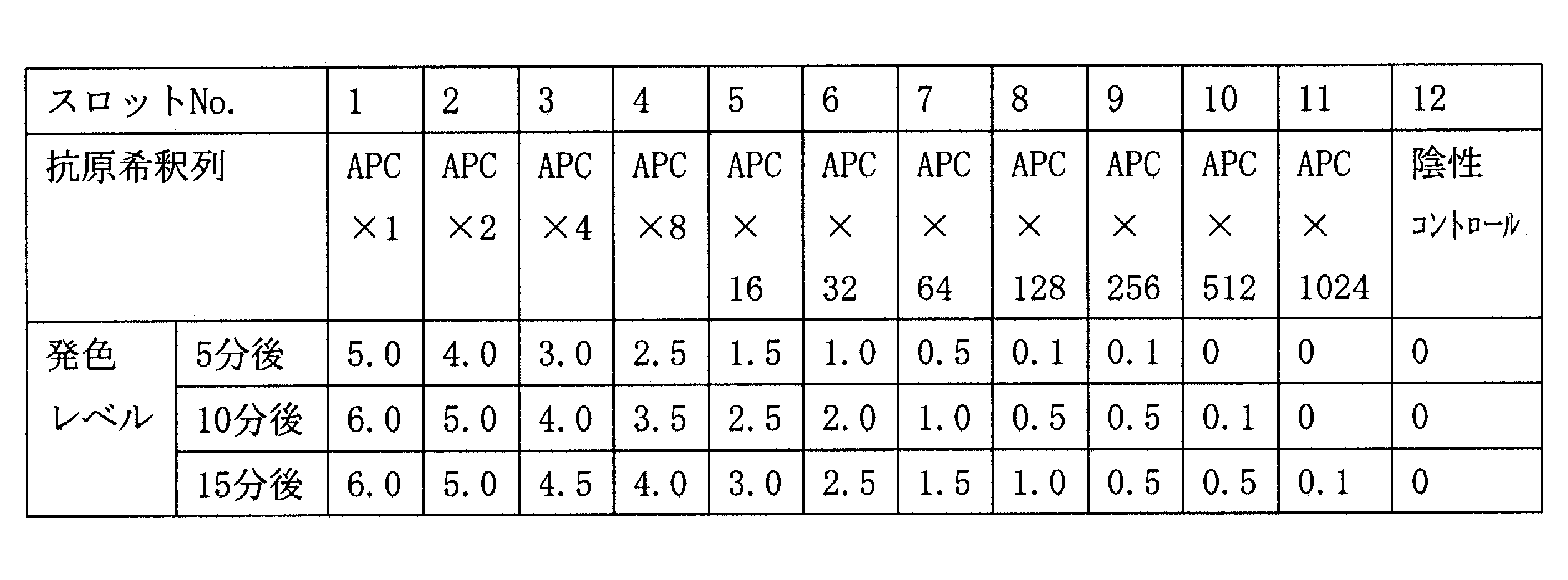
<樹脂粒子の合成>
Aliquat 336[アルドリッチ社製](1.50g)及びポリエチレングリコールメチルエチルエーテルメタクリレート(PEGMA、10.00g)を300gの純水に溶解した後、2-ビニルピリジン(2-VP、49.50g)及びジビニルベンゼン(DVB、0.50g)を加え、窒素気流下において150rpm、30℃で50分間、次いで60℃で30分間撹拌した。撹拌後、18.00gの純水に溶解した2,2-アゾビス(2-メチルプロピオンアミジン)二塩酸塩(AIBA、0.50g)を2分間かけて滴下し、150rpm、60℃で3.5時間撹拌することで、平均粒子径430nmの樹脂粒子を得た。遠心分離(9000rpm、45分間)により沈殿させ、上澄みを除去した後、純水に再度分散させる操作を3回行った後、透析処理により不純物を除去した。その後、濃度調整を行い10wt%の樹脂粒子分散液を得た。
実施例1と同様の操作を行い、樹脂-白金複合体標識抗体分散液を作製した。
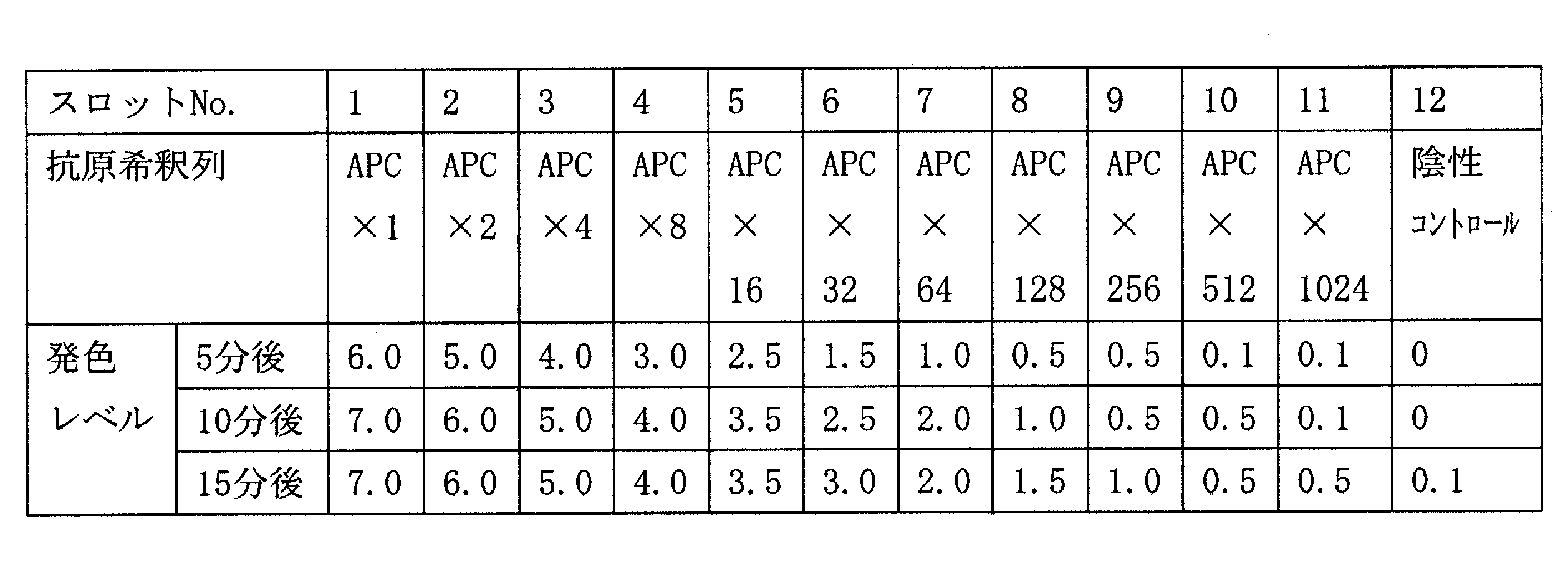
<樹脂粒子の合成>
Aliquat 336[アルドリッチ社製](2.00g)及びポリエチレングリコールメチルエチルエーテルメタクリレート(PEGMA、10.00g)を300gの純水に溶解した後、2-ビニルピリジン(2-VP、48.00g)及びジビニルベンゼン(DVB、2.00g)を加え、窒素気流下において150rpm、30℃で50分間、次いで60℃で30分間撹拌した。撹拌後、18.00gの純水に溶解した2,2-アゾビス(2-メチルプロピオンアミジン)二塩酸塩(AIBA、0.50g)を2分間かけて滴下し、150rpm、60℃で3.5時間撹拌することで、平均粒子径380nmの樹脂粒子を得た。遠心分離(9000rpm、45分間)により沈殿させ、上澄みを除去した後、純水に再度分散させる操作を3回行った後、透析処理により不純物を除去した。その後、濃度調整を行い10wt%の樹脂粒子分散液を得た。
実施例1と同様の操作を行い、樹脂-白金複合体標識抗体分散液を作製した。

<樹脂粒子の合成>
Aliquat 336[アルドリッチ社製](1.00g)及びポリエチレングリコールメチルエチルエーテルメタクリレート(PEGMA、10.00g)を300gの純水に溶解した後、2-ビニルピリジン(2-VP、48.00g)及びジビニルベンゼン(DVB、2.00g)を加え、窒素気流下において150rpm、30℃で50分間、次いで60℃で30分間撹拌した。撹拌後、18.00gの純水に溶解した2,2-アゾビス(2-メチルプロピオンアミジン)二塩酸塩(AIBA、0.50g)を2分間かけて滴下し、150rpm、60℃で3.5時間撹拌することで、平均粒子径420nmの樹脂粒子を得た。遠心分離(9000rpm、45分間)により沈殿させ、上澄みを除去した後、純水に再度分散させる操作を3回行った後、透析処理により不純物を除去した。その後、濃度調整を行い10wt%の樹脂粒子分散液を得た。
実施例1と同様の操作を行い、樹脂-白金複合体標識抗体分散液を作製した。

<樹脂粒子の合成>
Aliquat 336[アルドリッチ社製](5.00g)及びポリエチレングリコールメチルエチルエーテルメタクリレート(PEGMA、10.00g)を389.5gの純水に溶解した後、2-ビニルピリジン(2-VP、48.00g)及びジビニルベンゼン(DVB、2.00g)を加え、窒素気流下において150rpm、30℃で50分間、次いで60℃で30分間撹拌した。撹拌後、50.00gの純水に溶解した2,2-アゾビス(2-メチルプロピオンアミジン)二塩酸塩(AIBA、0.50g)を2分間かけて滴下し、150rpm、60℃で3.5時間撹拌することで、平均粒子径200nmの樹脂粒子を得た。遠心分離(9000rpm、45分間)により沈殿させ、上澄みを除去した後、純水に再度分散させる操作を3回行った後、透析処理により不純物を除去した。その後、濃度調整を行い10wt%の樹脂粒子分散液を得た。
実施例1と同様の操作を行い、樹脂-白金複合体標識抗体分散液を作製した。
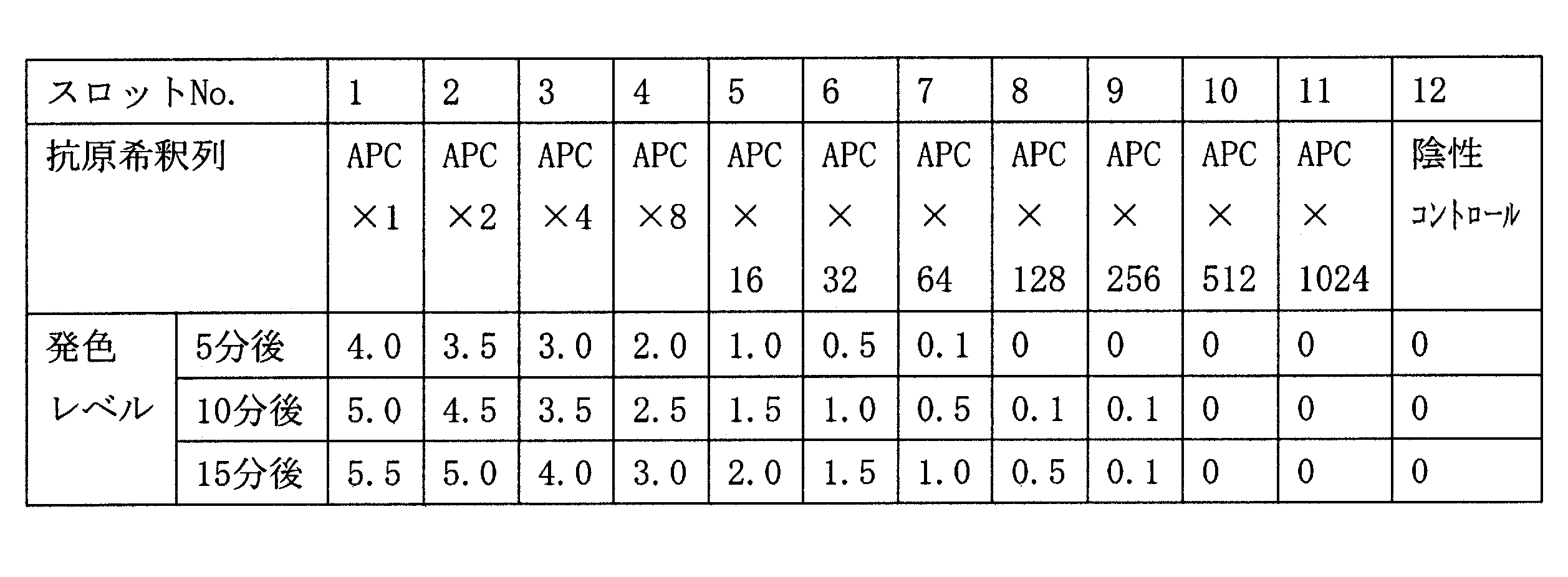
<樹脂粒子の合成>
Aliquat 336[アルドリッチ社製](2.50g)及びポリエチレングリコールメチルエチルエーテルメタクリレート(PEGMA、5.00g)を400gの純水に溶解した後、2-ビニルピリジン(2-VP、24.75g)及びジビニルベンゼン(DVB、0.25g)を加え、窒素気流下において150rpm、30℃で50分間、次いで60℃で30分間撹拌した。撹拌後、22.00gの純水に溶解した2,2-アゾビス(2-メチルプロピオンアミジン)二塩酸塩(AIBA、0.25g)を2分間かけて滴下し、150rpm、60℃で3.5時間撹拌することで、平均粒子径140nmの樹脂粒子を得た。遠心分離(9000rpm、45分間)により沈殿させ、上澄みを除去した後、純水に再度分散させる操作を3回行った後、透析処理により不純物を除去した。その後、濃度調整を行い10wt%の樹脂粒子分散液を得た。
実施例1と同様の操作を行い、樹脂-白金複合体標識抗体分散液を作製した。

<樹脂粒子の合成>
Aliquat 336[アルドリッチ社製](0.25g)及びポリエチレングリコールメチルエチルエーテルメタクリレート(PEGMA、5.00g)を325gの純水に溶解した後、2-ビニルピリジン(2-VP、24.75g)及びジビニルベンゼン(DVB、0.25g)を加え、窒素気流下において150rpm、30℃で50分間、次いで60℃で30分間撹拌した。撹拌後、18.00gの純水に溶解した2,2-アゾビス(2-メチルプロピオンアミジン)二塩酸塩(AIBA、0.25g)を2分間かけて滴下し、150rpm、60℃で3.5時間撹拌することで、平均粒子径260nmの樹脂粒子を得た。遠心分離(9000rpm、45分間)により沈殿させ、上澄みを除去した後、純水に再度分散させる操作を3回行った後、透析処理により不純物を除去した。その後、濃度調整を行い10wt%の樹脂粒子分散液を得た。
実施例1と同様の操作を行い、樹脂-白金複合体標識抗体分散液を作製した。
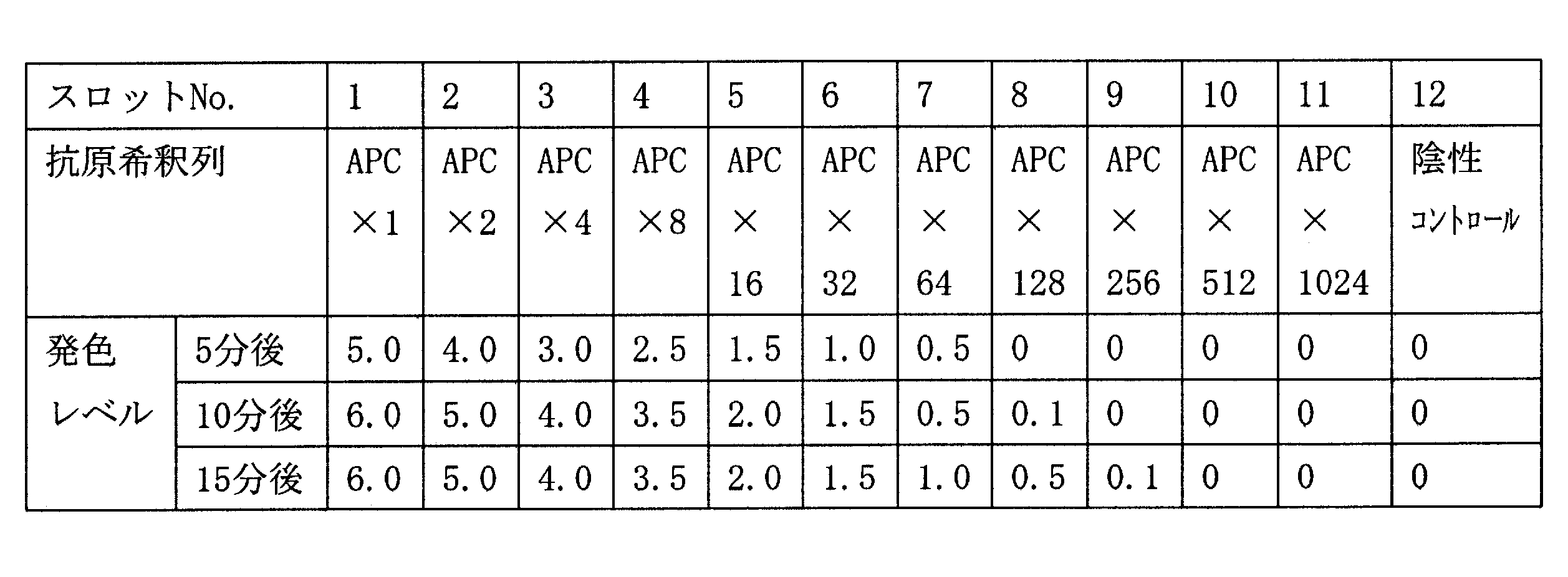
<樹脂粒子の合成>
Aliquat 336[アルドリッチ社製](0.50g)及びポリエチレングリコールメチルエチルエーテルメタクリレート(PEGMA、10.00g)を300gの純水に溶解した後、2-ビニルピリジン(2-VP、49.50g)及びジビニルベンゼン(DVB、0.50g)を加え、窒素気流下において150rpm、30℃で50分間、次いで60℃で30分間撹拌した。撹拌後、18.00gの純水に溶解した2,2-アゾビス(2-メチルプロピオンアミジン)二塩酸塩(AIBA、0.50g)を1分間かけて滴下し、150rpm、60℃で3.5時間撹拌することで、平均粒子径512nmの樹脂粒子を得た。遠心分離(9000rpm、45分間)により沈殿させ、上澄みを除去した後、純水に再度分散させる操作を3回行った後、透析処理により不純物を除去した。その後、濃度調整を行い10wt%の樹脂粒子分散液を得た。
実施例1と同様の操作を行い、樹脂-白金複合体標識抗体分散液を作製した。
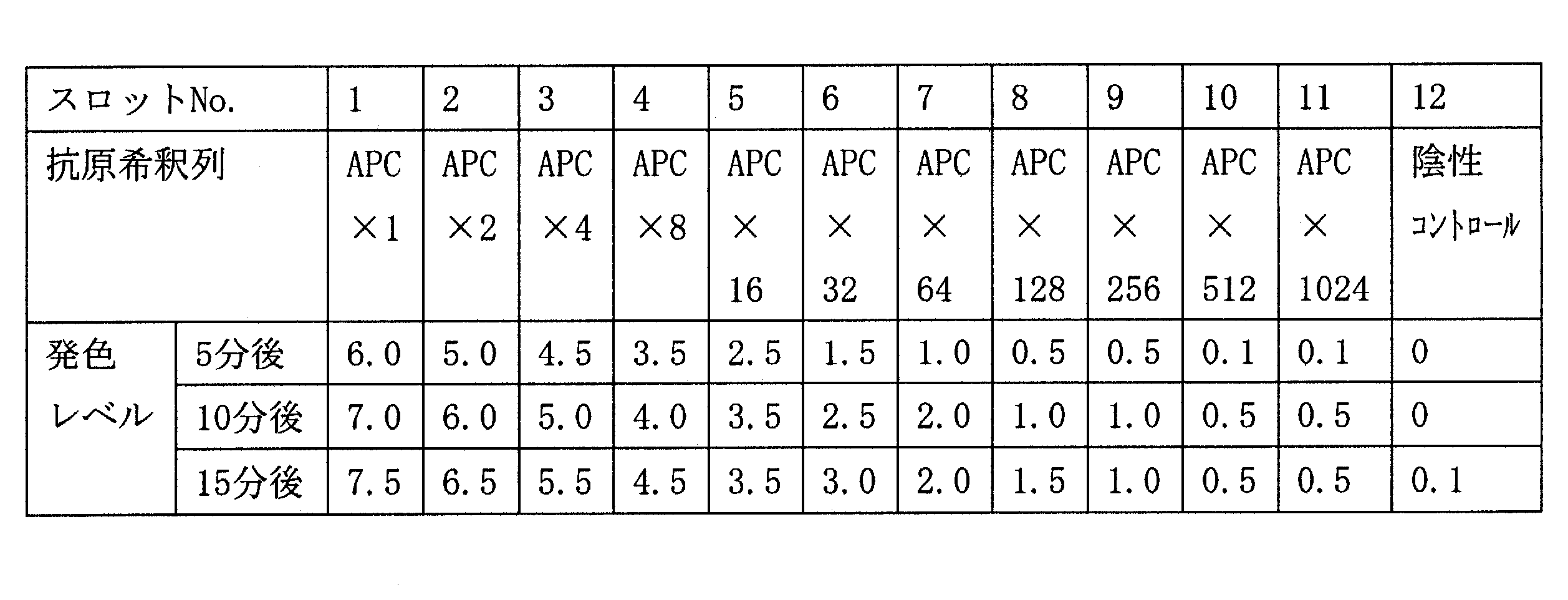
<樹脂粒子の合成>
Aliquat 336[アルドリッチ社製](1.00g)及びポリエチレングリコールメチルエチルエーテルメタクリレート(PEGMA、10.00g)を300gの純水に溶解した後、2-ビニルピリジン(2-VP、48.00g)及びジビニルベンゼン(DVB、2.00g)を加え、窒素気流下において150rpm、30℃で50分間、次いで60℃で30分間撹拌した。撹拌後、18.00gの純水に溶解した2,2-アゾビス(2-メチルプロピオンアミジン)二塩酸塩(AIBA、0.50g)を2分間かけて滴下し、150rpm、60℃で3.5時間撹拌することで、平均粒子径420nmの樹脂粒子を得た。遠心分離(9000rpm、45分間)により沈殿させ、上澄みを除去した後、純水に再度分散させる操作を3回行った後、透析処理により不純物を除去した。その後、濃度調整を行い10wt%の樹脂粒子分散液を得た。
実施例1と同様の操作を行い、樹脂-白金複合体標識抗体分散液を作製した。

<イムノクロマトの評価>
着色ラテックス(メルクミリポア社製、着色Estapor機能性粒子、K1030、平均粒子径;392nm、570nmでの吸光度は0.83、700nmでの吸光度は0.36)1ml(0.1wt%)にインフルエンザ抗体を100μg混合し、室温で約3時間攪拌して着色ラテックスに抗体を結合させた。終濃度が1%となるように牛血清アルブミン溶液を添加し、室温にて2時間攪拌して着色ラテックスをブロックした。12000rpm、4℃で5分間遠心分離を行って回収し、0.2%牛血清アルブミンを含む緩衝液に懸濁して着色ラテックス標識抗体を作製した。
作製した着色ラテックス標識抗体を用いて、下記に示すイムノクロマト法での測定を行って着色ラテックスの性能を評価した。
(評価方法)
評価は、インフルエンザA型評価用モノクロスクリーン(アドテック社製)を用い、5分後、10分後、15分後の発色レベルを比較した。性能評価において、抗原はインフルエンザA型陽性コントロール(APC)の2倍希釈列(1倍~1024倍)を用いた(APC希釈前のウィルスの濃度は5000FFU/ml)。
(評価手順)
96ウェルプレートの各ウェルに、着色ラテックス標識抗体を3μlずつ入れ、APCの2倍希釈列(1倍~1024倍)及び陰性コントロールを、それぞれ100μlを混和した。次に、インフルエンザA型評価用モノクロスクリーンに50μl添加し、5分後、10分後、15分後の発色レベルを評価した。発色レベルは、金コロイド判定用色見本(アドテック社製)を用いて判定した。その結果を以下に示した。

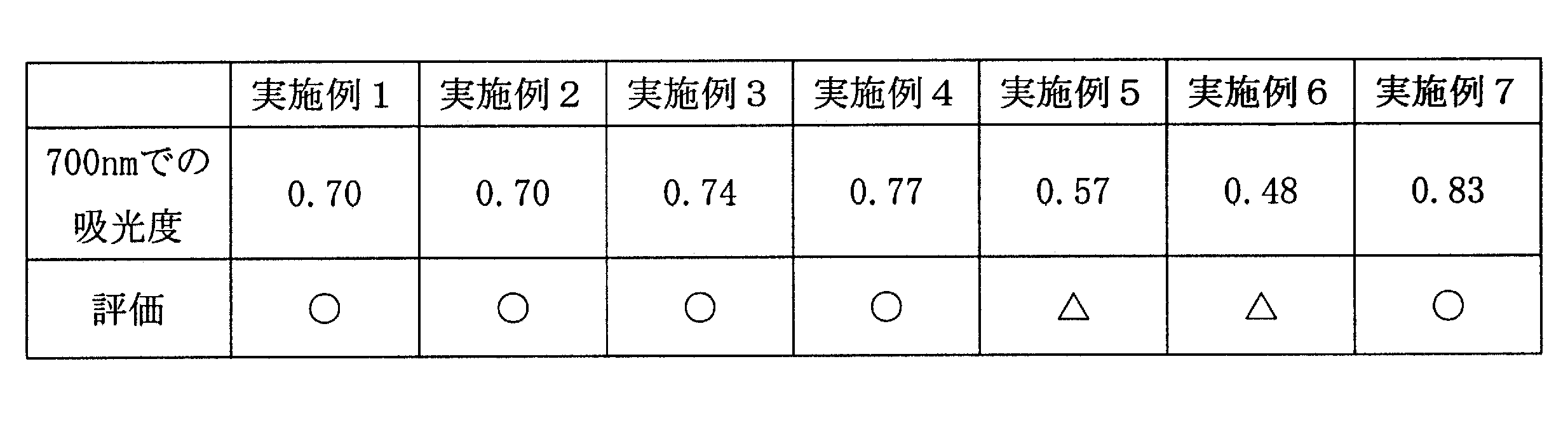

〈金コロイドの合成〉
500ml三つ口丸底フラスコに1mM 塩化金酸水溶液を250ml入れ、加熱還流装置を用い、激しく攪拌しながら沸騰させ、沸騰後38.8mMクエン酸ナトリウム水溶液を25ml添加し、溶液が淡黄色から濃紅色に変化することを確認した。攪拌しながら10分間加熱を続けた後、室温で30分程度攪拌放冷をおこなった。孔径2μmのメンブランフィルターを用いて溶液をろ過し、三角フラスコに移し冷暗所で保存した。作製した金コロイドの平均粒径は12.3nmであった。また、吸光度は上記方法に従って測定した結果、1.32であった。
得られた金コロイド1ml(OD=10)にインフルエンザ抗体を100μg混合し、室温で約3時間攪拌して金コロイドに抗体を結合させた。終濃度が1%となるように牛血清アルブミン溶液を添加し、室温にて2時間攪拌して金コロイド表面をブロックした。12000rpm、4℃で5分間遠心分離を行って回収し、0.2%牛血清アルブミンを含む緩衝液に懸濁して金コロイド標識抗体を作製した。
作製した金コロイド標識抗体を用いて、下記に示すイムノクロマト法での測定を行って金コロイドの性能を評価した。
(評価方法)
評価は、比較例1と同様にして行った。
(評価手順)
96ウェルプレートの各ウェルに、金コロイド標識抗体を3μlずつ入れ、APCの2倍希釈列(1倍~1024倍)及び陰性コントロールを、それぞれ100μlを混和した。次に、インフルエンザA型評価用モノクロスクリーンに50μl添加し、5分後、10分後、15分後の発色レベルを評価した。発色レベルは、金コロイド判定用色見本(アドテック社製)を用いて判定した。その結果を以下に示した。
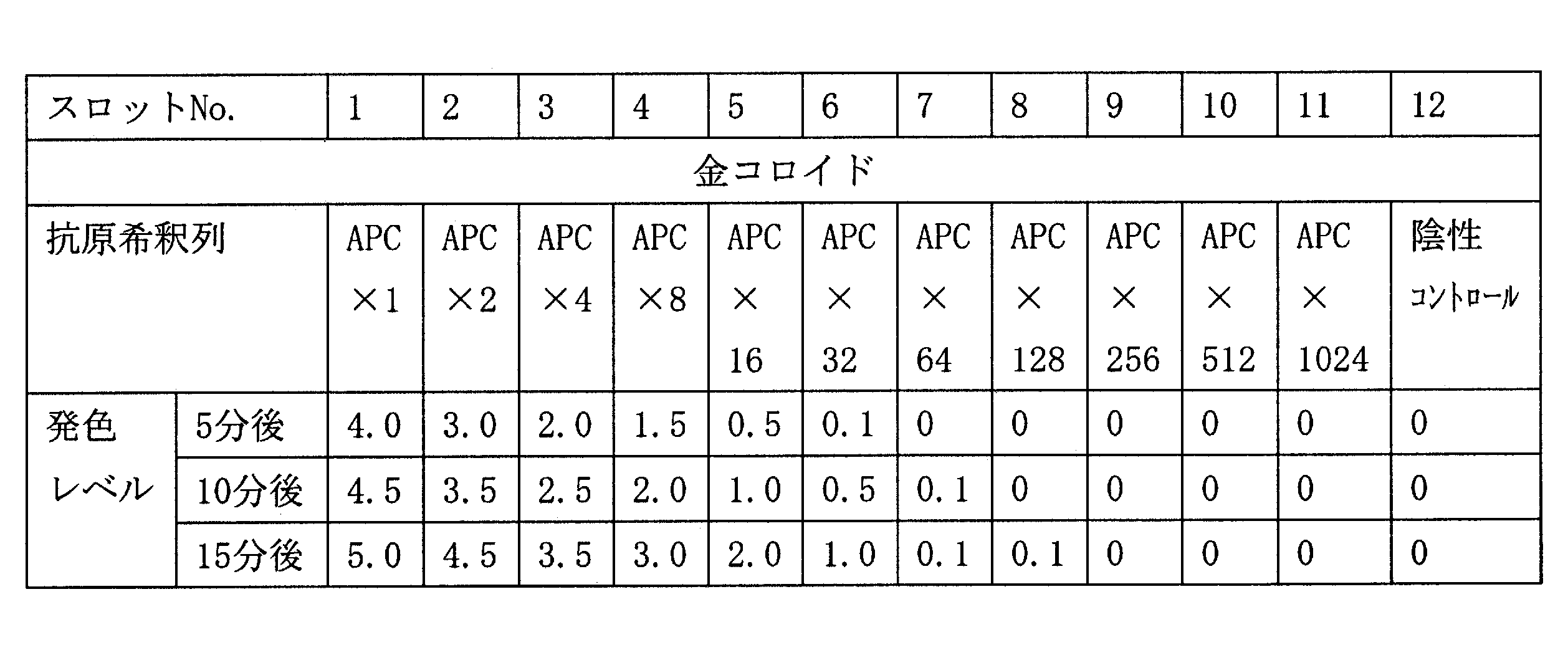
<樹脂粒子の合成>
Aliquat 336[アルドリッチ社製](1.00g)及びポリエチレングリコールメチルエチルエーテルメタクリレート(PEGMA、10.00g)を300gの純水に溶解した後、2-ビニルピリジン(2-VP、48.00g)及びジビニルベンゼン(DVB、2.00g)を加え、窒素気流下において150rpm、30℃で50分間、次いで60℃で30分間撹拌した。撹拌後、18.00gの純水に溶解した2,2-アゾビス(2-メチルプロピオンアミジン)二塩酸塩(AIBA、0.500g)を2分間かけて滴下し、150rpm、60℃で3.5時間撹拌することで、平均粒子径420nmの樹脂粒子を得た。遠心分離(9000rpm、60分間)により沈殿させ、上澄みを除去した後、純水に再度分散させる操作を3回行った後、透析処理により不純物を除去した。その後、濃度調整を行い10wt%の樹脂粒子分散液を得た。
得られた樹脂-金複合体分散液1ml(0.1wt%)にインフルエンザ抗体を100μg混合し、室温で約3時間攪拌して樹脂-金複合体に抗体を結合させた。終濃度が1%となるように牛血清アルブミン溶液を添加し、室温にて2時間攪拌して樹脂-金複合体表面をブロックした。12000rpm、4℃で5分間遠心分離を行って回収し、0.2%牛血清アルブミンを含む緩衝液に懸濁して樹脂-金複合体標識抗体分散液を作製した。

<樹脂粒子の合成>
Aliquat 336[アルドリッチ社製](2.00g)及びポリエチレングリコールメチルエチルエーテルメタクリレート(PEGMA、10.00g)を300gの純水に溶解した後、2-ビニルピリジン(2-VP、48.00g)及びジビニルベンゼン(DVB、2.00g)を加え、窒素気流下において150rpm、30℃で50分間、次いで60℃で30分間撹拌した。撹拌後、18.00gの純水に溶解した2,2-アゾビス(2-メチルプロピオンアミジン)二塩酸塩(AIBA、0.500g)を2分間かけて滴下し、150rpm、60℃で3.5時間撹拌することで、平均粒子径380nmの樹脂粒子を得た。遠心分離(9000rpm、60分間)により沈殿させ、上澄みを除去した後、純水に再度分散させる操作を3回行った後、透析処理により不純物を除去した。その後、濃度調整を行い10wt%の樹脂粒子分散液を得た。
比較例3と同様の操作を行い、樹脂-金複合体標識抗体分散液を作製した。
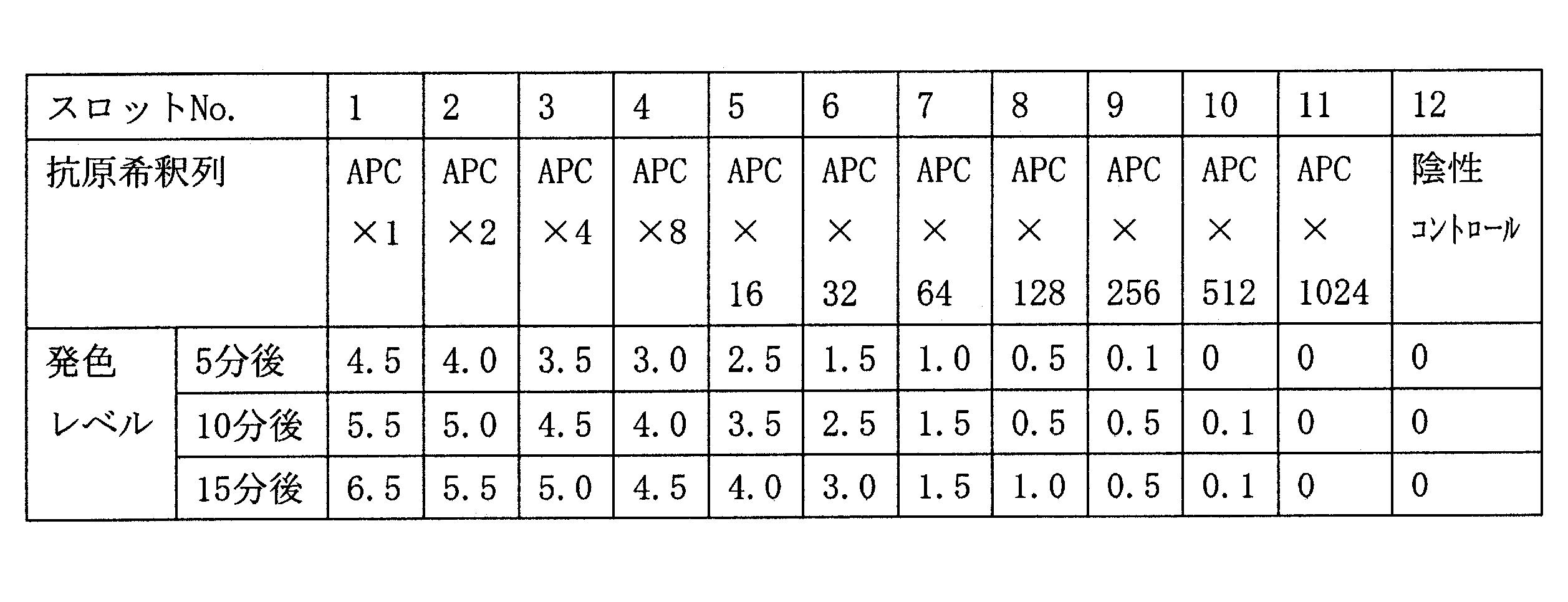
<樹脂粒子の合成>
Aliquat 336[アルドリッチ社製](3.00g)及びポリエチレングリコールメチルエチルエーテルメタクリレート(PEGMA、10.00g)を300gの純水に溶解した後、2-ビニルピリジン(2-VP、49.50g)及びジビニルベンゼン(DVB、0.50g)を加え、窒素気流下において150rpm、30℃で50分間、次いで60℃で30分間撹拌した。撹拌後、18.00gの純水に溶解した2,2-アゾビス(2-メチルプロピオンアミジン)二塩酸塩(AIBA、0.250g)を2分間かけて滴下し、150rpm、60℃で3.5時間撹拌することで、平均粒子径370nmの樹脂粒子を得た。遠心分離(9000rpm、60分間)により沈殿させ、上澄みを除去した後、純水に再度分散させる操作を3回行った後、透析処理により不純物を除去した。その後、濃度調整を行い10wt%の樹脂粒子分散液を得た。
比較例3と同様の操作を行い、樹脂-金複合体標識抗体分散液を作製した。

<樹脂粒子の合成>
450gの純水に、2-ビニルピリジン(2-VP、9.945g)及びジビニルベンゼン(DVB、0.097g)を加え、窒素気流下において150rpm、30℃で50分間、次いで60℃で30分間撹拌した。撹拌後、10.00gの純水に溶解した2,2-アゾビス(2-メチルプロピオンアミジン)二塩酸塩(AIBA、0.100g)を2分間かけて滴下し、150rpm、60℃で3.5時間撹拌することで、平均粒子径290nmの樹脂粒子を得た。遠心分離(9000rpm、60分間)により沈殿させ、上澄みを除去した後、純水に再度分散させる操作を3回行った後、透析処理により不純物を除去した。その後、濃度調整を行い10wt%の樹脂粒子分散液を得た。
比較例3と同様の操作を行い、樹脂-金複合体標識抗体分散液を作製した。

<樹脂粒子の合成>
450gの純水に2-ビニルピリジン(2-VP、9.90g)及びジビニルベンゼン(DVB、0.10g)を加え、窒素気流下において150rpm、30℃で50分間、次いで60℃で30分間撹拌した。撹拌後、10.00gの純水に溶解した2,2-アゾビス(2-メチルプロピオンアミジン)二塩酸塩(AIBA、0.100g)を2分間かけて滴下し、150rpm、60℃で3.5時間撹拌することで、平均粒子径110nmの樹脂粒子を得た。遠心分離(9000rpm、120分間)により沈殿させ、上澄みを除去した後、純水に再度分散させる操作を3回行った後、透析処理により不純物を除去した。その後、濃度調整を行い10wt%の樹脂粒子分散液を得た。
比較例3と同様の操作を行い、樹脂-金複合体標識抗体分散液を作製した。


Aliquat 336[アルドリッチ社製](1.00g)及びポリエチレングリコールメチルエチルエーテルメタクリレート(PEGMA、10.00g)を300gの純水に溶解した後、4-ビニルピリジン(4-VP、48.00g)及びジビニルベンゼン(DVB、2.00g)を加え、窒素気流下において150rpm、30℃で50分間、次いで60℃で30分間撹拌した。撹拌後、18.00gの純水に溶解した2,2-アゾビス(2-メチルプロピオンアミジン)二塩酸塩(AIBA、0.500g)を2分間かけて滴下し、150rpm、60℃で3.5時間撹拌することで、平均粒子径438nmの樹脂粒子を得た。遠心分離(9000rpm、45分間)により沈殿させ、上澄みを除去した後、水に再度分散させる操作を3回行った後、透析処理により不純物を除去した。その後、濃度調整を行い10wt%の樹脂粒子分散液を得た。
Aliquat 336[アルドリッチ社製](1.00g)及びポリエチレングリコールメチルエチルエーテルメタクリレート(PEGMA、10.00g)を300gの純水に溶解した後、3-ビニルピリジン(3-VP、48.00g)及びジビニルベンゼン(DVB、2.00g)を加え、窒素気流下において150rpm、30℃で50分間、次いで60℃で30分間撹拌した。撹拌後、18.00gの純水に溶解した2,2-アゾビス(2-メチルプロピオンアミジン)二塩酸塩(AIBA、0.500g)を2分間かけて滴下し、150rpm、60℃で3.5時間撹拌することで、平均粒子径429nmの樹脂粒子を得た。遠心分離(9000rpm、45分間)により沈殿させ、上澄みを除去した後、純水に再度分散させる操作を3回行った後、透析処理により不純物を除去した。その後、濃度調整を行い10wt%の樹脂粒子分散液を得た。
2-(ジイソプロピルアミノ)エチルメタクリレート(DPA、10.3g)、ポリ(プロピレングリコール)ジアクリレート(0.2g)とポリエチレングリコールメチルエチルエーテルメタクリレート(PEGMA、2.0g)を85gの純水に溶解した後、窒素気流下において150rpm、30℃で50分間、次いで70℃で30分間撹拌した。撹拌後、2.00gの純水に溶解したペルオキソ二硫酸アンモニウム(ASP、0.10g)を2分間かけて滴下し、150rpm、70℃で3.5時間撹拌することで、平均粒子径338nmの樹脂粒子を得た。遠心分離(9000rpm、45分間)により沈殿させ、上澄みを除去した後、純水に再度分散させる操作を3回行った後、透析処理により不純物を除去した。その後、濃度調整を行い10wt%の樹脂粒子分散液を得た。
実施例9で作製した1wt%樹脂-白金複合体分散液(45ml)に、400mM塩化白金酸水溶液(36ml)を加え、60rpm、30℃で3時間撹拌後、室温で24時間放置した。その後、遠心分離(2500rpm、30分間)により樹脂粒子を沈殿させ、上澄みを除去する作業を3回繰り返すことで余分な塩化白金酸を除去した。その後、濃度調整を行い、10wt%の白金イオンを吸着した樹脂-白金複合体分散液を調製した。
Aliquat 336[アルドリッチ社製](0.50g)及びポリエチレングリコールメチルエチルエーテルメタクリレート(PEGMA、10.00g)を300gの純水に溶解した後、2-ビニルピリジン(2-VP、48.00g)及びジビニルベンゼン(DVB、2.00g)を加え、窒素気流下において150rpm、30℃で50分間、次いで60℃で30分間撹拌した。撹拌後、18.00gの純水に溶解した2,2-アゾビス(2-メチルプロピオンアミジン)二塩酸塩(AIBA、0.500g)を0.5分間かけて滴下し、150rpm、60℃で3.5時間撹拌することで、平均粒子径613nmの樹脂粒子を得た。遠心分離(9000rpm、40分間)により沈殿させ、上澄みを除去した後、純水に再度分散させる操作を3回行った後、透析処理により不純物を除去した。その後、濃度調整を行い10wt%の樹脂粒子分散液を得た。
<樹脂粒子の合成>
Aliquat 336[アルドリッチ社製](5.00g)及びポリエチレングリコールメチルエチルエーテルメタクリレート(PEGMA、10.00g)を389.5gの純水に溶解した後、2-ビニルピリジン(2-VP、48.00g)及びジビニルベンゼン(DVB、2.00g)を加え、窒素気流下において150rpm、30℃で50分間、次いで60℃で30分間撹拌した。撹拌後、50.00gの純水に溶解した2,2-アゾビス(2-メチルプロピオンアミジン)二塩酸塩(AIBA、0.500g)を2分間かけて滴下し、150rpm、60℃で3.5時間撹拌することで、平均粒子径200nmの樹脂粒子を得た。遠心分離(9000rpm、60分間)により沈殿させ、上澄みを除去した後、純水に再度分散させる操作を3回行った後、透析処理により不純物を除去した。その後、濃度調整を行い10wt%の樹脂粒子分散液を得た。
<樹脂粒子の合成>
Aliquat 336[アルドリッチ社製](5.00g)及びポリエチレングリコールメチルエチルエーテルメタクリレート(PEGMA、10.00g)を389.5gの純水に溶解した後、2-ビニルピリジン(2-VP、48.00g)及びジビニルベンゼン(DVB、2.00g)を加え、窒素気流下において150rpm、30℃で50分間、次いで60℃で30分間撹拌した。撹拌後、50.00gの純水に溶解した2,2-アゾビス(2-メチルプロピオンアミジン)二塩酸塩(AIBA、0.500g)を2分間かけて滴下し、150rpm、60℃で3.5時間撹拌することで、平均粒子径200nmの樹脂粒子を得た。遠心分離(9000rpm、60分間)により沈殿させ、上澄みを除去した後、純水に再度分散させる操作を3回行った後、透析処理により不純物を除去した。その後、濃度調整を行い10wt%の樹脂粒子分散液を得た。
実施例3で得た樹脂-白金複合体に対し、上記白金イオンを吸着させる工程、及び、ジメチルアミンボラン水溶液による還元工程をさらに1回(通算2回)行うことによって1wt%の樹脂-白金複合体分散液を得た。このようにして作製した樹脂-白金複合体分散液の吸光度を上記方法に従って測定した結果、1.07であった。また、形成した白金粒子の平均粒子径は9nm、白金の担持量は51.0wt%、樹脂-白金複合体の平均粒子径は399nmであった。
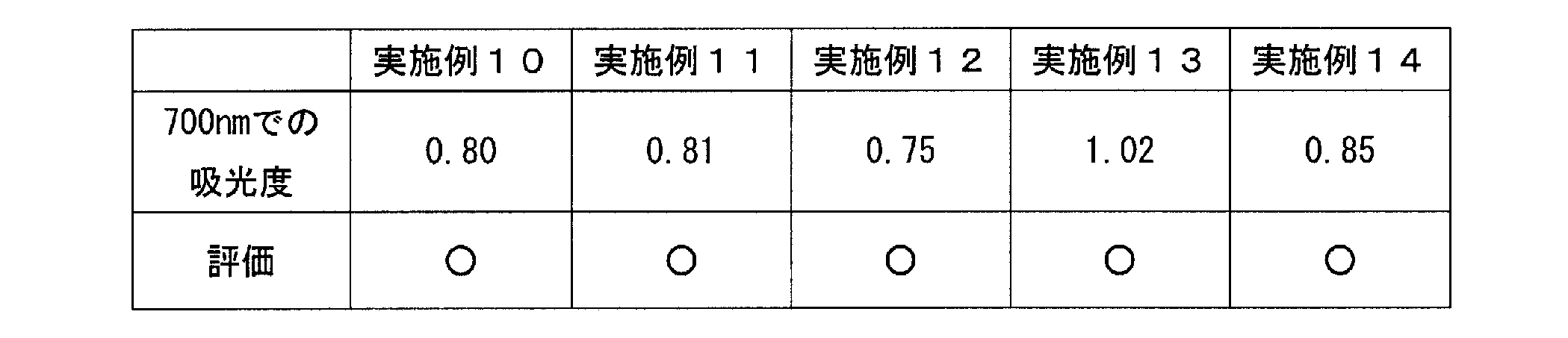
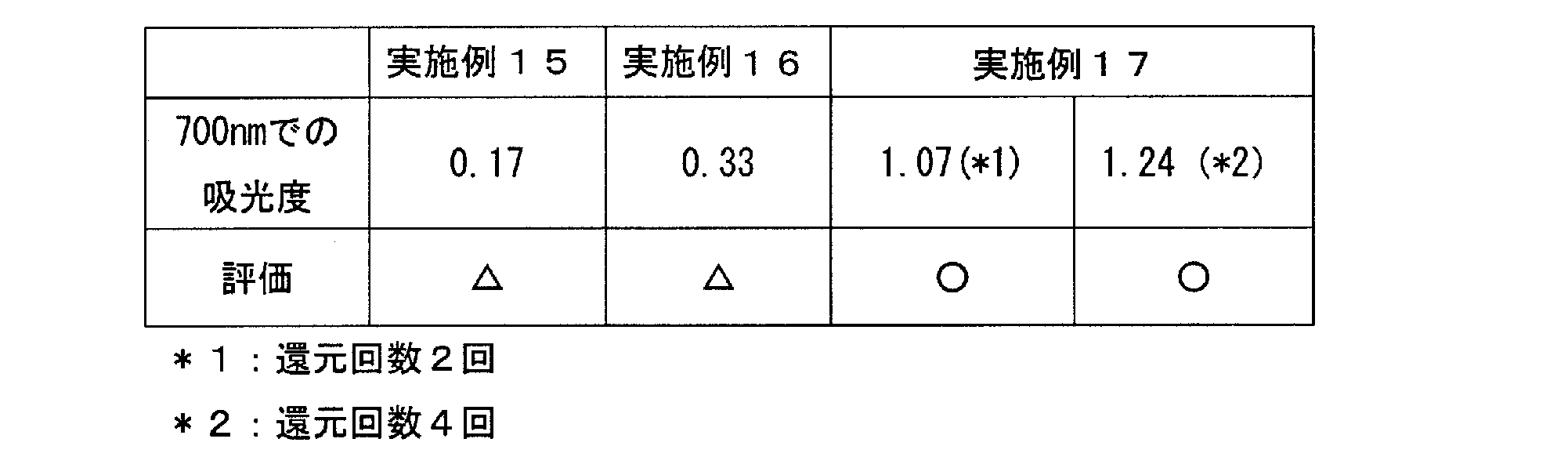
[作製例1]
<樹脂粒子の合成>
Aliquat 336[アルドリッチ社製](1.00g)及びポリエチレングリコールメチルエチルエーテルメタクリレート(PEGMA、2.00g)を80gの純水に溶解した後、2-ビニルピリジン(2-VP、9.90g)及びジビニルベンゼン(DVB、0.100g)を加え、窒素気流下において250rpm、60℃で30分間撹拌した。撹拌後、9.00gの純水に溶解した2,2-アゾビス(2-メチルプロピオンアミジン)二塩酸塩(AIBA、0.100g)を5分間かけて滴下し、250rpm、60℃で6時間撹拌することで、平均粒子径0.36μmの樹脂粒子を得た。樹脂粒子を遠心分離(9000rpm、10分間)により沈殿させ、上澄みを除去した後、純水に再度分散させ、2.1wt%の樹脂粒子分散液を得た。
2.1wt%の樹脂粒子分散液(7.62g)に30mM塩化白金酸水溶液(42.7g)を加え、室温で24時間放置した。その後、遠心分離(3000rpm、10分間)により樹脂粒子を沈殿させ、上澄みを除去することで余分な塩化白金酸を除去した後、16gの純水に再度分散させ、白金イオン吸着樹脂粒子分散液を調製した。白金イオン吸着樹脂粒子分散液(16g)を3.3mMのジメチルアミンボラン水溶液(640ml)に2分間かけて滴下した後、3℃で1時間撹拌し、さらに室温で3時間撹拌することで、平均粒子径0.37μmの樹脂-白金複合体を得た。この樹脂-白金複合体を遠心分離(3000rpm、120分間)により沈殿させ、上澄みを除去した後、適量の純水を加えて再度分散させ、限外濾過膜により精製することで、1wt%の樹脂-白金複合体分散液を得た。この樹脂-白金複合体分散液中の樹脂-白金複合体の吸光度は上記方法に従って測定した結果、0.70であった。また、前記樹脂-白金複合体分散液中の樹脂-白金複合体における白金粒子の平均粒子径は3nm、白金の担持量は33.3wt%であった。この樹脂-白金複合体において、白金粒子は、樹脂粒子に完全に内包された内包白金粒子と、樹脂粒子内に埋包された部位及び樹脂粒子外に露出した部位を有する一部露出白金粒子と、樹脂粒子の表面に吸着している表面吸着白金粒子と、を含んでおり、少なくとも一部の白金粒子が、樹脂粒子の表層部において三次元的に分布していた。
<樹脂-金複合体の合成>
作製例1で合成した2.1wt%の樹脂粒子分散液(19.09g)に30mM塩化金酸水溶液(106.6g)を加え、室温で24時間放置した。その後、遠心分離(3000rpm、10分間)により樹脂粒子を沈殿させ、上澄みを除去することで余分な塩化金酸を除去した後、40gの純水に再度分散させ、金イオン吸着樹脂粒子分散液を調製した。金イオン吸着樹脂粒子分散液(20g)を3.3mMのジメチルアミンボラン水溶液(600ml)に4分間かけて滴下した後、8℃で1時間撹拌し、さらに室温で5時間撹拌することで、平均粒子径0.38μmの樹脂-金複合体を得た。樹脂-金複合体を遠心分離(3000rpm、120分間)により沈殿させ、上澄みを除去した後、適量の純水を加えて再度分散させ、限外濾過膜により精製することで、1wt%の樹脂-金複合体分散液を得た。この樹脂-金複合体分散液中の樹脂-金複合体の吸光度は上記方法に従って測定した結果、1.0であった。また、樹脂-金複合体における金粒子の平均粒子径は22.0nm、金の担持量は49.1wt%であった。この樹脂-金複合体において、金粒子は、樹脂粒子に完全に内包された内包金粒子と、樹脂粒子内に埋包された部位及び樹脂粒子外に露出した部位を有する一部露出金粒子と、樹脂粒子の表面に吸着している表面吸着金粒子と、を含んでおり、少なくとも一部の金粒子が、樹脂粒子の表層部において三次元的に分布していた。
試験例、参考試験例では以下の試薬等を使用した。
抗インフルエンザA型モノクローナル抗体(7.15mg/mL/PBS):アドテック株式会社製
結合用緩衝液a:100mM ホウ酸溶液をNaOHでpH≒8.5に調整した。
結合用緩衝液b:100mM ホウ酸溶液をNaOHでpH≒7.5に調整した。
ブロック用緩衝液a:1重量%牛血清アルブミン溶液をHClでpH≒8.5に調整した。
ブロック用緩衝液b:1重量%牛血清アルブミン溶液をHClでpH≒9.5に調整した。
洗浄用緩衝液:5mMトリス溶液をHClでpH≒8.5に調整した。
保存用緩衝液:洗浄用緩衝液に、スクロースを10重量%濃度になるように添加した。
インフルエンザA型陽性コントロール(APC):インフルエンザA型ウィルス不活化抗原(アドテック株式会社製)を、検体処理液(アドテック株式会社製)を用いて100倍希釈して調製した。APCの抗原濃度は、5000FFU/mlに相当する。
陰性コントロール:検体処理液(アドテック株式会社製)
PtNCPビーズ:作製例1で得た樹脂-白金属複合体(1重量%;平均粒子径370nm)
AuNCPビーズ:作製例2で得た樹脂-金複合体(1重量%;平均粒子径380nm)
(結合工程)
マイクロチューブ[アイビス(登録商標;アズワン社製)2mL]に、樹脂-金属複合体としてPtNCPビーズ0.1mLを投入し、結合用緩衝液a0.9mLを添加した。転倒混和によって十分に混合した後、抗インフルエンザA型モノクローナル抗体100μgを添加し、室温で3時間かけて転倒撹拌を行い、樹脂-白金複合体で標識した抗インフルエンザA型モノクローナル抗体を含む標識抗体含有液A-1を得た。
次に、標識抗体含有液A-1を氷冷後、12000rpmで5分間かけて遠心分離を行い、上澄みを除去した後、固形分残渣にブロック用緩衝液a1mLを添加し、10~20秒間かけて超音波分散処理を行い、さらに、室温で2時間かけて転倒撹拌を行い、標識抗体含有液B-1を得た。
次に、標識抗体含有液B-1を氷冷後、12000rpmで5分間かけて遠心分離を行い、上澄みを除去した後、固形分残渣に洗浄用緩衝液1mLを添加し、10~20秒間かけて超音波分散処理を行った。この操作を3回繰り返し、洗浄処理とした。
次に、氷冷後、12000rpmで5分間かけて遠心分離を行い、上澄みを除去した後、固形分残渣に保存用緩衝液1mLを添加し、10~20秒間かけて超音波分散処理を行うことによって、標識抗体含有液C-1を得た。
96ウェルプレートの12ウェルに、標識抗体含有液C-1を3μLずつ入れ、APCの2倍希釈列(1倍~1024倍希釈、それぞれAPC×1~APC×1024と表す)及び陰性コントロールを、それぞれ100μLを混和した。次に、インフルエンザA型評価用モノクロスクリーンに50μL添加し、5分後、10分後、15分後の発色レベルを評価した。その結果を表22に示した。なお、表22における数値が大きい程、発色レベルが高い(発色が強い)ことを意味する。
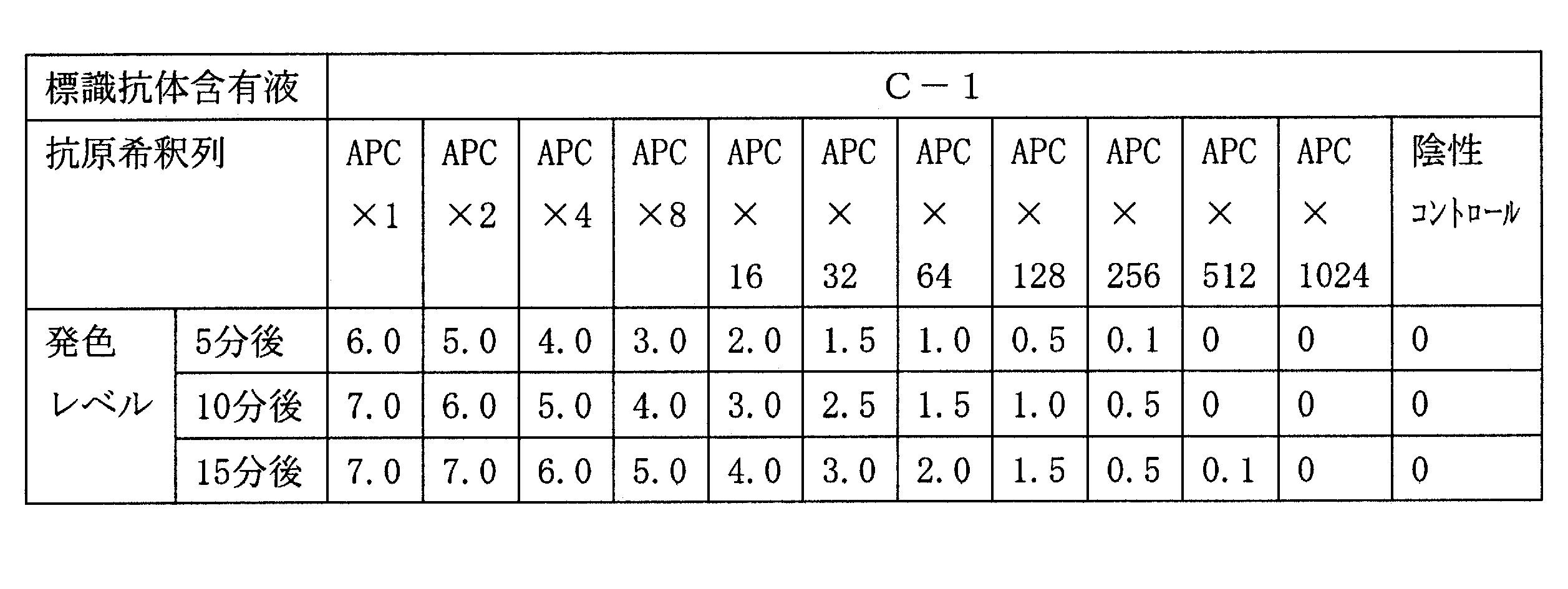
試験例1の結合工程で、PtNCPビーズの代わりにAuNCPビーズを用い、結合用緩衝液aの代わりに結合用緩衝液bを用いた場合、樹脂-金複合体が凝集してしまうため、標識抗体含有液を得ることが困難であった。
試験例1の結合工程で、PtNCPビーズの代わりにAuNCPビーズを用いた場合、樹脂-金複合体が凝集してしまうため、標識抗体含有液を得ることが困難であった。
試験例1の結合工程で、PtNCPビーズの代わりにAuNCPビーズを用い、ブロック工程でブロック用緩衝液aの代わりにブロック用緩衝液bを用いたところ、樹脂-金複合体が凝集してしまうため、標識抗体含有液を得ることが困難であった。
Claims (19)
- 樹脂粒子と、
前記樹脂粒子よりも相対的に小さな複数の白金粒子と、
を備え、
複数の前記白金粒子が、前記樹脂粒子に固定化されている、樹脂-白金複合体。 - 前記白金粒子の中の少なくとも一部の粒子が、前記樹脂粒子の表層部において三次元的に分布している請求項1に記載の樹脂-白金複合体。
- 複数の前記白金粒子の60wt%~100wt%が、前記表層部に存在する請求項2に記載の樹脂-白金複合体。
- 前記白金粒子は、前記樹脂粒子の径方向に重なり合うことなく、該樹脂粒子の表面に固定されている請求項1に記載の樹脂-白金複合体。
- 前記白金粒子の平均粒子径が1~80nmの範囲内である、請求項1に記載の樹脂-白金複合体。
- 平均粒子径が50~1000nmの範囲内である、請求項5に記載の樹脂-白金複合体。
- 前記白金粒子の平均粒子径が1~50nmの範囲内である、請求項1に記載の樹脂-白金複合体。
- 前記白金粒子の平均粒子径が1~30nmの範囲内である、請求項1に記載の樹脂-白金複合体。
- 前記白金粒子の平均粒子径が1~15nmの範囲内である、請求項1に記載の樹脂-白金複合体。
- 平均粒子径が100~600nmの範囲内である、請求項7に記載の樹脂-白金複合体。
- 前記白金粒子の担持量が樹脂-白金複合体の重量に対して5wt%~70wt%の範囲内である、請求項1に記載の樹脂-白金複合体。
- 前記樹脂粒子が、白金イオンを吸着することが可能な置換基を構造に有するポリマー粒子である、請求項1に記載の樹脂-白金複合体。
- 請求項1に記載の樹脂-白金複合体を備えた標識物質。
- 前記樹脂-白金複合体の表面に、抗原または抗体を吸着させて使用するものである請求項13に記載の標識物質。
- 請求項13に記載の標識物質を用いる、免疫学的測定法。
- 請求項1に記載の樹脂-白金複合体を備えた免疫学的測定用試薬。
- 試料中に含まれるアナライトを検出又は定量するアナライトの測定方法であって、
メンブレン、及び当該メンブレンに前記アナライトと特異的に結合する捕捉リガンドが固定されてなる判定部を含むラテラルフロー型クロマト用テストストリップを用い、下記工程(I)~(III);
工程(I):試料に含まれる前記アナライトと、該アナライトに特異的に結合する抗体を、請求項1に記載の樹脂-白金複合体で標識した標識抗体と、を接触させる工程、
工程(II):前記判定部にて、工程(I)において形成された、アナライトと標識抗体とを含む複合体を、捕捉リガンドに接触させる工程、
工程(III):前記樹脂-白金複合体の局在型表面プラズモン共鳴及び、電子遷移による光エネルギー吸収に由来する発色強度を測定する工程、
を含む工程を行うことを特徴とするアナライトの測定方法。 - ラテラルフロー型クロマト用テストストリップを用いて、試料中に含まれるアナライトを検出又は定量するためのアナライト測定用キットであって、
メンブレン、及び当該メンブレンに、前記アナライトと特異的に結合する捕捉リガンドが固定されてなる判定部を含むラテラルフロー型クロマト用テストストリップと、
前記アナライトに特異的に結合する抗体を、請求項1に記載の樹脂-白金複合体で標識した標識抗体を含む検出試薬と、
を含むアナライトを検出又は定量するためのアナライト測定用キット。 - 試料中に含まれるアナライトを検出又は定量するためのラテラルフロー型クロマト用テストストリップであって、
メンブレンと、
前記メンブレンに、前記試料が展開する方向において、前記アナライトと特異的に結合する捕捉リガンドが固定されてなる判定部と、
当該判定部よりも上流側に、前記アナライトに特異的に結合する抗体を請求項1に記載の樹脂-白金複合体で標識した標識抗体が含まれる反応部と、
を含むラテラルフロー型クロマト用テストストリップ。
Priority Applications (8)
| Application Number | Priority Date | Filing Date | Title |
|---|---|---|---|
| EP21165657.4A EP3869197B1 (en) | 2015-07-11 | 2016-07-07 | Resin-platinum composite and usage thereof |
| US15/743,277 US11215611B2 (en) | 2015-07-11 | 2016-07-07 | Resin-platinum composite and usage thereof |
| CN201680039714.0A CN107850595B (zh) | 2015-07-11 | 2016-07-07 | 树脂-铂复合体及其利用 |
| EP16824371.5A EP3321684B1 (en) | 2015-07-11 | 2016-07-07 | Resin-platinum complex and usage thereof |
| KR1020187000688A KR102128721B1 (ko) | 2015-07-11 | 2016-07-07 | 수지-백금 복합체 및 그 이용 |
| CN201910963131.2A CN110542761B (zh) | 2015-07-11 | 2016-07-07 | 树脂-铂复合体及其利用 |
| JP2017528636A JP6526810B2 (ja) | 2015-07-11 | 2016-07-07 | 樹脂−白金複合体及びその利用 |
| KR1020207018096A KR102331499B1 (ko) | 2015-07-11 | 2016-07-07 | 수지-백금 복합체 및 그 이용 |
Applications Claiming Priority (2)
| Application Number | Priority Date | Filing Date | Title |
|---|---|---|---|
| JP2015139269 | 2015-07-11 | ||
| JP2015-139269 | 2015-07-11 |
Publications (1)
| Publication Number | Publication Date |
|---|---|
| WO2017010391A1 true WO2017010391A1 (ja) | 2017-01-19 |
Family
ID=57757764
Family Applications (1)
| Application Number | Title | Priority Date | Filing Date |
|---|---|---|---|
| PCT/JP2016/070082 Ceased WO2017010391A1 (ja) | 2015-07-11 | 2016-07-07 | 樹脂-白金複合体及びその利用 |
Country Status (7)
| Country | Link |
|---|---|
| US (1) | US11215611B2 (ja) |
| EP (2) | EP3869197B1 (ja) |
| JP (2) | JP6526810B2 (ja) |
| KR (2) | KR102128721B1 (ja) |
| CN (2) | CN107850595B (ja) |
| TW (2) | TWI724639B (ja) |
| WO (1) | WO2017010391A1 (ja) |
Cited By (5)
| Publication number | Priority date | Publication date | Assignee | Title |
|---|---|---|---|---|
| WO2018123952A1 (ja) * | 2016-12-28 | 2018-07-05 | 新日鉄住金化学株式会社 | 金属-樹脂複合体及びその利用 |
| JP2018169373A (ja) * | 2017-03-30 | 2018-11-01 | 新日鉄住金化学株式会社 | 免疫測定方法、免疫測定用キット及びラテラルフロー型クロマトテストストリップ |
| JP2019210219A (ja) * | 2018-05-31 | 2019-12-12 | 日鉄ケミカル&マテリアル株式会社 | 抗腫瘍剤、がんの治療及び/又は予防のための医薬組成物 |
| JP2023140980A (ja) * | 2022-03-23 | 2023-10-05 | 日鉄ケミカル&マテリアル株式会社 | 標識抗体の製造方法、標識抗体及び免疫学的測定法 |
| WO2024247900A1 (ja) | 2023-05-31 | 2024-12-05 | 日鉄ケミカル&マテリアル株式会社 | 標識物質、免疫学的測定法、免疫学的測定用試薬、アナライトの測定方法、アナライト測定用キット、及び、ラテラルフロー型クロマト用テストストリップ |
Families Citing this family (7)
| Publication number | Priority date | Publication date | Assignee | Title |
|---|---|---|---|---|
| WO2016002742A1 (ja) * | 2014-07-01 | 2016-01-07 | 新日鉄住金化学株式会社 | 樹脂-金属複合体、標識物質、免疫学的測定法、免疫学的測定用試薬、アナライトの測定方法、アナライト測定用キット、及び、ラテラルフロー型クロマト用テストストリップ |
| EP3644059B1 (en) * | 2014-07-01 | 2025-06-11 | NIPPON STEEL Chemical & Material Co., Ltd. | Marker, immunoassay method, immunoassay reagent, method for assaying analyte, analyte measurement kit, and lateral-flow chromatographic test strip |
| JP7358360B2 (ja) * | 2018-08-21 | 2023-10-10 | デンカ株式会社 | 表面プラズモン共鳴を担体粒子を用いて増幅させるイムノクロマト法 |
| JP7458583B2 (ja) * | 2019-08-27 | 2024-04-01 | 日鉄ケミカル&マテリアル株式会社 | プロゾーン現象の抑制方法 |
| CN112578114A (zh) * | 2021-01-22 | 2021-03-30 | 郑州方欣生物科技有限责任公司 | 一种提高免疫层析方法灵敏度的方法 |
| JP2023020955A (ja) * | 2021-07-28 | 2023-02-09 | 住友化学株式会社 | 積層物の製造方法 |
| CN114280297B (zh) * | 2021-12-30 | 2024-08-27 | 智享生物(苏州)有限公司 | 一种多功能复合探针的制备方法 |
Citations (6)
| Publication number | Priority date | Publication date | Assignee | Title |
|---|---|---|---|---|
| JP2003262638A (ja) * | 2002-03-08 | 2003-09-19 | Bl:Kk | 金属コロイド粒子 |
| JP2007521460A (ja) * | 2003-08-04 | 2007-08-02 | エモリー ユニバーシティー | ナノ化学種が埋め込まれた多孔質材料、その製造方法、およびその使用方法 |
| WO2011148870A1 (ja) * | 2010-05-28 | 2011-12-01 | 国立大学法人東京工業大学 | 金属微粒子複合体及びその製造方法 |
| JP2013522653A (ja) * | 2010-03-24 | 2013-06-13 | ノースイースタン ユニヴァーシティ | 早期癌病巣のための多重モード診断技術 |
| US20150064718A1 (en) * | 2013-08-30 | 2015-03-05 | Corning Incorporated | Organic/inorganic magnetic composite, methods of making and use thereof |
| JP2015068764A (ja) * | 2013-09-30 | 2015-04-13 | 凸版印刷株式会社 | 分析対象物の濃度測定方法及びラテラルフロー用テストストリップ |
Family Cites Families (17)
| Publication number | Priority date | Publication date | Assignee | Title |
|---|---|---|---|---|
| CA2026409C (en) | 1989-09-29 | 2004-11-09 | Ernest G. Schutt | Method of producing a reagent containing a narrow distribution of colloidal particles of a selected size and the use thereof |
| JP2955405B2 (ja) | 1990-08-31 | 1999-10-04 | ジェイエスアール株式会社 | イムノクロマトグラフ法 |
| DE19704538A1 (de) | 1997-02-06 | 1998-08-13 | Wacker Chemie Gmbh | Metallabscheidungen auf mesoskopischen Organopolysiloxanpartikeln |
| WO2005071412A2 (en) | 2004-01-09 | 2005-08-04 | Applera Corporation | Phosphor particle coded beads |
| TW200925199A (en) * | 2007-10-11 | 2009-06-16 | Dow Corning Toray Co Ltd | Metal particle dispersion structure, microparticles comprising this structure, articles coated with this structure, and methods of producing the preceding |
| JP5035622B2 (ja) | 2008-01-11 | 2012-09-26 | 積水化学工業株式会社 | 着色ラテックス |
| JP2009192270A (ja) | 2008-02-12 | 2009-08-27 | Bl:Kk | 高感度免疫測定法 |
| WO2010065781A2 (en) * | 2008-12-03 | 2010-06-10 | Abaxis, Inc. | Lateral flow strip assay with immobilized conjugate |
| JP5540571B2 (ja) * | 2009-06-04 | 2014-07-02 | ソニー株式会社 | 高分子電解質−触媒複合構造体粒子、電極、膜電極接合体(mea)、及び電気化学装置 |
| JP5132664B2 (ja) | 2009-12-07 | 2013-01-30 | 富士フイルム株式会社 | イムノクロマトグラフ方法 |
| WO2011108342A1 (ja) * | 2010-03-01 | 2011-09-09 | 新日鐵化学株式会社 | 金属微粒子複合体及びその製造方法 |
| US8951931B2 (en) * | 2010-03-02 | 2015-02-10 | Nippon Sheet Glass Company, Limited | Noble metal fine particle supported catalyst and method for producing the catalyst, and purifying catalyst |
| EP2548912A4 (en) * | 2010-03-19 | 2014-06-25 | Nippon Steel & Sumikin Chem Co | METAL-MICRO PARTICLE COMPOSITE |
| KR20140043323A (ko) * | 2011-02-09 | 2014-04-09 | 신닛테츠 수미킨 가가쿠 가부시키가이샤 | 금속 미립자 분산 복합체 및 그 제조 방법, 그리고 국재형 표면 플라즈몬 공명 발생 기판 |
| JP5006459B1 (ja) | 2011-05-17 | 2012-08-22 | 古河電気工業株式会社 | 標識用複合粒子 |
| WO2016002742A1 (ja) * | 2014-07-01 | 2016-01-07 | 新日鉄住金化学株式会社 | 樹脂-金属複合体、標識物質、免疫学的測定法、免疫学的測定用試薬、アナライトの測定方法、アナライト測定用キット、及び、ラテラルフロー型クロマト用テストストリップ |
| EP3644059B1 (en) * | 2014-07-01 | 2025-06-11 | NIPPON STEEL Chemical & Material Co., Ltd. | Marker, immunoassay method, immunoassay reagent, method for assaying analyte, analyte measurement kit, and lateral-flow chromatographic test strip |
-
2016
- 2016-07-07 KR KR1020187000688A patent/KR102128721B1/ko active Active
- 2016-07-07 TW TW108142043A patent/TWI724639B/zh active
- 2016-07-07 EP EP21165657.4A patent/EP3869197B1/en active Active
- 2016-07-07 TW TW105121640A patent/TWI682173B/zh active
- 2016-07-07 KR KR1020207018096A patent/KR102331499B1/ko active Active
- 2016-07-07 JP JP2017528636A patent/JP6526810B2/ja active Active
- 2016-07-07 CN CN201680039714.0A patent/CN107850595B/zh active Active
- 2016-07-07 EP EP16824371.5A patent/EP3321684B1/en active Active
- 2016-07-07 US US15/743,277 patent/US11215611B2/en active Active
- 2016-07-07 CN CN201910963131.2A patent/CN110542761B/zh active Active
- 2016-07-07 WO PCT/JP2016/070082 patent/WO2017010391A1/ja not_active Ceased
-
2019
- 2019-05-08 JP JP2019088394A patent/JP6800275B2/ja active Active
Patent Citations (6)
| Publication number | Priority date | Publication date | Assignee | Title |
|---|---|---|---|---|
| JP2003262638A (ja) * | 2002-03-08 | 2003-09-19 | Bl:Kk | 金属コロイド粒子 |
| JP2007521460A (ja) * | 2003-08-04 | 2007-08-02 | エモリー ユニバーシティー | ナノ化学種が埋め込まれた多孔質材料、その製造方法、およびその使用方法 |
| JP2013522653A (ja) * | 2010-03-24 | 2013-06-13 | ノースイースタン ユニヴァーシティ | 早期癌病巣のための多重モード診断技術 |
| WO2011148870A1 (ja) * | 2010-05-28 | 2011-12-01 | 国立大学法人東京工業大学 | 金属微粒子複合体及びその製造方法 |
| US20150064718A1 (en) * | 2013-08-30 | 2015-03-05 | Corning Incorporated | Organic/inorganic magnetic composite, methods of making and use thereof |
| JP2015068764A (ja) * | 2013-09-30 | 2015-04-13 | 凸版印刷株式会社 | 分析対象物の濃度測定方法及びラテラルフロー用テストストリップ |
Cited By (9)
| Publication number | Priority date | Publication date | Assignee | Title |
|---|---|---|---|---|
| WO2018123952A1 (ja) * | 2016-12-28 | 2018-07-05 | 新日鉄住金化学株式会社 | 金属-樹脂複合体及びその利用 |
| US12612498B2 (en) | 2016-12-28 | 2026-04-28 | Nippon Steel Chemical & Material Co., Ltd. | Metal-resin composite and use thereof |
| JP2018169373A (ja) * | 2017-03-30 | 2018-11-01 | 新日鉄住金化学株式会社 | 免疫測定方法、免疫測定用キット及びラテラルフロー型クロマトテストストリップ |
| JP2019210219A (ja) * | 2018-05-31 | 2019-12-12 | 日鉄ケミカル&マテリアル株式会社 | 抗腫瘍剤、がんの治療及び/又は予防のための医薬組成物 |
| JP7063727B2 (ja) | 2018-05-31 | 2022-05-09 | 日鉄ケミカル&マテリアル株式会社 | 抗腫瘍剤、がんの治療及び/又は予防のための医薬組成物 |
| JP2023140980A (ja) * | 2022-03-23 | 2023-10-05 | 日鉄ケミカル&マテリアル株式会社 | 標識抗体の製造方法、標識抗体及び免疫学的測定法 |
| WO2024247900A1 (ja) | 2023-05-31 | 2024-12-05 | 日鉄ケミカル&マテリアル株式会社 | 標識物質、免疫学的測定法、免疫学的測定用試薬、アナライトの測定方法、アナライト測定用キット、及び、ラテラルフロー型クロマト用テストストリップ |
| KR20250168250A (ko) | 2023-05-31 | 2025-12-02 | 닛테츠 케미컬 앤드 머티리얼 가부시키가이샤 | 표지 물질, 면역학적 측정법, 면역학적 측정용 시약, 애널라이트의 측정 방법, 애널라이트 측정용 키트, 및 래터럴 플로우형 크로마토그래피용 테스트 스트립 |
| EP4722723A1 (en) | 2023-05-31 | 2026-04-08 | Nippon Steel Chemical & Material Co., Ltd. | Labeling substance, immunoassay method, immunoassay reagent, method for measuring analyte, analyte measurement kit, and lateral-flow chromatographic test strip |
Also Published As
| Publication number | Publication date |
|---|---|
| TW201704751A (zh) | 2017-02-01 |
| EP3321684A4 (en) | 2018-12-12 |
| EP3869197B1 (en) | 2025-01-22 |
| KR20180030027A (ko) | 2018-03-21 |
| TWI724639B (zh) | 2021-04-11 |
| KR102128721B1 (ko) | 2020-07-01 |
| KR102331499B1 (ko) | 2021-12-01 |
| EP3321684B1 (en) | 2021-05-12 |
| JPWO2017010391A1 (ja) | 2018-04-19 |
| CN110542761B (zh) | 2023-08-29 |
| JP2019132858A (ja) | 2019-08-08 |
| EP3869197A1 (en) | 2021-08-25 |
| KR20200079559A (ko) | 2020-07-03 |
| CN107850595B (zh) | 2021-05-18 |
| JP6526810B2 (ja) | 2019-06-05 |
| US20180209965A1 (en) | 2018-07-26 |
| TWI682173B (zh) | 2020-01-11 |
| JP6800275B2 (ja) | 2020-12-16 |
| US11215611B2 (en) | 2022-01-04 |
| EP3321684A1 (en) | 2018-05-16 |
| TW202004182A (zh) | 2020-01-16 |
| CN107850595A (zh) | 2018-03-27 |
| CN110542761A (zh) | 2019-12-06 |
Similar Documents
| Publication | Publication Date | Title |
|---|---|---|
| JP6353534B2 (ja) | 標識物質、免疫学的測定法、免疫学的測定用試薬、アナライトの測定方法、アナライト測定用キット、及び、ラテラルフロー型クロマト用テストストリップ | |
| JP6381642B2 (ja) | 樹脂−金属複合体、標識物質、免疫学的測定法、免疫学的測定用試薬、アナライトの測定方法、アナライト測定用キット、及び、ラテラルフロー型クロマト用テストストリップ | |
| JP6800275B2 (ja) | 樹脂−白金複合体及びその利用 | |
| TWI758387B (zh) | 金屬-樹脂複合體、標記物質、免疫學測定法、免疫學測定用試劑、分析物的測定方法、用以對分析物進行檢測或定量的分析物測定用套組及測向流型層析用測試條 | |
| JP2017181368A (ja) | 免疫測定方法、免疫測定用キット及びラテラルフロー型クロマトテストストリップ | |
| JP2019120497A (ja) | 免疫学的測定用金属ナノ粒子−セルロース複合体、標識物質、免疫学的測定法、免疫学的測定用試薬、アナライトの測定方法、アナライト測定用キット、及び、ラテラルフロー型クロマト用テストストリップ | |
| JP2017120242A (ja) | 樹脂−金属複合体、標識物質、免疫学的測定法、免疫学的測定用試薬、アナライトの測定方法、アナライト測定用キット、及び、ラテラルフロー型クロマト用テストストリップ | |
| JP7709837B2 (ja) | ナノ複合体粒子、標識物質、免疫学的測定法、免疫学的測定用試薬、アナライトの測定方法、及び、アナライト測定用キット |
Legal Events
| Date | Code | Title | Description |
|---|---|---|---|
| 121 | Ep: the epo has been informed by wipo that ep was designated in this application |
Ref document number: 16824371 Country of ref document: EP Kind code of ref document: A1 |
|
| ENP | Entry into the national phase |
Ref document number: 2017528636 Country of ref document: JP Kind code of ref document: A |
|
| ENP | Entry into the national phase |
Ref document number: 20187000688 Country of ref document: KR Kind code of ref document: A |
|
| WWE | Wipo information: entry into national phase |
Ref document number: 15743277 Country of ref document: US |
|
| NENP | Non-entry into the national phase |
Ref country code: DE |
|
| WWE | Wipo information: entry into national phase |
Ref document number: 2016824371 Country of ref document: EP |