WO2016199452A1 - 情報処理装置 - Google Patents
情報処理装置 Download PDFInfo
- Publication number
- WO2016199452A1 WO2016199452A1 PCT/JP2016/054105 JP2016054105W WO2016199452A1 WO 2016199452 A1 WO2016199452 A1 WO 2016199452A1 JP 2016054105 W JP2016054105 W JP 2016054105W WO 2016199452 A1 WO2016199452 A1 WO 2016199452A1
- Authority
- WO
- WIPO (PCT)
- Prior art keywords
- odor
- information
- information processing
- user
- processing apparatus
- Prior art date
- Legal status (The legal status is an assumption and is not a legal conclusion. Google has not performed a legal analysis and makes no representation as to the accuracy of the status listed.)
- Ceased
Links
Images


Classifications
-
- G—PHYSICS
- G06—COMPUTING OR CALCULATING; COUNTING
- G06F—ELECTRIC DIGITAL DATA PROCESSING
- G06F16/00—Information retrieval; Database structures therefor; File system structures therefor
- G06F16/20—Information retrieval; Database structures therefor; File system structures therefor of structured data, e.g. relational data
- G06F16/24—Querying
- G06F16/248—Presentation of query results
-
- A—HUMAN NECESSITIES
- A63—SPORTS; GAMES; AMUSEMENTS
- A63F—CARD, BOARD, OR ROULETTE GAMES; INDOOR GAMES USING SMALL MOVING PLAYING BODIES; VIDEO GAMES; GAMES NOT OTHERWISE PROVIDED FOR
- A63F13/00—Video games, i.e. games using an electronically generated display having two or more dimensions
- A63F13/20—Input arrangements for video game devices
- A63F13/21—Input arrangements for video game devices characterised by their sensors, purposes or types
- A63F13/212—Input arrangements for video game devices characterised by their sensors, purposes or types using sensors worn by the player, e.g. for measuring heart beat or leg activity
-
- A—HUMAN NECESSITIES
- A63—SPORTS; GAMES; AMUSEMENTS
- A63F—CARD, BOARD, OR ROULETTE GAMES; INDOOR GAMES USING SMALL MOVING PLAYING BODIES; VIDEO GAMES; GAMES NOT OTHERWISE PROVIDED FOR
- A63F13/00—Video games, i.e. games using an electronically generated display having two or more dimensions
- A63F13/20—Input arrangements for video game devices
- A63F13/21—Input arrangements for video game devices characterised by their sensors, purposes or types
- A63F13/217—Input arrangements for video game devices characterised by their sensors, purposes or types using environment-related information, i.e. information generated otherwise than by the player, e.g. ambient temperature or humidity
-
- A—HUMAN NECESSITIES
- A63—SPORTS; GAMES; AMUSEMENTS
- A63F—CARD, BOARD, OR ROULETTE GAMES; INDOOR GAMES USING SMALL MOVING PLAYING BODIES; VIDEO GAMES; GAMES NOT OTHERWISE PROVIDED FOR
- A63F13/00—Video games, i.e. games using an electronically generated display having two or more dimensions
- A63F13/25—Output arrangements for video game devices
-
- A—HUMAN NECESSITIES
- A63—SPORTS; GAMES; AMUSEMENTS
- A63F—CARD, BOARD, OR ROULETTE GAMES; INDOOR GAMES USING SMALL MOVING PLAYING BODIES; VIDEO GAMES; GAMES NOT OTHERWISE PROVIDED FOR
- A63F13/00—Video games, i.e. games using an electronically generated display having two or more dimensions
- A63F13/25—Output arrangements for video game devices
- A63F13/28—Output arrangements for video game devices responding to control signals received from the game device for affecting ambient conditions, e.g. for vibrating players' seats, activating scent dispensers or affecting temperature or light
-
- A—HUMAN NECESSITIES
- A63—SPORTS; GAMES; AMUSEMENTS
- A63F—CARD, BOARD, OR ROULETTE GAMES; INDOOR GAMES USING SMALL MOVING PLAYING BODIES; VIDEO GAMES; GAMES NOT OTHERWISE PROVIDED FOR
- A63F13/00—Video games, i.e. games using an electronically generated display having two or more dimensions
- A63F13/30—Interconnection arrangements between game servers and game devices; Interconnection arrangements between game devices; Interconnection arrangements between game servers
- A63F13/35—Details of game servers
-
- A—HUMAN NECESSITIES
- A63—SPORTS; GAMES; AMUSEMENTS
- A63F—CARD, BOARD, OR ROULETTE GAMES; INDOOR GAMES USING SMALL MOVING PLAYING BODIES; VIDEO GAMES; GAMES NOT OTHERWISE PROVIDED FOR
- A63F13/00—Video games, i.e. games using an electronically generated display having two or more dimensions
- A63F13/40—Processing input control signals of video game devices, e.g. signals generated by the player or derived from the environment
-
- A—HUMAN NECESSITIES
- A63—SPORTS; GAMES; AMUSEMENTS
- A63F—CARD, BOARD, OR ROULETTE GAMES; INDOOR GAMES USING SMALL MOVING PLAYING BODIES; VIDEO GAMES; GAMES NOT OTHERWISE PROVIDED FOR
- A63F13/00—Video games, i.e. games using an electronically generated display having two or more dimensions
- A63F13/70—Game security or game management aspects
- A63F13/79—Game security or game management aspects involving player-related data, e.g. identities, accounts, preferences or play histories
-
- G—PHYSICS
- G06—COMPUTING OR CALCULATING; COUNTING
- G06F—ELECTRIC DIGITAL DATA PROCESSING
- G06F16/00—Information retrieval; Database structures therefor; File system structures therefor
- G06F16/20—Information retrieval; Database structures therefor; File system structures therefor of structured data, e.g. relational data
- G06F16/24—Querying
- G06F16/245—Query processing
- G06F16/2457—Query processing with adaptation to user needs
- G06F16/24575—Query processing with adaptation to user needs using context
-
- G—PHYSICS
- G06—COMPUTING OR CALCULATING; COUNTING
- G06F—ELECTRIC DIGITAL DATA PROCESSING
- G06F3/00—Input arrangements for transferring data to be processed into a form capable of being handled by the computer; Output arrangements for transferring data from processing unit to output unit, e.g. interface arrangements
- G06F3/01—Input arrangements or combined input and output arrangements for interaction between user and computer
- G06F3/011—Arrangements for interaction with the human body, e.g. for user immersion in virtual reality
Definitions
- the present invention relates to an information processing apparatus, an information processing method, an information processing apparatus control program, and an information storage medium for controlling an odor presenting apparatus that presents an odor to a user.
- the present invention has been made in consideration of the above circumstances, and one of its purposes is an information processing apparatus, information processing method, and information capable of appropriately controlling an odor presenting apparatus in accordance with various usage situations. It is an object to provide a control program for a processing apparatus and an information storage medium.
- An information processing apparatus is an information processing apparatus that controls an odor presenting apparatus that presents a scent to a user, the acquisition unit acquiring information regarding a usage status of the odor presenting apparatus, and the acquired usage status And a control unit that causes the odor presenting apparatus to present an odor in a manner determined according to information.
- An information processing method is an information processing method for controlling an odor presenting apparatus that presents an odor to a user, the step of obtaining information relating to a use situation of the odor presenting apparatus, and the information relating to the obtained use situation And the step of causing the odor presenting apparatus to present an odor with contents adjusted according to the above.
- a program according to the present invention is a program for controlling an odor presenting apparatus that presents an odor to a user, an acquisition means for acquiring information related to the usage status of the odor presenting apparatus, and the information related to the acquired usage status
- This program may be provided by being stored in a computer-readable information storage medium.
- FIG. 1 is an overall schematic diagram of an odor presentation system including an information processing apparatus according to an embodiment of the present invention. It is a figure which shows an example of an odorous substance database. It is a functional block diagram which shows the function of the information processing apparatus which concerns on embodiment of this invention. It is a figure explaining the outline
- FIG. 1 is a configuration block diagram showing a configuration of an odor presentation system 1 including an information processing apparatus 10 according to an embodiment of the present invention.
- the odor presentation system 1 includes an information processing device 10, an odor presentation device 2, an operation device 3, a display device 4, an environment sensor 5, a vital sensor 6, and a server device 7. , Including.
- the information processing apparatus 10 may be, for example, a home game machine, a portable game machine, a personal computer, a smartphone, a tablet, or the like. As illustrated in FIG. 1, the information processing apparatus 10 includes a control unit 11, a storage unit 12, and an interface unit 13.
- the control unit 11 is a CPU or the like, and executes various types of information processing by executing programs stored in the storage unit 12. In addition, the specific example of the process which the control part 11 performs in this embodiment is mentioned later.
- the storage unit 12 includes a memory device such as a RAM, and stores a program executed by the control unit 11 and data processed by the program.
- the interface unit 13 is a communication interface for exchanging various data with the odor presenting device 2, the operation device 3, the display device 4, the environment sensor 5, the vital sensor 6, and the server device 7.
- the information processing apparatus 10 is connected to each of the odor presentation apparatus 2, the operation device 3, the display apparatus 4, the environment sensor 5, and the vital sensor 6 via the interface unit 13 by either wired or wireless.
- the information processing apparatus 10 is connected to the server apparatus 7 via a communication network such as a LAN or the Internet so that data communication is possible.
- the scent presentation device 2 is a device that presents a scent to the user, and makes the user feel a specific scent by releasing a scented substance.
- the odor presenting apparatus 2 is configured such that a plurality of cartridges in which odor substances (fragrances) each emitting a specific odor are enclosed can be attached and detached.
- the odor presenting apparatus 2 releases the odorous substance enclosed in a specific cartridge in response to a control signal from the information processing apparatus 10. Thereby, the odor presenting apparatus 2 can present a plurality of types of odors corresponding to a plurality of cartridges to the user.
- cartridges that can be attached to the odor presenting device 2 include food odors (fruit, coffee, curry, meat, etc.), environmental odors (earth, turf, forest, library, hospital, etc.), odors of things (explosives, gunpowder, Blood, beast, sweat, perfume, machine, garbage, etc.), sweet smell, spicy smell, and the like.
- the odor presentation device 2 may have a structure that can be worn on the user's body (head or the like). In this case, if the odor substance is released in the vicinity of the user's nose, the user can clearly feel the odor.
- the odor presenting device 2 may be built in the housing of the information processing device 10.
- the scent presentation device 2 may be fixedly installed in the room where the user is located, independently of the information processing device 10. Further, the scent presentation device 2 may include wheels, a drive mechanism, and the like, and may be configured to be able to run on the floor surface. According to such a configuration, the place where the odor presenting apparatus 2 releases the odorous substance can be changed according to the control of the information processing apparatus 10.
- the odor presenting apparatus 2 can release the odorous substance in the cartridge by various methods.
- the odor presenting apparatus 2 may disperse the odorous substance in the cartridge in the form of a mist by spraying or the like.
- the odor presenting device 2 soaks the odorous substance in the cartridge into a liquid absorbing material (filter paper or the like) that can absorb the liquid, and this liquid absorbing material is used by the user.
- the user may be presented with the odor of the odorous substance that volatilizes from the liquid absorbing material by moving it closer to the nose.
- the scent presentation device 2 controls the intensity of the scent presented to the user by adjusting the amount of the scented substance to be released and the distance to the user of the liquid absorbent material soaked with the scented substance. In other words, if the user wants to feel a strong scent, the scent presentation device 2 can increase the amount of the scented substance released or move the liquid absorbing material soaked with the scented substance closer to the user's nose. Good.
- the operation device 3 is a device for receiving an operation input from a user, and inputs a signal indicating the received user operation content to the information processing apparatus 10.
- the operation device 3 may be, for example, a controller or a keyboard of a consumer game machine. Further, the operation device 3 may include a button or the like disposed on the surface of the housing of the information processing apparatus 10.
- the display device 4 is an organic EL display, a liquid crystal display, or the like, and displays a video corresponding to a video signal output from the information processing device 10 on the screen.
- the display device 4 may be a device of a type that the user wears on the head, such as a head-mounted display.
- the display device 4 may be configured integrally with the housing of the information processing device 10.
- the environment sensor 5 is arranged in the vicinity of the odor presenting device 2 and detects various information regarding the environment in which the odor presenting device 2 is used.
- the environment sensor 5 may include a sensor that detects temperature, humidity, illuminance, airflow, and the like around the odor presentation device 2.
- the environment sensor 5 may include an odor sensor that detects an odor. By using the odor sensor, it is possible to measure the presence / absence and the amount of the odor substance released by the odor presentation device 2.
- the environment sensor 5 may include a positioning sensor for positioning the installation location where the odor presentation device 2 is installed. The positioning sensor can be realized by a GPS module, a wireless LAN module, or the like.
- the vital sensor 6 detects various kinds of information related to the physical condition of the user who uses the information processing apparatus 10.
- the vital sensor 6 may include a sensor that detects a user's heart rate, pulse rate, amount of sweat, SpO2 (arterial blood oxygen saturation), body temperature, respiratory rate, presence / absence of speech, and the like.
- the vital sensor 6 may include a sensor that is used in contact with the user or a sensor that is used in a non-contact manner.
- the non-contact vital sensor 6 may include a camera that captures the state of the user. For example, a user's facial expression can be detected by analyzing the video imaged by the camera.
- the server device 7 is a server computer that stores a database related to odorous substances emitted by the odor presentation device 2.
- the database stored in the server device 7 is referred to as an odor substance database.
- the server device 7 provides information on the odor substance database stored by itself in response to a request from the information processing device 10.
- the odor substance database may include information on various odor substances that can be released by the odor presentation apparatus 2 including those that are not actually mounted on the odor presentation apparatus 2.
- FIG. 2 shows an example of the contents of the odor substance database.
- the substance ID, substance name, manufacturer name, odor type information, reference odor intensity value, correction information, and interaction information are stored in the odor substance database for each of the odor substances that can be released by the odor presentation apparatus 2.
- Stored in The substance ID is identification information for identifying an odor substance, and may be a management number of a corresponding cartridge.
- the substance name is the name of the odor substance
- the manufacturer name is the name of the manufacturer that provides the cartridge having the odor substance.
- Odor type information is information indicating the nature of the scent, such as what kind of scent the scent is, what kind of environment or object scent, what kind of scent it brings, and can be specified by the application program described later It is an expression of a kind of odor.
- the odor type information is represented by a predetermined keyword.
- a plurality of odor type information may be associated with one odor substance.
- the reference odor intensity value is an index value representing the intensity of the odor that becomes a reference when releasing the odor substance.
- the odor presenting apparatus 2 presents the odor with the intensity corresponding to the reference odor intensity value.
- the correction information is information used to determine the degree of correction when correcting the intensity of the odor according to the usage status of the odor presenting apparatus 2 or the like.
- the correction information may include an application condition for applying the correction, a correction coefficient that is added to, subtracted from, or multiplied by a value that specifies the odor intensity when the application condition is satisfied.
- a specific example of the correction information will be described later.
- Interaction information is information indicating the relationship between odor substances when a plurality of odor substances are released at the same time. Some odorous substances have the property of strengthening or weakening each other's effects. In addition, some chemical reactions etc. should not be used at the same time.
- the interaction information includes, for the corresponding odor substance, the substance ID of another odor substance in which such an interaction may occur, and information on the type of interaction that occurs with the other odor substance. In the example of FIG. 2, the types of interaction are expressed by “+” for odor substances that strengthen each other's effect, “ ⁇ ” for odor substances that weaken each other, and “N” for odor substances that cannot be used simultaneously. Yes.
- the interaction information may include information indicating the degree of the influence when the odor substances have the properties of strengthening or weakening each other.
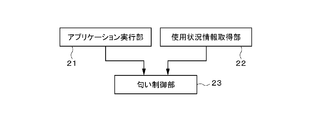
- the information processing apparatus 10 functionally includes an application execution unit 21, a usage state information acquisition unit 22, and an odor control unit 23. These functions are realized when the control unit 11 executes a program stored in the storage unit 12.
- This program may be provided to the information processing apparatus 10 via a communication network such as the Internet, or may be provided by being stored in a computer-readable information storage medium such as an optical disk.
- the application execution unit 21 is realized by the control unit 11 executing an application program.
- the process executed by the application program includes a process of presenting a scent to the user.
- the application execution unit 21 may execute a game program or the like.
- the application execution unit 21 requests the odor presenting apparatus 2 to present an odor as the processing contents progress.
- requirement with respect to the odor presentation apparatus 2 which the application execution part 21 issues is called odor presentation request
- the scent presentation request includes scent designation information for designating the type of scent to be presented.
- the scent designation information may be information such as a substance ID or a cartridge number that uniquely identifies the type of cartridge attached to the scent presentation device 2.
- it may be information such as a keyword set as odor type information in the odor substance database without being directly related to the cartridge attached to the odor presenting apparatus 2.
- the scent presentation request may include an index value (hereinafter referred to as scent intensity value) that specifies the scent intensity.
- scent intensity value an index value that specifies the scent intensity.
- the application execution unit 21 designates a large numerical value as the odor intensity value when the user wants to feel a strong scent according to the processing content, and designates a small numerical value when the user wants to feel a weak odor. .
- the scent presentation device 2 finally releases the scent substance in response to the scent presentation request to present the scent to the user.
- the content of the scent presentation request is determined according to the processing content of the application program, there is a possibility that the content does not take into account the actual usage status of the scent presentation device 2. Therefore, in the present embodiment, the usage status information acquisition unit 22 acquires information on the usage status of the odor presenting apparatus 2 (hereinafter referred to as usage status information). Then, the odor control unit 23 determines in what manner the odor presentation device 2 presents the odor according to the content of the odor presentation request and the usage status information acquired by the usage status information acquisition unit 22. A control signal corresponding to the determined content is output to the odor presentation apparatus 2. Thereby, the smell presentation apparatus 2 can be operated with the content adjusted according to the use condition.
- the usage status information acquisition unit 22 acquires usage status information as necessary, and notifies the odor control unit 23 of the content.
- the usage status information is information relating to a situation when the scent presentation device 2 is actually used.
- the content is not determined before the use of the scent presentation device 2 is started, and is determined at the start of use. Or information that changes during use.
- Usage status information includes information (user identification information) that identifies a user who is currently using the system, environmental information of the odor presenting device 2 detected by the environmental sensor 5, user vital information detected by the vital sensor 6, and the like. May be included.
- the contents of the usage status information and a specific example of odor control corresponding thereto will be described later.
- the odor control unit 23 determines the actual control content of the odor presentation device 2 according to the odor presentation request output from the application execution unit 21 and the usage status information acquired by the usage status information acquisition unit 22. Then, the odor presentation device 2 is instructed to release the odor substance with the determined content. As a result, the odor presenting apparatus 2 can release the odor substance in a manner corrected according to the usage status information.
- the odor control unit 23 first determines the odor substance (that is, the type of cartridge to be used) to be released to the odor presentation device 2 according to the content of the odor designation information included in the odor presentation request.
- the odor designation information is information that includes a keyword indicating the type of odor instead of directly specifying the odor substance
- the odor control unit 23 stores the odor substance stored in the server device 7 in order to determine the odor substance to be used. Get information from the database. Specifically, for example, the odor control unit 23 transmits odor designation information (keyword) included in the odor presentation request to the server device 7.
- the server device 7 refers to the odor substance database, and returns information including the substance ID of the odor substance associated with the odor type information matching the odor designation information. Thereby, the odor control part 23 can determine the odor substance to be used.
- the odor control unit 23 stores in advance information stored in the odor substance database regarding the odor substance corresponding to the cartridge attached to the odor presentation apparatus 2 when the information processing apparatus 10 is used. It may be acquired from the device 7 and stored as cache information in the storage unit 12. In this way, the odor control unit 23 can determine the odor substance to be used with reference to the cache information without making an inquiry to the server device 7 each time an odor presentation request is processed.
- the odor control unit 23 corrects the odor intensity value specified in the odor presentation request according to the contents of the usage status information and the correction information in the odor substance database, so that the odor presentation device 2 can be used by the user.
- the actual odor intensity (for example, the amount of odor substance released) at the time of presenting the odor is determined. If the odor presentation value does not include the odor intensity value, the odor control unit 23 may instead use the reference odor intensity value stored in the odor substance database as the odor intensity value. . Further, the odor control unit 23 may determine the timing for starting the release of the odorous substance and the length of time for executing the release of the odorous substance, according to the content of the odor presentation request and the usage status information.
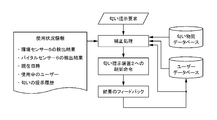
- FIG. 4 is a diagram illustrating an outline of odor control by the odor control unit 23 described above.
- the odor control unit 23 receives the odor presentation request output from the application execution unit 21, the usage status information acquired by the usage status information acquisition unit 22, and the odorous substance acquired from the server device 7. Parameters such as the odor intensity value included in the odor presentation request are corrected according to the contents of the database.
- the usage status information includes the detection result of the environmental sensor 5, the detection result of the vital sensor 6, the information on the current date and time, the information specifying the user in use, the information on the past scent presentation history, etc. May be included.
- the odor control unit 23 may perform correction with reference to a user database (described later) stored in the information processing apparatus 10. Thereafter, the odor control unit 23 outputs a control command for causing the odor presenting apparatus 2 to present an odor according to the corrected content.
- the odor control unit 23 uses the detection result of the odor sensor after the odor presentation device 2 presents the odor, the detection result of the vital sensor 6, information input from the user, and the like, and then from the odor presentation device 2. You may perform the feedback process which changes the content of the smell to show. Specifically, the odor control unit 23 corrects the parameter of the odor control according to the detection result when the odor control is continuously performed, for example, or reflects the detection result in the user database or the like next time. Thereafter, the content of the correction process when the same kind of odor is presented is changed. According to such control, the odor can be adjusted more finely according to the use situation and the user.
- the usage status information acquisition unit 22 acquires environmental information detected by the environmental sensor 5 as usage status information.
- the odor control unit 23 corrects the odor intensity value specified in the odor presentation request based on the acquired environment information. Specifically, the odor control unit 23 acquires correction information of the target odor substance from the odor substance database, and determines whether or not the detected environment information satisfies the application condition of the correction included in the correction information. When it is determined that the application condition is satisfied, the odor intensity value is corrected using a correction coefficient associated with the application condition.
- the correction information may include a content that the odor intensity value is multiplied by a correction coefficient when the temperature is equal to or lower than a predetermined value.
- the odor control unit 23 uses the odor intensity value as it is, but corrects it when the detected temperature is below the predetermined value (that is, when used in a low temperature environment).
- the odor intensity value is corrected using a correction coefficient included in the information.
- the odor control unit 23 may perform correction to increase the odor intensity value when the airflow in the place where the odor presentation device 2 is used is large (that is, when there is an air flow).
- the odor control unit 23 may perform correction to increase the odor intensity value when the odor sensor detects that there is already some odor around the odor presentation device 2.
- the usage status information acquisition unit 22 acquires user vital information detected by the vital sensor 6 as usage status information.
- the odor control unit 23 corrects the odor intensity value specified in the odor presentation request based on the acquired vital information.
- the correction process itself in this case may be the same as that in the first example described above.
- the odor substance correction information may include information associating application conditions related to vital information and correction contents when the application conditions are satisfied. Specifically, for example, when the odor control unit 23 determines that there is an abnormality in the user's physical condition from the value of the vital information, the odor control unit 23 may perform correction to reduce the odor intensity value.
- the odor control unit 23 may dynamically change the odor intensity value according to the fluctuation of vital information while the odor is presented. Specifically, for example, when the odor presenting device 2 releases a odor substance having a relaxing effect, the usage status information acquisition unit 22 periodically detects the vital sensor 6 while the odor substance is being released. Get the result. Then, the odor control unit 23 reduces the amount of odorous substance released when it is determined from the detection result of the vital sensor 6 that the effect of the odorous substance emission has appeared (that is, the user is relaxed). On the contrary, if it is determined that the effect does not appear, the control is performed to increase the amount of the odor substance released.
- the usage status information acquisition unit 22 acquires information indicating the time (time zone, season, etc.) when the scent is presented as usage status information. Such information can be acquired by referring to the date and time information measured by the time measuring unit of the information processing apparatus 10.
- the odor control unit 23 refers to the information indicating this time, and corrects the odor intensity value to be increased or decreased when the odor is presented at a specific time. This makes it possible to control the release of odorous substances, for example, in the season when people are likely to develop hay fever.
- an odor presentation mode is selected depending on which user of the plurality of users is using the information processing apparatus 10.
- An example of changing will be described.
- a user who uses the information processing apparatus 10 performs user registration in advance, and logs in to the information processing apparatus 10 by entering his or her user ID or user name at the start of use. Thereby, the information processing apparatus 10 can grasp which user is currently using the information processing apparatus 10 among a plurality of users registered in advance.
- the usage status information acquisition unit 22 acquires information specifying the user currently using the information processing apparatus 10 as usage status information.
- a user database is stored in the storage unit 12.
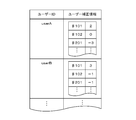
- the user database includes user correction information indicating correction contents unique to each user for each of a plurality of users (that is, registered users) using the information processing apparatus 10.
- This user correction information includes, for each odor substance that can be released by the odor presenting apparatus 2, a parameter indicating the user's response to the odor substance. This parameter may indicate whether the user is sensitive or insensitive to the smell, or may indicate whether the user feels comfortable or uncomfortable.
- FIG. 5 shows an example of a user database, in which parameters that indicate stepwise whether each user feels comfortably or uncomfortable with each of a plurality of odorous substances are stored as user correction information.
- the odor control unit 23 refers to this parameter when presenting a certain odor substance to a certain user, and corrects the odor intensity value of the odor substance estimated to be uncomfortable for the user by reducing the odor intensity value. I do. In addition, for an odorous substance that the user feels comfortable, correction may be performed to increase the odor intensity value.
- the content of the user correction information is determined by feeding back the user's reaction to the odor when the odor is actually presented to the user. Specifically, for example, after the odor control unit 23 actually releases a specific odor substance to a certain user, the odor control unit 23 inquires about the user's evaluation for the odor. In response to this inquiry, the user operates the operation device 3 to input an answer. The odor control unit 23 receives the answer and determines a parameter for the odor substance of the user. The odor control unit 23 may execute such an inquiry about an odor substance that is released for the first time toward the user, for example, every time a specific odor substance is released a predetermined number of times, or for a predetermined time from the previous inquiry. Such an inquiry may be executed periodically every time elapses.
- the odor control unit 23 specifies the user's response to the odor based on the detection result of the vital sensor 6 instead of or in addition to receiving the input of the evaluation directly from the user, and the user according to the specification result Parameters to be stored in the database may be determined. For example, after a certain odor substance is released, if the user's vital information changes beyond a predetermined standard, the user is considered sensitive to the odor substance. In such a case, it is desirable to reduce the amount of odorous substance released from the next time. Therefore, when such a change in vital information is detected, the odor control unit 23 stores a parameter indicating that the user is sensitive to the odorous substance in the user database. Then, when the same odor substance is released after the next time, the user correction information is read out from the user database to correct the odor intensity value.
- the odor control unit 23 may store user correction information independent of the type of odor substances in the user database. Good. For example, if a change in vital information with respect to the release of an odorous substance as described above is observed for any odorous substance, the user is generally assumed to be sensitive to the odor. Therefore, the odor control unit 23 stores the representative values (for example, average values) of parameters determined for each odor substance in the user database as user correction information, and there is an odor substance that is released to the user for the first time. In this case, the odor intensity value may be corrected using this representative value.
- the odor control unit 23 superimposes the odor intensity value included in the odor presentation request based on the detection results of the environment sensor 5 and the vital sensor 6 and information for identifying the user in use. May be corrected automatically. Further, the odor control unit 23 may control not only the odor intensity value but also the scent presentation timing and presentation time based on the usage status information. For example, when the odor control unit 23 releases an odorous substance that is estimated to be weak by the user database, the odor control unit 23 may perform correction to shorten the presentation time (the odorant release time).
- the odor presenting apparatus 2 when releasing an odorous substance that is difficult for the user to notice, the odor presenting apparatus 2 is instructed to start presenting the odor immediately after receiving an odor presentation request, and the odorous substance having an easily noticeable characteristic is released.
- the odor presenting apparatus 2 may be instructed to start presenting the odor after a predetermined delay time has elapsed since the odor presentation request was received. In this way, it is possible to control the way the user feels the odor regardless of the nature of the odor substance. Information on the delay time for each odor substance in this case may be stored in the odor substance database.
- the odor control unit 23 performs various adjustments on the content requested by the odor presentation request and then performs the odor presentation device 2.
- a control signal may be output.
- the odor control unit 23 may be requested by the application execution unit 21 to release a plurality of types of odor substances at the same time.
- the odor control unit 23 refers to the interaction information in the odor substance database and determines whether or not there is an interaction among the requested plural kinds of odor substances.
- the odor control unit 23 adjusts the odor intensity value when each odor substance is released using the interaction information.
- the odor control unit 23 performs correction to reduce both odor intensity values.
- correction is performed to increase both odor intensity values.
- the odor control unit 23 releases, for example, only an odor substance for which a larger odor intensity value is specified, and does not release the other odor substance. To do.
- the odor control unit 23 may change the control content of the odor presentation device 2 according to the odor presentation history so far.
- the odor control unit 23 records a history of control contents performed on the odor presenting apparatus 2 after a certain user starts using the information processing apparatus 10 as usage status information. If the time that the odorous substance has been continuously released reaches a predetermined time, or if the cumulative amount of odorous substance has reached a predetermined amount, the odor intensity is in response to a new odor presentation request. It is also possible to perform control to reduce the amount of the odorous substance to be released by performing correction to reduce the value, or to prevent the odorous substance from being released any more. Thereby, presentation of an excessive odor can be suppressed. Further, the odor control unit 23 may perform the same control when the release time and the release amount of the odorous substance in the latest past predetermined period reach a predetermined value, not the accumulation from the start of use.
- the odor control unit 23 changes the instruction content to the odor presenting apparatus 2 according to the usage status information.
- the application execution unit 21 presents the odor according to the usage status information.
- the scent designation information and scent intensity information included in the request may be changed.
- the application execution unit 21 may execute an application program that realizes aromatherapy.
- the application execution unit 21 issues an odor presentation request that requests the user to present an odor with a relaxing or refreshing effect.
- the content of the scent presentation request in this case may be determined according to the detection results of the environmental sensor 5 and the vital sensor 6.
- the odor designation information for designating an odor substance having a stronger effect is included in the odor presentation request, or the odor intensity included in the odor presentation request. Increase the value.
- the scent according to the user's condition can be presented.
- an application program may acquire information on a schedule registered by a user in a calendar application or the like as usage status information, and may select the content of an odor presentation request according to the content.
- the application execution unit 21 acquires information on the execution date of the application program, and acquires the execution date and the schedule for the next day of the execution date. Then, in accordance with the contents, the kind of odor to be presented to the user and the odor intensity value are determined.
- the information processing apparatus 10 According to the information processing apparatus 10 according to the present embodiment described above, its use is controlled by controlling the odor intensity, odor presentation time, presentation timing, and the like when presenting the odor according to the usage status information. It is possible to present the scent to the user in a manner appropriate to the situation. In addition, by adjusting the amount of odor substance released according to the user, it is possible to save the consumption of the odor substance while ensuring the strength with which the user can feel the odor.
- the embodiments of the present invention are not limited to those described above.
- the odor substance database that the server apparatus 7 provides in the above description may be stored in the information processing apparatus 10 in advance. In this case, even if the information processing apparatus 10 is not necessarily connected to the external server apparatus 7 for communication, the odor control as described above can be realized.
- the contents of the user database that are to be stored in the storage unit 12 of the information processing apparatus 10 in the above description may be uploaded to an external server apparatus.
- the information processing device 10 authenticates the user to be used and stores it in the server device.
- the odor can be adjusted according to the user.
- the information processing apparatus 10 used in the vicinity of the user together with the odor presenting apparatus 2 determines the control content of the odor presenting apparatus 2.
- the server apparatus 7 is the odor presenting apparatus.
- the content of odor control for 2 may be determined.
- the server device 7 realizes the function of the odor control unit 23 described above. That is, the server apparatus 7 acquires usage status information from the information processing apparatus 10, determines the operation content of the odor presenting device 2 according to the content, and controls the odor presenting device 2 to operate according to the determined operation content. Is transmitted to the information processing apparatus 10.
- the server device 7 may realize the function of the application execution unit 21.
- the information processing apparatus 10 executes the application program and notifies the server apparatus 7 of the content of the scent presentation request output as a result.
- the server apparatus 7 receives the notification and determines the control content for the scent presentation apparatus 2. May be.
- the server device 7 may be connected to a plurality of information processing devices 10 and acquire the position information of each information processing device 10 as one piece of usage status information.
- each information processing apparatus 10 transmits the position information measured by the positioning sensor to the server apparatus 7 at the timing when the use is started.
- the server device 7 determines whether or not two or more information processing devices 10 are being used at the same time within a predetermined distance range based on position information transmitted from each of the plurality of information processing devices 10.
- another information processing apparatus 10 is in use within a predetermined distance range from the attention information processing apparatus.
- the content of the control instruction for the attention information processing device is determined by reflecting the operation status (scent presentation status) of the other information processing device 10. More specifically, for example, when the scent presentation control is performed in another information processing apparatus 10, the server apparatus 7, between the odorous substance and the odorous substance to be presented to the attention information processing apparatus from now on. It is determined whether or not there is an interaction between odor substances as described above. Then, according to the determination result, the control unit stops the odor presentation control instruction to the information processing apparatus of interest, or corrects the odor intensity value.
- the content of the odor presented from the odor presenting apparatus 2 connected to each of the plurality of information processing apparatuses 10 And strength can be adjusted according to each other's operating conditions.
- Odor presentation system 1 Odor presentation system, 2 Odor presentation device, 3 Operation device, 4 Display device, 5 Environmental sensor, 6 Vital sensor, 7 Server device, 10 Information processing device, 11 Control unit, 12 Storage unit, 13 Interface unit, 21 Application execution Part, 22 usage information acquisition part, 23 odor control part.
Landscapes
- Engineering & Computer Science (AREA)
- Multimedia (AREA)
- Human Computer Interaction (AREA)
- Theoretical Computer Science (AREA)
- General Engineering & Computer Science (AREA)
- Physics & Mathematics (AREA)
- General Physics & Mathematics (AREA)
- Life Sciences & Earth Sciences (AREA)
- Computational Linguistics (AREA)
- Data Mining & Analysis (AREA)
- Databases & Information Systems (AREA)
- Ecology (AREA)
- General Health & Medical Sciences (AREA)
- Environmental & Geological Engineering (AREA)
- Environmental Sciences (AREA)
- Health & Medical Sciences (AREA)
- Biophysics (AREA)
- Cardiology (AREA)
- Biodiversity & Conservation Biology (AREA)
- Heart & Thoracic Surgery (AREA)
- Business, Economics & Management (AREA)
- Computer Security & Cryptography (AREA)
- General Business, Economics & Management (AREA)
- User Interface Of Digital Computer (AREA)
- Medical Treatment And Welfare Office Work (AREA)
Abstract
Description
Claims (9)
- ユーザーに匂いを提示する匂い提示装置を制御する情報処理装置であって、
前記匂い提示装置の使用状況に関する情報を取得する取得部と、
前記取得した使用状況に関する情報に応じて決まる態様で前記匂い提示装置に匂いを提示させる制御部と、
を含むことを特徴とする情報処理装置。 - 請求項1に記載の情報処理装置において、
前記制御部は、前記匂い提示装置が提示する匂いの強さ、匂いの提示時間、及び匂いの提示タイミングのいずれか少なくとも一つを前記使用状況に関する情報に応じて決定する
ことを特徴とする情報処理装置。 - 請求項1又は2に記載の情報処理装置において、
前記情報処理装置は、前記匂い提示装置が使用される環境に関する情報を検出するセンサーと接続され、
前記取得部は、前記使用状況に関する情報として前記環境に関する情報を取得する
ことを特徴とする情報処理装置。 - 請求項1から3のいずれか一項に記載の情報処理装置において、
前記情報処理装置は、前記ユーザーの身体の状況に関する情報を検出するセンサーと接続され、
前記取得部は、前記使用状況に関する情報として前記身体の状況に関する情報を取得する
ことを特徴とする情報処理装置。 - 請求項1から4のいずれか一項に記載の情報処理装置において、
前記情報処理装置は、前記情報処理装置を使用する複数のユーザーのそれぞれに関連づけて、当該ユーザーに匂いを提示する際の補正内容を示す情報を格納するユーザーデータベースから、当該補正内容を示す情報を取得するユーザー補正内容取得部をさらに含み、
前記取得部は、前記複数のユーザーのうち前記情報処理装置を現に使用中のユーザーを特定する情報を前記使用状況に関する情報として取得し、
前記制御部は、前記使用中のユーザーに関連づけて前記ユーザーデータベースに格納されている情報が示す補正内容に応じて決まる態様で、前記匂い提示装置に匂いを提示させる
ことを特徴とする情報処理装置。 - 請求項1から5のいずれか一項に記載の情報処理装置において、
前記匂い提示装置は、複数種類の匂い物質を放出可能に構成され、
前記情報処理装置は、前記複数種類の匂い物質のそれぞれに関連づけて、当該匂い物質を放出する際における、前記使用状況に関する情報に応じた補正内容を示す情報を格納する匂い物質データベースから、当該補正内容を示す情報を取得する匂い物質補正内容取得部をさらに含み、
前記制御部は、匂い提示のために放出しようとする匂い物質に関連づけて前記匂い物質データベースに格納されている情報が示す補正内容、及び、前記取得部が取得した使用状況に関する情報に応じて決まる態様で、前記匂い提示装置に匂いを提示させる
ことを特徴とする情報処理装置。 - ユーザーに匂いを提示する匂い提示装置を制御する情報処理方法であって、
前記匂い提示装置の使用状況に関する情報を取得するステップと、
前記取得した使用状況に関する情報に応じて調整された内容で前記匂い提示装置に匂いを提示させるステップと、
を含むことを特徴とする情報処理方法。 - ユーザーに匂いを提示する匂い提示装置を制御するためのプログラムであって、
前記匂い提示装置の使用状況に関する情報を取得する取得手段、及び、
前記取得した使用状況に関する情報に応じて調整された内容で前記匂い提示装置に匂いを提示させる制御手段、
としてコンピュータを機能させるためのプログラム。 - 請求項8に記載のプログラムを記憶した、コンピュータ読み取り可能な情報記憶媒体。
Priority Applications (2)
| Application Number | Priority Date | Filing Date | Title |
|---|---|---|---|
| US15/575,935 US10942940B2 (en) | 2015-06-12 | 2016-02-12 | Smell presentation device with environment condition-based smell intensity correction |
| JP2017523126A JP6458144B2 (ja) | 2015-06-12 | 2016-02-12 | 情報処理装置 |
Applications Claiming Priority (2)
| Application Number | Priority Date | Filing Date | Title |
|---|---|---|---|
| JP2015-119717 | 2015-06-12 | ||
| JP2015119717 | 2015-06-12 |
Publications (1)
| Publication Number | Publication Date |
|---|---|
| WO2016199452A1 true WO2016199452A1 (ja) | 2016-12-15 |
Family
ID=57503278
Family Applications (1)
| Application Number | Title | Priority Date | Filing Date |
|---|---|---|---|
| PCT/JP2016/054105 Ceased WO2016199452A1 (ja) | 2015-06-12 | 2016-02-12 | 情報処理装置 |
Country Status (3)
| Country | Link |
|---|---|
| US (1) | US10942940B2 (ja) |
| JP (2) | JP6458144B2 (ja) |
| WO (1) | WO2016199452A1 (ja) |
Cited By (8)
| Publication number | Priority date | Publication date | Assignee | Title |
|---|---|---|---|---|
| JP2019028703A (ja) * | 2017-07-28 | 2019-02-21 | エヌ・ティ・ティ・コミュニケーションズ株式会社 | 香り提供システム、香り提供方法、判定装置、コンピュータプログラム及び判定方法 |
| WO2019190369A1 (en) * | 2018-03-28 | 2019-10-03 | Telefonaktiebolaget Lm Ericsson (Publ) | Communicating olfactory content |
| CN110354291A (zh) * | 2019-08-05 | 2019-10-22 | 深圳市柯瑞玛科技有限公司 | 一种香薰虚拟现实系统 |
| WO2022118540A1 (ja) * | 2020-12-01 | 2022-06-09 | ソニーグループ株式会社 | 香り提供装置および香り提供方法 |
| JP2022136000A (ja) * | 2021-03-05 | 2022-09-15 | 株式会社エヌケービー | 情報処理方法、芳香制御装置、コンピュータプログラム、芳香発生システム及び芳香発生装置 |
| WO2025018253A1 (ja) * | 2023-07-16 | 2025-01-23 | ソニーグループ株式会社 | 匂い提示制御システム |
| WO2026023252A1 (ja) * | 2024-07-23 | 2026-01-29 | ソニーグループ株式会社 | におい提示制御システム及びにおい提示制御装置 |
| US12558449B2 (en) * | 2020-10-22 | 2026-02-24 | Sony Interactive Entertainment Inc. | Gas sensor device, information processing apparatus, and odor presentation system |
Families Citing this family (1)
| Publication number | Priority date | Publication date | Assignee | Title |
|---|---|---|---|---|
| WO2022096915A1 (en) * | 2020-11-03 | 2022-05-12 | Hsign S.R.L. | Wellness and productivity computer accessory device |
Citations (2)
| Publication number | Priority date | Publication date | Assignee | Title |
|---|---|---|---|---|
| JP2004357972A (ja) * | 2003-06-05 | 2004-12-24 | Sony Corp | 機器制御方法および機器制御システム |
| WO2007105694A1 (ja) * | 2006-03-13 | 2007-09-20 | Pioneer Corporation | 覚醒維持装置及び覚醒維持方法並びに覚醒維持のためのコンピュータプログラム |
Family Cites Families (14)
| Publication number | Priority date | Publication date | Assignee | Title |
|---|---|---|---|---|
| JPH0584284A (ja) | 1991-09-30 | 1993-04-06 | Sharp Corp | 香発生装置 |
| JPH05229769A (ja) | 1992-02-18 | 1993-09-07 | Hitachi Building Syst Eng & Service Co Ltd | エレベーターの香り発生装置 |
| JP2000099239A (ja) | 1998-09-22 | 2000-04-07 | Matsushita Electric Ind Co Ltd | 体感機能付き入出力装置 |
| JP2003013089A (ja) | 2001-06-29 | 2003-01-15 | Denso Corp | 香り合成方法、香り合成装置、及び香り情報通信システム |
| JP2008270923A (ja) | 2007-04-16 | 2008-11-06 | Pioneer Electronic Corp | 芳香伝達装置及び芳香伝達方法 |
| JP4913175B2 (ja) | 2009-04-23 | 2012-04-11 | 株式会社エヌ・ティ・ティ・ドコモ | 匂い発生システム、配合情報提供サーバ、および匂い発生方法 |
| JP5551013B2 (ja) | 2010-07-30 | 2014-07-16 | トヨタホーム株式会社 | 環境調整システム |
| JP5288573B1 (ja) | 2012-11-02 | 2013-09-11 | 独立行政法人情報通信研究機構 | 嗅覚ディスプレイおよびそれに用いる香源カートリッジ |
| US9446162B2 (en) * | 2013-07-10 | 2016-09-20 | Scentair Technologies, Llc | Scent schedule based on relatedness of scent delivery devices in a scent delivery system |
| WO2015025511A1 (ja) * | 2013-08-23 | 2015-02-26 | パナソニック インテレクチュアル プロパティ コーポレーション オブ アメリカ | 匂い再生装置 |
| US20150098860A1 (en) * | 2013-10-04 | 2015-04-09 | International Business Machines Coporation | Odor source release based on odor detection and user preference information |
| EP3131591A4 (en) * | 2014-04-18 | 2017-12-13 | Conroy, Thomas A. | Method and system of a network of diffusers including a liquid level sensor |
| KR102253148B1 (ko) * | 2014-04-28 | 2021-05-18 | 삼성전자주식회사 | 냄새를 측정하는 후각 감지 장치 및 방법 |
| US20160022854A1 (en) * | 2014-07-22 | 2016-01-28 | Trackmind Solutions | System and method for emitting fragrances |
-
2016
- 2016-02-12 WO PCT/JP2016/054105 patent/WO2016199452A1/ja not_active Ceased
- 2016-02-12 JP JP2017523126A patent/JP6458144B2/ja active Active
- 2016-02-12 US US15/575,935 patent/US10942940B2/en active Active
-
2018
- 2018-11-26 JP JP2018220726A patent/JP6655157B2/ja active Active
Patent Citations (2)
| Publication number | Priority date | Publication date | Assignee | Title |
|---|---|---|---|---|
| JP2004357972A (ja) * | 2003-06-05 | 2004-12-24 | Sony Corp | 機器制御方法および機器制御システム |
| WO2007105694A1 (ja) * | 2006-03-13 | 2007-09-20 | Pioneer Corporation | 覚醒維持装置及び覚醒維持方法並びに覚醒維持のためのコンピュータプログラム |
Cited By (13)
| Publication number | Priority date | Publication date | Assignee | Title |
|---|---|---|---|---|
| JP2019028703A (ja) * | 2017-07-28 | 2019-02-21 | エヌ・ティ・ティ・コミュニケーションズ株式会社 | 香り提供システム、香り提供方法、判定装置、コンピュータプログラム及び判定方法 |
| WO2019190369A1 (en) * | 2018-03-28 | 2019-10-03 | Telefonaktiebolaget Lm Ericsson (Publ) | Communicating olfactory content |
| EP3777068A4 (en) * | 2018-03-28 | 2021-03-17 | Telefonaktiebolaget Lm Ericsson (Publ) | TRANSFER OF OLFACTORY CONTENT |
| US11650657B2 (en) | 2018-03-28 | 2023-05-16 | Telefonaktiebolaget Lm Ericsson (Publ) | Communicating olfactory content |
| CN110354291A (zh) * | 2019-08-05 | 2019-10-22 | 深圳市柯瑞玛科技有限公司 | 一种香薰虚拟现实系统 |
| US12558449B2 (en) * | 2020-10-22 | 2026-02-24 | Sony Interactive Entertainment Inc. | Gas sensor device, information processing apparatus, and odor presentation system |
| WO2022118540A1 (ja) * | 2020-12-01 | 2022-06-09 | ソニーグループ株式会社 | 香り提供装置および香り提供方法 |
| JPWO2022118540A1 (ja) * | 2020-12-01 | 2022-06-09 | ||
| CN116507855A (zh) * | 2020-12-01 | 2023-07-28 | 索尼集团公司 | 香味提供装置和香味提供方法 |
| JP7852512B2 (ja) | 2020-12-01 | 2026-04-28 | ソニーグループ株式会社 | 香り提供装置 |
| JP2022136000A (ja) * | 2021-03-05 | 2022-09-15 | 株式会社エヌケービー | 情報処理方法、芳香制御装置、コンピュータプログラム、芳香発生システム及び芳香発生装置 |
| WO2025018253A1 (ja) * | 2023-07-16 | 2025-01-23 | ソニーグループ株式会社 | 匂い提示制御システム |
| WO2026023252A1 (ja) * | 2024-07-23 | 2026-01-29 | ソニーグループ株式会社 | におい提示制御システム及びにおい提示制御装置 |
Also Published As
| Publication number | Publication date |
|---|---|
| JP6655157B2 (ja) | 2020-02-26 |
| JP2019046495A (ja) | 2019-03-22 |
| US10942940B2 (en) | 2021-03-09 |
| US20180144033A1 (en) | 2018-05-24 |
| JP6458144B2 (ja) | 2019-01-23 |
| JPWO2016199452A1 (ja) | 2018-02-01 |
Similar Documents
| Publication | Publication Date | Title |
|---|---|---|
| JP6458144B2 (ja) | 情報処理装置 | |
| JP7505147B2 (ja) | ユーザフィードバックシステム及び方法 | |
| US20100309434A1 (en) | Fragrance dispenser | |
| US8617044B2 (en) | Stress reduction | |
| JP7717069B2 (ja) | カスタマイズ可能なエアロゾル発生装置 | |
| CN105916540A (zh) | 环境控制系统、控制装置、程序 | |
| KR20170030587A (ko) | 판독 요구에 기초하여 장치의 작동을 제어하기 위한 시스템과 관련 방법, 장비 및 컴퓨터 프로그램 제품 | |
| US20220000182A1 (en) | Vaporizer devices and accessories with integrated sensors | |
| US20220071294A1 (en) | Smart vaporizer | |
| JP7538896B2 (ja) | ユーザフィードバックシステム及び方法 | |
| JP7500901B2 (ja) | ユーザフィードバックシステム及び方法 | |
| JP7776575B2 (ja) | ユーザフィードバックシステム及び方法 | |
| JP2025016625A (ja) | システム及びエアロゾル送達の方法 | |
| JP7591588B2 (ja) | ユーザフィードバックシステム及び方法 | |
| CN115460944B (zh) | 一种操作气溶胶产生装置的方法 | |
| US20150170510A1 (en) | Control method, information processor, and computer program product | |
| WO2021260341A1 (en) | User feedback system and method | |
| KR101596944B1 (ko) | 웨어러블 장치 및 이를 기반으로 스트레스를 인지하고 관리하는 방법 | |
| WO2020017438A1 (ja) | 情報処理システム、情報処理方法、および記録媒体 | |
| KR20230090095A (ko) | 차량을 이용한 심신안정 시스템 및 그 서비스 제공 방법 | |
| JP2024179002A (ja) | 芳香放出システム、制御装置および濃度制御方法 | |
| KR20050120105A (ko) | 사용자별 건강 상태에 기반한 향기 치료 장치 및 그 방법 | |
| KR102904877B1 (ko) | 생체 신호와 환경 정보에 기반한 발향 장치 및 그 동작 방법 | |
| JP2021069712A (ja) | 機能性成分放出システム、建物、及び、機能性成分放出方法 | |
| KR20250179020A (ko) | 사용자의 감정과 날씨 및 기상정보에 기반한 향기 확산 시스템 및 방법 |
Legal Events
| Date | Code | Title | Description |
|---|---|---|---|
| 121 | Ep: the epo has been informed by wipo that ep was designated in this application |
Ref document number: 16807159 Country of ref document: EP Kind code of ref document: A1 |
|
| ENP | Entry into the national phase |
Ref document number: 2017523126 Country of ref document: JP Kind code of ref document: A |
|
| WWE | Wipo information: entry into national phase |
Ref document number: 15575935 Country of ref document: US |
|
| NENP | Non-entry into the national phase |
Ref country code: DE |
|
| 122 | Ep: pct application non-entry in european phase |
Ref document number: 16807159 Country of ref document: EP Kind code of ref document: A1 |