WO2016171448A1 - 뇌신경 질환의 예방 또는 치료용 약제학적 조성물 - Google Patents
뇌신경 질환의 예방 또는 치료용 약제학적 조성물 Download PDFInfo
- Publication number
- WO2016171448A1 WO2016171448A1 PCT/KR2016/004068 KR2016004068W WO2016171448A1 WO 2016171448 A1 WO2016171448 A1 WO 2016171448A1 KR 2016004068 W KR2016004068 W KR 2016004068W WO 2016171448 A1 WO2016171448 A1 WO 2016171448A1
- Authority
- WO
- WIPO (PCT)
- Prior art keywords
- composition
- factor
- cells
- gene
- nucleic acid
- Prior art date
- Legal status (The legal status is an assumption and is not a legal conclusion. Google has not performed a legal analysis and makes no representation as to the accuracy of the status listed.)
- Ceased
Links
Images




Classifications
-
- A—HUMAN NECESSITIES
- A61—MEDICAL OR VETERINARY SCIENCE; HYGIENE
- A61K—PREPARATIONS FOR MEDICAL, DENTAL OR TOILETRY PURPOSES
- A61K48/00—Medicinal preparations containing genetic material which is inserted into cells of the living body to treat genetic diseases; Gene therapy
Definitions
- the present invention comprises a nucleic acid molecule encoding four pluripotent factors (Oct-4, Sox2, c-Myc and Klf4) as an active ingredient, the prevention of cerebral neurological diseases used for in vivo gene therapy or
- the present invention relates to a therapeutic pharmaceutical composition.
- bone marrow mononudlear cells Iihoshi S, Honmou O, Houkin K, Hashi K, Kocsis JD. Brain Res . 2004; 1007: 1-9
- bone marrow stromal cells Chopp M. J Neurol Sci . 2001; 189: 49-57
- exogenous cells such as neural stem cells
- Mammalian brains have endogenous neural stem cells and progenitor cells that are mobilized by injury or disease (Goldman SA. Clin ). Pharmacol Ther . 2007; 82: 453-60). Mobilization and activation of these cells can be enhanced by exogenously delivered humoral factors such as epidermal growth factor (EGF) and brain-derived neurotrophic factor (BDNF) (Cho SR, Benraiss A, Chmielnicki E). , Samdani A, Economides A, Goldman SA J Clin Invest 2007; 117:.. 2889-902).
- EGF epidermal growth factor
- BDNF brain-derived neurotrophic factor
- the intraventricular delivery of BDNF, noggin or EGF by an adenovirus vector or an osmotic pump is characterized by chronic hypoxic ischemic brain injury (Im SH, Yu JH, Park ES, et al. Neuroscience . 2010; 169: 259-). 68) and subventricular areas leading to striatum regeneration and functional enhancement in mouse models with Huntington's disease (Benraiss A, Toner MJ, Xu Q, et al. Cell Stem Cell . 2013; 12: 787-99). It has been reported to activate endogenous neural stem / progenitor cells in the zone. However, endogenous cells that can be directly affected by these humoral factors are limited to cells with receptors for humoral factors, which act as a limiting factor in the recovery of brain function. Thus, there is a need for more effective therapies that can restore impaired brain function.
- the present inventors have tried to develop new therapies capable of treating brain function deterioration due to brain injury.
- transient in situ expression in brain tissue of four pluripotent factors (Oct-4, Sox2, c-Myc, and Klf4) in ischemic brain injury animal models restores functional impairment due to brain injury.
- Another object of the present invention to provide a method of treating neurological diseases.
- the present invention is Oct-4 (Octamer-binding transcription factor 4), Sox2 (SRY-box containing gene 2), c-Myc (c-myelocytomatosis oncogene) and Klf4 (Kruppel-like factor 4 It provides a pharmaceutical composition for the prevention or treatment of cerebral neurological diseases, which comprises a single nucleic acid molecule encoding four pluripotent factors, which is) as an active ingredient, and is used for gene therapy in vivo.
- the present invention comprises a plurality of nucleic acid molecules separately encoding the four pluripotent factors as an active ingredient, the pharmaceutical for the prevention or treatment of cerebral neurological diseases used for gene therapy in vivo To provide a composition.
- the present invention provides a gene therapy in vivo comprising administering to a subject in need thereof a pharmaceutical composition comprising a single nucleic acid molecule encoding the four pluripotent factors. It provides a method of treating cranial nerve disease through.
- the present invention provides gene therapy in vivo, comprising administering to a subject in need thereof a pharmaceutical composition comprising a plurality of nucleic acid molecules encoding the four pluripotent factors separately. It provides a method of treating neurological diseases through.
- the present inventors have tried to develop new therapies capable of treating brain function deterioration due to brain injury.
- transient in situ expression in brain tissues of four pluripotent factors (Oct-4, Sox2, c-Myc and Klf4) in ischemic brain injury animal models can restore the functional impairment due to brain injury. It was clarified.
- Gene therapy is divided into ex-vivo gene therapy and in-vivo gene therapy according to gene delivery methods, and in vitro gene therapy is a method of treating by injecting cells cultured outside the body again, In vivo gene therapy is a method of injecting genes directly into a patient without the need to extract cells from the patient.
- the pharmaceutical composition of the present invention is an in vivo gene therapy agent for cerebral neurological diseases, and one or more nucleic acid molecules encoding the four pluripotency factors are used for gene therapy using the present invention.
- the nucleic acid molecule may be a single polynucleotide encoding four pluripotent factors together, or may be a plurality of polynucleotides encoding four pluripotent factors separately.
- the plurality of polynucleotides separately encoding the four pluripotent factors is (i) four polynucleotides encoding each pluripotent factor, or (ii) one of the four pluripotency factors It may be a combination of a polynucleotide encoding a pluripotent factor and a polynucleotide encoding together two or three pluripotent factors.
- nucleotide sequence of the pluripotency factor of the present invention is disclosed in the National Institute of Biological Information (NCBI) website and the like, a person skilled in the art can easily prepare the nucleic acid molecule of the present invention based on such a known nucleotide sequence.
- prevention refers to any action that inhibits the onset or delays the progression of cerebral neuropathy by administration of a composition of the invention
- treatment refers to the inhibition of the development of cerebral neuropathy, Symptomatic relief or recovery of impaired brain function.
- the composition of the present invention can exhibit a therapeutic effect on neurological diseases by restoring cognitive decline, a symptom of neurological diseases.
- the composition of the present invention can exhibit a therapeutic effect on the neurological disorder by restoring the motor function, which is another symptom of the neurological disorder.
- the composition of the present invention may exhibit a therapeutic effect on cerebral neuropathy by inducing angiogenesis in brain tissues or by inducing proliferation of astrocytes or neural progenitor cells.
- the present invention can be applied to the prevention and treatment of various cranial nerve diseases.
- neurological diseases to which the present invention is applicable include stroke, cerebral palsy, ischemic brain injury, traumatic brain injury, delirium and degenerative neurological disease.
- Examples of the degenerative neurological disease to which the present invention is applicable include dementia, Parkinson's disease, and Huntington's disease.
- the dementia includes senile dementia, Alzheimer's disease, vascular dementia, Lewy body dementia, anterior temporal lobe dementia, Parkinson's dementia, Huntington's disease dementia, dementia due to normal pressure hydrocephalus, dementia due to head trauma, and substance-induced dementia. It is not limited.
- compositions of the present invention can be applied in vivo through various delivery methods commonly known in the art of gene therapy.
- the nucleic acid molecule of the present invention is contained in a gene carrier or is naked DNA (naked DNA).
- a gene carrier comprising a nucleic acid molecule encoding the pluripotent factor as an active ingredient
- the pluripotent factor-encoding nucleic acid molecule is preferably present in a suitable expression construct.
- gene delivery means that a gene is carried into a cell, and has the same meaning as the cell's intraduction of a gene. At the tissue level, the term gene delivery has the same meaning as spread of a gene.
- the pluripotent factor-encoding nucleic acid molecule can be operably linked to a promoter.
- operably linked means a functional binding between a nucleic acid expression control sequence (eg, an array of promoters, signal sequences, or transcriptional regulator binding sites) and another nucleic acid sequence, whereby the regulatory sequence is To regulate transcription and / or translation of said other nucleic acid sequences.
- a promoter bound to a pluripotent factor-encoding nucleic acid molecule is capable of operating in an animal cell (eg, a mammalian cell) to regulate transcription of the pluripotent factor-encoding nucleic acid molecule, which is derived from a mammalian virus.
- Promoters and promoters derived from the genome of mammalian cells such as, for example, cytomegalo virus (CMV) promoter, adenovirus late promoter, vaccinia virus 7.5K promoter, SV40 promoter, tk promoter of HSV, RSV promoter, EF1 alpha Promoter, metallothionine promoter, beta-actin promoter, promoter of human IL-2 gene, promoter of human IFN gene, promoter of human IL-4 gene, promoter of human lymphotoxin gene and promoter of human GM-CSF gene Including but not limited to.
- CMV cytomegalo virus
- adenovirus late promoter vaccinia virus 7.5K promoter
- SV40 promoter vaccinia virus 7.5K promoter
- tk promoter of HSV SV40 promoter
- tk promoter of HSV SV40 promoter
- tk promoter of HSV SV40 promoter
- the expression construct used in the present invention may comprise a poly adenylation sequence (eg, a glial growth hormone terminator and a SV40 derived poly adenylation sequence).
- a poly adenylation sequence eg, a glial growth hormone terminator and a SV40 derived poly adenylation sequence.
- the pluripotent factor-encoding nucleic acid molecule used in the present invention has a structure of “promoter-pluripotent factor-encoding nucleic acid molecule-polyadenylation sequence”.
- Nucleic acid molecules of the present invention can be prepared in various forms, for example (i) naked recombinant DNA molecules using plasmids as carriers, (ii) viral vectors, (iii) liposomes or niosomes, (iv) Lipid-gene complexes (Lipid-DNA complex) or (v) polymer-gene complexes (Polymer-DNA complex) can be produced in the form of.
- Pluripotent factor-encoding nucleic acid molecules can be applied to all gene delivery systems used in conventional gene therapy, such as plasmids, adenoviruses (Lockett LJ, et al., Clin . Cancer Res. 3: 2075-2080 (1997) ), Adeno-associated viruses (AAV, Lashford LS., Et al., Gene Therapy Technologies, Applications and Regulations Ed.A. Meager, 1999), retroviruses (Gunzburg WH, et al., Retroviral vectors) Gene Therapy Technologies, Applications and Regulations Ed.A. Meager, 1999), lentivirus (Wang G. et al., J. Clin . Invest .
- the gene carrier of the present invention may be implemented as a viral vector.
- the method of introducing the gene delivery system of the present invention described above into a cell may be carried out through various methods known in the art.
- the pharmaceutical composition of the present invention may include a pharmaceutically acceptable carrier in addition to a pharmaceutically effective amount of an active ingredient.
- pharmaceutically effective amount means an amount sufficient to achieve the efficacy or activity of the above-mentioned effective ingredient.
- the pharmaceutical composition of the present invention is preferably parenteral, and may be administered using, for example, intravenous, subcutaneous or topical administration. According to one embodiment of the invention, the composition of the invention is administered to brain tissue, four pluripotent factors are expressed in brain tissue.
- Suitable dosages of the pharmaceutical compositions of the invention vary depending on factors such as the formulation method, mode of administration, age, weight, sex of the patient, degree of disease symptom, food, time of administration, route of administration, rate of excretion and response to reaction. In general, the skilled practitioner can readily determine and prescribe a dosage effective for the desired treatment.
- compositions of the present invention are prepared in unit dose form by formulating with a pharmaceutically acceptable carrier and / or excipient according to methods which can be easily carried out by those skilled in the art. Or may be prepared by incorporation into a multi-dose container.
- the subject is a mammal, including a human.
- the present invention includes a nucleic acid molecule encoding four pluripotent factors (Oct-4, Sox2, c-Myc and Klf4) as an active ingredient, and prevents or treats brain neurological diseases used for in vivo gene therapy. It provides a pharmaceutical composition.
- the four pluripotent factors are expressed in brain tissue to induce angiogenesis and proliferation of astrocytes and neural progenitor cells, thereby restoring impaired brain function.
- Figure 1 shows a schematic of the experimental process of the present invention.
- A is an experimental procedure using a non-transgenic mouse
- B is an experimental procedure using a transgenic mouse.
- FIG. 2A-2B show the recovery of motor function by the expression of in situ pluripotency factors in brain hull mice expressing pluripotency factor with Sendai virus.
- ⁇ indicates Sendai virus (GFP) administration group
- ⁇ indicates Sendai virus (pluripotent factor + GFP) administration group.
- 3A-3B show motor function recovery by expression of in situ pluripotency factors in pluripotency factor gene-transplanted ischemic mice.
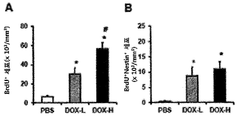
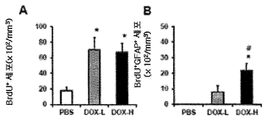
- 6A-6C show immune tissue showing cell proliferation (BrdU + cells) and predominant differentiation into neural stem cells (Nestin + cells) and astrocytes (GFAP + cells) in the subventricular region of pluripotent factor gene transplant-brain ischemic mice. It is the result of chemical staining.
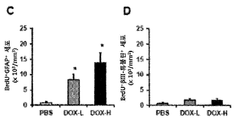
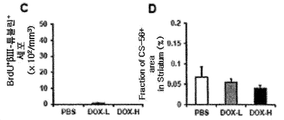
- FIGS. 7A-7D show cell proliferation (BrdU + cells) and predominant differentiation into astrocytic cells (GFAP + cells) and glial scars (CS-56 + cells) in the striatum of pluripotent factor gene transplant-brain ischemic mice. Immunohistochemical staining showing no.
- 8A and 8B are immunoassay results showing expression levels of angiogenesis factors in astrocytes and neuronal cells. The increase in blood vessels in mice expressing pluripotent factor compared to the control group was quantified and shown graphically.
- Sendai virus expressing pluripotent factors (Oct-4, Sox2, c-Myc, and Klf4) into lateral ventricle immediately after ischemic brain injury in cerebral ischemic mice (CytoTume TM -IPS Sendai Reprogramming Kit, Life Technologies Carlsbad, CA).
- Sendai virus (CytoTume TM -EmGFP Sendai Fluorescence Reporter, Life Technologies, Carlsbad, Calif.) Expressing only a green fluorescent reporter was used. The experimental procedure is shown in A of FIG. 1.
- Reprogrammable mice Gt (ROSA) 26Sor tm1 ( rtTA * M2 ) Jae Col1a1 tm3 ( tetO - Pou5f1 , -Sox2, -Klf4, -Myc) Jae prepared to express transplanted pluripotent factor gene upon doxycycline administration / J), immediately after ischemic brain injury, an osmotic pump containing doxycycline was implanted into the right lateral ventricle to express pluripotency factor for about 7 days.
- a rotarod test was conducted at two-week intervals using a Rotarod (Cat. No. 47600, UGO Basile, VA, Italy). Specifically, during the 5-minute run at a fixed speed of 48 rpm and an acceleration of up to 4-80 rpm, the time taken for the subject animal to fall off the rod was measured. The evaluation was conducted twice, and the mean latency was analyzed.
- Ladder pedestrian test is a video analysis of the number of slips between the ladder crosses and four walks of the mouse on a 1 m horizontal ladder with iron core crosses at various distances. Measured through.
- mice In order to perform immunochemical staining, once 8 weeks after breeding in an environment and a floating environment, brain tissues of the animals were extracted, cut at intervals of 16 ⁇ m, and brain tissue sections were attached on microglass slides. To confirm the expression of the pluripotent factor, the brain tissues of mice 3 days after transplantation were observed under confocal microscopy after immunochemical staining using Oct4 antibody. The experimental results are shown in FIG. 4.
- mouse astrocyte cell lines C8-D1A; Astrocyte Type 1 clone, ATCC, CRL-2541
- neuroblastoma cell lines N1E-115, ATCC, CRL-2263
- proteins extracted using the lysis solution from the obtained cells were fractionated by SDS polyacrylamide gel electrophoresis, and the location of the electrophoretic fraction was transferred to a filter paper as it was.
- the protein transferred to the filter paper was analyzed by radioimmunoassay using ANGPT1 (angiopoietin-1), vascular endothelial growth factor-A (VEGFA), fibroblast growth factor-2 (FGF2) antibody, and GAPDH antibody, an anti-zone gene protein. radioimmunoassay).
- ANGPT1 angiopoietin-1
- VEGFA vascular endothelial growth factor-A
- FGF2 fibroblast growth factor-2
- GAPDH antibody an anti-zone gene protein.
- mice with pluripotency factor expression at the acceleration (4-80 rpm) rate of rotarod were significantly longer in duration after 2 weeks than in the control group. Increased (graph on the right).
- ladder walking test the degree of slipping of the forelimbs was decreased at 4 weeks in the mice expressing pluripotent factor compared to the control group (FIG. 2B).
- rotarod was temporarily fixed in a high concentration group of doxycycline (100 ⁇ g / ml).
- the duration began to increase significantly from 2 weeks compared to the control and low concentration groups (1 ⁇ g / ml), and this behavior was maintained until 4 weeks (left graph).
- the high concentration group (100 ⁇ g / ml) of doxycycline began to increase significantly compared to the control and low concentration groups (1 ⁇ g / ml) at 2 weeks, and at 4 weeks.
- mice 3 days after the Sendai virus transplantation were confirmed by confocal microscopy after immunochemical staining.
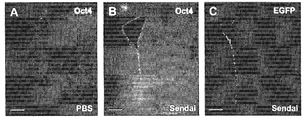
- FIG. 4 3 days after the Sendai virus implantation into the ventricle, the result was confirmed by immunohistochemical staining using Oct4 antibody in mouse brain tissue.
- panel A staining was not performed in the control group.
- panel B Oct4 expression by Sendai virus was observed
- panel C green fluorescent expression by Sendai virus expressing only green fluorescent reporter was shown.
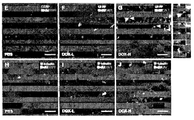
- Panels E, H and K of FIG. 6C show neural stem cells (Nestin + cells), astrocytes (GFAP + cells) and young neurons (Tuj-1 + cells) in the control group.
- Panels F, I and J show neural stem cells (Nestin + cells), astrocytes (GFAP + cells) and young neurons (Tuj-1 + cells) in the low concentration (1 ⁇ g / ml) group
- FIGS. 7A-7B cell proliferation (BrdU + cells) of new cells occurred in the striatum (Panel A).
- Pluripotency factor expression by high concentrations (100 ⁇ g / ml) and low concentrations (1 ⁇ g / ml) of doxycycline in the injured brain increases the production of new cells compared to the control and likewise into astrocytes (GFAP + cells). Differentiation was increased (Panel B). On the other hand, it was shown that newly generated cells did not induce differentiation into neurons (Panel C).
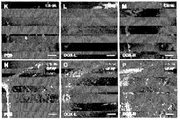
- Panels E and H of FIGS. 7C-7D show astrocytes (GFAP + cells) and young neurons (Tuj-1 + cells) in the control group.
- Tuj-1 + cells glial scars
- pluripotency factor expression by high concentrations (100 ⁇ g / ml) of doxycycline in the injured brain showed vascular proliferation (CD31 + cells) in the striatum.
- Panel A represents the control group
- panel B represents the low concentration group (1 ⁇ g / ml)
- panel C represents the high concentration group (100 ⁇ g / ml)
- significantly increased blood vessel proliferation CD31 in the doxycycline high concentration group (100 ⁇ g / ml). + Cells) (Panel D).
- mouse astrocytic cell lines (C8-D1A) and neuroblastoma cell lines (N1E-115) were cultured in serum-free culture for two days, and then cells were harvested to extract proteins.
- Immunoassay was carried out with factors ANGPT1 (angiopoietin-1), vascular endothelial growth factor-A (VEGFA) and fibroblast growth factor-2 (FGF2) and GAPDH antibody as anti-zone gene protein.
- ANGPT1 angiopoietin-1
- VAGFA vascular endothelial growth factor-A
- FGF2 fibroblast growth factor-2
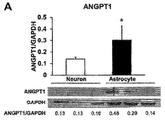
- FIG. 9a-9c it was confirmed that the angiogenesis factor was expressed more in astrocytes than neurons as a result.
- Panel A shows ANGPT1
- panel B shows VEGFA
- panel C shows FGF2 increase in astrocytes.
Landscapes
- Health & Medical Sciences (AREA)
- Life Sciences & Earth Sciences (AREA)
- Chemical & Material Sciences (AREA)
- Molecular Biology (AREA)
- Engineering & Computer Science (AREA)
- Biotechnology (AREA)
- Genetics & Genomics (AREA)
- Medicinal Chemistry (AREA)
- Pharmacology & Pharmacy (AREA)
- Epidemiology (AREA)
- Animal Behavior & Ethology (AREA)
- General Health & Medical Sciences (AREA)
- Public Health (AREA)
- Veterinary Medicine (AREA)
- Biochemistry (AREA)
- Medicines Containing Material From Animals Or Micro-Organisms (AREA)
Abstract
본 발명은 4종의 다능성 인자(Oct-4, Sox2, c-Myc 및 Klf4)를 암호화하는 핵산 분자를 유효성분으로 포함하고, 생체 내 유전자 치료에 이용되는 뇌신경 질환의 예방 또는 치료용 약제학적 조성물을 제공한다. 본 발명에 따르면, 상기 4종의 다능성 인자는 뇌 조직에서 발현되어 신생혈관생성 및 성상교세포와 신경전구세포의 증식을 유도함으로써, 손상된 뇌기능을 회복시킨다.
Description
본 발명은 4종의 다능성 인자(Oct-4, Sox2, c-Myc 및 Klf4)를 암호화하는 핵산 분자를 유효성분으로 포함하고, 인 비보(in vivo) 유전자 치료에 이용되는 뇌신경 질환의 예방 또는 치료용 약제학적 조성물에 관한 것이다.
손상된 조직의 복원 또는 재생은 손상이나 질병에서 기능 회복에 중요하다. 포유동물의 뇌는 다른 기관 및 조직에 비해 재생능력이 현저히 떨어진다. 그러므로, 뇌 조직 손상은 종종 반영구적인 기능 장애로 이어진다.
뇌 재생에 필요한 세포 유형이 내재된 세포 소스(endogenous cell sources)에 의해 충분히 제공되지 않기 때문에, 다른 종류의 세포의 보충이 회복에 도움이 된다. 예를 들어, 골수 단핵세포(bone marrow mononudlear cells)(Iihoshi S, Honmou O, Houkin K, Hashi K, Kocsis JD. Brain Res. 2004;1007:1-9), 골수 기질세포(bone marrow stromal cells)(Chen J, Li Y, Wang L, Lu M, Zhang X, Chopp M. J
Neurol
Sci. 2001;189:49-57) 및 신경줄기세포(neural stem cells)(Park KI, Teng YD, Snyder EY. Nat
Biotechnol. 2002;20:1111-7)와 같은 외인성 세포(exogenous cells)의 이식을 통하여 뇌 조직 재생을 향상시킬 수 있음이 보고된바 있다. 그러나, 이식된 세포의 생착이 제한적이고(Delcroix GJ, Schiller PC, Benoit JP, Montero-Menei CN. Biomaterials. 2010;31:2105-20), 이식된 세포에서 신경계통(neural lineage) 세포의 생성이 기능적 회복을 유도하기에는 충분하지 않은 문제점이 있었다(Roitberg B. Transplantation for stroke. Neurol
Res. 2004;26:256-64). 또한, 뇌로의 동종 또는 이종 세포의 이식은 세포주입 이후에 면역 시스템에 의해 거부되거나, 종양 생성(Fong SP, Tsang KS, Chan AB, et al. J Neurosci Res. 2007;85:1851-62)을 유도할 수 있는 역효과를 가져올 수 있다.
포유동물의 뇌는 손상이나 질병에 의해 동원되는 내인성 신경줄기세포(endogenous neural stem cells) 및 전구 세포(progenitor cells)를 가지고 있다(Goldman SA. Clin
Pharmacol
Ther. 2007;82:453-60). 이러한 세포의 동원 및 활성화를 표피성장인자(EGF)와 뇌유래 신경영양인자(BDNF)와 같은 외생 전달 체액성 인자(exogenously delivered humoral factors)를 이용하여 증대시킬 수 있다(Cho SR, Benraiss A, Chmielnicki E, Samdani A, Economides A, Goldman SA. J
Clin
Invest. 2007;117:2889-902). 아데노바이러스 벡터 또는 삼투압 펌프에 의한 BDNF, noggin 또는 EGF의 뇌실 내로의 전달(intraventricular delivery)은 만성 저산소성 허혈성 뇌손상(Im SH, Yu JH, Park ES, et al. Neuroscience. 2010;169:259-68)과 헌팅턴병(Huntington's disease)(Benraiss A, Toner MJ, Xu Q, et al. Cell Stem Cell. 2013;12:787-99)을 가진 마우스 모델에서 선조체 재생 및 기능적 향상을 이끄는 뇌실하 부위(subventricular zone)에 있는 내인성 신경줄기/전구세포를 활성화하는 것으로 보고된바 있다. 그러나, 이러한 체액성 인자에 의해 직접 영향을 받을 수 있는 내인성 세포는 체액성 인자에 대한 수용체를 가진 세포로 제한되고, 이는 뇌기능 회복을 제한하는 요인으로 작용한다. 따라서, 손상된 뇌기능을 회복시킬 수 있는 보다 효과적인 치료법이 요구된다.
본 명세서 전체에 걸쳐 다수의 논문 및 특허문헌이 참조되고 그 인용이 표시되어 있다. 인용된 논문 및 특허문헌의 개시 내용은 그 전체로서 본 명세서에 참조로 삽입되어 본 발명이 속하는 기술 분야의 수준 및 본 발명의 내용이 보다 명확하게 설명된다.
본 발명자들은 뇌손상으로 인한 뇌기능 저하를 치료할 수 있는 새로운 치료법을 개발하기 위하여 연구 노력하였다. 그 결과, 허혈성 뇌손상 동물모델에서 4종의 다능성 인자(Oct-4, Sox2, c-Myc 및 Klf4)의 뇌 조직에서의 일시적 인 시투(in situ) 발현이 뇌손상으로 인한 기능 저하를 회복시킬 수 있음을 규명함으로써, 본 발명을 완성하게 되었다.
따라서, 본 발명의 목적은 뇌신경 질환의 예방 또는 치료용 약제학적 조성물을 제공하는 데 있다.
본 발명의 다른 목적은 뇌신경 질환의 치료방법을 제공하는 데 있다.
본 발명의 다른 목적 및 이점은 하기의 발명의 상세한 설명, 청구범위 및 도면에 의해 보다 명확하게 된다.
본 발명의 일 양태에 따르면, 본 발명은 Oct-4(Octamer-binding transcription factor 4), Sox2(SRY-box containing gene 2), c-Myc(c-myelocytomatosis oncogene) 및 Klf4(Kruppel-like factor 4)인 4종의 다능성 인자를 암호화하는 단일의 핵산 분자를 유효성분으로 포함하고, 생체 내(in vivo) 유전자 치료에 이용되는 뇌신경 질환의 예방 또는 치료용 약제학적 조성물을 제공한다.
본 발명의 다른 일 양태에 따르면, 본 발명은 상기 4종의 다능성 인자를 별도로 암호화하는 복수개의 핵산 분자를 유효성분으로 포함하고, 생체 내 유전자 치료에 이용되는 뇌신경 질환의 예방 또는 치료용 약제학적 조성물을 제공한다.
본 발명의 또 다른 일 양태에 따르면, 본 발명은 상기 4종의 다능성 인자를 암호화하는 단일의 핵산 분자를 포함하는 약제학적 조성물을 치료가 필요한 개체에게 투여하는 단계를 포함하는 생체 내 유전자 치료를 통한 뇌신경 질환의 치료방법을 제공한다.
본 발명의 또 다른 일 양태에 따르면, 본 발명은 상기 4종의 다능성 인자를 별도로 암호화하는 복수개의 핵산 분자를 포함하는 약제학적 조성물을 치료가 필요한 개체에게 투여하는 단계를 포함하는 생체 내 유전자 치료를 통한 뇌신경 질환의 치료방법을 제공한다.
본 발명자들은 뇌손상으로 인한 뇌기능 저하를 치료할 수 있는 새로운 치료법을 개발하기 위하여 연구 노력하였다. 그 결과, 허혈성 뇌손상 동물모델에서 4종의 다능성 인자(Oct-4, Sox2, c-Myc 및 Klf4)의 뇌 조직에서의 일시적 in situ 발현이 뇌손상으로 인한 기능 저하를 회복시킬 수 있음을 규명하였다.
유전자 치료는 유전자 전달 방법에 따라 생체 밖(ex-vivo) 유전자 치료와 생체 내(in-vivo) 유전자 치료로 구분되며, 생체 밖 유전자 치료는 몸 밖에서 배양한 세포를 다시 주입하여 치료하는 방법이고, 생체 내 유전자 치료는 환자로부터 세포를 추출할 필요 없이 직접 환자에게 유전자를 주입하는 방법이다.
본 발명의 약제학적 조성물은 뇌신경 질환에 대한 생체 내 유전자 치료제로서, 본 발명을 이용한 유전자 치료에는 상기 4종의 다능성 인자를 암호화하는 하나 이상의 핵산 분자가 이용된다. 상기 핵산 분자는 4종의 다능성 인자를 함께 암호화하는 단일의 폴리뉴클레오타이드이거나, 또는 4종의 다능성 인자를 별도로 암호화하는 복수개의 폴리뉴클레오타이드일 수 있다.
상기 4종의 다능성 인자를 별도로 암호화하는 복수개의 폴리뉴클레오타이드는, (i) 각각의 다능성 인자를 암호화하는 4종의 폴리뉴클레오타이드이거나, 또는 (ii) 4종의 다능성 인자 중 1종의 다능성 인자를 암호화하는 폴리뉴클레오타이드 및 2 내지 3종의 다능성 인자를 함께 암호화하는 폴리뉴클레오타이드의 조합일 수 있다.
본 발명의 다능성 인자의 염기서열은 미국 국립생물정보센터(NCBI) 웹사이트 등에 공개되어 있으므로, 통상의 기술자는 이와 같이 공지된 염기서열을 토대로 본 발명의 핵산 분자를 용이하게 제작할 수 있다.
본 명세서에서 사용된 용어, "예방"은 본 발명의 조성물의 투여로 뇌신경 질환의 발병을 억제시키거나 진행을 지연시키는 모든 행위를 의미하며, "치료"는 뇌신경 질환의 발전의 억제, 뇌신경 질환의 증상 완화, 또는 손상된 뇌기능의 회복을 의미한다.
예를 들어, 본 발명의 조성물은 뇌신경 질환의 증상인 인지기능 저하를 회복시킴으로써 뇌신경 질환에 대한 치료 효과를 나타낼 수 있다. 또한, 본 발명의 조성물은 뇌신경 질환의 다른 증상인 운동기능 저하를 회복시킴으로써 뇌신경 질환에 대한 치료 효과를 나타낼 수 있다.
본 발명의 일구현예에 따르면, 본 발명의 조성물은 뇌 조직에서 신생혈관생성(angiogenesis)을 유도하거나, 또는 성상교세포 또는 신경전구세포의 증식을 유도함으로써 뇌신경 질환에 대한 치료 효과를 나타낼 수 있다.
본 발명은 다양한 뇌신경 질환의 예방 및 치료에 적용될 수 있다. 본 발명이 적용 가능한 뇌신경 질환의 예로는, 뇌졸중, 뇌성마비, 허혈성 뇌손상, 외상성 뇌손상, 섬망 및 퇴행성 뇌신경 질환 등이 있다.
본 발명이 적용 가능한 상기 퇴행성 뇌신경 질환의 예로는, 치매, 파킨슨병 및 헌팅턴병 등이 있다. 상기 치매에는 노인성 치매, 알츠하이머병, 혈관성 치매, 루이체 치매, 전측두엽 치매, 파킨슨병 치매, 헌팅턴병 치매, 정상압 뇌수두증에 의한 치매, 두부 외상으로 인한 치매 및 물질로 유발된 치매가 포함되나, 이에 의하여 제한되는 것은 아니다.
본 발명의 조성물은 유전자 치료 분야에서 통상적으로 공지된 다양한 운반 방법을 통하여 생체 내에 적용될 수 있다.
본 발명의 일구현예에 따르면, 본 발명의 핵산 분자는 유전자 전달체에 포함되어 있거나, 또는 네이키드 DNA(naked DNA)이다. 상기 다능성 인자를 암호화하는 핵산 분자를 포함하는 유전자 전달체를 유효성분으로 이용하는 경우, 다능성 인자-코딩 핵산 분자는 적합한 발현 컨스트럭트(expression construct) 내에 존재하는 것이 바람직하다.
본 명세서에서 사용된, 용어 "유전자 전달"은 유전자가 세포 내로 운반되는 것을 의미하며, 유전자의 세포 내 침투(transduction)와 동일한 의미를 가진다. 조직 수준에서, 상기 용어 유전자 전달은 유전자의 확산(spread)과 동일한 의미를 가진다.
상기 발현 컨스트럭트에서, 다능성 인자-코딩 핵산 분자는 프로모터에 작동적으로 연결될 수 있다. 상기 용어, "작동적으로 연결된"은 핵산 발현조절 서열(예: 프로모터, 시그널 서열, 또는 전사조절인자 결합 위치의 어레이)과 다른 핵산 서열 사이의 기능적인 결합을 의미하며, 이에 의해 상기 조절 서열은 상기 다른 핵산 서열의 전사 및/또는 해독을 조절하게 된다.
본 발명에 있어서, 다능성 인자-코딩 핵산 분자에 결합된 프로모터는, 동물세포(예컨대, 포유동물 세포)에서 작동하여 다능성 인자-코딩 핵산 분자의 전사를 조절할 수 있는 것으로서, 포유동물 바이러스로부터 유래된 프로모터 및 포유동물 세포의 게놈으로부터 유래된 프로모터를 포함하며, 예컨대, CMV(cytomegalo virus) 프로모터, 아데노 바이러스 후기 프로모터, 백시니아 바이러스 7.5K 프로모터, SV40 프로모터, HSV의 tk 프로모터, RSV 프로모터, EF1 알파 프로모터, 메탈로티오닌 프로모터, 베타-액틴 프로모터, 인간 IL-2 유전자의 프로모터, 인간 IFN 유전자의 프로모터, 인간 IL-4 유전자의 프로모터, 인간 림포톡신 유전자의 프로모터 및 인간 GM-CSF 유전자의 프로모터를 포함하나, 이에 한정되는 것은 아니다.
본 발명에서 이용되는 발현 컨스트럭트는 폴리 아네닐화 서열을 포함할 수 있다(예컨대, 소성장 호르몬 터미네이터 및 SV40 유래 폴리 아데닐화 서열).
본 발명의 일구현예에 따르면, 본 발명에서 이용되는 다능성 인자-코딩 핵산 분자는 "프로모터 - 다능성 인자-코딩 핵산 분자 - 폴리 아데닐화 서열"의 구조를 갖는다.
본 발명의 핵산 분자는 다양한 형태로 제작할 수 있으며, 예를 들어 (i) 플라스미드를 전달체로 이용한 네이키드(naked) 재조합 DNA 분자, (ii) 바이러스 벡터, (iii) 리포좀 또는 니오좀, (iv) 지질-유전자 결합체(Lipid-DNA complex) 또는 (v) 폴리머-유전자 결합체(Polymer-DNA complex) 등의 형태로 제작할 수 있다.
다능성 인자-코딩 핵산 분자는 통상적인 유전자 치료에 이용되는 모든 유전자 전달 시스템에 적용될 수 있으며, 예컨대 플라스미드, 아데노 바이러스(Lockett LJ, et al., Clin
. Cancer Res. 3:2075-2080(1997)), 아데노-관련 바이러스(Adeno-associated viruses: AAV, Lashford LS., et al., Gene Therapy Technologies, Applications and Regulations Ed. A. Meager, 1999), 레트로 바이러스(Gunzburg WH, et al., Retroviral vectors. Gene Therapy Technologies, Applications and Regulations Ed. A. Meager, 1999), 렌티 바이러스(Wang G. et al., J.
Clin
. Invest. 104(11):R55-62(1999)), 헤르페스 심플렉스 바이러스(Chamber R., et al., Proc.
Natl
.
Acad
.
Sci
USA 92:1411-1415(1995)), 배시니아 바이러스(Puhlmann M. et al., Human Gene Therapy 10:649-657(1999)), 리포좀(Methods in Molecular Biology, Vol 199, S.C. Basu and M. Basu (Eds.), Humana Press 2002) 또는 니오좀에 적용될 수 있다.
본 발명의 일구현예에 따르면, 본 발명의 유전자 전달체는 바이러스 벡터로 구현될 수 있다.
상술한 본 발명의 유전자 전달 시스템을 세포 내로 도입하는 방법은 당업계에 공지된 다양한 방법을 통해 실시될 수 있다.
본 발명의 약제학적 조성물은 약제학적 유효량의 유효성분 외에 약제학적으로 허용되는 담체를 포함할 수 있다. 상기 용어, "약제학적 유효량"은 상술한 유효성분의 효능 또는 활성을 달성하는 데 충분한 양을 의미한다.
본 발명의 약제학적 조성물은 비경구 투여가 바람직하고, 예컨대 정맥 내 투여, 피하 투여 또는 국부 투여를 이용하여 투여할 수 있다. 본 발명의 일구현예에 따르면, 본 발명의 조성물은 뇌 조직으로 투여되고, 4종의 다능성 인자는 뇌 조직에서 발현된다.
본 발명의 약제학적 조성물의 적합한 투여량은 제제화 방법, 투여 방식, 환자의 연령, 체중, 성, 질병 증상의 정도, 음식, 투여 시간, 투여 경로, 배설 속도 및 반응 감응성과 같은 요인들에 의해 다양하며, 보통으로 숙련된 의사는 목적하는 치료에 효과적인 투여량을 용이하게 결정 및 처방할 수 있다.
본 발명의 약제학적 조성물은 본 발명이 속하는 기술분야에서 통상의 지식을 가진 자가 용이하게 실시할 수 있는 방법에 따라, 약제학적으로 허용되는 담체 및/또는 부형제를 이용하여 제제화됨으로써 단위 용량 형태로 제조되거나, 또는 다용량 용기 내에 내입시켜 제조될 수 있다.
본 발명의 일구현예에 따르면, 상기 개체는 인간을 포함하는 포유동물이다.
본 발명의 특징 및 이점을 요약하면 다음과 같다:
(i) 본 발명은 4종의 다능성 인자(Oct-4, Sox2, c-Myc 및 Klf4)를 암호화하는 핵산 분자를 유효성분으로 포함하고, 생체 내 유전자 치료에 이용되는 뇌신경 질환의 예방 또는 치료용 약제학적 조성물을 제공한다.
(ii) 본 발명에 따르면, 상기 4종의 다능성 인자는 뇌 조직에서 발현되어 신생혈관생성 및 성상교세포와 신경전구세포의 증식을 유도함으로써, 손상된 뇌기능을 회복시킨다.
도 1은 본 발명의 실험 과정을 도식화하여 보여준다. A는 유전자가 이식되지 않은(non-transgenic) 마우스를 이용한 실험과정이고, B는 유전자가 이식된(transgenic) 마우스에서의 실험과정이다.
도 2a-2b는 센다이 바이러스로 다능성 인자를 발현시킨 뇌 허헐 마우스에서 인 시투 다능성 인자의 발현에 의한 운동기능 회복을 보여준다. 도 2에서, □는 센다이 바이러스(GFP) 투여군을 나타내며, ■는 센다이 바이러스(다능성 인자+GFP) 투여군을 나타낸다.
도 3a-3b는 다능성 인자 유전자-이식 뇌 허혈 마우스에서 인 시투 다능성 인자의 발현에 의한 운동기능 회복을 보여준다.
도 4는 면역조직화학염색을 이용해 센다이 바이러스에 의한 다능성 인자 발현을 확인한 결과이다(A-C = 200 ㎛).
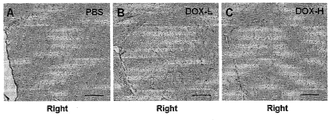
도 5는 다능성 인자 유전자-이식 뇌 허혈 마우스에서 인 시투 다능성 인자의 발현에 의한 이형성(dysplasia)이 나타나지 않음을 보여준다(A-C = 200 ㎛).
도 6a-6c는 다능성 인자 유전자 이식-뇌 허혈 마우스의 뇌실하 부위에서의 세포 증식(BrdU+ 세포) 및 신경줄기세포(Nestin+ 세포)와 성상세포(GFAP+ 세포)로의 우세한 분화를 보여주는 면역조직화학염색 결과이다.
도 7a-7d는 다능성 인자 유전자 이식-뇌 허혈 마우스의 선조체에서의 세포 증식(BrdU+ 세포) 및 성상세포(GFAP+ 세포)로의 우세한 분화 및 신경아교세포반흔(CS-56+ 세포)이 형성되지 않음을 보여주는 면역조직화학염색 결과이다.
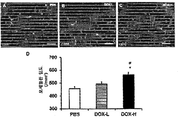
도 8a-8b는 성상세포와 뉴런세포에서 혈관생성인자의 발현 정도를 보여주는 면역분석 결과이다. 대조군에 비하여 다능성 인자가 발현된 마우스에서 혈관이 증가된 것을 수량화하여 그래프로 나타내었다.
도 9a-9c는 다능성 인자 유전자 이식-뇌 허혈 마우스의 선조체에서 혈관생성(CD31+ 세포)이 증가하였음을 보여주는 면역조직화학염색 결과이다(A-C = 100 ㎛, E-M = 25 ㎛).
이하, 실시예를 통하여 본 발명을 더욱 상세히 설명하고자 한다. 이들 실시예는 오로지 본 발명을 보다 구체적으로 설명하기 위한 것으로, 본 발명의 요지에 따라 본 발명의 범위가 이들 실시예에 의해 제한되지 않는다는 것은 당업계에서 통상의 지식을 가진 자에 있어서 자명할 것이다.
실시예
실험재료 및 실험방법
뇌 허혈 마우스 모델(2-vessel occlusion mouse model)
마우스의 양측 총경동맥(birateral common carotid artery)을 일시적으로 결찰하고, 20분 후 풀어주어 허혈성 뇌손상(ischemic brain injury)을 유도하였다.
다능성
인자 유도 - 바이러스 벡터 이용
상술한 뇌 허혈 마우스에 허혈 뇌손상 후 즉시 양측 측뇌실(lateral ventricle)로 다능성 인자(Oct-4, Sox2, c-Myc 및 Klf4)를 발현하는 센다이 바이러스(CytoTumeTM-IPS Sendai Reprogramming Kit, Life Technologies, Carlsbad, CA)를 주입하였다. 대조군은 초록색 형광 리포터만을 발현하는 센다이 바이러스(CytoTumeTM-EmGFP Sendai Fluorescence Reporter, Life Technologies, Carlsbad, CA)를 이용하였다. 상기 실험 과정을 도 1의 A에 나타내었다.
다능성
인자 유도 -
독시사이클린
삼투압 펌프 이용
독시사이클린 투여 시 이식된 다능성 인자 유전자를 발현하도록 제조된 트랜스제닉 마우스(reprogrammable mice; Gt(ROSA)26Sortm1(
rtTA
*
M2
)
Jae Col1a1tm3(
tetO
-
Pou5f1
,-Sox2,-Klf4,-Myc)Jae/J)에서 허혈 뇌손상 후 즉시 오른쪽 측 뇌실(lateral ventricle)로 독시사이클린이 들어있는 삼투압 펌프를 이식하여 약 7일간 다능성 인자를 발현하도록 하였다. 이때 독시사이클린 농도에 따른 효과를 비교하기 위하여 두 가지 농도(1 ㎍/㎖(낮은 농도군)과 100 ㎍/㎖(높은 농도군))로 진행하였고, 대조군에는 인산 완충 식염수(phosphate buffered saline)가 들어간 삼투압 펌프를 이식하였다. 모든 마우스는 새로 생성된 세포를 표지하기 위하여 BrdU(5-bromo-2-deoxyuridine, 50 mg/kg)를 허혈 뇌손상 후 다음날부터 약 2주간 복강 내 주사해 주었다. 상기 실험 과정을 도 1의 B에 나타내었다.
운동 기능 테스트(behavioral assessment)
운동협조(motor coordination) 기능을 평가하기 위하여, 로타로드(Cat. No. 47600, UGO Basile, VA, Italy)를 이용하여 2주 간격으로 로타로드(rotarod) 시험을 진행하였다. 구체적으로, 48 rpm의 고정 속력과 4-80 rpm까지의 가속력 방법으로 5분간 시행하는 동안, 대상 동물이 로드에서 떨어지는 시간을 측정하였다. 평가를 2차례 진행하였고, 평균 지속시간(mean latency)을 분석하였다.
사다리 보행 검사로서, 다양한 거리로 철심 가로단(rung)이 놓여 있는 1 m 거리의 수평 사다리에서 대상 쥐를 4차례 보행하도록 한 후, 사다리 가로단 사이로 미끄러져 떨어지는 횟수(number of slips)를 비디오 분석을 통해 측정하였다.
실험결과는 도 2a-2b 및 3a-3b에 나타내었다.
면역화학염색(
Immunohistochemistry
; IHC)
면역화학염색을 실시하기 위하여, 일단 환경과 부유 환경에서 사육 8주 후, 대상 동물의 뇌 조직을 적출한 후 16 ㎛ 간격으로 절단하고, 마이크로 글라스 슬라이드 상에 뇌 조직 절편(section)을 부착시켰다. 다능성 인자의 발현 확인을 위하여, 센다이 바이러스 이식 후 3일째 되는 마우스의 뇌 조직에서 Oct4 항체를 이용하여 면역화학염색 후 공초점 현미경으로 관찰하였다. 실험결과는 도 4에 나타내었다.
in situ 다능성 인자 발현에 의한 이형성(Dysplasia)을 확인하기 위하여 hematoxylin-eosin 염색법을 이용하여 염색 후 현미경으로 관찰하였다. 실험결과는 도 5에 나타내었다.
in situ 다능성 인자 발현에 의한 세포 증식(BrdU 항체)과 신경줄기세포(Nestin 항체) 및 성상세포(GFAP 항체) 등을 표지하는 항체를 이용하여 면역화학염색 후 공초점 현미경으로 확인하였다. 또한, 증식된 성상세포의 반흔 형성 여부를 확인하기 위하여 신경아교세포반흔(CS-56 항체)을 확인하였다. 실험결과는 도 6a-6c 및 7a-7d에 나타내었다.
in situ 다능성 인자 발현에 의한 혈관 생성을 확인하기 위하여, 혈관내피세포 표지 항체인 CD31을 이용하여 면역화학염색 후 공초점 현미경으로 확인하였다. 실험결과는 도 8a-8b에 나타내었다.
세포 배양
어떤 세포에서 혈관생성인자가 발현되는지 확인하기 위하여, 마우스 성상세포 세포주(C8-D1A; Astrocyte Type 1 clone, ATCC, CRL-2541)와 신경 모세포주 (N1E-115, ATCC, CRL-2263)를 무혈청(serum free) 배양액에서 이틀간 배양한 후, 세포를 거두어 실험에 사용하였다.
면역분석
면역분석을 위하여, 얻은 세포로부터 용해 용액을 이용하여 추출한 단백질을 SDS 폴리아크릴아마이드 젤 전기영동(polyacrylamide gel electrophoresis)에 의하여 분획한 다음, 영동된 분획의 위치를 그대로 여과지에 옮겼다. 여과지에 옮겨진 단백질은, 혈관생성인자들인 ANGPT1 (angiopoietin-1), VEGFA (vascular endothelial growth factor-A), FGF2 (fibroblast growth factor-2) 항체와 항존 유전자 단백질인 GAPDH 항체를 이용하여 방사선 면역검정법(radioimmunoassay)으로 검출하였다. 실험결과는 도 9a-9c에 나타내었다.
실험결과
운동 기능 테스트 결과
뇌 허혈 마우스에서 인 시투 다능성 인자 발현에 의한 운동 기능 변화를 확인하기 위하여, 로타로드와 사다리 보행 검사로 행동검사를 시행하였다. 그 결과, 도 2a에 나타낸 바와 같이, 센다이 바이러스를 투여한 뇌 허혈 마우스에서, 로타로드의 가속(4-80 rpm) 속도에서 다능성 인자 발현된 마우스들이 대조군에 비해 2주 후 지속시간이 유의하게 증가하였다(오른쪽 그래프). 사다리 보행검사 결과, 대조군에 비해 다능성 인자 발현시킨 마우스에서 앞다리의 미끄러짐 정도가 4주에 감소하는 양상을 보였다(도 2b).
또한, 도 3a에 나타낸 바와 같이, 다능성 인자 유전자가 이식된 뇌 허혈 마우스에서 독시사이클린 투여로 다능성 인자 발현을 유도하였을 때, 독시사이클린의 높은 농도군(100 ㎍/㎖)에서 로타로드의 가고정(48 rpm) 속도에서는 대조군 및 낮은 농도군(1 ㎍/㎖)에 비해 2주부터 유의하게 지속시간이 증가하기 시작했고, 4주까지 이러한 양상이 유지되었다(왼쪽 그래프). 로타로드의 가속(4-80 rpm) 속도에서도 독시사이클린의 높은 농도군(100 ㎍/㎖)이 2주에 대조군 및 낮은 농도군(1 ㎍/㎖)에 비해 유의하게 증가하기 시작했고, 4주에서는 대조군에 비해서만 유의하게 지속시간이 증가하였다(오른쪽 그래프). 사다리 보행 검사 결과, 대조군에 비해 독시사이클린 높은 농도군(100 ㎍/㎖) 및 낮은 농도군(1 ㎍/㎖) 마우스에서 앞다리의 미끄러짐 정도가 2주에서 감소하는 양상을 보였고, 4주에서는 높은 농도군(100 ㎍/㎖)에서만 유의하게 감소함을 보였다(도 3b).
면역화학염색 결과
in situ 다능성 인자 발현의 확인을 위해 센다이 바이러스 이식 후 3일째 되는 마우스의 뇌 조직에서 면역화학 염색 후 공초점형 현미경에서 확인하였다. 그 결과, 도 4에 나타낸 바와 같이, 뇌실로 센다이 바이러스 이식 후 3일째 되었을 때 마우스 뇌 조직에서의 Oct4 항체를 이용하여 면역조직화학 염색법을 이용하여 확인한 결과, 패널 A에서와 같이 대조군에서는 염색이 되지 않았고, 패널 B에서 센다이 바이러스에 의한 Oct4 발현이 나타났으며, 패널 C에서는 초록색 형광 리포터만을 발현하는 센다이 바이러스에 의한 초록색 형광 발현이 나타났다.
in situ 다능성 인자 발현에 의한 이형성(dysplasia) 확인을 위하여, hematoxylin-eosin 염색법을 이용하여 염색 후 현미경에서 확인하였다. 그 결과, 도 5에 나타낸 바와 같이, 손상된 뇌에서의 높은 농도(100 ㎍/㎖) 및 낮은 농도(1 ㎍/㎖)의 독시사이클린에 의한 다능성 인자 발현은 이형성(dysplasia)을 하지 않는 것을 확인하였다. 패널 A의 대조군과 패널 B의 낮은 농도군(1 ㎍/㎖) 및 패널 C의 높은 농도군(100 ㎍/㎖)에서 모두 이형성(dysplasia)이 되지 않음을 확인하였다.
다능성 인자 유전자-이식 뇌 허혈 마우스의 뇌 조직에서의 세포 증식과 분화를 면역조직화학염색으로 확인하였다. 그 결과, 도 6a-6b에 나타낸 바와 같이, 뇌실하대에서의 세포 증식(BrdU+ 세포)을 확인하였다(패널 A). 높은 농도(100 ㎍/㎖) 및 낮은 농도(1 ㎍/㎖)의 독시사이클린에 의한 다능성 인자 발현은 대조군에 비하여 새로운 세포의 생성을 증가시키고, 마찬가지로 신경줄기세포(Nestin+ 세포)로의 분화를 유도할 뿐 아니라(패널 B), 성상세포(GFAP+ 세포)로의 분화를 증가시킨다(패널 C). 반면에 어린신경세포(Tuj-1+ 세포)의 염색을 통해 새로 생성된 세포가 신경세포로의 분화가 유도되지 않음을 보였다(패널 D). 도 6c의 패널 E, H 및 K는 대조군에서의 신경줄기세포(Nestin+ 세포), 성상세포(GFAP+ 세포) 및 어린신경세포(Tuj-1+ 세포)를 나타내었다. 패널 F, I 및 J는 낮은 농도(1 ㎍/㎖)군에서의 신경줄기세포(Nestin+ 세포), 성상세포(GFAP+ 세포) 및 어린신경세포(Tuj-1+ 세포)를 나타내고, 패널 K, L 및 M은 뇌 허혈 손상 마우스의 높은 농도(100 ㎍/㎖)군에서의 신경줄기세포(Nestin+ 세포), 성상세포(GFAP+ 세포) 및 어린신경세포(Tuj-1+ 세포)를 나타낸다(E-M = 25 ㎛).
또한, 도 7a-7b에 나타낸 바와 같이, 선조체에서 새로운 세포의 세포 증식(BrdU+ 세포)이 일어났다(패널 A). 손상된 뇌에서의 높은 농도(100 ㎍/㎖) 및 낮은 농도(1 ㎍/㎖)의 독시사이클린에 의한 다능성 인자 발현은 대조군에 비하여 새로운 세포의 생성을 증가시키고, 마찬가지로 성상세포(GFAP+ 세포)로의 분화를 증가시켰다(패널 B). 반면에 새로 생성된 세포가 신경세포로의 분화가 유도되지 않음을 보였다(패널 C). 도 7c-7d의 패널 E 및 H는 대조군에서의 성상세포(GFAP+ 세포) 및 어린신경세포(Tuj-1+ 세포)를 나타낸다. 패널 F 및 I는 낮은 농도(1 ㎍/㎖)군에서의 성상세포(GFAP+ 세포) 및 어린신경세포(Tuj-1+ 세포)를 나타내고, 패널 G 및 J는 높은 농도(100 ㎍/㎖)군에서의 성상세포(GFAP+ 세포) 및 어린신경세포(Tuj-1+ 세포)를 나타낸다(E-J = 25 ㎛). 또한, 새롭게 생성된 성상세포가 신경아교세포반흔(CS-56+ 세포)을 형성하였는지 확인한 결과, 그룹 간에 차이가 없음을 확인하였다(K-P = 50 ㎛).
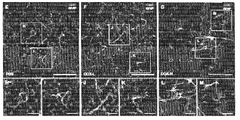
도 8a에 나타낸 바와 같이, 손상된 뇌에서의 높은 농도(100 ㎍/㎖)의 독시사이클린에 의한 다능성 인자 발현은 선조체(striatum)에서의 혈관 증식(CD31+ 세포)을 나타내었다. 패널 A는 대조군, 패널 B는 낮은 농도군(1 ㎍/㎖), 패널 C는 높은 농도군(100 ㎍/㎖)을 나타내며, 독시사이클린 높은 농도군(100 ㎍/㎖)에서 유의하게 혈관 증식(CD31+ 세포)이 나타났다(패널 D). 도 8b의 패널 E-M은 대조군, 낮은 농도군(1 ㎍/㎖) 및 높은 농도군(100 ㎍/㎖)에서의 성상세포(GFAP+ 세포)와 혈관(CD31+ 세포)와의 상호관계를 나타낸다(E-M = 25 ㎛).
면역분석 결과
어떤 세포에서 혈관생성인자가 발현되는지 확인하기 위하여, 마우스 성상세포 세포주(C8-D1A)와 신경 모세포주(N1E-115)를 무혈청 배양액에서 이틀간 배양한 후, 세포를 거두어 단백질을 추출하여 혈관생성인자들인 ANGPT1 (angiopoietin-1), VEGFA (vascular endothelial growth factor-A) 및 FGF2 (fibroblast growth factor-2) 항체와 항존 유전자 단백질인 GAPDH 항체로 면역분석을 실시하였다.
그 결과, 도 9a-9c에 나타낸 바와 같이, 결과적으로 신경세포보다는 성상세포에서 혈관생성인자가 더 많이 발현되었음을 확인하였다. 패널 A는 ANGPT1, 패널 B는 VEGFA, 패널 C는 FGF2가 성상세포에서 증가되었음을 보여준다.
이상으로 본 발명의 특정한 부분을 상세히 기술하였는바, 당업계의 통상의 지식을 가진 자에게 있어서 이러한 구체적인 기술은 단지 바람직한 구현 예일 뿐이며, 이에 본 발명의 범위가 제한되는 것이 아닌 점은 명백하다. 따라서, 본 발명의 실질적인 범위는 첨부된 청구항과 그의 등가물에 의하여 정의된다고 할 것이다.
Claims (12)
- Oct-4(Octamer-binding transcription factor 4), Sox2(SRY-box containing gene 2), c-Myc(c-myelocytomatosis oncogene) 및 Klf4(Kruppel-like factor 4)인 4종의 다능성 인자를 암호화하는 단일의 핵산 분자를 유효성분으로 포함하고, 생체 내(in vivo) 유전자 치료에 이용되는 뇌신경 질환의 예방 또는 치료용 약제학적 조성물.
- Oct-4(Octamer-binding transcription factor 4), Sox2(SRY-box containing gene 2), c-Myc(c-myelocytomatosis oncogene) 및 Klf4(Kruppel-like factor 4)인 4종의 다능성 인자를 별도로 암호화하는 복수개의 핵산 분자를 유효성분으로 포함하고, 생체 내(in vivo) 유전자 치료에 이용되는 뇌신경 질환의 예방 또는 치료용 약제학적 조성물.
- 제 1 항 또는 제 2 항에 있어서, 상기 뇌신경 질환은 뇌졸중, 뇌성마비, 허혈성 뇌손상, 외상성 뇌손상, 섬망 및 퇴행성 뇌신경 질환으로 구성된 군으로부터 선택되는 것을 특징으로 하는 조성물.
- 제 3 항에 있어서, 상기 퇴행성 뇌신경 질환은 치매, 파킨슨병 또는 헌팅턴병인 것을 특징으로 하는 조성물.
- 제 1 항 또는 제 2 항에 있어서, 상기 조성물은 뇌신경 질환의 증상인 인지기능 저하를 회복시키는 것을 특징으로 하는 조성물.
- 제 1 항 또는 제 2 항에 있어서, 상기 조성물은 뇌신경 질환의 증상인 운동기능 저하를 회복시키는 것을 특징으로 하는 조성물.
- 제 1 항 또는 제 2 항에 있어서, 상기 조성물은 뇌 조직에서 신생혈관생성(angiogenesis)을 유도하거나, 또는 성상교세포 또는 신경전구세포의 증식을 유도하는 것을 특징으로 조성물.
- 제 1 항 또는 제 2 항에 있어서, 상기 조성물은 뇌 조직으로 투여되고, 4종의 다능성 인자는 뇌 조직에서 발현되는 것을 특징으로 하는 조성물.
- 제 1 항 또는 제 2 항에 있어서, 상기 핵산 분자는 유전자 전달체에 포함되어 있거나, 또는 네이키드 DNA(naked DNA)인 것을 특징으로 하는 조성물.
- 제 9 항에 있어서, 상기 유전자 전달체는 바이러스 벡터, 플라스미드, 리포좀, 니오좀, 지질-유전자 결합체(Lipid-DNA complex) 또는 폴리머-유전자 결합체(Polymer-DNA complex)인 것을 특징으로 하는 조성물.
- Oct-4(Octamer-binding transcription factor 4), Sox2(SRY-box containing gene 2), c-Myc(c-myelocytomatosis oncogene) 및 Klf4(Kruppel-like factor 4)인 4종의 다능성 인자를 암호화하는 단일의 핵산 분자를 포함하는 약제학적 조성물을 치료가 필요한 개체에게 투여하는 단계를 포함하는 생체 내(in vivo) 유전자 치료를 통한 뇌신경 질환의 치료방법.
- Oct-4(Octamer-binding transcription factor 4), Sox2(SRY-box containing gene 2), c-Myc(c-myelocytomatosis oncogene) 및 Klf4(Kruppel-like factor 4)인 4종의 다능성 인자를 별도로 암호화하는 복수개의 핵산 분자를 포함하는 약제학적 조성물을 치료가 필요한 개체에게 투여하는 단계를 포함하는 생체 내(in vivo) 유전자 치료를 통한 뇌신경 질환의 치료방법.
Applications Claiming Priority (2)
| Application Number | Priority Date | Filing Date | Title |
|---|---|---|---|
| KR10-2015-0055225 | 2015-04-20 | ||
| KR1020150055225A KR101663811B1 (ko) | 2015-04-20 | 2015-04-20 | 뇌신경 질환의 예방 또는 치료용 약제학적 조성물 |
Publications (1)
| Publication Number | Publication Date |
|---|---|
| WO2016171448A1 true WO2016171448A1 (ko) | 2016-10-27 |
Family
ID=57143968
Family Applications (1)
| Application Number | Title | Priority Date | Filing Date |
|---|---|---|---|
| PCT/KR2016/004068 Ceased WO2016171448A1 (ko) | 2015-04-20 | 2016-04-19 | 뇌신경 질환의 예방 또는 치료용 약제학적 조성물 |
Country Status (2)
| Country | Link |
|---|---|
| KR (1) | KR101663811B1 (ko) |
| WO (1) | WO2016171448A1 (ko) |
Cited By (1)
| Publication number | Priority date | Publication date | Assignee | Title |
|---|---|---|---|---|
| US12582698B2 (en) | 2018-09-28 | 2026-03-24 | President And Fellows Of Harvard College | Cellular reprogramming to reverse aging and promote organ and tissue regeneration |
Citations (5)
| Publication number | Priority date | Publication date | Assignee | Title |
|---|---|---|---|---|
| KR20040108321A (ko) * | 2003-06-14 | 2004-12-23 | 재단법인서울대학교산학협력재단 | 뇌혈관장벽 장애의 치료 또는 예방을 위한 약제학적 조성물 |
| KR20110134939A (ko) * | 2009-04-03 | 2011-12-15 | 더 맥클린 하스피털 코퍼레이션 | 유도된 다능성 줄기 세포 |
| US20120301446A1 (en) * | 2010-02-04 | 2012-11-29 | Vivoscript, Inc. | Compositions and methods for re-programming cells without genetic modification for treatment of neurological disorders |
| KR20130133598A (ko) * | 2012-05-29 | 2013-12-09 | 차의과학대학교 산학협력단 | 헌팅턴병 환자에서 유래한 유도만능줄기세포를 이용하여 헌팅턴병 치료제를 스크리닝하는 방법 |
| KR20140059093A (ko) * | 2012-11-07 | 2014-05-15 | 연세대학교 산학협력단 | 조혈성장인자를 포함하는 뇌질환의 예방 또는 치료용 조성물 |
-
2015
- 2015-04-20 KR KR1020150055225A patent/KR101663811B1/ko not_active Expired - Fee Related
-
2016
- 2016-04-19 WO PCT/KR2016/004068 patent/WO2016171448A1/ko not_active Ceased
Patent Citations (5)
| Publication number | Priority date | Publication date | Assignee | Title |
|---|---|---|---|---|
| KR20040108321A (ko) * | 2003-06-14 | 2004-12-23 | 재단법인서울대학교산학협력재단 | 뇌혈관장벽 장애의 치료 또는 예방을 위한 약제학적 조성물 |
| KR20110134939A (ko) * | 2009-04-03 | 2011-12-15 | 더 맥클린 하스피털 코퍼레이션 | 유도된 다능성 줄기 세포 |
| US20120301446A1 (en) * | 2010-02-04 | 2012-11-29 | Vivoscript, Inc. | Compositions and methods for re-programming cells without genetic modification for treatment of neurological disorders |
| KR20130133598A (ko) * | 2012-05-29 | 2013-12-09 | 차의과학대학교 산학협력단 | 헌팅턴병 환자에서 유래한 유도만능줄기세포를 이용하여 헌팅턴병 치료제를 스크리닝하는 방법 |
| KR20140059093A (ko) * | 2012-11-07 | 2014-05-15 | 연세대학교 산학협력단 | 조혈성장인자를 포함하는 뇌질환의 예방 또는 치료용 조성물 |
Cited By (1)
| Publication number | Priority date | Publication date | Assignee | Title |
|---|---|---|---|---|
| US12582698B2 (en) | 2018-09-28 | 2026-03-24 | President And Fellows Of Harvard College | Cellular reprogramming to reverse aging and promote organ and tissue regeneration |
Also Published As
| Publication number | Publication date |
|---|---|
| KR101663811B1 (ko) | 2016-10-11 |
Similar Documents
| Publication | Publication Date | Title |
|---|---|---|
| Li et al. | Nerve conduit filled with GDNF gene‐modified schwann cells enhances regeneration of the peripheral nerve | |
| US10675382B2 (en) | Schwann cells and method for preparing same | |
| US9688733B2 (en) | Method for treating spinal cord injury using HMGB1 fragment | |
| WO2011049291A2 (ko) | TGFβ를 코딩하는 뉴클레오티드 서열이 도입된 간엽줄기세포 및 그의 용도 | |
| WO2019147036A1 (ko) | 뇌유래-신경영양인자를 발현하는 중간엽줄기세포 및 이의 용도 | |
| WO2021091316A1 (ko) | Tmem176b, 이의 발현 또는 활성 조절제를 유효성분으로 포함하는 퇴행성 뇌질환 예방 또는 치료용 조성물 | |
| EP4458955A1 (en) | Factor for direct conversion of motor nerve cells | |
| KR101446711B1 (ko) | 간세포 성장인자 유전자 및 염기성 나선-고리-나선 계열의 신경형성 전사인자 유전자가 도입된 성체 줄기세포주 및 그의 용도 | |
| CN117500530A (zh) | α-突触核蛋白抑制用组合物及聚集抑制方法 | |
| WO2016171448A1 (ko) | 뇌신경 질환의 예방 또는 치료용 약제학적 조성물 | |
| JP7680072B2 (ja) | リプログラミング用機能性断片、組み合わせ、およびその用途 | |
| KR20190132263A (ko) | Ccn5를 유효성분으로 포함하는 망막질환 예방 또는 치료용 약학 조성물 | |
| WO2020080920A2 (ko) | 전자기파 반응성 프로모터를 이용하여 타겟 유전자를 과발현시키는 방법 | |
| Fu et al. | Effect of carbamylated erythropoietin on major histocompatibility complex expression and neural differentiation of human neural stem cells | |
| WO2016076507A1 (ko) | 렙틴을 포함하는 유도만능줄기세포로의 역분화 유도용 조성물 및 이를 이용한 유도만능줄기세포로의 역분화 유도 방법 | |
| WO2020242279A2 (en) | Composition and method for inhibiting tau protein accumulation, aggregation, and tangle formation | |
| WO2017081033A1 (en) | Cell differentiation or reprogramming using fezf2 and lmo4 | |
| KR101971557B1 (ko) | Lin28의 발현을 이용한 재생능 및 분화능이 우수한 줄기세포의 제조방법 | |
| WO2021251513A1 (ko) | 체세포로부터 운동뉴런으로의 직접교차분화 유도용 조성물 및 이의 이용방법 | |
| AU2006261485A1 (en) | Amniotic cells and methods for use thereof | |
| JP7685767B2 (ja) | 網膜色素上皮細胞の製造方法 | |
| Luo et al. | Inhibition of Chondroitin Sulfate Proteoglycan Interactions With Receptor PTPσ Promotes Neurogenesis and Recovery From Stroke | |
| KR20250057176A (ko) | Arid4b 유전자 발현을 통한 신경세포로의 직접교차분화 유도 방법 | |
| WO2011155641A1 (en) | Method for producing erythropoietin, and method for isolating erythropoietin-producing cells | |
| KR20250047689A (ko) | 알파-시누클레인 응집 억제용 조성물 및 응집억제 방법 |
Legal Events
| Date | Code | Title | Description |
|---|---|---|---|
| 121 | Ep: the epo has been informed by wipo that ep was designated in this application |
Ref document number: 16783381 Country of ref document: EP Kind code of ref document: A1 |
|
| NENP | Non-entry into the national phase |
Ref country code: DE |
|
| 122 | Ep: pct application non-entry in european phase |
Ref document number: 16783381 Country of ref document: EP Kind code of ref document: A1 |