WO2016136184A1 - 車両用の充電器および充電管理システム - Google Patents
車両用の充電器および充電管理システム Download PDFInfo
- Publication number
- WO2016136184A1 WO2016136184A1 PCT/JP2016/000795 JP2016000795W WO2016136184A1 WO 2016136184 A1 WO2016136184 A1 WO 2016136184A1 JP 2016000795 W JP2016000795 W JP 2016000795W WO 2016136184 A1 WO2016136184 A1 WO 2016136184A1
- Authority
- WO
- WIPO (PCT)
- Prior art keywords
- telephone number
- charger
- charging
- dimensional code
- telephone
- Prior art date
- Legal status (The legal status is an assumption and is not a legal conclusion. Google has not performed a legal analysis and makes no representation as to the accuracy of the status listed.)
- Ceased
Links
Images



Classifications
-
- B—PERFORMING OPERATIONS; TRANSPORTING
- B60—VEHICLES IN GENERAL
- B60L—PROPULSION OF ELECTRICALLY-PROPELLED VEHICLES; SUPPLYING ELECTRIC POWER FOR AUXILIARY EQUIPMENT OF ELECTRICALLY-PROPELLED VEHICLES; ELECTRODYNAMIC BRAKE SYSTEMS FOR VEHICLES IN GENERAL; MAGNETIC SUSPENSION OR LEVITATION FOR VEHICLES; MONITORING OPERATING VARIABLES OF ELECTRICALLY-PROPELLED VEHICLES; ELECTRIC SAFETY DEVICES FOR ELECTRICALLY-PROPELLED VEHICLES
- B60L50/00—Electric propulsion with power supplied within the vehicle
- B60L50/50—Electric propulsion with power supplied within the vehicle using propulsion power supplied by batteries or fuel cells
- B60L50/60—Electric propulsion with power supplied within the vehicle using propulsion power supplied by batteries or fuel cells using power supplied by batteries
-
- H—ELECTRICITY
- H02—GENERATION; CONVERSION OR DISTRIBUTION OF ELECTRIC POWER
- H02J—ELECTRIC POWER NETWORKS; CIRCUIT ARRANGEMENTS OR SYSTEMS FOR SUPPLYING OR DISTRIBUTING ELECTRIC POWER; SYSTEMS FOR STORING ELECTRIC ENERGY
- H02J7/00—Circuit arrangements for charging or discharging batteries or for supplying loads from batteries
- H02J7/02—Circuit arrangements for charging or discharging batteries or for supplying loads from batteries for charging batteries from AC mains by converters
-
- G—PHYSICS
- G06—COMPUTING OR CALCULATING; COUNTING
- G06K—GRAPHICAL DATA READING; PRESENTATION OF DATA; RECORD CARRIERS; HANDLING RECORD CARRIERS
- G06K7/00—Methods or arrangements for sensing record carriers, e.g. for reading patterns
- G06K7/10—Methods or arrangements for sensing record carriers, e.g. for reading patterns by electromagnetic radiation, e.g. optical sensing; by corpuscular radiation
-
- G—PHYSICS
- G06—COMPUTING OR CALCULATING; COUNTING
- G06K—GRAPHICAL DATA READING; PRESENTATION OF DATA; RECORD CARRIERS; HANDLING RECORD CARRIERS
- G06K7/00—Methods or arrangements for sensing record carriers, e.g. for reading patterns
- G06K7/10—Methods or arrangements for sensing record carriers, e.g. for reading patterns by electromagnetic radiation, e.g. optical sensing; by corpuscular radiation
- G06K7/14—Methods or arrangements for sensing record carriers, e.g. for reading patterns by electromagnetic radiation, e.g. optical sensing; by corpuscular radiation using light without selection of wavelength, e.g. sensing reflected white light
-
- G—PHYSICS
- G06—COMPUTING OR CALCULATING; COUNTING
- G06Q—INFORMATION AND COMMUNICATION TECHNOLOGY [ICT] SPECIALLY ADAPTED FOR ADMINISTRATIVE, COMMERCIAL, FINANCIAL, MANAGERIAL OR SUPERVISORY PURPOSES; SYSTEMS OR METHODS SPECIALLY ADAPTED FOR ADMINISTRATIVE, COMMERCIAL, FINANCIAL, MANAGERIAL OR SUPERVISORY PURPOSES, NOT OTHERWISE PROVIDED FOR
- G06Q50/00—Information and communication technology [ICT] specially adapted for implementation of business processes of specific business sectors, e.g. utilities or tourism
- G06Q50/10—Services
-
- H—ELECTRICITY
- H02—GENERATION; CONVERSION OR DISTRIBUTION OF ELECTRIC POWER
- H02J—ELECTRIC POWER NETWORKS; CIRCUIT ARRANGEMENTS OR SYSTEMS FOR SUPPLYING OR DISTRIBUTING ELECTRIC POWER; SYSTEMS FOR STORING ELECTRIC ENERGY
- H02J7/00—Circuit arrangements for charging or discharging batteries or for supplying loads from batteries
-
- Y—GENERAL TAGGING OF NEW TECHNOLOGICAL DEVELOPMENTS; GENERAL TAGGING OF CROSS-SECTIONAL TECHNOLOGIES SPANNING OVER SEVERAL SECTIONS OF THE IPC; TECHNICAL SUBJECTS COVERED BY FORMER USPC CROSS-REFERENCE ART COLLECTIONS [XRACs] AND DIGESTS
- Y02—TECHNOLOGIES OR APPLICATIONS FOR MITIGATION OR ADAPTATION AGAINST CLIMATE CHANGE
- Y02T—CLIMATE CHANGE MITIGATION TECHNOLOGIES RELATED TO TRANSPORTATION
- Y02T10/00—Road transport of goods or passengers
- Y02T10/60—Other road transportation technologies with climate change mitigation effect
- Y02T10/70—Energy storage systems for electromobility, e.g. batteries
Definitions
- the present disclosure relates to a vehicle charger and a charge management system.
- Patent Document 1 discloses a technique for charging for each user using information on the telephone number of a mobile phone carried by the user of the vehicle when charging the vehicle. Specifically, in the system described in Patent Document 1, a unique telephone number is assigned to the charger, and the user can call the charger phone from his / her mobile phone before charging with the charger. Call the number. As a result, a call connection request is transmitted from the mobile phone, reaches the charger via the service providing device, and the call is established. When the call is established, charging from the charger to the vehicle begins. Then, the service providing apparatus records charging information for charging the vehicle from the charger in association with the transmission source telephone number (that is, the telephone number of the mobile phone) included in the call connection request.
- the transmission source telephone number that is, the telephone number of the mobile phone
- a charging gun which is part of the charger, is connected to the vehicle when charging, but charging is not performed until a call is established in order to prevent children from handling the charging gun for mischief purposes (for example, swinging). It is conceivable to unlock the gun and make it removable from the holder.
- the first object of the present disclosure is to appropriately select a charging target for charging in a technology for charging for each user using information on the telephone number of a mobile phone carried by the user of the vehicle. This is to reduce the possibility of failure.
- a second object is to reduce time wastage during a period from when the user calls the charger to when the call is established.
- the charger records an acquisition unit that acquires a first telephone number by a predetermined transmission method different from a telephone, and records the first telephone number acquired by the acquisition unit in a memory. Based on the reception of the telephone call connection request with the recording unit, the second telephone number included in the call connection request is collated with the first telephone number recorded in the memory, Based on the collation determination unit that determines whether or not they match, and the collation determination unit determining that they match, the charging to the vehicle is permitted and the charging process for the first telephone number is performed And a charge control unit that prohibits charging of the vehicle based on the fact that the collation determination unit determines that the two do not match.
- the charger permits charging based on the fact that the first telephone number acquired by a predetermined transmission method different from the telephone matches the second telephone number included in the call connection request, Charging is prohibited based on the mismatch.
- the user can use his / her mobile phone by the predetermined transmission method. If the telephone number (first telephone number) is transmitted to the charger, charging is prohibited. This is because the second telephone number (the telephone number of the telephone used by the other person) included in the call connection request received by the charger does not match the first telephone number. Therefore, the possibility that the charging object for charging is not properly selected is reduced.
- a charge management system is a charge management system including a charger for charging a vehicle and a service providing server, wherein the charger is a predetermined transmission method different from a telephone.
- the service providing server includes a second telephone number, which is a telephone number of a mobile phone carried by the user, as a transmission source telephone number, and stores the first telephone number in the memory.
- the call connection request is transferred to the charger based on the reception of the call connection request including the number as a destination telephone number, and the charger receives the call connection request transferred by the service providing server.
- the second telephone number included in the call connection request is compared with the first telephone number recorded in the memory to determine whether or not they match, Match Based on the determination by the collation determination unit, the charging of the vehicle is permitted and the billing process for the first telephone number is performed, and the collation determination unit determines that they do not match Is a charge management system that prohibits charging of the vehicle.
- the user can use his / her mobile phone by the predetermined transmission method. If the telephone number (first telephone number) is transmitted to the charger, charging is prohibited. This is because the second telephone number (the telephone number of the telephone used by the other person) included in the call connection request received by the charger does not match the first telephone number. Therefore, the possibility that the charging object for charging is not properly selected is reduced.
- the charger according to the second aspect of the present disclosure includes an acquisition unit that acquires information by a predetermined transmission method different from a telephone, and a telephone number determination that determines whether the information acquired by the acquisition unit includes a telephone number And a charging gun that is a member connected to the vehicle for charging the vehicle based on the determination by the telephone number determination unit that the information acquired by the acquisition unit includes a telephone number.
- a charger comprising: an unlocking unit to be released; and a charging control unit that permits charging of the vehicle to which the charging gun is connected based on establishment of a telephone call.
- the charging gun Is unlocked. Therefore, since the user can perform the operation
- a charge management system is a charge management system including a charger that charges a vehicle and a service providing server, wherein the charger is a predetermined transmission method different from a telephone. Based on the fact that the information acquired in (1) includes a telephone number, the charging gun, which is a member connected to the vehicle for unlocking the vehicle, is unlocked, and the service providing server is carried by the user. Based on the reception of the call connection request including the second telephone number that is the telephone number of the telephone as the transmission source telephone number, the call connection request is transferred to the charger, and the charger is connected to the service providing server.
- the charging management system is characterized in that charging of the vehicle is permitted based on the establishment of a call upon receipt of the call connection request transferred by.
- the charging gun Is unlocked. Therefore, since the user can perform the operation
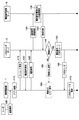
- FIG. 1 is a configuration diagram of a charge management system according to the embodiment.
- FIG. 2 is a sequence diagram showing the operation of the charge management system.
- FIG. 3 is a sequence diagram showing the operation of the charge management system.
- FIG. 4 is a sequence diagram showing the operation of the charge management system.
- the charge management system 100 of this embodiment is a system for charging a vehicle 8, and includes a mobile phone 1, a two-dimensional code server 2, a charger 4, a telephone number management server 5, a service.
- the providing server 6 is included.
- the telephone number management server 5 and the service providing server 6 are, for example, servers operated by a telephone operator.
- the mobile phone 1 is a phone carried by a user of the vehicle 8 and includes a communication unit 11, a display unit 12, a telephone number memory 13, an operation unit 14, and a control unit 15.
- the communication unit 11 is a well-known communication interface for performing telephone communication and data communication via the wide area communication network 7 (Internet, IP telephone network) or the like.
- the display unit 12 includes an image display device for displaying characters and images and a sound output device for outputting sound.
- the telephone number memory 13 is a memory (for example, a non-volatile flash memory) for storing data such as a telephone number.
- the operation unit 14 is a member for directly receiving a user operation, and includes, for example, a mechanical button, a touch panel, and the like.
- the control unit 15 includes a CPU, a RAM, a ROM, a flash memory, and the like. The CPU executes a program recorded in the ROM and the flash memory, and uses the RAM and the flash memory as a work area for the difference in execution.
- the two-dimensional code server 2 is a device that transmits a two-dimensional code (for example, QR code (registered trademark), hereinafter the same) of the telephone number of the mobile phone 1 to the mobile phone 1, and includes a communication unit 21 and a control unit 22. ing.
- the communication unit 11 is a known communication interface for data communication with the mobile phone 1, the telephone number management server 5, and the like via the wide area communication network 7.
- the control unit 22 includes a CPU, a RAM, a ROM, a flash memory, and the like. The CPU executes a program recorded in the ROM and the flash memory, and uses the RAM and the flash memory as a work area for the difference in execution.
- the charger 4 is a device that is installed in a parking lot or the like and charges the battery for traveling of the vehicle 8, and has a charging unit 4 a and a charger control device 3.
- the vehicle 8 is a vehicle that travels using the driving force generated by the electric motor as a travel power source (for example, a plug-in hybrid vehicle or an electric vehicle), and the travel battery is a secondary battery that serves as a power source for the electric motor. is there.
- the charging unit 4a is a device having equipment for charging the vehicle 8 using electric power supplied from a commercial power source (not shown), and includes a charging cable 41, a charging gun 42, a holder 43, and a lock mechanism 44.
- the charging cable 41 is a power line that transmits power to the vehicle 8 and a covering that covers the power line.
- the charging gun 42 is connected to the tip of the charging cable 41 on the vehicle 8 side, and is electrically connected to the battery for traveling of the vehicle 8 and the power line of the charging cable 41 by fitting into a charging port (not shown) of the vehicle 8. .
- the holder 43 is a member for holding and storing the charging gun 42.
- the charging gun 42 is held and stored in the holder 43 when not in use, and is removed from the holder 43 when in use.
- the lock mechanism 44 is a mechanism that locks the charging gun 42 held and stored in the holder 43 so that the charging gun 42 cannot be removed from the holder 43.
- the lock mechanism 44 is also a mechanism that allows the charging gun 42 to be removed from the holder 43 by releasing the lock. Any specific structure of the lock mechanism 44 may be used as long as it is controlled automatically by the control unit 34 and operates automatically.
- the charging control device 3 is a device that controls the charging unit 4a, and includes a communication unit 31, a reading unit 32, a telephone number memory 33, and a control unit 34.
- the communication unit 31 is a well-known communication interface for performing telephone communication and data communication via the wide area communication network 7 or the like.
- the telephone communication for example, telephone communication using VoIP communication using SIP (Session Initiation Protocol) is adopted.
- SIP Session Initiation Protocol
- the reading unit 32 is a device (for example, a camera) that reads a two-dimensional code.
- the telephone number memory 33 is a memory for recording telephone numbers and the like.
- the control unit 34 includes a CPU, a RAM, a ROM, a flash memory, and the like. The CPU executes a program recorded in the ROM and the flash memory, and uses the RAM and the flash memory as work areas when executing the program.
- the telephone number management server 5 is a server that manages registration of telephone numbers, and includes a communication unit 51, a telephone number management DB 52, and a control unit 53.
- the communication unit 51 is a known communication interface for communicating with the two-dimensional code server 2, the service providing server 6, and the like via the wide area communication network 7.
- the telephone number management DB 52 is a database including a storage medium in which telephone numbers of mobile phones of users who can use the charger 4 are registered.
- the control unit 53 includes a CPU, a RAM, a ROM, a flash memory, and the like.
- the CPU executes a program recorded in the ROM and the flash memory, and uses the RAM and the flash memory as work areas when executing the program.
- the service providing server 6 is a device that has a function of a call control device (specifically, a SIP server) in the IP telephone network and performs charging processing for charging using the charger 4, and includes a communication unit 61, charging information memory 62 and a control unit 63.
- a call control device specifically, a SIP server
- the communication unit 61 is a well-known communication interface for performing telephone communication and data communication via the wide area communication network 7 or the like.
- As the telephone communication for example, telephone communication using VoIP communication using SIP (Session Initiation Protocol) is adopted.
- the billing information memory 62 is a memory (for example, a non-volatile flash memory) in which billing information is recorded.
- the control unit 63 includes a CPU, a RAM, a ROM, a flash memory, and the like. The CPU executes a program recorded in the ROM and the flash memory, and uses the RAM and the flash memory as work areas when executing the program.
- a user using the charger 4 performs an operation of starting a two-dimensional encoding application on the mobile phone 1 owned by the operation unit 14 (step 105).
- the control unit 15 of the mobile phone 1 activates the two-dimensional coded application (step 110).
- the control part 15 of the mobile telephone 1 transmits an encoding request
- control unit 22 of the two-dimensional code server 2 When the control unit 22 of the two-dimensional code server 2 receives this encoding request via the wide area communication network 7, it transmits a telephone number request to the mobile phone 1 that is the transmission source of the encoding request (step 120).
- control unit 15 of the cellular phone 1 When the control unit 15 of the cellular phone 1 receives this telephone number request via the wide area communication network 7, it reads out its own telephone number from its own telephone number memory 13, and reads the read telephone number into the wide area communication network 7. Is transmitted to the two-dimensional code server 2 (step 125).
- the registration confirmation including the received telephone number is transmitted to the telephone number management server 5 via the wide area communication network 7 (step 130). .
- control unit 53 of the telephone number management server 5 When receiving the registration confirmation via the wide area communication network 7, the control unit 53 of the telephone number management server 5 confirms whether the telephone number included in the received registration confirmation is registered in the telephone number management DB 52 (step 135). ). And the control part 53 transmits the presence or absence of registration as a result of this confirmation to the two-dimensional code server 2 (transmission source of registration confirmation) via the wide area communication network 7 (step 140).
- the telephone number of the mobile phone 1 (the telephone number received from the mobile phone 1) is determined according to the received registration presence / absence content. It is determined whether or not it is registered in the telephone number management DB 52 of the telephone number management server 5 (step 145).
- control unit 22 transmits an unregistered answer to the mobile phone 1 via the wide area communication network 7 (step 150).
- the control unit 15 of the cellular phone 1 receives an answer indicating that there is no registration via the wide area communication network 7, the control unit 15 displays an error message indicating that there is no registration on the display unit 12 (step 155).
- the 2D coded application is terminated without displaying on the display unit 12.
- the control unit 22 encodes the telephone number received from the mobile phone 1 into a two-dimensional code (step 160), and transmits the encoded two-dimensional code to the mobile phone 1 (step 165). .
- the control unit 15 of the mobile phone 1 stores the received two-dimensional code in the telephone number memory 13 (step 170). Thereafter, the mobile phone 1 ends the two-dimensional coded application.
- the mobile phone 1 uses the two-dimensional code server 2 and the telephone number management server 5 to store the two-dimensional code obtained by encoding the telephone number of the own device in the memory.
- the two-dimensional code server 2 does not unconditionally encode the telephone number received from the mobile phone 1 into the two-dimensional code, but selects the case where the telephone number is registered in the telephone number management DB 52, The number is encoded into a two-dimensional code and transmitted to the mobile phone 1. In this way, even if a telephone number not registered in the telephone number management DB 52 is transmitted to the two-dimensional code server 2 by mischief, for example, the two-dimensional code server 2 does not encode the telephone number. The processing load on the two-dimensional code server 2 can be reduced.
- a user who uses the charger 4 uses the operation unit 14 to display a two-dimensional code on the display unit of the mobile phone 1. (Step 205).
- the control unit 15 of the mobile phone 1 displays the two-dimensional code (two-dimensional code indicating the own phone number) stored in the telephone number memory 13 in the above-described step 170 on the display unit 12. An image is displayed (step 210).
- the user holds the displayed two-dimensional code over the reading unit 32 of the charger control device 3 (step 215).
- This action is the first operation that the user performs on the charger 4 to start charging.
- the reading unit 32 of the charger control device 3 reads the held two-dimensional code and outputs it as image data to the control unit 34, and the control unit 34 decodes the two-dimensional code (step 220). As a result of decoding, a character string represented by a two-dimensional code is acquired.
- this two-dimensional code is a two-dimensional code formed by encoding the telephone number of the mobile phone 1 (corresponding to an example of the first telephone number), the telephone number of the mobile phone 1 is obtained by decoding.
- control unit 34 determines whether or not the decoded character string includes a numeric string having a telephone number system unique to the mobile phone (step 225). Whether or not a number string having a phone number system specific to a mobile phone is included is, for example, whether or not an 11-digit number string starting from 070, 080, or 090 is included in the decoded character string You may judge by.
- control unit 34 transmits an error notification to the mobile phone 1 via the wide area communication network 7 (step 230).
- the control unit 15 of the cellular phone 1 displays an error on the display unit 12 (step 235). In this case, the control unit 34 does not unlock the charging gun 42.
- the phone number of the mobile phone 1 is obtained by decoding the two-dimensional code, so that the control unit 34 obtains a number string having a phone number system unique to the mobile phone in step 225. It is determined that it is included. In that case, the control unit 34 controls the lock mechanism 44 to release the lock of the charging gun 42 (step 240). As a result, the user can remove the charging gun 42 from the holder 43. Further, the control unit 34 records the telephone number obtained by decoding (the telephone number of the mobile phone 1) in the telephone number memory 33 (step 245).
- the charging gun 42 it is possible to prevent the charging gun 42 from being removed from the holder 43 to some extent for mischief. Specifically, even if a mischievous planner tries to remove the charging gun 42 from the holder 43 without holding the two-dimensional code over the reading unit 32, the locking mechanism 44 has not released the lock. 42 cannot be removed. Further, even if a mischievous planner holds a two-dimensional code encoded from a character string that does not include the phone number of the mobile phone, the charging gun 42 cannot be removed because the lock mechanism 44 has not been unlocked.
- the user may directly manually input the numeric string of the telephone number by operating the operation unit 14.
- the user can make the mobile phone 1 take a picture of the two-dimensional code with a camera (not shown) of the mobile phone 1.
- the telephone number may be input by operating 1.
- the control unit 15 of the mobile phone 1 acquires the telephone number of the charger 4 by decoding the photographed two-dimensional code.
- the control unit 15 of the mobile phone 1 makes a call to the input phone number of the charger 4. Specifically, a call connection request including a transmission source telephone number (phone number of the mobile phone 1) and a destination telephone number (phone number of the charger 4) is sent to the wide area communication network 7 (more specifically, the IP telephone network). ) (Step 255).
- the user While waiting for an incoming call (establishment of call) for this call, the user removes the unlocked charging gun 42 from the holder 43 and inserts it into the charging port of the vehicle 8. During this time, the user may perform other operations related to charging. Such another operation is an operation that is normally enabled by the control unit 34 only after the charging gun 42 is unlocked. For example, an operation for specifying a charging method (for example, charging time) for the charger 4 is performed. and so on.
- a charging method for example, charging time
- the charging gun 42 can already be removed between the time when the call is made and the time when the call is received, there is no need for the user to do anything and wait for the incoming call. As a result, the charging operation can be completed more quickly.
- Authentication B Authentication for charging and charging
- the control unit 63 sends the call connection request transmitted from the mobile phone 1 as described above to the wide area communication network 7 (more specifically, IP Receive via the telephone network.
- the control unit 63 confirms the telephone number registration confirmation including the transmission source telephone number (the telephone number of the mobile phone 1 in this example) in the received call connection request. Is transmitted to the telephone number management server 5 (step 256).
- control unit 53 of the telephone number management server 5 When the control unit 53 of the telephone number management server 5 receives the telephone number registration confirmation via the wide area communication network 7, it confirms whether the telephone number included in the received registration confirmation is registered in the telephone number management DB 52 ( Step 260). Then, the control unit 53 transmits the presence / absence of registration as a result of the confirmation to the service providing server 6 (transmission source of registration confirmation) via the wide area communication network 7 (step 265).
- the transmission source telephone number (in this example, the telephone number of the mobile phone 1) is changed to the telephone of the telephone number management server 5 according to the content of the received registration. It is determined whether or not it is registered in the number management DB 52 (step 270).
- the control unit 63 transmits an error notification to the mobile phone 1 via the wide area communication network 7 (step 275). In this case, the control unit 63 does not transmit a call connection request to the charging control device 3.
- the control unit 15 of the mobile phone 1 causes the display unit 12 to display an error (step 280).
- the control unit 63 determines that it is registered in step 270. In this case, the control unit 63 subsequently transfers the call connection request received from the mobile phone 1 to the charger control device 3 via the wide area communication network 7 (step 285).
- the charger control device 3 Upon receiving this call connection request, the charger control device 3 receives the transmission source telephone number (corresponding to an example of the second telephone number) included in the received call connection request, and the telephone number included in the telephone number memory 33. (Corresponding to an example of the first telephone number) is collated (step 290).
- the source telephone number is the telephone number of the mobile phone 1.
- the telephone number included in the telephone number memory 33 is a telephone number decoded from the two-dimensional code displayed on the display unit 12 of the mobile phone 1, and thus is also the same mobile phone 1 phone number.
- control unit 34 determines whether or not the transmission source telephone number included in the received call connection request matches the telephone number included in the telephone number memory 33 (FIG. 4). Step 305).
- Matching means that the telephone number of the user who removed the charging gun and the telephone number of the user who removed the charging gun by making the charger control device 3 read and authenticate with the intention to charge now, It means that they match.
- the sender telephone number phone number of another user
- the control unit 34 transmits an error response to the service providing server 6 via the wide area communication network 7 (specifically, the IP telephone network) (step 310). In this case, since the process does not proceed to step 355 described later, charging to the vehicle 8 is prohibited (that is, charging is not performed).
- the control unit 63 of the service providing server 6 transfers the error response to the mobile phone 1 via the wide area communication network 7 (specifically, the IP telephone network) (step 315).
- the control unit 15 of the mobile phone 1 causes the display unit 12 to display an error (step 320).
- the error display content performed by the display unit 12 may be a message such as “I made a call to the charger by mistake”, for example.
- the determination in step 305 makes it possible to prevent erroneous charging of the mobile phone of the person who makes a call to the charger 4 by mistake.
- the error display in step 320 allows the user who made a phone call to the charger 4 by mistake to know that he / she made a wrong call.
- control unit 34 of the charger control device 3 determines that they match in step 305. If it is determined that they match, the control unit 34 transmits a match response (that is, a normal response) to the service providing server 6 via the wide area communication network 7 (specifically, the IP telephone network) (step 325).
- a match response that is, a normal response
- control unit 34 deletes the user's telephone number stored in the telephone number memory 33 at the timing of returning this coincidence response (that is, a normal response) (step 328). Thereby, the information of the telephone number disappears from the charger 4. This is because the telephone number of the mobile phone 1 is no longer needed once the call is established and charging starts. At the same time, if the user mistakenly calls the charger 4 using the mobile phone 1 again, the user will not be charged again.
- control unit 34 determines that they do not match at step 305 described above, the control unit 34 deletes the user's telephone number stored in the telephone number memory 33 by proceeding to step 310 without proceeding to steps 325 and 328. Hold without. In this way, when a call connection request is transmitted from the mobile phone 1 of the correct user and transferred to the charging control device 3 later, it is determined that there is a match in step 305, and a match response is transmitted as in step 325. Thereafter, the user's telephone number stored in the telephone number memory 33 can be erased as in step 328.
- control unit 34 locks the charging gun in case the user stops charging for some reason after the user holds the two-dimensional code over the reading unit 32 and the charging gun 42 is unlocked.
- the timer is started after the cancellation, and the user's telephone number stored in the telephone number memory 33 is erased after a predetermined time (after a predetermined time).
- control unit 34 may detect that the charging gun 42 once removed from the holder 43 of the charger 4a is returned to the holder by some means (for example, with a dedicated sensor) and return it to the initial state. Good. That is, the user's telephone number stored in the telephone number memory 33 may be erased at this timing, and the charging gun may be locked.
- control unit 63 of the service providing server 6 When the control unit 63 of the service providing server 6 receives this match response via the wide area communication network 7 (specifically, the IP telephone network), the control unit 63 transfers it to the mobile phone 1 (step 330).
- the wide area communication network 7 specifically, the IP telephone network
- the control unit 15 of the mobile phone 1 transmits a confirmation response to the service providing server 6 via the wide area communication network 7 (specifically, the IP telephone network) (Ste 335).
- the control unit 63 of the service providing server 6 transfers the confirmation response to the charger control device 3 (step 340).
- control unit 34 of the charger control device 3 When the control unit 34 of the charger control device 3 receives the confirmation response transmitted from the service providing server 6 via the wide area communication network 7, it determines that the call has been established (step 350). Then, based on the determination that the call has been established, charging of the vehicle 8 is started from the charging unit 4a via the charging cable 41 (step 355).
- the control unit 15 passes through the wide area communication network 7 (specifically, the IP telephone network). A disconnection signal is transmitted, and this disconnection signal is transmitted to the charging control device 3 via the service providing server 6. And the control part 34 of the charging control apparatus 3 will complete
- the wide area communication network 7 specifically, the IP telephone network
- the control unit 63 determines a predetermined source telephone number included in the call connection request (see step 255 in FIG. 3). Is charged (step 345). Specifically, the control unit 63 sets the call establishment time (the call time between the mobile phone 1 and the charger 4) as the charging time, and responds to the charging time based on a predetermined fee system. Calculate the fee. Then, in order to charge the user of the transmission source telephone number (in this example, the telephone number of the mobile phone 1) included in the call connection request, the calculation is performed in association with the transmission source telephone number in the charging information memory 62. Process to record charges. In this example, since the transmission source telephone number is the mobile phone 1, the user of the mobile phone 1, that is, the user of the vehicle 8 is charged appropriately.
- the charger 4 displays a two-dimensional code in which the telephone number of the cellular phone 1 is encoded by a predetermined transmission method different from the telephone, that is, the cellular phone 1 charges the displayed two-dimensional code.
- the first telephone number is obtained by a method that the device 4 reads and decodes. Then, charging is permitted based on a match between the acquired first telephone number and the second telephone number included in the call connection request (step 355), and charging is prohibited based on a mismatch (step 355). 305 ⁇ 310).
- the user can carry his / her mobile phone by the predetermined transmission method. If the telephone number (first telephone number) of the telephone is transmitted to the charger, charging is prohibited. This is because the second telephone number (the telephone number of the telephone used by the other person) included in the call connection request received by the charger does not match the first telephone number. Therefore, the possibility that the charging object for charging is not properly selected is reduced.
- control unit 34 of the charger 4 functions as an example of an acquisition unit (means) by executing step 220, and an example of a telephone number determination unit (means) by executing step 225.
- step 240 it functions as an example of an unlocking unit (means), and by executing step 245, it functions as an example of a recording unit (means), and by executing steps 290 and 305
- a collation determination unit (means)
- charge control unit (means) by executing steps 325, 350, and 355
- executing step 328 it functions as an example of an erasing unit (means).
- the user's one operation of two-dimensionally coding the phone number and inputting it into the charger (reading) eliminates the waste of the user at the time of charging, and at the same time, makes it possible to mistake the billing target for charging. An excellent effect that it can be eliminated can be exhibited.
- embodiment is not limited to above-described embodiment, It can change suitably.
- the elements constituting the embodiment are not necessarily essential unless explicitly stated as essential and clearly considered essential in principle. Needless to say.
- numerical values such as the number, numerical value, quantity, range, etc. of the constituent elements of the embodiment are mentioned, it is particularly limited to a specific number when clearly indicated as essential and in principle. The number is not limited to a specific number except for cases.
- the shape, positional relationship, etc. of components when referring to the shape, positional relationship, etc. of components, the shape, position, etc., unless otherwise specified and in principle limited to a specific shape, positional relationship, etc. It is not limited to relationships.
- the said embodiment can be deform
- the following modifications can select application and non-application to the said embodiment each independently. In other words, any combination of the following modifications can be applied to the above-described embodiment.
- Modification 1 In the above embodiment, as a predetermined transmission method different from the telephone, the mobile phone 1 displays the two-dimensional code in which the telephone number of the mobile phone 1 is encoded, and the charger 4 reads the displayed two-dimensional code. A method of decoding is illustrated.
- the predetermined transmission method different from the telephone is not limited to the method described above, but may be a method in which the user directly operates and inputs a numeric keypad provided in the operation unit of the charger control device 3.
- a numeric character string of the telephone number of the mobile phone 1 from the mobile phone 1 to the charger control device 3 by known short-range communication such as NFC, Zigbee (registered trademark), IEEE 802.15.1 (Bluetooth (registered trademark)), etc.
- the method of transmitting including the method using a two-dimensional code, have a shorter transmittable distance than a telephone, but are not problematic in view of the object of the present disclosure, and are desirable from the viewpoint of preventing tampering.
- Modification 2 In the above embodiment, only one charger 4 is illustrated as a charger belonging to the charge management system 100, but a plurality of chargers 4 may be installed in the charge management system 100. In that case, each charger performs the same operation as the charger 4 of the above embodiment.
- Modification 3 the user makes a call after holding the two-dimensional code displayed on the display unit 12 over the reading unit 32, and then removes the charging gun 42 before the call is established.
- the user may place a call and then hold the two-dimensional code displayed on the display unit 12 over the reading unit 32 and then remove the charging gun 42 before the call is established. Even in this case, the effect of reducing waste of time is achieved.
- a two-dimensional code may be created so that only a reader capable of acquiring a specific password can decode the telephone number of the mobile phone 1.
- the control unit 22 of the two-dimensional code server 2 encrypts the telephone number of the mobile phone 1 using the password, encodes the encrypted telephone number, and encodes the two-dimensional code (for example, SQRC ( Registered trademark)).
- the control unit 34 of the charging control device 3 decodes the two-dimensional code read by the reading unit 32 and decodes the decoded character string using the password, so that the telephone number of the mobile phone 1 is obtained.
- the control unit 34 may receive the password from the two-dimensional code server 2 via the wide area communication network 7 and record it in a memory (for example, a flash memory).
- the control unit 34 of the charging control device 3 performs a telephone number registration confirmation including a telephone number (first telephone number) obtained by decoding and reading a two-dimensional code. 7 may be transmitted to the telephone number management server 5.
- the control unit 53 of the telephone number management server 5 confirms whether the telephone number included in the received registration confirmation is registered in the telephone number management DB 52. .
- the control part 53 transmits the presence or absence of registration as a result of this confirmation to the charge control apparatus 3 (transmission source of registration confirmation) via the wide area communication network 7.
- the control unit 34 of the charging control device 3 receives the presence / absence of registration via the wide area communication network 7, the first telephone number is changed to the telephone number management DB 52 of the telephone number management server 5 according to the received registration presence / absence content. It is determined whether or not it is registered. Then, only when it is determined that it is registered, the process proceeds to step 240. When it is determined that it is not registered, the process proceeds to step 230.
- the control unit 22 of the two-dimensional code server 2 adds an identification code to the telephone number received from the mobile phone 1, and sets the combination of the telephone number and the identification code as one two-dimensional code. Encoding may be performed. In this case, the control unit 22 transmits the identification code to the charging control device 3 via the wide area communication network 7. This identification code may be a randomly generated code or a fixed code that does not vary.
- control unit 34 of the charging control device 3 decodes the two-dimensional code read by the reading unit 32, and based on the phone number and the identification code read, the phone number has a phone number system specific to the mobile phone. It is determined whether or not the identification code is the same as the identification code received from the two-dimensional code server 2. Only when it is determined that they are the same, the process proceeds to step 240, and when it is determined that they are not the same, the process proceeds to step 230.
- the method of causing the charging control device 3 to read the telephone number as described in the above embodiment is a method that can identify an individual. Therefore, such a method is considered to be sufficient as security for unlocking the charging gun 42. As a countermeasure against tampering by tampering, it is also effective to deal with other means such as installing a security camera.
- the two-dimensional code in which the telephone number of the mobile phone 1 is encoded is displayed on the display unit 12.
- the two-dimensional code in which the telephone number of the mobile phone 1 is encoded is provided to the user in advance on a printable medium such as a sticker, paper, or card, and the user is printed on the medium.
- the two-dimensional code may be held over the reading unit 32.
- a seal is used, it may be attached to the casing of the mobile phone 1 and read over the reading unit 32.
- Such a method is more convenient for users who do not want to perform complicated operations on the mobile phone 1 (for example, elderly users).
- the service providing server 6 performs the charging process, but a charging server (not shown) other than the service providing server 6 (a server operated by a credit sales company other than the telephone company, a power company, etc.) performs the charging process. May be.
- the control unit 34 of the charging control device 3 notifies the charging server of the telephone number via the wide area communication network 7, and the charging server Similar to step 345, the received telephone number may be charged.
- This billing process is a process of withdrawing charges from the settlement account corresponding to the telephone number. In this case, the user needs to register the correspondence information between the telephone number and the settlement account in advance in the billing server.
Landscapes
- Engineering & Computer Science (AREA)
- Physics & Mathematics (AREA)
- Power Engineering (AREA)
- General Physics & Mathematics (AREA)
- Health & Medical Sciences (AREA)
- General Health & Medical Sciences (AREA)
- Business, Economics & Management (AREA)
- Theoretical Computer Science (AREA)
- Sustainable Energy (AREA)
- Toxicology (AREA)
- Artificial Intelligence (AREA)
- Tourism & Hospitality (AREA)
- Mechanical Engineering (AREA)
- Computer Vision & Pattern Recognition (AREA)
- Transportation (AREA)
- Electromagnetism (AREA)
- Sustainable Development (AREA)
- Life Sciences & Earth Sciences (AREA)
- Human Resources & Organizations (AREA)
- General Business, Economics & Management (AREA)
- Strategic Management (AREA)
- Primary Health Care (AREA)
- Marketing (AREA)
- Economics (AREA)
- Telephonic Communication Services (AREA)
- Charge And Discharge Circuits For Batteries Or The Like (AREA)
- Electric Propulsion And Braking For Vehicles (AREA)
- Management, Administration, Business Operations System, And Electronic Commerce (AREA)
Applications Claiming Priority (2)
| Application Number | Priority Date | Filing Date | Title |
|---|---|---|---|
| JP2015034298A JP2016157256A (ja) | 2015-02-24 | 2015-02-24 | 車両用の充電器および充電管理システム |
| JP2015-034298 | 2015-02-24 |
Publications (1)
| Publication Number | Publication Date |
|---|---|
| WO2016136184A1 true WO2016136184A1 (ja) | 2016-09-01 |
Family
ID=56789597
Family Applications (1)
| Application Number | Title | Priority Date | Filing Date |
|---|---|---|---|
| PCT/JP2016/000795 Ceased WO2016136184A1 (ja) | 2015-02-24 | 2016-02-16 | 車両用の充電器および充電管理システム |
Country Status (2)
| Country | Link |
|---|---|
| JP (1) | JP2016157256A (https=) |
| WO (1) | WO2016136184A1 (https=) |
Cited By (3)
| Publication number | Priority date | Publication date | Assignee | Title |
|---|---|---|---|---|
| CN106451699A (zh) * | 2016-10-30 | 2017-02-22 | 苏州市克拉思科文化传播有限公司 | 一种电动汽车的地面充电系统 |
| CN106909095A (zh) * | 2016-10-25 | 2017-06-30 | 梁彦云 | 一种充电桩网络智能控制系统 |
| CN111833613A (zh) * | 2020-02-02 | 2020-10-27 | 厦门理工学院 | 充电站车辆管理系统及控制方法 |
Families Citing this family (3)
| Publication number | Priority date | Publication date | Assignee | Title |
|---|---|---|---|---|
| CN106394295A (zh) * | 2016-10-28 | 2017-02-15 | 安徽智瑞电气有限公司 | 一种基于二维码的充电桩管理方法 |
| CN106875576A (zh) * | 2017-03-13 | 2017-06-20 | 钱文川 | 一种电动自行车充电管理方法及系统 |
| WO2025004313A1 (ja) * | 2023-06-30 | 2025-01-02 | 株式会社Subaru | 充電器 |
Citations (4)
| Publication number | Priority date | Publication date | Assignee | Title |
|---|---|---|---|---|
| JP2005136788A (ja) * | 2003-10-31 | 2005-05-26 | Nakayo Telecommun Inc | 受話音調整機能付き通信端末装置 |
| JP2008181508A (ja) * | 2002-05-15 | 2008-08-07 | Ntt Docomo Inc | データ提供方法 |
| JP2014096144A (ja) * | 2012-10-10 | 2014-05-22 | Ntt Communications Corp | サービス提供料金算出システム、サービス提供制御装置、サービス提供装置、サービス提供料金算出方法、及びプログラム |
| JP2014109892A (ja) * | 2012-11-30 | 2014-06-12 | Park 24 Co Ltd | カーシェアリング用充電装置、車両管理サーバおよびコンピュータプログラム |
-
2015
- 2015-02-24 JP JP2015034298A patent/JP2016157256A/ja active Pending
-
2016
- 2016-02-16 WO PCT/JP2016/000795 patent/WO2016136184A1/ja not_active Ceased
Patent Citations (4)
| Publication number | Priority date | Publication date | Assignee | Title |
|---|---|---|---|---|
| JP2008181508A (ja) * | 2002-05-15 | 2008-08-07 | Ntt Docomo Inc | データ提供方法 |
| JP2005136788A (ja) * | 2003-10-31 | 2005-05-26 | Nakayo Telecommun Inc | 受話音調整機能付き通信端末装置 |
| JP2014096144A (ja) * | 2012-10-10 | 2014-05-22 | Ntt Communications Corp | サービス提供料金算出システム、サービス提供制御装置、サービス提供装置、サービス提供料金算出方法、及びプログラム |
| JP2014109892A (ja) * | 2012-11-30 | 2014-06-12 | Park 24 Co Ltd | カーシェアリング用充電装置、車両管理サーバおよびコンピュータプログラム |
Cited By (4)
| Publication number | Priority date | Publication date | Assignee | Title |
|---|---|---|---|---|
| CN106909095A (zh) * | 2016-10-25 | 2017-06-30 | 梁彦云 | 一种充电桩网络智能控制系统 |
| CN106909095B (zh) * | 2016-10-25 | 2019-01-15 | 骆翘然 | 一种充电桩网络智能控制系统 |
| CN106451699A (zh) * | 2016-10-30 | 2017-02-22 | 苏州市克拉思科文化传播有限公司 | 一种电动汽车的地面充电系统 |
| CN111833613A (zh) * | 2020-02-02 | 2020-10-27 | 厦门理工学院 | 充电站车辆管理系统及控制方法 |
Also Published As
| Publication number | Publication date |
|---|---|
| JP2016157256A (ja) | 2016-09-01 |
Similar Documents
| Publication | Publication Date | Title |
|---|---|---|
| WO2016136184A1 (ja) | 車両用の充電器および充電管理システム | |
| JP6436119B2 (ja) | 乗り物のシェアリングシステムおよび乗り物に搭載される搭載機 | |
| JP6181336B1 (ja) | シェアリングシステム | |
| KR102283325B1 (ko) | 통신 디바이스, 통신 디바이스의 제어 방법, 및 프로그램 | |
| JP6729518B2 (ja) | 自動運転車両及びドライバレス輸送システム | |
| JP6984323B2 (ja) | 情報提供システムおよびサーバ | |
| CN111200496B (zh) | 一种基于车辆的数字钥匙实现方法 | |
| JP5886333B2 (ja) | 電力供給システム | |
| TWI760845B (zh) | 車輛控制裝置、車輛控制方法、車輛控制系統、電腦程式及儲存媒體 | |
| WO2018098840A1 (zh) | 用于交通工具定位的信标系统及交通工具定位方法 | |
| CN110667431A (zh) | 电动车辆的支援系统 | |
| WO2012073978A1 (ja) | セキュリティシステム及び認証方法 | |
| CN104240357A (zh) | 一种门禁控制系统 | |
| JP2016157256A5 (https=) | ||
| CN107040289B (zh) | 基于近距离通讯的信息传输方法及其装置 | |
| CN101547024A (zh) | 授权信息获取方法及装置、发送方法及装置、及授权系统 | |
| JP2002175589A (ja) | 車両レンタル管理装置 | |
| JP2003148017A (ja) | 錠装置、錠制御システム及び錠制御方法 | |
| JP2019170025A (ja) | 充放電装置及びサーバ | |
| JP2016133909A (ja) | 充電管理システムおよび読取端末 | |
| WO2018098725A1 (zh) | 一种开锁方法及其终端、系统 | |
| KR101033114B1 (ko) | 자전거 대여시스템 | |
| CN206601745U (zh) | 具有通信能力的密码锁 | |
| JP7195702B2 (ja) | 充電システム | |
| JP2012237158A (ja) | 電子錠制御装置、電子錠制御システム、電子錠制御方法及びプログラム |
Legal Events
| Date | Code | Title | Description |
|---|---|---|---|
| 121 | Ep: the epo has been informed by wipo that ep was designated in this application |
Ref document number: 16754937 Country of ref document: EP Kind code of ref document: A1 |
|
| NENP | Non-entry into the national phase |
Ref country code: DE |
|
| 122 | Ep: pct application non-entry in european phase |
Ref document number: 16754937 Country of ref document: EP Kind code of ref document: A1 |