WO2016121219A1 - トイレットロール - Google Patents
トイレットロール Download PDFInfo
- Publication number
- WO2016121219A1 WO2016121219A1 PCT/JP2015/083647 JP2015083647W WO2016121219A1 WO 2016121219 A1 WO2016121219 A1 WO 2016121219A1 JP 2015083647 W JP2015083647 W JP 2015083647W WO 2016121219 A1 WO2016121219 A1 WO 2016121219A1
- Authority
- WO
- WIPO (PCT)
- Prior art keywords
- paper
- toilet
- roll
- winding
- diameter
- Prior art date
- Legal status (The legal status is an assumption and is not a legal conclusion. Google has not performed a legal analysis and makes no representation as to the accuracy of the status listed.)
- Ceased
Links
Images
Classifications
-
- A—HUMAN NECESSITIES
- A47—FURNITURE; DOMESTIC ARTICLES OR APPLIANCES; COFFEE MILLS; SPICE MILLS; SUCTION CLEANERS IN GENERAL
- A47K—SANITARY EQUIPMENT; ACCESSORIES THEREFOR, e.g. TOILET ACCESSORIES
- A47K10/00—Body-drying implements; Toilet paper; Holders therefor
- A47K10/16—Paper towels; Toilet paper; Holders therefor
-
- D—TEXTILES; PAPER
- D21—PAPER-MAKING; PRODUCTION OF CELLULOSE
- D21H—PULP COMPOSITIONS; PREPARATION THEREOF NOT COVERED BY SUBCLASSES D21C OR D21D; IMPREGNATING OR COATING OF PAPER; TREATMENT OF FINISHED PAPER NOT COVERED BY CLASS B31 OR SUBCLASS D21G; PAPER NOT OTHERWISE PROVIDED FOR
- D21H11/00—Pulp or paper, comprising cellulose or lignocellulose fibres of natural origin only
- D21H11/14—Secondary fibres
-
- D—TEXTILES; PAPER
- D21—PAPER-MAKING; PRODUCTION OF CELLULOSE
- D21H—PULP COMPOSITIONS; PREPARATION THEREOF NOT COVERED BY SUBCLASSES D21C OR D21D; IMPREGNATING OR COATING OF PAPER; TREATMENT OF FINISHED PAPER NOT COVERED BY CLASS B31 OR SUBCLASS D21G; PAPER NOT OTHERWISE PROVIDED FOR
- D21H27/00—Special paper not otherwise provided for, e.g. made by multi-step processes
Definitions
- the present invention relates to a toilet roll in which toilet paper is rolled up.
- Toilet rolls are highly regarded as price and length as factors for consumer product selection due to the nature of daily consumption.
- various types of toilet rolls depending on consumer demands such as those for shower toilets that are excellent in preventing moisture from falling through, and high-end specifications that are thick in paper and excellent in touch.
- price and length are particularly important.
- toilet rolls are very bulky rolls of toilet paper, which is low-density paper, and logistics costs for transportation tend to affect prices. Due to fluctuations in the supply situation of energy necessary for transportation of oil or the like, the energy cost for logistics may soar, and therefore reduction of logistics costs in toilet rolls is an important issue. In particular, the above-mentioned low-priced product group is a very important issue.
- toilet rolls can be reduced by reducing the diameter of toilet rolls and increasing the number that can be transported at one time by transport vehicles.
- Toilet rolls can be expected to reduce logistics costs by reducing the diameter by just a few millimeters.
- the toilet paper constituting the toilet roll is very thin with a low basis weight
- simply reducing the basis weight or paper thickness of the toilet paper will reduce the diameter while maintaining the roll length as it is.
- the texture such as softness and softness required for toilet paper is reduced.
- the winding length is shortened, it does not meet the consumer's requirements.
- an object of the present invention is to solve the problems of the above-mentioned toilet roll, and in particular, it is a product with a sufficient winding length and a small diameter, and a product containing waste paper pulp, but also in the texture. It is to provide an excellent toilet roll.
- the present invention that has solved the above problems is as follows.
- Toilet roll made of toilet paper, Basis weight of 18.5 to 20.5 g / m 2 , paper thickness of 100 to 125 ⁇ m, and length of dry tensile strength of 220 to 350 cN / 25 mm.
- a toilet paper having a width of 80 to 130 cN / 25 mm is wound up with a ply of 54 to 56 m and a winding diameter of 100.0 to 103.5 mm ⁇ , and the winding density is 0.75 to 0.85 m / cm 2 .
- Toilet roll characterized by that.
- a toilet roll having a sufficient winding length and a small diameter and having excellent texture while being a product containing waste paper pulp is provided.
- a toilet roll 1 according to the present invention is obtained by winding a belt-shaped toilet paper 10 around a paper tube (also referred to as a tube core) 20 in a roll shape.
- This toilet paper is made from 30 to 70% by mass of virgin pulp and 30 to 70% by mass of waste paper pulp.
- Waste paper pulp is cheaper than virgin pulp, and the toilet paper according to the present invention can be manufactured at a lower cost than the one made of 100% by mass of virgin pulp by blending this waste paper pulp. it can.
- waste paper pulp is treated with chemicals and mechanical treatment in the process of regenerating pulp from waste paper, such as remelting, deinking, and kneading with a disperser. Due to the nature of such fibers, it is easy to increase the paper strength by making the fibers dense without increasing the paper thickness.
- the blending ratio is set to 30 to 70% by mass in view of the characteristics of such waste paper pulp. That is, when the ratio of the used paper pulp is less than 30% by mass, the paper thickness tends to be excessively thick in order to obtain the paper strength necessary for production and use, and it is extremely difficult to obtain a desired compact roll diameter. It becomes. On the contrary, if the ratio of waste paper pulp is 70% by mass or more, the flexibility is lowered, and if it is within the range of the dry tensile strength according to the present invention, it is difficult to stretch when the paper is pulled, and therefore, a paper break occurs during processing. Thus, it is difficult to wind the product on a roll itself, which makes it extremely difficult to manufacture.
- the waste paper pulp according to the present invention is not necessarily limited, but in particular, high-quality waste paper pulp made from high-quality waste paper (also referred to as F-DIP, high-quality waste paper pulp, high-quality deinked pulp) is used. Is desirable.
- High-quality waste paper pulp is made from high-quality waste paper selected from high-quality paper, colored fine paper, fine gloss paper, and the like, and contains a large amount of hardwood kraft pulp (LBKP) derived from the raw material. For this reason, it is easy to express paper strength, and it becomes very easy to make especially each structure of the basic weight of the toilet paper which concerns on this invention, paper thickness, dry tensile strength, a winding diameter, and a winding density.
- LLKP hardwood kraft pulp
- high-quality waste paper pulp those having a high whiteness of 75 to 85% (PF-10, measured by Nippon Denshoku Industries Co., Ltd.) are particularly good. If such a high-quality waste paper pulp is used, it becomes toilet paper which is more excellent in whiteness.
- the freeness (CSF) measured in accordance with JIS P 8121 at the raw material stage is 300 to 450 ml. This is because the water from the pulp during papermaking hardly affects dehydration and does not slow down the papermaking speed.
- the high-quality waste paper pulp can be easily configured as the toilet paper according to the present invention.
- the raw material (high-quality waste paper) is dissolved with a pulper, then coarsely selected with a screen, foreign matter having a relatively large particle size is removed, and further finely selected with a screen. Remove. After that, after removing the ink with a floatator and passing through the bleaching step, crush the remaining ink particles with a disperser, further remove the ink with flotation, and then perform a reduction bleaching treatment with thiourea dioxide, etc. Can be manufactured.
- the high-quality waste paper pulp obtained by such a process generally has a whiteness of 78% or more, a freeness (CSF) at the raw material stage of 350 to 400 ml, and further contains an ash content of about 10% by mass. This is preferable as high-quality waste paper pulp.
- the fiber material is virgin pulp except for waste paper pulp.
- the virgin pulp is preferably softwood kraft pulp (NBKP) and hardwood kraft pulp (LBKP).
- the blending ratio of these is preferably NBKP: LBKP of 20:80 to 50:50.
- toilet paper manufactured using a fiber material composed of this virgin pulp and the above-mentioned high-quality waste paper pulp has a mechanical pulp derived from waste paper of 5% by mass or less, an ash content of 3% by mass or less, and a whiteness of 80 to 80%. It becomes about 85%.
- the toilet paper according to the present invention has the composition of the above fiber material, and has a basis weight of 18.5 to 20.5 g / m 2 , a paper thickness of 100 to 125 ⁇ m, a dry tensile strength of 220 to 350 cN / 25 mm, and a width of Is 80 to 130 cN / 25 mm.
- the basis weight is less than 18.5 g / m 2 , it will be difficult to obtain the required strength and paper thickness.
- it exceeds 20.5 g / m 2 the paper thickness increases, making it difficult to achieve a desired compact roll diameter range.
- the paper thickness is less than 100 ⁇ m, it is difficult to ensure the required strength, and the paper is not stiff and the texture is particularly poor. Furthermore, it becomes difficult to make the winding diameter suitable for the product and the hardness of the winding. On the contrary, if it exceeds 125 ⁇ m, it is difficult to obtain a desired roll diameter, and it becomes difficult to achieve compactness. Furthermore, if the dry tensile strength length is 220 to 350 cN / 25 mm and the width is 80 to 130 cN / 25 mm, the softness and softness will be reduced when the size is reduced.
- the basis weight according to the present invention is a value measured based on JIS P 8124 (1998).
- the paper thickness is measured by sufficiently adjusting the humidity of the test piece under the conditions of JIS P8111 (1998) (usually about 8 hours), and then using the dial thickness gauge (thickness measuring instrument) “ It shall be measured in the state of 1 ply using “PEACOCK G type” (manufactured by Ozaki Seisakusho). Specifically, confirm that there is no dust, dust, etc. between the plunger and the measuring table, lower the plunger on the measuring table, move the memory of the dial thickness gauge to adjust the zero point, and then Raise the plunger, place the sample on the test bench, slowly lower the plunger and read the gauge at that time.
- the terminal of the plunger is made of metal so that a circular plane having a diameter of 10 mm is perpendicular to the plane of the paper, and the load at the time of measuring the paper thickness is about 70 gf.
- the paper thickness is an average value obtained by performing measurement 10 times.
- the dry tensile strength according to the present invention is defined in JIS P8113 (1998).
- the toilet paper according to the present invention achieves a balance between compactness and texture by using the above-described virgin pulp and waste paper pulp and the basis weight, paper thickness, and dry tensile strength.
- any one of the components is out of the range, it becomes difficult to fit the other components within the numerical range, or it becomes extremely difficult to manufacture, and as a result, either compactness or texture is sufficient. It doesn't become a thing.
- the dry tensile strength and other configurations even if the dry tensile strength is within the above range, if the basis weight or paper thickness is out of the range, it becomes extremely difficult to obtain a compact wound diameter at the time of manufacture.
- the toilet paper according to the present invention has a softness range of 3.2 to 4.2 cN as a result of the above range.
- This softness range is a range where the user does not feel hard, that is, feels soft.
- the softness according to the present invention is a value measured according to a handle ohm method according to JIS L 1096 E method. However, the test piece was 100 mm ⁇ 100 mm in size, and the clearance was 5 mm. One ply was measured 5 times each in the vertical direction and the horizontal direction, and the average value of all 10 times was expressed in units of cN.
- the toilet roll according to the present invention is a roll obtained by winding the toilet paper with a ply of 54 to 56 m and a winding diameter of 100.0 to 103.5 mm ⁇ .
- the length of the toilet paper according to the present invention is less than 54 m, it is difficult to obtain a desired winding density within the above-mentioned diameter range. In other words, when winding to a diameter exceeding 100.0 mm ⁇ , there is a risk that the winding will be loose and the core side of the winding will jump out into a bamboo shoot shape.
- the winding diameter of 100.0 to 103.5 mm ⁇ in the toilet roll according to the present invention is approximately 1 to 5 mm smaller than the general winding diameter.
- Toilet rolls are usually commercialized by packing 4 to 12 rolls together, and in particular, 2 to 4 rolls are arranged in the same direction and in contact with each other, and are stacked in several stages. It is commercialized by gusset packaging in such an aligned manner. Then, after packing such a toilet roll product in a cardboard box, a considerable number of such products are loaded on a transport vehicle and transported. Therefore, the number of transports per time can be increased by reducing the winding diameter of only a few millimeters. Further, since the toilet roll is a daily life item, its shipment is frequently performed.
- the toilet roll according to the present invention has a winding density of 0.75 to 0.85 m / cm 2 .
- the winding density is a value obtained by dividing the winding length (m) by the area of the surface orthogonal to the roll central axis.
- the area of the surface perpendicular to the roll central axis is calculated by calculating the area (virtual cross-sectional area) of each part from the winding diameter (diameter: reference L1 in FIG. 1) and the diameter of the tube core (reference L2 in FIG. 1) It is calculated by subtracting the area based on the diameter of the tube core from the area based on the diameter.
- the paper tube diameter (paper tube diameter) is preferably 35 to 45 mm ⁇ .
- a softening agent can be blended for adjusting paper strength and improving surface properties.
- the softening agent here is not added externally to toilet paper such as a moisturizer or lotion, but is added internally to the papermaking raw material.
- an externally applied material such as a lotion agent
- the blending amount of the softening agent is preferably 0.8 to 2.0 kg / t.
- Preferred softeners include nonionic surfactants having an alkyl group and / or alkenyl group (A (component) and cationic surfactants having an alkyl group and / or alkenyl group (B component). is there.
- the nonionic surfactant (component A) desirably has an alkyl group having 6 to 24 carbon atoms and / or an alkenyl group having 6 to 24 carbon atoms as a hydrophobic portion.
- the carbon number of the component A is less than 6, the flexibility effect may not be enhanced, and when the carbon number exceeds 24, the dispersibility when added to the papermaking system may deteriorate.
- the beating of the fiber raw material can be appropriately performed.
- the beating operation can be omitted by blending the waste paper pulp. is there. Rather, when this is done, the fibers become sparse and the desired flexibility and thickness are easily achieved.
- the crepe rate at the time of papermaking can be set as appropriate.
- the crepe rate is preferably 15 to 27%, more preferably 20 to 25%.
- the winding diameter may be adjusted with draw or tension, so by making it in the above range, there is a low possibility that paper will be shredded even if draw or tension is applied appropriately, This is preferable because the paper does not become excessively thick.
- the toilet paper according to the present invention may be embossed as long as the effects of the present invention are not hindered.
- the emboss can be an appropriate emboss pattern such as micro emboss, dot-type emboss, or design emboss.
- the depth of the embossed pattern is preferably 1.90 mm or less. More preferably, the thickness is within the range of 0.7 mm to 1.90 mm. If it is deeper than 1.90 mm, it is difficult to make it compact. Moreover, if the emboss depth is shallower than 0.75 mm, the bulkiness and design of the emboss will tend to be insufficient.
- a concave portion having a square bottom surface is continuous from each vertex of the bottom surface in the positive direction to a vertex of the square bottom surface of the adjacent concave portion so as to be continuous with a valley line, It is what is arranged.
- This specific embossing (this embossing is referred to as a specific embossing in the following examples) is easy to exhibit the effects according to the present invention.
- the toilet roll according to the present invention preferably has a remaining ratio of paper thickness of 93.0% or more.
- the residual ratio of the paper thickness is a value calculated as follows (1) to (5). If the residual ratio of the paper thickness is 93.0% or more, it can be said that the balance between compactness and texture is good.
- the weight of the toilet roll (the weight of only the toilet paper not including the paper tube) and the volume of the portion around which the toilet paper is wound are calculated.
- the volume of the portion around which the toilet paper is wound is calculated from the roll diameter of the toilet roll, the roll diameter of the paper tube, and the width of the toilet roll.
- the density of the toilet roll is calculated from the weight and volume of the toilet roll of (1).
- the thickness of the toilet roll calculated in (2) is divided by the basis weight of the toilet paper to calculate the paper thickness in the state of the toilet roll.
- the thickness of the toilet paper drawn from the toilet roll is measured with a dial thickness gauge (PEACOCK G type, manufactured by Ozaki Seisakusho). The measurement is an average of five locations.
- the toilet roll which concerns on this invention can be manufactured by winding up the toilet paper obtained by the papermaking process according to a well-known manufacturing procedure. More specifically, a long paper tube is manufactured in a paper tube forming process for manufacturing a long paper tube, a log is manufactured by winding the toilet paper manufactured in the paper making process on the long paper tube, Further, in the manufacturing procedure in which this log is cut in the width direction by the product width (the width of L3 in FIG. 1) to form individual toilet rolls, particularly when the log is manufactured, the toilet paper is wound around a paper tube. It can manufacture by adjusting the tension
- the toilet roll of the present invention was tested and evaluated for compactness, softness, and softness in Examples and Comparative Examples.
- the composition of the toilet roll and the physical properties and composition of the toilet paper according to each example are as shown in Table 1 below.
- high-quality waste paper pulp was used as waste paper pulp.
- the embossing gave said specific embossing and the depth of the embossing pattern was 1.45 mm.
- T-FS301 manufactured by Seiko PMC Co., Ltd. was used.
- This softener includes a nonionic surfactant (A ⁇ ⁇ ⁇ ⁇ component) having an alkyl group and / or an alkenyl group and a cationic surfactant (B) having an alkyl group and / or an alkenyl group, which are exemplified as the preferred softeners described above.
- Ingredient It contains soot.
- Comparative Example 1 (commercially available products). Relative evaluation was performed based on the same configuration). The evaluation is based on 4 points for Comparative Example 1, 7 points that are much better than Comparative Example 1, 6 points that are better than Comparative Example 1, 5 points that are slightly better than Comparative Example 1, and 4 points that are comparable to Comparative Example 1. In addition, the comparative example 1 was scored as 3 points, the comparative example 1 was better 2 points, and the comparative example 1 was better 1 point, and the average value was calculated and judged.
- the measurement method of the measured values in the table is as follows.
- [MMD] MMD is an average deviation of the coefficient of static friction and is one of the indices of smoothness. The smaller the numerical value, the smoother, and the larger the numerical value, the less smooth.
- the MMD measurement method is substantially the same as the direction in which the tension is applied while the contact surface of the friction element is brought into contact with the surface of the measurement sample to which a tension of 20 g / cm is applied in a predetermined direction with a contact pressure of 25 g.
- the sample is moved 2 cm in the same direction at a speed of 0.1 cm / s, and the friction coefficient at this time is measured using a friction tester KES-SE (manufactured by Kato Tech Co., Ltd.).
- the friction element has 20 piano wires P having a diameter of 0.5 mm adjacent to each other, and has a contact surface formed so that the length and the width are both 10 mm.
- the contact surface is assumed to have a unit bulge portion formed with 20 piano wires P (curvature radius 0.25 mm) at the tip.
- the comparative example 1 is the thing of the structure equivalent to a commercial item, and is not compact.
- Comparative Example 2 has a high basis weight and a high tensile strength, but Comparative Example 2 could not be manufactured with a roll having a compact winding diameter. Although the winding diameter was 104.5 mm ⁇ , the actual use evaluation was inferior to that of Comparative Example 1.
- Comparative Example 3 the ratio of waste paper pulp was low. In Comparative Example 3, although the paper thickness was reduced, the roll diameter of the roll could not be made compact.
- Comparative Example 4 the ratio of used paper is large. However, in Comparative Example 4, it is difficult to stretch the paper when trying to keep it in a predetermined dry tensile strength. There wasn't.
- Comparative Example 5 the basis weight is very low. However, in Comparative Example 5, a predetermined winding diameter and paper thickness could not be ensured even if the tension during winding was lowered and loosely wound. .
- Comparative Example 6 the winding length was increased, but as a result of roll processing, Comparative Example 6 did not fit in the predetermined winding diameter and could not be manufactured in a compact manner.
- Comparative Examples 2 to 4 were extremely difficult to produce with a compact winding diameter, and that the texture deteriorated when the winding diameter was reduced.
- the roll diameter of the roll can be made compact and the toilet roll can be made excellent in texture.
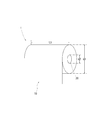
- Toilet roll 10 ... Toilet paper, 20 ... Paper tube (tube core), L1 ... Toilet roll winding diameter (diameter), L2 ... Toilet roll tube core diameter, L3 ... Toilet roll width.
Landscapes
- Health & Medical Sciences (AREA)
- Public Health (AREA)
- Sanitary Thin Papers (AREA)
- Paper (AREA)
Abstract
【課題】ロールの巻き密度が高く、しかも、風合いにも優れるトイレットロールを提供する。 【解決手段】 バージンパルプ30~70質量%、古紙パルプ30~70質量%を繊維素材とする坪量18.5~20.5g/m2、紙厚100~125μm、乾燥引張強度の縦が220~350cN/25mm、横が80~130cN/25mmのトイレットペーパーが、54~56m、巻径100.0~103.5mmφで巻き取られた、巻密度が0.75~0.85m/cm2のトイレットロールにより解決される。
Description
本発明は、トイレットペーパーをロール状に巻いたトイレットロールに関する。
トイレットロールは、日常的に消費される生活品という性格上、消費者の製品選択の要素としてその価格や長さが非常に重視される。また、トイレットロールには、例えば、水分の裏抜け防止性に優れたシャワートイレ用のものや、紙厚が厚く肌触り性に優れる高級仕様のものなど、消費者の要望により種々の製品種があるが、特に、汎用品、古紙配合品、古紙原料品などの低価格品の製品群においては、特に価格と長さが重要視されている。
一方で、トイレットロールは、低密度な紙であるトイレットペーパーをロール状に巻き取った非常に嵩張るものであり、輸送にかかる物流費が価格に影響を与えやすい。石油等の輸送に必要なエネルギーの供給事情の変動によって、物流のためのエネルギー費は高騰することがあり、このため、トイレットロールにおいて物流コストの削減は重要な課題である。特に、上記の低価格品の製品群においては、きわめて重要な課題となる。
他方で、トイレットロールにおける物流費の削減は、トイレットロールの直径を小さくして、輸送車両等で一度に輸送できる数を多くすることが考えられる。トイレットロールでは、わずか数mm程度直径を小さくするだけで物流費削減の効果が充分に期待される。
しかしながら、トイレットロールを構成するトイレットペーパーは、低坪量で非常に薄いものであるため、単にトイレットペーパーの坪量や紙厚を低くすることで、巻長さをそのままに直径を小さくしようとすると、トイレットペーパーに要求されるふんわり感や柔らかさといった風合いが低下してしまう。また、巻き長さを短くすれば消費者の要求に合致しない。
そこで、本発明の課題は、上記のトイレットロールが有する問題点を解決することにあり、特に、充分な巻き長さで直径が小さく、しかも、古紙パルプを配合した製品でありながら、風合いにも優れるトイレットロールを提供することにある。
上記課題を解決した本発明は次記のとおりである。
〔請求項1記載の発明〕
トイレットペーパーをロール状にしたトイレットロールであって、
バージンパルプ30~70質量%、古紙パルプ30~70質量%を繊維素材とする坪量18.5~20.5g/m2、紙厚100~125μm、乾燥引張強度の縦が220~350cN/25mm、横が80~130cN/25mmのトイレットペーパーが、1プライで54~56m、巻径100.0~103.5mmφで巻き取られた、巻密度が0.75~0.85m/cm2である、ことを特徴とするトイレットロール。
トイレットペーパーをロール状にしたトイレットロールであって、
バージンパルプ30~70質量%、古紙パルプ30~70質量%を繊維素材とする坪量18.5~20.5g/m2、紙厚100~125μm、乾燥引張強度の縦が220~350cN/25mm、横が80~130cN/25mmのトイレットペーパーが、1プライで54~56m、巻径100.0~103.5mmφで巻き取られた、巻密度が0.75~0.85m/cm2である、ことを特徴とするトイレットロール。
〔請求項2記載の発明〕
トイレットペーパーのソフトネスが3.2~4.2cNである請求項1記載のトイレットロール。
トイレットペーパーのソフトネスが3.2~4.2cNである請求項1記載のトイレットロール。
以上の本発明によれば、充分な巻き長さで直径が小さく、しかも、古紙パルプを配合した製品でありながら、風合いにも優れるトイレットロールが提供される。
次いで、本発明に係るトイレットロールを説明する。図1に示されるように、本発明に係るトイレットロール1は、帯状のトイレットペーパー10を紙管(管芯とも称される)20にロール状に巻いたものである。
このトイレットペーパーは、バージンパルプ30~70質量%、古紙パルプ30~70質量%を繊維素材とする。古紙パルプは、バージンパルプと比較して安価であり、本発明に係るトイレットペーパーは、この古紙パルプを配合することで、バージンパルプ100質量%からなるものに比して、安価に製造することができる。また、古紙パルプは、再溶解、脱墨、ディスパーザーによるニーディングといった古紙からパルプを再生する工程において繊維が薬品処理や機械的処理されることによって、再生前のパルプ繊維に比して繊維が細かくなる傾向にあり、このような繊維の性質上、紙厚を厚くせずに、繊維を密にして紙力を高めやすい。
その一方で、過度に配合すると柔軟性などの風合いが低下する。本発明に係るトイレットペーパーでは、このような古紙パルプの特徴に鑑みて、その配合比率を30~70質量%としている。すなわち、古紙パルプの配合率が30質量%未満であると、製造や使用に必要な紙力とするために紙厚が過度に厚くなりやすく、所望のコンパクトなロールの直径とすることが極めて困難となる。反対に、古紙パルプの配合率が70質量%以上であると、柔軟性が低下し、本発明に係る乾燥引張強度の範囲とすると紙を引張った際に伸び難いため、加工時に断紙が発生してロールに巻き取ること自体が難しくなり、製造が極めて困難となる。
本発明に係る古紙パルプは、必ずしも限定されるものではないが、特に、上質古紙を原料とする上質古紙パルプ(F-DIP、上質系古紙パルプ、上質脱墨パルプとも称される)を用いるのが望ましい。上質古紙パルプは、上質紙、色上質紙、微光沢紙等の選別された上質古紙を原料とするもので、原料由来の広葉樹クラフトパルプ(LBKP)が多く配合されている。このため、紙力を発現させやすく、特に、本発明に係るトイレットペーパーの坪量、紙厚、乾燥引張強度、巻径、巻密度の各構成とすることが極めて容易となる。
また、上質古紙パルプの中でも、特に白色度が75~85%(PF-10、日本電色工業製で測定)の高白色度のものがよい。このような上質古紙パルプを用いれば、より白色度に優れるトイレットペーパーとなる。
さらに、上質古紙パルプの中でも、原料段階でJIS P 8121に基づいて測定したフリーネス(CSF)が300~450mlであるものが望ましい。原紙抄造時のパルプからの水を脱水に影響を与え難く、抄速を落とすことがないからである。また、このように上質古紙パルプは、本発明に係るトイレットペーパーの構成とするのが容易である。
上質古紙パルプの好適な製造方法例としては、パルパーで原料(上質古紙)を溶解した後、スクリーンで粗選し、比較的粒径の大きな異物を除去した後、さらにスクリーンで精選し、小さな異物を除去する。その後に、フローテーターでインクを除去し、漂白工程を経た後、ディスパーザーで残存するインク粒を押し潰し、さらにフローテーションでインクを除去し、その後に二酸化チオ尿素等による還元漂白処理を行うことで製造することができる。このような工程で得られる上質古紙パルプは、概ね白色度は78%以上、原料段階でのフリーネス(CSF)が350~400ml、さらに、10質量%程度の灰分を含むものとなり、本発明に係る上質古紙パルプとして好ましいものとなる。
他方、繊維素材は、古紙パルプ以外、すべてバージンパルプとするのが望ましく、特にそのバージンパルプは、針葉樹クラフトパルプ(NBKP)と広葉樹クラフトパルプ(LBKP)であるのが望ましい。これらの配合比率は、NBKP:LBKPを20:80~50:50とするのが望ましい。なお、このバージンパルプと上記の上質古紙パルプとからなる繊維素材を用いて製造されたトイレットペーパーは、古紙由来の機械パルプが5質量%以下、灰分が3質量%以下で、白色度は80~85%程度となる。
本発明に係るトイレットペーパーは、上記繊維素材の組成であるとともにその坪量が18.5~20.5g/m2、紙厚100~125μm、乾燥引張強度の縦が220~350cN/25mm、横が80~130cN/25mmである。まず、坪量が18.5g/m2未満であると必要な強度と紙厚とするのが困難となる。また、20.5g/m2を超えると紙厚が厚くなり所望のコンパクトな巻径の範囲にすることが難しくなる。さらに、紙厚が100μm未満であると必要な強度を確保するのが難しく、また、紙のコシがなくなり風合いとくにふんわり感に乏しくなる。さらに、製品として適度な巻径でかつ巻きの硬さにすることが困難となる。反対に、125μmを超えると所望のロールの直径とすることが難しくなりコンパクト化が達成し難くなる。さらに、乾燥引張強度の縦が220~350cN/25mm、横が80~130cN/25mmが範囲外となると、コンパクトにすると柔らかさやふんわり感が低下する。
なお、本発明に係る坪量は、JIS P 8124(1998)に基づいて測定した値とする。また、紙厚の測定方法は、試験片をJIS P 8111(1998)の条件下で十分に(通常は、8時間程度)調湿した後、同条件下でダイヤルシックネスゲージ(厚み測定器)「PEACOCK G型」(尾崎製作所製)を用いて1プライの状態で測定するものとする。具体的には、プランジャーと測定台の間にゴミ、チリ等がないことを確認してプランジャーを測定台の上におろし、前記ダイヤルシックネスゲージのメモリを移動させてゼロ点を合わせ、次いで、プランジャーを上げて試料を試験台の上におき、プランジャーをゆっくりと下ろしそのときのゲージを読み取る。このとき、プランジャーをのせるだけとする。プランジャーの端子は金属製で直径10mmの円形の平面が紙平面に対し垂直に当たるようにし、この紙厚測定時の荷重は、約70gfである。なお、紙厚は測定を10回行って得られる平均値とする。また、本発明に係る乾燥引張強度は、JIS P 8113(1998)に規定されるものである。
本発明に係るトイレットペーパーは、上述のバージンパルプ及び古紙パルプの構成と、上記坪量、紙厚、乾燥引張強度とすることにより、コンパクト化と風合いのバランスが達成される。換言すれば、各構成の何れかが範囲外となるとその他の構成を数値範囲内に収めることが難しくなったり、製造が極めて困難になるなど、結果的にコンパクト化又は風合いの何れかが充分なものとならない。特に、乾燥引張強度と他の構成とに関していえば、乾燥引張強度が上記範囲内であっても坪量や紙厚が範囲外となると製造時にコンパクトな巻き直径とすることが極めて困難となる。これは、コンパクト化のために製造工程における巻き取り時にテンションを高めて巻き取り操作を行うに必要な柔らかさ(伸び)が確保できず結果的に断紙や緩巻きとなってコンパクトな巻きにできない等の問題が生ずるのである。そして、特に、紙の伸び等の加工適性を考慮すると、古紙パルプとして上質古紙パルプを用いると、上記コンパクト化と風合いのバランスが効果的に達成される。
さらに、本発明に係るトイレットペーパーは、上記範囲とすることで結果的にソフトネスの範囲が3.2~4.2cNの範囲になる。このソフトネスの範囲は、使用者が硬質感を感じない、すなわち、柔らかいと感ずる範囲である。なお、本発明に係るソフトネスは、JIS L 1096 E法に準じたハンドルオメータ法に従って測定した値である。但し、試験片は100mm×100mmの大きさとし、クリアランスは5mmとして実施した。1プライで縦方向、横方向の各々5回ずつ測定し、その全10回の平均値を、cNを単位として表した。
ここで、本発明に係るトイレットロールは、上記トイレットペーパーを1プライで54~56m、巻径100.0~103.5mmφで巻き取ったものである。複数枚のトイレットペーパーを積層してなる2プライ以上のものでは、上記の長さを巻き直径で巻き取ることは極めて難しく、本願発明の効果を達成することができない。また、本発明に係るトイレットペーパーの構成においてその長さを54m未満とすると上記直径の範囲で所望の巻き密度にすることが困難となる。すなわち、100.0mmφを超えた直径に巻き取ると緩巻きとなって巻きの芯側が竹の子状に飛び出てしまうおそれがある。また、1プライのトイレットロールの製品の多くは、JIS規格を参考に55m前後となっている。このため、54m未満であると使用者が短いトイレットペーパーであるとの認識が生じ、低価格品としての訴求力が低下する。反対に、56mを超えると風合いを保持しつつ上記の巻径とするのが難しくなる。
ここで、本発明に係るトイレットロールにおける巻径の100.0~103.5mmφは、一般的な巻径に比して、概ね1~5mm程度直径が小さい。トイレットロールは、通常、4~12ロールを纏めて包装して商品化され、特に、2~4個のロールを同じ向きでかつ周面同士が接するように配し、さらに、これを数段積み重ねるといった整列態様でガセット包装して商品化される。そして、このようなトイレットロール商品を段ボール箱に詰めたうえ、これを相当多数、輸送車両に積荷して輸送する。したがって、僅か数mm程度の巻径を小さくすることでも、一回の輸送個数を増加させることができる。また、トイレットロールは、日常生活品であるため、その出荷も頻繁に行なわれる。したがって、僅か数mmの直径をコンパクト化したことによる輸送個数増の効果は、累積的に積み重なり、物流コストの削減へと繋がる。その一方で、僅か数mmでもコンパクト化することによる風合いや製造への影響が無視できず、また、巻径100mmφ未満と過度に小さくすると使用者が、不良品又は違和感を感ずる製品となってしまう。
他方で、本発明に係るトイレットロールは、巻密度が0.75~0.85m/cm2である。巻密度が、0.75m/cm2未満では、巻きが緩いため風合いは保持できるが、ロールの巻径に比して巻長さが短く、過度に物流費がかかる。反対に、0.85m/cm2を超えると風合いが著しく低下する。なお、巻密度とは、巻き長さ(m)をロール中心軸と直交する面の面積で除した値である。ロール中心軸と直交する面の面積は、巻径(直径:図1における符号L1)と管芯の直径(図1における符号L2)とから各部分の面積(仮想断面積)を算出し、巻径に基づく面積から管芯の直径に基づく面積を引いて算出される。紙管直径(紙管径)は、35~45mmφとするのが望ましい。
他方、本発明に係るトイレットペーパーでは、紙力調整及び表面性向上のために柔軟剤を配合することができる。但し、ここでの柔軟剤は、保湿剤、ローション剤のようなトイレットペーパーに外添塗布するものではなく、抄紙原料に内添するものである。ローション剤のように外添塗布するものでは、塗布時の紙力の低下によってコンパクト化するための高いテンションでの巻き取りが困難となり製造が極めて困難となる。また、所望の巻き密度とすることが困難であるとともに、低価格にすることも困難となる。柔軟剤の配合量は、0.8~2.0kg/tとするのがよい。好ましい柔軟剤としては、アルキル基及び/ 又はアルケニル基を有する非イオン性界面活性剤(A 成分)とアルキル基及び/ 又はアルケニル基を有するカチオン性界面活性剤(B成分) とを含有するものである。特に、非イオン性界面活性剤(A成分)が、炭素数6~24のアルキル基及び/ 又は炭素数6~24のアルケニル基を疎水部として有するものであるのが望ましい。なお、A成分の炭素数が6未満であると柔軟効果が高まらない場合があり、炭素数が24を超えると抄紙系に添加した際の分散性が悪くなる場合がある。
また、本発明に係るトイレットペーパーを製造するにあたっては、繊維原料の叩解を適宜に行なうことができるが、本発明に係るトイレットペーパーでは、古紙パルプの配合によって、叩解操作を省略することが可能である。むしろ、このようにすると、繊維が疎となり所望の柔軟性や厚みにしやすい。
また、抄造時のクレープ率も適宜設定することができる。クレープ率は15~27%が好ましく、より好ましくは20~25%である。ロールへの加工を行う際に、ドローやテンションで巻径の調整を行うことがあるため、上記の範囲とすることで、適度にドローやテンションをかけても紙が千切れる可能性が低く、過度に紙が厚くならないため好ましい。
さらに、本発明に係るトイレットペーパーは、本発明の効果を妨げない範囲でエンボス加工を施したものとすることもできる。このエンボスは、マイクロエンボスやドット型のエンボス、デザインエンボス等の適宜のエンボスパターンとすることができる。但し、エンボスを付与する場合、エンボスパターンの深さは、1.90mm以下とするのが望ましい。より好ましくは、0.7mm~1.90mmの範囲内とするのが望ましい。1.90mmよりも深いと、コンパクト化が困難となる。また、エンボスの深さが0.75mmよりも浅いとエンボスによる嵩高感や意匠性の発現が不十分となりやすい。本発明に係る好ましいエンボスの例としては、正方形の底面を有する凹部が、その正方向底面の各頂点から隣接する凹部の正方形底面の頂点に対して谷線で連続するように連なるようにして、配列されているものである。この特定のエンボス(以下の実施例においてこのエンボスを特定エンボスと言う)は、本発明に係る効果を発現させやすい。
また、本発明に係るトイレットロールは、紙厚の残存率が93.0%以上であるのが望ましい。特に94.0%以上であるのが望ましい。この紙厚の残存率は下記(1)~(5)のとおりにして算出した値である。この紙厚の残存率が93.0%以上であれば、コンパクトさと風合いとのバランスが良好であるといえる。
(1)トイレットロールの重量(紙管を含まないトイレットペーパーのみの重量)と、トイレットペーパーが巻かれている部分の体積を算出する。トイレットペーパーが巻かれている部分の体積は、トイレットロールの巻径と紙管の巻径及びトイレットロールの幅から算出する。
(2)(1)のトイレットロールの重量と体積からトイレットロールの密度を算出する。
(3)(2)で算出したトイレットロールの密度をトイレットペーパーの坪量で除算して、トイレットロールの状態での紙厚を算出する。
(4)トイレットロールから引きだしたトイレットペーパーの紙厚を、ダイヤルシックネスゲージ(PEACOCK G型、尾崎製作所製)により測定する。測定は、5箇所の平均とする。
(5)(4)で測定した紙厚を算出したトイレットロールの状態での紙厚で除算し、単位%に換算して紙厚の残存率を算出する。
他方で、本発明に係るトイレットロールは、抄紙工程で得たトイレットペーパーを公知の製造手順に準じて巻き取ることで製造することができる。より具体的には、長尺の紙管を製造する紙管形成工程において長尺の紙管を製造し、この長尺の紙管に抄紙工程で製造したトイレットペーパーを巻いてログを製造し、さらに、このログを幅方向に製品幅(図1における符号L3の幅)で裁断して個々のトイレットロールとする製造手順において、特にそのログを製造する際に、トイレットペーパーを紙管に巻き付ける際の張力を調整することにより製造することができる。
(2)(1)のトイレットロールの重量と体積からトイレットロールの密度を算出する。
(3)(2)で算出したトイレットロールの密度をトイレットペーパーの坪量で除算して、トイレットロールの状態での紙厚を算出する。
(4)トイレットロールから引きだしたトイレットペーパーの紙厚を、ダイヤルシックネスゲージ(PEACOCK G型、尾崎製作所製)により測定する。測定は、5箇所の平均とする。
(5)(4)で測定した紙厚を算出したトイレットロールの状態での紙厚で除算し、単位%に換算して紙厚の残存率を算出する。
他方で、本発明に係るトイレットロールは、抄紙工程で得たトイレットペーパーを公知の製造手順に準じて巻き取ることで製造することができる。より具体的には、長尺の紙管を製造する紙管形成工程において長尺の紙管を製造し、この長尺の紙管に抄紙工程で製造したトイレットペーパーを巻いてログを製造し、さらに、このログを幅方向に製品幅(図1における符号L3の幅)で裁断して個々のトイレットロールとする製造手順において、特にそのログを製造する際に、トイレットペーパーを紙管に巻き付ける際の張力を調整することにより製造することができる。
次いで、本発明のトイレットロールの実施例及び比較例におけるコンパクト化と柔らかさ、ふんわり感について試験し評価した。
各例に係るトイレットロールの構成及びトイレットペーパーの物性・組成は、下記表1のとおりである。なお、古紙パルプは、上質古紙パルプを用いた。また、エンボスは、上記の特定エンボスを付与し、エンボスパターンの深さは1.45mmとした。柔軟剤は、星光PMC株式会社製のT-FS301を用いた。この柔軟剤は、上述の好ましい柔軟剤として例示した、アルキル基及び/ 又はアルケニル基を有する非イオン性界面活性剤(A 成分)とアルキル基及び/ 又はアルケニル基を有するカチオン性界面活性剤(B成分) とを含有するものである。
評価は、被験者10名に実際に各例に係るトイレットロールを1週間、使用してもらい、「柔らかさ」、「滑らかさ」、「ふんわり感」の各項目について、比較例1(市販品と同じ構成のもの)を基準として、相対評価を行なうこととした。評価は、比較例1を4点として、比較例1よりもとても良い7点、比較例1よりも良い6点、比較例1よりもやや良い5点、比較例1と同程度である4点、比較例1のほうがやや良い3点、比較例1のほうが良い2点、比較例1のほうがとても良い1点、として点数付けを行ない、その平均値を算出して判断することとした。
表中の測定値の測定方法は、下記のとおりである。
〔坪量〕
JIS P 8124(1998)に従って測定した。
JIS P 8124(1998)に従って測定した。
〔紙厚〕
JIS P 8111(1998)の条件下で、ダイヤルシックネスゲージ(厚み測定器)「PEACOCK G型」(尾崎製作所製)を用いて上述の厚みの測定方法に従って測定した。
JIS P 8111(1998)の条件下で、ダイヤルシックネスゲージ(厚み測定器)「PEACOCK G型」(尾崎製作所製)を用いて上述の厚みの測定方法に従って測定した。
〔乾燥引張強度〕
JIS P 8113(1998)の引張試験に従って測定した。1プライで紙質試験を実施した。
JIS P 8113(1998)の引張試験に従って測定した。1プライで紙質試験を実施した。
〔伸び〕
ミネベア株式会社製「万能引張圧縮試験機 TG-200N」を用いて測定した。伸び率はJIS P 8113の「3.定義 e)に記載の「引張破断伸び(stretch at break)」のことである。
ミネベア株式会社製「万能引張圧縮試験機 TG-200N」を用いて測定した。伸び率はJIS P 8113の「3.定義 e)に記載の「引張破断伸び(stretch at break)」のことである。
〔ソフトネス〕
JIS L 1096 E法に準じたハンドルオメータ法に従って、上述のとおり測定した。
JIS L 1096 E法に準じたハンドルオメータ法に従って、上述のとおり測定した。
〔MMD〕
MMDは静摩擦係数の平均偏差であり、滑らかさの指標の一つである。数値が小さいほど滑らかであり、数値が大きいほど滑らかさに劣るとされる。なお、MMDの測定方法は、摩擦子の接触面を所定方向に20g/cmの張力が付与された測定試料の表面に対して25gの接触圧で接触させながら、張力が付与された方向と略同じ方向に速度0.1cm/sで2cm移動させ、このときの、摩擦係数を、摩擦感テスター KES-SE(カトーテック株式会社製)を用いて測定する。その摩擦係数を摩擦距離(移動距離=2cm)で除した値がMMDである。なお、摩擦子は、直径0.5mmのピアノ線Pを20本隣接させてなり、長さ及び幅がともに10mmとなるように形成された接触面を有している。接触面には、先端が20本のピアノ線P(曲率半径0.25mm)で形成された単位膨出部が形成されているものとした。
MMDは静摩擦係数の平均偏差であり、滑らかさの指標の一つである。数値が小さいほど滑らかであり、数値が大きいほど滑らかさに劣るとされる。なお、MMDの測定方法は、摩擦子の接触面を所定方向に20g/cmの張力が付与された測定試料の表面に対して25gの接触圧で接触させながら、張力が付与された方向と略同じ方向に速度0.1cm/sで2cm移動させ、このときの、摩擦係数を、摩擦感テスター KES-SE(カトーテック株式会社製)を用いて測定する。その摩擦係数を摩擦距離(移動距離=2cm)で除した値がMMDである。なお、摩擦子は、直径0.5mmのピアノ線Pを20本隣接させてなり、長さ及び幅がともに10mmとなるように形成された接触面を有している。接触面には、先端が20本のピアノ線P(曲率半径0.25mm)で形成された単位膨出部が形成されているものとした。

まず、比較例から見ていく。比較例1は、市販品と同等の構成のものでコンパクトではないものである。
比較例2は、坪量が高く、引張強度も高いものであるが、この比較例2は、ロールの巻径をコンパクトにして製造することができなかった。巻径104.5mmφを達成できたが、実使用評価は比較例1よりも劣る評価となった。
比較例3は、古紙パルプの配合比率が低いものであるが、この比較例3は、紙厚は薄くできたものの、ロールの巻径をコンパクトにして製造することができなかった。
比較例4は、古紙配合率が多いものであるが、この比較例4は、所定の乾燥引張強度に収めようとすると、紙が伸びづらいため加工時に紙が断紙し、製造することすらできなかった。
比較例5は、坪量が非常に低いものであるが、この比較例5は、巻き取り時のテンションを低くして緩く巻いても所定の巻径と紙厚を確保することができなかった。
比較例6は、巻長さを長くしたものであるが、この比較例6は、ロール加工を行った結果、所定の巻径におさまらず、コンパクトに製造することができなかった。
このように比較例2~4は、巻径をコンパクトにして製造することが極めて困難で、また、巻径を小さくしようとすると風合いが悪化することが知見された。
次いで、本発明の実施例を見ていくと、ます、比較例1に比して、すべての実施例において巻径を小さくして製造することができた。そのうえ、実使用評価結果を見てみると比較例1と同等又は良好な結果が得られた。特に、紙厚の残存率とふんわり感の評価からして、本発明の実施例は、巻きが良好に行なわれていることが理解できる。
これら比較例及び実施例からして、本発明の構成を採ることによりロールの巻径をコンパクトにでき、しかも、風合いにも優れるトイレットロールとすることができることが示されたといえる。
1…トイレットロール、10…トイレットペーパー、20…紙管(管芯)、L1…トイレットロールの巻径(直径)、L2…トイレットロールの管芯の直径、L3…トイレットロールの幅。
Claims (2)
- トイレットペーパーをロール状にしたトイレットロールであって、
バージンパルプ30~70質量%、古紙パルプ30~70質量%を繊維素材とする坪量18.5~20.5g/m2、紙厚100~125μm、乾燥引張強度の縦が220~350cN/25mm、横が80~130cN/25mmのトイレットペーパーが、1プライで54~56m、巻径100.0~103.5mmφで巻き取られた、巻密度が0.75~0.85m/cm2である、ことを特徴とするトイレットロール。 - トイレットペーパーのソフトネスが3.2~4.2cNである請求項1記載のトイレットロール。
Applications Claiming Priority (2)
| Application Number | Priority Date | Filing Date | Title |
|---|---|---|---|
| JP2015-017419 | 2015-01-30 | ||
| JP2015017419A JP5951814B1 (ja) | 2015-01-30 | 2015-01-30 | トイレットロール |
Publications (1)
| Publication Number | Publication Date |
|---|---|
| WO2016121219A1 true WO2016121219A1 (ja) | 2016-08-04 |
Family
ID=56375128
Family Applications (1)
| Application Number | Title | Priority Date | Filing Date |
|---|---|---|---|
| PCT/JP2015/083647 Ceased WO2016121219A1 (ja) | 2015-01-30 | 2015-11-30 | トイレットロール |
Country Status (2)
| Country | Link |
|---|---|
| JP (1) | JP5951814B1 (ja) |
| WO (1) | WO2016121219A1 (ja) |
Cited By (1)
| Publication number | Priority date | Publication date | Assignee | Title |
|---|---|---|---|---|
| CN112911977A (zh) * | 2018-11-30 | 2021-06-04 | 大王制纸株式会社 | 卫生纸 |
Families Citing this family (3)
| Publication number | Priority date | Publication date | Assignee | Title |
|---|---|---|---|---|
| JP3414111B2 (ja) | 1996-02-29 | 2003-06-09 | ワイケイケイ株式会社 | 隠し織込みスライドファスナーストリンガの製造方法および製造装置 |
| JP3414110B2 (ja) | 1996-02-29 | 2003-06-09 | ワイケイケイ株式会社 | 隠し織込みスライドファスナー |
| JP6816588B2 (ja) * | 2017-03-17 | 2021-01-20 | 王子ホールディングス株式会社 | ロール状トイレットペーパー |
Citations (2)
| Publication number | Priority date | Publication date | Assignee | Title |
|---|---|---|---|---|
| JP2006021020A (ja) * | 2004-06-10 | 2006-01-26 | Daio Paper Corp | 衛生薄葉紙用シートロール |
| JP2014233363A (ja) * | 2013-05-31 | 2014-12-15 | 日本製紙クレシア株式会社 | 衛生薄葉紙ロール |
Family Cites Families (1)
| Publication number | Priority date | Publication date | Assignee | Title |
|---|---|---|---|---|
| JP5602998B2 (ja) * | 2008-09-19 | 2014-10-08 | 大王製紙株式会社 | 衛生薄葉紙ロール |
-
2015
- 2015-01-30 JP JP2015017419A patent/JP5951814B1/ja not_active Expired - Fee Related
- 2015-11-30 WO PCT/JP2015/083647 patent/WO2016121219A1/ja not_active Ceased
Patent Citations (2)
| Publication number | Priority date | Publication date | Assignee | Title |
|---|---|---|---|---|
| JP2006021020A (ja) * | 2004-06-10 | 2006-01-26 | Daio Paper Corp | 衛生薄葉紙用シートロール |
| JP2014233363A (ja) * | 2013-05-31 | 2014-12-15 | 日本製紙クレシア株式会社 | 衛生薄葉紙ロール |
Cited By (1)
| Publication number | Priority date | Publication date | Assignee | Title |
|---|---|---|---|---|
| CN112911977A (zh) * | 2018-11-30 | 2021-06-04 | 大王制纸株式会社 | 卫生纸 |
Also Published As
| Publication number | Publication date |
|---|---|
| JP2016140472A (ja) | 2016-08-08 |
| JP5951814B1 (ja) | 2016-07-13 |
Similar Documents
| Publication | Publication Date | Title |
|---|---|---|
| JP5951814B1 (ja) | トイレットロール | |
| JP5922441B2 (ja) | 古紙管芯無しトイレットロール及び古紙管芯無しトイレットロールの製造方法 | |
| JP6606147B2 (ja) | トイレットロール | |
| JP6930069B2 (ja) | 衛生用紙 | |
| JP2021112575A (ja) | キッチンタオルロール | |
| JP6255364B2 (ja) | トイレットロール | |
| JP6606139B2 (ja) | トイレットロール | |
| WO2020179379A1 (ja) | トイレットペーパー | |
| JP2017113223A (ja) | フェイシャルティシュ製品入りカートン及びその製造方法 | |
| JP2024029103A (ja) | トイレットロール | |
| JP7033529B2 (ja) | トイレットロール | |
| JP7277629B2 (ja) | トイレットロール | |
| JP2022119928A (ja) | トイレットロール | |
| WO2020110923A1 (ja) | トイレットペーパー | |
| JP2017205179A (ja) | トイレットロール | |
| JP2019097765A (ja) | トイレットロール | |
| JP2021053249A5 (ja) | ||
| JP2018000728A (ja) | トイレットロール | |
| JP2020072990A (ja) | トイレットロール | |
| JP5597337B2 (ja) | ペーパータオル及びその製造方法 | |
| JP6712491B2 (ja) | トイレットロール | |
| JP2018198860A (ja) | トイレットロール | |
| JP2018061824A (ja) | トイレットロール | |
| JP2020108825A (ja) | トイレットロールの製造方法 | |
| JP2018015259A (ja) | トイレットロール |
Legal Events
| Date | Code | Title | Description |
|---|---|---|---|
| 121 | Ep: the epo has been informed by wipo that ep was designated in this application |
Ref document number: 15880111 Country of ref document: EP Kind code of ref document: A1 |
|
| NENP | Non-entry into the national phase |
Ref country code: DE |
|
| 122 | Ep: pct application non-entry in european phase |
Ref document number: 15880111 Country of ref document: EP Kind code of ref document: A1 |