WO2016009593A1 - 表示制御装置及び表示制御プログラム製品 - Google Patents
表示制御装置及び表示制御プログラム製品 Download PDFInfo
- Publication number
- WO2016009593A1 WO2016009593A1 PCT/JP2015/003130 JP2015003130W WO2016009593A1 WO 2016009593 A1 WO2016009593 A1 WO 2016009593A1 JP 2015003130 W JP2015003130 W JP 2015003130W WO 2016009593 A1 WO2016009593 A1 WO 2016009593A1
- Authority
- WO
- WIPO (PCT)
- Prior art keywords
- general
- middleware
- dedicated
- screen
- application program
- Prior art date
- Legal status (The legal status is an assumption and is not a legal conclusion. Google has not performed a legal analysis and makes no representation as to the accuracy of the status listed.)
- Ceased
Links
Images






Classifications
-
- G—PHYSICS
- G06—COMPUTING OR CALCULATING; COUNTING
- G06F—ELECTRIC DIGITAL DATA PROCESSING
- G06F3/00—Input arrangements for transferring data to be processed into a form capable of being handled by the computer; Output arrangements for transferring data from processing unit to output unit, e.g. interface arrangements
- G06F3/01—Input arrangements or combined input and output arrangements for interaction between user and computer
- G06F3/048—Interaction techniques based on graphical user interfaces [GUI]
- G06F3/0481—Interaction techniques based on graphical user interfaces [GUI] based on specific properties of the displayed interaction object or a metaphor-based environment, e.g. interaction with desktop elements like windows or icons, or assisted by a cursor's changing behaviour or appearance
-
- G—PHYSICS
- G06—COMPUTING OR CALCULATING; COUNTING
- G06F—ELECTRIC DIGITAL DATA PROCESSING
- G06F9/00—Arrangements for program control, e.g. control units
- G06F9/06—Arrangements for program control, e.g. control units using stored programs, i.e. using an internal store of processing equipment to receive or retain programs
- G06F9/44—Arrangements for executing specific programs
- G06F9/445—Program loading or initiating
-
- G—PHYSICS
- G06—COMPUTING OR CALCULATING; COUNTING
- G06F—ELECTRIC DIGITAL DATA PROCESSING
- G06F9/00—Arrangements for program control, e.g. control units
- G06F9/06—Arrangements for program control, e.g. control units using stored programs, i.e. using an internal store of processing equipment to receive or retain programs
- G06F9/44—Arrangements for executing specific programs
- G06F9/445—Program loading or initiating
- G06F9/44505—Configuring for program initiating, e.g. using registry, configuration files
Definitions
- the present disclosure relates to a display control device and a display control program product that control a screen to be displayed on a display unit mounted on a vehicle.
- An app that runs on a mobile terminal (hereinafter referred to as a general-purpose app) has concerns about the stability of the operation, such as being reset or hanging up (such as a screen lock) during the operation. For this reason, when a general-purpose app is operated by an in-vehicle device mounted on a vehicle, if the general-purpose app is used for vehicle-side control, the stability of the operation as the in-vehicle device may be impaired. Even if the operational stability is ensured at the time of shipment, there is a possibility that the operational stability of the in-vehicle device may be impaired by the general-purpose application downloaded and added from the server after the shipment.
- a vehicle-side (vehicle-linked) app hereinafter referred to as a dedicated app
- a general-purpose app separately in an in-vehicle device.
- a configuration in which dedicated middleware that can execute a dedicated application, general-purpose middleware that can execute a general-purpose application, and an interface that exchanges data between the dedicated middleware and the general-purpose middleware can be considered.
- this configuration it is possible to use a wide variety of general-purpose apps on the in-vehicle device while minimizing the influence on the dedicated app.
- the dedicated middleware and the general-purpose middleware are implemented, there is a possibility that the state where the general-purpose middleware has not been started up while the dedicated middleware has been started up may occur.
- the dedicated middleware starts to start first when the apparatus starts, and the general-purpose middleware starts to start after the dedicated middleware starts to start
- the general-purpose middleware completes starting after the dedicated middleware has started. In other words, during the period until the start of the general-purpose middleware, the dedicated middleware has been started, but the general-purpose middleware has not been started.
- the general-purpose middleware is reset (starts restarting) due to factors such as abnormal operation of the general-purpose app even after the start-up of the general-purpose middleware, the period until the general-purpose middleware completes restarting is also in this case Is completed, but the general-purpose middleware is not fully activated. If such a situation occurs in which the dedicated middleware has been activated but the general-purpose middleware has not been activated, the user is caused to wait for the operation of the general-purpose application until the activation of the general-purpose middleware is completed. As a result, the general-purpose application service cannot be promptly provided to the user.
- the present disclosure has been made in view of the circumstances described above, and an object of the present disclosure is to provide a display control device and a display control program product that can quickly provide a general-purpose application service to a user and can improve usability. It is to provide.
- a display control apparatus performs dedicated middleware that can execute a dedicated application program on a vehicle side, general-purpose middleware that can execute a general-purpose application program, and data exchange between the dedicated middleware and the general-purpose middleware
- the dedicated middleware has a function of prompting the general-purpose middleware to start execution of the general-purpose application program, and controls the screen of the display unit.
- the dedicated middleware causes the display unit to display a screen on which a user operation related to the general-purpose application program can be accepted in a state where the activation has been completed and the general-purpose middleware has not been activated. Then, the dedicated middleware displays the screen of the general-purpose application program including the screen data transferred from the general-purpose middleware through the interface when the general-purpose middleware is activated.
- the general application program service can be promptly provided to the user, and the user-friendliness can be improved.
- a display control program product performs dedicated middleware that executes a dedicated application program on the vehicle side, general-purpose middleware that executes a general-purpose application program, and exchanges data between the dedicated middleware and the general-purpose middleware.
- the dedicated middleware has a function for urging the general-purpose middleware to start execution of the general-purpose application program.
- the general-purpose middleware In the state where the general-purpose middleware has not been started up, a screen that can accept a user operation related to the general-purpose application program is displayed on the display unit, and when the start-up is completed and the general-purpose middleware is started up, the general-purpose middleware Including a computer-implemented instruction for causing a display unit to display a screen of a general-purpose application program including screen data transferred via the interface, and stored in a computer-readable persistent and tangible storage medium .
- a general-purpose application program service can be promptly provided to the user, and the user-friendliness can be improved.
- FIG. 1 is a functional block diagram illustrating an embodiment of the present disclosure.
- FIG. 2 is a diagram illustrating a configuration of hardware and software.
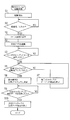
- FIG. 3 is a flowchart showing a dedicated middleware activation process.
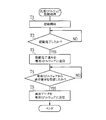
- FIG. 4 is a flowchart showing a general-purpose middleware activation process.
- FIG. 5 is a diagram showing a home screen.
- FIG. 6 is a diagram showing an audio screen of the dedicated middleware.
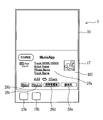
- FIG. 7 is a diagram showing a general-purpose application screen of general-purpose middleware.
- FIG. 8 is a flowchart showing normal processing of the dedicated middleware.
- FIG. 9 is a flowchart showing a restart process of the general-purpose middleware.
- a display control device (DCU (Display Control Unit)) 1 is connected to an air conditioner device 2, an audio device 3, a telephone 4, a navigation device 5, and a display device 6.
- the display control device 1 is connected to the bus line 7 and can input various data flowing through the bus line 7.
- the air conditioner device 2, the audio device 3, the telephone 4, the navigation device 5 and the display device 6 are also connected to the bus line 7, and various data flowing through the bus line 7 can be input.
- the display control device 1 includes a CPU (Central Processing Unit) 9 that controls the operation of the entire device, a first display unit 10 including a color liquid crystal display, and the display device 6 as the configuration of the hardware 8 (see FIG. 2).
- Wide area communication that performs data communication via the communication network 15 between the first communication unit 11 that performs data communication with the server, the first operation unit 12 that includes various keys that can be operated by the user, and the server 14 Part 13.
- Various keys of the first operation unit 12 are touch keys displayed on the first display unit 10.
- the display device 6 includes, as a hardware configuration, a CPU 16 that controls the operation of the entire device, a second display unit 17 that includes a color liquid crystal display and the like, and a second communication unit that performs data communication with the display control device 1. 18 and a second operation unit 19 including various keys that can be operated by the user.
- Various keys of the second operation unit 19 include touch keys displayed on the second display unit 17 and hard keys (mechanical keys such as audio keys 19a and menu keys 19b as shown in FIGS. 5 to 7 described later). )including.
- the first display unit 10 functions as a main display unit and the second display unit 17 functions as a sub display unit.
- the screen of the first display unit 10 and the screen of the second display unit 17 are displayed side by side. .
- the CPU 9 of the display control device 1 has a display control unit 9a, a communication control unit 9b, a wide area communication control unit 9c, and an operation receiving unit 9d according to the function.
- the display control unit 9 a controls the screen displayed on the first display unit 10.
- the display control unit 9a inputs screen data from, for example, the air conditioner device 2, the audio device 3, the telephone 4, and the navigation device 5, so that the air conditioner operation screen, the audio operation screen, the telephone operation screen, and the operation screen related to the navigation process A map screen or the like is displayed on the first display unit 10.
- the display control unit 9 a causes the second display unit 17 to display these screens and the like by transferring data such as these screens from the first communication unit 11 to the display device 6.
- the communication control unit 9b controls data communication with the display device 6 and the like.
- the wide-area communication control unit 9 c controls data communication via the communication network 15 between the wide-area communication unit 13 and the server 14, and sends the general-purpose application 25 from the store 26 that is the provider of the general-purpose application 25 via the communication network 15. And can be downloaded to the wide area communication unit 13. Note that the general-purpose application 25 itself can be downloaded from the store 26 to the communication unit 13 via the communication network 15.
- the operation accepting unit 9 d accepts an operation performed by the user on the first operation unit 12.
- the CPU 16 of the display device 6 includes a display control unit 16a, a communication control unit 16b, and an operation reception unit 16c according to the function.
- the display control unit 16 a controls the screen displayed on the second display unit 17.
- the communication control unit 16 b controls data communication with the display control device 1.
- the operation reception unit 16 c receives an operation performed by the user on the second operation unit 19.
- the display control apparatus 1 has a general-purpose platform 20 mounted on the hardware 8 as a software configuration, and the dedicated middleware 21, the general-purpose middleware 22, and an interface (I / F) on the general-purpose platform 20. 23) is implemented.
- the general-purpose platform 20 is a platform positioned above the hardware 8.
- the dedicated middleware 21 is a middleware that operates on the general-purpose platform 20 and can execute a dedicated application program (hereinafter referred to as a dedicated application) 24 on the vehicle side (which is pre-installed in the vehicle).
- the general-purpose middleware 22 is middleware that operates on the general-purpose platform 20 and can execute, for example, a general-purpose application program (hereinafter referred to as a general-purpose application) 25 distributed from the outside.
- the interface 23 exchanges data between the dedicated middleware 21 and the general-purpose middleware 22.
- the dedicated application 24 (A, B, C, D in FIG. 2) installed on the dedicated middleware 21 has, for example, an air conditioner application for realizing an air conditioner function, an audio application for realizing an audio function, and a telephone function.
- a telephone application for realizing the present invention a navigation application for realizing a navigation function, and the like.
- General-purpose applications 25 (E, F, G, and H in FIG. 2) installed on the general-purpose middleware 22 are, for example, a social network application, a communication application, a WEB search application, an Internet radio application, and the like.
- the general-purpose application 25 is an application that can be easily added or deleted by a user operation.
- the display control device 1 starts with power supplied from a vehicle battery (not shown) as operating power.
- the CPU 9 monitors the input of the activation command signal from the bus line 7 when the apparatus is stopped, and waits for the generation of the activation start request of the display control apparatus 1. For example, when the CPU 9 determines that the activation command signal is input from the bus line 7 following the fact that the user gets on and switches the ACC switch of the vehicle from OFF to ON, an activation start request for the display control device 1 is generated. Is determined.
- the CPU 9 determines that a request to start the display control device 1 has been generated, the CPU 9 notifies the dedicated middleware 21 of the activation start command, starts the dedicated middleware 21, starts the dedicated middleware 21, and then starts A start command is notified to the general-purpose middleware 22, and the general-purpose middleware 22 is started to start. Further, the dedicated middleware 21 has a function of prompting the general-purpose middleware 22 to start executing the general-purpose application 25 when the activation is completed.
- the dedicated middleware 21 and the general-purpose middleware 22 perform the following processing.
- the processing performed by the dedicated middleware 21 includes processing of a display control program. Further, the description will be made on the assumption that the music application was activated at the time when the ACC switch was switched from on to off (lastly).
- the dedicated middleware 21 activates a music application that was activated when the ACC switch was switched from on to off last time (finally), for example, music such as CD (Compact Disc) (registered trademark). If the music data recorded on the recording medium is being reproduced, the reproduction of the music data is resumed.
- the dedicated middleware 21 displays a message prompting the standby of the music application screen on the home screen M1.
- the dedicated middleware 21 monitors whether or not the user has operated the audio key 19a (a user operation indicating a screen display request relating to the general-purpose application has been received) (S5). When it is determined that the user has operated the audio key 19a (S5: YES), the dedicated middleware 21 determines whether or not the general-purpose middleware 22 has been activated at that time (S6).
- the dedicated middleware 21 If the dedicated middleware 21 has not yet received the activation completion notification from the general-purpose middleware 22 at that time and determines that the general-purpose middleware 22 has not been activated (S6: NO), the dedicated middleware 21 is shown in FIG.
- the audio screen M2 is displayed (drawn) on the second display unit 17 (S7, first procedure).
- the audio screen M2 of the dedicated middleware 21 is a screen that can accept a user operation related to the general-purpose application 25. If the reproduction of the music data recorded on the music recording medium is resumed, the dedicated middleware 21 has a play key 27a, a stop key 27b, a pause key 27c, and a forward direction on the audio screen M2 of the dedicated middleware 21. A skip key 27d and a reverse skip key 27e are displayed.
- the dedicated middleware 21 determines that the user has operated any of these keys 27a to 22e
- the dedicated middleware 21 controls the behavior of the music application according to the key operated by the user. For example, when the dedicated middleware 21 determines that the user has operated the forward skip key 27d, the dedicated middleware 21 skips the music data to be reproduced in the forward direction.
- the dedicated middleware 21 continues to display the audio screen M2 of the dedicated middleware 21 on the second display unit 17 until the general-purpose middleware 22 is activated. That is, the user can control the behavior (reproduction, stop, etc.) of the music application even during the period until the activation of the general-purpose middleware 22 is completed.
- the reproduction key 27a, the stop key 27b, etc. are displayed on the audio screen M2 of the dedicated middleware 21, and the basic functions such as reproduction and stop can be operated.
- a reception frequency setting key or the like may be displayed on the audio screen M2 of the dedicated middleware 21 to enable operation of basic functions such as channel selection.
- the dedicated middleware 21 When the dedicated middleware 21 receives the activation completion notification from the general-purpose middleware 22 and determines that the general-purpose middleware 22 has been activated (S6: YES), the dedicated middleware 21 transmits a display request to the general-purpose middleware 22 via the interface 23 (S8). Reception of screen data from the general-purpose middleware 22 is awaited (S9). If the dedicated middleware 21 determines that the screen data has been received from the general-purpose middleware 22 (S9: YES), it decodes the received screen data, and the general-purpose application screen (music application screen) of the general-purpose middleware 22 as shown in FIG. M3 is displayed (drawn) on the second display unit 17 (S10, second procedure).
- the general-purpose application screen M3 of the general-purpose middleware 22 is a screen of the general-purpose application 25 including screen data transferred from the general-purpose middleware 22 via the interface 23.
- the dedicated middleware 21 displays information (artist name, album name, etc.) 28a, a menu key 28b, a playlist key 28c, a song information editing key 28d, and a song search key 28e related to the music being played on the general-purpose application screen M3 of the general-purpose middleware 22. Is displayed. That is, when the general-purpose middleware 22 is activated, the user can acquire information related to the music being played back or edit the music information.
- the dedicated middleware 21 determines that the user has operated the audio key 19a (S5: YES). If it is determined that the general-purpose middleware 22 has been activated (S6: YES), the audio of the dedicated middleware 21 is determined.
- the general-purpose application screen M3 of the general-purpose middleware 22 is promptly displayed on the second display unit 17 without displaying the screen M2.
- the general-purpose middleware 22 Processing performed by the general-purpose middleware 22 when the apparatus is activated (see FIG. 4)
- the general-purpose middleware 22 starts activation (T1), performs a predetermined activation start procedure, and waits for activation completion (T2).
- the general-purpose middleware 22 transmits a start-up completion notification indicating the start-up completion to the dedicated middleware 21 via the interface 23 (T3).
- the general-purpose middleware 22 waits for reception of a display request from the dedicated middleware 21 (T4). If the general-purpose middleware 22 determines that a display request has been received from the dedicated middleware 21 (T4: YES), the general-purpose middleware 22 transmits screen data to the dedicated middleware 21 via the interface 23 (T5).
- the dedicated middleware 21 activates the music application when the apparatus is activated, and the dedicated middleware 21 displays the audio screen M2 until the general-purpose middleware 22 is completely activated.
- the user can control the behavior (reproduction, stop, etc.) of the music application even before the general-purpose middleware 22 is completely activated.
- the dedicated middleware 21 determines that the activation of the general-purpose middleware 22 is not completed due to factors such as abnormal operation of the general-purpose application (S12: NO), the audio screen M2 of the dedicated middleware 21 is also shown in FIG. Is displayed on the second display unit 17 (S13), and the reception of the restart completion notification from the general-purpose middleware 22 is awaited.
- the dedicated middleware 21 When the dedicated middleware 21 receives the restart completion notification from the general-purpose middleware 22 and determines that the general-purpose middleware 22 has been activated (restart completed) (S12: YES), the dedicated middleware 21 displays the same as when the apparatus is activated. The request is transmitted to the general-purpose middleware 22 via the interface 23 (S14), and the reception of screen data from the general-purpose middleware 22 is awaited (S15). When the dedicated middleware 21 determines that the screen data has been received from the general-purpose middleware 22 (S15: YES), the dedicated middleware 21 decodes the received screen data and displays the general-purpose application screen M3 of the general-purpose middleware 22 on the second display unit 17 ( S16).
- the general-purpose middleware 22 monitors the reception of the display request from the dedicated middleware 21 (T14) and determines that the display request has been received from the dedicated middleware 21 (T14: YES).
- the screen data is transmitted to the dedicated middleware 21 through the interface 23 (T15).
- the screen M2 is displayed.
- the user can control the behavior (reproduction, stop, etc.) of the music application even before the general-purpose middleware 22 is completely restarted.
- the display control device 1 when the device is activated or when an abnormal operation of the general-purpose application 25 occurs, for example, the dedicated middleware 21 has been activated, but the general-purpose middleware 22 has not been activated.
- the audio screen M2 is displayed.
- a user operation related to the general-purpose application 25 can be performed, and the user is not allowed to wait for the operation of the general-purpose application 25 until the general-purpose middleware 22 is activated.
- the service of the general-purpose application 25 can be promptly provided to the user.
- the screen of the general-purpose application 25 including the screen data transferred from the general-purpose middleware 22 via the interface 23 is displayed. Thereby, the information regarding the general-purpose application 25 can be promptly provided to the user.
- the general-purpose application may be an application other than the music application.
- the present disclosure may be a display control program product that includes instructions executed by a computer and is stored in a computer-readable persistent and tangible storage medium. Specifically, the display control program product transmits / receives data between the dedicated middleware 21 that executes the dedicated application program 24 on the vehicle side, the general-purpose middleware 22 that executes the general-purpose application program 25, and the dedicated middleware and general-purpose middleware.
- the dedicated middleware 21 has a function of prompting the general-purpose middleware 22 to start executing the general-purpose application program 25.
Landscapes
- Engineering & Computer Science (AREA)
- Theoretical Computer Science (AREA)
- Software Systems (AREA)
- General Engineering & Computer Science (AREA)
- Physics & Mathematics (AREA)
- General Physics & Mathematics (AREA)
- Human Computer Interaction (AREA)
- Stored Programmes (AREA)
- User Interface Of Digital Computer (AREA)
Abstract
表示制御装置(1)は、装置起動時や例えば汎用アプリ(25)の異常動作等が発生した場合に、専用ミドルウェア(21)が起動完了している一方で汎用ミドルウェア(22)が起動完了していなくとも、専用ミドルウェア(21)の画面(M2)を表示させる。汎用アプリ(25)に係るユーザ操作が可能となり、汎用ミドルウェア(22)が起動完了するまで汎用アプリ(25)の操作をユーザに待機させてしまうことがなくなる。汎用ミドルウェア(22)が起動完了すると、汎用ミドルウェア(22)から転送された画面データを含む汎用アプリ(25)の画面を表示させる。汎用アプリ(25)に関する情報をユーザに速やかに提供できる。
Description
本出願は、2014年7月14日に出願された日本出願番号2014-144176号に基づくもので、ここにその記載内容を援用する。
本開示は、車両に搭載されている表示部に表示させる画面を制御する表示制御装置及び表示制御プログラム製品に関する。
近年、スマートフォンやタブレット等の携帯端末では、汎用のオペレーティングシステムを用いることで、アプリケーションプログラム(以下、アプリと称する)のリリース頻度が高くなっており、又、その追加や削除も容易となっている。又、携帯端末に高性能なCPU(Central Processing Unit)が用いられることで、マルチタスクにより複数のアプリ画面を切替えて実行することも可能となっている(例えば特許文献1参照)。
携帯端末上で動作するアプリ(以下、汎用アプリと称する)は、操作の途中でリセットされたりハングアップ(画面のロック等)したりする等、動作の安定性に懸念が残る。そのため、車両に搭載される車載装置で汎用アプリを動作させる場合に、車両側の制御に汎用アプリを利用すると、車載装置としての動作の安定性を損なう虞がある。尚、たとえ出荷時に動作の安定性を確保したとしても、出荷後にサーバからダウンロードされて追加された汎用アプリにより、車載装置としての動作の安定性を損なう虞もある。このような事情から、車両側の(車両連携の)アプリ(以下、専用アプリと称する)と、汎用アプリとを分けて車載装置に搭載することが考えられる。具体的には、専用アプリを実行可能な専用ミドルウェアと、汎用アプリを実行可能な汎用ミドルウェアと、専用ミドルウェアと汎用ミドルウェアとの間でデータの授受を行うインタフェースとを実装する構成が考えられる。このように構成すれば、専用アプリへの影響を最小限に抑えながら、豊富な汎用アプリを車載装置にて利用可能となる。
しかしながら、専用ミドルウェアと汎用ミドルウェアとを実装する構成では、専用ミドルウェアが起動完了している一方で汎用ミドルウェアが起動完了していない状態が発生する可能性がある。例えば装置起動時に最初に専用ミドルウェアが起動開始し、専用ミドルウェアが起動開始した後に汎用ミドルウェアが起動開始する構成では、専用ミドルウェアが起動完了した後に汎用ミドルウェアが起動完了することになる。即ち、汎用ミドルウェアが起動完了するまでの期間は、専用ミドルウェアが起動完了しているが、汎用ミドルウェアが起動完了していない状態となる。又、汎用ミドルウェアが起動完了した後でも汎用アプリの異常動作等の要因により汎用ミドルウェアがリセットする(再起動開始する)と、この場合も、汎用ミドルウェアが再起動完了するまでの期間は、専用ミドルウェアが起動完了しているが、汎用ミドルウェアが起動完了していない状態となる。このような専用ミドルウェアが起動完了している一方で汎用ミドルウェアが起動完了していない状態が発生すると、汎用ミドルウェアが起動完了するまで汎用アプリの操作をユーザに待機させてしまうことになる。その結果、汎用アプリのサービスをユーザに速やかに提供することができない。
本開示は、上記した事情に鑑みてなされたものであり、その目的は、汎用アプリケーションのサービスをユーザに速やかに提供することができ、使い勝手を高めることができる表示制御装置及び表示制御プログラム製品を提供することにある。
本開示の一態様による表示制御装置は、車両側の専用アプリケーションプログラムを実行可能な専用ミドルウェアと、汎用アプリケーションプログラムを実行可能な汎用ミドルウェアと、専用ミドルウェアと汎用ミドルウェアとの間でデータの授受を行うインタフェースとを有し、専用ミドルウェアが、汎用ミドルウェアに対して汎用アプリケーションプログラムの実行開始を促す機能を有すると共に、表示部の画面制御を行う。専用ミドルウェアは、自身が起動完了しており且つ汎用ミドルウェアが起動完了していない状態では、汎用アプリケーションプログラムに係るユーザ操作を受付可能な画面を表示部に表示させる。そして、専用ミドルウェアは、汎用ミドルウェアが起動完了すると、汎用ミドルウェアからインタフェースを介して転送された画面データを含む汎用アプリケーションプログラムの画面を表示部に表示させる。
上記装置によると、汎用アプリケーションプログラムのサービスをユーザに速やかに提供することができ、ユーザの使い勝手を高めることができる。
本開示の他の態様による表示制御プログラム製品は、車両側の専用アプリケーションプログラムを実行する専用ミドルウェアと、汎用アプリケーションプログラムを実行する汎用ミドルウェアと、専用ミドルウェアと汎用ミドルウェアとの間でデータの授受を行うインタフェースとを有し、専用ミドルウェアが、汎用ミドルウェアに対して汎用アプリケーションプログラムの実行開始を促す機能を有すると共に、表示部の画面制御を行う表示制御装置において、専用ミドルウェアに、自身が起動完了しており且つ汎用ミドルウェアが起動完了していない状態では、汎用アプリケーションプログラムに係るユーザ操作を受付可能な画面を表示部に表示させ、自身が起動完了しており且つ汎用ミドルウェアが起動完了すると、汎用ミドルウェアからインタフェースを介して転送された画面データを含む汎用アプリケーションプログラムの画面を表示部に表示させるためのコンピュータによって実施される命令を含み、コンピュータ読み取り可能な持続的且つ有形の記憶媒体に保管されている。
上記プログラム製品によると、汎用アプリケーションプログラムのサービスをユーザに速やかに提供することができ、ユーザの使い勝手を高めることができる。
本開示についての上記目的およびその他の目的、特徴や利点は、添付の図面を参照しながら下記の詳細な記述により、より明確になる。その図面は、
図1は、本開示の一実施形態を示す機能ブロック図であり、
図2は、ハードウェア及びソフトウェアの構成を示す図であり、
図3は、専用ミドルウェアの起動処理を示すフローチャートであり、
図4は、汎用ミドルウェアの起動処理を示すフローチャートであり、
図5は、ホーム画面を示す図であり、
図6は、専用ミドルウェアのオーディオ画面を示す図であり、
図7は、汎用ミドルウェアの汎用アプリ画面を示す図であり、
図8は、専用ミドルウェアの通常処理を示すフローチャートであり、
図9は、汎用ミドルウェアの再起動処理を示すフローチャートである。
以下、本開示を、車両に搭載可能な表示制御装置に適用した一実施形態について図面を参照して説明する。表示制御装置(DCU(Display Control Unit))1は、エアコン装置2と、オーディオ装置3と、電話機4と、ナビゲーション装置5と、表示装置6と接続されている。表示制御装置1は、バスライン7と接続されており、バスライン7に流れる各種データを入力可能となっている。又、エアコン装置2、オーディオ装置3、電話機4、ナビゲーション装置5及び表示装置6も、それぞれバスライン7と接続されており、バスライン7に流れる各種データを入力可能となっている。
表示制御装置1は、ハードウェア8(図2参照)の構成として、装置全体の動作を制御するCPU(Central Processing Unit)9と、カラー液晶ディスプレイ等からなる第1表示部10と、表示装置6等との間でデータ通信を行う第1通信部11と、ユーザが操作可能な各種キーを含む第1操作部12と、サーバ14との間で通信ネットワーク15を介したデータ通信を行う広域通信部13とを有する。第1操作部12の各種キーは、第1表示部10に表示されるタッチキーである。
表示装置6は、ハードウェアの構成として、装置全体の動作を制御するCPU16と、カラー液晶ディスプレイ等からなる第2表示部17と、表示制御装置1との間でデータ通信を行う第2通信部18と、ユーザが操作可能な各種キーを含む第2操作部19とを有する。第2操作部19の各種キーは、第2表示部17に表示されるタッチキー及び後述する図5から図7に示すような例えばオーディオキー19aやメニューキー19b等のハードキー(機械的なキー)を含む。第1表示部10はメイン表示部として機能すると共に第2表示部17はサブ表示部として機能し、これら第1表示部10の画面と第2表示部17の画面は上下に並んで表示される。
表示制御装置1のCPU9は、その機能に応じて、表示制御部9aと、通信制御部9bと、広域通信制御部9cと、操作受付部9dとを有する。表示制御部9aは、第1表示部10に表示させる画面を制御する。表示制御部9aは、例えばエアコン装置2、オーディオ装置3、電話機4及びナビゲーション装置5等から画面データを入力することで、エアコン操作画面、オーディオ操作画面、電話操作画面及びナビゲーション処理に係る操作画面や地図画面等を第1表示部10に表示させる。又、表示制御部9aは、これらの画面等のデータを第1通信部11から表示装置6に転送することで、これらの画面等を第2表示部17に表示させる。通信制御部9bは、表示装置6等との間のデータ通信を制御する。広域通信制御部9cは、広域通信部13とサーバ14との間の通信ネットワーク15を介したデータ通信を制御し、汎用アプリ25の提供元であるストア26から汎用アプリ25を通信ネットワーク15を介して広域通信部13にダウンロード可能となっている。尚、汎用アプリ25自身でもストア26から汎用アプリ25を通信ネットワーク15を介して通信部13にダウンロード可能である。操作受付部9dは、ユーザが第1操作部12にて行う操作を受付ける。
表示装置6のCPU16は、その機能に応じて、表示制御部16aと、通信制御部16bと、操作受付部16cとを有する。表示制御部16aは、第2表示部17に表示させる画面を制御する。通信制御部16bは、表示制御装置1との間のデータ通信を制御する。操作受付部16cは、ユーザが第2操作部19にて行う操作を受付ける。
表示制御装置1は、ソフトウェアの構成として、図2に示すように、ハードウェア8上に汎用プラットフォーム20を実装し、汎用プラットフォーム20上に専用ミドルウェア21と、汎用ミドルウェア22と、インタフェース(I/F)23とを実装している。汎用プラットフォーム20は、ハードウェア8の上位に位置するプラットフォームである。専用ミドルウェア21は、汎用プラットフォーム20上で動作し、車両側の(車両に予め実装されている車両連携の)専用アプリケーションプログラム(以下、専用アプリと称する)24を実行可能なミドルウェアである。汎用ミドルウェア22は、汎用プラットフォーム20上で動作し、例えば外部から配信される汎用アプリケーションプログラム(以下、汎用アプリと称する)25を実行可能なミドルウェアである。インタフェース23は、専用ミドルウェア21と汎用ミドルウェア22との間でデータの授受を行う。
専用ミドルウェア21上に搭載されている専用アプリ24(図2ではA、B、C、D)は、例えばエアコン機能を実現するためのエアコンアプリ、オーディオ機能を実現するためのオーディオアプリ、電話機能を実現するための電話アプリ、ナビゲーション機能を実現するためのナビゲーションアプリ等である。汎用ミドルウェア22上に搭載されている汎用アプリ25(図2ではE、F、G、H)は、例えばソーシャルネットワークアプリ、コミュニケーションアプリ、WEB検索アプリ、インターネットラジオアプリ等である。汎用アプリ25は、ユーザ操作より追加や削除が容易に可能なアプリである。
上記した構成では、表示制御装置1は、車両バッテリ(図示せず)から供給される電力を動作電力として起動する。CPU9は、装置停止時にはバスライン7から起動指令信号の入力を監視し、表示制御装置1の起動開始要求の発生を待機している。CPU9は、例えばユーザが乗車して車両のACCスイッチをオフからオンに切換えたことに追従してバスライン7から起動指令信号を入力したと判定すると、表示制御装置1の起動開始要求が発生したと判定する。そして、CPU9は、表示制御装置1の起動開始要求が発生したと判定すると、起動開始指令を専用ミドルウェア21に通知して当該専用ミドルウェア21を起動開始し、専用ミドルウェア21を起動開始した後に、起動開始指令を汎用ミドルウェア22に通知して当該汎用ミドルウェア22を起動開始する。又、専用ミドルウェア21は、起動完了すると、汎用ミドルウェア22に対して汎用アプリ25の実行開始を促す機能を有する。
このように専用ミドルウェア21を起動開始した後に汎用ミドルウェア22を起動開始する構成では、上記したように、汎用ミドルウェア22が起動完了するまで汎用アプリの操作をユーザに待機させてしまうという問題がある。又、このような問題は、装置起動時だけでなく、通常時(汎用ミドルウェア22が起動完了した後)でも汎用アプリ25の異常動作等の要因により汎用ミドルウェア22がリセットする(再起動開始する)場合にも発生し得る。この点を考慮し、専用ミドルウェア21及び汎用ミドルウェア22は、以下の処理を行う。
次に、上記した構成の作用について、図3から図9も参照して説明する。ここでは、装置起動時、通常時のそれぞれで専用ミドルウェア21及び汎用ミドルウェア22が行う処理を説明する。専用ミドルウェア21が行う処理には表示制御プログラムの処理を含む。又、前回の(最後に)ACCスイッチがオンからオフに切換わった時点で音楽アプリが起動していたことを前提として説明する。
(1)装置起動時
(1-1)装置起動時に専用ミドルウェア21が行う処理(図3参照)
専用ミドルウェア21は、CPU9から起動開始指令が通知されて起動処理を開始すると、起動開始し(S1)、所定の起動開始手順を行い、起動完了を待機する(S2)。専用ミドルウェア21は、所定の起動開始手順を最初から最後まで正常に完了し、起動完了したと判定すると、図5に示すようにホーム画面M1を第2表示部17に表示させ(描画し)(S3)、自身が搭載している音楽アプリを起動する(S4)。即ち、専用ミドルウェア21は、前回の(最後に)ACCスイッチがオンからオフに切換わった時点で起動していた音楽アプリを起動することで、例えばCD(Compact Disc)(登録商標)等の音楽用記録媒体に記録されている楽曲データを再生していた場合であれば、その楽曲データの再生を再開する。専用ミドルウェア21は、ホーム画面M1において、音楽アプリ画面の待機を促すメッセージを表示させる。
(1-1)装置起動時に専用ミドルウェア21が行う処理(図3参照)
専用ミドルウェア21は、CPU9から起動開始指令が通知されて起動処理を開始すると、起動開始し(S1)、所定の起動開始手順を行い、起動完了を待機する(S2)。専用ミドルウェア21は、所定の起動開始手順を最初から最後まで正常に完了し、起動完了したと判定すると、図5に示すようにホーム画面M1を第2表示部17に表示させ(描画し)(S3)、自身が搭載している音楽アプリを起動する(S4)。即ち、専用ミドルウェア21は、前回の(最後に)ACCスイッチがオンからオフに切換わった時点で起動していた音楽アプリを起動することで、例えばCD(Compact Disc)(登録商標)等の音楽用記録媒体に記録されている楽曲データを再生していた場合であれば、その楽曲データの再生を再開する。専用ミドルウェア21は、ホーム画面M1において、音楽アプリ画面の待機を促すメッセージを表示させる。
次いで、専用ミドルウェア21は、ユーザがオーディオキー19aを操作したか(汎用アプリケーションに係る画面の表示要求を示すユーザ操作を受付けた)否かを監視する(S5)。専用ミドルウェア21は、ユーザがオーディオキー19aを操作したと判定すると(S5:YES)、その時点で汎用ミドルウェア22が起動完了しているか否かを判定する(S6)。
専用ミドルウェア21は、その時点で汎用ミドルウェア22から起動完了通知を未だ受信しておらず、汎用ミドルウェア22が起動完了していないと判定すると(S6:NO)、図6に示すように専用ミドルウェア21のオーディオ画面M2を第2表示部17に表示させる(描画する)(S7、第1の手順)。専用ミドルウェア21のオーディオ画面M2は、汎用アプリ25に係るユーザ操作を受付可能な画面である。専用ミドルウェア21は、音楽用記録媒体に記録されている楽曲データの再生を再開した場合であれば、専用ミドルウェア21のオーディオ画面M2において、再生キー27a、停止キー27b、一時停止キー27c、順方向スキップキー27d、逆方向スキップキー27eを表示させる。この状態では、専用ミドルウェア21は、ユーザがこれらのキー27a~22eのうち何れかのキーを操作したと判定すると、そのユーザが操作したキーにしたがって音楽アプリの挙動を制御する。専用ミドルウェア21は、例えばユーザが順方向スキップキー27dを操作したと判定すると、再生する楽曲データを順方向にスキップする。
専用ミドルウェア21は、汎用ミドルウェア22が起動完了するまで専用ミドルウェア21のオーディオ画面M2を第2表示部17に表示させ続ける。即ち、ユーザは、汎用ミドルウェア22が起動完了するまでの期間でも、音楽アプリの挙動(再生や停止等)を制御することが可能となる。尚、本実施形態では、楽曲データの再生を再開した場合に、専用ミドルウェア21のオーディオ画面M2に再生キー27aや停止キー27b等を表示させ、再生や停止等の基本機能の操作を可能としているが、例えばラジオ放送の出力を再開した場合であれば、専用ミドルウェア21のオーディオ画面M2に受信周波数の設定キー等を表示させ、選局等の基本機能の操作を可能としても良い。
専用ミドルウェア21は、汎用ミドルウェア22から起動完了通知を受信し、汎用ミドルウェア22が起動完了したと判定すると(S6:YES)、表示要求をインタフェース23を介して汎用ミドルウェア22に送信し(S8)、汎用ミドルウェア22からの画面データの受信を待機する(S9)。専用ミドルウェア21は、汎用ミドルウェア22から画面データを受信したと判定すると(S9:YES)、その受信した画面データをデコードし、図7に示すように汎用ミドルウェア22の汎用アプリ画面(音楽アプリ画面)M3を第2表示部17に表示させる(描画する)(S10、第2の手順)。汎用ミドルウェア22の汎用アプリ画面M3は、汎用ミドルウェア22からインタフェース23を介して転送された画面データを含む汎用アプリ25の画面である。専用ミドルウェア21は、汎用ミドルウェア22の汎用アプリ画面M3において、再生中の楽曲に関する情報(アーティスト名やアルバム名等)28a、メニューキー28b、プレイリストキー28c、曲情報編集キー28d、曲検索キー28eを表示させる。即ち、ユーザは、汎用ミドルウェア22が起動完了すると、再生中の楽曲に関する情報を取得したり曲情報を編集したりすることが可能となる。
尚、専用ミドルウェア21は、ユーザがオーディオキー19aを操作したと判定し(S5:YES)、その時点で汎用ミドルウェア22が起動完了していると判定すると(S6:YES)、専用ミドルウェア21のオーディオ画面M2を表示せずに、汎用ミドルウェア22の汎用アプリ画面M3を速やかに第2表示部17に表示させる。
(1-2)装置起動時に汎用ミドルウェア22が行う処理(図4参照)
汎用ミドルウェア22は、CPU9から起動開始指令が通知されて起動処理を開始すると、起動開始し(T1)、所定の起動開始手順を行い、起動完了を待機する(T2)。汎用ミドルウェア22は、所定の起動開始手順を最初から最後まで正常に完了し、起動完了したと判定すると、起動完了した旨を示す起動完了通知をインタフェース23を介して専用ミドルウェア21に送信する(T3)。そして、汎用ミドルウェア22は、専用ミドルウェア21からの表示要求の受信を待機する(T4)。汎用ミドルウェア22は、専用ミドルウェア21から表示要求を受信したと判定すると(T4:YES)、画面データをインタフェース23を介して専用ミドルウェア21に送信する(T5)。
汎用ミドルウェア22は、CPU9から起動開始指令が通知されて起動処理を開始すると、起動開始し(T1)、所定の起動開始手順を行い、起動完了を待機する(T2)。汎用ミドルウェア22は、所定の起動開始手順を最初から最後まで正常に完了し、起動完了したと判定すると、起動完了した旨を示す起動完了通知をインタフェース23を介して専用ミドルウェア21に送信する(T3)。そして、汎用ミドルウェア22は、専用ミドルウェア21からの表示要求の受信を待機する(T4)。汎用ミドルウェア22は、専用ミドルウェア21から表示要求を受信したと判定すると(T4:YES)、画面データをインタフェース23を介して専用ミドルウェア21に送信する(T5)。
以上に説明したように、装置起動時に専用ミドルウェア21が音楽アプリを起動し、汎用ミドルウェア22が起動完了するまでは専用ミドルウェア21がオーディオ画面M2を表示させるようにした。その結果、ユーザは、汎用ミドルウェア22が起動完了する前でも音楽アプリの挙動(再生や停止等)を制御することが可能となる。
(2)通常時
(2-1)通常時に専用ミドルウェア21が行う処理(図8参照)
この場合、専用ミドルウェア21は、ユーザがオーディオキー19aを操作したか否かを監視しており(S11)、ユーザがオーディオキー19aを操作したと判定すると(S11:YES)、その時点で汎用ミドルウェア22が起動完了しているか否かを判定する(S12)。
(2-1)通常時に専用ミドルウェア21が行う処理(図8参照)
この場合、専用ミドルウェア21は、ユーザがオーディオキー19aを操作したか否かを監視しており(S11)、ユーザがオーディオキー19aを操作したと判定すると(S11:YES)、その時点で汎用ミドルウェア22が起動完了しているか否かを判定する(S12)。
専用ミドルウェア21は、例えば汎用アプリの異常動作等の要因により汎用ミドルウェア22が起動完了していないと判定すると(S12:NO)、この場合も、図6に示すように専用ミドルウェア21のオーディオ画面M2を第2表示部17に表示させ(S13)、汎用ミドルウェア22からの再起動完了通知の受信を待機する。
専用ミドルウェア21は、汎用ミドルウェア22から再起動完了通知を受信し、汎用ミドルウェア22が起動完了(再起動完了)したと判定すると(S12:YES)、これ以降、装置起動時と同様にして、表示要求をインタフェース23を介して汎用ミドルウェア22に送信し(S14)、汎用ミドルウェア22からの画面データの受信を待機する(S15)。専用ミドルウェア21は、汎用ミドルウェア22から画面データを受信したと判定すると(S15:YES)、その受信した画面データをデコードし、汎用ミドルウェア22の汎用アプリ画面M3を第2表示部17に表示させる(S16)。
(2-2)通常時に汎用ミドルウェア22が行う処理(図9参照)
汎用ミドルウェア22は、例えば汎用アプリの異常動作等の要因により再起動処理を開始すると、再起動開始し(T11)、所定の再起動開始手順を行い、再起動完了を待機する(T12)。汎用ミドルウェア22は、所定の再起動開始手順を最初から最後まで正常に完了し、再起動完了したと判定すると(T12:YES)、再起動完了した旨を示す再起動完了通知をインタフェース23を介して専用ミドルウェア21に送信する(T13)。そして、汎用ミドルウェア22は、これ以降、装置起動時と同様にして、専用ミドルウェア21からの表示要求の受信を監視し(T14)、専用ミドルウェア21から表示要求を受信したと判定すると(T14:YES)、画面データをインタフェース23を介して専用ミドルウェア21に送信する(T15)。
汎用ミドルウェア22は、例えば汎用アプリの異常動作等の要因により再起動処理を開始すると、再起動開始し(T11)、所定の再起動開始手順を行い、再起動完了を待機する(T12)。汎用ミドルウェア22は、所定の再起動開始手順を最初から最後まで正常に完了し、再起動完了したと判定すると(T12:YES)、再起動完了した旨を示す再起動完了通知をインタフェース23を介して専用ミドルウェア21に送信する(T13)。そして、汎用ミドルウェア22は、これ以降、装置起動時と同様にして、専用ミドルウェア21からの表示要求の受信を監視し(T14)、専用ミドルウェア21から表示要求を受信したと判定すると(T14:YES)、画面データをインタフェース23を介して専用ミドルウェア21に送信する(T15)。
以上に説明したように、汎用ミドルウェア22が起動完了した後に例えば汎用アプリ25の異常動作等の要因によりリセット(再起動開始)した場合でも汎用ミドルウェア22が再起動完了するまでは専用ミドルウェア21がオーディオ画面M2を表示させるようにした。その結果、ユーザは、汎用ミドルウェア22が再起動完了する前でも音楽アプリの挙動(再生や停止等)を制御することが可能となる。
以上に説明したように本実施形態によれば、次に示す効果を得ることができる。
表示制御装置1において、装置起動時や例えば汎用アプリ25の異常動作等が発生した場合に、専用ミドルウェア21が起動完了している一方で汎用ミドルウェア22が起動完了していなくとも、専用ミドルウェア21のオーディオ画面M2を表示させるようにした。これにより、汎用アプリ25に係るユーザ操作が可能となり、汎用ミドルウェア22が起動完了するまで汎用アプリ25の操作をユーザに待機させてしまうことがなくなる。その結果、汎用アプリ25のサービスをユーザに速やかに提供することができる。そして、汎用ミドルウェア22が起動完了すると、汎用ミドルウェア22からインタフェース23を介して転送された画面データを含む汎用アプリ25の画面を表示させるようにした。これにより、汎用アプリ25に関する情報をユーザに速やかに提供することができる。
本開示において、汎用アプリは、音楽アプリ以外のアプリであっても良い。
本開示は、コンピュータによって実施される命令を含み、コンピュータ読み取り可能な持続的且つ有形の記憶媒体に保管されている表示制御プログラム製品としてもよい。具体的に、表示制御プログラム製品は、車両側の専用アプリケーションプログラム24を実行する専用ミドルウェア21と、汎用アプリケーションプログラム25を実行する汎用ミドルウェア22と、専用ミドルウェアと汎用ミドルウェアとの間でデータの授受を行うインタフェース23とを有し、専用ミドルウェア21が、汎用ミドルウェア22に対して汎用アプリケーションプログラム25の実行開始を促す機能を有すると共に、表示部17の画面制御を行う表示制御装置1において、専用ミドルウェア21に、自身が起動完了しており且つ汎用ミドルウェア22が起動完了していない状態では、汎用アプリケーションプログラム25に係るユーザ操作を受付可能な画面を表示部17に表示させ、自身が起動完了しており且つ汎用ミドルウェア22が起動完了すると、汎用ミドルウェア22からインタフェース23を介して転送された画面データを含む汎用アプリケーションプログラム25の画面を表示部に表示させるためのコンピュータによって実施される命令を含む。
本開示は、実施例に準拠して記述されたが、本開示は当該実施例や構造に限定されるものではないと理解される。本開示は、様々な変形例や均等範囲内の変形をも包含する。加えて、様々な組み合わせや形態、さらには、それらに一要素のみ、それ以上、あるいはそれ以下、を含む他の組み合わせや形態をも、本開示の範畴や思想範囲に入るものである。
Claims (4)
- 車両側の専用アプリケーションプログラム(24)を実行する専用ミドルウェア(21)と、
汎用アプリケーションプログラム(25)を実行する汎用ミドルウェア(22)と、
前記専用ミドルウェアと前記汎用ミドルウェアとの間でデータの授受を行うインタフェース(23)とを有し、
前記専用ミドルウェアが、前記汎用ミドルウェアに対して汎用アプリケーションプログラムの実行開始を促す機能を有すると共に、表示部(17)の画面制御を行い、
前記専用ミドルウェアは、自身が起動完了しており且つ前記汎用ミドルウェアが起動完了していない状態では、前記汎用アプリケーションプログラムに係るユーザ操作を受付可能な画面を前記表示部に表示させ、
前記専用ミドルウェアは、自身が起動完了しており且つ前記汎用ミドルウェアが起動完了すると、前記汎用ミドルウェアから前記インタフェースを介して転送された画面データを含む前記汎用アプリケーションプログラムの画面を前記表示部に表示させる表示制御装置。 - 請求項1に記載した表示制御装置において、
前記専用ミドルウェアは、汎用アプリケーションプログラムに係る画面の表示要求を示すユーザ操作を受付けた場合に、前記汎用ミドルウェアが起動完了しているか否かを判定する表示制御装置。 - 請求項1又は2に記載した表示制御装置において、
前記専用ミドルウェアは、前記汎用アプリケーションプログラムとして音楽再生のプログラムを扱う表示制御装置。 - 車両側の専用アプリケーションプログラム(24)を実行する専用ミドルウェア(21)と、
汎用アプリケーションプログラム(25)を実行する汎用ミドルウェア(22)と、
前記専用ミドルウェアと前記汎用ミドルウェアとの間でデータの授受を行うインタフェース(23)とを有し、
前記専用ミドルウェアが、前記汎用ミドルウェアに対して汎用アプリケーションプログラムの実行開始を促す機能を有すると共に、表示部(17)の画面制御を行う表示制御装置(1)において、前記専用ミドルウェアに、
自身が起動完了しており且つ前記汎用ミドルウェアが起動完了していない状態では、前記汎用アプリケーションプログラムに係るユーザ操作を受付可能な画面を前記表示部に表示させ、
自身が起動完了しており且つ前記汎用ミドルウェアが起動完了すると、前記汎用ミドルウェアから前記インタフェースを介して転送された画面データを含む前記汎用アプリケーションプログラムの画面を前記表示部に表示させるためのコンピュータによって実施される命令を含み、コンピュータ読み取り可能な持続的且つ有形の記憶媒体に保管されている表示制御プログラム製品。
Priority Applications (1)
| Application Number | Priority Date | Filing Date | Title |
|---|---|---|---|
| US15/325,524 US10725605B2 (en) | 2014-07-14 | 2015-06-23 | Display control unit and display control program product |
Applications Claiming Priority (2)
| Application Number | Priority Date | Filing Date | Title |
|---|---|---|---|
| JP2014-144176 | 2014-07-14 | ||
| JP2014144176A JP6221973B2 (ja) | 2014-07-14 | 2014-07-14 | 表示制御装置及び表示制御プログラム |
Publications (1)
| Publication Number | Publication Date |
|---|---|
| WO2016009593A1 true WO2016009593A1 (ja) | 2016-01-21 |
Family
ID=55078107
Family Applications (1)
| Application Number | Title | Priority Date | Filing Date |
|---|---|---|---|
| PCT/JP2015/003130 Ceased WO2016009593A1 (ja) | 2014-07-14 | 2015-06-23 | 表示制御装置及び表示制御プログラム製品 |
Country Status (3)
| Country | Link |
|---|---|
| US (1) | US10725605B2 (ja) |
| JP (1) | JP6221973B2 (ja) |
| WO (1) | WO2016009593A1 (ja) |
Families Citing this family (2)
| Publication number | Priority date | Publication date | Assignee | Title |
|---|---|---|---|---|
| JP6833244B2 (ja) * | 2016-06-29 | 2021-02-24 | フォルシアクラリオン・エレクトロニクス株式会社 | 音響装置、音響システム |
| CN112579198A (zh) * | 2020-12-09 | 2021-03-30 | 珠海格力电器股份有限公司 | 一种启动应用程序的方法及装置 |
Citations (3)
| Publication number | Priority date | Publication date | Assignee | Title |
|---|---|---|---|---|
| JP2005056416A (ja) * | 2003-08-05 | 2005-03-03 | Matsushita Electric Ind Co Ltd | プログラム実行装置 |
| JP2007323181A (ja) * | 2006-05-30 | 2007-12-13 | Canon Inc | 起動方法及び起動装置 |
| JP2009015830A (ja) * | 2007-06-07 | 2009-01-22 | Canon Inc | プログラム起動装置及びプログラム起動方法 |
Family Cites Families (13)
| Publication number | Priority date | Publication date | Assignee | Title |
|---|---|---|---|---|
| JP2003036174A (ja) * | 2001-07-25 | 2003-02-07 | Hitachi Ltd | 車載端末装置 |
| JP4446168B2 (ja) * | 2004-11-25 | 2010-04-07 | 株式会社デンソー | 自動車用制御装置 |
| JP2006309664A (ja) * | 2005-05-02 | 2006-11-09 | Mitsubishi Electric Corp | 車載情報システム |
| WO2007119550A1 (ja) * | 2006-04-05 | 2007-10-25 | Panasonic Corporation | システム管理装置 |
| JP4922262B2 (ja) * | 2008-07-30 | 2012-04-25 | 株式会社オートネットワーク技術研究所 | 制御装置 |
| KR101829830B1 (ko) * | 2010-11-16 | 2018-02-19 | 엘지전자 주식회사 | 영상표시기기에서 부팅 시퀀스 조정 방법 및 그에 따른 영상표시기기 |
| JP5524024B2 (ja) | 2010-10-29 | 2014-06-18 | アルパイン株式会社 | 車載装置およびアプリケーション起動制御方法 |
| US8560822B1 (en) * | 2011-05-26 | 2013-10-15 | Phoenix Technologies Ltd. | Pre-boot operating environment |
| US20130205412A1 (en) * | 2011-11-16 | 2013-08-08 | Flextronics Ap, Llc | On board vehicle media controller |
| CN104364818B (zh) * | 2012-06-11 | 2018-11-30 | 三星电子株式会社 | 安装在车辆的服务提供装置及方法和用户配置文件服务器 |
| US8826316B2 (en) * | 2012-10-22 | 2014-09-02 | The Nielsen Company (Us), Llc | Systems and methods for configuring media devices utilizing audio codes or signatures |
| JP6011452B2 (ja) * | 2013-05-14 | 2016-10-19 | 株式会社デンソー | 表示制御装置、及び、プログラム |
| JP6171549B2 (ja) * | 2013-05-14 | 2017-08-02 | 株式会社デンソー | 表示制御装置、及び、プログラム |
-
2014
- 2014-07-14 JP JP2014144176A patent/JP6221973B2/ja not_active Expired - Fee Related
-
2015
- 2015-06-23 US US15/325,524 patent/US10725605B2/en active Active
- 2015-06-23 WO PCT/JP2015/003130 patent/WO2016009593A1/ja not_active Ceased
Patent Citations (3)
| Publication number | Priority date | Publication date | Assignee | Title |
|---|---|---|---|---|
| JP2005056416A (ja) * | 2003-08-05 | 2005-03-03 | Matsushita Electric Ind Co Ltd | プログラム実行装置 |
| JP2007323181A (ja) * | 2006-05-30 | 2007-12-13 | Canon Inc | 起動方法及び起動装置 |
| JP2009015830A (ja) * | 2007-06-07 | 2009-01-22 | Canon Inc | プログラム起動装置及びプログラム起動方法 |
Also Published As
| Publication number | Publication date |
|---|---|
| US20170160877A1 (en) | 2017-06-08 |
| JP6221973B2 (ja) | 2017-11-01 |
| JP2016021124A (ja) | 2016-02-04 |
| US10725605B2 (en) | 2020-07-28 |
Similar Documents
| Publication | Publication Date | Title |
|---|---|---|
| EP2945058B1 (en) | Processing method and device for application program | |
| CN104334411B (zh) | 车载信息系统、信息终端、应用执行方法 | |
| CN107636541B (zh) | 计算设备上的方法、用于闹铃的系统和机器可读介质 | |
| US9900389B2 (en) | Information processing apparatus and execution management program | |
| WO2017101663A1 (zh) | 应用的引导方法及装置、终端 | |
| JP2010146257A (ja) | 情報処理装置、プログラム更新方法および情報処理システム | |
| WO2017097128A1 (zh) | 设备间任务接管的方法及装置 | |
| US10419713B2 (en) | Reproduction device and output device | |
| CN106156097B (zh) | 一种浏览器输入记录的处理方法及装置 | |
| CN103983272B (zh) | 基于Android平台的车机适配导航软件的方法 | |
| JP6221973B2 (ja) | 表示制御装置及び表示制御プログラム | |
| WO2022160612A1 (zh) | 与车辆的车载系统交互方法、存储介质和移动终端 | |
| JP6011452B2 (ja) | 表示制御装置、及び、プログラム | |
| CN106231423A (zh) | 音视频播放设备的控制方法及系统 | |
| JP2019021277A (ja) | 車載システム | |
| JP6011782B2 (ja) | 車載通信装置及び情報通信システム | |
| CN112416697B (zh) | 一种信息处理、装置、终端及存储介质 | |
| JP2016143233A (ja) | 表示制御装置 | |
| US20260064251A1 (en) | Method and system for implementing media playing control, electronic device, and readable storage medium | |
| JP6325231B2 (ja) | 情報表示システム、情報表示システムの制御方法およびプログラム | |
| JP5828124B2 (ja) | 情報表示装置 | |
| JP2019185668A (ja) | 電子装置およびシステム | |
| JP2019186677A (ja) | 電子装置 | |
| WO2025067525A1 (zh) | 转场特效处理方法、装置、电子设备以及存储介质 | |
| CN109996014A (zh) | 一种轮切信源方法、智能电视及存储介质 |
Legal Events
| Date | Code | Title | Description |
|---|---|---|---|
| 121 | Ep: the epo has been informed by wipo that ep was designated in this application |
Ref document number: 15822705 Country of ref document: EP Kind code of ref document: A1 |
|
| WWE | Wipo information: entry into national phase |
Ref document number: 15325524 Country of ref document: US |
|
| NENP | Non-entry into the national phase |
Ref country code: DE |
|
| 122 | Ep: pct application non-entry in european phase |
Ref document number: 15822705 Country of ref document: EP Kind code of ref document: A1 |