WO2016006372A1 - 集荷量調整支援装置、集荷量調整支援方法、及びコンピュータ読み取り可能な記録媒体 - Google Patents
集荷量調整支援装置、集荷量調整支援方法、及びコンピュータ読み取り可能な記録媒体 Download PDFInfo
- Publication number
- WO2016006372A1 WO2016006372A1 PCT/JP2015/066238 JP2015066238W WO2016006372A1 WO 2016006372 A1 WO2016006372 A1 WO 2016006372A1 JP 2015066238 W JP2015066238 W JP 2015066238W WO 2016006372 A1 WO2016006372 A1 WO 2016006372A1
- Authority
- WO
- WIPO (PCT)
- Prior art keywords
- collection
- collection amount
- amount
- agricultural products
- collected
- Prior art date
- Legal status (The legal status is an assumption and is not a legal conclusion. Google has not performed a legal analysis and makes no representation as to the accuracy of the status listed.)
- Ceased
Links
Images



Classifications
-
- G—PHYSICS
- G06—COMPUTING OR CALCULATING; COUNTING
- G06Q—INFORMATION AND COMMUNICATION TECHNOLOGY [ICT] SPECIALLY ADAPTED FOR ADMINISTRATIVE, COMMERCIAL, FINANCIAL, MANAGERIAL OR SUPERVISORY PURPOSES; SYSTEMS OR METHODS SPECIALLY ADAPTED FOR ADMINISTRATIVE, COMMERCIAL, FINANCIAL, MANAGERIAL OR SUPERVISORY PURPOSES, NOT OTHERWISE PROVIDED FOR
- G06Q50/00—Information and communication technology [ICT] specially adapted for implementation of business processes of specific business sectors, e.g. utilities or tourism
- G06Q50/02—Agriculture; Fishing; Forestry; Mining
Definitions
- the present invention relates to a collection amount adjustment support apparatus and a collection amount adjustment method for supporting adjustment of the collection amount of agricultural products collected at a collection / shipment site, and further, a computer-readable record in which a program for realizing these is recorded. It relates to the medium.
- a shipping cooperative producer group has been formed among producers, and each producer belonging to the group has delivered to each other Operations that complement each other (hereinafter referred to as “delivery amount”) are being carried out.
- delivery amount the person in charge at the collection / shipping site and the local instructor (hereinafter, these persons are collectively referred to as “manager”) are responsible for the production of agricultural products collected from each producer at the collection / shipping place. The producers are instructed to harvest and ship so that the amount collected will reach the contracted shipment amount.
- the administrator determines the final amount based on the amount of collected agricultural products already collected at the collection and shipping site and the shortage to the contracted shipment amount from the start time to the end time of the collection of agricultural products. It is determined whether or not the amount of collected goods reaches the contracted shipment amount. Then, as a result of the determination, if it is determined that the final collection amount does not reach the contracted shipment amount, the manager requests each producer to bring additional agricultural products to the collection / shipment site.
- the shipment contract may be discarded, which may lead to a profit risk for the producer.
- leafy vegetables are severely deteriorated with the passage of time, and therefore, the portion that could not be shipped on the day it was brought in is discarded except for the portion that can be stocked in the cold storage. That is, if the amount brought into the collection / shipping site greatly exceeds the contracted shipment amount, and the excess amount does not fully enter the cool box, a loss occurs in the producer.
- Patent Document 1 warns an administrator when there is a certain difference between the number of products actually collected from a producer and the number of products scheduled to be ordered. Is output. For this reason, in particular, even when the harvest amount or the order amount fluctuates suddenly, it is possible to minimize the loss in the producer and retailer.
- the system disclosed in Patent Document 2 obtains the predicted number of sales of a product on the current day from the sales data of the past product and the sales status of the product on the current day, and the number of deliveries of this product is less than the predicted number of sales.
- the delivery unit price is determined so that the producer is given an incentive. As a result, a product shortage situation is avoided, so losses mainly at retailers are minimized.
- An example of the object of the present invention is to solve the above-described problems and to support the collection amount adjustment support device that can predict the collection amount of the collected agricultural products even when the agricultural products are brought into the collection and shipping area by a plurality of producers.
- Another object of the present invention is to provide a collection amount adjustment support method and a computer-readable recording medium.
- a first collection amount adjustment support device is a device for supporting adjustment of the collection amount of agricultural products collected at a collection and shipping site,
- a trend line setting unit that sets a trend line that represents an ideal change in the amount of collected agricultural products from the start to the end of the collection of agricultural products, using the scheduled collection amount of the agricultural products per day;
- a divergence rate indicating the degree to which the collected amount of collected agricultural products deviates from the trend line is obtained, and whether the agricultural products are insufficient is estimated based on the obtained divergence rate.
- the estimation part It is characterized by having.
- the second collection amount adjustment support device is a device for supporting adjustment of the collection amount of agricultural products collected at a collection and shipping site, Whether or not the agricultural products are insufficient based on the result obtained by constructing a learning model of the deviation rate using learning data, applying the deviation rate at a specific time to the constructed learning model
- a learning estimator that estimates The learning data is Calculated using a trend line, which is set using the scheduled collection amount of the agricultural product per day and represents an ideal change in the collection amount of the agricultural product from the start to the end of the collection of the agricultural product, A divergence rate indicating the degree to which the collected amount of the collected agricultural products has deviated from the trend line at a plurality of points in time in the past, A result indicating whether the adjustment of the collection amount of the agricultural product on the day was successful or unsuccessful; Including, It is characterized by that.
- a first collection amount adjustment support method is a method for supporting adjustment of the collection amount of agricultural products collected at a collection and shipping site, (A) setting a trend line that represents an ideal change in the collection amount of the agricultural product from the start to the end of the collection of the agricultural product using the scheduled collection amount of the agricultural product per day; (B) At a specific time point, a divergence rate indicating the degree to which the collected amount of collected agricultural products deviates from the trend line is obtained, and whether or not the agricultural products are insufficient based on the obtained divergence rate Performing the estimation, and It is characterized by having.
- the second collection amount adjustment support method in one aspect of the present invention is a method for supporting adjustment of the collection amount of agricultural products collected at a collection and shipping site, Whether or not the agricultural products are insufficient based on the result obtained by constructing a learning model of the deviation rate using learning data, applying the deviation rate at a specific time to the constructed learning model Having the steps of:
- the learning data is Calculated using a trend line, which is set using the scheduled collection amount of the agricultural product per day and represents an ideal change in the collection amount of the agricultural product from the start to the end of the collection of the agricultural product, A divergence rate indicating the degree to which the collected amount of the collected agricultural products has deviated from the trend line at a plurality of points in time in the past, A result indicating whether the adjustment of the collection amount of the agricultural product on the day was successful or unsuccessful; Including, It is characterized by that.
- a first computer-readable recording medium is a computer recording a program for supporting adjustment of the amount of collected agricultural products collected at a collection / shipping site.
- a readable recording medium In the computer, (A) setting a trend line that represents an ideal change in the collection amount of the agricultural product from the start to the end of the collection of the agricultural product using the scheduled collection amount of the agricultural product per day; (B) At a specific time point, a divergence rate indicating the degree to which the collected amount of collected agricultural products deviates from the trend line is obtained, and whether or not the agricultural products are insufficient based on the obtained divergence rate Performing the estimation, and A program including an instruction for executing is recorded.
- a second computer-readable recording medium records a program for supporting adjustment of the amount of collected agricultural products collected at a collection / shipping site by a computer.
- a computer-readable recording medium In the computer, Whether or not the agricultural products are insufficient based on the result obtained by constructing a learning model of the deviation rate using learning data, applying the deviation rate at a specific time to the constructed learning model Records the program, including instructions to perform the steps,
- the learning data is Calculated using a trend line, which is set using the scheduled collection amount of the agricultural product per day and represents an ideal change in the collection amount of the agricultural product from the start to the end of the collection of the agricultural product, A divergence rate indicating the degree to which the collected amount of the collected agricultural products has deviated from the trend line at a plurality of points in time in the past, A result indicating whether the adjustment of the collection amount of the agricultural product on the day was successful or unsuccessful; It is characterized by including.
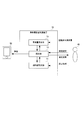
- FIG. 1 is a block diagram showing a schematic configuration of a collection amount adjustment support apparatus according to Embodiment 1 of the present invention.
- FIG. 2 is a block diagram showing a specific configuration of the collection amount adjustment support device according to Embodiment 1 of the present invention.
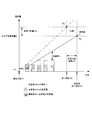
- FIG. 3 is a diagram showing an example of trend lines set in the first embodiment of the present invention.
- FIG. 4 is a flowchart showing the operation of the collection amount adjustment support device according to Embodiment 1 of the present invention.
- FIG. 5 is a block diagram showing a specific configuration of the collection amount adjustment support device according to Embodiment 2 of the present invention.
- FIG. 6 is an explanatory diagram for explaining the concept of learning data used in the second embodiment of the present invention.
- FIG. 1 is a block diagram showing a schematic configuration of a collection amount adjustment support apparatus according to Embodiment 1 of the present invention.
- FIG. 2 is a block diagram showing a specific configuration of the collection amount adjustment support device according to Embodiment 1 of the present
- FIG. 7 is a diagram showing a specific example of learning data used in Embodiment 2 of the present invention.
- FIG. 8 is an explanatory diagram for explaining a learning model used in Embodiment 2 of the present invention.
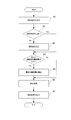
- FIG. 9 is a flowchart showing the operation of the collection amount adjustment support apparatus according to Embodiment 2 of the present invention.
- FIG. 10 is a block diagram showing a specific configuration of the collection amount adjustment support device according to Embodiment 3 of the present invention.
- FIG. 11 is a block diagram illustrating an example of a computer that implements the collection amount adjustment support device according to the first to third embodiments of the present invention.
- Embodiment 1 a collection amount adjustment support device, a collection amount adjustment support method, and a program according to Embodiment 1 of the present invention will be described with reference to FIGS.
- FIG. 1 is a block diagram showing a schematic configuration of a collection amount adjustment support apparatus according to Embodiment 1 of the present invention.
- the collection amount adjustment support device 10 is a device for supporting adjustment of the collection amount of agricultural products collected at the collection / shipping site. At the collection / shipping site, collection is performed so that the collection amount of agricultural products reaches the scheduled collection amount per day (hereinafter referred to as “daily scheduled collection amount”). The daily scheduled collection amount is set based on the shipment amount (contract shipment amount) negotiated with the shipping destination.
- the collection amount adjustment support device 10 includes a trend line setting unit 11 and an estimation unit 12.
- the trend line setting part 11 sets a trend line using the scheduled collection amount per day of agricultural products.
- the trend line is a line representing an ideal change in the amount of collected agricultural products from the start to the end of the collection of agricultural products.
- the estimation unit 12 obtains a divergence rate indicating the degree to which the collected amount of collected agricultural products deviates from the trend line at a specific time, and estimates whether the agricultural products are insufficient based on the obtained divergence rate. carry out.
- the collection amount adjustment support device 10 sets a trend line in consideration of fluctuations in the collection amount, and determines whether the collection amount is insufficient based on this trend line. For this reason, according to the collection amount adjustment support device 10, even when agricultural products are brought into the collection and shipping area by a plurality of producers, the collection amount of the collected agricultural products can be predicted.
- the agricultural products for which the collection amount is adjusted are not particularly limited, but are particularly effective for agricultural products that require freshness, for example, leafy vegetables, outdoor vegetables, fruits, fresh flowers, and the like. is there.
- FIG. 2 is a block diagram showing a specific configuration of the collection amount adjustment support device according to Embodiment 1 of the present invention.
- FIG. 3 is a diagram showing an example of trend lines set in the first embodiment of the present invention.
- the collection amount adjustment support device 10 includes a collection amount calculation unit 13 in addition to the trend line setting unit 11 and the estimation unit 12. Further, when the producer delivers the agricultural product to the collection / shipping site, the manager 40 obtains the prepared collection amount for each producer and inputs the obtained prepared collection amount to the collection amount adjustment support device 10. The prepared collection amount is input by the administrator 40 via an input device or a terminal device (not shown in FIG. 2).
- the “prepared collection amount” is the amount of agricultural products that each producer actually delivered to the collection and shipping site, subtracting the amount of agricultural products that does not meet certain standards established in advance at the time of shipment. It means the amount obtained. This is because the agricultural products delivered by the producer may include agricultural products that do not meet certain standards (non-standard agricultural products).
- the collection amount calculation unit 13 adds the prepared collection amounts of the respective producers calculated from the start of collection to the present time to obtain the latest collection amount. Calculate the amount. Then, the collection amount calculation unit 13 outputs the calculated collection amount to the estimation unit 12.
- the calculated latest collection amount corresponds to the amount of agricultural products that are ready for shipment at the collection and shipping site, that is, the shipment preparation amount.
- the tendency line setting part 11 sets a linear function in the coordinate system used as two axes with which the amount of collection and time are orthogonal as a tendency line. .
- the start time T1 of the collection of agricultural products, the end time T2 of the collection of agricultural products, and the daily scheduled collection amount S are set.
- ⁇ S is set as the amount that can be stocked in the cold storage at the collection / shipping place (stockable amount).
- the final collection amount is equal to or more than the daily scheduled collection amount S between the end time T2 and the extended end time T3. If it is less than the sum of ⁇ S (daily scheduled amount S + stockable amount ⁇ S), the problems associated with insufficient collection amount and problems associated with excessive collection amount described in the background art section will not occur. .
- the trend line setting unit 11 uses a trend line as the point P1 (0, T1) where the collection amount is zero and the time is the collection start time, and the collection amount is the scheduled date and time collection amount S
- the linear function is set so that the time passes through the point P2 (S, T3) which is the end time T3 when the collection is extended.
- the setting information necessary for setting the trend line specifically, the start time T1, the scheduled collection date and time S3, and the extended collection time T3 are input by the administrator 40, for example, as an input device or a terminal device ( (Not shown in FIG. 2).
- the linear function is set as the trend line. It can be assumed that the amount of work that can be performed per unit time at the collection / shipping site is constant, and the collection ends from the start of collection of agricultural products This is because it is an ideal state that the amount of collection increases at a constant pace. However, if the change in the amount of work possible per unit time at the pickup site is known (see the following document), a curve may be used as the trend line. Source: http://en.wikipedia.org/wiki/%E4%BD%9C%E6%A5%AD%E6%9B%B2%E7%B7%9A
- the estimation unit 12 collects at the specified time from the collection amount output by the collection amount calculation unit 13. Identify the amount of collected agricultural products. Specifically, when the administrator 40 designates the current time, the estimation unit 12 sets the latest collected amount that has been output as the collected amount of collected agricultural products at the designated time.
- the estimation unit 12 calculates the difference between the collected amount of collected agricultural products and the amount collected on the trend line at the specified time, and divides the calculated difference by the amount collected on the trend line.
- the obtained value is defined as the deviation rate X.
- the divergence rate X is positive when the amount of collection on the trend line is larger than the amount of collected agricultural products.
- the estimation unit 12 compares the deviation rate X with a preset threshold when the calculated deviation rate X is positive, and estimates that there is a shortage of agricultural products when the deviation rate X exceeds the threshold. Moreover, the estimation part 12 outputs an estimation result, and shows this to the administrator 40 via a display apparatus or a terminal device (not shown in FIG. 2).
- the estimation part 12 can also notify the producer's terminal 50 of the warning which shows that when it estimates that there is a shortage of agricultural products via networks, such as the internet (not shown in FIG. 2). .
- the producer who received the notification can quickly cope with a situation where the amount of collection is insufficient.
- FIG. 4 is a flowchart showing the operation of the collection amount adjustment support device according to Embodiment 1 of the present invention.
- FIGS. 1 to 3 are referred to as appropriate.
- the collection amount adjustment support method is implemented by operating the collection amount adjustment support device 10. Therefore, the description of the collection amount adjustment support method in the first embodiment will be replaced with the following description of the operation of the collection amount adjustment support device 10.
- the estimation unit 12 accepts designation of time by the administrator 40 (step A ⁇ b> 1). In this case, the estimation unit 12 notifies the trend line setting unit 11 and the collection amount calculation unit 13 that the designation of time has been accepted.
- Step A2 the trend line setting unit 11 determines whether or not a trend line is set (Step A2). If the trend line is set as a result of the determination in step A2, step A4 described later is executed. On the other hand, as a result of the determination in step A2, if the trend line is not set, the trend line setting unit 11 sets the trend line (step A3). Specifically, the trend line setting unit 11 sets a linear function passing through the points P1 and P2 illustrated in FIG. 2 using the setting information input by the administrator 40.
- the collection amount calculation unit 13 determines whether or not a newly prepared collection amount has been input from the administrator 40 (step A4). As a result of the determination in step A4, when a newly prepared collection amount is not input, step A6 described later is executed. On the other hand, if the result of determination in step A4 is that a newly prepared collection amount has been input, the collection amount calculation unit 13 calculates the latest collection amount (step A5). The collection amount calculation unit 13 outputs the calculated latest collection amount to the estimation unit 12.
- the estimation unit 12 obtains the deviation rate X at the time designated in Step A1, and estimates whether or not the agricultural products are insufficient based on the obtained deviation rate X (Step A6).
- step A6 the estimation unit 12 calculates the difference between the amount of collection calculated in step A5 and the amount of collection on the trend line at the specified time, and the calculated difference is displayed on the trend line.
- the obtained value is divided by the amount of collection of, and the obtained value is defined as the deviation rate X.
- the estimation part 12 contrasts the deviation rate X and the preset threshold value on condition that the calculated deviation rate X is positive, and when the deviation rate X exceeds the threshold value, the agricultural products are insufficient. I guess.
- the estimation unit 12 outputs the result of the estimation process in Step A6 to the display device or the terminal device of the administrator 40 (Step A7). Thereby, the result of the estimation process is presented to the administrator 40. Moreover, when estimating that the agricultural product is insufficient, the estimating unit 12 can also notify the producer's terminal 50 of a warning indicating that the agricultural product is insufficient in Step A7. After the execution of step A7, the processing in the collection amount adjustment support device 10 is temporarily terminated.
- steps A1 to A7 are executed again. Therefore, the manager can check whether the collected amount is not insufficient at any time until the end time T3 at the time of extension elapses.
- the process is executed when the administrator specifies the time, but the first embodiment is not limited to this mode.
- the first embodiment may be configured such that the process is started at a preset time or at a preset time interval.
- steps A2 to A7 shown in FIG. 4 are executed at preset time intervals or at preset time intervals. Further, steps A2 to A7 shown in FIG. 4 may be executed in response to a request from an external system.
- the program according to the first embodiment of the present invention may be a program that causes a computer to execute steps A1 to A7 shown in FIG.
- a CPU Central Processing Unit
- the collection amount adjustment support device 10 and the collection amount adjustment support method according to the first embodiment can be realized.
- a CPU Central Processing Unit
- the computer functions as the trend line setting unit 11, the estimation unit 12, and the collection amount calculation unit 13, and performs processing.
- the collection amount adjustment support device 10 sets a trend line in consideration of the fact that a plurality of producers bring agricultural products to the collection / shipment site, and collects the cargo based on this. Determine if the amount is insufficient. For this reason, according to the collection amount adjustment support device 10, in a mode in which agricultural products are brought into the collection and shipping place by a plurality of producers, the collection amount of the collected agricultural products can be predicted. As a result, the occurrence of the problem associated with the shortage of the collection amount and the problem associated with the excessive collection amount described in the background art section is suppressed.
- the trend line setting unit 11 adds the point P1 in addition to or instead of the trend line passing through the points P1 and P2 (hereinafter referred to as “lower limit line”).
- a trend line (hereinafter referred to as “upper limit line”) passing through the point P3 (see FIG. 3) can be set.
- the point P3 is a point where the amount of collection becomes an amount obtained by adding the stock storage possible amount ⁇ S to the daily scheduled amount S, and the time becomes the end time T2.
- the estimating unit 12 calculates a difference between the collected amount of collected agricultural products and the amount collected on the upper limit line at a specified time, and calculates the calculated difference as the amount collected on the upper limit line. Divide and set the obtained value as the deviation rate X.
- the deviation rate X is positive when the collected amount of collected agricultural products is larger than the collected amount on the upper limit line.
- the estimation unit 12 compares the deviation rate X with a preset threshold when the calculated deviation rate X is positive, and estimates that the agricultural products are excessive when the deviation rate X exceeds the threshold. To do.
- the upper limit line is set in addition to the lower limit line or instead of the lower limit line.
- each producer can notify the collection amount adjustment support apparatus 10 of the amount of agricultural products to be delivered to the collection / shipment site via the terminal 50.
- the collection amount calculation unit 13 subtracts the amount input by the administrator 40 from the notified delivery amount, The prepared collection amount can be calculated.
- the first embodiment automatically notifies the prepared collection amount from this system. It may be an embodiment.
- Embodiment 2 Next, a collection amount adjustment support device, a collection amount adjustment support method, and a program according to Embodiment 2 of the present invention will be described with reference to FIGS.
- FIG. 5 is a block diagram showing a specific configuration of the collection amount adjustment support device according to Embodiment 2 of the present invention.
- the collection amount adjustment support device 20 in the second embodiment shown in FIG. 5 also collects agricultural products collected at the collection / shipping site. It is a device for supporting the adjustment of the amount.
- the collection amount adjustment support device 20 in the second embodiment is different from the collection amount adjustment support device 10 in terms of configuration and function. Hereinafter, the difference will be mainly described.
- the collection amount adjustment support device 20 includes a learning data storage unit 21, a learning estimation unit 22, and a collection amount calculation unit 23.
- the collection amount calculation part 23 is provided with the same function as the collection amount calculation part 13 shown in FIG. That is, when the manager 40 inputs the prepared collection amount of each producer, the collection amount calculation unit 23 adds these together and calculates the latest collection amount. In addition, the collection amount calculation unit 23 outputs the calculated latest collection amount to the learning estimation unit 22.
- the learning estimation unit 22 first constructs a learning model of the divergence rate X using the learning data stored in the learning data storage unit 21. And the learning estimation part 22 applies the deviation rate at the specific time (time designated by the manager 40) to the constructed learning model, and based on the result obtained thereby, whether or not there is a shortage of agricultural products. Estimate.
- the learning data is a result indicating whether the adjustment of the divergence rate X at a plurality of points in time in the past and the collection amount of agricultural products on each day was successful or unsuccessful calculated using the trend line ( Hereinafter referred to as “adjustment result”).
- the learning data is input by the administrator 40 and stored in the learning data storage unit 21.
- the learning data storage unit 21 also stores trend lines used for creating learning data.
- FIG. 6 is an explanatory diagram for explaining the concept of learning data used in the second embodiment of the present invention.
- FIG. 7 is a diagram showing a specific example of learning data used in Embodiment 2 of the present invention.
- the coordinate system shown in FIG. 6 is the same as the coordinate system shown in FIG. 2, and is a coordinate system used as two axes in which the collection amount and time are orthogonal to each other.
- the trend line is also set in the same manner as in the example of FIG. Then, learning data, on a daily basis, for the time t 1 ⁇ t 5, respectively, asked the trend line and the deviation rate X 1 ⁇ X 5 from the collection amount and at that time, the rate of deviation X 1 ⁇ X 5 obtained, of the day It is created by storing the adjustment result in the learning data storage unit 21.
- the learning data is as shown in FIG. In FIG. 7, “OK” is indicated when the adjustment of the amount of collected agricultural products is successful, and “NG” is indicated when the adjustment of the amount of collected agricultural products is unsuccessful.
- the learning estimation unit 22 uses the divergence rates included in the learning data to determine the deviation rate when the adjustment of the amount of collected agricultural products is unsuccessful. Calculate the probability distribution with ⁇ ⁇ as a variable. This calculated probability distribution becomes a learning model.
- the learning estimation unit 22 applies the divergence rate at a specific time point to the calculated probability distribution, and uses the numerical value obtained thereby to determine the posterior probability in the case of unsuccessfulness. Based on this, it is estimated whether there is a shortage of agricultural products.
- FIG. 8 is an explanatory diagram for explaining a learning model used in Embodiment 2 of the present invention.
- the learning estimation unit 22 classifies the deviation rate (X 1 to X 5 ) for each time into an OK case and an NG case using the learning data.
- the learning estimation unit 22 calculates the average ⁇ and the variance ⁇ 2 for each of the deviation rate in the case of OK and the deviation rate in the case of NG.
- the learning estimation unit 22 calculates a Gaussian distribution P (X
- NG) is calculated from the mean ⁇ and the variance ⁇ 2 .
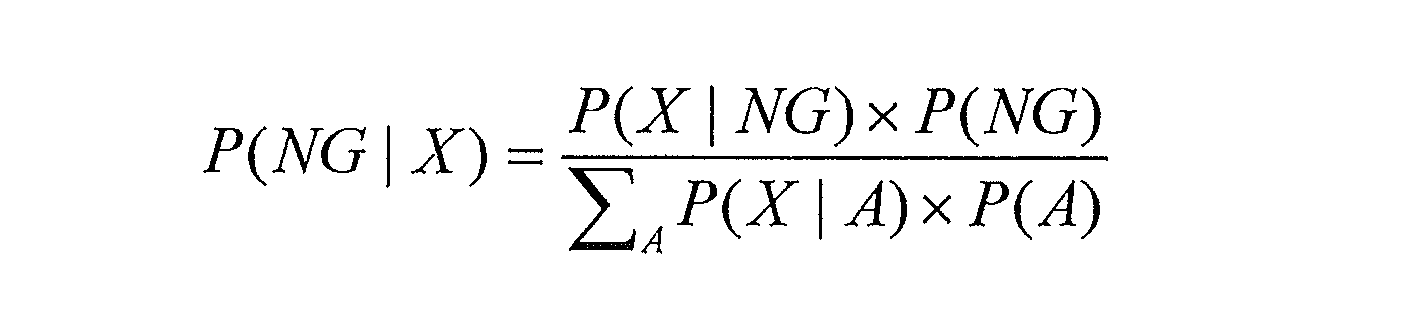
- the learning estimation unit 22 uses the learning data, and the probability P (OK) that the collection amount reaches the “target” shown in FIG. 6 and the probability P (the collection amount does not reach the “target” shown in FIG. NG) is also calculated. Then, the learning estimation unit 22 uses the calculated Gaussian distribution and the probability, and the expression of the posterior probability P (OK
- the results are as shown in the following equations 1 and 2.
- the deviation rate X is a variable.
- “A” shown in the following equations 1 and 2 represents a set including OK or NG as elements.
- the learning estimation unit 22 sets the trend line stored in the learning data storage unit 21 and the latest collection notified by the collection amount calculation unit.
- the deviation rate X at the specified time is calculated using the quantity.
- the learning estimation unit 22 calculates the posterior probability P (OK
- the learning estimation unit 22 compares the posterior probability P (NG
- the probability distribution is not limited to the Gaussian distribution.
- the histogram of the divergence rate X can be approximated more than the Gaussian distribution by Johnson SU distribution, logistic distribution, or the like, any of these distributions can be used as the probability part distribution.
- the learning estimation unit 22 may notify the producer's terminal 50 of a warning indicating that via a network such as the Internet (not shown in FIG. 5). It can. In this case, the producer who received the notification can quickly cope with a situation where the amount of collection is insufficient.
- the learning data is created based on the collection amount excluding the amount added by the notification. .
- the estimation accuracy can be improved by constructing learning data from the amount of agricultural products delivered purely by the producer (prepared collection amount).
- an adjustment result obtained by removing the amount added by the notification is used instead of the actual adjustment result in the past.
- the divergence rate (X 1 to X 5 ) for each time in the learning data is calculated from the collected amount excluding the amount added by the notification.
- FIG. 9 is a flowchart showing the operation of the collection amount adjustment support apparatus according to Embodiment 2 of the present invention.
- FIGS. 5 to 8 are referred to as appropriate.
- the collection amount adjustment support method is implemented by operating the collection amount adjustment support device 20. Therefore, the description of the collection amount adjustment support method in the second embodiment is replaced with the following description of the operation of the collection amount adjustment support device 20.
- the learning estimation unit 22 accepts designation of time by the administrator 40 (step B1). In this case, the learning estimation unit 12 notifies the collection amount calculation unit 23 that the designation of time has been accepted.
- the learning estimation unit 22 determines whether the learning data stored in the learning data storage unit 21 has been updated (step B2). When the learning data is not updated as a result of the determination in step B2, step B4 described later is executed. On the other hand, if the learning data has been updated as a result of the determination in step B2, the learning estimation unit 22 recalculates the Gaussian distribution P (X
- step B3 the learning estimation unit 22 further uses the updated Gaussian distribution to calculate the posterior probability P (OK
- the collection amount calculation unit 23 determines whether or not a newly prepared collection amount has been input from the administrator 40 (step B4). As a result of the determination in step B4, when a newly prepared collection amount is not input, step B6 described later is executed. On the other hand, as a result of the determination in step B4, when a newly prepared collection amount is input, the collection amount calculation unit 23 calculates the latest collection amount (step B5). In addition, the collection amount calculation unit 13 outputs the calculated latest collection amount to the learning estimation unit 22. Steps B4 and B5 are the same as steps A4 and A5 shown in FIG. 4, respectively.
- the learning estimation unit 22 estimates whether the learning estimation unit 22 is short of agricultural products (step B6). Specifically, in step B6, the estimation unit 12 uses the collected amount calculated in step B5 and the trend line stored in the learning data storage unit 21 to calculate the divergence rate X at the specified time. calculate. Then, the learning estimation unit 22 calculates the posterior probability P (OK
- the learning estimation unit 22 outputs the result of the estimation process in Step B6 to the display device or the terminal device of the administrator 40 (Step B7). Thereby, the result of the estimation process is presented to the administrator 40. Moreover, when it is estimated that the agricultural product is insufficient, the learning estimation unit 22 can also notify the producer's terminal 50 of a warning indicating that the agricultural product is insufficient in Step B7. After the execution of step B7, the processing in the collection amount adjustment support device 20 is temporarily terminated.
- steps B1 to B7 are executed again. Therefore, the manager can check whether the collected amount is not insufficient at any time until the end time T3 at the time of extension elapses.
- the process is executed when the administrator designates the time, but the second embodiment is not limited to this mode.
- the second embodiment may be configured such that the process is started at a preset time or at a preset time interval.
- steps B2 to B7 shown in FIG. 9 are executed at preset time intervals or at preset time intervals. Further, when requested by an external system, steps B2 to B7 shown in FIG. 9 may be executed.
- the program according to the second embodiment of the present invention may be a program that causes a computer to execute steps B1 to B7 shown in FIG.
- a CPU Central Processing Unit
- the collection amount adjustment support device 20 and the collection amount adjustment support method in the second embodiment can be realized.
- a CPU Central Processing Unit
- the collection amount adjustment support device 20 learns an increasing tendency of the collection amount when a plurality of producers bring agricultural products to the collection and shipping site, and uses the learning result to collect the collection amount. Determine if there is a shortage. For this reason, also in the case of using the collection amount adjustment support device 20, it is possible to predict the collection amount of the collected agricultural products in a mode in which the agricultural products are brought into the collection and shipping place by a plurality of producers. As a result, the occurrence of the problem associated with the shortage of the collection amount and the problem associated with the excessive collection amount described in the background art section is suppressed.
- the points P1 and P3 in addition to or instead of the trend line passing through the points P1 and P2 (hereinafter referred to as “lower limit line”), the points P1 and P3 (see the drawing) Learning data may be created using a trend line passing through (hereinafter referred to as “upper limit line”).
- the point P3 is a point where the amount of collection becomes an amount obtained by adding the stock storage possible amount ⁇ S to the daily scheduled amount S, and the time becomes the end time T2.
- the learning data is created using the upper limit line. Therefore, the first modification is particularly effective when the amount of delivery of the producer is large and the agricultural products are gathered too much at the collection and shipping place. Therefore, the amount of agricultural products to be disposed of can be reduced.
- the second modification of the first embodiment can be applied to the second embodiment. That is, also in the second embodiment, each producer can notify the collection amount adjustment support device 10 of the amount of agricultural products delivered to the collection and shipping place via the terminal 50. Also good. Further, when the collection amount adjustment support device 20 is connected to an external system that records the prepared collection amount, the prepared collection amount is also automatically notified from this system in the second embodiment. It may be an embodiment.
- FIG. 10 is a block diagram showing a specific configuration of the collection amount adjustment support device according to Embodiment 3 of the present invention.
- the collection amount adjustment support device 30 in the third embodiment shown in FIG. It is a device for supporting adjustment of the amount of collected agricultural products.
- the collection amount adjustment support device 30 has the functions of the collection amount adjustment support device 10 and the collection amount adjustment support device 20. This will be specifically described below.
- the collection amount adjustment support device 30 includes a trend line setting unit 31, an estimation unit 32, a collection amount adjustment unit 33, a learning estimation unit 34, and a learning data storage unit 35.
- the trend line setting unit 31 has the same function as the trend line setting unit 11 shown in FIG. 2 in the first embodiment.
- the trend line setting unit 31 sets a trend line based on the setting information input by the administrator 40.
- the collection amount calculation unit 33 also has the same function as the collection amount calculation unit 13 shown in FIG. 2 in the first embodiment.
- the collection amount calculation unit 33 adds these, calculates the latest prepared collection amount, and calculates the calculated latest prepared collection amount. It outputs to the estimation part 32.
- the estimation unit 32 also has the same function as that of the estimation unit 12 shown in FIG.
- the estimation unit 32 determines the collected amount of collected agricultural products at the designated time from the latest collected amount notified by the collected amount calculation unit 33. Identify.
- the estimation part 32 calculates the deviation rate X of the time from the collection amount of the collected collected agricultural products and the collection amount on the trend line at the designated time, and uses this, the shortage of agricultural products is calculated. presume.
- the estimation part 32 outputs an estimation result, and shows this to the administrator 40 via a display apparatus or a terminal device (not shown in FIG. 2).
- the estimation unit 32 has a function of creating the learning data shown in FIG. 7 in the second embodiment, unlike the estimation unit 12. Specifically, the estimation unit 32 calculates the divergence rate X at each preset time on the day when shipment is performed at the collection and shipping place, and uses the calculated divergence rate X as learning data as learning data. Store in the storage unit 35.
- the estimation unit 32 determines whether or not the latest collection amount has reached the “target” (see FIG. 6). Then, the estimation unit 32 adds “OK” to the learning data for the corresponding day if the determination result has reached, and “NG” to the learning data for the corresponding day if it has not reached. Append.
- the learning estimation unit 34 has the same function as the learning estimation unit 22 shown in FIG. 5 in the second embodiment. That is, the learning estimation unit 34 first constructs a learning model of the deviation rate X using the learning data stored in the learning data storage unit 35. Then, when the administrator designates the time, the learning estimation unit 34 applies the deviation rate at the designated time to the constructed learning model, and based on the result obtained thereby, whether or not the agricultural product is insufficient. Estimate.
- both steps A1 to A7 shown in FIG. 4 and steps B1 to B7 shown in FIG. 9 can be executed. For this reason, both the estimation result calculated from the deviation rate X and the estimation result using the learning data can be presented to the administrator 40, and the administrator 40 can easily lead the collection amount adjustment to success. Become.
- the estimation part 32 and the learning estimation part 34 each estimate that there is a shortage of agricultural products, the warning which shows that is sent to networks (not shown in FIG. 10), such as the internet. It is also possible to notify the producer's terminal 50 via this. In this case, the producer who received the notification can quickly cope with a situation where the amount of collection is insufficient.
- the estimation unit 32 creates learning data based on the collection amount excluding the amount added by the notification. be able to. Also in this case, as in the second embodiment, the investigation result is not the actual adjustment result in the past, but the adjustment result when the amount added by the notification is removed. Further, the divergence rate (X 1 to X 5 ) for each time in the learning data is calculated from the collected amount excluding the amount added by the notification. In this case, the amount of the agricultural product added by the notification is input by the administrator 40 via an input device or a terminal device (not shown in FIG. 10), for example.
- the collection amount adjustment in the third embodiment is performed by executing one or both of steps A1 to A7 shown in FIG. 4 and steps B1 to B7 shown in FIG.
- the support method will be executed.
- a step of calculating the divergence rate X in advance for each time, whether the latest collection amount has reached the “target” at the end time T3 And a step of storing a calculation result and a determination result are executed.
- the program according to the third embodiment of the present invention may be a program that causes a computer to execute steps A1 to A7 shown in FIG. 4 and steps B1 to B7 shown in FIG.
- a CPU Central Processing Unit
- the collection amount adjustment support device 30 and the collection amount adjustment support method according to the third embodiment can be realized.
- a CPU Central Processing Unit
- a trend line setting unit 31 an estimation unit 32, an end calculation unit 33, and a learning estimation unit 34 to perform processing.
- FIG. 11 is a block diagram illustrating an example of a computer that implements the collection amount adjustment support device according to the first to third embodiments of the present invention.
- the computer 110 includes a CPU 111, a main memory 112, a storage device 113, an input interface 114, a display controller 115, a data reader / writer 116, and a communication interface 117. These units are connected to each other via a bus 121 so that data communication is possible.
- the CPU 111 performs various operations by developing the program (code) in the present embodiment stored in the storage device 113 in the main memory 112 and executing them in a predetermined order.
- the main memory 112 is typically a volatile storage device such as a DRAM (Dynamic Random Access Memory).
- the program in the present embodiment is provided in a state of being stored in a computer-readable recording medium 120. Note that the program in the present embodiment may be distributed on the Internet connected via the communication interface 117.
- the storage device 113 include a semiconductor storage device such as a flash memory in addition to a hard disk.
- the input interface 114 mediates data transmission between the CPU 111 and an input device 118 such as a keyboard and a mouse.
- the display controller 115 is connected to the display device 119 and controls display on the display device 119.
- the data reader / writer 116 mediates data transmission between the CPU 111 and the recording medium 120, and reads a program from the recording medium 120 and writes a processing result in the computer 110 to the recording medium 120.
- the communication interface 117 mediates data transmission between the CPU 111 and another computer.
- the recording medium 120 include general-purpose semiconductor storage devices such as CF (Compact Flash (registered trademark)) and SD (Secure Digital), magnetic storage media such as a flexible disk, or CD- Optical storage media such as ROM (Compact Disk Read Only Memory) are listed.
- CF Compact Flash
- SD Secure Digital
- magnetic storage media such as a flexible disk
- CD- Optical storage media such as ROM (Compact Disk Read Only Memory) are listed.
- a device for supporting adjustment of the amount of collected agricultural products collected at a collection and shipping site A trend line setting unit that sets a trend line that represents an ideal change in the amount of collected agricultural products from the start to the end of the collection of agricultural products, using the scheduled collection amount of the agricultural products per day; At a specific time point, a divergence rate indicating the degree to which the collected amount of collected agricultural products deviates from the trend line is obtained, and whether the agricultural products are insufficient is estimated based on the obtained divergence rate.
- the estimation part A collection amount adjustment support device characterized by comprising:
- a learning model of the deviation rate is constructed using the deviation rate at a plurality of points in time in the past and the adjustment result indicating whether the adjustment of the amount of collected agricultural products on the day is successful or unsuccessful.
- a learning estimation unit that applies the divergence rate at the specific time point to the constructed learning model, and estimates whether or not the agricultural product is insufficient based on a result obtained thereby;
- the collection amount adjustment support device according to appendix 1, further comprising:
- the learning estimation unit calculates the probability distribution using the deviation rate as a variable when the adjustment of the collection amount of the agricultural products is unsuccessful using the deviation rate for each past day. Build and Fit the deviation rate at the specific time point to the calculated probability distribution, and use the numerical value obtained thereby to determine the posterior probability for the unsuccessful case, Based on the calculated posterior probabilities, estimate whether the agricultural products are insufficient, The collection amount adjustment support device according to attachment 2.
- Appendix 6 The collection amount adjustment support device according to appendix 1, wherein the learning estimation unit notifies an external terminal designated in advance that the agricultural product is insufficient when the agricultural estimation unit estimates that the agricultural product is insufficient.
- a learning estimator that estimates The learning data is Calculated using a trend line, which is set using the scheduled collection amount of the agricultural product per day and represents an ideal change in the collection amount of the agricultural product from the start to the end of the collection of the agricultural product, A divergence rate indicating the degree to which the collected amount of the collected agricultural products has deviated from the trend line at a plurality of points in time in the past, An adjustment result indicating whether the adjustment of the collection amount of the agricultural product on the day was successful or unsuccessful; Including, A collection amount adjustment support device characterized by that.
- the learning estimation unit uses the divergence rate included in the learning data to calculate a probability distribution using the divergence rate as a variable when the adjustment of the collection amount of the agricultural products is unsuccessful. Build Fit the deviation rate at the specific time point to the calculated probability distribution, and use the numerical value obtained thereby to determine the posterior probability for the unsuccessful case, Based on the calculated posterior probabilities, estimate whether the agricultural products are insufficient, The collection amount adjustment support device according to appendix 7.
- (Appendix 11) A method for supporting adjustment of the amount of collected agricultural products collected at a collection and shipping site, (A) setting a trend line that represents an ideal change in the collection amount of the agricultural product from the start to the end of the collection of the agricultural product using the scheduled collection amount of the agricultural product per day; (B) At a specific time point, a divergence rate indicating the degree to which the collected amount of collected agricultural products deviates from the trend line is obtained, and whether or not the agricultural products are insufficient based on the obtained divergence rate Performing the estimation, and A method for supporting the collection amount adjustment, characterized by comprising:
- step (c) the learning is performed by calculating a probability distribution using the deviation rate as a variable when the adjustment of the collection amount of the agricultural products is unsuccessful using the deviation rate for each past day.
- Build the model Fit the deviation rate at the specific time point to the calculated probability distribution, and use the numerical value obtained thereby to determine the posterior probability for the unsuccessful case, Based on the calculated posterior probabilities, estimate whether the agricultural products are insufficient, The collection amount adjustment support method according to attachment 12.
- step (a) As the trend line, in the coordinate system in which the collection amount and the time are two axes orthogonal to each other, the first point where the collection amount is zero and the time is the collection start time, and the collection amount is Setting a linear function that passes through the scheduled collection amount and a second point at which time is the collection end time;
- the method when it is estimated that the agricultural product is insufficient, the method further includes a step of notifying the external terminal designated in advance that the agricultural product is insufficient.
- the method when it is estimated that the agricultural products are insufficient, the method further includes a step of notifying the external terminal designated in advance that the agricultural products are insufficient.
- (Appendix 17) A method for supporting adjustment of the amount of collected agricultural products collected at a collection and shipping site, (A) A learning model of the divergence rate is constructed using learning data, the divergence rate at a specific time is applied to the constructed learning model, and the agricultural product is insufficient based on the result obtained thereby.
- the learning data is Calculated using a trend line, which is set using the scheduled collection amount of the agricultural product per day and represents an ideal change in the collection amount of the agricultural product from the start to the end of the collection of the agricultural product, A divergence rate indicating the degree to which the collected amount of the collected agricultural products has deviated from the trend line at a plurality of points in time in the past, An adjustment result indicating whether the adjustment of the collection amount of the agricultural product on the day was successful or unsuccessful; Including, A method for adjusting the amount of collection, which is characterized by the above.
- step (a) using the divergence rate included in the learning data, by calculating a probability distribution using the divergence rate as a variable when the adjustment of the collection amount of the agricultural products is unsuccessful, Build a learning model, Fit the deviation rate at the specific time point to the calculated probability distribution, and use the numerical value obtained thereby to determine the posterior probability for the unsuccessful case, Based on the calculated posterior probabilities, estimate whether the agricultural products are insufficient, The collection amount adjustment support method according to appendix 17.
- the method when it is estimated that the agricultural products are insufficient, the method further includes a step of notifying the external terminal designated in advance that the agricultural products are insufficient.
- (Appendix 21) A computer-readable recording medium recording a program for supporting adjustment of the amount of collected agricultural products collected at a collection / shipping site by a computer, In the computer, (A) setting a trend line that represents an ideal change in the collection amount of the agricultural product from the start to the end of the collection of the agricultural product using the scheduled collection amount of the agricultural product per day; (B) At a specific time point, a divergence rate indicating the degree to which the collected amount of collected agricultural products deviates from the trend line is obtained, and whether or not the agricultural products are insufficient based on the obtained divergence rate Performing the estimation, and The computer-readable recording medium which recorded the program containing the instruction
- the program further comprises: (C) Learning the divergence rate using the divergence rate at a plurality of points in time in the past and the adjustment result indicating whether the adjustment of the amount of collected agricultural products on the day was successful or unsuccessful.
- Build the model An instruction that causes the computer to execute a step of applying the divergence rate at the specific time point to the constructed learning model and estimating whether or not the agricultural product is insufficient based on a result obtained thereby.
- step (c) the learning is performed by calculating a probability distribution using the deviation rate as a variable when the adjustment of the collection amount of the agricultural products is unsuccessful using the deviation rate for each past day.
- Build the model Fit the deviation rate at the specific time point to the calculated probability distribution, and use the numerical value obtained thereby to determine the posterior probability for the unsuccessful case, Based on the calculated posterior probabilities, estimate whether the agricultural products are insufficient.
- the computer-readable recording medium according to appendix 22 The computer-readable recording medium according to appendix 22.
- step (a) As the trend line, in the coordinate system in which the collection amount and the time are two axes orthogonal to each other, the first point where the collection amount is zero and the time is the collection start time, and the collection amount is Setting a linear function that passes through the scheduled collection amount and a second point at which time is the collection end time;
- the computer-readable recording medium according to attachment 21 As the trend line, in the coordinate system in which the collection amount and the time are two axes orthogonal to each other, the first point where the collection amount is zero and the time is the collection start time, and the collection amount is Setting a linear function that passes through the scheduled collection amount and a second point at which time is the collection end time;
- the program further comprises: (D) In the step of (b), when it is estimated that the agricultural products are insufficient, an instruction for causing the computer to execute a step of notifying the external terminal designated in advance that the agricultural products are insufficient is provided.
- the program further comprises: (E) In the step of (c), when it is estimated that the agricultural products are insufficient, an instruction for causing the computer to execute a step of notifying the external terminal designated in advance that the agricultural products are insufficient is provided.
- (Appendix 27) A computer-readable recording medium recording a program for supporting adjustment of the amount of collected agricultural products collected at a collection / shipping site by a computer,
- (A) A learning model of the divergence rate is constructed using learning data, the divergence rate at a specific time is applied to the constructed learning model, and the agricultural product is insufficient based on the result obtained thereby.
- the learning data is Calculated using a trend line, which is set using the scheduled collection amount of the agricultural product per day and represents an ideal change in the collection amount of the agricultural product from the start to the end of the collection of the agricultural product, A divergence rate indicating the degree to which the collected amount of the collected agricultural products has deviated from the trend line at a plurality of points in time in the past, An adjustment result indicating whether the adjustment of the collection amount of the agricultural product on the day was successful or unsuccessful; Including a computer-readable recording medium.
- step (a) using the divergence rate included in the learning data, by calculating a probability distribution using the divergence rate as a variable when the adjustment of the collection amount of the agricultural products is unsuccessful, Build a learning model, Fit the deviation rate at the specific time point to the calculated probability distribution, and use the numerical value obtained thereby to determine the posterior probability for the unsuccessful case, Based on the calculated posterior probabilities, estimate whether the agricultural products are insufficient,
- the computer-readable recording medium according to attachment 27 The computer-readable recording medium according to attachment 27.
- the program further comprises: (B) In the step (a), when it is estimated that the agricultural product is insufficient, a step of notifying the external terminal designated in advance that the agricultural product is insufficient is performed. 28.
- the present invention it is possible to predict the amount of collected agricultural products even when agricultural products are brought into the collection and shipping area by a plurality of producers.
- the present invention is useful in the agricultural field.
Landscapes
- Business, Economics & Management (AREA)
- Engineering & Computer Science (AREA)
- Human Resources & Organizations (AREA)
- Marketing (AREA)
- Marine Sciences & Fisheries (AREA)
- Mining & Mineral Resources (AREA)
- Agronomy & Crop Science (AREA)
- Health & Medical Sciences (AREA)
- Economics (AREA)
- General Health & Medical Sciences (AREA)
- Life Sciences & Earth Sciences (AREA)
- Animal Husbandry (AREA)
- Primary Health Care (AREA)
- Strategic Management (AREA)
- Tourism & Hospitality (AREA)
- Physics & Mathematics (AREA)
- General Business, Economics & Management (AREA)
- General Physics & Mathematics (AREA)
- Theoretical Computer Science (AREA)
- Management, Administration, Business Operations System, And Electronic Commerce (AREA)
Abstract
Description
前記農産物の1日当りの予定集荷量を用いて、前記農産物の収集の開始から終了までにおける、前記農産物の集荷量の理想的な変化を表す、傾向線を設定する、傾向線設定部と、
特定の時点において、収集済の前記農産物の集荷量が前記傾向線から乖離している程度を示す乖離率を求め、求めた前記乖離率に基づいて、前記農産物が不足するかどうかの推定を行なう、推定部と、
を備えている、ことを特徴とする。
学習データを用いて前記乖離率の学習モデルを構築し、構築した前記学習モデルに、特定の時点での前記乖離率を当てはめ、それによって得られた結果に基づいて、前記農産物が不足するかどうかの推定を行なう、学習推定部を備え、
前記学習データは、
前記農産物の1日当りの予定集荷量を用いて設定され、且つ、前記農産物の収集の開始から終了までにおける、前記農産物の集荷量の理想的な変化を表す、傾向線を用いて算出された、過去の日毎における、複数の時点での、収集済の前記農産物の集荷量が前記傾向線から乖離している程度を示す乖離率と、
当該日における前記農産物の集荷量の調整が成功及び不成功のいずれであったか示す結果と、
を含んでいる、
ことを特徴とする。
(a)前記農産物の1日当りの予定集荷量を用いて、前記農産物の収集の開始から終了までにおける、前記農産物の集荷量の理想的な変化を表す、傾向線を設定する、ステップと、
(b)特定の時点において、収集済の前記農産物の集荷量が前記傾向線から乖離している程度を示す乖離率を求め、求めた前記乖離率に基づいて、前記農産物が不足するかどうかの推定を行なう、ステップと、
を有する、ことを特徴とする。
学習データを用いて前記乖離率の学習モデルを構築し、構築した前記学習モデルに、特定の時点での前記乖離率を当てはめ、それによって得られた結果に基づいて、前記農産物が不足するかどうかの推定を行なう、ステップを有し、
前記学習データは、
前記農産物の1日当りの予定集荷量を用いて設定され、且つ、前記農産物の収集の開始から終了までにおける、前記農産物の集荷量の理想的な変化を表す、傾向線を用いて算出された、過去の日毎における、複数の時点での、収集済の前記農産物の集荷量が前記傾向線から乖離している程度を示す乖離率と、
当該日における前記農産物の集荷量の調整が成功及び不成功のいずれであったか示す結果と、
を含んでいる、
ことを特徴とする。
前記コンピュータに、
(a)前記農産物の1日当りの予定集荷量を用いて、前記農産物の収集の開始から終了までにおける、前記農産物の集荷量の理想的な変化を表す、傾向線を設定する、ステップと、
(b)特定の時点において、収集済の前記農産物の集荷量が前記傾向線から乖離している程度を示す乖離率を求め、求めた前記乖離率に基づいて、前記農産物が不足するかどうかの推定を行なう、ステップと、
を実行させる命令を含む、プログラムを記録していることを特徴とする。
前記コンピュータに、
学習データを用いて前記乖離率の学習モデルを構築し、構築した前記学習モデルに、特定の時点での前記乖離率を当てはめ、それによって得られた結果に基づいて、前記農産物が不足するかどうかの推定を行なう、ステップを実行させる命令を含む、プログラムを記録しており、
前記学習データは、
前記農産物の1日当りの予定集荷量を用いて設定され、且つ、前記農産物の収集の開始から終了までにおける、前記農産物の集荷量の理想的な変化を表す、傾向線を用いて算出された、過去の日毎における、複数の時点での、収集済の前記農産物の集荷量が前記傾向線から乖離している程度を示す乖離率と、
当該日における前記農産物の集荷量の調整が成功及び不成功のいずれであったか示す結果と、
を含んでいる、ことを特徴とする。
以下、本発明の実施の形態1における、集荷量調整支援装置、集荷量調整支援方法、及びプログラムについて、図1~図4を参照しながら説明する。
最初に、本発明の実施の形態1における集荷量調整支援装置の構成について図1を用いて説明する。図1は、本発明の実施の形態1における集荷量調整支援装置の概略構成を示すブロック図である。
資料:http://ja.wikipedia.org/wiki/%E4%BD%9C%E6%A5%AD%E6%9B%B2%E7%B7%9A
次に、本発明の実施の形態1における集荷量調整支援装置10の動作について図4を用いて説明する。図4は、本発明の実施の形態1における集荷量調整支援装置の動作を示すフロー図である。以下の説明においては、適宜図1~図3を参酌する。また、本実施の形態1では、集荷量調整支援装置10を動作させることによって、集荷量調整支援方法が実施される。よって、本実施の形態1における集荷量調整支援方法の説明は、以下の集荷量調整支援装置10の動作説明に代える。
本発明の実施の形態1におけるプログラムは、コンピュータに、図4に示すステップA1~A7を実行させるプログラムであれば良い。このプログラムをコンピュータにインストールし、実行することによって、本実施の形態1における集荷量調整支援装置10と集荷量調整支援方法とを実現することができる。この場合、コンピュータのCPU(Central Processing Unit)は、傾向線設定部11、推定部12、及び集荷量算出部13として機能し、処理を行なう。
以上のように、本実施の形態1では、集荷量調整支援装置10は、複数の生産者が集出荷場に農産物を持ち込むことを考慮して、傾向線を設定し、これを基準にして集荷量が不足するかどうかを判断する。このため、集荷量調整支援装置10によれば、複数の生産者によって集出荷場に農産物が持ち込まれる態様において、収集される農産物の集荷量を予測することができる。この結果、背景技術の欄で述べた、集荷量不足に伴う問題と集荷量過多に伴う問題との発生が抑制される。
上述したように、図1~図4に示した例では、傾向線として、点P1と点P2とを通る1次関数が設定され、最終的な集荷量が日次予定集荷量Sに満たないと推定される場合に、そのことが管理者40に提示されているが、本実施の形態1は、この例に限定されない。
本変形例2では、各生産者が、端末50を介して、集出荷場に納入する農産物の納入量を、集荷量調整支援装置10に通知を行なうことができる。この場合、管理者40が、一定の基準を満たない農産物の量を入力することで、集荷量算出部13は、通知された納入量から、管理者40によって入力された量を減算して、調製済み集荷量を算出することができる。
次に本発明の実施の形態2における、集荷量調整支援装置、集荷量調整支援方法、及びプログラムについて、図5~図9を参照しながら説明する。
最初に、本発明の実施の形態2における集荷量調整支援装置の構成について図5を用いて説明する。図5は、本発明の実施の形態2における集荷量調整支援装置の具体的構成を示すブロック図である。

次に、本発明の実施の形態2における集荷量調整支援装置20の動作について図9を用いて説明する。図9は、本発明の実施の形態2における集荷量調整支援装置の動作を示すフロー図である。以下の説明においては、適宜図5~図8を参酌する。また、本実施の形態2では、集荷量調整支援装置20を動作させることによって、集荷量調整支援方法が実施される。よって、本実施の形態2における集荷量調整支援方法の説明は、以下の集荷量調整支援装置20の動作説明に代える。
本発明の実施の形態2におけるプログラムは、コンピュータに、図9に示すステップB1~B7を実行させるプログラムであれば良い。このプログラムをコンピュータにインストールし、実行することによって、本実施の形態2における集荷量調整支援装置20と集荷量調整支援方法とを実現することができる。この場合、コンピュータのCPU(Central Processing Unit)は、学習推定部22、及び集荷量算出部23として機能し、処理を行なう。
以上のように、本実施の形態2では、集荷量調整支援装置20は、複数の生産者が集出荷場に農産物を持ち込む場合の集荷量の増加傾向を学習し、学習結果を用いて集荷量が不足するかどうかを判断する。このため、集荷量調整支援装置20による場合も、複数の生産者によって集出荷場に農産物が持ち込まれる態様において、収集される農産物の集荷量を予測することができる。この結果、背景技術の欄で述べた、集荷量不足に伴う問題と集荷量過多に伴う問題との発生が抑制される。
上述したように、図5~図9に示した例では、学習データの基準となる傾向線として、点P1と点P2とを通る1次関数が用いられているが、本実施の形態2は、この例に限定されない。
本実施の形態2には、実施の形態1の変形例2を適用することができる。つまり、本実施の形態2においても、各生産者が、端末50を介して、集出荷場に納入する農産物の納入量を、集荷量調整支援装置10に通知を行なうことができる態様であっても良い。また、集荷量調整支援装置20が、調製済み集荷量を記録している外部のシステムに接続されている場合は、本実施の形態2も、調製済み集荷量がこのシステムから自動的に通知される態様であっても良い。
次に本発明の実施の形態3における、集荷量調整支援装置、集荷量調整支援方法、及びプログラムについて、図10を参照しながら説明する。図10は、本発明の実施の形態3における集荷量調整支援装置の具体的構成を示すブロック図である。
本実施の形態3では、図4に示したステップA1~A7、及び図9に示したステップB1~B7のうち、いずれか又は両方が実行されることにより、本実施の形態3における集荷量調整支援方法が実行されることになる。その他に、本実施の形態3では、日毎に、学習データを生成するため、予め時刻毎に乖離率Xを算出するステップ、終了時刻T3において最新の集荷量が「目標」に到達しているかどうかを判定するステップ、算出結果及び判定結果を格納するステップ、が実行される。
本発明の実施の形態3におけるプログラムは、コンピュータに、図4に示すステップA1~A7、及び図9に示すステップB1~B7を実行させるプログラムであれば良い。このプログラムをコンピュータにインストールし、実行することによって、本実施の形態3における集荷量調整支援装置30と集荷量調整支援方法とを実現することができる。この場合、コンピュータのCPU(Central Processing Unit)は、傾向線設定部31、推定部32、終了算出部33、及び学習推定部34として機能し、処理を行なう。
ここで、実施の形態1~3におけるプログラムを実行することによって、集荷量調整支援装置を実現するコンピュータについて図11を用いて説明する。図11は、本発明の実施の形態1~3における集荷量調整支援装置を実現するコンピュータの一例を示すブロック図である。
集出荷場で収集される農産物の集荷量の調整を支援するための装置であって、
前記農産物の1日当りの予定集荷量を用いて、前記農産物の収集の開始から終了までにおける、前記農産物の集荷量の理想的な変化を表す、傾向線を設定する、傾向線設定部と、
特定の時点において、収集済の前記農産物の集荷量が前記傾向線から乖離している程度を示す乖離率を求め、求めた前記乖離率に基づいて、前記農産物が不足するかどうかの推定を行なう、推定部と、
を備えている、ことを特徴とする集荷量調整支援装置。
過去の日毎における、複数の時点での前記乖離率と、当該日における前記農産物の集荷量の調整が成功及び不成功のいずれであったか示す調整結果とを用いて、前記乖離率の学習モデルを構築し、
構築した前記学習モデルに、前記特定の時点での前記乖離率を当てはめ、それによって得られた結果に基づいて、前記農産物が不足するかどうかの推定を行なう、学習推定部と、
を更に備えている、付記1に記載の集荷量調整支援装置。
前記学習推定部が、過去の日毎における、前記乖離率を用いて、前記農産物の集荷量の調整が不成功の場合について、乖離率を変数とする確率分布を算出することによって、前記学習モデルを構築し、
算出した前記確率分布に、前記特定の時点での前記乖離率を当てはめ、これによって得られた数値を用いて、前記不成功の場合について事後確率を求め、
求めた各事後確率に基づいて、前記農産物が不足するかどうかの推定を行なう、
付記2に記載の集荷量調整支援装置。
前記傾向線設定部が、前記傾向線として、集荷量及び時間を直交する2軸とする座標系において、集荷量がゼロ、時間が収集の開始時刻となる第1の点と、集荷量が前記予定集荷量、時間が収集の終了時刻となる第2の点とを通る、1次関数を設定する、
付記1に記載の集荷量調整支援装置。
前記推定部が、前記農産物が不足すると推定した場合に、予め指定された外部の端末に、前記農産物が不足することを通知する、付記1に記載の集荷量調整支援装置。
前記学習推定部が、前記農産物が不足すると推定した場合に、予め指定された外部の端末に、前記農産物が不足することを通知する、付記1に記載の集荷量調整支援装置。
集出荷場で収集される農産物の集荷量の調整を支援するための装置であって、
学習データを用いて前記乖離率の学習モデルを構築し、構築した前記学習モデルに、特定の時点での前記乖離率を当てはめ、それによって得られた結果に基づいて、前記農産物が不足するかどうかの推定を行なう、学習推定部を備え、
前記学習データは、
前記農産物の1日当りの予定集荷量を用いて設定され、且つ、前記農産物の収集の開始から終了までにおける、前記農産物の集荷量の理想的な変化を表す、傾向線を用いて算出された、過去の日毎における、複数の時点での、収集済の前記農産物の集荷量が前記傾向線から乖離している程度を示す乖離率と、
当該日における前記農産物の集荷量の調整が成功及び不成功のいずれであったか示す調整結果と、
を含んでいる、
ことを特徴とする集荷量調整支援装置。
前記学習推定部が、前記学習データに含まれる前記乖離率を用いて、前記農産物の集荷量の調整が不成功の場合について、乖離率を変数とする確率分布を算出することによって、前記学習モデルを構築し、
算出した前記確率分布に、前記特定の時点での前記乖離率を当てはめ、これによって得られた数値を用いて、前記不成功の場合について事後確率を求め、
求めた各事後確率に基づいて、前記農産物が不足するかどうかの推定を行なう、
付記7に記載の集荷量調整支援装置。
前記傾向線として、集荷量及び時間を直交する2軸とする座標系において、集荷量がゼロ、時間が収集の開始時刻となる第1の点と、集荷量が前記予定集荷量、時間が収集の終了時刻となる第2の点とを通る、1次関数が設定されている、
付記7に記載の集荷量調整支援装置。
前記学習推定部が、前記農産物が不足すると推定した場合に、予め指定された外部の端末に、前記農産物が不足することを通知する、付記7に記載の集荷量調整支援装置。
集出荷場で収集される農産物の集荷量の調整を支援するための方法であって、
(a)前記農産物の1日当りの予定集荷量を用いて、前記農産物の収集の開始から終了までにおける、前記農産物の集荷量の理想的な変化を表す、傾向線を設定する、ステップと、
(b)特定の時点において、収集済の前記農産物の集荷量が前記傾向線から乖離している程度を示す乖離率を求め、求めた前記乖離率に基づいて、前記農産物が不足するかどうかの推定を行なう、ステップと、
を有する、ことを特徴とする集荷量調整支援方法。
(c)過去の日毎における、複数の時点での前記乖離率と、当該日における前記農産物の集荷量の調整が成功及び不成功のいずれであったか示す調整結果とを用いて、前記乖離率の学習モデルを構築し、
構築した前記学習モデルに、前記特定の時点での前記乖離率を当てはめ、それによって得られた結果に基づいて、前記農産物が不足するかどうかの推定を行なう、ステップと、
を更に有している、付記11に記載の集荷量調整支援方法。
前記(c)のステップにおいて、過去の日毎における、前記乖離率を用いて、前記農産物の集荷量の調整が不成功の場合について、乖離率を変数とする確率分布を算出することによって、前記学習モデルを構築し、
算出した前記確率分布に、前記特定の時点での前記乖離率を当てはめ、これによって得られた数値を用いて、前記不成功の場合について事後確率を求め、
求めた各事後確率に基づいて、前記農産物が不足するかどうかの推定を行なう、
付記12に記載の集荷量調整支援方法。
前記(a)のステップにおいて、前記傾向線として、集荷量及び時間を直交する2軸とする座標系において、集荷量がゼロ、時間が収集の開始時刻となる第1の点と、集荷量が前記予定集荷量、時間が収集の終了時刻となる第2の点とを通る、1次関数を設定する、
付記11に記載の集荷量調整支援方法。
(d)前記(b)のステップにおいて、前記農産物が不足すると推定した場合に、予め指定された外部の端末に、前記農産物が不足することを通知する、ステップを更に有している、付記11に記載の集荷量調整支援方法。
(e)前記(c)のステップにおいて、前記農産物が不足すると推定した場合に、予め指定された外部の端末に、前記農産物が不足することを通知する、ステップを更に有している、付記11に記載の集荷量調整支援方法。
集出荷場で収集される農産物の集荷量の調整を支援するための方法であって、
(a)学習データを用いて前記乖離率の学習モデルを構築し、構築した前記学習モデルに、特定の時点での前記乖離率を当てはめ、それによって得られた結果に基づいて、前記農産物が不足するかどうかの推定を行なう、ステップを有し、
前記学習データは、
前記農産物の1日当りの予定集荷量を用いて設定され、且つ、前記農産物の収集の開始から終了までにおける、前記農産物の集荷量の理想的な変化を表す、傾向線を用いて算出された、過去の日毎における、複数の時点での、収集済の前記農産物の集荷量が前記傾向線から乖離している程度を示す乖離率と、
当該日における前記農産物の集荷量の調整が成功及び不成功のいずれであったか示す調整結果と、
を含んでいる、
ことを特徴とする集荷量調整支援方法。
前記(a)のステップにおいて、前記学習データに含まれる前記乖離率を用いて、前記農産物の集荷量の調整が不成功の場合について、乖離率を変数とする確率分布を算出することによって、前記学習モデルを構築し、
算出した前記確率分布に、前記特定の時点での前記乖離率を当てはめ、これによって得られた数値を用いて、前記不成功の場合について事後確率を求め、
求めた各事後確率に基づいて、前記農産物が不足するかどうかの推定を行なう、
付記17に記載の集荷量調整支援方法。
前記傾向線として、集荷量及び時間を直交する2軸とする座標系において、集荷量がゼロ、時間が収集の開始時刻となる第1の点と、集荷量が前記予定集荷量、時間が収集の終了時刻となる第2の点とを通る、1次関数が設定されている、
付記17に記載の集荷量調整支援方法。
(b)前記(a)のステップにおいて、前記農産物が不足すると推定した場合に、予め指定された外部の端末に、前記農産物が不足することを通知する、ステップを更に有している、付記17に記載の集荷量調整支援方法。
コンピュータによって、集出荷場で収集される農産物の集荷量の調整を支援するためのプログラムを記録したコンピュータ読み取り可能な記録媒体であって、
前記コンピュータに、
(a)前記農産物の1日当りの予定集荷量を用いて、前記農産物の収集の開始から終了までにおける、前記農産物の集荷量の理想的な変化を表す、傾向線を設定する、ステップと、
(b)特定の時点において、収集済の前記農産物の集荷量が前記傾向線から乖離している程度を示す乖離率を求め、求めた前記乖離率に基づいて、前記農産物が不足するかどうかの推定を行なう、ステップと、
を実行させる命令を含む、プログラムを記録しているコンピュータ読み取り可能な記録媒体。
前記プログラムが、更に、
(c)過去の日毎における、複数の時点での前記乖離率と、当該日における前記農産物の集荷量の調整が成功及び不成功のいずれであったか示す調整結果とを用いて、前記乖離率の学習モデルを構築し、
構築した前記学習モデルに、前記特定の時点での前記乖離率を当てはめ、それによって得られた結果に基づいて、前記農産物が不足するかどうかの推定を行なう、ステップを、前記コンピュータに実行させる命令を含む、付記21に記載のコンピュータ読み取り可能な記録媒体。
前記(c)のステップにおいて、過去の日毎における、前記乖離率を用いて、前記農産物の集荷量の調整が不成功の場合について、乖離率を変数とする確率分布を算出することによって、前記学習モデルを構築し、
算出した前記確率分布に、前記特定の時点での前記乖離率を当てはめ、これによって得られた数値を用いて、前記不成功の場合について事後確率を求め、
求めた各事後確率に基づいて、前記農産物が不足するかどうかの推定を行なう、
付記22に記載のコンピュータ読み取り可能な記録媒体。
前記(a)のステップにおいて、前記傾向線として、集荷量及び時間を直交する2軸とする座標系において、集荷量がゼロ、時間が収集の開始時刻となる第1の点と、集荷量が前記予定集荷量、時間が収集の終了時刻となる第2の点とを通る、1次関数を設定する、
付記21に記載のコンピュータ読み取り可能な記録媒体。
前記プログラムが、更に、
(d)前記(b)のステップにおいて、前記農産物が不足すると推定した場合に、予め指定された外部の端末に、前記農産物が不足することを通知する、ステップを、前記コンピュータに実行させる命令を含む、付記21に記載のコンピュータ読み取り可能な記録媒体。
前記プログラムが、更に、
(e)前記(c)のステップにおいて、前記農産物が不足すると推定した場合に、予め指定された外部の端末に、前記農産物が不足することを通知する、ステップを、前記コンピュータに実行させる命令を含む、付記21に記載のコンピュータ読み取り可能な記録媒体。
コンピュータによって、集出荷場で収集される農産物の集荷量の調整を支援するためのプログラムを記録したコンピュータ読み取り可能な記録媒体であって、
前記コンピュータに、
(a)学習データを用いて前記乖離率の学習モデルを構築し、構築した前記学習モデルに、特定の時点での前記乖離率を当てはめ、それによって得られた結果に基づいて、前記農産物が不足するかどうかの推定を行なう、ステップを実行させる命令を含む、プログラムを記録しており、
前記学習データは、
前記農産物の1日当りの予定集荷量を用いて設定され、且つ、前記農産物の収集の開始から終了までにおける、前記農産物の集荷量の理想的な変化を表す、傾向線を用いて算出された、過去の日毎における、複数の時点での、収集済の前記農産物の集荷量が前記傾向線から乖離している程度を示す乖離率と、
当該日における前記農産物の集荷量の調整が成功及び不成功のいずれであったか示す調整結果と、
を含んでいる、コンピュータ読み取り可能な記録媒体。
前記(a)のステップにおいて、前記学習データに含まれる前記乖離率を用いて、前記農産物の集荷量の調整が不成功の場合について、乖離率を変数とする確率分布を算出することによって、前記学習モデルを構築し、
算出した前記確率分布に、前記特定の時点での前記乖離率を当てはめ、これによって得られた数値を用いて、前記不成功の場合について事後確率を求め、
求めた各事後確率に基づいて、前記農産物が不足するかどうかの推定を行なう、
付記27に記載のコンピュータ読み取り可能な記録媒体。
前記傾向線として、集荷量及び時間を直交する2軸とする座標系において、集荷量がゼロ、時間が収集の開始時刻となる第1の点と、集荷量が前記予定集荷量、時間が収集の終了時刻となる第2の点とを通る、1次関数が設定されている、
付記27に記載のコンピュータ読み取り可能な記録媒体。
前記プログラムが、更に、
(b)前記(a)のステップにおいて、前記農産物が不足すると推定した場合に、予め指定された外部の端末に、前記農産物が不足することを通知する、ステップを、
更に前記コンピュータに実行させる命令を含む、付記27に記載のコンピュータ読み取り可能な記録媒体。
11 傾向線設定部
12 推定部
13 集荷量算出部
20 集荷量調整支援装置(実施の形態2)
21 学習データ記憶部
22 学習推定部
23 集荷量算出部
30 集荷量調整支援装置(実施の形態3)
31 傾向線設定部
32 推定部
33 集荷量算出部
34 学習推定部
35 学習データ記憶部
40 管理者
50 生産者の端末
110 コンピュータ
111 CPU
112 メインメモリ
113 記憶装置
114 入力インターフェイス
115 表示コントローラ
116 データリーダ/ライタ
117 通信インターフェイス
118 入力機器
119 ディスプレイ装置
120 記録媒体
121 バス
Claims (30)
- 集出荷場で収集される農産物の集荷量の調整を支援するための装置であって、
前記農産物の1日当りの予定集荷量を用いて、前記農産物の収集の開始から終了までにおける、前記農産物の集荷量の理想的な変化を表す、傾向線を設定する、傾向線設定部と、
特定の時点において、収集済の前記農産物の集荷量が前記傾向線から乖離している程度を示す乖離率を求め、求めた前記乖離率に基づいて、前記農産物が不足するかどうかの推定を行なう、推定部と、
を備えている、ことを特徴とする集荷量調整支援装置。 - 過去の日毎における、複数の時点での前記乖離率と、当該日における前記農産物の集荷量の調整が成功及び不成功のいずれであったか示す調整結果とを用いて、前記乖離率の学習モデルを構築し、
構築した前記学習モデルに、前記特定の時点での前記乖離率を当てはめ、それによって得られた結果に基づいて、前記農産物が不足するかどうかの推定を行なう、学習推定部と、
を更に備えている、請求項1に記載の集荷量調整支援装置。 - 前記学習推定部が、過去の日毎における、前記乖離率を用いて、前記農産物の集荷量の調整が不成功の場合について、乖離率を変数とする確率分布を算出することによって、前記学習モデルを構築し、
算出した前記確率分布に、前記特定の時点での前記乖離率を当てはめ、これによって得られた数値を用いて、前記不成功の場合について事後確率を求め、
求めた各事後確率に基づいて、前記農産物が不足するかどうかの推定を行なう、
請求項2に記載の集荷量調整支援装置。 - 前記傾向線設定部が、前記傾向線として、集荷量及び時間を直交する2軸とする座標系において、集荷量がゼロ、時間が収集の開始時刻となる第1の点と、集荷量が前記予定集荷量、時間が収集の終了時刻となる第2の点とを通る、1次関数を設定する、
請求項1~3のいずれかに記載の集荷量調整支援装置。 - 前記推定部が、前記農産物が不足すると推定した場合に、予め指定された外部の端末に、前記農産物が不足することを通知する、請求項1~4のいずれかに記載の集荷量調整支援装置。
- 前記学習推定部が、前記農産物が不足すると推定した場合に、予め指定された外部の端末に、前記農産物が不足することを通知する、請求項1~5のいずれかに記載の集荷量調整支援装置。
- 集出荷場で収集される農産物の集荷量の調整を支援するための装置であって、
学習データを用いて前記乖離率の学習モデルを構築し、構築した前記学習モデルに、特定の時点での前記乖離率を当てはめ、それによって得られた結果に基づいて、前記農産物が不足するかどうかの推定を行なう、学習推定部を備え、
前記学習データは、
前記農産物の1日当りの予定集荷量を用いて設定され、且つ、前記農産物の収集の開始から終了までにおける、前記農産物の集荷量の理想的な変化を表す、傾向線を用いて算出された、過去の日毎における、複数の時点での、収集済の前記農産物の集荷量が前記傾向線から乖離している程度を示す乖離率と、
当該日における前記農産物の集荷量の調整が成功及び不成功のいずれであったか示す調整結果と、
を含んでいる、
ことを特徴とする集荷量調整支援装置。 - 前記学習推定部が、前記学習データに含まれる前記乖離率を用いて、前記農産物の集荷量の調整が不成功の場合について、乖離率を変数とする確率分布を算出することによって、前記学習モデルを構築し、
算出した前記確率分布に、前記特定の時点での前記乖離率を当てはめ、これによって得られた数値を用いて、前記不成功の場合について事後確率を求め、
求めた各事後確率に基づいて、前記農産物が不足するかどうかの推定を行なう、
請求項7に記載の集荷量調整支援装置。 - 前記傾向線として、集荷量及び時間を直交する2軸とする座標系において、集荷量がゼロ、時間が収集の開始時刻となる第1の点と、集荷量が前記予定集荷量、時間が収集の終了時刻となる第2の点とを通る、1次関数が設定されている、
請求項7または8に記載の集荷量調整支援装置。 - 前記学習推定部が、前記農産物が不足すると推定した場合に、予め指定された外部の端末に、前記農産物が不足することを通知する、請求項7~9のいずれかに記載の集荷量調整支援装置。
- 集出荷場で収集される農産物の集荷量の調整を支援するための方法であって、
(a)前記農産物の1日当りの予定集荷量を用いて、前記農産物の収集の開始から終了までにおける、前記農産物の集荷量の理想的な変化を表す、傾向線を設定する、ステップと、
(b)特定の時点において、収集済の前記農産物の集荷量が前記傾向線から乖離している程度を示す乖離率を求め、求めた前記乖離率に基づいて、前記農産物が不足するかどうかの推定を行なう、ステップと、
を有する、ことを特徴とする集荷量調整支援方法。 - (c)過去の日毎における、複数の時点での前記乖離率と、当該日における前記農産物の集荷量の調整が成功及び不成功のいずれであったか示す調整結果とを用いて、前記乖離率の学習モデルを構築し、
構築した前記学習モデルに、前記特定の時点での前記乖離率を当てはめ、それによって得られた結果に基づいて、前記農産物が不足するかどうかの推定を行なう、ステップと、
を更に有している、請求項11に記載の集荷量調整支援方法。 - 前記(c)のステップにおいて、過去の日毎における、前記乖離率を用いて、前記農産物の集荷量の調整が不成功の場合について、乖離率を変数とする確率分布を算出することによって、前記学習モデルを構築し、
算出した前記確率分布に、前記特定の時点での前記乖離率を当てはめ、これによって得られた数値を用いて、前記不成功の場合について事後確率を求め、
求めた各事後確率に基づいて、前記農産物が不足するかどうかの推定を行なう、
請求項12に記載の集荷量調整支援方法。 - 前記(a)のステップにおいて、前記傾向線として、集荷量及び時間を直交する2軸とする座標系において、集荷量がゼロ、時間が収集の開始時刻となる第1の点と、集荷量が前記予定集荷量、時間が収集の終了時刻となる第2の点とを通る、1次関数を設定する、
請求項11~13のいずれかに記載の集荷量調整支援方法。 - (d)前記(b)のステップにおいて、前記農産物が不足すると推定した場合に、予め指定された外部の端末に、前記農産物が不足することを通知する、ステップを更に有している、請求項11~14のいずれかに記載の集荷量調整支援方法。
- (e)前記(c)のステップにおいて、前記農産物が不足すると推定した場合に、予め指定された外部の端末に、前記農産物が不足することを通知する、ステップを更に有している、請求項11~15のいずれかに記載の集荷量調整支援方法。
- 集出荷場で収集される農産物の集荷量の調整を支援するための方法であって、
(a)学習データを用いて前記乖離率の学習モデルを構築し、構築した前記学習モデルに、特定の時点での前記乖離率を当てはめ、それによって得られた結果に基づいて、前記農産物が不足するかどうかの推定を行なう、ステップを有し、
前記学習データは、
前記農産物の1日当りの予定集荷量を用いて設定され、且つ、前記農産物の収集の開始から終了までにおける、前記農産物の集荷量の理想的な変化を表す、傾向線を用いて算出された、過去の日毎における、複数の時点での、収集済の前記農産物の集荷量が前記傾向線から乖離している程度を示す乖離率と、
当該日における前記農産物の集荷量の調整が成功及び不成功のいずれであったか示す調整結果と、
を含んでいる、
ことを特徴とする集荷量調整支援方法。 - 前記(a)のステップにおいて、前記学習データに含まれる前記乖離率を用いて、前記農産物の集荷量の調整が不成功の場合について、乖離率を変数とする確率分布を算出することによって、前記学習モデルを構築し、
算出した前記確率分布に、前記特定の時点での前記乖離率を当てはめ、これによって得られた数値を用いて、前記不成功の場合について事後確率を求め、
求めた各事後確率に基づいて、前記農産物が不足するかどうかの推定を行なう、
請求項17に記載の集荷量調整支援方法。 - 前記傾向線として、集荷量及び時間を直交する2軸とする座標系において、集荷量がゼロ、時間が収集の開始時刻となる第1の点と、集荷量が前記予定集荷量、時間が収集の終了時刻となる第2の点とを通る、1次関数が設定されている、
請求項17または18に記載の集荷量調整支援方法。 - (b)前記(a)のステップにおいて、前記農産物が不足すると推定した場合に、予め指定された外部の端末に、前記農産物が不足することを通知する、ステップを更に有している、請求項17~19のいずれかに記載の集荷量調整支援方法。
- コンピュータによって、集出荷場で収集される農産物の集荷量の調整を支援するためのプログラムを記録したコンピュータ読み取り可能な記録媒体であって、
前記コンピュータに、
(a)前記農産物の1日当りの予定集荷量を用いて、前記農産物の収集の開始から終了までにおける、前記農産物の集荷量の理想的な変化を表す、傾向線を設定する、ステップと、
(b)特定の時点において、収集済の前記農産物の集荷量が前記傾向線から乖離している程度を示す乖離率を求め、求めた前記乖離率に基づいて、前記農産物が不足するかどうかの推定を行なう、ステップと、
を実行させる命令を含む、プログラムを記録しているコンピュータ読み取り可能な記録媒体。 - 前記プログラムが、更に、
(c)過去の日毎における、複数の時点での前記乖離率と、当該日における前記農産物の集荷量の調整が成功及び不成功のいずれであったか示す調整結果とを用いて、前記乖離率の学習モデルを構築し、
構築した前記学習モデルに、前記特定の時点での前記乖離率を当てはめ、それによって得られた結果に基づいて、前記農産物が不足するかどうかの推定を行なう、ステップを、
更に前記コンピュータに実行させる命令を含む、請求項21に記載のコンピュータ読み取り可能な記録媒体。 - 前記(c)のステップにおいて、過去の日毎における、前記乖離率を用いて、前記農産物の集荷量の調整が不成功の場合について、乖離率を変数とする確率分布を算出することによって、前記学習モデルを構築し、
算出した前記確率分布に、前記特定の時点での前記乖離率を当てはめ、これによって得られた数値を用いて、前記不成功の場合について事後確率を求め、
求めた各事後確率に基づいて、前記農産物が不足するかどうかの推定を行なう、
請求項22に記載のコンピュータ読み取り可能な記録媒体。 - 前記(a)のステップにおいて、前記傾向線として、集荷量及び時間を直交する2軸とする座標系において、集荷量がゼロ、時間が収集の開始時刻となる第1の点と、集荷量が前記予定集荷量、時間が収集の終了時刻となる第2の点とを通る、1次関数を設定する、
請求項21~23のいずれかに記載のコンピュータ読み取り可能な記録媒体。 - 前記プログラムが、更に、
(d)前記(b)のステップにおいて、前記農産物が不足すると推定した場合に、予め指定された外部の端末に、前記農産物が不足することを通知する、ステップを、前記コンピュータに実行させる命令を含む、請求項21~24のいずれかに記載のコンピュータ読み取り可能な記録媒体。 - 前記プログラムが、更に、
(e)前記(c)のステップにおいて、前記農産物が不足すると推定した場合に、予め指定された外部の端末に、前記農産物が不足することを通知する、ステップを、前記コンピュータに実行させる命令を含む、請求項21~25のいずれかに記載のコンピュータ読み取り可能な記録媒体。 - コンピュータによって、集出荷場で収集される農産物の集荷量の調整を支援するためのプログラムを記録したコンピュータ読み取り可能な記録媒体であって、
前記コンピュータに、
(a)学習データを用いて前記乖離率の学習モデルを構築し、構築した前記学習モデルに、特定の時点での前記乖離率を当てはめ、それによって得られた結果に基づいて、前記農産物が不足するかどうかの推定を行なう、ステップを実行させる命令を含む、プログラムを記録しており、
前記学習データは、
前記農産物の1日当りの予定集荷量を用いて設定され、且つ、前記農産物の収集の開始から終了までにおける、前記農産物の集荷量の理想的な変化を表す、傾向線を用いて算出された、過去の日毎における、複数の時点での、収集済の前記農産物の集荷量が前記傾向線から乖離している程度を示す乖離率と、
当該日における前記農産物の集荷量の調整が成功及び不成功のいずれであったか示す調整結果と、
を含んでいる、コンピュータ読み取り可能な記録媒体。 - 前記(a)のステップにおいて、前記学習データに含まれる前記乖離率を用いて、前記農産物の集荷量の調整が不成功の場合について、乖離率を変数とする確率分布を算出することによって、前記学習モデルを構築し、
算出した前記確率分布に、前記特定の時点での前記乖離率を当てはめ、これによって得られた数値を用いて、前記不成功の場合について事後確率を求め、
求めた各事後確率に基づいて、前記農産物が不足するかどうかの推定を行なう、
請求項27に記載のコンピュータ読み取り可能な記録媒体。 - 前記傾向線として、集荷量及び時間を直交する2軸とする座標系において、集荷量がゼロ、時間が収集の開始時刻となる第1の点と、集荷量が前記予定集荷量、時間が収集の終了時刻となる第2の点とを通る、1次関数が設定されている、
請求項27または28に記載のコンピュータ読み取り可能な記録媒体。 - 前記プログラムが、更に、
(b)前記(a)のステップにおいて、前記農産物が不足すると推定した場合に、予め指定された外部の端末に、前記農産物が不足することを通知する、ステップを、前記コンピュータに実行させる命令を含む、請求項27~29のいずれかに記載のコンピュータ読み取り可能な記録媒体。
Priority Applications (3)
| Application Number | Priority Date | Filing Date | Title |
|---|---|---|---|
| JP2016532501A JP6267337B2 (ja) | 2014-07-08 | 2015-06-04 | 集荷量調整支援装置、集荷量調整支援方法、及びプログラム |
| CN201580036996.4A CN106537442A (zh) | 2014-07-08 | 2015-06-04 | 收集量调节辅助装置,收集量调节辅助方法和计算机可读记录介质 |
| US15/324,315 US20170161427A1 (en) | 2014-07-08 | 2015-06-04 | Collection amount regulation assist apparatus, collection amount regulation assist method, and computer-readable recording medium |
Applications Claiming Priority (2)
| Application Number | Priority Date | Filing Date | Title |
|---|---|---|---|
| JP2014140870 | 2014-07-08 | ||
| JP2014-140870 | 2014-07-08 |
Publications (1)
| Publication Number | Publication Date |
|---|---|
| WO2016006372A1 true WO2016006372A1 (ja) | 2016-01-14 |
Family
ID=55064014
Family Applications (1)
| Application Number | Title | Priority Date | Filing Date |
|---|---|---|---|
| PCT/JP2015/066238 Ceased WO2016006372A1 (ja) | 2014-07-08 | 2015-06-04 | 集荷量調整支援装置、集荷量調整支援方法、及びコンピュータ読み取り可能な記録媒体 |
Country Status (4)
| Country | Link |
|---|---|
| US (1) | US20170161427A1 (ja) |
| JP (1) | JP6267337B2 (ja) |
| CN (1) | CN106537442A (ja) |
| WO (1) | WO2016006372A1 (ja) |
Cited By (1)
| Publication number | Priority date | Publication date | Assignee | Title |
|---|---|---|---|---|
| JP2020171217A (ja) * | 2019-04-09 | 2020-10-22 | 株式会社セラク | 収穫量予測方法、装置およびプログラム |
Families Citing this family (2)
| Publication number | Priority date | Publication date | Assignee | Title |
|---|---|---|---|---|
| KR102222004B1 (ko) * | 2019-08-06 | 2021-03-05 | 동국대학교 산학협력단 | 과채류 물동량 예측시스템 및 방법 |
| JP7636956B2 (ja) | 2021-04-26 | 2025-02-27 | ヤンマーホールディングス株式会社 | 作業管理方法、作業管理システム、及び作業管理プログラム |
Citations (3)
| Publication number | Priority date | Publication date | Assignee | Title |
|---|---|---|---|---|
| JP2005235053A (ja) * | 2004-02-23 | 2005-09-02 | Tadahiro Tsuchiya | 農産物の特定遠隔地直売流通システム |
| JP2013140481A (ja) * | 2012-01-04 | 2013-07-18 | Fujitsu Ltd | プログラム、方法、および情報処理装置 |
| JP5356631B1 (ja) * | 2013-04-30 | 2013-12-04 | 株式会社ファーム・アライアンス・マネジメント | 農業生産情報管理システム、サーバ装置および農業生産情報管理用プログラム |
Family Cites Families (5)
| Publication number | Priority date | Publication date | Assignee | Title |
|---|---|---|---|---|
| US7627495B2 (en) * | 2003-06-03 | 2009-12-01 | The Boeing Company | Systems, methods and computer program products for modeling demand, supply and associated profitability of a good |
| WO2007005975A2 (en) * | 2005-07-01 | 2007-01-11 | Valen Technologies, Inc. | Risk modeling system |
| GB2446002A (en) * | 2007-01-15 | 2008-07-30 | Greycon Ltd | Manufacturing schedule optimisation |
| CN100535809C (zh) * | 2007-01-26 | 2009-09-02 | 巫协森 | 降低染整工厂中染色机台整体能源消耗的方法 |
| CN102592037A (zh) * | 2011-01-11 | 2012-07-18 | 中国石油化工股份有限公司 | 预测氢气需求量的方法和设备及氢气平衡调度方法和设备 |
-
2015
- 2015-06-04 JP JP2016532501A patent/JP6267337B2/ja active Active
- 2015-06-04 WO PCT/JP2015/066238 patent/WO2016006372A1/ja not_active Ceased
- 2015-06-04 CN CN201580036996.4A patent/CN106537442A/zh active Pending
- 2015-06-04 US US15/324,315 patent/US20170161427A1/en not_active Abandoned
Patent Citations (3)
| Publication number | Priority date | Publication date | Assignee | Title |
|---|---|---|---|---|
| JP2005235053A (ja) * | 2004-02-23 | 2005-09-02 | Tadahiro Tsuchiya | 農産物の特定遠隔地直売流通システム |
| JP2013140481A (ja) * | 2012-01-04 | 2013-07-18 | Fujitsu Ltd | プログラム、方法、および情報処理装置 |
| JP5356631B1 (ja) * | 2013-04-30 | 2013-12-04 | 株式会社ファーム・アライアンス・マネジメント | 農業生産情報管理システム、サーバ装置および農業生産情報管理用プログラム |
Cited By (1)
| Publication number | Priority date | Publication date | Assignee | Title |
|---|---|---|---|---|
| JP2020171217A (ja) * | 2019-04-09 | 2020-10-22 | 株式会社セラク | 収穫量予測方法、装置およびプログラム |
Also Published As
| Publication number | Publication date |
|---|---|
| US20170161427A1 (en) | 2017-06-08 |
| CN106537442A (zh) | 2017-03-22 |
| JP6267337B2 (ja) | 2018-01-24 |
| JPWO2016006372A1 (ja) | 2017-05-25 |
Similar Documents
| Publication | Publication Date | Title |
|---|---|---|
| CN111784245A (zh) | 仓库采购清单生成方法、装置、设备以及存储介质 | |
| US20160055440A1 (en) | Fluctuation value forecasting system, stock management system, and fluctuation value forecasting method | |
| US20120004944A1 (en) | Method and computer system for settng inventory control levels from demand inter-arrival time, demand size statistics | |
| US20140358633A1 (en) | Demand transference forecasting system | |
| CN113723734B (zh) | 时序数据的异常监测方法、装置、电子设备和存储介质 | |
| US8321260B2 (en) | Product assortment planning system and method utilizing scaled performance metric values | |
| WO2015198503A1 (ja) | レベニューマネジメントシステムおよびレベニューマネジメント方法 | |
| JP6267337B2 (ja) | 集荷量調整支援装置、集荷量調整支援方法、及びプログラム | |
| US20160155087A1 (en) | Agricultural production information management system, server device, and program for agricultural production information management | |
| US20170083818A1 (en) | Information processing apparatus, information processing method and storage medium | |
| JP2019097327A (ja) | 電力需要予測装置、電力需要予測方法およびプログラム | |
| JP2015032034A (ja) | 需要予測装置、需要予測システム、制御方法、及びプログラム | |
| JP2016164712A (ja) | 電力取引支援装置及び方法 | |
| WO2016080354A1 (ja) | 映像品質推定装置、映像品質推定方法、および映像品質推定プログラム | |
| JP7450190B2 (ja) | 特許情報処理装置、特許情報処理方法、およびプログラム | |
| JP2009043291A (ja) | 商品需要予測システム、商品の売上数調整システム | |
| JP6435803B2 (ja) | 発注量決定装置、発注量決定方法および発注量決定プログラム | |
| WO2015096742A1 (zh) | 一种信息处理方法、装置和系统 | |
| US20200372302A1 (en) | Forecasting with state transitions and confidence factors | |
| JP2021082073A (ja) | 農産物の作付け計画提供システム、作付け計画提供方法、およびプログラム | |
| JPWO2020075255A1 (ja) | 学習装置、学習方法、及びプログラム | |
| CN120571236A (zh) | 一种游戏画面实时优化方法及系统 | |
| JP5826893B1 (ja) | 変化点予測装置、変化点予測方法、及びコンピュータプログラム | |
| CN114091770A (zh) | 物料需求计划的预测分析方法、装置、设备及存储介质 | |
| JP6493904B2 (ja) | パラメータ選定方法、パラメータ選定プログラム及びパラメータ選定装置 |
Legal Events
| Date | Code | Title | Description |
|---|---|---|---|
| 121 | Ep: the epo has been informed by wipo that ep was designated in this application |
Ref document number: 15819630 Country of ref document: EP Kind code of ref document: A1 |
|
| ENP | Entry into the national phase |
Ref document number: 2016532501 Country of ref document: JP Kind code of ref document: A |
|
| WWE | Wipo information: entry into national phase |
Ref document number: 15324315 Country of ref document: US |
|
| NENP | Non-entry into the national phase |
Ref country code: DE |
|
| 122 | Ep: pct application non-entry in european phase |
Ref document number: 15819630 Country of ref document: EP Kind code of ref document: A1 |