WO2016002877A1 - 家禽卵の製造方法 - Google Patents
家禽卵の製造方法 Download PDFInfo
- Publication number
- WO2016002877A1 WO2016002877A1 PCT/JP2015/069120 JP2015069120W WO2016002877A1 WO 2016002877 A1 WO2016002877 A1 WO 2016002877A1 JP 2015069120 W JP2015069120 W JP 2015069120W WO 2016002877 A1 WO2016002877 A1 WO 2016002877A1
- Authority
- WO
- WIPO (PCT)
- Prior art keywords
- egg
- aroma
- poultry
- contact
- poultry egg
- Prior art date
- Legal status (The legal status is an assumption and is not a legal conclusion. Google has not performed a legal analysis and makes no representation as to the accuracy of the status listed.)
- Ceased
Links
Images

Definitions
- the present invention relates to a method for producing poultry eggs with aromas and a method for imparting aromas to poultry eggs.
- Poultry eggs represented by chicken eggs have a high nutritional value and are a source of particularly good quality animal protein.
- the composition of eggs is relatively constant.
- nutritional components strengthened by strengthening nutrients such as minerals and vitamins are on the market.
- a method for obtaining these special eggs a method is known in which nutrients and aroma components are mixed in the feed and transferred to the produced eggs in the body of the poultry for egg collection.
- a feed containing a W / O type emulsion emulsified with an aroma component (Patent Document 1), a feed containing an oily flavor essence dissolved in an organic solvent (Patent Document 2), or a feed containing a spice herb (Patent Documents 3 and 4) have been reported to feed poultry for egg collection to obtain poultry eggs rich in vitamins and minerals and having antibacterial properties and aromas.
- the aroma component is difficult to transfer from the feed into the produced egg, and the conventional method of feeding a feed containing the aroma component to the poultry for egg collection has not provided a poultry egg having a sufficient aroma.
- this method requires continuous feeding of the feed to the egg-collecting poultry, which not only takes days, but also has a problem that an aroma that does not match the taste of the egg-collecting poultry cannot be imparted.
- the egg is reduced in pressure, then brought into contact with a liquid component containing vitamin C in a reduced pressure state, and further pressurized to a pressure higher than the atmospheric pressure.
- the present inventor brought the fragrance component into the edible portion of the egg efficiently by bringing the fragrance component into contact with the poultry egg in a sealed atmosphere.
- the present invention has been completed by finding that poultry eggs can be easily obtained.
- this invention provides the manufacturing method of the poultry egg to which the aroma was provided including the process of making an aroma component contact a poultry egg in the airtight atmosphere containing an aroma component. Moreover, this invention provides the method of providing a fragrance to a poultry egg including the process of making an aroma component contact a poultry egg in the airtight atmosphere containing a fragrance component.
- the present invention it is possible to easily and efficiently obtain poultry eggs to which aroma has been imparted. Moreover, since a desired aroma can be imparted to poultry eggs regardless of the taste of poultry for egg collection, it can be expected to be widely used for egg products and egg dishes.
- flavor of this invention was provided and the method to provide fragrance to poultry egg include the process which makes an aroma component contact a poultry egg in the sealed atmosphere containing an fragrance component.
- eggs such as a chicken, a duck, a cocoon, and a rib chicken, are mentioned, for example. Of these, chicken eggs are preferred from the viewpoint of productivity.
- the poultry eggs in contact with the aroma component may be either raw eggs with or without eggshells, or eggs with or without heated eggshells, but from the viewpoint of productivity, raw eggs with eggshells are raw eggs with eggshells. preferable.
- the fragrance component used in the present invention is not particularly limited as long as it has fragrance, and any of those derived from nature and those synthesized can be used.
- an aromatic component can be used individually or in combination of 2 or more types.
- the flavor when the aromatic component is brought into contact with the poultry egg, it is preferable to use a flavor containing the aromatic component, and the flavor may be either a natural flavor (animal flavor or vegetable flavor) or a synthetic flavor.
- the form of the fragrance include water-soluble, oil-soluble, emulsion, and powder.
- fragrances examples include allspice, anise, star anise, basil, baileys, red pepper, paprika, caraway, cardamom, celery, cinnamon, cloves, coriander, cumin, dill, fennel, feneglique, garlic, ginger, Horseradish, salamander, marjoram, mint, mustard, nutmeg, onion, oregano, parsley, black pepper, poppy seed, rosemary, saffron, sage, savory, sesame seed, tarragon, thyme, turmeric, orange, lemon, lime, Examples include grapefruit, lemongrass, spice mix, and strawberry. Of these, lemon, lemongrass, ginger, basil, cinnamon, garlic, onion, black pepper, rosemary, turmeric, and lime are preferred from the standpoint of fragrance strength and compatibility with eggs.
- Examples of synthetic fragrances include hydrocarbons, alcohols, phenols and derivatives thereof, aldehydes and acetals, ketones and ketals, ethers, esters, synthetic musks, oxides, acids, lactones, nitrogen compounds, halogen compounds, sulfur compounds, and the like. .
- Thioethers, thiols, phenol ethers, phenols, furfural and derivatives thereof, aromatic alcohols, and aromatic aldehydes are preferable.
- Examples of a method for bringing a scent component into contact with a poultry egg in a sealed atmosphere containing the scent component include, for example, a method in which a poultry egg and a scent component are enclosed in a sealable container and held for a predetermined time in a state of being shielded from the atmosphere. Is mentioned.
- a method for bringing the aromatic component into contact with the poultry egg in a sealed atmosphere the aromatic component is transferred to the egg white portion and the egg yolk portion which are edible portions.
- the order of sealing in the container may be that the poultry egg and the fragrance component may be sealed simultaneously, or the poultry egg may be sealed before or after the fragrance component is sealed. It is preferable to seal the poultry eggs after the ingredients are sealed and the atmosphere is saturated with the aroma components.
- the aromatic component is preferably highly volatile.
- a container which can be sealed A pressure container, a desiccator, a top can, a covering can, a plastic container, a chuck plastic bag, etc. are mentioned.
- the contact between the poultry egg and the aroma component may be performed under normal pressure, increased pressure, or reduced pressure. Especially, it is preferable to carry out under reduced pressure from the point of the transfer efficiency of an aromatic component.
- pressurization 0.2 MPa to 10 MPa is preferable, and 0.3 MPa to 5 MPa is more preferable.
- Gas may be used for pressurization, and examples of the gas used include inert gas, water vapor, and nitrogen gas.
- reduced pressure 0.1 kPa to 10 kPa is preferable, and 0.4 kPa to 7 kPa is more preferable.
- the pressure is 101.3 kPa at atmospheric pressure.
- the time for the step of bringing the aromatic component into contact with the poultry egg differs depending on the type and pressure of the aromatic component, and can be selected as appropriate.
- the contact time between the poultry egg and the aromatic component is usually preferably 1 to 10 days, and more preferably 3 to 8 days.
- the contact time between the poultry egg and the aromatic component is usually preferably 20 minutes to 3 hours, and more preferably 30 minutes to 2 hours.
- the contact time between the poultry egg and the aromatic component is usually preferably 10 minutes to 3 hours, more preferably 20 minutes to 2 hours.
- the contact between the poultry egg and the fragrance component under normal pressure and the contact between the poultry egg and the fragrance component under pressure or under reduced pressure from the viewpoint of the transfer efficiency of the fragrance component.
- the following method is mentioned.
- the contact is performed under normal pressure.
- a method of contacting under pressure or reduced pressure is preferable from the viewpoint of the efficiency of transferring the aromatic component.
- the contact time of the poultry egg and the aroma component under normal pressure is preferably 10 minutes to 4 hours, more preferably 15 minutes to 2 hours. Further, the contact time of the poultry egg and the aromatic component under pressure or reduced pressure is preferably 10 minutes to 2 hours, more preferably 30 minutes to 1 hour.
- the temperature of the step of bringing the aroma component into contact with the poultry eggs is not particularly limited, but is preferably a temperature at which the raw poultry eggs do not heat coagulate, more preferably 55 ° C. or less, and more preferably 20 ° C. to 35 ° C.
- the amount of the fragrance component used is preferably such an amount that the fragrance component volatilizes and becomes saturated in the container so that the fragrance component efficiently moves into the egg.
- a step of subjecting the poultry eggs to a reduced pressure treatment for example, poultry eggs are sealed in a container that can be in a decompressed state and can be sealed in the same manner as described above, and the atmospheric pressure is 0.4 kPa to 10 kPa, more preferably 1 kPa to 7 kPa. It is possible to carry out by holding for a predetermined time under reduced pressure.
- the time for the step of decompressing poultry eggs is preferably 10 minutes to 4 hours, more preferably 30 minutes to 3 hours.
- the temperature in the step of performing the decompression treatment is not particularly limited, but the temperature at which the raw poultry eggs are not thermally coagulated is preferable as described above.
- the contact time between the poultry egg and the aroma component is preferably 10 minutes or more, more preferably 30 minutes to 2 hours.
- the number of times the aromatic component is brought into contact with the poultry egg there is no particular limitation on the number of times the aromatic component is brought into contact with the poultry egg, and it may be repeated, for example, 1 to 4 times.
- a fragrance component transfers into an egg and it can be set as the poultry egg to which the fragrance was provided.
- the poultry eggs to which the fragrance obtained in the present invention is imparted can be used as raw eggs or boiled eggs, or for various egg products and egg dishes.
- Test example 1 Put 5g of synthetic fragrances shown in Table 1 and 10 test eggs into a 9L canister, seal them by wrapping joints with vinyl tape, and let the fragrance components contact the eggs at normal pressure for 7 days. . The temperature was around 25 ° C.
- Test Examples 2-12 Ten test eggs were put in a vacuum desiccator (capacity 10 L, manufactured by Isami Hard Glass Co., Ltd., the same below), sealed, and held under reduced pressure (2.7 kPa) for 30 minutes or 60 minutes. On the other hand, 5 g of strawberry flavor was put in another desiccator and sealed, kept at normal pressure for 1 hour to obtain a saturated atmosphere, and then inserted into a vacuum desiccator containing the test egg at a stretch. The eggs were brought into contact with aroma components for 10 minutes to 14 hours. The temperature was around 25 ° C. The conditions are shown in Table 2.
- the raw eggs obtained above were divided into egg yolks and egg whites, and then the intensity of egg white and egg yolk aroma was evaluated in the same manner as in the above [Sensory Evaluation (1)]. The results are shown in Table 2.
- Test Examples 13 and 14 Ten test eggs were placed in a vacuum desiccator, sealed, and kept under reduced pressure (2.7 kPa) for 1 to 3 hours. On the other hand, 5 g of lemongrass oil was put in another desiccator and sealed, kept at normal pressure for 1 hour to make a saturated atmosphere, then inserted into a vacuum desiccator containing the test egg at once, sealed, and normal pressure The aroma component was brought into contact with the egg for 7 hours. The temperature was around 25 ° C. The conditions are shown in Table 3.
- the raw eggs obtained above were divided into egg yolks and egg whites, and then the intensity of egg white and egg yolk aroma was evaluated in the same manner as in the above [Sensory Evaluation (1)]. The results are shown in Table 3.
- Test Examples 15-22 In a vacuum desiccator, 5 g of food flavors (ginger oil, spice mix) shown in Table 4 were put and sealed, and kept at normal pressure for 1 hour to obtain a saturated atmosphere. Ten test eggs were put into this and sealed, and the aroma component was brought into contact with the egg at normal pressure for 30 minutes or 60 minutes. Then, after reducing the pressure (2.7 kPa), the aroma component was brought into contact with the egg for 30 minutes or 60 minutes. In Test Examples 15, 16, 19 and 20, contact under normal pressure and contact under reduced pressure were further repeated. The temperature was around 25 ° C. Table 4 shows the conditions.
- the raw eggs obtained above were divided into egg yolks and egg whites, and then the intensity of egg white and egg yolk aroma was evaluated in the same manner as in the above [Sensory Evaluation (1)]. The results are shown in Table 4.
- Test Examples 23 to 40 The test egg was placed in a vacuum desiccator with a saturated atmosphere of aroma components in the same manner as in Test Example 15 except that the food flavors shown in Table 5 (spice mix, ginger oil, lemongrass oil, lemon oil, strawberry flavor) were used. Ten pieces of each were sealed and the aroma component was brought into contact with the egg at normal pressure for 30 minutes or 60 minutes. Then, after reducing the pressure (2.7 kPa), the aroma component was brought into contact with the egg for 30 minutes or 60 minutes. In Test Examples 24, 26, 28, 30, 32, 34, 36 and 38, contact under normal pressure and contact under reduced pressure were further repeated. The temperature was around 25 ° C. The conditions are shown in Table 5.
- Test Examples 41 to 48 20 g of ginger oil is put in an oilless compressor (capacity 18L, made by Spraying System Japan Co., Ltd., spray cart unit SCU-MF3-BL for MF-3), sealed, and kept at normal pressure for 1 hour to obtain a saturated atmosphere. did.
- Ten test eggs were put therein and sealed, and under the conditions shown in Table 6, the aroma component was brought into contact with the eggs for 30 minutes or 60 minutes under normal pressure or under pressure (0.3 MPa). The temperature was around 25 ° C.
- the raw eggs obtained above were divided and divided into egg yolks and egg whites, and the intensity of egg white and egg yolk aroma was evaluated in the same manner as in [Sensory Evaluation (1)]. The results are shown in Table 6.
- Test Examples 49-57 In a vacuum desiccator, 5 g of food flavors (lemongrass oil, lemon oil, ginger oil) shown in Table 7 were put and sealed, and kept at normal pressure for 1 hour to obtain a saturated atmosphere. To this, 15 to 16 test eggs were put and sealed, and the aroma component was brought into contact with the eggs for 60 minutes at normal pressure. Next, after reducing the pressure (1.3 kPa, 2.7 kPa, 6.7 kPa), the egg was brought into contact with the aroma component for 60 minutes. Next, the pressure was returned to normal pressure and kept for 15 minutes while being sealed. The temperature was around 25 ° C. The conditions are shown in Table 7.
- the raw eggs were removed from the vacuum desiccator, placed in a can and stored at room temperature for 3, 7, and 14 days.
- the raw eggs obtained every 3rd, 7th and 14th days were divided and the aroma intensity of the whole egg was evaluated in the same manner as in the above [Sensory Evaluation (1)].
- the shape change of egg white and the pH of egg white were measured. The results are shown in Table 7 and Table 8.
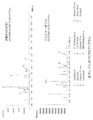
- HS-GC / MS analysis of ginger oil was performed. After putting 1 ⁇ L of ginger oil in a 20 mL vial and equilibrating at 80 ° C. for 30 minutes, the gas phase in the vial was subjected to GC / MS measurement under the following conditions. The compound was identified from the retention time of the sample and the mass fragment, and assigned to the total ion current (TIC) chromatogram.
- Temperature program Temperature rise from 40 ° C (0 min) to 250 ° C at 15 ° C / min.
- FIG. 1 shows the HS-SPME-GC / MS TIC chromatogram of the chicken egg (whole egg) obtained in Test Example 57 and the HS-GC / MS TIC chromatogram of ginger oil.
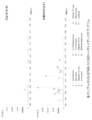
- FIG. 2 shows the HS-SPME-GC / MS TIC chromatogram of the chicken egg (whole egg) obtained in Test Example 57 and the HS-SPME-GC / MS TIC chromatogram of the test egg (whole egg).
- FIG. 3 shows the HS-SPME-GC / MS TIC chromatogram of the chicken egg (egg yolk) obtained in Test Example 57 and the HS-SPME-GC / MS TIC chromatogram of the test egg (egg yolk).
- ⁇ Fried egg> One chicken egg was mixed with 1/2 tablespoon, 1 teaspoon sugar, 0.25 g salt, 0.5 cc soy sauce, and baked in a frying pan containing 1 teaspoon of salad oil to obtain a fried egg.
Landscapes
- Meat, Egg Or Seafood Products (AREA)
- Feed For Specific Animals (AREA)
- Fodder In General (AREA)
- Grain Derivatives (AREA)
Applications Claiming Priority (2)
| Application Number | Priority Date | Filing Date | Title |
|---|---|---|---|
| JP2014-137660 | 2014-07-03 | ||
| JP2014137660A JP2016013108A (ja) | 2014-07-03 | 2014-07-03 | 家禽卵の製造方法 |
Publications (1)
| Publication Number | Publication Date |
|---|---|
| WO2016002877A1 true WO2016002877A1 (ja) | 2016-01-07 |
Family
ID=55019404
Family Applications (1)
| Application Number | Title | Priority Date | Filing Date |
|---|---|---|---|
| PCT/JP2015/069120 Ceased WO2016002877A1 (ja) | 2014-07-03 | 2015-07-02 | 家禽卵の製造方法 |
Country Status (2)
| Country | Link |
|---|---|
| JP (1) | JP2016013108A (enExample) |
| WO (1) | WO2016002877A1 (enExample) |
Cited By (1)
| Publication number | Priority date | Publication date | Assignee | Title |
|---|---|---|---|---|
| CN120052470A (zh) * | 2025-04-29 | 2025-05-30 | 成都大帝汉克生物科技有限公司 | 改善鸡蛋风味的复合饲料添加剂、制备工艺及复合饲料 |
Families Citing this family (1)
| Publication number | Priority date | Publication date | Assignee | Title |
|---|---|---|---|---|
| US20190059329A1 (en) * | 2017-08-31 | 2019-02-28 | Logical Brands, Inc. | Animal toys with incorporated flavor compositions |
Citations (10)
| Publication number | Priority date | Publication date | Assignee | Title |
|---|---|---|---|---|
| JPS59169470A (ja) * | 1983-03-16 | 1984-09-25 | Taiyo Fishery Co Ltd | 着色卵・着香卵の製造方法 |
| JPS6047661A (ja) * | 1983-08-23 | 1985-03-15 | Shigeo Matsunaga | 風味付卵の製造方法 |
| JPH10313797A (ja) * | 1997-05-20 | 1998-12-02 | Nippon Haigou Shiryo Kk | 家禽用飼料および家禽卵の生産方法 |
| JP2001238612A (ja) * | 2000-02-29 | 2001-09-04 | Puraseramu:Kk | 食品の含浸処理方法 |
| JP2002010757A (ja) * | 2000-06-29 | 2002-01-15 | Puraseramu:Kk | ビタミンc含有卵およびその製造方法 |
| JP2002095425A (ja) * | 2000-09-19 | 2002-04-02 | Nakanokuchimura Shokokai | 香草・ハーブを含有する採卵用鶏の飼料 |
| JP2005047569A (ja) * | 2003-07-30 | 2005-02-24 | Chieko Kagawa | 生鶏卵の包装方法と包装容器 |
| JP2010268726A (ja) * | 2009-05-21 | 2010-12-02 | Takamasa Morimoto | 殻付き味付け茹卵の製造方法 |
| EP2614728A1 (en) * | 2012-01-13 | 2013-07-17 | Sanitest S.L. | Flavored eggs |
| JP2015023862A (ja) * | 2013-06-21 | 2015-02-05 | 吉恭 山崎 | 香り卵の製造方法及び香り卵 |
-
2014
- 2014-07-03 JP JP2014137660A patent/JP2016013108A/ja active Pending
-
2015
- 2015-07-02 WO PCT/JP2015/069120 patent/WO2016002877A1/ja not_active Ceased
Patent Citations (10)
| Publication number | Priority date | Publication date | Assignee | Title |
|---|---|---|---|---|
| JPS59169470A (ja) * | 1983-03-16 | 1984-09-25 | Taiyo Fishery Co Ltd | 着色卵・着香卵の製造方法 |
| JPS6047661A (ja) * | 1983-08-23 | 1985-03-15 | Shigeo Matsunaga | 風味付卵の製造方法 |
| JPH10313797A (ja) * | 1997-05-20 | 1998-12-02 | Nippon Haigou Shiryo Kk | 家禽用飼料および家禽卵の生産方法 |
| JP2001238612A (ja) * | 2000-02-29 | 2001-09-04 | Puraseramu:Kk | 食品の含浸処理方法 |
| JP2002010757A (ja) * | 2000-06-29 | 2002-01-15 | Puraseramu:Kk | ビタミンc含有卵およびその製造方法 |
| JP2002095425A (ja) * | 2000-09-19 | 2002-04-02 | Nakanokuchimura Shokokai | 香草・ハーブを含有する採卵用鶏の飼料 |
| JP2005047569A (ja) * | 2003-07-30 | 2005-02-24 | Chieko Kagawa | 生鶏卵の包装方法と包装容器 |
| JP2010268726A (ja) * | 2009-05-21 | 2010-12-02 | Takamasa Morimoto | 殻付き味付け茹卵の製造方法 |
| EP2614728A1 (en) * | 2012-01-13 | 2013-07-17 | Sanitest S.L. | Flavored eggs |
| JP2015023862A (ja) * | 2013-06-21 | 2015-02-05 | 吉恭 山崎 | 香り卵の製造方法及び香り卵 |
Non-Patent Citations (1)
| Title |
|---|
| KOBAYASHI GOLD EGG: "Kaoritsuki no Tamago Hanbai, 18-ko Iri de 2100 Yen", NIHON KEIZAI SHIMBUN CHIHO KEIZAIMEN SHIKOKU, 16 November 2013 (2013-11-16), pages 12, [retrieved on 20150911] * |
Cited By (1)
| Publication number | Priority date | Publication date | Assignee | Title |
|---|---|---|---|---|
| CN120052470A (zh) * | 2025-04-29 | 2025-05-30 | 成都大帝汉克生物科技有限公司 | 改善鸡蛋风味的复合饲料添加剂、制备工艺及复合饲料 |
Also Published As
| Publication number | Publication date |
|---|---|
| JP2016013108A (ja) | 2016-01-28 |
Similar Documents
| Publication | Publication Date | Title |
|---|---|---|
| CN102365033B (zh) | 风味原材料 | |
| WO2019230903A1 (ja) | 豆類タンパク質由来の豆臭マスキング剤 | |
| JP7706247B2 (ja) | 風味油の製造方法 | |
| JPWO2018181630A1 (ja) | 焼けた油の風味を付与するための組成物 | |
| JP5167230B2 (ja) | 酸性液状調味料の製造方法 | |
| Isik et al. | Fatty acid composition and sensory properties of tarhanas prepared by processed tomato and paprika waste materials | |
| JP4586719B2 (ja) | 中華合わせ調味料 | |
| JPWO2016175323A1 (ja) | 香料組成物 | |
| KR102074800B1 (ko) | 관능성 및 저장 안정성이 우수한 소스 조성물 및 이의 제조방법 | |
| JP2016013108A (ja) | 家禽卵の製造方法 | |
| JP7139160B2 (ja) | 食品組成物及びその製造方法 | |
| JP2013201908A (ja) | 香味油の製造方法、香味油 | |
| JP6453117B2 (ja) | ネギ属野菜含有酸性液状調味料 | |
| JP6859396B2 (ja) | 家禽卵の製造方法 | |
| WO2018159516A1 (ja) | トマト加熱処理物及びトマトベース飲食品、ならびにその製造方法 | |
| JP2006081461A (ja) | 風味劣化の少ないレトルト食品 | |
| JP2018042484A (ja) | 香味野菜の風味増強方法 | |
| CN105661451B (zh) | 一种小香葱油香精 | |
| JP5635582B2 (ja) | 酸性液状調味料 | |
| KR20220157215A (ko) | 겉절이 김치용 양념 또는 샐러드용 분말로 활용가능한 채소 겉절이 샐러드 분말, 이에 포함되는 우마미 베이스 분말, 이에 포함되는 향신 베이스 분말, 이에 포함되는 야채 베이스 분말 | |
| JP6822272B2 (ja) | 水中油型乳化食品の製造方法 | |
| JP2022127908A (ja) | 香味抽出物の製造方法 | |
| JPH05316989A (ja) | 遠赤外線照射による香味油の製造法 | |
| JP5167205B2 (ja) | 容器入り分離液状調味料 | |
| JP5867661B1 (ja) | 香料組成物 |
Legal Events
| Date | Code | Title | Description |
|---|---|---|---|
| 121 | Ep: the epo has been informed by wipo that ep was designated in this application |
Ref document number: 15814797 Country of ref document: EP Kind code of ref document: A1 |
|
| NENP | Non-entry into the national phase |
Ref country code: DE |
|
| 122 | Ep: pct application non-entry in european phase |
Ref document number: 15814797 Country of ref document: EP Kind code of ref document: A1 |