WO2015159337A1 - 検索装置、サジェストワード提示方法、プログラム及び記憶媒体 - Google Patents
検索装置、サジェストワード提示方法、プログラム及び記憶媒体 Download PDFInfo
- Publication number
- WO2015159337A1 WO2015159337A1 PCT/JP2014/060602 JP2014060602W WO2015159337A1 WO 2015159337 A1 WO2015159337 A1 WO 2015159337A1 JP 2014060602 W JP2014060602 W JP 2014060602W WO 2015159337 A1 WO2015159337 A1 WO 2015159337A1
- Authority
- WO
- WIPO (PCT)
- Prior art keywords
- suggestion
- search
- word
- suggestion word
- availability information
- Prior art date
- Legal status (The legal status is an assumption and is not a legal conclusion. Google has not performed a legal analysis and makes no representation as to the accuracy of the status listed.)
- Ceased
Links
Images




Classifications
-
- G—PHYSICS
- G06—COMPUTING OR CALCULATING; COUNTING
- G06F—ELECTRIC DIGITAL DATA PROCESSING
- G06F16/00—Information retrieval; Database structures therefor; File system structures therefor
Definitions
- the present invention relates to a search device, search method, program, and storage medium related to e-commerce (electronic commerce) in which a user purchases a product via a communication network.
- e-commerce electronic commerce
- the present invention relates to presentation of a character string (suggest word) for searching for a product.
- search devices and product sales devices have been proposed.
- the suggestion word is, for example, a search candidate including a word or phrase highly related to “wine” when the user inputs “wine” as an input character string when performing a product search. It is presented by the search device.
- “Wine” is input by the user as an input character string
- “Wine wooden box”, “Wine glass”, “Wine France”, etc. are presented as a suggestion word by the search device.
- the space between “Wine” and “France” is used to “and search” multiple words. In this example, both the words “Wine” and “France” It is for obtaining relevant search results.
- an object of the present invention is to provide an environment in which a target product can be searched while suppressing useless searches.
- a search device includes a suggestion word management unit that manages a suggestion word database in which a suggestion word and suggestion availability information indicating whether or not to present the suggestion word are associated and stored;
- a preliminary search result acquisition unit that acquires a result of a preliminary search using a suggestion word selected based on the number of searches as the number of times a word has been used for product search, an input character string, and the suggestion availability information
- a suggestion word presentation control unit that performs control for presenting the selected suggestion word, and the suggestion word management unit updates the suggestion availability information based on the preliminary search result. Thereby, the preliminary search result is reflected in the suggestion word presentation.
- the number of searches is linked to each suggestion word and stored in the suggestion word database.
- the number of searches for each suggestion word is stored as information for estimating the number of purchased products.
- a suggestion word whose search count has reached a certain number is selected as a target for the preliminary search.
- a preliminary search for inventory confirmation for only the suggestion word is executed.
- the suggest word group corresponding to the same input character string reaches a certain number
- the suggest word group Each suggested word to which it belongs is selected as the target of the preliminary search.
- the suggestion availability information is a flag indicating whether or not suggestion is possible.
- the data stored as the suggestion availability information is the minimum data expressed by 1 bit.
- the suggestion word when one or more products correspond as a result of the preliminary search using a suggestion word in which the flag is not set to suggestion, the suggestion word The management unit performs processing for changing the flag to “suggestable”. As a result, the suggest word whose suggestion availability information is “suggestion impossible” is changed to “suggestion” again.
- the suggestion availability information is the number of hits corresponding to the preliminary search result.
- the number of hits acquired as a preliminary search result is stored as is in the suggestion word database as suggestion availability information.
- the suggestion word presentation control unit performs control not to present a suggestion word in which the suggestion availability information is set as suggestion impossible. This provides an environment in which only suggested words from which search results can be obtained are presented.
- the suggestion word presentation control unit indicates that suggestion is impossible when presenting a suggestion word in which the suggestion availability information is set as suggestion impossible. Is added and control to present is performed. Thereby, a search character string from which a search result cannot be obtained is presented to the user.
- the search method according to the present invention is a product search among the suggest words managed in the suggest word database in which the suggest word and the suggest / impossible information indicating whether or not to present the suggest word are linked and stored. Based on the number of searches as the number of times of use, a suggestion for performing a product search as a preliminary search is selected, a result of the preliminary search is acquired using the selected suggestion word, and the suggestion based on the preliminary search result is acquired. The availability information is updated, and control for presenting a suggested word selected according to the input character string and the suggested availability information is performed. By this search method, the preliminary search result is reflected in the suggestion word presentation.
- the program according to the present invention is a program that causes an arithmetic processing unit to execute processing executed as the search method.
- a storage medium according to the present invention is a storage medium storing the above program.
- the above search device is realized by these programs and storage media.
- the preliminary search result is reflected in the presentation of the suggestion word, an appropriate suggestion word is realized, thereby enabling an environment in which a target product can be searched while suppressing useless search. Can be provided.
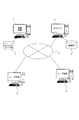
- the search device 1 is connected to an EC (Electronic Commerce) server 3, user terminals 4, 4,.
- EC Electronic Commerce
- the search device 1 will be described as an example of a device that executes a search for at least a product from information managed by the EC server 3.
- the configuration of the communication network 2 is not particularly limited.
- the Internet an intranet, an extranet, a LAN (Local Area Network), a CATV (Community Antenna TeleVision) communication network, a virtual private network (Virtual Private Network), a telephone line A network, a mobile communication network, a satellite communication network, etc.
- Various examples of transmission media constituting all or part of the communication network 2 are also envisaged.
- IEEE Institute of Electrical and Electronics Engineers 1394, USB (Universal Serial Bus), power line carrier, telephone line, etc., infrared such as IrDA (Infrared Data Association), Bluetooth (registered trademark), 802.11 wireless It can also be used wirelessly, such as mobile phone networks, satellite lines, and digital terrestrial networks.
- the search device 1 is a system that performs a search process, a search result presentation process, a suggestion word presentation process, and the like when a user searches for products and the like, and a suggestion word in which information necessary for these processes is stored.
- a DB (Database) 5 is connected.
- the EC server 3 handles processing for delivering information stored in the product DB 6 at the time of product search by the search device 1, and various processing (for example, processing related to delivery and products) that occur when the product is purchased by the user. For example, a notification process for a store or a process related to payment of a product price), and is connected to a product DB 6 in which information on the product being handled is stored.
- the user terminal 4 is a terminal used by a user who uses the search device 1 or the EC server 3, and is a variety of terminals such as a PC (Personal Computer), a mobile phone, or a PDA (Personal Digital Assistants) having a communication function.
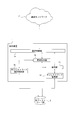
- the search device 1 includes a request reception unit 1a, a suggestion word presentation control unit 1b, a search unit 1c, a suggestion word management unit 1d, and a communication control unit 1e.
- the request receiving unit 1a receives various user operations and requests, and gives instructions to the respective units of the search device 1 according to the respective operations and requests.
- the processing result from each part of the search device 1 is received and presented to the user. Specifically, for example, a character string input for a product search by the user is received, and the suggestion word presentation control unit 1b is instructed to present an appropriate suggestion word. Subsequently, a suggestion word is received from the suggestion word presentation control unit 1b, and information is transmitted to the user terminal 4 for presentation to the user.
- the search unit 1c In response to a product search request based on a search character string by the user, the search unit 1c is instructed to search for a product. Subsequently, information is transmitted to the user terminal 4 in order to present the product search result received from the search unit 1c to the user.
- the suggestion word presentation control unit 1b receives a character string input by the user, extracts a suggestion word highly relevant to the input character string from the suggestion word DB 5, and performs a process for presenting it to the user. Specifically, an input character string “wine” input by the user is received from the request reception unit 1a, and “wine glass”, “wine cellar”, “wine france” are suggested words highly relevant to “wine”.
- suggestion word DB 5 are extracted from the suggestion word DB 5, and these suggestion words are transmitted to the request receiving unit 1a.
- a suggest word in which two or more words are added to the input character string may be presented.
- the suggestion word presentation control unit 1b performs a process for presenting a new suggestion word every time a character string is input by the user. In other words, when the user inputs “Wine” in Roman letters, “Wine”, “Wakame”, “Written chopsticks”, etc. are presented when the first character “w” is input.
- the search unit 1c performs a search process when the user searches for a product, performs a preliminary search described later, and the like. Specifically, the search character string input by the user is received from the request receiving unit 1a, the lexical analysis of the search character string is performed, and the information of the product DB 6 is acquired based on the result.
- the input A character string or a search character string is a word, a sentence, or the like, and in some cases, a plurality of words are separated by a space. For example, “Wine”, “Wine France”, “The most delicious French wine”, etc.
- the search character string is a character string input to perform a product search, for example, a character string input to the input form when a search execution button is pressed to perform a product search.
- the input character string is a character string that has been input to the input form in a state where the user has not instructed the product search.
- the suggested word management unit 1d manages the number of searches performed based on the user's search request for each suggested word and stores it in the suggested word DB 5. In addition, when a predetermined condition is reached, the search unit 1c is requested to execute a preliminary search for the suggestion word stored in the suggestion word DB5. The predetermined condition and the preliminary search will be described later in detail.
- the communication control unit 1e performs control for the search device 1 to exchange information with an external terminal or the like. Specifically, reception of an input character string input by the user and a search character string at the time of search, transmission of a suggestion word presented to the user, and the like are executed.
- the suggestion word DB 5 is a database in which the suggestion word, the phonetic information of the suggestion word, the suggestion availability information, and the number of searches are linked and stored.
- Suggested phonetic information is information used to search for a suggested word from a character string input by the user. For example, the suggested word “wine” is linked to the suggested word “wine”. It has been.
- Suggestion availability information is information indicating whether or not a suggestion word is presented to the user, and is, for example, a flag. As will be described in detail later, it is determined that a suggestion word that satisfies a predetermined condition should not be presented in the same manner as other suggestion words, and a suggestion availability flag is set as “no suggestion”.
- the number of searches is the number of times a suggestion word is used for a product search in response to a user's product search request. I do.
- the search unit 1c in the present embodiment is shown as a function for executing the above-described product search and preliminary search, it is selected based on at least the number of searches as the number of times the suggestion word is used for product search. It is only necessary to have a function of acquiring the result of the preliminary search using the suggested word. That is, a product search result may be acquired using a search execution function such as an external search engine. Therefore, the search part 1c should just have the function as a preliminary
- FIG. 3 is a diagram illustrating hardware of the search device 1, the EC server 3, and the user terminal 4 shown in FIG.
- a CPU (Central Processing Unit) 101 of a computer device in each server or terminal follows a program stored in a ROM (Read Only Memory) 102 or a program loaded from a storage unit 108 into a RAM (Random Access Memory) 103. Perform various processes.
- the RAM 103 also appropriately stores data necessary for the CPU 101 to execute various processes.
- the CPU 101, ROM 102, and RAM 103 are connected to each other via a bus 104.
- An input / output interface 105 is also connected to the bus 104.
- the input / output interface 105 includes an input unit 106 including a keyboard, a mouse, and a touch panel, a display including an LCD (Liquid Crystal Display), a CRT (Cathode Ray Tube) and an organic EL (Electroluminescence) panel, and an output including a speaker.
- a storage unit 108 configured by a unit 107, a HDD (Hard Disk Drive), a flash memory device, and the like, and a communication unit 109 that performs communication processing and communication between devices via the communication network 2 are connected.
- a media drive 110 is also connected to the input / output interface 105 as necessary, and a removable medium 111 such as a magnetic disk, an optical disk, a magneto-optical disk, or a semiconductor memory is appropriately mounted, and information can be written to the removable medium 111. Reading is performed.
- a removable medium 111 such as a magnetic disk, an optical disk, a magneto-optical disk, or a semiconductor memory is appropriately mounted, and information can be written to the removable medium 111. Reading is performed.
- data and programs can be uploaded and downloaded through communication by the communication unit 109, and data and programs can be transferred via the removable medium 111.
- the CPU 101 performs processing operations based on various programs, information processing and communication described later are executed in each of the search device 1, the EC server 3, and the user terminal 4.
- the information processing devices constituting the search device 1, the EC server 3, and the user terminal 4 are not limited to a single computer device as shown in FIG. 3, and a plurality of computer devices are systemized. May be configured.
- the plurality of computer devices may be systemized by a LAN or the like, or may be arranged at a remote place by a VPN (Virtual Private Network) using the Internet or the like.
- VPN Virtual Private Network
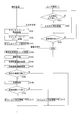
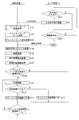
- step S201 in FIG. 4 the user terminal 4 determines whether or not a character string input operation for searching for a product has been performed. If it is determined that a character string input operation has been performed, the user terminal 4 transmits the input character string to the search device 1 in step S202.
- Whether or not the character string input operation is performed in step S201 is determined for each input of one character of the character string. For example, when the user inputs “Wine” as an input character string by Roman character input, the user terminal 4 Determines that a character string input operation has been performed in response to the input of the first character “w”, and “w” is transmitted to the search device 1 as an input character string in step S202. Next, the user terminal 4 determines that a character string input operation has been performed in response to the input of the second character “a”, and “wa” is transmitted to the search device 1 as an input character string in step S202. Thus, every time a character string is input, the input character string is transmitted to the search device 1. These operations are performed by the user terminal 4 repeatedly executing Step S201 and Step S202 as shown in FIG. That is, by repeating Step S201 and Step S202, “wine” is input as the input character string.
- a case where a character string is deleted is also included in the character string input operation.
- a case will be described in which “wq” is input as a character string, and then an operation for deleting “q” is performed.
- the input operation of “w”, the input operation of “q”, and the delete operation of “q” are each treated as input of a character string. That is, in the input character string transmitted to the search device 1, “w” is transmitted first, “wq” is transmitted next, and “w” from which q is deleted is transmitted again.
- an operation for converting an input character string is also included in the input operation.
- the input character string is “paste” by inputting “nori”
- the input character string transmitted to the search device 1 is “paste”, and therefore, in the suggestion word presentation process described later, “nori” Or “glue” is presented.
- this conversion operation is also an input operation of the character string, and the input “nori” is input to the search device 1.
- a string is sent. Thereby, in a suggestion word presentation process to be described later, a suggestion word including “glue” is not presented, but a suggestion word including “nori” is presented.
- the search device 1 executes several processes for presenting a suggestion word corresponding to the input character string. Specifically, the search device 1 executes a suggestion word acquisition process corresponding to the input character string in step S101, executes a process of sorting the suggestion words in step S102, and performs a suggestion word presentation process in step S103. Execute. These processes are described in detail below.
- the suggestion word presentation control unit 1c of the search device 1 acquires a suggestion word from the suggestion word DB5.
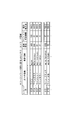
- the suggestion word DB 5 stores information related to the suggestion word as shown in FIG. 5, for example.
- the suggestion word information includes one record ID, character string information, and phonetic sound provided for each suggestion word. It comprises information, the number of searches, suggestion availability information, and presentation priority.
- the phonetic information is information required to search for a suggestion word from the input character string.
- the number of search times represents the number of times the suggestion word was used for product search by the user, but the same character as the suggestion word whether the suggestion word was actually selected and the product search was performed. It does not matter whether the column is input by the user and the product search is performed.
- Suggestion availability information is, for example, information indicating whether or not to present a suggestion word to the user, and is stored as a flag here.
- the presentation priority is information for determining the order in which the suggestion words are presented, and is presented to the user preferentially as the priority is higher.
- step S101 The specific process of the suggestion word acquisition process of step S101 is each process shown in FIG.
- step S303 When it is determined in step S303 that the phonetic information coincides with each other, the suggestion information checking process in step S304 is subsequently executed by the suggestion word presentation control unit 1b.
- the suggestion word presentation control unit 1b next executes the suggestion word information acquisition process in step S305.
- the suggestion word information acquisition process of step S305 the process of acquiring the information of the suggestion word for which the suggestion availability information has been confirmed is performed.
- the character string information and priority information of the suggestion word are acquired.
- step S306 the suggestion word presentation control unit 1b executes a process of adding “1” to the value stored in the index variable. If it is determined in step S303 that the phonetic information does not coincide with each other, and if it is determined in step S304 that the suggestion availability information is “impossible”, step S306 is subsequently executed. .
- the suggestion word presentation control unit 1b executes a process for determining whether or not the search target in step S307 has ended. In the process of determining whether or not the search target has ended, for example, it is determined whether or not there is a suggest word having the value held in the index variable as the record ID.
- step S307 when the record ID is up to “1000” and the index variable is “1001”, it is determined that the search target has ended.
- the suggestion words in the suggestion word DB5 are arranged in descending order or ascending order of the phonetic information, the phonetic information is matched forward in the following suggestion words from the phonetic information of the character string input by the user. It may be determined whether there is something to do. If it is determined that there is no phonetic information that matches forward in the following suggestion words, it is determined that the search target has ended. If it is determined in step S307 that the search target has not ended, steps S303 to S306 are repeatedly executed. If it is determined in step S307 that the search target has ended, the suggestion word acquisition process ends.
- step S306 and step S307 may be executed in reverse order. That is, only when it is determined that the search target has not ended, the process of step S306 of adding “1” to the value stored in the index variable may be executed. Also, the processes in step S301 and step S302 may be executed in the reverse order.
- suggestion word acquisition process if the character string input by the user is “wine”, a suggestion word search is performed based on the phonetic character information “wynnn”, such as “wynn gurasu”. A suggestion word is acquired, and a suggestion word such as “Gurasu wayn” is not acquired.
- the suggestion word presentation control unit 1b executes a suggestion word sort process.
- a process of rearranging each suggestion word based on the presentation priority acquired from the suggestion word DB 5 is executed.
- the presentation priority is, for example, information represented by a larger numerical value as the priority to be presented to the user is higher, and the process of rearranging the suggestion words in order of the higher presentation priority is executed.
- step S ⁇ b> 103 the suggestion word presentation control unit 1 b executes a process of presenting a suggestion word to the user terminal 4.
- suggestion word information is transmitted so that the suggestion words are displayed on the user terminal 4 in order of presentation priority. Specifically, as shown in FIG.
- web page data is created by display software such as a web browser on the user terminal 4 so that the suggest words are displayed in order of presentation priority, and the web page data is transmitted.
- display software such as a web browser on the user terminal 4
- the web page data is transmitted.
- the creation of web page data may be executed by the request receiving unit 1a.
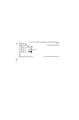
- FIG. 7 shows an input form 7 for product search such as a web browser, for example, and a suggest word display field 8 is displayed below the input form 7.
- a suggestion word is displayed when a character is input to the input form 7.
- Characters written in black lines in the input form 7 and the suggestion word display field 8 (“wine” in the figure) represent character strings input by the user.
- White characters (“Glass”, “France”, and “wooden box” in the figure) represent characters other than those input by the user in the suggested words presented by the search device 1. In other words, it is a part obtained by removing “wine” from the suggested suggestion word.
- the presentation priority of the “wine glass” suggestion word is the highest, followed by the suggestion word of “Wine France” and then the suggestion word of “wine wooden box” in the order of presentation priority. It is shown that.
- step S203 of FIG. 4 it is determined whether or not a search operation has been performed on the user terminal 4.
- the search operation is, for example, an operation of pressing a search button in the vicinity after inputting a character string in the input form. If it is determined in step S203 that a search operation has been performed on the user terminal 4, the user terminal 4 notifies the search device 1 of the search character string in step S204. If it is determined in step S203 that the search operation has not been performed, the user terminal 4 returns to the process of determining whether or not a character string has been input in step S201.
- step S104 the search unit 1c of the search device 1 executes a search character string parsing process.
- the request reception unit 1a that has received the search character string from the communication control unit 1e that has received the search character string instructs the search unit 1c to parse the search character string.
- a process of extracting a search word specifically used for the search from the search character string is executed.
- the search words from this string are “most”, “delicious”, “recommended”, “ Extract “France”, “Wine”, etc.
- words and phrases as described above are stored in a database in the form of a list or the like in advance, and a search character string input by the user from the words or phrases in the list is extracted. It is a process of extracting what is included.
- step S105 the search unit 1c executes a search process for searching for products using the words extracted in step S104.
- the search process is a process of searching for a product linked to a search word from information on each product stored in the product DB 6 managed by the EC server 3. That is, the search unit 1c performs a search for each product stored in the product DB 6 via the EC server 3. Since the search process is the same as the conventional technique, the details are omitted.
- step S106 the search unit 1c of the search device 1 performs search result presentation processing.
- the search result presentation process a process for causing the products searched in step S105 to be presented in an appropriate order on display software such as a web browser activated on the user terminal 4 is executed. For example, the number of accesses for each product may be recorded, and the product presentation order may be presented in descending order of the number of accesses among the products linked to the search word.
- step S107 the suggestion word management unit 1d of the search device 1 performs a search count update process for updating the search count of the suggestion words in the suggestion word DB5.
- the suggestion word management unit 1d receives the search character string used for the search in the above-described steps S104 and S105 from the search unit 1c, and sets “1” as the number of searches for the suggestion word that matches the search character string. The process which adds is performed.
- step S108 the suggestion word management unit 1d performs a process of determining whether or not a predetermined number of searches has been reached.
- n is set as the predetermined number of searches
- every time a suggestion word is used n times for a product search it is determined that the number of searches for the suggested word has reached the predetermined number of searches. Is done. Specifically, referring to FIG. 5, when 100 is set as the predetermined number, it is determined that only “wine” with the record ID “0135” has reached the predetermined number of searches. If five times are set as the predetermined number of times, the two search words “wine” with the record ID “0135” and “wine wooden box” with the record ID “0152” are the predetermined number of searches. Is determined to have been reached. In step S108, whether or not the predetermined number of searches has been reached is determined by performing only the suggestion word that matches the search character string received from the search unit 1c, thereby efficiently executing the process. Can do.
- a preliminary search by the search unit 1c is performed in step S109.
- the preliminary search is executed by the search unit 1c by, for example, notifying from the suggestion word management unit 1d that the search word search count has reached a predetermined number.
- the preliminary search performs a search related to each product stored in the product DB 6 via the EC server 3 in the same manner as the product search performed based on the search character string input by the user.
- a search related to each product stored in the product DB 6 may be performed using a search engine provided in the EC server 3.
- the search unit 1c instructs the search engine of the EC server to perform a preliminary search using a suggest word.
- the search device 1 In the search device 1 according to the present embodiment, the search is performed while the product is in stock, but the search is not performed when the stock is exhausted. This is realized, for example, by reducing the number of products in stock every time sales are established and removing them from the search target when they become zero. Thereby, depending on the search by the search unit 1c or the search engine of the EC server, a search result obtained by extracting only the products in stock is obtained.
- the product search since it is important to check whether or not the product is searched, the product search may be simplified so as not to acquire information such as the price and price of the product. A simple and quick preliminary search can be executed.
- the search unit 1c executes a process of determining whether or not the number of search results is zero.
- the search unit 1c notifies the suggestion word management unit 1d of the search results.
- the case where the number of search results is 0 is a case where the inventory of the products to be displayed as the search results is all zero. For example, if there are “wineglass A”, “wineglass B”, and “French wine C” in the products searched according to the search string “wine”, the stock decreases as each product is sold. The product is not displayed as a search result when it becomes zero.
- the suggestion word management unit 1d updates the suggestion availability information associated with the corresponding suggestion word to “impossible” in step S111. If it is determined in step S110 that the number of search results is not 0, the search unit 1c notifies the suggestion word management unit 1d that the search result is not 0. In response to this notification, the suggestion word management unit 1d updates the suggestion availability information associated with the corresponding suggestion word to “possible” in step S112. If the product to be searched is a product that is not restocked, such as a special sale product, the suggestion availability information need not be updated in step S112.
- the suggestion word whose suggestion availability information is “impossible” is not presented to the user because it is excluded from the suggestion word candidates presented to the user, as described with reference to FIG. Therefore, it is possible to provide a search device in which a suggestion word whose number of searches is 0 is not easily presented to the user.
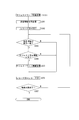
- Second Embodiment> An example of processing according to the second embodiment will be described with reference to FIG. In the second embodiment, the process for determining whether or not the predetermined number of searches has been reached in step S108 of the first embodiment is different. Accordingly, here, the description will be focused on the processing related to step S108 in FIG. 4, and the description regarding the same processing as in the first embodiment will be omitted.
- step S108 of the first embodiment described with reference to FIG. 4 it is determined whether or not the number of searches has reached a predetermined number for each suggestion word, but step S108A of the second embodiment is determined.
- a plurality of suggest words corresponding to the same input character string are handled as a suggest word group, and it is determined whether or not the number of searches reaches a predetermined number for each suggest word group.
- the suggested words presented to the user are three, “wine”, “wine glass”, and “wine france”. In this case, these three suggestion words are treated as one suggestion word group associated with “wine”.
- step S113 it is determined whether or not the updating of the suggestion availability information to be updated has been completed.
- the update of the suggestion information about the suggestion word “wine” has been completed, but the update of the suggestion information about the two suggestion words “wine glass” and “wine France” has not been completed.
- Each process from S109 to S112 is repeatedly executed.
- step S113 when it is determined that the update of the suggestion information to be updated has been completed, the series of processes illustrated in FIG.
- the search device 1 in the second embodiment is effective when a link to a web page of another product is pasted on the product page. For example, let us consider a case where two items of “wine A” and “wine B” are presented as search results when “wine” is searched. In this case, when “Wine” is searched 100 times by the user, it is assumed that “Wine A” and “Wine B” have been purchased to some extent, so a preliminary search is performed and two products are obtained as search results. It is effective to confirm whether or not If “wineglass” has never been searched, it is assumed that “wineglass C” presented to the user as a search result for “wineglass” has not been purchased.
- the suggestion word information stored in the suggestion word DB 5 in the third embodiment includes a record ID, character string information, phonetic information, suggestion availability information, and presentation priority as shown in FIG. ing.
- the suggestion availability information in the third embodiment is not a flag expressed by two choices of “possible” and “impossible” but a numerical value is stored. .
- This numerical value represents the number of search results in the preliminary search. That is, the suggestion word “wine wooden box” in which “0” is stored as suggestion availability information indicates that there is no corresponding product in the preliminary search.
- the suggestion availability information update process in step S114 shown in FIG. 10 is executed instead of the processes in steps S110 to S112 shown in FIG. That is, as shown in FIG. 10, after the search unit 1c performs a preliminary search in step S109, the suggestion word management unit 1d executes a suggestion availability information update process in step S114.
- the suggestion availability information update process is a process of storing the number of preliminary retrieval results received from the retrieval unit 1c in the suggestion availability information of the suggestion word DB5.
- the suggestion word presentation control unit 1b confirms whether or not the suggestion / prohibition information of the suggestion word DB5 is “0”. It becomes processing. That is, if “0”, it is determined that the suggestion availability information is “impossible”.
- a suggestion word whose suggestion availability information stored in the suggestion word DB 5 is “impossible” is not presented to the user.
- a suggestion word may be presented after indicating that the number is zero. Specifically, as shown in FIG. 11, when a search is performed using “wine wooden box” as a search character string, when the inventory of all products presented to the user is zero, A suggestion word may be presented together with a display such as “0 search hits”. Further, in this case, a thin character color or a strikethrough may be applied to the characters of the suggestion word in which the stock of the product is zero so that it can be distinguished from other suggestion words.
- the predetermined number of searches is a value common to all the suggest words.
- the predetermined number of searches may be different for each suggest word. That is, for a suggestion word for searching for a product whose purchase count increases with respect to the search count, a preliminary search is executed at an appropriate frequency by reducing the predetermined search count. It is also conceivable to reduce the predetermined number of searches for a suggestion word for searching for products for which a plurality of stocks are sold with a single purchase. Furthermore, a trend of the number of purchases with respect to the number of searches may be stored, and the predetermined number of searches may be appropriately changed according to the change.
- the EC server 3 performs a product search based on the inventory quantity of each product stored in the product DB 6 in response to a product search request from the search device 1.
- the search device 1 may manage the inventory quantity of each product stored in the product DB 6.
- the EC server 3 searches each product stored in the product DB 6 in response to a product search request from the search device 1 regardless of whether or not the product is in stock. May be transmitted.
- the search device 1 performs a process for presenting information on each product to the user based on the information on the number of products in stock received from the EC server 3.
- the EC server 3 has a product search function and a preliminary search function and a function of presenting a search result to the user, and the search device 1 has a suggestion word search function and a suggestion word presentation function to the user. May be.
- the search device 1 instructs the EC server 3 to perform a preliminary search, and the EC server 3 transmits product information as a preliminary search result to the search device 1 in accordance with the instruction.
- the search device 1 presents an appropriate suggestion word to the user based on the product information as the preliminary search result.
- the EC server 3 may be provided with a normal product search function, and the search device 1 may be provided with a search function for time sale or special sale.
- the EC server 3 receives a normal product search request from the user, performs a product search, and performs a process for presenting the acquired product information to the user.
- the search device 1 accepts a request for a product search for a time sale or a product search for a special sale by the user, performs a product search, and sends the acquired product information for a time sale or a special sale product to the user. Process to present.
- the “product” described in each of the above-described embodiments may be an actually shaped “item” or an unshaped “service”.
- the number of inventory when the product is “service” represents whether or not the service can be enjoyed. For example, when the service is “ ⁇ month ⁇ day ⁇ hospital massage”, the number of people who can enjoy the massage treatment on the month ⁇ ⁇ in the hospital is the number of stocks.
- the example in which the products are rearranged in an appropriate order and presented to the user as an example is presented based on the priority information.
- the products are rearranged and presented based on the number of products in stock. May be.
- the stock quantity is set to 0 in advance, and the stock quantity of each product for time sale is changed to a value of 1 or more at a predetermined time. Also good.
- a preliminary search is performed as soon as a predetermined time is reached, or among the suggestion words that each product for time sale can be acquired as a search result, the suggestion availability information is “impossible” May be changed to “OK”.
- an environment is provided in which a product for time sale is presented to the user as a search result in response to reaching a predetermined time.
- the search device 1 described above includes a suggestion word management unit 1d for managing a suggestion word DB5 in which a suggestion word and suggestion availability information indicating whether or not to present a suggestion word are linked and stored, and the suggestion word is used for product search.
- a suggestion word management unit 1d for managing a suggestion word DB5 in which a suggestion word and suggestion availability information indicating whether or not to present a suggestion word are linked and stored, and the suggestion word is used for product search.
- the search unit 1c that acquires the result of the preliminary search using the suggestion word selected based on the number of searches as the number of times used, and the suggestion word selected according to the input character string and the suggestion availability information
- a suggestion word presentation control unit 1b that controls the above, and the suggestion word management unit 1d updates the suggestion availability information based on the preliminary search result.
- the preliminary search result is reflected in the suggestion of the suggestion word, for example, even if it is selected and executed for the search, it is possible to prevent the suggestion word having zero search result from being presented to the user. Therefore, it is possible to provide an environment in which a target product can be searched for while suppressing useless searches.
- a processing load increases if the preliminary search for a large number of suggestion words is performed at regular intervals. Therefore, it is conceivable to increase the time interval for performing the preliminary search. However, if the time interval is increased, the processing load is reduced, but the effect of the preliminary search is reduced.
- a preliminary search is performed according to a predetermined number of searches. Therefore, the frequency of the preliminary search per unit time is increased for frequently searched and purchased products, and the search is performed too much.
- the frequency of preliminary search per unit time is low for products that are not easily purchased. This makes it possible to perform an appropriate preliminary search while ensuring a reduction in processing load.
- the number of searches is linked to each suggestion word and stored in the suggestion word DB 5.
- the number of searches for each suggestion word is stored in the suggestion word DB 5 as information for estimating the number of purchases of the product, it is determined whether or not to present for each suggestion word based on the preliminary search. It is possible to provide a search environment where suggestion words are presented.
- a suggestion word whose number of searches has reached a certain number is selected as a target for preliminary search.
- a preliminary search for inventory confirmation is performed only for that suggestion word, so it is determined whether or not to present each suggestion word.
- each of the suggestions belonging to the suggestion word group according to the number of searches using the suggestion word in the suggestion word group corresponding to the same input character string has reached a certain number.
- This word is selected as the target of the preliminary search.
- a preliminary search for confirming not only the product directly searched from the suggestion word but also the number of related products in stock is executed. It is possible to provide a search environment in which a more appropriate suggestion word is presented when, for example, a link to a web page of another product is pasted on the product web page.
- the suggestion availability information is a flag indicating whether or not suggestion is possible. Therefore, since the data stored as the suggestion availability information is the minimum data expressed by 1 bit, the data capacity stored in the suggestion word DB 5 can be suppressed.
- one or more results are obtained as a result of the preliminary search using the suggest word in which the flag as the suggestion availability information is set as “impossible”.
- the suggestion word management unit 1d performs a process of changing the flag to “permitted”.
- an environment in which an appropriate suggestion word based on the search result is presented is provided by changing the suggestion word whose suggestion availability information is “impossible” again to “possible”. For example, because the number of stocks of each product searched for by the suggestion word “wine” has become 0, the suggestion information of “wine” is changed to “impossible”, and the suggestion word “wine” is given to the user.
- the search results will be one or more again during the preliminary search.
- the suggestion information on the suggestion word “wine” is updated from “impossible” to “possible”. Thereby, the suggestion word “wine” is presented to the user again.
- the suggestion availability information is the number of relevant cases as a preliminary search result. Therefore, since the number of hits acquired as a preliminary search result is stored as the suggestion availability information in the suggestion word DB 5 as it is, it is possible to reduce the processing for determining whether or not the hit count described in step S110 is zero. it can.
- the suggestion word presentation control unit 1b performs control not to present a suggestion word whose suggestion availability information is set as “impossible”. Thereby, only the suggest word from which the search result is obtained is presented. Therefore, many effective suggest words that can obtain the search results can be presented.
- the suggestion word presentation control unit 1b indicates that the suggestion availability information is “impossible” when presenting a suggestion word whose suggestion availability information is set as “impossible”.
- the presentation control may be performed.
- a search character string that cannot be obtained as a search result is presented to the user. Therefore, when a product search is performed by manually inputting the search character string without using a suggestion word, unnecessary search is omitted. It is possible to provide an environment that can In addition, when searching for time sales or special sales, it is possible to estimate the sales of a product based on the frequency of appearance of suggest words for which search results cannot be obtained, so that the opportunity to purchase the product is missed. It can be notified to the user. That is, when the suggestion word displayed as “sold out” frequently appears, the user can recognize that various products are sold and the number of products in stock is decreasing.
- the search device 1 of the present invention has been described above.
- the program according to the embodiment is a program that causes an arithmetic processing device (such as a CPU) to execute processing in the search device 1.
- the program according to the embodiment causes the arithmetic processing unit to execute a suggestion management process for managing a suggestion word database in which a suggestion word and suggestion availability information indicating whether or not to present the suggestion word are linked and stored. Further, the arithmetic processing unit is caused to execute a preliminary search process for performing a product search as a preliminary search using the suggestion word selected based on the number of searches used for the product search for the suggested word and obtaining a preliminary search result. Further, the arithmetic processing unit is caused to execute a suggestion word presentation control process for performing control for presenting a suggested word according to the input character string and the suggestion availability information. Furthermore, the processing unit is caused to execute a suggestion availability information update process for updating the suggestion availability information based on the preliminary search result.
- this program is the same as the processing shown in steps S101 to S112 described with reference to FIG. 4, the processing shown in steps S301 to S307 described in FIG. 6, and the processing described in FIG.
- This is a program for executing the processes shown in steps S101 to S113 and the processes shown in steps S101 to S109 and S114 described in FIG.
- Such a program can be stored in advance in an HDD as a storage medium built in a device such as a computer device, a ROM in a microcomputer having a CPU, or the like. Alternatively, it can be stored (stored) temporarily or permanently in a removable storage medium such as a semiconductor memory, memory card, optical disk, magneto-optical disk, or magnetic disk. Such a removable storage medium can be provided as so-called package software. Further, such a program can be installed from a removable storage medium to a personal computer or the like, or can be downloaded from a download site via a network such as a LAN or the Internet.
- 1 search device 1a request acceptance unit, 1b suggestion word presentation control unit, 1c search unit, 1d suggestion word management unit, 1e communication control unit, 2 communication network, 3 EC server, 4 user terminal, 5 suggestion word DB, 6 products DB
Landscapes
- Engineering & Computer Science (AREA)
- Theoretical Computer Science (AREA)
- Data Mining & Analysis (AREA)
- Databases & Information Systems (AREA)
- Physics & Mathematics (AREA)
- General Engineering & Computer Science (AREA)
- General Physics & Mathematics (AREA)
- Information Retrieval, Db Structures And Fs Structures Therefor (AREA)
Abstract
無駄な検索を抑制しつつ目的の商品を探すことが可能な環境を提供する。 そのために、検索装置は、サジェストワードと該サジェストワードを提示するか否かを示すサジェスト可否情報とが紐付けて記憶されるサジェストワードデータベースを管理するサジェストワード管理部と、サジェストワードが商品検索に利用された回数としての検索回数に基づいて選択されたサジェストワードを用いた予備検索の結果を取得する予備検索結果取得部と、入力された文字列とサジェスト可否情報とに応じて選択したサジェストワードを提示するための制御を行うサジェストワード提示制御部とを備え、サジェストワード管理部は予備検索結果に基づいてサジェスト可否情報を更新する。これにより、無駄な検索を抑制しつつ目的の商品を探すことが可能な環境を提供することができる。
Description
本発明は、ユーザが通信ネットワークを介して商品の購入を行うeコマース(Electronic commerce)に関する検索装置、検索方法、プログラム及び記憶媒体についての技術分野に関する。具体的には、商品検索をするための文字列(サジェストワード)の提示に関する。
インターネットなどの通信ネットワークを介した商品検索及び商品購入が一般的になってきている。このような状況に鑑み、様々な検索装置や商品販売装置が提案されている。その中には、例えば、特許文献1のように、商品検索をする際に入力した文字列に応じて、関連性の高い語句をサジェストワードとして提示する検索装置が提案されている。ここで、サジェストワードとは、例えば、商品検索を行う際にユーザが入力文字列として「ワイン」を入力したときに、「ワイン」と関連性の高い語句を含んだ検索の候補のことであり、検索装置によって提示されるものである。一例を挙げると、入力文字列として「ワイン」がユーザにより入力された場合、「ワイン木箱」、「ワイングラス」、「ワイン フランス」などがサジェストワードとして検索装置により提示される。尚、「ワイン」と「フランス」の間にある空白文字は、複数の語句を「アンド検索」するために用いられるものであり、この例では、「ワイン」と「フランス」の双方の語句に関係のある検索結果を得るためのものである。
商品検索の際のサジェストワードの提示は、商品購入に結びつくか否かを左右する重要な要素である。しかし、提示したサジェストワードがユーザによって選択され、商品が閲覧されたにも関わらず商品購入に結びつかない場合がある。例えば、ユーザによって選択されたサジェストワードに基づいて実行された検索によって得られた検索結果の該当件数が0件であった場合などである。この場合には、ユーザは欲しい商品を購入することが出来ないだけでなく、一連の検索作業や商品の閲覧作業によって時間を浪費してしまう。
そこで、本発明は、無駄な検索を抑制しつつ目的の商品を探すことが可能な環境を提供することを目的とする。
そこで、本発明は、無駄な検索を抑制しつつ目的の商品を探すことが可能な環境を提供することを目的とする。
第1に、本発明に係る検索装置は、サジェストワードと該サジェストワードを提示するか否かを示すサジェスト可否情報とが紐付けて記憶されるサジェストワードデータベースを管理するサジェストワード管理部と、サジェストワードが商品検索に利用された回数としての検索回数に基づいて選択されたサジェストワードを用いた予備検索の結果を取得する予備検索結果取得部と、入力された文字列と前記サジェスト可否情報とに応じて選択したサジェストワードを提示するための制御を行うサジェストワード提示制御部とを備え、前記サジェストワード管理部は前記予備検索結果に基づいて前記サジェスト可否情報を更新するものである。
これにより、予備検索結果がサジェストワードの提示に反映される。
これにより、予備検索結果がサジェストワードの提示に反映される。
第2に、上記した本発明に係る検索装置においては、前記検索回数はサジェストワードごとに紐付けられて前記サジェストワードデータベースに記憶されるものである。
これにより、商品の購入数を推定するための情報としてサジェストワードごとの検索回数が記憶される。
これにより、商品の購入数を推定するための情報としてサジェストワードごとの検索回数が記憶される。
第3に、上記した本発明に係る検索装置においては、前記検索回数が一定回数に達したサジェストワードが、前記予備検索の対象として選択されるものである。
これにより、サジェストワードに対する一定回数の検索がなされたことに応じて、当該サジェストワードのみを対象とした在庫確認のための予備検索が実行される。
これにより、サジェストワードに対する一定回数の検索がなされたことに応じて、当該サジェストワードのみを対象とした在庫確認のための予備検索が実行される。
第4に、上記した本発明に係る検索装置においては、同じ入力文字列に対応したサジェストワード群内のサジェストワードを用いた前記検索回数が一定回数に達したことに応じて前記サジェストワード群に属するそれぞれのサジェストワードが前記予備検索の対象として選択されるものである。
これにより、サジェストワードを用いた商品検索が行われたときに、サジェストワードから直接的に検索される商品だけでなく関連のある商品の在庫数を確認するための予備検索が実行される。
これにより、サジェストワードを用いた商品検索が行われたときに、サジェストワードから直接的に検索される商品だけでなく関連のある商品の在庫数を確認するための予備検索が実行される。
第5に、上記した本発明に係る検索装置においては、前記サジェスト可否情報はサジェスト可否を示すフラグとされたものである。
これにより、サジェスト可否情報として記憶されるデータは1ビットで表現される最小限のデータとされる。
これにより、サジェスト可否情報として記憶されるデータは1ビットで表現される最小限のデータとされる。
第6に、上記した本発明に係る検索装置においては、前記フラグがサジェスト不可として設定されているサジェストワードを用いた前記予備検索の結果として1件以上の商品が該当した場合に、前記サジェストワード管理部は前記フラグをサジェスト可に変更する処理を行うものである。
これにより、サジェスト可否情報が「サジェスト不可」とされたサジェストワードが再び「サジェスト可」と変更される。
これにより、サジェスト可否情報が「サジェスト不可」とされたサジェストワードが再び「サジェスト可」と変更される。
第7に、上記した本発明に係る検索装置においては、前記サジェスト可否情報は前記予備検索結果として該当する該当件数とされたものである。
これにより、予備検索結果として取得される該当件数がそのままサジェスト可否情報としてサジェストワードデータベースに記憶される。
これにより、予備検索結果として取得される該当件数がそのままサジェスト可否情報としてサジェストワードデータベースに記憶される。
第8に、上記した本発明に係る検索装置においては、前記サジェストワード提示制御部は前記サジェスト可否情報がサジェスト不可として設定されているサジェストワードを提示しない制御を行うものである。
これにより、検索結果が得られるサジェストワードのみが提示される環境が提供される。
これにより、検索結果が得られるサジェストワードのみが提示される環境が提供される。
第9に、上記した本発明に係る検索装置においては、前記サジェストワード提示制御部は前記サジェスト可否情報がサジェスト不可として設定されているサジェストワードを提示する際にサジェスト不可であることを示す付加情報を加えて提示する制御を行うものである。
これにより、検索結果を得られない検索文字列がユーザに提示される。
これにより、検索結果を得られない検索文字列がユーザに提示される。
本発明に係る検索方法は、サジェストワードと該サジェストワードを提示するか否かを示すサジェスト可否情報とが紐付けて記憶されるサジェストワードデータベースに管理されているサジェストワードのうちで、商品検索に利用された回数としての検索回数に基づいて予備検索としての商品検索を行うサジェストワードを選択し、選択されたサジェストワードを用いて予備検索の結果を取得し、前記予備検索結果に基づいて前記サジェスト可否情報を更新し、入力された文字列と前記サジェスト可否情報とに応じて選択したサジェストワードを提示するための制御を行うものである。
この検索方法により、予備検索結果がサジェストワードの提示に反映される。
この検索方法により、予備検索結果がサジェストワードの提示に反映される。
本発明に係るプログラムは、上記検索方法として実行する処理を演算処理装置に実行させるプログラムである。
本発明に係る記憶媒体は、上記プログラムを記憶した記憶媒体である。これらのプログラムや記憶媒体により上記の検索装置を実現する。
本発明に係る記憶媒体は、上記プログラムを記憶した記憶媒体である。これらのプログラムや記憶媒体により上記の検索装置を実現する。
本発明によれば、予備検索結果がサジェストワードの提示に反映されるため、適切なサジェストワードの提示が実現され、これによって無駄な検索を抑制しつつ目的の商品を探すことが可能な環境を提供することができる。
以下、実施の形態を次の順序で説明する。
<1.全体構成>
<2.ハードウェア構成>
<3.第1の実施の形態における処理の流れ>
<4.第2の実施の形態>
<5.第3の実施の形態>
<6.変形例>
<7.まとめ>
<8.プログラム及び記憶媒体>
<1.全体構成>
<2.ハードウェア構成>
<3.第1の実施の形態における処理の流れ>
<4.第2の実施の形態>
<5.第3の実施の形態>
<6.変形例>
<7.まとめ>
<8.プログラム及び記憶媒体>
<1.全体構成>
第1の実施の形態における検索装置を含む全体の構成を図1及び図2を用いて説明する。
図1に示すように、検索装置1は、EC(Electronic Commerce)サーバ3、ユーザ端末4、4、・・・と通信ネットワーク2を介して相互に通信可能な状態に接続されている。
本実施の形態では、通信ネットワーク2上に仮想的に設けられたショッピングモールに対して、商品の購入や検索を行う例を説明する。従って、ECサーバ3が管理する情報から少なくとも商品に関する検索を実行する装置として、検索装置1を例に挙げて説明する。
通信ネットワーク2の構成は特に限定されるものではなく、例えば、インターネット、イントラネット、エキストラネット、LAN(Local Area Network)、CATV(Community Antenna TeleVision)通信網、仮想専用網(Virtual Private Network)、電話回線網、移動体通信網、衛星通信網などが想定される。
また通信ネットワーク2の全部又は一部を構成する伝送媒体についても多様な例が想定される。例えばIEEE(Institute of Electrical and Electronics Engineers)1394、USB(Universal Serial Bus)、電力線搬送、電話線などの有線でも、IrDA(Infrared Data Association)のような赤外線、ブルートゥース(登録商標)、802.11無線、携帯電話網、衛星回線、地上波デジタル網などの無線でも利用可能である。
第1の実施の形態における検索装置を含む全体の構成を図1及び図2を用いて説明する。
図1に示すように、検索装置1は、EC(Electronic Commerce)サーバ3、ユーザ端末4、4、・・・と通信ネットワーク2を介して相互に通信可能な状態に接続されている。
本実施の形態では、通信ネットワーク2上に仮想的に設けられたショッピングモールに対して、商品の購入や検索を行う例を説明する。従って、ECサーバ3が管理する情報から少なくとも商品に関する検索を実行する装置として、検索装置1を例に挙げて説明する。
通信ネットワーク2の構成は特に限定されるものではなく、例えば、インターネット、イントラネット、エキストラネット、LAN(Local Area Network)、CATV(Community Antenna TeleVision)通信網、仮想専用網(Virtual Private Network)、電話回線網、移動体通信網、衛星通信網などが想定される。
また通信ネットワーク2の全部又は一部を構成する伝送媒体についても多様な例が想定される。例えばIEEE(Institute of Electrical and Electronics Engineers)1394、USB(Universal Serial Bus)、電力線搬送、電話線などの有線でも、IrDA(Infrared Data Association)のような赤外線、ブルートゥース(登録商標)、802.11無線、携帯電話網、衛星回線、地上波デジタル網などの無線でも利用可能である。
検索装置1は、ユーザによる商品などの検索の際に、検索処理や検索結果の提示処理やサジェストワードの提示処理などを行うシステムであり、これらの処理に必要な情報が記憶されているサジェストワードDB(Database)5と接続されている。
ECサーバ3は、検索装置1によって商品検索の際に商品DB6に記憶された情報の受渡しを行う処理や、ユーザによって商品が購入された際に発生する各種処理(例えば配送に関する処理や商品を扱っている商店に対する通知処理や商品代金の支払いに関する処理など)などを実行するサーバであり、扱っている商品の情報などが記憶されている商品DB6と接続されている。
ユーザ端末4は、検索装置1やECサーバ3を利用するユーザが使用する端末であり、通信機能を備えたPC(Personal Computer)や携帯電話やPDA(Personal Digital Assistants)等の各種端末である。
ユーザ端末4は、検索装置1やECサーバ3を利用するユーザが使用する端末であり、通信機能を備えたPC(Personal Computer)や携帯電話やPDA(Personal Digital Assistants)等の各種端末である。
検索装置1は、図2に示すように、要求受付部1a、サジェストワード提示制御部1b、検索部1c、サジェストワード管理部1d、通信制御部1eを備えて構成されている。
要求受付部1aは、各種ユーザの操作や要求を受け取り、検索装置1の各部に対してそれぞれの操作や要求に応じた指示などを行う。また、検索装置1の各部からの処理結果を受け取り、ユーザへの提示を行う。具体的には、例えば、ユーザによって商品検索のために入力された文字列を受け取り、サジェストワード提示制御部1bに適切なサジェストワードの提示を指示する。続いて、サジェストワード提示制御部1bからサジェストワードを受け取り、ユーザへ提示するためにユーザ端末4へ情報の送信を行う。また、ユーザによる検索文字列に基づいた商品検索の要求に応じて、検索部1cに商品検索の指示を行う。続いて、検索部1cから受け取った商品検索結果をユーザへ提示するためにユーザ端末4へ情報の送信を行う。
サジェストワード提示制御部1bは、ユーザにより入力された文字列を受け取り、その入力文字列と関連性の高いサジェストワードをサジェストワードDB5から抽出し、ユーザへ提示するための処理を行う。具体的には、ユーザによって入力された「ワイン」という入力文字列を要求受付部1aから受け取り、「ワイン」と関連性の高いサジェストワードとして「ワイングラス」、「ワインセラー」、「ワイン フランス」などをサジェストワードDB5から抽出し、これらのサジェストワードを要求受付部1aへ送信する。
ここで、入力文字列に対し、二つ以上の単語を付加したサジェストワードを提示してもよい。例えば、入力文字列が「ワイン」である場合に、「フランス」と「ビンテージ」の二つの単語を付加した「ワイン フランス ビンテージ」というサジェストワードを提示してもよい。
また、サジェストワード提示制御部1bは、ユーザにより文字列が一文字入力されるごとに、新たなサジェストワードを提示するための処理を行う。つまり、ユーザが「ワイン」とローマ字入力をする場合では、最初の一文字である「w」を入力した段階で、「ワイン」や「わかめ」、「割り箸」などが提示される。
要求受付部1aは、各種ユーザの操作や要求を受け取り、検索装置1の各部に対してそれぞれの操作や要求に応じた指示などを行う。また、検索装置1の各部からの処理結果を受け取り、ユーザへの提示を行う。具体的には、例えば、ユーザによって商品検索のために入力された文字列を受け取り、サジェストワード提示制御部1bに適切なサジェストワードの提示を指示する。続いて、サジェストワード提示制御部1bからサジェストワードを受け取り、ユーザへ提示するためにユーザ端末4へ情報の送信を行う。また、ユーザによる検索文字列に基づいた商品検索の要求に応じて、検索部1cに商品検索の指示を行う。続いて、検索部1cから受け取った商品検索結果をユーザへ提示するためにユーザ端末4へ情報の送信を行う。
サジェストワード提示制御部1bは、ユーザにより入力された文字列を受け取り、その入力文字列と関連性の高いサジェストワードをサジェストワードDB5から抽出し、ユーザへ提示するための処理を行う。具体的には、ユーザによって入力された「ワイン」という入力文字列を要求受付部1aから受け取り、「ワイン」と関連性の高いサジェストワードとして「ワイングラス」、「ワインセラー」、「ワイン フランス」などをサジェストワードDB5から抽出し、これらのサジェストワードを要求受付部1aへ送信する。
ここで、入力文字列に対し、二つ以上の単語を付加したサジェストワードを提示してもよい。例えば、入力文字列が「ワイン」である場合に、「フランス」と「ビンテージ」の二つの単語を付加した「ワイン フランス ビンテージ」というサジェストワードを提示してもよい。
また、サジェストワード提示制御部1bは、ユーザにより文字列が一文字入力されるごとに、新たなサジェストワードを提示するための処理を行う。つまり、ユーザが「ワイン」とローマ字入力をする場合では、最初の一文字である「w」を入力した段階で、「ワイン」や「わかめ」、「割り箸」などが提示される。
検索部1cは、ユーザが商品の検索を行う際の検索処理の実行や、後述する予備検索の実行などを行う。具体的には、ユーザによって入力された検索文字列を要求受付部1aから受け取り、検索文字列の字句解析を行い、その結果に基づいて商品DB6の情報の取得
尚、本実施の形態において、入力文字列や検索文字列とは単語や文章などであり、場合により複数の単語がスペースで区切られている。例えば、「ワイン」や「ワイン フランス」や「一番おいしいフランスワイン」などである。
また、検索文字列とは、商品検索を行うために入力された文字列であり、例えば、商品検索を行うために検索実行ボタンが押下された時点で入力フォームに入力されている文字列である。また、入力文字列とは、ユーザによる商品検索の指示がされていない状態で入力フォームに入力されている文字列である。
尚、本実施の形態において、入力文字列や検索文字列とは単語や文章などであり、場合により複数の単語がスペースで区切られている。例えば、「ワイン」や「ワイン フランス」や「一番おいしいフランスワイン」などである。
また、検索文字列とは、商品検索を行うために入力された文字列であり、例えば、商品検索を行うために検索実行ボタンが押下された時点で入力フォームに入力されている文字列である。また、入力文字列とは、ユーザによる商品検索の指示がされていない状態で入力フォームに入力されている文字列である。
サジェストワード管理部1dは、ユーザの検索要求に基づいて検索された検索回数をサジェストワードごとに管理し、サジェストワードDB5へ記憶する。また、所定の条件に達したときにサジェストワードDB5に記憶されたサジェストワードに対する予備検索の実行を検索部1cへ依頼する。所定の条件と予備検索に関しては、詳しく後述する。
通信制御部1eは、検索装置1が外部の端末などと情報をやりとりするための制御を行う。具体的には、ユーザによって入力された入力文字列、及び、検索の際の検索文字列の受信や、ユーザに対して提示されるサジェストワードの送信などが実行される。
サジェストワードDB5は、サジェストワードと、サジェストワードの表音情報と、サジェスト可否情報と、検索回数とが紐付けられて記憶されるデータベースである。
サジェストワードの表音情報とは、ユーザによって入力された文字列からサジェストワードを検索するために用いられる情報であり、例えば、「ワイン」というサジェストワードには「wainn」という表音情報が紐付けられている。
サジェスト可否情報とは、ユーザに対してサジェストワードの提示を行うか否かを表す情報であり、例えば、フラグである。詳しくは後述するが、所定の条件となったサジェストワードは、他のサジェストワードと同様に提示すべきでないと判断され、サジェスト可否フラグが「サジェスト不可」として設定される。以降の説明においては、「サジェスト可」及び「サジェスト不可」を単に「可」及び「不可」と記載する。
検索回数とは、ユーザの商品検索の要求によってサジェストワードが商品検索に用いられた回数である。
を行う。
サジェストワードの表音情報とは、ユーザによって入力された文字列からサジェストワードを検索するために用いられる情報であり、例えば、「ワイン」というサジェストワードには「wainn」という表音情報が紐付けられている。
サジェスト可否情報とは、ユーザに対してサジェストワードの提示を行うか否かを表す情報であり、例えば、フラグである。詳しくは後述するが、所定の条件となったサジェストワードは、他のサジェストワードと同様に提示すべきでないと判断され、サジェスト可否フラグが「サジェスト不可」として設定される。以降の説明においては、「サジェスト可」及び「サジェスト不可」を単に「可」及び「不可」と記載する。
検索回数とは、ユーザの商品検索の要求によってサジェストワードが商品検索に用いられた回数である。
を行う。
尚、本実施の形態における検索部1cは、上記した商品検索や予備検索を実行する機能として示しているが、少なくとも、サジェストワードが商品検索に利用された回数としての検索回数に基づいて選択されたサジェストワードを用いた予備検索の結果を取得する機能を有していればよい。即ち、外部の検索エンジンなどの検索実行機能を利用して商品検索の結果の取得を行ってもよい。従って検索部1cは、少なくとも、請求項に記載した予備検索結果取得部としての機能を有していればよい。
<2.ハードウェア構成>
図3は、図1に示した検索装置1、ECサーバ3、ユーザ端末4のハードウエアを例示する図である。それぞれのサーバや端末におけるコンピュータ装置のCPU(Central Processing Unit)101は、ROM(Read Only Memory)102に記憶されているプログラム、または記憶部108からRAM(Random Access Memory)103にロードされたプログラムに従って各種の処理を実行する。RAM103にはまた、CPU101が各種の処理を実行する上において必要なデータなども適宜記憶される。
CPU101、ROM102、およびRAM103は、バス104を介して相互に接続されている。このバス104には、入出力インターフェース105も接続されている。
入出力インターフェース105には、キーボード、マウス、タッチパネルなどよりなる入力部106、LCD(Liquid Crystal Display)、CRT(Cathode Ray Tube)、有機EL(Electroluminescence)パネルなどよりなるディスプレイ、並びにスピーカなどよりなる出力部107、HDD(Hard Disk Drive)やフラッシュメモリ装置などより構成される記憶部108、通信ネットワーク2を介しての通信処理や機器間通信を行う通信部109が接続されている。
入出力インターフェース105にはまた、必要に応じてメディアドライブ110が接続され、磁気ディスク、光ディスク、光磁気ディスク、或いは半導体メモリなどのリムーバブルメディア111が適宜装着され、リムーバブルメディア111に対する情報の書込や読出が行われる。
図3は、図1に示した検索装置1、ECサーバ3、ユーザ端末4のハードウエアを例示する図である。それぞれのサーバや端末におけるコンピュータ装置のCPU(Central Processing Unit)101は、ROM(Read Only Memory)102に記憶されているプログラム、または記憶部108からRAM(Random Access Memory)103にロードされたプログラムに従って各種の処理を実行する。RAM103にはまた、CPU101が各種の処理を実行する上において必要なデータなども適宜記憶される。
CPU101、ROM102、およびRAM103は、バス104を介して相互に接続されている。このバス104には、入出力インターフェース105も接続されている。
入出力インターフェース105には、キーボード、マウス、タッチパネルなどよりなる入力部106、LCD(Liquid Crystal Display)、CRT(Cathode Ray Tube)、有機EL(Electroluminescence)パネルなどよりなるディスプレイ、並びにスピーカなどよりなる出力部107、HDD(Hard Disk Drive)やフラッシュメモリ装置などより構成される記憶部108、通信ネットワーク2を介しての通信処理や機器間通信を行う通信部109が接続されている。
入出力インターフェース105にはまた、必要に応じてメディアドライブ110が接続され、磁気ディスク、光ディスク、光磁気ディスク、或いは半導体メモリなどのリムーバブルメディア111が適宜装着され、リムーバブルメディア111に対する情報の書込や読出が行われる。
このようなコンピュータ装置では、通信部109による通信によりデータやプログラムのアップロード、ダウンロードが行われたり、リムーバブルメディア111を介したデータやプログラムの受け渡しが可能である。
CPU101が各種のプログラムに基づいて処理動作を行うことで、検索装置1、ECサーバ3、ユーザ端末4のそれぞれにおいて後述する情報処理や通信が実行される。
なお、検索装置1、ECサーバ3、ユーザ端末4を構成するそれぞれの情報処理装置は、図3のようなコンピュータ装置が単一で構成されることに限らず、複数のコンピュータ装置がシステム化されて構成されてもよい。複数のコンピュータ装置は、LANなどによりシステム化されていてもよいし、インターネットなどを利用したVPN(Virtual Private Network)などにより遠隔地に配置されたものでもよい。
CPU101が各種のプログラムに基づいて処理動作を行うことで、検索装置1、ECサーバ3、ユーザ端末4のそれぞれにおいて後述する情報処理や通信が実行される。
なお、検索装置1、ECサーバ3、ユーザ端末4を構成するそれぞれの情報処理装置は、図3のようなコンピュータ装置が単一で構成されることに限らず、複数のコンピュータ装置がシステム化されて構成されてもよい。複数のコンピュータ装置は、LANなどによりシステム化されていてもよいし、インターネットなどを利用したVPN(Virtual Private Network)などにより遠隔地に配置されたものでもよい。
<3.第1の実施の形態における処理の流れ>
次に、第1の実施の形態における検索装置1で行われる各処理の流れについて、図4乃至図7を参照しながら説明する。
前提として、ユーザがユーザ端末4を用いてECサーバ3が管理している商品の検索を行うためのウェブページを開き、そのウェブページに配置された入力フォームに文字列を入力することが可能な状態とされている。
先ず、図4のステップS201において、ユーザ端末4は商品検索のための文字列の入力操作が行われたか否かを判定する。文字列の入力操作が行われたと判定した場合、ユーザ端末4はステップS202で検索装置1に入力文字列を送信する。ステップS201の文字列の入力操作の有無の判定は、文字列の一文字の入力ごとに判定しており、例えば、ユーザが入力文字列として「ワイン」をローマ字入力で入力する場合では、ユーザ端末4は一文字目の「w」の入力に応じて文字列の入力操作が行われたと判定し、入力文字列として「w」がステップS202で検索装置1に送信される。次に、ユーザ端末4は二文字目の「a」の入力に応じて文字列の入力操作が行われたと判定し、入力文字列として「ワ」がステップS202で検索装置1に送信される。
このように、文字列が一文字入力されるごとに、入力文字列が検索装置1に送信される。これらの操作は、図4に示すように、ユーザ端末4がステップS201とステップS202を繰り返し実行することによって行われる。つまり、ステップS201及びステップS202が繰り返されることにより、入力文字列として「ワイン」が入力される。
次に、第1の実施の形態における検索装置1で行われる各処理の流れについて、図4乃至図7を参照しながら説明する。
前提として、ユーザがユーザ端末4を用いてECサーバ3が管理している商品の検索を行うためのウェブページを開き、そのウェブページに配置された入力フォームに文字列を入力することが可能な状態とされている。
先ず、図4のステップS201において、ユーザ端末4は商品検索のための文字列の入力操作が行われたか否かを判定する。文字列の入力操作が行われたと判定した場合、ユーザ端末4はステップS202で検索装置1に入力文字列を送信する。ステップS201の文字列の入力操作の有無の判定は、文字列の一文字の入力ごとに判定しており、例えば、ユーザが入力文字列として「ワイン」をローマ字入力で入力する場合では、ユーザ端末4は一文字目の「w」の入力に応じて文字列の入力操作が行われたと判定し、入力文字列として「w」がステップS202で検索装置1に送信される。次に、ユーザ端末4は二文字目の「a」の入力に応じて文字列の入力操作が行われたと判定し、入力文字列として「ワ」がステップS202で検索装置1に送信される。
このように、文字列が一文字入力されるごとに、入力文字列が検索装置1に送信される。これらの操作は、図4に示すように、ユーザ端末4がステップS201とステップS202を繰り返し実行することによって行われる。つまり、ステップS201及びステップS202が繰り返されることにより、入力文字列として「ワイン」が入力される。
尚、文字列を一文字消去した場合も文字列の入力操作に含まれる。例えば、文字列として「wq」と入力し、その後に「q」を削除する操作を行った場合を説明する。この場合では、「w」の入力操作、「q」の入力操作、「q」の削除操作がそれぞれ文字列の入力として扱われる。つまり、検索装置1に送信される入力文字列は、始めに「w」が送信され、次に「wq」が送信され、最後にqを削除した「w」が再度送信される。
また、日本語のように複数の文字種別(ひらがな、カタカナ、漢字など)がある言語の場合、入力文字列を変換する操作に関しても入力操作に含まれる。例えば、「nori」を入力することによって入力文字列を「のり」とした場合、検索装置1に送信される入力文字列は「のり」であるため、後述するサジェストワードの提示処理において「海苔」や「糊」などが提示される。次に、ユーザ端末4上で「のり」を変換する操作を行い、入力文字列を「海苔」とした場合、この変換操作も文字列の入力操作とされ、検索装置1に「海苔」という入力文字列が送信される。これにより、後述するサジェストワードの提示処理において、「糊」を含んだサジェストワードは提示されず、「海苔」を含んだサジェストワードが提示される。
また、日本語のように複数の文字種別(ひらがな、カタカナ、漢字など)がある言語の場合、入力文字列を変換する操作に関しても入力操作に含まれる。例えば、「nori」を入力することによって入力文字列を「のり」とした場合、検索装置1に送信される入力文字列は「のり」であるため、後述するサジェストワードの提示処理において「海苔」や「糊」などが提示される。次に、ユーザ端末4上で「のり」を変換する操作を行い、入力文字列を「海苔」とした場合、この変換操作も文字列の入力操作とされ、検索装置1に「海苔」という入力文字列が送信される。これにより、後述するサジェストワードの提示処理において、「糊」を含んだサジェストワードは提示されず、「海苔」を含んだサジェストワードが提示される。
ユーザ端末4から入力文字列が送信されてくると、検索装置1は、入力文字列に応じたサジェストワードの提示を行うために幾つかの処理を実行する。具体的には、検索装置1は、ステップS101で入力文字列に対応したサジェストワードの取得処理を実行し、ステップS102でサジェストワードをソートする処理を実行し、ステップS103でサジェストワードの提示処理を実行する。これらの処理を以下で詳しく説明する。
先ず、ステップS101では、検索装置1のサジェストワード提示制御部1cは、サジェストワードDB5からサジェストワードの取得を行う。
サジェストワードDB5には、例えば図5に示すようなサジェストワードに関する情報が記憶されている。図5では、「ワイン」に関係するサジェストワードの一部を抜粋して示しており、サジェストワードの情報は、それぞれのサジェストワードに対して一つずつ設けられるレコードID、文字列情報、表音情報、検索回数、サジェスト可否情報、提示優先度を備えて構成されている。
サジェストワードDB5には、例えば図5に示すようなサジェストワードに関する情報が記憶されている。図5では、「ワイン」に関係するサジェストワードの一部を抜粋して示しており、サジェストワードの情報は、それぞれのサジェストワードに対して一つずつ設けられるレコードID、文字列情報、表音情報、検索回数、サジェスト可否情報、提示優先度を備えて構成されている。
表音情報とは、入力文字列からサジェストワードを検索するために必要とされる情報である。
検索回数とは、前述したように、サジェストワードがユーザによって商品検索に用いられた回数を表すものであるが、実際にサジェストワードが選択されて商品検索が行われたのか、サジェストワードと同じ文字列がユーザにより入力されて商品検索が行われたのかは問わない。
サジェスト可否情報とは、例えば、ユーザに対してサジェストワードの提示を行うか否かを示す情報であり、ここではフラグとして記憶されている。
提示優先度とは、サジェストワードを提示する順序を決定するための情報であり、優先度が高いほど優先的にユーザに提示される。
検索回数とは、前述したように、サジェストワードがユーザによって商品検索に用いられた回数を表すものであるが、実際にサジェストワードが選択されて商品検索が行われたのか、サジェストワードと同じ文字列がユーザにより入力されて商品検索が行われたのかは問わない。
サジェスト可否情報とは、例えば、ユーザに対してサジェストワードの提示を行うか否かを示す情報であり、ここではフラグとして記憶されている。
提示優先度とは、サジェストワードを提示する順序を決定するための情報であり、優先度が高いほど優先的にユーザに提示される。
ステップS101のサジェストワード取得処理の具体的な処理は、図6に示す各処理となる。サジェストワード取得処理では、先ず、サジェストワード提示制御部1bは、要求受付部1aから受け渡されたユーザの入力文字列から表音情報を取得する処理を実行する(ステップS301)。具体的には、例えば、ユーザによって入力された「ワイン」という文字列情報から「wainn」という表音情報を取得する処理を行う。
続いて、ステップS302において、サジェストワード提示制御部1bは、サジェストワードDB5に記憶されたサジェストワード情報から提示するサジェストワードを検索するためのインデックス用の変数に、「0001」(=「1」)をセットする。
次に、ステップS303において、サジェストワード提示制御部1bは、インデックス用の変数に記憶された値をレコードIDに持つサジェストワードの表音情報と、ユーザの入力文字列の表音情報が前方一致するか否かを判定する。
続いて、ステップS302において、サジェストワード提示制御部1bは、サジェストワードDB5に記憶されたサジェストワード情報から提示するサジェストワードを検索するためのインデックス用の変数に、「0001」(=「1」)をセットする。
次に、ステップS303において、サジェストワード提示制御部1bは、インデックス用の変数に記憶された値をレコードIDに持つサジェストワードの表音情報と、ユーザの入力文字列の表音情報が前方一致するか否かを判定する。
ステップS303で表音情報同士が前方一致すると判定した場合は、続いてステップS304のサジェスト可否情報の確認処理がサジェストワード提示制御部1bによって実行される。
具体的には、サジェスト可否情報の確認処理では、インデックス用の変数に記憶された値をレコードIDに持つサジェストワードのサジェスト可否情報が「可」となっているかどうかを確認する。サジェスト可否情報が「可」となっていると判定した場合には、サジェストワード提示制御部1bは、次にステップS305のサジェストワード情報取得の処理を実行する。
ステップS305のサジェストワード情報取得の処理では、先ほどサジェスト可否情報を確認したサジェストワードの情報を取得する処理を行う。ここでは、例えば、サジェストワードの文字列情報と優先度情報が取得される。
ステップS305のサジェストワード情報取得の処理では、先ほどサジェスト可否情報を確認したサジェストワードの情報を取得する処理を行う。ここでは、例えば、サジェストワードの文字列情報と優先度情報が取得される。
続いて、サジェストワード提示制御部1bは、ステップS306で、インデックス用の変数に記憶された値に「1」を加算する処理を実行する。尚、ステップS303で、表音情報同士が前方一致しないと判定した場合、及び、ステップS304で、サジェスト可否情報が「不可」となっていると判定した場合も、続いてステップS306が実行される。
次に、サジェストワード提示制御部1bは、ステップS307の検索対象が終了したか否かを判定する処理を実行する。検索対象が終了したか否かを判定する処理では、例えば、インデックス用の変数に保持された値をレコードIDに持つサジェストワードが存在するか否かを判定する。具体的には、レコードIDが「1000」まで存在する場合に、インデックス用の変数が「1001」となった場合は、検索対象が終了したと判定する。また、サジェストワードDB5のサジェストワードが表音情報の降順や昇順に並べられている場合には、ユーザによって入力された文字列の表音情報から以降のサジェストワードの中に表音情報が前方一致するものがあるか否かを判定してもよい。以降のサジェストワードの中に表音情報が前方一致するものがないと判定した場合は、検索対象が終了したと判定する。
ステップS307で検索対象が終了していないと判定した場合には、ステップS303からステップS306が繰り返し実行される。ステップS307で検索対象が終了したと判定した場合には、サジェストワード取得処理が終了する。
次に、サジェストワード提示制御部1bは、ステップS307の検索対象が終了したか否かを判定する処理を実行する。検索対象が終了したか否かを判定する処理では、例えば、インデックス用の変数に保持された値をレコードIDに持つサジェストワードが存在するか否かを判定する。具体的には、レコードIDが「1000」まで存在する場合に、インデックス用の変数が「1001」となった場合は、検索対象が終了したと判定する。また、サジェストワードDB5のサジェストワードが表音情報の降順や昇順に並べられている場合には、ユーザによって入力された文字列の表音情報から以降のサジェストワードの中に表音情報が前方一致するものがあるか否かを判定してもよい。以降のサジェストワードの中に表音情報が前方一致するものがないと判定した場合は、検索対象が終了したと判定する。
ステップS307で検索対象が終了していないと判定した場合には、ステップS303からステップS306が繰り返し実行される。ステップS307で検索対象が終了したと判定した場合には、サジェストワード取得処理が終了する。
尚、ステップS306とステップS307の各処理は、逆の順番で実行してもよい。即ち、検索対象が終了していないと判定した場合に限り、インデックス用の変数に記憶された値に「1」を加算するステップS306の処理が実行されてもよい。
また、ステップS301とステップS302の各処理においても、逆の順番で実行してもよい。
また、ステップS301とステップS302の各処理においても、逆の順番で実行してもよい。
上述したサジェストワード取得処理では、ユーザによって入力された文字列が「ワイン」である場合には、表音文字情報「wainn」に基づいてサジェストワードの検索が行われ、「wainn gurasu」のようなサジェストワードが取得され、「gurasu wainn」のようなサジェストワードは取得されない。
続いて、図4のステップS102において、サジェストワード提示制御部1bは、サジェストワードソート処理を実行する。サジェストワードのソート処理では、サジェストワードDB5から取得した提示優先度を元に各サジェストワードを並び替える処理を実行する。提示優先度は、例えば、ユーザに提示する優先度が高い程大きな数値で表された情報とされ、提示優先度が高い順にサジェストワードを並び替える処理が実行される。
次に、ステップS103において、サジェストワード提示制御部1bはユーザ端末4に対してサジェストワードを提示する処理を実行する。サジェストワード提示処理では、ユーザ端末4上で提示優先度順にサジェストワードが表示されるようにサジェストワード情報を送信する。具体的には、図7に示すように、ユーザ端末4上のウェブブラウザなどの表示ソフトウェアで、サジェストワードが提示優先度順に表示されるようにウェブページデータを作成し、そのウェブページデータの送信を要求受付部1aを介して通信制御部1eに指示する。
尚、ウェブページデータの作成は、要求受付部1aが実行してもよい。
次に、ステップS103において、サジェストワード提示制御部1bはユーザ端末4に対してサジェストワードを提示する処理を実行する。サジェストワード提示処理では、ユーザ端末4上で提示優先度順にサジェストワードが表示されるようにサジェストワード情報を送信する。具体的には、図7に示すように、ユーザ端末4上のウェブブラウザなどの表示ソフトウェアで、サジェストワードが提示優先度順に表示されるようにウェブページデータを作成し、そのウェブページデータの送信を要求受付部1aを介して通信制御部1eに指示する。
尚、ウェブページデータの作成は、要求受付部1aが実行してもよい。
図7は、例えば、ウェブブラウザなどの商品検索のための入力フォーム7を示しており、入力フォーム7の下には、サジェストワード表示欄8が表示されている。サジェストワード表示欄8は、例えば、入力フォーム7に文字が入力されたことによってサジェストワードが表示される。入力フォーム7やサジェストワード表示欄8で黒線で書かれた文字(図中の「ワイン」)は、ユーザによって入力された文字列を表している。また、白抜きの文字(図中の「グラス」や「フランス」や「木箱」)は、検索装置1によって提示されたサジェストワードの中で、ユーザによって入力された文字以外を表している。つまり、提示されたサジェストワードから「ワイン」を除いた部分である。図7に示した例では、「ワイングラス」のサジェストワードの提示優先度が一番高く、続いて「ワイン フランス」のサジェストワード、「ワイン 木箱」のサジェストワードの順番で提示優先度が高いことを示している。
次に、図4のステップS203において、ユーザ端末4上で検索操作が行われたか否かを判定する。検索操作とは、例えば、入力フォームに文字列を入力した後に、その近傍にある検索ボタンを押下する操作などである。
ステップS203においてユーザ端末4上で検索操作がされたと判定されると、ステップS204でユーザ端末4は、検索装置1に検索文字列を通知する。ステップS203において、検索操作がされていないと判定されると、ユーザ端末4は、ステップS201の文字列の入力の有無を判定する処理に戻る。
次に、ステップS104において、検索装置1の検索部1cは検索文字列のパース処理を実行する。具体的には、検索文字列を受信した通信制御部1eから検索文字列を受け取った要求受付部1aが検索文字列のパース処理を検索部1cに指示することにより実行される。検索文字列のパース処理においては、検索文字列から具体的に検索に用いる検索用の単語を抽出する処理が実行される。具体的には、検索文字列として「一番おいしいおすすめのフランスのワイン」という文字列を受け取った場合、この文字列から検索用の単語として「一番」、「おいしい」、「おすすめ」、「フランス」、「ワイン」などを抽出する。
検索用の単語の抽出は、例えば、上記のような単語や語句を予めリストなどの形式でデータベースに保存しておき、そのリストにある単語や語句の中からユーザによって入力された検索文字列に含まれているものを抽出する処理である。
ステップS203においてユーザ端末4上で検索操作がされたと判定されると、ステップS204でユーザ端末4は、検索装置1に検索文字列を通知する。ステップS203において、検索操作がされていないと判定されると、ユーザ端末4は、ステップS201の文字列の入力の有無を判定する処理に戻る。
次に、ステップS104において、検索装置1の検索部1cは検索文字列のパース処理を実行する。具体的には、検索文字列を受信した通信制御部1eから検索文字列を受け取った要求受付部1aが検索文字列のパース処理を検索部1cに指示することにより実行される。検索文字列のパース処理においては、検索文字列から具体的に検索に用いる検索用の単語を抽出する処理が実行される。具体的には、検索文字列として「一番おいしいおすすめのフランスのワイン」という文字列を受け取った場合、この文字列から検索用の単語として「一番」、「おいしい」、「おすすめ」、「フランス」、「ワイン」などを抽出する。
検索用の単語の抽出は、例えば、上記のような単語や語句を予めリストなどの形式でデータベースに保存しておき、そのリストにある単語や語句の中からユーザによって入力された検索文字列に含まれているものを抽出する処理である。
続いて、ステップS105において、検索部1cはステップS104で抽出された単語を用いて商品を検索する検索処理を実行する。検索処理は、ECサーバ3に管理されている商品DB6に記憶された各商品の情報の中から、検索用の単語に紐付いた商品を検索する処理である。つまり、検索部1cは、ECサーバ3を介して商品DB6に記憶された各商品に関する検索を行う。検索処理に関しては、従来の技術と同様であるため詳細は省略する。
次に、ステップS106において、検索装置1の検索部1cは検索結果提示処理を行う。検索結果提示処理では、ユーザ端末4上で起動されたウェブブラウザなどの表示用のソフトウェア上に、ステップS105で検索した各商品を然るべき順序で提示させるための処理を実行する。
商品の提示順序は、例えば、商品ごとのアクセス数を記録しておき、検索用の単語に紐付いた商品の中でアクセス数が多い順に提示することなどが考えられる。
次に、ステップS106において、検索装置1の検索部1cは検索結果提示処理を行う。検索結果提示処理では、ユーザ端末4上で起動されたウェブブラウザなどの表示用のソフトウェア上に、ステップS105で検索した各商品を然るべき順序で提示させるための処理を実行する。
商品の提示順序は、例えば、商品ごとのアクセス数を記録しておき、検索用の単語に紐付いた商品の中でアクセス数が多い順に提示することなどが考えられる。
続いて、検索装置1のサジェストワード管理部1dは、ステップS107において、サジェストワードDB5のサジェストワードの検索回数を更新する検索回数更新処理を行う。具体的には、サジェストワード管理部1dは、上述したステップS104及びステップS105において検索に利用した検索文字列を検索部1cから受け取り、その検索文字列と一致するサジェストワードの検索回数に「1」を加算する処理を行う。
次に、サジェストワード管理部1dはステップS108において、所定の検索回数に達したか否かを判定する処理を行う。この処理では、例えば、所定の検索回数としてn回を設定した場合には、商品検索にサジェストワードがn回利用されるごとに、そのサジェストワードの検索回数が所定の検索回数に達したと判定される。具体的に図5を用いて説明すると、所定の回数として100回が設定されている場合には、レコードIDが「0135」の「ワイン」のみが所定の検索回数に達したと判定される。また、所定の回数として5回が設定されている場合には、レコードIDが「0135」の「ワイン」とレコードIDが「0152」の「ワイン 木箱」の二つのサジェストワードが所定の検索回数に達したと判定される。
尚、ステップS108における所定の検索回数に達したか否かの判定は、検索部1cから受け取った検索文字列と一致するサジェストワードのみを判定の対象とすることにより、効率よく処理を実行することができる。
次に、サジェストワード管理部1dはステップS108において、所定の検索回数に達したか否かを判定する処理を行う。この処理では、例えば、所定の検索回数としてn回を設定した場合には、商品検索にサジェストワードがn回利用されるごとに、そのサジェストワードの検索回数が所定の検索回数に達したと判定される。具体的に図5を用いて説明すると、所定の回数として100回が設定されている場合には、レコードIDが「0135」の「ワイン」のみが所定の検索回数に達したと判定される。また、所定の回数として5回が設定されている場合には、レコードIDが「0135」の「ワイン」とレコードIDが「0152」の「ワイン 木箱」の二つのサジェストワードが所定の検索回数に達したと判定される。
尚、ステップS108における所定の検索回数に達したか否かの判定は、検索部1cから受け取った検索文字列と一致するサジェストワードのみを判定の対象とすることにより、効率よく処理を実行することができる。
ステップS108で所定の回数に達したと判定された場合は、次に、検索部1cによる予備検索が、ステップS109において行われる。予備検索は、例えば、サジェストワードの検索回数が所定の回数に達したことをサジェストワード管理部1dから通知されることによって、検索部1cが実行する。予備検索は、ユーザが入力した検索文字列に基づいて行われる商品検索と同様に、ECサーバ3を介して商品DB6に記憶された各商品に関する検索を行う。
尚、ECサーバ3に設けられた検索エンジンを用いて商品DB6に記憶された各商品に関する検索を行ってもよい。この場合には、検索部1cは、ECサーバの検索エンジンに対してサジェストワードを用いた予備検索を行うように指示する。
尚、ECサーバ3に設けられた検索エンジンを用いて商品DB6に記憶された各商品に関する検索を行ってもよい。この場合には、検索部1cは、ECサーバの検索エンジンに対してサジェストワードを用いた予備検索を行うように指示する。
ここで、商品検索したときの検索結果の件数について説明する。本実施の形態における検索装置1では、商品の在庫がある間は検索に掛かるが、在庫が無くなると検索に掛からないようにされている。これは、例えば、販売が成立するごとに商品の在庫数を減らしていき、0個になった時点で検索対象から外すことによって実現される。
これにより検索部1c若しくはECサーバの検索エンジンによる検索によっては、在庫がある商品のみを抽出した検索結果が得られる。
尚、予備検索では、商品が検索されるか否かを調べることが重要であるため、商品の価格や値段などの情報を取得しないように簡略化した商品検索であってもよく、これにより、簡易で迅速な予備検索を実行することが可能となる。
これにより検索部1c若しくはECサーバの検索エンジンによる検索によっては、在庫がある商品のみを抽出した検索結果が得られる。
尚、予備検索では、商品が検索されるか否かを調べることが重要であるため、商品の価格や値段などの情報を取得しないように簡略化した商品検索であってもよく、これにより、簡易で迅速な予備検索を実行することが可能となる。
検索部1cは、上述した予備検索により該当のサジェストワードに基づいた検索結果の件数を取得すると、続いて、ステップS110において、検索結果の件数が0件か否かを判定する処理を実行する。検索結果の件数が0件と判定した場合は、検索部1cはサジェストワード管理部1dへ検索結果の通知を行う。
ここで、検索結果の件数が0件となる場合は、検索結果として表示されるべき商品の在庫が全て0個となった場合である。例えば、「ワイン」という検索文字列に応じて検索される商品に「ワイングラスA」と「ワイングラスB」と「フランス産ワインC」があった場合に、各商品が売れるごとに在庫が減少していき、0個になった時点でその商品が検索結果として表示されなくなる。例えば、「ワイングラスA」の在庫が0個になった時点で「ワイングラスA」は検索結果に表示されなくなるため、「ワイン」を検索文字列として商品検索を行った場合には、「ワイングラスB」と「フランス産ワインC」だけが検索結果として表示される。一つの商品が売り切れるごとに検索結果として表示される商品が減少していき、全ての商品の在庫が0個となった時点で検索結果の件数が0件となる。
ここで、検索結果の件数が0件となる場合は、検索結果として表示されるべき商品の在庫が全て0個となった場合である。例えば、「ワイン」という検索文字列に応じて検索される商品に「ワイングラスA」と「ワイングラスB」と「フランス産ワインC」があった場合に、各商品が売れるごとに在庫が減少していき、0個になった時点でその商品が検索結果として表示されなくなる。例えば、「ワイングラスA」の在庫が0個になった時点で「ワイングラスA」は検索結果に表示されなくなるため、「ワイン」を検索文字列として商品検索を行った場合には、「ワイングラスB」と「フランス産ワインC」だけが検索結果として表示される。一つの商品が売り切れるごとに検索結果として表示される商品が減少していき、全ての商品の在庫が0個となった時点で検索結果の件数が0件となる。
サジェストワード管理部1dは、検索結果の件数が0件であることの通知を受けて、ステップS111において、該当のサジェストワードに紐付いたサジェスト可否情報を「不可」に更新する。
ステップS110において、検索結果の件数が0件でないと判定した場合は、検索部1cは、サジェストワード管理部1dへ検索結果が0件でないことを通知する。この通知を受けて、サジェストワード管理部1dは、ステップS112において、該当のサジェストワードに紐付いたサジェスト可否情報を「可」へ更新する。
尚、検索対象とする商品が特売品などのように在庫補充を行わない商品である場合は、ステップS112でサジェスト可否情報の更新を行わなくてもよい。
ステップS110において、検索結果の件数が0件でないと判定した場合は、検索部1cは、サジェストワード管理部1dへ検索結果が0件でないことを通知する。この通知を受けて、サジェストワード管理部1dは、ステップS112において、該当のサジェストワードに紐付いたサジェスト可否情報を「可」へ更新する。
尚、検索対象とする商品が特売品などのように在庫補充を行わない商品である場合は、ステップS112でサジェスト可否情報の更新を行わなくてもよい。
サジェスト可否情報が「不可」となったサジェストワードは、図5を用いて説明したように、ユーザに提示するサジェストワードの候補から外されるため、ユーザに提示されることはない。従って、検索件数が0件となってしまうサジェストワードがユーザに提示されにくい検索装置を提供することができる。
<4.第2の実施の形態>
第2の実施の形態の処理例を図8で説明する。
第2の実施の形態では、第1の実施の形態のステップS108における所定の検索回数に達したか否かを判定する処理が異なる。従って、ここでは、図4のステップS108と関連する処理の説明を中心に行い、第1の実施の形態と同様の処理に関する説明は省略する。
第2の実施の形態の処理例を図8で説明する。
第2の実施の形態では、第1の実施の形態のステップS108における所定の検索回数に達したか否かを判定する処理が異なる。従って、ここでは、図4のステップS108と関連する処理の説明を中心に行い、第1の実施の形態と同様の処理に関する説明は省略する。
図4で説明した第1の実施の形態のステップS108では、一つのサジェストワードごとに検索回数が所定の回数に達したか否かを判定していたが、第2の実施の形態のステップS108A(図8参照)では、同じ入力文字列に対応した複数のサジェストワードをサジェストワード群として扱い、サジェストワード群ごとに検索回数が所定の回数に達したか否かを判定する。
具体的には、例えば、入力文字列が「ワイン」である場合に、ユーザに提示されるサジェストワードが「ワイン」、「ワイングラス」、「ワイン フランス」の三つであったとする。この場合には、これらの三つのサジェストワードが「ワイン」に紐付く一つのサジェストワード群として扱われる。そして、所定の検索回数を100回とし、「ワイン」の検索回数が50回、「ワイングラス」の検索回数が30回、そして、「ワイン フランス」の検索回数が20回となった場合には、サジェストワード管理部1dはステップ図8のS108Aにおいて、所定の検索回数(50+30+20=100回)に達したと判定する。
具体的には、例えば、入力文字列が「ワイン」である場合に、ユーザに提示されるサジェストワードが「ワイン」、「ワイングラス」、「ワイン フランス」の三つであったとする。この場合には、これらの三つのサジェストワードが「ワイン」に紐付く一つのサジェストワード群として扱われる。そして、所定の検索回数を100回とし、「ワイン」の検索回数が50回、「ワイングラス」の検索回数が30回、そして、「ワイン フランス」の検索回数が20回となった場合には、サジェストワード管理部1dはステップ図8のS108Aにおいて、所定の検索回数(50+30+20=100回)に達したと判定する。
次に、サジェストワード管理部1dは、例えば、「ワイン」というサジェストワードに対して、図8のステップS109乃至ステップS112を実行する。これらの処理は、第1の実施の形態において説明した処理内容と同様であるため、説明を省略する。
続いて、ステップS113において、更新対象のサジェスト可否情報の更新が終了したか否かを判定する。上記の例では、「ワイン」というサジェストワードに関するサジェスト可否情報の更新は終了したが、「ワイングラス」と「ワイン フランス」の二つのサジェストワードに関するサジェスト可否情報の更新が終了していないため、ステップS109乃至ステップS112の各処理が繰り返し実行される。
ステップS113において、更新対象のサジェスト可否情報の更新が終了したと判定した場合は、図8に示した一連の処理が終了する。
続いて、ステップS113において、更新対象のサジェスト可否情報の更新が終了したか否かを判定する。上記の例では、「ワイン」というサジェストワードに関するサジェスト可否情報の更新は終了したが、「ワイングラス」と「ワイン フランス」の二つのサジェストワードに関するサジェスト可否情報の更新が終了していないため、ステップS109乃至ステップS112の各処理が繰り返し実行される。
ステップS113において、更新対象のサジェスト可否情報の更新が終了したと判定した場合は、図8に示した一連の処理が終了する。
第2の実施の形態における検索装置1は、商品ページに他の商品のウェブページへのリンクが貼られている場合などに有効である。
例えば、「ワイン」が検索された際に、「ワインA」と「ワインB」の二つの商品が検索結果として提示される場合を考える。この場合、ユーザによって「ワイン」が100回検索されたときには、「ワインA」や「ワインB」は、ある程度購入されたことが想定されるため、予備検索を行い検索結果として二つの商品が得られるか否かを確認することは有効である。また、「ワイングラス」が一度も検索されていない場合には、「ワイングラス」の検索結果としてユーザに提示される「ワイングラスC」は購入されていないことが想定される。ところが、「ワインA」や「ワインB」の商品ページに「ワイングラスC」の商品ページへのリンクが貼られていた場合、「ワイングラスC」は、検索結果として提示されていないにも関わらず購入されている可能性がある。そこで、「ワイングラス」というサジェストワードに関する予備検索を行うことよって、「ワイングラス」というサジェストワードを提示するか否かを判断する。
これは、「ワイン」という検索文字列によって検索される商品と「ワイングラス」という検索文字列によって検索される商品とが関連があり、お互いの商品ページにリンクが貼られる可能性が高いためである。従って、同じ入力文字列に対応したサジェストワード群内の各サジェストワードに対して予備検索を行うことは、ユーザに無用な検索を行わせないためにも重要である。
例えば、「ワイン」が検索された際に、「ワインA」と「ワインB」の二つの商品が検索結果として提示される場合を考える。この場合、ユーザによって「ワイン」が100回検索されたときには、「ワインA」や「ワインB」は、ある程度購入されたことが想定されるため、予備検索を行い検索結果として二つの商品が得られるか否かを確認することは有効である。また、「ワイングラス」が一度も検索されていない場合には、「ワイングラス」の検索結果としてユーザに提示される「ワイングラスC」は購入されていないことが想定される。ところが、「ワインA」や「ワインB」の商品ページに「ワイングラスC」の商品ページへのリンクが貼られていた場合、「ワイングラスC」は、検索結果として提示されていないにも関わらず購入されている可能性がある。そこで、「ワイングラス」というサジェストワードに関する予備検索を行うことよって、「ワイングラス」というサジェストワードを提示するか否かを判断する。
これは、「ワイン」という検索文字列によって検索される商品と「ワイングラス」という検索文字列によって検索される商品とが関連があり、お互いの商品ページにリンクが貼られる可能性が高いためである。従って、同じ入力文字列に対応したサジェストワード群内の各サジェストワードに対して予備検索を行うことは、ユーザに無用な検索を行わせないためにも重要である。
<5.第3の実施の形態>
第3の実施の形態では、上記した各実施の形態のサジェストワードDB5に記憶されたサジェスト可否情報が異なる。従って、ここでは、サジェスト可否情報と関連する処理の説明を中心に行い、上記した各実施の形態と同じ部分に関しては、説明を省略する。
第3の実施の形態では、上記した各実施の形態のサジェストワードDB5に記憶されたサジェスト可否情報が異なる。従って、ここでは、サジェスト可否情報と関連する処理の説明を中心に行い、上記した各実施の形態と同じ部分に関しては、説明を省略する。
第3の実施の形態におけるサジェストワードDB5に記憶されたサジェストワードの情報は、図9に示すように、レコードID、文字列情報、表音情報、サジェスト可否情報、提示優先度を備えて構成されている。図5に示したサジェストワードDB5と比較するとわかるように、第3の実施の形態におけるサジェスト可否情報は、「可」、「不可」の二択で表現されるフラグではなく、数値が記憶される。この数値は、予備検索における検索結果の件数を表している。即ち、サジェスト可否情報として「0」が記憶された「ワイン 木箱」のサジェストワードは、予備検索において該当する商品が無かったことを示す。
サジェスト可否情報に予備検索結果の件数が記憶されることにより、図4に示すステップS110乃至ステップS112の各処理の代わり、図10に示すステップS114のサジェスト可否情報更新処理が実行される。つまり、図10に示すように、ステップS109において検索部1cが予備検索を実行した後、ステップS114においてサジェストワード管理部1dはサジェスト可否情報更新処理を実行する。サジェスト可否情報更新処理は、検索部1cから受信した予備検索結果の件数をサジェストワードDB5のサジェスト可否情報に記憶する処理である。
尚、第3の実施の形態における図6のステップS304のサジェスト可否情報の確認処理では、サジェストワード提示制御部1bは、サジェストワードDB5のサジェスト可否情報が「0」であるか否かを確認する処理となる。即ち、「0」であればサジェスト可否情報が「不可」であると判定する。
<6.変形例>
第1の実施の形態の処理の流れの説明では、サジェストワードDB5に記憶されたサジェスト可否情報が「不可」となったサジェストワードはユーザに提示しない例を挙げたが、商品検索の検索結果が0件である旨を表記した上でサジェストワードの提示を行ってもよい。
具体的には、図11に示すように、「ワイン 木箱」を検索文字列として検索を行った場合にユーザに提示される全ての商品の在庫が0個であるときには、「商品売り切れ」や「検索ヒット件数0件」などのような表示を併記してサジェストワードの提示を行ってもよい。
また、この場合には、商品の在庫が0個となるサジェストワードの文字に対して、薄めの文字色や取り消し線などを適用し、他のサジェストワードと区別ができるようにしてもよい。
第1の実施の形態の処理の流れの説明では、サジェストワードDB5に記憶されたサジェスト可否情報が「不可」となったサジェストワードはユーザに提示しない例を挙げたが、商品検索の検索結果が0件である旨を表記した上でサジェストワードの提示を行ってもよい。
具体的には、図11に示すように、「ワイン 木箱」を検索文字列として検索を行った場合にユーザに提示される全ての商品の在庫が0個であるときには、「商品売り切れ」や「検索ヒット件数0件」などのような表示を併記してサジェストワードの提示を行ってもよい。
また、この場合には、商品の在庫が0個となるサジェストワードの文字に対して、薄めの文字色や取り消し線などを適用し、他のサジェストワードと区別ができるようにしてもよい。
また、上述した各実施の形態においては、所定の検索回数が全てのサジェストワードに共通の値となる例を説明したが、サジェストワードごとに所定の検索回数を異なる値としてもよい。即ち、検索回数に対する購入回数が多くなる商品が検索されるサジェストワードに対しては、所定の検索回数を小さくすることにより、適切な頻度で予備検索が実行される。また、一度の購入で複数の在庫が販売される商品が検索されるサジェストワードに対しても、所定の検索回数を小さくすることが考えられる。
更に、検索回数に対する購入回数のトレンドを記憶しておき、その変化に応じて、所定の検索回数を適宜変更してもよい。
更に、検索回数に対する購入回数のトレンドを記憶しておき、その変化に応じて、所定の検索回数を適宜変更してもよい。
尚、第1の実施の形態においては、検索装置1の商品検索の要求に応じてECサーバ3が商品DB6に記憶された各商品の在庫数に基づいて商品検索を行う例を説明したが、検索装置1が商品DB6に記憶された各商品の在庫数を管理してもよい。即ち、ECサーバ3は、検索装置1の商品検索の要求に応じて、商品DB6に記憶された各商品を在庫の有無に関わらず検索し、検索装置1に在庫数の情報を含んだ各商品の情報を送信してもよい。この場合には、検索装置1は、ECサーバ3から受信した商品の在庫数の情報を元に各商品の情報をユーザに提示するための処理を行う。
また、ECサーバ3は、商品検索や予備検索の機能とユーザへの検索結果の提示の機能を有し、検索装置1はサジェストワードの検索機能とサジェストワードのユーザへの提示機能を有していてもよい。この場合には、検索装置1は、ECサーバ3に対して予備検索の指示を行い、ECサーバ3はその指示に応じて予備検索結果としての商品情報を検索装置1に送信する。検索装置1は、この予備検索結果としての商品情報を元に、ユーザに対して適切なサジェストワードの提示を行う。
更に、ECサーバ3が通常の商品検索の機能を備え、検索装置1がタイムセールや特売品用の検索機能を備えていてもよい。この場合、ECサーバ3は、ユーザによる通常の商品検索の要求を受け付けて商品検索を行い、取得した商品情報をユーザに提示するための処理を行う。また、検索装置1は、ユーザによるタイムセール用の商品検索や特売品用の商品検索の要求を受け付けて商品検索を行い、取得したタイムセール用の商品情報や特売品用の商品情報をユーザに提示するための処理を行う。
また、ECサーバ3は、商品検索や予備検索の機能とユーザへの検索結果の提示の機能を有し、検索装置1はサジェストワードの検索機能とサジェストワードのユーザへの提示機能を有していてもよい。この場合には、検索装置1は、ECサーバ3に対して予備検索の指示を行い、ECサーバ3はその指示に応じて予備検索結果としての商品情報を検索装置1に送信する。検索装置1は、この予備検索結果としての商品情報を元に、ユーザに対して適切なサジェストワードの提示を行う。
更に、ECサーバ3が通常の商品検索の機能を備え、検索装置1がタイムセールや特売品用の検索機能を備えていてもよい。この場合、ECサーバ3は、ユーザによる通常の商品検索の要求を受け付けて商品検索を行い、取得した商品情報をユーザに提示するための処理を行う。また、検索装置1は、ユーザによるタイムセール用の商品検索や特売品用の商品検索の要求を受け付けて商品検索を行い、取得したタイムセール用の商品情報や特売品用の商品情報をユーザに提示するための処理を行う。
上述した各実施の形態において説明した「商品」とは、実際に形のある「物」でもよいし、形の無い「サービス」であってもよい。商品が「サービス」である場合の在庫数とは、そのサービスを享受可能か否かを表す。例えば、サービスが「○月×日△△院のマッサージ」である場合には、△△院で○月×日にマッサージの施術を享受可能な人数が在庫数となる。
第1の実施の形態において、商品を然るべき順序に並び替えてユーザに提示する例として優先度情報に基づいて提示する例を示したが、商品の在庫数に基づいて各商品を並び替えて提示してもよい。
所定の時間に販売されるタイムセール用の商品などに関しては、在庫数をあらかじめ0個に設定しておき、所定の時間にタイムセール用の各商品の在庫数を1以上の数値に変更してもよい。これに応じて、所定の時間に達すると同時に予備検索を行うか、或いは、タイムセール用の各商品が検索結果として取得可能なサジェストワードの中でサジェスト可否情報が「不可」となっているものを「可」に変更してもよい。これにより、所定の時間に達したことに応じてタイムセール用の商品が検索結果としてユーザに提示される環境が提供される。
<7.まとめ>
上述した検索装置1は、サジェストワードとサジェストワードを提示するか否かを示すサジェスト可否情報とが紐付けて記憶されるサジェストワードDB5を管理するサジェストワード管理部1dと、サジェストワードが商品検索に利用された回数としての検索回数に基づいて選択されたサジェストワードを用いて予備検索の結果を取得する検索部1cと、入力文字列とサジェスト可否情報とに応じて選択したサジェストワードを提示するための制御を行うサジェストワード提示制御部1bとを備え、サジェストワード管理部1dは予備検索結果に基づいてサジェスト可否情報を更新するものである。
これにより、予備検索結果がサジェストワードの提示に反映されるため、例えば、選択して検索実行したとしても検索結果が0件となるようなサジェストワードがユーザに提示されないようにすることができる。従って無駄な検索を抑制しつつ目的の商品を探すことが可能な環境を提供することができる。
また、全てのサジェストワードに対して予備検索を一定時間ごとに行うという手法もあるが、膨大な数のサジェストワードに対する予備検索を一定間隔で行うには処理負担が多くなってしまう。そこで、予備検索を行う時間間隔を長くすることが考えられるが、時間間隔を長くすれば処理負担は軽くなるが予備検索の効果が薄れてしまう。しかし、上述した検索装置1を用いれば、所定の検索回数に応じて予備検索を行うため、頻繁に検索され購入される商品に対しては単位時間あたりの予備検索の頻度が高くなり、あまり検索されず購入されにくい商品に対しては単位時間あたりの予備検索の頻度が低くなる。これにより、処理負担を軽減を確保しつつ適切な予備検索を行うことができる。
上述した検索装置1は、サジェストワードとサジェストワードを提示するか否かを示すサジェスト可否情報とが紐付けて記憶されるサジェストワードDB5を管理するサジェストワード管理部1dと、サジェストワードが商品検索に利用された回数としての検索回数に基づいて選択されたサジェストワードを用いて予備検索の結果を取得する検索部1cと、入力文字列とサジェスト可否情報とに応じて選択したサジェストワードを提示するための制御を行うサジェストワード提示制御部1bとを備え、サジェストワード管理部1dは予備検索結果に基づいてサジェスト可否情報を更新するものである。
これにより、予備検索結果がサジェストワードの提示に反映されるため、例えば、選択して検索実行したとしても検索結果が0件となるようなサジェストワードがユーザに提示されないようにすることができる。従って無駄な検索を抑制しつつ目的の商品を探すことが可能な環境を提供することができる。
また、全てのサジェストワードに対して予備検索を一定時間ごとに行うという手法もあるが、膨大な数のサジェストワードに対する予備検索を一定間隔で行うには処理負担が多くなってしまう。そこで、予備検索を行う時間間隔を長くすることが考えられるが、時間間隔を長くすれば処理負担は軽くなるが予備検索の効果が薄れてしまう。しかし、上述した検索装置1を用いれば、所定の検索回数に応じて予備検索を行うため、頻繁に検索され購入される商品に対しては単位時間あたりの予備検索の頻度が高くなり、あまり検索されず購入されにくい商品に対しては単位時間あたりの予備検索の頻度が低くなる。これにより、処理負担を軽減を確保しつつ適切な予備検索を行うことができる。
また、全体構成で説明したように、検索回数はサジェストワードごとに紐付けられてサジェストワードDB5に記憶されるものである。
これにより、商品の購入数を推定するための情報としてサジェストワードごとの検索回数がサジェストワードDB5に記憶されるため、予備検索に基づいてサジェストワードごとに提示するか否かが決定され、適切なサジェストワードの提示が行われる検索環境を提供することができる。
これにより、商品の購入数を推定するための情報としてサジェストワードごとの検索回数がサジェストワードDB5に記憶されるため、予備検索に基づいてサジェストワードごとに提示するか否かが決定され、適切なサジェストワードの提示が行われる検索環境を提供することができる。
更に、第1の実施の形態における処理の流れで説明したように、検索回数が一定回数に達したサジェストワードが予備検索の対象として選択されるものである。
これにより、サジェストワードに対する一定回数の検索がなされたことに応じて、当該サジェストワードのみを対象とした在庫確認のための予備検索が実行されるため、サジェストワードごとに提示するか否かが判断され、適切なサジェストワードの提示が行われる検索環境を提供することができる。
これにより、サジェストワードに対する一定回数の検索がなされたことに応じて、当該サジェストワードのみを対象とした在庫確認のための予備検索が実行されるため、サジェストワードごとに提示するか否かが判断され、適切なサジェストワードの提示が行われる検索環境を提供することができる。
更にまた、第2の実施の形態で説明したように、同じ入力文字列に対応したサジェストワード群内のサジェストワードを用いた検索回数が一定回数に達したことに応じてサジェストワード群に属するそれぞれのサジェストワードを予備検索の対象として選択されるものである。
これにより、サジェストワードを用いた商品検索が行われたときに、サジェストワードから直接的に検索される商品だけでなく関連のある商品の在庫数を確認するための予備検索が実行されるため、商品のウェブページに別の商品のウェブページへのリンクが貼られている場合などに、より適切なサジェストワードの提示が行われる検索環境を提供することができる。
これにより、サジェストワードを用いた商品検索が行われたときに、サジェストワードから直接的に検索される商品だけでなく関連のある商品の在庫数を確認するための予備検索が実行されるため、商品のウェブページに別の商品のウェブページへのリンクが貼られている場合などに、より適切なサジェストワードの提示が行われる検索環境を提供することができる。
また、全体構成や第1の実施の形態における処理の流れで説明したように、サジェスト可否情報はサジェスト可否を示すフラグとされたものである。
これにより、サジェスト可否情報として記憶されるデータは1ビットで表現される最小限のデータとされるため、サジェストワードDB5に記憶されるデータ容量を抑えることができる。
これにより、サジェスト可否情報として記憶されるデータは1ビットで表現される最小限のデータとされるため、サジェストワードDB5に記憶されるデータ容量を抑えることができる。
更に、第1の実施の形態や第2の実施の形態で説明したように、サジェスト可否情報としてのフラグが「不可」として設定されているサジェストワードを用いた予備検索の結果として1件以上の商品が該当した場合に、サジェストワード管理部1dはフラグを「可」に変更する処理を行うものである。
これにより、サジェスト可否情報が「不可」とされたサジェストワードが再び「可」と変更されることにより、検索結果に基づいた適切なサジェストワードが提示される環境が提供される。
一例を挙げると、サジェストワード「ワイン」によって検索される各商品の在庫数が全て0個となったために「ワイン」のサジェスト可否情報が「不可」に変更され、サジェストワード「ワイン」がユーザに提示されなくなったとしても、その後の店舗側の対応でワインの補充などが行われて在庫数が1個以上に回復した場合には、予備検索の際に再び検索結果が1件以上となるため、サジェストワード「ワイン」のサジェスト可否情報が「不可」から「可」に更新される。これにより、再びユーザに対してサジェストワード「ワイン」が提示される。
これにより、サジェスト可否情報が「不可」とされたサジェストワードが再び「可」と変更されることにより、検索結果に基づいた適切なサジェストワードが提示される環境が提供される。
一例を挙げると、サジェストワード「ワイン」によって検索される各商品の在庫数が全て0個となったために「ワイン」のサジェスト可否情報が「不可」に変更され、サジェストワード「ワイン」がユーザに提示されなくなったとしても、その後の店舗側の対応でワインの補充などが行われて在庫数が1個以上に回復した場合には、予備検索の際に再び検索結果が1件以上となるため、サジェストワード「ワイン」のサジェスト可否情報が「不可」から「可」に更新される。これにより、再びユーザに対してサジェストワード「ワイン」が提示される。
更にまた、第3の実施の形態で説明したように、サジェスト可否情報は予備検索結果として該当する該当件数とされたものである。
これにより、予備検索結果として取得される該当件数がそのままサジェスト可否情報としてサジェストワードDB5に記憶されるため、ステップS110で説明した該当件数が0件か否かを判定する処理の削減を図ることができる。
これにより、予備検索結果として取得される該当件数がそのままサジェスト可否情報としてサジェストワードDB5に記憶されるため、ステップS110で説明した該当件数が0件か否かを判定する処理の削減を図ることができる。
また、第1の実施の形態における処理の流れで説明したように、サジェストワード提示制御部1bはサジェスト可否情報が「不可」として設定されているサジェストワードを提示しない制御を行うものである。
これにより、検索結果が得られるサジェストワードのみが提示される。従って、検索結果を得ることができる有効なサジェストワードを多く提示することができる。
これにより、検索結果が得られるサジェストワードのみが提示される。従って、検索結果を得ることができる有効なサジェストワードを多く提示することができる。
更に、変形例で説明したように、サジェストワード提示制御部1bはサジェスト可否情報が「不可」として設定されているサジェストワードを提示する際にサジェスト可否情報が「不可」であることを示す付加情報を加えて提示する制御を行うようにしてもよい。
これにより、検索結果を得られない検索文字列がユーザに提示されるため、サジェストワードを利用せずに検索文字列を全て手動で入力して商品検索を行う際に、無駄な検索を省くことができる環境を提供することができる。
また、タイムセールや特売品の検索である場合には、検索結果が得られないサジェストワードの出現頻度に基づいて商品の売れ行きなどを推定することができるため、商品の購入機会を逸してしまう状態か否かをユーザに通知することができる。即ち、「売り切れ」と表示されたサジェストワードが頻出することにより、ユーザは様々な商品が売れて在庫のある商品が少なくなってきていることを察知できる。
これにより、検索結果を得られない検索文字列がユーザに提示されるため、サジェストワードを利用せずに検索文字列を全て手動で入力して商品検索を行う際に、無駄な検索を省くことができる環境を提供することができる。
また、タイムセールや特売品の検索である場合には、検索結果が得られないサジェストワードの出現頻度に基づいて商品の売れ行きなどを推定することができるため、商品の購入機会を逸してしまう状態か否かをユーザに通知することができる。即ち、「売り切れ」と表示されたサジェストワードが頻出することにより、ユーザは様々な商品が売れて在庫のある商品が少なくなってきていることを察知できる。
<8.プログラム及び記憶媒体>
以上、本発明の検索装置1を説明してきたが、実施の形態のプログラムは、検索装置1における処理を演算処理装置(CPU等)に実行させるプログラムである。
以上、本発明の検索装置1を説明してきたが、実施の形態のプログラムは、検索装置1における処理を演算処理装置(CPU等)に実行させるプログラムである。
実施の形態のプログラムは、サジェストワードと該サジェストワードを提示するか否かを示すサジェスト可否情報とが紐付けて記憶されるサジェストワードデータベースを管理するサジェスト管理処理を演算処理装置に実行させる。
また、サジェストワードが商品検索に利用された検索回数に基づいて選択されたサジェストワードを用いて予備検索としての商品検索を行い予備検索結果を取得する予備検索処理を演算処理装置に実行させる。
更に、入力された文字列と前記サジェスト可否情報とに応じて選択したサジェストワードを提示するための制御を行うサジェストワード提示制御処理を演算処理装置に実行させる。
更にまた、前記予備検索結果に基づいて前記サジェスト可否情報を更新するサジェスト可否情報更新処理を演算処理装置に実行させる。
即ちこのプログラムは、演算処理装置に対して図4で説明したステップS101乃至ステップS112で示した各処理と、図6で説明したステップS301乃至ステップS307で示した各処理と、図8で説明したステップS101乃至ステップS113で示した各処理と、図10で説明したステップS101乃至ステップS109及びステップS114で示した各処理を実行させるプログラムである。
また、サジェストワードが商品検索に利用された検索回数に基づいて選択されたサジェストワードを用いて予備検索としての商品検索を行い予備検索結果を取得する予備検索処理を演算処理装置に実行させる。
更に、入力された文字列と前記サジェスト可否情報とに応じて選択したサジェストワードを提示するための制御を行うサジェストワード提示制御処理を演算処理装置に実行させる。
更にまた、前記予備検索結果に基づいて前記サジェスト可否情報を更新するサジェスト可否情報更新処理を演算処理装置に実行させる。
即ちこのプログラムは、演算処理装置に対して図4で説明したステップS101乃至ステップS112で示した各処理と、図6で説明したステップS301乃至ステップS307で示した各処理と、図8で説明したステップS101乃至ステップS113で示した各処理と、図10で説明したステップS101乃至ステップS109及びステップS114で示した各処理を実行させるプログラムである。
このようなプログラムにより、上述した検索装置1を実現できる。
そしてこのようなプログラムはコンピュータ装置等の機器に内蔵されている記憶媒体としてのHDDや、CPUを有するマイクロコンピュータ内のROM等に予め記憶しておくことができる。あるいはまた、半導体メモリ、メモリカード、光ディスク、光磁気ディスク、磁気ディスクなどのリムーバブル記憶媒体に、一時的あるいは永続的に格納(記憶)しておくことができる。またこのようなリムーバブル記憶媒体は、いわゆるパッケージソフトウェアとして提供することができる。
また、このようなプログラムは、リムーバブル記憶媒体からパーソナルコンピュータ等にインストールする他、ダウンロードサイトから、LAN、インターネットなどのネットワークを介してダウンロードすることもできる。
そしてこのようなプログラムはコンピュータ装置等の機器に内蔵されている記憶媒体としてのHDDや、CPUを有するマイクロコンピュータ内のROM等に予め記憶しておくことができる。あるいはまた、半導体メモリ、メモリカード、光ディスク、光磁気ディスク、磁気ディスクなどのリムーバブル記憶媒体に、一時的あるいは永続的に格納(記憶)しておくことができる。またこのようなリムーバブル記憶媒体は、いわゆるパッケージソフトウェアとして提供することができる。
また、このようなプログラムは、リムーバブル記憶媒体からパーソナルコンピュータ等にインストールする他、ダウンロードサイトから、LAN、インターネットなどのネットワークを介してダウンロードすることもできる。
1 検索装置、1a 要求受付部、1b サジェストワード提示制御部、1c 検索部、1d サジェストワード管理部、1e 通信制御部、2 通信ネットワーク、3 ECサーバ、4 ユーザ端末、5 サジェストワードDB、6 商品DB
Claims (12)
- サジェストワードと該サジェストワードを提示するか否かを示すサジェスト可否情報とが紐付けて記憶されるサジェストワードデータベースを管理するサジェストワード管理部と、
サジェストワードが商品検索に利用された回数としての検索回数に基づいて選択されたサジェストワードを用いた予備検索の結果を取得する予備検索結果取得部と、
入力された文字列と前記サジェスト可否情報とに応じて選択したサジェストワードを提示するための制御を行うサジェストワード提示制御部とを備え、
前記サジェストワード管理部は前記予備検索結果に基づいて前記サジェスト可否情報を更新する
検索装置。 - 前記検索回数はサジェストワードごとに紐付けられて前記サジェストワードデータベースに記憶される
請求項1に記載の検索装置。 - 前記検索回数が一定回数に達したサジェストワードが、前記予備検索の対象として選択される
請求項1に記載の検索装置。 - 同じ入力文字列に対応したサジェストワード群内のサジェストワードを用いた前記検索回数が一定回数に達したことに応じて前記サジェストワード群に属するそれぞれのサジェストワードが前記予備検索の対象として選択される
請求項1に記載の検索装置。 - 前記サジェスト可否情報はサジェスト可否を示すフラグとされた
請求項1に記載の検索装置。 - 前記フラグがサジェスト不可として設定されているサジェストワードを用いた前記予備検索の結果として1件以上の商品が該当した場合に、
前記サジェストワード管理部は前記フラグをサジェスト可に変更する処理を行う
請求項5に記載の検索装置。 - 前記サジェスト可否情報は前記予備検索結果として該当する該当件数とされた
請求項1に記載の検索装置。 - 前記サジェストワード提示制御部は前記サジェスト可否情報がサジェスト不可として設定されているサジェストワードを提示しない制御を行う
請求項1に記載の検索装置。 - 前記サジェストワード提示制御部は前記サジェスト可否情報がサジェスト不可として設定されているサジェストワードを提示する際にサジェスト不可であることを示す付加情報を加えて提示する制御を行う
請求項1に記載の検索装置。 - サジェストワードと該サジェストワードを提示するか否かを示すサジェスト可否情報とが紐付けて記憶されるサジェストワードデータベースに管理されているサジェストワードのうちで、商品検索に利用された回数としての検索回数に基づいて予備検索としての商品検索を行うサジェストワードを選択し、
選択されたサジェストワードを用いて予備検索の結果を取得し、
前記予備検索結果に基づいて前記サジェスト可否情報を更新し、
入力された文字列と前記サジェスト可否情報とに応じて選択したサジェストワードを提示するための制御を行う
サジェストワード提示方法。 - サジェストワードと該サジェストワードを提示するか否かを示すサジェスト可否情報とが紐付けて記憶されるサジェストワードデータベースに管理されているサジェストワードのうちで、商品検索に利用された回数としての検索回数に基づいて予備検索としての商品検索を行うサジェストワードを選択する処理と、
選択されたサジェストワードを用いて予備検索の結果を取得する処理と、
前記予備検索結果に基づいて前記サジェスト可否情報を更新する処理と、
入力された文字列と前記サジェスト可否情報とに応じて選択したサジェストワードを提示するための制御処理とを
演算処理装置に実行させるプログラム。 - サジェストワードと該サジェストワードを提示するか否かを示すサジェスト可否情報とが紐付けて記憶されるサジェストワードデータベースに管理されているサジェストワードのうちで、商品検索に利用された回数としての検索回数に基づいて予備検索としての商品検索を行うサジェストワードを選択する処理と、
選択されたサジェストワードを用いて予備検索の結果を取得する処理と、
前記予備検索結果に基づいて前記サジェスト可否情報を更新する処理と、
入力された文字列と前記サジェスト可否情報とに応じて選択したサジェストワードを提示するための制御処理とを
演算処理装置に実行させるプログラムを記憶した記憶媒体。
Priority Applications (2)
| Application Number | Priority Date | Filing Date | Title |
|---|---|---|---|
| PCT/JP2014/060602 WO2015159337A1 (ja) | 2014-04-14 | 2014-04-14 | 検索装置、サジェストワード提示方法、プログラム及び記憶媒体 |
| JP2014526720A JP5639315B1 (ja) | 2014-04-14 | 2014-04-14 | 検索装置、サジェストワード提示方法、プログラム及び記憶媒体 |
Applications Claiming Priority (1)
| Application Number | Priority Date | Filing Date | Title |
|---|---|---|---|
| PCT/JP2014/060602 WO2015159337A1 (ja) | 2014-04-14 | 2014-04-14 | 検索装置、サジェストワード提示方法、プログラム及び記憶媒体 |
Publications (1)
| Publication Number | Publication Date |
|---|---|
| WO2015159337A1 true WO2015159337A1 (ja) | 2015-10-22 |
Family
ID=52145688
Family Applications (1)
| Application Number | Title | Priority Date | Filing Date |
|---|---|---|---|
| PCT/JP2014/060602 Ceased WO2015159337A1 (ja) | 2014-04-14 | 2014-04-14 | 検索装置、サジェストワード提示方法、プログラム及び記憶媒体 |
Country Status (2)
| Country | Link |
|---|---|
| JP (1) | JP5639315B1 (ja) |
| WO (1) | WO2015159337A1 (ja) |
Families Citing this family (1)
| Publication number | Priority date | Publication date | Assignee | Title |
|---|---|---|---|---|
| JP2023058267A (ja) * | 2021-10-13 | 2023-04-25 | 株式会社ブランドクラウド | 情報処理装置、情報処理方法及びプログラム |
Citations (2)
| Publication number | Priority date | Publication date | Assignee | Title |
|---|---|---|---|---|
| JP2001249933A (ja) * | 2000-03-06 | 2001-09-14 | Nippon Telegr & Teleph Corp <Ntt> | 検索語入力補完方法及び装置、並びに該方法を実施するためのプログラムを格納した記録媒体 |
| JP2009157620A (ja) * | 2007-12-26 | 2009-07-16 | Mitsubishi Electric Corp | 情報検索支援装置 |
-
2014
- 2014-04-14 WO PCT/JP2014/060602 patent/WO2015159337A1/ja not_active Ceased
- 2014-04-14 JP JP2014526720A patent/JP5639315B1/ja active Active
Patent Citations (2)
| Publication number | Priority date | Publication date | Assignee | Title |
|---|---|---|---|---|
| JP2001249933A (ja) * | 2000-03-06 | 2001-09-14 | Nippon Telegr & Teleph Corp <Ntt> | 検索語入力補完方法及び装置、並びに該方法を実施するためのプログラムを格納した記録媒体 |
| JP2009157620A (ja) * | 2007-12-26 | 2009-07-16 | Mitsubishi Electric Corp | 情報検索支援装置 |
Also Published As
| Publication number | Publication date |
|---|---|
| JP5639315B1 (ja) | 2014-12-10 |
| JPWO2015159337A1 (ja) | 2017-04-13 |
Similar Documents
| Publication | Publication Date | Title |
|---|---|---|
| JP6105094B2 (ja) | アプリケーションへの状態リンクを含む検索結果の生成 | |
| JP5627061B1 (ja) | 検索装置、検索方法、プログラム及び記憶媒体 | |
| JP6619024B2 (ja) | 情報処理装置、情報処理方法、プログラム、記憶媒体 | |
| JP5686934B1 (ja) | 情報処理装置、情報処理方法、プログラム、記憶媒体 | |
| US20130138674A1 (en) | System and method for recommending application by using keyword | |
| JP2013235507A (ja) | 情報処理方法、装置、コンピュータプログラムならびに記録媒体 | |
| US8788521B2 (en) | Information processing device, information processing method, program for information processing device, and recording medium | |
| TWI537856B (zh) | Information processing device, information processing method, memory media | |
| EP2618277B1 (en) | Information processing device, information processing method, program for information processing device, and recording medium | |
| JP5749876B1 (ja) | 情報処理装置、情報処理方法、プログラム、記憶媒体 | |
| CN107492052A (zh) | 一种基于专利交易的检索匹配方法 | |
| JP5345582B2 (ja) | シソーラス構築システム、シソーラス構築方法およびシソーラス構築プログラム | |
| TWI507902B (zh) | A retrieval system, a retrieval condition setting device, a control method of a search condition setting device, a computer program product, and an information memory medium | |
| US20230054187A1 (en) | Methods and apparatus for keyword search term recommendations for taxonomy enrichment | |
| JP6687737B2 (ja) | 情報処理装置、情報処理方法、プログラム、記憶媒体 | |
| JP5639315B1 (ja) | 検索装置、サジェストワード提示方法、プログラム及び記憶媒体 | |
| TWI573032B (zh) | Information processing device, information processing method, memory media | |
| JPWO2017064805A1 (ja) | 情報処理装置、情報処理方法、プログラム及び記憶媒体 | |
| JP4774113B2 (ja) | 予定データ探索装置、端末装置、予定データ探索システム、予定データ探索方法 | |
| KR20160032346A (ko) | 모바일 서비스 플랫폼을 제공하기 위한 방법, 서버 및 컴퓨터 프로그램 |
Legal Events
| Date | Code | Title | Description |
|---|---|---|---|
| ENP | Entry into the national phase |
Ref document number: 2014526720 Country of ref document: JP Kind code of ref document: A |
|
| 121 | Ep: the epo has been informed by wipo that ep was designated in this application |
Ref document number: 14889331 Country of ref document: EP Kind code of ref document: A1 |
|
| NENP | Non-entry into the national phase |
Ref country code: DE |
|
| 122 | Ep: pct application non-entry in european phase |
Ref document number: 14889331 Country of ref document: EP Kind code of ref document: A1 |