WO2015137356A1 - 微生物夾雑物の濃度検出方法、電極チップおよびオリゴペプチド - Google Patents
微生物夾雑物の濃度検出方法、電極チップおよびオリゴペプチド Download PDFInfo
- Publication number
- WO2015137356A1 WO2015137356A1 PCT/JP2015/057057 JP2015057057W WO2015137356A1 WO 2015137356 A1 WO2015137356 A1 WO 2015137356A1 JP 2015057057 W JP2015057057 W JP 2015057057W WO 2015137356 A1 WO2015137356 A1 WO 2015137356A1
- Authority
- WO
- WIPO (PCT)
- Prior art keywords
- peptide
- reaction
- concentration
- electrode
- general formula
- Prior art date
- Legal status (The legal status is an assumption and is not a legal conclusion. Google has not performed a legal analysis and makes no representation as to the accuracy of the status listed.)
- Ceased
Links
Images







Classifications
-
- C—CHEMISTRY; METALLURGY
- C12—BIOCHEMISTRY; BEER; SPIRITS; WINE; VINEGAR; MICROBIOLOGY; ENZYMOLOGY; MUTATION OR GENETIC ENGINEERING
- C12Q—MEASURING OR TESTING PROCESSES INVOLVING ENZYMES, NUCLEIC ACIDS OR MICROORGANISMS; COMPOSITIONS OR TEST PAPERS THEREFOR; PROCESSES OF PREPARING SUCH COMPOSITIONS; CONDITION-RESPONSIVE CONTROL IN MICROBIOLOGICAL OR ENZYMOLOGICAL PROCESSES
- C12Q1/00—Measuring or testing processes involving enzymes, nucleic acids or microorganisms; Compositions therefor; Processes of preparing such compositions
- C12Q1/02—Measuring or testing processes involving enzymes, nucleic acids or microorganisms; Compositions therefor; Processes of preparing such compositions involving viable microorganisms
- C12Q1/04—Determining presence or kind of microorganism; Use of selective media for testing antibiotics or bacteriocides; Compositions containing a chemical indicator therefor
Definitions
- the present invention relates to a method for detecting the concentration of microbial contaminants such as endotoxin and (1 ⁇ 3) - ⁇ -D-glucan, and an electrode chip and oligopeptide used therefor.
- Endotoxin is a substance that exists in the cell wall of Gram-negative bacteria
- (1 ⁇ 3) - ⁇ -D-glucan is a substance that exists in the cell wall of fungi such as yeast and mold, and has various biological activities such as pyrogenicity. have. Therefore, for example, pharmaceuticals and medical devices such as dialysate, injection, transplanted tissue, artificial fertilized egg culture solution, etc. were contaminated with microbial contaminants such as endotoxin and (1 ⁇ 3) - ⁇ -D-glucan. In some cases, even trace amounts can cause serious consequences and the amount of contamination of these microbial contaminants must be strictly controlled. However, microbial contaminants such as endotoxin and (1 ⁇ 3) - ⁇ -D-glucan are ubiquitous in the environment, and because they have heat resistance, they are difficult to remove by heating, and management of contamination prevention is very difficult.
- Endotoxin and (1 ⁇ 3) - ⁇ -D-glucan detection tests include qualitative tests and quantitative tests.
- Gelatin methods are generally used as qualitative tests, and turbidimetric methods, colorimetric methods, and fluorescent methods are commonly used as quantitative tests.
- turbidimetric methods, colorimetric methods, and fluorescent methods are commonly used as quantitative tests.
- some of the present inventors have proposed an endotoxin concentration detection method using a peptide to which a dye is bound and applying differential pulse voltammetry.
- this method by applying differential pulse voltammetry, the current peak derived from the reduction of the dye released from the peptide and the current peak derived from the reduction of the dye bound to the peptide can be obtained separately.
- the endotoxin concentration can be detected with high accuracy.
- differential pulse voltammetry it is necessary to analyze the measurement result and determine whether the measurement current peak is a peak derived from the measurement object, and the analysis is complicated. Further, there is a problem that it takes time to scan the potential.
- the dye released from the peptide and the dye bound to the peptide are very close in redox potential and are generally considered to be very difficult to separate. .
- Non-Patent Document 1 an electrochemical endotoxin concentration detection method using a peptide to which paraaminophenol is bound, as described in Non-Patent Document 1. .
- detection by amperometry which is an electrochemical measurement method simpler than differential pulse voltammetry, becomes possible.
- paraaminophenol has a problem that its electrochemical activity is lost over time at a fast rate of minutes, and is unstable.
- the present invention has been made in view of the above problems, and a method for detecting the concentration of microbial contaminants that can easily and highly sensitively and stably detect even a very small amount of microbial contaminants,
- the main object is to provide an electrode chip and a novel oligopeptide used therefor.
- the present invention comprises contacting a test substance containing a microbial contaminant, a lysate reagent, and a peptide bound with a compound represented by the following general formula (a), from the above peptide by a multi-step reaction.
- a method for detecting the concentration of microbial contaminants is provided.
- R is —O—C n H 2n + 1 or —S—C n H 2n + 1 , and n is an integer from 1 to 4.
- a test compound including the compound represented by the general formula (a) bound to the peptide is used.
- concentration of the compound represented by the general formula (a) generated by liberation from the peptide can be quantified without being affected by the other substances present in the mixture, and the concentration of microbial contaminants can be quantified thereby. Can do. Therefore, even a very small amount of microbial contaminants can be easily detected with high sensitivity.
- the compound represented by the general formula (a) has a stable electrochemical activity, accurate and stable detection is possible.
- the compound represented by the general formula (a) is preferably paramethoxyaniline.
- the microbial contaminant is preferably endotoxin or (1 ⁇ 3) - ⁇ -D-glucan.
- the peptide is preferably an oligopeptide having one end bound to the compound represented by the general formula (1) and the other end bound to a peptide protecting group.
- Such an oligopeptide is subjected to the action of an active clotting enzyme generated by a multi-step reaction, and easily releases the compound represented by the general formula (1), thereby improving the detection accuracy of microbial contaminants. Efficient measurement is possible.
- the measurement method based on the electrochemical reaction is preferably an amperometry method.
- the amperometry method does not require measurement current peak analysis of measurement results, and can simplify detection of microbial contaminants.
- the present invention also includes a substrate, a container formed on the substrate and capable of accommodating a specimen containing microbial contaminants, and an electrode disposed in the container, and introducing the specimen.
- an electrode chip characterized in that a peptide to which a compound represented by the general formula (1) is bonded is disposed between the mouth and the housing part.
- R is —O—C n H 2n + 1 or —S—C n H 2n + 1 , and n is an integer from 1 to 4.
- the peptide having the compound represented by the general formula (1) bound to the electrode chip is arranged in advance, and the measurement is performed electrochemically. Concentration detection can be performed easily and quickly with high sensitivity, and the concentration of microbial contaminants can be detected at low cost.
- the compound represented by the general formula (a) is preferably paramethoxyaniline.
- the electrode chip of the present invention may further have a flow path having one end connected to the housing portion and the other end connected to the introduction port.
- the peptide can be arranged in the channel.
- a lysate reagent may be arranged between the introduction port and the storage part.
- the lysate reagent is also preliminarily arranged on the electrode chip, only the subject needs to be introduced, and measurement can be performed with a simple operation.
- the present invention provides an oligopeptide characterized in that a compound represented by the general formula (1) is bonded to one end and a protecting group of the peptide is bonded to the other end.
- R is —O—C n H 2n + 1 or —S—C n H 2n + 1 , and n is an integer from 1 to 4.
- the oligopeptide of the present invention is subjected to the action of an active clotting enzyme generated by a multi-step reaction, and easily releases the compound represented by the general formula (1), so that the detection accuracy of microbial contaminants can be improved, Efficient measurement can be realized.
- the compound represented by the general formula (a) is preferably paramethoxyaniline.
- the present invention has an effect that even a very small amount of microbial contaminants can be easily detected with high sensitivity and stability.
- FIG. 3 is a cyclic voltammogram of pMA and LGR-pMA in Example 2.
- FIG. 3 is a cyclic voltammogram of pMA and LGR-pMA in Example 2.
- FIG. 4 is a cyclic voltammogram in Example 3.
- 4 is a cyclic voltammogram in Example 3.
- 10 is an amperogram in Example 3.
- 3 is a differential pulse voltammogram in Comparative Example 1.
- 2 is a calibration curve of endotoxin in Comparative Example 1.
- 4 is an amperogram in Comparative Example 2.
- 2 is a calibration curve of endotoxin in Comparative Example 2.
- 4 is a cyclic voltammogram in Comparative Example 2.
- the microbial contaminant concentration detection method of the present invention comprises contacting a specimen containing a microbial contaminant, a lysate reagent, and a peptide to which a compound represented by the following general formula (a) is bound.
- a reaction step of causing the release reaction of the compound represented by the general formula (a) from the peptide by the step reaction, and the mixture of the analyte, the lysate reagent, and the peptide after the release reaction And a measuring step for quantifying microbial contaminants based on a current value measured by a chemical reaction.
- R is —O—C n H 2n + 1 or —S—C n H 2n + 1 , and n is an integer from 1 to 4.
- paramethoxyaniline will be specifically described as the compound represented by the general formula (a).
- paramethoxyaniline may be abbreviated as pMA.
- FIG. 1 is a schematic diagram showing an example of a multi-stage reaction, which is an example in which the microbial contaminant is endotoxin.
- an analyte containing endotoxin is allowed to act on factor C of a lysate reagent, thereby coagulating active factor C from factor C, active factor B from factor B, and coagulation.
- Activated coagulase is generated one after another from the enzyme precursor, and pMA is released from the peptide to which pMA is bound by this activated coagulase.
- FIG. 2 is a schematic diagram showing another example of the multi-step reaction, which is an example when the microbial contaminant is (1 ⁇ 3) - ⁇ -D-glucan.
- an active G-factor is converted from G-factor by causing an analyte containing (1 ⁇ 3) - ⁇ -D-glucan to act on G-factor of the lysate reagent.
- Active coagulase is generated one after another from the coagulase precursor, and pMA is released from the peptide to which pMA is bound by this active coagulase.
- microbial contaminants are quantified based on the current value measured by the electrochemical reaction with respect to the mixture of the analyte, lysate reagent and peptide after the release reaction. That is, pMA released from the peptide is present in the mixture of the analyte, lysate reagent and peptide after the reaction, and pMA undergoes an oxidation reaction at a specific potential.
- the current value derived from the oxidation reaction of pMA and the concentration of pMA that is, the concentration of endotoxin or (1 ⁇ 3) - ⁇ -D-glucan. Quantify the concentration.
- pMA when the electrode potential is equal to or higher than the oxidation potential, pMA emits electrons according to the following formula (1) and is oxidized.
- the current value measured by the electrochemical reaction is proportional to the concentration of pMA. Since there is a correlation between the concentration of endotoxin and (1 ⁇ 3) - ⁇ -D-glucan and the progress of the multi-step reaction, the concentration of endotoxin and (1 ⁇ 3) - ⁇ -D-glucan and the concentration of pMA produced, That is, a correlation also occurs in the current value.
- the lysate reagent and the peptide in addition to pMA released from the peptide, pMA bound to the peptide is also present.
- pMA released from the peptide and pMA bound to the peptide have different redox potentials, and the difference is relatively large. Therefore, the current derived from the oxidation reaction of pMA released from the peptide and the current derived from the oxidation reaction of pMA bound to the peptide can be easily separated and obtained.
- the concentrations of endotoxin and (1 ⁇ 3) - ⁇ -D-glucan can be accurately determined. Can be detected.
- the concentrations of endotoxin and (1 ⁇ 3) - ⁇ -D-glucan can be measured based on the current derived from the oxidation reaction of pMA released from the peptide. . Therefore, in the present invention, even a very small amount of microbial contaminants can be detected with high sensitivity without being affected by pMA bound to the peptide and other substances present in the mixture containing the analyte. It is.
- the present invention since electrochemical measurement is performed, it is possible to detect a reaction on the electrode surface, and it is possible to measure the concentration of microbial contaminants even with a very small amount of sample. Therefore, not only a minute amount of an analyte can be detected, but also the concentration of microbial contaminants can be detected, and a rapid detection is possible. Furthermore, the use of an expensive lysate reagent can be greatly reduced, and an inexpensive method for detecting the concentration of microbial contaminants can be provided.
- a peptide to which paramethoxyaniline is bound is used, and paramethoxyaniline has a stable electrochemical activity, so that accurate and stable detection is possible.
- high-sensitivity detection is required for long-time measurement of, for example, 30 minutes or more, detection with excellent stability is possible.
- the method for detecting the concentration of microbial contaminants according to the present invention is not a method for detecting by light unlike the colorimetric method, and therefore, a low-transparency sample and a multi-component sample such as tissue fluid are also subject to measurement. It is thought that it can be done and is extremely practical.
- microbial contaminants can be quantified easily, quickly and with high accuracy at a medical site, and strict contamination prevention management of microbial contaminants is performed on pharmaceuticals and medical instruments that are in direct contact with blood. It can be carried out.
- the microbial contaminants to which the present invention is applied may be any lysate reagent-reactive substance, and examples thereof include endotoxin and (1 ⁇ 3) - ⁇ -D-glucan.
- reaction Step of the present invention a specimen containing a microbial contaminant is brought into contact with a peptide to which a lysate reagent and paramethoxyaniline are bound, and the release reaction of the paramethoxyaniline from the peptide is performed by a multistep reaction. Cause it to occur.
- lysate reagent a lysate reagent prepared with a blood cell extract component of horseshoe crab called Limulus Amebocyte Lysate (LAL) can be used.
- LAL equivalent prepared by appropriately using factor C, factor G, coagulase, etc. isolated and purified from biological components, recombinant factor C prepared by gene recombination technology, etc. Things "can also be used.
- an oligopeptide having paramethoxyaniline bound to one end and a peptide protecting group bound to the other end can be used.
- oligopeptides include those represented by XA-pMA.
- X represents a protecting group
- A represents an oligopeptide.
- protecting group X include peptide protecting groups such as a t-butoxycarbonyl group (Boc), a benzoyl group, and an acetate group.
- the oligopeptide is not particularly limited as long as it can release paramethoxyaniline by the action of a lysate reagent.
- oligopeptides having 2 to 10 amino acids, particularly 2 to 5, and more preferably 3 to 4 amino acids are preferred.
- a tripeptide Leu-Gly-Arg, Thr-Gly-Arg and the like can be exemplified.
- a tripeptide having an L-amino acid in the general formula: R 1 -Gly-Arg-pMA can be mentioned.
- R 1 represents an N-blocked amino acid.
- a tetrapeptide in the general formula: R 2 -A 1 -A 2 -A 3 -A 4 -pMA can be given.
- R 2 represents hydrogen, a blocked aromatic hydrocarbon or acyl group
- a 1 represents an L-amino acid or D-amino acid selected from Ile, Val or Leu
- a 2 represents Glu or Asp
- a 3 represents Ala or Cys
- a 4 represents Arg.
- Specific examples of oligopeptides having paramethoxyaniline bonded to one end and a peptide protecting group bonded to the other end include Boc-Leu-Gly-Arg-pMA, acetate-Ile-Glu-Ala-Arg-pMA Etc.
- a buffer solution having a pH of 6.0 to 9.0, particularly a pH of 7.0 to 8.5, should be used in combination. Is preferred. Thereby, the release amount of paramethoxyaniline can be increased.
- the buffer include Tris-Ac buffer, Tris-HCl buffer, phosphate buffer, HEPES buffer, PIPES buffer, and the like.
- Paramethoxyaniline is liberated from the peptide bound to paramethoxyaniline in the mixture of the analyte, the lysate reagent and the peptide bound to paramethoxyaniline by the active coagulation enzyme generated by the multistep reaction.
- the reaction temperature for the multistage reaction and the free reaction is preferably in the range of 20 ° C. to 50 ° C., more preferably in the range of 25 to 45 ° C., and particularly preferably about 37 ° C.
- the reaction time is preferably 30 minutes or longer, more preferably 1 hour or longer, and even more preferably 2 hours or longer.
- the total volume of the analyte, the lysate reagent, and the peptide to which paramethoxyaniline is bound is in the range of 1 mm 3 to 200 mm 3 , particularly in the range of 1 mm 3 to 100 mm 3 , and more preferably in the range of 1 mm 3 to 50 mm 3 .
- the reaction temperature can be about 30 ° C. to 40 ° C.
- the reaction time can be about 15 minutes to 1 hour.
- microbial contaminants are quantified based on the current value measured by an electrochemical reaction with respect to the mixture of the analyte, the lysate reagent, and the peptide after the release reaction. That is, paramethoxyaniline liberated from the peptide is present in the mixture of the analyte, lysate reagent and peptide after the reaction, and paramethoxyaniline undergoes an oxidation reaction at a specific potential.
- the current value resulting from this oxidation reaction and the concentration of paramethoxyaniline, that is, the concentration of microbial contaminants, and the concentration of paramethoxyaniline is quantified using this correlation.
- the measurement method based on the electrochemical reaction is not particularly limited as long as it is a method capable of quantifying microbial contaminants based on the current value measured by the electrochemical reaction, and examples thereof include an amperometry method and a voltammetry method.
- the amperometry method include a chronoamperometry method, a differential pulse amperometry method, and the like.
- the voltammetry method include a normal pulse voltammetry method, a differential pulse voltammetry method, and a cyclic voltammetry method. Of these, the amperometry method is preferable because the measurement is simple.
- an electrode is placed in a mixture of a specimen, a lysate reagent, and a peptide to which paramethoxyaniline is bound, and measurement based on the amperometry method is performed. That is, the flowing current is measured with a constant potential applied to the working electrode. The potential is controlled with respect to the reference electrode, and current flows between the working electrode and the counter electrode. When the current value is small, the reference electrode may be provided with the role of the counter electrode without providing the counter electrode.
- the concentration of microbial contaminants can be calculated from the measured current value.
- the general electrode used for an electrochemical measurement can be used.
- a carbon electrode such as glassy carbon, carbon paste, graphite, diamond-like carbon, or an electrochemically stable noble metal such as Au or Pt can be used as the working electrode.
- an electrochemically stable noble metal such as Au or Pt can be used.
- An Ag / AgCl electrode or the like can be used as the reference electrode.
- the apparatus generally used for an electrochemical measurement can be used, For example, a potentiostat, a current amplifier, and an apparatus with a function equivalent to these can be mentioned.
- Electrode chip The electrode chip of the present invention includes a substrate, a storage portion formed on the substrate and capable of storing a specimen containing microbial contaminants, and an electrode disposed in the storage section.
- a peptide to which a compound represented by the following general formula (a) is bound is arranged between the introduction port for introducing the compound and the accommodating portion.
- R is —O—C n H 2n + 1 or —S—C n H 2n + 1 , and n is an integer from 1 to 4.
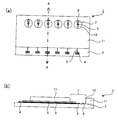
- FIGS. 3A and 3B are a schematic plan view and a cross-sectional view showing an example of the electrode chip of the present invention
- FIG. 3 (b) is a cross-sectional view along the line AA in FIG. 3 (a).
- a plurality of electrodes 3 and terminals 4 are formed on the substrate 2, respectively.
- the electrodes 3 and the terminals 4 are paired to electrically
- a plurality of conducting wires 5 are formed to be connected to each other, and an insulating layer 6 is formed so as to cover the conducting wires 5.
- FIG. 1 This electrode chip 1 has a plurality of accommodating portions 7 in which an electrode 3 and a peptide 9 bonded with paramethoxyaniline are arranged. In FIG. 3A, the insulating layer is omitted.
- FIGS. 4A and 4B are a schematic plan view and a sectional view showing another example of the electrode chip of the present invention
- FIG. 4 (b) is a sectional view taken along the line BB of FIG. 4 (a). is there.
- the electrode chip 1 illustrated in FIGS. 4A and 4B the electrode 3 including the working electrode 3a, the counter electrode 3b, and the reference electrode 3c and the terminal 4 are formed on the substrate 2, and the working electrode 3a, the counter electrode 3b, and A conductive wire 5 that electrically connects the reference electrode 3c and the terminal 4 in pairs is formed, and an insulating layer 6 is formed so as to cover the conductive wire 5.
- a spacer 25 having openings for forming the accommodating portion 7, the flow path 22 and the introduction port 23 is disposed on the substrate 2, a spacer 25 having openings for forming the accommodating portion 7, the flow path 22 and the introduction port 23 is disposed.
- the spacer 25 is an opening corresponding to the accommodating portion 7 of the spacer 25. Is disposed on the electrode 3 and the terminal 4 is exposed.
- the upper substrate 21 is arranged so as to cover the accommodating portion 7 of the spacer 25 and the opening corresponding to the flow path 22 and to secure the introduction port 23.
- peptide 9 and lysate reagent 10 to which paramethoxyaniline is bound are fixed in flow path 22.
- the insulating layer is omitted.
- a peptide having paramethoxyaniline bonded to the electrode chip is preliminarily arranged, and since the measurement is performed electrochemically, it is possible to detect the reaction on the electrode surface, and even a minute amount of the sample can be contaminated with microorganisms. Concentration can be measured. Therefore, even a very small amount of a sample can be detected easily and quickly with high sensitivity and stability. Furthermore, the use of expensive lysate reagents can be greatly reduced, and the concentration of microbial contaminants can be detected at a low cost.
- the electrode tip of the present invention has a plurality of accommodating portions, it can be continuously measured and can be miniaturized, so that it can be practically used in a medical field.
- the accommodating part in this invention is formed on a board
- the shape of the accommodating portion is not particularly limited, and examples of the shape of the accommodating portion in plan view include a circle, an ellipse, and a rectangle.
- the capacity of the container is preferably in the range of 1 mm 3 to 200 mm 3 , In particular, it is preferably in the range of 1 mm 3 to 100 mm 3 , particularly in the range of 1 mm 3 to 50 mm 3 .
- the size of the accommodating portion for example, when the shape of the accommodating portion in a plan view is circular, the diameter can be about 1 mm to 5 mm and the depth can be about 1 mm to 10 mm.
- the arrangement of the accommodating portion is not particularly limited as long as the subject can be accommodated and the electrode can be disposed inside the accommodating portion.
- the accommodating part 7 may be arrange
- the number of accommodating parts may be one or plural.
- the electrode chip of the present invention may have a channel in which one end is connected to the housing portion and the other end is connected to the introduction port.
- the flow path may be formed by a groove of the upper substrate, or may be formed by disposing a spacer between the substrate and the upper substrate.
- the width and height of the flow path are not particularly limited as long as the subject can be guided to the accommodating portion, and can be, for example, about 0.1 mm to 5 mm.
- a peptide to which paramethoxyaniline is bound is arranged between the introduction port for introducing the analyte and the accommodating portion.
- the arrangement of the peptide to which paramethoxyaniline is bound may be from the introduction port to the accommodating portion.
- the peptide to which paramethoxyaniline is bound can be disposed in the accommodating portion or the flow path.
- bonded may be arrange
- Examples of a method for arranging a peptide to which paramethoxyaniline is bonded include, for example, a method in which paramethoxyaniline is dissolved in distilled water or the above-described buffer solution, and applied by a method using a dispenser, an ink jet method, or the like, and dried. It is done.
- the lysate reagent may be arrange
- the arrangement of the lysate reagent may be from the introduction port to the storage unit.
- the lysate reagent can be arranged in the storage unit or in the flow path.
- the lysate reagent may be arrange
- the lysate reagent may be arranged separately from the peptide to which paramethoxyaniline is bound, or may be arranged in a mixture with the peptide to which paramethoxyaniline is bound.
- the method for arranging the lysate reagent can be the same as the method for arranging the peptide to which paramethoxyaniline is bound.
- Electrode The electrode in this invention is arrange
- the electrode is not particularly limited, and a general electrode used for electrochemical measurement can be used.
- carbon electrodes such as glassy carbon, carbon paste, graphite, and diamond-like carbon, and electrochemically stable noble metal electrodes such as Au and Pt can be used.
- a working electrode may be formed as an electrode, a working electrode and a counter electrode may be formed, or a working electrode, a counter electrode, and a reference electrode may be formed.
- a lead wire and a terminal electrically connected to the electrode can be formed on the substrate.
- the conductor and terminal materials can be the same as the electrode material.
- the conductive wire and the terminal material may be any conductive material as long as conductivity that does not affect the detected current value is secured, and from the viewpoint of conductivity, Au, Pt, Ag can be used. It is preferable that they are noble metals, such as.
- Examples of the electrode forming method include a method of patterning a conductive film by a photolithography method using a substrate on which a conductive film is formed, a mask vapor deposition method, a screen printing method, a gravure printing method, a flexographic printing method, an inkjet method, and the like. Can be mentioned.
- the method for forming the conductor and the terminal can be the same as the method for forming the electrode.
- a conducting wire and a terminal may be formed simultaneously with an electrode, and may be formed separately from an electrode.
- Substrate used in the present invention is not particularly limited as long as an electrode can be formed and the surface has an insulating property, and examples thereof include a glass substrate, a resin substrate, and a ceramic substrate.
- the shape of the substrate is not particularly limited, and may be any shape such as a square, a rectangle, a circle, and an ellipse.
- an upper substrate may be disposed on the substrate.
- the upper substrate may have a through hole.
- a through hole can be used as the inlet.
- the accommodating portion can be formed by a through hole.
- the size of the through hole can be the same as the size of the housing portion when the housing portion is formed by the through hole as illustrated in FIG.
- the through hole when the through hole is an introduction port and is connected to the flow path, it may be of a size that allows the analyte to be introduced.
- the shape of the through hole is not particularly limited, but the shape of the through hole in plan view is preferably a circle or an ellipse because it is easy to form the through hole.
- a groove for forming the flow path and the accommodating portion may be formed on the surface of the upper substrate facing the substrate.
- the size of the groove for forming the flow path and the accommodating portion can be the same as the size of the flow path and the accommodating portion.
- the upper substrate is not particularly limited as long as the surface has insulating properties, and examples thereof include a glass substrate and a resin substrate.
- the shape of the upper substrate is not particularly limited, and may be an arbitrary shape such as a square, a rectangle, a circle, or an ellipse.
- the upper substrate is disposed on the substrate so that at least the terminals are exposed. Further, when the housing portion is formed by the through hole of the upper substrate, the upper substrate is disposed so that the through hole is positioned on the electrode. Further, when the flow path and the accommodating portion are formed by the grooves of the upper substrate, the upper substrate is disposed so that a part of the grooves is positioned on the electrode.
- the upper substrate can be attached to the substrate via, for example, an adhesive or an adhesive.
- a spacer may be disposed between the substrate and the upper substrate.
- the spacer is provided to form the accommodating portion and the flow path.
- the spacer can have an opening corresponding to the accommodating portion and the flow path.
- the size and shape of the opening can be the same as the size and shape of the accommodating portion and the flow path.
- the spacer is not particularly limited as long as it has insulating properties, and examples thereof include a resin substrate.
- the shape of the spacer is not particularly limited, and may be an arbitrary shape such as a square, a rectangle, a circle, or an ellipse.
- the spacer is disposed on the substrate so that at least the terminal is exposed and the opening of the spacer is positioned on the electrode.
- the spacer can be attached to the substrate via, for example, an adhesive or an adhesive.
- an insulating layer can be formed so that a conducting wire may be covered.
- the insulating layer can suppress oxidation of the conductive wire and prevent a short circuit.
- a material for the insulating layer for example, a thermosetting resin, a photocurable resin, or the like can be used.
- a method for forming the insulating layer any method can be used as long as it can form the insulating layer in a pattern so as to cover the conductive wires and not cover the electrodes and terminals. For example, a photolithography method, a screen printing method, a gravure printing method, Examples include a flexographic printing method and an inkjet method.
- peptide 9 and lysate reagent 10 to which pMA is bound are dissolved in the analyte. Then, the specimen, the lysate reagent, and the peptide to which pMA is bound are reacted in the container for a predetermined time. Next, in the case of the amperometry method, a constant potential is applied to the electrode. By measuring the current after a certain period of time, the concentration of microbial contaminants can be calculated. At this time, pMA released from the peptide and pMA bound to the peptide have different oxidation-reduction potentials, and the difference is relatively large. Therefore, only pMA generated separately from the peptide bound to pMA is selectively and It can be detected with high accuracy.
- the electrode tip of the present invention has been described by taking paramethoxyaniline as an example.
- other compounds represented by the above general formula (a) can also be paramethoxyaniline. Since it has the same electrochemical property, the same effect can be acquired.
- Oligopeptide of the present invention is characterized in that a compound represented by the following general formula (a) is bonded to one end and a protecting group of the peptide is bonded to the other end.
- R is —O—C n H 2n + 1 or —S—C n H 2n + 1 , and n is an integer from 1 to 4.
- paramethoxyaniline will be specifically described as the compound represented by the general formula (a).
- the oligopeptide having one end bound to paramethoxyaniline and the other end bound to the peptide protecting group was described in the above “A. Method for detecting the concentration of microbial contaminants”, and thus the description thereof is omitted here.
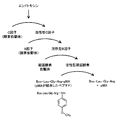
- the oligopeptide of the present invention can be synthesized according to a known method. For example, Boc-Leu-Gly-Arg-pMA can be synthesized as shown in the following scheme.
- the oligopeptide of the present invention has been described by taking paramethoxyaniline as an example.
- other compounds represented by the general formula (a) are also paramethoxy. Since it has the same electrochemical characteristics as aniline, the same effect can be obtained.
- the present invention is not limited to the above embodiment.
- the above-described embodiment is an exemplification, and the present invention has any configuration that has substantially the same configuration as the technical idea described in the claims of the present invention and that exhibits the same effects. Are included in the technical scope.
- Standard endotoxin solution The endotoxin standard product is manufactured by Seikagaku Corporation E.I. Coli O113: USP Reference Standard Endotoxin derived from H10 strain was used.
- the standard endotoxin solution was prepared using endotoxin-free water attached to Endospecy ES24S manufactured by Seikagaku Corporation, and was vigorously stirred with a vortex mixer for 30 minutes immediately before use. The endotoxin concentration was shown as the final concentration in the measurement solution.
- Lysate reagent As the lysate reagent, Endspecy ES24S manufactured by Seikagaku Corporation, in which the lysate reagent was sealed in a dedicated test tube for each test in a lyophilized state, was used.
- LGR-pMA and pMA The synthesized LGR-pMA was dissolved in water for injection manufactured by Otsuka Pharmaceutical Co., Ltd. and stored at ⁇ 20 ° C. as a 10 mM stock solution.
- the pMA manufactured by Wako Pure Chemical Industries, Ltd. was dissolved in water for injection manufactured by Otsuka Pharmaceutical Co., Ltd. for each measurement to make a 10 mM solution.
- a buffer solution attached to Endospecy manufactured by Seikagaku Corporation was used for dilution of LGR-pMA and pMA.
- the stability of the dissolved pMA was evaluated.
- As the buffer a reagent attached to Endospecy manufactured by Seikagaku Corporation was used.
- a pMA solution was prepared using a buffer so that the concentration was 1 mM.
- the pMA solution was stored in the dark at 37 ° C. for 30 minutes, 1 hour, 2 hours, 3 hours, and 72 hours, respectively, and then CV measurement was performed in a 96-well plate. The potential was scanned in the range of 0.2V ⁇ 0.7V ⁇ ⁇ 0.4V ⁇ 0.2V.
- FIG. 5 shows voltammograms after 0 minutes, 30 minutes, 1 hour, 2 hours, 3 hours and 72 hours.
- a peak derived from the oxidation reaction of pMA was confirmed at around 0.5 V, and the current value was almost constant from immediately after preparation of the pMA solution to 72 hours later. From this result, it was found that pMA is very stable.
- Boc-Leu-Gly-Arg-pMA a peptide to which paramethoxyaniline was bound, was synthesized according to the scheme shown in “C. Oligopeptide” above.
- Boc-Leu-Gly-Arg-pMA may be abbreviated as LGR-pMA.
- Example 2 Production of electrode chip The electrode chip was produced by the method described below. (1) Formation of conducting wire and terminal On a PET substrate (Toray Industries, Lumirror 350H10), Ag paste was applied in a pattern by screen printing, and baked at 130 ° C. for 30 minutes to form a conducting wire and a terminal. (2) Formation of electrode Next, a carbon paste was applied in a pattern on the PET substrate by screen printing and baked at 120 ° C for 15 minutes to form a working electrode and a counter electrode. Further, an Ag / AgCl paste made by Lhasa Industries was applied in a pattern on the PET substrate by screen printing, and baked at 80 ° C. for 10 minutes to form a reference electrode. (3) Formation of insulating layer Next, for the purpose of covering the conductive wire, a UV curable resin is applied to the PET base material in a pattern by screen printing, and exposed for 100 seconds with a Deep UV lamp manufactured by USHIO. Cured.
- a UV curable resin is applied to the PET base material in a pattern by screen printing, and exposed
- the laminated base material in which openings corresponding to the flow path, the accommodating part, and the introduction port are formed is laminated by laminating the above-mentioned PET base material on which the conducting wires, terminals, electrodes, etc. are formed with a laminator. A flow path and a housing part having a height of 150 ⁇ m were formed.
- a buffer solution attached to Endospecy ES24S manufactured by Seikagaku Corporation was used for diluting LGR-pMA.
- a dilute solution of LGR-pMA was dropped with a dispenser on the insulating layer on the insulating layer and dried at room temperature.
- a dilute solution of LGR-pMA was dropped with a dispenser into a region corresponding to a housing portion of a hydrophilic cover film manufactured by 3M Healthcare, which will be described later, and dried at room temperature.
- a hydrophilic cover film manufactured by 3M Healthcare was bonded and adhered to the laminated base material so as to cover the flow path and the accommodating portion.
- the produced electrode chip was evaluated. As measurement samples, pMA and LGR-pMA prepared at a concentration of 1.0 mM were used. For the preparation of the sample, a buffer solution attached to Endospecy ES24S manufactured by Seikagaku Corporation was used. First, evaluation was performed using an electrode chip that did not include a hydrophilic cover film. A sample of 100 ⁇ L was dropped on the electrode portion of the electrode tip, and CV measurement was performed. For the measurement, the working electrode, the counter electrode, and the reference electrode of the electrode tip were used. The potential was scanned in the range of 0.2 V ⁇ 1.5 V ⁇ ⁇ 0.4 V ⁇ 0.2 V at a speed of 20 mV / s. FIG.
- FIG. 7 shows voltammograms for (A) pMA and (B) LGR-pMA. A peak derived from the oxidation reaction of pMA was confirmed around 0.4 V, and a peak derived from the oxidation reaction of LGR-pMA was confirmed around 1.0 V. From this result, it was shown that electrochemical measurement using an electrode tip was possible.
- the peak derived from the oxidation reaction of pMA is 0.4 V
- the peak derived from the oxidation reaction of LGR-pMA is confirmed in the vicinity of 1.0 V of 0.4 V or more, which is the peak derived from the oxidation reaction of pMA. Therefore, it was shown that the oxidation reaction of only pMA can be detected by the amperometry method.
- Endotoxin concentration was detected using the LAL cascade reaction.
- a reagent attached to Endospecy manufactured by Seikagaku Corporation was used as the lysate reagent and the buffer.
- LGR-pMA, 200 ⁇ L of buffer solution and 200 ⁇ L of endotoxin standard solution were added to a test tube containing the lysate reagent in a lyophilized state and stirred. After reaction at 37 ° C. for a maximum of 60 minutes, 200 ⁇ L of the mixed solution was transferred to a 96-well plate. A reaction in which endotoxin binds to factor C is triggered, and factor B and coagulase are activated one after another to advance the LAL cascade reaction.
- PMA released from LGR-pMA by a coagulation enzyme was detected using a CV method and an amperometry method with a glassy carbon electrode having a diameter of 1 mm.
- the scanning speed was 20 mV / s, and the range was 0.2 V ⁇ 1.5 V ⁇ ⁇ 0.4 V ⁇ 0.2 V.
- the amperometry method an initial potential of ⁇ 0.2 V was applied for 10 seconds, then the potential was stepped to 0.6 V and applied for 30 seconds, and the current resulting from the oxidation reaction of pMA was recorded.
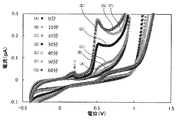
- the reaction times are (A) 0 minutes, (B) 10 minutes, (C) 20 minutes, (D) 30 minutes, (E) 40 minutes, (F) 50 minutes, (G) 60 minutes, respectively.
- the voltammogram when the endotoxin standard solution with a concentration of 100 EU / L is reacted with the lysate reagent is shown.
- a peak derived from the oxidation reaction of pMA released from LGR-pMA by the LAL cascade reaction was confirmed at around 0.5V. The current value increased depending on the time in the range of 10 minutes to 40 minutes, and became constant after 40 minutes.
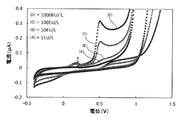
- the reaction time is set to 30 minutes, and endotoxin standard solutions and lysate reagents with concentrations of (A) 1 EU / L, (B) 10 EU / L, (C) 100 EU / L, and (D) 1000 EU / L, respectively.
- the voltammogram when reacting with is shown.
- a peak derived from the oxidation reaction of pMA released from LGR-pMA by the LAL cascade reaction was confirmed at around 0.5V. The current value increased depending on the endotoxin concentration. From these results, it was found that 10 EU / L endotoxin could be detected in 30 minutes by this method.
- FIG. 10 (a) shows an amperogram obtained when the solution subjected to the LAL reaction for 30 minutes was detected by the amperometry method.
- FIG. 10 (b) shows an enlarged view of FIG. 10 (a).
- Endotoxin concentrations are (A) 0 EU / L, (B) 1 EU / L, (C) 10 EU / L, (D) 100 EU / L, (E) 1000 EU / L, and ranges from 1 EU / L to 1000 EU / L Thus, it was confirmed that the current value derived from the oxidation reaction of pMA increased as the endotoxin concentration increased.
- Boc-Leu-Gly-Arg-pNA was used as a peptide to which paranitroaniline was bound.
- a LAL enzyme solution a lysate reagent containing factor C, factor B and a coagulation enzyme precursor and Boc-Leu-Gly-Arg-pNA are sealed in a dedicated test tube in a freeze-dried state for each test.
- the reagent of Endspecy ES-24S set manufactured by Seikagaku Corporation was used.
- Boc-Leu-Gly-Arg-pNA may be abbreviated as LGR-pNA.
- the lysate reagent and the buffer a reagent attached to Endospecy manufactured by Seikagaku Corporation was used.
- a test tube containing lysate reagent and LGR-pNA in a lyophilized state 200 ⁇ L of buffer solution and 200 ⁇ L of endotoxin standard solution were added and stirred, and 200 ⁇ L was transferred to a 96-well plate. After reacting at room temperature for 1 hour or 2 hours, measurement was performed by a differential pulse voltammetry (DPV) method using a glassy carbon electrode having a diameter of 1 mm.
- DUV differential pulse voltammetry
- FIG. 11A shows a voltammogram after a reaction time of 1 hour
- FIG. 11B shows a voltammogram after a reaction time of 2 hours. Peaks derived from the reduction reaction of LGR-pNA and pNA were observed around ⁇ 0.64 V and ⁇ 0.75 V, respectively. The peak derived from the reduction reaction of LGR-pNA was overlapped with another peak seen around ⁇ 0.6V.
- Endotoxin concentrations are (A) 0 EU / L, (B) 1 EU / L, (C) 10 EU / L, (D) 100 EU / L, (E) 1000 EU / L, and as endotoxin concentration increases ⁇
- the peak derived from the reduction reaction of LGR-pNA near 0.64 V decreased, and the peak derived from the reduction reaction of pNA near ⁇ 0.75 V increased.
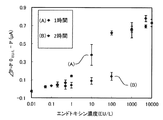
- FIG. 12 shows a graph in which a peak current value in the vicinity of ⁇ 0.75 V with respect to a current value of 0 EU / L is adopted as a signal and plotted against the endotoxin concentration. Each point is an average value of 5 repeated experiments, and error bars indicate ⁇ standard deviation.
- the DPV signal was dependent on endotoxin concentration and reaction time.
- endotoxin of 5 EU / L or more was detectable at a reaction time of 1 hour, and detection of 0.5 EU / L or more was possible at a reaction time of 2 hours.
- the differential pulse voltammetry requires a measurement current peak analysis of the measurement result, and the analysis is complicated. Furthermore, it is difficult to separate the signals of pNA and LGR-pNA by methods other than differential pulse voltammetry.
- pNA is reduced at a lower potential than LGR-pNA, and therefore, when a potential at which pNA is reduced is applied, LGR-pNA is also reduced, so that only pNA is detected. Is impossible.
- Boc-Leu-Gly-Arg-pAP was used as a peptide conjugated with paraaminophenol.
- Boc-Leu-Gly-Arg-pAP may be abbreviated as LGR-pAP.
- a reagent attached to Endospecy manufactured by Seikagaku Corporation was used as the lysate reagent and the buffer.
- LGR-pAP and 200 ⁇ L of buffer solution were added to a test tube containing a lysate reagent in a lyophilized state to dissolve the lysate reagent. 90 ⁇ L of this mixed solution and 90 ⁇ L of endotoxin standard solution were transferred to a 96-well plate and stirred.
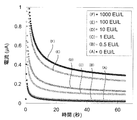
- FIG. 13 shows an amperogram after 2 hours of detection by the amperometry method.
- Endotoxin concentrations are (A) 0 EU / L, (B) 0.5 EU / L, (C) 1 EU / L, (D) 10 EU / L, (E) 100 EU / L, (F) 1000 EU / L, As the endotoxin concentration increased in the range of 1 EU / L to 1000 EU / L, the current value derived from pAP increased.
- FIG. 14 shows a graph in which the average value of the current value after 19 seconds to 21 seconds after switching the potential from ⁇ 0.2 V to 0.3 V is adopted as a signal and plotted against the endotoxin concentration.
- the reaction time is (A) 30 minutes, (B) 1 hour, and (C) 2 hours. Each point represents the average value of three repeated experiments, and the error bar represents ⁇ standard deviation. From this method, the endotoxin concentration in the range of 100 EU / L to 2000 EU / L in the reaction time of 30 minutes, in the range of 1 EU / L to 1000 EU / L in 1 hour, and in the range of 0.5 EU / L to 1000 EU / L in 2 hours. It was found that there was a correlation between the current values. Since a detection method of 1 EU / L is required in the medical field such as management of ultrapure dialysate, in the case of this method, a reaction time of 1 hour or more is required for detection.
- FIG. 15 shows the results of evaluating changes in the pAP oxidation signal when pAP prepared to a concentration of 1.0 mM in a phosphate buffer PBS ( ⁇ ) was stored at 37 ° C. under light-shielding conditions.
- the CV method was used for the measurement, and the potential was scanned in the range of ⁇ 0.2 V ⁇ 0.8 V ⁇ ⁇ 0.8 V ⁇ ⁇ 0.2 V at a speed of 20 mV / s.
- the storage time starts from the time of preparation of the solution, and is (A) 0 minutes, (B) 30 minutes, (C) 1 hour, (D) 4 hours, derived from the oxidation reaction of pAP that appears in the vicinity of 0.2 V over time.
Landscapes
- Chemical & Material Sciences (AREA)
- Life Sciences & Earth Sciences (AREA)
- Health & Medical Sciences (AREA)
- Organic Chemistry (AREA)
- Engineering & Computer Science (AREA)
- Zoology (AREA)
- Wood Science & Technology (AREA)
- Proteomics, Peptides & Aminoacids (AREA)
- Analytical Chemistry (AREA)
- Toxicology (AREA)
- Immunology (AREA)
- Microbiology (AREA)
- Molecular Biology (AREA)
- Biophysics (AREA)
- Physics & Mathematics (AREA)
- Biotechnology (AREA)
- Biochemistry (AREA)
- Bioinformatics & Cheminformatics (AREA)
- General Engineering & Computer Science (AREA)
- General Health & Medical Sciences (AREA)
- Genetics & Genomics (AREA)
- Apparatus Associated With Microorganisms And Enzymes (AREA)
- Measuring Or Testing Involving Enzymes Or Micro-Organisms (AREA)
Applications Claiming Priority (2)
| Application Number | Priority Date | Filing Date | Title |
|---|---|---|---|
| JP2014-047888 | 2014-03-11 | ||
| JP2014047888 | 2014-03-11 |
Publications (1)
| Publication Number | Publication Date |
|---|---|
| WO2015137356A1 true WO2015137356A1 (ja) | 2015-09-17 |
Family
ID=54071799
Family Applications (1)
| Application Number | Title | Priority Date | Filing Date |
|---|---|---|---|
| PCT/JP2015/057057 Ceased WO2015137356A1 (ja) | 2014-03-11 | 2015-03-10 | 微生物夾雑物の濃度検出方法、電極チップおよびオリゴペプチド |
Country Status (2)
| Country | Link |
|---|---|
| JP (1) | JP5916176B2 (https=) |
| WO (1) | WO2015137356A1 (https=) |
Cited By (2)
| Publication number | Priority date | Publication date | Assignee | Title |
|---|---|---|---|---|
| JP2018059748A (ja) * | 2016-10-03 | 2018-04-12 | 大日本印刷株式会社 | 微生物夾雑物検出装置 |
| JP2018072119A (ja) * | 2016-10-27 | 2018-05-10 | 大日本印刷株式会社 | 微生物夾雑物検出装置および微生物夾雑物検出方法 |
Families Citing this family (7)
| Publication number | Priority date | Publication date | Assignee | Title |
|---|---|---|---|---|
| WO2017141961A1 (ja) | 2016-02-16 | 2017-08-24 | 生化学工業株式会社 | フェニレンジアミン誘導体を用いた電気化学測定 |
| JP6834317B2 (ja) * | 2016-10-03 | 2021-02-24 | 大日本印刷株式会社 | 微生物夾雑物検出装置および微生物夾雑物検出方法 |
| WO2018079581A1 (ja) * | 2016-10-25 | 2018-05-03 | 大日本印刷株式会社 | エンドトキシン検出用チップおよびエンドトキシン濃度の定量方法 |
| JP2018072331A (ja) * | 2016-10-25 | 2018-05-10 | 大日本印刷株式会社 | エンドトキシン検出用チップおよびエンドトキシン濃度の定量方法 |
| EP4137817A4 (en) | 2020-04-16 | 2024-08-07 | Kikkoman Corporation | HYDROLASE-USED METHOD FOR TRACE SUBSTANCE MEASUREMENT |
| JP6963267B1 (ja) * | 2020-11-02 | 2021-11-05 | エレファンテック株式会社 | ウェルプレート |
| JP2021039137A (ja) * | 2020-12-09 | 2021-03-11 | 大日本印刷株式会社 | 微生物夾雑物検出装置および微生物夾雑物検出方法 |
Citations (2)
| Publication number | Priority date | Publication date | Assignee | Title |
|---|---|---|---|---|
| JP2003524184A (ja) * | 2000-02-21 | 2003-08-12 | エフ.ホフマン−ラ ロシュ アーゲー | 血液凝固測定用の電気化学センサー、対応する血液凝固測定システム、および血液凝固測定方法 |
| JP2013145244A (ja) * | 2006-10-24 | 2013-07-25 | Bayer Healthcare Llc | 過渡減衰電流測定法 |
-
2015
- 2015-03-10 WO PCT/JP2015/057057 patent/WO2015137356A1/ja not_active Ceased
- 2015-03-10 JP JP2015047649A patent/JP5916176B2/ja active Active
Patent Citations (2)
| Publication number | Priority date | Publication date | Assignee | Title |
|---|---|---|---|---|
| JP2003524184A (ja) * | 2000-02-21 | 2003-08-12 | エフ.ホフマン−ラ ロシュ アーゲー | 血液凝固測定用の電気化学センサー、対応する血液凝固測定システム、および血液凝固測定方法 |
| JP2013145244A (ja) * | 2006-10-24 | 2013-07-25 | Bayer Healthcare Llc | 過渡減衰電流測定法 |
Non-Patent Citations (1)
| Title |
|---|
| INOUE Y. KUMI ET AL.: "A Screen-printed endotoxin sensor based on amperometry using a novel p-aminophenol conjugated substrate for a Limulus amebocyte lysate protease reaction", ANALYST, vol. 138, no. 21, pages 6523 - 6531, XP055224344, ISSN: 0003-2654 * |
Cited By (2)
| Publication number | Priority date | Publication date | Assignee | Title |
|---|---|---|---|---|
| JP2018059748A (ja) * | 2016-10-03 | 2018-04-12 | 大日本印刷株式会社 | 微生物夾雑物検出装置 |
| JP2018072119A (ja) * | 2016-10-27 | 2018-05-10 | 大日本印刷株式会社 | 微生物夾雑物検出装置および微生物夾雑物検出方法 |
Also Published As
| Publication number | Publication date |
|---|---|
| JP2015187607A (ja) | 2015-10-29 |
| JP5916176B2 (ja) | 2016-05-11 |
Similar Documents
| Publication | Publication Date | Title |
|---|---|---|
| JP5916176B2 (ja) | 微生物夾雑物の濃度検出方法、電極チップおよびオリゴペプチド | |
| JP5561613B2 (ja) | エンドトキシンの濃度検出方法及びエンドトキシン検出用電極チップ | |
| CN1175268C (zh) | 电化学分析元件 | |
| WO2003023389A2 (en) | Solid electrochemical sensor | |
| JP6240543B2 (ja) | 電極チップおよび化学物質の定量方法 | |
| CN101180403A (zh) | 作为用于生物传感器的对照溶液的内部参考的可氧化的物质 | |
| KR20100087181A (ko) | 전기화학적 검출용의 장치 및 방법 | |
| Ding et al. | Tris (2, 2′-bipyridyl) ruthenium (II)–Zirconia–Nafion composite modified electrode applied as solid-state electrochemiluminescence detector on electrophoretic microchip for detection of pharmaceuticals of tramadol, lidocaine and ofloxacin | |
| US20230074766A1 (en) | Method of Measuring the pH of a Sample | |
| Markas | Rapid detection of paracetamol using a disposable, surface-modified screen-printed carbon electrode | |
| US20190004000A1 (en) | Sensor for analytes | |
| CN103969312A (zh) | 检测试片的检测装置及检测方法 | |
| JP2018072331A (ja) | エンドトキシン検出用チップおよびエンドトキシン濃度の定量方法 | |
| EP3443337B1 (en) | Electrochemical device for detection of selected quorum sensing signals | |
| US8518237B2 (en) | Modulating polarization voltage of amperometric sensors | |
| JP5262725B2 (ja) | 核酸検出方法及び核酸検出用チップ | |
| Mori et al. | Amperometric detection with microelectrodes in flow injection analysis: theoretical aspects and application in the determination of nitrite in saliva | |
| JP6562765B2 (ja) | 電気化学式エンドトキシン濃度検出用容器、電極チップおよびエンドトキシンの検出方法 | |
| Chen et al. | Closed bipolar electrochemical biosensor based on ohmic loss mechanism for noncontact measurements | |
| US10830726B2 (en) | Electrochemical pH sensor comprising a phenolic compound using hydrogen bonding of the hydroxyl group to sulphur atoms of the phenolic compound | |
| Hayashi et al. | Microfabricated On‐Line Electrochemical Flow Cell Integrated with Small Volume Pre‐Reactor for Highly Selective Detection of Biomolecules | |
| US20140335425A1 (en) | Proton/cation transfer polymer | |
| EP2297574B1 (en) | Bio-sensor | |
| Jiang et al. | Performance of an amperometric biosensor for the determination of hemoglobin | |
| CN109342524A (zh) | 聚曙红y修饰玻碳电极测定废水中对苯二酚的方法 |
Legal Events
| Date | Code | Title | Description |
|---|---|---|---|
| 121 | Ep: the epo has been informed by wipo that ep was designated in this application |
Ref document number: 15761912 Country of ref document: EP Kind code of ref document: A1 |
|
| NENP | Non-entry into the national phase |
Ref country code: DE |
|
| 122 | Ep: pct application non-entry in european phase |
Ref document number: 15761912 Country of ref document: EP Kind code of ref document: A1 |