WO2015064950A1 - 패드 인쇄용 잉크 조성물 - Google Patents
패드 인쇄용 잉크 조성물 Download PDFInfo
- Publication number
- WO2015064950A1 WO2015064950A1 PCT/KR2014/009942 KR2014009942W WO2015064950A1 WO 2015064950 A1 WO2015064950 A1 WO 2015064950A1 KR 2014009942 W KR2014009942 W KR 2014009942W WO 2015064950 A1 WO2015064950 A1 WO 2015064950A1
- Authority
- WO
- WIPO (PCT)
- Prior art keywords
- ink composition
- acrylate
- meth
- printing
- ink
- Prior art date
- Legal status (The legal status is an assumption and is not a legal conclusion. Google has not performed a legal analysis and makes no representation as to the accuracy of the status listed.)
- Ceased
Links
Images
Classifications
-
- C—CHEMISTRY; METALLURGY
- C09—DYES; PAINTS; POLISHES; NATURAL RESINS; ADHESIVES; COMPOSITIONS NOT OTHERWISE PROVIDED FOR; APPLICATIONS OF MATERIALS NOT OTHERWISE PROVIDED FOR
- C09D—COATING COMPOSITIONS, e.g. PAINTS, VARNISHES OR LACQUERS; FILLING PASTES; CHEMICAL PAINT OR INK REMOVERS; INKS; CORRECTING FLUIDS; WOODSTAINS; PASTES OR SOLIDS FOR COLOURING OR PRINTING; USE OF MATERIALS THEREFOR
- C09D11/00—Inks
- C09D11/02—Printing inks
-
- C—CHEMISTRY; METALLURGY
- C09—DYES; PAINTS; POLISHES; NATURAL RESINS; ADHESIVES; COMPOSITIONS NOT OTHERWISE PROVIDED FOR; APPLICATIONS OF MATERIALS NOT OTHERWISE PROVIDED FOR
- C09D—COATING COMPOSITIONS, e.g. PAINTS, VARNISHES OR LACQUERS; FILLING PASTES; CHEMICAL PAINT OR INK REMOVERS; INKS; CORRECTING FLUIDS; WOODSTAINS; PASTES OR SOLIDS FOR COLOURING OR PRINTING; USE OF MATERIALS THEREFOR
- C09D11/00—Inks
- C09D11/02—Printing inks
- C09D11/10—Printing inks based on artificial resins
-
- C—CHEMISTRY; METALLURGY
- C09—DYES; PAINTS; POLISHES; NATURAL RESINS; ADHESIVES; COMPOSITIONS NOT OTHERWISE PROVIDED FOR; APPLICATIONS OF MATERIALS NOT OTHERWISE PROVIDED FOR
- C09D—COATING COMPOSITIONS, e.g. PAINTS, VARNISHES OR LACQUERS; FILLING PASTES; CHEMICAL PAINT OR INK REMOVERS; INKS; CORRECTING FLUIDS; WOODSTAINS; PASTES OR SOLIDS FOR COLOURING OR PRINTING; USE OF MATERIALS THEREFOR
- C09D11/00—Inks
-
- C—CHEMISTRY; METALLURGY
- C09—DYES; PAINTS; POLISHES; NATURAL RESINS; ADHESIVES; COMPOSITIONS NOT OTHERWISE PROVIDED FOR; APPLICATIONS OF MATERIALS NOT OTHERWISE PROVIDED FOR
- C09D—COATING COMPOSITIONS, e.g. PAINTS, VARNISHES OR LACQUERS; FILLING PASTES; CHEMICAL PAINT OR INK REMOVERS; INKS; CORRECTING FLUIDS; WOODSTAINS; PASTES OR SOLIDS FOR COLOURING OR PRINTING; USE OF MATERIALS THEREFOR
- C09D11/00—Inks
- C09D11/02—Printing inks
- C09D11/10—Printing inks based on artificial resins
- C09D11/101—Inks specially adapted for printing processes involving curing by wave energy or particle radiation, e.g. with UV-curing following the printing
Definitions
- the present invention relates to an ink composition for pad printing, and more particularly, to an ink composition for pad printing with remarkably improved printability.
- an image display device including a touch screen panel
- a display portion refers to a portion where an image is displayed
- a non-display portion refers to an edge portion where an image is not displayed.
- the non-display unit is a top layer shown to the consumer, and a light blocking layer is formed so that the lower wiring is not visible to the user, and various patterns such as a company logo, an icon, and an IR pattern may be formed on the light blocking layer. Such a pattern may be formed in the recessed groove portion formed in the light blocking layer.
- Pad printing is one of printing techniques for transferring a 2-D image to a 3-D object.
- the printing process is simple and the image can be easily printed on the curved 3-D surface. .
- ink having excellent transfer power and printability is required because there may be a problem such as light leakage or a lower pattern being recognized when there is an unfilled portion in the printed portion. .
- Korean Patent Publication No. 2012-0080878 discloses a conductive ink composition and a method of manufacturing the same.
- An object of the present invention is to provide an ink composition for pad printing with remarkably improved printability.
- phase angle represented by the following formula 1 is 45 ° or more and less than 90 °:
- the ink composition wherein the phase angle is measured by performing a frequency sweep from angular frequency of 0.1rad / s to 100rad / s with a stress of 1% at room temperature, the ink composition.
- the ink composition is an image, icon, logo or IR pattern.
- the ink composition of the present invention is remarkably improved in printability. As a result, the ink coated on the pad is completely transferred to the printing site, so that an ink unfilled area does not occur in the printing site.
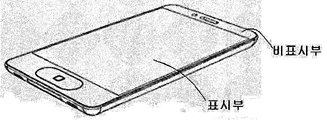
- FIG. 1 is a perspective view of an image display apparatus (mobile phone) including a touch screen panel.
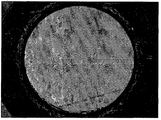
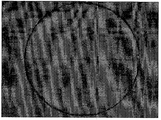
- FIG. 2 is a photograph photographing a printing portion at the time of performing printing with the ink composition of Example 1.
- FIG. 2 is a photograph photographing a printing portion at the time of performing printing with the ink composition of Example 1.
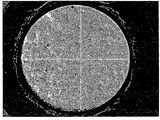
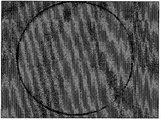
- FIG. 3 is a photograph photographing a printing portion at the time of performing printing with the ink composition of Example 2.
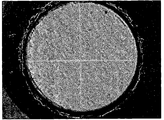
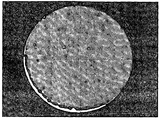
- FIG. 4 is a photograph photographing a printing portion at the time of performing printing with the ink composition of Example 3.
- FIG. 4 is a photograph photographing a printing portion at the time of performing printing with the ink composition of Example 3.
- FIG. 5 is a photograph photographing a printing portion at the time of performing printing with the ink composition of Example 4.
- FIG. 6 is a photograph photographing a printing portion at the time of performing printing with the ink composition of Example 5.
- FIG. 7 is a photograph photographing a printing portion at the time of performing printing with the ink composition of the comparative example.
- the present invention includes a colorant, a binder resin, a polymerization initiator and a solvent, and by making the phase angle represented by the formula (1) of 45 ° or more to less than 90 °, the printability is remarkably improved and the ink coated on the pad is printed.
- the present invention relates to an ink composition for pad printing, which is completely transferred to and does not generate an ink unfilled area in a printing portion.
- Phase angle ( ⁇ ) arctan (G "/ G ')
- the ink composition of the present invention can reduce the occurrence of such a problem by having the phase angle range.
- the phase angle can be measured by using a rheometer by a method known in the art, in the case of the present invention is 0.1 while applying a stress of 1% at room temperature (for example 15 °C to 25 °C) Measurements were made by performing frequency sweeping using each frequency from rad / s to 100 rad / s. The measurement may be performed with frequency sweeping at each frequency from 0.1 rad / s to 10 rad / s.
- the phase angle measured while performing frequency sweep using each frequency from 0.1 rad / s to 100 rad / s may be 45 ° or more and less than 85 °.
- the method for adjusting the phase angle is not particularly limited, and for example, the type, content, and particle size of the colorant; Type, content, degree of polymerization of binder resin; The type and content of the polymerization initiator; It can be adjusted according to the type, content and the like of the solvent.
- the ink composition of the present invention is not particularly limited as long as the object to be printed can be applied to the pad printing method, and may be, for example, a window substrate of an image display apparatus. Specifically, the ink composition of the present invention can be used to form the non-display portion pattern of the window substrate.
- the non-display portion refers to an edge portion where an image is not displayed in the image display apparatus.
- This non-display portion is a top layer seen by the consumer, and the light shielding layer is formed so that the lower wiring and the like are not visible to the consumer.
- a pattern such as an image, an icon, a logo, or an IR pattern may be formed on the non-display portion.
- An IR pattern refers to a pattern of non-opaque portions through which light of a specific wavelength (eg, infrared light) for a sensor such as an illuminance sensor or a proximity sensor can pass.
- the ink composition of the present invention is excellent in printability and printed. Since the unfilled region does not occur at the site, it is possible to form a pattern having excellent precision without causing the above problem.
- the ink composition of this invention contains a coloring agent, binder resin, a polymerization initiator, and a solvent.
- the colorant according to the present invention may be an organic colorant such as a pigment, a dye, a synthetic or natural pigment, or an inorganic colorant such as a metal oxide, a metal complex salt, or barium sulfate (constitution pigment).
- organic colorant such as a pigment, a dye, a synthetic or natural pigment
- inorganic colorant such as a metal oxide, a metal complex salt, or barium sulfate (constitution pigment).
- colorant compounds classified as pigments and dyes in the Color Index (The Society of Dyers and Colourists) may be used, and these may be used alone or in combination of two or more thereof.
- pigments include C.I. Pigment Yellow No. 1, 12, 13, 14, 15, 16, 17, 20, 24, 31, 53, 83, 86, 93, 94, 109, 110, 117, 125, 128, 137, 138, 139, 147, 148, 150, 153, 154, 166, 173, 180, 185; C.I. Pigment Orange 13, 31, 36, 38, 40, 42, 43, 51, 55, 59, 61, 64, 65, 71, 73; C.I. Pigment Red No.
- the dyes include C.I. Solvent yellow 2, 14, 16, 33, 34, 44, 56, 82, 93, 94, 98, 116, 135; C.I. Solvent orange No. 1, No. 3, No. 7, No. 63; C.I. Solvent Red No. 1, 2, 3, 8, 18, 23, 24, 27, 35, 43, 45, 48, 49, 91: 1, 119, 135 No. 140, 196, 197; C.I. Solvent purple 8, 9, 13, 26, 28, 31, 59; C.I. Solvent blue Nos. 4, 5, 25, 35, 36, 38, 70; C.I. Solvent green 3, 5, 7 and the like.
- Inorganic pigments such as strontium chromium, white carbon, clay, talc, ultramarine blue, precipitated barium sulfate, barite powder, calcium carbonate, lead white, bluish blue, manganese violet, aluminum powder, brass powder, azo lakes, insoluble azo pigments, chelate azo Organic pigments such as pigments, phthalocyanine pigments, perylene and perylene pigments, anthraquinone pigments, quinacridone pigments, dye lake nitro pigments and nitroso pigments.
- the colorant of the present invention may be a white colorant.
- the white colorant is not particularly limited as long as it is a white inorganic pigment generally used in the art, for example CI pigment white 4, 5, 6, 6: 1, 7, 18, 18: 1, 19, 20, 22, 25 , 26, 27, 28, 32, alumina white, and the like, and preferably CI pigment white 6 or white 22 in terms of reflection efficiency and whiteness. These can be used individually or in mixture of 2 or more types.
- TiO 2 included in the CI pigment white 6 is low in cost and high in refractive index, and thus may be used as an effective white colorant because of excellent hiding power and reflectance.
- the TiO 2 preferably has a rutile structure.
- the white colorant is organic to remove impurities or to remove impurities by surface treatment with a resin derivative, a pigment derivative having an acidic group or a basic group introduced therein, a graft treatment on a pigment surface with a high molecular compound, a sulfur atomization method, or the like.
- a washing treatment with a solvent, water, or the like, an ionic impurity removing treatment by an ion exchange method, or the like can also be performed.
- the colorant may further include other white pigments without departing from the object of the present invention.
- the colorant may be adjusted in accordance with the required color properties, for example, may be included in 3 to 50% by weight, preferably 7 to 40% by weight of the total weight of the ink composition. When the colorant is included in 3 to 50% by weight it may have excellent colorability and shielding properties without lowering the printability.
- Binder resin serves as a support body of a pattern, The kind is not specifically limited if it is a well-known thermosetting resin used for an ink composition.
- the binder resin for example, an acrylic resin having an ethylenically unsaturated group can be used.
- This resin can use the copolymer manufactured by copolymerizing the monomer containing an acidic radical, and the monomer copolymerizable with this.
- Examples of the monomer containing an acid group include (meth) acrylic acid, crotonic acid, itaconic acid, maleic acid, fumaric acid, monomethylmaleic acid, isoprenesulfonic acid, styrenesulfonic acid, and the like. Can be.
- Examples of the monomer copolymerizable with an acid group-containing monomer include styrene, chloro styrene, ⁇ -methylstyrene, vinyltoluene, methyl (meth) acrylate, ethyl (meth) acrylate, butyl (meth) acrylate, and benzyl (meth) acrylic.
- the binder resin copolymer according to the invention can be reacted with reactive monomers for introducing ethylenically unsaturated groups.
- reactive monomers include glycidyl (meth) acrylate, vinyl benzyl glycidyl ether, vinyl glycidyl ether, allyl glycidyl ether, 4-methyl-4,5-epoxypentene, ⁇ -glycidoxypropyl Trimethoxysilane, (gamma)-glycidoxy propylmethyl diethoxysilane, (gamma)-glycidoxy propyl triethoxysilane, a norbornyl derivative, etc. are mentioned, These can be used individually or in mixture of 2 or more types.
- the binder resin according to the present invention may also be exemplified a resin having an ethylenic double bond in the side chain, such as polyethylene oxide, polyvinylpyrrolidone, polyamide, polyurethane, polyether, polyester and the like.
- the production method of the copolymer is not particularly limited, and may be prepared using methods such as bulk polymerization, solution polymerization, emulsion polymerization or suspension polymerization, which are commonly used in the art.
- the binder resin according to the present invention is not particularly limited in its content within the range capable of its function, for example, may be included in 1 to 85% by weight of the total weight of the ink composition.
- the content is in the above range, it is possible to improve the yield and process efficiency by increasing the role and pattern transfer rate of the pattern support.
- the ink composition of the present invention may further comprise a polyfunctional monomer having an ethylenically unsaturated double bond.
- the polyfunctional monomer which has an ethylenically unsaturated double bond is a 1-6 functional monomer as a component for strengthening the intensity
- Specific examples include monofunctional compounds such as nonylphenylcarbitol acrylate, 2-hydroxy-3-phenoxypropyl acrylate, 2-ethylhexyl carbitol acrylate, 2-hydroxyethyl acrylate and N-vinylpyrrolidone.
- Acid monomers 1,6-hexanediol di (meth) acrylate, ethylene glycol di (meth) acrylate, neopentyl glycol di (meth) acrylate, triethylene glycol di (meth) acrylate, bis (acryloyl of bisphenol A Difunctional monomers such as oxyethyl) ether and 3-methylpentanediol di (meth) acrylate; Trifunctional monomers such as trimethylolpropane tri (meth) acrylate and pentaerythritol tri (meth) acrylate; Tetrafunctional monomers such as pentaerythritol tetra (meth) acrylate; 5-functional monomers, such as dipentaerythritol penta (meth) acrylate; 6-functional monomers, such as dipentaerythritol hexa (meth) acrylate, etc. are mentioned. These can be used individually or in mixture of 2 or more types.
- the polyfunctional monomer having an ethylenically unsaturated double bond may be included in 1 to 10% by weight of the total weight of the ink composition. If the content is within the above range, good pattern strength can be obtained.
- thermal polymerization initiator a known thermal polymerization initiator may be used.
- thermal polymerization initiators containing sulfonium cations and anions have better stability over time and better shrinkage ratio characteristics than other types of thermal polymerization initiators. It is preferable at the point which can improve the adhesiveness between an ink composition and a printed object.
- These polymerization initiators can be used individually or in mixture of 2 or more types.
- sulfonium cation constituting the polymerization initiator examples include triphenylsulfonium, tris (4-tolyl) sulfonium, tris (4-isopropylphenyl) sulfonium, tris (2,6-dimethylphenyl) sulfonium, tris (4-cyanophenyl) sulfonium, tris (4-chlorophenyl) sulfonium, diphenyl (4-hydroxyphenyl) sulfonium, methylphenyl (4-hydroxyphenyl) sulfonium, dibenzylphenylsulfonium, di Benzyl (4-hydroxyphenyl) sulfonium, benzylmethyl (4-hydroxyphenyl) sulfonium, benzylmethyl (4-acetoxyphenyl) sulfonium, methyl (4-hydroxyphenyl) (2-methylphenyl) sulfonium ,
- the type of the anion constituting the polymerization initiator is not particularly restricted but includes, for example, F -, Cl -, Br - , I - halogen ion and the like; OH -; ClO 4 -; FSO 3 -, ClSO 3 -, CH 3 SO 3 -, C 6 H 5 SO 3 -, CF 3 SO 3 - of a sulfonic acid ion, and the like; Sulfate ions such as HSO 4 - and SO 4 2- ; Carbonate ions such as HCO 3 - and CO 3 2- ; H 2 PO 4 -, HPO 4 phosphate ions, such as 2-, PO 4 3-; PF 6 -, PF 5 OH - phosphate ions, such as fluoro; BF 4 -, B (C 6 F 5) 4 -, B (C 6 H 4 CF 3) 4 - , etc.
- borate ions AlCl 4 -; BiF 6 -; SbF 6 -, SbF 5 OH - antimony acid ion such as fluoro; ASF 6 -, AsF 5 OH -, and the like, such as ion-fluoro lobby dissipation.
- the content of the polymerization initiator according to the present invention is not particularly limited within the range capable of performing its function, for example, may be included in 0.1 to 10% by weight of the total weight of the ink composition, preferably 0.1 to 3% by weight May be included.
- the content of the thermal polymerization initiator is 0.1 to 10% by weight, it is possible to secure appropriate polymerization degree and coating property and at the same time effectively improve the adhesion to the printed material.
- the solvent may be selected from the group consisting of ethylene glycol monoalkyl ethers such as ethylene glycol monomethyl ether, ethylene glycol monoethyl ether, ethylene glycol monopropyl ether, and ethylene glycol monobutyl ether in consideration of solubility, dispersibility of a colorant, coating properties, and the like; Diethylene glycol dialkyl ethers such as diethylene glycol dimethyl ether, diethylene glycol diethyl ether, diethylene glycol dipropyl ether, and diethylene glycol dibutyl ether; Ethylene glycol alkyl ether acetates such as methyl cellosolve acetate and ethyl cellosolve acetate; Alkylene glycol alkyl ether acetates such as propylene glycol monomethyl ether acetate, propylene glycol monoethyl ether acetate, propylene glycol monopropyl ether acetate, methoxy butyl acetate
- the ink composition of the present invention may be used in combination with additives such as surfactants, fillers, curing agents, adhesion promoters, antioxidants, ultraviolet absorbers, dispersants, etc. according to the needs of those skilled in the art within the scope of not impairing the object of the present invention. .
- the storage modulus and loss modulus of the ink compositions of Examples and Comparative Examples were subjected to a stress of 1% using MCR-302 (Anton Parr) at 25 ° C., and the frequency sweep mode (0.1 rad / s to 10 rad / s or 0.1 rad / s). To 100 rad / s). The phase angle was derived from the measured storage modulus and loss modulus. The results are shown in Table 2 below.
- the formed non-display portion pattern was observed with an optical microscope to evaluate light leakage, and the results are shown in Table 3 below.
- the contamination of the non-printed site was evaluated according to the following criteria as to whether or not the ink accompanied the pad when the pad was raised to the highest point, and the results are shown in Table 3 below.
- Example 3 the composition of Examples 1 to 5 was confirmed that the printability is very excellent because there is no ink unfilled portion in the printed portion does not generate light leakage. In addition, when the pad was spaced apart from the printing site after printing, the ink did not stick to the pad at all, and the surroundings were not contaminated.
- Example 6 had a slightly contaminated periphery of the printing site, out of 85 ° in which the phase angle was in the preferred range, but showed excellent overall performance.
- composition of the comparative example had an unfilled area of ink and had a light leakage area.
Landscapes
- Chemical & Material Sciences (AREA)
- Life Sciences & Earth Sciences (AREA)
- Engineering & Computer Science (AREA)
- Materials Engineering (AREA)
- Wood Science & Technology (AREA)
- Organic Chemistry (AREA)
- Inks, Pencil-Leads, Or Crayons (AREA)
Abstract
본 발명은 패드 인쇄용 잉크 조성물에 관한 것으로, 보다 상세하게는 착색제, 바인더 수지, 중합개시제 및 용제를 포함하며, 수학식 1로 표시되는 위상각이 45° 이상 내지 90°미만이 되도록 함으로써, 인쇄성이 현저히 개선되어 패드에 코팅된 잉크가 인쇄 부위에 완전히 전사되어, 인쇄 부위에 잉크 미충진 영역이 발생하지 않는 패드 인쇄용 잉크 조성물에 관한 것이다.
Description
본 발명은 패드 인쇄용 잉크 조성물에 관한 것으로, 보다 상세하게는 인쇄성이 현저히 개선된 패드 인쇄용 잉크 조성물에 관한 것이다.
통상적으로 터치스크린은 손으로 접촉(touch)하면 그 위치를 입력 받도록 하는 특수한 입력장치를 장착한 스크린이다.
터치스크린은 키보드를 사용하지 않고 스크린에 나타난 문자나 특정 위치에 사람의 손 또는 물체가 닿으면, 그 위치를 파악하여 저장된 소프트웨어에 의해 특정 처리를 할 수 있도록, 화면에서 직접 입력자료를 받을 수 있게 한 것이다.
도 1에는 터치 스크린 패널을 포함하는 화상표시장치(휴대폰)이 도시되어 있는데, 이러한 터치 스크린 패널에서 표시부는 화상이 표시되는 부위를 말하고, 비표시부는 화상이 표시되지 않는 가장자리 부위를 말한다. 이러한 비표시부는 소비자에게 보여지는 최상부층으로, 하부 배선 등이 사용자에게 시인되지 않도록 차광층이 형성되고, 상기 차광층에는 회사 로고, 아이콘, 그리고 IR 패턴 등의 다양한 패턴이 형성될 수 있다. 이러한 패턴은 차광층에 형성된 음각된 홈부에 형성될 수 있다.
근래에는 이러한 비표시부 패턴의 형성 방법으로 패드 인쇄법이 제안되었는데, 패드 인쇄(pad printing)란, 2-D 이미지를 3-D 객체로 전사하는 인쇄기법 중의 한 가지로, 실리콘 등의 연질 패드를 이용하여 인쇄판(printing plate)으로 부터 이미지를 옮겨온 후, 이를 다시 3-D 인쇄객체에 전사하는 것으로, 인쇄과정이 단순하고, 굴곡이 있는 3-D 면에도 쉽게 이미지를 인쇄할 수 있는 이점이 있다.
이러한 패드 인쇄시에는 전사력 및 인쇄성이 우수한 잉크가 요구되는데, 이는 인쇄 부위에 잉크 미충진 부위가 있는 경우에는, 이에 의해 빛샘이 발생하거나 하부 패턴이 시인되는 등의 문제가 발생할 수 있기 때문이다.
한국공개특허 제2012-0080878호에는 도전성 잉크 조성물 및 그 제조방법이 개시되어 있다.
[선행기술문헌]
[특허문헌]
(특허문헌 1) 한국공개특허 제2012-0080878호
본 발명은 인쇄성이 현저히 개선된 패드 인쇄용 잉크 조성물을 제공하는 것을 목적으로 한다.
1. 착색제, 바인더 수지, 중합개시제 및 용제를 포함하며,
하기 수학식 1로 표시되는 위상각이 45° 이상 내지 90°미만인, 패드 인쇄용 잉크 조성물:
[수학식 1]
위상각(phase angle, δ) = arctan(G"/G')
(식 중, G"은 잉크 조성물의 손실탄성률(Loss modulus)이고, G'은 잉크 조성물의 저장탄성률(storage modulus)임).
2. 위 1에 있어서, 상기 위상각은 상온에서 1%의 응력을 가하며 0.1rad/s에서 100rad/s의 각 주파수(angular frequency)까지 주파수 스위핑을 수행하여 측정된, 잉크 조성물.
3. 위 1에 있어서, 상온에서 1%의 응력을 가하며 0.1rad/s에서 100rad/s의 각 주파수(angular frequency)까지 주파수 스위핑을 수행하여 측정된 위상각이 45° 이상 내지 85°미만인, 잉크 조성물.
4. 위 1에 있어서, 윈도우 기판의 비표시부 패턴 형성에 사용되는, 잉크 조성물.
5. 위 4에 있어서, 상기 패턴은 이미지, 아이콘, 로고 또는 IR 패턴인, 잉크 조성물.
본 발명의 잉크 조성물은 인쇄성이 현저히 개선된다. 이에 따라 패드에 코팅된 잉크가 인쇄 부위에 완전히 전사되어, 인쇄 부위에 잉크 미충진 영역이 발생하지 않는다.
본 발명의 잉크 조성물은 인쇄물 및 인쇄장비의 오염을 최소화 할 수 있다.
도 1은 터치 스크린 패널을 포함하는 화상표시장치(휴대폰)의 사시도이다.
도 2는 실시예 1의 잉크 조성물로 인쇄 수행시의 인쇄 부위를 촬영한 사진이다.
도 3은 실시예 2의 잉크 조성물로 인쇄 수행시의 인쇄 부위를 촬영한 사진이다.
도 4는 실시예 3의 잉크 조성물로 인쇄 수행시의 인쇄 부위를 촬영한 사진이다.
도 5는 실시예 4의 잉크 조성물로 인쇄 수행시의 인쇄 부위를 촬영한 사진이다.
도 6은 실시예 5의 잉크 조성물로 인쇄 수행시의 인쇄 부위를 촬영한 사진이다.
도 7은 비교예의 잉크 조성물로 인쇄 수행시의 인쇄 부위를 촬영한 사진이다.
본 발명은 착색제, 바인더 수지, 중합개시제 및 용제를 포함하며, 수학식 1로 표시되는 위상각이 45° 이상 내지 90° 미만이 되도록 함으로써, 인쇄성이 현저히 개선되어 패드에 코팅된 잉크가 인쇄 부위에 완전히 전사되어, 인쇄 부위에 잉크 미충진 영역이 발생하지 않는 패드 인쇄용 잉크 조성물에 관한 것이다.
이하 본 발명을 상세히 설명하기로 한다.
본 발명은 하기 수학식 1로 표시되는 위상각이 45° 이상 내지 90° 미만인 경우 인쇄성이 현저히 개선되는 것에 착안한 것이다. 이에 따라 패드에 코팅된 잉크가 인쇄 부위에 완전히 전사되어, 인쇄 부위 중 잉크 미충진 영역이 발생하지 않는다. 상기 위상각이 45° 미만인 경우에는 인쇄성이 저하되어 잉크 미충진 영역이 발생한다.
[수학식 1]
위상각(phase angle, δ) = arctan(G"/G')
(식 중, G"은 잉크 조성물의 손실탄성률(Loss modulus)이고, G'은 잉크 조성물의 저장탄성률(storage modulus)임).
또한, 통상적인 패드 인쇄시에 패드를 인쇄 부위에 압착시켜 잉크를 전사하고 패드를 인쇄 부위로부터 이격할 때, 잉크가 패드에 딸려 올라가는 문제가 발생하며, 딸려 올라간 잉크는 인쇄 부위가 아닌 영역(인쇄물, 인쇄장비 등)을 오염시킬 수 있는데, 본 발명의 잉크 조성물은 상기 위상각 범위를 가짐으로써 그러한 문제의 발생을 줄일 수 있다.
위상각은 당 분야에 공지된 방법에 의해 유동계(rheometer)를 사용하여 측정할 수 있는 것으로서, 본 발명의 경우는 상온(예를 들면 15℃ 내지 25℃)에서 1%의 응력을 가하면서 0.1rad/s에서 100rad/s까지의 각 주파수를 사용하여 주파수 스위핑을 수행함으로써 측정한 것이다. 상기 측정은 0.1rad/s에서 10rad/s까지의 각 주파수로 주파수 스위핑을 하면서 수행될 수도 있다.
상기 오염 방지의 측면에서 바람직하게는 0.1rad/s에서 100rad/s까지의 각 주파수를 사용하여 주파수 스위핑을 수행하면서 측정한 위상각이 45° 이상 내지 85° 미만일 수 있다.
위상각을 조절하는 방법은 특별히 한정되지 않으며, 예를 들면 착색제의 종류, 함량, 입자크기; 바인더 수지의 종류, 함량, 중합도; 중합개시제의 종류, 함량; 용제의 종류, 함량 등에 따라 조절될 수 있다.
본 발명의 잉크 조성물은 인쇄 대상은 패드 인쇄법이 적용될 수 있는 것이라면 특별히 한정되지 않으며, 예를 들면 화상표시장치의 윈도우 기판일 수 있다. 구체적으로, 본 발명의 잉크 조성물은 윈도우 기판의 비표시부 패턴 형성에 사용될 수 있다.
본 발명에서 비표시부는 도 1에 나타난 바와 같이, 화상표시장치에서 화상이 표시되지 않는 가장자리 부위를 말한다.
이러한 비표시부는 소비자에게 보여지는 최상부층으로서, 하부 배선 등이 소비자에게 시인되지 않도록 차광층이 형성된다.
또한, 이러한 비표시부에는 이미지, 아이콘, 로고, IR 패턴 등의 패턴이 형성될 수 있다. IR 패턴이란 조도 센서, 근접 센서 등과 같은 센서를 위한 특정 파장(예, 적외선)의 빛이 통과할 수 있는 불투명하지 않은 부분의 패턴을 말한다.
이러한 비표시부 패턴 인쇄시에 인쇄 부위에 잉크 미충진 영역이 발생하는 경우 미충진 영역으로 빛이 새거나 하부 배선이 시인되는 등의 문제가 발생할 수 있으나, 본 발명의 잉크 조성물은 인쇄성이 우수하여 인쇄 부위에 미충진 영역이 발생하지 않으므로 상기 문제점의 발생 없이 우수한 정밀도를 갖는 패턴을 형성할 수 있다.
본 발명의 잉크 조성물은 착색제, 바인더 수지, 중합개시제 및 용제를 포함한다.
본 발명에 따른 착색제는 안료, 염료, 합성 또는 천연 색소와 같은 유기 착색제, 또는 금속 산화물, 금속 착염, 황산바륨(체질 안료) 등의 무기 착색제일 수 있다.
착색제로는 칼라 인덱스(Color Index, The Society of Dyers and Colourists) 내에 안료 및 염료로서 분류된 화합물을 사용할 수 있으며, 이들은 단독 또는 2종 이상 혼합하여 사용할 수 있다.
안료의 구체적인 예로는, C.I. 안료 황색 1호, 12호, 13호, 14호, 15호, 16호, 17호, 20호, 24호, 31호, 53호, 83호, 86호, 93호, 94호, 109호, 110호, 117호, 125호, 128호, 137호, 138호, 139호, 147호, 148호, 150호, 153호, 154호, 166호, 173호, 180호, 185호; C.I. 안료 오렌지색 13호, 31호, 36호, 38호, 40호, 42호, 43호, 51호, 55호, 59호, 61호, 64호, 65호, 71호, 73호; C.I. 안료 적색 9호, 97호, 105호, 122호, 123호, 144호, 149호, 166호, 168호, 176호, 177호, 180호, 192호, 215호, 216호, 224호, 242호, 254호, 255호, 264호, 265호; C.I. 안료 청색 15호, 15:3호, 15:4호, 15:6호, 60호; C.I. 안료 자주색 1호, 14호, 19호, 23호, 29호, 32호, 33호, 36호, 37호, 38호; C.I. 안료 녹색 7호, 10호, 15호, 25호, 36호, 47호; C.I. 안료 갈색 23호, 25호, 28호; C.I. 안료 블랙 1호, 7호 등을 들 수 있다.
염료의 구체적인 예로는, C.I. 솔벤트 황색 2호, 14호, 16호, 33호, 34호, 44호, 56호, 82호, 93호, 94호, 98호, 116호, 135호; C.I. 솔벤트 오렌지색 1호, 3호, 7호, 63호; C.I. 솔벤트 적색 1호, 2호, 3호, 8호, 18호, 23호, 24호, 27호, 35호, 43호, 45호, 48호, 49호, 91:1호, 119호, 135호, 140호, 196호, 197호; C.I. 솔벤트 자주색 8호, 9호, 13호, 26호, 28호, 31호, 59호; C.I. 솔벤트 청색 4호, 5호, 25호, 35호, 36호, 38호, 70호; C.I. 솔벤트 녹색 3호, 5호, 7호 등을 들 수 있다.
상기 예시 외에도 카본블랙, 산화아연, 벵갈라, 산화크롬, 철흑, 코발트 블루, 산화철황, 비리디안, 황화아연, 리토폰, 카드뮴 옐로우, 버밀리언, 카드뮴 레드, 황연, 몰리브데이트 오렌지, 크롬산아연, 크롬산 스트론튬, 화이트 카본, 클레이, 탈크, 군청, 침강성 황산바륨, 바라이트 분말, 탄산칼슘, 연백, 감청, 망간 바이올렛, 알루미늄 분말, 황동 분말 등의 무기 안료나, 아조레이크, 불용성 아조 안료, 킬레이트 아조 안료, 프탈로시아닌 안료, 페릴렌 및 페릴렌 안료, 안트라퀴논 안료, 퀴나크리돈 안료, 염료 레이크 니트로 안료, 니트로소 안료 등의 유기 안료를 들 수 있다.
또한, 본 발명의 착색제는 백색 착색제일 수 있다.
백색 착색제는 당 분야에서 일반적으로 사용되는 백색 무기 안료라면 특별히 한정되지 않으며, 예를 들면 C.I.안료 화이트 4, 5, 6, 6:1, 7, 18, 18:1, 19, 20, 22, 25, 26, 27, 28, 32, 알루미나 화이트 등을 들 수 있으며, 바람직하게는 반사 효율과 백색도의 측면에서 C.I.안료 화이트 6 또는 화이트 22일 수 있다. 이들은 단독 또는 2종 이상 혼합하여 사용할 수 있다.
상기 C.I.안료 화이트 6에 포함된 TiO2는 가격이 저렴하고 굴절율이 높아 은폐력 및 반사율이 우수하므로 효과적인 백색 착색제로 사용될 수 있다. 바람직하게 상기 TiO2는 루틸 구조를 갖는 것이 바람직하다.
백색 착색제는 필요에 따라 레진 처리, 산성 기 또는 염기성 기가 도입된 안료 유도체 등을 이용한 표면 처리, 고분자 화합물 등에 의한 안료 표면에의 그라프트 처리, 황산미립화법 등에 의한 미립화 처리 또는 불순물을 제거하기 위한 유기 용제나 물 등에 의한 세정 처리, 이온 교환법 등에 의한 이온성 불순물의 제거처리 등을 실시할 수도 있다.
착색제는 본 발명의 목적을 벗어나지 않는 범위 내에서 기타 백색 안료를 더 포함할 수 있다.
착색제는 요구되는 색 특성에 따라 그 함량이 조절될 수 있으며, 예를 들면 잉크 조성물 총 중량 중 3 내지 50중량%, 바람직하게는 7 내지 40중량%로 포함될 수 있다. 착색제가 3 내지 50중량%로 포함되는 경우 인쇄성을 저하시키지 않으면서 우수한 착색성 및 차폐성을 가질 수 있다.
바인더 수지는 패턴의 지지체 역할을 하는 것으로서, 잉크 조성물에 사용되는 공지된 열경화형 수지라면 그 종류가 특별히 한정되지 않는다.
바인더 수지로는, 예컨대 에틸렌성 불포화기를 갖는 아크릴계 수지를 사용할 수 있다. 이 수지는 산기를 함유하는 단량체 및 이와 공중합 가능한 단량체를 공중합시켜 제조된 공중합체를 사용할 수 있다.
산기를 함유하는 단량체로는 (메타)아크릴산, 크로톤산, 이타콘산, 말레산, 푸마린산, 모노메틸말레산, 이소프렌술폰산, 스티렌술폰산 등을 들 수 있으며, 이들은 단독 또는 2종 이상 혼합하여 사용할 수 있다.
산기를 함유하는 단량체와 공중합 가능한 단량체로는 스티렌, 클로로 스티렌, α-메틸스티렌, 비닐톨루엔, 메틸(메타)아크릴레이트, 에틸(메타)아크릴레이트, 부틸(메타)아크릴레이트, 벤질(메타)아크릴레이트, 디메틸아미노에틸(메타)아크릴레이트, 이소부틸(메타)아크릴레이트, t-부틸(메타)아크릴레이트, 시클로헥실(메타)아크릴레이트, 이소보닐(메타)아크릴레이트, 2-페녹시에틸(메타)아크릴레이트, 테트라히드로퍼푸릴(메타)아크릴레이트, 히드록시에틸(메타)아크릴레이트, 2-히드록시프로필(메타)아크릴레이트, 2-히드록시-3-클로로프로필(메타)아크릴레이트, 4-히드록시부틸(메타)아크릴레이트, 아실옥틸옥시-2-히드록시프로필(메타)아크릴레이트, 에틸헥실아크릴레이트, 2-메톡시에틸(메타)아크릴레이트, 3-메톡시부틸(메타)아크릴레이트, 에톡시디에틸렌글리콜(메타)아크릴레이트, 메톡시트리에틸렌글리콜(메타)아크릴레이트, 메톡시트리프로필렌글리콜(메타)아크릴레이트, 메톡시폴리에틸렌글리콜(메타)아크릴레이트, 페녹시디에틸렌글리콜(메타)아크릴레이트, p-노닐페녹시폴리에틸렌글리콜(메타)아크릴레이트, p-노닐페녹시폴리프로필렌글리콜(메타)아크릴레이트, 테트라플루오로프로필(메타)아크릴레이트, 1,1,1,3,3,3-헥사플루오로이소프로필(메타)아크릴레이트, 옥타플루오로펜틸(메타)아크릴레이트, 헵타데카플루오로데실(메타)아크릴레이트, 트리브로모페닐(메타)아크릴레이트, β-(메타)아실올옥시에틸히드로겐석시네이트, 메틸α-히드록시메틸아크릴레이트, 에틸α-히드록시메틸아크릴레이트, 프로필α-히드록시메틸아크릴레이트, 부틸α-히드록시메틸아크릴레이트 등을 들 수 있으며, 이들은 단독 또는 2종 이상 혼합하여 사용할 수 있다.
선택적으로, 본 발명에 따른 바인더 수지 공중합체는 에틸렌성 불포화기를 도입하기 위한 반응성 단량체와 반응시킬 수 있다. 이러한 반응성 단량체로는 글리시딜(메타)아크릴레이트, 비닐벤질글리시딜에테르, 비닐글리시딜에테르, 알릴글리시딜에테르, 4-메틸-4,5-에폭시펜텐, γ-글리시독시프로필트리메톡시실란, γ-글리시독시프로필메틸디에톡시실란, γ-글리스독시프로필트리에톡시실란, 노보닐 유도체 등을 들 수 있으며, 이들은 단독 또는 2종 이상 혼합하여 사용할 수 있다.
또한, 본 발명에 따른 바인더 수지로는 폴리에틸렌옥사이드, 폴리비닐피롤리돈, 폴리아미드, 폴리우레탄, 폴리에테르, 폴리에스테르 등과 같은 측쇄에 에틸렌성 이중 결합을 갖는 수지도 예시할 수 있다.
공중합체의 제조방법은 특별히 한정되지 않으며, 당 분야에서 통상적으로 사용되는 괴상중합, 용액중합, 유화중합 또는 현탁중합 등의 방법을 이용하여 제조할 수 있다.
본 발명에 따른 바인더 수지는 그 기능을 할 수 있는 범위 내에서는 그 함량이 특별히 한정되지 않으며, 예를 들면 잉크 조성물 총 중량 중 1 내지 85중량%로 포함될 수 있다. 함량이 상기 범위 내인 경우, 패턴 지지체의 역할과 패턴 전사율을 높여 수율 개선 및 공정 효율성을 향상시킬 수 있다
본 발명의 잉크 조성물은 에틸렌성 불포화 이중 결합을 갖는 다관능성 단량체를 더 포함할 수 있다.
에틸렌성 불포화 이중결합을 갖는 다관능성 단량체는 패턴의 강도를 강화시키기 위한 성분으로서, 1 내지 6관능성 단량체를 들 수 있다. 구체적인 예로는 노닐페닐카비톨아크릴레이트, 2-히드록시-3-페녹시프로필아크릴레이트, 2-에틸헥실카비톨아크릴레이트, 2-히드록시에틸아크릴레이트, N-비닐피롤리돈 등의 1관능성 단량체; 1,6-헥산디올디(메타)아크릴레이트, 에틸렌글리콜디(메타)아크릴레이트, 네오펜틸글리콜디(메타)아크릴레이트, 트리에틸렌글리콜디(메타)아크릴레이트, 비스페놀 A의 비스(아크릴로일옥시에틸)에테르, 3-메틸펜탄디올디(메타)아크릴레이트 등의 2관능성 단량체; 트리메틸올프로판트리(메타)아크릴레이트, 펜타에리트리톨트리(메타)아크릴레이트 등의 3관능성 단량체; 펜타에리트리톨테트라(메타)아크릴레이트 등의 4관능성 단량체; 디펜타에리트리톨펜타(메타)아크릴레이트 등의 5관능성 단량체; 디펜타에리트리톨헥사(메타)아크릴레이트 등의 6관능성 단량체 등을 들 수 있다. 이들은 단독 또는 2종 이상 혼합하여 사용할 수 있다.
에틸렌성 불포화 이중결합을 갖는 다관능성 단량체는 잉크 조성물 총 중량 중 1 내지 10중량%로 포함될 수 있다. 함량이 상기 범위 내인 경우 양호한 패턴 강도를 얻을 수 있다.
중합개시제로는 공지된 열중합개시제를 사용할 수 있으며, 오늄 중에서도 술포늄 양이온과 음이온을 함유하는 열중합개시제가 다른 종류의 열중합개시제에 비하여 경시 안정성이 우수하고 수축비(shrinkage ratio) 특성이 좋아 잉크 조성물과 피인쇄체 간의 밀착성을 향상시킬 수 있다는 점에서 바람직하다. 이러한 중합개시제는 단독 또는 2종 이상 혼합하여 사용할 수 있다.
중합개시제를 구성하는 술포늄 양이온의 구체적인 예로는 트리페닐술포늄, 트리스(4-톨릴)술포늄, 트리스(4-이소프로필페닐)술포늄, 트리스(2,6-디메틸페닐)술포늄, 트리스(4-시아노페닐)술포늄, 트리스(4-클로로페닐)술포늄, 디페닐(4-히드록시페닐)술포늄, 메틸페닐(4-히드록시페닐)술포늄, 디벤질페닐술포늄, 디벤질(4-히드록시페닐)술포늄, 벤질메틸(4-히드록시페닐)술포늄, 벤질메틸(4-아세톡시페닐)술포늄, 메틸(4-히드록시페닐)(2-메틸페닐)술포늄, 디메틸(메톡시)술포늄, 디메틸(에톡시)술포늄, 디메틸(프로폭시)술포늄, 디메틸(부톡시)술포늄, 디메틸(옥틸옥시)술포늄, 디메틸(옥타데칸옥시)술포늄, 디메틸(이소프로폭시)술포늄, 디메틸(t-부톡시)술포늄, 디메틸(시클로펜틸옥시)술포늄, 디메틸(시클로헥실옥시)술포늄, 디메틸(플루오로메톡시)술포늄, 디메틸(2-클로로에톡시)술포늄, 디메틸(3-브로모프로폭시)술포늄, 디메틸(4-시아노부톡시)술포늄, 디메틸(8-니트로옥틸옥시)술포늄, 디메틸(18-트리플루오로메틸옥타데칸옥시)술포늄, 디메틸(2-히드록시이소프로폭시)술포늄, 디메틸(트리스(트리클로로메틸)메틸)술포늄 등을 들 수 있으며, 이들 중에서 트리페닐술포늄, 트리스(4-톨릴)술포늄, 벤질메틸(4-히드록시페닐)술포늄, 벤질메틸(4-아세톡시페닐)술포늄, 메틸(4-히드록시페닐)(2-메틸페닐)술포늄이 바람직하고, 보다 바람직하게는 트리스(4-톨릴)술포늄, 벤질메틸(4-아세톡시페닐)술포늄, 벤질메틸(4-히드록시페닐)술포늄이 좋다.
또한, 중합개시제를 구성하는 음이온의 종류는 특별히 한정되지 않으며, 예컨대 F-, Cl-, Br-, I- 등의 할로겐 이온; OH-; ClO4
-; FSO3
-, ClSO3
-, CH3SO3
-, C6H5SO3
-, CF3SO3
- 등의 설폰산 이온; HSO4
-, SO4
2- 등의 황산 이온; HCO3
-, CO3
2- 등의 탄산 이온; H2PO4
-, HPO4
2-, PO4
3- 등의 인산 이온; PF6
-, PF5OH- 등의 플루오로인산 이온; BF4
-, B(C6F5)4
-, B(C6H4CF3)4
- 등의 붕산 이온; AlCl4
-; BiF6
-; SbF6
-, SbF5OH- 등의 플루오로안티몬산 이온; ASF6
-, AsF5OH- 등의 플루오로비소산 이온 등을 들 수 있다.
본 발명에 따른 중합개시제는 그 기능을 할 수 있는 범위 내에서는 그 함량이 특별히 한정되지 않으며, 예를 들면 잉크 조성물 총 중량 중 0.1 내지 10중량%로 포함될 수 있고, 바람직하게는 0.1 내지 3중량% 포함될 수 있다. 열중합개시제의 함량이 0.1 내지 10중량%인 경우에 적절한 중합도와 코팅성을 확보할 수 있는 동시에 피인쇄체와의 밀착성을 효과적으로 향상시킬 수 있다.
용제는 용해성, 착색제의 분산성, 코팅성 등을 고려하여, 에틸렌글리콜모노메틸에테르, 에틸렌글리콜모노에틸에테르, 에틸렌글리콜모노프로필에테르, 에틸렌글리콜모노부틸에테르 등의 에틸렌글리콜모노알킬에테르; 디에틸렌글리콜디메틸에테르, 디에틸렌글리콜디에틸에테르, 디에틸렌글리콜디프로필에테르, 디에틸렌글리콜디부틸에테르 등의 디에틸렌글리콜디알킬에테르; 메틸셀로솔브아세테이트, 에틸셀로솔브아세테이트 등의 에틸렌글리콜알킬에테르아세테이트; 프로필렌글리콜모노메틸에테르아세테이트, 프로필렌글리콜모노에틸에테르아세테이트, 프로필렌글리콜모노프로필에테르아세테이트, 메톡시부틸아세테이트, 메톡시펜틸아세테이트 등의 알킬렌글리콜알킬에테르아세테이트; 벤젠, 톨루엔, 자일렌 등의 방향족 탄화수소; 메틸에틸케톤, 아세톤, 메틸아밀케톤, 메틸이소부틸케톤, 시클로헥사논, 트리메틸시클로헥사논 등의 케톤; 에탄올, 메탄올, 프로판올, 부탄올, 헥산올, 시클로헥산올, 에틸렌글리콜, 글리세린, 메톡시프로판올 등의 알코올; γ-부티로락톤 등의 고리형 에스테르; 이소부틸아세테이트; 프로필렌글리콜모노메틸에테르; 디에틸렌글리콜모노부틸에테르; 디베이직에스터 등을 들 수 있다. 이들은 단독 또는 2종 이상 혼합하여 사용할 수 있다.
용제는 그 기능을 할 수 있는 범위 내에서는 그 함량이 특별히 한정되지 않으며, 예를 들면 잉크 조성물 총 중량 중 10 내지 90중량%로 포함될 수 있고, 바람직하게는 20 내지 60중량%로 포함될 수 있다. 용제의 함량이 10 내지 90중량%인 경우에 잉크 조성물이 적정의 착색력을 유지하고 인쇄가 용이하다.
본 발명의 잉크 조성물은 상기 성분 외에 본 발명의 목적을 해치지 아니하는 범위에서 당업자의 필요에 따라 계면활성제, 충진제, 경화제, 밀착 촉진제, 산화 방지제, 자외선 흡수제, 분산제 등의 첨가제를 병용하는 것도 가능하다.
이하, 본 발명의 이해를 돕기 위하여 바람직한 실시예를 제시하나, 이들 실시예는 본 발명을 예시하는 것일 뿐 첨부된 특허청구범위를 제한하는 것이 아니며, 본 발명의 범주 및 기술사상 범위 내에서 실시예에 대한 다양한 변경 및 수정이 가능함은 당업자에게 있어서 명백한 것이며, 이러한 변형 및 수정이 첨부된 특허청구범위에 속하는 것도 당연한 것이다.
실시예 및 비교예
각각의 상품의 조성을 조절하여, 하기 표 1의 조성 및 함량을 갖는 잉크 조성물을 제조하였다.
표 1 
실험예
(1) 위상각 측정
실시예 및 비교예의 잉크 조성물의 저장 탄성률 및 손실 탄성률을 25℃에서 MCR-302(Anton Parr)를 이용하여 1%의 응력을 가하며 주파수 스윕 모드(0.1rad/s 내지 10rad/s 또는 0.1rad/s 내지 100rad/s)로 측정하였다. 측정된 저장 탄성률 및 손실 탄성률로부터 위상각을 도출하였다. 결과는 하기 표 2에 기재하였다.
표 2 
(2) 인쇄성 평가
실시예 및 비교예의 잉크 조성물을 윈도우 글라스의 차광층이 형성된 비표시부에 지름 6mm, 깊이 25㎛로 음각된 홈부에 패드 인쇄법으로 인쇄하여 비표시부 패턴을 형성하였다. 인쇄에는 폴리디메틸실록산 재질의 패드를 사용하였다.
형성된 비표시부 패턴을 광학 현미경으로 관찰하여 빛샘 여부를 평가하여, 결과를 하기 표 3에 기재하였다.
○: 빛샘 영역 없음
X : 빛샘 영역 발생
도 2 내지 6에는 각각 실시예 1 내지 5의 잉크 조성물의 인쇄 결과, 도 7에는 비교예의 잉크 조성물의 인쇄 결과를 나타내었다.
(3) 비인쇄부위의 오염 여부 평가
패드를 인쇄 부위에 압착시켜 잉크를 전사하고 패드를 인쇄 부위로부터 이격할 때, 잉크가 패드에 딸려 올라가는 경우 인쇄 부위가 아닌 영역이 오염될 수 있다. 이에 따라 비인쇄부위의 오염여부를 패드를 최고점까지 상승시켰을 때 잉크가 패드에 딸려 올라가는지 여부로, 하기 기준에 따라 평가하여, 결과를 하기 표 3에 기재하였다.
○: 잉크가 패드에 딸려 올라가지 않음
△: 잉크가 패드에 다소 딸려 올라감
X: 상당량의 잉크가 패드에 딸려 올라감
표 3 
상기 표 3을 참조하면, 실시예 1 내지 5의 조성물은 인쇄 부위에 잉크 미충진 부위가 없어 빛샘이 발생하지 않아 인쇄성이 매우 우수함을 확인하였다. 또한, 인쇄 이후에 패드를 인쇄 부위로부터 이격할 때 잉크가 패드에 전혀 딸려 올라가지 않아, 주변이 오염되지 않았다.
실시예 6의 조성물은 위상각이 바람직한 범위인 85°를 벗어나, 인쇄 부위의 주변이 다소 오염되었으나, 전체적으로 우수한 성능을 나타내었다.
그러나, 비교예의 조성물은 잉크 미충진 영역이 있어 빛샘 영역이 있었다.
Claims (5)
- 착색제, 바인더 수지, 중합개시제 및 용제를 포함하며,하기 수학식 1로 표시되는 위상각이 45° 이상 내지 90°미만인, 패드 인쇄용 잉크 조성물:[수학식 1]위상각(phase angle, δ) = arctan(G"/G')(식 중, G"은 잉크 조성물의 손실탄성률(Loss modulus)이고, G'은 잉크 조성물의 저장탄성률(storage modulus)임).
- 청구항 1에 있어서, 상기 위상각은 상온에서 1%의 응력을 가하며 0.1rad/s에서 100rad/s의 각 주파수(angular frequency)까지 주파수 스위핑을 수행하여 측정된, 잉크 조성물.
- 청구항 1에 있어서, 상온에서 1%의 응력을 가하며 0.1rad/s에서 100rad/s의 각 주파수(angular frequency)까지 주파수 스위핑을 수행하여 측정된 위상각이 45° 이상 내지 85°미만인, 잉크 조성물.
- 청구항 1에 있어서, 윈도우 기판의 비표시부 패턴 형성에 사용되는, 잉크 조성물.
- 청구항 4에 있어서, 상기 패턴은 이미지, 아이콘, 로고 또는 IR 패턴인, 잉크 조성물.
Applications Claiming Priority (2)
| Application Number | Priority Date | Filing Date | Title |
|---|---|---|---|
| KR1020130132750A KR20150051391A (ko) | 2013-11-04 | 2013-11-04 | 패드 인쇄용 잉크 조성물 |
| KR10-2013-0132750 | 2013-11-04 |
Publications (1)
| Publication Number | Publication Date |
|---|---|
| WO2015064950A1 true WO2015064950A1 (ko) | 2015-05-07 |
Family
ID=53004491
Family Applications (1)
| Application Number | Title | Priority Date | Filing Date |
|---|---|---|---|
| PCT/KR2014/009942 Ceased WO2015064950A1 (ko) | 2013-11-04 | 2014-10-22 | 패드 인쇄용 잉크 조성물 |
Country Status (3)
| Country | Link |
|---|---|
| KR (1) | KR20150051391A (ko) |
| TW (1) | TW201529760A (ko) |
| WO (1) | WO2015064950A1 (ko) |
Families Citing this family (3)
| Publication number | Priority date | Publication date | Assignee | Title |
|---|---|---|---|---|
| KR102895653B1 (ko) * | 2019-05-02 | 2025-12-08 | 삼성디스플레이 주식회사 | 잉크 조성물, 이를 이용한 윈도우 및 이를 이용한 윈도우 제조 방법 |
| KR102806383B1 (ko) | 2019-11-08 | 2025-05-12 | 주식회사 케이씨씨 | 잉크 조성물 |
| KR102316322B1 (ko) | 2020-03-12 | 2021-10-25 | 주식회사 한솔케미칼 | 패드 프린팅 공정 적용이 가능한 무용제형 자외선 경화형 블랙잉크 조성물 |
Citations (5)
| Publication number | Priority date | Publication date | Assignee | Title |
|---|---|---|---|---|
| JP2008138193A (ja) * | 2006-11-08 | 2008-06-19 | Toyo Ink Mfg Co Ltd | 高輝度鏡面スクリーンインキおよび該インキを用いてなる印刷物 |
| US7416826B2 (en) * | 2002-03-19 | 2008-08-26 | Fuji Xerox Co., Ltd. | Color toner for electrophotography and color toner set for electrophotography using the same, color developer for electrophotography, method for forming color image, and apparatus for forming color image |
| US20090301331A1 (en) * | 2008-06-09 | 2009-12-10 | Mikhail Laksin | Method of printing and decorating packaging materials with electron beam curable inks |
| WO2011091364A1 (en) * | 2010-01-22 | 2011-07-28 | Sun Chemical Corporation | Wet-trapping of energy curable flexographic inks or coatings |
| WO2011109391A1 (en) * | 2010-03-01 | 2011-09-09 | Sun Chemical Corporation | Viscoelasticity of inks for high speeding printing |
-
2013
- 2013-11-04 KR KR1020130132750A patent/KR20150051391A/ko not_active Withdrawn
-
2014
- 2014-10-16 TW TW103135834A patent/TW201529760A/zh unknown
- 2014-10-22 WO PCT/KR2014/009942 patent/WO2015064950A1/ko not_active Ceased
Patent Citations (5)
| Publication number | Priority date | Publication date | Assignee | Title |
|---|---|---|---|---|
| US7416826B2 (en) * | 2002-03-19 | 2008-08-26 | Fuji Xerox Co., Ltd. | Color toner for electrophotography and color toner set for electrophotography using the same, color developer for electrophotography, method for forming color image, and apparatus for forming color image |
| JP2008138193A (ja) * | 2006-11-08 | 2008-06-19 | Toyo Ink Mfg Co Ltd | 高輝度鏡面スクリーンインキおよび該インキを用いてなる印刷物 |
| US20090301331A1 (en) * | 2008-06-09 | 2009-12-10 | Mikhail Laksin | Method of printing and decorating packaging materials with electron beam curable inks |
| WO2011091364A1 (en) * | 2010-01-22 | 2011-07-28 | Sun Chemical Corporation | Wet-trapping of energy curable flexographic inks or coatings |
| WO2011109391A1 (en) * | 2010-03-01 | 2011-09-09 | Sun Chemical Corporation | Viscoelasticity of inks for high speeding printing |
Also Published As
| Publication number | Publication date |
|---|---|
| TW201529760A (zh) | 2015-08-01 |
| KR20150051391A (ko) | 2015-05-13 |
Similar Documents
| Publication | Publication Date | Title |
|---|---|---|
| CN105842989B (zh) | 着色感光性树脂组合物、柱状隔离物以及液晶显示装置 | |
| CN102365586B (zh) | 感光性着色组合物及滤色器 | |
| WO2010098636A2 (ko) | 내마모성 및 내오염성이 우수한 코팅 조성물 및 코팅 필름 | |
| US20140011125A1 (en) | Black resin composition, resin black matrix substrate, and touch panel | |
| JP2013209614A (ja) | キノフタロン色素単量体、およびそれを用いた着色性ポリマー、およびそれを用いた着色感光性組成物、およびその用途 | |
| KR20140096423A (ko) | 컬럼 스페이서 및 블랙 매트릭스를 동시에 구현할 수 있는 착색 감광성 수지 조성물 | |
| US20230090038A1 (en) | Polymer and coating composition containing said polymer | |
| KR102809190B1 (ko) | 착색 조성물 및 이를 함유하는 착색 레지스트 조성물 | |
| TW201333792A (zh) | 靜電容式觸控面板感測器基板的製造方法、靜電容式觸控面板感測器基板及顯示裝置 | |
| KR101452314B1 (ko) | 윈도우 기판 및 이를 구비하는 터치 스크린 패널 | |
| US20150116234A1 (en) | Resin composition, and transparent membrane for touch panel sensors and touch panel using same | |
| CN109696801A (zh) | 着色分散液、着色感光性树脂组合物、图案层、滤色器及显示装置 | |
| KR20180113494A (ko) | 착색 수지 조성물 | |
| TWI597530B (zh) | Resin black matrix substrate and touch panel | |
| CN103913949A (zh) | 着色感光性树脂组合物 | |
| WO2015064950A1 (ko) | 패드 인쇄용 잉크 조성물 | |
| CN116848465A (zh) | 间隔壁形成用感光性树脂组合物、使用其制造的间隔壁结构、以及包含上述间隔壁结构的显示装置 | |
| CN100568096C (zh) | 着色感光性树脂组合物 | |
| JP2014028872A (ja) | 樹脂組成物、ならびにそれを用いた塗膜 | |
| KR20160112479A (ko) | 자발광 감광성 수지 조성물, 이를 이용하여 제조된 색변환층 컬러필터 및 화상표시장치 | |
| JP5047057B2 (ja) | カラーフィルタ用感光性着色組成物及びカラーフィルタ | |
| CN119585651A (zh) | 波长转换膜形成用组合物 | |
| KR101642844B1 (ko) | 컬러필터용 감광성 착색 조성물 및 컬러필터 | |
| JP2024138968A (ja) | 樹脂組成物、それを用いた膜、光学フィルタ、固体撮像素子、画像表示装置、及び赤外線センサ | |
| JP2014043506A (ja) | 樹脂組成物、ならびにそれを用いた塗膜 |
Legal Events
| Date | Code | Title | Description |
|---|---|---|---|
| 121 | Ep: the epo has been informed by wipo that ep was designated in this application |
Ref document number: 14857100 Country of ref document: EP Kind code of ref document: A1 |
|
| NENP | Non-entry into the national phase |
Ref country code: DE |
|
| 122 | Ep: pct application non-entry in european phase |
Ref document number: 14857100 Country of ref document: EP Kind code of ref document: A1 |