WO2015045262A1 - ログ分析システム、障害原因分析システム、ログ分析方法、および、プログラムを記憶する記録媒体 - Google Patents
ログ分析システム、障害原因分析システム、ログ分析方法、および、プログラムを記憶する記録媒体 Download PDFInfo
- Publication number
- WO2015045262A1 WO2015045262A1 PCT/JP2014/004275 JP2014004275W WO2015045262A1 WO 2015045262 A1 WO2015045262 A1 WO 2015045262A1 JP 2014004275 W JP2014004275 W JP 2014004275W WO 2015045262 A1 WO2015045262 A1 WO 2015045262A1
- Authority
- WO
- WIPO (PCT)
- Prior art keywords
- pattern
- log
- time
- patterns
- analysis system
- Prior art date
- Legal status (The legal status is an assumption and is not a legal conclusion. Google has not performed a legal analysis and makes no representation as to the accuracy of the status listed.)
- Ceased
Links
Images







Classifications
-
- G—PHYSICS
- G06—COMPUTING OR CALCULATING; COUNTING
- G06F—ELECTRIC DIGITAL DATA PROCESSING
- G06F11/00—Error detection; Error correction; Monitoring
- G06F11/07—Responding to the occurrence of a fault, e.g. fault tolerance
- G06F11/0703—Error or fault processing not based on redundancy, i.e. by taking additional measures to deal with the error or fault not making use of redundancy in operation, in hardware, or in data representation
- G06F11/079—Root cause analysis, i.e. error or fault diagnosis
-
- G—PHYSICS
- G06—COMPUTING OR CALCULATING; COUNTING
- G06F—ELECTRIC DIGITAL DATA PROCESSING
- G06F11/00—Error detection; Error correction; Monitoring
- G06F11/07—Responding to the occurrence of a fault, e.g. fault tolerance
- G06F11/0703—Error or fault processing not based on redundancy, i.e. by taking additional measures to deal with the error or fault not making use of redundancy in operation, in hardware, or in data representation
- G06F11/0766—Error or fault reporting or storing
- G06F11/0778—Dumping, i.e. gathering error/state information after a fault for later diagnosis
Definitions
- the present invention relates to a technique for analyzing a log output from an information processing system.
- an administrator When operating and maintaining an information processing system, a person who performs operation and maintenance (hereinafter referred to as an “administrator”) needs to identify the cause of the failure when the information processing system fails. .
- the administrator identifies the cause of the failure, the log output by the information processing system can be an important clue.
- the size of the log output by the information processing system is enormous, the administrator cannot analyze all of them in detail.
- an administrator identifies the cause of a failure, a message indicating the direct or indirect cause of the failure (hereinafter referred to as “cause message”) from a huge amount of logs output by the information processing system. Need to be specified). Then, the administrator identifies the cause of the failure by analyzing in detail the identified cause message and a log around the cause message.
- Patent Document 1 discloses an example of a technique for detecting a pattern of a message that appears at a frequency different from that during normal operation from an enormous size log output by an information processing system.
- the technique disclosed in Patent Document 1 is based on a log output by an information processing system when the information processing system is operating normally (hereinafter referred to as “normal log”), and the appearance frequency of a message in the normal log.
- normal log a log output by an information processing system when the information processing system is operating normally
- normal pattern A typical pattern (hereinafter referred to as “normal pattern”) is extracted.
- the technology disclosed in Patent Document 1 compares a normal pattern with an analysis target log (hereinafter, “analysis target log”) output by the information processing system, and extracts a difference between the two. Accordingly, the technique disclosed in Patent Document 1 can detect a message that appears from the analysis target log at a frequency different from that during normal operation.
- analysis target log an analysis target log
- Patent Document 1 does not disclose in detail how to extract a normal pattern from a normal log. In order to properly analyze the cause of the failure that has occurred in the information processing system, it is necessary to properly extract the normal pattern from the normal log.
- the information processing apparatus When some process is executed in the information processing apparatus, the information processing apparatus outputs a plurality of messages in a predetermined time series in accordance with the execution of the process.
- a plurality of messages in a predetermined chronological order output by the information processing apparatus in response to the execution of specific processing by the information processing apparatus will be referred to as “a series of messages”.
- the normal log contains a huge number of messages.
- “information for grouping a series of messages in units of processing” is necessary.
- Patent Document 2 and Patent Document 3 disclose a technique for analyzing a log based on “information for grouping a series of messages by processing unit”.
- Patent Document 2 uses a transaction ID included in a message as “information for grouping a series of messages in units of processing”.
- the technology disclosed in Patent Literature 2 groups a plurality of messages including the same transaction ID as a series of messages related to the transaction based on the transaction ID included in the message.
- Patent Document 3 uses information that predefines a series of messages related to a process as “information for grouping a series of messages by processing unit”.
- the technique disclosed in Patent Document 3 is a technique disclosed in Patent Document 3, in which a plurality of messages are grouped as a series of messages related to a specific process based on the information.
- An object of the present invention is to appropriately extract a normal pattern from a normal log or support the extraction without properly providing information for grouping a series of messages in units of processing. .
- Dividing means for dividing the log group into a plurality of log groups that are a set of a plurality of log records that are sequentially continuous, and extracting a plurality of patterns composed of a plurality of events that are continuous in time series from the plurality of log groups, Extraction means for associating the pattern with frequency information indicating how many log records the pattern has been extracted from, a plurality of time-sequential events that constitute a pattern, and a time-series that constitutes another pattern Based on an inclusive relationship with a plurality of consecutive events and based on frequency information associated with the pattern.
- Selection means for selecting a pattern to be output from the pattern of a log analysis system comprising a.
- a computer stores a log file including information in which a plurality of log records, which are information in which an event is associated with the time when the event occurred, is arranged in chronological order, according to a predetermined rule. , Dividing into a plurality of log groups that are a set of a plurality of log records that are continuous in time series, and extracting a plurality of patterns composed of a plurality of events that are continuous in time series from the plurality of log groups, The pattern is associated with frequency information indicating how many log records the pattern has been extracted from, and a plurality of time series continuous events constituting a pattern and a time series continuous constituting another pattern Based on the inclusion relationship with a plurality of events and based on the frequency information associated with the pattern, the plurality of patterns. Selecting a pattern to be output from the emissions, a log analysis method.
- a log file including information in which a plurality of log records, which are information in which an event is associated with the time when the event occurred, is arranged in a time-series order is stored in a computer according to a predetermined rule.
- Processing to divide into a plurality of log groups that are a set of a plurality of log records continuous in time series, and extract a plurality of patterns composed of a plurality of events in time series from the plurality of log groups A process for associating the pattern with frequency information indicating how many log records the pattern has been extracted from, a plurality of events that form a pattern in time series, and a time series that forms another pattern Based on the inclusion relationship with a plurality of consecutive events, and based on frequency information associated with the pattern
- the object of the present invention is also achieved by a program stored in a storage medium in addition to a computer-readable recording medium storing the above-described program.
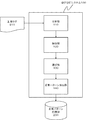
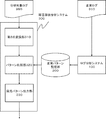
- FIG. 1 is a block diagram illustrating a log analysis system 100 according to the first embodiment of the present invention.
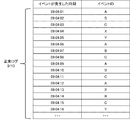
- FIG. 2 is a diagram illustrating an example of a normal log 910 input to the log analysis system 100 according to the first embodiment of the present invention.
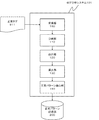
- FIG. 3 is a block diagram showing the configuration of the log analysis system 100 according to the first embodiment of the present invention.
- FIG. 4 is a diagram illustrating an example of the log file divided by the dividing unit 110 according to the first embodiment of the present invention.
- FIG. 5 is a diagram illustrating an example of a pattern extracted by the extraction unit 120 according to the first embodiment of the present invention.
- FIG. 6 is a diagram illustrating the operation of the selection unit 130 according to the first embodiment of the present invention.
- FIG. 1 is a block diagram illustrating a log analysis system 100 according to the first embodiment of the present invention.
- FIG. 2 is a diagram illustrating an example of a normal log 910 input to the log analysis system 100 according to the first embodiment of the present invention.
- FIG. 7 is a diagram for explaining the operation of the selection unit 130 according to the first embodiment of the present invention.
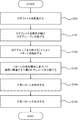
- FIG. 8 is a flowchart for explaining the operation of the log analysis system 100 according to the first embodiment of the present invention.
- FIG. 9 is a diagram illustrating an example of a hardware configuration that implements the log analysis system 100.
- FIG. 10 is a block diagram showing the configuration of the log analysis system 101 according to the second exemplary embodiment of the present invention.
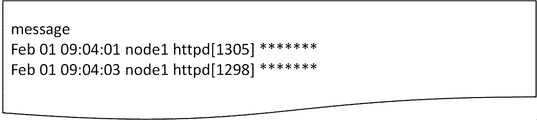
- FIG. 11A is a first diagram illustrating an example of a log file input to the conversion unit 150 according to the second embodiment of the present invention.
- FIG. 11B is a second diagram illustrating an example of a log file input to the conversion unit 150 according to the second embodiment of the present invention.
- FIG. 11C is a third diagram illustrating an example of a log file input to the conversion unit 150 according to the second embodiment of the present invention.
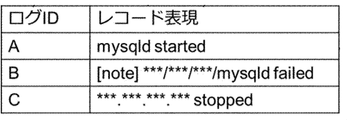
- FIG. 12 is a diagram illustrating an example of a format according to the second embodiment of the present invention.
- FIG. 13 is a diagram illustrating an example of a format according to the second embodiment of the present invention.
- FIG. 14 is a flowchart for explaining the operation of the log analysis system 101 according to the second embodiment of the present invention.
- FIG. 15 is a block diagram showing the configuration of a failure cause analysis system 300 according to the third exemplary embodiment of the present invention.
- FIG. 16 is a flowchart for explaining the operation of the log analysis system 102 according to the fourth embodiment of the fourth embodiment of the present invention.
- FIG. 1 is a block diagram illustrating a log analysis system 100 according to the first embodiment of the present invention.
- the log analysis system 100 acquires a normal log 910 output from the information processing system 900.
- the normal log 910 is a log output by the information processing system 900 when the information processing system 900 is operating normally.
- the log analysis system 100 extracts information indicating what processing is executed in the information processing system 900 and how often, that is, a normal pattern 920. As will be described later, in the normal pattern 920, specific processing need not necessarily be specified.
- the log analysis system 100 outputs the normal pattern 920 to the normal pattern storage unit 200.
- an “information processing system 900” is an information processing apparatus that outputs a normal log 910 acquired by the log analysis system 100 according to the present embodiment and the log analysis system according to another embodiment of the present invention. is there. “Information processing system 900” is an information processing apparatus that outputs the analysis target log 990 acquired by the failure cause analysis system 300 according to another embodiment of the present invention.
- FIG. 2 is a diagram for explaining an example of the normal log 910 output from the information processing system 900.
- the normal log 910 is also called a log file.
- the normal log 910 includes information in which a plurality of log records are arranged in chronological order.
- the log record is information in which an event that has occurred in the information processing system 900 is associated with the time at which the event occurred. Log records are also called messages.
- the log record is information corresponding to the “row” shown in FIG. Referring to the log record shown in the first line of FIG. 2, it can be seen that the event identified by the event ID (identifier) “A” occurred at time 09:04:01 in the information processing system 900. Referring to the log record shown in the second line in FIG. 2, it can be seen that the event identified by the event ID (identifier) “B” occurred at time 09:04:02 in the information processing system 900.
- the event ID is an identifier that identifies an event that has occurred in the information processing system 900.
- a log record indicating that event A has occurred at a certain time may be expressed as “a log record of event A”.
- the information processing system 900 When the information processing system 900 executes some processing, the information processing system 900 generates a plurality of events in a predetermined time series according to the execution of the processing.
- a plurality of events in a predetermined time series generated by the information processing system 900 in response to the information processing system 900 executing a specific process will be referred to as “a series of events”.
- the present embodiment will be described based on the specific assumptions shown below.
- the information processing system 900 executes (Process 1)
- the information processing system 900 generates an event A, an event B, and an event C in this order.
- the information processing system 900 executes (Process 2)
- the information processing system 900 generates an event X and an event Y in this order.
- the normal log 910 includes a huge amount of log records.
- the log analysis system 100 extracts information indicating what processing is executed and how frequently based on the normal log 910. For example, the log analysis system 100 extracts information such as “Process 1 was executed 10 times and Process 2 was executed 18 times during a predetermined time” as the normal pattern 920.
- the normal pattern 920 may be information such as “the pattern of event A ⁇ B ⁇ C occurred 10 times and the pattern of event X ⁇ Y occurred 18 times during a predetermined time”. Even if the normal pattern 920 is such information, it can sufficiently serve as a comparison target when analyzing the cause of the failure that has occurred in the information processing system 900.
- the symbol “ ⁇ ” is a symbol indicating that events occurring before and after the symbol are continuous in time series in the normal log 910. That is, “A ⁇ B ⁇ C” indicates that in the normal log 910, the log record of event A, the log record of event B, and the log record of event C are consecutive in this order.
- the symbol “ ⁇ ” may be omitted, and for example, “A ⁇ B ⁇ C” may be expressed as “ABC”.
- event A log record, event B log record, and event C log record are associated with some processing” or “ The event X log record and the event Y log record are associated with a certain process ”.
- the log analysis system 100 can appropriately extract the normal pattern 920 based on the normal log 910 without explicitly giving “information for grouping a series of log records in units of processing” in advance. . This is because the log analysis system 100 according to the present embodiment can extract “information for grouping a series of log records in units of processing” by itself based on the normal log 910.
- the log analysis system 100 preliminarily states that “the event A log record, the event B log record, and the event C log record are related to some processing” or “the event X log record and the event Y log. Even if the information that the record is related to some processing is not given, such information can be extracted by itself based on the normal log 910.
- the information processing system 900 has the following properties as a premise.
- the information processing system 900 executes a plurality of processes in parallel.
- the log record of the event related to the processing 1 and the log related to the processing 2 in the log file output by the information processing system 900 Records may be output mixed in time series.
- the log record of the event related to the process 1 and the log record of the event related to the process 2 are: It is mixed in time series.
- the event A ⁇ B ⁇ C is an event related to the process 1.
- Event X ⁇ Y is an event related to process 2.
- FIG. 3 is a block diagram showing the configuration of the log analysis system 100 shown in FIG. As illustrated in FIG. 3, the log analysis system 100 includes a dividing unit 110, an extracting unit 120, a selecting unit 130, and a normal pattern extracting unit 140.
- the dividing unit 110 acquires the normal log 910 and divides the acquired normal log 910 into a plurality of log groups.
- a log group is a set of a plurality of log records that are continuous in time series (details will be described later).
- the extraction unit 120 extracts a plurality of “patterns” composed of a plurality of events that are continuous in time series from a plurality of log groups.
- the extraction unit 120 associates the pattern with frequency information indicating how many log records the pattern has been extracted (details will be described later).
- the selection unit 130 outputs from the plurality of patterns based on the inclusion relationship between a plurality of time-series continuous events constituting a certain pattern and a plurality of time-series continuous events constituting another pattern. Select a pattern.
- the selection unit 130 selects a pattern to be output from the plurality of patterns based on the frequency information associated with the pattern (details will be described later).
- the normal pattern extraction unit 140 extracts the normal pattern 920 from the normal log 910 based on the pattern output by the selection unit 130.
- FIG. 4 is a diagram illustrating a state in which the normal log 910 illustrated in FIG. 2 is divided into a plurality of log groups by the dividing unit 110.
- the log group illustrated in FIG. 4 is a log group when the dividing unit 110 divides the normal log 910 into log groups at intervals of 5 seconds.
- the dividing unit 110 divides the normal log 910 at a predetermined time interval specified in advance. Preferably, the dividing unit 110 sets the normal log 910 at a time interval such that log records of a series of events output according to processing executed by the information processing system 900 are expected to be included in one log group. It is desirable to divide Although the time required for the information processing system 900 to execute a specific process varies each time depending on the load status of the information processing system 900, the dividing unit 110 calculates a value such as an average processing time and the like. It is desirable to determine the division time width based on the above.
- a value such as a Poisson distribution of the execution time of the process or transaction may be taken into consideration.
- FIG. 5 is a diagram illustrating an example of “patterns” extracted from a plurality of log groups by the extraction unit 120 and “frequency” at which the patterns are extracted.
- a “pattern” is a combination of a plurality of events that are found in a log group and that are continuous in time series.
- Frequency is information indicating how many log records the pattern is extracted from.
- the extraction unit 120 extracts “patterns” from a plurality of log groups.
- the extraction unit 120 associates the pattern with frequency information indicating how many log records the pattern is extracted from. For example, in FIG. 5, the frequency of the pattern “ABC” is 43. This means that the pattern “ABC” has been extracted from 43 log groups.
- the extraction unit 120 extracts a pattern using, for example, apriori, prefixspan, LCM (Linear time Closed item set Miner), BIDE (Bi-Directional Execution) or FP (Frequent Pattern) -growth, or application of these algorithms.
- a pattern associated with a specific process executed by the information processing system 900 is referred to as a “significant pattern”.
- the pattern “ABC” is a pattern related to the process 1
- it is a meaningful pattern.
- the pattern “XY” is a pattern related to the process 2
- it is a meaningful pattern.
- a pattern that is not associated with a specific process executed by the information processing system 900 is referred to as a “nonsense pattern”.
- One type of meaningless pattern is, for example, a pattern that is only a subset of meaningful patterns.
- patterns such as “AB” or “BC” are meaningless patterns because they are not independently associated with any processing themselves.
- Another type of meaningless pattern is, for example, a pattern in which some event is added to a meaningful pattern.
- patterns such as “ABCX” or “XYA” are meaningless patterns because they are not independently associated with any processing themselves.
- Another type of meaningless pattern is, for example, a pattern in which a pattern related to a certain process and a pattern related to another process are mixed in time series. For example, patterns such as “ABXCY” or “XAYBC” are meaningless patterns because they are not independently associated with any processing themselves.
- the selection unit 130 selects a “significant pattern” from the plurality of patterns extracted by the extraction unit 120, and outputs the selected pattern as “information for grouping a series of messages in units of processing”.
- the selection unit 130 can remove such a pattern as noise by not selecting a pattern having a frequency lower than a predetermined threshold.
- the frequency with which the patterns “ABC” and “XY” associated with a specific process executed by the information processing system 900 are extracted is higher than the frequency of other patterns. Conceivable. However, for example, when the frequency of the pattern “ABC” is high, the frequency of the pattern “AB” or “BC” which is a subset of the pattern is naturally high. In addition, the frequency of a pattern such as “ABCX” or “YABC” in which some event is added to the pattern may be increased to some extent. Therefore, the selection unit 130 cannot select a “significant pattern” simply by selecting a frequently used pattern.
- the selection unit 130 simply extracts a high-frequency pattern, a “significant pattern”, a “subset pattern of a meaningful pattern”, or a “pattern in which some event is added to a meaningful pattern” is generated. This is because they are extracted without distinction. The selection unit 130 cannot distinguish and select a “significant pattern” from these patterns.
- the selection unit 130 selects a “significant pattern” from the plurality of patterns by the following operation. Hereinafter, the operation of the selection unit 130 will be specifically described.
- the selection unit 130 outputs a pattern from a plurality of patterns based on the inclusion relationship between a plurality of time-series continuous events constituting a certain pattern and a plurality of time-series continuous events constituting another pattern. Select. Further, the selection unit 130 selects a pattern to be output from a plurality of patterns based on the frequency information associated with the pattern.
- parent pattern and “child pattern” are defined.
- child pattern When a plurality of time-sequential events constituting one pattern are a subset of a plurality of time-sequential events constituting the other pattern, the other pattern is changed to the one pattern.
- the one pattern is defined as a child pattern of the other pattern.
- the pattern “ABCD” is a parent pattern of the pattern “ABC”.
- the pattern “AB” is a child pattern of the pattern “ABC”.
- the term “grandchild pattern” or the like can also be defined.
- the selection unit 130 analyzes the parent-child relationship for each of the patterns extracted by the extraction unit 120.
- FIG. 6 is a diagram illustrating a state where the selection unit 130 analyzes the parent-child relationship for the pattern “ABCD”. As illustrated in FIG. 6, the selection unit 130 collects patterns having a common event order into the same classification set. Then, the selection unit 130 analyzes the parent-child relationship of the pattern based on the number of events (number of elements) included in the pattern.
- the selection unit 130 extracts “a meaningful pattern” by combining the following specific examples.
- the selection unit 130 analyzes a parent-child relationship for each of the plurality of patterns. As a result of the analysis by the selection unit 130, for example, a parent-child relationship such that the parent pattern is “ABCX”, the child pattern is “ABC”, and the grandchild pattern is “AB” with respect to the pattern “ABCX”. can get.
- the selection unit 130 calculates the ratio of the frequency of the child pattern to the frequency of the parent pattern.
- “/” is a symbol representing division.
- the ratio is a relatively large value (for example, 2 or more), it is highly likely that the parent pattern is a “nonsense pattern”. This is because such a parent pattern is considered to be a pattern in which an event is simply added to a child pattern.
- the selection unit 130 calculates the ratio of the frequency of the child pattern to the frequency of the parent pattern.
- the selection unit 130 analyzes a parent-child relationship for each of the plurality of patterns.
- the selection unit 130 may preferentially select a pattern having a large number of elements (events) constituting the pattern and high frequency as a “significant pattern”.
- the pattern “ABC” has three elements (A, B, and C) and has a high frequency of 43, and therefore is preferentially selected as a “significant pattern”.
- some judgment criteria for the number of elements constituting the pattern and judgment criteria for high and low frequencies may be determined in advance.
- the selection unit 130 analyzes a parent-child relationship for each of the plurality of patterns.
- FIG. 7 is a table in which the selection unit 130 analyzes how many parent patterns each pattern has for each pattern.
- the selection unit 130 may preferentially select a child pattern having a larger number of parent patterns as a “significant pattern”.
- the selection unit 130 analyzes a parent-child relationship for each of the plurality of patterns.
- the selection unit 130 may select a “significant pattern” based on the support level of the pattern, the reliability of the parent pattern with respect to the child pattern, or the ratio (lift value) of the reliability to the support level.
- the support level, the reliability level, or the lift value may be defined in advance by an operator, for example.
- the selection unit 130 may preferentially select a child pattern that satisfies the pattern.
- the child patterns “ABC” and “XY” satisfy the parent pattern “ABCXY”, and thus are preferentially selected.
- the child pattern “XAB” or “XBC” does not satisfy the parent pattern “ABCXY” (eg, YC has a surplus in YAB), and is excluded from the candidates.
- the specific example 1, specific example 2, specific example 3, specific example 4, and specific example 5 have been described above as the operation of the selection unit 130.
- the selection unit 130 selects “ABC” and “XY” as “significant patterns” among the patterns extracted by the extraction unit 120 by the operation shown in the specific example described above.
- the selection unit 130 outputs the selected pattern to the normal pattern extraction unit 140.
- the normal pattern extraction unit 140 receives an input of “a meaningful pattern” from the selection unit 130.
- the normal pattern extraction unit 140 extracts a normal pattern 920 from the normal log 910 based on the pattern.
- FIG. 8 is a flowchart showing the operation of the log analysis system 100 according to the first embodiment.
- the dividing unit 110 divides the normal log 910 (log file) into a plurality of log groups (step S101).
- the extraction unit 120 extracts patterns from a plurality of log groups (step S102).
- the selection unit 130 selects a “significant pattern” from the patterns extracted by the extraction unit 120, and outputs the selected “significant pattern” (step S103).
- the normal pattern extraction unit 140 extracts the normal pattern 920 from the normal log 910 based on the pattern selected by the selection unit 130 (step S104).
- FIG. 9 is a diagram illustrating an example of a hardware configuration that can implement the log analysis system 100.
- the log analysis system 100 can be realized by a computer having the hardware configuration shown in FIG.
- the computer includes a CPU (Central Processing Unit) 1, a memory 2, a storage device 3, and a communication interface (I / F) 4.
- the log analysis system may include the input device 5 or the output device 6.
- the function of the log analysis system is realized, for example, when the CPU 1 executes a computer program (software program, hereinafter simply referred to as “program”) read into the memory 2. In execution, the CPU 1 appropriately controls the communication interface 4, the input device 5, and the output device 6.
- program software program
- the present invention which will be described by taking this embodiment and each embodiment described later as an example, is also configured by a nonvolatile storage medium 8 such as a compact disk in which the program is stored.
- the program stored in the storage medium 8 is read by the drive device 7, for example.
- the communication executed by the log analysis system is realized, for example, by the application program controlling the communication interface 4 using a function provided by an OS (Operating System).
- the input device 5 is, for example, a keyboard, a mouse, or a touch panel.
- the output device 6 is a display, for example.
- the log analysis system may be configured by connecting two or more physically separated devices so that they can communicate with each other in a wired or wireless manner. Note that the hardware configuration of the log analysis system and each functional block thereof is not limited to the above-described configuration. The above-described hardware configuration can also be applied to a log analysis system and a failure cause analysis system according to other embodiments described later.
- the log analysis system 100 can assist in appropriately extracting or extracting the normal pattern 920 from the normal log 910 without being given in advance information for grouping a series of messages in units of processing. .
- the reason is that the log analysis system 100 can extract “information for grouping a series of messages by processing unit” by itself based on the normal log 910.
- the dividing unit 110, the extracting unit 120, the selecting unit 130, and the normal pattern extracting unit 140 each receive, for example, a pattern generation start command by a user or another program or software from an input device (not shown). The operation may be started when triggered.
- the dividing unit 110, the extracting unit 120, the selecting unit 130, and the normal pattern extracting unit 140 may each start to operate when a log file is input or updated, for example.
- the dividing unit 110 may divide the log file so that a predetermined number of log records form one log group. For example, the dividing unit 110 may divide the log file so that five log records form one log group.
- the dividing unit 110 may acquire log files at predetermined time intervals. For example, the dividing unit 110 may operate such that a log file for 5 minutes is acquired at intervals of 5 minutes, and a log for 5 minutes is acquired at intervals of 3 minutes.
- the extraction unit 120 may extract an event that is not continuous in time series as a pattern.
- the extraction unit 120 may extract a pattern such as the pattern “ABXY”, “ACY”, or “BCY” from the log group 1 “ABCXY”.
- the selection unit 130 may analyze the parent-child relationship based on events that are not consecutive in time series. For example, the selection unit 130 may associate a pattern such as “AC” or “ACX” as a child pattern with respect to the parent pattern “ABCX”.
- FIG. 10 is a block diagram showing a configuration of a log analysis system 101 according to the second exemplary embodiment of the present invention. Components substantially the same as those shown in FIG. 3 are given the same reference numerals, and descriptions thereof are omitted.
- the log analysis system 101 according to the second embodiment further includes a conversion unit 150 in addition to the log analysis system 100 according to the first embodiment.
- the normal log 910 received by the log analysis system 100 has already been assigned an event ID for each log record, as shown in FIG.
- the normal log 911 received by the log analysis system 101 is a log file closer to raw data.
- the conversion unit 150 receives a log file as illustrated in FIG. 11A, FIG. 11B, or FIG. 11C, and converts the received log file into a log as illustrated in FIG.
- FIGS. 11A, 11B, and 11C are diagrams illustrating examples of normal logs 911 (log files) received by the conversion unit 150, respectively.
- the log file includes at least one log record.
- the log record includes at least one log element.
- the log element is an element constituting a log record such as date / time, log ID (identifier), and message.
- the conversion unit 150 converts the normal log 911 according to a format defined in advance by the operator.
- FIG. 12 is a diagram illustrating an example of a format defined in advance by the operator.
- the format shown in FIG. 12 specifies a period “2013/07/01 09:00:00 to 2013/07/01 18:00:00”, and specifies log elements “date” and “log ID”. Yes.
- information that can identify the log element to be extracted such as a regular expression of each log element, may be recorded in the format.
- the format may record information that can identify the log file, such as the name of the target log file.
- the format may record the structure of a log record composed of log elements as a regular expression.
- FIG. 13 is a diagram showing another example of the format defined in advance by the operator.
- FIG. 13 shows information associating an event ID with an expression (record expression) of an event to which the event ID is to be assigned.
- the record expression is a character string representing each log record.
- Each log record may be recorded as it is as a record expression.
- the information which extracted the log element of each log record may be recorded as a record expression.
- a regular expression that matches each log record may be recorded as the record expression.
- the conversion unit 150 converts the log file as shown in FIG. 2 based on the format shown in FIG. To do.
- the conversion unit 150 may read logs for the period specified in the log format from the information processing system 900. There may be a plurality of log files to be read.
- the conversion unit 150 extracts a log element specified by the format from the acquired or read log file. For example, in the case of the format shown in FIG. 12, the conversion unit 150 extracts only the date and time and the log ID from the log record included in the log file.
- the conversion unit 150 rearranges the converted logs in time series order and outputs them. Thereby, the division unit 110, the extraction unit 120, the selection unit 130, and the normal pattern extraction unit 140 can process the normal log 911.
- FIG. 14 is a flowchart for explaining the operation of the log analysis system 101 according to the second embodiment. Steps that perform the same operations as those described in FIG. 8 are given the same reference numerals, and descriptions thereof are omitted.
- the conversion unit 150 receives the log file 911 and converts the received log file so that an event ID is assigned to each log record (step S201).
- the dividing unit 110 receives the log file converted from the converting unit 150.
- the subsequent operations are the same as the operations shown in steps S101 to S104 in FIG.
- the log analysis system 101 includes a conversion unit 150.
- the conversion unit 150 converts the log output from the information processing system 900 into a format that can be processed by the division unit 110, the extraction unit 120, the selection unit 130, and the normal pattern extraction unit 140. Thereby, the log analysis system 101 can process the normal log 911 output in various formats.
- FIG. 15 is a block diagram illustrating the configuration of a failure cause analysis system 300 according to the third embodiment of the present invention.
- the failure cause analysis system 300 includes a second conversion unit 310, a pattern comparison unit 320, and an abnormal pattern output unit 330.
- the second conversion unit 310 acquires the analysis target log 990 that is the analysis target log file output from the information processing system 900.
- “information for grouping a series of messages in units of processing” selected by the selection unit 130 is registered in advance.
- the second conversion unit 310 extracts a pattern from the analysis target log 990 based on “information for grouping a series of messages by processing unit”.
- the pattern comparison unit 320 compares the pattern converted by the second conversion unit 310 with the analysis target log 990 and the pattern stored in the normal pattern storage unit 200.
- the pattern comparison unit 320 extracts a pattern different from the normal pattern 920 in the pattern obtained by converting the analysis target log 990.
- the abnormal pattern output unit 330 outputs an abnormal part in the analysis target log 990 based on the result of the comparison performed by the pattern comparison unit 320.
- a message indicating a direct or indirect cause of occurrence of the failure is extracted from an enormous amount of logs output by the information processing system 900 and output. can do.
- FIG. 16 is a block diagram showing the configuration of the log analysis system 102 according to the fourth exemplary embodiment of the present invention. As illustrated in FIG. 16, the log analysis system 102 includes a dividing unit 112, an extracting unit 122, and a selecting unit 132.
- the dividing unit 112 divides the log file into a plurality of log groups according to a predetermined rule.
- the log file includes information in which a plurality of log records, which are information in which an event is associated with the time at which the event occurred, are arranged in chronological order.
- the log group is a set of a plurality of log records that are continuous in time series.
- the extraction unit 122 extracts a plurality of patterns composed of a plurality of events that are continuous in time series from the plurality of log groups, and the frequency representing how many log records the pattern is extracted from. Associate with information.
- the selection unit 132 selects a pattern to be output from the plurality of patterns. At that time, the selection unit 132 is based on the inclusion relationship between a plurality of events in a time series that form a certain pattern and a plurality of events in a time series that form another pattern, and A selection is made based on frequency information associated with the pattern.
- each block diagram is a configuration shown for convenience of explanation.
- the present invention described by taking each embodiment as an example is not limited to the configuration shown in each block diagram in the implementation.
Landscapes
- Engineering & Computer Science (AREA)
- Theoretical Computer Science (AREA)
- Health & Medical Sciences (AREA)
- Biomedical Technology (AREA)
- Quality & Reliability (AREA)
- Physics & Mathematics (AREA)
- General Engineering & Computer Science (AREA)
- General Physics & Mathematics (AREA)
- Debugging And Monitoring (AREA)
Abstract
Description
図1は、本発明の第1の実施形態にかかるログ分析システム100を説明するブロック図である。図1に示すように、ログ分析システム100は、情報処理システム900から出力された正常ログ910を取得する。上述したように、正常ログ910とは、情報処理システム900が正常に動作していた際に当該情報処理システム900が出力したログである。ログ分析システム100は、正常ログ910に基づいて、情報処理システム900においてどのような処理がどれくらいの頻度で実行されたかを示す情報、すなわち正常パターン920を抽出する。なお、後述するように、正常パターン920においては、必ずしも具体的な処理が特定される必要はない。ログ分析システム100は、正常パターン920を、正常パターン記憶部200に出力する。以下の説明において、「情報処理システム900」は、本実施形態に係るログ分析システム100及び本発明の他の実施形態に係るログ分析システムによって取得される、正常ログ910を出力する情報処理装置である。「情報処理システム900」本発明の他の実施形態に係る障害原因分析システム300によって取得される、分析対象ログ990を出力する情報処理装置でもある。
選択部130は、前記複数のパターンのそれぞれについて親子関係を分析する。選択部130による分析の結果、例えば、パターン「ABCX」に対して、親パターンが「ABCX」であり、子パターンが「ABC」であり、孫パターンが「AB」であるというような親子関係が得られる。
選択部130は、前記複数のパターンのそれぞれについて親子関係を分析する。選択部130は、パターンを構成する要素(イベント)の数が多く、かつ、頻度の高いパターンを、優先的に「意味のあるパターン」として選択してもよい。例えば、パターン「ABC」は、パターンを構成する要素の数が3つ(AとBとC)であり、頻度が43と高いので、優先的に「意味のあるパターン」として選択される。パターンを構成する要素の数の多少の判断基準、および、頻度の高低の判断基準は、例えば、あらかじめ定められていてもよい。
選択部130は、前記複数のパターンのそれぞれについて親子関係を分析する。図7は、選択部130が、各パターンについて、当該パターンが幾つの親パターンを有するかを分析した表である。選択部130は、よりたくさんの親パターンを有する子パターンを、優先的に「意味のあるパターン」として選択してもよい。
選択部130は、前記複数のパターンのそれぞれについて親子関係を分析する。選択部130は、パターンの支持度、子パターンに対する親パターンの信頼度、または、支持度に対する信頼度の比(リフト値)等に基づいて、「意味のあるパターン」を選択してもよい。支持度、信頼度、またはリフト値は、例えばあらかじめオペレータにより定義されていてもよい。
選択部130は、例えば、「XYABC」というパターンが抽出された場合に、当該パターンを充足するような子パターンを優先的に選択してもよい。例えば、上述の例では、「ABC」と「XY」という子パターンは、「ABCXY」という親パターンを充足するので、優先的に選択される。例えば、上述の例では、「XAB」や「XBC」という子パターンでは、「ABCXY」という親パターンを充足しない(例えば、XABではYCが余る)ので、候補から除外される。
分割部110と、抽出部120と、選択部130と、正常パターン抽出部140は、それぞれ、例えば、図示しない入力装置からユーザあるいは他のプログラムやソフトウェアなどによるパターン生成開始の命令を受信することを契機に動作を開始してもよい。分割部110と、抽出部120と、選択部130と、正常パターン抽出部140は、それぞれ、例えば、ログファイルの入力、更新などを契機に動作を開始してもよい。
図10は、本発明の第2の実施形態にかかるログ分析システム101の構成を示すブロック図である。図3に示した構成と実質的に同一の構成については、同様の符号を付与し、説明を省略する。第2の実施形態にかかるログ分析システム101は、第1の実施形態にかかるログ分析システム100に加えて、更に、変換部150を備える。
図15は、本発明の第3の実施形態における障害原因分析システム300の構成を説明するブロック図である。障害原因分析システム300は、第2の変換部310と、パターン比較部320と、異常パターン出力部330とを備える。
図16は、本発明の第4の実施形態にかかるログ分析システム102の構成を表すブロック図である。図16に示すように、ログ分析システム102は、分割部112と、抽出部122と、選択部132とを備える。
2 メモリ
3 記憶装置
4 通信インターフェース
5 入力装置
6 出力装置
7 ドライブ装置
8 記憶媒体
100 ログ分析システム
101 ログ分析システム
102 ログ分析システム
110 分割部
112 分割部
120 抽出部
122 抽出部
130 選択部
132 選択部
140 正常パターン抽出部
150 変換部
200 正常パターン記憶部
300 障害原因分析システム
310 第2の変換部
320 パターン比較部
330 異常パターン出力部
900 情報処理システム
910 正常ログ
911 正常ログ
920 正常パターン
990 分析対象ログ
Claims (10)
- イベントと当該イベントが発生した時刻とが関連づけられた情報である複数のログレコードが時系列順に整列された情報を含むログファイルを、所定のルールに従って、時系列順に連続する複数のログレコードの集合である複数のロググループへと分割する分割手段と、
複数の前記ロググループから、時系列的に連続する複数のイベントによって構成される複数のパターンを抽出し、前記パターンを、当該パターンが幾つのログレコードから抽出されたかを表す頻度情報と関連づける抽出手段と、
あるパターンを構成する時系列的に連続する複数のイベントと、他のパターンを構成する時系列的に連続した複数のイベントとの包含関係に基づいて、かつ、前記パターンに関連づけられた頻度情報に基づいて、前記複数のパターンから出力すべきパターンを選択する選択手段と、
を備えるログ分析システム。 - 前記ログファイルは、実行する処理に応じて複数のイベントを所定の順番で発生することが可能な情報処理装置から出力された情報に基づくログファイルであって、
前記選択手段は、特定の処理が実行されたことに応じて発生した一連のイベントを過不足なく含むパターンを選択する、
請求項1に記載のログ分析システム。 - 一方のパターンを構成する時系列的に連続する複数のイベントが、他方のパターンを構成する時系列的に連続する複数のイベントの部分集合である場合に、前記他方パターンを前記一方のパターンの親パターンと定義し、前記一方のパターンを前記他方のパターンの子パターンと定義する場合において、
前記選択手段は、前記複数のパターンを対象として親子関係を分析し、親パターンと子パターンとの間の、信頼度、支持度、またはリフト値に基づいて、前記複数のパターンから出力するパターンを選択する、
請求項2に記載のログ分析システム。 - 一方のパターンを構成する時系列的に連続する複数のイベントが、他方のパターンを構成する時系列的に連続する複数のイベントの部分集合である場合に、前記他方パターンを前記一方のパターンの親パターンと定義し、前記一方のパターンを前記他方のパターンの子パターンと定義する場合において、
前記選択手段は、前記複数のパターンを対象として親子関係を分析し、所定の閾値よりも大きい数量の親パターンを有する子パターンを優先的に選択する、
請求項2または3に記載のログ分析システム。 - 一方のパターンを構成する時系列的に連続する複数のイベントが、他方のパターンを構成する時系列的に連続する複数のイベントの部分集合である場合に、前記他方パターンを前記一方のパターンの親パターンと定義し、前記一方のパターンを前記他方のパターンの子パターンと定義する場合において、
前記選択手段は、前記複数のパターンのそれぞれについて親子関係を分析し、あるパターンに対して親パターンと子パターンとの両方が存在する場合において、前記親パターンの頻度に対する前記あるパターンの頻度の割合が第1の閾値未満であって、かつ、前記あるパターンの頻度に対する前記子パターンの頻度の割合が第2の閾値以上である場合に、前記あるパターンを優先的に選択する、
請求項2から4のいずれかに記載のログ分析システム。 - 前記選択手段は、パターンを構成する時系列的に連続するイベントの数が所定の閾値よりも大きく、かつ、所定の閾値よりも高い頻度と関連づけられたパターンを優先的に選択する、請求項2から5のいずれかに記載のログ分析システム。
- 前記ログファイルは、前記情報処理装置が正常に動作していた環境におけるログファイルであって、
前記選択手段が出力したパターンに基づいて、前記ログファイルから前記処理が実行された順序および頻度を示す情報である正常パターンを抽出する正常パターン抽出手段を更に備える、
請求項2から5のいずれかに記載のログ分析システム。 - 前記選択手段が出力したパターンに基づいて、前記情報処理装置から出力された他のログファイルから、前記処理が実行された順序および頻度を示す情報を抽出し、前記抽出されたパターンと、請求項7に記載のログ分析システムが抽出した正常パターンと、を比較することにより、前記他のログファイルに異常なパターンが含まれているか否かを分析し、異常なパターンが含まれている場合には、当該異常なパターンを構成するログレコードを出力する、
障害原因分析システム。 - コンピュータが、
イベントと当該イベントが発生した時刻とが関連づけられた情報である複数のログレコードが時系列順に整列された情報を含むログファイルを、所定のルールに従って、時系列順に連続する複数のログレコードの集合である複数のロググループへと分割し、
複数の前記ロググループから、時系列的に連続する複数のイベントによって構成される複数のパターンを抽出し、前記パターンを、当該パターンが幾つのログレコードから抽出されたかを表す頻度情報と関連づけ、
あるパターンを構成する時系列的に連続する複数のイベントと、他のパターンを構成する時系列的に連続した複数のイベントとの包含関係に基づいて、かつ、前記パターンに関連づけられた頻度情報に基づいて、前記複数のパターンから出力すべきパターンを選択する、
ログ分析方法。 - コンピュータに、
イベントと当該イベントが発生した時刻とが関連づけられた情報である複数のログレコードが時系列順に整列された情報を含むログファイルを、所定のルールに従って、時系列順に連続する複数のログレコードの集合である複数のロググループへと分割する処理と、
複数の前記ロググループから、時系列的に連続する複数のイベントによって構成される複数のパターンを抽出し、前記パターンを、当該パターンが幾つのログレコードから抽出されたかを表す頻度情報と関連づける処理と、
あるパターンを構成する時系列的に連続する複数のイベントと、他のパターンを構成する時系列的に連続した複数のイベントとの包含関係に基づいて、かつ、前記パターンに関連づけられた頻度情報に基づいて、前記複数のパターンから出力すべきパターンを選択する処理と、
を実行させるプログラムを記憶する記録媒体。
Priority Applications (2)
| Application Number | Priority Date | Filing Date | Title |
|---|---|---|---|
| US15/021,740 US10152366B2 (en) | 2013-09-24 | 2014-08-21 | Log analysis system, fault cause analysis system, log analysis method, and recording medium which stores program |
| JP2015538856A JP6332277B2 (ja) | 2013-09-24 | 2014-08-21 | ログ分析システム、障害原因分析システム、ログ分析方法、および、プログラムを記憶する記録媒体 |
Applications Claiming Priority (2)
| Application Number | Priority Date | Filing Date | Title |
|---|---|---|---|
| JP2013197416 | 2013-09-24 | ||
| JP2013-197416 | 2013-09-24 |
Publications (1)
| Publication Number | Publication Date |
|---|---|
| WO2015045262A1 true WO2015045262A1 (ja) | 2015-04-02 |
Family
ID=52742441
Family Applications (1)
| Application Number | Title | Priority Date | Filing Date |
|---|---|---|---|
| PCT/JP2014/004275 Ceased WO2015045262A1 (ja) | 2013-09-24 | 2014-08-21 | ログ分析システム、障害原因分析システム、ログ分析方法、および、プログラムを記憶する記録媒体 |
Country Status (3)
| Country | Link |
|---|---|
| US (1) | US10152366B2 (ja) |
| JP (1) | JP6332277B2 (ja) |
| WO (1) | WO2015045262A1 (ja) |
Cited By (4)
| Publication number | Priority date | Publication date | Assignee | Title |
|---|---|---|---|---|
| JP2018045403A (ja) * | 2016-09-14 | 2018-03-22 | 株式会社日立製作所 | 異常検知システム及び異常検知方法 |
| JP2019501448A (ja) * | 2015-11-18 | 2019-01-17 | エヌイーシー ラボラトリーズ アメリカ インクNEC Laboratories America, Inc. | 異種混成ログストリームにおける自動化された異常検出サービス |
| WO2019150589A1 (ja) * | 2018-02-01 | 2019-08-08 | 株式会社ソフトギア | 情報処理プログラム、情報処理装置及びデバッグシステム |
| WO2023162390A1 (ja) * | 2022-02-25 | 2023-08-31 | 三菱電機株式会社 | 分析装置及び分析方法 |
Families Citing this family (12)
| Publication number | Priority date | Publication date | Assignee | Title |
|---|---|---|---|---|
| JP6669156B2 (ja) * | 2015-02-17 | 2020-03-18 | 日本電気株式会社 | アプリケーション自動制御システム、アプリケーション自動制御方法およびプログラム |
| US10379996B2 (en) * | 2017-07-05 | 2019-08-13 | Juniper Networks, Inc. | Software analytics platform |
| US10719384B2 (en) | 2018-02-22 | 2020-07-21 | Red Hat, Inc. | Determining relationships between components in a computing environment to facilitate root-cause analysis |
| WO2019202711A1 (ja) * | 2018-04-19 | 2019-10-24 | 日本電気株式会社 | ログ分析システム、ログ分析方法及び記録媒体 |
| WO2020017037A1 (ja) * | 2018-07-20 | 2020-01-23 | 日本電気株式会社 | ログ分析装置、ログ分析方法、プログラム |
| US10521331B1 (en) * | 2018-08-31 | 2019-12-31 | The Mitre Corporation | Systems and methods for declarative specification, detection, and evaluation of happened-before relationships |
| US11061800B2 (en) * | 2019-05-31 | 2021-07-13 | Microsoft Technology Licensing, Llc | Object model based issue triage |
| US12056038B2 (en) | 2019-12-16 | 2024-08-06 | Telefonaktiebolaget Lm Ericsson (Publ) | Log analyzer for fault detection |
| US11762858B2 (en) | 2020-03-19 | 2023-09-19 | The Mitre Corporation | Systems and methods for analyzing distributed system data streams using declarative specification, detection, and evaluation of happened-before relationships |
| CN113472555B (zh) * | 2020-03-30 | 2022-09-23 | 华为技术有限公司 | 故障检测方法、系统、装置、服务器及存储介质 |
| JP7494904B2 (ja) * | 2020-04-15 | 2024-06-04 | 日本電信電話株式会社 | パターン抽出装置、パターン抽出方法及びプログラム |
| US20250094473A1 (en) * | 2023-09-19 | 2025-03-20 | Palantir Technologies Inc. | Systems and methods for windowed summarizations of event logs |
Citations (5)
| Publication number | Priority date | Publication date | Assignee | Title |
|---|---|---|---|---|
| JPH11224214A (ja) * | 1998-02-05 | 1999-08-17 | Fujitsu Ltd | イベント分類装置およびそのプログラム記録媒体 |
| JP2006318071A (ja) * | 2005-05-11 | 2006-11-24 | Fujitsu Ltd | メッセージ異常自動判別装置、方法、及びプログラム |
| JP2010128661A (ja) * | 2008-11-26 | 2010-06-10 | Fujitsu Ltd | 故障原因推測方法、故障原因推測装置、及びプログラム |
| JP2011002870A (ja) * | 2009-06-16 | 2011-01-06 | Hitachi Ltd | ウェブアプリケーションの操作性評価・改善方法およびウェブシステム |
| JP2012123694A (ja) * | 2010-12-10 | 2012-06-28 | Fujitsu Ltd | 管理装置、管理方法および管理用プログラム |
Family Cites Families (21)
| Publication number | Priority date | Publication date | Assignee | Title |
|---|---|---|---|---|
| US5119377A (en) * | 1989-06-16 | 1992-06-02 | International Business Machines Corporation | System and method for software error early detection and data capture |
| US5463768A (en) * | 1994-03-17 | 1995-10-31 | General Electric Company | Method and system for analyzing error logs for diagnostics |
| US5982995A (en) * | 1996-11-04 | 1999-11-09 | Xerox Corporation | Method for logging data in an electrophotographic printing machine |
| US20020046273A1 (en) * | 2000-01-28 | 2002-04-18 | Lahr Nils B. | Method and system for real-time distributed data mining and analysis for network |
| US6654915B1 (en) * | 2000-09-11 | 2003-11-25 | Unisys Corporation | Automatic fault management system utilizing electronic service requests |
| JP2003203001A (ja) * | 2001-12-28 | 2003-07-18 | Toshiba Corp | ログ解析方法、ログ解析プログラム |
| US7194445B2 (en) * | 2002-09-20 | 2007-03-20 | Lenovo (Singapore) Pte. Ltd. | Adaptive problem determination and recovery in a computer system |
| US8032866B1 (en) * | 2003-03-27 | 2011-10-04 | Identify Software Ltd. | System and method for troubleshooting runtime software problems using application learning |
| US7721152B1 (en) * | 2004-12-21 | 2010-05-18 | Symantec Operating Corporation | Integration of cluster information with root cause analysis tool |
| US7614043B2 (en) * | 2005-08-26 | 2009-11-03 | Microsoft Corporation | Automated product defects analysis and reporting |
| GB0524742D0 (en) * | 2005-12-03 | 2006-01-11 | Ibm | Methods and apparatus for remote monitoring |
| CN101192227B (zh) * | 2006-11-30 | 2011-05-25 | 阿里巴巴集团控股有限公司 | 一种基于分布式计算网络的日志文件分析方法和系统 |
| US8990378B2 (en) * | 2007-07-05 | 2015-03-24 | Interwise Ltd. | System and method for collection and analysis of server log files |
| US20090144699A1 (en) * | 2007-11-30 | 2009-06-04 | Anton Fendt | Log file analysis and evaluation tool |
| US20110154117A1 (en) * | 2009-12-22 | 2011-06-23 | General Electric Company, A New York Corporation | Methods and apparatus to perform log file analyses |
| EP2527991B1 (en) * | 2010-01-19 | 2018-12-26 | Fujitsu Limited | Analysis method, analysis device, and analysis program |
| US8112667B2 (en) * | 2010-01-25 | 2012-02-07 | International Business Machines Corporation | Automated system problem diagnosing |
| JP2012168702A (ja) | 2011-02-14 | 2012-09-06 | Nippon Telegr & Teleph Corp <Ntt> | ログ解析装置およびログ解析方法 |
| JP5686001B2 (ja) | 2011-03-14 | 2015-03-18 | 富士通株式会社 | 情報処理装置、メッセージ切分け方法およびメッセージ切分けプログラム |
| US20130227352A1 (en) * | 2012-02-24 | 2013-08-29 | Commvault Systems, Inc. | Log monitoring |
| US9465684B1 (en) * | 2013-03-15 | 2016-10-11 | Emc Corporation | Managing logs of storage systems |
-
2014
- 2014-08-21 JP JP2015538856A patent/JP6332277B2/ja active Active
- 2014-08-21 WO PCT/JP2014/004275 patent/WO2015045262A1/ja not_active Ceased
- 2014-08-21 US US15/021,740 patent/US10152366B2/en active Active
Patent Citations (5)
| Publication number | Priority date | Publication date | Assignee | Title |
|---|---|---|---|---|
| JPH11224214A (ja) * | 1998-02-05 | 1999-08-17 | Fujitsu Ltd | イベント分類装置およびそのプログラム記録媒体 |
| JP2006318071A (ja) * | 2005-05-11 | 2006-11-24 | Fujitsu Ltd | メッセージ異常自動判別装置、方法、及びプログラム |
| JP2010128661A (ja) * | 2008-11-26 | 2010-06-10 | Fujitsu Ltd | 故障原因推測方法、故障原因推測装置、及びプログラム |
| JP2011002870A (ja) * | 2009-06-16 | 2011-01-06 | Hitachi Ltd | ウェブアプリケーションの操作性評価・改善方法およびウェブシステム |
| JP2012123694A (ja) * | 2010-12-10 | 2012-06-28 | Fujitsu Ltd | 管理装置、管理方法および管理用プログラム |
Cited By (6)
| Publication number | Priority date | Publication date | Assignee | Title |
|---|---|---|---|---|
| JP2019501448A (ja) * | 2015-11-18 | 2019-01-17 | エヌイーシー ラボラトリーズ アメリカ インクNEC Laboratories America, Inc. | 異種混成ログストリームにおける自動化された異常検出サービス |
| JP2018045403A (ja) * | 2016-09-14 | 2018-03-22 | 株式会社日立製作所 | 異常検知システム及び異常検知方法 |
| WO2019150589A1 (ja) * | 2018-02-01 | 2019-08-08 | 株式会社ソフトギア | 情報処理プログラム、情報処理装置及びデバッグシステム |
| WO2023162390A1 (ja) * | 2022-02-25 | 2023-08-31 | 三菱電機株式会社 | 分析装置及び分析方法 |
| JP2023124581A (ja) * | 2022-02-25 | 2023-09-06 | 三菱電機株式会社 | 分析装置及び分析方法 |
| JP7745478B2 (ja) | 2022-02-25 | 2025-09-29 | 三菱電機株式会社 | 分析装置及び分析方法 |
Also Published As
| Publication number | Publication date |
|---|---|
| JP6332277B2 (ja) | 2018-05-30 |
| US20160224402A1 (en) | 2016-08-04 |
| US10152366B2 (en) | 2018-12-11 |
| JPWO2015045262A1 (ja) | 2017-03-09 |
Similar Documents
| Publication | Publication Date | Title |
|---|---|---|
| JP6332277B2 (ja) | ログ分析システム、障害原因分析システム、ログ分析方法、および、プログラムを記憶する記録媒体 | |
| US9563496B2 (en) | Extraction method and device | |
| CN103793284B (zh) | 基于共同序列模式的、用于智能客户服务的分析系统和方法 | |
| JP6665784B2 (ja) | ログ分析システム、ログ分析方法およびログ分析プログラム | |
| WO2016132717A1 (ja) | ログ分析システム、ログ分析方法およびプログラム記録媒体 | |
| US20160070763A1 (en) | Parallel frequent sequential pattern detecting | |
| US10459730B2 (en) | Analysis system and analysis method for executing analysis process with at least portions of time series data and analysis data as input data | |
| JP4458493B2 (ja) | ログ通知条件定義支援装置とログ監視システムおよびプログラムとログ通知条件定義支援方法 | |
| JP6025520B2 (ja) | データ分析支援処理システム及び方法 | |
| JP2020140250A (ja) | 異常検知装置、異常検知方法および異常検知プログラム | |
| JP2016133817A (ja) | 類似性判定装置、類似性判定方法および類似性判定プログラム | |
| US20140331084A1 (en) | Information processing system and control method thereof | |
| CN105117430B (zh) | 一种基于等价类的重复任务过程发现方法 | |
| JP7078114B2 (ja) | ログ分析装置、ログ分析方法、プログラム | |
| WO2023195139A1 (ja) | 表示データ作成装置、操作システム、表示データ作成方法及び表示データ作成プログラム | |
| JPWO2020065778A1 (ja) | 情報処理装置、制御方法、及びプログラム | |
| JP4928848B2 (ja) | 計算機システム統合管理環境におけるメッセージ変換装置 | |
| JP7504816B2 (ja) | ログ検索支援装置、及びログ検索支援方法 | |
| JP6849910B2 (ja) | 差分ログ適用プログラム、差分ログ適用装置及び差分ログ適用方法 | |
| TW202032369A (zh) | 資訊處理裝置、資訊處理方法及資訊處理程式產品 | |
| JP5735326B2 (ja) | It障害検知・検索装置及びプログラム | |
| Fullop et al. | Real time analysis and event prediction engine | |
| JP2016126532A (ja) | 算出プログラム、情報処理装置、および算出方法 | |
| JP7111965B2 (ja) | 情報処理方法、情報処理装置および情報処理プログラム | |
| JP2017162196A (ja) | 集約ルール作成プログラムおよび集約ルール作成装置 |
Legal Events
| Date | Code | Title | Description |
|---|---|---|---|
| 121 | Ep: the epo has been informed by wipo that ep was designated in this application |
Ref document number: 14849127 Country of ref document: EP Kind code of ref document: A1 |
|
| ENP | Entry into the national phase |
Ref document number: 2015538856 Country of ref document: JP Kind code of ref document: A |
|
| WWE | Wipo information: entry into national phase |
Ref document number: 15021740 Country of ref document: US |
|
| NENP | Non-entry into the national phase |
Ref country code: DE |
|
| 122 | Ep: pct application non-entry in european phase |
Ref document number: 14849127 Country of ref document: EP Kind code of ref document: A1 |