WO2014201854A1 - 一种表面活性剂组合物、其制造方法及其应用 - Google Patents
一种表面活性剂组合物、其制造方法及其应用 Download PDFInfo
- Publication number
- WO2014201854A1 WO2014201854A1 PCT/CN2014/000595 CN2014000595W WO2014201854A1 WO 2014201854 A1 WO2014201854 A1 WO 2014201854A1 CN 2014000595 W CN2014000595 W CN 2014000595W WO 2014201854 A1 WO2014201854 A1 WO 2014201854A1
- Authority
- WO
- WIPO (PCT)
- Prior art keywords
- group
- optionally substituted
- branched
- straight
- linear
- Prior art date
- Legal status (The legal status is an assumption and is not a legal conclusion. Google has not performed a legal analysis and makes no representation as to the accuracy of the status listed.)
- Ceased
Links
- 0 CC(*CCC1C2CC2)C11C=CC1 Chemical compound CC(*CCC1C2CC2)C11C=CC1 0.000 description 2
Classifications
-
- C—CHEMISTRY; METALLURGY
- C09—DYES; PAINTS; POLISHES; NATURAL RESINS; ADHESIVES; COMPOSITIONS NOT OTHERWISE PROVIDED FOR; APPLICATIONS OF MATERIALS NOT OTHERWISE PROVIDED FOR
- C09K—MATERIALS FOR MISCELLANEOUS APPLICATIONS, NOT PROVIDED FOR ELSEWHERE
- C09K8/00—Compositions for drilling of boreholes or wells; Compositions for treating boreholes or wells, e.g. for completion or for remedial operations
- C09K8/58—Compositions for enhanced recovery methods for obtaining hydrocarbons, i.e. for improving the mobility of the oil, e.g. displacing fluids
- C09K8/584—Compositions for enhanced recovery methods for obtaining hydrocarbons, i.e. for improving the mobility of the oil, e.g. displacing fluids characterised by the use of specific surfactants
-
- C—CHEMISTRY; METALLURGY
- C09—DYES; PAINTS; POLISHES; NATURAL RESINS; ADHESIVES; COMPOSITIONS NOT OTHERWISE PROVIDED FOR; APPLICATIONS OF MATERIALS NOT OTHERWISE PROVIDED FOR
- C09K—MATERIALS FOR MISCELLANEOUS APPLICATIONS, NOT PROVIDED FOR ELSEWHERE
- C09K2208/00—Aspects relating to compositions of drilling or well treatment fluids
- C09K2208/06—Structured surfactants, i.e. well drilling or treating fluids with a lamellar or spherulitic phase
-
- E—FIXED CONSTRUCTIONS
- E21—EARTH OR ROCK DRILLING; MINING
- E21B—EARTH OR ROCK DRILLING; OBTAINING OIL, GAS, WATER, SOLUBLE OR MELTABLE MATERIALS OR A SLURRY OF MINERALS FROM WELLS
- E21B43/00—Methods or apparatus for obtaining oil, gas, water, soluble or meltable materials or a slurry of minerals from wells
- E21B43/16—Enhanced recovery methods for obtaining hydrocarbons
- E21B43/20—Displacing by water
-
- Y—GENERAL TAGGING OF NEW TECHNOLOGICAL DEVELOPMENTS; GENERAL TAGGING OF CROSS-SECTIONAL TECHNOLOGIES SPANNING OVER SEVERAL SECTIONS OF THE IPC; TECHNICAL SUBJECTS COVERED BY FORMER USPC CROSS-REFERENCE ART COLLECTIONS [XRACs] AND DIGESTS
- Y10—TECHNICAL SUBJECTS COVERED BY FORMER USPC
- Y10S—TECHNICAL SUBJECTS COVERED BY FORMER USPC CROSS-REFERENCE ART COLLECTIONS [XRACs] AND DIGESTS
- Y10S507/00—Earth boring, well treating, and oil field chemistry
- Y10S507/935—Enhanced oil recovery
Definitions
- the present invention relates to a surfactant composition.
- the present invention relates to a surfactant composition useful for tertiary oil recovery, a process for its production, and its use in tertiary oil recovery. Background technique
- the tertiary oil recovery technology is an effective method to increase the oil recovery rate.
- chemical flooding technology is a very important and large-scale implementation technology in tertiary oil recovery, including polymer flooding technology, surfactant flooding technology, alkaline water flooding technology, etc., as well as polymers, alkalis, and surfactants.
- Chemical flooding is the result of both physical and chemical interactions. The physical action utilizes the sweeping action of the displacement fluid, while the chemical action utilizes the microscopic oil displacement of the displacement fluid. The core of the chemical action is to reduce the interfacial tension between the displacement fluid and the crude oil.
- Surfactants have both oleophilic (hydrophobic) and hydrophilic (oleophobic) properties.
- the molecules When the surfactant is dissolved in water, the molecules are mainly distributed at the oil-water interface, which can significantly reduce the oil-water interfacial tension.
- the decrease in oil-water interfacial tension means that the surfactant system can overcome the cohesive force between crude oils and disperse large oil droplets into small oil droplets, thereby increasing the passage rate of crude oil flowing through the pore throat.
- the oil displacement effect of the surfactant is also manifested in the effect of the wettability of the oleophilic rock surface, the emulsification of the crude oil, the increase of the surface charge density and the oil droplets, etc., which is the role of the surfactant in becoming a displacement fluid. The cause of the component of action.
- the prior art tertiary oil displacement fluid has many problems, mainly due to the poor interfacial activity of the surfactant component, resulting in low displacement efficiency of the displacement fluid produced therefrom, and at the same time due to the displacement fluid system. It is too complicated, so it is difficult to break the milk, and the sewage treatment is difficult. Because the displacement fluid contains inorganic alkali, it will cause damage to the formation and oil wells, causing corrosion equipment and pipelines, and the inorganic base will seriously reduce the polymer.
- Viscosity in order to achieve the desired viscosity, the concentration of the polymer is greatly increased, and the comprehensive cost of the oil recovery is increased;
- the active agent component has limited ability to resist high temperature, high salt and high salinity;
- the surfactant component has poor stability during compounding and is prone to precipitation.
- the present inventors have diligently studied on the basis of the prior art to find a novel surfactant composition, and further found that the use of the surfactant composition to produce a third oil recovery oil displacement composition
- the foregoing problems existing in the prior art can be solved, and the present invention has been completed.
- the present invention relates to the following aspects.
- a surfactant composition comprising a cationic surfactant and an anionic-nonionic surfactant, wherein the molar ratio of the cationic surfactant to the anionic-nonionic surfactant is 1: 0.01-100 (preferably 1: 0.1-10), wherein the cationic surfactant is at least one selected from the group consisting of a quaternary ammonium salt and a quaternary ammonium base, and the anion is at least one of
- group X-C 1-50 (preferably C 5-20 or 5 or C 8 _ 2 G ) linear or branched alkyl, optionally substituted X-valent C 5 . 5Q (preferably C 5- Io or C 5-8 ) a monocyclic or polycyclic cycloalkyl group (preferably a C 5-7 monocyclic cycloalkyl group such as a cyclohexyl group), an optionally substituted X valent Cwc, preferably C 5 or C 8 - 5 o or C o a linear or branched alkenyl group, an optionally substituted X-valent Cwo (preferably C 6 ) aryl group and an optionally substituted X-valent C 3 - 5 o (preferably C 8 .50 or C 8 - 20 ) straight chain or a branched heteroalkyl group; each group Poly is the same or different from each other, and each is independently selected from the group represented by the formula " ⁇ Q - RU ⁇ 3 ⁇ 4
- the linear or branched heteroalkyl group is selected from one or more groups within the linear or branched alkyl molecular structure -CH 2 - is selected from the group consisting of -0, -S- and -NR'-
- the group R' is selected from an optionally substituted C 1 -2 o (preferably C 1-1() ) straight or branched alkyl group, optionally substituted C 5-K) (preferably C 5 - 8 or C) 5 -7 )
- H is a group obtained by a direct substitution of a substituted group, N, which is optionally selected from one or more selected from the group consisting of oxo, hydroxy, (preferably C 5 -15 or C 5 _ 10 ) a linear or branched alkyl group, C 5 . 1Q (preferably C 5 -8 or C 5 - 7 ) monocyclic or polycyclic cycloalkyl (such as cyclohexyl), C 2 -20 (preferably C 2 - 1G) a substituent of a linear or branched alkenyl group and a C 6-2Q (preferably C 6 -1() ) aryl group.
- N is optionally selected from one or more selected from the group consisting of oxo, hydroxy, (preferably C 5 -15 or C 5 _ 10 ) a linear or branched alkyl group, C 5 . 1Q (preferably C 5 -8 or C 5 - 7 ) monocyclic or polycyclic cycloalkyl (such as
- the group N+ is a quaternary nitrogen cation
- the group to R 4 are the same or different from each other, and are each independently selected from an optionally substituted Cwo (preferably d ⁇ ) straight or branched alkyl group, optionally substituted C 5-5 Q (preferably C 5-1 or C 5-8 ) monocyclic or polycyclic cycloalkyl (preferably C 5-7 monocyclic cycloalkyl such as cyclohexyl), optionally substituted Cwo (preferred C 2 _ 2 o ) a linear or branched alkenyl group, an optionally substituted C 6 - 5 o (preferably C 6-2 o ) aryl group and a formula of ⁇ 2 ⁇ 0 — Ru '" 1 " 1 ⁇ a representative group, provided that at least one of the groups 1 ⁇ to R 4 is selected from an optionally substituted (preferably C 8-20 ) straight or branched alkyl group and an optionally substituted (preferably C preferably C 5-5 Q
- the respective values m are identical or different from each other, and are each independently selected from any value between 0 and 100, preferably any value between 0 and 50, provided that the sum of the X values m is greater than 0 and does not exceed 100. (preferably greater than 0 and not more than 50); between each group Poly, the values n are the same or different from each other, and are each independently selected from any value between 0 and 100, Any value between 0 and 50 is preferred, provided that the sum of the X values n does not exceed 100 (the sum is greater than 0, and/or the ether segment
- a representative ether segment the value ml is selected from any value between 0 and 100, preferably any value between 0 and 50; the value nl is selected from any value between 0 and 100, preferably between 0 and 50. value, provided that the value of the sum of ml and nl values greater than 0 and not more than 200 (preferably no more than 100); preferably, the ether segment to the group and the group L 2! ⁇ Join as follows,
- anionic-nonionic surfactant is selected from the group consisting of the following formula (1-1), the following formula (1-2), and the following formula (1-3) And one of the following formulas (1-4),
- each group Ra is the same or different from each other, and each is independently selected from any one selected. a C 2G straight or branched alkyl group, an optionally substituted straight or branched alkenyl group, and an optionally substituted C 6 aryl group, preferably an optionally substituted C 5 .15 straight or branched alkyl group and Optionally substituted C 6-10 aryl; each group Ra' is the same or different from each other, each independently selected from a single bond, an optionally substituted Cwo straight or branched alkylene group, an optionally substituted C 2 straight A chain or branched alkenylene group, a carbonyl group, optionally substituted.
- a linear or branched alkenylenecarbonyl group preferably each independently selected from the group consisting of a single bond and an optionally substituted C 1-6 straight or branched alkylene group;
- b is any integer between 0 and 3, preferably 1;
- x' is 1 to 6 Any integer between (preferably any integer between 1 and 4, such as 2, 3 or 4); each value m' being the same or different from each other, each independently selected from any value between 0 and 100, preferably 0 to Any numerical value between 50, each value n' being the same or different from each other, each independently selected from any value between 0 and 100, preferably any value between 0 and 50, each value m" being the same or different from each other, each Independently selected
- the group Rb is selected from an optionally substituted C 1-50 linear or branched alkyl group, an optionally substituted C 5 _ 5 o monocyclic or polycyclic cycloalkyl group and optionally substituted C 2-5 o straight or branched fluorenyl (preferably selected from optionally substituted d- 29 straight or branched alkyl, optionally substituted C 5 - 1 ) monocyclic or polycyclic cycloalkyl and optionally substituted C 2. 29 linear or branched alkenyl group, more preferably selected from optionally substituted C 5.
- each of the groups Rb' is the same or different from each other, and each is independently selected from a single bond and a carbonyl group;
- each group Rc is the same or different from each other, and each is independently selected from an optionally substituted Cuo straight or branched alkyl group, and optionally substituted C 2 _ 2 .
- a linear or branched alkenyl group, an optionally substituted Cuo straight or branched alkylcarbonyl group, and an optionally substituted C 2 _ 2 o straight or branched alkenylcarbonyl group preferably each independently selected from optionally substituted C 5 — 2Q straight or branched alkyl, optionally substituted C 5 — 2 .
- straight or branched alkenyl optionally substituted C 5 — 2 .
- each of the groups Rd is the same or different from each other, and each is independently selected from an optionally substituted Cwo straight chain or branch.
- each group Salt is the same or different from each other, each independently selected from the group represented by -A-(M) r + wherein the group A' is selected From carboxylate (COCT) and sulfonate (SCV), provided that at least one group A is a carboxylate (COCT);
- the group Rc is selected from an optionally substituted straight or branched alkyl group, an optionally substituted C 2 _ 2 o straight or branched alkenyl group, an optionally substituted Cwo straight chain or Branched alkylcarbonyl and optionally substituted C 2 _ 2 .
- Linear or branched alkenylcarbonyl preferably each independently selected from optionally substituted C 5 _ 2 .
- a linear or branched alkylcarbonyl group and an optionally substituted C 5 _ 2 o straight or branched alkenylcarbonyl group more preferably each independently selected from an optionally substituted 2 o straight or branched alkyl group, optionally substituted C 8 _ 2 linear or branched alkenyl group, an optionally substituted C s _ 2 straight-chain or branched-chain alkyl carbonyl and optionally substituted C 8 -.
- each group Rd is the same or different from each other, and each is independently selected from an optionally substituted du) straight or branched alkylene group, an optionally substituted C 2 _ 10 linear or branched alkenylene group, Substituted substituted CWQ linear or branched alkylene carbonyl, optionally substituted C 2-1G straight or branched alkenylene carbonyl, optionally substituted carbonyl C 1-1 () straight or branched alkylene a carbonyl group and an optionally substituted carbonyl C 2 straight or branched alkenylene carbonyl group (preferably each independently selected from an optionally substituted d- 5 straight or branched alkylene group and optionally substituted straight chain or branch Chain alkylene carbonyl);
- Each is independently selected from any value between 0 and 100, preferably any value between 0 and 50, each value m"' being the same or different from each other, each independently being selected from any value between 0 and 100, preferably 0 Any value between 50 and 50, each value ⁇ '" being identical or different from each other, each independently selected from any value between 0 and 100, preferably any value between 0 and 50, provided that all values m', all The sum of the value m" and the total value m"' is greater than 0 and not more than 100 (preferably greater than 0 and not exceeding 50) and The sum of the value n', the total value n" and the total value ⁇ '" does not exceed 100 (preferably not more than 50), preferably all the values ⁇ ', the sum of all values n" and the total value ⁇ "' is greater than 0;
- the groups L are identical or different from each other, each independently selected from the group consisting of an optionally substituted du) straight or branched alkylene group and an optionally substituted
- optional substitution refers to optionally being selected from one or more selected from the group consisting of hydroxyl, (preferably C 15 or C 5 . 1G ) straight or branched alkyl, C 5 - 1Q (preferably C 5 _ 8 or C 5-7 ) a monocyclic or polycyclic cycloalkyl group (such as cyclohexyl), a C 2 20 (preferably C o ) straight or branched alkenyl group and a C 6 -20 (preferably C 6-1Q ) aryl group Substituent substitution.
- a surfactant composition produced by mixing a cationic surfactant with an anionic-nonionic surfactant, wherein the molar ratio of the cationic surfactant to the anionic-nonionic surfactant is 1 : 0.01-100 (preferably 1: 0.1-10), the cationic surfactant is selected from at least one of a quaternary ammonium salt and a quaternary ammonium base, and the anionic-nonionic surfactant is selected from the following formula (I) At least one of the compounds shown,
- a method of producing a surfactant composition comprising the steps of:
- Step (1) one or more polyfunctional compounds having one or more functional groups selected from the group consisting of -OH, -NH 2 and -NH- and one or more alkenes represented by the following formula (Y)
- the oxygen is reacted in the presence of a basic catalyst, preferably an alkali metal hydroxide, to obtain an etherified product, wherein at least one alkylene oxide represented by the formula (Y) is propylene oxide.
- the group Ru' is selected from a C 2 -6 linear or branched alkylene group (preferably selected from the group consisting of -CH 2 -CH 2 - and -CH 2 -CH(CH 3 )-),
- Step (2) reacting the etherified product with one or more compounds represented by the following formula (Z) in the presence of a basic catalyst (preferably an alkali metal hydroxide), thereby obtaining an anion-nonion Surfactant,
- a basic catalyst preferably an alkali metal hydroxide
- the group G is selected from the group consisting of halogen (preferably fluorine, chlorine, bromine and iodine, more preferably chlorine) and a hydroxyl group;
- the group L is selected from optionally substituted Cwo straight or branched alkylene groups and optionally Substituted C 2 -io straight or branched alkenylene (preferably selected from optionally substituted C 1-5 straight or branched alkylene);
- group AS is selected from -A_(M') r + a group;
- the group A- is selected from the group consisting of carboxylate (00 ⁇ ) and sulfonate (SCV);
- Step (3) mixing the anionic-nonionic surfactant with at least one cationic surfactant selected from the group consisting of a quaternary ammonium salt and a quaternary ammonium base, and the cationic surfactant and the anionic-nonionic surface
- the molar ratio of the active agent is 1:0.01-100 (preferably 1:0.1-10), and the surfactant composition is obtained,
- the optional substitution refers to optionally being selected from one or more selected from the group consisting of hydroxyl groups, C 1-2 o (excellent Choose c 5-15 or c 5-1 . a linear or branched alkyl group, C 5-1G (preferably c 5-8 or c 5-7 ) a monocyclic or polycyclic cycloalkyl group (such as cyclohexyl), a C 2 20 (preferably Cwo) straight chain or Substituted by a branched alkenyl group and a C 6 -20 (preferably C 6 _ 1() ) aryl group.
- the optionally substituted ⁇ valence C 1-50 (preferably C 5-20 or C 8 _ 5 G or 2Q ) linear or branched alkyl, optionally substituted ⁇ ⁇ valence C 5-5 .
- a linear or branched alkenyl group optionally substituted ⁇ ⁇ valence C 6 .
- ⁇ ⁇ is any integer between 1 and 10 (preferably any integer between 1 and 4, such as 2 3 or 4); each group Func is the same or different from each other, and each is independently selected from -OH, -NH-, and -NH 2 , and the linear or branched heteroalkyl group is selected from a linear or branched alkyl molecule.
- One or more groups -CH 2 - inside the structure are selected from -0-, -S- and -NR'- (the group R' is selected from optionally substituted CWQ (preferably du)) straight or branched alkyl, optionally substituted C 5. 1 () (preferably C 5 _ 8 or C 5. 7) a monocyclic or polycyclic cycloalkyl group, optionally substituted C 2. 2 Q (preferably CWO) a straight-chain or a substituted group of one of a branched alkenyl group and an optionally substituted CWQ (preferably C 6 . 10 ) aryl group) and a straight chain or a branched chain
- One or more groups within the alkyl molecular structure a group obtained by a direct substitution of a substituted group, N, which is optionally substituted by one or more selected from the group consisting of oxo, hydroxy, Cwo (preferably C 5-15 or Cwo) A chain or branched alkyl group, C 5 .1G (preferably C 5-8 or C 5 -7 ) a monocyclic or polycyclic cycloalkyl group (such as cyclohexyl), C 2-2 . (preferably C 2-10 ) a substituent of a linear or branched alkenyl group and a C 6 - 2Q (preferably C 6 ) aryl group,
- the polyfunctional compound is preferably selected from the compounds represented by the following formula (X-1), and the following formula (X-2) a compound shown, a compound represented by the following formula (X-3), and a compound represented by the following formula (X-4),
- each group Ra is the same or different from each other, and each is independently selected from an optionally substituted Cwo straight or branched alkyl group, an optionally substituted straight or branched alkenyl group, and an optional substitution. a C 6 .
- each group Ra' is the same or different from each other, each Independently selected from the group consisting of a single bond, an optionally substituted Cwo straight or branched alkylene group, an optionally substituted C 2 _ 1C ) straight or branched alkenylene group, a carbonyl group, optionally substituted.
- a linear or branched alkenylenecarbonyl group preferably each independently selected from the group consisting of a single bond and an optionally substituted C 1-6 straight or branched alkylene group; b is any integer between 0 and 3, preferably 1;
- the group Rb is selected from an optionally substituted Cwo straight or branched alkyl group, an optionally substituted C 5 -5G monocyclic or polycyclic cycloalkyl group, and an optionally substituted C 2 straight a chain or branched alkenyl group (preferably selected from an optionally substituted Cu 9 straight or branched alkyl group, an optionally substituted C 5 .
- each of the groups Rc is the same or different from each other, and each is independently selected from the optionally substituted 2 .
- each group Rd is the same or different from each other, each independently selected from an optionally substituted Cwo straight or branched alkylene group, optionally substituted C 2 _ 2Q straight or branched alkenylcarbonyl group (preferably each independently selected from an optionally substituted straight or branched alkyl group, optionally substituted C 5 a 2 o straight or branched alkenyl group, an optionally substituted Cwo straight or branched alkylcarbonyl group, and an optionally substituted C 5-2Q straight or branched alkenylcarbonyl group, more preferably each independently selected from any An optionally substituted 2 Q straight or branched alkyl group, an optionally substituted C 8 straight or branched alkenyl group, an optionally substituted C 8-20 straight or branched alkylcarbonyl group, and optionally substituted C 8 2 Q straight or branched alkenylcarbonyl); each group Rd is the same or different from each other, each independently selected from an optionally substituted
- x3 is an arbitrary integer between 1 and 10 (preferably any integer between 1 and 4, such as 2, 3 (4), refers to an optionally substituted optionally substituted with one or more substituents selected from hydroxy, (preferably C 5 _ 15 or C 5-1 o) a straight-chain or branched alkyl, C 5 -.
- the group Rc is selected from an optionally substituted C 1-20 straight or branched alkyl group, an optionally substituted straight or branched alkenyl group, an optionally substituted CWQ straight chain or a branch.
- An alkylcarbonyl group and an optionally substituted straight or branched alkenylcarbonyl group preferably each independently selected from an optionally substituted C 5 _ 2Q straight or branched alkyl group, optionally substituted C 5 . 2 .
- each group Rd is the same or different from each other, and each is independently selected from an optionally substituted Cwo straight or branched alkylene group, an optionally substituted C 2 straight or branched alkenylene group, Optionally substituted Cwo straight or branched alkylene carbonyl, optionally substituted C 2 straight or branched alkenylene carbonyl, optionally substituted carbonyl Cwo straight or branched
- x4 is an arbitrary integer between 1 and 9 (preferably between 1 and 3) any integer, more preferably 1 or 2), which is optionally substituted means optionally substituted with one or more substituents selected from hydroxy, (preferably C ⁇ 15 or a C 5 _ 1Q) a straight-chain or branched alkyl, C 5 1 ( ) (preferably C 5 - 8 or C 5-7 ) monocyclic or polycyclic cycloalkyl (such as cyclohexyl), C 2 -2o (preferably C 2 _ 10 ) straight or branched alkenyl and Substituent substitution of a C 6 ) aryl group is preferred.
- a molar ratio of the polyfunctional compound to the alkylene oxide is 1:0-200 (preferably 1:0-100), but does not include 0;
- the molar ratio of the functional compound to the compound represented by the formula (Z) is 1:1-10 (preferably 1:1-3);
- the reaction conditions of the step (1) include: the reaction temperature is room temperature to 300 °C (Excellent 100-200 ° C), the reaction time is 1-20 hours (preferably 1-10 hours:);
- the reaction conditions of the step (2) include: the reaction temperature is room temperature to 200 ° C (preferably 50-150 ° C The reaction time is from 1 to 20 hours (preferably from 1 to 10 hours).
- a third oil recovery oil displacement composition comprising the surfactant composition according to any one of the preceding aspects, or a surfactant composition produced by the production method according to any of the preceding aspects, and water
- the surfactant composition has a weight percentage of 0.001 to 10% by weight, preferably 0.005 to 5% by weight, more preferably 0.02 to 1% by weight based on 100% by weight of the total of the oil recovery composition for tertiary recovery.
- % is further preferably 0.02 to 0.5% by weight, more preferably 0.02 to 0.35% by weight.
- a method for producing a third oil recovery oil-displacing composition characterized in that the surfactant composition according to any of the above aspects or the surfactant composition produced according to the production method according to any of the above aspects At least mixed with water, wherein the total weight of the tertiary oil recovery composition is loowt.
- the surfactant composition is present in an amount of 0.001-10% by weight, preferably 0.005 to 5% by weight, more preferably 0.02 to 1% by weight, still more preferably 0.02 to 0.5% by weight, still more preferably 0.02 to 0.35% by weight.
- a tertiary oil recovery method comprising the surfactant composition according to any one of the preceding aspects, the surfactant composition produced by the production method according to any of the preceding aspects, or any of the foregoing aspects
- the tertiary oil recovery oil-displacing composition or the oil-repellent composition for tertiary oil produced by the production method according to any one of the preceding aspects is used as a displacement fluid for the tertiary oil recovery step.
- the surfactant composition according to the present invention exhibits significantly improved interfacial activity and stability compared to the prior art.
- an ultra-low interfacial tension of 10 ⁇ 3 - 10' 4 mN/m can be formed with the underground crude oil in the amount of the surfactant composition as low as 0.01 - 0.05 wt%.
- the oil recovery composition for tertiary oil recovery according to the present invention since the surface of the present invention is used
- the active agent composition as a surfactant component, exhibits improved oil displacement efficiency and oil washability compared to the prior art (e.g., the oil wash rate for crude oil can exceed 40%), which can significantly improve oil recovery.
- the oil recovery composition for tertiary oil recovery according to the present invention has a simple system, does not contain an inorganic alkali, does not harm the formation and the oil well, avoids corrosion of equipment and piping, and does not cause difficulty in breaking milk. detailed description
- halogen refers to fluorine, chlorine, bromine or iodine.
- straight or branched heteroalkyl refers to the internal structure of a linear or branched alkyl molecule (excluding the end of the main chain or any side chain in the alkyl molecular structure)
- One or more (such as 1 to 4, 1 to 3, 1 to 2 or 1) groups -CH 2 - are selected from one of -0, -S- and -NR'- a group obtained by direct substitution of a substitute group, or one or more of a linear or branched alkyl molecular structure (excluding the end of the main chain or any side chain in the alkyl molecular structure) (such as 1 to 3, 1 to 2 or 1) base
- Group CHI - a group obtained by a substitute group - N - directly substituted.
- substituent -NR'- or -N-, more preferably -NR'-.
- the group R' is selected from an optionally substituted C 1-2 o straight or branched alkyl group, an optionally substituted Cwo monocyclic or polycyclic cycloalkyl group, an optionally substituted Cwo straight chain or a branched chain Alkenyl and optionally substituted aryl.
- C 1 -2 Q linear or branched alkyl group for example, C w can be mentioned.
- C 5-1 Monocyclic or polycyclic cycloalkyl, such as C 5-8 monocyclic or polycyclic cycloalkyl or C 5-7 monocyclic or polycyclic cycloalkyl, especially C 5-7 monocyclic cycloalkyl Specifically, for example, a cyclopentyl group or a cyclohexyl group.
- a linear or branched alkenyl group can be mentioned, for example.
- a linear or branched alkenyl group such as a vinyl group, a propenyl group or an allyl group.
- a C 6-20 aryl group for example, a C 6-10 aryl group may be mentioned, and specifically, for example, a phenyl group or a naphthyl group.
- a linear or branched alkyl group or a C 5 - 7 monocyclic cycloalkyl group is preferred, such as, for example, a methyl group, an ethyl group or a cyclohexyl group.
- the "optionally substituted” means that one or more (such as 1 to 4, 1 to 3, 1 to 2 or 1) are optionally selected from a hydroxyl group.
- a linear or branched alkyl group substituted by a linear or branched alkyl group, a Cw Q monocyclic or polycyclic cycloalkyl group, a C 2 ⁇ straight or branched alkenyl group, and a C 6-2 o aryl group.
- the Cuo linear or branched alkyl group such as may include C 5. 15 linear or branched alkyl or C 5. 10 straight chain or branched chain alkyl group, or an ethyl group, or the like Yue.
- Cwo monocyclic or polycyclic cycloalkyl group for example, a C 5-8 monocyclic or polycyclic cycloalkyl group or a C 5-7 monocyclic or polycyclic cycloalkyl group may be mentioned, especially C 5 . 7 single
- a cyclocycloalkyl group is specifically, for example, a cyclopentyl group or a cyclohexyl group.
- the C 2 - 20 linear or branched alkenyl group for example, a C 2-10 linear or branched alkenyl group may be mentioned, and specifically, for example, a vinyl group, a propenyl group or an allyl group.
- C 6 aryl group for example, a C 6-10 aryl group may be mentioned, and specifically, for example, a phenyl group or a naphthyl group.
- a C 6-10 aryl group may be mentioned, and specifically, for example, a phenyl group or a naphthyl group.
- these alternative groups are not directly different, although the linear
- the number of carbon atoms of the branched alkyl group because of the group -CH 2 - or a group It is replaced by a corresponding reduction, but for the sake of simplicity, the number of carbon atoms of the linear or branched alkyl group before the substitution is still used to refer to the number of carbon atoms of the linear or branched heteroalkyl group.
- a C 4 linear alkyl group such as a CH 2 —CH 2 —CH 2 —CH 3 (the group indicated by the arrow in the figure is not inside the molecular structure, but is at the end of the main chain portion) is a substitute group and obtain a direct replacement -0- C H 2 ⁇ 0 _ CH 2 -CH 3 or - CH 2 -CH 2 -0-- CH 3 , c 4 called linear heteroalkyl base.
- the base such as H 2 — CHs—CH 3 (the group indicated by the arrow in the figure is not inside the molecular structure, but at the end of the main chain and the side chain) is replaced by an alternative group - N ⁇
- a CH 2 —N —CH 3 is obtained , which is referred to as a c 4 branched heteroalkyl group.
- a C 3 _ 5Q linear or branched heteroalkyl group may be mentioned, specifically, for example, a C 8 _ 5G linear or branched heteroalkyl group, C 8 - 3 .
- the expression “number + valence + group” or the like refers to the removal of the number represented by the base structure (such as a chain, a ring or a combination thereof, etc.) corresponding to the group.
- the group obtained after the number of hydrogen atoms is preferably obtained by removing the number of hydrogen atoms represented by the number from the carbon atoms (preferably saturated carbon atoms and/or non-identical carbon atoms) contained in the structure.
- Group for example, "trivalent straight or branched alkyl” refers to the removal of three hydrogen atoms from the linear or branched alkane (ie, the base chain corresponding to the linear or branched alkyl group).
- 2-valent straight or branched heteroalkyl refers to a straight or branched heteroalkane (preferably from a carbon atom contained in the heteroalkane, or even further, from a different A group obtained by removing two hydrogen atoms from a carbon atom.
- 0 valence + group represents the basic structure, such as a zero valent alkyl group means an alkane.
- a surfactant composition comprising a cationic surfactant and an anionic-nonionic surfactant.
- the cationic surface active in the surfactant composition, is generally from 1:0.01 to 100, preferably from 1:0.1 to 10.
- the anionic-nonionic surfactant is a compound represented by the following formula (I).
- the compound may be used singly or in combination of two or more kinds.
- the group is an optionally substituted X-valent C straight-chain or branched alkyl group, an optionally substituted X-valent C 5 - 5C) monocyclic or polycyclic cycloalkyl group, Substituted substituted X-valent C 2 _ 5 o straight or branched alkenyl, optionally substituted X-valent C 6 _ 5 o aryl and optionally substituted X-valent C 3 _ 5Q straight or branched heteroalkyl .
- the optionally substituted X valence A linear or branched alkyl group, preferably an optionally substituted X-valent C 5 . 2 .
- the optionally substituted X-valent C 5-50 monocyclic or polycyclic cycloalkyl group for example, an optionally substituted X-valent C 5-10 monocyclic or polycyclic cycloalkyl group, optionally substituted X may be mentioned.
- an optionally substituted X-valent C 2 _ 5C) linear or branched alkenyl group an optionally substituted X-valent C is preferred.
- an optionally substituted X-valent CO aryl group such as a phenyl group or a naphthyl group is preferred.
- an optionally substituted X-valent Cwo straight or branched heteroalkyl group an optionally substituted X-valent C 8 _ 5 o straight or branched heteroalkyl group, optionally substituted X-valent C 8 _ 3Q straight chain Or a branched heteroalkyl group or an optionally substituted X-valent C 8 . 2Q straight or branched heteroalkyl group.
- each group Poly is identical to or different from each other, and each independently is a group represented by the formula + ⁇ "Ru ⁇ " 0 .
- the respective values y are the same or different from each other between the respective groups Poly, each independently selected from any value between 0 and 200, preferably any value between 0 and 100. .
- the value y represents the unit-0—Ru—in the formula ⁇ 'y represents the average number of groups, so it can be a non-integer.
- the numerical value y for example, it may be 0, 2.0, 3.0, 3.5, 7.5, 10.0, 15.0, 25.0, 30.2, 35.0, 40.0, 45.5, 50.5, 55.2, 60.0, 75.5, 80.5, 85.0, 90.5 or 95.7.
- the sum of the X values y is required (i.e., the overall average number of units - 0 - Ru - in the overall molecular structure of the compound represented by the formula (I)) is greater than 0 and not Above 200, it is preferred that the sum of the X values y is greater than 0 and not more than 100. In view of this, in the overall molecular structure of the compound represented by the formula (I), it is necessary to contain (a certain number of) units -0 - Ru-.
- the overall average number of the units -O-Ru- may be, for example, 0.1, 0.5, 1.5, 2.0, 3.0, 3.5, 7.5, 10.0. , 15.0, 25.0, 30.2, 35.0, 40.0, 45.5, 50.5, 55.2, 60.0, 75.5, 80.5, 85.0, 90.5 or 95.7.
- each group Ru is the same or different from each other, and each independently selected from a linear or branched alkylene group, preferably -CH 2 -CH 2 - , -CH 2 -CH(CH 3 )- or a combination thereof, especially -CH 2 -CH(CH 3 )- or -CH 2 -CH(CH 3 )- combined with other linear or branched alkylene groups .
- each The (different) units -0 - Ru - may be bonded to each other in a random, (two or more) block or alternate manner, in any proportion determined according to needs, but the overall average number of these units is y.
- the group Ru is a combination of -CH 2 -CH 2 - and -CH 2 -CH(CH 3 )-,
- any ratio determined according to need for example, the molar ratio between the two may be 1:99 to 99:1), but The overall average number of these two units is 2.2.
- one or more groups Poly are present, wherein in at least one group Poly (preferably all groups Poly), at least a portion (at least a certain number) of groups Ru are selected from linear or branched alkylene groups (corresponding to a non-CH 2 -CH 2 unit), Preferred in CH 3 is -CH 2 -CH(CH 3 )- (corresponding to unit ⁇ -CH-CH 2 -), whereby the group Poly contains (a certain amount, the upper limit is y) non-CH 2 -CH 2 unit
- each group Poly is independently or at least one group Poly is selected from the (diblock) ether segment represented by the following formula (IA).
- the unit is 0-CH 2 -CH 2 and the unit
- the ether segment and group Bond as follows. H 2 -CH 2 VO—
- the respective values m are identical or different from each other, each independently selected from any value between 0 and 100, preferably 0 to Any value between 50.
- the value m represents the unit
- m for example, it may be 0, 0.5, 1.2, 2.0, 2.5, 3.0, 3.5, 5.4, 7.5, 10.0, 15.0, 25.0, 30.2, 35.0, 40.0, 45.5 or 50.5.
- the respective values n are identical or different from each other, each independently selected from between 0 and 100
- the numerical value is preferably any value between 0 and 50.
- the value n represents the unit
- n the average number of 0-CH 2 -CH 2 in formula (IA ), and thus may be a non-integer.
- n for example, it may be 0, 0.5, 1.2, 2.0, 2.5, 3.0, 3.5, 5.4, 7.5, 10.0, 15.0, 25.0, 30.2, 35.0, 40.0, 45.5 or 50.5.
- the sum of the X values m is required. (ie, in the overall molecular structure of the compound represented by formula (I), ) is greater than 0 and not more than 100, preferably greater than 0 and not more than 50. In view of this, in the overall molecular structure of the compound represented by the formula (I),
- the average number of bodies may be 0.1, 0.5, 1.2, 2.0, 2.5, 3.0, 3.5, 5.4, 7.5, 10.0, 15.0, 25.0, 30.2, 35.0, 40.0, 45.5 or 50.5.
- the overall average number of 0-CH 2 -CH 2 is not more than 100, preferably not more than 50.
- (a certain number of) units -CH 2 -CH 2 are optionally contained.
- the overall average number of the units - 0-CH 2 -CH 2 ⁇ " may be 0, 0.1, 0.5, 1.2, 2.0, 2.5, 3.0, 3.5, 5.4, 7.5, 10.0, 15.0, 25.0, 30.2, 35.0, 40.0, 45.5 or 49.5.
- the overall average number of the units - 0-CH 2 -CH 2 may be, for example, 0.1, 0.5, 1.2, 2.0, 2.5, 3.0, 3.5 5.4, 7.5, 10.0, 15.0, 25.0, 30.2, 35.0, 40.0, 45.5 or 50.5.
- the radicals L are identical or different from each other, each independently substituted Cwo straight or branched alkylene group and C is selected from optionally substituted optionally 2.1 () straight
- the chain or branched alkenylene group is preferably each independently selected from the optionally substituted d- 5 straight or branched alkylene group.
- alkali metals preferably Li, Na and K
- alkaline earth metals preferably Mg and Ca
- NH 4 ammonium
- the group A- may be one or X, and at least one of the groups A- is a carboxylate (CCXT).
- at least one carboxylate (COO-) must be present in the overall molecular structure of the compound represented by the formula (I).
- X represents a group
- the valence value is any integer between 1 and 10, preferably any integer between 1 and 4, such as 2, 3 or 4.
- the term "optional substitution”, unless explicitly defined otherwise, means optionally one or more (for example, 1 to 5, 1 to 4, 1 to 3).
- oxo ie:
- hydroxy linear or branched alkyl
- C 5 _ 1 monocyclic or polycyclic cycloalkyl
- linear or branched olefin substituted with a C 6-2G aryl group.
- the linear or branched alkyl group for example, it can be mentioned. 5-15 straight or branched alkyl or C 5 —u) straight or branched alkyl, or fluorenyl or ethyl.
- C 5-10 monocyclic or polycyclic cycloalkyl group for example, a C 5 -8 monocyclic or polycyclic cycloalkyl group or a C 5-7 monocyclic or polycyclic cycloalkyl group, especially C 5 -7 monocyclic cycloalkyl, specifically such as cyclopentyl or cyclohexyl.
- C 2 linear or branched alkenyl group for example, a C 2 _ 1 () linear or branched alkenyl group can be mentioned. Specifically, for example, a vinyl group, a propylene group or an allyl group.
- C 6 _ 2 As the C 6 _ 2 .
- the aryl group may, for example, be a C 6 .1C) aryl group such as a phenyl group or a naphthyl group.
- a c 5 -15 linear or branched alkyl group is preferred, and a C 5 _ 1 ( ) linear or branched alkyl group or a methyl group or an ethyl group is more preferred.
- a structure in which a carbonyl group is directly bonded to a N atom e.g., an imido group
- a structure in which a carbonyl group is directly bonded to a N atom is introduced into the molecular structure of the compound represented by the formula (I).
- at least a part is not present on the carbon atom directly bonded to the 0 or S atom (if any).
- oxo substituent is absent from a carbon atom at the position of the chain end (referring to the free end of the molecular chain and/or the end to be bonded to other atoms), And/or, two directly bonded carbon atoms are not substituted by oxo. By doing so, it is possible to avoid the molecular structure of the compound represented by the formula (I) or the aldehyde.
- a chemically active or labile group such as a base.
- the substituted substituent is substituted with a monovalent linear alkyl group CH 3 -CH 2 -CH 2 - (which includes two carbon atoms at the position of the chain end, as shown in the drawing), the group is preferably
- CH 3 branched heteroalkyl-CH 2 -CH 2 - N CH 3 (which includes three carbon atoms at the chain end position, as shown by the arrows in the figure, also includes three carbons directly bonded to the N atom atom)
- the group is preferably -CH 2 - CN CH 3 .
- the anionic-nonionic surfactant is a compound represented by the following formula (1-1), a compound represented by the following formula (1-2), and a formula (1-3): The compound shown or the compound represented by the following formula (1-4). These compounds may be used singly or in combination of two or more kinds.
- each group Ra is the same or different from each other, and each is independently selected from an optionally substituted d.20 linear or branched alkyl group, an optionally substituted Cwo straight chain or A branched alkenyl group and an optionally substituted C 6-1 o aryl group, preferably an optionally substituted C 5-15 linear or branched alkyl group and an optionally substituted C 6 _ 1() aryl group.
- each group Ra' is the same or different from each other, and each is independently selected from a single bond, an optionally substituted C 1-1Q straight chain or branched alkylene group, optionally Substituted C 2-10 linear or branched alkenylene, carbonyl, optionally substituted C 1-1 () straight or branched alkylene carbonyl, and optionally substituted C 2 _ 1Q straight or branched
- the alkenylenecarbonyl group is preferably each independently selected from the group consisting of a single bond and an optionally substituted d. 6 straight or branched alkylene group.
- b is an arbitrary integer between 0 and 3, preferably 1.
- x' represents a group
- the number is any integer between 1 and 6, preferably any integer between 1 and 4, such as 2, 3 or 4. Obviously, b+x' ⁇ 6.
- the respective values m' are the same or different from each other, and are each independently selected from any value between 0 and 100, preferably any value between 0 and 50.
- the value therefore, it can be a non-integer.
- m' for example, it may be 0, 0.5, 1.2, 2.0, 2.5, 3.0, 3.5, 5.4, 7.5, 10.0, 15.0, 25.0, 30.2, 35.0, 40.0, 45.5 or 50.5.
- the respective values n' are the same or different from each other, and are each independently selected from any value between 0 and 100, preferably any value between 0 and 50.
- the value n' represents the average number of units one CH 2 -CH 2 - ⁇ - and thus may be a non-integer.
- the numerical value ⁇ ' for example, it may be 0, 0.5, 1.2, 2.0, 2.5, 3.0, 3.5, 5.4, 7.5, 10.0, 15.0, 25.0, 30.2, 35.0, 40.0, 45.5 or 50.5.
- the respective values m" are the same or different from each other, and are each independently selected from any value between 0 and 100, preferably any value between 0 and 50.
- the value m" When the value m" represents Therefore, it can be a non-integer.
- the value m" for example, it may be 0, 0.5, 1.2, 2.0, 2.5, 3.0, 3.5, 5.4, 7.5, 10.0, 15.0, 25.0, 30.2, 35.0, 40.0, 45.5 or 50.5.
- the respective values n" are the same or different from each other, and are each independently selected from any value between 0 and 100, preferably any value between 0 and 50.
- the value n" represents the average number of units - CH 2 -CH 2 - ⁇ - and thus may be non-integer.
- the numerical value n" for example, it may be 0, 0.5, 1.2, 2.0, 2.5, 3.0, 3.5, 5.4, 7.5, 10.0, 15.0, 25.0, 30.2, 35.0, 40.0, 45.5 or 50, 5 or the like.
- Mesh is greater than 0 and not greater than 100, preferably greater than 0 and not greater than 50.
- the overall fraction of the compound represented by formula (1-1) In the substructure there must be (a certain number of) units - CH - CH 2 - 0 -.
- the overall average number can be, for example, 0.1, 0.5, 1.2, 2.0, 2.5, 3.0, 3.5, 5.4, 7.5, 10.0, 15.0, 25.0, 30.2, 35.0, 40.0, 45.5 or 50.5.
- the sum of all (i.e., x') values n' and all (i.e., x'xa) values n" is required (i.e., as shown in the formula (1-1) the overall molecular structure of the compound, the unit - C H2 CH 2- 0 a a global average number) of no more than 100, preferably not more than 50.
- the unit - CH 2-CH 2 - ⁇ an overall average number of such It may be 0, 0.5, 1.2, 2, 0, 2.5, 3.0, 3.5, 5.4, 7.5, 10.0, 15.0, 25.0. 30.2, 35.0, 40.0, 45.5 or 50.5.
- the sum of all (ie, x') values n' and all (ie, x'xa) values n" ie, in the formula ( 1-1) the overall molecular structure of the compound shown in the unit - CH 2- CH 2- ⁇ - overall average number
- the overall molecular structure of the compound represented by the formula (1-1) Preferably, it contains (a certain number of) units - CH 2 -CH 2 - 0 -.
- the overall average number of 0- may be 0.1, 0.5, 1.2, 2.0, 2.5, 3, 0, 3.5, 5.4, 7.5, 10.0, 15.0, 25.0, 30.2, 35.0, 40.0, 45.5 or 50.5.
- each group L is the same or different from each other, and each is independently selected from an optionally substituted Cwo straight or branched alkylene group and an optionally substituted Cwo straight chain or branch.
- the alkenylene groups are preferably each independently selected from an optionally substituted straight or branched alkylene group.
- each of the groups Salt is the same or different from each other, and each is independently selected from a group represented by -A-(M) r + wherein the group ⁇ is selected from a carboxylate group ( CCXT ) and sulfonate (S0 3 " ), the group M is selected from the group consisting of alkali metals (preferably Li, Na and K), alkaline earth metals (preferably Mg and Ca) and ammonium (NH 4 ).
- alkali metals preferably Li, Na and K
- alkaline earth metals preferably Mg and Ca
- NH 4 ammonium
- at least one -) must exist in the overall molecular structure of the compound represented by the formula (1-1).
- the group Rb is selected from an optionally substituted C 1-50 straight or branched alkyl group, an optionally substituted Cwo monocyclic or polycyclic cycloalkyl group and optionally Substituted C 2-50 linear or branched fluorenyl, preferably selected from optionally substituted d- 29 straight or branched alkyl, optionally substituted C 5 — 1( ) monocyclic or polycyclic cycloalkyl and Optionally substituted C 2-29 straight or branched alkenyl, more preferably selected from optionally substituted Cwc) straight or branched alkyl, optionally substituted C 5-8 monocyclic or polycyclic cycloalkyl CWQ and optionally substituted straight-chain or branched alkenyl group, more preferably selected from optionally substituted C 8 - 20 linear or branched alkyl, optionally substituted C 5-7 monocyclic cycloalkyl group (such as cycloalkyl
- each of the groups Rb' is the same or different from each other, and each is independently selected from a single bond and a carbonyl group.
- ⁇ " represents a group
- the number is any integer between 1 and 10, preferably any integer between 1 and 4, such as 2, 3 or 4.
- the respective values m' are the same or different from each other, and are each independently selected from any value between 0 and 100, preferably any value between 0 and 50.
- the value m′ represents the average number of units 1 CH — CH 2 — ⁇ , and thus may be a non-integer.
- the numerical value m' for example, it may be 0, 0.5, 1.2, 2.0, 2.5, 3.0, 3.5, 5.4, 7.5, 10.0, 15.0, 25.0, 30.2, 35.0, 40.0, 45.5 or 50.5.
- the respective values n' are the same or different from each other, and are each independently selected from any value between 0 and 100, preferably any value between 0 and 50.
- the value of n ' represents the average number of units of a 2- CH 2-0- CH, it can be a non-integer.
- the numerical value ⁇ ' for example, it may be 0, 0.5, 1.2, 2.0, 2.5, 3.0, 3.5, 5.4, 7.5, 10.0, 15.0, 25.0, 30.2, 35.0, 40, 0, 45.5 or 50.5.
- the respective values m'' are the same or different from each other, and are each independently selected from any value between 0 and 100, preferably any value between 0 and 50.
- the value m" represents The average number, therefore, can be a non-integer.
- the numerical value m for example, it may be 0, 0.5, 1.2, 2.0, 2.5, 3.0, 3.5, 5.4, 7.5, 10.0, 15.0, 25.0, 30.2, 35.0, 40.0, 45.5 or 50.5.
- the respective values n" are the same or different from each other, and are each independently selected from any value between 0 and 100, preferably any value between 0 and 50.
- the value n" represents the average number of units - C H2-CH 2 - 0, and thus may be a non-integer.
- the numerical value n" for example, it may be 0, 0.5, 1.2, 2.0, 2.5, 3.0, 3.5, 5.4, 7.5, 10.0, 15.0, 25, 0, 30.2, 35.0, 40.0, 45.5 or 50.5.
- the average number is greater than 0 and not more than 100, preferably greater than 0 and not greater than 50.
- the compound represented by formula (1-2) is the compound represented by formula (1-2)
- the overall molecular structure it must contain (a certain number of) units - CH-CH 2 - 0 -.
- the unit in the overall molecular structure of the compound represented by the formula (1-2), as the unit, it may be 0.1, 0.5, 1.2, 2.0, 2.5, 3.0, 3.5, 5.4, 7.5, 10.0, 15.0, 25.0, 30.2, 35.0, 40.0, 45.5 or 50.5.
- the sum of all (i.e., X" values n' and all (i.e., x"xa) values n" is required.
- the overall average number of units - CH 2 -CH 2 - ⁇ - in the overall molecular structure of the compound does not exceed 100, preferably does not exceed 50.
- the overall average number of the units - CH 2""CH 2 - 0 - For example, it may be 0, 0.5, 1.2, 2.0, 2.5, 3.0, 3.5, 5.4, 7.5, 10.0, 15, 0, 25.0, 30.2, 35.0, 40.0, 45.5 or 50.5.
- the sum of all (ie, x'') values n' and all (ie, x"xa) values n" ie, in the formula (1-2)
- the overall molecular structure of the compound shown the overall average number of units - CH 2 -CH 2 - ⁇ - is greater than zero.
- the overall average number of the units - CH 2 -CH 2 - 0 - may be, for example, 0.1, 0.5, 1.2, 2.0, 2.5, 3.0. , 3.5, 5.4, 7.5, 10.0, 15.0, 25.0, 30.2, 35.0, 40.0, 45.5 or 50.5, etc.
- each of the groups L are the same or different, are each independently selected from optionally substituted straight or branched alkylene group and optionally substituted C 2.
- the linear or branched alkenylene groups are preferably each independently selected from the optionally substituted d- 5 straight or branched alkylene group.
- alkali metals preferably Li, Na and:
- alkaline earth metals preferably Mg and Ca
- NH 4 ammonium
- the group ⁇ may be one or plural, and at least one of the groups A- is a carboxylate (COO -).
- the group ⁇ may be one or plural, and at least one of the groups A- is a carboxylate (COO -).
- each group Rc d.20 straight or branched chain alkyl group are the same or different, are each independently selected from optionally substituted, optionally substituted C 2. 2 .
- a linear or branched alkenylcarbonyl group preferably each independently selected from an optionally substituted C 5 _ 2Q straight or branched alkyl group, an optionally substituted C 5 _ 2 o straight or branched alkenyl group, optionally Substituted C 5 _ 2 .
- a linear or branched alkylcarbonyl group and an optionally substituted C 5 _ 2G straight or branched alkenylcarbonyl group more preferably each independently selected from an optionally substituted C 2 (() linear or branched alkyl group, An optionally substituted straight or branched alkenyl group, an optionally substituted C 8 .2 Q straight or branched alkylcarbonyl group, and an optionally substituted C 2 ( ) straight or branched alkenylcarbonyl group.
- each group Rd is the same or different from each other, and each is independently selected from an optionally substituted Cwo straight or branched alkylene group, optionally substituted C 2 _ 1 ( a linear or branched alkenylene group, an optionally substituted Cwo straight or branched alkylene carbonyl group, an optionally substituted Cwo straight or branched alkenylenecarbonyl group, an optionally substituted carbonyl CWQ straight chain or branch
- the chain alkylenecarbonyl group and the optionally substituted carbonyl C 2-1Q linear or branched alkenylenecarbonyl group are preferably each independently selected from optionally substituted d. 5 straight or branched alkylene groups and optionally substituted D- 5 straight or branched alkylene carbonyl.
- ⁇ '" represents a unit
- the number is any integer between 1 and 10, preferably any integer between 1 and 4, such as 2, 3 or 4.
- the respective values m' are the same or different from each other, and are each independently selected from any value between 0 and 100, preferably any value between 0 and 50.
- the value m' for example, it may be 0, 0.5, 1.2, 2.0, 2.5, 3.0, 3.5, 5.4, 7.5, 10.0, 15.0, 25.0, 30.2, 35.0, 40.0, 45.5 or 50.5.
- the respective values n' are the same or different from each other, and are each independently selected from any value between 0 and 100, preferably any value between 0 and 50.
- the value n' represents the average number of units one CH 2 - CH 2 - ⁇ , and thus may be a non-integer.
- the numerical value ⁇ ' for example, it may be 0, 0.5, 1.2, 2.0, 2.5, 3.0, 3.5, 5.4, 7.5, 10.0, 15.0, 25.0, 30.2, 35.0, 40.0, 45.5 or 50.5.
- the overall average number is greater than 0 and no more than 100, preferably greater than 0 and no more than 50. In view of this, in the overall molecular structure of the compound represented by the formula (1-3), it is necessary to contain
- the overall average number may be 0.1, 0.5, 1.2, 2.0, 2.5, 3.0, 3.5, 5.4, 7.5, 10.0, 15.0, 25.0, 30.2, 35.0, 40.0, 45.5 or 50.5.
- the sum of all (i.e., X'") values n' is required (i.e., in the overall molecular structure of the compound represented by the formula (1-3), the unit - CH 2
- the overall average number of -CH 2 - 0 - is not more than 100, preferably not more than 50.
- the overall average number of CH 2 -CH 2 - ⁇ 1 as the unit may be o, 0.5, 1.2, 2.0, 2.5 , 3.0, 3.5, 5.4, 7.5, 10.0, 15.0, 25.0, 30.2, 35.0, 40.0, 45.5 or 50.5.
- the sum of all (ie, ⁇ '") values n' (ie, the overall molecule of the compound represented by the formula (1-3))
- the unit - C H2 "" CH 2 - ⁇ - the overall average number) is greater than zero.
- the overall molecular structure of the compound represented by the formula (1-3) it is preferred to contain (a certain number of) units - CH 2 - CH 2 - 0 -.
- the overall average number of the unit- CH 2 ""C H 2 - ⁇ - for example, may be 0.1, 0.5, 1.2, 2.0. , 2.5, 3.0, 3.5, 5.4, 7.5, 10.0, 15.0, 25, 0, 30.2, 35.0, 40.0, 45.5 or 50.5.
- each group L is the same or different from each other, and each is independently selected from an optionally substituted Cwo straight or branched alkylene group and an optionally substituted Cwo straight chain or branch.
- the alkenylene groups are preferably each independently selected from an optionally substituted C 1-5 linear or branched alkylene group.
- each group Salt is the same or different from each other, and each is independently selected from a group represented by -A-(M) r + wherein the group A- is selected from a carboxylate group ( COO-) and sulfonate (S0 3 "), the group M is selected from the group consisting of alkali metals (preferably Li, Na and K), alkaline earth metals (preferably Mg and Ca) and ammonium (NH 4 ).
- alkali metals preferably Li, Na and K
- alkaline earth metals preferably Mg and Ca
- NH 4 ammonium
- the group ⁇ may be one or plural, and at least one of the groups A- is a carboxylate (COO-).
- at least one carboxylic acid must be present in the overall molecular structure of the compound represented by formula (1-3)
- the group Rc is selected from the group consisting of an optionally substituted C 1-20 straight chain Or a branched alkyl group, an optionally substituted C 2 .2Q straight or branched alkenyl group, an optionally substituted Cwo straight or branched alkylcarbonyl group, and an optionally substituted straight or branched alkenylcarbonyl group, preferably Each is independently selected from optionally substituted C 5 . 2 .
- a linear or branched alkyl group an optionally substituted C 5 .2Q straight or branched alkenyl group, an optionally substituted C 2Q straight or branched alkylcarbonyl group, and an optionally substituted C 5 - 2 o straight chain or branched alkenyl-carbonyl group, and more preferably are each independently selected from optionally substituted C 8 - 2 Q a linear or branched alkyl, optionally substituted C 8 2..
- each group Rd is the same or different from each other, and each is independently selected from an optionally substituted Cwo straight or branched alkylene group, optionally substituted C 2-1 o Linear or branched alkenylene, optionally substituted Cwo straight or branched alkylene carbonyl, optionally substituted C 2-10 straight or branched alkenylene carbonyl, optionally substituted carbonyl Cwo straight chain Or a branched alkylenecarbonyl group and an optionally substituted carbonyl C 2 .1Q straight or branched fluorenylenecarbonyl group, preferably each independently selected from an optionally substituted straight or branched alkylene group and optionally substituted A linear or branched alkylene carbonyl group.
- X'"' represents a unit The number is any integer between 1 and 9, preferably any integer between 1 and 3, more preferably 1 or 2.
- the respective values m' are the same or different from each other, and are each independently selected from any value between 0 and 100, preferably any value between 0 and 50.
- the value m' represents a unit
- the average number therefore, can be a non-integer.
- the value m' for example, it may be 0, 0.5, 1.2, 2.0, 2.5, 3.0, 3.5, 5.4, 7.5, 10.0, 15.0, 25.0, 30.2, 35.0, 40.0, 45.5 or 50.5.
- the respective values n' are the same or different from each other, and are each independently selected from any value between 0 and 100, preferably any value between 0 and 50.
- the value n' represents the average number of units one CH 2 — CH 2 — ⁇ —and thus Is a non-integer.
- the numerical value ⁇ ' for example, it may be 0, 0.5, 1.2, 2.0, 2.5, 3.0, 3.5, 5.4, 7.5, 10.0, 15.0, 25.0, 30.2, 35.0, 40.0, 45.5 or 50.5.
- the respective values m'' are the same or different from each other, and are each independently selected from any value between 0 and 100, preferably any value between 0 and 50.
- the value m" When the value m" represents Therefore, it can be a non-integer.
- the numerical value m" for example, it may be 0, 0.5, 1.2, 2.0, 2.5, 3.0, 3.5, 5.4, 7.5, 10.0, 15.0, 25.0, 30.2, 35.0, 40.0, 45.5 or 50.5.
- the respective values n" are the same or different from each other, and are each independently selected from any value between 0 and 100, preferably any value between 0 and 50.
- the value n" represents the average number of cells - C H2 -CH 2 - 0 - and thus may be non-integer.
- the numerical value n" for example, it may be 0, 0.5, 1.2, 2.0, 2.5, 3.0, 3.5, 5.4, 7.5, 10.0, 15.0, 25.0, 30.2, 35.0, 40.0, 45.5 or 50.5.
- the respective values m'" are the same or different from each other, and are each independently selected from any value between 0 and 100, preferably any value between 0 and 50.
- the value m"' When the value m"' represents Therefore, it can be a non-integer.
- the value m' for example, it may be 0, 0.5, 1.2, 2.0, 2.5, 3.0, 3.5, 5.4, 7.5, 10.0, 15.0, 25.0, 30.2, 35.0, 40.0, 45, 5 or 50.5.
- the respective values ⁇ '" are the same or different from each other, and are each independently selected from any value between 0 and 100, preferably any value between 0 and 50.
- the value ⁇ '" represents the average number of units - C H2 - CH 2 - ⁇ - and thus may be a non-integer.
- the value ⁇ '" for example, it may be 0, 0.5, 1.2, 2.0, 2.5, 3.0,
- the overall average number can be, for example, 0.1, 0.5, 1.2, 2.0, 2.5, 3.0, 3.5, 5, 4, 7.5, 10.0, 15.0, 25.0, 30.2, 35.0, 40.0, 45.5 or 50.5.
- all (x') numerical values n', all (1) numerical values n" and all (a) numerical values ⁇ '" are summed (i.e., in the formula (1) -4)
- the overall average number of units - CH 2 -CH 2 - 0 - does not exceed 100, preferably does not exceed 50.
- the ratio: ⁇ can be 0, 0.5, 1.2, 2.0, 2.5, 3.0, 3.5, 5.4, 7.5, 10.0, 15.0, 25.0, 30.2, 35.0 , 40.0, 45.5 or 50.5, etc.
- all ( ⁇ '"' values) ⁇ ', all (1) values ⁇ " and all (a) values ⁇ '" The sum (i.e., the overall average number of units -CH 2 -CH 2 - 0 - in the overall molecular structure of the compound represented by formula (1-4)) is greater than 0.
- the overall molecular structure of the compound shown it is preferred to contain (a certain number of) units - CH 2 -CH 2 - 0 - in this case, in the overall molecular structure of the compound represented by formula (1-4),
- the overall average number of units - CH 2 - CH 2 - 0 - may be, for example, 0.1, 0.5, 1.2, 2.0, 2.5, 3.0, 3.5, 5.4, 7.5, 10.0, 15.0, 25.0, 30.2, 35.0, 40.0, 45.5 Or 50.5 and so on.
- each group L is the same or different from each other, and each is independently selected from an optionally substituted Cwo straight or branched alkylene group and an optionally substituted Cwo straight chain or branch.
- the alkenylene groups are preferably each independently selected from the optionally substituted d- 5 straight or branched alkylene group.
- each of the groups Salt is the same or different from each other, and each is independently selected from a group represented by -A-(M) R + wherein the group A- is selected from a carboxylate group ( Ccxr) and citrate (SV), the group M is selected from the group consisting of alkali metals (preferably Li, Na and K), alkaline earth metals (preferably Mg and Ca) and ammonium ( ⁇ 4 ).
- alkali metals preferably Li, Na and K
- alkaline earth metals preferably Mg and Ca
- ⁇ 4 ammonium
- the group ⁇ may be one or plural, and at least one of the groups A- is a carboxylate (COO-).
- at least one carboxylate (CCXT) must be present in the overall molecular structure of the compound represented by the formula (1-4).
- the term "optionally substituted” means optionally one or more (for example, 1 to 5, 1 to 4, 1 to 3, 1 to 2 or 1) selected from a hydroxyl group, a linear or branched alkyl group, a C 5-10 monocyclic or polycyclic cycloalkyl group, C Substituent substitution of 2 _ 2 G straight or branched alkenyl and C 6 _ 2 G aryl.
- the linear or branched alkyl group for example, a C 5-15 linear or branched alkyl group may be mentioned.
- C 5-1 omonocyclic or polycyclic cycloalkyl group for example, a C 5 .8 monocyclic or polycyclic cycloalkyl group or a C 5-7 monocyclic or polycyclic cycloalkyl group may be mentioned, especially C. 5 - 7 monocyclic cycloalkyl, specifically such as cyclopentyl or cyclohexyl.
- the C 2 linear or branched alkenyl group may, for example, be a C 2-1Q linear or branched alkenyl group, and specifically, for example, a vinyl group, a propenyl group or an allyl group.
- a C 6 .1Q aryl group for example, a C 6 .1Q aryl group may be mentioned, and specifically, for example, a phenyl group or a naphthyl group.
- a ( 5-15 linear or branched alkyl group, more preferably C 5 -u) linear or branched alkyl group or a mercapto group or an ethyl group is preferred.
- anionic-nonionic surfactant or the compound represented by the formula (I) a commercially available product may be used as it is, or may be produced by a conventional method, and for example, the following steps may be mentioned. Manufacturing methods of (1) and (2).
- Step (1) one or more polyfunctional compounds having one or more functional groups selected from the group consisting of -OH, -NH 2 and -NH- and one or more alkenes represented by the following formula (Y)
- the oxygen is reacted under basic catalysis to obtain an etherified product.
- the group Ru' is selected from a C 2-6 straight or branched alkylene group, of which -CH 2 -CH 2 - and I or -CH 2 -CH (CH 3 are preferred)
- -CH 2 -CH 2 - and -CH 2 -CH(CH 3 )- is more preferred.
- examples of the alkylene oxide represented by the formula (Y) include ethylene oxide, propylene oxide, butylene oxide, and hexylene oxide. These alkylene oxides may be used singly or in combination of two or more kinds, such as propylene oxide and A combination of ethylene oxide.
- one or more of the alkylene oxides of the formula (Y) are used, wherein at least one of the alkylene oxides is propylene oxide.
- the propylene oxide can be used in combination with other alkylene oxides (especially ethylene oxide) represented by the formula (Y) as needed.
- the molar ratio of the propylene oxide to the other alkylene oxide (especially ethylene oxide) represented by the formula (Y) may be, for example, 1:0.1 to 10, but is not limited thereto.
- a hydroxide particularly sodium hydroxide or potassium hydroxide
- these basic catalysts may be used singly or in combination of two or more kinds.
- the amount of the basic catalyst in the step (1), the usual amount in the art can be directly applied, but generally the molar ratio of the polyfunctional compound to the basic catalyst is 1:0.001. -10, preferably up to 1:0.001-5.
- the molar ratio of the polyfunctional compound to the alkylene oxide is generally from 1:0 to 200, preferably from 1:0 to 100, but not including 0, more preferably 1:0.1. -50.
- the reaction temperature is usually from room temperature to 300 ° C, preferably from 100 to 20 CTC
- the reaction time is usually from 1 to 20 hours, preferably from 1 to 10 hours
- the reaction pressure may be any suitable for the reaction.
- the pressure that is being carried out such as atmospheric pressure.
- the cerium hydride represented by the formula (Y) if two or more (including at least propylene oxide) are used in combination, the polyfunctional The compound is first reacted with (at least a portion or all of the amount) of propylene oxide, and then (preferably after at least partially or completely after the reaction with the propylene oxide) and with other diluted oxygen (such as ethylene oxide) reaction.
- the obtained reaction product mixture can be directly subjected to the subsequent step (2) as an etherification product without any separation or purification.
- any one or more for example, 1 to 10, preferably 1 to 4, such as 2, 3 or 4) may be used.
- the compound of the functional group of -OH, -NH 2 and -NH- is not particularly limited. Since these functional groups contain an active hydrogen, a ring-opening (polymerization) reaction can be caused to cause the alkylene oxide to be introduced, whereby a (poly)ether segment is introduced into the molecular structure of the polyfunctional compound.
- These polyfunctional compounds may be used singly or in combination of two or more kinds. In addition, These polyfunctional compounds may be used as they are, or may be produced by any known method.
- polyfunctional compound examples include a compound represented by the following formula (X). These compounds can be used alone or in combination of two.
- 5 Linear or branched alkenyl, optionally substituted ⁇ ⁇ valence C 6 . 5 o aryl and optionally substituted ⁇ ⁇ valence C 3 . 5Q straight or branched heteroalkyl.
- an optionally substituted ⁇ valence 50 linear or branched alkyl group an optionally substituted ⁇ valent C 5 _ 2Q linear or branched alkyl group, ⁇ valence C 8 5o linear or branched alkyl group Or ⁇ price C 8 _ 2 .
- Linear or branched alkyl As the optionally substituted ⁇ valence 50 linear or branched alkyl group, an optionally substituted ⁇ valent C 5 _ 2Q linear or branched alkyl group, ⁇ valence C 8 5o linear or branched alkyl group Or ⁇ price C 8 _ 2 .
- optionally substituted ⁇ valent Cwo monocyclic or polycyclic cycloalkyl group for example, an optionally substituted ⁇ valent C 5 -10 monocyclic or polycyclic cycloalkyl group, optionally substituted ⁇ ⁇ valence C 5 may be mentioned -8 monocyclic or polycyclic cycloalkyl or optionally substituted ⁇ valent C 5-7 monocyclic or polycyclic cycloalkyl, especially optionally substituted ⁇ valent C 5-7 monocyclic cycloalkyl.
- an optionally substituted ⁇ valent CWG straight or branched alkenyl group an optionally substituted ⁇ valent C 5 - 2 o straight or branched alkenyl group, optionally substituted ⁇ ⁇ valence C 8 . 5 o straight A chain or branched alkenyl group or an optionally substituted ⁇ valent C 8 - 2 o straight or branched alkenyl group.
- an optionally substituted ⁇ valence C 6 . 5 o aryl group an optionally substituted ⁇ ⁇ valence C 6 . 2 is preferred.
- Aryl As an optionally substituted ⁇ valence C 3 _ 5 .
- a linear or branched heteroalkyl group preferably an optionally substituted ⁇ valence C 5 .
- the respective groups Func are identical or different from each other, and are each independently selected from -OH, -NH- and -NH 2 , preferably each independently -OH and -NH 2 .
- ⁇ generally represents a group
- the valence value is any integer between 1 and 10, preferably any integer between 1 and 4, such as 2, 3 It can be understood that when the group Func is -NH-, the group
- ⁇ (or part, depending on the number of -NH-) represents the number of interruptions, not Valence value (its valence value can be 0, such as ⁇ group Func
- each -NH- is not directly bonded.
- oxo ie
- hydroxy linear or branched alkyl
- C 5-1 o a monocyclic or polycyclic cycloalkyl group, a C 2 _ 2Q straight or branched alkenyl group and a C 6-2 o aryl substituent.
- the C 1 - 2 o linear or branched alkyl group for example, a C 5-15 linear or branched alkyl group can be mentioned.
- the C 5-10 monocyclic or polycyclic cycloalkyl group for example, a C 5 -8 monocyclic or polycyclic cycloalkyl group or a C 5-7 monocyclic or polycyclic cycloalkyl group, especially C 5 may be mentioned.
- the C 2 linear or branched alkenyl group may, for example, be a C 2-1 o straight or branched alkenyl group, and specifically, for example, a vinyl group, a propenyl group or an allyl group.
- the C 6-2 G aryl group for example, C ⁇ can be mentioned.
- Aryl group specifically such as phenyl or naphthyl.
- a C 5-15 linear or branched alkyl group is preferred, and a Cwo straight or branched alkyl group, or a methyl group or an ethyl group is more preferred.
- oxo as a substituent, preferably at least one oxo substituent is located on a carbon atom directly bonded to an N atom, if any, such as a N atom which may be contained in a linear or branched heteroalkyl group. , the carbon atom is rendered as a carbonyl group
- a structure in which a carbonyl group is directly bonded to a N atom is introduced in the molecular structure of the compound represented by the formula (X).
- a part (preferably all) of the carbon atoms directly bonded to the O or S atoms are not present in the oxo substitution.
- a group, and/or at least a portion (preferably all) of carbon atoms at the position of the chain end referring to the free end of the molecular chain and/or to be with the other end) (if the group Func
- Alkyl C I H 3 -CH 2 - C ⁇ H 2 - (which includes two carbon atoms at the chain end position, as shown As indicated by the arrow
- the group is preferably
- Embodiment B when the group Func is -NH- or -NH 2 , in the formula (X), in the presence of oxo as a substituent, preferably at least one oxygen
- the substituent is located on a carbon atom directly bonded to the group Func, or a deuterated substituent is present on at least one of the carbon atoms directly bonded to the group Func, whereby the formula (X) a structure in which a N atom is directly bonded in a compound shown
- 0 is CH 3 - CH 2 - C - NH 2 .
- the polyfunctional compound may, for example, be a compound represented by the following formula (X-1), a compound represented by the following formula (X-2), or the following formula ( Compound represented by X-3) and a compound represented by the following formula (X-4). These compounds may be used singly or in combination of two or more kinds.
- each group Ra is the same or different from each other, and each is independently selected from an optionally substituted linear or branched alkyl group, an optionally substituted C 2 . 2Q straight chain or branched alkenyl and optionally substituted C 6. 1Q aryl, preferably optionally substituted Cw5 linear or branched alkyl and optionally substituted C 6. 1 () an aryl group.
- each group Ra' is the same or different from each other, and each is independently selected from a single bond, an optionally substituted Cwo straight or branched alkylene group, and an optionally substituted C. 2 _ 10 linear or branched alkenylene group, carbonyl group, optionally substituted Cwo straight or branched alkylene carbonyl group and optionally substituted C 2 _ 1 () linear or branched fluorenylene carbonyl group, preferably Each is independently selected from a single bond and an optionally substituted straight or branched alkylene group.
- b is an arbitrary integer between 0 and 3, preferably
- xl represents a group
- the term "optionally substituted” means optionally one or more (for example, 1 to 5, 1 to 4, 1 to 3, 1 to 2 or 1) a substituent substituted from a hydroxyl group, a Cwo straight or branched alkyl group, a C 5 - 1G monocyclic or polycyclic cycloalkyl group, a C 2 - 2 Q straight or branched alkenyl group and an aryl group.
- the linear or branched alkyl group may, for example, be a Cw 5 linear or branched alkyl group or a C 5-1 o straight or branched alkyl group, or a methyl group or an ethyl group.
- C 5-10 monocyclic or polycyclic cycloalkyl group for example, a C 5 -8 monocyclic or polycyclic cycloalkyl group or a C 5-7 monocyclic or polycyclic cycloalkyl group, especially C 5 -7 monocyclic cycloalkyl, specifically such as cyclopentyl or cyclohexyl.
- C 2-2 o straight or branched alkenyl group for example, a Cwo straight chain or a branched alkenyl group such as a vinyl group, a propenyl group or an allyl group may be mentioned. Wait.
- aryl group for example, a C 6 _ 1( ) aryl group may be mentioned, and specifically, for example, a phenyl group or a naphthyl group.
- substituent group preferably C 5 - 15 straight or branched chain alkyl, more preferably. Straight chain or branch
- the group Rb is selected from an optionally substituted C 1-50 linear or branched alkyl group, an optionally substituted C 5 monocyclic or polycyclic cycloalkyl group and any a substituted C 2 0 straight or branched alkenyl group, preferably selected from an optionally substituted Cu 9 straight or branched alkyl group, an optionally substituted C 5-1 Q monocyclic or polycyclic cycloalkyl group and any a substituted C 2-29 straight or branched alkenyl group, more preferably selected from an optionally substituted C 5 straight or branched alkyl group, an optionally substituted C 5 -8 monocyclic or polycyclic cycloalkyl group, and An optionally substituted Cw Q straight or branched alkenyl group, more preferably selected from an optionally substituted C 8-20 straight or branched alkyl group, an optionally substituted C 5-7 monocyclic cycloalkyl group (such as
- each of the groups Rb' is the same or different from each other, and each is independently selected from a single bond and a carbonyl group.
- the object is any integer between 1 and 10, preferably any integer between 1 and 4, such as 2, 3 or 4.
- the term "optionally substituted” means optionally one or more (for example, 1 to 5, 1 to 4, 1 to 3, 1 to 2 or 1) a substituent substitution selected from a hydroxyl group, a linear or branched alkyl group, a CWQ monocyclic or polycyclic cycloalkyl group, a C 2 _ 2 G straight or branched alkenyl group and a C 6 _ 2 o aryl group.
- the linear or branched alkyl group may, for example, be a C 5 -15 linear or branched alkyl group or a C 5-1 o straight or branched alkyl group, or a methyl group or an ethyl group.
- C 5-10 monocyclic or polycyclic cycloalkyl group there may be mentioned, for example, a C 5-8 monocyclic or polycyclic cycloalkyl group or a C 5-7 monocyclic or polycyclic cycloalkyl group, especially C 5 . -7 monocyclic cycloalkyl, specifically such as cyclopentyl or cyclohexyl.
- C 2 - 20 linear or branched alkenyl group for example A C 2 -1() straight or branched alkenyl group may be mentioned, and specifically, for example, a vinyl group, a propenyl group or an allyl group.
- the C 6 aryl group for example, it can be mentioned.
- Aryl group specifically such as phenyl or naphthyl.
- a C 5 -15 linear or branched alkyl group is preferred, and a CWQ linear or branched alkyl group, or a methyl group or an ethyl group is more preferred.
- each group Rc is the same or different from each other, and each is independently selected from the optionally substituted d- 2 .
- a linear or branched alkyl group an optionally substituted straight or branched alkenyl group, an optionally substituted C 1-2 o straight or branched alkylcarbonyl group, and an optionally substituted C 2-20 straight chain or branch Alkenylcarbonyl, preferably each independently selected from optionally substituted C 5 _ 2G straight or branched alkyl, optionally substituted C 5 _ 2 o straight or branched alkenyl, optionally substituted C 5 a 2 o straight or branched alkylcarbonyl group and an optionally substituted C 5 .2Q straight or branched alkenylcarbonyl group, more preferably each independently selected from optionally substituted C 8 _ 2 .
- each group Rd is identical or different from each other, and each is independently selected from an optionally substituted dK) linear or branched alkylene group, optionally substituted C 2-1Q Linear or branched alkenylene, optionally substituted dK) linear or branched alkylenecarbonyl, optionally substituted Cw Q straight or branched alkenylenecarbonyl, optionally substituted carbonyl C 1-1G a linear or branched alkylenecarbonyl group and an optionally substituted carbonyl C 2 .1G linear or branched alkenylenecarbonyl group, preferably each independently selected from optionally substituted d. 5 straight or branched alkylene groups And optionally substituted straight or branched alkylene carbonyl.
- x3 represents a unit The number is any integer between 1 and 10, preferably any integer between 1 and 4, such as 2, 3 or 4.
- the term "optionally substituted” means optionally being one Or a plurality (such as 1 to 5, 1 to 4, 1 to 3, 1 to 2 or 1) selected from a hydroxyl group, a linear or branched alkyl group, a Cwo monocyclic or polycyclic cycloalkyl group, Substituted by a CWG straight or branched alkenyl group and a C 6 _ 2 o aryl group.
- Cwo straight or branched alkyl group for example, a C 5 -15 linear or branched alkyl group or a C 5 .1 ( ) straight or branched alkyl group, or a methyl group or an ethyl group or the like can be mentioned.
- Monocyclic or polycyclic cycloalkyl such as C 5 -8 monocyclic or polycyclic cycloalkyl or C 5-7 monocyclic or polycyclic cycloalkyl, especially C 5-7 monocyclic cycloalkyl Specifically, for example, a cyclopentyl group or a cyclohexyl group.
- the C 2-2G linear or branched alkenyl group may, for example, be a C 2-1 o linear or branched alkenyl group, and specifically, for example, a vinyl group, a propenyl group or an allyl group.
- C 6 aryl group for example, Cw can be mentioned.
- Aryl group specifically such as phenyl or naphthyl.
- a C 5 -15 linear or branched alkyl group is preferred, and a Cw Q linear or branched alkyl group, or a methyl group or an ethyl group is more preferred.
- the group Rc is selected from an optionally substituted Cuo straight or branched alkyl group, an optionally substituted straight or branched alkenyl group, and an optionally substituted Cwo straight chain.
- a branched alkylcarbonyl group and an optionally substituted C 2 _ 2Q straight or branched alkenylcarbonyl group are preferably each independently selected from optionally substituted C 5 .
- a linear or branched alkenyl group an optionally substituted C 5-2 G straight or branched alkylcarbonyl group, and an optionally substituted C 5-2 Q straight or branched alkenylcarbonyl group, more preferably each independently selected
- An optionally substituted C 8 ⁇ straight or branched alkyl group an optionally substituted C 8 . 2 o straight or branched alkenyl group, an optionally substituted C 8 - 2 o straight or branched alkylcarbonyl group
- optionally substituted C 8 . 2 A linear or branched alkenylcarbonyl group.
- each group Rd is the same or different from each other, and each is independently selected from an optionally substituted Cw G straight or branched alkylene group, optionally substituted C 2 - 1 a straight or branched alkenylene group, an optionally substituted CWQ straight or branched alkylenecarbonyl group, an optionally substituted C 2 straight or branched alkenylenecarbonyl group, an optionally substituted carbonyl C 1-1 () linear or branched alkylene
- the carbonyl group and the optionally substituted carbonyl C 2 .1Q straight or branched alkenylenecarbonyl group are preferably each independently selected from an optionally substituted d- 5 straight or branched alkylene group and optionally substituted d- 5 straight A chain or branched alkylene carbonyl group.
- x4 represents a unit The number is an arbitrary integer between 1 and 9, preferably any integer between 1 and 3, more preferably 1 or 2.
- the term "optionally substituted” means optionally one or more (for example, 1 to 5, 1 to 4, 1 to 3, 1 to 2 or 1) a substituent substituted from a hydroxyl group, a Cwo straight or branched alkyl group, a Cwo monocyclic or polycyclic cycloalkyl group, a C 2 straight or branched alkenyl group and a Cwo aryl group.
- the linear or branched alkyl group may, for example, be a Cw5 linear or branched alkyl group or a Cwo straight or branched alkyl group, or a methyl group or an ethyl group.
- C 5-1 omonocyclic or polycyclic cycloalkyl group for example, a C 5-8 monocyclic or polycyclic cycloalkyl group or a C 5 -7 monocyclic or polycyclic cycloalkyl group may be mentioned, especially C. 5 - 7 monocyclic cycloalkyl, specifically such as cyclopentyl or cyclohexyl.
- C 2-2 o straight chain or branched alkenyl group for example, it can be mentioned.
- a linear or branched alkenyl group such as a vinyl group, a propenyl group or an allyl group.
- C 6 _ 2 for the aryl group, for example, Cw can be cited.
- Aryl group specifically such as phenyl or naphthyl.
- a C 5 -15 linear or branched alkyl group is preferred, and a C 5 _ 1 ( ) linear or branched alkyl group, or a methyl group or an ethyl group is more preferred.
- the polyfunctional compound, the compound represented by the formula (X), the compound represented by the formula (X-1), the compound represented by the formula (X-2), and the formula (X-3) are shown.
- the compound and the compound represented by the formula (X-4) can be directly used as a commercially available product, or can be produced by any method known in the art.
- the amidation step can be carried out in any manner known in the art, but the reaction temperature is generally from 100 to 20 CTC, the reaction time is usually from 1 to 10 hours, and the reaction pressure can be normal pressure or any suitable reaction. The pressure that is being carried out.
- an alkali metal hydroxide especially sodium hydroxide or potassium hydroxide
- these basic catalysis may be used singly or in combination of two or more.
- the amount of the basic catalyst the usual amount in the art can be directly applied, but generally the basic catalyst is made to reach the total weight of the compound represented by the formula (X-2-1) and the amidating agent. 0.2-20% by weight, preferably 0.5-15% by weight.
- the molar ratio of the compound represented by the formula (X-2-1) to the amidating agent is generally 1:1-15, 1:1-10, 1 :1-8, 1:1-5 or
- the unreacted amidating agent is removed from the reaction product mixture by a conventionally known separation means such as vacuum suction to obtain the formula (X-2).
- a conventionally known separation means such as vacuum suction to obtain the formula (X-2).
- the compound (where Y N, Rb' is a carbonyl group) without further purification or isolation.
- Step (2) reacting an etherified product with one or more compounds represented by the following formula (Z) in the presence of a basic catalyst, thereby obtaining an anionic-nonionic surfactant (including the formula (I) ) the compound shown).
- the etherification product used as the starting material in the step (2) may be an etherified product obtained directly from the step (1), or a commercially available product such as an alkylphenol polyoxyethylene polymer may be directly used. Those commercially available as oxypropylene ethers.
- a commercially available etherification product it is preferred to alkalizify the etherified product in the presence of a basic catalyst at room temperature to 100 ° C for 1-10 hours before carrying out the step (2). (called the alkalization step).
- the obtained alkalization product can be directly subjected to the step (2) as an etherification product.
- the molar ratio of the etherified product to the basic catalyst is generally from 1:1 to 10, preferably from 1:1 to 5, but is sometimes not limited thereto.
- the etherification product obtained directly from the step (1) may be treated via the alkalization step or may not be treated via the alkalization step.
- an alkali metal hydroxide in particular sodium hydroxide or potassium hydroxide, is selected. These catalysts may be used singly or in combination of two or more kinds.
- the basic catalyst used in the step (2) and/or the alkalization step may be the same as the basic catalyst used in the step (1).
- step (2) as the amount of the basic catalyst, the usual amount in the art can be directly applied, but generally the molar ratio of the etherified product to the basic catalyst is made. It reaches 1:1-10, preferably 1:1-5.
- step (2) is generally carried out after the step (1) and/or the alkalization step. In view of this, since a certain amount of basic catalyst has been used in the step (1) or the alkalization step, if the residual basic catalyst from these steps still satisfies the catalytic requirement of the step (2), in the step (2) It may be possible to omit or use only a basic amount of the basic catalyst as needed, as will be apparent to those skilled in the art.
- the group G is selected from the group consisting of halogen and hydroxyl, preferably halogen.
- halogen for example, fluorine, chlorine, bromine and iodine are mentioned, and chlorine is preferred.
- the group L is selected from the group consisting of an optionally substituted C 1-10 straight or branched alkylene group and optionally substituted.
- a linear or branched alkenylene group is preferably selected from the group consisting of an optionally substituted d- 5 straight chain or branched alkylene group.
- the group AS is selected from the group represented by -A-(M') r + wherein the group ⁇ is selected from the group consisting of carboxylate (COCT) and sulfonate (S(V)
- the group M' is selected from the group consisting of hydrogen, alkali metals (preferably Li, Na and K), alkaline earth metals (preferably Mg and Ca) and ammonium (NH 4 ), preferably alkali metals (preferably Li, Na and K) and alkaline earth metals (Mg and Ca are preferred).
- the group G when the group ⁇ is a carboxylate (COO—), the group G is a halogen, and when the group A—is a sulfonate (SCV), the group Group G is a halogen or a hydroxyl group.
- one or more compounds of the formula (Z) are used, wherein in at least one compound of the formula (Z), the group A- is a carboxylate (COO-).
- the formula (Z) with carboxylate (COCT) must be used in carrying out the step (2). The compound shown.
- the term "optionally substituted” means optionally one or more (for example, 1 to 5, 1 to 4, 1 to 3, 1 to 2 or 1). a substituent substituted from a hydroxyl group, a Cwo straight or branched alkyl group, a C 5 .n) monocyclic or polycyclic cycloalkyl group, a C 2 .2G straight or branched alkenyl group and a Cwo aryl group.
- the linear or branched alkyl group may, for example, be a Cw5 linear or branched alkyl group or a C 5 -K) linear or branched alkyl group, or a methyl group or an ethyl group.
- C 5-1 Monocyclic or polycyclic cycloalkyl, for example, (: 5 _ 8 monocyclic or polycyclic cycloalkyl or C 5 -7 monocyclic or polycyclic cycloalkyl, especially C 5 - 7 monocyclic naphthenic
- the base is specifically, for example, a cyclopentyl group or a cyclohexyl group.
- a C 2 straight or branched alkenyl group for example, a C 2 _ 1 ( ) linear or branched alkenyl group may be mentioned, specifically, for example, a vinyl group, a propenyl group or Allyl group, etc.
- a C 6 _ 2 o aryl group for example, a C 6 -1 () aryl group may be mentioned, specifically, for example, a phenyl group or a naphthyl group.
- a Cw 5 straight chain or a branch is preferred.
- An alkyl group more preferably a Cw Q straight or branched alkyl group, or a methyl group or an ethyl group.
- the molar ratio of the polyfunctional compound or the etherified product to the compound represented by the formula (Z) is 1:1-10, preferably 1:1-4. 1 : 1-3 or 1: 2-5.
- the reaction temperature is usually from room temperature to 200 ° C, preferably from 50 to 100 ° C, and the reaction time i i is from 1 to 20 hours, preferably from 1 to 10 hours, and the reaction pressure may be any Suitable for the pressure of the reaction, such as atmospheric pressure.
- the reaction product mixture obtained in the step (2) can be treated by a conventional separation method, thereby separating the anionic-nonionic surfactant.
- a conventional separation method for example, an acidic aqueous solution (for example, an aqueous hydrochloric acid solution, an aqueous acid solution, an aqueous phosphoric acid solution, an aqueous sodium hydrogencarbonate solution, an aqueous potassium hydrogen carbonate solution, or the like) may be added to the reaction product mixture obtained in the step (2).
- the method of obtaining the anionic-nonionic surfactant in the form of an oil phase by adjusting its pH value to 1-3, followed by oil-water separation.
- the anionic-nonionic surfactant obtained as described above may be further contacted with a neutralizing agent as needed, thereby making it possible in the anionic-nonionic surfactant
- a neutralizing agent for example, an alkali metal (preferably Li, Na, and K) hydroxide, an alkaline earth metal (preferably Mg and Ca) hydroxide, or ammonia water can be given.
- alkali metal preferably Li, Na, and K
- an alkaline earth metal preferably Mg and Ca
- ammonia water can be given.
- an aqueous solution or an aqueous suspension in which a certain amount of the neutralizing agent is added to the anionic-nonionic surfactant may be mentioned, and the mixture is neutralized to a pH of 7 -9 or 8-10, and then removing moisture (for example, by heating evaporation, vacuum removal, etc.), but is not limited thereto.
- the anionic-nonionic surfactant may be a single compound or a mixture containing a plurality of compounds. These are all contemplated by the present invention, and differences in their form of existence do not affect the achievement of the effects of the present invention.
- a column chromatography method or a preparative chromatography method can be mentioned.
- the surfactant composition is produced by mixing the cationic surfactant with the anionic-nonionic surfactant.
- the present invention also relates to a process for producing a surfactant composition comprising the step of mixing the cationic surfactant with the anionic-nonionic surfactant (hereinafter referred to as a mixing step).
- the cationic surfactant and the anionic-nonionic surfactant may be each present alone, or the anions and cations may associate or even occur due to mutual attraction.
- the chemical reaction for example, by eliminating the compound (M) r + X-, wherein the definition of the group X- is the same as in the following formula (II)
- a new compound is not particularly limited.
- the molar ratio of the cationic surfactant to the anionic-nonionic surfactant is generally from 1: 0.01 to 100, preferably from 1: 0.1 to 10.
- the mixing step can be carried out continuously after the aforementioned step (2), which is sometimes also referred to as step (3).
- the mixing step or step (3) can be carried out in the presence of water.
- the amount of the water is preferably such that it is convenient to uniformly mix the cationic surfactant with the anionic-nonionic surfactant, and is not particularly limited. Further, for convenience of mixing, the anionic-nonionic surfactant and/or the cationic surfactant may also be used in a water-soluble form.
- the cationic surfactant is selected from the group consisting of quaternary ammonium salts and quaternary ammonium bases.
- quaternary ammonium salt and the quaternary ammonium base those conventionally used in the art for producing the oil recovery composition for tertiary oil recovery can be directly used.
- These cationic surfactants may be used singly or in combination of two or more kinds.
- the cationic surfactant is of the following formula
- the group N+ is a quaternary nitrogen cation, whereby the compound represented by the formula (II) is a quaternary ammonium type compound.
- the groups to 14 are the same or different from each other, each independently selected from an optionally substituted C 1-5 o straight or branched alkyl group, optionally substituted C 5 a 5 o monocyclic or polycyclic cycloalkyl group, an optionally substituted CWQ straight or branched alkenyl group, an optionally substituted C 6 aryl group, and a group represented by the formula k+o—Ru' ⁇ " 1 ⁇ - .
- At least one of the groups to is a group represented by the formula 1 " 2 " ⁇ 0 - Ru' 1 " 1 ".
- the groups 1 ⁇ to 14 are the same or different from each other, each independently selected from an optionally substituted Cwo straight or branched alkyl group, preferably each independently selected An optionally substituted d.20 straight or branched alkyl group.
- at least one of the groups to R 4 is required to be an optionally substituted C 8 - 5 o straight or branched alkyl group, and at least one of the preferred groups to R 4 is an optionally substituted C 8-2 o A straight or branched alkyl group.
- the Cwo straight or branched alkyl group for example, a linear or branched alkyl group, C 1- 1 () a linear or branched alkyl group or a linear or branched alkyl group, such as a methyl group or an ethyl group.
- a monocyclic or polycyclic cycloalkyl group for example, a C 5 —K
- monocyclic or polycyclic cycloalkyl group for example, a C 5 —K
- C 2 _ 5Q linear or branched alkenyl group for example, c 2 - 2 can be exemplified.
- Linear or branched alkenyl .
- c 6 .50 aryl group for example, a C 6 -2Q aryl group or C 6 may be mentioned.
- Aryl group specifically such as phenyl or naphthyl.
- the linear or branched alkyl group such as Cwo include straight or branched chain alkyl or C 16 _ 20 linear or branched alkyl groups, such as cetyl, octadecyl, octyl, decyl, dodecyl and the like.
- the linear or branched alkenyl group of Cwo for example, a C 8-2Q straight or branched alkenyl group or a C 16 _ 2Q straight or branched alkenyl group such as hexadecenyl or octadecene may be mentioned.
- Base octenyl, nonenyl, dodecenyl and the like.
- the group x_ is selected from the group consisting of a vegetarian ion (including a fluoride ion, a chloride ion, a bromide ion, and an iodide ion) and a hydroxide ion (0 ⁇ ), wherein preferably 13 ⁇ 4
- the ion ion is more preferably a chloride ion.
- the group represented by the formula 1 ⁇ " ⁇ o-Ru' ⁇ 7 " 1 " 1 " the group is selected from a single bond, a Cwo straight chain or a branched alkylene group.
- a base oxygen a C 2 - 10 linear or branched alkenyleneoxy group and a CWG aryleneoxy group, preferably selected from the group consisting of a single bond and a d - 5 linear or branched alkylene oxide, especially a single bond.
- the oxygen in the definition of the group L! is bonded to the group Ru'.
- the value y ' in the group represented by the formula 1 " 2 " ⁇ 0 - Ru' 1 " 1 ", the value y 'is any value between 0 and 200, but does not include 0.
- the value y' is any value between 0 and 100, but does not include zero.
- the value ⁇ represents the average number of units - 0'Ru'_ in the group represented by the formula ⁇ " 0 - Ru' 1 " 1 ", and thus may be a non-integer.
- the value y' for example, it may be 0.1, 0.5, 2.0, 3.0, 3.5, 7.5, 10.0, 15.0, 25.0, 30.2, 35.0, 40.0, 45.5, 50.5, 55.2, 60.0, 75.5, 80.5, 85, 0, 90.5 or 95.7, etc.
- each group Ru' is the same or different from each other, and each is independently selected from C 2 -6 straight or branched alkylene groups, preferably each independently selected from -CH 2 -CH 2 - and -CH 2 -CH(CH 3 )-.
- each The (different) units -0 - Ru'- may be bonded to each other in a random, (two or more) block or alternate manner at any ratio determined according to needs, but the overall (average) number of these units is y'.
- the group Ru' is a combination of -CH 2 -CH 2 - and -CH 2 -CH(CH 3 )-, and y' is 2.2, the unit
- unit 0 - CH - CH 2 - may be in any (two or more) blocks, alternating or random, etc. in any proportion determined according to needs (such as the two
- the molar ratio between the two may be 1:99 to 99: 1 ), but the total (average) number of the two units is 2.2.
- L 1 ⁇ preferably at least a portion (at least a certain amount) of the group Ru' is selected from a C 3-6 linear or branched alkylene group (corresponding to a non-zero 0-CH 2 -CH 2 -
- the group represented by the formula 1 " 2 ⁇ ⁇ 0 - Ru' 11 - contains (a certain number, the upper limit is y') non- ⁇ - CH 2 _CH 2 unit (such as a unit As a necessary constituent unit.
- the group “0—Ru' is represented by the following formula ( ⁇ ⁇ ) (diblock) ether segment.
- the ether segment represented by the formula ( ⁇ -1) is bonded to the group L 2 and the group in the following manner,
- the value ml is selected from any value between 0 and 100, preferably any value between 0 and 50. At this time, the value ml
- ml represents the average number of units - CH - CH 2 - in the ether segment represented by the formula ( ⁇ -1 ), and thus may be a non-integer.
- ml for example, it may be 0, 0.5, 1.2, 2.0, 2.5, 3.0, 3.5, 5.4, 7.5, 10.0, 15.0, 25.0, 30.2, 35.0, 40.0, 45.5 or 50.5.
- the value n1 is selected from any value between 0 and 100, preferably any value between 0 and 50.
- the numerical value n1 represents the average number of units 0-CH 2 -CH 2 - in the ether segment represented by the formula (11_1), and thus may be a non-integer.
- the numerical value n1 for example, it may be 0, 0.5, 1.2, 2.0, 2.5, 3.0, 3.5, 5, 4, 7.5, 10.0, 15.0, 25.0, 30.2, 35.0, 40.0, 45.5 or 50.5.
- the overall average number of 0-CH 2 -CH 2 is greater than 0 and not more than 200, preferably not more than 100.
- the ether segment represented by the formula ( ⁇ -1) it must contain (certain number
- Unit of a unit 0-CH 2 -CH 2 and/or unit Optimal Must contain (a certain number) (ie ml is greater than 0), or must contain (a certain number of) units - 0-CH 2 -CH 2 and units That is, ml is greater than 0, and nl is greater than 0).
- the ether segment represented by the formula ( ⁇ -1) as the overall average number of the two units, for example, it may be 0.1, 0.5, 1.2, 2.0, 2.5, 3.0, 3.5, 5.4, 7.5, 10.0, 15.0, 25.0, 30.2, 35.0, 40.0, 45.5 or 50.5, etc.
- the group L 2 is selected from hydrogen, optionally substituted Cwo straight chain or branch Alkenyl, optionally substituted.
- the Cwo linear or branched alkyl group for example, a C 1 -6 linear or branched alkyl group may be mentioned, and specifically, for example, a methyl group or an ethyl group.
- C 2 .10 linear or branched alkenyl group for example, a C 2-6 linear or branched alkenyl group may be mentioned, and specific examples thereof include a vinyl group, a propenyl group or an allyl group.
- C 6-1 An aryl group, such as a harmless or naphthyl group.
- the term "optionally substituted” means optionally one or more (for example, 1 to 5, 1 to 4, 1 to 3, 1 to 2 or 1). Substituted with a substituent selected from Cw G straight or branched alkyl, Cwo monocyclic or polycyclic cycloalkyl, C 2 straight or branched alkenyl and C 6 _ 2 o aryl.
- Examples of the 2 ⁇ 0 () a straight-chain or branched-chain alkyl group, such as C 5 _ 15 may include a straight-chain or branched-chain alkyl group or a straight-chain or branched-Cwo alkyl group, or an ethyl group, or the like Yue.
- the C 5 _ 10 monocyclic or polycyclic cycloalkyl group for example, a C 5-8 monocyclic or polycyclic cycloalkyl group or a monocyclic or polycyclic cycloalkyl group, especially a C 5 _ 7 monocyclic ring, may be mentioned.
- a cycloalkyl group such as a cyclopentyl group or a cyclohexyl group.
- the linear or branched alkenyl group may, for example, be a C 2 _ 1 ( ) straight or branched alkenyl group such as a vinyl group, a propenyl group or an allyl group.
- the aryl group may, for example, be a C 6 -K) aryl group such as a phenyl group or a naphthyl group.
- a C 5 -15 linear or branched alkyl group is preferred, and a C 5 .1Q linear or branched alkyl group, or a methyl group or an ethyl group is more preferred.
- a commercially available product may be used as it is, or may be produced by a conventional method.
- a compound represented by the formula (II) (wherein at least one of the groups to 14 )
- One is represented by the formula " ⁇ 2" ⁇ 0 - Ru '"1" 1 - group represented hereinafter referred to as a cation - Method for producing a non-ionic surfactant)
- steps comprise ( ⁇ -1) To ( ⁇ -4) method.
- Step (II-1) The amine compound represented by the following formula (II-X) is olefinated with an alkyl group represented by the following formula ( ⁇ - ⁇ ) to obtain an acidified product B.
- the groups 1 ⁇ to 1' 3 are the same or different from each other, and are each independently selected from an optionally substituted Cwo straight or branched alkyl group, optionally substituted C 5 a 5 o monocyclic or polycyclic cycloalkyl group, an optionally substituted C 2 _ 5 o straight or branched alkenyl group, an optionally substituted C 6 — 50 aryl group and represented by the formula H — L '1 Group.
- ⁇ - ⁇ a group is required! to! At least one of ⁇ (for example, at most two) is a group represented by the formula H - L '1_.
- group 1 ⁇ 1 '3 has at least one substituent selected from optionally substituted C ⁇ 5Q straight or branched chain alkyl group of C 8 and optionally — 5Q straight or branched alkenyl, preferably optionally substituted C 8 _ 5 .
- substituents selected from optionally substituted C ⁇ 5Q straight or branched chain alkyl group of C 8 and optionally — 5Q straight or branched alkenyl, preferably optionally substituted C 8 _ 5 .
- the linear or branched alkyl group for example, a linear or branched alkyl group
- dK linear or branched alkyl group
- the C 5-50 monocyclic or polycyclic cycloalkyl group for example, a C 5 _ 1C ) monocyclic or polycyclic cycloalkyl group, a C 5-s monocyclic or polycyclic cycloalkyl group or a C 5- can be mentioned.
- the linear or branched alkenyl group may, for example, be a C 2 _ 2Q straight or branched alkenyl group, a C 2 - 1 C ) linear or branched alkenyl group or a linear or branched alkenyl group, such as a vinyl group, Propylene or allyl group.
- the C 6 _ 5 () aryl group may, for example, be a CWQ aryl group or a C 6-1G aryl group, specifically such as a phenyl group or a naphthyl group.
- the C 8 . 5 in the definition of the group 1 ⁇ to 1 ' 3 , as the C 8 . 5 o linear or branched alkyl group, for example, a C 8 straight chain can be cited. Or branched alkyl or C 16 ⁇ ) linear or branched alkyl, specifically such as cetyl, octadecyl, octyl, decyl, twelve Alkyl and the like.
- c 8 _ 5 A linear or branched alkenyl group, for example, c 8-2 can be mentioned.
- a linear or branched alkenyl group or a C 16 _ 2Q straight or branched alkenyl group specifically, for example, hexadecenyl, octadecyl, octenyl, nonenyl, dodecenyl and the like.
- the group ⁇ is selected from a single bond, dK) linear or branched alkylene oxide, C 2- 1 G linear or branched alkenyleneoxy and aryleneoxy, preferably selected from the group consisting of a single bond and a d- 5 straight or branched alkylene oxide, especially the oxygen and H bonds in the definition of the group ⁇ Hehe.
- the group Ru' is selected from a C 2-6 straight or branched alkylene group, of which -CH 2 -CH 2 - and/or -CH 2 -CH are preferred. CH 3 )-, more preferably a combination of -CH 2 -CH 2 - and -CH 2 -CH(CH 3 )-.
- alkylene oxide represented by the formula ( ⁇ - ⁇ ) for example, ethylene oxide, propylene oxide, butylene oxide, and epoxy oxide may be mentioned. Alkane, etc. These alkylene oxides may be used singly or in combination of two or more kinds, such as a combination of ethylene oxide and propylene oxide.
- one or more alkylene oxides of the formula ( ⁇ - ⁇ ) are used, preferably wherein at least one alkylene oxide is propylene oxide.
- the propylene oxide can be used in combination with other alkylene oxides (especially ethylene oxide) represented by the formula ( ⁇ - ⁇ ) as needed.
- the molar ratio of propylene oxide to other alkylene oxide (especially ethylene oxide) represented by the formula ( ⁇ - ⁇ ) may be, for example, 1:0.1-10, but is not limited thereto.
- the acidic catalyst in the step (II-1), it may be directly Among them, a Lewis acid, particularly a boron trifluoride diethyl ether complex, is preferred. These acidic catalysts may be used singly or in combination of two or more kinds.
- the amount of the acidic catalyst in the step (II-1), the usual amount in the art can be directly applied, but the amine compound represented by the formula ( ⁇ - ⁇ ) is generally made to be acidic.
- the molar ratio of the catalyst is from 1:1 to 10, preferably from 1:1 to 5.
- the molar ratio of the amine compound represented by the formula ( ⁇ - ⁇ ) to the alkylene oxide is generally from 1:0 to 200, preferably from 1:0 to 100. But does not include 0, more preferably 1: 0.1-50.
- the reaction temperature is usually from room temperature to 300 ° C, preferably from 100 to 200 ° C
- the reaction time is usually from 1 to 20 hours, preferably from 1 to 10 hours
- the reaction pressure may be Any pressure suitable for the reaction, such as atmospheric pressure.
- the alkylene oxide represented by the formula (II-Y) in the step (II-1), as the alkylene oxide represented by the formula (II-Y), if two or more (preferably including at least propylene oxide) are used in combination Reacting the amine compound with (at least a portion or all of the amount) of propylene oxide, and then (preferably after at least partially or completely ending the reaction with the propylene oxide) with other alkylene oxides (eg Ethylene oxide) reaction.
- the obtained reaction product mixture can be directly subjected to the subsequent step ( ⁇ -2) as the etherification product B without any separation or purification, or only
- the acidic catalyst can be isolated (for example by washing with water).
- Step ( ⁇ -2) The etherified product B is reacted with a quaternizing agent represented by the following formula ( ⁇ - ⁇ ), whereby the cationic-nonionic surfactant is obtained.
- the group R'4 is selected from an optionally substituted Cwo straight or branched alkyl group, an optionally substituted C 5-5 o monocyclic or polycyclic cycloalkyl group And optionally substituted C 2-5 o straight or branched alkenyl and optionally substituted C 6 — 5Q aryl, preferably selected from optionally substituted d.50 straight or branched alkyl and optionally substituted Cw. Linear or branched alkenyl.
- Examples of the 5 ⁇ 0 () a straight-chain or branched-chain alkyl group may include straight or branched chain alkyl, CWO linear or branched alkyl or d- 6 linear or branched alkyl group, such as particularly Methyl or ethyl.
- Examples of the 5 - 50 monocyclic or polycyclic cycloalkyl group for example, a C 5 -10 monocyclic or polycyclic cycloalkyl group, a C 5 - 8 monocyclic or polycyclic cycloalkyl group or a C 5-7 may be mentioned.
- Monocyclic or polycyclic cycloalkyl especially C 5-7 monocyclic cycloalkyl, specifically such as cyclopentyl or cyclohexyl.
- C 2 - 5 o linear or branched alkenyl group for example, C 2 can be mentioned.
- Q ⁇ 2 can be cited.
- the group X' is selected from halogens, including fluorine, chlorine, bromine and iodine, of which chlorine is preferred.
- the molar ratio of the etherified product B to the quaternizing agent represented by the formula (II-A) is 1:0.1-200, preferably 1 : 0.1-50.
- the reaction temperature is usually from 0 to 300 ° C, preferably from 50 to 200 ° C
- the reaction time is usually from 1 to 20 hours, preferably from 1 to 10 hours
- the reaction pressure may be Any pressure suitable for the reaction, such as atmospheric pressure.
- the step (?-2) may be carried out in the presence of a catalyst or may be omitted.
- a catalyst conventionally used for this purpose in the art can be used as it is, and specific examples thereof include potassium iodide.
- the amount of the catalyst the usual amount in the art can be directly applied, and specifically, for example, it is from 0.5 to 3.0% by weight, particularly from 1.0 to 2.0% by weight.
- the reaction product mixture obtained in the step (II-2) can be treated by a conventional separation method, thereby separating the cationic-nonionic surfactant.
- a separation method for example, extraction under alkaline conditions can be mentioned.
- this step ( ⁇ -3) is an optional step, not a necessary step.
- the step ( ⁇ -3) can be carried out in any manner conventionally known, for example, an electrolysis method or an ion exchange method, and the like, and is not particularly limited.
- Step ( ⁇ -4) reacting the cationic-nonionic surfactant with a compound represented by the following formula ( ⁇ - ⁇ ) in the presence of a basic catalyst (referred to as step (II-4A)), and / Or, before the step (II-2), the acidified product B is reacted with a compound represented by the following formula (II-Z) in the presence of a basic catalyst (referred to as a step ( ⁇ -4 ⁇ )).
- step ( ⁇ -1) and step ( ⁇ -4 ⁇ ) are collectively referred to as etherified product ⁇ without distinction, and steps ( ⁇ -2), steps ( ⁇ - 3) and the products obtained in the step ( ⁇ -4 ⁇ ) are collectively referred to as cationic-nonionic surfactants without distinction.
- this step ( ⁇ -4) is an optional step, not a necessary step.
- the group G is a halogen, including fluorine, chlorine, bromine and iodine, of which chlorine is preferred.
- the group L 2 ' is selected from an optionally substituted C 1-10 straight chain or A branched alkyl group, an optionally substituted C 2 -1() straight or branched alkenyl group, and an optionally substituted C 6 aryl group.
- a linear or branched alkyl group of Cwo for example, a linear or branched alkyl group of d. 6 may be mentioned, and specifically, for example, a methyl group or an ethyl group.
- C 2 _ 1 ( ) linear or branched alkenyl group for example, a C 2-6 linear or branched alkenyl group may be mentioned, and specific examples thereof include a vinyl group, a propenyl group or an allyl group.
- C 6 -K) aryl group specifically, for example, a phenyl group or a naphthyl group.
- the basic catalyst in the step (?-4), it may be directly a hydroxide, especially sodium hydroxide or potassium hydroxide.
- these basic catalysts may be used singly or in combination of two or more kinds.
- the amount of the basic catalyst in the step (?-4), the usual amount in the art can be directly applied, but generally the cationic-nonionic surfactant or the etherified product B is made.
- the molar ratio to the basic catalyst is from 1:1-10, preferably to 1:1-5.
- the molar ratio of the cationic-nonionic surfactant or the acidified product B to the compound represented by the formula (II-Z) is generally 1: 1- 10, preferably 1: 1-4 or 1: 2-5.
- the reaction temperature is usually from room temperature to 200 ° (:, preferably from 50 to 100 ° C, and the reaction time is usually from 1 to 20 hours, preferably from 1 to 10 hours, and the reaction pressure can be It is any pressure suitable for the reaction, such as atmospheric pressure.
- the reaction product mixture obtained in the step (?-4) can be treated by a conventional separation method, thereby separating the cation-nonionic surfactant or the solution
- the deuterated product B is described as a reaction product.
- the separation method for example, a nanofiltration technique.
- the term "optionally substituted” means optionally one or more (for example, 1 to 5, 1 to 4, 1 to 3, 1 to 2 or 1) selected from C straight or branched alkyl groups, C 5-1 .
- the substituent of the aryl group is substituted.
- As the ( ⁇ -20 linear or branched alkyl group for example, a C 5-15 linear or branched alkyl group or C 5-1 .
- a linear or branched alkyl group, or a fluorenyl group or an ethyl group may be mentioned.
- the C 5 _ 10 monocyclic or polycyclic cycloalkyl group for example, a C 5-8 monocyclic or polycyclic cycloalkyl group or a C 5-7 monocyclic or polycyclic cycloalkyl group may be mentioned, in particular C 5 -7 monocyclic cycloalkyl, specifically such as cyclopentyl or cyclohexyl.
- the branched fluorenyl group may, for example, be a C 2 _ 10 linear or branched alkenyl group such as a vinyl group, a propenyl group or an allyl group.
- a C 6 aryl group for example, a c 6.1 () aryl group may be mentioned, and specifically, for example, a phenyl group or a naphthyl group.
- a c 5 -15 linear or branched alkyl group is preferred, and a Cwo straight or branched alkyl group, or a methyl group or an ethyl group is more preferred.
- the cation-nonionic surfactant may be a mono-type compound or a mixture containing a plurality of compounds. These are all contemplated by the present invention, and differences in their form of existence do not affect the achievement of the effects of the present invention.
- a column chromatography method or a preparative chromatography method can be mentioned.
- the surfactant composition of the present invention has a strong electrostatic attraction between the oppositely charged polar groups of the anionic and cationic surfactants, so that the adsorption amount of the surfactant molecules at the interface increases, and the critical micelle concentration decreases remarkably. Therefore, it has a high surface activity unmatched by a single surfactant.
- the aqueous solution can form an ultra-low interfacial tension with the crude oil, thereby effectively overcoming the cohesion between the crude oil and facilitating the outflow of the crude oil. , and thus greatly improve the efficiency of oil displacement.
- Surfactant compositions can alter the wettability of the surface of the oil layer, such as by the cationic surfactant in the composition interacting with the negatively charged groups adsorbed on the solid surface to cause it to desorb
- the wetted surface is changed to a neutral wetting or water wetting surface, which reduces the adhesion work of the crude oil on the solid surface, thereby facilitating the peeling of the crude oil.
- the mixed solution of the anionic surfactant and the cationic surfactant has a solubilizing effect on the crude oil, and the crude oil adhered to the sandstone of the rock layer can be further washed to improve the oil recovery.
- the surfactant of the present invention is particularly suitable for use in the manufacture of a tertiary oil recovery composition (displacement fluid).
- a third oil recovery oil flooding composition comprising the aforementioned surfactant composition of the present invention, and water.
- the surfactant composition accounts for 0.001 to 10% by weight, based on the total weight of the oil recovery composition for tertiary recovery (in 100% by weight), preferably 0.005 to 5 wt%, more preferably 0.02 to 1 wt%, further preferably 0.02 to 0.5 wt%.
- the third oil recovery oil-displacing composition may further include various additives conventionally used in the art at the time of manufacture, including but not limited to cationic water solubility.
- These additives may be used singly or in combination of two or more kinds, and the amounts thereof may be directly referred to conventional amounts in the art.
- polyacrylamide As the cationic water-soluble polymer, for example, polyacrylamide can be mentioned.
- the polyacrylamide has a number average molecular weight of generally 10 to 40 million, preferably 10 to 30 million, and is generally used in an amount of 0.05 to 5.0% by weight, preferably 0.1 to 0.5% by weight based on the total weight of the tertiary oil recovery composition. %, but sometimes it is not limited to this.
- the oil recovery composition for tertiary oil recovery can obtain high oil displacement efficiency and oil washing ability even if it does not contain an inorganic base as a component. Therefore, according to a preferred embodiment of the present invention, the tertiary oil recovery composition does not contain (or is not intentionally added) an inorganic base as a component.
- an inorganic base for example, an inorganic basic compound conventionally used in the oil-repellent composition for tertiary eucalyptus oil in the art, particularly an alkali metal carbonate such as sodium carbonate, sodium hydrogencarbonate or the like can be mentioned.
- the tertiary oil recovery composition can be produced by the following production method.
- the method for producing the oil recovery composition for tertiary oil recovery comprises the step of mixing (to uniformity) the surfactant composition of the present invention with water (and additives as needed).
- the surfactant composition or the tertiary oil recovery composition can be used in a tertiary oil recovery method, and exhibits improved oil displacement efficiency and oil washing ability as compared with the prior art (for example, for crude oil)
- the oil washing rate can exceed 40%), which can significantly improve oil recovery.
- the present invention also relates to a tertiary oil recovery method comprising the steps of performing tertiary oil recovery using the aforementioned surfactant composition of the present invention or the above-described tertiary oil recovery flooding composition of the present invention as a displacement fluid.
- the inorganic base is not used or intentionally added during the tertiary recovery method. Therefore, the tertiary oil recovery method of the present invention does not damage the formation and the oil well, avoids corrosion of equipment and piping, and does not cause difficulty in breaking the emulsion.
- the alkyl desired polyoxypropylene polyoxyethylene ether and NaOH were added to the reaction vessel at a molar ratio of 1:3 at 60 °C.
- C was alkalized for 5 hours, and then a carboxylating agent was added in an alkylphenol polyoxypropylene polyoxyethylene ether: chloroacetic acid molar ratio of 1:1, and the temperature was raised to 100 ° C for 1 hour.
- After the reaction it was neutralized with a 5 wt% aqueous hydrochloric acid solution to a pH of 2, and the mixture was allowed to stand for separation, and the aqueous phase was separated.
- the oil phase was neutralized to pH 8 with a 10 wt% aqueous NaOH solution, and the water was removed by vacuum to obtain an alkyl group.
- the alkyl desired polyoxypropylene polyoxyethylene ether and NaOH were added to the reaction vessel at a molar ratio of 1:4 at 80.
- C is alkalized for 2 hours, and then the carboxylating agent is added according to the alkylphenol polyoxypropylene polyoxyethylene ether: chloropropionic acid molar ratio 1: 1.5, and the temperature is lowered to 50 ° C for 18 hours, and then neutralized by hydrochloric acid to pH ⁇ 3
- oil-water separation was carried out, and the oil phase was neutralized by adding 10% Ca(HCO 3 ) 2 .
- the alkyl desired polyoxypropylene polyoxyethylene ether and KOH were added to the reaction vessel at a molar ratio of 1:1, and alkalized at room temperature for 10 hours, and then according to the alkylphenol polyoxypropylene polyoxyethylene ether: sodium chloroacetate molar ratio 1: 3
- the carboxylation reagent was added and the temperature was raised to 80 ° C for 8 hours. After the reaction, Then, it was neutralized to a pH of 2 with a 5 wt% aqueous hydrochloric acid solution, allowed to stand for separation, and the aqueous phase was separated.
- the oil phase was neutralized to pH 8 with a 10 wt% aqueous KOH solution, and the water was removed by vacuum to obtain an alkylphenol polyoxypropylene. Potassium polyoxyethylene ether carboxylate.
- the alkylphenol polyoxypropylene polyoxyethylene ether and NaOH were added to the reaction vessel at a molar ratio of 1:3, and alkalized at 65 ° C for 2 hours, and then according to the alkyl desired polyoxypropylene polyoxyethylene ether: chloropropionic acid molar ratio 1 : 2 was added to the carboxylation reagent, and the temperature was raised to 75 ° C for 9 hours. After the reaction was completed, it was then neutralized to pH 2 with a 5 wt% aqueous hydrochloric acid solution, and the mixture was allowed to stand for separation, and the aqueous phase was separated. The oil phase was neutralized to pH 8 with a 10 wt% aqueous NaOH solution, and the water was removed in vacuo to give an alkyl group.
- Sodium phenol polyoxypropylene polyoxyethylene ether carboxylate was added to the reaction vessel at a molar ratio of 1:3, and alkalized at 65 ° C for 2 hours, and then according
- the alkylphenol polyoxypropylene polyoxyethylene ether and NaOH were added to the reaction vessel at a molar ratio of 1:3, and alkalized at 65 ° C for 2 hours, and then according to the alkyl desired polyoxypropylene polyoxyethylene ether: chloropropionic acid molar ratio 1 : 2 was added to the carboxylation reagent, and the temperature was raised to 75 ° C for 9 hours. After the reaction was completed, it was then neutralized to pH 2 with a 5 wt% aqueous hydrochloric acid solution, allowed to stand for separation, and the aqueous phase was separated.
- the oil phase was neutralized to pH 8 with a 10 wt% aqueous NaOH solution, and the water was removed in vacuo to give an alkyl group.
- Sodium phenol polyoxypropylene polyoxyethylene ether carboxylate The alkylphenol polyoxypropylene polyoxyethylene ether carboxylate is formulated into a 10 wt% dichloromethane solution, and the alkylphenol polyoxypropylene polyoxyethylene ether carboxylate is sulfonated using a falling film sulfonation reactor. Alkylphenol polyoxypropylene polyoxyethylene ether carboxylate sodium sulfonic acid. After removing the dichloromethane solvent by rotary distillation, the reaction was adjusted with 50 wt% NaOH solution. The product forms an alkylphenol polyoxypropylene polyoxyethylene ether carboxylate sodium sodium sulfonate.
- the alkylnaphthoquinone polyoxypropylene polyoxyethylene ether and NaOH were added to the reaction vessel at a molar ratio of 1:3, and alkalized at 65 ° C for 2 hours, and then according to the alkyl naphthol polyoxypropylene polyoxyethylene ether: chloropropyl
- the carboxylation reagent was added in an acid molar ratio of 1:2, and the temperature was raised to 75 ° C for 9 hours. After the reaction was completed, it was then neutralized to pH 2 with a 5 wt% aqueous hydrochloric acid solution, allowed to stand for separation, and the aqueous phase was separated.
- the oil phase was neutralized to pH 8 with a 10 wt% aqueous NaOH solution, and the water was removed in vacuo to give an alkyl group.
- Naphthol polyoxypropylene polyoxyethylene ether carboxylate The alkyl naphthol polyoxypropylene polyoxyethylene ether carboxylate is formulated into a 10 wt% dichlorosilane solution, and the alkyl phthalocyanine polyoxyethylene ether carboxylic acid is further treated by a falling film sulfonation reactor. Sodium sulfonation to alkyl naphthalene polyoxypropylene polyoxyethylene ether carboxylate disulfonic acid.
- the reaction product was adjusted with a 50 wt% NaOH solution to form an alkylnaphthol polyoxypropylene polyoxyethylene ether carboxylate sodium disulfonate.
- the alkylbenzene dipoly polyoxypropylene polyoxyethylene ether and NaOH were added to the reaction vessel at a molar ratio of 1:3 at 65.
- C was alkalized for 2 hours, and then a carboxylating agent was added in an alkylbenzene oxime polyoxypropylene polyoxyethylene ether: chloropropionic acid molar ratio of 1:2, and the temperature was raised to 75 ° C for 9 hours.
- the oil phase was neutralized to pH 8 with a 10 wt% aqueous NaOH solution, and the water was removed in vacuo to give an alkyl group.
- Polyalkylene oxide polyoxypropylene Sodium oxyethylene ether carboxylate is formulated into 10 wt% dichloromethane solution, and then sodium sulfonate dipolyoxypropylene polyoxyethylene ether carboxylate is sulfonated to alkylbenzene glycol using a falling film sulfonation reactor.
- the reaction product was adjusted with a 50 wt% NaOH solution to form an alkylbenzene diphenolate (sodium polyoxypropylene polyoxyethylene ether carboxylate) sodium sulfonate.
- the 0.30 wt% surfactant composition prepared in Example 1-3a was mixed with an aqueous solution of 0.15 wt% polyacrylamide (molecular weight 26 million) to obtain a third oil repellency composition for eucalyptus oil.
- the interfacial tension between the surfactant composition and the oil layer of the IV5-11 layer of Henan Shuanghe Oilfield was measured by TX-500C rotary drop interfacial tension meter.
- the measurement temperature was 81. C
- the formation water is NaHC0 3 type
- the salinity is 7947mg/L
- the chloride ion content is 2002 mg/L
- the Ca 2+ content is 20 mg/L
- the Mg 2+ content is 12.2 mg/L
- the surfactant composition is used. 0.3 wt %.
- Example 1 a shows that the surfactant compositions produced in Examples 1-1 a to 4 a have good interfacial properties for Henan Oilfield.
- Example I-8 a shows that the interfacial properties of the manufactured surfactant after the compounding with the polymer are still good.
- the interfacial tension between the surfactant composition prepared in Example 1-4 a and the oil-water interface of the No. 3 Oil Refinery in Zhongyuan Oilfield was again measured by a TX-500C rotary drop interfacial tension meter.
- the measurement temperature was 80 °C
- the formation water salinity was 79439 mg/L
- the Ca 2+ content was 592 mg/L
- the Mg 2+ content was 2871 mg/L
- the surfactant dosage was 0.3 wt%.
- the oil-water interfacial tension is 0.002 mN/m.
- the surfactant composition prepared in Examples 1-6 a and the oil-water interface of the No. 5 Oil Production Plant of Zhongyuan Oilfield were measured again. Force.
- the measurement temperature was 80 ° C
- the formation water salinity was 200000 mg / L
- the Ca 2+ content was 800 mg / L
- the Mg 2+ content was 3600 mg / L
- the surfactant dosage was 0.3 wt%.
- the oil-water interfacial tension is still good for high-temperature and high-salt reservoirs, and has an excellent range of 5 points.
- Table 1 a Surfactant composition and the oil-water interfacial tension of the IV5-11 layer in Shuanghe Oilfield
- Example 1-6 a Surfactant Composition Washing Ability Test
- Example 1-7 a Surfactant Composition Flooding Performance Study
- the oil displacement test was carried out on a core having a length of 30 cm, a diameter of 2.5 cm and a permeability of 1.5 ⁇ m 2 .
- CTAB cetyltridecyl ammonium bromide
- SDS sodium dodecyl sulfate
- Phenyltrimethylammonium chloride and the produced anionic-nonionic surfactant were separately dissolved in water, stirred for 30 minutes, and formulated into a 0.3 wt% aqueous solution, and then the above surfactant was classified as a cation: anion-nonion
- the surfactant molar ratio of 1:10 was uniformly mixed to obtain a surfactant composition lb, and its composition and structure are shown in Table lb.
- the fatty alcohol C 2 QH 41 OH, KOH was stirred at a molar ratio of 1:2.5 for 30 minutes, then the desired propylene oxide was added, and the reaction was carried out at 100 ° C for 10 hours; then the desired amount of ethylene oxide was added at 140. .
- C was reacted for 10 hours, and then a carboxylating agent was added at a molar ratio of fatty alcohol polyoxypropylene polyoxyethylene ether: C1CH 2 CH 2 C 2 H 1:1.5.
- C was continued for 1 hour, then neutralized to pH 2 with a 5 wt% aqueous hydrochloric acid solution, allowed to stand for separation, and the aqueous phase was separated.
- the oil phase was neutralized to pH 8 with 10 wt% aqueous KOH solution, and water was removed by vacuum.
- Anionic-nonionic surfactant fatty alcohol polyoxypropylene polyoxyethylene ether carboxylate was stirred at a molar ratio of 1:2.5 for
- the agent was uniformly mixed according to the cation: anionic-nonionic surfactant molar ratio of 1:7 to obtain a surfactant composition 2b, and its composition and structure are shown in Table lb.
- Example I-3b The fatty alcohol C 14 H 29 OH, NaOH was stirred at a molar ratio of 1: 4 for 30 minutes, then the desired propylene oxide was added, and reacted at 140 ° C for 5 hours; then the desired ethylene oxide was added at 160 ° C reaction for 6 hours; then the carboxylation reagent was added according to the fatty alcohol polyoxypropylene polyoxyethylene ether: ClCH 2 COOH molar ratio 1: 1.5, the reaction was continued at 70 ° C for 8 hours, and then neutralized to pH with 5 wt% aqueous hydrochloric acid solution.
- the structure is shown in Table lb.
- the fatty alcohol C 16 H 33 OH, NaOH was stirred at a molar ratio of 1:5 for 30 minutes, then the desired propylene oxide was added, and the reaction was carried out at 140 ° C for 1 hour, and then the desired ethylene oxide was added thereto. The reaction was further reacted at 140 ° C for 4 hours; then the carboxylation reagent was added according to the fatty alcohol polyoxypropylene polyoxyethylene ether: ClCH 2 COOH molar ratio of 1: 2, and the reaction was continued at 80 ° C for 5 hours, and then in a 5 wt% aqueous hydrochloric acid solution.
- the benzyltriethylammonium chloride and the produced fatty alcohol polyoxypropylene polyoxyethylene ether carboxylate surfactant are respectively dissolved in water, stirred for 30 minutes, and formulated into a 0.3 wt% aqueous solution, and then the above surface active
- the agent was uniformly mixed according to the cation: anionic-nonionic surfactant molar ratio of 1:5 to obtain a surfactant composition 4b, and its composition and structure are shown in Table lb.
- the fatty alcohol C 1 () H 21 OH, NaOH was stirred at a molar ratio of 1: 5 for 30 minutes, then the desired propylene oxide was added, and the reaction was carried out at 140 ° C for 10 hours, and then the desired ethylene oxide was added thereto.
- the 0.30 wt% surfactant composition produced in Example 1-5 b was mixed with an aqueous solution of 0.15 wt% polyacrylamide (molecular weight 26 million) to obtain a third oil recovery oil displacement composition.
- the interfacial tension between the oil-dispersing surfactant composition and the oil layer of the IV5-11 layer of Henan Shuanghe Oilfield was determined by TX-500C rotary drop interface tension meter.
- the amount of surfactant composition 0.3 wt %, the measurement temperature is 81 ° C, the formation water is NaHC0 3 type, the salinity is 7947 mg / L, the chloride ion content is 2002 mg / L, the Ca 2+ content is 20 mg / L, The Mg 2+ content was 12.2 mg/L.
- Example I-6b shows that the interfacial properties of the manufactured surfactant after the compounding with the polymer are still good.
- the interfacial tension between the surfactant composition prepared in Example 1-3 c and the oil-water interface of Zhongyuan Oilfield No. 3 Oil Plant was again measured by a TX-500C rotary drop interface tension meter.
- the measurement temperature was 80 °C
- the salinity of formation water was 79439 mg/L
- the content of Ca 2+ was 592 mg/L
- the content of Mg 2+ was 2871 mg/L
- the amount of surfactant was 0.3 wt%.
- the oil-water interfacial tension is 0.001 mN/m, indicating that the surfactant of the present invention has good interfacial properties not only for low salinity reservoirs but also for high temperature and high salinity reservoirs, and has the advantage of wide application range.
- the oil displacement test was carried out on a core having a length of 30 cm, a diameter of 2.5 cm and a permeability of 1.5 ⁇ m 2 .
- b. Table 5 b Surfactant composition oil displacement test results
- Tetrabutylammonium chloride and the produced anionic-nonionic surfactant were separately dissolved in water, stirred for 30 minutes, and formulated into a 0.3 wt% aqueous solution, and then the above surfactant was subjected to cation: anionic-nonionic surface active
- the molar ratio of the agent was 1:0.5, and the surfactant composition ⁇ -2 was obtained.
- the composition and structure thereof are shown in Table 11-1.
- the mercaptotriethylammonium hydroxide and the produced anionic-nonionic surfactant are separately dissolved in water, stirred for 30 minutes, and formulated into a 0.3% by weight aqueous solution, and then the above surfactant is classified as a cation: anion-
- the nonionic surfactant was uniformly mixed at a molar ratio of 1:6 to obtain a surfactant composition II-4.
- the composition and structure thereof are shown in Table 11-1.
- the octadecylamine and NaOH were added to the reaction vessel at a molar ratio of 1:2, stirred for 30 minutes, and the desired amount of propylene oxide was added at 180.
- C reaction for 3 hours then add the required amount of ethylene oxide, react at 100 ° C for 20 hours; then add sodium chloroacetate in a molar ratio of octadecylamine to carboxylation reagent of 1: 3, continue the reaction at 70 ° C 12 hours.
- benzyltriethylammonium chloride and the produced anionic-nonionic surfactant were separately dissolved in water, stirred for 30 minutes, and formulated into a 0.3 wt% aqueous solution, and then the above surfactant was classified into a cation: an anion-nonion
- the surfactant was uniformly mixed in a molar ratio of 1:1.8 to obtain a surfactant composition ⁇ -6.
- the composition and structure thereof are shown in Table 11-1.
- the oleylamine and NaOH were added to the reaction vessel at a molar ratio of 1:2, stirred for 30 minutes, the desired amount of propylene oxide was added, and the reaction was carried out at 160 ° C for 3 hours, and then the desired amount of ethylene oxide was added thereto, and the reaction was carried out at 120 ° C. 12 hours; finally, according to the molar ratio of oleylamine to carboxylation reagent 1: 5, a mixture of sodium chloroacetate and sodium chloromethylsulfonate L 1 (molar ratio) was added, and the reaction was continued at 55 ° C for 12' hours.
- the dodecyltrimethylammonium chloride and the produced anionic-nonionic surfactant were separately dissolved in water, stirred for 30 minutes, and formulated into a 0.3 ⁇ % aqueous solution, and then the above surfactant was used as a cation:
- the anionic-nonionic surfactant was uniformly mixed in a molar ratio of 1:2.5 to obtain a surfactant composition ⁇ -7.
- the composition and structure thereof are shown in Table 11-1.
- the cetyltrimethylammonium chloride and the produced anionic-nonionic surfactant were separately dissolved in water, stirred for 30 minutes, and formulated into a 0.3 wt% aqueous solution, and then the above surfactant was classified as a cation: anion-
- the nonionic surfactant was uniformly mixed at a molar ratio of 1:8 to obtain a surfactant composition 11-8.
- the composition and structure thereof are shown in Table 11-1.
- Example II-9 Add aniline and NaOH to the reaction vessel at a molar ratio of 1:3, stir for 30 minutes, add the required amount of propylene oxide, react at 160 ° C for 3 hours, then add the required amount of ethylene oxide, and react at 160 ° C. H.
- sodium chloroacetate was added in a molar ratio of aniline to carboxylation reagent of 1:3, and the reaction was continued at 80 ° C for 8 hours.
- the intermediate was formulated into a 10 wt% solution of dichloromethane and sulfonated using a falling film sulfonation reactor. After removing the dichloromethane solvent by rotary distillation, the reaction was adjusted with 50 wt% NH 4 OH solution. The material forms sodium sulfonate sodium phenylcarboxylate polyoxyethylene ether based polyoxypropylene amine.
- the 0.30 wt% surfactant composition produced in Example -6 was mixed with an aqueous solution of 0.15 wt% polyacrylamide (molecular weight 26 million) to obtain a third oil recovery oil displacing composition.
- the interfacial tension between the oil-dispersing surfactant composition and the oil layer of the IV5-11 layer of Henan Shuanghe Oilfield was determined by TX-500C rotary drop interface tension meter.
- the amount of surfactant composition 0.3 wt %, the measurement temperature is 81 ° C, the formation water is NaHC0 3 type, the salinity is 7947 mg / L, the chloride ion content is 2002 mg / L, the Ca 2+ content is 20 mg / L, The Mg 2+ content was 12.2 mg/L.
- the surfactant compositions produced in Examples ⁇ -1 to 10 have good interfacial properties for Henan Oilfield.
- Examples 11-11 show that the interfacial properties of the manufactured surfactant composition after compounding with the polymer are still good.
- Example ⁇ -6 The surface activity of Example ⁇ -6 was again measured by TX-500C rotary drop interface tension meter.
- the measurement temperature was 80 ° C
- the formation water salinity was 79439 mg / L
- the Ca 2+ content was 592 mg / L
- the Mg 2+ content was 2871 mg / L
- the surfactant dosage was 0.3 wt%.
- the oil-water interfacial tension is 0.002 mN/m, indicating that the surfactant of the present invention has good interfacial properties not only for low salinity reservoirs but also for high temperature and high salinity reservoirs, and has the advantage of wide application range.
- the oil displacement test was carried out on a core having a length of 30 cm, a diameter of 2.5 cm and a permeability of 1.5 ⁇ m 2 .
- C TAB Cetyltrimethylammonium bromide
- SDS sodium lauryl sulfate
- Tetraethylammonium chloride and the produced anionic-nonionic surfactant were separately dissolved in water, stirred for 30 minutes, and formulated into a 0.3 wt% aqueous solution, and then the above surfactant was subjected to cation: anionic-nonionic surface active
- the molar ratio of the agent was 1:8, and the surfactant composition ⁇ -la was obtained.
- the composition and structure thereof are shown in Table II-la.
- the mercaptotriethylammonium hydroxide and the produced anionic-nonionic surfactant were separately dissolved in water, stirred for 30 minutes, and formulated into a 0.3 wt% aqueous solution, and then the above surfactant was classified into a cation: an anion-nonionic
- the surfactant was uniformly mixed at a molar ratio of 1:6 to obtain a surfactant composition II-4a.
- the composition and structure thereof are shown in Table II-la.
- the phenyltrimethylammonium chloride and the produced anionic-nonionic surfactant were separately dissolved in water, stirred for 30 minutes, and formulated into a 0.3 wt% aqueous solution, and then the above surfactant was classified into a cation: an anion-nonion
- the surfactant was uniformly mixed at a molar ratio of 1:0.5 to obtain a surfactant composition II-5a.
- the composition and structure thereof are shown in Table II-la.
- C 18 H 37 COOCH 3 and diisopropanolamine were added to the reaction vessel at a molar ratio of 1:1.5 while adding 0.8% KOH of the total weight of the above materials to 180.
- C was reacted for 3 hours; excess diisopropanolamine was removed in vacuo; then the desired propylene oxide was added at 180.
- C reaction for 2 hours adding the required amount of ethylene oxide, reacting at 180 ° C for 2 hours; then adding hydroxyethyl sodium sulphate according to a molar ratio of C 18 H 37 COOCH 3 to sulfonating agent 1: 4, at 180 .
- the cetyltrimethylammonium chloride and the produced anionic-nonionic surfactant were separately dissolved in water, stirred for 30 minutes, and formulated into a 0.3 wt% aqueous solution, and then the above surfactant was classified as a cation: anion-
- the nonionic surfactant was uniformly mixed at a molar ratio of 1:4 to obtain a surfactant composition II-8a.
- the composition and structure thereof are shown in Table II-la.
- the octadecyldimethylbenzylammonium chloride and the anionic-nonionic surfactant produced were separately dissolved in water, stirred for 30 minutes, and formulated into a 0.3 wt% aqueous solution, and then the above surfactant was classified as a cation:
- the anionic-nonionic surfactant molar ratio of 1:1.3 was mixed to obtain a surfactant composition II-10a, and its composition and structure are shown in Table II-la.
- Example II-10a The 0.30 wt% surfactant composition produced in Example II-10a was mixed with an aqueous solution of 0.15 wt% polyacrylamide (molecular weight 26 million) to obtain a third oil recovery oil displacement composition. /3/: Face O S6i0Hi1£ HONAV
- the interfacial tension between the oil-dispersing surfactant composition and the oil layer of the IV5-11 layer of Henan Shuanghe Oilfield was determined by TX-500C rotary drop interface tension meter.
- the amount of surfactant composition 0.3 wt %, the measurement temperature is 81 ° C, the formation water is NaHC0 3 type, the salinity is 7947 mg / L, the chloride ion content is 2002 mg / L, the Ca 2+ content is 20 mg / L, The Mg 2+ content was 12.2 mg/L.
- Example II-la ⁇ 10a have good interfacial properties for Henan Oilfield.
- Example 11-l la shows that the interfacial properties of the manufactured surfactant composition after compounding with the polymer are still good.
- Table II-3a Oil-water interfacial tension between different concentrations of surfactant composition 10a and IV5-11 layer of Henan Shuanghe Oilfield
- the interfacial tension between the surfactant composition prepared in Example II-6a and the oil-water interface of Zhongyuan Oilfield No. 3 Oil Plant was again measured by a TX-500C rotary drop interface tension meter. Measuring temperature is 80 ° C, ground The salinity of layer water is 79439 mg/L, the content of Ca 2+ is 592 mg/L, the content of Mg 2+ is 2871 mg/L, and the amount of surfactant is 0.3 wt%.
- the oil-water interfacial tension is 0.001 mN/m, indicating that the surfactant of the present invention has good interfacial properties not only for low salinity reservoirs but also for high temperature and high salinity reservoirs, and has the advantage of wide application range.
- the oil displacement test was carried out on a core having a length of 30 cm, a diameter of 2.5 cm and a permeability of 1.5 ⁇ m 2 .
- II-5a Table II-5a Surfactant composition oil displacement test results
- 1,7-di(dodecyl)diethylenetriamine KOH is added in a molar ratio of 1:6 and then the desired amount of propylene oxide is added, and the reaction is carried out at 200 ° C for 1 hour, and then the desired amount of ethylene oxide is added. , at 160. After reacting for 3 hours, the temperature was lowered to 50 ° C, chloroacetic acid was added in a molar ratio of diethylenetriamine to carboxylation reagent of 1:3, and an anionic-nonionic surfactant was obtained after reacting at 50 ° C for 20 hours.
- the octadecyldimethylbenzylammonium chloride and the produced anionic-nonionic surfactant were separately dissolved in water, stirred for 30 minutes, and formulated into a 0.3 wt% aqueous solution, and then the above surfactant was used as a cation:
- the anionic-nonionic surfactant molar ratio of 1:0.1 was uniformly mixed to obtain a surfactant composition ⁇ -1, and its composition and structure are shown in Table 111-1.
- 1-Bromododecane, Na 2 CO 3 , triethylenetetramine is added to the reaction vessel at a molar ratio of 1: 1: 10, and the reaction is carried out at 60 ° C for 1-15 hours to extract and purify the intermediate 1-dodecane. Triethylenetetramine. Then, the intermediate, Na 2 CO 3 and 1-bromododecane are added to the reaction vessel at a molar ratio of 10:1:1 for 1 to 15 hours to obtain 1,10-di(dodecyl). Triethylenetetramine.
- 1-deuterated cyclohexane, Na 2 C0 3 , tetraethylene pentamine was added to the reaction vessel at a molar ratio of 1: 1: 10, and the reaction was carried out at 60 ° C for 1-15 hours to extract and purify the intermediate 1-cyclohexyltetra Ethylene pentamine. Then, the intermediate, Na 2 CO 3 and 1-1-bromocyclohexane are added to the reaction vessel at a molar ratio of 10:1 :1 to react at 60 ° C for 1-15 hours to obtain 1,13-di(cyclohexyl). Diethylenetriamine.
- 1-Bromodecane, Na 2 C0 3 , diethylenetriamine are added to the reaction vessel at a molar ratio of 1: 1:10, and the reaction is carried out at 60 ° C for 1-15 hours to extract and purify the intermediate 1-decyl 2 Ethylene triamine. Then, the intermediate, Na 2 C ⁇ 3 and 1-bromodecane are added to the reaction vessel at a molar ratio of 10:1:1 to react at 60 ° C for 1-15 hours to obtain 1,7-di(decyl)diyl. Ethylene triamine.
- the phenyltrimethylammonium chloride and the produced anionic-nonionic surfactant were separately dissolved in water, stirred for 30 minutes, and formulated into a 0.3 wt% aqueous solution, and then the above surfactant was classified into a cation: an anion-nonion
- the surfactant was uniformly mixed in a molar ratio of 1:1.4 to obtain a surfactant composition 111-5.
- the composition and structure thereof are shown in Table 111-1.
- Lauroyl chloride, Na 2 CO 3 , and triethylenetetramine were added to the reaction vessel at a molar ratio of 1: 1:10, and the intermediate 1-lauroyltriethylenetetramine was extracted and purified by reacting at 60 ° C for 1 to 15 hours. Then, the intermediate, Na 2 CO 3 and lauroyl chloride are added to the reaction vessel at a molar ratio of 10:1:1 for 1 to 15 hours to obtain 1,10-di(lauroyl)triethylenetetramine.
- Will be 1, 8- Bis(lauroyl)triethylenetetramine, Mg(OH) 2 is added in a molar ratio of 1:10 and then added with the desired amount of propylene oxide, reacted at 200 ° C for 1 hour, and then added with the required amount of ethylene oxide, at 160 After reacting for 3 hours at ° C, the temperature was lowered to 50 ° C, and chloroacetic acid was added in a molar ratio of triethylenetetramine to carboxylation reagent of 1:5, and an anionic-nonionic surfactant was obtained after reacting at 50 ° C for 20 hours.
- the benzyltriethylammonium chloride and the produced anionic-nonionic surfactant were respectively dissolved in water, stirred for 30 minutes, and formulated into a 0.3 wt% aqueous solution, and then the above surfactant was classified into a cation: an anion-nonionic
- the surfactant was uniformly mixed in a molar ratio of 1:1.8 to obtain a surfactant composition ⁇ -6.
- the composition and structure thereof are shown in Table 111-1.
- the stearyl chloride, Na 2 C0 3 , and triethylenetetramine are added to the reaction vessel at a molar ratio of 1: 1:10, and the reaction is carried out at 60 ° C for 1-15 hours to extract and purify the intermediate 1-stearoyltriethylenetetramine. .
- the intermediate, Na 2 CO 3 and stearoyl chloride are then added to the autoclave at a molar ratio of 10:1:1 to react at 60 ° C for 1-15 hours to give 1,10-bis(stearoyl)triethylenetetramine.
- 1,10-bis(stearoyl)triethylenetetramine 1,10-bis(stearoyl)triethylenetetramine, NH 4 OH in a molar ratio of 1:8 and then added to the desired amount of propylene oxide, reacted at 200 ° C for 1 hour, and then added the required amount of epoxy B
- the alkane is reacted at 160 ° C for 3 hours, and then the temperature is lowered to 50 ° C.
- the chloroacetic acid is added in a molar ratio of triethylenetetramine to the carboxylating agent of 1:4, and an anionic-nonionic surface active is obtained after reacting at 50 ° C for 20 hours. Agent.
- the dodecyltrimethylammonium chloride and the produced anionic-nonionic surfactant were separately dissolved in water, stirred for 30 minutes, and formulated into a 0.3 wt% aqueous solution, and then the surfactant was classified as a cation: anion -
- the nonionic surfactant was uniformly mixed in a molar ratio of 1:2.5 to obtain a surfactant composition ⁇ -7, the composition and structure of which are shown in Table 111-1.
- Benzyl chloride, Na 2 C ⁇ 3, tetraethylene pentamine are added to the reaction vessel at a molar ratio of 1: 1:10, and the intermediate 1-benzyltetraethylenepentamine is extracted and purified after reacting at 60 ° C for 1-15 hours. .
- the intermediate, Na 2 CO 3 and benzyl were then added to the kettle at a molar ratio of 10:1:1.
- the reaction at C for 1-15 hours gives 1,12-bis(benzyl)tetraethylenepentamine.
- 1,12-bis(benzyl)tetraethylenepentamine, Mg(OH) 2 was added in a molar ratio of 1:10, followed by the desired amount of propylene oxide, and reacted at 200 ° C for 1 hour, and then the desired amount of epoxy was added.
- Ethane after reacting at 160 ° C for 3 hours, lower the temperature to 50 °C, according to the molar ratio of triethylenetetramine to carboxylation reagent 1: 5, add chloroacetic acid, at 50.
- An anionic-nonionic surfactant was obtained after C reaction for 20 hours.
- the benzoyl chloride, Na 2 CO 3 , tetraethylene pentamine was added to the reaction vessel at a molar ratio of 1: 1: 10, and the reaction was carried out at 60 ° C for 1 to 15 hours to extract and purify the intermediate 1-benzyltetraethylene pentamine.
- the intermediate, Na 2 CO 3 and benzoyl chloride are then added to the autoclave at a molar ratio of 10:1 :1 for 1 to 15 hours at 60 ° C to give 1,12-bis(benzoyl)tetraethylenepentamine.
- 1, 12-bis(benzoyl)tetraethylenepentamine, NaOH was added in a molar ratio of 1:10, followed by the desired amount of propylene oxide, and reacted at 200 ° C for 1 hour, and then the desired amount of ethylene oxide was added. After reacting at 160 ° C for 3 hours, the temperature is lowered to 50 ° C, and the chloroacetic acid is added according to the molar ratio of tetraethylene pentamine to the carboxylating agent of 1. 5, and an anionic-nonionic surfactant is obtained after reacting at 50 ° C for 20 hours. .
- 1,12-di(p-nonylbenzoyl)tetraethylenepentamine NH 4 OH was added in a molar ratio of 1:10, followed by the desired amount of propylene oxide, and reacted at 200 ° C for 1 hour, and then added in the required amount.
- Ethylene oxide after reacting at 160 ° C for 3 hours, lower the temperature to 50 ° C, according to four
- the molar ratio of ethylene pentamine to carboxylation reagent is 1: 5 added to chloroacetic acid at 50.
- An anionic-nonionic surfactant was obtained after C reaction for 20 hours.
- the dodecyldidecyl ammonium chloride and the produced anionic-nonionic surfactant were separately dissolved in water, stirred for 30 minutes, and formulated into a 0.3% by weight aqueous solution, and then the above surfactant was used as a cation.
- the anionic-nonionic surfactant molar ratio of 1:1.3 was uniformly mixed to obtain a surfactant composition 111-10.
- the composition and structure thereof are shown in Table 111-1.
- the benzoyl chloride, Na 2 C0 3 and tetraethylene pentamine are added to the reaction vessel at a molar ratio of 1: 1:10, and the intermediate 1-benzoyltetraethylenepentamine is extracted and purified after reacting at 60 ° C for 1-15 hours. . Then, the intermediate, Na 2 CO 3 and 1-bromodecane are added to the reaction vessel at a molar ratio of 10:1:1 to react at 60 ° C for 1-15 hours to obtain 1-benzoyl-2-indolealkyl four. Ethylene pentamine.
- an ionic-nonionic surfactant is obtained by adding chloroacetic acid according to a molar ratio of tetraethylenepentamine to a carboxylating agent of 1:5, and reacting at 50 ° C for 20 hours.
- benzyltriethylammonium chloride and the produced anionic-nonionic surfactant were separately dissolved in water and stirred for 30 minutes to prepare 0.3 wt. / Solution, and then the above surfactant was uniformly mixed according to the cation: anionic-nonionic surfactant molar ratio of 1:1.1 to obtain a surfactant composition 111-11, and its composition and structure are shown in Table 111-1.
- 1-stearoyl-10-lauroyltriethylenetetramine NH 4 OH in a molar ratio of 1:10 and then added to the required amount of propylene oxide, reacted at 200 ° C for 1 hour, and then added the required amount of epoxy B Alkane, at 160. After reacting for 3 hours, the temperature was lowered to 50 ° C, chloroacetic acid was added in a molar ratio of triethylenetetramine to carboxylating reagent 1:5, and an anionic-nonionic surfactant was obtained after reacting at 50 ° C for 20 hours.
- 1-Dodecyl-10-hexadecyltriethylenetetramine NH 4 OH was added in a molar ratio of 1:10 and then added to the desired amount of propylene oxide at 200. C was reacted for 1 hour and then the desired amount of ethylene oxide was added at 160. After reacting for 3 hours, the temperature was lowered to 50 ° C, and chloroacetic acid was added in a molar ratio of tetraethylenepentamine to carboxylation reagent of 1:5, and an anionic-nonionic surfactant was obtained after reacting at 50 ° C for 20 hours.
- the tetraoctyl ammonium chloride and the produced anionic-nonionic surfactant were separately dissolved in water, stirred for 30 minutes, and formulated into a 0.3 wt% aqueous solution, and then the above surfactant was subjected to cation: anionic-nonionic surface active
- the molar ratio of the agent was 1:2.4, and the surfactant composition ⁇ -13 was obtained.
- the composition and structure thereof are shown in Table 111-1.
- the 0.30 wt% surfactant composition produced in Example -6 was mixed with an aqueous solution of 0.15 wt% polyacrylamide (molecular weight 26 million) to obtain a third oil recovery oil displacing composition.
- the interfacial tension between the oil-dispersing surfactant composition and the oil layer of the IV5-11 layer of Henan Shuanghe Oilfield was determined by TX-500C rotary drop interface tension meter.
- the amount of surfactant composition 0.3 wt %, the measurement temperature is 81 ° C, the formation water is NaHC0 3 type, the salinity is 7947 mg / L, the chloride ion content is 2002 mg / L, the Ca 2+ content is 20 mg / L, The Mg 2+ content was 12.2 mg/L.
- the surfactant composition of the present invention has a high oil-water interface activity for the crude oil of Henan Oilfield.
- the interfacial tension between the surfactant composition of Example ⁇ -6 and the oil-water interface of Zhongyuan Oilfield No. 3 Oil Plant was again measured by a TX-500C rotary drop interface tension meter.
- the measurement temperature was 80.
- the salinity of formation water is 79439 mg/L
- the content of Ca 2+ is 592 mg/L
- the content of Mg 2+ is 2871 mg/L
- the amount of surfactant is 0.3 wt%.
- the oil-water interfacial tension is 0.002 mN/m, indicating that the surfactant of the present invention has good interfacial properties not only for low salinity reservoirs but also for high temperature and high salinity reservoirs, and has the advantage of wide application range.
- Example III-16 Surfactant Composition Washability Test
- Example III - 17 Surfactant Composition Flooding Performance Study
- the oil displacement test was carried out on a core with a length of 30 cm, a diameter of 2.5 cm and a permeability of 1.5 ⁇ m 2 .
- Table III- 5 Surfactant composition oil displacement test results
- the octadecyldimercaptobenzylammonium chloride and the produced anionic-nonionic surfactant were respectively dissolved in water, stirred for 30 minutes, and formulated into a 0.3 ⁇ 1% aqueous solution, and then the above surfactant was Cation:
- the anion-nonionic surfactant was uniformly mixed in a molar ratio of 1:0.2 to obtain a surfactant composition IV-1, and its composition and structure are shown in Table IV-1.
- 1-Bromocyclohexane, Na 2 C0 3 , diethylenetriamine are added to the reaction vessel at a molar ratio of 1: 1: 10, and the reaction is carried out at 60 ° C for 1-15 hours to extract and purify the intermediate 1-cyclohexyl Ethylene triamine.
- the intermediate 1-cyclohexyldiethylenetriamine, KOH was added in a molar ratio of 1:8, followed by the desired amount of propylene oxide, and reacted at 200 ° C for 1 hour, followed by the addition of the desired amount of ethylene oxide at 160 °C.
- the lauroyl chloride, Na 2 CO 3 , and diethylene triamine are added to the reaction vessel at a molar ratio of 1: 1:10, and the intermediate 1-lauroyldiethylenetriamine is extracted and purified by reacting at 60 ° C for 1 to 15 hours.
- 1-lauroyldiethylenetriamine, NaOH was added in a molar ratio of 1:8, followed by the desired amount of propylene oxide, and reacted at 200 ° C for 1 hour, then added with the desired amount of ethylene oxide, and reacted at 160 ° C.
- the mercaptotriethylammonium hydroxide and the produced anionic-nonionic surfactant were respectively dissolved in water, stirred for 30 minutes, and formulated into a 0.3 wt% aqueous solution, and then the above surfactant was classified into a cation: an anion-nonionic
- the surfactant was uniformly mixed at a molar ratio of 1:6 to obtain a surfactant composition IV-4, and its composition and structure are shown in Table IV-1.
- the benzyl chloride, Na 2 CO 3 , and diethylene triamine were added to the reaction vessel at a molar ratio of 1: 1:10, and the intermediate 1-benzyldiethylenetriamine was extracted and purified by reacting at 60 ° C for 1 to 15 hours.
- the intermediate 1-benzyldiethylenetriamine, Ca(OH) 2 is added in a molar ratio of 1:8, followed by the desired amount of propylene oxide, and reacted at 200 ° C for 1 hour, and then the desired amount of ethylene oxide is added.
- 1-Bromooctadecane, Na 2 C0 3 , triethylenetetramine is added to the reaction vessel at a molar ratio of 1: 1: 10, and the reaction is carried out at 60 ° C for 1-15 hours to extract and purify the intermediate 1-octadecane.
- Triethylenetetramine The intermediate 1-octadecyltriethylenetetramine, Mg(OH) 2 is added in a molar ratio of 1: 5, followed by the desired amount of propylene oxide, and reacted at 200 ° C for 1 hour, and then the required amount of epoxy B is added.
- the alkane is reacted at 160 ° C for 3 hours, and then the temperature is lowered to 50 ° C.
- the chloroacetic acid is added in a molar ratio of triethylenetetramine to the carboxylating agent of 1:5, and an anionic-nonionic surface active is obtained after reacting at 50 ° C for 20 hours.
- Agent. The benzyltriethylammonium chloride and the produced anionic-nonionic surfactant were separately dissolved in water, stirred for 30 minutes, and formulated into a 0.3 wt% aqueous solution, and then the above surfactant was classified into a cation: an anion-nonion
- the surfactant was uniformly mixed in a molar ratio of 1:1.8 to obtain a surfactant composition IV-6, and its composition and structure are shown in Table IV-1.
- Example IV-7 Example IV-7
- 1-Bromo-cis-9-octadecene, Na 2 C0 3 , triethylenetetramine are added to the reaction vessel at a molar ratio of 1: 1: 10, and the reaction is purified at 60 ° C for 1-15 hours.
- 1-(cis-9-octadecenyl)triethylenetetramine The intermediate 1-(cis-9-octadecenyl)triethylenetetramine, NH 4 OH was added in a molar ratio of 1:10 and then the desired amount of propylene oxide was added at 200. C was reacted for 1 hour and then the desired amount of ethylene oxide was added at 160.
- the cetyltrimethylammonium chloride and the produced anionic-nonionic surfactant were separately dissolved in water, stirred for 30 minutes, and formulated into a 0.3 wt% aqueous solution, and then the above surfactant was classified as a cation: anion-
- the nonionic surfactant molar ratio of 1: 2.1 was uniformly mixed to obtain a surfactant composition IV-8, and its composition and structure are shown in Table IV-1.
- 1-Bromotetradecane, Na 2 C0 3 , hydroxyethylethylenediamine are added to the reaction vessel at a molar ratio of 1: 1: 10, and reacted at 60 ° C for 1-15 hours to extract and purify the intermediate 1-ten Tetraalkyl-2-hydroxyethylethylenediamine.
- the intermediate and KOH are added in a molar ratio of 1: 5 and then the desired amount of propylene oxide is added, and the reaction is carried out at 200 ° C for 1 hour, then the desired amount of ethylene oxide is added, and the reaction is carried out at 160 ° C for 3 hours, and then the temperature is lowered to 50. .
- Methyl stearate, KOH, hydroxyethylethylenediamine is added to the reaction vessel at a molar ratio of 1:1:3, and the intermediate 1-(stearoyl) is extracted and purified after reacting at 140 ° C for 1-15 hours.
- 2-Hydroxyethylethylenediamine is added in a molar ratio of 1: 5 and then the desired amount of propylene oxide is added, and the reaction is carried out at 200 ° C for 1 hour, then the desired amount of ethylene oxide is added, and the reaction is carried out at 160 ° C for 3 hours, and then the temperature is lowered to 50.
- an anionic-nonionic surfactant was obtained after reacting at a molar ratio of hydroxyethylethylenediamine to a carboxylating agent of 1:3 to human chloroacetic acid at 50 ° C for 20 hours. Dissolving cetyltrimethylammonium chloride and the produced anionic-nonionic surfactant in water, stirring for 30 minutes, preparing a 0.3% aqueous solution, and then subjecting the surfactant to a cation: anion - The nonionic surfactant was uniformly mixed in a molar ratio of 1:1 to obtain a surfactant composition IV-10, and its composition and structure are shown in Table IV-1.
- Methyl benzoate, KOH, hydroxyethylethylenediamine was added to the reaction vessel at a molar ratio of 1: 1:3, and the intermediate 1-(benzoyl)-2 was extracted after reacting at 140 ° C for 1-15 hours.
- - Hydroxyethyl ethylenediamine The intermediate and KOH are added in a molar ratio of 1: 5 and then the desired amount of propylene oxide is added, and the reaction is carried out at 200 ° C for 1 hour, then the desired amount of ethylene oxide is added, and the reaction is carried out at 160 ° C for 3 hours, and then the temperature is lowered to 50.
- the cetyltrimethylammonium chloride and the produced anionic-nonionic surfactant were separately dissolved in water, stirred for 30 minutes, and formulated into a 0.3 wt% aqueous solution, and then the above surfactant was classified as a cation: anion-
- the molar ratio of the nonionic surfactant was 1: 2, and the surfactant composition IV-11 was obtained.
- the composition and structure thereof are shown in Table IV-1.
- the 0.30 wt% surfactant composition produced in Example IV-7 was mixed with an aqueous solution of 0.15 wt% polyacrylamide (molecular weight 26 million) to obtain a third oil recovery oil displacement composition.
- the interfacial tension between the oil-dispersing surfactant composition and the oil layer of the IV5-11 layer of Henan Shuanghe Oilfield was determined by TX-500C rotary drop interface tension meter.
- the amount of surfactant composition 0.3 wt %, the measurement temperature is 81 ° C, the formation water is NaHC0 3 type, the salinity is 7947 mg / L, the chloride ion content is 2002 mg / L, the Ca 2+ content is 20 mg / L, The Mg 2+ content was 12.2 mg/L.
- Example IV-12 shows that the interfacial properties of the manufactured surfactant composition after completion of the compounding with the polymer are still good.
- the interfacial tension between the surfactant composition prepared in Example IV-7 and the oil-water interface of Zhongyuan Oilfield No. 3 Oil Plant was again measured by a TX-500C rotary drop interfacial tension meter. Measuring temperature is 80 ° C, ground The salinity of layer water is 79439 mg/L, the content of Ca 2+ is 592 mg/L, the content of Mg 2+ is 2871 mg/L, and the amount of surfactant is 0.3 wt%.
- the oil-water interfacial tension is 0.002 mN/m, indicating that the surfactant of the present invention has good interfacial properties not only for low salinity reservoirs but also for high temperature and high salinity reservoirs, and has the advantage of wide application range.
- the oil displacement test was carried out on a core having a length of 30 cm, a diameter of 2.5 cm and a permeability of 1.5 ⁇ m 2 .
Landscapes
- Chemical & Material Sciences (AREA)
- Oil, Petroleum & Natural Gas (AREA)
- Life Sciences & Earth Sciences (AREA)
- General Life Sciences & Earth Sciences (AREA)
- Engineering & Computer Science (AREA)
- Materials Engineering (AREA)
- Organic Chemistry (AREA)
- Detergent Compositions (AREA)
- Organic Low-Molecular-Weight Compounds And Preparation Thereof (AREA)
- Cosmetics (AREA)
- Acyclic And Carbocyclic Compounds In Medicinal Compositions (AREA)
Abstract
Description


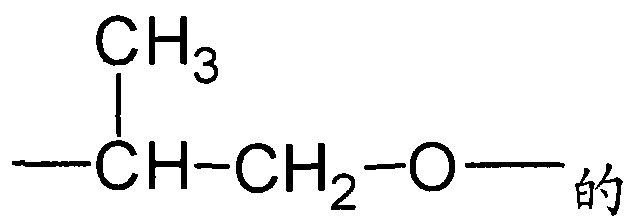

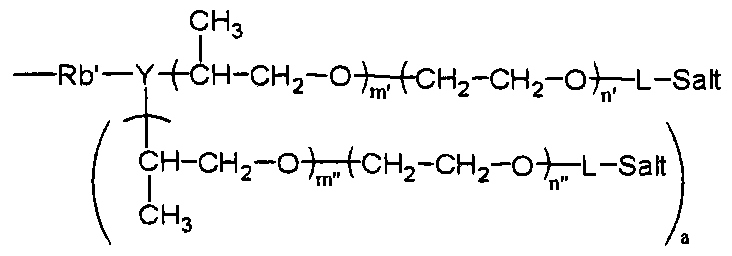


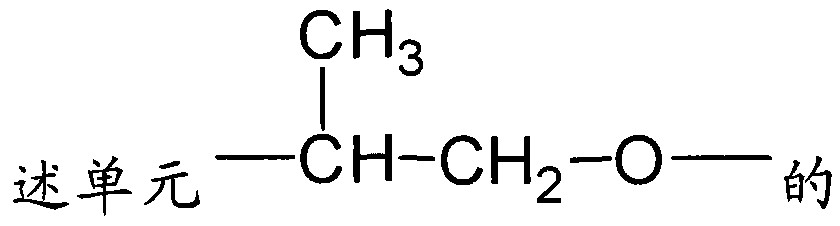


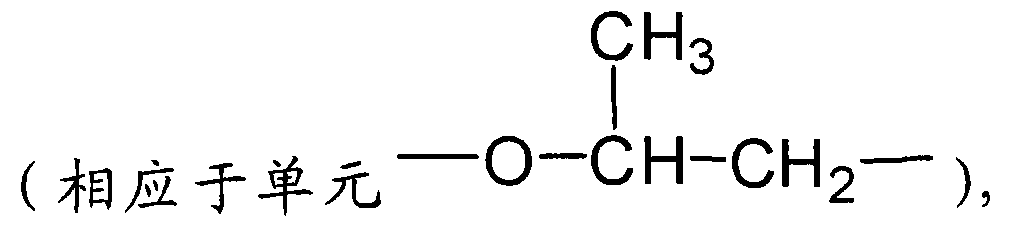


Claims


Priority Applications (7)
| Application Number | Priority Date | Filing Date | Title |
|---|---|---|---|
| US14/899,541 US10723936B2 (en) | 2013-06-17 | 2014-06-17 | Surfactant composition, and manufacturing method and application of same |
| CA2915832A CA2915832C (en) | 2013-06-17 | 2014-06-17 | Surfactant composition comprising a cationic quaternary ammonium surfactant and an anionic-nonionic surfactant, production and use thereof |
| RU2016101043A RU2647554C2 (ru) | 2013-06-17 | 2014-06-17 | Композиция на основе поверхностно-активного вещества, способ ее получения и ее применение |
| MX2015017524A MX383161B (es) | 2013-06-17 | 2014-06-17 | Composición del agente tensoactivo, producción y uso de la misma. |
| NO20160047A NO347784B1 (en) | 2013-06-17 | 2016-01-11 | A surfactant composition, production and use thereof |
| US16/899,229 US11578253B2 (en) | 2013-06-17 | 2020-06-11 | Surfactant composition, and manufacturing method and application of same |
| US16/899,211 US11920083B2 (en) | 2013-06-17 | 2020-06-11 | Surfactant composition, and manufacturing method and application of same |
Applications Claiming Priority (4)
| Application Number | Priority Date | Filing Date | Title |
|---|---|---|---|
| CN201310237545.X | 2013-06-17 | ||
| CN201310237544.5A CN104232044B (zh) | 2013-06-17 | 2013-06-17 | 用于三次采油的表面活性剂组合物、制备方法及应用 |
| CN201310237545.XA CN104232045B (zh) | 2013-06-17 | 2013-06-17 | 复合型表面活性剂组合物、制备方法及应用 |
| CN201310237544.5 | 2013-06-17 |
Related Child Applications (3)
| Application Number | Title | Priority Date | Filing Date |
|---|---|---|---|
| US14/899,541 A-371-Of-International US10723936B2 (en) | 2013-06-17 | 2014-06-17 | Surfactant composition, and manufacturing method and application of same |
| US16/899,211 Continuation US11920083B2 (en) | 2013-06-17 | 2020-06-11 | Surfactant composition, and manufacturing method and application of same |
| US16/899,229 Continuation US11578253B2 (en) | 2013-06-17 | 2020-06-11 | Surfactant composition, and manufacturing method and application of same |
Publications (1)
| Publication Number | Publication Date |
|---|---|
| WO2014201854A1 true WO2014201854A1 (zh) | 2014-12-24 |
Family
ID=52103889
Family Applications (1)
| Application Number | Title | Priority Date | Filing Date |
|---|---|---|---|
| PCT/CN2014/000595 Ceased WO2014201854A1 (zh) | 2013-06-17 | 2014-06-17 | 一种表面活性剂组合物、其制造方法及其应用 |
Country Status (6)
| Country | Link |
|---|---|
| US (3) | US10723936B2 (zh) |
| CA (1) | CA2915832C (zh) |
| MX (1) | MX383161B (zh) |
| MY (1) | MY180162A (zh) |
| RU (1) | RU2647554C2 (zh) |
| WO (1) | WO2014201854A1 (zh) |
Cited By (4)
| Publication number | Priority date | Publication date | Assignee | Title |
|---|---|---|---|---|
| CN113355127A (zh) * | 2020-03-06 | 2021-09-07 | 成都华阳兴华化工有限公司 | 天然气井凝析油净化剂及其制备方法 |
| CN113896881A (zh) * | 2020-07-06 | 2022-01-07 | 中国石油化工股份有限公司 | 一种烷基萘胺聚醚萘磺酸盐表面活性剂及其制备方法和应用 |
| CN114456370A (zh) * | 2020-11-10 | 2022-05-10 | 中国石油化工股份有限公司 | 聚醚阴离子表面活性剂及提高油气采收率的方法 |
| US12036286B2 (en) | 2021-03-18 | 2024-07-16 | Seagen Inc. | Selective drug release from internalized conjugates of biologically active compounds |
Families Citing this family (8)
| Publication number | Priority date | Publication date | Assignee | Title |
|---|---|---|---|---|
| CN105199703B (zh) * | 2015-08-24 | 2018-05-22 | 中国石油化工股份有限公司 | 一种耐高温低度交联三元调驱剂及其制备方法 |
| RU2019137467A (ru) | 2017-05-30 | 2021-07-01 | Басф Се | Способ добычи нефти из подземных месторождений, имеющих высокую температуру и соленость |
| CA3095533A1 (en) * | 2018-03-29 | 2019-10-03 | Mol Magyar Olaj- Es Gazipari Nyilvanosan Mukodo Reszvenytarsasag | Polymer-surfactant compositions for enhanced oil recovery process |
| CN112226225B (zh) * | 2019-07-15 | 2023-04-07 | 中国石油化工股份有限公司 | 低渗透油藏注水井降压增注用耐温抗盐表面活性剂组合物及其制备方法和应用 |
| CN112694877B (zh) * | 2019-10-22 | 2022-12-09 | 中国石油化工股份有限公司 | 含双酚a聚醚二酸盐的复合表面活性剂及其制备方法和应用 |
| CN112694879B (zh) * | 2019-10-22 | 2022-12-09 | 中国石油化工股份有限公司 | 提高阴-阳离子表面活性剂复配洗油剂耐高温性能的方法 |
| CN115725288B (zh) * | 2021-08-26 | 2024-03-26 | 中国石油化工股份有限公司 | 表面活性剂组合物、润湿性调控剂及其制备方法和应用 |
| CN116655836B (zh) * | 2023-04-25 | 2025-09-12 | 中国石油大学(华东) | 一种适用于地热地层的耐高温高盐双重交联起泡剂及其制备方法与应用 |
Citations (5)
| Publication number | Priority date | Publication date | Assignee | Title |
|---|---|---|---|---|
| CN102161883A (zh) * | 2011-01-28 | 2011-08-24 | 胜利油田胜利勘察设计研究院有限公司 | 油田三次采油复合化学驱油剂 |
| WO2011130310A1 (en) * | 2010-04-16 | 2011-10-20 | Board Of Regents, The University Of Texas System | Guerbet alcohol alkoxylate surfactants and their use in enhanced oil recovery applications |
| CN102485771A (zh) * | 2010-12-03 | 2012-06-06 | 中国石油天然气股份有限公司 | 脂肪醇聚氧丙烯聚氧乙烯醚羧酸盐及其制备和应用 |
| CN102516971A (zh) * | 2011-11-08 | 2012-06-27 | 西南石油大学 | 嵌段聚醚两性离子稠油乳化降粘剂及制备方法 |
| CN103740354A (zh) * | 2012-10-17 | 2014-04-23 | 中国石油化工股份有限公司 | 用于三次采油的表面活性剂组合物及其制备方法 |
Family Cites Families (11)
| Publication number | Priority date | Publication date | Assignee | Title |
|---|---|---|---|---|
| US4370243A (en) * | 1981-02-09 | 1983-01-25 | Mobil Oil Corporation | Oil recovery by surfactant-alcohol waterflooding |
| JPS59185286A (ja) * | 1983-04-04 | 1984-10-20 | ライオン株式会社 | 石油の回収方法 |
| EP0167337A2 (en) * | 1984-06-25 | 1986-01-08 | Atlantic Richfield Company | Alkoxylated ether sulfate anionic surfactants |
| JPS61172811A (ja) * | 1985-01-25 | 1986-08-04 | Kao Corp | シヤンプ−組成物 |
| DE3742935A1 (de) * | 1987-12-18 | 1989-06-29 | Hoechst Ag | Gegebenenfalls quaternierte fettsaeureester von oxalkylierten alkyl-alkylendiaminen |
| US5922663A (en) * | 1996-10-04 | 1999-07-13 | Rhodia Inc. | Enhancement of soil release with gemini surfactants |
| US5811384A (en) | 1997-11-26 | 1998-09-22 | Rhodia Inc. | Nonionic gemini surfactants |
| US6410005B1 (en) * | 2000-06-15 | 2002-06-25 | Pmd Holdings Corp. | Branched/block copolymers for treatment of keratinous substrates |
| MY174671A (en) * | 2010-03-10 | 2020-05-06 | Basf Se | Method for producing crude oil using surfactants based on c16c18 containing alkyl-propoxy surfactants |
| AR082740A1 (es) * | 2010-08-27 | 2012-12-26 | Univ Texas | Tensioactivos de alcoxi carboxilicos, composicion acuosa y eliminacion de material hidrocarbonado |
| AR090724A1 (es) * | 2012-04-19 | 2014-12-03 | Univ Texas | Tensioactivos de amonio cuaternario hidrofobos de gran tamaño |
-
2014
- 2014-06-17 CA CA2915832A patent/CA2915832C/en active Active
- 2014-06-17 WO PCT/CN2014/000595 patent/WO2014201854A1/zh not_active Ceased
- 2014-06-17 MY MYPI2015704573A patent/MY180162A/en unknown
- 2014-06-17 RU RU2016101043A patent/RU2647554C2/ru active
- 2014-06-17 US US14/899,541 patent/US10723936B2/en active Active
- 2014-06-17 MX MX2015017524A patent/MX383161B/es unknown
-
2020
- 2020-06-11 US US16/899,211 patent/US11920083B2/en active Active
- 2020-06-11 US US16/899,229 patent/US11578253B2/en active Active
Patent Citations (5)
| Publication number | Priority date | Publication date | Assignee | Title |
|---|---|---|---|---|
| WO2011130310A1 (en) * | 2010-04-16 | 2011-10-20 | Board Of Regents, The University Of Texas System | Guerbet alcohol alkoxylate surfactants and their use in enhanced oil recovery applications |
| CN102485771A (zh) * | 2010-12-03 | 2012-06-06 | 中国石油天然气股份有限公司 | 脂肪醇聚氧丙烯聚氧乙烯醚羧酸盐及其制备和应用 |
| CN102161883A (zh) * | 2011-01-28 | 2011-08-24 | 胜利油田胜利勘察设计研究院有限公司 | 油田三次采油复合化学驱油剂 |
| CN102516971A (zh) * | 2011-11-08 | 2012-06-27 | 西南石油大学 | 嵌段聚醚两性离子稠油乳化降粘剂及制备方法 |
| CN103740354A (zh) * | 2012-10-17 | 2014-04-23 | 中国石油化工股份有限公司 | 用于三次采油的表面活性剂组合物及其制备方法 |
Cited By (5)
| Publication number | Priority date | Publication date | Assignee | Title |
|---|---|---|---|---|
| CN113355127A (zh) * | 2020-03-06 | 2021-09-07 | 成都华阳兴华化工有限公司 | 天然气井凝析油净化剂及其制备方法 |
| CN113896881A (zh) * | 2020-07-06 | 2022-01-07 | 中国石油化工股份有限公司 | 一种烷基萘胺聚醚萘磺酸盐表面活性剂及其制备方法和应用 |
| CN114456370A (zh) * | 2020-11-10 | 2022-05-10 | 中国石油化工股份有限公司 | 聚醚阴离子表面活性剂及提高油气采收率的方法 |
| CN114456370B (zh) * | 2020-11-10 | 2024-01-26 | 中国石油化工股份有限公司 | 聚醚阴离子表面活性剂及提高油气采收率的方法 |
| US12036286B2 (en) | 2021-03-18 | 2024-07-16 | Seagen Inc. | Selective drug release from internalized conjugates of biologically active compounds |
Also Published As
| Publication number | Publication date |
|---|---|
| MX383161B (es) | 2025-03-13 |
| MY180162A (en) | 2020-11-24 |
| RU2647554C2 (ru) | 2018-03-16 |
| US20160122621A1 (en) | 2016-05-05 |
| CA2915832C (en) | 2022-02-22 |
| US20200308473A1 (en) | 2020-10-01 |
| RU2016101043A (ru) | 2017-07-19 |
| MX2015017524A (es) | 2016-08-04 |
| US10723936B2 (en) | 2020-07-28 |
| US11578253B2 (en) | 2023-02-14 |
| CA2915832A1 (en) | 2014-12-24 |
| US20200299566A1 (en) | 2020-09-24 |
| US11920083B2 (en) | 2024-03-05 |
Similar Documents
| Publication | Publication Date | Title |
|---|---|---|
| US11920083B2 (en) | Surfactant composition, and manufacturing method and application of same | |
| WO2016061712A1 (zh) | 一种阴离子-阳离子-非离子型表面活性剂、其制造方法及其应用 | |
| CN104232045B (zh) | 复合型表面活性剂组合物、制备方法及应用 | |
| US11286416B2 (en) | Surfactant composition and preparation method therefor and application thereof | |
| CN103540304A (zh) | 强化采油用表面活性剂组合物及其制备方法 | |
| CN103666431A (zh) | 表面活性剂组合物及其制备方法 | |
| CN103666430A (zh) | 用于强化采油的表面活性剂组合物及其制备方法 | |
| CN103421480A (zh) | 驱油用表面活性剂组合物及其制备方法 | |
| CN103740354A (zh) | 用于三次采油的表面活性剂组合物及其制备方法 | |
| CN102277146A (zh) | 可大幅度提高采收率的组合物及其制备方法 | |
| CN103540305B (zh) | 化学驱油用表面活性剂组合物及其制备方法 | |
| CN105642185B (zh) | 一种阴离子-阳离子-非离子型表面活性剂、其制造方法及其应用 | |
| CN103540303A (zh) | 复合型表面活性剂组合物及其制备方法 | |
| CN104277814A (zh) | 驱油用表面活性剂组合物、制备方法及应用 | |
| CN103740357A (zh) | 低张力泡沫剂组合物及制备方法 | |
| CN111087608B (zh) | 烃基酚聚醚双苯磺酸盐驱油表面活性剂、组合物及其制备方法和应用 | |
| CN107501135B (zh) | 一类含双长链烷基的磺酸盐型阴离子表面活性剂的制备及其应用 | |
| CN103540306B (zh) | 三采用表面活性剂组合物及其制备方法 | |
| CN112795002B (zh) | 含杂原子的聚醚阴非离子表面活性剂及其制备方法 | |
| CN103773346B (zh) | 高效驱油用表面活性剂组合物及其制备方法 | |
| CN112791662A (zh) | 烷氧基聚醚阴非离子表面活性剂及其制备方法 | |
| CN120041173A (zh) | 用于蒸汽热采提高采收率的表面活性剂组合物及其制备方法和应用 | |
| CN111087601A (zh) | 采油用表面活性剂、组合物及其制备方法 | |
| US12180419B2 (en) | Alkylaniline polyether benzenesulfonate and process of producing same | |
| CN109679629A (zh) | 无碱黏弹表面活性剂组合物及制备方法及其应用 |
Legal Events
| Date | Code | Title | Description |
|---|---|---|---|
| 121 | Ep: the epo has been informed by wipo that ep was designated in this application |
Ref document number: 14814361 Country of ref document: EP Kind code of ref document: A1 |
|
| ENP | Entry into the national phase |
Ref document number: 2915832 Country of ref document: CA |
|
| WWE | Wipo information: entry into national phase |
Ref document number: MX/A/2015/017524 Country of ref document: MX |
|
| NENP | Non-entry into the national phase |
Ref country code: DE |
|
| WWE | Wipo information: entry into national phase |
Ref document number: 14899541 Country of ref document: US |
|
| WWE | Wipo information: entry into national phase |
Ref document number: IDP00201600230 Country of ref document: ID |
|
| ENP | Entry into the national phase |
Ref document number: 2016101043 Country of ref document: RU Kind code of ref document: A |
|
| 122 | Ep: pct application non-entry in european phase |
Ref document number: 14814361 Country of ref document: EP Kind code of ref document: A1 |