WO2014158644A1 - Process for the preparation of triaryl rhamnose carbamates - Google Patents
Process for the preparation of triaryl rhamnose carbamates Download PDFInfo
- Publication number
- WO2014158644A1 WO2014158644A1 PCT/US2014/019010 US2014019010W WO2014158644A1 WO 2014158644 A1 WO2014158644 A1 WO 2014158644A1 US 2014019010 W US2014019010 W US 2014019010W WO 2014158644 A1 WO2014158644 A1 WO 2014158644A1
- Authority
- WO
- WIPO (PCT)
- Prior art keywords
- alkyl
- mmol
- reaction
- formula
- substituted
- Prior art date
- Legal status (The legal status is an assumption and is not a legal conclusion. Google has not performed a legal analysis and makes no representation as to the accuracy of the status listed.)
- Ceased
Links
- 0 *B(*)c(cc1)ccc1N=C=O Chemical compound *B(*)c(cc1)ccc1N=C=O 0.000 description 5
- JXIPUMQLJDZOKA-YLLORCDKSA-N CCO[C@H]([C@H]([C@H](C)O[C@H]1OC(Nc2ccc(B3OC(C)(C)C(C)(C)O3)cc2)=O)OC)[C@H]1OC Chemical compound CCO[C@H]([C@H]([C@H](C)O[C@H]1OC(Nc2ccc(B3OC(C)(C)C(C)(C)O3)cc2)=O)OC)[C@H]1OC JXIPUMQLJDZOKA-YLLORCDKSA-N 0.000 description 1
Classifications
-
- A—HUMAN NECESSITIES
- A01—AGRICULTURE; FORESTRY; ANIMAL HUSBANDRY; HUNTING; TRAPPING; FISHING
- A01N—PRESERVATION OF BODIES OF HUMANS OR ANIMALS OR PLANTS OR PARTS THEREOF; BIOCIDES, e.g. AS DISINFECTANTS, AS PESTICIDES OR AS HERBICIDES; PEST REPELLANTS OR ATTRACTANTS; PLANT GROWTH REGULATORS
- A01N55/00—Biocides, pest repellants or attractants, or plant growth regulators, containing organic compounds containing elements other than carbon, hydrogen, halogen, oxygen, nitrogen and sulfur
- A01N55/08—Biocides, pest repellants or attractants, or plant growth regulators, containing organic compounds containing elements other than carbon, hydrogen, halogen, oxygen, nitrogen and sulfur containing boron
-
- C—CHEMISTRY; METALLURGY
- C07—ORGANIC CHEMISTRY
- C07F—ACYCLIC, CARBOCYCLIC OR HETEROCYCLIC COMPOUNDS CONTAINING ELEMENTS OTHER THAN CARBON, HYDROGEN, HALOGEN, OXYGEN, NITROGEN, SULFUR, SELENIUM OR TELLURIUM
- C07F5/00—Compounds containing elements of Groups 3 or 13 of the Periodic Table
- C07F5/02—Boron compounds
- C07F5/025—Boronic and borinic acid compounds
Definitions
- the present invention concerns an improved process for preparing certain intermediates used to prepare certain triaryl rhamnose carbamates.
- WO 2009102736 (Al) describes, inter alia, certain triaryl rhamnose carbamates and their use as pesticides.
- One of the methods used to prepare such triaryl compounds is by way of a Suzuki coupling reaction, wherein an aryl boronic acid or ester is coupled with a halogenated heterocycle.
- the examples in WO 2009102736 (Al) are devoid of precursors that contain the sugar- carbamate moiety.
- R, Ri and R 2 independently represent Ci-C 4 alkyl, C3-C4 alkenyl or Ci-C 4 fluoroalkyl, and
- Z represents a furanyl, phenyl, pyridazinyl, pyridyl, pyrimidinyl or thienyl group, unsubstituted or substituted with one or more substituents independently selected from F, CI, C -C alkyl, C -C haloalkyl, C -C haloalkoxy or C -C haloalkylthio; can be prepared by a process which comprises contacting a substituted triazole of formula (II)
- Y represents CI, Br, I, OS0 2 CF 3 , OS0 2 CH 3 , or OS0 2 C 6 H 4 CH 3
- Z is as previously defined with a boronic acid or ester of the formula (III)
- R, Ri and R 2 are as previously defined, and R 3 and R 4 independently represent H, C C 4 alkyl, or when taken together form an ethylene or propylene group optionally substituted with from one to four CH groups, in an ether solvent in the presence of tetrakis(triphenylphosphine)palladium(0) (Pd(PPh ) 4 ) and from about 1 to about 2 equivalents of an aqueous alkali metal carbonate at a temperature from about 50 °C to about 100 °C.
- An embodiment concerns a boronic acid or ester of the formula (III)
- R, Ri and R 2 independently represent C C 4 alkyl, C3-C4 alkenyl or C C 4 fluoroalkyl, and
- R 3 and R 4 independently represent H, C C 4 alkyl, or when taken together form an ethylene or propylene group optionally substituted with from one to four C3 ⁇ 4 groups.
- R, Ri and R 2 independently represent C 1 -C 4 alkyl, C 3 -C 4 alkenyl or C 1 -C 4 fluoroalkyl, and
- R3 and R4 independently represent C C 4 alkyl, or when taken together form an ethylene or propylene group optionally substituted with from one to four CH 3 groups, is prepared by a process which comprises a) contacting p-bromophenyl isocyanate with a tetrahydropyran-2-ol of Formula (IV) wherein
- R, Ri and R 2 independently represent Ci-C 4 alkyl, C3-C4 alkenyl or Ci-C 4 fluoroalkyl, in a polar aprotic solvent in the presence of cesium carbonate (CS 2 CO 3 ) to form a carbamate of Formula (V)
- R4O' OR 4 wherein R 3 and R4 are as previously defined, in a polar aprotic solvent in the presence of a palladium catalyst and an alkali metal or alkaline earth metal acetate.
- the present invention concerns a process for preparing the boronic ester of the formula
- R, Ri and R 2 independently represent C C 4 alkyl, C3-C4 alkenyl or C C 4 fluoroalkyl
- R 3 and R 4 independently represent C C 4 alkyl, or when taken together form an ethylene or propylene group optionally substituted with from one to four CH 3 groups, which comprises contacting a boronate substituted phenyl isocyanate of Formula (VII)
- R3 and R4 independently represent C C 4 alkyl, or when taken together form an ethylene or propylene group optionally substituted with from one to four CH 3 groups, with a tetrahydropyran-2-ol of Formula (IV)
- R, Ri and R 2 independently represent C C 4 alkyl, C 3 -C4 alkenyl or C C 4 fluoroalkyl, in a polar aprotic solvent in the presence of CS 2 CO 3 .
- Another embodiment concerns a substituted triazole of formula (II)
- Y represents CI, Br, I, OS0 2 CF 3 , OS0 2 CH 3 , or OS0 2 C 6 H 4 CH 3
- Z represents a furanyl, phenyl, pyridazinyl, pyridyl, pyrimidinyl or thienyl group, unsubstituted or substituted with one or more substituents independently selected from F, CI, CrC 6 alkyl, CrC 6 haloalkyl, CrC 6 haloalkoxy or CrC 6 haloalkylthio.
- Z represents a furanyl, phenyl, pyridazinyl, pyridyl, pyrimidinyl or thienyl group, unsubstituted or substituted with one or more substituents independently selected from F, CI, CrC 6 alkyl, CrC 6 haloalkyl, CrC 6 haloalkoxy or CrC 6 haloalkylthio, is prepared by a process which comprises contacting 3-bromo-lH-l,2,4-triazole
- L represents Br or I
- X independently represents F, CI, C -C alkyl, Ci-C 6 haloalkyl, Ci-C 6 haloalkoxy or Ci-C 6 haloalkylthio
- m 0, 1, 2 or 3
- n 0, 1, 2, 3 or 4
- p 0, 1, 2, 3, 4 or 5
- a polar aprotic solvent in the presence of a catalytic amount of a copper catalyst and at least one equivalent of an inorganic base at a temperature from about ambient to about 120 °C.
- the reaction may optionally be conducted in the presence of a complexing ligand for copper.
- Y represents CI, Br, I, OS0 2 CF 3 , OS0 2 CH 3 , or OS0 2 C 6 H 4 CH 3 , and
- Z represents a furanyl, phenyl, pyridazinyl, pyridyl, pyrimidinyl or thienyl group, unsubstituted or substituted with one or more substituents independently selected from F, CI, C C 6 alkyl, C C 6 haloalkyl, C C 6 haloalkoxy or C C 6 haloalkylthio, is prepared by a process which comprises a) contacting a hydrazine hydrochloride of the formula
- Z represents a furanyl, phenyl, pyridazinyl, pyridyl, pyrimidinyl or thienyl group, unsubstituted or substituted with one or more substituents independently selected from F, CI, C C 6 alkyl, C C 6 haloalkyl, C C 6 haloalkoxy or C C 6 haloalkylthio, with urea in an aprotic organic solvent with a boiling point greater than 100 °C in the presence of a catalytic amount of an organic sulfonic acid at a temperature from about 100 °C to about
- alkyl as well as derivative terms such as “haloalkyl”, “fluoroalkyl”, “haloalkoxy” or “haloalkylthio”, as used herein, include within their scope straight chain, branched chain and cyclic moieties.
- typical alkyl groups are methyl, ethyl, propyl, butyl, pentyl, hexyl, 1-methylethyl, 1,1-dimethylethyl, 1-methylpropyl, 2-methylpropyl, cyclopropyl, cyclobutyl, cyclopentyl and cyclohexyl.
- haloalkyl includes alkyl groups substituted with from one to the maximum possible number of halogen atoms, all combinations of halogens included.
- haloalkoxy includes alkoxy groups substituted with from one to the maximum possible number of halogen atoms, all combinations of halogens included.
- haloalkylthio includes alkylthio groups substituted with from one to the maximum possible number of halogen atoms, all combinations of halogens included.
- halogen or halo includes fluorine, chlorine, bromine and iodine, with fluorine being preferred.
- the furanyl, phenyl, pyridazinyl, pyridyl, pyrimidinyl or thienyl groups may be unsubstituted or substituted with one or more substituents independently selected from F, CI, C C6 alkyl, C C6 haloalkyl, C C6 haloalkoxy or C C6 haloalkylthio, provided that the substituents are sterically compatible and the rules of chemical bonding and strain energy are satisfied.
- R, Ri and R 2 independently represent C C 4 alkyl, C3-C4 alkenyl or C C 4 fluoroalkyl, and
- Z represents a furanyl, phenyl, pyridazinyl, pyridyl, pyrimidinyl or thienyl group, unsubstituted or substituted with one or more substituents independently selected from F, CI, C C 6 alkyl, C C 6 haloalkyl, C C 6 haloalkoxy or C C 6 haloalkylthio can be prepared by a Suzuki coupling reaction in good yield under conditions in which the rhamnose carbamate moiety remains intact. This is accomplished by coupling a substituted triazole of formula (II)
- Y represents CI, Br, I, OS0 2 CF 3 , OS0 2 CH 3 , or OS0 2 C 6 H 4 CH 3 , and
- Z is as previously defined with a boronic acid or ester of the formula (III) wherein
- R, Ri and R 2 independently represent C C 4 alkyl, C3-C4 alkenyl or C C 4 fluoroalkyl, and
- R 3 and R 4 independently represent H, C C 4 alkyl, or when taken together form an ethylene or propylene group optionally substituted with from one to four CH 3 groups, in an ether solvent in the presence of Pd(PPh 3 ) 4 and from about 1 to about 2 equivalents of an aqueous alkali metal carbonate at a temperature from about 50 °C to about 100 °C.
- R 3 and R 4 are preferably both CH 3 , CH 2 CH 3 or CH 2 CH 2 CH 3 or, when taken together, form an ethylene or propylene group optionally substituted with from one to four CH groups.
- Z is preferably a phenyl group substituted with a C -C haloalkoxy group, most preferably with a CrC 2 fluoroalkoxy group in the para position.
- Y is preferably Br.
- the coupling reaction is conducted in an ether solvent.
- Preferred solvents are miscible with water and include tetrahydrofuran (THF), dioxane and dimethoxyethane (DME), with DME being most preferred.
- the coupling reaction is run in the presence of Pd(PPh 3 ) 4 . From about 0.05 to about 0.10 equivalents of this material is preferred, but, with particularly unreactive substrates, up to a stoichiometric amount may be needed.
- the coupling reaction requires at least one equivalent of an aqueous alkali metal carbonate base, but about a 2- to 3-fold excess of base is often recommended.
- an aqueous alkali metal carbonate base it is important to use from about 1 to about 2 equivalents of an aqueous alkali metal carbonate,
- the preferred alkali metal carbonate is sodium carbonate (Na 2 C0 3 ).
- the coupling reaction is conducted at a temperature from about 50 °C to about 100 °C, with a temperature from about 70 °C to about 90 °C being preferred.
- the substituted 3-bromotriazole, the boronic ester of the carbamate - rhamnose, 1 equivalent of aqueous Na 2 C0 3 , 10 mole percent Pd(PPh 3 ) 4 are sealed in a vessel with DME.
- the reaction is heated at about 90 °C until the reaction is completed.
- the reaction mixture is cooled, diluted with a water insoluble organic solvent and water and the organic phase partitioned.
- the solvent is evaporated and the isolated product purified by conventional techniques such as preparative reverse phase chromatography.
- R, Ri and R 2 independently represent C C 4 alkyl, C 3 -C 4 alkenyl or C C 4 fluoroalkyl, and
- R and R 4 independently represent C C 4 alkyl, or when taken together form an ethylene or propylene group optionally substituted with from one to four CH 3 groups are novel materials and are prepared by two different approaches.
- the first process comprises a) contacting p-bromophenyl isocyanate with a tetrahydropyran-2-ol of Formula (IV)
- R, Ri and R 2 independently represent Ci-C 4 alkyl, C3-C4 alkenyl or Ci-C 4 fluoroalkyl, in a polar aprotic solvent in the presence of Cs 2 C0 3 to form a (4-bromophenyl)carbamate of Formula (V)
- R, Ri and R 2 are as previously defined, and b) contacting the carbamate of Formula (V) with a diboron compound of Formula VI wherein R 3 and R 4 are as previously defined, in a polar aprotic solvent in the presence of a palladium catalyst and an alkali metal or alkaline earth metal acetate.
- the p-bromophenyl isocyanate is contacted with the tetrahydropyran-2- ol in a polar aprotic solvent which includes amides, like N, N-dimethylformamide (DMF), N, N- dimethylacetamide (DMA) or N-methyl-2-pyrrolidinone (NMP), sulfoxides, like dimethyl sulfoxide (DMSO), esters, like ethyl acetate (EtOAc), and nitriles, like acetonitrile (MeCN), butyronitrile or benzonitrile. Nitriles, particularly MeCN, are preferred.
- a polar aprotic solvent which includes amides, like N, N-dimethylformamide (DMF), N, N- dimethylacetamide (DMA) or N-methyl-2-pyrrolidinone (NMP), sulfoxides, like dimethyl sulfoxide (DMSO), esters, like ethyl
- the polar aprotic solvent should be as anhydrous as possible to avoid hydrolysis of the isocyanate and the formation of byproduct ureas.
- the first step is run in the presence of Cs 2 C0 3 , usually in the presence of from about 1 to about 2 equivalents.
- the first step is conducted at a temperature from about 0 °C to about 90 °C, with a temperature from about 0 °C to about 35 °C being preferred.
- the tetrahydropyran-2-ol IV normally exists as a mixture of anomeric forms, a and ⁇ . During the course of the reaction to form the carbamate, both the a and ⁇ anomers are initially formed. With continued stirring after the isocyanate has been converted entirely into the mixture of carbamates, further equilibration occurs, resulting ultimately in exclusive formation of the a anomer.
- the p-bromophenyl isocyanate and CS 2 CO 3 are added to the tetrahydropyran-2-ol in MeCN.
- the reaction is stirred at room temperature until the reaction and equilibration are completed.
- the reaction mixture is filtered to remove solids, the solvent is evaporated and the isolated product purified by conventional techniques such as flash chromatography.
- the (4-bromophenyl)carbamate is contacted with a diboron compound of Formula VI wherein R 3 and R 4 are as previously defined, in a polar aprotic solvent in the presence of a palladium catalyst and an alkali metal or alkaline earth metal acetate.
- the second step is also run in a polar aprotic solvent, which likewise includes amides, like DMF, DMA or NMP, sulfoxides, like DMSO, esters, like EtOAc, and nitriles, like MeCN, butyronitrile and benzonitrile. While it is possible to run the second step using the reaction mixture of the first step without isolation and purification of the (4-bromophenyl)carbamates, and thus use the same solvent as employed in the first step, it is preferable to use a sulfoxide solvent such as DMSO.
- a sulfoxide solvent such as DMSO.
- the second step is run in the presence of a catalytic amount of palladium catalyst.
- a catalytic amount means from about 0.01 to about 0.20 equivalents of a palladium catalyst.
- the palladium catalyst may be Pd(0), such as Pd(PPh 3 ) 4 , or Pd(II) such as [l,l'-bis(diphenylphosphino)ferrocene]- dichloropalladium(II) (PdCl 2 (dppf)) or bis(diphenylphosphino)dichloropalladium(II)
- the second step requires at least one equivalent of an alkali metal or alkaline earth metal acetate, but a large excess is often recommended. It is generally preferred to use from about 1.5 to about 3 equivalents of alkali metal or alkaline earth metal acetate.
- the preferred alkali metal or alkaline earth metal acetate is sodium acetate (NaOAc) or potassium acetate (KOAc).
- the second step is conducted at a temperature from about 50 °C to about 110 °C, with a temperature from about 70 °C to about 90 °C being preferred.
- the p-bromophenyl carbamate, the diboron compound, the palladium catalyst and the alkali metal or alkaline earth metal acetate are charged into a reaction vessel.
- the reaction vessel is sealed and is evacuated and backfilled with nitrogen (N 2 ) multiple times.
- the polar aprotic solvent is added and the mixture heated at about 80 °C until the reaction is completed.
- the reaction mixture cooled, diluted with water and extracted with ether.
- the solvent is dried and evaporated and the isolated product purified by conventional techniques such as flash chromatography.
- the second process is part of the present invention and concerns a process for preparing boronic esters of the formula (Ilia)
- R, Ri and R 2 independently represent C C 4 alkyl, C 3 -C 4 alkenyl or C C 4 fluoroalkyl, and
- R 3 and R 4 independently represent C C 4 alkyl, or when taken together form an ethylene or propylene group optionally substituted with from one to four CH groups which comprises contacting a commercially available boronate substituted phenyl isocyanate of Formula (VII) wherein
- R 3 and R 4 independently represent C C 4 alkyl, or when taken together form an ethylene or propylene group optionally substituted with from one to four CH 3 groups, with a tetrahydropyran-2-ol of Formula (IV)
- R, Ri and R 2 independently represent CrC 4 alkyl, C 3 -C 4 alkenyl or CrC 4 fluoroalkyl, in a polar aprotic solvent in the presence of Cs 2 C0 3 .
- the boronate substituted phenyl isocyanate is contacted with the tetrahydropyran-2-ol in a polar aprotic solvent which includes amides, like DMF, DMA or NMP, sulfoxides, like DMSO, esters, like EtOAc, and nitriles, like MeCN, butyronitrile and benzonitrile. Nitriles, particularly MeCN, are preferred.
- the polar aprotic solvent should be as anhydrous as possible to avoid hydrolysis of the isocyanate and the formation of byproduct ureas.
- the second process is run in the presence of Cs 2 C0 3 , usually in the presence of from about 1 to about 2 equivalents.
- the second process is conducted at a temperature from about 0 °C to about 90 °C, with a temperature from about 0 °C to about 35 °C being preferred.
- the tetrahydropyran-2-ol IV normally exists as a mixture of anomeric forms, a and ⁇ .
- both the a and ⁇ anomers are initially formed.
- the boronate substituted phenyl isocyanate and CS 2 CO 3 are added to the tetrahydropyran-2-ol in MeCN.
- the reaction is stirred at room temperature until the reaction and equilibration are completed.
- the reaction mixture is filtered to remove solids, the solvent is evaporated and the isolated product purified by conventional techniques such as flash chromatography.
- Y represents CI, Br, I, OS0 2 CF 3 , OS0 2 CH 3 , or OS0 2 C 6 H 4 CH 3 , and
- Z represents a furanyl, phenyl, pyridazinyl, pyridyl, pyrimidinyl or thienyl group, unsubstituted or substituted with one or more substituents independently selected from F, CI, Ci-C 6 alkyl, Ci-C 6 haloalkyl, Ci-C 6 haloalkoxy or Ci-C 6 haloalkylthio are novel materials and are prepared by two different approaches.
- the first process comprises contacting 3-bromo-lH-l,2,4-triazole
- L represents Br or I
- the reaction is usually conducted at a temperature from about 80 °C to about 120 °C.
- the reaction may optionally be conducted in the presence of a complexing ligand for copper.
- a complexing ligand for copper In the case of more activated haloheterocycles, such as 3-chloro-2-fluoro-5-(trifluoromethyl)pyridine this coupling could be run at room temperature without the need for a copper catalyst.
- the 3-bromo- lH-l,2,4-triazole is contacted with the brominated or iodinated furanyl, phenyl, pyridazinyl, pyridyl, pyrimidinyl or thienyl compound in a polar aprotic solvent which includes amides, like DMF, DMA or NMP and sulfoxides, like DMSO. DMSO is particularly preferred.
- the polar aprotic solvent should be as anhydrous as possible.
- the first process is run in the presence of catalytic amount of copper catalyst, usually in the presence of from about 0.05 to about 0.25 equivalents. About 0.1 to about 0.2 equivalents of copper catalyst is preferred. Cuprous salts are generally preferred as the copper catalyst, with cuprous iodide (Cul) being especially preferred.
- the first process is also run in the presence of at least one equivalent of an inorganic base, usually in the presence of from about 1 to about 2 equivalents.
- Preferred inorganic bases are the alkali metal carbonates and phosphates such as sodium, potassium and cesium carbonates and phosphates, with CS 2 CO 3 being particularly preferred.
- the first process may optionally be conducted in the presence of an amine-containing ligand which complexes with the copper reagent such as cyclohexyl diamine or dimethylethane- 1,2-diamine.
- an amine-containing ligand which complexes with the copper reagent such as cyclohexyl diamine or dimethylethane- 1,2-diamine.
- performing the first process with an excess of the 3-bromo-lH-l,2,4-triazole is beneficial. From about 1.5 to about 3.0 equivalents of 3-bromo-lH-l,2,4-triazole per equivalent of brominated or iodinated furanyl, phenyl, pyridazinyl, pyridyl, pyrimidinyl or thienyl compound is preferred.
- the first process is conducted at a temperature from ambient to about 120 °C, with a temperature from about 80 °C to about 120 °C being preferred.
- the inorganic base, Cul and the brominated triazole are charged to a reaction vessel which is evacuated and backfilled with N 2 three times.
- the polar aprotic solvent, brominated or iodinated furanyl, phenyl, pyridazinyl, pyridyl, pyrimidinyl or thienyl compound and any complexing ligand are added and the mixture is heated at a temperature from about 80 °C to about 120 °C until the reaction is complete.
- the reaction mixture is cooled, diluted with a water immiscible organic solvent and filtered to remove solids.
- the organic filtrate is washed with a dilute aqueous acid and dried and the solvent is evaporated and the isolated product purified by conventional techniques such as flash chromatography.
- the second process comprises the preparation of a substituted triazole of formula (II)
- Y represents CI, Br, I, OS0 2 CF 3 , OS0 2 CH 3 , or OS0 2 C 6 H 4 CH 3
- Z represents a furanyl, phenyl, pyridazinyl, pyridyl, pyrimidinyl or thienyl group, unsubstituted or substituted with one or more substituents independently selected from F, CI, CrC 6 alkyl, CrC 6 haloalkyl, CrC 6 haloalkoxy or CrC 6 haloalkylthio, by a) contacting a hydrazine hydrochloride of the formula
- Z represents a furanyl, phenyl, pyridazinyl, pyridyl, pyrimidinyl or thienyl group, unsubstituted or substituted with one or more substituents independently selected from F, CI, C C 6 alkyl, C C 6 haloalkyl, C C 6 haloalkoxy or C C 6 haloalkylthio, with urea in an aprotic organic solvent with a boiling point greater than 100 °C in the presence of a catalytic amount of an organic sulfonic acid at a temperature from about 100 °C to about 150 °C, b) further contacting the reaction mixture from step a) with a C C 4 alkyl orthoformate and a catalytic amount of chloro sulfonic acid at a temperature from about 60 °C to about 100 °C to provide a substituted l-H-l,2,4-triazol-3-ol of Formula (VIII)
- Z is as previously defined, and c) converting the hydroxyl group of the triazole to a CI, Br, I, OS0 2 CF 3 , OS0 2 CH 3 , or OS0 2 C 6 H 4 CH 3 .
- the substituted hydrazine hydrochloride is contacted with urea in an aprotic organic solvent with a boiling point greater than 100 °C.
- the substituted hydrazines are conveniently prepared from the corresponding amino compounds by reaction with sodium nitrite (NaN0 2 ) to produce a diazonium salt, followed by reduction with a reducing agent such as hydrogen, sodium dithionite (Na 2 S 2 0 4 ), tin chloride or ammonium formate to provide the hydrazine. It is beneficial to employ up to a 50 mol excess of urea.
- aprotic organic solvents include inert hydrocarbons and halogenated
- the initial step of the second process is run in the presence of catalytic amount of an organic sulfonic acid, usually in the presence of from about 0.05 to about 0.25 equivalents. About 0.1 to about 0.2 equivalents of the organic sulfonic acid is preferred.
- the initial step of the second process is conducted at a temperature from about 100 °C to about 150 °C, with a temperature from about 110 °C to about 140 °C being preferred.
- the reaction mixture from the initial step is further contacted with a CrC 4 alkyl orthoformate and a catalytic amount of chlorosulfonic acid at a temperature from about 60 °C to about 100 °C to provide a substituted 1-H- 1,2,4- triazol-3-ol.
- the second step of the second process is run with at least one equivalent of
- orthoformate usually a slight excess of 0.1 to about 0.2 equivalents of the orthoformate is preferred.
- the second step of the second process is run in the presence of catalytic amount of chlorosulfonic acid, usually in the presence of from about 0.01 to about 0.2 equivalents. About 0.01 to about 0.1 equivalents of the chlorosulfonic acid is preferred.
- the second step of the second process is conducted at a temperature from about 60 °C to about 100 °C, with a temperature from about 70 °C to about 90 °C being preferred.
- the first two steps are performed sequentially without isolation.
- the substituted hydrazine hydrochloride, urea and organic sulfonic acid are suspended in an aprotic organic solvent with a boiling point greater than 100 °C and refluxed until the reaction is complete.
- the mixture is cooled to about 80 °C and treated with the orthoformate and chlorosulfonic acid.
- the mixture is then cooled to room temperature and filtered. The solvent is evaporated and the residue dried under vacuum.
- the hydroxyl group is converted to a CI, Br, I, OSO 2 CF 3 , OSO 2 CH 3 , or OSO 2 C 6 H 4 CH 3 group by procedures well known to those of ordinary skill in the art.
- CI, Br, and I groups are introduced by halo de-hydoxylation reactions using halogen acids, hydrochloric acid (HC1), hydrobromic acid (HBr) and hydroiodic acid (HI) or inorganic acid halides such as phosphorus chloride (PCI 3 ), phosphoryl chloride (POCl 3 ), thionyl chloride (SOCl 2 ) or phosphoryl bromide (POBr 3 ).
- the OS0 2 CF 3 , OSO 2 CH 3 , or OSO 2 C 6 H 4 CH 3 groups are introduced by esterification of sulfonic acid anhydrides or halides.
- the reaction vial was sealed, DME (4.3 mL, 0.1 M) was added, and the reaction was heated at 90 °C for 6 hours (h) in a Biotage Initiator® microwave reactor with external IR-sensor temperature monitoring from the side of the vessel.
- the reaction mixture was cooled to room temperature (RT, about 22 °C), diluted with dichloromethane (CH 2 CI 2 ), and water was added.
- the layers were separated with a phase separator and the organics were concentrated in vacuo.
- reaction mixture was cooled to RT, diluted with EtOAc and filtered through Celite®. The filtrate was washed with water (100 mL) containing HQ (1 M, 10 mL). The organics were separated, and the aqueous phase was further extracted with EtOAc (3x). The organics were combined, dried, and concentrated in vacuo.
- Step 1 Preparation of l-(diphenylmethylene)-2-(4-(perfluoroethoxy)phenyl)- hydrazine: To a dry 2 L round bottomed flask fitted with an overhead mechanical stirrer, nitrogen inlet, thermometer, and reflux condenser were added 1 bromo-4-(perfluoroethoxy)- benzene (100 g, 344 mmol), benzophenone hydrazone (74.2 g, 378 mmol), and (2,2'- bis(diphenylphosphino)- l, l'-binaphthyl) (BINAP, 4.28 g, 6.87 mmol), and the mixture was suspended in anhydrous toluene (500 mL). To exclude oxygen, argon was sparged into the mixture for ten minutes (min) prior to and during the addition of palladium (II) acetate
- Step 2 Preparation of (4-(perfluoroethoxy)phenyl)hydrazine hydrochloride: To a dry 250 mL round bottomed flask equipped with a magnetic stir bar, thermometer, and reflux condenser were added l-(diphenylmethylene)-2-(4-(perfluoroethoxy)phenyl)hydrazine (63.6 g, 157 mmol), EtOH (50 mL), and concentrated HCl (100 mL, about 1.20 mol), and the reaction was warmed to 85 °C and stirred for 5 h. The reaction was cooled to RT and the dark slurry was concentrated to a brown paste on a rotary evaporator.
Landscapes
- Life Sciences & Earth Sciences (AREA)
- Organic Chemistry (AREA)
- Chemical & Material Sciences (AREA)
- Dentistry (AREA)
- Health & Medical Sciences (AREA)
- Engineering & Computer Science (AREA)
- Plant Pathology (AREA)
- General Health & Medical Sciences (AREA)
- Wood Science & Technology (AREA)
- Zoology (AREA)
- Environmental Sciences (AREA)
- Pest Control & Pesticides (AREA)
- Agronomy & Crop Science (AREA)
- Low-Molecular Organic Synthesis Reactions Using Catalysts (AREA)
- Plural Heterocyclic Compounds (AREA)
Abstract
Aryl boronic esters and boronic acids containing the rhamnose carbamate moiety are prepared by coupling a boronate substituted phenyl isocyanate with a tetrahydropyran-2-ol in the presence of cesium carbonate.
Description
PROCESS FOR THE PREPARATION OF TRIARYL RHAMNOSE CARBAMATES
CROSS REFERENCE TO RELATED APPLICATIONS
This application claims the benefit of U.S. Provisional Patent Application Serial No. 61/778,493 filed March 13, 2013, the entire disclosure of which is hereby expressly
incorporated by reference.
BACKGROUND OF THE INVENTION
The present invention concerns an improved process for preparing certain intermediates used to prepare certain triaryl rhamnose carbamates.
WO 2009102736 (Al) describes, inter alia, certain triaryl rhamnose carbamates and their use as pesticides. One of the methods used to prepare such triaryl compounds is by way of a Suzuki coupling reaction, wherein an aryl boronic acid or ester is coupled with a halogenated heterocycle. However, due to the lability of the carbamate linkage during the Suzuki process, the examples in WO 2009102736 (Al) are devoid of precursors that contain the sugar- carbamate moiety. It would be desirable to have a process in which aryl boronic esters and boronic acids containing the rhamnose carbamate moiety can be coupled to a triazole with an appropriate leaving group, generating a 4-triazolylphenyl carbamate in good yield and without cleavage of the carbamate linkage.
SUMMARY OF THE INVENTION
Certain triaryl rhamnose carbamates of the formula (I),

wherein
R, Ri and R2 independently represent Ci-C4 alkyl, C3-C4 alkenyl or Ci-C4 fluoroalkyl, and
Z represents a furanyl, phenyl, pyridazinyl, pyridyl, pyrimidinyl or thienyl group, unsubstituted or substituted with one or more substituents independently selected from F, CI, C -C alkyl, C -C haloalkyl, C -C haloalkoxy or C -C haloalkylthio; can be prepared by a process which comprises contacting a substituted triazole of formula (II)

Y represents CI, Br, I, OS02CF3, OS02CH3, or OS02C6H4CH3, and Z is as previously defined with a boronic acid or ester of the formula (III)

R, Ri and R2 are as previously defined, and R3 and R4 independently represent H, C C4 alkyl, or when taken together form an ethylene or propylene group optionally substituted with from one to four CH groups, in an ether solvent in the presence of tetrakis(triphenylphosphine)palladium(0) (Pd(PPh )4) and from about 1 to about 2 equivalents of an aqueous alkali metal carbonate at a temperature from about 50 °C to about 100 °C.
An embodiment concerns a boronic acid or ester of the formula (III)

R, Ri and R2 independently represent C C4 alkyl, C3-C4 alkenyl or C C4 fluoroalkyl, and
R3 and R4 independently represent H, C C4 alkyl, or when taken together form an ethylene or propylene group optionally substituted with from one to four C¾ groups.
In a further embodiment, the boronic ester of the formula (Ilia)
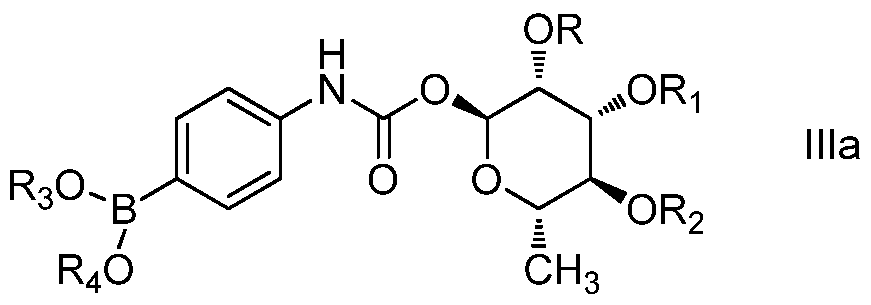
R, Ri and R2 independently represent C1-C4 alkyl, C3-C4 alkenyl or C1-C4 fluoroalkyl, and
R3 and R4 independently represent C C4 alkyl, or when taken together form an ethylene or propylene group optionally substituted with from one to four CH3 groups, is prepared by a process which comprises a) contacting p-bromophenyl isocyanate
 with a tetrahydropyran-2-ol of Formula (IV)
 wherein
R, Ri and R2 independently represent Ci-C4 alkyl, C3-C4 alkenyl or Ci-C4 fluoroalkyl, in a polar aprotic solvent in the presence of cesium carbonate (CS2CO3) to form a carbamate of Formula (V)

R30 OR3
R4O' OR4 wherein R3 and R4 are as previously defined, in a polar aprotic solvent in the presence of a palladium catalyst and an alkali metal or alkaline earth metal acetate.
The present invention concerns a process for preparing the boronic ester of the formula
(Ilia)

R3 and R4 independently represent C C4 alkyl, or when taken together form an ethylene or propylene group optionally substituted with from one to four CH3 groups, which comprises contacting a boronate substituted phenyl isocyanate of Formula (VII)

R3 and R4 independently represent C C4 alkyl, or when taken together form an ethylene or propylene group optionally substituted with from one to four CH3 groups, with a tetrahydropyran-2-ol of Formula (IV)

R, Ri and R2 independently represent C C4 alkyl, C3-C4 alkenyl or C C4 fluoroalkyl, in a polar aprotic solvent in the presence of CS2CO3. Another embodiment concerns a substituted triazole of formula (II)
N ^Y
N -N 11
Z wherein
Y represents CI, Br, I, OS02CF3, OS02CH3, or OS02C6H4CH3, and
Z represents a furanyl, phenyl, pyridazinyl, pyridyl, pyrimidinyl or thienyl group, unsubstituted or substituted with one or more substituents independently selected from F, CI, CrC6 alkyl, CrC6 haloalkyl, CrC6 haloalkoxy or CrC6 haloalkylthio.
In a further embodiment, the substituted triazole of formula (Ila)
N ^ Br
< y
N -N I la
wherein
Z represents a furanyl, phenyl, pyridazinyl, pyridyl, pyrimidinyl or thienyl group, unsubstituted or substituted with one or more substituents independently selected from F, CI, CrC6 alkyl, CrC6 haloalkyl, CrC6 haloalkoxy or CrC6 haloalkylthio, is prepared by a process which comprises contacting 3-bromo-lH-l,2,4-triazole
N ^ Br
<? y
N-
Η with a brominated or iodinated furanyl, phenyl, pyridazinyl, pyridyl, pyrimidinyl or thienyl compound, unsubstituted or substituted with one or more substituents independently selected from F, CI, C -C alkyl, C -C haloalkyl, C -C haloalkoxy or C -C haloalkylthio of one of the following formulas

 wherein
L represents Br or I,
X independently represents F, CI, C -C alkyl, Ci-C6 haloalkyl, Ci-C6 haloalkoxy or Ci-C6 haloalkylthio, m = 0, 1, 2 or 3, n = 0, 1, 2, 3 or 4, and p = 0, 1, 2, 3, 4 or 5, in a polar aprotic solvent in the presence of a catalytic amount of a copper catalyst and at least one equivalent of an inorganic base at a temperature from about ambient to about 120 °C. The reaction may optionally be conducted in the presence of a complexing ligand for copper.
In an alternative embodiment, the substituted triazole of formula (II)

Y represents CI, Br, I, OS02CF3, OS02CH3, or OS02C6H4CH3, and
Z represents a furanyl, phenyl, pyridazinyl, pyridyl, pyrimidinyl or thienyl group, unsubstituted or substituted with one or more substituents independently selected from F, CI, C C6 alkyl, C C6 haloalkyl, C C6 haloalkoxy or C C6 haloalkylthio, is prepared by a process which comprises a) contacting a hydrazine hydrochloride of the formula
Z-NH-NH2 *HC1 wherein Z represents a furanyl, phenyl, pyridazinyl, pyridyl, pyrimidinyl or thienyl group, unsubstituted or substituted with one or more substituents independently selected from F, CI, C C6 alkyl, C C6 haloalkyl, C C6 haloalkoxy or C C6 haloalkylthio,
with urea in an aprotic organic solvent with a boiling point greater than 100 °C in the presence of a catalytic amount of an organic sulfonic acid at a temperature from about 100 °C to about
150 °C, b) further contacting the reaction mixture from step a) with a CrC4 alkyl orthoformate and a catalytic amount of chloro sulfonic acid at a temperature from about 60 °C to about 100 °C to provide a substituted l-H-l,2,4-triazol-3-ol of Formula (VIII)


DETAILED DESCRIPTION OF THE INVENTION
Throughout this document, all temperatures are given in degrees Celsius, and all percentages are weight percentages unless otherwise stated.
The term "alkyl", as well as derivative terms such as "haloalkyl", "fluoroalkyl", "haloalkoxy" or "haloalkylthio", as used herein, include within their scope straight chain, branched chain and cyclic moieties. Thus, typical alkyl groups are methyl, ethyl, propyl, butyl, pentyl, hexyl, 1-methylethyl, 1,1-dimethylethyl, 1-methylpropyl, 2-methylpropyl, cyclopropyl, cyclobutyl, cyclopentyl and cyclohexyl. The term "haloalkyl" includes alkyl groups substituted with from one to the maximum possible number of halogen atoms, all combinations of halogens included. The term "haloalkoxy" includes alkoxy groups substituted with from one to the maximum possible number of halogen atoms, all combinations of halogens included. The term "haloalkylthio" includes alkylthio groups substituted with from one to the maximum possible number of halogen atoms, all combinations of halogens included. The term "halogen" or "halo" includes fluorine, chlorine, bromine and iodine, with fluorine being preferred.
The furanyl, phenyl, pyridazinyl, pyridyl, pyrimidinyl or thienyl groups may be unsubstituted or substituted with one or more substituents independently selected from F, CI, C C6 alkyl, C C6 haloalkyl, C C6 haloalkoxy or C C6 haloalkylthio, provided that the
substituents are sterically compatible and the rules of chemical bonding and strain energy are satisfied.
Certain triaryl rhamnose carbamates of the formula (I),

R, Ri and R2 independently represent C C4 alkyl, C3-C4 alkenyl or C C4 fluoroalkyl, and
Z represents a furanyl, phenyl, pyridazinyl, pyridyl, pyrimidinyl or thienyl group, unsubstituted or substituted with one or more substituents independently selected from F, CI, C C6 alkyl, C C6 haloalkyl, C C6 haloalkoxy or C C6 haloalkylthio can be prepared by a Suzuki coupling reaction in good yield under conditions in which the rhamnose carbamate moiety remains intact. This is accomplished by coupling a substituted triazole of formula (II)

Y represents CI, Br, I, OS02CF3, OS02CH3, or OS02C6H4CH3, and
Z is as previously defined with a boronic acid or ester of the formula (III)
 wherein
R, Ri and R2 independently represent C C4 alkyl, C3-C4 alkenyl or C C4 fluoroalkyl, and
R3 and R4 independently represent H, C C4 alkyl, or when taken together form an ethylene or propylene group optionally substituted with from one to four CH3 groups, in an ether solvent in the presence of Pd(PPh3)4 and from about 1 to about 2 equivalents of an aqueous alkali metal carbonate at a temperature from about 50 °C to about 100 °C.
R is preferably CH3; Ri is preferably CH3, CH2CH3, CH2CH2CH3 or CH2CH=CH2; R2 is preferably CH3.
R3 and R4 are preferably both CH3, CH2CH3 or CH2CH2CH3 or, when taken together, form an ethylene or propylene group optionally substituted with from one to four CH groups.
Z is preferably a phenyl group substituted with a C -C haloalkoxy group, most preferably with a CrC2 fluoroalkoxy group in the para position.
Y is preferably Br.
The coupling reaction is conducted in an ether solvent. Preferred solvents are miscible with water and include tetrahydrofuran (THF), dioxane and dimethoxyethane (DME), with DME being most preferred.
The coupling reaction is run in the presence of Pd(PPh3)4. From about 0.05 to about 0.10 equivalents of this material is preferred, but, with particularly unreactive substrates, up to a stoichiometric amount may be needed.
The coupling reaction requires at least one equivalent of an aqueous alkali metal carbonate base, but about a 2- to 3-fold excess of base is often recommended. To preserve the integrity of the carbamates-rhamnose moiety, it is important to use from about 1 to about 2
equivalents of an aqueous alkali metal carbonate, The preferred alkali metal carbonate is sodium carbonate (Na2C03).
The coupling reaction is conducted at a temperature from about 50 °C to about 100 °C, with a temperature from about 70 °C to about 90 °C being preferred.
In a typical reaction, the substituted 3-bromotriazole, the boronic ester of the carbamate - rhamnose, 1 equivalent of aqueous Na2C03, 10 mole percent Pd(PPh3)4 are sealed in a vessel with DME. The reaction is heated at about 90 °C until the reaction is completed. The reaction mixture is cooled, diluted with a water insoluble organic solvent and water and the organic phase partitioned. The solvent is evaporated and the isolated product purified by conventional techniques such as preparative reverse phase chromatography.
The starting boronic esters of the formula (Ilia)

R, Ri and R2 independently represent C C4 alkyl, C3-C4 alkenyl or C C4 fluoroalkyl, and
R and R4 independently represent C C4 alkyl, or when taken together form an ethylene or propylene group optionally substituted with from one to four CH3 groups are novel materials and are prepared by two different approaches.
The first process comprises a) contacting p-bromophenyl isocyanate
 with a tetrahydropyran-2-ol of Formula (IV)

wherein
R, Ri and R2 independently represent Ci-C4 alkyl, C3-C4 alkenyl or Ci-C4 fluoroalkyl, in a polar aprotic solvent in the presence of Cs2C03 to form a (4-bromophenyl)carbamate of Formula (V)


In the first step, the p-bromophenyl isocyanate is contacted with the tetrahydropyran-2- ol in a polar aprotic solvent which includes amides, like N, N-dimethylformamide (DMF), N, N- dimethylacetamide (DMA) or N-methyl-2-pyrrolidinone (NMP), sulfoxides, like dimethyl sulfoxide (DMSO), esters, like ethyl acetate (EtOAc), and nitriles, like acetonitrile (MeCN), butyronitrile or benzonitrile. Nitriles, particularly MeCN, are preferred. The polar aprotic solvent should be as anhydrous as possible to avoid hydrolysis of the isocyanate and the formation of byproduct ureas. The first step is run in the presence of Cs2C03, usually in the presence of from about 1 to about 2 equivalents.
The first step is conducted at a temperature from about 0 °C to about 90 °C, with a temperature from about 0 °C to about 35 °C being preferred. The tetrahydropyran-2-ol IV normally exists as a mixture of anomeric forms, a and β. During the course of the reaction to form the carbamate, both the a and β anomers are initially formed. With continued stirring after the isocyanate has been converted entirely into the mixture of carbamates, further equilibration occurs, resulting ultimately in exclusive formation of the a anomer.
In a typical reaction, the p-bromophenyl isocyanate and CS2CO3, are added to the tetrahydropyran-2-ol in MeCN. The reaction is stirred at room temperature until the reaction and equilibration are completed. The reaction mixture is filtered to remove solids, the solvent is evaporated and the isolated product purified by conventional techniques such as flash chromatography.
In the second step, the (4-bromophenyl)carbamate is contacted with a diboron compound of Formula VI
 wherein R3 and R4 are as previously defined, in a polar aprotic solvent in the presence of a palladium catalyst and an alkali metal or alkaline earth metal acetate.
The second step is also run in a polar aprotic solvent, which likewise includes amides, like DMF, DMA or NMP, sulfoxides, like DMSO, esters, like EtOAc, and nitriles, like MeCN, butyronitrile and benzonitrile. While it is possible to run the second step using the reaction mixture of the first step without isolation and purification of the (4-bromophenyl)carbamates, and thus use the same solvent as employed in the first step, it is preferable to use a sulfoxide solvent such as DMSO.
The second step is run in the presence of a catalytic amount of palladium catalyst. A catalytic amount means from about 0.01 to about 0.20 equivalents of a palladium catalyst.
From about 0.05 to about 0.10 equivalents of catalyst is preferred. The palladium catalyst may be Pd(0), such as Pd(PPh3)4, or Pd(II) such as [l,l'-bis(diphenylphosphino)ferrocene]-
dichloropalladium(II) (PdCl2(dppf)) or bis(diphenylphosphino)dichloropalladium(II)
(PdCl2(PPh3)2).
The second step requires at least one equivalent of an alkali metal or alkaline earth metal acetate, but a large excess is often recommended. It is generally preferred to use from about 1.5 to about 3 equivalents of alkali metal or alkaline earth metal acetate. The preferred alkali metal or alkaline earth metal acetate is sodium acetate (NaOAc) or potassium acetate (KOAc).
The second step is conducted at a temperature from about 50 °C to about 110 °C, with a temperature from about 70 °C to about 90 °C being preferred.
In a typical reaction, the p-bromophenyl carbamate, the diboron compound, the palladium catalyst and the alkali metal or alkaline earth metal acetate are charged into a reaction vessel. The reaction vessel is sealed and is evacuated and backfilled with nitrogen (N2) multiple times. The polar aprotic solvent is added and the mixture heated at about 80 °C until the reaction is completed. The reaction mixture cooled, diluted with water and extracted with ether. The solvent is dried and evaporated and the isolated product purified by conventional techniques such as flash chromatography.
The second process is part of the present invention and concerns a process for preparing boronic esters of the formula (Ilia)

R, Ri and R2 independently represent C C4 alkyl, C3-C4 alkenyl or C C4 fluoroalkyl, and
R3 and R4 independently represent C C4 alkyl, or when taken together form an ethylene or propylene group optionally substituted with from one to four CH groups which comprises contacting a commercially available boronate substituted phenyl isocyanate of Formula (VII)
 wherein
R3 and R4 independently represent C C4 alkyl, or when taken together form an ethylene or propylene group optionally substituted with from one to four CH3 groups, with a tetrahydropyran-2-ol of Formula (IV)

R, Ri and R2 independently represent CrC4 alkyl, C3-C4 alkenyl or CrC4 fluoroalkyl, in a polar aprotic solvent in the presence of Cs2C03.
In the second process, the boronate substituted phenyl isocyanate is contacted with the tetrahydropyran-2-ol in a polar aprotic solvent which includes amides, like DMF, DMA or NMP, sulfoxides, like DMSO, esters, like EtOAc, and nitriles, like MeCN, butyronitrile and benzonitrile. Nitriles, particularly MeCN, are preferred. The polar aprotic solvent should be as anhydrous as possible to avoid hydrolysis of the isocyanate and the formation of byproduct ureas.
The second process is run in the presence of Cs2C03, usually in the presence of from about 1 to about 2 equivalents.
The second process is conducted at a temperature from about 0 °C to about 90 °C, with a temperature from about 0 °C to about 35 °C being preferred. The tetrahydropyran-2-ol IV normally exists as a mixture of anomeric forms, a and β. During the course of the reaction to form the carbamate, both the a and β anomers are initially formed. With continued stirring after the isocyanate has been converted entirely into the mixture of carbamates, further equilibration occurs, resulting ultimately in exclusive formation of the a anomer.
In a typical reaction, the boronate substituted phenyl isocyanate and CS2CO3, are added to the tetrahydropyran-2-ol in MeCN. The reaction is stirred at room temperature until the reaction and equilibration are completed. The reaction mixture is filtered to remove solids, the solvent is evaporated and the isolated product purified by conventional techniques such as flash chromatography.
The starting substituted triazoles of formula (II)
N ^Y
N -N 11
Z wherein
Y represents CI, Br, I, OS02CF3, OS02CH3, or OS02C6H4CH3, and
Z represents a furanyl, phenyl, pyridazinyl, pyridyl, pyrimidinyl or thienyl group, unsubstituted or substituted with one or more substituents independently selected from F, CI, Ci-C6 alkyl, Ci-C6 haloalkyl, Ci-C6 haloalkoxy or Ci-C6 haloalkylthio are novel materials and are prepared by two different approaches.
The first process comprises contacting 3-bromo-lH-l,2,4-triazole
N ^ Br
Η with a brominated or iodinated furanyl, phenyl, pyridazinyl, pyridyl, pyrimidinyl or thienyl compound, unsubstituted or substituted with one or more substituents independently selected from F, CI, Ci-C6 alkyl, Ci-C6 haloalkyl, Ci-C6 haloalkoxy or Ci-C6 haloalkylthio of one of the following formulas


L represents Br or I,
X independently represents F, CI, CrC6 alkyl, CrC6 haloalkyl, CrC6 haloalkoxy or CrC6 haloalkylthio, m = 0, 1, 2 or 3, n = 0, 1, 2, 3 or 4, and p = 0, 1, 2, 3, 4 or 5, in a polar aprotic solvent in the presence of a catalytic amount of a copper catalyst and at least one equivalent of an inorganic base at a temperature from ambient to about 120 °C. The reaction is usually conducted at a temperature from about 80 °C to about 120 °C. The reaction may optionally be conducted in the presence of a complexing ligand for copper. In the case of more activated haloheterocycles, such as 3-chloro-2-fluoro-5-(trifluoromethyl)pyridine this coupling could be run at room temperature without the need for a copper catalyst.
In the first process, the 3-bromo- lH-l,2,4-triazole is contacted with the brominated or iodinated furanyl, phenyl, pyridazinyl, pyridyl, pyrimidinyl or thienyl compound in a polar aprotic solvent which includes amides, like DMF, DMA or NMP and sulfoxides, like DMSO. DMSO is particularly preferred. The polar aprotic solvent should be as anhydrous as possible.
The first process is run in the presence of catalytic amount of copper catalyst, usually in the presence of from about 0.05 to about 0.25 equivalents. About 0.1 to about 0.2 equivalents of copper catalyst is preferred. Cuprous salts are generally preferred as the copper catalyst, with cuprous iodide (Cul) being especially preferred.
The first process is also run in the presence of at least one equivalent of an inorganic base, usually in the presence of from about 1 to about 2 equivalents. Preferred inorganic bases are the alkali metal carbonates and phosphates such as sodium, potassium and cesium carbonates and phosphates, with CS2CO3 being particularly preferred. The first process may optionally be conducted in the presence of an amine-containing ligand which complexes with the copper reagent such as cyclohexyl diamine or dimethylethane- 1,2-diamine. However, rather than including such an additional material, it has been found that performing the first process with an excess of the 3-bromo-lH-l,2,4-triazole is beneficial. From about 1.5 to about 3.0 equivalents of 3-bromo-lH-l,2,4-triazole per equivalent of brominated or iodinated furanyl, phenyl, pyridazinyl, pyridyl, pyrimidinyl or thienyl compound is preferred.
The first process is conducted at a temperature from ambient to about 120 °C, with a temperature from about 80 °C to about 120 °C being preferred.
In a typical reaction, the inorganic base, Cul and the brominated triazole are charged to a reaction vessel which is evacuated and backfilled with N2 three times. The polar aprotic solvent, brominated or iodinated furanyl, phenyl, pyridazinyl, pyridyl, pyrimidinyl or thienyl compound and any complexing ligand are added and the mixture is heated at a temperature from about 80 °C to about 120 °C until the reaction is complete. The reaction mixture is cooled, diluted with a water immiscible organic solvent and filtered to remove solids. The organic filtrate is washed with a dilute aqueous acid and dried and the solvent is evaporated and the isolated product purified by conventional techniques such as flash chromatography.
Alternatively, the second process comprises the preparation of a substituted triazole of formula (II)

Y represents CI, Br, I, OS02CF3, OS02CH3, or OS02C6H4CH3, and
Z represents a furanyl, phenyl, pyridazinyl, pyridyl, pyrimidinyl or thienyl group, unsubstituted or substituted with one or more substituents independently selected from F, CI, CrC6 alkyl, CrC6 haloalkyl, CrC6 haloalkoxy or CrC6 haloalkylthio, by a) contacting a hydrazine hydrochloride of the formula
Z-NH-NH2 *HC1 wherein
Z represents a furanyl, phenyl, pyridazinyl, pyridyl, pyrimidinyl or thienyl group, unsubstituted or substituted with one or more substituents independently selected from F, CI, C C6 alkyl, C C6 haloalkyl, C C6 haloalkoxy or C C6 haloalkylthio, with urea in an aprotic organic solvent with a boiling point greater than 100 °C in the presence of a catalytic amount of an organic sulfonic acid at a temperature from about 100 °C to about 150 °C, b) further contacting the reaction mixture from step a) with a C C4 alkyl orthoformate and a catalytic amount of chloro sulfonic acid at a temperature from about 60 °C to about 100 °C to provide a substituted l-H-l,2,4-triazol-3-ol of Formula (VIII)

In the initial step of the second process, the substituted hydrazine hydrochloride is contacted with urea in an aprotic organic solvent with a boiling point greater than 100 °C. The substituted hydrazines are conveniently prepared from the corresponding amino compounds by reaction with sodium nitrite (NaN02) to produce a diazonium salt, followed by reduction with
a reducing agent such as hydrogen, sodium dithionite (Na2S204), tin chloride or ammonium formate to provide the hydrazine. It is beneficial to employ up to a 50 mol excess of urea. Most suitable aprotic organic solvents include inert hydrocarbons and halogenated
hydrocarbons. Chlorobenzene is particularly preferred. The initial step of the second process is run in the presence of catalytic amount of an organic sulfonic acid, usually in the presence of from about 0.05 to about 0.25 equivalents. About 0.1 to about 0.2 equivalents of the organic sulfonic acid is preferred.
The initial step of the second process is conducted at a temperature from about 100 °C to about 150 °C, with a temperature from about 110 °C to about 140 °C being preferred. In the second step of the second process the reaction mixture from the initial step is further contacted with a CrC4 alkyl orthoformate and a catalytic amount of chlorosulfonic acid at a temperature from about 60 °C to about 100 °C to provide a substituted 1-H- 1,2,4- triazol-3-ol.
The second step of the second process is run with at least one equivalent of
orthoformate; usually a slight excess of 0.1 to about 0.2 equivalents of the orthoformate is preferred.
The second step of the second process is run in the presence of catalytic amount of chlorosulfonic acid, usually in the presence of from about 0.01 to about 0.2 equivalents. About 0.01 to about 0.1 equivalents of the chlorosulfonic acid is preferred. The second step of the second process is conducted at a temperature from about 60 °C to about 100 °C, with a temperature from about 70 °C to about 90 °C being preferred.
In a typical reaction, the first two steps are performed sequentially without isolation. The substituted hydrazine hydrochloride, urea and organic sulfonic acid are suspended in an aprotic organic solvent with a boiling point greater than 100 °C and refluxed until the reaction is complete. The mixture is cooled to about 80 °C and treated with the orthoformate and chlorosulfonic acid. After completion of the reaction, the mixture is then cooled to room temperature and filtered. The solvent is evaporated and the residue dried under vacuum.
In the third step of the second process the hydroxyl group is converted to a CI, Br, I, OSO2CF3, OSO2CH3, or OSO2C6H4CH3 group by procedures well known to those of ordinary skill in the art. For example, CI, Br, and I groups are introduced by halo de-hydoxylation reactions using halogen acids, hydrochloric acid (HC1), hydrobromic acid (HBr) and hydroiodic acid (HI) or inorganic acid halides such as phosphorus chloride (PCI3), phosphoryl chloride (POCl3), thionyl chloride (SOCl2) or phosphoryl bromide (POBr3). The OS02CF3, OSO2CH3, or OSO2C6H4CH3 groups are introduced by esterification of sulfonic acid anhydrides or halides.
The following examples are presented to illustrate the invention.
EXAMPLES
Example 1. Preparation of (2R 4 5R,6R)-4-ethoxy-3,5-dimethoxy-6- methyltetrahydro-2H-pyran-2-yl { |4-{ l-r4-(trifluoromethoxy)phenyll-lH-l,2,4-triazol-3- yllphenyll {carbamate

A microwave vial was charged with (2R,3S,4S,5R,6R)-4-ethoxy-3,5-dimethoxy-6- methyltetrahydro-2H-pyran-2-yl (4-(4,4,5,5-tetramethyl- 1 ,3,2-dioxaborolan-2- yl)phenyl)carbamate (200 mg, 0.430 mmol), 3-bromo-l-(4-(trifluoromethoxy)phenyl)-lH- 1,2,4-triazole (159 mg, 0.516 mmol), 0.8 milliliter (mL) of 1 M Na2C03, and Pd(PPh3)4 (49.7 mg, 0.043 mmol). The reaction vial was sealed, DME (4.3 mL, 0.1 M) was added, and the reaction was heated at 90 °C for 6 hours (h) in a Biotage Initiator® microwave reactor with external IR-sensor temperature monitoring from the side of the vessel. The reaction mixture
was cooled to room temperature (RT, about 22 °C), diluted with dichloromethane (CH2CI2), and water was added. The layers were separated with a phase separator and the organics were concentrated in vacuo. Purification via reverse phase chromatography yielded the title compound as a white solid (184 mg, 73%): 1H NMR (400 MHz, CDC13) δ 8.55 (s, 1H), 8.16 (m, 1H), 7.79 (m, 2H), 7.53 (m, 1H), 7.40 (m, 3H), 6.75 (d, J = 30.8 Hz, 1H), 6.19 (dd, J = 9.5, 1.9 Hz, 1H), 3.69 (m, 4H), 3.60 (m, 4H), 3.55 (s, 1H), 3.21 (td, J = 9.4, 6.0 Hz, 1H), 1.32 (m, 9 H); 19F NMR (376 MHz, CDC13) δ -58.03; ESIMS mJz 567.2 ([M+H]+).
Example 2. Preparation of (2£ R^R,5 6tS>4-ethoxy-3,5-dimethoxy-6- methyltetrahvdro-2H-pyran-2-yl (4-bromophenyl)carbamate

To (3R,4R,5lS',6lS,)-4-ethoxy-3,5-dimethoxy-6-methyltetrahydro-2H-pyran-2-ol (311.1 mg, 1.412 mmol) in MeCN (10 mL) was added p-bromophenyl isocyanate (282.9 mg, 1.429 mmol) followed by CS2CO3 (502.5 mg, 1.542 mmol). The reaction mixture was allowed to stir at RT until consumption of the starting material was complete. Upon completion of the reaction, the mixture was filtered to remove solids. The aqueous components were concentrated in vacuo. Purification via flash column chromatography using 100% CH2CI2 - 10%
MeCN/CH2Cl2 yielded the title compound as a white solid (400 mg, 66%): 1H NMR (400 MHz,
CDCI3) δ 7.43 (m, 2H), 7.31 (d, / = 8.3 Hz, 2H), 6.68 (s, 1H), 6.16 (d, /
3H), 3.59 (s, 4H), 3.55 (s, 4H), 3.20 (t, / = 9.4 Hz, 1H), 1.30 (m, 6H).
Example 3. Preparation of (2R 4 5R,6R)-4-ethoxy-3,5-dimethoxy-6- methyltetrahvdro-2H-pyran-2-yl (4-(4 A5,5-tetramethyl- 1 ,3,2-dioxaborolan-2- vPphenvPcarbamate

5 To a dry flask was added (2R,3S,4S,5R,6R)-4-ethoxy-3,5-dimethoxy-6- methyltetrahydro-2H-pyran-2-yl (4-bromophenyl)carbamate (0.2 g, 0.478 mmol), PdCl2(dppf) (0.04 g, 0.048 mmol), bis(pinacolato)diboron (0.127 g, 0.502 mmol), and KOAc (0.141 g, 1.434 mmol). The vial was sealed, and evacuated/backfilled with N2 (3x). DMSO (1.594 mL) was added, and the reaction mixture was heated to 70 °C until consumption of the starting material l o was complete as verified by UPLC analysis (~6 h). The reaction was cooled to RT, diluted with water and extracted with ether. The aqueous phase was further extracted with ether (2x). The organics were combined, dried and concentrated in vacuo. Purification via flash column chromatography EtOAc/hexanes) afforded the title compound as a white foam (120 mg, 53%): 1H NMR (400 MHz, CDC13) δ 7.77 (m, 2H), 7.41 (d, J = 8.0 Hz, 2H), 6.70 (s, 1H), 6.18 (d, J =
15 1.9 Hz, 1H), 3.74 (dd, J = 9.3, 7.0 Hz, 1H), 3.65 (m, 3H), 3.59 (s, 3H), 3.55 (s, 4H), 3.20 (t, J = 9.4 Hz, 1H), 1.33 (d, J = 5.9 Hz, 13H), 1.29 (m, 5H); ESIMS m/z 464.4 ([M-H]"); IR 3311, 2978, 1733 cm"1.
Example 4. Preparation of (2£ R^R,5 6tS>4-ethoxy-3,5-dimethoxy-6- methyltetrahvdro-2H-pyran-2-yl (4-(4 A5,5-tetramethyl- 1 ,3,2-dioxaborolan-2- yPphenyPcarbamate

To (SR^R^^^^^-ethoxy-S^-dimethoxy-G-methyltetrahydro^H-pyran^-ol (3.0598 g, 13.89 mmol) in MeCN (150 mL) at 0 °C was added 2-(4-isocyanatophenyl)-4,4,5,5- tetramethyl-l,3,2-dioxaborolane (5 g, 20.40 mmol) followed by Cs2C03 (4.643 g, 14.25 mmol). The mixture was stirred at 0 °C for 10 minutes (min) and was then allowed to warm to RT and stir until consumption of the starting material was complete (~1 h). The reaction mixture was filtered through Celite®, rinsing with fresh MeCN. The filtrates were combined and
concentrated in vacuo. Purification via flash column chromatography EtOAc/hexanes afforded the title compound as a colorless solid (alpha isomer only) (4.3105 g, 67%): 1H NMR (400 MHz, CDC13) δ 7.77 (m, 2H), 7.42 (m, 2H), 6.78 (s, 1H), 6.18 (d, J = 1.9 Hz, 1H), 3.67 (m, 4H), 3.59 (s, 3H), 3.55 (s, 3H), 3.20 (t, J = 9.4 Hz, 1H), 1.34 (s, 12H), 1.28 (m, 7H); 13C NMR (101 MHz, CDC13) δ 171.21, 151.03, 139.89, 135.94, 117.59, 92.00, 83.77, 83.68, 81.45, 79.28, 70.40, 65.81, 61.17, 60.41, 59.21, 24.87, 21.06, 17.90, 15.71, 14.20; ESIMS m/z 466.3
([M+H]+).
Example 5. Preparation of 3-bromo- l-(4-(trifluoromethoxy)phenyl)- 1H- 1 ,2,4-triazole

34%
A dry round bottom flask was charged with potassium phosphate (K3PO4, 7.74 g, 36.5 mmol), Cul (0.165 g, 0.868 mmol), and 3-bromo-lH-l,2,4-triazole (2.83 g, 19.10 mmol). The flask was evacuated/backfilled with N2 (3x). DMF (34.7 ml) was added, followed by trans- (lR,2R)-N,N'-bismethyl-l,2-cyclohexane diamine (0.274 ml, 1.736 mmol) and l-iodo-4- (trifluoromethoxy)benzene (5 g, 17.36 mmol). The solution was heated to 110 °C. After 48 h, the reaction mixture was cooled to RT, diluted with EtOAc and filtered through Celite®. The filtrate was washed with water (100 mL) containing HQ (1 M, 10 mL). The organics were separated, and the aqueous phase was further extracted with EtOAc (3x). The organics were combined, dried, and concentrated in vacuo. Purification via flash column chromatography EtOAc/hexanes yielded the title compound as a tan solid (1.86 g, 34%): 1H NMR (400 MHz, CDCI3) δ 8.44 (s, 1H), 7.70 (d, J = 8.9 Hz, 2H), 7.38 (d, J = 8.5 Hz, 2H); 19F NMR (376 MHz, CDCI3) δ -58.04; EIMS m/z 307 ([M]+).
Example 6. Preparation of 3-bromo- l-(4-(trifluoromethoxy)phenyl)- 1H- 1 ,2,4-triazole

2 equiv
A dry round bottom flask was charged with 3-bromo- lH-l,2,4-triazole (5 g, 33.8 mmol), Cul (0.644 g, 3.38 mmol), and Cs2C03 (11.01 g, 33.8 mmol). The flask was evacuated/backfilled with N2, then DMSO (33.8 mL) and l-iodo-4-(trifluoromethoxy)benzene (4.87 g, 16.90 mmol) were added. The reaction mixture was heated to 100 °C for 36 h. The reaction mixture was cooled to RT, diluted with EtOAc, filtered through a plug of Celite® and further washed with EtOAc. Water was added to the combined organics, and the layers were separated. The aqueous phase was neutralized to pH 7, and further extracted with EtOAc. The combined organics were concentrated in vacuo. Purification via flash column chromatography EtOAc/hexanes yielded the title compound as an off white solid (3.78 g, 73%): mp 67-69 °C; 1H NMR (400 MHz, CDC13) δ 8.43 (s, 1H), 7.70 (m, 2H), 7.38 (m, 2H); 19F NMR (376 MHz, CDC13) δ -58.02.

To a dry 500 mL round bottomed flask equipped with magnetic stirrer, N2 inlet, addition funnel, and thermometer, were charged 4-perfluoroethoxyaniline (11.8 g, 52.0 mmol) and HC1 (2 N), and the resulting suspension was cooled to about 0 °C with an external ice / salt (sodium chloride, NaCl) bath. To the suspension was added a solution of sodium nitrite (NaN02; 1.05 g, 54.5 mmol) in water (10 mL) drop wise from the addition funnel at a rate which maintained the temperature below 5 °C, and the resulting colorless solution was stirred at 0 °C for 30 min. To a separate 500 mL round bottomed flask equipped with magnetic stir bar, addition funnel, and thermometer were added Na2S204 (27.1 g, 156 mmol), sodium hydroxide (NaOH; 1.04 g, 26.0 mmol), and water (60 mL), and the suspension was cooled to about 5 °C with an external cooling bath. The diazonium salt solution prepared in round bottom 1 was transferred to the addition funnel and added to round bottom 2 at a rate which maintained the temperature below 8 °C. Following the addition, the reaction mixture was warmed to 18 °C and the pH was adjusted to about 8 with 50% NaOH. The resulting pale orange solution was extracted with EtOAc (3 x 100 mL) and the combined organic extracts were washed with water (100 mL), washed with saturated aqueous NaCl solution (brine; 100 mL), dried over anhydrous magnesium sulfate (MgS04), filtered, and the filtrate concentrated to give the crude product as an orange semi-solid (12.2 g). The residue was purified by automated flash column
chromatography using 0- 100% EtOAc/hexanes as eluent provided the title compound as a yellow liquid (10.4 g, 83%): 1H NMR (400 MHz, CDC13) δ 7.18 - 7.00 (m, 2H), 6.97 - 6.68 (m, 2H), 5.24 (bs, 1H), 3.98 - 3.09 (bs, 2H); 19F NMR (376 MHz, CDC13) δ -86.00, -86.01, - 87.92; EIMS mJz 242 ([M]+).
Example 8. Preparation of l-(4-(Perfluoroethoxy)phenyl)-lH- l,2,4-triazol-3-ol

A mixture of (4-(perfluoroethoxy)phenyl)hydrazine hydrochloride (5 g, 17.95 mmol), urea (1.46 g; 24.23 mmol) and /?ara-toluenesulfonic acid (p-TsOH, 24 mg, 0.18 mmol) suspended in chlorobenzene (16.3 mL) was refluxed for 2 h (140 °C). The mixture was then cooled to 80 °C and triethyl orthoformate was added (3.2 mL, 19.20 mmol) followed by chloro sulfonic acid (24 μί, 0.36 mmol). The reaction was heated at 80 °C for 4 h. The reaction was cooled to RT and filtered. The residue was dried under high vacuum overnight to give the title compound as a white solid (5.24 g, 99%): mp >300 °C; 1H NMR (400 MHz, DMSO-d6) δ 11.55 (s, 1H), 8.96 (s, 1H), 7.88 (d, J = 9.1 Hz, 2H), 7.54 (d, J = 9.1 Hz, 2H); 19F NMR (376 MHz, DMSO) δ -85.23, -86.96; 13C NMR (101 MHz, DMSO) δ 167.77, 145.31, 141.44, 135.97, 123.00, 119.85; ESIMS m/z 295 [(M+H)]+.
Example 9. Preparation of 3-Bromo- l-(4-(Perfluoroethoxy)phenyl)- 1H- 1 ,2,4-triazole

0.34 mmol) and POBr3 (194 mg; 0.68 mmol) was heated at 170 °C for 2 h. The reaction was cooled to RT and quenched by the slow addition of ice. The suspension was extracted with chloroform (CHC13). The combined organic layers were dried over anhydrous MgS04, filtered and concentrated. This material was run down a plug of silica gel using CHC13 as the eluent to give the title compound (15 mg; 12%): 1H NMR (400 MHz, CDC13) δ 8.43 (s, 1H), 7.81 - 7.62 (m, 2H), 7.48 - 7.31 (m, 2H); 19F NMR (376 MHz, CDC13) δ -86.05 (d, J = 1.1 Hz), -87.99 (d, J = 3.7 Hz); GCMS m/z 358 [(M+H)]+.
Example 10. Preparation of l-(4-(Perfluoroethoxy)phenyl)-lH- 2,4-triazol-3-yl- trifhioromethane sulfonate

To an ice cold solution containing l-(4-(perfluoroethoxy)phenyl)-lH-l,2,4-triazol-3-ol (558 mg; 1.89 mmol) and triethylamine (0.40 mL; 2.84 mmol) dissolved in CH2C12 (7 mL) was added a solution of triflic anhydride (0.34 mL; 1.99 mmol) dissolved in 3 mL of CH2C12 dropwise. The reaction was stirred at 0 °C for 1 h and warmed to RT. The mixture was diluted with CH2C12 and washed with cold water. The solution was dried over anhydrous MgS04, filtered and concentrated. The residue was dissolved in CH2C12 (10 mL) and added to a loading cartridge containing Celite® and purified via flash column chromatography (EtOAc/hexanes). The title compound was obtained as a yellow oil (406 mg; 50%): 1H NMR (400 MHz, CDC13) δ 8.43 (s, 1H), 7.72 (d, J = 9.2 Hz, 2H), 7.42 (d, J = 9.2 Hz, 3H); 19F NMR (376 MHz, CDC13) δ - 72.17, -85.90, -87.94; GC/MS m/z Ml [(M+H)]+.
Example 11. Preparation of (2£ R,4R,5 6tS>4-ethoxy-3,5-dimethoxy-6- methyltetrahvdro-2H-pyran-2-yl (4-( l-(4-(perfluoroethoxy)phenyl)- 1H- 1 ,2,4-triazol-3- vPphenvPcarbamate

To a solution containing l-(4-(perfluoroethoxy)phenyl)-lH-l,2,4-triazol-3-yl trifluoromethanesulfonate (75 mg; 0.176 mmol) and (2S,3R,4R,5S,6S)-4-ethoxy-3,5-dimethoxy- 6-methyl-tetrahydro-2H-pyran-2-yl (4-(4,4,5,5-tetra-methyl- 1 ,3,2-dioxaborolan-2- yl)phenyl)carbamate (82 mg; 0.176 mmol) in DME (1.8 mL) was added Na2C03 (2M; 0.27 mL;
0.527 mmol). The mixture was degassed by bubbling N2 through the solution for 5 min.
Pd(PPh3)4 (41 mg; 0.035 mmol) was then added and the mixture was heated at 85 °C overnight. The mixture was diluted with EtOAc and washed with a saturated solution of sodium
bicarbonate (NaHC03). The organic phase was dried over anhydrous MgS04, filtered and concentrated. The residue was purified via radial chromatography using a 2: 1 hexane/EtOAc mixture as the eluent (R/ = 0.25) to give the title compound (16 mg; 15%): 1H NMR (400 MHz, CDC13) δ 8.56 (s, 1H), 8.17 (d, J = 8.8 Hz, 2H), 7.81 (d, J = 9.1 Hz, 2H), 7.54 (d, J = 8.4 Hz, 2H), 7.40 (d, J = 9.0 Hz, 2H), 6.79 (s, 1H), 6.20 (s, 1H), 3.60 (s, 3H) 3.57 (s, 3H), 3.81 - 3.56 (m, 5H) 3.21 (t, J = 9.4 Hz, 1H), 1.45 - 1.21 (m, 6H); ESIMS m/z 616 [(M+H)]+.

Step 1. Preparation of l-(diphenylmethylene)-2-(4-(perfluoroethoxy)phenyl)- hydrazine: To a dry 2 L round bottomed flask fitted with an overhead mechanical stirrer, nitrogen inlet, thermometer, and reflux condenser were added 1 bromo-4-(perfluoroethoxy)- benzene (100 g, 344 mmol), benzophenone hydrazone (74.2 g, 378 mmol), and (2,2'- bis(diphenylphosphino)- l, l'-binaphthyl) (BINAP, 4.28 g, 6.87 mmol), and the mixture was suspended in anhydrous toluene (500 mL). To exclude oxygen, argon was sparged into the mixture for ten minutes (min) prior to and during the addition of palladium (II) acetate
(Pd(OAc)2, 1.54 g, 6.87 mmol) and sodium iert-butoxide (NaO'Bu, 49.5 g, 515 mmol), which was added in portions. The argon sparge was halted and the brown mixture was warmed to 100 °C and stirred for 3 h. The reaction was cooled to RT and poured into water (500 mL) and the aqueous mixture was extracted with EtOAc (3 x 200 mL). The combined organic extracts were washed with water, washed with saturated aqueous NaCl, dried over anhydrous MgS04, filtered, and concentrated under reduced pressure on a rotary evaporator. The crude product was purified by flash column chromatography using 0- 100% (v/v) EtOAc/hexanes as eluent to give the title compound as a red oil (123.3 g, 88%): 1H NMR (400 MHz, CDC13) δ δ 7.63 - 7.56 (m, 4H), 7.55 (t, J = 1.5 Hz, 1H), 7.51 (d, J = 4.7 Hz, 1H), 7.36 - 7.26 (m, 5H), 7.13 - 7.04 (m,
4H); 19F NMR (376 MHz, CDC13) δ -85.94, -87.84; 13C NMR (101 MHz, CDC13) δ 145.23, 143.46, 141.24, 138.06, 132.53, 129.74, 129.41, 129.03, 128.30, 128.23, 126.57, 122.82, 113.45.
Step 2. Preparation of (4-(perfluoroethoxy)phenyl)hydrazine hydrochloride: To a dry 250 mL round bottomed flask equipped with a magnetic stir bar, thermometer, and reflux condenser were added l-(diphenylmethylene)-2-(4-(perfluoroethoxy)phenyl)hydrazine (63.6 g, 157 mmol), EtOH (50 mL), and concentrated HCl (100 mL, about 1.20 mol), and the reaction was warmed to 85 °C and stirred for 5 h. The reaction was cooled to RT and the dark slurry was concentrated to a brown paste on a rotary evaporator. The paste was slurried in CH2CI2 (200 mL) and the resulting solid was collected by vacuum filtration and dried under vacuum at 40 °C to give the title compound as a tan solid (36.0 g, 82%): 1H NMR (400 MHz, DMSO- 6) δ 10.47 (s, 3H), 8.62 (s, 1H), 7.43 - 7.18 (m, 2H), 7.20 - 6.93 (m, 2H); 19F NMR (376 MHz, DMSO- 6) δ -85.30, -87.02; ESIMS m/z 243.15 ([M+H]+).
Claims
1. A process for preparing a boronic ester of the formula (Ilia)

R, Ri and R2 independently represent C1-C4 alkyl, C3-C4 alkenyl or C C4 fluoroalkyl, and
R3 and R4 independently represent C C4 alkyl, or when taken together form an ethylene or propylene group optionally substituted with from one to four CH3 groups, which comprises contacting a boronate substituted phenyl isocyanate of Formula (VII)

R3 and R4 independently represent C C4 alkyl, or when taken together form an ethylene or propylene group optionally substituted with from one to four CH3 groups, with a tetrahydropyran-2-ol of Formula (IV)

R, Ri and R2 independently represent C1-C4 alkyl, C3-C4 alkenyl or C1-C4 fluoroalkyl,
in a polar aprotic solvent in the presence of cesium carbonate.
2. The process of Claim 1 in which R is CH3; and Ri is CH3, CH2CH , CH2CH2CH3 or CH2CH=CH2; R2 is CH3; and R3 and R4 are both CH3, CH2CH3 or CH2CH2CH3 or, when taken together, form an ethylene or propylene group optionally substituted with from one to four CH groups.
3. The process of Claim 1 in which the reaction is conducted at a temperature from about 0 °C to about 90 °C.
4. The process of Claim 1 in which about 1 to about 2 equivalents of cesium carbonate are used.
5. The process of Claim 1 in which the polar aprotic solvent is a nitrile.
Applications Claiming Priority (2)
| Application Number | Priority Date | Filing Date | Title |
|---|---|---|---|
| US201361778493P | 2013-03-13 | 2013-03-13 | |
| US61/778,493 | 2013-03-13 |
Publications (1)
| Publication Number | Publication Date |
|---|---|
| WO2014158644A1 true WO2014158644A1 (en) | 2014-10-02 |
Family
ID=51530128
Family Applications (1)
| Application Number | Title | Priority Date | Filing Date |
|---|---|---|---|
| PCT/US2014/019010 Ceased WO2014158644A1 (en) | 2013-03-13 | 2014-02-27 | Process for the preparation of triaryl rhamnose carbamates |
Country Status (3)
| Country | Link |
|---|---|
| US (1) | US20140275503A1 (en) |
| AR (1) | AR094952A1 (en) |
| WO (1) | WO2014158644A1 (en) |
Families Citing this family (254)
| Publication number | Priority date | Publication date | Assignee | Title |
|---|---|---|---|---|
| PE20181198A1 (en) | 2015-10-26 | 2018-07-23 | Bayer Cropscience Ag | DERIVATIVES OF CONDENSED BICYCLE HETEROCYCLES AS PEST CONTROL AGENTS |
| WO2017093180A1 (en) | 2015-12-01 | 2017-06-08 | Bayer Cropscience Aktiengesellschaft | Condensed bicyclic heterocycle derivatives as pest control agents |
| CN108602819A (en) | 2015-12-03 | 2018-09-28 | 拜耳作物科学股份公司 | Mesoionic halogenated 3-(acetyl)-1-[(1,3-thiazol-5-yl)methyl]-1H-imidazo[1,2-a]pyridin-4-ium as insecticides -2-alkoxide derivatives and related compounds |
| US10544124B2 (en) | 2016-02-11 | 2020-01-28 | Bayer Cropscience Aktiengesellschaft | Substituted 2-(het)arylimidazolylcarboxyamides as pesticides |
| MX2018009809A (en) | 2016-02-11 | 2018-09-10 | Bayer Cropscience Ag | Substituted 2-oxyimidazolyl-carboxamides as pest control agents. |
| WO2017144341A1 (en) | 2016-02-23 | 2017-08-31 | Bayer Cropscience Aktiengesellschaft | Condensed bicyclic heterocycle derivatives as pest control agents |
| CN109152368A (en) | 2016-03-15 | 2019-01-04 | 拜耳作物科学股份公司 | Substituted sulfonamides for controlling animal pests |
| JP2019513700A (en) | 2016-03-16 | 2019-05-30 | バイエル・クロップサイエンス・アクチェンゲゼルシャフト | N- (Cyanobenzyl) -6- (cyclopropyl-carbonylamino) -4- (phenyl) -pyridine-2-carboxamide derivative as a pesticide and plant protection agent and related compounds |
| WO2017174414A1 (en) | 2016-04-05 | 2017-10-12 | Bayer Cropscience Aktiengesellschaft | Naphthaline-derivatives as pest control agents |
| AU2017251155B2 (en) | 2016-04-15 | 2021-08-05 | Elanco Animal Health Gmbh | Pyrazolopyrimidine derivatives |
| EP3448845B1 (en) | 2016-04-25 | 2020-11-04 | Bayer CropScience Aktiengesellschaft | Substituted 2-alkylimidazolyl-carboxamides as pesticides |
| EP3241830A1 (en) | 2016-05-04 | 2017-11-08 | Bayer CropScience Aktiengesellschaft | Condensed bicyclic heterocyclic derivatives as pesticides |
| WO2017198450A1 (en) | 2016-05-15 | 2017-11-23 | Bayer Cropscience Nv | Method for increasing yield in maize |
| WO2017198449A1 (en) | 2016-05-15 | 2017-11-23 | Bayer Cropscience Nv | Method for increasing yield in brassicaceae |
| EP3245865A1 (en) | 2016-05-17 | 2017-11-22 | Bayer CropScience Aktiengesellschaft | Method for increasing yield in brassicaceae |
| WO2017198453A1 (en) | 2016-05-16 | 2017-11-23 | Bayer Cropscience Nv | Method for increasing yield in potato, tomato or alfalfa |
| WO2017198452A1 (en) | 2016-05-16 | 2017-11-23 | Bayer Cropscience Nv | Method for increasing yield in soybean |
| WO2017198454A1 (en) | 2016-05-17 | 2017-11-23 | Bayer Cropscience Nv | Method for increasing yield in cotton |
| WO2017198455A2 (en) | 2016-05-17 | 2017-11-23 | Bayer Cropscience Nv | Method for increasing yield in beta spp. plants |
| WO2017198451A1 (en) | 2016-05-17 | 2017-11-23 | Bayer Cropscience Nv | Method for increasing yield in small grain cereals such as wheat and rice |
| RU2019104378A (en) | 2016-07-19 | 2020-08-19 | Байер Кропсайенс Акциенгезельшафт | CONDENSED BICYCLIC HETEROCYCLIC DERIVATIVES AS ANTI-PEST AGENTS |
| WO2018019937A1 (en) | 2016-07-29 | 2018-02-01 | Bayer Cropscience Aktiengesellschaft | Formulation comprising a beneficial p. bilaii strain and talc for use in seed treatment |
| ES2858093T3 (en) | 2016-08-10 | 2021-09-29 | Bayer Cropscience Ag | 2-Heterocyclyl-imidazolyl-substituted carboxamides as pesticides |
| MX2019001918A (en) | 2016-08-15 | 2019-09-06 | Bayer Cropscience Ag | Condensed bicyclic heterocycle derivatives as pest control agents. |
| WO2018050825A1 (en) | 2016-09-19 | 2018-03-22 | Bayer Cropscience Aktiengesellschaft | Pyrazolo [1,5-a]pyridine derivatives and their use as pesticides |
| JP6994504B2 (en) | 2016-10-06 | 2022-01-14 | バイエル・クロップサイエンス・アクチェンゲゼルシャフト | 2- (Heta) aryl substituted fused bicyclic heterocyclic derivative as a pest control agent |
| WO2018065288A1 (en) | 2016-10-07 | 2018-04-12 | Bayer Cropscience Aktiengesellschaft | 2-[2-phenyl-1-(sulfonyl-methyl)-vinyl]-imidazo-[4,5-b] pyridine derivatives and related compounds as pesticides in plant protection |
| TW201822637A (en) | 2016-11-07 | 2018-07-01 | 德商拜耳廠股份有限公司 | Substituted sulfonamides for controlling animal pests |
| SI3538512T1 (en) | 2016-11-11 | 2021-09-30 | Bayer Animal Health Gmbh | New anthelmintic quinoline-3-carboxamide derivatives |
| BR112019010511A2 (en) | 2016-11-23 | 2019-09-17 | Bayer Ag | fused bicyclic heterocycle derivatives as pesticides |
| BR112019012262A2 (en) | 2016-12-16 | 2019-12-03 | Bayer Ag | mesoionic imidazopyridines for use as insecticides |
| WO2018108791A1 (en) | 2016-12-16 | 2018-06-21 | Bayer Cropscience Aktiengesellschaft | Thiadiazole derivatives as pesticides |
| UY37556A (en) | 2017-01-10 | 2018-07-31 | Bayer Ag | HETEROCYCLIC DERIVATIVES AS PESTICIDES |
| AR113206A1 (en) | 2017-01-10 | 2020-02-19 | Bayer Cropscience Ag | HETEROCYCLIC DERIVATIVES AS PESTICIDES |
| WO2018138050A1 (en) | 2017-01-26 | 2018-08-02 | Bayer Aktiengesellschaft | Condensed bicyclic heterocyclene derivatives as pest control agents |
| TW201833107A (en) | 2017-02-06 | 2018-09-16 | 德商拜耳廠股份有限公司 | 2-(het)aryl-substituted fused heterocycle derivatives as pesticides |
| EP3369320A1 (en) | 2017-03-02 | 2018-09-05 | Bayer CropScience Aktiengesellschaft | Agent for controlling bugs |
| US20200037600A1 (en) | 2017-04-12 | 2020-02-06 | Bayer Aktiengesellschaft | Mesoionic imidazopyridines as insecticides |
| EP3612530A1 (en) | 2017-04-21 | 2020-02-26 | Bayer Aktiengesellschaft | Mesoionic imidazopyridines as insecticides |
| KR102537983B1 (en) | 2017-04-24 | 2023-05-31 | 바이엘 악티엔게젤샤프트 | Condensed Bicyclic Heterocyclic-Compound Derivatives as Pest Control Agents |
| TWI782983B (en) | 2017-04-27 | 2022-11-11 | 德商拜耳廠股份有限公司 | Heteroarylphenylaminoquinolines and analogues |
| KR102596307B1 (en) | 2017-04-27 | 2023-10-30 | 바이엘 애니멀 헬스 게엠베하 | New bicyclic pyrazole derivatives |
| KR20200003045A (en) | 2017-05-02 | 2020-01-08 | 바이엘 악티엔게젤샤프트 | 2- (het) aryl-substituted condensed bicyclic heterocyclic derivatives as pest control agents |
| US11089783B2 (en) | 2017-05-02 | 2021-08-17 | Bayer Aktiengesellschaft | 2-(het)aryl-substituted fused heterocycle derivatives as pesticides |
| CN110650628A (en) | 2017-05-03 | 2020-01-03 | 拜耳公司 | Trisubstituted silylheteroaryloxyquinolines and analogs thereof |
| BR112019023037A2 (en) | 2017-05-03 | 2020-06-02 | Bayer Aktiengesellschaft | TRISUBSTITUED SISILBENZILBENZIMIDAZOLIS AND ANALOGS |
| WO2018202712A1 (en) | 2017-05-03 | 2018-11-08 | Bayer Aktiengesellschaft | Trisubstitutedsilylmethylphenoxyquinolines and analogues |
| HRP20220790T1 (en) | 2017-05-04 | 2022-09-16 | Bayer Cropscience Aktiengesellschaft | 2-{[2-(PHENYLOXIMETHYL)PYRIDIN-5-YL]OXY}ETHANAMINE DERIVATIVES AND RELATED COMPOUNDS AS PESTICIDES, EXAMPLES INTENDED TO PROTECT PLANTS |
| WO2018202525A1 (en) | 2017-05-04 | 2018-11-08 | Bayer Cropscience Aktiengesellschaft | Phenoxyethanamine derivatives for controlling pests |
| US11485733B2 (en) | 2017-06-30 | 2022-11-01 | Bayer Animal Health Gmbh | Azaquinoline derivatives |
| EP3284739A1 (en) | 2017-07-19 | 2018-02-21 | Bayer CropScience Aktiengesellschaft | Substituted (het) aryl compounds as pesticides |
| KR20200036909A (en) | 2017-08-04 | 2020-04-07 | 바이엘 애니멀 헬스 게엠베하 | Quinoline derivatives for treating infections caused by worms |
| WO2019035881A1 (en) | 2017-08-17 | 2019-02-21 | Bayer Cropscience Lp | Liquid fertilizer-dispersible compositions and methods thereof |
| ES2932627T3 (en) | 2017-08-22 | 2023-01-23 | Bayer Ag | Heterocyclic derivatives as pesticides |
| US11696913B2 (en) | 2017-09-20 | 2023-07-11 | Mitsui Chemicals Agro, Inc. | Prolonged ectoparasite-controlling agent for animal |
| USRE50663E1 (en) | 2017-10-04 | 2025-11-18 | Bayer Aktiengesellschaft | Heterocycle derivatives as pesticides |
| KR102625753B1 (en) | 2017-10-18 | 2024-01-17 | 바이엘 악티엔게젤샤프트 | Combinations of active compounds with insecticidal/miticidal properties |
| EP3473100A1 (en) | 2017-10-18 | 2019-04-24 | Bayer Aktiengesellschaft | Active compound combinations having insecticidal/acaricidal properties |
| WO2019076751A1 (en) | 2017-10-18 | 2019-04-25 | Bayer Aktiengesellschaft | Active compound combinations having insecticidal/acaricidal properties |
| AU2018350611B2 (en) | 2017-10-18 | 2023-12-14 | Bayer Aktiengesellschaft | Active compound combinations having insecticidal/acaricidal properties |
| JP7260533B2 (en) | 2017-10-18 | 2023-04-18 | バイエル・アクチエンゲゼルシヤフト | Combinations of active compounds with insecticidal/acaricidal properties |
| SI3697217T1 (en) | 2017-10-18 | 2021-11-30 | Bayer Aktiengesellschaft | Active compound combinations having insecticidal/acaricidal properties |
| BR112020009446A2 (en) | 2017-11-13 | 2020-11-03 | Bayer Aktiengesellschaft | derivatives of tetrazolium propyl and its use as a fungicide |
| CN111601802A (en) | 2017-11-28 | 2020-08-28 | 拜耳股份有限公司 | Heterocyclic compounds as pesticides |
| WO2019105871A1 (en) | 2017-11-29 | 2019-06-06 | Bayer Aktiengesellschaft | Nitrogenous heterocycles as a pesticide |
| TW201927768A (en) | 2017-12-21 | 2019-07-16 | 德商拜耳廠股份有限公司 | Trisubstitutedsilylmethylheteroaryloxyquinolines and analogues |
| EP3305786A3 (en) | 2018-01-22 | 2018-07-25 | Bayer CropScience Aktiengesellschaft | Condensed bicyclic heterocycle derivatives as pesticides |
| WO2019155066A1 (en) | 2018-02-12 | 2019-08-15 | Bayer Aktiengesellschaft | Fungicidal oxadiazoles |
| US11019821B2 (en) | 2018-02-21 | 2021-06-01 | Bayer Aktiengesellschaft | Fused bicyclic heterocycle derivatives as pesticides |
| WO2019162228A1 (en) | 2018-02-21 | 2019-08-29 | Bayer Aktiengesellschaft | 1-(5-substituted imidazol-1-yl)but-3-en derivatives and their use as fungicides |
| MX2020009320A (en) | 2018-03-08 | 2020-10-07 | Bayer Ag | Use of heteroaryl-triazole and heteroaryl-tetrazole compounds as pesticides in plant protection. |
| US11414432B2 (en) | 2018-03-12 | 2022-08-16 | Bayer Aktiengesellschaft | Condensed bicyclic heterocyclic derivatives as pest control agents |
| US20210147371A1 (en) | 2018-04-10 | 2021-05-20 | Bayer Aktiengesellschaft | Oxadiazoline derivatives |
| FI3904350T3 (en) | 2018-04-12 | 2023-11-15 | Bayer Ag | N-(cyclopropylmethyl)-5-(methylsulfonyl)-n-{1-[1-(pyrimidin-2-yl)-1h-1,2,4-triazol-5-yl]ethyl}benzamide derivatives and the corresponding pyridine-carboxamide derivatives as pesticides |
| WO2019197615A1 (en) | 2018-04-13 | 2019-10-17 | Bayer Aktiengesellschaft | Active ingredient combinations with fungicides, insecticides and acaricidal properties |
| WO2019197623A1 (en) | 2018-04-13 | 2019-10-17 | Bayer Aktiengesellschaft | Active ingredient combinations with insecticidal, fungicidal and acaricidal properties |
| UY38184A (en) | 2018-04-17 | 2019-10-31 | Bayer Ag | HETEROARYL-TRIAZOLE AND HETEROARYL-TETRAZOLE COMPOUNDS NOVELTY AS PESTICIDES |
| WO2019201921A1 (en) | 2018-04-20 | 2019-10-24 | Bayer Aktiengesellschaft | Heterocyclene derivatives as pest control agents |
| WO2019202077A1 (en) | 2018-04-20 | 2019-10-24 | Bayer Aktiengesellschaft | Heteroaryl-triazole and heteroaryl-tetrazole compounds as pesticides |
| KR102709679B1 (en) | 2018-04-25 | 2024-09-26 | 바이엘 악티엔게젤샤프트 | Novel heteroaryl-triazole and heteroaryl-tetrazole compounds as insecticides |
| US11572357B2 (en) | 2018-05-09 | 2023-02-07 | Bayer Animal Health Gmbh | Quinoline derivatives |
| WO2019224143A1 (en) | 2018-05-24 | 2019-11-28 | Bayer Aktiengesellschaft | Active ingredient combinations with insecticidal, nematicidal and acaricidal properties |
| WO2020005678A1 (en) | 2018-06-25 | 2020-01-02 | Bayer Cropscience Lp | Seed treatment method |
| EP3586630A1 (en) | 2018-06-28 | 2020-01-01 | Bayer AG | Active compound combinations having insecticidal/acaricidal properties |
| AU2019297402B2 (en) | 2018-07-05 | 2024-05-02 | Bayer Aktiengesellschaft | Substituted thiophenecarboxamides and analogues as antibacterials agents |
| WO2020020813A1 (en) | 2018-07-25 | 2020-01-30 | Bayer Aktiengesellschaft | Fungicidal active compound combinations |
| WO2020020816A1 (en) | 2018-07-26 | 2020-01-30 | Bayer Aktiengesellschaft | Novel triazole derivatives |
| WO2020043650A1 (en) | 2018-08-29 | 2020-03-05 | Bayer Aktiengesellschaft | Active compound combinations having insecticidal/acaricidal properties |
| BR112021003665A2 (en) | 2018-09-13 | 2021-05-18 | Bayer Aktiengesellschaft | heterocyclene derivatives as pest control agents |
| EP3852532A1 (en) | 2018-09-17 | 2021-07-28 | Bayer Aktiengesellschaft | Use of the fungicide isoflucypram for controlling claviceps purpurea and reducing sclerotia in cereals |
| WO2020070050A1 (en) | 2018-10-01 | 2020-04-09 | Bayer Aktiengesellschaft | Fungicidal 5-substituted imidazol-1-yl carbinol derivatives |
| EP3636644A1 (en) | 2018-10-11 | 2020-04-15 | Bayer Aktiengesellschaft | Mesoionic imidazopyridines as insecticides |
| WO2020078839A1 (en) | 2018-10-16 | 2020-04-23 | Bayer Aktiengesellschaft | Active substance combinations |
| JP2022512712A (en) | 2018-10-18 | 2022-02-07 | バイエル・アクチエンゲゼルシヤフト | Heteroarylaminoquinolines and analogs |
| KR20210081370A (en) | 2018-10-18 | 2021-07-01 | 바이엘 악티엔게젤샤프트 | Pyridylphenylaminoquinoline and analogs |
| TW202028193A (en) | 2018-10-20 | 2020-08-01 | 德商拜耳廠股份有限公司 | Oxetanylphenoxyquinolines and analogues |
| EP3643711A1 (en) | 2018-10-24 | 2020-04-29 | Bayer Animal Health GmbH | New anthelmintic compounds |
| AR117169A1 (en) | 2018-11-28 | 2021-07-14 | Bayer Ag | (TIO) PYRIDAZINE AMIDES AS FUNGICIDE COMPOUNDS |
| HRP20230284T1 (en) | 2018-12-07 | 2023-05-12 | Bayer Aktiengesellschaft | Herbicidal combinations |
| ES2942215T3 (en) | 2018-12-07 | 2023-05-30 | Bayer Ag | herbicidal compositions |
| EP3620052A1 (en) | 2018-12-12 | 2020-03-11 | Bayer Aktiengesellschaft | Use of phenoxypyridinyl-substituted (1h-1,2,4-triazol-1-yl)alcohols for controlling fungicidal diseases in maize |
| WO2020126980A1 (en) | 2018-12-18 | 2020-06-25 | Bayer Aktiengesellschaft | Active compound combinations having insecticidal/acaricidal properties |
| PY19106036A (en) | 2018-12-20 | 2021-07-06 | Bayer Ag | HETEROCYCLYL PYRIDAZINE COMPOUNDS AS FUNGICIDES |
| EP3669652A1 (en) | 2018-12-21 | 2020-06-24 | Bayer AG | Active compound combination |
| PY19106549A (en) | 2018-12-21 | 2021-07-13 | Bayer Ag | 1,3,4-OXADIAZOLES AND THEIR DERIVATIVES AS NEW FUNGICIDAL AGENTS |
| EP3679792A1 (en) | 2019-01-08 | 2020-07-15 | Bayer AG | Active compound combinations |
| EP3679791A1 (en) | 2019-01-08 | 2020-07-15 | Bayer AG | Active compound combinations |
| EP3679789A1 (en) | 2019-01-08 | 2020-07-15 | Bayer AG | Active compound combinations |
| EP3679793A1 (en) | 2019-01-08 | 2020-07-15 | Bayer AG | Active compound combinations |
| EP3679790A1 (en) | 2019-01-08 | 2020-07-15 | Bayer AG | Active compound combinations |
| EP3545764A1 (en) | 2019-02-12 | 2019-10-02 | Bayer AG | Crystal form of 2-({2-fluoro-4-methyl-5-[(r)-(2,2,2-trifluoroethyl)sulfinyl]phenyl}imino)-3-(2,2,2- trifluoroethyl)-1,3-thiazolidin-4-one |
| PY2012000A (en) | 2019-02-26 | 2023-07-25 | Bayer Ag | DERIVATIVES OF FUSED BICYCLIC HETEROCYCLES AS PESTICIDES |
| PY2011993A (en) | 2019-02-26 | 2021-07-05 | Bayer Ag | CONDENSED BICYCLIC HETEROCYCLOSE DERIVATIVES AS A PESTICIDE |
| BR112021009703A2 (en) | 2019-03-01 | 2021-11-23 | Bayer Ag | Combinations of active compounds having insecticidal/acaricidal properties |
| AR118247A1 (en) | 2019-03-05 | 2021-09-22 | Bayer Ag | COMBINATION OF ACTIVE COMPOUNDS |
| WO2020182929A1 (en) | 2019-03-13 | 2020-09-17 | Bayer Aktiengesellschaft | Substituted ureas and derivatives as new antifungal agents |
| EP3937639A1 (en) | 2019-03-15 | 2022-01-19 | Bayer Aktiengesellschaft | Active compound combinations having insecticidal/acaricidal properties |
| EP3564225A1 (en) | 2019-03-21 | 2019-11-06 | Bayer Aktiengesellschaft | Crystalline form of spiromesifen |
| EP3725788A1 (en) | 2019-04-15 | 2020-10-21 | Bayer AG | Novel heteroaryl-substituted aminoalkyl azole compounds as pesticides |
| MX2021013613A (en) | 2019-05-08 | 2021-12-10 | Bayer Ag | Active compound combination. |
| BR112021022308A2 (en) | 2019-05-08 | 2021-12-28 | Bayer Ag | High spread ulv formulations for insecticides |
| WO2020231751A1 (en) | 2019-05-10 | 2020-11-19 | Bayer Cropscience Lp | Active compound combinations |
| WO2020229398A1 (en) | 2019-05-14 | 2020-11-19 | Bayer Aktiengesellschaft | (1-alkenyl)-substituted pyrazoles and triazoles as pest control agents |
| EP3750888A1 (en) | 2019-06-12 | 2020-12-16 | Bayer Aktiengesellschaft | Crystalline form a of 1,4-dimethyl-2-[2-(pyridin-3-yl)-2h-indazol-5-yl]-1,2,4-triazolidine-3,5-dione |
| BR112021025317A2 (en) | 2019-06-21 | 2022-03-15 | Bayer Ag | Thienylhydroxyisoxazolines and derivatives thereof |
| EP3986877A1 (en) | 2019-06-21 | 2022-04-27 | Bayer Aktiengesellschaft | Hydroxyisoxazolines and derivatives thereof |
| BR112021025264A2 (en) | 2019-06-21 | 2022-01-25 | Bayer Ag | Phenoxyphenyl hydroxyisoxazolines and analogues as new antifungal agents |
| EP3986891A1 (en) | 2019-06-21 | 2022-04-27 | Bayer Aktiengesellschaft | Hydroxyisoxazolines and derivatives thereof |
| WO2020254489A1 (en) | 2019-06-21 | 2020-12-24 | Bayer Aktiengesellschaft | Benzylphenyl hydroxyisoxazolines and analogues as new antifungal agents |
| EP3986892A1 (en) | 2019-06-21 | 2022-04-27 | Bayer Aktiengesellschaft | Hydroxyisoxazolines and use thereof as fungicides |
| BR112021025300A2 (en) | 2019-06-21 | 2022-02-01 | Bayer Ag | fungicidal oxadiazoles |
| WO2020254492A1 (en) | 2019-06-21 | 2020-12-24 | Bayer Aktiengesellschaft | Hydroxyisoxazolines and derivatives thereof |
| WO2020263812A1 (en) | 2019-06-24 | 2020-12-30 | Auburn University | A bacillus strain and methods of its use for plant growth promotion |
| EP3608311A1 (en) | 2019-06-28 | 2020-02-12 | Bayer AG | Crystalline form a of n-[4-chloro-3-[(1-cyanocyclopropyl)carbamoyl]phenyl]-2-methyl-4-methylsulfonyl-5-(1,1,2,2,2-pentafluoroethyl)pyrazole-3-carboxamide |
| CA3145592A1 (en) | 2019-07-03 | 2021-01-07 | Bayer Aktiengesellschaft | Substituted thiophene carboxamides and derivatives thereof as microbicides |
| PT3993626T (en) | 2019-07-04 | 2025-02-10 | Bayer Ag | Herbicidal compositions |
| MX2022000950A (en) | 2019-07-22 | 2022-02-14 | Bayer Ag | 5-amino substituted pyrazoles and triazoles as pest control agents. |
| CN118561817A (en) | 2019-07-23 | 2024-08-30 | 拜耳公司 | New heteroaryl-triazole compounds as pesticides |
| BR112022000942A2 (en) | 2019-07-23 | 2022-05-17 | Bayer Ag | Heteroaryl-triazole compounds as pesticides |
| TWI865563B (en) | 2019-07-30 | 2024-12-11 | 德商拜耳動物保健有限公司 | New isoquinoline derivatives |
| EP3771714A1 (en) | 2019-07-30 | 2021-02-03 | Bayer AG | Nitrogen-containing heterocycles as pesticides |
| EP3701796A1 (en) | 2019-08-08 | 2020-09-02 | Bayer AG | Active compound combinations |
| WO2021058659A1 (en) | 2019-09-26 | 2021-04-01 | Bayer Aktiengesellschaft | Rnai-mediated pest control |
| AR120176A1 (en) | 2019-10-09 | 2022-02-02 | Bayer Ag | HETEROARYL-TRIAZOLE COMPOUNDS AS PESTICIDES |
| UY38911A (en) | 2019-10-09 | 2021-05-31 | Bayer Ag | HETEROARYL-TRIAZOLE COMPOUNDS AS PESTICIDES, FORMULATIONS, USES AND METHODS OF USE OF THEM |
| TW202128650A (en) | 2019-10-11 | 2021-08-01 | 德商拜耳動物保健有限公司 | Novel heteroaryl-substituted pyrazine derivatives as pesticides |
| US20220380318A1 (en) | 2019-11-07 | 2022-12-01 | Bayer Aktiengesellschaft | Substituted sulfonyl amides for controlling animal pests |
| WO2021097162A1 (en) | 2019-11-13 | 2021-05-20 | Bayer Cropscience Lp | Beneficial combinations with paenibacillus |
| TW202134226A (en) | 2019-11-18 | 2021-09-16 | 德商拜耳廠股份有限公司 | Novel heteroaryl-triazole compounds as pesticides |
| TW202136248A (en) | 2019-11-25 | 2021-10-01 | 德商拜耳廠股份有限公司 | Novel heteroaryl-triazole compounds as pesticides |
| MA58019B1 (en) | 2019-12-20 | 2024-10-31 | Bayer Aktiengesellschaft | THIENYLOXAZOLONES AND ANALOGS |
| CN118496197A (en) | 2019-12-20 | 2024-08-16 | 拜耳公司 | Substituted thiophenecarboxamides, thiophenecarboxylic acids and derivatives thereof |
| EP3845304A1 (en) | 2019-12-30 | 2021-07-07 | Bayer AG | Capsule suspension concentrates based on polyisocyanates and biodegradable amine based cross-linker |
| PY2112437A (en) | 2020-02-18 | 2022-08-16 | Bayer Ag | NEW HETEROARYL-TRIAZOLE COMPOUNDS AS PESTICIDES |
| EP3868207A1 (en) | 2020-02-24 | 2021-08-25 | Bayer Aktiengesellschaft | Encapsulated pyrethroids with improved activity in soil and leaf applications |
| EP3708565A1 (en) | 2020-03-04 | 2020-09-16 | Bayer AG | Pyrimidinyloxyphenylamidines and the use thereof as fungicides |
| AU2021253168A1 (en) | 2020-04-09 | 2022-11-03 | Elanco Animal Health Gmbh | Substituted condensed azines as anthelmintic compounds |
| HUE069397T2 (en) | 2020-04-16 | 2025-03-28 | Bayer Ag | Active compound combinations and fungicide compositions comprising those |
| AR121829A1 (en) | 2020-04-16 | 2022-07-13 | Bayer Ag | COMBINATIONS OF ACTIVE COMPOUNDS AND FUNGICIDE COMPOSITIONS THAT COMPRISE THEM |
| WO2021209363A1 (en) | 2020-04-16 | 2021-10-21 | Bayer Aktiengesellschaft | Active compound combinations and fungicide compositions comprising those |
| WO2021209490A1 (en) | 2020-04-16 | 2021-10-21 | Bayer Aktiengesellschaft | Cyclaminephenylaminoquinolines as fungicides |
| WO2021209366A1 (en) | 2020-04-16 | 2021-10-21 | Bayer Aktiengesellschaft | Active compound combinations and fungicide compositions comprising those |
| CN115551352B (en) | 2020-04-16 | 2024-11-08 | 拜耳公司 | Active compound combinations and fungicide compositions comprising them |
| US20230212163A1 (en) | 2020-04-21 | 2023-07-06 | Bayer Aktiengesellschaft | 2-(het)aryl-substituted condensed heterocyclic derivatives as pest control agents |
| EP4146628A1 (en) | 2020-05-06 | 2023-03-15 | Bayer Aktiengesellschaft | Pyridine (thio)amides as fungicidal compounds |
| TWI891782B (en) | 2020-05-06 | 2025-08-01 | 德商拜耳廠股份有限公司 | Novel heteroaryl-triazole compounds as pesticides |
| WO2021228734A1 (en) | 2020-05-12 | 2021-11-18 | Bayer Aktiengesellschaft | Triazine and pyrimidine (thio)amides as fungicidal compounds |
| EP4153566A1 (en) | 2020-05-19 | 2023-03-29 | Bayer CropScience Aktiengesellschaft | Azabicyclic(thio)amides as fungicidal compounds |
| US12565489B2 (en) | 2020-06-04 | 2026-03-03 | Bayer Aktiengesellschaft | Heterocyclyl pyrimidines and triazines as novel fungicides |
| CA3186659A1 (en) | 2020-06-10 | 2021-12-16 | Bayer Aktiengesellschaft | Azabicyclyl-substituted heterocycles as fungicides |
| CN116157017A (en) | 2020-06-18 | 2023-05-23 | 拜耳公司 | 3-(Pyridazin-4-yl)-5,6-dihydro-4H-1,2,4-oxadiazine derivatives as fungicides for crop protection |
| WO2021255089A1 (en) | 2020-06-19 | 2021-12-23 | Bayer Aktiengesellschaft | 1,3,4-oxadiazole pyrimidines and 1,3,4-oxadiazole pyridines as fungicides |
| UY39276A (en) | 2020-06-19 | 2022-01-31 | Bayer Ag | USE OF 1,3,4-OXADIAZOL-2-ILPYRIMIDINE COMPOUNDS TO CONTROL PHYTOPATHOGENIC MICROORGANISMS, METHODS OF USE AND COMPOSITIONS. |
| WO2021255091A1 (en) | 2020-06-19 | 2021-12-23 | Bayer Aktiengesellschaft | 1,3,4-oxadiazoles and their derivatives as fungicides |
| UY39275A (en) | 2020-06-19 | 2022-01-31 | Bayer Ag | 1,3,4-OXADIAZOLE PYRIMIDINES AS FUNGICIDES, PROCESSES AND INTERMEDIARIES FOR THEIR PREPARATION, METHODS OF USE AND USES OF THE SAME |
| EP3929189A1 (en) | 2020-06-25 | 2021-12-29 | Bayer Animal Health GmbH | Novel heteroaryl-substituted pyrazine derivatives as pesticides |
| WO2021260017A1 (en) | 2020-06-26 | 2021-12-30 | Bayer Aktiengesellschaft | Aqueous capsule suspension concentrates comprising biodegradable ester groups |
| KR20230039665A (en) | 2020-07-02 | 2023-03-21 | 바이엘 악티엔게젤샤프트 | Heterocycle derivatives as pest control agents |
| WO2022033991A1 (en) | 2020-08-13 | 2022-02-17 | Bayer Aktiengesellschaft | 5-amino substituted triazoles as pest control agents |
| WO2022053453A1 (en) | 2020-09-09 | 2022-03-17 | Bayer Aktiengesellschaft | Azole carboxamide as pest control agents |
| WO2022058327A1 (en) | 2020-09-15 | 2022-03-24 | Bayer Aktiengesellschaft | Substituted ureas and derivatives as new antifungal agents |
| EP3974414A1 (en) | 2020-09-25 | 2022-03-30 | Bayer AG | 5-amino substituted pyrazoles and triazoles as pesticides |
| EP3915371A1 (en) | 2020-11-04 | 2021-12-01 | Bayer AG | Active compound combinations and fungicide compositions comprising those |
| EP3994988A1 (en) | 2020-11-08 | 2022-05-11 | Bayer AG | Agrochemical composition with improved drift, spreading and rainfastness properties |
| EP3994990A1 (en) | 2020-11-08 | 2022-05-11 | Bayer AG | Agrochemical composition with improved drift, spreading and uptake properties |
| EP3994989A1 (en) | 2020-11-08 | 2022-05-11 | Bayer AG | Agrochemical composition with improved drift, rainfastness and uptake properties |
| EP3994987A1 (en) | 2020-11-08 | 2022-05-11 | Bayer AG | Agrochemical composition with improved drift and uptake properties |
| EP3994985A1 (en) | 2020-11-08 | 2022-05-11 | Bayer Aktiengesellschaft | Agrochemical composition with improved drift properties |
| EP3994993A1 (en) | 2020-11-08 | 2022-05-11 | Bayer Aktiengesellschaft | Low drift, rainfastness, high spreading and ulv tank mix adjuvant formulation |
| EP3994992A1 (en) | 2020-11-08 | 2022-05-11 | Bayer AG | Low drift, rainfastness, high uptake and ulv tank mix adjuvant formulation |
| EP3994995A1 (en) | 2020-11-08 | 2022-05-11 | Bayer Aktiengesellschaft | Low drift, rainfastness, high spreading, high uptake and ulv tank mix adjuvant formulation |
| EP3994986A1 (en) | 2020-11-08 | 2022-05-11 | Bayer Aktiengesellschaft | Agrochemical composition with improved drift and spreading properties |
| EP3994991A1 (en) | 2020-11-08 | 2022-05-11 | Bayer Aktiengesellschaft | Agrochemical composition with improved drift, spreading, uptake and rainfastness properties |
| EP3994994A1 (en) | 2020-11-08 | 2022-05-11 | Bayer Aktiengesellschaft | Low drift, rainfastness, high spreading, high uptake and ulv tank mix adjuvant formulation |
| EP3915971A1 (en) | 2020-12-16 | 2021-12-01 | Bayer Aktiengesellschaft | Phenyl-s(o)n-phenylamidines and the use thereof as fungicides |
| WO2022129196A1 (en) | 2020-12-18 | 2022-06-23 | Bayer Aktiengesellschaft | Heterobicycle substituted 1,2,4-oxadiazoles as fungicides |
| WO2022129188A1 (en) | 2020-12-18 | 2022-06-23 | Bayer Aktiengesellschaft | 1,2,4-oxadiazol-3-yl pyrimidines as fungicides |
| WO2022129190A1 (en) | 2020-12-18 | 2022-06-23 | Bayer Aktiengesellschaft | (hetero)aryl substituted 1,2,4-oxadiazoles as fungicides |
| WO2022152728A1 (en) | 2021-01-15 | 2022-07-21 | Bayer Aktiengesellschaft | Herbicidal compositions |
| EP4036083A1 (en) | 2021-02-02 | 2022-08-03 | Bayer Aktiengesellschaft | 5-oxy substituted heterocycles as pesticides |
| BR112023019400A2 (en) | 2021-03-30 | 2023-12-05 | Bayer Ag | 3-(HETERO)ARYL-5-CHLORODIFLOROMETHYL-1,2,4-OXADIAZOLE AS A FUNGICIDE |
| WO2022207496A1 (en) | 2021-03-30 | 2022-10-06 | Bayer Aktiengesellschaft | 3-(hetero)aryl-5-chlorodifluoromethyl-1,2,4-oxadiazole as fungicide |
| WO2022233777A1 (en) | 2021-05-06 | 2022-11-10 | Bayer Aktiengesellschaft | Alkylamide substituted, annulated imidazoles and use thereof as insecticides |
| EP4337017A1 (en) | 2021-05-10 | 2024-03-20 | Bayer Aktiengesellschaft | Herbicide/safener combination based on safeners from the class of substituted [(1,5-diphenyl-1h-1,2,4-triazol-3-yl)oxy]acetic acids and their salts |
| EP4337661A1 (en) | 2021-05-12 | 2024-03-20 | Bayer Aktiengesellschaft | 2-(het)aryl-substituted condensed heterocycle derivatives as pest control agents |
| JP2024529148A (en) | 2021-08-13 | 2024-08-01 | バイエル、アクチエンゲゼルシャフト | Active compound combinations and antifungal compositions containing them - Patents.com |
| MX2024002386A (en) | 2021-08-25 | 2024-03-14 | Bayer Ag | Novel pyrazinyl-triazole compounds as pesticides. |
| EP4144739A1 (en) | 2021-09-02 | 2023-03-08 | Bayer Aktiengesellschaft | Anellated pyrazoles as parasiticides |
| EP4148052A1 (en) | 2021-09-09 | 2023-03-15 | Bayer Animal Health GmbH | New quinoline derivatives |
| AU2023258006A1 (en) | 2022-04-18 | 2024-10-31 | Basf Corporation | High-load agricultural formulations and methods of making same |
| EP4265110A1 (en) | 2022-04-20 | 2023-10-25 | Bayer AG | Water dispersible granules with low melting active ingredients prepared by extrusion |
| JP2025516324A (en) | 2022-05-03 | 2025-05-27 | バイエル、アクチエンゲゼルシャフト | Use of (5S)-3-[3-(3-chloro-2-fluorophenoxy)-6-methylpyridazin-4-yl]-5-(2-chloro-4-methylbenzyl)-5,6-dihydro-4H-1,2,4-oxadiazine for controlling undesirable microorganisms |
| CN119522219A (en) | 2022-05-03 | 2025-02-25 | 拜耳公司 | Crystalline form of (5S)-3-[3-(3-chloro-2-fluorophenoxy)-6-methylpyridazin-4-yl]-5-(2-chloro-4-methylbenzyl)-5,6-dihydro-4H-1,2,4-oxadiazine |
| CN119233755A (en) | 2022-05-07 | 2024-12-31 | 拜耳公司 | Low drift aqueous liquid formulations for low, medium and high spray applications |
| EP4295683A1 (en) | 2022-06-21 | 2023-12-27 | Bayer Aktiengesellschaft | Agrochemical formulations comprising crystalline form a of 4-[(6-chloro-3-pyridylmethyl)(2,2-difluoroethyl)amino]furan-2(5h)-one |
| KR20250020435A (en) | 2022-06-06 | 2025-02-11 | 바이엘 악티엔게젤샤프트 | Pesticide preparation containing crystalline form A of 4-[(6-chloro-3-pyridylmethyl)(2,2-difluoroethyl)amino]furan-2(5H)-one |
| WO2024013016A1 (en) | 2022-07-11 | 2024-01-18 | Bayer Aktiengesellschaft | Herbicidal compositions |
| WO2024013015A1 (en) | 2022-07-11 | 2024-01-18 | Bayer Aktiengesellschaft | Herbicidal compositions |
| AU2023353668A1 (en) | 2022-09-27 | 2025-04-10 | Bayer Aktiengesellschaft | Herbicide/safener combination based on safeners from the class of substituted [(1,5-diphenyl-1h-1,2,4-triazol-3-yl)oxy]acetic acids and their salts |
| WO2024068517A1 (en) | 2022-09-28 | 2024-04-04 | Bayer Aktiengesellschaft | 3-(hetero)aryl-5-chlorodifluoromethyl-1,2,4-oxadiazole as fungicide |
| EP4295688A1 (en) | 2022-09-28 | 2023-12-27 | Bayer Aktiengesellschaft | Active compound combination |
| WO2024068519A1 (en) | 2022-09-28 | 2024-04-04 | Bayer Aktiengesellschaft | 3-(hetero)aryl-5-chlorodifluoromethyl-1,2,4-oxadiazole as fungicide |
| WO2024068520A1 (en) | 2022-09-28 | 2024-04-04 | Bayer Aktiengesellschaft | 3-(hetero)aryl-5-chlorodifluoromethyl-1,2,4-oxadiazole as fungicide |
| WO2024068518A1 (en) | 2022-09-28 | 2024-04-04 | Bayer Aktiengesellschaft | 3-heteroaryl-5-chlorodifluoromethyl-1,2,4-oxadiazole as fungicide |
| EP4353082A1 (en) | 2022-10-14 | 2024-04-17 | Bayer Aktiengesellschaft | Herbicidal compositions |
| EP4618745A1 (en) | 2022-11-17 | 2025-09-24 | Bayer Aktiengesellschaft | Use of isotianil for controlling plasmodiophora brassica |
| EP4665151A1 (en) | 2023-02-16 | 2025-12-24 | Bayer Aktiengesellschaft | Herbicidal mixtures |
| WO2024213752A1 (en) | 2023-04-14 | 2024-10-17 | Elanco Animal Health Gmbh | Long-term prevention and/or treatment of a disease by slo-1 inhibitors |
| WO2025026738A1 (en) | 2023-07-31 | 2025-02-06 | Bayer Aktiengesellschaft | 6-[5-(ethylsulfonyl)-1-methyl-1h-imidazol-4-yl]-7-methyl-3-(pentafluoroethyl)-7h-imidazo[4,5-c]pyridazine derivatives as pesticides |
| KR20260042262A (en) | 2023-08-01 | 2026-03-30 | 글로바켐 엔브이 | insecticide mixture |
| EP4501112A1 (en) | 2023-08-01 | 2025-02-05 | Globachem NV | Plant defense elicitors |
| WO2025031668A1 (en) | 2023-08-09 | 2025-02-13 | Bayer Aktiengesellschaft | Azaheterobiaryl-substituted 4,5-dihydro-1h-2,4,5-oxadiazines as novel fungicides |
| CN121693501A (en) | 2023-08-09 | 2026-03-17 | 拜耳公司 | Pyridazin-4-yl oxadiazines as novel bactericides |
| CN121908950A (en) | 2023-08-21 | 2026-04-21 | 拜耳公司 | Herbicide/safety agent complexes based on substituted [(1,5-diphenyl-1H-1,2,4-triazol-3-yl)oxy]acetic acid as a safer and substituted cyclic diones and their salts as herbicides. |
| WO2025040301A1 (en) | 2023-08-21 | 2025-02-27 | Bayer Aktiengesellschaft | Herbicide/safener combinations based on safeners from the class of substituted [(1,5-diphenyl-1h-1,2,4-triazol-3-yl)oxy] acetic acids and herbicides from the class of substituted cyclic diones and the salts thereof |
| WO2025049555A1 (en) | 2023-08-31 | 2025-03-06 | Oerth Bio Llc | Compositions and methods for targeted inhibition and degradation of proteins in an insect cell |
| WO2025078128A1 (en) | 2023-10-11 | 2025-04-17 | Bayer Aktiengesellschaft | Pyridazin-3-one-4-yloxadiazines as novel fungicides |
| WO2025098876A1 (en) | 2023-11-10 | 2025-05-15 | Bayer Aktiengesellschaft | Active compound combinations having insecticidal/acaricidal properties |
| WO2025098874A1 (en) | 2023-11-10 | 2025-05-15 | Bayer Aktiengesellschaft | Active compound combinations having fungicidal/insecticidal/acaricidal properties |
| WO2025098875A1 (en) | 2023-11-10 | 2025-05-15 | Bayer Aktiengesellschaft | Active compound combinations having insecticidal/acaricidal properties |
| WO2025108865A1 (en) | 2023-11-23 | 2025-05-30 | Bayer Aktiengesellschaft | Herbicidal compositions |
| WO2025114238A1 (en) | 2023-12-01 | 2025-06-05 | Bayer Aktiengesellschaft | Solid agrochemical formulations comprising crystalline form a of 4-[(6-chloro-3-pyridylmethyl)(2,2- difluoroethyl)amino]furan-2(5h)-one |
| WO2025119860A1 (en) | 2023-12-05 | 2025-06-12 | Bayer Aktiengesellschaft | Liquid agrochemical formulations comprising flupyradifurone |
| WO2025132148A1 (en) | 2023-12-21 | 2025-06-26 | Bayer Aktiengesellschaft | Adjuvant compositions for agrochemical applications |
| WO2025168620A1 (en) | 2024-02-07 | 2025-08-14 | Bayer Aktiengesellschaft | Heteroaryl-substituted 4,5-dihydro-1h-2,4,5-oxadiazines as novel fungicides |
| TW202539516A (en) | 2024-02-08 | 2025-10-16 | 德商拜耳廠股份有限公司 | Use of isoxazolinecarboxamide for selective weed control in pineapple |
| WO2025186065A1 (en) | 2024-03-05 | 2025-09-12 | Bayer Aktiengesellschaft | Heteroaryl-substituted (aza)quinoxaline derivatives as pesticides |
| WO2025190927A1 (en) | 2024-03-14 | 2025-09-18 | Bayer Aktiengesellschaft | Active compound combinations having insecticidal/acaricidal properties |
| WO2025257121A1 (en) | 2024-06-12 | 2025-12-18 | Bayer Aktiengesellschaft | Active compound combinations having insecticidal/acaricidal properties |
| WO2025257122A1 (en) | 2024-06-12 | 2025-12-18 | Bayer Aktiengesellschaft | Active compound combinations having insecticidal/acaricidal properties |
| WO2025257242A1 (en) | 2024-06-14 | 2025-12-18 | Bayer Aktiengesellschaft | Heterocyclyl-substituted aryl- and heteroarylpyrazines and salts thereof, and the use thereof as herbicidal active substances |
| WO2026027375A1 (en) | 2024-07-29 | 2026-02-05 | Bayer Aktiengesellschaft | Hydroxy-dihydropyridinone carboxamides as pesticides |
| WO2026078157A2 (en) | 2024-10-10 | 2026-04-16 | Elanco Animal Health Gmbh | Slo-1 modulators for prevention and/or treatment of a disease |
| WO2026082481A1 (en) | 2024-10-17 | 2026-04-23 | Bayer Aktiengesellschaft | Active compound combinations having insecticidal/acaricidal properties |
Citations (6)
| Publication number | Priority date | Publication date | Assignee | Title |
|---|---|---|---|---|
| US5777118A (en) * | 1993-11-02 | 1998-07-07 | Basf Aktiengesellschaft | Process of making 2-salicyl(thio0r oxo) pyrimidine |
| US6001981A (en) * | 1996-06-13 | 1999-12-14 | Dow Agrosciences Llc | Synthetic modification of Spinosyn compounds |
| WO2009153285A2 (en) * | 2008-06-18 | 2009-12-23 | Basf Se | Sulfonamide compounds |
| US20100204164A1 (en) * | 2009-02-11 | 2010-08-12 | Dow Agrosciences Llc | Pesticidal compositions |
| US20120172218A1 (en) * | 2008-02-12 | 2012-07-05 | Dow Agrosciences Llc | Pesticidal compositions |
| US20130019348A1 (en) * | 2011-07-12 | 2013-01-17 | Dow Agrosciences Llc | Pesticidal compositions and processes related thereto |
Family Cites Families (1)
| Publication number | Priority date | Publication date | Assignee | Title |
|---|---|---|---|---|
| JP2011522048A (en) * | 2008-06-03 | 2011-07-28 | メルク・シャープ・エンド・ドーム・コーポレイション | Inhibitor of AKT activity |
-
2014
- 2014-02-27 US US14/192,464 patent/US20140275503A1/en not_active Abandoned
- 2014-02-27 WO PCT/US2014/019010 patent/WO2014158644A1/en not_active Ceased
- 2014-02-28 AR ARP140100667A patent/AR094952A1/en unknown
Patent Citations (6)
| Publication number | Priority date | Publication date | Assignee | Title |
|---|---|---|---|---|
| US5777118A (en) * | 1993-11-02 | 1998-07-07 | Basf Aktiengesellschaft | Process of making 2-salicyl(thio0r oxo) pyrimidine |
| US6001981A (en) * | 1996-06-13 | 1999-12-14 | Dow Agrosciences Llc | Synthetic modification of Spinosyn compounds |
| US20120172218A1 (en) * | 2008-02-12 | 2012-07-05 | Dow Agrosciences Llc | Pesticidal compositions |
| WO2009153285A2 (en) * | 2008-06-18 | 2009-12-23 | Basf Se | Sulfonamide compounds |
| US20100204164A1 (en) * | 2009-02-11 | 2010-08-12 | Dow Agrosciences Llc | Pesticidal compositions |
| US20130019348A1 (en) * | 2011-07-12 | 2013-01-17 | Dow Agrosciences Llc | Pesticidal compositions and processes related thereto |
Also Published As
| Publication number | Publication date |
|---|---|
| AR094952A1 (en) | 2015-09-09 |
| US20140275503A1 (en) | 2014-09-18 |
Similar Documents
| Publication | Publication Date | Title |
|---|---|---|
| WO2014158644A1 (en) | Process for the preparation of triaryl rhamnose carbamates | |
| JP6963557B2 (en) | 4-((6- (2- (2,4-difluorophenyl) -1,1-difluoro-2-hydroxy-3- (1H-1,2,4-triazole-1-yl) propyl) pyridine-3) -Il) Oxy) Benzonitrile and preparation method | |
| CA3006946C (en) | Method for producing 2-[4-(4-chlorophenoxy)-2-(trifluoromethyl)phenyl]-1-(1,2,4-triazol-1-yl)propan-2-ol | |
| KR100889937B1 (en) | Method of preparing barleyconazole | |
| CA2935594A1 (en) | 5-fluoro-4-imino-3-(alkyl/substituted alkyl)-1-(arylsulfonyl)-3,4-dihydropyrimidin-2(1h)-one and processes for their preparation | |
| CA3005743A1 (en) | 4-((6-(2-(2,4-difluorophenyl)-1,1-difluoro-2-hydroxy-3-(1h-1,2,4-triazol-1-yl)propyl)pyridin-3-yl)oxy)benzonitrile and processes of preparation | |
| WO2017087643A1 (en) | 4-((6-2-(2,4-difluorophenyl)-1,1-difluoro-2-hydroxy-3-(1h-1,2,4-triazol-1-yl)propyl)pyridin-3-yl)oxy)benzonitrile and processes of preparation | |
| WO2014198241A1 (en) | Thio-1,2,4-triazole derivatives and method for preparing the same | |
| IL267139B2 (en) | Method for producing 5-(1-phenyl-1h-pyrazole-4-yl)-nicotinamide derivatives and similar compounds without isolating or purifying the phenylhydrazine intermediate | |
| KR20030004446A (en) | Process to prepare sulfonamides | |
| JP2016504319A (en) | Process for the preparation of 4-amino-5-fluoro-3-chloro-6- (substituted) picolinate | |
| CN104583183B (en) | Fluorine picolinoyl fluoride and preparation method thereof | |
| WO2014158646A1 (en) | Improved process for the preparation of certain triaryl rhamnose carbamates | |
| CN102344441A (en) | Technological improved method for preparing voriconazole intermediate | |
| WO2014158648A1 (en) | Preparation of 1,3-(substituted-diaryl)-1,2,4-triazoles | |
| WO2014158650A1 (en) | Preparation of triaryl rhamnose carbamates | |
| WO2014186027A1 (en) | Process for the preparation of triaryl rhamnose carbamates | |
| WO2014158647A1 (en) | Preparation of triaryl rhamnose carbamates | |
| EP3740469A1 (en) | Processes for the synthesis of sulfentrazone | |
| KR20150095785A (en) | Process for the preparation of 4-amino-5-fluoro-3-chloro-6-(substitu ted)picolinates | |
| EP3541801A1 (en) | 4-(6-(2-(2,4-difluorophenyl)-1.1-difluoro-2-hydroxy-3-(5-mercapto-1h | |
| CN103588712B (en) | A kind of pyrimidines and preparation method thereof and application | |
| KR101587438B1 (en) | Method for producing 3-mercaptoaniline compound | |
| WO2016004899A1 (en) | Process for making tetracyclic heterocycle compounds | |
| US9376401B2 (en) | Preparation of 1,3-(substituted-diaryl)-1,2,4-triazoles and intermediates therefrom |
Legal Events
| Date | Code | Title | Description |
|---|---|---|---|
| 121 | Ep: the epo has been informed by wipo that ep was designated in this application |
Ref document number: 14775699 Country of ref document: EP Kind code of ref document: A1 |
|
| NENP | Non-entry into the national phase |
Ref country code: DE |
|
| 122 | Ep: pct application non-entry in european phase |
Ref document number: 14775699 Country of ref document: EP Kind code of ref document: A1 |