WO2014136379A1 - 警報装置 - Google Patents
警報装置 Download PDFInfo
- Publication number
- WO2014136379A1 WO2014136379A1 PCT/JP2014/000618 JP2014000618W WO2014136379A1 WO 2014136379 A1 WO2014136379 A1 WO 2014136379A1 JP 2014000618 W JP2014000618 W JP 2014000618W WO 2014136379 A1 WO2014136379 A1 WO 2014136379A1
- Authority
- WO
- WIPO (PCT)
- Prior art keywords
- alarm
- tunnel
- vehicle
- driver
- alarm device
- Prior art date
- Legal status (The legal status is an assumption and is not a legal conclusion. Google has not performed a legal analysis and makes no representation as to the accuracy of the status listed.)
- Ceased
Links
Images

Classifications
-
- B—PERFORMING OPERATIONS; TRANSPORTING
- B60—VEHICLES IN GENERAL
- B60K—ARRANGEMENT OR MOUNTING OF PROPULSION UNITS OR OF TRANSMISSIONS IN VEHICLES; ARRANGEMENT OR MOUNTING OF PLURAL DIVERSE PRIME-MOVERS IN VEHICLES; AUXILIARY DRIVES FOR VEHICLES; INSTRUMENTATION OR DASHBOARDS FOR VEHICLES; ARRANGEMENTS IN CONNECTION WITH COOLING, AIR INTAKE, GAS EXHAUST OR FUEL SUPPLY OF PROPULSION UNITS IN VEHICLES
- B60K28/00—Safety devices for propulsion-unit control, specially adapted for, or arranged in, vehicles, e.g. preventing fuel supply or ignition in the event of potentially dangerous conditions
- B60K28/02—Safety devices for propulsion-unit control, specially adapted for, or arranged in, vehicles, e.g. preventing fuel supply or ignition in the event of potentially dangerous conditions responsive to conditions relating to the driver
-
- B—PERFORMING OPERATIONS; TRANSPORTING
- B60—VEHICLES IN GENERAL
- B60K—ARRANGEMENT OR MOUNTING OF PROPULSION UNITS OR OF TRANSMISSIONS IN VEHICLES; ARRANGEMENT OR MOUNTING OF PLURAL DIVERSE PRIME-MOVERS IN VEHICLES; AUXILIARY DRIVES FOR VEHICLES; INSTRUMENTATION OR DASHBOARDS FOR VEHICLES; ARRANGEMENTS IN CONNECTION WITH COOLING, AIR INTAKE, GAS EXHAUST OR FUEL SUPPLY OF PROPULSION UNITS IN VEHICLES
- B60K28/00—Safety devices for propulsion-unit control, specially adapted for, or arranged in, vehicles, e.g. preventing fuel supply or ignition in the event of potentially dangerous conditions
- B60K28/02—Safety devices for propulsion-unit control, specially adapted for, or arranged in, vehicles, e.g. preventing fuel supply or ignition in the event of potentially dangerous conditions responsive to conditions relating to the driver
- B60K28/06—Safety devices for propulsion-unit control, specially adapted for, or arranged in, vehicles, e.g. preventing fuel supply or ignition in the event of potentially dangerous conditions responsive to conditions relating to the driver responsive to incapacity of driver
- B60K28/066—Safety devices for propulsion-unit control, specially adapted for, or arranged in, vehicles, e.g. preventing fuel supply or ignition in the event of potentially dangerous conditions responsive to conditions relating to the driver responsive to incapacity of driver actuating a signalling device
-
- B—PERFORMING OPERATIONS; TRANSPORTING
- B60—VEHICLES IN GENERAL
- B60W—CONJOINT CONTROL OF VEHICLE SUB-UNITS OF DIFFERENT TYPE OR DIFFERENT FUNCTION; CONTROL SYSTEMS SPECIALLY ADAPTED FOR HYBRID VEHICLES; ROAD VEHICLE DRIVE CONTROL SYSTEMS FOR PURPOSES NOT RELATED TO THE CONTROL OF A PARTICULAR SUB-UNIT
- B60W50/00—Details of control systems for road vehicle drive control not related to the control of a particular sub-unit, e.g. process diagnostic or vehicle driver interfaces
- B60W50/08—Interaction between the driver and the control system
- B60W50/14—Means for informing the driver, warning the driver or prompting a driver intervention
-
- G—PHYSICS
- G06—COMPUTING OR CALCULATING; COUNTING
- G06V—IMAGE OR VIDEO RECOGNITION OR UNDERSTANDING
- G06V20/00—Scenes; Scene-specific elements
- G06V20/50—Context or environment of the image
- G06V20/59—Context or environment of the image inside of a vehicle, e.g. relating to seat occupancy, driver state or inner lighting conditions
- G06V20/597—Recognising the driver's state or behaviour, e.g. attention or drowsiness
-
- G—PHYSICS
- G08—SIGNALLING
- G08B—SIGNALLING SYSTEMS, e.g. PERSONAL CALLING SYSTEMS; ORDER TELEGRAPHS; ALARM SYSTEMS
- G08B21/00—Alarms responsive to a single specified undesired or abnormal condition and not otherwise provided for
- G08B21/02—Alarms for ensuring the safety of persons
-
- B—PERFORMING OPERATIONS; TRANSPORTING
- B60—VEHICLES IN GENERAL
- B60W—CONJOINT CONTROL OF VEHICLE SUB-UNITS OF DIFFERENT TYPE OR DIFFERENT FUNCTION; CONTROL SYSTEMS SPECIALLY ADAPTED FOR HYBRID VEHICLES; ROAD VEHICLE DRIVE CONTROL SYSTEMS FOR PURPOSES NOT RELATED TO THE CONTROL OF A PARTICULAR SUB-UNIT
- B60W2540/00—Input parameters relating to occupants
-
- B—PERFORMING OPERATIONS; TRANSPORTING
- B60—VEHICLES IN GENERAL
- B60W—CONJOINT CONTROL OF VEHICLE SUB-UNITS OF DIFFERENT TYPE OR DIFFERENT FUNCTION; CONTROL SYSTEMS SPECIALLY ADAPTED FOR HYBRID VEHICLES; ROAD VEHICLE DRIVE CONTROL SYSTEMS FOR PURPOSES NOT RELATED TO THE CONTROL OF A PARTICULAR SUB-UNIT
- B60W2540/00—Input parameters relating to occupants
- B60W2540/22—Psychological state; Stress level or workload
Definitions
- the present disclosure relates to an alarm device that issues an alarm when a driver enters a tunnel while wearing sunglasses.
- the driver may experience a visual discomfort due to the difference in brightness between inside and outside the tunnel.
- the driving support device described in Patent Document 1 sets the transmittance of the windshield for a vehicle including a windshield whose transmittance can be changed, to a predetermined target value before the vehicle enters the tunnel. Dimming processing is performed to lower
- this driving support device sets the target value to a higher transmittance in order to prevent the driver's field of vision in front of the driver from becoming too dark.
- a dimming process is performed to reduce the transmittance of the windshield.
- outside light comes in from the glass other than the windshield (for example, left and right glasses and rear glass).
- the driver may feel visually uncomfortable when the vehicle enters the tunnel, and if the driver wears sunglasses at that time, However, it may be dark enough to drive the vehicle.
- the present disclosure is intended to provide an alarm device that can prevent a driver's field of view from becoming unsuitable for driving a vehicle when the vehicle enters a tunnel.
- the alarm device includes a mounting determination unit, an entry determination unit, and an alarm unit.
- the wearing determination means determines whether the driver of the vehicle is wearing sunglasses, and the entry determining means determines whether the vehicle enters the tunnel.
- the warning means warns when the driver wears sunglasses by the wearing determination means and the vehicle is determined to enter the tunnel by the entry determining means.
- the alarm means issues an alarm, so the driver is conscious that he is wearing sunglasses before entering the tunnel.
- the alarm device includes an alarm determination unit that determines whether or not a predetermined alarm condition is satisfied, and the alarm unit alerts when the alarm condition is satisfied. You may make it do.
- the frequency of the alarm can be reduced to the case where the alarm condition is satisfied.
- the alarm device 1 is a device including a camera 2, an image processing device 3, and a navigation device 4.
- the camera 2 is a camera that images the inside of the vehicle, and is installed at a position where at least the driver can be imaged.
- the camera 2 is composed of, for example, a CCD camera or a CMOS camera, and image information of the captured image is output to the image processing device 3.
- the image processing device 3 is a computer device including a CPU 30a, a ROM 30b, and a RAM 30c, and further includes a storage device 30d.
- the ROM 30b analyzes image information input from the camera 2 and includes a program for wearing determination processing for determining whether the driver is wearing sunglasses, a program for visual line determination processing for determining the driver's line of sight, and the like. It is remembered.
- the RAM 30c stores information that needs to be temporarily stored when these programs are executed.
- image data used in the wearing determination process which is image data of an image of the driver's face wearing sunglasses (hereinafter referred to as a “comparison image”), a line-of-sight determination process, and other processes.
- Various data used in is stored.
- the navigation device 4 includes a computer device 40 including a CPU 40a, a ROM 40b, a RAM 40c, and a storage device 40d, a current position specifying device 41, an image display device 42, an audio output device 43, an operation device 44, and the like.
- a computer device 40 including a CPU 40a, a ROM 40b, a RAM 40c, and a storage device 40d, a current position specifying device 41, an image display device 42, an audio output device 43, an operation device 44, and the like.
- an alarm processing program for alarming the driver is stored.
- the RAM 40c stores information that needs to be temporarily stored when these programs are executed.
- the storage device 40d stores map information used in route guidance processing, alarm processing, and various data used in other processing.
- map information includes route guidance processing and warnings such as road position information, tunnel position information, tunnel length information, lightness information in the tunnel, and road facility information.
- route guidance processing and warnings such as road position information, tunnel position information, tunnel length information, lightness information in the tunnel, and road facility information.
- the current position specifying device 41 is a device that includes a GPS receiver, a gyroscope, and the like, and is a device that specifies the current position of the vehicle on which the navigation device 4 is mounted.
- the image display device 42 is a device that displays various images such as a map image for route guidance and an image for operation on the liquid crystal screen in accordance with instructions from the computer device 40.
- the sound output device 43 is a device that includes a speaker and outputs various sounds corresponding to various processes performed by the computer device 40.
- the operation device 44 is various switches installed on the casing of the navigation device 4, a transparent touch sensor panel 44a stacked on the liquid crystal screen of the image display device 42, or the like.
- an operation image combining one or a plurality of command images is displayed on the liquid crystal screen.
- the operator can perform an operation corresponding to the command image by touching a portion of the touch sensor panel 44a where any command image is displayed.
- the navigation device 4 of the present embodiment is configured to be able to perform at least an operation for instructing the start and end of alarm processing described later, using the touch sensor panel 44a. Specifically, an operation image for instructing the start or end of alarm processing is displayed on the liquid crystal screen, and when the operator touches the touch sensor panel 44a in the portion where any of the operation images is displayed, the alarm processing is performed. Can be instructed to start or end.
- start information is output from the navigation device 4 to the image processing device 3.
- the wearing determination process (S1) is executed when start information output from the navigation device 4 is input.
- the process of S10 is executed, and in this S10, the image captured by the camera 2 is analyzed, and the process of specifying the portion where the driver's face is imaged is executed.
- the process of S12 is executed, and in this S12, the driver compares the image obtained by imaging the driver's face identified in S10 with the comparison image stored in the storage device 30d, and the driver then wears sunglasses.
- a process for determining whether or not is mounted is executed.
- alarm processing (S3) executed by the navigation device 4 of the present embodiment will be described using the flowchart of FIG.
- This alarm process (S3) is executed when the touch sensor panel 44a is operated and an operation for instructing the start of the alarm process is performed.
- wearing information is output from the image processing device 3 when the driver is wearing sunglasses, and non-wearing information is output from the image processing device 3 when the driver is not wearing sunglasses. Is done.
- S32 processing for determining whether the latest information input from the image processing device 3 is mounting information or non-mounting information is executed. If the latest information is determined to be the wearing information in the process of S32 (S32: YES), that is, if the driver is wearing sunglasses, then the process of S34 is executed, and the latest information is the non-wearing information. Is determined (S32: NO), that is, if the driver is not wearing sunglasses, then the process of S42 is executed.
- the traveling direction of the vehicle may be estimated by, for example, storing the current position information for a certain period of time, specifying the traveling locus of the vehicle from these pieces of information, and determining the traveling direction. You may specify.
- S36 processing for determining whether there is a tunnel (more specifically, the entrance of the tunnel) within 3 km from the current position of the vehicle among the tunnels searched in S34 is executed. That is, in this S36, the process which determines whether a vehicle approachs a tunnel is performed.
- S38 a process for determining whether the tunnel determined to be within a distance of 3 km from the current position of the vehicle in S36 is 50 m or more is executed. If it is 50 m or more (S38: YES), then the process of S40 is performed. If it is less than 50 m (S38: NO), then the process of S42 is executed.
- the map information used in this embodiment also includes tunnel length information (information about the length from the entrance to the exit of the tunnel), so in S38, using this tunnel length information, Processing to determine the length of the tunnel is executed.
- the light that enters the tunnel from the exit side of the tunnel causes the driver's field of view to become dark enough to drive the vehicle when the vehicle enters the tunnel. In this embodiment, no alarm is required (S40 is not executed).
- a process of outputting an audio prompting the driver to remove the sunglasses is executed. For example, it outputs a voice saying "There is a tunnel 200m in length 3km ahead. Please be careful because running with sunglasses is dangerous.” At this time, an image that prompts the driver to remove the sunglasses may also be displayed on the image display device 42.
- S42 it is determined whether the touch sensor panel 44a is operated and an operation for instructing the end of the alarm processing is performed.
- S42: YES an operation for instructing the end of the alarm process is performed
- S44 an operation for instructing the end of the alarm process is executed
- S42: NO an operation for instructing the end of the alarm process is not performed
- the alarm device 1 of the present embodiment when used, it becomes difficult for the driver to forget to remove the sunglasses before entering the tunnel. Therefore, when the vehicle enters the tunnel, the driver's field of view is It is possible to prevent the darkness that is not suitable for driving.
- the alarm is not issued if the alarm condition (in this embodiment, the tunnel length is longer than 50 m) is not satisfied (S38: YES), the alarm is performed. Can be reduced even when the alarm conditions are met.
- the navigation device 4 includes one storage device 40d
- a plurality of storage devices (a storage device that stores map information and a storage device that stores other information) Etc.) may be provided.
- the storage device that stores the map information may be configured by a reading device that reads the map information from a medium (for example, CD, DVD) in which the map information is stored, or may be an HDD, an SSD, or the like.
- the image display device 42 has been described with respect to a device that displays various images on the liquid crystal screen, but is not limited to the liquid crystal screen.
- a tunnel that is "5km” ahead of the current position of the vehicle is searched, and in S36, it is determined whether there is a tunnel within "3km” from the current position of the vehicle. It is not limited to these. For example, in S34, a tunnel located within “6 km” may be searched, and in S36, it may be determined whether there is a tunnel within “2 km”.
- the distance from the current position of the vehicle to the tunnel is 3 km, which is a distance for determining whether the vehicle enters the tunnel. However, this distance is changed according to the speed. May be.
- the distance used as the determination criterion in S36 may be any distance as long as the time for the driver's eyes to get used to the brightness after removing the sunglasses can be secured.
- the determination criterion in S38 is limited to 50m. It is not something.
- the determination criterion in S38 may be a distance where the driver's field of view is less likely to be unsuitable for driving the vehicle when the vehicle enters the tunnel, and may be 60 m or 40 m. Further, depending on the shape of the tunnel, the determination criteria may be different, such as 55 m for a straight tunnel and 45 m for a curved tunnel.
- a condition that the brightness around the vehicle before entering the tunnel is brighter than a predetermined brightness may be set.
- the alarm may not be performed.
- the driver's eyes are accustomed to the darkness.
- the driver's field of view is less likely to be unsuitable for driving the vehicle.
- Whether the surrounding brightness of the vehicle before entering the tunnel is darker than a predetermined brightness may be determined according to external weather (determined to be dark in the case of cloudy or rainy), or sunshine You may determine using a meter.
- the brightness in the tunnel may be equal to or lower than a predetermined brightness. In this case, the brightness in the tunnel is determined based on the predetermined brightness. If it is bright (S38: NO), the alarm may not be performed.
- Each component of the present disclosure is conceptual and is not limited to the above embodiment.
- the functions of one component may be distributed to a plurality of components, or the functions of a plurality of components may be integrated into one component.
- at least a part of the configuration of the above embodiment may be replaced with a known configuration having the same function.
- at least a part of the configuration of the above embodiment may be added to or replaced with the configuration of the other embodiment.
- each section is expressed as, for example, S100. Further, each section can be divided into a plurality of subsections, while a plurality of sections can be combined into one section. Further, each section configured in this manner can be referred to as a device, module, or means.
Landscapes
- Engineering & Computer Science (AREA)
- Mechanical Engineering (AREA)
- General Physics & Mathematics (AREA)
- Transportation (AREA)
- Physics & Mathematics (AREA)
- Combustion & Propulsion (AREA)
- Emergency Management (AREA)
- Automation & Control Theory (AREA)
- Chemical & Material Sciences (AREA)
- Business, Economics & Management (AREA)
- Human Computer Interaction (AREA)
- Multimedia (AREA)
- Theoretical Computer Science (AREA)
- Emergency Alarm Devices (AREA)
- Traffic Control Systems (AREA)
- Image Analysis (AREA)
- Control Of Driving Devices And Active Controlling Of Vehicle (AREA)
- Image Processing (AREA)
Abstract
警報装置は、サングラスを装着した運転者が運転している車両がトンネルに近づくと(S36:YES)、警報を発するので、運転者は、トンネルに入る前にサングラスをしていることが意識付けされる。そのためこの警報装置1を用いると、この意識付けによって、運転者はトンネルに入る前にサングラスを外すことを忘れ難くなるので、車両がトンネルに入るときに、運転者の視界が、車両を運転するには不向きな暗さになることを予防することができる。
Description
本開示は、2013年3月6日に出願された日本出願番号2013-44451号に基づくもので、ここにその記載内容を援用する。
本開示は、運転者がサングラスを装着したまま、車両をトンネルに進入させることに対し警報を行う警報装置に関する。
車両がトンネルに入るとき、運転者は、トンネルの内と外との明暗差によって視覚的な違和感を受けることがある。
この違和感を軽減するため、特許文献1に記載の運転支援装置は、透過率を変更可能なフロントガラスを備える車両について、その車両がトンネルに入る前に、フロントガラスの透過率を所定の目標値まで下げる調光処理を実行している。
また、この運転支援装置は、運転者がサングラスを装着している場合、運転者の前方の視界が暗くなりすぎることを防止するため、目標値を高めの透過率に設定し、その目標値までフロントガラスの透過率を下げる調光処理を実行している。
しかし、車内には、フロントガラス以外のガラス(例えば、左右のガラスやリアガラス)からも外部の光が差し込んでくる。
そのため、上述した調光処理を行っても、その車両がトンネル内に入るとき運転者は視覚的な違和感を受けることがあり、そのとき運転者がサングラスを装着していると、運転者の視界が、車両を運転するには不向きな暗さになることがある。
本開示は、車両がトンネルに入るときに、運転者の視界が、車両を運転するには不向きな暗さになることを予防することができる警報装置を提供することを目的とする。
本開示の第一の態様によれば、警報装置は、装着判定手段と、進入判定手段と、警報手段とを備えている。装着判定手段は、車両の運転者がサングラスを装着しているか判定し、進入判定手段は、車両がトンネルに進入するか判定する。
警報手段は、装着判定手段により運転者がサングラスを装着し、かつ、進入判定手段により車両がトンネルに進入すると判定された場合、警報する。
上記構成によると、サングラスを装着した運転者が運転している車両がトンネルに近づくと、警報手段が警報を発するので、運転者は、トンネルに入る前にサングラスをしていることが意識付けされる。
そのため上記の警報装置を用いると、この意識付けによって、運転者はトンネルに入る前にサングラスを外すことを忘れ難くなるので、車両がトンネルに入るときに、運転者の視界が、車両を運転するには不向きな暗さになることを予防することができる。
本開示の第二の態様によれば、第一の態様にかかる警報装置において、予め定めた警報条件を満たすか判定する警報判定手段を備え、警報手段は、この警報条件を満たした場合に警報するようにしてもよい。
このようにすると、警報条件を満たさない場合は警報がなされないので、警報が行われる頻度を警報条件を満たす場合にまで減らすことができる。
そのため、上記の警報装置を用いると、警報が多いことによって運転者が感じる煩わしさを軽減することができる。
本開示についての上記目的およびその他の目的、特徴や利点は、添付の図面を参照しながら下記の詳細な記述により、より明確になる。
本開示の一実施形態の警報装置のブロック図である。
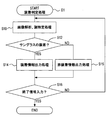
本開示の一実施形態の警報装置を構成する画像処理装置で実行される装着判定処理のフローチャートである。
本開示の一実施形態の警報装置を構成するナビゲーション装置で実行される警報処理のフローチャートである。
以下に本開示の実施形態を図面と共に説明する。本実施形態の警報装置1は、図1に示すように、カメラ2、画像処理装置3、ナビゲーション装置4とを備える装置である。
カメラ2は、車内を撮像するカメラであり、少なくとも運転者を撮像することができる位置に設置されている。このカメラ2は、例えばCCDカメラやCMOSカメラ等からなるものであって、撮像した画像の画像情報は画像処理装置3に出力される。
画像処理装置3は、CPU30a、ROM30b、RAM30cを備えるコンピュータ装置であり、他に、記憶装置30dを備えている。
ROM30bには、カメラ2から入力した画像情報を解析して、運転者がサングラスを装着しているか判定する装着判定処理用のプログラムや、運転者の視線を判定する視線判定処理用のプログラムなどが記憶されている。
RAM30cには、これらプログラムを実行する際に一時記憶が必要な情報が記憶される。
記憶装置30dには、装着判定処理で用いられる画像データであって、サングラスを装着した運転者の顔を予め撮像した画像(以下「比較画像」という)の画像データや、視線判定処理やその他処理で用いられる各種データが記憶されている。
ナビゲーション装置4は、CPU40a、ROM40b、RAM40c、記憶装置40dを備えるコンピュータ装置40と、現在位置特定装置41と、画像表示装置42、音声出力装置43、操作装置44等を備えている。
ROM40bには、現在位置が印された地図画像などを画像表示装置42に表示して経路案内を行う経路案内処理用のプログラムや、サングラスを装着した運転者が運転する車両がトンネルに入ろうとするときに、運転者に対し警報を行う警報処理用のプログラムなどが記憶されている。
RAM40cには、これらプログラムを実行する際に一時記憶が必要な情報が記憶される。
記憶装置40dは、経路案内処理や、警報処理で用いられる地図情報や、その他処理で用いられる各種データが記憶されている。
地図情報は、地図を描画するための描画データの他、道路の位置情報、トンネルの位置情報、トンネルの長さ情報、トンネル内の明度情報、道路周辺施設の位置情報など、経路案内処理や警報処理等の各種処理を実行するために必要な各種情報を含んでいる。
現在位置特定装置41は、GPS受信機やジャイロスコープ等を備える装置であり、ナビゲーション装置4が搭載された車両の現在位置を特定する装置である。
画像表示装置42は、液晶画面上に、経路案内用の地図画像や操作用の画像など、コンピュータ装置40の指示に従って各種画像を表示する装置である。
音声出力装置43は、スピーカを備えており、コンピュータ装置40で行われる各種処理に応じた各種音声を出力する装置である。
操作装置44は、ナビゲーション装置4の筐体上に設置された各種スイッチや、画像表示装置42の液晶画面上に積層された透明なタッチセンサパネル44aなどである。
タッチセンサパネル44aを用いた操作を行う場合、液晶画面上には、1つあるいは複数のコマンド画像を組み合わせた操作用画像が表示される。操作者は、タッチセンサパネル44aのうち、いずれかのコマンド画像が表示された部分をタッチすることで、そのコマンド画像に対応した操作を行うことができる。
本実施形態のナビゲーション装置4は、このタッチセンサパネル44aを用いて、後述する警報処理の開始と終了を指示する操作を少なくとも行うことができるよう構成されている。具体的には、液晶画面上に警報処理の開始や終了を指示する操作用画像が表示され、いずれかの操作用画像が表示された部分のタッチセンサパネル44aを操作者が触れると、警報処理の開始や終了を指示することができる。
次に、画像処理装置3で実行される装着判定処理(S1)について、図2のフローチャートを用いて説明する。
ナビゲーション装置4のタッチセンサパネル44aが操作され、後述する警報処理の開始を指示する操作がなされると、ナビゲーション装置4から画像処理装置3に開始情報が出力される。
そのため、この装着判定処理(S1)は、ナビゲーション装置4から出力される開始情報が入力されたら、実行される。
最初にS10の処理が実行され、このS10では、カメラ2で撮像された画像を解析して、運転者の顔を撮像した部分を特定する処理が実行される。
次に、S12の処理が実行され、このS12では、S10で特定された運転者の顔を撮像した部分の画像と、記憶装置30dに記憶された比較画像とを比較して、運転者がサングラスを装着しているか判定する処理を実行する。
このS12の処理で、運転者がサングラスを装着していると判定された場合は(S12:YES)、次に、S14の処理が実行され、装着していないと判定された場合は(S12:NO)、次に、S15の処理が実行される。
S14では、ナビゲーション装置4に運転者がサングラスを装着していることを示す装着情報を出力する処理が実行され、次に、S16の処理が実行される。
S15では、ナビゲーション装置4に運転者がサングラスを装着していないことを示す非装着情報を出力する処理が実行され、次に、S16の処理が実行される。
S16では、ナビゲーション装置4のタッチセンサパネル44aが操作され、後述する警報処理の終了を指示する操作がなされると、ナビゲーション装置4から画像処理装置3に終了情報が出力されるので、この終了情報が入力されたか判定する処理が実行される。
このS16の処理で、終了情報が入力された場合(S16:YES)、本処理を終了し、終了情報が入力されていない場合(S16:NO)、再びS10以下の処理が実行される。
次に、本実施形態のナビゲーション装置4で実行される警報処理(S3)について、図3のフローチャートを用いて説明する。この警報処理(S3)は、タッチセンサパネル44aが操作され、この警報処理の開始を指示する操作がなされると実行される。
最初にS30の処理が実行され、このS30では、画像処理装置3に開始情報を出力する処理が実行される。次に、S32の処理が実行される。
S30が実行されると、運転者がサングラスを装着している場合、画像処理装置3から装着情報が出力され、運転者がサングラスを装着していない場合、画像処理装置3から非装着情報が出力される。
S32では、画像処理装置3から入力した最新の情報が、装着情報か非装着情報かを判定する処理が実行される。このS32の処理で、最新の情報が装着情報と判定された場合(S32:YES)、すなわち運転者がサングラスをしている場合、次にS34の処理が実行され、最新の情報が非装着情報と判定された場合(S32:NO)、すなわち運転者がサングラスをしていない場合、次にS42の処理が実行される。
S34では、現在位置特定装置41で特定された車両の現在位置に関する現在位置情報と、記憶装置40dに記憶された地図情報とから、車両が現在走行している道路を特定する処理と、その道路上であって、車両の現在位置から5km内に位置するトンネル(より具体的にはトンネルの入口)を探索する処理が実行される。
尚、この探索は、車両の進行方向上にあるトンネルが探索される。車両の進行方向は、例えば、現在位置情報を一定時間記憶しておき、これらの情報から車両の走行軌跡を特定して、この走行軌跡から推定してもよいし、進行方向を特定する装置で特定してもよい。
次にS36の処理が実行される。このS36では、S34において探索されたトンネルのうち、車両の現在位置から3km内にトンネル(より具体的にはトンネルの入口)があるか判定する処理が実行される。すなわち、このS36では、車両がトンネルに進入するか判定する処理が実行される。
このS36で、車両の現在位置から3kmの距離内にトンネルがあると判定された場合は(S36:YES)、次にS38の処理が実行され、トンネルがないと判定された場合(S36:NO)、次にS42の処理が実行される。
S38では、S36で車両の現在位置から3kmの距離内にあると判定されたトンネルが50m以上か判定する処理を実行し、50m以上である場合は(S38:YES)、次にS40の処理が実行され、50m未満である場合は(S38:NO)、次にS42の処理が実行される。
本実施形態で使用される地図情報には、トンネルの長さ情報(トンネルの入口から出口までの長さに関する情報)も含まれているので、S38では、このトンネルの長さ情報を用いて、トンネルの長さを判定する処理を実行している。
トンネルの長さが50mよりも短い場合は、トンネルの出口側からトンネル内に入る光によって、車両がトンネルに入ったときに、運転者の視界が、車両を運転するには不向きな暗さになることが少ないため、本実施形態では警報不要としている(S40を実行しない)。
S40では、音声出力装置43を用いて、運転者にサングラスを外すよう促す音声を出力する処理が実行される。例えば、「3km先に長さ200mのトンネルがあります。サングラスをかけての走行は危険ですので、注意してください。」との音声を出力する。このとき、画像表示装置42上にも、運転者にサングラスを外すよう促す画像を表示してもよい。
S42では、タッチセンサパネル44aが操作され、警報処理の終了を指示する操作がなされたかが判定される。警報処理の終了を指示する操作がなされた場合は(S42:YES)、S44の処理が実行され、警報処理の終了を指示する操作がなされていない場合は(S42:NO)、再びS32以下の処理が実行される。
S44では、終了情報を画像処理装置3に出力する処理が実行され、その後、本処理(警報処理(S3))は終了する。
(本実施形態の特徴的な作用効果)
本実施形態の警報装置1によると、サングラスを装着した運転者が運転している車両がトンネルに近づくと(S36:YES)、警報が発せられる(S40)ので、運転者は、トンネルに入る前にサングラスをしていることが意識付けされる。
(本実施形態の特徴的な作用効果)
本実施形態の警報装置1によると、サングラスを装着した運転者が運転している車両がトンネルに近づくと(S36:YES)、警報が発せられる(S40)ので、運転者は、トンネルに入る前にサングラスをしていることが意識付けされる。
そのため本実施形態の警報装置1を用いると、この意識付けによって、運転者はトンネルに入る前にサングラスを外すことを忘れ難くなるので、車両がトンネルに入るときに、運転者の視界が、車両を運転するには不向きな暗さになることを予防することができる。
本実施形態の警報装置1によると、警報条件(本実施形態の場合は、トンネルの長さが50mよりも長いこと)を満たさない場合は警報がなされないので(S38:YES)、警報が行われる頻度を警報条件を満たす場合にまで減らすことができる。
そのため、本実施形態の警報装置1を用いると、警報が多いことによって運転者が感じる煩わしさを軽減することができる。
[他の実施形態]
以上、実施形態について説明したが、本開示は、上記実施形態に限定されることなく、種々の形態を採り得ることは言うまでもない。
[他の実施形態]
以上、実施形態について説明したが、本開示は、上記実施形態に限定されることなく、種々の形態を採り得ることは言うまでもない。
(1)上記実施形態で説明した警報装置はあくまでも一例であり、これに限定されるものではない。
(2)上記実施形態では、ナビゲーション装置4が記憶装置40dを一つ備える例について説明したが、例えば、複数の記憶装置(地図情報を記憶する記憶装置、及び、その他の情報を記憶する記憶装置等)を備えるようにしてもよい。地図情報を記憶する記憶装置は、地図情報が記憶されたメディア(例えば、CD、DVD)から地図情報を読み取る読取装置で構成してもよいし、HDDや、SSDなどでもよい。
(3)上記実施形態では、画像表示装置42として、液晶画面上に各種画像を表示する装置について説明したが、液晶画面に限るものではない。
(4)上記実施形態では、S34において、車両の現在位置から「5km」先にあるトンネルを探索し、S36において、車両の現在位置から「3km」内にトンネルがあるか判定しているが、これらに限られるものではない。例えば、S34では「6km」内に位置するトンネルを探索し、S36では「2km」内にトンネルがあるか判定してもよいことはもちろんである。
尚、上記実施形態のS36では、車両の現在位置からトンネルまでの距離が3kmである場合を、車両がトンネルに進入するか判定するための距離としたが、この距離は、速度に応じて変更してもよい。このS36で判定基準となる距離は、サングラスを外した後の明るさに運転手の目が慣れる時間が確保できる距離であれば、どのような距離でもよい。
(5)上記実施形態では、S38において、トンネルの長さが50m以上と判定されたときに、S40での警報が行われるよう設定しているが、S38での判定基準は、50mに限定されるものではない。S38での判定基準は、車両がトンネルに入ったときに、運転者の視界が、車両を運転するには不向きな暗さになることが少ない距離であればよく、60mあるいは40mとしてもよい。また、トンネルの形状によって、直線状のトンネルであれば55m、曲線状のトンネルであれば45mというように判断基準を異なるものとしてもよい。
(6)S38の警報条件としては、例えば、トンネルに進入する前の車両の周囲の明るさが予め定められた明るさよりも明るいという条件を設定してもよい。
この場合、トンネルに進入する前の車両の周囲の明るさが予め定められた明るさよりも暗い場合(S38:NO)、警報を行わないようにすればよい。
トンネルに進入する前の車両の周囲の明るさが一定程度暗い場合、運転者の目が暗さに慣れているため、車両がトンネル内に入るとき運転者は視覚的な違和感を受けることが少なくなり、運転者がサングラスを装着していても、車両がトンネルに入るときに、運転者の視界が、車両を運転するには不向きな暗さになることが少ないからである。
トンネルに進入する前の車両の周囲の明るさが予め定められた明るさよりも暗いか否かは、外部の天気によって判定してもよいし(曇りや雨の場合は暗いと判定する)、日照計を用いて判定してもよい。
天気で判断する場合は、天気が雨や曇りの場合、警報を行わないようにするとよい。雨か否かの判定は、ワイパーの稼働状況により判定してもよい。
(7)S38における警報条件としては、他に、トンネル内の明るさが予め定められた明るさ以下であることを条件としてもよく、この場合、トンネル内の明るさが予め定められた明るさより明るい場合(S38:NO)、警報を行わないようにしてもよい。
トンネル内の明るさが一定程度暗い場合、トンネル外が暗くても、車両がトンネル内に入るとき運転者は視覚的な違和感を受ける可能性があるからである。
(8)本開示の各構成要素は概念的なものであり、上記実施形態に限定されない。例えば、1つの構成要素が有する機能を複数の構成要素に分散させたり、複数の構成要素が有する機能を1つの構成要素に統合したりしてもよい。また、上記実施形態の構成の少なくとも一部を、同様の機能を有する公知の構成に置き換えてもよい。また、上記実施形態の構成の少なくとも一部を、他の上記実施形態の構成に対して付加、置換等してもよい。
この出願に記載されるフローチャート、あるいは、フローチャートの処理は、複数のセクション(あるいはステップと言及される)から構成され、各セクションは、例えば、S100と表現される。さらに、各セクションは、複数のサブセクションに分割されることができる、一方、複数のセクションが合わさって一つのセクションにすることも可能である。さらに、このように構成される各セクションは、デバイス、モジュール、ミーンズとして言及されることができる。
Claims (9)
- 車両の運転者がサングラスを装着しているか判定する装着判定手段(S1、S32)と、
車両がトンネルに進入するか判定する進入判定手段(S36)と、
前記装着判定手段により運転者がサングラスを装着し、かつ、前記進入判定手段により車両がトンネルに進入すると判定された場合、警報する警報手段(S40)と、
を備える警報装置。 - 請求項1に記載の警報装置において、
予め定めた警報条件を満たすか判定する警報判定手段(S38)を備え、
前記警報手段は、
前記警報条件を満たした場合、警報する警報装置。 - 請求項2に記載の警報装置において、
前記警報判定手段は、
前記警報条件として、車両が進入するトンネルの長さが予め定められた長さ以上か判定し、
前記警報手段は、
車両が進入するトンネルの長さが予め定められた長さ以上である場合、警報を行う警報装置。 - 請求項2に記載の警報装置において、
前記警報判定手段は、
前記警報条件として、トンネルに進入する前の車両の周囲の明るさが予め定められた明るさ以上か判定し、
前記警報手段は、
トンネルに進入する前の車両の周囲の明るさが予め定められた明るさ以上である場合、警報を行う警報装置。 - 請求項2に記載の警報装置において、
前記警報判定手段は、
前記警報条件として、天気が雨又は曇りか判定し、
前記警報手段は、
天気が雨又は曇りである場合、警報を行わない警報装置。 - 請求項2に記載の警報装置において、
前記警報判定手段は、
前記警報条件として、トンネル内の明るさが予め定められた明るさ以下か判定し、
前記警報手段は、
トンネル内の明るさが予め定められた明るさ以下である場合、警報を行う警報装置。 - 請求項1~6のいずれか1項に記載の警報装置において、
前記進入判定手段は、
車両から予め定められた距離内にトンネルが位置する場合、車両がトンネルに進入すると判定する警報装置。 - 請求項7に記載の警報装置において、
前記進入判定手段は、
車両から予め定められた距離内に位置するトンネルが、車両が走行している道路の先に設けられている場合に、車両がトンネルに進入すると判定する警報装置。 - 請求項1~8のいずれか1項に記載の警報装置において、
前記装着装置は、
車両の運転者がサングラスを装着していることを示す装着情報を入力したか判定し(S32)、
前記警報手段は、
前記装着判定手段により前記装着情報を入力したと判定され、かつ、前記進入判定手段により車両がトンネルに進入すると判定された場合、警報する警報装置。
Applications Claiming Priority (2)
| Application Number | Priority Date | Filing Date | Title |
|---|---|---|---|
| JP2013044451A JP6115190B2 (ja) | 2013-03-06 | 2013-03-06 | 警報装置 |
| JP2013-044451 | 2013-03-06 |
Publications (1)
| Publication Number | Publication Date |
|---|---|
| WO2014136379A1 true WO2014136379A1 (ja) | 2014-09-12 |
Family
ID=51490918
Family Applications (1)
| Application Number | Title | Priority Date | Filing Date |
|---|---|---|---|
| PCT/JP2014/000618 Ceased WO2014136379A1 (ja) | 2013-03-06 | 2014-02-05 | 警報装置 |
Country Status (2)
| Country | Link |
|---|---|
| JP (1) | JP6115190B2 (ja) |
| WO (1) | WO2014136379A1 (ja) |
Cited By (1)
| Publication number | Priority date | Publication date | Assignee | Title |
|---|---|---|---|---|
| JP2017148230A (ja) * | 2016-02-24 | 2017-08-31 | キヤノン株式会社 | 被検体情報取得装置および情報処理装置 |
Families Citing this family (2)
| Publication number | Priority date | Publication date | Assignee | Title |
|---|---|---|---|---|
| JP6528962B2 (ja) * | 2015-05-06 | 2019-06-12 | 日本精機株式会社 | ヘッドアップディスプレイ |
| US20240071143A1 (en) * | 2021-03-03 | 2024-02-29 | Panasonic intellectual property Management co., Ltd | Dialogue device and dialogue method |
Citations (2)
| Publication number | Priority date | Publication date | Assignee | Title |
|---|---|---|---|---|
| JP2011508922A (ja) * | 2007-12-18 | 2011-03-17 | アーデーツエー・オートモテイブ・デイスタンス・コントロール・システムズ・ゲゼルシヤフト・ミツト・ベシユレンクテル・ハフツング | 車両周辺の分類 |
| JP2012150556A (ja) * | 2011-01-17 | 2012-08-09 | Toyota Motor Corp | 運転支援装置 |
-
2013
- 2013-03-06 JP JP2013044451A patent/JP6115190B2/ja active Active
-
2014
- 2014-02-05 WO PCT/JP2014/000618 patent/WO2014136379A1/ja not_active Ceased
Patent Citations (2)
| Publication number | Priority date | Publication date | Assignee | Title |
|---|---|---|---|---|
| JP2011508922A (ja) * | 2007-12-18 | 2011-03-17 | アーデーツエー・オートモテイブ・デイスタンス・コントロール・システムズ・ゲゼルシヤフト・ミツト・ベシユレンクテル・ハフツング | 車両周辺の分類 |
| JP2012150556A (ja) * | 2011-01-17 | 2012-08-09 | Toyota Motor Corp | 運転支援装置 |
Cited By (1)
| Publication number | Priority date | Publication date | Assignee | Title |
|---|---|---|---|---|
| JP2017148230A (ja) * | 2016-02-24 | 2017-08-31 | キヤノン株式会社 | 被検体情報取得装置および情報処理装置 |
Also Published As
| Publication number | Publication date |
|---|---|
| JP6115190B2 (ja) | 2017-04-19 |
| JP2014174621A (ja) | 2014-09-22 |
Similar Documents
| Publication | Publication Date | Title |
|---|---|---|
| JP6629889B2 (ja) | ヘッドアップディスプレイ装置 | |
| JP6516642B2 (ja) | 電子装置、画像表示方法および画像表示プログラム | |
| JP6486474B2 (ja) | 表示制御装置、表示装置及び表示制御方法 | |
| US10147165B2 (en) | Display device, control method, program and recording medium | |
| US20170305365A1 (en) | Driving information display apparatus and driving information display method | |
| US11021103B2 (en) | Method for enriching a field of view of a driver of a transportation vehicle with additional information, device for use in an observer transportation vehicle, device for use in an object, and transportation vehicle | |
| JP5098438B2 (ja) | 情報表示装置 | |
| JP2019113809A (ja) | ヘッドアップディスプレイ装置 | |
| JP7058800B2 (ja) | 表示制御装置、表示制御方法、及び表示制御プログラム | |
| EP3505381A1 (en) | Display system | |
| US9418548B2 (en) | Display control device, display control method, non-transitory computer-readable recording medium, and projecting device | |
| CN104584100A (zh) | 车辆周边监视装置、车辆周边监视系统 | |
| JP6825433B2 (ja) | 虚像表示装置及びコンピュータプログラム | |
| KR102343329B1 (ko) | 차량의 운전을 보조하는 전자 장치 및 방법 | |
| JP2016088187A (ja) | 車両用透過表示装置 | |
| CN112119398A (zh) | 用于运行机动车的摄像机-监视器系统的方法和设备 | |
| CN104039580B (zh) | 用于驾驶员通知的方法和设备 | |
| JP2017097682A (ja) | 標識認識システム | |
| JP6115190B2 (ja) | 警報装置 | |
| KR101610169B1 (ko) | 헤드업 디스플레이 및 헤드업 디스플레이의 제어방법 | |
| JP6365361B2 (ja) | 情報表示装置 | |
| JP2008030729A (ja) | 車両用表示装置 | |
| WO2019021697A1 (ja) | 情報制御装置 | |
| JP6552285B2 (ja) | 車載表示装置及び車両後方映像表示方法 | |
| JP4026598B2 (ja) | 車両用画像表示装置 |
Legal Events
| Date | Code | Title | Description |
|---|---|---|---|
| 121 | Ep: the epo has been informed by wipo that ep was designated in this application |
Ref document number: 14759737 Country of ref document: EP Kind code of ref document: A1 |
|
| NENP | Non-entry into the national phase |
Ref country code: DE |
|
| 122 | Ep: pct application non-entry in european phase |
Ref document number: 14759737 Country of ref document: EP Kind code of ref document: A1 |