WO2014132769A1 - 携帯電話装置、プログラムおよび記録媒体 - Google Patents
携帯電話装置、プログラムおよび記録媒体 Download PDFInfo
- Publication number
- WO2014132769A1 WO2014132769A1 PCT/JP2014/052778 JP2014052778W WO2014132769A1 WO 2014132769 A1 WO2014132769 A1 WO 2014132769A1 JP 2014052778 W JP2014052778 W JP 2014052778W WO 2014132769 A1 WO2014132769 A1 WO 2014132769A1
- Authority
- WO
- WIPO (PCT)
- Prior art keywords
- unit
- call state
- call
- state control
- operation key
- Prior art date
- Legal status (The legal status is an assumption and is not a legal conclusion. Google has not performed a legal analysis and makes no representation as to the accuracy of the status listed.)
- Ceased
Links
Images


Classifications
-
- H—ELECTRICITY
- H04—ELECTRIC COMMUNICATION TECHNIQUE
- H04M—TELEPHONIC COMMUNICATION
- H04M1/00—Substation equipment, e.g. for use by subscribers
- H04M1/72—Mobile telephones; Cordless telephones, i.e. devices for establishing wireless links to base stations without route selection
- H04M1/724—User interfaces specially adapted for cordless or mobile telephones
-
- H—ELECTRICITY
- H04—ELECTRIC COMMUNICATION TECHNIQUE
- H04M—TELEPHONIC COMMUNICATION
- H04M1/00—Substation equipment, e.g. for use by subscribers
- H04M1/72—Mobile telephones; Cordless telephones, i.e. devices for establishing wireless links to base stations without route selection
- H04M1/724—User interfaces specially adapted for cordless or mobile telephones
- H04M1/72448—User interfaces specially adapted for cordless or mobile telephones with means for adapting the functionality of the device according to specific conditions
- H04M1/72463—User interfaces specially adapted for cordless or mobile telephones with means for adapting the functionality of the device according to specific conditions to restrict the functionality of the device
- H04M1/724631—User interfaces specially adapted for cordless or mobile telephones with means for adapting the functionality of the device according to specific conditions to restrict the functionality of the device by limiting the access to the user interface, e.g. locking a touch-screen or a keypad
-
- H—ELECTRICITY
- H04—ELECTRIC COMMUNICATION TECHNIQUE
- H04M—TELEPHONIC COMMUNICATION
- H04M2250/00—Details of telephonic subscriber devices
- H04M2250/22—Details of telephonic subscriber devices including a touch pad, a touch sensor or a touch detector
Definitions
- the present invention relates to a mobile phone device, a program, and a recording medium.
- a touch panel mounted on a smartphone has a display surface that is touch-operated by a user, and includes a display unit that displays an image on the display surface, and a touch sensor superimposed on the display unit.
- An operation control image in which a plurality of operation key images to be touched is displayed is displayed on the display surface of the display unit, and the operation key image is displayed when the user performs a touch operation on the operation key image in the operation control image. The process corresponding to is executed.
- a smartphone equipped with a touch panel when a process corresponding to the operation key image is executed when a touch operation is performed on the operation key image, the touch panel is in an on state (a process corresponding to the operation key image is enabled. State).
- the touch panel when making a call with a smartphone equipped with a touch panel, the touch panel is turned off (the process corresponding to the operation key image is disabled) so that the touch panel does not malfunction by touching the ear or cheek. Done.
- Patent Document 1 discloses a mobile phone device including a proximity sensor and an acceleration sensor for on / off control of a touch panel.
- the proximity sensor detects the approach of the touch panel to the human body in a state where the sensitivity of the proximity sensor is controlled according to the magnitude of the detected acceleration output from the acceleration sensor. When this happens, the processing corresponding to the operation key image is invalidated. That is, in the mobile phone device disclosed in Patent Document 1, when the mobile phone device is brought close to a human body such as an ear or a cheek during a call, the proximity sensor is turned on. Can be prevented from malfunctioning by touching the ears or cheeks.
- the proximity sensor is turned on when a human body or the like approaches even outside a call, the user wants to execute processing corresponding to the operation key image by a touch operation on the operation key image outside the call. Sometimes, there is a problem that the processing becomes invalid.
- the proximity sensor is in the off state when calling without bringing the mobile phone device close to the human body such as the ear or cheek, such as when calling in a hands-free state, so it corresponds to the touched operation key image.
- the processing performed remains valid. In such a case, for example, if an operation key image for “end call” is touched by mistake, the call is blocked against the user's intention, and erroneous operation during a call can be prevented. Can not.
- the proximity sensor may malfunction, for example, the malfunction of the proximity sensor being turned off due to the influence of, for example, hair even though the mobile phone device is approaching the human body such as the ear or cheek during a call.
- the ear or cheek touches the touch panel during a call, the execution of the process corresponding to the touched operation key image remains valid.
- the call is blocked against the user's intention, and the touch panel on the call A malfunction cannot be prevented.
- the object of the present invention is to prevent malfunction caused by contact of the ear, cheeks, etc. to the touch panel during a call, or malfunction of the touch panel due to a user's erroneous operation, and to reliably perform processing by touch operation on the touch panel during other than a call. It is to provide a mobile phone device, a program, and a recording medium.
- the present invention comprises a communication unit for telephone communication; An audio input / output unit that receives or outputs audio for a call; A display unit having a display surface on which a call state control image including a plurality of operation key images for controlling the call state is displayed; A touch position detection unit that outputs coordinate information corresponding to a position touched by a touch operation on the display surface; A control unit for controlling a call state based on an operation key image corresponding to the coordinate information output by the touch position detection unit in the call state control image displayed on the display surface; The controller is A determination unit that determines whether or not audio is input or output by the audio input / output unit; A control method for switching a call state control method corresponding to a specific operation key image, which is a predetermined operation key image in the call state control image displayed on the display surface, based on a determination result by the determination unit And a switching unit.
- the control method switching unit is When the determination unit determines that sound is being input or output, a call corresponding to a specific operation key image that is a predetermined operation key image in the call state control image displayed on the display surface A call state control invalidation unit for invalidating state control; When the determination unit determines that no sound is input or output, the call enables the control of the call state corresponding to all operation key images in the call state control image displayed on the display surface And a state control effective unit.
- the mobile phone device of the present invention further includes a time measuring unit that measures an elapsed time since it is determined that no sound is input or output by the determination unit,
- the call state control valid unit enables the call state control corresponding to all operation key images in the call state control image when the elapsed time counted by the time counting unit reaches a predetermined value. Is preferred.
- the present invention is a program for causing a computer to function as a control unit in the mobile phone device.
- the present invention is also a computer-readable recording medium on which the program is recorded.
- the control unit is based on the operation key image corresponding to the coordinate information output by the touch position detection unit in the call state control image displayed on the display surface of the display unit. Control the call state.
- the control unit includes a determination unit and a control method switching unit.
- the control method switching unit is a part of predetermined operation key images in the call state control image displayed on the display surface based on a determination result by the determination unit as to whether or not sound is input or output. Switches the call state control method corresponding to the operation key image.
- the control method switching unit is composed of a call state control invalid unit and a call state control valid unit.
- the call state control invalidation unit is a specific operation key image that is a predetermined part of the operation key image in the call state control image displayed on the display surface when the determination unit determines that sound is being input or output. Disable the call state control corresponding to.
- the call state control valid unit controls the call state corresponding to all operation key images in the call state control image displayed on the display surface. To enable.
- the determination unit determines whether or not the voice is being input or output. Compared to the case of using, it is possible to more accurately determine whether or not the call is in progress. As a result, when the user wants to execute the call state control corresponding to the operation key image by a touch operation on the operation key image except during a call, the occurrence of inconvenience that the call state control becomes invalid is suppressed. can do.
- the determination unit determines whether or not sound is being input or output, it is determined whether or not the call is in a call state. Even when a call is made without approaching a human body such as a cheek, it is possible to more accurately determine whether or not the call is in progress. As a result, even during a call in the hands-free state, the call state control corresponding to the specific operation key image in the call state control image displayed on the display surface of the display unit can be more surely disabled. Thus, it is possible to prevent the mobile phone device from malfunctioning due to an erroneous operation by the user of the touch operation on the specific operation key image during a call.
- the malfunctioning due to the contact of the ear or cheek to the display surface during a call or the malfunction of the cellular phone device due to the user's erroneous operation is prevented, and the operation keys other than during the call It is possible to reliably enable execution of processing by touch operation on an image.
- FIG. 1 is a diagram schematically showing a configuration of a mobile phone device 1.
- FIG. It is a figure for demonstrating the procedure when canceling the pattern lock with respect to the telephone call end operation key image 19B.
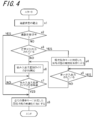
- It is a flowchart which shows the process sequence of the call state control process performed when the control part 17 performs a call state control program.
- FIG. 1 is a block diagram showing a main configuration of a mobile phone device 1 according to an embodiment of the present invention.
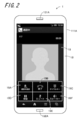
- FIG. 2 is a diagram schematically showing the configuration of the mobile phone device 1.
- the mobile phone device 1 is a smartphone, and includes a touch panel 11, a mobile communication module 12, an audio processing unit 13, a noise canceller unit 14, a time measuring unit 15, a storage unit 16, and a control unit 17. Is done.
- the touch panel 11 has a rectangular display surface 111A that is touch-operated by the user, and is housed in the housing 18 so that the display surface 111A is exposed to the outside.
- the touch panel 11 includes a display unit 111 that displays an image corresponding to the image data on the display surface 111 ⁇ / b> A, and a touch sensor 112 superimposed on the display unit 111.
- the display unit 111 is realized by a known display device such as a liquid crystal display device including a liquid crystal panel and a backlight or an organic EL (Electro-Luminescence) display device.
- the touch sensor 112 functions as a touch position detection unit, and is realized by, for example, a projected capacitive sensor.
- the coordinate information corresponding to the touch position on the display surface 111 ⁇ / b> A is output to the control unit 17.
- the mobile communication module 12 functions as a communication unit for telephone communication. For example, wireless communication by a mobile communication system such as a third generation mobile communication system compliant with the IMT-2000 (International Mobile Telecommunications 2000) standard. Is a wireless communication device that executes.
- the mobile communication module 12 establishes a wireless connection with a wireless base station of a cellular network for mobile communication, thereby performing wireless communication by a method such as CDMA (Code Division Multiple Access).
- CDMA Code Division Multiple Access
- the voice processing unit 13 functions as a voice input / output unit, and is a voice input / output interface for making a call using the telephone function of the cellular phone device 1.
- the speaker 131 provided in the earpiece 131A and the mouthpiece 132A Is connected to the microphone 132, outputs sound through the speaker 131, and inputs sound through the microphone 132.
- a noise canceller unit 14 is connected to the audio processing unit 13.
- the noise canceller unit 14 suppresses noise in received voice data (digital signal) received from the other party or the like given from the control unit 17 to the voice processing unit 13.
- the noise canceller unit 14 creates the same noise component as the noise component included in the received voice data by the frequency domain subtraction method, and performs noise suppression by performing a subtraction process, but the subtraction amount that is the subtraction ratio of the created noise component is calculated. By varying it, the amount of noise suppression can be varied.
- the voice processing unit 13 decodes the received voice data whose noise has been suppressed by the noise canceller unit 14 after being decoded by the voice decoding unit, converted from a digital signal to an analog signal by the DA converter, and amplified by the amplifier, Output from the speaker 131.
- the voice processing unit 13 converts the transmission voice uttered by the user into an electric signal with the microphone 132, amplifies the signal with an amplifier, and then converts the analog signal into a digital signal with an AD converter.
- the noise of the digital signal (transmitted voice data) converted in this way is suppressed by the noise canceller unit 14.
- the noise canceller unit 14 generates the same noise component as the noise component included in the transmission voice data by the frequency domain subtraction method, and performs noise suppression by performing a subtraction process.
- the voice processing unit 13 encodes the transmission voice data in which noise is suppressed by the noise canceller unit 14 by the voice encoding unit, and then outputs the encoded data to the control unit 17.
- a voice input / output is performed.
- the voice processing unit 13 executes the process.
- the storage unit 16 is realized by a semiconductor memory such as a flash memory, and stores an operating system (OS) program that realizes basic functions of the mobile phone device 1 and a telephone for realizing a telephone function.
- OS operating system
- Various application programs such as a program, a mail program for realizing an e-mail function, a phone book program for realizing a telephone book function, a memo pad program for realizing a memo pad function, and a browser program for realizing a Web browsing function Is memorized.
- the storage unit 16 stores a program for executing a call state control process to be described later (hereinafter referred to as a “call state control program”).
- this call state control program may be installed in the mobile phone device 1 in advance, or may be acquired and installed by downloading from the Internet.
- the control unit 17 is a processing unit that controls the operation of each unit of the mobile phone device 1, and is realized by, for example, a CPU (Central Processing Unit), a ROM (Read Only Memory), and a RAM (Random Access Memory).
- a CPU Central Processing Unit
- ROM Read Only Memory
- RAM Random Access Memory
- the control unit 17 executes an operating system program and application program loaded from the storage unit 16 to the RAM, and also executes a call state control program.
- the control unit 17 includes a determination unit 171, a call state control invalidation unit 172 and a call state control enablement unit 173 that function as a control method switching unit.
- the control unit 17 functions as the determination unit 171, the call state control invalidation unit 172, and the call state control enablement unit 173 in the present invention by executing the call state control program.
- the storage unit 16 includes a lock pattern of a pattern lock that is set for the specific operation key image so that the call state control invalidation unit 172, which will be described later, disables control of the call state corresponding to the specific operation key image. It is assumed that the user has set and stored in advance.
- the control unit 17 corresponds to the coordinate information output by the touch sensor 112 in the call state control image 19 displayed on the display surface 111A during a call by executing the call state control program stored in the storage unit 16.
- the call state control process is performed.
- control unit 17 When an incoming call is received from another telephone device, the control unit 17 activates a telephone application, and a plurality of operation key images 19A to 19F including information for identifying a call partner and predetermined specific operation key images. Is displayed on the display surface 111A to establish a call state.
- the operation key images 19A to 19F arranged in the call state control image 19 are key images for controlling the call state during a call.
- the operation key image 19A shown in FIG. 2 adds a call partner.
- the operation key image 19B is a key image for executing processing for terminating a call
- the operation key image 19C is a key image for executing dial processing during communication with a call partner.
- the operation key image 19D is a key image for executing a process for holding a call with the other party
- the operation key image 19E is for executing a process for erasing sound input via the microphone 132.
- the operation key image 19F is a key image for executing processing for adjusting the volume of the sound output through the speaker 131.
- an operation key image (hereinafter referred to as “call end operation key image”) 19B for executing a process for ending the call is provided. Is set as a specific operation key image.
- the control unit 17 calls the call state corresponding to the touched operation key images 19A to 19F. Execute the control.
- the determination unit 171 of the control unit 17 determines whether or not a voice is input or output by the voice processing unit 13 in a state where the call state is established. That is, the determination unit 171 determines whether or not the mobile phone device 1 is in a call state by determining whether or not sound is input or output by the sound processing unit 13. In the present embodiment, the determination unit 171 determines whether the received voice data and the transmitted voice data whose noise has been suppressed by the noise canceller unit 14 are input or output by the voice processing unit 13.
- the control method switching unit including the call state control invalid unit 172 and the call state control valid unit 173 is displayed on the display surface 111A based on the determination result by the determination unit 171 as to whether or not sound is input or output.
- the call state control method corresponding to the call end operation key image 19B is switched.
- the call state control invalid unit 172 determines that voice is input or output by the determination unit 171. Then, the call state control corresponding to the call end operation key image 19B in the call state control image 19 displayed on the display surface 111A is invalidated.
- the call state control invalidation unit 172 invalidates the call state control corresponding to the call end operation key image 19B by setting a pattern lock on the call end operation key image 19B.
- the call state control invalidation unit 172 sets the pattern lock for the call end operation key image 19B, the call state corresponding to the call end operation key image 19B unless the lock pattern preset by the user is drawn on the display surface 111A.
- the call state control invalidating unit 172 sets the pattern lock on the call end operation key image 19B, thereby drawing the call end operation key until the lock pattern is drawn on the display surface 111A and the pattern lock is released.
- the call state control corresponding to the image 19B is invalidated.
- FIG. 3 is a diagram for explaining the procedure for releasing the pattern lock for the call end operation key image 19B.
- the lock pattern of the pattern lock that the call state control invalidation unit 172 sets for the call end operation key image 19B is four preset in the area where the call end operation key image 19B of the call state control image 19 is arranged. This is a line segment trajectory passing through a plurality of points of nine or less in a predetermined order. In the example shown in FIG. 3, the lock pattern is defined as four points, one at each of the four corners in the rectangular area where the call end operation key image 19B of the call state control image 19 is arranged. Points 20A to 20D are set.
- the lock pattern of the pattern lock set by the call state control invalidation unit 172 is set at the point 20A set at the upper left corner and the lower right corner within the rectangular area where the call end operation key image 19B is arranged.
- the trajectory is a line segment passing through the point 20B, the point 20C set at the upper right corner 20C, and the point 20D set at the lower left corner in this order.
- a point 20A is included in a rectangular area where the call end operation key image 19B of the call state control image 19 is arranged.
- the pattern lock can be released by drawing the lock pattern defined by the locus of the line segment passing through the points 20B, 20C, and 20D in this order.
- the call state control valid unit 173 applies to all the operation key images 19A to 19F in the call state control image 19 displayed on the display surface 111A. Enable the corresponding call state control.
- the call state control valid unit 173 enables the call state control corresponding to all the operation key images 19A to 19F, the setting of the pattern lock for the call end operation key image 19B which is the specific operation key image is cancelled. Even if the lock pattern drawing operation is not performed, the process for ending the call is executed by the touch operation on the call end operation key image 19B.
- the mobile phone device 1 of the present embodiment includes a timer unit 15.
- the time measuring unit 15 is an elapsed time after the determination unit 171 determines that no sound is input or output after the determination unit 171 of the control unit 17 determines that the sound is input or output. (Audio input / output monitoring timer)
- the call state control invalidation unit 172 invalidates the call state control corresponding to the call end operation key image 19B when the determination unit 171 determines that sound is being input or output, and the time measurement unit 15 measures the time. Until the elapsed time (sound input / output monitoring timer) reaches a predetermined value (for example, 5 seconds), the call state control corresponding to the call end operation key image 19B is continuously disabled.
- the call state control valid unit 173 controls the call state corresponding to all the operation key images 19A to 19F in the call state control image 19 when the elapsed time counted by the time measuring unit 15 reaches a predetermined value.
- FIG. 4 is a flowchart showing a processing procedure of a call state control process performed by the control unit 17 executing the call state control program.
- the processing is started in a state where the application image at the time of executing the application program is displayed on the display surface 111A of the display unit 111, and the process proceeds to step s1.
- step s1 the control unit 17 determines whether there is an incoming call from another telephone device. If it is determined that there is an incoming call, the control unit 17 activates the telephone application, and uses the information for identifying the call partner and the specific operation key image.
- a call state control image 19 in which a plurality of operation key images 19A to 19F including a certain call end operation key image 19B is arranged is displayed on the display surface 111A. And the control part 17 establishes the call state of the mobile telephone apparatus 1 by touch operation of the call start operation key image for starting the call in the call state control image 19.
- step s2 the control unit 17 determines whether or not the incoming call from another telephone device is blocked and the call state is disconnected. If it is determined that the call state is disconnected, the process proceeds to step s8. If it is determined that the call state is not disconnected, the process proceeds to step s3.
- step s3 the determination unit 171 of the control unit 17 determines whether or not sound is input or output by the sound processing unit 13. In the present embodiment, when voice is input / output by the voice processing unit 13, the input / output voice data is received voice data and transmitted voice data in which noise is suppressed by the noise canceller unit 14. If the determination unit 171 determines that sound is being input or output, the process proceeds to step s4. If it is determined that no sound is being input or output, the process proceeds to step s6.
- step s4 the call state control invalidation unit 172 sets a pattern lock on the call end operation key image 19B in the call state control image 19 displayed on the display surface 111A, thereby causing the call end operation key image 19B to be displayed. Disable the corresponding call state control.
- step s5 it is determined that voice is input or output in step s3, and control of the call state corresponding to the call end operation key image 19B is invalidated in step s4.
- step s5 the determination unit 171 performs voice processing. The unit 13 determines whether sound is being input or output. If the determination unit 171 determines that sound is being input or output, step s5 is repeated. If it is determined that no sound is being input or output, the process proceeds to step s6.
- step s7 the control unit 17 determines whether or not 5 seconds have elapsed since the determination unit 171 determined that no sound was input or output. When it is determined that 5 seconds have not elapsed, step s7 is repeated, and when it is determined that 5 seconds have elapsed, the process proceeds to step s8. If it is determined in step s7 that 5 seconds have not elapsed, the call state control invalidating unit 172 calls until the elapsed time measured by the time measuring unit 15 reaches a predetermined value (5 seconds). The invalidation of the call state control corresponding to the end operation key image 19B is continued.
- step s7 after it is determined that 5 seconds have elapsed since the determination unit 171 determines that no sound is input or output, in step s8, the call state control valid unit 173 displays on the display surface 111A. In the call state control image 19, the call state control corresponding to all the operation key images 19A to 19F is validated.
- whether or not the voice processing unit 13 is in a call state is determined by the determination unit 171 determining whether or not sound is input or output. Determined.
- the call state control invalidation unit 172 displays the call state displayed on the display surface 111A of the display unit 111.
- the control of the call state corresponding to the call end operation key image 19B in the control image 19 is invalidated.
- the call state control valid unit 173 is displayed on the display surface 111A of the display unit 111. In the call state control image 19, the call state control corresponding to all the operation key images 19A to 19F is validated.
- the voice processing unit 13 determines whether or not the voice processing unit 13 is in a call state by determining whether or not the voice is input or output by the voice processing unit 13. As compared with the case where the proximity sensor is used, it is possible to more accurately determine whether or not the communication state is set. As a result, when the user wants to execute a call state control corresponding to the operation key images 19A to 19F by a touch operation on the operation key images 19A to 19F except during a call, the call state control becomes invalid. Can be prevented from occurring.
- the voice processing unit 13 since it is determined whether or not a voice is being input or output by the voice processing unit 13, it is determined whether or not the telephone is in a call state. Even when a call is made without bringing 1 close to a human body such as an ear or a cheek, it is possible to more accurately determine whether or not a call is in progress. Thereby, even during a call in the hands-free state, the control of the call state corresponding to the call end operation key image 19B in the call state control image 19 displayed on the display surface 111A of the display unit 111 is more surely disabled. Therefore, it is possible to prevent the mobile phone device 1 from malfunctioning due to an erroneous operation by the user of the touch operation on the call end operation key image 19B during a call.
- the mobile phone device 1 of the present embodiment it is possible to prevent a malfunction caused by contact of the ear or cheek with the display surface 111A during a call or a malfunction of the mobile phone device 1 due to a user's erroneous operation. It is possible to reliably enable execution of processing by touch operation on the operation key images 19A to 19F.
- control method switching unit is configured by the call state control invalid unit 172 and the call state control valid unit 173, and the call state control invalid unit 172 sets the pattern lock on the call end operation key image 19B.
- the configuration for invalidating the control of the call state corresponding to the call end operation key image 19B has been described, the present invention is not limited to such a configuration.
- the control unit 17 displays a plurality of call end operation key images 19B, which are specific operation key images in the call state control image 19, and displays them.
- a call end operation key images 19B which are specific operation key images in the call state control image 19, and displays them.
- control of a call state corresponding to the call end operation key images 19B may be executed.
- the control unit 17 performs a call end operation until a plurality of call end operation key images 19B are simultaneously touched.
- the control of the call state corresponding to the key image 19B is invalidated.
- the control unit 17 ends the call when a touch operation is performed on one call end operation key image 19B.
- the call state corresponding to the operation key image 19B is controlled.
- the control unit 17 displays a plurality of numeric operation key images to which a plurality of numbers (for example, integers of 1 to 4) are respectively allocated.
- the call state control corresponding to the call end operation key image 19B which is the specific operation key image in the call state control image 19 is executed. It may be.
- the control unit 17 performs a call end operation key image until a plurality of numerical operation key images are sequentially touched.
- the control of the call state corresponding to 19B is invalidated.
- the determination unit 171 determines that no sound is input or output
- the control unit 17 ends the call when a touch operation is performed on one call end operation key image 19B.
- the call state corresponding to the operation key image 19B is controlled.
- the control unit 17 displays (picker display) a drum-type selection control image including a plurality of drums (for example, three).
- the call state control corresponding to the call end operation key image 19B which is a specific operation key image in the call state control image 19 may be executed.
- the determination unit 171 determines that sound is being input or output
- the control unit 17 ends the call until a predetermined condition is satisfied by a touch operation on each drum in the drum-type selection control image.
- the call state control corresponding to the operation key image 19B is invalidated.
- the control unit 17 ends the call when a touch operation is performed on one call end operation key image 19B.
- the call state corresponding to the operation key image 19B is controlled.
- the call state control program is stored in the storage unit 16 realized by a semiconductor memory, but is not limited to such a storage device, and is recorded on a computer-readable recording medium. May be.
- the recording medium may be a recording medium that can be read by providing a program reading device as an external storage device (not shown) and inserting the recording medium therein, or may be a storage device of another device. .
- Any recording medium may be used as long as the program stored in the recording medium is accessed from a computer and executed.
- any recording medium may be used as long as the program is read from the recording medium, the read program is stored in the program storage area of the storage device, and the program is executed. Further, it may be downloaded from another device via a communication network and stored in the program storage area. The download program is stored in advance in a storage device of a computer, or installed in a program storage area from another recording medium.
- the recording medium configured to be separable from the main body is, for example, a tape-based recording medium such as a magnetic tape / cassette tape, a disk-based recording medium such as a floppy (registered trademark) disk, or a magnetic disk such as a flexible disk / hard disk.
- a tape-based recording medium such as a magnetic tape / cassette tape
- a disk-based recording medium such as a floppy (registered trademark) disk
- a magnetic disk such as a flexible disk / hard disk.
- CD-ROM Compact Disk Read Only Memory
- MO Magnetic Optical Disk
- MD Mini Disk
- DVD Digital Versatile Disk
- IC Integrated Circuit
- EPROM Erasable Programmable Read Only Memory
- EEPROM Electrically Erasable Programmable Read Only Memory
- flash ROM Fixedly carry the program It may be a recording medium.
Landscapes
- Engineering & Computer Science (AREA)
- Human Computer Interaction (AREA)
- Computer Networks & Wireless Communication (AREA)
- Signal Processing (AREA)
- Telephone Function (AREA)
Abstract
本発明は、通話時における、タッチパネルに対する耳や頬などの接触による誤動作、あるいはユーザの誤操作によるタッチパネルの誤動作を防止するとともに、通話時以外におけるタッチパネルに対するタッチ操作による処理の実行を確実に有効にすることができる携帯電話装置である。携帯電話装置(1)では、音声処理部(13)によって音声が入力または出力されているか否かを判定部(171)が判定することで、通話状態であるか否かが判定される。判定部(171)によって通話状態であると判定されると、通話状態制御無効部(172)が、表示部(111)の表示面(111A)に表示される通話状態制御画像(19)における通話終了操作キー画像(19B)などの特定操作キー画像に対応した通話状態の制御を無効にする。
Description
本発明は、携帯電話装置、プログラムおよび記録媒体に関する。
近年、携帯電話装置として、タッチパネルを搭載したスマートフォンが普及している。スマートフォンに搭載されるタッチパネルは、ユーザによってタッチ操作される表示面を有し、その表示面に画像を表示する表示部と、該表示部に重畳されたタッチセンサとを備える。表示部の表示面には、タッチ操作対象の複数の操作キー画像が配置された操作制御画像が表示され、操作制御画像における操作キー画像に対するタッチ操作がユーザによってなされた場合に、その操作キー画像に対応する処理が実行される。
タッチパネルを搭載したスマートフォンでは、操作キー画像に対するタッチ操作がなされたときに該操作キー画像に対応する処理を実行する場合には、タッチパネルはオンの状態(操作キー画像に対応した処理を有効にする状態)となっている。一方、タッチパネルを搭載したスマートフォンで通話をするときには、タッチパネルが耳や頬などに触れて誤動作しないように、タッチパネルをオフの状態(操作キー画像に対応した処理を無効にする状態)にする制御が行われる。
タッチパネルのオン/オフ制御は、タッチパネルの近傍に配設される種々のセンサの検出信号に基づいて行われる。たとえば、特許文献1には、タッチパネルのオン/オフ制御のための近接センサおよび加速度センサを備える携帯電話装置が開示されている。特許文献1に開示される携帯電話装置によれば、加速度センサから出力される検出加速度の大きさに応じて近接センサの感度が制御された状態で、近接センサがタッチパネルの人体への接近を検出したときに、操作キー画像に対応した処理を無効にする。すなわち、特許文献1に開示される携帯電話装置では、通話時に携帯電話装置を耳や頬などの人体に接近させると近接センサがオン状態となり、このオン信号によってタッチパネルをオフとすることにより、タッチパネルが耳や頬などに触れて誤動作することを防止することができる。
しかしながら、近接センサは、通話時以外でも、人体などが接近した場合にオン状態となるので、ユーザが通話時以外で操作キー画像に対するタッチ操作によって、その操作キー画像に対応した処理を実行させたいときに、その処理が無効になる不都合が発生する場合がある。
また、ハンズフリー状態で通話するときのように、携帯電話装置を耳や頬などの人体に接近させずに通話するときには、近接センサはオフ状態であるので、タッチ操作された操作キー画像に対応した処理が有効のままである。このような場合には、たとえば「通話終了」のための操作キー画像を誤ってタッチ操作してしまうと、ユーザの意図に反して通話が遮断されてしまい、通話時の誤操作を防止することができない。
さらにまた、近接センサは誤動作する場合があり、たとえば、通話時に携帯電話装置が耳や頬などの人体に接近しているにもかかわらず、たとえば髪の毛などの影響により近接センサがオフ状態となる誤動作が発生したときには、通話時において耳や頬などがタッチパネルに触れると、その接触した操作キー画像に対応した処理の実行が有効のままとなる。このような場合には、通話時に、たとえば「通話終了」のための操作キー画像に耳や頬などが触れてしまうと、ユーザの意図に反して通話が遮断されてしまい、通話時のタッチパネルの誤動作を防止することができない。
本発明の目的は、通話時における、タッチパネルに対する耳や頬などの接触による誤動作、あるいはユーザの誤操作によるタッチパネルの誤動作を防止するとともに、通話時以外におけるタッチパネルに対するタッチ操作による処理の実行を確実に有効にすることができる携帯電話装置、プログラムおよび記録媒体を提供することである。
本発明は、電話通信するための通信部と、
通話のための音声が入力または出力される音声入出力部と、
通話状態を制御するための複数の操作キー画像を含む通話状態制御画像が表示される表示面を有する表示部と、
前記表示面に対するタッチ操作によってタッチされた位置に対応する座標情報を出力するタッチ位置検出部と、
前記表示面に表示された前記通話状態制御画像における、前記タッチ位置検出部によって出力された座標情報に対応した操作キー画像に基づいて、通話状態を制御する制御部と、を備え、
前記制御部は、
前記音声入出力部によって音声が入力または出力されているか否かを判定する判定部と、
前記判定部による判定結果に基づいて、前記表示面に表示された前記通話状態制御画像における、予め定める一部の操作キー画像である特定操作キー画像に対応した通話状態の制御方式を切替える制御方式切替部と、を有することを特徴とする携帯電話装置である。
通話のための音声が入力または出力される音声入出力部と、
通話状態を制御するための複数の操作キー画像を含む通話状態制御画像が表示される表示面を有する表示部と、
前記表示面に対するタッチ操作によってタッチされた位置に対応する座標情報を出力するタッチ位置検出部と、
前記表示面に表示された前記通話状態制御画像における、前記タッチ位置検出部によって出力された座標情報に対応した操作キー画像に基づいて、通話状態を制御する制御部と、を備え、
前記制御部は、
前記音声入出力部によって音声が入力または出力されているか否かを判定する判定部と、
前記判定部による判定結果に基づいて、前記表示面に表示された前記通話状態制御画像における、予め定める一部の操作キー画像である特定操作キー画像に対応した通話状態の制御方式を切替える制御方式切替部と、を有することを特徴とする携帯電話装置である。
また本発明の携帯電話装置において、前記制御方式切替部は、
前記判定部によって音声が入力または出力されていると判定されると、前記表示面に表示された前記通話状態制御画像における、予め定める一部の操作キー画像である特定操作キー画像に対応した通話状態の制御を無効にする通話状態制御無効部と、
前記判定部によって音声が入力も出力もされていないと判定されると、前記表示面に表示された前記通話状態制御画像における、全ての操作キー画像に対応した通話状態の制御を有効にする通話状態制御有効部と、を有することが好ましい。
前記判定部によって音声が入力または出力されていると判定されると、前記表示面に表示された前記通話状態制御画像における、予め定める一部の操作キー画像である特定操作キー画像に対応した通話状態の制御を無効にする通話状態制御無効部と、
前記判定部によって音声が入力も出力もされていないと判定されると、前記表示面に表示された前記通話状態制御画像における、全ての操作キー画像に対応した通話状態の制御を有効にする通話状態制御有効部と、を有することが好ましい。
また本発明の携帯電話装置は、前記判定部によって音声が入力も出力もされていないと判定されてからの経過時間を計時する計時部をさらに備え、
前記通話状態制御有効部は、前記計時部によって計時される経過時間が予め定める値となったときに、前記通話状態制御画像における全ての操作キー画像に対応した通話状態の制御を有効にすることが好ましい。
前記通話状態制御有効部は、前記計時部によって計時される経過時間が予め定める値となったときに、前記通話状態制御画像における全ての操作キー画像に対応した通話状態の制御を有効にすることが好ましい。
また本発明は、コンピュータを、前記携帯電話装置における制御部として機能させるためのプログラムである。
また本発明は、前記プログラムを記録したコンピュータ読取可能な記録媒体である。
本発明に係る携帯電話装置によれば、制御部は、表示部の表示面に表示された通話状態制御画像における、タッチ位置検出部によって出力された座標情報に対応した操作キー画像に基づいて、通話状態を制御する。この制御部は、判定部と制御方式切替部とを有する。制御方式切替部は、判定部による、音声が入力または出力されているか否かの判定結果に基づいて、表示面に表示された通話状態制御画像における、予め定める一部の操作キー画像である特定操作キー画像に対応した通話状態の制御方式を切替える。この制御方式切替部は、通話状態制御無効部と通話状態制御有効部とにより構成される。通話状態制御無効部は、判定部によって音声が入力または出力されていると判定されると、表示面に表示された通話状態制御画像における、予め定める一部の操作キー画像である特定操作キー画像に対応した通話状態の制御を無効にする。通話状態制御有効部は、判定部によって音声が入力も出力もされていないと判定されると、表示面に表示された通話状態制御画像における、全ての操作キー画像に対応した通話状態の制御を有効にする。
このように構成される本発明に係る携帯電話装置では、音声が入力または出力されているか否かを判定部が判定することで、通話状態であるか否かが判定されるので、近接センサを用いる場合に比べて、通話状態であるか否かの判定をより正確に行うことができる。これによって、ユーザが通話時以外で操作キー画像に対するタッチ操作によって、その操作キー画像に対応した通話状態の制御を実行させたいときに、通話状態の制御が無効になる不都合が発生することを抑制することができる。
また、音声が入力または出力されているか否かを判定部が判定することで、通話状態であるか否かが判定されるので、ハンズフリー状態で通話するときのように、携帯電話装置を耳や頬などの人体に接近させずに通話するときにおいても、通話状態であるか否かの判定をより正確に行うことができる。これによって、ハンズフリー状態での通話時においても、表示部の表示面に表示された通話状態制御画像における特定操作キー画像に対応した通話状態の制御をより確実に無効にすることができ、よって、通話時の特定操作キー画像に対するタッチ操作のユーザによる誤操作で、携帯電話装置が誤動作することを防止することができる。
したがって、本発明に係る携帯電話装置によれば、通話時における、表示面に対する耳や頬などの接触による誤動作、あるいはユーザの誤操作による携帯電話装置の誤動作を防止するとともに、通話時以外における操作キー画像に対するタッチ操作による処理の実行を確実に有効にすることができる。
本発明の目的、特色、および利点は、下記の詳細な説明と図面とからより明確になるであろう。
本発明の一実施形態に係る携帯電話装置1の主要な構成を示すブロック図である。
携帯電話装置1の構成を概略的に示す図である。
通話終了操作キー画像19Bに対するパターンロックを解除するときの手順を説明するための図である。
制御部17が通話状態制御プログラムを実行することによって行われる通話状態制御処理の処理手順を示すフローチャートである。
以下、本発明の携帯電話装置の実施の形態について、図面を参照しながら説明する。なお、この実施の形態によってこの発明が限定されるものではない。
図1は、本発明の一実施形態に係る携帯電話装置1の主要な構成を示すブロック図である。図2は、携帯電話装置1の構成を概略的に示す図である。携帯電話装置1は、スマートフォンであり、タッチパネル11と、移動体通信モジュール12と、音声処理部13と、ノイズキャンセラ部14と、計時部15と、記憶部16と、制御部17とを含んで構成される。
タッチパネル11は、ユーザによってタッチ操作される矩形状の表示面111Aを有し、その表示面111Aが外部に露出するように、筐体18内に収容されている。タッチパネル11は、その表示面111Aに画像データに応じた画像を表示する表示部111と、表示部111に重畳されたタッチセンサ112とを有する。表示部111は、たとえば液晶パネルおよびバックライトを備える液晶ディスプレイ装置や、有機EL(Electro-Luminescence)ディスプレイ装置などの公知の表示装置によって実現される。
タッチセンサ112は、タッチ位置検出部として機能するものであり、たとえば投影型静電容量方式のセンサによって実現され、ユーザが指やスタイラスなどを用いて、表示面111Aに対して行われたタッチ操作の表示面111A上でのタッチ位置に対応する座標情報を、制御部17へ出力する。
移動体通信モジュール12は、電話通信するための通信部として機能するものであり、たとえばIMT-2000(International Mobile Telecommunications 2000)規格に準拠した第3世代移動通信システムなどの移動体通信システムによる無線通信を実行する無線通信デバイスである。移動体通信モジュール12は、移動体通信のセルラーネットワークの無線基地局との間で無線接続を確立することによって、CDMA(Code Division Multiple Access)などの方式によって無線通信を行う。
音声処理部13は、音声入出力部として機能し、携帯電話装置1の電話機能により通話を行うための音声の入出力インターフェイスであり、受話口131Aに設けられるスピーカ131、および、送話口132Aに設けられるマイクロホン132が接続され、スピーカ131を介して音声を出力し、マイクロホン132を介して音声を入力する。また、音声処理部13には、ノイズキャンセラ部14が接続されている。
制御部17から音声処理部13に与えられた、通話相手などから受信した受話音声データ(デジタル信号)は、ノイズキャンセラ部14によりノイズ(雑音)が抑圧される。ノイズキャンセラ部14は、周波数領域減算法により、受話音声データに含まれるノイズ成分と同じノイズ成分を作成し、減算処理することでノイズ抑圧を行うが、作成したノイズ成分の減算比率である減算量を可変することで、ノイズ抑圧量を可変できるようになっている。そして、音声処理部13は、ノイズキャンセラ部14によりノイズが抑圧された受話音声データを、音声復号部で復号した後、DA変換器でデジタル信号からアナログ信号に変換し、増幅器で信号増幅した後、スピーカ131から出力する。
また、音声処理部13は、ユーザが発した送話音声を、マイクロホン132により電気信号に変換し、増幅器で信号増幅した後、AD変換器でアナログ信号からデジタル信号に変換する。このようにして変換されたデジタル信号(送話音声データ)は、ノイズキャンセラ部14によりノイズが抑圧される。ノイズキャンセラ部14は、周波数領域減算法により、送話音声データに含まれるノイズ成分と同じノイズ成分を作成し、減算処理することでノイズ抑圧を行う。そして、音声処理部13は、ノイズキャンセラ部14によりノイズが抑圧された送話音声データを、音声符号化部で符号化した後、制御部17に出力する。
なお、外部端子を介してハンズフリーセットが接続され、または、Bluetooth(登録商標)近距離無線を介してハンズフリーセットが接続されて、ハンズフリー状態で通話する場合においても、音声の入出力の処理は、音声処理部13が実行する。
記憶部16は、フラッシュメモリなどの半導体メモリによって実現され、携帯電話装置1の基本的な機能を実現するオペレーティングシステム(OS:Operating System)プログラムが記憶されるとともに、電話機能を実現するための電話プログラム、電子メール機能を実現するメールプログラム、電話帳機能を実現するための電話帳プログラム、メモ帳機能を実現するためのメモ帳プログラム、およびWebブラウジング機能を実現するブラウザプログラムなどの種々のアプリケーションプログラムが記憶される。
本実施形態では、この記憶部16には、後述する通話状態制御処理を実行するためのプログラム(以下、「通話状態制御プログラム」と称する)が記憶されている。
なお、この通話状態制御プログラムは、携帯電話装置1に予めインストールされていてもよく、または、インターネットからダウンロードするなどして取得し、インストールされてもよい。
制御部17は、携帯電話装置1の各部の動作を制御する処理部であり、たとえばCPU(Central Processing Unit)、ROM(Read Only Memory)およびRAM(Random Access Memory)によって実現される。
制御部17は、記憶部16からRAMにロードされるオペレーティングシステムプログラムおよびアプリケーションプログラムを実行するとともに、通話状態制御プログラムを実行する。
制御部17は、判定部171と、制御方式切替部として機能する通話状態制御無効部172および通話状態制御有効部173と、を含んで構成される。制御部17は、通話状態制御プログラムを実行することによって、本発明における判定部171、通話状態制御無効部172、および通話状態制御有効部173として機能する。また、記憶部16には、後述する通話状態制御無効部172が特定操作キー画像に対応した通話状態の制御を無効にするために、特定操作キー画像に対して設定するパターンロックのロックパターンが、ユーザにより予め設定されて格納されているものとする。
制御部17は、記憶部16に記憶されている通話状態制御プログラムを実行することによって、通話時に表示面111Aに表示された通話状態制御画像19における、タッチセンサ112によって出力された座標情報に対応した操作キー画像19A~19Fに基づいて、通話状態を制御する場合に、通話状態制御処理を行う。
制御部17は、他の電話装置からの着信があった場合に、電話アプリケーションを起動し、通話相手を識別するための情報、ならびに予め定める特定操作キー画像を含む複数の操作キー画像19A~19Fが配置された通話状態制御画像19を表示面111Aに表示させて、通話状態を確立する。
なお、通話状態制御画像19に配置される操作キー画像19A~19Fは、通話時の通話状態を制御するためのキー画像であり、たとえば、図2に示す操作キー画像19Aは通話相手を追加する処理を実行するためのキー画像であり、操作キー画像19Bは通話を終了する処理を実行するためのキー画像であり、操作キー画像19Cは通話相手との通信時にダイヤル処理を実行するためのキー画像であり、操作キー画像19Dは通話相手との通話を保留する処理を実行するためのキー画像であり、操作キー画像19Eはマイクロホン132を介して入力される音声を消去する処理を実行するためのキー画像であり、操作キー画像19Fはスピーカ131を介して出力される音声の音量を調整する処理を実行するためのキー画像である。本実施形態では、通話状態制御画像19における複数の操作キー画像19A~19Fのうち、通話を終了する処理を実行するための操作キー画像(以下、「通話終了操作キー画像」と称する)19Bが、特定操作キー画像として設定されている。
制御部17は、通話状態制御画像19が表示された表示面111Aに対するタッチ操作によって、操作キー画像19A~19Fがタッチされた場合に、そのタッチされた操作キー画像19A~19Fに対応した通話状態の制御を実行する。
制御部17の判定部171は、通話状態が確立された状態で、音声処理部13によって音声が入力または出力されているか否かを判定する。すなわち、判定部171は、音声処理部13によって音声が入力または出力されているか否かを判定することで、携帯電話装置1が通話状態であるか否かを判定する。本実施形態では、判定部171は、ノイズキャンセラ部14によってノイズが抑圧された受話音声データおよび送話音声データが、音声処理部13で入力または出力されているか否かを判定する。
通話状態制御無効部172と通話状態制御有効部173とにより構成される制御方式切替部は、判定部171による、音声が入力または出力されているか否かの判定結果に基づいて、表示面111Aに表示された通話状態制御画像19における、通話終了操作キー画像19Bに対応した通話状態の制御方式を切替える。
制御方式切替部が通話状態制御無効部172と通話状態制御有効部173とにより構成される本実施形態では、通話状態制御無効部172は、判定部171によって音声が入力または出力されていると判定されると、表示面111Aに表示された通話状態制御画像19における、通話終了操作キー画像19Bに対応した通話状態の制御を無効にする。通話状態制御無効部172は、通話終了操作キー画像19Bに対してパターンロックを設定することによって、該通話終了操作キー画像19Bに対応した通話状態の制御を無効にする。通話状態制御無効部172が通話終了操作キー画像19Bに対してパターンロックを設定すると、ユーザにより予め設定されたロックパターンが表示面111Aに描画されない限り、通話終了操作キー画像19Bに対応した通話状態の制御が無効化される。換言すると、通話状態制御無効部172は、通話終了操作キー画像19Bに対してパターンロックを設定することによって、ロックパターンが表示面111Aに描画されてパターンロックが解除されるまで、通話終了操作キー画像19Bに対応した通話状態の制御を無効にする。
図3は、通話終了操作キー画像19Bに対するパターンロックを解除するときの手順を説明するための図である。
通話状態制御無効部172が通話終了操作キー画像19Bに対して設定するパターンロックのロックパターンは、通話状態制御画像19の通話終了操作キー画像19Bが配置される領域内に予め設定される4個以上9個以下の複数の点を、所定の順序で通る線分の軌跡である。図3に示す例では、ロックパターンを規定する点として、通話状態制御画像19の通話終了操作キー画像19Bが配置される矩形領域内の、4つの角部にそれぞれ1個ずつ、合計4個の点20A~20Dが設定されている。そして、通話状態制御無効部172が設定するパターンロックのロックパターンは、通話終了操作キー画像19Bが配置される矩形領域内において、左上角部に設定される点20A、右下角部に設定される点20B、右上角部に設定される点20Cに設定される点20C、左下角部に設定される点20Dを、この順序で通る線分の軌跡である。
上記のようなロックパターンで規定されるパターンロックが設定された通話終了操作キー画像19Bに対しては、通話状態制御画像19の通話終了操作キー画像19Bが配置される矩形領域内に、点20A、点20B、点20C、点20Dをこの順序で通る線分の軌跡で規定されるロックパターンを描画することによって、そのパターンロックを解除することができる。
通話状態制御有効部173は、判定部171によって音声が入力も出力もされていないと判定されると、表示面111Aに表示された通話状態制御画像19における、全ての操作キー画像19A~19Fに対応した通話状態の制御を有効にする。通話状態制御有効部173が全ての操作キー画像19A~19Fに対応した通話状態の制御を有効にした場合には、特定操作キー画像である通話終了操作キー画像19Bに対するパターンロックの設定は解除され、ロックパターンの描画操作が行われなくても、通話終了操作キー画像19Bに対するタッチ操作によって、通話終了のための処理が実行される。
本実施形態の携帯電話装置1は、計時部15を備える。この計時部15は、制御部17の判定部171によって音声が入力または出力されていると判定された後に、該判定部171によって音声が入力も出力もされていないと判定されてからの経過時間(音声入出力監視タイマ)を計時する。
そして、通話状態制御無効部172は、判定部171によって音声が入力または出力されていると判定されたときに通話終了操作キー画像19Bに対応した通話状態の制御を無効にし、計時部15によって計時される経過時間(音声入出力監視タイマ)が予め定める値(たとえば、5秒)となるまで、通話終了操作キー画像19Bに対応した通話状態の制御を無効にすることを継続させる。また、通話状態制御有効部173は、計時部15によって計時される経過時間が予め定める値となったときに、通話状態制御画像19における全ての操作キー画像19A~19Fに対応した通話状態の制御を有効にする。
図4は、制御部17が通話状態制御プログラムを実行することによって行われる通話状態制御処理の処理手順を示すフローチャートである。
表示部111の表示面111Aに、アプリケーションプログラム実行時のアプリケーション画像が表示されている状態で処理が開始され、ステップs1に進む。
ステップs1では、制御部17は、他の電話装置からの着信の有無を判定し、着信があったと判定すると、電話アプリケーションを起動し、通話相手を識別するための情報、ならびに特定操作キー画像である通話終了操作キー画像19Bを含む複数の操作キー画像19A~19Fが配置された通話状態制御画像19を表示面111Aに表示させる。そして、制御部17は、通話状態制御画像19における通話を開始するための通話開始操作キー画像がタッチ操作されることによって、携帯電話装置1の通話状態を確立する。
次に、ステップs2では、制御部17は、他の電話装置からの着信が遮断されて、通話状態が切断されたか否かを判定する。通話状態が切断されたと判定されるとステップs8に進み、通話状態が切断されていないと判定されるとステップs3に進む。
ステップs3では、制御部17の判定部171は、音声処理部13によって音声が入力または出力されているか否かを判定する。本実施形態では、音声処理部13によって音声が入出力されている場合には、その入出力される音声データは、ノイズキャンセラ部14によってノイズが抑圧された受話音声データおよび送話音声データである。判定部171によって音声が入力または出力されていると判定された場合にはステップs4に進み、音声が入力も出力もされていないと判定された場合にはステップs6に進む。
ステップs4では、通話状態制御無効部172は、表示面111Aに表示された通話状態制御画像19における、通話終了操作キー画像19Bに対してパターンロックを設定することによって、通話終了操作キー画像19Bに対応した通話状態の制御を無効にする。
ステップs3において音声が入力または出力されていると判定され、ステップs4において通話終了操作キー画像19Bに対応した通話状態の制御が無効にされた後の、ステップs5では、判定部171は、音声処理部13によって音声が入力または出力されているか否かを判定する。判定部171によって音声が入力または出力されていると判定された場合にはステップs5を繰返し、音声が入力も出力もされていないと判定された場合にはステップs6に進む。
ステップs3およびステップs5において、判定部171によって音声が入力および出力されていないと判定された後の、ステップs6では、計時部15は、判定部171によって音声が入力も出力もされていないと判定されてからの経過時間(音声入出力監視タイマ)の計時を開始する。
次に、ステップs7では、制御部17は、判定部171によって音声が入力も出力もされていないと判定されてから5秒経過したか否かを判定する。5秒経過していないと判定された場合にはステップs7を繰返し、5秒経過したと判定された場合にはステップs8に進む。なお、このステップs7において5秒経過していないと判定された場合には、通話状態制御無効部172は、計時部15によって計時される経過時間が予め定める値(5秒)となるまで、通話終了操作キー画像19Bに対応した通話状態の制御を無効にすることを継続させる。
ステップs7において、判定部171によって音声が入力も出力もされていないと判定されてから5秒経過したと判定された後の、ステップs8では、通話状態制御有効部173は、表示面111Aに表示された通話状態制御画像19における、全ての操作キー画像19A~19Fに対応した通話状態の制御を有効にする。
以上のように、本実施形態の携帯電話装置1によれば、音声処理部13によって音声が入力または出力されているか否かを判定部171が判定することで、通話状態であるか否かが判定される。判定部171によって通話状態である(音声処理部13によって音声が入力または出力されている)と判定されると、通話状態制御無効部172が、表示部111の表示面111Aに表示された通話状態制御画像19における、通話終了操作キー画像19Bに対応した通話状態の制御を無効にする。また、判定部171によって通話状態ではない(音声処理部13によって音声が入力も出力もされていない)と判定されると、通話状態制御有効部173が、表示部111の表示面111Aに表示された通話状態制御画像19における、全ての操作キー画像19A~19Fに対応した通話状態の制御を有効にする。
このように構成される本実施形態の携帯電話装置1では、音声処理部13によって音声が入力または出力されているか否かを判定することで、通話状態であるか否かが判定されるので、近接センサを用いる場合に比べて、通話状態であるか否かの判定をより正確に行うことができる。これによって、ユーザが通話時以外で操作キー画像19A~19Fに対するタッチ操作によって、その操作キー画像19A~19Fに対応した通話状態の制御を実行させたいときに、通話状態の制御が無効になる不都合が発生することを抑制することができる。
また、音声処理部13によって音声が入力または出力されているか否かを判定することで、通話状態であるか否かが判定されるので、ハンズフリー状態で通話するときのように、携帯電話装置1を耳や頬などの人体に接近させずに通話するときにおいても、通話状態であるか否かの判定をより正確に行うことができる。これによって、ハンズフリー状態での通話時においても、表示部111の表示面111Aに表示された通話状態制御画像19における通話終了操作キー画像19Bに対応した通話状態の制御をより確実に無効にすることができ、よって、通話時の通話終了操作キー画像19Bに対するタッチ操作のユーザによる誤操作で、携帯電話装置1が誤動作することを防止することができる。
したがって、本実施形態の携帯電話装置1によれば、通話時における、表示面111Aに対する耳や頬などの接触による誤動作、あるいはユーザの誤操作による携帯電話装置1の誤動作を防止するとともに、通話時以外における操作キー画像19A~19Fに対するタッチ操作による処理の実行を確実に有効にすることができる。
上記では、制御方式切替部が通話状態制御無効部172と通話状態制御有効部173とにより構成され、通話状態制御無効部172が、通話終了操作キー画像19Bに対してパターンロックを設定することによって、通話終了操作キー画像19Bに対応した通話状態の制御を無効にする構成について説明したが、本発明はこのような構成に限定されるものではない。
たとえば、制御部17は、判定部171によって音声が入力または出力されていると判定されると、通話状態制御画像19における特定操作キー画像である通話終了操作キー画像19Bを複数表示させ、それらの複数の通話終了操作キー画像19Bに対して同時にタッチ操作がなされたときに、通話終了操作キー画像19Bに対応した通話状態の制御を実行するようにしてもよい。換言すれば、制御部17は、判定部171によって音声が入力または出力されていると判定されると、複数の通話終了操作キー画像19Bに対して同時にタッチ操作がなされるまでは、通話終了操作キー画像19Bに対応した通話状態の制御を無効にする。この場合には、制御部17は、判定部171によって音声が入力も出力もされていないと判定されると、1つの通話終了操作キー画像19Bに対してタッチ操作がなされたときに、通話終了操作キー画像19Bに対応した通話状態の制御を実行する。
また、制御部17は、判定部171によって音声が入力または出力されていると判定されると、複数の数字(たとえば1~4の整数)がそれぞれ割振られた複数の数字操作キー画像を表示させ、それらの複数の数字操作キー画像に対して順次タッチ操作がなされたときに、通話状態制御画像19における特定操作キー画像である通話終了操作キー画像19Bに対応した通話状態の制御を実行するようにしてもよい。換言すれば、制御部17は、判定部171によって音声が入力または出力されていると判定されると、複数の数字操作キー画像に対して順次タッチ操作がなされるまでは、通話終了操作キー画像19Bに対応した通話状態の制御を無効にする。この場合には、制御部17は、判定部171によって音声が入力も出力もされていないと判定されると、1つの通話終了操作キー画像19Bに対してタッチ操作がなされたときに、通話終了操作キー画像19Bに対応した通話状態の制御を実行する。
また、制御部17は、判定部171によって音声が入力または出力されていると判定されると、複数のドラム(たとえば3つ)により構成されるドラム式の選択コントロール画像を表示(ピッカー表示)させ、各ドラムに対するタッチ操作によって所定の条件を満たしたときに、通話状態制御画像19における特定操作キー画像である通話終了操作キー画像19Bに対応した通話状態の制御を実行するようにしてもよい。換言すれば、制御部17は、判定部171によって音声が入力または出力されていると判定されると、ドラム式の選択コントロール画像における各ドラムに対するタッチ操作によって所定の条件を満たすまでは、通話終了操作キー画像19Bに対応した通話状態の制御を無効にする。この場合には、制御部17は、判定部171によって音声が入力も出力もされていないと判定されると、1つの通話終了操作キー画像19Bに対してタッチ操作がなされたときに、通話終了操作キー画像19Bに対応した通話状態の制御を実行する。
上記の実施形態では、通話状態制御プログラムは、半導体メモリによって実現される記憶部16に記憶されているが、このような記憶装置に限定されるものではなく、コンピュータで読取り可能な記録媒体に記録されていてもよい。記録媒体は、たとえば図示しない外部記憶装置としてプログラム読取装置を設け、そこに記録媒体を挿入することによって読取り可能な記録媒体であってもよいし、または他の装置の記憶装置であってもよい。
いずれの記録媒体であっても、記録媒体に記憶されているプログラムがコンピュータからアクセスされて実行される構成であればよい。すなわち、いずれの記録媒体であっても、記録媒体からプログラムが読み出され、読み出されたプログラムが、記憶装置のプログラム記憶エリアに記憶されて、そのプログラムが実行される構成であればよい。さらに通信ネットワークを介して他の装置からダウンロードされてプログラム記憶エリアに記憶させてもよい。ダウンロード用のプログラムは、予めコンピュータの記憶装置に記憶しておくか、または別な記録媒体からプログラム記憶エリアにインストールしておく。
本体と分離可能に構成される記録媒体は、たとえば磁気テープ/カセットテープなどのテープ系の記録媒体、フロッピー(登録商標)ディスクなどの磁気ディスクのディスク系の記録媒体、フレキシブルディスク/ハードディスクなどの磁気ディスクもしくはCD-ROM(Compact Disk Read Only Memory)/MO(Magneto Optical disk)/MD(Mini Disk)/DVD(Digital Versatile Disk)などの光ディスクのディスク系の記録媒体、IC(Integrated Circuit)カード(メモリカードを含む)/光カードなどのカード系の記録媒体、またはマスクROM/EPROM(Erasable Programmable Read Only Memory)/EEPROM(Electrically Erasable Programmable Read Only Memory)(登録商標)/フラッシュROMなどの半導体メモリを含む固定的にプログラムを担持する記録媒体であってもよい。
本発明は、その精神または主要な特徴から逸脱することなく、他のいろいろな形態で実施できる。したがって、前述の実施形態はあらゆる点で単なる例示に過ぎず、本発明の範囲は請求の範囲に示すものであって、明細書本文には何ら拘束されない。さらに、請求の範囲に属する変形や変更は全て本発明の範囲内のものである。
1 携帯電話装置
11 タッチパネル
12 移動体通信モジュール
13 音声処理部
14 ノイズキャンセラ部
15 計時部
16 記憶部
17 制御部
18 筐体
19 通話状態制御画像
19A~19F 操作キー画像
111 表示部
111A 表示面
112 タッチセンサ
131 スピーカ
132 マイクロホン
171 判定部
172 通話状態制御無効部
173 通話状態制御有効部
11 タッチパネル
12 移動体通信モジュール
13 音声処理部
14 ノイズキャンセラ部
15 計時部
16 記憶部
17 制御部
18 筐体
19 通話状態制御画像
19A~19F 操作キー画像
111 表示部
111A 表示面
112 タッチセンサ
131 スピーカ
132 マイクロホン
171 判定部
172 通話状態制御無効部
173 通話状態制御有効部
Claims (5)
- 電話通信するための通信部と、
通話のための音声が入力または出力される音声入出力部と、
通話状態を制御するための複数の操作キー画像を含む通話状態制御画像が表示される表示面を有する表示部と、
前記表示面に対するタッチ操作によってタッチされた位置に対応する座標情報を出力するタッチ位置検出部と、
前記表示面に表示された前記通話状態制御画像における、前記タッチ位置検出部によって出力された座標情報に対応した操作キー画像に基づいて、通話状態を制御する制御部と、を備え、
前記制御部は、
前記音声入出力部によって音声が入力または出力されているか否かを判定する判定部と、
前記判定部による判定結果に基づいて、前記表示面に表示された前記通話状態制御画像における、予め定める一部の操作キー画像である特定操作キー画像に対応した通話状態の制御方式を切替える制御方式切替部と、を有することを特徴とする携帯電話装置。 - 前記制御方式切替部は、
前記判定部によって音声が入力または出力されていると判定されると、前記表示面に表示された前記通話状態制御画像における、予め定める一部の操作キー画像である特定操作キー画像に対応した通話状態の制御を無効にする通話状態制御無効部と、
前記判定部によって音声が入力も出力もされていないと判定されると、前記表示面に表示された前記通話状態制御画像における、全ての操作キー画像に対応した通話状態の制御を有効にする通話状態制御有効部と、を有することを特徴とする請求項1に記載の携帯電話装置。 - 前記判定部によって音声が入力も出力もされていないと判定されてからの経過時間を計時する計時部をさらに備え、
前記通話状態制御有効部は、前記計時部によって計時される経過時間が予め定める値となったときに、前記通話状態制御画像における全ての操作キー画像に対応した通話状態の制御を有効にすることを特徴とする請求項2に記載の携帯電話装置。 - コンピュータを、請求項1~3のいずれか1つに記載の携帯電話装置における制御部として機能させるためのプログラム。
- 請求項4に記載のプログラムを記録したコンピュータ読取可能な記録媒体。
Applications Claiming Priority (2)
| Application Number | Priority Date | Filing Date | Title |
|---|---|---|---|
| JP2013036365A JP2014165769A (ja) | 2013-02-26 | 2013-02-26 | 携帯電話装置、プログラムおよび記録媒体 |
| JP2013-036365 | 2013-02-26 |
Publications (1)
| Publication Number | Publication Date |
|---|---|
| WO2014132769A1 true WO2014132769A1 (ja) | 2014-09-04 |
Family
ID=51428043
Family Applications (1)
| Application Number | Title | Priority Date | Filing Date |
|---|---|---|---|
| PCT/JP2014/052778 Ceased WO2014132769A1 (ja) | 2013-02-26 | 2014-02-06 | 携帯電話装置、プログラムおよび記録媒体 |
Country Status (2)
| Country | Link |
|---|---|
| JP (1) | JP2014165769A (ja) |
| WO (1) | WO2014132769A1 (ja) |
Families Citing this family (2)
| Publication number | Priority date | Publication date | Assignee | Title |
|---|---|---|---|---|
| JP6248200B2 (ja) * | 2014-07-31 | 2017-12-13 | シャープ株式会社 | 情報処理装置およびその制御方法、制御プログラム、ならびに記録媒体 |
| JP6641830B2 (ja) * | 2015-09-18 | 2020-02-05 | カシオ計算機株式会社 | 電子機器、制御方法及びプログラム |
Citations (2)
| Publication number | Priority date | Publication date | Assignee | Title |
|---|---|---|---|---|
| JP2008141688A (ja) * | 2006-12-05 | 2008-06-19 | Funai Electric Co Ltd | 携帯端末機器 |
| JP2012065190A (ja) * | 2010-09-16 | 2012-03-29 | Kyocera Corp | 携帯電話機、プログラム及び入力制御方法 |
-
2013
- 2013-02-26 JP JP2013036365A patent/JP2014165769A/ja active Pending
-
2014
- 2014-02-06 WO PCT/JP2014/052778 patent/WO2014132769A1/ja not_active Ceased
Patent Citations (2)
| Publication number | Priority date | Publication date | Assignee | Title |
|---|---|---|---|---|
| JP2008141688A (ja) * | 2006-12-05 | 2008-06-19 | Funai Electric Co Ltd | 携帯端末機器 |
| JP2012065190A (ja) * | 2010-09-16 | 2012-03-29 | Kyocera Corp | 携帯電話機、プログラム及び入力制御方法 |
Also Published As
| Publication number | Publication date |
|---|---|
| JP2014165769A (ja) | 2014-09-08 |
Similar Documents
| Publication | Publication Date | Title |
|---|---|---|
| KR101925485B1 (ko) | 근접 터치 감지 장치 및 방법 | |
| JP5611763B2 (ja) | 携帯端末装置及び処理方法 | |
| JP2008141687A (ja) | 携帯端末機器 | |
| JP6483452B2 (ja) | 電子機器、制御方法、及び制御プログラム | |
| WO2012147522A1 (ja) | 携帯端末およびタッチパネル操作方法 | |
| JP5825771B2 (ja) | 携帯端末、画面方向制御プログラムおよび画面方向制御方法 | |
| JP5890186B2 (ja) | 携帯端末、ロック状態制御プログラムおよびロック状態制御方法 | |
| JP5814823B2 (ja) | 携帯端末、特定モード設定プログラムおよび特定モード設定方法 | |
| US20160156761A1 (en) | Handling voice calls | |
| JP5512220B2 (ja) | 携帯通信端末及び入力制御プログラム | |
| JP4706629B2 (ja) | 携帯端末機器 | |
| WO2014132769A1 (ja) | 携帯電話装置、プログラムおよび記録媒体 | |
| KR102185204B1 (ko) | 적외선을 이용한 센서 장치를 갖는 전자 장치 및 그 동작 방법 | |
| KR102223606B1 (ko) | 터치 스크린 제어 방법 및 그 전자 장치 | |
| JP2014026323A (ja) | 携帯情報表示装置および誤動作防止方法 | |
| CN106210344A (zh) | 一种通话模式设置方法及移动终端 | |
| WO2014002985A1 (ja) | 携帯端末および操作禁止領域制御方法 | |
| CN114115768B (zh) | 控制方法及装置 | |
| CN110909362B (zh) | 系统检测方法、装置、电子设备及存储介质 | |
| JP2014090350A (ja) | 音声処理装置、通信装置、音声制御方法、及びプログラム | |
| KR102197912B1 (ko) | 제스처 인식에 따른 기능 실행 방법, 장치 및 기록매체 | |
| JP2014036255A (ja) | 携帯端末、制御方法、及びプログラム | |
| JP2008152685A (ja) | 入力装置及びプログラム | |
| CN106878557B (zh) | 移动终端语音播放的控制方法、装置及移动终端 | |
| JP2012109710A (ja) | 携帯端末 |
Legal Events
| Date | Code | Title | Description |
|---|---|---|---|
| 121 | Ep: the epo has been informed by wipo that ep was designated in this application |
Ref document number: 14756750 Country of ref document: EP Kind code of ref document: A1 |
|
| NENP | Non-entry into the national phase |
Ref country code: DE |
|
| 122 | Ep: pct application non-entry in european phase |
Ref document number: 14756750 Country of ref document: EP Kind code of ref document: A1 |