WO2014129205A1 - 健康管理支援装置及び健康管理支援方法 - Google Patents
健康管理支援装置及び健康管理支援方法 Download PDFInfo
- Publication number
- WO2014129205A1 WO2014129205A1 PCT/JP2014/000963 JP2014000963W WO2014129205A1 WO 2014129205 A1 WO2014129205 A1 WO 2014129205A1 JP 2014000963 W JP2014000963 W JP 2014000963W WO 2014129205 A1 WO2014129205 A1 WO 2014129205A1
- Authority
- WO
- WIPO (PCT)
- Prior art keywords
- meal
- menu
- meal menu
- group
- predetermined period
- Prior art date
- Legal status (The legal status is an assumption and is not a legal conclusion. Google has not performed a legal analysis and makes no representation as to the accuracy of the status listed.)
- Ceased
Links
Images






Classifications
-
- G—PHYSICS
- G06—COMPUTING OR CALCULATING; COUNTING
- G06Q—INFORMATION AND COMMUNICATION TECHNOLOGY [ICT] SPECIALLY ADAPTED FOR ADMINISTRATIVE, COMMERCIAL, FINANCIAL, MANAGERIAL OR SUPERVISORY PURPOSES; SYSTEMS OR METHODS SPECIALLY ADAPTED FOR ADMINISTRATIVE, COMMERCIAL, FINANCIAL, MANAGERIAL OR SUPERVISORY PURPOSES, NOT OTHERWISE PROVIDED FOR
- G06Q10/00—Administration; Management
- G06Q10/10—Office automation; Time management
-
- G—PHYSICS
- G16—INFORMATION AND COMMUNICATION TECHNOLOGY [ICT] SPECIALLY ADAPTED FOR SPECIFIC APPLICATION FIELDS
- G16H—HEALTHCARE INFORMATICS, i.e. INFORMATION AND COMMUNICATION TECHNOLOGY [ICT] SPECIALLY ADAPTED FOR THE HANDLING OR PROCESSING OF MEDICAL OR HEALTHCARE DATA
- G16H20/00—ICT specially adapted for therapies or health-improving plans, e.g. for handling prescriptions, for steering therapy or for monitoring patient compliance
- G16H20/60—ICT specially adapted for therapies or health-improving plans, e.g. for handling prescriptions, for steering therapy or for monitoring patient compliance relating to nutrition control, e.g. diets
Definitions
- the present invention relates to a health management support device and a health management support method that support menu selection of a meal to be taken from the viewpoint of health management.
- Patent Document 1 discloses a meal recipe that calculates the amount of heat that is preferably taken during a meal based on age, sex, elongation, weight, calorie consumption, and the like, and that matches the calculated calorie. The device which extracts and proposes is described.
- the present invention informs the person who selects a meal menu in advance how the meal menu to be selected will affect the future meal menu based on the heat quantity or the intake of nutritional components in a predetermined period. It aims to manage health while expanding the range of menu options.
- the health management support device changes the second meal menu group from the first meal menu group based on the ingestible conditions in a predetermined period of a predetermined item that is calorie or a nutritional component.
- the reception unit that receives the input of the specified menu that is a specific meal menu in the second meal menu group, the specified menu received by the reception unit, and the ingestible conditions
- a pre-notice notification creating unit that calculates a value that can be taken for a predetermined item in a subsequent meal, with the meal after ingestion being the end of the predetermined period;
- the ingestible condition may be an upper limit value of a predetermined item that a meal intake person may take.
- the prior notice notification creating unit sets the later meal in the first meal menu group as the end of the predetermined period based on the ingestible value. You may extract the 3rd meal menu group which satisfy
- the advance notice generation unit generates a suggested menu having a value smaller than the value of the predetermined item of the designated menu from the second meal menu group.
- a fourth meal menu group which is a meal menu that can be ingested in the next meal, is extracted when the proposed menu is selected based on the ingestible conditions for a predetermined period, and the third meal menu group and the fourth meal menu group The difference between the meal menu groups may be extracted.
- the advance notice generation unit calculates a difference between the number of meal menus in the third meal menu group and the number of meal menus in the fourth meal menu group. It may be calculated.
- the health management support device realized by one aspect of the present invention calculates a difference between a sum of values of predetermined items that may be ingested in a predetermined period and a sum of values of predetermined items actually ingested in the predetermined period.
- a post-report notification creation unit may be provided.
- the health management support device realized by one aspect of the present invention includes a user information storage unit that stores ingestible conditions, ingested meal menus, and values of predetermined items in each ingested meal menu, and creates a prior notice notification
- the unit may extract a third meal menu group based on the value of the predetermined item of the meal menu ingested for a predetermined period stored in the user information storage unit and the ingestible conditions.
- the health management support apparatus realized by one aspect of the present invention includes a meal menu information storage that stores a first meal menu group and values of predetermined items corresponding to the meal menus included in the first meal menu group. May be provided.
- the health management support device realized by one aspect of the present invention includes a store information storage unit that stores store location information, store meal menus, and values of predetermined items of the meal menu, and the receiving unit includes location information.
- the menu extraction unit may use the store meal menu corresponding to the position information received by the reception unit as the first meal menu group.
- a health management support method realized by one aspect of the present invention extracts a second meal menu group from a first meal menu group based on the ingestible conditions for a predetermined period of a predetermined item that is calorie or a nutritional component.
- a step of accepting an input of a specified menu that is a specific meal menu in the second meal menu group, and a meal after ingesting the specified menu based on the specified menu and the ingestible conditions And calculating a value that can be ingested for a predetermined item in a later meal as the final period.
- the ingestible condition may be an upper limit value of a predetermined item that a meal intake person may take.
- the health management support method realized by one aspect of the present invention is based on a value that can be ingested, and the ingestible condition in a predetermined period with a later meal in the first meal menu group as the end of the predetermined period. There may be provided a step of extracting a third meal menu group satisfying the above.
- the health management support method realized by one aspect of the present invention extracts a suggested menu having a value smaller than the value of the predetermined item of the designated menu from the second meal menu group,
- a fourth meal menu group that is a meal menu that can be taken in the next meal is extracted, and the difference between the third meal menu group and the fourth meal menu group is calculated.
- An extracting step may be provided.
- the step of extracting the difference between the third meal menu group and the fourth meal menu group includes the number of meal menus in the third meal menu group: A difference in the number of meal menus in the fourth meal menu group may be calculated.
- the health management support method realized by one aspect of the present invention calculates a difference between a sum of values of predetermined items that may be ingested in a predetermined period and a sum of values of predetermined items actually ingested in a predetermined period.
- a step may be provided.
- the health management support method realized by one aspect of the present invention may receive store location information, and the first meal menu group may be the store meal menu corresponding to the location information.
- the health management support device and the health management support method of the present invention when a person who selects a meal menu selects a menu, it is determined in advance how the currently selected meal menu affects the subsequent meal menu. Therefore, it is possible to select a meal menu while considering a balance with a future meal menu, and it is possible to manage health while increasing the choices of the meal menu to be selected.
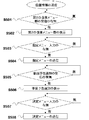
- Configuration diagram of health management support apparatus The figure which shows an example of the menu information data which concerns on Embodiment 1 The figure which shows an example of the user information data which concerns on Embodiment 1.
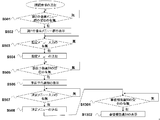
- Flowchart of health management support method The flowchart which shows the process of the user terminal which concerns on Embodiment 1.
- Configuration diagram of health management support apparatus The figure which shows an example of the shop and menu information data concerning Embodiment 2
- Flow chart of health management support method according to Embodiment 2 The flowchart which shows the process of the user terminal which concerns on Embodiment 2.
- Configuration diagram of health management support apparatus according to Embodiment 3
- Flow chart of health management support method The flowchart which shows the process of the user terminal which concerns on Embodiment 3.
- FIG. 1 is a configuration diagram of a health management support apparatus according to the first embodiment.
- the health management support device 1 according to the first embodiment includes a control unit 2, a transmission unit 3, a reception unit 4, a menu information storage unit 5, a user information storage unit 6, a menu extraction unit 7, and a prior notice notification creation unit 8. Is done.
- the health management support apparatus 1 may be a server, for example.
- the health management support apparatus 1 is connected to a user terminal 9 used by a person who selects a meal menu (hereinafter referred to as a user) via a network.
- the user terminal 9 includes a terminal control unit 10, a display unit 11, an input unit 12, a terminal transmission unit 13, and a terminal reception unit 14.
- the health care support apparatus 1 transmits to the user terminal 9 meal menu data or information on the influence on the selection of a future meal menu.
- the user uses this user terminal 9 to select a meal menu when selecting a meal menu.
- the user may be a person who takes a meal menu, or may be a person who selects and prepares a meal menu for a patient who takes a meal, for example.
- the control unit 2 is connected to each of the transmission unit 3, the reception unit 4, the menu information storage unit 5, the user information storage unit 6, the menu extraction unit 7, and the advance notice generation unit 8, and controls each element.
- the transmission unit 3 is connected to the user terminal 9 via the network, and transmits data such as a list of meal menus or a prior notice to be described later to the user terminal 9.
- the receiving unit 4 is connected to the user terminal 9 via the network, and receives a connection request from the user terminal 9 or meal menu data selected by the user.
- the menu information storage unit 5 stores the names of dishes of a plurality of meal menus and predetermined items that are the amount of heat or nutrients thereof as data associated with each meal menu.
- Nutritional components include, for example, salt, carbohydrates and lipids.
- the meal menu recipe may also be stored in association with each meal menu.
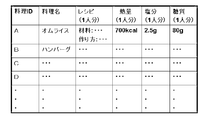
- FIG. 2 is an example of meal menu information data stored in the menu information storage unit 5.
- the menu information storage unit 5 stores the dish name, recipe, calorie, salt content, and sugar mass as data for each dish ID.
- the menu information storage unit 5 is in a device or a server different from the device in which the control unit 2 is provided, and may be connected to the control unit 2 via a cable or a network.
- the user information storage unit 6 stores a user ID assigned to each user and a predetermined period for each user in association with the user ID.
- the predetermined period is a period determined in order to calculate a value of a predetermined item that can be ingested as a total amount in the predetermined period.
- the meal timing for which the intake is desired to be managed is stored in association with the user ID as the management target.
- the management target may be managed by the health management support apparatus 1 as breakfast, lunch, and dinner. For example, when breakfast is an environment in which approximately the same thing is ingested at all times, lunch and dinner are managed as health management targets. You may make it manage with the assistance apparatus 1.
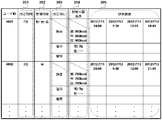
- FIG. 3 is an example of user information data stored in the user information storage unit 6. As shown in FIG.
- the user information storage unit 6 stores a predetermined period, a management target, a predetermined item, an ingestible condition, and an intake history as data for each user ID.
- a predetermined period is set to a length of several days such as 7 days or 3 days by the user.
- the predetermined period may be set in advance.
- the user may perform input for selecting a predetermined period on the input unit 12 of the user terminal 9 and set based on the input.
- the management object column 302 breakfast, lunch, and dinner, or only lunch is given as an example of the management object by the user, but is not limited thereto.
- the management target may be set in advance.
- the user may perform input for selecting a management target to the input unit 12 of the user terminal 9 and set based on the input.
- predetermined item column 303 calorie, salt content, and sugar are listed as examples of the predetermined item here, but the predetermined item may be caloric value or a nutritional component, and is not limited thereto. Further, the predetermined item may be singular or plural.
- the predetermined item may be set in advance. Alternatively, the user may perform input for selecting a predetermined item on the input unit 12 of the user terminal 9 and set based on the input.
- the ingestible condition column 304 for each predetermined item, for example, an upper limit value that can be ingested for each of breakfast, lunch, and dinner is stored.
- the ingestible conditions may be set in advance.
- the user may input a numerical value from the input unit 12 of the user terminal 9 and set the value.
- the ingestion history column 305 stores the date and time when the meal ingestor ingested the meal and the value of the predetermined item ingested for each predetermined item in association with the date and time. Instead of time taken, you may label it as breakfast, lunch, or dinner.
- the predetermined period column 301 and the management target column 302 only need to be associated with the user ID, and the ingestible condition column 304 and the intake history column 305 are respectively associated with the user ID and the predetermined item.
- the predetermined period column 301, the management target column 302, the ingestible condition column 304, and the ingestion history column 305 may be stored in the same memory, or may be stored in different memories.
- the menu extraction unit 7 is based on a meal menu stored in the menu information storage unit 5 based on the intake conditions for a predetermined period of a predetermined item, which is a calorific value or a nutritional component stored in the user information storage unit 6. Extract the menu.
- the meal menu stored in the menu information storage unit 5 is referred to as a first meal menu group, and is extracted from the first meal menu group based on the ingestible conditions for a predetermined period of a predetermined item.
- the meal menu is called the second meal menu group.
- the predetermined period is 7 days
- the management object is breakfast, lunch and dinner
- the predetermined item is calorie
- the ingestible condition is breakfast 600 kcal / time
- lunch is 800 kcal / time
- dinner is 600 kcal / time
- the case where the meal to be taken this time is breakfast will be described as an example.
- the management objects are breakfast, lunch, and dinner
- 21 meals are taken for a predetermined period of 7 days.
- the amount of heat that can be consumed at the 21st time at the end of the predetermined period of the breakfast to be taken this time is 42000 kcal when the total amount of heat for breakfast, lunch, and dinner is calculated from the ingestible conditions.
- the breakfast that is about to be consumed this time is set as the end of the predetermined period, and the total amount of heat actually consumed during the predetermined period is subtracted. That is, since the current breakfast is not actually consumed, the total amount of heat actually consumed during the predetermined period is the amount of heat of the past 20 meals obtained from the intake history.
- the second meal menu group is obtained by extracting only meal menus of 500 kcal or less from all meal menus stored in the menu information storage unit 5. For example, when the management target is only lunch, the second meal menu group is extracted by performing calculation while paying attention to the conditions that allow the intake of lunch, the number of lunches within a predetermined period, and the intake history of only lunch.
- the ingestible value of the predetermined item is calculated from the first meal menu group after the ingestion of the specified menu. Further, based on the ingestible value, the next meal menu that satisfies the ingestible condition in the predetermined period may be extracted with the next meal as the end of the predetermined period.
- the meal menu that can be taken in the next meal when the designated menu is taken this time is called a third meal menu group. For example, when the value of the predetermined item in the current designated menu is large, the number of the third meal menu group decreases, and when the value of the predetermined item in the current designated menu is small, the number of the third meal menu group increases. .
- the advance notice generation unit 8 calculates how the future meal will be affected after taking the designated menu, so the user is now trying to select the meal menu before determining the meal menu. To know what the intake value of a given item will be at the next meal, or what the meal menu will be at the next meal Can do. Therefore, the user can determine the menu of the current meal taking into account the influence on the selection of the next meal menu. In addition, instead of setting the upper limit value of the predetermined item for each meal, the value of the predetermined item that can be ingested is calculated from the sum of the ingestible conditions in the predetermined period.
- a meal menu having a value smaller than the value of the predetermined item of the designated menu designated by the user is extracted as a proposal menu, and this time the proposal is made based on the ingestible conditions for the predetermined period.
- a meal menu that can be taken in the next meal when the menu is ingested may be extracted, and a difference from the third meal menu group may be extracted.
- the meal menu that can be taken in the next meal when the proposed menu is taken this time is called a fourth meal menu group. That is, the above-mentioned difference is a difference between the third meal menu group and the fourth meal menu group, and is included in the fourth meal menu group but not in the third meal menu group. That is. Further, the number of meal menus of the difference may be calculated.
- the user confirms that the number of meal menus that can be consumed in the next meal increases when the suggested menu is consumed. It is possible to consider whether or not the current meal is changed to the proposed menu for the next meal, and therefore, when selecting a meal, the meal that can be taken in the future can be considered. Also, if the number of next meal menus can be reduced, the number of meal menus that can be selected in the current meal increases, so the choice of meal menus can be expanded according to the user's judgment.
- the terminal control unit 10 is connected to each of the display unit 11, the input unit 12, the terminal transmission unit 13, and the terminal reception unit 14, and controls each element.
- the display unit 11 displays a screen for the user to obtain information on the meal menu. For example, a list of meal menus that can be selected is displayed on the display, or the influence of selecting a certain meal menu on the selection of the next meal menu is displayed. A meal menu recipe or data stored in the menu information storage unit 5 or the user information storage unit 6 may be displayed.
- the input unit 12 is a part that receives selection input of a user's meal menu, input of settings such as a predetermined item, a predetermined period, or an ingestible condition. For example, input from a touch panel may be used, and input from a mouse or a keyboard may be used.
- the terminal transmission unit 13 is connected to the reception unit 4 of the health management support apparatus 1 via the network, and transmits the input received by the input unit 12 to the health management support apparatus 1.
- the terminal reception unit 14 is connected to the transmission unit 3 of the health management support apparatus 1 via a network, and the meal menu data extracted by the menu extraction unit 7 or the data generated by the advance notice generation unit 8 or the menu information storage Data stored in the unit 5 or the user information storage unit 6 is received.
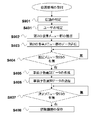
- FIG. 4 is a flowchart of the health management support method according to the first embodiment.
- the menu extracting unit 7 specifies the user ID of the user who has made the connection request.
- the user ID is specified by the user inputting his / her user ID from the input unit 12, the user ID is received by the receiving unit 4, and the menu extracting unit 7 is stored in the user information storage unit 6.
- a unique user ID is set for each user terminal 9, and the user ID is automatically transmitted to the health management support apparatus 1 when a connection request is made. Also good.
- step S ⁇ b> 402 the menu extraction unit 7 starts from a meal menu stored in the menu information storage unit 5 in a predetermined period of a predetermined item that is a calorie or nutritional component stored in the user information storage unit 6. Extract meal menu based on ingestible conditions.
- the meal menu stored in the menu information storage unit 5 is referred to as a first meal menu group, and is extracted from the first meal menu group based on the ingestible conditions for a predetermined period of a predetermined item.
- the meal menu is called the second meal menu group.
- the menu extraction unit 7 refers to the user information storage unit 6, refers to the predetermined period column 301 and the management target column 302 associated with the user ID that made the connection request, and how many meals to take Decide if possible conditions are to be calculated.
- the date of the current meal is determined from the date and time when the health management support apparatus 1 receives the connection request, the date and time input by the user from the input unit 12 of the user terminal 9, or the selection of breakfast, lunch and dinner.
- the menu extraction unit 7 refers to the predetermined item column 303 and the ingestible condition column 304, and calculates the value of the predetermined item that may be consumed in a predetermined period with the meal that is about to be taken this time as the end of the predetermined period.
- the sum of the values of the predetermined items that are actually ingested is subtracted for a predetermined period starting from the current meal with reference to the intake history column 305.
- the management period is set to breakfast, lunch and dinner, and the predetermined period is set to 7 days. If this meal is breakfast, the sum of the values of the predetermined items actually consumed in the predetermined period is It is the sum of the amount of heat from the morning and evening meals for the past six days and the amount of heat from lunch and dinner seven days ago.
- a meal for which there is no ingestion history may be calculated as ingesting the value of the ingestible condition for that one meal.
- step S403 the transmission unit 3 transmits the data of the second meal menu group extracted in step S402 to the user terminal 9.
- data to be transmitted at this time only the dish name of the second meal menu group may be used, or a recipe, a calorie value, or a nutritional component may be included.
- the user selects a meal menu that he / she wants to select from the second meal menu group transmitted here, inputs the selected designated menu to the user terminal 9, and transmits it to the health management support apparatus 1.
- step S404 when the receiving unit 4 receives data of the specified menu input by the user from the user terminal 9, the process proceeds to step S405.
- step S ⁇ b> 405 when the meal ingestor ingests a designated menu that is a meal menu designated by the user from the second meal menu group extracted by the menu extraction unit 7, the advance notice creation unit 8 designates the designated menu. How it will affect future meals after ingestion.
- the advance notice creation unit 8 refers to the user information storage unit 6, refers to the predetermined period column 301 and the management target column 302 associated with the user ID that has made the connection request, and how many meals to eat. It is decided whether the ingestible condition is to be calculated.
- the date of the current meal is determined from the date and time when the health management support apparatus 1 receives the connection request, the date and time input by the user from the input unit 12 of the user terminal 9, or the selection of breakfast, lunch and dinner. Then, referring to the predetermined item column 303 and the ingestible condition column 304, assuming that the meal intake person has ingested the specified menu, the ingestible value of the predetermined item at the next meal is calculated. Furthermore, based on the ingestible value, a meal menu that satisfies the ingestible condition in the predetermined period may be extracted with the next meal as the end of the predetermined period.
- the value of a predetermined item that may be consumed in a predetermined period with the next meal as the end of the predetermined period is calculated. From this value, the sum of the values of the predetermined items actually ingested during the predetermined period is subtracted. At this time, since it is assumed that the current meal has ingested the specified menu, the value of the predetermined item of the current meal is calculated by reading the value of the predetermined item of the specified menu in the menu information storage unit 5. Thereby, at the next meal, a value that the predetermined item may be consumed is calculated. The value that can be taken by the predetermined item at the next meal may be used as the data for the prior notice.
- the meal menu that can be taken in the next meal when the specified menu is taken this time is called the third meal menu group.
- a meal menu having a value smaller than a value that can be ingested in the next meal of the calculated predetermined item is extracted from the first meal menu group, and a third meal menu group is determined. For example, when the value of the predetermined item in the current designated menu is large, the number of the third meal menu group decreases, and when the value of the predetermined item in the current designated menu is small, the number of the third meal menu group increases. .
- This third meal menu group may be used as data for prior notice.
- a meal menu having a value smaller than the value of the predetermined item of the designated menu designated by the user is extracted as a proposal menu, and this time the proposal is made based on the ingestible conditions for the predetermined period.
- a meal menu that can be taken in the next meal when the menu is ingested may be extracted, and a difference from the third meal menu group may be extracted. This difference meal menu may be used as the data for the advance notice.
- the meal menu that can be taken in the next meal when the proposed menu is taken this time is called a fourth meal menu group.
- the above-mentioned difference is a difference between the third meal menu group and the fourth meal menu group, and is included in the fourth meal menu group but not in the third meal menu group. That is. Further, the number of meal menus of the difference may be calculated. The number of differential meal menus may be used as the data for the advance notice.
- step S406 the transmission unit 3 transmits the advance notice data created in step S405 to the user terminal 9.
- the advance notice generation unit 8 calculates what kind of influence will be exerted on the future meal after ingesting the designated menu and transmits it to the user terminal 9
- the user can determine the meal menu before determining the meal menu.
- the meal menu to be selected is actually ingested, it is possible to grasp how the next meal menu will be. Therefore, the user can determine the menu of the current meal taking into account the influence on the selection of the next meal menu.
- the value of the predetermined item that can be ingested is calculated from the sum of the ingestible conditions in the predetermined period.
- the advance notice generation unit 8 extracts the proposal menu and transmits it to the user terminal 9 so that the user can confirm that the number of meal menus that can be consumed in the next meal increases when the proposal menu is consumed. It is possible to consider whether or not the current meal is changed to the proposed menu for the next meal, so when selecting a meal, it is possible to consider the meal that can be taken in the future. Also, if the number of next meal menus can be reduced, the number of meal menus that can be selected in the current meal increases, so the choice of meal menus can be expanded according to the user's judgment.
- the user confirms the content of the advance notice, selects the meal menu that he / she wants to finally select as the current meal, inputs the selected determination menu to the user terminal 9, and transmits it to the health management support apparatus 1. .
- step S407 when the receiving unit 4 receives the data of the determination menu input by the user from the user terminal 9, the process proceeds to step S408.
- step S408 the control unit 2 refers to the menu information storage unit 5 and records the value of each predetermined item of the determination menu received by the reception unit 4 in the intake history column 305 of the user information storage unit 6.
- the date and time at that time is also recorded in the intake history column 305.
- the acquisition of the date / time data when the user selects the determination menu may be input from the input unit 12 of the user terminal 9 or may be automatically acquired. Further, instead of time, the user may select and input one of breakfast, lunch, and dinner.
- the terminal transmission unit 13 of the user terminal 9 transmits a connection request to the health care support apparatus 1. For example, the user requests display of a meal menu to select a meal menu before having lunch or dinner.
- step S501 when the terminal receiving unit 14 receives the data of the second meal menu group from the health management support apparatus 1, the process proceeds to step S502.
- the data received at this time is data transmitted in step S403 of the processing flow of the health care support apparatus 1.
- step S502 the display unit 11 displays the data of the second meal menu group received in step S501.
- the user confirms the displayed second meal menu group, selects a meal menu that the user wants to select at the present time, and inputs the selected meal menu from the input unit 12 as a designated menu.
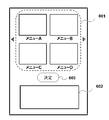
- FIG. 6 is an example of a screen displayed by the display unit 11.
- the menu display field 601 displays a list of meal menus included in the second meal menu group.
- step S503 when the input unit 12 receives an input of a designated menu, the process proceeds to step S504.
- the input of the designated menu for example, when the screen of the display unit 11 shown in FIG. 6 is a touch panel and the menu A is touched by the user, the input with the menu A as the designated menu is accepted.
- step S504 the terminal transmission unit 13 transmits the specified menu data received in step S502 to the health care support apparatus 1.
- the data transmitted at this time is data received in step S404 of the processing flow of the health care support apparatus 1.
- step S505 the process proceeds to step S506.
- step S506 the display unit 11 displays the advance notice data received in step S505.
- the advance notice data is displayed, for example, in the comment display field 602 of FIG. For example, “If you change the designated menu to a side, tomorrow's menu will increase by 15” is displayed.
- the user selects a meal menu to be finally selected as the current meal from the first meal menu group, and inputs the selected decision menu to the input unit 12 To do.
- the screen of the display unit 11 shown in FIG. 6 is a touch panel and the user touches the menu A and then touches the determination button 603, the determination menu is input using the menu A as the determination menu. Accept.
- step S507 when the input unit 12 receives an input of the determination menu, the process proceeds to step S508.
- step S508 the terminal transmission unit 13 transmits the decision menu data received in step S507 to the health management support apparatus 1.
- the data transmitted at this time is data received in step S407 of the processing flow of the health care support apparatus 1.
- FIG. 7 is a configuration diagram of a health management support apparatus according to the second embodiment.
- the same number is attached
- the health management support apparatus according to the second embodiment is mainly different from the first embodiment in that the health management support apparatus 701 includes a store / menu information storage unit 705 and the user terminal 709 includes a position information detection unit 715. .
- the health management support apparatus 1 includes a control unit 2, a transmission unit 3, a reception unit 4, a store / menu information storage unit 705, a user information storage unit 6, a menu extraction unit 7, a prior notice notification creation unit 8, Consists of The health management support apparatus 701 may be a server, for example. Furthermore, the health management support apparatus 701 is connected to a user terminal 709 used by the user via a network.
- the user terminal 709 includes a terminal control unit 10, a display unit 11, an input unit 12, a terminal transmission unit 13, a terminal reception unit 14, and a position information detection unit 715.
- the store / menu information storage unit 705 is connected to the control unit 2, and for each store ID assigned to each store in order to identify the store, a predetermined name that is a dish name of a plurality of meal menus and its calorific value or nutrient component Items are stored as data associated with each meal menu.
- Nutritional components include, for example, salt, carbohydrates and lipids.
- the meal menu recipe may also be stored in association with each meal menu.
- FIG. 8 is an example of store / meal menu information data stored in the store / menu information storage unit 705. As illustrated in FIG. 8, the store / menu information storage unit 705 stores store location information, a dish ID, a dish name, a recipe, a heat amount, a salt content, and a sugar mass as data for each store ID.
- the store / menu information storage unit 705 is in a device or a server different from the device in which the control unit 2 is provided, and may be connected to the control unit 2 via a cable or a network.
- the location information detection unit 715 is connected to the terminal control unit 10 and detects the location of the user terminal 709.
- GPS Global Positioning System
- FIG. 9 is a flowchart of the health management support method according to the second embodiment. Steps that perform the same processing as in Embodiment 1 are given the same numbers, and descriptions of those steps are omitted.
- the menu extracting unit 7 specifies a store from the position information in step S901. For specifying the store, the receiving unit 4 receives the location information of the user terminal 709 detected by the location information detecting unit 715, and the menu extracting unit 7 uses the store location information data stored in the store / menu information storage unit 705. Identify by reference.
- step S401 the user is specified.
- step S902 the menu extraction unit 7 selects the user information storage unit 6 from the meal menu corresponding to the store specified in step S901 among the meal menus stored in the store / menu information storage unit 705.
- a meal menu is extracted based on the ingestible conditions for a predetermined period of a predetermined item, which is the amount of heat or nutritional component stored in.
- the meal menu corresponding to the store specified in step S901 is referred to as a first meal menu group, and from the first meal menu group,
- the meal menu extracted based on the ingestible conditions for the predetermined period of the predetermined item is called a second meal menu group.
- the menu extraction unit 7 refers to the user information storage unit 6, refers to the predetermined period column 301 and the management target column 302 associated with the user ID that made the connection request, and how many meals to take Decide if possible conditions are to be calculated.
- the date of the current meal is determined from the date and time when the health management support apparatus 1 receives the connection request, the date and time input by the user from the input unit 12 of the user terminal 709, or the selection of breakfast, lunch, and dinner.
- the menu extraction unit 7 refers to the predetermined item column 303 and the ingestible condition column 304, and calculates the value of the predetermined item that may be consumed in a predetermined period with the meal that is about to be taken this time as the end of the predetermined period.
- the sum of the values of the predetermined items that are actually ingested is subtracted for a predetermined period starting from the current meal with reference to the intake history column 305.
- the management period is set to breakfast, lunch and dinner, and the predetermined period is set to 7 days. If this meal is breakfast, the sum of the values of the predetermined items actually consumed in the predetermined period is It is the sum of the amount of heat from the morning and evening meals for the past six days and the amount of heat from lunch and dinner seven days ago.
- a meal for which there is no ingestion history may be calculated as ingesting the value of the ingestible condition for that one meal.
- step S403 to step S408 are sequentially executed.
- the processing flow of the user terminal 709 is shown in FIG. 10.
- the processing flow of the user terminal 709 is the first embodiment after transmitting the position information detected by the position information detection unit 715 to the health management support apparatus 701.
- the same numbers are assigned and description of those steps is omitted.
- the store is specified by acquiring position information from the position information detection unit 715 included in the user terminal 709 and specifying the store position information from the data, but the user terminal 709 does not include the position information detection unit 715.
- a user may input store information from the input unit 12. That is, in step S ⁇ b> 901, when the store information input by the user is received, the menu extraction unit 7 may specify the store with reference to the store ID stored in the store / menu information storage unit 705.
- the meal menu information for each store is stored in the health management support device 701, it is possible to assist the user in selecting a healthy meal menu from the menu information of the store to be used. it can.
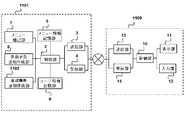
- FIG. 11 is a configuration diagram of the health management support apparatus according to the third embodiment. The same number is attached
- the health management support apparatus 1101 according to the third embodiment is different from the first embodiment in that it includes a post-report notification creation unit 1102.
- the health management support apparatus 1 according to the first embodiment will be described as including the subsequent report notification creation unit 1102.
- the health management support apparatus 701 according to the second embodiment is similarly provided with the subsequent report notification creation unit 1102. May be provided.
- the report report creation unit 1102 After the report report creation unit 1102 is connected to the control unit 2 and determines the meal menu to be ingested by the user, how much room is available for the ingestible condition or what the user can ingest Create a post-report notification to let you know if you have exceeded.
- a processing flow executed by the health management support apparatus 1101 and the user terminal 1109 will be described.
- FIG. 12 is a flowchart of the health management support method according to the third embodiment. Steps that perform the same processing as in Embodiment 1 are given the same numbers, and descriptions of those steps are omitted.
- the post report reporting creation unit 1102 creates post report reporting data in step S 1201.
- the post-report notification creation unit 1102 refers to the user information storage unit 6, refers to the predetermined period column 301 and the management target column 302 associated with the user ID that made the connection request, and how many meals It is decided whether the ingestible condition is to be calculated.
- the date of the current meal is determined from the date and time when the health management support apparatus 1 receives the connection request, the date and time input by the user from the input unit 12 of the user terminal 9, or the selection of breakfast, lunch and dinner.
- the post-report notification creation unit 1102 calculates the sum of the values of the predetermined items that may be consumed in the predetermined period with the meal ingested this time as the end of the predetermined period. Then, referring to the intake history column 305 stored in the user information storage unit 6, the sum of the values of the predetermined items actually ingested in the predetermined period with the current meal as the end of the predetermined period is calculated. The difference between the sum of the values of the predetermined items that can be ingested during the predetermined period and the sum of the values of the predetermined items that have actually been ingested is calculated, and this is used as the post report notification data.
- the post-report notification data may be a difference value. For example, a menu having a value of a predetermined item lower than the difference value is extracted from the menu stored in the menu information storage unit 5, and this menu information is recorded after the menu information. Report notification data may be used.
- step S1202 the transmission unit 3 transmits the post-report notification data created in step S1102 to the user terminal 1109.
- step S501 the processing flow of the user terminal 1109 is shown in FIG. 13, but steps that perform the same processing as in the first embodiment are given the same numbers, and descriptions of those steps are omitted.
- step S508 the user terminal 1109 proceeds to step S1302 when the terminal reception unit 14 receives the post-report notification data from the health management support apparatus 1101 in step S1301.
- step S1302 the display unit 11 displays the post report notification data received in step S1301.
- the post-report notification data is displayed, for example, in the comment display field 602 of FIG.
- the health management support apparatus 1101 transmits a post report notification to the user terminal 1109, for example, when the user selects a value with a low value of a predetermined item, the intake during the predetermined period is lower than the upper limit. Thus, the user can know that dessert and snacks can be taken.
- how the meal menu to be selected affects the future meal menu based on the caloric intake or nutritional component intake conditions in a predetermined period.
Landscapes
- Engineering & Computer Science (AREA)
- Business, Economics & Management (AREA)
- Strategic Management (AREA)
- Human Resources & Organizations (AREA)
- Entrepreneurship & Innovation (AREA)
- Health & Medical Sciences (AREA)
- Medical Informatics (AREA)
- Operations Research (AREA)
- Primary Health Care (AREA)
- Data Mining & Analysis (AREA)
- General Health & Medical Sciences (AREA)
- Epidemiology (AREA)
- Nutrition Science (AREA)
- Economics (AREA)
- Marketing (AREA)
- Public Health (AREA)
- Quality & Reliability (AREA)
- Tourism & Hospitality (AREA)
- Physics & Mathematics (AREA)
- General Business, Economics & Management (AREA)
- General Physics & Mathematics (AREA)
- Theoretical Computer Science (AREA)
- Medical Treatment And Welfare Office Work (AREA)
Abstract
メニューの選択肢の幅を広げつつ健康を管理することを目的とする。 健康管理支援装置は、熱量又は栄養成分である所定項目の所定期間での摂取可能条件に基づいて、第1の食事メニュー群から第2の食事メニュー群を抽出するメニュー抽出部7と、第2の食事メニュー群のうちの特定の食事メニューである指定メニューの入力を受け付ける受信部4と、指定メニューと摂取可能条件に基づいて、指定メニューを摂取した後の食事を所定期間の終期として後の食事において所定項目の摂取可能な値を算出する事前予告通知作成部8とを備える。
Description
本発明は、健康管理の観点から摂取する食事のメニュー選択を支援する健康管理支援装置及び健康管理支援方法に関する。
近年、摂取する食事メニューを管理することにより、健康を管理する意識が高まっており、例えば食事メニューの熱量に基づいて摂取すべき食事メニューを選択する装置が開発されている。このような装置として、例えば特許文献1には、年齢、性別、伸長、体重、消費熱量等に基づいて食事の際に摂取することが望ましい熱量を計算し、その計算した熱量に適合する食事レシピを抽出して提案する装置について記載している。
前述のような従来の構成では、食事のたびに、計算された熱量に適合する食事レシピが提案されるので、食事メニューの選択肢の幅が狭く、食事メニューを選ぶ楽しみを維持しつつ健康を管理することが困難となる。
そこで本発明は、所定の期間における熱量又は栄養成分の摂取可能条件に基づいて、今選択する食事メニューが将来の食事メニューにどのような影響を与えるのかを食事メニューを選択する者に事前に知らせることにより、メニューの選択肢の幅を広げつつ健康を管理することを目的とする。
そこで本発明の一態様によって実現される健康管理支援装置は、熱量又は栄養成分である所定項目の所定期間での摂取可能条件に基づいて、第1の食事メニュー群から第2の食事メニュー群を抽出するメニュー抽出部と、第2の食事メニュー群のうちの特定の食事メニューである指定メニューの入力を受け付ける受信部と、受信部で受け付けた指定メニューと摂取可能条件に基づいて、指定メニューを摂取した後の食事を所定期間の終期として後の食事において所定項目の摂取可能な値を算出する事前予告通知作成部とを備える。
また、本発明の一態様によって実現される健康管理支援装置は、摂取可能条件が食事摂取者が摂取してよい所定項目の上限値であってもよい。
また、本発明の一態様によって実現される健康管理支援装置は、事前予告通知作成部が、摂取可能な値に基づいて、前記第1の食事メニュー群のうち後の食事を所定期間の終期として所定期間での摂取可能条件を満たす第3の食事メニュー群を抽出してもよい。
また、本発明の一態様によって実現される健康管理支援装置は、事前予告通知作成部が、第2の食事メニュー郡の中から、指定メニューの所定項目の値よりも少ない値をもつ提案メニューを抽出し、所定期間での摂取可能条件に基づいて提案メニューを選択したときに次回の食事で摂取可能な食事メニューである第4の食事メニュー群を抽出し、第3の食事メニュー群と第4の食事メニュー群の差分を抽出してもよい。
また、本発明の一態様によって実現される健康管理支援装置は、事前予告通知作成部が、第3の食事メニュー群の食事メニューの数と第4の食事メニュー群の食事メニューの数の差分を算出してもよい。
また、本発明の一態様によって実現される健康管理支援装置は、所定期間で摂取してよい所定項目の値の総和と、前記所定期間で実際に摂取した所定項目の値の総和の差を算出する事後報告通知作成部を備えていてもよい。
また、本発明の一態様によって実現される健康管理支援装置は、摂取可能条件と摂取した食事メニュー及び各摂取した食事メニューの所定項目の値を格納するユーザ情報記憶部を備え、事前予告通知作成部はユーザ情報記憶部に格納される所定期間の摂取した食事メニューの前記所定項目の値と摂取可能条件に基づいて、第3の食事メニュー群を抽出してもよい。
また、本発明の一態様によって実現される健康管理支援装置は、第1の食事メニュー群と、第1の食事メニュー群の有する各食事メニューに対応する所定項目の値を格納する食事メニュー情報記憶部を備えていてもよい。
また、本発明の一態様によって実現される健康管理支援装置は、店舗の位置情報と店舗の食事メニューと食事メニューの所定項目の値を格納する店舗情報記憶部を備え、受信部は、位置情報を受付け、メニュー抽出部は、受信部で受け付ける位置情報に対応する店舗の食事メニューを第1の食事メニュー群としてもよい。
本発明の一態様によって実現される健康管理支援方法は、熱量又は栄養成分である所定項目の所定期間での摂取可能条件に基づいて、第1の食事メニュー群から第2の食事メニュー群を抽出するステップと、第2の食事メニュー群のうちの特定の食事メニューである指定メニューの入力を受け付けるステップと、指定メニューと摂取可能条件に基づいて、指定メニューを摂取した後の食事を所定期間の終期として後の食事において所定項目の摂取可能な値を算出するステップとを備える。
また、本発明の一態様によって実現される健康管理支援方法は、摂取可能条件が食事摂取者が摂取してよい所定項目の上限値であってもよい。
また、本発明の一態様によって実現される健康管理支援方法は、摂取可能な値に基づいて、前記第1の食事メニュー群のうち後の食事を所定期間の終期として所定期間での摂取可能条件を満たす第3の食事メニュー群を抽出するステップを備えていてもよい。
また、本発明の一態様によって実現される健康管理支援方法は、第2の食事メニュー郡の中から、指定メニューの所定項目の値よりも少ない値をもつ提案メニューを抽出し、所定期間での摂取可能条件に基づいて提案メニューを選択したときに次回の食事で摂取可能な食事メニューである第4の食事メニュー群を抽出し、第3の食事メニュー群と第4の食事メニュー群の差分を抽出するステップを備えていてもよい。
また、本発明の一態様によって実現される健康管理支援方法は、第3の食事メニュー群と第4の食事メニュー群の差分を抽出するステップは、第3の食事メニュー群の食事メニューの数と第4の食事メニュー群の食事メニューの数の差分を算出してもよい。
また、本発明の一態様によって実現される健康管理支援方法は、所定期間で摂取してよい所定項目の値の総和と、所定期間で実際に摂取した所定項目の値の総和の差を算出するステップを備えていてもよい。
また、本発明の一態様によって実現される健康管理支援方法は、店舗の位置情報を受付け、第1の食事メニュー群は位置情報に対応する前記店舗の食事メニューであってもよい。
本発明の健康管理支援装置及び健康管理支援方法によれば、食事メニューを選択する者がメニューを選択する際に、今選択する食事メニューがその後の食事メニューにどのような影響を与えるのかを事前に知ることができるため、将来の食事メニューとのバランスを考えながら食事メニューを選択することができ、選択する食事メニューの選択肢を増やしながら健康を管理することができるという効果がある。
以下に、本発明の健康管理支援装置及び健康管理支援方法の実施の形態を図面とともに詳細に説明する。
(実施の形態1)
図1は実施の形態1に係る健康管理支援装置の構成図である。実施の形態1における健康管理支援装置1は、制御部2、送信部3、受信部4、メニュー情報記憶部5、ユーザ情報記憶部6、メニュー抽出部7、事前予告通知作成部8とから構成される。健康管理支援装置1は例えばサーバーであってもよい。更に健康管理支援装置1は食事メニューを選択する者(以下、ユーザとよぶ。)が使用するユーザ端末9とネットワークを介して接続している。ユーザ端末9は、端末制御部10、表示部11、入力部12、端末送信部13、端末受信部14とから構成される。
(実施の形態1)
図1は実施の形態1に係る健康管理支援装置の構成図である。実施の形態1における健康管理支援装置1は、制御部2、送信部3、受信部4、メニュー情報記憶部5、ユーザ情報記憶部6、メニュー抽出部7、事前予告通知作成部8とから構成される。健康管理支援装置1は例えばサーバーであってもよい。更に健康管理支援装置1は食事メニューを選択する者(以下、ユーザとよぶ。)が使用するユーザ端末9とネットワークを介して接続している。ユーザ端末9は、端末制御部10、表示部11、入力部12、端末送信部13、端末受信部14とから構成される。
健康管理支援装置1はユーザ端末9へ、食事メニューのデータ又は将来の食事メニューの選択に与える影響の情報などを送信する。ユーザは、食事メニューを選択する際に、このユーザ端末9を用いて食事メニューの選択を行う。ユーザは、食事メニューを摂取する者でもよいし、例えば食事を摂取する患者のために食事メニューを選択し調理する者であってもよい。
以下に、健康管理支援装置1の各構成について説明する。
制御部2は、送信部3、受信部4、メニュー情報記憶部5、ユーザ情報記憶部6、メニュー抽出部7、事前予告通知作成部8のそれぞれと接続し、各要素を制御する。送信部3は、ネットワークを介してユーザ端末9と接続し、ユーザ端末9へ後述する食事メニューの一覧又は事前予告通知などのデータを送信する。
受信部4は、ネットワークを介してユーザ端末9と接続し、ユーザ端末9からの接続要求又はユーザが選択した食事メニューデータなどを受信する。
メニュー情報記憶部5は、複数の食事メニューの料理名と、その熱量又は栄養成分である所定項目を食事メニューごとに対応付けたデータとして格納している。栄養成分は、例えば塩分、糖質、脂質などがある。また、食事メニューのレシピも食事メニューごとに対応づけて格納してもよい。図2は、メニュー情報記憶部5が格納する食事メニュー情報のデータの一例である。図2に示すように、メニュー情報記憶部5は、料理IDごとに、料理名、レシピ、熱量、塩分量、糖質量をデータとして格納している。ここで、メニュー情報記憶部5は、制御部2がある装置とは異なる装置又はサーバーなどにあり、ケーブルやネットワークを介して制御部2に接続していてもよい。
ユーザ情報記憶部6は、ユーザごとに付与しているユーザIDと、そのユーザごとに所定期間をユーザIDに対応付けて格納している。所定期間とは、摂取してよい所定項目の値をその所定期間での総量として算出するために定める期間である。また、食事を摂取する者が例えば朝、昼、晩のそれぞれの1回分の食事で摂取してよい熱量又は栄養成分量の上限値を、熱量又は栄養成分ごとに摂取可能条件としてユーザIDに対応付けて格納している。
また、摂取量を管理したい食事タイミングを、管理対象としてユーザIDに対応付けて格納している。管理対象を、朝食、昼食、及び夕食としてこの健康管理支援装置1で管理してもよいし、例えば朝食がいつもだいたい同じ物を摂取する環境である場合などは昼食及び夕食を管理対象として健康管理支援装置1で管理するようにしてもよい。さらに、摂取した食事ごとの熱量又は栄養成分量を摂取履歴としてユーザIDに対応付けて格納する。図3はユーザ情報記憶部6が格納するユーザ情報のデータの一例である。図3に示すように、ユーザ情報記憶部6は、ユーザIDごとに、所定期間と、管理対象と、所定項目と、摂取可能条件と、摂取履歴をそれぞれデータとして格納している。所定期間欄301には、例えばユーザによって7日又は3日など、数日の長さで所定期間を設定している。所定期間は、予め設定されていてもよい。また、ユーザがユーザ端末9の入力部12に所定期間を選択する入力を行い、その入力に基づいて設定してもよい。管理対象欄302は、ここではユーザによって朝食、昼食、及び夕食、又は昼食のみを管理対象の例としてあげているが、これらに限られない。管理対象は、予め設定されていてもよい。また、ユーザがユーザ端末9の入力部12に管理対象を選択する入力を行い、その入力に基づいて設定してもよい。所定項目欄303は、ここでは熱量、塩分、糖質を所定項目の例として挙げているが、所定項目は熱量又は栄養成分であればよく、これらに限られない。また、所定項目は単数であっても複数であってもよい。所定項目は、予め設定されていてもよい。また、ユーザがユーザ端末9の入力部12に所定項目を選択する入力を行い、その入力に基づいて設定してもよい。摂取可能条件欄304には、所定項目ごとに例えば1日の朝食、昼食及び夕食のそれぞれで摂取してよい上限値を格納している。摂取可能条件は、予め設定されていてもよい。また、ユーザがユーザ端末9の入力部12から数値入力を行い、設定してもよい。摂取履歴欄305には、食事摂取者が食事を摂取した日時と、その日時と対応付けて所定項目ごとに摂取した所定項目の値を格納する。摂取した時間の代わりに、朝食、昼食、夕食とラベル付けしてもよい。なお、所定期間欄301及び管理対象欄302は、ユーザIDに対応付けられていればよく、また、摂取可能条件欄304及び摂取履歴欄305はそれぞれユーザIDと所定項目に対応付けられていればよく、所定期間欄301、管理対象欄302、摂取可能条件欄304、摂取履歴欄305は同一のメモリに格納してもよいし、それぞれの項目を異なるメモリに格納してもよい。
メニュー抽出部7は、メニュー情報記憶部5に格納している食事メニューから、ユーザ情報記憶部6に格納している熱量又は栄養成分である所定項目の所定期間での摂取可能条件に基づいた食事メニューを抽出する。ここで、メニュー情報記憶部5に格納している食事メニューを第1の食事メニュー群とよび、第1の食事メニュー群の中から、所定項目の所定期間での摂取可能条件に基づいて抽出した食事メニューを第2の食事メニュー群とよぶ。具体的には、例えば、所定期間が7日、管理対象が朝食、昼食及び夕食、所定項目が熱量、摂取可能条件が朝食600kcal/回、昼食が800kcal/回、夕食が600kcal/回であり、今回摂取しようとしている食事が朝食である場合を例に説明する。管理対象が朝食、昼食及び夕食であるので、所定期間7日間では、21回の食事をとることとなる。今回摂取しようとしている朝食を所定期間の終期として21回目で摂取してよい熱量は、摂取可能条件より、朝食、昼食及び夕食の21回分の熱量の総和を求めると42000kcalである。ここから、今回摂取しようとしている朝食を所定期間の終期として、所定期間の間に実際に摂取した熱量の総和を減算する。すなわち、まだ実際には今回の朝食を摂取していないので、所定期間の間に実際に摂取した熱量の総和は摂取履歴から求めた過去20回分の食事の熱量である。ここでは、過去6日分の全ての食事の熱量及び7日前の昼食と夕食の熱量の総和が13500kcalであった場合、今回の朝食で摂取できる熱量は500kcalである。従って、第2の食事メニュー群は、メニュー情報記憶部5に格納される全ての食事メニューのうち500kcal以下の食事メニューのみを抽出したものである。管理対象が例えば昼食のみの場合は、昼食の摂取可能条件、所定期間のうち昼食の回数、及び昼食のみの摂取履歴に着目して計算を行って第2の食事メニュー群を抽出する。
具体的には、ユーザが今、指定メニューを摂取したと仮定して、第1の食事メニュー群の中から、指定メニューを摂取したその後の食事において所定項目の摂取可能な値を算出する。さらに、その摂取可能な値に基づいて、次回の食事を所定期間の終期として所定期間での摂取可能条件を満たす次回の食事メニューを抽出してもよい。ここで、第1の食事メニュー群の中で、今回指定メニューを摂取したときに次回の食事で摂取可能となる食事メニューを第3の食事メニュー群とよぶ。例えば今回の指定メニューの所定項目の値が大きい場合は第3の食事メニュー群の数は少なくなり、今回の指定メニューの所定項目の値が小さい場合は第3の食事メニュー群の数は多くなる。
このように、事前予告通知作成部8は指定メニューを摂取した後の将来の食事にどのような影響を与えるかを算出するので、ユーザは、食事メニューを決定する前に、今、選択しようとしている食事メニューを実際に摂取すると、次回の食事の際に所定項目の摂取可能な値がどのようになるのか、又は次回の食事の際の食事メニューがどのようになるのかということを把握することができる。従って、ユーザは、次回の食事メニューの選択に与える影響を自ら加味した上で現在とる食事のメニューを決定することができる。また、毎回の食事ごとに所定項目の上限値を設定するのではなく、所定期間での摂取可能条件の総和から現在摂取可能な所定項目の値を算出するので、例えば所定期間の間で、節制し、毎回の食事ごとの所定項目の上限値に満たない日が続けば、毎回の食事ごとの所定項目の上限値以上摂取しても良い日もでき、その日はメニュー選択の選択肢がより多くなり、メニュー選択の自由度を広げることが可能となる。これにより、ユーザは、食事メニューを選べる自由度を広げることができるため、モチベーションを維持しやすくすることができる。
更に、第2の食事メニュー郡の中から、ユーザが指定した指定メニューの所定項目の値よりも少ない値をもつ食事メニューを提案メニューとして抽出し、所定期間での摂取可能条件に基づいて今回提案メニューを摂取したときに次回の食事で摂取可能となる食事メニューを抽出し、第3の食事メニュー群との差分を抽出してもよい。ここで、第1の食事メニュー群の中で、今回提案メニューを摂取したときに次回の食事で摂取可能となる食事メニューを第4の食事メニュー群とよぶ。すなわち、前述の差分とは、第3の食事メニュー群と第4の食事メニュー群の差分であり、第4の食事メニュー群に含まれるが第3の食事メニュー群には含まれない食事メニューのことである。また、この差分の食事メニューの数を算出してもよい。
このように、提案メニューを抽出し、第3の食事メニュー群との差分を抽出することで、ユーザは、提案メニューを摂取すると次回の食事で摂取可能となる食事メニューが増えることを確認することができ、次回の食事のために今回の食事は提案メニューに変更するか否かなどを検討することができるため、食事を選択する際に、将来摂取できる食事まで加味して考えることができる。また、次回の食事メニューの数が減ってもよいと考えれば、今回の食事で選択できる食事メニュー数は増えるのでユーザの判断により食事メニューの選択肢を広げることができる。
以下に、ユーザ端末9の各構成について説明する。端末制御部10は、表示部11、入力部12、端末送信部13、端末受信部14のそれぞれと接続し、各要素を制御する。
表示部11は、ユーザが食事メニューに関する情報を得るための画面を表示する。例えばディスプレイに、選択できる食事メニューの一覧を表示したり、ある食事メニューを選択したときに次の食事メニューの選択に与える影響などを表示したりする。食事メニューのレシピ、若しくは、メニュー情報記憶部5又はユーザ情報記憶部6に格納してあるデータなどを表示してもよい。
入力部12は、ユーザの食事メニューの選択入力、所定項目又は所定期間又は摂取可能条件などの設定の入力などを受け付ける部分である。例えば、タッチパネルからの入力でもよいし、マウス又はキーボードからの入力でもよい。
端末送信部13は、ネットワークを介して健康管理支援装置1の受信部4と接続し、入力部12が受け付けた入力を健康管理支援装置1へ送信する。
端末受信部14は、ネットワークを介して健康管理支援装置1の送信部3と接続し、メニュー抽出部7が抽出した食事メニューデータ又は事前予告通知作成部8の作成したデータ、若しくは、メニュー情報記憶部5又はユーザ情報記憶部6に格納してあるデータなどを受信する。
以下に、健康管理支援装置1及びユーザ端末9が実行する処理フローについて説明する。
図4は、実施の形態1に係る健康管理支援方法のフローチャートである。
受信部4がユーザ端末9からの接続要求を受け付けると、ステップS401において、メニュー抽出部7が接続要求を行ったユーザのユーザIDの特定を行う。ユーザIDの特定は、ユーザが入力部12から自らのユーザIDを入力し、そのユーザIDを受信部4が受信して、メニュー抽出部7がユーザ情報記憶部6に格納されているユーザID情報を参照して特定してもよいし、ユーザ端末9ごとに固有のユーザIDを設定しておき、接続要求を行った際に自動的にユーザIDを健康管理支援装置1へ送信するようにしてもよい。
受信部4がユーザ端末9からの接続要求を受け付けると、ステップS401において、メニュー抽出部7が接続要求を行ったユーザのユーザIDの特定を行う。ユーザIDの特定は、ユーザが入力部12から自らのユーザIDを入力し、そのユーザIDを受信部4が受信して、メニュー抽出部7がユーザ情報記憶部6に格納されているユーザID情報を参照して特定してもよいし、ユーザ端末9ごとに固有のユーザIDを設定しておき、接続要求を行った際に自動的にユーザIDを健康管理支援装置1へ送信するようにしてもよい。
次に、ステップS402において、メニュー抽出部7は、メニュー情報記憶部5に格納している食事メニューから、ユーザ情報記憶部6に格納している熱量又は栄養成分である所定項目の所定期間での摂取可能条件に基づいた食事メニューを抽出する。ここで、メニュー情報記憶部5に格納している食事メニューを第1の食事メニュー群とよび、第1の食事メニュー群の中から、所定項目の所定期間での摂取可能条件に基づいて抽出した食事メニューを第2の食事メニュー群とよぶ。具体的には、メニュー抽出部7はユーザ情報記憶部6を参照し、接続要求を行ったユーザIDに対応付けられた所定期間欄301と管理対象欄302を参照し、何回分の食事の摂取可能条件を計算の対象とするか決定する。今回の食事がいつの食事であるかは健康管理支援装置1が接続要求を受け取った日時又はユーザ端末9の入力部12からユーザが入力した日時若しくは朝食・昼食・夕食の選択から判断する。メニュー抽出部7は、所定項目欄303及び摂取可能条件欄304を参照し、今回摂取しようとしている食事を所定期間の終期として所定期間で摂取してよい所定項目の値を算出する。この値から、摂取履歴欄305を参照して今回の食事を終期とする所定期間の間に実際に摂取している所定項目の値の総和を減算する。具体的には、管理対象を朝食、昼食及び夕食として所定期間を7日間に設定しており、今回の食事が朝食の場合、所定期間で実際に摂取している所定項目の値の総和は、過去6日分の朝昼晩の食事の熱量及び7日前の昼食と夕食の熱量の総和となる。ここで、摂取履歴が無い食事の分は、その1回の食事分の摂取可能条件の値を摂取したものとして計算してもよい。
次に、ステップS403において、ステップS402において抽出した第2の食事メニュー群のデータを送信部3がユーザ端末9へ送信する。このとき送信するデータとしては、第2の食事メニュー群の料理名だけでもよいし、レシピ又は熱量又は栄養成分も含めても良い。
ここで送信した第2の食事メニュー群の中から、ユーザは現時点で選択したいと思う食事メニューを選択し、その選択した指定メニューをユーザ端末9へ入力し、健康管理支援装置1へ送信する。
ステップS404において、受信部4がユーザ端末9からユーザが入力した指定メニューのデータを受け付けると、ステップS405へ進む。
ステップS405において、事前予告通知作成部8は、メニュー抽出部7が抽出した第2の食事メニュー群の中からユーザが指定した食事メニューである指定メニューを食事摂取者が摂取した場合、その指定メニューを摂取した後の将来の食事にどのような影響を与えるかを算出する。具体的には、事前予告通知作成部8はユーザ情報記憶部6を参照し、接続要求を行ったユーザIDに対応付けられた所定期間欄301と管理対象欄302を参照し、何回分の食事の摂取可能条件を計算の対象とするか決定する。今回の食事がいつの食事であるかは健康管理支援装置1が接続要求を受け取った日時又はユーザ端末9の入力部12からユーザが入力した日時若しくは朝食・昼食・夕食の選択から判断する。そして、所定項目欄303及び摂取可能条件欄304を参照し、食事摂取者が今、指定メニューを摂取したと仮定して次回の食事のときの所定項目の摂取可能な値を算出する。更にその摂取可能な値に基づいて、次回の食事を所定期間の終期として所定期間での摂取可能条件を満たす食事メニューを抽出してもよい。具体的には、次回の食事を所定期間の終期として所定期間で摂取してよい所定項目の値を算出する。この値から、所定期間の間に実際に摂取している所定項目の値の総和を減算する。このとき、今回の食事は指定メニューを摂取したと仮定するため、今回の食事の所定項目の値は、メニュー情報記憶部5のうち指定メニューの所定項目の値を読み出して計算する。これにより、次回の食事のときに、所定項目の摂取してよい値が算出される。この、次回の食事のときに所定項目の摂取してよい値を事前予告通知のデータとしてもよい。
ここで、第1の食事メニュー群の中で、今回指定メニューを摂取したときに次回の食事で摂取可能となる食事メニューを第3の食事メニュー群とよぶ。算出した所定項目の次回の食事での摂取可能な値よりも少ない値をもつ食事メニューを第1の食事メニュー群の中から抽出し、第3の食事メニュー群を決定する。例えば今回の指定メニューの所定項目の値が大きい場合は第3の食事メニュー群の数は少なくなり、今回の指定メニューの所定項目の値が小さい場合は第3の食事メニュー群の数は多くなる。この、第3の食事メニュー群を事前予告通知のデータとしてもよい。
更に、第2の食事メニュー郡の中から、ユーザが指定した指定メニューの所定項目の値よりも少ない値をもつ食事メニューを提案メニューとして抽出し、所定期間での摂取可能条件に基づいて今回提案メニューを摂取したときに次回の食事で摂取可能となる食事メニューを抽出し、第3の食事メニュー群との差分を抽出してもよい。この、差分の食事メニューを事前予告通知のデータとしてもよい。ここで、第1の食事メニュー群の中で、今回提案メニューを摂取したときに次回の食事で摂取可能となる食事メニューを第4の食事メニュー群とよぶ。すなわち、前述の差分とは、第3の食事メニュー群と第4の食事メニュー群の差分であり、第4の食事メニュー群に含まれるが第3の食事メニュー群には含まれない食事メニューのことである。また、この差分の食事メニューの数を算出してもよい。この、差分の食事メニューの数を事前予告通知のデータとしてもよい。
次にステップS406において、ステップS405において作成した事前予告通知のデータを送信部3がユーザ端末9へ送信する。このように、事前予告通知作成部8が指定メニューを摂取した後の将来の食事にどのような影響を与えるかを算出して、ユーザ端末9へ送信すると、ユーザは、食事メニューを決定する前に、今選択しようとしている食事メニューを実際に摂取すると、次回の食事メニューがどのようになるのかということを把握することができる。従って、ユーザは、次回の食事メニューの選択に与える影響を自ら加味した上で現在とる食事のメニューを決定することができる。また、毎回の食事ごとに所定項目の上限値を設定するのではなく、所定期間での摂取可能条件の総和から現在摂取可能な所定項目の値を算出するので、例えば所定期間の間で、毎回の食事ごとの所定項目の上限値に満たない日が続けば、毎回の食事ごとの所定項目の上限値以上摂取しても良い日もできるため、メニュー選択の選択肢を広げることができる。また、事前予告通知作成部8が提案メニューを抽出し、ユーザ端末9へ送信することで、ユーザは、提案メニューを摂取すると次回の食事で摂取可能となる食事メニューが増えることを確認することができ、次回の食事のために今回の食事は提案メニューに変更するか否かなどを検討することができるため、食事を選択する際に、将来摂取できる食事まで加味して考えることができる。また、次回の食事メニューの数が減ってもよいと考えれば、今回の食事で選択できる食事メニュー数は増えるのでユーザの判断により食事メニューの選択肢を広げることができる。
ユーザはこの事前予告通知の内容を確認したうえで、最終的に今回の食事として選択したい食事メニューを選択し、その選択した決定メニューをユーザ端末9へ入力し、健康管理支援装置1へ送信する。
ステップS407において受信部4がユーザ端末9からユーザが入力した決定メニューのデータを受け付けると、ステップS408へ進む。
ステップS408において、制御部2は、メニュー情報記憶部5を参照して、受信部4が受信した決定メニューの各所定項目の値を、ユーザ情報記憶部6の摂取履歴欄305へ記録する。そのときの日時もあわせて摂取履歴欄305に記録する。ユーザが決定メニューを選択したときの日時データの取得は、ユーザ端末9の入力部12からの入力でもよいし、自動的に取得するようにしてもよい。また、時間の代わりにユーザが朝食、昼食、夕食のいずれかを選択して入力するようにしてもよい。
次に、ユーザ端末9の処理フローについて図5を用いて説明する。ユーザが、入力部12に食事を選択するための食事メニューの表示を要求する入力を行うと、ユーザ端末9の端末送信部13は、健康管理支援装置1に対して接続要求を送信する。例えば、ユーザは、昼食又は夕食をとる前に、食事メニューを選択するために食事メニューの表示を要求する。
ステップS501において、端末受信部14が健康管理支援装置1から第2の食事メニュー群のデータを受信すると、ステップS502へ進む。このとき受信するデータは、健康管理支援装置1の処理フローのステップS403において送信するデータである。ステップS502において、表示部11は、ステップS501で受信した第2の食事メニュー群のデータを表示する。ユーザは、この表示された第2の食事メニュー群を確認し、現時点で選択したいと思う食事メニューを選び、その選んだ食事メニューを指定メニューとして入力部12から入力する。図6は、表示部11が表示する画面の一例である。ステップS502において、メニュー表示欄601には、第2の食事メニュー群に含まれる食事メニューが一覧表示される。
次にステップS503において、入力部12が指定メニューの入力を受け付けると、ステップS504へ進む。指定メニューの入力は、例えば、図6に示した表示部11の画面がタッチパネルとなっており、メニューAをユーザがタッチすると、メニューAを指定メニューとする入力を受け付ける。
ステップS504において、端末送信部13はステップS502において受け付けた指定メニューデータを健康管理支援装置1へ送信する。このとき送信するデータは、健康管理支援装置1の処理フローのステップS404において受け付けるデータである。
次に、ステップS505において、端末受信部14が健康管理支援装置1から事前予告通知のデータを受信すると、ステップS506へ進む。
次に、ステップS505において、端末受信部14が健康管理支援装置1から事前予告通知のデータを受信すると、ステップS506へ進む。
ステップS506において、表示部11は、ステップS505で受信した事前予告通知のデータを表示する。事前予告通知のデータは、例えば図6のコメント表示欄602に表示される。例えば、「指定メニューをそばに変えると、明日のメニューが15増えます」などと表示される。ユーザは、表示された事前予告通知を確認したうえで、第1の食事メニュー群の中から最終的に今回の食事として選択したい食事メニューを選択し、その選択した決定メニューを入力部12へ入力する。決定メニューの入力は、例えば図6に示した表示部11の画面がタッチパネルとなっており、メニューAをユーザがタッチし、その後に決定ボタン603をタッチすると、メニューAを決定メニューとする入力を受け付ける。
ステップS507において、入力部12が決定メニューの入力を受け付けると、ステップS508へ進む。
ステップS508において、端末送信部13はステップS507において受け付けた決定メニューデータを健康管理支援装置1へ送信する。このとき送信するデータは、健康管理支援装置1の処理フローのステップS407において受け付けるデータである。
(実施の形態2)
図7は実施の形態2に係る健康管理支援装置の構成図である。実施の形態1と同じ機能を有する構成には同じ番号を付し、その構成の説明は省略する。実施の形態2に係る健康管理支援装置は、健康管理支援装置701において店舗・メニュー情報記憶部705を有し、ユーザ端末709において位置情報検出部715を有する点で主に実施の形態1と異なる。実施の形態2における健康管理支援装置1は、制御部2、送信部3、受信部4、店舗・メニュー情報記憶部705、ユーザ情報記憶部6、メニュー抽出部7、事前予告通知作成部8とから構成される。健康管理支援装置701は例えばサーバーであってもよい。更に健康管理支援装置701はユーザが使用するユーザ端末709とネットワークを介して接続している。ユーザ端末709は、端末制御部10、表示部11、入力部12、端末送信部13、端末受信部14、位置情報検出部715とから構成される。
図7は実施の形態2に係る健康管理支援装置の構成図である。実施の形態1と同じ機能を有する構成には同じ番号を付し、その構成の説明は省略する。実施の形態2に係る健康管理支援装置は、健康管理支援装置701において店舗・メニュー情報記憶部705を有し、ユーザ端末709において位置情報検出部715を有する点で主に実施の形態1と異なる。実施の形態2における健康管理支援装置1は、制御部2、送信部3、受信部4、店舗・メニュー情報記憶部705、ユーザ情報記憶部6、メニュー抽出部7、事前予告通知作成部8とから構成される。健康管理支援装置701は例えばサーバーであってもよい。更に健康管理支援装置701はユーザが使用するユーザ端末709とネットワークを介して接続している。ユーザ端末709は、端末制御部10、表示部11、入力部12、端末送信部13、端末受信部14、位置情報検出部715とから構成される。
店舗・メニュー情報記憶部705は、制御部2と接続し、店舗を識別するために店舗ごとに付与された店舗IDごとに、複数の食事メニューの料理名と、その熱量又は栄養成分である所定項目を食事メニューごとに対応付けたデータとして格納している。栄養成分は、例えば塩分、糖質、脂質などがある。また、食事メニューのレシピも食事メニューごとに対応づけて格納してもよい。図8は、店舗・メニュー情報記憶部705が格納する店舗及び食事メニュー情報のデータの一例である。図8に示すように、店舗・メニュー情報記憶部705は、店舗IDごとに、店舗位置情報、料理ID、料理名、レシピ、熱量、塩分量、糖質量をデータとして格納している。ここで、店舗・メニュー情報記憶部705は、制御部2がある装置とは異なる装置又はサーバーなどにあり、ケーブルやネットワークを介して制御部2に接続していてもよい。
位置情報検出部715は、端末制御部10と接続し、ユーザ端末709の位置を検出する。例えばGPS(Global Positioning System)を用いることができる。
以下に、健康管理支援装置701及びユーザ端末709が実行する処理フローについて説明する。
図9は、実施の形態2に係る健康管理支援方法のフローチャートである。実施形態1と同じ処理を行うステップには同じ番号を付し、そのステップの説明は省略する。受信部4がユーザ端末709からの位置情報を受け付けると、ステップS901において、メニュー抽出部7が位置情報から店舗の特定を行う。店舗の特定は、位置情報検出部715が検出したユーザ端末709の位置情報を受信部4が受信し、メニュー抽出部7が店舗・メニュー情報記憶部705に格納されている店舗位置情報のデータを参照して特定する。
次に、ステップS401において、ユーザの特定を行う。
次に、ステップS902において、メニュー抽出部7は、店舗・メニュー情報記憶部705に格納している食事メニューのうち、ステップS901で特定した店舗に対応する食事メニューの中から、ユーザ情報記憶部6に格納している熱量又は栄養成分である所定項目の所定期間での摂取可能条件に基づいた食事メニューを抽出する。ここで、店舗・メニュー情報記憶部705に格納している食事メニューのうちステップS901で特定した店舗に対応する食事メニューを第1の食事メニュー群とよび、第1の食事メニュー群の中から、所定項目の所定期間での摂取可能条件に基づいて抽出した食事メニューを第2の食事メニュー群とよぶ。具体的には、メニュー抽出部7はユーザ情報記憶部6を参照し、接続要求を行ったユーザIDに対応付けられた所定期間欄301と管理対象欄302を参照し、何回分の食事の摂取可能条件を計算の対象とするか決定する。今回の食事がいつの食事であるかは健康管理支援装置1が接続要求を受け取った日時又はユーザ端末709の入力部12からユーザが入力した日時若しくは朝食・昼食・夕食の選択から判断する。メニュー抽出部7は、所定項目欄303及び摂取可能条件欄304を参照し、今回摂取しようとしている食事を所定期間の終期として所定期間で摂取してよい所定項目の値を算出する。この値から、摂取履歴欄305を参照して今回の食事を終期とする所定期間の間に実際に摂取している所定項目の値の総和を減算する。具体的には、管理対象を朝食、昼食及び夕食として所定期間を7日間に設定しており、今回の食事が朝食の場合、所定期間で実際に摂取している所定項目の値の総和は、過去6日分の朝昼晩の食事の熱量及び7日前の昼食と夕食の熱量の総和となる。ここで、摂取履歴が無い食事の分は、その1回の食事分の摂取可能条件の値を摂取したものとして計算してもよい。
更に、順次ステップS403からステップS408までを実行する。
次に、ユーザ端末709の処理フローを図10に示すが、ユーザ端末709の処理フローは、健康管理支援装置701へ位置情報検出部715が検出した位置情報を送信した後は、実施の形態1のステップS501からS508と同じ処理を行うため、同じ番号を付してそのステップの説明は省略する。
ここで、店舗の特定は、ユーザ端末709が備える位置情報検出部715により位置情報を取得して店舗位置情報のデータから特定しているが、ユーザ端末709が位置情報検出部715を備えず、ユーザが入力部12から店舗情報を入力するなどしてもよい。すなわち、ステップS901において、ユーザの入力した店舗情報を受け付けると、メニュー抽出部7が店舗・メニュー情報記憶部705に格納されている店舗IDを参照して店舗の特定を行ってもよい。
このように、健康管理支援装置701に店舗ごとの食事メニュー情報が格納されているので、ユーザが利用しようとする店舗のメニュー情報の中から健康的な食事メニューを選択することを支援することができる。
(実施の形態3)
図11は実施の形態3における健康管理支援装置の構成図である。実施の形態1と同じ機能を有する構成には同じ番号を付し、その構成の説明は省略する。
図11は実施の形態3における健康管理支援装置の構成図である。実施の形態1と同じ機能を有する構成には同じ番号を付し、その構成の説明は省略する。
実施の形態3に係る健康管理支援装置1101は、事後報告通知作成部1102を備える点で実施の形態1と異なる。なお、以下では、実施の形態1における健康管理支援装置1が事後報告通知作成部1102を備える形態として説明するが、実施の形態2に係る健康管理支援装置701が同様に事後報告通知作成部1102を備えていてもよい。
事後報告通知作成部1102は、制御部2と接続し、ユーザが摂取する食事メニューを決定した後に、その食事メニューをユーザが摂取したことで摂取可能条件に対してどのぐらい余裕があるのか又はどのぐらい超過しているかを知らせる事後報告通知を作成する。以下に、健康管理支援装置1101及びユーザ端末1109が実行する処理フローについて説明する。
図12は、実施の形態3に係る健康管理支援方法のフローチャートである。実施形態1と同じ処理を行うステップには同じ番号を付し、そのステップの説明は省略する。
健康管理支援装置1101は、ステップS401からステップS408の処理の後、ステップS1201において、事後報告通知作成部1102が事後報告通知データの作成を行う。具体的には、事後報告通知作成部1102はユーザ情報記憶部6を参照し、接続要求を行ったユーザIDに対応付けられた所定期間欄301と管理対象欄302を参照し、何回分の食事の摂取可能条件を計算の対象とするか決定する。今回の食事がいつの食事であるかは健康管理支援装置1が接続要求を受け取った日時又はユーザ端末9の入力部12からユーザが入力した日時若しくは朝食・昼食・夕食の選択から判断する。事後報告通知作成部1102は今回摂取した食事を所定期間の終期として所定期間で摂取してよい所定項目の値の総和を算出する。そして、ユーザ情報記憶部6に格納された摂取履歴欄305を参照して、今回の食事を所定期間の終期として所定期間で実際に摂取した所定項目の値の総和を算出する。この所定期間で摂取してよい所定項目の値の総和と、実際に摂取した所定項目の値の総和の差分を算出し、これを事後報告通知のデータとする。事後報告通知のデータとしては、差分の値でもよいし、例えばメニュー情報記憶部5が格納するメニューのうち差分の値よりも低い所定項目の値をもつメニューを抽出して、このメニュー情報を事後報告通知のデータとしてもよい。
次に、ステップS1202において、ステップS1102において作成した事後報告通知のデータを送信部3がユーザ端末1109へ送信する。
次に、ユーザ端末1109の処理フローを図13に示すが、実施形態1と同じ処理を行うステップには同じ番号を付し、そのステップの説明は省略する。ユーザ端末1109は、ステップS501からステップS508の処理の後、ステップS1301において、端末受信部14が健康管理支援装置1101から事後報告通知のデータを受信すると、ステップS1302へ進む。
ステップS1302において、表示部11は、ステップS1301で受信した事後報告通知のデータを表示する。事後報告通知のデータは、例えば図6のコメント表示欄602に表示される。
このように、健康管理支援装置1101がユーザ端末1109へ事後報告通知を送信することで、例えばユーザが所定項目の値が低いものを選択した場合には所定期間での摂取量が上限よりも低くなり、デザートや間食を摂取することができるようになったことをユーザが知ることができる。
本出願は、2013年2月25日出願の日本特許出願、特願2013-034191に基づくものであり、その内容はここに参照として取り込まれる。
本発明にかかる健康管理支援装置及び健康管理支援方法によれば、所定の期間における熱量又は栄養成分の摂取可能条件に基づいて、今選択する食事メニューが将来の食事メニューにどのような影響を与えるのかを食事メニューを選択する者に事前に知らせることにより、メニューの選択肢の幅を広げつつ健康を管理することが可能となる。これにより食事を管理することによる健康管理をメニュー選択肢の幅を広げつつ行うことができ、ユーザが簡便に継続的に健康を管理する装置として有用である。
1 健康管理支援装置
2 制御部
3 送信部
4 受信部
5 メニュー情報記憶部
6 ユーザ情報記憶部
7 メニュー抽出部
8 事前予告通知作成部
9 ユーザ端末
10 端末制御部
11 表示部
12 入力部
13 端末送信部
14 端末受信部
301 所定期間欄
302 管理対象欄
303 所定項目欄
304 摂取可能条件欄
305 摂取履歴欄
601 メニュー表示欄
602 コメント表示欄
603 決定ボタン
701 健康管理支援装置
705 店舗・メニュー情報記憶部
709 ユーザ端末
715 位置情報検出部
1101 健康管理支援装置
1102 事後報告通知作成部
1109 ユーザ端末
2 制御部
3 送信部
4 受信部
5 メニュー情報記憶部
6 ユーザ情報記憶部
7 メニュー抽出部
8 事前予告通知作成部
9 ユーザ端末
10 端末制御部
11 表示部
12 入力部
13 端末送信部
14 端末受信部
301 所定期間欄
302 管理対象欄
303 所定項目欄
304 摂取可能条件欄
305 摂取履歴欄
601 メニュー表示欄
602 コメント表示欄
603 決定ボタン
701 健康管理支援装置
705 店舗・メニュー情報記憶部
709 ユーザ端末
715 位置情報検出部
1101 健康管理支援装置
1102 事後報告通知作成部
1109 ユーザ端末
Claims (16)
- 熱量又は栄養成分である所定項目の所定期間での摂取可能条件に基づいて、第1の食事メニュー群から第2の食事メニュー群を抽出するメニュー抽出部と、
前記第2の食事メニュー群のうちの特定の食事メニューである指定メニューの入力を受け付ける受信部と、
前記受信部で受け付けた前記指定メニューと前記摂取可能条件に基づいて、前記指定メニューを摂取した後の食事を前記所定期間の終期として前記後の食事において前記所定項目の摂取可能な値を算出する事前予告通知作成部とを備える健康管理支援装置。 - 前記摂取可能条件とは食事摂取者が摂取してよい前記所定項目の上限値である請求項1に記載の健康管理支援装置。
- 前記事前予告通知作成部は、前記摂取可能な値に基づいて、前記第1の食事メニュー群のうち前記後の食事を前記所定期間の終期として前記所定期間での前記摂取可能条件を満たす第3の食事メニュー群を抽出する請求項1又は2に記載の健康管理支援装置。
- 前記事前予告通知作成部は、前記第2の食事メニュー群の中から、前記指定メニューの所定項目の値よりも少ない値をもつ提案メニューを抽出し、前記所定期間での前記摂取可能条件に基づいて前記提案メニューを選択したときに次回の食事で摂取可能な食事メニューである第4の食事メニュー群を抽出し、前記第3の食事メニュー群と前記第4の食事メニュー群の差分を抽出する請求項3に記載の健康管理支援装置。
- 前記事前予告通知作成部は、前記第3の食事メニュー群の食事メニューの数と前記第4の食事メニュー群の食事メニューの数の差分を算出する請求項4に記載の健康管理支援装置。
- 前記所定期間で摂取してよい所定項目の値の総和と、前記所定期間で実際に摂取した所定項目の値の総和の差を算出する事後報告通知作成部を備える請求項1から5のいずれか1項に記載の健康管理支援装置。
- 前記摂取可能条件と摂取した食事メニュー及び各前記摂取した食事メニューの所定項目の値を格納するユーザ情報記憶部を備え、
前記事前予告通知作成部は前記ユーザ情報記憶部に格納される前記所定期間の前記摂取した食事メニューの前記所定項目の値と前記摂取可能条件に基づいて、前記第3の食事メニュー群を抽出する請求項3から5のいずれか1項に記載の健康管理支援装置。 - 前記第1の食事メニュー群と、前記第1の食事メニュー群の有する各食事メニューに対応する前記所定項目の値を格納する食事メニュー情報記憶部を備える請求項1から7のいずれか1項に記載の健康管理支援装置。
- 店舗の位置情報と前記店舗の食事メニューと前記食事メニューの前記所定項目の値を格納する店舗情報記憶部を備え、
前記受信部は、位置情報を受付け、
前記メニュー抽出部は、前記受信部で受け付ける前記位置情報に対応する前記店舗の食事メニューを前記第1の食事メニュー群とする請求項1から8のいずれか1項に記載の健康管理支援装置。 - 熱量又は栄養成分である所定項目の所定期間での摂取可能条件に基づいて、第1の食事メニュー群から第2の食事メニュー群を抽出するステップと、
前記第2の食事メニュー群のうちの特定の食事メニューである指定メニューの入力を受け付けるステップと、
前記指定メニューと前記摂取可能条件に基づいて、前記指定メニューを摂取した後の食事を前記所定期間の終期として前記後の食事において前記所定項目の摂取可能な値を算出するステップとを備える健康管理支援方法。 - 前記摂取可能条件とは食事摂取者が摂取してよい前記所定項目の上限値である請求項10に記載の健康管理支援方法。
- 前記摂取可能な値に基づいて、前記第1の食事メニュー群のうち前記後の食事を前記所定期間の終期として前記所定期間での前記摂取可能条件を満たす第3の食事メニュー群を抽出するステップを備える請求項10又は11に記載の健康管理支援方法。
- 前記第2の食事メニュー群の中から、前記指定メニューの所定項目の値よりも少ない値をもつ提案メニューを抽出し、前記所定期間での前記摂取可能条件に基づいて前記提案メニューを選択したときに次回の食事で摂取可能な食事メニューである第4の食事メニュー群を抽出し、前記第3の食事メニュー群と前記第4の食事メニュー群の差分を抽出するステップを備える請求項12に記載の健康管理支援方法。
- 前記第3の食事メニュー群と前記第4の食事メニュー群の差分を抽出するステップは、前記第3の食事メニュー群の食事メニューの数と前記第4の食事メニュー群の食事メニューの数の差分を算出する請求項13に記載の健康管理支援方法。
- 前記所定期間で摂取してよい所定項目の値の総和と、前記所定期間で実際に摂取した所定項目の値の総和の差を算出するステップを備える請求項10から14のいずれか1項に記載の健康管理支援方法。
- 店舗の位置情報を受付け、
前記第1の食事メニュー群は前記位置情報に対応する前記店舗の食事メニューである請求項10から15のいずれか1項に記載の健康管理支援方法。
Priority Applications (1)
| Application Number | Priority Date | Filing Date | Title |
|---|---|---|---|
| JP2015501347A JP6220852B2 (ja) | 2013-02-25 | 2014-02-24 | 健康管理支援装置及び健康管理支援方法 |
Applications Claiming Priority (2)
| Application Number | Priority Date | Filing Date | Title |
|---|---|---|---|
| JP2013-034191 | 2013-02-25 | ||
| JP2013034191 | 2013-02-25 |
Publications (1)
| Publication Number | Publication Date |
|---|---|
| WO2014129205A1 true WO2014129205A1 (ja) | 2014-08-28 |
Family
ID=51391002
Family Applications (1)
| Application Number | Title | Priority Date | Filing Date |
|---|---|---|---|
| PCT/JP2014/000963 Ceased WO2014129205A1 (ja) | 2013-02-25 | 2014-02-24 | 健康管理支援装置及び健康管理支援方法 |
Country Status (2)
| Country | Link |
|---|---|
| JP (1) | JP6220852B2 (ja) |
| WO (1) | WO2014129205A1 (ja) |
Cited By (2)
| Publication number | Priority date | Publication date | Assignee | Title |
|---|---|---|---|---|
| WO2019216124A1 (ja) * | 2018-05-07 | 2019-11-14 | Nishiura Ryutaro | 食事メニューの策定を支援するシステム |
| JP2019212252A (ja) * | 2018-05-07 | 2019-12-12 | 龍太郎 西浦 | 食事メニューの策定を支援するシステム |
Families Citing this family (1)
| Publication number | Priority date | Publication date | Assignee | Title |
|---|---|---|---|---|
| JP6961901B2 (ja) * | 2015-01-26 | 2021-11-05 | 株式会社スタイルクリエイツ | メニュー提案システム |
Citations (2)
| Publication number | Priority date | Publication date | Assignee | Title |
|---|---|---|---|---|
| JPH0721267A (ja) * | 1993-06-17 | 1995-01-24 | Matsushita Electric Ind Co Ltd | 献立支援装置 |
| JP2006134114A (ja) * | 2004-11-05 | 2006-05-25 | Xing Inc | 摂取カロリー管理方法、カロリー情報処理システム、カロリー情報処理装置及びコンピュータプログラム |
Family Cites Families (1)
| Publication number | Priority date | Publication date | Assignee | Title |
|---|---|---|---|---|
| US20120233002A1 (en) * | 2011-03-08 | 2012-09-13 | Abujbara Nabil M | Personal Menu Generator |
-
2014
- 2014-02-24 JP JP2015501347A patent/JP6220852B2/ja active Active
- 2014-02-24 WO PCT/JP2014/000963 patent/WO2014129205A1/ja not_active Ceased
Patent Citations (2)
| Publication number | Priority date | Publication date | Assignee | Title |
|---|---|---|---|---|
| JPH0721267A (ja) * | 1993-06-17 | 1995-01-24 | Matsushita Electric Ind Co Ltd | 献立支援装置 |
| JP2006134114A (ja) * | 2004-11-05 | 2006-05-25 | Xing Inc | 摂取カロリー管理方法、カロリー情報処理システム、カロリー情報処理装置及びコンピュータプログラム |
Non-Patent Citations (1)
| Title |
|---|
| "THE Ganbaranai", DIET, IPHONE MAGAZINE, vol. 28, 7 September 2012 (2012-09-07), pages 79 * |
Cited By (2)
| Publication number | Priority date | Publication date | Assignee | Title |
|---|---|---|---|---|
| WO2019216124A1 (ja) * | 2018-05-07 | 2019-11-14 | Nishiura Ryutaro | 食事メニューの策定を支援するシステム |
| JP2019212252A (ja) * | 2018-05-07 | 2019-12-12 | 龍太郎 西浦 | 食事メニューの策定を支援するシステム |
Also Published As
| Publication number | Publication date |
|---|---|
| JPWO2014129205A1 (ja) | 2017-02-02 |
| JP6220852B2 (ja) | 2017-10-25 |
Similar Documents
| Publication | Publication Date | Title |
|---|---|---|
| JP7022780B2 (ja) | 位置ベースのワイヤレス糖尿病管理システム、方法、および装置 | |
| US8601005B2 (en) | Location enabled food database | |
| CN109313936B (zh) | 用于向用户提供减肥指导的系统 | |
| US10930394B2 (en) | Lifestyle management supporting apparatus and lifestyle management supporting method | |
| WO2017075498A1 (en) | Digital recipe library and network with food image recognition services | |
| JP6882746B1 (ja) | 情報処理装置、方法及びプログラム | |
| CN107705834A (zh) | 一种基于循环神经网络的饮食推荐系统 | |
| JP5956707B1 (ja) | 情報処理システム、情報処理装置、情報処理方法、プログラム | |
| CN104408553A (zh) | 健康减肥管理系统及其管理方法 | |
| JP6220852B2 (ja) | 健康管理支援装置及び健康管理支援方法 | |
| JP2016115052A (ja) | 健康管理装置、及び健康管理方法 | |
| JP6858321B2 (ja) | 情報提供システム、情報提供方法および情報提供プログラム | |
| KR101580016B1 (ko) | 식단 평가 시스템 및 그 방법 | |
| JP6641460B2 (ja) | 情報処理装置、情報処理方法、プログラム | |
| JP6655811B2 (ja) | 認知機能支援システム、認知機能支援装置、プログラム | |
| JP2011203799A (ja) | 食事管理システム | |
| JP2016173658A (ja) | 健康管理システム、健康管理方法、プログラム、及び記録媒体 | |
| JP2010049332A (ja) | 不足栄養情報提供方法及びプログラム | |
| JP6890747B2 (ja) | 情報処理装置、情報処理方法、プログラム | |
| JP2020170415A (ja) | 支援システム、支援方法、支援装置及び支援プログラム | |
| JP7766687B2 (ja) | 飲食物情報入力方法及び装置 | |
| KR101989367B1 (ko) | 식사 기록을 지원하는 방법 및 서버 | |
| KR102055742B1 (ko) | 외식패턴의 분석에 따른 건강 관리 방법과 서버 및 휴대용 단말기 | |
| JP6641486B2 (ja) | 情報処理装置、情報処理方法、プログラム、記憶媒体 | |
| JP2013134650A (ja) | 栄養管理システム |
Legal Events
| Date | Code | Title | Description |
|---|---|---|---|
| 121 | Ep: the epo has been informed by wipo that ep was designated in this application |
Ref document number: 14754699 Country of ref document: EP Kind code of ref document: A1 |
|
| ENP | Entry into the national phase |
Ref document number: 2015501347 Country of ref document: JP Kind code of ref document: A |
|
| NENP | Non-entry into the national phase |
Ref country code: DE |
|
| 122 | Ep: pct application non-entry in european phase |
Ref document number: 14754699 Country of ref document: EP Kind code of ref document: A1 |