WO2014112529A1 - 5-ヒドロキシ-1h-イミダゾール-4-カルボキサミドの硫酸塩 - Google Patents
5-ヒドロキシ-1h-イミダゾール-4-カルボキサミドの硫酸塩 Download PDFInfo
- Publication number
- WO2014112529A1 WO2014112529A1 PCT/JP2014/050590 JP2014050590W WO2014112529A1 WO 2014112529 A1 WO2014112529 A1 WO 2014112529A1 JP 2014050590 W JP2014050590 W JP 2014050590W WO 2014112529 A1 WO2014112529 A1 WO 2014112529A1
- Authority
- WO
- WIPO (PCT)
- Prior art keywords
- diffraction
- powder
- crystals
- crystal
- imidazole
- Prior art date
- Legal status (The legal status is an assumption and is not a legal conclusion. Google has not performed a legal analysis and makes no representation as to the accuracy of the status listed.)
- Ceased
Links
Images





Classifications
-
- C—CHEMISTRY; METALLURGY
- C07—ORGANIC CHEMISTRY
- C07D—HETEROCYCLIC COMPOUNDS
- C07D233/00—Heterocyclic compounds containing 1,3-diazole or hydrogenated 1,3-diazole rings, not condensed with other rings
- C07D233/54—Heterocyclic compounds containing 1,3-diazole or hydrogenated 1,3-diazole rings, not condensed with other rings having two double bonds between ring members or between ring members and non-ring members
- C07D233/66—Heterocyclic compounds containing 1,3-diazole or hydrogenated 1,3-diazole rings, not condensed with other rings having two double bonds between ring members or between ring members and non-ring members with hetero atoms or with carbon atoms having three bonds to hetero atoms with at the most one bond to halogen, e.g. ester or nitrile radicals, directly attached to ring carbon atoms
- C07D233/90—Carbon atoms having three bonds to hetero atoms with at the most one bond to halogen, e.g. ester or nitrile radicals
-
- A—HUMAN NECESSITIES
- A61—MEDICAL OR VETERINARY SCIENCE; HYGIENE
- A61K—PREPARATIONS FOR MEDICAL, DENTAL OR TOILETRY PURPOSES
- A61K31/00—Medicinal preparations containing organic active ingredients
- A61K31/33—Heterocyclic compounds
- A61K31/395—Heterocyclic compounds having nitrogen as a ring hetero atom, e.g. guanethidine or rifamycins
- A61K31/41—Heterocyclic compounds having nitrogen as a ring hetero atom, e.g. guanethidine or rifamycins having five-membered rings with two or more ring hetero atoms, at least one of which being nitrogen, e.g. tetrazole
- A61K31/4164—1,3-Diazoles
-
- A—HUMAN NECESSITIES
- A61—MEDICAL OR VETERINARY SCIENCE; HYGIENE
- A61K—PREPARATIONS FOR MEDICAL, DENTAL OR TOILETRY PURPOSES
- A61K9/00—Medicinal preparations characterised by special physical form
- A61K9/20—Pills, tablets, discs, rods
- A61K9/2004—Excipients; Inactive ingredients
- A61K9/2022—Organic macromolecular compounds
- A61K9/205—Polysaccharides, e.g. alginate, gums; Cyclodextrin
- A61K9/2054—Cellulose; Cellulose derivatives, e.g. hydroxypropyl methylcellulose
-
- A—HUMAN NECESSITIES
- A61—MEDICAL OR VETERINARY SCIENCE; HYGIENE
- A61P—SPECIFIC THERAPEUTIC ACTIVITY OF CHEMICAL COMPOUNDS OR MEDICINAL PREPARATIONS
- A61P35/00—Antineoplastic agents
-
- C—CHEMISTRY; METALLURGY
- C07—ORGANIC CHEMISTRY
- C07B—GENERAL METHODS OF ORGANIC CHEMISTRY; APPARATUS THEREFOR
- C07B2200/00—Indexing scheme relating to specific properties of organic compounds
- C07B2200/13—Crystalline forms, e.g. polymorphs
Definitions
- the present invention relates to a sulfate of 5-hydroxy-1H-imidazole-4-carboxamide.
- Compound A is a useful compound as an anticancer agent (Patent Document 1).
- Patent Document 2 5-Hydroxy-1H-imidazole-4-carboxamide
- the compound A is easily oxidized and cannot be said to have sufficient storage stability, such as being easily colored blue.
- it is extremely important that the drug substance is highly pure, stable at room temperature or higher while maintaining quality, and low in hygroscopicity.
- An object of the present invention is to provide a salt of Compound A in which blue coloring is suppressed, purity is high, hygroscopicity is low, and storage stability is excellent.
- ⁇ -type crystal a sulfate crystal of Compound A having a diffraction peak at a diffraction angle of 29.6 °
- ⁇ -type crystal has the diffraction peaks of diffraction angles of 5.0, 20.3 and 29.6 ° represented by 2 ⁇ described above, or 5.0, 10.1, 13. It can be distinguished from other crystal forms by diffraction peaks at diffraction angles of 6, 14.3, 14.7, 20.3 and 29.6 °. These values are unique values in this crystalline form.
- Crystalline sulfate salt of Compound A having [6]
- In the powder X-ray diffraction pattern 10.0, 13.7, 14.6, 17.0, 18.0, 20.1, 24.4, 25.2 and 28.1 represented by 2 ⁇ .
- Crystal of sulfate of compound A having a diffraction peak at a diffraction angle of ° (hereinafter also referred to as “ ⁇ -type crystal”).
- ⁇ -type crystal has the diffraction peaks of diffraction angles of 13.7, 17.0, 18.0 and 20.1 ° represented by 2 ⁇ described above, or 10.0, 13. It can be distinguished from other crystal forms by diffraction peaks at diffraction angles of 7, 14.6, 17.0, 18.0, 20.1, 24.4 and 25.2 °. These values are unique values in this crystalline form.
- Sulfate crystals of Compound A having diffraction peaks at diffraction angles of 10.3, 20.7, 20.9, 28.0 and 31.2 ° represented by 2 ⁇ in the powder X-ray diffraction pattern (Hereinafter also referred to as “ ⁇ -type crystal”). Note that the ⁇ -type crystal can be distinguished from other crystal forms by diffraction peaks of diffraction angles of 10.3, 20.7, 20.9, and 31.2 ° represented by 2 ⁇ described above. These values are unique values in this crystalline form.
- sulfuric acid is added to 1 mol of Compound A or a hydrate thereof.
- a method for producing a crystal as defined in [2] or [3], wherein less than 4 mol is used.
- a method for producing a crystal as defined in [5] or [6] comprising the step of heating and dissolving compound A or a hydrate thereof in a sulfuric acid aqueous solution, followed by gradual cooling and crystallization.
- sulfuric acid is added to 1 mol of Compound A or a hydrate thereof.
- the sulfate of the compound A which has the outstanding property that blue coloration is suppressed, a purity is high and / or a hygroscopic property is low, and its storage stability is high. Furthermore, according to the present invention, it is possible to provide a compound A sulfate crystal having excellent properties of suppressing blue coloring, high purity and / or low hygroscopicity, and high storage stability. it can.
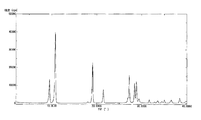
- FIG. 4 is a diagram showing an example of a powder X-ray diffraction pattern of a crystal of Compound A obtained in Comparative Example 1.
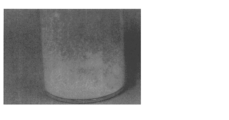
- FIG. It is a photograph which shows the state of the alpha-type crystal
- the present invention is described in detail below.
- a numerical range indicated by using “to” indicates a range including the numerical values described before and after “to” as the minimum value and the maximum value, respectively.
- the amount of each component in the composition means the total amount of the plurality of substances present in the composition unless there is a specific notice when there are a plurality of substances corresponding to each component in the composition.
- the salt of the present invention includes anhydrides and hydrates.
- the crystals of the present invention include crystals containing anhydrides, crystals containing hydrates, and crystals with attached water.
- the salt of the present invention and the crystal thereof are any of the features (1) blue coloration is suppressed, (2) high purity, (3) low hygroscopicity, and (4) excellent storage stability (preferably All) and is useful as an active pharmaceutical ingredient.
- the ⁇ -type crystal can be produced by dissolving the compound A or a hydrate thereof in an aqueous sulfuric acid solution, followed by gradual cooling and crystallization.
- Compound A or a hydrate thereof can be produced by, for example, the method described in JP-A-58-24569 or the method described in Production Example 1 described later.
- the amount of sulfuric acid contained in the sulfuric acid aqueous solution can be 0.5 to 1.4 mol, preferably 1.0 to 1.2 mol, relative to 1 mol of Compound A or a hydrate thereof.
- the amount of sulfuric acid aqueous solution that dissolves compound A or its hydrate is not particularly limited. For example, 20-fold amount (v / w) to 100-fold amount (v / w) is preferable with respect to Compound A or a hydrate thereof, and 40-fold amount (v / w) to 60-fold amount (v / w) is preferable. More preferred.
- the temperature at which compound A or its hydrate is heated and dissolved in an aqueous sulfuric acid solution is not particularly limited.
- it can be 40 ° C. to 60 ° C., preferably 50 ° C. to 60 ° C., and more preferably 50 ° C. to 55 ° C.
- the crystallization temperature is not particularly limited. For example, it can be 0 ° C. to 40 ° C., preferably 0 ° C. to 20 ° C., more preferably 0 ° C. to 10 ° C.
- the time required for crystallization is not particularly limited. For example, 0.5 to 24 hours are preferable, and 0.5 to 6 hours are more preferable.
- ⁇ -type crystals can be produced, for example, by adding an aqueous sulfuric acid solution to ⁇ -type crystals and suspending and stirring at 10 ° C. to 65 ° C. In addition, the yield of crystals can be improved by crystallization.
- the amount of sulfuric acid contained in the sulfuric acid aqueous solution is preferably 2 to 3 mol relative to 1 mol of compound A in the ⁇ -type crystal.
- the amount of sulfuric acid aqueous solution used is not particularly limited. For example, it is preferably 1-fold amount (v / w) to 50-fold amount (v / w), more preferably 5-fold amount (v / w) to 20-fold amount (v / w) with respect to ⁇ -type crystal.
- the time for suspension stirring is not particularly limited. For example, 0.5 hours to 5 hours are preferable, and 2 hours to 5 hours are more preferable.
- the time required for crystallization is not particularly limited. For example, 12 to 24 hours are preferable.
- the ⁇ -type crystal can be produced, for example, by adding an aqueous sulfuric acid solution to the ⁇ -type crystal and suspending and stirring at 10 to 65 ° C. In addition, the yield of crystals can be improved by crystallization.
- the amount of sulfuric acid contained in the sulfuric acid aqueous solution is preferably 4 to 10 mol with respect to 1 mol of compound A in the ⁇ -type crystal.
- the amount of sulfuric acid aqueous solution used is not particularly limited. For example, it is preferably 5 times (v / w) to 20 times (v / w), more preferably 10 times (v / w) to 15 times (v / w) the ⁇ -type crystal.
- the time for suspension stirring is not particularly limited. For example, 0.5 hours to 5 hours are preferable, and 2 hours to 5 hours are more preferable.
- the time required for crystallization is not particularly limited. For example, 12 to 24 hours are preferable.
- the ⁇ -type crystal it is preferable to use a seed crystal. Thereby, the crystal form can be controlled more uniformly.
- a seed crystal it is preferable to use a seed crystal.
- crystallization may be previously filtered and used as a seed crystal.
- the temperature at which the ⁇ , ⁇ or ⁇ type crystals produced by crystallization or suspension stirring are filtered is not particularly limited, but it is preferably 0 to 25 ° C.
- the operation of crystallization or suspension stirring can be performed in air or in an inert gas atmosphere, but is preferably performed in an inert gas atmosphere.
- the inert gas atmosphere include an argon atmosphere and a nitrogen atmosphere.
- the pharmaceutical composition of the present invention comprises one or more crystals selected from ⁇ , ⁇ and ⁇ type crystals.
- the pharmaceutical composition of the present invention is excellent in storage stability by containing ⁇ , ⁇ and / or ⁇ type crystals.
- formulation adjuvants such as excipients, carriers and diluents usually used for formulation may be appropriately mixed.
- excipients such as excipients, carriers and diluents usually used for formulation
- these are tablets, capsules, powders, syrups, granules, pills, suspensions, emulsions, solutions, powder formulations, suppositories, eye drops, nasal drops, ear drops, patches in accordance with conventional methods. It can be administered orally or parenterally in the form of an agent, ointment or injection.
- the administration method, dosage, and number of administrations can be appropriately selected according to the age, weight and symptoms of the patient. In general, for adults, 0.01 mg / kg to 2000 mg / kg is divided into 1 to several times a day by oral or parenteral administration (for example, injection, infusion, administration to the rectal site, etc.). May be administered.
- Powder X-ray diffraction was measured under the following conditions using Ultimate IV (Rigaku Corporation). (Measurement condition)
- Counter cathode Cu Tube voltage: 40 kV Tube current: 40 mA Scanning axis: 2 ⁇
- the infrared absorption spectrum was measured using SpectrumSOne (PerkinElmer) according to the Japanese Pharmacopoeia, general test method, and infrared absorption spectrum total reflection measurement method (ATR method).
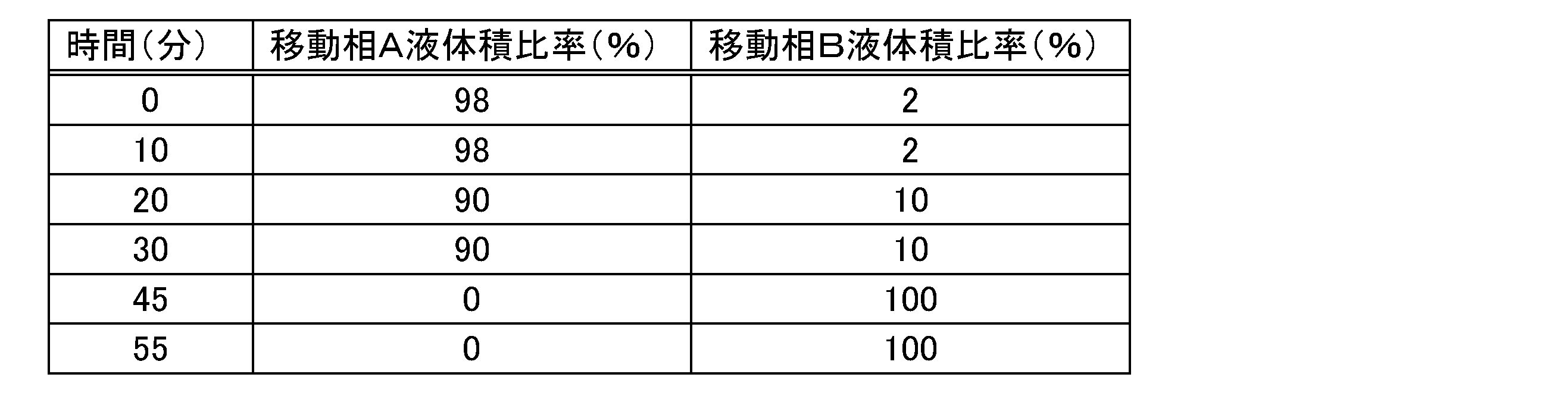
- HPLC area% The HPLC measurement was performed using Prominence (Shimadzu Corporation) under the following conditions. (Measurement condition) Measurement wavelength: 210 nm Column: Hydrosphere C18, inner diameter 6.0 ⁇ length 250 mm, particle diameter 5 ⁇ m Column temperature: 40 ° C Flow rate: 0.8 mL / min Mobile phase A liquid: 950 mL of water and 50 mL of 0.4 mol / L phosphate-triethylamine buffer (pH 3) Mobile phase B: 50 mL of water, 900 mL of acetonitrile and 50 mL of 0.4 mol / L phosphate-triethylamine buffer (pH 3) As the mobile phase, a mixture of mobile phase A liquid and mobile phase B liquid was used with the following linear gradient.
- the reaction mixture is cooled to 5 ° C., and the crystals are collected by filtration, washed with a mixture of 20 mL of acetone and 40 mL of water, then washed with 60 mL of acetone to give 5-hydroxy-1H-imidazole-4-carboxamide 3 as pale yellow crystals. 12.8 g of tetrahydrate was obtained.
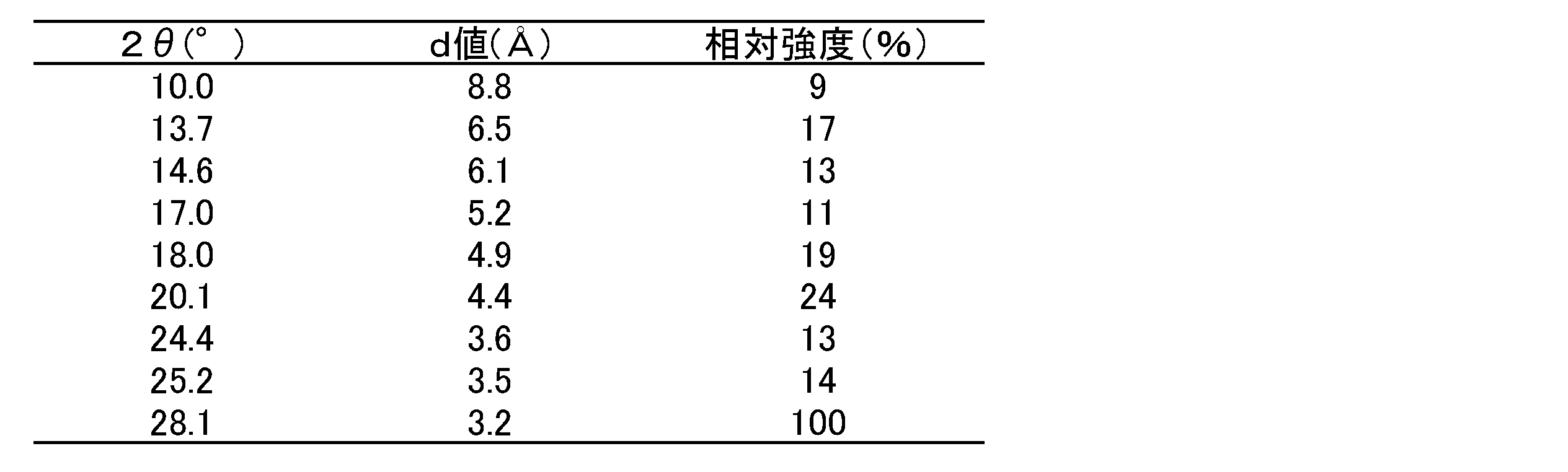
- Example 1 Add 30 mL of water and 625 ⁇ L of concentrated sulfuric acid to 1.5 g of 5-hydroxy-1H-imidazole-4-carboxamide 3/4 hydrate, heat to 50-55 ° C., and add 45 mL of water to dissolve. For 30 minutes. The reaction solution was gradually cooled to room temperature, and after confirming the precipitation of crystals, it was cooled with ice and the crystals were collected by filtration. By washing with water and air drying, 1.8 g of ⁇ -type crystals were obtained. The ⁇ -type crystals are 10.0, 13.7, 14.6, 17.0, 18.0, 20.1, 24.4, 25.2 and 28 represented by 2 ⁇ in the powder X-ray diffraction pattern.
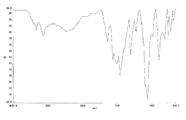
- the ⁇ -type crystal 1563cm -1 in the infrared absorption spectrum, 1504cm -1, 1456cm -1, 1390cm -1, 1050cm -1, showed a characteristic peak at 863cm -1.
- the infrared absorption spectrum (ATR method) of the ⁇ -type crystal is shown in FIG. 3, and the powder X-ray diffraction pattern is shown in FIG.
- the water content of the ⁇ -type crystal was 9.1%.
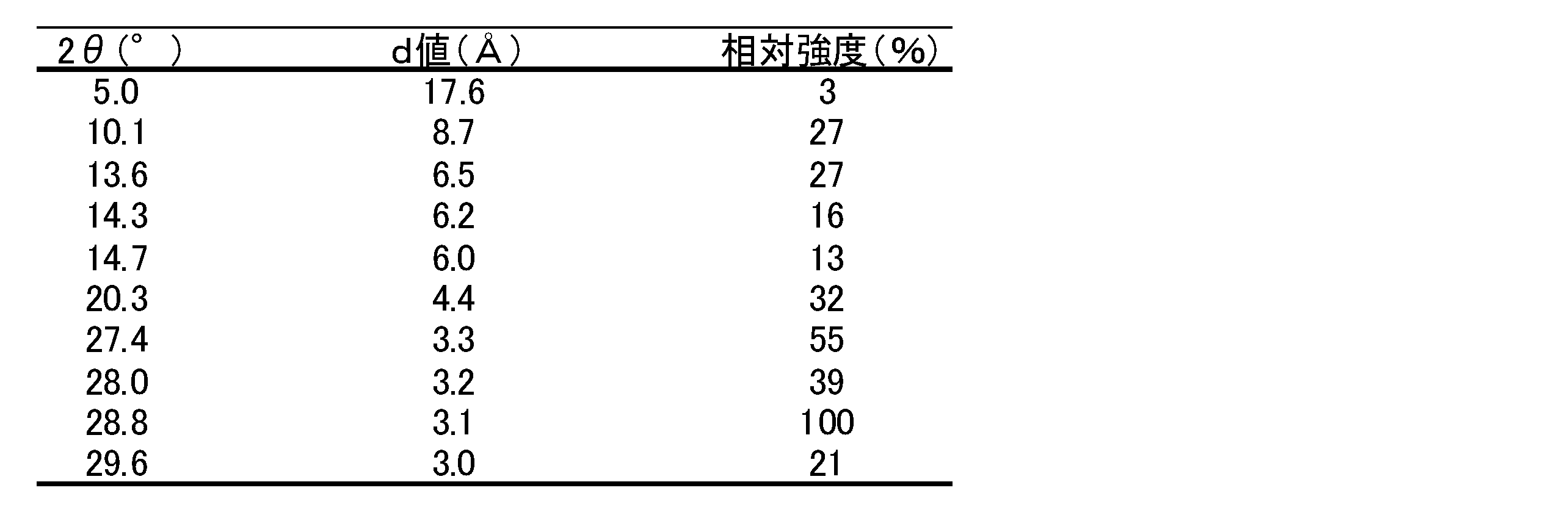
- Example 2 40 mL of 1 mol / L sulfuric acid aqueous solution was added to 4.0 g of ⁇ -type crystals produced according to the method described in Example 1, and the mixture was stirred at room temperature for 2 hours and 45 minutes in a nitrogen atmosphere. After adding 20 mL of 1 mol / L sulfuric acid aqueous solution to the reaction mixture and allowing it to stand overnight, the mixture was further stirred for 1 hour 30 minutes, and the crystals were collected by filtration. The resultant was washed with a 1 mol / L sulfuric acid aqueous solution and acetone and air-dried to obtain 3.7 g of ⁇ -type crystals.
- ⁇ -type crystals are 5.0, 10.1, 13.6, 14.3, 14.7, 20.3, 27.4, 28.0, 28 represented by 2 ⁇ in the powder X-ray diffraction pattern. Characteristic peaks were shown at diffraction angles of .8 and 29.6 °.
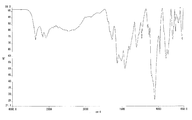
- the infrared absorption spectrum (ATR method) of the ⁇ -type crystal is shown in FIG. 1, and the powder X-ray diffraction pattern is shown in FIG.
- the water content of the ⁇ -type crystal was 8.1%.
- Example 3 5 mL of a 2 mol / L sulfuric acid aqueous solution was added to 0.5 g of ⁇ -type crystals produced according to the method described in Example 1, and the mixture was stirred at room temperature for 3 hours and 20 minutes. Further, 1 mL of concentrated sulfuric acid was added and stirred for 4 hours and 40 minutes. After standing overnight, the crystals were collected by filtration. By washing with acetone and air drying, 0.5 g of ⁇ -type crystal was obtained. The ⁇ -type crystal showed characteristic peaks at diffraction angles of 10.3, 20.7, 20.9, 28.0 and 31.2 ° represented by 2 ⁇ in the powder X-ray diffraction pattern.
- the ⁇ -type crystal 1560 cm -1 in the infrared absorption spectrum, 1503cm -1, 1459cm -1, 1304cm -1, 1061cm -1, showed a characteristic peak at 892cm -1.
- FIG. 5 shows the infrared absorption spectrum (ATR method) of the ⁇ -type crystal
- FIG. 6 and Table 4 show the diffraction pattern of the powder X-ray.
- the water content of the ⁇ -type crystal was 4.1%.
- Test Example 1 Storage stability test under conditions of 60 ° C. and 75% relative humidity (1)
- the crystals obtained in Examples 1 and 2 and Comparative Example 1 were selected as test substances.
- About 0.3 g of the test substance was put in a glass bottle and stored for 2 weeks at 60 ° C. and a relative humidity of 75%.
- FIG. 8 shows the state of the crystal of Example 1 after completion of the test
- FIG. 9 shows the state of the crystal of Example 2.
- the state of the crystal of Comparative Example 1 after completion of the test is shown in FIG.
- Test Example 2 Storage stability test under conditions of 60 ° C. and 75% relative humidity (2) The crystal obtained in Example 1 was selected as a test substance. About 0.3 g of the test substance was placed in a glass bottle and stored for 2 weeks at 60 ° C. and a relative humidity of 75%. The purity was measured by HPLC after completion of the test. As a result, the purity of the test substance was 99.97%.
- Example 1 The crystals obtained in Example 1 were high in purity after storage for 2 weeks and excellent in storage stability. Further, the crystal obtained in Example 2 was evaluated in the same manner as in Test Example 2, and as a result, the purity was high after storage for 2 weeks and the storage stability was excellent.
- Example 2 The crystals obtained in Example 2 were less hygroscopic than the crystals obtained in Comparative Example 2, and the appearance color did not change. Furthermore, when these crystals were stored at 25 ° C. and a relative humidity of 97% for 2 weeks, the crystals obtained in Example 2 were stable with no change in appearance, but were obtained in Comparative Example 2. The crystals were deliquescent and unstable.
- the pharmaceutical composition containing the salt of the present invention and crystals thereof can be produced, for example, according to the following formulation.
- Tablet (1) 221.3 mg of crystals obtained in Example 2 (2) Lactose hydrate 13.9mg (3) Carmellose calcium 22.4mg (4) Hydroxypropylcellulose 8.4mg (5) Light anhydrous silicic acid 8.4 mg (6)
- Magnesium stearate 5.6 mg 1 tablet 280mg (1), (2) and (3) are mixed, and after (4) is sprayed and granulated in this mixed powder, (5) and (6) are added, mixed and tableted.
- the salt and the crystal of the present invention have the following characteristics: (1) blue coloration is suppressed, (2) high purity, (3) low hygroscopicity, and (4) excellent storage stability. It is useful as a drug substance.
Landscapes
- Chemical & Material Sciences (AREA)
- Organic Chemistry (AREA)
- Health & Medical Sciences (AREA)
- Life Sciences & Earth Sciences (AREA)
- Pharmacology & Pharmacy (AREA)
- Medicinal Chemistry (AREA)
- Animal Behavior & Ethology (AREA)
- General Health & Medical Sciences (AREA)
- Public Health (AREA)
- Veterinary Medicine (AREA)
- Epidemiology (AREA)
- Chemical Kinetics & Catalysis (AREA)
- General Chemical & Material Sciences (AREA)
- Nuclear Medicine, Radiotherapy & Molecular Imaging (AREA)
- Pharmaceuticals Containing Other Organic And Inorganic Compounds (AREA)
Abstract
Description
本発明は、青色の着色が抑制され、純度が高く、吸湿性が低く、保存安定性に優れる化合物Aの塩を提供することを課題とする。
粉末X線回折パターンにおいて、2θで表される5.0、10.1、13.6、14.3、14.7、20.3及び29.6°の回折角度に回折ピークを有する化合物Aの硫酸塩の結晶。
[3]粉末X線回折パターンにおいて、2θで表される5.0、10.1、13.6、14.3、14.7、20.3、27.4、28.0、28.8及び29.6°の回折角度に回折ピークを有する化合物Aの硫酸塩の結晶(以下、「β型結晶」ともいう)。
なお、β型結晶は、上述の、2θで表される5.0、20.3及び29.6°の回折角度の回折ピーク、又は2θで表される5.0、10.1、13.6、14.3、14.7、20.3及び29.6°の回折角度の回折ピークにより、他の結晶形と区別することができる。これらの値はこの結晶性形態における特有な値である。
粉末X線回折パターンにおいて、2θで表される10.0、13.7、14.6、17.0、18.0、20.1、24.4及び25.2°の回折角度に回折ピークを有する化合物Aの硫酸塩の結晶。
[6]粉末X線回折パターンにおいて、2θで表される10.0、13.7、14.6、17.0、18.0、20.1、24.4、25.2及び28.1°の回折角度に回折ピークを有する化合物Aの硫酸塩の結晶(以下、「α型結晶」とも言う)。
なお、α型結晶は、上述の、2θで表される13.7、17.0、18.0及び20.1°の回折角度の回折ピーク、又は2θで表される10.0、13.7、14.6、17.0、18.0、20.1、24.4及び25.2°の回折角度の回折ピークにより、他の結晶形と区別することができる。これらの値はこの結晶性形態における特有な値である。
[9]粉末X線回折パターンにおいて、2θで表される10.3、20.7、20.9、28.0及び31.2°の回折角度に回折ピークを有する化合物Aの硫酸塩の結晶(以下、「γ型結晶」ともいう)。
なお、γ型結晶は、上述の、2θで表される10.3、20.7、20.9及び31.2°の回折角度の回折ピークにより、他の結晶形と区別することができる。これらの値はこの結晶性形態における特有な値である。
[12]化合物A又はその水和物を、硫酸水溶液に加熱溶解させた後、徐冷して晶析させる工程を含む、[5]又は[6]に定義した結晶の、製造方法。
[13][5]又は[6]に定義した結晶に硫酸水溶液を加え、10℃~65℃で懸濁撹拌する工程を含み、好ましくは化合物A又はその水和物1モルに対して硫酸を4モル以上用いる、[8]又は[9]に定義した結晶の、製造方法。
さらに、本発明によれば、青色の着色が抑制され、純度が高く及び/又は吸湿性が低いという優れた性質を有し、保存安定性が高い化合物Aの硫酸塩の結晶を提供することができる。
本発明の塩には、無水物や水和物が含まれる。
本発明の結晶には、無水物を含む結晶や水和物を含む結晶及び付着水が付いた結晶が含まれる。
本発明の結晶の粉末X線回折パターンにおいて、ピークを有する回折角度について「2θで表されるX°の回折角度」というときは、特に断らない限り、「2θで表される((X-0.2)~(X+0.2))°の回折角度」を意味する。
α型結晶は、化合物A又はその水和物を、硫酸水溶液に加熱溶解させた後、徐冷して晶析することによって製造することができる。ここで化合物A又はその水和物は、例えば、特開昭58-24569号公報に記載されている方法又は後述の製造例1に記載の方法により製造することができる。
β型結晶は、例えば、α型結晶に硫酸水溶液を加え、10℃~65℃で懸濁撹拌することによって製造することができる。また、晶析させることにより、結晶の収率を向上させることができる。
γ型結晶は、例えば、α型結晶に硫酸水溶液を加え、10℃~65℃で懸濁撹拌することによって製造することができる。また、晶析させることにより、結晶の収率を向上させることができる。
なお、種晶は先に製造した際に得られたものを用いてもよく、晶析した結晶の一部を予め濾取して種晶としてもよい。
また、晶析又は懸濁撹拌の操作は空気中あるいは不活性ガス雰囲気下で行うことができるが、不活性ガス雰囲気下で行うことが好ましい。不活性ガス雰囲気としては、アルゴン雰囲気、窒素雰囲気等を挙げることができる。
本発明の医薬組成物は、α、β及びγ型結晶から選ばれる一つ以上の結晶を含む。本発明の医薬組成物は、α、β及び/又はγ型結晶を含むことで保存安定性に優れる。
下記において使用される略語の意味は以下の通りである。
HPLC:高速液体クロマトグラフィー
(測定条件)
対陰極:Cu
管電圧:40kV
管電流:40mA
走査軸:2θ
(測定条件)
測定波長:210nm
カラム:Hydrosphere C18、内径6.0×長さ250mm、粒子径5μm
カラム温度:40℃
流量:0.8mL/分
移動相A液:水950mL及び0.4mol/Lリン酸-トリエチルアミン緩衝液(pH3)50mL
移動相B液:水50mL、アセトニトリル900mL及び0.4mol/Lリン酸-トリエチルアミン緩衝液(pH3)50mL
移動相は移動相A液と移動相B液の混合物を以下の線勾配で用いた。
(1)窒素雰囲気下、2-プロパノール600mLに2-アミノマロンアミド(立山化成)30gおよびシュウ酸115mgを加え、82℃に加熱した後、オルトギ酸トリエチル(日宝化学、純度:99.5%)106mLを10分かけて滴下した。次いで、反応混合物を84℃で7時間30分間撹拌した。57℃まで冷却後、反応混合物に水30mLおよび濃塩酸24mLを順次添加した。反応混合物を5℃まで冷却し、結晶を濾取し、アセトン120mLで洗浄し、淡黄色結晶の5-ヒドロキシ-1H-イミダゾール-4-カルボキサミド塩酸塩二水和物49gを得た。
(2)窒素雰囲気下、0.45mol/L塩酸240mLに5-ヒドロキシ-1H-イミダゾール-4-カルボキサミド塩酸塩二水和物20.0gを加え、50℃に加熱して溶解させた。この溶液にギ酸ナトリウム14.3gの水40mL溶液を33分かけて滴下した。反応混合物を5℃まで冷却し、結晶を濾取し、アセトン20mLおよび水40mLの混合液で洗浄し、次いでアセトン60mLで洗浄し、淡黄色結晶として5-ヒドロキシ-1H-イミダゾール-4-カルボキサミド3/4水和物12.8gを得た。
5-ヒドロキシ-1H-イミダゾール-4-カルボキサミド3/4水和物1.5gに水30mL及び濃硫酸625μLを加え、50~55℃に加熱した後、水45mLを追加して溶解させ、同温度で30分間撹拌した。反応液を室温まで徐冷し、結晶の析出を確認した後、氷冷し、結晶を濾取した。水で洗浄し、風乾することにより、α型結晶1.8gを得た。
α型結晶は、粉末X線回折パターンにおいて、2θで表される10.0、13.7、14.6、17.0、18.0、20.1、24.4、25.2及び28.1°の回折角度に特徴的なピークを示した。
またα型結晶は、赤外吸収スペクトルにおいて1563cm-1、1504cm-1、1456cm-1、1390cm-1、1050cm-1、863cm-1に特徴的なピークを示した。
α型結晶の赤外吸収スペクトル(ATR法)を図3に、粉末X線の回折パターンを図4及び表2に示す。
α型結晶の水分は9.1%であった。
実施例1に記載の方法に従い製造したα型結晶4.0gに1mol/L硫酸水溶液40mLを加え、窒素雰囲気下、室温で2時間45分間撹拌した。反応混合物に1mol/L硫酸水溶液20mLを加えて、一晩放置した後、更に1時間30分間撹拌し、結晶を濾取した。1mol/L硫酸水溶液とアセトンで洗浄し、風乾することにより、β型結晶3.7gを得た。
β型結晶は、粉末X線回折パターンにおいて、2θで表される5.0、10.1、13.6、14.3、14.7、20.3、27.4、28.0、28.8及び29.6°の回折角度に特徴的なピークを示した。
またβ型結晶は、赤外吸収スペクトルにおいて1560cm-1、1508cm-1、1459cm-1、1059cm-1に特徴的なピークを示した。
β型結晶の赤外吸収スペクトル(ATR法)を図1に、粉末X線回折のパターンを図2及び表3に示す。
β型結晶の水分は8.1%であった。
実施例1に記載の方法に従い製造したα型結晶0.5gに2mol/L硫酸水溶液5mLを加え、室温で3時間20分間撹拌した後、さらに濃硫酸1mLを加え、4時間40分間撹拌した。一晩放置後、結晶を濾取した。アセトンで洗浄し、風乾することにより、γ型結晶0.5gを得た。
γ型結晶は、粉末X線回折パターンにおいて、2θで表される10.3、20.7、20.9、28.0及び31.2°の回折角度に特徴的なピークを示した。
またγ型結晶は、赤外吸収スペクトルにおいて1560cm-1、1503cm-1、1459cm-1、1304cm-1、1061cm-1、892cm-1に特徴的なピークを示した。
γ型結晶の赤外吸収スペクトル(ATR法)を図5に、粉末X線の回折パターンを図6及び表4に示す。
γ型結晶の水分は4.1%であった。

国際公開第2009/035168号パンフレットの実施例6に記載の方法に準じて、5-ヒドロキシ-1H-イミダゾール-4-カルボキサミドを淡黄色粉末として得た。
高速液体クロマトグラフィーによって分析した結果、得られた5-ヒドロキシ-1H-イミダゾール-4-カルボキサミドは、約0.15%の安息香酸を含有していた。
粉末X線回折のパターンを図7及び表5に示す。

国際公開第2009/035168号パンフレットの実施例3の記載の方法を参考にして、5-ヒドロキシ-1H-イミダゾール-4-カルボキサミドのメタンスルホン酸塩を以下のように製造した。
5-ヒドロキシ-1H-イミダゾール-4-カルボキサミド3/4水和物1.4gに水30mL及びメタンスルホン酸1.0gを加え、50℃で加熱溶解した後、同温度で30分間撹拌した。反応液を室温まで冷却後、トルエンを加え、減圧しながら共沸によって水を留去し、析出した固体を濾取した。酢酸エチルで洗浄し、風乾することにより、5-ヒドロキシ-1H-イミダゾール-4-カルボキサミドのメタンスルホン酸塩1.7gを得た。
5-ヒドロキシ-1H-イミダゾール-4-カルボキサミドのメタンスルホン酸塩の水分は7.8%であった。
試験物質として、実施例1、2及び比較例1で得られた結晶を選択した。
試験物質約0.3gをそれぞれガラス瓶に入れ、60℃、相対湿度75%の条件で2週間保存した。
試験終了後の実施例1の結晶の状態を図8、実施例2の結晶の状態を図9に示す。また、試験終了後の比較例1の結晶の状態を図10に示す。
試験物質として、実施例1で得られた結晶を選択した。
試験物質約0.3gをガラス瓶に入れ、60℃、相対湿度75%の条件で2週間保存した。試験終了後にHPLCにより純度を測定した。その結果、試験物質の純度は、99.97%であった。
また、実施例2得られた結晶も、試験例2と同様にして評価した結果、2週間の保存後も純度が高く、保存安定性に優れていた。
試験物質として、実施例2及び比較例2で得られた結晶を選択した。
試験物質約0.3gをそれぞれガラス瓶に入れ、60℃、相対湿度75%の条件で2週間保存し、質量を測定した。下式に従って試験物質の質量変化率を測定した。
質量変化率(%)={(A1-A0)/A0}×100
A0:試験前の試験物質の質量(g)
A1:試験後の試験物質の質量(g)
また、試験物質の外観色の変化を目視で評価した。
結果を表6に示す。

さらに、これらの結晶を25℃、相対湿度97%の条件で2週間保存した場合、実施例2で得られた結晶は、外観に変化がなく安定であったが、比較例2で得られた結晶は、潮解して、不安定であった。
本発明の塩及びその結晶を含有する医薬組成物は、例えば、以下のような処方によって製造することができる。
錠剤
(1)実施例2で得られた結晶 221.3mg
(2)乳糖水和物 13.9mg
(3)カルメロースカルシウム 22.4mg
(4)ヒドロキシプロピルセルロース 8.4mg
(5)軽質無水ケイ酸 8.4mg
(6)ステアリン酸マグネシウム 5.6mg
一錠 280mg
(1)、(2)及び(3)を混合し、この混合末に(4)を噴射して造粒した後、(5)及び(6)を添加し、混合して、打錠する。
Claims (10)
- 5-ヒドロキシ-1H-イミダゾール-4-カルボキサミドの硫酸塩。
- 粉末X線回折パターンにおいて、2θで表される5.0、20.3及び29.6°の回折角度に回折ピークを有する5-ヒドロキシ-1H-イミダゾール-4-カルボキサミドの硫酸塩の結晶。
- 粉末X線回折パターンにおいて、2θで表される5.0、10.1、13.6、14.3、14.7、20.3、27.4、28.0、28.8及び29.6°の回折角度に回折ピークを有する5-ヒドロキシ-1H-イミダゾール-4-カルボキサミドの硫酸塩の結晶。
- 粉末X線回折パターンにおいて、2θで表される5.0、20.3及び29.6°の回折角度に回折ピークを有する5-ヒドロキシ-1H-イミダゾール-4-カルボキサミドの硫酸塩の結晶;又は
粉末X線回折パターンにおいて、2θで表される5.0、10.1、13.6、14.3、14.7、20.3、27.4、28.0、28.8及び29.6°の回折角度に回折ピークを有する5-ヒドロキシ-1H-イミダゾール-4-カルボキサミドの硫酸塩の結晶
を含有する医薬組成物。 - 粉末X線回折パターンにおいて、2θで表される13.7、17.0、18.0及び20.1°の回折角度に回折ピークを有する5-ヒドロキシ-1H-イミダゾール-4-カルボキサミドの硫酸塩の結晶。
- 粉末X線回折パターンにおいて、2θで表される10.0、13.7、14.6、17.0、18.0、20.1、24.4、25.2及び28.1°の回折角度に回折ピークを有する5-ヒドロキシ-1H-イミダゾール-4-カルボキサミドの硫酸塩の結晶。
- 粉末X線回折パターンにおいて、2θで表される13.7、17.0、18.0及び20.1°の回折角度に回折ピークを有する5-ヒドロキシ-1H-イミダゾール-4-カルボキサミドの硫酸塩の結晶;又は
粉末X線回折パターンにおいて、2θで表される10.0、13.7、14.6、17.0、18.0、20.1、24.4、25.2及び28.1°の回折角度に回折ピークを有する5-ヒドロキシ-1H-イミダゾール-4-カルボキサミドの硫酸塩の結晶
を含有する医薬組成物。 - 粉末X線回折パターンにおいて、2θで表される10.3、20.7、20.9及び31.2°の回折角度に回折ピークを有する5-ヒドロキシ-1H-イミダゾール-4-カルボキサミドの硫酸塩の結晶。
- 粉末X線回折パターンにおいて、2θで表される10.3、20.7、20.9、28.0及び31.2°の回折角度に回折ピークを有する5-ヒドロキシ-1H-イミダゾール-4-カルボキサミドの硫酸塩の結晶。
- 粉末X線回折パターンにおいて、2θで表される10.3、20.7、20.9及び31.2°の回折角度に回折ピークを有する5-ヒドロキシ-1H-イミダゾール-4-カルボキサミドの硫酸塩の結晶;又は
粉末X線回折パターンにおいて、2θで表される10.3、20.7、20.9、28.0及び31.2°の回折角度に回折ピークを有する5-ヒドロキシ-1H-イミダゾール-4-カルボキサミドの硫酸塩の結晶
を含有する医薬組成物。
Priority Applications (7)
| Application Number | Priority Date | Filing Date | Title |
|---|---|---|---|
| BR112015015282A BR112015015282A2 (pt) | 2013-01-15 | 2014-01-15 | sulfato de 5 - hidróxi - 1h - imidazol - 4 - carboxamida |
| HK15110857.4A HK1210080B (zh) | 2013-01-15 | 2014-01-15 | 5-羟基-1h-咪唑-4-甲酰胺的硫酸盐 |
| CN201480004242.6A CN104903299B (zh) | 2013-01-15 | 2014-01-15 | 5-羟基-1h-咪唑-4-甲酰胺的硫酸盐 |
| JP2014557485A JP6001684B2 (ja) | 2013-01-15 | 2014-01-15 | 5−ヒドロキシ−1h−イミダゾール−4−カルボキサミドの硫酸塩 |
| EP14740967.6A EP2947069B1 (en) | 2013-01-15 | 2014-01-15 | Sulfate of 5-hydroxy-1h-imidazole-4-carboxamide |
| RU2015128629/04A RU2603137C1 (ru) | 2013-01-15 | 2014-01-15 | Сульфат 5-гидрокси-1н-имидазол-4-карбоксамида |
| US14/729,130 US9475778B2 (en) | 2013-01-15 | 2015-06-03 | Sulfate of 5-hydroxy-1H-imidazole-4-carboxamide |
Applications Claiming Priority (2)
| Application Number | Priority Date | Filing Date | Title |
|---|---|---|---|
| JP2013-004994 | 2013-01-15 | ||
| JP2013004994 | 2013-01-15 |
Related Child Applications (1)
| Application Number | Title | Priority Date | Filing Date |
|---|---|---|---|
| US14/729,130 Continuation US9475778B2 (en) | 2013-01-15 | 2015-06-03 | Sulfate of 5-hydroxy-1H-imidazole-4-carboxamide |
Publications (1)
| Publication Number | Publication Date |
|---|---|
| WO2014112529A1 true WO2014112529A1 (ja) | 2014-07-24 |
Family
ID=51209618
Family Applications (1)
| Application Number | Title | Priority Date | Filing Date |
|---|---|---|---|
| PCT/JP2014/050590 Ceased WO2014112529A1 (ja) | 2013-01-15 | 2014-01-15 | 5-ヒドロキシ-1h-イミダゾール-4-カルボキサミドの硫酸塩 |
Country Status (7)
| Country | Link |
|---|---|
| US (1) | US9475778B2 (ja) |
| EP (1) | EP2947069B1 (ja) |
| JP (1) | JP6001684B2 (ja) |
| CN (1) | CN104903299B (ja) |
| BR (1) | BR112015015282A2 (ja) |
| RU (1) | RU2603137C1 (ja) |
| WO (1) | WO2014112529A1 (ja) |
Citations (7)
| Publication number | Priority date | Publication date | Assignee | Title |
|---|---|---|---|---|
| JPS5332124A (en) | 1976-09-07 | 1978-03-27 | Sumitomo Chem Co Ltd | Carcinostatic agent |
| JPS5780328A (en) * | 1980-11-06 | 1982-05-19 | Sumitomo Chem Co Ltd | Preparation of stable pharmaceutical preparation |
| JPS5824569A (ja) | 1981-08-05 | 1983-02-14 | Sumitomo Chem Co Ltd | イミダゾ−ル誘導体の精製方法 |
| JPS60185727A (ja) * | 1984-03-05 | 1985-09-21 | Sumitomo Chem Co Ltd | 4−カルバモイルイミダゾリウム−5−オレ−ト製剤の安定化法 |
| WO2004083186A1 (ja) * | 2003-03-18 | 2004-09-30 | Sumitomo Pharmaceuticals Co. Ltd. | ウイルス性肝炎治療剤及び制癌剤 |
| WO2009035168A1 (ja) | 2007-09-14 | 2009-03-19 | Mbr Co., Ltd. | 4-カルバモイル-5-ヒドロキシ-イミダゾール誘導体のスルホン酸塩化合物 |
| WO2013047758A1 (ja) * | 2011-09-28 | 2013-04-04 | 富士フイルム株式会社 | 5-ヒドロキシ-1h-イミダゾール-4-カルボキサミド水和物の結晶及び5-ヒドロキシ-1h-イミダゾール-4-カルボキサミド・3/4水和物の結晶及びその製造方法 |
Family Cites Families (2)
| Publication number | Priority date | Publication date | Assignee | Title |
|---|---|---|---|---|
| US4181731A (en) * | 1976-09-07 | 1980-01-01 | Sumitomo Chemical Company, Limited | Novel therapeutic application of 4-carbamoyl-5-hydroxyimidazole |
| DE3176849D1 (en) | 1980-11-05 | 1988-09-29 | Sumitomo Chemical Co | Pharmaceutical composition comprising 4-carbamoyl-imidazolium-5-olate |
-
2014
- 2014-01-15 EP EP14740967.6A patent/EP2947069B1/en not_active Not-in-force
- 2014-01-15 BR BR112015015282A patent/BR112015015282A2/pt not_active Application Discontinuation
- 2014-01-15 RU RU2015128629/04A patent/RU2603137C1/ru not_active IP Right Cessation
- 2014-01-15 WO PCT/JP2014/050590 patent/WO2014112529A1/ja not_active Ceased
- 2014-01-15 CN CN201480004242.6A patent/CN104903299B/zh not_active Expired - Fee Related
- 2014-01-15 JP JP2014557485A patent/JP6001684B2/ja not_active Expired - Fee Related
-
2015
- 2015-06-03 US US14/729,130 patent/US9475778B2/en not_active Expired - Fee Related
Patent Citations (7)
| Publication number | Priority date | Publication date | Assignee | Title |
|---|---|---|---|---|
| JPS5332124A (en) | 1976-09-07 | 1978-03-27 | Sumitomo Chem Co Ltd | Carcinostatic agent |
| JPS5780328A (en) * | 1980-11-06 | 1982-05-19 | Sumitomo Chem Co Ltd | Preparation of stable pharmaceutical preparation |
| JPS5824569A (ja) | 1981-08-05 | 1983-02-14 | Sumitomo Chem Co Ltd | イミダゾ−ル誘導体の精製方法 |
| JPS60185727A (ja) * | 1984-03-05 | 1985-09-21 | Sumitomo Chem Co Ltd | 4−カルバモイルイミダゾリウム−5−オレ−ト製剤の安定化法 |
| WO2004083186A1 (ja) * | 2003-03-18 | 2004-09-30 | Sumitomo Pharmaceuticals Co. Ltd. | ウイルス性肝炎治療剤及び制癌剤 |
| WO2009035168A1 (ja) | 2007-09-14 | 2009-03-19 | Mbr Co., Ltd. | 4-カルバモイル-5-ヒドロキシ-イミダゾール誘導体のスルホン酸塩化合物 |
| WO2013047758A1 (ja) * | 2011-09-28 | 2013-04-04 | 富士フイルム株式会社 | 5-ヒドロキシ-1h-イミダゾール-4-カルボキサミド水和物の結晶及び5-ヒドロキシ-1h-イミダゾール-4-カルボキサミド・3/4水和物の結晶及びその製造方法 |
Non-Patent Citations (1)
| Title |
|---|
| KAZUHIDE ASHIZAWA: "Iyakuhin Kessho no Bunshi Jotai ni Kansuru Bussei Hyoka (12) Shio Kesshokei no Saitekika to Kesshoka Gijutsu", PHARM TECH JAPAN, vol. 18, no. 10, 2002, pages 81 - 96, XP008177312 * |
Also Published As
| Publication number | Publication date |
|---|---|
| RU2603137C1 (ru) | 2016-11-20 |
| BR112015015282A2 (pt) | 2017-07-11 |
| EP2947069A4 (en) | 2015-11-25 |
| CN104903299B (zh) | 2018-10-16 |
| JP6001684B2 (ja) | 2016-10-05 |
| CN104903299A (zh) | 2015-09-09 |
| EP2947069B1 (en) | 2017-11-22 |
| US9475778B2 (en) | 2016-10-25 |
| US20150266826A1 (en) | 2015-09-24 |
| JPWO2014112529A1 (ja) | 2017-01-19 |
| HK1210080A1 (en) | 2016-04-15 |
| EP2947069A1 (en) | 2015-11-25 |
Similar Documents
| Publication | Publication Date | Title |
|---|---|---|
| KR102522895B1 (ko) | Jak 키나아제 억제제 바이설페이트의 결정형 및 이의 제조방법 | |
| JP2020183408A (ja) | {[5−(3−クロロフェニル)−3−ヒドロキシピリジン−2−カルボニル]アミノ}酢酸の固体形態、組成物、及びその使用 | |
| AU2006283842B2 (en) | Delta and epsilon crystal forms of imatinib mesylate | |
| TW201336497A (zh) | 噻唑啶二酮化合物之結晶型及其製法 | |
| KR20150020683A (ko) | 다사티닙 및 선택된 공-결정 형성제를 포함하는 다성분 결정 | |
| CN104284897B (zh) | 替卡格雷晶型及其制备方法和用途 | |
| CN105408329A (zh) | 呈晶体形式的达沙替尼的盐 | |
| WO2016136928A1 (ja) | イミダゾオキサジンの結晶、当該結晶を含む医薬組成物、及び当該結晶の製造方法 | |
| KR100878698B1 (ko) | 결정형의 베포타스틴 금속염 수화물, 이의 제조방법 및이를 포함하는 약학 조성물 | |
| US10626089B2 (en) | Quinoline derivative in crystal form | |
| JP6001684B2 (ja) | 5−ヒドロキシ−1h−イミダゾール−4−カルボキサミドの硫酸塩 | |
| JP5744017B2 (ja) | チエノピリミジン誘導体の結晶 | |
| WO2010111951A1 (zh) | 普拉格雷氢溴酸盐的晶体 | |
| CN101528696B (zh) | 晶态s-(-)-氨氯地平无水己二酸盐及其制备方法 | |
| CN104496994A (zh) | 一种炔类杂芳基化合物的新晶型 | |
| WO2018078383A1 (en) | Pharmaceutical composition comprising amorphous selexipag | |
| KR101307712B1 (ko) | 결정형의 베포타스틴 금속염 수화물, 이의 제조방법 및 이를 포함하는 약학 조성물 | |
| JP2018510173A (ja) | トピロキソスタットの新規結晶形及びその製造方法 | |
| CN105461721B (zh) | 一种二肽基肽酶-4抑制剂的晶体 | |
| HK1210080B (zh) | 5-羟基-1h-咪唑-4-甲酰胺的硫酸盐 | |
| EP2610239A1 (en) | Preparation Of Rasagiline Hemitartrate | |
| JP7425482B2 (ja) | イソキノリンスルホンアミドの新規な形態 | |
| JP2013082706A (ja) | 5−ヒドロキシ−1h−イミダゾール−4−カルボキサミド水和物の結晶 | |
| CN106146589B (zh) | 氘代核苷衍生物的结晶 | |
| CN102532157A (zh) | 普拉格雷的可药用酸加成盐化合物及其制备方法 |
Legal Events
| Date | Code | Title | Description |
|---|---|---|---|
| 121 | Ep: the epo has been informed by wipo that ep was designated in this application |
Ref document number: 14740967 Country of ref document: EP Kind code of ref document: A1 |
|
| REEP | Request for entry into the european phase |
Ref document number: 2014740967 Country of ref document: EP |
|
| WWE | Wipo information: entry into national phase |
Ref document number: 2014740967 Country of ref document: EP |
|
| REG | Reference to national code |
Ref country code: BR Ref legal event code: B01A Ref document number: 112015015282 Country of ref document: BR |
|
| ENP | Entry into the national phase |
Ref document number: 2014557485 Country of ref document: JP Kind code of ref document: A |
|
| NENP | Non-entry into the national phase |
Ref country code: DE |
|
| ENP | Entry into the national phase |
Ref document number: 2015128629 Country of ref document: RU Kind code of ref document: A |
|
| ENP | Entry into the national phase |
Ref document number: 112015015282 Country of ref document: BR Kind code of ref document: A2 Effective date: 20150624 |