WO2014080835A1 - パターン形成方法、それにより形成されたレジストパターン、並びに、これらを用いる電子デバイスの製造方法、及び電子デバイス - Google Patents
パターン形成方法、それにより形成されたレジストパターン、並びに、これらを用いる電子デバイスの製造方法、及び電子デバイス Download PDFInfo
- Publication number
- WO2014080835A1 WO2014080835A1 PCT/JP2013/080837 JP2013080837W WO2014080835A1 WO 2014080835 A1 WO2014080835 A1 WO 2014080835A1 JP 2013080837 W JP2013080837 W JP 2013080837W WO 2014080835 A1 WO2014080835 A1 WO 2014080835A1
- Authority
- WO
- WIPO (PCT)
- Prior art keywords
- group
- pattern
- acid
- film
- solvent
- Prior art date
- Legal status (The legal status is an assumption and is not a legal conclusion. Google has not performed a legal analysis and makes no representation as to the accuracy of the status listed.)
- Ceased
Links
Images
Classifications
-
- G—PHYSICS
- G03—PHOTOGRAPHY; CINEMATOGRAPHY; ANALOGOUS TECHNIQUES USING WAVES OTHER THAN OPTICAL WAVES; ELECTROGRAPHY; HOLOGRAPHY
- G03F—PHOTOMECHANICAL PRODUCTION OF TEXTURED OR PATTERNED SURFACES, e.g. FOR PRINTING, FOR PROCESSING OF SEMICONDUCTOR DEVICES; MATERIALS THEREFOR; ORIGINALS THEREFOR; APPARATUS SPECIALLY ADAPTED THEREFOR
- G03F7/00—Photomechanical, e.g. photolithographic, production of textured or patterned surfaces, e.g. printing surfaces; Materials therefor, e.g. comprising photoresists; Apparatus specially adapted therefor
- G03F7/26—Processing photosensitive materials; Apparatus therefor
- G03F7/30—Imagewise removal using liquid means
-
- G—PHYSICS
- G03—PHOTOGRAPHY; CINEMATOGRAPHY; ANALOGOUS TECHNIQUES USING WAVES OTHER THAN OPTICAL WAVES; ELECTROGRAPHY; HOLOGRAPHY
- G03F—PHOTOMECHANICAL PRODUCTION OF TEXTURED OR PATTERNED SURFACES, e.g. FOR PRINTING, FOR PROCESSING OF SEMICONDUCTOR DEVICES; MATERIALS THEREFOR; ORIGINALS THEREFOR; APPARATUS SPECIALLY ADAPTED THEREFOR
- G03F7/00—Photomechanical, e.g. photolithographic, production of textured or patterned surfaces, e.g. printing surfaces; Materials therefor, e.g. comprising photoresists; Apparatus specially adapted therefor
- G03F7/26—Processing photosensitive materials; Apparatus therefor
- G03F7/40—Treatment after imagewise removal, e.g. baking
-
- G—PHYSICS
- G03—PHOTOGRAPHY; CINEMATOGRAPHY; ANALOGOUS TECHNIQUES USING WAVES OTHER THAN OPTICAL WAVES; ELECTROGRAPHY; HOLOGRAPHY
- G03F—PHOTOMECHANICAL PRODUCTION OF TEXTURED OR PATTERNED SURFACES, e.g. FOR PRINTING, FOR PROCESSING OF SEMICONDUCTOR DEVICES; MATERIALS THEREFOR; ORIGINALS THEREFOR; APPARATUS SPECIALLY ADAPTED THEREFOR
- G03F7/00—Photomechanical, e.g. photolithographic, production of textured or patterned surfaces, e.g. printing surfaces; Materials therefor, e.g. comprising photoresists; Apparatus specially adapted therefor
- G03F7/004—Photosensitive materials
- G03F7/039—Macromolecular compounds which are photodegradable, e.g. positive electron resists
- G03F7/0392—Macromolecular compounds which are photodegradable, e.g. positive electron resists the macromolecular compound being present in a chemically amplified positive photoresist composition
-
- G—PHYSICS
- G03—PHOTOGRAPHY; CINEMATOGRAPHY; ANALOGOUS TECHNIQUES USING WAVES OTHER THAN OPTICAL WAVES; ELECTROGRAPHY; HOLOGRAPHY
- G03F—PHOTOMECHANICAL PRODUCTION OF TEXTURED OR PATTERNED SURFACES, e.g. FOR PRINTING, FOR PROCESSING OF SEMICONDUCTOR DEVICES; MATERIALS THEREFOR; ORIGINALS THEREFOR; APPARATUS SPECIALLY ADAPTED THEREFOR
- G03F7/00—Photomechanical, e.g. photolithographic, production of textured or patterned surfaces, e.g. printing surfaces; Materials therefor, e.g. comprising photoresists; Apparatus specially adapted therefor
- G03F7/004—Photosensitive materials
- G03F7/039—Macromolecular compounds which are photodegradable, e.g. positive electron resists
- G03F7/0392—Macromolecular compounds which are photodegradable, e.g. positive electron resists the macromolecular compound being present in a chemically amplified positive photoresist composition
- G03F7/0397—Macromolecular compounds which are photodegradable, e.g. positive electron resists the macromolecular compound being present in a chemically amplified positive photoresist composition the macromolecular compound having an alicyclic moiety in a side chain
-
- G—PHYSICS
- G03—PHOTOGRAPHY; CINEMATOGRAPHY; ANALOGOUS TECHNIQUES USING WAVES OTHER THAN OPTICAL WAVES; ELECTROGRAPHY; HOLOGRAPHY
- G03F—PHOTOMECHANICAL PRODUCTION OF TEXTURED OR PATTERNED SURFACES, e.g. FOR PRINTING, FOR PROCESSING OF SEMICONDUCTOR DEVICES; MATERIALS THEREFOR; ORIGINALS THEREFOR; APPARATUS SPECIALLY ADAPTED THEREFOR
- G03F7/00—Photomechanical, e.g. photolithographic, production of textured or patterned surfaces, e.g. printing surfaces; Materials therefor, e.g. comprising photoresists; Apparatus specially adapted therefor
- G03F7/004—Photosensitive materials
- G03F7/075—Silicon-containing compounds
- G03F7/0752—Silicon-containing compounds in non photosensitive layers or as additives, e.g. for dry lithography
-
- G—PHYSICS
- G03—PHOTOGRAPHY; CINEMATOGRAPHY; ANALOGOUS TECHNIQUES USING WAVES OTHER THAN OPTICAL WAVES; ELECTROGRAPHY; HOLOGRAPHY
- G03F—PHOTOMECHANICAL PRODUCTION OF TEXTURED OR PATTERNED SURFACES, e.g. FOR PRINTING, FOR PROCESSING OF SEMICONDUCTOR DEVICES; MATERIALS THEREFOR; ORIGINALS THEREFOR; APPARATUS SPECIALLY ADAPTED THEREFOR
- G03F7/00—Photomechanical, e.g. photolithographic, production of textured or patterned surfaces, e.g. printing surfaces; Materials therefor, e.g. comprising photoresists; Apparatus specially adapted therefor
- G03F7/004—Photosensitive materials
- G03F7/09—Photosensitive materials characterised by structural details, e.g. supports, auxiliary layers
- G03F7/11—Photosensitive materials characterised by structural details, e.g. supports, auxiliary layers having cover layers or intermediate layers, e.g. subbing layers
-
- G—PHYSICS
- G03—PHOTOGRAPHY; CINEMATOGRAPHY; ANALOGOUS TECHNIQUES USING WAVES OTHER THAN OPTICAL WAVES; ELECTROGRAPHY; HOLOGRAPHY
- G03F—PHOTOMECHANICAL PRODUCTION OF TEXTURED OR PATTERNED SURFACES, e.g. FOR PRINTING, FOR PROCESSING OF SEMICONDUCTOR DEVICES; MATERIALS THEREFOR; ORIGINALS THEREFOR; APPARATUS SPECIALLY ADAPTED THEREFOR
- G03F7/00—Photomechanical, e.g. photolithographic, production of textured or patterned surfaces, e.g. printing surfaces; Materials therefor, e.g. comprising photoresists; Apparatus specially adapted therefor
- G03F7/26—Processing photosensitive materials; Apparatus therefor
- G03F7/30—Imagewise removal using liquid means
- G03F7/32—Liquid compositions therefor, e.g. developers
- G03F7/325—Non-aqueous compositions
-
- H—ELECTRICITY
- H10—SEMICONDUCTOR DEVICES; ELECTRIC SOLID-STATE DEVICES NOT OTHERWISE PROVIDED FOR
- H10P—GENERIC PROCESSES OR APPARATUS FOR THE MANUFACTURE OR TREATMENT OF DEVICES COVERED BY CLASS H10
- H10P50/00—Etching of wafers, substrates or parts of devices
- H10P50/60—Wet etching
- H10P50/64—Wet etching of semiconductor materials
- H10P50/642—Chemical etching
-
- H—ELECTRICITY
- H10—SEMICONDUCTOR DEVICES; ELECTRIC SOLID-STATE DEVICES NOT OTHERWISE PROVIDED FOR
- H10P—GENERIC PROCESSES OR APPARATUS FOR THE MANUFACTURE OR TREATMENT OF DEVICES COVERED BY CLASS H10
- H10P76/00—Manufacture or treatment of masks on semiconductor bodies, e.g. by lithography or photolithography
- H10P76/20—Manufacture or treatment of masks on semiconductor bodies, e.g. by lithography or photolithography of masks comprising organic materials
- H10P76/204—Manufacture or treatment of masks on semiconductor bodies, e.g. by lithography or photolithography of masks comprising organic materials of organic photoresist masks
- H10P76/2041—Photolithographic processes
-
- H—ELECTRICITY
- H10—SEMICONDUCTOR DEVICES; ELECTRIC SOLID-STATE DEVICES NOT OTHERWISE PROVIDED FOR
- H10P—GENERIC PROCESSES OR APPARATUS FOR THE MANUFACTURE OR TREATMENT OF DEVICES COVERED BY CLASS H10
- H10P76/00—Manufacture or treatment of masks on semiconductor bodies, e.g. by lithography or photolithography
- H10P76/20—Manufacture or treatment of masks on semiconductor bodies, e.g. by lithography or photolithography of masks comprising organic materials
- H10P76/204—Manufacture or treatment of masks on semiconductor bodies, e.g. by lithography or photolithography of masks comprising organic materials of organic photoresist masks
- H10P76/2041—Photolithographic processes
- H10P76/2042—Photolithographic processes using lasers
-
- H—ELECTRICITY
- H10—SEMICONDUCTOR DEVICES; ELECTRIC SOLID-STATE DEVICES NOT OTHERWISE PROVIDED FOR
- H10P—GENERIC PROCESSES OR APPARATUS FOR THE MANUFACTURE OR TREATMENT OF DEVICES COVERED BY CLASS H10
- H10P76/00—Manufacture or treatment of masks on semiconductor bodies, e.g. by lithography or photolithography
- H10P76/40—Manufacture or treatment of masks on semiconductor bodies, e.g. by lithography or photolithography of masks comprising inorganic materials
- H10P76/408—Manufacture or treatment of masks on semiconductor bodies, e.g. by lithography or photolithography of masks comprising inorganic materials characterised by their sizes, orientations, dispositions, behaviours or shapes
- H10P76/4085—Manufacture or treatment of masks on semiconductor bodies, e.g. by lithography or photolithography of masks comprising inorganic materials characterised by their sizes, orientations, dispositions, behaviours or shapes characterised by the processes involved to create the masks
Definitions
- the present invention relates to a pattern forming method, a resist pattern formed thereby, an electronic device manufacturing method using the same, and an electronic device. More specifically, the present invention relates to an ultra-microlithographic process applicable to a manufacturing process of a VLSI and a high-capacity microchip, a process for producing a mold for nanoimprinting, a manufacturing process of a high-density information recording medium, and other photofabrication.
- the present invention relates to a pattern forming method suitably used in a process, a resist pattern formed thereby, an electronic device manufacturing method using the same, and an electronic device.
- an image forming method called chemical amplification has been used as an image forming method for a resist in order to compensate for sensitivity reduction due to light absorption.
- the acid generator in the exposed area is decomposed by exposure to generate an acid by exposure, and the generated acid is reacted by a catalyst after baking (PEB: Post Exposure Bake). Is used to change an alkali-insoluble group to an alkali-soluble group, and an exposed portion is removed by alkali development.
- PEB Post Exposure Bake
- a positive pattern is first formed by exposure and development, and then the positive pattern is alkali-soluble, and then a reversal film is applied thereon, and the etching is performed by alkali etching.
- a method of forming a negative resist pattern by dissolving a positive pattern and inverting it to a negative pattern is known (see Patent Documents 1 and 2). There is a problem that the process is complicated, for example, that the pattern is required to be converted to alkali-soluble.
- an isolated line or dot pattern can be satisfactorily formed, formation of a fine isolated line pattern having a line width of about 25 to 30 nm, a fine dot diameter (for example, Currently, it is difficult to form a dot pattern having a thickness of about 25 to 30 nm.
- Japanese Patent No. 4826846 Japanese Unexamined Patent Publication No. 2009-301007 Japanese Unexamined Patent Publication No. 2010-217884
- An object of the present invention is to use a specific pattern reversal resist film that can form a fine pattern such as a fine isolated line pattern or a fine dot pattern that is difficult to form by a conventional positive pattern forming method. Therefore, the dilemma between thinning and the development of etching resistance can be eliminated, and even if the pattern is fine, a pattern with sufficient roughness performance such as line width roughness (LWR) and sufficient resistance to etching can be formed. It is an object of the present invention to provide a pattern forming method that can be used, a resist pattern formed thereby, an electronic device manufacturing method using the same, and an electronic device.
- LWR line width roughness
- a pattern forming method comprising the following steps (1) to (5).
- the resin (A) is a resin having a repeating unit having a group that decomposes by the action of an acid to generate a polar group.
- the resist film for pattern reversal is formed of a composition containing an organosilicon compound having a siloxane bond.
- [4] The pattern forming method according to any one of [1] to [3], wherein the exposure is performed using X-rays, electron beams, or EUV.
- [5] A resist pattern formed by the pattern forming method according to any one of [1] to [4].
- [6] [1] A method for manufacturing an electronic device, comprising the pattern forming method according to any one of [5].
- a fine pattern such as a fine isolated line pattern or a fine dot pattern that is difficult to form by a conventional positive pattern forming method, and a specific pattern reversal resist film is used.
- the pattern formation method that can eliminate the dilemma between thinning and the development of etching resistance, and can form a pattern that can withstand etching sufficiently with good roughness performance such as LWR, no matter how fine the pattern is
- an “alkyl group” that does not clearly indicate substitution or unsubstituted is not only an alkyl group that does not have a substituent (unsubstituted alkyl group) but also an alkyl group that has a substituent (substituted alkyl group) Is also included.
- Actinic ray or “radiation” in the present specification means, for example, an emission line spectrum of a mercury lamp, a far ultraviolet ray represented by an excimer laser, an extreme ultraviolet (EUV) ray, an X-ray or an electron beam (EB). Yes.
- light means actinic rays or radiation.
- exposure in the present invention is not only exposure with far-ultraviolet rays such as mercury lamps and excimer lasers, X-rays and EUV light, but also drawing with particle beams such as electron beams and ion beams. Are also included in the exposure.
- the pattern forming method of the present invention includes the following steps (1) to (5).
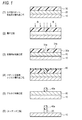
- a negative pattern forming film 30 is formed on a layer to be processed 20 of a substrate 10.
- exposure is performed as shown in FIG.
- a negative pattern 30a having a space portion 31a from which a part of the film 30 is removed by organic solvent development and a remaining film portion 31b not removed by the development is formed.
- a pattern reversal resist film 40 is formed on the negative pattern 30a so as to be embedded in the space 31a of the negative pattern 30a.
- the negative pattern 30a is inverted to a positive resist pattern 40a by removing the residual film portion 31b in the negative pattern 30a using an alkaline wet etching solution. .
- the layer to be processed 20 can be etched according to the positive resist pattern 40a.
- it was difficult to form a fine pattern such as a fine isolated line pattern or a fine dot pattern due to the dilemma between thinning and the development of etching resistance.
- the forming method by using a specific pattern reversal resist film, the dilemma between thinning and the development of etching resistance can be eliminated, and even when the pattern is fine, it has good roughness performance such as LWR and etching.
- a sufficiently durable pattern can be formed.
- fine isolated space patterns, fine hole patterns, etc. can be formed well, but it is difficult to form fine isolated line patterns, fine dot patterns, etc.
- the pattern forming method of the present invention it is possible to form a fine isolated line pattern, a fine dot pattern, or the like by reversing the pattern using a specific pattern reversal resist film.
- the pattern forming method of the present invention is for forming a negative pattern by an actinic ray-sensitive or radiation-sensitive resin composition described in detail later in process (1).
- the film is formed. More specifically, the negative pattern-forming film is formed by dissolving each component described later of the actinic ray-sensitive or radiation-sensitive resin composition in a solvent, and filtering the filter as necessary. It can be performed by applying to the body (substrate).
- the composition is applied by a suitable coating method such as a spin coater on a substrate (for example, silicon, silicon dioxide coating) used for manufacturing an integrated circuit device. Thereafter, it is dried to form a photosensitive film. Heating (pre-baking) is preferably performed in the drying stage.
- the film thickness is not particularly limited, but is preferably adjusted in the range of 10 to 500 nm, more preferably in the range of 10 to 200 nm, and still more preferably in the range of 10 to 80 nm.
- the rotation speed is usually 500 to 3000 rpm, preferably 800 to 2000 rpm, more preferably 1000 to 1500 rpm.
- the heating (pre-baking) temperature is preferably 60 to 200 ° C, more preferably 80 to 150 ° C, still more preferably 90 to 140 ° C.
- the heating (pre-baking) time is not particularly limited, but is preferably 30 to 300 seconds, more preferably 30 to 180 seconds, and still more preferably 30 to 90 seconds.
- Heating can be performed by means provided in a normal exposure / developing machine, and may be performed using a hot plate or the like. If necessary, a commercially available inorganic or organic antireflection film can be used. Further, an antireflection film can be applied to the lower layer of the actinic ray-sensitive or radiation-sensitive resin composition.
- the antireflection film any of an inorganic film type such as titanium, titanium dioxide, titanium nitride, chromium oxide, carbon, and amorphous silicon, and an organic film type made of a light absorber and a polymer material can be used.
- the organic antireflection film commercially available organic antireflection films such as Brewer Science DUV30 series, DUV-40 series, Shipley AR-2, AR-3 and AR-5 may be used. it can.
- Actinic ray-sensitive or radiation-sensitive resin composition for forming a negative pattern in step (1) The actinic ray-sensitive or radiation-sensitive resin composition for forming a negative pattern in step (1) , Negative type development (development in which, when exposed, the solubility in the developer is reduced, the exposed area remains as a pattern, and the unexposed area is removed). That is, the actinic ray-sensitive or radiation-sensitive resin composition according to the present invention is an actinic ray-sensitive or radiation-sensitive resin composition for organic solvent development used in development using a developer containing an organic solvent. be able to.
- the term “for organic solvent development” means an application that is used in a step of developing using a developer containing at least an organic solvent.
- the actinic ray-sensitive or radiation-sensitive resin composition for forming a negative pattern in the step (1) is typically a resist composition, since a particularly high effect can be obtained.
- the composition according to the present invention is typically a chemically amplified resist composition.
- the composition used in the present invention contains a resin (A) whose solubility in a developer containing an organic solvent is reduced by the action of an acid.
- the resin (A) will be described.
- Resin (A) is a resin whose solubility in a developer containing an organic solvent is reduced by the action of an acid, and having a repeating unit having an acid-decomposable group It is preferable to have a unit.
- the repeating unit having an acid-decomposable group is, for example, a group that is decomposed by the action of an acid on the main chain or side chain of the resin, or both of the main chain and side chain (hereinafter also referred to as “acid-decomposable group”). ).
- the group generated by the decomposition of the acid-decomposable group is preferably a polar group, since the affinity with a developer containing an organic solvent is lowered and insolubilization or insolubilization (negative conversion) proceeds.
- the polar group is more preferably an acidic group.
- the definition of the polar group is synonymous with the definition described in the section of the repeating unit (b) described later.
- Examples of the polar group generated by the decomposition of the acid-decomposable group include an alcoholic hydroxyl group, an amino group, and an acidic group. Is mentioned.
- the polar group generated by the decomposition of the acid-decomposable group is preferably an acidic group.
- the acidic group is not particularly limited as long as it is a group that is insolubilized in a developer containing an organic solvent, but is preferably a phenolic hydroxyl group, a carboxylic acid group, a sulfonic acid group, a fluorinated alcohol group, a sulfonamide group, a sulfonyl group.
- alkylsulfonyl alkylcarbonyl
- alkylsulfonyl alkylcarbonyl
- imide group bis (alkylcarbonyl) methylene group, bis (alkylcarbonyl) imide group, bis (alkylsulfonyl) methylene group, bis (Alkylsulfonyl) imide group, tris (alkylcarbonyl) methylene group, tris (alkylsulfonyl) methylene group, more preferably carboxylic acid group, fluorinated alcohol group (preferably hexafluoroisopropanol), phenolic hydro Sill group, (used as a developer for conventional resist, a group dissociated in 2.38 mass% tetramethylammonium hydroxide aqueous solution) acidic group such as a sulfonic acid group include.
- a preferable group as the acid-decomposable group is a group in which the hydrogen atom of these groups is substituted with a group capable of leaving with an acid.
- Examples of the group leaving with an acid include —C (R 36 ) (R 37 ) (R 38 ), —C (R 36 ) (R 37 ) (OR 39 ), —C (R 01 ) (R 02 ). ) (OR 39 ) and the like.
- R 36 to R 39 each independently represents an alkyl group, a cycloalkyl group, a monovalent aromatic ring group, a group in which an alkylene group and a monovalent aromatic ring group are combined, or an alkenyl group.
- R 36 and R 37 may be bonded to each other to form a ring.
- R 01 and R 02 each independently represent a hydrogen atom, an alkyl group, a cycloalkyl group, a monovalent aromatic ring group, a group in which an alkylene group and a monovalent aromatic ring group are combined, or an alkenyl group.
- the acid-decomposable group is preferably a cumyl ester group, an enol ester group, an acetal ester group, a tertiary alkyl ester group or the like. More preferably, it is a tertiary alkyl ester group.
- the repeating unit (a) a repeating unit represented by the following general formula (V) is more preferable.
- R 51 , R 52 , and R 53 each independently represent a hydrogen atom, an alkyl group, a cycloalkyl group, a halogen atom, a cyano group, or an alkoxycarbonyl group.
- R 52 may be bonded to L 5 to form a ring, and R 52 in this case represents an alkylene group.
- L 5 represents a single bond or a divalent linking group, and in the case of forming a ring with R 52 , represents a trivalent linking group.
- R 54 represents an alkyl group
- R 55 and R 56 each independently represent a hydrogen atom, an alkyl group, a cycloalkyl group, a monovalent aromatic ring group, or an aralkyl group.
- R 55 and R 56 may combine with each other to form a ring.
- no and R 55 and R 56 are hydrogen atoms at the same time.
- the alkyl group of R 51 to R 53 in the general formula (V) is preferably a methyl group, ethyl group, propyl group, isopropyl group, n-butyl group, sec-butyl group, which may have a substituent, Examples thereof include alkyl groups having 20 or less carbon atoms such as hexyl group, 2-ethylhexyl group, octyl group and dodecyl group, more preferably alkyl groups having 8 or less carbon atoms, and particularly preferably alkyl groups having 3 or less carbon atoms.
- the alkyl group contained in the alkoxycarbonyl group is preferably the same as the alkyl group in R 51 to R 53 described above.
- the cycloalkyl group may be monocyclic or polycyclic.
- a monocyclic cycloalkyl group having 3 to 8 carbon atoms such as a cyclopropyl group, a cyclopentyl group, and a cyclohexyl group which may have a substituent may be mentioned.
- the halogen atom include a fluorine atom, a chlorine atom, a bromine atom and an iodine atom, and a fluorine atom is particularly preferable.
- Preferred substituents in each of the above groups include, for example, alkyl groups, cycloalkyl groups, aryl groups, amino groups, amide groups, ureido groups, urethane groups, hydroxyl groups, carboxyl groups, halogen atoms, alkoxy groups, thioether groups, acyls.
- the alkylene group is preferably an alkylene group having 1 to 8 carbon atoms such as a methylene group, an ethylene group, a propylene group, a butylene group, a hexylene group or an octylene group. Groups. An alkylene group having 1 to 4 carbon atoms is more preferable, and an alkylene group having 1 to 2 carbon atoms is particularly preferable.
- the ring formed by combining R 52 and L 5 is particularly preferably a 5- or 6-membered ring.
- R 51 and R 53 in Formula (V) are more preferably a hydrogen atom, an alkyl group, or a halogen atom, and a hydrogen atom, a methyl group, an ethyl group, a trifluoromethyl group (—CF 3 ), a hydroxymethyl group (—CH 3 ).
- 2- OH), a chloromethyl group (—CH 2 —Cl), and a fluorine atom (—F) are particularly preferred.
- R 52 is more preferably a hydrogen atom, an alkyl group, a halogen atom or an alkylene group (forming a ring with L 5 ), a hydrogen atom, a methyl group, an ethyl group, a trifluoromethyl group (—CF 3 ), a hydroxymethyl group Particularly preferred are (—CH 2 —OH), chloromethyl group (—CH 2 —Cl), fluorine atom (—F), methylene group (forms a ring with L 5 ), and ethylene group (forms a ring with L 5 ). .
- L 1 represents an alkylene group, a cycloalkylene group, a divalent aromatic ring group, or a group in which an alkylene group and a divalent aromatic ring group are combined.
- L 5 is preferably a single bond, a group represented by —COO—L 1 —, or a divalent aromatic ring group.
- L 1 is preferably an alkylene group having 1 to 5 carbon atoms, more preferably a methylene or propylene group.
- examples of the trivalent linking group represented by L 5 examples include groups formed by removing any hydrogen atom.
- the alkyl group of R 54 to R 56 is preferably one having 1 to 20 carbon atoms, more preferably one having 1 to 10 carbon atoms, and includes a methyl group, an ethyl group, an n-propyl group, an isopropyl group, and an n-butyl group. Particularly preferred are those having 1 to 4 carbon atoms such as a group, isobutyl group and t-butyl group.
- the cycloalkyl group represented by R 55 and R 56 is preferably one having 3 to 20 carbon atoms, and may be monocyclic such as cyclopentyl group, cyclohexyl group, norbornyl group, adamantyl group, Polycyclic ones such as a tetracyclodecanyl group and a tetracyclododecanyl group may be used.
- the ring formed by combining R 55 and R 56 with each other preferably has 3 to 20 carbon atoms, and may be monocyclic such as a cyclopentyl group or a cyclohexyl group, or a norbornyl group.
- a polycyclic group such as an adamantyl group, a tetracyclodecanyl group, or a tetracyclododecanyl group.
- R 54 is preferably an alkyl group having 1 to 3 carbon atoms, more preferably a methyl group or an ethyl group.
- the monovalent aromatic ring group represented by R 55 and R 56 is preferably one having 6 to 20 carbon atoms, and may be monocyclic or polycyclic and may have a substituent.
- a phenyl group, 1-naphthyl group, 2-naphthyl group, 4-methylphenyl group, 4-methoxyphenyl group and the like can be mentioned.
- R 55 and R 56 is a hydrogen atom
- the other is preferably a monovalent aromatic ring group.
- the aralkyl group represented by R 55 and R 56 may be monocyclic or polycyclic and may have a substituent. Preferably, it has 7 to 21 carbon atoms, and examples thereof include a benzyl group and a 1-naphthylmethyl group.
- a general method for synthesizing a polymerizable group-containing ester can be applied and is not particularly limited.
- Specific examples of the repeating unit (a) represented by the general formula (V) are shown below, but the present invention is not limited thereto.
- Rx and Xa 1 represent a hydrogen atom, CH 3 , CF 3 , or CH 2 OH.
- Rxa and Rxb each independently represent an alkyl group having 1 to 4 carbon atoms, an aryl group having 6 to 18 carbon atoms, or an aralkyl group having 7 to 19 carbon atoms.
- Z represents a substituent.
- Z represents 0 or a positive integer, preferably 0 to 2, and more preferably 0 or 1.
- Z is preferably a group consisting of only a hydrogen atom and a carbon atom from the viewpoint of increasing the dissolution contrast with respect to a developer containing an organic solvent before and after acid decomposition, for example, a linear or branched alkyl group, A cycloalkyl group is preferred.
- the resin (A) may contain a repeating unit represented by the following general formula (VI) as the repeating unit (a).
- R 61 , R 62 and R 63 each independently represents a hydrogen atom, an alkyl group, a cycloalkyl group, a halogen atom, a cyano group or an alkoxycarbonyl group.
- R 62 may be bonded to Ar 6 to form a ring, and R 62 in this case represents a single bond or an alkylene group.
- X 6 represents a single bond, —COO—, or —CONR 64 —.
- R 64 represents a hydrogen atom or an alkyl group.
- L 6 represents a single bond or an alkylene group.
- Ar 6 represents an (n + 1) -valent aromatic ring group, and represents an (n + 2) -valent aromatic ring group when bonded to R 62 to form a ring.
- Y 2 independently represents a hydrogen atom or a group capable of leaving by the action of an acid when n ⁇ 2. However, at least one of Y 2 represents a group capable of leaving by the action of an acid.
- n represents an integer of 1 to 4.
- the alkyl group of R 61 to R 63 in the general formula (VI) is preferably a methyl group, ethyl group, propyl group, isopropyl group, n-butyl group, sec-butyl group, which may have a substituent,
- An alkyl group having 20 or less carbon atoms such as a hexyl group, 2-ethylhexyl group, octyl group or dodecyl group is exemplified, and an alkyl group having 8 or less carbon atoms is more preferred.
- the alkyl group contained in the alkoxycarbonyl group the same alkyl groups as those described above for R 61 to R 63 are preferable.
- the cycloalkyl group may be monocyclic or polycyclic, and is preferably a monocyclic type having 3 to 8 carbon atoms such as a cyclopropyl group, cyclopentyl group or cyclohexyl group which may have a substituent.
- a cycloalkyl group is mentioned.
- the halogen atom include a fluorine atom, a chlorine atom, a bromine atom, and an iodine atom, and a fluorine atom is more preferable.
- R 62 represents an alkylene group
- the alkylene group preferably has 1 to 8 carbon atoms such as an optionally substituted methylene group, ethylene group, propylene group, butylene group, hexylene group, octylene group, etc.
- -CONR 64 represented by X 6 - R 64 represents a hydrogen atom, an alkyl group
- X 6 is preferably a single bond, —COO— or —CONH—, and more preferably a single bond or —COO—.
- the alkylene group for L 6 is preferably an alkylene group having 1 to 8 carbon atoms such as an optionally substituted methylene group, ethylene group, propylene group, butylene group, hexylene group and octylene group.
- the ring formed by combining R 62 and L 6 is particularly preferably a 5- or 6-membered ring.
- Ar 6 represents an (n + 1) -valent aromatic ring group.
- the divalent aromatic ring group when n is 1 may have a substituent, for example, an arylene group having 6 to 18 carbon atoms such as a phenylene group, a tolylene group or a naphthylene group, or, for example, Preferred examples include divalent aromatic ring groups containing heterocycles such as thiophene, furan, pyrrole, benzothiophene, benzofuran, benzopyrrole, triazine, imidazole, benzimidazole, triazole, thiadiazole, and thiazole.
- a substituent for example, an arylene group having 6 to 18 carbon atoms such as a phenylene group, a tolylene group or a naphthylene group, or, for example, Preferred examples include divalent aromatic ring groups containing heterocycles such as thiophene, furan, pyrrole, benzothiophene, benzofuran, benzopyrrole, triazine
- n + 1) -valent aromatic ring group in the case where n is an integer of 2 or more include (n-1) arbitrary hydrogen atoms removed from the above-described specific examples of the divalent aromatic ring group.
- the group formed can be preferably mentioned.
- the (n + 1) -valent aromatic ring group may further have a substituent.
- n is preferably 1 or 2, and more preferably 1.
- n Y 2 each independently represents a hydrogen atom or a group capable of leaving by the action of an acid. However, at least one of n represents a group capable of leaving by the action of an acid.
- Examples of the group Y 2 leaving by the action of an acid include —C (R 36 ) (R 37 ) (R 38 ), —C ( ⁇ O) —O—C (R 36 ) (R 37 ) (R 38 ), —C (R 01 ) (R 02 ) (OR 39 ), —C (R 01 ) (R 02 ) —C ( ⁇ O) —O—C (R 36 ) (R 37 ) (R 38 ) , —CH (R 36 ) (Ar) and the like.
- R 36 to R 39 each independently represents an alkyl group, a cycloalkyl group, a monovalent aromatic ring group, a group in which an alkylene group and a monovalent aromatic ring group are combined, or an alkenyl group.
- R 36 and R 37 may be bonded to each other to form a ring.
- R 01 and R 02 each independently represent a hydrogen atom, an alkyl group, a cycloalkyl group, a monovalent aromatic ring group, a group in which an alkylene group and a monovalent aromatic ring group are combined, or an alkenyl group.
- Ar represents a monovalent aromatic ring group.
- the alkyl group of R 36 to R 39 , R 01 and R 02 is preferably an alkyl group having 1 to 8 carbon atoms, for example, methyl group, ethyl group, propyl group, n-butyl group, sec-butyl group, hexyl Group, octyl group and the like.
- the cycloalkyl group of R 36 to R 39 , R 01 and R 02 may be monocyclic or polycyclic.
- the monocyclic type is preferably a cycloalkyl group having 3 to 8 carbon atoms, and examples thereof include a cyclopropyl group, a cyclobutyl group, a cyclopentyl group, a cyclohexyl group, and a cyclooctyl group.
- the polycyclic type is preferably a cycloalkyl group having 6 to 20 carbon atoms.
- a part of carbon atoms in the cycloalkyl group may be substituted with a hetero atom such as an oxygen atom.
- the monovalent aromatic ring group of R 36 to R 39 , R 01 , R 02 and Ar is preferably a monovalent aromatic ring group having 6 to 10 carbon atoms, for example, an aryl such as a phenyl group, a naphthyl group or an anthryl group.
- a divalent aromatic ring group containing a heterocyclic ring such as a group, thiophene, furan, pyrrole, benzothiophene, benzofuran, benzopyrrole, triazine, imidazole, benzimidazole, triazole, thiadiazole, thiazole.
- the group in which the alkylene group of R 36 to R 39 , R 01 and R 02 and the monovalent aromatic ring group are combined is preferably an aralkyl group having 7 to 12 carbon atoms, such as benzyl group, phenethyl group, naphthylmethyl. Groups and the like.
- the alkenyl group of R 36 to R 39 , R 01 and R 02 is preferably an alkenyl group having 2 to 8 carbon atoms, and examples thereof include a vinyl group, an allyl group, a butenyl group, and a cyclohexenyl group.
- the ring formed by combining R 36 and R 37 with each other may be monocyclic or polycyclic.
- the monocyclic type is preferably a cycloalkyl structure having 3 to 8 carbon atoms, and examples thereof include a cyclopropane structure, a cyclobutane structure, a cyclopentane structure, a cyclohexane structure, a cycloheptane structure, and a cyclooctane structure.
- the polycyclic type is preferably a cycloalkyl structure having 6 to 20 carbon atoms, and examples thereof include an adamantane structure, a norbornane structure, a dicyclopentane structure, a tricyclodecane structure, and a tetracyclododecane structure.
- a part of carbon atoms in the cycloalkyl structure may be substituted with a hetero atom such as an oxygen atom.
- Each of the groups as R 36 to R 39 , R 01 , R 02 , and Ar may have a substituent. Examples of the substituent include an alkyl group, a cycloalkyl group, an aryl group, and an amino group.
- the number of carbon atoms is preferably 8 or less.
- a structure represented by the following general formula (VI-A) is more preferable.
- L 1 and L 2 each independently represent a hydrogen atom, an alkyl group, a cycloalkyl group, a monovalent aromatic ring group, or a group in which an alkylene group and a monovalent aromatic ring group are combined.
- M represents a single bond or a divalent linking group.
- Q represents an alkyl group, a cycloalkyl group which may contain a hetero atom, a monovalent aromatic ring group which may contain a hetero atom, an amino group, an ammonium group, a mercapto group, a cyano group or an aldehyde group. At least two of Q, M, and L 1 may combine to form a ring (preferably a 5-membered or 6-membered ring).
- the alkyl group as L 1 and L 2 is, for example, an alkyl group having 1 to 8 carbon atoms, and specifically includes a methyl group, an ethyl group, a propyl group, an n-butyl group, a sec-butyl group, a hexyl group. Preferred examples include a group and an octyl group.
- the cycloalkyl group as L 1 and L 2 is, for example, a cycloalkyl group having 3 to 15 carbon atoms, and specific examples thereof include a cyclopentyl group, a cyclohexyl group, a norbornyl group, an adamantyl group, and the like. Can do.
- the monovalent aromatic ring group as L 1 and L 2 is, for example, an aryl group having 6 to 15 carbon atoms, and specifically, phenyl group, tolyl group, naphthyl group, anthryl group and the like are preferable examples. Can be mentioned.
- the group combining the alkylene group and the monovalent aromatic ring group as L 1 and L 2 has, for example, 6 to 20 carbon atoms, and examples thereof include aralkyl groups such as benzyl group and phenethyl group.
- the divalent linking group as M is, for example, an alkylene group (for example, methylene group, ethylene group, propylene group, butylene group, hexylene group, octylene group, etc.), cycloalkylene group (for example, cyclopentylene group, cyclohexylene group).
- alkylene group for example, methylene group, ethylene group, propylene group, butylene group, hexylene group, octylene group, etc.
- cycloalkylene group for example, cyclopentylene group, cyclohexylene group.
- alkenylene group eg, ethenylene group, propenylene group, butenylene group, etc.
- divalent aromatic ring group eg, phenylene group, tolylene group, naphthylene group, etc.
- S— —O
- R 0 is a hydrogen atom or an alkyl group (eg, an alkyl group having 1 to 8 carbon atoms, specifically, a methyl group, an ethyl group, a propyl group, an n-butyl group, a sec-butyl group, a hexyl group). Octyl group, etc.).
- an alkyl group eg, an alkyl group having 1 to 8 carbon atoms, specifically, a methyl group, an ethyl group, a propyl group, an n-butyl group, a sec-butyl group, a hexyl group). Octyl group, etc.
- the alkyl group as Q is the same as each group as L 1 and L 2 described above.
- cycloalkyl group which may contain a hetero atom as Q and the monovalent aromatic ring group which may contain a hetero atom an aliphatic hydrocarbon ring group which does not contain a hetero atom and a hetero atom
- Non-monovalent aromatic ring groups include the above-described cycloalkyl groups as L 1 and L 2 , and monovalent aromatic ring groups, and preferably have 3 to 15 carbon atoms.
- Examples of the cycloalkyl group containing a hetero atom and the monovalent aromatic ring group containing a hetero atom include thiirane, cyclothiolane, thiophene, furan, pyrrole, benzothiophene, benzofuran, benzopyrrole, triazine, imidazole, benzimidazole, triazole, Groups having a heterocyclic structure such as thiadiazole, thiazole, pyrrolidone and the like can be mentioned, but if it is a structure generally called a heterocyclic ring (a ring formed of carbon and a heteroatom, or a ring formed of a heteroatom), these It is not limited to.
- Each group represented by L 1 , L 2 , M, Q in the general formula (VI-A) may have a substituent.
- the group represented by —MQ is preferably a group composed of 1 to 30 carbon atoms, more preferably a group composed of 5 to 20 carbon atoms.
- repeating unit represented by the general formula (VI) Specific examples of the repeating unit represented by the general formula (VI) are shown below as preferred specific examples of the repeating unit (a), but the present invention is not limited thereto.
- the above repeating unit having an acid-decomposable group may be one type or a combination of two or more types.
- the content of the repeating unit having an acid-decomposable group in the resin (A) (when there are a plurality of types) is 5 mol% or more and 80 mol% or less with respect to all repeating units in the resin (A) It is preferably 5 mol% or more and 75 mol% or less, more preferably 10 mol% or more and 65 mol% or less.
- the resin (A) preferably contains a repeating unit (b) having a polar group.
- the repeating unit (b) is preferably a non-acid-decomposable repeating unit (that is, having no acid-decomposable group).
- Examples of the “polar group” that the repeating unit (b) may contain include the following (1) to (4). In the following, “electronegativity” means a value by Pauling.
- Examples of such a polar group include a hydroxy group and the like. And a group containing a structure represented by O—H.
- (4) Functional group having an ionic moiety examples of such a polar group include a group having a moiety represented by N + or S + . Specific examples of the partial structure that can be included in the “polar group” are given below. In the following specific examples, X ⁇ represents a counter anion.
- the “polar group” that the repeating unit (b) may contain includes, for example, (I) hydroxy group, (II) cyano group, (III) lactone group, (IV) carboxylic acid group or sulfonic acid group, (V) amide group , A group corresponding to a sulfonamide group or a derivative thereof, (VI) an ammonium group or a sulfonium group, and at least one selected from the group consisting of a combination of two or more thereof.
- the polar group is selected from a hydroxyl group, a cyano group, a lactone group, a carboxylic acid group, a sulfonic acid group, an amide group, a sulfonamide group, an ammonium group, a sulfonium group, and a group formed by combining two or more thereof.
- a alcoholic hydroxy group, a cyano group, a lactone group, or a group containing a cyanolactone structure is particularly preferable.
- the exposure latitude (EL) of the composition containing the resin can be further improved.
- the sensitivity of the composition containing the resin can be further improved.
- the resin further contains a repeating unit having a lactone group the dissolution contrast with respect to the developer containing an organic solvent can be further improved. In addition, this makes it possible to further improve the applicability of the resin-containing composition and the adhesion to the substrate.
- the resin further contains a repeating unit having a group containing a lactone structure having a cyano group the dissolution contrast with respect to the developer containing an organic solvent can be further improved. In addition, this makes it possible to further improve the sensitivity, applicability, and adhesion to the substrate of the resin-containing composition. In addition, this makes it possible for a single repeating unit to have a function attributable to each of the cyano group and the lactone group, thereby further increasing the degree of freedom in designing the resin.
- the polar group of the repeating unit (b) is an alcoholic hydroxy group
- it is preferably represented by any one of the following general formulas (I-1H) to (I-10H).
- it is more preferably represented by any one of the following general formulas (I-1H) to (I-3H), and more preferably represented by the following general formula (I-1H).
- Ra independently represents a hydrogen atom, an alkyl group or a group represented by —CH 2 —O—Ra 2 .
- Ra 2 represents a hydrogen atom, an alkyl group, or an acyl group.
- R 1 represents an (n + 1) valent organic group.
- R 2 independently represents a single bond or an (n + 1) -valent organic group when m ⁇ 2.
- W represents a methylene group, an oxygen atom or a sulfur atom.
- n and m represent an integer of 1 or more.
- n is 1 when R 2 represents a single bond.
- l represents an integer of 0 or more.
- L 1 represents a linking group represented by —COO—, —OCO—, —CONH—, —O—, —Ar—, —SO 3 — or —SO 2 NH—.
- Ar represents a divalent aromatic ring group.
- Each R independently represents a hydrogen atom or an alkyl group.
- R 0 represents a hydrogen atom or an organic group.
- L 3 represents a (m + 2) -valent linking group.
- R L each independently represents an (n + 1) -valent linking group when m ⁇ 2.
- R S each independently represents a substituent when p ⁇ 2. For p ⁇ 2, plural structured R S may be bonded to each other to form a ring.
- p represents an integer of 0 to 3.
- Ra represents a hydrogen atom, an alkyl group, or a group represented by —CH 2 —O—Ra 2 .
- Ra is preferably a hydrogen atom or an alkyl group having 1 to 10 carbon atoms, more preferably a hydrogen atom or a methyl group.
- W represents a methylene group, an oxygen atom or a sulfur atom. W is preferably a methylene group or an oxygen atom.
- R 1 represents an (n + 1) valent organic group.
- R 1 is preferably a non-aromatic hydrocarbon group. In this case, R 1 may be a chain hydrocarbon group or an alicyclic hydrocarbon group.
- R 1 is more preferably an alicyclic hydrocarbon group.
- R 2 represents a single bond or an (n + 1) valent organic group.
- R 2 is preferably a single bond or a non-aromatic hydrocarbon group.
- R 2 may be a chain hydrocarbon group or an alicyclic hydrocarbon group.
- the chain hydrocarbon group may be linear or branched.
- the chain hydrocarbon group preferably has 1 to 8 carbon atoms.
- R 1 and / or R 2 is an alkylene group
- R 1 and / or R 2 is a methylene group, ethylene group, n-propylene group, isopropylene group, n-butylene group, isobutylene group or sec- A butylene group is preferred.
- R 1 and / or R 2 is an alicyclic hydrocarbon group
- the alicyclic hydrocarbon group may be monocyclic or polycyclic.
- This alicyclic hydrocarbon group has, for example, a monocyclo, bicyclo, tricyclo or tetracyclo structure.
- the carbon number of the alicyclic hydrocarbon group is usually 5 or more, preferably 6 to 30, and more preferably 7 to 25.
- Examples of the alicyclic hydrocarbon group include those having the partial structures listed below. Each of these partial structures may have a substituent.
- the methylene group (—CH 2 —) includes an oxygen atom (—O—), a sulfur atom (—S—), a carbonyl group [—C ( ⁇ O) —], a sulfonyl group [— —S ( ⁇ O) 2 —], sulfinyl group [—S ( ⁇ O) —], or imino group [—N (R) —] (where R is a hydrogen atom or an alkyl group) may be substituted.
- R 1 and / or R 2 when R 1 and / or R 2 is a cycloalkylene group, R 1 and / or R 2 may be an adamantylene group, a noradamantylene group, a decahydronaphthylene group, a tricyclodecanylene group, a tetracyclododeca group.
- Nylene group, norbornylene group, cyclopentylene group, cyclohexylene group, cycloheptylene group, cyclooctylene group, cyclodecanylene group, or cyclododecanylene group are preferable, and adamantylene group, norbornylene group, cyclohexylene group, cyclopentylene It is more preferable that they are a len group, a tetracyclododecanylene group, or a tricyclodecanylene group.
- the non-aromatic hydrocarbon group of R 1 and / or R 2 may have a substituent.
- substituents examples include an alkyl group having 1 to 4 carbon atoms, a halogen atom, a hydroxy group, an alkoxy group having 1 to 4 carbon atoms, a carboxy group, and an alkoxycarbonyl group having 2 to 6 carbon atoms.
- the above alkyl group, alkoxy group and alkoxycarbonyl group may further have a substituent.
- a hydroxy group, a halogen atom, and an alkoxy group are mentioned, for example.
- L 1 represents a linking group represented by —COO—, —OCO—, —CONH—, —O—, —Ar—, —SO 3 — or —SO 2 NH—.
- Ar represents a divalent aromatic ring group.
- L 1 is preferably a linking group represented by —COO—, —CONH— or —Ar—, and more preferably a linking group represented by —COO— or —CONH—.
- R represents a hydrogen atom or an alkyl group.
- the alkyl group may be linear or branched.
- the alkyl group preferably has 1 to 6 carbon atoms, more preferably 1 to 3 carbon atoms.
- R is preferably a hydrogen atom or a methyl group, and more preferably a hydrogen atom.
- R 0 represents a hydrogen atom or an organic group.
- the organic group include an alkyl group, a cycloalkyl group, an aryl group, an alkynyl group, and an alkenyl group.
- R 0 is preferably a hydrogen atom or an alkyl group, and more preferably a hydrogen atom or a methyl group.
- L 3 represents a (m + 2) -valent linking group. That is, L 3 represents a trivalent or higher linking group. Examples of such a linking group include corresponding groups in specific examples described later.
- R L represents a (n + 1) -valent linking group. That is, R L represents a divalent or higher linking group.
- R L may be bonded to each other or bonded to the following R S to form a ring structure.
- R S represents a substituent.
- the substituent include an alkyl group, an alkenyl group, an alkynyl group, an aryl group, an alkoxy group, an acyloxy group, an alkoxycarbonyl group, and a halogen atom.
- n is an integer of 1 or more.
- n is preferably an integer of 1 to 3, and more preferably 1 or 2. When n is 2 or more, it is possible to further improve the dissolution contrast with respect to a developer containing an organic solvent.
- m is an integer of 1 or more.
- m is preferably an integer of 1 to 3, and more preferably 1 or 2.
- l is an integer of 0 or more.
- l is preferably 0 or 1.
- p is an integer of 0 to 3.
- the content of the repeating unit having an alcoholic hydroxy group is preferably from 1 to 60 mol%, more preferably from 3 to 50 mol%, still more preferably from 5 to 40 mol%, based on all repeating units in the resin (A).
- Specific examples of the repeating unit represented by any one of the general formulas (I-1H) to (I-10H) are shown below.
- Ra has the same meaning as that in formulas (I-1H) to (I-10H).
- the polar group which the repeating unit (b) has is an alcoholic hydroxy group or a cyano group
- it is a repeating unit having an alicyclic hydrocarbon structure substituted with a hydroxyl group or a cyano group as one embodiment of a preferable repeating unit. Is mentioned.
- it is preferable not to have an acid-decomposable group.
- the alicyclic hydrocarbon structure in the alicyclic hydrocarbon structure substituted with a hydroxyl group or a cyano group is preferably an adamantyl group, a diamantyl group, or a norbornane group.
- the alicyclic hydrocarbon structure substituted with a preferred hydroxyl group or cyano group partial structures represented by the following general formulas (VIIa) to (VIIc) are preferred. This improves the substrate adhesion and developer compatibility.
- R 2 c to R 4 c each independently represents a hydrogen atom, a hydroxyl group or a cyano group. However, at least one of R 2 c to R 4 c represents a hydroxyl group. Preferably, one or two of R 2 c to R 4 c are a hydroxyl group and the remaining is a hydrogen atom. In the general formula (VIIa), more preferably, two of R 2 c to R 4 c are a hydroxyl group and the rest are hydrogen atoms.
- Examples of the repeating unit having a partial structure represented by the general formulas (VIIa) to (VIIc) include the repeating units represented by the following general formulas (AIIa) to (AIIc).
- R 1 c represents a hydrogen atom, a methyl group, a trifluoromethyl group, or a hydroxymethyl group.
- R 2 c ⁇ R 4 c is in the general formula (VIIa) ⁇ (VIIc), the same meanings as R 2 c ⁇ R 4 c.
- the resin (A) may or may not contain a repeating unit having a hydroxyl group or a cyano group. However, when it is contained, the content of the repeating unit having a hydroxyl group or a cyano group is in the resin (A).
- the amount is preferably 1 to 60 mol%, more preferably 3 to 50 mol%, still more preferably 5 to 40 mol%, based on all repeating units.
- repeating unit having a hydroxyl group or a cyano group are listed below, but the present invention is not limited thereto.
- the repeating unit (b) may be a repeating unit having a lactone structure as a polar group.
- the repeating unit having a lactone structure is more preferably a repeating unit represented by the following general formula (AII).
- Rb 0 represents a hydrogen atom, a halogen atom or an optionally substituted alkyl group (preferably having 1 to 4 carbon atoms).
- substituents that the alkyl group of Rb 0 may have include a hydroxyl group and a halogen atom.
- the halogen atom for Rb 0 include a fluorine atom, a chlorine atom, a bromine atom, and an iodine atom.
- Rb 0 is preferably a hydrogen atom, a methyl group, a hydroxymethyl group or a trifluoromethyl group, and particularly preferably a hydrogen atom or a methyl group.
- Ab represents a single bond, an alkylene group, a divalent linking group having a monocyclic or polycyclic cycloalkyl structure, an ether bond, an ester bond, a carbonyl group, or a divalent linking group obtained by combining these.
- Ab is preferably a single bond or a divalent linking group represented by —Ab 1 —CO 2 —.
- Ab 1 is a linear or branched alkylene group, a monocyclic or polycyclic cycloalkylene group, and preferably a methylene group, an ethylene group, a cyclohexylene group, an adamantylene group, or a norbornylene group.
- V represents a group having a lactone structure.
- any group having a lactone structure can be used, but a 5- to 7-membered ring lactone structure is preferable, and a bicyclo structure or a spiro structure is added to the 5- to 7-membered ring lactone structure.
- Those in which other ring structures are condensed in the form to be formed are preferred.
- the lactone structure may be directly bonded to the main chain.
- Preferred lactone structures are (LC1-1), (LC1-4), (LC1-5), (LC1-6), (LC1-8), (LC1-13), (LC1-14).
- the lactone structure portion may or may not have a substituent (Rb 2 ).
- Preferred examples of the substituent (Rb 2 ) include an alkyl group having 1 to 8 carbon atoms, a monovalent cycloalkyl group having 4 to 7 carbon atoms, an alkoxy group having 1 to 8 carbon atoms, and an alkoxycarbonyl group having 2 to 8 carbon atoms. , Carboxyl group, halogen atom, hydroxyl group, cyano group, acid-decomposable group and the like. More preferred are an alkyl group having 1 to 4 carbon atoms, a cyano group, and an acid-decomposable group.
- n 2 represents an integer of 0 to 4. When n 2 is 2 or more, a plurality of substituents (Rb 2 ) may be the same or different, and a plurality of substituents (Rb 2 ) may be bonded to form a ring. .
- the repeating unit having a lactone group usually has an optical isomer, but any optical isomer may be used.
- One optical isomer may be used alone, or a plurality of optical isomers may be mixed and used.
- the optical purity (ee) thereof is preferably 90% or more, more preferably 95% or more.
- the resin (A) may or may not contain a repeating unit having a lactone structure, but when it contains a repeating unit having a lactone structure, the content of the repeating unit in the resin (A) is The range is preferably 1 to 70 mol%, more preferably 3 to 65 mol%, and still more preferably 5 to 60 mol% with respect to the repeating unit. Specific examples of the repeating unit having a lactone structure in the resin (A) are shown below, but the present invention is not limited thereto. In the formula, Rx represents H, CH 3 , CH 2 OH, or CF 3 .
- the polar group that the repeating unit (b) may have is an acidic group.
- Preferred acidic groups include phenolic hydroxyl groups, carboxylic acid groups, sulfonic acid groups, fluorinated alcohol groups (eg hexafluoroisopropanol group), sulfonamide groups, sulfonylimide groups, (alkylsulfonyl) (alkylcarbonyl) methylene groups, Alkylsulfonyl) (alkylcarbonyl) imide group, bis (alkylcarbonyl) methylene group, bis (alkylcarbonyl) imide group, bis (alkylsulfonyl) methylene group, bis (alkylsulfonyl) imide group, tris (alkylcarbonyl) methylene group, A tris (alkylsulfonyl) methylene group is mentioned.
- the repeating unit (b) is more preferably a repeating unit having a carboxyl group.
- the repeating unit having an acidic group includes a repeating unit in which an acidic group is directly bonded to the main chain of the resin, such as a repeating unit of acrylic acid or methacrylic acid, or an acidic group in the main chain of the resin through a linking group. It is preferable to use a polymerization initiator or a chain transfer agent having a repeating unit bonded to each other, or an acidic group, at the time of polymerization and introduce it at the end of the polymer chain. Particularly preferred are repeating units of acrylic acid or methacrylic acid.
- the acidic group that the repeating unit (b) can have may or may not contain an aromatic ring, but when it has an aromatic ring, it is preferably selected from acidic groups other than phenolic hydroxyl groups.
- the content of the repeating unit having an acidic group is preferably 30 mol% or less, preferably 20 mol% or less, based on all repeating units in the resin (A). More preferably.
- content of the repeating unit which has an acidic group in resin (A) is 1 mol% or more normally.
- Rx represents H, CH 3 , CH 2 OH, or CF 3 .
- the resin (A) of the present invention can have a non-acid-decomposable repeating unit (b) having a phenolic hydroxyl group.
- a structure represented by the following general formula (I) is more preferable.
- R 41 , R 42 and R 43 each independently represents a hydrogen atom, an alkyl group, a halogen atom, a cyano group or an alkoxycarbonyl group.
- R 42 may form a ring with Ar 4,
- R 42 in this case represents a single bond or an alkylene group.
- X 4 represents a single bond, —COO—, or —CONR 64 —, and
- R 64 represents a hydrogen atom or an alkyl group.
- L 4 represents a single bond or an alkylene group.
- Ar 4 represents an (n + 1) -valent aromatic ring group, and when bonded to R 42 to form a ring, represents an (n + 2) -valent aromatic ring group.
- n represents an integer of 1 to 4.
- alkyl group, cycloalkyl group, halogen atom, alkoxycarbonyl group of R 41 , R 42 , and R 43 in formula (I), and the substituents that these groups may have include the above general formula (V).
- Ar 4 represents an (n + 1) -valent aromatic ring group.
- the divalent aromatic ring group in the case where n is 1 may have a substituent, for example, an arylene group having 6 to 18 carbon atoms such as a phenylene group, a tolylene group, a naphthylene group, an anthracenylene group, or the like.
- Examples of preferred aromatic ring groups include heterocycles such as thiophene, furan, pyrrole, benzothiophene, benzofuran, benzopyrrole, triazine, imidazole, benzimidazole, triazole, thiadiazole, thiazole.
- n + 1) -valent aromatic ring group in the case where n is an integer of 2 or more include (n-1) arbitrary hydrogen atoms removed from the above-described specific examples of the divalent aromatic ring group.
- the group formed can be preferably mentioned.
- the (n + 1) -valent aromatic ring group may further have a substituent.
- Examples of the substituent that the above-described alkyl group, cycloalkyl group, alkoxycarbonyl group, alkylene group, and (n + 1) -valent aromatic ring group may have include the alkyl groups exemplified as R 51 to R 53 in formula (V), Examples thereof include alkoxy groups such as methoxy group, ethoxy group, hydroxyethoxy group, propoxy group, hydroxypropoxy group and butoxy group, and aryl groups such as phenyl group.
- -CONR 64 represented by X 4 - (R 64 represents a hydrogen atom, an alkyl group)
- the alkyl group for R 64 in, the same as the alkyl group of R 61 ⁇ R 63.
- X 4 is preferably a single bond, —COO— or —CONH—, and more preferably a single bond or —COO—.
- the alkylene group for L 4 is preferably an alkylene group having 1 to 8 carbon atoms such as an optionally substituted methylene group, ethylene group, propylene group, butylene group, hexylene group and octylene group.
- Ar 4 is more preferably an aromatic ring group having 6 to 18 carbon atoms which may have a substituent, and particularly preferably a benzene ring group, a naphthalene ring group or a biphenylene ring group.
- the repeating unit (b) preferably has a hydroxystyrene structure. That is, Ar 4 is preferably a benzene ring group.
- a represents an integer of 1 or 2.
- the resin (A) may contain two or more types of repeating units represented by the general formula (I). Moreover, resin (A) may contain the repeating unit which has the group which generate
- the content molar ratio of each repeating structural unit is the standard developing solution suitability of the resist, the substrate adhesion, the resist profile, and the resolving power that is a general required performance of the resist. In order to adjust heat resistance, sensitivity, etc., it is set appropriately.
- the form of the resin (A) of the present invention may be any of random type, block type, comb type, and star type.
- Resin (A) is compoundable by the radical, cation, or anion polymerization of the unsaturated monomer corresponding to each structure, for example. It is also possible to obtain the desired resin by conducting a polymer reaction after polymerization using an unsaturated monomer corresponding to the precursor of each structure. For example, as a general synthesis method, an unsaturated monomer and a polymerization initiator are dissolved in a solvent and the polymerization is performed by heating, and a solution of the unsaturated monomer and the polymerization initiator is added to the heating solvent for 1 to 10 hours. The dropping polymerization method etc. which are dropped and added over are mentioned, and the dropping polymerization method is preferable.
- the solvent used for the polymerization examples include a solvent that can be used in preparing the actinic ray-sensitive or radiation-sensitive resin composition described below, and more preferably the composition of the present invention.
- Polymerization is preferably carried out using the same solvent as used in the above. Thereby, generation
- the polymerization reaction is preferably performed in an inert gas atmosphere such as nitrogen or argon.
- a polymerization initiator a commercially available radical initiator (azo initiator, peroxide, etc.) is used to initiate the polymerization.
- an azo initiator is preferable, and an azo initiator having an ester group, a cyano group, or a carboxyl group is preferable.
- Preferable initiators include azobisisobutyronitrile, azobisdimethylvaleronitrile, dimethyl 2,2′-azobis (2-methylpropionate) and the like. If necessary, the polymerization may be performed in the presence of a chain transfer agent (for example, alkyl mercaptan).
- the concentration of the reaction is 5 to 70% by mass, preferably 10 to 50% by mass.
- the reaction temperature is usually 10 ° C to 150 ° C, preferably 30 ° C to 120 ° C, more preferably 40 ° C to 100 ° C.
- the reaction time is usually 1 to 48 hours, preferably 1 to 24 hours, and more preferably 1 to 12 hours.
- Purification can be accomplished by a liquid-liquid extraction method that removes residual monomers and oligomer components by combining water and an appropriate solvent, and a purification method in a solution state such as ultrafiltration that extracts and removes only those having a specific molecular weight or less.
- Reprecipitation method that removes residual monomer by coagulating resin in poor solvent by dripping resin solution into poor solvent and purification in solid state such as washing filtered resin slurry with poor solvent
- a normal method such as a method can be applied.
- the resin is precipitated as a solid by contacting a solvent (poor solvent) in which the resin is hardly soluble or insoluble in a volume amount of 10 times or less, preferably 10 to 5 times that of the reaction solution.
- the solvent (precipitation or reprecipitation solvent) used in the precipitation or reprecipitation operation from the polymer solution may be a poor solvent for the polymer, and may be a hydrocarbon, halogenated hydrocarbon, nitro, depending on the type of polymer.
- a compound, ether, ketone, ester, carbonate, alcohol, carboxylic acid, water, a mixed solvent containing these solvents, and the like can be appropriately selected for use.
- a precipitation or reprecipitation solvent a solvent containing at least an alcohol (particularly methanol or the like) or water is preferable.
- the amount of the precipitation or reprecipitation solvent used can be appropriately selected in consideration of efficiency, yield, and the like, but generally, 100 to 10,000 parts by mass, preferably 200 to 2000 parts by mass with respect to 100 parts by mass of the polymer solution, More preferably, it is 300 to 1000 parts by mass.
- the temperature for precipitation or reprecipitation can be appropriately selected in consideration of efficiency and operability, but is usually about 0 to 50 ° C., preferably around room temperature (for example, about 20 to 35 ° C.).
- the precipitation or reprecipitation operation can be performed by a known method such as a batch method or a continuous method using a conventional mixing vessel such as a stirring tank.
- the precipitated or re-precipitated polymer is usually subjected to conventional solid-liquid separation such as filtration and centrifugation, and dried before use. Filtration is performed using a solvent-resistant filter medium, preferably under pressure. Drying is performed at a temperature of about 30 to 100 ° C., preferably about 30 to 50 ° C. under normal pressure or reduced pressure (preferably under reduced pressure).
- the resin may be dissolved again in a solvent, and the resin may be brought into contact with a hardly soluble or insoluble solvent. That is, after completion of the radical polymerization reaction, a solvent in which the polymer is hardly soluble or insoluble is brought into contact, the resin is precipitated (step a), the resin is separated from the solution (step b), and dissolved again in the solvent. (Step c), and then contact the resin solution A with a solvent in which the resin is hardly soluble or insoluble in a volume amount less than 10 times that of the resin solution A (preferably 5 times or less volume). This may be a method including precipitating a resin solid (step d) and separating the precipitated resin (step e).
- the polymerization reaction is preferably performed in an inert gas atmosphere such as nitrogen or argon.
- a polymerization initiator a commercially available radical initiator (azo initiator, peroxide, etc.) is used to initiate the polymerization.
- azo initiator an azo initiator is preferable, and an azo initiator having an ester group, a cyano group, or a carboxyl group is preferable.
- Preferable initiators include azobisisobutyronitrile, azobisdimethylvaleronitrile, dimethyl 2,2′-azobis (2-methylpropionate) and the like.
- an initiator is added or added in portions, and after completion of the reaction, it is put into a solvent and a desired polymer is recovered by a method such as powder or solid recovery.
- the concentration of the reaction is 5 to 50% by mass, preferably 10 to 30% by mass.
- the reaction temperature is usually 10 ° C. to 150 ° C., preferably 30 ° C. to 120 ° C., more preferably 60 to 100 ° C.
- the molecular weight of the resin (A) according to the present invention is not particularly limited, but the weight average molecular weight is preferably in the range of 1000 to 100,000, more preferably in the range of 1500 to 60000, and in the range of 2000 to 30000. It is particularly preferred. By setting the weight average molecular weight in the range of 1,000 to 100,000, it is possible to prevent deterioration of heat resistance and dry etching resistance, and also prevent deterioration of developability and film formation due to increase in viscosity. be able to.
- the weight average molecular weight of the resin indicates a molecular weight in terms of polystyrene measured by GPC (carrier: THF or N-methyl-2-pyrrolidone (NMP)).
- the dispersity (Mw / Mn) is preferably 1.00 to 5.00, more preferably 1.03 to 3.50, and still more preferably 1.05 to 2.50.
- the resin (A) of the present invention can be used alone or in combination of two or more.
- the content of the resin (A) is preferably 20 to 99% by mass, more preferably 30 to 89% by mass, based on the total solid content in the actinic ray-sensitive or radiation-sensitive resin composition of the present invention. 40 to 79% by mass is particularly preferable.
- the composition ratio of each repeating unit of the following polymer structure is a molar ratio.
- composition of the present invention may contain a compound that generates acid upon irradiation with actinic ray or radiation (hereinafter also referred to as “acid generator”).
- the acid generator is not particularly limited as long as it is a publicly known acid generator, but upon irradiation with actinic rays or radiation, at least any of organic acids such as sulfonic acid, bis (alkylsulfonyl) imide, and tris (alkylsulfonyl) methide.
- More preferred examples include compounds represented by the following general formulas (ZI), (ZII), and (ZIII).
- R 201 , R 202 and R 203 each independently represents an organic group.
- the organic group as R 201 , R 202 and R 203 generally has 1 to 30 carbon atoms, preferably 1 to 20 carbon atoms.
- Two of R 201 to R 203 may be bonded to form a ring structure, and the ring may contain an oxygen atom, a sulfur atom, an ester bond, an amide bond, or a carbonyl group.
- Examples of the group formed by combining two members out of R 201 to R 203 include an alkylene group (eg, butylene group, pentylene group).
- Z ⁇ represents a non-nucleophilic anion (an anion having an extremely low ability to cause a nucleophilic reaction).
- Non-nucleophilic anions include, for example, sulfonate anions (aliphatic sulfonate anions, aromatic sulfonate anions, camphor sulfonate anions, etc.), carboxylate anions (aliphatic carboxylate anions, aromatic carboxylate anions, aralkyls). Carboxylate anion, etc.), sulfonylimide anion, bis (alkylsulfonyl) imide anion, tris (alkylsulfonyl) methide anion and the like.
- the aliphatic moiety in the aliphatic sulfonate anion and aliphatic carboxylate anion may be an alkyl group or a cycloalkyl group, preferably a linear or branched alkyl group having 1 to 30 carbon atoms and a carbon number. Examples include 3 to 30 cycloalkyl groups.
- the aromatic group in the aromatic sulfonate anion and aromatic carboxylate anion is preferably an aryl group having 6 to 14 carbon atoms, such as a phenyl group, a tolyl group, and a naphthyl group.
- the alkyl group, cycloalkyl group and aryl group mentioned above may have a substituent. Specific examples thereof include nitro groups, halogen atoms such as fluorine atoms, carboxyl groups, hydroxyl groups, amino groups, cyano groups, alkoxy groups (preferably having 1 to 15 carbon atoms), cycloalkyl groups (preferably having 3 to 15 carbon atoms). ), An aryl group (preferably 6 to 14 carbon atoms), an alkoxycarbonyl group (preferably 2 to 7 carbon atoms), an acyl group (preferably 2 to 12 carbon atoms), an alkoxycarbonyloxy group (preferably 2 to 2 carbon atoms).
- an alkylthio group preferably 1 to 15 carbon atoms
- an alkylsulfonyl group preferably 1 to 15 carbon atoms
- an alkyliminosulfonyl group preferably 2 to 15 carbon atoms
- an aryloxysulfonyl group preferably a carbon atom Number 6 to 20
- alkylaryloxysulfonyl group preferably having 7 to 20 carbon atoms
- cycloalkylary Examples thereof include an oxysulfonyl group (preferably having 10 to 20 carbon atoms), an alkyloxyalkyloxy group (preferably having 5 to 20 carbon atoms), a cycloalkylalkyloxyalkyloxy group (preferably having 8 to 20 carbon atoms), and the like.
- examples of the substituent further include an alkyl group (preferably having a carbon number of 1 to 15).
- aralkyl group in the aralkyl carboxylate anion preferably an aralkyl group having 7 to 12 carbon atoms such as benzyl group, phenethyl group, naphthylmethyl group, naphthylethyl group, naphthylbutyl group and the like can be mentioned.
- Examples of the sulfonylimide anion include saccharin anion.
- the alkyl group in the bis (alkylsulfonyl) imide anion and tris (alkylsulfonyl) methide anion is preferably an alkyl group having 1 to 5 carbon atoms.
- substituents for these alkyl groups include halogen atoms, alkyl groups substituted with halogen atoms, alkoxy groups, alkylthio groups, alkyloxysulfonyl groups, aryloxysulfonyl groups, cycloalkylaryloxysulfonyl groups, and the like.
- a fluorine atom or an alkyl group substituted with a fluorine atom is preferred.
- the alkyl groups in the bis (alkylsulfonyl) imide anion may be bonded to each other to form a ring structure. This increases the acid strength.
- non-nucleophilic anions examples include fluorinated phosphorus (eg, PF 6 ⁇ ), fluorinated boron (eg, BF 4 ⁇ ), fluorinated antimony (eg, SbF 6 ⁇ ), and the like. .
- non-nucleophilic anion examples include an aliphatic sulfonate anion in which at least ⁇ -position of the sulfonic acid is substituted with a fluorine atom, an aromatic sulfonate anion substituted with a fluorine atom or a group having a fluorine atom, and an alkyl group having a fluorine atom And a tris (alkylsulfonyl) methide anion in which the alkyl group is substituted with a fluorine atom.
- the non-nucleophilic anion is more preferably a perfluoroaliphatic sulfonate anion (more preferably 4 to 8 carbon atoms), a benzenesulfonate anion having a fluorine atom, still more preferably a nonafluorobutanesulfonate anion, or perfluorooctane.
- the pKa of the generated acid is preferably ⁇ 1 or less in order to improve sensitivity.
- an anion represented by the following general formula (AN1) can be mentioned as a preferred embodiment.
- Xf each independently represents a fluorine atom or an alkyl group substituted with at least one fluorine atom.
- R 1 and R 2 each independently represent a hydrogen atom, a fluorine atom or an alkyl group, and when there are a plurality of R 1 and R 2 , they may be the same or different.
- L represents a divalent linking group, and when there are a plurality of L, L may be the same or different.
- A represents a cyclic organic group.
- x represents an integer of 1 to 20
- y represents an integer of 0 to 10
- z represents an integer of 0 to 10.
- the alkyl group in the alkyl group substituted with the fluorine atom of Xf preferably has 1 to 10 carbon atoms, more preferably 1 to 4 carbon atoms.
- the alkyl group substituted with a fluorine atom of Xf is preferably a perfluoroalkyl group.
- Xf is preferably a fluorine atom or a perfluoroalkyl group having 1 to 4 carbon atoms.
- Xf include fluorine atom, CF 3 , C 2 F 5 , C 3 F 7 , C 4 F 9 , CH 2 CF 3 , CH 2 CH 2 CF 3 , CH 2 C 2 F 5 , CH 2 CH 2 C 2 F 5 , CH 2 C 3 F 7 , CH 2 CH 2 C 3 F 7 , CH 2 C 4 F 9 , CH 2 CH 2 C 4 F 9 may be mentioned, among which a fluorine atom and CF 3 are preferable. In particular, it is preferable that both Xf are fluorine atoms.
- the alkyl group of R 1 and R 2 may have a substituent (preferably a fluorine atom), and preferably has 1 to 4 carbon atoms. More preferred is a perfluoroalkyl group having 1 to 4 carbon atoms. Specific examples of the alkyl group having a substituent for R 1 and R 2 include CF 3 , C 2 F 5 , C 3 F 7 , C 4 F 9 , C 5 F 11 , C 6 F 13 , and C 7 F 15.
- R 1 and R 2 are preferably a fluorine atom or CF 3 .
- x is preferably from 1 to 10, and more preferably from 1 to 5.
- y is preferably 0 to 4, more preferably 0.
- z is preferably 0 to 5, and more preferably 0 to 3.
- the divalent linking group of L is not particularly limited, and is —COO—, —OCO—, —CO—, —O—, —S—, —SO—, —SO 2 —, an alkylene group, a cycloalkylene group, An alkenylene group or a linking group in which a plurality of these groups are linked can be exemplified, and a linking group having a total carbon number of 12 or less is preferred.
- —COO—, —OCO—, —CO—, and —O— are preferable, and —COO— and —OCO— are more preferable.
- the cyclic organic group of A is not particularly limited as long as it has a cyclic structure, and is not limited to alicyclic groups, aryl groups, and heterocyclic groups (not only those having aromaticity but also aromaticity). And the like).
- the alicyclic group may be monocyclic or polycyclic, and may be a monocyclic cycloalkyl group such as a cyclopentyl group, a cyclohexyl group, or a cyclooctyl group, a norbornyl group, a tricyclodecanyl group, a tetracyclodecanyl group, or a tetracyclododecane group.
- a polycyclic cycloalkyl group such as a nyl group and an adamantyl group is preferred.
- an alicyclic group having a bulky structure having 7 or more carbon atoms such as a norbornyl group, a tricyclodecanyl group, a tetracyclodecanyl group, a tetracyclododecanyl group, an adamantyl group, or the like is present in the film in the post-exposure heating step. Diffusivity can be suppressed, which is preferable from the viewpoint of improving MEEF.
- Examples of the aryl group include a benzene ring, a naphthalene ring, a phenanthrene ring, and an anthracene ring.
- Examples of the heterocyclic group include those derived from a furan ring, a thiophene ring, a benzofuran ring, a benzothiophene ring, a dibenzofuran ring, a dibenzothiophene ring, and a pyridine ring. Of these, those derived from a furan ring, a thiophene ring and a pyridine ring are preferred.
- examples of the cyclic organic group may include a lactone structure, and specific examples include those represented by the general formulas (LC1-1) to (LC1-17) that may be included in the resin (A). Can be mentioned.
- the cyclic organic group may have a substituent, and examples of the substituent include an alkyl group (which may be linear, branched or cyclic, preferably having 1 to 12 carbon atoms), cyclo Alkyl group (which may be monocyclic, polycyclic or spiro ring, preferably having 3 to 20 carbon atoms), aryl group (preferably having 6 to 14 carbon atoms), hydroxy group, alkoxy group, ester group, amide Group, urethane group, ureido group, thioether group, sulfonamide group, sulfonic acid ester group and the like.
- the carbon constituting the cyclic organic group (carbon contributing to ring formation) may be a carbonyl carbon.
- Examples of the organic group for R 201 , R 202, and R 203 include an aryl group, an alkyl group, and a cycloalkyl group.
- R 201 , R 202 and R 203 at least one is preferably an aryl group, more preferably all three are aryl groups.
- aryl group in addition to a phenyl group, a naphthyl group, and the like, a heteroaryl group such as an indole residue and a pyrrole residue can be used.
- Preferred examples of the alkyl group and cycloalkyl group represented by R 201 to R 203 include a straight-chain or branched alkyl group having 1 to 10 carbon atoms and a cycloalkyl group having 3 to 10 carbon atoms. More preferable examples of the alkyl group include a methyl group, an ethyl group, an n-propyl group, an i-propyl group, and an n-butyl group. More preferable examples of the cycloalkyl group include a cyclopropyl group, a cyclobutyl group, a cyclopentyl group, a cyclohexyl group, and a cycloheptyl group.
- These groups may further have a substituent.
- substituents include nitro groups, halogen atoms such as fluorine atoms, carboxyl groups, hydroxyl groups, amino groups, cyano groups, alkoxy groups (preferably having 1 to 15 carbon atoms), cycloalkyl groups (preferably having 3 to 15 carbon atoms). ), An aryl group (preferably 6 to 14 carbon atoms), an alkoxycarbonyl group (preferably 2 to 7 carbon atoms), an acyl group (preferably 2 to 12 carbon atoms), an alkoxycarbonyloxy group (preferably 2 to 2 carbon atoms). 7) and the like, but are not limited thereto.
- R 1a to R 13a each independently represents a hydrogen atom or a substituent. Of R 1a to R 13a , 1 to 3 are preferably not hydrogen atoms, and more preferably any one of R 9a to R 13a is not a hydrogen atom. Za is a single bond or a divalent linking group. X ⁇ has the same meaning as Z ⁇ in formula (ZI).
- R 1a to R 13a are not a hydrogen atom include halogen atoms, linear, branched, and cyclic alkyl groups, alkenyl groups, alkynyl groups, aryl groups, heterocyclic groups, cyano groups, nitro groups, and carboxyl groups.
- Examples of the divalent linking group for Za include an alkylene group, an arylene group, a carbonyl group, a sulfonyl group, a carbonyloxy group, a carbonylamino group, a sulfonylamide group, an ether bond, a thioether bond, an amino group, a disulfide group, and — (CH 2 ) N —CO—, — (CH 2 ) n —SO 2 —, —CH ⁇ CH—, aminocarbonylamino group, aminosulfonylamino group and the like (n is an integer of 1 to 3).
- R 204 to R 207 each independently represents an aryl group, an alkyl group, or a cycloalkyl group.
- the aryl group, alkyl group, and cycloalkyl group of R 204 to R 207 are the same as the aryl group described as the aryl group, alkyl group, and cycloalkyl group of R 201 to R 203 in the aforementioned compound (ZI).
- the aryl group, alkyl group, and cycloalkyl group of R 204 to R 207 may have a substituent. Examples of this substituent include those that the aryl group, alkyl group, and cycloalkyl group of R 201 to R 203 in the aforementioned compound (ZI) may have.
- Z ⁇ represents a non-nucleophilic anion, and examples thereof include the same as the non-nucleophilic anion of Z ⁇ in formula (ZI).
- Examples of the acid generator further include compounds represented by the following general formulas (ZIV), (ZV), and (ZVI).
- Ar 3 and Ar 4 each independently represents an aryl group.
- R 208 , R 209 and R 210 each independently represents an alkyl group, a cycloalkyl group or an aryl group.
- A represents an alkylene group, an alkenylene group or an arylene group.
- Specific examples of the aryl group represented by Ar 3 , Ar 4 , R 208 , R 209, and R 210 are the same as the specific examples of the aryl group represented by R 201 , R 202, and R 203 in the general formula (ZI). Can be mentioned.
- alkyl group and cycloalkyl group represented by R 208 , R 209 and R 210 include specific examples of the alkyl group and cycloalkyl group represented by R 201 , R 202 and R 203 in the general formula (ZI), respectively.
- the alkylene group of A is an alkylene group having 1 to 12 carbon atoms (for example, methylene group, ethylene group, propylene group, isopropylene group, butylene group, isobutylene group, etc.), and the alkenylene group of A is 2 carbon atoms.
- alkenylene groups for example, ethenylene group, propenylene group, butenylene group, etc.
- arylene group of A is an arylene group having 6 to 10 carbon atoms (for example, phenylene group, tolylene group, naphthylene group, etc.) Each can be mentioned.
- An acid generator can be used individually by 1 type or in combination of 2 or more types.
- the content of the photoacid generator is preferably 0.1 to 50% by mass, more preferably 0.5 to 45% by mass, and still more preferably 1 to 4% by mass based on the total solid content of the composition. 40% by mass.
- Solvent coating solvent
- the solvent that can be used in preparing the composition is not particularly limited as long as it can dissolve each component.
- alkylene glycol monoalkyl ether carboxylate propylene glycol monomethyl ether acetate (PGMEA; also known as 1-methoxy- 2-acetoxypropane)
- alkylene glycol monoalkyl ether propylene glycol monomethyl ether (PGME; 1-methoxy-2-propanol), etc.
- lactate alkyl ester ethyl lactate, methyl lactate, etc.
- cyclic lactone ⁇ -butyrolactone
- alkylene carbonate ethylene carbonate, propylene, etc.
- Boneto etc. alkyl acetate such as carboxylic acid alkyl (butyl acetate is preferred), and the like alkoxy alkyl acetates (ethyl ethoxypropionate).
- alkylene glycol monoalkyl ether carboxylate and alkylene glycol monoalkyl ether are preferred.
- solvents may be used alone or in combination of two or more.
- the mass ratio of the solvent having a hydroxyl group and the solvent having no hydroxyl group is from 1/99 to 99/1, preferably from 10/90 to 90/10, more preferably from 20/80 to 60/40.
- the solvent having a hydroxyl group is preferably an alkylene glycol monoalkyl ether, and the solvent having no hydroxyl group is preferably an alkylene glycol monoalkyl ether carboxylate.
- the actinic ray-sensitive or radiation-sensitive composition according to the present invention may further contain a basic compound.
- the basic compound is preferably a compound having a stronger basicity than phenol.
- this basic compound is preferably an organic basic compound, and more preferably a nitrogen-containing basic compound.
- nitrogen-containing basic compound that can be used is not particularly limited, for example, compounds classified into the following (a) to (ki) can be used.
- Each R independently represents a hydrogen atom or an organic group. However, at least one of the three Rs is an organic group. This organic group is a linear or branched alkyl group, a monocyclic or polycyclic cycloalkyl group, an aryl group, or an aralkyl group.
- the number of carbon atoms of the alkyl group as R is not particularly limited, but is usually 1 to 20, and preferably 1 to 12.
- the number of carbon atoms of the cycloalkyl group as R is not particularly limited, but is usually 3 to 20, and preferably 5 to 15.
- the number of carbon atoms of the aryl group as R is not particularly limited, but is usually 6 to 20, and preferably 6 to 10. Specific examples include a phenyl group and a naphthyl group.
- the number of carbon atoms of the aralkyl group as R is not particularly limited, but is usually 7 to 20, preferably 7 to 11. Specific examples include a benzyl group.
- a hydrogen atom may be substituted with a substituent.
- substituents include an alkyl group, a cycloalkyl group, an aryl group, an aralkyl group, a hydroxy group, a carboxy group, an alkoxy group, an aryloxy group, an alkylcarbonyloxy group, and an alkyloxycarbonyl group.
- Specific examples of the compound represented by the general formula (BS-1) include tri-n-butylamine, tri-n-pentylamine, tri-n-octylamine, tri-n-decylamine, triisodecylamine, dicyclohexyl.
- preferred basic compounds represented by the general formula (BS-1) include those in which at least one R is an alkyl group substituted with a hydroxy group. Specific examples include triethanolamine and N, N-dihydroxyethylaniline.
- the alkyl group as R may have an oxygen atom in the alkyl chain. That is, an oxyalkylene chain may be formed.
- an oxyalkylene chain As the oxyalkylene chain, —CH 2 CH 2 O— is preferable.
- tris (methoxyethoxyethyl) amine and compounds exemplified in the 60th and subsequent lines of column 3 of US6040112 can be mentioned.
- Examples of the basic compound represented by the general formula (BS-1) include the following.
- (A) Compound having nitrogen-containing heterocyclic structure This nitrogen-containing heterocyclic ring may have aromaticity or may not have aromaticity. Moreover, you may have two or more nitrogen atoms. Furthermore, you may contain hetero atoms other than nitrogen. Specifically, for example, compounds having an imidazole structure (2-phenylbenzimidazole, 2,4,5-triphenylimidazole, etc.), compounds having a piperidine structure [N-hydroxyethylpiperidine and bis (1,2,2) , 6,6-pentamethyl-4-piperidyl) sebacate], compounds having a pyridine structure (such as 4-dimethylaminopyridine), and compounds having an antipyrine structure (such as antipyrine and hydroxyantipyrine).
- imidazole structure (2-phenylbenzimidazole, 2,4,5-triphenylimidazole, etc.
- compounds having a piperidine structure [N-hydroxyethylpiperidine and bis (1,2,2) , 6,6-penta
- a compound having two or more ring structures is also preferably used.
- Specific examples include 1,5-diazabicyclo [4.3.0] non-5-ene and 1,8-diazabicyclo [5.4.0] -undec-7-ene.
- An amine compound having a phenoxy group is a compound having a phenoxy group at the terminal opposite to the N atom of the alkyl group contained in the amine compound.
- the phenoxy group is, for example, a substituent such as an alkyl group, an alkoxy group, a halogen atom, a cyano group, a nitro group, a carboxy group, a carboxylic acid ester group, a sulfonic acid ester group, an aryl group, an aralkyl group, an acyloxy group, and an aryloxy group. You may have.
- This compound more preferably has at least one oxyalkylene chain between the phenoxy group and the nitrogen atom.
- the number of oxyalkylene chains in one molecule is preferably 3 to 9, and more preferably 4 to 6.
- —CH 2 CH 2 O— is particularly preferable.
- the amine compound having a phenoxy group is prepared by reacting, for example, a primary or secondary amine having a phenoxy group with a haloalkyl ether, and adding an aqueous solution of a strong base such as sodium hydroxide, potassium hydroxide or tetraalkylammonium. And then extracted with an organic solvent such as ethyl acetate and chloroform.
- the amine compound having a phenoxy group reacts by heating a primary or secondary amine and a haloalkyl ether having a phenoxy group at the terminal, and a strong base such as sodium hydroxide, potassium hydroxide or tetraalkylammonium. It can also be obtained by adding an aqueous solution and then extracting with an organic solvent such as ethyl acetate and chloroform.
- ammonium salt As the basic compound, an ammonium salt can also be used as appropriate.
- anion of the ammonium salt include halides, sulfonates, borates, and phosphates. Of these, halides and sulfonates are particularly preferred.
- halide chloride, bromide and iodide are particularly preferable.
- sulfonate an organic sulfonate having 1 to 20 carbon atoms is particularly preferable.
- examples of the organic sulfonate include alkyl sulfonates having 1 to 20 carbon atoms and aryl sulfonates.
- the alkyl group contained in the alkyl sulfonate may have a substituent.
- substituents include a fluorine atom, a chlorine atom, a bromine atom, an alkoxy group, an acyl group, and an aryl group.
- alkyl sulfonate examples include methane sulfonate, ethane sulfonate, butane sulfonate, hexane sulfonate, octane sulfonate, benzyl sulfonate, trifluoromethane sulfonate, pentafluoroethane sulfonate, and nonafluorobutane sulfonate.
- aryl group contained in the aryl sulfonate examples include a phenyl group, a naphthyl group, and an anthryl group. These aryl groups may have a substituent.
- this substituent for example, a linear or branched alkyl group having 1 to 6 carbon atoms and a cycloalkyl group having 3 to 6 carbon atoms are preferable. Specifically, for example, methyl, ethyl, n-propyl, isopropyl, n-butyl, i-butyl, t-butyl, n-hexyl and cyclohexyl groups are preferred.
- the other substituent include an alkoxy group having 1 to 6 carbon atoms, a halogen atom, cyano, nitro, an acyl group, and an acyloxy group.
- the ammonium salt may be hydroxide or carboxylate.
- the ammonium salt is a tetraalkylammonium hydroxide having 1 to 8 carbon atoms (tetramethylammonium hydroxide, tetraethylammonium hydroxide, tetra- (n-butyl) ammonium hydroxide, etc.). It is particularly preferred.
- Preferred basic compounds include, for example, guanidine, aminopyridine, aminoalkylpyridine, aminopyrrolidine, indazole, imidazole, pyrazole, pyrazine, pyrimidine, purine, imidazoline, pyrazoline, piperazine, aminomorpholine and aminoalkylmorpholine. . These may further have a substituent.
- Preferred substituents include, for example, amino group, aminoalkyl group, alkylamino group, aminoaryl group, arylamino group, alkyl group, alkoxy group, acyl group, acyloxy group, aryl group, aryloxy group, nitro group, hydroxyl group And a cyano group.
- Particularly preferable basic compounds include, for example, guanidine, 1,1-dimethylguanidine, 1,1,3,3-tetramethylguanidine, imidazole, 2-methylimidazole, 4-methylimidazole, N-methylimidazole, 2 -Phenylimidazole, 4,5-diphenylimidazole, 2,4,5-triphenylimidazole, 2-aminopyridine, 3-aminopyridine, 4-aminopyridine, 2-dimethylaminopyridine, 4-dimethylaminopyridine, 2- Diethylaminopyridine, 2- (aminomethyl) pyridine, 2-amino-3-methylpyridine, 2-amino-4-methylpyridine, 2-amino5-methylpyridine, 2-amino-6-methylpyridine, 3-aminoethyl Pyridine, 4-aminoethylpyridine, 3-a Nopyrrolidine, piperazine, N- (2-aminoethyl) piperazine,
- composition according to the present invention has a proton acceptor functional group as a basic compound, and is decomposed by irradiation with actinic rays or radiation, resulting in a decrease, disappearance, or a proton acceptor property. It may further contain a compound that generates a compound that has been changed to an acid [hereinafter also referred to as compound (PA)].
- PA acid
- the proton acceptor functional group is a functional group having electrons or a group capable of electrostatically interacting with protons.
- a functional group having a macrocyclic structure such as a cyclic polyether or a ⁇ conjugate. It means a functional group having a nitrogen atom with an unshared electron pair that does not contribute.
- the nitrogen atom having an unshared electron pair that does not contribute to ⁇ conjugation is, for example, a nitrogen atom having a partial structure represented by the following general formula.
- Examples of a preferable partial structure of the proton acceptor functional group include a crown ether, an azacrown ether, a primary to tertiary amine, a pyridine, an imidazole, and a pyrazine structure.
- the compound (PA) is decomposed by irradiation with actinic rays or radiation to generate a compound whose proton acceptor property is lowered, disappeared, or changed from proton acceptor property to acidity.
- the decrease or disappearance of the proton acceptor property or the change from the proton acceptor property to the acid is a change in the proton acceptor property caused by the addition of a proton to the proton acceptor functional group.
- a proton adduct is formed from a compound having a proton acceptor functional group (PA) and a proton, the equilibrium constant in the chemical equilibrium is reduced.
- a compound (PA) other than the compound that generates the compound represented by the general formula (PA-1) can be appropriately selected.
- an ionic compound that has a proton acceptor moiety in the cation moiety may be used.
- a compound represented by the following general formula (7) is exemplified.
- A represents a sulfur atom or an iodine atom.
- m represents 1 or 2
- n represents 1 or 2.
- R represents an aryl group.
- R N represents an aryl group substituted with a proton acceptor functional group.
- X ⁇ represents a counter anion.
- X ⁇ include those similar to X— in the general formula (ZI) described above.
- aryl group of R and R N is a phenyl group are preferably exemplified.
- proton acceptor functional group possessed by RN are the same as the proton acceptor functional group described in the above formula (PA-1).
- the compounding ratio of the compound (PA) in the whole composition is preferably 0.1 to 10% by mass, more preferably 1 to 8% by mass in the total solid content.
- composition of the present invention may further contain a guanidine compound having a structure represented by the following formula.
- the guanidine compound exhibits strong basicity because the positive charge of the conjugate acid is dispersed and stabilized by three nitrogens.
- the basicity of the guanidine compound (A) of the present invention is preferably such that the pKa of the conjugate acid is 6.0 or more, and 7.0 to 20.0 is high in neutralization reactivity with the acid, It is preferable because of excellent roughness characteristics, and more preferably 8.0 to 16.0.
- pKa means pKa in an aqueous solution, and is described in, for example, Chemical Handbook (II) (4th revised edition, 1993, edited by The Chemical Society of Japan, Maruzen Co., Ltd.). The lower the value, the higher the acid strength. Specifically, pKa in an aqueous solution can be actually measured by measuring an acid dissociation constant at 25 ° C. using an infinitely diluted aqueous solution, and using the software package 1 below, A value based on a database of constants and known literature values can also be obtained by calculation. The values of pKa described in this specification all indicate values obtained by calculation using this software package.
- log P is a logarithmic value of n-octanol / water partition coefficient (P), and is an effective parameter that can characterize the hydrophilicity / hydrophobicity of a wide range of compounds.
- P n-octanol / water partition coefficient
- the distribution coefficient is obtained by calculation without experimentation.
- CSChemDrawUltraVer The value calculated by 8.0 software package (Crippen's fragmentation method) is shown.
- logP of the guanidine compound (A) is 10 or less. By being below the above value, it can be contained uniformly in the resist film.
- the log P of the guanidine compound (A) is preferably in the range of 2 to 10, more preferably in the range of 3 to 8, and still more preferably in the range of 4 to 8.
- the guanidine compound (A) in the present invention preferably has no nitrogen atom other than the guanidine structure.
- the composition of the present invention comprises a low molecular weight compound having a nitrogen atom and having a group capable of leaving by the action of an acid (hereinafter referred to as “low molecular compound”
- low molecular compound a low molecular weight compound having a nitrogen atom and having a group capable of leaving by the action of an acid
- the low molecular compound (D) preferably has basicity after the group capable of leaving by the action of an acid is eliminated.
- the group capable of leaving by the action of an acid is not particularly limited, but is preferably an acetal group, a carbonate group, a carbamate group, a tertiary ester group, a tertiary hydroxyl group, or a hemiaminal ether group, and a carbamate group or a hemiaminal ether group. It is particularly preferred.
- the molecular weight of the low molecular compound (D) having a group capable of leaving by the action of an acid is preferably 100 to 1000, more preferably 100 to 700, and particularly preferably 100 to 500.
- the compound (D) is preferably an amine derivative having a group on the nitrogen atom that is eliminated by the action of an acid.
- Compound (D) may have a carbamate group having a protecting group on the nitrogen atom.
- the protecting group constituting the carbamate group can be represented by the following general formula (d-1).
- R ′ each independently represents a hydrogen atom, a linear or branched alkyl group, a cycloalkyl group, an aryl group, an aralkyl group, or an alkoxyalkyl group. R ′ may be bonded to each other to form a ring.
- R ′ is preferably a linear or branched alkyl group, cycloalkyl group, or aryl group. More preferably, it is a linear or branched alkyl group or cycloalkyl group. The specific structure of such a group is shown below.
- the compound (D) can also be constituted by arbitrarily combining the basic compound and the structure represented by the general formula (d-1).
- the compound (D) has a structure represented by the following general formula (A).
- the compound (D) may correspond to the above basic compound as long as it is a low molecular compound having a group capable of leaving by the action of an acid.
- Ra represents a hydrogen atom, an alkyl group, a cycloalkyl group, an aryl group or an aralkyl group.
- n 2
- the two Ras may be the same or different, and the two Ras are bonded to each other to form a divalent heterocyclic hydrocarbon group (preferably having 20 or less carbon atoms) or a derivative thereof. May be formed.
- Rb each independently represents a hydrogen atom, an alkyl group, a cycloalkyl group, an aryl group, an aralkyl group or an alkoxyalkyl group.
- Rb when one or more Rb is a hydrogen atom, at least one of the remaining Rb is a cyclopropyl group, a 1-alkoxyalkyl group or an aryl group.
- At least two Rb may combine to form an alicyclic hydrocarbon group, an aromatic hydrocarbon group, a heterocyclic hydrocarbon group or a derivative thereof.
- N represents an integer of 0 to 2
- m represents an integer of 1 to 3
- n + m 3.
- the alkyl group, cycloalkyl group, aryl group and aralkyl group represented by Ra and Rb are functional groups such as hydroxyl group, cyano group, amino group, pyrrolidino group, piperidino group, morpholino group and oxo group. , An alkoxy group and a halogen atom may be substituted. The same applies to the alkoxyalkyl group represented by Rb.
- alkyl group, cycloalkyl group, aryl group, and aralkyl group of Ra and / or Rb (these alkyl group, cycloalkyl group, aryl group, and aralkyl group are substituted with the above functional group, alkoxy group, or halogen atom).
- a group derived from a linear or branched alkane such as methane, ethane, propane, butane, pentane, hexane, heptane, octane, nonane, decane, undecane, dodecane, etc.
- a group derived from these alkanes for example, A group substituted with one or more cycloalkyl groups such as a cyclobutyl group, a cyclopentyl group, and a cyclohexyl group
- a group derived from a cycloalkane such as cyclobutane, cyclopentane, cyclohexane, cycloheptane, cyclooctane, norbornane, adamantane, noradamantane, a group derived from these cycloalkanes, for example, a methyl group, an ethyl group, an cycloalkyl
- Examples of the divalent heterocyclic hydrocarbon group (preferably having a carbon number of 1 to 20) or a derivative thereof formed by bonding of Ra to each other include, for example, pyrrolidine, piperidine, morpholine, 1, 4, 5 , 6-tetrahydropyrimidine, 1,2,3,4-tetrahydroquinoline, 1,2,3,6-tetrahydropyridine, homopiperazine, 4-azabenzimidazole, benzotriazole, 5-azabenzotriazole, 1H-1, 2,3-triazole, 1,4,7-triazacyclononane, tetrazole, 7-azaindole, indazole, benzimidazole, imidazo [1,2-a] pyridine, (1S, 4S)-(+)-2 , 5-diazabicyclo [2.2.1] heptane, 1,5,7-triazabicyclo [4.4.0] dec-5-e Derived from heterocyclic compounds such as, indole, indoline
- the particularly preferred compound (D) in the present invention is specifically shown, but the present invention is not limited thereto.
- the compound represented by the general formula (A) can be synthesized based on JP2007-298869A, JP2009-199021A, and the like.
- the low molecular compound (D) can be used singly or in combination of two or more.
- the composition of the present invention may or may not contain the low molecular compound (D), but when it is contained, the content of the compound (D) is the total solid of the composition combined with the basic compound described above.
- the amount is usually 0.001 to 20% by mass, preferably 0.001 to 10% by mass, and more preferably 0.01 to 5% by mass, based on the minute.
- the molar ratio is preferably 2.5 or more from the viewpoint of sensitivity and resolution, and is preferably 300 or less from the viewpoint of suppressing the reduction in resolution due to the thickening of the resist pattern over time until post-exposure heat treatment.
- the acid generator / [compound (D) + basic compound] (molar ratio) is more preferably 5.0 to 200, still more preferably 7.0 to 150.
- examples of compounds that can be used in the composition according to the present invention include compounds synthesized in Examples of JP-A No. 2002-363146, compounds described in Paragraph 0108 of JP-A No. 2007-298569, and the like. It is done.
- a photosensitive basic compound may be used as the basic compound.
- the photosensitive basic compound include JP-T-2003-524799 and J. Photopolym. Sci & Tech. Vol. 8, P.I. 543-553 (1995) and the like can be used.
- the molecular weight of the basic compound is usually 100 to 1500, preferably 150 to 1300, and more preferably 200 to 1000.
- composition according to the present invention contains a basic compound
- its content is preferably 0.01 to 8.0% by mass based on the total solid content of the composition, preferably 0.1 to The content is more preferably 5.0% by mass, and particularly preferably 0.2 to 4.0% by mass.
- the molar ratio of the basic compound to the photoacid generator is preferably 0.01 to 10, more preferably 0.05 to 5, and still more preferably 0.1 to 3. If this molar ratio is excessively increased, sensitivity and / or resolution may be reduced. If this molar ratio is excessively small, there is a possibility that pattern thinning occurs between exposure and heating (post-bake). More preferably, it is 0.05-5, and still more preferably 0.1-3.
- the actinic ray-sensitive or radiation-sensitive resin composition of the present invention may have a hydrophobic resin (HR) separately from the resin (A). Since the hydrophobic resin (HR) is unevenly distributed on the film surface, the hydrophobic resin (HR) preferably contains a group having a fluorine atom, a group having a silicon atom, or a hydrocarbon group having 5 or more carbon atoms. These groups may be present in the main chain of the resin or may be substituted on the side chain. Specific examples of the hydrophobic resin (HR) are shown below.
- the actinic ray-sensitive or radiation-sensitive composition according to the present invention may further contain a surfactant.
- a surfactant fluorine-based and / or silicon-based surfactants are particularly preferable.
- fluorine-based and / or silicon-based surfactant examples include Megafac F176 and Megafac R08 manufactured by Dainippon Ink and Chemicals, PF656 and PF6320 manufactured by OMNOVA, and Troisol S manufactured by Troy Chemical Co., Ltd. -366, Fluorard FC430 manufactured by Sumitomo 3M Limited, and polysiloxane polymer KP-341 manufactured by Shin-Etsu Chemical Co., Ltd.
- Surfactants other than fluorine and / or silicon may be used.
- examples of the surfactant include nonionic surfactants such as polyoxyethylene alkyl ethers and polyoxyethylene alkyl aryl ethers.
- surfactants can be used as appropriate.
- surfactant that can be used include surfactants described in [0273] and after in US 2008 / 0248425A1.
- One type of surfactant may be used alone, or two or more types may be used in combination.
- the amount used is preferably from 0.0001 to 2% by mass, more preferably from 0.001 to 2%, based on the total solid content of the composition. 1% by mass.
- the composition of the present invention has a molecular weight of 3000 or less as described in carboxylic acids, carboxylic acid onium salts, Proceeding of SPIE, 2724, 355 (1996), etc.
- a blocking compound, a dye, a plasticizer, a photosensitizer, a light absorber, an antioxidant, and the like can be appropriately contained.
- carboxylic acid is preferably used for improving the performance.
- aromatic carboxylic acids such as benzoic acid and naphthoic acid are preferable.
- the content of the carboxylic acid is preferably 0.01 to 10% by mass, more preferably 0.01 to 5% by mass, and still more preferably 0.01 to 3% by mass in the total solid content of the composition.
- the actinic ray-sensitive or radiation-sensitive resin composition in the present invention is preferably used in a film thickness of 10 to 250 nm, more preferably in a film thickness of 20 to 200 nm, from the viewpoint of improving resolution. Preferably, it is preferably used at 30 to 100 nm.
- Such a film thickness can be obtained by setting the solid content concentration in the composition to an appropriate range to give an appropriate viscosity and improving the coating property and film forming property.
- the solid content concentration of the actinic ray-sensitive or radiation-sensitive resin composition in the present invention is usually 1.0 to 10% by mass, preferably 2.0 to 5.7% by mass, more preferably 2.0. Is 5.3 mass%.
- the solid content concentration is 10% by mass or less, preferably 5.7% by mass or less, which suppresses aggregation of the material in the resist solution, particularly the photoacid generator. As a result, it is considered that a uniform resist film was formed.
- the solid content concentration is a weight percentage of the weight of other resist components excluding the solvent with respect to the total weight of the actinic ray-sensitive or radiation-sensitive resin composition.
- the above components are dissolved in a predetermined organic solvent, preferably the mixed solvent, filtered, and then applied onto a predetermined support (substrate).
- a predetermined organic solvent preferably the mixed solvent
- the pore size of the filter used for filter filtration is preferably 0.1 ⁇ m or less, more preferably 0.05 ⁇ m or less, and still more preferably 0.03 ⁇ m or less made of polytetrafluoroethylene, polyethylene, or nylon.
- filter filtration for example, as in JP-A-2002-62667, circulation filtration may be performed, or filtration may be performed by connecting a plurality of types of filters in series or in parallel.
- the composition may be filtered multiple times. Furthermore, you may perform a deaeration process etc. with respect to a composition before and behind filter filtration.
- Exposure process Although there is no restriction
- far ultraviolet light having a wavelength of 250 nm or less, more preferably 220 nm or less, particularly preferably 1 to 200 nm, specifically KrF excimer laser (248 nm), ArF excimer laser (193 nm).
- F 2 excimer laser (157 nm), X-ray, EUV light (13 nm), electron beam (EB), etc.
- KrF excimer laser ArF excimer laser, X-ray, EUV light or electron beam, electron beam, X More preferably, it is a line or EUV light.
- EUV light extreme ultraviolet
- drawing directly drawing without using a mask is common.
- a liquid (immersion medium) having a refractive index higher than that of air is filled between the film and the lens for exposure (immersion exposure). May be performed. Thereby, resolution can be improved.
- the immersion medium to be used any liquid can be used as long as it has a higher refractive index than air, but pure water is preferred.
- the immersion liquid used for the immersion exposure will be described below.
- the immersion liquid is preferably a liquid that is transparent to the exposure wavelength and has a refractive index temperature coefficient as small as possible so as to minimize distortion of the optical image projected onto the resist film.
- a medium having a refractive index of 1.5 or more can be used in that the refractive index can be further improved.
- This medium may be an aqueous solution or an organic solvent.
- the additive is preferably an aliphatic alcohol having a refractive index substantially equal to that of water, and specifically includes methyl alcohol, ethyl alcohol, isopropyl alcohol and the like.
- an alcohol having a refractive index substantially equal to that of water even if the alcohol component in water evaporates and the content concentration changes, an advantage is obtained that the refractive index change as a whole liquid can be made extremely small.
- an impurity whose refractive index is significantly different from that of water is mixed, the optical image projected on the resist film is distorted, so that distilled water is preferable as the water to be used. Further, pure water filtered through an ion exchange filter or the like may be used.
- the electrical resistance of water is desirably 18.3 MQcm or more, the TOC (organic substance concentration) is desirably 20 ppb or less, and deaeration treatment is desirably performed. Moreover, it is possible to improve lithography performance by increasing the refractive index of the immersion liquid. From such a viewpoint, an additive that increases the refractive index may be added to water, or heavy water (D 2 O) may be used instead of water.
- topcoat An immersion liquid poorly soluble film (hereinafter also referred to as “topcoat”) may be provided between the film of the composition of the present invention and the immersion liquid so that the film does not directly contact the immersion liquid. Good.
- the functions necessary for the top coat are suitability for application to the upper layer portion of the composition film and poor solubility of the immersion liquid. It is preferable that the top coat is not mixed with the composition film and can be uniformly applied to the upper layer of the composition film.
- Specific examples of the topcoat include hydrocarbon polymers, acrylic ester polymers, polymethacrylic acid, polyacrylic acid, polyvinyl ether, silicon-containing polymers, fluorine-containing polymers, and the like. From the viewpoint of contaminating the optical lens when impurities are eluted from the top coat into the immersion liquid, it is preferable that the residual monomer component of the polymer contained in the top coat is small.
- a developer may be used, or a separate release agent may be used.
- the release agent a solvent having low penetration into the film is preferable. From the viewpoint that the peeling step can be performed at the same time as the film development processing step, it is preferable that the peeling step can be performed with a developer containing an organic solvent.
- the resolution is improved when there is no difference in refractive index between the top coat and the immersion liquid.
- the top coat is preferably close to the refractive index of the immersion liquid. From the viewpoint of making the refractive index close to the immersion liquid, it is preferable to have fluorine atoms in the topcoat. A thin film is more preferable from the viewpoint of transparency and refractive index.
- the topcoat is preferably not mixed with the membrane and further not mixed with the immersion liquid.
- the solvent used for the top coat is preferably a water-insoluble medium that is hardly soluble in the solvent used for the composition of the present invention.
- the topcoat may be water-soluble or water-insoluble.
- the heating temperature is preferably 60 to 150 ° C., more preferably 80 to 150 ° C., and still more preferably 90 to 140 ° C.
- the heating time is not particularly limited, but is preferably 30 to 300 seconds, more preferably 30 to 180 seconds, and still more preferably 30 to 90 seconds. Heating can be performed by means provided in a normal exposure / developing machine, and may be performed using a hot plate or the like. The reaction of the exposed part is promoted by baking, and the sensitivity and pattern profile are improved. It is also preferable to include a heating step (Post Bake) after the rinsing step.
- the heating temperature and heating time are as described above.
- the developing solution and the rinsing solution remaining between the patterns and inside the patterns are removed by baking.
- Organic solvent development step In the organic solvent development step, the exposed film is developed using a developer containing an organic solvent to remove a part of the film, and the space is removed by the development. A negative pattern having a remaining film portion that is not formed can be formed.
- the vapor pressure of the developer (the vapor pressure as a whole in the case of a mixed solvent) is preferably 5 kPa or less, more preferably 3 kPa or less, and particularly preferably 2 kPa or less at 20 ° C.
- vapor pressure of the organic solvent By setting the vapor pressure of the organic solvent to 5 kPa or less, evaporation of the developer on the substrate or in the developing cup is suppressed, temperature uniformity in the wafer surface is improved, and as a result, dimensional uniformity in the wafer surface is improved. It improves.
- organic solvents are widely used as the organic solvent used in the developer. For example, solvents such as ester solvents, ketone solvents, alcohol solvents, amide solvents, ether solvents, hydrocarbon solvents, etc. Can be used.
- the ester solvent is a solvent having an ester group in the molecule
- the ketone solvent is a solvent having a ketone group in the molecule
- the alcohol solvent is alcoholic in the molecule.
- It is a solvent having a hydroxyl group
- an amide solvent is a solvent having an amide group in the molecule
- an ether solvent is a solvent having an ether bond in the molecule.
- diethylene glycol monomethyl ether corresponds to both alcohol solvents and ether solvents in the above classification.
- the hydrocarbon solvent is a hydrocarbon solvent having no substituent.
- a developer containing at least one kind of solvent selected from ketone solvents, ester solvents, alcohol solvents and ether solvents is preferable.
- ester solvents include methyl acetate, ethyl acetate, butyl acetate, pentyl acetate, isopropyl acetate, amyl acetate, isoamyl acetate, ethyl methoxyacetate, ethyl ethoxyacetate, propylene glycol monomethyl ether acetate (PGMEA; also known as 1-methoxy- 2-acetoxypropane), ethylene glycol monoethyl ether acetate, ethylene glycol monopropyl ether acetate, ethylene glycol monobutyl ether acetate, ethylene glycol monophenyl ether acetate, diethylene glycol monomethyl ether acetate, diethylene glycol monopropyl ether acetate, diethylene glycol monoethyl ether acetate, Diethylene glycol monophenyl ether Tate, diethylene glycol monobutyl ether acetate, diethylene glycol monoethyl ether Tate
- ketone solvents include 1-octanone, 2-octanone, 1-nonanone, 2-nonanone, acetone, 2-heptanone, 4-heptanone, 1-hexanone, 2-hexanone, diisobutyl ketone, cyclohexanone, methylcyclohexanone, Examples include phenylacetone, methyl ethyl ketone, methyl isobutyl ketone, acetylacetone, acetonylacetone, ionone, diacetonyl alcohol, acetylcarbinol, acetophenone, methylnaphthylketone, isophorone, propylene carbonate, and ⁇ -butyrolactone.
- the alcohol solvent examples include methyl alcohol, ethyl alcohol, n-propyl alcohol, isopropyl alcohol, n-butyl alcohol, sec-butyl alcohol, tert-butyl alcohol, isobutyl alcohol, n-hexyl alcohol, 2-hexyl alcohol, alcohols such as n-heptyl alcohol, n-octyl alcohol, n-decanol and 3-methoxy-1-butanol; glycol solvents such as ethylene glycol, diethylene glycol and triethylene glycol; ethylene glycol monomethyl ether and propylene glycol monomethyl ether (PGME; also known as 1-methoxy-2-propanol), diethylene glycol monomethyl ether, triethylene glycol monoethyl ether Contains hydroxyl groups such as methoxymethyl butanol, ethylene glycol monoethyl ether, ethylene glycol monopropyl ether, ethylene glycol monobutyl ether, propylene glycol mono
- ether solvents include glycol ether solvents that contain hydroxyl groups, glycol ether solvents that do not contain hydroxyl groups such as propylene glycol dimethyl ether, propylene glycol diethyl ether, diethylene glycol dimethyl ether, and diethylene glycol diethyl ether, anisole, and phenetole.
- aromatic ether solvents dioxane, tetrahydrofuran, tetrahydropyran, perfluoro-2-butyltetrahydrofuran, perfluorotetrahydrofuran, 1,4-dioxane and the like.
- an glycol ether solvent or an aromatic ether solvent such as anisole is used.
- amide solvents include N-methyl-2-pyrrolidone, N, N-dimethylacetamide, N, N-dimethylformamide, hexamethylphosphoric triamide, 1,3-dimethyl-2-imidazolidinone and the like. Can be used.
- hydrocarbon solvent examples include aliphatic hydrocarbon solvents such as pentane, hexane, octane, decane, 2,2,4-trimethylpentane, 2,2,3-trimethylhexane, perfluorohexane, and perfluoroheptane.
- Aromatic hydrocarbon solvents such as toluene, xylene, ethylbenzene, propylbenzene, 1-methylpropylbenzene, 2-methylpropylbenzene, dimethylbenzene, diethylbenzene, ethylmethylbenzene, trimethylbenzene, ethyldimethylbenzene, dipropylbenzene, etc. Can be mentioned.
- aromatic hydrocarbon solvents are preferable.
- a plurality of the above solvents may be mixed, or may be used by mixing with a solvent other than those described above or water.
- the water content of the developer as a whole is preferably less than 10% by mass, and more preferably substantially free of moisture.
- the concentration (content) of the organic solvent in the developer is preferably 50% by mass or more and 100% by mass or less, more preferably 70% by mass or more and 100% by mass with respect to the total amount of the developer.
- it is more preferably 90% by mass or more and 100% by mass or less.
- Particularly preferred is a case consisting essentially of an organic solvent.
- the case where it consists only of an organic solvent includes the case where a trace amount surfactant, antioxidant, stabilizer, an antifoamer, etc. are contained.
- the organic solvent used as the developer include ester solvents.
- the ester solvent it is more preferable to use a solvent represented by the general formula (S1) described later or a solvent represented by the general formula (S2) described later, and use a solvent represented by the general formula (S1). It is even more preferred that alkyl acetate is used, and butyl acetate, pentyl acetate, and isopentyl acetate are most preferred.
- R and R ′ each independently represents a hydrogen atom, an alkyl group, a cycloalkyl group, an alkoxyl group, an alkoxycarbonyl group, a carboxyl group, a hydroxyl group, a cyano group or a halogen atom.
- R and R ′ may be bonded to each other to form a ring.
- the alkyl group, alkoxyl group, and alkoxycarbonyl group for R and R ′ preferably have 1 to 15 carbon atoms, and the cycloalkyl group preferably has 3 to 15 carbon atoms.
- R and R ′ are preferably a hydrogen atom or an alkyl group, and an alkyl group, a cycloalkyl group, an alkoxyl group, an alkoxycarbonyl group, and a ring formed by combining R and R ′ with respect to R and R ′, It may be substituted with a hydroxyl group, a group containing a carbonyl group (for example, an acyl group, an aldehyde group, alkoxycarbonyl, etc.), a cyano group, or the like.
- Examples of the solvent represented by the general formula (S1) include methyl acetate, butyl acetate, ethyl acetate, isopropyl acetate, amyl acetate, isoamyl acetate, methyl formate, ethyl formate, butyl formate, propyl formate, ethyl lactate, and butyl lactate.
- examples thereof include isopropyl acid, methyl 2-hydroxypropionate, ethyl 2-hydroxypropionate, and the like.
- R and R ′ are unsubstituted alkyl groups.
- the solvent represented by the general formula (S1) is preferably alkyl acetate, more preferably butyl acetate, pentyl acetate, or isopentyl acetate.
- the solvent represented by the general formula (S1) may be used in combination with one or more other organic solvents.
- the combined solvent in this case is not particularly limited as long as it can be mixed without being separated into the solvent represented by the general formula (S1), and the solvents represented by the general formula (S1) may be used in combination.
- the solvent represented by the general formula (S1) may be used by mixing it with a solvent selected from other ester solvents, ketone solvents, alcohol solvents, amide solvents, ether solvents and hydrocarbon solvents. good.
- One or more solvents can be used in combination, but it is preferable to use one solvent in order to obtain stable performance.
- the mixing ratio of the solvent represented by the general formula (S1) and the combined solvent is usually 20:80 to 99: 1, preferably 50:50 to 97: by mass ratio. 3, more preferably 60:40 to 95: 5, and most preferably 60:40 to 90:10.
- R ′′ and R ′′ ′′ each independently represent a hydrogen atom, an alkyl group, a cycloalkyl group, an alkoxyl group, an alkoxycarbonyl group, a carboxyl group, a hydroxyl group, a cyano group or a halogen atom.
- R ′′ and R ′′ ′′ may be bonded to each other to form a ring.
- R ′′ and R ′′ ′′ are preferably a hydrogen atom or an alkyl group.
- the carbon number of the alkyl group, alkoxyl group and alkoxycarbonyl group for R ′′ and R ′′ ′′ is preferably in the range of 1 to 15, and the carbon number of the cycloalkyl group is 3 to 15. Is preferred.
- R ′ ′′ represents an alkylene group or a cycloalkylene group.
- R ′ ′′ is preferably an alkylene group.
- the number of carbon atoms of the alkylene group for R ′ ′′ is preferably in the range of 1 to 10.
- the carbon number of the cycloalkylene group for R ′ ′′ is preferably in the range of 3 to 10.
- the ring formed by bonding to each other may be substituted with a hydroxyl group, a group containing a carbonyl group (for example, an acyl group, an aldehyde group, alkoxycarbonyl, etc.), a cyano group, or the like.
- the alkylene group for R ′ ′′ may have an ether bond in the alkylene chain.
- Examples of the solvent represented by the general formula (S2) include propylene glycol monomethyl ether acetate, ethylene glycol monoethyl ether acetate, ethylene glycol monopropyl ether acetate, ethylene glycol monobutyl ether acetate, ethylene glycol monophenyl ether acetate, diethylene glycol monomethyl.
- Ether acetate diethylene glycol monopropyl ether acetate, diethylene glycol monophenyl ether acetate, diethylene glycol monobutyl ether acetate, diethylene glycol monoethyl ether acetate, propylene glycol monoethyl ether acetate, propylene glycol monopropyl ether acetate, methyl-3-methoxy Propionate, ethyl-3-methoxypropionate, ethyl-3-ethoxypropionate, propyl-3-methoxypropionate, ethyl methoxyacetate, ethyl ethoxyacetate, 2-methoxybutyl acetate, 3-methoxybutyl acetate, 4 -Methoxybutyl acetate, 3-methyl-3-methoxybutyl acetate, 3-ethyl-3-methoxybutyl acetate, 2-ethoxybutyl acetate, 4-ethoxybutyl acetate
- R ′′ and R ′′ ′′ are preferably unsubstituted alkyl groups
- R ′ ′′ is preferably an unsubstituted alkylene group
- R ′′ and R ′′ ′′ are methyl groups.
- R ′′ and R ′′ ′′ are more preferably methyl groups.
- the solvent represented by the general formula (S2) may be used in combination with one or more other organic solvents.
- the combined solvent in this case is not particularly limited as long as it can be mixed without being separated into the solvent represented by the general formula (S2), and the solvents represented by the general formula (S2) may be used in combination.
- the solvent represented by the general formula (S2) may be used by mixing it with a solvent selected from other ester solvents, ketone solvents, alcohol solvents, amide solvents, ether solvents and hydrocarbon solvents. good.
- One or more solvents can be used in combination, but it is preferable to use one solvent in order to obtain stable performance.
- the mixing ratio of the solvent represented by formula (S2) and the combination solvent is usually 20:80 to 99: 1, preferably 50:50 to 97: by mass. 3, more preferably 60:40 to 95: 5, and most preferably 60:40 to 90:10.
- an ether type solvent can also be mentioned suitably.
- the ether solvent that can be used include the ether solvents described above, and among these, an ether solvent containing one or more aromatic rings is preferable, and a solvent represented by the following general formula (S3) is more preferable. Most preferred is anisole.
- R S represents an alkyl group.
- the alkyl group preferably has 1 to 4 carbon atoms, more preferably a methyl group or an ethyl group, and most preferably a methyl group.
- the water content of the developer is usually 10% by mass or less, preferably 5% by mass or less, more preferably 1% by mass or less, and most preferably contains no water. preferable.
- a developer containing an organic solvent can contain an appropriate amount of a surfactant as required.
- a surfactant the same surfactants as those used in the actinic ray-sensitive or radiation-sensitive resin composition described later can be used.
- the amount of the surfactant used is usually from 0.001 to 5% by mass, preferably from 0.005 to 2% by mass, more preferably from 0.01 to 0.5% by mass, based on the total amount of the developer.
- ⁇ Development method As a development method, for example, the substrate is immersed in a tank filled with a developer for a certain period of time (dip method), and the developer is developed on the surface of the substrate by surface tension and kept stationary for a certain period of time.
- Method (paddle method), Method of spraying developer on the substrate surface (spray method), Method of continuously discharging developer while scanning the developer discharge nozzle at a constant speed on a substrate rotating at a constant speed (dynamic Dispensing method) can be applied.
- the development time is not particularly limited as long as the resin in the unexposed area is sufficiently dissolved, and is usually 10 seconds to 300 seconds. Preferably, it is 20 seconds to 120 seconds.
- the temperature of the developer is preferably from 0 ° C to 50 ° C, more preferably from 15 ° C to 35 ° C.
- cleaned using the rinse liquid containing an organic solvent may be included.
- the vapor pressure of the rinse solution used after development is preferably 0.05 kPa or more and 5 kPa or less at 20 ° C, more preferably 0.1 kPa or more and 5 kPa or less. Preferably, it is 0.12 kPa or more and 3 kPa or less.
- rinsing liquid various organic solvents are used. At least one organic solvent selected from a hydrocarbon solvent, a ketone solvent, an ester solvent, an alcohol solvent, an amide solvent, and an ether solvent or It is preferable to use a rinse solution containing water.
- a step of washing with a rinse solution containing at least one organic solvent selected from a ketone solvent, an ester solvent, an alcohol solvent, an amide solvent or a hydrocarbon solvent is performed.
- a rinse liquid containing at least one selected from the group of monohydric alcohols and hydrocarbon solvents is used.
- examples of the monohydric alcohol used in the rinsing step after development include linear, branched, and cyclic monohydric alcohols, and specifically, 1-butanol, 2-butanol, 3-methyl- 1-butanol, tert-butyl alcohol, 1-pentanol, 2-pentanol, 1-hexanol, 1-heptanol, 1-octanol, 2-hexanol, 2-heptanol, 2-octanol, 3-hexanol, 3-heptanol , 3-octanol, 4-octanol, 3-methyl-3-pentanol, cyclopentanol, 2,3-dimethyl-2-butanol, 3,3-dimethyl-2-butanol, 2-methyl-2-pentanol 2-methyl-3-pentanol, 3-methyl-2-pentanol, 3-methyl-3-pentanol, 4 Methyl-2-pentanol,
- hydrocarbon solvent examples include aromatic hydrocarbon solvents such as toluene and xylene, and aliphatic hydrocarbon solvents such as octane and decane.
- the rinse liquid contains one or more selected from the group consisting of 1-hexanol, 4-methyl-2-pentanol, and decane.
- a plurality of the above components may be mixed, or may be used by mixing with an organic solvent other than the above.
- the solvent may be mixed with water, but the water content in the rinsing liquid is usually 60% by mass or less, preferably 30% by mass or less, more preferably 10% by mass or less, and most preferably 5% by mass or less. is there.
- a favorable rinse characteristic can be acquired by making a moisture content into 60 mass% or less.
- An appropriate amount of a surfactant can be contained in the rinse liquid.
- the surfactant the same surfactants used in the actinic ray-sensitive or radiation-sensitive resin composition described later can be used, and the amount used is usually 0 with respect to the total amount of the rinsing liquid. 0.001 to 5% by mass, preferably 0.005 to 2% by mass, more preferably 0.01 to 0.5% by mass.
- the developed wafer is cleaned using the rinsing liquid containing the organic solvent.
- the method of the cleaning process is not particularly limited. For example, a method of continuously discharging the rinse liquid onto the substrate rotating at a constant speed (rotary discharge method), or immersing the substrate in a tank filled with the rinse liquid for a certain period of time. A method (dip method), a method of spraying a rinsing liquid onto the substrate surface (spray method), and the like can be applied. Among these, a cleaning process is performed by a rotary discharge method, and after cleaning, the substrate is rotated at a speed of 2000 rpm to 4000 rpm.
- the rinsing time is not particularly limited, but is usually 10 to 300 seconds.
- the time is preferably 10 seconds to 180 seconds, and most preferably 20 seconds to 120 seconds.
- the temperature of the rinse liquid is preferably 0 ° C. to 50 ° C., more preferably 15 ° C. to 35 ° C.
- a process of removing the developing solution or the rinsing liquid adhering to the pattern with a supercritical fluid can be performed.
- a heat processing can be performed to remove the solvent remaining in the pattern.
- the heating temperature is not particularly limited as long as a good resist pattern can be obtained, and is usually 40 ° C. to 160 ° C.
- the heating temperature is preferably 50 ° C. or higher and 150 ° C. or lower, and most preferably 50 ° C. or higher and 110 ° C. or lower.
- the heating time is not particularly limited as long as a good resist pattern can be obtained, but is usually 15 seconds to 300 seconds, and preferably 15 to 180 seconds.
- the pattern reversal resist film has a siloxane bond. It is preferably formed using a resist film forming composition for pattern reversal that contains an organosilicon compound. This pattern reversal resist film forming composition may contain an oxide of an element other than silicon among group III, group IV and group V elements.
- the resist film forming composition for pattern reversal is applied onto the negative pattern by an appropriate application method such as a spin coater so as to be embedded in the space in the negative pattern. Thereafter, drying is performed to form a pattern reversal resist film. Heating is preferably performed in the drying stage.
- the film thickness is not particularly limited, but is preferably adjusted in the range of 10 to 500 nm, more preferably in the range of 10 to 200 nm, and still more preferably in the range of 10 to 80 nm.
- the heating temperature is preferably 60 to 200 ° C, more preferably 80 to 150 ° C, and still more preferably 90 to 160 ° C.
- the heating time is not particularly limited, but is preferably 30 to 300 seconds, more preferably 30 to 180 seconds, and still more preferably 30 to 90 seconds. Heating may be performed using a hot plate or the like.
- Pattern reversal resist having a dissolution rate in an alkaline wet etching solution (alkaline developer) used in the reversal step (5) described later of 0.02 nm / second to 2 nm / second, preferably 0.05 nm / second to 1 nm / second.
- a membrane is preferred. If the dissolution rate is slower than 0.02 nm / second, the resist film for pattern reversal does not dissolve up to the portion covering the upper surface of the negative pattern, so it takes a long time or the pattern is not reversed. There is a possibility that the surface layer of the inverted resist pattern becomes a head. If it is faster than 2 nm / second, there may be a disadvantage that the remaining film of the resist film for pattern reversal decreases or the dot size of the reversed resist pattern increases.
- the alkali dissolution rate should be adjusted to a dissolution rate in the range of 0.05 nm / second to 1 nm / second. Is preferred. If the dissolution rate is faster than this, the film loss at the time of development becomes large, and if the dissolution rate is slow, the film surface may not be dissolved and a pattern such as an isolated line may not be formed.
- a unit having an alkali dissolution rate of 1 nm / second or more and a unit of 0.05 nm / second or less are copolymerized and the copolymerization ratio is optimized to obtain a material having an optimal dissolution rate. can do.
- the film (pattern reversal resist film) having a dissolution rate in the range of 0.02 nm / second or more and 2 nm / second or less in the alkaline developer used in the pattern forming method of this embodiment contains at least an organosilicon compound having a siloxane bond.
- it can be formed from a resist film forming composition for pattern reversal which may contain an oxide of an element other than silicon among group III, group IV and group V elements.
- the organosilicon compound having a siloxane bond used in such a composition is obtained by hydrolytic condensation of monomers.
- the monomer of the silicon-containing organic compound can be represented by the following general formula (11).
- R 41 m1 R 42 m2 R 43 m3 Si (OR 40 ) (4-m1-m2-m3) (11) (Wherein R 40 is a hydrogen atom, an alkyl group having 1 to 6 carbon atoms, particularly 1 to 3 carbon atoms, and R 41 , R 42 and R 43 are each a hydrogen atom or a monovalent organic having 1 to 30 carbon atoms.
- m1, m2, and m3 are 0 or 1.
- m1 + m2 + m3 is an integer of 0 to 3, with 0 or 1 being particularly preferred.
- the organic group means a group containing carbon, further contains hydrogen, and may contain nitrogen, oxygen, sulfur, silicon, fluorine and the like.
- R 41 , R 42 , and R 43 include hydrogen atoms, linear, branched, and cyclic alkyl groups, alkenyl groups, alkynyl groups, aryl groups, aralkyl groups, and other unsubstituted monovalent hydrocarbon groups.
- R 41 , R 42 , R 43 of the monomer represented by the general formula (11) are hydrogen atom, methyl group, ethyl group, n-propyl group, iso-propyl group, n-butyl group, iso-butyl.
- alkenyl groups such as vinyl group and allyl group, alkynyl groups such as ethynyl group, aryl groups such as phenyl group and tolyl group, and aralkyl groups such as benzyl group and phenethyl group.
- trimethoxysilane triethoxysilane, tri-n-propoxysilane, tri-iso-propoxysilane, methyltrimethoxysilane, methyltriethoxy Silane, methyltri-n-propoxysilane, methyltri-iso-propoxysilane, ethyltrimethoxysilane, ethyltriethoxysilane, ethyltri-n-propoxysilane, ethyltri-iso-propoxysilane, vinyltrimethoxysilane, vinyltriethoxysilane, Vinyltri-n-propoxysilane, vinyltri-iso-propoxysilane, n-propyltrimethoxysilane, n-propyltriethoxysilane, n-propyltri-n-propoxysilane, n-propy
- aromatic group-containing monomers phenyltrimethoxysilane, phenyltriethoxysilane, phenyltri-n-propoxysilane, phenyltri-iso-propoxysilane, benzyltrimethoxysilane, benzyltriethoxysilane, benzyltri-n-propoxy Silane, benzyltri-iso-propoxysilane, tolyltrimethoxysilane, tolyltriethoxysilane, tolyltri-n-propoxysilane, tolyltri-iso-propoxysilane, phenethyltrimethoxysilane, phenethyltriethoxysilane, phenethyltri-n-propoxysilane Phenethyl tri-iso-propoxysilane, naphthyltrimethoxysilane, naphthyltriethoxysilane, naphthyltri-
- aromatic group-containing monomer examples include diphenyldimethoxysilane, diphenyldiethoxysilane, methylphenyldimethoxysilane, methylphenyldiethoxysilane, diphenyl-di-npropoxysilane, diphenyl-di-iso-propoxysilane, and the like.
- aromatic group-containing monomer include dimethylphenylmethoxysilane, dimethylphenylethoxysilane, dimethylbenzylmethoxysilane, dimethylbenzylethoxysilane, dimethylphenethylmethoxysilane, and dimethylphenethylethoxysilane.
- the resist film for pattern reversal containing silicon preferably exhibits a slight solubility in an alkali developer.
- it preferably has a hydrophilic group such as a silanol group, a carboxyl group, a hydroxyl group, a phenolic hydroxyl group, an ⁇ -trifluoromethylhydroxyl group, or a lactone ring.
- a hydrophilic group such as a silanol group, a carboxyl group, a hydroxyl group, a phenolic hydroxyl group, an ⁇ -trifluoromethylhydroxyl group, or a lactone ring.
- R 41 , R 42 and R 43 in the general formula (11) are hydrogen atoms
- the silanol group changes to silanol while generating hydrogen gas in alkaline water.
- Silanol can also be generated in the polymer by partially proceeding with the hydrolysis and condensation of the monomer and partially bonding with a siloxane bond.
- R 63 ′ , R 64 ′ and R 68 ′ are a linear, branched or cyclic alkylene group having 1 to 20 carbon atoms, an arylene group having 6 to 20 carbon atoms, which is a fluorine atom or a trifluoromethyl group. It may be replaced.
- R 65 ′ is a single bond, a linear, branched or cyclic alkyl group having 1 to 6 carbon atoms.
- R 66 ′ and R 67 ′ are a hydrogen atom, a fluorine atom, a linear or branched alkyl group having 1 to 4 carbon atoms, or a fluorinated alkyl group, and at least one of R 66 ′ and R 67 ′ One contains one or more fluorine atoms.
- R 69 ′ is a fluorine atom or a trifluoromethyl group.
- a ′ is a hydrogen atom, a linear, branched, or cyclic alkyl group having 1 to 10 carbon atoms, an acyl group, an alkoxycarbonyl group, or an acid-decomposable group, and g, h, and i are 1 or 2.
- J is an integer from 0 to 4.
- the repeating unit a-1 can be exemplified as follows.
- repeating unit a-2 can be exemplified as follows.
- repeating unit a-3 can be exemplified as follows.
- Repeat units a-4 and a-5 can be exemplified as follows.
- the polysilsesquioxane for a pattern reversal resist film in the present invention is copolymerized with an adhesive repeating unit having a hydrophilic group in addition to the repeating unit whose alkali solubility is improved by the acid represented by the general formula (11). I can do it.
- the adhesive group the main component is an oxygen atom such as alcohol group, carboxyl group, ether group, ester group, acetyl group, formyl group, carbonate group, lactone ring, sulfonamide group, cyano group, carboxylic acid anhydride, etc. . Specific examples are as follows.
- an organic group containing a silicon-silicon bond can be used as an example of the organic group of R 41 , R 42 , and R 43 .
- the following repeating units can be mentioned.
- the reaction raw material (monomer) other than silicon of the resist film forming composition for pattern reversal containing an organic silicon compound and an oxide of an element other than silicon among group III, group IV, and group V elements is represented by the following general formula (12 ).
- U (OR 44 ) m4 (OR 45 ) m5 (12) (Wherein R 44 and R 45 are organic groups having 1 to 30 carbon atoms, m4 + m5 is a valence determined by the type of U, m4 and m5 are integers of 0 or more, and U is a group III of the periodic table) , Group IV or group V elements, excluding silicon.)
- the organic group means a group containing carbon, further contains hydrogen, and may contain nitrogen, oxygen, sulfur, silicon and the like.
- R 44 and R 45 are linear, branched or cyclic alkyl groups, alkenyl groups, alkynyl groups, aryl groups, aralkyl groups and other unsubstituted monovalent hydrocarbon groups, and hydrogen atoms of these groups. Examples include groups in which one or more are substituted with an epoxy group, an alkoxy group, a hydroxyl group, etc., or groups in which —O—, —CO—, —OCO—, —COO—, —OCOO— are interposed. Can do.
- examples of the compound represented by the formula (12) include boron methoxide, boron ethoxide, boron propoxide, boron butoxide, boron amyloxide, boron hexoxide, boron cyclopentoxide, boron cyclohexoxide,
- examples of the monomer include boron allyloxide, boron phenoxide, and boron methoxyethoxide.
- examples of the compound represented by the formula (12) include aluminum methoxide, aluminum ethoxide, aluminum propoxide, aluminum butoxide, aluminum amyloxide, aluminum hexoxide, aluminum cyclopentoxide, aluminum cyclohexyloxide, Aluminum allyloxide, Aluminum phenoxide, Aluminum methoxyethoxide, Aluminum ethoxyethoxide, Aluminum dipropoxyethyl acetoacetate, Aluminum dibutoxyethyl acetoacetate, Aluminum propoxybisethyl acetoacetate, Aluminum butoxybisethyl acetoacetate, Aluminum 2,4 -Pentandionate, aluminum 2,2,6,6-tetramethyl It can be exemplified 3,5-heptanedionato and as a monomer.
- the compounds represented by the formula (12) include gallium methoxide, gallium ethoxide, gallium propoxide, gallium butoxide, gallium amyloxide, gallium hexoxide, gallium cyclopentoxide, gallium cyclohexyloxide, Gallium allyloxide, gallium phenoxide, gallium methoxyethoxide, gallium ethoxyethoxide, gallium dipropoxyethyl acetoacetate, gallium dibutoxyethyl acetoacetate, gallium propoxybisethyl acetoacetate, gallium butoxybisethyl acetoacetate, gallium 2, 4
- monomers include pentanedionate and gallium 2,2,6,6-tetramethyl-3,5-heptanedionate.
- compounds represented by the formula (12) include yttrium methoxide, yttrium ethoxide, yttrium propoxide, yttrium butoxide, yttrium amyloxide, yttrium hexoxide, yttrium cyclopentoxide, yttrium cyclohexyloxide, Yttrium allyloxide, yttrium phenoxide, yttrium methoxyethoxide, yttrium ethoxyethoxide, yttrium dipropoxyethyl acetoacetate, yttrium dibutoxyethyl acetoacetate, yttrium propoxybisethyl acetoacetate, yttrium butoxybisethyl acetoacetate, yttrium 2, 4 -Pentandionate, yttrium 2,2,6,6-tetramethyl It
- examples of the compound represented by the formula (12) include germanium methoxide, germanium ethoxide, germanium propoxide, germanium butoxide, germanium amyloxide, germanium hexoxide, germanium cyclopentoxide, germanium cyclohexyloxide, Examples of the monomer include germanium allyloxide, germanium phenoxide, germanium methoxyethoxide, germanium ethoxyethoxide, and the like.
- U is titanium, as the compound represented by the formula (12), titanium methoxide, titanium ethoxide, titanium propoxide, titanium butoxide, titanium amyloxide, titanium hexoxide, titanium cyclopentoxide, titanium cyclohexyloxide, Titanium allyloxide, Titanium phenoxide, Titanium methoxyethoxide, Titanium ethoxyethoxide, Titanium dipropoxybisethyl acetoacetate, Titanium dibutoxybisethyl acetoacetate, Titanium dipropoxybis 2,4-pentanedionate, Titanium dibutoxybis Examples of monomers include 2,4-pentandionate.
- the compound represented by the formula (12) includes hafnium methoxide, hafnium ethoxide, hafnium propoxide, hafnium butoxide, hafnium amyloxide, hafnium hexoxide, hafnium cyclopentoxide, hafnium cyclohexyloxide, Hafnium allyloxide, hafnium phenoxide, hafnium methoxy ethoxide, hafnium ethoxy ethoxide, hafnium dipropoxy bisethyl acetoacetate, hafnium dibutoxy bisethyl acetoacetate, hafnium dipropoxy bis 2,4-pentanedionate, hafnium dibutoxy bis
- monomers include 2,4-pentandionate.
- compounds represented by the formula (12) include methoxy tin, ethoxy tin, propoxy tin, butoxy tin, phenoxy tin, methoxy ethoxy tin, ethoxy ethoxy tin, tin 2,4-pentandionate, tin 2,2,
- monomers include 6,6-tetramethyl-3,5-heptanedionate.
- examples of the compound represented by the formula (12) include methoxy arsenic, ethoxy arsenic, propoxy arsenic, butoxy arsenic, and phenoxy arsenic as monomers.
- examples of the compound represented by the formula (12) include methoxyantimony, ethoxyantimony, propoxyantimony, butoxyantimony, phenoxyantimony, antimony acetate, and antimony propionate as monomers.
- examples of the compound represented by the formula (12) include methoxy niobium, ethoxy niobium, propoxy niobium, butoxy niobium, and phenoxy niobium as monomers.
- examples of the compound represented by the formula (12) include methoxy tantalum, ethoxy tantalum, propoxy tantalum, butoxy tantalum, and phenoxy tantalum as monomers.
- examples of the compound represented by the formula (12) include methoxy bismuth, ethoxy bismuth, propoxy bismuth, butoxy bismuth, and phenoxy bismuth as monomers.
- examples of the compound represented by the formula (12) include trimethyl phosphite, triethyl phosphite, tripropyl phosphite, trimethyl phosphite, triethyl phosphite, and tripropyl phosphite.
- the compound represented by the formula (12) includes vanadium oxide bis (2,4-pentanedionate), vanadium 2,4-pentanedionate, vanadium tributoxide oxide, vanadium tripropoxide oxide, and the like. It can be illustrated as a monomer.
- the compounds represented by the formula (12) include methoxy zirconium, ethoxy zirconium, propoxy zirconium, butoxy zirconium, phenoxy zirconium, zirconium dibutoxide bis (2,4-pentanedionate), zirconium dipropoxide bis
- monomers include (2,2,6,6-tetramethyl-3,5-heptanedionate).
- examples of the compound represented by the formula (12) include dimethoxy lead, diethoxy lead, dipropoxy lead, dibutoxy lead, diphenoxy lead, methoxy phenoxy lead and the like.
- examples of the compound represented by the formula (12) include trimethoxy scandium, triethoxy scandium, tripropoxy scandium, tributoxy scandium, triphenoxy scandium, methoxydiphenoxy scandium, and the like.
- examples of the compound represented by the formula (12) include trimethoxyindium, triethoxyindium, tripropoxyindium, tributoxyindium, triphenoxyindium, and methoxydiphenoxyindium as monomers.
- examples of the compound represented by the formula (12) include tetramethoxythallium, tetraethoxythallium, tetrapropoxythallium, tetrabutoxythallium, and tetraphenoxythallium as monomers.
- reaction raw material for forming a resist film forming composition for pattern reversal containing an organic silicon compound having a siloxane bond, or an oxide of an element of group III, group IV and group V excluding silicon be able to.
- the silicon-containing organic compound and the metal oxide-containing compound other than silicon contained in the resist film forming composition for pattern reversal preferably include the monomers of formula (11) and formula (12), inorganic acids, aliphatic sulfonic acids and aromatics.
- One or more compounds selected from group sulfonic acids can be produced by hydrolytic condensation using an acid catalyst or a base catalyst.
- Acid catalysts used at this time are hydrofluoric acid, hydrochloric acid, hydrobromic acid, sulfuric acid, nitric acid, perchloric acid, phosphoric acid, methanesulfonic acid, benzenesulfonic acid, toluenesulfonic acid, and basic catalysts are ammonia, trimethylamine, Triethylamine, triethanolamine, tetramethylammonium hydroxide, tetraethylammonium hydroxide, choline hydroxide 1,8-diazabicyclo [5.4.0] -7-undecene (DBU), 1,5-diazabicyclo [4.3.
- the catalyst is used in an amount of 10 ⁇ 6 to 10 mol, preferably 10 ⁇ 5 to 5 mol, more preferably 10 ⁇ 4 to 1 mol, relative to 1 mol of silicon monomer.
- the amount of water when obtaining a silicon-containing organic compound and a metal oxide-containing compound by hydrolytic condensation from these monomers is preferably 0.01 to 100 mol per mol of hydrolyzable substituent bonded to the monomer. Is preferably added in an amount of 0.05 to 50 mol, more preferably 0.1 to 30 mol. Addition in excess of 100 moles is uneconomical because only the apparatus used for the reaction becomes excessive.
- a monomer is added to the catalyst aqueous solution to start hydrolysis condensation reaction.
- an organic solvent may be added to the catalyst aqueous solution, the monomer may be diluted with the organic solvent, or both may be performed.
- the reaction temperature is 0 to 100 ° C., preferably 5 to 80 ° C. A method in which the temperature is maintained at 5 to 80 ° C. when the monomer is dropped and then ripened at 20 to 80 ° C. is preferable.
- Organic solvents that can be added to the catalyst aqueous solution or that can dilute the monomers include methanol, ethanol, 1-propanol, 2-propanol, 1-butanol, 2-butanol, 2-methyl-1-propanol, acetone , Acetonitrile, tetrahydrofuran, toluene, hexane, ethyl acetate, cyclohexanone, methyl-2-n-amyl ketone, butanediol monomethyl ether, propylene glycol monomethyl ether, ethylene glycol monomethyl ether, butanediol monoethyl ether, propylene glycol monoethyl ether, ethylene Glycol monoethyl ether, propylene glycol dimethyl ether, diethylene glycol dimethyl ether, propylene glycol monomethyl ether Teracetate, propylene glycol monoethyl ether acetate, ethyl pyru
- solvents preferred are water-soluble ones.
- alcohols such as methanol, ethanol, 1-propanol and 2-propanol
- polyhydric alcohols such as ethylene glycol and propylene glycol, butanediol monomethyl ether, propylene glycol monomethyl ether, ethylene glycol monomethyl ether, butanediol monoethyl ether
- examples thereof include polyhydric alcohol condensate derivatives such as propylene glycol monoethyl ether, ethylene glycol monoethyl ether, butanediol monopropyl ether, propylene glycol monopropyl ether, ethylene glycol monopropyl ether, acetone, acetonitrile, tetrahydrofuran and the like.
- those having a boiling point of 100 ° C. or less are particularly preferable.
- the amount of the organic solvent used is preferably 0 to 1,000 ml, particularly preferably 0 to 500 ml, with respect to 1 mol of the monomer. If the amount of organic solvent used is large, the reaction vessel becomes excessive and uneconomical.
- the amount of acid or alkaline substance that can be used for neutralization is preferably 0.1 to 2 equivalents relative to the acid or base used in the catalyst.
- the alkaline substance may be any substance as long as it is acidic or alkaline in water.
- the temperature for heating the reaction mixture at this time depends on the kind of the organic solvent added and the alcohol generated by the reaction, but is preferably 0 to 100 ° C., more preferably 10 to 90 ° C., and further preferably 15 to 80 ° C. .
- the degree of vacuum at this time varies depending on the type of organic solvent and alcohol to be removed, the exhaust device, the condensing device, and the heating temperature, but is preferably atmospheric pressure or less, more preferably absolute pressure of 80 kPa or less, and still more preferably absolute The pressure is 50 kPa or less.
- the acid or base catalyst used for the hydrolysis condensation may be removed from the reaction mixture.
- a method for removing the acid or base catalyst water, a silicon-containing organic compound and a metal oxide-containing compound other than silicon are mixed, and the silicon-containing organic compound and the metal oxide-containing compound other than silicon are extracted with an organic solvent.
- the organic solvent used at this time is preferably one that can dissolve a silicon-containing organic compound and a metal oxide-containing compound other than silicon and separates into two layers when mixed with water.
- a mixture of a water-soluble organic solvent and a poorly water-soluble organic solvent for example, methanol + ethyl acetate, ethanol + ethyl acetate, 1-propanol + ethyl acetate, 2-propanol + ethyl acetate, butanediol monomethyl ether + ethyl acetate, propylene glycol monomethyl ether + ethyl acetate, ethylene glycol monomethyl ether, butanediol monoethyl Ether + ethyl acetate, propylene glycol monoethyl ether + ethyl acetate, ethylene glycol monoethyl ether + ethyl acetate, butanediol monopropyl ether + ethyl acetate, propylene glycol monopropyl ether + ethyl acetate, ethylene glycol monopropyl ether + ethyl
- the mixing ratio of the water-soluble organic solvent and the poorly water-soluble organic solvent is appropriately selected.
- the water-soluble organic solvent is preferably 0.1 to 1,000 parts by weight, preferably 100 parts by weight, based on the poorly water-soluble organic solvent.
- the amount is 1 to 500 parts by mass, more preferably 2 to 100 parts by mass.
- this water what is usually called deionized water or ultrapure water may be used.
- the amount of this water is 0.01 to 100 L, preferably 0.05 to 50 L, more preferably 0.1 to 5 L with respect to 1 L of the silicon-containing organic compound and the metal oxide-containing compound other than silicon. .
- both are placed in the same container and stirred, and then left to stand to separate the aqueous layer.
- the number of times of washing may be one or more, but it is preferably about 1 to 5 times because the effect of washing is not obtained even if washing is performed 10 times or more.
- the catalyst has been substantially removed means that the catalyst used for the reaction is 10 with respect to the amount added at the start of the reaction in the silicon-containing organic compound and the metal oxide-containing compound other than silicon. It means that what remains below about 5% by weight, preferably below about 5% by weight is allowed.
- the washing operation at this time may cause a part of the silicon-containing organic compound and the metal oxide-containing compound other than silicon to escape to the water layer, and the same effect as the fractionation operation may be obtained.
- the number of times and the amount of washing water may be appropriately selected in view of the catalyst removal effect and the fractionation effect.
- the solvent exchange temperature at this time depends on the kind of the reaction solvent and the extraction solvent to be removed, but is preferably 0 to 100 ° C., more preferably 10 to 90 ° C., and further preferably 15 to 80 ° C.
- the degree of reduced pressure at this time varies depending on the type of the extraction solvent to be removed, the exhaust device, the condensing device, and the heating temperature, but is preferably atmospheric pressure or lower, more preferably 80 kPa or lower, more preferably 50 kPa in absolute pressure. It is as follows.
- the silicon-containing organic compound and the metal oxide-containing compound other than silicon may become unstable due to the change of the solvent. This occurs due to the compatibility of the final solvent with the silicon-containing organic compound and the metal oxide-containing compound other than silicon.
- the components described later may be added as a stabilizer.
- the amount to be added is 0 to 25 parts by weight, preferably 0 to 15 parts by weight, more preferably 0 to 5 parts by weight with respect to 100 parts by weight of the silicon-containing organic compound and the metal oxide-containing compound other than silicon in the solution before the solvent exchange. Although it is a mass part, when adding, 0.5 mass part or more is preferable. If necessary for the solution before the solvent exchange, the solvent component may be exchanged by adding the stabilizer component.
- 1 to 1 having 1 to 30 carbon atoms is used as a stabilizer.
- a divalent or higher valent organic acid can be added.
- Acids added at this time include formic acid, acetic acid, propionic acid, butanoic acid, pentanoic acid, hexanoic acid, heptanoic acid, octanoic acid, nonanoic acid, decanoic acid, oleic acid, stearic acid, linoleic acid, linolenic acid, benzoic acid , Phthalic acid, isophthalic acid, terephthalic acid, salicylic acid, trifluoroacetic acid, monochloroacetic acid, dichloroacetic acid, trichloroacetic acid, oxalic acid, malonic acid, methylmalonic acid, ethylmalonic acid, propylmalonic acid, butylmalonic acid, dimethylmalonic acid , Diethylmalonic acid, succinic acid, methylsuccinic acid, glutaric acid, adipic acid, itaconic acid, maleic acid, fumaric acid,
- Oxalic acid, maleic acid, formic acid, acetic acid, propionic acid, citric acid and the like are preferred.
- two or more kinds of acids may be mixed and used.
- the addition amount is 0.001 to 25 parts by mass, preferably 0.01 to 15 parts by mass, more preferably 0.1 to 5 parts by mass with respect to 100 parts by mass of the total amount of the silicon-containing organic compound contained in the composition.
- the organic acid is converted into the pH of the composition, preferably 0 ⁇ pH ⁇ 7, more preferably 0.3 ⁇ pH ⁇ 6.5, and still more preferably 0.5 ⁇ pH ⁇ 6. It is better to blend in.
- the same organic solvent as that used in the production of the silicon-containing compound preferably a water-soluble organic solvent, particularly ethylene glycol, diethylene glycol, Monoalkyl ethers of alkylene glycols such as triethylene glycol, propylene glycol, dipropylene glycol, butanediol and pentanediol are used.
- butanediol monomethyl ether propylene glycol monomethyl ether, ethylene glycol monomethyl ether, butanediol monoethyl ether, propylene glycol monoethyl ether, ethylene glycol monoethyl ether, butanediol monopropyl ether, propylene glycol monopropyl ether, An organic solvent selected from ethylene glycol monopropyl ether and the like is used.
- water may be added to the resist film forming composition for pattern reversal.
- the silicon-containing organic compound is hydrated, so that stability is improved.
- the content of water in the solvent component of the composition is more than 0% by mass and less than 50% by mass, particularly preferably 0.3 to 30% by mass, and further preferably 0.5 to 20% by mass. If each component is added in an excessive amount, the uniformity of the coating film is deteriorated, and in the worst case, repelling may occur.
- the molecular weight of the organic compound for forming a resist film for pattern reversal containing an organosilicon compound having a siloxane bond can be adjusted not only by selecting a monomer but also by controlling reaction conditions at the time of polymerization. When a material exceeding 000 is used, foreign matter may be generated or application spots may occur depending on the case, and 100,000 or less, more preferably 200 to 50,000, and even 300 to 30,000 should be used. preferable.
- the data regarding the said weight average molecular weight represent molecular weight in polystyrene conversion, using polystyrene as a standard substance by gel permeation chromatography (GPC) using RI as a detector.
- Improving the alkali solubility only on the surface of the resist film for pattern reversal of this embodiment means that the resist film for reversal of pattern covering the surface of the negative pattern that has been converted to alkali-soluble by the generation of polar groups by the action of acid. This is effective for improving the dimensional controllability of isolated line patterns and dot patterns obtained by converting negative patterns.
- an alkali-soluble surfactant particularly a fluorine-based surfactant can be added.
- the fluorosurfactant can have at least one or both of repeating units s-1 and s-2 in the following general formula (13).
- R 6 ′ and R 9 ′ each independently represent a hydrogen atom or a methyl group.
- R 12 ′ is a single bond or a linear or branched alkylene group having 1 to 4 carbon atoms, and may have an ester group or an ether group.
- X 11 is a phenylene group, —C ( ⁇ O) —O—R 81 ′ ⁇ or —C ( ⁇ O) —NH—R 81 ′ ⁇ , and R 81 ′ is from 1 to It is a group in which one hydrogen atom is eliminated from 10 linear, branched or cyclic alkylene groups, and may have an ester group or an ether group.
- R 7 ′ is a single bond, a linear, branched or cyclic alkylene group having 1 to 12 carbon atoms
- R 8 ′ is a hydrogen atom, a fluorine atom, a methyl group, a trifluoromethyl group or a difluoromethyl group
- a ring having 3 to 10 carbon atoms may be formed together with the carbon atom to which R 7 ′ is bonded to these, and an ether group, an alkylene group substituted with fluorine in the ring, or It may have a trifluoromethyl group.
- X 12 is a phenylene group, —O—, —C ( ⁇ O) —O—R 11 ′ — or —C ( ⁇ O) —NH—R 11 ′ —, and R 11 ′ is a single bond or a carbon number 1 to 4 linear or branched alkylene groups, which may have an ester group or an ether group.
- R 10 ′ is a fluorine atom, a linear, branched or cyclic alkyl group having 1 to 20 carbon atoms, substituted with at least one fluorine atom, and having an ether group, an ester group or a sulfonamide group. You may do it.
- X 12 is a phenylene group
- m is an integer of 1 to 5, and when X 12 is other than that, m is 1.
- Specific examples of the monomer for obtaining s-1 are shown below.
- examples of the monomer for obtaining the repeating unit s-2 having an alkyl group substituted with fluorine represented by s-2 in the general formula (13) include the following specific examples.
- R 9 ′ is the same as described above.
- the repeating units of s-1 and s-2 can be copolymerized with the above-mentioned alkali-soluble repeating unit having a phenol group or a carboxyl group, or a hardly alkali-soluble repeating unit.
- the addition amount of the alkali-soluble surfactant is preferably 0 to 50% by mass and more preferably 0 to 20% by mass with respect to the solid content of the resist film forming composition for pattern reversal. If the amount is too large, the amount of film loss may be excessive or the etching resistance may be reduced. In addition, when mix
- a basic quencher added to the resist film forming composition for pattern reversal a basic compound similar to the basic compound described above can be used. That is, a base compound can be added to the pattern reversal resist film used in the pattern forming method of the present invention in order to prevent acid diffusion from the developed resist pattern.
- the compounding amount of the basic compound (base quencher) is preferably 0 to 10% by mass, particularly preferably 0 to 5% by mass, based on the solid content of the resist film forming composition for pattern reversal. In addition, when mix
- Examples of the organic solvent used in the resist film forming composition for pattern reversal used in the pattern forming method of the present invention include ketones such as cyclohexanone and methyl-2-n-amyl ketone, 3-methoxybutanol, 3-methyl- Alcohols such as 3-methoxybutanol, 1-methoxy-2-propanol, 1-ethoxy-2-propanol, propylene glycol monomethyl ether, ethylene glycol monomethyl ether, propylene glycol monomethyl ether, ethylene glycol monoethyl ether, propylene glycol dimethyl ether, Ethers such as diethylene glycol dimethyl ether, propylene glycol monomethyl ether acetate, propylene glycol monoethyl ether acetate, ethyl lactate, Esters such as ethyl rubinate, butyl acetate, methyl 3-methoxypropionate, ethyl 3-ethoxypropionate, tert-butyl
- Lactones are mentioned, and one of these can be used alone or in admixture of two or more. However, the present invention is not limited to these. In order to prevent mixing with the negative resist pattern, an alcohol having 3 to 10 carbon atoms and an ether having 8 to 12 carbon atoms may be used.
- Examples of the ether compound having 8 to 12 carbon atoms include di-n-butyl ether, di-isobutyl ether, di-sec-butyl ether, di-n-pentyl ether, diisopentyl ether, di-sec-pentyl ether, di-t -One or more solvents selected from amyl ether and di-n-hexyl ether.
- the solid content concentration of the resist film forming composition for pattern reversal in the present invention is preferably 0.5 to 10% by mass, more preferably 1.0 to 5.7% by mass, and 1.2 to It is still more preferable that it is 5.3 mass%.
- a step of inverting the negative pattern to a positive pattern by removing the remaining film portion in the negative pattern using an alkaline wet etchant Using the alkaline developer (wet etchant) The surface portion of the pattern reversal resist film is dissolved to expose the negative resist pattern, whereby the dissolution rate of the negative resist pattern in the alkaline developer is faster than the dissolution rate of the pattern reversal resist film. Therefore, the negative resist pattern is selectively dissolved and dissolved and disappears, whereby a reverse pattern in which the negative resist pattern is reversed is formed on the resist film for pattern reversal.
- alkaline aqueous solutions that can be used for alkali development include inorganic alkalis such as sodium hydroxide, potassium hydroxide, sodium carbonate, sodium silicate, sodium metasilicate, and aqueous ammonia, and first amines such as ethylamine and n-propylamine.
- Secondary amines such as amines, diethylamine and di-n-butylamine, tertiary amines such as triethylamine and methyldiethylamine, alcohol amines such as dimethylethanolamine and triethanolamine, tetramethylammonium hydroxide, tetraethylammonium hydroxy And alkaline aqueous solutions of quaternary ammonium salts such as pyrrole and cyclic amines such as pyrrole and pihelidine. Furthermore, an appropriate amount of alcohol or surfactant may be added to the alkaline aqueous solution.
- the alkali concentration of the alkali developer is usually from 0.1 to 20% by mass.
- the pH of the alkali developer is usually from 10.0 to 15.0. In particular, an aqueous solution of 2.38% by mass of tetramethylammonium hydroxide is desirable.
- the alkali development time is not particularly limited, and is usually 10 seconds to 300 seconds, and preferably 20 seconds to 120 seconds.
- the temperature of the alkali developer is preferably from 0 ° C to 50 ° C, more preferably from 15 ° C to 35 ° C.
- a rinsing treatment can be performed after the development with an aqueous alkali solution. As the rinsing liquid in the rinsing treatment, pure water is preferable, and an appropriate amount of a surfactant can be added and used.
- the heating temperature is not particularly limited as long as a good resist pattern can be obtained, and is usually 40 ° C. to 160 ° C.
- the heating temperature is preferably 50 ° C. or higher and 150 ° C. or lower, and most preferably 50 ° C. or higher and 110 ° C. or lower.
- the heating time is not particularly limited as long as a good resist pattern can be obtained, but is usually 15 seconds to 300 seconds, and preferably 15 to 180 seconds.
- an imprint mold may be produced using the composition according to the present invention.
- Japanese Patent No. 4109085 Japanese Patent Application Laid-Open No. 2008-162101, and “Nanoimprint Basics and Technology”. See “Development and Application Development-Nanoimprint Substrate Technology and Latest Technology Development-Editing: Yoshihiko Hirai (Frontier Publishing)”.
- the present invention also relates to an electronic device manufacturing method including the above-described pattern forming method of the present invention, and an electronic device manufactured by this manufacturing method.
- the electronic device of the present invention is suitably mounted on electrical and electronic equipment (home appliances, OA / media related equipment, optical equipment, communication equipment, etc.).
- a weight average molecular weight (Mw) shows the polystyrene conversion weight average molecular weight by GPC.
- resins P-1 to P-9, P-11, and P-12 were synthesized in the same manner.
- the synthesized polymer structure is as described above as a specific example. Further, the weight average molecular weight (Mw) and dispersity (Mw / Mn) of each resin synthesized as described above and used in Examples described later are shown in the following table.
- Synthesis Example 2 (Synthesis of reversal material polymer 1) As a polymer compound used for the inversion film, the following monomer 1 and monomer 2 (molar ratio 30:70) are used to carry out a co-condensation reaction in water-containing ethanol using an acetic acid catalyst, and washed with water until the organic layer becomes neutral Was repeated and concentrated to obtain an oligomer.
- photoacid generator As the photoacid generator, the above-mentioned compounds were appropriately selected and used as specific examples.
- W-1 to W-4 were used.
- W-1 Megafuck F176 (Dainippon Ink Chemical Co., Ltd.) (Fluorine)
- W-2 Megafuck R08 (Dainippon Ink Chemical Co., Ltd.) (fluorine and silicon)
- W-3 Polysiloxane polymer KP-341 (manufactured by Shin-Etsu Chemical Co., Ltd.) (silicon-based)
- ⁇ Coating solvent> As the coating solvent, the following were used. S1: Propylene glycol monomethyl ether acetate (PGMEA) S2: Propylene glycol monomethyl ether (PGME) ⁇ Developer> As the developer, the following was used. SG-1: 2-nonanone SG-2: Methyl amyl ketone (2-heptanone) SG-3: Butyl acetate
- Examples 1 to 12 Extreme ultraviolet (EUV) exposure, isolated line evaluation (1) Preparation and application of coating solution of actinic ray-sensitive or radiation-sensitive resin composition A membrane filter having a pore size of 0.05 ⁇ m and a coating composition with a solid content concentration of 2.5% by mass having the composition shown in the table below. Was subjected to microfiltration to obtain an actinic ray-sensitive or radiation-sensitive resin composition (resist composition) solution.
- This actinic ray-sensitive or radiation-sensitive resin composition is applied onto a 6-inch Si wafer that has been previously treated with hexamethyldisilazane (HMDS) using a spin coater Mark8 manufactured by Tokyo Electron, and heated at 100 ° C. for 60 seconds. It dried on the plate and obtained the resist film with a film thickness of 50 nm.
- HMDS hexamethyldisilazane
- Pattern Inversion and Evaluation A solvent (PGMEA: 3000 parts by mass) was added to the polymer 1 (100 parts by mass) to prepare a resist film forming composition for pattern inversion. To the solvent, 100 ppm of a fluorosurfactant FC-4430 (manufactured by Sumitomo 3M Limited) was added. The resist film forming composition for pattern reversal is applied on the isolated space pattern so as to have a film thickness of 50 nm, and developed with an aqueous solution of 2.38% by mass of tetramethylammonium hydroxide for 30 seconds (alkali development condition 1 ), Post-baking was performed under the heating conditions described in the following table.
- PMEA 3000 parts by mass
- the isolated space pattern was inverted to the isolated line pattern by the pattern forming methods of Examples 1 to 12.
- a fine pattern such as a fine isolated line pattern or a fine dot pattern that is difficult to form by a conventional positive pattern forming method, and a specific pattern reversal resist film is used.
- the pattern formation method that can eliminate the dilemma between thinning and the development of etching resistance, and can form a pattern that can withstand etching sufficiently with good roughness performance such as LWR, no matter how fine the pattern is
Landscapes
- Physics & Mathematics (AREA)
- General Physics & Mathematics (AREA)
- Spectroscopy & Molecular Physics (AREA)
- Engineering & Computer Science (AREA)
- Architecture (AREA)
- Structural Engineering (AREA)
- Materials For Photolithography (AREA)
- Exposure And Positioning Against Photoresist Photosensitive Materials (AREA)
- Exposure Of Semiconductors, Excluding Electron Or Ion Beam Exposure (AREA)
- Photosensitive Polymer And Photoresist Processing (AREA)
- Optics & Photonics (AREA)
- Chemical & Material Sciences (AREA)
- Chemical Kinetics & Catalysis (AREA)
- General Chemical & Material Sciences (AREA)
Abstract
従来のポジ型のパターン形成方法では形成が困難な微細な孤立ラインパターン、微細なドットパターン等の微細なパターンを形成することができ、特定のパターン反転用レジスト膜を用いることにより、細線化とエッチング耐性の発現とのジレンマを解消し得、パターンが微細であっても、エッチングに十分に耐え得るパターンを形成することができるパターン形成方法、それにより形成されたレジストパターン、並びにこれらを用いる電子デバイスの製造方法及び電子デバイスを提供する。 下記工程(1)~(5)を有するパターン形成方法。(1)酸の作用により極性が増大して有機溶剤を含む現像液に対する溶解性が減少する樹脂(A)を含有する感活性光線性又は感放射線性樹脂組成物によって膜を形成する工程、(2)該膜を露光する工程、(3)該露光された膜を有機溶剤を含む現像液を用いて現像することにより該膜の一部が除去されてなる空間部と、該現像により除去されない残膜部とを有するネガ型のパターンを形成する工程、(4)該ネガ型のパターン上に、該ネガ型のパターンにおける該空間部に埋設するようにパターン反転用レジスト膜を形成する工程、及び(5)アルカリ性ウェットエッチング液を用いて該ネガ型のパターンにおける該残膜部を除去することにより該ネガ型のパターンからポジ型のパターンに反転させる工程
Description
本発明は、パターン形成方法、それにより形成されたレジストパターン、並びにこれらを用いる電子デバイスの製造方法及び電子デバイスに関する。より詳細には、本発明は、超LSI及び高容量マイクロチップの製造プロセス、ナノインプリント用モールド作成プロセス並びに高密度情報記録媒体の製造プロセス等に適用可能な超マイクロリソグラフィプロセス、並びにその他のフォトファブリケーションプロセスに好適に用いられるパターン形成方法、それにより形成されたレジストパターン、並びにこれらを用いる電子デバイスの製造方法及び電子デバイスに関する。
KrFエキシマレーザー(248nm)用レジスト以降、光吸収による感度低下を補うためにレジストの画像形成方法として化学増幅という画像形成方法が用いられている。ポジ型の化学増幅の画像形成方法を例に挙げ説明すると、露光で露光部の酸発生剤が分解し酸を生成させ、露光後のベーク(PEB:Post Exposure Bake)でその発生酸を反応触媒として利用してアルカリ不溶の基をアルカリ可溶基に変化させ、アルカリ現像により露光部を除去する画像形成方法である。この化学増幅機構を用いたポジ型の画像形成方法は、現在、主流となっている。
しかしながら、以上のようなポジ型の画像形成方法では、孤立のスペースや微細なホールパターンを形成した場合には、パターンの形状が劣化しやすい。
このような問題を解決する観点などから、まず露光と現像によってポジ型パターンを形成し、その後該ポジ型パターンをアルカリ可溶にした後、その上に反転用膜を塗布し、アルカリエッチングによって前記ポジ型パターンを溶解させてネガ型パターンに反転させることでネガ型のレジストパターンを形成する方法が知られているが(特許文献1、2参照)、反転用膜の塗布前に、ポジ型のパターンをアルカリ可溶に変換することが要求されるなど工程が煩雑であるという問題があった。
一方、近年、集積回路の高集積化に伴い、サブミクロン領域やクオーターミクロン領域の超微細パターン形成が要求されるようになってきている。それに伴い、露光波長も短波長化の傾向が見られ、現在では、電子線やX線、あるいはEUV光を用いたリソグラフィーも開発が進んでいる。
これら電子線やX線、あるいはEUV光リソグラフィーは、次世代若しくは次々世代のパターン形成技術として位置付けられ、超微細パターンの形成方法の開発が行われ、更なる細線化が追求されている。
このような細線化の観点から、有機溶剤を含んだ現像液(有機系現像液)を用いたパターン形成方法も開発されつつある(例えば、特許文献3参照)。この方法によると、高精度な微細パターンを安定的に形成することが可能になるとされている。
しかしながら、上述のように細線化を追求すればするほど、パターン倒れが生じ易くなり、そのようなパターン倒れを防ぐ観点からレジスト膜の薄膜化が要求される。
しかしながら、細線化を追求する結果としてレジスト膜の薄膜化が進行するほど、レジスト膜のエッチング耐性がなくなりレジスト膜としての機能を果せなくなってくるというジレンマが生じ得る。
このような問題を解決する観点などから、まず露光と現像によってポジ型パターンを形成し、その後該ポジ型パターンをアルカリ可溶にした後、その上に反転用膜を塗布し、アルカリエッチングによって前記ポジ型パターンを溶解させてネガ型パターンに反転させることでネガ型のレジストパターンを形成する方法が知られているが(特許文献1、2参照)、反転用膜の塗布前に、ポジ型のパターンをアルカリ可溶に変換することが要求されるなど工程が煩雑であるという問題があった。
一方、近年、集積回路の高集積化に伴い、サブミクロン領域やクオーターミクロン領域の超微細パターン形成が要求されるようになってきている。それに伴い、露光波長も短波長化の傾向が見られ、現在では、電子線やX線、あるいはEUV光を用いたリソグラフィーも開発が進んでいる。
これら電子線やX線、あるいはEUV光リソグラフィーは、次世代若しくは次々世代のパターン形成技術として位置付けられ、超微細パターンの形成方法の開発が行われ、更なる細線化が追求されている。
このような細線化の観点から、有機溶剤を含んだ現像液(有機系現像液)を用いたパターン形成方法も開発されつつある(例えば、特許文献3参照)。この方法によると、高精度な微細パターンを安定的に形成することが可能になるとされている。
しかしながら、上述のように細線化を追求すればするほど、パターン倒れが生じ易くなり、そのようなパターン倒れを防ぐ観点からレジスト膜の薄膜化が要求される。
しかしながら、細線化を追求する結果としてレジスト膜の薄膜化が進行するほど、レジスト膜のエッチング耐性がなくなりレジスト膜としての機能を果せなくなってくるというジレンマが生じ得る。
以上のように、細線化と、レジスト膜の機能としてのエッチング耐性とはトレードオフの関係にあり、これを如何にして同時に満足させるかが重要である。
また、ポジ型の画像形成方法では、孤立のラインやドットパターンは良好に形成できると言われているものの、線幅25~30nm程度の微細な孤立ラインパターンの形成、微細なドット径(例えば、25~30nm程度)を有するドットパターンの形成は困難であるのが現状である。
本発明の目的は、従来のポジ型のパターン形成方法では形成が困難な微細な孤立ラインパターン、微細なドットパターン等の微細なパターンを形成することができ、特定のパターン反転用レジスト膜を用いることにより、細線化とエッチング耐性の発現とのジレンマを解消し得、パターンが微細であっても、ラインウィズスラフネス(LWR)等のラフネス性能よく、エッチングに十分に耐え得るパターンを形成することができるパターン形成方法、それにより形成されたレジストパターン、並びにこれらを用いる電子デバイスの製造方法及び電子デバイスを提供することにある。
すなわち本発明は以下の通りである。
〔1〕
下記工程(1)~(5)を有するパターン形成方法。
(1)酸の作用により極性が増大して有機溶剤を含む現像液に対する溶解性が減少する樹脂(A)を含有する感活性光線性又は感放射線性樹脂組成物によって膜を形成する工程、
(2)該膜を露光する工程、
(3)該露光された膜を有機溶剤を含む現像液を用いて現像することにより該膜の一部が除去されてなる空間部と、該現像により除去されない残膜部とを有するネガ型のパターンを形成する工程、
(4)該ネガ型のパターン上に、該ネガ型のパターンにおける該空間部に埋設するようにパターン反転用レジスト膜を形成する工程、及び
(5)アルカリ性ウェットエッチング液を用いて該ネガ型のパターンにおける該残膜部を除去することにより該ネガ型のパターンからポジ型のパターンに反転させる工程
〔2〕
樹脂(A)が、酸の作用により分解して極性基を生じる基を有する繰り返し単位を有する樹脂である、〔1〕に記載のパターン形成方法。
〔3〕
工程(4)において、パターン反転用レジスト膜が、シロキサン結合を有する有機珪素化合物を含有する組成物により形成される、〔1〕又は〔2〕に記載のパターン形成方法。
〔4〕
前記露光がX線、電子線又はEUVを用いて行われる、〔1〕~〔3〕のいずれか1項に記載のパターン形成方法。
〔5〕
〔1〕~〔4〕のいずれか1項に記載のパターン形成方法により形成されたレジストパターン。
〔6〕
〔1〕~〔5〕のいずれか1項に記載のパターン形成方法を含む、電子デバイスの製造方法。
〔7〕
〔6〕に記載の電子デバイスの製造方法により製造された電子デバイス。
〔1〕
下記工程(1)~(5)を有するパターン形成方法。
(1)酸の作用により極性が増大して有機溶剤を含む現像液に対する溶解性が減少する樹脂(A)を含有する感活性光線性又は感放射線性樹脂組成物によって膜を形成する工程、
(2)該膜を露光する工程、
(3)該露光された膜を有機溶剤を含む現像液を用いて現像することにより該膜の一部が除去されてなる空間部と、該現像により除去されない残膜部とを有するネガ型のパターンを形成する工程、
(4)該ネガ型のパターン上に、該ネガ型のパターンにおける該空間部に埋設するようにパターン反転用レジスト膜を形成する工程、及び
(5)アルカリ性ウェットエッチング液を用いて該ネガ型のパターンにおける該残膜部を除去することにより該ネガ型のパターンからポジ型のパターンに反転させる工程
〔2〕
樹脂(A)が、酸の作用により分解して極性基を生じる基を有する繰り返し単位を有する樹脂である、〔1〕に記載のパターン形成方法。
〔3〕
工程(4)において、パターン反転用レジスト膜が、シロキサン結合を有する有機珪素化合物を含有する組成物により形成される、〔1〕又は〔2〕に記載のパターン形成方法。
〔4〕
前記露光がX線、電子線又はEUVを用いて行われる、〔1〕~〔3〕のいずれか1項に記載のパターン形成方法。
〔5〕
〔1〕~〔4〕のいずれか1項に記載のパターン形成方法により形成されたレジストパターン。
〔6〕
〔1〕~〔5〕のいずれか1項に記載のパターン形成方法を含む、電子デバイスの製造方法。
〔7〕
〔6〕に記載の電子デバイスの製造方法により製造された電子デバイス。
本発明によれば、従来のポジ型のパターン形成方法では形成が困難な微細な孤立ラインパターン、微細なドットパターン等の微細なパターンを形成することができ、特定のパターン反転用レジスト膜を用いることにより、細線化とエッチング耐性の発現とのジレンマを解消し得、パターンがどんなに微細であっても、LWR等のラフネス性能よく、エッチングに十分に耐え得るパターンを形成することができるパターン形成方法、それにより形成されたレジストパターン、並びにこれらを用いる電子デバイスの製造方法及び電子デバイスを提供することができる。
以下、本発明の実施形態について詳細に説明する。
なお、本明細書に於ける基(原子団)の表記において、置換又は無置換を明示していない表記は、置換基を有していないものと置換基を有しているものとの双方が含まれることとする。例えば、置換又は無置換を明示していない「アルキル基」は、置換基を有していないアルキル基(無置換アルキル基)のみならず、置換基を有しているアルキル基(置換アルキル基)をも包含することとする。
本明細書における「活性光線」又は「放射線」とは、例えば、水銀灯の輝線スペクトル、エキシマレーザーに代表される遠紫外線、極紫外(EUV)線、X線又は電子線(EB)を意味している。また、本発明において「光」とは、活性光線又は放射線を意味している。
なお、本明細書に於ける基(原子団)の表記において、置換又は無置換を明示していない表記は、置換基を有していないものと置換基を有しているものとの双方が含まれることとする。例えば、置換又は無置換を明示していない「アルキル基」は、置換基を有していないアルキル基(無置換アルキル基)のみならず、置換基を有しているアルキル基(置換アルキル基)をも包含することとする。
本明細書における「活性光線」又は「放射線」とは、例えば、水銀灯の輝線スペクトル、エキシマレーザーに代表される遠紫外線、極紫外(EUV)線、X線又は電子線(EB)を意味している。また、本発明において「光」とは、活性光線又は放射線を意味している。
また、本発明における「露光」とは、特に断らない限り、水銀灯、エキシマレーザーに代表される遠紫外線、X線及びEUV光等による露光のみならず、電子線及びイオンビーム等の粒子線による描画も露光に含める。
本発明のパターン形成方法は、下記工程(1)~(5)を有する。
(1)下記酸の作用により極性が増大して有機溶剤を含む現像液に対する溶解性が減少する樹脂(A)を含有する感活性光線性又は感放射線性樹脂組成物によって膜を形成する工程、
(2)該膜を露光する工程、
(3)該露光された膜を有機溶剤を含む現像液を用いて現像することにより該膜の一部が除去されてなる空間部と、該現像により除去されない残膜部とを有するネガ型のパターンを形成する工程、
(4)該ネガ型のパターン上に、該ネガ型のパターンにおける該空間部に埋設するようにパターン反転用レジスト膜を形成する工程、及び
(5)アルカリ性ウェットエッチング液を用いて該ネガ型のパターンにおける該残膜部を除去することにより該ネガ型のパターンからポジ型のパターンに反転させる工程
(1)下記酸の作用により極性が増大して有機溶剤を含む現像液に対する溶解性が減少する樹脂(A)を含有する感活性光線性又は感放射線性樹脂組成物によって膜を形成する工程、
(2)該膜を露光する工程、
(3)該露光された膜を有機溶剤を含む現像液を用いて現像することにより該膜の一部が除去されてなる空間部と、該現像により除去されない残膜部とを有するネガ型のパターンを形成する工程、
(4)該ネガ型のパターン上に、該ネガ型のパターンにおける該空間部に埋設するようにパターン反転用レジスト膜を形成する工程、及び
(5)アルカリ性ウェットエッチング液を用いて該ネガ型のパターンにおける該残膜部を除去することにより該ネガ型のパターンからポジ型のパターンに反転させる工程
本発明のパターン形成方法は、図1(1)に示すように、基板10の被加工層20上にネガ型のパターン形成用の膜30を形成する。次に、図1(2)に示すように露光を行う。図1(3)に示すように有機溶剤現像により該膜30の一部が除去されてなる空間部31aと、該現像により除去されない残膜部31bとを有するネガ型のパターン30aを形成する。図1(4)に示すように、ネガ型のパターン30a上に、該ネガ型のパターン30aにおける該空間部31aに埋設するようにパターン反転用レジスト膜40を形成する。図1(5)に示すように、アルカリ性ウェットエッチング液を用いて該ネガ型のパターン30aにおける該残膜部31bを除去することにより該ネガ型のパターン30aからポジ型のレジストパターン40aに反転させる。
その後、図1(6)に示すように、ポジ型のレジストパターン40aに従って、被加工層20をエッチングすることができる。
従来のポジ型のパターン形成方法では細線化とエッチング耐性の発現とのジレンマにより微細な孤立ラインパターン、微細なドットパターン等の微細なパターンを形成することが困難であったが、本発明のパターン形成方法によれば、特定のパターン反転用レジスト膜を用いることにより、細線化とエッチング耐性の発現とのジレンマを解消し得、パターンが微細であっても、LWR等のラフネス性能よく、エッチングに十分に耐え得るパターンを形成することができる。
また、従来の有機溶剤現像によるネガ型のパターン形成方法では、微細な孤立スペースパターン、微細なホールパターン等は良好に形成し得るものの、微細な孤立ラインパターン、微細なドットパターン等の形成は困難であったが、本発明のパターン形成方法によれば、特定のパターン反転用レジスト膜を用いてパターンを反転することにより、微細な孤立ラインパターン、微細なドットパターン等を形成することができる。
その後、図1(6)に示すように、ポジ型のレジストパターン40aに従って、被加工層20をエッチングすることができる。
従来のポジ型のパターン形成方法では細線化とエッチング耐性の発現とのジレンマにより微細な孤立ラインパターン、微細なドットパターン等の微細なパターンを形成することが困難であったが、本発明のパターン形成方法によれば、特定のパターン反転用レジスト膜を用いることにより、細線化とエッチング耐性の発現とのジレンマを解消し得、パターンが微細であっても、LWR等のラフネス性能よく、エッチングに十分に耐え得るパターンを形成することができる。
また、従来の有機溶剤現像によるネガ型のパターン形成方法では、微細な孤立スペースパターン、微細なホールパターン等は良好に形成し得るものの、微細な孤立ラインパターン、微細なドットパターン等の形成は困難であったが、本発明のパターン形成方法によれば、特定のパターン反転用レジスト膜を用いてパターンを反転することにより、微細な孤立ラインパターン、微細なドットパターン等を形成することができる。
(1)ネガ型のパターン形成用の製膜工程
本発明のパターン形成方法は、工程(1)において、後記で詳述する感活性光線性又は感放射線性樹脂組成物によってネガ型のパターン形成用の膜を形成する。
より具体的には、ネガ型のパターン形成用の膜の形成は、感活性光線性又は感放射線性樹脂組成物の後述する各成分を溶剤に溶解し、必要に応じてフィルター濾過した後、支持体(基板)に塗布して行うことができる。
組成物は、集積回路素子の製造に使用されるような基板(例:シリコン、二酸化シリコン被覆)上にスピンコーター等の適当な塗布方法により塗布される。その後乾燥し、感光性の膜を形成する。乾燥の段階では加熱(プリベーク)を行うことが好ましい。
膜厚には特に制限はないが、好ましくは10~500nmの範囲に、より好ましくは10~200nmの範囲に、更により好ましくは10~80nmの範囲に調整する。スピナーにより感活性光線性又は感放射線性樹脂組成物を塗布する場合、その回転速度は、通常500~3000rpm、好ましくは800~2000rpm、より好ましくは1000~1500rpmである。
加熱(プリベーク)の温度は60~200℃で行うことが好ましく、80~150℃で行うことがより好ましく、90~140℃で行うことが更に好ましい。
加熱(プリベーク)の時間は、特に制限はないが、30~300秒が好ましく、30~180秒がより好ましく、30~90秒が更に好ましい。
加熱は通常の露光・現像機に備わっている手段で行うことができ、ホットプレート等を用いて行っても良い。
必要により、市販の無機あるいは有機反射防止膜を使用することができる。更に感活性光線性又は感放射線性樹脂組成物の下層に反射防止膜を塗布して用いることもできる。反射防止膜としては、チタン、二酸化チタン、窒化チタン、酸化クロム、カーボン、アモルファスシリコン等の無機膜型と、吸光剤とポリマー材料からなる有機膜型のいずれも用いることができる。また、有機反射防止膜として、ブリューワーサイエンス社製のDUV30シリーズや、DUV-40シリーズ、シプレー社製のAR-2、AR-3、AR-5等の市販の有機反射防止膜を使用することもできる。
本発明のパターン形成方法は、工程(1)において、後記で詳述する感活性光線性又は感放射線性樹脂組成物によってネガ型のパターン形成用の膜を形成する。
より具体的には、ネガ型のパターン形成用の膜の形成は、感活性光線性又は感放射線性樹脂組成物の後述する各成分を溶剤に溶解し、必要に応じてフィルター濾過した後、支持体(基板)に塗布して行うことができる。
組成物は、集積回路素子の製造に使用されるような基板(例:シリコン、二酸化シリコン被覆)上にスピンコーター等の適当な塗布方法により塗布される。その後乾燥し、感光性の膜を形成する。乾燥の段階では加熱(プリベーク)を行うことが好ましい。
膜厚には特に制限はないが、好ましくは10~500nmの範囲に、より好ましくは10~200nmの範囲に、更により好ましくは10~80nmの範囲に調整する。スピナーにより感活性光線性又は感放射線性樹脂組成物を塗布する場合、その回転速度は、通常500~3000rpm、好ましくは800~2000rpm、より好ましくは1000~1500rpmである。
加熱(プリベーク)の温度は60~200℃で行うことが好ましく、80~150℃で行うことがより好ましく、90~140℃で行うことが更に好ましい。
加熱(プリベーク)の時間は、特に制限はないが、30~300秒が好ましく、30~180秒がより好ましく、30~90秒が更に好ましい。
加熱は通常の露光・現像機に備わっている手段で行うことができ、ホットプレート等を用いて行っても良い。
必要により、市販の無機あるいは有機反射防止膜を使用することができる。更に感活性光線性又は感放射線性樹脂組成物の下層に反射防止膜を塗布して用いることもできる。反射防止膜としては、チタン、二酸化チタン、窒化チタン、酸化クロム、カーボン、アモルファスシリコン等の無機膜型と、吸光剤とポリマー材料からなる有機膜型のいずれも用いることができる。また、有機反射防止膜として、ブリューワーサイエンス社製のDUV30シリーズや、DUV-40シリーズ、シプレー社製のAR-2、AR-3、AR-5等の市販の有機反射防止膜を使用することもできる。
〔1〕工程(1)におけるネガ型のパターン形成用の感活性光線性又は感放射線性樹脂組成物
工程(1)におけるネガ型のパターン形成用の感活性光線性又は感放射線性樹脂組成物は、ネガ型の現像(露光されると現像液に対して溶解性が減少し、露光部がパターンとして残り、未露光部が除去される現像)に用いられる。即ち、本発明に係る感活性光線性又は感放射線性樹脂組成物は、有機溶剤を含む現像液を用いた現像に用いられる有機溶剤現像用の感活性光線性又は感放射線性樹脂組成物とすることができる。ここで、有機溶剤現像用とは、少なくとも、有機溶剤を含む現像液を用いて現像する工程に供される用途を意味する。
工程(1)におけるネガ型のパターン形成用の感活性光線性又は感放射線性樹脂組成物は、典型的にはレジスト組成物であることが、特に高い効果を得ることができることから好ましい。また本発明に係る組成物は、典型的には化学増幅型のレジスト組成物である。
工程(1)におけるネガ型のパターン形成用の感活性光線性又は感放射線性樹脂組成物は、ネガ型の現像(露光されると現像液に対して溶解性が減少し、露光部がパターンとして残り、未露光部が除去される現像)に用いられる。即ち、本発明に係る感活性光線性又は感放射線性樹脂組成物は、有機溶剤を含む現像液を用いた現像に用いられる有機溶剤現像用の感活性光線性又は感放射線性樹脂組成物とすることができる。ここで、有機溶剤現像用とは、少なくとも、有機溶剤を含む現像液を用いて現像する工程に供される用途を意味する。
工程(1)におけるネガ型のパターン形成用の感活性光線性又は感放射線性樹脂組成物は、典型的にはレジスト組成物であることが、特に高い効果を得ることができることから好ましい。また本発明に係る組成物は、典型的には化学増幅型のレジスト組成物である。
本発明で使用する組成物は、酸の作用により有機溶剤を含む現像液に対する溶解度が減少する樹脂(A)を含有する。以下、樹脂(A)について説明する。
[1](A)樹脂
(a)酸分解性基を有する繰り返し単位
樹脂(A)は、酸の作用により有機溶剤を含む現像液に対する溶解度が減少する樹脂であり、酸分解性基を有する繰り返し単位を有していることが好ましい。酸分解性基を有する繰り返し単位とは、例えば、樹脂の主鎖又は側鎖、あるいは、主鎖及び側鎖の両方に、酸の作用により分解する基(以下、「酸分解性基」ともいう)を有する繰り返し単位である。酸分解性基が分解して生じる基は極性基であることが、有機溶剤を含む現像液との親和性が低くなり、不溶化又は難溶化(ネガ化)を進行するため好ましい。また、極性基は酸性基であることがより好ましい。極性基の定義は後述する繰り返し単位(b)の項で説明する定義と同義であるが、酸分解性基が分解して生じる極性基の例としては、アルコール性水酸基、アミノ基、酸性基などが挙げられる。
(a)酸分解性基を有する繰り返し単位
樹脂(A)は、酸の作用により有機溶剤を含む現像液に対する溶解度が減少する樹脂であり、酸分解性基を有する繰り返し単位を有していることが好ましい。酸分解性基を有する繰り返し単位とは、例えば、樹脂の主鎖又は側鎖、あるいは、主鎖及び側鎖の両方に、酸の作用により分解する基(以下、「酸分解性基」ともいう)を有する繰り返し単位である。酸分解性基が分解して生じる基は極性基であることが、有機溶剤を含む現像液との親和性が低くなり、不溶化又は難溶化(ネガ化)を進行するため好ましい。また、極性基は酸性基であることがより好ましい。極性基の定義は後述する繰り返し単位(b)の項で説明する定義と同義であるが、酸分解性基が分解して生じる極性基の例としては、アルコール性水酸基、アミノ基、酸性基などが挙げられる。
酸分解性基が分解して生じる極性基は、酸性基であることが好ましい。
酸性基としては、有機溶剤を含む現像液中で不溶化する基であれば特に限定されないが、好ましくは、フェノール性ヒドロキシル基、カルボン酸基、スルホン酸基、フッ素化アルコール基、スルホンアミド基、スルホニルイミド基、(アルキルスルホニル)(アルキルカルボニル)メチレン基、(アルキルスルホニル)(アルキルカルボニル)イミド基、ビス(アルキルカルボニル)メチレン基、ビス(アルキルカルボニル)イミド基、ビス(アルキルスルホニル)メチレン基、ビス(アルキルスルホニル)イミド基、トリス(アルキルカルボニル)メチレン基、トリス(アルキルスルホニル)メチレン基であり、より好ましくは、カルボン酸基、フッ素化アルコール基(好ましくはヘキサフルオロイソプロパノール)、フェノール性ヒドロキシル基、スルホン酸基等の酸性基(従来レジストの現像液として用いられている、2.38質量%テトラメチルアンモニウムヒドロキシド水溶液中で解離する基)が挙げられる。
酸性基としては、有機溶剤を含む現像液中で不溶化する基であれば特に限定されないが、好ましくは、フェノール性ヒドロキシル基、カルボン酸基、スルホン酸基、フッ素化アルコール基、スルホンアミド基、スルホニルイミド基、(アルキルスルホニル)(アルキルカルボニル)メチレン基、(アルキルスルホニル)(アルキルカルボニル)イミド基、ビス(アルキルカルボニル)メチレン基、ビス(アルキルカルボニル)イミド基、ビス(アルキルスルホニル)メチレン基、ビス(アルキルスルホニル)イミド基、トリス(アルキルカルボニル)メチレン基、トリス(アルキルスルホニル)メチレン基であり、より好ましくは、カルボン酸基、フッ素化アルコール基(好ましくはヘキサフルオロイソプロパノール)、フェノール性ヒドロキシル基、スルホン酸基等の酸性基(従来レジストの現像液として用いられている、2.38質量%テトラメチルアンモニウムヒドロキシド水溶液中で解離する基)が挙げられる。
酸分解性基として好ましい基は、これらの基の水素原子を酸で脱離する基で置換した基である。
酸で脱離する基としては、例えば、-C(R36)(R37)(R38)、-C(R36)(R37)(OR39)、-C(R01)(R02)(OR39)等を挙げることができる。
式中、R36~R39は、各々独立に、アルキル基、シクロアルキル基、1価の芳香環基、アルキレン基と1価の芳香環基とを組み合わせた基、又はアルケニル基を表す。R36とR37とは、互いに結合して環を形成してもよい。
R01及びR02は、各々独立に、水素原子、アルキル基、シクロアルキル基、1価の芳香環基、アルキレン基と1価の芳香環基とを組み合わせた基、又はアルケニル基を表す。
酸分解性基としては好ましくは、クミルエステル基、エノールエステル基、アセタールエステル基、第3級のアルキルエステル基等である。更に好ましくは、第3級アルキルエステル基である。
繰り返し単位(a)としては、下記一般式(V)で表される繰り返し単位がより好ましい。
酸で脱離する基としては、例えば、-C(R36)(R37)(R38)、-C(R36)(R37)(OR39)、-C(R01)(R02)(OR39)等を挙げることができる。
式中、R36~R39は、各々独立に、アルキル基、シクロアルキル基、1価の芳香環基、アルキレン基と1価の芳香環基とを組み合わせた基、又はアルケニル基を表す。R36とR37とは、互いに結合して環を形成してもよい。
R01及びR02は、各々独立に、水素原子、アルキル基、シクロアルキル基、1価の芳香環基、アルキレン基と1価の芳香環基とを組み合わせた基、又はアルケニル基を表す。
酸分解性基としては好ましくは、クミルエステル基、エノールエステル基、アセタールエステル基、第3級のアルキルエステル基等である。更に好ましくは、第3級アルキルエステル基である。
繰り返し単位(a)としては、下記一般式(V)で表される繰り返し単位がより好ましい。

一般式(V)中、
R51、R52、及びR53は、各々独立に、水素原子、アルキル基、シクロアルキル基、ハロゲン原子、シアノ基、又はアルコキシカルボニル基を表す。R52はL5と結合して環を形成していてもよく、その場合のR52はアルキレン基を表す。
L5は、単結合又は2価の連結基を表し、R52と環を形成する場合には3価の連結基を表す。
R54はアルキル基を表し、R55及びR56は、各々独立に、水素原子、アルキル基、シクロアルキル基、1価の芳香環基、又はアラルキル基を表す。R55及びR56は互いに結合して環を形成してもよい。但し、R55とR56とが同時に水素原子であることはない。
R51、R52、及びR53は、各々独立に、水素原子、アルキル基、シクロアルキル基、ハロゲン原子、シアノ基、又はアルコキシカルボニル基を表す。R52はL5と結合して環を形成していてもよく、その場合のR52はアルキレン基を表す。
L5は、単結合又は2価の連結基を表し、R52と環を形成する場合には3価の連結基を表す。
R54はアルキル基を表し、R55及びR56は、各々独立に、水素原子、アルキル基、シクロアルキル基、1価の芳香環基、又はアラルキル基を表す。R55及びR56は互いに結合して環を形成してもよい。但し、R55とR56とが同時に水素原子であることはない。
一般式(V)について、更に詳細に説明する。
一般式(V)におけるR51~R53のアルキル基としては、好ましくは置換基を有していても良いメチル基、エチル基、プロピル基、イソプロピル基、n-ブチル基、sec-ブチル基、ヘキシル基、2-エチルヘキシル基、オクチル基、ドデシル基など炭素数20以下のアルキル基が挙げられ、より好ましくは炭素数8以下のアルキル基、特に好ましくは炭素数3以下のアルキル基が挙げられる。
アルコキシカルボニル基に含まれるアルキル基としては、上記R51~R53におけるアルキル基と同様のものが好ましい。
シクロアルキル基としては、単環型でも、多環型でもよい。好ましくは置換基を有していても良いシクロプロピル基、シクロペンチル基、シクロヘキシル基のような炭素数3~8個で単環型のシクロアルキル基が挙げられる。
ハロゲン原子としては、フッ素原子、塩素原子、臭素原子及びヨウ素原子が挙げられ、フッ素原子が特に好ましい。
一般式(V)におけるR51~R53のアルキル基としては、好ましくは置換基を有していても良いメチル基、エチル基、プロピル基、イソプロピル基、n-ブチル基、sec-ブチル基、ヘキシル基、2-エチルヘキシル基、オクチル基、ドデシル基など炭素数20以下のアルキル基が挙げられ、より好ましくは炭素数8以下のアルキル基、特に好ましくは炭素数3以下のアルキル基が挙げられる。
アルコキシカルボニル基に含まれるアルキル基としては、上記R51~R53におけるアルキル基と同様のものが好ましい。
シクロアルキル基としては、単環型でも、多環型でもよい。好ましくは置換基を有していても良いシクロプロピル基、シクロペンチル基、シクロヘキシル基のような炭素数3~8個で単環型のシクロアルキル基が挙げられる。
ハロゲン原子としては、フッ素原子、塩素原子、臭素原子及びヨウ素原子が挙げられ、フッ素原子が特に好ましい。
上記各基における好ましい置換基としては、例えば、アルキル基、シクロアルキル基、アリール基、アミノ基、アミド基、ウレイド基、ウレタン基、ヒドロキシル基、カルボキシル基、ハロゲン原子、アルコキシ基、チオエーテル基、アシル基、アシルオキシ基、アルコキシカルボニル基、シアノ基、ニトロ基等を挙げることができ、置換基の炭素数は8以下が好ましい。
またR52がアルキレン基でありL5と環を形成する場合、アルキレン基としては、好ましくはメチレン基、エチレン基、プロピレン基、ブチレン基、ヘキシレン基、オクチレン基等の炭素数1~8のアルキレン基が挙げられる。炭素数1~4のアルキレン基がより好ましく、炭素数1~2のアルキレン基が特に好ましい。R52とL5とが結合して形成する環は、5又は6員環であることが特に好ましい。
式(V)におけるR51及びR53としては、水素原子、アルキル基、ハロゲン原子がより好ましく、水素原子、メチル基、エチル基、トリフルオロメチル基(-CF3)、ヒドロキシメチル基(-CH2-OH)、クロロメチル基(-CH2-Cl)、フッ素原子(-F)が特に好ましい。R52としては、水素原子、アルキル基、ハロゲン原子、アルキレン基(L5と環を形成)がより好ましく、水素原子、メチル基、エチル基、トリフルオロメチル基(-CF3)、ヒドロキシメチル基(-CH2-OH)、クロロメチル基(-CH2-Cl)、フッ素原子(-F)、メチレン基(L5と環を形成)、エチレン基(L5と環を形成)が特に好ましい。
L5で表される2価の連結基としては、アルキレン基、2価の芳香環基、-COO-L1-、-O-L1-、これらの2つ以上を組み合わせて形成される基等が挙げられる。ここで、L1はアルキレン基、シクロアルキレン基、2価の芳香環基、アルキレン基と2価の芳香環基を組み合わせた基を表す。
L5は、単結合、-COO-L1-で表される基又は2価の芳香環基が好ましい。L1は炭素数1~5のアルキレン基が好ましく、メチレン、プロピレン基がより好ましい。2価の芳香環基としては、1,4-フェニレン基、1,3-フェニレン基、1,2-フェニレン基、1,4-ナフチレン基が好ましく、1,4-フェニレン基がより好ましい。
L5がR52と結合して環を形成する場合における、L5で表される3価の連結基としては、L5で表される2価の連結基の上記した具体例から1個の任意の水素原子を除してなる基を好適に挙げることができる。
R54~R56のアルキル基としては炭素数1~20のものが好ましく、より好ましくは炭素数1~10のものであり、メチル基、エチル基、n-プロピル基、イソプロピル基、n-ブチル基、イソブチル基、t-ブチル基などの炭素数1~4のものが特に好ましい。
R55及びR56で表されるシクロアルキル基としては、炭素数3~20のものが好ましく、シクロペンチル基、シクロヘキシル基等の単環性のものであってもよいし、ノルボニル基、アダマンチル基、テトラシクロデカニル基、テトラシクロドデカニル基、等の多環性のものであってもよい。
L5は、単結合、-COO-L1-で表される基又は2価の芳香環基が好ましい。L1は炭素数1~5のアルキレン基が好ましく、メチレン、プロピレン基がより好ましい。2価の芳香環基としては、1,4-フェニレン基、1,3-フェニレン基、1,2-フェニレン基、1,4-ナフチレン基が好ましく、1,4-フェニレン基がより好ましい。
L5がR52と結合して環を形成する場合における、L5で表される3価の連結基としては、L5で表される2価の連結基の上記した具体例から1個の任意の水素原子を除してなる基を好適に挙げることができる。
R54~R56のアルキル基としては炭素数1~20のものが好ましく、より好ましくは炭素数1~10のものであり、メチル基、エチル基、n-プロピル基、イソプロピル基、n-ブチル基、イソブチル基、t-ブチル基などの炭素数1~4のものが特に好ましい。
R55及びR56で表されるシクロアルキル基としては、炭素数3~20のものが好ましく、シクロペンチル基、シクロヘキシル基等の単環性のものであってもよいし、ノルボニル基、アダマンチル基、テトラシクロデカニル基、テトラシクロドデカニル基、等の多環性のものであってもよい。
また、R55及びR56が互いに結合して形成される環としては、炭素数3~20のものが好ましく、シクロペンチル基、シクロヘキシル基等の単環性のものであってもよいし、ノルボニル基、アダマンチル基、テトラシクロデカニル基、テトラシクロドデカニル基、等の多環性のものであってもよい。R55及びR56が互いに結合して環を形成する場合、R54は炭素数1~3のアルキル基が好ましく、メチル基、エチル基がより好ましい。
R55及びR56で表される1価の芳香環基としては、炭素数6~20のものが好ましく、単環でも多環でもよく、置換基を有しても良い。例えば、フェニル基、1-ナフチル基、2-ナフチル基、4-メチルフェニル基、4―メトキシフェニル基等が挙げられる。R55及びR56のどちらか一方が水素原子の場合、他方は1価の芳香環基であることが好ましい。
R55及びR56で表されるアラルキル基としては、単環でも多環でもよく、置換基を有しても良い。好ましくは炭素数7~21であり、ベンジル基、1-ナフチルメチル基等が挙げられる。
R55及びR56で表される1価の芳香環基としては、炭素数6~20のものが好ましく、単環でも多環でもよく、置換基を有しても良い。例えば、フェニル基、1-ナフチル基、2-ナフチル基、4-メチルフェニル基、4―メトキシフェニル基等が挙げられる。R55及びR56のどちらか一方が水素原子の場合、他方は1価の芳香環基であることが好ましい。
R55及びR56で表されるアラルキル基としては、単環でも多環でもよく、置換基を有しても良い。好ましくは炭素数7~21であり、ベンジル基、1-ナフチルメチル基等が挙げられる。
一般式(V)で表される繰り返し単位に相当するモノマーの合成方法としては、一般的な重合性基含有エステルの合成法を適用することが可能であり、特に限定されることはない。
以下に、一般式(V)で表される繰り返し単位(a)の具体例を示すが、本発明はこれに限定されるものではない。
具体例中、Rx、Xa1は、水素原子、CH3、CF3、又はCH2OHを表す。Rxa、Rxbは、それぞれ独立して、炭素数1~4のアルキル基、炭素数6~18のアリール基、又は、炭素数7~19のアラルキル基を表す。Zは、置換基を表す。pは0又は正の整数を表し、好ましくは0~2であり、より好ましくは0又は1である。Zが複数存在する場合、互いに同じでも異なっていてもよい。Zとしては、酸分解前後での有機溶剤を含有する現像液に対する溶解コントラストを増大させる観点から、水素原子及び炭素原子のみからなる基が好適に挙げられ、例えば、直鎖又は分岐のアルキル基、シクロアルキル基であることが好ましい。
以下に、一般式(V)で表される繰り返し単位(a)の具体例を示すが、本発明はこれに限定されるものではない。
具体例中、Rx、Xa1は、水素原子、CH3、CF3、又はCH2OHを表す。Rxa、Rxbは、それぞれ独立して、炭素数1~4のアルキル基、炭素数6~18のアリール基、又は、炭素数7~19のアラルキル基を表す。Zは、置換基を表す。pは0又は正の整数を表し、好ましくは0~2であり、より好ましくは0又は1である。Zが複数存在する場合、互いに同じでも異なっていてもよい。Zとしては、酸分解前後での有機溶剤を含有する現像液に対する溶解コントラストを増大させる観点から、水素原子及び炭素原子のみからなる基が好適に挙げられ、例えば、直鎖又は分岐のアルキル基、シクロアルキル基であることが好ましい。

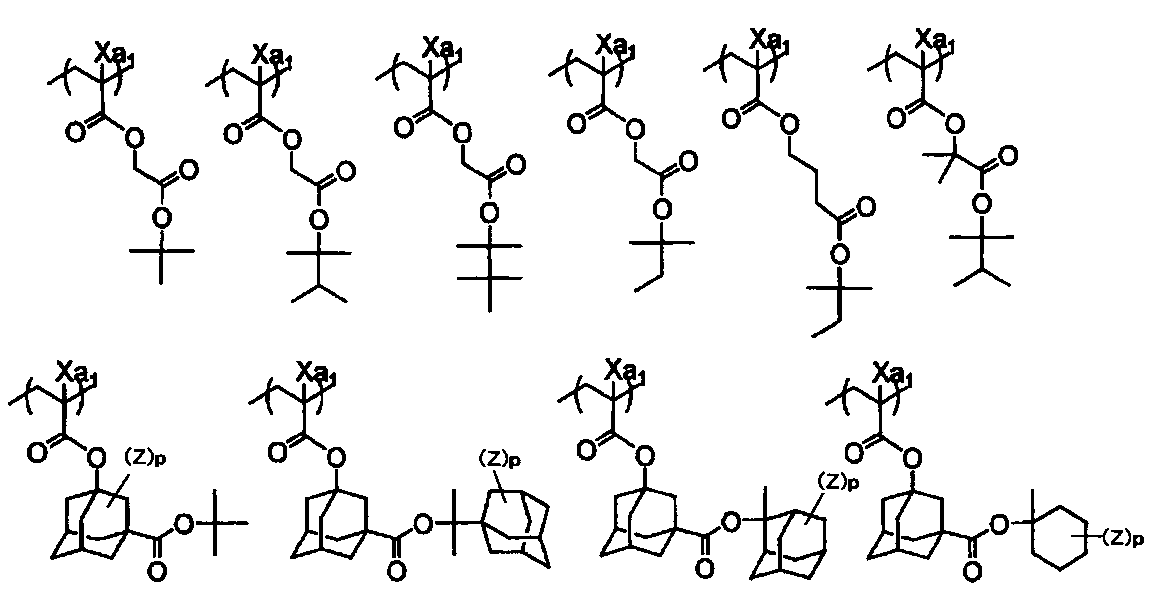
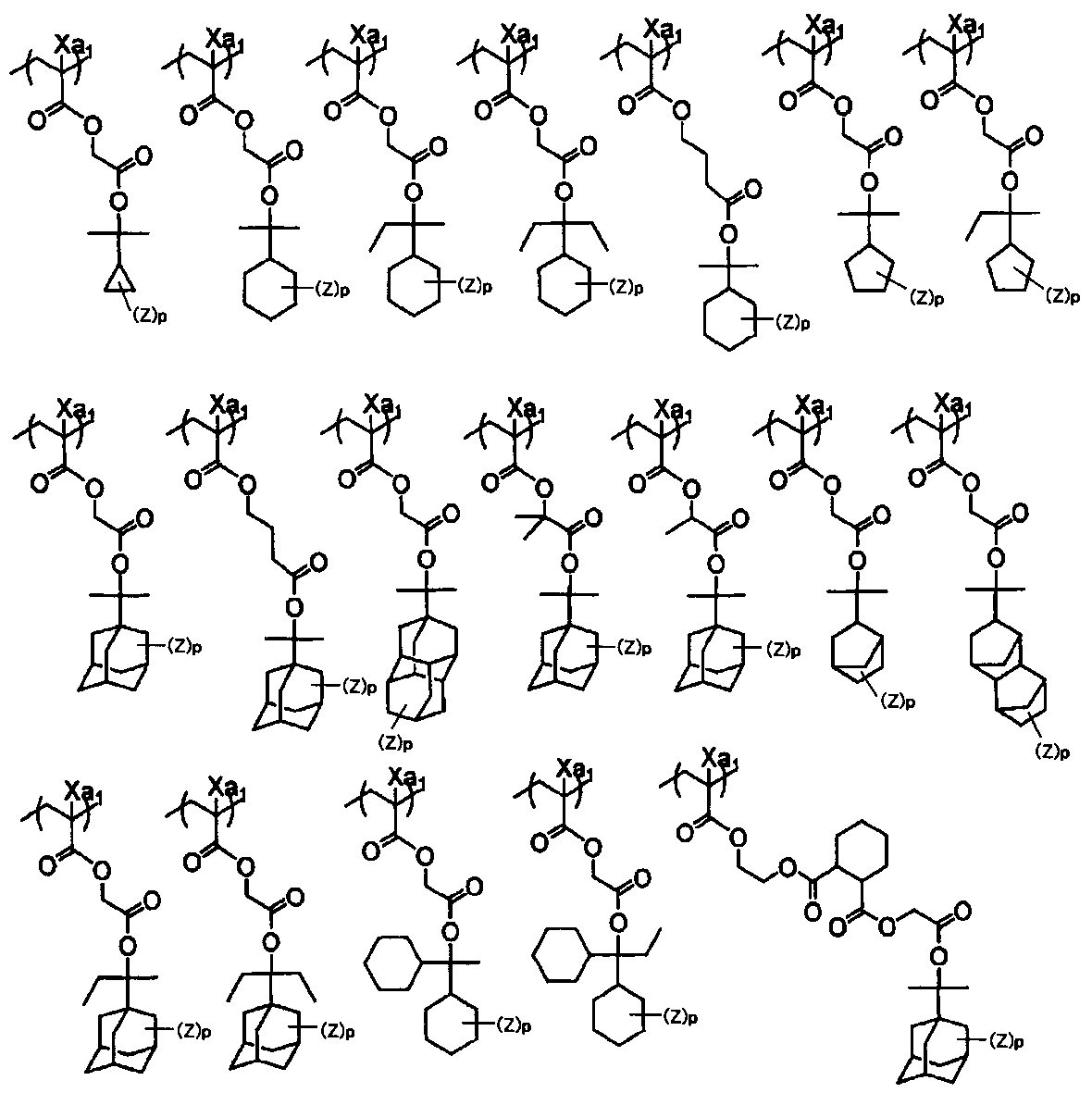
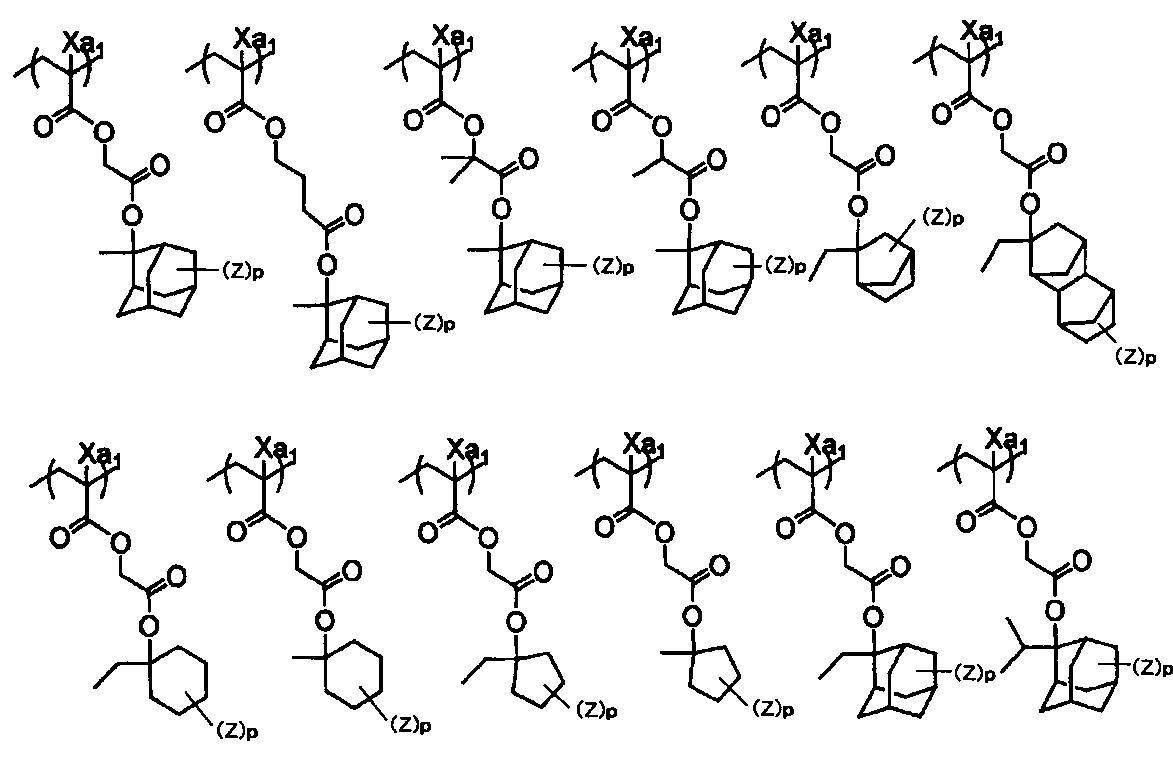
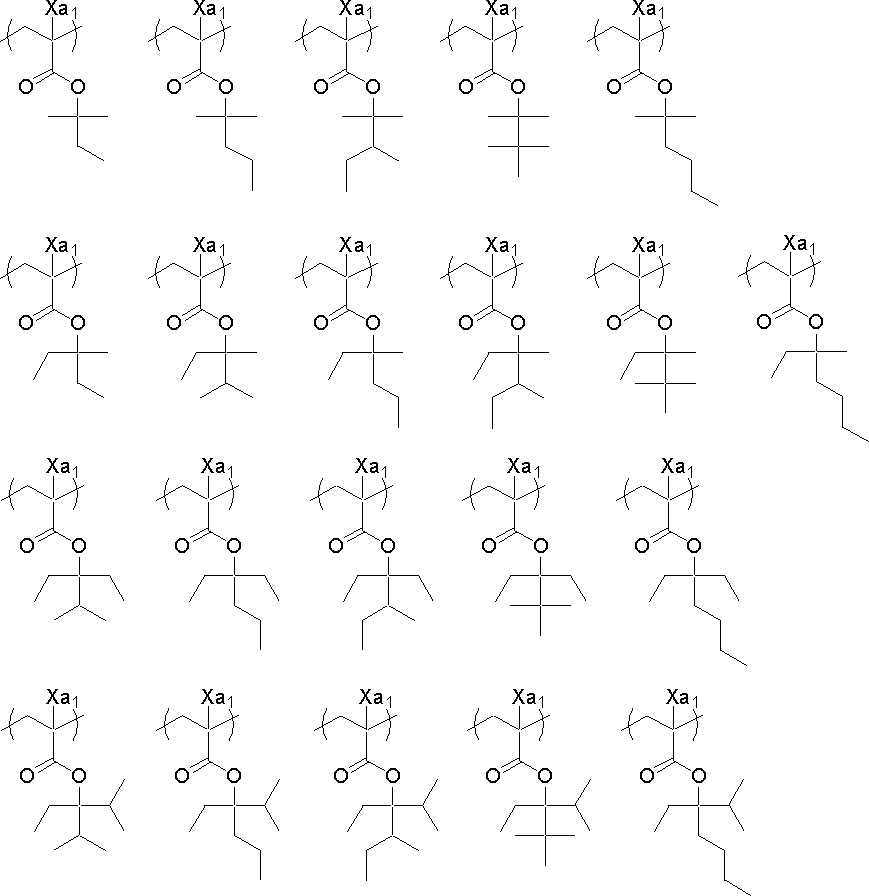
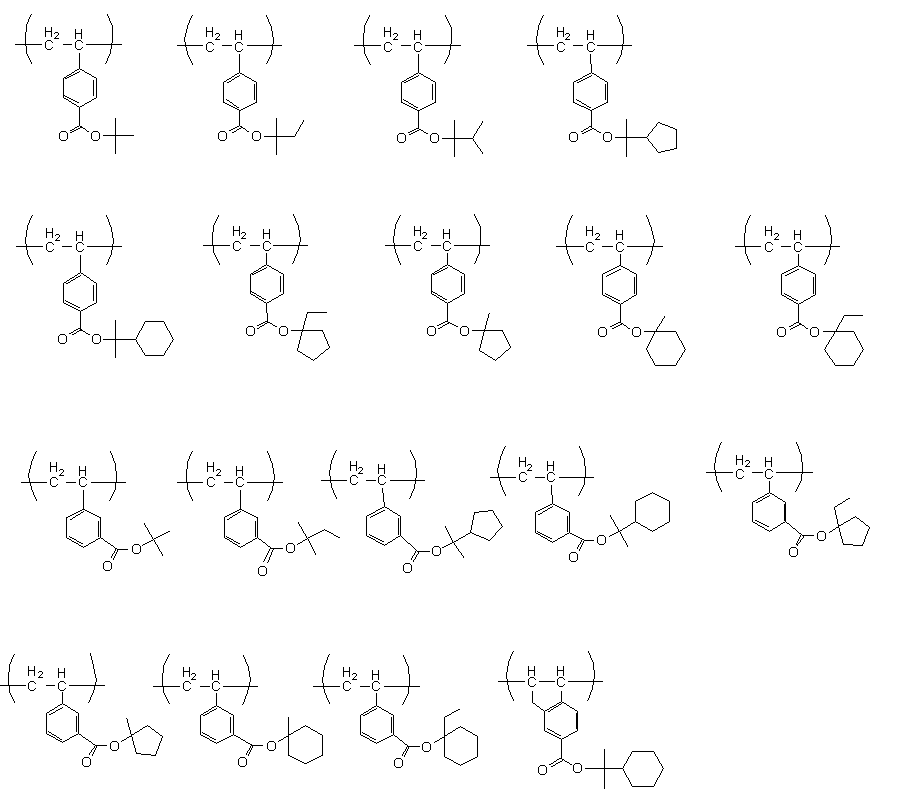

また、樹脂(A)は、繰り返し単位(a)として、下記一般式(VI)で表される繰り返し単位を含んでいてもよい。

一般式(VI)中、
R61、R62及びR63は、各々独立に、水素原子、アルキル基、シクロアルキル基、ハロゲン原子、シアノ基、又はアルコキシカルボニル基を表す。但し、R62はAr6と結合して環を形成していてもよく、その場合のR62は単結合又はアルキレン基を表す。
X6は、単結合、-COO-、又は-CONR64-を表す。R64は、水素原子又はアルキル基を表す。
L6は、単結合又はアルキレン基を表す。
Ar6は、(n+1)価の芳香環基を表し、R62と結合して環を形成する場合には(n+2)価の芳香環基を表す。
Y2は、n≧2の場合には各々独立に、水素原子又は酸の作用により脱離する基を表す。但し、Y2の少なくとも1つは、酸の作用により脱離する基を表す。
nは、1~4の整数を表す。
R61、R62及びR63は、各々独立に、水素原子、アルキル基、シクロアルキル基、ハロゲン原子、シアノ基、又はアルコキシカルボニル基を表す。但し、R62はAr6と結合して環を形成していてもよく、その場合のR62は単結合又はアルキレン基を表す。
X6は、単結合、-COO-、又は-CONR64-を表す。R64は、水素原子又はアルキル基を表す。
L6は、単結合又はアルキレン基を表す。
Ar6は、(n+1)価の芳香環基を表し、R62と結合して環を形成する場合には(n+2)価の芳香環基を表す。
Y2は、n≧2の場合には各々独立に、水素原子又は酸の作用により脱離する基を表す。但し、Y2の少なくとも1つは、酸の作用により脱離する基を表す。
nは、1~4の整数を表す。
一般式(VI)について更に詳細に説明する。
一般式(VI)におけるR61~R63のアルキル基としては、好ましくは置換基を有していてもよいメチル基、エチル基、プロピル基、イソプロピル基、n-ブチル基、sec-ブチル基、ヘキシル基、2-エチルヘキシル基、オクチル基、ドデシル基など炭素数20以下のアルキル基が挙げられ、より好ましくは炭素数8以下のアルキル基が挙げられる。
アルコキシカルボニル基に含まれるアルキル基としては、上記R61~R63におけるアルキル基と同様のものが好ましい。
シクロアルキル基としては、単環型でも多環型でもよく、好ましくは置換基を有していても良いシクロプロピル基、シクロペンチル基、シクロヘキシル基のような炭素数3~8個の単環型のシクロアルキル基が挙げられる。
ハロゲン原子としては、フッ素原子、塩素原子、臭素原子及びヨウ素原子が挙げられ、フッ素原子がより好ましい。
一般式(VI)におけるR61~R63のアルキル基としては、好ましくは置換基を有していてもよいメチル基、エチル基、プロピル基、イソプロピル基、n-ブチル基、sec-ブチル基、ヘキシル基、2-エチルヘキシル基、オクチル基、ドデシル基など炭素数20以下のアルキル基が挙げられ、より好ましくは炭素数8以下のアルキル基が挙げられる。
アルコキシカルボニル基に含まれるアルキル基としては、上記R61~R63におけるアルキル基と同様のものが好ましい。
シクロアルキル基としては、単環型でも多環型でもよく、好ましくは置換基を有していても良いシクロプロピル基、シクロペンチル基、シクロヘキシル基のような炭素数3~8個の単環型のシクロアルキル基が挙げられる。
ハロゲン原子としては、フッ素原子、塩素原子、臭素原子及びヨウ素原子が挙げられ、フッ素原子がより好ましい。
R62がアルキレン基を表す場合、アルキレン基としては、好ましくは置換基を有していてもよいメチレン基、エチレン基、プロピレン基、ブチレン基、ヘキシレン基、オクチレン基等の炭素数1~8個のものが挙げられる。
X6により表わされる-CONR64-(R64は、水素原子、アルキル基を表す)におけるR64のアルキル基としては、R61~R63のアルキル基と同様のものが挙げられる。
X6としては、単結合、-COO-、-CONH-が好ましく、単結合、-COO-がより好ましい。
L6におけるアルキレン基としては、好ましくは置換基を有していてもよいメチレン基、エチレン基、プロピレン基、ブチレン基、ヘキシレン基、オクチレン基等の炭素数1~8個のものが挙げられる。R62とL6とが結合して形成する環は、5又は6員環であることが特に好ましい。
Ar6は、(n+1)価の芳香環基を表す。nが1である場合における2価の芳香環基は、置換基を有していても良く、例えば、フェニレン基、トリレン基、ナフチレン基などの炭素数6~18のアリーレン基、あるいは、例えば、チオフェン、フラン、ピロール、ベンゾチオフェン、ベンゾフラン、ベンゾピロール、トリアジン、イミダゾール、ベンゾイミダゾール、トリアゾール、チアジアゾール、チアゾール等のヘテロ環を含む2価の芳香環基を好ましい例として挙げることができる。
X6により表わされる-CONR64-(R64は、水素原子、アルキル基を表す)におけるR64のアルキル基としては、R61~R63のアルキル基と同様のものが挙げられる。
X6としては、単結合、-COO-、-CONH-が好ましく、単結合、-COO-がより好ましい。
L6におけるアルキレン基としては、好ましくは置換基を有していてもよいメチレン基、エチレン基、プロピレン基、ブチレン基、ヘキシレン基、オクチレン基等の炭素数1~8個のものが挙げられる。R62とL6とが結合して形成する環は、5又は6員環であることが特に好ましい。
Ar6は、(n+1)価の芳香環基を表す。nが1である場合における2価の芳香環基は、置換基を有していても良く、例えば、フェニレン基、トリレン基、ナフチレン基などの炭素数6~18のアリーレン基、あるいは、例えば、チオフェン、フラン、ピロール、ベンゾチオフェン、ベンゾフラン、ベンゾピロール、トリアジン、イミダゾール、ベンゾイミダゾール、トリアゾール、チアジアゾール、チアゾール等のヘテロ環を含む2価の芳香環基を好ましい例として挙げることができる。
nが2以上の整数である場合における(n+1)価の芳香環基の具体例としては、2価の芳香環基の上記した具体例から、(n-1)個の任意の水素原子を除してなる基を好適に挙げることができる。
(n+1)価の芳香環基は、更に置換基を有していても良い。
(n+1)価の芳香環基は、更に置換基を有していても良い。
上述したアルキル基、シクロアルキル基、アルコキシカルボニル基、アルキレン基及び(n+1)価の芳香環基が有し得る置換基としては、上述した一般式(V)におけるR51~R53により表わされる各基が有し得る置換基と同様の具体例が挙げられる。
nは1又は2であることが好ましく、1であることがより好ましい。
n個のY2は、各々独立に、水素原子又は酸の作用により脱離する基を表す。但し、n個中の少なくとも1つは、酸の作用により脱離する基を表す。
酸の作用により脱離する基Y2としては、例えば、-C(R36)(R37)(R38)、-C(=O)-O-C(R36)(R37)(R38)、-C(R01)(R02)(OR39)、-C(R01)(R02)-C(=O)-O-C(R36)(R37)(R38)、-CH(R36)(Ar)等を挙げることができる。
式中、R36~R39は、各々独立に、アルキル基、シクロアルキル基、1価の芳香環基、アルキレン基と1価の芳香環基を組み合わせた基又はアルケニル基を表す。R36とR37とは、互いに結合して環を形成してもよい。
R01及びR02は、各々独立に、水素原子、アルキル基、シクロアルキル基、1価の芳香環基、アルキレン基と1価の芳香環基とを組み合わせた基、又はアルケニル基を表す。
nは1又は2であることが好ましく、1であることがより好ましい。
n個のY2は、各々独立に、水素原子又は酸の作用により脱離する基を表す。但し、n個中の少なくとも1つは、酸の作用により脱離する基を表す。
酸の作用により脱離する基Y2としては、例えば、-C(R36)(R37)(R38)、-C(=O)-O-C(R36)(R37)(R38)、-C(R01)(R02)(OR39)、-C(R01)(R02)-C(=O)-O-C(R36)(R37)(R38)、-CH(R36)(Ar)等を挙げることができる。
式中、R36~R39は、各々独立に、アルキル基、シクロアルキル基、1価の芳香環基、アルキレン基と1価の芳香環基を組み合わせた基又はアルケニル基を表す。R36とR37とは、互いに結合して環を形成してもよい。
R01及びR02は、各々独立に、水素原子、アルキル基、シクロアルキル基、1価の芳香環基、アルキレン基と1価の芳香環基とを組み合わせた基、又はアルケニル基を表す。
Arは、1価の芳香環基を表す。
R36~R39、R01及びR02のアルキル基は、炭素数1~8のアルキル基が好ましく、例えば、メチル基、エチル基、プロピル基、n-ブチル基、sec-ブチル基、へキシル基、オクチル基等を挙げることができる。
R36~R39、R01及びR02のシクロアルキル基は、単環型でも、多環型でもよい。単環型としては、炭素数3~8のシクロアルキル基が好ましく、例えば、シクロプロピル基、シクロブチル基、シクロペンチル基、シクロへキシル基、シクロオクチル基等を挙げることができる。多環型としては、炭素数6~20のシクロアルキル基が好ましく、例えば、アダマンチル基、ノルボルニル基、イソボロニル基、カンファニル基、ジシクロペンチル基、α-ピネル基、トリシクロデカニル基、テトラシクロドデシル基、アンドロスタニル基等を挙げることができる。なお、シクロアルキル基中の炭素原子の一部が酸素原子等のヘテロ原子によって置換されていてもよい。
R36~R39、R01及びR02のアルキル基は、炭素数1~8のアルキル基が好ましく、例えば、メチル基、エチル基、プロピル基、n-ブチル基、sec-ブチル基、へキシル基、オクチル基等を挙げることができる。
R36~R39、R01及びR02のシクロアルキル基は、単環型でも、多環型でもよい。単環型としては、炭素数3~8のシクロアルキル基が好ましく、例えば、シクロプロピル基、シクロブチル基、シクロペンチル基、シクロへキシル基、シクロオクチル基等を挙げることができる。多環型としては、炭素数6~20のシクロアルキル基が好ましく、例えば、アダマンチル基、ノルボルニル基、イソボロニル基、カンファニル基、ジシクロペンチル基、α-ピネル基、トリシクロデカニル基、テトラシクロドデシル基、アンドロスタニル基等を挙げることができる。なお、シクロアルキル基中の炭素原子の一部が酸素原子等のヘテロ原子によって置換されていてもよい。
R36~R39、R01、R02及びArの1価の芳香環基は、炭素数6~10の1価の芳香環基が好ましく、例えば、フェニル基、ナフチル基、アントリル基等のアリール基、チオフェン、フラン、ピロール、ベンゾチオフェン、ベンゾフラン、ベンゾピロール、トリアジン、イミダゾール、ベンゾイミダゾール、トリアゾール、チアジアゾール、チアゾール等のヘテロ環を含む2価の芳香環基を挙げることができる。
R36~R39、R01及びR02のアルキレン基と1価の芳香環基とを組み合わせた基としては、炭素数7~12のアラルキル基が好ましく、例えば、ベンジル基、フェネチル基、ナフチルメチル基等を挙げることができる。
R36~R39、R01及びR02のアルケニル基は、炭素数2~8のアルケニル基が好ましく、例えば、ビニル基、アリル基、ブテニル基、シクロへキセニル基等を挙げることができる。
R36~R39、R01及びR02のアルキレン基と1価の芳香環基とを組み合わせた基としては、炭素数7~12のアラルキル基が好ましく、例えば、ベンジル基、フェネチル基、ナフチルメチル基等を挙げることができる。
R36~R39、R01及びR02のアルケニル基は、炭素数2~8のアルケニル基が好ましく、例えば、ビニル基、アリル基、ブテニル基、シクロへキセニル基等を挙げることができる。
R36とR37とが、互いに結合して形成する環は、単環型でも、多環型でもよい。単環型としては、炭素数3~8のシクロアルキル構造が好ましく、例えば、シクロプロパン構造、シクロブタン構造、シクロペンタン構造、シクロへキサン構造、シクロヘプタン構造、シクロオクタン構造等を挙げることができる。多環型としては、炭素数6~20のシクロアルキル構造が好ましく、例えば、アダマンタン構造、ノルボルナン構造、ジシクロペンタン構造、トリシクロデカン構造、テトラシクロドデカン構造等を挙げることができる。なお、シクロアルキル構造中の炭素原子の一部が酸素原子等のヘテロ原子によって置換されていてもよい。
R36~R39、R01、R02、及びArとしての上記各基は、置換基を有していてもよく、置換基としては、例えば、アルキル基、シクロアルキル基、アリール基、アミノ基、アミド基、ウレイド基、ウレタン基、ヒドロキシル基、カルボキシル基、ハロゲン原子、アルコキシ基、チオエーテル基、アシル基、アシルオキシ基、アルコキシカルボニル基、シアノ基、ニトロ基等を挙げることができ、置換基の炭素数は8以下が好ましい。
酸の作用により脱離する基Y2としては、下記一般式(VI-A)で表される構造がより好ましい。
R36~R39、R01、R02、及びArとしての上記各基は、置換基を有していてもよく、置換基としては、例えば、アルキル基、シクロアルキル基、アリール基、アミノ基、アミド基、ウレイド基、ウレタン基、ヒドロキシル基、カルボキシル基、ハロゲン原子、アルコキシ基、チオエーテル基、アシル基、アシルオキシ基、アルコキシカルボニル基、シアノ基、ニトロ基等を挙げることができ、置換基の炭素数は8以下が好ましい。
酸の作用により脱離する基Y2としては、下記一般式(VI-A)で表される構造がより好ましい。

ここで、L1及びL2は、各々独立に、水素原子、アルキル基、シクロアルキル基、1価の芳香環基、又はアルキレン基と1価の芳香環基とを組み合わせた基を表す。
Mは、単結合又は2価の連結基を表す。
Qは、アルキル基、ヘテロ原子を含んでいてもよいシクロアルキル基、ヘテロ原子を含んでいてもよい1価の芳香環基、アミノ基、アンモニウム基、メルカプト基、シアノ基又はアルデヒド基を表す。
Q、M、L1の少なくとも2つが結合して環(好ましくは、5員若しくは6員環)を形成してもよい。
L1及びL2としてのアルキル基は、例えば炭素数1~8個のアルキル基であって、具体的には、メチル基、エチル基、プロピル基、n-ブチル基、sec-ブチル基、ヘキシル基、オクチル基を好ましく挙げることができる。
L1及びL2としてのシクロアルキル基は、例えば炭素数3~15個のシクロアルキル基であって、具体的には、シクロペンチル基、シクロヘキシル基、ノルボルニル基、アダマンチル基等を好ましい例として挙げることができる。
Mは、単結合又は2価の連結基を表す。
Qは、アルキル基、ヘテロ原子を含んでいてもよいシクロアルキル基、ヘテロ原子を含んでいてもよい1価の芳香環基、アミノ基、アンモニウム基、メルカプト基、シアノ基又はアルデヒド基を表す。
Q、M、L1の少なくとも2つが結合して環(好ましくは、5員若しくは6員環)を形成してもよい。
L1及びL2としてのアルキル基は、例えば炭素数1~8個のアルキル基であって、具体的には、メチル基、エチル基、プロピル基、n-ブチル基、sec-ブチル基、ヘキシル基、オクチル基を好ましく挙げることができる。
L1及びL2としてのシクロアルキル基は、例えば炭素数3~15個のシクロアルキル基であって、具体的には、シクロペンチル基、シクロヘキシル基、ノルボルニル基、アダマンチル基等を好ましい例として挙げることができる。
L1及びL2としての1価の芳香環基は、例えば炭素数6~15個のアリール基であって、具体的には、フェニル基、トリル基、ナフチル基、アントリル基等を好ましい例として挙げることができる。
L1及びL2としてのアルキレン基と1価の芳香環基を組み合わせた基は、例えば、炭素数6~20であって、ベンジル基、フェネチル基などのアラルキル基が挙げられる。
Mとしての2価の連結基は、例えば、アルキレン基(例えば、メチレン基、エチレン基、プロピレン基、ブチレン基、ヘキシレン基、オクチレン基など)、シクロアルキレン基(例えば、シクロペンチレン基、シクロヘキシレン基、アダマンチレン基など)、アルケニレン基(例えば、エテニレン基、プロペニレン基、ブテニレン基など)、2価の芳香環基(例えば、フェニレン基、トリレン基、ナフチレン基など)、-S-、-O-、-CO-、-SO2-、-N(R0)-、及びこれらの複数を組み合わせた2価の連結基である。R0は、水素原子又はアルキル基(例えば炭素数1~8個のアルキル基であって、具体的には、メチル基、エチル基、プロピル基、n-ブチル基、sec-ブチル基、ヘキシル基、オクチル基など)である。
L1及びL2としてのアルキレン基と1価の芳香環基を組み合わせた基は、例えば、炭素数6~20であって、ベンジル基、フェネチル基などのアラルキル基が挙げられる。
Mとしての2価の連結基は、例えば、アルキレン基(例えば、メチレン基、エチレン基、プロピレン基、ブチレン基、ヘキシレン基、オクチレン基など)、シクロアルキレン基(例えば、シクロペンチレン基、シクロヘキシレン基、アダマンチレン基など)、アルケニレン基(例えば、エテニレン基、プロペニレン基、ブテニレン基など)、2価の芳香環基(例えば、フェニレン基、トリレン基、ナフチレン基など)、-S-、-O-、-CO-、-SO2-、-N(R0)-、及びこれらの複数を組み合わせた2価の連結基である。R0は、水素原子又はアルキル基(例えば炭素数1~8個のアルキル基であって、具体的には、メチル基、エチル基、プロピル基、n-ブチル基、sec-ブチル基、ヘキシル基、オクチル基など)である。
Qとしてのアルキル基は、上述のL1及びL2としての各基と同様である。
Qとしてのヘテロ原子を含んでいてもよいシクロアルキル基及びヘテロ原子を含んでいてもよい1価の芳香環基に於ける、ヘテロ原子を含まない肪族炭化水素環基及びへテロ原子を含まない1価の芳香環基としては、上述のL1及びL2としてのシクロアルキル基、及び1価の芳香環基などが挙げられ、好ましくは、炭素数3~15である。
ヘテロ原子を含むシクロアルキル基及びヘテロ原子を含む1価の芳香環基としては、例えば、チイラン、シクロチオラン、チオフェン、フラン、ピロール、ベンゾチオフェン、ベンゾフラン、ベンゾピロール、トリアジン、イミダゾール、ベンゾイミダゾール、トリアゾール、チアジアゾール、チアゾール、ピロリドン等のヘテロ環構造を有する基が挙げられるが、一般にヘテロ環と呼ばれる構造(炭素とヘテロ原子で形成される環、あるいはヘテロ原子にて形成される環)であれば、これらに限定されない。
Qとしてのヘテロ原子を含んでいてもよいシクロアルキル基及びヘテロ原子を含んでいてもよい1価の芳香環基に於ける、ヘテロ原子を含まない肪族炭化水素環基及びへテロ原子を含まない1価の芳香環基としては、上述のL1及びL2としてのシクロアルキル基、及び1価の芳香環基などが挙げられ、好ましくは、炭素数3~15である。
ヘテロ原子を含むシクロアルキル基及びヘテロ原子を含む1価の芳香環基としては、例えば、チイラン、シクロチオラン、チオフェン、フラン、ピロール、ベンゾチオフェン、ベンゾフラン、ベンゾピロール、トリアジン、イミダゾール、ベンゾイミダゾール、トリアゾール、チアジアゾール、チアゾール、ピロリドン等のヘテロ環構造を有する基が挙げられるが、一般にヘテロ環と呼ばれる構造(炭素とヘテロ原子で形成される環、あるいはヘテロ原子にて形成される環)であれば、これらに限定されない。
Q、M、L1の少なくとも2つが結合して形成してもよい環としては、Q、M、L1の少なくとも2つが結合して、例えば、プロピレン基、ブチレン基を形成して、酸素原子を含有する5員又は6員環を形成する場合が挙げられる。
一般式(VI-A)におけるL1、L2、M、Qで表される各基は、置換基を有していてもよく、例えば、前述のR36~R39、R01、R02、及びArが有してもよい置換基として説明したものが挙げられ、置換基の炭素数は8以下が好ましい。
-M-Qで表される基として、炭素数1~30個で構成される基が好ましく、炭素数5~20個で構成される基がより好ましい。
一般式(VI-A)におけるL1、L2、M、Qで表される各基は、置換基を有していてもよく、例えば、前述のR36~R39、R01、R02、及びArが有してもよい置換基として説明したものが挙げられ、置換基の炭素数は8以下が好ましい。
-M-Qで表される基として、炭素数1~30個で構成される基が好ましく、炭素数5~20個で構成される基がより好ましい。
以下に繰り返し単位(a)の好ましい具体例として、一般式(VI)で表される繰り返し単位の具体例を示すが、本発明はこれに限定されるものではない。
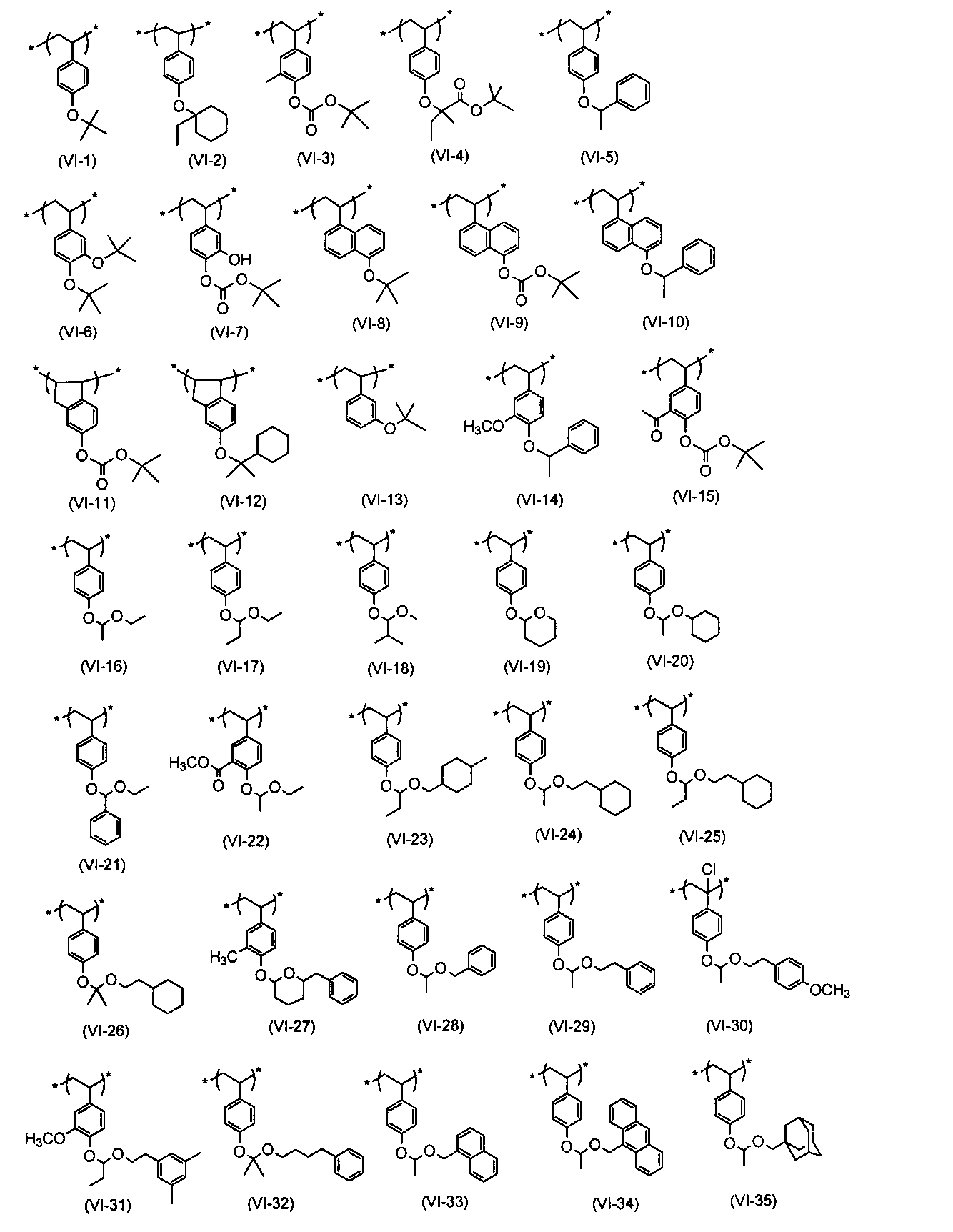


上記酸分解性基を有する繰り返し単位は、1種類であってもよいし、2種以上を併用してもよい。
樹脂(A)における酸分解性基を有する繰り返し単位の含有量(複数種類含有する場合はその合計)は、前記樹脂(A)中の全繰り返し単位に対して5モル%以上80モル%以下であることが好ましく、5モル%以上75モル%以下であることがより好ましく、10モル%以上65モル%以下であることが更に好ましい。
(b)極性基を有する繰り返し単位
樹脂(A)は極性基を有する繰り返し単位(b)を含むことが好ましい。繰り返し単位(b)を含むことにより、例えば、樹脂を含んだ組成物の感度を向上させることができる。繰り返し単位(b)は、非酸分解性の繰り返し単位であること(すなわち、酸分解性基を有さないこと)が好ましい。
繰り返し単位(b)が含み得る「極性基」としては、例えば、以下の(1)~(4)が挙げられる。なお、以下において、「電気陰性度」とは、Paulingによる値を意味している。
樹脂(A)は極性基を有する繰り返し単位(b)を含むことが好ましい。繰り返し単位(b)を含むことにより、例えば、樹脂を含んだ組成物の感度を向上させることができる。繰り返し単位(b)は、非酸分解性の繰り返し単位であること(すなわち、酸分解性基を有さないこと)が好ましい。
繰り返し単位(b)が含み得る「極性基」としては、例えば、以下の(1)~(4)が挙げられる。なお、以下において、「電気陰性度」とは、Paulingによる値を意味している。
(1)酸素原子と、酸素原子との電気陰性度の差が1.1以上である原子とが、単結合により結合した構造を含む官能基
このような極性基としては、例えば、ヒドロキシ基などのO-Hにより表される構造を含んだ基が挙げられる。
(2)窒素原子と、窒素原子との電気陰性度の差が0.6以上である原子とが、単結合により結合した構造を含む官能基
このような極性基としては、例えば、アミノ基などのN-Hにより表される構造を含んだ基が挙げられる。
(3)電気陰性度が0.5以上異なる2つの原子が二重結合又は三重結合により結合した構造を含む官能基
このような極性基としては、例えば、C≡N、C=O、N=O、S=O又はC=Nにより表される構造を含んだ基が挙げられる。
(4)イオン性部位を有する官能基
このような極性基としては、例えば、N+又はS+により表される部位を有する基が挙げられる。
以下に、「極性基」が含み得る部分構造の具体例を挙げる。以下の具体例において、X-は対アニオンを表す。
このような極性基としては、例えば、ヒドロキシ基などのO-Hにより表される構造を含んだ基が挙げられる。
(2)窒素原子と、窒素原子との電気陰性度の差が0.6以上である原子とが、単結合により結合した構造を含む官能基
このような極性基としては、例えば、アミノ基などのN-Hにより表される構造を含んだ基が挙げられる。
(3)電気陰性度が0.5以上異なる2つの原子が二重結合又は三重結合により結合した構造を含む官能基
このような極性基としては、例えば、C≡N、C=O、N=O、S=O又はC=Nにより表される構造を含んだ基が挙げられる。
(4)イオン性部位を有する官能基
このような極性基としては、例えば、N+又はS+により表される部位を有する基が挙げられる。
以下に、「極性基」が含み得る部分構造の具体例を挙げる。以下の具体例において、X-は対アニオンを表す。

繰り返し単位(b)が含み得る「極性基」は、例えば、(I)ヒドロキシ基、(II)シアノ基、(III)ラクトン基、(IV)カルボン酸基又はスルホン酸基、(V)アミド基、スルホンアミド基又はこれらの誘導体に対応した基、(VI)アンモニウム基又はスルホニウム基、及び、これらの2以上を組み合わせてなる基からなる群より選択される少なくとも1つであることが好ましい。
この極性基は、ヒドロキシル基、シアノ基、ラクトン基、カルボン酸基、スルホン酸基、アミド基、スルホンアミド基、アンモニウム基、スルホニウム基及びこれらの2つ以上を組み合わせてなる基より選択されることが好ましく、アルコール性ヒドロキシ基、シアノ基、ラクトン基、又は、シアノラクトン構造を含んだ基であることが特に好ましい。
樹脂にアルコール性ヒドロキシ基を備えた繰り返し単位を更に含有させると、樹脂を含んだ組成物の露光ラチチュード(EL)を更に向上させることができる。
樹脂にシアノ基を備えた繰り返し単位を更に含有させると、樹脂を含んだ組成物の感度を更に向上させることができる。
樹脂にラクトン基を備えた繰り返し単位を更に含有させると、有機溶剤を含んだ現像液に対する溶解コントラストを更に向上させることができる。また、こうすると、樹脂を含んだ組成物の塗布性、及び基板との密着性を更に向上させることも可能となる。
樹脂にシアノ基を有するラクトン構造を含んだ基を備えた繰り返し単位を更に含有させると、有機溶剤を含んだ現像液に対する溶解コントラストを更に向上させることができる。また、こうすると、樹脂を含んだ組成物の感度、塗布性、及び基板との密着性を更に向上させることも可能となる。加えて、こうすると、シアノ基及びラクトン基のそれぞれに起因した機能を単一の繰り返し単位に担わせることが可能となり、樹脂の設計の自由度を更に増大させることも可能となる。
樹脂にアルコール性ヒドロキシ基を備えた繰り返し単位を更に含有させると、樹脂を含んだ組成物の露光ラチチュード(EL)を更に向上させることができる。
樹脂にシアノ基を備えた繰り返し単位を更に含有させると、樹脂を含んだ組成物の感度を更に向上させることができる。
樹脂にラクトン基を備えた繰り返し単位を更に含有させると、有機溶剤を含んだ現像液に対する溶解コントラストを更に向上させることができる。また、こうすると、樹脂を含んだ組成物の塗布性、及び基板との密着性を更に向上させることも可能となる。
樹脂にシアノ基を有するラクトン構造を含んだ基を備えた繰り返し単位を更に含有させると、有機溶剤を含んだ現像液に対する溶解コントラストを更に向上させることができる。また、こうすると、樹脂を含んだ組成物の感度、塗布性、及び基板との密着性を更に向上させることも可能となる。加えて、こうすると、シアノ基及びラクトン基のそれぞれに起因した機能を単一の繰り返し単位に担わせることが可能となり、樹脂の設計の自由度を更に増大させることも可能となる。
繰り返し単位(b)が有する極性基がアルコール性ヒドロキシ基である場合、下記一般式(I-1H)~(I-10H)のいずれかにより表されることが好ましい。特には、下記一般式(I-1H)~(I-3H)のいずれかにより表されることがより好ましく、下記一般式(I-1H)により表されることが更に好ましい。
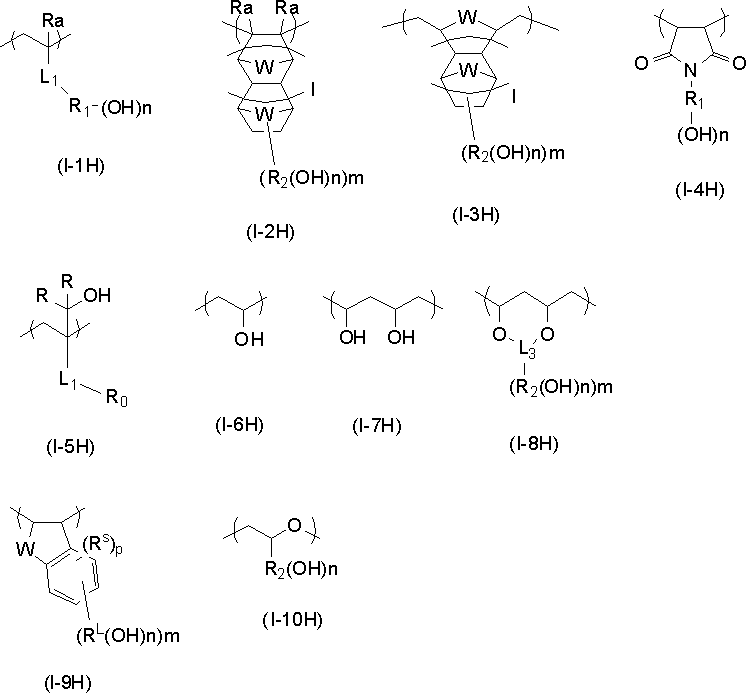
式中、
Raは、各々独立に、水素原子、アルキル基又は-CH2-O-Ra2により表される基を表す。ここで、Ra2は、水素原子、アルキル基又はアシル基を表す。
R1は、(n+1)価の有機基を表す。
R2は、m≧2の場合は各々独立に、単結合又は(n+1)価の有機基を表す。
Wは、メチレン基、酸素原子又は硫黄原子を表す。
n及びmは、1以上の整数を表す。なお、一般式(I-2)、(I-3)又は(I-8)においてR2が単結合を表す場合、nは1である。
lは、0以上の整数を表す。
L1は、-COO-、-OCO-、-CONH-、-O-、-Ar-、-SO3-又は-SO2NH-により表される連結基を表す。ここで、Arは、2価の芳香環基を表す。
Rは、各々独立に、水素原子又はアルキル基を表す。
R0は、水素原子又は有機基を表す。
L3は、(m+2)価の連結基を表す。
RLは、m≧2の場合は各々独立に、(n+1)価の連結基を表す。
RSは、p≧2の場合は各々独立に、置換基を表す。p≧2の場合、複数のRSは、互いに結合して環を形成していてもよい。
pは、0~3の整数を表す。
Raは、各々独立に、水素原子、アルキル基又は-CH2-O-Ra2により表される基を表す。ここで、Ra2は、水素原子、アルキル基又はアシル基を表す。
R1は、(n+1)価の有機基を表す。
R2は、m≧2の場合は各々独立に、単結合又は(n+1)価の有機基を表す。
Wは、メチレン基、酸素原子又は硫黄原子を表す。
n及びmは、1以上の整数を表す。なお、一般式(I-2)、(I-3)又は(I-8)においてR2が単結合を表す場合、nは1である。
lは、0以上の整数を表す。
L1は、-COO-、-OCO-、-CONH-、-O-、-Ar-、-SO3-又は-SO2NH-により表される連結基を表す。ここで、Arは、2価の芳香環基を表す。
Rは、各々独立に、水素原子又はアルキル基を表す。
R0は、水素原子又は有機基を表す。
L3は、(m+2)価の連結基を表す。
RLは、m≧2の場合は各々独立に、(n+1)価の連結基を表す。
RSは、p≧2の場合は各々独立に、置換基を表す。p≧2の場合、複数のRSは、互いに結合して環を形成していてもよい。
pは、0~3の整数を表す。
Raは、水素原子、アルキル基又は-CH2-O-Ra2により表される基を表す。Raは、水素原子又は炭素数が1~10のアルキル基であることが好ましく、水素原子又はメチル基であることがより好ましい。
Wは、メチレン基、酸素原子又は硫黄原子を表す。Wは、メチレン基又は酸素原子であることが好ましい。
R1は、(n+1)価の有機基を表す。R1は、好ましくは、非芳香族性の炭化水素基である。この場合、R1は、鎖状炭化水素基であってもよく、脂環状炭化水素基であってもよい。R1は、より好ましくは、脂環状炭化水素基である。
R2は、単結合又は(n+1)価の有機基を表す。R2は、好ましくは、単結合又は非芳香族性の炭化水素基である。この場合、R2は、鎖状炭化水素基であってもよく、脂環状炭化水素基であってもよい。
R1及び/又はR2が鎖状炭化水素基である場合、この鎖状炭化水素基は、直鎖状であってもよく、分岐鎖状であってもよい。また、この鎖状炭化水素基の炭素数は、1~8であることが好ましい。例えば、R1及び/又はR2がアルキレン基である場合、R1及び/又はR2は、メチレン基、エチレン基、n-プロピレン基、イソプロピレン基、n-ブチレン基、イソブチレン基又はsec-ブチレン基であることが好ましい。
R1及び/又はR2が脂環状炭化水素基である場合、この脂環状炭化水素基は、単環式であってもよく、多環式であってもよい。この脂環状炭化水素基は、例えば、モノシクロ、ビシクロ、トリシクロ又はテトラシクロ構造を備えている。この脂環状炭化水素基の炭素数は、通常は5以上であり、6~30であることが好ましく、7~25であることがより好ましい。
Wは、メチレン基、酸素原子又は硫黄原子を表す。Wは、メチレン基又は酸素原子であることが好ましい。
R1は、(n+1)価の有機基を表す。R1は、好ましくは、非芳香族性の炭化水素基である。この場合、R1は、鎖状炭化水素基であってもよく、脂環状炭化水素基であってもよい。R1は、より好ましくは、脂環状炭化水素基である。
R2は、単結合又は(n+1)価の有機基を表す。R2は、好ましくは、単結合又は非芳香族性の炭化水素基である。この場合、R2は、鎖状炭化水素基であってもよく、脂環状炭化水素基であってもよい。
R1及び/又はR2が鎖状炭化水素基である場合、この鎖状炭化水素基は、直鎖状であってもよく、分岐鎖状であってもよい。また、この鎖状炭化水素基の炭素数は、1~8であることが好ましい。例えば、R1及び/又はR2がアルキレン基である場合、R1及び/又はR2は、メチレン基、エチレン基、n-プロピレン基、イソプロピレン基、n-ブチレン基、イソブチレン基又はsec-ブチレン基であることが好ましい。
R1及び/又はR2が脂環状炭化水素基である場合、この脂環状炭化水素基は、単環式であってもよく、多環式であってもよい。この脂環状炭化水素基は、例えば、モノシクロ、ビシクロ、トリシクロ又はテトラシクロ構造を備えている。この脂環状炭化水素基の炭素数は、通常は5以上であり、6~30であることが好ましく、7~25であることがより好ましい。
この脂環状炭化水素基としては、例えば、以下に列挙する部分構造を備えたものが挙げられる。これら部分構造の各々は、置換基を有していてもよい。また、これら部分構造の各々において、メチレン基(-CH2-)は、酸素原子(-O-)、硫黄原子(-S-)、カルボニル基〔-C(=O)-〕、スルホニル基〔-S(=O)2-〕、スルフィニル基〔-S(=O)-〕、又はイミノ基〔-N(R)-〕(Rは水素原子若しくはアルキル基)によって置換されていてもよい。
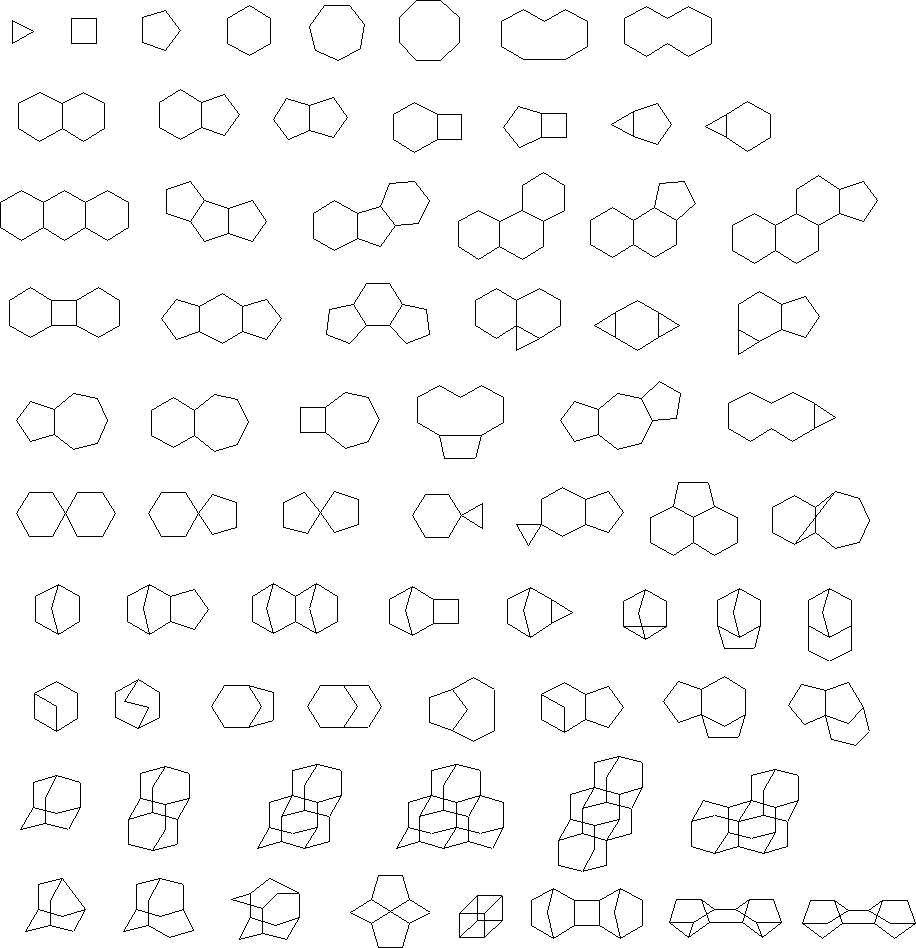
例えば、R1及び/又はR2がシクロアルキレン基である場合、R1及び/又はR2は、アダマンチレン基、ノルアダマンチレン基、デカヒドロナフチレン基、トリシクロデカニレン基、テトラシクロドデカニレン基、ノルボルニレン基、シクロペンチレン基、シクロヘキシレン基、シクロヘプチレン基、シクロオクチレン基、シクロデカニレン基、又はシクロドデカニレン基であることが好ましく、アダマンチレン基、ノルボルニレン基、シクロヘキシレン基、シクロペンチレン基、テトラシクロドデカニレン基又はトリシクロデカニレン基であることがより好ましい。
R1及び/又はR2の非芳香族性の炭化水素基は、置換基を有していてもよい。この置換基としては、例えば、炭素数1~4のアルキル基、ハロゲン原子、ヒドロキシ基、炭素数1~4のアルコキシ基、カルボキシ基、及び炭素数2~6のアルコキシカルボニル基が挙げられる。上記のアルキル基、アルコキシ基及びアルコキシカルボニル基は、置換基を更に有していてもよい。この置換基としては、例えば、ヒドロキシ基、ハロゲン原子、及びアルコキシ基が挙げられる。
L1は、-COO-、-OCO-、-CONH-、-O-、-Ar-、-SO3-又は-SO2NH-により表される連結基を表す。ここで、Arは、2価の芳香環基を表す。L1は、好ましくは-COO-、-CONH-又は-Ar-により表される連結基であり、より好ましくは-COO-又は-CONH-により表される連結基である。
Rは、水素原子又はアルキル基を表す。アルキル基は、直鎖状であってもよく、分岐鎖状であってもよい。このアルキル基の炭素数は、好ましくは1~6であり、より好ましくは1~3である。Rは、好ましくは水素原子又はメチル基であり、より好ましくは水素原子である。
R1及び/又はR2の非芳香族性の炭化水素基は、置換基を有していてもよい。この置換基としては、例えば、炭素数1~4のアルキル基、ハロゲン原子、ヒドロキシ基、炭素数1~4のアルコキシ基、カルボキシ基、及び炭素数2~6のアルコキシカルボニル基が挙げられる。上記のアルキル基、アルコキシ基及びアルコキシカルボニル基は、置換基を更に有していてもよい。この置換基としては、例えば、ヒドロキシ基、ハロゲン原子、及びアルコキシ基が挙げられる。
L1は、-COO-、-OCO-、-CONH-、-O-、-Ar-、-SO3-又は-SO2NH-により表される連結基を表す。ここで、Arは、2価の芳香環基を表す。L1は、好ましくは-COO-、-CONH-又は-Ar-により表される連結基であり、より好ましくは-COO-又は-CONH-により表される連結基である。
Rは、水素原子又はアルキル基を表す。アルキル基は、直鎖状であってもよく、分岐鎖状であってもよい。このアルキル基の炭素数は、好ましくは1~6であり、より好ましくは1~3である。Rは、好ましくは水素原子又はメチル基であり、より好ましくは水素原子である。
R0は、水素原子又は有機基を表す。有機基としては、例えば、アルキル基、シクロアルキル基、アリール基、アルキニル基、及びアルケニル基が挙げられる。R0は、好ましくは、水素原子又はアルキル基であり、より好ましくは、水素原子又はメチル基である。
L3は、(m+2)価の連結基を表す。即ち、L3は、3価以上の連結基を表す。このような連結基としては、例えば、後掲の具体例における対応した基が挙げられる。
RLは、(n+1)価の連結基を表す。即ち、RLは、2価以上の連結基を表す。このような連結基としては、例えば、アルキレン基、シクロアルキレン基及び後掲の具体例における対応した基が挙げられる。RLは、互いに結合して又は下記RSと結合して、環構造を形成していてもよい。
RSは、置換基を表す。この置換基としては、例えば、アルキル基、アルケニル基、アルキニル基、アリール基、アルコキシ基、アシルオキシ基、アルコキシカルボニル基、及びハロゲン原子が挙げられる。
nは、1以上の整数である。nは、1~3の整数であることが好ましく、1又は2であることがより好ましい。また、nを2以上とすると、有機溶剤を含んだ現像液に対する溶解コントラストを更に向上させることが可能となる。従って、こうすると、限界解像力及びラフネス特性を更に向上させることができる。
mは、1以上の整数である。mは、1~3の整数であることが好ましく、1又は2であることがより好ましい。
lは、0以上の整数である。lは、0又は1であることが好ましい。
pは、0~3の整数である。
酸の作用により分解してアルコール性ヒドロキシ基を生じる基を備えた繰り返し単位と、上記一般式(I-1H)~(I-10H)のいずれかにより表される繰り返し単位とを併用すると、例えば、アルコール性ヒドロキシ基による酸拡散の抑制と、酸の作用により分解してアルコール性ヒドロキシ基を生じる基による感度の増大とにより、他の性能を劣化させることなしに、露光ラチチュード(EL)を改良することが可能となる。
アルコール性ヒドロキシ基を有する繰り返し単位の含有率は、樹脂(A)中の全繰り返し単位に対し、1~60mol%が好ましく、より好ましくは3~50mol%、更に好ましくは5~40mol%である。
以下に、一般式(I-1H)~(I-10H)の何れかにより表される繰り返し単位の具体例を示す。なお、具体例中、Raは、一般式(I-1H)~(I-10H)におけるものと同義である。
L3は、(m+2)価の連結基を表す。即ち、L3は、3価以上の連結基を表す。このような連結基としては、例えば、後掲の具体例における対応した基が挙げられる。
RLは、(n+1)価の連結基を表す。即ち、RLは、2価以上の連結基を表す。このような連結基としては、例えば、アルキレン基、シクロアルキレン基及び後掲の具体例における対応した基が挙げられる。RLは、互いに結合して又は下記RSと結合して、環構造を形成していてもよい。
RSは、置換基を表す。この置換基としては、例えば、アルキル基、アルケニル基、アルキニル基、アリール基、アルコキシ基、アシルオキシ基、アルコキシカルボニル基、及びハロゲン原子が挙げられる。
nは、1以上の整数である。nは、1~3の整数であることが好ましく、1又は2であることがより好ましい。また、nを2以上とすると、有機溶剤を含んだ現像液に対する溶解コントラストを更に向上させることが可能となる。従って、こうすると、限界解像力及びラフネス特性を更に向上させることができる。
mは、1以上の整数である。mは、1~3の整数であることが好ましく、1又は2であることがより好ましい。
lは、0以上の整数である。lは、0又は1であることが好ましい。
pは、0~3の整数である。
酸の作用により分解してアルコール性ヒドロキシ基を生じる基を備えた繰り返し単位と、上記一般式(I-1H)~(I-10H)のいずれかにより表される繰り返し単位とを併用すると、例えば、アルコール性ヒドロキシ基による酸拡散の抑制と、酸の作用により分解してアルコール性ヒドロキシ基を生じる基による感度の増大とにより、他の性能を劣化させることなしに、露光ラチチュード(EL)を改良することが可能となる。
アルコール性ヒドロキシ基を有する繰り返し単位の含有率は、樹脂(A)中の全繰り返し単位に対し、1~60mol%が好ましく、より好ましくは3~50mol%、更に好ましくは5~40mol%である。
以下に、一般式(I-1H)~(I-10H)の何れかにより表される繰り返し単位の具体例を示す。なお、具体例中、Raは、一般式(I-1H)~(I-10H)におけるものと同義である。
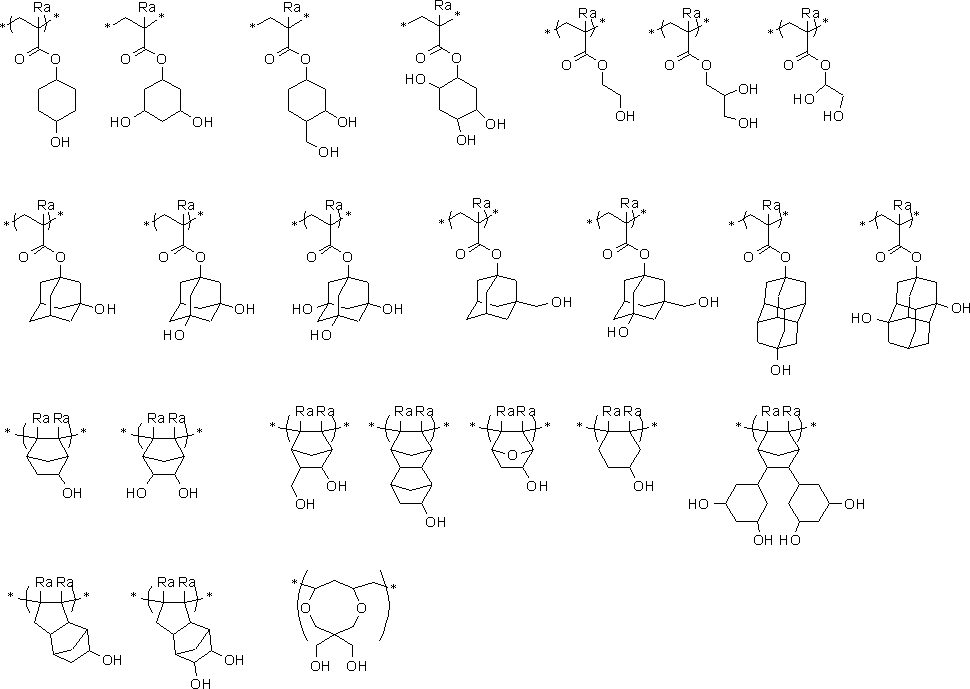
繰り返し単位(b)が有する極性基がアルコール性ヒドロキシ基又はシアノ基である場合、好ましい繰り返し単位の一つの態様として、水酸基又はシアノ基で置換された脂環炭化水素構造を有する繰り返し単位であることが挙げられる。このとき、酸分解性基を有さないことが好ましい。水酸基又はシアノ基で置換された脂環炭化水素構造に於ける、脂環炭化水素構造としては、アダマンチル基、ジアマンチル基、ノルボルナン基が好ましい。好ましい水酸基又はシアノ基で置換された脂環炭化水素構造としては、下記一般式(VIIa)~(VIIc)で表される部分構造が好ましい。これにより基板密着性、及び現像液親和性が向上する。
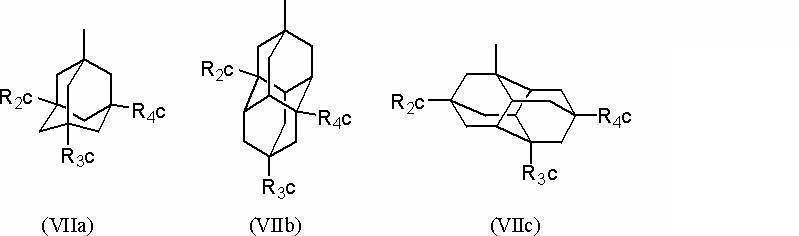
一般式(VIIa)~(VIIc)に於いて、
R2c~R4cは、各々独立に、水素原子又は水酸基又はシアノ基を表す。ただし、R2c~R4cの内の少なくとも1つは、水酸基を表す。好ましくは、R2c~R4cの内の1つ又は2つが、水酸基で、残りが水素原子である。一般式(VIIa)に於いて、更に好ましくは、R2c~R4cの内の2つが、水酸基で、残りが水素原子である。
R2c~R4cは、各々独立に、水素原子又は水酸基又はシアノ基を表す。ただし、R2c~R4cの内の少なくとも1つは、水酸基を表す。好ましくは、R2c~R4cの内の1つ又は2つが、水酸基で、残りが水素原子である。一般式(VIIa)に於いて、更に好ましくは、R2c~R4cの内の2つが、水酸基で、残りが水素原子である。
一般式(VIIa)~(VIIc)で表される部分構造を有する繰り返し単位としては、下記一般式(AIIa)~(AIIc)で表される繰り返し単位を挙げることができる。

一般式(AIIa)~(AIIc)に於いて、
R1cは、水素原子、メチル基、トリフロロメチル基又はヒドロキシメチル基を表す。
R1cは、水素原子、メチル基、トリフロロメチル基又はヒドロキシメチル基を表す。
R2c~R4cは、一般式(VIIa)~(VIIc)に於ける、R2c~R4cと同義である。
樹脂(A)は水酸基又はシアノ基を有する繰り返し単位を含有していても含有していなくてもよいが、含有する場合、水酸基又はシアノ基を有する繰り返し単位の含有量は、樹脂(A)中の全繰り返し単位に対し、1~60モル%が好ましく、より好ましくは3~50モル%、更に好ましくは5~40モル%である。
水酸基又はシアノ基を有する繰り返し単位の具体例を以下に挙げるが、本発明はこれらに限定されない。

繰り返し単位(b)は、極性基としてラクトン構造を有する繰り返し単位であってもよい。
ラクトン構造を有する繰り返し単位としては、下記一般式(AII)で表される繰り返し単位がより好ましい。
ラクトン構造を有する繰り返し単位としては、下記一般式(AII)で表される繰り返し単位がより好ましい。

一般式(AII)中、
Rb0は、水素原子、ハロゲン原子又は置換基を有していてもよいアルキル基(好ましくは炭素数1~4)を表す。
Rb0のアルキル基が有していてもよい好ましい置換基としては、水酸基、ハロゲン原子が挙げられる。Rb0のハロゲン原子としては、フッ素原子、塩素原子、臭素原子、沃素原子を挙げることができる。Rb0として、好ましくは、水素原子、メチル基、ヒドロキシメチル基、トリフルオロメチル基であり、水素原子、メチル基が特に好ましい。
Rb0は、水素原子、ハロゲン原子又は置換基を有していてもよいアルキル基(好ましくは炭素数1~4)を表す。
Rb0のアルキル基が有していてもよい好ましい置換基としては、水酸基、ハロゲン原子が挙げられる。Rb0のハロゲン原子としては、フッ素原子、塩素原子、臭素原子、沃素原子を挙げることができる。Rb0として、好ましくは、水素原子、メチル基、ヒドロキシメチル基、トリフルオロメチル基であり、水素原子、メチル基が特に好ましい。
Abは、単結合、アルキレン基、単環又は多環のシクロアルキル構造を有する2価の連結基、エーテル結合、エステル結合、カルボニル基、又はこれらを組み合わせた2価の連結基を表す。Abは、好ましくは、単結合、-Ab1-CO2-で表される2価の連結基である。
Ab1は、直鎖又は分岐アルキレン基、単環又は多環のシクロアルキレン基であり、好ましくはメチレン基、エチレン基、シクロヘキシレン基、アダマンチレン基、ノルボルニレン基である。
Vは、ラクトン構造を有する基を表す。
Ab1は、直鎖又は分岐アルキレン基、単環又は多環のシクロアルキレン基であり、好ましくはメチレン基、エチレン基、シクロヘキシレン基、アダマンチレン基、ノルボルニレン基である。
Vは、ラクトン構造を有する基を表す。
ラクトン構造を有する基としては、ラクトン構造を有していればいずれでも用いることができるが、好ましくは5~7員環ラクトン構造であり、5~7員環ラクトン構造にビシクロ構造、スピロ構造を形成する形で他の環構造が縮環しているものが好ましい。下記一般式(LC1-1)~(LC1-17)のいずれかで表されるラクトン構造を有する繰り返し単位を有することがより好ましい。また、ラクトン構造が主鎖に直接結合していてもよい。好ましいラクトン構造としては(LC1-1)、(LC1-4)、(LC1-5)、(LC1-6)、(LC1-8)、(LC1-13)、(LC1-14)である。

ラクトン構造部分は、置換基(Rb2)を有していても有していなくてもよい。好ましい置換基(Rb2)としては、炭素数1~8のアルキル基、炭素数4~7の1価のシクロアルキル基、炭素数1~8のアルコキシ基、炭素数2~8のアルコキシカルボニル基、カルボキシル基、ハロゲン原子、水酸基、シアノ基、酸分解性基などが挙げられる。より好ましくは炭素数1~4のアルキル基、シアノ基、酸分解性基である。n2は、0~4の整数を表す。n2が2以上の時、複数存在する置換基(Rb2)は、同一でも異なっていてもよく、また、複数存在する置換基(Rb2)同士が結合して環を形成してもよい。
ラクトン基を有する繰り返し単位は、通常光学異性体が存在するが、いずれの光学異性体を用いてもよい。また、1種の光学異性体を単独で用いても、複数の光学異性体を混合して用いてもよい。1種の光学異性体を主に用いる場合、その光学純度(ee)が90%以上のものが好ましく、より好ましくは95%以上である。
樹脂(A)はラクトン構造を有する繰り返し単位を含有しても含有しなくてもよいが、ラクトン構造を有する繰り返し単位を含有する場合、樹脂(A)中の前記繰り返し単位の含有量は、全繰り返し単位に対して、1~70モル%の範囲が好ましく、より好ましくは3~65モル%の範囲であり、更に好ましくは5~60モル%の範囲である。
以下に、樹脂(A)中のラクトン構造を有する繰り返し単位の具体例を示すが、本発明はこれに限定されるものではない。式中、Rxは、H,CH3,CH2OH,又はCF3を表す。
以下に、樹脂(A)中のラクトン構造を有する繰り返し単位の具体例を示すが、本発明はこれに限定されるものではない。式中、Rxは、H,CH3,CH2OH,又はCF3を表す。


また、繰り返し単位(b)が有しうる極性基が酸性基であることも特に好ましい態様の一つである。好ましい酸性基としてはフェノール性ヒドロキシル基、カルボン酸基、スルホン酸基、フッ素化アルコール基(例えばヘキサフロロイソプロパノール基)、スルホンアミド基、スルホニルイミド基、(アルキルスルホニル)(アルキルカルボニル)メチレン基、(アルキルスルホニル)(アルキルカルボニル)イミド基、ビス(アルキルカルボニル)メチレン基、ビス(アルキルカルボニル)イミド基、ビス(アルキルスルホニル)メチレン基、ビス(アルキルスルホニル)イミド基、トリス(アルキルカルボニル)メチレン基、トリス(アルキルスルホニル)メチレン基が挙げられる。なかでも繰り返し単位(b)はカルボキシル基を有する繰り返し単位であることがより好ましい。酸性基を有する繰り返し単位を含有することによりコンタクトホール用途での解像性が増す。酸性基を有する繰り返し単位としては、アクリル酸、メタクリル酸による繰り返し単位のような樹脂の主鎖に直接酸性基が結合している繰り返し単位、あるいは連結基を介して樹脂の主鎖に酸性基が結合している繰り返し単位、更には酸性基を有する重合開始剤や連鎖移動剤を重合時に用いてポリマー鎖の末端に導入のいずれも好ましい。特に好ましくはアクリル酸、メタクリル酸による繰り返し単位である。
繰り返し単位(b)が有しうる酸性基は、芳香環を含んでいてもいなくてもよいが、芳香環を有する場合はフェノール性水酸基以外の酸性基から選ばれることが好ましい。繰り返し単位(b)が酸性基を有する場合、酸性基を有する繰り返し単位の含有量は、樹脂(A)中の全繰り返し単位に対し、30モル%以下であることが好ましく、20モル%以下であることがより好ましい。樹脂(A)が酸性基を有する繰り返し単位を含有する場合、樹脂(A)における酸性基を有する繰り返し単位の含有量は、通常、1モル%以上である。
酸性基を有する繰り返し単位の具体例を以下に示すが、本発明は、これに限定されるものではない。
具体例中、RxはH、CH3、CH2OH又はCF3を表す。
酸性基を有する繰り返し単位の具体例を以下に示すが、本発明は、これに限定されるものではない。
具体例中、RxはH、CH3、CH2OH又はCF3を表す。

本発明の樹脂(A)は、フェノール性水酸基を有する、非酸分解の繰り返し単位(b)を有することができる。この場合の繰り返し単位(b)としては、下記一般式(I)で表される構造がより好ましい。

式中、
R41、R42及びR43は、各々独立に、水素原子、アルキル基、ハロゲン原子、シアノ基又はアルコキシカルボニル基を表す。但し、R42はAr4と結合して環を形成していてもよく、その場合のR42は単結合又はアルキレン基を表す。
X4は、単結合、-COO-、又は-CONR64-を表し、R64は、水素原子又はアルキル基を表す。
L4は、単結合又はアルキレン基を表す。
Ar4は、(n+1)価の芳香環基を表し、R42と結合して環を形成する場合には(n+2)価の芳香環基を表す。
nは、1~4の整数を表す。
R41、R42及びR43は、各々独立に、水素原子、アルキル基、ハロゲン原子、シアノ基又はアルコキシカルボニル基を表す。但し、R42はAr4と結合して環を形成していてもよく、その場合のR42は単結合又はアルキレン基を表す。
X4は、単結合、-COO-、又は-CONR64-を表し、R64は、水素原子又はアルキル基を表す。
L4は、単結合又はアルキレン基を表す。
Ar4は、(n+1)価の芳香環基を表し、R42と結合して環を形成する場合には(n+2)価の芳香環基を表す。
nは、1~4の整数を表す。
式(I)におけるR41、R42、R43のアルキル基、シクロアルキル基、ハロゲン原子、アルコキシカルボニル基、及びこれらの基が有し得る置換基の具体例としては、上記一般式(V)におけるR51、R52、及びR53により表される各基について説明した具体例と同様である。
Ar4は、(n+1)価の芳香環基を表す。nが1である場合における2価の芳香環基は、置換基を有していてもよく、例えば、フェニレン基、トリレン基、ナフチレン基、アントラセニレン基などの炭素数6~18のアリーレン基、あるいは、例えば、チオフェン、フラン、ピロール、ベンゾチオフェン、ベンゾフラン、ベンゾピロール、トリアジン、イミダゾール、ベンゾイミダゾール、トリアゾール、チアジアゾール、チアゾール等のヘテロ環を含む芳香環基を好ましい例として挙げることができる。
Ar4は、(n+1)価の芳香環基を表す。nが1である場合における2価の芳香環基は、置換基を有していてもよく、例えば、フェニレン基、トリレン基、ナフチレン基、アントラセニレン基などの炭素数6~18のアリーレン基、あるいは、例えば、チオフェン、フラン、ピロール、ベンゾチオフェン、ベンゾフラン、ベンゾピロール、トリアジン、イミダゾール、ベンゾイミダゾール、トリアゾール、チアジアゾール、チアゾール等のヘテロ環を含む芳香環基を好ましい例として挙げることができる。
nが2以上の整数である場合における(n+1)価の芳香環基の具体例としては、2価の芳香環基の上記した具体例から、(n-1)個の任意の水素原子を除してなる基を好適に挙げることができる。
(n+1)価の芳香環基は、更に置換基を有していても良い。
(n+1)価の芳香環基は、更に置換基を有していても良い。
上述したアルキル基、シクロアルキル基、アルコキシカルボニル基、アルキレン基及び(n+1)価の芳香環基が有し得る置換基としては、一般式(V)におけるR51~R53で挙げたアルキル基、メトキシ基、エトキシ基、ヒドロキシエトキシ基、プロポキシ基、ヒドロキシプロポキシ基、ブトキシ基等のアルコキシ基、フェニル基等のアリール基が挙げられる。
X4により表わされる-CONR64-(R64は、水素原子、アルキル基を表す)におけるR64のアルキル基としては、R61~R63のアルキル基と同様のものが挙げられる。
X4としては、単結合、-COO-、-CONH-が好ましく、単結合、-COO-がより好ましい。
X4により表わされる-CONR64-(R64は、水素原子、アルキル基を表す)におけるR64のアルキル基としては、R61~R63のアルキル基と同様のものが挙げられる。
X4としては、単結合、-COO-、-CONH-が好ましく、単結合、-COO-がより好ましい。
L4におけるアルキレン基としては、好ましくは置換基を有していてもよいメチレン基、エチレン基、プロピレン基、ブチレン基、ヘキシレン基、オクチレン基等の炭素数1~8個のものが挙げられる。
Ar4としては、置換基を有していても良い炭素数6~18の芳香環基がより好ましく、ベンゼン環基、ナフタレン環基、ビフェニレン環基が特に好ましい。
繰り返し単位(b)は、ヒドロキシスチレン構造を備えていることが好ましい。即ち、Ar4は、ベンゼン環基であることが好ましい。
Ar4としては、置換基を有していても良い炭素数6~18の芳香環基がより好ましく、ベンゼン環基、ナフタレン環基、ビフェニレン環基が特に好ましい。
繰り返し単位(b)は、ヒドロキシスチレン構造を備えていることが好ましい。即ち、Ar4は、ベンゼン環基であることが好ましい。
以下に、一般式(I)で表される繰り返し単位(b)の具体例を示すが、本発明はこれに限定されるものではない。式中、aは1又は2の整数を表す。
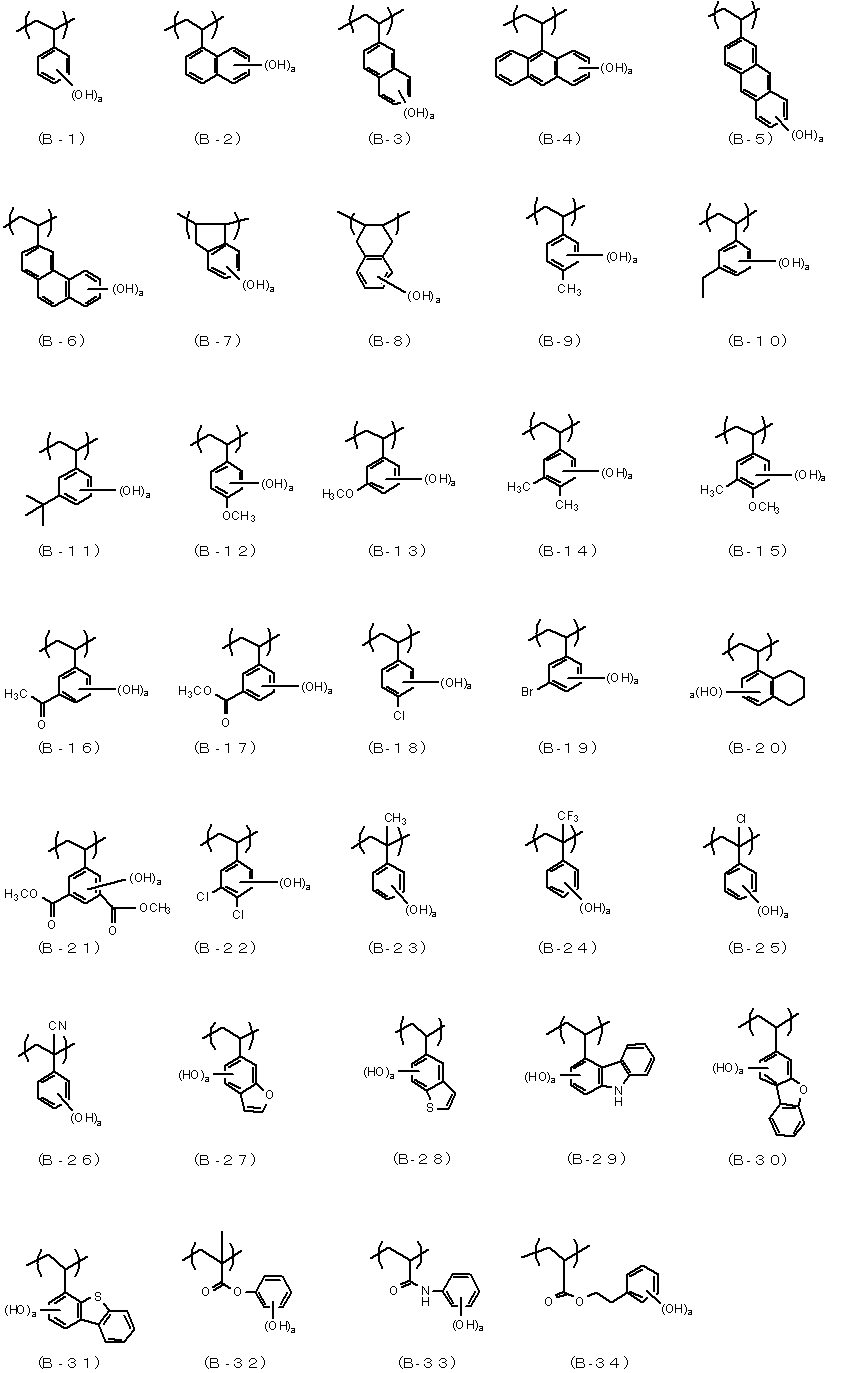

樹脂(A)は、一般式(I)で表される繰り返し単位を2種類以上含んでいてもよい。
また、樹脂(A)は、活性光線又は放射線の照射により酸を発生する基を有する繰り返し単位を含有していてもよい。
活性光線又は放射線の照射により酸を発生する基を有する繰り返し単位としては、例えば、後記の樹脂(A)の具体例の樹脂P-65~P-70に各々含有される、オニウムカチオンを有する繰り返し単位などが挙げられる。
また、樹脂(A)は、活性光線又は放射線の照射により酸を発生する基を有する繰り返し単位を含有していてもよい。
活性光線又は放射線の照射により酸を発生する基を有する繰り返し単位としては、例えば、後記の樹脂(A)の具体例の樹脂P-65~P-70に各々含有される、オニウムカチオンを有する繰り返し単位などが挙げられる。
本発明の組成物に用いられる樹脂(A)において、各繰り返し構造単位の含有モル比は、レジストの標準現像液適性、基板密着性、レジストプロファイル、更にはレジストの一般的な必要性能である解像力、耐熱性、感度等を調節するために適宜設定される。
本発明の樹脂(A)の形態としては、ランダム型、ブロック型、クシ型、スター型のいずれの形態でもよい。
樹脂(A)は、例えば、各構造に対応する不飽和モノマーのラジカル、カチオン、又はアニオン重合により合成することができる。また各構造の前駆体に相当する不飽和モノマーを用いて重合した後に、高分子反応を行うことにより目的とする樹脂を得ることも可能である。
例えば、一般的合成方法としては、不飽和モノマー及び重合開始剤を溶剤に溶解させ、加熱することにより重合を行う一括重合法、加熱溶剤に不飽和モノマーと重合開始剤の溶液を1~10時間かけて滴下して加える滴下重合法などが挙げられ、滴下重合法が好ましい。
樹脂(A)は、例えば、各構造に対応する不飽和モノマーのラジカル、カチオン、又はアニオン重合により合成することができる。また各構造の前駆体に相当する不飽和モノマーを用いて重合した後に、高分子反応を行うことにより目的とする樹脂を得ることも可能である。
例えば、一般的合成方法としては、不飽和モノマー及び重合開始剤を溶剤に溶解させ、加熱することにより重合を行う一括重合法、加熱溶剤に不飽和モノマーと重合開始剤の溶液を1~10時間かけて滴下して加える滴下重合法などが挙げられ、滴下重合法が好ましい。
重合に使用される溶媒としては、例えば、後述の感活性光線性又は感放射線性樹脂組成物を調製する際に使用することができる溶剤等を挙げることができ、より好ましくは本発明の組成物に用いられる溶剤と同一の溶剤を用いて重合することが好ましい。これにより保存時のパーティクルの発生が抑制できる。
重合反応は窒素やアルゴンなど不活性ガス雰囲気下で行われることが好ましい。重合開始剤としては市販のラジカル開始剤(アゾ系開始剤、パーオキサイドなど)を用いて重合を開始させる。ラジカル開始剤としてはアゾ系開始剤が好ましく、エステル基、シアノ基、カルボキシル基を有するアゾ系開始剤が好ましい。好ましい開始剤としては、アゾビスイソブチロニトリル、アゾビスジメチルバレロニトリル、ジメチル2,2’-アゾビス(2-メチルプロピオネート)などが挙げられる。必要に応じて連鎖移動剤(例えば、アルキルメルカプタンなど)の存在下で重合を行ってもよい。
重合反応は窒素やアルゴンなど不活性ガス雰囲気下で行われることが好ましい。重合開始剤としては市販のラジカル開始剤(アゾ系開始剤、パーオキサイドなど)を用いて重合を開始させる。ラジカル開始剤としてはアゾ系開始剤が好ましく、エステル基、シアノ基、カルボキシル基を有するアゾ系開始剤が好ましい。好ましい開始剤としては、アゾビスイソブチロニトリル、アゾビスジメチルバレロニトリル、ジメチル2,2’-アゾビス(2-メチルプロピオネート)などが挙げられる。必要に応じて連鎖移動剤(例えば、アルキルメルカプタンなど)の存在下で重合を行ってもよい。
反応の濃度は5~70質量%であり、好ましくは10~50質量%である。反応温度は、通常10℃~150℃であり、好ましくは30℃~120℃、更に好ましくは40~100℃である。
反応時間は、通常1~48時間であり、好ましくは1~24時間、更に好ましくは1~12時間である。
反応終了後、室温まで放冷し、精製する。精製は、水洗や適切な溶媒を組み合わせることにより残留単量体やオリゴマー成分を除去する液々抽出法、特定の分子量以下のもののみを抽出除去する限外ろ過等の溶液状態での精製方法や、樹脂溶液を貧溶媒へ滴下することで樹脂を貧溶媒中に凝固させることにより残留単量体等を除去する再沈澱法やろ別した樹脂スラリーを貧溶媒で洗浄する等の固体状態での精製方法等の通常の方法を適用できる。例えば、上記樹脂が難溶あるいは不溶の溶媒(貧溶媒)を、該反応溶液の10倍以下の体積量、好ましくは10~5倍の体積量で、接触させることにより樹脂を固体として析出させる。
反応時間は、通常1~48時間であり、好ましくは1~24時間、更に好ましくは1~12時間である。
反応終了後、室温まで放冷し、精製する。精製は、水洗や適切な溶媒を組み合わせることにより残留単量体やオリゴマー成分を除去する液々抽出法、特定の分子量以下のもののみを抽出除去する限外ろ過等の溶液状態での精製方法や、樹脂溶液を貧溶媒へ滴下することで樹脂を貧溶媒中に凝固させることにより残留単量体等を除去する再沈澱法やろ別した樹脂スラリーを貧溶媒で洗浄する等の固体状態での精製方法等の通常の方法を適用できる。例えば、上記樹脂が難溶あるいは不溶の溶媒(貧溶媒)を、該反応溶液の10倍以下の体積量、好ましくは10~5倍の体積量で、接触させることにより樹脂を固体として析出させる。
ポリマー溶液からの沈殿又は再沈殿操作の際に用いる溶媒(沈殿又は再沈殿溶媒)としては、該ポリマーの貧溶媒であればよく、ポリマーの種類に応じて、炭化水素、ハロゲン化炭化水素、ニトロ化合物、エーテル、ケトン、エステル、カーボネート、アルコール、カルボン酸、水、これらの溶媒を含む混合溶媒等の中から適宜選択して使用できる。これらの中でも、沈殿又は再沈殿溶媒として、少なくともアルコール(特に、メタノールなど)又は水を含む溶媒が好ましい。
沈殿又は再沈殿溶媒の使用量は、効率や収率等を考慮して適宜選択できるが、一般には、ポリマー溶液100質量部に対して、100~10000質量部、好ましくは200~2000質量部、更に好ましくは300~1000質量部である。
沈殿又は再沈殿する際の温度としては、効率や操作性を考慮して適宜選択できるが、通常0~50℃程度、好ましくは室温付近(例えば20~35℃程度)である。沈殿又は再沈殿操作は、攪拌槽などの慣用の混合容器を用い、バッチ式、連続式等の公知の方法により行うことができる。
沈殿又は再沈殿したポリマーは、通常、濾過、遠心分離等の慣用の固液分離に付し、乾燥して使用に供される。濾過は、耐溶剤性の濾材を用い、好ましくは加圧下で行われる。乾燥は、常圧又は減圧下(好ましくは減圧下)、30~100℃程度、好ましくは30~50℃程度の温度で行われる。
沈殿又は再沈殿溶媒の使用量は、効率や収率等を考慮して適宜選択できるが、一般には、ポリマー溶液100質量部に対して、100~10000質量部、好ましくは200~2000質量部、更に好ましくは300~1000質量部である。
沈殿又は再沈殿する際の温度としては、効率や操作性を考慮して適宜選択できるが、通常0~50℃程度、好ましくは室温付近(例えば20~35℃程度)である。沈殿又は再沈殿操作は、攪拌槽などの慣用の混合容器を用い、バッチ式、連続式等の公知の方法により行うことができる。
沈殿又は再沈殿したポリマーは、通常、濾過、遠心分離等の慣用の固液分離に付し、乾燥して使用に供される。濾過は、耐溶剤性の濾材を用い、好ましくは加圧下で行われる。乾燥は、常圧又は減圧下(好ましくは減圧下)、30~100℃程度、好ましくは30~50℃程度の温度で行われる。
なお、一度、樹脂を析出させて、分離した後に、再び溶媒に溶解させ、該樹脂が難溶あるいは不溶の溶媒と接触させてもよい。即ち、上記ラジカル重合反応終了後、該ポリマーが難溶あるいは不溶の溶媒を接触させ、樹脂を析出させ(工程a)、樹脂を溶液から分離し(工程b)、改めて溶媒に溶解させ樹脂溶液Aを調製(工程c)、その後、該樹脂溶液Aに、該樹脂が難溶あるいは不溶の溶媒を、樹脂溶液Aの10倍未満の体積量(好ましくは5倍以下の体積量)で、接触させることにより樹脂固体を析出させ(工程d)、析出した樹脂を分離する(工程e)ことを含む方法でもよい。
重合反応は窒素やアルゴンなど不活性ガス雰囲気下で行われることが好ましい。重合開始剤としては市販のラジカル開始剤(アゾ系開始剤、パーオキサイドなど)を用いて重合を開始させる。ラジカル開始剤としてはアゾ系開始剤が好ましく、エステル基、シアノ基、カルボキシル基を有するアゾ系開始剤が好ましい。好ましい開始剤としては、アゾビスイソブチロニトリル、アゾビスジメチルバレロニトリル、ジメチル2,2’-アゾビス(2-メチルプロピオネート)などが挙げられる。所望により開始剤を追加、あるいは分割で添加し、反応終了後、溶剤に投入して粉体あるいは固形回収等の方法で所望のポリマーを回収する。反応の濃度は5~50質量%であり、好ましくは10~30質量%である。反応温度は、通常10℃~150℃であり、好ましくは30℃~120℃、更に好ましくは60~100℃である。
重合反応は窒素やアルゴンなど不活性ガス雰囲気下で行われることが好ましい。重合開始剤としては市販のラジカル開始剤(アゾ系開始剤、パーオキサイドなど)を用いて重合を開始させる。ラジカル開始剤としてはアゾ系開始剤が好ましく、エステル基、シアノ基、カルボキシル基を有するアゾ系開始剤が好ましい。好ましい開始剤としては、アゾビスイソブチロニトリル、アゾビスジメチルバレロニトリル、ジメチル2,2’-アゾビス(2-メチルプロピオネート)などが挙げられる。所望により開始剤を追加、あるいは分割で添加し、反応終了後、溶剤に投入して粉体あるいは固形回収等の方法で所望のポリマーを回収する。反応の濃度は5~50質量%であり、好ましくは10~30質量%である。反応温度は、通常10℃~150℃であり、好ましくは30℃~120℃、更に好ましくは60~100℃である。
本発明に係わる樹脂(A)の分子量は、特に制限されないが、重量平均分子量が1000~100000の範囲であることが好ましく、1500~60000の範囲であることがより好ましく、2000~30000の範囲であることが特に好ましい。重量平均分子量を1000~100000の範囲とすることにより、耐熱性やドライエッチング耐性の劣化を防ぐことができ、かつ現像性が劣化したり、粘度が高くなって製膜性が劣化することを防ぐことができる。ここで、樹脂の重量平均分子量は、GPC(キャリア:THFあるいはN-メチル-2-ピロリドン(NMP))によって測定したポリスチレン換算分子量を示す。
また分散度(Mw/Mn)は、好ましくは1.00~5.00、より好ましくは1.03~3.50であり、更に好ましくは、1.05~2.50である。分子量分布の小さいものほど、解像度、レジスト形状が優れ、かつレジストパターンの側壁がスムーズであり、ラフネス性に優れる。
本発明の樹脂(A)は、1種類単独で、又は2種類以上を組み合わせて使用することができる。樹脂(A)の含有率は、本発明の感活性光線性又は感放射線性樹脂組成物中の全固形分を基準にして、20~99質量%が好ましく、30~89質量%がより好ましく、40~79質量%が特に好ましい。
以下に、樹脂(A)の具体例を示すが、本発明はこれらに限定されるものではない。また、下記ポリマー構造の各繰り返し単位の組成比はモル比である。


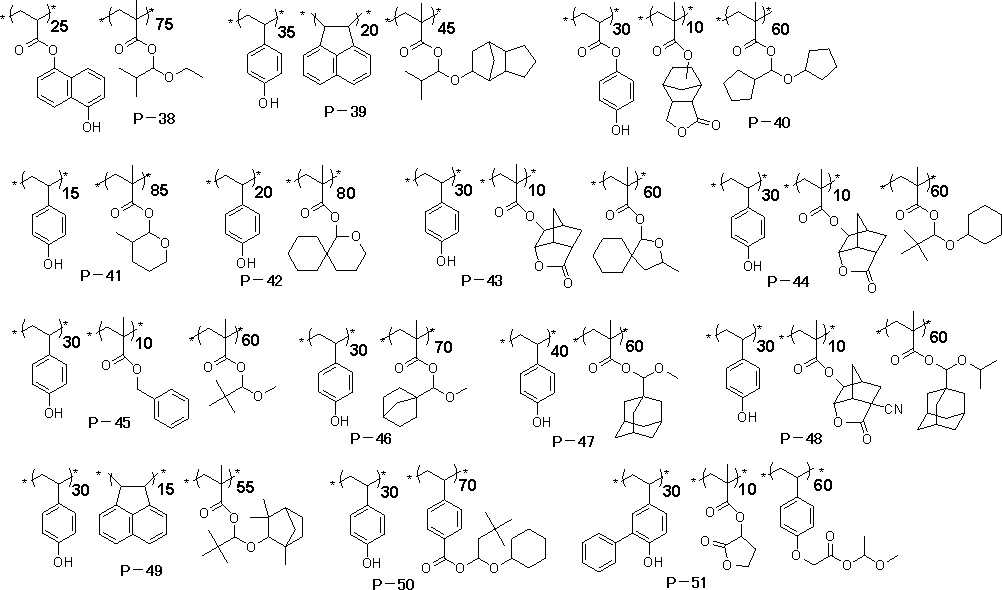

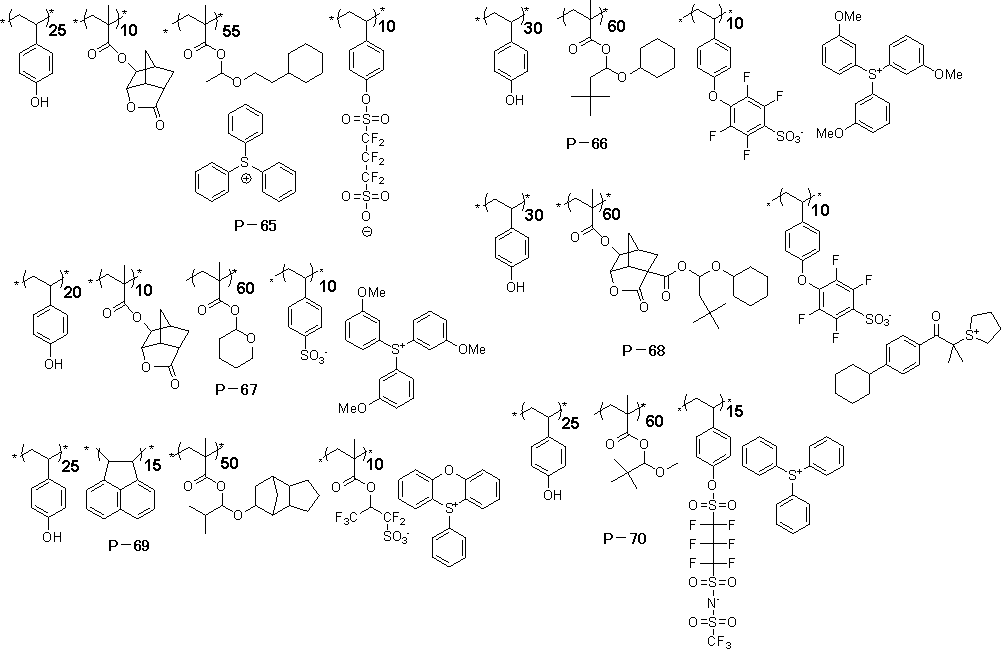
[2]活性光線又は放射線の照射により酸を発生する化合物
本発明の組成物は、活性光線又は放射線の照射により酸を発生する化合物(以下、「酸発生剤」ともいう)を含有することが好ましい。
酸発生剤としては、公知のものであれば特に限定されないが、活性光線又は放射線の照射により、有機酸、例えば、スルホン酸、ビス(アルキルスルホニル)イミド、又はトリス(アルキルスルホニル)メチドの少なくともいずれかを発生する化合物が好ましい。
より好ましくは下記一般式(ZI)、(ZII)、(ZIII)で表される化合物を挙げることができる。
本発明の組成物は、活性光線又は放射線の照射により酸を発生する化合物(以下、「酸発生剤」ともいう)を含有することが好ましい。
酸発生剤としては、公知のものであれば特に限定されないが、活性光線又は放射線の照射により、有機酸、例えば、スルホン酸、ビス(アルキルスルホニル)イミド、又はトリス(アルキルスルホニル)メチドの少なくともいずれかを発生する化合物が好ましい。
より好ましくは下記一般式(ZI)、(ZII)、(ZIII)で表される化合物を挙げることができる。

上記一般式(ZI)において、
R201、R202及びR203は、各々独立に、有機基を表す。
R201、R202及びR203としての有機基の炭素数は、一般的に1~30、好ましくは1~20である。
また、R201~R203のうち2つが結合して環構造を形成してもよく、環内に酸素原子、硫黄原子、エステル結合、アミド結合、カルボニル基を含んでいてもよい。R201~R203の内の2つが結合して形成する基としては、アルキレン基(例えば、ブチレン基、ペンチレン基)を挙げることができる。
Z-は、非求核性アニオン(求核反応を起こす能力が著しく低いアニオン)を表す。
R201、R202及びR203は、各々独立に、有機基を表す。
R201、R202及びR203としての有機基の炭素数は、一般的に1~30、好ましくは1~20である。
また、R201~R203のうち2つが結合して環構造を形成してもよく、環内に酸素原子、硫黄原子、エステル結合、アミド結合、カルボニル基を含んでいてもよい。R201~R203の内の2つが結合して形成する基としては、アルキレン基(例えば、ブチレン基、ペンチレン基)を挙げることができる。
Z-は、非求核性アニオン(求核反応を起こす能力が著しく低いアニオン)を表す。
非求核性アニオンとしては、例えば、スルホン酸アニオン(脂肪族スルホン酸アニオン、芳香族スルホン酸アニオン、カンファースルホン酸アニオンなど)、カルボン酸アニオン(脂肪族カルボン酸アニオン、芳香族カルボン酸アニオン、アラルキルカルボン酸アニオンなど)、スルホニルイミドアニオン、ビス(アルキルスルホニル)イミドアニオン、トリス(アルキルスルホニル)メチドアニオン等を挙げられる。
脂肪族スルホン酸アニオン及び脂肪族カルボン酸アニオンにおける脂肪族部位は、アルキル基であってもシクロアルキル基であってもよく、好ましくは炭素数1~30の直鎖又は分岐のアルキル基及び炭素数3~30のシクロアルキル基が挙げられる。
芳香族スルホン酸アニオン及び芳香族カルボン酸アニオンにおける芳香族基としては、好ましくは炭素数6~14のアリール基、例えば、フェニル基、トリル基、ナフチル基等を挙げることができる。
上記で挙げたアルキル基、シクロアルキル基及びアリール基は、置換基を有していてもよい。この具体例としては、ニトロ基、フッ素原子などのハロゲン原子、カルボキシル基、水酸基、アミノ基、シアノ基、アルコキシ基(好ましくは炭素数1~15)、シクロアルキル基(好ましくは炭素数3~15)、アリール基(好ましくは炭素数6~14)、アルコキシカルボニル基(好ましくは炭素数2~7)、アシル基(好ましくは炭素数2~12)、アルコキシカルボニルオキシ基(好ましくは炭素数2~7)、アルキルチオ基(好ましくは炭素数1~15)、アルキルスルホニル基(好ましくは炭素数1~15)、アルキルイミノスルホニル基(好ましくは炭素数2~15)、アリールオキシスルホニル基(好ましくは炭素数6~20)、アルキルアリールオキシスルホニル基(好ましくは炭素数7~20)、シクロアルキルアリールオキシスルホニル基(好ましくは炭素数10~20)、アルキルオキシアルキルオキシ基(好ましくは炭素数5~20)、シクロアルキルアルキルオキシアルキルオキシ基(好ましくは炭素数8~20)等を挙げることができる。各基が有するアリール基及び環構造については、置換基として更にアルキル基(好ましくは炭素数1~15)を挙げることができる。
アラルキルカルボン酸アニオンにおけるアラルキル基としては、好ましくは炭素数7~12のアラルキル基、例えば、ベンジル基、フェネチル基、ナフチルメチル基、ナフチルエチル基、ナフチルブチル基等を挙げることができる。
スルホニルイミドアニオンとしては、例えば、サッカリンアニオンを挙げることができる。
ビス(アルキルスルホニル)イミドアニオン、トリス(アルキルスルホニル)メチドアニオンにおけるアルキル基は、炭素数1~5のアルキル基が好ましい。これらのアルキル基の置換基としてはハロゲン原子、ハロゲン原子で置換されたアルキル基、アルコキシ基、アルキルチオ基、アルキルオキシスルホニル基、アリールオキシスルホニル基、シクロアルキルアリールオキシスルホニル基等を挙げることができ、フッ素原子又はフッ素原子で置換されたアルキル基が好ましい。
また、ビス(アルキルスルホニル)イミドアニオンにおけるアルキル基は、互いに結合して環構造を形成してもよい。これにより、酸強度が増加する。
また、ビス(アルキルスルホニル)イミドアニオンにおけるアルキル基は、互いに結合して環構造を形成してもよい。これにより、酸強度が増加する。
その他の非求核性アニオンとしては、例えば、弗素化燐(例えば、PF6
-)、弗素化硼素(例えば、BF4
-)、弗素化アンチモン(例えば、SbF6
-)等を挙げることができる。
非求核性アニオンとしては、スルホン酸の少なくともα位がフッ素原子で置換された脂肪族スルホン酸アニオン、フッ素原子又はフッ素原子を有する基で置換された芳香族スルホン酸アニオン、アルキル基がフッ素原子で置換されたビス(アルキルスルホニル)イミドアニオン、アルキル基がフッ素原子で置換されたトリス(アルキルスルホニル)メチドアニオンが好ましい。非求核性アニオンとして、より好ましくはパーフロロ脂肪族スルホン酸アニオン(更に好ましくは炭素数4~8)、フッ素原子を有するベンゼンスルホン酸アニオン、更により好ましくはノナフロロブタンスルホン酸アニオン、パーフロロオクタンスルホン酸アニオン、ペンタフロロベンゼンスルホン酸アニオン、3,5-ビス(トリフロロメチル)ベンゼンスルホン酸アニオンである。
酸強度の観点からは、発生酸のpKaが-1以下であることが、感度向上のために好ましい。
また、非求核性アニオンとしては、以下の一般式(AN1)で表されるアニオンも好ましい態様として挙げられる。

式中、
Xfは、それぞれ独立に、フッ素原子、又は少なくとも1つのフッ素原子で置換されたアルキル基を表す。
R1、R2は、それぞれ独立に、水素原子、フッ素原子、又は、アルキル基を表し、複数存在する場合のR1、R2は、それぞれ同一でも異なっていてもよい。
Lは、二価の連結基を表し、複数存在する場合のLは同一でも異なっていてもよい。
Aは、環状の有機基を表す。
xは1~20の整数を表し、yは0~10の整数を表し、zは0~10の整数を表す。
Xfは、それぞれ独立に、フッ素原子、又は少なくとも1つのフッ素原子で置換されたアルキル基を表す。
R1、R2は、それぞれ独立に、水素原子、フッ素原子、又は、アルキル基を表し、複数存在する場合のR1、R2は、それぞれ同一でも異なっていてもよい。
Lは、二価の連結基を表し、複数存在する場合のLは同一でも異なっていてもよい。
Aは、環状の有機基を表す。
xは1~20の整数を表し、yは0~10の整数を表し、zは0~10の整数を表す。
一般式(AN1)について、更に詳細に説明する。
Xfのフッ素原子で置換されたアルキル基におけるアルキル基としては、好ましくは炭素数1~10であり、より好ましくは炭素数1~4である。また、Xfのフッ素原子で置換されたアルキル基は、パーフルオロアルキル基であることが好ましい。
Xfとして好ましくは、フッ素原子又は炭素数1~4のパーフルオロアルキル基である。Xfの具体的としては、フッ素原子、CF3、C2F5、C3F7、C4F9、CH2CF3、CH2CH2CF3、CH2C2F5、CH2CH2C2F5、CH2C3F7、CH2CH2C3F7、CH2C4F9、CH2CH2C4F9が挙げられ、中でもフッ素原子、CF3が好ましい。特に、双方のXfがフッ素原子であることが好ましい。
Xfのフッ素原子で置換されたアルキル基におけるアルキル基としては、好ましくは炭素数1~10であり、より好ましくは炭素数1~4である。また、Xfのフッ素原子で置換されたアルキル基は、パーフルオロアルキル基であることが好ましい。
Xfとして好ましくは、フッ素原子又は炭素数1~4のパーフルオロアルキル基である。Xfの具体的としては、フッ素原子、CF3、C2F5、C3F7、C4F9、CH2CF3、CH2CH2CF3、CH2C2F5、CH2CH2C2F5、CH2C3F7、CH2CH2C3F7、CH2C4F9、CH2CH2C4F9が挙げられ、中でもフッ素原子、CF3が好ましい。特に、双方のXfがフッ素原子であることが好ましい。
R1、R2のアルキル基は、置換基(好ましくはフッ素原子)を有していてもよく、炭素数1~4のものが好ましい。更に好ましくは炭素数1~4のパーフルオロアルキル基である。R1、R2の置換基を有するアルキル基の具体例としては、CF3、C2F5、C3F7、C4F9、C5F11、C6F13、C7F15、C8F17、CH2CF3、CH2CH2CF3、CH2C2F5、CH2CH2C2F5、CH2C3F7、CH2CH2C3F7、CH2C4F9、CH2CH2C4F9が挙げられ、中でもCF3が好ましい。
R1、R2としては、好ましくはフッ素原子又はCF3である。
R1、R2としては、好ましくはフッ素原子又はCF3である。
xは1~10が好ましく、1~5がより好ましい。
yは0~4が好ましく、0がより好ましい。
zは0~5が好ましく、0~3がより好ましい。
Lの2価の連結基としては特に限定されず、―COO-、-OCO-、-CO-、-O-、-S―、-SO―、―SO2-、アルキレン基、シクロアルキレン基、アルケニレン基又はこれらの複数が連結した連結基などを挙げることができ、総炭素数12以下の連結基が好ましい。このなかでも―COO-、-OCO-、-CO-、-O-が好ましく、―COO-、-OCO-がより好ましい。
yは0~4が好ましく、0がより好ましい。
zは0~5が好ましく、0~3がより好ましい。
Lの2価の連結基としては特に限定されず、―COO-、-OCO-、-CO-、-O-、-S―、-SO―、―SO2-、アルキレン基、シクロアルキレン基、アルケニレン基又はこれらの複数が連結した連結基などを挙げることができ、総炭素数12以下の連結基が好ましい。このなかでも―COO-、-OCO-、-CO-、-O-が好ましく、―COO-、-OCO-がより好ましい。
Aの環状の有機基としては、環状構造を有するものであれば特に限定されず、脂環基、アリール基、複素環基(芳香族性を有するものだけでなく、芳香族性を有さないものも含む)等が挙げられる。
脂環基としては、単環でも多環でもよく、シクロペンチル基、シクロヘキシル基、シクロオクチル基などの単環のシクロアルキル基、ノルボルニル基、トリシクロデカニル基、テトラシクロデカニル基、テトラシクロドデカニル基、アダマンチル基などの多環のシクロアルキル基が好ましい。中でも、ノルボルニル基、トリシクロデカニル基、テトラシクロデカニル基、テトラシクロドデカニル基、アダマンチル基等の炭素数7以上のかさ高い構造を有する脂環基が、露光後加熱工程での膜中拡散性を抑制でき、MEEF向上の観点から好ましい。
アリール基としては、ベンゼン環、ナフタレン環、フェナンスレン環、アントラセン環が挙げられる。
複素環基としては、フラン環、チオフェン環、ベンゾフラン環、ベンゾチオフェン環、ジベンゾフラン環、ジベンゾチオフェン環、ピリジン環由来のものが挙げられる。中でもフラン環、チオフェン環、ピリジン環由来のものが好ましい。
脂環基としては、単環でも多環でもよく、シクロペンチル基、シクロヘキシル基、シクロオクチル基などの単環のシクロアルキル基、ノルボルニル基、トリシクロデカニル基、テトラシクロデカニル基、テトラシクロドデカニル基、アダマンチル基などの多環のシクロアルキル基が好ましい。中でも、ノルボルニル基、トリシクロデカニル基、テトラシクロデカニル基、テトラシクロドデカニル基、アダマンチル基等の炭素数7以上のかさ高い構造を有する脂環基が、露光後加熱工程での膜中拡散性を抑制でき、MEEF向上の観点から好ましい。
アリール基としては、ベンゼン環、ナフタレン環、フェナンスレン環、アントラセン環が挙げられる。
複素環基としては、フラン環、チオフェン環、ベンゾフラン環、ベンゾチオフェン環、ジベンゾフラン環、ジベンゾチオフェン環、ピリジン環由来のものが挙げられる。中でもフラン環、チオフェン環、ピリジン環由来のものが好ましい。
また、環状の有機基としては、ラクトン構造も挙げることができ、具体例としては、前述の樹脂(A)が有していてもよい一般式(LC1-1)~(LC1-17)で表されるラクトン構造を挙げることができる。
上記環状の有機基は、置換基を有していてもよく、該置換基としては、アルキル基(直鎖、分岐、環状のいずれであっても良く、炭素数1~12が好ましい)、シクロアルキル基(単環、多環、スピロ環のいずれであっても良く、炭素数3~20が好ましい)、アリール基(炭素数6~14が好ましい)、ヒドロキシ基、アルコキシ基、エステル基、アミド基、ウレタン基、ウレイド基、チオエーテル基、スルホンアミド基、スルホン酸エステル基等が挙げられる。なお、環状の有機基を構成する炭素(環形成に寄与する炭素)はカルボニル炭素であっても良い。
R201、R202及びR203の有機基としては、アリール基、アルキル基、シクロアルキル基などが挙げられる。
R201、R202及びR203のうち、少なくとも1つがアリール基であることが好ましく、三つ全てがアリール基であることがより好ましい。アリール基としては、フェニル基、ナフチル基などの他に、インドール残基、ピロール残基などのヘテロアリール基も可能である。R201~R203のアルキル基及びシクロアルキル基としては、好ましくは、炭素数1~10の直鎖又は分岐アルキル基、炭素数3~10のシクロアルキル基を挙げることができる。アルキル基として、より好ましくはメチル基、エチル基、n-プロピル基、i-プロピル基、n-ブチル基等を挙げることができる。シクロアルキル基として、より好ましくは、シクロプロピル基、シクロブチル基、シクロペンチル基、シクロヘキシル基、シクロへプチル基等を挙げることができる。これらの基は更に置換基を有していてもよい。その置換基としては、ニトロ基、フッ素原子などのハロゲン原子、カルボキシル基、水酸基、アミノ基、シアノ基、アルコキシ基(好ましくは炭素数1~15)、シクロアルキル基(好ましくは炭素数3~15)、アリール基(好ましくは炭素数6~14)、アルコキシカルボニル基(好ましくは炭素数2~7)、アシル基(好ましくは炭素数2~12)、アルコキシカルボニルオキシ基(好ましくは炭素数2~7)等が挙げられるが、これらに限定されるものではない。
R201、R202及びR203のうち、少なくとも1つがアリール基であることが好ましく、三つ全てがアリール基であることがより好ましい。アリール基としては、フェニル基、ナフチル基などの他に、インドール残基、ピロール残基などのヘテロアリール基も可能である。R201~R203のアルキル基及びシクロアルキル基としては、好ましくは、炭素数1~10の直鎖又は分岐アルキル基、炭素数3~10のシクロアルキル基を挙げることができる。アルキル基として、より好ましくはメチル基、エチル基、n-プロピル基、i-プロピル基、n-ブチル基等を挙げることができる。シクロアルキル基として、より好ましくは、シクロプロピル基、シクロブチル基、シクロペンチル基、シクロヘキシル基、シクロへプチル基等を挙げることができる。これらの基は更に置換基を有していてもよい。その置換基としては、ニトロ基、フッ素原子などのハロゲン原子、カルボキシル基、水酸基、アミノ基、シアノ基、アルコキシ基(好ましくは炭素数1~15)、シクロアルキル基(好ましくは炭素数3~15)、アリール基(好ましくは炭素数6~14)、アルコキシカルボニル基(好ましくは炭素数2~7)、アシル基(好ましくは炭素数2~12)、アルコキシカルボニルオキシ基(好ましくは炭素数2~7)等が挙げられるが、これらに限定されるものではない。
また、R201~R203のうち2つが結合して環構造を形成する場合、以下の一般式(A1)で表される構造であることが好ましい。
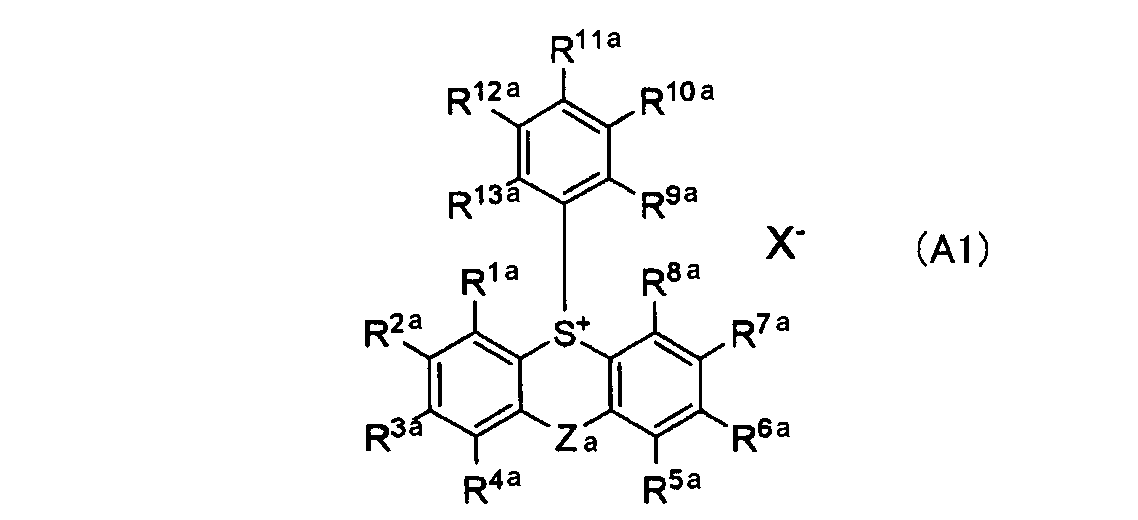
一般式(A1)中、
R1a~R13aは、各々独立に、水素原子又は置換基を表す。
R1a~R13aのうち、1~3つが水素原子でないことが好ましく、R9a~R13aのいずれか1つが水素原子でないことがより好ましい。
Zaは、単結合又は2価の連結基である。
X-は、一般式(ZI)におけるZ-と同義である。
R1a~R13aは、各々独立に、水素原子又は置換基を表す。
R1a~R13aのうち、1~3つが水素原子でないことが好ましく、R9a~R13aのいずれか1つが水素原子でないことがより好ましい。
Zaは、単結合又は2価の連結基である。
X-は、一般式(ZI)におけるZ-と同義である。
R1a~R13aが水素原子でない場合の具体例としては、ハロゲン原子、直鎖、分岐、環状のアルキル基、アルケニル基、アルキニル基、アリール基、複素環基、シアノ基、ニトロ基、カルボキシル基、アルコキシ基、アリールオキシ基、シリルオキシ基、ヘテロ環オキシ基、アシルオキシ基、カルバモイルオキシ基、アルコキシカルボニルオキシ基、アリールオキシカルボニルオキシ基、アミノ基(アニリノ基を含む)、アンモニオ基、アシルアミノ基、アミノカルボニルアミノ基、アルコキシカルボニルアミノ基、アリールオキシカルボニルアミノ基、スルファモイルアミノ基、アルキル及びアリールスルホニルアミノ基、メルカプト基、アルキルチオ基、アリールチオ基、ヘテロ環チオ基、スルファモイル基、スルホ基、アルキル及びアリールスルフィニル基、アルキル及びアリールスルホニル基、アシル基、アリールオキシカルボニル基、アルコキシカルボニル基、カルバモイル基、アリール及びヘテロ環アゾ基、イミド基、ホスフィノ基、ホスフィニル基、ホスフィニルオキシ基、ホスフィニルアミノ基、ホスホノ基、シリル基、ヒドラジノ基、ウレイド基、ボロン酸基(-B(OH)2)、ホスファト基(-OPO(OH)2)、スルファト基(-OSO3H)、その他の公知の置換基が例として挙げられる。
R1a~R13aが水素原子でない場合としては、水酸基で置換された直鎖、分岐、環状のアルキル基であることが好ましい。
R1a~R13aが水素原子でない場合としては、水酸基で置換された直鎖、分岐、環状のアルキル基であることが好ましい。
Zaの2価の連結基としては、アルキレン基、アリーレン基、カルボニル基、スルホニル基、カルボニルオキシ基、カルボニルアミノ基、スルホニルアミド基、エーテル結合、チオエーテル結合、アミノ基、ジスルフィド基、-(CH2)n-CO-、-(CH2)n-SO2-、-CH=CH-、アミノカルボニルアミノ基、アミノスルホニルアミノ基等が挙げられる(nは1~3の整数)。
なお、R201、R202及びR203のうち、少なくとも1つがアリール基でない場合の好ましい構造としては、特開2004-233661号公報の段落0046、0047、0048、特開2003-35948号公報の段落0040~0046、米国特許出願公開第2003/0224288A1号明細書に式(I-1)~(I-70)として例示されている化合物、米国特許出願公開第2003/0077540A1号明細書に式(IA-1)~(IA-54)、式(IB-1)~(IB-24)として例示されている化合物等のカチオン構造を挙げることができる。
一般式(ZII)、(ZIII)中、
R204~R207は、各々独立に、アリール基、アルキル基又はシクロアルキル基を表す。
R204~R207は、各々独立に、アリール基、アルキル基又はシクロアルキル基を表す。
R204~R207のアリール基、アルキル基、シクロアルキル基としては、前述の化合物(ZI)におけるR201~R203のアリール基、アルキル基、シクロアルキル基として説明したアリール基と同様である。
R204~R207のアリール基、アルキル基、シクロアルキル基は、置換基を有していてもよい。この置換基としても、前述の化合物(ZI)におけるR201~R203のアリール基、アルキル基、シクロアルキル基が有していてもよいものが挙げられる。
R204~R207のアリール基、アルキル基、シクロアルキル基は、置換基を有していてもよい。この置換基としても、前述の化合物(ZI)におけるR201~R203のアリール基、アルキル基、シクロアルキル基が有していてもよいものが挙げられる。
Z-は、非求核性アニオンを表し、一般式(ZI)に於けるZ-の非求核性アニオンと同様のものを挙げることができる。
酸発生剤として、更に、下記一般式(ZIV)、(ZV)、(ZVI)で表される化合物も挙げられる。

一般式(ZIV)~(ZVI)中、
Ar3及びAr4は、各々独立に、アリール基を表す。
R208、R209及びR210は、各々独立に、アルキル基、シクロアルキル基又はアリール基を表す。
Aは、アルキレン基、アルケニレン基又はアリーレン基を表す。
Ar3、Ar4、R208、R209及びR210のアリール基の具体例としては、上記一般式(ZI)におけるR201、R202及びR203としてのアリール基の具体例と同様のものを挙げることができる。
R208、R209及びR210のアルキル基及びシクロアルキル基の具体例としては、それぞれ、上記一般式(ZI)におけるR201、R202及びR203としてのアルキル基及びシクロアルキル基の具体例と同様のものを挙げることができる。
Aのアルキレン基としては、炭素数1~12のアルキレン基(例えば、メチレン基、エチレン基、プロピレン基、イソプロピレン基、ブチレン基、イソブチレン基など)を、Aのアルケニレン基としては、炭素数2~12のアルケニレン基(例えば、エテニレン基、プロペニレン基、ブテニレン基など)を、Aのアリーレン基としては、炭素数6~10のアリーレン基(例えば、フェニレン基、トリレン基、ナフチレン基など)を、それぞれ挙げることができる。
Ar3及びAr4は、各々独立に、アリール基を表す。
R208、R209及びR210は、各々独立に、アルキル基、シクロアルキル基又はアリール基を表す。
Aは、アルキレン基、アルケニレン基又はアリーレン基を表す。
Ar3、Ar4、R208、R209及びR210のアリール基の具体例としては、上記一般式(ZI)におけるR201、R202及びR203としてのアリール基の具体例と同様のものを挙げることができる。
R208、R209及びR210のアルキル基及びシクロアルキル基の具体例としては、それぞれ、上記一般式(ZI)におけるR201、R202及びR203としてのアルキル基及びシクロアルキル基の具体例と同様のものを挙げることができる。
Aのアルキレン基としては、炭素数1~12のアルキレン基(例えば、メチレン基、エチレン基、プロピレン基、イソプロピレン基、ブチレン基、イソブチレン基など)を、Aのアルケニレン基としては、炭素数2~12のアルケニレン基(例えば、エテニレン基、プロペニレン基、ブテニレン基など)を、Aのアリーレン基としては、炭素数6~10のアリーレン基(例えば、フェニレン基、トリレン基、ナフチレン基など)を、それぞれ挙げることができる。
酸発生剤の中で、特に好ましい例を以下に挙げる。

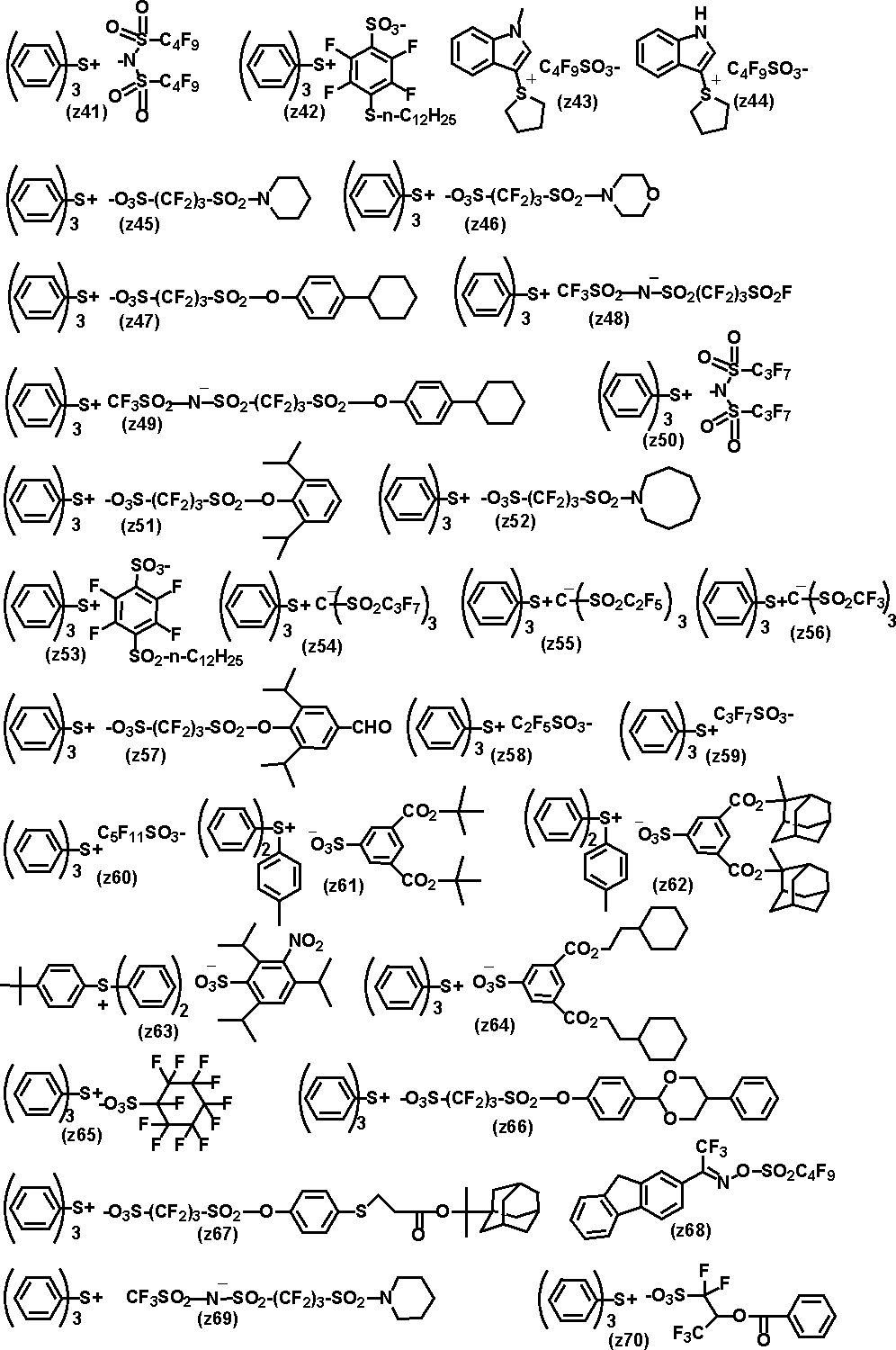
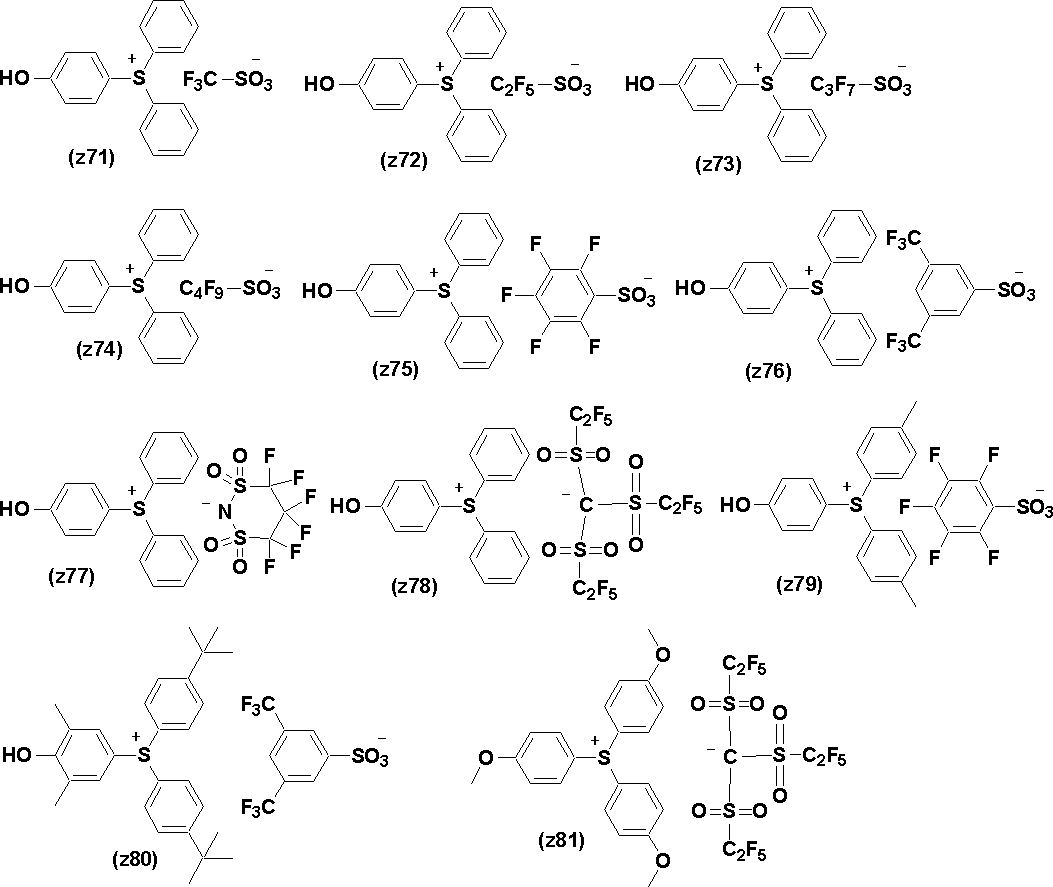
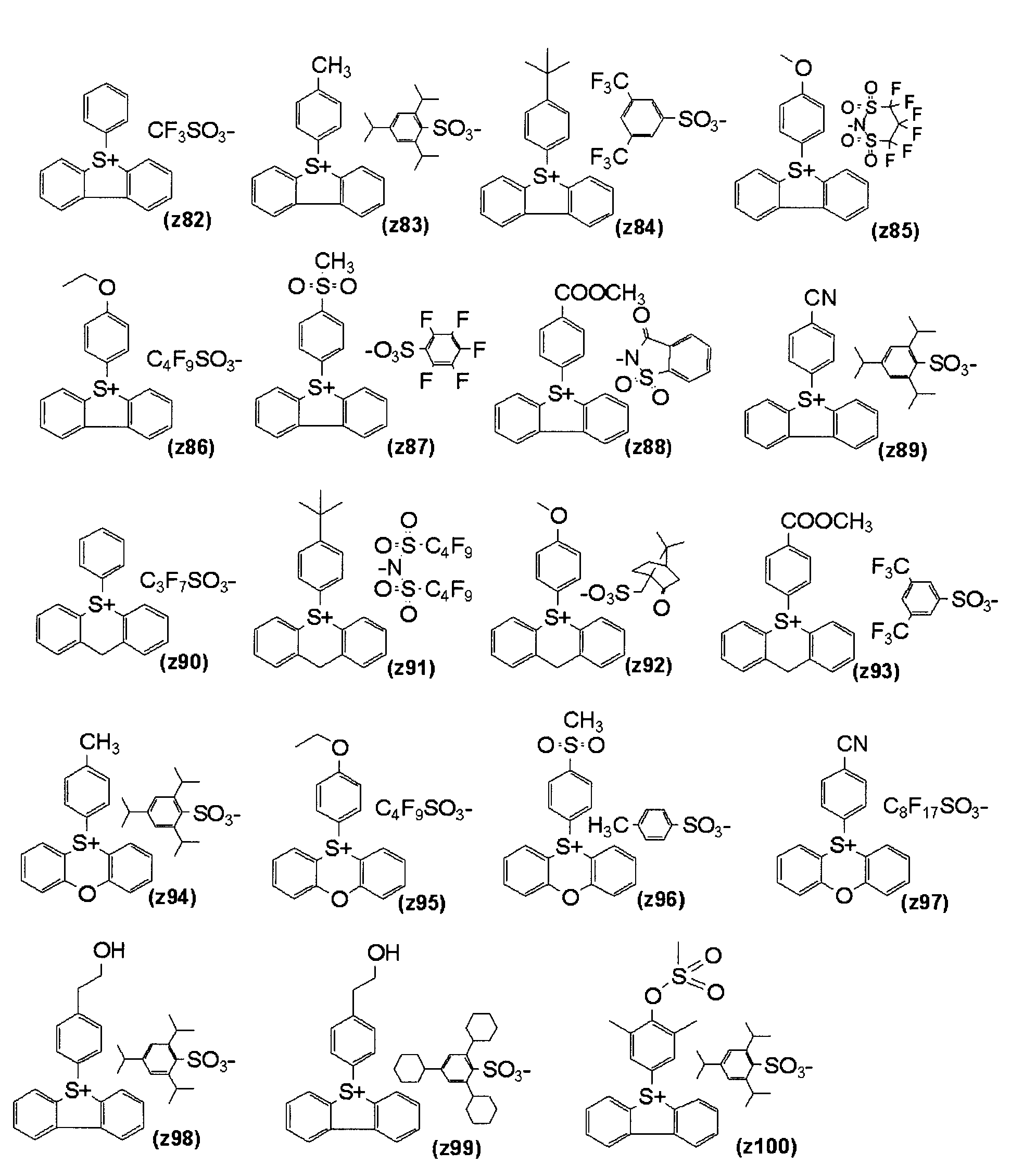
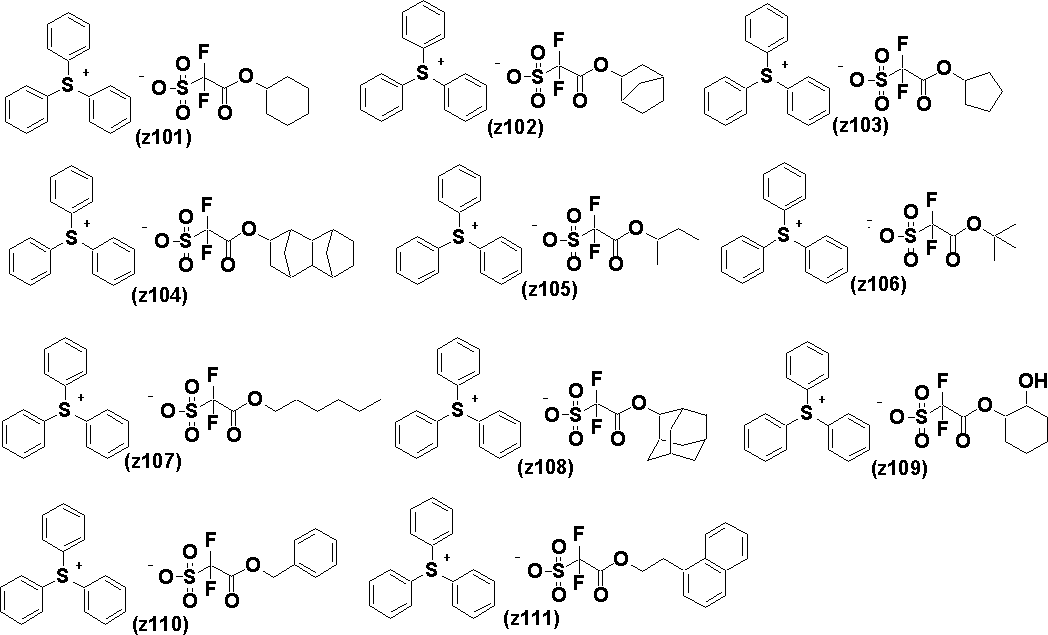
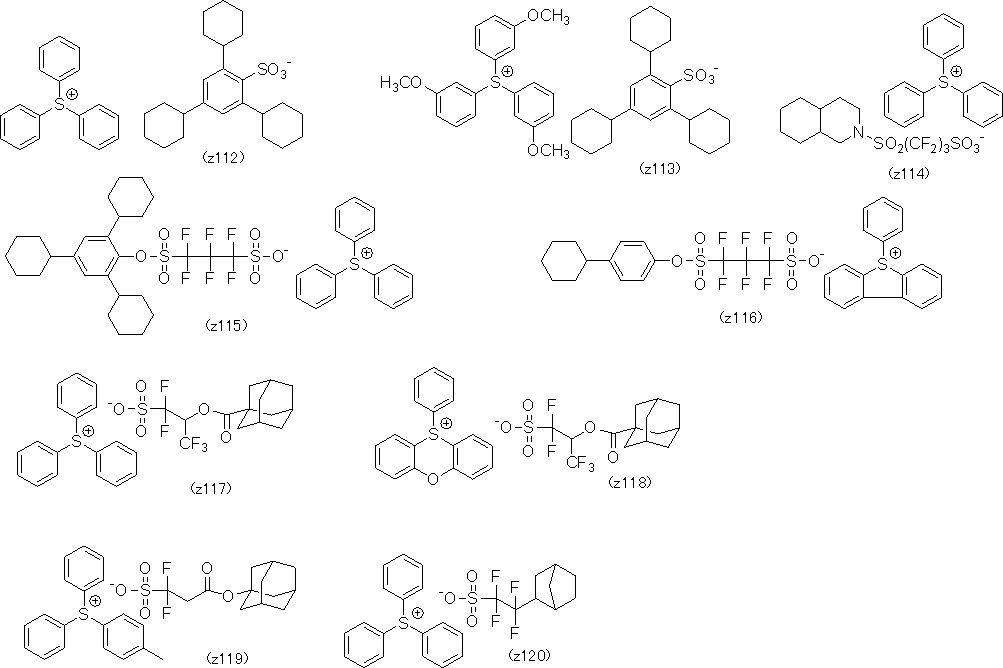

酸発生剤は、1種類単独で又は2種類以上を組み合わせて使用することができる。
また、光酸発生剤の含量は、組成物の全固形分を基準として、好ましくは0.1~50質量%であり、より好ましくは0.5~45質量%であり、更に好ましくは1~40質量%である。
[3]溶剤(塗布溶媒)
組成物を調製する際に使用できる溶剤としては、各成分を溶解するものである限り特に限定されないが、例えば、アルキレングリコールモノアルキルエーテルカルボキシレート(プロピレングリコールモノメチルエーテルアセテート(PGMEA;別名1-メトキシ-2-アセトキシプロパン)など)、アルキレングリコールモノアルキルエーテル(プロピレングリコールモノメチルエーテル(PGME;1-メトキシ-2-プロパノール)など)、乳酸アルキルエステル(乳酸エチル、乳酸メチルなど)、環状ラクトン(γ-ブチロラクトンなど、好ましくは炭素数4~10)、鎖状又は環状のケトン(2-ヘプタノン、シクロヘキサノンなど、好ましくは炭素数4~10)、アルキレンカーボネート(エチレンカーボネート、プロピレンカーボネートなど)、カルボン酸アルキル(酢酸ブチルなどの酢酸アルキルが好ましい)、アルコキシ酢酸アルキル(エトキシプロピオン酸エチル)などが挙げられる。その他使用可能な溶媒として、例えば、米国特許出願公開第2008/0248425A1号明細書の[0244]以降に記載されている溶剤などが挙げられる。
また、光酸発生剤の含量は、組成物の全固形分を基準として、好ましくは0.1~50質量%であり、より好ましくは0.5~45質量%であり、更に好ましくは1~40質量%である。
[3]溶剤(塗布溶媒)
組成物を調製する際に使用できる溶剤としては、各成分を溶解するものである限り特に限定されないが、例えば、アルキレングリコールモノアルキルエーテルカルボキシレート(プロピレングリコールモノメチルエーテルアセテート(PGMEA;別名1-メトキシ-2-アセトキシプロパン)など)、アルキレングリコールモノアルキルエーテル(プロピレングリコールモノメチルエーテル(PGME;1-メトキシ-2-プロパノール)など)、乳酸アルキルエステル(乳酸エチル、乳酸メチルなど)、環状ラクトン(γ-ブチロラクトンなど、好ましくは炭素数4~10)、鎖状又は環状のケトン(2-ヘプタノン、シクロヘキサノンなど、好ましくは炭素数4~10)、アルキレンカーボネート(エチレンカーボネート、プロピレンカーボネートなど)、カルボン酸アルキル(酢酸ブチルなどの酢酸アルキルが好ましい)、アルコキシ酢酸アルキル(エトキシプロピオン酸エチル)などが挙げられる。その他使用可能な溶媒として、例えば、米国特許出願公開第2008/0248425A1号明細書の[0244]以降に記載されている溶剤などが挙げられる。
上記のうち、アルキレングリコールモノアルキルエーテルカルボキシレート及びアルキレングリコールモノアルキルエーテルが好ましい。
これら溶媒は、単独で用いても2種以上を混合して用いてもよい。2種以上を混合する場合、水酸基を有する溶剤と水酸基を有しない溶剤とを混合することが好ましい。水酸基を有する溶剤と水酸基を有しない溶剤との質量比は、1/99~99/1、好ましくは10/90~90/10、更に好ましくは20/80~60/40である。
水酸基を有する溶剤としてはアルキレングリコールモノアルキルエーテルが好ましく、水酸基を有しない溶剤としてはアルキレングリコールモノアルキルエーテルカルボキシレートが好ましい。
水酸基を有する溶剤としてはアルキレングリコールモノアルキルエーテルが好ましく、水酸基を有しない溶剤としてはアルキレングリコールモノアルキルエーテルカルボキシレートが好ましい。
[4]塩基性化合物
本発明に係る感活性光線性又は感放射線性組成物は、塩基性化合物を更に含んでいてもよい。塩基性化合物は、好ましくは、フェノールと比較して塩基性がより強い化合物である。また、この塩基性化合物は、有機塩基性化合物であることが好ましく、含窒素塩基性化合物であることが更に好ましい。
本発明に係る感活性光線性又は感放射線性組成物は、塩基性化合物を更に含んでいてもよい。塩基性化合物は、好ましくは、フェノールと比較して塩基性がより強い化合物である。また、この塩基性化合物は、有機塩基性化合物であることが好ましく、含窒素塩基性化合物であることが更に好ましい。
使用可能な含窒素塩基性化合物は特に限定されないが、例えば、以下の(ア)~(キ)に分類される化合物を用いることができる。
(ア)一般式(BS-1)により表される化合物

一般式(BS-1)中、
Rは、各々独立に、水素原子又は有機基を表す。但し、3つのRのうち少なくとも1つは有機基である。この有機基は、直鎖若しくは分岐鎖のアルキル基、単環若しくは多環のシクロアルキル基、アリール基又はアラルキル基である。
Rは、各々独立に、水素原子又は有機基を表す。但し、3つのRのうち少なくとも1つは有機基である。この有機基は、直鎖若しくは分岐鎖のアルキル基、単環若しくは多環のシクロアルキル基、アリール基又はアラルキル基である。
Rとしてのアルキル基の炭素数は、特に限定されないが、通常1~20であり、好ましくは1~12である。
Rとしてのシクロアルキル基の炭素数は、特に限定されないが、通常3~20であり、好ましくは5~15である。
Rとしてのシクロアルキル基の炭素数は、特に限定されないが、通常3~20であり、好ましくは5~15である。
Rとしてのアリール基の炭素数は、特に限定されないが、通常6~20であり、好ましくは6~10である。具体的には、フェニル基及びナフチル基等が挙げられる。
Rとしてのアラルキル基の炭素数は、特に限定されないが、通常7~20であり、好ましくは7~11である。具体的には、ベンジル基等が挙げられる。
Rとしてのアラルキル基の炭素数は、特に限定されないが、通常7~20であり、好ましくは7~11である。具体的には、ベンジル基等が挙げられる。
Rとしてのアルキル基、シクロアルキル基、アリール基及びアラルキル基は、水素原子が置換基により置換されていてもよい。この置換基としては、例えば、アルキル基、シクロアルキル基、アリール基、アラルキル基、ヒドロキシ基、カルボキシ基、アルコキシ基、アリールオキシ基、アルキルカルボニルオキシ基及びアルキルオキシカルボニル基等が挙げられる。
なお、一般式(BS-1)により表される化合物では、Rのうち少なくとも2つが有機基であることが好ましい。
一般式(BS-1)により表される化合物の具体例としては、トリ-n-ブチルアミン、トリ-n-ペンチルアミン、トリ-n-オクチルアミン、トリ-n-デシルアミン、トリイソデシルアミン、ジシクロヘキシルメチルアミン、テトラデシルアミン、ペンタデシルアミン、ヘキサデシルアミン、オクタデシルアミン、ジデシルアミン、メチルオクタデシルアミン、ジメチルウンデシルアミン、N,N-ジメチルドデシルアミン、メチルジオクタデシルアミン、N,N-ジブチルアニリン、N,N-ジヘキシルアニリン、2,6-ジイソプロピルアニリン、及び2,4,6-トリ(t-ブチル)アニリンが挙げられる。
また、一般式(BS-1)により表される好ましい塩基性化合物として、少なくとも1つのRがヒドロキシ基で置換されたアルキル基であるものが挙げられる。具体的には、例えば、トリエタノールアミン及びN,N-ジヒドロキシエチルアニリンが挙げられる。
なお、Rとしてのアルキル基は、アルキル鎖中に酸素原子を有していてもよい。即ち、オキシアルキレン鎖が形成されていてもよい。オキシアルキレン鎖としては、-CH2CH2O-が好ましい。具体的には、例えば、トリス(メトキシエトキシエチル)アミン、及び、US6040112号明細書のカラム3の60行目以降に例示されている化合物が挙げられる。
一般式(BS-1)で表される塩基性化合物としては、例えば、以下のものが挙げられる。
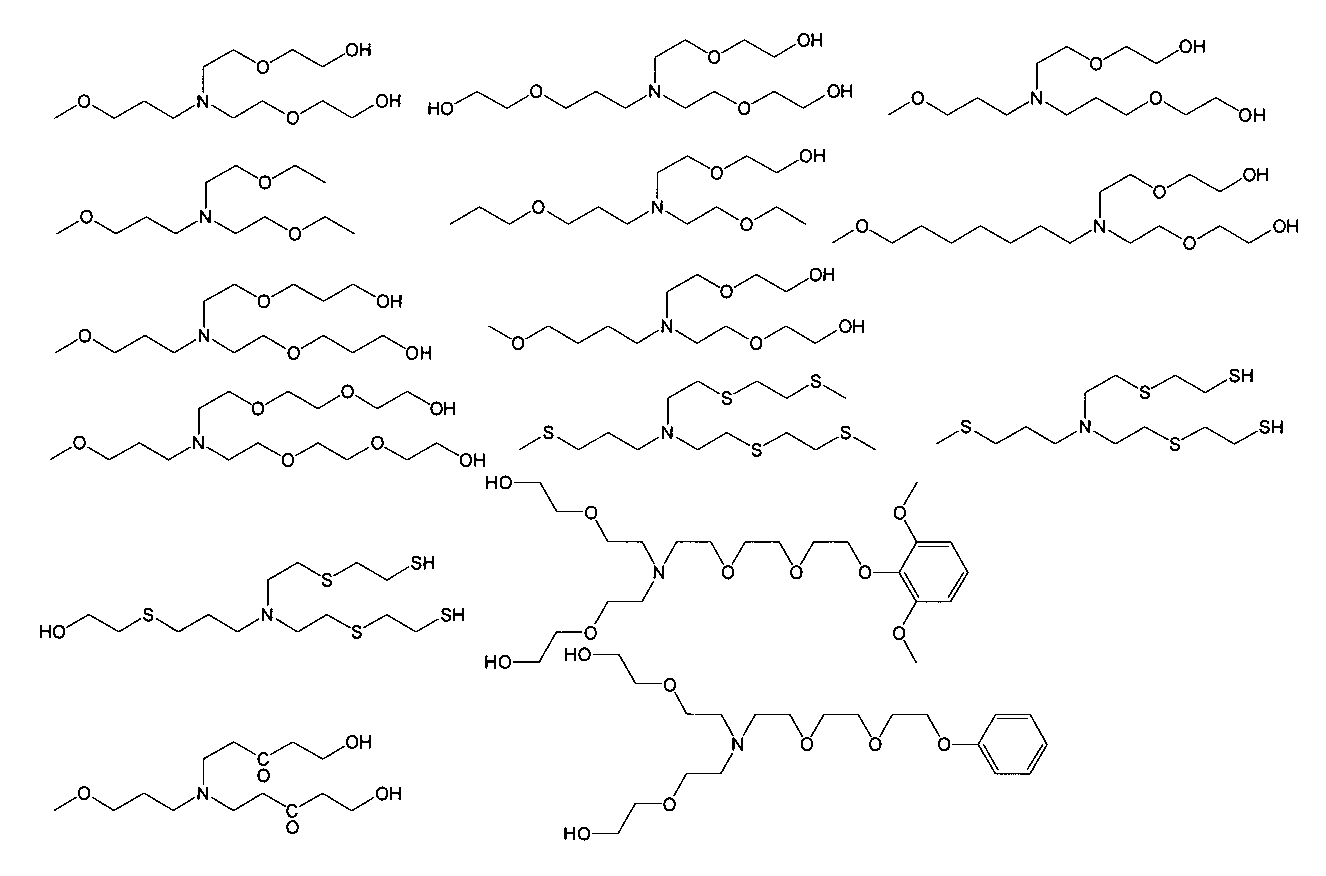
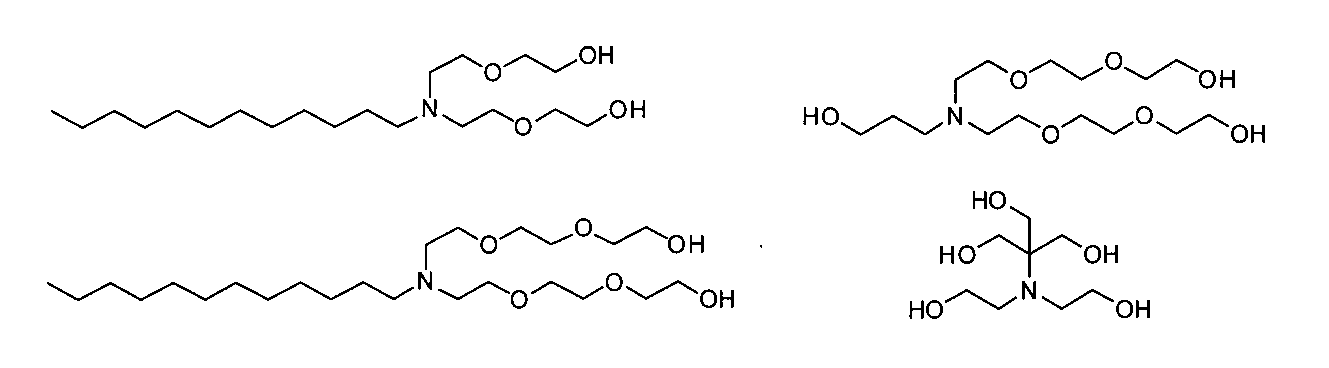
(イ)含窒素複素環構造を有する化合物
この含窒素複素環は、芳香族性を有していてもよく、芳香族性を有していなくてもよい。また、窒素原子を複数有していてもよい。更に、窒素以外のヘテロ原子を含有していてもよい。具体的には、例えば、イミダゾール構造を有する化合物(2-フェニルベンゾイミダゾール、2,4,5-トリフェニルイミダゾールなど)、ピペリジン構造を有する化合物〔N-ヒドロキシエチルピペリジン及びビス(1,2,2,6,6-ペンタメチル-4-ピペリジル)セバケートなど〕、ピリジン構造を有する化合物(4-ジメチルアミノピリジンなど)、並びにアンチピリン構造を有する化合物(アンチピリン及びヒドロキシアンチピリンなど)が挙げられる。
この含窒素複素環は、芳香族性を有していてもよく、芳香族性を有していなくてもよい。また、窒素原子を複数有していてもよい。更に、窒素以外のヘテロ原子を含有していてもよい。具体的には、例えば、イミダゾール構造を有する化合物(2-フェニルベンゾイミダゾール、2,4,5-トリフェニルイミダゾールなど)、ピペリジン構造を有する化合物〔N-ヒドロキシエチルピペリジン及びビス(1,2,2,6,6-ペンタメチル-4-ピペリジル)セバケートなど〕、ピリジン構造を有する化合物(4-ジメチルアミノピリジンなど)、並びにアンチピリン構造を有する化合物(アンチピリン及びヒドロキシアンチピリンなど)が挙げられる。
また、環構造を2つ以上有する化合物も好適に用いられる。具体的には、例えば、1,5-ジアザビシクロ[4.3.0]ノナ-5-エン及び1,8-ジアザビシクロ〔5.4.0〕-ウンデカ-7-エンが挙げられる。
(ウ)フェノキシ基を有するアミン化合物
フェノキシ基を有するアミン化合物とは、アミン化合物が含んでいるアルキル基のN原子と反対側の末端にフェノキシ基を備えた化合物である。フェノキシ基は、例えば、アルキル基、アルコキシ基、ハロゲン原子、シアノ基、ニトロ基、カルボキシ基、カルボン酸エステル基、スルホン酸エステル基、アリール基、アラルキル基、アシロキシ基及びアリールオキシ基等の置換基を有していてもよい。
フェノキシ基を有するアミン化合物とは、アミン化合物が含んでいるアルキル基のN原子と反対側の末端にフェノキシ基を備えた化合物である。フェノキシ基は、例えば、アルキル基、アルコキシ基、ハロゲン原子、シアノ基、ニトロ基、カルボキシ基、カルボン酸エステル基、スルホン酸エステル基、アリール基、アラルキル基、アシロキシ基及びアリールオキシ基等の置換基を有していてもよい。
この化合物は、より好ましくは、フェノキシ基と窒素原子との間に、少なくとも1つのオキシアルキレン鎖を有している。1分子中のオキシアルキレン鎖の数は、好ましくは3~9個、更に好ましくは4~6個である。オキシアルキレン鎖の中でも-CH2CH2O-が特に好ましい。
具体例としては、2-[2-{2―(2,2―ジメトキシ-フェノキシエトキシ)エチル}-ビス-(2-メトキシエチル)]-アミン、及び、US2007/0224539A1号明細書の段落[0066]に例示されている化合物(C1-1)~(C3-3)が挙げられる。
フェノキシ基を有するアミン化合物は、例えば、フェノキシ基を有する1級又は2級アミンとハロアルキルエーテルとを加熱して反応させ、水酸化ナトリウム、水酸化カリウム及びテトラアルキルアンモニウム等の強塩基の水溶液を添加した後、酢酸エチル及びクロロホルム等の有機溶剤で抽出することにより得られる。また、フェノキシ基を有するアミン化合物は、1級又は2級アミンと、末端にフェノキシ基を有するハロアルキルエーテルとを加熱して反応させ、水酸化ナトリウム、水酸化カリウム及びテトラアルキルアンモニウム等の強塩基の水溶液を添加した後、酢酸エチル及びクロロホルム等の有機溶剤で抽出することによって得ることもできる。
(エ)アンモニウム塩
塩基性化合物として、アンモニウム塩も適宜用いることができる。アンモニウム塩のアニオンとしては、例えば、ハライド、スルホネート、ボレート及びフォスフェートが挙げられる。これらのうち、ハライド及びスルホネートが特に好ましい。
塩基性化合物として、アンモニウム塩も適宜用いることができる。アンモニウム塩のアニオンとしては、例えば、ハライド、スルホネート、ボレート及びフォスフェートが挙げられる。これらのうち、ハライド及びスルホネートが特に好ましい。
ハライドとしては、クロライド、ブロマイド及びアイオダイドが特に好ましい。
スルホネートとしては、炭素数1~20の有機スルホネートが特に好ましい。有機スルホネートとしては、例えば、炭素数1~20のアルキルスルホネート及びアリールスルホネートが挙げられる。
スルホネートとしては、炭素数1~20の有機スルホネートが特に好ましい。有機スルホネートとしては、例えば、炭素数1~20のアルキルスルホネート及びアリールスルホネートが挙げられる。
アルキルスルホネートに含まれるアルキル基は、置換基を有していてもよい。この置換基としては、例えば、フッ素原子、塩素原子、臭素原子、アルコキシ基、アシル基及びアリール基が挙げられる。アルキルスルホネートとして、具体的には、メタンスルホネート、エタンスルホネート、ブタンスルホネート、ヘキサンスルホネート、オクタンスルホネート、ベンジルスルホネート、トリフルオロメタンスルホネート、ペンタフルオロエタンスルホネート及びノナフルオロブタンスルホネートが挙げられる。
アリールスルホネートに含まれるアリール基としては、例えば、フェニル基、ナフチル基及びアントリル基が挙げられる。これらアリール基は、置換基を有していてもよい。この置換基としては、例えば、炭素数1~6の直鎖若しくは分岐鎖アルキル基及び炭素数3~6のシクロアルキル基が好ましい。具体的には、例えば、メチル、エチル、n-プロピル、イソプロピル、n-ブチル、i-ブチル、t-ブチル、n-ヘキシル及びシクロヘキシル基が好ましい。他の置換基としては、炭素数1~6のアルコキシ基、ハロゲン原子、シアノ、ニトロ、アシル基及びアシロキシ基が挙げられる。
このアンモニウム塩は、ヒドロキシド又はカルボキシレートであってもよい。この場合、このアンモニウム塩は、炭素数1~8のテトラアルキルアンモニウムヒドロキシド(テトラメチルアンモニウムヒドロキシド及びテトラエチルアンモニウムヒドロキシド、テトラ-(n-ブチル)アンモニウムヒドロキシド等のテトラアルキルアンモニウムヒドロキシドであることが特に好ましい。
好ましい塩基性化合物としては、例えば、グアニジン、アミノピリジン、アミノアルキルピリジン、アミノピロリジン、インダゾール、イミダゾール、ピラゾール、ピラジン、ピリミジン、プリン、イミダゾリン、ピラゾリン、ピペラジン、アミノモルフォリン及びアミノアルキルモルフォリンが挙げられる。これらは、置換基を更に有していてもよい。
好ましい置換基としては、例えば、アミノ基、アミノアルキル基、アルキルアミノ基、アミノアリール基、アリールアミノ基、アルキル基、アルコキシ基、アシル基、アシロキシ基、アリール基、アリールオキシ基、ニトロ基、水酸基及びシアノ基が挙げられる。
特に好ましい塩基性化合物としては、例えば、グアニジン、1,1-ジメチルグアニジン、1,1,3,3,-テトラメチルグアニジン、イミダゾール、2-メチルイミダゾール、4-メチルイミダゾール、N-メチルイミダゾール、2-フェニルイミダゾール、4,5-ジフェニルイミダゾール、2,4,5-トリフェニルイミダゾール、2-アミノピリジン、3-アミノピリジン、4-アミノピリジン、2-ジメチルアミノピリジン、4-ジメチルアミノピリジン、2-ジエチルアミノピリジン、2-(アミノメチル)ピリジン、2-アミノ-3-メチルピリジン、2-アミノ-4-メチルピリジン、2-アミノ5-メチルピリジン、2-アミノ-6-メチルピリジン、3-アミノエチルピリジン、4-アミノエチルピリジン、3-アミノピロリジン、ピペラジン、N-(2-アミノエチル)ピペラジン、N-(2-アミノエチル)ピペリジン、4-アミノ-2,2,6,6テトラメチルピペリジン、4-ピペリジノピペリジン、2-イミノピペリジン、1-(2-アミノエチル)ピロリジン、ピラゾール、3-アミノ-5-メチルピラゾール、5-アミノ-3-メチル-1-p-トリルピラゾール、ピラジン、2-(アミノメチル)-5メチルピラジン、ピリミジン、2,4-ジアミノピリミジン、4,6-ジヒドロキシピリミジン、2-ピラゾリン、3-ピラゾリン、N-アミノモルフォリン及びN-(2-アミノエチル)モルフォリンが挙げられる。
(オ)プロトンアクセプター性官能基を有し、かつ、活性光線又は放射線の照射により分解してプロトンアクセプター性が低下、消失、又はプロトンアクセプター性から酸性に変化した化合物を発生する化合物(PA)
本発明に係る組成物は、塩基性化合物として、プロトンアクセプター性官能基を有し、かつ、活性光線又は放射線の照射により分解してプロトンアクセプター性が低下、消失、又はプロトンアクセプター性から酸性に変化した化合物を発生する化合物〔以下、化合物(PA)ともいう〕を更に含んでいてもよい。
本発明に係る組成物は、塩基性化合物として、プロトンアクセプター性官能基を有し、かつ、活性光線又は放射線の照射により分解してプロトンアクセプター性が低下、消失、又はプロトンアクセプター性から酸性に変化した化合物を発生する化合物〔以下、化合物(PA)ともいう〕を更に含んでいてもよい。
プロトンアクセプター性官能基とは、プロトンと静電的に相互作用し得る基或いは電子を有する官能基であって、例えば、環状ポリエーテル等のマクロサイクリック構造を有する官能基や、 π共役に寄与しない非共有電子対をもった窒素原子を有する官能基を意味する。π共役に寄与しない非共有電子対を有する窒素原子とは、例えば、下記一般式に示す部分構造を有する窒素原子である。
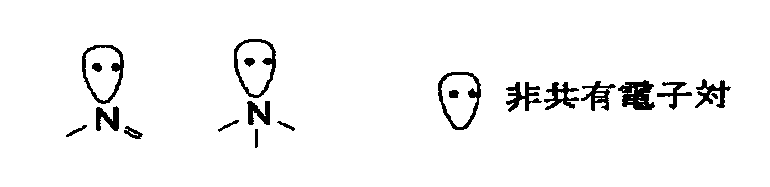
プロトンアクセプター性官能基の好ましい部分構造として、例えば、クラウンエーテル、アザクラウンエーテル、1~3級アミン、ピリジン、イミダゾール、ピラジン構造などを挙げることができる。
化合物(PA)は、活性光線又は放射線の照射により分解してプロトンアクセプター性が低下、消失、又はプロトンアクセプター性から酸性に変化した化合物を発生する。ここで、プロトンアクセプター性の低下、消失、又はプロトンアクセプター性から酸性への変化とは、プロトンアクセプター性官能基にプロトンが付加することに起因するプロトンアクセプター性の変化であり、具体的には、プロトンアクセプター性官能基を有する化合物(PA)とプロトンからプロトン付加体が生成する時、その化学平衡に於ける平衡定数が減少することを意味する。
以下、化合物(PA)の具体例を示すが、これらに限定されるものではない。
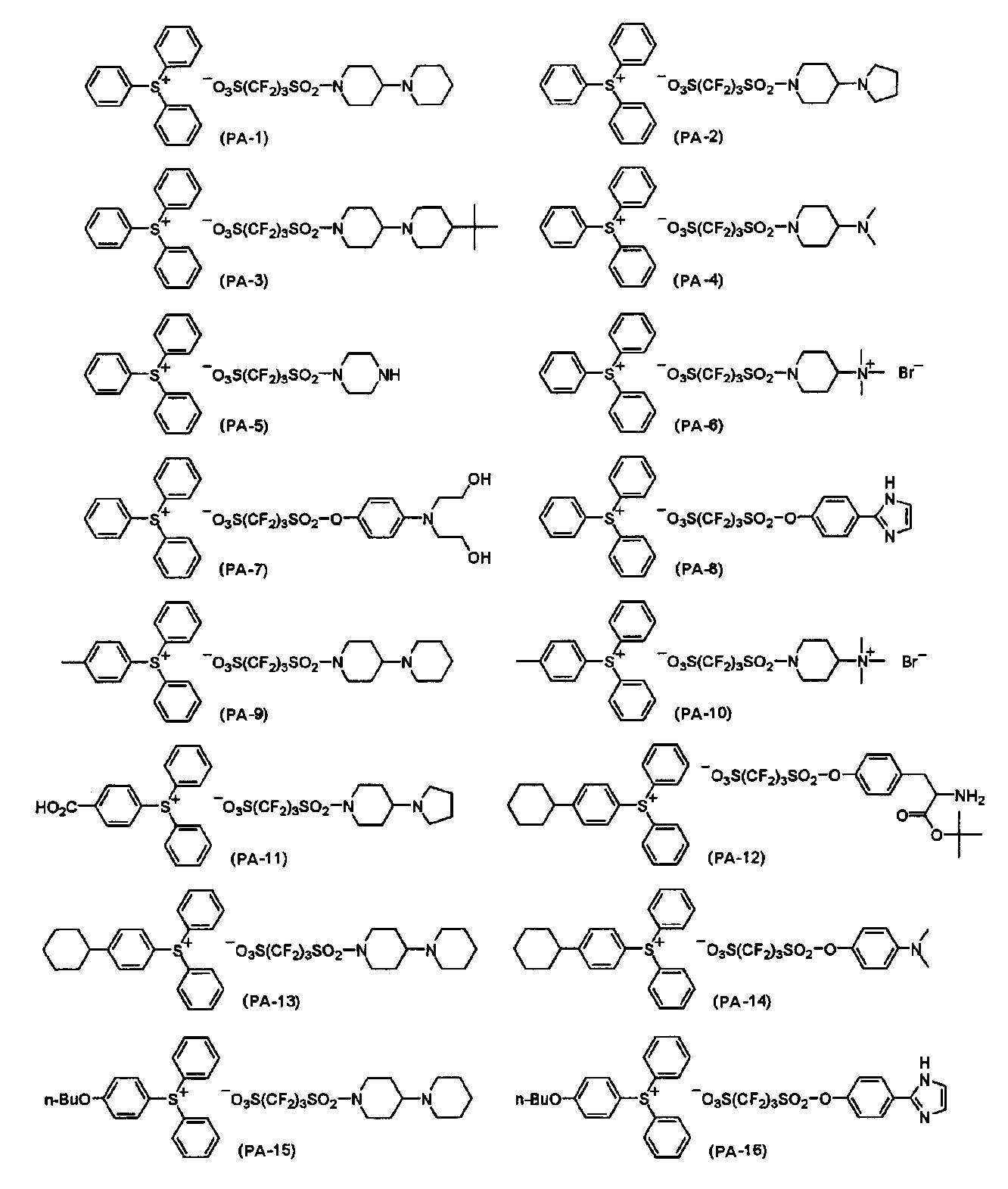
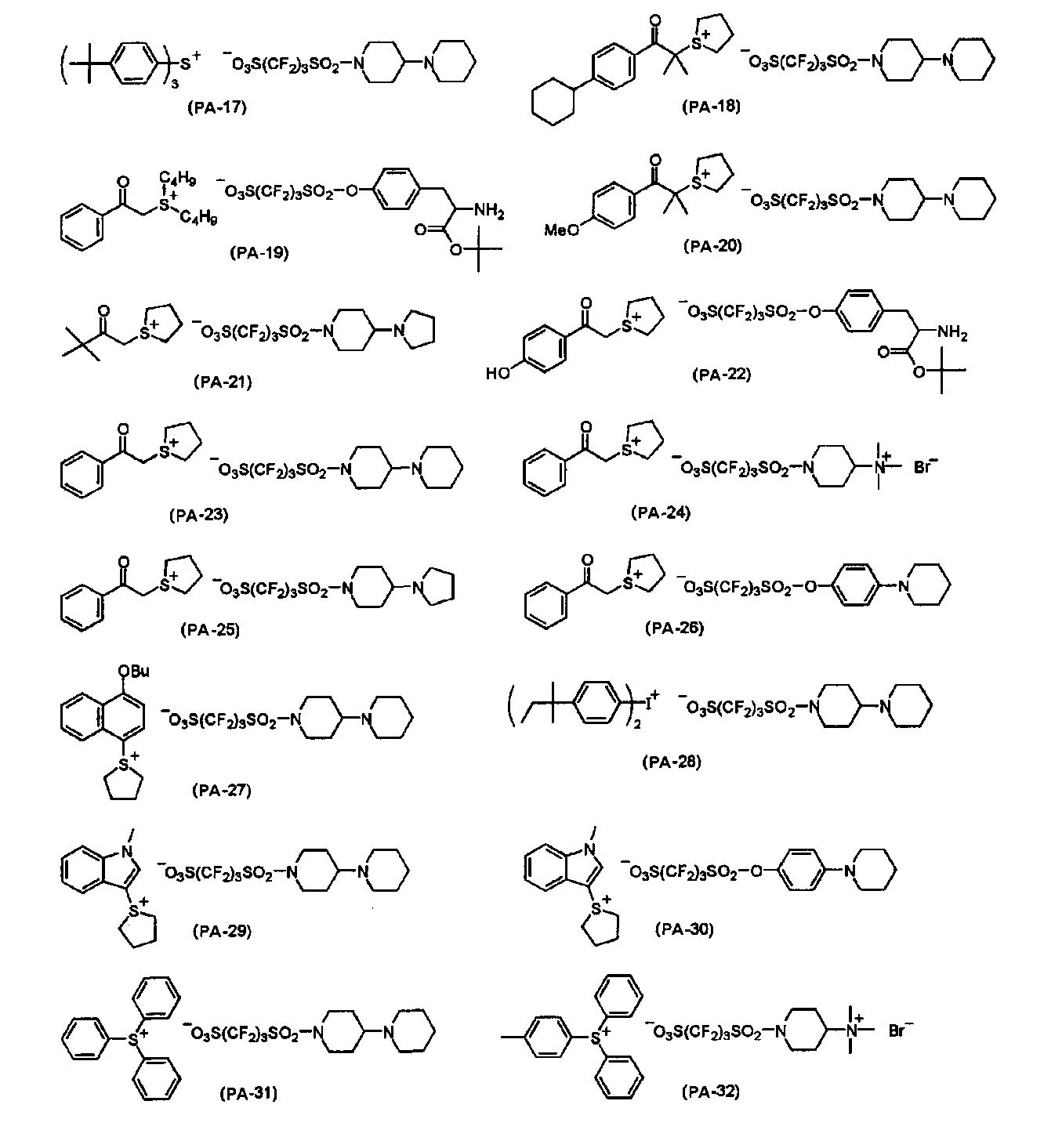
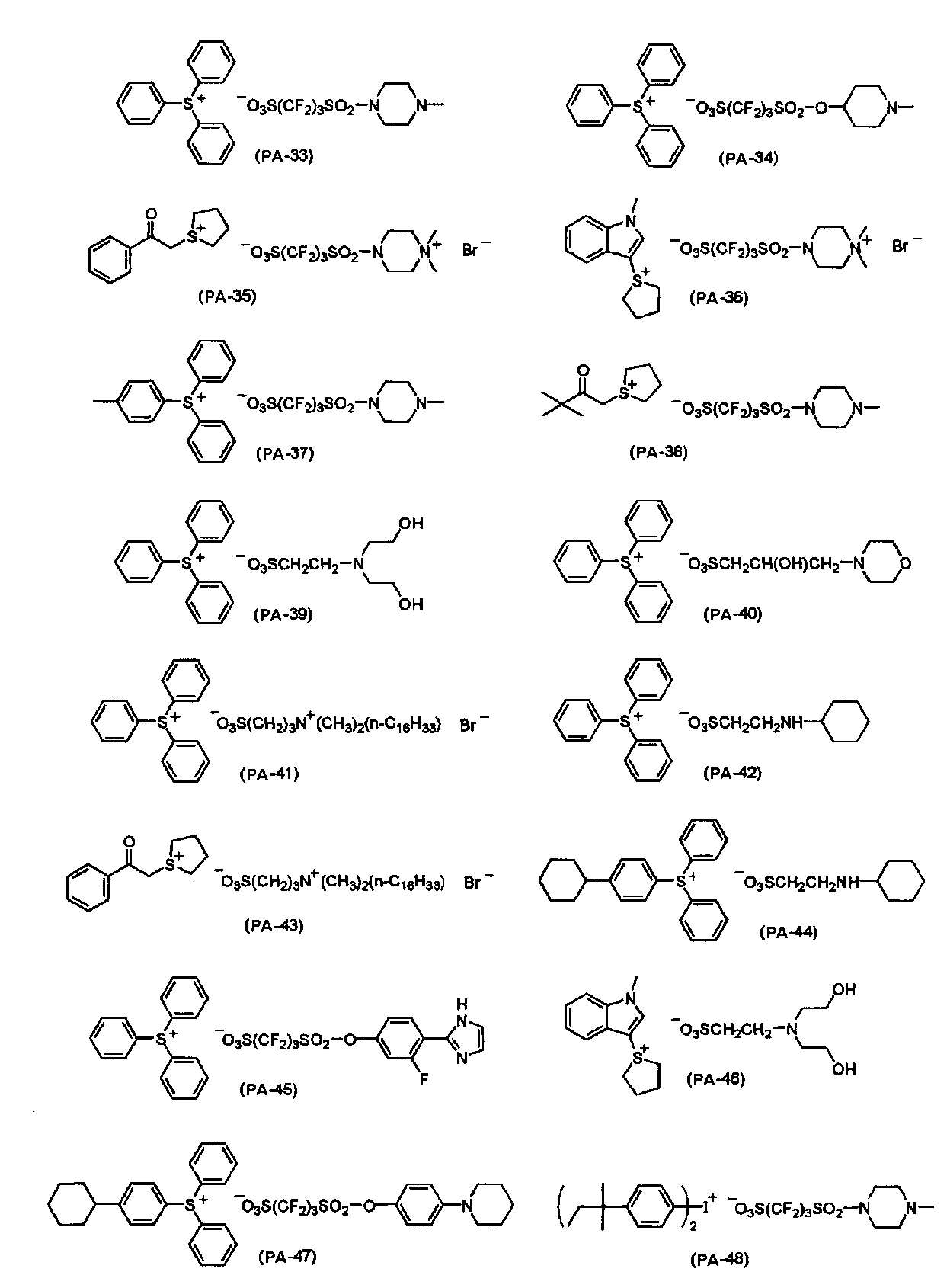
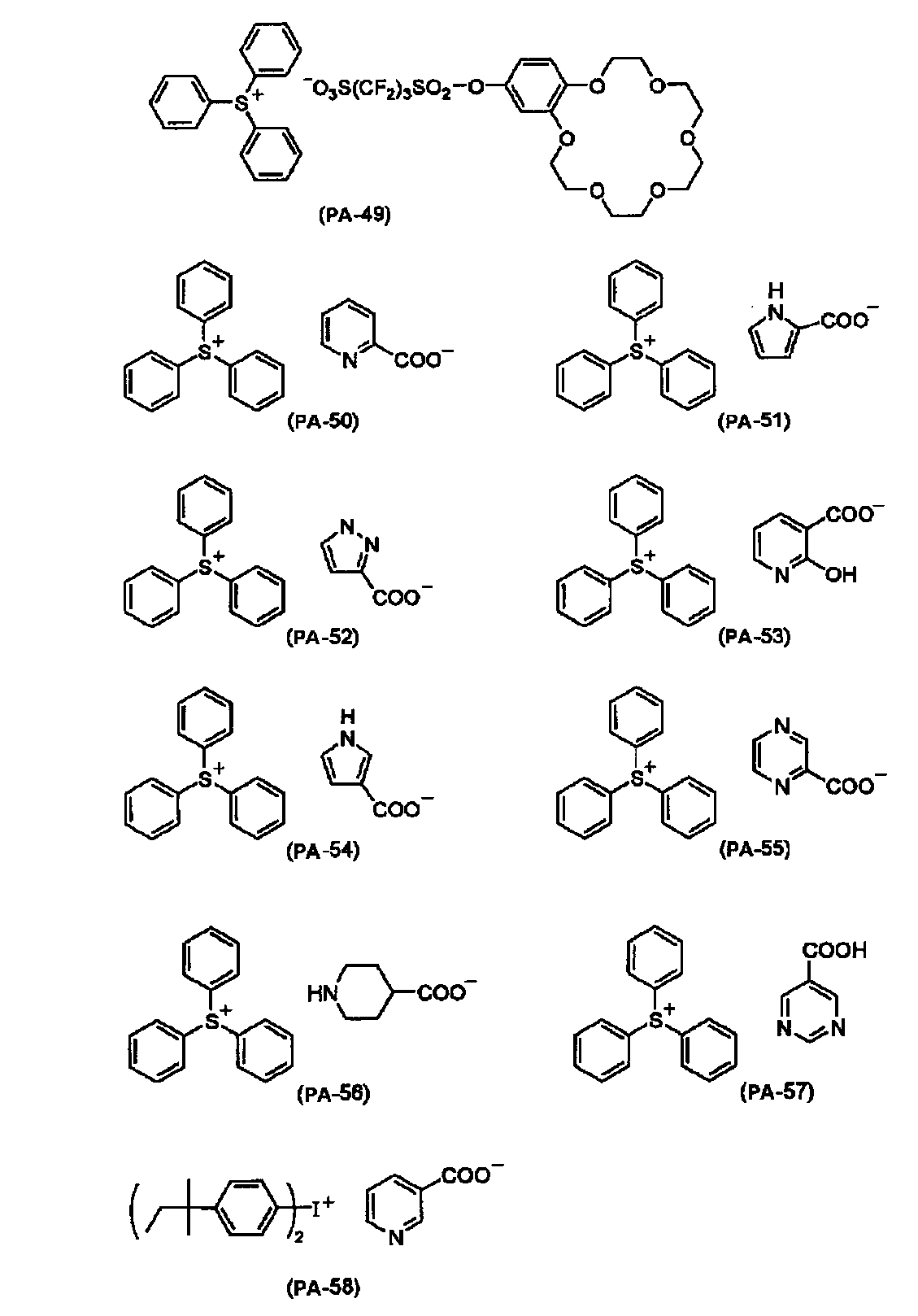

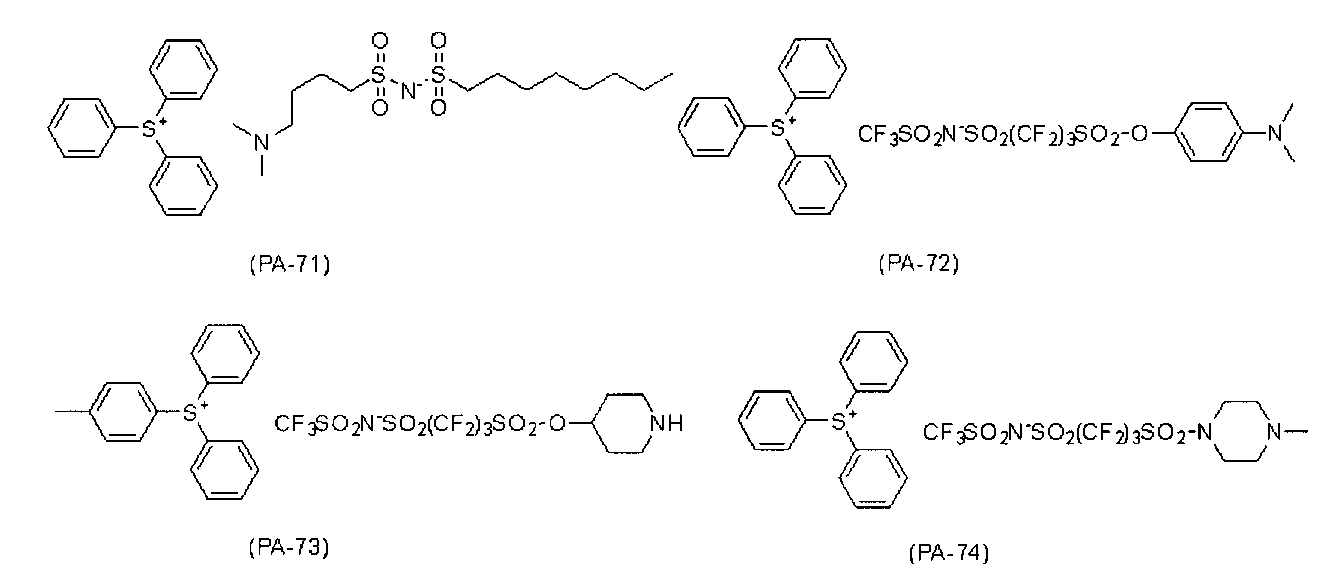
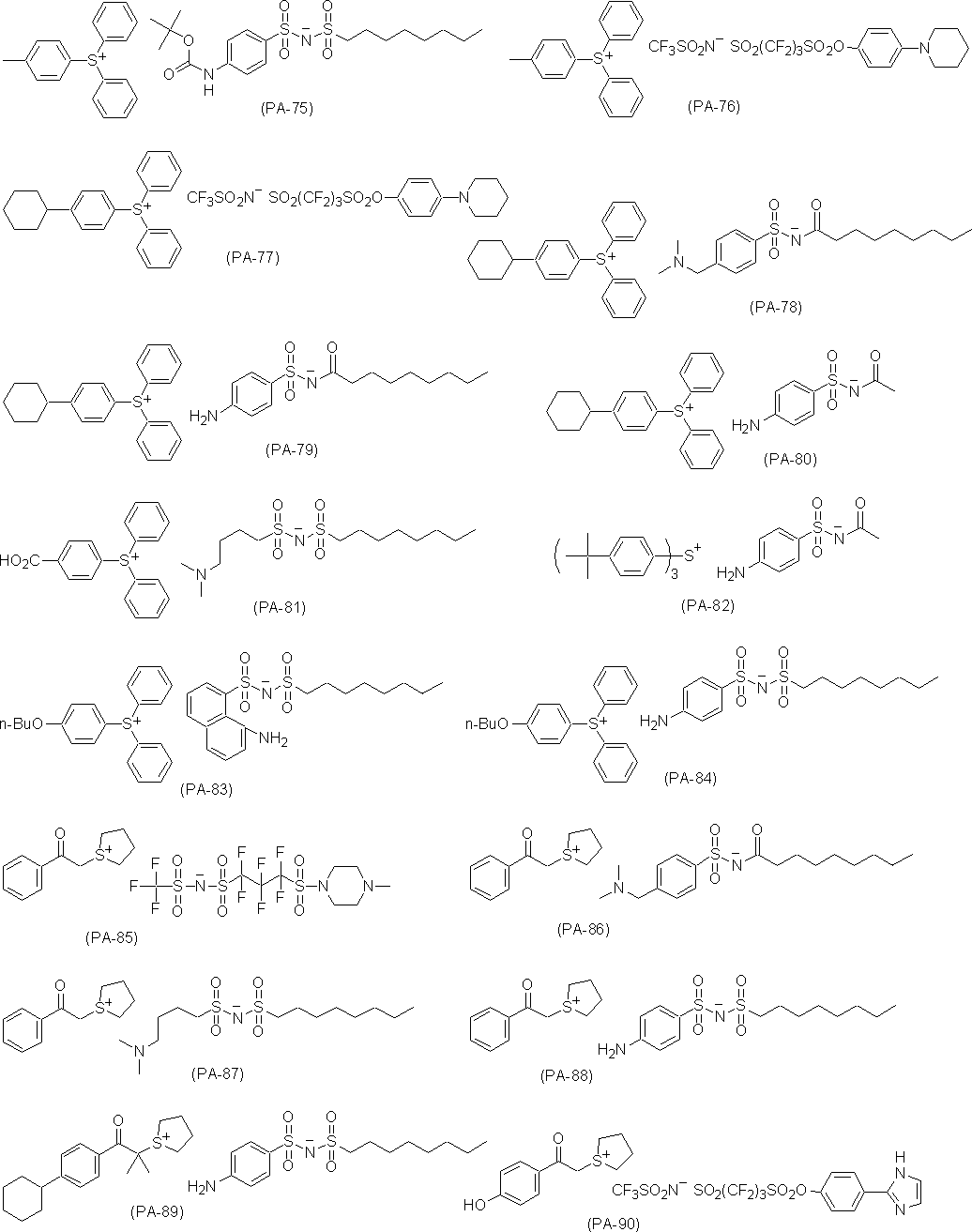

また、本発明においては、一般式(PA-1)で表される化合物を発生する化合物以外の化合物(PA)も適宜選択可能である。例えば、イオン性化合物であって、カチオン部にプロトンアクセプター部位を有する化合物を用いてもよい。より具体的には、下記一般式(7)で表される化合物などが挙げられる。
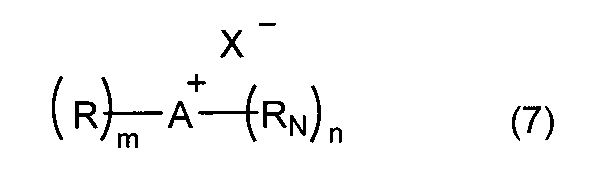
式中、Aは硫黄原子又はヨウ素原子を表す。
mは1又は2を表し、nは1又は2を表す。但し、Aが硫黄原子の時、m+n=3、Aがヨウ素原子の時、m+n=2である。
Rは、アリール基を表す。
RNは、プロトンアクセプター性官能基で置換されたアリール基を表す。
X-は、対アニオンを表す。
mは1又は2を表し、nは1又は2を表す。但し、Aが硫黄原子の時、m+n=3、Aがヨウ素原子の時、m+n=2である。
Rは、アリール基を表す。
RNは、プロトンアクセプター性官能基で置換されたアリール基を表す。
X-は、対アニオンを表す。
X-の具体例としては、上述した一般式(ZI)におけるX-と同様のものが挙げられる。
R及びRNのアリール基の具体例としては、フェニル基が好ましく挙げられる。
R及びRNのアリール基の具体例としては、フェニル基が好ましく挙げられる。
RNが有するプロトンアクセプター性官能基の具体例としては、前述の式(PA-1)で説明したプロトンアクセプター性官能基と同様である。
本発明の組成物において、化合物(PA)の組成物全体中の配合率は、全固形分中0.1~10質量%が好ましく、より好ましくは1~8質量%である。
(カ)グアニジン化合物
本発明の組成物は、下式で表される構造を有するグアニジン化合物を更に含有していてもよい。
本発明の組成物は、下式で表される構造を有するグアニジン化合物を更に含有していてもよい。
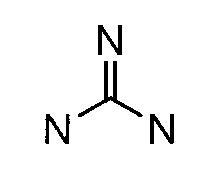
グアニジン化合物は3つの窒素によって共役酸のプラスの電荷が分散安定化されるため、強い塩基性を示す。
本発明のグアニジン化合物(A)の塩基性としては、共役酸のpKaが6.0以上であることが好ましく、7.0~20.0であることが酸との中和反応性が高く、ラフネス特性に優れるため好ましく、8.0~16.0であることがより好ましい。
本発明のグアニジン化合物(A)の塩基性としては、共役酸のpKaが6.0以上であることが好ましく、7.0~20.0であることが酸との中和反応性が高く、ラフネス特性に優れるため好ましく、8.0~16.0であることがより好ましい。
このような強い塩基性のため、酸の拡散性を抑制し、優れたパターン形状の形成に寄与することができる。
なお、ここで「pKa」とは、水溶液中でのpKaのことを表し、例えば、化学便覧(II)(改訂4版、1993年、日本化学会編、丸善株式会社)に記載のものであり、この値が低いほど酸強度が大きいことを示している。水溶液中でのpKaは、具体的には、無限希釈水溶液を用い、25℃での酸解離定数を測定することにより実測することができ、また、下記ソフトウェアパッケージ1を用いて、ハメットの置換基定数及び公知文献値のデータベースに基づいた値を、計算により求めることもできる。本明細書中に記載したpKaの値は、全て、このソフトウェアパッケージを用いて計算により求めた値を示している。
ソフトウェアパッケージ1:AdvancedChemistryDevelopment(ACD/Labs)SoftwareV8.14forSolaris(1994-2007ACD/Labs)。
本発明において、logPとは、n-オクタノール/水分配係数(P)の対数値であり、広範囲の化合物に対し、その親水性/疎水性を特徴づけることのできる有効なパラメータである。一般的には実験によらず計算によって分配係数は求められ、本発明においては、CSChemDrawUltraVer.8.0softwarepackage(Crippen’sfragmentationmethod)により計算された値を示す。
また、グアニジン化合物(A)のlogPが10以下であることが好ましい。上記値以下であることによりレジスト膜中に均一に含有させることができる。
本発明におけるグアニジン化合物(A)のlogPは2~10の範囲であることが好ましく、3~8の範囲であることがより好ましく、4~8の範囲であることが更に好ましい。
また、本発明におけるグアニジン化合物(A)はグアニジン構造以外に窒素原子を有さないことが好ましい。
以下、グアニジン化合物の具体例を示すが、これらに限定されるものではない。
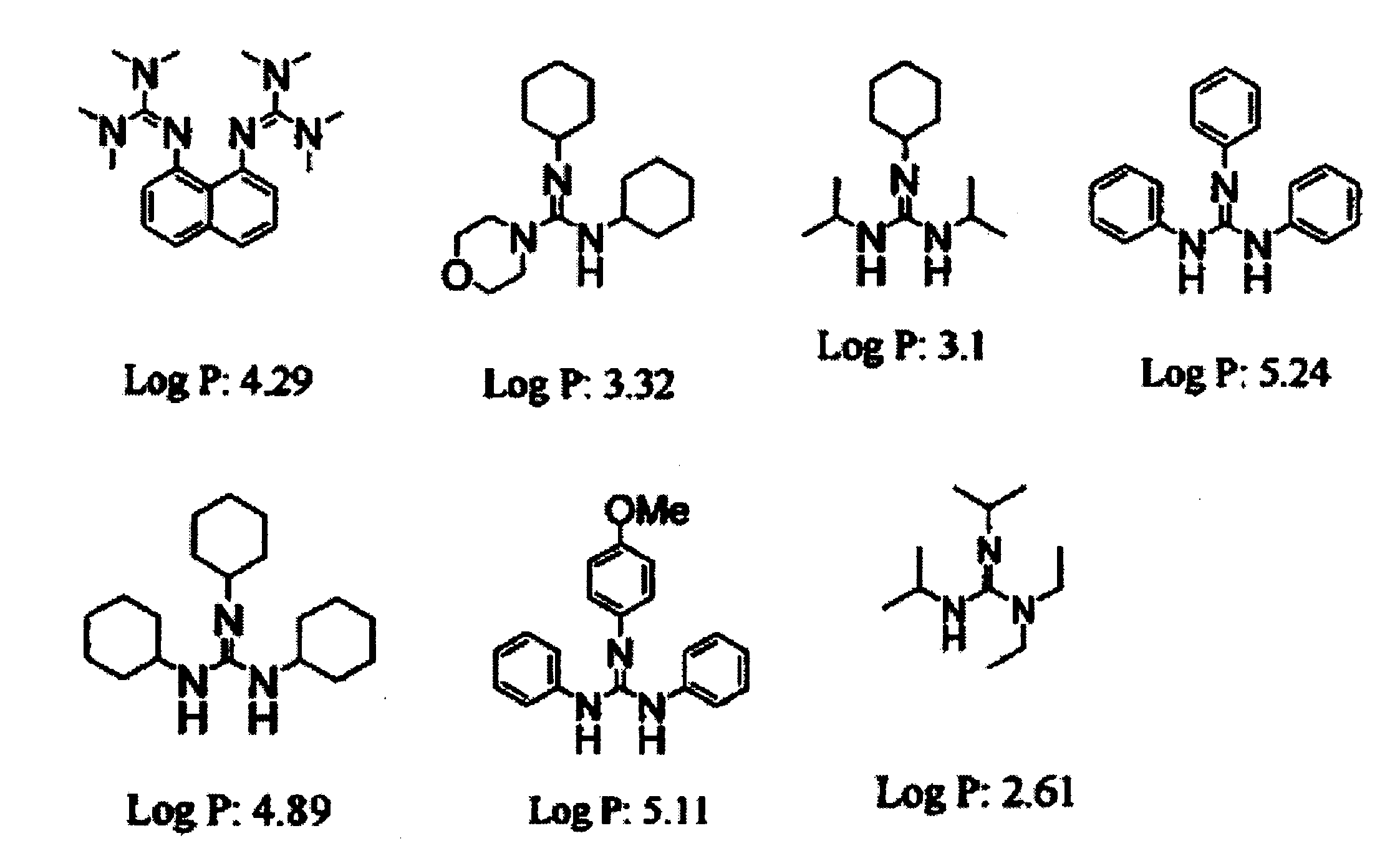
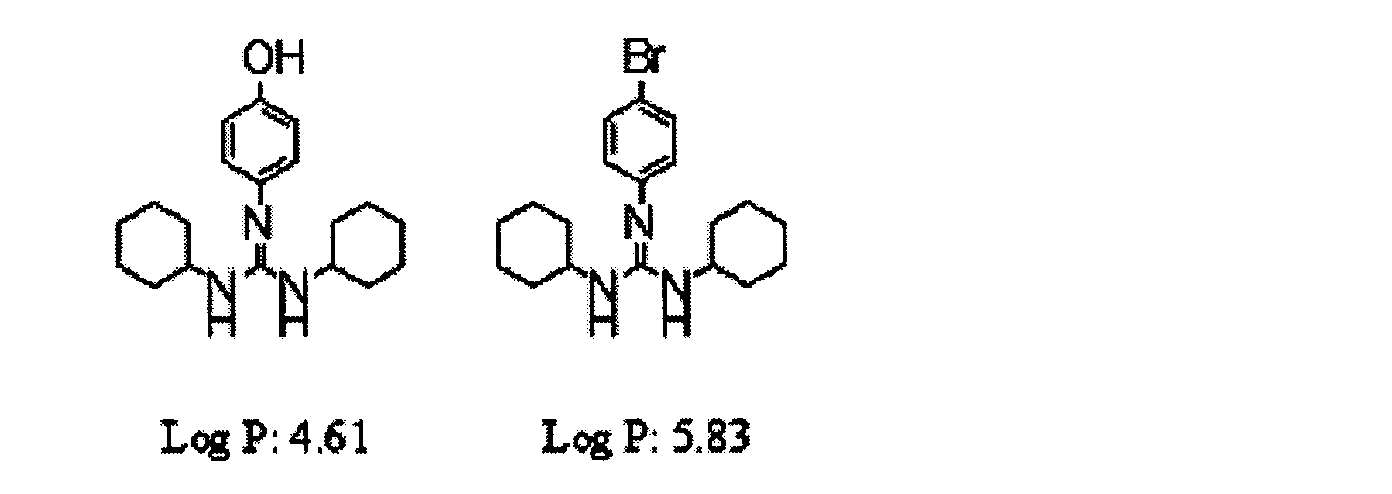

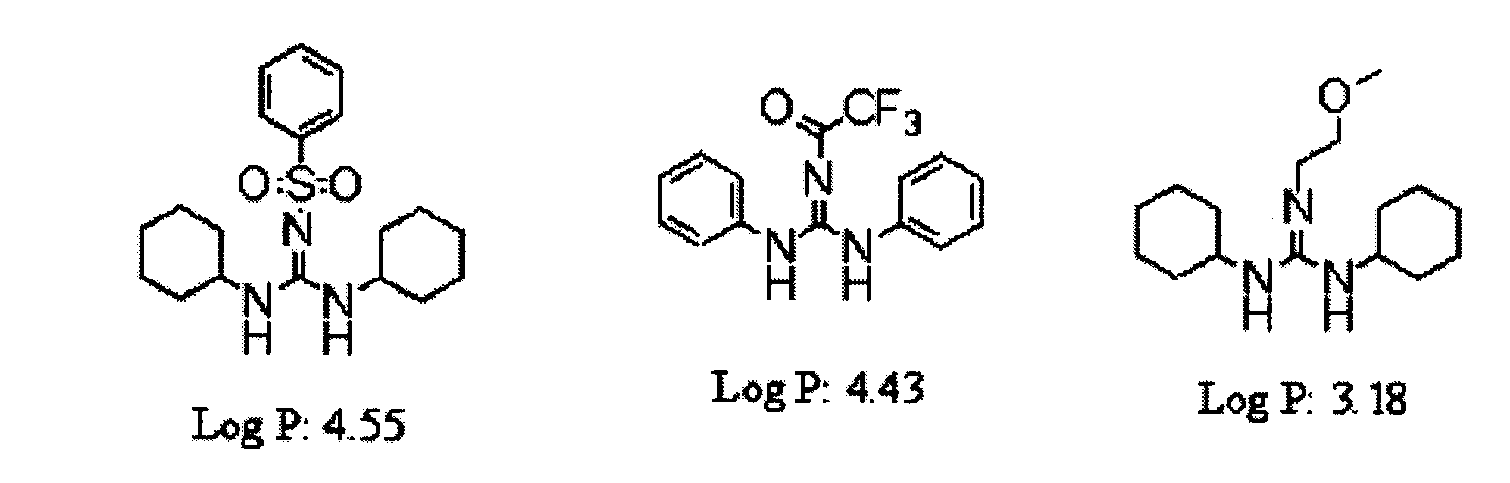
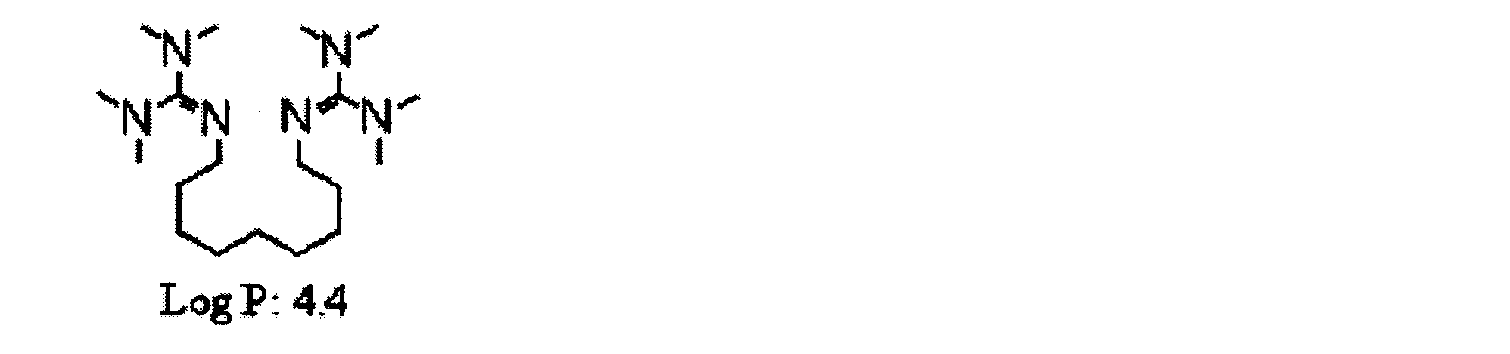
(キ) 窒素原子を有し、酸の作用により脱離する基を有する低分子化合物
本発明の組成物は、窒素原子を有し、酸の作用により脱離する基を有する低分子化合物(以下において、「低分子化合物(D)」又は「化合物(D)」ともいう)を含有することができる。低分子化合物(D)は、酸の作用により脱離する基が脱離した後は、塩基性を有することが好ましい。
本発明の組成物は、窒素原子を有し、酸の作用により脱離する基を有する低分子化合物(以下において、「低分子化合物(D)」又は「化合物(D)」ともいう)を含有することができる。低分子化合物(D)は、酸の作用により脱離する基が脱離した後は、塩基性を有することが好ましい。
酸の作用により脱離する基としては特に限定されないが、アセタール基、カルボネート基、カルバメート基、3級エステル基、3級水酸基、ヘミアミナールエーテル基が好ましく、カルバメート基、ヘミアミナールエーテル基であることが特に好ましい。
酸の作用により脱離する基を有する低分子化合物(D)の分子量は、100~1000が好ましく、100~700がより好ましく、100~500が特に好ましい。
化合物(D)としては、酸の作用により脱離する基を窒素原子上に有するアミン誘導体が好ましい。
化合物(D)は、窒素原子上に保護基を有するカルバメート基を有しても良い。カルバメート基を構成する保護基としては、下記一般式(d-1)で表すことができる。
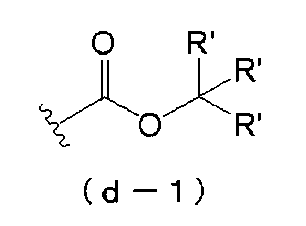
一般式(d-1)において、
R’は、それぞれ独立に、水素原子、直鎖状又は分岐状アルキル基、シクロアルキル基、アリール基、アラルキル基、又はアルコキシアルキル基を表す。R’は相互に結合して環を形成していても良い。
R’は、それぞれ独立に、水素原子、直鎖状又は分岐状アルキル基、シクロアルキル基、アリール基、アラルキル基、又はアルコキシアルキル基を表す。R’は相互に結合して環を形成していても良い。
R’として好ましくは、直鎖状、又は分岐状のアルキル基、シクロアルキル基、アリール基である。より好ましくは、直鎖状、又は分岐状のアルキル基、シクロアルキル基である。
このような基の具体的な構造を以下に示す。
このような基の具体的な構造を以下に示す。
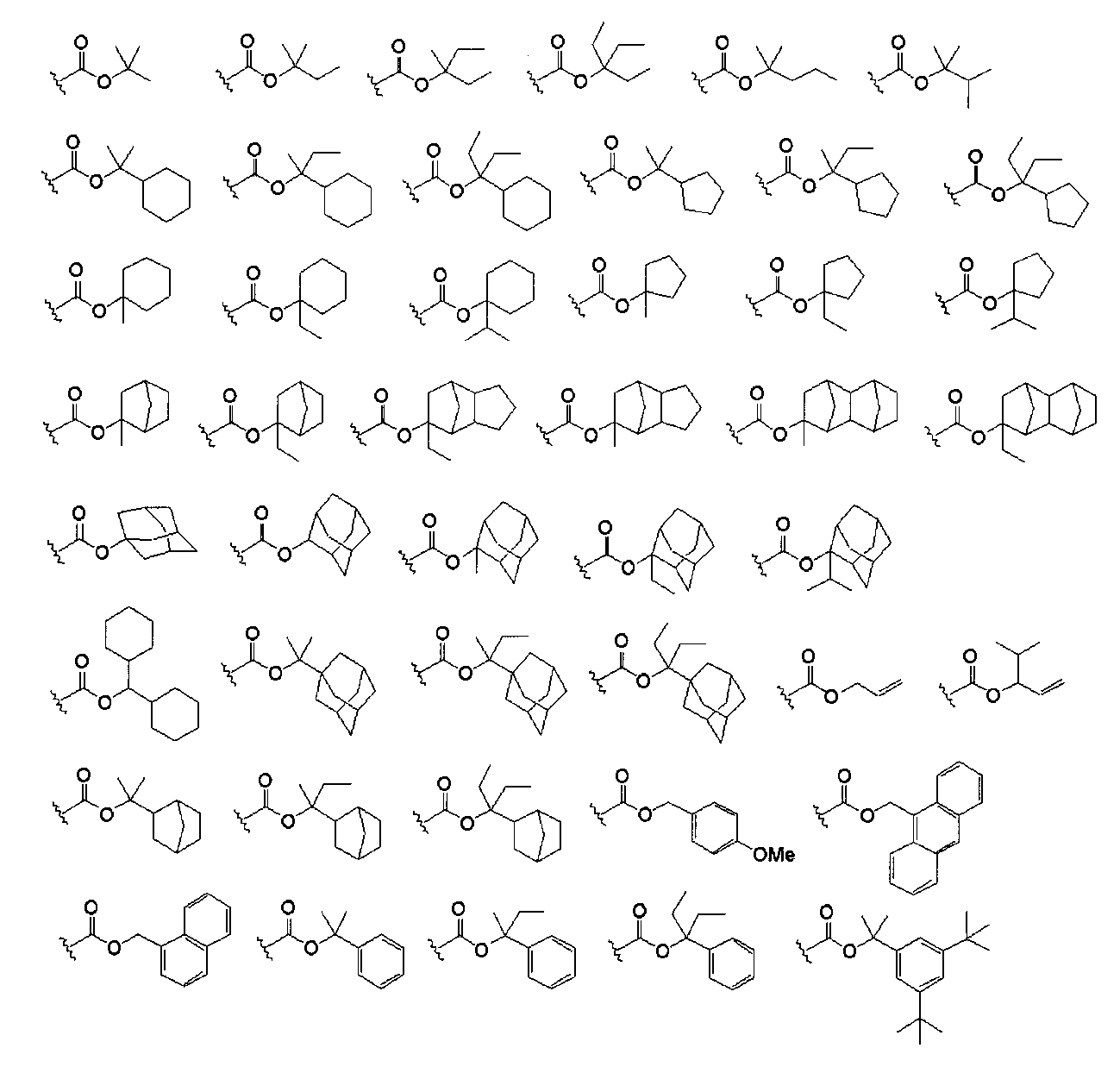
化合物(D)は、塩基性化合物と一般式(d-1)で表される構造を任意に組み合わせることで構成することも出来る。
化合物(D)は、下記一般式(A)で表される構造を有するものであることが特に好ましい。
なお、化合物(D)は、酸の作用により脱離する基を有する低分子化合物であるかぎり、前記の塩基性化合物に相当するものであってもよい。
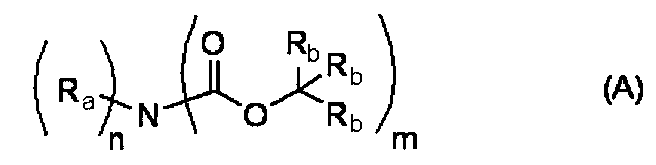
一般式(A)において、Raは、水素原子、アルキル基、シクロアルキル基、アリール基又はアラルキル基を示す。また、n=2のとき、2つのRaは同じでも異なっていてもよく、2つのRaは相互に結合して、2価の複素環式炭化水素基(好ましくは炭素数20以下)若しくはその誘導体を形成していてもよい。
Rbは、それぞれ独立に、水素原子、アルキル基、シクロアルキル基、アリール基、アラルキル基、アルコキシアルキル基を示す。但し、-C(Rb)(Rb)(Rb)において、1つ以上のRbが水素原子のとき、残りのRbの少なくとも1つはシクロプロピル基、1-アルコキシアルキル基又はアリール基である。
少なくとも2つのRbが結合して脂環式炭化水素基、芳香族炭化水素基、複素環式炭化水素基若しくはその誘導体を形成していてもよい。
nは0~2の整数を表し、mは1~3の整数を表し、n+m=3である。
一般式(A)において、Ra及びRbが示すアルキル基、シクロアルキル基、アリール基、アラルキル基は、ヒドロキシル基、シアノ基、アミノ基、ピロリジノ基、ピペリジノ基、モルホリノ基、オキソ基等の官能基、アルコキシ基、ハロゲン原子で置換されていてもよい。Rbが示すアルコキシアルキル基についても同様である。
前記Ra及び/又はRbのアルキル基、シクロアルキル基、アリール基、及びアラルキル基(これらのアルキル基、シクロアルキル基、アリール基、及びアラルキル基は、上記官能基、アルコキシ基、ハロゲン原子で置換されていてもよい)としては、
例えば、メタン、エタン、プロパン、ブタン、ペンタン、ヘキサン、ヘプタン、オクタン、ノナン、デカン、ウンデカン、ドデカン等の直鎖状、分岐状のアルカンに由来する基、これらのアルカンに由来する基を、例えば、シクロブチル基、シクロペンチル基、シクロヘキシル基等のシクロアルキル基の1種以上或いは1個以上で置換した基、
シクロブタン、シクロペンタン、シクロヘキサン、シクロヘプタン、シクロオクタン、ノルボルナン、アダマンタン、ノラダマンタン等のシクロアルカンに由来する基、これらのシクロアルカンに由来する基を、例えば、メチル基、エチル基、n-プロピル基、i-プロピル基、n-ブチル基、2-メチルプロピル基、1-メチルプロピル基、t-ブチル基等の直鎖状、分岐状のアルキル基の1種以上或いは1個以上で置換した基、
ベンゼン、ナフタレン、アントラセン等の芳香族化合物に由来する基、これらの芳香族化合物に由来する基を、例えば、メチル基、エチル基、n-プロピル基、i-プロピル基、n-ブチル基、2-メチルプロピル基、1-メチルプロピル基、t-ブチル基等の直鎖状、分岐状のアルキル基の1種以上或いは1個以上で置換した基、
ピロリジン、ピペリジン、モルホリン、テトラヒドロフラン、テトラヒドロピラン、インドール、インドリン、キノリン、パーヒドロキノリン、インダゾール、ベンズイミダゾール等の複素環化合物に由来する基、これらの複素環化合物に由来する基を直鎖状、分岐状のアルキル基或いは芳香族化合物に由来する基の1種以上或いは1個以上で置換した基、直鎖状、分岐状のアルカンに由来する基・シクロアルカンに由来する基をフェニル基、ナフチル基、アントラセニル基等の芳香族化合物に由来する基の1種以上或いは1個以上で置換した基等或いは前記の置換基がヒドロキシル基、シアノ基、アミノ基、ピロリジノ基、ピペリジノ基、モルホリノ基、オキソ基等の官能基で置換された基等が挙げられる。
例えば、メタン、エタン、プロパン、ブタン、ペンタン、ヘキサン、ヘプタン、オクタン、ノナン、デカン、ウンデカン、ドデカン等の直鎖状、分岐状のアルカンに由来する基、これらのアルカンに由来する基を、例えば、シクロブチル基、シクロペンチル基、シクロヘキシル基等のシクロアルキル基の1種以上或いは1個以上で置換した基、
シクロブタン、シクロペンタン、シクロヘキサン、シクロヘプタン、シクロオクタン、ノルボルナン、アダマンタン、ノラダマンタン等のシクロアルカンに由来する基、これらのシクロアルカンに由来する基を、例えば、メチル基、エチル基、n-プロピル基、i-プロピル基、n-ブチル基、2-メチルプロピル基、1-メチルプロピル基、t-ブチル基等の直鎖状、分岐状のアルキル基の1種以上或いは1個以上で置換した基、
ベンゼン、ナフタレン、アントラセン等の芳香族化合物に由来する基、これらの芳香族化合物に由来する基を、例えば、メチル基、エチル基、n-プロピル基、i-プロピル基、n-ブチル基、2-メチルプロピル基、1-メチルプロピル基、t-ブチル基等の直鎖状、分岐状のアルキル基の1種以上或いは1個以上で置換した基、
ピロリジン、ピペリジン、モルホリン、テトラヒドロフラン、テトラヒドロピラン、インドール、インドリン、キノリン、パーヒドロキノリン、インダゾール、ベンズイミダゾール等の複素環化合物に由来する基、これらの複素環化合物に由来する基を直鎖状、分岐状のアルキル基或いは芳香族化合物に由来する基の1種以上或いは1個以上で置換した基、直鎖状、分岐状のアルカンに由来する基・シクロアルカンに由来する基をフェニル基、ナフチル基、アントラセニル基等の芳香族化合物に由来する基の1種以上或いは1個以上で置換した基等或いは前記の置換基がヒドロキシル基、シアノ基、アミノ基、ピロリジノ基、ピペリジノ基、モルホリノ基、オキソ基等の官能基で置換された基等が挙げられる。
また、前記Raが相互に結合して、形成する2価の複素環式炭化水素基(好ましくは炭素数1~20)若しくはその誘導体としては、例えば、ピロリジン、ピペリジン、モルホリン、1,4,5,6-テトラヒドロピリミジン、1,2,3,4-テトラヒドロキノリン、1,2,3,6-テトラヒドロピリジン、ホモピペラジン、4-アザベンズイミダゾール、ベンゾトリアゾール、5-アザベンゾトリアゾール、1H-1,2,3-トリアゾール、1,4,7-トリアザシクロノナン、テトラゾール、7-アザインドール、インダゾール、ベンズイミダゾール、イミダゾ[1,2-a]ピリジン、(1S,4S)-(+)-2,5-ジアザビシクロ[2.2.1]ヘプタン、1,5,7-トリアザビシクロ[4.4.0]デック-5-エン、インドール、インドリン、1,2,3,4-テトラヒドロキノキサリン、パーヒドロキノリン、1,5,9-トリアザシクロドデカン等の複素環式化合物に由来する基、これらの複素環式化合物に由来する基を直鎖状、分岐状のアルカンに由来する基、シクロアルカンに由来する基、芳香族化合物に由来する基、複素環化合物に由来する基、ヒドロキシル基、シアノ基、アミノ基、ピロリジノ基、ピペリジノ基、モルホリノ基、オキソ基等の官能基の1種以上或いは1個以上で置換した基等が挙げられる。
本発明における特に好ましい化合物(D)を具体的に示すが、本発明は、これに限定されるものではない。


一般式(A)で表される化合物は、特開2007-298569号公報、特開2009-199021号公報などに基づき合成することができる。
本発明において、低分子化合物(D)は、一種単独でも又は2種以上を混合しても使用することができる。
本発明において、低分子化合物(D)は、一種単独でも又は2種以上を混合しても使用することができる。
本発明の組成物は、低分子化合物(D)を含有してもしなくてもよいが、含有する場合、化合物(D)の含有量は、上述した塩基性化合物と合わせた組成物の全固形分を基準として、通常、0.001~20質量%、好ましくは0.001~10質量%、より好ましくは0.01~5質量%である。
また、本発明の組成物が酸発生剤を含有する場合、酸発生剤と化合物(D)の組成物中の使用割合は、酸発生剤/[化合物(D)+下記塩基性化合物](モル比)=2.5~300であることが好ましい。即ち、感度、解像度の点からモル比が2.5以上が好ましく、露光後加熱処理までの経時でのレジストパターンの太りによる解像度の低下抑制の点から300以下が好ましい。酸発生剤/[化合物(D)+上記塩基性化合物](モル比)は、より好ましくは5.0~200、更に好ましくは7.0~150である。
その他、本発明に係る組成物に使用可能なものとして、特開2002-363146号公報の実施例で合成されている化合物、及び特開2007-298569号公報の段落0108に記載の化合物等が挙げられる。
塩基性化合物として、感光性の塩基性化合物を用いてもよい。感光性の塩基性化合物としては、例えば、特表2003-524799号公報、及び、J.Photopolym.Sci&Tech.Vol.8,P.543-553(1995)等に記載の化合物を用いることができる。
塩基性化合物の分子量は、通常は100~1500であり、好ましくは150~1300であり、より好ましくは200~1000である。
これらの塩基性化合物は、1種類を単独で用いてもよく、2種類以上を組み合わせて用いてもよい。
本発明に係る組成物が塩基性化合物を含んでいる場合、その含有量は、組成物の全固形分を基準として、0.01~8.0質量%であることが好ましく、0.1~5.0質量%であることがより好ましく、0.2~4.0質量%であることが特に好ましい。
塩基性化合物の光酸発生剤に対するモル比は、好ましくは0.01~10とし、より好ましくは0.05~5とし、更に好ましくは0.1~3とする。このモル比を過度に大きくすると、感度及び/又は解像度が低下する場合がある。このモル比を過度に小さくすると、露光と加熱(ポストベーク)との間において、パターンの細りを生ずる可能性がある。より好ましくは0.05~5、更に好ましくは0.1~3である。
[5]疎水性樹脂(HR)
本発明の感活性光線性又は感放射線性樹脂組成物は、上記樹脂(A)とは別に疎水性樹脂(HR)を有していてもよい。
上記疎水性樹脂(HR)は、膜表面に偏在するために、フッ素原子を有する基、珪素原子を有する基、又は炭素数5以上の炭化水素基を含有することが好ましい。これらの基は樹脂の主鎖中に有していても、側鎖に置換していてもよい。以下に疎水性樹脂(HR)の具体例を示す。
本発明の感活性光線性又は感放射線性樹脂組成物は、上記樹脂(A)とは別に疎水性樹脂(HR)を有していてもよい。
上記疎水性樹脂(HR)は、膜表面に偏在するために、フッ素原子を有する基、珪素原子を有する基、又は炭素数5以上の炭化水素基を含有することが好ましい。これらの基は樹脂の主鎖中に有していても、側鎖に置換していてもよい。以下に疎水性樹脂(HR)の具体例を示す。

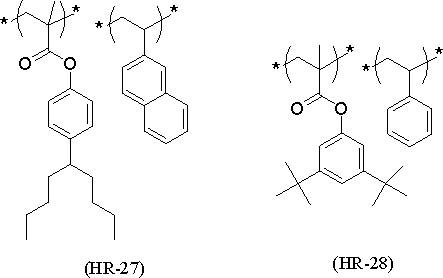
なお、疎水性樹脂としてはこの他にも特開2011-248019号公報、特開2010-175859号公報、特開2012-032544号公報に記載のものも好ましく用いることができる。
[6]界面活性剤
本発明に係る感活性光線性又は感放射線性組成物は、界面活性剤を更に含んでいてもよい。この界面活性剤としては、フッ素系及び/又はシリコン系界面活性剤が特に好ましい。
[6]界面活性剤
本発明に係る感活性光線性又は感放射線性組成物は、界面活性剤を更に含んでいてもよい。この界面活性剤としては、フッ素系及び/又はシリコン系界面活性剤が特に好ましい。
フッ素系及び/又はシリコン系界面活性剤としては、例えば、大日本インキ化学工業(株)製のメガファックF176及びメガファックR08、OMNOVA社製のPF656及びPF6320、トロイケミカル(株)製のトロイゾルS-366、住友スリーエム(株)製のフロラードFC430、並びに、信越化学工業(株)製のポリシロキサンポリマーKP-341が挙げられる。
フッ素系及び/又はシリコン系以外の界面活性剤を使用してもよい。この界面活性剤としては、例えば、ポリオキシエチレンアルキルエーテル類及びポリオキシエチレンアルキルアリールエーテル類等のノニオン系界面活性剤が挙げられる。
その他、公知の界面活性剤を適宜使用することができる。使用可能な界面活性剤としては、例えば、米国特許2008/0248425A1号明細書の[0273]以降に記載の界面活性剤が挙げられる。
界面活性剤は、1種類を単独で使用してもよいし、2種類以上を組み合わせて使用してもよい。
本発明に係る組成物が界面活性剤を更に含んでいる場合、その使用量は、組成物の全固形分を基準として、好ましくは0.0001~2質量%とし、より好ましくは0.001~1質量%とする。
本発明に係る組成物が界面活性剤を更に含んでいる場合、その使用量は、組成物の全固形分を基準として、好ましくは0.0001~2質量%とし、より好ましくは0.001~1質量%とする。
[7] その他の添加剤
本発明の組成物は、上記に説明した成分以外にも、カルボン酸、カルボン酸オニウム塩、Proceeding of SPIE, 2724,355 (1996)等に記載の分子量3000以下の溶解阻止化合物、染料、可塑剤、光増感剤、光吸収剤、酸化防止剤などを適宜含有することができる。
特にカルボン酸は、性能向上のために好適に用いられる。カルボン酸としては、安息香酸、ナフトエ酸などの、芳香族カルボン酸が好ましい。
カルボン酸の含有量は、組成物の全固形分濃度中、0.01~10質量%が好ましく、より好ましくは0.01~5質量%、更に好ましくは0.01~3質量%である。
本発明の組成物は、上記に説明した成分以外にも、カルボン酸、カルボン酸オニウム塩、Proceeding of SPIE, 2724,355 (1996)等に記載の分子量3000以下の溶解阻止化合物、染料、可塑剤、光増感剤、光吸収剤、酸化防止剤などを適宜含有することができる。
特にカルボン酸は、性能向上のために好適に用いられる。カルボン酸としては、安息香酸、ナフトエ酸などの、芳香族カルボン酸が好ましい。
カルボン酸の含有量は、組成物の全固形分濃度中、0.01~10質量%が好ましく、より好ましくは0.01~5質量%、更に好ましくは0.01~3質量%である。
本発明における感活性光線性又は感放射線性樹脂組成物は、解像力向上の観点から、膜厚10~250nmで使用されることが好ましく、より好ましくは、膜厚20~200nmで使用されることが好ましく、更に好ましくは30~100nmで使用されることが好ましい。組成物中の固形分濃度を適切な範囲に設定して適度な粘度をもたせ、塗布性、製膜性を向上させることにより、このような膜厚とすることができる。
本発明における感活性光線性又は感放射線性樹脂組成物の固形分濃度は、通常1.0~10質量%であり、好ましくは、2.0~5.7質量%、更に好ましくは2.0~5.3質量%である。固形分濃度を前記範囲とすることで、レジスト溶液を基板上に均一に塗布することができ、更にはラインウィズスラフネスに優れたレジストパターンを形成することが可能になる。その理由は明らかではないが、恐らく、固形分濃度を10質量%以下、好ましくは5.7質量%以下とすることで、レジスト溶液中での素材、特には光酸発生剤の凝集が抑制され、その結果として、均一なレジスト膜が形成できたものと考えられる。
固形分濃度とは、感活性光線性又は感放射線性樹脂組成物の総重量に対する、溶剤を除く他のレジスト成分の重量の重量百分率である。
本発明における感活性光線性又は感放射線性樹脂組成物の固形分濃度は、通常1.0~10質量%であり、好ましくは、2.0~5.7質量%、更に好ましくは2.0~5.3質量%である。固形分濃度を前記範囲とすることで、レジスト溶液を基板上に均一に塗布することができ、更にはラインウィズスラフネスに優れたレジストパターンを形成することが可能になる。その理由は明らかではないが、恐らく、固形分濃度を10質量%以下、好ましくは5.7質量%以下とすることで、レジスト溶液中での素材、特には光酸発生剤の凝集が抑制され、その結果として、均一なレジスト膜が形成できたものと考えられる。
固形分濃度とは、感活性光線性又は感放射線性樹脂組成物の総重量に対する、溶剤を除く他のレジスト成分の重量の重量百分率である。
本発明における感活性光線性又は感放射線性樹脂組成物は、上記の成分を所定の有機溶剤、好ましくは前記混合溶剤に溶解し、フィルター濾過した後、所定の支持体(基板)上に塗布して用いる。フィルター濾過に用いるフィルターのポアサイズは0.1μm以下、より好ましくは0.05μm以下、更に好ましくは0.03μm以下のポリテトラフロロエチレン製、ポリエチレン製、ナイロン製のものが好ましい。フィルター濾過においては、例えば特開2002-62667号公報のように、循環的な濾過を行ったり、複数種類のフィルターを直列又は並列に接続して濾過を行ったりしてもよい。また、組成物を複数回濾過してもよい。更に、フィルター濾過の前後で、組成物に対して脱気処理などを行ってもよい。
(2)露光工程
本発明における露光装置に用いられる光源波長に制限は無いが、赤外光、可視光、紫外光、遠紫外光、極紫外光(EUV光)、X線、電子線(EB)等を挙げることができ、好ましくは250nm以下、より好ましくは220nm以下、特に好ましくは1~200nmの波長の遠紫外光、具体的には、KrFエキシマレーザー(248nm)、ArFエキシマレーザー(193nm)、F2エキシマレーザー(157nm)、X線、EUV光(13nm)、電子線(EB)等であり、KrFエキシマレーザー、ArFエキシマレーザー、X線、EUV光又は電子線が好ましく、電子線、X線又はEUV光であることがより好ましい。
極紫外線(EUV光)などを露光源とする場合、形成した該膜に、所定のマスクを通してEUV光(13nm付近)を照射することが好ましい。電子ビーム(EB)の照射では、マスクを介さない描画(直描)が一般的である。
本発明における露光装置に用いられる光源波長に制限は無いが、赤外光、可視光、紫外光、遠紫外光、極紫外光(EUV光)、X線、電子線(EB)等を挙げることができ、好ましくは250nm以下、より好ましくは220nm以下、特に好ましくは1~200nmの波長の遠紫外光、具体的には、KrFエキシマレーザー(248nm)、ArFエキシマレーザー(193nm)、F2エキシマレーザー(157nm)、X線、EUV光(13nm)、電子線(EB)等であり、KrFエキシマレーザー、ArFエキシマレーザー、X線、EUV光又は電子線が好ましく、電子線、X線又はEUV光であることがより好ましい。
極紫外線(EUV光)などを露光源とする場合、形成した該膜に、所定のマスクを通してEUV光(13nm付近)を照射することが好ましい。電子ビーム(EB)の照射では、マスクを介さない描画(直描)が一般的である。
本発明に係るレジスト組成物から形成された膜について、活性光線又は放射線の照射時に、膜とレンズの間に空気よりも屈折率の高い液体(液浸媒体)を満たして露光(液浸露光)を行ってもよい。これにより解像性を高めることができる。用いる液浸媒体としては空気よりも屈折率の高い液体であればいずれのものでも用いることができるが好ましくは純水である。
液浸露光する際に使用する液浸液について、以下に説明する。
液浸液は、露光波長に対して透明であり、かつレジスト膜上に投影される光学像の歪みを最小限に留めるよう、屈折率の温度係数ができる限り小さい液体が好ましいが、上述の観点に加えて、入手の容易さ、取り扱いのし易さといった点から水を用いるのが好ましい。
また、更に屈折率が向上できるという点で屈折率1.5以上の媒体を用いることもできる。この媒体は、水溶液でもよく有機溶剤でもよい。
液浸液として水を用いる場合、水の表面張力を減少させるとともに、界面活性力を増大させるために、ウェハ上のレジスト膜を溶解させず、かつレンズ素子の下面の光学コートに対する影響が無視できる添加剤(液体)を僅かな割合で添加しても良い。その添加剤としては水とほぼ等しい屈折率を有する脂肪族系のアルコールが好ましく、具体的にはメチルアルコール、エチルアルコール、イソプロピルアルコール等が挙げられる。水とほぼ等しい屈折率を有するアルコールを添加することにより、水中のアルコール成分が蒸発して含有濃度が変化しても、液体全体としての屈折率変化を極めて小さくできるといった利点が得られる。一方で、屈折率が水と大きく異なる不純物が混入した場合、レジスト膜上に投影される光学像の歪みを招くため、使用する水としては、蒸留水が好ましい。更にイオン交換フィルター等を通して濾過を行った純水を用いてもよい。
液浸液は、露光波長に対して透明であり、かつレジスト膜上に投影される光学像の歪みを最小限に留めるよう、屈折率の温度係数ができる限り小さい液体が好ましいが、上述の観点に加えて、入手の容易さ、取り扱いのし易さといった点から水を用いるのが好ましい。
また、更に屈折率が向上できるという点で屈折率1.5以上の媒体を用いることもできる。この媒体は、水溶液でもよく有機溶剤でもよい。
液浸液として水を用いる場合、水の表面張力を減少させるとともに、界面活性力を増大させるために、ウェハ上のレジスト膜を溶解させず、かつレンズ素子の下面の光学コートに対する影響が無視できる添加剤(液体)を僅かな割合で添加しても良い。その添加剤としては水とほぼ等しい屈折率を有する脂肪族系のアルコールが好ましく、具体的にはメチルアルコール、エチルアルコール、イソプロピルアルコール等が挙げられる。水とほぼ等しい屈折率を有するアルコールを添加することにより、水中のアルコール成分が蒸発して含有濃度が変化しても、液体全体としての屈折率変化を極めて小さくできるといった利点が得られる。一方で、屈折率が水と大きく異なる不純物が混入した場合、レジスト膜上に投影される光学像の歪みを招くため、使用する水としては、蒸留水が好ましい。更にイオン交換フィルター等を通して濾過を行った純水を用いてもよい。
水の電気抵抗は、18.3MQcm以上であることが望ましく、TOC(有機物濃度)は20ppb以下であることが望ましく、脱気処理をしていることが望ましい。
また、液浸液の屈折率を高めることにより、リソグラフィー性能を高めることが可能である。このような観点から、屈折率を高めるような添加剤を水に加えたり、水の代わりに重水(D2O)を用いてもよい。
また、液浸液の屈折率を高めることにより、リソグラフィー性能を高めることが可能である。このような観点から、屈折率を高めるような添加剤を水に加えたり、水の代わりに重水(D2O)を用いてもよい。
本発明の組成物による膜と液浸液との間には、膜を直接、液浸液に接触させないために、液浸液難溶性膜(以下、「トップコート」ともいう)を設けてもよい。トップコートに必要な機能としては、組成物膜上層部への塗布適性、液浸液難溶性である。トップコートは、組成物膜と混合せず、更に組成物膜上層に均一に塗布できることが好ましい。
トップコートは、具体的には、炭化水素ポリマー、アクリル酸エステルポリマー、ポリメタクリル酸、ポリアクリル酸、ポリビニルエーテル、シリコン含有ポリマー、フッ素含有ポリマーなどが挙げられる。トップコートから液浸液へ不純物が溶出すると光学レンズを汚染するという観点からは、トップコートに含まれるポリマーの残留モノマー成分は少ない方が好ましい。
トップコートは、具体的には、炭化水素ポリマー、アクリル酸エステルポリマー、ポリメタクリル酸、ポリアクリル酸、ポリビニルエーテル、シリコン含有ポリマー、フッ素含有ポリマーなどが挙げられる。トップコートから液浸液へ不純物が溶出すると光学レンズを汚染するという観点からは、トップコートに含まれるポリマーの残留モノマー成分は少ない方が好ましい。
トップコートを剥離する際は、現像液を使用してもよいし、別途剥離剤を使用してもよい。剥離剤としては、膜への浸透が小さい溶剤が好ましい。剥離工程が膜の現像処理工程と同時にできるという点では、有機溶媒を含んだ現像液で剥離できることが好ましい。
トップコートと液浸液との間には屈折率の差がない方が、解像力が向上する。液浸液として水を用いる場合には、トップコートは、液浸液の屈折率に近いことが好ましい。屈折率を液浸液に近くするという観点からは、トップコート中にフッ素原子を有することが好ましい。また、透明性・屈折率の観点から薄膜の方が好ましい。
トップコートは、膜と混合せず、更に液浸液とも混合しないことが好ましい。この観点から、液浸液が水の場合には、トップコートに使用される溶剤は、本発明の組成物に使用される溶媒に難溶で、かつ非水溶性の媒体であることが好ましい。更に、液浸液が有機溶剤である場合には、トップコートは水溶性であっても非水溶性であってもよい。
トップコートと液浸液との間には屈折率の差がない方が、解像力が向上する。液浸液として水を用いる場合には、トップコートは、液浸液の屈折率に近いことが好ましい。屈折率を液浸液に近くするという観点からは、トップコート中にフッ素原子を有することが好ましい。また、透明性・屈折率の観点から薄膜の方が好ましい。
トップコートは、膜と混合せず、更に液浸液とも混合しないことが好ましい。この観点から、液浸液が水の場合には、トップコートに使用される溶剤は、本発明の組成物に使用される溶媒に難溶で、かつ非水溶性の媒体であることが好ましい。更に、液浸液が有機溶剤である場合には、トップコートは水溶性であっても非水溶性であってもよい。
(ベーク)
露光後、現像を行う前にベーク(加熱)を行うことが好ましい。
加熱温度は60~150℃で行うことが好ましく、80~150℃で行うことがより好ましく、90~140℃で行うことが更に好ましい。
加熱時間は特に限定されないが、30~300秒が好ましく、30~180秒がより好ましく、30~90秒が更に好ましい。
加熱は通常の露光・現像機に備わっている手段で行うことができ、ホットプレート等を用いて行っても良い。
ベークにより露光部の反応が促進され、感度やパターンプロファイルが改善する。また、リンス工程の後に加熱工程(Post Bake)を含むことも好ましい。加熱温度及び加熱時間は上述の通りである。ベークによりパターン間及びパターン内部に残留した現像液及びリンス液が除去される。
露光後、現像を行う前にベーク(加熱)を行うことが好ましい。
加熱温度は60~150℃で行うことが好ましく、80~150℃で行うことがより好ましく、90~140℃で行うことが更に好ましい。
加熱時間は特に限定されないが、30~300秒が好ましく、30~180秒がより好ましく、30~90秒が更に好ましい。
加熱は通常の露光・現像機に備わっている手段で行うことができ、ホットプレート等を用いて行っても良い。
ベークにより露光部の反応が促進され、感度やパターンプロファイルが改善する。また、リンス工程の後に加熱工程(Post Bake)を含むことも好ましい。加熱温度及び加熱時間は上述の通りである。ベークによりパターン間及びパターン内部に残留した現像液及びリンス液が除去される。
(3)有機溶剤現像工程
有機溶剤現像工程において、該露光された膜を有機溶剤を含む現像液を用いて現像することにより該膜の一部が除去されてなる空間部と、該現像により除去されない残膜部とを有するネガ型のパターンを形成することができる。
・現像液
現像液の蒸気圧(混合溶媒である場合は全体としての蒸気圧)は、20℃に於いて、5kPa以下が好ましく、3kPa以下が更に好ましく、2kPa以下が特に好ましい。有機溶剤の蒸気圧を5kPa以下にすることにより、現像液の基板上あるいは現像カップ内での蒸発が抑制され、ウェハ面内の温度均一性が向上し、結果としてウェハ面内の寸法均一性が良化する。
現像液に用いられる有機溶剤としては、種々の有機溶剤が広く使用されるが、たとえば、エステル系溶剤、ケトン系溶剤、アルコール系溶剤、アミド系溶剤、エーテル系溶剤、炭化水素系溶剤等の溶剤を用いることができる。
有機溶剤現像工程において、該露光された膜を有機溶剤を含む現像液を用いて現像することにより該膜の一部が除去されてなる空間部と、該現像により除去されない残膜部とを有するネガ型のパターンを形成することができる。
・現像液
現像液の蒸気圧(混合溶媒である場合は全体としての蒸気圧)は、20℃に於いて、5kPa以下が好ましく、3kPa以下が更に好ましく、2kPa以下が特に好ましい。有機溶剤の蒸気圧を5kPa以下にすることにより、現像液の基板上あるいは現像カップ内での蒸発が抑制され、ウェハ面内の温度均一性が向上し、結果としてウェハ面内の寸法均一性が良化する。
現像液に用いられる有機溶剤としては、種々の有機溶剤が広く使用されるが、たとえば、エステル系溶剤、ケトン系溶剤、アルコール系溶剤、アミド系溶剤、エーテル系溶剤、炭化水素系溶剤等の溶剤を用いることができる。
本発明において、エステル系溶剤とは分子内にエステル基を有する溶剤のことであり、ケトン系溶剤とは分子内にケトン基を有する溶剤のことであり、アルコール系溶剤とは分子内にアルコール性水酸基を有する溶剤のことであり、アミド系溶剤とは分子内にアミド基を有する溶剤のことであり、エーテル系溶剤とは分子内にエーテル結合を有する溶剤のことである。これらの中には、1分子内に上記官能基を複数種類有する溶剤も存在するが、その場合は、その溶剤の有する官能基を含むいずれの溶剤種にも該当するものとする。例えば、ジエチレングリコールモノメチルエーテルは、上記分類中の、アルコール系溶剤、エーテル系溶剤いずれにも該当するものとする。また、炭化水素系溶剤とは置換基を有さない炭化水素溶剤のことである。
特に、ケトン系溶剤、エステル系溶剤、アルコール系溶剤及びエーテル系溶剤から選択される少なくとも1種類の溶剤を含有する現像液であることが好ましい。
特に、ケトン系溶剤、エステル系溶剤、アルコール系溶剤及びエーテル系溶剤から選択される少なくとも1種類の溶剤を含有する現像液であることが好ましい。
エステル系溶剤としては、例えば、酢酸メチル、酢酸エチル、酢酸ブチル、酢酸ペンチル、酢酸イソプロピル、酢酸アミル、酢酸イソアミル、メトキシ酢酸エチル、エトキシ酢酸エチル、プロピレングリコールモノメチルエーテルアセテート(PGMEA;別名1-メトキシ-2-アセトキシプロパン)、エチレングリコールモノエチルエーテルアセテート、エチレングリコールモノプロピルエーテルアセテート、エチレングリコールモノブチルエーテルアセテート、エチレングリコールモノフェニルエーテルアセテート、ジエチレングリコールモノメチルエーテルアセテート、ジエチレングリコールモノプロピルエーテルアセテート、ジエチレングリコールモノエチルエーテルアセテート、ジエチレングリコールモノフェニルエーテルアセテート、ジエチレングリコールモノブチルエーテルアセテート、ジエチレングリコールモノエチルエーテルアセテート、2-メトキシブチルアセテート、3-メトキシブチルアセテート、4-メトキシブチルアセテート、3-メチル-3-メトキシブチルアセテート、3-エチル-3-メトキシブチルアセテート、プロピレングリコールモノエチルエーテルアセテート、プロピレングリコールモノプロピルエーテルアセテート、2-エトキシブチルアセテート、4-エトキシブチルアセテート、4-プロポキシブチルアセテート、2-メトキシペンチルアセテート、3-メトキシペンチルアセテート、4-メトキシペンチルアセテート、2-メチル-3-メトキシペンチルアセテート、3-メチル-3-メトキシペンチルアセテート、3-メチル-4-メトキシペンチルアセテート、4-メチル-4-メトキシペンチルアセテート、プロピレングリコールジアセテート、蟻酸メチル、蟻酸エチル、蟻酸ブチル、蟻酸プロピル、乳酸エチル、乳酸ブチル、乳酸プロピル、炭酸エチル、炭酸プロピル、炭酸ブチル、ピルビン酸メチル、ピルビン酸エチル、ピルビン酸プロピル、ピルビン酸ブチル、アセト酢酸メチル、アセト酢酸エチル、プロピオン酸メチル、プロピオン酸エチル、プロピオン酸プロピル、プロピオン酸イソプロピル、2-ヒドロキシプロピオン酸メチル、2-ヒドロキシプロピオン酸エチル、メチル-3-メトキシプロピオネート、エチル-3-メトキシプロピオネート、エチル-3-エトキシプロピオネート、プロピル-3-メトキシプロピオネート等を挙げることができる。
ケトン系溶剤としては、例えば、1-オクタノン、2-オクタノン、1-ノナノン、2-ノナノン、アセトン、2-ヘプタノン、4-ヘプタノン、1-ヘキサノン、2-ヘキサノン、ジイソブチルケトン、シクロヘキサノン、メチルシクロヘキサノン、フェニルアセトン、メチルエチルケトン、メチルイソブチルケトン、アセチルアセトン、アセトニルアセトン、イオノン、ジアセトニルアルコール、アセチルカービノール、アセトフェノン、メチルナフチルケトン、イソホロン、プロピレンカーボネート、γ-ブチロラクトン等を挙げることができる。
アルコール系溶剤としては、例えば、メチルアルコール、エチルアルコール、n-プロピルアルコール、イソプロピルアルコール、n-ブチルアルコール、sec-ブチルアルコール、tert-ブチルアルコール、イソブチルアルコール、n-ヘキシルアルコール、2-ヘキシルアルコール、n-ヘプチルアルコール、n-オクチルアルコール、n-デカノール、3-メトキシ-1-ブタノール等のアルコールや、エチレングリコール、ジエチレングリコール、トリエチレングリコール等のグリコール系溶剤や、エチレングリコールモノメチルエーテル、プロピレングリコールモノメチルエーテル(PGME;別名1-メトキシ-2-プロパノール)、ジエチレングリコールモノメチルエーテル、トリエチレングリコールモノエチルエーテル、メトキシメチルブタノール、エチレングリコールモノエチルエーテル、エチレングリコールモノプロピルエーテル、エチレングリコールモノブチルエーテル、プロピレングリコールモノエチルエーテル、プロピレングリコールモノプロピルエーテル、プロピレングリコールモノブチルエーテル、プロピレングリコールモノフェニルエーテル等の水酸基を含有するグリコールエーテル系溶剤等を挙げることができる。これらの中でもグリコールエーテル系溶剤を用いることが好ましい。
エーテル系溶剤としては、例えば、上記水酸基を含有するグリコールエーテル系溶剤の他、プロピレングリコールジメチルエーテル、プロピレングリコールジエチルエーテル、ジエチレングリコールジメチルエーテル、ジエチレングリコールジエチルエーテル等の水酸基を含有しないグリコールエーテル系溶剤、アニソール、フェネトール等の芳香族エーテル溶剤、ジオキサン、テトラヒドロフラン、テトラヒドロピラン、パーフルオロ-2-ブチルテトラヒドロフラン、パーフルオロテトラヒドロフラン、1,4-ジオキサン等が挙げられる。好ましくは、グリコールエーテル系溶剤、又はアニソールなどの芳香族エーテル溶剤を用いる。
アミド系溶剤としては、例えば、N-メチル-2-ピロリドン、N,N-ジメチルアセトアミド、N,N-ジメチルホルムアミド、ヘキサメチルホスホリックトリアミド、1,3-ジメチル-2-イミダゾリジノン等が使用できる。
炭化水素系溶剤としては、例えば、ペンタン、ヘキサン、オクタン、デカン、2,2,4-トリメチルペンタン、2,2,3-トリメチルヘキサン、パーフルオロヘキサン、パーフルオロヘプタン等の脂肪族炭化水素系溶剤、トルエン、キシレン、エチルベンゼン、プロピルベンゼン、1-メチルプロピルベンゼン、2-メチルプロピルベンゼン、ジメチルベンゼン、ジエチルベンゼン、エチルメチルベンゼン、トリメチルベンゼン、エチルジメチルベンゼン、ジプロピルベンゼンなどの芳香族炭化水素系溶剤が挙げられる。これらの中でも、芳香族炭化水素系溶剤が好ましい。
上記の溶剤は、複数混合してもよいし、上記以外の溶剤や水と混合し使用してもよい。但し、本発明の効果を十二分に奏するためには、現像液全体としての含水率が10質量%未満であることが好ましく、実質的に水分を含有しないことがより好ましい。
現像液における有機溶剤(複数混合の場合は合計)の濃度(含有量)は、現像液の全量に対して、好ましくは50質量%以上100質量%以下、より好ましくは70質量%以上100質量%以下、更に好ましくは90質量%以上100質量%以下である。特に好ましくは、実質的に有機溶剤のみからなる場合である。なお、実質的に有機溶剤のみからなる場合とは、微量の界面活性剤、酸化防止剤、安定剤、消泡剤などを含有する場合を含むものとする。
現像液における有機溶剤(複数混合の場合は合計)の濃度(含有量)は、現像液の全量に対して、好ましくは50質量%以上100質量%以下、より好ましくは70質量%以上100質量%以下、更に好ましくは90質量%以上100質量%以下である。特に好ましくは、実質的に有機溶剤のみからなる場合である。なお、実質的に有機溶剤のみからなる場合とは、微量の界面活性剤、酸化防止剤、安定剤、消泡剤などを含有する場合を含むものとする。
上記溶剤のうち、酢酸ブチル、酢酸ペンチル、酢酸イソペンチル、プロピレングリコールモノメチルエーテルアセテート、及びアニソールの群から選ばれる1種以上を含有することがより好ましい。
現像液として用いる有機溶剤としては、エステル系溶剤を好適に挙げることができる。
エステル系溶剤としては、後述する一般式(S1)で表される溶剤又は後述する一般式(S2)で表される溶剤を用いることがより好ましく、一般式(S1)で表される溶剤を用いることが更により好ましく、酢酸アルキルを用いることが特に好ましく、酢酸ブチル、酢酸ペンチル、酢酸イソペンチルを用いることが最も好ましい。
現像液として用いる有機溶剤としては、エステル系溶剤を好適に挙げることができる。
エステル系溶剤としては、後述する一般式(S1)で表される溶剤又は後述する一般式(S2)で表される溶剤を用いることがより好ましく、一般式(S1)で表される溶剤を用いることが更により好ましく、酢酸アルキルを用いることが特に好ましく、酢酸ブチル、酢酸ペンチル、酢酸イソペンチルを用いることが最も好ましい。
R-C(=O)-O-R’ 一般式(S1)
一般式(S1)に於いて、
R及びR’は、各々独立に、水素原子、アルキル基、シクロアルキル基、アルコキシル基、アルコキシカルボニル基、カルボキシル基、ヒドロキシル基、シアノ基又はハロゲン原子を表す。R及びR’は、互いに結合して環を形成してもよい。
R及びR’についてのアルキル基、アルコキシル基、アルコキシカルボニル基の炭素数は、1~15の範囲であることが好ましく、シクロアルキル基の炭素数は、3~15であることが好ましい。
R及びR’としては水素原子又はアルキル基が好ましく、R及びR’についてのアルキル基、シクロアルキル基、アルコキシル基、アルコキシカルボニル基、及びRとR’とが互いに結合して形成する環は、水酸基、カルボニル基を含む基(例えば、アシル基、アルデヒド基、アルコキシカルボニル等)、シアノ基などで置換されていても良い。
R及びR’は、各々独立に、水素原子、アルキル基、シクロアルキル基、アルコキシル基、アルコキシカルボニル基、カルボキシル基、ヒドロキシル基、シアノ基又はハロゲン原子を表す。R及びR’は、互いに結合して環を形成してもよい。
R及びR’についてのアルキル基、アルコキシル基、アルコキシカルボニル基の炭素数は、1~15の範囲であることが好ましく、シクロアルキル基の炭素数は、3~15であることが好ましい。
R及びR’としては水素原子又はアルキル基が好ましく、R及びR’についてのアルキル基、シクロアルキル基、アルコキシル基、アルコキシカルボニル基、及びRとR’とが互いに結合して形成する環は、水酸基、カルボニル基を含む基(例えば、アシル基、アルデヒド基、アルコキシカルボニル等)、シアノ基などで置換されていても良い。
一般式(S1)で表される溶剤としては、例えば、酢酸メチル、酢酸ブチル、酢酸エチル、酢酸イソプロピル、酢酸アミル、酢酸イソアミル、蟻酸メチル、蟻酸エチル、蟻酸ブチル、蟻酸プロピル、乳酸エチル、乳酸ブチル、乳酸プロピル、炭酸エチル、炭酸プロピル、炭酸ブチル、ピルビン酸メチル、ピルビン酸エチル、ピルビン酸プロピル、ピルビン酸ブチル、アセト酢酸メチル、アセト酢酸エチル、プロピオン酸メチル、プロピオン酸エチル、プロピオン酸プロピル、プロピオン酸イソプロピル、2-ヒドロキシプロピオン酸メチル、2-ヒドロキシプロピオン酸エチル等を挙げることができる。
これらの中でも、R及びR’が無置換のアルキル基であることが好ましい。
一般式(S1)で表される溶剤としては、酢酸アルキルであることが好ましく、酢酸ブチル、酢酸ペンチル、酢酸イソペンチルであることがより好ましい。
一般式(S1)で表される溶剤としては、酢酸アルキルであることが好ましく、酢酸ブチル、酢酸ペンチル、酢酸イソペンチルであることがより好ましい。
一般式(S1)で表される溶剤は他の有機溶剤1種以上と併用して用いても良い。この場合の併用溶剤としては、一般式(S1)で表される溶剤に分離することなく混合できれば特に制限は無く、一般式(S1)で表される溶剤同士を併用して用いても良いし、一般式(S1)で表される溶剤を他のエステル系溶剤、ケトン系溶剤、アルコール系溶剤、アミド系溶剤、エーテル系溶剤及び炭化水素系溶剤から選択される溶剤に混合して用いても良い。併用溶剤は1種以上用いることができるが、安定した性能を得る上では、1種であることが好ましい。併用溶剤1種を混合して用いる場合の、一般式(S1)で表される溶剤と併用溶剤の混合比は、質量比で通常20:80~99:1、好ましくは50:50~97:3、より好ましくは60:40~95:5、最も好ましくは60:40~90:10である。
R’’-C(=O)-O-R’’’-O-R’’’’ 一般式(S2)
一般式(S2)に於いて、
R’’及びR’’’’は、各々独立に、水素原子、アルキル基、シクロアルキル基、アルコキシル基、アルコキシカルボニル基、カルボキシル基、ヒドロキシル基、シアノ基又はハロゲン原子を表す。R’’及びR’’’’は、互いに結合して環を形成してもよい。
R’’及びR’’’’は、水素原子又はアルキル基であることが好ましい。R’’及びR’’’’についてのアルキル基、アルコキシル基、アルコキシカルボニル基の炭素数は、1~15の範囲であることが好ましく、シクロアルキル基の炭素数は、3~15であることが好ましい。
R’’’は、アルキレン基又はシクロアルキレン基を表す。R’’’は、アルキレン基であることが好ましい。R’’’についてのアルキレン基の炭素数は、1~10の範囲であることが好ましい。R’’’についてのシクロアルキレン基の炭素数は、3~10の範囲であることが好ましい。
R’’及びR’’’’についてのアルキル基、シクロアルキル基、アルコキシル基、アルコキシカルボニル基、R’’’についてのアルキレン基、シクロアルキレン基、及びR’’とR’’’’とが互いに結合して形成する環は、水酸基、カルボニル基を含む基(例えば、アシル基、アルデヒド基、アルコキシカルボニル等)、シアノ基などで置換されていても良い。
R’’及びR’’’’は、各々独立に、水素原子、アルキル基、シクロアルキル基、アルコキシル基、アルコキシカルボニル基、カルボキシル基、ヒドロキシル基、シアノ基又はハロゲン原子を表す。R’’及びR’’’’は、互いに結合して環を形成してもよい。
R’’及びR’’’’は、水素原子又はアルキル基であることが好ましい。R’’及びR’’’’についてのアルキル基、アルコキシル基、アルコキシカルボニル基の炭素数は、1~15の範囲であることが好ましく、シクロアルキル基の炭素数は、3~15であることが好ましい。
R’’’は、アルキレン基又はシクロアルキレン基を表す。R’’’は、アルキレン基であることが好ましい。R’’’についてのアルキレン基の炭素数は、1~10の範囲であることが好ましい。R’’’についてのシクロアルキレン基の炭素数は、3~10の範囲であることが好ましい。
R’’及びR’’’’についてのアルキル基、シクロアルキル基、アルコキシル基、アルコキシカルボニル基、R’’’についてのアルキレン基、シクロアルキレン基、及びR’’とR’’’’とが互いに結合して形成する環は、水酸基、カルボニル基を含む基(例えば、アシル基、アルデヒド基、アルコキシカルボニル等)、シアノ基などで置換されていても良い。
一般式(S2)に於ける、R’’’についてのアルキレン基は、アルキレン鎖中にエーテル結合を有していてもよい。
一般式(S2)で表される溶剤としては、例えば、プロピレングリコールモノメチルエーテルアセテート、エチレングリコールモノエチルエーテルアセテート、エチレングリコールモノプロピルエーテルアセテート、エチレングリコールモノブチルエーテルアセテート、エチレングリコールモノフェニルエーテルアセテート、ジエチレングリコールモノメチルエーテルアセテート、ジエチレングリコールモノプロピルエーテルアセテート、ジエチレングリコールモノフェニルエーテルアセテート、ジエチレングリコールモノブチルエーテルアセテート、ジエチレングリコールモノエチルエーテルアセテート、プロピレングリコールモノエチルエーテルアセテート、プロピレングリコールモノプロピルエーテルアセテート、メチル-3-メトキシプロピオネート、エチル-3-メトキシプロピオネート、エチル-3-エトキシプロピオネート、プロピル-3-メトキシプロピオネート、メトキシ酢酸エチル、エトキシ酢酸エチル、2-メトキシブチルアセテート、3-メトキシブチルアセテート、4-メトキシブチルアセテート、3-メチル-3-メトキシブチルアセテート、3-エチル-3-メトキシブチルアセテート、2-エトキシブチルアセテート、4-エトキシブチルアセテート、4-プロポキシブチルアセテート、2-メトキシペンチルアセテート、3-メトキシペンチルアセテート、4-メトキシペンチルアセテート、2-メチル-3-メトキシペンチルアセテート、3-メチル-3-メトキシペンチルアセテート、3-メチル-4-メトキシペンチルアセテート、4-メチル-4-メトキシペンチルアセテート等が挙げられ、プロピレングリコールモノメチルエーテルアセテートであることが好ましい。
これらの中でも、R’’及びR’’’’が無置換のアルキル基であり、R’’’が無置換のアルキレン基であることが好ましく、R’’及びR’’’’がメチル基及びエチル基のいずれかであることがより好ましく、R’’及びR’’’’がメチル基であることが更により好ましい。
これらの中でも、R’’及びR’’’’が無置換のアルキル基であり、R’’’が無置換のアルキレン基であることが好ましく、R’’及びR’’’’がメチル基及びエチル基のいずれかであることがより好ましく、R’’及びR’’’’がメチル基であることが更により好ましい。
一般式(S2)で表される溶剤は他の有機溶剤1種以上と併用して用いても良い。この場合の併用溶剤としては、一般式(S2)で表される溶剤に分離することなく混合できれば特に制限は無く、一般式(S2)で表される溶剤同士を併用して用いても良いし、一般式(S2)で表される溶剤を他のエステル系溶剤、ケトン系溶剤、アルコール系溶剤、アミド系溶剤、エーテル系溶剤及び炭化水素系溶剤から選択される溶剤に混合して用いても良い。併用溶剤は1種以上用いることができるが、安定した性能を得る上では、1種であることが好ましい。併用溶剤1種を混合して用いる場合の、一般式(S2)で表される溶剤と併用溶剤の混合比は、質量比で通常20:80~99:1、好ましくは50:50~97:3、より好ましくは60:40~95:5、最も好ましくは60:40~90:10である。
また、現像液として用いる有機溶剤としては、エーテル系溶剤も好適に挙げることができる。
用いることができるエーテル系溶剤としては、前述のエーテル系溶剤が挙げられ、このなかでも芳香環を一つ以上含むエーテル系溶剤が好まく、下記一般式(S3)で表される溶剤がより好ましく、最も好ましくはアニソールである。
また、現像液として用いる有機溶剤としては、エーテル系溶剤も好適に挙げることができる。
用いることができるエーテル系溶剤としては、前述のエーテル系溶剤が挙げられ、このなかでも芳香環を一つ以上含むエーテル系溶剤が好まく、下記一般式(S3)で表される溶剤がより好ましく、最も好ましくはアニソールである。
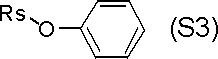
一般式(S3)に於いて、
RSは、アルキル基を表す。アルキル基としては炭素数1~4が好ましく、メチル基又はエチル基がより好ましく、メチル基であることが最も好ましい。
本発明において、現像液の含水率は、通常10質量%以下であり、5質量%以下であることが好ましく、1質量%以下であることがより好ましく、実質的に水分を含有しないことが最も好ましい。
RSは、アルキル基を表す。アルキル基としては炭素数1~4が好ましく、メチル基又はエチル基がより好ましく、メチル基であることが最も好ましい。
本発明において、現像液の含水率は、通常10質量%以下であり、5質量%以下であることが好ましく、1質量%以下であることがより好ましく、実質的に水分を含有しないことが最も好ましい。
・界面活性剤
有機溶剤を含む現像液には、必要に応じて界面活性剤を適当量含有させることができる。
界面活性剤としては、後述する、感活性光線性又は感放射線性樹脂組成物に用いられる界面活性剤と同様のものを用いることができる。
界面活性剤の使用量は現像液の全量に対して、通常0.001~5質量%、好ましくは0.005~2質量%、更に好ましくは0.01~0.5質量%である。
有機溶剤を含む現像液には、必要に応じて界面活性剤を適当量含有させることができる。
界面活性剤としては、後述する、感活性光線性又は感放射線性樹脂組成物に用いられる界面活性剤と同様のものを用いることができる。
界面活性剤の使用量は現像液の全量に対して、通常0.001~5質量%、好ましくは0.005~2質量%、更に好ましくは0.01~0.5質量%である。
・現像方法
現像方法としては、たとえば、現像液が満たされた槽中に基板を一定時間浸漬する方法(ディップ法)、基板表面に現像液を表面張力によって盛り上げて一定時間静止することで現像する方法(パドル法)、基板表面に現像液を噴霧する方法(スプレー法)、一定速度で回転している基板上に一定速度で現像液吐出ノズルをスキャンしながら現像液を吐出しつづける方法(ダイナミックディスペンス法)などを適用することができる。
また、現像を行う工程の後に、他の溶媒に置換しながら、現像を停止する工程を実施してもよい。
現像時間は未露光部の樹脂が十分に溶解する時間であれば特に制限はなく、通常は10秒~300秒であり。好ましくは、20秒~120秒である。
現像液の温度は0℃~50℃が好ましく、15℃~35℃が更に好ましい。
現像方法としては、たとえば、現像液が満たされた槽中に基板を一定時間浸漬する方法(ディップ法)、基板表面に現像液を表面張力によって盛り上げて一定時間静止することで現像する方法(パドル法)、基板表面に現像液を噴霧する方法(スプレー法)、一定速度で回転している基板上に一定速度で現像液吐出ノズルをスキャンしながら現像液を吐出しつづける方法(ダイナミックディスペンス法)などを適用することができる。
また、現像を行う工程の後に、他の溶媒に置換しながら、現像を停止する工程を実施してもよい。
現像時間は未露光部の樹脂が十分に溶解する時間であれば特に制限はなく、通常は10秒~300秒であり。好ましくは、20秒~120秒である。
現像液の温度は0℃~50℃が好ましく、15℃~35℃が更に好ましい。
(リンス)
本発明のパターン形成方法では、現像工程(3)の後に、有機溶剤を含むリンス液を用いて洗浄する工程を含んでいてもよい。
本発明のパターン形成方法では、現像工程(3)の後に、有機溶剤を含むリンス液を用いて洗浄する工程を含んでいてもよい。
・リンス液
現像後に用いるリンス液の蒸気圧(混合溶媒である場合は全体としての蒸気圧)は、20℃に於いて0.05kPa以上、5kPa以下が好ましく、0.1kPa以上、5kPa以下が更に好ましく、0.12kPa以上、3kPa以下が最も好ましい。リンス液の蒸気圧を0.05kPa以上、5kPa以下にすることにより、ウェハ面内の温度均一性が向上し、更にはリンス液の浸透に起因した膨潤が抑制され、ウェハ面内の寸法均一性が良化する。
現像後に用いるリンス液の蒸気圧(混合溶媒である場合は全体としての蒸気圧)は、20℃に於いて0.05kPa以上、5kPa以下が好ましく、0.1kPa以上、5kPa以下が更に好ましく、0.12kPa以上、3kPa以下が最も好ましい。リンス液の蒸気圧を0.05kPa以上、5kPa以下にすることにより、ウェハ面内の温度均一性が向上し、更にはリンス液の浸透に起因した膨潤が抑制され、ウェハ面内の寸法均一性が良化する。
前記リンス液としては、種々の有機溶剤が用いられるが、炭化水素系溶剤、ケトン系溶剤、エステル系溶剤、アルコール系溶剤、アミド系溶剤及びエーテル系溶剤から選択される少なくとも1種類の有機溶剤又は水を含有するリンス液を用いることが好ましい。
より好ましくは、現像の後に、ケトン系溶剤、エステル系溶剤、アルコール系溶剤、アミド系溶剤又は炭化水素系溶剤から選択される少なくとも1種類の有機溶剤を含有するリンス液を用いて洗浄する工程を行う。更により好ましくは、現像の後に、アルコール系溶剤又は炭化水素系溶剤を含有するリンス液を用いて洗浄する工程を行う。
特に好ましくは、一価のアルコール及び炭化水素系溶剤の群から選ばれる少なくとも1種以上を含有するリンス液を用いる。
特に好ましくは、一価のアルコール及び炭化水素系溶剤の群から選ばれる少なくとも1種以上を含有するリンス液を用いる。
ここで、現像後のリンス工程で用いられる1価アルコールとしては、直鎖状、分岐状、環状の1価アルコールが挙げられ、具体的には、1-ブタノール、2-ブタノール、3-メチル-1-ブタノール、tert―ブチルアルコール、1-ペンタノール、2-ペンタノール、1-ヘキサノール、1-ヘプタノール、1-オクタノール、2-ヘキサノール、2-ヘプタノール、2-オクタノール、3-ヘキサノール、3-ヘプタノール、3-オクタノール、4-オクタノール、3-メチル-3-ペンタノール、シクロペンタノール、2,3-ジメチル-2-ブタノール、3,3-ジメチル-2-ブタノール、2-メチル-2-ペンタノール、2-メチル-3-ペンタノール、3-メチル-2-ペンタノール、3-メチル-3-ペンタノール、4-メチル-2-ペンタノール、4-メチル-3-ペンタノール、シクロヘキサノール、5-メチル-2-ヘキサノール、4-メチル-2-ヘキサノール、4,5-ジチル-2-ヘキサール、6-メチル-2-ヘプタノール、7-メチル-2-オクタノール、8-メチル-2-ノナール、9-メチル-2-デカノールなどを用いることができ、好ましくは、1-ヘキサノール、2-ヘキサノール、1-ペンタノール、3-メチル-1-ブタノール、3-メチル-2-ペンタノール、3-メチル-3-ペンタノール、4-メチル-2-ペンタノール、4-メチル-3-ペンタノールであり、最も好ましくは、1-ヘキサノール又は4-メチル-2-ペンタノールである。
炭化水素系溶剤としては、トルエン、キシレン等の芳香族炭化水素系溶剤、オクタン、デカン等の脂肪族炭化水素系溶剤が挙げられる。
炭化水素系溶剤としては、トルエン、キシレン等の芳香族炭化水素系溶剤、オクタン、デカン等の脂肪族炭化水素系溶剤が挙げられる。
前記リンス液は、1-ヘキサノール、4-メチル-2-ペンタノール、デカンの群から選ばれる1種以上を含有することがより好ましい。
前記各成分は、複数混合してもよいし、上記以外の有機溶剤と混合し使用してもよい。上記溶剤は水と混合しても良いが、リンス液中の含水率は通常60質量%以下であり、好ましくは30質量%以下、更に好ましくは10質量%以下、最も好ましくは5質量%以下である。含水率を60質量%以下にすることで、良好なリンス特性を得ることができる。
リンス液には、界面活性剤を適当量含有させて使用することもできる。
界面活性剤としては、後述する、感活性光線性又は感放射線性樹脂組成物に用いられる界面活性剤と同様のものを用いることができ、その使用量はリンス液の全量に対して、通常0.001~5質量%、好ましくは0.005~2質量%、更に好ましくは0.01~0.5質量%である。
界面活性剤としては、後述する、感活性光線性又は感放射線性樹脂組成物に用いられる界面活性剤と同様のものを用いることができ、その使用量はリンス液の全量に対して、通常0.001~5質量%、好ましくは0.005~2質量%、更に好ましくは0.01~0.5質量%である。
・リンス方法
リンス工程においては、現像を行ったウェハを前記の有機溶剤を含むリンス液を用いて洗浄処理する。
洗浄処理の方法は特に限定されないが、たとえば、一定速度で回転している基板上にリンス液を吐出しつづける方法(回転吐出法)、リンス液が満たされた槽中に基板を一定時間浸漬する方法(ディップ法)、基板表面にリンス液を噴霧する方法(スプレー法)、などを適用することができ、この中でも回転吐出方法で洗浄処理を行い、洗浄後に基板を2000rpm~4000rpmの回転数で回転させ、リンス液を基板上から除去することが好ましい。
リンス時間には特に制限はないが、通常は10秒~300秒であり。好ましくは10秒~180秒であり、最も好ましくは20秒~120秒である。
リンス液の温度は0℃~50℃が好ましく、15℃~35℃が更に好ましい。
リンス工程においては、現像を行ったウェハを前記の有機溶剤を含むリンス液を用いて洗浄処理する。
洗浄処理の方法は特に限定されないが、たとえば、一定速度で回転している基板上にリンス液を吐出しつづける方法(回転吐出法)、リンス液が満たされた槽中に基板を一定時間浸漬する方法(ディップ法)、基板表面にリンス液を噴霧する方法(スプレー法)、などを適用することができ、この中でも回転吐出方法で洗浄処理を行い、洗浄後に基板を2000rpm~4000rpmの回転数で回転させ、リンス液を基板上から除去することが好ましい。
リンス時間には特に制限はないが、通常は10秒~300秒であり。好ましくは10秒~180秒であり、最も好ましくは20秒~120秒である。
リンス液の温度は0℃~50℃が好ましく、15℃~35℃が更に好ましい。
また、現像処理又はリンス処理の後に、パターン上に付着している現像液又はリンス液を超臨界流体により除去する処理を行うことができる。
更に、現像処理又はリンス処理又は超臨界流体による処理の後、パターン中に残存する溶剤を除去するために加熱処理を行うことができる。加熱温度は、良好なレジストパターンが得られる限り特に限定されるものではなく、通常40℃~160℃である。加熱温度は50℃以上150℃以下が好ましく、50℃以上110℃以下が最も好ましい。加熱時間に関しては良好なレジストパターンが得られる限り特に限定されないが、通常15秒~300秒であり、好ましくは、15~180秒である。
更に、現像処理又はリンス処理又は超臨界流体による処理の後、パターン中に残存する溶剤を除去するために加熱処理を行うことができる。加熱温度は、良好なレジストパターンが得られる限り特に限定されるものではなく、通常40℃~160℃である。加熱温度は50℃以上150℃以下が好ましく、50℃以上110℃以下が最も好ましい。加熱時間に関しては良好なレジストパターンが得られる限り特に限定されないが、通常15秒~300秒であり、好ましくは、15~180秒である。
(4)前記ネガ型のパターン上に、前記ネガ型のパターンにおける空間部に埋設するようにパターン反転用レジスト膜を形成する工程
工程(4)において、パターン反転用レジスト膜としては、シロキサン結合を有する有機珪素化合物を含有するパターン反転用レジスト膜形成組成物を用いて形成されることが好ましい。このパターン反転用レジスト膜形成組成物には、III族、IV族及びV族の元素で珪素を除く元素の酸化物が配合されても良い。
パターン反転用レジスト膜形成組成物は、前記ネガ型のパターン上に、前記ネガ型のパターンにおける空間部に埋設するように、スピンコーター等の適当な塗布方法により塗布される。その後乾燥し、パターン反転用レジスト膜を形成する。乾燥の段階では加熱を行うことが好ましい。
膜厚には特に制限はないが、好ましくは10~500nmの範囲に、より好ましくは10~200nmの範囲に、更により好ましくは10~80nmの範囲に調整する。
加熱の温度は60~200℃で行うことが好ましく、80~150℃で行うことがより好ましく、90~160℃で行うことが更に好ましい。
加熱の時間は、特に制限はないが、30~300秒が好ましく、30~180秒がより好ましく、30~90秒が更に好ましい。
加熱は、ホットプレート等を用いて行っても良い。
後述の反転工程(5)に用いるアルカリ性ウエットエッチング液(アルカリ現像液)に対する溶解速度が0.02nm/秒以上2nm/秒以下、好ましくは0.05nm/秒以上1nm/秒以下のパターン反転用レジスト膜であることが好ましい。溶解速度が0.02nm/秒より遅いと、前記ネガ型のパターンの上部表面を覆う部分までパターン反転用レジスト膜が溶解しないために、長時間を要したり、パターンの反転が行われなかったり、反転したレジストパターンの表層が頭張りになったりする可能性がある。2nm/秒より早いと、パターン反転用レジスト膜の残膜が少なくなったり反転されたレジストパターンのドット寸法が大きくなったりするという不利が生じる可能性がある。
工程(4)において、パターン反転用レジスト膜としては、シロキサン結合を有する有機珪素化合物を含有するパターン反転用レジスト膜形成組成物を用いて形成されることが好ましい。このパターン反転用レジスト膜形成組成物には、III族、IV族及びV族の元素で珪素を除く元素の酸化物が配合されても良い。
パターン反転用レジスト膜形成組成物は、前記ネガ型のパターン上に、前記ネガ型のパターンにおける空間部に埋設するように、スピンコーター等の適当な塗布方法により塗布される。その後乾燥し、パターン反転用レジスト膜を形成する。乾燥の段階では加熱を行うことが好ましい。
膜厚には特に制限はないが、好ましくは10~500nmの範囲に、より好ましくは10~200nmの範囲に、更により好ましくは10~80nmの範囲に調整する。
加熱の温度は60~200℃で行うことが好ましく、80~150℃で行うことがより好ましく、90~160℃で行うことが更に好ましい。
加熱の時間は、特に制限はないが、30~300秒が好ましく、30~180秒がより好ましく、30~90秒が更に好ましい。
加熱は、ホットプレート等を用いて行っても良い。
後述の反転工程(5)に用いるアルカリ性ウエットエッチング液(アルカリ現像液)に対する溶解速度が0.02nm/秒以上2nm/秒以下、好ましくは0.05nm/秒以上1nm/秒以下のパターン反転用レジスト膜であることが好ましい。溶解速度が0.02nm/秒より遅いと、前記ネガ型のパターンの上部表面を覆う部分までパターン反転用レジスト膜が溶解しないために、長時間を要したり、パターンの反転が行われなかったり、反転したレジストパターンの表層が頭張りになったりする可能性がある。2nm/秒より早いと、パターン反転用レジスト膜の残膜が少なくなったり反転されたレジストパターンのドット寸法が大きくなったりするという不利が生じる可能性がある。
この場合、特に、アルカリ現像時に膜表面を適当に溶解させ孤立ライン等のパターンを形成するためには、アルカリ溶解速度を0.05nm/秒以上1nm/秒以下の範囲の溶解速度に調整することが好ましい。これよりも早い溶解速度であれば現像時の膜減りが大きくなってしまい、溶解速度が遅い場合、膜表面が溶解せずに孤立ライン等のパターンが形成されなくなってしまう可能性がある。適度な溶解速度の調整のためにアルカリ溶解速度が1nm/秒以上のユニットと0.05nm/秒以下のユニットとを共重合し、共重合比率を最適化することによって最適な溶解速度の材料にすることができる。
本態様のパターン形成方法に用いられるアルカリ現像液に0.02nm/秒以上2nm/秒以下の範囲の溶解速度を持つ膜(パターン反転用レジスト膜)は、少なくともシロキサン結合を有する有機珪素化合物を含有し、III族、IV族、及びV族の元素で珪素を除く元素の酸化物を含んでも良いパターン反転用レジスト膜形成組成物から形成することが出来る。
このような組成物に用いられるシロキサン結合を有する有機珪素化合物は、モノマーを加水分解縮合して得られる。好ましい製造方法として以下の方法が例示できるが、この方法に限られるものではない。
このような組成物に用いられるシロキサン結合を有する有機珪素化合物は、モノマーを加水分解縮合して得られる。好ましい製造方法として以下の方法が例示できるが、この方法に限られるものではない。
この珪素含有有機化合物のモノマーは、下記一般式(11)で表すことができる。R41
m1R42
m2R43
m3Si(OR40)(4-m1-m2-m3) (11)
(式中、R40は水素原子、炭素数1~6、特に1~3のアルキル基であり、R41、R42、R43はそれぞれ水素原子、又は炭素数1~30の1価の有機基であり、m1、m2、m3は0又は1である。m1+m2+m3は0~3の整数であり、特に0又は1が好ましい。)
(式中、R40は水素原子、炭素数1~6、特に1~3のアルキル基であり、R41、R42、R43はそれぞれ水素原子、又は炭素数1~30の1価の有機基であり、m1、m2、m3は0又は1である。m1+m2+m3は0~3の整数であり、特に0又は1が好ましい。)
ここで、有機基は炭素を含む基の意味であり、更に水素を含み、また窒素、酸素、硫黄、ケイ素、フッ素等を含んでもよい。R41、R42、R43の有機基としては、水素原子、直鎖状、分岐状、環状のアルキル基、アルケニル基、アルキニル基、アリール基、アラルキル基等の非置換の1価炭化水素基、及びこれらの基の水素原子の1個又はそれ以上がエポキシ基、アルコキシ基、ヒドロキシル基等で置換された基や、-O-、-CO-、-OCO-、-COO-、-OCOO-が介在された基、ヘキサフルオロイソプロパノール基、カルボキシル基、フェノール性水酸基、ケイ素-ケイ素結合を含む有機基等を挙げることができる。
一般式(11)で示されるモノマーのR41、R42、R43として好ましいものは、水素原子、メチル基、エチル基、n-プロピル基、iso-プロピル基、n-ブチル基、iso-ブチル基、sec-ブチル基、t-ブチル基、n-ペンチル基、2-エチルブチル基、3-エチルブチル基、2,2-ジエチルプロピル基、シクロペンチル基、n-ヘキシル基、シクロヘキシル基等のアルキル基、ビニル基、アリル基等のアルケニル基、エチニル基等のアルキニル基、フェニル基、トリル基等のアリール基、ベンジル基、フェニチル基等のアラルキル基が挙げられる。
例えば、m1=0、m2=0、m3=0であるテトラアルコキシシランとして、テトラメトキシシラン、テトラエトキシシラン、テトラ-n-プロポキシシラン、テトラ-iso-プロポキシシランをモノマーとして例示できる。好ましくは、テトラメトキシシラン、テトラエトキシシランである。
例えば、m1=1、m2=0、m3=0であるトリアルコキシシランとして、トリメトキシシラン、トリエトキシシラン、トリ-n-プロポキシシラン、トリ-iso-プロポキシシラン、メチルトリメトキシシラン、メチルトリエトキシシラン、メチルトリ-n-プロポキシシラン、メチルトリ-iso-プロポキシシラン、エチルトリメトキシシラン、エチルトリエトキシシラン、エチルトリ-n-プロポキシシラン、エチルトリ-iso-プロポキシシラン、ビニルトリメトキシシラン、ビニルトリエトキシシラン、ビニルトリ-n-プロポキシシラン、ビニルトリ-iso-プロポキシシラン、n-プロピルトリメトキシシラン、n-プロピルトリエトキシシラン、n-プロピルトリ-n-プロポキシシラン、n-プロピルトリ-iso-プロポキシシラン、i-プロピルトリメトキシシラン、i-プロピルトリエトキシシラン、i-プロピルトリ-n-プロポキシシラン、i-プロピルトリ-iso-プロポキシシラン、n-ブチルトリメトキシシラン、n-ブチルトリエトキシシラン、n-ブチルトリ-nプロポキシシラン、n-ブチルトリ-iso-プロポキシシラン、sec-ブチルトリメトキシシラン、sec-ブチル-トリエトキシシラン、sec-ブチル-トリ-n-プロポキシシラン、sec-ブチル-トリ-iso-プロポキシシラン、t-ブチルトリメトキシシラン、t-ブチルトリエトキシシラン、t-ブチルトリ-nプロポキシシラン、t-ブチルトリ-iso-プロポキシシラン、シクロプロピルトリメトキシシラン、シクロプロピルトリエトキシシラン、シクロプロピル-トリ-n-プロポキシシラン、シクロプロピル-トリ-iso-プロポキシシラン、シクロブチルトリメトキシシラン、シクロブチルトリエトキシシラン、シクロブチル-トリ-n-プロポキシシラン、シクロブチル-トリ-iso-プロポキシシラン、シクロペンチルトリメトキシシラン、シクロペンチルトリエトキシシラン、シクロペンチル-トリ-n-プロポキシシラン、シクロペンチル-トリ-iso-プロポキシシラン、シクロヘキシルトリメトキシシラン、シクロヘキシルトリエトキシシラン、シクロヘキシル-トリ-n-プロポキシシラン、シクロヘキシル-トリ-iso-プロポキシシラン、シクロヘキセニルトリメトキシシラン、シクロヘキセニルトリエトキシシラン、シクロヘキセニル-トリ-n-プロポキシシラン、シクロヘキセニル-トリ-iso-プロポキシシラン、シクロヘキセニルエチルトリメトキシシラン、シクロヘキセニルエチルトリエトキシシラン、シクロヘキセニルエチル-トリ-n-プロポキシシラン、シクロヘキセニルエチルトリ-iso-プロポキシシラン、シクロオクタニルトリメトキシシラン、シクロオクタニルトリエトキシシラン、シクロオクタニル-トリ-n-プロポキシシラン、シクロオクタニル-トリ-iso-プロポキシシラン、シクロペンタジエニルプロピルトリメトキシシラン、シクロペンタジエニルプロピルトリエトキシシラン、シクロペンタジエニルプロピル-トリ-n-プロポキシシラン、シクロペンタジエニルプロピル-トリ-iso-プロポキシシラン、ビシクロヘプテニルトリメトキシシラン、ビシクロヘプテニルトリエトキシシラン、ビシクロヘプテニル-トリ-n-プロポキシシラン、ビシクロヘプテニル-トリ-iso-プロポキシシラン、ビシクロヘプチルトリメトキシシラン、ビシクロヘプチルトリエトキシシラン、ビシクロヘプチル-トリ-n-プロポキシシラン、ビシクロヘプチル-トリ-iso-プロポキシシラン、アダマンチルトリメトキシシラン、アダマンチルトリエトキシシラン、アダマンチル-トリ-n-プロポキシシラン、アダマンチル-トリ-iso-プロポキシシラン等を例示できる。また、芳香族基含有モノマーとして、フェニルトリメトキシシラン、フェニルトリエトキシシラン、フェニルトリ-n-プロポキシシラン、フェニルトリ-iso-プロポキシシラン、ベンジルトリメトキシシラン、ベンジルトリエトキシシラン、ベンジルトリ-n-プロポキシシラン、ベンジルトリ-iso-プロポキシシラン、トリルトリメトキシシラン、トリルトリエトキシシラン、トリルトリ-n-プロポキシシラン、トリルトリ-iso-プロポキシシラン、フェネチルトリメトキシシラン、フェネチルトリエトキシシラン、フェネチルトリ-n-プロポキシシラン、フェネチルトリ-iso-プロポキシシラン、ナフチルトリメトキシシラン、ナフチルトリエトキシシラン、ナフチルトリ-n-プロポキシシラン、ナフチルトリ-iso-プロポキシシラン等を例示できる。
例えば、m1=1、m2=1、m3=0であるジアルコキシシランとして、ジメチルジメトキシシラン、ジメチルジエトキシシラン、メチルエチルジメトキシシラン、メチルエチルジエトキシシラン、ジメチル-ジ-n-プロポキシシラン、ジメチル-ジ-iso-プロポキシシラン、ジエチルジメトキシシラン、ジエチルジエトキシシラン、ジエチル-ジ-n-プロポキシシラン、ジエチル-ジ-iso-プロポキシシラン、ジ-n-プロピルジメトキシシラン、ジ-n-プロピルジエトキシシラン、ジ-n-プロピル-ジ-n-プロポキシシラン、ジ-n-プロピル-ジ-iso-プロポキシシラン、ジ-iso-プロピルジメトキシシラン、ジ-iso-プロピルジエトキシシラン、ジ-iso-プロピル-ジ-n-プロポキシシラン、ジ-iso-プロピル-ジ-iso-プロポキシシラン、ジ-n-ブチルジメトキシシラン、ジ-n-ブチルジエトキシシラン、ジ-n-ブチルジ-n-プロポキシシラン、ジ-n-ブチル-ジ-iso-プロポキシシラン、ジ-sec-ブチルジメトキシシラン、ジ-sec-ブチルジエトキシシラン、ジ-sec-ブチル-ジ-n-プロポキシシラン、ジ-sec-ブチル-ジ-iso-プロポキシシラン、ジ-t-ブチルジメトキシシラン、ジ-t-ブチルジエトキシシラン、ジ-t-ブチル-ジ-n-プロポキシシラン、ジ-t-ブチル-ジ-iso-プロポキシシラン、ジシクロプロピルジメトキシシラン、ジシクロプロピルジエトキシシラン、ジシクロプロピル-ジ-n-プロポキシシラン、ジシクロプロピル-ジ-iso-プロポキシシラン、ジシクロブチルジメトキシシラン、ジシクロブチルジエトキシシラン、ジシクロブチル-ジ-n-プロポキシシラン、ジシクロブチル-ジ-iso-プロポキシシラン、ジシクロペンチルジメトキシシラン、ジシクロペンチルジエトキシシラン、ジシクロペンチル-ジ-n-プロポキシシラン、ジシクロペンチル-ジ-iso-プロポキシシラン、ジシクロヘキシルジメトキシシラン、ジシクロヘキシルジエトキシシラン、ジシクロヘキシル-ジ-n-プロポキシシラン、ジシクロヘキシル-ジ-iso-プロポキシシラン、ジシクロヘキセニルジメトキシシラン、ジシクロヘキセニルジエトキシシラン、ジシクロヘキセニル-ジ-n-プロポキシシラン、ジシクロヘキセニル-ジ-iso-プロポキシシラン、ジシクロヘキセニルエチルジメトキシシラン、ジシクロヘキセニルエチルジエトキシシラン、ジシクロヘキセニルエチル-ジ-n-プロポキシシラン、ジシクロヘキセニルエチル-ジ-iso-プロポキシシラン、ジシクロオクタニルジメトキシシラン、ジシクロオクタニルジエトキシシラン、ジシクロオクタニル-ジ-n-プロポキシシラン、ジシクロオクタニル-ジ-iso-プロポキシシラン、ジシクロペンタジエニルプロピルジメトキシシラン、ジシクロペンタジエニルプロピルジエトキシシラン、ジシクロペンタジエニルプロピル-ジ-n-プロポキシシラン、ジシクロペンタジエニルプロピル-ジ-iso-プロポキシシラン、ビス-ビシクロヘプテニルジメトキシシラン、ビス-ビシクロヘプテニルジエトキシシラン、ビス-ビシクロヘプテニル-ジ-n-プロポキシシラン、ビス-ビシクロヘプテニル-ジ-iso-プロポキシシラン、ビス-ビシクロヘプチルジメトキシシラン、ビス-ビシクロヘプチルジエトキシシラン、ビス-ビシクロヘプチル-ジ-n-プロポキシシラン、ビス-ビシクロヘプチル-ジ-iso-プロポキシシラン、ビス-アダマンチルジメトキシシラン、ビス-アダマンチルジエトキシシラン、ビス-アダマンチル-ジ-n-プロポキシシラン、ビス-アダマンチル-ジ-iso-プロポキシシラン等を例示できる。また、芳香族基含有モノマーとして、ジフェニルジメトキシシラン、ジフェニルジエトキシシラン、メチルフェニルジメトキシシラン、メチルフェニルジエトキシシラン、ジフェニル-ジ-nプロポキシシラン、ジフェニル-ジ-iso-プロポキシシラン等を例示できる。
例えば、m1=1、m2=1、m3=1であるモノアルコキシシランとして、トリメチルメトキシシラン、トリメチルエトキシシラン、ジメチルエチルメトキシシラン、ジメチルエチルエトキシシラン等を例示できる。また、芳香族基含有モノマーとして、ジメチルフェニルメトキシシラン、ジメチルフェニルエトキシシラン、ジメチルベンジルメトキシシラン、ジメチルベンジルエトキシシラン、ジメチルフェネチルメトキシシラン、ジメチルフェネチルエトキシシラン等を例示できる。
珪素を含有するパターン反転用レジスト膜は、アルカリ現像液に対して僅かな溶解性を示すことが好ましい。アルカリ溶解性の制御のためには、シラノール基、カルボキシル基、ヒドロキシル基、フェノール性水酸基、α-トリフルオロメチルヒドロキシル基、ラクトン環などの親水性基を有することが好ましい。シラノール基は、一般式(11)中のR41、R42、R43のいずれかあるいは全てが水素原子である場合、アルカリ水中で水素ガスを発生しながらシラノールに変化する。また、モノマーの加水分解縮合を部分的に進行させ、部分的にシロキサン結合で結合させることによってポリマー中にシラノールを発生させることも出来る。
カルボキシル基、α-トリフルオロメチルヒドロキシル基、フェノール性水酸基を有する繰り返し単位は下記一般式(11-a)に示すことが出来る。
カルボキシル基、α-トリフルオロメチルヒドロキシル基、フェノール性水酸基を有する繰り返し単位は下記一般式(11-a)に示すことが出来る。

ここでR63’、R64’、R68’は炭素数1~20の直鎖状、分岐状、環状のアルキレン基、炭素数6~20のアリーレン基でありフッ素原子、トリフルオロメチル基で置換されていても良い。R65’は単結合、炭素数1~6の直鎖状、分岐状、環状のアルキル基である。R66’、R67’は水素原子、フッ素原子、炭素数1~4の直鎖状、分岐状のアルキル基、フッ素化されたアルキル基であり、R66’とR67’の少なくともどちらか一方に1個以上のフッ素原子を含む。R69’はフッ素原子、トリフルオロメチル基である。A’は水素原子、炭素数1~10の直鎖状、分岐状、環状のアルキル基、アシル基、アルコキシカルボニル基、又は酸分解性基であり、g、h、iは1又は2であり、jは0~4の整数である。
繰り返し単位a-1は下記に例示することが出来る。
繰り返し単位a-1は下記に例示することが出来る。
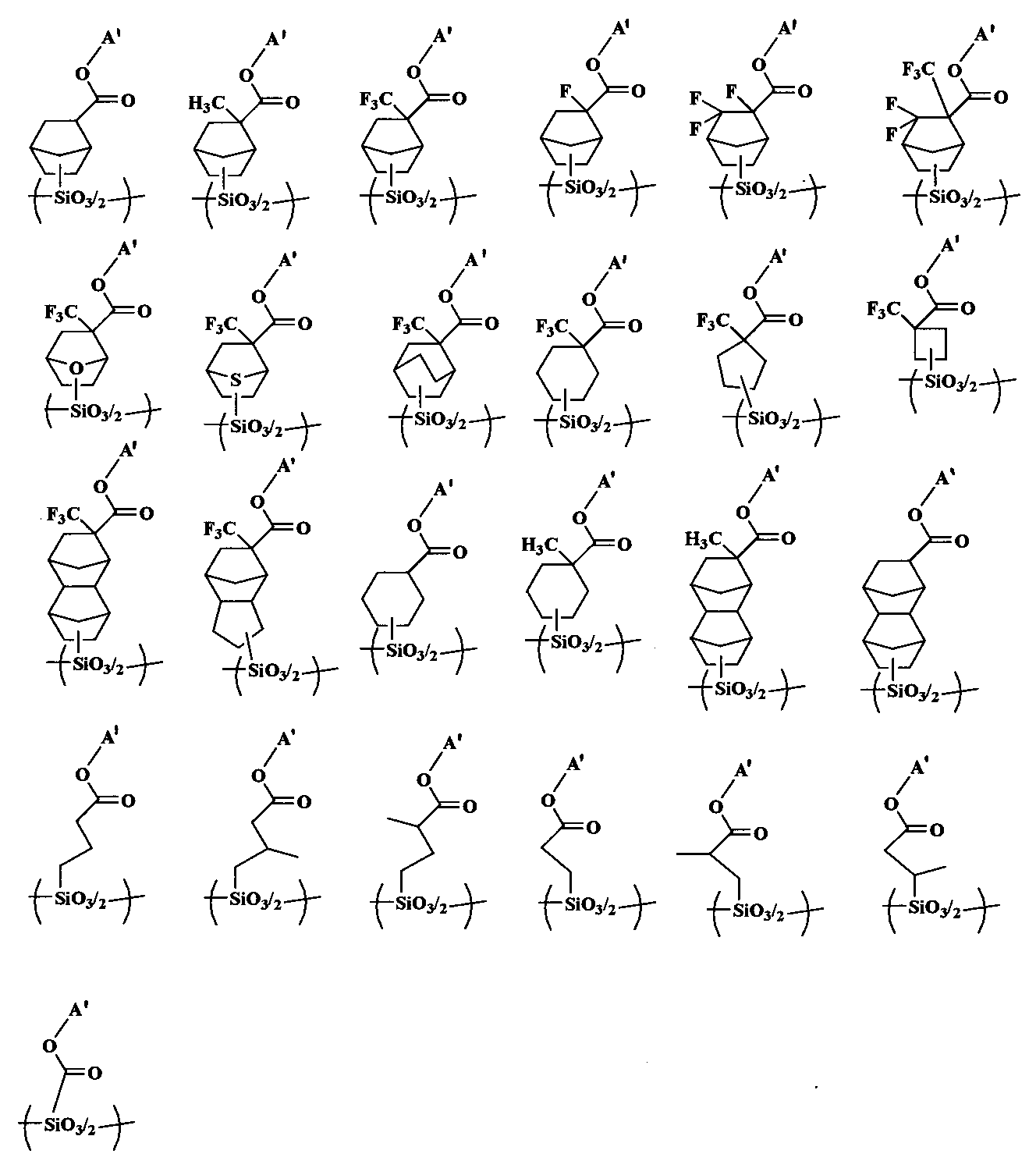
次に、くり返し単位a-2は下記に例示することができる。

次に、くり返し単位a-3は下記に例示することができる。

くり返し単位a-4、a-5は次に例示することができる。
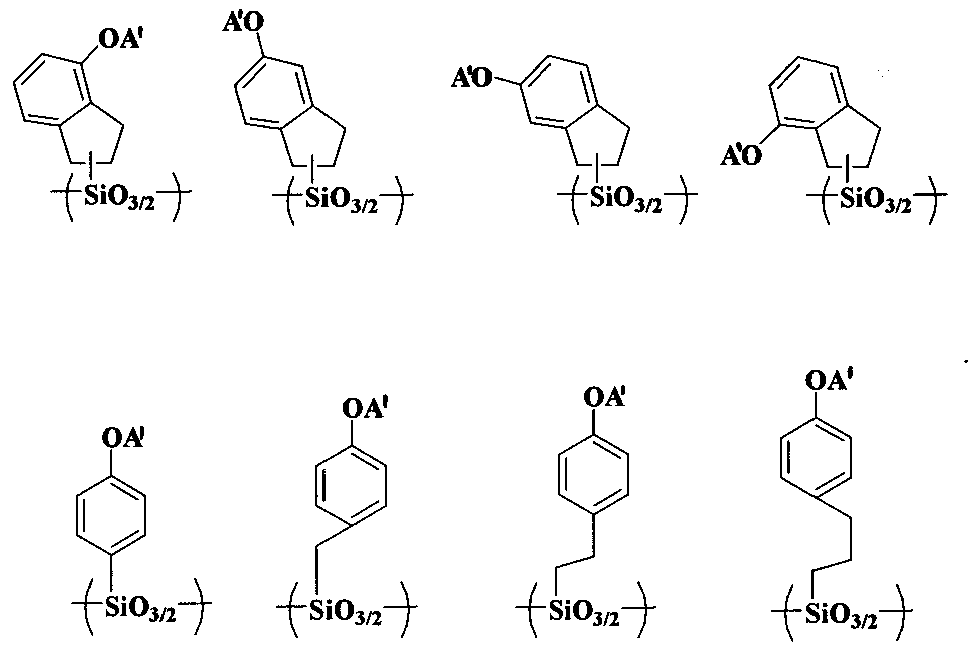
本発明におけるパターン反転レジスト膜用ポリシルセスキオキサンは、一般式(11)で示される酸によってアルカリ溶解性が向上する繰り返し単位の他に親水性基を有する密着性の繰り返し単位を共重合することが出来る。密着性基としては、アルコール基、カルボキシル基、エーテル基、エステル基、アセチル基、ホルミル基、カーボネート基、ラクトン環、スルホンアミド基、シアノ基、カルボン酸無水物などの酸素原子を主成分とする。
具体的には下記に例示することが出来る。
具体的には下記に例示することが出来る。

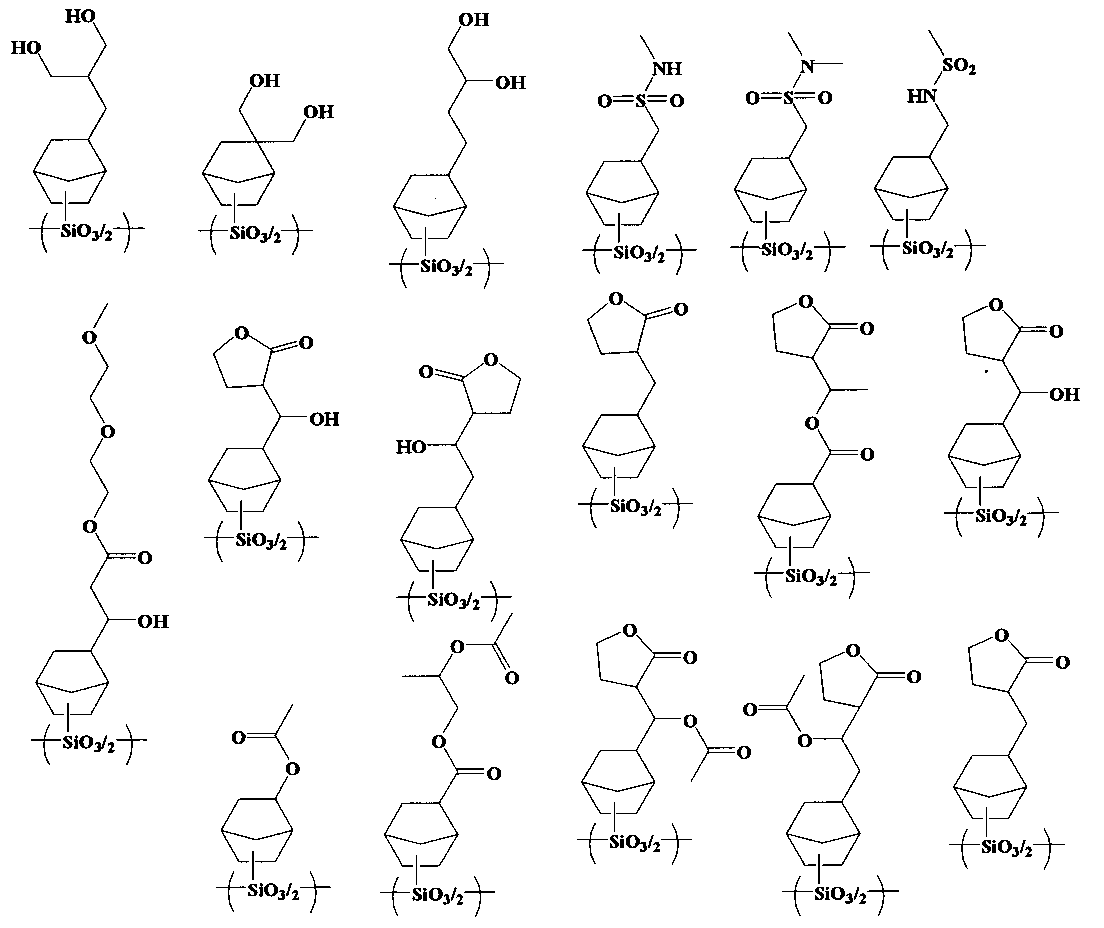
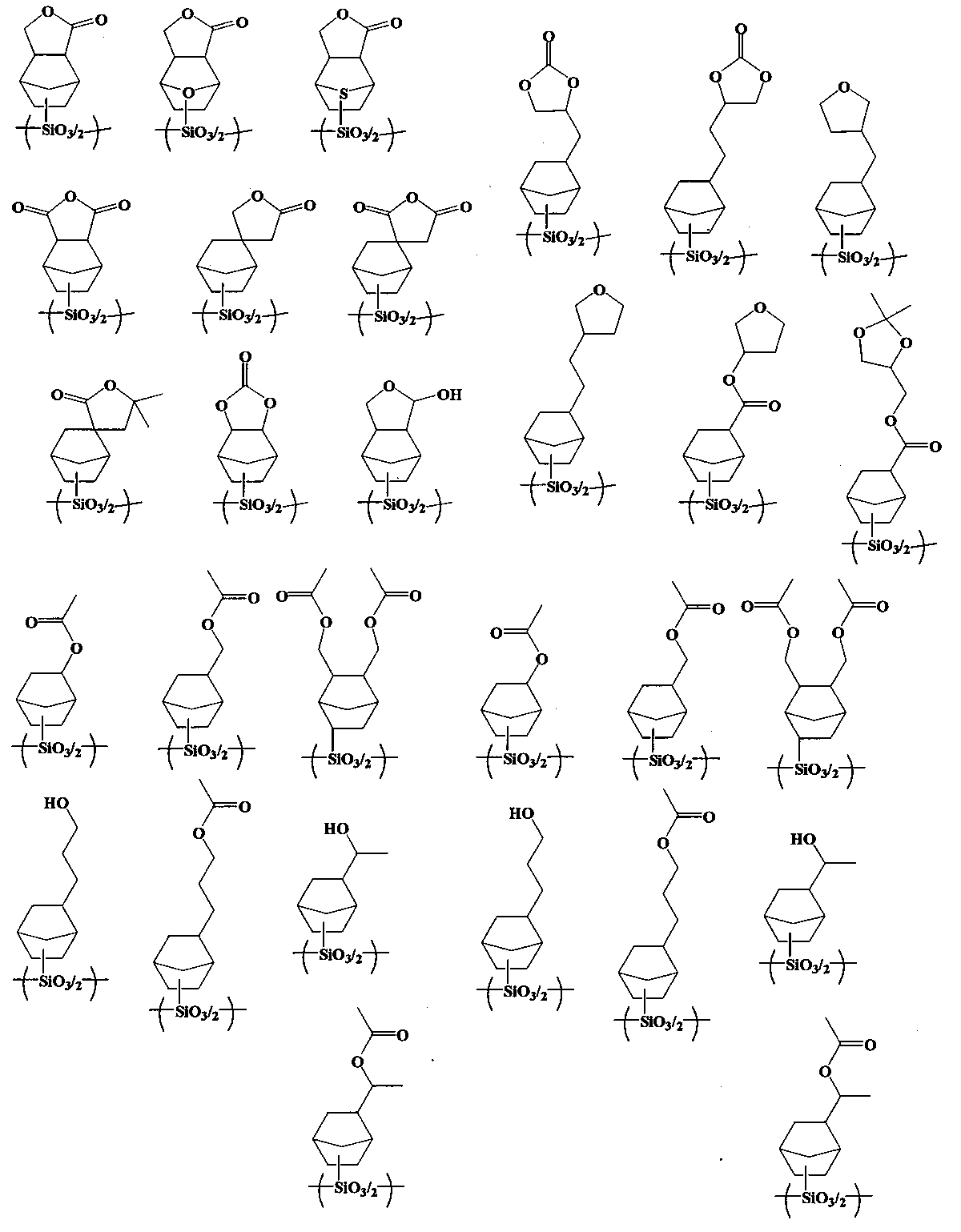
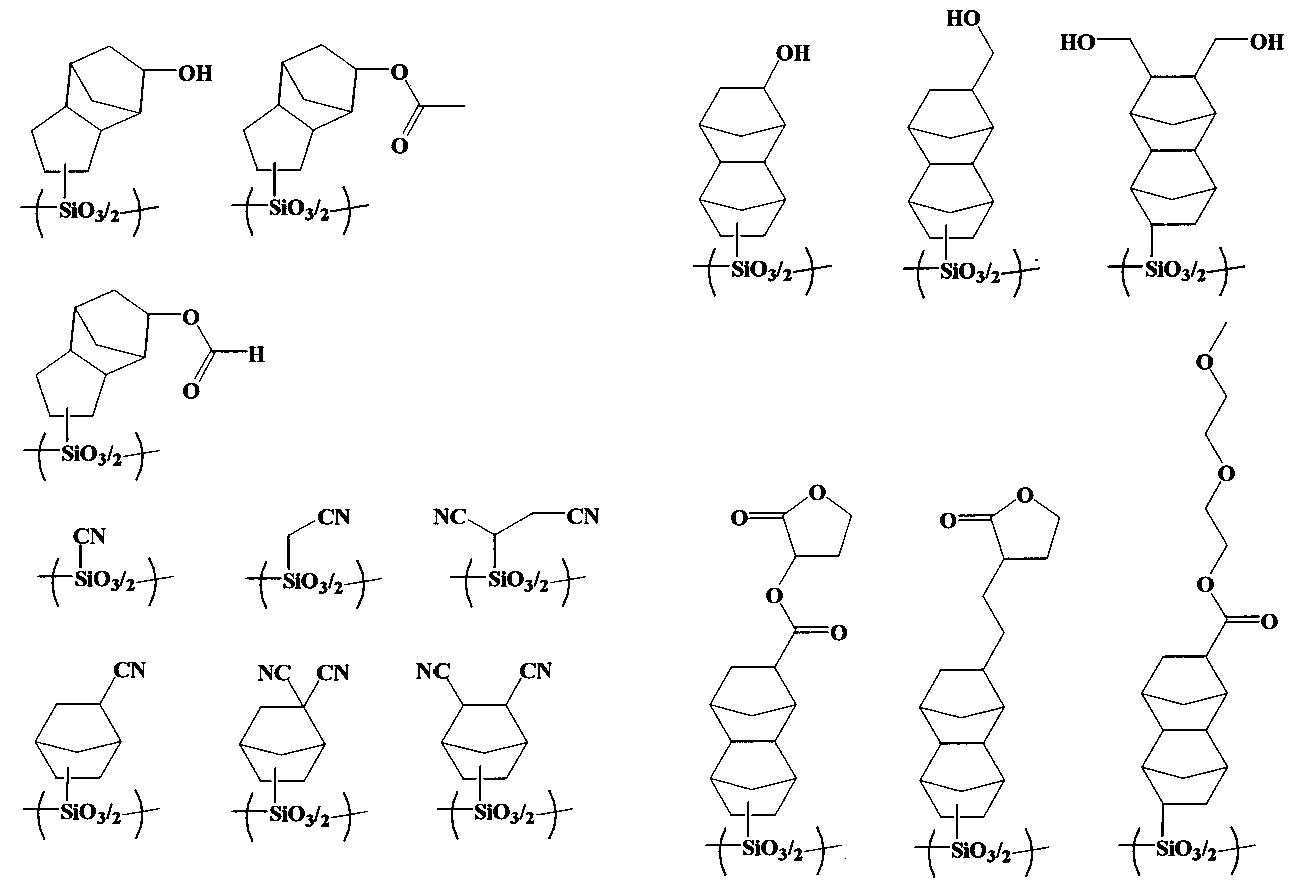
また、R41、R42、R43の有機基の例として、ケイ素-ケイ素結合を含む有機基を用いることもできる。具体的には下記の繰り返し単位を挙げることができる。
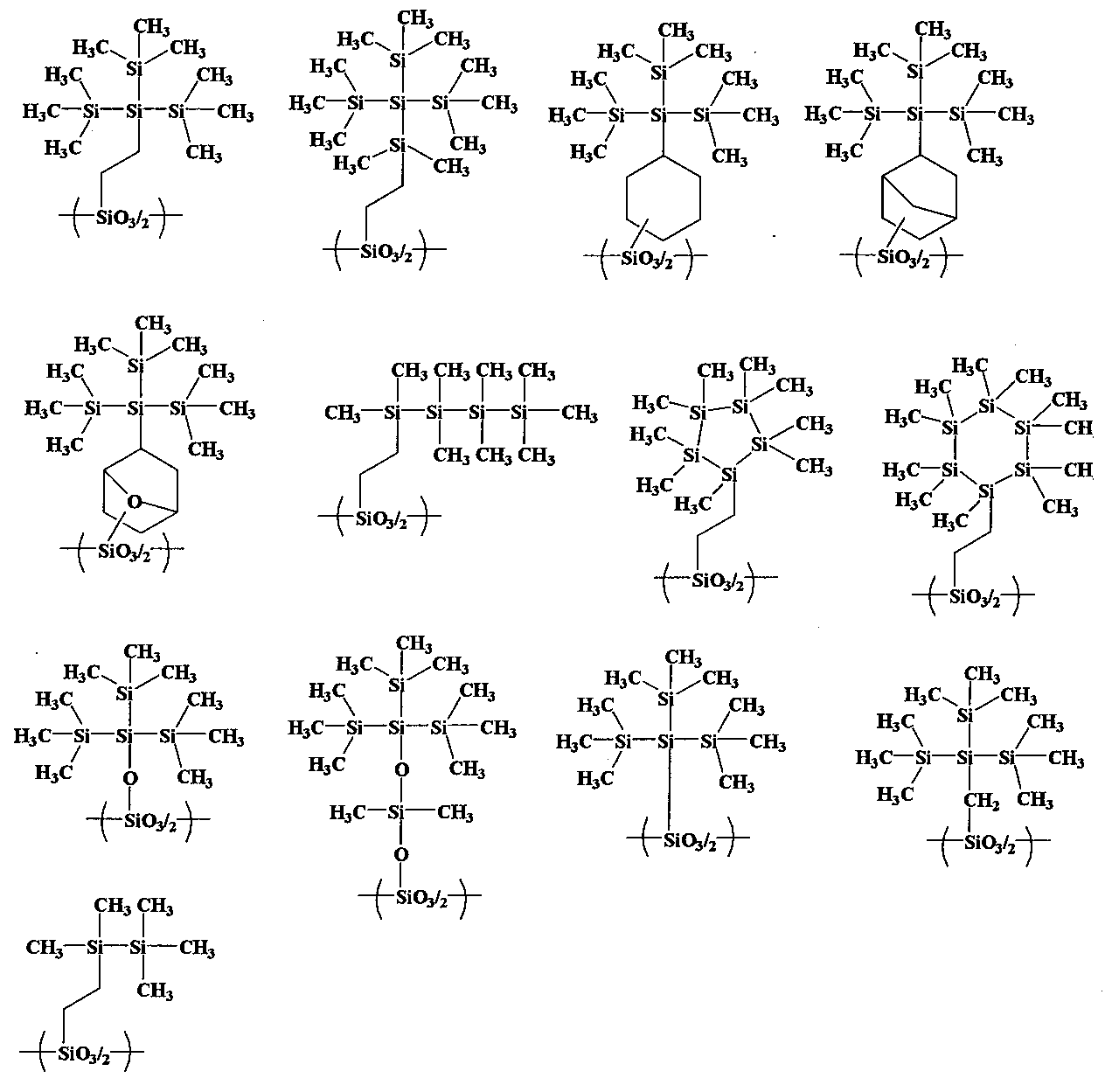
有機珪素化合物とIII族、IV族、及びV族の元素で珪素を除く元素の酸化物を含むパターン反転用レジスト膜形成組成物の上記珪素以外の反応原料(モノマー)は、下記一般式(12)で表すことができる。
U(OR44)m4(OR45)m5 (12)
(式中、R44、R45は炭素数1~30の有機基であり、m4+m5はUの種類により決まる価数であり、m4、m5は0以上の整数、Uは周期律表のIII族、IV族、又はV族の元素で、ケイ素を除くものである。)
U(OR44)m4(OR45)m5 (12)
(式中、R44、R45は炭素数1~30の有機基であり、m4+m5はUの種類により決まる価数であり、m4、m5は0以上の整数、Uは周期律表のIII族、IV族、又はV族の元素で、ケイ素を除くものである。)
ここで、有機基は炭素を含む基の意味であり、更に水素を含み、また窒素、酸素、硫黄、ケイ素等を含んでもよい。R44、R45としては、直鎖状、分岐状、環状のアルキル基、アルケニル基、アルキニル基、アリール基、アラルキル基等の非置換の1価炭化水素基、及びこれらの基の水素原子の1個又はそれ以上がエポキシ基、アルコキシ基、ヒドロキシル基等で置換された基や、-O-,-CO-,-OCO-,-COO-,-OCOO-が介在された基等を挙げることができる。
Uがホウ素の場合、式(12)で示される化合物として、ボロンメトキシド、ボロンエトキシド、ボロンプロポキシド、ボロンブトキシド、ボロンアミロキシド、ボロンヘキシロキシド、ボロンシクロペントキシド、ボロンシクロヘキシロキシド、ボロンアリロキシド、ボロンフェノキシド、ボロンメトキシエトキシドなどをモノマーとして例示できる。
Uがアルミニウムの場合、式(12)で示される化合物として、アルミニウムメトキシド、アルミニウムエトキシド、アルミニウムプロポキシド、アルミニウムブトキシド、アルミニウムアミロキシド、アルミニウムヘキシロキシド、アルミニウムシクロペントキシド、アルミニウムシクロヘキシロキシド、アルミニウムアリロキシド、アルミニウムフェノキシド、アルミニウムメトキシエトキシド、アルミニウムエトキシエトキシド、アルミニウムジプロポキシエチルアセトアセテート、アルミニウムジブトキシエチルアセトアセテート、アルミニウムプロポキシビスエチルアセトアセテート、アルミニウムブトキシビスエチルアセトアセテート、アルミニウム2,4-ペンタンジオネート、アルミニウム2,2,6,6-テトラメチル-3,5-ヘプタンジオネートなどをモノマーとして例示できる。
Uがガリウムの場合、式(12)で示される化合物として、ガリウムメトキシド、ガリウムエトキシド、ガリウムプロポキシド、ガリウムブトキシド、ガリウムアミロキシド、ガリウムヘキシロキシド、ガリウムシクロペントキシド、ガリウムシクロヘキシロキシド、ガリウムアリロキシド、ガリウムフェノキシド、ガリウムメトキシエトキシド、ガリウムエトキシエトキシド、ガリウムジプロポキシエチルアセトアセテート、ガリウムジブトキシエチルアセトアセテート、ガリウムプロポキシビスエチルアセトアセテート、ガリウムブトキシビスエチルアセトアセテート、ガリウム2、4-ペンタンジオネート、ガリウム2,2,6,6-テトラメチル-3,5-ヘプタンジオネートなどをモノマーとして例示できる。
Uがイットリウムの場合、式(12)で示される化合物として、イットリウムメトキシド、イットリウムエトキシド、イットリウムプロポキシド、イットリウムブトキシド、イットリウムアミロキシド、イットリウムヘキシロキシド、イットリウムシクロペントキシド、イットリウムシクロヘキシロキシド、イットリウムアリロキシド、イットリウムフェノキシド、イットリウムメトキシエトキシド、イットリウムエトキシエトキシド、イットリウムジプロポキシエチルアセトアセテート、イットリウムジブトキシエチルアセトアセテート、イットリウムプロポキシビスエチルアセトアセテート、イットリウムブトキシビスエチルアセトアセテート、イットリウム2、4-ペンタンジオネート、イットリウム2,2,6,6-テトラメチル-3,5-ヘプタンジオネートなどをモノマーとして例示できる。
Uがゲルマニウムの場合、式(12)で示される化合物として、ゲルマニウムメトキシド、ゲルマニウムエトキシド、ゲルマニウムプロポキシド、ゲルマニウムブトキシド、ゲルマニウムアミロキシド、ゲルマニウムヘキシロキシド、ゲルマニウムシクロペントキシド、ゲルマニウムシクロヘキシロキシド、ゲルマニウムアリロキシド、ゲルマニウムフェノキシド、ゲルマニウムメトキシエトキシド、ゲルマニウムエトキシエトキシドなどをモノマーとして例示できる。
Uがチタンの場合、式(12)で示される化合物として、チタンメトキシド、チタンエトキシド、チタンプロポキシド、チタンブトキシド、チタンアミロキシド、チタンヘキシロキシド、チタンシクロペントキシド、チタンシクロヘキシロキシド、チタンアリロキシド、チタンフェノキシド、チタンメトキシエトキシド、チタンエトキシエトキシド、チタンジプロポキシビスエチルアセトアセテート、チタンジブトキシビスエチルアセトアセテート、チタンジプロポキシビス2、4-ペンタンジオネート、チタンジブトキシビス2、4-ペンタンジオネートなどをモノマーとして例示できる。
Uがハフニウムの場合、式(12)で示される化合物として、ハフニウムメトキシド、ハフニウムエトキシド、ハフニウムプロポキシド、ハフニウムブトキシド、ハフニウムアミロキシド、ハフニウムヘキシロキシド、ハフニウムシクロペントキシド、ハフニウムシクロヘキシロキシド、ハフニウムアリロキシド、ハフニウムフェノキシド、ハフニウムメトキシエトキシド、ハフニウムエトキシエトキシド、ハフニウムジプロポキシビスエチルアセトアセテート、ハフニウムジブトキシビスエチルアセトアセテート、ハフニウムジプロポキシビス2、4-ペンタンジオネート、ハフニウムジブトキシビス2、4-ペンタンジオネートなどをモノマーとして例示できる。
Uがスズの場合、式(12)で示される化合物として、メトキシスズ、エトキシスズ、プロポキシスズ、ブトキシスズ、フェノキシスズ、メトキシエトキシスズ、エトキシエトキシスズ、スズ2、4-ペンタンジオネート、スズ2,2,6,6-テトラメチル-3,5-ヘプタンジオネートなどをモノマーとして例示できる。
Uがヒ素の場合、式(12)で示される化合物として、メトキシヒ素、エトキシヒ素、プロポキシヒ素、ブトキシヒ素、フェノキシヒ素などをモノマーとして例示できる。
Uがアンチモンの場合、式(12)で示される化合物として、メトキシアンチモン、エトキシアンチモン、プロポキシアンチモン、ブトキシアンチモン、フェノキシアンチモン、酢酸アンチモン、プロピオン酸アンチモンなどをモノマーとして例示できる。
Uがニオブの場合、式(12)で示される化合物として、メトキシニオブ、エトキシニオブ、プロポキシニオブ、ブトキシニオブ、フェノキシニオブなどをモノマーとして例示できる。
Uがタンタルの場合、式(12)で示される化合物として、メトキシタンタル、エトキシタンタル、プロポキシタンタル、ブトキシタンタル、フェノキシタンタルなどをモノマーとして例示できる。
Uがビスマスの場合、式(12)で示される化合物として、メトキシビスマス、エトキシビスマス、プロポキシビスマス、ブトキシビスマス、フェノキシビスマスなどをモノマーとして例示できる。
Uがリンの場合、式(12)で示される化合物として、トリメチルフォスファイト、トリエチルフォスファイト、トリプロピルフォスファイト、トリメチルフォスフェイト、トリエチルフォスフェイト、トリプロピルフォスフェイトなどをモノマーとして例示できる。
Uがバナジウムの場合、式(12)で示される化合物として、バナジウムオキシドビス(2,4-ペンタンジオネート)、バナジウム2,4-ペンタンジオネート、バナジウムトリブトキシドオキシド、バナジウムトリプロポキシドオキシドなどをモノマーとして例示できる。
Uがジルコニウムの場合、式(12)で示される化合物として、メトキシジルコニウム、エトキシジルコニウム、プロポキシジルコニウム、ブトキシジルコニウム、フェノキシジルコニウム、ジルコニウムジブトキシドビス(2,4-ペンタンジオネート)、ジルコニウムジプロポキシドビス(2,2,6,6-テトラメチル-3,5-ヘプタンジオネート)などをモノマーとして例示できる。
Uが鉛の場合、式(12)で示される化合物として、ジメトキシ鉛、ジエトキシ鉛、ジプロポキシ鉛、ジブトキシ鉛、ジフェノキシ鉛、メトキシフェノキシ鉛などをモノマーとして例示できる。
Uがスカンジウムの場合、式(12)で示される化合物として、トリメトキシスカンジウム、トリエトキシスカンジウム、トリプロポキシスカンジウム、トリブトキシスカンジウム、トリフェノキシスカンジウム、メトキシジフェノキシスカンジウムなどをモノマーとして例示できる。
Uがインジウムの場合、式(12)で示される化合物として、トリメトキシインジウム、トリエトキシインジウム、トリプロポキシインジウム、トリブトキシインジウム、トリフェノキシインジウム、メトキシジフェノキシインジウムなどをモノマーとして例示できる。
Uがタリウムの場合、式(12)で示される化合物として、テトラメトキシタリウム、テトラエトキシタリウム、テトラプロポキシタリウム、テトラブトキシタリウム、テトラフェノキシタリウムなどをモノマーとして例示できる。
これらのモノマーから一般式(11)で示されるものを1種又は2種以上あるいは、一般式(12)で示されるものを1種又は2種以上を選択して、反応前又は反応中に混ぜてシロキサン結合を有する有機珪素化合物を含む、あるいはこれにIII族、IV族、及びV族の元素で珪素を除く元素の酸化物を含むパターン反転用レジスト膜形成組成物を形成する反応原料とすることができる。
パターン反転用レジスト膜形成組成物に含有される珪素含有有機化合物及び珪素以外の金属酸化物含有化合物は、式(11)及び式(12)のモノマーを好ましくは無機酸、脂肪族スルホン酸及び芳香族スルホン酸から選ばれる一種以上の化合物を酸触媒あるいは塩基触媒を用いて、加水分解縮合を行うことで製造することができる。
このとき使用される酸触媒は、フッ酸、塩酸、臭化水素酸、硫酸、硝酸、過塩素酸、リン酸、メタンスルホン酸、ベンゼンスルホン酸、トルエンスルホン酸、塩基触媒としてはアンモニア、トリメチルアミン、トリエチルアミン、トリエタノールアミン、テトラメチルアンモニウムヒドロキシド、テトラエチルアンモニウムヒドロキシド、コリンヒドロキシド1,8-ジアザビシクロ[5.4.0]-7-ウンデセン(DBU)、1,5-ジアザビシクロ[4.3.0]-5-ノネノン(DBN)、水酸化ナトリウム、水酸化カリウム、水酸化バリウム、水酸化カルシウムを挙げることができる。
触媒の使用量は、ケイ素モノマー1モルに対して10-6~10モル、好ましくは10-5~5モル、より好ましくは10-4~1モルである。
このとき使用される酸触媒は、フッ酸、塩酸、臭化水素酸、硫酸、硝酸、過塩素酸、リン酸、メタンスルホン酸、ベンゼンスルホン酸、トルエンスルホン酸、塩基触媒としてはアンモニア、トリメチルアミン、トリエチルアミン、トリエタノールアミン、テトラメチルアンモニウムヒドロキシド、テトラエチルアンモニウムヒドロキシド、コリンヒドロキシド1,8-ジアザビシクロ[5.4.0]-7-ウンデセン(DBU)、1,5-ジアザビシクロ[4.3.0]-5-ノネノン(DBN)、水酸化ナトリウム、水酸化カリウム、水酸化バリウム、水酸化カルシウムを挙げることができる。
触媒の使用量は、ケイ素モノマー1モルに対して10-6~10モル、好ましくは10-5~5モル、より好ましくは10-4~1モルである。
これらのモノマーから加水分解縮合により珪素含有有機化合物及び金属酸化物含有化合物を得るときの水の量は、モノマーに結合している加水分解性置換基1モル当たり0.01~100モル、より好ましくは0.05~50モル、更に好ましくは0.1~30モルを添加することが好ましい。100モルを超える添加は、反応に使用する装置が過大になるだけで不経済である。
操作方法として、触媒水溶液にモノマーを添加して加水分解縮合反応を開始させる。このとき、触媒水溶液に有機溶剤を加えてもよいし、モノマーを有機溶剤で希釈しておいてもよいし、両方行ってもよい。反応温度は0~100℃、好ましくは5~80℃である。モノマーの滴下時に5~80℃に温度を保ち、その後20~80℃で熟成させる方法が好ましい。
触媒水溶液に加えることのできる、又はモノマーを希釈することのできる有機溶剤としては、メタノール、エタノール、1-プロパノール、2-プロパノール、1-ブタノール、2-ブタノール、2-メチル-1-プロパノール、アセトン、アセトニトリル、テトラヒドロフラン、トルエン、ヘキサン、酢酸エチル、シクロヘキサノン、メチル-2-n-アミルケトン、ブタンジオールモノメチルエーテル、プロピレングリコールモノメチルエーテル、エチレングリコールモノメチルエーテル、ブタンジオールモノエチルエーテル、プロピレングリコールモノエチルエーテル、エチレングリコールモノエチルエーテル、プロピレングリコールジメチルエーテル、ジエチレングリコールジメチルエーテル、プロピレングリコールモノメチルエーテルアセテート、プロピレングリコールモノエチルエーテルアセテート、ピルビン酸エチル、酢酸ブチル、3-メトキシプロピオン酸メチル、3-エトキシプロピオン酸エチル、酢酸tert-ブチル、プロピオン酸tert-ブチル、プロピレングリコールモノtert-ブチルエーテルアセテート、γ-ブチルラクトン及びこれらの混合物等が好ましい。
これらの溶剤の中で好ましいものは水可溶性のものである。例えば、メタノール、エタノール、1-プロパノール、2-プロパノール等のアルコール類、エチレングリコール、プロピレングリコール等の多価アルコール、ブタンジオールモノメチルエーテル、プロピレングリコールモノメチルエーテル、エチレングリコールモノメチルエーテル、ブタンジオールモノエチルエーテル、プロピレングリコールモノエチルエーテル、エチレングリコールモノエチルエーテル、ブタンジオールモノプロピルエーテル、プロピレングリコールモノプロピルエーテル、エチレングリコールモノプロピルエーテル等の多価アルコール縮合物誘導体、アセトン、アセトニトリル、テトラヒドロフラン等を挙げることができる。この中で特に好ましいのは、沸点が100℃以下のものである。
なお、有機溶剤の使用量は、モノマー1モルに対して0~1,000ml、特に0~500mlが好ましい。有機溶剤の使用量が多いと反応容器が過大となり不経済である。
その後、必要であれば触媒の中和反応を行い、加水分解縮合反応で生成したアルコールを減圧除去し、反応混合物水溶液を得る。このとき、中和に使用することのできる酸、あるいはアルカリ性物質の量は、触媒で使用された酸あるいは塩基に対して0.1~2当量が好ましい。このアルカリ性物質は水中で酸性、あるいはアルカリ性を示すものであれば、任意の物質でよい。
続いて、反応混合物から加水分解縮合反応で生成したアルコールなどの副生物を取り除くことが好ましい。このとき反応混合物を加熱する温度は、添加した有機溶剤と反応で発生したアルコールなどの種類によるが、好ましくは0~100℃、より好ましくは10~90℃、更に好ましくは15~80℃である。またこのときの減圧度は、除去すべき有機溶剤及びアルコールなどの種類、排気装置、凝縮装置及び加熱温度により異なるが、好ましくは大気圧以下、より好ましくは絶対圧で80kPa以下、更に好ましくは絶対圧で50kPa以下である。この際除去されるアルコール量を正確に知ることは難しいが、生成したアルコールなどのおよそ80質量%以上が除かれることが望ましい。
次に、反応混合物から加水分解縮合に使用した酸あるいは塩基触媒を除去してもよい。酸あるいは塩基触媒を除去する方法として、水と珪素含有有機化合物及び珪素以外の金属酸化物含有化合物を混合し、珪素含有有機化合物及び珪素以外の金属酸化物含有化合物を有機溶剤で抽出する。このとき使用する有機溶剤としては、珪素含有有機化合物及び珪素以外の金属酸化物含有化合物を溶解でき、水と混合させると2層分離するものが好ましい。例えばメタノール、エタノール、1-プロパノール、2-プロパノール、1-ブタノール、2-ブタノール、2-メチル-1-プロパノール、アセトン、テトラヒドロフラン、トルエン、ヘキサン、酢酸エチル、シクロヘキサノン、メチル-2-n-アミルケトン、ブタンジオールモノメチルエーテル、プロピレングリコールモノメチルエーテル、エチレングリコールモノメチルエーテル、ブタンジオールモノエチルエーテル、プロピレングリコールモノエチルエーテル、エチレングリコールモノエチルエーテル、ブタンジオールモノプロピルエーテル、プロピレングリコールモノプロピルエーテル、エチレングリコールモノプロピルエーテル、プロピレングリコールジメチルエーテル、ジエチレングリコールジメチルエーテル、プロピレングリコールモノメチルエーテルアセテート、プロピレングリコールモノエチルエーテルアセテート、ピルビン酸エチル、酢酸ブチル、3-メトキシプロピオン酸メチル、3-エトキシプロピオン酸エチル、酢酸tert-ブチル、プロピオン酸tert-ブチル、プロピレングリコールモノtert-ブチルエーテルアセテート、γ-ブチルラクトン、メチルイソブチルケトン、シクロペンチルメチルエーテル等及びこれらの混合物を挙げることができる。
更に、水溶性有機溶剤と水難溶性有機溶剤の混合物を使用することも可能である。例えばメタノール+酢酸エチル、エタノール+酢酸エチル、1-プロパノール+酢酸エチル、2-プロパノール+酢酸エチル、ブタンジオールモノメチルエーテル+酢酸エチル、プロピレングリコールモノメチルエーテル+酢酸エチル、エチレングリコールモノメチルエーテル、ブタンジオールモノエチルエーテル+酢酸エチル、プロピレングリコールモノエチルエーテル+酢酸エチル、エチレングリコールモノエチルエーテル+酢酸エチル、ブタンジオールモノプロピルエーテル+酢酸エチル、プロピレングリコールモノプロピルエーテル+酢酸エチル、エチレングリコールモノプロピルエーテル+酢酸エチル、メタノール+メチルイソブチルケトン、エタノール+メチルイソブチルケトン、1-プロパノール+メチルイソブチルケトン、2-プロパノール+メチルイソブチルケトン、プロピレングリコールモノメチルエーテル+メチルイソブチルケトン、エチレングリコールモノメチルエーテル、プロピレングリコールモノエチルエーテル+メチルイソブチルケトン、エチレングリコールモノエチルエーテル+メチルイソブチルケトン、プロピレングリコールモノプロピルエーテル+メチルイソブチルケトン、エチレングリコールモノプロピルエーテル+メチルイソブチルケトン、メタノール+シクロペンチルメチルエーテル、エタノール+シクロペンチルメチルエーテル、1-プロパノール+シクロペンチルメチルエーテル、2-プロパノール+シクロペンチルメチルエーテル、プロピレングリコールモノメチルエーテル+シクロペンチルメチルエーテル、エチレングリコールモノメチルエーテル+シクロペンチルメチルエーテル、プロピレングリコールモノエチルエーテル+シクロペンチルメチルエーテル、エチレングリコールモノエチルエーテル+シクロペンチルメチルエーテル、プロピレングリコールモノプロピルエーテル+シクロペンチルメチルエーテル、エチレングリコールモノプロピルエーテル+シクロペンチルメチルエーテル、メタノール+プロピレングリコールメチルエーテルアセテート、エタノール+プロピレングリコールメチルエーテルアセテート、1-プロパノール+プロピレングリコールメチルエーテルアセテート、2-プロパノール+プロピレングリコールメチルエーテルアセテート、プロピレングリコールモノメチルエーテル+プロピレングリコールメチルエーテルアセテート、エチレングリコールモノメチルエーテル+プロピレングリコールメチルエーテルアセテート、プロピレングリコールモノエチルエーテル+プロピレングリコールメチルエーテルアセテート、エチレングリコールモノエチルエーテル+プロピレングリコールメチルエーテルアセテート、プロピレングリコールモノプロピルエーテル+プロピレングリコールメチルエーテルアセテート、エチレングリコールモノプロピルエーテル+プロピレングリコールメチルエーテルアセテート等組み合わせが好ましいが、組み合わせはこれらに限定されることはない。
なお、水溶性有機溶剤と水難溶性有機溶剤との混合割合は、適宜選定されるが、水難溶性有機溶剤100質量部に対して、水溶性有機溶剤0.1~1,000質量部、好ましくは1~500質量部、更に好ましくは2~100質量部である。
続いて、中性水で洗浄する。この水は、通常脱イオン水や超純水と呼ばれているものを使用すればよい。この水の量は、珪素含有有機化合物及び珪素以外の金属酸化物含有化合物の溶液1Lに対して、0.01~100L、好ましくは0.05~50L、より好ましくは0.1~5Lである。この洗浄の方法は、両方を同一の容器にいれ掻き混ぜた後、静置して水層を分離すればよい。洗浄回数は、1回以上あればよいが、10回以上洗浄しても洗浄しただけの効果は得られないため、好ましくは1~5回程度である。
その他に酸触媒を除去する方法として、イオン交換樹脂による方法や、エチレンオキサイド、プロピレンオキサイド等のエポキシ化合物で中和したのち除去する方法を挙げることができる。これらの方法は、反応に使用された酸触媒に合わせて適宜選択することができる。
なお、上記の触媒除去操作において、触媒が実質的に除去されたとは、反応に使用された触媒が珪素含有有機化合物及び珪素以外の金属酸化物含有化合物中反応開始時に添加した量に対して10質量%以下、好ましくは5質量%以下程度残存しているものは許容されることを意味する。
その他に酸触媒を除去する方法として、イオン交換樹脂による方法や、エチレンオキサイド、プロピレンオキサイド等のエポキシ化合物で中和したのち除去する方法を挙げることができる。これらの方法は、反応に使用された酸触媒に合わせて適宜選択することができる。
なお、上記の触媒除去操作において、触媒が実質的に除去されたとは、反応に使用された触媒が珪素含有有機化合物及び珪素以外の金属酸化物含有化合物中反応開始時に添加した量に対して10質量%以下、好ましくは5質量%以下程度残存しているものは許容されることを意味する。
このときの水洗操作により、珪素含有有機化合物及び珪素以外の金属酸化物含有化合物の一部が水層に逃げ、実質的に分画操作と同等の効果が得られている場合があるため、水洗回数や洗浄水の量は触媒除去効果と分画効果を鑑みて適宜選択すればよい。
触媒が残留している有機珪素化合物及び金属酸化物含有化合物及び触媒が除去された有機珪素化合物及び金属酸化物含有化合物溶液、いずれの場合においても、最終的な溶剤を加え、減圧で溶剤交換することで有機珪素化合物及び金属酸化物含有化合物溶液を得る。このときの溶剤交換の温度は、除去すべき反応溶剤や抽出溶剤の種類によるが、好ましくは0~100℃、より好ましくは10~90℃、更に好ましくは15~80℃である。またこのときの減圧度は、除去すべき抽出溶剤の種類、排気装置、凝縮装置及び加熱温度により異なるが、好ましくは大気圧以下、より好ましくは絶対圧で80kPa以下、更に好ましくは絶対圧で50kPa以下である。
このとき、溶剤が変わることにより珪素含有有機化合物及び珪素以外の金属酸化物含有化合物が不安定になる場合がある。これは最終的な溶剤と珪素含有有機化合物及び珪素以外の金属酸化物含有化合物との相性により発生するが、これを防止するため、安定剤として後述する成分を加えてもよい。加える量としては溶剤交換前の溶液中の珪素含有有機化合物及び珪素以外の金属酸化物含有化合物100質量部に対して0~25質量部、好ましくは0~15質量部、より好ましくは0~5質量部であるが、添加する場合は0.5質量部以上が好ましい。溶剤交換前の溶液に必要であれば、前記安定剤成分を添加して溶剤交換操作を行えばよい。
本発明のパターン形成方法に用いられるシロキサン結合を有する有機珪素化合物を含むパターン反転用レジスト膜形成組成物において用いられる、ケイ素含有化合物を安定化させるため、安定剤として炭素数が1~30の1価又は2価以上の有機酸を添加することが出来る。このとき添加する酸としては、ギ酸、酢酸、プロピオン酸、ブタン酸、ペンタン酸、ヘキサン酸、ヘプタン酸、オクタン酸、ノナン酸、デカン酸、オレイン酸、ステアリン酸、リノール酸、リノレン酸、安息香酸、フタル酸、イソフタル酸、テレフタル酸、サリチル酸、トリフルオロ酢酸、モノクロロ酢酸、ジクロロ酢酸、トリクロロ酢酸、シュウ酸、マロン酸、メチルマロン酸、エチルマロン酸、プロピルマロン酸、ブチルマロン酸、ジメチルマロン酸、ジエチルマロン酸、コハク酸、メチルコハク酸、グルタル酸、アジピン酸、イタコン酸、マレイン酸、フマル酸、シトラコン酸、クエン酸等を例示することができる。シュウ酸、マレイン酸、ギ酸、酢酸、プロピオン酸、クエン酸等が好ましい。また、安定性を保つため、2種類以上の酸を混合して使用してもよい。添加量は組成物に含まれる珪素含有有機化合物の総量100質量部に対して0.001~25質量部、好ましくは0.01~15質量部、より好ましくは0.1~5質量部である。あるいは、上記有機酸を組成物のpHに換算して、好ましくは0≦pH≦7、より好ましくは、0.3≦pH≦6.5、更に好ましくは0.5≦pH≦6となるように配合することがよい。
本発明の珪素含有有機化合物を含有するパターン反転用レジスト膜形成組成物には、前記ケイ素含有化合物の製造時に使用したものと同様の有機溶剤、好ましくは水溶性有機溶剤、特にエチレングリコール、ジエチレングリコール、トリエチレングリコール、プロピレングリコール、ジプロピレングリコール、ブタンジオール、ペンタンジオール等アルキレングリコールのモノアルキルエーテルを使用する。具体的には、ブタンジオールモノメチルエーテル、プロピレングリコールモノメチルエーテル、エチレングリコールモノメチルエーテル、ブタンジオールモノエチルエーテル、プロピレングリコールモノエチルエーテル、エチレングリコールモノエチルエーテル、ブタンジオールモノプロピルエーテル、プロピレングリコールモノプロピルエーテル、エチレングリコールモノプロピルエーテルなどから選ばれる有機溶剤を使用する。
本発明ではパターン反転用レジスト膜形成組成物に水を添加してもよい。水を添加すると、珪素含有有機化合物が水和されるため、安定性が向上する。組成物の溶剤成分における水の含有率は0質量%を超え50質量%未満であり、特に好ましくは0.3~30質量%、更に好ましくは0.5~20質量%である。それぞれの成分は、添加量が多すぎると、塗布膜の均一性が悪くなり、最悪の場合はじきが発生してしまう可能性がある。
シロキサン結合を有する有機珪素化合物を含むパターン反転用レジスト膜形成用の有機化合物の分子量は、モノマーの選択だけでなく、重合時の反応条件制御により調整することができるが、重量平均分子量が100,000を超えるものを用いると、ケースによっては異物の発生や塗布斑が生じることがあり、100,000以下、より好ましくは200~50,000、更には300~30,000のものを用いることが好ましい。なお、上記重量平均分子量に関するデータは、検出器としてRIを用いたゲルパーミエーションクロマトグラフィー(GPC)により、標準物質としてポリスチレンを用いて、ポリスチレン換算で分子量を表したものである。
本態様のパターン反転用レジスト膜の表面だけのアルカリ溶解性を向上させることは、酸の作用により極性基が生じアルカリ可溶に変質したネガ型パターンの表面を覆ったパターン反転用レジスト膜の溶解をスムーズにし、ネガ型パターンを変換した孤立ラインパターンやドットパターンの寸法制御性向上のために有効である。パターン反転用レジスト膜の表面のアルカリ溶解性を向上させるためにアルカリ可溶の界面活性剤、特にフッ素系界面活性剤を添加することができる。フッ素系界面活性剤としては少なくとも下記一般式(13)中、繰り返し単位s-1,s-2のいずれか一方又は両方を有することができる。

式中、R6’、R9’はそれぞれ独立に水素原子又はメチル基を示す。nは1又は2であり、n=1の場合、X11はフェニレン基、-O-、-C(=O)-O-R12’-又は-C(=O)-NH-R12’-であり、R12’は単結合、又は炭素数1~4の直鎖状又は分岐状のアルキレン基であり、エステル基又はエーテル基を有していてもよい。n=2の場合、X11はフェニレン基、-C(=O)-O-R81’=又は-C(=O)-NH-R81’=であり、R81’は炭素数1~10の直鎖状、分岐状又は環状のアルキレン基から水素原子が1個脱離した基であり、エステル基又はエーテル基を有していてもよい。R7’は単結合、炭素数1~12の直鎖状、分岐状又は環状のアルキレン基であり、R8’は水素原子、フッ素原子、メチル基、トリフルオロメチル基又はジフルオロメチル基、又はR7’と結合してこれらが結合する炭素原子と共に炭素数3~10の環(但し芳香環を除く)を形成してもよく、環の中にエーテル基、フッ素で置換されたアルキレン基又はトリフルオロメチル基を有していてもよい。X12はフェニレン基、-O-、-C(=O)-O-R11’-又は-C(=O)-NH-R11’-であり、R11’は単結合、又は炭素数1~4の直鎖状又は分岐状のアルキレン基であり、エステル基又はエーテル基を有していてもよい。R10’はフッ素原子、炭素数1~20の直鎖状、分岐状又は環状のアルキル基であり、少なくとも1個のフッ素原子で置換されていて、エーテル基、エステル基又はスルホンアミド基を有していてもよい。X12がフェニレン基の場合mは1~5の整数であり、X12がそれ以外の場合mは1である。)
s-1を得るためのモノマーは具体的には下記に例示することができる。
s-1を得るためのモノマーは具体的には下記に例示することができる。
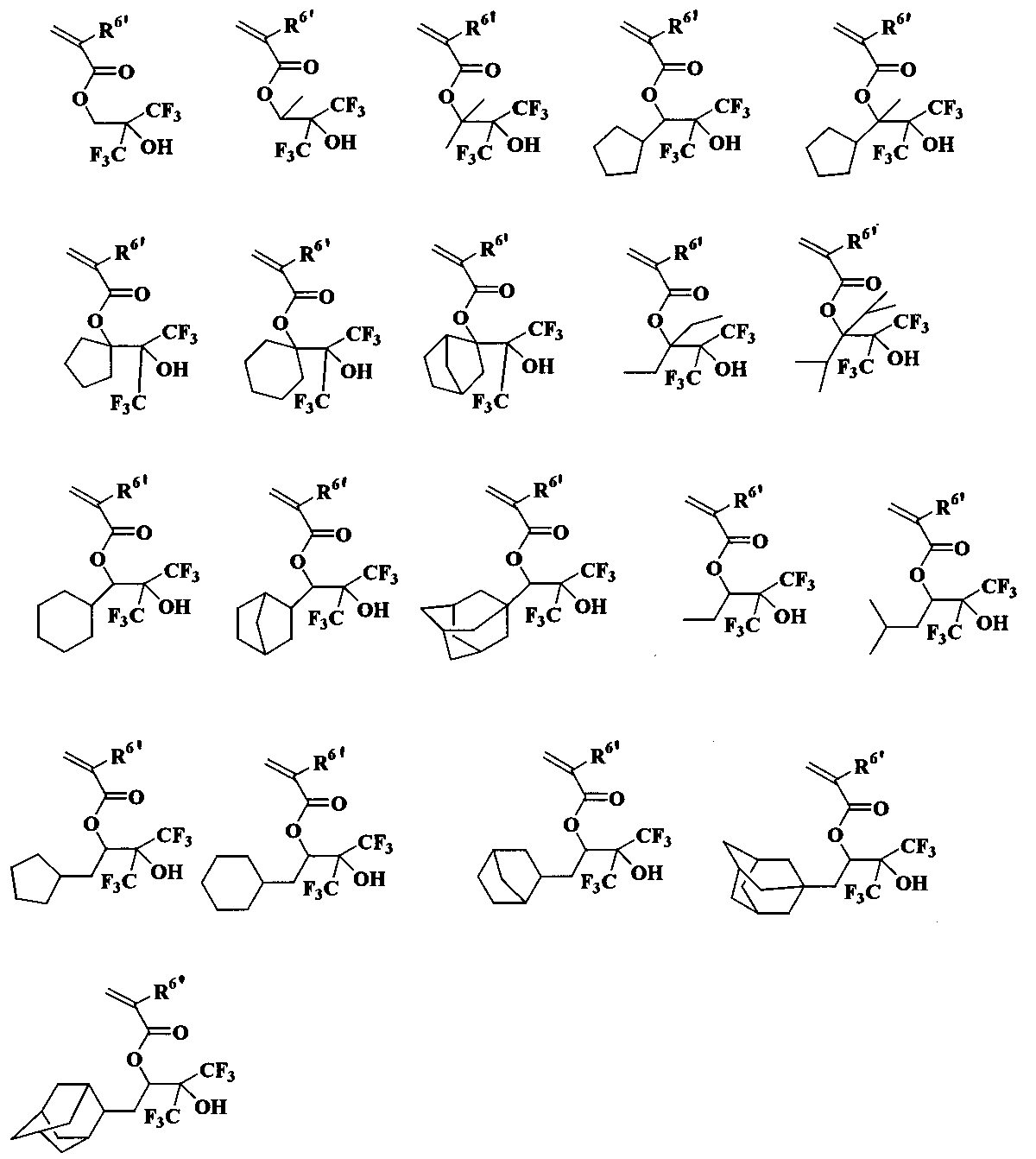

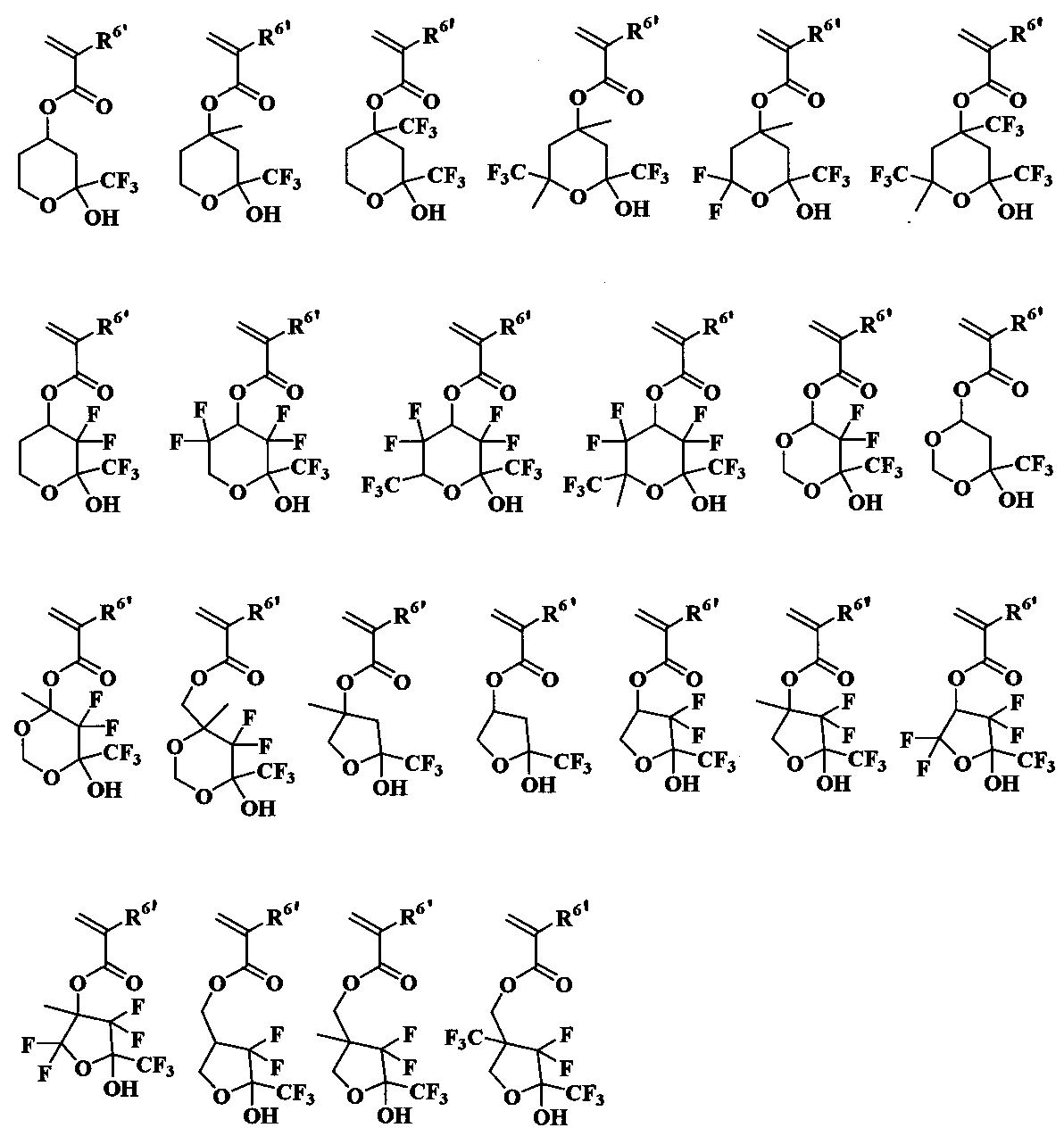
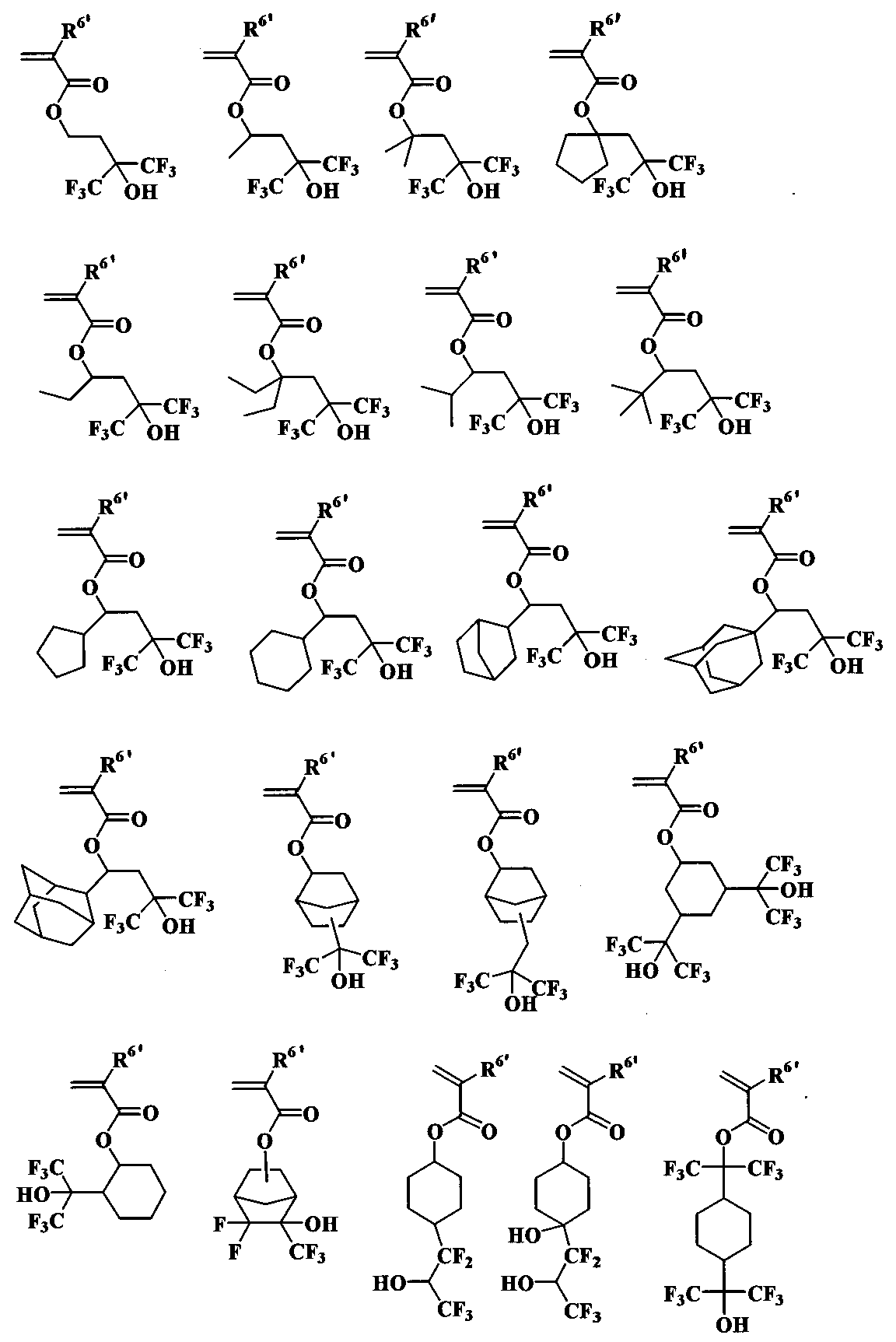

(式中、R6’は前述と同様である。)
更に、上記一般式(13)中のs-2で示されるフッ素で置換されたアルキル基を有する繰り返し単位s-2を得るためのモノマーとしては、下記の具体例を挙げることができる。
更に、上記一般式(13)中のs-2で示されるフッ素で置換されたアルキル基を有する繰り返し単位s-2を得るためのモノマーとしては、下記の具体例を挙げることができる。

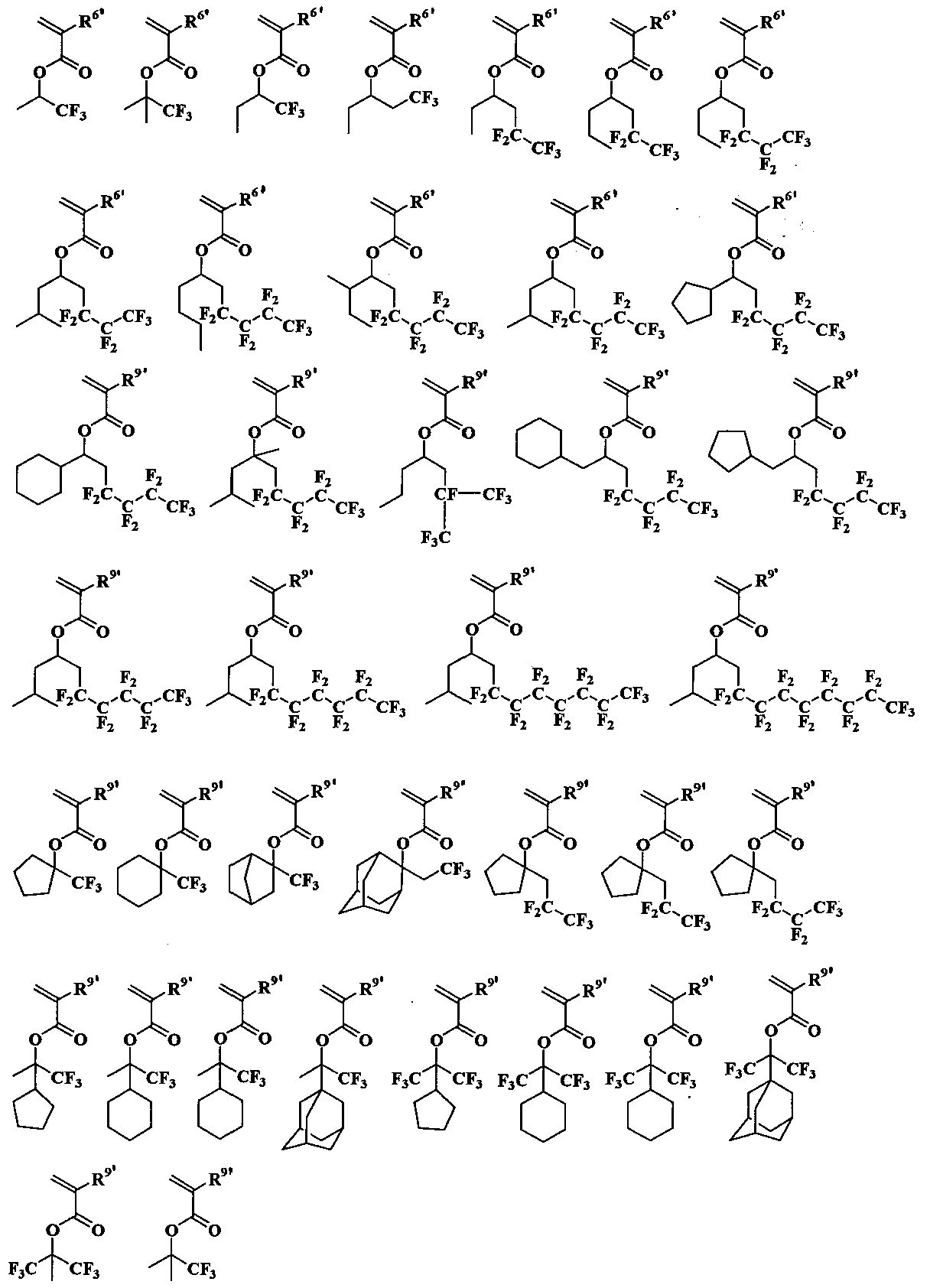
(式中、R9’は前述と同様である。)
s-1、s-2の繰り返し単位は、前述のフェノール基やカルボキシル基を有するアルカリ溶解性の繰り返し単位や、アルカリ難溶解性の繰り返し単位と共重合することができる。
s-1、s-2の繰り返し単位は、前述のフェノール基やカルボキシル基を有するアルカリ溶解性の繰り返し単位や、アルカリ難溶解性の繰り返し単位と共重合することができる。
上記アルカリ可溶界面活性剤の添加量は、パターン反転用レジスト膜形成組成物の固形分に対して0~50質量%であることが好ましく、0~20質量%であることがより好ましい。多すぎると、膜減り量が多くなりすぎたり、エッチング耐性が低下したりする場合が生じる。なお、配合する場合は、1質量%以上とすることが好ましい。
パターン反転用レジスト膜形成組成物に添加する塩基クエンチャーとしては、前述した塩基性化合物と同様の塩基性化合物を用いることができる。即ち、本発明のパターン形成方法に用いるパターン反転用レジスト膜には、現像後のレジストパターンからの酸拡散を防止するために塩基化合物を添加することができる。
上記塩基性化合物(塩基クエンチャー)の配合量は、パターン反転用レジスト膜形成組成物の固形分に対して、0~10質量%、特に0~5質量%が好ましい。なお、配合する場合は、0.1質量%以上であることが好ましい。
本発明のパターン形成方法に用いられるパターン反転用レジスト膜形成組成物に用いられる有機溶媒としては、例えば、シクロヘキサノン、メチル-2-n-アミルケトン等のケトン類、3-メトキシブタノール、3-メチル-3-メトキシブタノール、1-メトキシ-2-プロパノール、1-エトキシ-2-プロパノール等のアルコール類、プロピレングリコールモノメチルエーテル、エチレングリコールモノメチルエーテル、プロピレングリコールモノメチルエーテル、エチレングリコールモノエチルエーテル、プロピレングリコールジメチルエーテル、ジエチレングリコールジメチルエーテル等のエーテル類、プロピレングリコールモノメチルエーテルアセテート、プロピレングリコールモノエチルエーテルアセテート、乳酸エチル、ピルビン酸エチル、酢酸ブチル、3-メトキシプロピオン酸メチル、3-エトキシプロピオン酸エチル、酢酸tert-ブチル、プロピオン酸tert-ブチル、プロピレングリコールモノtert-ブチルエーテルアセテート等のエステル類、γ-ブチルラクトン等のラクトン類が挙げられ、これらの1種を単独で又は2種以上を混合して使用することができるが、これらに限定されるものではない。
また、前記ネガ型のレジストパターンとのミキシングを防止するために炭素数3~10のアルコール、炭素数8~12のエーテルを用いることもできる。具体的にはn-プロピルアルコール、イソプロピルアルコール、1-ブチルアルコール、2-ブチルアルコール、イソブチルアルコール、tert-ブチルアルコール、1-ペンタノール、2-ペンタノール、3-ペンタノール、tert-アミルアルコール、ネオペンチルアルコール、2-メチル-1-ブタノール、3-メチル-1-ブタノール、3-メチル-3-ペンタノール、シクロペンタノール、1-ヘキサノール、2-ヘキサノール、3-ヘキサノール、2,3-ジメチル-2-ブタノール、3,3-ジメチル-1-ブタノール、3,3-ジメチル-2-ブタノール、2-ジエチル-1-ブタノール、2-メチル-1-ペンタノール、2-メチル-2-ペンタノール、2-メチル-3-ペンタノール、3-メチル-1-ペンタノール、3-メチル-2-ペンタノール、3-メチル-3-ペンタノール、4-メチル-1-ペンタノール、4-メチル-2-ペンタノール、4-メチル-3-ペンタノール、シクロヘキサノール、1-オクタノールが挙げられる。
また、前記ネガ型のレジストパターンとのミキシングを防止するために炭素数3~10のアルコール、炭素数8~12のエーテルを用いることもできる。具体的にはn-プロピルアルコール、イソプロピルアルコール、1-ブチルアルコール、2-ブチルアルコール、イソブチルアルコール、tert-ブチルアルコール、1-ペンタノール、2-ペンタノール、3-ペンタノール、tert-アミルアルコール、ネオペンチルアルコール、2-メチル-1-ブタノール、3-メチル-1-ブタノール、3-メチル-3-ペンタノール、シクロペンタノール、1-ヘキサノール、2-ヘキサノール、3-ヘキサノール、2,3-ジメチル-2-ブタノール、3,3-ジメチル-1-ブタノール、3,3-ジメチル-2-ブタノール、2-ジエチル-1-ブタノール、2-メチル-1-ペンタノール、2-メチル-2-ペンタノール、2-メチル-3-ペンタノール、3-メチル-1-ペンタノール、3-メチル-2-ペンタノール、3-メチル-3-ペンタノール、4-メチル-1-ペンタノール、4-メチル-2-ペンタノール、4-メチル-3-ペンタノール、シクロヘキサノール、1-オクタノールが挙げられる。
炭素数8~12のエーテル化合物としては、ジ-n-ブチルエーテル、ジ-イソブチルエーテル、ジ-sec-ブチルエーテル、ジ-n-ペンチルエーテル、ジイソペンチルエーテル、ジ-sec-ペンチルエーテル、ジ-t-アミルエーテル、ジ-n-ヘキシルエーテルから選ばれる1種以上の溶媒が挙げられる。
本発明におけるパターン反転用レジスト膜形成組成物の固形分濃度は、0.5~10質量%であることが好ましく、1.0~5.7質量%であることがより好ましく、1.2~5.3質量%であることが更に好ましい。
本発明におけるパターン反転用レジスト膜形成組成物の固形分濃度は、0.5~10質量%であることが好ましく、1.0~5.7質量%であることがより好ましく、1.2~5.3質量%であることが更に好ましい。
(5)アルカリ性ウェットエッチング液を用いて該ネガ型のパターンにおける残膜部を除去することにより該ネガ型のパターンからポジ型のパターンに反転させる工程
上記アルカリ現像液(ウエットエッチング液)を用いて上記パターン反転用レジスト膜の表面部分を溶解して上記ネガ型のレジストパターンを露呈させ、これによりこのネガ型のレジストパターンの上記アルカリ現像液に対する溶解速度がパターン反転用レジスト膜の溶解速度より速いので、ネガ型のレジストパターンが選択的に溶解され、これが溶解消失することで、パターン反転用レジスト膜に上記ネガ型のレジストパターンが反転した反転パターンが形成される。この場合、ネガ型のレジストパターンがホールパターンであると、反転パターンとしてドットパターンが形成され、ネガ型のレジストパターンが孤立スペースパターンであると、反転パターンとして孤立ラインパターンが形成される。
アルカリ現像に使用しうるアルカリ水溶液としては、例えば、水酸化ナトリウム、水酸化カリウム、炭酸ナトリウム、ケイ酸ナトリウム、メタケイ酸ナトリウム、アンモニア水等の無機アルカリ類、エチルアミン、n-プロピルアミン等の第一アミン類、ジエチルアミン、ジ-n-ブチルアミン等の第二アミン類、トリエチルアミン、メチルジエチルアミン等の第三アミン類、ジメチルエタノールアミン、トリエタノールアミン等のアルコールアミン類、テトラメチルアンモニウムヒドロキシド、テトラエチルアンモニウムヒドロキシド等の第四級アンモニウム塩、ピロール、ピヘリジン等の環状アミン類等のアルカリ性水溶液が挙げられる。
更に、上記アルカリ性水溶液にアルコール類、界面活性剤を適当量添加して使用することもできる。
アルカリ現像液のアルカリ濃度は、通常0.1~20質量%である。
アルカリ現像液のpHは、通常10.0~15.0である。
特に、テトラメチルアンモニウムヒドロキシドの2.38質量%の水溶液が望ましい。
アルカリ現像時間は特に制限はなく、通常は10秒~300秒であり、好ましくは、20秒~120秒である。
アルカリ現像液の温度は0℃~50℃が好ましく、15℃~35℃が更に好ましい。
アルカリ水溶液による現像の後、リンス処理を行うことができる。リンス処理におけるリンス液としては、純水が好ましく、界面活性剤を適当量添加して使用することもできる。
更に、現像処理又はリンス処理の後、パターン中に残存する水分を除去するために加熱処理を行うこともできる。
また、加熱により、残存している現像液又はリンス液を除去する処理を行うことができる。加熱温度は、良好なレジストパターンが得られる限り特に限定されるものではなく、通常40℃~160℃である。加熱温度は50℃以上150℃以下が好ましく、50℃以上110℃以下が最も好ましい。加熱時間に関しては良好なレジストパターンが得られる限り特に限定されないが、通常15秒~300秒であり、好ましくは、15~180秒である。
上記アルカリ現像液(ウエットエッチング液)を用いて上記パターン反転用レジスト膜の表面部分を溶解して上記ネガ型のレジストパターンを露呈させ、これによりこのネガ型のレジストパターンの上記アルカリ現像液に対する溶解速度がパターン反転用レジスト膜の溶解速度より速いので、ネガ型のレジストパターンが選択的に溶解され、これが溶解消失することで、パターン反転用レジスト膜に上記ネガ型のレジストパターンが反転した反転パターンが形成される。この場合、ネガ型のレジストパターンがホールパターンであると、反転パターンとしてドットパターンが形成され、ネガ型のレジストパターンが孤立スペースパターンであると、反転パターンとして孤立ラインパターンが形成される。
アルカリ現像に使用しうるアルカリ水溶液としては、例えば、水酸化ナトリウム、水酸化カリウム、炭酸ナトリウム、ケイ酸ナトリウム、メタケイ酸ナトリウム、アンモニア水等の無機アルカリ類、エチルアミン、n-プロピルアミン等の第一アミン類、ジエチルアミン、ジ-n-ブチルアミン等の第二アミン類、トリエチルアミン、メチルジエチルアミン等の第三アミン類、ジメチルエタノールアミン、トリエタノールアミン等のアルコールアミン類、テトラメチルアンモニウムヒドロキシド、テトラエチルアンモニウムヒドロキシド等の第四級アンモニウム塩、ピロール、ピヘリジン等の環状アミン類等のアルカリ性水溶液が挙げられる。
更に、上記アルカリ性水溶液にアルコール類、界面活性剤を適当量添加して使用することもできる。
アルカリ現像液のアルカリ濃度は、通常0.1~20質量%である。
アルカリ現像液のpHは、通常10.0~15.0である。
特に、テトラメチルアンモニウムヒドロキシドの2.38質量%の水溶液が望ましい。
アルカリ現像時間は特に制限はなく、通常は10秒~300秒であり、好ましくは、20秒~120秒である。
アルカリ現像液の温度は0℃~50℃が好ましく、15℃~35℃が更に好ましい。
アルカリ水溶液による現像の後、リンス処理を行うことができる。リンス処理におけるリンス液としては、純水が好ましく、界面活性剤を適当量添加して使用することもできる。
更に、現像処理又はリンス処理の後、パターン中に残存する水分を除去するために加熱処理を行うこともできる。
また、加熱により、残存している現像液又はリンス液を除去する処理を行うことができる。加熱温度は、良好なレジストパターンが得られる限り特に限定されるものではなく、通常40℃~160℃である。加熱温度は50℃以上150℃以下が好ましく、50℃以上110℃以下が最も好ましい。加熱時間に関しては良好なレジストパターンが得られる限り特に限定されないが、通常15秒~300秒であり、好ましくは、15~180秒である。
なお、本発明に係る組成物を用いてインプリント用モールドを作製してもよく、その詳細については、例えば、特許第4109085号公報、特開2008-162101号公報、及び「ナノインプリントの基礎と技術開発・応用展開―ナノインプリントの基板技術と最新の技術展開―編集:平井義彦(フロンティア出版)」を参照されたい。
また、本発明は、上記した本発明のパターン形成方法を含む、電子デバイスの製造方法、及び、この製造方法により製造された電子デバイスにも関する。
本発明の電子デバイスは、電気電子機器(家電、OA・メディア関連機器、光学用機器及び通信機器等)に、好適に、搭載されるものである。
本発明の電子デバイスは、電気電子機器(家電、OA・メディア関連機器、光学用機器及び通信機器等)に、好適に、搭載されるものである。
以下、本発明を実施例によって更に具体的に説明するが、本発明は以下の実施例に限定されるものではない。なお、重量平均分子量(Mw)はGPCによるポリスチレン換算重量平均分子量を示す。
合成例1(樹脂(P-10)の合成)
下記スキームに従って合成した。
下記スキームに従って合成した。
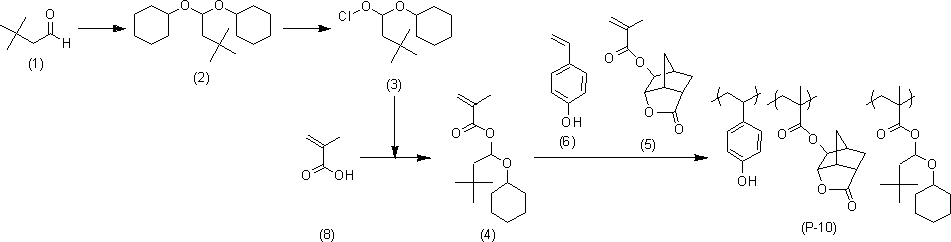
20.00gの化合物(1)を113.33gのn-ヘキサンに溶解させ、42.00gのシクロヘキサノール、20.00gの無水硫酸マグネシウム、2.32gの10-カンファースルホン酸を加えて、室温(25℃)で7.5時間攪拌した。5.05gのトリエチルアミンを加えて、10分間攪拌した後、ろ過して固体を取り除いた。400gの酢酸エチルを加えて、有機相を200gのイオン交換水で5回洗浄した後、無水硫酸マグネシウムで乾燥し、溶媒を留去して、化合物(2)含有溶液を44.86g得た。
化合物(2)含有溶液23.07gに、4.52gの塩化アセチルを加えて、室温で2時間攪拌して、化合物(3)含有溶液を27.58g得た。
3.57gの化合物(8)を26.18gの脱水テトラヒドロフランに溶解させ、3.57gの無水硫酸マグネシウム、29.37gのトリエチルアミンを加えて、窒素雰囲気下で攪拌した。0℃に冷却し、27.54gの化合物(3)含有溶液を滴下し、室温で3.5時間攪拌した後、ろ過して固体を取り除いた。400gの酢酸エチルを加えて、有機相を150gのイオン交換水で5回洗浄した後、無水硫酸マグネシウムで乾燥し、溶媒を留去した。カラムクロマトグラフィーで単離精製し、8.65gの化合物(4)を得た。
2.52gの化合物(6)のシクロヘキサノン溶液(50.00質量%)と、0.78gの化合物(5)と、5.64gの化合物(4)と、0.32gの重合開始剤V-601(和光純薬工業(株)製)とを、27.01gのシクロヘキサノンに溶解させた。反応容器中に15.22gのシクロヘキサノンを入れ、窒素ガス雰囲気下、85℃の系中に4時間かけて滴下した。反応溶液を2時間に亘って加熱撹拌した後、これを室温まで放冷した。
上記反応溶液を、400gのヘプタン中に滴下し、ポリマーを沈殿させ、ろ過した。200gのヘプタンを用いて、ろ過した固体のかけ洗いを行なった。その後、洗浄後の固体を減圧乾燥に供して、2.98gの樹脂(P-10)を得た。
化合物(2)含有溶液23.07gに、4.52gの塩化アセチルを加えて、室温で2時間攪拌して、化合物(3)含有溶液を27.58g得た。
3.57gの化合物(8)を26.18gの脱水テトラヒドロフランに溶解させ、3.57gの無水硫酸マグネシウム、29.37gのトリエチルアミンを加えて、窒素雰囲気下で攪拌した。0℃に冷却し、27.54gの化合物(3)含有溶液を滴下し、室温で3.5時間攪拌した後、ろ過して固体を取り除いた。400gの酢酸エチルを加えて、有機相を150gのイオン交換水で5回洗浄した後、無水硫酸マグネシウムで乾燥し、溶媒を留去した。カラムクロマトグラフィーで単離精製し、8.65gの化合物(4)を得た。
2.52gの化合物(6)のシクロヘキサノン溶液(50.00質量%)と、0.78gの化合物(5)と、5.64gの化合物(4)と、0.32gの重合開始剤V-601(和光純薬工業(株)製)とを、27.01gのシクロヘキサノンに溶解させた。反応容器中に15.22gのシクロヘキサノンを入れ、窒素ガス雰囲気下、85℃の系中に4時間かけて滴下した。反応溶液を2時間に亘って加熱撹拌した後、これを室温まで放冷した。
上記反応溶液を、400gのヘプタン中に滴下し、ポリマーを沈殿させ、ろ過した。200gのヘプタンを用いて、ろ過した固体のかけ洗いを行なった。その後、洗浄後の固体を減圧乾燥に供して、2.98gの樹脂(P-10)を得た。
以下、同様にして、樹脂P-1~P-9、P-11、P-12を合成した。合成したポリマー構造は具体例として前掲の通りである。
また、前述のように合成し、後述の実施例で使用する各樹脂の重量平均分子量(Mw)、分散度(Mw/Mn)を下表に示す。
また、前述のように合成し、後述の実施例で使用する各樹脂の重量平均分子量(Mw)、分散度(Mw/Mn)を下表に示す。
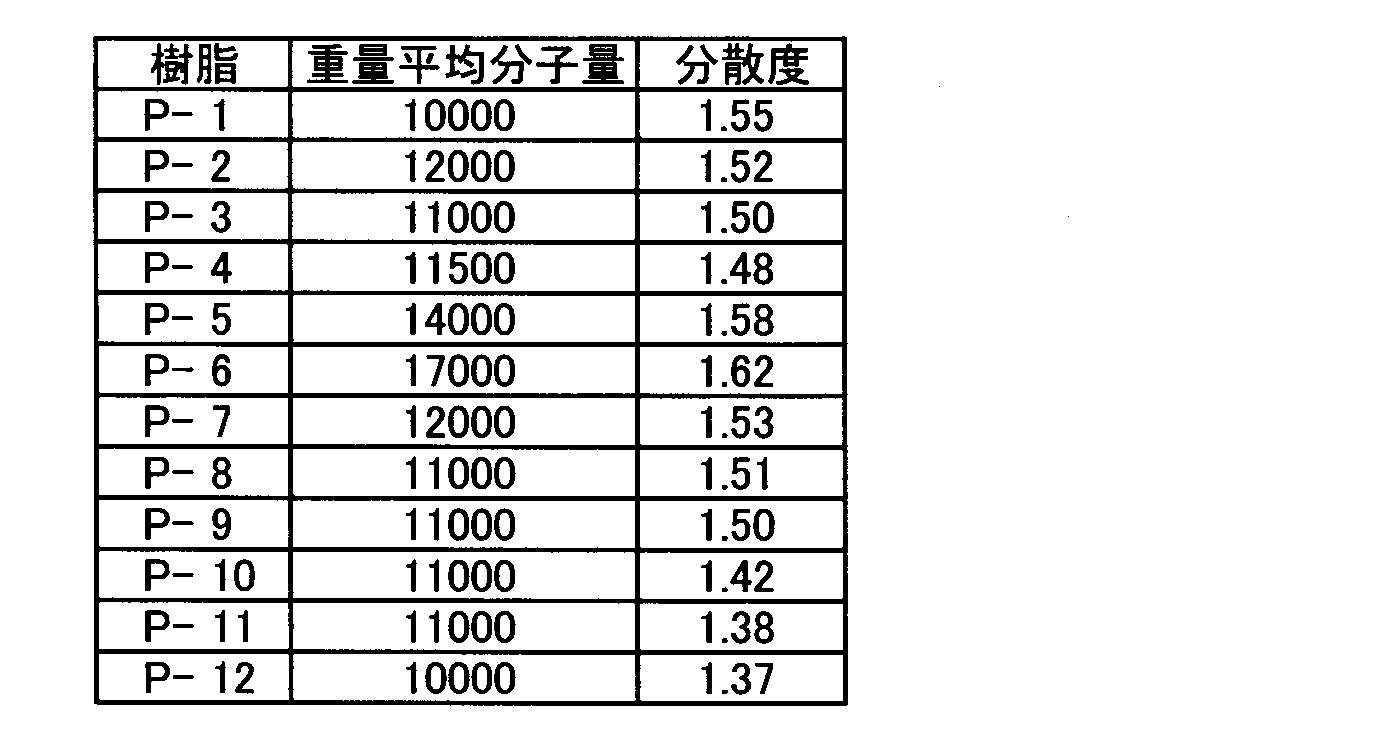
合成例2(反転用材料ポリマー1の合成)
反転用膜に用いる高分子化合物として、下記モノマー1及びモノマー2(モル比30:70)を用いて含水エタノール中で酢酸触媒を用いて共縮合反応を行い、有機層が中性となるまで水洗を繰り返した後に濃縮してオリゴマーを得た。
反転用膜に用いる高分子化合物として、下記モノマー1及びモノマー2(モル比30:70)を用いて含水エタノール中で酢酸触媒を用いて共縮合反応を行い、有機層が中性となるまで水洗を繰り返した後に濃縮してオリゴマーを得た。

これをトルエンで希釈し水酸化カリウムを加えて加熱還流し、冷却後反応液をメチルイソブチルケトンで希釈し、有機層が中性となるまで水洗を繰り返した後に濃縮して下記のようなポリマー1を得た。
ポリマー1 重量平均分子量(Mw)=2,800
分散度(Mw/Mn)=1.88
分散度(Mw/Mn)=1.88

〔光酸発生剤〕
光酸発生剤としては、具体例として前掲の化合物を適宜選択して用いた。
光酸発生剤としては、具体例として前掲の化合物を適宜選択して用いた。
〔塩基性化合物〕
塩基性化合物としては、下記化合物(N-1)~(N-10)の何れかを用いた。
塩基性化合物としては、下記化合物(N-1)~(N-10)の何れかを用いた。
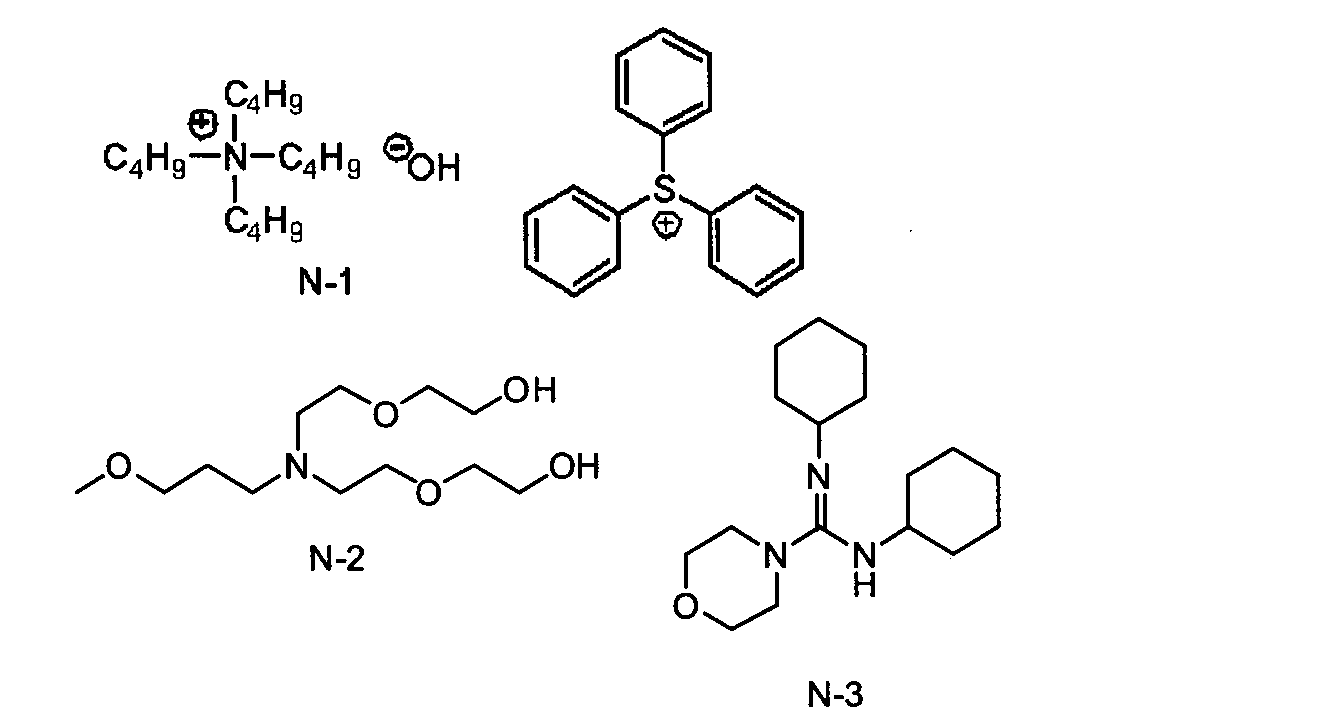
〔界面活性剤〕
界面活性剤としては、下記W-1~W-4を用いた。
W-1: メガファックF176(大日本インキ化学工業(株)製)(フッ素系)
W-2: メガファックR08(大日本インキ化学工業(株)製)(フッ素及びシリコン系)
W-3: ポリシロキサンポリマーKP-341(信越化学工業(株)製)(シリコン系)
W-4: PF6320(OMNOVA(株)製)(フッ素系)
界面活性剤としては、下記W-1~W-4を用いた。
W-1: メガファックF176(大日本インキ化学工業(株)製)(フッ素系)
W-2: メガファックR08(大日本インキ化学工業(株)製)(フッ素及びシリコン系)
W-3: ポリシロキサンポリマーKP-341(信越化学工業(株)製)(シリコン系)
W-4: PF6320(OMNOVA(株)製)(フッ素系)
<塗布溶剤>
塗布溶剤としては、以下のものを用いた。
S1:プロピレングリコールモノメチルエーテルアセテート(PGMEA)
S2:プロピレングリコールモノメチルエーテル(PGME)
<現像液>
現像液としては、以下のものを用いた。
SG-1:2-ノナノン
SG-2:メチルアミルケトン(2-ヘプタノン)
SG-3:酢酸ブチル
塗布溶剤としては、以下のものを用いた。
S1:プロピレングリコールモノメチルエーテルアセテート(PGMEA)
S2:プロピレングリコールモノメチルエーテル(PGME)
<現像液>
現像液としては、以下のものを用いた。
SG-1:2-ノナノン
SG-2:メチルアミルケトン(2-ヘプタノン)
SG-3:酢酸ブチル
<リンス液>
リンス液として、以下のものを用いた。
SR-1:4-メチル-2-ペンタノール
SR-2:1-ヘキサノール
SR-3:メチルイソブチルカルビノール
リンス液として、以下のものを用いた。
SR-1:4-メチル-2-ペンタノール
SR-2:1-ヘキサノール
SR-3:メチルイソブチルカルビノール
〔実施例1~12 極紫外線(EUV)露光、孤立ライン評価〕
(1)感活性光線性又は感放射線性樹脂組成物の塗液調製及び塗設
下表に示した組成を有する固形分濃度2.5質量%の塗液組成物を0.05μm孔径のメンブレンフィルターで精密ろ過して、感活性光線性又は感放射線性樹脂組成物(レジスト組成物)溶液を得た。
この感活性光線性又は感放射線性樹脂組成物を、予めヘキサメチルジシラザン(HMDS)処理を施した6インチSiウェハ上に東京エレクトロン製スピンコーターMark8を用いて塗布し、100℃、60秒間ホットプレート上で乾燥して、膜厚50nmのレジスト膜を得た。
(1)感活性光線性又は感放射線性樹脂組成物の塗液調製及び塗設
下表に示した組成を有する固形分濃度2.5質量%の塗液組成物を0.05μm孔径のメンブレンフィルターで精密ろ過して、感活性光線性又は感放射線性樹脂組成物(レジスト組成物)溶液を得た。
この感活性光線性又は感放射線性樹脂組成物を、予めヘキサメチルジシラザン(HMDS)処理を施した6インチSiウェハ上に東京エレクトロン製スピンコーターMark8を用いて塗布し、100℃、60秒間ホットプレート上で乾燥して、膜厚50nmのレジスト膜を得た。
(2)EUV露光及び現像
上記(1)で得られたレジスト膜の塗布されたウェハを、EUV露光装置(Exitech社製 Micro Exposure Tool、NA0.3、X-dipole、アウターシグマ0.68、インナーシグマ0.36)を用い、露光マスク(ライン/スペース=4/1)を使用して、パターン露光を行った。照射後、ホットプレート上で、110℃で60秒間加熱した後、下表に記載の有機系現像液をパドルして30秒間現像し、下表に記載のリンス液を用いてリンスした後、4000rpmの回転数で30秒間ウェハを回転させた後、90℃で60秒間ベークを行なうことにより、ライン/スペース=4:1の孤立スペースのレジストパターンを得た。
上記(1)で得られたレジスト膜の塗布されたウェハを、EUV露光装置(Exitech社製 Micro Exposure Tool、NA0.3、X-dipole、アウターシグマ0.68、インナーシグマ0.36)を用い、露光マスク(ライン/スペース=4/1)を使用して、パターン露光を行った。照射後、ホットプレート上で、110℃で60秒間加熱した後、下表に記載の有機系現像液をパドルして30秒間現像し、下表に記載のリンス液を用いてリンスした後、4000rpmの回転数で30秒間ウェハを回転させた後、90℃で60秒間ベークを行なうことにより、ライン/スペース=4:1の孤立スペースのレジストパターンを得た。
(3)レジストパターンの評価
走査型電子顕微鏡((株)日立製作所製S-9380II)を用いて、得られたレジストパターンを下記の方法で、感度、解像力について評価した。
走査型電子顕微鏡((株)日立製作所製S-9380II)を用いて、得られたレジストパターンを下記の方法で、感度、解像力について評価した。
(3-1)感度
線幅40nmのライン/スペース=1:1のパターンを解像する時の照射エネルギーを感度(Eop)とした。この値が小さいほど性能が良好であることを示す。
線幅40nmのライン/スペース=1:1のパターンを解像する時の照射エネルギーを感度(Eop)とした。この値が小さいほど性能が良好であることを示す。
(3-2)孤立スペースにおける解像力
前記Eopにおける孤立スペース(ライン/スペース=4:1)の限界解像力(ラインとスペースが分離解像する最小のスペース幅)を求めた。そして、この値を「解像力(nm)」とした。この値が小さいほど性能が良好であることを示す。
前記Eopにおける孤立スペース(ライン/スペース=4:1)の限界解像力(ラインとスペースが分離解像する最小のスペース幅)を求めた。そして、この値を「解像力(nm)」とした。この値が小さいほど性能が良好であることを示す。
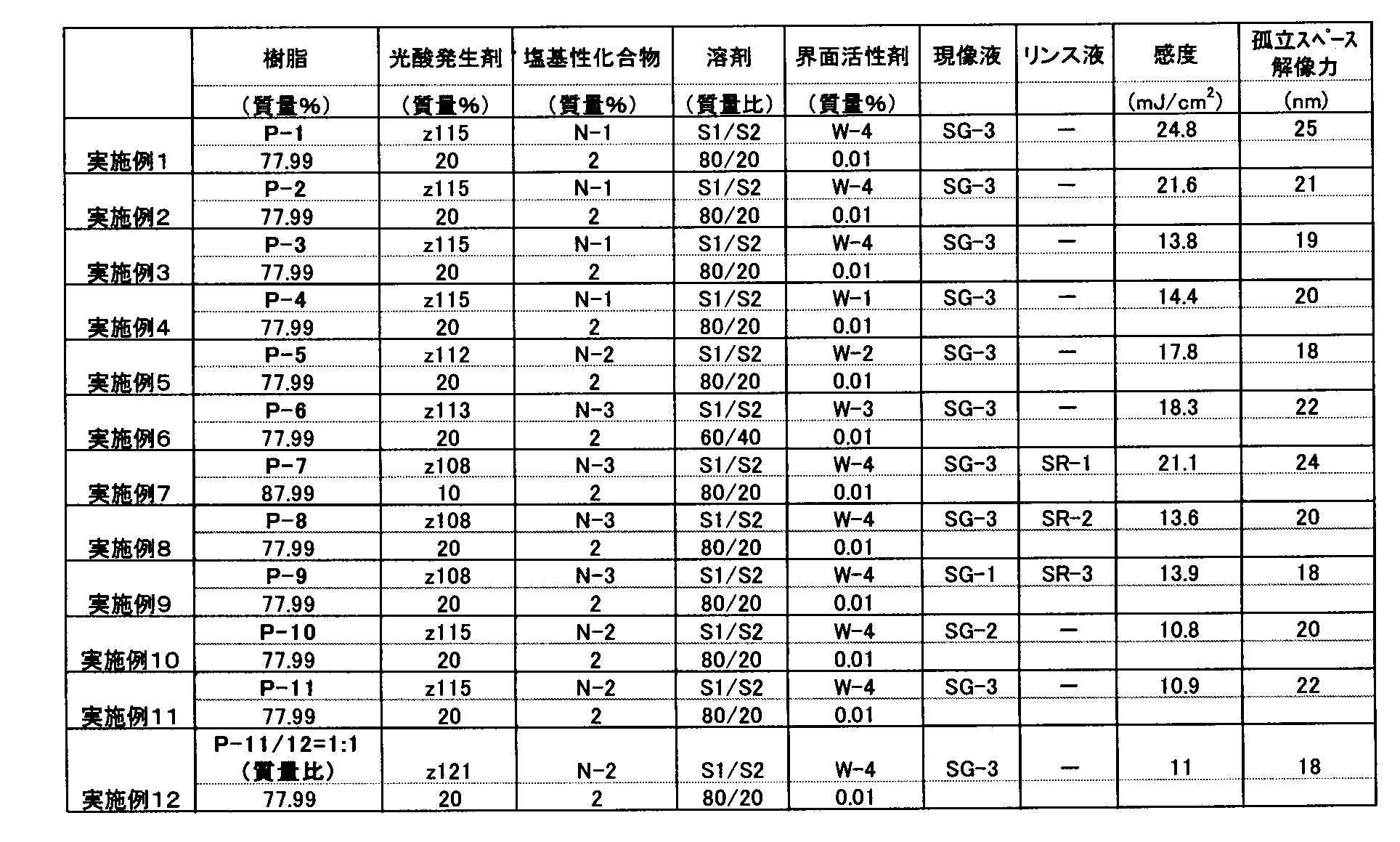
(4)パターンの反転及び評価
上記ポリマー1(100質量部)に溶媒(PGMEA:3000質量部)を加えてパターン反転用レジスト膜形成組成物を調製した。溶媒には100ppmのフッ素系界面活性剤FC-4430(住友スリーエム(株)製)を添加した。
孤立スペースパターン上に前記パターン反転用レジスト膜形成組成物を50nmの膜厚になるように塗布し、2.38質量%のテトラメチルアンモニウムヒドロキシドの水溶液で30秒間現像を行い(アルカリ現像条件1)、下記表に記載の加熱条件でポストベークを行った。孤立スペースパターンが孤立ラインパターンに反転されているかどうかを日立製作所製TDSEM(S-9380)で観察し、反転後の線幅とLWRで評価した(LWR(nm))。
孤立ラインパターンの観察において、日立製作所製TDSEM(S-9380)にてパターン上部から観察する際、線幅を任意のポイントで観測し、その測定ばらつきを3σで評価した。値が小さいほど良好な性能であることを示す。
結果を下記表に示す。
上記ポリマー1(100質量部)に溶媒(PGMEA:3000質量部)を加えてパターン反転用レジスト膜形成組成物を調製した。溶媒には100ppmのフッ素系界面活性剤FC-4430(住友スリーエム(株)製)を添加した。
孤立スペースパターン上に前記パターン反転用レジスト膜形成組成物を50nmの膜厚になるように塗布し、2.38質量%のテトラメチルアンモニウムヒドロキシドの水溶液で30秒間現像を行い(アルカリ現像条件1)、下記表に記載の加熱条件でポストベークを行った。孤立スペースパターンが孤立ラインパターンに反転されているかどうかを日立製作所製TDSEM(S-9380)で観察し、反転後の線幅とLWRで評価した(LWR(nm))。
孤立ラインパターンの観察において、日立製作所製TDSEM(S-9380)にてパターン上部から観察する際、線幅を任意のポイントで観測し、その測定ばらつきを3σで評価した。値が小さいほど良好な性能であることを示す。
結果を下記表に示す。

上記表に示した結果から明らかなように、実施例1~12のパターン形成方法により、孤立スペースパターンが孤立ラインパターンに反転されていた。通常のポジ型のパターン形成方法では形成が困難な線幅の良好な孤立ラインパターンがLWRよく、形成できた。
10 基板
20 被加工層
30 ネガ型のパターン形成用の膜
30a ネガ型のパターン
31a ネガ型のパターンにおける空間部
31b ネガ型のパターンにおける残膜部
40 パターン反転用レジスト膜
40a 反転されてなるポジ型のレジストパターン
20 被加工層
30 ネガ型のパターン形成用の膜
30a ネガ型のパターン
31a ネガ型のパターンにおける空間部
31b ネガ型のパターンにおける残膜部
40 パターン反転用レジスト膜
40a 反転されてなるポジ型のレジストパターン
本発明によれば、従来のポジ型のパターン形成方法では形成が困難な微細な孤立ラインパターン、微細なドットパターン等の微細なパターンを形成することができ、特定のパターン反転用レジスト膜を用いることにより、細線化とエッチング耐性の発現とのジレンマを解消し得、パターンがどんなに微細であっても、LWR等のラフネス性能よく、エッチングに十分に耐え得るパターンを形成することができるパターン形成方法、それにより形成されたレジストパターン、並びにこれらを用いる電子デバイスの製造方法及び電子デバイスを提供することができる。
本発明を詳細にまた特定の実施態様を参照して説明したが、本発明の精神と範囲を逸脱することなく様々な変更や修正を加えることができることは当業者にとって明らかである。
本出願は、2012年11月26日出願の日本特許出願(特願2012-257845)に基づくものであり、その内容はここに参照として取り込まれる。
本出願は、2012年11月26日出願の日本特許出願(特願2012-257845)に基づくものであり、その内容はここに参照として取り込まれる。
Claims (7)
- 下記工程(1)~(5)を有するパターン形成方法。
(1)酸の作用により極性が増大して有機溶剤を含む現像液に対する溶解性が減少する樹脂(A)を含有する感活性光線性又は感放射線性樹脂組成物によって膜を形成する工程、
(2)該膜を露光する工程、
(3)該露光された膜を有機溶剤を含む現像液を用いて現像することにより該膜の一部が除去されてなる空間部と、該現像により除去されない残膜部とを有するネガ型のパターンを形成する工程、
(4)該ネガ型のパターン上に、該ネガ型のパターンにおける該空間部に埋設するようにパターン反転用レジスト膜を形成する工程、及び
(5)アルカリ性ウェットエッチング液を用いて該ネガ型のパターンにおける該残膜部を除去することにより該ネガ型のパターンからポジ型のパターンに反転させる工程 - 樹脂(A)が、酸の作用により分解して極性基を生じる基を有する繰り返し単位を有する樹脂である、請求項1に記載のパターン形成方法。
- 工程(4)において、パターン反転用レジスト膜が、シロキサン結合を有する有機珪素化合物を含有する組成物により形成される、請求項1又は2に記載のパターン形成方法。
- 前記露光がX線、電子線又はEUVを用いて行われる、請求項1~3のいずれか1項に記載のパターン形成方法。
- 請求項1~4のいずれか1項に記載のパターン形成方法により形成されたレジストパターン。
- 請求項1~5のいずれか1項に記載のパターン形成方法を含む、電子デバイスの製造方法。
- 請求項6に記載の電子デバイスの製造方法により製造された電子デバイス。
Priority Applications (2)
| Application Number | Priority Date | Filing Date | Title |
|---|---|---|---|
| KR1020157013765A KR101777757B1 (ko) | 2012-11-26 | 2013-11-14 | 패턴 형성 방법, 그것에 의해 형성된 레지스트 패턴, 이들을 사용한 전자 디바이스의 제조 방법, 및 전자 디바이스 |
| US14/719,830 US9448482B2 (en) | 2012-11-26 | 2015-05-22 | Pattern forming method, resist pattern formed by the method, method for manufacturing electronic device using the same, and electronic device |
Applications Claiming Priority (2)
| Application Number | Priority Date | Filing Date | Title |
|---|---|---|---|
| JP2012-257845 | 2012-11-26 | ||
| JP2012257845A JP6002554B2 (ja) | 2012-11-26 | 2012-11-26 | パターン形成方法、及び、これを用いる電子デバイスの製造方法 |
Related Child Applications (1)
| Application Number | Title | Priority Date | Filing Date |
|---|---|---|---|
| US14/719,830 Continuation US9448482B2 (en) | 2012-11-26 | 2015-05-22 | Pattern forming method, resist pattern formed by the method, method for manufacturing electronic device using the same, and electronic device |
Publications (1)
| Publication Number | Publication Date |
|---|---|
| WO2014080835A1 true WO2014080835A1 (ja) | 2014-05-30 |
Family
ID=50776018
Family Applications (1)
| Application Number | Title | Priority Date | Filing Date |
|---|---|---|---|
| PCT/JP2013/080837 Ceased WO2014080835A1 (ja) | 2012-11-26 | 2013-11-14 | パターン形成方法、それにより形成されたレジストパターン、並びに、これらを用いる電子デバイスの製造方法、及び電子デバイス |
Country Status (5)
| Country | Link |
|---|---|
| US (1) | US9448482B2 (ja) |
| JP (1) | JP6002554B2 (ja) |
| KR (1) | KR101777757B1 (ja) |
| TW (1) | TWI596433B (ja) |
| WO (1) | WO2014080835A1 (ja) |
Cited By (4)
| Publication number | Priority date | Publication date | Assignee | Title |
|---|---|---|---|---|
| JP2014157246A (ja) * | 2013-02-15 | 2014-08-28 | Shin Etsu Chem Co Ltd | パターン形成方法 |
| JP2014157299A (ja) * | 2013-02-18 | 2014-08-28 | Shin Etsu Chem Co Ltd | パターン形成方法及びパターン反転膜材料 |
| JP2014157301A (ja) * | 2013-02-18 | 2014-08-28 | Shin Etsu Chem Co Ltd | パターン形成方法 |
| WO2016190261A1 (ja) * | 2015-05-25 | 2016-12-01 | 日産化学工業株式会社 | レジストパターン塗布用組成物 |
Families Citing this family (28)
| Publication number | Priority date | Publication date | Assignee | Title |
|---|---|---|---|---|
| US9229466B2 (en) | 2011-12-31 | 2016-01-05 | Intel Corporation | Fully integrated voltage regulators for multi-stack integrated circuit architectures |
| JP6185874B2 (ja) * | 2013-05-02 | 2017-08-23 | 富士フイルム株式会社 | パターン形成方法、感活性光線性又は感放射線性樹脂組成物、レジスト膜、電子デバイスの製造方法、及び、電子デバイス |
| JP6013975B2 (ja) * | 2013-06-05 | 2016-10-25 | 三菱製紙株式会社 | パターン形成方法 |
| JP6371057B2 (ja) * | 2013-12-27 | 2018-08-08 | 東京応化工業株式会社 | パターン形成方法 |
| US9951163B2 (en) * | 2014-01-31 | 2018-04-24 | Mitsubishi Gas Chemical Company, Inc. | (Meth)acrylate compound, (meth)acrylic copolymer and photosensitive resin composition containing same |
| JP6690535B2 (ja) * | 2014-07-24 | 2020-04-28 | 日産化学株式会社 | レジスト上層膜形成組成物及びそれを用いた半導体装置の製造方法 |
| KR101869312B1 (ko) * | 2014-07-31 | 2018-06-20 | 후지필름 가부시키가이샤 | 패턴 형성 방법, 레지스트 패턴, 전자 디바이스의 제조 방법, 및 전자 디바이스 |
| TWI603145B (zh) * | 2014-12-31 | 2017-10-21 | 羅門哈斯電子材料有限公司 | 光微影方法 |
| CN107250914A (zh) * | 2015-02-26 | 2017-10-13 | 富士胶片株式会社 | 上层膜形成用组合物以及使用了该上层膜形成用组合物的图案形成方法及电子器件的制造方法 |
| JP2018124297A (ja) * | 2015-05-29 | 2018-08-09 | 富士フイルム株式会社 | 反転パターン形成方法、画像反転用組成物及び電子デバイスの製造方法 |
| JP6427670B2 (ja) | 2015-07-01 | 2018-11-21 | 富士フイルム株式会社 | パターン形成方法、及び電子デバイスの製造方法 |
| CN108055851B (zh) * | 2015-09-09 | 2021-03-30 | 日产化学工业株式会社 | 含有硅的平坦化性图案反转用被覆剂 |
| WO2017043635A1 (ja) * | 2015-09-11 | 2017-03-16 | 日産化学工業株式会社 | ビニル基又は(メタ)アクリロキシ基含有ポリシロキサンを含むレジストパターン塗布用組成物 |
| JP6640864B2 (ja) * | 2015-09-30 | 2020-02-05 | 富士フイルム株式会社 | ネガ型のパターン形成方法、電子デバイスの製造方法、及び有機溶剤を含有する現像液を用いるネガ型パターン形成用のレジスト材料用積層体 |
| KR102505090B1 (ko) * | 2016-02-24 | 2023-03-02 | 닛산 가가쿠 가부시키가이샤 | 실리콘 함유 패턴반전용 피복제 |
| TWI746628B (zh) * | 2016-12-08 | 2021-11-21 | 南韓商三星電子股份有限公司 | 光阻組成物以及使用該光阻組成物形成精細圖案的方法 |
| KR102428331B1 (ko) * | 2016-12-08 | 2022-08-04 | 삼성전자주식회사 | 포토 레지스트 조성물 및 이를 이용한 미세 패턴 형성 방법 |
| US10520813B2 (en) * | 2016-12-15 | 2019-12-31 | Taiwan Semiconductor Manufacturing Co., Ltd | Extreme ultraviolet photoresist with high-efficiency electron transfer |
| JP7075209B2 (ja) * | 2016-12-28 | 2022-05-25 | 東京応化工業株式会社 | パターン形成方法及びポリシラン樹脂前駆体の製造方法 |
| JP7055071B2 (ja) | 2018-06-18 | 2022-04-15 | 東京応化工業株式会社 | レジスト組成物及びレジストパターン形成方法 |
| JP7055070B2 (ja) * | 2018-06-18 | 2022-04-15 | 東京応化工業株式会社 | レジスト組成物、レジストパターン形成方法、高分子化合物及び化合物 |
| CN111211049B (zh) * | 2018-11-21 | 2022-10-21 | 浙江海晫新能源科技有限公司 | 一种硅片碱腐蚀工艺及其应用 |
| JP7402715B2 (ja) | 2020-03-06 | 2023-12-21 | 東京エレクトロン株式会社 | ウエハを処理する方法 |
| TWI889807B (zh) * | 2020-05-01 | 2025-07-11 | 日商東京威力科創股份有限公司 | 圖案形成方法及圖案形成系統 |
| JP7376433B2 (ja) | 2020-07-07 | 2023-11-08 | 東京応化工業株式会社 | レジスト組成物及びレジストパターン形成方法 |
| US11829068B2 (en) | 2020-10-19 | 2023-11-28 | Tokyo Ohka Kogyo Co., Ltd. | Resist composition, method of forming resist pattern, compound, and resin |
| JPWO2022131278A1 (ja) * | 2020-12-15 | 2022-06-23 | ||
| US20230288807A1 (en) * | 2022-03-11 | 2023-09-14 | Taiwan Semiconductor Manufacturing Company, Ltd. | Photoresist, method of manufacturing a semiconductor device and method of extreme ultraviolet lithography |
Citations (3)
| Publication number | Priority date | Publication date | Assignee | Title |
|---|---|---|---|---|
| JP2009301007A (ja) * | 2008-05-15 | 2009-12-24 | Shin-Etsu Chemical Co Ltd | パターン形成方法 |
| JP2011197628A (ja) * | 2010-02-23 | 2011-10-06 | Tokyo Ohka Kogyo Co Ltd | パターン形成方法 |
| JP2012137698A (ja) * | 2010-12-27 | 2012-07-19 | Fujifilm Corp | 感活性光線性又は感放射線性樹脂組成物、並びに、これを用いたレジスト膜及びパターン形成方法 |
Family Cites Families (14)
| Publication number | Priority date | Publication date | Assignee | Title |
|---|---|---|---|---|
| JP4826846B2 (ja) * | 2009-02-12 | 2011-11-30 | 信越化学工業株式会社 | パターン形成方法 |
| JP5557550B2 (ja) | 2009-02-20 | 2014-07-23 | 富士フイルム株式会社 | 電子線又はeuv光を用いた有機溶剤系現像又は多重現像パターン形成方法 |
| WO2010123032A1 (ja) * | 2009-04-24 | 2010-10-28 | 日産化学工業株式会社 | パターン反転膜形成用組成物及び反転パターン形成方法 |
| US8758987B2 (en) * | 2009-09-02 | 2014-06-24 | Micron Technology, Inc. | Methods of forming a reversed pattern in a substrate |
| JP5440468B2 (ja) * | 2010-01-20 | 2014-03-12 | 信越化学工業株式会社 | パターン形成方法 |
| US20120122031A1 (en) * | 2010-11-15 | 2012-05-17 | International Business Machines Corporation | Photoresist composition for negative development and pattern forming method using thereof |
| JP5690703B2 (ja) * | 2010-11-30 | 2015-03-25 | 富士フイルム株式会社 | ネガ型パターン形成方法及びレジストパターン |
| TWI506370B (zh) * | 2011-01-14 | 2015-11-01 | Shinetsu Chemical Co | 圖案形成方法及使用於該方法之光阻組成物 |
| EP2690497A4 (en) * | 2011-03-24 | 2014-08-20 | Nissan Chemical Ind Ltd | POLYMERIC DEVELOPER |
| US9165781B2 (en) * | 2011-03-28 | 2015-10-20 | Nissan Chemical Industries, Ltd. | Composition for forming pattern reversal film and method for forming reversal pattern |
| JP5829994B2 (ja) * | 2012-10-01 | 2015-12-09 | 信越化学工業株式会社 | パターン形成方法 |
| US20140225252A1 (en) * | 2013-02-12 | 2014-08-14 | Brewer Science Inc. | On-track reverse lithography to thin mask for fabrication of dark-field features |
| JP5794243B2 (ja) * | 2013-02-18 | 2015-10-14 | 信越化学工業株式会社 | パターン形成方法 |
| JP5842841B2 (ja) * | 2013-02-18 | 2016-01-13 | 信越化学工業株式会社 | パターン形成方法 |
-
2012
- 2012-11-26 JP JP2012257845A patent/JP6002554B2/ja active Active
-
2013
- 2013-11-14 WO PCT/JP2013/080837 patent/WO2014080835A1/ja not_active Ceased
- 2013-11-14 KR KR1020157013765A patent/KR101777757B1/ko active Active
- 2013-11-26 TW TW102143031A patent/TWI596433B/zh active
-
2015
- 2015-05-22 US US14/719,830 patent/US9448482B2/en active Active
Patent Citations (3)
| Publication number | Priority date | Publication date | Assignee | Title |
|---|---|---|---|---|
| JP2009301007A (ja) * | 2008-05-15 | 2009-12-24 | Shin-Etsu Chemical Co Ltd | パターン形成方法 |
| JP2011197628A (ja) * | 2010-02-23 | 2011-10-06 | Tokyo Ohka Kogyo Co Ltd | パターン形成方法 |
| JP2012137698A (ja) * | 2010-12-27 | 2012-07-19 | Fujifilm Corp | 感活性光線性又は感放射線性樹脂組成物、並びに、これを用いたレジスト膜及びパターン形成方法 |
Cited By (8)
| Publication number | Priority date | Publication date | Assignee | Title |
|---|---|---|---|---|
| JP2014157246A (ja) * | 2013-02-15 | 2014-08-28 | Shin Etsu Chem Co Ltd | パターン形成方法 |
| JP2014157299A (ja) * | 2013-02-18 | 2014-08-28 | Shin Etsu Chem Co Ltd | パターン形成方法及びパターン反転膜材料 |
| JP2014157301A (ja) * | 2013-02-18 | 2014-08-28 | Shin Etsu Chem Co Ltd | パターン形成方法 |
| WO2016190261A1 (ja) * | 2015-05-25 | 2016-12-01 | 日産化学工業株式会社 | レジストパターン塗布用組成物 |
| KR20180011048A (ko) * | 2015-05-25 | 2018-01-31 | 닛산 가가쿠 고교 가부시키 가이샤 | 레지스트 패턴 도포용 조성물 |
| JPWO2016190261A1 (ja) * | 2015-05-25 | 2018-03-08 | 日産化学工業株式会社 | レジストパターン塗布用組成物 |
| US10558119B2 (en) | 2015-05-25 | 2020-02-11 | Nissan Chemical Industries, Ltd. | Composition for coating resist pattern |
| KR102533967B1 (ko) * | 2015-05-25 | 2023-05-18 | 닛산 가가쿠 가부시키가이샤 | 레지스트 패턴 도포용 조성물 |
Also Published As
| Publication number | Publication date |
|---|---|
| US9448482B2 (en) | 2016-09-20 |
| KR101777757B1 (ko) | 2017-09-12 |
| JP2014106298A (ja) | 2014-06-09 |
| US20150253673A1 (en) | 2015-09-10 |
| TW201435502A (zh) | 2014-09-16 |
| TWI596433B (zh) | 2017-08-21 |
| JP6002554B2 (ja) | 2016-10-05 |
| KR20150079815A (ko) | 2015-07-08 |
Similar Documents
| Publication | Publication Date | Title |
|---|---|---|
| JP6002554B2 (ja) | パターン形成方法、及び、これを用いる電子デバイスの製造方法 | |
| JP5836230B2 (ja) | パターン形成方法、感電子線性又は感極紫外線性樹脂組成物、及び、レジスト膜、並びに、これらを用いた電子デバイスの製造方法 | |
| TWI712863B (zh) | 圖案形成方法、上層膜形成用組成物、抗蝕劑圖案及電子元件的製造方法 | |
| JP6025600B2 (ja) | 感活性光線性又は感放射線性樹脂組成物、感活性光線性又は感放射線性膜及びパターン形成方法 | |
| KR101940522B1 (ko) | 패턴 형성 방법, 보호막 형성용 조성물, 전자 디바이스의 제조 방법 및 전자 디바이스 | |
| JP6209344B2 (ja) | パターン形成方法、感活性光線性又は感放射線性樹脂組成物、レジスト膜、これらを用いた電子デバイスの製造方法 | |
| TWI716380B (zh) | 上層膜形成用組成物、以及使用其的圖案形成方法及電子元件的製造方法 | |
| KR20190089083A (ko) | 패턴 형성 방법, 전자 디바이스의 제조 방법, 및 유기 용제 현상용 감활성광선성 또는 감방사선성 수지 조성물 | |
| JP6754424B2 (ja) | 保護膜形成用組成物、保護膜形成用組成物の製造方法、パターン形成方法、および、電子デバイスの製造方法 | |
| KR20180039671A (ko) | 패턴 형성 방법, 전자 디바이스의 제조 방법, 및 적층체 | |
| JP6476276B2 (ja) | パターン形成方法、感活性光線性又は感放射線性樹脂組成物、感活性光線性又は感放射線性膜、及び電子デバイスの製造方法 | |
| WO2017057288A1 (ja) | パターン形成方法、電子デバイスの製造方法、及び積層体 | |
| CN108292097B (zh) | 图案形成方法、电子器件的制造方法、层叠膜及上层膜形成用组合物 | |
| TWI677760B (zh) | 圖案形成方法、保護膜形成用組成物及電子元件的製造方法 | |
| TWI709819B (zh) | 圖案形成方法以及上層膜形成用組成物 | |
| WO2016194838A1 (ja) | 反転パターン形成方法、画像反転用組成物及び電子デバイスの製造方法 | |
| WO2017110658A1 (ja) | パターン形成方法、電子デバイスの製造方法及びパターン反転用樹脂組成物 | |
| KR20170042688A (ko) | 패턴 형성 방법, 레지스트 패턴, 및 전자 디바이스의 제조 방법 | |
| TW202026320A (zh) | 圖案形成方法及有機溶劑顯影用抗蝕劑積層體 |
Legal Events
| Date | Code | Title | Description |
|---|---|---|---|
| 121 | Ep: the epo has been informed by wipo that ep was designated in this application |
Ref document number: 13857645 Country of ref document: EP Kind code of ref document: A1 |
|
| ENP | Entry into the national phase |
Ref document number: 20157013765 Country of ref document: KR Kind code of ref document: A |
|
| NENP | Non-entry into the national phase |
Ref country code: DE |
|
| 122 | Ep: pct application non-entry in european phase |
Ref document number: 13857645 Country of ref document: EP Kind code of ref document: A1 |