WO2014045994A1 - 組織構成設定装置、組織構成設定方法、及びコンピュータ読み取り可能な記録媒体 - Google Patents
組織構成設定装置、組織構成設定方法、及びコンピュータ読み取り可能な記録媒体 Download PDFInfo
- Publication number
- WO2014045994A1 WO2014045994A1 PCT/JP2013/074647 JP2013074647W WO2014045994A1 WO 2014045994 A1 WO2014045994 A1 WO 2014045994A1 JP 2013074647 W JP2013074647 W JP 2013074647W WO 2014045994 A1 WO2014045994 A1 WO 2014045994A1
- Authority
- WO
- WIPO (PCT)
- Prior art keywords
- members
- team
- correlation
- organization
- candidate
- Prior art date
- Legal status (The legal status is an assumption and is not a legal conclusion. Google has not performed a legal analysis and makes no representation as to the accuracy of the status listed.)
- Ceased
Links
Images




Classifications
-
- G—PHYSICS
- G06—COMPUTING OR CALCULATING; COUNTING
- G06Q—INFORMATION AND COMMUNICATION TECHNOLOGY [ICT] SPECIALLY ADAPTED FOR ADMINISTRATIVE, COMMERCIAL, FINANCIAL, MANAGERIAL OR SUPERVISORY PURPOSES; SYSTEMS OR METHODS SPECIALLY ADAPTED FOR ADMINISTRATIVE, COMMERCIAL, FINANCIAL, MANAGERIAL OR SUPERVISORY PURPOSES, NOT OTHERWISE PROVIDED FOR
- G06Q10/00—Administration; Management
- G06Q10/06—Resources, workflows, human or project management; Enterprise or organisation planning; Enterprise or organisation modelling
Definitions
- the present invention relates to an organization configuration setting apparatus and an organization configuration setting method for presenting a team configuration plan in team formation in a company, and further to a computer-readable recording medium on which a program for realizing these is recorded About.
- intangible assets which are non-financial indicators
- An intangible asset is an index that represents an invisible asset of a company, for example, a customer asset, a human asset, and the like, and is an important index for determining whether or not the company can survive permanently.
- intangible assets human assets, in particular, are directly linked to corporate organizational capabilities.
- the organizational strength is considered to vary greatly depending on the combination of the constituent members in the various teams organized within the company. This is because each person has different characteristics, and their abilities, tolerance, and communication tendencies change depending on the compatibility with other members of the team.
- Patent Document 1 proposes an apparatus that supports personnel allocation based on compatibility between employees.
- Patent Document 1 first obtains an evaluation regarding the compatibility of other employees answered by each employee in advance, and creates a compatibility list based on the acquired evaluation. And when the said apparatus receives the arrangement
- An example of an object of the present invention is an organization configuration setting device, an organization configuration setting method, and a computer that can solve the above-described problems and can improve the organizational power of the organization while considering compatibility between members constituting the organization.
- An object is to provide a readable recording medium.
- an organization configuration setting device is a device for setting a configuration of a target organization,
- the number of hierarchies constituting the organization, the class of members of the organization permitted in each hierarchy, the number of members in each hierarchy, and the contents of the teams constituting the components of the organization are accepted as configuration conditions.
- the condition reception part For each of the members, using a database in which information indicating characteristics, information indicating ability, and information indicating class is registered, the team affiliation for each team so that the configuration condition is satisfied A team candidate selection section for selecting a combination of the members as candidate members; For each team, based on the characteristics and abilities of each member constituting each candidate, for each candidate, find the correlation of the characteristics between the members and the correlation of the abilities between the members, A candidate selection unit that selects a candidate to be a member of the team from the candidates selected for the team based on the obtained correlations; It is characterized by having.
- an organization configuration setting method is a method for setting a configuration of a target organization, (A) The number of layers constituting the organization, the class of members of the organization allowed in each layer, the number of members in each layer, and the configuration content of the team that is a component of the organization, Accept as a condition, step, (B) For each team, using a database in which information indicating characteristics, information indicating capabilities, and information indicating classes is registered, the teams Selecting a combination of the members as candidates for team members; (C) For each team, based on the characteristics and abilities of each member constituting each candidate, for each candidate, the correlation between the characteristics between members and the correlation between abilities between members Seeking Selecting a candidate to be a member of the team from the candidates selected for the team based on the obtained correlations; and It is characterized by having.
- a computer-readable recording medium is a computer-readable recording medium in which a program for setting a configuration of a target organization is recorded by a computer.
- a program for setting a configuration of a target organization is recorded by a computer.
- FIG. 1 is a configuration diagram showing a configuration of an organization configuration setting apparatus according to an embodiment of the present invention.
- FIG. 2 is a diagram showing an example of information registered in the member database used in the embodiment of the present invention.
- FIG. 3 is a diagram showing an example of a target organization in the embodiment of the present invention.
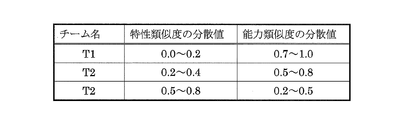
- FIG. 4 is a diagram illustrating an example of the correlation condition used in the embodiment of the present invention.
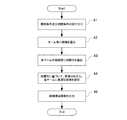
- FIG. 5 is a flowchart showing the operation of the organization configuration setting apparatus according to the embodiment of the present invention.
- FIG. 6 is a diagram showing an example of candidates selected in the embodiment of the present invention.
- FIG. 7 is a diagram showing an example of a selection result in the embodiment of the present invention.
- FIG. 8 is a block diagram illustrating an example of a computer that realizes the organization configuration setting apparatus according to the embodiment of the present invention.
- FIG. 1 is a configuration diagram showing a configuration of an organization configuration setting apparatus according to an embodiment of the present invention.
- the organization configuration setting apparatus 10 shown in FIG. As illustrated in FIG. 1, the organization configuration setting device 10 includes a condition receiving unit 11, a team candidate selection unit 12, and a candidate selection unit 13. The organization configuration setting apparatus 10 is connected to the member database 20.
- the member database is expressed as “member DB” in FIG.
- the condition accepting unit 11 indicates the number of hierarchies constituting the target organization, the rank of the members of the organization permitted in each hierarchy, the number of members of each hierarchy, and the configuration content of the team that is a component of the organization. , Accepted as a configuration condition.
- the team candidate selection unit 12 uses the member database 20 to select member combinations that are candidates for members belonging to each team for each team so that the constituent conditions are satisfied.
- the member database 20 as will be described later, information indicating characteristics, information indicating ability, and information indicating class are registered for each member of the target organization (see FIG. 2).
- the candidate selection unit 13 determines, for each candidate, the correlation between the characteristics of the members and the correlation of the abilities between the members based on the characteristics and abilities of the members constituting each candidate. Ask. And the candidate selection part 13 selects the candidate used as the member of the team from the candidates elected about each team for every team based on each calculated
- the members belonging to each team are selected based on the correlation of characteristics and the correlation of abilities among the members. And the capabilities of each member are taken into account. For this reason, a decrease in organizational strength due to poor compatibility between members belonging to the team, and a decrease in organizational strength due to gathering only those who have good compatibility but low ability are suppressed. That is, according to the present embodiment, it is possible to improve the organizational strength of the organization while considering the compatibility between members constituting the organization.
- FIG. 2 is a diagram showing an example of information registered in the member database used in the embodiment of the present invention.
- FIG. 3 is a diagram showing an example of a target organization in the embodiment of the present invention.
- an input device 30 and an output device 40 are connected to the organization configuration setting device 10.
- the input device 30 is a device for inputting configuration conditions, and is, for example, an input device such as a keyboard.
- the output device 40 is a device for presenting a set organization configuration, and is, for example, a display, a printer, or the like.
- a terminal device such as a personal computer may be connected to the organization configuration setting device 10 instead of the input device 30 and the output device 40. In this case, the terminal device functions as the input device 30 and the output device 40.
- the organization configuration setting apparatus 10 includes an output unit 14 in addition to the condition reception unit 11, the team candidate selection unit 12, and the candidate selection unit 13.
- the output unit 14 combines the candidates for each team selected by the candidate selection unit 13 to set the organization configuration, and specifies the set organization configuration (hereinafter referred to as “organization configuration information”) as an output device.
- organization configuration information the set organization configuration
- the output device 40 can present the set organization configuration.
- information indicating characteristics, information indicating ability, and information indicating class are registered for each member.
- a to K are exemplified as members, but this embodiment is not limited to this.
- each member as information indicating the characteristics of each member, items indicating the personality of each member such as “external degree”, “time strict adherence”, and “cheerfulness”, and relative values of the respective items are given. It is registered. Furthermore, as information indicating each member's ability, items indicating each member's business ability such as “parallel programming ability”, “GUI programming ability”, and “accounting / accounting programming ability”, and their relative values are registered. Has been. In addition, the class value of each member is registered as information indicating the class. The higher the value, the higher the class.
- the organization that is the target of configuration setting in the present embodiment is an organization such as a company or a public office, and is composed of a plurality of layers.
- “class” on the right side indicates the class of members permitted in each hierarchy.
- the ellipses in the figure indicate members, the number of members that can belong to the top layer is one, the number of members that can belong to the middle layer is two, and the members in the bottom layer The number of members that can belong is six.
- the number given to each ellipse is an identification number indicating a position.
- the members constituting the organization include not only regular employees but also non-regular employees, part-timers, and all other people who work for the company.
- the members making up the organization include not only public employees but also all persons working in government offices, such as contract workers and part-timers.
- each team is indicated by a solid line frame in FIG.
- Each team is set so that some of the members belong to the upper hierarchy of the upper and lower two hierarchies and the rest belong to the lower hierarchy. Furthermore, each team is set so that the members overlap between the teams.
- the team T1 is set so that one person belongs to the top layer and two persons belong to the middle layer.
- the team T2 is set so that one person belongs to the middle layer and three people belong to the lowest layer.
- the team T3 is set so that one person belongs to the middle layer and two people belong to the lowest layer.
- the teams T1 to T3 are set so that the members overlap between the upper team and the lower team.
- the condition receiving unit 11 sets, for each team, the correlation conditions set for the correlation of characteristics between members and the correlation of abilities between members. Further accept.
- the candidate selection unit 13 compares each obtained correlation with the received correlation condition and selects a candidate to be a member of each team.
- the candidate selection unit 13 calculates a similarity (hereinafter referred to as “characteristic similarity”) using relative values of a plurality of items representing the personality of each member. Furthermore, the candidate selection part 13 describes the similarity (henceforth "ability similarity") using the relative value of the some item showing the work capability of each member as correlation of the capability between members, for example. ) Is calculated. At this time, in this embodiment, since each member's hierarchy is divided up and down in each team, the candidate selection unit 13 targets the characteristic similarity and ability between the upper layer member and the lower layer member. Calculate similarity. Further, in the present embodiment, such calculation of similarity can be executed by obtaining a correlation value using, for example, Pearson's product-moment correlation coefficient.
- each team has a plurality of lower-layer members with respect to one upper-layer member. Therefore, each candidate has a plurality of characteristic similarity and capability similarity. Is calculated. Therefore, the candidate selection unit 13 obtains a variance value of the characteristic similarity for each candidate, and uses the obtained variance value as the correlation of the characteristics between the members in each candidate. Furthermore, the candidate selection part 13 calculates
- FIG. 4 is a diagram illustrating an example of the correlation condition used in the embodiment of the present invention.
- FIG. 5 is a flowchart showing the operation of the organization configuration setting apparatus according to the embodiment of the present invention.
- FIGS. 1 to 4 are referred to as appropriate.
- the organization configuration setting method is implemented by operating the organization configuration setting apparatus 10. Therefore, the description of the organization configuration setting method in the present embodiment is replaced with the following description of the operation of the organization configuration setting device 10.
- the condition receiving unit 11 receives input of the configuration condition and the correlation condition (see FIG. 4) of the organization to be set from the input device 30 (step A1). In addition, the condition receiving unit 11 inputs the received configuration condition and correlation condition to the team candidate selection unit 12.
- the configuration condition and the correlation condition input in step A1 are created in advance by the manager of the organization, the manager of the company in which the organization is set, and the like.
- the correlation condition may be created by the manufacturer of the organization configuration setting device 10.
- the team candidate selection unit 12 extracts information on each member from the member database 20, and uses the extracted information to select candidates for each team so that the configuration condition input in step A1 is satisfied.
- Select step A2
- the team candidate selection unit 12 uses the member database 20 shown in FIG. 2 to select the candidates shown in FIG. 6 for the team T1.
- FIG. 6 is a diagram showing an example of candidates selected in the embodiment of the present invention. In FIG. 6, the candidates are delimited by parentheses. Further, A to F in FIG. 6 correspond to the members A to F shown in FIG.
- step A2 since the selection of candidates in step A2 is performed based on the appropriate class registered in the member database shown in FIG. 2, it is possible to avoid a situation where the members are assigned to an inappropriate hierarchy.
- the candidate selection population since the candidate selection population can be narrowed, the calculation range in step A3 to be described later can be narrowed.
- the width may be set in the range of plus or minus 1 for the appropriate class of each member.
- the candidate selecting unit 13 correlates the characteristics between the members and the ability between the members for each candidate based on the characteristics and abilities of each member constituting each candidate. (Step A3).
- step A3 the candidate selection unit 13 first targets each candidate between the upper-layer member and the lower-layer member using the relative value of the item representing the personality of each member (see FIG. 2). As described above, the characteristic similarity is calculated.
- the candidate selection unit 13 determines the “external degree” and “time adherence degree” between the uppermost member and the middle member. And a value of “comfort level” are used to calculate a correlation value as a characteristic similarity.
- the characteristic similarity is calculated for each of the members 3-1 and 2-1, and between the members 3-1 and 2-2.
- the variance value of two similarities is calculated, and this is taken as the correlation of characteristics between members.
- the candidate selection unit 13 uses, for each candidate, a relative value of an item (see FIG. 2) representing the business ability of each member to determine between the upper layer member and the lower layer member.
- ability similarity is also calculated.
- the candidate selection unit 13 determines the “parallel programming ability” and “GUI programming” between the top layer member and the two middle layer members.
- a correlation value is calculated as ability similarity.
- the candidate selecting unit 13 further calculates a variance value of the two similarities (correlation values), and this is correlated with the correlation of the ability between the members. To do.
- the ability used in the calculation of ability similarity may be only the ability required by the team to be calculated. In the example of FIG. 3, the calculation is performed between team T2 and team T3. Different types of abilities may be used. For example, only the “GUI programming ability” is adopted in the calculation of the ability similarity of the team T2, and the “parallel programming ability” and the “accounting / accounting programming ability” are adopted in the calculation of the ability similarity of the team T3. good.
- the candidate selection unit 13 compares each correlation calculated in step A3 with the correlation condition (see FIG. 4) received in step A1, and candidates selected for each team for each team.
- the candidate who becomes the member to which the team belongs is selected from (Step A4).
- the candidate selection unit 13 determines, for each candidate, whether or not each variance value calculated in step A3 satisfies the correlation condition (appropriate range for each variance value) of the corresponding team. And the candidate selection part 13 selects the candidate determined to be satisfy
- step A4 candidate members are selected so that this requirement is satisfied.
- the characteristic similarity (correlation value) between the members 3-1 and 2-1 shown in FIG. 3 is P1
- the characteristic similarity (correlation value) between the members 3-1 and 2-2 is P2.
- P1 and P2 are both highly similar, specifically, for example, both P1 and P2 are 0.7 or more (P1, P2 ⁇ 0.7) and
- step A2 Suppose that there are cases where the candidates for team T1 selected in step A2 are composed of four or more people. In this case, if the variance values of the characteristic similarity and ability similarity calculated in step A3 are both within the range shown in FIG. 4, in step A4, a candidate composed of these four or more people is selected. Selected.
- FIG. 7 is a diagram showing an example of a selection result in the embodiment of the present invention.
- the output unit 14 sets the organization configuration by combining the candidates of each team selected by the candidate selection unit 13, and outputs the organization configuration information to the output device 40 (step A5). Thereby, the output device 40 can present the set organization configuration.
- the characteristic similarity and ability similarity between members are calculated, and further, the degree of dispersion within the team of each calculated similarity is obtained. And since the team members are determined based on the degree of variance obtained, the organizational strength is reduced due to the poor compatibility between the team members, and only those who have good compatibility but low ability gather. The decrease in organizational strength due to is suppressed.
- the selection of candidates in step A4 is performed on both teams based on both the correlation of characteristics and the correlation of capabilities. It is not limited to.
- the member belonging to the uppermost layer is a managerial position, it is considered that the team including the uppermost layer should have a low variance value of the characteristics as described above. Therefore, candidate selection of the team including the top layer may be performed based only on the correlation of characteristics.
- the member belonging to the lowermost layer is a person in charge of the field, it is considered that a higher dispersibility value is better for the team including the lowermost layer. Therefore, the candidate selection of the team including the lowest layer may be performed based only on the correlation of ability in an organization where the cooperation between the members belonging to the lowest layer is not important.
- condition receiving unit 11 can also receive the designation of some belonging members for all or some of the teams.
- the team candidate selection unit 12 selects candidates so that a specified affiliation member is included for a team to which some affiliation members are specified. This mode is effective when there is a member who wants to fix the position.
- the program in the embodiment of the present invention may be a program that causes a computer to execute steps A1 to A5 shown in FIG.
- the organization configuration setting device and the organization configuration setting method in the present embodiment can be realized.
- a CPU Central Processing Unit
- the member database 20 may be built in a storage device of a computer in which the program is installed, or may be built in a device different from the computer.
- FIG. 8 is a block diagram illustrating an example of a computer that realizes the organization configuration setting apparatus according to the embodiment of the present invention.
- the computer 110 includes a CPU 111, a main memory 112, a storage device 113, an input interface 114, a display controller 115, a data reader / writer 116, and a communication interface 117. These units are connected to each other via a bus 121 so that data communication is possible.
- the CPU 111 performs various operations by developing the program (code) in the present embodiment stored in the storage device 113 in the main memory 112 and executing them in a predetermined order.
- the main memory 112 is typically a volatile storage device such as a DRAM (Dynamic Random Access Memory).
- the program in the present embodiment is provided in a state of being stored in a computer-readable recording medium 120. Note that the program in the present embodiment may be distributed on the Internet connected via the communication interface 117.
- the storage device 113 includes a hard disk drive and a semiconductor storage device such as a flash memory.
- the input interface 114 mediates data transmission between the CPU 111 and an input device 118 such as a keyboard and a mouse.
- the display controller 115 is connected to the display device 119 and controls display on the display device 119.
- the data reader / writer 116 mediates data transmission between the CPU 111 and the recording medium 120, and reads a program from the recording medium 120 and writes a processing result in the computer 110 to the recording medium 120.
- the communication interface 117 mediates data transmission between the CPU 111 and another computer.
- the recording medium 120 include general-purpose semiconductor storage devices such as CF (Compact Flash (registered trademark)) and SD (Secure Digital), magnetic storage media such as a flexible disk, or CD- Optical storage media such as ROM (Compact Disk Read Only Memory) are listed.
- CF Compact Flash
- SD Secure Digital
- magnetic storage media such as a flexible disk
- CD- Optical storage media such as ROM (Compact Disk Read Only Memory) are listed.
- Appendix 1 A device for setting the structure of a target organization, The number of hierarchies constituting the organization, the class of members of the organization permitted in each hierarchy, the number of members in each hierarchy, and the contents of the teams constituting the components of the organization are accepted as configuration conditions.
- the condition reception part For each of the members, using a database in which information indicating characteristics, information indicating ability, and information indicating class is registered, the team affiliation for each team so that the configuration condition is satisfied A team candidate selection section for selecting a combination of the members as candidate members; For each team, based on the characteristics and abilities of each member constituting each candidate, for each candidate, find the correlation of the characteristics between the members and the correlation of the abilities between the members, A candidate selection unit that selects a candidate to be a member of the team from the candidates selected for the team based on the obtained correlations;
- An organization configuration setting device comprising:
- the condition receiving unit further receives, for each team, a correlation condition set for a correlation of characteristics between the belonging members and a correlation of ability between the belonging members, For each of the teams, the candidate selection unit compares each obtained correlation with the accepted correlation condition, and selects a candidate to be a member of the team.
- the organization configuration setting device according to appendix 1.
- the team is set so that some of the members belong to the upper hierarchy of the upper and lower two hierarchies and the rest belong to the lower hierarchy, and the correlation condition is for members belonging to different hierarchies. If set, The candidate selection unit obtains the correlation between the characteristics and the correlation between the abilities for each candidate for members having different hierarchies.
- the organization configuration setting device according to attachment 2.
- the database registers the relative value of each of a plurality of items representing the personality of the member as information indicating the characteristics, and each of the plurality of items representing the business ability of the member as information indicating the ability. Registering the relative value of The organization configuration setting device according to appendix 1.
- the candidate selection unit calculates the similarity using the relative values of a plurality of items representing the personality of each member to obtain the correlation of characteristics between the members, and further, the business capability of each member By calculating the similarity using the relative values of a plurality of items representing the correlation of the ability between the members,
- the organization configuration setting device according to appendix 4.
- the condition accepting unit can accept designation of some affiliation members for all or some teams, When the team candidate selection unit accepts designation of some affiliation members for all or part of the team by the condition acceptance unit, the designated affiliation members are included for the team So that the candidate is elected, The organization configuration setting device according to appendix 1.
- (Appendix 7) A method for setting the structure of a target organization, (A) The number of layers constituting the organization, the class of members of the organization allowed in each layer, the number of members in each layer, and the configuration content of the team that is a component of the organization, Accept as a condition, step, (B) For each team, using a database in which information indicating characteristics, information indicating capabilities, and information indicating classes is registered, the teams Selecting a combination of the members as candidates for team members; (C) For each team, based on the characteristics and abilities of each member constituting each candidate, for each candidate, the correlation between the characteristics between members and the correlation between abilities between members Seeking Selecting a candidate to be a member of the team from the candidates selected for the team based on the obtained correlations; and
- An organization configuration setting method characterized by comprising:
- step (a) for each team, further accepts a correlation condition set for the correlation of characteristics between the belonging members and the correlation of ability between the belonging members;
- step (c) for each of the teams, for each candidate, the obtained correlation is compared with the received correlation condition, and a candidate to be a member of the team is selected.
- the database registers the relative value of each of a plurality of items representing the personality of the member as information indicating the characteristics, and each of the plurality of items representing the business ability of the member as information indicating the ability. Registering the relative value of The organization configuration setting method according to appendix 7.
- step (c) by calculating the similarity using the relative values of a plurality of items representing the personality of each member, the correlation of characteristics among the members is obtained, and further, By calculating the degree of similarity using the relative values of a plurality of items representing business ability, the correlation of the ability between the members is obtained.
- the designation of some affiliation members can be accepted for all or some of the teams.
- the designated affiliation members when the designation of some affiliation members is accepted for all or some of the teams, in the step (b), the designated affiliation members The candidate is selected to include The organization configuration setting method according to appendix 7.
- (Appendix 13) A computer-readable recording medium in which a program for setting the configuration of a target organization is recorded by a computer, In the computer, (A) The number of layers constituting the organization, the class of members of the organization allowed in each layer, the number of members in each layer, and the configuration content of the team that is a component of the organization, Accept as a condition, step, (B) For each team, using a database in which information indicating characteristics, information indicating capabilities, and information indicating classes is registered, the teams Selecting a combination of the members as candidates for team members; (C) For each team, based on the characteristics and abilities of each member constituting each candidate, for each candidate, the correlation between the characteristics between members and the correlation between abilities between members Seeking Selecting a candidate to be a member of the team from the candidates selected for the team based on the obtained correlations; and The computer-readable recording medium which recorded the program containing the instruction
- step (a) for each team, further accepts a correlation condition set for the correlation of characteristics between the belonging members and the correlation of ability between the belonging members;
- step (c) for each of the teams, for each candidate, the obtained correlation is compared with the received correlation condition, and a candidate to be a member of the team is selected.
- the database registers the relative value of each of a plurality of items representing the personality of the member as information indicating the characteristics, and each of the plurality of items representing the business ability of the member as information indicating the ability. Registering the relative value of The computer-readable recording medium according to attachment 13.
- step (c) by calculating the similarity using the relative values of a plurality of items representing the personality of each member, the correlation of characteristics among the members is obtained, and further, By calculating the degree of similarity using the relative values of a plurality of items representing business ability, the correlation of the ability between the members is obtained.
- the designation of some affiliation members can be accepted for all or some of the teams.
- the designated affiliation members when the designation of some affiliation members is accepted for all or some of the teams, in the step (b), the designated affiliation members The candidate is selected to include The computer-readable recording medium according to attachment 13.
- the present invention it is possible to improve the organizational strength of the organization while considering the compatibility between the members constituting the organization.
- the present invention is useful when it is necessary to construct an organization such as a company or a public office.
Landscapes
- Engineering & Computer Science (AREA)
- Business, Economics & Management (AREA)
- Human Resources & Organizations (AREA)
- Strategic Management (AREA)
- Economics (AREA)
- Entrepreneurship & Innovation (AREA)
- Educational Administration (AREA)
- Game Theory and Decision Science (AREA)
- Development Economics (AREA)
- Marketing (AREA)
- Operations Research (AREA)
- Quality & Reliability (AREA)
- Tourism & Hospitality (AREA)
- Physics & Mathematics (AREA)
- General Business, Economics & Management (AREA)
- General Physics & Mathematics (AREA)
- Theoretical Computer Science (AREA)
- Management, Administration, Business Operations System, And Electronic Commerce (AREA)
Description
本発明は、企業におけるチーム編成においてチーム構成の案を提示するための、組織構成設定装置、及び組織構成設定方法に関し、更には、これらを実現するためのプログラムを記録したコンピュータ読み取り可能な記録媒体に関する。
近年、企業価値の判断にあたっては、財務指標であるタンジブルアセットに加え、非財務指標であるインタンジブルアセットも重視されるようになっている。インタンジブルアセットは、企業の目に見えない資産、例えば、顧客資産、人的資産等を表わす指標であり、その企業が永続的に存続していけるかどうかを判断するための重要な指標となる。
また、インタンジブルアセットにおいて、とりわけ、人的資産は、企業の組織力に直結する。そして、組織力は、企業内部で編成される各種チームにおける、構成メンバーの組合せによって大きく変動すると考えられる。これは、人の特性はそれぞれ異なっており、チームの他のメンバーとの相性によって、その能力、寛容度、コミュニケーションの傾向が変動するからである。
但し、このように、チーム編成において、構成メンバーの選定は重要であるが、選定が間違っていないかどうかは、実際にチームを構成して、一定期間が経過しないと分からないのが現実である。このため、特許文献1は、社員間の相性に基づいて人材配置を支援する装置を提案している。
具体的には、特許文献1に開示された装置は、まず、予め各社員が回答した他の社員についての相性に関する評価を取得し、取得した評価に基づいて相性リストを作成する。そして、当該装置は、あるチームについて人材の配置要求を受けると、社員情報及び組織情報に加えて、相性リストを用いて、当該チーム内の相性を求め、これを提示する。
ところで、特許文献1に開示された装置によれば、組織の管理者は、チーム内の相性を簡単に知ることができるので、相性の悪さによる組織力の低下を回避できると考えられる。しかしながら、特許文献1に開示された装置を用いた場合は、相性に重きをおいてチームが編成されるため、場合によっては、相性は良いが能力が低いメンバーのみが集まってしまうおそれがある。この場合、却って組織力が低下してしまう。
本発明の目的の一例は、上記問題を解消し、組織を構成するメンバー間の相性を考慮しつつ、当該組織における組織力の向上を図り得る、組織構成設定装置、組織構成設定方法、及びコンピュータ読み取り可能な記録媒体を提供することにある。
上記目的を達成するため、本発明の一側面における組織構成設定装置は、対象となる組織の構成を設定するための装置であって、
前記組織を構成する階層の数、各階層で許可される前記組織の構成員の階級、各階層の前記構成員の数、及び前記組織の構成要素となるチームの構成内容を、構成条件として受け付ける、条件受付部と、
前記構成員毎に、特性を示す情報と、能力を示す情報と、階級を示す情報とが登録されたデータベースを用いて、前記構成条件が満たされるように、前記チーム毎に、当該チームの所属メンバーの候補となる、前記構成員の組合せを選出する、チーム候補選出部と、
前記チームそれぞれについて、各候補を構成する各構成員の前記特性及び前記能力に基づいて、候補毎に、構成員間の特性の相関性と、構成員間の能力の相関性とを求め、
求めた各相関性に基づいて、当該チームについて選出されている前記候補の中から、当該チームの所属メンバーとなる候補を選択する、候補選択部と、
を備えていることを特徴とする。
前記組織を構成する階層の数、各階層で許可される前記組織の構成員の階級、各階層の前記構成員の数、及び前記組織の構成要素となるチームの構成内容を、構成条件として受け付ける、条件受付部と、
前記構成員毎に、特性を示す情報と、能力を示す情報と、階級を示す情報とが登録されたデータベースを用いて、前記構成条件が満たされるように、前記チーム毎に、当該チームの所属メンバーの候補となる、前記構成員の組合せを選出する、チーム候補選出部と、
前記チームそれぞれについて、各候補を構成する各構成員の前記特性及び前記能力に基づいて、候補毎に、構成員間の特性の相関性と、構成員間の能力の相関性とを求め、
求めた各相関性に基づいて、当該チームについて選出されている前記候補の中から、当該チームの所属メンバーとなる候補を選択する、候補選択部と、
を備えていることを特徴とする。
また、上記目的を達成するため、本発明の一側面における組織構成設定方法は、対象となる組織の構成を設定するための方法であって、
(a)前記組織を構成する階層の数、各階層で許可される前記組織の構成員の階級、各階層の前記構成員の数、及び前記組織の構成要素となるチームの構成内容を、構成条件として受け付ける、ステップと、
(b)前記構成員毎に、特性を示す情報と、能力を示す情報と、階級を示す情報とが登録されたデータベースを用いて、前記構成条件が満たされるように、前記チーム毎に、当該チームの所属メンバーの候補となる、前記構成員の組合せを選出する、ステップと、
(c)前記チームそれぞれについて、各候補を構成する各構成員の前記特性及び前記能力に基づいて、候補毎に、構成員間の特性の相関性と、構成員間の能力の相関性とを求め、
求めた各相関性に基づいて、当該チームについて選出されている前記候補の中から、当該チームの所属メンバーとなる候補を選択する、ステップと、
を有することを特徴とする。
(a)前記組織を構成する階層の数、各階層で許可される前記組織の構成員の階級、各階層の前記構成員の数、及び前記組織の構成要素となるチームの構成内容を、構成条件として受け付ける、ステップと、
(b)前記構成員毎に、特性を示す情報と、能力を示す情報と、階級を示す情報とが登録されたデータベースを用いて、前記構成条件が満たされるように、前記チーム毎に、当該チームの所属メンバーの候補となる、前記構成員の組合せを選出する、ステップと、
(c)前記チームそれぞれについて、各候補を構成する各構成員の前記特性及び前記能力に基づいて、候補毎に、構成員間の特性の相関性と、構成員間の能力の相関性とを求め、
求めた各相関性に基づいて、当該チームについて選出されている前記候補の中から、当該チームの所属メンバーとなる候補を選択する、ステップと、
を有することを特徴とする。
更に、上記目的を達成するため、本発明の一側面におけるコンピュータ読み取り可能な記録媒体は、コンピュータによって、対象となる組織の構成を設定するためのプログラムを記録したコンピュータ読み取り可能な記録媒体であって、
前記コンピュータに、
(a)前記組織を構成する階層の数、各階層で許可される前記組織の構成員の階級、各階層の前記構成員の数、及び前記組織の構成要素となるチームの構成内容を、構成条件として受け付ける、ステップと、
(b)前記構成員毎に、特性を示す情報と、能力を示す情報と、階級を示す情報とが登録されたデータベースを用いて、前記構成条件が満たされるように、前記チーム毎に、当該チームの所属メンバーの候補となる、前記構成員の組合せを選出する、ステップと、
(c)前記チームそれぞれについて、各候補を構成する各構成員の前記特性及び前記能力に基づいて、候補毎に、構成員間の特性の相関性と、構成員間の能力の相関性とを求め、
求めた各相関性に基づいて、当該チームについて選出されている前記候補の中から、当該チームの所属メンバーとなる候補を選択する、ステップと、
を実行させる命令を含む、プログラムを記録していることを特徴とする。
前記コンピュータに、
(a)前記組織を構成する階層の数、各階層で許可される前記組織の構成員の階級、各階層の前記構成員の数、及び前記組織の構成要素となるチームの構成内容を、構成条件として受け付ける、ステップと、
(b)前記構成員毎に、特性を示す情報と、能力を示す情報と、階級を示す情報とが登録されたデータベースを用いて、前記構成条件が満たされるように、前記チーム毎に、当該チームの所属メンバーの候補となる、前記構成員の組合せを選出する、ステップと、
(c)前記チームそれぞれについて、各候補を構成する各構成員の前記特性及び前記能力に基づいて、候補毎に、構成員間の特性の相関性と、構成員間の能力の相関性とを求め、
求めた各相関性に基づいて、当該チームについて選出されている前記候補の中から、当該チームの所属メンバーとなる候補を選択する、ステップと、
を実行させる命令を含む、プログラムを記録していることを特徴とする。
以上のように、本発明によれば、組織を構成する構成員間の相性を考慮しつつ、当該組織における組織力の向上を図ることができる。
(実施の形態)
以下、本発明の実施の形態における、組織構成設定装置、組織構成設定方法、及びプログラムについて、図1~図8を参照しながら説明する。
以下、本発明の実施の形態における、組織構成設定装置、組織構成設定方法、及びプログラムについて、図1~図8を参照しながら説明する。
[装置構成]
最初に、図1を用いて、本実施の形態における組織構成設定装置の構成について説明する。図1は、本発明の実施の形態における組織構成設定装置の構成を示す構成図である。
最初に、図1を用いて、本実施の形態における組織構成設定装置の構成について説明する。図1は、本発明の実施の形態における組織構成設定装置の構成を示す構成図である。
図1に示す、本実施の形態における組織構成設定装置10は、対象となる組織の構成を設定するための装置である。図1に示すように、組織構成設定装置10は、条件受付部11と、チーム候補選出部12と、候補選択部13とを備えている。また、組織構成設定装置10は、構成員データベース20に接続されている。なお、構成員データベースは、図1においては、「構成員DB」と表記する。
条件受付部11は、対象となる組織を構成する階層の数、各階層で許可される組織の構成員の階級、各階層の構成員の数、及び組織の構成要素となるチームの構成内容を、構成条件として受け付ける。
チーム候補選出部12は、構成員データベース20を用いて、構成条件が満たされるように、チーム毎に、各チームの所属メンバーの候補となる、構成員の組合せを選出する。構成員データベース20には、後述するように、対象となる組織の構成員毎に、特性を示す情報と、能力を示す情報と、階級を示す情報とが登録されている(図2参照)。
候補選択部13は、チームそれぞれについて、各候補を構成する各構成員の特性及び能力に基づいて、候補毎に、構成員間の特性の相関性と、構成員間の能力の相関性とを求める。そして、候補選択部13は、求めた各相関性に基づいて、チーム毎に、各チームについて選出されている候補の中から、そのチームの所属メンバーとなる候補を選択する。
このように、本実施の形態における組織構成設定装置10では、各チームの所属メンバーは、構成員間における特性の相関性と能力の相関性とに基づいて選択されており、構成員間の相性と各構成員の能力とが考慮されている。このため、チームの所属メンバー間の相性の悪さによる組織力の低下、相性は良いが能力が低い者のみが集まることによる組織力の低下が抑制される。つまり、本実施の形態によれば、組織を構成するメンバー間の相性を考慮しつつ、当該組織における組織力の向上を図ることができる。
ここで、図1に加えて、更に図2~図4を用いて、組織構成設定装置10の構成について更に具体的に説明する。図2は、本発明の実施の形態で用いられる構成員データベースに登録されている情報の一例を示す図である。図3は、本発明の実施の形態において対象となる組織の一例を示す図である。
まず、図1に示すように、組織構成設定装置10には、入力装置30及び出力装置40が接続されている。入力装置30は、構成条件を入力するための装置であり、例えば、キーボード等の入力機器である。出力装置40は、設定された組織構成を提示するための装置であり、例えば、ディスプレイ、プリンタなどである。また、組織構成設定装置10には、入力装置30及び出力装置40の代わりに、パーソナルコンピュータ等の端末装置が接続されていても良い。この場合、端末装置は、入力装置30及び出力装置40として機能することとになる。
更に、図1に示すように、本実施の形態では、組織構成設定装置10は、条件受付部11、チーム候補選出部12、及び候補選択部13に加えて、出力部14も備えている。出力部14は、候補選択部13によって選択された各チームの候補を合せて、組織構成を設定し、設定した組織構成を特定する情報(以下「組織構成情報」と表記する。)を出力装置40に出力する。これにより、出力装置40は、設定された組織構成を提示することができる。
図2に示すように、構成員データベース20には、構成員毎に、特性を示す情報と、能力を示す情報と、階級を示す情報とが、登録されている。図2の例では、構成員として、A~Kが例示されているが、本実施の形態はこれに限定されるものではない。
また、図2の例では、各構成員の特性を示す情報として、「外向度合」、「時間厳守度合」、及び「快活度合」、といった各構成員の性格を表わす項目、それぞれの相対値が登録されている。更に、各構成員の能力を示す情報として、「並列プログラミング能力」、「GUIプログラミング能力」、及び「会計・経理プログラミング能力」、といった各構成員の業務能力を表わす項目、それぞれの相対値が登録されている。また、階級を示す情報として、各構成員の階級の値が登録されている。なお、階級は、値が大きいほど上級となる。
図3に示すように、本実施の形態において構成設定の対象となる組織は、企業、官公庁等の組織であり、複数の階層によって構成されている。図3の例では、組織を構成する階層は、最上層、中間層、最下層の3つである。また、図3において、右側に示した「階級」は、各階層で許可される構成員の階級を示している。更に、図3の例では、図中の楕円形は構成員を示しており、最上層に所属できる構成員の数は1人、中間層に所属できる構成員の数は2人、最下層に所属できる構成員の数は6人である。各楕円形に付与された番号は、位置を示す識別番号である。なお、組織が企業の組織である場合は、組織を構成している構成員には、正規社員はもとより、非正規社員、パートタイマー等の企業で働く全ての人が含まれる。また、組織が官公庁である場合は、組織を構成している構成員には、公務員はもとより、嘱託職員、パートタイマー等の官公庁で働く全ての人が含まれる。
また、図3の例では、組織の構成要素となるチームは、チームT1~チームT3の三つであり、各チームは図3において実線の枠で示されている。そして、各チームは、所属メンバーの一部が上下2つの階層のうちの上の階層に属し、残りが下の階層に属するように設定されている。更に、各チームは、チーム間で構成員が重複するようにも設定されている。
具体的には、チームT1は、最上層に1人、中間層に2人が属するように設定されている。チームT2は、中間層に1人、最下層に3人が属するように設定されている。チームT3は、中間層に1人、最下層に2人が属するように設定されている。また、チームT1~チームT3は、上層のチームと下層のチームとの間において、構成員が重複するように、設定されている。
また、本実施の形態では、条件受付部11は、上述した構成条件に加えて、チーム毎に、所属メンバー間の特性の相関性及び所属メンバー間の能力の相関性について設定された相関条件を更に受け付ける。そして、この場合、候補選択部13は、チームそれぞれについて、候補毎に、求めた各相関性と、受け付けた相関条件とを対比して、各チームの所属メンバーとなる候補を選択する。
具体的には、候補選択部13は、例えば、各構成員の性格を表わす複数の項目の相対値を用いた類似度(以下「特性類似度」と表記する。)を算出する。更に、候補選択部13は、構成員間の能力の相関性として、例えば、各構成員の業務能力を表わす複数の項目の相対値を用いた類似度(以下「能力類似度」と表記する。)を算出する。このとき、本実施の形態では、各チームにおいて、所属メンバーの階層が上下に分かれるため、候補選択部13は、上層の構成員と下層の構成員との間を対象として、特性類似度及び能力類似度を算出する。また、本実施の形態において、このような類似度の算出は、例えば、ピアソンの積率相関係数等を用いて相関値を求めることによって実行できる。
また、図3に示したように、各チームでは、1人の上層の構成員に対して複数の下層の構成員が存在することから、各候補において、特性類似度及び能力類似度はそれぞれ複数個算出される。よって、候補選択部13は、候補毎に、特性類似度の分散値を求め、求めた分散値を、各候補における構成員間の特性の相関性とする。更に、候補選択部13は、候補毎に、能力類似度の分散値を求め、求めた分散値を、各候補における構成員間の能力の相関性とする。
また、この場合の相関条件の具体例としては、チーム毎に設定された、特性類似度の分散値についての適正範囲と、能力類似度の分散値についての適正範囲とが挙げられる。図4は、本発明の実施の形態で用いられる相関条件の一例を示す図である。
[装置動作]
次に、本発明の実施の形態における組織構成設定装置10の動作について図5~図7を用いて説明する。図5は、本発明の実施の形態における組織構成設定装置の動作を示すフロー図である。以下の説明においては、適宜図1~図4を参酌する。また、本実施の形態では、組織構成設定装置10を動作させることによって、組織構成設定方法が実施される。よって、本実施の形態における組織構成設定方法の説明は、以下の組織構成設定装置10の動作説明に代える。
次に、本発明の実施の形態における組織構成設定装置10の動作について図5~図7を用いて説明する。図5は、本発明の実施の形態における組織構成設定装置の動作を示すフロー図である。以下の説明においては、適宜図1~図4を参酌する。また、本実施の形態では、組織構成設定装置10を動作させることによって、組織構成設定方法が実施される。よって、本実施の形態における組織構成設定方法の説明は、以下の組織構成設定装置10の動作説明に代える。
図5に示すように、最初に、条件受付部11は、入力装置30から、設定対象となる組織の構成条件と相関条件(図4参照)との入力を受け付ける(ステップA1)。また、条件受付部11は、受け付けた構成条件と相関条件とをチーム候補選出部12に入力する。
なお、ステップA1で入力される構成条件及び相関条件は、組織の管理者、当該組織が設定される企業の経営者等によって予め作成されている。また、このうち、相関条件は、組織構成設定装置10の製造元によって作成されていても良い。
設定対象となる組織が図3に示した例である場合は、構成条件は下記の通りとなる。
(a)組織の階層数 :3
(b)最上層で許可される構成員の階級:4、3
(c)中間層で許可される構成員の階級:3、2
(d)最下層で許可される構成員の階級:1
(e)最上層の構成員の数 :1
(c)中間層の構成員の数 :2
(d)最下層の構成員の数 :5
(e)チームの数 :3
(f)チームT1 :上層1人、下層2人
(g)チームT2 :上層1人、下層3人
(h)チームT3 :上層1人、下層2人
(i)チーム間での構成員の重複 :上層と下層との間で有
(a)組織の階層数 :3
(b)最上層で許可される構成員の階級:4、3
(c)中間層で許可される構成員の階級:3、2
(d)最下層で許可される構成員の階級:1
(e)最上層の構成員の数 :1
(c)中間層の構成員の数 :2
(d)最下層の構成員の数 :5
(e)チームの数 :3
(f)チームT1 :上層1人、下層2人
(g)チームT2 :上層1人、下層3人
(h)チームT3 :上層1人、下層2人
(i)チーム間での構成員の重複 :上層と下層との間で有
次に、チーム候補選出部12は、構成員データベース20から各構成員の情報を抽出し、抽出した情報を用いて、ステップA1で入力された構成条件が満たされるように、チーム毎に候補を選出する(ステップA2)。例えば、チーム候補選出部12は、図2に示した構成員データベース20を用いて、チームT1については、図6に示す候補を選出する。図6は、本発明の実施の形態において選出された候補の一例を示す図である。図6において、候補は括弧で区切られている。また、図6中のA~Fは、図2に示した構成員A~Fに対応する。
また、ステップA2における候補の選出は、図2に示す構成員データベースに登録されている適切階級に基づいて行なわれるので、構成員が不適切な階層に振分けられてしまう事態が回避される。また、同時に、候補選出の母集団を狭めることができるので、後述するステップA3における計算の範囲を狭めることもできる。なお、ステップA2では、各構成員の適切階級にプラスマイナス1の範囲で幅を設定しても良い。
次に、候補選択部13は、チームそれぞれについて、各候補を構成する各構成員の特性及び能力に基づいて、候補毎に、構成員間の特性の相関性と、構成員間の能力の相関性とを求める(ステップA3)。
ステップA3では、候補選択部13は、まず、候補毎に、各構成員の性格を表わす項目(図2参照)の相対値を用いて、上層の構成員と下層の構成員との間を対象として、特性類似度を算出する。
具体的には、例えば、チームT1を例にとると、候補選択部13は、最上層の構成員と中間層の2人の構成員それぞれとの間について、「外向度合」、「時間厳守度合」、及び「快活度合」の値を用いて、特性類似度として相関値を算出する。そして、この場合は、メンバー3-1と2-1との間、メンバー3-1と2-2との間、それぞれについて特性類似度が算出されているので、候補選択部13は、この2つの類似度の分散値を算出し、これを構成員間の特性の相関性とする。
更に、ステップA3では、候補選択部13は、候補毎に、各構成員の業務能力を表わす項目(図2参照)の相対値を用いて、上層の構成員と下層の構成員との間を対象として、能力類似度も算出する。具体的には、例えば、チームT1を例にとると、候補選択部13は、最上層の構成員と中間層の2人の構成員それぞれとの間について、「並列プログラミング能力」、「GUIプログラミング能力」、及び「会計・経理プログラミング能力」の値を用いて、能力類似度として相関値を算出する。この場合も、2つの類似度が算出されているので、候補選択部13は、更に、この2つの類似度(相関値)の分散値を算出し、これを構成員間の能力の相関性とする。
また、本実施の形態では、能力類似度の算出において用いる能力は、算出対象となるチームが必要とする能力のみであっても良く、図3の例において、チームT2とチームT3とでは、算出に用いる能力の種類が異なっていても良い。例えば、チームT2の能力類似度の算出では「GUIプログラミング能力」のみが採用され、チームT3の能力類似度の算出では「並列プログラミング能力」と「会計・経理プログラミング能力」とが採用されていても良い。
次に、候補選択部13は、ステップA3で算出した各相関性と、ステップA1で入力を受け付けた相関条件(図4参照)とを比較し、チーム毎に、各チームについて選出されている候補の中から、そのチームの所属メンバーとなる候補を選択する(ステップA4)。
具体的には、候補選択部13は、候補毎に、ステップA3で算出した各分散値が、該当するチームの相関条件(各分散値についての適正範囲)を満たしているかどうかを判定する。そして、候補選択部13は、満たしていると判定した候補を、チームの所属メンバーとなる候補として選択する。
例えば、チームT1は上層のチームであるため、チームT1では、メンバーの特性は互いに近いことが求められるので、ステップA4では、この要件が満たされるように所属メンバーの候補が選択される。ここで、図3に示すメンバー3-1と2-1との間の特性類似度(相関値)をP1、メンバー3-1と2―2との間の特性類似度(相関値)をP2とする。そして、P1とP2とが共に高く類似している場合、具体的には、例えば、P1及びP2が共に0.7以上であり(P1,P2≧0.7)、且つ|P1-P2|<0.2である場合は、両者は近接しており、両者の分散値は小さくなるので、上記要件は満たされる。よって、この場合の各メンバーの候補者を選択することで、チームT1としての目標が達成される。
また、仮に、ステップA2で選出されたチームT1の候補が4人以上で構成されている場合があるとする。この場合、ステップA3で算出した特性類似度及び能力類似度の分散値が、共に、図4に示された範囲内に収まるのであれば、ステップA4において、この4人以上で構成された候補が選択される。
本実施の形態では、図7に示すように、チームT1として(A、E,C)が選択され、チームT2として(E、H、J、K)が選択され、チームT3として(C、G、I)が選択されている。なお、図7中の各識別番号の行において、選択された構成員の欄は「1」、選択されなかった構成員の欄は「0」とされている。図7は、本発明の実施の形態における選択結果の一例を示す図である。
その後、出力部14は、候補選択部13によって選択された各チームの候補を合せて、組織構成を設定し、組織構成情報を出力装置40に出力する(ステップA5)。これにより、出力装置40は、設定された組織構成を提示することができる。
以上のように、本実施の形態では、構成員間の特性類似度及び能力類似度が算出され、更に、算出した各類似度のチーム内での分散の程度が求められる。そして、求めた分散の程度に基づいて、各チームの所属メンバーが決定されるので、チームの所属メンバー間の相性の悪さによる組織力の低下、及び相性は良いが能力が低い者のみが集まることによる組織力の低下が抑制される。
また、上述の例においては、ステップA4での候補の選択は、いずれのチームにおいても、特性の相関性と能力の相関性との両方に基づいて行なわれているが、本実施の形態はこれに限定されない。例えば、最上層の所属メンバーは管理職であるため、最上層を含むチームについては、上述したように特性の分散値は低い方が良いと考えられる。よって、最上層を含むチームの候補選択は、特性の相関性のみに基づいて行なわれていても良い。更に、最下層の所属メンバーは現場担当者であるため、最下層を含むチームについては、能力の分散値は高い方が良いと考えられる。よって、最下層を含むチームの候補選択は、最下層の所属メンバー間での協力が重視されない組織においては、能力の相関性のみに基づいて行なわれていても良い。
更に、本実施の形態では、条件受付部11は、全部又は一部のチームについて、一部の所属メンバーの指定を受け付けることもできる。この場合、チーム候補選出部12は、一部の所属メンバーが指定されたチームに対しては、指定された所属メンバーが含まれるように、候補を選出する。この態様は、ポジションを固定したい構成員が存在する場合に有効である。
[プログラム]
本発明の実施の形態におけるプログラムは、コンピュータに、図5に示すステップA1~A5を実行させるプログラムであれば良い。このプログラムをコンピュータにインストールし、実行することによって、本実施の形態における組織構成設定装置と組織構成設定方法とを実現することができる。この場合、コンピュータのCPU(Central Processing Unit)は、条件受付部11、チーム候補選出部12、候補選択部13、及び出力部14として機能し、処理を行なう。また、この場合、構成員データベース20は、当該プログラムがインストールされるコンピュータの記憶装置内に構築されていても良いし、このコンピュータとは別の機器に構築されていても良い。
本発明の実施の形態におけるプログラムは、コンピュータに、図5に示すステップA1~A5を実行させるプログラムであれば良い。このプログラムをコンピュータにインストールし、実行することによって、本実施の形態における組織構成設定装置と組織構成設定方法とを実現することができる。この場合、コンピュータのCPU(Central Processing Unit)は、条件受付部11、チーム候補選出部12、候補選択部13、及び出力部14として機能し、処理を行なう。また、この場合、構成員データベース20は、当該プログラムがインストールされるコンピュータの記憶装置内に構築されていても良いし、このコンピュータとは別の機器に構築されていても良い。
ここで、本実施の形態におけるプログラムを実行することによって、組織構成設定装置10を実現するコンピュータについて図8を用いて説明する。図8は、本発明の実施の形態における組織構成設定装置を実現するコンピュータの一例を示すブロック図である。
図8に示すように、コンピュータ110は、CPU111と、メインメモリ112と、記憶装置113と、入力インターフェイス114と、表示コントローラ115と、データリーダ/ライタ116と、通信インターフェイス117とを備える。これらの各部は、バス121を介して、互いにデータ通信可能に接続される。
CPU111は、記憶装置113に格納された、本実施の形態におけるプログラム(コード)をメインメモリ112に展開し、これらを所定順序で実行することにより、各種の演算を実施する。メインメモリ112は、典型的には、DRAM(Dynamic Random Access Memory)等の揮発性の記憶装置である。また、本実施の形態におけるプログラムは、コンピュータ読み取り可能な記録媒体120に格納された状態で提供される。なお、本実施の形態におけるプログラムは、通信インターフェイス117を介して接続されたインターネット上で流通するものであっても良い。
また、記憶装置113の具体例としては、ハードディスクドライブの他、フラッシュメモリ等の半導体記憶装置が挙げられる。入力インターフェイス114は、CPU111と、キーボード及びマウスといった入力機器118との間のデータ伝送を仲介する。表示コントローラ115は、ディスプレイ装置119と接続され、ディスプレイ装置119での表示を制御する。
データリーダ/ライタ116は、CPU111と記録媒体120との間のデータ伝送を仲介し、記録媒体120からのプログラムの読み出し、及びコンピュータ110における処理結果の記録媒体120への書き込みを実行する。通信インターフェイス117は、CPU111と、他のコンピュータとの間のデータ伝送を仲介する。
また、記録媒体120の具体例としては、CF(Compact Flash(登録商標))及びSD(Secure Digital)等の汎用的な半導体記憶デバイス、フレキシブルディスク(Flexible Disk)等の磁気記憶媒体、又はCD-ROM(Compact Disk Read Only Memory)などの光学記憶媒体が挙げられる。
上述した実施の形態の一部又は全部は、以下に記載する(付記1)~(付記18)によって表現することができるが、以下の記載に限定されるものではない。
(付記1)
対象となる組織の構成を設定するための装置であって、
前記組織を構成する階層の数、各階層で許可される前記組織の構成員の階級、各階層の前記構成員の数、及び前記組織の構成要素となるチームの構成内容を、構成条件として受け付ける、条件受付部と、
前記構成員毎に、特性を示す情報と、能力を示す情報と、階級を示す情報とが登録されたデータベースを用いて、前記構成条件が満たされるように、前記チーム毎に、当該チームの所属メンバーの候補となる、前記構成員の組合せを選出する、チーム候補選出部と、
前記チームそれぞれについて、各候補を構成する各構成員の前記特性及び前記能力に基づいて、候補毎に、構成員間の特性の相関性と、構成員間の能力の相関性とを求め、
求めた各相関性に基づいて、当該チームについて選出されている前記候補の中から、当該チームの所属メンバーとなる候補を選択する、候補選択部と、
を備えていることを特徴とする、組織構成設定装置。
対象となる組織の構成を設定するための装置であって、
前記組織を構成する階層の数、各階層で許可される前記組織の構成員の階級、各階層の前記構成員の数、及び前記組織の構成要素となるチームの構成内容を、構成条件として受け付ける、条件受付部と、
前記構成員毎に、特性を示す情報と、能力を示す情報と、階級を示す情報とが登録されたデータベースを用いて、前記構成条件が満たされるように、前記チーム毎に、当該チームの所属メンバーの候補となる、前記構成員の組合せを選出する、チーム候補選出部と、
前記チームそれぞれについて、各候補を構成する各構成員の前記特性及び前記能力に基づいて、候補毎に、構成員間の特性の相関性と、構成員間の能力の相関性とを求め、
求めた各相関性に基づいて、当該チームについて選出されている前記候補の中から、当該チームの所属メンバーとなる候補を選択する、候補選択部と、
を備えていることを特徴とする、組織構成設定装置。
(付記2)
前記条件受付部が、前記チーム毎に、前記所属メンバー間の特性の相関性及び前記所属メンバー間の能力の相関性について設定された相関条件を更に受け付け、
前記候補選択部が、前記チームそれぞれについて、候補毎に、求めた各相関性と、受付けられた前記相関条件とを対比して、当該チームの所属メンバーとなる候補を選択する、
付記1に記載の組織構成設定装置。
前記条件受付部が、前記チーム毎に、前記所属メンバー間の特性の相関性及び前記所属メンバー間の能力の相関性について設定された相関条件を更に受け付け、
前記候補選択部が、前記チームそれぞれについて、候補毎に、求めた各相関性と、受付けられた前記相関条件とを対比して、当該チームの所属メンバーとなる候補を選択する、
付記1に記載の組織構成設定装置。
(付記3)
前記チームが、所属メンバーの一部が上下2つの階層のうちの上の階層に属し、残りが下の階層に属するように設定され、前記相関条件が、階層の異なる所属メンバー間を対象にして設定されている場合において、
前記候補選択部が、候補毎に、階層の異なる構成員間を対象として、前記特性の相関性と前記能力の相関性とを求める、
付記2に記載の組織構成設定装置。
前記チームが、所属メンバーの一部が上下2つの階層のうちの上の階層に属し、残りが下の階層に属するように設定され、前記相関条件が、階層の異なる所属メンバー間を対象にして設定されている場合において、
前記候補選択部が、候補毎に、階層の異なる構成員間を対象として、前記特性の相関性と前記能力の相関性とを求める、
付記2に記載の組織構成設定装置。
(付記4)
前記データベースが、前記特性を示す情報として、前記構成員の性格を表わす複数の項目それぞれの相対値を登録し、更に、前記能力を示す情報として、前記構成員の業務能力を表わす複数の項目それぞれの相対値を登録している、
付記1に記載の組織構成設定装置。
前記データベースが、前記特性を示す情報として、前記構成員の性格を表わす複数の項目それぞれの相対値を登録し、更に、前記能力を示す情報として、前記構成員の業務能力を表わす複数の項目それぞれの相対値を登録している、
付記1に記載の組織構成設定装置。
(付記5)
前記候補選択部が、各構成員の性格を表わす複数の項目の相対値を用いた類似度を算出することによって、前記構成員間の特性の相関性を求め、更に、各構成員の業務能力を表わす複数の項目の相対値を用いた類似度を算出することによって、前記構成員間の能力の相関性を求める、
付記4に記載の組織構成設定装置。
前記候補選択部が、各構成員の性格を表わす複数の項目の相対値を用いた類似度を算出することによって、前記構成員間の特性の相関性を求め、更に、各構成員の業務能力を表わす複数の項目の相対値を用いた類似度を算出することによって、前記構成員間の能力の相関性を求める、
付記4に記載の組織構成設定装置。
(付記6)
前記条件受付部が、全部又は一部のチームについて、一部の所属メンバーの指定を受け付けることができ、
前記チーム候補選出部が、前記条件受付部によって、全部又は一部のチームについて、一部の所属メンバーの指定が受け付けられた場合に、当該チームに対しては、指定された所属メンバーが含まれるように、前記候補を選出する、
付記1に記載の組織構成設定装置。
前記条件受付部が、全部又は一部のチームについて、一部の所属メンバーの指定を受け付けることができ、
前記チーム候補選出部が、前記条件受付部によって、全部又は一部のチームについて、一部の所属メンバーの指定が受け付けられた場合に、当該チームに対しては、指定された所属メンバーが含まれるように、前記候補を選出する、
付記1に記載の組織構成設定装置。
(付記7)
対象となる組織の構成を設定するための方法であって、
(a)前記組織を構成する階層の数、各階層で許可される前記組織の構成員の階級、各階層の前記構成員の数、及び前記組織の構成要素となるチームの構成内容を、構成条件として受け付ける、ステップと、
(b)前記構成員毎に、特性を示す情報と、能力を示す情報と、階級を示す情報とが登録されたデータベースを用いて、前記構成条件が満たされるように、前記チーム毎に、当該チームの所属メンバーの候補となる、前記構成員の組合せを選出する、ステップと、
(c)前記チームそれぞれについて、各候補を構成する各構成員の前記特性及び前記能力に基づいて、候補毎に、構成員間の特性の相関性と、構成員間の能力の相関性とを求め、
求めた各相関性に基づいて、当該チームについて選出されている前記候補の中から、当該チームの所属メンバーとなる候補を選択する、ステップと、
を有することを特徴とする、組織構成設定方法。
対象となる組織の構成を設定するための方法であって、
(a)前記組織を構成する階層の数、各階層で許可される前記組織の構成員の階級、各階層の前記構成員の数、及び前記組織の構成要素となるチームの構成内容を、構成条件として受け付ける、ステップと、
(b)前記構成員毎に、特性を示す情報と、能力を示す情報と、階級を示す情報とが登録されたデータベースを用いて、前記構成条件が満たされるように、前記チーム毎に、当該チームの所属メンバーの候補となる、前記構成員の組合せを選出する、ステップと、
(c)前記チームそれぞれについて、各候補を構成する各構成員の前記特性及び前記能力に基づいて、候補毎に、構成員間の特性の相関性と、構成員間の能力の相関性とを求め、
求めた各相関性に基づいて、当該チームについて選出されている前記候補の中から、当該チームの所属メンバーとなる候補を選択する、ステップと、
を有することを特徴とする、組織構成設定方法。
(付記8)
前記(a)のステップにおいて、前記チーム毎に、前記所属メンバー間の特性の相関性及び前記所属メンバー間の能力の相関性について設定された相関条件を更に受け付け、
前記(c)のステップにおいて、前記チームそれぞれについて、候補毎に、求めた各相関性と、受付けられた前記相関条件とを対比して、当該チームの所属メンバーとなる候補を選択する、
付記7に記載の組織構成設定方法。
前記(a)のステップにおいて、前記チーム毎に、前記所属メンバー間の特性の相関性及び前記所属メンバー間の能力の相関性について設定された相関条件を更に受け付け、
前記(c)のステップにおいて、前記チームそれぞれについて、候補毎に、求めた各相関性と、受付けられた前記相関条件とを対比して、当該チームの所属メンバーとなる候補を選択する、
付記7に記載の組織構成設定方法。
(付記9)
前記チームが、所属メンバーの一部が上下2つの階層のうちの上の階層に属し、残りが下の階層に属するように設定され、前記相関条件が、階層の異なる所属メンバー間を対象にして設定されている場合において、
前記(c)のステップにおいて、候補毎に、階層の異なる構成員間を対象として、前記特性の相関性と前記能力の相関性とを求める、
付記8に記載の組織構成設定方法。
前記チームが、所属メンバーの一部が上下2つの階層のうちの上の階層に属し、残りが下の階層に属するように設定され、前記相関条件が、階層の異なる所属メンバー間を対象にして設定されている場合において、
前記(c)のステップにおいて、候補毎に、階層の異なる構成員間を対象として、前記特性の相関性と前記能力の相関性とを求める、
付記8に記載の組織構成設定方法。
(付記10)
前記データベースが、前記特性を示す情報として、前記構成員の性格を表わす複数の項目それぞれの相対値を登録し、更に、前記能力を示す情報として、前記構成員の業務能力を表わす複数の項目それぞれの相対値を登録している、
付記7に記載の組織構成設定方法。
前記データベースが、前記特性を示す情報として、前記構成員の性格を表わす複数の項目それぞれの相対値を登録し、更に、前記能力を示す情報として、前記構成員の業務能力を表わす複数の項目それぞれの相対値を登録している、
付記7に記載の組織構成設定方法。
(付記11)
前記(c)のステップにおいて、各構成員の性格を表わす複数の項目の相対値を用いた類似度を算出することによって、前記構成員間の特性の相関性を求め、更に、各構成員の業務能力を表わす複数の項目の相対値を用いた類似度を算出することによって、前記構成員間の能力の相関性を求める、
付記10に記載の組織構成設定方法。
前記(c)のステップにおいて、各構成員の性格を表わす複数の項目の相対値を用いた類似度を算出することによって、前記構成員間の特性の相関性を求め、更に、各構成員の業務能力を表わす複数の項目の相対値を用いた類似度を算出することによって、前記構成員間の能力の相関性を求める、
付記10に記載の組織構成設定方法。
(付記12)
前記(a)のステップにおいて、全部又は一部のチームについて、一部の所属メンバーの指定を受け付けることができ、
前記(a)のステップによって、全部又は一部のチームについて、一部の所属メンバーの指定が受け付けられた場合に、前記(b)のステップにおいて、当該チームに対しては、指定された所属メンバーが含まれるように、前記候補を選出する、
付記7に記載の組織構成設定方法。
前記(a)のステップにおいて、全部又は一部のチームについて、一部の所属メンバーの指定を受け付けることができ、
前記(a)のステップによって、全部又は一部のチームについて、一部の所属メンバーの指定が受け付けられた場合に、前記(b)のステップにおいて、当該チームに対しては、指定された所属メンバーが含まれるように、前記候補を選出する、
付記7に記載の組織構成設定方法。
(付記13)
コンピュータによって、対象となる組織の構成を設定するためのプログラムを記録したコンピュータ読み取り可能な記録媒体であって、
前記コンピュータに、
(a)前記組織を構成する階層の数、各階層で許可される前記組織の構成員の階級、各階層の前記構成員の数、及び前記組織の構成要素となるチームの構成内容を、構成条件として受け付ける、ステップと、
(b)前記構成員毎に、特性を示す情報と、能力を示す情報と、階級を示す情報とが登録されたデータベースを用いて、前記構成条件が満たされるように、前記チーム毎に、当該チームの所属メンバーの候補となる、前記構成員の組合せを選出する、ステップと、
(c)前記チームそれぞれについて、各候補を構成する各構成員の前記特性及び前記能力に基づいて、候補毎に、構成員間の特性の相関性と、構成員間の能力の相関性とを求め、
求めた各相関性に基づいて、当該チームについて選出されている前記候補の中から、当該チームの所属メンバーとなる候補を選択する、ステップと、
を実行させる命令を含む、プログラムを記録しているコンピュータ読み取り可能な記録媒体。
コンピュータによって、対象となる組織の構成を設定するためのプログラムを記録したコンピュータ読み取り可能な記録媒体であって、
前記コンピュータに、
(a)前記組織を構成する階層の数、各階層で許可される前記組織の構成員の階級、各階層の前記構成員の数、及び前記組織の構成要素となるチームの構成内容を、構成条件として受け付ける、ステップと、
(b)前記構成員毎に、特性を示す情報と、能力を示す情報と、階級を示す情報とが登録されたデータベースを用いて、前記構成条件が満たされるように、前記チーム毎に、当該チームの所属メンバーの候補となる、前記構成員の組合せを選出する、ステップと、
(c)前記チームそれぞれについて、各候補を構成する各構成員の前記特性及び前記能力に基づいて、候補毎に、構成員間の特性の相関性と、構成員間の能力の相関性とを求め、
求めた各相関性に基づいて、当該チームについて選出されている前記候補の中から、当該チームの所属メンバーとなる候補を選択する、ステップと、
を実行させる命令を含む、プログラムを記録しているコンピュータ読み取り可能な記録媒体。
(付記14)
前記(a)のステップにおいて、前記チーム毎に、前記所属メンバー間の特性の相関性及び前記所属メンバー間の能力の相関性について設定された相関条件を更に受け付け、
前記(c)のステップにおいて、前記チームそれぞれについて、候補毎に、求めた各相関性と、受付けられた前記相関条件とを対比して、当該チームの所属メンバーとなる候補を選択する、
付記13に記載のコンピュータ読み取り可能な記録媒体。
前記(a)のステップにおいて、前記チーム毎に、前記所属メンバー間の特性の相関性及び前記所属メンバー間の能力の相関性について設定された相関条件を更に受け付け、
前記(c)のステップにおいて、前記チームそれぞれについて、候補毎に、求めた各相関性と、受付けられた前記相関条件とを対比して、当該チームの所属メンバーとなる候補を選択する、
付記13に記載のコンピュータ読み取り可能な記録媒体。
(付記15)
前記チームが、所属メンバーの一部が上下2つの階層のうちの上の階層に属し、残りが下の階層に属するように設定され、前記相関条件が、階層の異なる所属メンバー間を対象にして設定されている場合において、
前記(c)のステップにおいて、候補毎に、階層の異なる構成員間を対象として、前記特性の相関性と前記能力の相関性とを求める、
付記14に記載のコンピュータ読み取り可能な記録媒体。
前記チームが、所属メンバーの一部が上下2つの階層のうちの上の階層に属し、残りが下の階層に属するように設定され、前記相関条件が、階層の異なる所属メンバー間を対象にして設定されている場合において、
前記(c)のステップにおいて、候補毎に、階層の異なる構成員間を対象として、前記特性の相関性と前記能力の相関性とを求める、
付記14に記載のコンピュータ読み取り可能な記録媒体。
(付記16)
前記データベースが、前記特性を示す情報として、前記構成員の性格を表わす複数の項目それぞれの相対値を登録し、更に、前記能力を示す情報として、前記構成員の業務能力を表わす複数の項目それぞれの相対値を登録している、
付記13に記載のコンピュータ読み取り可能な記録媒体。
前記データベースが、前記特性を示す情報として、前記構成員の性格を表わす複数の項目それぞれの相対値を登録し、更に、前記能力を示す情報として、前記構成員の業務能力を表わす複数の項目それぞれの相対値を登録している、
付記13に記載のコンピュータ読み取り可能な記録媒体。
(付記17)
前記(c)のステップにおいて、各構成員の性格を表わす複数の項目の相対値を用いた類似度を算出することによって、前記構成員間の特性の相関性を求め、更に、各構成員の業務能力を表わす複数の項目の相対値を用いた類似度を算出することによって、前記構成員間の能力の相関性を求める、
付記16に記載のコンピュータ読み取り可能な記録媒体。
前記(c)のステップにおいて、各構成員の性格を表わす複数の項目の相対値を用いた類似度を算出することによって、前記構成員間の特性の相関性を求め、更に、各構成員の業務能力を表わす複数の項目の相対値を用いた類似度を算出することによって、前記構成員間の能力の相関性を求める、
付記16に記載のコンピュータ読み取り可能な記録媒体。
(付記18)
前記(a)のステップにおいて、全部又は一部のチームについて、一部の所属メンバーの指定を受け付けることができ、
前記(a)のステップによって、全部又は一部のチームについて、一部の所属メンバーの指定が受け付けられた場合に、前記(b)のステップにおいて、当該チームに対しては、指定された所属メンバーが含まれるように、前記候補を選出する、
付記13に記載のコンピュータ読み取り可能な記録媒体。
前記(a)のステップにおいて、全部又は一部のチームについて、一部の所属メンバーの指定を受け付けることができ、
前記(a)のステップによって、全部又は一部のチームについて、一部の所属メンバーの指定が受け付けられた場合に、前記(b)のステップにおいて、当該チームに対しては、指定された所属メンバーが含まれるように、前記候補を選出する、
付記13に記載のコンピュータ読み取り可能な記録媒体。
以上、実施の形態を参照して本願発明を説明したが、本願発明は上記実施の形態に限定されるものではない。本願発明の構成や詳細には、本願発明のスコープ内で当業者が理解し得る様々な変更をすることができる。
この出願は、2012年9月19日に出願された日本出願特願2012-205416を基礎とする優先権を主張し、その開示の全てをここに取り込む。
以上のように、本発明によれば、組織を構成する構成員間の相性を考慮しつつ、当該組織における組織力の向上を図ることができる。本発明は、企業、官公庁等、組織の構築が必要となる場合に有用である。
10 組織構成設定装置
11 条件受付部
12 チーム候補選出部
13 候補選択部
14 出力部
20 構成員データベース
30 入力装置
40 出力装置
110 コンピュータ
111 CPU
112 メインメモリ
113 記憶装置
114 入力インターフェイス
115 表示コントローラ
116 データリーダ/ライタ
117 通信インターフェイス
118 入力機器
119 ディスプレイ装置
120 記録媒体
121 バス
11 条件受付部
12 チーム候補選出部
13 候補選択部
14 出力部
20 構成員データベース
30 入力装置
40 出力装置
110 コンピュータ
111 CPU
112 メインメモリ
113 記憶装置
114 入力インターフェイス
115 表示コントローラ
116 データリーダ/ライタ
117 通信インターフェイス
118 入力機器
119 ディスプレイ装置
120 記録媒体
121 バス
Claims (18)
- 対象となる組織の構成を設定するための装置であって、
前記組織を構成する階層の数、各階層で許可される前記組織の構成員の階級、各階層の前記構成員の数、及び前記組織の構成要素となるチームの構成内容を、構成条件として受け付ける、条件受付部と、
前記構成員毎に、特性を示す情報と、能力を示す情報と、階級を示す情報とが登録されたデータベースを用いて、前記構成条件が満たされるように、前記チーム毎に、当該チームの所属メンバーの候補となる、前記構成員の組合せを選出する、チーム候補選出部と、
前記チームそれぞれについて、各候補を構成する各構成員の前記特性及び前記能力に基づいて、候補毎に、構成員間の特性の相関性と、構成員間の能力の相関性とを求め、
求めた各相関性に基づいて、当該チームについて選出されている前記候補の中から、当該チームの所属メンバーとなる候補を選択する、候補選択部と、
を備えていることを特徴とする、組織構成設定装置。 - 前記条件受付部が、前記チーム毎に、前記所属メンバー間の特性の相関性及び前記所属メンバー間の能力の相関性について設定された相関条件を更に受け付け、
前記候補選択部が、前記チームそれぞれについて、候補毎に、求めた各相関性と、受付けられた前記相関条件とを対比して、当該チームの所属メンバーとなる候補を選択する、
請求項1に記載の組織構成設定装置。 - 前記チームが、所属メンバーの一部が上下2つの階層のうちの上の階層に属し、残りが下の階層に属するように設定され、前記相関条件が、階層の異なる所属メンバー間を対象にして設定されている場合において、
前記候補選択部が、候補毎に、階層の異なる構成員間を対象として、前記特性の相関性と前記能力の相関性とを求める、
請求項2に記載の組織構成設定装置。 - 前記データベースが、前記特性を示す情報として、前記構成員の性格を表わす複数の項目それぞれの相対値を登録し、更に、前記能力を示す情報として、前記構成員の業務能力を表わす複数の項目それぞれの相対値を登録している、
請求項1~3のいずれかに記載の組織構成設定装置。 - 前記候補選択部が、各構成員の性格を表わす複数の項目の相対値を用いた類似度を算出することによって、前記構成員間の特性の相関性を求め、更に、各構成員の業務能力を表わす複数の項目の相対値を用いた類似度を算出することによって、前記構成員間の能力の相関性を求める、
請求項4に記載の組織構成設定装置。 - 前記条件受付部が、全部又は一部のチームについて、一部の所属メンバーの指定を受け付けることができ、
前記チーム候補選出部が、前記条件受付部によって、全部又は一部のチームについて、一部の所属メンバーの指定が受け付けられた場合に、当該チームに対しては、指定された所属メンバーが含まれるように、前記候補を選出する、
請求項1~4のいずれかに記載の組織構成設定装置。 - 対象となる組織の構成を設定するための方法であって、
(a)前記組織を構成する階層の数、各階層で許可される前記組織の構成員の階級、各階層の前記構成員の数、及び前記組織の構成要素となるチームの構成内容を、構成条件として受け付ける、ステップと、
(b)前記構成員毎に、特性を示す情報と、能力を示す情報と、階級を示す情報とが登録されたデータベースを用いて、前記構成条件が満たされるように、前記チーム毎に、当該チームの所属メンバーの候補となる、前記構成員の組合せを選出する、ステップと、
(c)前記チームそれぞれについて、各候補を構成する各構成員の前記特性及び前記能力に基づいて、候補毎に、構成員間の特性の相関性と、構成員間の能力の相関性とを求め、
求めた各相関性に基づいて、当該チームについて選出されている前記候補の中から、当該チームの所属メンバーとなる候補を選択する、ステップと、
を有することを特徴とする、組織構成設定方法。 - 前記(a)のステップにおいて、前記チーム毎に、前記所属メンバー間の特性の相関性及び前記所属メンバー間の能力の相関性について設定された相関条件を更に受け付け、
前記(c)のステップにおいて、前記チームそれぞれについて、候補毎に、求めた各相関性と、受付けられた前記相関条件とを対比して、当該チームの所属メンバーとなる候補を選択する、
請求項7に記載の組織構成設定方法。 - 前記チームが、所属メンバーの一部が上下2つの階層のうちの上の階層に属し、残りが下の階層に属するように設定され、前記相関条件が、階層の異なる所属メンバー間を対象にして設定されている場合において、
前記(c)のステップにおいて、候補毎に、階層の異なる構成員間を対象として、前記特性の相関性と前記能力の相関性とを求める、
請求項8に記載の組織構成設定方法。 - 前記データベースが、前記特性を示す情報として、前記構成員の性格を表わす複数の項目それぞれの相対値を登録し、更に、前記能力を示す情報として、前記構成員の業務能力を表わす複数の項目それぞれの相対値を登録している、
請求項7~9のいずれかに記載の組織構成設定方法。 - 前記(c)のステップにおいて、各構成員の性格を表わす複数の項目の相対値を用いた類似度を算出することによって、前記構成員間の特性の相関性を求め、更に、各構成員の業務能力を表わす複数の項目の相対値を用いた類似度を算出することによって、前記構成員間の能力の相関性を求める、
請求項10に記載の組織構成設定方法。 - 前記(a)のステップにおいて、全部又は一部のチームについて、一部の所属メンバーの指定を受け付けることができ、
前記(a)のステップによって、全部又は一部のチームについて、一部の所属メンバーの指定が受け付けられた場合に、前記(b)のステップにおいて、当該チームに対しては、指定された所属メンバーが含まれるように、前記候補を選出する、
請求項7~11のいずれかに記載の組織構成設定方法。 - コンピュータによって、対象となる組織の構成を設定するためのプログラムを記録したコンピュータ読み取り可能な記録媒体であって、
前記コンピュータに、
(a)前記組織を構成する階層の数、各階層で許可される前記組織の構成員の階級、各階層の前記構成員の数、及び前記組織の構成要素となるチームの構成内容を、構成条件として受け付ける、ステップと、
(b)前記構成員毎に、特性を示す情報と、能力を示す情報と、階級を示す情報とが登録されたデータベースを用いて、前記構成条件が満たされるように、前記チーム毎に、当該チームの所属メンバーの候補となる、前記構成員の組合せを選出する、ステップと、
(c)前記チームそれぞれについて、各候補を構成する各構成員の前記特性及び前記能力に基づいて、候補毎に、構成員間の特性の相関性と、構成員間の能力の相関性とを求め、
求めた各相関性に基づいて、当該チームについて選出されている前記候補の中から、当該チームの所属メンバーとなる候補を選択する、ステップと、
を実行させる命令を含む、プログラムを記録しているコンピュータ読み取り可能な記録媒体。 - 前記(a)のステップにおいて、前記チーム毎に、前記所属メンバー間の特性の相関性及び前記所属メンバー間の能力の相関性について設定された相関条件を更に受け付け、
前記(c)のステップにおいて、前記チームそれぞれについて、候補毎に、求めた各相関性と、受付けられた前記相関条件とを対比して、当該チームの所属メンバーとなる候補を選択する、
請求項13に記載のコンピュータ読み取り可能な記録媒体。 - 前記チームが、所属メンバーの一部が上下2つの階層のうちの上の階層に属し、残りが下の階層に属するように設定され、前記相関条件が、階層の異なる所属メンバー間を対象にして設定されている場合において、
前記(c)のステップにおいて、候補毎に、階層の異なる構成員間を対象として、前記特性の相関性と前記能力の相関性とを求める、
請求項14に記載のコンピュータ読み取り可能な記録媒体。 - 前記データベースが、前記特性を示す情報として、前記構成員の性格を表わす複数の項目それぞれの相対値を登録し、更に、前記能力を示す情報として、前記構成員の業務能力を表わす複数の項目それぞれの相対値を登録している、
請求項13~15のいずれかに記載のコンピュータ読み取り可能な記録媒体。 - 前記(c)のステップにおいて、各構成員の性格を表わす複数の項目の相対値を用いた類似度を算出することによって、前記構成員間の特性の相関性を求め、更に、各構成員の業務能力を表わす複数の項目の相対値を用いた類似度を算出することによって、前記構成員間の能力の相関性を求める、
請求項16に記載のコンピュータ読み取り可能な記録媒体。 - 前記(a)のステップにおいて、全部又は一部のチームについて、一部の所属メンバーの指定を受け付けることができ、
前記(a)のステップによって、全部又は一部のチームについて、一部の所属メンバーの指定が受け付けられた場合に、前記(b)のステップにおいて、当該チームに対しては、指定された所属メンバーが含まれるように、前記候補を選出する、
請求項13~17のいずれかに記載のコンピュータ読み取り可能な記録媒体。
Applications Claiming Priority (2)
| Application Number | Priority Date | Filing Date | Title |
|---|---|---|---|
| JP2012-205416 | 2012-09-19 | ||
| JP2012205416 | 2012-09-19 |
Publications (1)
| Publication Number | Publication Date |
|---|---|
| WO2014045994A1 true WO2014045994A1 (ja) | 2014-03-27 |
Family
ID=50341308
Family Applications (1)
| Application Number | Title | Priority Date | Filing Date |
|---|---|---|---|
| PCT/JP2013/074647 Ceased WO2014045994A1 (ja) | 2012-09-19 | 2013-09-12 | 組織構成設定装置、組織構成設定方法、及びコンピュータ読み取り可能な記録媒体 |
Country Status (1)
| Country | Link |
|---|---|
| WO (1) | WO2014045994A1 (ja) |
Cited By (2)
| Publication number | Priority date | Publication date | Assignee | Title |
|---|---|---|---|---|
| JP2020160686A (ja) * | 2019-03-26 | 2020-10-01 | 株式会社エクサウィザーズ | 情報処理装置及びプログラム |
| JP7078302B1 (ja) | 2021-11-10 | 2022-05-31 | 株式会社Cabos | 採用支援装置、採用支援方法、およびプログラム |
Citations (6)
| Publication number | Priority date | Publication date | Assignee | Title |
|---|---|---|---|---|
| JP2002279132A (ja) * | 2001-03-19 | 2002-09-27 | Daiichi Tekko Kk | 要員配置システムおよび要員配置プログラム |
| JP2003016240A (ja) * | 2001-06-29 | 2003-01-17 | Toshiba Corp | ネットワーク型プロジェクト運営システム及びプログラム |
| JP2007026404A (ja) * | 2005-07-19 | 2007-02-01 | Junsei Tsukuda | プロジェクトチームメンバ選定方法、その装置およびそのプログラム |
| JP2007122144A (ja) * | 2005-10-25 | 2007-05-17 | Toyota Motor Corp | プロジェクトメンバーの選定を支援するシステムと方法 |
| JP2009271601A (ja) * | 2008-04-30 | 2009-11-19 | Toshiba Corp | 人材配置支援装置及びプログラム |
| JP2011008387A (ja) * | 2009-06-24 | 2011-01-13 | Hitachi Information Systems Ltd | プロジェクトにおける人材選定支援管理システムおよび人材選定支援管理方法、ならびにそのためのプログラム |
-
2013
- 2013-09-12 WO PCT/JP2013/074647 patent/WO2014045994A1/ja not_active Ceased
Patent Citations (6)
| Publication number | Priority date | Publication date | Assignee | Title |
|---|---|---|---|---|
| JP2002279132A (ja) * | 2001-03-19 | 2002-09-27 | Daiichi Tekko Kk | 要員配置システムおよび要員配置プログラム |
| JP2003016240A (ja) * | 2001-06-29 | 2003-01-17 | Toshiba Corp | ネットワーク型プロジェクト運営システム及びプログラム |
| JP2007026404A (ja) * | 2005-07-19 | 2007-02-01 | Junsei Tsukuda | プロジェクトチームメンバ選定方法、その装置およびそのプログラム |
| JP2007122144A (ja) * | 2005-10-25 | 2007-05-17 | Toyota Motor Corp | プロジェクトメンバーの選定を支援するシステムと方法 |
| JP2009271601A (ja) * | 2008-04-30 | 2009-11-19 | Toshiba Corp | 人材配置支援装置及びプログラム |
| JP2011008387A (ja) * | 2009-06-24 | 2011-01-13 | Hitachi Information Systems Ltd | プロジェクトにおける人材選定支援管理システムおよび人材選定支援管理方法、ならびにそのためのプログラム |
Cited By (3)
| Publication number | Priority date | Publication date | Assignee | Title |
|---|---|---|---|---|
| JP2020160686A (ja) * | 2019-03-26 | 2020-10-01 | 株式会社エクサウィザーズ | 情報処理装置及びプログラム |
| JP7078302B1 (ja) | 2021-11-10 | 2022-05-31 | 株式会社Cabos | 採用支援装置、採用支援方法、およびプログラム |
| JP2023071034A (ja) * | 2021-11-10 | 2023-05-22 | 株式会社Cabos | 採用支援装置、採用支援方法、およびプログラム |
Similar Documents
| Publication | Publication Date | Title |
|---|---|---|
| Caza et al. | Working on my own: Measuring the challenges of gig work | |
| Ding et al. | Angel investors’ selection criteria: A comparative institutional perspective | |
| Greer et al. | Marketization, inequality, and institutional change: Toward a new framework for comparative employment relations | |
| Zaman et al. | Religiosity and corporate social responsibility practices: evidence from an emerging economy | |
| Khanna et al. | Director human capital, information processing demands, and board effectiveness | |
| Shumsky et al. | Gatekeepers and referrals in services | |
| Wright et al. | Supply chains, production networks and the employment relationship | |
| Drevs et al. | Do patient perceptions vary with ownership status? A study of nonprofit, for-profit, and public hospital patients | |
| Bui et al. | Talent management and turnover intention: focus on Danang city government in Vietnam | |
| US8332263B2 (en) | System and method for configuring scoring rules and generating supplier performance ratings | |
| Schmidt et al. | Signaling to partially informed investors in the newsvendor model | |
| Chen | Integrated analysis of the performance of TQM tools and techniques: a case study in the Taiwanese motor industry | |
| Brown et al. | Reward and engagement: The new realities | |
| US20090043621A1 (en) | System and Method of Team Performance Management Software | |
| Ando | The effect of localization on subsidiary performance in Japanese multinational corporations | |
| US20090204461A1 (en) | Method and system for workforce optimization | |
| JP6935622B2 (ja) | 非財務情報の表示方法、情報処理装置およびプログラム | |
| US10289537B2 (en) | Smart advisory for distributed and composite testing teams based on production data and analytics | |
| Ebrahimnejad et al. | Selection of IT outsourcing services’ activities considering services cost and risks by designing an interval-valued hesitant fuzzy-decision approach | |
| US10949754B2 (en) | Decision support tool with interactive sliders | |
| Ando | Isomorphism and foreign subsidiary staffing policies | |
| WO2014045994A1 (ja) | 組織構成設定装置、組織構成設定方法、及びコンピュータ読み取り可能な記録媒体 | |
| JP7623228B2 (ja) | 施策提示装置、施策提示方法、および施策提示プログラム | |
| JP4339220B2 (ja) | 情報処理装置、情報処理装置の制御方法、及びプログラム | |
| Lee et al. | Modify IPA for quality improvement: Taguchi's signal‐to‐noise ratio approach |
Legal Events
| Date | Code | Title | Description |
|---|---|---|---|
| 121 | Ep: the epo has been informed by wipo that ep was designated in this application |
Ref document number: 13839767 Country of ref document: EP Kind code of ref document: A1 |
|
| NENP | Non-entry into the national phase |
Ref country code: DE |
|
| 122 | Ep: pct application non-entry in european phase |
Ref document number: 13839767 Country of ref document: EP Kind code of ref document: A1 |
|
| NENP | Non-entry into the national phase |
Ref country code: JP |