WO2014041833A1 - 情報処理装置、情報処理方法及び情報処理プログラム - Google Patents
情報処理装置、情報処理方法及び情報処理プログラム Download PDFInfo
- Publication number
- WO2014041833A1 WO2014041833A1 PCT/JP2013/060681 JP2013060681W WO2014041833A1 WO 2014041833 A1 WO2014041833 A1 WO 2014041833A1 JP 2013060681 W JP2013060681 W JP 2013060681W WO 2014041833 A1 WO2014041833 A1 WO 2014041833A1
- Authority
- WO
- WIPO (PCT)
- Prior art keywords
- reservation
- reserved
- time frame
- frame
- time
- Prior art date
- Legal status (The legal status is an assumption and is not a legal conclusion. Google has not performed a legal analysis and makes no representation as to the accuracy of the status listed.)
- Ceased
Links
Images






Classifications
-
- G—PHYSICS
- G06—COMPUTING OR CALCULATING; COUNTING
- G06F—ELECTRIC DIGITAL DATA PROCESSING
- G06F16/00—Information retrieval; Database structures therefor; File system structures therefor
- G06F16/20—Information retrieval; Database structures therefor; File system structures therefor of structured data, e.g. relational data
- G06F16/24—Querying
- G06F16/248—Presentation of query results
-
- G—PHYSICS
- G06—COMPUTING OR CALCULATING; COUNTING
- G06Q—INFORMATION AND COMMUNICATION TECHNOLOGY [ICT] SPECIALLY ADAPTED FOR ADMINISTRATIVE, COMMERCIAL, FINANCIAL, MANAGERIAL OR SUPERVISORY PURPOSES; SYSTEMS OR METHODS SPECIALLY ADAPTED FOR ADMINISTRATIVE, COMMERCIAL, FINANCIAL, MANAGERIAL OR SUPERVISORY PURPOSES, NOT OTHERWISE PROVIDED FOR
- G06Q50/00—Information and communication technology [ICT] specially adapted for implementation of business processes of specific business sectors, e.g. utilities or tourism
- G06Q50/10—Services
-
- G—PHYSICS
- G06—COMPUTING OR CALCULATING; COUNTING
- G06F—ELECTRIC DIGITAL DATA PROCESSING
- G06F16/00—Information retrieval; Database structures therefor; File system structures therefor
- G06F16/20—Information retrieval; Database structures therefor; File system structures therefor of structured data, e.g. relational data
- G06F16/24—Querying
- G06F16/245—Query processing
- G06F16/2455—Query execution
-
- G—PHYSICS
- G06—COMPUTING OR CALCULATING; COUNTING
- G06Q—INFORMATION AND COMMUNICATION TECHNOLOGY [ICT] SPECIALLY ADAPTED FOR ADMINISTRATIVE, COMMERCIAL, FINANCIAL, MANAGERIAL OR SUPERVISORY PURPOSES; SYSTEMS OR METHODS SPECIALLY ADAPTED FOR ADMINISTRATIVE, COMMERCIAL, FINANCIAL, MANAGERIAL OR SUPERVISORY PURPOSES, NOT OTHERWISE PROVIDED FOR
- G06Q10/00—Administration; Management
- G06Q10/06—Resources, workflows, human or project management; Enterprise or organisation planning; Enterprise or organisation modelling
- G06Q10/063—Operations research, analysis or management
- G06Q10/0631—Resource planning, allocation, distributing or scheduling for enterprises or organisations
- G06Q10/06314—Calendaring for a resource
-
- G—PHYSICS
- G06—COMPUTING OR CALCULATING; COUNTING
- G06Q—INFORMATION AND COMMUNICATION TECHNOLOGY [ICT] SPECIALLY ADAPTED FOR ADMINISTRATIVE, COMMERCIAL, FINANCIAL, MANAGERIAL OR SUPERVISORY PURPOSES; SYSTEMS OR METHODS SPECIALLY ADAPTED FOR ADMINISTRATIVE, COMMERCIAL, FINANCIAL, MANAGERIAL OR SUPERVISORY PURPOSES, NOT OTHERWISE PROVIDED FOR
- G06Q10/00—Administration; Management
- G06Q10/10—Office automation; Time management
- G06Q10/109—Time management, e.g. calendars, reminders, meetings or time accounting
- G06Q10/1093—Calendar-based scheduling for persons or groups
Definitions
- the present invention relates to a technical field of an information processing apparatus and an information processing method for searching for a time frame that can be reserved based on the number of time frames that a user desires to use a place.
- Patent Document 1 discloses a system for reserving a golf course. Specifically, in paragraph 0040 and FIG. 13 of Patent Document 1, the user inputs the number of start groups desired to be reserved, the system searches for a time zone in which a start group can be reserved continuously, However, if the desired start set cannot be continuously secured, the system is described as connecting a reservation phone call from the user to the operator. In the golf course reservation, inputting the number of sets corresponds to designating the number of time frames for starting golf play.
- the present invention has been made in view of the above points, and an object of the present invention is to provide an information processing apparatus, an information processing method, and an information processing program capable of easily reserving two or more consecutive time frames.
- the invention according to claim 1 is characterized in that two or more consecutive time frames that can be reserved according to a user's request from among a plurality of time frames determined as place use time frames.
- a first search means for searching for, and two or more consecutive time frames corresponding to the user's request including at least one reserved time frame, wherein other users who have reserved the reserved time frame
- a second search means for searching for a time frame that is likely to be reserved by accepting the movement of the reserved time frame, a search result by the first search means, and a search result by the second search means;
- Presentation control means for presenting in a manner distinguishable from each other.
- two or more consecutive time frames according to the user's request include at least one reserved time frame
- another user who reserved the reserved time frame accepts the movement of the reserved time frame
- search results for two or more consecutive time frames that are likely to be reserved are presented in a manner that is distinguishable from search results for two or more consecutive time frames that can be reserved. Therefore, it is possible to easily reserve two or more consecutive time frames.
- the information processing apparatus further includes an estimation unit that estimates a probability that a time frame searched by the second search unit can be reserved, and the presentation control unit Controls the presentation mode of the information of the time frame searched by the second search means based on the probability estimated by the estimation means.
- the presentation mode of information on two or more consecutive time frames that can be made a reservation changes. Therefore, the user can recognize the probability that reservation is possible.
- the estimating means is based on the number of the reserved time frames included in the time frame searched by the second searching means. The probability is estimated.
- the probability that reservation is possible is estimated based on the number of reserved time frames included in two or more continuous time frames according to the user's request. Therefore, it is possible to reflect the schedule adjustment burden for moving the time frame in the presentation mode of information of two or more continuous time frames that may possibly be reserved.
- the estimation unit is configured to use the reserved time frame included in the time frame searched by the second search unit.
- the probability is estimated based on the number of people who plan to use the place.
- the probability of making a reservation is estimated based on the number of people scheduled to be used in a reserved time frame included in two or more continuous time frames according to the user's request. Therefore, the burden of the user's schedule adjustment for moving the time frame can be reflected in the presentation mode of information of two or more continuous time frames that may be reserved.
- the estimation unit includes one or more of the one or more of the time periods included in the time frame searched by the second search unit. Other users who have reserved each of the reserved time frames are specified, and the probability is estimated based on the number of other reserved users.
- the probability that a reservation can be made is estimated based on the total number of reservations in one or more reserved time frames included in two or more continuous time frames according to the user's request. If it is assumed that the probability that the movement of the time frame is accepted for each reservation person, the probability that the reservation can be made becomes the product of the probability that the movement of the time frame can be accepted. Therefore, such a situation can be reflected in the presentation mode of information of two or more consecutive time frames that may be reserved.
- the estimation unit includes the reserved unit included in the time frame retrieved by the second retrieval unit.
- the probability is estimated based on a movement range from a time frame to a reservable time frame excluding the time frame searched by the second search means.
- the probability of making a reservation is estimated based on the movement width when moving a reserved time frame to a reservationable time zone. Therefore, the burden of the user's schedule adjustment for moving the time frame can be reflected in the presentation mode of information of two or more continuous time frames that may be reserved.
- the estimation unit is configured so that the other user requests the search after the other user requests a search.
- the probability is estimated based on the time required to reserve a completed time frame.
- the probability that a reservation can be made is estimated based on the time taken for another user to make a reservation. Therefore, the degree of deliberation until the reservation person makes a reservation can be reflected in the presentation mode of information of two or more continuous time frames that may become available for reservation.
- the estimation unit includes the other time until the reservation of the reserved time frame by the other user.
- the probability is estimated based on the number of times a user has requested a search.
- the probability that a reservation can be made is estimated based on the number of searches made by other users until the reservation. Therefore, the degree of contemplation until another user makes a reservation can be reflected in the presentation mode of information of two or more consecutive time frames that may become available for reservation.
- the estimation unit is configured so that the other user can perform a search condition for searching the reserved time frame.
- the probability is estimated based on a reservation status in a range excluding the time frame searched by the second search means in the time zone specified as.
- the time zone specified by other users as a search condition is considered to be the time zone that other users wanted to make a reservation than the range excluding that time zone. Therefore, if there is a time slot that can be reserved in the time zone specified as the search condition, other users will be in the time zone than when there is no time slot that can be reserved in the range excluding the time zone specified as the search condition.
- the probability of accepting movement is considered high. According to the present invention, the probability that a reservation can be made is estimated based on the reservation situation in the time zone specified by other users as a search condition. Therefore, it is possible to reflect the time zone desired by other users in the presentation mode of information of two or more consecutive time frames that may be reserved.
- a reservation record including a reserved time frame is stored in association with identification information for identifying a reserved user. Further comprising a performance acquisition means for acquiring the reservation performance associated with the identification information of the other user from the reservation performance storage means, and the estimation means is obtained from the reservation performance acquired by the performance acquisition means. The probability is estimated based on a tendency of reservations to be made.
- the reservation tendency of other users can be reflected in the presentation mode of information of two or more continuous time frames that may be available for reservation.
- the estimation unit reserves a reservable time frame excluding the time frame searched by the second search unit by the other user.
- the probability is estimated on the basis of the tendency to do.
- the probability that the reservation can be made is estimated based on the tendency that another user reserves a reservationable time frame as a destination candidate. Therefore, the tendency of the time zone reserved by other users can be reflected in the presentation mode of information of two or more continuous time frames that may become available for reservation.
- a twelfth aspect of the present invention is the information processing apparatus according to any one of the ninth to eleventh aspects, wherein the estimation unit is a reservable time frame excluding the time frame searched by the second search unit.
- the estimation unit is a reservable time frame excluding the time frame searched by the second search unit.
- a time frame adjacent to a reservable time frame that is a destination candidate is a reserved time frame
- another user tends to reserve a time frame adjacent to the reserved time frame. Based on the above, the probability of making a reservation is estimated. Therefore, the tendency that other users think that they do not want to use the time frame adjacent to the time frame used by other people is reflected in the presentation mode of information of two or more continuous time frames that may be available for reservation. be able to.
- a thirteenth aspect of the present invention is the information processing apparatus according to any one of the second to twelfth aspects, wherein the place is a competition facility, and the estimation means is a time searched by the second search means.
- the probability is estimated based on the skill of the athlete who uses the previous time frame. To do.
- the probability of being able to make a reservation is estimated based on the skill of the competitor using the time frame immediately preceding the time frame that can be reserved as a destination candidate. Therefore, reflect the preference of making a reserved time frame as the destination of a reserved time frame in the presentation mode of information of two or more consecutive time frames that may become available for reservation. Can do.
- the estimating means is based on ease of movement from the address of the other user to the location. The probability is estimated.
- the probability that a reservation can be made is estimated based on the ease of movement from the address of another user to a place to be used. Therefore, it is possible to reflect the schedule adjustment burden for moving the time frame in the presentation mode of information of two or more continuous time frames that may possibly be reserved.
- the time frame searched by the second search means and the time frame requested by the user is further characterized by further comprising a determining means for determining.
- the value of the privilege given to another user who has accepted the movement of the reserved time frame is determined according to the probability that two or more continuous time frames requested by the user can be reserved. Is done. Therefore, another user who has accepted the movement of the reserved time frame can obtain a privilege according to the difficulty of accepting the movement of the reserved time frame.
- a sixteenth aspect of the present invention is the information processing apparatus according to any one of the first to fifteenth aspects, wherein the reservation request from the user includes the time frame searched by the second search means as a desired time frame.
- Reservation request acquisition means for acquiring the time frame, and transfer of the time frame to the other user who reserved the reserved time frame included in the desired time frame included in the desired time frame included in the reservation request acquired by the reservation request acquisition unit
- the request notification output means for outputting the notification of the request
- the acceptance notification acquisition means for acquiring the notification of acceptance of movement of the time frame from the other user, and the acceptance notification acquisition means
- a possible notification output means for outputting a notification to the user that the desired time frame becomes a reservable time frame.
- a request for moving the time frame is notified to other users. Therefore, it is possible to prompt the movement of the reserved time frame.
- the user is notified that two or more continuous time frames that can be reserved are secured. Therefore, it is possible to make it easier to reserve two or more consecutive time frames that may possibly be reserved.
- a reservation request from the user including a time frame searched by the second search means as a desired time frame.
- Reservation request acquisition means for acquiring a time zone acquisition means for acquiring a time zone that the other user accepts as a time frame destination, and the reservation request acquisition means among the time zones acquired by the time zone acquisition means If the range excluding the desired time frame included in the reservation request acquired by the above includes a time frame that can be reserved as a destination of the reserved time frame, the desired time frame becomes a reservable time frame.
- Output means for outputting a notification to the user, and outputting a notification to the other user that the reserved time frame is moved.
- the time zone that other users accept as the destination of the reserved time frame is set as the destination.
- the user is notified that two or more consecutive time frames that can be reserved are secured. Therefore, it is possible to make it easier to reserve two or more consecutive time frames that may possibly be reserved. Also, other users can know that the time frame reserved by other users has moved.
- the invention according to claim 18 is an information processing method executed by a computer, and two or more consecutive reservations according to a user's request from a plurality of time frames determined as place use time frames
- the present invention includes a presentation control step of presenting the search results according to the above in a manner distinguishable from each other.
- the computer searches for a plurality of time slots that can be reserved continuously in accordance with a user's request from a plurality of time frames that are determined as place use time frames. Two or more consecutive time frames according to the user's request including at least one reserved time frame, and another user who reserved the reserved time frame has the reserved time frame.
- the search results for two or more consecutive time frames that may become reservable are presented in a manner that is distinguishable from the search results for two or more consecutive time frames that can be reserved. Therefore, it is possible to easily reserve two or more consecutive time frames.
- FIG. 1 It is a figure showing an example of outline composition of information processing system S concerning one embodiment.
- (A) is a figure which shows an example of a reservation situation
- (b) is a figure which shows an example of a reservation possibility with respect to a continuous frame and a continuous frame
- (c) is a factor influencing a reservation probability score
- (A) is a figure which shows the example of a display of a time frame selection page
- (b) is a figure which shows the example of a display of the time frame selection page when the continuous frame which can be reserved at present is not searched. is there.
- FIG. 1 It is a figure which shows another example of a display of a time frame selection page. It is a sequence diagram which shows the process outline
- (A) is a figure which shows the example of the content of the text of a time frame movement request mail
- (b) is a figure which shows the example of a display of a time frame movement consent page. It is a block diagram showing an example of the outline composition of golf course reservation server 1 concerning one embodiment.
- (A) is a figure which shows an example of the content registered into member information DB12a
- (b) is a figure which shows an example of the content registered into golf course information DB12b
- (c) is a reservation condition It is a figure which shows an example of the content registered into DB12c
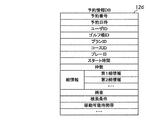
- (d) is a figure which shows an example of the content registered into reservation information DB12d
- (e) is an example of the content set to group information
- (F) is a figure showing an example of contents registered into operation history DB12e. It is a figure showing an example of a functional block of golf course reservation server 1 concerning one embodiment.
- FIG. 1 is a diagram illustrating an example of a schematic configuration of an information processing system S according to the present embodiment.
- the information processing system S includes a golf course reservation server 1, a plurality of golf course terminals 2, and a plurality of user terminals 3. And the golf course reservation server 1, each golf course terminal 2, and each user terminal 3 can mutually transmit / receive data using TCP / IP etc. for a communication protocol via the network NW.
- the network NW is constructed by, for example, the Internet, a dedicated communication line (for example, a CATV (CommunityCommunAna Television) line), a mobile communication network (including a base station, etc.), a gateway, and the like.
- the golf course reservation server 1 is a server device that executes various processes related to a reservation site for reserving a golf course.
- the golf course reservation server 1 is an example of an information processing apparatus according to the present invention.
- the user can reserve the use of a desired golf course by using the reservation site.
- a golf course is an example of a place in the present invention.
- the golf course reservation server 1 transmits, for example, a web page of a reservation site, or performs processing related to a search or reservation of a golf course.
- the golf course terminal 2 is a terminal device used by a golf course provider that provides a golf course.
- the golf course terminal 2 accesses a server device such as the golf course reservation server 1 based on an operation from a golf course provider. Thereby, the golf course terminal 2 receives and displays the web page from the server device.
- the golf course terminal 2 includes software such as a browser and an e-mail client.
- the golf course provider confirms the reservation status of the golf course provided by the golf course provider or changes the reservation, for example.
- the user terminal 3 is a terminal device of a user who uses the reservation site.
- the user terminal 3 receives and displays a web page from the golf course reservation server 1 by accessing the golf course reservation server 1 based on an operation from the user.
- Software such as a browser and an e-mail client is incorporated in the user terminal 3.
- the user can reserve two or more time frames. At this time, it is possible to reserve two or more time frames that are continuous in time. Two or more consecutive time frames are referred to as “continuous frames”.
- the number of time frames constituting the continuous frame corresponds to the number of groups playing golf. One set starts playing golf in one time frame.
- the number of time frames constituting the continuous frame is referred to as “continuous number of time frames”.
- a continuous frame whose number of consecutive time frames is n is referred to as an n continuous frame.
- the user can input various search conditions when searching for a golf course on the reservation site.
- the golf course reservation server 1 searches for a golf course that provides a plan that can be reserved under designated search conditions.
- a plan is a service that includes the provision of a golf course.
- the plan is planned by a golf course provider, for example.
- Search conditions include, for example, play date, fee range, region, desired start time zone, presence / absence of designation of continuous frames, number of desired frames, golf course name, and the like.
- the play date is the date on which golf is played on the golf course.
- the desired start time zone is a time zone in which the user wishes to start playing.
- the desired start time zone can be specified by a method such as 9 o'clock or 10 o'clock.
- the desired start time zone may be specified by, for example, a method from 10:00 to 12:00.
- the golf course reservation server 1 considers that 1 is specified as the number of time frames.
- the desired number of frames is the number of continuous time frames desired by the user.
- the search condition for example, it may be possible to specify two continuous frames starting from 7:00. Further, it may be possible to specify from 7:00 start time to 7:21 start time as a search condition.
- a golf course search result page is displayed on the screen of the user terminal 3.
- a list of searched golf courses is displayed as a golf course search result on the golf course search result page.
- a golf course page is displayed on the screen of the user terminal 3.
- Information on the selected golf course is displayed on the golf course page.
- the golf course page displays a list of plans that satisfy the search conditions at the selected golf course.
- the golf course reservation server 1 searches for a time frame that can be reserved in the selected combination.
- a time frame that can be reserved is a time frame that has not yet been reserved by anyone.
- This time frame is referred to as “empty frame”. Time slots that have already been reserved are referred to as “reserved slots”. A user who has reserved a reserved frame is referred to as a “reserved person”. A reserved person is an example of another user who has reserved a reserved time frame in the present invention.
- the golf course reservation server 1 searches for a continuous frame that can be reserved as the continuous frame of the number of time frames specified by the search condition. The user can select a date different from the play date specified as the search condition as the play date.
- a time frame selection page is displayed on the screen of the user terminal 3.
- a list of searched time frames is displayed as a time frame search result.
- a reservation procedure page is displayed on the screen of the user terminal 3.
- the reservation procedure page is a web page for the user to input various information necessary for the reservation procedure. For example, the user inputs the number of players who play in each time frame, information on the members of each group, and the like. By performing the procedure, the user can reserve the selected time frame at the selected golf course, plan, and date.
- a continuous frame When a continuous frame is specified as a search condition, if even one reserved frame exists in the time zone indicated by the continuous frame, the user cannot reserve the continuous frame. If the reserved frame can be moved outside the time slot indicated by the designated continuous frame, the user can reserve the continuous frame. Therefore, if there is a possibility that the reserved person accepts the movement of the reserved frame, there is a possibility that the continuous frame can be reserved.
- the possibility of reserving a continuous frame is a possibility that a continuous frame can be reserved when the reserved person accepts the movement of the reserved frame. Moving the reserved frame is equivalent to changing the reservation content.
- the golf course reservation server 1 searches for a continuous frame with a possibility of reservation. Then, the golf course reservation server 1 causes the user terminal 3 to present the search result of the continuous frame that can be reserved at present and the search result of the continuous frame that can be reserved to the user in a manner that can be distinguished from each other.
- a distinguishable aspect is an aspect visually distinguishable, for example.
- the golf course reservation server 1 does not need to search for a continuous frame having no reservation possibility. This is because even if the user is presented with a continuous frame that has no possibility of reservation, it is considered that the continuous frame cannot be reserved in the future.
- a time frame that is a destination candidate is an empty frame that is within a time range other than a continuous frame that is a target to be secured.
- the time frame range that is a destination candidate is determined so that the disadvantage that the reserved person receives by moving the reserved frame is minimized.
- the time frame as the destination candidate is, for example, a time frame set in the same golf course, course, and plan as the golf course, course, and plan in which the reserved frame to be moved is set. Note that the plans do not have to be the same.
- the time frame that is a destination candidate is limited to, for example, time frames that are continuously free for the number of consecutive time frames of the reserved frame.
- the time range which becomes a movement destination candidate is limited to a day with the continuous frame used as the object of securing, for example. For example, when the continuous frame to be secured is October 1, the time range of the destination candidate is also October 1. Or the time range used as a movement destination candidate may be three days from the day before the day with the continuous frame to be secured. For example, when the continuous frame to be secured is October 2, the time range of the destination candidate is from October 1 to October 3.
- the time range that is the destination candidate may be a range in which the holiday continues. For example, if Monday is a holiday and the continuous frame to be secured is on Saturday, the time range of the destination candidate is from Saturday to Monday.
- FIG. 2A is a diagram illustrating an example of a reservation status.
- the earliest start time is 7:00.
- the time interval of the start time is 7 minutes.
- the time frames starting at 7: 7, 7:28, 7:35 and 7:56 are reserved frames.
- the time frames starting at 7:28 and 7:35 are reserved by the user C as two consecutive frames.
- user A wants to make a reservation for four consecutive frames. In this case, there are no four consecutive frames that can be reserved at the present time. However, there are four consecutive frames that can be reserved.
- FIG. 2B is a diagram illustrating an example of a continuous frame and a reservation possibility for the continuous frame.
- a reserved frame that starts at 7:07 moves to a time frame that starts at 7:42 or 7:49, so that it is possible to secure four consecutive free frames. Therefore, there is a possibility of reservation.
- the user B who reserved the time frame starting at 7:07 needs to accept the movement of the time frame.
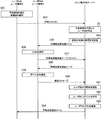
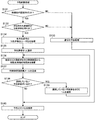
- FIG. 3 is a sequence diagram showing an outline of processing of the information processing system S according to the present embodiment.
- a web page for specifying a search condition at the reservation site is displayed.
- the search condition can be specified on the top page. Therefore, the user A specifies a search condition.
- the user terminal 3 transmits a golf course search request based on the operation of the user A (step S2).
- the golf course search request is a message requesting a search for a golf course.
- the golf course search request includes a search condition specified by the user.
- the golf course reservation server 1 that has received the golf course search request searches for a golf course and a plan that satisfy the search conditions included in the golf course search request. Then, the golf course reservation server 1 selects a golf course and a plan having a continuous frame in which time frames that can be reserved for a desired number of frames designated by the user from among the golf courses and plans that satisfy the search conditions. Search is performed (step S3).
- the golf course reservation server 1 has a continuous number of time slots for the number of slots specified by the user from among golf courses and plans that satisfy the search conditions, includes at least one reserved slot, and can be reserved.
- a golf course and a plan having a continuous frame having a characteristic are searched (step S4).
- the golf course reservation server 1 searches only a golf course and a plan having a reservable time frame.
- the golf course reservation server 1 generates a golf course search result page.
- the golf course reservation server 1 integrates the search result in step S3 and the search result in step S4. Thereby, the golf course reservation server 1 generates a list of golf courses that are at least one of a golf course having a continuous frame that can be reserved and a golf course having a continuous frame that can be reserved. And the golf course reservation server 1 produces
- the user terminal 3 displays the received golf course search result page.
- User A selects any golf course from the list of golf courses displayed on the golf course search result page (step S6).
- the golf course reservation server 1 transmits a golf course page to the user terminal 3 in response to a request from the user terminal 3 (step S7).
- the user terminal 3 displays the received golf course page.
- User A selects any plan and play date from the list of plans and play dates displayed on the golf course page (step S8).
- the user terminal 3 transmits a time frame search request to the golf course reservation server 1 (step S9).
- the time frame search request is a message requesting a time frame search.
- the golf course reservation server 1 that has received the time frame search request has continuous time frames that can be reserved for the desired number of slots specified as the search conditions in the golf course, plan, and play date selected by the user.
- a frame is searched (step S10).
- the golf course reservation server 1 counts the number of searched continuous frames.
- the golf course reservation server 1 determines that the number of searched continuous frames is less than a preset number threshold (step S11).
- the golf course reservation server 1 includes at least one reserved slot, in which the time slots for the number of desired slots specified as the search conditions are continuous in the golf course, the plan, and the play date selected by the user,
- a continuous frame having a possibility of reservation is searched (step S12).
- the golf course reservation server 1 searches only a time frame that can be reserved.
- the golf course reservation server 1 when the number of consecutive frames searched is equal to or greater than the number threshold, the golf course reservation server 1 does not search for a continuous frame that may be reserved. The reason is that there is no need to search for a continuous frame with a possibility of reservation because there is a choice of time frame by the user. Moreover, the processing load of the golf course reservation server 1 can be reduced by reducing the number of search processes. In this case, the golf course reservation server 1 transmits to the user terminal 3 a time frame selection page that displays a search result of continuous frames in which time frames that can be reserved for the desired number of frames are continuous.
- the administrator of the golf course reservation server 1 can set the number threshold.
- the number threshold may be 1 or 2 or more.
- the golf course reservation server 1 estimates the probability of reservation for each continuous frame that may be reserved in step S12 (step S13).
- the probability of reservation indicates the degree of probability that a searched continuous frame having a possibility of reservation can be reserved.
- the probability that a continuous frame can be reserved is equal to the probability that all reserved frames included in the continuous frame move to a time frame other than the continuous frame.
- the golf course reservation server 1 calculates, for example, a reservation probability score as information indicating the reservation probability. Alternatively, the golf course reservation server 1 may calculate a probability indicating a reservation probability, for example.
- the golf course reservation server 1 determines the display mode of the search result for each continuous frame that has a search possibility, based on the reservation probability score (step S14). The display mode of the search result of the continuous frame with the possibility of reservation will be described later.
- the golf course reservation server 1 displays the time frame so that the search result of the continuous frame that can be reserved in step S11 and the search result of the continuous frame that may be reserved in step S12 are displayed in a distinguishable manner.
- a selection page is generated (step S15).
- the golf course reservation server 1 generates the time frame selection page so that the search result of the continuous frame having the possibility of reservation is displayed in the display mode determined in step S14.
- the golf course reservation server 1 transmits the generated time frame selection page to the user terminal 3 of the user A (step S16).
- the user terminal 3 of the user A displays the received time frame selection page (step S17).
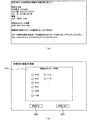
- FIG. 4A is a diagram illustrating a display example of a time frame selection page.
- FIG. 4A shows an example in which search results of five continuous frames are displayed.
- FIG. 4A shows an example where the number threshold is less than 4.
- the time frame selection page includes a search result area 100.
- a list of searched continuous frames is displayed.
- continuous frame information 110 is displayed for each searched continuous frame.
- a course name 111, reservation availability information 112, reservation probability information 113, a continuous frame 114, and a reservation button 115 are displayed.
- the reservation availability information 112 is information indicating whether or not a reservation can be made at the present time.
- “reservation is possible” is displayed as the reservation availability information 112.
- “reservation impossible” is displayed as the reservation availability information 112.
- the user can search for a continuous frame that can be reserved at the present time, or the continuous frame that cannot be reserved at the current time, and the possibility of reservation can be obtained. It is possible to distinguish whether the search result is a continuous frame. In the example of FIG. 4A, for example, “reservation is possible” is displayed as the reservation availability information 112 for 5 consecutive frames starting from 10:30.
- reservation impossible is displayed as the reservation availability information 112. Therefore, the user cannot reserve the five continuous frames starting from 12:12 at the present time.
- the information displayed as the reservation impossible information 112 may not be “reservation possible” and “reservation impossible”.
- the reservation disabling information 112 may be information that allows the user to distinguish search results.
- FIG. 4 shows a display mode in which a search result of a continuous frame that can be reserved at the present time and a search result of a continuous frame that cannot be reserved at the current time and that can be reserved are distinguishable.
- the display mode is not limited to the reservation availability information 112 shown in (a).
- the golf course reservation server 1 generates a time frame selection page so that the number of reserved frames included in the continuous frame is displayed in the continuous frame information 110 of the continuous frame that cannot be reserved at the present time. Also good. Further, the golf course reservation server 1 determines, for example, the background color of the region between the continuous frame information 110 of the continuous frame that can be reserved at the current time and the continuous frame information 110 of the continuous frame that cannot be reserved at the current time.
- the time frame selection page may be generated so that at least one of the size of the region, the color of the character, the size of the character, the style of the character, and the like is different.
- the golf course reservation server 1 recognizes the display mode of the continuous frame information 110 of the continuous frame that can be reserved at the current time more than the display mode of the continuous frame information 110 of the continuous frame that cannot be reserved at the current time. You may generate a time frame selection page so that it may become an easy display mode.
- the golf course reservation server 1 selects the time frame so that the search result of the continuous frame that can be reserved at the current time and the search result of the continuous frame that cannot be reserved at the current time are displayed in different areas.
- a page may be generated.
- the golf course reservation server 1 displays on the time frame selection page so that a tab corresponding to a continuous frame that can be reserved at the current time and a tab corresponding to a continuous frame that cannot be reserved at the current time are distinguishable. May be. And the golf course reservation server 1 may produce
- the element to be selected is not limited to a tab.
- the element that is the target of the selection operation may be, for example, a radio button, a list box, or the like.
- the reservation probability information 113 is information indicating the probability that a continuous frame that cannot be reserved at this time can be reserved. For example, as the reservation probability information 113, any mark of “A”, “B”, and “C” is displayed. Among these marks, “A” has the highest probability of reservation. Then, the probability of reservation decreases in the order of “B” and “C”. In the case of the example of FIG. 4A, the display mode determined by the golf course reservation server 1 in step S14 is to determine the mark to be displayed among “A”, “B”, and “C”. By displaying the reservation probability information 113, the degree of reservation probability of each continuous frame can be recognized. In the example of FIG. 4A, for example, “C” is displayed as the reservation probability information 113 for five continuous frames starting from 12:12. Therefore, it is considered that the reservation probability of the five continuous frames starting from 12:12 is low. The information displayed as the reservation probability information 113 may not be “A”, “B”, and “C”. Any information that allows the user to distinguish the search results may be used.
- the change of the display mode based on the reservation probability of the search result of the continuous frame that cannot be reserved at the present time is not limited to the change of the mark as the reservation probability information 113 shown in FIG.
- the golf course reservation server 1 may generate the time frame selection page so that the calculated probability is displayed in the continuous frame information 110. .
- the golf course reservation server 1 may determine the display order of each continuous frame based on the reservation probability score. The display order is the order in which the continuous frame information 110 is displayed in the search result area 100. The higher the display order of the continuous frames, the corresponding continuous frame information 110 is displayed above.
- the golf course reservation server 1 increases the display order as the reservation probability score of the continuous frame is higher. Moreover, the golf course reservation server 1 lowers the display order of the continuous frames that cannot be reserved at the current time, for example, lower than the display order of the continuous frames that can be reserved at the current time. Moreover, the golf course reservation server 1 may generate the time frame selection page so that the continuous frame information 110 of the continuous frame whose reservation probability score is equal to or less than a predetermined threshold is not displayed. A continuous frame whose reservation probability score is equal to or lower than a predetermined threshold value is regarded as having no possibility of reservation or having a low probability of reservation. Further, the golf course reservation server 1 may generate the time frame selection page so that the continuous frame information 110 is displayed for only a predetermined number of continuous frames in descending order of the reservation probability score.
- the golf course reservation server 1 may not calculate the reservation probability score and control the display mode based on the reservation probability score. At least the search result of the continuous frame that can be reserved at the current time and the search result of the continuous frame that cannot be reserved at the current time and that can be reserved may be displayed so as to be distinguishable.
- the continuous frame 114 is information indicating a continuous frame.
- the start time of the first time frame of the continuous frame and the start time of the last time frame of the continuous frame are displayed.
- the continuous frame 114 for example, only the start time of the first time frame of the continuous frame may be displayed.
- the start time of each time frame which comprises a continuous frame may each be displayed.
- the reservation button 115 is a button for reserving a continuous frame.
- a web page for processing a reservation is displayed.
- the continuous frame is reserved when the procedure is completed.
- the continuous frame is not reserved when the procedure is completed. In this case, after all the reserved frames included in the continuous frame selected by the user are moved and the continuous frame becomes a continuous frame that can be reserved, the continuous frame is reserved.
- FIG. 4B is a diagram illustrating a display example of a time frame selection page when a continuous frame that can be reserved at the present time is not searched.
- a message 120 and a search result area 100 are displayed on the time frame selection page.
- the message 120 is a message indicating that a continuous frame could not be searched as a search result of continuous frames that can be reserved. For example, as the message 120, “There were no time slots that can be reserved for five consecutive times.” May be displayed.
- the search result area 100 only search results of continuous frames that cannot be reserved and that have a possibility of reservation are displayed. Since the message 120 and the search result area 100 are displayed, the user can search the continuous frame search result that can be reserved at the present time, and the continuous frame that cannot be reserved at the current time and can be reserved.
- a search result can be distinguished.
- search In the result area 100 only search results for continuous frames that can be reserved at the present time are displayed. At this time, a special message may not be displayed for the search result of the continuous frame that cannot be reserved at the present time and has a possibility of reservation.
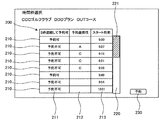
- FIG. 5 is a diagram showing another display example of the time frame selection page.
- time frames included in at least one of a continuous frame that can be reserved at the present time and a continuous frame that cannot be reserved at the present time but may be reserved are displayed one frame at a time. This is an example.
- FIG. 5 shows an example in which search results for three continuous frames are displayed.
- a search result area 200, a slide bar 220, and a reservation button 230 are displayed on the time frame selection page.
- the search result area 200 displays time frame information 210 for each searched time frame.
- time frame information 210 reservation availability information 211, reservation probability information 212, and a time frame 213 are displayed.
- the reservation availability information 211 is information indicating whether or not a continuous frame can be reserved at the current time when the time frame corresponding to the time frame information 210 is the first time frame of the continuous frame.
- the contents of the reservation availability information 211 are the same as the contents of the reservation availability information 112.
- “reservation is possible” is displayed for the time frame starting from 9:00. Therefore, the user can reserve three continuous frames starting from 9:00 at this time.
- “reservation impossible” is displayed for a time frame starting from 9:07. Therefore, the user cannot reserve the three continuous frames starting from 9:07 at the present time.
- the reservation probability information 212 is information indicating the probability that a continuous frame that cannot be reserved at the present time can be reserved when the time frame corresponding to the time frame information 210 is the first time frame of the continuous frame.
- the content of the reservation probability information 212 is the same as the content of the reservation probability information 113.
- “A” is displayed for the time frame starting from 9:07. Therefore, it is considered that the reservation probability of the three consecutive frames starting from 9:07 is high.
- the time frame 213, for example, the start time of the time frame is displayed.
- the slide bar 220 is used for selecting a continuous frame.
- the slide bar 220 includes a knob 221.
- the height of the knob 221 corresponds to the height of the time frame information 210 for the desired number of frames specified as the search condition.
- the user can move the knob 221 up and down. As a result, the user can select time frames corresponding to the number of continuous time frames corresponding to the position of the knob 221 as continuous frames. In the example of FIG. 5, three continuous frames starting from 9:00 are selected.
- the knob 221 When the user moves the knob 221, it is easy for the user to move the knob 221 depending on whether or not the destination continuous frame can be reserved at the present time and the reservation probability of the destination continuous frame. Change. Specifically, when the destination continuous frame can be reserved at the present time, the user can move the knob 221 smoothly. When the destination continuous frame cannot be reserved at the current time, the user cannot move the knob 221 more smoothly than when the destination continuous frame can be reserved at the current time. For example, when the amount of the user's movement operation on the knob 221 is less than a predetermined value, the knob 221 moves slightly in the operation direction, but may immediately return to the original position.
- the knob 221 may move to the destination continuous frame. If the destination continuous frame cannot be reserved at the current time, the user cannot move the knob 221 more smoothly as the reservation possibility of the destination continuous frame is lower.
- the behavior of the knob 221 is controlled by a script described in an HTML (HyperText Markup Language) document on the time frame selection page, for example.
- the reservation button 115 is a button for reserving the continuous frame currently selected by the knob 221.
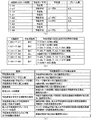
- FIG. 2C is a diagram illustrating factors that influence the reservation probability score and an example of a calculation criterion for the reservation probability score.
- each factor affecting the reservation probability score will be described.
- the golf course reservation server 1 may calculate a reservation probability score based on all of the following factors 1 to 10, or may calculate a reservation probability score based on some factors.
- (Factor 1) Number of reserved slots
- the reserved person who has reserved the reserved slots determines the golf play schedule for the reserved slots to be moved. It needs to be adjusted. Accordingly, the more reserved slots, the more time is required for schedule adjustment. Therefore, it is considered that the more the number of reserved slots, the lower the probability that the reserved person will accept the movement of the reserved slots. Therefore, the golf course reservation server 1 lowers the reservation probability score as the number of reserved frames included in the target continuous frame increases. For example, in the example of FIG. 2A, it is assumed that three continuous frames are designated as a search condition. Here, in the three consecutive frames from 7:00, the number of reserved frames is 1. In three consecutive frames from 7:21, the number of reserved frames is two. Therefore, the reservation probability score is higher in the three continuous frames from 7:00 than in the three continuous frames from 7:21.
- the golf course reservation server 1 lowers the reservation probability score as the number of members of the group playing in the reserved frame included in the target continuous frame increases. For example, the golf course reservation server 1 adds up the number of members of all reserved frames included in the target continuous frame, and lowers the reservation probability score as the total number of people increases. For example, in the example of FIG.
- the total value of the number of players is 4 in the three continuous frames from 7:00.
- the total number of players is 8.
- the total number of players is 2. Therefore, the reservation probability score of the three consecutive frames from 7:42 is the highest, and the reservation probability score of the three consecutive frames from 7:21 is the lowest.
- Fractor 3 Number of people who have made reservations (number of reservation groups) Not all of the one or more reserved frames included in the target continuous frame are reserved by one reserved person. There may be cases where a separate reserved person makes a reservation for each part of one or more reserved slots. The number of reserved persons corresponds to the number of groups that play with one or more reserved frames included in the target continuous frame. When all the reserved frames included in the target continuous frame are moved, it is necessary to adjust the schedule for each group. If all the reserved persons adjust the schedule and all the reserved persons do not accept the movement of the reserved frame, the target continuous frame cannot be secured as an empty frame.
- the reservation probability is the product of the probability of accepting the movement of the reserved frame for each number of reserved persons. Therefore, it is considered that as the number of reserved persons increases, the probability that all reserved persons accept the movement of the reserved frame is low. Therefore, the golf course reservation server 1 lowers the reservation probability score as the number of reserved persons who have reserved the reserved frame included in the target continuous frame increases. For example, in the example of FIG. 2A, the number of reserved persons is 2 in the four continuous frames from 7:07. In the four consecutive frames from 7:21, the number of reserved persons is one. Therefore, the 4-continuous frame from 7:21 has a higher reservation probability score than the 4-continuous frame from 7:07.
- (Factor 4) Movement width of the reserved frame When moving the reserved frame included in the target continuous frame, the change in the schedule becomes larger as the movement width is longer. Therefore, it takes time to adjust the schedule. Therefore, the golf course reservation server 1 lowers the reservation probability score as the movement width from the reserved frame included in the target continuous frame to the time frame of the destination candidate is longer. When there are a plurality of time frames of destination candidates, the golf course reservation server 1 calculates a reservation probability score based on, for example, the movement width of the destination candidate with the shortest movement width from the reserved frame to the time frame. May be.
- the golf course reservation server 1 increases the reservation time required from the first search operation of the golf course to the reservation of the reserved frame for the reserved person who has reserved the reserved frame included in the target continuous frame. , Lower the booking probability score.
- the golf course reservation server 1 may regard, for example, a search request operation first performed by the user after logging in to the golf course reservation site as an initial search for calculating the reservation time.
- the golf course reservation server 1 may consider that the user has stopped using the golf course reservation site when the user's operation on the golf course reservation site has not been performed for a predetermined time or more. Then, the golf course reservation server 1 regards the search request operation first performed by the user after the user's operation with respect to the golf course reservation site for a predetermined time or more as the first search for calculating the reservation time. May be.
- (Factor 6) Number of searches As a result of the golf course reservation server 1 performing a search by designating a certain search condition, the golf course and plan desired by the user in the searched golf course, plan, and time frame If there is no time frame, the user may request another search by specifying another search condition. When the user changes the search condition and requests the search many times, the user may be wondering which golf course, plan and time frame to select. Therefore, the time frame selected by the user after a number of searches has been performed has a high probability of being selected as a result of deliberation. Therefore, the golf course reservation server 1 has a larger number of searches from the first search operation of the golf course to the reservation of the reserved frame for the reserved person who has reserved the reserved frame included in the target continuous frame. Reduce the booking probability score.
- (Factor 7) Desired start time zone specified as a search condition When a user specifies a desired start time zone as a search condition, there is a high probability that the user wants to start playing within the range of the specified time zone. . Therefore, the probability that the reserved person accepts the movement of the time frame to the desired start time zone is higher than the probability that the reserved person accepts the movement of the time frame to a time zone other than the desired start time zone. Accordingly, the golf course reservation server 1 has a higher reservation probability score when the destination start time frame is included in the desired start time zone than when the destination start time frame is not included in the desired start time zone. To do.
- (Factor 8) Trends in the time zone reserved by the reserved person There may be trends in the time zone reserved by the user for each user. For example, it is assumed that the reserved person has a tendency to reserve a time frame between 5 o'clock and 7 o'clock. In this case, if the time frame of the destination candidate is between 5 o'clock and 7 o'clock, the reserved person accepts the movement of the reserved frame than when the time frame of the destination candidate is in another time zone. The probability is high.
- the golf course reservation server 1 sets the destination candidate's time frame in the time zone in which the reserved person tends to make a reservation
- the reservation probability score is set higher than the case where no is included.
- the tendency of the reservation by the user can be determined based on the reservation history indicating the past reservation results.
- (Factor 9) A tendency for a reserved person to make a reservation in a time frame immediately after another person's reserved frame Some users dislike playing golf in a group immediately after another person's group. From the search result of the currently available time frames displayed on the time frame selection page, the user can recognize which time frame is the reserved time frame. Therefore, a user who hates playing in a group immediately after another person's group does not reserve a time frame immediately after the other person's reserved frame. Therefore, the golf course reservation server 1 is a case where the reserved person does not tend to reserve the time frame immediately after the other person's reserved frame, and the previous time frame is empty in the time frame of the destination candidate. When there is no time slot that is a frame, the reservation probability score is set higher than when there is a time zone in which the previous time frame is an empty frame.
- the golf course reservation server 1 is a case where the reserved person has a tendency not to reserve the time frame immediately before the reserved frame of the other person, and the time frame immediately before is empty in the time frame of the destination candidate.
- the reservation probability score may be set higher than when there is a time zone in which the previous time frame is an empty frame. This is because some users may hate playing golf in a group immediately before another's group.
- the immediately preceding time frame and the immediately following time frame are examples of adjacent time frames, respectively.
- the speed of progression of golf play may vary depending on the player's golf skill. Specifically, a player who is poorer in golf tends to have a slower play. If a golfer who is good at golfing plays immediately after a player who is not good at golfing, the golfer who is good at golfing may wait for play because the play of the previous golfer is slow. Many users hate to encounter such a situation. For this reason, it is considered that it is not preferable to set the time frame immediately after the reserved frame where a group with poor members play as a destination candidate.
- the golf course reservation server 1 plays in the reserved frame when the time frame immediately before the time frame of the destination candidate is the reserved frame and the skill of the member who plays in the reserved frame is low. Make the reservation probability score lower than if the skill of the member is not low. For example, the golf course reservation server 1 may lower the reservation probability score when the skill of at least one member is low. The reason is that there is a possibility that the progress of the play will be slow if there is even one member with low skill.
- the golf course reservation server 1 has a case where the skill of the member who plays in the time frame immediately before the time frame of the destination candidate is low and the skill of the member who plays in the reserved frame to be moved is high
- the reservation probability score may be lowered. Whether the skill level is low and whether the skill level is high can be determined by comparing a value indicating the skill level with a threshold value. The threshold value used for determining whether or not the skill level is low may be different from the threshold value used for determining whether or not the skill level is high.
- the user can register his / her handicap as information indicating the skill of golf. Further, when reserving a golf course, the user can specify the number of players in each group and the members in each group.
- the golf course reservation server 1 can acquire the handicap of the member. Further, when making a reservation for a golf course, the user may be able to input a handicap of each member. Or after playing in the golf course which the user reserved on the golf course site, when playing, the score of each member may be able to be registered in the golf course site. In this case, the golf course reservation server 1 can calculate the handicap based on the registered score.
- (Factor 11) Ease of movement from the address of the reserved person to the golf course
- the golf course reservation server 1 increases the reservation probability score as the movement from the reserved person's address to the golf course becomes easier.
- the ease of movement can be represented by, for example, a linear distance from the user's address to the golf course, a moving distance, a moving time, and the like.
- Factors 1-11 are the reservation status or reservation details within the target continuous frame.
- Factors 5 and 6 are the degree of contemplation until the reserved person reaches the reservation.
- Factors 8 and 9 are the reservation tendency of the reserved person.
- Factors 1, 2, 4 and 11 are the degree of schedule adjustment burden.
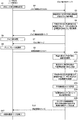
- FIG. 6 is a sequence diagram showing a processing outline of the information processing system S according to the present embodiment. It is assumed that the time frame selection page is displayed on the user terminal 3 of the user A by the process shown in FIG.
- the user A selects the reservation button 115 corresponding to the continuous frame including the reserved frame as the continuous frame desired to be reserved from the time frame selection page (step S21).
- a reservation procedure page is displayed on the user terminal 3.
- the user terminal 3 transmits a reservation request to the golf course reservation server 1 (step S22).
- the reservation request is a message indicating a reservation request.
- the reservation request is an example of a reservation request in the present invention.
- a user who uses the user terminal 3 that has transmitted the reservation request is referred to as a “reservation requester”.
- the golf course reservation server 1 that has received the reservation request specifies a reserved person who has reserved the reserved frame included in the continuous frame selected by the user A (step S23).
- the golf course reservation server 1 searches for a time frame that is a destination candidate for the reserved frame reserved by the user B (step S24).
- the golf course reservation server 1 searches for a continuous frame as a destination candidate.
- the golf course reservation server 1 transmits a time frame movement request mail to the user B (step S25).
- the time frame move request mail is an e-mail notifying a request for moving the reserved frame.
- the time frame movement request mail is an example of notification of a time frame movement request in the present invention.
- FIG. 7A is a diagram showing an example of the content of the text of the time frame move request mail.
- the time frame movement request mail includes a message indicating that there has been a time frame movement request, for example.
- the current reservation content, the start time of the time frame of the destination candidate, and the URL (UniformatorResource) Locator) of the time frame move acceptance page are described in the time frame move request mail.
- the time frame movement acceptance page is a web page for selecting acceptance of movement of the time frame.
- a message indicating that points are given to the user who has accepted the movement of the time frame is displayed.
- a point can be used for a reservation fee as having a value equivalent to money when a user reserves a golf course on a golf course reservation site. By giving points to the user who has accepted the movement of the time frame, it is possible to prompt the user to accept the movement of the time frame.
- a point is an example of a privilege given to a user in the present invention. Benefits are not limited to points.
- the privilege may be money, electronic money, a discount coupon for a reservation fee, or the like.
- grant of a privilege is arbitrary.
- step S26 selects the URL described in the time frame move request mail displayed on the user terminal 3 (step S26). Then, the user terminal 3 of the user B transmits a request for a time frame movement consent page (step S27).
- the golf course reservation server 1 that has received the request for the time frame movement consent page generates a time frame movement consent page. At this time, the golf course reservation server 1 generates a time frame movement acceptance page so that the time frame of the movement destination candidate searched in step S24 can be selected as the time frame of the movement destination. Then, the golf course reservation server 1 transmits a time frame movement consent page (step S28).
- FIG. 7B is a diagram illustrating a display example of the time frame movement consent page.
- a destination candidate area 310 As shown in FIG. 7B, a destination candidate area 310, a consent button 320, and a disapproval button 330 are displayed on the time frame movement consent page.
- a list of start times of the movement destination candidate time frames is displayed in the movement destination candidate area 310.
- a radio button is displayed in the movement destination candidate area 310 for each time frame of the movement destination candidate. User B can select a destination time frame by a selection operation on a radio button.
- the acceptance button 320 is a button for notifying that the user accepts the movement of the time frame.
- the disapproval button 330 is a button for notifying that the user does not accept the movement of the time frame.
- the user terminal 3 transmits an acceptance message to the golf course reservation server 1 (step S30).
- the acceptance message is a message notifying that the user accepts the movement of the time frame.
- the acceptance message is an example of notification of acceptance of movement of a time frame in the present invention.
- the golf course reservation server 1 that has received the consent message changes the reservation. Specifically, the golf course reservation server 1 moves the reserved frame of the user B included in the continuous frame selected by the user A to the time frame of the destination candidate selected by the user B (step S31).
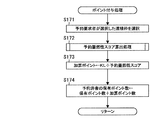
- the golf course reservation server 1 executes a process of giving points to the user B (step S32).
- the golf course reservation server 1 determines the amount of points to be given. For example, the golf course reservation server 1 may increase the amount of points to be given as the reservation probability score is lower. That is, the amount of points increases as the probability that the reserved person accepts the movement of the time frame is lower.
- the golf course reservation server 1 may increase the amount of points to be given as the time width from the source time frame to the destination time frame is longer. This is because the longer the time span, the easier the schedule adjustment.
- the golf course reservation server 1 may give a predetermined amount of points, for example.
- the golf course reservation server 1 registers the reservation from the user A for the continuous frame selected by the user A (Ste S33).
- the golf course reservation server 1 transmits a reservation success notification mail to the user A (step S34).
- the reservation success notification mail is an e-mail notifying that the continuous frame selected by the reservation requester is secured as a continuous frame that can be reserved.
- the reservation success notification mail is an example of notification that the desired time frame becomes a reservable time frame in the present invention. In the text of the reservation success notification mail, for example, a message indicating that the reservation for the continuous frame is successful is described.
- the golf course reservation server 1 may not automatically register the reservation requester's reservation.
- the golf course reservation server 1 may only notify the reservation requester that the continuous frame selected by the reservation requester has been secured as a continuous frame that can be reserved. In this case, the reservation requester accesses the golf course reservation site and performs a reservation procedure.
- step S29 when the user B selects the non-consent button 330, the user terminal 3 transmits a non-consent message to the golf course reservation server 1.
- the acceptance message is a message notifying that the user does not accept the movement of the time frame.
- the golf course reservation server 1 that has received the disapproval message transmits a reservation failure notification mail to the user A.
- the reservation failure notification e-mail is an e-mail notifying that the continuous frame selected by the reservation requester could not be secured as a reservable continuous frame. In the text of the reservation failure notification mail, for example, a message indicating that the reservation of the continuous frame has failed is described.
- the golf course reservation server 1 may request a reservation if the continuous frame selected by the reservation requester cannot be reserved as a continuous frame that can be reserved even after a predetermined time has elapsed since the reception of the reservation request.
- a reservation failure notification mail may be sent to the person.
- the golf course reservation server 1 can reserve the continuous frame selected by the reservation requester even if the number of days until the play date on which the continuous frame selected by the reservation requester is set is equal to or less than a predetermined number of days. If the continuous frame cannot be secured, a reservation failure notification mail may be transmitted to the reservation requester.
- the golf course reservation server 1 may provide the golf course provider with a tendency of the desired number of frames specified by the user as a search condition.
- the golf course reservation server 1 records the operation history of each user on the golf course reservation site.
- the operation history includes a search condition when the user requests a search.
- the golf course reservation server 1 may also record a list of golf courses searched under a search condition specified by the user.
- the golf course reservation server 1 can obtain the tendency of the desired number of frames for each golf course based on the operation history.
- the golf course reservation server 1 may obtain a tendency of the desired number of frames. For example, the golf course reservation server may extract the number of desired frames having the largest number of times of designation as the number of desired frames having a strong tendency to be designated, or may designate the number of times the target golf course has been searched. You may extract the number of desired frames whose frequency
- the golf course provider can grasp
- the golf course provider moves which reserved frame to where to reserve the desired number of frames that have a strong tendency to be specified as a continuous frame that can be reserved. You can figure out what to do.
- the golf course provider may request the user who reserved the reserved frame to move the reserved frame. Examples of the requesting method include e-mail and telephone.
- the golf course reservation server 1 operates the golf course terminal 2 to move the reserved frame.
- the golf course reservation server 1 may provide the golf course provider with information for securing a continuous frame composed of a desired number of time frames having a strong tendency to be designated as a continuous frame that can be reserved.
- the golf course reservation server 1 is a continuous frame composed of a desired number of time frames having a strong tendency to be specified, and whether or not there is a possibility of reservation for a continuous frame including at least one reserved frame.
- the reservation probability score may be calculated.
- the golf course reservation server 1 may extract the reserved frame contained in the continuous frame whose reservation probability score is a predetermined value or more as the reserved frame of the movement source candidate.
- the golf course reservation server 1 may search for a time frame of a destination candidate for moving the reserved frame of the source candidate to a range other than the target continuous frame, for example. And the golf course reservation server 1 may transmit the web page which shows the combination of the reserved frame of a movement origin candidate, and the time frame of a movement destination candidate to the golf course terminal 2. FIG. Thereby, the golf course provider can easily grasp which reserved frame should be moved to where.
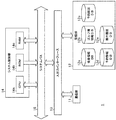
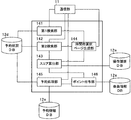
- FIG. 8 is a block diagram showing an example of a schematic configuration of the golf course reservation server 1 according to the present embodiment.
- the golf course reservation server 1 includes a communication unit 11, a storage unit 12, an input / output interface 13, and a system control unit 14.
- the system control unit 14 and the input / output interface 13 are connected via a system bus 15.
- the communication unit 11 is connected to the network NW and controls the communication state with the golf course terminal 2, the user terminal 3, and the like.
- the storage unit 12 is composed of, for example, a hard disk drive.
- storage part 12 is an example of the performance memory
- databases such as a member information DB 12a, a golf course information DB 12b, a reservation status DB 12c, a reservation information DB 12d, and an operation history DB 12e are constructed.
- DB is an abbreviation for database.
- FIG. 9A is a diagram showing an example of contents registered in the member information DB 12a.
- member information related to users who are registered as members in the information processing system S is registered.
- user attributes such as user ID, password, nickname, name, date of birth, gender, zip code, address, telephone number, e-mail address, golf handicap, number of possessed points, etc.
- the user ID is user identification information.
- the user ID is an example of identification information in the present invention.
- the number of owned points indicates the amount of points currently owned by the user.
- FIG. 9B is a diagram showing an example of contents registered in the golf course information DB 12b.
- Golf course information regarding a golf course is registered in the golf course information DB 12b.
- golf course attributes such as golf course ID, golf course name, postal code, address, telephone number, FAX number, e-mail address, time frame information, plan information, etc.
- Golf course ID is golf course identification information.
- the time frame information is information related to a time frame set by a golf course provider. For example, in the time frame information, a start time is set for each time frame set for one day.
- the plan information is information related to a plan provided by the golf course provider.
- FIG. 9C is a diagram showing an example of contents registered in the reservation status DB 12c.
- the reservation status of each golf course is registered in the reservation status DB 12c.
- a golf course ID, a course ID, a play date, a start time, a reservation flag, a reservation number, and the like are registered in the golf course information DB 12b in association with each time frame.
- the course ID is course identification information.
- the start time indicates a time frame.
- the reservation flag indicates the reservation status. Either “Reserved” or “Free” is set in the reservation flag. “Reserved” indicates that the time frame is a reserved frame. “Free” indicates that the time frame is an empty frame.
- the reservation number is an identification number issued every time a reservation is made. The reservation number is registered when the reservation flag is “reserved”. When a continuous frame is reserved, the same reservation number is registered corresponding to the start time of each time frame corresponding to the continuous frame.
- FIG. 9D is a diagram showing an example of contents registered in the reservation information DB 12d.
- reservation information indicating the reservation contents of the golf course is registered.
- the reservation information is information indicating the user's reservation performance. Specifically, a reservation number, reservation date / time, user ID, golf course ID, plan ID, course ID, play date, number of slots, start time, group information, fee, search conditions, etc. are registered in the reservation information DB 12d. .
- the reservation number is information for identifying reservation information.
- the reservation date and time is the date and time when the reservation was made.
- the user ID indicates the reserved user.
- the golf course ID, plan ID, and course ID indicate the reserved golf course, plan, and course.
- the number of slots indicates the number of reserved time slots.
- the start time indicates the reserved time frame. When the number of frames is 2 or more, the start time is the start time of the first time frame of the reserved continuous frame.
- the search condition is a search condition designated by the user to search for a reserved golf
- the group information is information regarding the group scheduled to play.
- the group information is registered for the number of frames.
- FIG. 9E is a diagram illustrating an example of contents set in the group information. As shown in FIG. 9 (e), the start time, the number of players and the member list are set in the group information.
- the start time indicates a time frame in which the group starts playing golf.
- the member list is a list of user IDs of members constituting the group.
- FIG. 9F is a diagram illustrating an example of contents registered in the operation history DB 12e.
- the operation history of the user at the golf course site is registered.
- a user ID, operation date and time, URL, and the like are registered in association with each other.
- the golf course reservation server 1 registers an operation history each time the user terminal 3 transmits a request to the golf course reservation server 1 when the user operates the user terminal 3.
- the user ID indicates the user who performed the operation.
- the operation date and time is the date and time when the operation was performed.
- the URL is set in the request from the user terminal 3.
- the golf course reservation server 1 can specify the operation content from the URL.
- Examples of user operations on the golf course site include a golf course search request operation, a time frame search request operation, a golf page browsing operation, a reservation operation, a login operation, and a logout operation.
- the operation history is a history of a request operation for searching a golf course
- the operation history may be registered in association with a list of searched golf courses. In the list of golf courses, for example, the golf course ID of the searched golf course is registered.
- the storage unit 12 stores various data such as an HTML document, an XML (Extensible Markup Language) document, image data, text data, and an electronic document for displaying a web page.
- the storage unit 12 stores various set values, threshold values, constants, and the like.
- the storage unit 12 stores various programs such as an operating system, a WWW (World Wide Web) server program, a DBMS (Database Management System), and a reservation management program.
- the reservation management program is a program for executing various processes related to golf course reservation.
- the reservation management program is an example of an information processing program in the present invention.
- the various programs may be acquired from other server devices or the like via the network NW, or may be recorded on a recording medium such as a DVD (Digital Versatile Disc) and read via the drive device. You may do it.
- the reservation management program may be a program product.
- the input / output interface 13 performs interface processing between the communication unit 11 and the storage unit 12 and the system control unit 14.
- FIG. 10 is a diagram illustrating an example of functional blocks of the golf course reservation server 1 according to the present embodiment.
- the system control unit 14 includes a CPU 14a, a ROM (Read Only Memory) 14b, a RAM (Random Access Memory) 14c, and the like. Then, the system control unit 14 reads and executes various programs by the CPU 14a, so that the first search unit 141, the second search unit 142, the score calculation unit 143, and the time frame selection page generation unit, as shown in FIG. 144, the reservation processing unit 145, and the point giving unit 146.
- the first search unit 141 is an example of a first search unit in the present invention.
- the second search unit 142 is an example of a second search unit in the present invention.
- the score calculation unit 143 is an example of an estimation unit and a result acquisition unit in the present invention.
- the time frame selection page generation unit 144 is an example of a presentation control unit in the present invention.
- the reservation processing unit 145 is an example of a reservation request acquisition unit, a request notification output unit, an acceptance notification acquisition unit, and a possible notification output unit in the present invention.
- the point granting unit 146 is an example of processing means in the present invention.
- the first search unit 141 searches for a golf course and a plan having a time frame that can be reserved based on a search condition designated by the user.
- the first search unit 141 searches for a time frame that can be reserved in the selected combination.
- a continuous frame is specified as a search condition, the first search unit 141 searches for a continuous frame that can be reserved.
- the second search unit 142 searches for golf courses and plans that have a continuous frame that cannot be reserved and that may be reserved.
- the second search unit 142 searches for a continuous frame that cannot be reserved in the selected combination and has a possibility of reservation. .
- the score calculation unit 143 calculates the reservation probability score of the continuous frame searched by the second search unit.
- the time frame selection page generation unit 144 generates an HTML document of the time frame selection page based on the search results of the first search unit 141 and the second search unit 142.
- the time frame selection page generation unit 144 controls the display mode of the continuous frame information 110 of the continuous frames searched by the second search unit 142 based on the reservation probability score calculated by the score calculation unit 143.
- the time frame selection page generation unit 144 presents the search result by the first search unit 141 and the search result by the second search unit 142 by the user terminal 3 in a manner that can be distinguished from each other by transmitting the generated HTML document.
- the reservation processing unit 145 updates reservation status, registers reservation information, changes reservation information, and the like. In addition, the reservation processing unit 145 performs processing for a reservation request for a continuous frame including a reserved frame. Specifically, the reservation processing unit 145 outputs a time frame movement request mail, a time frame movement consent page, a reservation success notification mail, a reservation failure mail, and the like. In addition, the reservation processing unit 145 changes reservation information of a reserved person, registers reservation information of a reservation requester, and the like.
- the point granting unit 146 performs a process of giving points to the reserved person when the reserved frame reserved by the reserved person is moved by the processing of the reservation processing part 145. Further, the point granting unit 146 determines the number of points to be given.
- the golf course reservation server 1 may be configured by a plurality of server devices.
- a server device that searches a golf course or a time frame at a reservation site a server device that performs reservation processing, a server device that transmits a web page in response to a request from the user terminal 3, a server device that transmits an e-mail,
- a server device or the like that manages the database may be connected to each other via a LAN or the like.
- FIG. 11 is a flowchart showing a processing example in the continuous frame search process of the system control unit 14 of the golf course reservation server 1 according to the present embodiment.
- the user terminal 3 transmits a time frame search request to the golf course reservation server 1.
- the time frame search request includes the plan ID of the plan selected by the user, the play date, and the golf course ID of the golf course corresponding to the golf course page.
- the time frame search request includes a search condition specified on the top page (including specification of a continuous frame and a desired number of frames).
- the continuous frame search process is started when the golf course reservation server 1 receives a time frame search request and when a continuous frame is designated as a search condition.
- the first search unit 141 acquires a time frame search request from the communication unit 11. And the 1st search part 141 searches the continuous frame which is an empty time frame continuously by the number of desired frames set to the time frame search request (step S51). Specifically, the first search unit 141 continues from the reservation status DB 12c for the desired number of slots among the plurality of start times associated with the golf course ID, plan ID, and play date set in the time frame search request. The start times corresponding to the desired number of frames in which all the reservation flags are “vacant” are searched. Next, the time frame selection page generation unit 144 determines “reservation is possible” as the reservation availability information 112 of each searched continuous frame (step S52).
- step S53 determines whether or not the number of searched continuous frames is less than the number of cases threshold stored in the storage unit 12 (step S53). At this time, if the time frame selection page generation unit 144 determines that the number of continuous frames is less than the number of cases threshold (step S53: YES), the process proceeds to step S54. On the other hand, if the time frame selection page generation unit 144 determines that the number of continuous frames is equal to or greater than the number of cases threshold (step S53: NO), the process proceeds to step S65.
- step S54 the second search unit 142 searches for a continuous frame that is continuous for the desired number of frames and includes at least one reserved frame. Specifically, the second search unit 142 continues from the reservation status DB 12c for the desired number of slots among the plurality of start times associated with the golf course ID, the plan ID, and the play date set in the time frame search request. The start time is searched for the desired number of frames for which the reservation flag of at least one time frame is “reserved”.
- the second search unit 142 selects one of the continuous frames searched in step S54 (step S55).
- the second search unit 142 searches for a vacant frame from a time range other than the selected continuous frame (step S56).
- the second search unit 142 is associated with the course ID of the course in which the golf course ID, the plan ID, the play date, and the selected continuous frame set in the time frame search request are set from the reservation status DB 12c.
- a search is made for a start time whose reservation flag is “vacant”.
- the second search unit 142 excludes the start time of the time zone included in the selected continuous frame from the search target.
- the second search unit 142 determines whether or not all reserved frames included in the selected continuous frame can be moved to an empty frame other than the selected continuous frame (step S57).
- the selected continuous frame includes a reserved frame as a continuous frame
- the second search unit 142 determines whether or not the reserved frame can be moved as a continuous frame.
- the reservation numbers associated with the start times of two or more time frames constituting the continuous frame are the same. Therefore, the second search unit 142 can determine whether or not the reserved frame is a continuous frame. If the second search unit 142 determines that at least one reserved frame included in the selected continuous frame is not movable (step S57: NO), the second search unit 142 proceeds to step S58. On the other hand, if the second search unit 142 determines that all reserved frames included in the selected continuous frame can be moved (step S57: YES), the second search unit 142 proceeds to step S59.
- step S58 the second search unit 142 excludes the selected continuous frame from the search results.
- step S63 The continuous frame excluded from the search result is a continuous frame with no possibility of reservation.
- step S59 the score calculation unit 143 executes a reservation probability score calculation process.
- the reservation probability score calculation process the reservation probability score of the selected continuous frame is calculated. Details of the reservation probability score calculation process will be described later.
- the time frame selection page generation unit 144 determines whether or not the calculated reservation probability score is less than the score threshold stored in the storage unit 12 (step S60).
- the score threshold is a preset threshold. At this time, if the time frame selection page generation unit 144 determines that the reservation probability score is less than the score threshold (step S60: YES), the process proceeds to step S58. Since the reservation probability is low, the selected continuous frame is excluded from the search results. On the other hand, if the time frame selection page generation unit 144 determines that the reservation probability score is greater than or equal to the score threshold (step S60: NO), the process proceeds to step S61.
- step S61 the time frame selection page generation unit 144 determines “reservation is impossible” as the reservation availability information 112 of the selected continuous frame.
- step S62 the time frame selection page generation unit 144 determines any one of “A”, “B”, and “C” as the reservation probability information 113 based on the calculated reservation probability score.
- the second search unit 142 determines whether there is a continuous frame that has not yet been selected among the continuous frames searched in step S54 (step S63). At this time, if it is determined that there is a continuous frame that has not yet been selected (step S63: YES), the second search unit 142 proceeds to step S64. On the other hand, if the second search unit 142 determines that all the continuous frames have been selected (step S63: NO), the second search unit 142 proceeds to step S65.
- step S64 the second search unit 142 selects one of the continuous frames not yet selected from the continuous frames searched in step S54.
- the second search unit 142 proceeds to step S56.
- steps S54 to S64 the second search unit 142 searches for a continuous frame that includes at least one reserved frame and has a possibility of reservation.
- step S65 the time frame selection page generation unit 144 sets the time frame selection page based on the search result in step S51, the search results in steps S54 to S64, the setting of the reservation availability information 112, and the setting of the reservation probability information 113.
- HTML document is generated (step S65).
- the time frame selection page generation unit 144 transmits the generated HTML document to the user terminal 3 (step S66).
- the time frame selection page generation unit 144 ends the continuous frame search process.
- the user terminal 3 displays, for example, a time frame selection page as shown in FIG. 4 based on the received HTML document.
- FIG. 12 is a flowchart showing a processing example in the reservation probability score calculation process of the system control unit 14 of the golf course reservation server 1 according to this embodiment.
- the score calculation unit 143 acquires reservation information corresponding to each reserved frame included in the selected continuous frame from the reservation information DB 12d (step S81).
- the reserved frame and the reservation information are associated with each other by the reservation number registered in the reservation status DB 12c and the reservation number included in the reservation information registered in the reservation information DB 12d.
- the score calculation unit 143 sets 1 to the index i. Further, the score calculation unit 143 sets SC to the score Si (step S85).
- the score Si is a reservation probability score for the reserved frame reserved by one reserved person among the reserved persons who reserved the reserved frame included in the selected continuous frame. When the reserved frame reserved by the reserved person is a continuous frame, the score Si is a reservation probability score for the reserved frame as the continuous frame.
- the score calculation unit 143 executes a one-frame corresponding score calculation process (step S86).
- a final score Si is calculated as a reservation probability score for a reserved frame reserved by one reserved person. Details of the one-frame-corresponding score calculation process will be described later.
- the score calculation unit 143 adds 1 to the index i (step S87).
- the score calculation unit 143 determines whether or not the index i is smaller than the value of the number m of reserved persons (Step S88). At this time, if the score calculation unit 143 determines that the index i is smaller than the value of the number m of reserved persons (step S88: YES), the score calculation unit 143 proceeds to step S86. On the other hand, when the score calculation unit 143 determines that the index i is equal to or greater than the value m of the number of reserved persons (step S88: NO), the score calculation unit 143 proceeds to step S89.
- the score calculation unit 143 calculates the scores SC1 to SCm by executing steps S85 to S88.
- step S89 the score calculation unit 143 calculates the average value of the scores SC1 to SCm. Then, the score calculation unit 143 determines the calculated average value as a reservation probability score. After completing this process, the score calculation unit 143 ends the reservation probability score calculation process.
- FIG. 13 is a flowchart showing a processing example in the one-frame-corresponding score calculation process of the system control unit 14 of the golf course reservation server 1 according to this embodiment.
- the score calculation unit 143 determines an addition value of the reservation probability score based on the desired start time zone designated by the reserved person corresponding to the index i. Specifically, the desired start time zone is acquired from the search condition included in the reservation information of the reserved person corresponding to the index i. Then, the score calculation unit 143 determines whether or not at least one of the movement destination candidate time frames is included in the desired start time zone (step S103). At this time, when the score calculation unit 143 determines that the time frame of at least one destination candidate is included in the desired start time zone (step S103: YES), the score calculation unit 143 proceeds to step S104. On the other hand, when the score calculation unit 143 determines that the time frames of all destination candidates are not included in the desired start time zone (step S103: NO), the score calculation unit 143 proceeds to step S105.
- the score calculation unit 143 determines an addition value of the reservation probability score based on the tendency of the time slot reserved by the reserved person corresponding to the index i. Specifically, the score calculation unit 143 searches the reservation information DB 12d for all reservation information including the user ID of the reserved person corresponding to the index i (Step S105). Next, the score calculation unit 143 calculates a reservation ratio for each predetermined time period by a reserved person corresponding to the index i based on the start time and the number of frames included in each searched reservation information (step S106).
- the score calculation unit 143 determines that the reserved person corresponding to the index i makes a reservation in the time frame immediately after the reserved frame of the other person and the reservation of the other person immediately before the time frame of the destination candidate. Based on the golf skill of the member who plays in the completed frame, the addition value of the reservation probability score is determined. Specifically, the score calculation unit 143 determines whether or not the time frame immediately before the time frame of at least one movement destination candidate among the time frames of the movement destination candidate is an empty frame (step S109). At this time, if the score calculation unit 143 determines that the time frame immediately before at least one destination candidate is an empty frame (step S109: YES), the score calculation unit 143 proceeds to step S110. On the other hand, when the score calculation unit 143 determines that the reserved frame is immediately before the time frame of all the movement destination candidates (step S109: NO), the score calculation unit 143 proceeds to step S111.
- the score calculation unit 143 proceeds to step S117. If the time frame immediately before the time frame of at least one destination is a vacant frame, the vacant space regardless of whether or not there is a tendency to make a reservation in the time frame immediately after the reserved frame of another person The time frame of the movement destination candidate immediately before the frame may be set as the movement destination. Accordingly, in this case, since the probability of reservation is high, KH is added to the reservation probability score. Further, if the reserved frame can be moved to the time frame of the destination candidate immediately before the empty frame, the golf skill of the member who plays with the reserved frame of another person is irrelevant. Therefore, in this case, since the probability of reservation is high, KI is added to the reservation probability score.
- step S111 the score calculation unit 143 reserves the time frame immediately before the reserved time frame among the reservations of the reserved person based on the reservation information searched in step S105 and the reservation status DB 12c. The number of reservations that are already reserved and the number of reservations in which the time frame immediately before the reserved time frame is an empty frame are counted. And the score calculation part 143 calculates the ratio by which the time frame immediately after the reserved frame was reserved among all the reservations of a reserved person. Next, the score calculation unit 143 determines whether or not the rate at which the time frame immediately after the reserved frame is reserved is less than a predetermined value (step S112).
- step S112 determines that the ratio of the reserved time frame immediately before the reserved frame is less than the predetermined value (step S112: YES)
- step S112 determines that the ratio of the reserved time frame immediately before the reserved frame is less than the predetermined value (step S112: YES)
- step S112 determines that the reserved ratio of the time frame immediately before the reserved frame is greater than or equal to the predetermined value (step S112: NO)
- step S113 proceeds to step S113.
- step S114 the score calculation unit 143 acquires the reservation information corresponding to the reserved frame immediately before the time frame of each destination candidate from the reservation information DB 12d.
- the score calculation unit 143 acquires the user ID from the member list of the set information corresponding to the reserved frame among the set information included in the searched reservation information.
- the score calculation unit 143 acquires a handicap corresponding to the acquired user ID from the member information DB 12a.
- the score calculation unit 143 selects the highest handicap for each reserved frame immediately before the time frame of the destination candidate.
- the score calculation unit 143 determines whether or not the selected handicap includes a handicap less than a predetermined value (step S115).
- step S115: YES if the score calculation unit 143 determines that there is a handicap less than the predetermined value (step S115: YES), the score calculation unit 143 proceeds to step S116. On the other hand, when the score calculation unit 143 determines that there is no handicap less than the predetermined value (step S115: NO), the score calculation unit 143 proceeds to step S117.
- the handicap of all members of the group is less than a predetermined value, the progress of play will not be delayed.
- at least one member of the group has a handicap greater than or equal to a predetermined value, the progress of play slows down. If the handicap of all members of the group playing in the reserved frame immediately before the time frame of at least one of the destination candidates is less than a predetermined value, the time frame of the destination candidate is It can be the destination. Therefore, in this case, since the probability of reservation is high, KI is added to the reservation probability score.
- the score calculation unit 143 proceeds to step S117.
- FIG. 14 is a flowchart showing a processing example in the reservation control process of the system control unit 14 of the golf course reservation server 1 according to this embodiment.
- the user terminal 3 transmits a reservation request to the golf course reservation server 1.
- the reservation request includes the user ID of the reservation requester, the golf course ID selected on the golf course search result page, the plan ID and play date of the plan selected on the golf course page, and the search conditions specified on the top page.
- the reservation control process is started when the golf course reservation server 1 receives a reservation request.
- the reservation processing unit 145 determines whether or not a continuous frame is specified in the search condition set in the reservation request (step S131). At this time, if the reservation processing unit 145 determines that the continuous frame is not designated (step S131: NO), the reservation processing unit 145 proceeds to step S133. On the other hand, if the reservation processing unit 145 determines that the continuous frame is designated (step S131: YES), the reservation processing unit 145 proceeds to step S132.
- step S132 the reservation processing unit 145 determines whether or not the designated continuous frame includes at least one reserved frame. Specifically, the reservation processing unit 145 searches the reservation status DB 12c for a reservation status including the golf course ID, course ID, and play date set in the reservation request. Next, the reservation processing unit 145 acquires the reservation status for the desired number of slots set in the reservation request from the reservation status including the start time set in the reservation request among the searched reservation statuses. And the reservation process part 145 performs determination based on the reservation flag contained in the acquired reservation condition. At this time, if the reservation processing unit 145 determines that the designated continuous frame includes at least one reserved frame (step S132: YES), the process proceeds to step S134. On the other hand, if the reservation processing unit 145 determines that the designated continuous frame does not include the reserved frame (step S132: NO), the reservation processing unit 145 proceeds to step S133.
- step S133 the reservation processing unit 145 executes normal reservation processing. Specifically, the reservation processing unit 145 sets “reserved” in the reservation flag corresponding to the golf course ID, course ID, play date, start time, and desired number of frames set in the reservation request in the reservation status DB 12c. At the same time, a new reservation number is set as the reservation number. Then, the reservation processing unit 145 registers the reservation information in the reservation information DB 12d based on the information set in the reservation request. The reservation processing unit 145 ends the reservation control process when this process is completed.
- step S134 the reservation processing unit 145 obtains the user ID of the reserved person who reserved the reserved frame included in the continuous frame designated by the reservation requester. Specifically, the reservation processing unit 145 searches the reservation information DB 12d for reservation information including the reservation number set in the reservation status acquired in step S132. And the reservation process part 145 acquires user ID from the searched reservation information.
- the reservation processing unit 145 selects one reserved person among the reserved persons who reserved the reserved frame included in the continuous frame designated by the reservation requester (step S135).
- the reservation processing unit 145 searches for a time frame of a destination candidate from a time range other than the continuous frame specified by the reservation requester (step S136).
- the reservation processing unit 145 has a reservation flag “vacant” among the plurality of start times associated with the golf course ID, the course ID, and the play date set in the reservation request from the reservation status DB 12c. Search for the start time.
- the second search unit 142 excludes the start time of the time zone included in the selected continuous frame from the search target.
- the reservation processing unit 145 searches the continuous frame as a destination candidate.
- the reservation processing unit 145 generates a time frame movement request mail based on the reservation information of the selected reserved person, the time frame of the searched destination candidate, and the like. Then, the reservation processing unit 145 transmits a time frame move request mail to the selected reserved person (step S137). The reservation processing unit 145 acquires an e-mail address from the member information including the user ID of the reserved person as the destination e-mail address.
- the reservation processing unit 145 determines whether there is a reserved person who has not yet selected among the reserved persons who reserved the reserved slots included in the continuous frame specified by the reservation requester (step S138). ). At this time, if the reservation processing unit 145 determines that there is a reserved person who has not yet been selected (step S138: YES), the process proceeds to step S139. In step S139, the reservation processing unit 145 selects one of the reserved persons who have not yet been selected. Next, the reservation processing unit 145 proceeds to step S136. On the other hand, if the reservation processing unit 145 determines that all reserved persons have been selected (step S138: NO), the process proceeds to step S140. In step S140, the reservation processing unit 145 temporarily stores the received reservation request and the user ID of the reserved person acquired in step S134 in the storage unit 12 in association with the temporary reservation number. Then, the reservation processing unit 145 ends the reservation control process.
- FIG. 15 is a flowchart showing a processing example in the time frame movement control process of the system control unit 14 of the golf course reservation server 1 according to the present embodiment.
- the user selects the accept button 320 or the disapproval button 330.
- the user terminal 3 transmits either a consent message or a disapproval message to the golf course reservation server according to the user's selection.
- Each of the acceptance message and the disapproval message includes a temporary reservation number, a user ID of a reserved person who has performed an operation on the time frame movement approval page, and a reservation number when the reserved person has made a reserved frame.
- the acceptance message includes the start time selected by the reserved person on the time frame movement acceptance page and the number of reserved slots.
- the time frame movement control process is started when the golf course reservation server 1 receives either a consent message or a disapproval message.
- the reservation processing unit 145 acquires the reservation message corresponding to the temporary reservation number included in the received message and the user ID of the reserved person from the storage unit 12 (step S151). Next, the reservation processing unit 145 determines whether or not the received message is an acceptance message (step S152). At this time, if the reservation processing unit 145 determines that the received message is an acceptance message (step S152: YES), the reservation processing unit 145 proceeds to step S153. On the other hand, if the reservation processing unit 145 determines that the received message is a disapproval message (step S152: NO), the reservation processing unit 145 proceeds to step S163.
- the reservation processing unit 145 changes the time frame of the movement destination selected by the reserved person who has accepted the movement of the time frame to the reserved frame. Specifically, the reservation processing unit 145 has a reservation flag and a reservation number corresponding to the golf course ID, course ID, play date, start time set in the acceptance message, and the number of slots set in the reservation request DB 12c. In addition, “reserved” and the reservation number of the reserved person included in the acceptance notification message are set. In addition, the reservation processing unit 145 stores the reservation number, start time, and frame number of the reserved person set in the acceptance message in the storage unit 12 in association with the temporary reservation number and user ID set in the acceptance message. Let
- the reservation processing unit 145 determines whether or not all reserved persons who have reserved reserved frames included in the continuous frame selected by the reservation requester have accepted the movement of the time frame (step S154). For example, if the reservation number is associated with each of the user IDs of all the reserved persons stored in the storage unit 12 in association with the temporary reservation number set in the acceptance message, all reserved Accepts the movement of the time frame. At this time, if the reservation processing unit 145 determines that all reserved persons have accepted the movement of the time frame (step S154: YES), the reservation processing unit 145 proceeds to step S155. On the other hand, when it is determined that there is at least one reserved person who has not yet accepted the movement of the time frame (step S154: NO), the reservation processing unit 145 ends the time frame movement control process.
- step S155 the reservation processing unit 145 selects one of all reserved persons who have reserved the reserved frame included in the continuous frame selected by the reservation requester based on the user ID acquired in step S151. Select.
- the reservation processing unit 145 changes the reservation information of the selected reserved person in the reservation information DB 12d (step S156). Specifically, the reservation processing unit 145 acquires the reservation number and start time stored in the storage unit 12 in association with the temporary reservation number and the user ID of the selected reserved person. Then, the reservation processing unit 145 changes the start time of the reservation information corresponding to the acquired reservation number to the acquired start time. The reservation processing unit 145 also changes the start time of each piece number information included in the reservation information.
- the point granting unit 146 performs a point granting process (step S157).
- processing for increasing the points held by the selected reserved person is performed. Details of the point grant processing will be described later.
- the reservation processing unit 145 determines whether there is a reserved person who has not yet selected among the reserved persons who have reserved the reserved slots included in the continuous frame selected by the reservation requester (Ste S158). At this time, if the reservation processing unit 145 determines that there is a reserved person who has not yet been selected (step S158: YES), the process proceeds to step S159. In step S159, the reservation processing unit 145 selects one of the reserved persons who have not yet been selected. Next, the reservation processing unit 145 proceeds to step S156. On the other hand, if the reservation processing unit 145 determines that all reserved persons have been selected (step S158: NO), the process proceeds to step S160.
- step S160 the reservation processing unit 145 sets all the time frames in the continuous frame selected by the reservation requester to the reserved frames.
- the reservation processing unit 145 determines the temporary reservation number included in the consent message as the new reservation number of the reservation requester. Then, the reservation processing unit 145 changes the reservation numbers of all the time frames of the continuous frame selected by the reservation requester in the reservation status DB 12c to the new reservation numbers of the reservation requester.
- the reservation processing unit 145 registers the reservation information of the reservation requester in the reservation information DB 12d (step S161). Steps S160 and S161 are basically the same as step S133 of the reservation control process shown in FIG.
- the reservation information DB 12d transmits a reservation success notification mail to the reservation requester (step S162).
- the reservation processing unit 145 acquires an e-mail address from the member information including the user ID of the reservation requester as the destination e-mail address.
- the reservation information DB 12d ends the time frame movement control process. Note that the reservation processing unit 145 may send an e-mail notifying that the reserved frame has moved to a reserved person who has already accepted the movement of the time frame.
- the reservation processing unit 145 changes the destination time frame to an empty frame for the reserved person who has already accepted the time frame movement. Specifically, the reservation processing unit 145 acquires the start time and the number of frames of the destination time frame stored in the storage unit 12 in association with the temporary reservation number. Next, the reservation processing unit 145 sets “reserved” in the reservation flag corresponding to the golf course ID, the course ID, the play date, the start time acquired from the storage unit 12, and the number of slots in the reservation status DB 12c. Set. Next, the reservation processing unit 145 transmits a reservation failure notification mail to the reservation requester (step S164). Then, the reservation processing unit 145 ends the time frame movement control process. Note that the reservation processing unit 145 may transmit an e-mail notifying that the reserved frame has not moved to a reserved person who has already accepted the movement of the time frame.
- FIG. 16 is a flowchart showing a processing example in the point giving process of the system control unit 14 of the golf course reservation server 1 according to the present embodiment.
- the point granting unit 146 selects the continuous frame selected by the reservation requester as a parameter of the reservation probability score calculation process (step S171).
- the point assigning unit 146 executes a reservation probability score calculation process (step S172).
- the point giving unit 146 calculates an addition point (step S173).
- the point granting unit 146 adds the added point number to the retained point number included in the member information of the reserved person registered in the member information DB 12a (step S174). And the point provision part 146 complete
- the system control unit 14 searches for a continuous frame that can be reserved according to the user's request from among a plurality of time frames determined as golf course use time frames.
- it is a continuous frame according to the user's request including at least one reserved frame, and there is a possibility that the reserved person who reserved the reserved frame can be reserved by accepting the movement of the reserved frame.
- the frame is searched, and the search result of the continuous frame that can be reserved and the continuous frame that can be reserved are presented in a distinguishable manner. Therefore, it is possible to easily reserve a continuous frame.
- system control unit 14 estimates a reservation probability that a continuous frame that can be reserved can be reserved by calculating a reservation probability score, and can be reserved based on the estimated probability.
- the presentation mode of the continuous frame information 110 of the possible continuous frames is controlled. Therefore, the user can recognize the probability that reservation is possible.
- system control unit 14 estimates the probability of reservation based on the number of reserved frames included in the continuous frame that may become available for reservation. Therefore, it is possible to reflect the burden of schedule adjustment for moving the time frame in the presentation mode of the continuous frame information 110 of the continuous frame that may be reserved.
- system control unit 14 estimates the probability of reservation based on the number of players in the reserved frame included in the continuous frame that may be available for reservation. Therefore, the burden of the user's schedule adjustment for moving the time frame can be reflected in the presentation mode of the continuous frame information 110 of the continuous frame that may be reserved.
- the system control unit 14 identifies a reserved person who has reserved each of one or more reserved frames included in a continuous frame that may be reserved, and based on the number of reserved persons, Estimate the probability of reservation. Therefore, the probability that the reservation can be made reflects the circumstance that the probability that the movement of the time frame for each reserved person can be accepted is reflected in the presentation mode of the continuous frame information 110 of the continuous frame that may be reserved. Can be made.
- system control unit 14 moves from one or more reserved frames included in a continuous frame that may be reserved to a time frame that can be reserved except for the continuous frame that may be reserved.
- a reservation probability is estimated based on the width. Therefore, the burden of the user's schedule adjustment for moving the time frame can be reflected in the presentation mode of the continuous frame information 110 of the continuous frame that may be reserved.
- the system control unit 14 estimates the probability of reservation based on the time required for the reserved person to reserve the reserved space after the reserved person requests the search. Therefore, the degree of contemplation until the reservation person makes a reservation can be reflected in the presentation mode of the continuous frame information 110 of the continuous frame that may be reserved.
- system control unit 14 is characterized in that the probability of reservation is estimated based on the number of times the reserved person has requested a search before the reserved person has reserved the reserved space. Therefore, it is possible to reflect the degree of contemplation until the reserved person makes a reservation in the presentation mode of the continuous frame information 110 of the continuous frame that may be reserved.
- system control unit 14 is based on the reservation status in a range excluding a continuous frame that may be available for reservation in a desired start time zone specified as a search condition by a reserved person for searching for a reserved frame.
- the probability of reservation is estimated. Therefore, it is possible to reflect the time zone desired by the reserved person in the presentation mode of the continuous frame information 110 of the continuous frame that may be reserved.
- the system control unit 14 stores the reservation information including the start time and the number of slots of the reserved time frame in association with the user ID for identifying the reserved user, and stores the reservation information as the user ID of the reserved person.
- the associated reservation information is acquired, and the reservation probability is estimated based on the reservation tendency obtained from the acquired reservation information. Therefore, the reservation tendency of the reserved person can be reflected in the presentation mode of the continuous frame information 110 of the continuous frame that may be available for reservation.
- the reserved person is the time frame immediately after the reserved time frame.
- the probability of reservation is estimated based on the tendency to reserve. Therefore, the tendency that the reserved person thinks that he / she does not want to use the time frame immediately after the time frame used by another person may be reflected in the presentation mode of the continuous frame information 110 of the continuous frame that may be reserved. it can.
- the system control unit 14 has a reserved time frame immediately before the reservable time frame excluding a continuous time frame that may be reservable, the golf skill of the player who uses the previous time frame Based on the above, the probability of reservation is estimated. For this reason, it is possible to reflect the preference of using the reserved time frame as the destination of the reserved frame in the presentation mode of the continuous frame information 110 of the continuous frame that may be reserved.
- system control unit 14 estimates the probability of reservation based on the ease of movement from the address of the person who has already reserved to the golf course. Therefore, it is possible to reflect the burden of schedule adjustment for moving the time frame in the presentation mode of the continuous frame information 110 of the continuous frame that may be reserved.
- the system control unit 14 acquires a reservation request from the user including the start time and the desired number of continuous frames that may be reserved, and the start time and the desired number of frames included in the acquired reservation request.
- a reservation success notification email addressed to the reservation requester is output. Therefore, it is possible to prompt the movement of the reserved frame.
- the reserved person accepts the movement of the time frame, the user is notified that a continuous frame that can be reserved is secured. Therefore, it is possible to make it easier to reserve a continuous frame that may be available for reservation.
- system control unit 14 is given to a reserved person who has received a movement of a reserved frame included in the continuous frame requested by the reservation requester, which may be available for reservation.
- the number of points is determined as the reservation probability is lower. Therefore, the reserved person who accepted the movement of the reserved frame can obtain a privilege according to the difficulty of accepting the movement of the reserved frame.
- the golf course reservation server 1 when the continuous frame selected by the reservation requester includes the reserved frame, the golf course reservation server 1 performs a notification requesting the reserved person to move the time frame.
- the time zone that the user accepts as the destination of the time frame at the time of reservation is registered. This time zone is referred to as a “movable time zone”.
- the golf course reservation server 1 automatically moves the reserved frame reserved by the reserved person within the movable time zone. Thereby, the user can make a quick reservation of the continuous frame.
- FIG. 17 is a sequence diagram showing an outline of processing of the information processing system S according to the present embodiment.
- the user B who makes a reservation inputs necessary information on the reservation procedure page (step S201).
- the user B inputs the disclosure time and the end time as the movable time zone.
- User B may or may not specify the movable time zone.
- the user terminal 3 of the user B transmits a reservation request including the input information to the golf course reservation server 1 (step S202).
- the golf course reservation server 1 registers the reservation information in the reservation information DB 12d based on the information set in the received reservation request (step S203). At this time, the golf course reservation server 1 registers the reservation information including the movable time zone designated by the user B.
- FIG. 17 is a sequence diagram showing an outline of processing of the information processing system S according to the present embodiment.
- the reservation information DB 12d of this embodiment has a movable time zone added as information to be registered.
- the time frame selection page is displayed on the user terminal 3 of the user A by the process shown in FIG.
- the user A selects the reservation button 115 corresponding to the continuous frame including the reserved frame (step S204).
- the user terminal 3 transmits a reservation request to the golf course reservation server 1 (step S205).
- the golf course reservation server 1 that has received the reservation request identifies the user B as the reserved person who reserved the reserved frame included in the continuous frame selected by the user A (step S206).
- the golf course reservation server 1 searches for a time frame that is a destination candidate for the reserved frame reserved for the user B within the range of the movable time zone set in the reservation information of the user B.
- the golf course reservation server 1 determines that there is a time frame that is a destination candidate (step S207). In this case, the golf course reservation server 1 moves the reserved frame of the user B included in the continuous frame selected by the user A to the time frame of the destination candidate in the movable time zone (step S208).
- the golf course reservation server 1 executes a process of giving points to the user B (step S209).
- the golf course reservation server 1 transmits a time frame movement notification mail to the user B (step S210).
- the time frame movement notification mail is an electronic mail notifying that the reserved frame has been moved.
- the time frame movement notification mail is an example of a notification that a reserved time frame is moved in the present invention. In the body of the time frame movement notification mail, for example, a message indicating that the reserved frame has been moved, the reservation content after movement of the reserved frame, points given, and the like are described.
- the golf course reservation server 1 registers a reservation from the user A for the continuous frame selected by the user A (step S211).
- the golf course reservation server 1 transmits a reservation success page to the user terminal 3 of the user A (step S212).
- the reservation success page is a web page that notifies that the continuous frame selected by the reservation requester is secured as a continuous frame that can be reserved.
- the reservation success page is an example of a notification that the desired time frame becomes a reservable time frame in the present invention. On the reservation success page, for example, a message indicating that the reservation of the continuous frame is successful is displayed. Note that the golf course reservation server 1 may not automatically register the reservation requester's reservation. The golf course reservation server 1 may only notify the reservation requester that the continuous frame selected by the reservation requester has been secured as a continuous frame that can be reserved.
- the golf course reservation server 1 determines the reserved frame of the user B Do not move.
- the reservation failure page is transmitted to the golf course reservation server 1 and the user terminal 3 of the user A.
- the reservation failure page is a web page notifying that the continuous frame selected by the reservation requester could not be secured as a continuous frame that can be reserved. On the reservation failure page, for example, a message indicating that the reservation of the continuous frame has failed is displayed.
- FIG. 19 is a flowchart illustrating a processing example in the reservation control process of the system control unit 14 of the golf course reservation server 1 according to the present embodiment.
- the same reference numerals are assigned to the same processes as those in FIG. 19
- the reservation processing unit 145 determines whether or not a movable time zone is registered in the reservation information of the selected reserved person (Ste S221). At this time, if the reservation processing unit 145 determines that the movable time zone is not registered (step S221: NO), the reservation processing unit 145 proceeds to step S222. On the other hand, if the reservation processing unit 145 determines that the movable time zone is registered (step S221: YES), the reservation processing unit 145 proceeds to step S223. In step S222, the reservation processing unit 145 transmits a reservation failure page to the user terminal 3. Then, the reservation processing unit 145 ends the reservation control process.
- step S223 the reservation processing unit 145 searches for a time frame of the destination candidate from the movable time zone registered in the reservation information in the time range other than the continuous frame selected by the reservation requester.
- the reservation processing unit 145 determines whether or not there is a time frame for a destination candidate (step S224). At this time, if the reservation processing unit 145 determines that there is no time frame for the destination candidate (step S224: NO), the reservation processing unit 145 proceeds to step S222. On the other hand, if the reservation processing unit 145 determines that there is a time frame for the destination candidate (step S224: YES), the reservation processing unit 145 proceeds to step S225.
- step S225 the reservation processing unit 145 selects the movement destination candidate time frame as the movement destination of the reserved frame.
- the reservation processing unit 145 selects one of the time frames. For example, the reservation processing unit 145 may select the closest time frame from the time frame of the movement source.
- the point granting unit 146 executes point grant processing (step S226).
- the reservation processing unit 145 determines whether there is a reserved person who has not yet selected among the reserved persons who reserved the reserved slots included in the continuous frame specified by the reservation requester (step S138). ). At this time, if the reservation processing unit 145 determines that there is a reserved person who has not yet been selected (step S138: YES), the process proceeds to step S139. In step S139, the reservation processing unit 145 selects one of the reserved persons who have not yet been selected. Next, the reservation processing unit 145 proceeds to step S221. On the other hand, if the reservation processing unit 145 determines that all reserved persons have been selected (step S138: NO), the process proceeds to step S227.
- step S227 the reservation processing unit 145 changes all the time frames of the continuous frame selected by the reservation requester to reserved.
- the reservation processing unit 145 registers the reservation requester's reservation information in the reservation information DB 12d (step S228).
- Steps S227 and S228 are the same as step S133 of the reservation control process shown in FIG.
- the reservation processing unit 145 transmits a reservation success page to the user terminal 3 (step S229). Then, the reservation processing unit 145 ends the reservation control process.
- the reservation processing unit 145 of this embodiment is an example of a reservation request acquisition unit, a time zone acquisition unit, and an output unit.
- the system control unit 14 obtains a reservation request from the user including the start time and the desired number of continuous frames that may be reserved, and sets the time frame.
- the reserved person who reserved the reserved frame included in the continuous frame indicated by the start time and the number of desired frames included in the reservation request from the storage unit 12 that stores the movable time zone that the reserved user accepts as the destination of the time frame If the range excluding the time frame for which the reservation is requested in the acquired movable time zone includes the time frame that can be reserved as the destination of the reserved frame, the reservation success page is displayed. Outputs a time frame move notification mail addressed to the person who has already made a reservation. Therefore, it is possible to make it easier to reserve a continuous frame that may be available for reservation. Further, the reserved person can know that the reserved frame has moved.
- the place of this invention was applied to the golf course.
- the place of the present invention can be applied to a place that can be reserved by specifying a time frame.
- the place of the present invention may be applied to a conference room, a gymnasium, a competition facility, and the like.
- the information processing apparatus of the present invention is applied to a server apparatus in a client server system.
- the information processing apparatus of the present invention may be applied to an information processing apparatus other than the server apparatus.
- the information processing apparatus of the present invention may be applied to the user terminal 3 or the like.
- the control unit included in the information processing apparatus may function as a unit in the present invention, and the control unit may cause the search result according to the present invention to be presented by a display unit such as a display.
- the display means may be provided in the information processing apparatus.
- the display unit may be a separate device from the information processing device.
Landscapes
- Business, Economics & Management (AREA)
- Engineering & Computer Science (AREA)
- Human Resources & Organizations (AREA)
- Theoretical Computer Science (AREA)
- Strategic Management (AREA)
- General Physics & Mathematics (AREA)
- Physics & Mathematics (AREA)
- Tourism & Hospitality (AREA)
- Economics (AREA)
- Entrepreneurship & Innovation (AREA)
- General Business, Economics & Management (AREA)
- Marketing (AREA)
- Data Mining & Analysis (AREA)
- Operations Research (AREA)
- Quality & Reliability (AREA)
- Computational Linguistics (AREA)
- General Engineering & Computer Science (AREA)
- Databases & Information Systems (AREA)
- Primary Health Care (AREA)
- Educational Administration (AREA)
- Game Theory and Decision Science (AREA)
- Development Economics (AREA)
- General Health & Medical Sciences (AREA)
- Health & Medical Sciences (AREA)
- Management, Administration, Business Operations System, And Electronic Commerce (AREA)
Priority Applications (1)
| Application Number | Priority Date | Filing Date | Title |
|---|---|---|---|
| US14/426,787 US10691708B2 (en) | 2012-09-14 | 2013-04-09 | Information processing apparatus, information processing method, and information processing program |
Applications Claiming Priority (2)
| Application Number | Priority Date | Filing Date | Title |
|---|---|---|---|
| JP2012203237A JP5618338B2 (ja) | 2012-09-14 | 2012-09-14 | 情報処理装置、情報処理方法及び情報処理プログラム |
| JP2012-203237 | 2012-09-14 |
Publications (1)
| Publication Number | Publication Date |
|---|---|
| WO2014041833A1 true WO2014041833A1 (ja) | 2014-03-20 |
Family
ID=50277971
Family Applications (1)
| Application Number | Title | Priority Date | Filing Date |
|---|---|---|---|
| PCT/JP2013/060681 Ceased WO2014041833A1 (ja) | 2012-09-14 | 2013-04-09 | 情報処理装置、情報処理方法及び情報処理プログラム |
Country Status (3)
| Country | Link |
|---|---|
| US (1) | US10691708B2 (https=) |
| JP (1) | JP5618338B2 (https=) |
| WO (1) | WO2014041833A1 (https=) |
Families Citing this family (12)
| Publication number | Priority date | Publication date | Assignee | Title |
|---|---|---|---|---|
| US10115078B2 (en) * | 2013-03-11 | 2018-10-30 | Sony Corporation | Service scheduling system |
| US9537811B2 (en) | 2014-10-02 | 2017-01-03 | Snap Inc. | Ephemeral gallery of ephemeral messages |
| US9396354B1 (en) | 2014-05-28 | 2016-07-19 | Snapchat, Inc. | Apparatus and method for automated privacy protection in distributed images |
| US10284508B1 (en) * | 2014-10-02 | 2019-05-07 | Snap Inc. | Ephemeral gallery of ephemeral messages with opt-in permanence |
| US10311916B2 (en) | 2014-12-19 | 2019-06-04 | Snap Inc. | Gallery of videos set to an audio time line |
| US9385983B1 (en) | 2014-12-19 | 2016-07-05 | Snapchat, Inc. | Gallery of messages from individuals with a shared interest |
| WO2016149594A1 (en) | 2015-03-18 | 2016-09-22 | Allen Nicholas Richard | Geo-fence authorization provisioning |
| JP6756462B2 (ja) * | 2015-04-15 | 2020-09-16 | 日産自動車株式会社 | 車両管理システム及び車両管理方法 |
| US10354425B2 (en) | 2015-12-18 | 2019-07-16 | Snap Inc. | Method and system for providing context relevant media augmentation |
| JP6811643B2 (ja) * | 2017-02-27 | 2021-01-13 | ヤフー株式会社 | ゴルフの自動組分け装置、ゴルフの自動組分け方法、およびプログラム |
| JP2021006949A (ja) * | 2019-06-28 | 2021-01-21 | 株式会社コロプラ | 予約管理装置、方法及びプログラム |
| WO2021124566A1 (ja) * | 2019-12-20 | 2021-06-24 | 日本電気株式会社 | ガイド表示システム、ガイド表示方法、ガイド表示装置、及びコンピュータ読み取り可能な記録媒体 |
Citations (6)
| Publication number | Priority date | Publication date | Assignee | Title |
|---|---|---|---|---|
| JPH11353390A (ja) * | 1998-06-05 | 1999-12-24 | Nec Inf Service Ltd | 会議室予約管理システムおよびそのプログラムを記録した記録媒体 |
| JP2003141066A (ja) * | 2001-06-20 | 2003-05-16 | Matsushita Electric Ind Co Ltd | ネットワークシステムおよびエージェントサーバ |
| JP2005173838A (ja) * | 2003-12-09 | 2005-06-30 | Hitachi East Japan Solutions Ltd | チケット入手あるいは交換の支援を行うシステム及びチケット入手あるいは交換の支援を行う方法及びチケット入手あるいは交換の支援のためのコンピュータプログラム |
| JP2005222477A (ja) * | 2004-02-09 | 2005-08-18 | Fuji Xerox Co Ltd | 設備利用支援装置、設備利用支援方法及びそのプログラム |
| JP2006209459A (ja) * | 2005-01-28 | 2006-08-10 | Katsunori Shimizu | 予約管理装置および方法 |
| JP2012133435A (ja) * | 2010-12-20 | 2012-07-12 | Nec System Technologies Ltd | 施設予約装置、プログラム及び方法 |
Family Cites Families (9)
| Publication number | Priority date | Publication date | Assignee | Title |
|---|---|---|---|---|
| JPH0896056A (ja) | 1994-09-20 | 1996-04-12 | Adobuansuto Infuoomeishiyon Design:Kk | 自動電話予約装置およびその制御方法 |
| US7343312B2 (en) * | 2002-04-25 | 2008-03-11 | International Business Machines Corporation | Event scheduling with optimization |
| US20050197877A1 (en) * | 2004-03-08 | 2005-09-08 | Ken Kalinoski | System and method for scheduling heterogeneous resources |
| US20050273372A1 (en) * | 2004-06-03 | 2005-12-08 | International Business Machines Corporation | Integrated system for scheduling meetings and resources |
| US7703048B2 (en) * | 2006-06-27 | 2010-04-20 | International Business Machines Corporation | Managing flexible events within an electronic calendar |
| US7885845B2 (en) * | 2007-12-23 | 2011-02-08 | International Business Machines Corporation | Method and system for biasing suggested rooms and/or resource search results based on user behavior related to rescheduling and/or cancelling existing reservations |
| US8180657B2 (en) * | 2007-12-31 | 2012-05-15 | International Business Machines Corporation | System and method for event slot negotiation |
| US8346590B2 (en) * | 2010-01-27 | 2013-01-01 | Google Inc. | Automatically schedule and re-schedule meetings through search interface |
| JP5016125B1 (ja) * | 2011-06-30 | 2012-09-05 | 楽天株式会社 | 情報提供装置、情報提供方法、情報提供プログラム及び記録媒体 |
-
2012
- 2012-09-14 JP JP2012203237A patent/JP5618338B2/ja active Active
-
2013
- 2013-04-09 US US14/426,787 patent/US10691708B2/en active Active
- 2013-04-09 WO PCT/JP2013/060681 patent/WO2014041833A1/ja not_active Ceased
Patent Citations (6)
| Publication number | Priority date | Publication date | Assignee | Title |
|---|---|---|---|---|
| JPH11353390A (ja) * | 1998-06-05 | 1999-12-24 | Nec Inf Service Ltd | 会議室予約管理システムおよびそのプログラムを記録した記録媒体 |
| JP2003141066A (ja) * | 2001-06-20 | 2003-05-16 | Matsushita Electric Ind Co Ltd | ネットワークシステムおよびエージェントサーバ |
| JP2005173838A (ja) * | 2003-12-09 | 2005-06-30 | Hitachi East Japan Solutions Ltd | チケット入手あるいは交換の支援を行うシステム及びチケット入手あるいは交換の支援を行う方法及びチケット入手あるいは交換の支援のためのコンピュータプログラム |
| JP2005222477A (ja) * | 2004-02-09 | 2005-08-18 | Fuji Xerox Co Ltd | 設備利用支援装置、設備利用支援方法及びそのプログラム |
| JP2006209459A (ja) * | 2005-01-28 | 2006-08-10 | Katsunori Shimizu | 予約管理装置および方法 |
| JP2012133435A (ja) * | 2010-12-20 | 2012-07-12 | Nec System Technologies Ltd | 施設予約装置、プログラム及び方法 |
Also Published As
| Publication number | Publication date |
|---|---|
| JP2014059640A (ja) | 2014-04-03 |
| US20150220606A1 (en) | 2015-08-06 |
| US10691708B2 (en) | 2020-06-23 |
| JP5618338B2 (ja) | 2014-11-05 |
Similar Documents
| Publication | Publication Date | Title |
|---|---|---|
| JP5618338B2 (ja) | 情報処理装置、情報処理方法及び情報処理プログラム | |
| JP5643796B2 (ja) | 情報処理装置、情報処理方法及び情報処理プログラム | |
| JP5548654B2 (ja) | 情報処理装置、情報処理方法、情報処理プログラム、及び情報処理プログラムが記録された記録媒体 | |
| JP2014086010A (ja) | 情報処理装置、情報処理方法及び情報処理プログラム | |
| JP2022050248A (ja) | 情報処理装置、情報処理方法、及び、システム | |
| JP5923471B2 (ja) | 情報処理装置、情報処理方法及び情報処理プログラム | |
| JPWO2015145732A1 (ja) | 情報処理装置、情報処理方法及び情報処理プログラム | |
| JP2008243088A (ja) | 機能習得度管理装置、機能習得度計算方法及び機能推薦方法 | |
| JP4881104B2 (ja) | 取引システム、取引処理装置、画面情報生成方法及び画面情報生成処理プログラム | |
| US20140249955A1 (en) | Information processing apparatus, information processing method, information processing program, and recording medium | |
| JP2014067306A (ja) | サーバ装置、プログラム及び通信システム | |
| JP5298262B1 (ja) | 情報処理装置、情報処理方法及び情報処理プログラム | |
| JP5827710B2 (ja) | 情報処理装置、情報処理方法、情報処理プログラム及び情報処理システム | |
| JP6529469B2 (ja) | サーバ、その制御方法及びその制御プログラム | |
| JP2016071753A (ja) | 情報処理装置、情報処理方法及び情報処理プログラム | |
| WO2021010012A1 (ja) | ライブ動画を配信するためのシステム、方法、及びプログラム | |
| JP6889323B2 (ja) | ライブ動画を配信するためのシステム、方法、及びプログラム | |
| US20180221749A1 (en) | Team formation system | |
| JP2020052638A (ja) | 情報処理装置、情報処理方法、プログラム、記憶媒体 | |
| KR101508328B1 (ko) | 운동 기구의 제어 방법 | |
| JPWO2014174913A1 (ja) | 端末装置および装置のプログラム | |
| US10460405B2 (en) | Server and method for timely adjusting price of a plan voucher | |
| JP5298263B1 (ja) | 情報処理装置、情報処理方法及び情報処理プログラム | |
| JP6811643B2 (ja) | ゴルフの自動組分け装置、ゴルフの自動組分け方法、およびプログラム | |
| KR20150120325A (ko) | 규칙기반의 전시회 추천 방법 |
Legal Events
| Date | Code | Title | Description |
|---|---|---|---|
| 121 | Ep: the epo has been informed by wipo that ep was designated in this application |
Ref document number: 13837531 Country of ref document: EP Kind code of ref document: A1 |
|
| WWE | Wipo information: entry into national phase |
Ref document number: 14426787 Country of ref document: US |
|
| NENP | Non-entry into the national phase |
Ref country code: DE |
|
| 122 | Ep: pct application non-entry in european phase |
Ref document number: 13837531 Country of ref document: EP Kind code of ref document: A1 |