WO2014030293A1 - 負熱膨張性材料 - Google Patents
負熱膨張性材料 Download PDFInfo
- Publication number
- WO2014030293A1 WO2014030293A1 PCT/JP2013/004479 JP2013004479W WO2014030293A1 WO 2014030293 A1 WO2014030293 A1 WO 2014030293A1 JP 2013004479 W JP2013004479 W JP 2013004479W WO 2014030293 A1 WO2014030293 A1 WO 2014030293A1
- Authority
- WO
- WIPO (PCT)
- Prior art keywords
- thermal expansion
- negative thermal
- negative
- expansion material
- metal element
- Prior art date
- Legal status (The legal status is an assumption and is not a legal conclusion. Google has not performed a legal analysis and makes no representation as to the accuracy of the status listed.)
- Ceased
Links
Images
Classifications
-
- C—CHEMISTRY; METALLURGY
- C04—CEMENTS; CONCRETE; ARTIFICIAL STONE; CERAMICS; REFRACTORIES
- C04B—LIME, MAGNESIA; SLAG; CEMENTS; COMPOSITIONS THEREOF, e.g. MORTARS, CONCRETE OR LIKE BUILDING MATERIALS; ARTIFICIAL STONE; CERAMICS; REFRACTORIES; TREATMENT OF NATURAL STONE
- C04B35/00—Shaped ceramic products characterised by their composition; Ceramics compositions; Processing powders of inorganic compounds preparatory to the manufacturing of ceramic products
- C04B35/01—Shaped ceramic products characterised by their composition; Ceramics compositions; Processing powders of inorganic compounds preparatory to the manufacturing of ceramic products based on oxide ceramics
- C04B35/44—Shaped ceramic products characterised by their composition; Ceramics compositions; Processing powders of inorganic compounds preparatory to the manufacturing of ceramic products based on oxide ceramics based on aluminates
-
- C—CHEMISTRY; METALLURGY
- C01—INORGANIC CHEMISTRY
- C01G—COMPOUNDS CONTAINING METALS NOT COVERED BY SUBCLASSES C01D OR C01F
- C01G53/00—Compounds of nickel
- C01G53/40—Complex oxides containing nickel and at least one other metal element
-
- C—CHEMISTRY; METALLURGY
- C04—CEMENTS; CONCRETE; ARTIFICIAL STONE; CERAMICS; REFRACTORIES
- C04B—LIME, MAGNESIA; SLAG; CEMENTS; COMPOSITIONS THEREOF, e.g. MORTARS, CONCRETE OR LIKE BUILDING MATERIALS; ARTIFICIAL STONE; CERAMICS; REFRACTORIES; TREATMENT OF NATURAL STONE
- C04B35/00—Shaped ceramic products characterised by their composition; Ceramics compositions; Processing powders of inorganic compounds preparatory to the manufacturing of ceramic products
- C04B35/01—Shaped ceramic products characterised by their composition; Ceramics compositions; Processing powders of inorganic compounds preparatory to the manufacturing of ceramic products based on oxide ceramics
-
- C—CHEMISTRY; METALLURGY
- C04—CEMENTS; CONCRETE; ARTIFICIAL STONE; CERAMICS; REFRACTORIES
- C04B—LIME, MAGNESIA; SLAG; CEMENTS; COMPOSITIONS THEREOF, e.g. MORTARS, CONCRETE OR LIKE BUILDING MATERIALS; ARTIFICIAL STONE; CERAMICS; REFRACTORIES; TREATMENT OF NATURAL STONE
- C04B35/00—Shaped ceramic products characterised by their composition; Ceramics compositions; Processing powders of inorganic compounds preparatory to the manufacturing of ceramic products
- C04B35/01—Shaped ceramic products characterised by their composition; Ceramics compositions; Processing powders of inorganic compounds preparatory to the manufacturing of ceramic products based on oxide ceramics
- C04B35/016—Shaped ceramic products characterised by their composition; Ceramics compositions; Processing powders of inorganic compounds preparatory to the manufacturing of ceramic products based on oxide ceramics based on manganites
-
- C—CHEMISTRY; METALLURGY
- C04—CEMENTS; CONCRETE; ARTIFICIAL STONE; CERAMICS; REFRACTORIES
- C04B—LIME, MAGNESIA; SLAG; CEMENTS; COMPOSITIONS THEREOF, e.g. MORTARS, CONCRETE OR LIKE BUILDING MATERIALS; ARTIFICIAL STONE; CERAMICS; REFRACTORIES; TREATMENT OF NATURAL STONE
- C04B35/00—Shaped ceramic products characterised by their composition; Ceramics compositions; Processing powders of inorganic compounds preparatory to the manufacturing of ceramic products
- C04B35/01—Shaped ceramic products characterised by their composition; Ceramics compositions; Processing powders of inorganic compounds preparatory to the manufacturing of ceramic products based on oxide ceramics
- C04B35/10—Shaped ceramic products characterised by their composition; Ceramics compositions; Processing powders of inorganic compounds preparatory to the manufacturing of ceramic products based on oxide ceramics based on aluminium oxide
- C04B35/101—Refractories from grain sized mixtures
- C04B35/105—Refractories from grain sized mixtures containing chromium oxide or chrome ore
-
- C—CHEMISTRY; METALLURGY
- C04—CEMENTS; CONCRETE; ARTIFICIAL STONE; CERAMICS; REFRACTORIES
- C04B—LIME, MAGNESIA; SLAG; CEMENTS; COMPOSITIONS THEREOF, e.g. MORTARS, CONCRETE OR LIKE BUILDING MATERIALS; ARTIFICIAL STONE; CERAMICS; REFRACTORIES; TREATMENT OF NATURAL STONE
- C04B35/00—Shaped ceramic products characterised by their composition; Ceramics compositions; Processing powders of inorganic compounds preparatory to the manufacturing of ceramic products
- C04B35/01—Shaped ceramic products characterised by their composition; Ceramics compositions; Processing powders of inorganic compounds preparatory to the manufacturing of ceramic products based on oxide ceramics
- C04B35/26—Shaped ceramic products characterised by their composition; Ceramics compositions; Processing powders of inorganic compounds preparatory to the manufacturing of ceramic products based on oxide ceramics based on ferrites
-
- C—CHEMISTRY; METALLURGY
- C04—CEMENTS; CONCRETE; ARTIFICIAL STONE; CERAMICS; REFRACTORIES
- C04B—LIME, MAGNESIA; SLAG; CEMENTS; COMPOSITIONS THEREOF, e.g. MORTARS, CONCRETE OR LIKE BUILDING MATERIALS; ARTIFICIAL STONE; CERAMICS; REFRACTORIES; TREATMENT OF NATURAL STONE
- C04B35/00—Shaped ceramic products characterised by their composition; Ceramics compositions; Processing powders of inorganic compounds preparatory to the manufacturing of ceramic products
- C04B35/01—Shaped ceramic products characterised by their composition; Ceramics compositions; Processing powders of inorganic compounds preparatory to the manufacturing of ceramic products based on oxide ceramics
- C04B35/46—Shaped ceramic products characterised by their composition; Ceramics compositions; Processing powders of inorganic compounds preparatory to the manufacturing of ceramic products based on oxide ceramics based on titanium oxides or titanates
- C04B35/462—Shaped ceramic products characterised by their composition; Ceramics compositions; Processing powders of inorganic compounds preparatory to the manufacturing of ceramic products based on oxide ceramics based on titanium oxides or titanates based on titanates
- C04B35/475—Shaped ceramic products characterised by their composition; Ceramics compositions; Processing powders of inorganic compounds preparatory to the manufacturing of ceramic products based on oxide ceramics based on titanium oxides or titanates based on titanates based on bismuth titanates
-
- C—CHEMISTRY; METALLURGY
- C04—CEMENTS; CONCRETE; ARTIFICIAL STONE; CERAMICS; REFRACTORIES
- C04B—LIME, MAGNESIA; SLAG; CEMENTS; COMPOSITIONS THEREOF, e.g. MORTARS, CONCRETE OR LIKE BUILDING MATERIALS; ARTIFICIAL STONE; CERAMICS; REFRACTORIES; TREATMENT OF NATURAL STONE
- C04B35/00—Shaped ceramic products characterised by their composition; Ceramics compositions; Processing powders of inorganic compounds preparatory to the manufacturing of ceramic products
- C04B35/01—Shaped ceramic products characterised by their composition; Ceramics compositions; Processing powders of inorganic compounds preparatory to the manufacturing of ceramic products based on oxide ceramics
- C04B35/495—Shaped ceramic products characterised by their composition; Ceramics compositions; Processing powders of inorganic compounds preparatory to the manufacturing of ceramic products based on oxide ceramics based on vanadium, niobium, tantalum, molybdenum or tungsten oxides or solid solutions thereof with other oxides, e.g. vanadates, niobates, tantalates, molybdates or tungstates
-
- C—CHEMISTRY; METALLURGY
- C04—CEMENTS; CONCRETE; ARTIFICIAL STONE; CERAMICS; REFRACTORIES
- C04B—LIME, MAGNESIA; SLAG; CEMENTS; COMPOSITIONS THEREOF, e.g. MORTARS, CONCRETE OR LIKE BUILDING MATERIALS; ARTIFICIAL STONE; CERAMICS; REFRACTORIES; TREATMENT OF NATURAL STONE
- C04B35/00—Shaped ceramic products characterised by their composition; Ceramics compositions; Processing powders of inorganic compounds preparatory to the manufacturing of ceramic products
- C04B35/50—Shaped ceramic products characterised by their composition; Ceramics compositions; Processing powders of inorganic compounds preparatory to the manufacturing of ceramic products based on rare-earth compounds
-
- C—CHEMISTRY; METALLURGY
- C01—INORGANIC CHEMISTRY
- C01P—INDEXING SCHEME RELATING TO STRUCTURAL AND PHYSICAL ASPECTS OF SOLID INORGANIC COMPOUNDS
- C01P2002/00—Crystal-structural characteristics
- C01P2002/30—Three-dimensional structures
- C01P2002/34—Three-dimensional structures perovskite-type (ABO3)
-
- C—CHEMISTRY; METALLURGY
- C01—INORGANIC CHEMISTRY
- C01P—INDEXING SCHEME RELATING TO STRUCTURAL AND PHYSICAL ASPECTS OF SOLID INORGANIC COMPOUNDS
- C01P2002/00—Crystal-structural characteristics
- C01P2002/50—Solid solutions
- C01P2002/52—Solid solutions containing elements as dopants
-
- C—CHEMISTRY; METALLURGY
- C01—INORGANIC CHEMISTRY
- C01P—INDEXING SCHEME RELATING TO STRUCTURAL AND PHYSICAL ASPECTS OF SOLID INORGANIC COMPOUNDS
- C01P2002/00—Crystal-structural characteristics
- C01P2002/50—Solid solutions
- C01P2002/52—Solid solutions containing elements as dopants
- C01P2002/54—Solid solutions containing elements as dopants one element only
-
- C—CHEMISTRY; METALLURGY
- C01—INORGANIC CHEMISTRY
- C01P—INDEXING SCHEME RELATING TO STRUCTURAL AND PHYSICAL ASPECTS OF SOLID INORGANIC COMPOUNDS
- C01P2006/00—Physical properties of inorganic compounds
- C01P2006/32—Thermal properties
-
- C—CHEMISTRY; METALLURGY
- C04—CEMENTS; CONCRETE; ARTIFICIAL STONE; CERAMICS; REFRACTORIES
- C04B—LIME, MAGNESIA; SLAG; CEMENTS; COMPOSITIONS THEREOF, e.g. MORTARS, CONCRETE OR LIKE BUILDING MATERIALS; ARTIFICIAL STONE; CERAMICS; REFRACTORIES; TREATMENT OF NATURAL STONE
- C04B2235/00—Aspects relating to ceramic starting mixtures or sintered ceramic products
- C04B2235/02—Composition of constituents of the starting material or of secondary phases of the final product
- C04B2235/30—Constituents and secondary phases not being of a fibrous nature
- C04B2235/32—Metal oxides, mixed metal oxides, or oxide-forming salts thereof, e.g. carbonates, nitrates, (oxy)hydroxides, chlorides
- C04B2235/3224—Rare earth oxide or oxide forming salts thereof, e.g. scandium oxide
-
- C—CHEMISTRY; METALLURGY
- C04—CEMENTS; CONCRETE; ARTIFICIAL STONE; CERAMICS; REFRACTORIES
- C04B—LIME, MAGNESIA; SLAG; CEMENTS; COMPOSITIONS THEREOF, e.g. MORTARS, CONCRETE OR LIKE BUILDING MATERIALS; ARTIFICIAL STONE; CERAMICS; REFRACTORIES; TREATMENT OF NATURAL STONE
- C04B2235/00—Aspects relating to ceramic starting mixtures or sintered ceramic products
- C04B2235/02—Composition of constituents of the starting material or of secondary phases of the final product
- C04B2235/30—Constituents and secondary phases not being of a fibrous nature
- C04B2235/32—Metal oxides, mixed metal oxides, or oxide-forming salts thereof, e.g. carbonates, nitrates, (oxy)hydroxides, chlorides
- C04B2235/3224—Rare earth oxide or oxide forming salts thereof, e.g. scandium oxide
- C04B2235/3227—Lanthanum oxide or oxide-forming salts thereof
-
- C—CHEMISTRY; METALLURGY
- C04—CEMENTS; CONCRETE; ARTIFICIAL STONE; CERAMICS; REFRACTORIES
- C04B—LIME, MAGNESIA; SLAG; CEMENTS; COMPOSITIONS THEREOF, e.g. MORTARS, CONCRETE OR LIKE BUILDING MATERIALS; ARTIFICIAL STONE; CERAMICS; REFRACTORIES; TREATMENT OF NATURAL STONE
- C04B2235/00—Aspects relating to ceramic starting mixtures or sintered ceramic products
- C04B2235/02—Composition of constituents of the starting material or of secondary phases of the final product
- C04B2235/30—Constituents and secondary phases not being of a fibrous nature
- C04B2235/32—Metal oxides, mixed metal oxides, or oxide-forming salts thereof, e.g. carbonates, nitrates, (oxy)hydroxides, chlorides
- C04B2235/327—Iron group oxides, their mixed metal oxides, or oxide-forming salts thereof
- C04B2235/3275—Cobalt oxides, cobaltates or cobaltites or oxide forming salts thereof, e.g. bismuth cobaltate, zinc cobaltite
-
- C—CHEMISTRY; METALLURGY
- C04—CEMENTS; CONCRETE; ARTIFICIAL STONE; CERAMICS; REFRACTORIES
- C04B—LIME, MAGNESIA; SLAG; CEMENTS; COMPOSITIONS THEREOF, e.g. MORTARS, CONCRETE OR LIKE BUILDING MATERIALS; ARTIFICIAL STONE; CERAMICS; REFRACTORIES; TREATMENT OF NATURAL STONE
- C04B2235/00—Aspects relating to ceramic starting mixtures or sintered ceramic products
- C04B2235/02—Composition of constituents of the starting material or of secondary phases of the final product
- C04B2235/30—Constituents and secondary phases not being of a fibrous nature
- C04B2235/32—Metal oxides, mixed metal oxides, or oxide-forming salts thereof, e.g. carbonates, nitrates, (oxy)hydroxides, chlorides
- C04B2235/327—Iron group oxides, their mixed metal oxides, or oxide-forming salts thereof
- C04B2235/3279—Nickel oxides, nickalates, or oxide-forming salts thereof
-
- C—CHEMISTRY; METALLURGY
- C04—CEMENTS; CONCRETE; ARTIFICIAL STONE; CERAMICS; REFRACTORIES
- C04B—LIME, MAGNESIA; SLAG; CEMENTS; COMPOSITIONS THEREOF, e.g. MORTARS, CONCRETE OR LIKE BUILDING MATERIALS; ARTIFICIAL STONE; CERAMICS; REFRACTORIES; TREATMENT OF NATURAL STONE
- C04B2235/00—Aspects relating to ceramic starting mixtures or sintered ceramic products
- C04B2235/02—Composition of constituents of the starting material or of secondary phases of the final product
- C04B2235/30—Constituents and secondary phases not being of a fibrous nature
- C04B2235/32—Metal oxides, mixed metal oxides, or oxide-forming salts thereof, e.g. carbonates, nitrates, (oxy)hydroxides, chlorides
- C04B2235/3286—Gallium oxides, gallates, indium oxides, indates, thallium oxides, thallates or oxide forming salts thereof, e.g. zinc gallate
-
- C—CHEMISTRY; METALLURGY
- C04—CEMENTS; CONCRETE; ARTIFICIAL STONE; CERAMICS; REFRACTORIES
- C04B—LIME, MAGNESIA; SLAG; CEMENTS; COMPOSITIONS THEREOF, e.g. MORTARS, CONCRETE OR LIKE BUILDING MATERIALS; ARTIFICIAL STONE; CERAMICS; REFRACTORIES; TREATMENT OF NATURAL STONE
- C04B2235/00—Aspects relating to ceramic starting mixtures or sintered ceramic products
- C04B2235/02—Composition of constituents of the starting material or of secondary phases of the final product
- C04B2235/30—Constituents and secondary phases not being of a fibrous nature
- C04B2235/32—Metal oxides, mixed metal oxides, or oxide-forming salts thereof, e.g. carbonates, nitrates, (oxy)hydroxides, chlorides
- C04B2235/3289—Noble metal oxides
-
- C—CHEMISTRY; METALLURGY
- C04—CEMENTS; CONCRETE; ARTIFICIAL STONE; CERAMICS; REFRACTORIES
- C04B—LIME, MAGNESIA; SLAG; CEMENTS; COMPOSITIONS THEREOF, e.g. MORTARS, CONCRETE OR LIKE BUILDING MATERIALS; ARTIFICIAL STONE; CERAMICS; REFRACTORIES; TREATMENT OF NATURAL STONE
- C04B2235/00—Aspects relating to ceramic starting mixtures or sintered ceramic products
- C04B2235/02—Composition of constituents of the starting material or of secondary phases of the final product
- C04B2235/30—Constituents and secondary phases not being of a fibrous nature
- C04B2235/32—Metal oxides, mixed metal oxides, or oxide-forming salts thereof, e.g. carbonates, nitrates, (oxy)hydroxides, chlorides
- C04B2235/3298—Bismuth oxides, bismuthates or oxide forming salts thereof, e.g. zinc bismuthate
-
- C—CHEMISTRY; METALLURGY
- C04—CEMENTS; CONCRETE; ARTIFICIAL STONE; CERAMICS; REFRACTORIES
- C04B—LIME, MAGNESIA; SLAG; CEMENTS; COMPOSITIONS THEREOF, e.g. MORTARS, CONCRETE OR LIKE BUILDING MATERIALS; ARTIFICIAL STONE; CERAMICS; REFRACTORIES; TREATMENT OF NATURAL STONE
- C04B2235/00—Aspects relating to ceramic starting mixtures or sintered ceramic products
- C04B2235/70—Aspects relating to sintered or melt-casted ceramic products
- C04B2235/96—Properties of ceramic products, e.g. mechanical properties such as strength, toughness, wear resistance
- C04B2235/9607—Thermal properties, e.g. thermal expansion coefficient
Definitions
- the present invention relates to a material having negative thermal expansibility.
- La which is an expensive rare earth element
- La is used to replace a part of Bi, and thus there is a problem that the manufacturing cost is increased.
- supply of rare earth elements is unstable.
- a negative thermal expansion material in which a part of Bi is replaced with La has a large temperature hysteresis, it is necessary to select a resin material according to the temperature hysteresis of the negative thermal expansion material when forming a zero expansion material. There was a problem.
- the present invention has been made in view of these problems, and an object of the present invention is to provide a negatively thermally expandable material with a lower manufacturing cost and less concern about the supply of raw materials. Another object of the present invention is to provide a negative thermal expansion material with suppressed temperature hysteresis.
- One embodiment of the present invention is a negative thermal expansion material having negative thermal expansion, and includes a compound represented by the following general formula (1).
- BiNi 1-x M x O 3 (1)
- M is a metal element that can be a trivalent ion.
- X satisfies 0.02 ⁇ x ⁇ 0.50.
- M may be selected from the group consisting of Al, Sc, Ti, V, Cr, Mn, Fe, Co, Ga, Nb, Ru, Rh, and In.
- a compound represented by the following general formula (2) in which a part of Bi is further substituted with R may be included.
- Bi 1-y R y Ni 1-x M x O 3 (2)
- R is a metal element that can only be a trivalent ion. Further, y satisfies 0 ⁇ y ⁇ 0.50. In this case, R may be selected from the group consisting of La, Pr, Nd, Sm, Eu, Gd, Tb, Dy, Ho, Er, Tm, Yb, Lu, and Y.
- a negative thermal expansible material that is less expensive to manufacture, has less worries about raw material supply, and suppresses temperature hysteresis.
- Example 6 is a graph showing the temperature dependence of the average volume of each negatively heat-expandable material of Examples 1 to 9. It is a graph which shows the temperature dependence of the average volume of each negative thermal expansible material of Example 3, Example 10, and Comparative Example 1. It is a graph which shows the temperature dependence of the thermal expansion coefficient of the resin composite material of Example 11.
- the negative thermal expansion material according to Embodiment 1 is a compound in which a part of Ni is substituted with a metal element M having a stable trivalence in BiNiO 3 as a base material.
- the negative thermal expansion material according to Embodiment 1 includes a compound represented by the following general formula (1).
- M is a metal element that can be a trivalent ion, and preferably, a trivalent is a metal element that is more stable than other valences.
- M is selected from the group consisting of Al, Sc, Ti, V, Cr, Mn, Fe, Co, Ga, Nb, Ru, Rh, and In.
- x satisfies 0.02 ⁇ x ⁇ 0.50.
- the negative thermal expansion material according to the present embodiment exhibits negative thermal expansion of ⁇ 40 ppm / ° C. or more in a predetermined temperature range (for example, 300-390 K). If x is less than 0.02, sufficient negative thermal expansion cannot be obtained.
- BiNiO 3 which is a base material of the compound represented by the general formula (1) is a perovskite oxide having a characteristic valence state of Bi 3+ 0.5 Bi 5+ 0.5 Ni 2+ O 3 .
- Ni—O bonds form the structure skeleton, and Bi fills the gap.
- the valence state of Bi 3+ 0.5 Bi 5+ 0.5 Ni 2+ O 3 becomes unstable.
- a change to a valence state of Bi 3+ (Ni, M) 3+ O 3 occurs due to temperature rise, and when Ni—O contracts with a valence change from Ni 2+ to Ni 3+ , the entire volume becomes Shrink. That is, negative thermal expansion is realized by the negative thermal expansion material according to the present embodiment.
- the negative thermal expansion material of the present embodiment it is possible to reduce the manufacturing cost of the negative thermal expansion material by using a metal element that is cheaper and less likely to be supplied without using an expensive rare earth element. it can. Furthermore, in the negative thermal expansion material of the present embodiment, it is possible to suppress the temperature hysteresis that occurs in the negative thermal expansion material represented by Bi 1-y La y NiO 3 in which a part of Bi is substituted with La. it can.
- the negative thermal expansion material of the present embodiment is dispersed in a resin material such as engineering plastic, and the selection of materials and each component are made so that the thermal expansion of the resin material is offset by the negative thermal expansion of the negative thermal expansion material. By setting the content, a zero thermal expansion material can be obtained.
- the method for producing the compound represented by the general formula (1) is not particularly limited, but it is preferably a method in which a composite metal oxide in which each metal element is uniformly dissolved can be synthesized and formed into an arbitrary shape.
- a composite metal oxide in which each metal element is uniformly dissolved can be synthesized and formed into an arbitrary shape.
- a high pressure eg, 2 GPa or more
- a composite metal oxide in which each metal element is uniformly dissolved is obtained. can get.
- the obtained oxide is pulverized, then molded and baked at a temperature equal to or lower than the sintering temperature, a thermal expansion suppressing member made of the compound represented by the general formula (1) is obtained.
- the negative thermal expansion material according to the present embodiment is not limited to the above-described manufacturing method, and can also be manufactured by growing a thin film on a single crystal substrate by a sputtering method, a chemical solution method, a laser ablation method, or the like. Can do.
- the negative thermal expansion material according to Embodiment 2 includes a compound represented by the following general formula (2).
- M is a metal element that can be a trivalent ion, and preferably, a trivalent is a metal element that is more stable than other valences.
- M is selected from the group consisting of Al, Sc, Ti, V, Cr, Mn, Fe, Co, Ga, Nb, Ru, Rh, and In.
- x satisfies 0.02 ⁇ x ⁇ 0.50.
- R is a metal element that can only be a trivalent ion.
- R is selected from the group consisting of La, Pr, Nd, Sm, Eu, Gd, Tb, Dy, Ho, Er, Tm, Yb, Lu, and Y.
- y satisfies 0 ⁇ y ⁇ 0.05.
- the negative thermal expansion material according to the present embodiment exhibits negative thermal expansion as in the first embodiment while reducing the content of the metal element R.
- the temperature range showing negative thermal expansion is changed between when only a part of Bi is replaced and when only a part of Ni is replaced. Temperature range. Moreover, in this Embodiment, the temperature range which shows negative thermal expansion can be expanded compared with the case where only a part of Bi is substituted, and the case where only a part of Ni is substituted. For this reason, when producing a zero thermal expansion material, there exists an effect that the selection range of a resin material is expanded, and zero expansion can be realized in a wider temperature range.
- the negative thermal expansion composite according to Embodiment 3 is a composite obtained by mixing the negative thermal expansion material of any of the above-described embodiments and a resin material.
- the resin material is not particularly limited, and examples thereof include an epoxy resin, a phenol resin, and a polycarbonate.
- the mixing ratio (volume ratio) between the negative thermal expansion material and the resin material is, for example, 5:95 to 80:20, although it depends on the thermal expansion coefficient of the negative thermal expansion material and the resin material used.
- the positive thermal expansion of the resin material is offset by the negative thermal expansion of the negative thermal expansion material, thereby providing a material with a small ratio of dimensional change to temperature change.
- Ni Ni with 0.8169g of using 0.6278g of Al (NO 3) 3 ⁇ 9H 2 O, except that the 0.10 ratio x of Al, the negative in the same manner as in Example 1 Procedure A thermally expandable material was obtained.
- Example 1 except that 0.9068 g of Ni was used, 0.1596 g of Ga 2 O 3 was used instead of Al (NO 3 ) 3 ⁇ 9H 2 O, and the Ga ratio x was 0.10.
- a negative thermal expansile material was obtained in the same procedure.
- a negative thermal expansion material was obtained by a simple procedure.
- Using 0.9068g of Ni using 0.6538g of Fe (NO 3) 3 ⁇ 9H 2 O in place of Al (NO 3) 3 ⁇ 9H 2 O, except that the 0.10 ratio x of Fe
- a negative thermal expansion material was obtained in the same procedure as in Example 1.
- Fe (NO 3) 3 ⁇ 9H 2 O 0.9807g
- Al (NO 3) 3 ⁇ 9H 2 O 0.15 ratio x of Fe
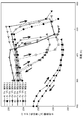
- FIG. 1 shows the temperature dependence of the average volume of each negatively thermally expandable material of Examples 1 to 9.
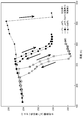
- FIG. 2 shows the temperature dependence of the average volume of each negatively thermally expandable material of Example 3, Example 10, and Comparative Example 1.
- Table 1 shows the linear thermal expansion coefficients of the negative thermal expansion materials of Examples 1 to 10 and Comparative Example 1.
- Example 10 in which a part of Bi and Ni were simultaneously replaced, Comparative Example 1 in which only a part of Bi was replaced with La in a temperature region showing negative thermal expansion, and only a part of Ni was replaced with Ga It was confirmed that it was located between the temperature regions showing negative thermal expansion in Example 3. It was suggested that by substituting Bi and Ni together and adjusting the ratio of M and R, a temperature region showing negative thermal expansion can be set to a desired region. In Comparative Example 1, it was confirmed that the temperature hysteresis of negative thermal expansion was 30K, whereas in Example 9, the temperature hysteresis of negative thermal expansion was reduced to 15K.
- Example 11 The negative thermal expansion material of Example 8 and a bisphenol type epoxy resin (manufactured by NAMICS) were mixed at a volume ratio of 20:80 to prepare a resin composite.
- the temperature dependence of the coefficient of thermal expansion of this resin composite was measured using a strain gauge.
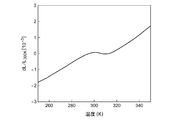
- FIG. 3 the temperature dependence of the thermal expansion coefficient of the resin composite material of Example 11 is shown.
- the thermal expansion coefficient of the epoxy resin alone is 80 ppm / K.
- the coefficient of thermal expansion near room temperature was -8.4 ppm / K, and it was confirmed that the resin composite showed a negative value. From this, it is presumed that the thermal expansion becomes zero if the addition amount of the negative thermal expansion material is 17% by volume.
- the present invention can be used for a material having negative thermal expansibility.
Landscapes
- Chemical & Material Sciences (AREA)
- Engineering & Computer Science (AREA)
- Ceramic Engineering (AREA)
- Organic Chemistry (AREA)
- Manufacturing & Machinery (AREA)
- Materials Engineering (AREA)
- Structural Engineering (AREA)
- Inorganic Chemistry (AREA)
- Compositions Of Macromolecular Compounds (AREA)
- Inorganic Compounds Of Heavy Metals (AREA)
Description
本発明は、負の熱膨張性を有する材料に関する。
近年、LSI製造などのナノテクノロジーの発展に伴い、熱膨張による位置決めの狂いが問題になっている。この問題に対処するため、温めると縮む性質、すなわち負の熱膨張性を有する材料が樹脂に分散されたゼロ膨張材料の開発が進められている。
従来、負の熱膨張性を有する材料としては、ペロブスカイト構造を有するBiNiO3のうち、Biの一部をLaで置換したBi1-yLayNiO3で表される負熱膨張性材料が既存材料の3倍もの負の熱膨張を示し、多くの樹脂の熱膨張係数(たとえば、数10~100ppm/℃)に見合った負の熱膨張係数を有することが発見されている。
SPring-8 利用者情報/2011年11月 P.261
上述した負熱膨張性材料では、Biの一部を置換するために、高価な希土類元素であるLaが用いられているため、製造コストが高くなるという課題があった。希土類元素には供給が不安定であるという問題もある。また、Biの一部をLaで置換した負熱膨張性材料は温度ヒステリシスが大きいため、ゼロ膨張材料を形成する際に負熱膨張性材料の温度ヒステリシスに応じた樹脂の材料選択が必要となるという課題があった。
本発明はこうした課題に鑑みてなされたものであり、その目的は、製造コストがより安価で原料供給の不安が少ない負熱膨張性材料の提供にある。また、本発明の他の目的は、温度ヒステリシスが抑制された負熱膨張性材料の提供にある。
本発明のある態様は、負の熱膨張性を有する負熱膨張性材料であって、下記一般式(1)で表される化合物を含むことを特徴とする。
BiNi1-xMxO3・・・(1)
(1)式中、Mは3価イオンとなり得る金属元素である。また、xは0.02≦x≦0.50を満たす。
BiNi1-xMxO3・・・(1)
(1)式中、Mは3価イオンとなり得る金属元素である。また、xは0.02≦x≦0.50を満たす。
上記態様の負熱膨張性材料において、MがAl,Sc,Ti,V,Cr,Mn,Fe,Co、Ga,Nb、Ru,Rh,Inからなる群より選ばれてもよい。
また、Biの一部がRでさらに置換された下記一般式(2)で表される化合物を含んでもよい。
Bi1-yRyNi1-xMxO3・・・(2)
(2)式中、Rは3価イオンにのみなり得る金属元素である。また、yは0<y<0.50を満たす。この場合、RがLa、Pr、Nd、Sm、Eu、Gd、Tb、Dy、Ho、Er、Tm、Yb、Lu、Yなる群より選ばれてもよい。
Bi1-yRyNi1-xMxO3・・・(2)
(2)式中、Rは3価イオンにのみなり得る金属元素である。また、yは0<y<0.50を満たす。この場合、RがLa、Pr、Nd、Sm、Eu、Gd、Tb、Dy、Ho、Er、Tm、Yb、Lu、Yなる群より選ばれてもよい。
本発明によれば、製造コストがより安価で原料供給の不安が少なく、温度ヒステリシスが抑制された負熱膨張性材料が提供される。
(実施形態1)
実施形態1に係る負熱膨張性材料は、母物質のBiNiO3において、Niの一部が3価が安定な金属元素Mで置換された化合物である。具体的には、実施形態1に係る負熱膨張性材料は、下記一般式(1)で表される化合物を含む。
BiNi1-xMxO3・・・(1)
(1)式中、Mは3価イオンとなり得る金属元素であり、好ましくは、3価が他の価数よりも安定な金属元素である。具体的には、MはAl,Sc,Ti,V,Cr,Mn,Fe,Co、Ga,Nb、Ru,Rh,Inからなる群より選ばれる。また、(1)式中、xは0.02≦x≦0.50を満たす。本実施形態に係る負熱膨張性材料は、所定の温度範囲(たとえば、300-390K)において-40ppm/℃以上の負の熱膨張を示す。なお、xが0.02より小さいと、十分な負の熱膨張性を得ることができない。
実施形態1に係る負熱膨張性材料は、母物質のBiNiO3において、Niの一部が3価が安定な金属元素Mで置換された化合物である。具体的には、実施形態1に係る負熱膨張性材料は、下記一般式(1)で表される化合物を含む。
BiNi1-xMxO3・・・(1)
(1)式中、Mは3価イオンとなり得る金属元素であり、好ましくは、3価が他の価数よりも安定な金属元素である。具体的には、MはAl,Sc,Ti,V,Cr,Mn,Fe,Co、Ga,Nb、Ru,Rh,Inからなる群より選ばれる。また、(1)式中、xは0.02≦x≦0.50を満たす。本実施形態に係る負熱膨張性材料は、所定の温度範囲(たとえば、300-390K)において-40ppm/℃以上の負の熱膨張を示す。なお、xが0.02より小さいと、十分な負の熱膨張性を得ることができない。
上記一般式(1)で表される化合物の母物質であるBiNiO3は、Bi3+
0.5Bi5+
0.5Ni2+O3という特徴的な価数状態を持つペロブスカイト酸化物である。ペロブスカイト構造では、Ni-O結合が構造の骨格を作っており、Biはその隙間を埋めている。Niの一部を3価が安定な金属元素で置換することにより、Bi3+
0.5Bi5+
0.5Ni2+O3という価数状態が不安定化する。この結果、昇温によってBi3+(Ni,M)3+O3という価数状態への変化が生じ、Ni2+からNi3+への価数変化に伴ってNi-Oが収縮すると、全体の体積が収縮する。すなわち、本実施形態に係る負熱膨張性材料によって負の熱膨張が実現される。
本実施形態の負熱膨張性材料によれば、高価な希土類元素を用いることなく、より安価で供給の不安が少ない金属元素を用いることにより、負熱膨張性材料の製造コストを低減することができる。さらに、本実施形態の負熱膨張性材料では、Biの一部をLaで置換したBi1-yLayNiO3で表される負熱膨張性材料で生じるような温度ヒステリシスを抑制することができる。
本実施の形態の負熱膨張性材料をエンジニアリングプラスチックなどの樹脂材料中に分散させ、樹脂材料の熱膨張が負熱膨張性材料の負の熱膨張で相殺するように材料の選択や各成分の含有量を設定することにより、ゼロ熱膨張材料を得ることができる。
(負熱膨張性材料の作製方法)
上記一般式(1)で表される化合物の作製方法は特に限定されないが、各金属元素が均一に固溶した複合金属酸化物を合成して任意の形状に成形できる方法であると好ましい。例えば、Bi、M、Niの各酸化物を目的物と同じモル比で混合して高圧(例えば2GPa以上)を付与しながら焼結すると、各金属元素が均一に固溶した複合金属酸化物が得られる。得られた酸化物を粉砕してから、成形して前記焼結の温度以下で焼き固めると、上記一般式(1)で表される化合物からなる熱膨張抑制部材が得られる。この他、本実施の形態に係る負熱膨張性材料は、上述した作製方法に限られず、スパッタ法、化学溶液法、レーザアブレ-ション法などによる、単結晶基板上の薄膜育成によっても作製することができる。
上記一般式(1)で表される化合物の作製方法は特に限定されないが、各金属元素が均一に固溶した複合金属酸化物を合成して任意の形状に成形できる方法であると好ましい。例えば、Bi、M、Niの各酸化物を目的物と同じモル比で混合して高圧(例えば2GPa以上)を付与しながら焼結すると、各金属元素が均一に固溶した複合金属酸化物が得られる。得られた酸化物を粉砕してから、成形して前記焼結の温度以下で焼き固めると、上記一般式(1)で表される化合物からなる熱膨張抑制部材が得られる。この他、本実施の形態に係る負熱膨張性材料は、上述した作製方法に限られず、スパッタ法、化学溶液法、レーザアブレ-ション法などによる、単結晶基板上の薄膜育成によっても作製することができる。
(実施形態2)
実施形態2に係る負熱膨張性材料は、母物質のBiNiO3において、実施形態1と同様にNiの一部が3価イオンとなり得る金属元素Mで置換され、かつ、Biの一部が3価のみを取り得る金属元素Rで置換された化合物である。具体的には、実施形態2に係る負熱膨張性材料は、下記一般式(2)で表される化合物を含む。
Bi1-yRyNi1-xMxO3・・・(2)
(2)式中、Mは3価イオンとなり得る金属元素であり、好ましくは、3価が他の価数よりも安定な金属元素である。具体的には、MはAl,Sc,Ti,V,Cr,Mn,Fe,Co、Ga,Nb、Ru,Rh,Inからなる群より選ばれる。xは0.02≦x≦0.50を満たす。Rは3価イオンにのみなり得る金属元素である。RはLa、Pr、Nd、Sm、Eu、Gd、Tb、Dy、Ho、Er、Tm、Yb、Lu、Yなる群より選ばれる。また、yは0<y<0.05を満たす。本実施形態に係る負熱膨張性材料は、金属元素Rの含有量を低減しつつ、実施形態1と同様に負の熱膨張を示す。さらに、本実施形態では、MおよびRの比率を調節することにより、負の熱膨張を示す温度領域をBiの一部のみを置換した場合と、Niの一部のみを置換した場合との間の温度領域に設定することができる。また、本実施の形態では、負の熱膨張を示す温度領域を、Biの一部のみを置換した場合と、Niの一部のみを置換した場合に比べて、広げることができる。このため、ゼロ熱膨張材料を作製する際に、樹脂材料の選択の幅を広げたり、より幅広い温度範囲でゼロ膨張を実現できるといった効果を奏する。
実施形態2に係る負熱膨張性材料は、母物質のBiNiO3において、実施形態1と同様にNiの一部が3価イオンとなり得る金属元素Mで置換され、かつ、Biの一部が3価のみを取り得る金属元素Rで置換された化合物である。具体的には、実施形態2に係る負熱膨張性材料は、下記一般式(2)で表される化合物を含む。
Bi1-yRyNi1-xMxO3・・・(2)
(2)式中、Mは3価イオンとなり得る金属元素であり、好ましくは、3価が他の価数よりも安定な金属元素である。具体的には、MはAl,Sc,Ti,V,Cr,Mn,Fe,Co、Ga,Nb、Ru,Rh,Inからなる群より選ばれる。xは0.02≦x≦0.50を満たす。Rは3価イオンにのみなり得る金属元素である。RはLa、Pr、Nd、Sm、Eu、Gd、Tb、Dy、Ho、Er、Tm、Yb、Lu、Yなる群より選ばれる。また、yは0<y<0.05を満たす。本実施形態に係る負熱膨張性材料は、金属元素Rの含有量を低減しつつ、実施形態1と同様に負の熱膨張を示す。さらに、本実施形態では、MおよびRの比率を調節することにより、負の熱膨張を示す温度領域をBiの一部のみを置換した場合と、Niの一部のみを置換した場合との間の温度領域に設定することができる。また、本実施の形態では、負の熱膨張を示す温度領域を、Biの一部のみを置換した場合と、Niの一部のみを置換した場合に比べて、広げることができる。このため、ゼロ熱膨張材料を作製する際に、樹脂材料の選択の幅を広げたり、より幅広い温度範囲でゼロ膨張を実現できるといった効果を奏する。
(実施形態3)
実施形態3に係る負熱膨張性複合体は、上述したいずれかの実施形態の負熱膨張性材料と樹脂材料とを混合した複合体である。樹脂材料は特に限定されないが、たとえば、エポキシ樹脂、フェノール樹脂、ポリカーボネートなどが挙げられる。負熱膨張性材料と樹脂材料との混合比(体積比)は、使用する負熱膨張性材料および樹脂材料の熱膨張係数にもよるが、たとえば、5:95~80:20である。本実施形態によれば、樹脂材料の正の熱膨張が負熱膨張性材料の負の熱膨張によって相殺されることにより、温度変化に対する寸法変化の割合が小さい材料が提供される。
実施形態3に係る負熱膨張性複合体は、上述したいずれかの実施形態の負熱膨張性材料と樹脂材料とを混合した複合体である。樹脂材料は特に限定されないが、たとえば、エポキシ樹脂、フェノール樹脂、ポリカーボネートなどが挙げられる。負熱膨張性材料と樹脂材料との混合比(体積比)は、使用する負熱膨張性材料および樹脂材料の熱膨張係数にもよるが、たとえば、5:95~80:20である。本実施形態によれば、樹脂材料の正の熱膨張が負熱膨張性材料の負の熱膨張によって相殺されることにより、温度変化に対する寸法変化の割合が小さい材料が提供される。
以下、本発明の実施例を説明するが、これら実施例は、本発明を好適に説明するための例示に過ぎず、なんら本発明を限定するものではない。
(実施例1:BiNi1-xMxO3(M=Al、x=0.05))
Bi2O3(3.7040g)、Ni(0.9822g)、Al(NO3)3・9H2O(0.3139g)を35%硝酸溶液50mlに溶解し、スターラーで撹拌しながら蒸発乾固させた。得られた粉体を空気中で750℃で熱処理し、酸化物の混合粉とした後、酸化剤として働く過塩素酸カリウムを20質量%混ぜ込み、金カプセルに封入した。このカプセルを高圧合成装置を用いて、6万気圧、1000℃の条件下で30分間処理した。得られた試料を水洗して塩化カリウムを除去して負熱膨張性材料を得た。
Bi2O3(3.7040g)、Ni(0.9822g)、Al(NO3)3・9H2O(0.3139g)を35%硝酸溶液50mlに溶解し、スターラーで撹拌しながら蒸発乾固させた。得られた粉体を空気中で750℃で熱処理し、酸化物の混合粉とした後、酸化剤として働く過塩素酸カリウムを20質量%混ぜ込み、金カプセルに封入した。このカプセルを高圧合成装置を用いて、6万気圧、1000℃の条件下で30分間処理した。得られた試料を水洗して塩化カリウムを除去して負熱膨張性材料を得た。
(実施例2:BiNi1-xMxO3(M=Al、x=0.10))
Niを0.8169gを用い、Al(NO3)3・9H2Oを0.6278g用いて、Alの比率xを0.10としたことを除いて、実施例1と同様な手順にて負熱膨張性材料を得た。
Niを0.8169gを用い、Al(NO3)3・9H2Oを0.6278g用いて、Alの比率xを0.10としたことを除いて、実施例1と同様な手順にて負熱膨張性材料を得た。
(実施例3:BiNi1-xMxO3(M=Ga、x=0.05))
Al(NO3)3・9H2Oに代えてGa2O3を0.0798g用いて、Gaの比率xを0.05としたことを除いて、実施例1と同様な手順にて負熱膨張性材料を得た。
Al(NO3)3・9H2Oに代えてGa2O3を0.0798g用いて、Gaの比率xを0.05としたことを除いて、実施例1と同様な手順にて負熱膨張性材料を得た。
(実施例4:BiNi1-xMxO3(M=Ga、x=0.10))
Niを0.9068gを用い、Al(NO3)3・9H2Oに代えてGa2O3を0.1596g用いて、Gaの比率xを0.10としたことを除いて、実施例1と同様な手順にて負熱膨張性材料を得た。
Niを0.9068gを用い、Al(NO3)3・9H2Oに代えてGa2O3を0.1596g用いて、Gaの比率xを0.10としたことを除いて、実施例1と同様な手順にて負熱膨張性材料を得た。
(実施例5:BiNi1-xMxO3(M=Cr、x=0.05))
Al(NO3)3・9H2Oに代えてCr2O3を0.06490g用いて、Crの比率xを0.05としたことを除いて、実施例1と同様な手順にて負熱膨張性材料を得た。
Al(NO3)3・9H2Oに代えてCr2O3を0.06490g用いて、Crの比率xを0.05としたことを除いて、実施例1と同様な手順にて負熱膨張性材料を得た。
(実施例6:BiNi1-xMxO3(M=Fe、x=0.05))
Al(NO3)3・9H2Oに代えてFe(NO3)3・9H2Oを0.3269g用いて、Feの比率xを0.05としたことを除いて、実施例1と同様な手順にて負熱膨張性材料を得た。
Al(NO3)3・9H2Oに代えてFe(NO3)3・9H2Oを0.3269g用いて、Feの比率xを0.05としたことを除いて、実施例1と同様な手順にて負熱膨張性材料を得た。
(実施例7:BiNi1-xMxO3(M=Fe、x=0.10))
Niを0.9068g用い、Al(NO3)3・9H2Oに代えてFe(NO3)3・9H2Oを0.6538g用いて、Feの比率xを0.10としたことを除いて、実施例1と同様な手順にて負熱膨張性材料を得た。
Niを0.9068g用い、Al(NO3)3・9H2Oに代えてFe(NO3)3・9H2Oを0.6538g用いて、Feの比率xを0.10としたことを除いて、実施例1と同様な手順にて負熱膨張性材料を得た。
(実施例8:BiNi1-xMxO3(M=Fe、x=0.15))
Niを0.8788g用い、Al(NO3)3・9H2Oに代えてFe(NO3)3・9H2Oを0.9807g用いて、Feの比率xを0.15としたことを除いて、実施例1と同様な手順にて負熱膨張性材料を得た。
Niを0.8788g用い、Al(NO3)3・9H2Oに代えてFe(NO3)3・9H2Oを0.9807g用いて、Feの比率xを0.15としたことを除いて、実施例1と同様な手順にて負熱膨張性材料を得た。
(実施例9:BiNi1-xMxO3(M=Co、x=0.05))
Al(NO3)3・9H2Oに代えてCo(NO3)2・6H2Oを0.2399g用いて、Coの比率xを0.05としたことを除いて、実施例1と同様な手順にて負熱膨張性材料を得た。
Al(NO3)3・9H2Oに代えてCo(NO3)2・6H2Oを0.2399g用いて、Coの比率xを0.05としたことを除いて、実施例1と同様な手順にて負熱膨張性材料を得た。
(実施例10:Bi1-yRyNi1-xMxO3(R=La、y=0.05、M=Ga、x=0.05))
Al(NO3)3・9H2Oに代えてGa2O3を0.0808g用いて、Gaの比率xを0.05とし、さらに、Bi2O3を3.8170gとし、La2O3(0.1405g)を用いて、Laの比率yを0.05としたことを除いて、実施例1と同様な手順にて負熱膨張性材料を得た。
Al(NO3)3・9H2Oに代えてGa2O3を0.0808g用いて、Gaの比率xを0.05とし、さらに、Bi2O3を3.8170gとし、La2O3(0.1405g)を用いて、Laの比率yを0.05としたことを除いて、実施例1と同様な手順にて負熱膨張性材料を得た。
(比較例1:Bi1-yRyNiO3(R=La、y=0.05))
Bi2O3を3.8402gとし、La2O3(0.1413g)を用いてLaの比率yを0.05し、かつ、Ni(1.0185g)を用いて、Mを用いない点を除いて、実施例1と同様な手順にて負熱膨張性材料を得た。
Bi2O3を3.8402gとし、La2O3(0.1413g)を用いてLaの比率yを0.05し、かつ、Ni(1.0185g)を用いて、Mを用いない点を除いて、実施例1と同様な手順にて負熱膨張性材料を得た。
実施例1~10、比較例1の各負熱膨張性材料について、粉末X線回折装置(ブルカー社製D8 ADVANCE)により温度を変えながら格子定数を見積もり、単位胞当たりの平均体積を算出した。図1に、実施例1~9の各負熱膨張性材料の平均体積の温度依存性を示す。また、図2に、実施例3、実施例10および比較例1の各負熱膨張性材料の平均体積の温度依存性を示す。表1に実施例1~10、比較例1の各負熱膨張性材料の線熱膨張係数を示す。
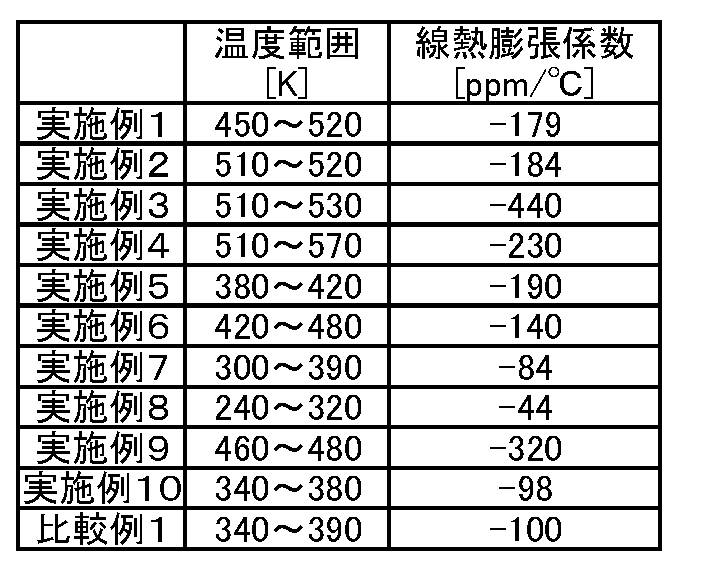
図1および図2に示すように、実施例1~10では、Niの一部を3価イオンとなり得る金属元素Mで置換することにより、比較例1のように希土類元素であるLaを用いずに、あるいはLaの量を減らした状態で、比較例1と同様に負の熱膨張を起こすことを確認した。さらに、実施例7、9では、比較例1と比べて温度ヒステリシスが小さくなることが確認された。
また、BiおよびNiの一部を同時置換した実施例10では、負の熱膨張を示す温度領域がBiの一部のみをLaで置換した比較例1と、Niの一部のみをGaで置換した実施例3の負の熱膨張を示す温度領域の間に位置することが確認された。BiおよびNiをともに置換し、MおよびRの比率を調節することにより、負の熱膨張を示す温度領域を所望の領域に設定できることが示唆された。また、比較例1では、負の熱膨張の温度ヒステリシスが30Kであるのに対して、実施例9では、負の熱膨張の温度ヒステリシスが15Kに減少すること確認された。
(実施例11)
実施例8の負熱膨張性材料と、ビスフェノール型のエポキシ樹脂(ナミックス社製)とを体積比20:80にて混合し、樹脂複合体を作製した。この樹脂複合体の熱膨張率の温度依存性を歪みゲージを用いて計測した。図3に、実施例11の樹脂複合材の熱膨張率の温度依存性を示す。エポキシ樹脂単体の熱膨張係数は80ppm/Kである。これに対して、実施例11の樹脂複合材では、室温近傍での熱膨張係数は-8.4ppm/Kであり、負の値を示すことが確認された。このことから、負熱膨張性材料の添加量を17体積%にすれば、熱膨張がゼロになると推察される。
実施例8の負熱膨張性材料と、ビスフェノール型のエポキシ樹脂(ナミックス社製)とを体積比20:80にて混合し、樹脂複合体を作製した。この樹脂複合体の熱膨張率の温度依存性を歪みゲージを用いて計測した。図3に、実施例11の樹脂複合材の熱膨張率の温度依存性を示す。エポキシ樹脂単体の熱膨張係数は80ppm/Kである。これに対して、実施例11の樹脂複合材では、室温近傍での熱膨張係数は-8.4ppm/Kであり、負の値を示すことが確認された。このことから、負熱膨張性材料の添加量を17体積%にすれば、熱膨張がゼロになると推察される。
本発明は、負の熱膨張性を有する材料に利用可能である。
Claims (5)
- 負の熱膨張性を有する負熱膨張性材料であって、
下記一般式(1)で表される化合物を含むことを特徴とする負熱膨張性材料。
BiNi1-xMxO3・・・(1)
(1)式中、Mは3価イオンとなり得る金属元素である。また、xは0.02≦x≦0.50を満たす。 - MがAl,Fe,Cr,Gaからなる群より選ばれる請求項1に記載の負熱膨張性材料。
- Biの一部がRでさらに置換された下記一般式(2)で表される化合物を含む請求項1または2に記載の負熱膨張性材料。
Bi1-yRyNi1-xMxO3・・・(2)
(2)式中、Rは3価イオンにのみなり得る金属元素である。また、yは0<y<0.05を満たす。 - RがLa、Pr、Nd、Sm、Eu、Gd、Tb、Dy、Ho、Er、Tm、Yb、Lu、Yからなる群より選ばれる請求項3に記載の負熱膨張性材料。
- 請求項1乃至4のいずれか1項に記載の負熱膨張性材料と樹脂材料とを混合した複合体。
Priority Applications (1)
| Application Number | Priority Date | Filing Date | Title |
|---|---|---|---|
| JP2014531487A JP6143197B2 (ja) | 2012-08-21 | 2013-07-23 | 負熱膨張性材料 |
Applications Claiming Priority (2)
| Application Number | Priority Date | Filing Date | Title |
|---|---|---|---|
| JP2012182477 | 2012-08-21 | ||
| JP2012-182477 | 2012-08-21 |
Publications (1)
| Publication Number | Publication Date |
|---|---|
| WO2014030293A1 true WO2014030293A1 (ja) | 2014-02-27 |
Family
ID=50149625
Family Applications (1)
| Application Number | Title | Priority Date | Filing Date |
|---|---|---|---|
| PCT/JP2013/004479 Ceased WO2014030293A1 (ja) | 2012-08-21 | 2013-07-23 | 負熱膨張性材料 |
Country Status (2)
| Country | Link |
|---|---|
| JP (1) | JP6143197B2 (ja) |
| WO (1) | WO2014030293A1 (ja) |
Cited By (11)
| Publication number | Priority date | Publication date | Assignee | Title |
|---|---|---|---|---|
| JP2015221749A (ja) * | 2010-08-12 | 2015-12-10 | キヤノン株式会社 | 熱膨張抑制部材および対熱膨張性部材 |
| JP2017048071A (ja) * | 2015-08-31 | 2017-03-09 | 国立大学法人東京工業大学 | 負熱膨張性材料、及び複合体 |
| JP2017048072A (ja) * | 2015-08-31 | 2017-03-09 | 公益財団法人神奈川科学技術アカデミー | 負熱膨張性材料の製造方法 |
| JP2018031063A (ja) * | 2016-08-26 | 2018-03-01 | 地方独立行政法人神奈川県立産業技術総合研究所 | 負熱膨張性薄膜の形成方法 |
| WO2018123897A1 (ja) * | 2016-12-27 | 2018-07-05 | 国立大学法人名古屋大学 | 複合材料 |
| US10124558B2 (en) | 2010-08-12 | 2018-11-13 | Kyoto University | Thermal expansion suppressing member and anti-thermally-expansive member |
| JP2019210201A (ja) * | 2018-06-08 | 2019-12-12 | 地方独立行政法人神奈川県立産業技術総合研究所 | 負熱膨張性材料、複合体、及び使用方法 |
| JP2021017514A (ja) * | 2019-07-23 | 2021-02-15 | 国立大学法人東京工業大学 | 樹脂組成物およびその樹脂成形体 |
| JPWO2021172525A1 (ja) * | 2020-02-27 | 2021-09-02 | ||
| CN118497582A (zh) * | 2024-07-16 | 2024-08-16 | 吉林大学 | 一种低温负热膨胀金属导电材料及其制备方法 |
| EP4270558A4 (en) * | 2021-02-17 | 2025-01-08 | Kolon Industries, Inc. | FUEL CELL MEMBRANE HUMIDIFIER |
Citations (5)
| Publication number | Priority date | Publication date | Assignee | Title |
|---|---|---|---|---|
| WO2006028005A1 (ja) * | 2004-09-08 | 2006-03-16 | Kyoto University | 強磁性強誘電体及びその製造方法 |
| JP2007194429A (ja) * | 2006-01-19 | 2007-08-02 | Fujitsu Ltd | 強磁性・強誘電性材料及び半導体装置 |
| JP2010029990A (ja) * | 2008-07-29 | 2010-02-12 | National Institute Of Advanced Industrial & Technology | 負熱膨張率材料および該負熱膨張率材料を含む複合材料 |
| WO2010101153A1 (ja) * | 2009-03-04 | 2010-09-10 | 国立大学法人京都大学 | Aサイト秩序型ペロブスカイト酸化物 |
| JP2012056830A (ja) * | 2010-08-12 | 2012-03-22 | Canon Inc | 熱膨張抑制部材および対熱膨張性部材 |
-
2013
- 2013-07-23 JP JP2014531487A patent/JP6143197B2/ja active Active
- 2013-07-23 WO PCT/JP2013/004479 patent/WO2014030293A1/ja not_active Ceased
Patent Citations (5)
| Publication number | Priority date | Publication date | Assignee | Title |
|---|---|---|---|---|
| WO2006028005A1 (ja) * | 2004-09-08 | 2006-03-16 | Kyoto University | 強磁性強誘電体及びその製造方法 |
| JP2007194429A (ja) * | 2006-01-19 | 2007-08-02 | Fujitsu Ltd | 強磁性・強誘電性材料及び半導体装置 |
| JP2010029990A (ja) * | 2008-07-29 | 2010-02-12 | National Institute Of Advanced Industrial & Technology | 負熱膨張率材料および該負熱膨張率材料を含む複合材料 |
| WO2010101153A1 (ja) * | 2009-03-04 | 2010-09-10 | 国立大学法人京都大学 | Aサイト秩序型ペロブスカイト酸化物 |
| JP2012056830A (ja) * | 2010-08-12 | 2012-03-22 | Canon Inc | 熱膨張抑制部材および対熱膨張性部材 |
Cited By (20)
| Publication number | Priority date | Publication date | Assignee | Title |
|---|---|---|---|---|
| JP2015221749A (ja) * | 2010-08-12 | 2015-12-10 | キヤノン株式会社 | 熱膨張抑制部材および対熱膨張性部材 |
| US10124558B2 (en) | 2010-08-12 | 2018-11-13 | Kyoto University | Thermal expansion suppressing member and anti-thermally-expansive member |
| JP2017048071A (ja) * | 2015-08-31 | 2017-03-09 | 国立大学法人東京工業大学 | 負熱膨張性材料、及び複合体 |
| JP2017048072A (ja) * | 2015-08-31 | 2017-03-09 | 公益財団法人神奈川科学技術アカデミー | 負熱膨張性材料の製造方法 |
| JP2018031063A (ja) * | 2016-08-26 | 2018-03-01 | 地方独立行政法人神奈川県立産業技術総合研究所 | 負熱膨張性薄膜の形成方法 |
| WO2018123897A1 (ja) * | 2016-12-27 | 2018-07-05 | 国立大学法人名古屋大学 | 複合材料 |
| JP6998051B2 (ja) | 2018-06-08 | 2022-01-18 | 地方独立行政法人神奈川県立産業技術総合研究所 | 負熱膨張性材料、複合体、及び使用方法 |
| JP2019210201A (ja) * | 2018-06-08 | 2019-12-12 | 地方独立行政法人神奈川県立産業技術総合研究所 | 負熱膨張性材料、複合体、及び使用方法 |
| EP4006096A4 (en) * | 2019-07-23 | 2023-08-23 | Tokyo Institute of Technology | COMPOSITION OF RESIN AND MOLDED PRODUCT COMPRISING THEM |
| CN114423820A (zh) * | 2019-07-23 | 2022-04-29 | 国立大学法人东京工业大学 | 树脂组合物及其树脂成型体 |
| US20220135764A1 (en) * | 2019-07-23 | 2022-05-05 | Tokyo Institute Of Technology | Resin composition and resin molded body thereof |
| JP2021017514A (ja) * | 2019-07-23 | 2021-02-15 | 国立大学法人東京工業大学 | 樹脂組成物およびその樹脂成形体 |
| JP7351477B2 (ja) | 2019-07-23 | 2023-09-27 | 国立大学法人東京工業大学 | 樹脂組成物およびその樹脂成形体 |
| CN114423820B (zh) * | 2019-07-23 | 2024-03-12 | 国立大学法人东京工业大学 | 树脂组合物及其树脂成型体 |
| US12479972B2 (en) * | 2019-07-23 | 2025-11-25 | Institute Of Science Tokyo | Resin composition and resin molded body thereof |
| WO2021172525A1 (ja) * | 2020-02-27 | 2021-09-02 | 国立大学法人東京工業大学 | 負熱膨張性材料の製造方法、負熱膨張性材料の反応前駆体の製造方法、負熱膨張性材料の反応前駆体、および負熱膨張性材料 |
| JPWO2021172525A1 (ja) * | 2020-02-27 | 2021-09-02 | ||
| JP7745852B2 (ja) | 2020-02-27 | 2025-09-30 | 国立大学法人東京科学大学 | 負熱膨張性材料の製造方法、負熱膨張性材料の反応前駆体の製造方法、および負熱膨張性材料の反応前駆体 |
| EP4270558A4 (en) * | 2021-02-17 | 2025-01-08 | Kolon Industries, Inc. | FUEL CELL MEMBRANE HUMIDIFIER |
| CN118497582A (zh) * | 2024-07-16 | 2024-08-16 | 吉林大学 | 一种低温负热膨胀金属导电材料及其制备方法 |
Also Published As
| Publication number | Publication date |
|---|---|
| JP6143197B2 (ja) | 2017-06-07 |
| JPWO2014030293A1 (ja) | 2016-07-28 |
Similar Documents
| Publication | Publication Date | Title |
|---|---|---|
| JP6143197B2 (ja) | 負熱膨張性材料 | |
| Selbach et al. | Structure and properties of multiferroic oxygen hyperstoichiometric BiFe1− x Mn x O3+ δ | |
| Corbel et al. | Effects of partial substitution of Mo6+ by Cr6+ and W6+ on the crystal structure of the fast oxide-ion conductor structural effects of W6+ | |
| JP5626211B2 (ja) | フェライト磁性材料 | |
| US8753749B2 (en) | Thermal expansion suppressing member and anti-thermally-expansive member | |
| Bhattacharjee et al. | Stability of the various crystallographic phases of the multiferroic (1− x) BiFeO3–xPbTiO3 system as a function of composition and temperature | |
| Shi et al. | Strong negative thermal expansion of Cu2PVO7 in a wide temperature range | |
| CN101657394A (zh) | 无铅压电陶瓷组合物,其制备方法以及含该材料的压电构件 | |
| Pan et al. | Tolerance factor control of tetragonality and negative thermal expansion in PbTiO3-based ferroelectrics | |
| WO2008133153A1 (ja) | 熱電変換材料、その製造方法および熱電変換素子 | |
| JP6555473B2 (ja) | 負熱膨張性材料、及び複合体 | |
| CN109843828A (zh) | 陶瓷材料、组件和制造所述组件的方法 | |
| JP2005255503A (ja) | 低熱膨張複合体 | |
| Pandey et al. | Presence of a monoclinic (Pm) phase in the morphotropic phase boundary region of multiferroic (1− x) Bi (Ni1/2Ti1/2) O3-xPbTiO3 solid solution: A Rietveld study | |
| Phuong et al. | Structural, optical, and magnetic properties of a new system of Bi (Mn0. 5Ti0. 5) O3-modified Bi0. 5Na0. 5TiO3 materials | |
| Saini et al. | Enhanced thermoelectric power factor led by isovalent substitution in Sr2CrMoO6 double perovskite | |
| Cao et al. | New 8-Layer Twinned Hexagonal Perovskite Microwave Dielectric Ceramics Ba8Ga4–x Ta4+ 0.6 x O24 | |
| Kasugai et al. | Systematic Study on the Role of the Third Zn-Site Element in Zn2− xMgxP2O7 Showing Giant Negative Thermal Expansion | |
| Bitaraf et al. | Comprehensive characterization of Co0. 5Mg0. 5Fe2O4-BTO, Ni0. 5Co0. 5Fe2O4-BTO, and Ni0. 5Mg0. 5Fe2O4-BTO nanocomposites | |
| JP6546483B2 (ja) | 負熱膨張性材料の製造方法 | |
| JP6998051B2 (ja) | 負熱膨張性材料、複合体、及び使用方法 | |
| Chotsawat et al. | First-principles study of Bi and Al in orthorhombic PbZrO3 | |
| WO2017138643A1 (ja) | ルテニウム酸化物およびルテニウム酸化物の製造方法 | |
| WO2018123897A1 (ja) | 複合材料 | |
| Gafarova et al. | Synthesis and Study of Manganese-Substituted Barium Hexaferrite BaFe12–x Mn x O19 |
Legal Events
| Date | Code | Title | Description |
|---|---|---|---|
| 121 | Ep: the epo has been informed by wipo that ep was designated in this application |
Ref document number: 13831484 Country of ref document: EP Kind code of ref document: A1 |
|
| ENP | Entry into the national phase |
Ref document number: 2014531487 Country of ref document: JP Kind code of ref document: A |
|
| NENP | Non-entry into the national phase |
Ref country code: DE |
|
| 122 | Ep: pct application non-entry in european phase |
Ref document number: 13831484 Country of ref document: EP Kind code of ref document: A1 |