WO2014020945A1 - 物品推定システム、物品推定方法、及び物品推定プログラム - Google Patents
物品推定システム、物品推定方法、及び物品推定プログラム Download PDFInfo
- Publication number
- WO2014020945A1 WO2014020945A1 PCT/JP2013/060633 JP2013060633W WO2014020945A1 WO 2014020945 A1 WO2014020945 A1 WO 2014020945A1 JP 2013060633 W JP2013060633 W JP 2013060633W WO 2014020945 A1 WO2014020945 A1 WO 2014020945A1
- Authority
- WO
- WIPO (PCT)
- Prior art keywords
- article
- information
- image
- estimation
- predetermined number
- Prior art date
- Legal status (The legal status is an assumption and is not a legal conclusion. Google has not performed a legal analysis and makes no representation as to the accuracy of the status listed.)
- Ceased
Links
Images





Classifications
-
- G—PHYSICS
- G06—COMPUTING OR CALCULATING; COUNTING
- G06Q—INFORMATION AND COMMUNICATION TECHNOLOGY [ICT] SPECIALLY ADAPTED FOR ADMINISTRATIVE, COMMERCIAL, FINANCIAL, MANAGERIAL OR SUPERVISORY PURPOSES; SYSTEMS OR METHODS SPECIALLY ADAPTED FOR ADMINISTRATIVE, COMMERCIAL, FINANCIAL, MANAGERIAL OR SUPERVISORY PURPOSES, NOT OTHERWISE PROVIDED FOR
- G06Q30/00—Commerce
- G06Q30/06—Buying, selling or leasing transactions
-
- G—PHYSICS
- G06—COMPUTING OR CALCULATING; COUNTING
- G06F—ELECTRIC DIGITAL DATA PROCESSING
- G06F18/00—Pattern recognition
- G06F18/20—Analysing
- G06F18/22—Matching criteria, e.g. proximity measures
-
- G—PHYSICS
- G06—COMPUTING OR CALCULATING; COUNTING
- G06T—IMAGE DATA PROCESSING OR GENERATION, IN GENERAL
- G06T7/00—Image analysis
- G06T7/10—Segmentation; Edge detection
- G06T7/194—Segmentation; Edge detection involving foreground-background segmentation
-
- G—PHYSICS
- G06—COMPUTING OR CALCULATING; COUNTING
- G06T—IMAGE DATA PROCESSING OR GENERATION, IN GENERAL
- G06T7/00—Image analysis
- G06T7/90—Determination of colour characteristics
-
- G—PHYSICS
- G06—COMPUTING OR CALCULATING; COUNTING
- G06V—IMAGE OR VIDEO RECOGNITION OR UNDERSTANDING
- G06V20/00—Scenes; Scene-specific elements
- G06V20/20—Scenes; Scene-specific elements in augmented reality scenes
-
- G—PHYSICS
- G06—COMPUTING OR CALCULATING; COUNTING
- G06V—IMAGE OR VIDEO RECOGNITION OR UNDERSTANDING
- G06V30/00—Character recognition; Recognising digital ink; Document-oriented image-based pattern recognition
- G06V30/40—Document-oriented image-based pattern recognition
- G06V30/41—Analysis of document content
- G06V30/418—Document matching, e.g. of document images
-
- G—PHYSICS
- G06—COMPUTING OR CALCULATING; COUNTING
- G06T—IMAGE DATA PROCESSING OR GENERATION, IN GENERAL
- G06T2207/00—Indexing scheme for image analysis or image enhancement
- G06T2207/30—Subject of image; Context of image processing
- G06T2207/30176—Document
Definitions
- the present invention relates to an article estimation system, an article estimation method, and an article estimation program for estimating information for identifying an article from an image obtained by imaging the article.
- Non-Patent Document 1 when an image of a product that the user is interested in is photographed and a product image is transmitted to a product sales site, information on the product specified by the image matching process is returned.
- a cover image in which a cover of a book is photographed is received from a user terminal, the book is identified by image matching processing, and feature information such as the outline and price of the book is obtained.
- feature information such as the outline and price of the book is obtained.
- the present invention has been made to solve the above-described problems, and an article estimation system and article estimation capable of estimating information specifying an article such as a title and a merchandise code from a spine image of an article such as a book. It is an object to provide a method and an article estimation program.
- the article estimation system includes, for each of a plurality of articles having a cover and a back cover, specific information for identifying the article and additional information related to the article in association with the specific information and the specific information,
- An image acquisition unit configured to be able to acquire additional information and acquiring an image showing a plurality of articles
- an extraction unit extracting an image area showing the articles for each item from the acquired images
- An analysis unit that analyzes a plurality of image regions and obtains analysis information, and an image from the plurality of article specific information stored in the storage unit for each of the plurality of image regions based on the obtained analysis information
- a first estimation unit that attempts to narrow down candidates for specific information estimated to correspond to articles in the region to a predetermined number or less, and a predetermined number or less for at least one image region by the first estimation unit.
- the information acquisition means for acquiring additional information related to the candidate article as additional information of the reference article from the storage means, and when the additional information of at least one reference article is acquired, An image area that is captured and that has not been narrowed down to a predetermined number or less based on the analysis information by the first estimation means is estimated based on the additional information of the reference article in addition to the analysis information.
- second estimation means for trying to narrow down the specific information candidates to a predetermined number or less.
- a predetermined number or less of specific information candidates that are estimated to correspond to the article in the image area are analyzed based on the analysis information obtained by analyzing the image area.
- a process of narrowing down to is attempted.
- specific information candidates are narrowed down based on analysis information obtained by image analysis such as OCR (Optical Character Recognition). This makes it possible to estimate specific information candidates without using an image matching technique.
- OCR Optical Character Recognition
- the additional information of the candidate for the article is acquired as additional information for the reference article. Then, an estimation process is performed on the image area in which the candidate for the specific information of the article cannot be estimated only by the analysis of the image area, with the additional information of the reference article added. As a result, the additional information of the other article (reference article) is used for the image area where the candidate for the specific information could not be estimated, so that it can be narrowed down to a predetermined number of specific information candidates. Therefore, it is possible to estimate information for specifying an article such as a title or a product code from a spine image of an article such as a book.
- the additional information stored in the storage means includes size information indicating the size of the back cover of the article
- the second estimation means includes at least one reference article size.
- the image area when the size information of at least one reference article is acquired, the image area includes the spine, and the first estimation unit cannot narrow down candidates to a predetermined number or less based on the analysis information.
- a process for narrowing down the estimated specific information candidates to a predetermined number or less is attempted for the image area based on the size information of the reference article.
- the estimated specific information candidates are reduced to the predetermined number or less based on the size information of the reference article in addition to the analysis information. The possibility of narrowing down increases.
- the additional information stored in the storage means includes page number information indicating the number of pages of the article
- the second estimation means includes the number of pages of at least one reference article.
- the image area in which the back cover is shown can be narrowed down to a predetermined number or less based on the analysis information by the first estimation means.
- a process of narrowing down the candidates for specific information to be estimated to a predetermined number or less is attempted based on the thickness estimated from the page number information of the reference article in addition to the analysis information.
- the specific information estimated based on the thickness estimated from the page number information of the reference article in addition to the analysis information for the image area where the candidate could not be narrowed down to a predetermined number or less based on the analysis information The possibility that the number of candidates can be reduced to a predetermined number or less increases.
- the additional information stored in the storage unit includes series information indicating whether or not the article constitutes a series with another article
- the second estimation unit includes: When the series information of at least one reference article is acquired, it is an image area in which a spine is shown adjacent to the reference article, and the first estimation means narrows down candidates to a predetermined number or less based on the analysis information
- processing for narrowing the estimated specific information candidates to a predetermined number or less may be attempted for the image area that could not be processed based on the series information of the reference article.
- the second estimation means includes a fade degree of the image area in which the candidate is narrowed down to a predetermined number by the first estimation means, and narrows the candidate to a predetermined number or less by the first estimation means.
- a predetermined number of candidates for specific information to be estimated assuming that the article shown in the image area with the smaller degree of fading has a newer number. You may try the process of narrowing down below.
- the degree of color fading of the image area where the candidate has been narrowed down to a predetermined number or less and the color fading degree of the image area where the candidate could not be narrowed down to a predetermined number or less are compared, and the color fading degree is smaller.
- the article shown in the image area has a newer number
- a process of narrowing the estimated specific information candidates to a predetermined number or less is attempted.
- the candidate for specific information can be narrowed down using the characteristic that the spine is tanned and faded over time.
- the additional information stored in the storage means includes genre information indicating a genre to which the article belongs
- the second estimation means includes genre information of at least one reference article. If acquired, the image area is a spine that is adjacent to the reference article, and the first estimation means has not been able to narrow down candidates to a predetermined number or less based on the analysis information. Based on the genre information of the reference article in addition to the analysis information, a process of narrowing the estimated specific information candidates to a predetermined number or less may be attempted.
- the genre information of at least one reference article when the genre information of at least one reference article is acquired, it is an image area in which a spine is shown adjacent to the reference article, and is equal to or less than a predetermined number based on analysis information by the first estimation means
- a process of narrowing down the estimated specific information candidates to a predetermined number or less is attempted based on the genre information of the reference article in addition to the analysis information.
- the candidate of specific information can be narrowed down using the characteristic that articles belonging to the same genre are placed side by side.
- the additional information stored in the storage unit includes the title and author information of the article
- the analysis unit performs OCR on the plurality of extracted image regions.
- character information is acquired as analysis information
- the first estimating means is configured to store a plurality of articles stored in the storage means based on the acquired character information and the stored title and author information.
- a process of narrowing down specific information candidates that are estimated to correspond to articles in the image area from the specific information to a predetermined number or less may be attempted.
- character information is acquired as analysis information by performing OCR processing on a plurality of extracted image regions, and based on the acquired character information and stored title and author information. Then, a process of narrowing down specific information candidates that are estimated to be applicable to an article shown in the image area from among the plurality of article specific information stored in the storage means to a predetermined number or less is attempted. For this reason, candidates for specific information can be narrowed down with a lower processing load than when image matching processing is performed.
- An article estimation method includes, for each of a plurality of articles having a cover and a back cover, specific information for identifying the article and additional information related to the article in association with the storage unit that stores the specific information and the specific information.
- the article estimation system is configured so that the article estimation system can acquire additional information, the article estimation system acquires an image in which a plurality of articles are captured, and the image area in which the article is captured from the acquired images for each article.
- An extraction step extracted by the article estimation system an analysis step in which the article estimation system analyzes the extracted plurality of image regions and acquires analysis information, and for each of the plurality of image regions based on the acquired analysis information, Processing for narrowing down specific information candidates that are estimated to correspond to an article shown in the image area from a plurality of article specific information stored in the storage means to a predetermined number or less
- the information acquisition step acquired by the article estimation system and the additional information of at least one reference article is acquired in the image area in which the spine is reflected, and the predetermined number based on the analysis information by the first estimation step Second, the article estimation system attempts to narrow down the candidates for specific information to be estimated to a predetermined number or less based on the additional information of the reference article in addition to the analysis information for the image area where
- a predetermined number or less of specific information candidates that are estimated to correspond to the article in the image area based on the analysis information obtained by analyzing the image area based on the analysis information obtained by analyzing the image area.
- a process of narrowing down to is attempted.
- specific information candidates are narrowed down based on analysis information obtained by image analysis such as OCR (Optical Character Recognition). This makes it possible to estimate specific information candidates without using an image matching technique.
- OCR Optical Character Recognition
- the additional information of the candidate for the article is acquired as additional information for the reference article. Then, an estimation process is performed on the image area in which the candidate for the specific information of the article cannot be estimated only by the analysis of the image area, with the additional information of the reference article added. As a result, the additional information of the other article (reference article) is used for the image area where the candidate for the specific information could not be estimated, so that it can be narrowed down to a predetermined number of specific information candidates. Therefore, it is possible to estimate information for specifying an article such as a title or a product code from a spine image of an article such as a book.
- An article estimation program includes, for each of a plurality of articles having a cover and a back cover, specific information for identifying the article and additional information regarding the article in association with the specific information and the specific information,
- the computer is configured so that additional information can be acquired, and the function of the image acquisition means for acquiring an image in which a plurality of articles are shown in the computer, and the image area in which the article is shown are extracted for each article from the acquired images.
- a function of a first estimating means that attempts to narrow down a candidate for specific information estimated to correspond to an article shown in an image area from among specific information of a plurality of articles to a predetermined number or less;
- a function of an information obtaining unit that obtains additional information related to the candidate article as additional information of the reference article from the storage unit when the candidate can be narrowed down to a predetermined number or less with respect to at least one image region by the function of the one estimating unit;
- the additional information of at least one reference article is acquired, the image area in which the back cover is shown, and the first estimation means has not been able to narrow down candidates to a predetermined number or less based on the analysis information
- a function of second estimation means that attempts to narrow down the estimated specific information candidates to a predetermined number or less is realized.
- a predetermined number or less of specific information candidates that are estimated to correspond to the article in the image area are analyzed based on the analysis information obtained by analyzing the image area.
- a process of narrowing down to is attempted.
- specific information candidates are narrowed down based on analysis information obtained by image analysis such as OCR (Optical Character Recognition). This makes it possible to estimate specific information candidates without using an image matching technique.
- OCR Optical Character Recognition
- the additional information of the candidate for the article is acquired as additional information for the reference article. Then, an estimation process is performed on the image area in which the candidate for the specific information of the article cannot be estimated only by the analysis of the image area, with the additional information of the reference article added. As a result, the additional information of the other article (reference article) is used for the image area where the candidate for the specific information could not be estimated, so that it can be narrowed down to a predetermined number of specific information candidates. Therefore, it is possible to estimate information for specifying an article such as a title or a product code from a spine image of an article such as a book.
- the computer-readable recording medium is configured to store, from a storage unit that stores, in association with each other, a plurality of articles having a cover and a back cover, identification information that identifies the article and additional information regarding the article.
- the information and the additional information are configured to be acquired by a computer, and the function of image acquisition means for acquiring an image in which a plurality of articles are captured in the computer and the image area in which the article is captured from the acquired images
- the function of the extracting means for extracting each time, the function of the analyzing means for analyzing the extracted plurality of image areas and acquiring the analysis information, and the storage means for each of the plurality of image areas based on the acquired analysis information
- the first estimator who tries to narrow down the candidate of specific information estimated to correspond to the article shown in the image area from the specific information of the plurality of articles stored in If the candidate can be narrowed down to a predetermined number or less for at least one image area by the function of the first estimation means and the function of the first estimation means, information acquisition for acquiring additional information on the candidate article as additional information of the reference article from the storage means
- the first estimation means can narrow down candidates to a predetermined number or less based on the analysis information.
- the candidate of specific information estimated to correspond to the article shown in the image area A process of narrowing down to a predetermined number or less is attempted.
- specific information candidates are narrowed down based on analysis information obtained by image analysis such as OCR (Optical Character Recognition). This makes it possible to estimate specific information candidates without using an image matching technique.
- OCR Optical Character Recognition
- the additional information of the candidate for the article is acquired as additional information for the reference article. Then, an estimation process is performed on the image area in which the candidate for the specific information of the article cannot be estimated only by the analysis of the image area, with the additional information of the reference article added. As a result, the additional information of the other article (reference article) is used for the image area where the candidate for the specific information could not be estimated, so that it can be narrowed down to a predetermined number of specific information candidates. Therefore, it is possible to estimate information for specifying an article such as a title or a product code from a spine image of an article such as a book.
- an article estimation system capable of estimating information identifying an article such as a title and a merchandise code from a spine image of an article such as a book.
- FIG. 2 is a physical configuration diagram for explaining a physical configuration of a terminal 1.
- FIG. 2 is a physical configuration diagram for explaining a physical configuration of a server 2.
- FIG. It is a table block diagram for demonstrating an example of the table structure in the goods database. It is explanatory drawing explaining an example of the estimation method of the specific information of the goods by the 2nd estimation part. It is a sequence diagram for demonstrating the outline of the whole of the flow of a series of processes performed by the server 2 as an article
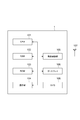
- FIG. 1 is a functional configuration diagram for explaining a functional configuration of a server and a terminal capable of communicating with the server.
- the server 2 functions as an article estimation system and is configured to be able to send and receive information with the terminal 1.
- the article estimation system is a system for estimating what kind of book is a book shown from an image of the book.
- the article estimation system estimates, for example, a book title or ISBN (International Standard Book Number). In particular, this article estimation system estimates not only the book cover image but also the book from the back cover image.
- the estimation target is not limited to a book, and may be an article having a cover and a back cover such as a DVD package, a CD case, a game software package, and a video package.
- the estimation process performed by the article estimation system is performed by analyzing an image in which an article to be estimated (hereinafter referred to as a target article) is shown.
- a target article an article to be estimated
- the candidate estimated as the target article cannot be narrowed down to a predetermined number or less even after analyzing the image, information obtained from other articles (hereinafter referred to as reference articles) existing around the target article Based on the above, this estimation process is performed.
- This predetermined number may be one or plural.
- FIG. 2 is a physical configuration diagram for explaining the physical configuration of the terminal 1
- FIG. 3 is a physical configuration diagram for explaining the physical configuration of the server 2.
- the terminal 1 shown in FIG. 1 is a device such as a smartphone, a mobile phone terminal, or a laptop computer having a camera function.
- the terminal 1 can communicate with the server 2 via a communication network NW such as a wireless base station or a wired communication network. For this reason, the terminal 1 can transmit an image obtained by imaging a target article such as a book to the server 2. Further, the terminal 1 can receive a region-divided image indicating a plurality of regions extracted from the image from the server 2. Further, the terminal 1 can transmit selection information indicating the area of the target article selected by the user from a plurality of areas to the server 2. The terminal 1 can receive from the server 2 article information (specific information, additional information) indicating which article the target article included in the selected area is estimated to be.
- NW such as a wireless base station or a wired communication network.
- NW such as a wireless base station or a wired communication network.
- the terminal 1 can transmit an image obtained by imaging a target article such as a book to the server 2.
- the server 2 is a device such as a server or a host computer that manages data related to articles.
- the server 2 can communicate with the terminal 1 via a communication network NW such as a wireless base station or a wired communication network. For this reason, the server 2 can receive an image obtained by imaging a target article such as a book from the terminal 1. Further, the server 2 can transmit a region-divided image indicating a plurality of regions extracted from the image to the terminal 1. Further, the server 2 can receive selection information indicating an area selected from a plurality of areas from the terminal 1. In addition, the server 2 can transmit, to the terminal 1, article information indicating which articles are estimated as target articles included in the selected area.
- NW such as a wireless base station or a wired communication network.
- the terminal 1 includes a CPU 101 (Central Processing Unit) as main physical components and a RAM 102 (Random as a main storage device). (Access Memory) and ROM 103 (Read Only Memory), an operation unit 104 for operating the terminal 1, a communication unit 105 for communication, a display 106 such as a touch panel display, an antenna 107, and hardware such as a camera 108. Configured as a computer. When these components operate, each function of the terminal 1 described below is exhibited.
- a CPU 101 Central Processing Unit
- RAM 102 Random as a main storage device
- ROM 103 Read Only Memory
- the terminal 1 includes an imaging unit 11, a designation unit 12, and an output unit 13 as main functional components.
- the imaging unit 11 is an imaging processing part that captures an image of a plurality of books and obtains an image of the plurality of articles.
- the imaging unit 11 can acquire an image by capturing an image of a target article having a back cover and a reference article existing around the target article. Regarding the reference article shown in this image, only the cover of the reference article may be imaged.
- the imaging unit 11 may acquire an image by capturing an image using a camera mounted on the terminal 1 or may acquire an image by communicating with the outside.
- the imaging unit 11 transmits the acquired image to the server 2.
- the designation unit 12 When the designation unit 12 receives a region-divided image, which will be described later, from the server 2, the designation unit 12 generates selection information that designates an image region (hereinafter, a spine region) in which a spine of the target article selected by the user is shown, This is a selection processing part to be transmitted to the server 2.
- the region divided image is information indicating a plurality of regions extracted from the image.
- the area division image shows the area of the reference article and the area of the spine of the target article.
- the output unit 13 is an output display unit that receives article information to be described later from the server 2 and outputs it so that the user can view it.
- the article information is information indicating which article is estimated as the target article included in the spine area selected by the user.
- the output unit 13 outputs candidate icons or candidate lists of the plurality of target articles.
- the user can browse the article information of the target article that he / she wants to browse by selecting from among the candidate icons or candidate lists of the plurality of target articles.
- the output unit 13 can also display the region-divided image received from the server 2 so that the user can view it.
- the server 2 includes a CPU 201, RAM 202, and ROM 203 as main physical components, a communication module 204 for performing communication, and hardware such as an auxiliary storage device 205 such as a hard disk. Configured as When these components operate, each function of the server 2 described below is exhibited.
- the server 2 includes an extraction unit 21 (image acquisition unit and extraction unit), an analysis unit 22 (analysis unit), an article database 23 (storage unit), a first estimation unit 24 (first estimation unit), and an information acquisition unit 25. (Information acquisition means) and a second estimation unit 26 (second estimation means).
- the extraction unit 21 is an image processing part that receives (acquires) an image from the terminal 1 and extracts, for each article, an image area in which the article is shown.
- the extraction unit 21 generates and acquires a region-divided image that displays a plurality of extracted regions superimposed on the original image. Then, the extraction unit 21 transmits the acquired area division image to the terminal 1.
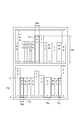
- the plurality of spine cover regions in the region-divided image are indicated by frames Fh, Fp, Fv, and Fy, for example, in FIG.
- the extraction unit 21 can extract the spine cover area and the cover area of the target article from the image. In this case, the extraction unit 21 can determine whether the extracted rectangular area indicates a spine or a cover based on the vertical and horizontal size ratio of the extracted area.
- the extraction unit 21 first performs edge enhancement processing (eg, binarization, high-frequency filtering) on the image data to obtain a vertical (vertical) line. Next, the extraction unit 21 acquires a line (edge) in the horizontal direction (horizontal direction). Then, the extraction unit 21 extracts a rectangular area surrounded by the acquired vertical and horizontal lines as a spine area corresponding to one article. Note that the extraction unit 21 may scan the image in the horizontal direction (horizontal direction) and recognize the presence of a different article in the image when detecting that the color of the spine cover area is different.
- edge enhancement processing eg, binarization, high-frequency filtering
- the extraction unit 21 can extract the back cover area of the reference article and the spine area of the target article adjacent to the reference article from the image. is there.
- the analysis unit 22 is an image analysis processing unit that analyzes each of the plurality of image regions extracted by the extraction unit 21 and generates and acquires analysis information indicating the analysis result. For example, the analysis unit 22 obtains character information (text information) as an analysis result of the OCR process by performing an OCR (Optical Character Recognition) process for each of the plurality of extracted image regions. It is possible.
- the analysis unit 22 tries to obtain the back cover information of the title, author, etc. from the character information obtained as a result of the OCR process.
- the character information indicating the title and the author cannot be completely acquired.
- the analysis unit 22 extracts spine cover information from the character information based on the difference in character size, the position of the space, and the like.
- the article database 23 is a database that stores, for each of a plurality of articles having a cover and a back cover, specific information for identifying the article and additional information related to the article in association with each other.
- the additional information includes, for example, size information indicating the size of the back cover of the article.
- the size information is shown in various representation formats, for example, the length of the spine cover in the longitudinal direction and the short side direction, the length of the spine cover in the vertical and horizontal directions, the thickness of the spine cover, and the like.
- the additional information includes, for example, page number information, series information, genre information, title, author information, and the like.
- the page number information is information indicating the number of pages of the article.
- the series information is information indicating whether the article constitutes a series with other articles.
- the series information is, for example, whether the article is a book, a series book such as volumes 1 to 10, a specific library series, a specific new book series, or a top / bottom volume , May be information indicating.
- Genre information is information indicating the genre to which the article belongs. Examples of the genre indicated by the genre information include literature, criticism, humanities, thought, society, politics, non-fiction, entertainment, comics, and the like.
- the title and author information are information indicating the title and author of the article.
- the article database 23 may be configured not to be provided in the server 2 or may be configured to exist outside the server 2. In the case of this configuration, the server 2 can acquire specific information and additional information by communicating with the article database 23.
- the first estimation unit 24 performs a process of narrowing down specific information candidates that are estimated to correspond to an article in the image region to a predetermined number or less for each of a plurality of image regions in the region-divided image acquired by the extraction unit 21.
- the search processing part to try.
- the first estimation unit 24 selects the above-described specific information candidates from the plurality of article specification information stored in the article database 23 for each of a plurality of image regions. Attempts to narrow down to a predetermined number or less. Further, the first estimation unit 24 narrows down the candidates for the specific information to a predetermined number or less based on the character information acquired by the analysis unit 22 and the title and author information stored in the article database 23. It is possible to try processing.
- the information acquisition unit 25 is an information acquisition processing part that acquires additional information on candidate articles narrowed down by the first estimation unit 24 from the article database 23.
- the information acquisition unit 25 acquires the above-described additional information from the article database 23 as the additional information of the reference article when the first estimation unit 24 can narrow down candidates to a predetermined number or less for at least one image region.
- the information acquisition unit 25 can also acquire additional information regarding candidate articles narrowed down by the second estimation unit 26 from the article database 23. In this case, the information acquisition unit 25 acquires the above-described additional information from the article database 23 when the second estimation unit 26 can narrow down candidates to a predetermined number or less for at least one image region.
- the second estimation unit 26 adds an image region for which candidates could not be narrowed down by the first estimation unit 24 to the above-described region divided image.
- This is a search processing portion that attempts to narrow down the estimated specific information candidates to a predetermined number or less based on the additional information of the reference article.
- the second estimation unit 26 is a candidate for specific information described above for an image region in which a spine is shown and the first estimation unit 24 cannot narrow down to a predetermined number or less based on the region divided image. Attempts to narrow down to a predetermined number or less.
- the second estimation unit 26 adds the reference article of the reference article in addition to the area division image for the above-described image area in which the candidates cannot be narrowed down to a predetermined number or less. Based on the size information, an attempt is made to narrow down the above-mentioned specific information candidates to a predetermined number or less.
- the size information is information indicating the size of the back cover of the article.
- the size information is, for example, information such as the length of the back cover in the longitudinal direction and the short direction, the length of the spine cover in the vertical and horizontal directions, and the thickness of the spine cover.
- the second estimation unit 26 determines the size of the image area in which the candidates could not be narrowed down to a predetermined number or less with respect to the size information (actual measurement) of the reference article and the size of the image area in which the reference article is captured. Based on the ratio (comparison between images), a process of narrowing down the above-mentioned specific information candidates to a predetermined number or less is attempted. As an example, it is assumed that the size information (actual measurement) of the reference article indicates that the length of the spine cover in the longitudinal direction is 10 cm.
- the size of the image area in which the reference article is reflected is 2 cm. Furthermore, it is assumed that the size of the above-described image area where candidates could not be narrowed down to a predetermined number or less is 4 to 5 cm. As a result, the aforementioned ratio becomes 2 to 2.5. As a result, the second estimation unit 26 estimates that the length in the longitudinal direction of the spine of the article shown in the image area in which the candidates could not be narrowed down to a predetermined number or less is in the range of 20 to 25 cm. To do. And the 2nd estimation part 26 tries the process which narrows down the candidate of the above-mentioned specific information to below predetermined number using this estimation result.
- the second estimation unit 26 adds the above-described image region where candidates could not be narrowed down to a predetermined number or less to the region divided image. Then, based on the thickness estimated from the page number information of the reference article, a process of narrowing down the above-mentioned specific information candidates to a predetermined number or less is attempted.
- the page number information is information indicating the number of pages of the article.
- the second estimation unit 26 cannot narrow down candidates to a predetermined number or less with respect to the page number information (actual measurement) of the reference article and the thickness of the back cover estimated from the page number information. Based on the ratio of the thickness of the spine of the article shown in the image area, an attempt is made to narrow down the candidates for the specific information to a predetermined number or less.
- the second estimation unit 26 estimates the thickness of the spine cover from the page number information of the reference article. As an example, it is assumed that the page number information of the reference article indicates 100 pages.
- the thickness of the back cover estimated from the page number information is estimated by the second estimation unit 26 to be 1 to 1.5 cm. Further, it is assumed that the second estimation unit 26 estimates that the thickness of the spine of the article shown in the above-described image region where the candidate cannot be narrowed down to a predetermined number or less is 3 cm. As a result, the aforementioned ratio becomes 2 to 3. As a result, the second estimation unit 26 estimates that the number of pages of the article indicated in the above-described image area where the candidates could not be narrowed below the predetermined number is in the range of 200 to 300 pages. And the 2nd estimation part 26 tries the process which narrows down the candidate of the above-mentioned specific information to below predetermined number using this estimation result.
- the second estimation unit 26 is an image area in which a spine is shown adjacent to the reference article, and candidates are narrowed down to a predetermined number or less. For the above-mentioned image area that could not be obtained, an attempt is made to narrow down the above-mentioned specific information candidates to a predetermined number or less based on the series information of the reference article in addition to the area division image.
- the series information is information indicating whether the article constitutes a series with other articles.
- the second estimation unit 26 is shown in the above-described image area where the candidate information could not be narrowed down to a predetermined number or less when the series information of the reference article indicates that it constitutes a series with another article. If the background color of the back cover of the article is the same system color as the background color of the back cover of the reference article (in the range indicated by the same color name), it is estimated that these articles constitute the same series. And the 2nd estimation part 26 tries the process which narrows down the candidate of the above-mentioned specific information to below predetermined number using this estimation result.
- the second estimation unit 26 fades the image area in which the candidates have been narrowed down to a predetermined number or less by the first estimation unit 24, and the image in which the candidates have not been narrowed down to a predetermined number by the first estimation unit 24. Compare the faded area. Then, the second estimation unit 26 tries to narrow down the above-described specific information candidates to a predetermined number or less, assuming that the article shown in the image area with the smaller fading degree has a newer number. .
- the fading degree is calculated by comparing with the color of the corresponding series stored in the article database 23 (“background color of back cover” described later).
- the candidate that has been narrowed down to a predetermined number or less by the first estimation unit 24 is the fifth book in the series of ten volumes.
- the second estimation unit 26 compares the color fading degree of the image area in which the book of the fifth volume is captured with the color fading degree of the image area where the candidate cannot be narrowed down. It is assumed that the degree of fading is smaller in the image area in which the book of the fifth volume is captured than in the image area in which candidates cannot be narrowed down. In this case, the second estimator 26 determines that the book in the image area where the candidates could not be narrowed is newer than the fifth book that is a candidate that has been narrowed down to a predetermined number or less. As a result, a process of narrowing down the above-mentioned specific information candidates to a predetermined number or less is attempted.
- the second estimation unit 26 is an image area in which a spine is shown adjacent to the reference article, and candidates are narrowed down to a predetermined number or less. For the above-mentioned image area that could not be obtained, an attempt is made to narrow down the above-mentioned specific information candidates to a predetermined number or less based on the genre information of the reference article in addition to the area division image.
- Genre information is information indicating the genre to which the article belongs.
- the second estimation unit 26 is an image area in which a spine is shown adjacent to the reference article, and the article indicated in the above-described image area in which candidates cannot be narrowed down to a predetermined number or less, Presumed to belong to the genre indicated by the genre information. And the 2nd estimation part 26 tries the process which narrows down the candidate of the above-mentioned specific information to below predetermined number using this estimation result.
- the second estimation unit 26 can try a process of narrowing down the above-mentioned specific information candidates to a predetermined number or less based on the character information obtained as a result of the OCR process by the first estimation unit 24.
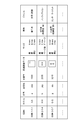
- FIG. 4 is a table configuration diagram for explaining an example of a table configuration in the article database 23.
- the article is described as being a book, but the type of the article is not particularly limited.
- the article database 23 stores ISBN (specific information) that is identification information of a book and additional information related to the book in association with each other.
- additional information to estimate the book title, author (author), publisher, publication year, cover image data, size (size, length, width, thickness dimensions, etc.), and the thickness of the back cover Number of pages), book type (series information), and genre (genre information).
- the type of the book is, for example, whether the book is a book, constitutes a specific library series such as “tt library (background color of the back cover: blue)”, or “nn new book (background color of the back cover) : Red) ”is shown to constitute a specific new book series.
- the second estimation unit 26 attempts to narrow down candidates for specific information to a predetermined number or less based on the information indicating the type of the book for the above-described image regions where the candidates cannot be narrowed to a predetermined number or less. .
- the second estimation unit 26 can also try to narrow down the candidates for specific information to a predetermined number or less by estimating the size of the book based on the information indicating the type of book.
- the second estimation unit 26 can also specify the color of the spine cover from the book type. Even if the back cover image is included in the cover image data, the back cover area is smaller than the cover area, so that it is difficult to specify the article using the image matching process.
- FIG. 5 is an explanatory diagram for explaining an example of a method for estimating the specific information of the target article by the second estimation unit 26.
- the second estimation unit 26 refers to the above-described image area where candidates could not be narrowed down to a predetermined number or less in addition to the area division image. Based on the size information of the article, an attempt is made to narrow down the above-mentioned specific information candidates to a predetermined number or less. More specifically, the second estimation unit 26 described above is the image area in which candidates could not be narrowed down to a predetermined number or less with respect to the size information acquired by the information acquisition unit 25 and the size of the image area in which the reference article is shown. Based on the size ratio, the process of narrowing down candidates for the specific information of the target article is attempted.
- the second estimating unit 26 reduces the size information (additional information) of the reference article “PP” in the area indicated by the frame Fp to a predetermined number or less with respect to the size of the image area in which the reference article “PP” is reflected.
- the size of the target article “HH” is estimated based on the ratio of the size of the spine of the target article “HH” shown in the above-described image region where the candidates could not be narrowed down. As an example, it is assumed that the actually measured size information of the reference article “PP” indicates that the length of the spine cover in the longitudinal direction is Rp (not shown).
- the size of the back cover (the length in the longitudinal direction of the back cover) of the reference article “PP” shown in the above-described image region in which candidates cannot be narrowed down to a predetermined number or less is Hp.
- the size of the spine of the target article “HH” (the length in the longitudinal direction of the spine) is assumed to be Hh.
- the above-mentioned ratio becomes Hh / Hp.
- the second estimation unit 26 estimates that the length in the longitudinal direction of the spine of the target article “HH” is (Rp ⁇ Hh / Hp).
- the 2nd estimation part 26 tries the process which narrows down the candidate of the specific information of a target article using this estimation result.
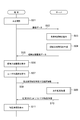
- FIG. 6 is a sequence diagram for explaining the outline of the entire flow of this series of processing.
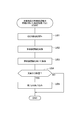
- FIG. 7 is a flowchart for explaining the flow of book estimation processing, which is a part of the processing in FIG. 6.
- FIG. 8 is a flowchart for explaining an estimation process using information on the spine area of the target article, which is a part of the process in FIG.
- FIG. 9 is a flowchart for explaining an estimation process using information on another spine area narrowed down to a predetermined number or less, which is a part of the process in FIG.
- the terminal 1 captures a book in accordance with a user operation and acquires an image (step S01).
- the user takes a plurality of books with a camera, including books that the user is interested in at the moment but wants to check later.
- the user takes a picture of a plurality of books including a book that is being considered for listing at an auction.
- the acquired image shows a spine of a plurality of books lined up next to the bookshelf.
- the terminal 1 transmits image data to the server 2, and the server 2 receives the image data (step S02, image acquisition step).
- the server 2 extracts, for each article, an image area in which the article is shown from the received image (step S03, extraction step). By this extraction process, the spine area of at least one target article is extracted. And the server 2 produces
- the terminal 1 displays the received region-divided image so that it can be browsed by the user (step S06).
- the terminal 1 accepts the selection of the spine area by the user and generates selection information (step) S07).
- the terminal 1 transmits selection information for specifying the selected spine cover area to the server 2 (step S08).
- the server 2 performs book estimation processing to be described later based on the selected spine area (step S09).
- a plurality of books for example, three books
- a candidate icons or a candidate list are output as candidate icons or a candidate list.
- the server 2 acquires the article information about the estimated book (or a plurality of books that became candidates as a result of the estimation process), and transmits it to the terminal 1 (step S10, information acquisition step).
- the terminal 1 displays the received article information so that it can be browsed by the user (step S11).
- the first estimation unit 24 sets, as a spine cover region to be subjected to book estimation processing, one region in which a spine is reflected among a plurality of image regions in the region-divided image acquired by the extraction unit 21. Is set (step T01). And the 1st estimation part 24 performs the estimation process using the information of the spine area
- a predetermined number for example, two volumes
- the first estimation unit 24 is a spine cover region in which candidates are narrowed down to a predetermined number or less by the first estimation unit 24 or the second estimation unit 26 among the other spine cover regions not set in step T01. It is determined whether or not there is. In addition, if there is a spine cover area in which candidates are narrowed down to a predetermined number or less by the first estimation unit 24 among other spine cover areas, the information acquisition unit 25 has already acquired additional information regarding the article from the article database 23. ing. When there is a spine cover area in which candidates are narrowed down to a predetermined number or less, the process proceeds to step T05 described later. On the other hand, if there is no spine area where candidates are narrowed down to a predetermined number or less, the process proceeds to step T09 described later.
- step T05 the second estimation unit 26 performs an estimation process using information on other spine cover areas that are narrowed down to a predetermined number or less, which will be described later (second estimation step). And it transfers to below-mentioned step T06.
- step T06 the second estimation unit 26 determines whether or not the candidates estimated to correspond to the article shown in the image area have been narrowed down to a predetermined number or less. If the number of candidates estimated to correspond to the article in the image area is reduced to a predetermined number or less, the process proceeds to step T07 described later. On the other hand, if the number of candidates estimated to correspond to the article in the image area is not narrowed to a predetermined number or less, the process proceeds to step T09 described later.
- step T07 the second estimation unit 26 determines whether or not the narrowed candidate is the spine area indicated by the selection information transmitted from the terminal 1 (that is, the spine area selected by the user). . If the narrowed candidate is not the spine area selected by the user, the process proceeds to step T01 described above. On the other hand, if the narrowed candidate is the spine area selected by the user, the series of processing ends.
- step T09 the first estimation unit 24 determines whether there is a spine cover area that has not been estimated yet. If there is a spine cover area that has not yet been estimated, the process proceeds to step T08 described later. On the other hand, if there is no spine cover area that has not yet been estimated, the process proceeds to step T10 described later.
- the first estimation unit 24 selects, from among a plurality of image regions in the region-divided image acquired by the extraction unit 21, one other spine cover region that has not yet been set as the estimation target, as the estimation target. Then, the process proceeds to step T01 described above.
- the estimation target selected by the first estimation unit 24 may be a spine cover area adjacent to the spine cover area selected immediately before, or a spine cover area located at the shortest distance, and has an area. It may be the maximum spine area.
- step T10 the first estimation unit 24 generates a message indicating that the information specifying the target article selected by the user (that is, indicated by the selection information) has not been estimated, and transmits the message to the terminal 1. Display. Then, a series of processing ends.
- the analysis unit 22 performs OCR processing on an image area set as a spine cover area to be subjected to book estimation processing to acquire character information (step U01, analysis step). And the analysis part 22 tries the process which acquires spine cover information, such as a title and an author, from the acquired character information (step U02, analysis step).
- the first estimation unit 24 searches the article database 23 for the target articles corresponding to the acquired spine cover information, and narrows down the target article candidates (step U03, first estimation step).
- the first estimation unit 24 searches the article database 23 for the target article and determines whether it belongs to the paperback series or the new book series (step U04, first estimation step).
- the process proceeds to Step U05 described later.
- the target article does not belong to the paperback series or the new book series (that is, a book)
- the series of processing ends.
- the target article is a book
- the back cover area is relatively larger than the paperback series or the new book series. For this reason, when the target article is a book, the accuracy of the OCR process is higher, and a candidate that is estimated to correspond to the article shown in the image area is obtained with higher accuracy.
- the first estimation unit 24 acquires a background color from an image area set as a spine cover area that is the target of book estimation processing, searches the article database 23 for the acquired background color, Narrow down candidates for specific information (first estimation step).
- the first estimation unit 24 narrows down the candidates for the specific information of the target article by determining whether or not the acquired background color matches the color corresponding to each existing series stored in the article database 23. . Then, a series of processing ends.
- the second estimation unit 26 specifies (sets) one spine area in which candidates are narrowed down to a predetermined number or less among a plurality of other spine cover areas in which candidates are narrowed down to a predetermined number or less, The process proceeds to step V02 described later (step V01).
- step V02 the second estimation unit 26 specifies (sets) one candidate among the candidates for the spine cover area specified (set) in step V01 (step V02).
- step V03 the second estimation unit 26 narrows down by size (step V03).
- the information acquisition unit 25 has already acquired additional information (for example, size information, series information, faded degree, and genre information) regarding the article from the article database 23 as additional information on the reference article.
- the second estimation unit 26 adds the above-described image region that could not be narrowed down to a predetermined number or less in step T03 to the above-described region divided image. Then, based on the size information of the reference article, an attempt is made to narrow down the above-mentioned specific information candidates to a predetermined number or less. Specifically, the second estimation unit 26 calculates the ratio between the actual size of the reference article and the size of the image area that cannot be narrowed down to a predetermined number or less with respect to the size of the image area in which the reference article is captured. Based on, an attempt is made to narrow down the above-mentioned specific information candidates to a predetermined number or less.
- the second estimation unit 26 determines whether or not the candidates for the specific information of the target article have been narrowed down to a predetermined number or less for the above-described image regions where the candidates could not be narrowed down to the predetermined number or less in Step T03 ( Step V04).
- the series of processing ends.
- the process proceeds to Step V05 described later.
- step V05 the second estimation unit 26 performs narrowing down based on the series information described above. That is, in the case where the second estimation unit 26 acquires the series information of at least one reference article, the above-described image area that could not be narrowed down to a predetermined number or less in step T03 is added to the above-described area division image. Based on the series information of the article, an attempt is made to narrow down the above-mentioned specific information candidates to a predetermined number or less. Specifically, when the second estimation unit 26 indicates that the series information of the reference article constitutes a series with another article, and the article shown in the above-described image area that could not be narrowed down to a predetermined number or less.
- the 2nd estimation part 26 tries the process which narrows down the candidate of the above-mentioned specific information to below a predetermined number using this estimation result.
- the second estimation unit 26 determines whether or not the candidates for the specific information of the target article have been narrowed down to a predetermined number or less for the above-described image regions where the candidates could not be narrowed down to the predetermined number or less in Step T03 ( Step V06).
- the series of processing ends.
- the process proceeds to Step V07 described later.
- step V07 the second estimation unit 26 performs the narrowing down based on the above-described fade degree. That is, the second estimator 26 fades the image area that the first estimator 24 has narrowed down to a predetermined number or less, and the above-mentioned image area that has not been narrowed down to the predetermined number or less in step T03. Compare the degree. Then, the second estimation unit 26 tries to narrow down the above-described specific information candidates to a predetermined number or less, assuming that the article shown in the image area with the smaller fading degree has a newer number. .
- the second estimation unit 26 determines whether or not the candidates for the specific information of the target article have been narrowed down to a predetermined number or less for the above-described image regions where the candidates could not be narrowed down to the predetermined number or less in Step T03 ( Step V08).
- the series of processing ends.
- the process proceeds to Step V09 described later.
- the second estimation unit 26 performs narrowing down based on the genre information described above.
- the second estimation unit 26 refers to the above-described image area that could not be narrowed down to a predetermined number or less in step T03 in addition to the above-described area division image.
- the second estimation unit 26 is an image area in which a spine is shown adjacent to the reference article, and the article indicated in the image area that cannot be narrowed down to a predetermined number or less is a genre. Presumed to belong to the genre indicated by the information.
- the 2nd estimation part 26 tries the process which narrows down the candidate of the above-mentioned specific information to below predetermined number using this estimation result. Note that such processing based on the determination result of whether or not adjacent to each other may be performed only when the second estimation unit 26 specifies that the image is captured at a bookstore.
- the image captured at the bookstore may be determined from information input by the user of the terminal 1 or may be determined from the position information tagged to the image corresponding to the position of the bookstore.
- the second estimation unit 26 determines whether or not the candidates for the specific information of the target article have been narrowed down to a predetermined number or less for the above-described image regions where the candidates could not be narrowed down to the predetermined number or less in Step T03 ( Step V10).
- the series of processing ends.
- the process proceeds to Step V11 described later.
- step V11 the second estimation unit 26 determines whether there is a candidate that has not yet been specified (set) among the candidates for the spine cover area specified (set) in step V01. If there is a candidate that has not yet been specified (set), the process proceeds to step V02 described above. On the other hand, if there is no candidate that has not yet been specified (set), the process proceeds to Step V12 described later.
- Step V12 the second estimation unit 26 determines whether there is a spine cover area that has not yet been specified (set) among a plurality of other spine cover areas whose candidates are narrowed down to a predetermined number or less. . If there is another spine cover area that has not yet been specified (set), the process proceeds to step V01 described above. On the other hand, when there is no other spine cover area that has not yet been specified (set), the series of processing ends.
- FIG. 10 is a module configuration diagram for explaining a module configuration of an article estimation program P for causing a computer to function as the server 2 on which the article estimation system is mounted.
- the article estimation program P includes a main module P0, an image acquisition module P1, an extraction module P2, an analysis module P3, a storage module P4, a first estimation module P5, an information acquisition module P6, and a second estimation module. It is configured with P7.
- the main module P0 is a part that comprehensively controls the function of executing various types of information processing. By executing the main module P0, the functions of the server 2 described above are realized.
- the functions realized by executing each of the image acquisition module P1, the extraction module P2, the analysis module P3, the storage module P4, the first estimation module P5, the information acquisition module P6, and the second estimation module P7 are extraction
- the functions of the unit 21, the extraction unit 21, the analysis unit 22, the article database 23, the first estimation unit 24, the information acquisition unit 25, and the second estimation unit 26 are the same.
- the article estimation program P is provided in a form fixedly recorded on a recording medium such as a CD-ROM or a DVD-ROM or a semiconductor memory, for example.
- the article estimation program P may be provided via a communication network as a computer data signal superimposed on a carrier wave.
- the server 2 as the article estimation system it is estimated that the article corresponds to the article shown in the image area based on the area division image obtained by analyzing the image area.
- a process of narrowing down information candidates to a predetermined number or less is attempted. For example, candidates are narrowed down based on a region-divided image obtained by image analysis such as OCR (Optical Character Recognition). This makes it possible to estimate specific information candidates without using an image matching technique.
- the processing load is reduced by the OCR processing.
- the image of the spine cover has a small area, there are cases where sufficient information cannot be obtained by image analysis alone in order to narrow down the candidates for specific information to a predetermined number or less. Therefore, when candidates can be narrowed down to a predetermined number or less for at least one of the plurality of image areas, the additional information of the candidate for the article is acquired as additional information for the reference article. Then, an estimation process is performed on the image area in which the candidate for the specific information of the article cannot be estimated only by the analysis of the image area, with the additional information of the reference article added.
- the article information of the books estimated by the server 2 equipped with the article estimation system can be easily online. It becomes possible to acquire.
- a service is provided that allows the book to be read for trial and review (comments by other users). For this reason, the user can also use such a service to purchase after examining the book (second article).
- the server 2 equipped with the article estimation system installs the books.
- the estimated article information of the book can be easily acquired online. Therefore, it is possible to save the trouble of manually inputting the item information when the item information is put on the auction.
- the terminal 1 after estimating the photographed book, the terminal 1 preferably stores the estimated book information in association with each spine area. With this configuration, the user can browse the information on the spine area even offline. Further, each spine cover area may be configured to be editable such as moving, deleting, and adding.
- the server 2 when the size information of at least one reference article is acquired, the server 2 is an image area in which the spine is reflected, and is analyzed by the first estimation unit 24. Based on the size information of the reference article, in addition to the analysis information, a process for narrowing the estimated candidates to a predetermined number or less is attempted for an image region that cannot be narrowed down to a predetermined number or less based on the image area. As a result, with respect to the image area that could not be narrowed down to a predetermined number or less based on the area divided image, the estimated candidates can be narrowed down to a predetermined number or less based on the size information of the reference article in addition to the area divided image. The possibility of being able to be increased.
- the first estimation unit 24 divides the area into the image area in which the spine is reflected. For image regions that could not be narrowed down to a predetermined number or less based on the image, the estimated candidates are narrowed down to a predetermined number or less based on the thickness estimated from the page number information of the reference article in addition to the region divided image. Processing is attempted. As a result, for the image area that could not be narrowed down to a predetermined number or less based on the area division image, candidates estimated based on the thickness estimated from the page number information of the reference article in addition to the area division image. The possibility of being able to narrow down to a predetermined number or less increases.
- the server 2 when series information of at least one reference article is acquired, the server 2 includes an image area in which a spine is reflected adjacent to the reference article. Processing for narrowing down candidates to be estimated to a predetermined number or less based on the series information of the reference article in addition to the region divided image for an image region that cannot be narrowed down to a predetermined number or less based on the region divided image by the estimation unit 24 Will be tried. As a result, for image regions that could not be narrowed down to a predetermined number or less based on the region divided image, the estimated candidates can be narrowed down to a predetermined number or less based on the series information of the reference article in addition to the region divided image. The possibility of being able to be increased.
- the color fading degree of the image area in which the candidates can be narrowed down to the predetermined number or less and the color fading degree of the image area in which the candidates cannot be narrowed down to the predetermined number or less are determined.
- the article shown in the image area with the smaller fade degree has a newer number
- a process for narrowing the estimated candidates to a predetermined number or less is attempted. Accordingly, the candidates can be narrowed down by utilizing the characteristic that the spine tans and fades over time.
- the server 2 on which the article estimation system is mounted when the genre information of at least one reference article is acquired, the image area that is adjacent to the reference article and has a spine is shown, For an image region that could not be narrowed down to a predetermined number or less based on the analysis information by the estimation means, a process for narrowing the estimated candidates to a predetermined number or less based on the genre information of the reference article in addition to the analysis information is attempted. . Thereby, candidates can be narrowed down using the property that articles belonging to the same genre are placed side by side.
- character information is acquired as analysis information by performing OCR processing on a plurality of extracted image regions. Based on the acquired character information and the stored title and author information, candidates that are estimated to correspond to the article in the image area out of the plurality of articles stored in the article database 23 are selected. A process of narrowing down to a predetermined number or less is attempted. For this reason, candidates can be narrowed down with a lower processing load than when image matching processing is performed.
- Step V09 in FIG. 9 when the genre information of at least one reference article is acquired, the second estimation unit 26 reduces the number to a predetermined number or less in Step T03.
- a process of narrowing down the above-mentioned specific information candidates to a predetermined number or less is attempted based on the genre information of the reference article in addition to the above-described area divided image. More specifically, it is estimated that the article shown in the above-described image area that is a back cover image adjacent to the reference article and could not be narrowed down to a predetermined number or less belongs to the genre indicated by the genre information. To do.
- the 2nd estimation part 26 tries the process which narrows down the candidate of the above-mentioned specific information to below predetermined number using this estimation result.
- the second estimation unit 26 determines the genre information of the acquired at least one reference article and the author and the reference article author shown in the image area that could not be narrowed down to a predetermined number or less. Based on the information regarding whether or not they are the same author, a process of narrowing down the above-mentioned specific information candidates to a predetermined number or less may be attempted.
- the target article shown in the image area is You may try the narrowing-down process as belonging to the genre indicated by the genre information.
- the first estimation unit 24 can estimate information specifying the target article selected by the user (that is, indicated by the selection information). A message indicating that there was no message is generated and transmitted to the terminal 1 for display.
- the target article is narrowed down to a predetermined number or less by OCR processing in a situation where the target article cannot be estimated because the reference article candidates are enormous before the message is generated.
- the second estimation unit 26 determines that the reference article is a paperback series. It may be configured to determine whether the book belongs to a new book series or a book.
- the second estimation unit 26 accesses the article database 23 to search for a book corresponding to the reference article from the book and perform a narrow search. Do. If the information for specifying the target article cannot be estimated even after this refinement search is performed, the first estimation unit 24 sets the information for specifying the target article selected by the user (that is, indicated by the selection information). A message indicating that the estimation could not be performed is generated and transmitted to the terminal 1 for display.
- the second estimation unit 26 accesses the article database 23 and searches for a book corresponding to the reference article from the library series or the new book series. To refine your search. Further, the series to which the reference article belongs is specified by the color of the back cover of the reference article, and the narrowing search is performed again. If the information for specifying the target article cannot be estimated even after this refinement search is performed, the first estimation unit 24 sets the information for specifying the target article selected by the user (that is, indicated by the selection information). A message indicating that the estimation could not be performed is generated and transmitted to the terminal 1 for display.
- the components of the terminal 1 are the imaging unit 11, the specifying unit 12, and the output unit 13, and the components of the server 2 on which the article estimation system is mounted are The extraction unit 21, the analysis unit 22, the article database 23, the first estimation unit 24, the information acquisition unit 25, and the second estimation unit 26 are described.
- the arrangement of the constituent elements of the article estimation system is not particularly limited.
- the constituent elements of the terminal 1 include the imaging unit 11, the designation unit 12, the output unit 13, the extraction unit 21, the analysis unit 22, the first estimation unit 24, The information acquisition unit 25 and the second estimation unit 26 may be used.
- the extraction unit 21 may be arranged in an external device of the server 2 and included in the article estimation system.
- the article database 23 may be arranged in an apparatus that is an external device of the server 2 and is included in the article estimation system.
- the imaging target of the imaging unit 11 may not be in the bookshelf. Further, the reference article and the target article do not have to be imaged in a state of being adjacent to each other.
- a plurality of spine cover areas may be selected. Further, when the user taps on the terminal 1 and selects the spine area of the target article, the selection area may be designated, and the articles in the selection area may be selected as the spine area of the target article.
- the present invention is not limited to this configuration.
- the user may use the terminal 1 to transmit information for specifying another reference article different from the reference article to the server 2. This increases the possibility of specifying another reference article different from the reference article. As a result, the possibility that information for specifying the target article can be estimated increases.
- the first estimation unit 24 performs the estimation process using the information on the spine area of the reference article, but may use a cover image instead of the spine image.
- information specifying the reference article can be estimated by using a conventional image matching processing technique.
- a book with a cover facing the front and a book with a spine facing the front may be placed close together and appear in one image. In such a case, it is possible to estimate a book as a reference article with the cover facing the front.
- the target article estimation process (step S09) has been described as being performed after the user selects the spine cover area (step S07).
- This estimation process (step S09) may be performed before the user selects the spine area (step S07).
- the area-divided image data may be transmitted to the terminal 1 or a list of article information of the target articles estimated from the spine included in the image.
- the analysis unit 22 performs OCR processing on all image areas before accepting selection of a spine area from the user. Subsequently, the first estimation unit 24 estimates which book appears in each image area based on the character information obtained by the OCR process. If there is at least one image area where candidate books are narrowed down to one, information on the book (reference article) is acquired from the article database 23. And the 2nd estimation part 26 performs the estimation process which narrows down the candidate of the specific information estimated to correspond to the articles
- This estimation process is preferably performed in ascending order of the number of narrowed down specific information candidates.
- narrowing down candidates for specific information of each image area it is preferable to use information of a plurality of reference articles. In this case, since the book of the target article is estimated using information on a plurality of other books captured in the same image, the book corresponding to the target article can be estimated more reliably.
- the size in the thickness direction of the article may be used instead of the vertical size in the image.
- the length in the thickness direction is equal to the length in the short direction in each image region.
- the size in the thickness direction of the article may not be used.
- the image taken by the terminal 1 may be a moving image.
- the above estimation process may be executed while the user is shooting a moving picture on the bookshelf with the camera 108 of the terminal 1.
- the captured image is transmitted from the terminal 1 to the server 2 at a predetermined cycle.
- the server 2 divides the area of the received image and tracks the area of each image using a known technique for tracking an object.
- the server 2 associates the area selected by the user in the image displayed on the terminal 1 with the analyzed area in the image transmitted to the server 2 several cycles ago. That is, the server 2 associates the area selected by the user during shooting of the moving image with the area on which the estimation process has been performed.
- the server 2 can provide the terminal 1 with information indicating which book is in the area selected by the user during shooting of the moving image.
Landscapes
- Engineering & Computer Science (AREA)
- Theoretical Computer Science (AREA)
- Physics & Mathematics (AREA)
- General Physics & Mathematics (AREA)
- Computer Vision & Pattern Recognition (AREA)
- Business, Economics & Management (AREA)
- Accounting & Taxation (AREA)
- Finance (AREA)
- Multimedia (AREA)
- Artificial Intelligence (AREA)
- Strategic Management (AREA)
- General Business, Economics & Management (AREA)
- Marketing (AREA)
- Economics (AREA)
- Development Economics (AREA)
- Data Mining & Analysis (AREA)
- Bioinformatics & Cheminformatics (AREA)
- Life Sciences & Earth Sciences (AREA)
- Bioinformatics & Computational Biology (AREA)
- Evolutionary Biology (AREA)
- Evolutionary Computation (AREA)
- General Engineering & Computer Science (AREA)
- Management, Administration, Business Operations System, And Electronic Commerce (AREA)
- Image Analysis (AREA)
- Information Retrieval, Db Structures And Fs Structures Therefor (AREA)
Description
本発明は、物品が撮像された画像から当該物品を特定する情報を推定する物品推定システム、物品推定方法、及び物品推定プログラムに関する。
従来、ユーザが興味を持った商品を撮影して商品画像を商品販売サイトに送信すると、画像マッチング処理によって特定された当該商品の情報が返信されることが行われている。例えば非特許文献1に記載のサイトにおけるオンラインストアでは、本の表紙が撮影された表紙画像をユーザ端末から受信すると、画像マッチング処理によって当該本を特定して、本の概要や価格といった特徴情報をユーザ端末に返信するサービスが行われている。
Amazon.com、"Amazon_com Help AmazonMobile for the iPhone, iPad, and iPod touch"、[online]、[平成24年6月22日検索]、インターネット<URL:http://www.amazon.com/gp/help/customer/display.html?ie=UTF8&nodeId=200287200>
本は、本棚等に背表紙を表に向けた状態で置かれていることが多い。このため、前述のサイトに表紙画像を送信しようとする場合、ユーザは、本の表紙を撮影するために、本を取り出して平置き状態にして撮影する手間が必要になる。そこで、表紙ではなく背表紙の画像によって本を特定できれば、ユーザの手間が省ける。更に、この場合、ユーザは複数の本の背表紙を纏めて撮影することもできる。例えば、本棚に並んだ複数の本を逐一本棚から取り出すことなく纏めて撮影することができる。
しかし、一般的なオンラインストアには、背表紙画像がデータベースに格納されていない場合が多い。この場合、画像マッチング処理によって本を特定(推定)することは不可能である。仮に、一部の本について、背表紙画像がデータベースに格納されているオンラインストアがあったとしても、背表紙画像が格納されていない本については、画像マッチング処理によって本を推定することは不可能である。これは、本だけでなく、表紙と背表紙を有するCD、DVD等の物品全般について言えることである。
そこで本発明は、上記の問題点を解消する為になされたものであり、本等の物品の背表紙画像からタイトルや商品コード等の物品を特定する情報を推定可能な物品推定システム、物品推定方法、及び物品推定プログラムを提供することを目的とする。
本発明の一形態に係る物品推定システムは、表紙及び背表紙を有する複数の物品毎に、物品を特定する特定情報と当該物品に関する付加情報とを関連付けて記憶する記憶手段から当該特定情報及び当該付加情報を取得可能に構成され、複数の物品が写っている画像を取得する画像取得手段と、取得された画像から、物品が写っている画像領域を物品毎に抽出する抽出手段と、抽出された複数の画像領域を解析して解析情報を取得する解析手段と、取得された解析情報に基づいて、複数の画像領域毎に、記憶手段に記憶された複数の物品の特定情報の中から画像領域に写っている物品に該当すると推定される特定情報の候補を所定数以下に絞り込む処理を試みる第一推定手段と、第一推定手段により少なくとも一の画像領域について所定数以下に候補の絞り込みができた場合、当該候補の物品に関する付加情報を参考物品の付加情報として記憶手段から取得する情報取得手段と、少なくとも一の参考物品の付加情報が取得された場合、背表紙が写っている画像領域であって、第一推定手段により解析情報に基づいて所定数以下に候補の絞り込みができなかった画像領域について、当該解析情報に加えて参考物品の付加情報に基づいて、推定される特定情報の候補を所定数以下に絞り込む処理を試みる第二推定手段と、を備えることを特徴とする。
本発明の一形態に係る物品推定システムによれば、画像領域を解析して得られた解析情報に基づいて、画像領域に写っている物品に該当すると推定される特定情報の候補を所定数以下に絞り込む処理が試みられる。例えば、OCR(Optical Character Recognition:光学文字認識)等の画像解析により得られた解析情報に基づいて、特定情報の候補が絞り込まれる。これにより、画像マッチングの手法を用いずに特定情報の候補を推定することが可能となる。しかし、背表紙の画像は領域が小さいので、特定情報の候補を所定数以下に絞り込むために十分な情報を画像解析だけで得ることができない場合がある。そこで、複数の画像領域のうち少なくとも一の画像領域について、所定数以下に候補の絞り込みができた場合、その物品の候補の付加情報が、参考物品の付加情報として取得される。そして、画像領域の解析だけで物品の特定情報の候補を推定できなかった画像領域について、参考物品の付加情報も加えて推定処理が行われる。これにより、特定情報の候補を推定できなかった画像領域について、他の物品(参考物品)の付加情報が用いられるので、所定数以下の特定情報の候補に絞り込むことが可能となる。従って、本などの物品の背表紙画像からタイトルや商品コード等の物品を特定する情報を推定可能となる。
別の形態に係る物品推定システムでは、記憶手段が記憶する付加情報には、当該物品の背表紙のサイズを示すサイズ情報が含まれており、第二推定手段は、少なくとも一の参考物品のサイズ情報が取得された場合、背表紙が写っている画像領域であって、第一推定手段により解析情報に基づいて所定数以下に候補の絞り込みができなかった画像領域について、当該解析情報に加えて参考物品のサイズ情報に基づいて、推定される特定情報の候補を所定数以下に絞り込む処理を試みてもよい。
この形態では、少なくとも一の参考物品のサイズ情報が取得された場合、背表紙が写っている画像領域であって、第一推定手段により解析情報に基づいて所定数以下に候補の絞り込みができなかった画像領域について、当該解析情報に加えて参考物品のサイズ情報に基づいて、推定される特定情報の候補を所定数以下に絞り込む処理が試みられる。これにより、解析情報に基づいて所定数以下に候補の絞り込みができなかった画像領域について、当該解析情報に加えて参考物品のサイズ情報に基づいて、推定される特定情報の候補を所定数以下に絞り込むことができる可能性が高まる。
別の形態に係る物品推定システムでは、記憶手段が記憶する付加情報には、当該物品のページ数を示すページ数情報が含まれており、第二推定手段は、少なくとも一の参考物品のページ数情報が取得された場合、背表紙が写っている画像領域であって、第一推定手段により解析情報に基づいて所定数以下に候補の絞り込みができなかった画像領域について、当該解析情報に加えて参考物品のページ数情報から推定される厚さに基づいて、推定される特定情報の候補を所定数以下に絞り込む処理を試みてもよい。
この形態では、少なくとも一の参考物品のページ数情報が取得された場合、背表紙が写っている画像領域であって、第一推定手段により解析情報に基づいて所定数以下に候補の絞り込みができなかった画像領域について、当該解析情報に加えて参考物品のページ数情報から推定される厚さに基づいて、推定される特定情報の候補を所定数以下に絞り込む処理が試みられる。これにより、解析情報に基づいて所定数以下に候補の絞り込みができなかった画像領域について、当該解析情報に加えて参考物品のページ数情報から推定される厚さに基づいて、推定される特定情報の候補を所定数以下に絞り込むことができる可能性が高まる。
別の形態に係る物品推定システムでは、記憶手段が記憶する付加情報には、当該物品が他の物品とシリーズを構成するか否かを示すシリーズ情報が含まれており、第二推定手段は、少なくとも一の参考物品のシリーズ情報が取得された場合、当該参考物品に隣接して背表紙が写っている画像領域であって、第一推定手段により解析情報に基づいて所定数以下に候補の絞り込みができなかった画像領域について、当該解析情報に加えて参考物品のシリーズ情報に基づいて、推定される特定情報の候補を所定数以下に絞り込む処理を試みてもよい。
この形態では、少なくとも一の参考物品のシリーズ情報が取得された場合、当該参考物品に隣接して背表紙が写っている画像領域であって、第一推定手段により解析情報に基づいて所定数以下に候補の絞り込みができなかった画像領域について、当該解析情報に加えて参考物品のシリーズ情報に基づいて、推定される特定情報の候補を所定数以下に絞り込む処理が試みられる。これにより、解析情報に基づいて所定数以下に候補の絞り込みができなかった画像領域について、当該解析情報に加えて参考物品のシリーズ情報に基づいて、推定される特定情報の候補を所定数以下に絞り込むことができる可能性が高まる。
別の形態に係る物品推定システムでは、第二推定手段は、第一推定手段により所定数以下に候補の絞り込みができた画像領域の色あせ度合いと、第一推定手段により所定数以下に候補の絞り込みができなかった画像領域の色あせ度合いとを比較して、色あせ度合いがより小さい方の画像領域に写っている物品の方がより新しい号数を有するとして、推定される特定情報の候補を所定数以下に絞り込む処理を試みてもよい。
この形態では、所定数以下に候補の絞り込みができた画像領域の色あせ度合いと、所定数以下に候補の絞り込みができなかった画像領域の色あせ度合いとを比較して、色あせ度合いがより小さい方の画像領域に写っている物品の方がより新しい号数を有するとして、推定される特定情報の候補を所定数以下に絞り込む処理が試みられる。これにより、背表紙は時間の経過とともに日焼けして色があせていくという特性を利用して、特定情報の候補を絞り込むことができる。
別の形態に係る物品推定システムでは、記憶手段が記憶する付加情報には、当該物品が属するジャンルを示すジャンル情報が含まれており、第二推定手段は、少なくとも一の参考物品のジャンル情報が取得された場合、当該参考物品に隣接して背表紙が写っている画像領域であって、第一推定手段により解析情報に基づいて所定数以下に候補の絞り込みができなかった画像領域について、当該解析情報に加えて参考物品のジャンル情報に基づいて、推定される特定情報の候補を所定数以下に絞り込む処理を試みてもよい。
この形態では、少なくとも一の参考物品のジャンル情報が取得された場合、当該参考物品に隣接して背表紙が写っている画像領域であって、第一推定手段により解析情報に基づいて所定数以下に候補の絞り込みができなかった画像領域について、当該解析情報に加えて参考物品のジャンル情報に基づいて、推定される特定情報の候補を所定数以下に絞り込む処理が試みられる。これにより、同一のジャンルに属する物品は並べて置かれるという特性を利用して、特定情報の候補を絞り込むことができる。
別の形態に係る物品推定システムでは、記憶手段が記憶する付加情報には、当該物品のタイトル及び著作者の情報が含まれており、解析手段は、抽出された複数の画像領域に対してOCR処理を施すことにより、解析情報として文字情報を取得し、第一推定手段は、取得された文字情報と記憶されたタイトル及び著作者の情報とに基づいて、記憶手段に記憶された複数の物品の特定情報の中から画像領域に写っている物品に該当すると推定される特定情報の候補を所定数以下に絞り込む処理を試みてもよい。
この形態では、抽出された複数の画像領域に対してOCR処理が施されることにより、解析情報として文字情報が取得され、取得された文字情報と記憶されたタイトル及び著作者の情報とに基づいて、記憶手段に記憶された複数の物品の特定情報の中から画像領域に写っている物品に該当すると推定される特定情報の候補を所定数以下に絞り込む処理が試みられる。このため、画像マッチング処理を行うよりも低い処理負荷で、特定情報の候補を絞り込むことができる。
本発明の一形態に係る物品推定方法は、表紙及び背表紙を有する複数の物品毎に、物品を特定する特定情報と当該物品に関する付加情報とを関連付けて記憶する記憶手段から当該特定情報及び当該付加情報を物品推定システムが取得可能に構成され、複数の物品が写っている画像を物品推定システムが取得する画像取得ステップと、取得された画像から、物品が写っている画像領域を物品毎に物品推定システムが抽出する抽出ステップと、抽出された複数の画像領域を物品推定システムが解析して解析情報を取得する解析ステップと、取得された解析情報に基づいて、複数の画像領域毎に、記憶手段に記憶された複数の物品の特定情報の中から画像領域に写っている物品に該当すると推定される特定情報の候補を所定数以下に絞り込む処理を物品推定システムが試みる第一推定ステップと、第一推定ステップにより少なくとも一の画像領域について所定数以下に候補の絞り込みができた場合、当該候補の物品に関する付加情報を参考物品の付加情報として記憶手段から物品推定システムが取得する情報取得ステップと、少なくとも一の参考物品の付加情報が取得された場合、背表紙が写っている画像領域であって、第一推定ステップにより解析情報に基づいて所定数以下に候補の絞り込みができなかった画像領域について、当該解析情報に加えて参考物品の付加情報に基づいて、推定される特定情報の候補を所定数以下に絞り込む処理を物品推定システムが試みる第二推定ステップと、を有することを特徴とする。
本発明の一形態に係る物品推定方法によれば、画像領域を解析して得られた解析情報に基づいて、画像領域に写っている物品に該当すると推定される特定情報の候補を所定数以下に絞り込む処理が試みられる。例えば、OCR(Optical Character Recognition:光学文字認識)等の画像解析により得られた解析情報に基づいて、特定情報の候補が絞り込まれる。これにより、画像マッチングの手法を用いずに特定情報の候補を推定することが可能となる。しかし、背表紙の画像は領域が小さいので、特定情報の候補を所定数以下に絞り込むために十分な情報を画像解析だけで得ることができない場合がある。そこで、複数の画像領域のうち少なくとも一の画像領域について、所定数以下に候補の絞り込みができた場合、その物品の候補の付加情報が、参考物品の付加情報として取得される。そして、画像領域の解析だけで物品の特定情報の候補を推定できなかった画像領域について、参考物品の付加情報も加えて推定処理が行われる。これにより、特定情報の候補を推定できなかった画像領域について、他の物品(参考物品)の付加情報が用いられるので、所定数以下の特定情報の候補に絞り込むことが可能となる。従って、本などの物品の背表紙画像からタイトルや商品コード等の物品を特定する情報を推定可能となる。
本発明の一形態に係る物品推定プログラムは、表紙及び背表紙を有する複数の物品毎に、物品を特定する特定情報と当該物品に関する付加情報とを関連付けて記憶する記憶手段から当該特定情報及び当該付加情報をコンピュータが取得可能に構成され、コンピュータに、複数の物品が写っている画像を取得する画像取得手段の機能と、取得された画像から、物品が写っている画像領域を物品毎に抽出する抽出手段の機能と、抽出された複数の画像領域を解析して解析情報を取得する解析手段の機能と、取得された解析情報に基づいて、複数の画像領域毎に、記憶手段に記憶された複数の物品の特定情報の中から画像領域に写っている物品に該当すると推定される特定情報の候補を所定数以下に絞り込む処理を試みる第一推定手段の機能と、第一推定手段の機能により少なくとも一の画像領域について所定数以下に候補の絞り込みができた場合、当該候補の物品に関する付加情報を参考物品の付加情報として記憶手段から取得する情報取得手段の機能と、少なくとも一の参考物品の付加情報が取得された場合、背表紙が写っている画像領域であって、第一推定手段により解析情報に基づいて所定数以下に候補の絞り込みができなかった画像領域について、当該解析情報に加えて参考物品の付加情報に基づいて、推定される特定情報の候補を所定数以下に絞り込む処理を試みる第二推定手段の機能と、を実現させることを特徴とする。
本発明の一形態に係る物品推定プログラムによれば、画像領域を解析して得られた解析情報に基づいて、画像領域に写っている物品に該当すると推定される特定情報の候補を所定数以下に絞り込む処理が試みられる。例えば、OCR(Optical Character Recognition:光学文字認識)等の画像解析により得られた解析情報に基づいて、特定情報の候補が絞り込まれる。これにより、画像マッチングの手法を用いずに特定情報の候補を推定することが可能となる。しかし、背表紙の画像は領域が小さいので、特定情報の候補を所定数以下に絞り込むために十分な情報を画像解析だけで得ることができない場合がある。そこで、複数の画像領域のうち少なくとも一の画像領域について、所定数以下に候補の絞り込みができた場合、その物品の候補の付加情報が、参考物品の付加情報として取得される。そして、画像領域の解析だけで物品の特定情報の候補を推定できなかった画像領域について、参考物品の付加情報も加えて推定処理が行われる。これにより、特定情報の候補を推定できなかった画像領域について、他の物品(参考物品)の付加情報が用いられるので、所定数以下の特定情報の候補に絞り込むことが可能となる。従って、本などの物品の背表紙画像からタイトルや商品コード等の物品を特定する情報を推定可能となる。
本発明の一形態に係るコンピュータ読取可能な記録媒体は、表紙及び背表紙を有する複数の物品毎に、物品を特定する特定情報と当該物品に関する付加情報とを関連付けて記憶する記憶手段から当該特定情報及び当該付加情報をコンピュータが取得可能に構成され、コンピュータに、複数の物品が写っている画像を取得する画像取得手段の機能と、取得された画像から、物品が写っている画像領域を物品毎に抽出する抽出手段の機能と、抽出された複数の画像領域を解析して解析情報を取得する解析手段の機能と、取得された解析情報に基づいて、複数の画像領域毎に、記憶手段に記憶された複数の物品の特定情報の中から画像領域に写っている物品に該当すると推定される特定情報の候補を所定数以下に絞り込む処理を試みる第一推定手段の機能と、第一推定手段の機能により少なくとも一の画像領域について所定数以下に候補の絞り込みができた場合、当該候補の物品に関する付加情報を参考物品の付加情報として記憶手段から取得する情報取得手段の機能と、少なくとも一の参考物品の付加情報が取得された場合、背表紙が写っている画像領域であって、第一推定手段により解析情報に基づいて所定数以下に候補の絞り込みができなかった画像領域について、当該解析情報に加えて参考物品の付加情報に基づいて、推定される特定情報の候補を所定数以下に絞り込む処理を試みる第二推定手段の機能と、を実現させる物品推定プログラムを記録したことを特徴とする。
本発明の一形態に係るコンピュータ読取可能な記録媒体によれば、画像領域を解析して得られた解析情報に基づいて、画像領域に写っている物品に該当すると推定される特定情報の候補を所定数以下に絞り込む処理が試みられる。例えば、OCR(Optical Character Recognition:光学文字認識)等の画像解析により得られた解析情報に基づいて、特定情報の候補が絞り込まれる。これにより、画像マッチングの手法を用いずに特定情報の候補を推定することが可能となる。しかし、背表紙の画像は領域が小さいので、特定情報の候補を所定数以下に絞り込むために十分な情報を画像解析だけで得ることができない場合がある。そこで、複数の画像領域のうち少なくとも一の画像領域について、所定数以下に候補の絞り込みができた場合、その物品の候補の付加情報が、参考物品の付加情報として取得される。そして、画像領域の解析だけで物品の特定情報の候補を推定できなかった画像領域について、参考物品の付加情報も加えて推定処理が行われる。これにより、特定情報の候補を推定できなかった画像領域について、他の物品(参考物品)の付加情報が用いられるので、所定数以下の特定情報の候補に絞り込むことが可能となる。従って、本などの物品の背表紙画像からタイトルや商品コード等の物品を特定する情報を推定可能となる。
本発明によれば、本等の物品の背表紙画像からタイトルや商品コード等の物品を特定する情報を推定可能な物品推定システム、物品推定方法、及び物品推定プログラムを提供することができる。
以下、添付図面を参照しながら本発明の好適な実施形態を詳細に説明する。なお、図面の説明において同一又は同等の要素には同一の符号を付し、重複する説明を省略する。
<1>物品推定システムの構成
まず、本発明に係る物品推定システムが搭載されたサーバの構成を、図1~図3を用いて説明する。図1は、サーバ及びサーバと通信可能な端末の機能構成を説明するための機能構成図である。サーバ2は、物品推定システムとして機能し、端末1と情報の送受信が可能に構成されている。物品推定システムは、本が撮像された画像から映っている本がどのような本であるかを推定するシステムである。物品推定システムは、例えば、本のタイトル又はISBN(International Standard Book Number)等を推定する。特に、この物品推定システムは、本の表紙画像からだけでなく、背表紙画像からその本がどのような本であるかを推定する。推定対象は、本に限られず、例えばDVDパッケージ、CDケース、ゲームソフトパッケージ、ビデオパッケージ等の表紙と背表紙とを有する物品でもよい。物品推定システムが行う推定処理は、推定対象となる物品(以下、対象物品)が写っている画像を解析することによって行われる。推定処理を行うにあたって、画像を解析しても対象物品と推定される候補を所定数以下に絞り込めなかった場合、対象物品の周辺に存在する他の物品(以下、参考物品)から得られる情報に基づいて、この推定処理が行われる。この所定数は、一でもよく複数でもよい。また、図2は、端末1の物理構成を説明するための物理構成図であり、図3は、サーバ2の物理構成を説明するための物理構成図である。
まず、本発明に係る物品推定システムが搭載されたサーバの構成を、図1~図3を用いて説明する。図1は、サーバ及びサーバと通信可能な端末の機能構成を説明するための機能構成図である。サーバ2は、物品推定システムとして機能し、端末1と情報の送受信が可能に構成されている。物品推定システムは、本が撮像された画像から映っている本がどのような本であるかを推定するシステムである。物品推定システムは、例えば、本のタイトル又はISBN(International Standard Book Number)等を推定する。特に、この物品推定システムは、本の表紙画像からだけでなく、背表紙画像からその本がどのような本であるかを推定する。推定対象は、本に限られず、例えばDVDパッケージ、CDケース、ゲームソフトパッケージ、ビデオパッケージ等の表紙と背表紙とを有する物品でもよい。物品推定システムが行う推定処理は、推定対象となる物品(以下、対象物品)が写っている画像を解析することによって行われる。推定処理を行うにあたって、画像を解析しても対象物品と推定される候補を所定数以下に絞り込めなかった場合、対象物品の周辺に存在する他の物品(以下、参考物品)から得られる情報に基づいて、この推定処理が行われる。この所定数は、一でもよく複数でもよい。また、図2は、端末1の物理構成を説明するための物理構成図であり、図3は、サーバ2の物理構成を説明するための物理構成図である。
図1に示される端末1は、カメラ機能を有するスマートフォンや携帯電話端末やノートパソコン等の装置である。端末1は、無線基地局や有線通信網等の通信ネットワークNWを介して、サーバ2と通信することが可能である。このため、端末1は、本等の対象物品を撮像して得られた画像を、サーバ2に送信することが可能である。また、端末1は、サーバ2から、画像から抽出された複数の領域を示す領域分割画像を受信することが可能である。また、端末1は、複数の領域からユーザによって選択された対象物品の領域を示す選択情報を、サーバ2に送信することが可能である。また、端末1は、サーバ2から、選択された領域に含まれる対象物品がどの物品であると推定されるかを示す物品情報(特定情報、付加情報)を受信することが可能である。
また、サーバ2は、物品に関するデータを管理するサーバやホストコンピュータ等の装置である。サーバ2は、無線基地局や有線通信網等の通信ネットワークNWを介して、端末1と通信することが可能である。このため、サーバ2は、端末1から、本等の対象物品を撮像して得られた画像を受信することが可能である。また、サーバ2は、画像から抽出された複数の領域を示す領域分割画像を、端末1に送信することが可能である。また、サーバ2は、端末1から、複数の領域から選択された領域を示す選択情報を受信することが可能である。また、サーバ2は、選択された領域に含まれる対象物品がどの物品であると推定されるかを示す物品情報を、端末1に送信することが可能である。
次に、端末1の構成について説明する。端末1は、図2に示されるように、主な物理的な構成要素としてCPU101(Central Processing Unit)、主記憶装置であるRAM102(Random
Access Memory)及びROM103(Read Only Memory)、端末1を操作するための操作部104、通信を行うための通信部105、タッチパネルディスプレイ等のディスプレイ106、アンテナ107、及びカメラ108等のハードウェアを備えるコンピュータとして構成される。これらの構成要素が動作することにより、以下に説明する端末1の各機能が発揮される。
Access Memory)及びROM103(Read Only Memory)、端末1を操作するための操作部104、通信を行うための通信部105、タッチパネルディスプレイ等のディスプレイ106、アンテナ107、及びカメラ108等のハードウェアを備えるコンピュータとして構成される。これらの構成要素が動作することにより、以下に説明する端末1の各機能が発揮される。
また、端末1は、図1に示されるように、主な機能的な構成要素として、撮像部11、指定部12、及び出力部13を備えている。
撮像部11は、複数の本等の物品を撮像して、複数の物品が写っている画像を取得する撮像処理部分である。例えば、撮像部11は、背表紙を有する対象物品と、対象物品の周辺に存在する参考物品とを撮像して、画像を取得することが可能である。この画像に示される参考物品に関しては、参考物品の表紙のみが撮像されていてもよい。撮像部11は、端末1に搭載されたカメラを用いて撮像することにより画像を取得してもよく、外部と通信することにより画像を取得してもよい。撮像部11は、取得した画像をサーバ2に送信する。
指定部12は、サーバ2から後述の領域分割画像を受信すると、ユーザによって選択された対象物品の背表紙が写っている画像領域(以下、背表紙領域)を指定する選択情報を生成して、サーバ2に送信する選択処理部分である。領域分割画像は、画像から抽出された複数の領域を示す情報である。例えば、領域分割画像は、参考物品の領域、及び対象物品の背表紙の領域を示す。ユーザが端末1に対してタップして対象物品の背表紙領域を一つ選択すると、指定部12が、背表紙領域の選択を受け付けて、選択情報を生成する。
出力部13は、サーバ2から後述の物品情報を受信し、ユーザによる閲覧が可能なように出力する出力表示部である。物品情報は、ユーザによって選択された背表紙領域に含まれる対象物品がどの物品であると推定されるかを示す情報である。このように推定された対象物品が候補として複数存在する場合、出力部13は、これら複数の対象物品の候補アイコン又は候補リストを出力する。ユーザは、これら複数の対象物品の候補アイコン又は候補リストの中から選択することによって、閲覧したい対象物品の物品情報を閲覧することができる。なお、出力部13は、サーバ2から受信した領域分割画像を、ユーザによる閲覧が可能なように表示することも可能である。
次に、サーバ2の構成について説明する。サーバ2は、図3に示されるように、主な物理的な構成要素としてCPU201、RAM202及びROM203、通信を行うための通信モジュール204、並びにハードディスク等の補助記憶装置205等のハードウェアを備えるコンピュータとして構成される。これらの構成要素が動作することにより、以下に説明するサーバ2の各機能が発揮される。
また、サーバ2は、抽出部21(画像取得手段及び抽出手段)、解析部22(解析手段)、物品データベース23(記憶手段)、第一推定部24(第一推定手段)、情報取得部25(情報取得手段)、及び第二推定部26(第二推定手段)を備えている。
抽出部21は、端末1から画像を受信(取得)し、この画像から、物品が写っている画像領域を物品毎に抽出する画像処理部分である。抽出部21は、抽出した複数の領域を元の画像に対して重畳して表示する領域分割画像を、生成して取得する。そして、抽出部21は、取得した領域分割画像を、端末1に送信する。なお、領域分割画像における複数の背表紙領域は、例えば、図5において、枠Fh,Fp,Fv,Fyで示されている。例えば、抽出部21は、端末1から送信された画像によっては、画像から、対象物品の背表紙領域と、表紙の領域とを抽出することが可能である。この場合、抽出部21は、抽出した矩形の領域が背表紙を示しているか、表紙を示しているかについては、抽出した領域の縦及び横のサイズ比に基づいて判定することが可能である。
この背表紙領域の抽出処理では、まず、抽出部21が、画像データに対してエッジ強調処理(例:二値化、高周波フィルタリング)を行って、縦方向(垂直方向)の線を取得する。次に、抽出部21が、横方向(水平方向)の線(エッジ)を取得する。そして、抽出部21が、取得された縦及び横方向の線によって囲まれた矩形状の領域を、物品一つに対応する背表紙領域として抽出する。なお、抽出部21は、画像を横方向(水平方向)にスキャンしていき、背表紙領域の色が異なることを検知した時点で、画像における異なる物品の存在を認識してもよい。
また、抽出部21は、端末1から送信された画像によっては、画像から、参考物品の背表紙の領域と、この参考物品に隣接する対象物品の背表紙の領域とを抽出することが可能である。
解析部22は、抽出部21によって抽出された複数の画像領域のそれぞれを解析して、解析結果を示す解析情報を生成して取得する画像解析処理部分である。例えば、解析部22は、抽出された複数の画像領域毎に対してOCR(Optical Character Recognition:光学文字認識)処理を施すことにより、OCR処理の解析結果としての文字情報(テキスト情報)を取得することが可能である。
この場合、解析部22は、OCR処理の結果得られた文字情報から、タイトルや著作者等の背表紙情報を取得する処理を試みる。OCR処理では、タイトルや著作者を示す文字情報を完全に取得できるわけではない。ただし、画像に複数の(物品としての)本が写っていれば、少なくとも一冊の本に関してどの本であるか文字情報に基づき特定できる可能性、又は候補を所定数以下に絞り込める可能性が高い。更に、少なくとも一冊の本について文字情報に基づき候補を絞り込めれば、その本の情報(例えば、サイズ等の物理的な情報)を用いて、他の本がどの本なのかを絞り込める可能性が高い。解析部22は、文字の大きさの違い、スペースの位置等に基づいて、文字情報から背表紙情報を抽出する。
一例として、背表紙領域に「僕にはわからない 中島らも」と記載されていた場合、「僕にはわから?い 中?らも」が文字情報として取得されたとする。ここで、「?」は文字認識に失敗した箇所を示す。そして、スペースの位置以前の「僕にはわから?い」がタイトルとして抽出され、スペースの位置以後の「中?らも」が著作者として抽出される。
物品データベース23は、表紙及び背表紙を有する複数の物品毎に、物品を特定する特定情報と、当該物品に関する付加情報とを、関連付けて記憶するデータベースである。付加情報には、例えば、当該物品の背表紙のサイズを示すサイズ情報が含まれている。サイズ情報は、様々な表現形式で示され、例えば、背表紙の長手方向及び短手方向の長さ、背表紙の縦方向及び横方向の長さ、背表紙の厚さ等で示される。
また、付加情報には、例えば、ページ数情報やシリーズ情報やジャンル情報やタイトル及び著作者情報等が含まれている。ページ数情報は、当該物品のページ数を示す情報である。シリーズ情報は、当該物品が他の物品とシリーズを構成するか否かを示す情報である。シリーズ情報は、例えば、当該物品が単行本であるか、第1~10巻といったシリーズ本であるか、特定の文庫シリーズを構成するか、特定の新書シリーズを構成するか、上下巻を構成するか、を示す情報であってもよい。ジャンル情報は、当該物品が属するジャンルを示す情報である。ジャンル情報が示すジャンルの例として、文学、評論、人文、思想、社会、政治、ノンフィクション、エンターテイメント、コミック等がある。タイトル及び著作者情報は、当該物品のタイトル及び著作者を示す情報である。
なお、物品データベース23は、サーバ2に備えられていない構成としてもよく、サーバ2の外部に存在する構成としてもよい。この構成の場合、サーバ2は、物品データベース23と通信を行うことにより、特定情報及び付加情報を取得可能である。
第一推定部24は、抽出部21により取得された領域分割画像における複数の画像領域毎に、画像領域に写っている物品に該当すると推定される特定情報の候補を所定数以下に絞り込む処理を試みる検索処理部分である。第一推定部24は、解析部22によって取得された解析情報に基づいて、複数の画像領域毎に、物品データベース23に記憶された複数の物品の特定情報の中から、前述の特定情報の候補を所定数以下に絞り込む処理を試みる。また、第一推定部24は、解析部22により取得された文字情報と、物品データベース23に記憶されたタイトル及び著作者の情報とに基づいて、前述の特定情報の候補を所定数以下に絞り込む処理を試みることが可能である。
情報取得部25は、第一推定部24により絞り込まれた候補の物品に関する付加情報を、物品データベース23から取得する情報取得処理部分である。情報取得部25は、第一推定部24により少なくとも一の画像領域について所定数以下に候補の絞り込みができた場合、前述の付加情報を、参考物品の付加情報として、物品データベース23から取得する。なお、情報取得部25は、第二推定部26により絞り込まれた候補の物品に関する付加情報を、物品データベース23から取得することも可能である。この場合、情報取得部25は、第二推定部26により少なくとも一の画像領域について所定数以下に候補の絞り込みができた場合、前述の付加情報を物品データベース23から取得する。
第二推定部26は、情報取得部25により少なくとも一の参考物品の付加情報が取得された場合、第一推定部24により候補の絞り込みができなかった画像領域について、前述の領域分割画像に加えて参考物品の付加情報に基づいて、推定される特定情報の候補を所定数以下に絞り込む処理を試みる検索処理部分である。第二推定部26は、背表紙が写っている画像領域であって、第一推定部24により領域分割画像に基づいて所定数以下に絞り込みができなかった画像領域について、前述の特定情報の候補を所定数以下に絞り込む処理を試みる。
また、第二推定部26は、少なくとも一の参考物品のサイズ情報が取得された場合、所定数以下に候補の絞り込みができなかった前述の画像領域について、当該領域分割画像に加えて参考物品のサイズ情報に基づいて、前述の特定情報の候補を所定数以下に絞り込む処理を試みる。サイズ情報は、当該物品の背表紙のサイズを示す情報である。サイズ情報は、例えば、背表紙の長手方向及び短手方向の長さや、背表紙の縦方向及び横方向の長さや、背表紙の厚さといった情報である。
より詳しくは、第二推定部26は、参考物品のサイズ情報(実測)と、参考物品が写っている画像領域のサイズに対する、所定数以下に候補の絞り込みができなかった前述の画像領域のサイズの比率(画像同士の比較)と、に基づいて、前述の特定情報の候補を所定数以下に絞り込む処理を試みる。一例として、参考物品のサイズ情報(実測)は、背表紙の長手方向の長さが10cmであることを示しているとする。
また、参考物品が写っている画像領域のサイズは2cmであるとする。更に、所定数以下に候補の絞り込みができなかった前述の画像領域のサイズは4~5cmであるとする。これにより、前述の比率は2~2.5となる。この結果、第二推定部26は、所定数以下に候補の絞り込みができなかった前述の画像領域に写っている物品の背表紙の長手方向の長さは20~25cmの範囲にある、と推定する。そして、第二推定部26は、この推定結果を用いて、前述の特定情報の候補を所定数以下に絞り込む処理を試みる。
また、第二推定部26は、少なくとも一の参考物品のページ数情報(実測)が取得された場合、所定数以下に候補の絞り込みができなかった前述の画像領域について、当該領域分割画像に加えて参考物品のページ数情報から推定される厚さに基づいて、前述の特定情報の候補を所定数以下に絞り込む処理を試みる。ページ数情報は、当該物品のページ数を示す情報である。
より詳しくは、第二推定部26は、参考物品のページ数情報(実測)と、このページ数情報から推定される背表紙の厚さに対する、所定数以下に候補の絞り込みができなかった前述の画像領域において示される物品の背表紙の厚さの比率と、に基づいて、前述の特定情報の候補を所定数以下に絞り込む処理を試みる。第二推定部26は、参考物品のサイズ情報(背表紙の厚さ)を物品データベース23から取得できない場合、参考物品のページ数情報から背表紙の厚さを推定する。一例として、参考物品のページ数情報は、100ページであることを示しているとする。
また、このページ数情報から推定される背表紙の厚さは1~1.5cmである、と第二推定部26によって推定されたとする。更に、所定数以下に候補の絞り込みができなかった前述の画像領域において示される物品の背表紙の厚さは3cmである、と第二推定部26によって推定されたとする。これにより、前述の比率は2~3となる。この結果、第二推定部26は、所定数以下に候補の絞り込みができなかった前述の画像領域において示される物品のページ数は200~300ページの範囲にある、と推定する。そして、第二推定部26は、この推定結果を用いて、前述の特定情報の候補を所定数以下に絞り込む処理を試みる。
また、第二推定部26は、少なくとも一の参考物品のシリーズ情報が取得された場合、当該参考物品に隣接して背表紙が写っている画像領域であって、所定数以下に候補の絞り込みができなかった前述の画像領域について、当該領域分割画像に加えて参考物品のシリーズ情報に基づいて、前述の特定情報の候補を所定数以下に絞り込む処理を試みる。シリーズ情報は、当該物品が他の物品とシリーズを構成するか否かを示す情報である。
より詳しくは、第二推定部26は、参考物品のシリーズ情報が他の物品とシリーズを構成することを示す場合、且つ、所定数以下に候補の絞り込みができなかった前述の画像領域において示される物品の背表紙の背景色が参考物品の背表紙の背景色と同一の系統色である(同一の色名により示される範囲にある)場合、これらの物品は同一のシリーズを構成すると推定する。そして、第二推定部26は、この推定結果を用いて、前述の特定情報の候補を所定数以下に絞り込む処理を試みる。
また、第二推定部26は、第一推定部24により所定数以下に候補の絞り込みができた画像領域の色あせ度合いと、第一推定部24により所定数以下に候補の絞り込みができなかった画像領域の色あせ度合いとを比較する。そして、第二推定部26は、色あせ度合いがより小さい方の画像領域に写っている物品の方が、より新しい号数を有するとして、前述の特定情報の候補を所定数以下に絞り込む処理を試みる。なお、色あせ度合いは、物品データベース23に記憶された該当シリーズの色(後述する「背表紙の背景色」)と比較して算出される。
例えば、第一推定部24により所定数以下に候補の絞り込みができた候補が、全10巻のシリーズ本における第5巻の本であるとする。まず、第二推定部26は、第5巻の本が写っている画像領域の色あせ度合いと、候補の絞り込みができなかった画像領域の色あせ度合いとを比較する。候補の絞り込みができなかった画像領域よりも、第5巻の本が写っている画像領域の方が、色あせ度合いがより小さかったとする。この場合、第二推定部26は、候補の絞り込みができなかった画像領域に写っている本は、所定数以下に絞り込みができた候補である第5巻の本より新しい、第6~10巻のいずれかであるとして、前述の特定情報の候補を所定数以下に絞り込む処理を試みる。
また、第二推定部26は、少なくとも一の参考物品のジャンル情報が取得された場合、当該参考物品に隣接して背表紙が写っている画像領域であって、所定数以下に候補の絞り込みができなかった前述の画像領域について、当該領域分割画像に加えて参考物品のジャンル情報に基づいて、前述の特定情報の候補を所定数以下に絞り込む処理を試みる。ジャンル情報は、当該物品が属するジャンルを示す情報である。
より詳しくは、第二推定部26は、参考物品に隣接して背表紙が写っている画像領域であって、所定数以下に候補の絞り込みができなかった前述の画像領域において示される物品は、ジャンル情報が示すジャンルに属すると推定する。そして、第二推定部26は、この推定結果を用いて、前述の特定情報の候補を所定数以下に絞り込む処理を試みる。
また、第二推定部26は、第一推定部24によるOCR処理の結果得られた文字情報に基づいて、前述の特定情報の候補を所定数以下に絞り込む処理を試みることが可能である。
<2>物品データベース23におけるテーブル構成
引き続き、物品データベース23におけるテーブル構成を、図4を用いて説明する。図4は、物品データベース23におけるテーブル構成の一例を説明するためのテーブル構成図である。なお、ここでは、物品は本であるとして説明するが、物品の種類は特に限定されない。
引き続き、物品データベース23におけるテーブル構成を、図4を用いて説明する。図4は、物品データベース23におけるテーブル構成の一例を説明するためのテーブル構成図である。なお、ここでは、物品は本であるとして説明するが、物品の種類は特に限定されない。
物品データベース23は、本の識別情報であるISBN(特定情報)と、当該本に関する付加情報とを、対応付けて記憶している。付加情報の例として、本のタイトル、作者(著作者)、出版社、出版年、表紙画像データ、サイズ(縦、横、厚さの寸法等のサイズ情報、背表紙の厚さを推定するためのページ数)、本の種別(シリーズ情報)、ジャンル(ジャンル情報)がある。
ここで、本の種別は、例えば、当該本が単行本であるか、「tt文庫(背表紙の背景色:青)」といった特定の文庫シリーズを構成するか、「nn新書(背表紙の背景色:赤)」といった特定の新書シリーズを構成するか、を示している。なお、第二推定部26は、所定数以下に候補の絞り込みができなかった前述の画像領域について、この本の種別を示す情報に基づいて、特定情報の候補を所定数以下に絞り込む処理を試みる。また、第二推定部26は、この本の種別を示す情報に基づいて、当該本のサイズを推定することによって、特定情報の候補を所定数以下に絞り込む処理を試みることも可能である。また、第二推定部26は、この本の種別がシリーズ構成を示す場合、この本の種別から背表紙の色を特定することも可能である。なお、表紙画像データに、背表紙の画像が含まれていても、背表紙領域は表紙領域よりも小さいため、画像マッチング処理に用いて物品を特定するのは困難である。
<3>第二推定部26による対象物品の候補の絞込み方法の一例
引き続き、第二推定部26による対象物品の候補の絞込み方法の一例を、図5を用いて説明する。図5は、第二推定部26による対象物品の特定情報の推定方法の一例を説明する説明図である。
引き続き、第二推定部26による対象物品の候補の絞込み方法の一例を、図5を用いて説明する。図5は、第二推定部26による対象物品の特定情報の推定方法の一例を説明する説明図である。
第二推定部26は、少なくとも一の参考物品のサイズ情報(付加情報)が取得された場合、所定数以下に候補の絞り込みができなかった前述の画像領域について、当該領域分割画像に加えて参考物品のサイズ情報にも基づいて、前述の特定情報の候補を所定数以下に絞り込む処理を試みる。より詳しくは、第二推定部26は、情報取得部25によって取得されたサイズ情報と、参考物品が写っている画像領域のサイズに対する、所定数以下に候補の絞り込みができなかった前述の画像領域のサイズの比率と、に基づいて、対象物品の特定情報の候補を絞り込む処理を試みる。例えば、第二推定部26は、枠Fpで示される領域における参考物品「PP」のサイズ情報(付加情報)と、この参考物品「PP」が写っている画像領域のサイズに対する、所定数以下に候補の絞り込みができなかった前述の画像領域において示される対象物品「HH」の背表紙のサイズの比率と、に基づいて、この対象物品「HH」のサイズを推定する。一例として、参考物品「PP」の実測のサイズ情報は、背表紙の長手方向の長さがRp(図示せず)であることを示しているとする。
また、所定数以下に候補の絞り込みができなかった前述の画像領域において示される参考物品「PP」の背表紙のサイズ(背表紙の長手方向の長さ)はHpであるとする。また、この対象物品「HH」の背表紙のサイズ(背表紙の長手方向の長さ)はHhであるとする。これにより、前述の比率は、Hh/Hpとなる。この結果、第二推定部26は、対象物品「HH」の背表紙の長手方向の長さは(Rp×Hh/Hp)、と推定する。そして、第二推定部26は、この推定結果を用いて、対象物品の特定情報の候補を絞り込む処理を試みる。
<4>物品推定システムとしてのサーバ2により行われる一連の処理の流れ
引き続き、物品推定システムとしてのサーバ2により行われる一連の処理の流れ(物品推定方法)の一例を、図6~図9を用いて説明する。以下では、ユーザが、気になる本(物品)を撮像してサーバ2に画像を送信することによって、当該本を特定する物品情報を取得する場合について説明する。図6は、この一連の処理の流れの全体の概略を説明するためのシーケンス図である。図7は、図6における処理の一部である、本の推定処理の流れを説明するためのフローチャートである。図8は、図7における処理の一部である、対象物品の背表紙領域の情報を用いた推定処理を説明するためのフローチャートである。図9は、図7における処理の一部である、所定数以下に絞り込まれた他の背表紙領域の情報を用いた推定処理を説明するためのフローチャートである。
引き続き、物品推定システムとしてのサーバ2により行われる一連の処理の流れ(物品推定方法)の一例を、図6~図9を用いて説明する。以下では、ユーザが、気になる本(物品)を撮像してサーバ2に画像を送信することによって、当該本を特定する物品情報を取得する場合について説明する。図6は、この一連の処理の流れの全体の概略を説明するためのシーケンス図である。図7は、図6における処理の一部である、本の推定処理の流れを説明するためのフローチャートである。図8は、図7における処理の一部である、対象物品の背表紙領域の情報を用いた推定処理を説明するためのフローチャートである。図9は、図7における処理の一部である、所定数以下に絞り込まれた他の背表紙領域の情報を用いた推定処理を説明するためのフローチャートである。
最初に、物品推定システムとしてのサーバ2により行われる一連の処理の流れの全体の概略について、図6を用いて説明する。まず、端末1が、ユーザの操作に応じて本を撮影して画像を取得する(ステップS01)。例えば、ユーザは、現時点で気になっているが後でチェックしたいと考える本を含む複数の本を、カメラで撮影する。また、ユーザは、オークションに出品しようか検討している本を含む複数の本を、カメラで撮影する。取得された画像には、本棚に隣り合って並ばれた複数の本の背表紙が写っている。そして、端末1が、サーバ2に画像データを送信し、サーバ2が画像データを受信する(ステップS02、画像取得ステップ)。サーバ2は、受信した画像から、物品が写っている画像領域を物品毎に抽出する(ステップS03、抽出ステップ)。この抽出処理により、少なくとも一の対象物品の背表紙領域が抽出される。そして、サーバ2は、抽出した複数の領域を元の画像に対して重畳して表示する領域分割画像を生成する(ステップS04)。そして、サーバ2が、領域分割画像データを端末1に送信する(ステップS05)。
端末1は、受信した領域分割画像をユーザによる閲覧が可能なように表示する(ステップS06)。ここで、ユーザが端末1に対してタップして対象物品の領域(背表紙領域)が選択されると、端末1は、ユーザによる背表紙領域の選択を受け付けて、選択情報を生成する(ステップS07)。そして、端末1は、選択された背表紙領域を特定する選択情報を、サーバ2に送信する(ステップS08)。サーバ2は、選択された背表紙領域に基づいて、後述する本の推定処理を行う(ステップS09)。推定処理の結果一冊の本に絞りきれなかった場合、複数の本(例えば三冊の本)が候補アイコン又は候補リストとして出力される。そして、サーバ2は、推定された本(又は、推定処理の結果、候補となった複数の本)についての物品情報を取得し、端末1に送信する(ステップS10、情報取得ステップ)。端末1は、受信した物品情報を、ユーザによる閲覧が可能なように表示する(ステップS11)。
次に、図6のステップS09において行われる本の推定処理について、図7を用いて説明する。まず、第一推定部24が、抽出部21により取得された領域分割画像における複数の画像領域のうち、背表紙が写っている一つの領域を、本の推定処理の対象の背表紙領域としてセットする設定を行う(ステップT01)。そして、第一推定部24が、後述する、対象物品の背表紙領域の情報を用いた推定処理を行う(ステップT02)。なお、このステップT02における推定処理においては、参考物品から得られる情報は用いられない。そして、第一推定部24が、画像領域に写っている物品に該当すると推定される候補は所定数(例えば二冊)以下に絞られたか否かを判定する(ステップT03)。候補は所定数以下に絞られた場合、後述のステップT07に移行する。一方、候補は所定数以下に絞られなかった場合、後述のステップT04に移行する。
ステップT04では、第一推定部24が、ステップT01でセットされていない他の背表紙領域のうち、第一推定部24又は第二推定部26によって候補が所定数以下に絞り込まれた背表紙領域があるか否かを判定する。なお、他の背表紙領域のうち、第一推定部24により候補が所定数以下に絞り込まれた背表紙領域があると、情報取得部25がこの物品に関する付加情報を物品データベース23から既に取得している。候補が所定数以下に絞り込まれた背表紙領域がある場合、後述のステップT05に移行する。一方、候補が所定数以下に絞り込まれた背表紙領域が無い場合、後述のステップT09に移行する。
ステップT05では、第二推定部26が、後述する、所定数以下に絞り込まれた他の背表紙領域の情報も用いた推定処理を行う(第二推定ステップ)。そして、後述のステップT06に移行する。
ステップT06では、第二推定部26が、画像領域に写っている物品に該当すると推定される候補は所定数以下に絞られたか否かを判定する。画像領域に写っている物品に該当すると推定される候補は所定数以下に絞られた場合、後述のステップT07に移行する。一方、画像領域に写っている物品に該当すると推定される候補は所定数以下に絞られなかった場合、後述のステップT09に移行する。
ステップT07では、第二推定部26が、絞られた候補は、端末1から送信された選択情報が示す背表紙領域(即ち、ユーザによって選択された背表紙領域)であるか否かを判定する。絞られた候補は、ユーザによって選択された背表紙領域でない場合、前述のステップT01に移行する。一方、絞られた候補は、ユーザによって選択された背表紙領域である場合、一連の処理は終了する。
ステップT09では、第一推定部24が、未だ推定処理が行われていない背表紙領域があるか否かを判定する。未だ推定処理が行われていない背表紙領域がある場合、後述のステップT08に移行する。一方、未だ推定処理が行われていない背表紙領域が無い場合、後述のステップT10に移行する。
ステップT08では、第一推定部24が、抽出部21により取得された領域分割画像における複数の画像領域のうち、未だ推定対象として設定されていない他の1つの背表紙領域を推定対象として選択して設定し、前述のステップT01に移行する。第一推定部24によって選択される推定対象としては、直前に選択された背表紙領域に隣接する背表紙領域であってもよく、最短距離に位置する背表紙領域であってもよく、面積が最大の背表紙領域であってもよい。
ステップT10では、第一推定部24が、ユーザによって選択された(すなわち、選択情報によって示された)対象物品を特定する情報を推定できなかった旨のメッセージを生成し、端末1に送信して表示させる。そして、一連の処理は終了する。
次に、図7のステップT02において行われる、対象物品の背表紙領域の情報を用いた推定処理について、図8を用いて説明する。まず、解析部22が、本の推定処理の対象の背表紙領域としてセットされた画像領域に対してOCR処理を実施して文字情報を取得する(ステップU01、解析ステップ)。そして、解析部22が、取得した文字情報から、タイトルや著作者等の背表紙情報を取得する処理を試みる(ステップU02、解析ステップ)。次に、第一推定部24が、取得した背表紙情報に対応する対象物品について、物品データベース23で検索し、対象物品の候補を絞り込む(ステップU03、第一推定ステップ)。
次に、第一推定部24が、対象物品について、物品データベース23で検索し、文庫シリーズ又は新書シリーズに属するか否かを判定する(ステップU04、第一推定ステップ)。対象物品が文庫シリーズ又は新書シリーズに属する場合、後述のステップU05に移行する。一方、対象物品が文庫シリーズ又は新書シリーズに属さない場合(即ち、単行本である場合)、一連の処理は終了する。対象物品が単行本である場合、背表紙領域が文庫シリーズや新書シリーズより比較的大きい。このため、対象物品が単行本である場合、OCR処理の精度がより高くなり、画像領域に写っている物品に該当すると推定される候補がより高い精度で得られる。
ステップU05では、第一推定部24が、本の推定処理の対象の背表紙領域としてセットされた画像領域から背景色を取得し、取得した背景色を物品データベース23で検索して、対象物品の特定情報の候補を絞り込む(第一推定ステップ)。第一推定部24は、取得した背景色が、物品データベース23に記憶されている既存の各シリーズに対応する色と一致するか否かを判定することによって、対象物品の特定情報の候補を絞り込む。そして、一連の処理は終了する。
次に、図7のステップT05において行われる、第一推定部24又は第二推定部26によって候補が所定数以下に絞り込まれた他の背表紙領域の情報も用いた推定処理について、図9を用いて説明する。まず、第二推定部26が、候補が所定数以下に絞り込まれた複数の他の背表紙領域のうち、候補が所定数以下に絞り込まれた一つの背表紙領域を特定(セット)して、後述のステップV02に移行する(ステップV01)。
ステップV02では、第二推定部26が、ステップV01で特定(セット)された一つの背表紙領域の候補のうち、一つの候補を特定(セット)する(ステップV02)。次に、第二推定部26が、サイズによる絞り込みを行う(ステップV03)。ここで、他の背表紙領域のうち、第一推定部24により候補が所定数以下に絞り込まれた背表紙領域があるとする。この場合、情報取得部25が、この物品に関する付加情報(例えば、サイズ情報、シリーズ情報、色あせ度合い、ジャンル情報)を、参考物品の付加情報として、物品データベース23から既に取得している。そして、第二推定部26が、少なくとも一の参考物品のサイズ情報が取得された場合、ステップT03において所定数以下に候補の絞り込みができなかった前述の画像領域について、前述の領域分割画像に加えて参考物品のサイズ情報に基づいて、前述の特定情報の候補を所定数以下に絞り込む処理を試みる。具体的には、第二推定部26が、参考物品の実際のサイズと、参考物品が写っている画像領域のサイズに対する、所定数以下に絞り込みができなかった前述の画像領域のサイズの比率と、に基づいて、前述の特定情報の候補を所定数以下に絞り込む処理を試みる。
そして、第二推定部26が、ステップT03において所定数以下に候補の絞り込みができなかった前述の画像領域について、対象物品の特定情報の候補は所定数以下に絞り込まれたか否かを判定する(ステップV04)。対象物品の特定情報の候補は所定数以下に絞り込まれた場合、一連の処理は終了する。一方、対象物品の特定情報の候補は所定数以下に絞り込まれなかった場合、後述のステップV05に移行する。
ステップV05では、第二推定部26が、前述したシリーズ情報による絞り込みを行う。即ち、第二推定部26が、少なくとも一の参考物品のシリーズ情報が取得された場合、ステップT03において所定数以下に絞り込みができなかった前述の画像領域について、前述の領域分割画像に加えて参考物品のシリーズ情報に基づいて、前述の特定情報の候補を所定数以下に絞り込む処理を試みる。具体的には、第二推定部26が、参考物品のシリーズ情報が他の物品とシリーズを構成することを示す場合、且つ、所定数以下に絞り込みができなかった前述の画像領域において示される物品の背表紙の背景色が参考物品の背表紙の背景色と同一の系統色である(同一の色名により示される範囲にある)場合、これらの物品は同一のシリーズを構成すると推定する。そして、第二推定部26は、第二推定部26は、この推定結果を用いて、前述の特定情報の候補を所定数以下に絞り込む処理を試みる。
そして、第二推定部26が、ステップT03において所定数以下に候補の絞り込みができなかった前述の画像領域について、対象物品の特定情報の候補は所定数以下に絞り込まれたか否かを判定する(ステップV06)。対象物品の特定情報の候補は所定数以下に絞り込まれた場合、一連の処理は終了する。一方、対象物品の特定情報の候補は所定数以下に絞り込まれなかった場合、後述のステップV07に移行する。
ステップV07では、第二推定部26が、前述した色あせ度合いによる絞り込みを行う。即ち、第二推定部26が、第一推定部24により所定数以下に候補の絞り込みができた画像領域の色あせ度合いと、ステップT03において所定数以下に絞り込みができなかった前述の画像領域の色あせ度合いとを比較する。そして、第二推定部26は、色あせ度合いがより小さい方の画像領域に写っている物品の方が、より新しい号数を有するとして、前述の特定情報の候補を所定数以下に絞り込む処理を試みる。
そして、第二推定部26が、ステップT03において所定数以下に候補の絞り込みができなかった前述の画像領域について、対象物品の特定情報の候補は所定数以下に絞り込まれたか否かを判定する(ステップV08)。対象物品の特定情報の候補は所定数以下に絞り込まれた場合、一連の処理は終了する。一方、対象物品の特定情報の候補は所定数以下に絞り込まれなかった場合、後述のステップV09に移行する。
ステップV09では、第二推定部26が、前述したジャンル情報による絞り込みを行う。即ち、第二推定部26が、少なくとも一の参考物品のジャンル情報が取得された場合、ステップT03において所定数以下に絞り込みができなかった前述の画像領域について、前述の領域分割画像に加えて参考物品のジャンル情報に基づいて、前述の特定情報の候補を所定数以下に絞り込む処理を試みる。具体的には、第二推定部26が、参考物品に隣接して背表紙が写っている画像領域であって、所定数以下に絞り込みができなかった前述の画像領域において示される物品は、ジャンル情報が示すジャンルに属すると推定する。そして、第二推定部26は、この推定結果を用いて、前述の特定情報の候補を所定数以下に絞り込む処理を試みる。なお、このような、隣接するか否かの判定結果に基づく処理は、書店において撮像された画像であると第二推定部26によって特定された場合にのみ、行うようにしてもよい。書店において撮像された画像であることは、端末1のユーザによって入力された情報から判定されてもよく、画像にタグ付けされた位置情報が書店の位置に対応することから判定されてもよい。
そして、第二推定部26が、ステップT03において所定数以下に候補の絞り込みができなかった前述の画像領域について、対象物品の特定情報の候補は所定数以下に絞り込まれたか否かを判定する(ステップV10)。対象物品の特定情報の候補は所定数以下に絞り込まれた場合、一連の処理は終了する。一方、対象物品の特定情報の候補は所定数以下に絞り込まれなかった場合、後述のステップV11に移行する。
ステップV11では、第二推定部26が、ステップV01で特定(セット)された一つの背表紙領域の候補のうち、未だ特定(セット)されていない候補が存在するか否かを判定する。未だ特定(セット)されていない候補が存在する場合、前述のステップV02に移行する。一方、未だ特定(セット)されていない候補は存在しない場合、後述のステップV12に移行する。
ステップV12では、第二推定部26が、候補が所定数以下に絞り込まれた複数の他の背表紙領域のうち、未だ特定(セット)されていない背表紙領域が存在するか否かを判定する。未だ特定(セット)されていない他の背表紙領域が存在する場合、前述のステップV01に移行する。一方、未だ特定(セット)されていない他の背表紙領域は存在しない場合、一連の処理は終了する。
<5>物品推定プログラムのモジュール構成
引き続き、コンピュータを物品推定システムが搭載されたサーバ2として機能させるための物品推定プログラムのモジュール構成について図10を用いて説明する。図10は、コンピュータを物品推定システムが搭載されたサーバ2として機能させるための物品推定プログラムPのモジュール構成を説明するためのモジュール構成図である。
引き続き、コンピュータを物品推定システムが搭載されたサーバ2として機能させるための物品推定プログラムのモジュール構成について図10を用いて説明する。図10は、コンピュータを物品推定システムが搭載されたサーバ2として機能させるための物品推定プログラムPのモジュール構成を説明するためのモジュール構成図である。
物品推定プログラムPは、図10に示すように、メインモジュールP0、画像取得モジュールP1、抽出モジュールP2、解析モジュールP3、記憶モジュールP4、第一推定モジュールP5、情報取得モジュールP6、及び第二推定モジュールP7を備えて構成される。
メインモジュールP0は、各種情報の演算処理を実行させる機能を統括的に制御する部分である。メインモジュールP0を実行することにより、前述のサーバ2の機能が実現される。
また、画像取得モジュールP1、抽出モジュールP2、解析モジュールP3、記憶モジュールP4、第一推定モジュールP5、情報取得モジュールP6、及び第二推定モジュールP7のそれぞれを実行することにより実現される機能は、抽出部21、抽出部21、解析部22、物品データベース23、第一推定部24、情報取得部25、及び第二推定部26のそれぞれの機能と同様である。
物品推定プログラムPは、例えば、CD-ROMやDVD-ROM等の記録媒体または半導体メモリに固定的に記録された態様で提供される。また、物品推定プログラムPは、搬送波に重畳されたコンピュータデータ信号として通信ネットワークを介して提供されてもよい。
<6>本発明による作用及び効果
物品推定システムとしてのサーバ2によれば、画像領域を解析して得られた領域分割画像に基づいて、画像領域に写っている物品に該当すると推定される特定情報の候補を所定数以下に絞り込む処理が試みられる。例えば、OCR(Optical Character Recognition:光学文字認識)等の画像解析により得られた領域分割画像に基づいて、候補が絞り込まれる。これにより、画像マッチングの手法を用いずに特定情報の候補を推定することが可能となる。また、OCR処理により、処理負荷が低くなる。
物品推定システムとしてのサーバ2によれば、画像領域を解析して得られた領域分割画像に基づいて、画像領域に写っている物品に該当すると推定される特定情報の候補を所定数以下に絞り込む処理が試みられる。例えば、OCR(Optical Character Recognition:光学文字認識)等の画像解析により得られた領域分割画像に基づいて、候補が絞り込まれる。これにより、画像マッチングの手法を用いずに特定情報の候補を推定することが可能となる。また、OCR処理により、処理負荷が低くなる。
しかし、背表紙の画像は領域が小さいので、特定情報の候補を所定数以下に絞り込むために十分な情報を画像解析だけで得ることができない場合がある。そこで、複数の画像領域のうち少なくとも一の画像領域について、所定数以下に候補の絞り込みができた場合、その物品の候補の付加情報が、参考物品の付加情報として取得される。そして、画像領域の解析だけで物品の特定情報の候補を推定できなかった画像領域について、参考物品の付加情報も加えて推定処理が行われる。
これにより、候補を推定できなかった画像領域について、他の物品(参考物品)の付加情報が用いられるので、所定数以下の特定情報の候補に絞り込むことが可能となる。従って、本などの物品の背表紙画像からタイトルや商品コード等の物品を特定する情報を推定可能となる。この結果、本棚に背表紙を表に向けた状態で並べられた本等の物品の背表紙画像から、どの物品のタイトルであるかを推定することが可能になる。
この結果、ユーザは、実在の書店の棚に並べられた本をカメラで撮影して画像を送信すれば、物品推定システムが搭載されたサーバ2によって推定された本の物品情報をオンラインで容易に取得することが可能になる。物品情報の提供元によっては、当該本の試読やレビュー(他のユーザによるコメント)閲覧を可能にするサービスを提供している。このため、ユーザは、このようなサービスをも利用して、当該本(第二の物品)について吟味してから購入することも可能になる。
また、ユーザは、自宅の棚に並べられた複数の本(第一の物品及び第二の物品)をまとめてカメラで撮影して画像を送信すれば、物品推定システムが搭載されたサーバ2によって推定された本の物品情報をオンラインで容易に取得することができる。よって、この物品情報をオークションに出品する際に、物品の情報を手動で入力する手間を省くことができる。
また、撮影された本を推定した後、端末1が、推定された本の情報を各背表紙領域と関連付けて記憶しておくことが好ましい。このような構成にすれば、ユーザはオフラインでも背表紙領域の情報を閲覧することができる。また、各背表紙領域を移動・削除・追加等の編集が可能に構成してもよい。
また、物品推定システムが搭載されたサーバ2によれば、少なくとも一の参考物品のサイズ情報が取得された場合、背表紙が写っている画像領域であって、第一推定部24により解析情報に基づいて所定数以下に絞り込みができなかった画像領域について、当該解析情報に加えて参考物品のサイズ情報に基づいて、推定される候補を所定数以下に絞り込む処理が試みられる。これにより、領域分割画像に基づいて所定数以下に絞り込みができなかった画像領域について、当該領域分割画像に加えて参考物品のサイズ情報に基づいて、推定される候補を所定数以下に絞り込むことができる可能性が高まる。
また、物品推定システムが搭載されたサーバ2によれば、少なくとも一の参考物品のページ数情報が取得された場合、背表紙が写っている画像領域であって、第一推定部24により領域分割画像に基づいて所定数以下に絞り込みができなかった画像領域について、当該領域分割画像に加えて参考物品のページ数情報から推定される厚さに基づいて、推定される候補を所定数以下に絞り込む処理が試みられる。これにより、領域分割画像に基づいて所定数以下に絞り込みができなかった画像領域について、当該領域分割画像に加えて参考物品のページ数情報から推定される厚さに基づいて、推定される候補を所定数以下に絞り込むことができる可能性が高まる。
また、物品推定システムが搭載されたサーバ2によれば、少なくとも一の参考物品のシリーズ情報が取得された場合、当該参考物品に隣接して背表紙が写っている画像領域であって、第一推定部24により領域分割画像に基づいて所定数以下に絞り込みができなかった画像領域について、当該領域分割画像に加えて参考物品のシリーズ情報に基づいて、推定される候補を所定数以下に絞り込む処理が試みられる。これにより、領域分割画像に基づいて所定数以下に絞り込みができなかった画像領域について、当該領域分割画像に加えて参考物品のシリーズ情報に基づいて、推定される候補を所定数以下に絞り込むことができる可能性が高まる。
また、物品推定システムが搭載されたサーバ2によれば、所定数以下に候補の絞り込みができた画像領域の色あせ度合いと、所定数以下に候補の絞り込みができなかった画像領域の色あせ度合いとを比較して、色あせ度合いがより小さい方の画像領域に写っている物品の方がより新しい号数を有するとして、推定される候補を所定数以下に絞り込む処理が試みられる。これにより、背表紙は時間の経過とともに日焼けして色があせていくという特性を利用して、候補を絞り込むことができる。
また、物品推定システムが搭載されたサーバ2によれば、少なくとも一の参考物品のジャンル情報が取得された場合、当該参考物品に隣接して背表紙が写っている画像領域であって、第一推定手段により解析情報に基づいて所定数以下に絞り込みができなかった画像領域について、当該解析情報に加えて参考物品のジャンル情報に基づいて、推定される候補を所定数以下に絞り込む処理が試みられる。これにより、同一のジャンルに属する物品は並べて置かれるという特性を利用して、候補を絞り込むことができる。
また、物品推定システムが搭載されたサーバ2によれば、抽出された複数の画像領域に対してOCR処理が施されることにより、解析情報として文字情報が取得される。そして、取得された文字情報と記憶されたタイトル及び著作者の情報とに基づいて、物品データベース23に記憶された複数の物品の中から画像領域に写っている物品に該当すると推定される候補を所定数以下に絞り込む処理が試みられる。このため、画像マッチング処理を行うよりも低い処理負荷で、候補を絞り込むことができる。
<7>変形例
前述の実施例では、図9のステップV09に示されるように、第二推定部26が、少なくとも一の参考物品のジャンル情報が取得された場合、ステップT03において所定数以下に絞り込みができなかった前述の画像領域について、前述の領域分割画像に加えて参考物品のジャンル情報に基づいて、前述の特定情報の候補を所定数以下に絞り込む処理を試みる。より詳しくは、参考物品に隣接して背表紙が写っている画像領域であって、所定数以下に絞り込みができなかった前述の画像領域において示される物品は、ジャンル情報が示すジャンルに属すると推定する。そして、第二推定部26は、この推定結果を用いて、前述の特定情報の候補を所定数以下に絞り込む処理を試みる。この点に関して、第二推定部26は、取得された少なくとも一の参考物品のジャンル情報と、所定数以下に絞り込みができなかった前述の画像領域に示されている著作者と参考物品の著作者とが同じ作者であるか否かに関する情報と、に基づいて、前述の特定情報の候補を所定数以下に絞り込む処理を試みてもよい。具体的には、所定数以下に絞り込みができなかった前述の画像領域に示されている著作者と参考物品の著作者とが同じ作者である場合、この画像領域に示されている対象物品はジャンル情報が示すジャンルに属しているとして、絞り込む処理を試みてもよい。
前述の実施例では、図9のステップV09に示されるように、第二推定部26が、少なくとも一の参考物品のジャンル情報が取得された場合、ステップT03において所定数以下に絞り込みができなかった前述の画像領域について、前述の領域分割画像に加えて参考物品のジャンル情報に基づいて、前述の特定情報の候補を所定数以下に絞り込む処理を試みる。より詳しくは、参考物品に隣接して背表紙が写っている画像領域であって、所定数以下に絞り込みができなかった前述の画像領域において示される物品は、ジャンル情報が示すジャンルに属すると推定する。そして、第二推定部26は、この推定結果を用いて、前述の特定情報の候補を所定数以下に絞り込む処理を試みる。この点に関して、第二推定部26は、取得された少なくとも一の参考物品のジャンル情報と、所定数以下に絞り込みができなかった前述の画像領域に示されている著作者と参考物品の著作者とが同じ作者であるか否かに関する情報と、に基づいて、前述の特定情報の候補を所定数以下に絞り込む処理を試みてもよい。具体的には、所定数以下に絞り込みができなかった前述の画像領域に示されている著作者と参考物品の著作者とが同じ作者である場合、この画像領域に示されている対象物品はジャンル情報が示すジャンルに属しているとして、絞り込む処理を試みてもよい。
また、前述の実施例では、図7のステップT10に示されるように、第一推定部24が、ユーザによって選択された(すなわち、選択情報によって示された)対象物品を特定する情報を推定できなかった旨のメッセージを生成し、端末1に送信して表示させている。この点に関して、このメッセージを生成する前に、参考物品の候補が膨大であるために対象物品の推定が不可能な状況において、対象物品がOCR処理により所定数以下に絞り込まれたとする。この場合、対象物品と参考物品との大きさ(例えば、長手方向のサイズ、短手方向のサイズ等)の差が所定範囲に収まっていれば、第二推定部26は、参考物品が文庫シリーズ、新書シリーズ、又は単行本に属するか否かを判定する構成としてもよい。
このような構成において、参考物品が単行本に属すると判定された場合、第二推定部26は、物品データベース23にアクセスして、単行本の中から参考物品に該当する単行本を検索して絞り込み検索を行う。この絞り込み検索が行われても対象物品を特定する情報を推定できなかった場合、第一推定部24が、ユーザによって選択された(すなわち、選択情報によって示された)対象物品を特定する情報を推定できなかった旨のメッセージを生成し、端末1に送信して表示させる。
一方、参考物品が文庫シリーズ又は新書シリーズに属すると判定された場合、第二推定部26は、物品データベース23にアクセスして、文庫シリーズ又は新書シリーズの中から参考物品に該当する単行本を検索して絞り込み検索を行う。更に、参考物品の背表紙の色により参考物品が属するシリーズを特定し、再度、絞り込み検索を行う。この絞り込み検索が行われても対象物品を特定する情報を推定できなかった場合、第一推定部24が、ユーザによって選択された(すなわち、選択情報によって示された)対象物品を特定する情報を推定できなかった旨のメッセージを生成し、端末1に送信して表示させる。
また、前述の実施例では、図1に示されるように、端末1の構成要素は撮像部11、指定部12、及び出力部13であり、物品推定システムが搭載されたサーバ2の構成要素は抽出部21、解析部22、物品データベース23、第一推定部24、情報取得部25、及び第二推定部26であるとして説明されている。しかしながら、物品推定システムの構成要素の配置は特に限定されず、例えば、端末1の構成要素を撮像部11、指定部12、出力部13、抽出部21、解析部22、第一推定部24、情報取得部25、及び第二推定部26としてもよい。
また、抽出部21を、サーバ2の外部装置であって物品推定システムに含まれる装置に配置させてもよい。また、物品データベース23を、サーバ2の外部装置であって物品推定システムに含まれる装置に配置させてもよい。
また、撮像部11の撮像対象は、本棚に入っていなくてもよい。また、参考物品と対象物品は、隣り合った状態で撮像されなくてもよい。
また、ユーザが端末1に対してタップして対象物品の背表紙領域を選択する際、背表紙領域は複数選択されてもよい。また、ユーザが端末1に対してタップして対象物品の背表紙領域を選択する際、選択領域を指定し、この選択領域内の物品を対象物品の背表紙領域として選択してもよい。
また、前述の実施例では、参考物品を用いて対象物品を特定する情報を推定する処理を行う場合、当該参考物品を所定数以下に絞り込めない場合に、当該参考物品とは異なる別の参考物品を所定数以下に絞り込む処理を試みる構成としている。この点に関して、この構成に限られず、例えば、ユーザが端末1を用いて、当該参考物品とは異なる別の参考物品を特定する情報をサーバ2に送信してもよい。これにより、当該参考物品とは異なる別の参考物品を特定できる可能性が高まる。この結果、対象物品を特定する情報を推定できる可能性が高まる。
また、第一推定部24は、参考物品の背表紙領域の情報を用いた推定処理を行なっているが、背表紙画像でなく表紙画像を用いてもよい。この場合、従来の画像マッチング処理技術を用いることにより、参考物品を特定する情報を推定することができる。表紙が表を向いて置かれている本と、背表紙が表を向いて置かれている本とが、近くに配置され、一つの画像内に写る場合がある。このような場合に、表紙が表を向いて置かれている参考物品としての本の推定が可能になる。
また、前述の実施例では、図6に示されるように、対象物品の推定処理(ステップS09)は、ユーザによる背表紙領域の選択(ステップS07)の後で行われるとして説明したが、対象物品の推定処理(ステップS09)は、ユーザによる背表紙領域の選択(ステップS07)の前に行われてもよい。この場合、端末1に送信されるのは、領域分割画像データでもよく、画像に含まれる背表紙から推定された対象物品の物品情報の一覧であってもよい。
このような構成の場合、例えば、ユーザから背表紙領域の選択を受け付ける前に、解析部22が、全ての画像領域についてOCR処理を行う。続いて、第一推定部24が、OCR処理によって得られた文字情報に基づいて、各画像領域に写った本がどの本かを推定する。候補の本が一冊に絞り込まれた画像領域が一つでもあれば、その本(参考物品)の情報を物品データベース23から取得する。そして、第二推定部26が、取得した情報を用いて、他の本の画像領域に写っている物品に該当すると推定される特定情報の候補を絞り込む推定処理を行う。このようにして、第一推定部24が、順次、各画像領域の特定情報の候補を絞り込む。この推定処理は、絞り込まれた特定情報の候補の数が少ない順に行われるのが好ましい。各画像領域の特定情報の候補を絞り込む際には、複数の参考物品の情報を用いることが好ましい。この場合、同じ画像内に写った他の複数の本の情報を用いて対象物品の本を推定することになるので、より確実に、対象物品に該当する本を推定することができる。
また、サイズ情報として、画像における縦方向のサイズの代わりに、物品の厚さ方向のサイズを用いてもよい。この場合、厚さ方向の長さは、各画像領域における短手方向の長さに等しいものとする。ただし、背表紙の画像と表紙の画像との混同を防止して明確に区別するため、厚さ方向の長さが他の物品の厚さ方向の長さの2倍以上である場合、画像における縦方向のサイズの代わりに、物品の厚さ方向のサイズを用いることはしないこととしてもよい。
また、端末1で撮影された画像が動画であってもよい。例えば、ユーザが、端末1のカメラ108によって本棚の動画を撮影中に、上記の推定処理を実行してもよい。この場合、撮影された画像が端末1からサーバ2に所定の周期で送信される。サーバ2では、受信された画像について、領域を分割すると共に、オブジェクトを追跡する周知の技術を用いて、各画像の領域を追跡する。これにより、サーバ2は、端末1に表示中の画像においてユーザによって選択された領域と、数周期前にサーバ2に送信された画像中の解析された領域とを対応づける。すなわち、サーバ2は、動画の撮影中にユーザによって選択された領域と、推定処理が行われた領域とを対応づける。これにより、サーバ2は、動画の撮影中にユーザが選択した領域の本がどの本かを示す情報を、端末1に提供することができる。
本発明によれば、本等の物品の背表紙画像からタイトルや商品コード等の物品を特定する情報を推定することができる。
1…端末、2…サーバ、11…撮像部、12…指定部、13…出力部、21…抽出部、22…解析部、23…物品データベース、24…第一推定部、25…情報取得部、26…第二推定部、NW…通信ネットワーク、P…物品推定プログラム。
Claims (9)
- 表紙及び背表紙を有する複数の物品毎に、前記物品を特定する特定情報と当該物品に関する付加情報とを関連付けて記憶する記憶手段から当該特定情報及び当該付加情報を取得可能に構成され、
複数の前記物品が写っている画像を取得する画像取得手段と、
取得された前記画像から、前記物品が写っている画像領域を物品毎に抽出する抽出手段と、
抽出された複数の前記画像領域を解析して解析情報を取得する解析手段と、
取得された前記解析情報に基づいて、複数の前記画像領域毎に、前記記憶手段に記憶された複数の前記物品の特定情報の中から前記画像領域に写っている物品に該当すると推定される特定情報の候補を所定数以下に絞り込む処理を試みる第一推定手段と、
前記第一推定手段により少なくとも一の前記画像領域について所定数以下に候補の絞り込みができた場合、当該候補の物品に関する付加情報を参考物品の付加情報として前記記憶手段から取得する情報取得手段と、
少なくとも一の前記参考物品の付加情報が取得された場合、背表紙が写っている画像領域であって、前記第一推定手段により前記解析情報に基づいて所定数以下に候補の絞り込みができなかった前記画像領域について、当該解析情報に加えて前記参考物品の付加情報に基づいて、前記推定される特定情報の候補を所定数以下に絞り込む処理を試みる第二推定手段と、
を備えることを特徴とする物品推定システム。 - 前記記憶手段が記憶する前記付加情報には、当該物品の背表紙のサイズを示すサイズ情報が含まれており、
前記第二推定手段は、少なくとも一の前記参考物品の前記サイズ情報が取得された場合、背表紙が写っている画像領域であって、前記第一推定手段により前記解析情報に基づいて所定数以下に候補の絞り込みができなかった前記画像領域について、当該解析情報に加えて前記参考物品の前記サイズ情報に基づいて、前記推定される特定情報の候補を所定数以下に絞り込む処理を試みる、
請求項1に記載の物品推定システム。 - 前記記憶手段が記憶する前記付加情報には、当該物品のページ数を示すページ数情報が含まれており、
前記第二推定手段は、少なくとも一の前記参考物品の前記ページ数情報が取得された場合、背表紙が写っている画像領域であって、前記第一推定手段により前記解析情報に基づいて所定数以下に候補の絞り込みができなかった前記画像領域について、当該解析情報に加えて前記参考物品の前記ページ数情報から推定される厚さに基づいて、前記推定される特定情報の候補を所定数以下に絞り込む処理を試みる、
請求項1又は2に記載の物品推定システム。 - 前記記憶手段が記憶する前記付加情報には、当該物品が他の物品とシリーズを構成するか否かを示すシリーズ情報が含まれており、
前記第二推定手段は、少なくとも一の前記参考物品の前記シリーズ情報が取得された場合、当該参考物品に隣接して背表紙が写っている画像領域であって、前記第一推定手段により前記解析情報に基づいて所定数以下に候補の絞り込みができなかった前記画像領域について、当該解析情報に加えて前記参考物品の前記シリーズ情報に基づいて、前記推定される特定情報の候補を所定数以下に絞り込む処理を試みる、
請求項1~3のいずれか1項に記載の物品推定システム。 - 前記第二推定手段は、前記第一推定手段により所定数以下に候補の絞り込みができた前記画像領域の背景色の色あせ度合いと、前記第一推定手段により所定数以下に候補の絞り込みができなかった前記画像領域の背景色の色あせ度合いとを比較して、色あせ度合いがより小さい方の画像領域に写っている物品の方がより新しい号数を有するとして、前記推定される特定情報の候補を所定数以下に絞り込む処理を試みる、請求項4に記載の物品推定システム。
- 前記記憶手段が記憶する前記付加情報には、当該物品が属するジャンルを示すジャンル情報が含まれており、
前記第二推定手段は、少なくとも一の前記参考物品の前記ジャンル情報が取得された場合、当該参考物品に隣接して背表紙が写っている画像領域であって、前記第一推定手段により前記解析情報に基づいて所定数以下に候補の絞り込みができなかった前記画像領域について、当該解析情報に加えて前記参考物品の前記ジャンル情報に基づいて、前記推定される特定情報の候補を所定数以下に絞り込む処理を試みる、
請求項1~5のいずれか1項に記載の物品推定システム。 - 前記記憶手段が記憶する前記付加情報には、当該物品のタイトル及び著作者の情報が含まれており、
前記解析手段は、抽出された複数の前記画像領域に対してOCR処理を施すことにより、前記解析情報として文字情報を取得し、
前記第一推定手段は、取得された前記文字情報と記憶された前記タイトル及び著作者の情報とに基づいて、前記記憶手段に記憶された複数の前記物品の特定情報の中から前記画像領域に写っている物品に該当すると推定される特定情報の候補を所定数以下に絞り込む処理を試みる、
請求項1~6のいずれか1項に記載の物品推定システム。 - 表紙及び背表紙を有する複数の物品毎に、前記物品を特定する特定情報と当該物品に関する付加情報とを関連付けて記憶する記憶手段から当該特定情報及び当該付加情報を物品推定システムが取得可能に構成され、
複数の前記物品が写っている画像を前記物品推定システムが取得する画像取得ステップと、
取得された前記画像から、前記物品が写っている画像領域を物品毎に前記物品推定システムが抽出する抽出ステップと、
抽出された複数の前記画像領域を前記物品推定システムが解析して解析情報を取得する解析ステップと、
取得された前記解析情報に基づいて、複数の前記画像領域毎に、前記記憶手段に記憶された複数の前記物品の特定情報の中から前記画像領域に写っている物品に該当すると推定される特定情報の候補を所定数以下に絞り込む処理を前記物品推定システムが試みる第一推定ステップと、
前記第一推定ステップにより少なくとも一の前記画像領域について所定数以下に候補の絞り込みができた場合、当該候補の物品に関する付加情報を参考物品の付加情報として前記記憶手段から前記物品推定システムが取得する情報取得ステップと、
少なくとも一の前記参考物品の付加情報が取得された場合、背表紙が写っている画像領域であって、前記第一推定ステップにより前記解析情報に基づいて所定数以下に候補の絞り込みができなかった前記画像領域について、当該解析情報に加えて前記参考物品の付加情報に基づいて、前記推定される特定情報の候補を所定数以下に絞り込む処理を前記物品推定システムが試みる第二推定ステップと、
を有することを特徴とする物品推定方法。 - 表紙及び背表紙を有する複数の物品毎に、前記物品を特定する特定情報と当該物品に関する付加情報とを関連付けて記憶する記憶手段から当該特定情報及び当該付加情報をコンピュータが取得可能に構成され、
前記コンピュータに、
複数の前記物品が写っている画像を取得する画像取得手段の機能と、
取得された前記画像から、前記物品が写っている画像領域を物品毎に抽出する抽出手段の機能と、
抽出された複数の前記画像領域を解析して解析情報を取得する解析手段の機能と、
取得された前記解析情報に基づいて、複数の前記画像領域毎に、前記記憶手段に記憶された複数の前記物品の特定情報の中から前記画像領域に写っている物品に該当すると推定される特定情報の候補を所定数以下に絞り込む処理を試みる第一推定手段の機能と、
前記第一推定手段の機能により少なくとも一の前記画像領域について所定数以下に候補の絞り込みができた場合、当該候補の物品に関する付加情報を参考物品の付加情報として前記記憶手段から取得する情報取得手段の機能と、
少なくとも一の前記参考物品の付加情報が取得された場合、背表紙が写っている画像領域であって、前記第一推定手段により前記解析情報に基づいて所定数以下に候補の絞り込みができなかった前記画像領域について、当該解析情報に加えて前記参考物品の付加情報に基づいて、前記推定される特定情報の候補を所定数以下に絞り込む処理を試みる第二推定手段の機能と、
を実現させることを特徴とする物品推定プログラム。
Priority Applications (1)
| Application Number | Priority Date | Filing Date | Title |
|---|---|---|---|
| US14/369,902 US9311532B2 (en) | 2012-07-31 | 2013-04-08 | Article estimating system, article estimating method, and article estimating program |
Applications Claiming Priority (2)
| Application Number | Priority Date | Filing Date | Title |
|---|---|---|---|
| JP2012-169493 | 2012-07-31 | ||
| JP2012169493A JP5319828B1 (ja) | 2012-07-31 | 2012-07-31 | 物品推定システム、物品推定方法、及び物品推定プログラム |
Publications (1)
| Publication Number | Publication Date |
|---|---|
| WO2014020945A1 true WO2014020945A1 (ja) | 2014-02-06 |
Family
ID=49595812
Family Applications (1)
| Application Number | Title | Priority Date | Filing Date |
|---|---|---|---|
| PCT/JP2013/060633 Ceased WO2014020945A1 (ja) | 2012-07-31 | 2013-04-08 | 物品推定システム、物品推定方法、及び物品推定プログラム |
Country Status (3)
| Country | Link |
|---|---|
| US (1) | US9311532B2 (ja) |
| JP (1) | JP5319828B1 (ja) |
| WO (1) | WO2014020945A1 (ja) |
Cited By (2)
| Publication number | Priority date | Publication date | Assignee | Title |
|---|---|---|---|---|
| JP2018106284A (ja) * | 2016-12-22 | 2018-07-05 | 楽天株式会社 | 情報処理装置、情報処理方法及び情報処理プログラム |
| US10963726B2 (en) * | 2018-05-08 | 2021-03-30 | Toshiba Tec Kabushiki Kaisha | Article recognition device |
Families Citing this family (10)
| Publication number | Priority date | Publication date | Assignee | Title |
|---|---|---|---|---|
| CN106104610B (zh) | 2014-03-12 | 2022-03-25 | 日本电气株式会社 | 陈列状况分析设备、陈列状况分析方法和程序记录介质 |
| JP6677391B2 (ja) * | 2015-12-28 | 2020-04-08 | 日本電気株式会社 | 物品特定装置、物品特定方法、プログラム、サーバ、及び物品特定システム |
| RU2631765C1 (ru) * | 2016-04-26 | 2017-09-26 | Общество с ограниченной ответственностью "Аби Девелопмент" | Способ и система исправления перспективных искажений в изображениях, занимающих двухстраничный разворот |
| KR101878239B1 (ko) * | 2017-03-22 | 2018-07-13 | 경남대학교 산학협력단 | 모바일 로봇 기반의 도서 관리 시스템 |
| JP7006294B2 (ja) * | 2018-01-18 | 2022-01-24 | 株式会社リコー | 情報処理方法、情報処理装置、及びプログラム |
| JP2020091763A (ja) * | 2018-12-07 | 2020-06-11 | 株式会社メルカリ | 情報処理プログラム、情報処理方法、および情報処理装置 |
| JP6788877B2 (ja) * | 2019-05-10 | 2020-11-25 | 株式会社マーケットヴィジョン | 画像処理システム |
| WO2021054266A1 (ja) * | 2019-09-17 | 2021-03-25 | 日本電気株式会社 | 画像処理装置、画像処理方法、及びプログラム |
| JP7201248B2 (ja) * | 2020-04-01 | 2023-01-10 | 株式会社バリューブックス | 個別物品画像データ抽出用プログラムおよびこれを用いた物品査定システム |
| JP7037777B2 (ja) * | 2020-09-16 | 2022-03-17 | 株式会社マーケットヴィジョン | 画像処理システム |
Citations (2)
| Publication number | Priority date | Publication date | Assignee | Title |
|---|---|---|---|---|
| JP2002149662A (ja) * | 2000-11-10 | 2002-05-24 | Ricoh Co Ltd | 図書情報提供サーバ、図書情報提供方法、およびその方法をコンピュータに実行させるプログラムを記録したコンピュータ読み取り可能な記録媒体 |
| JP2012208590A (ja) * | 2011-03-29 | 2012-10-25 | Visual Japan Inc | 書店における書籍の書籍販売システム |
Family Cites Families (4)
| Publication number | Priority date | Publication date | Assignee | Title |
|---|---|---|---|---|
| US6289342B1 (en) * | 1998-01-05 | 2001-09-11 | Nec Research Institute, Inc. | Autonomous citation indexing and literature browsing using citation context |
| US20040054627A1 (en) * | 2002-09-13 | 2004-03-18 | Rutledge David R. | Universal identification system for printed and electronic media |
| WO2007067703A2 (en) * | 2005-12-08 | 2007-06-14 | Intelligent Search Technologies | Search engine with increased performance and specificity |
| JP2009524883A (ja) * | 2006-01-27 | 2009-07-02 | アンツ.オルグ エルエルシー | デジタルコンテンツのネットワークへの提示 |
-
2012
- 2012-07-31 JP JP2012169493A patent/JP5319828B1/ja active Active
-
2013
- 2013-04-08 WO PCT/JP2013/060633 patent/WO2014020945A1/ja not_active Ceased
- 2013-04-08 US US14/369,902 patent/US9311532B2/en active Active
Patent Citations (2)
| Publication number | Priority date | Publication date | Assignee | Title |
|---|---|---|---|---|
| JP2002149662A (ja) * | 2000-11-10 | 2002-05-24 | Ricoh Co Ltd | 図書情報提供サーバ、図書情報提供方法、およびその方法をコンピュータに実行させるプログラムを記録したコンピュータ読み取り可能な記録媒体 |
| JP2012208590A (ja) * | 2011-03-29 | 2012-10-25 | Visual Japan Inc | 書店における書籍の書籍販売システム |
Non-Patent Citations (4)
| Title |
|---|
| EIJI TAIRA: "Book Boundary Detection in Bookshelf Image Using Dynamic Programming", IEICE TECHNICAL REPORT, vol. 102, no. 532, 13 December 2002 (2002-12-13), pages 85 - 90 * |
| EIJI TAIRA: "Bookshelf Image Analysis Based on Model Fitting", THE TRANSACTIONS OF THE INSTITUTE OF ELECTRONICS, INFORMATION AND COMMUNICATION ENGINEERS (J87-D-II), NO.2, THE IEICE TRANSACTIONS ON INFORMATION AND SYSTEMS, PT.2 (JAPANESE EDITION), vol. J87-D-II, 1 February 2004 (2004-02-01), pages 565 - 573 * |
| MASAKI TAKAHASHI: "Augmented Reality Book Search System by Using the Back Cover Images", IEICE TECHNICAL REPORT, vol. 111, no. 235, 6 October 2011 (2011-10-06), pages 11 - 15 * |
| MASAKI TAKAHASHI: "Shoseki no Sebyoshi Gazo o Mochiita Wearable AR Tosho Kensaku System", DAI 73 KAI (HEISEI 23 NEN) ZENKOKU TAIKAI KOEN RONBUNSHU (4) INTERFACE COMPUTER TO NINGEN SHAKAI, 2 March 2011 (2011-03-02), pages 4-297 - 4-298 * |
Cited By (2)
| Publication number | Priority date | Publication date | Assignee | Title |
|---|---|---|---|---|
| JP2018106284A (ja) * | 2016-12-22 | 2018-07-05 | 楽天株式会社 | 情報処理装置、情報処理方法及び情報処理プログラム |
| US10963726B2 (en) * | 2018-05-08 | 2021-03-30 | Toshiba Tec Kabushiki Kaisha | Article recognition device |
Also Published As
| Publication number | Publication date |
|---|---|
| US20150003729A1 (en) | 2015-01-01 |
| JP2014029586A (ja) | 2014-02-13 |
| US9311532B2 (en) | 2016-04-12 |
| JP5319828B1 (ja) | 2013-10-16 |
Similar Documents
| Publication | Publication Date | Title |
|---|---|---|
| JP5319828B1 (ja) | 物品推定システム、物品推定方法、及び物品推定プログラム | |
| US9076069B2 (en) | Registering metadata apparatus | |
| JP5390718B2 (ja) | 情報提供装置 | |
| US9805331B2 (en) | Smartphone-based asset management system | |
| US9569851B2 (en) | Sequencing products recognized in a shelf image | |
| US20140254942A1 (en) | Systems and methods for obtaining information based on an image | |
| US9633049B2 (en) | Searching apparatus, searching method, and searching system | |
| JP5395920B2 (ja) | 検索装置、検索方法、検索プログラム、及びそのプログラムを記憶するコンピュータ読取可能な記録媒体 | |
| KR101729938B1 (ko) | 통합 영상 검색 시스템 및 그 서비스 방법 | |
| EP2674911B1 (en) | Differing region detection system and differing region detection method | |
| JP6924662B2 (ja) | 情報処理装置 | |
| JP2014170314A (ja) | 情報処理システム、情報処理方法およびプログラム | |
| WO2016148027A1 (ja) | 情報処理装置、発注支援方法及び支援方法 | |
| JP2015230236A (ja) | 商品案内装置、端末装置、商品案内方法、及びプログラム | |
| EP3179370A1 (en) | Webpage automatic test method and apparatus | |
| JP2013109773A (ja) | 特徴マッチング方法及び商品認識システム | |
| JP6828993B2 (ja) | 写真画像抽出装置、写真画像抽出方法およびプログラム | |
| US20150023548A1 (en) | Information processing device and program | |
| CN113298597A (zh) | 对象热度分析系统、方法及装置 | |
| US20130100296A1 (en) | Media content distribution | |
| JP6354232B2 (ja) | 販売促進装置、販売促進方法及びプログラム | |
| US20210366018A1 (en) | Server and method for avoiding registered materials | |
| KR20200024540A (ko) | 이미지 검색을 위한 요약 정보 제공 방법 및 이를 지원하는 서비스 장치 | |
| JP7643784B2 (ja) | 画像処理装置、画像処理方法、及びプログラム | |
| JP6582875B2 (ja) | 検品処理装置、検品システム、検品処理方法及びプログラム |
Legal Events
| Date | Code | Title | Description |
|---|---|---|---|
| 121 | Ep: the epo has been informed by wipo that ep was designated in this application |
Ref document number: 13826199 Country of ref document: EP Kind code of ref document: A1 |
|
| WWE | Wipo information: entry into national phase |
Ref document number: 14369902 Country of ref document: US |
|
| NENP | Non-entry into the national phase |
Ref country code: DE |
|
| 122 | Ep: pct application non-entry in european phase |
Ref document number: 13826199 Country of ref document: EP Kind code of ref document: A1 |