WO2013084785A1 - メッセージ管理システム、メッセージ表示装置、メッセージの表示方法、及び記録媒体 - Google Patents
メッセージ管理システム、メッセージ表示装置、メッセージの表示方法、及び記録媒体 Download PDFInfo
- Publication number
- WO2013084785A1 WO2013084785A1 PCT/JP2012/080896 JP2012080896W WO2013084785A1 WO 2013084785 A1 WO2013084785 A1 WO 2013084785A1 JP 2012080896 W JP2012080896 W JP 2012080896W WO 2013084785 A1 WO2013084785 A1 WO 2013084785A1
- Authority
- WO
- WIPO (PCT)
- Prior art keywords
- message
- thread
- user
- display
- displayed
- Prior art date
- Legal status (The legal status is an assumption and is not a legal conclusion. Google has not performed a legal analysis and makes no representation as to the accuracy of the status listed.)
- Ceased
Links
Images









Classifications
-
- G—PHYSICS
- G06—COMPUTING OR CALCULATING; COUNTING
- G06Q—INFORMATION AND COMMUNICATION TECHNOLOGY [ICT] SPECIALLY ADAPTED FOR ADMINISTRATIVE, COMMERCIAL, FINANCIAL, MANAGERIAL OR SUPERVISORY PURPOSES; SYSTEMS OR METHODS SPECIALLY ADAPTED FOR ADMINISTRATIVE, COMMERCIAL, FINANCIAL, MANAGERIAL OR SUPERVISORY PURPOSES, NOT OTHERWISE PROVIDED FOR
- G06Q10/00—Administration; Management
- G06Q10/10—Office automation; Time management
- G06Q10/101—Collaborative creation, e.g. joint development of products or services
-
- G—PHYSICS
- G06—COMPUTING OR CALCULATING; COUNTING
- G06Q—INFORMATION AND COMMUNICATION TECHNOLOGY [ICT] SPECIALLY ADAPTED FOR ADMINISTRATIVE, COMMERCIAL, FINANCIAL, MANAGERIAL OR SUPERVISORY PURPOSES; SYSTEMS OR METHODS SPECIALLY ADAPTED FOR ADMINISTRATIVE, COMMERCIAL, FINANCIAL, MANAGERIAL OR SUPERVISORY PURPOSES, NOT OTHERWISE PROVIDED FOR
- G06Q10/00—Administration; Management
- G06Q10/10—Office automation; Time management
- G06Q10/107—Computer-aided management of electronic mailing [e-mailing]
-
- G—PHYSICS
- G06—COMPUTING OR CALCULATING; COUNTING
- G06Q—INFORMATION AND COMMUNICATION TECHNOLOGY [ICT] SPECIALLY ADAPTED FOR ADMINISTRATIVE, COMMERCIAL, FINANCIAL, MANAGERIAL OR SUPERVISORY PURPOSES; SYSTEMS OR METHODS SPECIALLY ADAPTED FOR ADMINISTRATIVE, COMMERCIAL, FINANCIAL, MANAGERIAL OR SUPERVISORY PURPOSES, NOT OTHERWISE PROVIDED FOR
- G06Q10/00—Administration; Management
- G06Q10/40—Business processes related to social networking or social networking services
Definitions
- the present invention relates to a technique for displaying a message such as an article posted on a bulletin board, an e-mail, a chat or the like in an easy-to-understand manner.
- the present invention has been made in view of the above-described problems, and is capable of visually grasping the spread of communication regarding the exchange of messages and easily grasping a general tendency of communication. Is one of the resolution issues.
- a message management system is a message management system that displays a set of a first message and one or a plurality of second messages associated with the first message as a thread,
- An instruction receiving unit that receives an instruction regarding display of a thread from a user, and a sender of the first message and the second message included in the thread to be displayed according to the instruction received by the instruction receiving unit
- a display control unit that controls the corresponding user image to be displayed in the thread display area and controls the user image to operate according to the content of the second message.
- a user image is an image corresponding to the user, which is set by the user selecting an arbitrary image or selected by the user from images prepared in advance by the system. It may be done.
- a default image prepared by the system may be set.
- the user image may not be uniquely identified by the user image. That is, the same user image may be set by different users.
- the message includes an article posted on a bulletin board and a response, chat, e-mail, and the like. Further, the display control unit may operate the user image according to the content of the first message.
- the display control unit displays a user image of the user corresponding to the identification information of the sender of the first message and the second message included in the thread to be displayed.
- the identification information and the user image are read out from the storage unit stored in association with each other and are controlled to be displayed in the thread display area.
- the display control unit changes a user image according to an emotion of the user who transmitted the second message.
- the display control unit may change the user image according to the emotion of the sender of the first message.
- the display control unit operates the user image according to the content of the second message based on operation information indicating an operation selected when the second message is transmitted. It is preferable to control.
- the display control unit may operate the user image according to the content of the first message.
- the display control unit analyzes the content of the second message to identify an operation pattern, and controls to operate the user image with the identified operation pattern. .
- the display control unit performs control so that the area of the thread display area is changed according to the number of user images displayed in the thread display area.
- the display control unit performs control so that the area of the thread display area is changed according to the number of the second messages included in the thread to be displayed.
- the first message and the second message are managed by an external service outside the message management system, and the display control unit includes the first message included in a thread to be displayed.
- the user image of the user corresponding to the identification information of the sender of the second message is read from the storage unit in which the user identification information and the user image are stored in association with each other and displayed in the thread display area If the user image corresponding to the sender identification information cannot be obtained from the storage unit, the user image corresponding to the message sender identification information cannot be obtained. It is preferable to control to display a user image.
- the display control unit performs control so that a mark is displayed on a user image of a sender who has transmitted the first message in the thread.
- the display control unit configures the user image from a general-purpose body shape image and an image corresponding to the sender of the first message or the second message.
- the display control unit performs control so that the second message included in the thread is displayed in a message display area different from the thread display area so as to be changeable in time series. It is preferable. Note that part of the thread display area and the message display area may overlap each other.
- the display control unit may control to add a mark to a user image corresponding to the first message displayed in the message display area and display the user image in the thread display area. preferable.
- the display control unit transmits the second message displayed at a predetermined position in the message display area. It is preferable to perform control so that a user image corresponding to a sender of the second message included in the thread at the time is displayed in the thread display area.
- the display control unit transmits the second message displayed at a predetermined position in the message display area. It is preferable to perform control so that the area of the thread display area is changed according to the number of the second messages included in the thread at the time.
- the area of the thread display area may be three types of “small”, “medium”, and “large”, and may be one of the three types according to the number of second messages. That is, the correspondence between the number of the second messages and the area of the thread display area is arbitrary.
- the display control unit when the server device and the terminal device used by the user are included, the display control unit may be in the server device or in the terminal device. Furthermore, the function of the display control unit may be distributed between the server device and the terminal device.
- a message display device is a message display device capable of displaying a set of a first message and one or a plurality of second messages associated with the first message as a thread on a display unit.
- An instruction receiving unit that receives an instruction related to the display of a thread from a user, and the first message and the second message included in the thread to be displayed according to the instruction received by the instruction receiving unit.
- a display control unit that controls the user image indicating the sender to be displayed in the thread display area and controls the user image to operate according to the content of the message.
- a message used in a terminal device capable of displaying a set of a first message and one or a plurality of second messages associated with the first message as a thread.
- a display method that accepts an instruction related to thread display from a user, and responds to a sender of the first message and the second message included in a thread to be displayed according to the received instruction. And displaying the user image to be displayed in the thread display area and operating the user image in accordance with the content of the message.
- a computer-readable recording medium is a terminal device capable of displaying a set of a first message and one or a plurality of second messages associated with the first message as a thread on a display unit.
- a computer-readable recording medium that records a program used in the above, and in accordance with the instruction reception process for receiving an instruction regarding display of a thread from a user to the terminal device, and the instruction received in the instruction reception process,
- the user image corresponding to the sender of the first message and the second message information included in the thread to be displayed is controlled to be displayed in the thread display area, and the use is performed according to the content of the message information. Display control processing for controlling the person image to operate, and a program for executing It is recorded free.
- the message includes an article posted on the bulletin board and a response, chat, mail, and the like.
- This recording medium may be a non-transitory recording medium such as a CD-ROM, and this recording medium is provided inside or outside accessible from a distribution server for distributing the program. Recording media are also included.
- the code of the program stored in the recording medium of the distribution server may be different from the code of the program that can be executed by the message display device. That is, the format stored in the distribution server is not limited as long as it can be downloaded from the distribution server and installed in a form that can be executed by the terminal device. Note that the program may be divided into a plurality of parts, downloaded at different timings, and combined in a terminal device, or the distribution server that distributes each of the divided programs may be different.
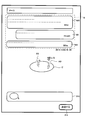
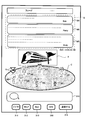
- FIG. 1 is a block diagram of a message display system according to an embodiment of the present invention. It is a block diagram which shows the structure of a server apparatus. It is explanatory drawing which shows an example of the data structure of a user table. It is explanatory drawing which shows an example of the data structure of an external account table. It is explanatory drawing which shows an example of the data structure of an avatar table. It is a block diagram which shows the structure of a terminal device. It is explanatory drawing which shows an example of the data structure of an avatar table. It is a sequence diagram which shows the operation
- FIG. 1 is a block diagram of a message display system (message management system) 100 according to an embodiment of the present invention.
- the message display system 100 includes a communication network 1 such as the Internet, a user terminal device 2, and a server device 3A.
- the message display system 100 displays messages exchanged through various communication services such as posts posted on bulletin boards and the like, mails, and chats on the terminal device 2 of the user registered in advance.
- the server device 3A of the message display system 100 causes the terminal device 2 (message display device) of the user registered in the message display system 100 to display the exchange of messages such as articles posted on a bulletin board or the like, mails, chats and the like. It also functions as a portal site. That is, the server apparatus 3A has a function of collecting various messages from the external server apparatuses 3B, 3C, 3D (external system) and providing them to the user. In the following description, a set of an initial message (first message) and one or a plurality of messages (second message) responding to the message is referred to as a thread.
- a post that provides a theme, such as setting up a bulletin board, and a response that is a response to the posting
- the poster first sends a message (first message), and the responder responds to this message. This is done by transmitting a message (second message).
- a message (second message) that responds to the message that responded (second message) may be transmitted. That is, when the first message (first message) is a parent message, both the child message that responds to the parent message and the grandchild message that responds to the child message respond to the first message (first message).
- a message (second message) which is a message (second message) associated with the first message (first message).
- the poster who first transmitted the message may be allowed to transmit a response message (second message). That is, one post (first message) and one or more responses (second message) associated therewith correspond to a thread.
- message transmission and reception such as replying (response) to the mail (first message) sent (transmitted) first and further replying (response) to this reply corresponds to a thread.
- a message is sent and received such that a reply (response) is sent to the text information (first message) sent (transmitted) first, and a reply (response) is further sent in response to this reply. To do.
- the user terminal device 2 can communicate via the communication network 1 and corresponds to, for example, a personal computer or a mobile phone.
- the message display system 100 can provide users with community functions among users, sales of games, services, and products.
- the server device 3A manages user account information, message information, avatar information, and the like.
- FIG. 2 shows the configuration of the server device.
- the message information includes type information indicating the type of message such as an article posted on a bulletin board or the like, mail, chat, time information indicating the date and time of transmission / reception of the message, and information indicating the content of the message.
- Information indicating the content of the message includes text information, a still image, a moving image, position information, and the like according to the content of the message.
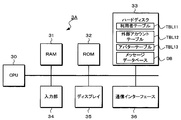
- the server device 3A includes a CPU (Central Processing Unit) 30 that controls the entire device, a RAM (Random Access Memory) 31 that functions as a work area of the CPU 30, a ROM (Read Only) that stores a boot program and the like. Memory) 32, a hard disk 33 for storing various programs and data, an input unit 34 including a keyboard and a mouse, a display 35 for displaying an image, and a communication interface 36 for communicating with an external device via the communication network 1.
- a CPU Central Processing Unit
- RAM Random Access Memory
- ROM Read Only
- the hard disk 33 stores a user table TBL11, an external account table TBL12, an avatar table TBL13, a message database DB, and the like.
- FIG. 3 shows the data structure of the user table TBL11.
- the user table TBL11 includes user identification information UIDa for uniquely identifying a user, an image identifier GaID indicating the user's avatar image (user image) data Ga, and a password PSW.
- the mail address Mailadd and the friend's user identification information UIDa are stored in association with each other.
- the CPU 30 writes various information in the user table TBL11.
- the avatar image is set by the user at the time of user registration.
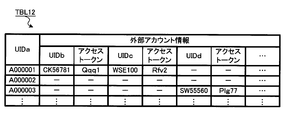
- FIG. 4 shows the data structure of the external account table TBL12.
- the external account table TBL12 user identification information UIDa and external account information are stored in association with each other.
- the server device 3A is required to obtain authentication from the external server devices 3B, 3C, 3D,. It consists of a set of information and user identification information in the external server device.
- external account authentication is performed to allow the message display system 100 to permit on behalf of the user in order to acquire message information of the external server device.
- the external server device confirms the user identification information and password input by the user, issues an access token, and notifies the server device 3A of the access token.
- the user identification information UIDb to UIDd correspond to the external server devices 3B to 3D, respectively.
- the server apparatus 3A performs external account authentication in order to obtain authentication from the external server apparatuses 3B, 3C, 3D... On behalf of the user, but the server apparatus 3A performs external authentication on behalf of the user.
- Other methods that can obtain authentication from the server devices 3B, 3C, 3D,... May be used.
- the user whose user identification information UIDa is “A000001” has registered to acquire message information from the external server devices 3B and 3C, and the user identification information UIDa is “A000002”.
- the user is not registered for acquiring the message information from the external server device, and the user whose user identification information UIDa is “A000003” has registered to acquire the message information from the external server device 3D.
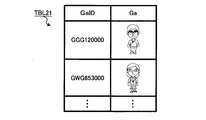
- avatar image data Ga indicating an avatar image and an image identifier GaID of the avatar image are stored in association with each other.
- the message database DB functions as a management unit that manages the identification information of the user and the thread information specifying the thread and the message information in association with each other.
- the message information stored in the message database DB relates to message exchange between users of the message display system 100, and includes message information acquired from the external server devices 3B, 3C, 3D,. Absent.
- FIG. 6 shows the configuration of the terminal device 2.
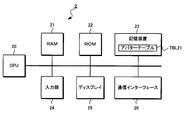
- the terminal device 2 includes a CPU 20 that controls the entire device, a RAM 21 that functions as a work area for the CPU 20, a ROM 22 that stores a boot program, a storage device 23 that stores various programs and data, an input unit 24 including a numeric keypad, an image, and the like. And a communication interface 26 that communicates with an external device via the communication network 1.
- the avatar table TBL21 is stored in the storage device 23.
- avatar image data Ga and an image identifier GaID of the avatar image are stored in association with each other.
- CPU20 functions as a display control part, and displays a user's avatar, when displaying a message (contents of a message) on the display 25.
- FIG. At this time, with reference to the avatar table TBL21, it is determined whether or not the avatar image data Ga having the image identifier GaID corresponding to the user identification information UIDa is stored.
- Avatar image data Ga is acquired by transmitting to 3A and stored in the avatar table TBL21. Thereby, the avatar image data Ga required in the terminal device 2 is stored in the avatar table TBL21.
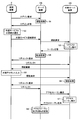
- FIG. 8 shows an operation sequence related to external service registration.
- the service b provided by the user of the terminal device 2 with the external server device 3B is registered in the message display system 100.
- a login screen is displayed on the display 25 of the terminal device 2.
- an input box for inputting the user identification information UIDa and the password PSW is displayed.
- the terminal device 2 transmits a login request including the input user identification information UIDa and the password PSW to the server device 3A.
- the server apparatus 3A executes an authentication process (S1). Specifically, the CPU 30 refers to the user table TBL11 to determine whether or not a set of the user identification information UIDA and the password PSW input by the user is stored, and satisfies the determination condition Login is permitted, and if the determination condition is not satisfied, the login is rejected. Then, the CPU 30 causes the terminal device 2 to transmit a login response indicating the determination result. In the example shown in FIG. 8, it is assumed that login is permitted.
- FIG. 9 shows an example of the registration screen.
- buttons 210 to 212 are displayed on the registration screen to prompt the user to select which external service to select.
- the CPU 20 transmits an external service registration request indicating registration for the external service b to the server device 3A.
- the server apparatus 3A that has received the registration request transmits to the external server apparatus 3B an authentication request for the server apparatus 3A to access the external service on behalf of the user, and the external server apparatus 3B that has received the authentication request receives the request token Is issued (S3). Then, the server device 3A executes (redirect) transfer processing (S4) for causing the terminal device to access the URL of the authentication screen of the external server device 3B in which the request token is added to the parameter.
- FIG. 10 shows an example of the authentication screen.
- an input box 220 for inputting user identification information As shown in this figure, an input box 220 for inputting user identification information, an input box 221 for inputting a password, a login button 222, and a cancel button 223 are displayed on the authentication screen.
- the terminal device 2 When the user inputs the user identification information UIDb corresponding to the external service b in the input box 220 and also inputs the password in the input box 221 (S5) and presses the login button 222, the terminal device 2 sends an authentication request to the outside. It transmits to the server apparatus 3B.
- the external server device 3B When the external server device 3B receives the authentication request, it is determined whether or not the external server device 3B is a legitimate user based on the combination of the user identification information UIDb and the password PSW included in the authentication request (S6). ). In this example, a valid user is assumed. In this case, the external server device 3B authorizes the request token and causes the terminal device to access the URL of the registration screen of the server device 3A in which the authorized request token is added to the parameter (redirect). The server device 3A transmits an access token request having an access right to the external server device 3B. The external server device 3B that has received the access token request issues an access token based on the authentication information such as the user identification information UIDb and the authorized request token (S7), and transmits the issued access token to the server device 3A. To do.
- the server device 3A When the server device 3A receives the access token, the server device 3A acquires the user identification information UIDb in the external server device 3B from the external server device 3B, and sets the combination of the user identification information UIDb and the access token to the user identification of the server device 3A. It is stored in the external account table TBL12 in association with the information UIDa (S8).
- FIG. 11 shows an operation sequence for displaying a message. Since the process from login request ⁇ authentication process (S1) ⁇ login response is similar to the registration of the external service described with reference to FIG. 8, the description thereof is omitted here.
- the terminal device 2 selects a message type such as an article posted on a bulletin board, mail, or chat on the menu screen
- the terminal device 2 For the selected type of message, an instruction regarding the display of the thread is received from the user A (S21).
- the terminal device 2 transmits a browsing request to the server device 3A.
- the server device 3A receives the browsing request, the CPU 30 determines whether or not there is an external account registration corresponding to the user identification information UIDa of the user A by searching the external account table TBL12 (S22).
- the CPU 30 executes a service providing process (S26) described later.
- the CPU 30 acquires external account information of the external service corresponding to the user identification information UIDa in the server device 3A from the external account table TBL12 (S23).
- This external account information consists of a set of an access token and user A's user identification information UIDb.
- all registered account information is acquired. In this example, it is assumed that the external account information of the external server device 3B has been acquired.
- the server device 3A transmits a browsing request including the user identification information UIDb and the access token to the external server device 3B.
- the external server device 3B executes an authentication process using the access token. If the user is a valid user, the external server device 3B executes an extraction process (S24).
- message information related to user identification information UIDb of user A is extracted.
- message information regarding messages included in all threads related to user A is extracted.
- the external server device 3B transmits a browsing response including the set of the message information extracted by the extraction process and the user identification information UIDb to the server device 3A.
- the server device 3A executes a UID conversion process (S25).
- the browsing response includes user identification information UIDb used in the external server device 3B.
- user identification information UIDa and user identification information UIDb are stored in the external account table TBL12 in association with each other.
- the CPU 30 refers to the external account table TBL12, converts the user identification information UIDb acquired from the external server device 3B into user identification information UIDa used in the server device 3A, and outputs the user identification information UIDa.
- the user identification information UIDb that does not have the corresponding user identification information UIDa is converted into non-existence identification information NID indicating that fact.
- user identification information UIDb is converted into user identification information UIDa or non-existence identification information NID among the set of message information and user identification information UIDb acquired from external server device 3B.
- the server device 3A executes a service providing process (S26). Specifically, the CPU 30 refers to the message database DB and reads the message information stored in association with the user identification information UIDA of the user A of the terminal device 2. Further, the CPU 30 refers to the user table TBL11 and reads out the friend user identification information UIDa stored in association with the user identification information UIDa of the user A of the terminal device 2. Next, the CPU 30 refers to the message database DB and acquires message information stored in association with the user identification information UIDa of the friend. Further, the image identifier GaID associated with the user identification information UIDa is acquired with reference to the user table TBL11.
- CPU30 acquires the message information read from message database DB, the message information acquired from the external server apparatus 3B, and the information regarding an avatar image, and transmits the browsing response containing these to the terminal device 2.
- FIG. Each message information is associated with corresponding user identification information UIDa or non-existence identification information NID, and this identification information is also included in the browsing response.
- the CPU 20 determines whether or not the avatar image data Ga of the image identifier GaID associated with the user identification information UIDa corresponding to the message information is stored in the avatar table TBL21. If it is stored, the avatar image data Ga is acquired (S27). When there is an image identifier GaID that is not stored in the avatar table TBL21, the terminal device 2 includes the image identifier GaID that is not stored in the avatar image request and transmits it to the server device 3A.
- CPU 30 executes an avatar image extraction process (S28).
- the CPU 30 reads the avatar image data corresponding to the image identifier GaID with reference to the avatar table TBL13. Then, the CPU 30 returns an avatar image response including a set of the read avatar image data and the image identifier GaID to the terminal device 2.
- the CPU 20 stores the set of the avatar image data and the image identifier GaID included in the avatar image response in the avatar table TBL21.
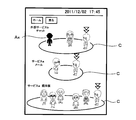
- FIG. 12 shows an example of a screen displayed on the display 25 of the terminal device 2 by display processing.
- a circle C is displayed for each thread on the screen, and avatars of persons who participate in the thread are displayed in the circle C.
- Each circle C is provided to display an avatar image (user image) belonging to a thread, and corresponds to a thread display area provided separately for each thread. That is, the CPU 20 performs control so that a user image indicating a sender of each message included in a thread to be displayed (a plurality of threads in this example) is displayed in a thread display area provided separately for each thread. Functions as a display control unit.
- each circle C changes according to the number of message information included in the thread (that is, the number of messages).
- the display order of the plurality of threads is arranged from the top of the screen in the order of latest transmission time of the latest message information in each thread. Also, if the user slides the screen, the screen scrolls so that the status of other threads can be grasped.
- FIG. 13 shows the processing contents of the display processing.
- the CPU 20 of the terminal device 2 identifies the newest time information of message information included in each thread, compares the identified time information, and the thread corresponding to the latest time information is positioned at the top. Then, the display order of the threads is determined so as to be arranged in time order (S31).
- the CPU 20 counts the number of message information included in each thread (S32), and determines the size of the circle according to the counted value (S33). Note that the CPU 20 may change the area of the circle C according to the number of avatars displayed on the circle C. That is, when the number of message information and avatars increases, the area of the circle C is increased.
- the CPU 20 specifies an avatar image corresponding to the user identification information UIDa (S34). Specifically, the CPU 20 reads the avatar image data Ga of the image identifier GaID corresponding to the user identification information UIDa corresponding to the message information from the avatar table TBL21. In addition, when the absence identification information NID is associated with the message information, avatar image data indicating a predetermined avatar image is read. For example, an avatar Ax indicated by a shadow in FIG. 12 corresponds to a predetermined avatar image.
- the message information includes information acquired from an external server device. That is, the message information may be managed by the external server devices 3B, 3C, 3D... That are external services outside the message display system 100. In such a case, a message transmitted by a person who is not a user of the message display system 100 may be included in the thread.
- the user identification information UIDa corresponding to this message includes the corresponding user identification information UIDa. not exist. For this reason, in the above-described UID conversion process, the user identification information UIDb is previously converted into the absence identification information NID by the CPU 30 of the server device 3A.
- the message information is associated with the non-existence identification information NID, that is, when the sender of the message is a non-user of the message display system 100
- a predetermined user is used. I try to get an image. That is, when the message information is managed by an external service outside the message display system, the CPU 20 and the CPU 30 display the user image corresponding to the identification information of the sender of the message included in the thread to be displayed.
- the CPU 20 and the CPU 30 display the user image corresponding to the identification information of the sender of the message included in the thread to be displayed.
- it cannot be acquired from the storage unit, it functions as a display control unit that controls to display a predetermined user image when a user image corresponding to the identification information of the sender of the message cannot be acquired.
- the CPU 20 arranges the avatar so that the distance from the person who first transmitted the message (if a post is a contributor) is closer to the latest message response. (S35).
- the avatar of the person who sent the message first faces away from the screen, and the other avatars face the direction of the person who sent the message first. It is preferable to display the avatar of the person who sent it so that it can be easily identified.
- the CPU 20 adds a mark S to the person who first transmitted the message (S36). This makes it possible to distinguish the sender who first sent the message from other people and display it, and if the message type is a posted article on a bulletin board or the like, the poster can be found at a glance.
- a number of avatars (user images) corresponding to the number of users who transmitted message information are displayed in a circle C (thread display area) provided separately for each thread. For this reason, a thread in which a large number of users send messages is crowded because a large number of user images are displayed, and a thread with few messages has a small number of user images and is quiet. That is, it is possible to visually display how many users have transmitted messages, and the user can easily grasp the spread of communication visually.
- Circle C displays how many users have sent messages using different user images for each user. For this reason, compared with the case where a single user image is used, the spread of communication can be grasped visually more easily.
- the message display system 100 acquires and displays a predetermined user image, so that the spread of communication including the non-user can be easily understood visually. It becomes possible. At a glance, the user can know how much a non-user is sending a message.
- Circle C changes according to the number of users who sent the message. For this reason, the circle C (thread display area) is expanded in threads where communication is active, so that the spread of communication can be easily understood visually.
- the message type is a posted article on a bulletin board or the like.
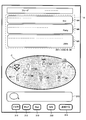
- the bulletin board screen shown in FIG. 14 is displayed.
- the bulletin board screen is provided with a message display area B at the top of the circle C (thread display area), where posts and responses to the bulletin board are displayed. That is, it is convenient because the user image and the message are displayed on the same screen in units of threads.
- a message M6, a message M5, and a message M4 are displayed.
- the avatars corresponding to each of the messages M6 to M4 are A6 to A4.
- the avatars A6, A5, and A4 are arranged in the order of the avatars A0 of the poster to which the mark S is added. , M4 in order of new responses. Thereby, since a message and an avatar (user image) can be linked
- the arrangement of the avatars A0 to A6 in the circle C is the same as the method described with reference to FIG.
- an image may be displayed in the image display area X based on image data (image data attached to the message) attached to the message by the poster.
- image data image data attached to the response to the posting
- the image attached to the image data may be displayed.
- the image attached by the responder may be displayed around the circle C (thread display area) or may be displayed beside the messages M6, M5, and M4 displayed in time series.
- the messages displayed in the message display area B scroll in time series.
- the CPU 20 includes message information included in the thread at the time when the message displayed in the lowermost stage (predetermined position) of the message display area B is transmitted.
- the avatar is displayed.
- the message is displayed so as to be changeable in time series, it is not necessary to expand the message display area B even when there are many messages. Therefore, a sufficient area of the circle C (thread display region) can be secured.
- the area of the circle C is changed according to the number of messages at that time. That is, when the number of messages is large, the area of the circle C is enlarged, and conversely, when the number of messages is small, the area of the circle C is reduced.
- the area of the circle C (thread display area) may be changed according to the number of one-click responses included in the thread. That is, when the number of one-click responses is large, the area of the circle C is expanded.
- the area of the thread display area is determined according to the number of communications that do not rely on character input (for example, “Like!”), So the spread of communication that incorporates simple communications that do not rely on character input can be visualized. Can be easily understood.
- the area of the thread display area is changed along the time series, it is possible to know the spread of thread communication in association with the passage of time. Further, an image attached to a message displayed in the message display area B may be displayed in the image display area.
- the area of the circle C is the thread at the time when the message M1 is transmitted. This corresponds to the number of messages included in “2”.
- buttons 311 to 312 are buttons (icons) for communication that does not depend on character input.
- the button 311 When the button 311 is pressed, information indicating that the “like!” Button has been pressed is transmitted.
- the button 312 When the button 312 is pressed, information indicating that the “Why?” Button has been pressed is transmitted.
- the button 312 When the button 312 is pressed, information indicating that the “Bad” button has been pressed is transmitted. That is, a message (third message) that does not depend on character input is transmitted according to the icon selected by the user.
- the communication message that does not depend on the character input transmitted in this way may be counted in the same manner as a normal message to vary the area of the circle C.
- the message is not limited to the fixed message, and may be a message expressed by a pictograph or a symbol. There may be.
- a picture of applause may be used instead of “Like!”, A “?” Mark instead of “Why?”, And a hand picture with a thumb pointing down instead of “Bad”.
- a message in which a fixed phrase is displayed as a button and a message represented by a pictograph or a symbol are both included in a message (third message) that does not depend on character input.
- the action selection screen is a screen for selecting an action to be given to the avatar.
- the annular dial section 400 is divided into a plurality of areas, and operation information to be given to the avatar is assigned to each area.
- the annular dial portion 400 is rotated by touching with a finger and sliding.
- an avatar action based on the action information assigned to the area indicated by the instruction unit 420 is displayed. That is, an operation assigned to the area indicated by the instruction unit 420 is selected.
- Operation information is assigned to each operation to be selected.
- the CPU 20 transmits the posting or response message information including the operation information.
- the server device 3A that has received the message stores the message information in association with the user identification information UIDa.
- the terminal device 2 receives the browsing response including the operation information as the browsing response, the CPU 20 controls the avatar to operate based on the operation information included in each message information.
- the bulletin board screen shown in FIG. 14 it is possible to give actions to each of the avatars A0 to A6 displayed in the circle C. Even without reading the message, the participants in the thread can just look at the thread display. You can see at a glance what emotions each person has.
- the movements are not limited to those related to emotions.For example, the movement of the rhythm by shaking the body, the action of bending the knee of bending and stretching movements, the action of looking over Kyokoro to look for something, etc. May be executed. Responses to posts may be made multiple times by the same user. Therefore, when the same user specifies “anger” in the operation information added to certain message information and specifies “joy” in the operation information added to other message information, the CPU 20 determines the latest message. Information may be specified, and the avatar may be operated based on the operation information added to the specified message information.
- Or CPU20 may acquire the ratio of the operation
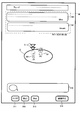
- a chat screen shown in FIG. 17 is displayed.
- the chat screen is provided with a message display area B at the top thereof, and the contents of the chat are displayed in chronological order there.
- a message M0, a message M1, and a message M3 are displayed.
- the avatars corresponding to the messages M0 and M1 are A0 and A1, respectively, and the avatar A0 to which the mark S is added is the contributor who first transmitted (posted) the message.
- the arrangement of the avatars A0, A1, and Ax in the circle C is the same as the method described with reference to FIG.
- the message displayed in the message display area B scrolls in time series. Yes.
- the CPU 20 changes the message included in the thread at the time when the message displayed in the lowermost stage (predetermined position) of the message display area B is transmitted.
- an avatar is displayed.
- the area of the circle C is changed according to the number of message information (that is, the number of messages) at that time.
- the area of the circle C may be changed according to the number of avatars displayed on the circle C at the time. That is, when the number of messages and avatars increases, the area of the circle C is increased. Conversely, when the number of messages and the number of avatars decrease, the area of the circle C is reduced.
- the mail screen shown in FIG. 18 is displayed.
- the mail screen is provided with a message display area B at the top thereof, where the contents of the mail are displayed in chronological order.
- a message M0, a message M1, and a message M2 are displayed.
- the avatar corresponding to the messages M0 and M2 is A0
- the mark S is the avatar A0 of the person who first transmitted the mail.
- the area of the circle C may be variable according to the number of message information (number of messages) belonging to the thread.
- an avatar is used as an example of an image associated with a user.
- the present invention is not limited to this, and corresponds to a user image serving as a clue to distinguish users. As long as it is attached, it may be anything.
- other methods that can visually represent a poster or responder such as “picture” or “graphic”, may be used.
- the responder's avatar when someone responds to a message (such as writing a comment), the responder's avatar is displayed around the avatar of the person who first sent the message (for example, the poster).
- the responder's avatar is arranged in order from the position close to the person who first sent the message, but the present invention is not limited to this, for example, the responder's avatar that responds more frequently You may arrange
- the avatar may be expressed by a combination of a mascot Ob1 and an identification mark Ob2, as shown in FIG.
- the mascot Ob1 is a three-dimensional display object (object) simulating a human outline
- the identification mark Ob2 corresponds to an identification image GA for identifying a user (corresponding to the sender of the first message or the second message).
- the image is a planar display object surrounded by a substantially rectangular frame GB.
- the identification mark Ob2 is arranged near (above) the mascot Ob1.
- the identification image GA for example, a profile image (such as a portrait or a photograph) registered for the user to display himself / herself on the SNS may be used.
- the mascot Ob1 is an image that adopts a general-purpose shape (general-purpose body shape image, body shape graphics or image). Therefore, when adding an operation, operation data for each operation pattern such as “anger” and “joy” can be unified, and the processing load on the terminal device 2 can be reduced. Moreover, since the mascot Ob1 is expressed in three dimensions, there is an advantage that a complicated motion can be added. Further, the user is identified by the profile image, and the body of the avatar is shared by a plurality of users by using a general-purpose image. For this reason, compared with the case where a different avatar image is used for every user, the data amount can be compressed as a whole.
- the avatar is operated to express the emotion.
- the present invention is not limited to this, and the screen for displaying the avatar is changed according to the emotion to be expressed. Anything can be used.
- a balloon shape may be given to an avatar, and the color or shape may be changed based on emotion.
- emotions may be expressed by displaying a heart on a signboard.
- the emotion may be specified on the operation selection screen shown in FIG. 16, and the above-described operation information may be handled as information specifying the emotion.
- the area of the circle C is changed according to the number of messages included in the thread and the number of one-click responses.
- the present invention is not limited to this, and may be blue to red. It may be expressed by a change in color, a change in shading, a change in shape, or the like.
- the mark S is given to the person who first transmitted the message included in the thread.
- the present invention is not limited to this, and the mark S may not be added.
- a profile image may be used instead of the mark.
- postings and responses are displayed in time series in the message display area B, but the position of the image displayed in the message display area B is, for example, right for the contributor and left for the responder. It may be changed as follows. In this case, it is possible to visually distinguish the poster and the responder.
- a mark such as an arrow may be attached to the avatar corresponding to the message displayed in the message display area B. In this case, the contents of the message and the avatar can be grasped in association with each other.
- the server device 3A includes the message database DB and provides a message exchange service between users of the message display system 100.
- the message display system 100 may not transmit / receive a message by itself.
- the message display system 100 functions as a portal site that integrates and provides services provided by the external server devices 3B, 3C, 3D.
- the motion is expressed on the avatar by selecting the motion on the motion selection screen.
- the present invention is not limited to this, and based on the content of the message.
- an action for expressing an emotion may be given.
- the CPU 20 of the terminal device 2 may analyze the content of the message and determine an operation to be given to the avatar according to the analysis result. More specifically, a table in which keywords are classified according to emotions such as anger and joy is stored in the storage device 23, the emotion estimated from the content of the message is identified with reference to this table, and the identified emotion You may give the operation
- the screen to be displayed on the terminal device 2 is generated by the CPU 20 based on the message information.
- the present invention is not limited to this, and the display screen is generated in the server device 3A. Then, this may be transmitted to the terminal device 2.
- the avatar image data Ga is stored in the avatar table TBL21 of the terminal device 2 and the avatar image corresponding to the user is extracted based on the image identifier GaID.
- the server apparatus 3A may transmit the avatar image data Ga to the terminal apparatus 2 in response to a request from the terminal apparatus 2, and the avatar image data Ga is transmitted from the server apparatus 3A to the terminal accompanying the message information. You may transmit to the apparatus 2.
- the image identifier GaID and the avatar image (user image) data Ga are stored in association with each other, but the present invention is not limited to this.
- the user identification information UIDa may be stored instead of the image identifier GaID.
- identification information for identifying a user and avatar image (user image) data Ga may be stored in association with each other.
- the message database DB of the server device 3A in response to the user's browsing request, is referred to read out the message information stored in association with the user and the friend, and the read message A browsing response including information is transmitted to the terminal device 2.
- the present invention is not limited to this, and the terminal device 2 is provided with a message database DB synchronized with the message database DB of the server device 3A, and the terminal device 2 has a message display instruction in accordance with a thread display instruction from the user. You may make it refer to message database DB.
- the message database DB of the terminal device 2 is stored in association with the user identification information UIDa of the user and the user identification information UIDa of the friend with reference to the message database DB of the server device 3A.
- new message information that is not stored on the terminal device 2 side is acquired at a predetermined timing and synchronized. If the message information transmitted from the user terminal device 2 is stored in the message database DB of the terminal device 2 as it is, only the message information associated with the friend user identification information UIDa is synchronized. You may make it take.
- the user image indicating the sender of each message information can be divided for each thread based on the message information stored in the message database DB of the terminal device 2 without being connected to the server device 3A. Can be displayed in the thread display area. Further, the message information acquired from the external server devices 3B, 3C, 3D... May be stored in the message database DB of the terminal device 2.
Landscapes
- Business, Economics & Management (AREA)
- Engineering & Computer Science (AREA)
- Human Resources & Organizations (AREA)
- Entrepreneurship & Innovation (AREA)
- Strategic Management (AREA)
- Tourism & Hospitality (AREA)
- General Business, Economics & Management (AREA)
- Marketing (AREA)
- Operations Research (AREA)
- Quality & Reliability (AREA)
- Theoretical Computer Science (AREA)
- Physics & Mathematics (AREA)
- Economics (AREA)
- General Physics & Mathematics (AREA)
- Data Mining & Analysis (AREA)
- Computer Hardware Design (AREA)
- Information Transfer Between Computers (AREA)
- Telephone Function (AREA)
- Telephonic Communication Services (AREA)
- User Interface Of Digital Computer (AREA)
Abstract
端末装置のCPUは、閲覧応答に含まれるメッセージ情報をスレッドごとに分類し、各スレッドに含まれるメッセージ情報の数を計数し、計数値に応じてサークルの大きさを決定する。またCPUは、利用者識別情報に対応するアバター画像を特定し、時間情報に基づいてサークルにアバターを配置する。また、メッセージ情報の内容に応じてアバターを動作させる。
Description
本発明は、掲示板での投稿記事、メール、チャットなどのメッセージを利用者に分かりやすく表示する技術に関する。
従来より、掲示板での投稿記事、メール、チャットなど、メッセージの授受を行うシステムがあり、このようなシステムで送受したメッセージ情報を一覧表示するメッセージ管理システムが知られている(例えば、特許文献1)。このようなシステムでは、表示領域の制約上、メッセージの一部を時系列に表示するタイムライン表示が一般的であった。また、他の利用者のメッセージに対して、「いいね」(Like)などの定型文をワンクリックで返信するワンクリック応答も知られている。
しかしながら、このようなシステムでは、送受した一連のメッセージの内、その一部が表示されるだけであるので、どれだけ多くのメッセージが送受されたのかなど、コミュニケーションの広がりを一見して把握することはできなかった。また、ワンクリック応答では、その回数を数字で表示することはできても、視覚的にコミュニケーションの広がりを表示することはなかった。また、メッセージ情報のコミュニケーションにおいて利用者が有する感情の大まかな傾向を簡単に知ることはできなかった。
本発明は、上述した問題に鑑みてなされたものであって、メッセージの授受について、コミュニケーションの広がりを視覚的に把握できるようにするとともに、コミュニケーションの大まかな傾向を容易に把握できるようにすることを解決課題の一つとする。
上述した課題を解決するため、本発明に係るメッセージ管理システムは、第1メッセージと当該第1メッセージに関連付けられた一又は複数の第2メッセージの組をスレッドとして表示するメッセージ管理システムであって、利用者からスレッドの表示に関する指示を受け付ける指示受付部と、前記指示受付部で受け付けた前記指示に応じて、表示の対象となるスレッドに含まれる前記第1メッセージおよび前記第2メッセージの送信者に対応する利用者画像をスレッド表示領域に表示させるように制御するとともに、前記第2メッセージの内容に応じて前記利用者画像を動作させるように制御する表示制御部と、を備える。
利用者画像とは、利用者に対応した画像であって、利用者が任意な画像を選択して設定されるものや、システムであらかじめ用意されている画像の中から利用者が選択して設定されるものでもよい。また、利用者が設定しない場合には、システムで用意されたデフォルトの画像が設定されるようにしてもよい。なお、この利用者画像により利用者を一意に識別できなくてもよい。つまり、異なる利用者で同じ利用者画像が設定される場合もあり得る。
なお、メッセージには、掲示板等での投稿記事と応答、チャット、メールなどが含まれる。また、表示制御部は、第1メッセージの内容に応じて利用者画像を動作させるようにしてもよい。
利用者画像とは、利用者に対応した画像であって、利用者が任意な画像を選択して設定されるものや、システムであらかじめ用意されている画像の中から利用者が選択して設定されるものでもよい。また、利用者が設定しない場合には、システムで用意されたデフォルトの画像が設定されるようにしてもよい。なお、この利用者画像により利用者を一意に識別できなくてもよい。つまり、異なる利用者で同じ利用者画像が設定される場合もあり得る。
なお、メッセージには、掲示板等での投稿記事と応答、チャット、メールなどが含まれる。また、表示制御部は、第1メッセージの内容に応じて利用者画像を動作させるようにしてもよい。
上述したメッセージ管理システムにおいて、前記表示制御部は、表示の対象となるスレッドに含まれる前記第1メッセージおよび前記第2メッセージの送信者の識別情報に対応する利用者の利用者画像を、利用者の識別情報と利用者画像とが対応づけて記憶された記憶部から読み出して前記スレッド表示領域に表示させるように制御する。
上述したメッセージ管理システムにおいて、前記表示制御部は、前記第2メッセージを送信した利用者の感情に応じて利用者画像を変更させることが好ましい。なお、前記表示制御部は、前記第1メッセージの送信者の感情に応じて利用者画像を変更させてもよい。
上述したメッセージ管理システムにおいて、前記表示制御部は、前記第2メッセージを送信する際に選択された動作を示す動作情報に基づいて前記第2メッセージの内容に応じて前記利用者画像を動作させるように制御することが好ましい。なお、前記表示制御部は、前記第1メッセージ内容に応じて前記利用者画像を動作させてもよい。
上述したメッセージ管理システムにおいて、前記表示制御部は、前記第2メッセージの内容を解析して動作パターンを特定し、特定した動作パターンで前記利用者画像を動作させるように制御することを特徴とする。
上述したメッセージ管理システムにおいて、前記表示制御部は、前記スレッド表示領域に表示する前記利用者画像の数に応じて、当該スレッド表示領域の面積を変化させるように制御することが好ましい。また、上述したメッセージ管理システムにおいて、前記表示制御部は、表示の対象となる前記スレッドに含まれる前記第2メッセージの数に応じて前記スレッド表示領域の面積を変化させるように制御することを特徴とする。
上述したメッセージ管理システムにおいて、前記第1メッセージおよび前記第2メッセージは、メッセージ管理システム外の外部サービスで管理されており、前記表示制御部は、表示の対象となるスレッドに含まれる前記第1メッセージまたは前記第2メッセージの送信者の識別情報に対応する利用者の利用者画像を、利用者の識別情報と利用者画像とが対応づけて記憶された記憶部から読み出して前記スレッド表示領域に表示させ、当該送信者の識別情報に対応する利用者の利用者画像を当該記憶部から取得できない場合は、メッセージの送信者の識別情報に対応する利用者画像を取得できないときの為に予め定められた利用者画像を表示させるように制御することが好ましい。
上述したメッセージ管理システムにおいて、前記表示制御部は、前記スレッドにおいて前記第1メッセージを送信した送信者の利用者画像に目印を表示させるように制御することが好ましい。
上述したメッセージ管理システムにおいて、前記表示制御部は、前記利用者画像を、汎用のボディー形状画像と前記第1メッセージまたは前記第2メッセージの送信者に対応した画像とから構成することが好ましい。
上述したメッセージ管理システムにおいて、前記表示制御部は、前記スレッド表示領域とは別のメッセージ表示領域に、当該スレッドに含まれる前記第2メッセージを時系列に沿って変更可能に表示させるように制御することが好ましい。なお、スレッド表示領域とメッセージ表示領域のそれぞれの一部が重なっていてもよい。
上述したメッセージ管理システムにおいて、前記表示制御部は、前記メッセージ表示領域に表示される前記第1メッセージに対応する利用者画像に目印を付加して前記スレッド表示領域に表示させるように制御することが好ましい。
上述したメッセージ管理システムにおいて、前記表示制御部は、前記メッセージ表示領域に表示される前記第2メッセージが変更されると、前記メッセージ表示領域の所定位置に表示される前記第2メッセージが送信された時点において前記スレッドに含まれる前記第2メッセージの送信者に対応する利用者画像を前記スレッド表示領域に表示させるように制御することが好ましい。
上述したメッセージ管理システムにおいて、前記表示制御部は、前記メッセージ表示領域に表示される前記第2メッセージが変更されると、前記メッセージ表示領域の所定位置に表示される前記第2メッセージが送信された時点において当該スレッドに含まれる前記第2メッセージの数に応じて前記スレッド表示領域の面積を変化させるように制御することが好ましい。なお、前記スレッド表示領域の面積を「小」「中」「大」の3種類とし、第2メッセージの数に応じて、前記3種類のいずれかとするようにしてもよい。すなわち、第2メッセージの数とスレッド表示領域の面積を変化の対応付けは任意である。
なお、上述したメッセージ管理システムにおいて、サーバ装置と利用者が用いる端末装置とを含む場合、表示制御部は、サーバ装置にあってもよいし、あるいは端末装置にあってもよい。さらに、表示制御部の機能がサーバ装置と端末装置とに分散されていてもよい。
次に、本発明に係るメッセージ表示装置は、第1メッセージと当該第1メッセージに関連付けられた一又は複数の第2メッセージの組をスレッドとして表示部に表示することが可能なメッセージ表示装置であって、利用者からスレッドの表示に関する指示を受け付ける指示受付部部と、前記指示受付部で受け付けた前記指示に応じて、表示の対象となるスレッドに含まれる前記第1メッセージおよび前記第2メッセージの送信者を示す利用者画像をスレッド表示領域に表示させるように制御するとともに、メッセージの内容に応じて前記利用者画像を動作させるように制御する表示制御部と、を備える。
次に、本発明に係るメッセージの表示方法は、第1メッセージと当該第1メッセージに関連付けられた一又は複数の第2メッセージの組をスレッドとして表示することが可能な端末装置において用いられるメッセージの表示方法であって、利用者からスレッドの表示に関する指示を受け付けるステップと、受け付けた前記指示に応じて、表示の対象となるスレッドに含まれる前記第1メッセージおよび前記第2メッセージの送信者に対応する利用者画像をスレッド表示領域に表示するとともに、メッセージの内容に応じて前記利用者画像を動作させるステップと、を有する。
次に、本発明に係るコンピュータ読み取り可能な記録媒体は、第1メッセージと当該第1メッセージに関連付けられた一又は複数の第2メッセージの組をスレッドとして表示部に表示することが可能な端末装置で用いられるプログラムを記録したコンピュータ読み取り可能な記録媒体であって、前記端末装置に、利用者からスレッドの表示に関する指示を受け付ける指示受付処理と、前記指示受付処理において受け付けた前記指示に応じて、表示の対象となるスレッドに含まれる前記第1メッセージおよび前記第2メッセージ情報の送信者に対応する利用者画像をスレッド表示領域に表示させるように制御するとともに、メッセージ情報の内容に応じて前記利用者画像を動作させるように制御する表示制御処理と、を実行させるためのプログラムを記録している。
なお、メッセージには、掲示板での投稿記事と応答、チャット、メールなどが含まれる。
この記録媒体はCD-ROM等の非一過性の記録媒体であっても良く、また、この記録媒体には、当該プログラムを配信するために配信サーバからアクセス可能な内部または外部に設けられた記録媒体も含まれる。配信サーバの記録媒体に記憶される上記プログラムのコードは、メッセージ表示装置で実行可能な形式のプログラムのコードと異なるものでも良い。すなわち、配信サーバからダウンロードされて端末装置で実行可能な形でインストールができるものであれば、配信サーバで記憶される形式は問わない。なお、上記プログラムを複数に分割し、それぞれ異なるタイミングでダウンロードした後に端末装置で合体される構成や、分割されたプログラムのそれぞれを配信する配信サーバが異なっていても良い。
なお、メッセージには、掲示板での投稿記事と応答、チャット、メールなどが含まれる。
この記録媒体はCD-ROM等の非一過性の記録媒体であっても良く、また、この記録媒体には、当該プログラムを配信するために配信サーバからアクセス可能な内部または外部に設けられた記録媒体も含まれる。配信サーバの記録媒体に記憶される上記プログラムのコードは、メッセージ表示装置で実行可能な形式のプログラムのコードと異なるものでも良い。すなわち、配信サーバからダウンロードされて端末装置で実行可能な形でインストールができるものであれば、配信サーバで記憶される形式は問わない。なお、上記プログラムを複数に分割し、それぞれ異なるタイミングでダウンロードした後に端末装置で合体される構成や、分割されたプログラムのそれぞれを配信する配信サーバが異なっていても良い。
<1.第1実施形態>
<1-1:メッセージ表示システムの構成>
図1は、本発明の実施形態に係るメッセージ表示システム(メッセージ管理システム)100のブロック図である。このメッセージ表示システム100は、インターネットなどの通信網1、利用者の端末装置2、サーバ装置3Aを備える。メッセージ表示システム100は、掲示板等での投稿記事、メール、及びチャットといった各種のコミュニケーションサービスで交わされたメッセージを予め登録された利用者の端末装置2に表示させる。
<1-1:メッセージ表示システムの構成>
図1は、本発明の実施形態に係るメッセージ表示システム(メッセージ管理システム)100のブロック図である。このメッセージ表示システム100は、インターネットなどの通信網1、利用者の端末装置2、サーバ装置3Aを備える。メッセージ表示システム100は、掲示板等での投稿記事、メール、及びチャットといった各種のコミュニケーションサービスで交わされたメッセージを予め登録された利用者の端末装置2に表示させる。
また、メッセージ表示システム100のサーバ装置3Aは、メッセージ表示システム100に登録した利用者の端末装置2(メッセージ表示装置)に、掲示板等での投稿記事、メール、チャットなどのメッセージの授受を表示させるだけでなく、ポータルサイトとしても機能する。即ち、サーバ装置3Aは、外部サーバ装置3B、3C、3D…(外部システム)から、各種のメッセージを収集して、利用者に提供する機能がある。なお、以下の説明では、最初のメッセージ(第1メッセージ)と当該メッセージに応答する一又は複数のメッセージ(第2メッセージ)の組をスレッドと称する。例えば、掲示板においては、掲示板を立てるといったようにテーマを提供する投稿とこれに対する書き込みである応答は、投稿者が最初にメッセージ(第1メッセージ)を送信し、応答者がこのメッセージに対して応答するメッセージ(第2メッセージ)を送信することにより行われる。また、応答したメッセージ(第2メッセージ)に対して応答するメッセージ(第2メッセージ)を送信できるようにしてもよい。すなわち、最初のメッセージ(第1メッセージ)を親メッセージとしたとき、親メッセージに対して応答する子メッセージも、子メッセージに対して応答する孫メッセージも、最初のメッセージ(第1メッセージ)に対する応答するメッセージ(第2メッセージ)であり、最初のメッセージ(第1メッセージ)に関連付けられたメッセージ(第2メッセージ)である。また、最初にメッセージ(第1メッセージ)を送信した投稿者が、応答するメッセージ(第2メッセージ)を送信できるようにしてもよい。すなわち、一つの投稿(第1メッセージ)、及びそれに関連付けられた一又は複数の応答(第2メッセージ)はスレッドに相当する。また、メールにおいては、最初に送信(発信)されたメール(第1メッセージ)に返信(応答)し、この返信に対してさらに返信(応答)するといったようなメッセージの授受がスレッドに相当する。さらにチャットにおいては、最初に送信(発信)されたテキスト情報(第1メッセージ)に対して返信(応答)し、この返信に対してさらに返信(応答)するといったようなメッセージの授受がスレッドに相当する。
利用者の端末装置2は、通信網1を介した通信が可能であり、例えば、パーソナルコンピュータや携帯電話機が該当する。メッセージ表示システム100は、利用者に対して、利用者どうしのコミュニティ機能やゲームあるいはサービス及び商品の販売を提供することが可能である。
サーバ装置3Aは、利用者のアカウント情報、メッセージ情報、アバター情報などを管理する。図2にサーバ装置の構成を示す。ここで、メッセージ情報は、掲示板等での投稿記事、メール、チャットといったメッセージの種別を示す種別情報と、当該メッセージの送受信日時を示す時間情報と、メッセージの内容を示す情報とを含む。メッセージの内容を示す情報としては、メッセージの内容に応じて、テキスト情報、静止画像、動画画像、位置情報等がある。この図に示すように、サーバ装置3Aは、装置全体を制御するCPU(Central Processing Unit)30、CPU30の作業領域として機能するRAM(Random Access Memory)31、ブートプログラムなどを記憶したROM(Read Only Memory)32、各種のプログラムやデータを記憶するハードディスク33、キーボードやマウスなどを含む入力部34、画像を表示するディスプレイ35、及び通信網1を介して外部の装置と通信を行う通信インターフェース36を備える。
ハードディスク33には、利用者テーブルTBL11、外部アカウントテーブルTBL12、アバターテーブルTBL13、及びメッセージデータベースDBなどが記憶されている。
図3に利用者テーブルTBL11のデータ構造を示す。この図に示すように利用者テーブルTBL11には、利用者を一意に識別する利用者識別情報UIDaと、当該利用者のアバター画像(利用者画像)データGaを示す画像識別子GaIDと、パスワードPSWと、メールアドレスMailaddと、友人の利用者識別情報UIDaとが対応付けられて記憶されている。メッセージ表示システム100におけるサービスの提供を受けるためには、利用者登録を行う必要がある。CPU30は、利用者登録が行われると、利用者テーブルTBL11に各種情報を書き込む。また、アバターの画像は利用者登録の際に利用者が設定する。
図3に利用者テーブルTBL11のデータ構造を示す。この図に示すように利用者テーブルTBL11には、利用者を一意に識別する利用者識別情報UIDaと、当該利用者のアバター画像(利用者画像)データGaを示す画像識別子GaIDと、パスワードPSWと、メールアドレスMailaddと、友人の利用者識別情報UIDaとが対応付けられて記憶されている。メッセージ表示システム100におけるサービスの提供を受けるためには、利用者登録を行う必要がある。CPU30は、利用者登録が行われると、利用者テーブルTBL11に各種情報を書き込む。また、アバターの画像は利用者登録の際に利用者が設定する。
図4に外部アカウントテーブルTBL12のデータ構造を示す。この図に示すように外部アカウントテーブルTBL12には、利用者識別情報UIDaと外部アカウント情報とが対応付けられて記憶されている。外部アカウント情報は、外部サーバ装置3B、3C、3D…にアクセスした際に、サーバ装置3Aが利用者に代わって外部サーバ装置3B、3C、3D…から認証を得るために必要なアクセストークンなどの情報と、外部サーバ装置における利用者識別情報との組からなる。後述するように外部サーバ装置のメッセージ情報を取得するためにメッセージ表示システム100に対して利用者の代理で許可させるための外部アカウント認証を行う。外部サーバ装置は利用者が入力した利用者識別情報とパスワードとを確認してアクセストークンを発行し、アクセストークンをサーバ装置3Aに通知する。利用者識別情報UIDb~UIDdは外部サーバ装置3B~3Dにそれぞれ対応する。なお、本実施形態では、サーバ装置3Aが利用者に代わって外部サーバ装置3B、3C、3D…から認証を得るために外部アカウント認証を行っているが、サーバ装置3Aが利用者に代わって外部サーバ装置3B、3C、3D…から認証を得ることが可能な他の方法を用いても良い。
図4に示す例では、利用者識別情報UIDaが「A000001」の利用者は外部サーバ装置3B及び3Cからメッセージ情報を取得することを登録しており、利用者識別情報UIDaが「A000002」の利用者は外部サーバ装置からのメッセージ情報の取得について未登録であり、利用者識別情報UIDaが「A000003」の利用者は外部サーバ装置3Dからのメッセージ情報を取得することを登録している。
また、アバターテーブルTBL13には、アバターの画像を示すアバター画像データGaと、当該アバター画像の画像識別子GaIDが対応付けられて記憶されている。
また、アバターテーブルTBL13には、アバターの画像を示すアバター画像データGaと、当該アバター画像の画像識別子GaIDが対応付けられて記憶されている。
次に、メッセージデータベースDBには、利用者識別情報UIDaとメッセージ情報とが対応付けて記憶されている。具体的には、メッセージ情報にはメッセージIDが付与されており、利用者識別情報UIDaとメッセージIDとが関連付けられている。さらに、利用者識別情報UIDaには、その利用者が参加するスレッドを特定するスレッド情報が対応づけられている。すなわち、メッセージデータベースDBは、利用者の識別情報及びスレッドを特定するスレッド情報とメッセージ情報とを対応づけて管理する管理部として機能する。但し、このメッセージデータベースDBに記憶されるメッセージ情報は、メッセージ表示システム100の利用者間のメッセージの授受に関するものであって、外部サーバ装置3B、3C、3D…より取得したメッセージ情報は含まれていない。
図6に端末装置2の構成を示す。端末装置2は、装置全体を制御するCPU20、CPU20の作業領域として機能するRAM21、ブートプログラムなどを記憶したROM22、各種のプログラムやデータを記憶する記憶装置23、テンキーなどを含む入力部24、画像を表示するとともにタッチパネルを構成するディスプレイ25、及び通信網1を介して外部の装置と通信を行う通信インターフェース26を備える。
また、記憶装置23には、アバターテーブルTBL21が記憶されている。アバターテーブルTBL21には、アバター画像データGaと当該アバター画像の画像識別子GaIDとが対応付けられて記憶されている。CPU20は、表示制御部として機能し、メッセージ(メッセージの内容)をディスプレイ25に表示する場合に、利用者のアバターを表示させる。この際、アバターテーブルTBL21を参照して、利用者識別情報UIDaに対応する画像識別子GaIDのアバター画像データGaが記憶されているかを判定し、記憶されていない場合には、画像識別子GaIDをサーバ装置3Aに送信してアバター画像データGaを取得し、アバターテーブルTBL21に記憶する。これによって、端末装置2において必要なアバター画像データGaがアバターテーブルTBL21に記憶される。
<1-2:メッセージ表示システムの動作>
次に、メッセージ表示システム100の動作を説明する。図8に外部サービスの登録に関する動作シーケンスを示す。この例では、端末装置2の利用者が外部サーバ装置3Bで提供するサービスbをメッセージ表示システム100に登録するものとする。
次に、メッセージ表示システム100の動作を説明する。図8に外部サービスの登録に関する動作シーケンスを示す。この例では、端末装置2の利用者が外部サーバ装置3Bで提供するサービスbをメッセージ表示システム100に登録するものとする。
端末装置2の利用者が、ウェブブラウザなどのアプリケーションを起動して、サーバ装置3Aが提供するログインページにアクセスすると、端末装置2のディスプレイ25には、ログイン画面が表示される。このログイン画面には、利用者識別情報UIDaとパスワードPSWとを入力する入力ボックスが表示される。利用者が、入力ボックスに入力して送信ボタンを押すと、端末装置2は、入力した利用者識別情報UIDa及びパスワードPSWを含むログイン要求をサーバ装置3Aに送信する。
ログイン要求をサーバ装置3Aが受信すると、サーバ装置3Aは認証処理を実行する(S1)。具体的には、CPU30は、利用者テーブルTBL11を参照して、利用者が入力した利用者識別情報UIDaとパスワードPSWとの組が記憶されているか否かを判定し、判定条件を充足する場合にはログインを許可し、判定条件が充足されない場合にはログインを拒絶する。そして、CPU30は判定結果を示すログイン応答を端末装置2に送信させる。なお、図8に示す例では、ログインが許可されたものとする。
この後、利用者がメニューを選択して外部サービスの登録画面を選択したとする。図9に登録画面の一例を示す。この図に示すように登録画面にはボタン210~212が表示され、いずれの外部サービスを選択するかを利用者に促す。ここで、利用者がボタン210をクリックして外部サービスbを選択したとする(S2)。すると、CPU20は、外部サービスbについて登録することを示す外部サービス登録要求をサーバ装置3Aに送信させる。
登録要求を受信したサーバ装置3Aは、利用者に代わってサーバ装置3Aが外部サービスにアクセスする為の認証要求を外部サーバ装置3Bに送信し、認証要求を受信した外部サーバ装置3Bは、リクエストトークンを発行する(S3)。そして、サーバ装置3Aは、リクエストトークンがパラメータに付加された外部サーバ装置3Bの認証画面のURLに端末装置をアクセスさせる(リダイレクト)転送処理(S4)を実行する。図10に認証画面の一例を示す。
この図に示すように、認証画面には、利用者識別情報を入力するための入力ボックス220と、パスワードを入力するための入力ボックス221と、ログインボタン222と、キャンセルボタン223が表示される。利用者が入力ボックス220に外部サービスbに対応する利用者識別情報UIDbを入力すると共に入力ボックス221にパスワードを入力して(S5)、ログインボタン222を押すと、端末装置2は認証要求を外部サーバ装置3Bに対して送信する。
外部サーバ装置3Bが認証要求を受信すると、認証要求に含まれる利用者識別情報UIDbとパスワードPSWとの組に基づいて、外部サーバ装置3Bは正当な利用者であるか否かを判定する(S6)。この例では、正当な利用者を想定する。この場合、外部サーバ装置3Bは、リクエストトークンを認可し、認可済みのリクエストトークンがパラメータに付加されたサーバ装置3Aの登録画面のURLに端末装置をアクセスさせる(リダイレクト)。
サーバ装置3Aは、アクセス権を有するアクセストークン要求を外部サーバ装置3Bに送信する。アクセストークン要求を受信した外部サーバ装置3Bは、利用者識別情報UIDbなどの認証情報及び認可済みのリクエストトークンに基づいて、アクセストークンを発行し(S7)、発行したアクセストークンをサーバ装置3Aに送信する。
サーバ装置3Aは、アクセス権を有するアクセストークン要求を外部サーバ装置3Bに送信する。アクセストークン要求を受信した外部サーバ装置3Bは、利用者識別情報UIDbなどの認証情報及び認可済みのリクエストトークンに基づいて、アクセストークンを発行し(S7)、発行したアクセストークンをサーバ装置3Aに送信する。
サーバ装置3Aは、アクセストークンを受信すると、外部サーバ装置3Bにおける利用者識別情報UIDbを外部サーバ装置3Bから取得し、当該利用者識別情報UIDbとアクセストークンとの組をサーバ装置3Aの利用者識別情報UIDaと対応づけて外部アカウントテーブルTBL12に記憶する(S8)。
次に、図11にメッセージを表示する動作シーケンスを示す。ログイン要求→認証処理(S1)→ログイン応答までの処理は、図8を用いて説明した外部サービスの登録と同様であるので、ここでは説明を省略する。
端末装置2の利用者(以下、説明の便宜上、「利用者A」という場合がある)がメニュー画面において掲示板等での投稿記事、メール、チャットといったメッセージの種別を選択すると、端末装置2は、選択された種別のメッセージについて、利用者Aからスレッドの表示に関する指示を受け付ける(S21)。次に、端末装置2は閲覧要求をサーバ装置3Aに送信する。サーバ装置3Aが閲覧要求を受信すると、CPU30は利用者Aの利用者識別情報UIDaに対応する外部アカウントの登録があるか否かを外部アカウントテーブルTBL12を検索することによって判定する(S22)。
端末装置2の利用者(以下、説明の便宜上、「利用者A」という場合がある)がメニュー画面において掲示板等での投稿記事、メール、チャットといったメッセージの種別を選択すると、端末装置2は、選択された種別のメッセージについて、利用者Aからスレッドの表示に関する指示を受け付ける(S21)。次に、端末装置2は閲覧要求をサーバ装置3Aに送信する。サーバ装置3Aが閲覧要求を受信すると、CPU30は利用者Aの利用者識別情報UIDaに対応する外部アカウントの登録があるか否かを外部アカウントテーブルTBL12を検索することによって判定する(S22)。
判定結果が否定を示す場合、CPU30は、後述のサービス提供処理(S26)を実行する。一方、判定結果が肯定を示す場合、CPU30は、サーバ装置3Aにおける利用者識別情報UIDaに対応する外部サービスの外部アカウント情報を外部アカウントテーブルTBL12から取得する(S23)。この外部アカウント情報は、アクセストークンと利用者Aの利用者識別情報UIDbとの組からなる。複数の外部アカウント情報が登録されている場合には、登録されている全てのアカウント情報を取得する。この例では、外部サーバ装置3Bの外部アカウント情報を取得したものとする。
この後、サーバ装置3Aは、利用者識別情報UIDbとアクセストークンを含む閲覧要求を外部サーバ装置3Bに送信する。閲覧要求を外部サーバ装置3Bが受信すると、外部サーバ装置3Bは、アクセストークンを用いて認証処理を実行する。正当な利用者である場合には、外部サーバ装置3Bは、抽出処理を実行する(S24)。
具体的には、利用者Aの利用者識別情報UIDbに関連するメッセージ情報を抽出する。具体的には、利用者Aに関連する全てのスレッドに含まれるメッセージに関するメッセージ情報を抽出する。
外部サーバ装置3Bは抽出処理で抽出されたメッセージ情報及びその利用者識別情報UIDbの組を含む閲覧応答をサーバ装置3Aに送信する。
外部サーバ装置3Bは抽出処理で抽出されたメッセージ情報及びその利用者識別情報UIDbの組を含む閲覧応答をサーバ装置3Aに送信する。
この後、サーバ装置3Aは、UID変換処理を実行する(S25)。閲覧応答には、外部サーバ装置3Bで用いられる利用者識別情報UIDbが含まれている。メッセージ表示システム100の利用者であって、且つ、外部サービスbに登録した利用者については、外部アカウントテーブルTBL12に利用者識別情報UIDaと利用者識別情報UIDbとが対応付けられて記憶されている。UID変換処理において、CPU30は、外部アカウントテーブルTBL12を参照して、外部サーバ装置3Bから取得した利用者識別情報UIDbをサーバ装置3Aで用いられる利用者識別情報UIDaに変換して、出力する。但し、利用者識別情報UIDbのうち対応する利用者識別情報UIDaが存在しないものについては、そのことを示す不存在識別情報NIDに変換する。これにより、外部サーバ装置3Bから取得したメッセージ情報及び利用者識別情報UIDbの組のうち、利用者識別情報UIDbは、利用者識別情報UIDa又は不存在識別情報NIDに変換される。
次に、サーバ装置3Aは、サービス提供処理を実行する(S26)。具体的には、CPU30は、メッセージデータベースDBを参照して、端末装置2の利用者Aの利用者識別情報UIDaと対応づけて記憶されたメッセージ情報を読み出す。さらに、CPU30は、利用者テーブルTBL11を参照して、端末装置2の利用者Aの利用者識別情報UIDaと対応づけて記憶された友人の利用者識別情報UIDaを読み出す。次に、CPU30は、メッセージデータベースDBを参照して、友人の利用者識別情報UIDaに対応づけて記憶されたメッセージ情報を取得する。また、利用者テーブルTBL11を参照して、利用者識別情報UIDaに関連付けられた画像識別子GaIDを取得する。このようにして、CPU30は、メッセージデータベースDBから読み出したメッセージ情報と外部サーバ装置3Bから取得したメッセージ情報、及びアバター画像に関する情報を取得し、これらを含む閲覧応答を端末装置2に送信する。各メッセージ情報には、対応する利用者識別情報UIDa又は不存在識別情報NIDが関連付けられており、この識別情報も閲覧応答に含まれる。
端末装置2が閲覧応答を受信すると、CPU20は、メッセージ情報に対応する利用者識別情報UIDaに関連付けられた画像識別子GaIDのアバター画像データGaがアバターテーブルTBL21に記憶されているか否かを判定し、記憶されている場合には当該アバター画像データGaを取得する(S27)。アバターテーブルTBL21に記憶されていない画像識別子GaIDがある場合には、端末装置2は、記憶されていない画像識別子GaIDをアバター画像要求に含ませてサーバ装置3Aに送信する。
アバター画像要求をサーバ装置3Aが受信すると、CPU30は、アバター画像抽出処理を実行する(S28)。この場合、CPU30は、アバターテーブルTBL13を参照して画像識別子GaIDに対応するアバター画像データを読み出す。そして、CPU30は、読み出したアバター画像データと画像識別子GaIDの組を含むアバター画像応答を端末装置2に返信する。
アバター画像応答を端末装置2が受信すると、CPU20は、アバターテーブルTBL21にアバター画像応答に含まれるアバター画像データと画像識別子GaIDの組を記憶する。
アバター画像応答を端末装置2が受信すると、CPU20は、アバターテーブルTBL21にアバター画像応答に含まれるアバター画像データと画像識別子GaIDの組を記憶する。
この後、端末装置2のCPU20は表示処理を実行する(S29)。図12に表示処理によって端末装置2のディスプレイ25に表示される画面の一例を示す。この図に示すように画面にはスレッド毎にサークルCを表示し、その内部に当該スレッドに参加する者のアバターを表示させる。各サークルCは、スレッドに属するアバター画像(利用者画像)を表示するために設けられ、スレッドごとに別々に設けられたスレッド表示領域に該当する。つまり、CPU20は、表示の対象となるスレッド(この例では複数のスレッド)に含まれる各メッセージの送信者を示す利用者画像をスレッドごとに別々に設けられたスレッド表示領域に表示させるように制御する表示制御部として機能する。
また、スレッドに含まれるメッセージ情報の数(すなわち、メッセージの数)に応じて各サークルCの大きさが変化するようになっている。複数のスレッドの表示順序は、各スレッドにおける最新のメッセージ情報の送信時間が新しい順に、画面の最上部から並べてある。また、利用者が画面をスライドさせれば、画面がスクロールして他のスレッドの状況が把握できるようになっている。
また、スレッドに含まれるメッセージ情報の数(すなわち、メッセージの数)に応じて各サークルCの大きさが変化するようになっている。複数のスレッドの表示順序は、各スレッドにおける最新のメッセージ情報の送信時間が新しい順に、画面の最上部から並べてある。また、利用者が画面をスライドさせれば、画面がスクロールして他のスレッドの状況が把握できるようになっている。
図13に表示処理の処理内容を示す。まず、端末装置2のCPU20は、各スレッドに含まれるメッセージ情報の時間情報のうち最も新しいものを特定し、特定した時間情報を比較して、最新の時間情報に対応するスレッドが最上部に位置し、時間順に並ぶようにスレッドの表示順を決定する(S31)。
次に、CPU20は、各スレッドに含まれるメッセージ情報の数を計数し(S32)、計数値に応じてサークルの大きさを決定する(S33)。なお、CPU20はサークルCに表示されるアバターの数に応じてサークルCの面積を変化させてもよい。すなわち、メッセージ情報やアバターの数が増加すると、サークルCの面積を増加させる。
次に、CPU20は、各スレッドに含まれるメッセージ情報の数を計数し(S32)、計数値に応じてサークルの大きさを決定する(S33)。なお、CPU20はサークルCに表示されるアバターの数に応じてサークルCの面積を変化させてもよい。すなわち、メッセージ情報やアバターの数が増加すると、サークルCの面積を増加させる。
さらに、CPU20は利用者識別情報UIDaに対応するアバター画像を特定する(S34)。具体的には、CPU20はメッセージ情報に対応する利用者識別情報UIDaに対応する画像識別子GaIDのアバター画像データGaをアバターテーブルTBL21から読み出す。また、メッセージ情報に不存在識別情報NIDが関連付けられている場合には、予め定められたアバター画像を示すアバター画像データを読み出す。例えば、図12において影で示したアバターAxが予め定められたアバター画像に該当する。
上述したように、この例では、メッセージ情報は外部サーバ装置から取得したものも含む。つまり、メッセージ情報は、メッセージ表示システム100外の外部サービスである外部サーバ装置3B,3C,3D…によって管理される場合がある。そのような場合には、メッセージ表示システム100の利用者でない者が送信したメッセージがスレッドに含まれることがあるが、このメッセージに対応する利用者識別情報UIDbには対応する利用者識別情報UIDaが存在しない。このため、上述のUID変換処理において、利用者識別情報UIDbは、サーバ装置3AのCPU30により不存在識別情報NIDに予め変換されている。
そこで、本実施形態では、メッセージ情報に不存在識別情報NIDが対応付けられている場合、すなわち、このメッセージの送信者がメッセージ表示システム100の非利用者の場合には、予め定められた利用者画像を取得するようにしている。つまり、CPU20及びCPU30は、メッセージ情報が、メッセージ表示システム外の外部サービスで管理されている場合に、表示の対象となるスレッドに含まれるメッセージの送信者の識別情報に対応する利用者画像を前記記憶部から取得できないときは、メッセージの送信者の識別情報に対応する利用者画像を取得できないときの為に予め定められた利用者画像を表示させるように制御する表示制御部として機能する。
そこで、本実施形態では、メッセージ情報に不存在識別情報NIDが対応付けられている場合、すなわち、このメッセージの送信者がメッセージ表示システム100の非利用者の場合には、予め定められた利用者画像を取得するようにしている。つまり、CPU20及びCPU30は、メッセージ情報が、メッセージ表示システム外の外部サービスで管理されている場合に、表示の対象となるスレッドに含まれるメッセージの送信者の識別情報に対応する利用者画像を前記記憶部から取得できないときは、メッセージの送信者の識別情報に対応する利用者画像を取得できないときの為に予め定められた利用者画像を表示させるように制御する表示制御部として機能する。
次に、CPU20は、時間情報に基づいて、最初にメッセージを送信した者(投稿であれば投稿者が該当)からの距離が、メッセージの応答が最近の者程近くなるようにアバターを配置する(S35)。ここで、最初にメッセージを送信した者(投稿者)のアバターだけ、画面に背を向け、他のアバターは最初にメッセージを送信した者の方向に向くように配置することで、最初にメッセージを送信した者のアバターを識別し易く表示することが好ましい。更に、CPU20は最初にメッセージを送信した者に目印Sを付加する(S36)。これにより、最初にメッセージを送信した送信者を他の者と区別して表示することが可能となり、メッセージの種別が掲示板等での投稿記事であれば投稿者を一見して見つけることができる。
また、スレッドごとに別々に設けられたサークルC(スレッド表示領域)に、メッセージ情報を送信した利用者の数に応じた数のアバター(利用者画像)が表示される。このため、多数の利用者がメッセージを送信するスレッドは、利用者画像が多数表示されるため混み合っており、メッセージの少ないスレッドは、利用者画像の数が少なく閑散としている。すなわち、どれだけ多くの利用者がメッセージを送信したかを視覚的に分かり易く表示することが可能であり、利用者はコミュニケーションの広がりを視覚的に容易に把握することができる。また、サークルCには、利用者ごとに異なる利用者画像を使用して、どれだけ多くの利用者がメッセージを送信したかが表示される。このため、単一の利用者画像を使用した場合に比べて、コミュニケーションの広がりを視覚的により容易に把握することができる。また、本実施形態では、メッセージ表示システム100の非利用者であっても予め定められた利用者画像を取得して表示するので、非利用者を含めたコミュニケーションの広がりを視覚的に分かり易く知ることが可能となる。また、利用者は一見して非利用者がどの程度、メッセージを送信しているかを知ることができる。
さらに、サークルCの面積はメッセージを送信した利用者の数に応じて変化する。このため、コミュニケーションが盛んなスレッドはサークルC(スレッド表示領域)が拡大するので、コミュニケーションの広がりを視覚的に分かり易く知ることが可能となる。
次に、メッセージの種別が掲示板等での投稿記事である場合について説明する。図12に示す画面において、「サービスa掲示板」のサークルCをタップすると、図14に示す掲示板画面が表示される。掲示板画面は、サークルC(スレッド表示領域)の上部にメッセージ表示領域Bが設けられており、そこには、掲示板への投稿や応答が表示されるようになっている。つまり、スレッド単位で利用者画像とメッセージとが同一の画面で表示されるため便利である。
この例では、メッセージM6、メッセージM5、メッセージM4が表示される。また、メッセージM6~M4の各々に対応するアバターがA6~A4であり、目印Sが付加された投稿者のアバターA0に対してアバターA6、A5、A4の順に配置されており、メッセージM6、M5、M4の順に新しい応答である。これにより、メッセージとアバター(利用者画像)とを関連付けることができるので、利便性が向上する。なお、サークルCにおけるアバターA0~A6の配置については、図13を参照して説明した方法と同様であるので、説明を省略する。
この例では、メッセージM6、メッセージM5、メッセージM4が表示される。また、メッセージM6~M4の各々に対応するアバターがA6~A4であり、目印Sが付加された投稿者のアバターA0に対してアバターA6、A5、A4の順に配置されており、メッセージM6、M5、M4の順に新しい応答である。これにより、メッセージとアバター(利用者画像)とを関連付けることができるので、利便性が向上する。なお、サークルCにおけるアバターA0~A6の配置については、図13を参照して説明した方法と同様であるので、説明を省略する。
また、図20に示すように、投稿者がメッセージに添付した画像データ(メッセージに付属する画像データ)に基づいて、画像表示領域Xに画像を表示しても良い。なお、投稿に対する応答に画像データが添付されている場合は、その画像データに添付された画像を表示しても良い。この場合、応答者が添付した画像はサークルC(スレッド表示領域)の周辺に表示してもよいし、あるいは、時系列に表示されるメッセージM6、M5、M4の横に表示してもよい。
次に、利用者がメッセージ表示領域Bにタッチして指を上下に動かすと、メッセージ表示領域Bに表示されるメッセージが時系列に沿ってスクロールするようになっている。この場合、CPU20は、メッセージ表示領域Bに表示されるメッセージが変更されると、メッセージ表示領域Bの最下段(所定位置)に表示されるメッセージが送信された時点において当該スレッドに含まれるメッセージ情報に応じて、アバターを表示する。このように、メッセージを時系列に沿って変更可能に表示させる構成としたので、メッセージが多数ある場合でもメッセージ表示領域Bを拡大する必要がない。よって、サークルC(スレッド表示領域)の面積を十分確保することができる。
また、当該時点におけるメッセージの数に応じてサークルC(スレッド表示領域)の面積を変化させる。つまり、メッセージの数が多いと、サークルCの面積を拡大し、逆にメッセージの数が少ないと、サークルCの面積を縮小する。なお、サークルC(スレッド表示領域)の面積は、スレッドに含まれているワンクリック応答の数に応じて変化させてもよい。つまり、ワンクリック応答の数が多いと、サークルCの面積を拡大する。これにより、文字入力に拠らないコミュニケーション(例えば、「イイネ!」)の回数に応じてスレッド表示領域の面積を定めるので、文字入力に拠らない簡易なコミュニケーションを取り込んだコミュニケーションの広がりを視覚的に分かり易く知ることが可能となる。また、この場合にも、時系列に沿ってスレッド表示領域の面積を変化させるので、スレッドのコミュニケーションの広がりを時間経過と関連付けて知ることができる。
また、メッセージ表示領域Bに表示されるメッセージに添付された画像を画像表示領域に表示しても良い。
また、メッセージ表示領域Bに表示されるメッセージに添付された画像を画像表示領域に表示しても良い。
例えば、図15に示すように最新のメッセージがメッセージM1になるまでメッセージ表示領域Bに表示されるメッセージを利用者が変更したとすると、サークルCの面積はメッセージM1が送信された時点でのスレッドに含まれるメッセージの数「2」に応じたものとなる。このように表示されるメッセージの変更に応じてサークルCの面積を変化させることにより、スレッドにおけるコミュニケーションの程度の変化を時間経過に伴って視覚的には把握することができる。つまり、スレッドのコミュニケーションを時間経過と関連付けて知ることができる。
また、図14及び図15に示す掲示板画面において利用者が入力ボックス310にテキストを書き込み、送信ボタン314を押すと、メッセージが端末装置2から外部サーバ装置3Bに送信されるようになっている。
さらに、ボタン311~312は、文字入力に拠らないコミュニケーションを図るためのボタン(アイコン)である。ボタン311を押した場合には、「イイネ!」ボタンが押されたことを示す情報が送信され、ボタン312を押した場合には、「Why?」ボタンが押されたことを示す情報が送信され、ボタン312を押した場合には、「Bad」ボタンが押されたことを示す情報が送信される。つまり、利用者が選択したアイコンに応じて、文字入力に拠らないメッセージ(第3メッセージ)が送信される。このようにして送信される文字入力に拠らないコミュニケーション用のメッセージも通常のメッセージと同様に計数してサークルCの面積を可変してもよい。
このような定型文のメッセージはボタンで表示されるため、利用者はこのボタンを押すだけで文字入力(テキスト入力)の必要なく、コミュニケーションに簡単に参加することができる。また、掲示板の会話に当事者として参加しなくても、単にメッセージへの賛成や反対、良し悪しの評価を示すなど、第三者の立場で参加することができる。このような文字入力に拠らないメッセージ(第3メッセージ)の数が多いほど、掲示板の参加者以外からも注目され、コミュニケーションが全体として活発な掲示板であると云える。よって、この態様によれば、文字入力に拠らないコミュニケーションの回数を含めてスレッド表示領域の面積を定めるので、文字入力に拠らない簡易なコミュニケーションを取り込んだコミュニケーションの広がりを視覚的に分かり易く知ることが可能となる。
なお、図14及び図15では、「イイネ!」、「Why?」、「Bad」といった定型文のメッセージの例を示したが、定型文に限らず、絵文字や記号等によって表されるメッセージであってもよい。例えば、「イイネ!」の代わりに拍手の絵、「Why?」の代わりに「?」マーク、「Bad」の代わりに親指を下に向けた手の絵であってもよい。なお、定型文がボタンとして表示されるメッセージ、及び絵文字や記号等によって表されるメッセージは、いずれも文字入力に拠らないメッセージ(第3メッセージ)に含まれる。
また、利用者が図14に示すボタン330をクリックすると、CPU20はこれを検知して、例えば、図16に示す動作選択画面をディスプレイ25に表示させる。動作選択画面は、アバターに付与する動作を選択するための画面である。円環状のダイヤル部400は複数の領域に区画されており、それぞれの領域にはアバターに付与する動作情報が割り当てられている。この円環状のダイヤル部400を指でタッチしてスライドさせることによって、回転するようになっている。中心の領域410には、指示部420で示す領域に割り当てられた動作情報に基づいたアバターの動作が表示される。つまり、指示部420で示す領域に割り当てられた動作が選択されるようになっている。
選択の対象となる各動作には動作情報が割り当てられている。動作を選択した場合には、CPU20は、投稿や応答のメッセージ情報に動作情報を含ませて送信する。これを受信したサーバ装置3Aは利用者識別情報UIDaと対応付けてメッセージ情報を記憶する。
また、閲覧応答として動作情報を含む閲覧応答を端末装置2が受信すると、CPU20は、各メッセージ情報に含まれる動作情報に基づいて、アバターを動作させるように制御する。
これにより、図14に示す掲示板画面において、サークルCに表示される各アバターA0~A6に動作を付与することができ、メッセージを読まなくても、スレッド表示を一見するだけでスレッドへの参加者各人がどのような感情を抱いているかを一見して知ることができる。
また、閲覧応答として動作情報を含む閲覧応答を端末装置2が受信すると、CPU20は、各メッセージ情報に含まれる動作情報に基づいて、アバターを動作させるように制御する。
これにより、図14に示す掲示板画面において、サークルCに表示される各アバターA0~A6に動作を付与することができ、メッセージを読まなくても、スレッド表示を一見するだけでスレッドへの参加者各人がどのような感情を抱いているかを一見して知ることができる。
なお、動作は感情に関するものに限られるものではなく、例えば、体を揺らしてリズムをとる動作や、屈伸運動の膝を曲げる動作、何かを探すようにキョロキョロ見渡す動作など、任意の動作をアバターに実行させても良い。投稿に対する応答は、同一の利用者が複数回行うことがある。このため、同一の利用者において、あるメッセージ情報に付加される動作情報では「怒り」を指定し、他のメッセージ情報に付加される動作情報では「喜び」を指定する場合、CPU20は最新のメッセージ情報を特定し、特定したメッセージ情報に付加された動作情報に基づいてアバターを動作させればよい。あるいは、CPU20は、同一の利用者の動作情報で指定される動作の割合を各メッセージ情報に付加される動作情報に基づいて取得し、取得した割合に従ってアバターの動作を切り替えるようにしてもよい。例えば、「怒り」と「喜び」の割合が1:3であるならば、アバターを1回「怒り」の動作をさせ、3回「喜び」の動作をさせればよい。また、アバターの動作処理は、後述するチャットとメールでも同様である。
次に、メッセージの種別がチャットである場合について説明する。図12に示す画面において、「外部サービスbチャット」のサークルCをタップすると、図17に示すチャット画面が表示される。チャット画面は、その上部にメッセージ表示領域Bが設けられており、そこには、チャットの内容が時系列で表示されるようになっている。この例では、メッセージM0、メッセージM1、メッセージM3が表示される。また、メッセージM0,M1の各々に対応するアバターがA0,A1であり、目印Sが付加されたアバターA0が最初にメッセージを送信(投稿)した投稿者である。なお、サークルCにおけるアバターA0,A1,Axの配置については、図13を参照して説明した方法と同様であるので、説明を省略する。
チャット画面も上述した掲示板画面と同様に、利用者がメッセージ表示領域Bにタッチして指を上下に動かすと、メッセージ表示領域Bに表示されるメッセージが時系列に沿ってスクロールするようになっている。この場合、CPU20は、メッセージ表示領域Bに表示されるメッセージが変更されると、メッセージ表示領域Bの最下段(所定位置)に表示されるメッセージが送信された時点において当該スレッドに含まれるメッセージに応じて、アバターを表示する。また、当該時点におけるメッセージ情報の数(すなわち、メッセージの数)に応じてサークルC(スレッド表示領域)の面積を変化させる。なお、当該時点においてサークルCに表示されるアバターの数に応じてサークルCの面積を変化させてもよい。すなわち、メッセージやアバターの数が増加すると、サークルCの面積を増加させる。逆に、メッセージの数やアバターの数が減少すると、サークルCの面積を縮小させる。
次に、メッセージの種別がメールである場合について説明する。図12に示す画面において、「サービスaメール」のサークルCをタップすると、図18に示すメール画面が表示される。メール画面は、その上部にメッセージ表示領域Bが設けられており、そこには、メールの内容が時系列で表示されるようになっている。この例では、メッセージM0、メッセージM1、メッセージM2が表示される。また、メッセージM0及びM2に対応するアバターがA0であり、目印Sが最初にメールを送信した者のアバターA0である。メール表示についても、スレッドに属するメッセージ情報の数(メッセージの数)に応じてサークルCの面積を可変としてもよい。
<2.変形例>
本発明は上述した実施形態に限定されるものではなく、以下の変形が可能である。また、各変形例は適宜組み合わせることができる。
(1)上述した実施形態では、利用者に対応づけられた画像の一例としてアバターを用いたが本発明はこれに限定されるものではなく、利用者を区別する手がかりとなる利用者画像に対応づけられたであればどのようなものであってもよい。例えば、「絵」や「図形」など、投稿者や応答者を視覚的に表すことが可能な他の手法を用いても良い。
本発明は上述した実施形態に限定されるものではなく、以下の変形が可能である。また、各変形例は適宜組み合わせることができる。
(1)上述した実施形態では、利用者に対応づけられた画像の一例としてアバターを用いたが本発明はこれに限定されるものではなく、利用者を区別する手がかりとなる利用者画像に対応づけられたであればどのようなものであってもよい。例えば、「絵」や「図形」など、投稿者や応答者を視覚的に表すことが可能な他の手法を用いても良い。
(2)上述した実施形態では、誰かがメッセージに対して応答する(コメントを書き込むなど)と、最初にメッセージを送信した者(例えば、投稿者)のアバターの周辺に、応答者のアバターが表示され、最初にメッセージを送信した者に近い位置から順に応答者のアバターが配置されたが、本発明はこれに限定されるものではなく、例えば、応答した回数が多い応答者のアバターほど、投稿者のアバターの近くに配置するなど、任意の位置にアバターを配置してもよい。
(3)また、アバターを図19に示すようにマスコットOb1と識別標識Ob2との組み合わせで表現してもよい。マスコットOb1は、人間の外形を模擬した立体的な表示対象(オブジェクト)であり、識別標識Ob2は、利用者を識別するための識別画像GA(第1メッセージまたは第2メッセージの送信者に対応した画像)を略矩形状の枠部GBで包囲した平面的な表示対象である。識別標識Ob2はマスコットOb1の近傍(上方)に配置される。ここで識別画像GAには、例えば、SNS上でユーザが自らを表示するために登録しているプロフィール画像(似顔絵や写真など)を用いてもよい。この場合、マスコットOb1は汎用の形状を採用する画像(汎用のボディー形状画像, body shape graphics or image)である。よって、動作を付加する場合に「怒り」「喜び」といった動作パターン毎の動作データを統一させることができ、端末装置2における処理負荷を軽減することができる。しかも、マスコットOb1は3次元で表現されるので、複雑な動きを付加できるといった利点がある。また、プロフィール画像で利用者を識別し、アバターのボディーについては汎用の画像を用いることにより複数の利用者に共通化している。このため、利用者ごとに異なるアバター画像を用いる場合と比較して、データ量を全体として圧縮することができる。
(4)上述した実施形態では、感情を表現するためにアバターを動作させたが、本発明はこれに限定されるものではなく、表現すべき感情に応じて、アバターを表示する画面を変更するのであればどのようなものであってもよい。例えば、アバターに吹き出しの図形を付与し、その色や形を感情に基づいて変更してもよい。また、アバター自身の色を感情に基づいて変えてもよい。例えば、怒りの感情を抱く場合に利用者画像を赤く表示し、冷静な感情を抱く場合に利用者画像を青く表示すれば、スレッドで話題になっていることについて、メッセージを一々読まなくても、全体の傾向を瞬時に把握することができる。さらに、ハートを看板で表示するなどの方法で感情を表現しても良い。ここで、感情は図16に示す動作選択画面で指定すればよく、上述した動作情報を感情を指定する情報として取り扱えばよい。
(5)上述した実施形態では、スレッドに含まれるメッセージの数やワンクリック応答の回数に応じてサークルCの面積を変更したが、本発明はこれに限定されるものではなく、青から赤といった色の変化、濃淡の変化、形の変化などで表現してもよい。
(6)上述した実施形態では、スレッドに含まれるメッセージを最初に送信した者に目印Sを付与したが、本発明はこれに限定されるものではなく、目印Sを付加しなくてもよいし、あるいはマークの替わりにプロフィール画像を用いてもよい。
(6)上述した実施形態では、スレッドに含まれるメッセージを最初に送信した者に目印Sを付与したが、本発明はこれに限定されるものではなく、目印Sを付加しなくてもよいし、あるいはマークの替わりにプロフィール画像を用いてもよい。
(7)上述した実施形態において、投稿及び応答は、メッセージ表示領域Bに時系列に表示したが、メッセージ表示領域Bに表示される画像の位置を、例えば、投稿者は右側、応答者は左側というように変えても良い。この場合には、視覚的に投稿者と応答者とを区別することが可能となる。
(8)上述した実施形態において、メッセージ表示領域Bに表示したメッセージに対応するアバターに矢印などのマークを付与してもよい。この場合には、メッセージの内容とアバターとを対応付けて把握することが可能となる。
(8)上述した実施形態において、メッセージ表示領域Bに表示したメッセージに対応するアバターに矢印などのマークを付与してもよい。この場合には、メッセージの内容とアバターとを対応付けて把握することが可能となる。
(9)上述した実施形態において、サーバ装置3Aは、メッセージデータベースDBを備え、メッセージ表示システム100の利用者間でメッセージの授受のサービスを提供したが、本発明はこれに限定されるもではなく、メッセージ表示システム100が自らメッセージの授受を行わないものであってもよい。この場合は、外部サーバ装置3B、3C、3D…で提供されるサービスを統合して提供するポータルサイトとしてメッセージ表示システム100は機能する。
(10)上述した実施形態では、動作選択画面において動作を選択することによって、アバターに感情を表現する動作を付与したが、本発明はこれに限定されるものではなく、メッセージの内容に基づいて、感情を表現する動作を付与してもよい。この場合、端末装置2のCPU20はメッセージの内容を解析し、解析結果に応じてアバターに付与する動作を決定してもよい。より具体的には、怒りや喜びといった感情ごとにキーワードを分類したテーブルを記憶装置23に記憶しておき、このテーブルを参照して、メッセージの内容から推定される感情を特定し、特定した感情に応じた動作をアバターに付与してもよい。これにより、利用者が動作を選択しなくても、自動的に利用者画像が動作するので、利用者の負担を軽減させることができる。
また、メッセージの送信時に、喜びや怒りといった感情に対応した送信ボタンを各種用意し、どの送信ボタンで送信されたかによって感情を特定し、特定した感情に応じた動作をアバターに付与してもよい。これにより、メッセージを送信する際に利用者自身が動作を選択するので、利用者の意思が利用者画像の動作に忠実に反映されることになる。
また、メッセージの送信時に、喜びや怒りといった感情に対応した送信ボタンを各種用意し、どの送信ボタンで送信されたかによって感情を特定し、特定した感情に応じた動作をアバターに付与してもよい。これにより、メッセージを送信する際に利用者自身が動作を選択するので、利用者の意思が利用者画像の動作に忠実に反映されることになる。
(11)上述した実施形態では、端末装置2で表示すべき画面は、CPU20がメッセージ情報に基づいて生成したが、本発明はこれに限定されるものではなく、サーバ装置3Aにおいて表示画面を生成し、これを端末装置2に送信するようにしてもよい。
また、上述した実施形態では、アバター画像データGaは、端末装置2のアバターテーブルTBL21に格納され、画像識別子GaIDに基づいて利用者に応じたアバター画像を抽出したが本発明は限定されるものではなく、例えば、端末装置2からの要求に応じてサーバ装置3Aが端末装置2にアバター画像データGaを送信してもよく、また、メッセージ情報に付随してアバター画像データGaをサーバ装置3Aから端末装置2に送信してもよい。
また、上述した実施形態では、アバター画像データGaは、端末装置2のアバターテーブルTBL21に格納され、画像識別子GaIDに基づいて利用者に応じたアバター画像を抽出したが本発明は限定されるものではなく、例えば、端末装置2からの要求に応じてサーバ装置3Aが端末装置2にアバター画像データGaを送信してもよく、また、メッセージ情報に付随してアバター画像データGaをサーバ装置3Aから端末装置2に送信してもよい。
(12)上述した実施形態では、アバターテーブルTBL13およびTBL21において、画像識別子GaIDとアバター画像(利用者画像)データGaとを対応づけて記憶したが、本発明はこれに限定されるものではなく、画像識別子GaIDの替わりに利用者識別情報UIDaを記憶させるようにしてもよい。要は利用者を識別する識別情報とアバター画像(利用者画像)データGaとを対応づけて記憶すればよい。
(13)上述した実施形態では、利用者の閲覧要求に対して、サーバ装置3AのメッセージデータベースDBを参照して、当該利用者と友人に対応づけて記憶されたメッセージ情報を読み出し、読み出したメッセージ情報を含む閲覧応答を端末装置2に送信するようにした。本発明はこれに限定されるものではなく、端末装置2にてサーバ装置3AのメッセージデータベースDBと同期したメッセージデータベースDBを具備させ、利用者からのスレッドの表示の指示に応じて端末装置2のメッセージデータベースDBを参照させるようにしてもよい。この場合、端末装置2のメッセージデータベースDBには、サーバ装置3AのメッセージデータベースDBを参照して、当該利用者の利用者識別情報UIDaと、友人の利用者識別情報UIDaに対応づけて記憶されたメッセージ情報のうち端末装置2側で記憶されていない新しいメッセージ情報を所定のタイミングで取得して同期を取る。
なお、利用者の端末装置2から送信されたメッセージ情報は、そのまま端末装置2のメッセージデータベースDBに記憶させるようにすれば、友人の利用者識別情報UIDaに対応づけられたメッセージ情報だけを同期を取るようにしてもよい。
このようなメッセージ表示システムでは、サーバ装置3Aに接続しなくとも端末装置2のメッセージデータベースDBに記憶されたメッセージ情報に基づいて、各メッセージ情報の送信者を示す利用者画像をスレッドごとに分けられたスレッド表示領域に表示させることができるようになる。また、外部サーバ装置3B、3C、3D…より取得したメッセージ情報についても、端末装置2のメッセージデータベースDBに記憶させるようにしてもよい。
なお、利用者の端末装置2から送信されたメッセージ情報は、そのまま端末装置2のメッセージデータベースDBに記憶させるようにすれば、友人の利用者識別情報UIDaに対応づけられたメッセージ情報だけを同期を取るようにしてもよい。
このようなメッセージ表示システムでは、サーバ装置3Aに接続しなくとも端末装置2のメッセージデータベースDBに記憶されたメッセージ情報に基づいて、各メッセージ情報の送信者を示す利用者画像をスレッドごとに分けられたスレッド表示領域に表示させることができるようになる。また、外部サーバ装置3B、3C、3D…より取得したメッセージ情報についても、端末装置2のメッセージデータベースDBに記憶させるようにしてもよい。
1……通信網、2……端末装置、3A……サーバ装置、3B,3C,3D……外部サーバ装置(外部のシステム)、TBL11……利用者テーブル(第2記憶部)、TBL12……外部アカウントテーブル(第3記憶部)、TBL13,21……アバターテーブル(記憶部、第1記憶部)、DB……メッセージデータベース(管理部)、20,30……CPU(表示制御部)、25……ディスプレイ(表示部)、100……メッセージ表示システム(メッセージ管理システム)。
Claims (14)
- 第1メッセージと当該第1メッセージに関連付けられた一又は複数の第2メッセージの組をスレッドとして表示するメッセージ管理システムであって、
利用者からスレッドの表示に関する指示を受け付ける指示受付部と、
前記指示受付部で受け付けた前記指示に応じて、表示の対象となるスレッドに含まれる前記第1メッセージおよび前記第2メッセージの送信者に対応する利用者画像をスレッド表示領域に表示させるように制御するとともに、前記第2メッセージの内容に応じて前記利用者画像を動作させるように制御する表示制御部と、
を備えるメッセージ管理システム。 - 前記表示制御部は、前記第2メッセージを送信する際に選択された動作を示す動作情報に基づいて前記利用者画像を動作させるように制御することを特徴とする請求項1に記載のメッセージ管理システム。
- 前記表示制御部は、前記第2メッセージの内容を解析して動作パターンを特定し、特定した動作パターンで前記利用者画像を動作させるように制御することを特徴とする請求項1にメッセージ管理システム。
- 前記表示制御部は、前記スレッド表示領域に表示する前記利用者画像の数に応じて、当該スレッド表示領域の面積を変化させるように制御することを特徴とする請求項1乃至3のうちいずれか1項に記載のメッセージ管理システム。
- 前記表示制御部は、表示の対象となる前記スレッドに含まれる前記第2メッセージの数に応じて前記スレッド表示領域の面積を変化させるように制御することを特徴とする請求項1乃至3のうちいずれか1項に記載のメッセージ管理システム。
- 前記第1メッセージおよび前記第2メッセージは、当該メッセージ管理システム外の外部サービスで管理されており、
前記表示制御部は、表示の対象となるスレッドに含まれる前記第1メッセージまたは前記第2メッセージの送信者の識別情報に対応する利用者の利用者画像を、利用者の識別情報と利用者画像とが対応づけて記憶された記憶部から読み出して前記スレッド表示領域に表示させ、
当該送信者の識別情報に対応する利用者の利用者画像を当該記憶部から取得できない場合は、メッセージの送信者の識別情報に対応する利用者画像を取得できないときの為に予め定められた利用者画像を表示させるように制御する、ことを特徴とする請求項1乃至3のうちいずれか1項に記載のメッセージ管理システム。 - 前記表示制御部は、前記スレッドにおいて前記第1メッセージを送信した送信者の利用者画像に目印を表示させるように制御することを特徴とする請求項1乃至3のうちいずれか1項に記載のメッセージ管理システム。
- 前記表示制御部は、前記利用者画像を、汎用のボディー形状画像と前記第1メッセージまたは前記第2メッセージの送信者に対応した画像とから構成することを特徴とする請求項1乃至3のうちいずれか1項に記載のメッセージ管理システム。
- 前記表示制御部は、前記スレッド表示領域とは別のメッセージ表示領域に、当該スレッドに含まれる前記第2メッセージを時系列に沿って変更可能に表示させるように制御することを特徴とする請求項1乃至3のうちいずれか1項に記載のメッセージ管理システム。
- 前記表示制御部は、前記メッセージ表示領域に表示される前記第1メッセージに対応する利用者の利用者画像に目印を付加して前記スレッド表示領域に表示させるように制御することを特徴とする請求項9に記載のメッセージ管理システム。
- 前記表示制御部は、前記メッセージ表示領域に表示される前記第2メッセージが変更されると、前記メッセージ表示領域の所定位置に表示される前記第2メッセージが送信された時点において前記スレッドに含まれる前記第2メッセージの送信者に対応する利用者画像を前記スレッド表示領域に表示させるように制御することを特徴とする請求項9に記載のメッセージ管理システム。
- 第1メッセージと当該第1メッセージに関連付けられた一又は複数の第2メッセージの組をスレッドとして表示部に表示することが可能なメッセージ表示装置であって、
利用者からスレッドの表示に関する指示を受け付ける指示受付部と、
前記指示受付部で受け付けた前記指示に応じて、表示の対象となるスレッドに含まれる前記第1メッセージおよび前記第2メッセージの送信者を示す利用者画像をスレッド表示領域に表示させるように制御するとともに、メッセージの内容に応じて前記利用者画像を動作させるように制御する表示制御部と、
を備えるメッセージ表示装置。 - 第1メッセージと当該第1メッセージに関連付けられた一又は複数の第2メッセージの組をスレッドとして表示することが可能な端末装置において用いられるメッセージの表示方法であって、
利用者からスレッドの表示に関する指示を受け付けるステップと、
受け付けた前記指示に応じて、表示の対象となるスレッドに含まれる前記第1メッセージおよび前記第2メッセージ情報の送信者に対応する利用者画像をスレッド表示領域に表示するとともに、メッセージの内容に応じて前記利用者画像を動作させるステップと、
を有するメッセージの表示方法。 - 第1メッセージと当該第1メッセージに関連付けられた一又は複数の第2メッセージの組をスレッドとして表示部に表示することが可能な端末装置で用いられるプログラムを記録したコンピュータ読み取り可能な記録媒体であって、
前記端末装置に、
利用者からスレッドの表示に関する指示を受け付ける指示受付処理と、
前記指示受付処理において受け付けた前記指示に応じて、表示の対象となるスレッドに含まれる前記第1メッセージおよび前記第2メッセージ情報の送信者に対応する利用者画像をスレッド表示領域に表示させるように制御するとともに、メッセージ情報の内容に応じて前記利用者画像を動作させるように制御する表示制御処理と、
を実行させるためのプログラムを記録したコンピュータ読み取り可能な記録媒体。
Applications Claiming Priority (2)
| Application Number | Priority Date | Filing Date | Title |
|---|---|---|---|
| JP2011-265851 | 2011-12-05 | ||
| JP2011265851 | 2011-12-05 |
Publications (1)
| Publication Number | Publication Date |
|---|---|
| WO2013084785A1 true WO2013084785A1 (ja) | 2013-06-13 |
Family
ID=48574155
Family Applications (1)
| Application Number | Title | Priority Date | Filing Date |
|---|---|---|---|
| PCT/JP2012/080896 Ceased WO2013084785A1 (ja) | 2011-12-05 | 2012-11-29 | メッセージ管理システム、メッセージ表示装置、メッセージの表示方法、及び記録媒体 |
Country Status (2)
| Country | Link |
|---|---|
| JP (2) | JP5283778B2 (ja) |
| WO (1) | WO2013084785A1 (ja) |
Cited By (1)
| Publication number | Priority date | Publication date | Assignee | Title |
|---|---|---|---|---|
| JP2015027033A (ja) * | 2013-07-29 | 2015-02-05 | キヤノン株式会社 | 画像形成装置及びその制御方法、並びにプログラム |
Families Citing this family (7)
| Publication number | Priority date | Publication date | Assignee | Title |
|---|---|---|---|---|
| US20160154959A1 (en) * | 2013-07-23 | 2016-06-02 | Banff Cyber Technologies Pte. Ltd. | A method and system for monitoring website defacements |
| JP6023685B2 (ja) * | 2013-10-09 | 2016-11-09 | 日本電信電話株式会社 | 感情情報表示制御装置、その方法及びプログラム |
| JP5995220B2 (ja) | 2014-07-11 | 2016-09-21 | インターナショナル・ビジネス・マシーンズ・コーポレーションInternational Business Machines Corporation | メッセージを処理する装置及び方法 |
| JP6462386B2 (ja) | 2015-02-05 | 2019-01-30 | 任天堂株式会社 | プログラム、通信端末及び表示方法 |
| JP6524874B2 (ja) * | 2015-09-25 | 2019-06-05 | 富士ゼロックス株式会社 | 情報処理装置及び情報処理プログラム |
| JP6833319B2 (ja) * | 2016-02-12 | 2021-02-24 | 任天堂株式会社 | 情報処理プログラム、情報処理システム、情報処理方法、および情報処理装置 |
| US10659464B2 (en) * | 2017-05-10 | 2020-05-19 | Microsoft Technology Licensing, Llc | Securely authenticating a bot user |
Citations (8)
| Publication number | Priority date | Publication date | Assignee | Title |
|---|---|---|---|---|
| JP2000011207A (ja) * | 1998-06-17 | 2000-01-14 | Nippon Telegr & Teleph Corp <Ntt> | 仮想共有空間形成方法および仮想空間の形成プログラムを記録した記録媒体 |
| JP2000207304A (ja) * | 1999-01-12 | 2000-07-28 | Fujitsu Ltd | キャラクタを用いた対話型コミュニケ―ション装置及び方法 |
| JP2001236291A (ja) * | 2000-02-23 | 2001-08-31 | Sony Corp | 情報処理装置および方法、情報処理システム、並びに記録媒体 |
| JP2002082894A (ja) * | 2000-06-29 | 2002-03-22 | Atr Media Integration & Communications Res Lab | コミュニティ環境提供システムおよびオブジェクト表現制御装置 |
| JP2002215521A (ja) * | 2001-01-23 | 2002-08-02 | Sony Corp | 情報処理装置および方法、プログラム、および記録媒体 |
| JP2005276103A (ja) * | 2004-03-26 | 2005-10-06 | Seiko Epson Corp | 聞き手感情推定装置、聞き手感情推定方法、及びプログラム |
| JP2008176551A (ja) * | 2007-01-18 | 2008-07-31 | Nec Corp | チャット通信方法、コンピュータシステム、携帯電話端末およびプログラム |
| JP2009223419A (ja) * | 2008-03-13 | 2009-10-01 | Sannetto:Kk | ネットワークチャットサービスにおけるアバターの作成編集方法、チャットサービスシステム、および画像データの作成編集方法 |
Family Cites Families (5)
| Publication number | Priority date | Publication date | Assignee | Title |
|---|---|---|---|---|
| JP2003122696A (ja) * | 2001-10-11 | 2003-04-25 | Sony Corp | コミュニケーションシステム、コミュニケーション方法、コミュニケーションプログラム、並びに情報処理装置 |
| JP3916579B2 (ja) * | 2003-03-19 | 2007-05-16 | 株式会社国際電気通信基礎技術研究所 | コミュニティ環境提供システム |
| WO2006025255A1 (ja) * | 2004-08-30 | 2006-03-09 | Matsushita Electric Industrial Co., Ltd. | 多人数参加型アプリケーションを実行するクライアント端末装置、グループ形成方法及びグループ形成プログラム |
| JP4176806B2 (ja) * | 2007-01-10 | 2008-11-05 | 株式会社コナミデジタルエンタテインメント | ゲーム装置、ゲーム処理方法、ゲームシステム、ゲームサーバ、ならびに、プログラム |
| KR20100009947A (ko) * | 2008-07-21 | 2010-01-29 | 삼성전자주식회사 | 가상 현실 서비스 간의 상호 연동을 위한 장치 및 방법 |
-
2012
- 2012-11-29 WO PCT/JP2012/080896 patent/WO2013084785A1/ja not_active Ceased
- 2012-11-29 JP JP2012260560A patent/JP5283778B2/ja active Active
-
2013
- 2013-05-24 JP JP2013110357A patent/JP5492328B2/ja active Active
Patent Citations (8)
| Publication number | Priority date | Publication date | Assignee | Title |
|---|---|---|---|---|
| JP2000011207A (ja) * | 1998-06-17 | 2000-01-14 | Nippon Telegr & Teleph Corp <Ntt> | 仮想共有空間形成方法および仮想空間の形成プログラムを記録した記録媒体 |
| JP2000207304A (ja) * | 1999-01-12 | 2000-07-28 | Fujitsu Ltd | キャラクタを用いた対話型コミュニケ―ション装置及び方法 |
| JP2001236291A (ja) * | 2000-02-23 | 2001-08-31 | Sony Corp | 情報処理装置および方法、情報処理システム、並びに記録媒体 |
| JP2002082894A (ja) * | 2000-06-29 | 2002-03-22 | Atr Media Integration & Communications Res Lab | コミュニティ環境提供システムおよびオブジェクト表現制御装置 |
| JP2002215521A (ja) * | 2001-01-23 | 2002-08-02 | Sony Corp | 情報処理装置および方法、プログラム、および記録媒体 |
| JP2005276103A (ja) * | 2004-03-26 | 2005-10-06 | Seiko Epson Corp | 聞き手感情推定装置、聞き手感情推定方法、及びプログラム |
| JP2008176551A (ja) * | 2007-01-18 | 2008-07-31 | Nec Corp | チャット通信方法、コンピュータシステム、携帯電話端末およびプログラム |
| JP2009223419A (ja) * | 2008-03-13 | 2009-10-01 | Sannetto:Kk | ネットワークチャットサービスにおけるアバターの作成編集方法、チャットサービスシステム、および画像データの作成編集方法 |
Cited By (1)
| Publication number | Priority date | Publication date | Assignee | Title |
|---|---|---|---|---|
| JP2015027033A (ja) * | 2013-07-29 | 2015-02-05 | キヤノン株式会社 | 画像形成装置及びその制御方法、並びにプログラム |
Also Published As
| Publication number | Publication date |
|---|---|
| JP2013140570A (ja) | 2013-07-18 |
| JP5492328B2 (ja) | 2014-05-14 |
| JP2013168184A (ja) | 2013-08-29 |
| JP5283778B2 (ja) | 2013-09-04 |
Similar Documents
| Publication | Publication Date | Title |
|---|---|---|
| JP5492328B2 (ja) | メッセージ管理システム、メッセージ表示装置、メッセージの表示方法、及びプログラム | |
| US9882859B2 (en) | Message-browsing system, server, terminal device, control method, and recording medium | |
| CN109783167B (zh) | 信息处理装置以及存储程序的计算机可读介质 | |
| US9513767B2 (en) | Displaying posts in real time along axes on a computer screen | |
| US20170093785A1 (en) | Information processing device, method, and program | |
| US20120011453A1 (en) | Method, storage medium, and user terminal | |
| US9954812B2 (en) | Message-browsing system, server, terminal device, control method, and recording medium | |
| JP6415817B2 (ja) | 寄せ書きシステム提供サーバ、寄せ書きシステム提供方法、および、寄せ書きシステム提供プログラム | |
| KR101948030B1 (ko) | 사회적 네트워크 관리를 지원하는 서버 및 사용자 단말 | |
| JP6139728B2 (ja) | チャットルーム管理方法及び端末 | |
| JP5373176B2 (ja) | メッセージ管理システム、メッセージ表示装置、メッセージの表示方法、及びプログラム | |
| Liu et al. | Exploring ‘Generation Y’interaction qualities at home and at work | |
| CN1322756C (zh) | 交换消息的方法和用于交换消息的交互显示器 | |
| JP6879407B1 (ja) | 情報処理システム及び情報処理方法 | |
| CN109783166B (zh) | 信息处理装置以及存储程序的计算机可读介质 | |
| US20260079989A1 (en) | Communication system, terminal apparatus, and information processing system | |
| Broll et al. | Exploring multi-user interactions with dynamic NFC-displays | |
| CN103002414A (zh) | 一种即时通讯移动终端系统 | |
| JP5920837B2 (ja) | 情報処理装置、制御方法、及び、プログラム | |
| KR102018321B1 (ko) | 채팅 리스트 제공 사용자 단말 | |
| US20240214485A1 (en) | Information processing system, information processing method, and program | |
| JP7363807B2 (ja) | 情報処理装置、情報処理システム、および情報処理方法、並びにプログラム | |
| JP5938337B2 (ja) | メッセージ閲覧装置、メッセージ閲覧方法およびプログラム | |
| Quintanilha | Buddywall: a tangible user interface for wireless remote communication | |
| KR102494580B1 (ko) | 사용자 단말 장치, 서버 및 그 제어 방법 |
Legal Events
| Date | Code | Title | Description |
|---|---|---|---|
| 121 | Ep: the epo has been informed by wipo that ep was designated in this application |
Ref document number: 12855194 Country of ref document: EP Kind code of ref document: A1 |
|
| NENP | Non-entry into the national phase |
Ref country code: DE |
|
| 122 | Ep: pct application non-entry in european phase |
Ref document number: 12855194 Country of ref document: EP Kind code of ref document: A1 |