WO2012160870A1 - 情報処理装置 - Google Patents
情報処理装置 Download PDFInfo
- Publication number
- WO2012160870A1 WO2012160870A1 PCT/JP2012/058323 JP2012058323W WO2012160870A1 WO 2012160870 A1 WO2012160870 A1 WO 2012160870A1 JP 2012058323 W JP2012058323 W JP 2012058323W WO 2012160870 A1 WO2012160870 A1 WO 2012160870A1
- Authority
- WO
- WIPO (PCT)
- Prior art keywords
- information
- operation amount
- detection unit
- processing apparatus
- information processing
- Prior art date
- Legal status (The legal status is an assumption and is not a legal conclusion. Google has not performed a legal analysis and makes no representation as to the accuracy of the status listed.)
- Ceased
Links
Images









Classifications
-
- G—PHYSICS
- G06—COMPUTING OR CALCULATING; COUNTING
- G06F—ELECTRIC DIGITAL DATA PROCESSING
- G06F11/00—Error detection; Error correction; Monitoring
- G06F11/07—Responding to the occurrence of a fault, e.g. fault tolerance
- G06F11/14—Error detection or correction of the data by redundancy in operations
- G06F11/1446—Point-in-time backing up or restoration of persistent data
- G06F11/1458—Management of the backup or restore process
- G06F11/1461—Backup scheduling policy
-
- G—PHYSICS
- G06—COMPUTING OR CALCULATING; COUNTING
- G06F—ELECTRIC DIGITAL DATA PROCESSING
- G06F16/00—Information retrieval; Database structures therefor; File system structures therefor
- G06F16/10—File systems; File servers
- G06F16/11—File system administration, e.g. details of archiving or snapshots
Definitions
- the present invention relates to an information processing apparatus for executing management processing for operation target information.
- Patent Document 1 Japanese Patent Laid-Open No. 2001-51762 discloses a technique for allowing a user to easily recognize the access history of each file by displaying the access history as a graph icon for each file. It is disclosed.
- Patent Document 2 Japanese Patent Laid-Open No. 2005-258511 discloses a technique for performing automatic maintenance for each document based on the reference frequency, storage deadline, and importance.
- Patent Document 3 Japanese Patent Laid-Open No. 2004-164659 discloses a technique for collecting operation histories from a client and displaying the operation histories.
- Patent Document 4 Japanese Patent Publication No. 2008-515120 discloses a technique for moving a file between file servers based on file attributes such as access frequency and last access time.
- Patent Document 5 Japanese Patent Laid-Open No. 2001-273147
- the server computer stores old information when the upgraded information has the same configuration as the old information.
- a technique for entering the deletion target list is disclosed.
- the operation target information is managed by focusing on the access history and sorting by the age of the last update date and the total number of accesses.
- the administrator browses the contents of the operation target information, determines the importance, etc., and determines the contents of the management processing.
- security concerns such as an increase in the risk of information leakage when the administrator views the contents.
- the present invention has been conceived in view of such circumstances, and an object thereof is to appropriately reflect the importance of the operation target information while maintaining the security strength in the management of the operation target information.
- An information processing apparatus is an information processing apparatus for executing a management process for operation target information stored in a storage device.
- the information processing apparatus includes an operation amount detection unit for detecting an operation amount for the operation target information, an operation amount change detection unit for detecting a change in the operation amount detected by the operation amount detection unit, and an operation amount change detection unit.
- a management processing unit for performing management processing based on the detection result.
- the operation information for the operation target information includes operation type information for specifying an operation type and incidental information attached to the operation type information
- the operation amount detection unit is configured to add incidental information from the operation information for the operation target information. The operation amount is detected except for.
- the operation amount detection unit includes a storage unit that records operation information for the operation target information.
- the storage unit records operation type information and incidental information in a hierarchical manner.
- the operation amount detection unit detects an operation amount for an operation selected according to a predetermined condition among operations on the operation target information.
- the operation amount change detection unit generates information for specifying the content of the management process based on the total amount of operation amounts detected by the operation amount detection unit, the density state, or the transition tendency, and
- the management processing unit executes the management processing according to the information input from the operation amount change detection unit.
- the management process is the setting of information related to the organization, storage, protection, and disclosure of operation target information, or the output of alerts for these instructions.
- the operation information for the operation target information is input from a user interface of the information processing apparatus or an external apparatus, or is generated in a process in an application executed in the information processing apparatus.
- the information processing device further includes a work storage area for information processing, and the operation amount detection unit detects an operation amount for the operation target information stored in the storage device or the work storage area.
- the information processing device further includes a main storage device that stores the program and a processor that executes the program stored in the main storage device, and the main storage device executes a basic function of the information processing device.
- the operation amount detection unit and the operation amount change detection unit are realized by the processor executing the basic program or an application program stored in the information processing apparatus.
- the information processing apparatus includes a first information terminal and a second information terminal that are connected to each other, the operation amount detection unit includes a first information terminal, and the operation amount change detection unit includes 2 information terminals.
- the management process is executed based on the change in the operation amount for the operation target information.
- it is possible to reflect, for example, labor in creating and editing operation target information in the management process. Therefore, in managing the operation target information, it is possible to appropriately reflect the importance of the operation target information while maintaining the security strength.
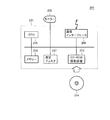
- FIG. 1 is a hardware block diagram of a computer which is an information processing apparatus in which a program for operation target information management processing executed in the embodiment of the present invention is installed.
- a computer 100 includes a computer main body 101 on which a CD-ROM (Compact Disk-Read Only Memory) driving device 113 is mounted, a monitor 102, a keyboard 103, and a mouse 104.
- CD-ROM Compact Disk-Read Only Memory
- the computer main body 101 includes a CPU (Central Processing Unit) 105, a memory 106, a fixed disk 107, which is a main storage device, connected to each other via a bus, And a communication interface 109.
- a CPU Central Processing Unit
- the operation target information management process is realized by the CPU 105 executing a program using computer hardware such as the memory 106.
- a program is stored in a storage medium such as the CD-ROM 114 or distributed via a network or the like.
- Such a program is read from a storage medium by the CD-ROM driving device 113 or the like or received by the communication interface 109 and stored in the fixed disk 107. Further, such a program is read from the fixed disk 107 to the memory 106 and executed by the CPU 105.
- the storage medium is not limited to a CD-ROM.
- Other examples of storage media include DVD-ROM (Digital Versatile Disk-Read Only Memory), USB (Universal Serial Bus) memory, memory card, FD (Flexible Disk), hard disk, magnetic tape, cassette tape, MO (Magnetic Non-volatile programs such as Optical Disc), MD (Mini Disc), IC (Integrated Circuit) card (excluding memory cards), optical card, mask ROM, EPROM, EEPROM (Electronically Erasable Programmable Read-Only Memory) are stored. Media to be used.
- the CPU 105 is an arithmetic processing unit that performs various numerical logic operations, and provides a control function according to the present embodiment by sequentially executing programmed instructions.
- the memory 106 stores various information according to the program execution of the CPU 105.
- the monitor 102 is a display device for displaying information output by the CPU 105, and includes, for example, an LCD (Liquid Crystal Display) or a CRT (Cathode Ray Tube).
- LCD Liquid Crystal Display
- CRT Cathode Ray Tube
- the mouse 104 receives a command from the user according to the operation such as click or slide.
- the keyboard 103 receives a command from a user corresponding to the input key.
- the communication interface 109 is a device for establishing communication between the computer 100 and another device, and can accept various data from the outside.
- FIG. 2 is a diagram schematically illustrating a functional configuration of the computer 100.
- the computer 100 includes an operation unit 150, an operation information acquisition unit 151, an information storage unit 152, an operation amount detection unit 153, an operation amount change detection unit 154, and a management process execution unit 155. including.
- the operation unit 150 receives an input of an operation from the outside, and includes a keyboard 103 and a mouse 104.
- the operation information acquisition unit 151 acquires information input for an operation such as editing on the operation target information (for example, a file) input to the operation unit 150, and based on the information, the operation target information Operation information about is generated.
- the information storage unit 152 that is a storage unit stores various information including operation target information, and is configured by the fixed disk 107, for example.
- the operation amount detection unit 153 acquires operation information from the operation information acquisition unit 151, and generates an operation record based on the operation information.
- the operation amount detection unit 153 generates an operation amount record based on the operation record. The contents of the operation record and operation amount record will be described later.
- the operation amount change detection unit 154 monitors the operation amount record generated by the operation amount detection unit 153, and detects whether or not there is a change in a predetermined condition in the operation amount record.
- the operation amount change detection unit 154 detects that there is a change corresponding to the condition in the operation amount recording
- the operation amount change detection unit 154 transmits an instruction to execute the management process to the management process execution unit 155.
- the instruction includes a management parameter (information specifying the type of management process) used for execution of the management process.
- the management processing execution unit 155 that is a management processing unit executes management processing on the operation target information recorded in the information storage unit 152 based on the information transmitted from the operation amount change detection unit 154.
- the management process is used in the present specification in a different meaning from the above-described operation target information management process. For example, the backup process for the operation target information, the start of disclosure on the network to which the computer 100 is connected, Etc.
- the operation information acquisition unit 151, the operation amount detection unit 153, the operation amount change detection unit 154, and the management processing execution unit 155 are realized by the CPU 105 executing a program stored in the fixed disk 107, for example.
- the computer 100 may include a dedicated hardware element (LSI (Large Scale Integration)) for realizing the function of at least one of these.
- LSI Large Scale Integration
- FIG. 3 schematically shows an example of the configuration of the operation information acquired by the operation information acquisition unit 151.
- the operation information 300 includes an operation command 300A that is operation type information and incidental data 300B that is incidental information attached to the operation command 300A.
- the operation command 300A indicates the type of operation, and the accompanying data 300B indicates the content of the operation, for example.
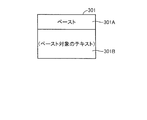
- FIG. 4 is a diagram showing a specific example of the example of the operation information shown in FIG. FIG. 4 shows, as an example of the operation information, operation information regarding an operation related to editing of the document file when the operation target information is a document file. More specifically, FIG. 4 shows operation information regarding an operation for pasting text into the document file.
- operation information 301 includes an operation command 301A of the operation type “paste” as operation command 301A, and includes pasted text as incidental data 301B.
- the operation information does not necessarily include incidental data. In some cases, it is composed only of operation commands such as an operation for overwriting and saving a file being edited, and does not include accompanying data.
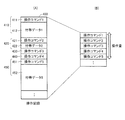
- FIG. 5 is a diagram for explaining the contents of calculation of the operation amount in the present embodiment.
- FIG. 5A schematically shows an example of the contents of the operation record generated in the operation amount detection unit 153.
- the operation record 400 includes operation information 410, 420, 430, 440, and 450.
- the operation information 410 includes an operation command 411 and accompanying data 412.
- the operation information 420 includes an operation command 421 and accompanying data 422.
- the operation information 430 and the operation information 440 are operation information including only operation commands.
- the operation information 450 includes an operation command 451 and incidental data 452.
- the operation information acquisition unit 151 Each time the operation information acquisition unit 151 receives an operation input from the operation unit 150, the operation information acquisition unit 151 generates operation information and transmits the operation information to a unit (not illustrated in FIG. 2) that performs processing on the operation target information. . Further, the operation information acquisition unit 151 sequentially transmits the generated operation information to the operation amount detection unit 153. The operation amount detection unit 153 generates operation records by sequentially accumulating operation information received from the operation information acquisition unit 151. Note that the generated operation information may be transmitted at regular intervals or at regular intervals, instead of being sequentially transmitted.
- the difference in the areas of the incidental data 412, the incidental data 422, and the incidental data 452 indicates the difference in the amount of information included in each incidental data. That is, in the present embodiment, the information amount of the operation information may change according to the information amount of the incidental data (for example, the amount of text included).
- the operation amount detection unit 153 calculates an operation amount for the certain period based on operation records accumulated for the certain period, for example, every certain period. For example, as shown in FIG. 5B, the calculation of the operation amount is realized by calculating the data amount for each operation information accumulated in the certain period and calculating the total of them. . The data amount of each piece of operation information is calculated, for example, by calculating the total amount of operation commands and incidental data.
- the operation command of the operation information and the incidental data are stored in the same hierarchy.
- the operation record in the operation amount detection unit 153 is not limited to be configured in this way.
- the operation command and the incidental data may be stored in different layers.
- FIG. 6 is a diagram illustrating a modification of the storage mode of operation records.
- the operation commands 411, 421, 430, 440, 451 are stored in a hierarchy one level higher than the incidental data 412, 422, 452.
- the operation amount may be calculated by the sum of the data amounts of only the incidental data in the operation records accumulated within the target period.
- the operation information is stored in a hierarchical manner as shown in FIG. 6, the data amount of only incidental data can be easily extracted. Therefore, when the operation amount is calculated based on the sum of the data amounts of only the incidental data, if the operation record is stored as shown in FIG. 6, the process for calculating the operation amount can be simplified.
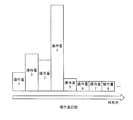
- FIG. 7 is a diagram schematically illustrating an example of the configuration of the operation amount recording generated in the operation amount detection unit 153.
- the operation amounts 1 to 8 indicate the operation amounts generated by the operation amount detection unit 153 based on, for example, operation records generated every predetermined period.
- the operation amounts 1 to 8 generated within a predetermined period longer than the predetermined period are shown in time series.
- the operation amount record is information configured by one or more operation amounts generated in a predetermined period longer than a certain period for each piece of processing target information.
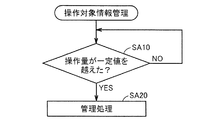
- FIG. 8 is a flowchart of the operation target information management process executed in the computer 100. Note that this processing is routinely performed for all the operation target information stored in the information storage unit 152 or specified operation target information (for example, a processing target in an application being executed in the computer 100). ) Is executed.
- the operation amount change detection unit 154 monitors the operation amount record in step SA10, so that the accumulated value of the operation amount for the operation target information to be processed is obtained. It is determined whether or not a certain value has been exceeded. This determination is realized by calculating the total of the operation amount generated at a certain time (see FIG. 7) up to the determination at step SA10 and determining whether the total exceeds the predetermined value. Is done.
- the operation amount change detection unit 154 determines that the predetermined value has been exceeded, the operation amount change detection unit 154 outputs an instruction to the management process execution unit 155 to execute the management process, and advances the process to step SA20.
- step SA20 the management process execution unit 155 executes the management process instructed by the operation amount change detection unit 154, and ends the process.
- FIG. 11 is a diagram for specifically explaining the contents of the operation target information management process described with reference to FIG.
- FIG. 11 shows the change over time of the operation amount for certain operation target information.
- the total operation amount up to time TA is the above-described constant value.
- the operation amount up to time TA is shown with hatching.
- the operation amount change detection unit 154 determines that the operation amount for the certain operation target information exceeds a certain value at the time TA (when YES is determined in Step SA10).
- the operation target information when the total operation amount for the operation target information exceeds a certain value, as the management process, the operation target information can be viewed from other devices via the network. It is assumed that processing for rewriting management information (operation target information management data, operation target information metadata, etc.) is set.
- step SA20 the management process execution unit 155 rewrites the above information about the operation target information that is the processing target. Thereby, after the time TA, the operation target information that is the processing target is “disclosed” via the network.
- step SA20 the management process execution unit 155 rewrites the information. Instead, information for instructing rewriting may be transmitted to the subject that rewrites the information.
- FIG. 9 is a flowchart of a modification of the operation target information management process described with reference to FIG.
- the operation amount change detection unit 154 performs the management process execution unit 155 every time the total operation amount for the operation target information that is the processing target exceeds a certain value as the process of step SA10. In response to this, an instruction is output to execute the management process, and the process proceeds to step SA20.
- step SA20 the management process execution unit 155 executes the management process based on an instruction from the operation amount change detection unit 154, and then returns the process to step SA10.
- step SA10 operation information other than the operation information used for calculating the total operation amount in the process of the previous step SA10 is used, that is, after the previous step SA10.
- the operation amount is calculated using the accumulated operation information.
- the management process is executed every time the total operation amount for the operation target information that is the processing target exceeds a certain value.
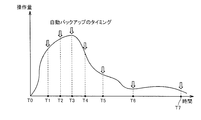
- FIG. 12 is a diagram for explaining the contents of the processing described with reference to FIG. In FIG. 12, similarly to FIG. 11, the time change of the operation amount per unit time with respect to the operation target information that is the processing target is shown.
- generation of the operation amount record is started from time T0.
- the operation amount is from time T0 to T1, from time T1 to T2, from T2 to T3, from T3 to T4, from T4 to T5, from T5 to T6, and from T6 to T7. It is assumed that the total of exceeds the fixed value. In such a case, the process proceeds to step SA20 (see FIG. 9) at each timing of times T1, T2, T3, T4, T5, T6, and T7.
- the management process includes a backup process of the operation target information that is the process target.
- the operation target information is automatically backed up at each timing indicated by arrows in FIG.
- the operation target that is the processing target Automatic backup of information is executed.
- automatic backup is executed at short intervals so that the creator's effort is not wasted during the time when the creator performed the editing work densely, that is, the time when the creator invested the ability closely. Is done.
- the automatic backup interval becomes longer in a time zone in which the creator does not perform much editing operations. That is, the frequency of the automatic backup process changes depending on the density of the editing operation by the creator.
- FIG. 10 is a flowchart of a second modification of the operation target information management process in the present embodiment.
- the operation amount change detection unit 154 first detects a time change of the operation amount in step SA11 and determines whether or not the operation amount has passed a peak. If it is determined that it has passed the peak, the process proceeds to step SA12. Note that passing the peak corresponds to, for example, obtaining a maximum value in the change in the operation amount.
- step SA12 the operation amount change detection unit 154 determines whether or not the operation amount per unit time for the operation target information to be processed has decreased to a predetermined value (Lth1), and determines that it has decreased.
- the operation amount change detection unit 154 instructs the management process execution unit 155 to execute the management process, and advances the process to step SA20.
- step SA20 the management process execution unit 155 executes a predetermined management process and ends the process.
- FIG. 13 is a diagram for explaining the contents of the operation target information management process described with reference to FIG.
- FIG. 13 shows the change over time in the operation amount per unit time for the operation target information that is the processing target, as in FIG. 11 and the like.
- the operation amount per unit time decreases after reaching the maximum value (Lmax1) at time TB. And the said operation amount is falling to the above-mentioned predetermined value (Lth1) at time TC.
- the operation amount change detection unit 154 determines that the operation amount for the operation target information that is the processing target has passed the peak at time TB (YES in step SA11 in FIG. 10). Time).
- the management process execution unit 155 executes the management process (step SA20 in FIG. 10) at time TC.
- the management process executed in this example for example, a process for updating the management information of the operation target information so that the operation target information to be processed is disclosed on the network.
- the operation target information that is a processing target can be browsed from other terminals on the network after time TC, that is, is disclosed.
- FIG. 14 is a diagram illustrating an example of a functional configuration of the computer 100.
- the computer 100 includes an operating system (OS) 190, an application execution unit 192, and a management process execution unit 155 as its functions.
- OS operating system
- application execution unit 192 application execution unit 192
- management process execution unit 155 management process execution unit 155 as its functions.
- the OS 190 includes a file system 190C that operates resources of the auxiliary storage device 194, a memory system 190B that operates resources of the main storage device 196, a network system 190D that controls communication functions, and an integrated management unit 190A.
- the integrated management unit 190A controls operations of the memory system 190B, the file system 190C, and the network system 190D.
- the integrated management unit 190A receives input of information from the user interface 197, instructs the management processing execution unit 155 to execute management processing, and transmits / receives information to / from the application execution unit 192.
- the user interface 197 corresponds to the operation unit 150 in FIG. 2 and is realized by the keyboard 103 and the mouse 104 in FIG.
- the auxiliary storage device 194 is realized by the fixed disk 107 or the CD-ROM 114 shown in FIG. 1, and the main storage device 196 is realized by the memory 106 shown in FIG.
- the operation target information stored in the auxiliary storage device 194 is expanded in the main storage device 196.
- the expanded data is shown as operation target information data.
- the integrated management unit 190A receives an operation on the operation target information from the user interface 197 or the application execution unit 192. Then, the integrated management unit 190A executes processing for the operation target information stored in the auxiliary storage device 194 according to the type of the operation, or stores the operation target information data stored in the main storage device 196. Decide whether to execute the process.
- operations to the operation target information stored in the auxiliary storage device 194 include “open”, “close (close)”, “read file ( read ”,“ save ”, and“ overwrite ”.
- the types of operations for which the operation target information data stored in the main storage device 196 are to be processed include “text input”, “copy”, “paste”, “insert ( insert) ”and“ delete ”.
- the operation amount of the operation target information is calculated regardless of the type of operation command, that is, regardless of the type of operation. It was done.
- the operation amount may be calculated by distinguishing depending on the location (the auxiliary storage device 194 or the main storage device 196) where the information to be operated is stored.
- the operation on the information stored in the main storage device 196 tends to reflect the operator's effort more than the operation on the information stored in the auxiliary storage device 194. Therefore, when calculating the operation amount in this embodiment, the operation amount of the operation for the information stored in the auxiliary storage device 194 is added as it is, but the operation for the information stored in the main storage device 196 Processing such that the operation amount is calculated by adding the operation amount by a factor of three and the latter operation is more greatly reflected when calculating the operation amount may be performed.
- the application execution unit 192 performs processing based on an operation input to the user interface 197 or an operation input input from the outside via the network system 190D. Manipulate information. In the present embodiment, the operation amount may be added to the operation that the application execution unit 192 voluntarily adds as described above.
- operation records are stored in the main storage device 196.
- the operation record is stored in the main storage device 196.
- the operation record is generated in association with the operation target information data when it is generated. When the operation target information data is deleted, it is deleted accordingly.
- the operation record may be a file managed by the file system 190C.
- an unauthorized access to the computer 100 acquires a history related to the editing of the operation target information from the operation record, and based on this, the content of the operation target information is estimated, leading to information leakage. Therefore, when the operation record is a file managed by the file system 190C, it is considered that special consideration regarding unauthorized access is required.
- management processing execution unit 155 is provided separately from the application execution unit 192, but the management processing execution unit 155 may be incorporated in the application execution unit 192.
- FIG. 15 is a diagram illustrating another example of the functional configuration of the computer 100.
- a configuration corresponding to the management processing execution unit 155 may be provided as a management processing system 190E in the OS 190 as shown in FIG.
- creation of operation records and operation amount records, and execution of management processing are executed in the OS 190.
- the management processing system 190E may execute all of the management processing, and a part of the management processing is an application that receives a notification from the management processing system 190E instead of the management processing system.
- the execution unit 192 or the management process execution unit (corresponding to the management process execution unit 155 in FIG. 14 and not shown in FIG. 15), the user interface 197, or an external device may be executed.
- FIG. 16 shows a client / server system in which a server detects an operation amount of an operation performed by a client, and detects the operation amount and the like.
- FIG. 16 is a diagram showing a schematic configuration of a client / server system according to this modification.
- server 200 is connected to client terminals 100A to 100F via network 500.
- the hardware configuration of the client terminals 100A to 100F can be the same as that described in FIG.
- FIG. 17 is a diagram illustrating a hardware configuration of the server 200.
- server 200 includes a main body 201 on which a CD-ROM driving device 213 is mounted, and a monitor 202.
- the main body 201 includes, in addition to the CD-ROM drive device 213, a CPU 205, which is an arithmetic device, a memory 206, a fixed disk 207, which is a storage device, and a communication interface 209, which are connected to each other via a bus.
- a CPU 205 which is an arithmetic device
- a memory 206 which is an arithmetic device
- a fixed disk 207 which is a storage device
- a communication interface 209 which are connected to each other via a bus.
- the operation target information management process is realized by the CPU 205 executing a program using computer hardware such as the memory 206.
- a program is stored in a storage medium such as the CD-ROM 214 or distributed via a network or the like.
- Such a program is read from a storage medium by the CD-ROM driving device 213 or the like or received by the communication interface 209 and stored in the fixed disk 207. Further, such a program is read from the fixed disk 207 to the memory 206 and executed by the CPU 205.
- the storage medium is not limited to a CD-ROM.
- Other examples of storage media include DVD-ROM, USB memory, memory card, FD, hard disk, magnetic tape, cassette tape, MO, MD, IC card (excluding memory card), optical card, mask ROM, EPROM,
- a medium for storing the program in a nonvolatile manner, such as an EEPROM, may be mentioned.
- the CPU 205 is an arithmetic processing unit that performs various numerical logic operations, and provides a control function according to the present embodiment by sequentially executing programmed instructions.
- the memory 206 stores various information according to the program execution of the CPU 205.
- the monitor 202 is a display device for displaying information output by the CPU 205, and includes an LCD, a CRT, or the like as an example.
- the communication interface 209 is a device for establishing communication between the server 200 and another device, and can accept various data from the outside.
- FIG. 18 is a diagram schematically illustrating the function of the server 200.
- server 200 has, as its functions, operation information acquisition unit 151, information storage unit 152, operation amount detection unit 153, operation amount change detection unit 154, and management process execution of computer 100.
- Elements corresponding to each of the units 155 include an operation information acquisition unit 251, an information storage unit 252, an operation amount detection unit 253, an operation amount change detection unit 254, and a management processing execution unit 255.
- operation information is input to the operation target information stored in the server 200 via the operation units (operation unit 150 in FIG. 2) of the client terminals 100A to 100F.
- the operation information acquisition unit 251 of the server 200 generates operation information about the operation target information in response to input from the client terminals 100A to 100F.
- the operation amount detection unit 253 generates an operation record based on the operation information received from the operation information acquisition unit 251 and generates an operation amount record.
- the operation amount change detection unit 254 executes the operation target information management process described with reference to FIGS.
- the preciousness or importance of the operation target information stored in the server 200 is reflected in the change in the operation amount and reflected in the execution of the management process for the operation target information. be able to. Accordingly, it is possible to execute an appropriate management process for the operation target information without showing the contents of the operation target information to the administrator of the server 200 or the like.
- the operation record is also deleted from the main storage device 196.
- FIG. 19 shows a flowchart of the operation target information management process executed in such a case.
- step SB10 operation amount change detection unit 154 determines whether or not a first period (for example, 24 hours) has elapsed from the recording of the operation amount in step SB30 described later. If it is determined that it has not yet elapsed, the process proceeds to step SB20.
- a first period for example, 24 hours
- step SB20 the operation amount change detection unit 154 determines whether or not it is the timing at which the operation record is deleted in the main storage device 196. If so, the process proceeds to step SB30. If determined, the process returns to step SB10.
- step SB30 the operation amount change detection unit 154 detects the operation amount for the operation input from the user interface 197 or the like, stores it in the operation record, and advances the process to step SB40.
- step SB40 the operation amount change detection unit 154 determines whether or not a second period (for example, one week) has elapsed since the execution of step SB50 described later, and determines that it has not yet elapsed. The process returns to step SB10. On the other hand, if it is determined that the time has elapsed, the operation amount change detection unit 154 advances the processing to Step SB50.
- a second period for example, one week
- step SB50 the operation amount change detection unit 154 executes processing for detecting an operation amount change.
- the process for detecting the operation amount change includes, for example, the process of step SA10 in FIG. 8 and the processes of step SA11 and step SA12 in FIG. Then, as a result of these detections, when the mode of change in the operation amount satisfies the condition for executing the management process, the operation amount change detection unit 154 advances the process to step SB60.
- satisfying the condition means, for example, a determination of YES in step SA10 of FIG. 8 or a determination of YES in step SA11 of FIG. 10 and a determination of YES in step SA12. Is mentioned.
- step SB50 the operation amount change detection unit 154 transmits information instructing execution of the management process to the management process execution unit 155, and advances the process to step SB60.
- step SB60 the management process execution unit 155 executes the management process in the same manner as in step SA20 (FIG. 8 and the like), and returns the process to step SB10.
- the operation amount record based on the operation record is not only performed for a certain period of time, but also at the timing when the operation record is deleted from the main storage device 196.
- the contents are updated using the record.
- the operation target information is a document file
- the operation information is related to the editing operation of the document
- an operation target related to editing such as paste is given as an example of the operation amount calculation method.
- the sum of the amount of text and the amount predetermined for each operation command is used as the operation amount of each operation information.
- the operation amount of each operation information may be only the amount of text.
- the operation amount of each operation information may be calculated based on data excluding incidental data such as the amount of text in the operation information, that is, only operation commands.
- a value obtained by quantizing the amount of text may be used instead of the amount of text.
- the number of words in the text for example, a unit posted in a dictionary registered in advance may be one word
- the number of control symbols punctctuation marks and / or punctuation marks
- the operation target information is not limited to a document file, and may be image data or the like.
- the amount of the text may be the number of strokes and the area of filling when drawing the image data.
- N times N is a number greater than 1 such as “4”
- the size that contributes to the editing of the document for each operation command can be reflected in the operation amount.
- the management process is executed based on the change in the operation amount for the operation target information such as the document file, the image data, and the content.
- the change in the operation amount may be a cumulative value as described with reference to FIG. 11, or may be an increase amount for a certain period as described with reference to FIG. 12.
- the condition regarding the change pattern as described with reference to FIG. 13 may be satisfied (for example, after the maximum value is taken, it decreases to a constant value).
- the importance of the operation target information can be appropriately reflected while maintaining the security strength.
- 100 computer 100A to 100F client terminal, 102, 202 monitor, 106, 206 memory, 107, 207 fixed disk, 109, 209 communication interface, 150 operation unit, 151, 251 operation information acquisition unit, 152, 252 information storage unit, 153, 253 Operation amount detection unit, 154 Operation amount change detection unit, 155, 255 management processing execution unit, 190A integrated management unit, 190B memory system, 190C file system, 190D network system, 190E management processing system, 192 application execution unit, 194 auxiliary storage, 196 main storage, 197 user interface, 200 servers.
Landscapes
- Engineering & Computer Science (AREA)
- Theoretical Computer Science (AREA)
- Physics & Mathematics (AREA)
- General Engineering & Computer Science (AREA)
- General Physics & Mathematics (AREA)
- Quality & Reliability (AREA)
- Data Mining & Analysis (AREA)
- Databases & Information Systems (AREA)
- Information Retrieval, Db Structures And Fs Structures Therefor (AREA)
Abstract
コンピューター(100)は、記憶装置に記憶された操作対象情報に対する管理処理を実行する。コンピューター(100)において、操作量検出部(153)は、操作対象情報に対する操作量を検出する。操作量変化検知部(154)は、操作量検出部(153)が検出した操作量の変化を検知する。そして、管理処理部(155)が、操作量変化検知部(154)の検知結果に基づいて管理処理を行なう。
Description
本発明は、操作対象情報に対する管理処理を実行するための情報処理装置に関する。
近年の情報技術機器の普及により、多くの人々がファイル等の操作対象情報を扱うようになってきている。このような現代において、操作対象情報は、日々増え続け、その整理・保存・保護・公開などの管理が必要とされる場合がある。そして、このような膨大になる情報の管理を効果的に行なえるようにするため、従来から、その公開の開始や停止、消去の取扱いの決定などのメンテナンスを行なうための技術が種々開示されている。
たとえば、特許文献1(特開2001-51762号公報)には、ファイルごとに、アクセス履歴をグラフ状アイコンにして表示することにより、各ファイルのアクセス履歴をユーザーに容易に認識させるための技術が開示されている。
また、特許文献2(特開2005-258511号公報)には、文書ごとに、参照頻度や保管期限、重要度に基づいて、自動でメンテナンスを行なう技術が開示されている。
また、特許文献3(特開2004-164659号公報)には、クライアントからの操作履歴を収集して、当該操作履歴の表示等を行なう技術が開示されている。
また、特許文献4(特表2008-515120号公報)には、アクセス頻度や最終アクセス時間などのファイル属性に基づいて、当該ファイルをファイルサーバー間で移動させる技術が開示されている。
また、特許文献5(特開2001-273147号公報)には、サーバ計算機は、保持されている情報のうち、バージョンアップされた情報がその旧情報と構成が同じである場合には旧情報を削除対象リストに入れる技術が開示されている。
上記した従来の技術では、アクセス履歴等に注目し、最終更新日の古さやアクセスの総回数で仕分けして、操作対象情報の管理がなされていた。しかしながら、このような方法では、操作対象情報の作成や編集に関わった者にとっての労力や心情的な貴重さや重要度を管理内容に反映することはできないと考えられる。
なお、たとえば管理者が操作対象情報の中身を閲覧し、その重要度等を判断して、管理処理の内容を決定することも考えられる。しかしながら、管理のためとはいえ、管理者がその内容を閲覧することは、情報漏えいの危険が高まるなどのセキュリティ面での不安が存在する。
本発明は、かかる実情に鑑み考え出されたものであり、その目的は、操作対象情報の管理において、セキュリティ強度を保持しつつ、当該操作対象情報の重要度を適切に反映させることである。
本発明に従った情報処理装置は、記憶装置に記憶された操作対象情報に対する管理処理を実行するための情報処理装置である。当該情報処理装置は、操作対象情報に対する操作量を検出するための操作量検出部と、操作量検出部が検出した操作量の変化を検知する操作量変化検知部と、操作量変化検知部の検知結果に基づいて管理処理を行なうための管理処理部とを備える。
好ましくは、操作対象情報に対する操作情報は、操作の種類を特定する操作種類情報と、当該操作種類情報に付帯する付帯情報とを含み、操作量検出部は、操作対象情報に対する操作情報から付帯情報を除いて操作量を検出する。
好ましくは、操作量検出部は、操作対象情報に対する操作情報を記録する記憶部を含む。
好ましくは、記憶部は、操作種類情報と付帯情報とを階層状に記録する。
好ましくは、操作量検出部は、操作対象情報に対する操作のうち、所定の条件に従って選別された操作についての操作量を検出する。
好ましくは、操作量検出部は、操作対象情報に対する操作のうち、所定の条件に従って選別された操作についての操作量を検出する。
好ましくは、操作量変化検知部は、操作量検出部により検出された操作量の合算量または粗密状況または推移傾向に基づいて管理処理の内容を特定する情報を生成し、管理処理部に対して出力し、管理処理部は、操作量変化検知部から入力された情報に従って、管理処理を実行する。
好ましくは、管理処理は、操作対象情報の整理、保存、保護、公開に関する情報の設定、または、これらの指示に対するアラートの出力である。
好ましくは、操作対象情報に対する操作情報は、情報処理装置のユーザーインターフェース、もしくは、外部装置から入力され、または、情報処理装置において実行されるアプリケーション内の処理において発生する。
好ましくは、情報処理装置は、情報処理における作業用の記憶領域をさらに備え、操作量検出部は、記憶装置または作業用の記憶領域に記憶された操作対象情報に対する操作量を検出する。
好ましくは、情報処理装置は、プログラムを記憶する主記憶装置と、主記憶装置に記憶されたプログラムを実行するプロセッサとをさらに備え、主記憶装置には、情報処理装置における基本的な機能を実行するための基本プログラムが記憶され、操作量検出部および操作量変化検知部は、プロセッサが、基本プログラムまたは情報処理装置に記憶されたアプリケーションプログラムを実行することによって実現される。
好ましくは、情報処理装置は、互いに接続される第1の情報端末と第2の情報端末によって構成され、操作量検出部は、第1の情報端末によって構成され、操作量変化検知部は、第2の情報端末によって構成される。
本発明によれば、操作対象情報に対する操作量の変化に基づいて管理処理が実行される。これにより、操作対象情報の作成や編集における労力等を管理処理に反映させることができる。したがって、操作対象情報の管理において、セキュリティ強度を保持しつつ、当該操作対象情報の重要度を適切に反映させることができる。
本発明の実施の形態について、図面を参照しながら詳細に説明する。なお、図中の同一または相当部分については、同一符号を付してその説明は繰返さない。
<ハードウェア構成>
図1は、本発明の実施の形態において実行される操作対象情報管理処理のプログラムをインストールされた情報処理装置であるコンピューターのハードウェアブロック図である。
図1は、本発明の実施の形態において実行される操作対象情報管理処理のプログラムをインストールされた情報処理装置であるコンピューターのハードウェアブロック図である。
図1を参照して、コンピューター100は、CD-ROM(Compact Disk-Read Only Memory)駆動装置113を搭載したコンピューター本体101と、モニター102と、キーボード103と、マウス104とを含む。
コンピューター本体101は、CD-ROM駆動装置113に加えて、相互にバスで接続された、演算装置であるCPU(Central Processing Unit)105と、メモリー106と、主記憶装置である固定ディスク107と、通信インターフェース109とを含む。
本実施の形態に従う操作対象情報管理処理は、CPU105がメモリー106などのコンピューターハードウェアを用いて、プログラムを実行することで実現される。一般的に、このようなプログラムは、CD-ROM114などの記憶媒体に格納されて、またはネットワークなどを介して流通する。そして、このようなプログラムは、CD-ROM駆動装置113などにより記憶媒体から読取られて、または通信インターフェース109にて受信されて、固定ディスク107に格納される。さらに、このようなプログラムは、固定ディスク107からメモリー106に読出されて、CPU105により実行される。
なお、記憶媒体はCD-ROMに限定されない。記憶媒体の他の例としては、DVD-ROM(Digital Versatile Disk - Read Only Memory)、USB(Universal Serial Bus)メモリー、メモリーカード、FD(Flexible Disk)、ハードディスク、磁気テープ、カセットテープ、MO(Magnetic Optical Disc)、MD(Mini Disc)、IC(Integrated Circuit)カード(メモリーカードを除く)、光カード、マスクROM、EPROM、EEPROM(Electronically Erasable Programmable Read-Only Memory)などの、不揮発的にプログラムを格納する媒体が挙げられる。
CPU105は、様々な数値論理演算を行なう演算処理部であり、プログラムされた命令を順次実行することで、本実施の形態に従う制御機能を提供する。メモリー106は、CPU105のプログラム実行に応じて各種の情報を記憶する。
モニター102は、CPU105が出力する情報を表示するための表示装置であって、一例としてLCD(Liquid Crystal Display)やCRT(Cathode Ray Tube)などから構成される。
マウス104は、クリックやスライドなどの動作に応じたユーザーから指令を受付ける。キーボード103は、入力されるキーに応じたユーザーから指令を受付ける。
通信インターフェース109は、コンピューター100と他の装置との間の通信を確立するための装置であり、各種データを外部から受付可能である。
なお、上述したようなコンピューターの構成に代えて、その一部または全部を専用のハードウェアによって構成されることにより、操作対象情報管理処理が実現されてもよい。
<機能構成>
図2は、コンピューター100の機能構成を模式的に示す図である。
図2は、コンピューター100の機能構成を模式的に示す図である。
図2を参照して、コンピューター100は、操作部150と、操作情報取得部151と、情報記憶部152と、操作量検出部153と、操作量変化検知部154と、管理処理実行部155とを含む。
操作部150は、外部からの操作の入力を受付け、キーボード103と、マウス104とによって構成される。
操作情報取得部151は、操作部150に対して入力された、操作対象情報(たとえば、ファイル)に対する編集等の操作のために入力された情報を取得し、当該情報に基づいて、操作対象情報についての操作情報を生成する。
記憶部である情報記憶部152は、操作対象情報を含む種々の情報を記憶するものであり、たとえば、固定ディスク107により構成される。
操作量検出部153は、操作情報取得部151から操作情報を取得し、当該操作情報に基づいて、操作記録を生成する。また、操作量検出部153は、操作記録に基づいて、操作量記録を生成する。操作記録および操作量記録の内容については、後述する。
操作量変化検知部154は、操作量検出部153が生成した操作量記録を監視し、当該操作量記録において予め定められた条件に沿った変化があったか否かを検知する。
そして、操作量変化検知部154は、上記操作量記録において、上記条件に対応する変化があったことを検知すると、管理処理実行部155に、管理処理の実行の指示を送信する。当該指示は、管理処理の実行に利用される管理のパラメーター(管理処理の種類を特定する情報等)を含む。管理処理部である管理処理実行部155は、情報記憶部152に記録された操作対象情報について、操作量変化検知部154から送信された情報に基づいて、管理処理を実行する。管理処理とは、本明細書では上記した操作対象情報管理処理とは別の意味で用いられ、たとえば、当該操作対象情報についてのバックアップ処理や、コンピューター100が接続するネットワーク上での公開の開始、等が挙げられる。
操作情報取得部151、操作量検出部153、操作量変化検知部154、および、管理処理実行部155は、たとえば、CPU105が固定ディスク107に記憶されたプログラムを実行することにより、実現される。なお、コンピューター100では、これらの少なくとも1つについて、その機能を実現するための専用のハードウェア要素(LSI(Large Scale Integration))を備えていてもよい。
<操作情報>
図3に、操作情報取得部151が取得する操作情報の構成の一例を模式的に示す。
図3に、操作情報取得部151が取得する操作情報の構成の一例を模式的に示す。
図3を参照して、操作情報300は、操作種類情報である操作コマンド300Aと、当該操作コマンド300Aに付帯する付帯情報である付帯データ300Bとを含む。操作コマンド300Aは、操作の種類を示し、付帯データ300Bは、たとえば、操作の内容を示す。
図4は、図3に示した操作情報の一例についての、具体例を示す図である。
図4には、操作情報の一例として、操作対象情報が文書ファイルである場合の、当該文書ファイルの編集に関する操作についての操作情報が示されている。より具体的には、図4には、当該文書ファイルにテキストをペーストする操作についての操作情報が示されている。
図4には、操作情報の一例として、操作対象情報が文書ファイルである場合の、当該文書ファイルの編集に関する操作についての操作情報が示されている。より具体的には、図4には、当該文書ファイルにテキストをペーストする操作についての操作情報が示されている。
図4を参照して、操作情報301は、操作コマンド301Aとして、操作の種類「ペースト」の操作コマンド301Aを含み、また、付帯データ301Bとして、ペーストされたテキストを含む。
なお、操作情報は、必ずしも付帯データを含んでいなくともよい。編集中のファイルを上書き保存するための操作等、操作コマンドのみによって構成され、付帯データを含まない場合もある。
<操作記録>
図5は、本実施の形態における操作量の算出の内容を説明するための図である。
図5は、本実施の形態における操作量の算出の内容を説明するための図である。
図5の(A)には、操作量検出部153において生成される操作記録の内容の一例が模式的に示されている。
図5の(A)を参照して、操作記録400が示されている。操作記録400は、操作情報410,420,430,440,450を含む。
操作情報410は、操作コマンド411と付帯データ412を含む。操作情報420は、操作コマンド421と付帯データ422とを含む。操作情報430および操作情報440は、操作コマンドのみからなる操作情報である。そして、操作情報450は、操作コマンド451と付帯データ452とを含む。
操作情報取得部151は、操作部150から操作のための入力を受付ける度に、操作情報を生成し、当該操作情報を操作対象情報に対する処理を実行する手段(図2では図示略)へ送信する。また、操作情報取得部151は、生成した操作情報を、操作量検出部153へ順次送信する。操作量検出部153は、操作情報取得部151から受信した操作情報を順次蓄積することにより、操作記録を生成する。なお、生成された操作情報は、順次送信される代わりに、一定量ごとに、または一定時間ごとに、送信されても良い。
図5の(A)の操作記録において、付帯データ412と付帯データ422と付帯データ452の面積の差は、各付帯データが含む情報量の差を示している。つまり、本実施の形態において、操作情報の情報量は、付帯データの情報量(たとえば、含まれるテキストの量)に応じて変化する場合がある。
操作量検出部153は、たとえば一定期間毎に、当該一定期間に蓄積した操作記録に基づいて、当該一定期間についての操作量を算出する。操作量の算出は、たとえば、図5の(B)に示されるように、当該一定期間に蓄積された各操作情報についてデータ量が算出され、それらの合計を算出されることにより、実現される。各操作情報のデータ量は、たとえば、操作コマンドおよび付帯データのデータ量の合計を算出することにより、算出される。
なお、本実施の形態において、操作記録では、図5の(A)に示されたように、操作情報の操作コマンドと付帯データとが、同じ階層で記憶されていた。なお、操作量検出部153における操作記録は、このように構成されるようには限定されない。たとえば、図6に示されるように、操作コマンドと付帯データとが、異なる階層で記憶されていてもよい。図6は、操作記録の記憶態様の変形例を示す図である。
図6に示した操作記録の例では、操作コマンド411,421,430,440,451が、付帯データ412,422,452よりも1つ上の階層で、記憶されている。操作量は、対象となる期間内に蓄積した操作記録における、付帯データのみのデータ量の合計によって算出されても良い。図6に示されたように階層状で操作情報が記憶されると、付帯データのみのデータ量を容易に抽出できる。よって、付帯データのみのデータ量の合計によって操作量が算出される場合、図6に示されたように操作記録が記憶されると、操作量の算出のための処理が簡略化できる。
<操作量記録>
図7は、操作量検出部153において生成される操作量記録の構成の一例を、模式的に示す図である。
図7は、操作量検出部153において生成される操作量記録の構成の一例を、模式的に示す図である。
図7において、操作量1~8は、それぞれ、たとえば一定期間毎に生成された操作記録に基づいて、操作量検出部153が生成した操作量を示している。図7では、一定期間より長い所定期間内に生成された操作量1~8が、時系列に従って示されている。本実施の形態において、操作量記録は、処理対象情報ごとに、一定期間より長い所定期間において生成された1以上の操作量によって構成される情報である。
<操作対象情報管理処理>
図8は、コンピューター100において実行される操作対象情報管理処理のフローチャートである。なお、本処理は、情報記憶部152に記憶されたすべての操作対象情報について定常的に、または、指定された操作対象情報(たとえば、コンピューター100における実行中のアプリケーションにおいて処理対象となっているもの)について、実行される処理である。
図8は、コンピューター100において実行される操作対象情報管理処理のフローチャートである。なお、本処理は、情報記憶部152に記憶されたすべての操作対象情報について定常的に、または、指定された操作対象情報(たとえば、コンピューター100における実行中のアプリケーションにおいて処理対象となっているもの)について、実行される処理である。
図8を参照して、操作対象情報管理処理では、操作量変化検知部154は、ステップSA10で、操作量記録を監視することにより、処理対象となる操作対象情報についての操作量の累積値が一定値を超えたか否かを判断する。この判断は、上記した一定時間毎に生成される操作量(図7参照)のステップSA10の判断時までの合計を算出し、当該合計が上記一定値を越えたか否かを判断することにより実現される。
そして、操作量変化検知部154は、一定値を超えたと判断すると、管理処理実行部155に対して管理処理を実行するように指示を出力し、そして、処理をステップSA20に進める。
ステップSA20では、管理処理実行部155が、操作量変化検知部154から指示された管理処理を実行して、処理を終了する。
図11は、図8を参照して説明した操作対象情報管理処理の内容を具体的に説明するための図である。
図11では、ある操作対象情報についての操作量の時間変化が示されている。図11に示された例において、時刻TAまでの操作量の合計が、上記した一定値であるとする。なお、図11では、時刻TAまでの操作量が、ハッチングを付されて、示されている。
この場合、操作量変化検知部154は、時刻TAの時点で、上記ある操作対象情報についての操作量が一定値を超えたと判断する(ステップSA10でYES判断時)。
この例では、操作対象情報についての操作量の合計が一定値を超えた場合、管理処理として、当該操作対象情報を、ネットワークを介して他の機器から閲覧できるように、当該操作対象情報についての管理情報(操作対象情報の管理用のデータ、操作対象情報のメタデータ、等)を書替える処理が設定されているとする。
これに従い、ステップSA20では、管理処理実行部155は、処理対象となっている操作対象情報についての上記情報の書替えを行なう。これにより、時刻TA以降は、処理対象となっている操作対象情報は、ネットワークを介して「公開」される。
なお、操作量が一定の要件を満たしたことを条件として操作対象情報の管理上のステータスが変更されるのであれば、ステップSA20において、管理処理実行部155は、自身が上記情報の書替えを行なう代わりに、上記情報の書替えを行なう主体に対し書替えを指示する情報を送信しても良い。
<操作対象情報管理処理の変形例(1)>
図9は、図8を参照して説明した操作対象情報管理処理の変形例のフローチャートである。
図9は、図8を参照して説明した操作対象情報管理処理の変形例のフローチャートである。
図9に示された例では、操作量変化検知部154は、ステップSA10の処理として、処理対象となっている操作対象情報に対する操作量の合計が一定値を超える度に、管理処理実行部155に対して管理処理を実行するように指示を出力するとともに、ステップSA20へ処理を進める。
ステップSA20では、管理処理実行部155は、操作量変化検知部154からの指示に基づいて管理処理を実行した後、ステップSA10へ処理を戻す。
なお、図9に示された例では、ステップSA10において、前回のステップSA10の処理において操作量の合計の算出に利用された操作情報以外の操作情報を用いて、つまり、前回のステップSA10以降に蓄積された操作情報を用いて、操作量を算出する。
図9を参照して説明した例では、上記したように、処理対象となっている操作対象情報に対する操作量の合計が一定値を超える度に、管理処理が実行される。
図12は、図9を参照して説明した処理の内容を説明するための図である。
図12では、図11と同様に、処理対象となっている操作対象情報に対する、単位時間当りの操作量の時間変化が示されている。
図12では、図11と同様に、処理対象となっている操作対象情報に対する、単位時間当りの操作量の時間変化が示されている。
この例では、時刻T0から操作量記録の生成が開始されている。そして、この例では、時刻T0からT1まで、時刻T1からT2まで、T2からT3まで、T3からT4まで、T4からT5まで、T5からT6まで、T6からT7までのそれぞれの期間で、操作量の合計が上記一定値を超えたものとする。このような場合、時刻T1,T2,T3,T4,T5,T6,T7のそれぞれのタイミングで、ステップSA20(図9参照)へ処理が進められる。
この例では、管理処理として、処理対象となっている操作対象情報のバックアップ処理が挙げられる。
以上の次第で、この例では、図12に矢印で示した各タイミングで、操作対象情報の自動バックアップが行なわれる。
つまり、この例では、一定時間毎ではなく、操作対象情報の編集等のために操作部150を介して入力された操作の操作量が一定値になる毎に、処理対象となっている操作対象情報の自動バックアップが実行される。これにより、作成者が編集作業を密に行なった時間帯、つまり、作成者が密に能力を投じた時間帯では、当該作成者の労力を無駄にしないように、短い間隔で自動バックアップが実行される。また、作成者があまり編集のための操作を行なわなかった時間帯には、自動バックアップの間隔が長くなることになる。つまり、作成者による編集等の操作の粗密に応じて、自動バックアップ処理の頻度の粗密が変化することとなる。
これにより、無駄な管理処理(たとえば、自動バックアップ)の実行を回避しつつ、作成者の努力が突然のシステムダウンなどにより無駄になることを極力回避することができる。
<操作対象情報管理処理の変形例(2)>
図10は、本実施の形態における操作対象情報管理処理の第2の変形例のフローチャートである。
図10は、本実施の形態における操作対象情報管理処理の第2の変形例のフローチャートである。
図10を参照して、この例の操作対象情報管理処理では、操作量変化検知部154は、まずステップSA11で、操作量の時間変化を検知し、当該操作量がピークを過ぎたか否かを判断し、ピークを過ぎたと判断するとステップSA12へ処理を進める。なお、ピークを過ぎたとは、たとえば、操作量の変化において極大値が得られたことに相当する。
ステップSA12では、操作量変化検知部154は、処理対象となっている操作対象情報についての単位時間当りの操作量が所定値(Lth1)まで減少したか否かを判断し、減少したと判断すると、操作量変化検知部154は、管理処理実行部155に対して管理処理の実行を指示して、ステップSA20へ処理を進める。
ステップSA20では、管理処理実行部155は、予め定められた管理処理を実行して処理を終了する。
図13は、図10を参照して説明した操作対象情報管理処理の内容を説明するための図である。
図13には、図11等と同様に、処理対象となっている操作対象情報についての単位時間当りの操作量の時間変化が示されている。
図13の例では、操作量の検出が開始された後、時刻TBで、単位時間当りの操作量が極大値(Lmax1)をとった後、減少している。そして、当該操作量は、時刻TCで、上記した所定値(Lth1)まで低下している。
図13に示された例では、操作量変化検知部154は、時刻TBで、処理対象となっている操作対象情報についての操作量がピークを過ぎたと判断する(図10のステップSA11でYES判断時)。
そして、時刻TCで、当該操作量が所定値(Lth1)まで減少したと判断する(図10のステップSA12でYES判断時)。
これにより、図13に示された例では、時刻TCで、管理処理実行部155は、管理処理(図10のステップSA20)を実行する。
この例において実行される管理処理としては、たとえば、処理対象となっている操作対象情報を、ネットワーク上で公開させるように、当該操作対象情報の管理情報を更新するための処理が挙げられる。この場合、処理対象となっている操作対象情報は、時刻TC以降で、ネットワーク上で、他の端末から閲覧可能に、つまり、公開される。
<実装例(1)>
図14は、コンピューター100の機能構成の一例を示す図である。
図14は、コンピューター100の機能構成の一例を示す図である。
図14を参照して、コンピューター100は、その機能として、オペレーティングシステム(OS)190と、アプリケーション実行部192と、管理処理実行部155とを含む。
OS190は、補助記憶装置194のリソースを操作するファイルシステム190Cと、主記憶装置196のリソースを操作するメモリーシステム190Bと、通信機能を制御するネットワークシステム190Dと、統合管理部190Aとを含む。統合管理部190Aは、メモリーシステム190B、ファイルシステム190C、および、ネットワークシステム190Dの動作を制御する。また、統合管理部190Aは、ユーザーインターフェース197からの情報の入力を受付け、管理処理実行部155に対して管理処理の実行を指示し、また、アプリケーション実行部192との間で情報を送受信する。
ユーザーインターフェース197は、図2の操作部150に対応し、図1のキーボード103およびマウス104により実現される。また、補助記憶装置194は、図1の固定ディスク107またはCD-ROM114により実現され、また、主記憶装置196は、図1のメモリー106によって実現される。
図14に示した機能構成では、補助記憶装置194に記憶された操作対象情報は、主記憶装置196に展開される。図14では、展開されたデータが、操作対象情報データとして示されている。
統合管理部190Aは、ユーザーインターフェース197またはアプリケーション実行部192から、操作対象情報に対する操作を受付ける。そして、統合管理部190Aは、当該操作の種類に応じて、補助記憶装置194に記憶された操作対象情報に対して処理を実行するか、主記憶装置196に記憶されている操作対象情報データに対して処理を実行するかを決定する。
たとえば、操作対象情報が文書ファイルである場合、補助記憶装置194に記憶された操作対象情報への操作としては、「開く(open)」、「ファイルを閉じる(close)」、「ファイルの読込(read)」、「保存(save)」、「上書き保存(overwrite)」が挙げられる。一方、主記憶装置196に記憶された操作対象情報データが処理対象となる操作の種類としては、「文字入力(texting)」、「コピー(copy)」、「貼付け(paste)」、「挿入(insert)」、「削除(delete)」が挙げられる。
本実施の形態では、図5を参照して説明したように、操作対象情報の操作量の算出の際には、操作コマンドの種類に関係なく、つまり操作の種類に関係なく、操作量が算出された。
なお、コンピューター100では、操作の対象となる情報が記憶されている場所(補助記憶装置194か、主記憶装置196か)によって区別して、操作量を算出してもよい。
たとえば、主記憶装置196に記憶された情報は補助記憶装置194に記憶された情報よりも高速にアクセスされる。このため、主記憶装置196に記憶された情報に対する操作は、補助記憶装置194に記憶された情報に対する操作よりも、操作者の労力がより大きく反映されている傾向がある。したがって、本実施の形態における操作量の算出の際には、補助記憶装置194に記憶された情報に対する操作の操作量はそのまま加算するが、主記憶装置196に記憶された情報に対する操作についてはその操作量を3倍にして加算して、操作量を算出する等、後者の操作が、操作量の算出の際により大きく反映されるような処理がなされてもよい。
また、アプリケーション実行部192は、ユーザーインターフェース197への操作入力またはネットワークシステム190D経由で外部から入力される操作入力に基づいて処理を行なうほかにも、当該アプリケーション実行部192が、自発的に操作対象情報に操作を加えることもある。本実施の形態では、このようにアプリケーション実行部192が自発的に加えた操作についても、操作量を加算してもよい。
図14の例では、操作記録が、主記憶装置196に記憶されている。操作記録は、主記憶装置196に記憶されている。操作記録は、操作対象情報データが生成されるとこれに関連付けて生成される。そして、操作対象情報データが消去されると、それに伴って、消去される。
図14の例において、操作記録を、ファイルシステム190Cの管理下のファイルとしてもよい。但し、コンピューター100に対する不正アクセスによって、当該操作記録から操作対象情報の編集に関する履歴を取得され、これに基づき、操作対象情報の内容が推測されて、情報漏洩に繋がる危険性も考えられる。したがって、操作記録をファイルシステム190Cの管理下のファイルとする際には、不正アクセスに関する特別の配慮が必要となると考えられる。
なお、図14に示された例では、管理処理実行部155が、アプリケーション実行部192とは別に設けられたが、管理処理実行部155は、アプリケーション実行部192に組込まれてもよい。
<実装例(2)>
図14を参照して説明した実装例では、管理処理実行部155は、OS190の外に設けられていた。
図14を参照して説明した実装例では、管理処理実行部155は、OS190の外に設けられていた。
図15は、コンピューター100の機能構成の他の例を示す図である。
コンピューター100において、管理処理実行部155に相当する構成が、図15に示されるように、OS190内に管理処理システム190Eとして設けられてもよい。図15の例では、操作記録および操作量記録の作成、ならびに、管理処理の実行が、OS190内で実行される。
コンピューター100において、管理処理実行部155に相当する構成が、図15に示されるように、OS190内に管理処理システム190Eとして設けられてもよい。図15の例では、操作記録および操作量記録の作成、ならびに、管理処理の実行が、OS190内で実行される。
なお、図15の例において、管理処理システム190Eは、管理処理のすべてを実行してもよいし、管理処理の一部は、管理処理システムの代わりに、管理処理システム190Eから通知を受けたアプリケーション実行部192または管理処理実行部(図14の管理処理実行部155に相当するものであって、図15では図示を省略)、ユーザーインターフェース197、または、外部装置が実行するようにしてもよい。
<クライアント・サーバーシステムによる構成例>
図16は、クライアント・サーバーシステムにおいて、クライアントによってなされた操作の操作量をサーバーで検知し、その操作量等を検出する。
図16は、クライアント・サーバーシステムにおいて、クライアントによってなされた操作の操作量をサーバーで検知し、その操作量等を検出する。
図16は、本変形例のクライアント・サーバーシステムの概略構成を示す図である。
図16を参照して、ネットワークシステムでは、サーバー200は、ネットワーク500を介して、クライアント端末100A~100Fと接続されている。クライアント端末100A~100Fのハードウェア構成は、図1に記載されたものと同じものとすることができる。
図16を参照して、ネットワークシステムでは、サーバー200は、ネットワーク500を介して、クライアント端末100A~100Fと接続されている。クライアント端末100A~100Fのハードウェア構成は、図1に記載されたものと同じものとすることができる。
図17は、サーバー200のハードウェア構成を示す図である。
図17を参照して、サーバー200は、CD-ROM駆動装置213を搭載した本体201と、モニター202とを含む。
図17を参照して、サーバー200は、CD-ROM駆動装置213を搭載した本体201と、モニター202とを含む。
本体201は、CD-ROM駆動装置213に加えて、相互にバスで接続された、演算装置であるCPU205と、メモリー206と、記憶装置である固定ディスク207と、通信インターフェース209とを含む。
本実施の形態に従う操作対象情報管理処理は、CPU205がメモリー206などのコンピューターハードウェアを用いて、プログラムを実行することで実現される。一般的に、このようなプログラムは、CD-ROM214などの記憶媒体に格納されて、またはネットワークなどを介して流通する。そして、このようなプログラムは、CD-ROM駆動装置213などにより記憶媒体から読取られて、または通信インターフェース209にて受信されて、固定ディスク207に格納される。さらに、このようなプログラムは、固定ディスク207からメモリー206に読出されて、CPU205により実行される。
なお、記憶媒体はCD-ROMに限定されない。記憶媒体の他の例としては、DVD-ROM、USBメモリー、メモリーカード、FD、ハードディスク、磁気テープ、カセットテープ、MO、MD、ICカード(メモリーカードを除く)、光カード、マスクROM、EPROM、EEPROMなどの、不揮発的にプログラムを格納する媒体が挙げられる。
CPU205は、様々な数値論理演算を行なう演算処理部であり、プログラムされた命令を順次実行することで、本実施の形態に従う制御機能を提供する。メモリー206は、CPU205のプログラム実行に応じて各種の情報を記憶する。
モニター202は、CPU205が出力する情報を表示するための表示装置であって、一例としてLCDやCRTなどから構成される。
通信インターフェース209は、サーバー200と他の装置との間の通信を確立するための装置であり、各種データを外部から受付可能である。
図18は、サーバー200の機能を模式的に示す図である。図2および図18を参照して、サーバー200は、その機能として、コンピューター100の操作情報取得部151、情報記憶部152、操作量検出部153、操作量変化検知部154、および、管理処理実行部155のそれぞれに対応する要素として、操作情報取得部251、情報記憶部252、操作量検出部253、操作量変化検知部254、および、管理処理実行部255を含む。
本変形例のネットワークシステムでは、サーバー200に格納された操作対象情報に対して、クライアント端末100A~100Fの操作部(図2の操作部150)を介して、操作情報が入力される。
サーバー200の操作情報取得部251は、クライアント端末100A~100Fからの入力に応じて、操作対象情報についての操作情報を生成する。
操作量検出部253は、操作情報取得部251から受信した操作情報により操作記録を生成し、そして、操作量記録を生成する。
そして、操作量変化検知部254は、図8~図10等を参照して説明した操作対象情報管理処理を実行する。
図16に示されたクライアント・サーバーシステムでは、サーバー200に格納された操作対象情報の貴重さや重要さを、その操作量の変化に反映させて、当該操作対象情報に対する管理処理の実行に反映させることができる。これにより、操作対象情報の内容を、サーバー200の管理者等に見せることなく、当該操作対象情報に対して適切な管理処理を実行させることができる。
<操作対象情報管理処理の変形例(3)>
図14を参照して説明したように、補助記憶装置194に格納された操作対象情報が、主記憶装置196に展開されて処理される場合、操作記録も、主記憶装置196に保存されていた。なお、このような場合、たとえば、ある期間(たとえば24時間)が経過する毎に、操作量が、操作量記録に記録される。
図14を参照して説明したように、補助記憶装置194に格納された操作対象情報が、主記憶装置196に展開されて処理される場合、操作記録も、主記憶装置196に保存されていた。なお、このような場合、たとえば、ある期間(たとえば24時間)が経過する毎に、操作量が、操作量記録に記録される。
なお、このような場合、たとえば、アプリケーションが終了するなど、主記憶装置196における操作対象情報データが削除される場合、操作記録も、主記憶装置196から削除される。このような場合には、操作記録が消去されるタイミングでも、補助記憶装置194に格納された操作量記録に、操作記録に蓄積された情報を反映させる必要がある。
このような場合に実行される操作対象情報管理処理のフローチャートを、図19に示す。
図19を参照して、操作量変化検知部154は、まずステップSB10において、後述するステップSB30における操作量の記録から第1の期間(たとえば、24時間)が経過したか否かを判断し、まだ経過していないと判断するとステップSB20へ処理を進める。
ステップSB20では、操作量変化検知部154は、主記憶装置196において操作記録が消去されるタイミングであるか否かを判断し、そうであると判断するとステップSB30へ処理を進め、そうではないと判断するとステップSB10へ処理を戻す。
ステップSB30では、操作量変化検知部154は、ユーザーインターフェース197等から入力される操作についての操作量を検出し、操作記録に記憶して、ステップSB40へ処理を進める。
ステップSB40では、操作量変化検知部154は、前回後述するステップSB50を実行してから第2の期間(たとえば、1週間)が経過したか否かを判断し、まだ経過していないと判断するステップSB10へ処理を戻す。一方、経過したと判断すると、操作量変化検知部154は、ステップSB50へ処理を進める。
ステップSB50では、操作量変化検知部154は、操作量変化の検知のための処理を実行する。ここで、操作量変化の検知のための処理とは、たとえば、図8のステップSA10の処理や、図10のステップSA11およびステップSA12の処理が挙げられる。そして、これらの検知の結果、操作量の変化の態様が、管理処理を実行する条件を満たすと、操作量変化検知部154は、ステップSB60へ処理を進める。ここで、条件を満たすとは、たとえば、図8のステップSA10においてYESの判断がなされたり、または、図10のステップSA11においてYESの判断をし、かつ、ステップSA12においてYESの判断をすること、が挙げられる。
なお、ステップSB50では、操作量変化検知部154は、管理処理実行部155に対して管理処理の実行を指示する情報を送信して、ステップSB60へ処理を進める。
ステップSB60では、管理処理実行部155は、ステップSA20(図8等)と同様に、管理処理を実行して、ステップSB10へ処理を戻す。
以上、図19を参照して説明した処理によれば、操作記録に基づいた操作量記録が、一定期間の経過だけでなく、操作記録が、主記憶装置196から消去されるタイミングでも、当該操作記録を用いてその内容が更新される。
<操作量算出の変形例>
以上説明した本実施の形態では、操作対象情報が文書ファイルであり、操作情報が文書の編集操作に関するものとされ、そして、操作量の算出方法の例として、たとえばペースト等の編集に関する操作の対象とされたテキストの量と操作コマンドごとに予め定められた量との和が、各操作情報の操作量とされた。なお、各操作情報の操作量は、テキストの量のみとされても良い。また、各操作情報の操作量は、操作情報のうち、テキストの量等の付帯データを除いたデータ、つまり、操作コマンドのみに基づいて算出されても良い。
以上説明した本実施の形態では、操作対象情報が文書ファイルであり、操作情報が文書の編集操作に関するものとされ、そして、操作量の算出方法の例として、たとえばペースト等の編集に関する操作の対象とされたテキストの量と操作コマンドごとに予め定められた量との和が、各操作情報の操作量とされた。なお、各操作情報の操作量は、テキストの量のみとされても良い。また、各操作情報の操作量は、操作情報のうち、テキストの量等の付帯データを除いたデータ、つまり、操作コマンドのみに基づいて算出されても良い。
また、テキストの量に代えて、テキストの量を量子化した値(たとえば、100文字ごとに1カウントアップされるようなカウンタのカウント値)とされても良いし、操作の対象とされたテキスト中の単語の数(たとえば、予め登録された辞書に掲載されている単位を1つの単語とする)とされても良いし、当該テキスト中の制御記号(句点および/または読点)の数とされても良い。
なお、操作対象情報は、文書ファイルに限定されず、画像データ等であっても良い。たとえば、画像データとされた場合、上記テキストの量は、当該画像データが生成される際の描画におけるストロークの数、塗りつぶしの面積とされても良い。
また、操作コマンドごとに予め定められた量の操作量を加算する場合、操作コマンドの種類によって異なる操作量が加算されても良い。たとえば、操作コマンドが、文書を開く(open)、保存する(save)等のように文書全体にかかるものについては、文書の部分にかかるもの(文字入力(texting)、貼り付け(paste)、等)のN倍(Nは、たとえば、「4」などの1より大きい数)の操作量が加算されるようにしても良い。これにより、操作コマンドごとの文書の編集に寄与する大きさを操作量に反映させることができる。
<実施の形態の効果等>
以上説明した本実施の形態によれば、文書ファイルや画像データ、コンテンツ等の操作対象情報に対する操作量の変化に基づいて管理処理が実行される。
以上説明した本実施の形態によれば、文書ファイルや画像データ、コンテンツ等の操作対象情報に対する操作量の変化に基づいて管理処理が実行される。
操作量の変化とは、図11を参照して説明したような累積値であっても良いし、図12を参照して説明したような一定期間ごとの増加量であっても良いし、図13を参照して説明したような変化パターンに関する条件を満たしたこと(たとえば、極大値をとった後、一定値まで低下する)であっても良い。
このような本実施の形態では、管理者等が操作対象情報の内容を閲覧しなくとも、自動的に、管理処理の実行に適した時期を検知し、管理処理を実行できる。また、管理処理の実行に適した時期には、操作対象情報の作成や編集における労力等を反映させることができる。ここでいう労力等とは、ある側面で、例えば、作成時に多量の操作を行なったもので簡単には再現・復旧できないので残しておきたいといった、ユーザーの主観的な重要度に対応する。
そして、このような本実施の形態によれば、操作対象情報の管理において、セキュリティ強度を保持しつつ、当該操作対象情報の重要度を適切に反映させることができる。
今回開示された各実施の形態およびその変形例はすべての点で例示であって制限的なものではないと考えられるべきである。本発明の範囲は上記した説明ではなくて請求の範囲によって示され、請求の範囲と均等の意味および範囲内でのすべての変更が含まれることが意図される。
100 コンピューター、100A~100F クライアント端末、102,202 モニター、106,206 メモリー、107,207 固定ディスク、109,209 通信インターフェース、150 操作部、151,251 操作情報取得部、152,252 情報記憶部、153,253 操作量検出部、154 操作量変化検知部、155,255 管理処理実行部、190A 統合管理部、190B メモリーシステム、190C ファイルシステム、190D ネットワークシステム、190E 管理処理システム、192 アプリケーション実行部、194 補助記憶装置、196 主記憶装置、197 ユーザーインターフェース、200 サーバー。
Claims (11)
- 記憶装置に記憶された操作対象情報に対する管理処理を実行するための情報処理装置(100)であって、
操作対象情報に対する操作量を検出するための操作量検出部(153)と、
前記操作量検出部(153)が検出した前記操作量の変化を検知する操作量変化検知部(154)と、
前記操作量変化検知部(154)の検知結果に基づいて管理処理を行なうための管理処理部(155)とを備える、情報処理装置(100)。 - 前記操作対象情報に対する操作情報は、操作の種類を特定する操作種類情報と、当該操作種類情報に付帯する付帯情報とを含み、
前記操作量検出部(153)は、前記操作対象情報に対する操作情報から前記付帯情報を除いて操作量を検出する、請求項1に記載の情報処理装置(100)。 - 前記操作量検出部(153)は、前記操作対象情報に対する操作情報を記録する記憶部を含む、請求項2に記載の情報処理装置(100)。
- 前記記憶部は、前記操作種類情報と前記付帯情報とを階層状に記録する、請求項3に記載の情報処理装置(100)。
- 前記操作量検出部(153)は、前記操作対象情報に対する操作のうち、所定の条件に従って選別された操作についての操作量を検出する、請求項1~請求項4のいずれかに記載の情報処理装置(100)。
- 前記操作量変化検知部(154)は、前記操作量検出部(153)により検出された前記操作量の合算量または粗密状況または推移傾向に基づいて前記管理処理の内容を特定する情報を生成し、前記管理処理部(155)に対して出力し、
前記管理処理部(155)は、前記操作量変化検知部(154)から入力された前記情報に従って、前記管理処理を実行する、請求項1~請求項5のいずれかに記載の情報処理装置(100)。 - 前記管理処理は、前記操作対象情報の整理、保存、保護、公開に関する情報の設定、または、これらの指示に対するアラートの出力である、請求項1~請求項6のいずれかに記載の情報処理装置(100)。
- 前記操作対象情報に対する操作情報は、前記情報処理装置(100)のユーザーインターフェース、もしくは、外部装置から入力され、または、前記情報処理装置(100)において実行されるアプリケーション内の処理において発生する、請求項1~請求項7のいずれかに記載の情報処理装置(100)。
- 情報処理における作業用の記憶領域をさらに備え、
前記操作量検出部(153)は、前記記憶装置または前記作業用の記憶領域に記憶された前記操作対象情報に対する操作量を検出する、請求項1~請求項8のいずれかに記載の情報処理装置(100)。 - プログラムを記憶する主記憶装置と、
前記主記憶装置に記憶されたプログラムを実行するプロセッサとをさらに備え、
前記主記憶装置には、前記情報処理装置(100)における基本的な機能を実行するための基本プログラムが記憶され、
前記操作量検出部(153)および前記操作量変化検知部(154)は、前記プロセッサが、前記基本プログラムまたは前記情報処理装置(100)に記憶されたアプリケーションプログラムを実行することによって実現される、請求項1~請求項9のいずれかに記載の情報処理装置(100)。 - 前記情報処理装置(100)は、互いに接続される第1の情報端末と第2の情報端末によって構成され、
前記操作量検出部(153)は、前記第1の情報端末によって構成され、
前記操作量変化検知部(154)は、前記第2の情報端末によって構成される、請求項1~請求項10のいずれかに記載の情報処理装置(100)。
Applications Claiming Priority (2)
| Application Number | Priority Date | Filing Date | Title |
|---|---|---|---|
| JP2011114617 | 2011-05-23 | ||
| JP2011-114617 | 2011-05-23 |
Publications (1)
| Publication Number | Publication Date |
|---|---|
| WO2012160870A1 true WO2012160870A1 (ja) | 2012-11-29 |
Family
ID=47216959
Family Applications (1)
| Application Number | Title | Priority Date | Filing Date |
|---|---|---|---|
| PCT/JP2012/058323 Ceased WO2012160870A1 (ja) | 2011-05-23 | 2012-03-29 | 情報処理装置 |
Country Status (1)
| Country | Link |
|---|---|
| WO (1) | WO2012160870A1 (ja) |
Citations (5)
| Publication number | Priority date | Publication date | Assignee | Title |
|---|---|---|---|---|
| JPH06202926A (ja) * | 1992-12-28 | 1994-07-22 | Fuji Xerox Co Ltd | ファイルアクセス履歴管理方式 |
| JPH11338753A (ja) * | 1998-05-26 | 1999-12-10 | Nippon Telegr & Teleph Corp <Ntt> | 自動電子化文書関係管理装置および自動電子化文書関係管理プログラムを記録した記録媒体 |
| JP2001209602A (ja) * | 2000-01-27 | 2001-08-03 | Matsushita Electric Ind Co Ltd | Url処理装置、url登録方法、url削除方法および記録媒体 |
| JP2004133538A (ja) * | 2002-10-08 | 2004-04-30 | Fujitsu Ltd | ファイルの自動バックアップシステムおよび自動バックアップ方法ならびにコンピュータ読取り可能な記録媒体 |
| JP2008123115A (ja) * | 2006-11-09 | 2008-05-29 | Toshiba Corp | 情報検索システム、情報検索方法及びプログラム |
-
2012
- 2012-03-29 WO PCT/JP2012/058323 patent/WO2012160870A1/ja not_active Ceased
Patent Citations (5)
| Publication number | Priority date | Publication date | Assignee | Title |
|---|---|---|---|---|
| JPH06202926A (ja) * | 1992-12-28 | 1994-07-22 | Fuji Xerox Co Ltd | ファイルアクセス履歴管理方式 |
| JPH11338753A (ja) * | 1998-05-26 | 1999-12-10 | Nippon Telegr & Teleph Corp <Ntt> | 自動電子化文書関係管理装置および自動電子化文書関係管理プログラムを記録した記録媒体 |
| JP2001209602A (ja) * | 2000-01-27 | 2001-08-03 | Matsushita Electric Ind Co Ltd | Url処理装置、url登録方法、url削除方法および記録媒体 |
| JP2004133538A (ja) * | 2002-10-08 | 2004-04-30 | Fujitsu Ltd | ファイルの自動バックアップシステムおよび自動バックアップ方法ならびにコンピュータ読取り可能な記録媒体 |
| JP2008123115A (ja) * | 2006-11-09 | 2008-05-29 | Toshiba Corp | 情報検索システム、情報検索方法及びプログラム |
Similar Documents
| Publication | Publication Date | Title |
|---|---|---|
| US7499930B2 (en) | Data processing apparatus, data processing method, and data processing program | |
| KR101130366B1 (ko) | 타임라인 기반의 컴퓨팅 환경을 이용하여 데이터를복구하기 위한 방법, 매체 및 시스템 | |
| US8135677B2 (en) | File management system and method | |
| US8799333B2 (en) | Delayed deletion of extended attributes | |
| JP5630190B2 (ja) | 更新管理装置、更新管理方法および更新管理プログラム | |
| WO2014012022A1 (en) | Historical view of open files | |
| CN108369606A (zh) | 文档的修订历史的可配置访问 | |
| CN107924357A (zh) | 作业管理装置、作业管理方法和作业管理程序 | |
| KR101181980B1 (ko) | 보안성을 강화한 데이터 영구 삭제 방법 | |
| WO2012160870A1 (ja) | 情報処理装置 | |
| JP5845961B2 (ja) | 情報処理装置及び情報処理プログラム | |
| EP2096545B1 (en) | Method and apparatus for managing the copying of data | |
| US7801858B2 (en) | File system and file information processing method | |
| JP5240086B2 (ja) | データ管理プログラム | |
| JP2008250791A (ja) | 医療情報処理装置及びプログラム | |
| JP5585565B2 (ja) | ファイル管理装置、ファイル管理装置の制御方法、およびそのプログラム | |
| JP5900074B2 (ja) | 情報処理プログラム | |
| JP2004118322A (ja) | ファイル情報管理装置 | |
| JP2020115317A (ja) | 管理装置、方法及びプログラム | |
| JP4792950B2 (ja) | データ管理装置 | |
| JP6828533B2 (ja) | プログラム及び情報処理装置 | |
| JPH0934764A (ja) | 情報処理方法及び装置 | |
| JP2008129645A (ja) | 文書管理システム | |
| JP2003228484A (ja) | ファイル管理システム及びプログラム | |
| JPH05274206A (ja) | データ管理装置 |
Legal Events
| Date | Code | Title | Description |
|---|---|---|---|
| 121 | Ep: the epo has been informed by wipo that ep was designated in this application |
Ref document number: 12789517 Country of ref document: EP Kind code of ref document: A1 |
|
| NENP | Non-entry into the national phase |
Ref country code: DE |
|
| 122 | Ep: pct application non-entry in european phase |
Ref document number: 12789517 Country of ref document: EP Kind code of ref document: A1 |
|
| NENP | Non-entry into the national phase |
Ref country code: JP |