WO2012137852A1 - 着色組成物、着色硬化膜、カラーフィルタ、カラーフィルタの製造方法、液晶表示装置、固体撮像素子、並びに、新規なジピロメテン系金属錯体化合物又はその互変異性体 - Google Patents
着色組成物、着色硬化膜、カラーフィルタ、カラーフィルタの製造方法、液晶表示装置、固体撮像素子、並びに、新規なジピロメテン系金属錯体化合物又はその互変異性体 Download PDFInfo
- Publication number
- WO2012137852A1 WO2012137852A1 PCT/JP2012/059267 JP2012059267W WO2012137852A1 WO 2012137852 A1 WO2012137852 A1 WO 2012137852A1 JP 2012059267 W JP2012059267 W JP 2012059267W WO 2012137852 A1 WO2012137852 A1 WO 2012137852A1
- Authority
- WO
- WIPO (PCT)
- Prior art keywords
- group
- carbon atoms
- general formula
- atom
- membered
- Prior art date
- Legal status (The legal status is an assumption and is not a legal conclusion. Google has not performed a legal analysis and makes no representation as to the accuracy of the status listed.)
- Ceased
Links
Classifications
-
- G—PHYSICS
- G03—PHOTOGRAPHY; CINEMATOGRAPHY; ANALOGOUS TECHNIQUES USING WAVES OTHER THAN OPTICAL WAVES; ELECTROGRAPHY; HOLOGRAPHY
- G03F—PHOTOMECHANICAL PRODUCTION OF TEXTURED OR PATTERNED SURFACES, e.g. FOR PRINTING, FOR PROCESSING OF SEMICONDUCTOR DEVICES; MATERIALS THEREFOR; ORIGINALS THEREFOR; APPARATUS SPECIALLY ADAPTED THEREFOR
- G03F7/00—Photomechanical, e.g. photolithographic, production of textured or patterned surfaces, e.g. printing surfaces; Materials therefor, e.g. comprising photoresists; Apparatus specially adapted therefor
- G03F7/0005—Production of optical devices or components in so far as characterised by the lithographic processes or materials used therefor
- G03F7/0007—Filters, e.g. additive colour filters; Components for display devices
-
- G—PHYSICS
- G02—OPTICS
- G02F—OPTICAL DEVICES OR ARRANGEMENTS FOR THE CONTROL OF LIGHT BY MODIFICATION OF THE OPTICAL PROPERTIES OF THE MEDIA OF THE ELEMENTS INVOLVED THEREIN; NON-LINEAR OPTICS; FREQUENCY-CHANGING OF LIGHT; OPTICAL LOGIC ELEMENTS; OPTICAL ANALOGUE/DIGITAL CONVERTERS
- G02F1/00—Devices or arrangements for the control of the intensity, colour, phase, polarisation or direction of light arriving from an independent light source, e.g. switching, gating or modulating; Non-linear optics
- G02F1/01—Devices or arrangements for the control of the intensity, colour, phase, polarisation or direction of light arriving from an independent light source, e.g. switching, gating or modulating; Non-linear optics for the control of the intensity, phase, polarisation or colour
- G02F1/13—Devices or arrangements for the control of the intensity, colour, phase, polarisation or direction of light arriving from an independent light source, e.g. switching, gating or modulating; Non-linear optics for the control of the intensity, phase, polarisation or colour based on liquid crystals, e.g. single liquid crystal display cells
- G02F1/133—Constructional arrangements; Operation of liquid crystal cells; Circuit arrangements
- G02F1/1333—Constructional arrangements; Manufacturing methods
- G02F1/1335—Structural association of cells with optical devices, e.g. polarisers or reflectors
- G02F1/133509—Filters, e.g. light shielding masks
- G02F1/133514—Colour filters
-
- C—CHEMISTRY; METALLURGY
- C09—DYES; PAINTS; POLISHES; NATURAL RESINS; ADHESIVES; COMPOSITIONS NOT OTHERWISE PROVIDED FOR; APPLICATIONS OF MATERIALS NOT OTHERWISE PROVIDED FOR
- C09B—ORGANIC DYES OR CLOSELY-RELATED COMPOUNDS FOR PRODUCING DYES, e.g. PIGMENTS; MORDANTS; LAKES
- C09B1/00—Dyes with anthracene nucleus not condensed with any other ring
- C09B1/16—Amino-anthraquinones
- C09B1/20—Preparation from starting materials already containing the anthracene nucleus
- C09B1/26—Dyes with amino groups substituted by hydrocarbon radicals
- C09B1/28—Dyes with amino groups substituted by hydrocarbon radicals substituted by alkyl, aralkyl or cyclo alkyl groups
- C09B1/285—Dyes with no other substituents than the amino groups
-
- C—CHEMISTRY; METALLURGY
- C09—DYES; PAINTS; POLISHES; NATURAL RESINS; ADHESIVES; COMPOSITIONS NOT OTHERWISE PROVIDED FOR; APPLICATIONS OF MATERIALS NOT OTHERWISE PROVIDED FOR
- C09B—ORGANIC DYES OR CLOSELY-RELATED COMPOUNDS FOR PRODUCING DYES, e.g. PIGMENTS; MORDANTS; LAKES
- C09B1/00—Dyes with anthracene nucleus not condensed with any other ring
- C09B1/16—Amino-anthraquinones
- C09B1/20—Preparation from starting materials already containing the anthracene nucleus
- C09B1/26—Dyes with amino groups substituted by hydrocarbon radicals
- C09B1/32—Dyes with amino groups substituted by hydrocarbon radicals substituted by aryl groups
- C09B1/325—Dyes with no other substituents than the amino groups
-
- C—CHEMISTRY; METALLURGY
- C09—DYES; PAINTS; POLISHES; NATURAL RESINS; ADHESIVES; COMPOSITIONS NOT OTHERWISE PROVIDED FOR; APPLICATIONS OF MATERIALS NOT OTHERWISE PROVIDED FOR
- C09B—ORGANIC DYES OR CLOSELY-RELATED COMPOUNDS FOR PRODUCING DYES, e.g. PIGMENTS; MORDANTS; LAKES
- C09B1/00—Dyes with anthracene nucleus not condensed with any other ring
- C09B1/16—Amino-anthraquinones
- C09B1/20—Preparation from starting materials already containing the anthracene nucleus
- C09B1/26—Dyes with amino groups substituted by hydrocarbon radicals
- C09B1/32—Dyes with amino groups substituted by hydrocarbon radicals substituted by aryl groups
- C09B1/34—Dyes with amino groups substituted by hydrocarbon radicals substituted by aryl groups sulfonated
- C09B1/346—Dyes with amino groups substituted by hydrocarbon radicals substituted by aryl groups sulfonated only sulfonated in a substituent
-
- C—CHEMISTRY; METALLURGY
- C09—DYES; PAINTS; POLISHES; NATURAL RESINS; ADHESIVES; COMPOSITIONS NOT OTHERWISE PROVIDED FOR; APPLICATIONS OF MATERIALS NOT OTHERWISE PROVIDED FOR
- C09B—ORGANIC DYES OR CLOSELY-RELATED COMPOUNDS FOR PRODUCING DYES, e.g. PIGMENTS; MORDANTS; LAKES
- C09B1/00—Dyes with anthracene nucleus not condensed with any other ring
- C09B1/16—Amino-anthraquinones
- C09B1/20—Preparation from starting materials already containing the anthracene nucleus
- C09B1/36—Dyes with acylated amino groups
-
- C—CHEMISTRY; METALLURGY
- C09—DYES; PAINTS; POLISHES; NATURAL RESINS; ADHESIVES; COMPOSITIONS NOT OTHERWISE PROVIDED FOR; APPLICATIONS OF MATERIALS NOT OTHERWISE PROVIDED FOR
- C09B—ORGANIC DYES OR CLOSELY-RELATED COMPOUNDS FOR PRODUCING DYES, e.g. PIGMENTS; MORDANTS; LAKES
- C09B57/00—Other synthetic dyes of known constitution
- C09B57/10—Metal complexes of organic compounds not being dyes in uncomplexed form
-
- C—CHEMISTRY; METALLURGY
- C09—DYES; PAINTS; POLISHES; NATURAL RESINS; ADHESIVES; COMPOSITIONS NOT OTHERWISE PROVIDED FOR; APPLICATIONS OF MATERIALS NOT OTHERWISE PROVIDED FOR
- C09B—ORGANIC DYES OR CLOSELY-RELATED COMPOUNDS FOR PRODUCING DYES, e.g. PIGMENTS; MORDANTS; LAKES
- C09B69/00—Dyes not provided for by a single group of this subclass
- C09B69/10—Polymeric dyes; Reaction products of dyes with monomers or with macromolecular compounds
- C09B69/101—Polymeric dyes; Reaction products of dyes with monomers or with macromolecular compounds containing an anthracene dye
-
- C—CHEMISTRY; METALLURGY
- C09—DYES; PAINTS; POLISHES; NATURAL RESINS; ADHESIVES; COMPOSITIONS NOT OTHERWISE PROVIDED FOR; APPLICATIONS OF MATERIALS NOT OTHERWISE PROVIDED FOR
- C09B—ORGANIC DYES OR CLOSELY-RELATED COMPOUNDS FOR PRODUCING DYES, e.g. PIGMENTS; MORDANTS; LAKES
- C09B69/00—Dyes not provided for by a single group of this subclass
- C09B69/10—Polymeric dyes; Reaction products of dyes with monomers or with macromolecular compounds
- C09B69/109—Polymeric dyes; Reaction products of dyes with monomers or with macromolecular compounds containing other specific dyes
-
- G—PHYSICS
- G02—OPTICS
- G02B—OPTICAL ELEMENTS, SYSTEMS OR APPARATUS
- G02B5/00—Optical elements other than lenses
- G02B5/20—Filters
- G02B5/201—Filters in the form of arrays
-
- G—PHYSICS
- G02—OPTICS
- G02B—OPTICAL ELEMENTS, SYSTEMS OR APPARATUS
- G02B5/00—Optical elements other than lenses
- G02B5/20—Filters
- G02B5/22—Absorbing filters
- G02B5/223—Absorbing filters containing organic substances, e.g. dyes, inks or pigments
Definitions
- the present invention relates to a colored composition, a colored cured film, a color filter, a method for producing a color filter, a liquid crystal display device, a solid-state imaging device, and a novel dipyrromethene metal complex compound or a tautomer thereof.
- a color filter is made into a colored composition by containing a pigment dispersion composition in which an organic pigment or an inorganic pigment is dispersed, a polyfunctional monomer, a polymerization initiator, an alkali-soluble resin, and other components as necessary.
- a pigment dispersion composition in which an organic pigment or an inorganic pigment is dispersed, a polyfunctional monomer, a polymerization initiator, an alkali-soluble resin, and other components as necessary.
- This is used to form a colored pattern by a photolithography method, an ink jet method or the like.
- color filters tend to be used not only for monitors but also for televisions (TVs) in liquid crystal display (LCD) applications.
- color filters are required to have high color characteristics in terms of chromaticity and contrast.
- color filters for image sensors solid-state imaging devices
- color characteristics such as reduction of color unevenness and improvement of color resolution.
- color filters using conventional pigment dispersion systems are prone to problems such as scattering due to coarse pigment particles and increased viscosity due to poor dispersion stability, and it is difficult to further improve contrast and brightness. There are many.
- dyes compounds having a wide variety of dye bases such as dipyrromethene dyes, pyrimidineazo dyes, pyrazole azo dyes, and xanthene dyes are known (see, for example, Patent Documents 2 to 4).
- the voltage holding ratio is likely to decrease.
- a decrease in the voltage holding ratio may cause an increase in drive voltage, an increase in power consumption, a decrease in contrast, display unevenness, or a color change.
- the above-mentioned compound which is a conventionally known dye, is insufficient in heat resistance when a color filter is produced using a coloring composition containing the compound. Further, when the color filter is applied to a liquid crystal display device, the voltage holding ratio is insufficient, and an improvement in display image quality has been desired.
- the present invention has been made in view of the above circumstances, is useful for the production of color filters, has high color purity, has a large absorption coefficient in a thin layer, and is excellent in fastness (especially heat resistance and light resistance).
- a colored composition capable of forming a colored film and having an excellent voltage holding ratio when a voltage is applied to a liquid crystal display device including a color filter having the colored film, and the coloring obtained by the colored composition It is an object of the present invention to provide a cured film, a color filter and a manufacturing method thereof, a liquid crystal display device in which coloring of a display image is vivid and exhibiting a high contrast, and a solid-state imaging device in which color unevenness is reduced and color resolution is improved. The objective is to achieve the objective.
- the present invention has a novel color purity that is excellent in color purity, has a large extinction coefficient that can be thinned, is excellent in fastness (particularly heat resistance and light resistance), and is useful for forming a colored film provided in a color filter.
- the object is to provide a dipyrromethene-based metal complex compound and a tautomer thereof, and to achieve the object.
- Means for solving the above-mentioned problems are as follows. ⁇ 1> A colored composition containing at least one selected from the compound represented by formula (I) and tautomers thereof.
- R 2, R 3, R 4, and R 5 each independently represent a hydrogen atom, or a monovalent substituent.
- R 2 and R 3 and R 4 and R 5 may be independently bonded to each other to form a 5-membered, 6-membered or 7-membered saturated or unsaturated ring.
- R 7 represents a hydrogen atom, a halogen atom, an alkyl group, an aryl group, or a heterocyclic group.
- Ma represents a metal or a metal compound.
- X 3 and X 4 each independently represent NR (R represents a hydrogen atom, an alkyl group, an alkenyl group, an aryl group, a heterocyclic group, an acyl group, an alkylsulfonyl group, or an arylsulfonyl group), a nitrogen atom.
- R represents a hydrogen atom, an alkyl group, an alkenyl group, an aryl group, a heterocyclic group, an acyl group, an alkylsulfonyl group, or an arylsulfonyl group
- Rc represents a hydrogen atom, an alkyl group, an alkenyl group, an aryl group, a heterocyclic group, an acyl group, an alkylsulfonyl group, or an arylsulfonyl group
- Or represents a carbon atom.
- R 8 and R 9 each independently represents an alkyl group, an alkenyl group, an aryl group, a heterocyclic group, an alkoxy group, an aryloxy group, an alkylamino group, an arylamino group, or a heterocyclic amino group.
- R 8 and Y 1 may be bonded to each other to form a 5-membered, 6-membered, or 7-membered ring, and R 9 and Y 2 are bonded to each other to form a 5-membered, 6-membered, or A 7-membered ring may be formed.
- Z represents an atomic group that forms a structure represented by the following general formula (II) or general formula (III) together with an adjacent nitrogen atom.
- X 10 represents NR 15 (R 15 represents a hydrogen atom, an alkyl group, an alkenyl group, an aryl group, a heterocyclic group, an acyl group, an alkylsulfonyl group, or an arylsulfonyl group.) Represents an oxygen atom or a sulfur atom.
- Z 1 has a chain structure composed of 0 or 1 nitrogen atom and a carbon atom, and the adjacent carbonyl carbon and X 10 are linked by the chain structure to form a 5-membered ring or a 6-membered ring. Represents an atomic group to be
- X 11 and X 12 each independently represent a nitrogen atom, CR 16 (R 16 represents a hydrogen atom or a substituent), and R 12 and R 13 each independently Represents a hydrogen atom or a monovalent substituent.
- X 11 and X 12 each independently represent a nitrogen atom
- CR 16 represents a hydrogen atom or a substituent
- R 12 and R 13 each independently Represents a hydrogen atom or a monovalent substituent.
- Ma in the general formula (I) represents Fe, Zn, Co, V ⁇ O, or Cu.
- ⁇ 3> The colored composition according to ⁇ 1> or ⁇ 2>, further comprising a polymerizable compound and a photopolymerization initiator.
- ⁇ 4> The colored composition according to any one of ⁇ 1> to ⁇ 3>, further containing a pigment or an anthraquinone compound, or containing both a pigment and an anthraquinone compound.
- ⁇ 5> The colored composition according to ⁇ 4>, wherein the anthraquinone compound is a compound represented by the following general formula (IX).
- R 11a and R 12a each independently represent a hydrogen atom, an alkyl group, an aryl group, or a heterocyclic group, but R 11a and R 12a do not represent a hydrogen atom at the same time.
- n 11 represents an integer of 1 to 4, and when n 11 is an integer of 2 to 4, the plurality of NR 11a R 12a may be the same or different.
- the content of at least one selected from the compound represented by the general formula (I) and tautomers thereof is 0.1 to 30% by mass with respect to the total solid content of the coloring composition.
- the coloring composition according to any one of ⁇ 1> to ⁇ 5>, wherein
- R 2, R 3, R 4, and R 5 each independently represent a hydrogen atom, or a monovalent substituent.
- R 2 and R 3 and R 4 and R 5 may be independently bonded to each other to form a 5-membered, 6-membered or 7-membered saturated or unsaturated ring.
- R 7 represents a hydrogen atom, a halogen atom, an alkyl group, an aryl group, or a heterocyclic group.
- Ma represents a metal or a metal compound.
- X 3 and X 4 each independently represent NR (R represents a hydrogen atom, an alkyl group, an alkenyl group, an aryl group, a heterocyclic group, an acyl group, an alkylsulfonyl group, or an arylsulfonyl group), a nitrogen atom.
- R represents a hydrogen atom, an alkyl group, an alkenyl group, an aryl group, a heterocyclic group, an acyl group, an alkylsulfonyl group, or an arylsulfonyl group
- Rc represents a hydrogen atom, an alkyl group, an alkenyl group, an aryl group, a heterocyclic group, an acyl group, an alkylsulfonyl group, or an arylsulfonyl group
- Or represents a carbon atom.
- R 8 and R 9 each independently represents an alkyl group, an alkenyl group, an aryl group, a heterocyclic group, an alkoxy group, an aryloxy group, an alkylamino group, an arylamino group, or a heterocyclic amino group.
- R 8 and Y 1 may be bonded to each other to form a 5-membered, 6-membered, or 7-membered ring, and R 9 and Y 2 are bonded to each other to form a 5-membered, 6-membered, or A 7-membered ring may be formed.
- Z represents an atomic group that forms a structure represented by the following general formula (II) or general formula (III) together with an adjacent nitrogen atom.
- X 10 represents NR 15 (R 15 represents a hydrogen atom, an alkyl group, an alkenyl group, an aryl group, a heterocyclic group, an acyl group, an alkylsulfonyl group, or an arylsulfonyl group.) Represents an oxygen atom or a sulfur atom.
- Z 1 is 0 or 1 has a chain structure consisting of nitrogen and carbon atoms, form a 5- or 6-membered ring by linking between the carbonyl carbon and X 10 is flanked by the chain-like structure Represents an atomic group to be
- X 11 and X 12 each independently represent a nitrogen atom
- CR 16 R 16 represents a hydrogen atom or a substituent
- R 12 and R 13 each independently Represents a hydrogen atom or a monovalent substituent.
- ⁇ 8> A colored cured film obtained by curing the colored composition according to any one of ⁇ 1> to ⁇ 6>.
- a color filter comprising the colored cured film according to ⁇ 8>.
- a step of applying the colored composition according to any one of ⁇ 1> to ⁇ 6> on a support to form a colored composition layer, and forming the colored composition layer in a pattern A step of exposing to light and developing to form a patterned colored region.
- a liquid crystal display device comprising the color filter according to ⁇ 9> or the color filter produced by the method for producing a color filter according to ⁇ 10>.
- ⁇ 12> A solid-state imaging device comprising the color filter according to ⁇ 9> or the color filter produced by the method for producing a color filter according to ⁇ 10>.
- a color filter it is useful for the production of a color filter, has a high color purity, a large absorption coefficient can be obtained in a thin layer, can form a colored film excellent in fastness (especially heat resistance and light resistance), and ,
- a colored composition capable of obtaining an excellent voltage holding ratio when a voltage is applied to a liquid crystal display device provided with the color filter having the colored film, a colored cured film obtained by the colored composition, a color filter, and a production thereof A method can be provided.
- the color purity is excellent, it has a large extinction coefficient that can be thinned, has excellent fastness (particularly heat resistance and light resistance), and is useful for forming a colored film provided in a color filter.
- a dipyrromethene metal complex compound and a tautomer thereof can be provided.
- the colored composition of the present invention a colored cured film obtained by curing the colored composition, a color filter and a production method thereof, a liquid crystal display device and a solid-state imaging device, a novel dipyrromethene-based metal complex compound, and The mutant is described in detail.
- the colored composition of the present invention, the novel dipyrromethene-based metal complex compound, and its tautomer can solve the problems that could not be achieved with a color resist using a conventionally known dye, so that a solid-state imaging device or image display It is particularly useful for a color filter used in a device (for example, a liquid crystal display device or an organic EL display device).
- the total solid content refers to the total mass of components excluding the organic solvent from the total composition of the colored composition.
- a numerical range expressed using “to” means a range including numerical values described before and after “to” as a lower limit value and an upper limit value.
- an “alkyl group” represents a “straight chain, branched and cyclic” alkyl group.
- substitution and non-substitution includes those having no substituent and those having a substituent.
- the “alkyl group” includes not only an alkyl group having no substituent (unsubstituted alkyl group) but also an alkyl group having a substituent (substituted alkyl group).
- “(meth) acrylate” represents both and / or acrylate and methacrylate
- “(meth) acryl” represents both and / or acryl and “meth”.
- "Acryloyl” represents both and / or acryloyl and methacryloyl.
- “monomer” and “monomer” are synonymous.
- the monomer in this specification is distinguished from an oligomer and a polymer, and refers to a compound having a weight average molecular weight of 2,000 or less.
- the polymerizable compound refers to a compound having a polymerizable functional group, and may be a monomer, an oligomer, or a polymer.
- the polymerizable functional group refers to a group that participates in a polymerization reaction.
- the term “process” is not limited to an independent process, and is included in the term if the intended action of the process is achieved even when it cannot be clearly distinguished from other processes.
- radiation means a substance containing visible light, ultraviolet light, far ultraviolet light, electron beam, X-ray or the like.
- the colored composition of the present invention contains at least one selected from the compound represented by the general formula (I) and its tautomer compound (hereinafter referred to as “specific metal complex compound” as appropriate).
- it further comprises a polymerizable compound and a photopolymerization initiator and is configured to be photosensitive.
- the coloring composition of this invention contains binders, such as alkali-soluble resin, and an organic solvent further, and may contain various additives as needed.
- dipyrromethene-based metal complex compounds it is represented by the general formula (I) which is a metal complex compound having a specific nitrogen-containing ring ligand as a ligand coordinated to a metal or a metal compound. It contains at least one selected from a compound and its tautomer (specific metal complex compound).
- the specific metal complex compound is a novel compound and is contained as a colorant in the colored composition of the present invention.
- a colored cured film (colored pattern) excellent in heat resistance, light resistance, voltage holding ratio, contrast, and brightness is formed. It is possible to provide a color composition that can be obtained, and thus a color filter containing the same.
- the specific metal complex compound of the present invention is contained in a colored composition for producing a color filter or the like as compared with various known dye compounds that have been used as a colorant, the voltage holding ratio is reduced. Demonstrates excellent improvement.
- Such excellent effects exhibited by the specific metal complex compound of the present invention and the coloring composition containing the same are based on the following findings by the inventors of the present invention.
- the voltage holding ratio decreases depending on the type of the dye compound.
- the mechanism of action that causes a decrease in the voltage holding ratio is not clear, but it is caused by the ionization of the metal complex compound by the electric field applied when the color filter is formed. This is thought to be because Therefore, it is considered important to improve the stability of the metal complex compound (bonding strength between metal and ligand).
- the coordination bond of a metal complex can be regarded as a bond formed by a neutralization reaction between a metal ion that is a Lewis acid and a ligand that is a base. Therefore, the stability of the metal complex formed in such a process is greatly influenced by the basicity of the ligand.
- the specific metal complex compound of the present invention is characterized in that the ligand has a nitrogen-containing ring having a high electron density, as shown in the general formula (I).
- the ligand in the specific metal complex compound has a high basicity, so that the coordination power with the metal becomes strong, the complex stability is improved, and the ionization is improved. It is thought that it becomes difficult to do. Therefore, it is considered that a color filter provided with a colored cured film formed using a colored composition containing such a highly stable specific metal complex compound can exhibit an excellent voltage holding ratio. .
- the excellent stability exhibited by the specific metal complex compound is considered to contribute to the improvement of heat resistance and light resistance. For this reason, by using the coloring composition containing the specific metal complex compound, it is possible to obtain a color filter with little color change without causing a decrease in luminance due to heat or light.
- the colored composition of the present invention contains at least one compound represented by the following general formula (I) or a tautomer (specific metal complex compound) thereof.
- R 2, R 3, R 4, and R 5 each independently represent a hydrogen atom, or a monovalent substituent.
- R 2 and R 3 and R 4 and R 5 may be independently bonded to each other to form a 5-membered, 6-membered or 7-membered saturated or unsaturated ring.
- R 7 represents a hydrogen atom, a halogen atom, an alkyl group, an aryl group, or a heterocyclic group.
- Ma represents a metal or a metal compound.
- X 3 and X 4 each independently represent NR (R represents a hydrogen atom, an alkyl group, an alkenyl group, an aryl group, a heterocyclic group, an acyl group, an alkylsulfonyl group, or an arylsulfonyl group), a nitrogen atom.
- R represents a hydrogen atom, an alkyl group, an alkenyl group, an aryl group, a heterocyclic group, an acyl group, an alkylsulfonyl group, or an arylsulfonyl group
- Rc represents a hydrogen atom, an alkyl group, an alkenyl group, an aryl group, a heterocyclic group, an acyl group, an alkylsulfonyl group, or an arylsulfonyl group
- Or represents a carbon atom.
- R 8 and R 9 each independently represents an alkyl group, an alkenyl group, an aryl group, a heterocyclic group, an alkoxy group, an aryloxy group, an alkylamino group, an arylamino group, or a heterocyclic amino group.
- R 8 and Y 1 may be bonded to each other to form a 5-membered, 6-membered, or 7-membered ring, and R 9 and Y 2 are bonded to each other to form a 5-membered, 6-membered, or A 7-membered ring may be formed.
- Z represents an atomic group that forms a structure represented by the following general formula (II) or general formula (III) together with an adjacent nitrogen atom.
- X 10 represents NR 15 (R 15 represents a hydrogen atom, an alkyl group, an alkenyl group, an aryl group, a heterocyclic group, an acyl group, an alkylsulfonyl group, or an arylsulfonyl group.) Represents an oxygen atom or a sulfur atom.
- Z 1 has a chain structure composed of 0 or 1 nitrogen atom and a carbon atom, and the adjacent carbonyl carbon and X 10 are linked by the chain structure to form a 5-membered ring or a 6-membered ring. Represents an atomic group to be ]
- X 11 and X 12 each independently represent a nitrogen atom
- CR 16 R 16 represents a hydrogen atom or a substituent
- R 12 and R 13 are each independently Represents a hydrogen atom or a monovalent substituent.
- R 2 , R 3 , R 4 , and R 5 each independently represent a hydrogen atom or a monovalent substituent.
- examples of the monovalent substituent represented by R 2 , R 3 , R 4 , or R 5 include a halogen atom (for example, a fluorine atom, a chlorine atom, a bromine atom, and the like).
- An alkyl group (preferably a linear, branched or cyclic alkyl group having 1 to 48 carbon atoms, more preferably 1 to 24 carbon atoms, such as methyl, ethyl, propyl, isopropyl Group, butyl group, t-butyl group, pentyl group, hexyl group, heptyl group, octyl group, 2-ethylhexyl group, dodecyl group, hexadecyl group, cyclopropyl group, cyclopentyl group, cyclohexyl group, 1-norbornyl group, 1-norbornyl group An adamantyl group, etc.), an alkenyl group (preferably an alkenyl group having 2 to 48 carbon atoms, more preferably 2 to 18 carbon atoms.
- aryl groups preferably an aryl group having 6 to 48 carbon atoms, more preferably 6 to 24 carbon atoms, such as a phenyl group).
- heterocyclic groups preferably heterocyclic groups having 1 to 32 carbon atoms, more preferably 1 to 18 carbon atoms, such as 2-thienyl group, 4-pyridyl group, 2 -Furyl group, 2-pyrimidinyl group, 1-pyridyl group, 2-benzothiazolyl group, 1-imidazolyl group, 1-pyrazolyl group, benzotriazol-1-yl group, etc.
- silyl group preferably having a carbon number
- a group preferably an aryloxy group having 6 to 48 carbon atoms, more preferably 6 to 24 carbon atoms, such as a phenoxy group and 1-naphthoxy group
- a heterocyclic oxy group preferably having a carbon number 1 to 32, more preferably a heterocyclic oxy group having 1 to 18 carbon atoms, such as 1-phenyl Tetrazol-5-oxy group and 2-tetrahydropyranyloxy group.
- a silyloxy group (preferably a silyloxy group having 1 to 32 carbon atoms, more preferably 1 to 18 carbon atoms, and examples thereof include a trimethylsilyloxy group, a t-butyldimethylsilyloxy group, a diphenylmethylsilyloxy group, and the like. ),
- An acyloxy group (preferably an acyloxy group having 2 to 48 carbon atoms, more preferably 2 to 24 carbon atoms, such as an acetoxy group, a pivaloyloxy group, a benzoyloxy group, a dodecanoyloxy group, etc.).
- alkoxycarbonyloxy group preferably an alkoxycarbonyloxy group having 2 to 48 carbon atoms, more preferably 2 to 24 carbon atoms, such as an ethoxycarbonyloxy group, a t-butoxycarbonyloxy group, a cycloalkyloxycarbonyloxy group, (Eg, cyclohexyl Such as oxycarbonyl group) and the like.
- alkoxycarbonyloxy group preferably an alkoxycarbonyloxy group having 2 to 48 carbon atoms, more preferably 2 to 24 carbon atoms, such as an ethoxycarbonyloxy group, a t-butoxycarbonyloxy group, a cycloalkyloxycarbonyloxy group, (Eg, cyclohexyl Such as oxycarbonyl group) and the like.
- An aryloxycarbonyloxy group (preferably an aryloxycarbonyloxy group having 7 to 32 carbon atoms, more preferably 7 to 24 carbon atoms, such as a phenoxycarbonyloxy group), a carbamoyloxy group (preferably A carbamoyloxy group having 1 to 48 carbon atoms, more preferably 1 to 24 carbon atoms, such as N, N-dimethylcarbamoyloxy group, N-butylcarbamoyloxy group, N-phenylcarbamoyloxy group, N-ethyl -N-phenylcarbamoyloxy group, etc.), sulfamoyloxy groups (preferably sulfamoyloxy groups having 1 to 32 carbon atoms, more preferably 1 to 24 carbon atoms, such as N, N -Diethylsulfamoyloxy group, N-propylsulfamoyloxy Alkylsulfonyloxy group (preferably
- An acyl group (preferably an acyl group having 1 to 48 carbon atoms, more preferably 1 to 24 carbon atoms, such as formyl group, acetyl group, pivaloyl group, benzoyl group, tetradecanoyl group, cyclohexanoyl group) Etc.), an alkoxycarbonyl group (preferably Or an alkoxycarbonyl group having 2 to 48 carbon atoms, more preferably 2 to 24 carbon atoms, such as methoxycarbonyl group, ethoxycarbonyl group, octadecyloxycarbonyl group, cyclohexyloxycarbonyl group, 2,6-di-tert.
- an alkoxycarbonyl group preferably Or an alkoxycarbonyl group having 2 to 48 carbon atoms, more preferably 2 to 24 carbon atoms, such as methoxycarbonyl group, ethoxycarbonyl group, octadecyloxycarbonyl group,
- an aryloxycarbonyl group preferably an aryloxycarbonyl group having 7 to 32 carbon atoms, more preferably 7 to 24 carbon atoms, such as phenoxycarbonyl
- a carbamoyl group preferably a carbamoyl group having 1 to 48 carbon atoms, more preferably 1 to 24 carbon atoms, such as a carbamoyl group, N, N-diethylcarbamoyl group, N-ethyl- N-octylcarbamoyl group, N, N-dibu
- Examples thereof include a tilcarbamoyl group, an N-propylcarbamoyl group, an N-phenylcarbamoyl group, an N-methylN-phenylcarbamoyl group, and an N, N-dicyclohexylcarbamoyl group.
- An amino group preferably an amino group having 32 or less carbon atoms, more preferably 24 or less carbon atoms, such as amino group, methylamino group, N, N-dibutylamino group, tetradecylamino group, 2-ethyl group) Hexylamino group, cyclohexylamino group, and the like
- anilino group preferably an anilino group having 6 to 32 carbon atoms, more preferably 6 to 24 carbon atoms, such as an anilino group and an N-methylanilino group.
- a heterocyclic amino group (preferably a heterocyclic amino group having 1 to 32 carbon atoms, more preferably 1 to 18 carbon atoms, such as 4-pyridylamino group), a carbonamido group (preferably having 2 to 2 carbon atoms) 48, more preferably a carbonamide group having 2 to 24, and examples thereof include an acetamido group, a benzamide group, a tetradecanamide group, a pivaloylamide group, and a cyclohexaneamide group), a ureido group (preferably having a carbon number of 1 to 32).
- ureido group having 1 to 24 carbon atoms More preferably, it is a ureido group having 1 to 24 carbon atoms, and examples thereof include a ureido group, N, N-dimethylureido group, N-phenylureido group, etc.), an imide group (preferably having a carbon number of 36 or less, More preferred is an imide group having 24 or less carbon atoms, such as N-succinimide group and N-phthalimide group.
- alkoxycarbonylamino group preferably an alkoxycarbonylamino group having 2 to 48 carbon atoms, more preferably 2 to 24 carbon atoms, such as a methoxycarbonylamino group, an ethoxycarbonylamino group, t- Butoxycarbonylamino group, octadecyloxycarbonylamino group, cyclohexyloxycarbonylamino group, etc.
- aryloxycarbonylamino group preferably having 7 to 32 carbon atoms, more preferably having 7 to 24 carbon atoms
- Group such as a phenoxycarbonylamino group
- a sulfonamide group preferably a sulfonamide group having 1 to 48 carbon atoms, more preferably 1 to 24 carbon atoms, such as a methanesulfonamide group.
- the Butans A honamide group, a benzenesulfonamide group, a hexadecanesulfonamide group, a cyclohexanesulfonamide group, etc.), a sulfamoylamino group (preferably having 1 to 48 carbon atoms, more preferably 1 to 24 carbon atoms).
- An amino group such as N, N-dipropylsulfamoylamino group, N-ethyl-N-dodecylsulfamoylamino group, etc.
- an azo group preferably having 1 to 32 carbon atoms, more preferably Is an azo group having 1 to 24 carbon atoms, and examples thereof include a phenylazo group and a 3-pyrazolylazo group
- an alkylthio group preferably having 1 to 48 carbon atoms, more preferably an alkylthio having 1 to 24 carbon atoms.
- Group for example, methylthio group, ethylthio group, octylthio group, cyclohexylthio group, etc.
- An arylthio group (preferably an arylthio group having 6 to 48 carbon atoms, more preferably an arylthio group having 6 to 24 carbon atoms, such as a phenylthio group), a heterocyclic thio group (preferably having 1 to 32 carbon atoms).
- a heterocyclic thio group having 1 to 18 carbon atoms such as 2-benzothiazolylthio group, 2-pyridylthio group, 1-phenyltetrazolylthio group, etc.
- alkylsulfinyl group Preferably an alkylsulfinyl group having 1 to 32 carbon atoms, more preferably 1 to 24 carbon atoms, such as a dodecanesulfinyl group).
- An arylsulfinyl group (preferably an arylsulfinyl group having 6 to 32 carbon atoms, more preferably 6 to 24 carbon atoms, such as a phenylsulfinyl group), an alkylsulfonyl group (preferably having 1 to 48 carbon atoms).
- an alkylsulfonyl group having 1 to 24 carbon atoms such as a methylsulfonyl group, an ethylsulfonyl group, a propylsulfonyl group, a butylsulfonyl group, an isopropylsulfonyl group, a 2-ethylhexylsulfonyl group, a hexadecylsulfonyl group, an octyl group.
- Sulfamoyl group preferably a sulfamoyl group having 32 or less carbon atoms, more preferably 24 or less carbon atoms, such as sulfamoyl group, N, N-dipropylsulfamoyl group, N-ethyl group).
- phosphonyl group preferably having 1 to 32 carbon atoms
- a phosphonyl group having 1 to 24 carbon atoms is preferable, and examples thereof include a phenoxyphosphonyl group, an octyloxyphosphonyl group, a phenylphosphonyl group, and the like, and a phosphinoylamino group (preferably having a carbon number of 1 to 32).
- phosphinoylamino group having 1 to 24 carbon atoms such as diethoxyphosphite.
- the monovalent substituent represented by R 2 to R 5 in the general formula (I) is a further substitutable group
- the monovalent substituent represented by R 2 to R 5 is it may further have a substituent group described for R 2 ⁇ R 5.
- the monovalent substituent represented by R 2 to R 5 has two or more monovalent substituents, these substituents may be the same or different.
- R 2 and R 3 or / and R 4 and R 5 are each independently bonded to each other to form a 5-membered, 6-membered or 7-membered saturated or unsaturated ring. Also good.
- Examples of the 5-membered, 6-membered, or 7-membered saturated or unsaturated ring formed by R 2 and R 3 , or R 4 and R 5 include, for example, a pyrrole ring, a furan ring, a thiophene ring, a pyrazole ring, Examples include an imidazole ring, a triazole ring, an oxazole ring, a thiazole ring, a pyrrolidine ring, a piperidine ring, a cyclopentene ring, a cyclohexene ring, a benzene ring, a pyridine ring, a pyrazine ring, or a pyridazine ring,
- R 2 to R The monovalent substituent described in 5 may further be included, and when the 5-membered, 6-membered, and 7-membered rings have two or more monovalent substituents, The monovalent substituents may be the same or different.
- an alkoxycarbonyl group, an aryloxycarbonyl group, a carbamoyl group, an alkylsulfonyl group, an arylsulfonyl group, a nitrile group, an imide group, or a carbamoylsulfonyl group Preferred is an alkoxycarbonyl group, an aryloxycarbonyl group, a carbamoyl group, an alkylsulfonyl group, a nitrile group, an imide group, or a carbamoylsulfonyl group, and an alkoxycarbonyl group, an aryloxycarbonyl group, a carbamoyl group, a nitrile group, an imide group Or a carbamoylsulfonyl group is more preferable, and an alkoxycarbonyl group, an aryloxycarbonyl group, or a
- R ⁇ 3 > and R ⁇ 4 > an alkyl group, an aryl group, or a heterocyclic group is preferable among the above, and an alkyl group or an aryl group is more preferable.
- Each group shown in the preferred embodiment may be unsubstituted or may have the above-described substituent.
- the alkyl group is preferably a linear, branched or cyclic alkyl group having 1 to 12 carbon atoms.
- it is a branched chain group having 1 to 12 carbon atoms or a cyclic alkyl group, and more specifically, for example, isopropyl group, cyclopropyl group, i-butyl group, t-butyl group, cyclobutyl Group, a cyclopentyl group or a cyclohexyl group, more preferably a secondary alkyl group having
- the aryl group when R 3 and R 4 represent an aryl group, the aryl group preferably includes a substituted or unsubstituted phenyl group and a substituted or unsubstituted naphthyl group, more preferably Is a substituted or unsubstituted phenyl group.
- the aryl group when R 3 and R 4 represent an aryl group, the aryl group is preferably a phenyl group or a naphthyl group, more preferably a phenyl group.
- Each aryl group shown in the preferred embodiment may be unsubstituted or may have the above-described substituent.
- the heterocyclic group is preferably a 2-thienyl group, a 4-pyridyl group, a 3-pyridyl group, a 2-pyridyl group, a 2-furyl group, 2- A pyrimidinyl group, a 2-benzothiazolyl group, a 1-imidazolyl group, a 1-pyrazolyl group or a benzotriazol-1-yl group is preferable, and a 2-thienyl group, a 4-pyridyl group, a 2-furyl group, and a 2-pyrimidinyl group are more preferable.
- Group or 1-pyridyl group Each heterocyclic group shown in the preferred embodiment may be unsubstituted or may have the substituent described above.
- R 7 represents a hydrogen atom, a halogen atom, an alkyl group, an aryl group, or a heterocyclic group. If R 7 is a halogen atom, an alkyl group, an aryl group, or a heterocyclic group, R 7, said R 2 ⁇ halogen atoms described substituents represented by R 5, the alkyl group, an aryl group or a hetero It represents the same group as the cyclic group, and its preferred range is also the same.
- Formula alkyl group represented by R 7 (I) the when an aryl group or a heterocyclic group is a group capable of being further substituted are described as monovalent substituent represented by R 2 ⁇ R 5 May be substituted with the above substituents.
- R 7 When the alkyl group, aryl group or heterocyclic group represented by R 7 is substituted with two or more substituents, these substituents may be the same or different.
- Ma in the general formula (I) represents a metal or a metal compound.
- Ma may be any metal atom or metal compound capable of forming a complex, and may be any divalent metal atom, divalent metal oxide, divalent metal hydroxide, or divalent metal chloride. Things are included.
- Examples of the metal represented by Ma include Zn, Mg, Si, Sn, Rh, Pt, Pd, Mo, Mn, Pb, Cu, Ni, Co, Fe, and B.
- Examples of the metal compound represented by Ma include metal chlorides such as AlCl, InCl, FeCl, TiCl 2 , SnCl 2 , SiCl 2 and GeCl 2 , metal oxides such as TiO and VO, and metals such as Si (OH) 2.
- a hydroxide is mentioned.
- R 8 and R 9 are each independently an alkyl group (preferably a linear, branched or cyclic alkyl group having 1 to 36 carbon atoms, more preferably 1 to 12 carbon atoms; Examples include methyl, ethyl, propyl, isopropyl, butyl, isobutyl, t-butyl, 1,1-dimethylpropyl, hexyl, octyl, 2-ethylhexyl, dodecyl, cyclopropyl, cyclopentyl, cyclohexyl, 1-adamantyl group and the like.
- alkyl group preferably a linear, branched or cyclic alkyl group having 1 to 36 carbon atoms, more preferably 1 to 12 carbon atoms; Examples include methyl, ethyl, propyl, isopropyl, butyl, isobutyl, t-butyl, 1,1-dimethylpropyl, hex
- An alkenyl group preferably an alkenyl group having 2 to 24 carbon atoms, more preferably 2 to 12 carbon atoms, such as vinyl, allyl, 3-buten-1-yl group, etc.
- aryl group An aryl group having 6 to 36 carbon atoms, more preferably 6 to 18 carbon atoms is preferable, and examples thereof include phenyl, naphthyl, and tolyl groups.
- a heterocyclic group preferably a heterocyclic group having 1 to 24 carbon atoms, more preferably 1 to 12 carbon atoms, such as 2-thienyl, 4-pyridyl, 2-furyl, 2-pyrimidinyl, 1-pyridyl.
- an alkoxy group preferably an alkoxy group having 1 to 36 carbon atoms, more preferably 1 to 18 carbon atoms, Examples include methoxy, ethoxy, propyloxy, butoxy, hexyloxy, 2-ethylhexyloxy, dodecyloxy, cyclohexyloxy groups, etc.
- aryloxy groups preferably having 6 to 24 carbon atoms, more preferably 1 to 18 carbon atoms.
- Aryloxy groups such as phenoxy and naphthyloxy groups.
- alkylamino group preferably an alkylamino group having 1 to 36 carbon atoms, more preferably 1 to 18 carbon atoms, such as methylamino, ethylamino, propylamino, butylamino, hexylamino, 2-ethylhexylamino, isopropylamino
- T-butylamino, t-octylamino cyclohexylamino, N, N-diethylamino, N, N-dipropylamino, N, N-dibutylamino, N-methyl-N-ethylamino group, etc.
- Arylamino preferably an arylamino group having 6 to 36 carbon atoms, more preferably 6 to 18 carbon atoms, such as phenylamino, naphthylamino, N, N-diphenylamino, N-ethyl-N-phenylamino group, etc.
- heterocyclic amino group preferably having 1 to 24 carbon atoms, More preferred is a heterocyclic amino group of 1 to 12, and examples thereof include 2-aminopyrrole, 3-aminopyrazole, 2-aminopyridine, and 3-aminopyridine group. ).
- R 8 or R 9 the alkyl group, alkenyl group, aryl group, heterocyclic group, alkoxy group, aryloxy group, alkylamino group, arylamino group, or heterocyclic amino group represented by R 8 or R 9 is
- R 8 or R 9 may be substituted with the monovalent substituent described in the above R 2 to R 5 and may be two or more monovalent substituents. In the case where the substituent is substituted, the substituents may be the same or different.
- X 3 and X 4 each independently represent NR, a nitrogen atom, an oxygen atom or a sulfur atom.
- R is a hydrogen atom, an alkyl group (preferably a linear, branched or cyclic alkyl group having 1 to 36 carbon atoms, more preferably 1 to 12 carbon atoms, for example, a methyl group, an ethyl group, a propyl group, an isopropyl group; Group, butyl group, isobutyl group, t-butyl group, hexyl group, 2-ethylhexyl group, dodecyl group, cyclopropyl group, cyclopentyl group, cyclohexyl group, 1-adamantyl group, etc.), alkenyl group (preferably An alkenyl group having 2 to 24 carbon atoms, more preferably 2 to 12 carbon atoms, and examples thereof include a vinyl group, an allyl group, and a 3-buten
- an arylsulfonyl group (preferably an arylsulfonyl group having 6 to 24, more preferably 6 to 18 carbon atoms, for example, phenylsulfonyl group, naphthylsulfonyl group).
- R 2 to R 5 When the alkyl group, alkenyl group, aryl group, heterocyclic group, acyl group, alkylsulfonyl group, or arylsulfonyl group represented by R is substitutable, the substituents of R 2 to R 5 are further substituted. It may be substituted with the monovalent substituent described, and when it is substituted with a plurality of monovalent substituents, these substituents may be the same or different.
- X 3 and X 4 are preferably each independently an oxygen atom or a sulfur atom, and X 3 and X 4 are particularly preferably both oxygen atoms.
- Y 1 and Y 2 each independently represent NRc, a nitrogen atom, or a carbon atom, and Rc has the same meaning as R in NR represented by X 3 or X 4 .
- Y 1 and Y 2 are preferably each independently NRc (Rc is preferably a hydrogen atom or an alkyl group having 1 to 8 carbon atoms), and Y 1 and Y 2 are particularly preferably Both are NH.
- R 8 and Y 1 are bonded to each other, and together with R 8 , Y 1 , and the carbon atom to which they are bonded, a 5-membered ring (for example, a cyclopentane ring, a pyrrolidine ring, a tetrahydrofuran ring, Dioxolane ring, tetrahydrothiophene ring, pyrrole ring, furan ring, thiophene ring, indole ring, benzofuran ring, benzothiophene ring, etc.), 6-membered ring (for example, cyclohexane ring, piperidine ring, piperazine ring, morpholine ring, A tetrahydropyran ring, a dioxane ring, a pentamethylene sulfide ring, a dithiane ring, a benzene ring, a piperidine ring
- R 9 and Y 2 bonded to each other, R 9, Y 2, and 5-membered together with the carbon atoms, 6-membered or 7-membered ring may be a to form .
- Examples of the 5-membered, 6-membered, and 7-membered rings formed are the same as those formed by the aforementioned R 8 , Y 1, and carbon atom.
- Z represents an atomic group that forms a structure represented by the following general formula (II) or general formula (III) together with an adjacent nitrogen atom.
- X 10 is, NR 15, an oxygen atom or a sulfur atom.
- R 15 is a hydrogen atom, an alkyl group (preferably a linear, branched or cyclic alkyl group having 1 to 36 carbon atoms, more preferably 1 to 12 carbon atoms, such as a methyl group, an ethyl group, a propyl group, An isopropyl group, a butyl group, an isobutyl group, a t-butyl group, a hexyl group, a 2-ethylhexyl group, a dodecyl group, a cyclopropyl group, a cyclopentyl group, a cyclohexyl group, a 1-adamantyl group, etc.), an alkenyl group (preferably).
- the alkyl group, alkenyl group, aryl group, heterocyclic group, acyl group, alkylsulfonyl group, or arylsulfonyl group represented by R 15 is a monovalent substituent described in the substituents of R 2 to R 5 above. When it is substituted with a plurality of monovalent substituents, these substituents may be the same or different.
- X 10 is preferably NR 15 (R 15 is preferably a hydrogen atom, an alkyl group, or an aryl group), or an oxygen atom.
- Z 1 has a chain structure composed of 0 or 1 nitrogen atom and a carbon atom, and the adjacent carbonyl carbon and X 10 are linked by the chain structure to form a 5-membered ring or a 6-membered ring.
- the chain structure in Z 1 may further have a substituent. Examples of the substituent include a hydrogen atom, amino group, alkyl group, aryl group, halogen atom, and keto oxygen (structure shown below).
- H-1 to H-9, H-14, H-16, H-17, H-18, H-20, H -21, H-23, H-24, H-25, H-27, H-32 are more preferred, and H-1, H-2, H-4, H-5 More preferred are H-6, H-8, H-17, H-18, H-23, and H-24.
- X 11 and X 12 each independently represent a nitrogen atom
- CR 16 R 16 represents a hydrogen atom or a substituent
- R 12 and R 13 each independently Represents a hydrogen atom or a monovalent substituent.
- R 16 represents a hydrogen atom or a monovalent substituent, and the monovalent substituent has the same meaning as the monovalent substituent described above for the substituents R 2 to R 5 .
- the monovalent substituents represented by R 16 an alkyl group, an aryl group, or a heterocyclic group is preferable, and an alkyl group or an aryl group is more preferable.
- Each group shown in the preferred embodiment may be unsubstituted or may have the above-described substituent.
- R 12 and R 13 each independently represents a hydrogen atom or a monovalent substituent, and the monovalent substituent has the same meaning as the monovalent substituent described above for the substituents R 2 to R 5. It is.
- an alkyl group, an aryl group, or a heterocyclic group is preferable, and an alkyl group or an aryl group is more preferable.
- Each group shown in the preferred embodiment may be unsubstituted or may have the above-described substituent.
- R 12 and R 13 are bonded to each other, and together with R 12 , R 13 and the carbon atom to which they are bonded, a 5-membered ring (for example, cyclopentane ring, pyrrolidine ring, tetrahydrofuran ring) , Dioxolane ring, tetrahydrothiophene ring, pyrrole ring, furan ring, thiophene ring, indole ring, benzofuran ring, benzothiophene ring, etc.), 6-membered ring (for example, cyclohexane ring, piperidine ring, piperazine ring, morpholine ring) , Tetrahydropyran ring, dioxane ring, pentamethylene sulfide ring, dithiane ring, benzene ring, piperidine ring, piperazine ring, pyridazine ring,
- the alkyl group is preferably a linear, branched or cyclic alkyl group having 1 to 12 carbon atoms. More specifically, for example, methyl group, ethyl group, n-propyl group, isopropyl group, cyclopropyl group, n-butyl group, i-butyl group, t-butyl group, cyclobutyl group, cyclopentyl group, cyclohexyl group And a benzyl group, more preferably a branched chain having 1 to 12 carbon atoms, or a cyclic alkyl group.
- Each alkyl group shown in the preferred embodiment may be unsubstituted or may have the aforementioned substituent.
- R 12 , R 13 or R 16 represents an aryl group
- the aryl group is preferably a phenyl group or a naphthyl group, more preferably a phenyl group.
- Each aryl group shown in the preferred embodiment may be unsubstituted or may have the above-described substituent.
- J-1, J-2, J-4, J-6, J-9, J-12, J-13, J- 16, J-18, J-20, J-21, J-24 are more preferred, and J-1, J-2, J-6, J-9, J-13, J-16, J-18, J More preferred are -20, J-21 and J-24.
- the compound represented by the general formula (I) may be a tautomer.
- the tautomer may be any compound having a structure that can be formed by the movement of one hydrogen atom in the molecule. For example, from the following general formulas (a) to (f) Or the like.
- R 2 , R 3 , R 4 , R 5 , R 7 , R 8 , R 9 , X 3 , X 4 , Y 1 , Y 2 , and Ma are , R 2 , R 3 , R 4 , R 5 , R 7 , R 8 , R 9 , X 3 , X 4 , Y 1 , Y 2 , and Ma in general formula (I).
- X 1 in the general formula (a) to the general formula (f) collectively represents the structure represented by the general formula (II) or the general formula (III) in the general formula (I). .
- the molar extinction coefficient of the specific metal complex compound is preferably as high as possible from the viewpoint of reducing the film thickness when a colored film is formed from a colored composition containing the compound.
- the maximum absorption wavelength ⁇ max of the specific metal complex compound is preferably 520 nm to 580 nm, and more preferably 530 nm to 570 nm, from the viewpoint of improving color purity.
- the maximum absorption wavelength and molar absorption coefficient are measured with a spectrophotometer UV-2400PC (manufactured by Shimadzu Corporation).
- the exemplary compound of a specific metal complex compound is shown below, this invention is not necessarily limited to these.
- the symbol shown in the column “X” is the symbol attached to the structure described above as a specific example of the structure represented by the general formula (II) or (III). Correspond.
- the specific metal complex compound may be contained alone or in combination of two or more.
- the content of the specific metal complex compound in the colored composition varies depending on the molecular weight and its extinction coefficient, but is preferably 0.1 to 30% by mass with respect to the total solid content of the colored composition. More preferably, the content is 0.5 to 20% by mass.
- dyes or pigments having other structures may be used in combination as long as the effects of the present invention are not impaired.
- a dye having a structure other than the pyromethene dye can be used.
- a well-known dye can be used.
- JP-A-8-62416 JP-A-2002-14220, JP-A-2002-14221, JP-A-2002-14222, JP-A-2002-14223, JP-A-8-302224 Examples thereof include dyes described in JP-A-8-73758, JP-A-8-179120, JP-A-8-151531, and JP-A-6-230210.
- the chemical structures of dyes having other structures include pyrazole azo, anilino azo, triphenylmethane, anthraquinone, anthrapyridone, benzylidene, oxonol, pyrazolotriazole azo, pyridone azo, cyanine, phenothiazine. And pyrrolopyrazole azomethine, xanthene, squarylium, phthalocyanine, benzopyran, and indigo dyes. Of these, xanthene series or squarylium series are preferred in terms of hue.
- the coloring composition of the present invention may contain one kind of dye or two or more kinds of dyes.
- the content of the dye in the coloring composition is preferably 0.1 to 30% by mass, and preferably 0.5 to 20% by mass based on the total solid content of the coloring composition. More preferred.
- the content of the dye is advantageous in that a good color density (for example, a color density suitable for liquid crystal display) can be obtained and the patterning of the pixels becomes good.
- the other dye other than the specific metal complex compound is 1% by mass to 200% by mass with respect to the specific metal complex compound.
- the content is preferably 10% by mass to 150% by mass.
- the above-mentioned dye and a pigment can also be used together.
- a pigment having an average primary particle size of 10 nm or more and 30 nm or less is preferable.
- a colored composition having excellent hue and contrast can be obtained.
- organic pigments are preferably used from the viewpoint of reliability.
- organic pigments include organic pigments described in paragraph 0093 of JP-A-2009-256572.
- These organic pigments can be used alone or in various combinations in order to increase color purity.
- the content in the colored composition of the present invention is preferably 0.5 to 50% by mass, more preferably 1 to 30% by mass, based on the total solid content of the composition.
- the pigment content is within the above range, it is effective to ensure excellent color characteristics.
- pigment dispersant When the coloring composition of this invention contains a pigment with a specific metal complex compound, it can contain a pigment dispersant.
- pigment dispersants that can be used in the present invention include polymer dispersants [for example, polyamidoamines and salts thereof, polycarboxylic acids and salts thereof, high molecular weight unsaturated acid esters, modified polyurethanes, modified polyesters, and modified poly (meth) acrylates.
- the polymer dispersant can be further classified into a linear polymer, a terminal-modified polymer, a graft polymer, and a block polymer from the structure thereof.
- Examples of the terminal-modified polymer having an anchor site to the pigment surface include a polymer having a phosphate group at the terminal described in JP-A-3-112992, JP-A-2003-533455, and the like. Examples thereof include polymers having a sulfonic acid group at the terminal end described in JP-A-273191 and the like, and polymers having a partial skeleton of an organic dye and a heterocyclic ring described in JP-A-9-77994. In addition, polymers having two or more pigment surface anchor sites (acid groups, basic groups, organic dye partial skeletons, heterocycles, etc.) introduced at the polymer ends described in JP-A-2007-277514 are also available. It is preferable because of excellent dispersion stability.
- Examples of the graft polymer having an anchor site to the pigment surface include a polyester-based dispersant, and specific examples thereof include JP-A-54-37082, JP-A-8-507960, Reaction products of poly (lower alkyleneimine) and polyester described in JP-A-2009-258668, etc., reaction products of polyallylamine and polyester described in JP-A-9-169821, etc., JP-A-10-339949 A copolymer of a macromonomer and a nitrogen atom monomer described in JP-A-2004-37986, JP-A-2003-238837, JP-A-2008-9426, JP-A-2008-81732, etc.
- a graft type polymer having a partial skeleton or a heterocyclic ring of the organic dye described in JP 2010-106268 A Copolymer of a macromonomer and acid group-containing monomer of the mounting thereof.
- the amphoteric dispersion resin having a basic group and an acidic group described in JP-A-2009-203462 has the dispersibility of the pigment dispersion, the dispersion stability, and the developability exhibited by the coloring composition using the pigment dispersion. From the viewpoint of
- Macromonomer AA-6 (terminal) manufactured by Toa Gosei Co., Ltd. Polymethyl methacrylate having a methacryloyl group), AS-6 (polystyrene having a methacryloyl group at the end group), AN-6S (a copolymer of styrene and acrylonitrile having a methacryloyl group at the end group), AB-6 ( Polybutyl acrylate whose end group is a methacryloyl group), Plaxel FM5 manufactured by Daicel Chemical Industries, Ltd.
- a polyester-based macromonomer that is particularly excellent in flexibility and solvophilicity is particularly preferable from the viewpoint of the dispersibility of the pigment dispersion, the dispersion stability, and the developability exhibited by the coloring composition using the pigment dispersion, Further, a polyester macromonomer represented by a polyester macromonomer described in JP-A-2-272009 is most preferable.
- block polymers having an anchor site to the pigment surface block polymers described in JP-A Nos. 2003-49110 and 2009-52010 are preferable.
- the pigment dispersant that can be used in the present invention is also available as a commercial product. Specific examples thereof include “DA-7301” manufactured by Kashiwagi Kasei Co., Ltd., “Disperbyk-101 (polyamidoamine phosphate) manufactured by BYK Chemie.
- pigment dispersants may be used alone or in combination of two or more. In the present invention, it is particularly preferable to use a combination of a pigment derivative and a polymer dispersant.
- the pigment dispersant of the present invention may be used in combination with an alkali-soluble resin together with a terminal-modified polymer, a graft polymer, or a block polymer having an anchor site to the pigment surface.
- Alkali-soluble resins include (meth) acrylic acid copolymer, itaconic acid copolymer, crotonic acid copolymer, maleic acid copolymer, partially esterified maleic acid copolymer, etc., and carboxylic acid in the side chain.
- Examples include acidic cellulose derivatives having a resin and resins obtained by modifying a polymer having a hydroxyl group with an acid anhydride, and (meth) acrylic acid copolymers are particularly preferable. Further, N-substituted maleimide monomer copolymers described in JP-A-10-300922, an ether dimer copolymer described in JP-A-2004-300204, and a polymerizable group described in JP-A-7-319161. An alkali-soluble resin containing is also preferred.
- the content of the pigment dispersant in the coloring composition is preferably 1 to 80 parts by weight, more preferably 5 to 70 parts by weight with respect to 100 parts by weight of the pigment, and 10 to 60 parts by weight. More preferably.
- the amount used is preferably in the range of 5 to 100 parts by weight with respect to 100 parts by weight of the pigment, and is preferably 10 to 80 parts by weight. A range is more preferable.
- the amount of the pigment derivative used is preferably in the range of 1 to 30 parts, preferably in the range of 3 to 20 parts, in terms of mass, with respect to 100 parts by mass of the pigment. More preferably, it is in the range of 5 to 15 parts.
- the colored composition of the present invention may further contain other components described below as long as the effects of the present invention are not impaired.
- the coloring composition of the present invention may contain an anthraquinone compound.
- the contrast of the color filter obtained using the colored composition of the present invention can be effectively increased.
- the anthraquinone compound in the present invention is a compound having an absorption maximum at 400 nm to 700 nm, preferably an anthraquinone compound having an absorption maximum at 500 nm to 700 nm, particularly preferably an absorption maximum at 550 nm to 700 nm in the present invention.
- Any anthraquinone compound having such an absorption maximum is not particularly limited in terms of structure, and is excellent in a contrast improving effect.
- an aminoanthraquinone compound represented by the following general formula (IX) is preferable.
- a compound represented by the following general formula (X) is more preferable from the viewpoint of absorption characteristics, and a compound represented by the following general formula (XI) is more preferable from the viewpoint of thermal stability.
- a compound represented by the following general formula (XII) or the following general formula (XIII) is particularly preferable.
- R 11a and R 12a each independently represent a hydrogen atom, an alkyl group, an aryl group, or a heterocyclic group, but R 11a and R 12a do not represent a hydrogen atom at the same time.
- the alkyl group represented by R 11a and R 12a is preferably an alkyl group having 1 to 30 carbon atoms, more preferably 1 to 20 carbon atoms, and particularly preferably 1 to 10 carbon atoms.
- R 11a as preferred aryl group represented by R 12a, - 6 to 30 carbon atoms, more preferably 6 to 20 carbon atoms, particularly preferably an aryl group having 6 to 12 carbon atoms, for example, a phenyl group, o -Methylphenyl group, p-methylphenyl group, 2,6-dimethylphenyl group, 2,6-diethylphenylbiphenyl group, 2,6-dibromophenyl group, naphthyl group, anthranyl group, phenanthryl group and the like.
- the heterocyclic group represented by R 11a and R 12a is preferably a heterocyclic group having 1 to 30 carbon atoms, more preferably 1 to 12 carbon atoms.
- the hetero atom include a nitrogen atom, oxygen atom, sulfur Contains atoms.
- the heterocyclic group include imidazolyl, pyridyl, quinolyl, furyl, thienyl, benzoxazolyl, benzimidazolyl, benzthiazolyl, naphthothiazolyl, benzoxazolyl, carbazolyl, azepinyl Etc.
- the alkyl group, aryl group, and heterocyclic group represented by R 11a and R 12a may further have a substituent.
- the substituent in the case of having a substituent is, for example, an alkyl group (preferably an alkyl group having 1 to 30 carbon atoms, more preferably 1 to 20 carbon atoms, particularly preferably 1 to 10 carbon atoms, such as a methyl group.
- alkenyl group preferably An alkenyl group having 2 to 30 carbon atoms, more preferably 2 to 20 carbon atoms, particularly preferably 2 to 10 carbon atoms, and examples thereof include a vinyl group, an allyl group, a 2-butenyl group, and a 3-pentenyl group.
- An alkynyl group (preferably an alkynyl group having 2 to 30 carbon atoms, more preferably 2 to 20 carbon atoms, particularly preferably 2 to 10 carbon atoms).
- an aryl group (preferably an aryl group having 6 to 30 carbon atoms, more preferably 6 to 20 carbon atoms, particularly preferably 6 to 12 carbon atoms,
- Amino group preferably an amino group having 0 to 30 carbon atoms, more preferably 0 to 20 carbon atoms, particularly preferably 0 to 10 carbon atoms, including an alkylamino group, an arylamino group, or a heterocyclic amino group
- Specific examples include amino group, methylamino group, dimethylamino group, diethylamino group, dibenzylamino group, diphenylamino group, ditolylamino group, etc.), alkoxy group (preferably having 1 to 30 carbon atoms).
- it is an alkoxy group having 1 to 20 carbon atoms, particularly preferably 1 to 10 carbon atoms, and examples thereof include methoxy, ethoxy, butoxy, 2-ethylhexyloxy group, etc.), aryloxy groups (preferably Is an aryloxy group having 6 to 30 carbon atoms, more preferably 6 to 20 carbon atoms, and particularly preferably 6 to 12 carbon atoms.
- an aromatic heterocyclic oxy group preferably having 1 to 30 carbon atoms, more preferably 1 to 20 carbon atoms, Particularly preferred is an aromatic heterocyclic oxy group having 1 to 12 carbon atoms, and examples thereof include a pyridyloxy group, a pyrazyloxy group, a pyrimidyloxy group, and a quinolyloxy group.
- An acyl group (preferably an acyl group having 1 to 30 carbon atoms, more preferably 1 to 20 carbon atoms, and particularly preferably 1 to 12 carbon atoms. Examples thereof include an acetyl group, a benzoyl group, a formyl group, and a pivaloyl group.
- An alkoxycarbonyl group (preferably an alkoxycarbonyl group having 2 to 30 carbon atoms, more preferably 2 to 20 carbon atoms, particularly preferably 2 to 12 carbon atoms, such as a methoxycarbonyl group and an ethoxycarbonyl group)
- An aryloxycarbonyl group (preferably an aryloxycarbonyl group having 7 to 30 carbon atoms, more preferably 7 to 20 carbon atoms, particularly preferably 7 to 12 carbon atoms, such as phenyloxycarbonyl, etc.)
- An acyloxy group (preferably having 2 to 30 carbon atoms, more preferably carbon
- An acyloxy group having 2 to 20 carbon atoms, particularly preferably 2 to 10 carbon atoms, such as an acetoxy group and a benzoyloxy group, and an acylamino group (preferably having 2 to 30 carbon atoms, more preferably 2 carbon atoms).
- An acylamino group having 2 to 10 carbon atoms particularly preferably an acetylamino group, a benzoylamino group, etc.
- an alkoxycarbonylamino group preferably having 2 to 30 carbon atoms, more preferably a carbon atom.
- An aryloxycarbonylamino group (preferably an aryloxycarbonylamino group having 7 to 30 carbon atoms, more preferably 7 to 20 carbon atoms, particularly preferably 7 to 12 carbon atoms, such as a phenyloxycarbonylamino group) ), Sulfonylamino groups (preferably sulfonylamino groups having 1 to 30 carbon atoms, more preferably 1 to 20 carbon atoms, particularly preferably 1 to 12 carbon atoms, such as methanesulfonylamino group, benzenesulfonylamino group) ), A sulfamoyl group (preferably a sulfamoyl group having 0 to 30 carbon atoms, more preferably 0 to 20 carbon atoms, particularly preferably 0 to 12 carbon atoms, such as a sulfamoyl group, methylsulfamoyl group, and the like. Group, dimethylsulfamoyl group
- a carbamoyl group (preferably a carbamoyl group having 1 to 30 carbon atoms, more preferably 1 to 20 carbon atoms, particularly preferably 1 to 12 carbon atoms, such as a carbamoyl group, a methylcarbamoyl group, a diethylcarbamoyl group, a phenylcarbamoyl group;
- An alkylthio group (preferably an alkylthio group having 1 to 30 carbon atoms, more preferably 1 to 20 carbon atoms, particularly preferably 1 to 12 carbon atoms, such as a methylthio group and an ethylthio group).
- An arylthio group (preferably an arylthio group having 6 to 30 carbon atoms, more preferably 6 to 20 carbon atoms, particularly preferably 6 to 12 carbon atoms, such as a phenylthio group).
- An aromatic heterocyclic thio group (preferably an aromatic heterocyclic thio group having 1 to 30 carbon atoms, more preferably 1 to 20 carbon atoms, particularly preferably 1 to 12 carbon atoms, such as a pyridylthio group, 2-benz Imidazolylthio group, 2-benzoxazolylthio group, 2-benzthiazolylthio group, etc.), sulfonyl group (preferably having 1 to 30 carbon atoms, more preferably 1 to 20 carbon atoms, particularly preferably A sulfonyl group having 1 to 12 carbon atoms such as mesyl group and tosyl group), sulfinyl group (preferably having 1 to 30 carbon atoms, more preferably 1 to 20 carbon atoms, and particularly preferably carbon number).
- aromatic heterocyclic thio group preferably an aromatic heterocyclic thio group having 1 to 30 carbon atoms, more preferably 1 to 20 carbon atoms, particularly preferably 1 to 12 carbon atoms, such
- 1 to 12 sulfinyl groups such as methanesulfinyl group and benzenesulfinyl group
- ureido group preferably having 1 to 3 carbon atoms
- it is a ureido group having 1 to 20 carbon atoms, particularly preferably 1 to 12 carbon atoms, and examples thereof include a ureido group, a methylureido group, and a phenylureido group
- a phosphoric acid amide group preferably (A phosphoric acid amide group having 1 to 30 carbon atoms, more preferably 1 to 20 carbon atoms, and particularly preferably 1 to 12 carbon atoms. Examples thereof include a diethylphosphoric acid amide group and a phenylphosphoric acid amide group.)
- hydroxy group mercapto group, halogen atom (eg fluorine atom, chlorine atom, bromine atom, iodine atom), cyano group, sulfo group, carboxyl group, nitro group, hydroxamic acid group, sulfino group, hydrazino group, imino group, heterocyclic ring Group (preferably a heterocyclic group having 1 to 30 carbon atoms, more preferably 1 to 12 carbon atoms, and examples of the hetero atom include a nitrogen atom, an oxygen atom, and a sulfur atom.
- halogen atom eg fluorine atom, chlorine atom, bromine atom, iodine atom
- cyano group eg fluorine atom, chlorine atom, bromine atom, iodine atom
- sulfo group carboxyl group
- nitro group hydroxamic acid group
- sulfino group e.g., sulfin
- Specific examples include, for example, Imidazolyl group, pyridyl group, quinolyl group, furyl group, thienyl group, piperidyl group, morpholino group, benzoxazolyl group, benzimidazolyl group, benzthiazolyl group, carbazolyl group, azepinyl group, etc.), silyl group ( Preferably 3 to 40 carbon atoms, more preferably 3 to 30 carbon atoms, particularly preferably carbon numbers. A silyl group of 1-24, such as trimethylsilyl group, etc. triphenylsilyl group.), And the like. These substituents may be further substituted.
- n 11 represents an integer of 1 to 4, and when n 11 is an integer of 2 to 4, the plurality of NR 11a R 12a may be the same or different.
- R 21a and R 22a each independently represents an alkyl group or an aryl group.
- the alkyl group represented by R 21a and R 22a is preferably an alkyl group having 1 to 30 carbon atoms, more preferably 1 to 20 carbon atoms, and particularly preferably 1 to 10 carbon atoms.
- the aryl group represented by R 21a and R 22a is preferably an aryl group having 6 to 30 carbon atoms, more preferably 6 to 20 carbon atoms, and particularly preferably 6 to 12 carbon atoms.
- the alkyl group and aryl group represented by R 21a and R 22a may further have a substituent.
- substituents include R 11a and R 12a in the general formula (IX).
- substituents of the alkyl group, aryl group, and heterocyclic group represented can be given.
- examples of the substituent are preferably an alkyl group, an aryl group, an amino group, an alkoxy group, an aryloxy group, an acyl group, an alkoxycarbonyl group, an aryloxycarbonyl group, an acyloxy group, an acylamino group, and a sulfonylamino group.
- R 31a , R 32a , R 33a , and R 34a each independently represents an alkyl group or a halogen atom.
- the alkyl group represented by R 31a , R 32a , R 33a , and R 34a is preferably an alkyl group having 1 to 10 carbon atoms, more preferably 1 to 5 carbon atoms, and particularly preferably 1 to 2 carbon atoms.
- Examples include a methyl group, an ethyl group, an iso-propyl group, a tert-butyl group, an n-octyl group, an n-decyl group, an n-hexadecyl group, a cyclopropyl group, a cyclopentyl group, and a cyclohexyl group.
- Examples of the halogen atom represented by R 31a , R 32a , R 33a , and R 34a include a fluorine atom, a chlorine atom, a bromine atom, and an iodine atom, and a chlorine atom and a bromine atom are preferable.
- R 35a and R 36a each independently represents an alkyl group, an alkoxy group, an aryloxy group, a sulfo group or a salt thereof, aminosulfonyl group, alkoxy sulfonyl group, or an aryloxy sulfonyl group .
- the alkyl group represented by R 35a and R 36a has the same meaning as the alkyl group represented by R 31a , R 32a , R 33a and R 34a , and the preferred embodiment is also the same.
- the alkoxy group represented by R 35a and R 36a is preferably an alkoxy group having 1 to 30 carbon atoms, more preferably 1 to 20 carbon atoms, and particularly preferably 1 to 10 carbon atoms. , Butoxy, 2-ethylhexyloxy and the like.
- the aryloxy group represented by R 35a and R 36a is preferably an aryloxy group having 6 to 30 carbon atoms, more preferably 6 to 20 carbon atoms, and particularly preferably 6 to 12 carbon atoms. And oxy, 1-naphthyloxy, 2-naphthyloxy and the like.
- the sulfo group represented by R 35a and R 36a and a salt thereof are preferably a sulfonic acid group and a group derived from a sulfonic acid salt.
- the sulfonate is preferably a quaternary ammonium salt or an amine salt, and particularly preferably a sulfonate having 4 to 30 carbon atoms (preferably 10 to 30, more preferably 15 to 30).
- the aminosulfonyl group represented by R 35a and R 36a is preferably an aminosulfonyl group having 1 to 30 carbon atoms, more preferably 2 to 20 carbon atoms, and particularly preferably 2 to 15 carbon atoms.
- the alkoxysulfonyl group represented by R 35a and R 36a is preferably an alkoxysulfonyl group having 1 to 30 carbon atoms, more preferably 2 to 20 carbon atoms, still more preferably 2 to 15 carbon atoms, and particularly preferably 4 to 15 carbon atoms. Examples include butoxysulfonyl group, hexyloxysulfonyl group, decyloxysulfonyl group, dodecyloxysulfonyl group and the like.
- the aryloxysulfonyl group represented by R 35a and R 36a is preferably an aryloxysulfonyl group having 6 to 30 carbon atoms, more preferably 6 to 20 carbon atoms, and particularly preferably 6 to 15 carbon atoms. Specific examples include phenoxysulfonyl Group, tolyloxysulfonyl group and the like.
- R 35a and R 36a may further have a substituent.
- substituents include an alkyl group, an aryl group, and a heterocyclic group represented by R 11a and R 12a in the general formula (IX). Examples described above as the substituent of the group are given.
- n 31 and n 32 represent an integer of 0 to 2, and when n 31 and n 32 are 2, a plurality of R 35a and R 36a may be the same or different.
- diaminoanthraquinone compounds compounds selected from the compounds represented by the following general formula (XII) or the following general formula (XIII) are preferable.
- R 41a , R 42a , R 43a , and R 44a each independently represents an alkyl group or a halogen atom
- R 31a , R 32a , R 33a in the general formula (XI) , R 34a have the same meaning as the alkyl group and halogen atom, and the preferred embodiments are also the same.
- R 45a , R 46a , R 47a and R 48a in the general formula (XII) each independently represents an alkyl group, a sulfo group or a salt thereof, or an aminosulfonyl group.
- One of R 45a and R 47a and one of R 46a and R 48a represent a sulfo group or a salt thereof, or an aminosulfonyl group.
- R 45a , R 46a , R 47a , and R 48a are synonymous with the alkyl group, sulfo group or salt thereof, and aminosulfonyl group represented by R 35a , R 36a in the general formula (XI), and preferred embodiments Is the same.
- R 51a , R 52a , R 53a , and R 54a each independently represents an alkyl group or a halogen atom
- R 31a , R 32a , R 33a in the general formula (XI), the alkyl group in R 34a have the same meanings as the halogen atom, preferable embodiments thereof are also the same.
- R 55a and R 56a each independently represent a hydrogen atom or an alkyl group
- R 57a and R 58a each independently represents a hydrogen atom or an alkyl group
- the alkyl group is preferably an alkyl group having 1 to 10 carbon atoms, more preferably an alkyl group having 1 to 5 carbon atoms. Particularly preferred is a methyl group.
- L 51a and L 52a each independently represent a divalent linking group, an alkylene group having 1 to 10 carbon atoms, an arylene group having 6 to 20 carbon atoms, —O—, —S —, —NR—, —SO 2 —, —CO—, or a divalent linking group formed by combining a plurality of these is preferred.
- L 51a and L 52a are more preferably an alkylene group having 1 to 10 carbon atoms, an arylene group having 6 to 12 carbon atoms, a sulfonylamino group, or a divalent linking group formed by combining a plurality of these, particularly preferable. Is a C 1-10 alkylene group, a sulfonylamino group, or a divalent linking group formed by combining a plurality of these.
- the alkylene group having 1 to 10 carbon atoms or the divalent linking group formed by combining this with —O— or the like may be unsubstituted or substituted, for example, ethylene, propylene, butylene group, Examples thereof include an ethyleneoxy group, a propyleneoxy group, an ethyleneaminosulfonyl group, a propyleneaminosulfonyl group, a butyleneaminosulfonyl group, a pentyleneaminosulfonyl group, and a 1-methylethylenesulfonyl group.
- an alkyleneaminosulfonyl group having 2 to 10 carbon atoms eg, ethyleneaminosulfonyl group, propyleneaminosulfonyl group, butyleneaminosulfonyl group, pentyleneaminosulfonyl group
- the divalent linking group having 6 to 20 carbon atoms or a combination thereof with —O— or the like may be unsubstituted or substituted, and examples thereof include phenylene, biphenylene, phenyleneaminosulfonyl.
- an aryleneaminosulfonyl group having 6 to 12 carbon atoms eg, a phenyleneaminosulfonyl group
- R in —NR— represents a hydrogen atom or an alkyl group having 1 to 10 carbon atoms.
- the alkyl group include a methyl group, an ethyl group, a propyl group, an isobutyl group, a butyl group, an isobutyl group, a sec-butyl group, and a 2-ethylhexyl group.
- L 53a and L 54a each independently represent an oxygen atom or an —NH— group.
- a preferable anthraquinone compound in the present invention is a compound selected from the diaminoanthraquinone compounds represented by the general formula (XII) or the general formula (XIII), and the following cases are particularly preferable. That is, In the general formula (XII), R 41a , R 42a , R 43a , and R 44a are a methyl group, an ethyl group, or a bromine atom, and R 45a and R 46a are aminosulfonyl groups having 2 to 15 carbon atoms.
- R 47a and R 48a are preferably methyl groups
- R 51a , R 52a , R 53a , and R 54a are a methyl group, an ethyl group, or a bromine atom
- R 55a and R 56a are a hydrogen atom or a methyl group
- R 57a and R 58a are a hydrogen atom or a methyl group
- L 51a and L 52a are an alkyleneaminosulfonyl group having 1 to 10 carbon atoms, an aralkyleneaminosulfonyl group having 7 to 12 carbon atoms, or 2 to 10 alkyleneoxy groups
- L 53a and L 54a are preferably oxygen atoms.
- the case of using in combination with the dipyrromethene metal complex compound represented by the general formula (I) is preferable in that the effect of the present invention is more effectively exhibited.
- anthraquinone compound in the present invention will be shown. However, the present invention is not limited to these.
- the ratio of the anthraquinone compound to the total amount of all dye compounds including the specific metal complex compound is preferably 50% by mass or less, more preferably 2% by mass to 50% by mass, and 10% by mass to 50% by mass. It is more preferable to set the mass range.
- the ratio of the anthraquinone compound is 50% by mass or less, the hue of the colored image is good and the contrast can be more effectively enhanced while maintaining fastness.
- the colored composition of the present invention preferably contains at least one polymerizable compound.
- the polymerizable compound is, for example, a polymerizable compound having at least one ethylenically unsaturated double bond, and can be selected and used from components constituting a known composition, as disclosed in JP-A-2006-23696. Examples include the components described in paragraph numbers [0010] to [0020] and the components described in paragraph numbers [0027] to [0053] of JP-A-2006-64921.
- urethane addition polymerizable compounds produced by the addition reaction of isocyanate and hydroxyl group, as described in JP-A-51-37193, JP-B-2-32293, and JP-B-2-16765.
- Urethane acrylates such as those described above, and urethanes having an ethylene oxide skeleton described in JP-B-58-49860, JP-B-56-17654, JP-B-62-39417, and JP-B-62-39418 Compounds are also suitable.
- Other examples include polyester acrylates, epoxy resins and (meth) described in JP-A-48-64183, JP-B-49-43191 and JP-B-52-30490.
- pentaerythritol tri (meth) acrylate pentaerythritol tetra (meth) acrylate, dipentaerythritol penta (meth) acrylate, dipentaerythritol hexa (meth) acrylate, tri ((meth) acryloyloxyethyl) isocyanurate.
- Pentaerythritol tetra (meth) acrylate EO modified products dipentaerythritol hexa (meth) acrylate EO modified products, etc., and commercially available products include NK ester A-TMMT, NK ester A-TMM-3, and NK oligo UA.
- NK Oligo UA-7200 manufactured by Shin-Nakamura Chemical Co., Ltd.
- Aronix M-305 Aronix M-306, Aronix M-309, Aronix M-450, Aronix M -402, TO-1382 (above, manufactured by Toagosei Co., Ltd.), V # 802 (Osaka Organic Chemical Co., Ltd.), Kayrad D-330, Kayalad D-320, Kayalad D-310, Kayalad DPHA (above , Nippon Kayaku Co., Ltd.) and the like can be mentioned as preferred examples.
- These polymerizable compounds can be used alone or in combination of two or more.
- the content of the polymerizable compound in the total solid content of the coloring composition is preferably 10% by mass to 80% by mass, more preferably 15% by mass to 75% by mass, 20% by mass to 60% by mass is particularly preferable.
- the alkali-soluble binder is not particularly limited except that it has alkali solubility, and can be preferably selected from the viewpoints of heat resistance, developability, availability, and the like.
- the alkali-soluble binder is preferably a linear organic polymer, soluble in an organic solvent and developable with a weak alkaline aqueous solution.
- linear organic high molecular polymers include polymers having a carboxylic acid in the side chain, such as JP-A-59-44615, JP-B-54-34327, JP-B-58-12577, JP-B-54-. No. 25957, JP-A-59-53836, JP-A-59-71048, methacrylic acid copolymer, acrylic acid copolymer, itaconic acid copolymer, crotonic acid copolymer, etc. Examples thereof include polymers, maleic acid copolymers, partially esterified maleic acid copolymers, and acidic cellulose derivatives having a carboxylic acid in the side chain are also useful.
- the alkali-soluble binder in the present invention includes those obtained by adding an acid anhydride to a polymer having a hydroxyl group, polyhydroxystyrene resins, polysiloxane resins, poly (2-hydroxyethyl (meth)). Acrylate), polyvinylpyrrolidone, polyethylene oxide, polyvinyl alcohol, and the like are also useful. Further, the linear organic high molecular polymer may be a copolymer of hydrophilic monomers.
- Examples include alkoxyalkyl (meth) acrylate, hydroxyalkyl (meth) acrylate, glycerol (meth) acrylate, (meth) acrylamide, N-methylol acrylamide, secondary or tertiary alkyl acrylamide, dialkylaminoalkyl (meth) Acrylate, morpholine (meth) acrylate, N-vinylpyrrolidone, N-vinylcaprolactam, vinylimidazole, vinyltriazole, methyl (meth) acrylate, ethyl (meth) acrylate, branched or linear propyl (meth) acrylate, branched or straight
- Examples include butyl (meth) acrylate of a chain, phenoxyhydroxypropyl (meth) acrylate, and the like.
- hydrophilic monomers include tetrahydrofurfuryl group, phosphoric acid group, phosphoric ester group, quaternary ammonium base, ethyleneoxy chain, propyleneoxy chain, sulfonic acid group and groups derived from salts thereof, morpholinoethyl group, etc. Monomers comprising it are also useful.
- the alkali-soluble binder may have a polymerizable group in the side chain in order to improve the crosslinking efficiency, and includes, for example, an allyl group, a (meth) acryl group, an allyloxyalkyl group, etc. in the side chain.
- Polymers and the like are also useful. Examples of the above-mentioned polymer containing a polymerizable group include a commercially available Dianal NR series (manufactured by Mitsubishi Rayon Co., Ltd.); Photomer 6173 (COOH group-containing Polyurethane acrylic oligomer, manufactured by Diamond Shamrock Co.
- polyhydroxystyrene resins, polysiloxane resins, acrylic resins, acrylamide resins, and acrylic / acrylamide copolymer resins are preferable, and from the viewpoint of development control.
- acrylic resins, acrylamide resins, and acrylic / acrylamide copolymer resins are preferable, and from the viewpoint of development control.
- acrylic resin examples include copolymers composed of monomers selected from benzyl (meth) acrylate, (meth) acrylic acid, hydroxyethyl (meth) acrylate, (meth) acrylamide and the like, and commercially available Dianal NR series ( KS resist-106 (manufactured by Mitsubishi Rayon Co., Ltd.) (Osaka Organic Chemical Co., Ltd.), Cyclomer P series, Plaxel CF200 series (manufactured by Daicel Chemical Industries, Ltd.) and the like are preferable.
- Dianal NR series KS resist-106 (manufactured by Mitsubishi Rayon Co., Ltd.) (Osaka Organic Chemical Co., Ltd.)
- Cyclomer P series, Plaxel CF200 series manufactured by Daicel Chemical Industries, Ltd.
- the alkali-soluble binder is preferably a polymer having a weight average molecular weight (polystyrene equivalent value measured by GPC method) of 1000 to 2 ⁇ 10 5 from the viewpoint of developability, liquid viscosity, and the like, and a weight of 2000 to 1 ⁇ 10 5 is preferable. Polymers are more preferred, and polymers of 5000 to 5 ⁇ 10 4 are particularly preferred. It can be used alone or in combination of two or more.
- the colored composition of the present invention preferably contains at least one photopolymerization initiator.
- the photopolymerization initiator is not particularly limited as long as it can polymerize the polymerizable compound, and is preferably selected from the viewpoints of characteristics, initiation efficiency, absorption wavelength, availability, cost, and the like.
- the photopolymerization initiator is a compound that is exposed to exposure light and starts and accelerates polymerization of the polymerizable compound.
- a compound that responds to actinic rays having a wavelength of 300 nm or longer and initiates and accelerates polymerization of the polymerizable compound is preferable.
- a photopolymerization initiator that does not directly respond to actinic rays having a wavelength of 300 nm or longer can also be preferably used in combination with a sensitizer.
- oxime ester compounds organic halogenated compounds, oxydiazole compounds, carbonyl compounds, ketal compounds, benzoin compounds, acridine compounds, organic peroxides, azo compounds, coumarin compounds, azide compounds, metallocene compounds, hexa
- examples thereof include arylbiimidazole compounds, organic boric acid compounds, disulfonic acid compounds, onium salt compounds, acylphosphine (oxides), benzophenone compounds, acetophenone compounds, and derivatives thereof.
- oxime ester compounds and hexaarylbiimidazole compounds are preferable from the viewpoint of sensitivity.
- Examples of the oxime ester compound include JP 2000-80068, JP 2001-233842, JP 2004-534797, WO 2005/080337, WO 2006/018933, JP
- JP The compounds described in JP 2007-210991 A, JP 2007-231000 A, JP 2007-2699779 A, JP 2009-191061 A, and International Publication No. 2009/131189 pamphlet can be used.
- R and X each independently represent a monovalent substituent
- A represents a divalent organic group
- Ar represents an aryl group.
- n is an integer of 0 to 5.
- an acyl group is preferable from the viewpoint of high sensitivity, and specifically, an acetyl group, a propionyl group, a benzoyl group, and a toluyl group are preferable.
- A is an unsubstituted alkylene group, alkyl group (for example, a methyl group, an ethyl group, a tert-butyl group, a dodecyl group) from the viewpoint of increasing sensitivity and suppressing coloration due to heating.
- An alkylene group substituted with an alkenyl group for example, a vinyl group, an allyl group
- an aryl group for example, a phenyl group, a p-tolyl group, a xylyl group, a cumenyl group, a naphthyl group, an anthryl group
- An alkylene group substituted with a phenanthryl group or a styryl group is preferred.
- Ar is preferably a substituted or unsubstituted phenyl group from the viewpoint of increasing sensitivity and suppressing coloring due to heating.
- the substituent is preferably a halogen group such as a fluorine atom, a chlorine atom, a bromine atom or an iodine atom.
- X is an alkyl group that may have a substituent, an aryl group that may have a substituent, or a substituent from the viewpoint of improving solvent solubility and absorption efficiency in the long wavelength region.
- n is preferably an integer of 1 to 2.
- organic halogenated compounds include: Wakabayashi et al., “Bull Chem. Soc. Japan” 42, 2924 (1969), US Pat. No. 3,905,815, Japanese Patent Publication No. 46-4605. JP, 48-34881, JP 55-3070, JP 60-239736, JP 61-169835, JP 61-169837, JP 62-58241, JP-A 62-212401, JP-A 63-70243, JP-A 63-298339, P. Examples include compounds described in Hut “Journal of Heterocyclic Chemistry” 1 (No. 3), (1970), and in particular, oxazole compounds substituted with a trihalomethyl group and s-triazine compounds.
- hexaarylbiimidazole compounds include, for example, JP-B-6-29285, US Pat. Nos. 3,479,185, 4,311,783, and 4,622,286.
- Various compounds described in the specification specifically 2,2′-bis (o-chlorophenyl) -4,4 ′, 5,5′-tetraphenylbiimidazole, 2,2′-bis (o- Bromophenyl) -4,4 ′, 5,5′-tetraphenylbiimidazole, 2,2′-bis (o, p-dichlorophenyl) -4,4 ′, 5,5′-tetraphenylbiimidazole, 2, 2′-bis (o-chlorophenyl) -4,4 ′, 5,5′-tetra (m-methoxyphenyl) biimidazole, 2,2′-bis (o, o′-dichlorophenyl) -4,4 ′,
- the photopolymerization initiator can be used alone or in combination of two or more. Further, when using an initiator that does not absorb at the exposure wavelength, it is necessary to use a sensitizer.
- the total content of the photopolymerization initiator is preferably 0.5% by mass to 30% by mass and more preferably 2% by mass to 20% by mass with respect to the total solid content in the coloring composition. Most preferred is 5% to 18% by weight. Within this range, the sensitivity during exposure is high and the color characteristics are also good.
- sensitizer A sensitizer can also be added to the coloring composition of the present invention.
- Typical sensitizers that can be used in the present invention include those disclosed in Crivello [JV Crivello, Adv. In Polymer Sci, 62, 1 (1984)]. Specific examples include pyrene and perylene. Acridine, thioxanthone, 2-chlorothioxanthone, benzoflavine, N-vinylcarbazole, 9,10-dibutoxyanthracene, anthraquinone, benzophenone, coumarin, ketocoumarin, phenanthrene, camphorquinone, phenothiazine derivatives and the like.
- the sensitizer is preferably added in a proportion of 50% by mass to 200% by mass with respect to the photopolymerization initiator.
- Chain transfer agent A chain transfer agent can also be added to the coloring composition of the present invention.
- the chain transfer agent that can be used in the present invention include N, N-dialkylaminobenzoic acid alkyl esters such as N, N-dimethylaminobenzoic acid ethyl ester, 2-mercaptobenzothiazole, 2-mercaptobenzoxazole, 2- Mercaptobenzimidazole, N-phenylmercaptobenzimidazole, 1,3,5-tris (3-mercaptobutyloxyethyl) -1,3,5-triazine-2,4,6 (1H, 3H, 5H) -trione, etc.
- a chain transfer agent may be used individually by 1 type, and may use 2 or more types together.
- the addition amount of the chain transfer agent is preferably in the range of 0.01% by mass to 15% by mass with respect to the total solid content of the composition of the present invention, from the viewpoint of reducing sensitivity variation, and 0.1% by mass. % To 10% by mass is more preferable, and 0.5% to 5% by mass is particularly preferable.
- the coloring composition of the present invention may contain a polymerization inhibitor.
- the polymerization inhibitor means hydrogen donation (or hydrogen donation), energy donation (or energy donation), electron donation to radicals or other polymerization initiation species generated in the colored photosensitive resin composition by light or heat ( Or a substance that plays a role of suppressing the initiation of polymerization unintentionally by deactivating the polymerization initiation species.
- the polymerization inhibitors described in paragraphs 0154 to 0173 of JP 2007-334322 A can be used. Among these, p-methoxyphenol is preferably used as the polymerization inhibitor.
- the content of the polymerization inhibitor in the colored composition of the present invention is preferably 0.0001% by mass to 5% by mass, more preferably 0.001% by mass to 5% by mass, with respect to the total mass of the polymerizable compound. 0.001% by mass to 1% by mass is particularly preferable.
- the coloring composition of the present invention can contain an organic solvent.
- the organic solvent is basically not particularly limited as long as it can satisfy the solubility of each coexisting component and the coating property when a colored composition is used, and in particular, the solubility, coating property, and safety of the solid content. It is preferable to select in consideration of the properties.
- organic solvents examples include esters such as ethyl acetate, n-butyl acetate, isobutyl acetate, amyl formate, isoamyl acetate, isobutyl acetate, butyl propionate, isopropyl butyrate, ethyl butyrate, butyl butyrate, methyl lactate, and ethyl lactate.
- Oxyacetic acid alkyl esters eg, methyl oxyacetate, ethyl oxyacetate, butyl oxyacetate (specific examples include methyl methoxyacetate, ethyl methoxyacetate, butyl methoxyacetate, methyl ethoxyacetate, ethyl ethoxyacetate).
- ethers include diethylene glycol dimethyl ether, tetrahydrofuran, ethylene glycol monomethyl ether, ethylene glycol monoethyl ether, methyl cellosolve acetate, ethyl cellosolve acetate, diethylene glycol monomethyl ether, diethylene glycol monoethyl ether, diethylene glycol monobutyl ether, propylene glycol monomethyl ether.
- ketones include methyl ethyl ketone, cyclohexanone, 2-heptanone, and 3-heptanone.
- aromatic hydrocarbons include toluene and xylene.
- organic solvents are also preferably mixed in a combination of two or more from the viewpoints of the solubility of each of the aforementioned components and, when an alkali-soluble binder is included, the solubility of the components and the improvement of the coated surface.
- the content of the organic solvent in the colored composition is preferably such that the total solid concentration in the composition is 5% by mass to 80% by mass, more preferably 5% by mass to 60% by mass. An amount of from mass% to 60 mass% is particularly preferred.
- the colored photosensitive resin composition of the present invention may contain a surfactant.
- a surfactant any of anionic, cationic, nonionic, or amphoteric surfactants can be used, but a preferred surfactant is a nonionic surfactant. Specific examples include nonionic surfactants described in paragraph 0058 of JP-A-2009-098616, and among them, fluorine surfactants are preferable.
- F780, F781, F781-F, R30, R08, F-472SF, BL20, R-61, R-90 (manufactured by DIC Corporation), Florard FC-135, FC -170C, FC-430, FC-431, Novec FC-4430 (manufactured by Sumitomo 3M), Asahi Guard AG7105,7000,950,7600, Surflon S-112, S-113, S-131 S-141, S-145, S-382, SC-101, SC-102, SC-103, SC-104 SC-105, SC-106 (Asahi Glass Co., Ltd.), Ftop EF351, 352, 801, 802 (Mitsubishi Materials Electronics Chemicals), Footage 250 (Neos Co.,
- the surfactant includes a structural unit A and a structural unit B represented by the following formula (1), and has a polystyrene-equivalent weight average molecular weight (Mw) measured by gel permeation chromatography using tetrahydrofuran as a solvent.
- Mw polystyrene-equivalent weight average molecular weight measured by gel permeation chromatography using tetrahydrofuran as a solvent.
- Mw polystyrene-equivalent weight average molecular weight measured by gel permeation chromatography using tetrahydrofuran as a solvent.
- a copolymer having a molecular weight of 000 or more and 10,000 or less can be given as a preferred example.
- R 1 and R 3 each independently represent a hydrogen atom or a methyl group
- R 2 represents a 1 to 4 straight-chain alkylene group having a carbon number
- R 4 is 1 hydrogen atom or a carbon atoms
- L represents an alkylene group having 3 to 6 carbon atoms
- p and q are weight percentages representing a polymerization ratio
- p represents a numerical value of 10% by mass to 80% by mass.
- Q represents a numerical value of 20% by mass or more and 90% by mass or less
- r represents an integer of 1 or more and 18 or less
- n represents an integer of 1 or more and 10 or less.
- the L is preferably a branched alkylene group represented by the following formula (2).
- R 5 in the formula (2) represents an alkyl group having 1 to 4 carbon atoms, and is preferably an alkyl group having 1 to 3 carbon atoms in terms of compatibility and wettability to the coated surface. More preferred is an alkyl group of 3.
- the weight average molecular weight (Mw) of the copolymer is more preferably from 1,500 to 5,000.
- These surfactants can be used individually by 1 type or in mixture of 2 or more types.
- the addition amount of the surfactant in the colored composition of the present invention is preferably 0.01% by mass to 2.0% by mass, and particularly preferably 0.02% by mass to 1.0% by mass in the solid content. Within this range, the coatability and the uniformity of the cured film are good.
- the coloring composition of the present invention may contain an adhesion improving agent.
- the adhesion improver is a compound that improves the adhesion between a cured film and an inorganic substance serving as a substrate, for example, a silicon compound such as glass, silicon, silicon oxide, or silicon nitride, gold, copper, aluminum, or the like.
- Specific examples include silane coupling agents and thiol compounds.
- the silane coupling agent as the adhesion improving agent is for the purpose of modifying the interface, and any known silane coupling agent can be used without any particular limitation.
- silane coupling agent a silane coupling agent described in paragraph 0048 of JP-A-2009-98616 is preferable, and ⁇ -glycidoxypropyltrialkoxysilane and ⁇ -methacryloxypropyltrialkoxysilane are more preferable. These can be used alone or in combination of two or more.
- the content of the adhesion improving agent in the colored composition of the present invention is preferably 0.1% by mass to 20% by mass, and more preferably 0.2% by mass to 5% by mass with respect to the total solid content.
- Crosslinking agent It is also possible to increase the hardness of the colored cured film obtained by curing the colored composition by using a crosslinking agent in the colored composition of the present invention.
- the crosslinking agent is not particularly limited as long as the film can be cured by a crosslinking reaction.
- at least selected from (a) an epoxy resin, (b) a methylol group, an alkoxymethyl group, and an acyloxymethyl group.
- the development accelerator is preferably a low molecular weight organic carboxylic acid compound having a molecular weight of 1000 or less and a low molecular weight phenol compound having a molecular weight of 1000 or less.
- aliphatic monocarboxylic acids such as formic acid, acetic acid, propionic acid, butyric acid, valeric acid, pivalic acid, caproic acid, diethyl acetic acid, enanthic acid, caprylic acid; oxalic acid, malonic acid, succinic acid, Aliphatic dicarboxylic acids such as glutaric acid, adipic acid, pimelic acid, suberic acid, azelaic acid, sebacic acid, brassic acid, methylmalonic acid, ethylmalonic acid, dimethylmalonic acid, methylsuccinic acid, tetramethylsuccinic acid, citraconic acid; Aliphatic tricarboxylic acids such as tricarballylic acid, aconitic acid, and camphoric acid; aromatic monocarboxylic acids such as benzoic acid, toluic acid, cumic acid, hemelitic acid, and mesitylene acid; phthalic acid
- the coloring composition of the present invention may contain other various additives such as fillers, polymer compounds other than those described above, ultraviolet absorbers, antioxidants, anti-aggregation agents, and the like. . Examples of these additives include those described in paragraphs [0155] to [0156] of JP-A No. 2004-295116.
- the coloring composition of the present invention may contain a light stabilizer described in paragraph [0078] of JP-A No. 2004-295116 and a thermal polymerization inhibitor described in paragraph [0081] of the publication.
- ⁇ Preparation of coloring composition> it does not restrict
- the components contained in the colored composition may be combined at once, or may be sequentially added after each component is dissolved and dispersed in a solvent.
- the composition may be prepared by dissolving and dispersing all components in a solvent at the same time. If necessary, each component may be suitably used as two or more solutions / dispersions at the time of use (at the time of application). ) May be mixed to prepare a composition.
- a filter for the purpose of removing foreign substances and reducing defects.
- the filter those conventionally used for filtration and the like are not particularly limited.
- fluorine resins such as PTFE (polytetrafluoroethylene), polyamide resins such as nylon-6 and nylon-6,6, polyolefin resins such as polyethylene and polypropylene (PP) (high density, ultrahigh (Including molecular weight) and the like.
- PP polypropylene
- polyamide resins such as nylon-6 and nylon-6, 6 and polypropylene (including high density polypropylene) are preferable.
- the pore size of the filter is suitably about 0.01 to 7.0 ⁇ m, preferably about 0.01 to 2.5 ⁇ m, more preferably about 0.01 to 2.0 ⁇ m. By setting it as this range, the fine foreign material which inhibits preparation of a uniform coloring composition in a post process is removed reliably, and formation of a uniform and smooth coloring composition is attained.
- the filtering using the first filter may be performed only once or may be performed twice or more.
- the pore diameter here can refer to the nominal value of the filter manufacturer.
- a commercially available filter for example, it can be selected from various filters provided by Nippon Pole Co., Ltd., Advantech Toyo Co., Ltd., Japan Entegris Co., Ltd. (formerly Japan Microlith Co., Ltd.) or KITZ Micro Filter Co., Ltd. .
- the second filter a filter formed of the same material as the first filter described above can be used. Further, for example, the filtering by the first filter may be performed only on the pigment dispersion, and the second filtering may be performed after the pigment dispersion is mixed with other components to form a colored composition.
- the colored composition of the present invention can be applied to various uses such as a color filter for a solid-state imaging device, a color filter for a liquid crystal display device, a printing ink, and an inkjet ink.
- the colored cured film obtained by curing the colored composition of the present invention has high color purity, a high absorption coefficient in a thin layer, and excellent fastness (especially heat resistance and light resistance). Therefore, it is useful for forming colored pixels in a color filter for a liquid crystal display device and a color filter for a solid-state imaging device.
- an excellent voltage holding ratio can be obtained when a voltage is applied.
- the color filter of the present invention is configured by providing a colored region (colored cured film) formed of the colored composition of the present invention on an arbitrary support.
- the colored region on the support is composed of colored films such as red (R), green (G), and blue (B) that form each pixel of the color filter.
- the color filter of the present invention may be formed by any method as long as it can form a patterned colored region (colored cured film) that contains a specific metal complex compound and is cured.
- the color filter of the present invention is preferably produced using the method for producing a color filter of the present invention.
- the method for producing a color filter of the present invention comprises a step of applying the colored composition of the present invention on a support to form a colored composition layer (hereinafter also referred to as step (A)), and a formed colored composition.
- the physical layer is exposed to a pattern (preferably through a mask) and developed to form a patterned colored region (colored cured film) (hereinafter also referred to as a step (B)).
- a colored pattern composed of pixels of each color (three colors or four colors) is formed, and a color filter can be obtained.
- the step of irradiating the pattern-like colored region formed in the step (B) with ultraviolet rays (hereinafter also referred to as step (C)) and the ultraviolet rays.
- a mode in which a step (hereinafter also referred to as a step (D)) of performing heat treatment on the irradiated colored region is further provided is preferable.
- a color filter used in a liquid crystal display device or a solid-state imaging device can be manufactured with low process difficulty, high quality, and low cost.
- the manufacturing method of the color filter of the present invention will be described more specifically.
- the support for example, non-alkali glass, soda glass, Pyrex (registered trademark) glass, quartz glass, and the like obtained by attaching a transparent conductive film to these, used for solid-state imaging devices, etc.
- the photoelectric conversion element substrate include a silicone substrate and a plastic substrate.
- a black matrix for isolating each pixel may be formed, or a transparent resin layer may be provided for promoting adhesion.
- an undercoat layer may be provided on the support for improving adhesion with the upper layer, preventing diffusion of substances, or flattening the surface.
- the plastic substrate preferably has a gas barrier layer and / or a solvent resistant layer on its surface.
- a driving substrate on which a thin film transistor (TFT) of a thin film transistor (TFT) type color liquid crystal display device is disposed (hereinafter referred to as “TFT type liquid crystal driving substrate”) is used as a support.
- TFT type liquid crystal driving substrate A color filter using the colored composition of the present invention can also be formed on the substrate to produce a color filter.
- the substrate in the TFT type liquid crystal driving substrate include glass, silicone, polycarbonate, polyester, aromatic polyamide, polyamideimide, and polyimide. These substrates may be subjected to appropriate pretreatment such as chemical treatment with a silane coupling agent or the like, plasma treatment, ion plating, sputtering, gas phase reaction method, vacuum deposition, etc., if desired.
- a substrate in which a passivation film such as a silicon nitride film is formed on the surface of the TFT liquid crystal driving substrate can be used.
- Examples of a method for applying the coloring composition of the present invention on a support include spin coating, slit coating, cast coating, roll coating, bar coating, and inkjet coating methods.
- the method for applying the colored composition of the present invention on the support is not particularly limited, but a method using a slit nozzle such as a slit-and-spin method or a spinless coating method ( Hereinafter, the slit nozzle coating method) is preferable.
- the slit nozzle coating method the slit-and-spin coating method and the spinless coating method have different conditions depending on the size of the coated substrate. For example, a fifth generation glass substrate (1100 mm ⁇ 1250 mm) is coated by the spinless coating method.
- the discharge amount of the coloring composition from the slit nozzle is usually 500 microliters / second to 2000 microliters / second, preferably 800 microliters / second to 1500 microliters / second, and the coating speed is Usually, it is 50 mm / second to 300 mm / second, preferably 100 mm / second to 200 mm / second.
- the solid content of the colored composition used in step (A) is usually 10% by mass to 20% by mass, preferably 13% by mass to 18% by mass.
- step (A) usually a pre-bake treatment is performed after the colored composition layer is formed. If necessary, vacuum treatment can be performed before pre-baking.
- the vacuum drying conditions are such that the degree of vacuum is usually about 0.1 to 1.0 torr, preferably about 0.2 to 0.5 torr.
- Examples of the pre-baking condition include a condition of heating at 70 to 130 ° C. for about 0.5 to 15 minutes using a hot plate or an oven.
- the thickness of the colored composition layer formed of the colored composition is appropriately selected according to the purpose.
- the range of 0.2 ⁇ m to 5.0 ⁇ m is preferable, the range of 1.0 ⁇ m to 4.0 ⁇ m is more preferable, and the range of 1.5 ⁇ m to 3.5 ⁇ m is most preferable.
- the range of 0.2 ⁇ m to 5.0 ⁇ m is preferable, the range of 0.3 ⁇ m to 2.5 ⁇ m is more preferable, and the range of 0.3 ⁇ m to 1.5 ⁇ m is most preferable.
- the thickness of a coloring composition layer is a film thickness after prebaking.
- the coating film (colored composition layer) made of the colored composition formed on the support as described above is exposed through a photomask, for example. It is.
- a photomask for example.
- g-line, h-line, i-line, j-line, KrF light and ArF light are preferable, and i-line is particularly preferable.
- i-line is particularly preferable.
- the i-line to the irradiation light is preferably irradiated at an exposure dose of 100mJ / cm 2 ⁇ 10000mJ / cm 2.
- Other exposure rays include ultra high pressure, high pressure, medium pressure and low pressure mercury lamps, chemical lamps, carbon arc lamps, xenon lamps, metal halide lamps, various visible and ultraviolet laser light sources, fluorescent lamps, tungsten lamps, solar Light or the like can also be used.
- the irradiation light is preferably an ultraviolet laser having a wavelength in the range of 300 nm to 380 nm, more preferably an ultraviolet laser having a wavelength in the range of 300 nm to 360 nm matches the photosensitive wavelength of the resist. Is preferable.
- the Nd: YAG laser third harmonic (355 nm), which is a relatively inexpensive solid output, and the excimer laser XeCl (308 nm), XeF (353 nm) can be suitably used. .
- the exposure amount of the object to be exposed is in the range of 1 mJ / cm 2 to 100 mJ / cm 2 , and more preferably in the range of 1 mJ / cm 2 to 50 mJ / cm 2 . An exposure amount within this range is preferable from the viewpoint of pattern formation productivity.
- a color filter for a liquid crystal display device exposure using mainly h-line and i-line is preferably used by a proximity exposure machine and a mirror projection exposure machine. Further, when manufacturing a color filter for a solid-state image sensor, it is preferable to mainly use i-line in a stepper exposure machine.
- the photomask used has a through hole or a U-shaped depression in addition to a pattern for forming a pixel (colored pattern). The thing in which the pattern for forming is provided is used.
- the colored composition layer exposed as described above can be heated.
- the exposure can be performed while flowing a nitrogen gas in the chamber in order to suppress oxidation fading of the coloring material in the coloring composition layer.
- a negative type or positive type coloring pattern (resist pattern) can be formed.
- the uncured portion of the coating film after exposure is eluted in the developer, and only the cured portion remains on the substrate.
- Any developer can be used as long as it dissolves the coating film (colored composition layer) of the colored composition in the uncured part, but does not dissolve the cured part.
- combinations of various organic solvents and alkaline aqueous solutions can be used. Examples of the organic solvent used for development include the above-described solvents that can be used when preparing the colored composition of the present invention.
- alkaline aqueous solution examples include sodium hydroxide, potassium hydroxide, sodium carbonate, sodium bicarbonate, sodium oxalate, sodium metasuccinate, aqueous ammonia, ethylamine, diethylamine, dimethylethanolamine, tetramethylammonium hydroxide, tetraethyl.
- Concentrations of alkaline compounds such as ammonium hydroxide, choline, pyrrole, piperidine, 1,8-diazabicyclo- [5,4,0] -7-undecene are 0.001% to 10% by weight, preferably 0.01%
- Examples thereof include an alkaline aqueous solution dissolved so as to have a mass% to 1 mass%.
- the alkali concentration is preferably adjusted to pH 11 to 13, more preferably pH 11.5 to 12.5.
- a water-soluble organic solvent such as methanol or ethanol, a surfactant, or the like can be added to the alkaline aqueous solution.
- the development temperature is usually 20 ° C. to 30 ° C., and the development time is 20 seconds to 90 seconds.
- Development may be any of a dip method, a shower method, a spray method, and the like, and may be combined with a swing method, a spin method, an ultrasonic method, or the like. It is also possible to prevent development unevenness by previously moistening the surface to be developed with water or the like before touching the developer. It is also possible to develop with the substrate tilted. Further, when manufacturing a color filter for a solid-state image sensor, paddle development is also used.
- a rinsing process for washing and removing excess developer is performed, followed by drying, followed by heat treatment (post-baking) to complete the curing.
- the rinse treatment is usually performed with pure water, but to save liquid, pure water is used in the final cleaning, and used pure water is used in the initial stage of cleaning, or the substrate is inclined and cleaned. You may use the method of using ultrasonic irradiation together.
- a heat treatment at about 200 ° C. to 250 ° C. is usually performed.
- the coating film after development is continuously or batch-treated using a heating means such as a hot plate, a convection oven (hot air circulation dryer) or a high-frequency heater so as to satisfy the above conditions. It can be done with an expression.
- -Process (D)- It is preferable to further heat-treat the patterned colored region that has been post-exposed by ultraviolet irradiation as described above.
- the formed colored area By heating the formed colored area (so-called post-bake treatment), the colored area can be further cured.
- This heat treatment can be performed by, for example, a hot plate, various heaters, an oven, or the like.
- the temperature during the heat treatment is preferably 100 ° C. to 300 ° C., more preferably 150 ° C. to 250 ° C.
- the heating time is preferably about 10 minutes to 120 minutes.
- the pattern-like colored region thus obtained constitutes a pixel in the color filter.
- the above steps (A), (B), and if necessary, the steps (C) and (D) may be repeated according to the desired number of colors. Good.
- the process (C) and / or the process (D) may be performed each time the formation, exposure, and development of the monochromatic coloring composition layer are completed (for each color), or the desired number of colors After all the colored composition layers have been formed, exposed and developed, the step (C) and / or the step (D) may be performed collectively.
- the color filter obtained by the method for producing a color filter of the present invention uses the colored composition of the present invention, the coloring when displaying an image is bright, the contrast is high, and it is robust. Excellent (especially heat resistance and light resistance) and voltage holding ratio.
- the color filter of the present invention can be used for a liquid crystal display element or a solid-state image sensor, and is particularly suitable for use in a liquid crystal display device. When used in a liquid crystal display device, it is possible to display an image excellent in spectral characteristics and contrast while achieving a good hue by using a dye as a colorant, and also in an excellent voltage holding ratio. .
- the description has mainly focused on the use for forming the color pattern of the color filter in the above, but it is also applicable to the formation of a black matrix for isolating the color pattern (pixel) constituting the color filter. can do.
- the black matrix on the substrate uses a coloring composition containing a black pigment processed pigment such as carbon black or titanium black, and is subjected to coating, exposure, and development steps, and then post-baked as necessary. Can be formed.
- the liquid crystal display device of the present invention includes the above-described color filter of the present invention.
- the color filter of the present invention is used in a liquid crystal display device, while containing a metal complex dye excellent in spectral characteristics and heat resistance as a colorant, the voltage holding ratio when a voltage is applied does not decrease, and There are few alignment defects of liquid crystal molecules due to a decrease in specific resistance, the color of the display image is good, and the display characteristics are excellent. For this reason, the liquid crystal display device provided with the color filter of the present invention can display a high-quality image having a good display image color tone and excellent display characteristics.
- display devices For the definition of display devices and details of each display device, refer to, for example, “Electronic Display Device (Akio Sasaki, Kogyo Kenkyukai, 1990)”, “Display Device (Junsho Ibuki, Industrial Books Co., Ltd.) Issued in the first year).
- the liquid crystal display device is described, for example, in “Next-generation liquid crystal display technology (edited by Tatsuo Uchida, Industrial Research Co., Ltd., published in 1994)”.
- the liquid crystal display device to which the present invention can be applied is not particularly limited, and can be applied to, for example, various types of liquid crystal display devices described in the “next generation liquid crystal display technology”.
- the color filter in the present invention may be used for a color TFT liquid crystal display device.
- the color TFT liquid crystal display device is described in, for example, “Color TFT liquid crystal display (issued in 1996 by Kyoritsu Publishing Co., Ltd.)”. Further, the present invention is applied to a liquid crystal display device with a wide viewing angle, such as a horizontal electric field driving method such as IPS, a pixel division method such as MVA, STN, TN, VA, OCS, FFS, and R-OCB. it can.
- the color filter in the present invention can be used for a bright and high-definition COA (Color-filter On Array) system.
- COA Color-filter On Array
- the required characteristics for the color filter layer require the required characteristics for the interlayer insulating film in addition to the normal required characteristics as described above, that is, low dielectric constant and peeling liquid resistance.
- the COA method has high resolution and excellent long-term durability.
- a liquid crystal display device can be provided.
- a resin film may be provided on the color filter layer.
- the liquid crystal display device provided with the color filter of the present invention includes various members such as an electrode substrate, a polarizing film, a retardation film, a backlight, a spacer, and a viewing angle compensation film.
- the color filter of the present invention can be applied to a liquid crystal display device composed of these known members.
- these materials for example, “'94 Liquid Crystal Display Peripheral Materials / Chemicals Market (Kentaro Shima, CMC 1994)”, “2003 Liquid Crystal Related Markets Current Status and Future Prospects (Volume 2)” Fuji Chimera Research Institute, Ltd., published in 2003) ”.
- backlighting SID meeting Digest 1380 (2005) (A. Konno et.al), Monthly Display December 2005, pages 18-24 (Yasuhiro Shima), pages 25-30 (Takaaki Yagi), etc. Are listed.
- the color filter according to the present invention When the color filter according to the present invention is used in a liquid crystal display device, a high contrast can be realized when combined with a conventionally known three-wavelength tube of a cold cathode tube, and further, red, green and blue LED light sources (RGB-LED) By using as a backlight, a liquid crystal display device having high luminance and high color purity and good color reproducibility can be provided.
- RGB-LED red, green and blue LED light sources
- the solid-state imaging device of the present invention includes the above-described color filter of the present invention.
- the configuration of the solid-state imaging device of the present invention is a configuration provided with the color filter of the present invention, and is not particularly limited as long as it is a configuration that functions as a solid-state imaging device. .
- a transfer electrode made of a plurality of photodiodes and polysilicon constituting a light receiving area of a solid-state imaging device (CCD image sensor, CMOS image sensor, etc.) is provided on a support, and a photo is formed on the photodiode and the transfer electrode.
- the color filter of the present invention is provided on the protective film.
- a condensing means for example, a microlens etc. The same shall apply hereinafter
- a condensing means for example, a microlens etc. The same shall apply hereinafter
- a condensing means on the device protective layer and below the color filter (on the side close to the support), or a condensing means on the color filter. It may be a configuration or the like.
- the molar absorption coefficient ( ⁇ ) in the ethyl acetate solution of the obtained compound was measured using a spectrophotometer UV-1800PC (manufactured by Shimadzu Corporation), and the absorbance at the maximum absorption wavelength ( ⁇ max) was further measured. Absorbance at 450 nm was evaluated by normalizing (Abs) to 1.0. Illustrative compound A-3 had a maximum absorption wavelength ⁇ max of 558 nm and a molar extinction coefficient ( ⁇ ) of 137,000. The results of absorbance (Abs value), maximum absorption wavelength ⁇ max, and molar extinction coefficient ( ⁇ ) are shown in Table 1 below.
- the maximum absorption wavelength ⁇ max and the molar absorption coefficient ( ⁇ ) were measured by the same method as in the case of the exemplary compound A-1, the maximum absorption wavelength ⁇ max of the exemplary compound D-2 was 558 nm, and the molar absorption The coefficient ( ⁇ ) was 135000.
- Example 2 In addition to synthesizing each exemplified compound (specific metal complex compound) shown in Table 1 below by a method similar to the reaction scheme in Example 1, the identification, maximum absorption wavelength ⁇ max and molar extinction coefficient are the same as in Example 1. ( ⁇ ) was measured. The measurement results are shown in Table 1 below together with the results of the exemplary compounds obtained in Example 1.
- the compound of the present invention has a high molar extinction coefficient ( ⁇ ), a low absorbance at 450 nm, excellent color separation, and is suitable for a color filter.
- each component used for preparation of each coloring composition containing the coloring composition of a present Example is shown below.
- (S-1) C.I. I. Pigment Blue 15: 6 (12.8 parts) and acrylic pigment dispersant (7.2 parts) are mixed with propylene glycol monomethyl ether acetate (80.0 parts), and the pigment is sufficiently dispersed using a bead mill.
- coloring composition (coating solution)
- the component in the following composition was mixed and the coloring composition 1 was prepared.
- ⁇ Composition> Specific metal complex compound Exemplified compound A-1 6.9 parts (dipyrromethene metal complex compound) Pigment dispersion: (S-1) 43.0 parts Polymerizable compound: (T-1) 103.4 parts
- the film is exposed at 200 mJ / cm 2 (illuminance 20 mW / cm 2 ) with a high-pressure mercury lamp through a photomask having a mask hole width of 10 ⁇ m to 100 ⁇ m for resolution evaluation, and the coated film after exposure is exposed to an alkali developer CDK- 1 (manufactured by FUJIFILM Electronics Materials Co., Ltd.) was covered with a 1% aqueous solution, and pure water was sprayed in a shower to wash away the developer. Then, the coating film that has been exposed and developed as described above is heat-treated in an oven at 220 ° C. for 1 hour (post-baking) to form a colored colored cured film for color filter on the glass substrate, and coloring A filter substrate 1 (color filter 1) was produced.
- CDK- 1 manufactured by FUJIFILM Electronics Materials Co., Ltd.
- Luminance> The luminance of the color filter 1 was measured using a microspectrophotometer OSP-SP200 manufactured by Olympus Corporation and evaluated based on the Y value. The higher the Y value, the better the performance as a color filter for a liquid crystal display.
- the colored composition 1 was applied on a glass substrate with an ITO electrode (trade name: 1737 manufactured by Corning) so that the film thickness after drying was 2.0 ⁇ m, and dried (prebaked) in an oven at 90 ° C. for 60 seconds. . Thereafter, exposure was performed at 100 mJ / cm 2 without using a mask (illuminance was 20 mW / cm 2 ), and a 1% by mass aqueous solution of an alkali developer (trade name: CDK-1, manufactured by Fuji Film Electronics Materials Co., Ltd.) was used. It was developed at 25 ° C., washed with water and dried, and the coated film was heat-treated (post-baked) in an oven at 230 ° C.
- ITO electrode trade name: 1737 manufactured by Corning
- the substrate on which the colored cured film is formed and the substrate on which the ITO electrode is simply deposited in a predetermined shape are bonded together with a sealing agent mixed with 5 ⁇ m glass beads, and then a liquid crystal MJ971118 manufactured by Merck Co. is used between the substrates. (Product name) was injected to produce a liquid crystal cell.
- the voltage holding rate of the liquid crystal cell was measured using a liquid crystal voltage holding rate measuring system VHR-1A type (trade name) manufactured by Toyo Corporation. The measurement was performed under the measurement conditions described above, and the evaluation was made based on the score shown in the following criteria.
- the low voltage holding ratio of the liquid crystal cell means that the liquid crystal cell cannot hold the applied voltage at a predetermined level for a time of 16.7 milliseconds, and the liquid crystal cannot be sufficiently aligned.
- Example 4 In Example 3, Exemplified Compound A-1 used for the preparation of Colored Composition 1 was replaced with each of the compounds shown in Table 2 (all compounds listed above as exemplary compounds of the specific metal complex compound), and the chromaticity matched. Thus, color filters 2 to 22 were produced in the same manner as in Example 3 except that the colored compositions 2 to 22 prepared by adjusting the ratio of the exemplary compound and the pigment dispersion (S-1) were used. . Evaluation was performed in the same manner as in Example 3 using the coloring compositions 2 to 22 and the color filters 2 to 22. The results are shown in Table 2.
- Example 25 A color filter was prepared in the same manner as in Example 3 except that the colored composition 23 was prepared by mixing the components in the following composition in Example 3, and the colored composition 23 was used instead of the colored composition 1. 23 was obtained.
- Example 26 In Example 25, Exemplified Compound A-2 used for the preparation of Colored Composition 23 was replaced with each of the compounds shown in Table 2 (all compounds listed above as exemplary compounds of the specific metal complex compound), and the chromaticity matched. Thus, color filters 24 to 26 were obtained in the same manner as in Example 25 except that the coloring compositions 24 to 26 were prepared by adjusting the ratio of the exemplary compound and the pigment dispersion (S-1). Evaluation was performed in the same manner as in Example 3 using the coloring compositions 24-26 and the color filters 24-26. The results are shown in Table 2.
- Example 29 A color filter was prepared in the same manner as in Example 3 except that the colored composition 27 was prepared by mixing the components in the following composition in Example 3, and the colored composition 27 was used in place of the colored composition 1. 27 was obtained. Evaluation was performed in the same manner as in Example 3 using the coloring composition 27 and the color filter 27. The results are shown in Table 2.
- Example 30 In the preparation of the colored composition 27 of Example 29, the color filter 28 was prepared in the same manner as in Example 29 except that the colored compound 28 was prepared by replacing the exemplified compound A-3 with the exemplified compound A-10. Obtained. Evaluation was performed in the same manner as in Example 3 using the coloring composition 28 and the color filter 28. The results are shown in Table 2.
- each Example using a specific metal complex compound has a luminance (Y value) as compared with the color filters of Comparative Examples 1-2, 5-6 using a conventionally known compound. ) was improved more than expected. Furthermore, each Example using a specific metal complex compound was able to maintain a high voltage holding ratio as compared with Comparative Examples 3 and 4 using a conventionally known dipyrromethene-based metal complex compound.
- the color filter produced using the specific metal complex compound has fastness (heat resistance and light resistance) and performance such as good hue, high contrast, and high voltage holding ratio.
- the specific metal complex compound can be said to be a highly versatile dye.
Landscapes
- Chemical & Material Sciences (AREA)
- Organic Chemistry (AREA)
- Physics & Mathematics (AREA)
- Nonlinear Science (AREA)
- General Physics & Mathematics (AREA)
- Optics & Photonics (AREA)
- Crystallography & Structural Chemistry (AREA)
- Mathematical Physics (AREA)
- Optical Filters (AREA)
- Materials For Photolithography (AREA)
- Liquid Crystal (AREA)
- Solid State Image Pick-Up Elements (AREA)
- Plural Heterocyclic Compounds (AREA)
Abstract
下記一般式(I)で表される化合物及びその互変異性体から選択された少なくとも1種を含有する着色組成物。一般式(I)中、R2~R5は、水素原子、又は1価の置換基を表し、R7は、水素原子、ハロゲン原子、アルキル基等を表し、Maは、金属又は金属化合物を表し、X3、X4は、NR、窒素原子、酸素原子、又は硫黄原子を表し、Rは、水素原子、アルキル基等を表し、Y1及びY2は、NRc、窒素原子、又は炭素原子を表し、Rcは水素原子、アルキル基等を表し、R8及びR9は、アルキル基、アルケニル基等を表す。Zは、特定構造の含窒素環を形成する原子群を表す。
Description
本発明は、着色組成物、着色硬化膜、カラーフィルタ、カラーフィルタの製造方法、液晶表示装置、固体撮像素子、並びに、新規なジピロメテン系金属錯体化合物又はその互変異性体に関する。
従来、カラーフィルタは、有機顔料や無機顔料を分散させた顔料分散組成物と、多官能モノマー、重合開始剤、アルカリ可溶性樹脂、及び必要に応じその他の成分とを含有することにより着色組成物とし、これを用いてフォトリソグラフィ法、インクジェット法などによって着色パターンを形成することで製造されている。
近年、カラーフィルタは、液晶表示素子(LCD)用途においてモニターのみならずテレビ(TV)へと用途が拡大する傾向にある。この用途拡大の傾向に伴い、カラーフィルタには、色度、コントラストなどにおいて高度の色特性が要求されるに至っている。また、イメージセンサ(固体撮像素子)用途のカラーフィルタにおいても、同様に色ムラの低減、色分解能の向上など色特性の更なる向上が求められるようになっている。
近年、カラーフィルタは、液晶表示素子(LCD)用途においてモニターのみならずテレビ(TV)へと用途が拡大する傾向にある。この用途拡大の傾向に伴い、カラーフィルタには、色度、コントラストなどにおいて高度の色特性が要求されるに至っている。また、イメージセンサ(固体撮像素子)用途のカラーフィルタにおいても、同様に色ムラの低減、色分解能の向上など色特性の更なる向上が求められるようになっている。
しかしながら、従来の顔料分散系を用いたカラーフィルタでは、顔料の粗大粒子による散乱の発生、分散安定性不良による粘度上昇等の問題が起きやすく、コントラスト、輝度をさらに向上させることは困難であることが多い。
そこで、従来から着色剤としては、顔料だけでなく、染料を用いることが検討されている(例えば、特許文献1参照)。着色剤として染料を使用すると、染料自体の色純度やその色相の鮮やかさにより、画像表示させたときの表示画像の色相や輝度を高めることができ、かつ粗大粒子がなくなるためコントラストを向上させられる点で有用とされている。
染料の例としては、ジピロメテン系染料、ピリミジンアゾ系染料、ピラゾールアゾ系染料、キサンテン系染料など、多種多様な色素母体を持つ化合物が知られている(例えば、特許文献2~4参照)。
しかしながら、カラーフィルタを作製するための着色組成物に染料を使用した場合、従来の顔料を使用した場合と比較して、耐光性、耐熱性の低下が生じやすい。また、染料を使用したカラーフィルタを液晶表示装置に適用したときには、電圧保持率の低下が生じやすい。特に、電圧保持率の低下は、駆動電圧の上昇、消費電力の増加、コントラストの低下、表示ムラ、あるいは色変わりの原因にもなることから、極力低減されることが望ましい。
また、従来から知られている染料である上記の化合物は、これを含有する着色組成物を用いてカラーフィルタを作製した場合において耐熱性が不足する。また、該カラーフィルタを液晶表示装置に適用したときには電圧保持率が不充分であり、表示画質の改善が望まれていた。
本発明は、上記状況に鑑みなされたものであり、カラーフィルタの作製に有用であり、色純度が高く、薄層で大きな吸光係数が得られ、堅牢性(特に耐熱性及び耐光性)に優れた着色膜を形成でき、且つ、該着色膜を有するカラーフィルタを備えた液晶表示装置に電圧を印可した際において優れた電圧保持率が得られる着色組成物、該着色組成物により得られた着色硬化膜、カラーフィルタ及びその製造方法、表示画像の彩色が鮮やかで高いコントラストを示す液晶表示装置、並びに、色ムラが低減され、色分解能が向上した固体撮像素子を提供することを目的とし、該目的を達成することを課題とする。
また、本発明は、色純度に優れ、薄層化可能な大きな吸光係数を有し、堅牢性(特に耐熱性及び耐光性)に優れ、且つ、カラーフィルタが備える着色膜形成に有用な、新規ジピロメテン系金属錯体化合物及びその互変異性体を提供することを目的とし、該目的を達成することを課題とする。
また、本発明は、色純度に優れ、薄層化可能な大きな吸光係数を有し、堅牢性(特に耐熱性及び耐光性)に優れ、且つ、カラーフィルタが備える着色膜形成に有用な、新規ジピロメテン系金属錯体化合物及びその互変異性体を提供することを目的とし、該目的を達成することを課題とする。
前記課題を解決するための手段は以下の通りである。
<1> 一般式(I)で表される化合物及びその互変異性体から選択された少なくとも1種を含有する着色組成物。
<1> 一般式(I)で表される化合物及びその互変異性体から選択された少なくとも1種を含有する着色組成物。
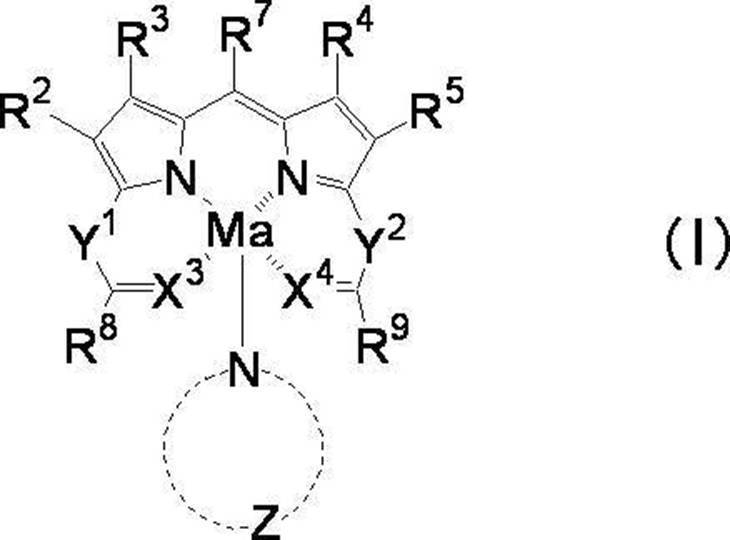
一般式(I)中、R2、R3、R4、及びR5は、各々独立に、水素原子、又は1価の置換基を表す。R2とR3及びR4とR5は、各々独立に、互いに結合して5員、6員又は7員の飽和環又は不飽和環を形成していてもよい。R7は、水素原子、ハロゲン原子、アルキル基、アリール基、又はヘテロ環基を表す。Maは、金属又は金属化合物を表す。X3及びX4は、各々独立に、NR(Rは、水素原子、アルキル基、アルケニル基、アリール基、ヘテロ環基、アシル基、アルキルスルホニル基、又はアリールスルホニル基を表す。)、窒素原子、酸素原子、又は硫黄原子を表す。Y1及びY2は、各々独立に、NRc(Rcは、水素原子、アルキル基、アルケニル基、アリール基、ヘテロ環基、アシル基、アルキルスルホニル基、又はアリールスルホニル基を表す。)、窒素原子、又は炭素原子を表す。R8及びR9は、各々独立に、アルキル基、アルケニル基、アリール基、ヘテロ環基、アルコキシ基、アリールオキシ基、アルキルアミノ基、アリールアミノ基、又はヘテロ環アミノ基を表す。R8とY1とは、互いに結合して5員、6員、又は7員の環を形成していてもよく、R9とY2とは、互いに結合して5員、6員、又は7員の環を形成していてもよい。Zは、隣接する窒素原子と共に下記一般式(II)又は一般式(III)で表される構造を形成する原子群を表す。
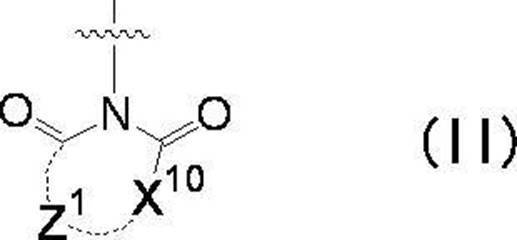
一般式(II)中、X10は、NR15(R15は、水素原子、アルキル基、アルケニル基、アリール基、へテロ環基、アシル基、アルキルスルホニル基、又はアリールスルホニル基を表す。)、酸素原子、又は硫黄原子を表す。Z1は、0又は1個の窒素原子と炭素原子とからなる鎖状構造を有し、該鎖状構造により隣接するカルボニル炭素及びX10間を連結して5員環又は6員環を形成する原子群を表す。
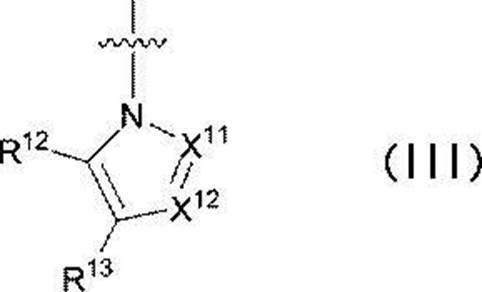
〔一般式(III)中、X11及びX12は、各々独立に、窒素原子、CR16(R16は、水素原子、又は置換基を表す)を表し、R12及びR13は、各々独立に、水素原子、又は1価の置換基を表す。〕
<2> 前記一般式(I)におけるMaが、Fe、Zn、Co、V=O、又はCuを表す<1>に記載の着色組成物。
<3> 更に、重合性化合物と光重合開始剤とを含有する<1>又は<2>に記載の着色組成物。
<4> 更に、顔料またはアントラキノン化合物を含有する、或いは、顔料とアントラキノン化合物とを共に含有する<1>~<3>のいずれか1項に記載の着色組成物。
<5> 前記アントラキノン化合物が下記一般式(IX)で表される化合物である<4>に記載の着色組成物。

一般式(IX)において、R11a及びR12aは、各々独立に、水素原子、アルキル基、アリール基又はヘテロ環基を表すが、R11aとR12aとが同時に水素原子を表すことはない。n11は、1~4の整数を表し、n11が2~4の整数である場合、複数のNR11aR12aは同一でも異なっていてもよい。
<6> 前記一般式(I)で表される化合物及びその互変異性体から選択された少なくとも1種の含有量が、前記着色組成物の全固形分に対して0.1~30質量%である<1>~<5>のいずれか1項に記載の着色組成物。
<7> 下記一般式(I)で表される化合物又はその互変異性体。
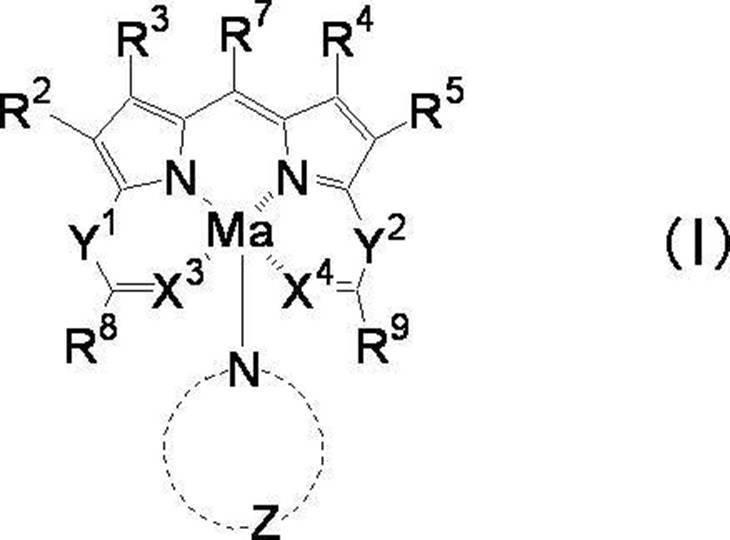
一般式(I)中、R2、R3、R4、及びR5は、各々独立に、水素原子、又は1価の置換基を表す。R2とR3及びR4とR5は、各々独立に、互いに結合して5員、6員又は7員の飽和環又は不飽和環を形成していてもよい。R7は、水素原子、ハロゲン原子、アルキル基、アリール基、又はヘテロ環基を表す。Maは、金属又は金属化合物を表す。X3及びX4は、各々独立に、NR(Rは、水素原子、アルキル基、アルケニル基、アリール基、ヘテロ環基、アシル基、アルキルスルホニル基、又はアリールスルホニル基を表す。)、窒素原子、酸素原子、又は硫黄原子を表す。Y1及びY2は、各々独立に、NRc(Rcは、水素原子、アルキル基、アルケニル基、アリール基、ヘテロ環基、アシル基、アルキルスルホニル基、又はアリールスルホニル基を表す。)、窒素原子、又は炭素原子を表す。R8及びR9は、各々独立に、アルキル基、アルケニル基、アリール基、ヘテロ環基、アルコキシ基、アリールオキシ基、アルキルアミノ基、アリールアミノ基、又はヘテロ環アミノ基を表す。R8とY1とは、互いに結合して5員、6員、又は7員の環を形成していてもよく、R9とY2とは、互いに結合して5員、6員、又は7員の環を形成していてもよい。Zは、隣接する窒素原子と共に下記一般式(II)又は一般式(III)で表される構造を形成する原子群を表す。
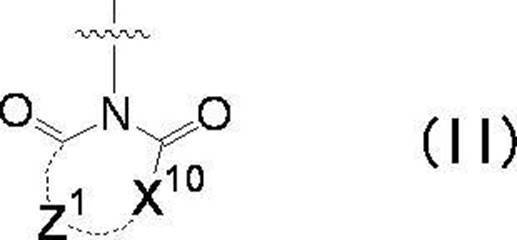
一般式(II)中、X10は、NR15(R15は、水素原子、アルキル基、アルケニル基、アリール基、へテロ環基、アシル基、アルキルスルホニル基、又はアリールスルホニル基を表す。)、酸素原子、又は硫黄原子を表す。Z1は、0又は1個の窒素原子と炭素原子とからなる鎖状構造を有し、該鎖状構造により隣接するカルボニル炭素及びX10間を連結して5員環又は6員環を形成する原子群を表す。
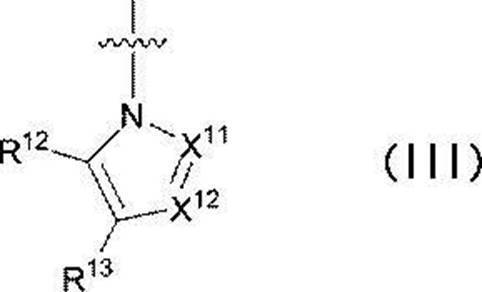
一般式(III)中、X11及びX12は、各々独立に、窒素原子、CR16(R16は、水素原子、又は置換基を表す)を表し、R12及びR13は、各々独立に、水素原子、又は1価の置換基を表す。
<8> <1>~<6>のいずれか1項に記載の着色組成物を硬化して得られた着色硬化膜。
<9> <8>に記載の着色硬化膜を備えたカラーフィルタ。
<10> <1>~<6>のいずれか1項に記載の着色組成物を支持体上に付与し、着色組成物層を形成する工程と、形成された前記着色組成物層をパターン状に露光し、現像してパターン状の着色領域を形成する工程と、を有するカラーフィルタの製造方法。
<11> <9>に記載のカラーフィルタ、又は<10>に記載のカラーフィルタの製造方法により作製されたカラーフィルタを備えた液晶表示装置。
<12> <9>に記載のカラーフィルタ、又は<10>に記載のカラーフィルタの製造方法により作製されたカラーフィルタを備えた固体撮像素子。
<10> <1>~<6>のいずれか1項に記載の着色組成物を支持体上に付与し、着色組成物層を形成する工程と、形成された前記着色組成物層をパターン状に露光し、現像してパターン状の着色領域を形成する工程と、を有するカラーフィルタの製造方法。
<11> <9>に記載のカラーフィルタ、又は<10>に記載のカラーフィルタの製造方法により作製されたカラーフィルタを備えた液晶表示装置。
<12> <9>に記載のカラーフィルタ、又は<10>に記載のカラーフィルタの製造方法により作製されたカラーフィルタを備えた固体撮像素子。
本発明によれば、カラーフィルタの作製に有用であり、色純度が高く、薄層で大きな吸光係数が得られ、堅牢性(特に耐熱性及び耐光性)に優れた着色膜を形成でき、且つ、該着色膜を有するカラーフィルタを備えた液晶表示装置に電圧を印可した際において優れた電圧保持率が得られる着色組成物、該着色組成物により得られた着色硬化膜、カラーフィルタ及びその製造方法を提供することができる。
本発明によれば、表示画像の彩色が鮮やかで高いコントラストを示す液晶表示装置、並びに、色ムラが低減され、色分解能が向上した固体撮像素子を提供することができる。
本発明によれば、色純度に優れ、薄層化可能な大きな吸光係数を有し、堅牢性(特に耐熱性及び耐光性)に優れ、且つ、カラーフィルタが備える着色膜形成に有用な、新規ジピロメテン系金属錯体化合物及びその互変異性体を提供することができる。
本発明によれば、表示画像の彩色が鮮やかで高いコントラストを示す液晶表示装置、並びに、色ムラが低減され、色分解能が向上した固体撮像素子を提供することができる。
本発明によれば、色純度に優れ、薄層化可能な大きな吸光係数を有し、堅牢性(特に耐熱性及び耐光性)に優れ、且つ、カラーフィルタが備える着色膜形成に有用な、新規ジピロメテン系金属錯体化合物及びその互変異性体を提供することができる。
以下、本発明の着色組成物、該着色組成物を硬化して得られた着色硬化膜、カラーフィルタ及びその製造方法、液晶表示装置及び固体撮像素子、並びに、新規ジピロメテン系金属錯体化合物及びその互変異性体について詳細に説明する。
本発明の着色組成物、並びに、新規ジピロメテン系金属錯体化合物及びその互変異性体は、従来公知の染料を用いたカラーレジストで達成できなかった課題が解決されるため、固体撮像素子や画像表示装置((例えば、液晶表示装置や有機EL表示装置など)に用いられるカラーフィルタに特に有用である。
以下に記載する本発明の構成要素の説明は、本発明の代表的な実施態様に基づいてなされるものであるが、本発明はそのような実施態様に限定されるものではない。
本発明の着色組成物において、全固形分とは、着色組成物の全組成から有機溶剤を除いた成分の総質量をいう。
本明細書において「~」を用いて表される数値範囲は、「~」の前後に記載される数値を下限値及び上限値として含む範囲を意味する。
本明細書においては、例えば、「アルキル基」は「直鎖、分岐及び環状」のアルキル基を示す。また、本明細書における基(原子団)の表記において、置換及び無置換を記していない表記は置換基を有さないものと共に置換基を有するものをも包含するものである。例えば「アルキル基」とは、置換基を有さないアルキル基(無置換アルキル基)のみならず、置換基を有するアルキル基(置換アルキル基)をも包含するものである。
また、本明細書において、“(メタ)アクリレート”はアクリレート及びメタクリレートの双方、又は、いずれかを表し、“(メタ)アクリル”はアクリル及びメタクリルの双方、又は、いずれかを表し、“(メタ)アクリロイル”はアクリロイル及びメタクリロイルの双方、又は、いずれかを表す。
また、本明細書において、“単量体”と“モノマー”とは同義である。本明細書における単量体は、オリゴマー及びポリマーと区別され、重量平均分子量が2,000以下の化合物をいう。
本明細書において、重合性化合物とは、重合性官能基を有する化合物のことをいい、単量体であっても、オリゴマーであっても、ポリマーであってもよい。重合性官能基とは、重合反応に関与する基を言う。
本明細書において「~」を用いて表される数値範囲は、「~」の前後に記載される数値を下限値及び上限値として含む範囲を意味する。
本明細書においては、例えば、「アルキル基」は「直鎖、分岐及び環状」のアルキル基を示す。また、本明細書における基(原子団)の表記において、置換及び無置換を記していない表記は置換基を有さないものと共に置換基を有するものをも包含するものである。例えば「アルキル基」とは、置換基を有さないアルキル基(無置換アルキル基)のみならず、置換基を有するアルキル基(置換アルキル基)をも包含するものである。
また、本明細書において、“(メタ)アクリレート”はアクリレート及びメタクリレートの双方、又は、いずれかを表し、“(メタ)アクリル”はアクリル及びメタクリルの双方、又は、いずれかを表し、“(メタ)アクリロイル”はアクリロイル及びメタクリロイルの双方、又は、いずれかを表す。
また、本明細書において、“単量体”と“モノマー”とは同義である。本明細書における単量体は、オリゴマー及びポリマーと区別され、重量平均分子量が2,000以下の化合物をいう。
本明細書において、重合性化合物とは、重合性官能基を有する化合物のことをいい、単量体であっても、オリゴマーであっても、ポリマーであってもよい。重合性官能基とは、重合反応に関与する基を言う。
本明細書において「工程」との語は、独立した工程だけではなく、他の工程と明確に区別できない場合であってもその工程の所期の作用が達成されれば、本用語に含まれる。
本発明において「放射線」とは、可視光線、紫外線、遠紫外線、電子線、X線等を含むものを意味する。
本発明において「放射線」とは、可視光線、紫外線、遠紫外線、電子線、X線等を含むものを意味する。
<着色組成物、及び、一般式(I)で表される化合物及びその互変異性体>
本発明の着色組成物は、一般式(I)で表される化合物及びその互変異性体化合物(以下、適宜「特定金属錯体化合物」と称する。)から選択された少なくとも1種を含有するものであり、好ましくは、更に、重合性化合物及び光重合開始剤を含有して感光性に構成される。
また、本発明の着色組成物は、更に、アルカリ可溶性樹脂等のバインダー、有機溶剤を含有することが好ましく、必要に応じて、各種添加剤を含有してもよい。
本発明の着色組成物は、一般式(I)で表される化合物及びその互変異性体化合物(以下、適宜「特定金属錯体化合物」と称する。)から選択された少なくとも1種を含有するものであり、好ましくは、更に、重合性化合物及び光重合開始剤を含有して感光性に構成される。
また、本発明の着色組成物は、更に、アルカリ可溶性樹脂等のバインダー、有機溶剤を含有することが好ましく、必要に応じて、各種添加剤を含有してもよい。
本発明においては、ジピロメテン系金属錯体化合物の中でも、特に金属又は金属化合物に配位する配位子として特定の含窒素環配位子を有する金属錯体化合物である一般式(I)で表される化合物及びその互変異性体(特定金属錯体化合物)から選択された少なくとも1種を含有する。特定金属錯体化合物は新規化合物であり、本発明の着色組成物に着色剤として含有される。
特定の含窒素環配位子を有する特定金属錯体化合物を着色剤として含有することにより、耐熱性、耐光性、電圧保持率、コントラスト、及び輝度に優れた着色硬化膜(着色パターン)を形成しうる着色組成物、ひいては、これを含むカラーフィルタを提供することが可能になる。特に、本発明の特定金属錯体化合物は、着色剤として用いられてきた各種の公知の染料化合物に比して、カラーフィルタ等の作製用の着色組成物に含有させた場合において、電圧保持率の向上に優れた効果を発揮する。
このような、本発明の特定金属錯体化合物及びそれを含有する着色組成物が示す優れた効果は、本発明の発明者らによる下記の知見に基づくものである。
このような、本発明の特定金属錯体化合物及びそれを含有する着色組成物が示す優れた効果は、本発明の発明者らによる下記の知見に基づくものである。
従来公知の染料化合物をカラーフィルタ等の作製用の着色組成物に含有させた場合、染料化合物の種類によっては電圧保持率が低下する。従来公知の染料化合物を適用した場合において、電圧保持率の低下が生じる作用機構については明確ではないが、カラーフィルタとした際にかかる電場により金属錯体化合物が電離してイオンを生成することで引き起こされるためと考えられる。そのため、金属錯体化合物の安定性(金属-配位子間の結合力)の向上が重要と考えられる。
ここで、一般的に金属錯体の配位結合は、Lewis酸である金属イオンと、塩基である配位子との中和反応によってできた結合とみなすことができる。従って、このような過程で生成した金属錯体の安定性は、配位子の塩基性に大きく影響される。
しかしながら、例えば、配位子としてCH3COO-を有する金属錯体では、配位子の電子密度が低く塩基性度が小さいため、金属錯体の安定性(金属-配位子間の結合力)が低く、電離的に解離しやすい。このため、そのような金属錯体を含む着色組成物を用いて得られたカラーフィルタでは、電圧保持率の低下が引き起こされる傾向にあると考えられる。
一方、本発明の特定金属錯体化合物は、一般式(I)に示される如く、その配位子は電子密度が高い含窒素環を有していることが特徴である。このため、原理的には必ずしも明確ではないが、特定金属錯体化合物における配位子は、塩基性度が高くなることから、金属との配位力が強くなり、錯体安定性が向上して電離しにくくなると考えられる。
したがって、このような安定性の高い特定金属錯体化合物を含有する着色組成物を用いて形成された着色硬化膜を備えたカラーフィルタは、優れた電圧保持率を発揮することができるものと考えられる。
したがって、このような安定性の高い特定金属錯体化合物を含有する着色組成物を用いて形成された着色硬化膜を備えたカラーフィルタは、優れた電圧保持率を発揮することができるものと考えられる。
また、特定金属錯体化合物が示す優れた安定性は、耐熱性及び耐光性の向上に関しても寄与すると考えられる。このため、特定金属錯体化合物を含有する着色組成物を用いることで、熱や光によって輝度の低下を起こさず、色変化の少ないカラーフィルタを得ることができる。
<一般式(I)で表される化合物及びその互変異性体化合物>
本発明の着色組成物は、下記一般式(I)で表される化合物又はその互変異性体(特定金属錯体化合物)を少なくとも1種含有する。
本発明の着色組成物は、下記一般式(I)で表される化合物又はその互変異性体(特定金属錯体化合物)を少なくとも1種含有する。
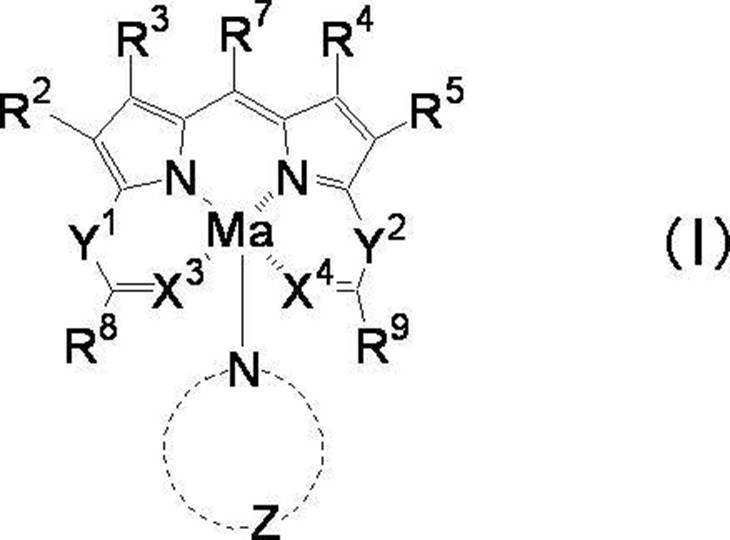
一般式(I)中、R2、R3、R4、及びR5は、各々独立に、水素原子、又は1価の置換基を表す。R2とR3及びR4とR5は、各々独立に、互いに結合して5員、6員又は7員の飽和環又は不飽和環を形成していてもよい。R7は、水素原子、ハロゲン原子、アルキル基、アリール基、又はヘテロ環基を表す。Maは、金属又は金属化合物を表す。X3及びX4は、各々独立に、NR(Rは、水素原子、アルキル基、アルケニル基、アリール基、ヘテロ環基、アシル基、アルキルスルホニル基、又はアリールスルホニル基を表す。)、窒素原子、酸素原子、又は硫黄原子を表す。Y1及びY2は、各々独立に、NRc(Rcは、水素原子、アルキル基、アルケニル基、アリール基、ヘテロ環基、アシル基、アルキルスルホニル基、又はアリールスルホニル基を表す。)、窒素原子、又は炭素原子を表す。R8及びR9は、各々独立に、アルキル基、アルケニル基、アリール基、ヘテロ環基、アルコキシ基、アリールオキシ基、アルキルアミノ基、アリールアミノ基、又はヘテロ環アミノ基を表す。R8とY1とは、互いに結合して5員、6員、又は7員の環を形成していてもよく、R9とY2とは、互いに結合して5員、6員、又は7員の環を形成していてもよい。Zは、隣接する窒素原子と共に下記一般式(II)又は一般式(III)で表される構造を形成する原子群を表す。

一般式(II)中、X10は、NR15(R15は、水素原子、アルキル基、アルケニル基、アリール基、へテロ環基、アシル基、アルキルスルホニル基、又はアリールスルホニル基を表す。)、酸素原子、又は硫黄原子を表す。Z1は、0又は1個の窒素原子と炭素原子とからなる鎖状構造を有し、該鎖状構造により隣接するカルボニル炭素及びX10間を連結して5員環又は6員環を形成する原子群を表す。〕

一般式(III)中、X11及びX12は、各々独立に、窒素原子、CR16(R16は、水素原子、又は置換基を表す)を表し、R12及びR13は、各々独立に、水素原子、又は1価の置換基を表す。
一般式(I)について詳細に説明する。
一般式(I)中、R2、R3、R4、及びR5は、各々独立に、水素原子、又は1価の置換基を表す。
一般式(I)中、R2、R3、R4、又はR5で表される1価の置換基としては、例えば、ハロゲン原子(例えば、フッ素原子、塩素原子、臭素原子などが挙げられる。)、アルキル基(好ましくは炭素数1~48、より好ましくは炭素数1~24の、直鎖、分岐鎖、又は環状のアルキル基であり、例えば、メチル基、エチル基、プロピル基、イソプロピル基、ブチル基、t-ブチル基、ペンチル基、ヘキシル基、ヘプチル基、オクチル基、2-エチルヘキシル基、ドデシル基、ヘキサデシル基、シクロプロピル基、シクロペンチル基、シクロヘキシル基、1-ノルボルニル基、1-アダマンチル基などが挙げられる。)、アルケニル基(好ましくは炭素数2~48、より好ましくは炭素数2~18のアルケニル基であり、例えば、ビニル基、アリル基、3-ブテン-1-イル基などが挙げられる。)、アリール基(好ましくは炭素数6~48、より好ましくは炭素数6~24のアリール基であり、例えば、フェニル基、ナフチル基などが挙げられる。)、ヘテロ環基(好ましくは炭素数1~32、より好ましくは炭素数1~18のヘテロ環基であり、例えば、2-チエニル基、4-ピリジル基、2-フリル基、2-ピリミジニル基、1-ピリジル基、2-ベンゾチアゾリル基、1-イミダゾリル基、1-ピラゾリル基、ベンゾトリアゾール-1-イル基などが挙げられる。)、シリル基(好ましくは炭素数3~38、より好ましくは炭素数3~18のシリル基であり、例えば、トリメチルシリル基、トリエチルシリル基、トリブチルシリル基、t-ブチルジメチルシリル基、t-ヘキシルジメチルシリル基などが挙げられる。)、ヒドロキシル基、シアノ基、ニトロ基、アルコキシ基(好ましくは炭素数1~48、より好ましくは炭素数1~24のアルコキシ基であり、例えば、メトキシ基、エトキシ基、1-ブトキシ基、2-ブトキシ基、イソプロポキシ基、t-ブトキシ、ドデシルオキシ基、シクロアルキルオキシ基(例えば、シクロペンチルオキシ基、シクロヘキシルオキシ基)などが挙げられる。)、アリールオキシ基(好ましくは炭素数6~48、より好ましくは炭素数6~24のアリールオキシ基であり、例えば、フェノキシ基、1-ナフトキシ基などが挙げられる。)、ヘテロ環オキシ基(好ましくは炭素数1~32、より好ましくは炭素数1~18のヘテロ環オキシ基であり、例えば、1-フェニルテトラゾール-5-オキシ基、2-テトラヒドロピラニルオキシ基などが挙げられる。)、シリルオキシ基(好ましくは炭素数1~32、より好ましくは炭素数1~18のシリルオキシ基であり、例えば、トリメチルシリルオキシ基、t-ブチルジメチルシリルオキシ基、ジフェニルメチルシリルオキシ基などが挙げられる。)、アシルオキシ基(好ましくは炭素数2~48、より好ましくは炭素数2~24のアシルオキシ基であり、例えば、アセトキシ基、ピバロイルオキシ基、ベンゾイルオキシ基、ドデカノイルオキシ基などが挙げられる。)、アルコキシカルボニルオキシ基(好ましくは炭素数2~48、より好ましくは炭素数2~24のアルコキシカルボニルオキシ基であり、例えば、エトキシカルボニルオキシ基、t-ブトキシカルボニルオキシ基、シクロアルキルオキシカルボニルオキシ基(例えば、シクロヘキシルオキシカルボニルオキシ基など)などが挙げられる。)、
一般式(I)中、R2、R3、R4、及びR5は、各々独立に、水素原子、又は1価の置換基を表す。
一般式(I)中、R2、R3、R4、又はR5で表される1価の置換基としては、例えば、ハロゲン原子(例えば、フッ素原子、塩素原子、臭素原子などが挙げられる。)、アルキル基(好ましくは炭素数1~48、より好ましくは炭素数1~24の、直鎖、分岐鎖、又は環状のアルキル基であり、例えば、メチル基、エチル基、プロピル基、イソプロピル基、ブチル基、t-ブチル基、ペンチル基、ヘキシル基、ヘプチル基、オクチル基、2-エチルヘキシル基、ドデシル基、ヘキサデシル基、シクロプロピル基、シクロペンチル基、シクロヘキシル基、1-ノルボルニル基、1-アダマンチル基などが挙げられる。)、アルケニル基(好ましくは炭素数2~48、より好ましくは炭素数2~18のアルケニル基であり、例えば、ビニル基、アリル基、3-ブテン-1-イル基などが挙げられる。)、アリール基(好ましくは炭素数6~48、より好ましくは炭素数6~24のアリール基であり、例えば、フェニル基、ナフチル基などが挙げられる。)、ヘテロ環基(好ましくは炭素数1~32、より好ましくは炭素数1~18のヘテロ環基であり、例えば、2-チエニル基、4-ピリジル基、2-フリル基、2-ピリミジニル基、1-ピリジル基、2-ベンゾチアゾリル基、1-イミダゾリル基、1-ピラゾリル基、ベンゾトリアゾール-1-イル基などが挙げられる。)、シリル基(好ましくは炭素数3~38、より好ましくは炭素数3~18のシリル基であり、例えば、トリメチルシリル基、トリエチルシリル基、トリブチルシリル基、t-ブチルジメチルシリル基、t-ヘキシルジメチルシリル基などが挙げられる。)、ヒドロキシル基、シアノ基、ニトロ基、アルコキシ基(好ましくは炭素数1~48、より好ましくは炭素数1~24のアルコキシ基であり、例えば、メトキシ基、エトキシ基、1-ブトキシ基、2-ブトキシ基、イソプロポキシ基、t-ブトキシ、ドデシルオキシ基、シクロアルキルオキシ基(例えば、シクロペンチルオキシ基、シクロヘキシルオキシ基)などが挙げられる。)、アリールオキシ基(好ましくは炭素数6~48、より好ましくは炭素数6~24のアリールオキシ基であり、例えば、フェノキシ基、1-ナフトキシ基などが挙げられる。)、ヘテロ環オキシ基(好ましくは炭素数1~32、より好ましくは炭素数1~18のヘテロ環オキシ基であり、例えば、1-フェニルテトラゾール-5-オキシ基、2-テトラヒドロピラニルオキシ基などが挙げられる。)、シリルオキシ基(好ましくは炭素数1~32、より好ましくは炭素数1~18のシリルオキシ基であり、例えば、トリメチルシリルオキシ基、t-ブチルジメチルシリルオキシ基、ジフェニルメチルシリルオキシ基などが挙げられる。)、アシルオキシ基(好ましくは炭素数2~48、より好ましくは炭素数2~24のアシルオキシ基であり、例えば、アセトキシ基、ピバロイルオキシ基、ベンゾイルオキシ基、ドデカノイルオキシ基などが挙げられる。)、アルコキシカルボニルオキシ基(好ましくは炭素数2~48、より好ましくは炭素数2~24のアルコキシカルボニルオキシ基であり、例えば、エトキシカルボニルオキシ基、t-ブトキシカルボニルオキシ基、シクロアルキルオキシカルボニルオキシ基(例えば、シクロヘキシルオキシカルボニルオキシ基など)などが挙げられる。)、
アリールオキシカルボニルオキシ基(好ましくは炭素数7~32、より好ましくは炭素数7~24のアリールオキシカルボニルオキシ基であり、例えば、フェノキシカルボニルオキシ基などが挙げられる。)、カルバモイルオキシ基(好ましくは炭素数1~48、よりこの好ましくは炭素数1~24のカルバモイルオキシ基であり、例えば、N,N-ジメチルカルバモイルオキシ基、N-ブチルカルバモイルオキシ基、N-フェニルカルバモイルオキシ基、N-エチル-N-フェニルカルバモイルオキシ基などが挙げられる。)、スルファモイルオキシ基(好ましくは炭素数1~32、より好ましくは炭素数1~24のスルファモイルオキシ基であり、例えば、N,N-ジエチルスルファモイルオキシ基、N-プロピルスルファモイルオキシ基などが挙げられる。)、アルキルスルホニルオキシ基(好ましくは炭素数1~38、より好ましくは炭素数1~24のアルキルスルホニルオキシ基であり、例えば、メチルスルホニルオキシ基、ヘキサデシルスルホニルオキシ基、シクロヘキシルスルホニルオキシ基などが挙げられる。)、アリールスルホニルオキシ基(好ましくは炭素数6~32、より好ましくは炭素数6~24のアリールスルホニルオキシ基であり、例えば、フェニルスルホニルオキシ基などが挙げられる。)、アシル基(好ましくは炭素数1~48、より好ましくは炭素数1~24のアシル基であり、例えば、ホルミル基、アセチル基、ピバロイル基、ベンゾイル基、テトラデカノイル基、シクロヘキサノイル基などが挙げられる。)、アルコキシカルボニル基(好ましくは炭素数2~48、より好ましくは炭素数2~24のアルコキシカルボニル基であり、例えば、メトキシカルボニル基、エトキシカルボニル基、オクタデシルオキシカルボニル基、シクロヘキシルオキシカルボニル基、2,6-ジ-tert-ブチル-4-メチルシクロヘキシルオキシカルボニル基などが挙げられる。)、アリールオキシカルボニル基(好ましくは炭素数7~32、より好ましくは炭素数7~24のアリールオキシカルボニル基であり、例えば、フェノキシカルボニル基などが挙げられる。)、カルバモイル基(好ましくは炭素数1~48、より好ましくは炭素数1~24のカルバモイル基であり、例えば、カルバモイル基、N,N-ジエチルカルバモイル基、N-エチル-N-オクチルカルバモイル基、N,N-ジブチルカルバモイル基、N-プロピルカルバモイル基、N-フェニルカルバモイル基、N-メチルN-フェニルカルバモイル基、N,N-ジシクロへキシルカルバモイル基などが挙げられる。)、アミノ基(好ましくは炭素数32以下、より好ましくは炭素数24以下のアミノ基であり、例えば、アミノ基、メチルアミノ基、N,N-ジブチルアミノ基、テトラデシルアミノ基、2-エチルへキシルアミノ基、シクロヘキシルアミノ基などが挙げられる。)、アニリノ基(好ましくは炭素数6~32、より好ましくは6~24のアニリノ基であり、例えば、アニリノ基、N-メチルアニリノ基などが挙げられる。)、
ヘテロ環アミノ基(好ましくは炭素数1~32、より好ましくは1~18のヘテロ環アミノ基であり、例えば、4-ピリジルアミノ基などが挙げられる。)、カルボンアミド基(好ましくは炭素数2~48、より好ましくは2~24のカルボンアミド基であり、例えば、アセトアミド基、ベンズアミド基、テトラデカンアミド基、ピバロイルアミド基、シクロヘキサンアミド基などが挙げられる。)、ウレイド基(好ましくは炭素数1~32、より好ましくは炭素数1~24のウレイド基であり、例えば、ウレイド基、N,N-ジメチルウレイド基、N-フェニルウレイド基などが挙げられる。)、イミド基(好ましくは炭素数36以下、より好ましくは炭素数24以下のイミド基であり、例えば、N-スクシンイミド基、N-フタルイミド基などが挙げられる。)、アルコキシカルボニルアミノ基(好ましくは炭素数2~48、より好ましくは炭素数2~24のアルコキシカルボニルアミノ基であり、例えば、メトキシカルボニルアミノ基、エトキシカルボニルアミノ基、t-ブトキシカルボニルアミノ基、オクタデシルオキシカルボニルアミノ基、シクロヘキシルオキシカルボニルアミノ基などが挙げられる。)、アリールオキシカルボニルアミノ基(好ましくは炭素数7~32、より好ましくは炭素数7~24のアリールオキシカルボニルアミノ基であり、例えば、フェノキシカルボニルアミノ基などが挙げられる。)、スルホンアミド基(好ましくは炭素数1~48、より好ましくは炭素数1~24のスルホンアミド基であり、例えば、メタンスルホンアミド基、ブタンスルホンアミド基、ベンゼンスルホンアミド基、ヘキサデカンスルホンアミド基、シクロヘキサンスルホンアミド基などが挙げられる。)、スルファモイルアミノ基(好ましくは炭素数1~48、より好ましくは炭素数1~24のスルファモイルアミノ基であり、例えば、N、N-ジプロピルスルファモイルアミノ基、N-エチル-N-ドデシルスルファモイルアミノ基などが挙げられる。)、アゾ基(好ましくは炭素数1~32、より好ましくは炭素数1~24のアゾ基であり、例えば、フェニルアゾ基、3-ピラゾリルアゾ基などが挙げられる。)、アルキルチオ基(好ましくは炭素数1~48、より好ましくは炭素数1~24のアルキルチオ基であり、例えば、メチルチオ基、エチルチオ基、オクチルチオ基、シクロヘキシルチオ基などが挙げられる。)、アリールチオ基(好ましくは炭素数6~48、より好ましくは炭素数6~24のアリールチオ基であり、例えば、フェニルチオ基などが挙げられる。)、ヘテロ環チオ基(好ましくは炭素数1~32、より好ましくは炭素数1~18のヘテロ環チオ基であり、例えば、2-ベンゾチアゾリルチオ基、2-ピリジルチオ基、1-フェニルテトラゾリルチオ基などが挙げられる。)、アルキルスルフィニル基(好ましくは炭素数1~32、より好ましくは炭素数1~24のアルキルスルフィニル基であり、例えば、ドデカンスルフィニル基などが挙げられる。)、
アリールスルフィニル基(好ましくは炭素数6~32、より好ましくは炭素数6~24のアリールスルフィニル基であり、例えば、フェニルスルフィニル基などが挙げられる。)、アルキルスルホニル基(好ましくは炭素数1~48、より好ましくは炭素数1~24のアルキルスルホニル基であり、例えば、メチルスルホニル基、エチルスルホニル基、プロピルスルホニル基、ブチルスルホニル基、イソプロピルスルホニル基、2-エチルヘキシルスルホニル基、ヘキサデシルスルホニル基、オクチルスルホニル基、シクロヘキシルスルホニル基などが挙げられる。)、アリールスルホニル基(好ましくは炭素数6~48、より好ましくは炭素数6~24のアリールスルホニル基であり、例えば、フェニルスルホニル基、1-ナフチルスルホニル基などが挙げられる。)、スルファモイル基(好ましくは炭素数32以下、より好ましくは炭素数24以下のスルファモイル基であり、例えば、スルファモイル基、N,N-ジプロピルスルファモイル基、N-エチル-N-ドデシルスルファモイル基、N-エチル-N-フェニルスルファモイル基、N-シクロヘキシルスルファモイル基などが挙げられる。)、スルホ基、ホスホニル基(好ましくは炭素数1~32、より好ましくは炭素数1~24のホスホニル基であり、例えば、フェノキシホスホニル基、オクチルオキシホスホニル基、フェニルホスホニル基などが挙げられる。)、ホスフィノイルアミノ基(好ましくは炭素数1~32、より好ましくは炭素数1~24のホスフィノイルアミノ基であり、例えば、ジエトキシホスフィノイルアミノ基、ジオクチルオキシホスフィノイルアミノ基などが挙げられる。)等が挙げられる。
一般式(I)中のR2~R5で表される1価の置換基が、更に置換可能な基である場合には、該R2~R5で表される1価の置換基は、R2~R5で説明した置換基を更に有していてもよい。R2~R5で表される1価の置換基が、2個以上の1価の置換基を有している場合には、それらの置換基は同一であっても異なっていてもよい。
一般式(I)において、R2とR3又は/及びR4とR5は、各々独立に、互いに結合して5員、6員又は7員の飽和環又は不飽和環を形成していてもよい。
R2とR3、又は、R4とR5により形成される5員、6員、又は7員の飽和環又は不飽和環としては、例えば、ピロール環、フラン環、チオフェン環、ピラゾール環、イミダゾール環、トリアゾール環、オキサゾール環、チアゾール環、ピロリジン環、ピペリジン環、シクロペンテン環、シクロヘキセン環、ベンゼン環、ピリジン環、ピラジン環、又はピリダジン環が挙げられ、好ましくは、ベンゼン環、又はピリジン環が挙げられる。
R2とR3、又は、R4とR5により形成される5員、6員、又は7員の飽和環又は不飽和環としては、例えば、ピロール環、フラン環、チオフェン環、ピラゾール環、イミダゾール環、トリアゾール環、オキサゾール環、チアゾール環、ピロリジン環、ピペリジン環、シクロペンテン環、シクロヘキセン環、ベンゼン環、ピリジン環、ピラジン環、又はピリダジン環が挙げられ、好ましくは、ベンゼン環、又はピリジン環が挙げられる。
一般式(I)におけるR2とR3又は/及びR4とR5によって形成される5員、6員及び7員の環が、更に置換可能な基である場合には、R2~R5で説明した1価の置換基を更に有していてもよく、5員、6員、及び7員の環が2個以上の1価の置換基を有している場合には、それらの1価の置換基は同一であっても異なっていてもよい。
一般式(I)において、前記R2及びR5としては、上記の中でも、アルコキシカルボニル基、アリールオキシカルボニル基、カルバモイル基、アルキルスルホニル基、アリールスルホニル基、ニトリル基、イミド基、又はカルバモイルスルホニル基が好ましく、アルコキシカルボニル基、アリールオキシカルボニル基、カルバモイル基、アルキルスルホニル基、ニトリル基、イミド基、又はカルバモイルスルホニル基がより好ましく、アルコキシカルボニル基、アリールオキシカルボニル基、カルバモイル基、ニトリル基、イミド基、又はカルバモイルスルホニル基が更に好ましく、アルコキシカルボニル基、アリールオキシカルボニル基、又はカルバモイル基が特に好ましい。
一般式(I)において、前記R3及びR4としては、上記の中でも、アルキル基、アリール基又はヘテロ環基が好ましく、アルキル基又はアリール基がより好ましい。
上記好ましい態様に示す各基は、無置換であってもよいし、既述の置換基を有していてもよい。
上記好ましい態様に示す各基は、無置換であってもよいし、既述の置換基を有していてもよい。
一般式(I)において、R3及びR4がアルキル基を表す場合、該アルキル基としては、好ましくは、炭素数1~12の直鎖、分岐鎖又は環状のアルキル基であり、より具体的には、例えば、メチル基、エチル基、n-プロピル基、イソプロピル基、シクロプロピル基、n-ブチル基、i-ブチル基、t-ブチル基、シクロブチル基、シクロペンチル基、シクロヘキシル基又はベンジル基が挙げられ、より好ましくは、炭素数1~12の分岐鎖、又は環状のアルキル基であり、より具体的には、例えば、イソプロピル基、シクロプロピル基、i-ブチル基、t-ブチル基、シクロブチル基、シクロペンチル基又はシクロヘキシル基が挙げられ、更に好ましくは、炭素数1~12の2級のアルキル基又は3級のアルキル基であり、より具体的には、例えば、イソプロピル基、シクロプロピル基、i-ブチル基、t-ブチル基、シクロブチル基又はシクロヘキシル基が挙げられる。
上記好ましい態様に示す各アルキル基は、無置換であってもよいし、既述の置換基を有していてもよい。
上記好ましい態様に示す各アルキル基は、無置換であってもよいし、既述の置換基を有していてもよい。
一般式(I)において、R3及びR4がアリール基を表す場合の、該アリール基としては、好ましくは、置換又は無置換のフェニル基、置換又は無置換のナフチル基が挙げられ、より好ましくは置換又は無置換のフェニル基である。
一般式(I)において、R3及びR4がアリール基を表す場合、該アリール基としては、好ましくは、フェニル基又はナフチル基が挙げられ、より好ましくはフェニル基が挙げられる。
上記好ましい態様に示す各アリール基は、無置換であってもよいし、既述の置換基を有していてもよい。
一般式(I)において、R3及びR4がアリール基を表す場合、該アリール基としては、好ましくは、フェニル基又はナフチル基が挙げられ、より好ましくはフェニル基が挙げられる。
上記好ましい態様に示す各アリール基は、無置換であってもよいし、既述の置換基を有していてもよい。
R3及びR4がヘテロ環基を表す場合、該ヘテロ環基としては、好ましくは、2-チエニル基、4-ピリジル基、3-ピリジル基、2-ピリジル基、2-フリル基、2-ピリミジニル基、2-ベンゾチアゾリル基、1-イミダゾリル基、1-ピラゾリル基又はベンゾトリアゾール-1-イル基が挙げられ、より好ましくは2-チエニル基、4-ピリジル基、2-フリル基、2-ピリミジニル基又は1-ピリジル基が挙げられる。
上記好ましい態様に示す各ヘテロ環基は、無置換であってもよいし、既述の置換基を有していてもよい。
上記好ましい態様に示す各ヘテロ環基は、無置換であってもよいし、既述の置換基を有していてもよい。
一般式(I)中、R7は、水素原子、ハロゲン原子、アルキル基、アリール基、又はヘテロ環基を表す。
R7が、ハロゲン原子、アルキル基、アリール基、又はヘテロ環基である場合、R7は、前記R2~R5で表される置換基で説明したハロゲン原子、アルキル基、アリール基又はヘテロ環基と同じ基を表し、その好ましい範囲も同様である。
R7が、ハロゲン原子、アルキル基、アリール基、又はヘテロ環基である場合、R7は、前記R2~R5で表される置換基で説明したハロゲン原子、アルキル基、アリール基又はヘテロ環基と同じ基を表し、その好ましい範囲も同様である。
一般式(I)においてR7で表されるアルキル基、アリール基又はヘテロ環基が更に置換可能な基である場合には、前記R2~R5で表される1価の置換基として説明した置換基で置換されていてもよい。R7で表されるアルキル基、アリール基又はヘテロ環基が2個以上の置換基で置換されている場合には、それらの置換基は同一であっても異なっていてもよい。
一般式(I)中のMaは、金属又は金属化合物を表す。
Maは、錯体を形成可能な金属原子又は金属化合物であればいずれであってもよく、2価の金属原子、2価の金属酸化物、2価の金属水酸化物、又は2価の金属塩化物が含まれる。
Maで表される金属としては、例えば、Zn、Mg、Si、Sn、Rh、Pt、Pd、Mo、Mn、Pb、Cu、Ni、Co、Fe、B等が挙げられる。
Maで表される金属化合物としては、AlCl、InCl、FeCl、TiCl2、SnCl2、SiCl2、GeCl2等の金属塩化物、TiO、VO等の金属酸化物、Si(OH)2等の金属水酸化物が挙げられる。
Maは、錯体を形成可能な金属原子又は金属化合物であればいずれであってもよく、2価の金属原子、2価の金属酸化物、2価の金属水酸化物、又は2価の金属塩化物が含まれる。
Maで表される金属としては、例えば、Zn、Mg、Si、Sn、Rh、Pt、Pd、Mo、Mn、Pb、Cu、Ni、Co、Fe、B等が挙げられる。
Maで表される金属化合物としては、AlCl、InCl、FeCl、TiCl2、SnCl2、SiCl2、GeCl2等の金属塩化物、TiO、VO等の金属酸化物、Si(OH)2等の金属水酸化物が挙げられる。
これらの中でも、錯体の安定性、分光特性、耐熱、耐光性、及び製造適性等の観点から、Fe、Zn、Mg、Si、Pt、Pd、Mo、Mn、Cu、Ni、Co、TiO、B、又はVOが好ましく、Fe、Zn、Mg、Si、Pt、Pd、Cu、Ni、Co、B、又はVOが更に好ましく、Fe、Zn、Cu、Co、B、又はVO(V=O)が最も好ましい。これらの中でも、Maとしては、特にZnが好ましい。
一般式(I)中、R8及びR9は、各々独立に、アルキル基(好ましくは炭素数1~36、より好ましくは1~12の直鎖、分岐鎖、又は環状のアルキル基であり、例えば、メチル、エチル、プロピル、イソプロピル、ブチル、イソブチル、t-ブチル、1,1-ジメチルプロピル、ヘキシル、オクチル、2-エチルヘキシル、ドデシル、シクロプロピル、シクロペンチル、シクロヘキシル、1-アダマンチル基などが挙げられる。)、アルケニル基(好ましくは炭素数2~24、より好ましくは2~12のアルケニル基であり、例えば、ビニル、アリル、3-ブテン-1-イル基などが挙げられる。)、アリール基(好ましくは炭素数6~36、より好ましくは6~18のアリール基であり、例えば、フェニル、ナフチル、トリル基などが挙げられる。)、ヘテロ環基(好ましくは炭素数1~24、より好ましくは1~12のヘテロ環基であり、例えば、2-チエニル、4-ピリジル、2-フリル、2-ピリミジニル、1-ピリジル、2-ベンゾチアゾリル、1-イミダゾリル、1-ピラゾリル、ベンゾトリアゾール-1-イル基などが挙げられる。)、アルコキシ基(好ましくは炭素数1~36、より好ましくは1~18のアルコキシ基であり、例えば、メトキシ、エトキシ、プロピルオキシ、ブトキシ、ヘキシルオキシ、2-エチルヘキシルオキシ、ドデシルオキシ、シクロヘキシルオキシ基などが挙げられる。)、アリールオキシ基(好ましくは炭素数6~24、より好ましくは1~18のアリールオキシ基であり、例えば、フェノキシ、ナフチルオキシ基などが挙げられる。)、アルキルアミノ基(好ましくは炭素数1~36、より好ましくは1~18のアルキルアミノ基であり、例えば、メチルアミノ、エチルアミノ、プロピルアミノ、ブチルアミノ、ヘキシルアミノ、2-エチルヘキシルアミノ、イソプロピルアミノ、t-ブチルアミノ、t-オクチルアミノ、シクロヘキシルアミノ、N,N-ジエチルアミノ、N,N-ジプロピルアミノ、N,N-ジブチルアミノ、N-メチル-N-エチルアミノ基などが挙げられる。)、アリールアミノ(好ましくは炭素数6~36、より好ましくは6~18のアリールアミノ基であり、例えば、フェニルアミノ、ナフチルアミノ、N,N-ジフェニルアミノ、N-エチル-N-フェニルアミノ基などが挙げられる。)、又はヘテロ環アミノ基(好ましくは炭素数1~24、より好ましくは1~12のヘテロ環アミノ基であり、例えば、2-アミノピロール、3-アミノピラゾール、2-アミノピリジン、3-アミノピリジン基などが挙げられる。)を表す。
一般式(I)中、R8又はR9で表されるアルキル基、アルケニル基、アリール基、ヘテロ環基、アルコキシ基、アリールオキシ基、アルキルアミノ基、アリールアミノ基、又はヘテロ環アミノ基が、更に置換可能な基である場合には、R8又はR9は、前記R2~R5で説明した1価の置換基で置換されていてもよく、2個以上の1価の置換基で置換されている場合には、それらの置換基は同一であっても異なっていてもよい。
一般式(I)中、X3及びX4は、各々独立に、NR、窒素原子、酸素原子又は硫黄原子を表す。
Rは、水素原子、アルキル基(好ましくは炭素数1~36、より好ましくは1~12の直鎖、分岐鎖、又は環状のアルキル基であり、例えば、メチル基、エチル基、プロピル基、イソプロピル基、ブチル基、イソブチル基、t-ブチル基、ヘキシル基、2-エチルヘキシル基、ドデシル基、シクロプロピル基、シクロペンチル基、シクロヘキシル基、1-アダマンチル基などが挙げられる。)、アルケニル基(好ましくは炭素数2~24、より好ましくは2~12のアルケニル基であり、例えば、ビニル基、アリル基、3-ブテン-1-イル基などが挙げられる。)、アリール基(好ましくは炭素数6~36、より好ましくは6~18のアリール基であり、例えば、フェニル基、ナフチル基などが挙げられる。)、ヘテロ環基(好ましくは炭素数1~24、より好ましくは1~12のヘテロ環基であり、例えば、2-チエニル基、4-ピリジル基、2-フリル基、2-ピリミジニル基、1-ピリジル基、2-ベンゾチアゾリル基、1-イミダゾリル基、1-ピラゾリル基、ベンゾトリアゾール-1-イル基などが挙げられる。)、アシル基(好ましくは炭素数1~24、より好ましくは2~18のアシル基であり、例えば、アセチル基、ピバロイル基、2-エチルヘキシル基、ベンゾイル基、シクロヘキサノイル基などが挙げられる。)、アルキルスルホニル基(好ましくは炭素数1~24、より好ましくは1~18のアルキルスルホニル基であり、例えば、メチルスルホニル基、エチルスルホニル基、イソプロピルスルホニル基、シクロヘキシルスルホニル基などが挙げられる。)、又はアリールスルホニル基(好ましくは炭素数6~24、より好ましくは6~18のアリールスルホニル基であり、例えば、フェニルスルホニル基、ナフチルスルホニル基)を表す。
Rは、水素原子、アルキル基(好ましくは炭素数1~36、より好ましくは1~12の直鎖、分岐鎖、又は環状のアルキル基であり、例えば、メチル基、エチル基、プロピル基、イソプロピル基、ブチル基、イソブチル基、t-ブチル基、ヘキシル基、2-エチルヘキシル基、ドデシル基、シクロプロピル基、シクロペンチル基、シクロヘキシル基、1-アダマンチル基などが挙げられる。)、アルケニル基(好ましくは炭素数2~24、より好ましくは2~12のアルケニル基であり、例えば、ビニル基、アリル基、3-ブテン-1-イル基などが挙げられる。)、アリール基(好ましくは炭素数6~36、より好ましくは6~18のアリール基であり、例えば、フェニル基、ナフチル基などが挙げられる。)、ヘテロ環基(好ましくは炭素数1~24、より好ましくは1~12のヘテロ環基であり、例えば、2-チエニル基、4-ピリジル基、2-フリル基、2-ピリミジニル基、1-ピリジル基、2-ベンゾチアゾリル基、1-イミダゾリル基、1-ピラゾリル基、ベンゾトリアゾール-1-イル基などが挙げられる。)、アシル基(好ましくは炭素数1~24、より好ましくは2~18のアシル基であり、例えば、アセチル基、ピバロイル基、2-エチルヘキシル基、ベンゾイル基、シクロヘキサノイル基などが挙げられる。)、アルキルスルホニル基(好ましくは炭素数1~24、より好ましくは1~18のアルキルスルホニル基であり、例えば、メチルスルホニル基、エチルスルホニル基、イソプロピルスルホニル基、シクロヘキシルスルホニル基などが挙げられる。)、又はアリールスルホニル基(好ましくは炭素数6~24、より好ましくは6~18のアリールスルホニル基であり、例えば、フェニルスルホニル基、ナフチルスルホニル基)を表す。
Rで表されるアルキル基、アルケニル基、アリール基、ヘテロ環基、アシル基、アルキルスルホニル基、又はアリールスルホニル基は、置換可能な場合には、更に、前記R2~R5の置換基で説明した1価の置換基で置換されていてもよく、複数の1価の置換基で置換されている場合には、それらの置換基は同一であっても異なっていてもよい。
X3及びX4として好ましくは、各々独立に、酸素原子又は硫黄原子であり、X3及びX4として特に好ましくは、ともに酸素原子である。
一般式(I)中、Y1及びY2は、各々独立に、NRc、窒素原子、又は炭素原子を表し、Rcは、前記X3又はX4で表されるNRのRと同義である。
Y1及びY2として好ましくは、各々独立に、NRc(Rcは、水素原子、又は炭素数1~8のアルキル基であることが好ましい。)であり、Y1及びY2として特に好ましくは、ともにNHである。
Y1及びY2として好ましくは、各々独立に、NRc(Rcは、水素原子、又は炭素数1~8のアルキル基であることが好ましい。)であり、Y1及びY2として特に好ましくは、ともにNHである。
一般式(I)中、R8とY1とは、互いに結合して、R8、Y1、及びこれらが結合する炭素原子と共に5員環(例えば、シクロペンタン環、ピロリジン環、テトラヒドロフラン環、ジオキソラン環、テトラヒドロチオフェン環、ピロール環、フラン環、チオフェン環、インドール環、ベンゾフラン環、ベンゾチオフェン環などが挙げられる。)、6員環(例えば、シクロヘキサン環、ピペリジン環、ピペラジン環、モルホリン環、テトラヒドロピラン環、ジオキサン環、ペンタメチレンスルフィド環、ジチアン環、ベンゼン環、ピペリジン環、ピペラジン環、ピリダジン環、キノリン環、キナゾリン環などが挙げられる。)、又は7員環(例えば、シクロヘプタン環、ヘキサメチレンイミン環などが挙げられる。)を形成してもよい。
一般式(I)中、中、R9とY2とは、互いに結合して、R9、Y2、及び炭素原子と共に5員、6員、又は7員の環を形成していてもよい。形成される5員、6員、及び7員の環は、前記のR8、Y1及び炭素原子で形成される環と同様のものが挙げられる。
一般式(I)中、R8とY1、及びR9とY2が結合して形成される5員、6員、及び7員の環が、更に置換可能な環である場合には、前記R2~R5の置換基で説明した1価の置換基で置換されていてもよく、2個以上の置換基で置換されている場合には、それらの1価の置換基は同一であっても異なっていてもよい。
一般式(I)中、中、R9とY2とは、互いに結合して、R9、Y2、及び炭素原子と共に5員、6員、又は7員の環を形成していてもよい。形成される5員、6員、及び7員の環は、前記のR8、Y1及び炭素原子で形成される環と同様のものが挙げられる。
一般式(I)中、R8とY1、及びR9とY2が結合して形成される5員、6員、及び7員の環が、更に置換可能な環である場合には、前記R2~R5の置換基で説明した1価の置換基で置換されていてもよく、2個以上の置換基で置換されている場合には、それらの1価の置換基は同一であっても異なっていてもよい。
一般式(I)中、Zは、隣接する窒素原子と共に下記一般式(II)又は一般式(III)で表される構造を形成する原子群を表す。

一般式(II)中、X10は、NR15、酸素原子、又は硫黄原子を表す。
R15は、水素原子、アルキル基(好ましくは炭素数1~36、より好ましくは1~12の直鎖、分岐鎖、又は環状のアルキル基であり、例えば、メチル基、エチル基、プロピル基、イソプロピル基、ブチル基、イソブチル基、t-ブチル基、ヘキシル基、2-エチルヘキシル基、ドデシル基、シクロプロピル基、シクロペンチル基、シクロヘキシル基、1-アダマンチル基などが挙げられる。)、アルケニル基(好ましくは炭素数2~24、より好ましくは2~12のアルケニル基であり、例えば、ビニル基、アリル基、3-ブテン-1-イル基)、アリール基(好ましくは炭素数6~36、より好ましくは6~18のアリール基であり、例えば、フェニル、ナフチル基などが挙げられる。)、ヘテロ環基(好ましくは炭素数1~24、より好ましくは1~12のヘテロ環基であり、例えば、2-チエニル基、4-ピリジル基、2-フリル基、2-ピリミジニル基、1-ピリジル基、2-ベンゾチアゾリル基、1-イミダゾリル基、1-ピラゾリル基、ベンゾトリアゾール-1-イル基などが挙げられる。)、アシル基(好ましくは炭素数1~24、より好ましくは2~18のアシル基であり、例えば、アセチル基、ピバロイル基、2-エチルヘキシル基、ベンゾイル基、シクロヘキサノイル基などが挙げられる。)、アルキルスルホニル基(好ましくは炭素数1~24、より好ましくは1~18のアルキルスルホニル基であり、例えば、メチルスルホニル基、エチルスルホニル基、イソプロピルスルホニル基、シクロヘキシルスルホニル基などが挙げられる。)、アリールスルホニル基(好ましくは炭素数6~24、より好ましくは6~18のアリールスルホニル基であり、例えば、フェニルスルホニル基、ナフチルスルホニル基などが挙げられる。)を表す。
R15は、水素原子、アルキル基(好ましくは炭素数1~36、より好ましくは1~12の直鎖、分岐鎖、又は環状のアルキル基であり、例えば、メチル基、エチル基、プロピル基、イソプロピル基、ブチル基、イソブチル基、t-ブチル基、ヘキシル基、2-エチルヘキシル基、ドデシル基、シクロプロピル基、シクロペンチル基、シクロヘキシル基、1-アダマンチル基などが挙げられる。)、アルケニル基(好ましくは炭素数2~24、より好ましくは2~12のアルケニル基であり、例えば、ビニル基、アリル基、3-ブテン-1-イル基)、アリール基(好ましくは炭素数6~36、より好ましくは6~18のアリール基であり、例えば、フェニル、ナフチル基などが挙げられる。)、ヘテロ環基(好ましくは炭素数1~24、より好ましくは1~12のヘテロ環基であり、例えば、2-チエニル基、4-ピリジル基、2-フリル基、2-ピリミジニル基、1-ピリジル基、2-ベンゾチアゾリル基、1-イミダゾリル基、1-ピラゾリル基、ベンゾトリアゾール-1-イル基などが挙げられる。)、アシル基(好ましくは炭素数1~24、より好ましくは2~18のアシル基であり、例えば、アセチル基、ピバロイル基、2-エチルヘキシル基、ベンゾイル基、シクロヘキサノイル基などが挙げられる。)、アルキルスルホニル基(好ましくは炭素数1~24、より好ましくは1~18のアルキルスルホニル基であり、例えば、メチルスルホニル基、エチルスルホニル基、イソプロピルスルホニル基、シクロヘキシルスルホニル基などが挙げられる。)、アリールスルホニル基(好ましくは炭素数6~24、より好ましくは6~18のアリールスルホニル基であり、例えば、フェニルスルホニル基、ナフチルスルホニル基などが挙げられる。)を表す。
R15で表されるアルキル基、アルケニル基、アリール基、ヘテロ環基、アシル基、アルキルスルホニル基、又はアリールスルホニル基は、更に、前記R2~R5の置換基で説明した1価の置換基で置換されていてもよく、複数の1価の置換基で置換されている場合には、それらの置換基は同一であっても異なっていてもよい。
X10として好ましくは、NR15(R15は、水素原子、アルキル基、又はアリール基が好ましい)、又は酸素原子である。
Z1は、0又は1個の窒素原子と炭素原子とからなる鎖状構造を有し、該鎖状構造により隣接するカルボニル炭素及びX10間を連結して5員環又は6員環を形成する原子群を表す。Z1における該鎖状構造は、更に置換基を有していてもよい。該置換基としては、水素原子、アミノ基、アルキル基、アリール基、ハロゲン原子、ケト性の酸素(下記に示す構造)、などが挙げられる。
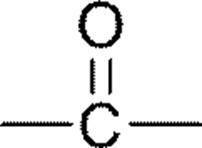
以下、一般式(II)で表される構造の具体例を示すが、本発明はこれらに限定されるものではない。
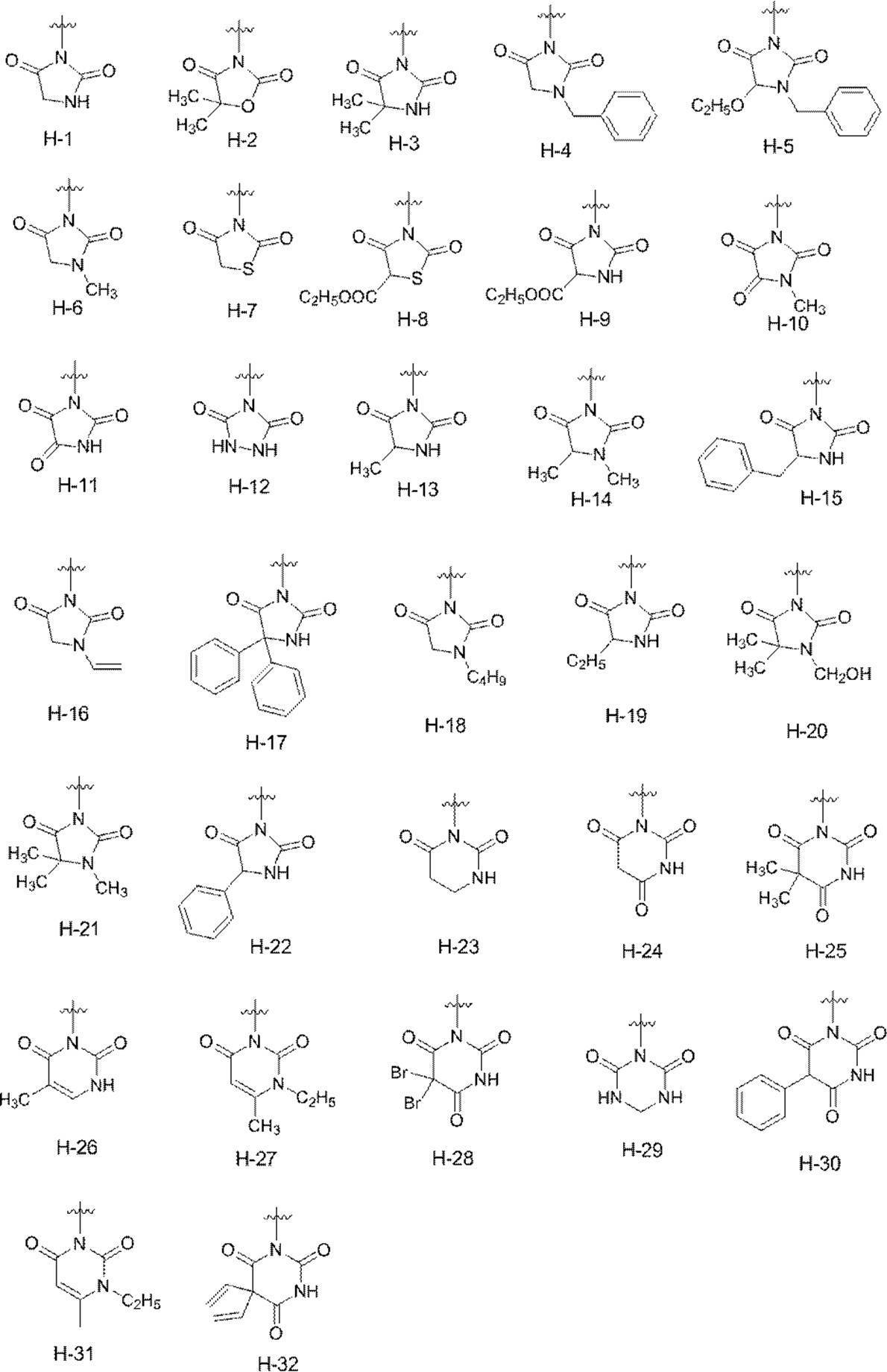
上記の具体例の中でも、合成適正、耐熱性、及び溶解性の観点からは、H-1~H-9、H-14、H-16、H-17,H-18、H-20、H-21、H-23、H-24、H-25、H-27、H-32がより好ましく、H-1,H-2、H-4、H-5
H-6、H-8、H-17、H-18、H-23、H-24が更に好ましい。
H-6、H-8、H-17、H-18、H-23、H-24が更に好ましい。
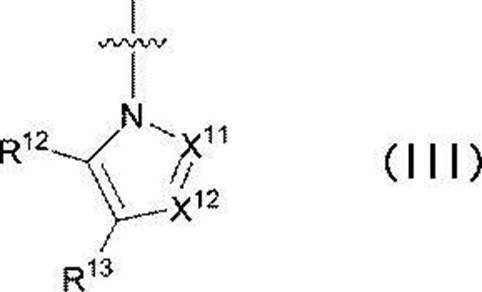
一般式(III)中、X11及びX12は、各々独立に、窒素原子、CR16(R16は、水素原子、又は置換基を表す)を表し、R12及びR13は、各々独立に、水素原子、又は1価の置換基を表す。
R16は、水素原子、又は1価の置換基を表し、該1価の置換基は、前記R2~R5の置換基で説明した1価の置換基と同義である。
R16で表される1価の置換基の中でも、アルキル基、アリール基、又はヘテロ環基が好ましく、更に好ましくはアルキル基又はアリール基である。
上記好ましい態様に示す各基は、無置換であってもよいし、既述の置換基を有していてもよい。
R16で表される1価の置換基の中でも、アルキル基、アリール基、又はヘテロ環基が好ましく、更に好ましくはアルキル基又はアリール基である。
上記好ましい態様に示す各基は、無置換であってもよいし、既述の置換基を有していてもよい。
R12及びR13は、各々独立に、水素原子、又は1価の置換基を表し、該1価の置換基は、前記R2~R5の置換基で説明した1価の置換基と同義である。
R12又はR13で表される1価の置換基の中でも、アルキル基、アリール基、又はヘテロ環基が好ましく、更に好ましくはアルキル基又はアリール基である。
上記好ましい態様に示す各基は、無置換であってもよいし、既述の置換基を有していてもよい。
上記好ましい態様に示す各基は、無置換であってもよいし、既述の置換基を有していてもよい。
一般式(III)においては、R12とR13とが互いに結合して、R12、R13、及び、これらが結合する炭素原子と共に5員環(例えば、シクロペンタン環、ピロリジン環、テトラヒドロフラン環、ジオキソラン環、テトラヒドロチオフェン環、ピロール環、フラン環、チオフェン環、インドール環、ベンゾフラン環、ベンゾチオフェン環などが挙げられる。)、6員環(例えば、シクロヘキサン環、ピペリジン環、ピペラジン環、モルホリン環、テトラヒドロピラン環、ジオキサン環、ペンタメチレンスルフィド環、ジチアン環、ベンゼン環、ピペリジン環、ピペラジン環、ピリダジン環、キノリン環、キナゾリン環などが挙げられる。)、又は7員環(例えば、シクロヘプタン環、ヘキサメチレンイミン環などが挙げられる。)を形成してもよい。
一般式(III)において、R12、R13又はR16がアルキル基を表す場合、該アルキル基としては、好ましくは、炭素数1~12の直鎖、分岐鎖、又は環状のアルキル基であり、より具体的には、例えば、メチル基、エチル基、n-プロピル基、イソプロピル基、シクロプロピル基、n-ブチル基、i-ブチル基、t-ブチル基、シクロブチル基、シクロペンチル基、シクロヘキシル基、及び、ベンジル基が挙げられ、より好ましくは炭素数1~12の分岐鎖、又は環状のアルキル基であり、より具体的には、例えば、イソプロピル基、シクロプロピル基、i-ブチル基、t-ブチル基、シクロブチル基、シクロペンチル基、シクロヘキシル基が挙げられ、更に好ましくは、炭素数1~12の2級又は3級のアルキル基であり、より具体的には、例えば、イソプロピル基、シクロプロピル基、i-ブチル基、t-ブチル基、シクロブチル基、シクロヘキシル基が挙げられる。
上記好ましい態様に示す各アルキル基は、無置換であってもよいし、既述の置換基を有していてもよい。
上記好ましい態様に示す各アルキル基は、無置換であってもよいし、既述の置換基を有していてもよい。
一般式(III)において、R12、R13又はR16がアリール基を表す場合、該アリール基としては、好ましくは、フェニル基又はナフチル基が挙げられ、より好ましくはフェニル基である。
上記好ましい態様に示す各アリール基は、無置換であってもよいし、既述の置換基を有していてもよい。
上記好ましい態様に示す各アリール基は、無置換であってもよいし、既述の置換基を有していてもよい。
以下、一般式(III)で表される構造の具体例を示すが、本発明はこれらに限定されるものではない。

上記の具体例の中でも、合成適正、耐熱性、溶解性の観点からは、J-1、J-2、J-4、J-6、J-9、J-12、J-13、J-16、J-18、J-20、J-21、J-24がより好ましく、J-1、J-2、J-6、J-9、J-13、J-16、J-18,J-20、J-21、J-24が更に好ましい。
一般式(I)で表される化合物は、互変異性体であってもよい。本発明において互変異性体とは、分子内の1個の水素原子が移動することにより形成し得る構造の化合物であればいずれでもよく、例えば下記の一般式(a)から一般式(f)の構造等であってもよい。
なお、一般式(a)から一般式(f)におけるR2、R3、R4、R5、R7、R8、R9、X3、X4、Y1、Y2、及びMaは、一般式(I)におけるR2、R3、R4、R5、R7、R8、R9、X3、X4、Y1、Y2、及びMaに対応する。また、一般式(a)から一般式(f)におけるX1は、一般式(I)における前記一般式(II)又は一般式(III)で表される構造を総括して示したものである。
なお、一般式(a)から一般式(f)におけるR2、R3、R4、R5、R7、R8、R9、X3、X4、Y1、Y2、及びMaは、一般式(I)におけるR2、R3、R4、R5、R7、R8、R9、X3、X4、Y1、Y2、及びMaに対応する。また、一般式(a)から一般式(f)におけるX1は、一般式(I)における前記一般式(II)又は一般式(III)で表される構造を総括して示したものである。
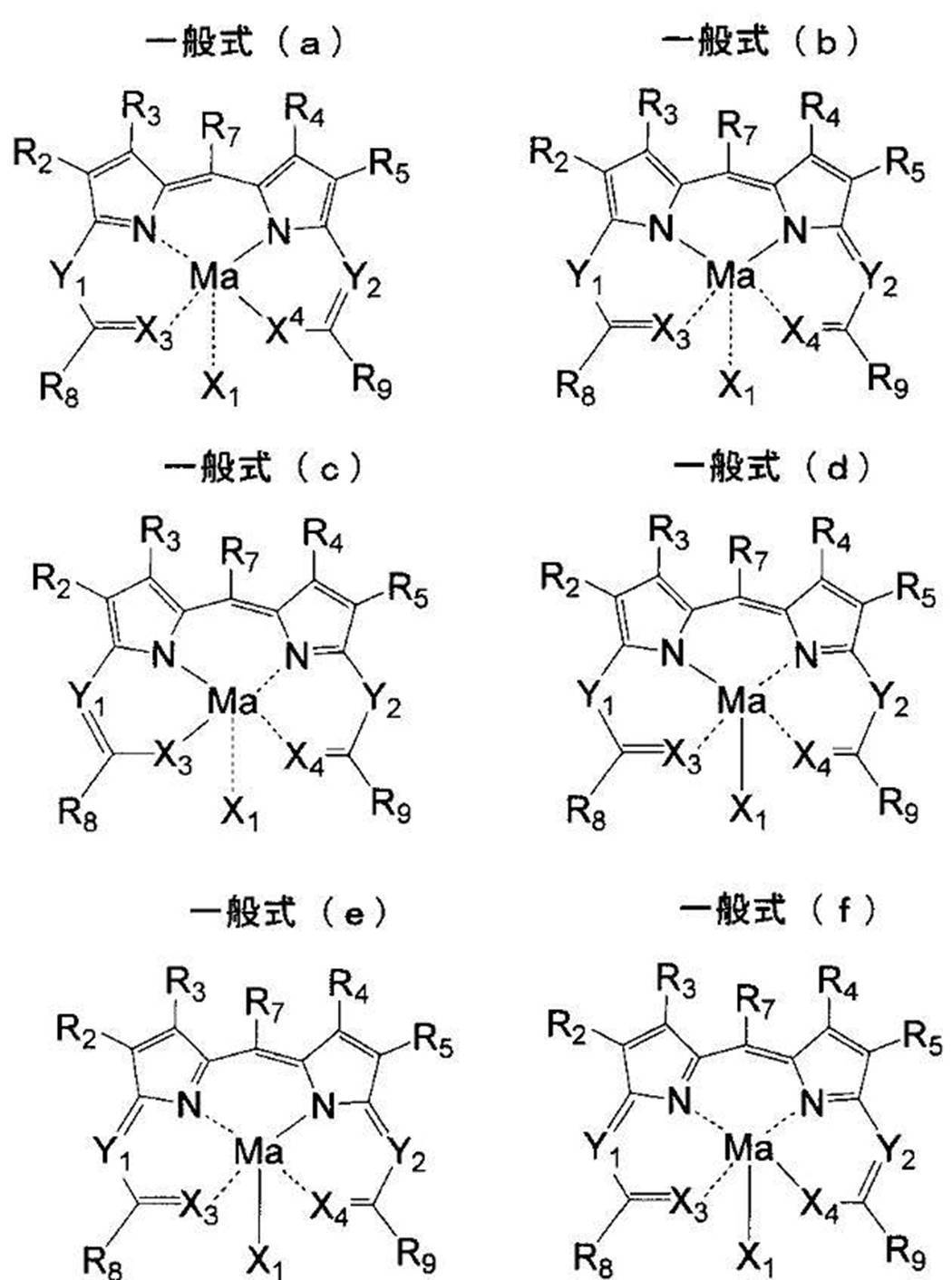
特定金属錯体化合物のモル吸光係数は、該化合物を含む着色組成物により着色膜を形成した際における膜厚の薄膜化の観点から、できるだけ高いほうが好ましい。
また、特定金属錯体化合物最大吸収波長λmaxは、色純度向上の観点から、520nm~580nmが好ましく、530nm~570nmが更に好ましい。
なお、最大吸収波長及びモル吸光係数は、分光光度計UV-2400PC(島津製作所社製)により測定されるものである。
また、特定金属錯体化合物最大吸収波長λmaxは、色純度向上の観点から、520nm~580nmが好ましく、530nm~570nmが更に好ましい。
なお、最大吸収波長及びモル吸光係数は、分光光度計UV-2400PC(島津製作所社製)により測定されるものである。
以下に、特定金属錯体化合物の例示化合物を以下に示すが、本発明はこれらに限定されるわけではない。
なお、例示化合物A-1~A-112において、「X」の欄に示される記号は、一般式(II)又は(III)で表される構造の具体例として前掲した構造に付した記号に対応する。
なお、例示化合物A-1~A-112において、「X」の欄に示される記号は、一般式(II)又は(III)で表される構造の具体例として前掲した構造に付した記号に対応する。

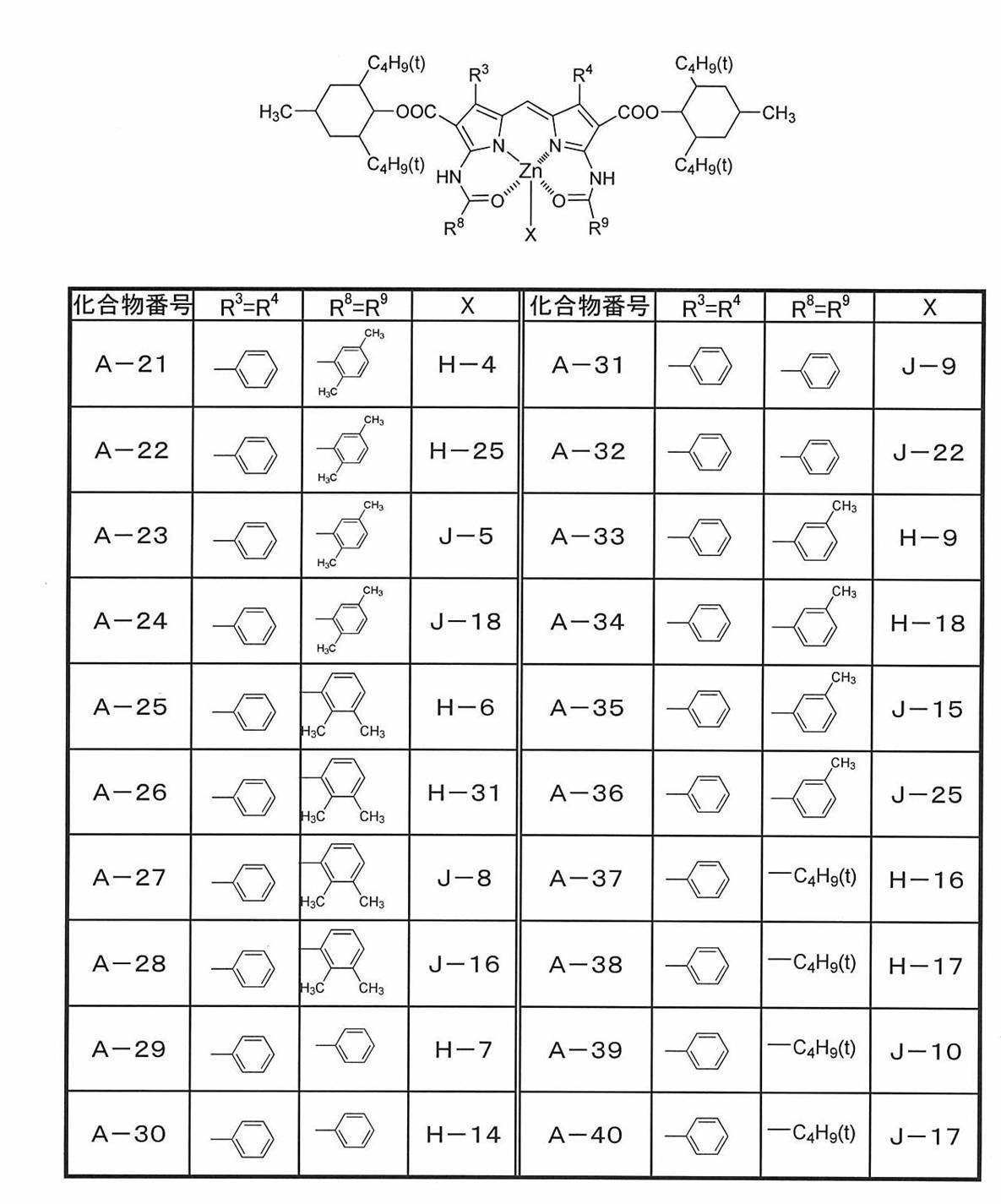


特定金属錯体化合物は、米国特許第4,774,339号明細書、米国特許5,433,896号明細書、特開2001-240761号公報、同2002-155052号公報、特開2008-0076044号公報、特許第3614586号公報、Aust.J.Chem, 1965, 11, 1835-1845、J.H.Boger et al, Heteroatom Chemistry, Vol.1, No.5,389(1990)、等に記載の方法で合成することができる。
本発明の着色組成物では、特定金属錯体化合物を1種単独で含有してもよいし、二種以上併用してもよい。
特定金属錯体化合物の着色組成物中における含有量としては、分子量及びその吸光係数によって異なるが、着色組成物の全固形分に対して、質量基準で0.1~30質量%であることが好ましく、0.5~20質量%であることがより好ましい。
特定金属錯体化合物の含有量を、上記範囲とすることによって、良好な色濃度(例えば、液晶表示するのに適した色濃度)が得られ、且つ、画素のパターニングが良好になる点で有利である。
特定金属錯体化合物の含有量を、上記範囲とすることによって、良好な色濃度(例えば、液晶表示するのに適した色濃度)が得られ、且つ、画素のパターニングが良好になる点で有利である。
本発明の着色組成物には、本発明の効果を損なわない範囲で、特定金属錯体化合物以外に、その他の構造を有する染料や顔料を併用してもよい。
(その他の構造を有する染料)
本発明の着色組成物にはピロメテン染料以外のその他の構造を有する染料を用いることができる。その他の構造を有する染料としては特に制限はなく、公知の染料を使用できる。例えば、特開昭64-90403号公報、特開昭64-91102号公報、特開平1-94301号公報、特開平6-11614号公報、特登2592207号、米国特許第4,808,501号明細書、米国特許第5,667,920号明細書、米国特許第5,059,500号明細書、特開平5-333207号公報、特開平6-35183号公報、特開平6-51115号公報、特開平6-194828号公報、特開平8-211599号公報、特開平4-249549号公報、特開平10-123316号公報、特開平11-302283号公報、特開平7-286107号公報、特開2001-4823号公報、特開平8-15522号公報、特開平8-29771号公報、特開平8-146215号公報、特開平11-343437号公報、特開平8-62416号公報、特開2002-14220号公報、特開2002-14221号公報、特開2002-14222号公報、特開2002-14223号公報、特開平8-302224号公報、特開平8-73758号公報、特開平8-179120号公報、特開平8-151531号公報、特開平6-230210号公報等に記載の色素が挙げられる。
本発明の着色組成物にはピロメテン染料以外のその他の構造を有する染料を用いることができる。その他の構造を有する染料としては特に制限はなく、公知の染料を使用できる。例えば、特開昭64-90403号公報、特開昭64-91102号公報、特開平1-94301号公報、特開平6-11614号公報、特登2592207号、米国特許第4,808,501号明細書、米国特許第5,667,920号明細書、米国特許第5,059,500号明細書、特開平5-333207号公報、特開平6-35183号公報、特開平6-51115号公報、特開平6-194828号公報、特開平8-211599号公報、特開平4-249549号公報、特開平10-123316号公報、特開平11-302283号公報、特開平7-286107号公報、特開2001-4823号公報、特開平8-15522号公報、特開平8-29771号公報、特開平8-146215号公報、特開平11-343437号公報、特開平8-62416号公報、特開2002-14220号公報、特開2002-14221号公報、特開2002-14222号公報、特開2002-14223号公報、特開平8-302224号公報、特開平8-73758号公報、特開平8-179120号公報、特開平8-151531号公報、特開平6-230210号公報等に記載の色素が挙げられる。
その他の構造を有する染料の化学構造としては、ピラゾールアゾ系、アニリノアゾ系、トリフェニルメタン系、アントラキノン系、アンスラピリドン系、ベンジリデン系、オキソノール系、ピラゾロトリアゾールアゾ系、ピリドンアゾ系、シアニン系、フェノチアジン系、ピロロピラゾールアゾメチン系、キサンテン系、スクアリリウム系、フタロシアニン系、ベンゾピラン系、インジゴ系等の染料が挙げられる。中でも、キサンテン系、又はスクアリリウム系が色相の点で好ましい。
本発明の着色組成物は、染料を1種単独含有してもよいし、2種以上の染料を併用してもよい。
染料の着色組成物中における含有量としては、着色組成物の全固形分に対して、質量基準で0.1~30質量%であることが好ましく、0.5~20質量%であることがより好ましい。
染料の含有量を、上記範囲とすることによって、良好な色濃度(例えば、液晶表示するのに適した色濃度)が得られ、且つ、画素のパターニングが良好になる点で有利である。また、本発明の着色組成物において、特定金属錯体化合物とその他の染料が併用される場合、特定金属錯体化合物以外のその他の染料は、特定金属錯体化合物に対して、1質量%~200質量%、好ましくは10質量%~150質量%であることが好ましい。
染料の着色組成物中における含有量としては、着色組成物の全固形分に対して、質量基準で0.1~30質量%であることが好ましく、0.5~20質量%であることがより好ましい。
染料の含有量を、上記範囲とすることによって、良好な色濃度(例えば、液晶表示するのに適した色濃度)が得られ、且つ、画素のパターニングが良好になる点で有利である。また、本発明の着色組成物において、特定金属錯体化合物とその他の染料が併用される場合、特定金属錯体化合物以外のその他の染料は、特定金属錯体化合物に対して、1質量%~200質量%、好ましくは10質量%~150質量%であることが好ましい。
(顔料)
本発明の着色組成物では、上述の染料と顔料とを併用することもできる。
顔料としては平均一次粒子径が10nm以上30nm以下の顔料が好ましい。上記態様であると、色相とコントラストに優れる着色組成物が得られる。
本発明の着色組成物では、上述の染料と顔料とを併用することもできる。
顔料としては平均一次粒子径が10nm以上30nm以下の顔料が好ましい。上記態様であると、色相とコントラストに優れる着色組成物が得られる。
顔料としては、従来公知の種々の無機顔料又は有機顔料を用いることができるが、信頼性の観点で有機顔料を用いることが好ましい。本発明において有機顔料として、例えば、特開2009-256572号公報の段落0093に記載の有機顔料が挙げられる。
また特に、
C.I.Pigment Red 177、224、242、254、255、264、
C.I.Pigment Yellow 138、139、150、180、185、
C.I.Pigment Orange 36、38、71、
C.I.Pigment Green 7、36、58、
C.I.Pigment Blue 15:6、
C.I.Pigment Violet 23
が色再現性の観点で好適であるが、本発明においてはこれらに限定されるものではない。これら有機顔料は、単独で、または、色純度を上げるため種々組合せて用いることができる。
また特に、
C.I.Pigment Red 177、224、242、254、255、264、
C.I.Pigment Yellow 138、139、150、180、185、
C.I.Pigment Orange 36、38、71、
C.I.Pigment Green 7、36、58、
C.I.Pigment Blue 15:6、
C.I.Pigment Violet 23
が色再現性の観点で好適であるが、本発明においてはこれらに限定されるものではない。これら有機顔料は、単独で、または、色純度を上げるため種々組合せて用いることができる。
顔料を用いる場合、本発明の着色組成物中における含有量は、該組成物の全固形分に対して、0.5~50質量%であることが好ましく、1~30質量%がより好ましい。顔料の含有量が前記範囲内であると、優れた色特性を確保するのに有効である。
-顔料分散剤-
本発明の着色組成物は、特定金属錯体化合物と共に、顔料を含む場合、顔料分散剤を含有することができる。
本発明に用いうる顔料分散剤としては、高分子分散剤〔例えば、ポリアミドアミンとその塩、ポリカルボン酸とその塩、高分子量不飽和酸エステル、変性ポリウレタン、変性ポリエステル、変性ポリ(メタ)アクリレート、(メタ)アクリル系共重合体、ナフタレンスルホン酸ホルマリン縮合物〕、及び、ポリオキシエチレンアルキルリン酸エステル、ポリオキシエチレンアルキルアミン、アルカノールアミン等の界面活性剤、及び、顔料誘導体等を挙げることができる。
高分子分散剤は、その構造から更に直鎖状高分子、末端変性型高分子、グラフト型高分子、ブロック型高分子に分類することができる。
本発明の着色組成物は、特定金属錯体化合物と共に、顔料を含む場合、顔料分散剤を含有することができる。
本発明に用いうる顔料分散剤としては、高分子分散剤〔例えば、ポリアミドアミンとその塩、ポリカルボン酸とその塩、高分子量不飽和酸エステル、変性ポリウレタン、変性ポリエステル、変性ポリ(メタ)アクリレート、(メタ)アクリル系共重合体、ナフタレンスルホン酸ホルマリン縮合物〕、及び、ポリオキシエチレンアルキルリン酸エステル、ポリオキシエチレンアルキルアミン、アルカノールアミン等の界面活性剤、及び、顔料誘導体等を挙げることができる。
高分子分散剤は、その構造から更に直鎖状高分子、末端変性型高分子、グラフト型高分子、ブロック型高分子に分類することができる。
顔料表面へのアンカー部位を有する末端変性型高分子としては、例えば、特開平3-112992号公報、特表2003-533455号公報等に記載の末端にリン酸基を有する高分子、特開2002-273191号公報等に記載の末端にスルホン酸基を有する高分子、特開平9-77994号公報等に記載の有機色素の部分骨格や複素環を有する高分子などが挙げられる。また、特開2007-277514号公報に記載の高分子末端に2個以上の顔料表面へのアンカー部位(酸基、塩基性基、有機色素の部分骨格やヘテロ環等)を導入した高分子も分散安定性に優れ好ましい。
顔料表面へのアンカー部位を有するグラフト型高分子としては、例えば、ポリエステル系分散剤等が挙げられ、具体的には、特開昭54-37082号公報、特表平8-507960号公報、特開2009-258668号公報等に記載のポリ(低級アルキレンイミン)とポリエステルの反応生成物、特開平9-169821号公報等に記載のポリアリルアミンとポリエステルの反応生成物、特開平10-339949号公報、特開2004-37986号公報等に記載のマクロモノマーと、窒素原子モノマーとの共重合体、特開2003-238837号公報、特開2008-9426号公報、特開2008-81732号公報等に記載の有機色素の部分骨格や複素環を有するグラフト型高分子、特開2010-106268号公報等に記載のマクロモノマーと酸基含有モノマーの共重合体等が挙げられる。特に、特開2009-203462号公報に記載の塩基性基と酸性基を有する両性分散樹脂は、顔料分散物の分散性、分散安定性、及び顔料分散物を用いた着色組成物が示す現像性の観点から特に好ましい。
顔料表面へのアンカー部位を有するグラフト型高分子をラジカル重合で製造する際に用いるマクロモノマーとしては、公知のマクロモノマーを用いることができ、東亜合成(株)製のマクロモノマーAA-6(末端基がメタクリロイル基であるポリメタクリル酸メチル)、AS-6(末端基がメタクリロイル基であるポリスチレン)、AN-6S(末端基がメタクリロイル基であるスチレンとアクリロニトリルの共重合体)、AB-6(末端基がメタクリロイル基であるポリアクリル酸ブチル)、ダイセル化学工業(株)製のプラクセルFM5(メタクリル酸2-ヒドロキシエチルのε-カプロラクトン5モル当量付加品)、FA10L(アクリル酸2-ヒドロキシエチルのε-カプロラクトン10モル当量付加品)、及び特開平2-272009号公報に記載のポリエステル系マクロモノマー等が挙げられる。これらの中でも、特に柔軟性且つ親溶剤性に優れるポリエステル系マクロモノマーが、顔料分散物の分散性、分散安定性、及び顔料分散物を用いた着色組成物が示す現像性の観点から特に好ましく、更に、特開平2-272009号公報に記載のポリエステル系マクロモノマーで表されるポリエステル系マクロモノマーが最も好ましい。
顔料表面へのアンカー部位を有するブロック型高分子としては、特開2003-49110号公報、特開2009-52010号公報等に記載のブロック型高分子が好ましい。
本発明に用いうる顔料分散剤は、市販品としても入手可能であり、そのような具体例としては、楠木化成株式会社製「DA-7301」、BYKChemie社製「Disperbyk-101(ポリアミドアミン燐酸塩)、107(カルボン酸エステル)、110(酸基を含む共重合物)、130(ポリアミド)、161、162、163、164、165、166、170(高分子共重合物)」、「BYK-P104、P105(高分子量不飽和ポリカルボン酸)、EFKA社製「EFKA4047、4050~4010~4165(ポリウレタン系)、EFKA4330~4340(ブロック共重合体)、4400~4402(変性ポリアクリレート)、5010(ポリエステルアミド)、5765(高分子量ポリカルボン酸塩)、6220(脂肪酸ポリエステル)、6745(フタロシアニン誘導体)、6750(アゾ顔料誘導体)」、味の素ファンテクノ社製「アジスパーPB821、PB822、PB880、PB881」、共栄社化学社製「フローレンTG-710(ウレタンオリゴマー)」、「ポリフローNo.50E、No.300(アクリル系共重合体)」、楠本化成社製「ディスパロンKS-860、873SN、874、#2150(脂肪族多価カルボン酸)、#7004(ポリエーテルエステル)、DA-703-50、DA-705、DA-725」、花王社製「デモールRN、N(ナフタレンスルホン酸ホルマリン重縮合物)、MS、C、SN-B(芳香族スルホン酸ホルマリン重縮合物)」、「ホモゲノールL-18(高分子ポリカルボン酸)」、「エマルゲン920、930、935、985(ポリオキシエチレンノニルフェニルエーテル)」、「アセタミン86(ステアリルアミンアセテート)」、日本ルーブリゾール(株)製「ソルスパース5000(フタロシアニン誘導体)、22000(アゾ顔料誘導体)、13240(ポリエステルアミン)、3000、17000、27000(末端部に機能部を有する高分子)、24000、28000、32000、38500(グラフト型高分子)」、日光ケミカル社製「ニッコールT106(ポリオキシエチレンソルビタンモノオレート)、MYS-IEX(ポリオキシエチレンモノステアレート)」、川研ファインケミカル(株)製 ヒノアクトT-8000E等、信越化学工業(株)製、オルガノシロキサンポリマーKP341、裕商(株)製「W001:カチオン系界面活性剤」、ポリオキシエチレンラウリルエーテル、ポリオキシエチレンステアリルエーテル、ポリオキシエチレンオレイルエーテル、ポリオキシエチレンオクチルフェニルエーテル、ポリオキシエチレンノニルフェニルエーテル、ポリエチレングリコールジラウレート、ポリエチレングリコールジステアレート、ソルビタン脂肪酸エステル等のノニオン系界面活性剤、「W004、W005、W017」等のアニオン系界面活性剤、森下産業(株)製「EFKA-46、EFKA-47、EFKA-47EA、EFKAポリマー100、EFKAポリマー400、EFKAポリマー401、EFKAポリマー450」、サンノプコ(株)製「ディスパースエイド6、ディスパースエイド8、ディスパースエイド15、ディスパースエイド9100」等の高分子分散剤、(株)ADEKA製「アデカプルロニックL31、F38、L42、L44、L61、L64、F68、L72、P95、F77、P84、F87、P94、L101、P103、F108、L121、P-123」、及び三洋化成(株)製「イオネット(商品名)S-20」等が挙げられる。
これらの顔料分散剤は、単独で使用してもよく、2種以上を組み合わせて使用してもよい。本発明においては、特に、顔料誘導体と高分子分散剤とを組み合わせて使用することが好ましい。また、本発明の顔料分散剤は、前記顔料表面へのアンカー部位を有する末端変性型高分子、グラフト型高分子、ブロック型高分子と伴に、アルカリ可溶性樹脂と併用して用いても良い。アルカリ可溶性樹脂としては、(メタ)アクリル酸共重合体、イタコン酸共重合体、クロトン酸共重合体、マレイン酸共重合体、部分エステル化マレイン酸共重合体等、並びに側鎖にカルボン酸を有する酸性セルロース誘導体、水酸基を有するポリマーを酸無水物で変性した樹脂が挙げられるが、特に(メタ)アクリル酸共重合体が好ましい。また、特開平10-300922号公報に記載のN位置換マレイミドモノマー共重合体、特開2004-300204号公報に記載のエーテルダイマー共重合体、特開平7-319161号公報に記載の重合性基を含有するアルカリ可溶性樹脂も好ましい。
着色組成物における顔料分散剤の含有量としては、顔料100質量部に対して、1~80質量部であることが好ましく、5質量部~70質量部がより好ましく、10質量部~60質量部であることが更に好ましい。
具体的には、高分子分散剤を用いる場合であれば、その使用量としては、顔料100質量部に対して、5質量部~100質量部の範囲が好ましく、10質量部~80質量部の範囲であることがより好ましい。
具体的には、高分子分散剤を用いる場合であれば、その使用量としては、顔料100質量部に対して、5質量部~100質量部の範囲が好ましく、10質量部~80質量部の範囲であることがより好ましい。
また、顔料誘導体を併用する場合、顔料誘導体の使用量としては、顔料100質量部に対し、質量換算で1部~30部の範囲にあることが好ましく、3~20部の範囲にあることがより好ましく、5部~15部の範囲にあることが特に好ましい。
<他の成分>
本発明の着色組成物は、本発明の効果を損なわない範囲で、更に、以下に説明する他の成分を含んでいてもよい。
本発明の着色組成物は、本発明の効果を損なわない範囲で、更に、以下に説明する他の成分を含んでいてもよい。
(アントラキノン化合物)
本発明の着色組成物は、アントラキノン化合物を含有してもよい。
本発明の着色組成物は、アントラキノン化合物を含有してもよい。
アントラキノン化合物を含有することにより、本発明の着色組成物を用いて得られたカラーフィルタのコントラストを効果的に高めることができる。
本発明におけるアントラキノン化合物は、400nm~700nmに吸収極大を有する化合物であり、本発明において好ましくは、500nm~700nmに吸収極大を有し、特に好ましくは550nm~700nmに吸収極大を有するアントラキノン化合物である。このような吸収極大を有するアントラキノン化合物であれば、特に構造上限定されるものではなく、コントラスト向上効果に優れる。
本発明におけるアントラキノン化合物の中でも、好ましくは下記一般式(IX)で表されるアミノアントラキノン化合物である。
このアミノアントラキノン化合物のうちでも、吸収特性の観点から、下記一般式(X)で表される化合物がより好ましく、また熱安定性の観点から、下記一般式(XI)で表される化合物がより好ましく、更には、吸収特性と熱安定性の両立の観点からは、下記一般式(XII)又は下記一般式(XIII)で表される化合物が特に好ましい。
このアミノアントラキノン化合物のうちでも、吸収特性の観点から、下記一般式(X)で表される化合物がより好ましく、また熱安定性の観点から、下記一般式(XI)で表される化合物がより好ましく、更には、吸収特性と熱安定性の両立の観点からは、下記一般式(XII)又は下記一般式(XIII)で表される化合物が特に好ましい。
まず、下記一般式(IX)で表される化合物について説明する。
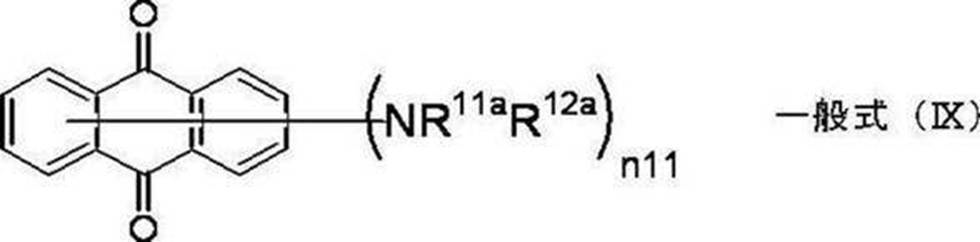
一般式(IX)において、R11a及びR12aは、各々独立に、水素原子、アルキル基、アリール基又はヘテロ環基を表すが、R11aとR12aとが同時に水素原子を表すことはない。
R11a、R12aで表されるアルキル基として好ましくは、炭素数1~30、より好ましくは炭素数1~20、特に好ましくは炭素数1~10のアルキル基であり、例えば、メチル基、エチル基、iso-プロピル基、tert-ブチル基、n-オクチル基、n-デシル基、n-ヘキサデシル基、シクロプロピル基、シクロペンチル基、シクロヘキシル基などが挙げられる。
R11a、R12aで表されるアリール基として好ましくは、炭素数6~30、より好ましくは炭素数6~20、特に好ましくは炭素数6~12のアリール基であり、例えば、フェニル基、o-メチルフェニル基、p-メチルフェニル基、2,6-ジメチルフェニル基、2,6-ジエチルフェニルビフェニル基、2,6-ジブロモフェニル基、ナフチル基、アントラニル基、フェナントリル基などが挙げられる。
R11a、R12aで表されるヘテロ環基として好ましくは、炭素数1~30、より好ましくは炭素数1~12のヘテロ環基であり、ヘテロ原子としては、例えば窒素原子、酸素原子、硫黄原子を含む。ヘテロ環基としては、例えば、イミダゾリル基、ピリジル基、キノリル基、フリル基、チエニル基、ベンズオキサゾリル基、ベンズイミダゾリル基、ベンズチアゾリル基、ナフトチアゾリル基、ベンズオキサゾリル基、カルバゾリル基、アゼピニル基などが挙げられる。
また、R11a、R12aで表されるアルキル基、アリール基、ヘテロ環基は、更に置換基を有してもよい。
置換基を有する場合の置換基としては、例えば、アルキル基(好ましくは炭素数1~30、より好ましくは炭素数1~20、特に好ましくは炭素数1~10のアルキル基であり、例えばメチル基、エチル基、iso-プロピル基、tert-ブチル基、n-オクチル基、n-デシル基、n-ヘキサデシル基、シクロプロピル基、シクロペンチル基、シクロヘキシル基などが挙げられる。)、アルケニル基(好ましくは炭素数2~30、より好ましくは炭素数2~20、特に好ましくは炭素数2~10のアルケニル基であり、例えばビニル基、アリル基、2-ブテニル基、3-ペンテニル基などが挙げられる。)、アルキニル基(好ましくは炭素数2~30、より好ましくは炭素数2~20、特に好ましくは炭素数2~10のアルキニル基であり、例えばプロパルギル基、3-ペンチニル基などが挙げられる。)、アリール基(好ましくは炭素数6~30、より好ましくは炭素数6~20、特に好ましくは炭素数6~12のアリール基であり、例えばフェニル基、p-メチルフェニル基、ビフェニル基、ナフチル基、アントラニル基、フェナントリル基などが挙げられる。)、
置換基を有する場合の置換基としては、例えば、アルキル基(好ましくは炭素数1~30、より好ましくは炭素数1~20、特に好ましくは炭素数1~10のアルキル基であり、例えばメチル基、エチル基、iso-プロピル基、tert-ブチル基、n-オクチル基、n-デシル基、n-ヘキサデシル基、シクロプロピル基、シクロペンチル基、シクロヘキシル基などが挙げられる。)、アルケニル基(好ましくは炭素数2~30、より好ましくは炭素数2~20、特に好ましくは炭素数2~10のアルケニル基であり、例えばビニル基、アリル基、2-ブテニル基、3-ペンテニル基などが挙げられる。)、アルキニル基(好ましくは炭素数2~30、より好ましくは炭素数2~20、特に好ましくは炭素数2~10のアルキニル基であり、例えばプロパルギル基、3-ペンチニル基などが挙げられる。)、アリール基(好ましくは炭素数6~30、より好ましくは炭素数6~20、特に好ましくは炭素数6~12のアリール基であり、例えばフェニル基、p-メチルフェニル基、ビフェニル基、ナフチル基、アントラニル基、フェナントリル基などが挙げられる。)、
アミノ基(好ましくは炭素数0~30、より好ましくは炭素数0~20、特に好ましくは炭素数0~10のアミノ基であり、アルキルアミノ基、アリールアミノ基、又はヘテロ環アミノ基が含まれる。具体的な例としては、アミノ基、メチルアミノ基、ジメチルアミノ基、ジエチルアミノ基、ジベンジルアミノ基、ジフェニルアミノ基、ジトリルアミノ基などが挙げられる。)、アルコキシ基(好ましくは炭素数1~30、より好ましくは炭素数1~20、特に好ましくは炭素数1~10のアルコキシ基であり、例えば、メトキシ、エトキシ、ブトキシ、2-エチルヘキシロキシ基などが挙げられる。)、アリールオキシ基(好ましくは炭素数6~30、より好ましくは炭素数6~20、特に好ましくは炭素数6~12のアリールオキシ基であり、例えば、フェニルオキシ基、1-ナフチルオキシ基、2-ナフチルオキシ基などが挙げられる。)、芳香族ヘテロ環オキシ基(好ましくは炭素数1~30、より好ましくは炭素数1~20、特に好ましくは炭素数1~12の芳香族へテロ環オキシ基であり、例えば、ピリジルオキシ基、ピラジルオキシ基、ピリミジルオキシ基、キノリルオキシ基などが挙げられる。)、
アシル基(好ましくは炭素数1~30、より好ましくは炭素数1~20、特に好ましくは炭素数1~12のアシル基であり、例えば、アセチル基、ベンゾイル基、ホルミル基、ピバロイル基などが挙げられる。)、アルコキシカルボニル基(好ましくは炭素数2~30、より好ましくは炭素数2~20、特に好ましくは炭素数2~12のアルコキシカルボニル基であり、例えば、メトキシカルボニル基、エトキシカルボニル基などが挙げられる。)、アリールオキシカルボニル基(好ましくは炭素数7~30、より好ましくは炭素数7~20、特に好ましくは炭素数7~12のアリールオキシカルボニル基であり、例えば、フェニルオキシカルボニルなどが挙げられる。)、アシルオキシ基(好ましくは炭素数2~30、より好ましくは炭素数2~20、特に好ましくは炭素数2~10のアシルオキシ基であり、例えば、アセトキシ基、ベンゾイルオキシ基などが挙げられる。)、アシルアミノ基(好ましくは炭素数2~30、より好ましくは炭素数2~20、特に好ましくは炭素数2~10のアシルアミノ基であり、例えば、アセチルアミノ基、ベンゾイルアミノ基などが挙げられる。)、アルコキシカルボニルアミノ基(好ましくは炭素数2~30、より好ましくは炭素数2~20、特に好ましくは炭素数2~12のアルコキシカルボニルアミノ基であり、例えばメトキシカルボニルアミノ基などが挙げられる。)、
アリールオキシカルボニルアミノ基(好ましくは炭素数7~30、より好ましくは炭素数7~20、特に好ましくは炭素数7~12のアリールオキシカルボニルアミノ基であり、例えばフェニルオキシカルボニルアミノ基などが挙げられる。)、スルホニルアミノ基(好ましくは炭素数1~30、より好ましくは炭素数1~20、特に好ましくは炭素数1~12のスルホニルアミノ基であり、例えば、メタンスルホニルアミノ基、ベンゼンスルホニルアミノ基などが挙げられる。)、スルファモイル基(好ましくは炭素数0~30、より好ましくは炭素数0~20、特に好ましくは炭素数0~12のスルファモイル基であり、例えば、スルファモイル基、メチルスルファモイル基、ジメチルスルファモイル基、フェニルスルファモイル基などが挙げられる。)、
カルバモイル基(好ましくは炭素数1~30、より好ましくは炭素数1~20、特に好ましくは炭素数1~12のカルバモイル基であり、例えば、カルバモイル基、メチルカルバモイル基、ジエチルカルバモイル基、フェニルカルバモイル基などが挙げられる。)、アルキルチオ基(好ましくは炭素数1~30、より好ましくは炭素数1~20、特に好ましくは炭素数1~12のアルキルチオ基であり、例えば、メチルチオ基、エチルチオ基などが挙げられる。)、アリールチオ基(好ましくは炭素数6~30、より好ましくは炭素数6~20、特に好ましくは炭素数6~12のアリールチオ基であり、例えばフェニルチオ基などが挙げられる。)、
芳香族ヘテロ環チオ基(好ましくは炭素数1~30、より好ましくは炭素数1~20、特に好ましくは炭素数1~12の芳香族ヘテロ環チオ基であり、例えば、ピリジルチオ基、2-ベンズイミゾリルチオ基、2-ベンズオキサゾリルチオ基、2-ベンズチアゾリルチオ基などが挙げられる。)、スルホニル基(好ましくは炭素数1~30、より好ましくは炭素数1~20、特に好ましくは炭素数1~12のスルホニル基であり、例えば、メシル基、トシル基などが挙げられる。)、スルフィニル基(好ましくは炭素数1~30、より好ましくは炭素数1~20、特に好ましくは炭素数1~12のスルフィニル基であり、例えば、メタンスルフィニル基、ベンゼンスルフィニル基などが挙げられる。)、ウレイド基(好ましくは炭素数1~30、より好ましくは炭素数1~20、特に好ましくは炭素数1~12のウレイド基であり、例えば、ウレイド基、メチルウレイド基、フェニルウレイド基などが挙げられる。)、リン酸アミド基(好ましくは炭素数1~30、より好ましくは炭素数1~20、特に好ましくは炭素数1~12のリン酸アミド基であり、例えば、ジエチルリン酸アミド基、フェニルリン酸アミド基などが挙げられる。)、
ヒドロキシ基、メルカプト基、ハロゲン原子(例えばフッ素原子、塩素原子、臭素原子、ヨウ素原子)、シアノ基、スルホ基、カルボキシル基、ニトロ基、ヒドロキサム酸基、スルフィノ基、ヒドラジノ基、イミノ基、ヘテロ環基(好ましくは炭素数1~30、より好ましくは炭素数1~12のヘテロ環基であり、ヘテロ原子としては例えば窒素原子、酸素原子、硫黄原子がふくまれる。具体的な例としては、例えば、イミダゾリル基、ピリジル基、キノリル基、フリル基、チエニル基、ピペリジル基、モルホリノ基、ベンズオキサゾリル基、ベンズイミダゾリル基、ベンズチアゾリル基、カルバゾリル基、アゼピニル基などが挙げられる。)、シリル基(好ましくは炭素数3~40、より好ましくは炭素数3~30、特に好ましくは炭素数3~24のシリル基であり、例えば、トリメチルシリル基、トリフェニルシリル基などが挙げられる。)などが挙げられる。これらの置換基は、更に置換されてもよい。
前記一般式(IX)において、n11は、1~4の整数を表し、n11が2~4の整数である場合、複数のNR11aR12aは同一でも異なっていてもよい。
次に、一般式(X)で表される化合物について説明する。

一般式(X)において、R21a及びR22aは、各々独立に、アルキル基、又はアリール基を表す。
R21a、R22aで表されるアルキル基として好ましくは、炭素数1~30、より好ましくは炭素数1~20、特に好ましくは炭素数1~10のアルキル基であり、例えば、メチル基、エチル基、iso-プロピル基、tert-ブチル基、n-オクチル基、n-デシル基、n-ヘキサデシル基、シクロプロピル基、シクロペンチル基、シクロヘキシルなどの基が挙げられる。
R21a、R22aで表されるアリール基として好ましくは、炭素数6~30、より好ましくは炭素数6~20、特に好ましくは炭素数6~12のアリール基であり、例えば、フェニル基、o-メチルフェニル基、p-メチルフェニル基、2,6-ジメチルフェニル基、2,6-ジエチルフェニルビフェニル基、2,6-ジブロモフェニル基、ナフチル基、アントラニル基、フェナントリル基などが挙げられる。
また、前記R21a、R22aで表されるアルキル基、アリール基は、更に置換基を有してもよく、置換基の例としては、前記一般式(IX)中のR11a、R12aで表されるアルキル基、アリール基、ヘテロ環基の置換基として既述した例が挙げられる。中でも、該置換基の例としては、好ましくは、アルキル基、アリール基、アミノ基、アルコキシ基、アリールオキシ基、アシル基、アルコキシカルボニル基、アリールオキシカルボニル基、アシルオキシ基、アシルアミノ基、スルホニルアミノ基、スルファモイル基、スルホニル基、ウレイド基、ヒドロキシ基、ハロゲン原子、スルホ基、カルボキシル基などである。これらの詳細及び好ましい態様については、既述の例の通りである。
次に、一般式(XI)で表される化合物について説明する。

前記一般式(XI)において、R31a、R32a、R33a、及びR34aは、各々独立に、アルキル基、又はハロゲン原子を表す。
R31a、R32a、R33a、R34aで表されるアルキル基として好ましくは、炭素数1~10、より好ましくは炭素数1~5、特に好ましくは炭素数1~2のアルキル基であり、例えば、メチル基、エチル基、iso-プロピル基、tert-ブチル基、n-オクチル基、n-デシル基、n-ヘキサデシル基、シクロプロピル基、シクロペンチル基、シクロヘキシル基などが挙げられる。
R31a、R32a、R33a、R34aで表されるハロゲン原子としては、フッ素原子、塩素原子、臭素原子、ヨウ素原子等が挙げられ、塩素原子、臭素原子が好ましい。
前記一般式(XI)において、R35a及びR36aは、各々独立に、アルキル基、アルコキシ基、アリールオキシ基、スルホ基もしくはその塩、アミノスルホニル基、アルコキシスルホニル基、又はアリールオキシスルホニル基を表す。
R35a、R36aで表されるアルキル基は、前記R31a、R32a、R33a、R34aで表されるアルキル基と同義であり、好ましい態様も同様である。
R35a、R36aで表されるアルコキシ基は、好ましくは、炭素数1~30、より好ましくは炭素数1~20、特に好ましくは炭素数1~10のアルコキシ基であり、例えば、メトキシ、エトキシ、ブトキシ、2-エチルヘキシロキシなどが挙げられる。
R35a、R36aで表されるアリールオキシ基は、好ましくは、炭素数6~30、より好ましくは炭素数6~20、特に好ましくは炭素数6~12のアリールオキシ基であり、例えば、フェニルオキシ、1-ナフチルオキシ、2-ナフチルオキシなどが挙げられる。
R35a、R36aで表されるスルホ基及びその塩は、スルホン酸基及びスルホン酸塩に由来の基が好ましい。スルホン酸塩は、4級アンモニウム塩又はアミンの塩が好ましく、炭素数4~30(好ましくは10~30、より好ましくは15~30)のスルホン酸塩が特に好ましい。
R35a、R36aで表されるアミノスルホニル基は、好ましくは炭素数1~30、より好ましくは炭素数2~20、特に好ましくは炭素数2~15のアミノスルホニル基であり、具体例として、エチルアミノスルホニル基、プロピルアミノスルホニル基、イソプロピルアミノスルホニル基、ブチルアミノスルホニル基、イソブチルアミノスルホニル基、sec-ブチルアミノスルホニル基、ペンチルアミノスルホニル基、イソペンチルアミノスルホニル基、ヘキシルアミノスルホニル基、シクロヘキシルアミノスルホニル基、2-エチルヘキシルアミノスルホニル基、デシルアミノスルホニル基、ドデシルアミノスルホニル基、フェニルアミノスルホニル基などが挙げられ、またジアルキルアミノスルホニル基として、ジメチルアミノスルホニル基、ジエチルアミノスルホニル基、ジプロピルアミノスルホニル基、ジイソプロピルアミノスルホニル基、ジブチルアミノスルホニル基、ジsec-ブチルアミノスルホニル基、ジsec-プロピルアミノスルホニル基、ジヘキシルアミノスルホニル基、メチルエチルアミノスルホニル基、メチルブチルアミノスルホニル基、エチルブチルアミノスルホニル基、フェニルメチルアミノスルホニル基などが挙げられる。このうち、特にアルキル部位の炭素数が4~15のジアルキルアミノスルホニル基が好ましい。
R35a、R36aで表されるアルコキシスルホニル基は、好ましくは炭素数1~30、より好ましくは2~20、更に好ましくは2~15、特に好ましくは4~15のアルコキシスルホニル基であり、具体例として、ブトキシスルホニル基、ヘキシルオキシスルホニル基、デシルオキシスルホニル基、ドデシルオキシスルホニル基などが挙げられる。
R35a、R36aで表されるアリールオキシスルホニル基は、好ましくは炭素数6~30、より好ましくは6~20、特に好ましくは6~15のアリールオキシスルホニル基であり、具体例として、フェノキシスルホニル基、トリルオキシスルホニル基などが挙げられる。
R35a、R36aは、さらに置換基を有してもよく、該置換基の例としては、前記一般式(IX)中のR11a、R12aで表されるアルキル基、アリール基、ヘテロ環基の置換基として既述した例が挙げられる。
前記一般式(XI)において、n31、n32は、0~2の整数を表し、n31、n32が2の場合、複数のR35a、R36aは同一でも異なっていてもよい。
上記のジアミノアントラキノン化合物中でも、下記一般式(XII)又は下記一般式(XIII)で表される化合物より選択される化合物が好ましい。
(一般式(XII)で表される化合物)
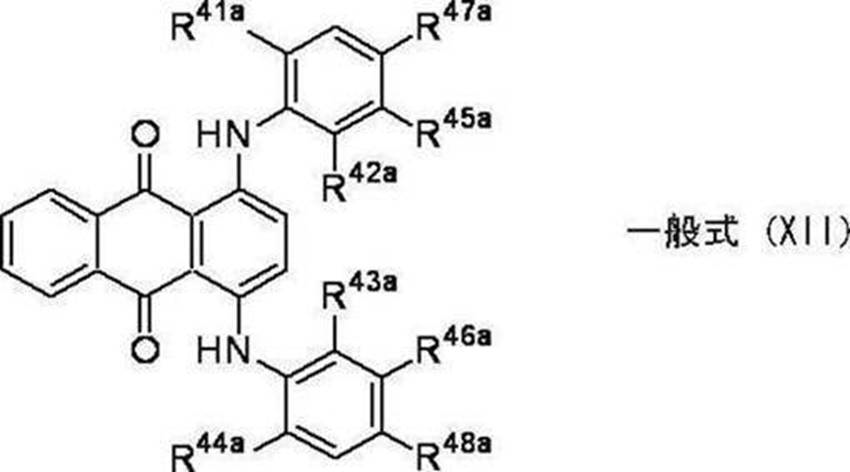
一般式(XII)において、R41a、R42a、R43a、及びR44aは、各々独立に、アルキル基、又はハロゲン原子を表し、前記一般式(XI)中のR31a、R32a、R33a、R34aにおけるアルキル基、ハロゲン原子と同義であり、好ましい態様も同様である。
前記一般式(XII)中のR45a、R46a、R47a、及びR48aは、各々独立に、アルキル基、スルホ基もしくはその塩、又はアミノスルホニル基を表す。R45a及びR47aのいずれか一方と、R46a及びR48aのいずれか一方とは、スルホ基もしくはその塩、又はアミノスルホニル基を表す。R45a、R46a、R47a、及びR48aは、前記一般式(XI)中のR35a、R36aで表されるアルキル基、スルホ基もしくはその塩、アミノスルホニル基と同義であり、好ましい態様も同様である。
(一般式(XIII)で表される化合物)

一般式(XIII)において、R51a、R52a、R53a、及びR54aは、各々独立に、アルキル基、又はハロゲン原子を表し、一般式(XI)中のR31a、R32a、R33a、R34aにおけるアルキル基、ハロゲン原子と同義であり、好ましい態様も同様である。
前記一般式(XIII)中、R55a及びR56aは、各々独立に、水素原子又はアルキル基を表し、該アルキル基は前記一般式(XI)中のR31a、R32a、R33a、R34aにおけるアルキル基と同義であり、好ましい態様も同様である。
また、R57a及びR58aは、各々独立に、水素原子又はアルキル基を表し、該アルキル基は、炭素数1~10のアルキル基が好ましく、より好ましくは炭素数1~5のアルキル基であり、特に好ましくはメチル基である。
また、R57a及びR58aは、各々独立に、水素原子又はアルキル基を表し、該アルキル基は、炭素数1~10のアルキル基が好ましく、より好ましくは炭素数1~5のアルキル基であり、特に好ましくはメチル基である。
前記一般式(XIII)中、L51a及びL52aは、各々独立に2価の連結基を表し、炭素数1~10のアルキレン基、炭素数6~20のアリーレン基、-O-、-S-、-NR-、-SO2-、-CO-、又はこれらの複数を組み合わせてなる2価の連結基が好ましい。L51a、L52aとしてより好ましくは、炭素数1~10のアルキレン基、炭素数6~12のアリーレン基、スルホニルアミノ基、又はこれらの複数を組み合わせてなる2価の連結基であり、特に好ましくは、炭素数1~10のアルキレン基、スルホニルアミノ基、又はこれらの複数を組み合わせてなる2価の連結基である。
前記炭素数1~10のアルキレン基又はこれと-O-等とを組み合わせてなる2価の連結基としては、無置換でも置換基を有してもよく、例えば、エチレン、プロピレン、ブチレン基、エチレンオキシ基、プロピレンオキシ基、エチレンアミノスルホニル基、プロピレンアミノスルホニル基、ブチレンアミノスルホニル基、ペンチレンアミノスルホニル基、1-メチルエチレンスルホニル基等が挙げられる。中でも、炭素数2~10のアルキレンアミノスルホニル基(例:エチレンアミノスルホニル基、プロピレンアミノスルホニル基、ブチレンアミノスルホニル基、ペンチレンアミノスルホニル基)が好ましい。
前記炭素数6~20のアリーレン基又はこれと-O-等とを組み合わせてなる2価の連結基としては、無置換でも置換基を有してもよく、例えば、フェニレン、ビフェニレン、フェニレンアミノスルホニル基等が挙げられ、中でも、炭素数6~12のアリーレンアミノスルホニル基(例:フェニレンアミノスルホニル基など)が好ましい。
また、-NR-のRは、水素原子、炭素数1~10のアルキル基を表す。具体的なアルキル基としては、メチル基、エチル基、プロピル基、イソブチル基、ブチル基、イソブチル基、sec-ブチル基、2-エチルヘキシル基などが挙げられる。
前記炭素数6~20のアリーレン基又はこれと-O-等とを組み合わせてなる2価の連結基としては、無置換でも置換基を有してもよく、例えば、フェニレン、ビフェニレン、フェニレンアミノスルホニル基等が挙げられ、中でも、炭素数6~12のアリーレンアミノスルホニル基(例:フェニレンアミノスルホニル基など)が好ましい。
また、-NR-のRは、水素原子、炭素数1~10のアルキル基を表す。具体的なアルキル基としては、メチル基、エチル基、プロピル基、イソブチル基、ブチル基、イソブチル基、sec-ブチル基、2-エチルヘキシル基などが挙げられる。
前記一般式(XIII)中、L53a及びL54aは、各々独立に、酸素原子、又は-NH-基を表す。
上記のうち、本発明において好ましいアントラキノン化合物は、前記一般式(XII)又は前記一般式(XIII)で表されるジアミノアントラキノン化合物より選択される化合物であり、更には下記の場合が特に好ましい。すなわち、
前記一般式(XII)においては、R41a、R42a、R43a、及びR44aがメチル基、エチル基、もしくは臭素原子であって、R45a、R46aが炭素数2~15のアミノスルホニル基であり、R47a、R48aがメチル基である場合が好ましく、
また、前記一般式(XIII)においては、R51a、R52a、R53a、及びR54aがメチル基、エチル基、もしくは臭素原子であって、R55a及びR56aが水素原子もしくはメチル基であり、R57a及びR58aが水素原子、メチル基であって、L51a及びL52aが炭素数1~10のアルキレンアミノスルホニル基、炭素数7~12のアラルキレンアミノスルホニル基、又は炭素数2~10のアルキレンオキシ基であり、L53a及びL54aが酸素原子である場合が好ましい。
この場合において、一般式(I)で表されるジピロメテン系金属錯体化合物と組み合わせて用いた場合が、本発明の効果がより効果的に奏される点で好ましい。
前記一般式(XII)においては、R41a、R42a、R43a、及びR44aがメチル基、エチル基、もしくは臭素原子であって、R45a、R46aが炭素数2~15のアミノスルホニル基であり、R47a、R48aがメチル基である場合が好ましく、
また、前記一般式(XIII)においては、R51a、R52a、R53a、及びR54aがメチル基、エチル基、もしくは臭素原子であって、R55a及びR56aが水素原子もしくはメチル基であり、R57a及びR58aが水素原子、メチル基であって、L51a及びL52aが炭素数1~10のアルキレンアミノスルホニル基、炭素数7~12のアラルキレンアミノスルホニル基、又は炭素数2~10のアルキレンオキシ基であり、L53a及びL54aが酸素原子である場合が好ましい。
この場合において、一般式(I)で表されるジピロメテン系金属錯体化合物と組み合わせて用いた場合が、本発明の効果がより効果的に奏される点で好ましい。
以下、本発明におけるアントラキノン化合物の具体例を示す。但し、本発明においては、これらに制限されるものではない。
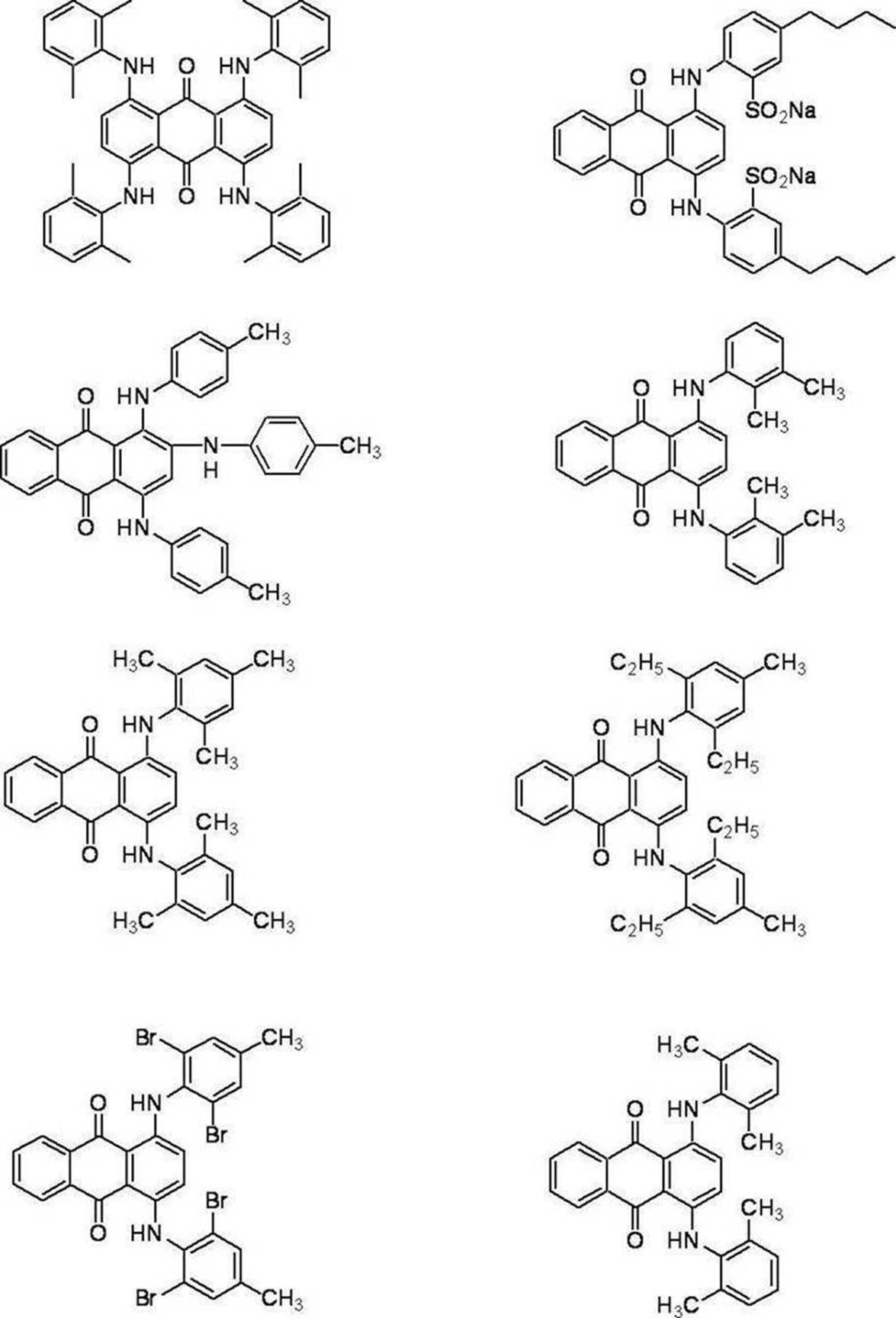
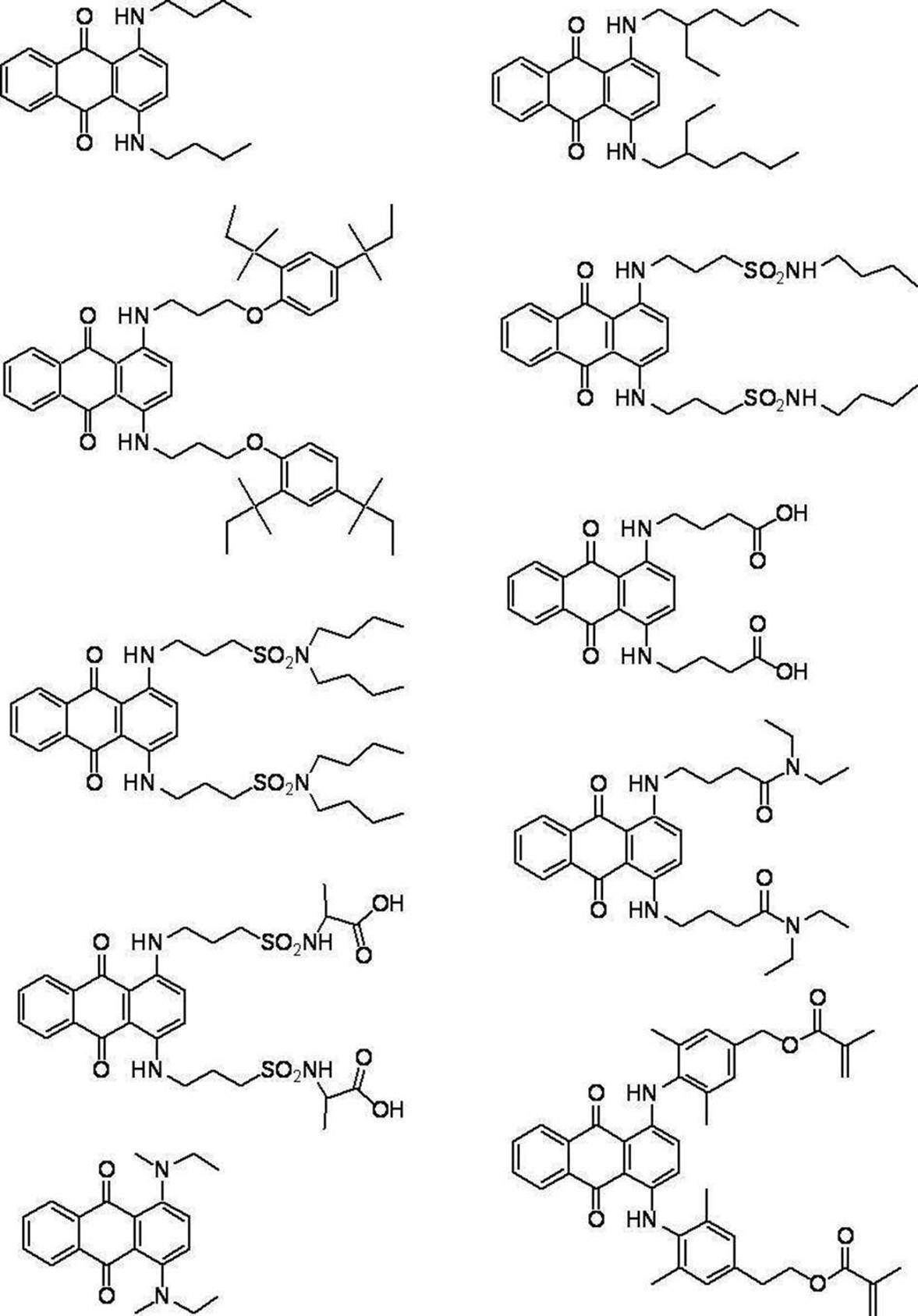

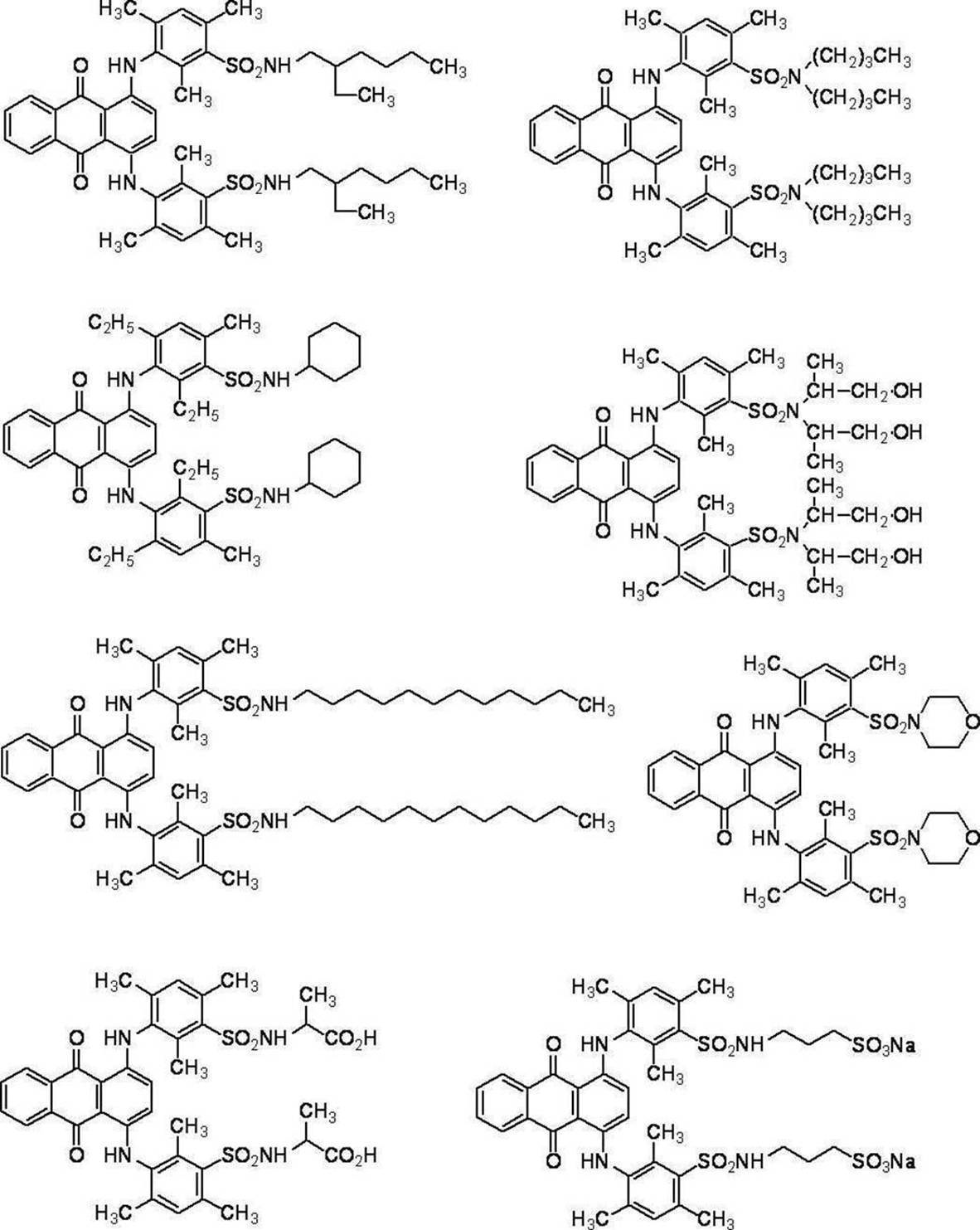
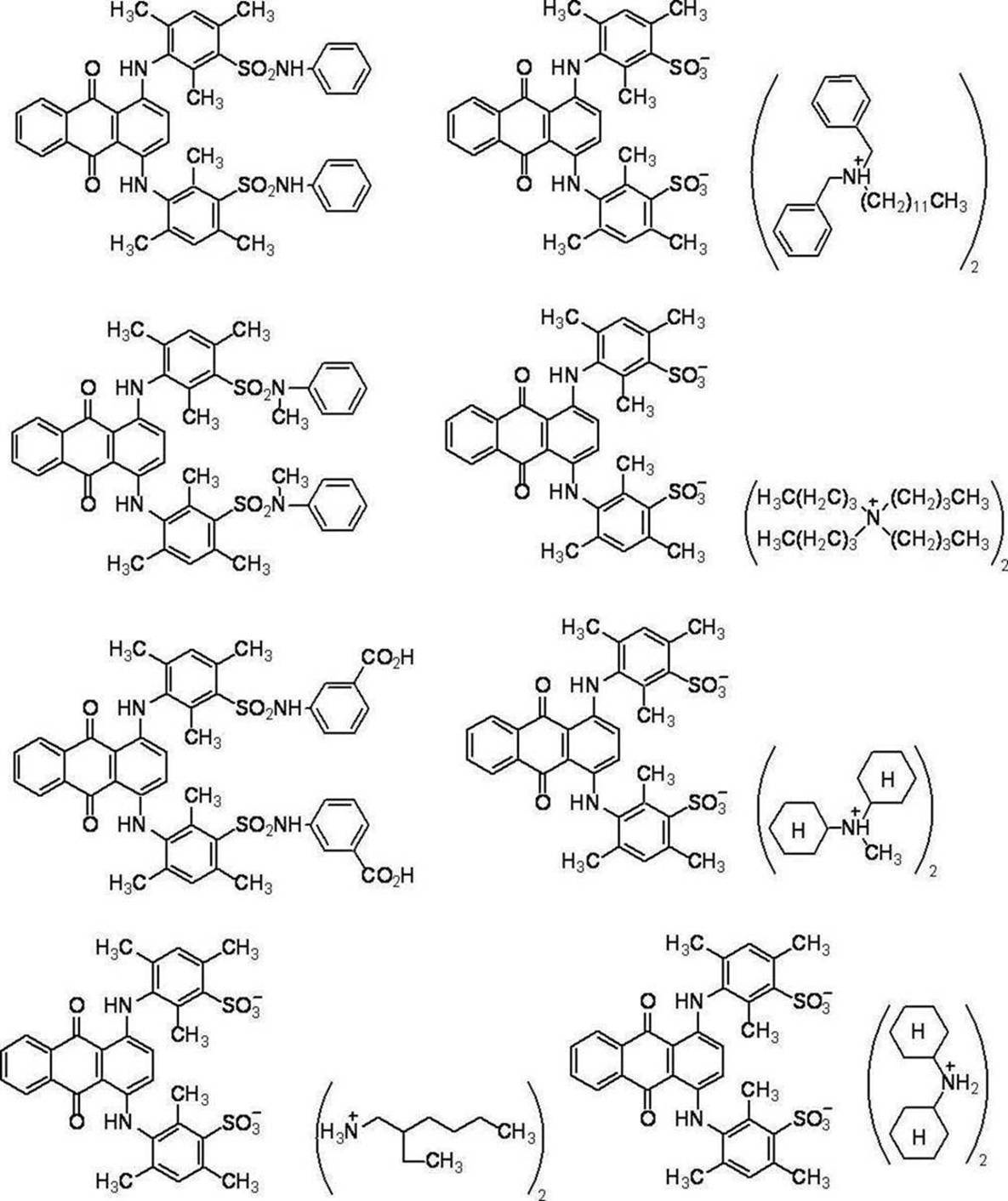

前記アントラキノン化合物の特定金属錯体化合物を含む全染料化合物の総量に対する比率は、50質量%以下であるのが好ましく、2質量%~50質量%の範囲とするのがより好ましく、10質量%~50質量%の範囲とするのがより好ましい。アントラキノン化合物の比率が50質量%以下であると、堅牢性を維持しながら、着色画像の色相が良好でコントラストをより効果的に高めることができる。
(重合性化合物)
本発明の着色組成物は、少なくとも一種の重合性化合物を含有することが好ましい。重合性化合物としては、例えば少なくとも一個のエチレン性不飽和二重結合を有する重合性化合物であり、公知の組成物を構成する成分から選択して用いることができ、特開2006-23696号公報の段落番号[0010]~[0020]に記載の成分や、特開2006-64921号公報の段落番号[0027]~[0053]に記載の成分を挙げることができる。
本発明の着色組成物は、少なくとも一種の重合性化合物を含有することが好ましい。重合性化合物としては、例えば少なくとも一個のエチレン性不飽和二重結合を有する重合性化合物であり、公知の組成物を構成する成分から選択して用いることができ、特開2006-23696号公報の段落番号[0010]~[0020]に記載の成分や、特開2006-64921号公報の段落番号[0027]~[0053]に記載の成分を挙げることができる。
また、イソシアネートと水酸基の付加反応を用いて製造されるウレタン付加重合性化合物も好適であり、特開昭51-37193号公報、特公平2-32293号公報、特公平2-16765号公報に記載されているようなウレタンアクリレート類や、特公昭58-49860号公報、特公昭56-17654号公報、特公昭62-39417号公報、特公昭62-39418号公報に記載のエチレンオキサイド骨格を有するウレタン化合物類も好適である。
その他の例としては、特開昭48-64183号公報、特公昭49-43191号公報、特公昭52-30490号公報の各公報に記載されているようなポリエステルアクリレート類、エポキシ樹脂と(メタ)アクリル酸とを反応させて得られるエポキシアクリレート類等の多官能のアクリレートやメタクリレートを挙げることができる。更に日本接着協会誌vol.20、No.7、300~308ページ(1984年)に光硬化性モノマー及びオリゴマーとして紹介されているものも使用することができる。
その他の例としては、特開昭48-64183号公報、特公昭49-43191号公報、特公昭52-30490号公報の各公報に記載されているようなポリエステルアクリレート類、エポキシ樹脂と(メタ)アクリル酸とを反応させて得られるエポキシアクリレート類等の多官能のアクリレートやメタクリレートを挙げることができる。更に日本接着協会誌vol.20、No.7、300~308ページ(1984年)に光硬化性モノマー及びオリゴマーとして紹介されているものも使用することができる。
具体例としては、ペンタエリスリトールトリ(メタ)アクリレート、ペンタエリスリトールテトラ(メタ)アクリレート、ジペンタエリスリトールペンタ(メタ)アクリレート、ジペンタエリスリトールヘキサ(メタ)アクリレート、トリ((メタ)アクリロイルオキシエチル)イソシアヌレート、ペンタエリスリトールテトラ(メタ)アクリレートEO変性体、ジペンタエリスリトールヘキサ(メタ)アクリレートEO変性体などが、並びに、市販品としては、NKエステル A-TMMT、NKエステル A-TMM-3、NKオリゴUA-32P、NKオリゴUA-7200(以上、新中村化学工業(株)製)、アロニックス M-305、アロニックス M-306、アロニックス M-309、アロニックス M-450、アロニックス M-402、TO-1382(以上、東亞合成(株)製)、V#802(大阪有機化学工業(株)製)、カヤラド D-330、カヤラド D-320、カヤラド D-310、カヤラド DPHA(以上、日本化薬(株)製)等を好ましい例として挙げることができる。
これらの重合性化合物は単独で、或いは2種以上の併用で用いることができる。
これらの重合性化合物は単独で、或いは2種以上の併用で用いることができる。
着色組成物の全固形分中における重合性化合物の含有量(2種以上の場合は総含有量)としては、10質量%~80質量%が好ましく、15質量%~75質量%がより好ましく、20質量%~60質量%が特に好ましい。
(アルカリ可溶性バインダー)
アルカリ可溶性バインダーは、アルカリ可溶性を有すること以外は、特に限定はなく、好ましくは、耐熱性、現像性、入手性等の観点から選択することができる。
アルカリ可溶性バインダーは、アルカリ可溶性を有すること以外は、特に限定はなく、好ましくは、耐熱性、現像性、入手性等の観点から選択することができる。
アルカリ可溶性バインダーとしては、線状有機高分子重合体であり、且つ、有機溶剤に可溶で、弱アルカリ水溶液で現像できるものが好ましい。このような線状有機高分子重合体としては、側鎖にカルボン酸を有するポリマー、例えば、特開昭59-44615号、特公昭54-34327号、特公昭58-12577号、特公昭54-25957号、特開昭59-53836号、特開昭59-71048号の各公報に記載されているような、メタクリル酸共重合体、アクリル酸共重合体、イタコン酸共重合体、クロトン酸共重合体、マレイン酸共重合体、部分エステル化マレイン酸共重合体等が挙げられ、同様に側鎖にカルボン酸を有する酸性セルロース誘導体が有用である。
上述したものの他、本発明におけるアルカリ可溶性バインダーとしては、水酸基を有するポリマーに酸無水物を付加させたもの等や、ポリヒドロキシスチレン系樹脂、ポリシロキサン系樹脂、ポリ(2-ヒドロキシエチル(メタ)アクリレート)、ポリビニルピロリドンやポリエチレンオキサイド、ポリビニルアルコール、等も有用である。また、線状有機高分子重合体は、親水性を有するモノマーを共重合したものであってもよい。この例としては、アルコキシアルキル(メタ)アクリレート、ヒドロキシアルキル(メタ)アクリレート、グリセロール(メタ)アクリレート、(メタ)アクリルアミド、N-メチロールアクリルアミド、2級若しくは3級のアルキルアクリルアミド、ジアルキルアミノアルキル(メタ)アクリレート、モルホリン(メタ)アクリレート、N-ビニルピロリドン、N-ビニルカプロラクタム、ビニルイミダゾール、ビニルトリアゾール、メチル(メタ)アクリレート、エチル(メタ)アクリレート、分岐若しくは直鎖のプロピル(メタ)アクリレート、分岐若しくは直鎖のブチル(メタ)アクリレート、又は、フェノキシヒドロキシプロピル(メタ)アクリレート、等が挙げられる。その他、親水性を有するモノマーとしては、テトラヒドロフルフリル基、燐酸基、燐酸エステル基、4級アンモニウム塩基、エチレンオキシ鎖、プロピレンオキシ鎖、スルホン酸基及びその塩由来の基、モルホリノエチル基等を含んでなるモノマー等も有用である。
また、アルカリ可溶性バインダーは、架橋効率を向上させるために、重合性基を側鎖に有してもよく、例えば、アリル基、(メタ)アクリル基、アリルオキシアルキル基等を側鎖に含有するポリマー等も有用である。上述の重合性基を含有するポリマーの例としては、市販品のダイヤナールNRシリーズ(三菱レイヨン(株)製);Photomer 6173(COOH基含有Polyurethane acrylic oligomer、Diamond Shamrock Co.Ltd,製);ビスコートR-264、KSレジスト106(いずれも大阪有機化学工業(株)製);サイクロマーPシリーズ、プラクセルCF200シリーズ(いずれもダイセル化学工業(株)製);Ebecryl3800(ダイセルサイテック(株)製)等が挙げられる。また、硬化皮膜の強度を上げるためにアルコール可溶性ナイロンや2,2-ビス-(4-ヒドロキシフェニル)-プロパンとエピクロルヒドリンとのポリエーテル等も有用である。
これら各種アルカリ可溶性バインダーの中でも、耐熱性の観点からは、ポリヒドロキシスチレン系樹脂、ポリシロキサン系樹脂、アクリル系樹脂、アクリルアミド系樹脂、アクリル/アクリルアミド共重合体樹脂が好ましく、現像性制御の観点からは、アクリル系樹脂、アクリルアミド系樹脂、アクリル/アクリルアミド共重合体樹脂が好ましい。
前記アクリル系樹脂としては、ベンジル(メタ)アクリレート、(メタ)アクリル酸、ヒドロキシエチル(メタ)アクリレート、(メタ)アクリルアミド等から選ばれるモノマーからなる共重合体や、市販品のダイヤナールNRシリーズ(三菱レイヨン(株)製)KSレジスト-106(大阪有機化学工業(株)製)、サイクロマーPシリーズ、プラクセルCF200シリーズ(ダイセル化学工業(株)製)等が好ましい。
アルカリ可溶性バインダーは、現像性、液粘度等の観点から、重量平均分子量(GPC法で測定されたポリスチレン換算値)が1000~2×10⁵の重合体が好ましく、2000~1×10⁵の重合体がより好ましく、5000~5×10⁴の重合体が特に好ましい。単独でもちいることも2種以上を併用することもできる。
(光重合開始剤)
本発明の着色組成物は、少なくとも一種の光重合開始剤を含有することが好ましい。光重合開始剤は、前記重合性化合物を重合させ得るものであれば、特に制限はなく、特性、開始効率、吸収波長、入手性、コスト等の観点で選ばれるのが好ましい。
光重合開始剤は、露光光により感光し、重合性化合物の重合を開始、促進する化合物である。波長300nm以上の活性光線に感応し、重合性化合物の重合を開始、促進する化合物が好ましい。また、波長300nm以上の活性光線に直接感応しない光重合開始剤についても、増感剤と組み合わせて好ましく用いることができる。
本発明の着色組成物は、少なくとも一種の光重合開始剤を含有することが好ましい。光重合開始剤は、前記重合性化合物を重合させ得るものであれば、特に制限はなく、特性、開始効率、吸収波長、入手性、コスト等の観点で選ばれるのが好ましい。
光重合開始剤は、露光光により感光し、重合性化合物の重合を開始、促進する化合物である。波長300nm以上の活性光線に感応し、重合性化合物の重合を開始、促進する化合物が好ましい。また、波長300nm以上の活性光線に直接感応しない光重合開始剤についても、増感剤と組み合わせて好ましく用いることができる。
具体的には例えば、オキシムエステル化合物、有機ハロゲン化化合物、オキシジアゾール化合物、カルボニル化合物、ケタール化合物、ベンゾイン化合物、アクリジン化合物、有機過酸化物、アゾ化合物、クマリン化合物、アジド化合物、メタロセン化合物、ヘキサアリールビイミダゾール化合物、有機ホウ酸化合物、ジスルホン酸化合物、オニウム塩化合物、アシルホスフィン(オキシド)、ベンゾフェノン化合物、アセトフェノン化合物及びその誘導体等が挙げられる。 これらの中でも、感度の点から、オキシムエステル化合物、ヘキサアリールビイミダゾール化合物が好ましい。
オキシムエステル化合物としては、特開2000-80068号公報、特開2001-233842号公報、特表2004-534797号公報、国際公開第2005/080337号パンフレット、国際公開第2006/018973号パンフレット、特開2007-210991号公報、特開2007-231000号公報、特開2007-269779号公報、特開2009-191061号公報、国際公開第2009/131189号パンフレットに記載の化合物を使用できる。
具体的な例としては、2-(O-ベンゾイルオキシム)-1-[4-(フェニルチオ)フェニル]-1,2-ブタンジオン、2-(O-ベンゾイルオキシム)-1-[4-(フェニルチオ)フェニル]-1,2-ペンタンジオン、2-(O-ベンゾイルオキシム)-1-[4-(フェニルチオ)フェニル]-1,2-ヘキサンジオン、2-(O-ベンゾイルオキシム)-1-[4-(フェニルチオ)フェニル]-1,2-ヘプタンジオン、2-(O-ベンゾイルオキシム)-1-[4-(フェニルチオ)フェニル]-1,2-オクタンジオン、2-(O-ベンゾイルオキシム)-1-[4-(メチルフェニルチオ)フェニル]-1,2-ブタンジオン、2-(O-ベンゾイルオキシム)-1-[4-(エチルフェニルチオ)フェニル]-1,2-ブタンジオン、2-(O-ベンゾイルオキシム)-1-[4-(ブチルフェニルチオ)フェニル]-1,2-ブタンジオン、1-(O-アセチルオキシム)-1-[9-エチル-6-(2-メチルベンゾイル)-9H-カルバゾール-3-イル]エタノン、1-(O-アセチルオキシム)-1-[9-メチル-6-(2-メチルベンゾイル)-9H-カルバゾール-3-イル]エタノン、1-(O-アセチルオキシム)-1-[9-プロピル-6-(2-メチルベンゾイル)-9H-カルバゾール-3-イル]エタノン、1-(O-アセチルオキシム)-1-[9-エチル-6-(2-エチルベンゾイル)-9H-カルバゾール-3-イル]エタノン、1-(O-アセチルオキシム)-1-[9-エチル-6-(2-ブチルベンゾイル)-9H-カルバゾール-3-イル]エタノン、2-(ベンゾイルオキシイミノ)-1-[4-(フェニルチオ)フェニル]-1-オクタノン、2-(アセトキシイミノ)-4-(4-クロロフェニルチオ)-1-[9-エチル-6-(2-メチルベンゾイル)-9H-カルバゾール-3-イル]-1-ブタノンなどが挙げられる。但し、これらに限定されるものではない。
また、本発明においては、感度、径時安定性、後加熱時の着色の観点から、オキシム系化合物として、下記一般式(1)で表される化合物も好適である。
また、本発明においては、感度、径時安定性、後加熱時の着色の観点から、オキシム系化合物として、下記一般式(1)で表される化合物も好適である。
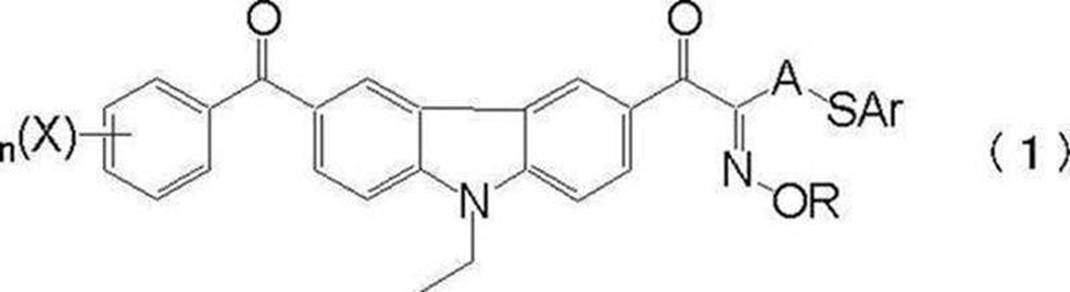
前記一般式(1)中、R及びXは、各々独立に、1価の置換基を表し、Aは、2価の有機基を表し、Arは、アリール基を表す。nは、0~5の整数である。
一般式(1)中、Rとしては、高感度化の点から、アシル基が好ましく、具体的には、アセチル基、プロピオニル基、ベンゾイル基、トルイル基が好ましい。
一般式(1)中、Aとしては、感度を高め、加熱経時による着色を抑制する点から、無置換のアルキレン基、アルキル基(例えば、メチル基、エチル基、tert-ブチル基、ドデシル基)で置換されたアルキレン基、アルケニル基(例えば、ビニル基、アリル基)で置換されたアルキレン基、アリール基(例えば、フェニル基、p-トリル基、キシリル基、クメニル基、ナフチル基、アンスリル基、フェナントリル基、スチリル基)で置換されたアルキレン基が好ましい。
一般式(1)中、Aとしては、感度を高め、加熱経時による着色を抑制する点から、無置換のアルキレン基、アルキル基(例えば、メチル基、エチル基、tert-ブチル基、ドデシル基)で置換されたアルキレン基、アルケニル基(例えば、ビニル基、アリル基)で置換されたアルキレン基、アリール基(例えば、フェニル基、p-トリル基、キシリル基、クメニル基、ナフチル基、アンスリル基、フェナントリル基、スチリル基)で置換されたアルキレン基が好ましい。
一般式(1)中、Arとしては、感度を高め、加熱経時による着色を抑制する点から、置換又は無置換のフェニル基が好ましい。置換フェニル基の場合、その置換基としては、例えば、フッ素原子、塩素原子、臭素原子、ヨウ素原子等のハロゲン基が好ましい。
一般式(1)中、Xとしては、溶剤溶解性と長波長領域の吸収効率向上の点から、置換基を有してもよいアルキル基、置換基を有してもよいアリール基、置換基を有してもよいアルケニル基、置換基を有してもよいアルキニル基、置換基を有してもよいアルコキシ基、置換基を有してもよいアリールオキシ基、置換基を有してもよいアルキルチオキシ基、置換基を有してもよいアリールチオキシ基、置換基を有してもよいアミノ基が好ましい。
一般式(1)におけるnは1~2の整数が好ましい。
一般式(1)中、Xとしては、溶剤溶解性と長波長領域の吸収効率向上の点から、置換基を有してもよいアルキル基、置換基を有してもよいアリール基、置換基を有してもよいアルケニル基、置換基を有してもよいアルキニル基、置換基を有してもよいアルコキシ基、置換基を有してもよいアリールオキシ基、置換基を有してもよいアルキルチオキシ基、置換基を有してもよいアリールチオキシ基、置換基を有してもよいアミノ基が好ましい。
一般式(1)におけるnは1~2の整数が好ましい。
有機ハロゲン化化合物の例としては、具体的には、若林等、「Bull Chem. Soc. Japan」42、2924(1969)、米国特許第3,905,815号明細書、特公昭46-4605号公報、特開昭48-36281号公報、特開昭55-32070号公報、特開昭60-239736号公報、特開昭61-169835号公報、特開昭61-169837号公報、特開昭62-58241号公報、特開昭62-212401号公報、特開昭63-70243号公報、特開昭63-298339号公報、M.P.Hutt“Journal of Heterocyclic Chemistry”1(No3),(1970)等に記載の化合物が挙げられ、特に、トリハロメチル基が置換したオキサゾール化合物、s-トリアジン化合物が挙げられる。
ヘキサアリールビイミダゾール化合物の例としては、例えば、特公平6-29285号公報、米国特許第3,479,185号、同第4,311,783号、同第4,622,286号等の各明細書に記載の種々の化合物、具体的には、2,2’-ビス(o-クロロフェニル)-4,4’,5,5’-テトラフェニルビイミダゾール、2,2’-ビス(o-ブロモフェニル)-4,4’,5,5’-テトラフェニルビイミダゾール、2,2’-ビス(o,p-ジクロロフェニル)-4,4’,5,5’-テトラフェニルビイミダゾール、2,2’-ビス(o-クロロフェニル)-4,4’,5,5’-テトラ(m-メトキシフェニル)ビイミダゾール、2,2’-ビス(o,o’-ジクロロフェニル)-4,4’,5,5’-テトラフェニルビイミダゾール、2,2’-ビス(o-ニトロフェニル)-4,4’,5,5’-テトラフェニルビイミダゾール、2,2’-ビス(o-メチルフェニル)-4,4’,5,5’-テトラフェニルビイミダゾール、2,2’-ビス(o-トリフルオロフェニル)-4,4’,5,5’-テトラフェニルビイミダゾール等が挙げられる。
光重合開始剤は、1種又は2種以上を組み合わせて用いることができる。また、露光波長に吸収を持たない開始剤を用いる場合には、増感剤を使用する必要がある。
光重合開始剤の総含有量は、着色組成物中の全固形分に対して、0.5質量%~30質量%であることが好ましく、2質量%~20質量%であることがより好ましく、5質量%~18質量%が最も好ましい。この範囲内であると、露光時の感度が高く、また色特性も良好である。
(増感剤)
本発明の着色組成物には増感剤を加えることもできる。本発明に用いうる典型的な増感剤としては、クリベロ〔J. V. Crivello, Adv. in Polymer Sci, 62,1(1984)〕に開示しているものが挙げられ、具体的には、ピレン、ペリレン、アクリジン、チオキサントン、2-クロロチオキサントン、ベンゾフラビン、N-ビニルカルバゾール、9,10-ジブトキシアントラセン、アントラキノン、ベンゾフェノン、クマリン、ケトクマリン、フェナントレン、カンファキノン、フェノチアジン誘導体などを挙げることができる。増感剤は、光重合開始剤に対し、50質量%~200質量%の割合で添加することが好ましい。
本発明の着色組成物には増感剤を加えることもできる。本発明に用いうる典型的な増感剤としては、クリベロ〔J. V. Crivello, Adv. in Polymer Sci, 62,1(1984)〕に開示しているものが挙げられ、具体的には、ピレン、ペリレン、アクリジン、チオキサントン、2-クロロチオキサントン、ベンゾフラビン、N-ビニルカルバゾール、9,10-ジブトキシアントラセン、アントラキノン、ベンゾフェノン、クマリン、ケトクマリン、フェナントレン、カンファキノン、フェノチアジン誘導体などを挙げることができる。増感剤は、光重合開始剤に対し、50質量%~200質量%の割合で添加することが好ましい。
(連鎖移動剤)
本発明の着色組成物には連鎖移動剤を加えることもできる。
本発明に用いうる連鎖移動剤としては、例えば、N,N-ジメチルアミノ安息香酸エチルエステルなどのN,N-ジアルキルアミノ安息香酸アルキルエステル、2-メルカプトベンゾチアゾール、2-メルカプトベンゾオキサゾール、2-メルカプトベンゾイミダゾール、N-フェニルメルカプトベンゾイミダゾール、1,3,5-トリス(3-メルカプトブチルオキシエチル)-1,3,5-トリアジン-2,4,6(1H,3H,5H)-トリオンなどの複素環を有するメルカプト化合物、及び、ペンタエリスリトールテトラキス(3-メルカプトブチレート)、1,4-ビス(3-メルカプトブチリルオキシ)ブタンなどの脂肪族多官能メルカプト化合物などが挙げられる。
連鎖移動剤は、1種単独で用いてもよく、2種以上を併用してもよい。
連鎖移動剤の添加量は、本発明の組成物の全固形分に対して、0.01質量%~15質量%範囲であることが、感度ばらつきを低減するという観点から好ましく、0.1質量%~10質量%がより好ましく、0.5質量%~5質量%が特に好ましい。
本発明の着色組成物には連鎖移動剤を加えることもできる。
本発明に用いうる連鎖移動剤としては、例えば、N,N-ジメチルアミノ安息香酸エチルエステルなどのN,N-ジアルキルアミノ安息香酸アルキルエステル、2-メルカプトベンゾチアゾール、2-メルカプトベンゾオキサゾール、2-メルカプトベンゾイミダゾール、N-フェニルメルカプトベンゾイミダゾール、1,3,5-トリス(3-メルカプトブチルオキシエチル)-1,3,5-トリアジン-2,4,6(1H,3H,5H)-トリオンなどの複素環を有するメルカプト化合物、及び、ペンタエリスリトールテトラキス(3-メルカプトブチレート)、1,4-ビス(3-メルカプトブチリルオキシ)ブタンなどの脂肪族多官能メルカプト化合物などが挙げられる。
連鎖移動剤は、1種単独で用いてもよく、2種以上を併用してもよい。
連鎖移動剤の添加量は、本発明の組成物の全固形分に対して、0.01質量%~15質量%範囲であることが、感度ばらつきを低減するという観点から好ましく、0.1質量%~10質量%がより好ましく、0.5質量%~5質量%が特に好ましい。
(重合禁止剤)
本発明の着色組成物は、重合禁止剤を含有してもよい。
重合禁止剤とは、光や熱により着色感光性樹脂組成物中に発生したラジカル等の重合開始種に対して水素供与(又は、水素授与)、エネルギー供与(又は、エネルギー授与)、電子供与(又は、電子授与)などを実施し、重合開始種を失活させ、重合が意図せず開始されることを抑制する役割をはたす物質である。特開2007-334322号公報の段落0154~0173に記載された重合禁止剤などを用いることができる。
これらの中でも、重合禁止剤としてはp-メトキシフェノールが好ましく挙げられる。
本発明の着色組成物における重合禁止剤の含有量は、重合性化合物の全質量に対して、0.0001質量%~5質量%が好ましく、0.001質量%~5質量%がより好ましく、0.001質量%~1質量%が特に好ましい。
本発明の着色組成物は、重合禁止剤を含有してもよい。
重合禁止剤とは、光や熱により着色感光性樹脂組成物中に発生したラジカル等の重合開始種に対して水素供与(又は、水素授与)、エネルギー供与(又は、エネルギー授与)、電子供与(又は、電子授与)などを実施し、重合開始種を失活させ、重合が意図せず開始されることを抑制する役割をはたす物質である。特開2007-334322号公報の段落0154~0173に記載された重合禁止剤などを用いることができる。
これらの中でも、重合禁止剤としてはp-メトキシフェノールが好ましく挙げられる。
本発明の着色組成物における重合禁止剤の含有量は、重合性化合物の全質量に対して、0.0001質量%~5質量%が好ましく、0.001質量%~5質量%がより好ましく、0.001質量%~1質量%が特に好ましい。
(有機溶剤)
本発明の着色組成物は、有機溶剤を含有することができる。
有機溶剤は、並存する各成分の溶解性や着色組成物としたときの塗布性を満足できるものであれば、基本的には特に制限はなく、特に、固形分の溶解性、塗布性、安全性を考慮して選ばれることが好ましい。
本発明の着色組成物は、有機溶剤を含有することができる。
有機溶剤は、並存する各成分の溶解性や着色組成物としたときの塗布性を満足できるものであれば、基本的には特に制限はなく、特に、固形分の溶解性、塗布性、安全性を考慮して選ばれることが好ましい。
有機溶剤としては、エステル類として、例えば、酢酸エチル、酢酸-n-ブチル、酢酸イソブチル、ギ酸アミル、酢酸イソアミル、酢酸イソブチル、プロピオン酸ブチル、酪酸イソプロピル、酪酸エチル、酪酸ブチル、乳酸メチル、乳酸エチル、オキシ酢酸アルキルエステル類(例:オキシ酢酸メチル、オキシ酢酸エチル、オキシ酢酸ブチル(具体的には、メトキシ酢酸メチル、メトキシ酢酸エチル、メトキシ酢酸ブチル、エトキシ酢酸メチル、エトキシ酢酸エチル等が挙げられる。))、3-オキシプロピオン酸アルキルエステル類、2-オキシプロピオン酸アルキルエステル類、2-オキシ-2-メチルプロピオン酸メチル、2-オキシ-2-メチルプロピオン酸エチル、ピルビン酸メチル、ピルビン酸エチル、ピルビン酸プロピル、アセト酢酸メチル、アセト酢酸エチル、2-オキソブタン酸メチル、2-オキソブタン酸エチル等が挙げられる。
また、エーテル類としては、例えば、ジエチレングリコールジメチルエーテル、テトラヒドロフラン、エチレングリコールモノメチルエーテル、エチレングリコールモノエチルエーテル、メチルセロソルブアセテート、エチルセロソルブアセテート、ジエチレングリコールモノメチルエーテル、ジエチレングリコールモノエチルエーテル、ジエチレングリコールモノブチルエーテル、プロピレングリコールモノメチルエーテル、プロピレングリコールモノメチルエーテルアセテート、プロピレングリコールモノエチルエーテルアセテート、プロピレングリコールモノプロピルエーテルアセテート、3-エトキシプロピオン酸メチル、3-エトキシプロピオン酸エチル、等が挙げられる。
ケトン類としては、例えば、メチルエチルケトン、シクロヘキサノン、2-ヘプタノン、3-ヘプタノン等が挙げられる。
芳香族炭化水素類としては、例えば、トルエン、キシレン等が好適に挙げられる。
ケトン類としては、例えば、メチルエチルケトン、シクロヘキサノン、2-ヘプタノン、3-ヘプタノン等が挙げられる。
芳香族炭化水素類としては、例えば、トルエン、キシレン等が好適に挙げられる。
これらの有機溶剤は、前述の各成分の溶解性、及びアルカリ可溶性バインダーを含む場合はその溶解性、塗布面状の改良などの観点から、2種以上を混合することも好ましい。この場合、特に好ましくは、3-エトキシプロピオン酸メチル、3-エトキシプロピオン酸エチル、エチルセロソルブアセテート、乳酸エチル、ジエチレングリコールジメチルエーテル、酢酸ブチル、3-メトキシプロピオン酸メチル、2-ヘプタノン、シクロヘキサノン、エチルカルビトールアセテート、ブチルカルビトールアセテート、プロピレングリコールメチルエーテル、及びプロピレングリコールメチルエーテルアセテートから選択される2種以上で構成される混合溶液である。
有機溶剤の着色組成物中における含有量としては、組成物中の全固形分濃度が5質量%~80質量%になる量が好ましく、5質量%~60質量%になる量がより好ましく、10質量%~60質量%になる量が特に好ましい。
(界面活性剤)
本発明の着色感光性樹脂組成物は、界面活性剤を含有してもよい。
界面活性剤としては、アニオン系、カチオン系、ノニオン系、又は、両性のいずれでも使用することができるが、好ましい界面活性剤はノニオン系界面活性剤である。具体的には、特開2009-098616号公報の段落0058に記載のノニオン系界面活性剤が挙げられ、中でもフッ素系界面活性剤が好ましい。
本発明の着色感光性樹脂組成物は、界面活性剤を含有してもよい。
界面活性剤としては、アニオン系、カチオン系、ノニオン系、又は、両性のいずれでも使用することができるが、好ましい界面活性剤はノニオン系界面活性剤である。具体的には、特開2009-098616号公報の段落0058に記載のノニオン系界面活性剤が挙げられ、中でもフッ素系界面活性剤が好ましい。
本発明に用いることができるこの他の界面活性剤としては、例えば、市販品である、メガファックF142D、同F172、同F173、同F176、同F177、同F183、同F479、同F482、同F554、同F780、同F781、同F781-F、同R30、同R08、同F-472SF、同BL20、同R-61、同R-90(DIC(株)製)、フロラードFC-135、同FC-170C、同FC-430、同FC-431、Novec FC-4430(住友スリーエム(株)製)、アサヒガードAG7105,7000,950,7600、サーフロンS-112、同S-113、同S-131、同S-141、同S-145、同S-382、同SC-101、同SC-102、同SC-103、同SC-104、同SC-105、同SC-106(旭硝子(株)製)、エフトップEF351、同352、同801、同802(三菱マテリアル電子化成(株)製)、フタージェント250(ネオス(株)製)などが挙げられる。
また、界面活性剤として、下記式(1)で表される構成単位A及び構成単位Bを含み、テトラヒドロフランを溶媒としてゲルパーミエーションクロマトグラフィで測定されるポリスチレン換算の重量平均分子量(Mw)が1,000以上10,000以下である共重合体を好ましい例として挙げることができる。
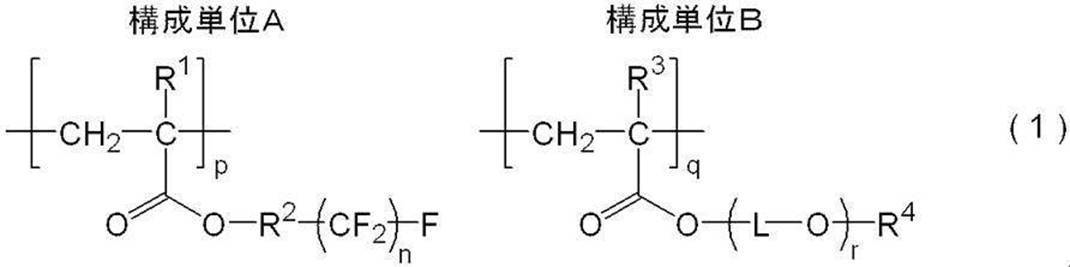
式(1)中、R1及びR3はそれぞれ独立に、水素原子又はメチル基を表し、R2は炭素数1以上4以下の直鎖アルキレン基を表し、R4は水素原子又は炭素数1以上4以下のアルキル基を表し、Lは炭素数3以上6以下のアルキレン基を表し、p及びqは重合比を表す重量百分率であり、pは10質量%以上80質量%以下の数値を表し、qは20質量%以上90質量%以下の数値を表し、rは1以上18以下の整数を表し、nは1以上10以下の整数を表す。)
前記Lは、下記式(2)で表される分岐アルキレン基であることが好ましい。式(2)におけるR5は、炭素数1以上4以下のアルキル基を表し、相溶性と被塗布面に対する濡れ性の点で、炭素数1以上3以下のアルキル基が好ましく、炭素数2又は3のアルキル基がより好ましい。pとqとの和(p+q)は、p+q=100、すなわち、100質量%であることが好ましい。
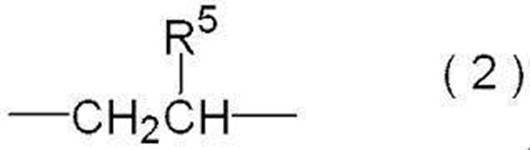
前記共重合体の重量平均分子量(Mw)は、1,500以上5,000以下がより好ましい。
これら界面活性剤は、1種単独で又は2種以上を混合して使用することができる。本発明の着色組成物における界面活性剤の添加量は、固形分中0.01質量%~2.0質量%が好ましく、0.02質量%~1.0質量%が特に好ましい。この範囲であると、塗布性及び硬化膜の均一性が良好となる。
これら界面活性剤は、1種単独で又は2種以上を混合して使用することができる。本発明の着色組成物における界面活性剤の添加量は、固形分中0.01質量%~2.0質量%が好ましく、0.02質量%~1.0質量%が特に好ましい。この範囲であると、塗布性及び硬化膜の均一性が良好となる。
(密着改良剤)
本発明の着色組成物は、密着改良剤を含有してもよい。
密着改良剤は、基材となる無機物、例えば、ガラス、シリコン、酸化シリコン、窒化シリコン等のシリコン化合物、金、銅、アルミニウム等と硬化膜との密着性を向上させる化合物である。具体的には、シランカップリング剤、チオール系化合物等が挙げられる。密着改良剤としてのシランカップリング剤は、界面の改質を目的とするものであり、特に限定することなく、公知のものを使用することができる。
シランカップリング剤としては、特開2009-98616号公報の段落0048に記載のシランカップリング剤が好ましく、中でもγ-グリシドキシプロピルトリアルコキシシランやγ-メタクリロキシプロピルトリアルコキシシランがより好ましい。これらは1種単独又は2種以上を併用できる。
本発明の着色組成物における密着改良剤の含有量は、全固形分量に対して、0.1質量%~20質量%が好ましく、0.2質量%~5質量%がより好ましい。
本発明の着色組成物は、密着改良剤を含有してもよい。
密着改良剤は、基材となる無機物、例えば、ガラス、シリコン、酸化シリコン、窒化シリコン等のシリコン化合物、金、銅、アルミニウム等と硬化膜との密着性を向上させる化合物である。具体的には、シランカップリング剤、チオール系化合物等が挙げられる。密着改良剤としてのシランカップリング剤は、界面の改質を目的とするものであり、特に限定することなく、公知のものを使用することができる。
シランカップリング剤としては、特開2009-98616号公報の段落0048に記載のシランカップリング剤が好ましく、中でもγ-グリシドキシプロピルトリアルコキシシランやγ-メタクリロキシプロピルトリアルコキシシランがより好ましい。これらは1種単独又は2種以上を併用できる。
本発明の着色組成物における密着改良剤の含有量は、全固形分量に対して、0.1質量%~20質量%が好ましく、0.2質量%~5質量%がより好ましい。
(架橋剤)
本発明の着色組成物に補足的に架橋剤を用い、着色組成物を硬化させてなる着色硬化膜の硬度をより高めることもできる。
架橋剤としては、架橋反応により膜硬化を行なえるものであれば、特に限定はなく、例えば、(a)エポキシ樹脂、(b)メチロール基、アルコキシメチル基、及びアシロキシメチル基から選ばれる少なくとも1つの置換基で置換された、メラミン化合物、グアナミン化合物、グリコールウリル化合物又はウレア化合物、(c)メチロール基、アルコキシメチル基、及びアシロキシメチル基から選ばれる少なくとも1つの置換基で置換された、フェノール化合物、ナフトール化合物又はヒドロキシアントラセン化合物、が挙げられる。中でも、多官能エポキシ樹脂が好ましい。
架橋剤の具体例などの詳細については、特開2004-295116号公報の段落〔0134〕~〔0147〕の記載を参照することができる。
本発明の着色組成物に補足的に架橋剤を用い、着色組成物を硬化させてなる着色硬化膜の硬度をより高めることもできる。
架橋剤としては、架橋反応により膜硬化を行なえるものであれば、特に限定はなく、例えば、(a)エポキシ樹脂、(b)メチロール基、アルコキシメチル基、及びアシロキシメチル基から選ばれる少なくとも1つの置換基で置換された、メラミン化合物、グアナミン化合物、グリコールウリル化合物又はウレア化合物、(c)メチロール基、アルコキシメチル基、及びアシロキシメチル基から選ばれる少なくとも1つの置換基で置換された、フェノール化合物、ナフトール化合物又はヒドロキシアントラセン化合物、が挙げられる。中でも、多官能エポキシ樹脂が好ましい。
架橋剤の具体例などの詳細については、特開2004-295116号公報の段落〔0134〕~〔0147〕の記載を参照することができる。
(現像促進剤)
非露光領域のアルカリ溶解性を促進し、着色組成物の現像性の更なる向上を図る場合には、現像促進剤を添加することもできる。現像促進剤は好ましくは分子量1000以下の低分子量有機カルボン酸化合物、分子量1000以下の低分子量フェノール化合物である。
具体的には、例えば、ギ酸、酢酸、プロピオン酸、酪酸、吉草酸、ピバル酸、カプロン酸、ジエチル酢酸、エナント酸、カプリル酸等の脂肪族モノカルボン酸;シュウ酸、マロン酸、コハク酸、グルタル酸、アジピン酸、ピメリン酸、スベリン酸、アゼライン酸、セバシン酸、ブラシル酸、メチルマロン酸、エチルマロン酸、ジメチルマロン酸、メチルコハク酸、テトラメチルコハク酸、シトラコン酸等の脂肪族ジカルボン酸;トリカルバリル酸、アコニット酸、カンホロン酸等の脂肪族トリカルボン酸;安息香酸、トルイル酸、クミン酸、ヘメリト酸、メシチレン酸等の芳香族モノカルボン酸;フタル酸、イソフタル酸、テレフタル酸、トリメリト酸、トリメシン酸、メロファン酸、ピロメリト酸等の芳香族ポリカルボン酸;フェニル酢酸、ヒドロアトロパ酸、ヒドロケイ皮酸、マンデル酸、フェニルコハク酸、アトロパ酸、ケイ皮酸、ケイ皮酸メチル、ケイ皮酸ベンジル、シンナミリデン酢酸、クマル酸、ウンベル酸等が挙げられる。
非露光領域のアルカリ溶解性を促進し、着色組成物の現像性の更なる向上を図る場合には、現像促進剤を添加することもできる。現像促進剤は好ましくは分子量1000以下の低分子量有機カルボン酸化合物、分子量1000以下の低分子量フェノール化合物である。
具体的には、例えば、ギ酸、酢酸、プロピオン酸、酪酸、吉草酸、ピバル酸、カプロン酸、ジエチル酢酸、エナント酸、カプリル酸等の脂肪族モノカルボン酸;シュウ酸、マロン酸、コハク酸、グルタル酸、アジピン酸、ピメリン酸、スベリン酸、アゼライン酸、セバシン酸、ブラシル酸、メチルマロン酸、エチルマロン酸、ジメチルマロン酸、メチルコハク酸、テトラメチルコハク酸、シトラコン酸等の脂肪族ジカルボン酸;トリカルバリル酸、アコニット酸、カンホロン酸等の脂肪族トリカルボン酸;安息香酸、トルイル酸、クミン酸、ヘメリト酸、メシチレン酸等の芳香族モノカルボン酸;フタル酸、イソフタル酸、テレフタル酸、トリメリト酸、トリメシン酸、メロファン酸、ピロメリト酸等の芳香族ポリカルボン酸;フェニル酢酸、ヒドロアトロパ酸、ヒドロケイ皮酸、マンデル酸、フェニルコハク酸、アトロパ酸、ケイ皮酸、ケイ皮酸メチル、ケイ皮酸ベンジル、シンナミリデン酢酸、クマル酸、ウンベル酸等が挙げられる。
(その他の添加物)
本発明の着色組成物には、必要に応じて、その他の各種添加物、例えば、充填剤、上記以外の高分子化合物、紫外線吸収剤、酸化防止剤、凝集防止剤等を配合することができる。これらの添加物としては、特開2004-295116号公報の段落〔0155〕~〔0156〕に記載のものを挙げることができる。
本発明の着色組成物においては、特開2004-295116号公報の段落〔0078〕に記載の光安定剤、同公報の段落〔0081〕に記載の熱重合防止剤を含有することができる。
本発明の着色組成物には、必要に応じて、その他の各種添加物、例えば、充填剤、上記以外の高分子化合物、紫外線吸収剤、酸化防止剤、凝集防止剤等を配合することができる。これらの添加物としては、特開2004-295116号公報の段落〔0155〕~〔0156〕に記載のものを挙げることができる。
本発明の着色組成物においては、特開2004-295116号公報の段落〔0078〕に記載の光安定剤、同公報の段落〔0081〕に記載の熱重合防止剤を含有することができる。
<着色組成物の調製>
本発明の着色組成物の調製態様については特に制限されないが、例えば、特定金属錯体化合物、重合性化合物、光重合開始剤など前述の各成分と必要に応じて任意成分とを混合することで調製することができる。
本発明の着色組成物の調製態様については特に制限されないが、例えば、特定金属錯体化合物、重合性化合物、光重合開始剤など前述の各成分と必要に応じて任意成分とを混合することで調製することができる。
なお、着色組成物の調製に際しては、着色組成物に含有される各成分を一括配合してもよいし、各成分を溶剤に溶解・分散した後に逐次配合してもよい。また、配合する際の投入順序や作業条件は特に制約を受けない。例えば、全成分を同時に溶剤に溶解・分散して組成物を調製してもよいし、必要に応じては、各成分を適宜2つ以上の溶液・分散液としておいて、使用時(塗布時)にこれらを混合して組成物として調製してもよい。
なお、本発明の着色組成物の調製に際しては、異物の除去や欠陥の低減などの目的で、各成分を混合した後、フィルタにより濾過することが好ましい。フィルタは、従来、ろ過用途等に用いられているものが特に限定されることなく用いられる。具体的には、例えば、PTFE(ポリテトラフルオロエチレン)等のフッ素樹脂、ナイロン-6、ナイロン-6,6等のポリアミド系樹脂、ポリエチレン、ポリプロピレン(PP)等のポリオレフィン樹脂(高密度、超高分子量を含む)等によるフィルタが挙げられる。これらフィルタ素材の中でも、ナイロン-6、ナイロン-6,6等のポリアミド系樹脂、ポリプロピレン(高密度ポリプロピレンを含む)が好ましい。
フィルタの孔径は、0.01~7.0μm程度が適しており、好ましくは0.01~2.5μm程度、さらに好ましくは0.01~2.0μm程度である。この範囲とすることにより、後工程において均一な着色組成物の調製を阻害する、微細な異物が確実に除去され、均一及び平滑な着色組成物の形成が可能となる。
フィルタの孔径は、0.01~7.0μm程度が適しており、好ましくは0.01~2.5μm程度、さらに好ましくは0.01~2.0μm程度である。この範囲とすることにより、後工程において均一な着色組成物の調製を阻害する、微細な異物が確実に除去され、均一及び平滑な着色組成物の形成が可能となる。
フィルタを使用する際、異なるフィルタを組み合わせてもよい。その際、第1のフィルタを用いたフィルタリングは、1回のみでもよいし、2回以上行ってもよい。また、上述した範囲内で異なる孔径のフィルタを組み合わせて、第1のフィルタを複数のフィルタからなるものとして、第1回目のフィルタリングとしてもよい。ここでいう孔径は、フィルタメーカーの公称値を参照することができる。市販のフィルタとしては、例えば、日本ポール株式会社、アドバンテック東洋株式会社、日本インテグリス株式会社(旧日本マイクロリス株式会社)又は株式会社キッツマイクロフィルタ等が提供する各種フィルタの中から選択することができる。
第2のフィルタは、上述した第1のフィルタと同様の材料等で形成されたものを使用することができる。
また、例えば、第1のフィルタでのフィルタリングは、顔料分散物のみにたいして行い、該顔料分散物に他の成分を混合して着色組成物とした後に、第2のフィルタリングを行ってもよい。
第2のフィルタは、上述した第1のフィルタと同様の材料等で形成されたものを使用することができる。
また、例えば、第1のフィルタでのフィルタリングは、顔料分散物のみにたいして行い、該顔料分散物に他の成分を混合して着色組成物とした後に、第2のフィルタリングを行ってもよい。
本発明の着色組成物は、固体撮像素子用のカラーフィルタ、液晶表示装置用のカラーフィルタ、印刷用インク、インクジェット用インク等の各種の用途に適用することができる。
特に、本発明の着色組成物を硬化させて得られた着色硬化膜は、色純度が高く、薄層で高い吸光係数が得られ、堅牢性(特に耐熱性及び耐光性)に優れたものであることから、液晶表示装置用のカラーフィルタ、及び、固体撮像素子用のカラーフィルタにおける着色画素の形成に有用である。また、該着色硬化膜を液晶表示装置に適用した場合には、電圧を印可した際において優れた電圧保持率を得ることができる。
特に、本発明の着色組成物を硬化させて得られた着色硬化膜は、色純度が高く、薄層で高い吸光係数が得られ、堅牢性(特に耐熱性及び耐光性)に優れたものであることから、液晶表示装置用のカラーフィルタ、及び、固体撮像素子用のカラーフィルタにおける着色画素の形成に有用である。また、該着色硬化膜を液晶表示装置に適用した場合には、電圧を印可した際において優れた電圧保持率を得ることができる。
≪カラーフィルタ及びその製造方法≫
本発明のカラーフィルタは、任意の支持体上に、本発明の着色組成物により形成された着色領域(着色硬化膜)を設けて構成されたものである。
本発明のカラーフィルタは、任意の支持体上に、本発明の着色組成物により形成された着色領域(着色硬化膜)を設けて構成されたものである。
支持体上の着色領域は、カラーフィルタの各画素をなす、例えば赤(R)、緑(G)、青(B)等の着色膜で構成されている。
本発明のカラーフィルタは、特定金属錯体化合物を含有して硬化されたパターン状の着色領域(着色硬化膜)を形成できる方法であれば、いずれの方法で形成されてもよい。本発明のカラーフィルタは、好ましくは本発明のカラーフィルタの製造方法を用いて作製される。
本発明のカラーフィルタの製造方法は、支持体上に本発明の着色組成物を付与し、着色組成物層を形成する工程(以下、工程(A)とも称する。)と、形成された着色組成物層を(好ましくはマスクを介して)パターン状に露光し、現像してパターン状の着色領域(着色硬化膜)を形成する工程(以下、工程(B)とも称する。)とを有する。
これらの工程を複数回経ることで、各色(3色或いは4色)の画素からなる着色パターンが形成され、カラーフィルタを得ることができる。
また、本発明のカラーフィルタの製造方法では、特に、工程(B)で形成されたパターン状の着色領域に対して紫外線を照射する工程(以下、工程(C)とも称する。)と、紫外線が照射された着色領域に対して加熱処理を行なう工程(以下、工程(D)とも称する。)とを更に設けた態様が好ましい。
このような方法により、液晶表示装置や固体撮像素子に用いられるカラーフィルタをプロセス上の困難性が少なく、高品質で、かつ低コストに作製することができる。
以下、本発明のカラーフィルタの製造方法について、より具体的に説明する。
これらの工程を複数回経ることで、各色(3色或いは4色)の画素からなる着色パターンが形成され、カラーフィルタを得ることができる。
また、本発明のカラーフィルタの製造方法では、特に、工程(B)で形成されたパターン状の着色領域に対して紫外線を照射する工程(以下、工程(C)とも称する。)と、紫外線が照射された着色領域に対して加熱処理を行なう工程(以下、工程(D)とも称する。)とを更に設けた態様が好ましい。
このような方法により、液晶表示装置や固体撮像素子に用いられるカラーフィルタをプロセス上の困難性が少なく、高品質で、かつ低コストに作製することができる。
以下、本発明のカラーフィルタの製造方法について、より具体的に説明する。
-工程(A)-
本発明のカラーフィルタの製造方法では、まず、支持体上に直接又は他の層を介して、既述の本発明の着色組成物を所望の方法により付与して、着色組成物からなる塗布膜(着色組成物層)を形成し、その後、必要に応じて、予備硬化(プリベーク)を行ない、該着色組成物層を乾燥させる。
本発明のカラーフィルタの製造方法では、まず、支持体上に直接又は他の層を介して、既述の本発明の着色組成物を所望の方法により付与して、着色組成物からなる塗布膜(着色組成物層)を形成し、その後、必要に応じて、予備硬化(プリベーク)を行ない、該着色組成物層を乾燥させる。
支持体としては、例えば、液晶表示素子等に用いられる無アルカリガラス、ソーダガラス、パイレックス(登録商標)ガラス、石英ガラス、及びこれらに透明導電膜を付着させたものや、固体撮像素子等に用いられる光電変換素子基板、例えば、シリコーン基板や、プラスチック基板等が挙げられる。また、これらの支持体上には、各画素を隔離するブラックマトリクスが形成されていたり、密着促進等のために透明樹脂層が設けられたりしていてもよい。また、支持体上には必要により、上部の層との密着改良、物質の拡散防止、或いは表面の平坦化のために、下塗り層を設けてもよい。
また、プラスチック基板は、その表面に、ガスバリヤー層及び/又は耐溶剤性層を有していることが好ましい。
また、プラスチック基板は、その表面に、ガスバリヤー層及び/又は耐溶剤性層を有していることが好ましい。
このほか、支持体として、薄膜トランジスター(TFT)方式カラー液晶表示装置の薄膜トランジスター(TFT)が配置された駆動用基板(以下、「TFT方式液晶駆動用基板」という。)を用い、この駆動用基板上にも、本発明の着色組成物を用いてなる着色パターンを形成し、カラーフィルタを作製することができる。
TFT方式液晶駆動用基板における基板としては、例えば、ガラス、シリコーン、ポリカーボネート、ポリエステル、芳香族ポリアミド、ポリアミドイミド、ポリイミド等を挙げることができる。これらの基板には、所望により、シランカップリング剤等による薬品処理、プラズマ処理、イオンプレーティング、スパッタリング、気相反応法、真空蒸着等の適宜の前処理を施しておくこともできる。例えば、TFT方式液晶駆動用基板の表面に、窒化ケイ素膜等のパッシベーション膜を形成した基板を用いることができる。
TFT方式液晶駆動用基板における基板としては、例えば、ガラス、シリコーン、ポリカーボネート、ポリエステル、芳香族ポリアミド、ポリアミドイミド、ポリイミド等を挙げることができる。これらの基板には、所望により、シランカップリング剤等による薬品処理、プラズマ処理、イオンプレーティング、スパッタリング、気相反応法、真空蒸着等の適宜の前処理を施しておくこともできる。例えば、TFT方式液晶駆動用基板の表面に、窒化ケイ素膜等のパッシベーション膜を形成した基板を用いることができる。
本発明の着色組成物を支持体上に付与する方法としては、回転塗布、スリット塗布、流延塗布、ロール塗布、バー塗布、インクジェット等の塗布方法が挙げられる。
工程(A)において、本発明の着色組成物を支持体上に付与する方法としては、特に限定されるものではないが、スリット・アンド・スピン法、スピンレス塗布法等のスリットノズルを用いる方法(以下、スリットノズル塗布法という)が好ましい。
スリットノズル塗布法において、スリット・アンド・スピン塗布法とスピンレス塗布法は、塗布基板の大きさによって条件は異なるが、例えば、スピンレス塗布法により第五世代のガラス基板(1100mm×1250mm)を塗布する場合、スリットノズルからの着色組成物の吐出量は、通常、500マイクロリットル/秒~2000マイクロリットル/秒、好ましくは800マイクロリットル/秒~1500マイクロリットル/秒であり、また、塗工速度は、通常、50mm/秒~300mm/秒、好ましくは100mm/秒~200mm/秒である。
また、工程(A)で用いられる着色組成物の固形分としては、通常、10質量%~20質量%、好ましくは13質量%~18質量%である。
スリットノズル塗布法において、スリット・アンド・スピン塗布法とスピンレス塗布法は、塗布基板の大きさによって条件は異なるが、例えば、スピンレス塗布法により第五世代のガラス基板(1100mm×1250mm)を塗布する場合、スリットノズルからの着色組成物の吐出量は、通常、500マイクロリットル/秒~2000マイクロリットル/秒、好ましくは800マイクロリットル/秒~1500マイクロリットル/秒であり、また、塗工速度は、通常、50mm/秒~300mm/秒、好ましくは100mm/秒~200mm/秒である。
また、工程(A)で用いられる着色組成物の固形分としては、通常、10質量%~20質量%、好ましくは13質量%~18質量%である。
工程(A)において、通常は、着色組成物層の形成後にプリベーク処理を施す。必要によっては、プリベーク前に真空処理を施すこともできる。真空乾燥の条件は、真空度が、通常、0.1torr~1.0torr、好ましくは0.2torr~0.5torr程度である。
プリベークの条件としては、ホットプレートやオーブンを用いて、70℃~130℃で、0.5分間~15分間程度加熱する条件が挙げられる。
また、着色組成物により形成される着色組成物層の厚みは、目的に応じて適宜選択される。液晶表示装置用カラーフィルタにおいては、0.2μm~5.0μmの範囲が好ましく、1.0μm~4.0μmの範囲が更に好ましく、1.5μm~3.5μmの範囲が最も好ましい。また、固体撮像素子用カラーフィルタにおいては、0.2μm~5.0μmの範囲が好ましく、0.3μm~2.5μmの範囲が更に好ましく、0.3μm~1.5μmの範囲が最も好ましい。
なお、着色組成物層の厚みは、プリベーク後の膜厚である。
また、着色組成物により形成される着色組成物層の厚みは、目的に応じて適宜選択される。液晶表示装置用カラーフィルタにおいては、0.2μm~5.0μmの範囲が好ましく、1.0μm~4.0μmの範囲が更に好ましく、1.5μm~3.5μmの範囲が最も好ましい。また、固体撮像素子用カラーフィルタにおいては、0.2μm~5.0μmの範囲が好ましく、0.3μm~2.5μmの範囲が更に好ましく、0.3μm~1.5μmの範囲が最も好ましい。
なお、着色組成物層の厚みは、プリベーク後の膜厚である。
-工程(B)-
続いて、本発明のカラーフィルタの製造方法では、支持体上に前述のようにして形成された着色組成物からなる塗布膜(着色組成物層)に対し、例えばフォトマスクを介して露光が行なわれる。露光に適用し得る光もしくは放射線としては、g線、h線、i線、j線、KrF光、ArF光が好ましく、特にi線が好ましい。照射光にi線を用いる場合、100mJ/cm2~10000mJ/cm2の露光量で照射することが好ましい。
続いて、本発明のカラーフィルタの製造方法では、支持体上に前述のようにして形成された着色組成物からなる塗布膜(着色組成物層)に対し、例えばフォトマスクを介して露光が行なわれる。露光に適用し得る光もしくは放射線としては、g線、h線、i線、j線、KrF光、ArF光が好ましく、特にi線が好ましい。照射光にi線を用いる場合、100mJ/cm2~10000mJ/cm2の露光量で照射することが好ましい。
また、その他の露光光線としては、超高圧、高圧、中圧、低圧の各水銀灯、ケミカルランプ、カーボンアーク灯、キセノン灯、メタルハライド灯、可視及び紫外の各種レーザー光源、蛍光灯、タングステン灯、太陽光等も使用できる。
~レーザー光源を用いた露光工程~
レーザー光源を用いた露光方式では、光源として紫外光レーザーを用いることが好ましい。
照射光は、波長が300nm~380nmの範囲である波長の範囲の紫外光レーザーが好ましく、さらに好ましくは300nm~360nmの範囲の波長である紫外光レーザーがレジストの感光波長に合致しているという点で好ましい。具体的には、特に出力が大きく、比較的安価な固体レーザーのNd:YAGレーザーの第三高調波(355nm)や、エキシマレーザーのXeCl(308nm)、XeF(353nm)を好適に用いることができる。
被露光物(パターン)の露光量としては、1mJ/cm2~100mJ/cm2の範囲であり、1mJ/cm2~50mJ/cm2の範囲がより好ましい。露光量がこの範囲であると、パターン形成の生産性の点で好ましい。
レーザー光源を用いた露光方式では、光源として紫外光レーザーを用いることが好ましい。
照射光は、波長が300nm~380nmの範囲である波長の範囲の紫外光レーザーが好ましく、さらに好ましくは300nm~360nmの範囲の波長である紫外光レーザーがレジストの感光波長に合致しているという点で好ましい。具体的には、特に出力が大きく、比較的安価な固体レーザーのNd:YAGレーザーの第三高調波(355nm)や、エキシマレーザーのXeCl(308nm)、XeF(353nm)を好適に用いることができる。
被露光物(パターン)の露光量としては、1mJ/cm2~100mJ/cm2の範囲であり、1mJ/cm2~50mJ/cm2の範囲がより好ましい。露光量がこの範囲であると、パターン形成の生産性の点で好ましい。
露光装置としては、特に制限はないが市販されているものとしては、Callisto(ブイテクノロジー株式会社製)やEGIS(ブイテクノロジー株式会社製)やDF2200G(大日本スクリーン(株)製)などが使用可能である。また上記以外の装置も好適に用いられる。
液晶表示装置用のカラーフィルタを製造する際には、プロキシミテイ露光機、ミラープロジェクション露光機により、主として、h線、i線を使用した露光が好ましく用いられる。また、固体撮像素子用のカラーフィルタを製造する際には、ステッパー露光機にて、主として、i線を使用することが好ましい。なお、TFT方式液晶駆動用基板を用いてカラーフィルタを製造する際には、用いられるフォトマスクは、画素(着色パターン)を形成するためのパターンの他、スルーホール或いはコの字型の窪みを形成するためのパターンが設けられているものが使用される。
液晶表示装置用のカラーフィルタを製造する際には、プロキシミテイ露光機、ミラープロジェクション露光機により、主として、h線、i線を使用した露光が好ましく用いられる。また、固体撮像素子用のカラーフィルタを製造する際には、ステッパー露光機にて、主として、i線を使用することが好ましい。なお、TFT方式液晶駆動用基板を用いてカラーフィルタを製造する際には、用いられるフォトマスクは、画素(着色パターン)を形成するためのパターンの他、スルーホール或いはコの字型の窪みを形成するためのパターンが設けられているものが使用される。
上記のようにして露光された着色組成物層は加熱することができる。
また、露光は、着色組成物層中の色材の酸化褪色を抑制するために、チャンバー内に窒素ガスを流しながら行なうことができる。
また、露光は、着色組成物層中の色材の酸化褪色を抑制するために、チャンバー内に窒素ガスを流しながら行なうことができる。
続いて、露光後の着色組成物層に対して、現像液にて現像が行なわれる。これにより、ネガ型もしくはポジ型の着色パターン(レジストパターン)を形成することができる。現像工程では、露光後の塗布膜の未硬化部を現像液に溶出させ、硬化分のみを基板上に残存させる。
現像液は、未硬化部における着色組成物の塗布膜(着色組成物層)を溶解する一方、硬化部を溶解しないものであれば、いずれのものも用いることができる。例えば、種々の有機溶剤の組み合わせやアルカリ性水溶液を用いることができる。
現像に用いられる有機溶剤としては、本発明の着色組成物を調製する際に使用できる既述の溶剤が挙げられる。
前記アルカリ性水溶液としては、例えば、水酸化ナトリウム、水酸化カリウム、炭酸ナトリウム、炭酸水素ナトリウム、硅酸ナトリウム、メタ硅酸ナトリウム、アンモニア水、エチルアミン、ジエチルアミン、ジメチルエタノールアミン、テトラメチルアンモニウムヒドロキシド、テトラエチルアンモニウムヒドロキシド、コリン、ピロール、ピペリジン、1,8-ジアザビシクロ-[5,4,0]-7-ウンデセン等のアルカリ性化合物を、濃度が0.001質量%~10質量%、好ましくは0.01質量%~1質量%となるように溶解したアルカリ性水溶液が挙げられる。現像液がアルカリ性水溶液である場合、アルカリ濃度は、好ましくはpH11~13、更に好ましくはpH11.5~12.5となるように調整するのがよい。
アルカリ性水溶液には、例えば、メタノール、エタノール等の水溶性有機溶剤や界面活性剤等を適量添加することもできる。
現像液は、未硬化部における着色組成物の塗布膜(着色組成物層)を溶解する一方、硬化部を溶解しないものであれば、いずれのものも用いることができる。例えば、種々の有機溶剤の組み合わせやアルカリ性水溶液を用いることができる。
現像に用いられる有機溶剤としては、本発明の着色組成物を調製する際に使用できる既述の溶剤が挙げられる。
前記アルカリ性水溶液としては、例えば、水酸化ナトリウム、水酸化カリウム、炭酸ナトリウム、炭酸水素ナトリウム、硅酸ナトリウム、メタ硅酸ナトリウム、アンモニア水、エチルアミン、ジエチルアミン、ジメチルエタノールアミン、テトラメチルアンモニウムヒドロキシド、テトラエチルアンモニウムヒドロキシド、コリン、ピロール、ピペリジン、1,8-ジアザビシクロ-[5,4,0]-7-ウンデセン等のアルカリ性化合物を、濃度が0.001質量%~10質量%、好ましくは0.01質量%~1質量%となるように溶解したアルカリ性水溶液が挙げられる。現像液がアルカリ性水溶液である場合、アルカリ濃度は、好ましくはpH11~13、更に好ましくはpH11.5~12.5となるように調整するのがよい。
アルカリ性水溶液には、例えば、メタノール、エタノール等の水溶性有機溶剤や界面活性剤等を適量添加することもできる。
現像温度としては、通常は20℃~30℃であり、現像時間としては20秒~90秒である。
現像は、デイップ方式、シャワー方式、スプレー方式などいずれでもよく、これにスウィング方式、スピン方式、超音波方式などを組み合わせてもよい。現像液に触れる前に、被現像面を予め水等で湿しておいて、現像ムラを防ぐこともできる。また、基板を傾斜させて現像することもできる。
また、固体撮像素子用のカラーフィルタを製造する場合にはパドル現像も用いられる。
現像は、デイップ方式、シャワー方式、スプレー方式などいずれでもよく、これにスウィング方式、スピン方式、超音波方式などを組み合わせてもよい。現像液に触れる前に、被現像面を予め水等で湿しておいて、現像ムラを防ぐこともできる。また、基板を傾斜させて現像することもできる。
また、固体撮像素子用のカラーフィルタを製造する場合にはパドル現像も用いられる。
現像処理後は、余剰の現像液を洗浄除去するリンス処理を経て、乾燥を施した後、硬化を完全なものとするために、加熱処理(ポストベーク)が施される。
リンス処理は、通常は純水で行なうが、省液のために、最終洗浄で純水を用い、洗浄初期は使用済の純水を使用したり、また、基板を傾斜させて洗浄したり、超音波照射を併用したりする方法を用いてもよい。
リンス処理は、通常は純水で行なうが、省液のために、最終洗浄で純水を用い、洗浄初期は使用済の純水を使用したり、また、基板を傾斜させて洗浄したり、超音波照射を併用したりする方法を用いてもよい。
リンス処理後、水切り、乾燥をした後には通常、約200℃~250℃の加熱処理を行なわれる。この加熱処理(ポストベーク)は、現像後の塗布膜を、上記条件になるようにホットプレートやコンベクションオーブン(熱風循環式乾燥機)、高周波加熱機等の加熱手段を用いて、連続式或いはバッチ式で行なうことができる。
以上の各工程を、所望の色相数に合わせて各色毎に順次繰り返し行うことにより、複数色の着色された硬化膜(着色パターン)が形成されてなるカラーフィルタを作製することができる。
-工程(C)-
本発明のカラーフィルタの製造方法では、特に、着色組成物を用いて形成されたパターン状の着色領域(着色画素)に対して、紫外線照射による後露光を行なうこともできる。
本発明のカラーフィルタの製造方法では、特に、着色組成物を用いて形成されたパターン状の着色領域(着色画素)に対して、紫外線照射による後露光を行なうこともできる。
-工程(D)-
上記のような紫外線照射による後露光が行なわれたパターン状の着色領域に対して、さらに加熱処理を行なうことが好ましい。形成された着色領域を加熱処理(いわゆるポストベーク処理)することにより、着色領域を更に硬化させることができる。この加熱処理は、例えば、ホットプレート、各種ヒーター、オーブンなどにより行なうことができる。
加熱処理の際の温度としては、100℃~300℃であることが好ましく、更に好ましくは、150℃~250℃である。また、加熱時間は、10分~120分程度が好ましい。
上記のような紫外線照射による後露光が行なわれたパターン状の着色領域に対して、さらに加熱処理を行なうことが好ましい。形成された着色領域を加熱処理(いわゆるポストベーク処理)することにより、着色領域を更に硬化させることができる。この加熱処理は、例えば、ホットプレート、各種ヒーター、オーブンなどにより行なうことができる。
加熱処理の際の温度としては、100℃~300℃であることが好ましく、更に好ましくは、150℃~250℃である。また、加熱時間は、10分~120分程度が好ましい。
このようにして得られたパターン状の着色領域は、カラーフィルタにおける画素を構成する。複数の色相の画素を有するカラーフィルタの作製においては、上記の工程(A)、工程(B)、及び必要に応じて工程(C)や工程(D)を所望の色数に合わせて繰り返せばよい。
なお、単色の着色組成物層の形成、露光、現像が終了する毎に(1色毎に)、前記工程(C)及び/又は工程(D)を行なってもよいし、所望の色数の全ての着色組成物層の形成、露光、現像が終了した後に、一括して前記工程(C)及び/又は工程(D)を行なってもよい。
なお、単色の着色組成物層の形成、露光、現像が終了する毎に(1色毎に)、前記工程(C)及び/又は工程(D)を行なってもよいし、所望の色数の全ての着色組成物層の形成、露光、現像が終了した後に、一括して前記工程(C)及び/又は工程(D)を行なってもよい。
本発明のカラーフィルタの製造方法により得られたカラーフィルタ(本発明のカラーフィルタ)は、本発明の着色組成物を用いていることから、画像表示したときの彩色が鮮やかでコントラストが高く、堅牢性(特に耐熱性及び耐光性)、電圧保持率に優れる。
本発明のカラーフィルタは、液晶表示素子や固体撮像素子に用いることが可能であり、特に液晶表示装置の用途に好適である。液晶表示装置に用いた場合、染料を着色剤として用い、良好な色相を達成しながら、分光特性及びコントラストに優れた画像の表示が可能となり、更には、電圧保持率にも優れたものとなる。
本発明のカラーフィルタは、液晶表示素子や固体撮像素子に用いることが可能であり、特に液晶表示装置の用途に好適である。液晶表示装置に用いた場合、染料を着色剤として用い、良好な色相を達成しながら、分光特性及びコントラストに優れた画像の表示が可能となり、更には、電圧保持率にも優れたものとなる。
本発明の着色組成物の用途としては、上記において主にカラーフィルタの着色パターンの形成用途を中心に説明したが、カラーフィルタを構成する着色パターン(画素)を隔離するブラックマトリックスの形成にも適用することができる。
基板上のブラックマトリックスは、カーボンブラック、チタンブラックなどの黒色顔料の加工顔料を含有する着色組成物を用い、塗布、露光、及び現像の各工程を経て、その後、必要に応じて、ポストベークすることにより形成することができる。
基板上のブラックマトリックスは、カーボンブラック、チタンブラックなどの黒色顔料の加工顔料を含有する着色組成物を用い、塗布、露光、及び現像の各工程を経て、その後、必要に応じて、ポストベークすることにより形成することができる。
≪液晶表示装置≫
本発明の液晶表示装置は、既述の本発明のカラーフィルタを備える。
本発明のカラーフィルタを液晶表示装置に用いた場合、分光特性及び耐熱性に優れた金属錯体色素を着色剤として含有しながらも、電圧を印可した際における電圧保持率が低下することなく、また、比抵抗の低下に伴う液晶分子の配向不良が少なく、表示画像の色合いが良好で表示特性に優れる。
このため、本発明のカラーフィルタを備えた液晶表示装置は、表示画像の色合いが良好で表示特性に優れた高画質画像を表示することができる。
本発明の液晶表示装置は、既述の本発明のカラーフィルタを備える。
本発明のカラーフィルタを液晶表示装置に用いた場合、分光特性及び耐熱性に優れた金属錯体色素を着色剤として含有しながらも、電圧を印可した際における電圧保持率が低下することなく、また、比抵抗の低下に伴う液晶分子の配向不良が少なく、表示画像の色合いが良好で表示特性に優れる。
このため、本発明のカラーフィルタを備えた液晶表示装置は、表示画像の色合いが良好で表示特性に優れた高画質画像を表示することができる。
表示装置の定義や各表示装置の詳細については、例えば「電子ディスプレイデバイス(佐々木 昭夫著、(株)工業調査会 1990年発行)」、「ディスプレイデバイス(伊吹 順章著、産業図書(株)平成元年発行)」などに記載されている。また、液晶表示装置については、例えば「次世代液晶ディスプレイ技術(内田 龍男編集、(株)工業調査会 1994年発行)」に記載されている。本発明が適用できる液晶表示装置に特に制限はなく、例えば、上記の「次世代液晶ディスプレイ技術」に記載されている色々な方式の液晶表示装置に適用できる。
本発明におけるカラーフィルタは、カラーTFT方式の液晶表示装置に用いてもよい。カラーTFT方式の液晶表示装置については、例えば「カラーTFT液晶ディスプレイ(共立出版(株)1996年発行)」に記載されている。更に、本発明はIPSなどの横電界駆動方式、MVAなどの画素分割方式などの視野角が拡大された液晶表示装置や、STN、TN、VA、OCS、FFS、及びR-OCB等にも適用できる。
また、本発明におけるカラーフィルタは、明るく高精細なCOA(Color-filter On Array)方式にも供することが可能である。COA方式の液晶表示装置にあっては、カラーフィルタ層に対する要求特性は、前述のような通常の要求特性に加えて、層間絶縁膜に対する要求特性、すなわち低誘電率及び剥離液耐性が必要とされることがある。本発明のカラーフィルタにおいては、色相に優れた染料を用いることから、色純度、光透過性などが良好で着色パターン(画素)の色合いに優れるので、解像度が高く長期耐久性に優れたCOA方式の液晶表示装置を提供することができる。なお、低誘電率の要求特性を満足するためには、カラーフィルタ層の上に樹脂被膜を設けてもよい。
これらの画像表示方式については、例えば、「EL、PDP、LCDディスプレイ-技術と市場の最新動向-(東レリサーチセンター調査研究部門 2001年発行)」の43ページなどに記載されている。
これらの画像表示方式については、例えば、「EL、PDP、LCDディスプレイ-技術と市場の最新動向-(東レリサーチセンター調査研究部門 2001年発行)」の43ページなどに記載されている。
本発明におけるカラーフィルタを備えた液晶表示装置は、本発明におけるカラーフィルタ以外に、電極基板、偏光フィルム、位相差フィルム、バックライト、スペーサ、視野角補償フィルムなど様々な部材から構成される。本発明のカラーフィルタは、これらの公知の部材で構成される液晶表示装置に適用することができる。これらの部材については、例えば、「'94液晶ディスプレイ周辺材料・ケミカルズの市場(島 健太郎 (株)シーエムシー 1994年発行)」、「2003液晶関連市場の現状と将来展望(下巻)(表 良吉(株)富士キメラ総研、2003年発行)」に記載されている。
バックライトに関しては、SID meeting Digest 1380(2005)(A.Konno et.al)や、月刊ディスプレイ 2005年12月号の18~24ページ(島 康裕)、同25~30ページ(八木隆明)などに記載されている。
バックライトに関しては、SID meeting Digest 1380(2005)(A.Konno et.al)や、月刊ディスプレイ 2005年12月号の18~24ページ(島 康裕)、同25~30ページ(八木隆明)などに記載されている。
本発明におけるカラーフィルタを液晶表示装置に用いると、従来公知の冷陰極管の三波長管と組み合わせたときに高いコントラストを実現できるが、更に、赤、緑、青のLED光源(RGB-LED)をバックライトとすることによって輝度が高く、また、色純度の高い色再現性の良好な液晶表示装置を提供することができる。
≪固体撮像素子≫
本発明の固体撮像素子は、既述の本発明のカラーフィルタを備える。
本発明の固体撮像素子の構成としては、本発明のカラーフィルタが備えられた構成であり、固体撮像素子として機能する構成であれば特に限定はないが、例えば、以下のような構成が挙げられる。
本発明の固体撮像素子は、既述の本発明のカラーフィルタを備える。
本発明の固体撮像素子の構成としては、本発明のカラーフィルタが備えられた構成であり、固体撮像素子として機能する構成であれば特に限定はないが、例えば、以下のような構成が挙げられる。
支持体上に、固体撮像素子(CCDイメージセンサー、CMOSイメージセンサー等)の受光エリアを構成する複数のフォトダイオード及びポリシリコン等からなる転送電極を有し、前記フォトダイオード及び前記転送電極上にフォトダイオードの受光部のみ開口したタングステン等からなる遮光膜を有し、遮光膜上に遮光膜全面及びフォトダイオード受光部を覆うように形成された窒化シリコン等からなるデバイス保護膜を有し、前記デバイス保護膜上に、本発明のカラーフィルタを有する構成である。
更に、前記デバイス保護層上であってカラーフィルタの下(支持体に近い側)に集光手段(例えば、マイクロレンズ等。以下同じ。)を有する構成や、カラーフィルタ上に集光手段を有する構成等であってもよい。
更に、前記デバイス保護層上であってカラーフィルタの下(支持体に近い側)に集光手段(例えば、マイクロレンズ等。以下同じ。)を有する構成や、カラーフィルタ上に集光手段を有する構成等であってもよい。
以下、本発明を実施例により更に具体的に説明するが、本発明はその主旨を越えない限り、以下の実施例に限定されるものではない。なお、特に断りのない限り、「部」及び「%」は質量基準である。
[実施例1:特定金属錯体化合物の合成]
-例示化合物A-3及びA-10の合成例-
下記反応スキームAに従って、特定金属錯体化合物の具体例として前掲した例示化合物A-3及びA-10を合成した。
-例示化合物A-3及びA-10の合成例-
下記反応スキームAに従って、特定金属錯体化合物の具体例として前掲した例示化合物A-3及びA-10を合成した。


(中間体1の合成)
中間体1に関しては、米国特許出願公開2008/0076044号明細書に記載の方法により合成した。
中間体2から中間体5、例示化合物A-3及びA-10は、以下に示すようにして合成した。
中間体1に関しては、米国特許出願公開2008/0076044号明細書に記載の方法により合成した。
中間体2から中間体5、例示化合物A-3及びA-10は、以下に示すようにして合成した。
(中間体2の合成)
米国特許出願公開2008/0076044号明細書に記載の方法で得た225.8g(0.55mol)の中間体1に、アセトニトリル690mlを加え、氷冷下で攪拌した。この溶液に対して、o-トルオイルクロリド93.5g(0.61mol)を滴下しながら加えた。その後、この液に、ピリジン52.2g(0.66mol)を滴下しながら加え、氷冷下で1時間、室温で2時間攪拌した。反応終了後、析出した固体をろ過し、ろ物をアセトニトリルで洗浄し、乾燥した。このようにして、中間体2を229g(収率:79%)得た。
尚、得られた中間体2について測定した1H-NMR(CDCl3)の詳細は、δ:11.04(d、2H)、7.64(d、1H)、7.45~7.23(m、8H)、6.37(d、1H)、5.86(s、1H)、2.60(s、3H)、1.27~1.12(m、3H)、1.06~0.92(m、2H)0.84(s、18H)、0.70(d、3H)、0.63~0.47(m、2H)であった。
米国特許出願公開2008/0076044号明細書に記載の方法で得た225.8g(0.55mol)の中間体1に、アセトニトリル690mlを加え、氷冷下で攪拌した。この溶液に対して、o-トルオイルクロリド93.5g(0.61mol)を滴下しながら加えた。その後、この液に、ピリジン52.2g(0.66mol)を滴下しながら加え、氷冷下で1時間、室温で2時間攪拌した。反応終了後、析出した固体をろ過し、ろ物をアセトニトリルで洗浄し、乾燥した。このようにして、中間体2を229g(収率:79%)得た。
尚、得られた中間体2について測定した1H-NMR(CDCl3)の詳細は、δ:11.04(d、2H)、7.64(d、1H)、7.45~7.23(m、8H)、6.37(d、1H)、5.86(s、1H)、2.60(s、3H)、1.27~1.12(m、3H)、1.06~0.92(m、2H)0.84(s、18H)、0.70(d、3H)、0.63~0.47(m、2H)であった。
(中間体3の合成)
無水酢酸420ml中に、中間体2を222.1g(0.42mol)、オルトギ酸トリエチルを31.1g(0.21mol)加え、室温で攪拌した。この溶液に対して、トリフルオロ酢酸630mlを滴下しながら加え、室温で3時間攪拌した。反応終了後、反応液を水6400mlに炭酸水素ナトリウム940gを加えた溶液中に注ぎ、酢酸エチル3200mlで抽出、その後飽和炭酸水素ナトリウム水溶液で中和した。硫酸ナトリウムにて乾燥後、ろ過し、ろ液を減圧濃縮した。得られた固体に、メタノール2600mlを加え、60℃1時間加熱攪拌し、その後、熱いままろ過、再度メタノールで洗浄し、得られた固体を乾燥した。このようにして、中間体3を170.3g(76%)得た。
尚、得られた中間体3について測定した1H-NMR(CDCl3)の詳細は、δ: 11.10(s、2H)、7.72(d、2H)、7.39~7.13(m、16H)、6.12(s、1H)、5.85(s、2H)、2.70(s、6H)、1.29~1.08(m、6H)、1.02~0.92(m、4H)0.80(s、36H)、0.64(d、6H)、0.44~0.31(m、4H)であった。
無水酢酸420ml中に、中間体2を222.1g(0.42mol)、オルトギ酸トリエチルを31.1g(0.21mol)加え、室温で攪拌した。この溶液に対して、トリフルオロ酢酸630mlを滴下しながら加え、室温で3時間攪拌した。反応終了後、反応液を水6400mlに炭酸水素ナトリウム940gを加えた溶液中に注ぎ、酢酸エチル3200mlで抽出、その後飽和炭酸水素ナトリウム水溶液で中和した。硫酸ナトリウムにて乾燥後、ろ過し、ろ液を減圧濃縮した。得られた固体に、メタノール2600mlを加え、60℃1時間加熱攪拌し、その後、熱いままろ過、再度メタノールで洗浄し、得られた固体を乾燥した。このようにして、中間体3を170.3g(76%)得た。
尚、得られた中間体3について測定した1H-NMR(CDCl3)の詳細は、δ: 11.10(s、2H)、7.72(d、2H)、7.39~7.13(m、16H)、6.12(s、1H)、5.85(s、2H)、2.70(s、6H)、1.29~1.08(m、6H)、1.02~0.92(m、4H)0.80(s、36H)、0.64(d、6H)、0.44~0.31(m、4H)であった。
(中間体4の合成)
メタノール30ml中に1-ベンジル-5-エトキシヒダントイン15.46g(0.066mol)、28%ナトリウムメトキシドメタノール溶液12.73g(0.066mol)を加え、室温で攪拌した。この液に、水50mlに硫酸亜鉛7水和物8.63g(0.03mol)を溶かした液を加え、室温で2時間攪拌した。攪拌終了後、得られた析出物をろ過し、ろ物を水で洗浄し、乾燥した。このようにして、中間体4を15.4g(97%)得た。
尚、得られた中間体4について測定した1H-NMR(CDCl3)の詳細は、δ:7.30~7.20(m、10H)、4.84~4.68(m、4H)、4.17~4.12(m、2H)、3.59~3.24(m、4H)、1.26~0.96(m、6H)であった。
メタノール30ml中に1-ベンジル-5-エトキシヒダントイン15.46g(0.066mol)、28%ナトリウムメトキシドメタノール溶液12.73g(0.066mol)を加え、室温で攪拌した。この液に、水50mlに硫酸亜鉛7水和物8.63g(0.03mol)を溶かした液を加え、室温で2時間攪拌した。攪拌終了後、得られた析出物をろ過し、ろ物を水で洗浄し、乾燥した。このようにして、中間体4を15.4g(97%)得た。
尚、得られた中間体4について測定した1H-NMR(CDCl3)の詳細は、δ:7.30~7.20(m、10H)、4.84~4.68(m、4H)、4.17~4.12(m、2H)、3.59~3.24(m、4H)、1.26~0.96(m、6H)であった。
(中間体5の合成)
メタノール100ml中に4,5-ジシアノイミダゾール7.8g(0.066mol)、28%ナトリウムメトキシドメタノール溶液12.73g(0.066mol)を加え、室温で攪拌した。この液に、水50mlに硫酸亜鉛7水和物8.63g(0.03mol)を溶かした液を加え、室温で2時間攪拌した。攪拌終了後、得られた析出物をろ過し、ろ物を水で洗浄し、乾燥した。このようにして、中間体5を8.1g(90
%)得た。
尚、得られた中間体5について測定した1H-NMR(CDCl3)の詳細は、δ:1.25(s、2H)であった。
メタノール100ml中に4,5-ジシアノイミダゾール7.8g(0.066mol)、28%ナトリウムメトキシドメタノール溶液12.73g(0.066mol)を加え、室温で攪拌した。この液に、水50mlに硫酸亜鉛7水和物8.63g(0.03mol)を溶かした液を加え、室温で2時間攪拌した。攪拌終了後、得られた析出物をろ過し、ろ物を水で洗浄し、乾燥した。このようにして、中間体5を8.1g(90
%)得た。
尚、得られた中間体5について測定した1H-NMR(CDCl3)の詳細は、δ:1.25(s、2H)であった。
(例示化合物A-3の合成)
テトラヒドロフラン50mlに中間体3を5.34g(5mmol)加え、室温下で攪拌し、その液中に中間体4を3.72g(7mmol)を添加し、3時間攪拌した。続いて、不溶物をろ過したのち、ろ液を留去することで粗A-3を得た。続いて、粗A-3にメタノールを50ml加え、50℃で1時間加熱攪拌した後、ろ過を行なうという作業を3回繰り返し、そのようにすることで得た固体を乾燥した。このようにして、例示化合物A-3を6.5g(95%)得た。
テトラヒドロフラン50mlに中間体3を5.34g(5mmol)加え、室温下で攪拌し、その液中に中間体4を3.72g(7mmol)を添加し、3時間攪拌した。続いて、不溶物をろ過したのち、ろ液を留去することで粗A-3を得た。続いて、粗A-3にメタノールを50ml加え、50℃で1時間加熱攪拌した後、ろ過を行なうという作業を3回繰り返し、そのようにすることで得た固体を乾燥した。このようにして、例示化合物A-3を6.5g(95%)得た。
尚、得られた例示化合物A-3について測定した1H-NMR(CDCl3)の詳細は、δ:11.62(s、2H)、7.78(d、2H)、7.45~7.19(m、21H)、6.38(s、1H)、5.87(s、2H)、4.76~4.72(m、2H)、4.15(d、1H)、3.42~3.37(m、1H)、3.25~3.20(m、1H)、2.64(d、6H)、1.28~1.14(m、6H)、1.01~0.94(m、7H)0.87(s、18H)、0.75(s、18H)、0.65(d、6H)、0.57~0.48(m、2H)、0.27~0.15(m、2H)であった。
また、得られた化合物について、酢酸エチル溶液中のモル吸光係数(ε)を分光光度計UV-1800PC((株)島津製作所製)を用いて測定し、さらに最大吸収波長(λmax)での吸光度(Abs)を1.0に規格化して450nmの吸光度を評価した。
例示化合物A-3の最大吸収波長λmaxは558nmであり、モル吸光係数(ε)は137000であった。なお、吸光度(Abs値)、最大吸収波長λmax、及びモル吸光係数(ε)の結果は、下記表1に示す。
例示化合物A-3の最大吸収波長λmaxは558nmであり、モル吸光係数(ε)は137000であった。なお、吸光度(Abs値)、最大吸収波長λmax、及びモル吸光係数(ε)の結果は、下記表1に示す。
(例示化合物A-10の合成)
テトラヒドロフラン50mlに中間体3を5.34g(5mmol)加え、室温下で攪拌し、その液中に中間体5を2.1g(7mmol)を添加し、50℃で3時間攪拌した。続いて、不溶物をろ過したのち、ろ液を留去することで粗A-10を得た。続いて、粗A-10にメタノールを50ml加え、50℃で1時間加熱攪拌した後、ろ過を行なうという作業を3回繰り返し、そのようにすることで得た固体を乾燥した。このようにして、例示化合物A-10を5.8g(93%)得た。
尚、得られた例示化合物A-10について測定した1H-NMR(CDCl3)の詳細は、δ:11.90(s、2H)、7.79(d、2H)、7.55~7.14(m、16H)、6.42(s、1H)、5.87(s、2H)、2.65(d、6H)、1.28~1.20(m、7H)、1.03~0.99(m、4H)0.83(d、36H)、0.68(d、6H)、0.48~0.21(m、4H)であった。
また、例示化合物A-1の場合と同様の方法で、最大吸収波長λmaxとモル吸光係数(ε)の測定を行なったところ、例示化合物D-2の最大吸収波長λmaxは558nmであり、モル吸光係数(ε)は135000であった。
テトラヒドロフラン50mlに中間体3を5.34g(5mmol)加え、室温下で攪拌し、その液中に中間体5を2.1g(7mmol)を添加し、50℃で3時間攪拌した。続いて、不溶物をろ過したのち、ろ液を留去することで粗A-10を得た。続いて、粗A-10にメタノールを50ml加え、50℃で1時間加熱攪拌した後、ろ過を行なうという作業を3回繰り返し、そのようにすることで得た固体を乾燥した。このようにして、例示化合物A-10を5.8g(93%)得た。
尚、得られた例示化合物A-10について測定した1H-NMR(CDCl3)の詳細は、δ:11.90(s、2H)、7.79(d、2H)、7.55~7.14(m、16H)、6.42(s、1H)、5.87(s、2H)、2.65(d、6H)、1.28~1.20(m、7H)、1.03~0.99(m、4H)0.83(d、36H)、0.68(d、6H)、0.48~0.21(m、4H)であった。
また、例示化合物A-1の場合と同様の方法で、最大吸収波長λmaxとモル吸光係数(ε)の測定を行なったところ、例示化合物D-2の最大吸収波長λmaxは558nmであり、モル吸光係数(ε)は135000であった。
[実施例2]
実施例1における反応スキームに類似する方法により、さらに下記表1に示す各例示化合物(特定金属錯体化合物)を合成するとともに、実施例1と同様の方法で同定並びに最大吸収波長λmax及びモル吸光係数(ε)の測定を行なった。
測定結果は、実施例1で得た例示化合物の結果とともに下記表1に示す。
実施例1における反応スキームに類似する方法により、さらに下記表1に示す各例示化合物(特定金属錯体化合物)を合成するとともに、実施例1と同様の方法で同定並びに最大吸収波長λmax及びモル吸光係数(ε)の測定を行なった。
測定結果は、実施例1で得た例示化合物の結果とともに下記表1に示す。

表1に示される結果より、本発明の化合物は、モル吸光係数(ε)が高く、且つ、450nmの吸光度が低く、色分離に優れ、カラーフィルターに適した化合物であることが分かった。
<着色組成物及びカラーフィルタの実施例>
以下、上記にて合成した各特定金属錯体化合物を含有する着色組成物、及び、該着色組成物を用いて得られたカラーフィルタの実施例及び比較例を示す。
以下、上記にて合成した各特定金属錯体化合物を含有する着色組成物、及び、該着色組成物を用いて得られたカラーフィルタの実施例及び比較例を示す。
[実施例3]
まず、本実施例の着色組成物を含む各着色組成物の調製に用いる各成分を以下に示す。
(S-1)C.I.ピグメント・ブルー15:6を12.8部とアクリル系顔料分散剤 7.2部とを、プロピレングリコールモノメチルエーテルアセテート80.0部と混合し、ビーズミルを用いて顔料を十分に分散させて得られた顔料分散液
(T-1)重合性化合物:カヤラドDPHA(日本化薬(株)製)
(U-1)バインダー樹脂:ベンジルメタクリレート/メタクリル酸(75/25[質量比]共重合体(重量平均分子量:12,000)のプロピレングリコールモノメチルエーテルアセテート溶液(固形分40.0質量%)
(V-1)光重合開始剤:2-(ベンゾイルオキシイミノ)-1-[4-(フェニルチオ)フェニル]-1-オクタノン
(V-2)光重合開始剤:2-(アセトキシイミノ)-4-(4-クロロフェニルチオ)-1-[9-エチル-6-(2-メチルベンゾイル)-9H-カルバゾール-3-イル]-1-ブタノン
(W-1)光重合開始助剤:4,4’-ビス(ジエチルアミノ)ベンゾフェノン
(X-1)溶剤:プロピレングリコールモノメチルエーテルアセテート
(X-2)溶剤:3-エトキシプロピオン酸エチル
(Y-1)界面活性剤:メガファックF781-F(大日本インキ化学工業(株)製)
まず、本実施例の着色組成物を含む各着色組成物の調製に用いる各成分を以下に示す。
(S-1)C.I.ピグメント・ブルー15:6を12.8部とアクリル系顔料分散剤 7.2部とを、プロピレングリコールモノメチルエーテルアセテート80.0部と混合し、ビーズミルを用いて顔料を十分に分散させて得られた顔料分散液
(T-1)重合性化合物:カヤラドDPHA(日本化薬(株)製)
(U-1)バインダー樹脂:ベンジルメタクリレート/メタクリル酸(75/25[質量比]共重合体(重量平均分子量:12,000)のプロピレングリコールモノメチルエーテルアセテート溶液(固形分40.0質量%)
(V-1)光重合開始剤:2-(ベンゾイルオキシイミノ)-1-[4-(フェニルチオ)フェニル]-1-オクタノン
(V-2)光重合開始剤:2-(アセトキシイミノ)-4-(4-クロロフェニルチオ)-1-[9-エチル-6-(2-メチルベンゾイル)-9H-カルバゾール-3-イル]-1-ブタノン
(W-1)光重合開始助剤:4,4’-ビス(ジエチルアミノ)ベンゾフェノン
(X-1)溶剤:プロピレングリコールモノメチルエーテルアセテート
(X-2)溶剤:3-エトキシプロピオン酸エチル
(Y-1)界面活性剤:メガファックF781-F(大日本インキ化学工業(株)製)
-B1.着色組成物(塗布液)の調製-
下記組成中の成分を混合して、着色組成物1を調製した。
<組成>
・特定金属錯体化合物:例示化合物A-1 ・・・6.9部
(ジピロメテン系金属錯体化合物)
・顔料分散液:(S-1) ・・・43.0部
・重合性化合物:(T-1) ・・・103.4部
・バインダー樹脂:(U-1) ・・・212.2部
(固形分換算値:84.9部)
・光重合開始剤:(V-1) ・・・21.2部
・光増感剤:(W-1) ・・・3.5部
・有機溶剤:(X-1) ・・・71.9部
・有機溶剤:(X-2) ・・・3.6部
・界面活性剤:(Y-1) ・・・0.06部
下記組成中の成分を混合して、着色組成物1を調製した。
<組成>
・特定金属錯体化合物:例示化合物A-1 ・・・6.9部
(ジピロメテン系金属錯体化合物)
・顔料分散液:(S-1) ・・・43.0部
・重合性化合物:(T-1) ・・・103.4部
・バインダー樹脂:(U-1) ・・・212.2部
(固形分換算値:84.9部)
・光重合開始剤:(V-1) ・・・21.2部
・光増感剤:(W-1) ・・・3.5部
・有機溶剤:(X-1) ・・・71.9部
・有機溶剤:(X-2) ・・・3.6部
・界面活性剤:(Y-1) ・・・0.06部
-B2.着色組成物によるカラーフィルタの作製及び評価-
前記B1.で得られた着色組成物1(カラーレジスト液)を、100mm×100mmのガラス基板(1737、コーニング社製)上に、色濃度の指標となるx値が0.150となるように塗布し、90℃のオーブンで60秒間乾燥させた(プリベーク)。その後、解像度評価用の10μm~100μmのマスク孔幅を有するフォトマスクを介して高圧水銀灯により200mJ/cm2にて(照度20mW/cm2)露光し、露光後の塗膜をアルカリ現像液CDK-1(富士フイルムエレクトロニクスマテリアルズ(株)製)の1%水溶液にて覆い、純水をシャワー状に散布して現像液を洗い流した。そして、上記のように露光及び現像が施された塗膜を220℃のオーブンで1時間加熱処理し(ポストベーク)、ガラス基板上にカラーフィルタ用のパターン状の着色硬化膜を形成し、着色フィルタ基板1(カラーフィルタ1)を作製した。
前記B1.で得られた着色組成物1(カラーレジスト液)を、100mm×100mmのガラス基板(1737、コーニング社製)上に、色濃度の指標となるx値が0.150となるように塗布し、90℃のオーブンで60秒間乾燥させた(プリベーク)。その後、解像度評価用の10μm~100μmのマスク孔幅を有するフォトマスクを介して高圧水銀灯により200mJ/cm2にて(照度20mW/cm2)露光し、露光後の塗膜をアルカリ現像液CDK-1(富士フイルムエレクトロニクスマテリアルズ(株)製)の1%水溶液にて覆い、純水をシャワー状に散布して現像液を洗い流した。そして、上記のように露光及び現像が施された塗膜を220℃のオーブンで1時間加熱処理し(ポストベーク)、ガラス基板上にカラーフィルタ用のパターン状の着色硬化膜を形成し、着色フィルタ基板1(カラーフィルタ1)を作製した。
-評価-
上記で得られたカラーフィルタ1について下記の評価を行なった。評価結果は、下記表2に示す。
上記で得られたカラーフィルタ1について下記の評価を行なった。評価結果は、下記表2に示す。
<1.耐熱性>
カラーフィルタ1に対し、耐熱テストとして、ホットプレートにより250℃で10分加熱した後、色度計MCPD-1000(大塚電子製)にて、耐熱テスト前後の色差のΔE*ab値を測定して、下記基準に従って評価した。ΔE*ab値の小さい方が、耐熱性が良好であることを示す。
<判定基準>
5:ΔE*ab値<3
4:3≦ΔE*ab値<5
3:5≦ΔE*ab値<10
2:10≦ΔE*ab値<20
1:20≦ΔE*ab値
カラーフィルタ1に対し、耐熱テストとして、ホットプレートにより250℃で10分加熱した後、色度計MCPD-1000(大塚電子製)にて、耐熱テスト前後の色差のΔE*ab値を測定して、下記基準に従って評価した。ΔE*ab値の小さい方が、耐熱性が良好であることを示す。
<判定基準>
5:ΔE*ab値<3
4:3≦ΔE*ab値<5
3:5≦ΔE*ab値<10
2:10≦ΔE*ab値<20
1:20≦ΔE*ab値
<2.耐光性>
カラーフィルタ1に対し、耐光テストとして、キセノンランプを5万luxで20時間照射(100万lux・h相当)した後、耐光テスト前後の色差のΔE*ab値を測定した。ΔE*ab値の小さい方が耐光性が良好であることを示す。
<判定基準>
5:ΔE*ab値<3
4:3≦ΔE*ab値<5
3:5≦ΔE*ab値<10
2:10≦ΔE*ab値<20
1:20≦ΔE*ab値
カラーフィルタ1に対し、耐光テストとして、キセノンランプを5万luxで20時間照射(100万lux・h相当)した後、耐光テスト前後の色差のΔE*ab値を測定した。ΔE*ab値の小さい方が耐光性が良好であることを示す。
<判定基準>
5:ΔE*ab値<3
4:3≦ΔE*ab値<5
3:5≦ΔE*ab値<10
2:10≦ΔE*ab値<20
1:20≦ΔE*ab値
<3.輝度>
カラーフィルタ1の輝度を、オリンパス(株)製の顕微分光測定装置OSP-SP200を用いて測定し、Y値により評価した。Y値が高いほど、液晶ディスプレイ用カラーフィルタとして良好な性能を示す。
カラーフィルタ1の輝度を、オリンパス(株)製の顕微分光測定装置OSP-SP200を用いて測定し、Y値により評価した。Y値が高いほど、液晶ディスプレイ用カラーフィルタとして良好な性能を示す。
<4.電圧保持率>
ITO電極つきのガラス基板(商品名:1737 コーニング社製)上に、着色組成物1を乾燥後の膜厚が2.0μmとなるように塗布し、90℃のオーブンで60秒乾燥(プリベーク)した。その後、マスクを介さずに100mJ/cm2で露光し(照度は20mW/cm2)、アルカリ現像液(商品名:CDK-1、富士フィルムエレクトロニクスマテリアルズ(株)製)の1質量%水溶液を用いて25℃で現像し、水洗、乾燥後の塗布膜を230℃のオーブンで30分間加熱処理(ポストベーク)し、着色硬化膜を形成した。次いで、この着色硬化膜を形成した基板と、ITO電極を所定形状に蒸着しただけの基板とを、5μmのガラスビーズを混合したシール剤で貼り合わせた後、基板間にメルク社製の液晶MJ971189(商品名)を注入し、液晶セルを作製した。
次いで、液晶セルを70℃の恒温層に48時間入れた後、液晶セルの電圧保持率を、(株)東陽テクニカ製の液晶電圧保持率測定システムVHR-1A型(商品名)を用いて下記の測定条件により測定し、下記基準に示す点数により評価した。
液晶セルの電圧保持率が低いことは、液晶セルは16.7ミリ秒の時間、印加電圧を所定レベルに保持できず、十分に液晶を配向させることができないことを意味する。
点数が高いほど電圧保持率が良好であることを示す。
<測定条件>
・電極間距離:5~15μm
・印加電圧パルス振幅 :5V
・印加電圧パルス周波数:60Hz
・印加電圧パルス幅:16.67msec
*電圧保持率:16.7ミリ秒後の液晶セル電位差/0ミリ秒で印加した電圧の値
<判定基準>
5:90%以上
4:85%以上90%未満
3:80%以上85%未満
2:75%以上80%未満
1:75%未満
ITO電極つきのガラス基板(商品名:1737 コーニング社製)上に、着色組成物1を乾燥後の膜厚が2.0μmとなるように塗布し、90℃のオーブンで60秒乾燥(プリベーク)した。その後、マスクを介さずに100mJ/cm2で露光し(照度は20mW/cm2)、アルカリ現像液(商品名:CDK-1、富士フィルムエレクトロニクスマテリアルズ(株)製)の1質量%水溶液を用いて25℃で現像し、水洗、乾燥後の塗布膜を230℃のオーブンで30分間加熱処理(ポストベーク)し、着色硬化膜を形成した。次いで、この着色硬化膜を形成した基板と、ITO電極を所定形状に蒸着しただけの基板とを、5μmのガラスビーズを混合したシール剤で貼り合わせた後、基板間にメルク社製の液晶MJ971189(商品名)を注入し、液晶セルを作製した。
次いで、液晶セルを70℃の恒温層に48時間入れた後、液晶セルの電圧保持率を、(株)東陽テクニカ製の液晶電圧保持率測定システムVHR-1A型(商品名)を用いて下記の測定条件により測定し、下記基準に示す点数により評価した。
液晶セルの電圧保持率が低いことは、液晶セルは16.7ミリ秒の時間、印加電圧を所定レベルに保持できず、十分に液晶を配向させることができないことを意味する。
点数が高いほど電圧保持率が良好であることを示す。
<測定条件>
・電極間距離:5~15μm
・印加電圧パルス振幅 :5V
・印加電圧パルス周波数:60Hz
・印加電圧パルス幅:16.67msec
*電圧保持率:16.7ミリ秒後の液晶セル電位差/0ミリ秒で印加した電圧の値
<判定基準>
5:90%以上
4:85%以上90%未満
3:80%以上85%未満
2:75%以上80%未満
1:75%未満
[実施例4~24]
実施例3において、着色組成物1の調製に用いた例示化合物A-1を、表2に示す各化合物(いずれも特定金属錯体化合物の例示化合物として前掲した化合物)にそれぞれ置き換え、色度が合うように例示化合物と顔料分散液(S-1)との比率を調節して調製した着色組成物2~22を用いたこと以外は、実施例3と同様にしてカラーフィルタ2~22を作製した。
着色組成物2~22、及び、カラーフィルタ2~22を用いて実施例3と同様にして評価を行った。結果を表2に示す。
実施例3において、着色組成物1の調製に用いた例示化合物A-1を、表2に示す各化合物(いずれも特定金属錯体化合物の例示化合物として前掲した化合物)にそれぞれ置き換え、色度が合うように例示化合物と顔料分散液(S-1)との比率を調節して調製した着色組成物2~22を用いたこと以外は、実施例3と同様にしてカラーフィルタ2~22を作製した。
着色組成物2~22、及び、カラーフィルタ2~22を用いて実施例3と同様にして評価を行った。結果を表2に示す。
[実施例25]
実施例3において、下記組成中の成分を混合して着色組成物23を調製し、着色組成物1に代えて着色組成物23を用いたこと以外は、実施例3と同様にして、カラーフィルタ23を得た。
<組成>
・特定金属錯体化合物:例示化合物A-2 ・・・6.9部
・顔料分散液:(S-1) ・・・43.0部
・重合性化合物:(T-1) ・・・103.4部
・バインダー樹脂:(U-1) ・・・212.2部
(固形分換算値:84.9部)
・光重合開始剤:(V-2) ・・・21.2部
・光増感剤:(W-1) ・・・3.5部
・有機溶剤:(X-1) ・・・71.9部
・有機溶剤:(X-2) ・・・3.6部
・界面活性剤:(Y-1) ・・・0.06部
実施例3において、下記組成中の成分を混合して着色組成物23を調製し、着色組成物1に代えて着色組成物23を用いたこと以外は、実施例3と同様にして、カラーフィルタ23を得た。
<組成>
・特定金属錯体化合物:例示化合物A-2 ・・・6.9部
・顔料分散液:(S-1) ・・・43.0部
・重合性化合物:(T-1) ・・・103.4部
・バインダー樹脂:(U-1) ・・・212.2部
(固形分換算値:84.9部)
・光重合開始剤:(V-2) ・・・21.2部
・光増感剤:(W-1) ・・・3.5部
・有機溶剤:(X-1) ・・・71.9部
・有機溶剤:(X-2) ・・・3.6部
・界面活性剤:(Y-1) ・・・0.06部
(実施例26~28)
実施例25において、着色組成物23の調製に用いた例示化合物A-2を、表2に示す各化合物(いずれも特定金属錯体化合物の例示化合物として前掲した化合物)にそれぞれ置き換え、色度が合うように例示化合物と顔料分散液(S-1)との比率を調節して着色組成物24~26を調製したこと以外は、実施例25と同様にして、カラーフィルタ24~26を得た。
着色組成物24~26、及び、カラーフィルタ24~26を用いて実施例3と同様にして評価を行った。結果を表2に示す。
実施例25において、着色組成物23の調製に用いた例示化合物A-2を、表2に示す各化合物(いずれも特定金属錯体化合物の例示化合物として前掲した化合物)にそれぞれ置き換え、色度が合うように例示化合物と顔料分散液(S-1)との比率を調節して着色組成物24~26を調製したこと以外は、実施例25と同様にして、カラーフィルタ24~26を得た。
着色組成物24~26、及び、カラーフィルタ24~26を用いて実施例3と同様にして評価を行った。結果を表2に示す。
(実施例29)
実施例3において、下記組成中の成分を混合して着色組成物27を調製し、着色組成物1に代えて着色組成物27を用いたこと以外は、実施例3と同様にして、カラーフィルタ27を得た。
着色組成物27、及び、カラーフィルタ27を用いて実施例3と同様にして評価を行った。結果を表2に示す。
実施例3において、下記組成中の成分を混合して着色組成物27を調製し、着色組成物1に代えて着色組成物27を用いたこと以外は、実施例3と同様にして、カラーフィルタ27を得た。
着色組成物27、及び、カラーフィルタ27を用いて実施例3と同様にして評価を行った。結果を表2に示す。
<組成>
・特定金属錯体化合物:例示化合物A-3 ・・・4.7部
・顔料分散液:(S-1) ・・・42.1部
・下記化合物(5) ・・・2.3部
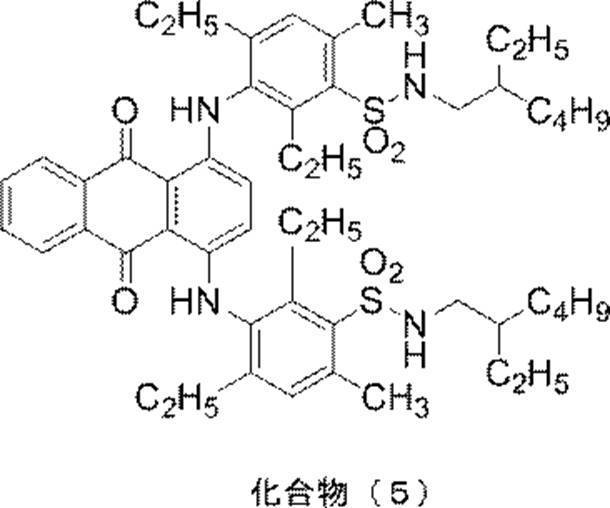
・重合性化合物:(T-1) ・・・103.4部
・バインダー樹脂:(U-1) ・・・212.2部
(固形分換算値:84.9部)
・光重合開始剤(V-2) ・・・21.2部
・光増感剤:(W-1) ・・・3.5部
・有機溶剤:(X-1) ・・・71.9部
・有機溶剤:(X-2) ・・・3.6部
・界面活性剤:(Y-1) ・・・0.06部
・特定金属錯体化合物:例示化合物A-3 ・・・4.7部
・顔料分散液:(S-1) ・・・42.1部
・下記化合物(5) ・・・2.3部
・重合性化合物:(T-1) ・・・103.4部
・バインダー樹脂:(U-1) ・・・212.2部
(固形分換算値:84.9部)
・光重合開始剤(V-2) ・・・21.2部
・光増感剤:(W-1) ・・・3.5部
・有機溶剤:(X-1) ・・・71.9部
・有機溶剤:(X-2) ・・・3.6部
・界面活性剤:(Y-1) ・・・0.06部
[実施例30]
実施例29の着色組成物27の調製において、例示化合物A-3を例示化合物A-10に代えて、着色組成物28を調製したこと以外は、実施例29と同様にして、カラーフィルタ28を得た。
着色組成物28、及び、カラーフィルタ28を用いて実施例3と同様にして評価を行った。結果を表2に示す。
実施例29の着色組成物27の調製において、例示化合物A-3を例示化合物A-10に代えて、着色組成物28を調製したこと以外は、実施例29と同様にして、カラーフィルタ28を得た。
着色組成物28、及び、カラーフィルタ28を用いて実施例3と同様にして評価を行った。結果を表2に示す。
[比較例1~4]
実施例3の着色組成物1の調製において、例示化合物A-1を表2に示す各比較化合物にそれぞれ置き換え、色度が合うように比較化合物と顔料分散液(S-1)との比率を変更して、比較着色組成物C1~C4を調製したこと以外は、実施例3と同様にして、カラーフィルタC1~C4を得た。
着色組成物C1~C4、及び、カラーフィルタC1~C4を用いて実施例3と同様にして評価を行った。結果を表2に示す。
実施例3の着色組成物1の調製において、例示化合物A-1を表2に示す各比較化合物にそれぞれ置き換え、色度が合うように比較化合物と顔料分散液(S-1)との比率を変更して、比較着色組成物C1~C4を調製したこと以外は、実施例3と同様にして、カラーフィルタC1~C4を得た。
着色組成物C1~C4、及び、カラーフィルタC1~C4を用いて実施例3と同様にして評価を行った。結果を表2に示す。
なお、表2に示される比較化合物1及び2の詳細は、以下の通りである。

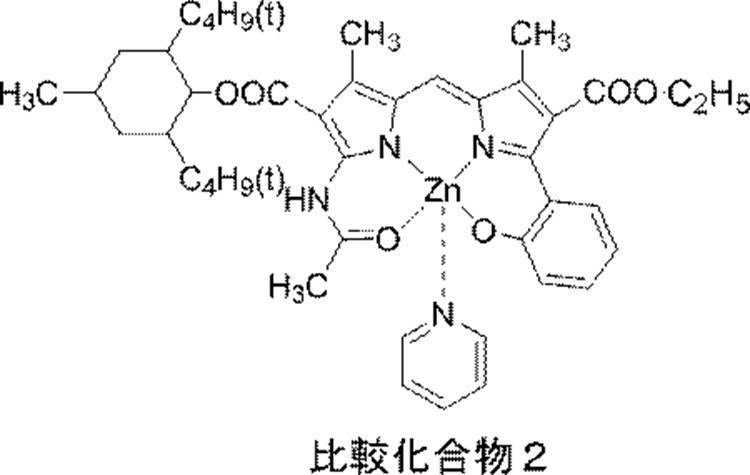
[比較例5]
実施例25の着色組成物23の調製において、例示化合物A-2をC.I.Acid Violet 17に代えて着色組成物C5を調製したこと以外は、実施例25と同様にして、カラーフィルタC5を得た。
着色組成物C5、及び、カラーフィルタC5を用いて実施例3と同様にして評価を行った。結果を表2に示す。
実施例25の着色組成物23の調製において、例示化合物A-2をC.I.Acid Violet 17に代えて着色組成物C5を調製したこと以外は、実施例25と同様にして、カラーフィルタC5を得た。
着色組成物C5、及び、カラーフィルタC5を用いて実施例3と同様にして評価を行った。結果を表2に示す。
[比較例6]
実施例29の着色組成物27の調製において、例示化合物A-3をC.I.Acid Violet 49に代えて着色組成物C6を調製したこと以外は、実施例29と同様にして、カラーフィルタC6を得た。
着色組成物C6、及び、カラーフィルタC6を用いて実施例3と同様にして評価を行った。結果を表2に示す。
実施例29の着色組成物27の調製において、例示化合物A-3をC.I.Acid Violet 49に代えて着色組成物C6を調製したこと以外は、実施例29と同様にして、カラーフィルタC6を得た。
着色組成物C6、及び、カラーフィルタC6を用いて実施例3と同様にして評価を行った。結果を表2に示す。
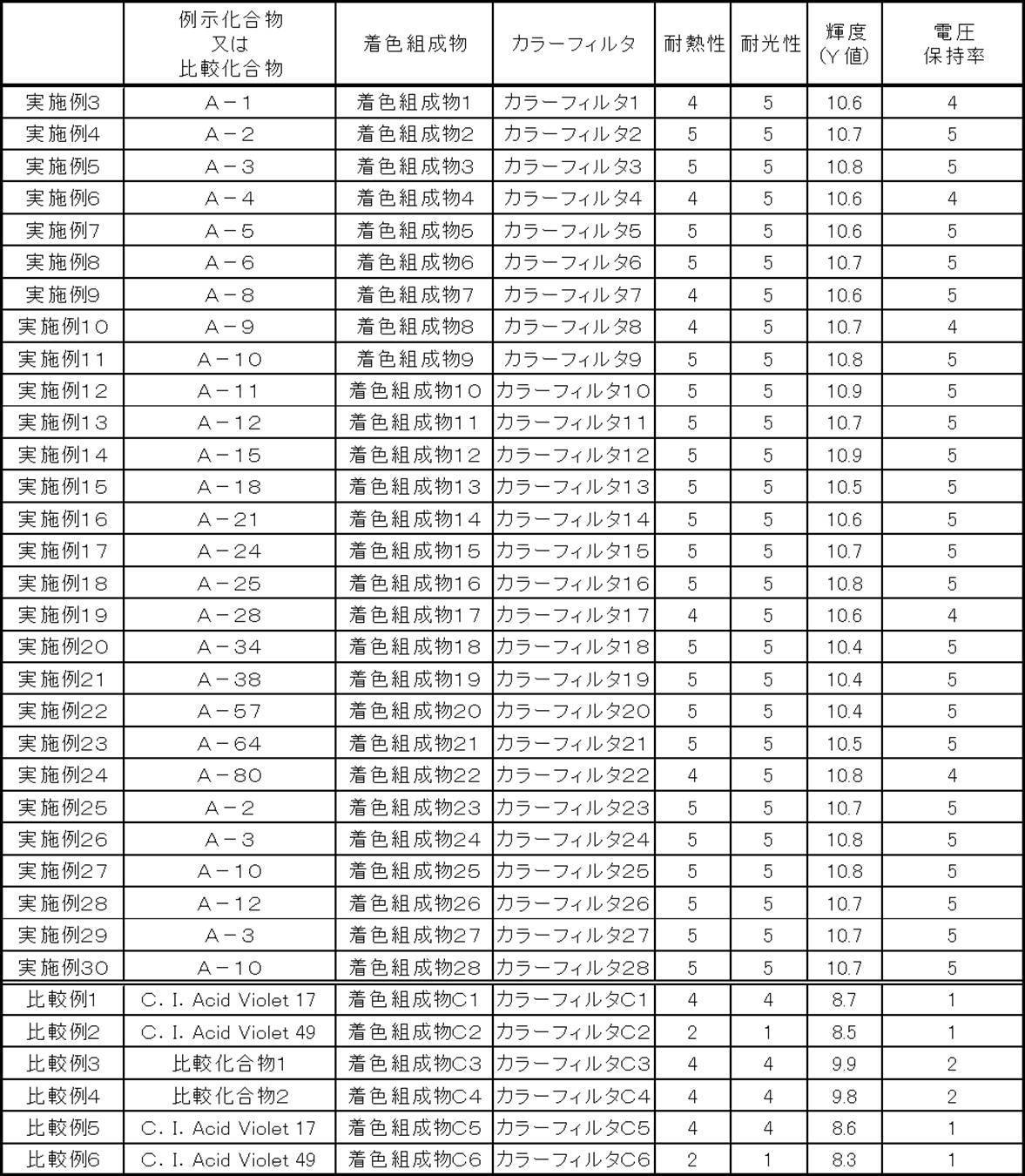
表2に示すように、特定金属錯体化合物を用いた各実施例のカラーフィルタでは、従来公知の化合物を用いた比較例1~2、5~6のカラーフィルタと比較して、輝度(Y値)に関して予想以上に大きな改良効果が認められた。さらに、特定金属錯体化合物を用いた各実施例は、従来公知のジピロメテン系金属錯体化合物を用いた比較例3、4と比較して、高い電圧保持率を維持することが可能であった。
<コントラスト>
実施例5、11、29、30、および、比較例1、2、3、4で得られたカラーフィルタについて、下記の方法でコントラストを評価した。結果を表3に示す。
得られたカラーフィルタを2枚の偏光フィルムの間に挟み、2枚の偏光フィルムの偏光軸が平行な場合及び垂直な場合の輝度の値を色彩輝度計(トプコン(株)製、型番:BM-5A)を使用して測定し、2枚の偏光フィルムの偏光軸が平行な場合の輝度を垂直な場合の輝度で除して得られた値をコントラストとして求めた。コントラストが高いほど、液晶ディスプレイ用カラーフィルタとして良好な性能を示す。
実施例5、11、29、30、および、比較例1、2、3、4で得られたカラーフィルタについて、下記の方法でコントラストを評価した。結果を表3に示す。
得られたカラーフィルタを2枚の偏光フィルムの間に挟み、2枚の偏光フィルムの偏光軸が平行な場合及び垂直な場合の輝度の値を色彩輝度計(トプコン(株)製、型番:BM-5A)を使用して測定し、2枚の偏光フィルムの偏光軸が平行な場合の輝度を垂直な場合の輝度で除して得られた値をコントラストとして求めた。コントラストが高いほど、液晶ディスプレイ用カラーフィルタとして良好な性能を示す。

表3に示すように、特定金属錯体化合物を用いた実施例5、11、29、30のカラーフィルタでは、従来公知の化合物を用いた比較例1、2のカラーフィルタおよび従来公知のジピロメテン系金属錯体化合物を用いた比較例3、4のカラーフィルタと比較して、コントラストに関して予想以上に大きな改良効果が認められた。また、特定金属錯体化合物とアントラキノン化合物とを用いた実施例29、30のカラーフィルタは、特に高いコントラストを示した。
以上の結果より、特定金属錯体化合物を用いて作製したカラーフィルタは、堅牢性(耐熱性及び耐光性)と良好な色相、高いコントラスト、高い電圧保持率等の性能を兼ね備えたものであることから、特定金属錯体化合物は、汎用性の高い染料といえる。
Claims (12)
- 下記一般式(I)で表される化合物及びその互変異性体から選択された少なくとも1種を含有する着色組成物。

〔一般式(I)中、R2、R3、R4、及びR5は、各々独立に、水素原子、又は1価の置換基を表す。R2とR3及びR4とR5は、各々独立に、互いに結合して5員、6員又は7員の飽和環又は不飽和環を形成していてもよい。R7は、水素原子、ハロゲン原子、アルキル基、アリール基、又はヘテロ環基を表す。Maは、金属又は金属化合物を表す。X3及びX4は、各々独立に、NR(Rは、水素原子、アルキル基、アルケニル基、アリール基、ヘテロ環基、アシル基、アルキルスルホニル基、又はアリールスルホニル基を表す。)、窒素原子、酸素原子、又は硫黄原子を表す。Y1及びY2は、各々独立に、NRc(Rcは、水素原子、アルキル基、アルケニル基、アリール基、ヘテロ環基、アシル基、アルキルスルホニル基、又はアリールスルホニル基を表す。)、窒素原子、又は炭素原子を表す。R8及びR9は、各々独立に、アルキル基、アルケニル基、アリール基、ヘテロ環基、アルコキシ基、アリールオキシ基、アルキルアミノ基、アリールアミノ基、又はヘテロ環アミノ基を表す。R8とY1とは、互いに結合して5員、6員、又は7員の環を形成していてもよく、R9とY2とは、互いに結合して5員、6員、又は7員の環を形成していてもよい。Zは、隣接する窒素原子と共に下記一般式(II)又は一般式(III)で表される構造を形成する原子群を表す。〕
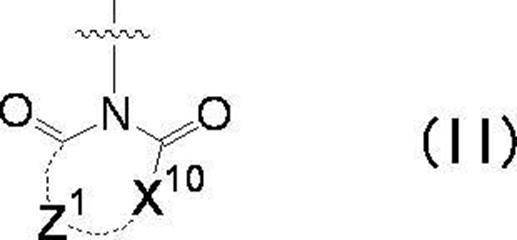
〔一般式(II)中、X10は、NR15(R15は、水素原子、アルキル基、アルケニル基、アリール基、へテロ環基、アシル基、アルキルスルホニル基、又はアリールスルホニル基を表す。)、酸素原子、又は硫黄原子を表す。Z1は、0又は1個の窒素原子と炭素原子とからなる鎖状構造を有し、該鎖状構造により隣接するカルボニル炭素及びX10間を連結して5員環又は6員環を形成する原子群を表す。〕
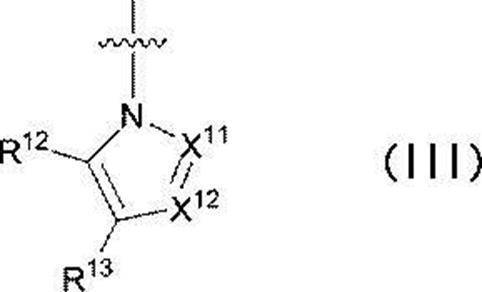
〔一般式(III)中、X11及びX12は、各々独立に、窒素原子、CR16(R16は、水素原子、又は置換基を表す)を表し、R12及びR13は、各々独立に、水素原子、又は1価の置換基を表す。〕 - 前記一般式(I)におけるMaが、Fe、Zn、Co、V=O、又はCuを表す請求項1に記載の着色組成物。
- 更に、重合性化合物と光重合開始剤とを含有する請求項1に記載の着色組成物。
- 更に、顔料またはアントラキノン化合物を含有する、或いは、顔料とアントラキノン化合物とを共に含有する請求項1に記載の着色組成物。
- 前記アントラキノン化合物が下記一般式(IX)で表される化合物である請求項4に記載の着色組成物。
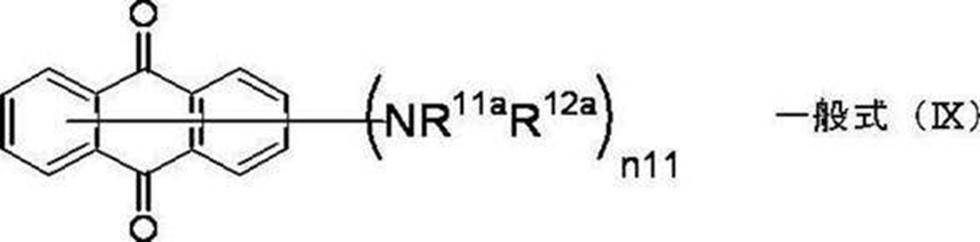
一般式(IX)において、R11a及びR12aは、各々独立に、水素原子、アルキル基、アリール基又はヘテロ環基を表すが、R11aとR12aとが同時に水素原子を表すことはない。n11は、1~4の整数を表し、n11が2~4の整数である場合、複数のNR11aR12aは同一でも異なっていてもよい。 - 前記一般式(I)で表される化合物及びその互変異性体から選択された少なくとも1種の含有量が、前記着色組成物の全固形分に対して0.1~30質量%である請求項1に記載の着色組成物。
- 下記一般式(I)で表される化合物又はその互変異性体。
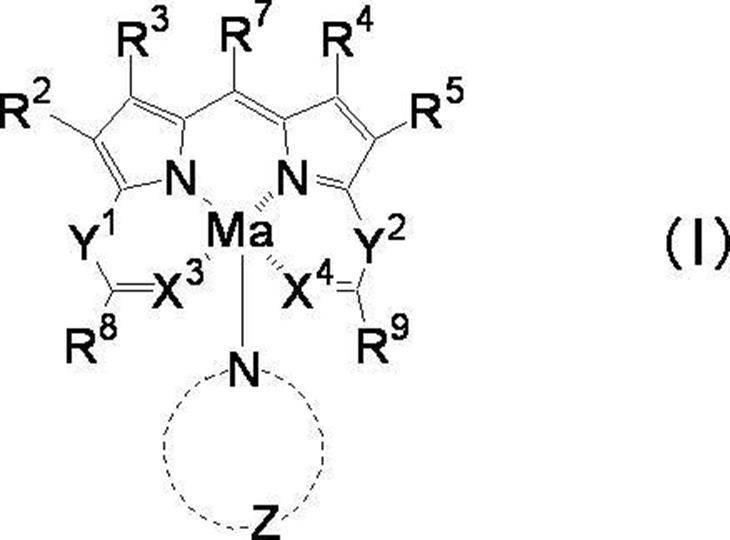
〔一般式(I)中、R2、R3、R4、及びR5は、各々独立に、水素原子、又は1価の置換基を表す。R2とR3及びR4とR5は、各々独立に、互いに結合して5員、6員又は7員の飽和環又は不飽和環を形成していてもよい。R7は、水素原子、ハロゲン原子、アルキル基、アリール基、又はヘテロ環基を表す。Maは、金属又は金属化合物を表す。X3及びX4は、各々独立に、NR(Rは、水素原子、アルキル基、アルケニル基、アリール基、ヘテロ環基、アシル基、アルキルスルホニル基、又はアリールスルホニル基を表す。)、窒素原子、酸素原子、又は硫黄原子を表す。Y1及びY2は、各々独立に、NRc(Rcは、水素原子、アルキル基、アルケニル基、アリール基、ヘテロ環基、アシル基、アルキルスルホニル基、又はアリールスルホニル基を表す。)、窒素原子、又は炭素原子を表す。R8及びR9は、各々独立に、アルキル基、アルケニル基、アリール基、ヘテロ環基、アルコキシ基、アリールオキシ基、アルキルアミノ基、アリールアミノ基、又はヘテロ環アミノ基を表す。R8とY1とは、互いに結合して5員、6員、又は7員の環を形成していてもよく、R9とY2とは、互いに結合して5員、6員、又は7員の環を形成していてもよい。Zは、隣接する窒素原子と共に下記一般式(II)又は一般式(III)で表される構造を形成する原子群を表す。〕
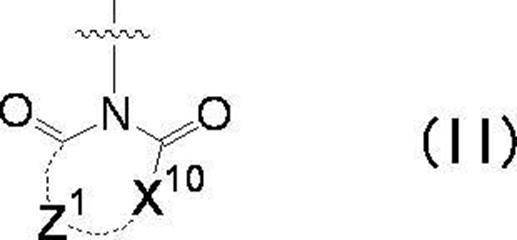
〔一般式(II)中、X10は、NR15(R15は、水素原子、アルキル基、アルケニル基、アリール基、へテロ環基、アシル基、アルキルスルホニル基、又はアリールスルホニル基を表す。)、酸素原子、又は硫黄原子を表す。Z1は、0又は1個の窒素原子と炭素原子とからなる鎖状構造を有し、該鎖状構造により隣接するカルボニル炭素及びX10間を連結して5員環又は6員環を形成する原子群を表す。〕

〔一般式(III)中、X11及びX12は、各々独立に、窒素原子、CR16(R16は、水素原子、又は置換基を表す)を表し、R12及びR13は、各々独立に、水素原子、又は1価の置換基を表す。〕 - 請求項1~請求項6のいずれか1項に記載の着色組成物を硬化して得られた着色硬化膜。
- 請求項8に記載の着色硬化膜を備えたカラーフィルタ。
- 請求項1~請求項6のいずれか1項に記載の着色組成物を支持体上に付与し、着色組成物層を形成する工程と、形成された前記着色組成物層をパターン状に露光し、現像してパターン状の着色領域を形成する工程と、を有するカラーフィルタの製造方法。
- 請求項9に記載のカラーフィルタを備えた液晶表示装置。
- 請求項9に記載のカラーフィルタを備えた固体撮像素子。
Priority Applications (1)
| Application Number | Priority Date | Filing Date | Title |
|---|---|---|---|
| US14/043,827 US8778577B2 (en) | 2011-04-04 | 2013-10-01 | Colored composition, colored cured film, color filter, method for producing color filter, liquid crystal display device, solid-state imaging device, and novel dipyrromethene metal complex compound or tautomer thereof |
Applications Claiming Priority (2)
| Application Number | Priority Date | Filing Date | Title |
|---|---|---|---|
| JP2011083181 | 2011-04-04 | ||
| JP2011-083181 | 2011-04-04 |
Related Child Applications (1)
| Application Number | Title | Priority Date | Filing Date |
|---|---|---|---|
| US14/043,827 Continuation US8778577B2 (en) | 2011-04-04 | 2013-10-01 | Colored composition, colored cured film, color filter, method for producing color filter, liquid crystal display device, solid-state imaging device, and novel dipyrromethene metal complex compound or tautomer thereof |
Publications (1)
| Publication Number | Publication Date |
|---|---|
| WO2012137852A1 true WO2012137852A1 (ja) | 2012-10-11 |
Family
ID=46969245
Family Applications (1)
| Application Number | Title | Priority Date | Filing Date |
|---|---|---|---|
| PCT/JP2012/059267 Ceased WO2012137852A1 (ja) | 2011-04-04 | 2012-04-04 | 着色組成物、着色硬化膜、カラーフィルタ、カラーフィルタの製造方法、液晶表示装置、固体撮像素子、並びに、新規なジピロメテン系金属錯体化合物又はその互変異性体 |
Country Status (4)
| Country | Link |
|---|---|
| US (1) | US8778577B2 (ja) |
| JP (1) | JP5722268B2 (ja) |
| TW (1) | TW201245343A (ja) |
| WO (1) | WO2012137852A1 (ja) |
Cited By (1)
| Publication number | Priority date | Publication date | Assignee | Title |
|---|---|---|---|---|
| WO2014065090A1 (ja) * | 2012-10-24 | 2014-05-01 | 富士フイルム株式会社 | 着色組成物、カラーフィルタ及びその製造方法、画像表示装置、固体撮像素子、並びに、新規化合物 |
Families Citing this family (6)
| Publication number | Priority date | Publication date | Assignee | Title |
|---|---|---|---|---|
| US8779577B2 (en) * | 2012-02-13 | 2014-07-15 | Infineon Technologies Ag | Semiconductor chip comprising a plurality of contact pads and a plurality of associated pad cells |
| JP2015160864A (ja) * | 2014-02-26 | 2015-09-07 | Jsr株式会社 | 着色剤分散液、着色組成物、着色硬化膜及び表示素子 |
| JP7203627B2 (ja) * | 2019-02-08 | 2023-01-13 | 住友化学株式会社 | 着色硬化性樹脂組成物 |
| KR102728993B1 (ko) * | 2019-09-27 | 2024-11-13 | 알타나 아게 | 컬러 필터 제조를 위한 조성물 |
| US11492539B1 (en) * | 2021-10-28 | 2022-11-08 | Halliburton Energy Services, Inc. | Acid generation for filtercake removal in subterranean applications |
| JPWO2024262354A1 (ja) * | 2023-06-23 | 2024-12-26 |
Citations (2)
| Publication number | Priority date | Publication date | Assignee | Title |
|---|---|---|---|---|
| JP2010037545A (ja) * | 2008-07-08 | 2010-02-18 | Fujifilm Corp | インクジェット用インク、カラーフィルタおよびその製造方法、ならびにそれを用いる液晶ディスプレイおよび画像表示デバイス |
| JP2010084009A (ja) * | 2008-09-30 | 2010-04-15 | Fujifilm Corp | 着色硬化組成物、含フッ素ジピロメテン系化合物及びその互変異性体、含フッ素ジピロメテン系金属錯体化合物及びその互変異性体、並びにカラーフィルタ及びその製造方法 |
Family Cites Families (10)
| Publication number | Priority date | Publication date | Assignee | Title |
|---|---|---|---|---|
| JPH0675375A (ja) | 1992-08-26 | 1994-03-18 | Sony Corp | カラーレジスト材料 |
| JP3387541B2 (ja) | 1993-02-03 | 2003-03-17 | 住友化学工業株式会社 | カラーフィルター形成用レジスト組成物用色素 |
| JPH09291238A (ja) * | 1996-04-26 | 1997-11-11 | Nippon Kayaku Co Ltd | カラーフィルタ用青色インク組成物及びそれを用いるカラーフィルタの製造方法 |
| JP4617029B2 (ja) * | 2001-08-20 | 2011-01-19 | 山本化成株式会社 | 光学フィルター |
| JP5085021B2 (ja) | 2005-07-29 | 2012-11-28 | 富士フイルム株式会社 | アゾ化合物 |
| KR101474900B1 (ko) * | 2006-09-27 | 2014-12-19 | 후지필름 가부시키가이샤 | 화합물 또는 이것의 토토머, 금속착체 화합물, 착색 감광성경화 조성물, 컬러필터, 및 제조 |
| JP2010013639A (ja) * | 2008-06-06 | 2010-01-21 | Fujifilm Corp | インクジェット用インク、カラーフィルタおよびその製造方法、ならびにそれを用いる液晶ディスプレイおよび画像表示デバイス |
| JP5448653B2 (ja) * | 2008-09-02 | 2014-03-19 | 富士フイルム株式会社 | 着色硬化性組成物、カラーフィルタ及びカラーフィルタの製造方法、並びに、ジピロメテン金属錯体化合物及びその互変異性体 |
| JP5300651B2 (ja) * | 2009-08-12 | 2013-09-25 | 富士フイルム株式会社 | 着色硬化性組成物、カラーフィルタ及びその製造方法、固体撮像素子 |
| JP5743534B2 (ja) * | 2010-07-23 | 2015-07-01 | 富士フイルム株式会社 | 着色組成物、カラーフィルタ及びその製造方法、液晶表示装置、固体撮像素子、並びにジピロメテン系金属錯体化合物及びその互変異性体 |
-
2012
- 2012-04-04 JP JP2012085868A patent/JP5722268B2/ja active Active
- 2012-04-04 WO PCT/JP2012/059267 patent/WO2012137852A1/ja not_active Ceased
- 2012-04-05 TW TW101112082A patent/TW201245343A/zh unknown
-
2013
- 2013-10-01 US US14/043,827 patent/US8778577B2/en not_active Expired - Fee Related
Patent Citations (2)
| Publication number | Priority date | Publication date | Assignee | Title |
|---|---|---|---|---|
| JP2010037545A (ja) * | 2008-07-08 | 2010-02-18 | Fujifilm Corp | インクジェット用インク、カラーフィルタおよびその製造方法、ならびにそれを用いる液晶ディスプレイおよび画像表示デバイス |
| JP2010084009A (ja) * | 2008-09-30 | 2010-04-15 | Fujifilm Corp | 着色硬化組成物、含フッ素ジピロメテン系化合物及びその互変異性体、含フッ素ジピロメテン系金属錯体化合物及びその互変異性体、並びにカラーフィルタ及びその製造方法 |
Cited By (2)
| Publication number | Priority date | Publication date | Assignee | Title |
|---|---|---|---|---|
| WO2014065090A1 (ja) * | 2012-10-24 | 2014-05-01 | 富士フイルム株式会社 | 着色組成物、カラーフィルタ及びその製造方法、画像表示装置、固体撮像素子、並びに、新規化合物 |
| JP2014084412A (ja) * | 2012-10-24 | 2014-05-12 | Fujifilm Corp | 着色組成物、カラーフィルタ及びその製造方法、画像表示装置、固体撮像素子、並びに、新規化合物 |
Also Published As
| Publication number | Publication date |
|---|---|
| US20140038092A1 (en) | 2014-02-06 |
| JP2012224849A (ja) | 2012-11-15 |
| US8778577B2 (en) | 2014-07-15 |
| TW201245343A (en) | 2012-11-16 |
| JP5722268B2 (ja) | 2015-05-20 |
Similar Documents
| Publication | Publication Date | Title |
|---|---|---|
| CN103732692B (zh) | 着色硬化性组合物、彩色滤光片、彩色滤光片的制造方法及显示装置 | |
| JP5722269B2 (ja) | 着色組成物、着色硬化膜、カラーフィルタ、カラーフィルタの製造方法、液晶表示装置、固体撮像素子、並びに、新規なジピロメテン系金属錯体化合物又はその互変異性体 | |
| JP2012077153A (ja) | 着色組成物、カラーフィルタ及びその製造方法、並びに液晶表示装置 | |
| JP5393766B2 (ja) | 着色感光性組成物、カラーフィルタ、カラーフィルタの製造方法、および液晶表示装置 | |
| JP5722268B2 (ja) | 着色組成物、着色硬化膜、カラーフィルタ、カラーフィルタの製造方法、液晶表示装置、固体撮像素子、並びに、新規なジピロメテン系金属錯体化合物又はその互変異性体 | |
| JP2012077154A (ja) | 着色組成物、カラーフィルタ及びその製造方法、液晶表示装置、並びに固体撮像素子 | |
| JP6103880B2 (ja) | 着色組成物、カラーフィルタ及びその製造方法、画像表示装置、固体撮像素子、並びに、新規化合物 | |
| JP2012077026A (ja) | ジピロメテン系金属錯体化合物及びその互変異性体、着色組成物、カラーフィルタ及びその製造方法、画像表示装置、並びに、固体撮像素子 | |
| WO2013047619A1 (ja) | 着色硬化性組成物、カラーフィルタ、その製造方法、表示素子及び固体撮像素子 | |
| JP5722267B2 (ja) | 着色組成物、着色硬化膜、カラーフィルタ、カラーフィルタの製造方法、液晶表示装置、固体撮像素子、並びに、新規なジピロメテン系金属錯体化合物又はその互変異性体 | |
| JP5604252B2 (ja) | 着色硬化性組成物、カラーフィルタ及びその製造方法、並びに液晶表示素子 | |
| JP5908824B2 (ja) | 着色組成物、カラーフィルタ、カラーフィルタの製造方法、画像表示装置、固体撮像素子、並びに、新規化合物及びその互変異性体 | |
| JP5840435B2 (ja) | 着色組成物、着色硬化膜、カラーフィルタ、カラーフィルタの製造方法、液晶表示装置、固体撮像素子、並びに、新規なジピロメテン金属錯体化合物又はその互変異性体 | |
| JP5710568B2 (ja) | 着色硬化性組成物、着色硬化膜、カラーフィルタ、カラーフィルタの製造方法、表示装置、固体撮像素子、及び、化合物 | |
| WO2012137747A1 (ja) | 着色組成物、着色硬化膜、カラーフィルタ、カラーフィルタの製造方法、液晶表示装置、固体撮像素子、並びに、新規なジピロメテン系金属錯体化合物又はその互変異性体 |
Legal Events
| Date | Code | Title | Description |
|---|---|---|---|
| 121 | Ep: the epo has been informed by wipo that ep was designated in this application |
Ref document number: 12768193 Country of ref document: EP Kind code of ref document: A1 |
|
| NENP | Non-entry into the national phase |
Ref country code: DE |
|
| 122 | Ep: pct application non-entry in european phase |
Ref document number: 12768193 Country of ref document: EP Kind code of ref document: A1 |