WO2012121012A1 - 収着材料 - Google Patents
収着材料 Download PDFInfo
- Publication number
- WO2012121012A1 WO2012121012A1 PCT/JP2012/054230 JP2012054230W WO2012121012A1 WO 2012121012 A1 WO2012121012 A1 WO 2012121012A1 JP 2012054230 W JP2012054230 W JP 2012054230W WO 2012121012 A1 WO2012121012 A1 WO 2012121012A1
- Authority
- WO
- WIPO (PCT)
- Prior art keywords
- sorption
- glass
- mol
- source
- electrolyte
- Prior art date
- Legal status (The legal status is an assumption and is not a legal conclusion. Google has not performed a legal analysis and makes no representation as to the accuracy of the status listed.)
- Ceased
Links
Images
Classifications
-
- G—PHYSICS
- G21—NUCLEAR PHYSICS; NUCLEAR ENGINEERING
- G21F—PROTECTION AGAINST X-RADIATION, GAMMA RADIATION, CORPUSCULAR RADIATION OR PARTICLE BOMBARDMENT; TREATING RADIOACTIVELY CONTAMINATED MATERIAL; DECONTAMINATION ARRANGEMENTS THEREFOR
- G21F9/00—Treating radioactively contaminated material; Decontamination arrangements therefor
- G21F9/04—Treating liquids
- G21F9/06—Processing
- G21F9/12—Processing by absorption; by adsorption; by ion-exchange
-
- B—PERFORMING OPERATIONS; TRANSPORTING
- B01—PHYSICAL OR CHEMICAL PROCESSES OR APPARATUS IN GENERAL
- B01J—CHEMICAL OR PHYSICAL PROCESSES, e.g. CATALYSIS OR COLLOID CHEMISTRY; THEIR RELEVANT APPARATUS
- B01J20/00—Solid sorbent compositions or filter aid compositions; Sorbents for chromatography; Processes for preparing, regenerating or reactivating thereof
- B01J20/02—Solid sorbent compositions or filter aid compositions; Sorbents for chromatography; Processes for preparing, regenerating or reactivating thereof comprising inorganic material
- B01J20/0203—Solid sorbent compositions or filter aid compositions; Sorbents for chromatography; Processes for preparing, regenerating or reactivating thereof comprising inorganic material comprising compounds of metals not provided for in B01J20/04
- B01J20/0259—Compounds of N, P, As, Sb, Bi
-
- B—PERFORMING OPERATIONS; TRANSPORTING
- B01—PHYSICAL OR CHEMICAL PROCESSES OR APPARATUS IN GENERAL
- B01J—CHEMICAL OR PHYSICAL PROCESSES, e.g. CATALYSIS OR COLLOID CHEMISTRY; THEIR RELEVANT APPARATUS
- B01J20/00—Solid sorbent compositions or filter aid compositions; Sorbents for chromatography; Processes for preparing, regenerating or reactivating thereof
- B01J20/02—Solid sorbent compositions or filter aid compositions; Sorbents for chromatography; Processes for preparing, regenerating or reactivating thereof comprising inorganic material
- B01J20/06—Solid sorbent compositions or filter aid compositions; Sorbents for chromatography; Processes for preparing, regenerating or reactivating thereof comprising inorganic material comprising oxides or hydroxides of metals not provided for in group B01J20/04
-
- C—CHEMISTRY; METALLURGY
- C03—GLASS; MINERAL OR SLAG WOOL
- C03C—CHEMICAL COMPOSITION OF GLASSES, GLAZES OR VITREOUS ENAMELS; SURFACE TREATMENT OF GLASS; SURFACE TREATMENT OF FIBRES OR FILAMENTS MADE FROM GLASS, MINERALS OR SLAGS; JOINING GLASS TO GLASS OR OTHER MATERIALS
- C03C14/00—Glass compositions containing a non-glass component, e.g. compositions containing fibres, filaments, whiskers, platelets, or the like, dispersed in a glass matrix
-
- C—CHEMISTRY; METALLURGY
- C03—GLASS; MINERAL OR SLAG WOOL
- C03C—CHEMICAL COMPOSITION OF GLASSES, GLAZES OR VITREOUS ENAMELS; SURFACE TREATMENT OF GLASS; SURFACE TREATMENT OF FIBRES OR FILAMENTS MADE FROM GLASS, MINERALS OR SLAGS; JOINING GLASS TO GLASS OR OTHER MATERIALS
- C03C3/00—Glass compositions
- C03C3/12—Silica-free oxide glass compositions
- C03C3/16—Silica-free oxide glass compositions containing phosphorus
-
- C—CHEMISTRY; METALLURGY
- C03—GLASS; MINERAL OR SLAG WOOL
- C03C—CHEMICAL COMPOSITION OF GLASSES, GLAZES OR VITREOUS ENAMELS; SURFACE TREATMENT OF GLASS; SURFACE TREATMENT OF FIBRES OR FILAMENTS MADE FROM GLASS, MINERALS OR SLAGS; JOINING GLASS TO GLASS OR OTHER MATERIALS
- C03C3/00—Glass compositions
- C03C3/12—Silica-free oxide glass compositions
- C03C3/16—Silica-free oxide glass compositions containing phosphorus
- C03C3/17—Silica-free oxide glass compositions containing phosphorus containing aluminium or beryllium
-
- C—CHEMISTRY; METALLURGY
- C03—GLASS; MINERAL OR SLAG WOOL
- C03C—CHEMICAL COMPOSITION OF GLASSES, GLAZES OR VITREOUS ENAMELS; SURFACE TREATMENT OF GLASS; SURFACE TREATMENT OF FIBRES OR FILAMENTS MADE FROM GLASS, MINERALS OR SLAGS; JOINING GLASS TO GLASS OR OTHER MATERIALS
- C03C3/00—Glass compositions
- C03C3/12—Silica-free oxide glass compositions
- C03C3/16—Silica-free oxide glass compositions containing phosphorus
- C03C3/19—Silica-free oxide glass compositions containing phosphorus containing boron
-
- C—CHEMISTRY; METALLURGY
- C03—GLASS; MINERAL OR SLAG WOOL
- C03C—CHEMICAL COMPOSITION OF GLASSES, GLAZES OR VITREOUS ENAMELS; SURFACE TREATMENT OF GLASS; SURFACE TREATMENT OF FIBRES OR FILAMENTS MADE FROM GLASS, MINERALS OR SLAGS; JOINING GLASS TO GLASS OR OTHER MATERIALS
- C03C3/00—Glass compositions
- C03C3/12—Silica-free oxide glass compositions
- C03C3/16—Silica-free oxide glass compositions containing phosphorus
- C03C3/21—Silica-free oxide glass compositions containing phosphorus containing titanium, zirconium, vanadium, tungsten or molybdenum
-
- G—PHYSICS
- G21—NUCLEAR PHYSICS; NUCLEAR ENGINEERING
- G21F—PROTECTION AGAINST X-RADIATION, GAMMA RADIATION, CORPUSCULAR RADIATION OR PARTICLE BOMBARDMENT; TREATING RADIOACTIVELY CONTAMINATED MATERIAL; DECONTAMINATION ARRANGEMENTS THEREFOR
- G21F9/00—Treating radioactively contaminated material; Decontamination arrangements therefor
- G21F9/04—Treating liquids
- G21F9/06—Processing
-
- G—PHYSICS
- G21—NUCLEAR PHYSICS; NUCLEAR ENGINEERING
- G21F—PROTECTION AGAINST X-RADIATION, GAMMA RADIATION, CORPUSCULAR RADIATION OR PARTICLE BOMBARDMENT; TREATING RADIOACTIVELY CONTAMINATED MATERIAL; DECONTAMINATION ARRANGEMENTS THEREFOR
- G21F9/00—Treating radioactively contaminated material; Decontamination arrangements therefor
- G21F9/04—Treating liquids
- G21F9/06—Processing
- G21F9/16—Processing by fixation in stable solid media
-
- G—PHYSICS
- G21—NUCLEAR PHYSICS; NUCLEAR ENGINEERING
- G21F—PROTECTION AGAINST X-RADIATION, GAMMA RADIATION, CORPUSCULAR RADIATION OR PARTICLE BOMBARDMENT; TREATING RADIOACTIVELY CONTAMINATED MATERIAL; DECONTAMINATION ARRANGEMENTS THEREFOR
- G21F9/00—Treating radioactively contaminated material; Decontamination arrangements therefor
- G21F9/28—Treating solids
- G21F9/30—Processing
- G21F9/301—Processing by fixation in stable solid media
- G21F9/302—Processing by fixation in stable solid media in an inorganic matrix
- G21F9/305—Glass or glass like matrix
Definitions
- the present invention relates to Cs or Sr in an electrolyte melt composed of a chloride-based mixed salt, for example, fission products accumulated in a chloride-based spent electrolyte melt generated in a dry reprocessing step of spent nuclear fuel.
- the present invention relates to a sorption material made of Fe 2 O 3 —P 2 O 5 glass capable of separating an electrolyte and a fission product by selectively sorbing Cs or Sr.
- the spent fuel is dissolved in a chloride-based high-temperature molten salt, which is a solvent, and electrolyzed, so that uranium and transuranium elements (TRU) that are electrolytic deposits deposited on the cathode are deposited. ) Is collected as a reprocessed product.
- the spent electrolyte generated in such a process contains actinoid substances and fission products (FP), and is therefore discarded as high-level radioactive waste. Therefore, it is necessary to regenerate the used electrolyte from the viewpoint of reducing the amount of waste and economical efficiency.
- the present invention solves the above-mentioned problem, and Cs or Sr in an electrolyte melt composed of a chloride-based mixed salt, for example, Cs or s that is FP remaining in a chloride-based spent electrolyte melt
- An object of the present invention is to provide a sorption material made of Fe 2 O 3 —P 2 O 5 glass that can simplify the regeneration of the electrolyte by selectively sorbing Sr.
- Fe 2 O 3 is an essential component, Fe 2 O 3 is 1 to 50 mol%, P 2 O 5 is 50 to 80 mol%, Al 2 O 3 , B 2 O 3 , TiO. Fe 2 O 3 ⁇ containing 1 to 40 mol% in total of at least one selected from 2 , CoO, NiO, CeO 2 , Cr 2 O 3 , La 2 O 3 , MoO 3 , Nb 2 O 5 , and WO 3 It is an object of the present invention to provide a sorption material characterized by selectively sorbing Cs or Sr in an electrolyte melt made of P 2 O 5 glass and made of a chloride-based mixed salt.
- the glass transition point of the Fe 2 O 3 —P 2 O 5 glass is preferably 450 ° C. or higher.
- spent nuclear fuel is dissolved in chloride molten salt, and spent electrolyte generated in the process of electrolytic treatment is heated and melted and brought into contact with the sorption material to select Cs or Sr.
- Cs or Sr in an electrolyte melt composed of a chloride-based mixed salt for example, Cs or Sr that is a fission product accumulated in a chloride-based spent electrolyte melt can be sorbed. Regeneration is possible, and environmental and economic loads can be reduced.
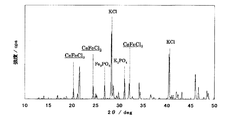
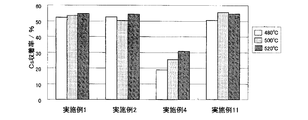
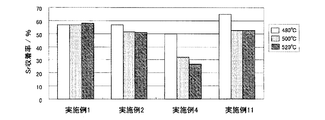
- Example 2 is a result of powder X-ray diffraction of the sorption material of Example 1. It is a figure which shows the Cs sorption rate of the sorption material of Example 1,2,4,11. It is a figure which shows the Sr sorption rate of the sorption material of Example 1,2,4,11.
- the sorption material of the present invention comprises Fe 2 O 3 —P 2 O 5 glass containing Fe 2 O 3 as an essential component, and selectively contains Cs or Sr in an electrolyte melt comprising a chloride-based mixed salt. It is characterized by sorption.
- Fe 2 O 3 is an essential component for sorbing Cs, and is a component that improves the hygroscopicity that is a problem with P 2 O 5 glass and stabilizes the glass. It is desirable to contain Fe 2 O 3 in the range of 1 to 50 mol% in the glass. If it is less than 1 mol%, the above-mentioned action cannot be exhibited, and if it exceeds 50 mol%, it does not vitrify. More preferably, it is in the range of 5 to 45 mol%, and still more preferably in the range of 20 to 35 mol%.
- P 2 O 5 is a main component of glass and is a component that facilitates glass melting. It is an essential component for forming glass, and it is desirable to contain P 2 O 5 in the range of 50 to 80 mol% in the glass. If it is less than 50 mol%, the above-mentioned action cannot be exhibited and vitrification becomes difficult, and if it exceeds 80 mol%, the moisture resistance of the glass is deteriorated. More preferably, it is in the range of 55 to 75 mol%.
- Fe 2 O 3 —P 2 O 5 glass includes Al 2 O 3 , B 2 O 3 , TiO 2 , CoO, NiO, CeO 2 , Cr 2 O 3 , La 2 O 3 , MoO 3 , Nb.
- One or more selected from 2 O 5 and WO 3 are contained.
- Al 2 O 3 is a component that suppresses crystallization and improves durability during glass production. Further, by containing Al 2 O 3 in the glass, the material shape can be maintained even after immersing Cs or Sr by immersing in molten salt.
- B 2 O 3 is a component that can adjust the softening point and the sorption property of Cs or Sr.
- TiO 2 is a component that improves the heat resistance of the glass and makes it easier to maintain the shape of the material after sorption of Cs or Sr, similar to Al 2 O 3.
- CoO like B 2 O 3 , is a component that can adjust the sorption property of Cs or Sr.
- NiO is a component that can adjust the sorption property of Cs or Sr, like B 2 O 3 and CoO.
- CeO 2 is a component that suppresses crystallization and can adjust the sorption of Cs or Sr in the same manner as B 2 O 3 .
- Cr 2 O 3 is a component that improves the heat resistance of glass and suppresses crystallization during glass production. Moreover, by containing it in glass, it becomes possible to maintain the material shape even after immersing Cs or Sr in a molten salt.
- La 2 O 3 is a component capable of adjusting the sorption property of Cs or Sr, like B 2 O 3 .
- MoO 3 is a component capable of adjusting the sorption property of Cs or Sr, like B 2 O 3 .
- Nb 2 O 5 is a component capable of adjusting the sorption property of Cs or Sr, like B 2 O 3 .
- the material shape can be maintained even after immersing Cs or Sr by immersing in molten salt.
- MoO 3 is a component capable of adjusting the sorption property of Cs or Sr, like B 2 O 3 .
- the sorption material of the present invention is preferably a sorption material characterized in that the glass transition point of Fe 2 O 3 —P 2 O 5 system is 450 ° C. or higher. Since the melting point of the electrolyte to be regenerated in the present invention is generally 450 ° C. or higher, if the glass transition point is lower than that temperature, the shape cannot be maintained during use.
- the sorption effect of Cs or Sr of the sorption material of the present invention is due to ion exchange, molecular sieving, reaction / crystallization, or the like, or a combination thereof.
- the sorption material of the present invention is not particularly limited in shape, but for the purpose of increasing the sorption effect, the surface area may be increased to form powder, fiber, or porous.
- the sorption material of the present invention is effective for a molten salt of a chloride electrolyte containing Cs or Sr.
- the chloride electrolyte may contain other salts such as phosphate.
- the glass of sorbent material such as orthophosphoric acid as P 2 O 5 source, the iron oxide as Fe 2 O 3 source, the aluminum oxide Al 2 O 3 source, boric acid as a B 2 O 3 source, TiO 2 source titanium oxide, CoO source cobalt oxide, NiO source nickel oxide, CeO 2 source cerium oxide, Cr 2 O 3 source chromium oxide, La 2 O 3 source lanthanum oxide, MoO Using molybdenum trioxide as the 3 source, niobium oxide as the Nb 2 O 5 source, and tungsten oxide as the WO 3 source, put them in a platinum crucible and heat and melt them in an electric heating furnace at 1100 to 1300 ° C for 1 to 3 hours Then, the shape to be obtained may be produced by means such as pouring molten glass into the mold.
- orthophosphoric acid as P 2 O 5 source
- the iron oxide as Fe 2 O 3 source
- the aluminum oxide Al 2 O 3 source boric acid as a B 2 O 3 source
- Orthophosphoric acid as P 2 O 5 source the iron oxide as Fe 2 O 3 source, the aluminum oxide Al 2 O 3 source, boric acid as a B 2 O 3 source, a titanium oxide as TiO 2 source, CoO source As cobalt oxide, nickel oxide as NiO source, cerium oxide as CeO 2 source, chromium oxide as Cr 2 O 3 source, lanthanum oxide as La 2 O 3 source, molybdenum trioxide as MoO 3 source, Nb Niobium oxide was used as the 2 O 5 source, and tungsten oxide was used as the WO 3 source.
- Each prepared raw material was put into a platinum crucible and heated and melted at 1250 ° C. for 3 hours in an electric heating furnace.
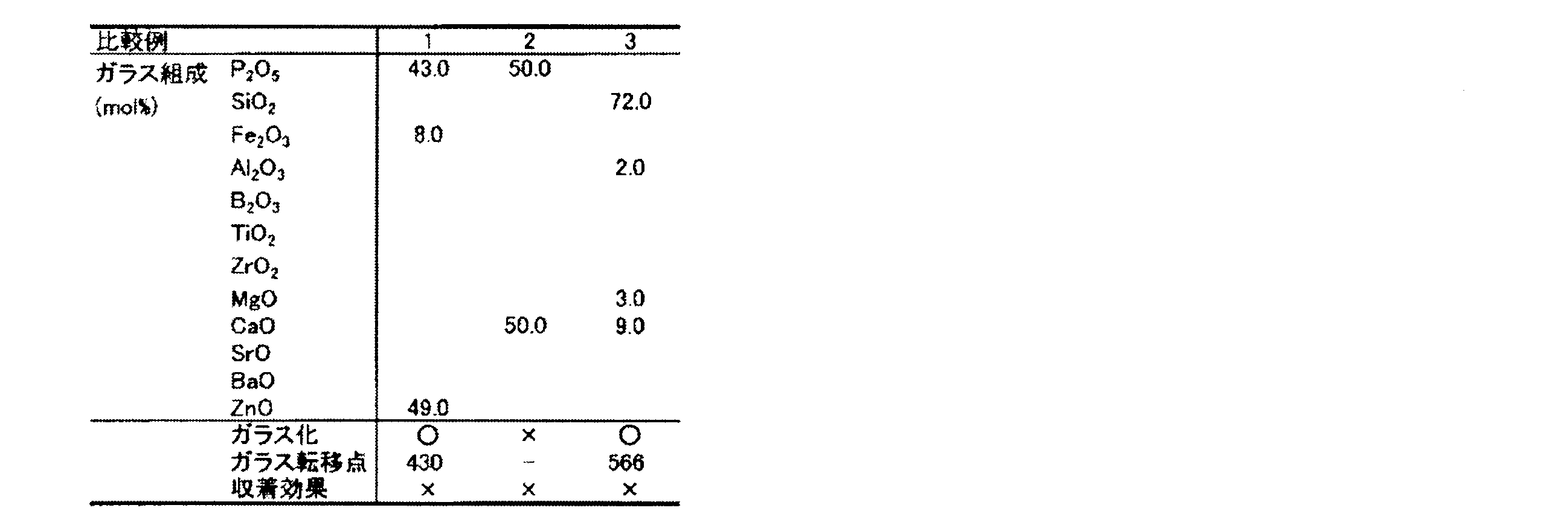
- the molten glass is poured into a mold, made into a block shape, transferred into an electric furnace maintained above the glass transition point and gradually cooled, and the compositions shown in Examples 1 to 11 in Table 1 and Comparative Examples 1 to 3 in Table 2 are used. Glass was obtained and used as a sorbent.
- the glass transition point, the sorption effect and the sorption rate were evaluated for each sample thus prepared.
- the glass transition point was measured using a thermomechanical analyzer TMA8310 (manufactured by Rigaku Corporation) based on JIS R 3103-3.
- the sorption effect of Cs is as follows: CsCl is added to LiCl—KCl mixed salt at 0.6 ⁇ 10 ⁇ 3 mol / g and heated at 500 ° C. in a dry atmosphere to form a molten salt. In order to compare, what was processed into the column shape of diameter 20mmphi and height 50mm was immersed for 5 hours. The sorption effect of Cs was evaluated by analyzing the sample after immersion by X-ray diffraction.
- the sorption rate of Cs and Sr is 3 times the stoichiometric amount by adding CsCl and SrCl 2 which are chlorides of simulated FP to 5 g of LiCl—KCl eutectic salt so that Cl becomes 0.003 mol.
- Phosphate conversion material Li 3 PO 4
- 0.5 g of the sorbent material pulverized and classified to 250 to 425 ⁇ m was added and melted at treatment temperatures of 480 ° C., 500 ° C., and 520 ° C. for 24 hours.
- each sample of Examples 1 to 11 had a composition in an appropriate range, so that a stable glass was obtained, and the glass transition point was also in a desired range.
- FIG. 1 The result of powder X-ray diffraction of the sorbent of Example 1 after being immersed in the molten electrolyte is shown in FIG. 1 as an example. Crystals containing Cs are observed from the sample after immersion, and the Cs sorption effect is obtained. It was.
- FIGS. 2 and 3 show the Cs and Sr sorption rates of the sorbents of Examples 1, 2, 4, and 11 as examples, but Cs and Sr sorption rates of 20 to 60% in all samples. was gotten.
Landscapes
- Chemical & Material Sciences (AREA)
- Engineering & Computer Science (AREA)
- Chemical Kinetics & Catalysis (AREA)
- Organic Chemistry (AREA)
- General Chemical & Material Sciences (AREA)
- Life Sciences & Earth Sciences (AREA)
- Geochemistry & Mineralogy (AREA)
- Materials Engineering (AREA)
- Physics & Mathematics (AREA)
- General Engineering & Computer Science (AREA)
- High Energy & Nuclear Physics (AREA)
- Inorganic Chemistry (AREA)
- Analytical Chemistry (AREA)
- Ceramic Engineering (AREA)
- Dispersion Chemistry (AREA)
- Glass Compositions (AREA)
- Solid-Sorbent Or Filter-Aiding Compositions (AREA)
Abstract
本発明の収着材料は、Fe2O3を必須成分とし、Fe2O3を1~50モル%、P2O5を50~80モル%、かつ、Al2O3、B2O3、TiO2、CoO、NiO、CeO2、Cr2O3、La2O3、MoO3、Nb2O5、WO3から選択される1種以上の合計を1~40モル%含むFe2O3-P2O5系ガラスからなり、塩化物系の混合塩からなる電解質融液中のCs又はSrの選択的収着性を有することを特徴とする。Fe2O3-P2O5系ガラスのガラス転移点は450℃以上であることが望ましい。該収着材料の使用により、電解質の再生が簡便化出来る。
Description
本発明は、塩化物系の混合塩からなる電解質融液中のCs又はSr、例えば、使用済核燃料の乾式再処理工程で生じる塩化物系使用済電解質融液中に蓄積した核分裂生成物であるCs又はSrを選択的に収着させることで、電解質と核分裂生成物を分離可能なFe2O3-P2O5系ガラスからなる収着材料に関する。
使用済核燃料の乾式再処理工程は、溶媒である塩化物系の高温溶融塩に使用済燃料を溶解し、電解処理することにより陰極に析出する電解析出物であるウランや超ウラン元素(TRU)を回収し、再処理製品としている。このような工程で発生する使用済電解質は、アクチノイド物質や核分裂生成物(FP)を含有しているために、高レベル放射性廃棄物として廃棄される。そのため、廃棄物量の低減や経済性の観点から、使用済電解質の再生を行う必要性がある。
従来の技術として、使用済電解質融液中に残留するアクチノイド物質を還元・抽出工程で取り除き、ゼオライトカラムを通過させることでFPを吸着・除去する再生処理工程が検討されている(例えば、非特許文献1参照)。しかしながら、この再生処理工程では、FPを吸着したゼオライトを安定化させるためにソーダライト固化体に転換する際、ゼオライト中のFPが脱離する。この脱離したFPを再度ゼオライトに吸着させて安定化させる必要があるため、最終的にFPを安定化させたソーダライト固化体が大量に発生する。そのため、環境負荷及び経済性の点から大きな課題となっている。
この問題を解決すべく、使用済電解質融液中のFPをリン酸塩に転換することにより沈殿分離し、電解質の再生を試みる技術が開示されている(例えば、特許文献1参照)。しかしながら、使用済電解質融液中に残留するFPのうちランタノイド系の塩(例えば塩化ランタン等)はリン酸塩に転換することにより沈殿物として塩化物系電解質融液から分離するものの、リチウムを除くアルカリ金属或いはアルカリ土類金属の塩(例えば、塩化セシウム、塩化ストロンチウム等)はリン酸塩に転換しても塩化物系電解質融液中に沈殿しないものがあるという問題がある(例えば、非特許文献2参照)。そのため、沈殿分離後の電解質融液もまた処理・処分が必要であり、経済性の面から大きな課題となっている。
「乾式再処理技術開発における要素技術開発の現状」明珍宗孝、青瀬晋一、サイクル機構、No.24別冊、2004、11、p166
「乾式再処理から発生する廃溶融塩の固化技術の開発」豊原尚美 他、日本原子力学会和文論文誌、Vol.1、No.4、2002、p420
本発明は、上記課題を解決するものであって、塩化物系の混合塩からなる電解質融液中のCs又はSr、例えば、塩化物系使用済電解質融液中に残留するFPであるCs又はSrを選択的に収着することで、電解質の再生が簡便化出来るFe2O3-P2O5系ガラスからなる収着材料を提供することである。
すなわち、本発明は、Fe2O3を必須成分とし、Fe2O3を1~50モル%、P2O5を50~80モル%、かつ、Al2O3、B2O3、TiO2、CoO、NiO、CeO2、Cr2O3、La2O3、MoO3、Nb2O5、WO3から選択される1種以上の合計を1~40モル%含むFe2O3-P2O5系ガラスからなり、塩化物系の混合塩からなる電解質融液中のCs又はSrを選択的に収着することを特徴とする収着材料を提供するものである。
本発明の収着材料において、Fe2O3-P2O5系ガラスのガラス転移点が450℃以上であることが好ましい。
また、本発明は、塩化物溶融塩に使用済核燃料を溶解し、電解処理する工程で発生する使用済電解質を加熱溶融した状態で、上記の収着材料に接触させて、Cs又はSrを選択的に収着させて該電解液からCs又はSrを除去する方法を提供するものである。
本発明により、塩化物系の混合塩からなる電解質融液中のCs又はSr、例えば、塩化物系使用済電解質融液中に蓄積した核分裂生成物であるCs又はSrを収着でき、電解質の再生が可能となり、環境及び経済面での負荷を低減することが出来る。
以下、本発明を詳細に説明する。
本発明の収着材料は、Fe2O3を必須成分とするFe2O3-P2O5系ガラスからなり、塩化物系の混合塩からなる電解質融液中のCs又はSrを選択的に収着することを特徴とする。
本発明の成分系において、Fe2O3は、Csを収着するための必須成分であり、P2O5系ガラスで問題となる吸湿性を改善し、ガラスを安定化させる成分である。ガラス中にFe2O3を1~50モル%の範囲で含有させることが望ましい。1モル%未満では上記作用を発揮しえず、50モル%を超えるとガラス化しなくなる。より好ましくは5~45モル%の範囲、さらに好ましくは20~35モル%の範囲である。
P2O5は、ガラスの主成分であり、ガラス溶融を容易とする成分である。ガラスを形成するための必須成分であり、ガラス中にP2O5を50~80モル%の範囲で含有させることが望ましい。50モル%未満では上記作用を発揮しえずかつガラス化が困難となり、80モル%を超えるとガラスの耐湿性が悪くなる。より好ましくは55~75モル%の範囲である。
また、Fe2O3-P2O5系ガラスには、Al2O3、B2O3、TiO2、CoO、NiO、CeO2、Cr2O3、La2O3、MoO3、Nb2O5、WO3から選択される1種以上を含有させる。
Al2O3は、ガラス作製の際に結晶化を抑制し、耐久性を向上させる成分である。またガラス中にAl2O3を含有させることで、溶融塩に浸漬してCs又はSrを収着した後でも材料形状を維持できるようになる。
B2O3は、軟化点及びCs又はSrの収着性を調整することが出来る成分である。
TiO2は、ガラスの耐熱性を向上させ、またAl2O3と同様にCs又はSrを収着後の材料の形状を維持しやすくなる成分である
CoOは、B2O3と同様に、Cs又はSrの収着性を調整することが出来る成分である。
NiOは、B2O3、CoOと同様に、Cs又はSrの収着性を調整することが出来る成分である。
CeO2は、結晶化を抑制し、また、B2O3と同様に、Cs又はSrの収着性を調整することが出来る成分である。
Cr2O3は、TiO2と同様に、ガラスの耐熱性を向上させ、ガラス作製の際に結晶化を抑制しする成分である。またガラス中に含有することで、溶融塩に浸漬してCs又はSrを収着した後でも材料形状を維持できるようになる。
La2O3は、B2O3と同様に、Cs又はSrの収着性を調整することが出来る成分である。
MoO3は、B2O3と同様に、Cs又はSrの収着性を調整することが出来る成分である。
Nb2O5は、B2O3と同様に、Cs又はSrの収着性を調整することが出来る成分である。ガラス中に含有することで、溶融塩に浸漬してCs又はSrを収着した後でも材料形状を維持できるようになる。
MoO3は、B2O3と同様に、Cs又はSrの収着性を調整することが出来る成分である。
Al2O3、B2O3、TiO2、CoO、NiO、CeO2、Cr2O3、La2O3、MoO3、Nb2O5、WO3から選択される1種以上の合計が1~40モル%の範囲でガラス中に含有させることが望ましい。1モル%未満では、前記効果が得られず、40モル%以上ではガラス化が困難となる。より好ましくは1~35モル%の範囲である。
この他にも、一般的な酸化物で表すSiO2、ZrO2、CuO、V2O5、SnO2、GeO2など、あるいはF2やCl2などを、上記性質を損なわない範囲で3モル%まで加えてもよい。
本発明の収着材料においては、Fe2O3-P2O5系のガラス転移点が450℃以上であることを特徴とする収着材料であることが望ましい。本発明の再生対象である電解質の融点は一般的に450℃以上であるため、ガラス転移点がその温度以下では、使用時に形状を維持出来なくなる。
本発明の収着材料のCs又はSrの収着効果は、イオン交換、分子篩い、反応・結晶化などのいずれかによるもの、あるいはその複合である。
本発明の収着材料は、特に形状を問わないが、収着効果を上げる目的で、表面積を大きくし、粉末状、繊維状、あるいは多孔質にしても良い。
本発明の収着材料は、Cs又はSrを含有する塩化物系電解質の溶融塩に効果を示す。ただし、塩化物系電解質は、リン酸塩等の他の塩を含有しても良い。
収着材料としてのガラスは、例えばP2O5源として正リン酸を、Fe2O3源として酸化鉄を、Al2O3源として酸化アルミニウムを、B2O3源として硼酸を、TiO2源として酸化チタンを、CoO源として酸化コバルトを、NiO源として酸化ニッケルを、CeO2源として酸化セリウムを、Cr2O3源として酸化クロムを、La2O3源として酸化ランタンを、MoO3源として3酸化モリブデンを、Nb2O5源として酸化ニオブを、WO3源として酸化タングステンを使用し、白金ルツボに投入し、電気加熱炉内で1100~1300℃、1~3時間加熱溶融した後、溶融ガラスを鋳型に流し込む等の手段で求める形状を作製すればよい。
以下、実施例により本発明をさらに詳細に説明するが、本発明はかかる実施例に限定されるものではない。
P2O5源として正リン酸を、Fe2O3源として酸化鉄を、Al2O3源として酸化アルミニウムを、B2O3源として硼酸を、TiO2源として酸化チタンを、CoO源として酸化コバルトを、NiO源として酸化ニッケルを、CeO2源として酸化セリウムを、Cr2O3源として酸化クロムを、La2O3源として酸化ランタンを、MoO3源として3酸化モリブデンを、Nb2O5源として酸化ニオブを、WO3源として酸化タングステンを使用し、これらを表1,2の組成となるべく調合した。各調合原料を白金ルツボに投入し、電気加熱炉内で1250℃、3時間加熱溶融した。溶融ガラスを鋳型に流し込み、ブロック状とし、ガラス転移点以上に保持した電気炉内に移入して徐冷し、表1の実施例1~11、表2の比較例1~3に示す組成のガラスを得て、収着材とした。

このようにして作製した各試料について、ガラス転移点、収着効果及び収着率を評価した。
ガラス転移点は、JIS R 3103-3に基づき、熱機械分析装置TMA8310(リガク(株)製)を用いて測定した。
Csの収着効果は、LiCl-KCl混合塩にCsClを0.6×10⁻³mol/g添加し、乾燥した大気中500℃で加熱することで溶融塩とし、上記収着材を同条件で比較するために、直径20mmφ、高さ50mmの円柱状に加工したものを5時間浸漬した。浸漬後の試料をX線回折により分析することで、Csの収着効果を評価した。
Cs及びSrの収着率は、LiCl-KCl共晶塩5gにClが0.003molとなるように模擬FPの塩化物であるCsCl、SrCl2、を添加し、化学量論量の3倍のリン酸塩転換材(Li3PO4)を加え、600℃で24時間溶融した。次いで、250~425μmに粉砕・分級した上記収着材を0.5g投入し、480℃、500℃、520℃の処理温度で24時間溶融した。その後、冷却固化して、6Lの水で洗浄し、ICP発光分析装置ULTIMA2(Horiba Jobin Yvon製)を用いて、回収した洗浄液中のCs、Sr、Laの残留量を測定し、その残留量から収着率を評価した。
収着材の組成及び測定・評価結果を表1~2にまとめた。
表1から明らかなように、実施例1~11の各試料は、各組成が適切な範囲であるため、安定なガラスが得られ、またガラス転移点も所望の範囲に入っていた。
溶融電解質に浸漬した後の実施例1の収着材の粉末X線回折の結果を例として図1に示すが、浸漬後の試料よりCsを含む結晶が観測され、Csの収着効果が得られた。また、図2及び図3に、実施例1、2、4、11の収着材のCs及びSr収着率を例として示すが、すべての試料で20~60%のCs及びSr収着率が得られた。
これらに対して、表2に示すように、比較例1の試料は、組成が適切な範囲でないため、ガラス化はしたものの、ガラス転移点が所望の値より低かったため、溶融電解質に溶解してしまい、Cs及びSr収着効果は得られなかった。比較例2の試料は、ガラス化しなかった。比較例3の試料は、一般的なソーダライムガラスであるが、Fe2O3を含有していないため、Cs及びSrの収着効果は得られなかった。
以上、本発明の実施形態について説明したが、本発明の趣旨を逸脱しない範囲で、当業者の通常の知識に基づいて、以下の実施形態に対し適宜変更、改良可能であることはいうまでもない。
Claims (3)
- Fe2O3を必須成分とし、Fe2O3を1~50モル%、P2O5を50~80モル%、かつ、Al2O3、B2O3、TiO2、CoO、NiO、CeO2、Cr2O3、La2O3、MoO3、Nb2O5、WO3から選択される1種以上の合計を1~40モル%含むFe2O3-P2O5系ガラスからなり、塩化物系の混合塩からなる電解質融液中のCs又はSrの選択的収着性を有することを特徴とする収着材料。
- Fe2O3-P2O5系ガラスのガラス転移点が450℃以上であることを特徴とする請求項1に記載の収着材料。
- 塩化物溶融塩に使用済核燃料を溶解し、電解処理する工程で発生する使用済電解質を加熱溶融した状態で、請求項1又は2に記載の収着材料に接触させて、Cs又はSrを選択的に収着させて該電解液からCs又はSrを除去する方法。
Applications Claiming Priority (2)
| Application Number | Priority Date | Filing Date | Title |
|---|---|---|---|
| JP2011-047984 | 2011-03-04 | ||
| JP2011047984A JP5137043B2 (ja) | 2011-03-04 | 2011-03-04 | 収着材料 |
Publications (1)
| Publication Number | Publication Date |
|---|---|
| WO2012121012A1 true WO2012121012A1 (ja) | 2012-09-13 |
Family
ID=46797981
Family Applications (1)
| Application Number | Title | Priority Date | Filing Date |
|---|---|---|---|
| PCT/JP2012/054230 Ceased WO2012121012A1 (ja) | 2011-03-04 | 2012-02-22 | 収着材料 |
Country Status (2)
| Country | Link |
|---|---|
| JP (1) | JP5137043B2 (ja) |
| WO (1) | WO2012121012A1 (ja) |
Families Citing this family (4)
| Publication number | Priority date | Publication date | Assignee | Title |
|---|---|---|---|---|
| JP6077366B2 (ja) * | 2013-04-02 | 2017-02-08 | アルプス電気株式会社 | 廃棄物の処理方法 |
| JP6853462B2 (ja) * | 2016-08-26 | 2021-03-31 | 国立大学法人信州大学 | ストロンチウム吸着材及びその製造方法 |
| JP7142837B2 (ja) * | 2018-01-30 | 2022-09-28 | 国立大学法人信州大学 | ストロンチウム吸着材及びその製造方法 |
| CN115806394B (zh) * | 2022-12-13 | 2025-07-25 | 成都光明光电股份有限公司 | 盐浴添加剂及其制造方法 |
Citations (2)
| Publication number | Priority date | Publication date | Assignee | Title |
|---|---|---|---|---|
| WO2010150823A1 (ja) * | 2009-06-26 | 2010-12-29 | セントラル硝子株式会社 | 濾過材料 |
| JP2011007694A (ja) * | 2009-06-26 | 2011-01-13 | Central Glass Co Ltd | 収着濾過材料 |
-
2011
- 2011-03-04 JP JP2011047984A patent/JP5137043B2/ja not_active Expired - Fee Related
-
2012
- 2012-02-22 WO PCT/JP2012/054230 patent/WO2012121012A1/ja not_active Ceased
Patent Citations (2)
| Publication number | Priority date | Publication date | Assignee | Title |
|---|---|---|---|---|
| WO2010150823A1 (ja) * | 2009-06-26 | 2010-12-29 | セントラル硝子株式会社 | 濾過材料 |
| JP2011007694A (ja) * | 2009-06-26 | 2011-01-13 | Central Glass Co Ltd | 収着濾過材料 |
Non-Patent Citations (1)
| Title |
|---|
| IPPEI AMAMOTO ET AL.: "Rinsan'en Tenkanho ni yoru Shiyozumi Denkaishitsu Saisei Process ni Kansuru Kento", ATOMIC ENERGY SOCIETY OF JAPAN '2010 NEN HARU NO NENKAI' YOSHISHU, 9 March 2010 (2010-03-09), pages J15 * |
Also Published As
| Publication number | Publication date |
|---|---|
| JP5137043B2 (ja) | 2013-02-06 |
| JP2012185023A (ja) | 2012-09-27 |
Similar Documents
| Publication | Publication Date | Title |
|---|---|---|
| JP5137043B2 (ja) | 収着材料 | |
| JP5177442B2 (ja) | 収着濾過材料 | |
| CN106947872A (zh) | 用于纯化氧化锌的方法 | |
| Frank et al. | Waste stream treatment and waste form fabrication for pyroprocessing of used nuclear fuel | |
| CN113684504B (zh) | 一种用于乏燃料干法后处理的电解精炼废熔盐处理方法 | |
| JP5552922B2 (ja) | 核分裂生成物の分離材及びその製造方法、並びに該分離材を用いた核分裂生成物の分離方法 | |
| CN104428429B (zh) | 使用含特殊熔盐介质的、将至少一种第一化学元素e1与至少一种第二化学元素e2分离的方法 | |
| WO2010150823A1 (ja) | 濾過材料 | |
| CN101994132A (zh) | 基于氧化物乏燃料干法后处理的新型熔盐体系 | |
| US5875407A (en) | Method for synthesizing pollucite from chabazite and cesium chloride | |
| JP5668998B2 (ja) | 核分裂生成物の濾過・収着材及びそれを使用した核分裂生成物の濾過・収着方法 | |
| RU2466938C2 (ru) | Способ преобразования хлоридов щелочноземельных металлов в вольфраматы и молибдаты и его применение | |
| JP3864203B2 (ja) | 放射性廃棄物の固化処理方法 | |
| US20120087849A1 (en) | Method for recovering lanthanum from zeolites containing lanthanum | |
| JP4929517B2 (ja) | 使用済媒質の再生システム | |
| Yoo et al. | Salt-zeolite ion-exchange equilibrium studies for a complete set of fission products in molten LiCl-KCl | |
| Katasho et al. | Electrochemical reduction behavior of simplified simulants of vitrified radioactive waste in molten CaCl2 | |
| JPH11295487A (ja) | 放射性廃棄物の処理方法及び放射性廃棄物のガラス固化体 | |
| JP2013253943A (ja) | 核分裂生成物吸着用のゼオライトの製造方法 | |
| CN101994133B (zh) | 用于氧化物乏燃料干法后处理的熔盐体系 | |
| JP2019130454A (ja) | ストロンチウム吸着材及びその製造方法 | |
| KR100757200B1 (ko) | 제올라이트만을 이용한 염화염 폐기물 고정화 생성물의제조방법 | |
| JP2018030115A (ja) | ストロンチウム吸着材及びその製造方法 | |
| RU2232440C2 (ru) | Монолитный блок силикатного стекла для иммобилизации радиоактивных отходов и способ его получения | |
| KR20220138165A (ko) | 방사능 오염 토양의 제염 방법 |
Legal Events
| Date | Code | Title | Description |
|---|---|---|---|
| 121 | Ep: the epo has been informed by wipo that ep was designated in this application |
Ref document number: 12755328 Country of ref document: EP Kind code of ref document: A1 |
|
| NENP | Non-entry into the national phase |
Ref country code: DE |
|
| 122 | Ep: pct application non-entry in european phase |
Ref document number: 12755328 Country of ref document: EP Kind code of ref document: A1 |