WO2012111265A1 - アルキルホスホン酸、アラルキルホスホン酸及びこれらの塩の製造方法 - Google Patents
アルキルホスホン酸、アラルキルホスホン酸及びこれらの塩の製造方法 Download PDFInfo
- Publication number
- WO2012111265A1 WO2012111265A1 PCT/JP2012/000610 JP2012000610W WO2012111265A1 WO 2012111265 A1 WO2012111265 A1 WO 2012111265A1 JP 2012000610 W JP2012000610 W JP 2012000610W WO 2012111265 A1 WO2012111265 A1 WO 2012111265A1
- Authority
- WO
- WIPO (PCT)
- Prior art keywords
- acid
- phosphonic acid
- salt
- aralkylphosphonic
- alkyl
- Prior art date
- Legal status (The legal status is an assumption and is not a legal conclusion. Google has not performed a legal analysis and makes no representation as to the accuracy of the status listed.)
- Ceased
Links
Images
Classifications
-
- C—CHEMISTRY; METALLURGY
- C07—ORGANIC CHEMISTRY
- C07F—ACYCLIC, CARBOCYCLIC OR HETEROCYCLIC COMPOUNDS CONTAINING ELEMENTS OTHER THAN CARBON, HYDROGEN, HALOGEN, OXYGEN, NITROGEN, SULFUR, SELENIUM OR TELLURIUM
- C07F9/00—Compounds containing elements of Groups 5 or 15 of the Periodic Table
- C07F9/02—Phosphorus compounds
- C07F9/28—Phosphorus compounds with one or more P—C bonds
- C07F9/38—Phosphonic acids [RP(=O)(OH)2]; Thiophosphonic acids ; [RP(=X1)(X2H)2(X1, X2 are each independently O, S or Se)]
- C07F9/3804—Phosphonic acids [RP(=O)(OH)2]; Thiophosphonic acids ; [RP(=X1)(X2H)2(X1, X2 are each independently O, S or Se)] not used, see subgroups
- C07F9/3808—Acyclic saturated acids which can have further substituents on alkyl
-
- C—CHEMISTRY; METALLURGY
- C07—ORGANIC CHEMISTRY
- C07B—GENERAL METHODS OF ORGANIC CHEMISTRY; APPARATUS THEREFOR
- C07B61/00—Other general methods
-
- C—CHEMISTRY; METALLURGY
- C07—ORGANIC CHEMISTRY
- C07F—ACYCLIC, CARBOCYCLIC OR HETEROCYCLIC COMPOUNDS CONTAINING ELEMENTS OTHER THAN CARBON, HYDROGEN, HALOGEN, OXYGEN, NITROGEN, SULFUR, SELENIUM OR TELLURIUM
- C07F9/00—Compounds containing elements of Groups 5 or 15 of the Periodic Table
- C07F9/02—Phosphorus compounds
- C07F9/28—Phosphorus compounds with one or more P—C bonds
- C07F9/38—Phosphonic acids [RP(=O)(OH)2]; Thiophosphonic acids ; [RP(=X1)(X2H)2(X1, X2 are each independently O, S or Se)]
-
- C—CHEMISTRY; METALLURGY
- C07—ORGANIC CHEMISTRY
- C07F—ACYCLIC, CARBOCYCLIC OR HETEROCYCLIC COMPOUNDS CONTAINING ELEMENTS OTHER THAN CARBON, HYDROGEN, HALOGEN, OXYGEN, NITROGEN, SULFUR, SELENIUM OR TELLURIUM
- C07F9/00—Compounds containing elements of Groups 5 or 15 of the Periodic Table
- C07F9/02—Phosphorus compounds
- C07F9/28—Phosphorus compounds with one or more P—C bonds
- C07F9/38—Phosphonic acids [RP(=O)(OH)2]; Thiophosphonic acids ; [RP(=X1)(X2H)2(X1, X2 are each independently O, S or Se)]
- C07F9/3804—Phosphonic acids [RP(=O)(OH)2]; Thiophosphonic acids ; [RP(=X1)(X2H)2(X1, X2 are each independently O, S or Se)] not used, see subgroups
- C07F9/3882—Arylalkanephosphonic acids
Definitions
- the present invention relates to a process for producing alkylphosphonic acids, aralkylphosphonic acids and salts thereof, and in particular, to producing alkylphosphonic acids, aralkylphosphonic acids and their amine salts and metal salts without using special equipment. It relates to a manufacturing method that makes it possible to
- alkylphosphonic acids and aralkylphosphonic acids, and their amine salts and metal salts are widely used in flame retardants, metal extractants, etc., it is desired to be supplied inexpensively.
- the manufacturing method of alkyl phosphonic acid and aralkyl phosphonic acid the method of hydrolyzing diethyl benzyl phosphonic acid with hydrochloric acid and manufacturing benzyl phosphonic acid is proposed (patent document 1).
- this method since concentrated hydrochloric acid is used, special reaction equipment that can withstand this is required.
- the first object of the present invention is to provide a method for industrially efficiently producing alkylphosphonic acid or aralkylphosphonic acid using a simple chemical reaction equipment.
- a second object of the present invention is to provide a method for efficiently producing an alkylphosphonic acid or a salt of an aralkylphosphonic acid conveniently and industrially.
- the present inventors (1) maintain the alkylphosphonic acid alkyl ester or the aralkylphosphonic acid alkyl ester in a certain temperature range in the presence of a non-volatile acid.
- high purity alkylphosphonic acid or aralkylphosphonic acid can be easily obtained by hydrolysis reaction with water dropwise, and (2) when the obtained alkylphosphonic acid or aralkylphosphonic acid is used as a raw material
- metals other than alkali metals, gold with alkylphosphonic acid or aralkylphosphonic acid Found that it is possible to obtain the salt easily, we have reached the present invention.
- water is maintained while maintaining the alkylphosphonic acid alkyl ester or aralkylphosphonic acid alkyl ester represented by the following general formula (1) in the temperature range of 120 to 200 ° C. in the presence of a non-volatile acid.
- a method for producing an alkylphosphonic acid or aralkylphosphonic acid represented by the following general formula (2) which comprises the step (A) of adding dropwise and causing a hydrolysis reaction; and after the step (A), the general method described above A process for producing an alkylphosphonic acid amine salt or an aralkylphosphonic acid amine salt comprising the step (B) of adding an amine without purifying an alkylphosphonic acid or an aralkylphosphonic acid represented by the formula (2) After the step (A), without purifying the alkylphosphonic acid or the aralkylphosphonic acid represented by the general formula (2)
- a method for producing an alkyl phosphonic acid alkali metal salt or an aralkyl phosphonic acid alkali metal salt characterized by comprising a step (C) of adding an alkali metal hydroxide, and an alkali metal after the step (C) It is a manufacturing method of metal alkyl phosphonic acid metal salt or metal salt of aralkyl phosphonic acid
- R 1 in the general formulas (1) and (2) is a substituted or unsubstituted alkyl group having 1 to 20 carbon atoms, or a substituted or unsubstituted 7 to 20 carbon atom
- R 2 and R 3 are each independently an alkyl group having 1 to 8 carbon atoms or a hydrogen atom, and at least one of R 2 and R 3 has 1 to 8 carbon atoms. It is an alkyl group.
- the non-volatile acid used in the present invention is preferably sulfuric acid or heteropoly acid.
- alkylphosphonic acid and its salt and aralkylphosphonic acid and its salt can be industrially efficiently produced by simple chemical reaction equipment.
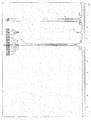
- FIG. 1 is a 1 H-NMR chart measured for methyl phosphonic acid dimethyl ester of the raw material used in Example 1.
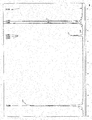
- FIG. 2 is a 1 H-NMR chart measured for the reaction solution after completion of the reaction in Example 1.
- the method for producing an alkylphosphonic acid or aralkylphosphonic acid of the present invention comprises the alkylphosphonic acid alkyl ester or aralkylphosphonic acid alkyl ester represented by the following general formula (1) in the presence of a non-volatile acid at 120 to 200 ° C.
- This is a method of producing an alkylphosphonic acid or aralkylphosphonic acid represented by the following general formula (2) in the step (A) of hydrolyzing water dropwise while maintaining the temperature range of
- R 1 in the general formulas (1) and (2) is a substituted or unsubstituted alkyl group having 1 to 20 carbon atoms, or a substituted or unsubstituted alkyl group having 7 or more carbon atoms And an aralkyl group of -20.
- the unsubstituted alkyl group having 1 to 20 carbon atoms includes methyl, ethyl, n-propyl, isopropyl, n-butyl, isobutyl, sec-butyl, tert-butyl, n-pentyl, isopentyl, neopentyl, tert-amyl 1,2-dimethylpropyl, n-hexyl, cyclohexyl, 1,3-dimethylbutyl, 1-isopropylpropyl, 1,2-dimethylbutyl, n-heptyl, 2-heptyl, 1,4-dimethylpentyl, tert- Heptyl, 2-methyl-1-isopropylpropyl, 1-ethyl-3-methylbutyl, n-octyl, tert-octyl, 2-ethylhexyl, 2-methylhexyl, 2-propylhexy
- the substituent which these alkyl groups have is an inactive group which does not react with non-volatile acids, such as a sulfuric acid mentioned later.
- Preferred examples of the substituent include an alkoxy group, a halogen atom, a formyl group, an acyl group, a carboxyl group, a cyano group, a nitro group and a sulfone group.
- examples of the unsubstituted aralkyl group having 7 to 20 carbon atoms include benzyl, phenethyl, 2-phenylpropan-2-yl, styryl, cinnamyl, diphenylmethyl and triphenyl. And phenylmethyl and the like. It is preferable that the substituent which these aralkyl groups have is an inactive group which does not react with non-volatile acids, such as a sulfuric acid mentioned later.
- R 1 is preferably an alkyl group having 1 to 20 carbon atoms, and particularly preferably a methyl group.
- R 2 and R 3 in the general formula (1) are each independently an alkyl group having 1 to 8 carbon atoms or a hydrogen atom, and at least one of R 2 and R 3 has 1 to 8 carbon atoms.
- Is an alkyl group of Examples of the alkyl group having 1 to 8 carbon atoms include methyl, ethyl, propyl, isopropyl, cyclopropyl, butyl, sec-butyl, tert-butyl, isobutyl, amyl, isoamyl, tert-amyl, cyclopentyl, hexyl, 2 -Hexyl, 3-hexyl, cyclohexyl, bicyclohexyl, 1-methylcyclohexyl, heptyl, 2-heptyl, 3-heptyl, isoheptyl, tert-heptyl, n-octyl, isooctyl, tert-o
- a non-volatile acid is used as a catalyst for the hydrolysis reaction of the alkylphosphonic acid alkyl ester or the aralkylphosphonic acid alkyl ester represented by the general formula (1). Since this non-volatile acid does not flow out of the reaction system during the hydrolysis reaction and remains in the reaction system, it is economical since there is no need to replenish it during the reaction.
- non-volatile acids examples include sulfuric acid, heteropoly acids, p-toluene sulfonic acids, phosphoric acids and polyphosphoric acids.
- sulfuric acid or a heteropoly acid
- heteropoly acid it is particularly preferable to use a sulfuric acid or a heteropoly acid, and further from the viewpoint of shortening the reaction time, it is preferable to use a heteropoly acid.
- a heteropoly acid is an acid generated by two or more metals among poly acids formed by bonding with an inorganic acid, and generally, mainly one metal (or hetero atom), oxygen, etc. Is a generic term for acids formed by coordination of other metals (poly atoms) via
- a hetero atom boron, aluminum, silicon, phosphorus, titanium, germanium, arsenic, zirconium, tin, tellurium and the like can be exemplified.
- molybdenum, tungsten, panadium, niobium, etc. can be illustrated.
- molybdophosphoric acid molybdosilicic acid, molybdoarbic acid, molybdotelluric acid, molybdoaluminic acid, tungstosilicic acid, tungstophosphoric acid, tungstoric acid, tungstotitanic acid, tungstostanoic acid, etc.
- molybdic acid, Molybdosilicic acid, tungstophosphoric acid, tungstosilicic acid and the like are preferably used.
- These heteropoly acids may be used in the form of hydrates.
- the amount of the non-volatile acid used is sufficient if it is 0.5 to 10.0 parts by mass with respect to 100 parts by mass of the alkyl phosphonic acid alkyl ester or the aralkyl phosphonic acid alkyl ester represented by the general formula (1). Although a catalytic effect can be exhibited, it is particularly preferably 1.0 to 7.5 parts by mass, and more preferably 1.2 to 5.0 parts by mass. Even if the amount of the non-volatile acid used is 10.0 parts by mass or more, the catalytic effect is not improved, so the cost is rather high.
- the hydrolysis reaction of step (A) is carried out by dropping water into the reaction solution.
- the reaction temperature is preferably 130 to 170 ° C., and more preferably 140 to 160 ° C.
- the step (A) can be carried out under normal pressure, under pressure, or under reduced pressure, but it is preferable to carry out under normal pressure from the viewpoint that the reaction can be carried out with simple equipment.
- the temperature of water to be dropped may be a liquid state that can be used in a simple dropping facility, and water at room temperature may be used because it is not necessary to perform a process such as heating.
- the dropping rate of water may be suitably dropped at such a rate that the temperature range of the reaction liquid can be maintained at 120 to 200 ° C., preferably 130 to 170 ° C., more preferably 140 to 160 ° C. Water is added dropwise until the hydrolysis reaction is complete.
- the time of the hydrolysis reaction in the step (A) of the present invention is appropriately set according to the reaction temperature and the type and amount of the substrate.
- confirmation of the end point of the hydrolysis reaction can be made by confirming the disappearance of the alkylphosphonic acid alkyl ester or aralkylphosphonic acid alkyl ester represented by the general formula (1), the alkylphosphonic acid or the aralkylphosphonic acid of the general formula (2) Either a method of confirming the amount of acid generated or a method of confirming the amount of alcohol generated by the hydrolysis reaction may be used.
- the produced alcohol is discharged out of the system for recovery while continuing the hydrolysis reaction.
- the by-product alcohol can be azeotroped with the dropped water and discharged out of the system, it is not necessary to separately perform the hydrolysis step and the alcohol recovery step, and the number of steps is small. Industrially advantageous.
- the alkylphosphonic acid or aralkylphosphonic acid of the general formula (2) obtained in the step (A) of the present invention may be recrystallized or adsorbed by using an ion exchange resin, an adsorbent, etc.
- purification may be carried out, amine salts and metal salts of alkylphosphonic acids or aralkylphosphonic acids can usually be produced without undergoing purification steps.
- the method for producing the alkylphosphonic acid amine salt or the aralkylphosphonic acid amine salt comprises the step (B) of adding an amine corresponding to the desired amine salt in the reaction vessel after the completion of the step (A).
- the amine may be added in accordance with the molar amount of alkylphosphonic acid or aralkylphosphonic acid in the reaction system, but may be added in excess and the residual may be removed after the reaction is completed.
- the addition amount of the amine by adjusting the addition amount of the amine, the alkylphosphonic acid amine salt or the aralkylphosphonic acid amine salt can be obtained not only as a normal salt but also as an acid salt.
- an amine when an amine is added, not only can the non-volatile acid used as the catalyst be deactivated, but it becomes a salt, so removal becomes easy.
- amine used in step (B) examples include ammonia, melamine, acetoguanamine, benzoguanamine, acrylic guanamine, 2,4-diamino-6-nonyl-1,3,5-triazine, 2,4-diamino-6- 6 Hydroxy-1,3,5-triazine, 2-amino-4,6-dihydroxy-1,3,5-triazine, 2,4-diamino-6-methoxy-1,3,5-triazine, 2,4 -Diamino-6-ethoxy-1,3,5-triazine, 2,4-diamino-6-propoxy-1,3,5-triazine, 2,4-diamino-6-isopropoxy-1,3,5- Triazine, 2,4-diamino-6-mercapto-1,3,5-triazine, 2-amino-4,6-dimercapto-1,3,5-triazine, N, N, N ', N'-
- the temperature at which the amine is added is not particularly limited, but is preferably a temperature equal to or lower than the boiling point of the amine to be added.
- the alkylphosphonic acid amine salt or aralkylphosphonic acid amine salt may be purified by recrystallization, solvent extraction, adsorption treatment using an adsorbent, or the like.
- a hydroxide of an alkali metal corresponding to the desired alkali metal salt is contained in a reaction vessel. It has the process (C) to add.
- the alkali metal hydroxide used in the step (C) include lithium hydroxide, sodium hydroxide, potassium hydroxide, rubidium hydroxide, cesium hydroxide and the like. When these are used, the corresponding alkyl phosphonic acid alkali metal salts or aralkyl phosphonic acid alkali metal salts can be obtained.
- the alkali metal hydroxide may be added according to the molar amount of alkylphosphonic acid or aralkylphosphonic acid in the reaction system, but after adding and reacting in excess, the remaining portion may be removed.
- the temperature at which the alkali metal hydroxide is added is not particularly limited, and may be set as appropriate.
- the alkyl phosphonic acid alkali metal salt or the aralkyl phosphonic acid alkali metal salt can be obtained as either a normal salt or an acid salt by adjusting the amount of addition of the alkali metal hydroxide.
- the obtained alkylphosphonic acid alkali metal salt or aralkylphosphonic acid alkali metal salt may be purified by recrystallization, solvent extraction, adsorption treatment using an adsorbent, or the like.
- the metal chloride may be added after the completion of the step (C), or after the completion of the step (C), it may be added after purifying the obtained alkali metal salt of alkylphosphonic acid or alkali metal salt of aralkylphosphonic acid. May be
- the alkyl phosphonic acid alkali metal salt or the aralkyl phosphonic acid alkali metal salt used in the step (D) is preferably a sodium salt from the viewpoint of reaction efficiency, cost of raw materials, and the like.
- Examples of metal chlorides added in the step (D) include zinc chloride, aluminum chloride, magnesium chloride, calcium chloride, zirconium chloride and the like. By using these metal chlorides, it is possible to obtain the corresponding metal salts of alkylphosphonic acids or metal salts of aralkylphosphonic acids.
- the temperature at which the metal chloride is added in the present invention is not particularly limited, and can be set as appropriate. Metal chloride is added, and removal of alkali metal salt by-produced is followed by further recrystallization, solvent extraction, adsorption treatment using an adsorbent, etc., metal salt of alkyl phosphonic acid or metal of aralkyl phosphonic acid obtained. The salt may be purified.
- Comparative Example 1 254.14 g (2.05 mol) of methylphosphonic acid dimethyl ester and 4.28 g of 35% hydrochloric acid were placed in a three-necked flask fitted with a Dimroth condenser and reacted at 80 ° C. with stirring under a nitrogen atmosphere . However, the reaction was not complete even after refluxing for 15 hours.
- alkylphosphonic acid or aralkylphosphonic acid, or alkylphosphonic acid salt or aralkylphosphonic acid salt can be easily produced, production of flame retardants and metal extractants used for various resins, paints, etc., in particular It is useful for manufacture of the flame retardant used for a synthetic resin.
Landscapes
- Chemical & Material Sciences (AREA)
- Organic Chemistry (AREA)
- Health & Medical Sciences (AREA)
- Life Sciences & Earth Sciences (AREA)
- Biochemistry (AREA)
- General Health & Medical Sciences (AREA)
- Molecular Biology (AREA)
- Low-Molecular Organic Synthesis Reactions Using Catalysts (AREA)
Abstract
下記一般式(1)で表されるアルキルホスホン酸アルキルエステル又はアラルキルホスホン酸アルキルエステルを、不揮発性の酸の存在下で、120~200℃の温度範囲に保持しながら水を滴下して加水分解反応させる工程(A)を有することを特徴とする、下記一般式(2)で表されるアルキルホスホン酸又はアラルキルホスホン酸の製造方法;前記工程(A)に続き、アミン又はアルカリ金属水酸化物を添加する工程(B)又は(C)を有することを特徴とする、アルキルホスホン酸アミン塩又はアラルキルホスホン酸アミン塩、若しくは、アルキルホスホン酸アルカリ金属塩又はアラルキルホスホン酸アルカリ金属塩の製造方法;及び、前記工程(C)に続き、アルカリ金属以外の金属塩化物を添加して、塩交換反応させる工程(D)を有することを特徴とする、アルキルホスホン酸金属塩又はアラルキルホスホン酸金属塩の製造方法。 但し、一般式(1)及び(2)中のR1は、置換基を有するか又は非置換の炭素原子数1~20のアルキル基、若しくは、置換基を有するか又は非置換の炭素原子数7~20のアラルキル基であり、R2及びR3は、各々独立して、炭素原子数1~8のアルキル基又は水素原子であって、R2及びR3の少なくとも一方は、前記炭素原子数1~8のアルキル基である。
Description
本発明は、アルキルホスホン酸、アラルキルホスホン酸及びこれらの塩の製造方法に関し、特に、アルキルホスホン酸、アラルキルホスホン酸、並びに、それらのアミン塩及び金属塩を、特殊な設備を使用することなく製造することを可能にする製造方法に関する。
アルキルホスホン酸及びアラルキルホスホン酸、これらのアミン塩及び金属塩は、難燃剤や金属抽出剤等に広く用いられているので、安価に供給されることが望まれている。
アルキルホスホン酸及びアラルキルホスホン酸の製造方法の例として、ベンジルホスホン酸ジエチルを塩酸で加水分解してベンジルホスホン酸を製造する方法が提案されている(特許文献1)。しかしながら、この方法では、濃塩酸を用いるため、これに耐え得る特殊な反応設備が必要になる。更に、副生物として低沸点のエチルクロライドが発生するため、反応中に温度が低下して製造の効率が低下したり、エチルクロライドの回収のために特別な冷却設備が必要となったりするという問題点があるので、この製造方法は実用的ではない。
アルキルホスホン酸及びアラルキルホスホン酸の製造方法の例として、ベンジルホスホン酸ジエチルを塩酸で加水分解してベンジルホスホン酸を製造する方法が提案されている(特許文献1)。しかしながら、この方法では、濃塩酸を用いるため、これに耐え得る特殊な反応設備が必要になる。更に、副生物として低沸点のエチルクロライドが発生するため、反応中に温度が低下して製造の効率が低下したり、エチルクロライドの回収のために特別な冷却設備が必要となったりするという問題点があるので、この製造方法は実用的ではない。
また、アルキルホスホン酸エステル又はアラルキルホスホン酸エステルを、不揮発性の酸の存在下、100℃以上で水蒸気ガスを吹き込んで加水分解し、アルキルホスホン酸又はアラルキルホスホン酸を製造する方法が提案されている(特許文献2)。しかしながら、この方法では、水蒸気ガスを必要とするため、特殊な設備が必要となるという問題があった。
更に、この製造方法によって得られたアルキルホスホン酸等からアルキルホスホン酸塩等を製造する場合には、アルキルホスホン酸等を精製しなければならないので、製造工程が煩雑となり、効率的ではない。
更に、この製造方法によって得られたアルキルホスホン酸等からアルキルホスホン酸塩等を製造する場合には、アルキルホスホン酸等を精製しなければならないので、製造工程が煩雑となり、効率的ではない。
従って本発明の第1の目的は、アルキルホスホン酸又はアラルキルホスホン酸を、簡易な化学反応設備を用い、工業的に効率よく製造する方法を提供することにある。
本発明の第2の目的は、簡便且つ工業的に、アルキルホスホン酸又はアラルキルホスホン酸の塩を効率よく製造する方法を提供することにある。
本発明の第2の目的は、簡便且つ工業的に、アルキルホスホン酸又はアラルキルホスホン酸の塩を効率よく製造する方法を提供することにある。
本発明者らは、上記の諸目的を達成すべく鋭意検討した結果、(1)不揮発性の酸の存在下で、アルキルホスホン酸アルキルエステル又はアラルキルホスホン酸アルキルエステルを一定の温度範囲に保持しながら水を滴下して加水分解反応させることにより、容易に高純度のアルキルホスホン酸又はアラルキルホスホン酸を得ることができること、(2)得られたアルキルホスホン酸又はアラルキルホスホン酸を原料として用いた場合には、特に精製工程を必要とすることなく、それらのアミン塩やアルカリ金属塩を製造することができること、及び、(3)得られたアルカリ金属塩とアルカリ金属以外の金属塩化物を塩交換反応させることにより、アルカリ金属以外の金属について、アルキルホスホン酸又はアラルキルホスホン酸との金属塩を容易に得ることができることを見出し、本発明に到達した。
即ち本発明は、下記一般式(1)で表されるアルキルホスホン酸アルキルエステル又はアラルキルホスホン酸アルキルエステルを、不揮発性の酸の存在下で、120~200℃の温度範囲に保持しながら水を滴下して加水分解反応させる工程(A)を有することを特徴とする、下記一般式(2)で表されるアルキルホスホン酸又はアラルキルホスホン酸の製造方法;前記工程(A)の後に、前記一般式(2)で表されるアルキルホスホン酸又はアラルキルホスホン酸を精製することなく、アミンを添加する工程(B)を有することを特徴とするアルキルホスホン酸アミン塩又はアラルキルホスホン酸アミン塩の製造方法;前記工程(A)の後に、前記一般式(2)で表されるアルキルホスホン酸又はアラルキルホスホン酸を精製することなく、アルカリ金属の水酸化物を添加する工程(C)を有することを特徴とする、アルキルホスホン酸アルカリ金属塩又はアラルキルホスホン酸アルカリ金属塩の製造方法、並びに、前記工程(C)の後に、アルカリ金属以外の金属塩化物を添加して、塩交換反応させる工程(D)を有することを特徴とする、アルキルホスホン酸金属塩又はアラルキルホスホン酸金属塩の製造方法である。
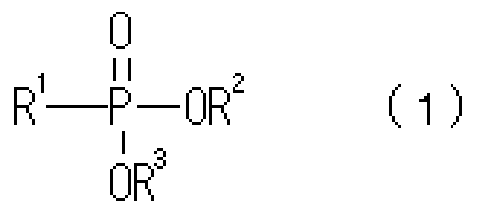
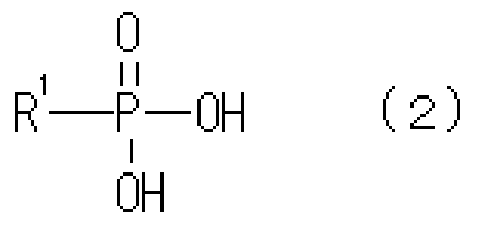 一般式(1)及び(2)中のR1は、置換基を有する又は非置換の炭素原子数1~20のアルキル基、若しくは、置換基を有する又は非置換の炭素原子数7~20のアラルキル基であり、R2及びR3は、各々独立して、炭素原子数1~8のアルキル基又は水素原子であって、少なくともR2及びR3の一方は前記炭素原子数1~8のアルキル基である。
本発明で使用する前記不揮発性の酸は、硫酸又はヘテロポリ酸であることが好ましい。
本発明で使用する前記不揮発性の酸は、硫酸又はヘテロポリ酸であることが好ましい。
本発明によれば、簡易な化学反応設備で、アルキルホスホン酸及びその塩、並びにアラルキルホスホン酸及びその塩を、工業的に効率よく製造することができる。
以下本発明について詳述する。
本発明のアルキルホスホン酸又はアラルキルホスホン酸の製造方法は、下記一般式(1)で表されるアルキルホスホン酸アルキルエステル又はアラルキルホスホン酸アルキルエステルを、不揮発性の酸の存在下、120~200℃の温度範囲に保持しながら、水を滴下して加水分解反応させる工程(A)により、下記一般式(2)で表されるアルキルホスホン酸又はアラルキルホスホン酸を生成させる方法である。

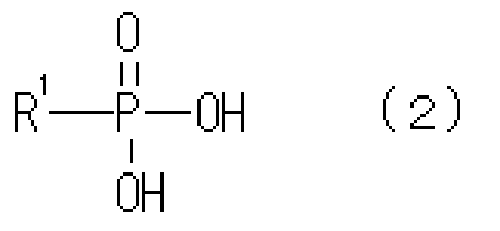
本発明のアルキルホスホン酸又はアラルキルホスホン酸の製造方法は、下記一般式(1)で表されるアルキルホスホン酸アルキルエステル又はアラルキルホスホン酸アルキルエステルを、不揮発性の酸の存在下、120~200℃の温度範囲に保持しながら、水を滴下して加水分解反応させる工程(A)により、下記一般式(2)で表されるアルキルホスホン酸又はアラルキルホスホン酸を生成させる方法である。
前記一般式(1)及び(2)中のR1は、置換基を有するか又は非置換の炭素原子数1~20のアルキル基、若しくは、置換基を有するか又は非置換の炭素原子数7~20のアラルキル基である。
非置換の炭素原子数1~20のアルキル基としては、メチル、エチル、n-プロピル、イソプロピル、n-ブチル、イソブチル、sec-ブチル、tert-ブチル、n-ペンチル、イソペンチル、ネオペンチル、tert-アミル、1,2-ジメチルプロピル、n-ヘキシル、シクロヘキシル、1,3-ジメチルブチル、1-イソプロピルプロピル、1,2-ジメチルブチル、n-ヘプチル、2-ヘプチル、1,4-ジメチルペンチル、tert-ヘプチル、2-メチル-1-イソプロピルプロピル、1-エチル-3-メチルブチル、n-オクチル、tert-オクチル、2-エチルヘキシル、2-メチルヘキシル、2-プロピルヘキシル、n-ノニル、イソノニル、n-デシル、イソデシル、n-ウンデシル、イソウンデシル、n-ドデシル、イソドデシル、n-トリデシル、イソトリデシル、n-テトラデシル、イソテトラデシル、n-ペンタデシル、イソペンタデシル、n-ヘキサデシル、イソヘキサデシル、n-ヘプタデシル、イソヘプタデシル、n-オクタデシル、イソオクタデシル、n-ノナデシル、イソノナデシル、n-イコシル、イソイコシル、シクロペンチル、シクロヘキシル、シクロオクチル、シクロドデシル、4-メチルシクロヘキシル等が挙げられる。
これらのアルキル基が有する置換基は、後述する硫酸等の不揮発性の酸に対して反応しない不活性の基であることが好ましい。好ましい置換基としては、例えばアルコキシ基、ハロゲン原子、ホルミル基、アシル基、カルボキシル基、シアノ基、ニトロ基、スルホン基等が挙げられる。
非置換の炭素原子数1~20のアルキル基としては、メチル、エチル、n-プロピル、イソプロピル、n-ブチル、イソブチル、sec-ブチル、tert-ブチル、n-ペンチル、イソペンチル、ネオペンチル、tert-アミル、1,2-ジメチルプロピル、n-ヘキシル、シクロヘキシル、1,3-ジメチルブチル、1-イソプロピルプロピル、1,2-ジメチルブチル、n-ヘプチル、2-ヘプチル、1,4-ジメチルペンチル、tert-ヘプチル、2-メチル-1-イソプロピルプロピル、1-エチル-3-メチルブチル、n-オクチル、tert-オクチル、2-エチルヘキシル、2-メチルヘキシル、2-プロピルヘキシル、n-ノニル、イソノニル、n-デシル、イソデシル、n-ウンデシル、イソウンデシル、n-ドデシル、イソドデシル、n-トリデシル、イソトリデシル、n-テトラデシル、イソテトラデシル、n-ペンタデシル、イソペンタデシル、n-ヘキサデシル、イソヘキサデシル、n-ヘプタデシル、イソヘプタデシル、n-オクタデシル、イソオクタデシル、n-ノナデシル、イソノナデシル、n-イコシル、イソイコシル、シクロペンチル、シクロヘキシル、シクロオクチル、シクロドデシル、4-メチルシクロヘキシル等が挙げられる。
これらのアルキル基が有する置換基は、後述する硫酸等の不揮発性の酸に対して反応しない不活性の基であることが好ましい。好ましい置換基としては、例えばアルコキシ基、ハロゲン原子、ホルミル基、アシル基、カルボキシル基、シアノ基、ニトロ基、スルホン基等が挙げられる。
また、炭素原子数7~20の非置換のアラルキル基(アリール基で置換されたアルキル基)の例としては、ベンジル、フェネチル、2-フェニルプロパン-2-イル、スチリル、シンナミル、ジフェニルメチル、トリフェニルメチル等が挙げられる。
これらのアラルキル基が有する置換基は、後述する硫酸等の不揮発性の酸に対して反応しない不活性の基であることが好ましい。好ましい置換基としては、例えば、アルキル基、アルコキシ基、ハロゲン原子、ホルミル基、アシル基、カルボキシル基、シアノ基、ニトロ基、スルホン基等が挙げられる。
本発明においては、反応効率の観点から、R1は炭素原子数1~20のアルキル基であることが好ましく、特にメチル基であることが好ましい。
これらのアラルキル基が有する置換基は、後述する硫酸等の不揮発性の酸に対して反応しない不活性の基であることが好ましい。好ましい置換基としては、例えば、アルキル基、アルコキシ基、ハロゲン原子、ホルミル基、アシル基、カルボキシル基、シアノ基、ニトロ基、スルホン基等が挙げられる。
本発明においては、反応効率の観点から、R1は炭素原子数1~20のアルキル基であることが好ましく、特にメチル基であることが好ましい。
一般式(1)におけるR2及びR3は、各々独立して、炭素原子数1~8のアルキル基又は水素原子であって、R2及びR3の少なくとも一方は前記炭素原子数1~8のアルキル基である。
炭素原子数1~8のアルキル基の例としては、メチル、エチル、プロピル、イソプロピル、シクロプロピル、ブチル、sec-ブチル、tert-ブチル、イソブチル、アミル、イソアミル、tert-アミル、シクロペンチル、ヘキシル、2-ヘキシル、3-ヘキシル、シクロヘキシル、ビシクロヘキシル、1-メチルシクロヘキシル、ヘプチル、2-ヘプチル、3-ヘプチル、イソヘプチル、tert-ヘプチル、n-オクチル、イソオクチル、tert-オクチル、2-エチルヘキシル基等が挙げられる。
本発明においては、上記R2及びR3がメチル基であることが好ましい。これは、副生したメタノールが水と共沸するので、容易に系外へ除去することができ、系外へ除去することによって、反応の効率が良好となるからである。
炭素原子数1~8のアルキル基の例としては、メチル、エチル、プロピル、イソプロピル、シクロプロピル、ブチル、sec-ブチル、tert-ブチル、イソブチル、アミル、イソアミル、tert-アミル、シクロペンチル、ヘキシル、2-ヘキシル、3-ヘキシル、シクロヘキシル、ビシクロヘキシル、1-メチルシクロヘキシル、ヘプチル、2-ヘプチル、3-ヘプチル、イソヘプチル、tert-ヘプチル、n-オクチル、イソオクチル、tert-オクチル、2-エチルヘキシル基等が挙げられる。
本発明においては、上記R2及びR3がメチル基であることが好ましい。これは、副生したメタノールが水と共沸するので、容易に系外へ除去することができ、系外へ除去することによって、反応の効率が良好となるからである。
前記工程(A)では、一般式(1)で表されるアルキルホスホン酸アルキルエステル又はアラルキルホスホン酸アルキルエステルの加水分解反応の触媒として不揮発性の酸を使用する。この不揮発性の酸は、加水分解反応中に反応系外に流出せず、反応系内に留まるため、反応中に補充する必要がなく経済的である。
不揮発性の酸としては、例えば、硫酸、ヘテロポリ酸、p-トルエンスルホン酸、リン酸、ポリリン酸等が挙げられる。本発明においては、特に、硫酸又はヘテロポリ酸を使用することが好ましく、更に、反応時間を短縮するという観点から、ヘテロポリ酸を使用することが好ましい。
ヘテロポリ酸とは、無機酸と結合してできるポリ酸のうち、2種以上の金属によって生成される酸をいい、一般的には1種の金属(又はヘテロ原子)を中心として、それに酸素等を介して他の金属(ポリ原子)が配位して形成された酸の総称である。ここで、ヘテロ原子としては、ホウ素、アルミニウム、ケイ素、リン、チタン、ゲルマニウム、ヒ素、ジルコニウム、スズ、テルル等を例示することができる。また、ポリ原子としてはモリブデン、タングステン、パナジウム又はニオブ等を例示することができる。具体的には、モリブドリン酸、モリブドケイ酸、モリブドヒ酸、モリブドテルル酸、モリブドアルミン酸、タングストケイ酸、タングストリン酸、タングストホウ酸、タングストチタン酸、タングストスズ酸等であり、これらのなかでもモリブドリン酸、モリブドケイ酸、タングストリン酸、タングストケイ酸等が好ましく用いられる。
なお、これらのヘテロポリ酸は、水和物の形で用いてもよい。
なお、これらのヘテロポリ酸は、水和物の形で用いてもよい。
不揮発性の酸の使用量は、前記一般式(1)で表されるアルキルホスホン酸アルキルエステル又はアラルキルホスホン酸アルキルエステル100質量部に対して0.5~10.0質量部であれば十分な触媒効果を奏することができるが、特に1.0~7.5質量部であることが好ましく、1.2~5.0質量部あることがより好ましい。
不揮発性の酸の使用量を10.0質量部以上としても、触媒効果は向上しないので、却ってコストが高くなる。
不揮発性の酸の使用量を10.0質量部以上としても、触媒効果は向上しないので、却ってコストが高くなる。
工程(A)の加水分解反応は、反応液中に水を滴下することにより行なう。反応温度を120~200℃に保持することにより、加水分解反応が速やかに進行し、短時間で反応を完結させることができる。また、120~200℃の温度範囲に保持された反応液中に水を滴下しても、突沸等が起こることなく反応が進行する。
前記反応温度は130~170℃であることが好ましく、140~160℃であることがより好ましい。
前記工程(A)は、常圧、加圧下、減圧下のいずれでも行なうことができるが、簡易な設備で反応を行なうことができるという点から、常圧で行なうことが好ましい。
前記反応温度は130~170℃であることが好ましく、140~160℃であることがより好ましい。
前記工程(A)は、常圧、加圧下、減圧下のいずれでも行なうことができるが、簡易な設備で反応を行なうことができるという点から、常圧で行なうことが好ましい。
滴下する水の温度は、簡易な滴下設備を利用できる液体状態であればよく、特に加温等の処理をする必要はないので、室温の水でよい。水の滴下速度は、反応液の温度範囲が120~200℃、好ましくは130~170℃、より好ましくは140~160℃の間に保持できるような速度で、適宜滴下すればよい。水は加水分解反応が完了するまで滴下する。
本発明の工程(A)における加水分解反応の時間は、反応温度及び基質の種類や量により適宜設定される。
本発明の工程(A)における加水分解反応の時間は、反応温度及び基質の種類や量により適宜設定される。
また、加水分解反応の終点の確認は、一般式(1)で表されるアルキルホスホン酸アルキルエステル又はアラルキルホスホン酸アルキルエステルの消失を確認する方法、一般式(2)のアルキルホスホン酸又はアラルキルホスホン酸の生成量を確認する方法、及び、加水分解反応により生成するアルコールの量を確認する方法の何れでもよい。
工程(A)においては、加水分解反応を継続しながら、生成したアルコールを系外に排出して回収する。本発明においては、副成したアルコールを、滴下した水と共沸させて系外に排出することができるので、加水分解工程とアルコールの回収工程とを分けて行なう必要がなく、工程数が少なくなるので工業的に有利である。
工程(A)においては、加水分解反応を継続しながら、生成したアルコールを系外に排出して回収する。本発明においては、副成したアルコールを、滴下した水と共沸させて系外に排出することができるので、加水分解工程とアルコールの回収工程とを分けて行なう必要がなく、工程数が少なくなるので工業的に有利である。
本発明の工程(A)で得られた、前記一般式(2)のアルキルホスホン酸又はアラルキルホスホン酸は、反応終了後に、再結晶、或いはイオン交換樹脂や吸着剤等を使用した吸着処理等によって精製してもよいが、通常は、精製工程を経ずに、アルキルホスホン酸又はアラルキルホスホン酸のアミン塩及び金属塩を製造することができる。
アルキルホスホン酸アミン塩又はアラルキルホスホン酸アミン塩の製造方法は、工程(A)の終了後に、反応容器中に目的とするアミン塩に対応するアミンを添加する工程(B)を有する。
アミンは、反応系中のアルキルホスホン酸又はアラルキルホスホン酸のモル量に合わせて添加してもよいが、過剰に加え、反応が終了した後に、残余分を除去してもよい。
また、アミンの添加量を調整することにより、アルキルホスホン酸アミン塩又はアラルキルホスホン酸アミン塩は、正塩としてのみならず、酸性塩としても得られる。
更に、アミンを加えた場合、触媒として使用された不揮発性の酸を失活させることができるだけでなく、塩となるため除去も容易となる。
アミンは、反応系中のアルキルホスホン酸又はアラルキルホスホン酸のモル量に合わせて添加してもよいが、過剰に加え、反応が終了した後に、残余分を除去してもよい。
また、アミンの添加量を調整することにより、アルキルホスホン酸アミン塩又はアラルキルホスホン酸アミン塩は、正塩としてのみならず、酸性塩としても得られる。
更に、アミンを加えた場合、触媒として使用された不揮発性の酸を失活させることができるだけでなく、塩となるため除去も容易となる。
工程(B)で使用されるアミンとしては、アンモニア、メラミン、アセトグアナミン、ベンゾグアナミン、アクリルグアナミン、2,4-ジアミノ-6-ノニル-1,3,5-トリアジン、2,4-ジアミノ-6-ハイドロキシ-1,3,5-トリアジン、2-アミノ-4,6-ジハイドロキシ-1,3,5-トリアジン、2,4-ジアミノ-6-メトキシ-1,3,5-トリアジン、2,4-ジアミノ-6-エトキシ-1,3,5-トリアジン、2,4-ジアミノ-6-プロポキシ-1,3,5-トリアジン、2,4-ジアミノ-6-イソプロポキシ-1,3,5-トリアジン、2,4-ジアミノ-6-メルカプト-1,3,5-トリアジン、2-アミノ-4,6-ジメルカプト-1,3,5-トリアジン、N,N,N’,N’-テトラメチルジアミノメタン、エチレンジアミン、N,N’-ジメチルエチレンジアミン、N,N’-ジエチルエチレンジアミン、ピロリン酸N,N-ジメチルエチレンジアミン、ピロリン酸N,N-ジエチルエチレンジアミン、ピロリン酸N,N,N’,N’-テトラメチルエチレンジアミン、ピロリン酸1,2-プロパンジアミン、ピロリン酸1,3-プロパンジアミン、ピロリン酸テトラメチレンジアミン、ピロリン酸ペンタメチレンジアミン、ピロリン酸ヘキサメチレンジアミン、ピロリン酸1、7-ジアミノへプタン、ピロリン酸1,8-ジアミノオクタン、ピロリン酸1,9ージアミノノナン、ピロリン酸1,10-ジアミノデカン、ピロリン酸ピペラジン、ピロリン酸trans-2,5-ジメチルピペラジン、ピロリン酸1,4-ビス(2-アミノエチル)ピペラジン、ピロリン酸1,4-ビス(3-アミノプロピル)ピペラジン等が挙げられる。
本発明においては、特に、反応効率の観点から、メラミンを使用することが好ましい。
本発明においては、特に、反応効率の観点から、メラミンを使用することが好ましい。
アミンを添加するときの温度は特に限定されるものではないが、添加するアミンの沸点以下の温度であることが好ましい。
アミン添加後、再結晶、溶媒抽出、吸着剤を使用した吸着処理等によって、得られたアルキルホスホン酸アミン塩又はアラルキルホスホン酸アミン塩を精製してもよい。
アミン添加後、再結晶、溶媒抽出、吸着剤を使用した吸着処理等によって、得られたアルキルホスホン酸アミン塩又はアラルキルホスホン酸アミン塩を精製してもよい。
本発明のアルキルホスホン酸アルカリ金属塩又はアラルキルホスホン酸アルカリ金属塩の製造方法では、前記工程(A)の終了後に、反応容器中に目的とするアルカリ金属塩に対応するアルカリ金属の水酸化物を添加する工程(C)を有する。
工程(C)で使用するアルカリ金属水酸化物としては、水酸化リチウム、水酸化ナトリウム、水酸化カリウム、水酸化ルビジウム、水酸化セシウム等が挙げられる。これらを使用した場合に、対応するアルキルホスホン酸アルカリ金属塩又はアラルキルホスホン酸アルカリ金属塩を得ることができる。
工程(C)で使用するアルカリ金属水酸化物としては、水酸化リチウム、水酸化ナトリウム、水酸化カリウム、水酸化ルビジウム、水酸化セシウム等が挙げられる。これらを使用した場合に、対応するアルキルホスホン酸アルカリ金属塩又はアラルキルホスホン酸アルカリ金属塩を得ることができる。
アルカリ金属水酸化物は、反応系中のアルキルホスホン酸又はアラルキルホスホン酸のモル量に合わせて添加すればよいが、過剰に加えて反応させた後、残余分を除去してもよい。
アルカリ金属水酸化物を添加する温度は特に限定されず、適宜設定すればよい。
また、アルキルホスホン酸アルカリ金属塩又はアラルキルホスホン酸アルカリ金属塩は、アルカリ金属水酸化物の添加量を調整することにより、正塩及び酸性塩のどちらでも得ることができる。
アルカリ金属水酸化物を添加する温度は特に限定されず、適宜設定すればよい。
また、アルキルホスホン酸アルカリ金属塩又はアラルキルホスホン酸アルカリ金属塩は、アルカリ金属水酸化物の添加量を調整することにより、正塩及び酸性塩のどちらでも得ることができる。
また、アルカリ金属水酸化物を加えた場合には、触媒として使用していた不揮発性の酸を失活させることができるだけでなく、塩となるため除去も容易となる。
アルカリ金属水酸化物の添加後、再結晶、溶媒抽出、吸着剤を使用した吸着処理等によって、得られたアルキルホスホン酸アルカリ金属塩又はアラルキルホスホン酸アルカリ金属塩を精製してもよい。
アルカリ金属水酸化物の添加後、再結晶、溶媒抽出、吸着剤を使用した吸着処理等によって、得られたアルキルホスホン酸アルカリ金属塩又はアラルキルホスホン酸アルカリ金属塩を精製してもよい。
本発明のアルキルホスホン酸金属塩又はアラルキルホスホン酸金属塩の製造方法は、前記工程(C)の終了後に、アルカリ金属以外の金属塩化物を反応容器中に添加して、塩交換反応させる工程(D)を有する。上記金属塩化物は、工程(C)の終了後に添加してもよいし、工程(C)の終了後、得られたアルキルホスホン酸アルカリ金属塩又はアラルキルホスホン酸アルカリ金属塩を精製した後に添加してもよい。
工程(D)で使用されるアルキルホスホン酸アルカリ金属塩又はアラルキルホスホン酸アルカリ金属塩は、反応効率や原料の価格等の観点から、ナトリウム塩であることが好ましい。
工程(D)で使用されるアルキルホスホン酸アルカリ金属塩又はアラルキルホスホン酸アルカリ金属塩は、反応効率や原料の価格等の観点から、ナトリウム塩であることが好ましい。
工程(D)で添加する金属塩化物の例としては、塩化亜鉛、塩化アルミニウム、塩化マグネシウム、塩化カルシウム、塩化ジルコニウム等が挙げられる。これらの金属塩化物を用いることにより、対応するアルキルホスホン酸金属塩又はアラルキルホスホン酸金属塩を得ることができる。
本発明における金属塩化物を添加する温度は、特に限定されず、適宜設定することができる。
金属塩化物を添加し、副生したアルカリ金属塩の除去を行なった後、更に再結晶、溶媒抽出、吸着剤を使用した吸着処理等によって、得られたアルキルホスホン酸金属塩又はアラルキルホスホン酸金属塩を精製してもよい。
本発明における金属塩化物を添加する温度は、特に限定されず、適宜設定することができる。
金属塩化物を添加し、副生したアルカリ金属塩の除去を行なった後、更に再結晶、溶媒抽出、吸着剤を使用した吸着処理等によって、得られたアルキルホスホン酸金属塩又はアラルキルホスホン酸金属塩を精製してもよい。
以下、本発明を実施例により更に具体的に説明するが、本発明はこれらの実施例によって限定されるものではない。
〔メチルホスホン酸の製造〕
メチルホスホン酸ジメチルエステル254.14g(2.05mol)及び硫酸4.11gを、分水器とジムロート冷却器の付いた三つ口フラスコ中に入れ、窒素雰囲気下で撹拌しながら、150℃に昇温した。
150℃に昇温した後、145~155℃の温度範囲を維持しながら25℃の水を滴下し、加水分解反応を行なった。
反応液をサンプリングし、1H-NMRの測定(溶媒は、DMSO-d6)を行った。1H-NMRのピークから、原料のメチルホスホン酸ジメチルエステルの消失と目的物のメチルホスホン酸の生成を確認し、加水分解反応の終点を決定した。原料及び反応終了後の反応液について測定した1H-NMRの結果を、それぞれ図1及び図2に示した。反応開始後10時間でメチルホスホン酸ジメチルエステル固有のピークが消失したことから反応率が100%となったことを確認し、メチルホスホン酸を得た。
メチルホスホン酸ジメチルエステル254.14g(2.05mol)及び硫酸4.11gを、分水器とジムロート冷却器の付いた三つ口フラスコ中に入れ、窒素雰囲気下で撹拌しながら、150℃に昇温した。
150℃に昇温した後、145~155℃の温度範囲を維持しながら25℃の水を滴下し、加水分解反応を行なった。
反応液をサンプリングし、1H-NMRの測定(溶媒は、DMSO-d6)を行った。1H-NMRのピークから、原料のメチルホスホン酸ジメチルエステルの消失と目的物のメチルホスホン酸の生成を確認し、加水分解反応の終点を決定した。原料及び反応終了後の反応液について測定した1H-NMRの結果を、それぞれ図1及び図2に示した。反応開始後10時間でメチルホスホン酸ジメチルエステル固有のピークが消失したことから反応率が100%となったことを確認し、メチルホスホン酸を得た。
〔メチルホスホン酸メラミン塩の製造〕
実施例1の加水分解反応を完了させた後、フラスコ内を撹拌しながら、25℃でメラミン273.88g(2.17mol)を添加した。次いで、80℃で4時間攪拌し、生成した白色固体を濾過した後、蒸留水で洗浄して精製し、白色固体のメチルホスホン酸メラミン塩289.43gを得た。
実施例1の加水分解反応を完了させた後、フラスコ内を撹拌しながら、25℃でメラミン273.88g(2.17mol)を添加した。次いで、80℃で4時間攪拌し、生成した白色固体を濾過した後、蒸留水で洗浄して精製し、白色固体のメチルホスホン酸メラミン塩289.43gを得た。
〔メチルホスホン酸ナトリウム塩の製造〕
実施例1で行った加水分解反応を完了させた後、フラスコ内を撹拌しながら、25℃で水酸化ナトリウム165.02g(4.13mol)を添加し、メチルホスホン酸ナトリウム塩を製造した。
実施例1で行った加水分解反応を完了させた後、フラスコ内を撹拌しながら、25℃で水酸化ナトリウム165.02g(4.13mol)を添加し、メチルホスホン酸ナトリウム塩を製造した。
〔メチルホスホン酸亜鉛塩の製造〕
実施例3の工程が終了した後、フラスコ内を撹拌しながら、25℃で塩化亜鉛279.51g(2.05mol)を添加した。次いで、生成した白色固体を濾過した後、蒸留水で洗浄して精製し、白色固体のメチルホスホン酸亜鉛塩320.00gを得た。
実施例3の工程が終了した後、フラスコ内を撹拌しながら、25℃で塩化亜鉛279.51g(2.05mol)を添加した。次いで、生成した白色固体を濾過した後、蒸留水で洗浄して精製し、白色固体のメチルホスホン酸亜鉛塩320.00gを得た。
〔メチルホスホン酸アルミニウム塩の製造〕
実施例3の工程が終了した後、フラスコ内を撹拌しながら、25℃で塩化アルミニウム273.35g(2.05mol)を添加した。次いで、生成した白色固体を濾過した後、蒸留水で洗浄して精製し、白色固体のメチルホスホン酸アルミニウム塩130gを得た。
実施例3の工程が終了した後、フラスコ内を撹拌しながら、25℃で塩化アルミニウム273.35g(2.05mol)を添加した。次いで、生成した白色固体を濾過した後、蒸留水で洗浄して精製し、白色固体のメチルホスホン酸アルミニウム塩130gを得た。
〔メチルホスホン酸の製造〕
メチルホスホン酸ジメチルエステル247.94g(2.00mol)及びタングストケイ酸3.72g(メチルホスホン酸ジメチルの1.5質量%)を、分水器とジムロート冷却器の付いた三つ口フラスコ中に入れ、窒素雰囲気下で撹拌しながら、150℃に昇温した。
150℃に昇温した後、145~155℃の温度範囲を維持しながら、加水分解反応が完結するまで25℃の水を滴下した。
加水分解反応の終点は、実施例1の場合と同様に反応液をサンプリングし、1H-NMRの測定(溶媒DMSO-d6)を行い、そのピークから、原料のメチルホスホン酸ジメチルエステルの消失と目的物のメチルホスホン酸の生成を確認することによって決定した。反応開始後9時間経過後に、メチルホスホン酸ジメチルエステル固有のピークが消失したことから反応率が100%であることを確認し、メチルホスホン酸を得た。
メチルホスホン酸ジメチルエステル247.94g(2.00mol)及びタングストケイ酸3.72g(メチルホスホン酸ジメチルの1.5質量%)を、分水器とジムロート冷却器の付いた三つ口フラスコ中に入れ、窒素雰囲気下で撹拌しながら、150℃に昇温した。
150℃に昇温した後、145~155℃の温度範囲を維持しながら、加水分解反応が完結するまで25℃の水を滴下した。
加水分解反応の終点は、実施例1の場合と同様に反応液をサンプリングし、1H-NMRの測定(溶媒DMSO-d6)を行い、そのピークから、原料のメチルホスホン酸ジメチルエステルの消失と目的物のメチルホスホン酸の生成を確認することによって決定した。反応開始後9時間経過後に、メチルホスホン酸ジメチルエステル固有のピークが消失したことから反応率が100%であることを確認し、メチルホスホン酸を得た。
〔メチルホスホン酸メラミン塩の製造〕
実施例6の加水分解反応が完了した後、フラスコ内を撹拌しながら、25℃でメラミン273.88g(2.17mol)を添加し、80℃で4時間攪拌した。生成した白色固体を濾過した後、蒸留水で洗浄して精製し、白色固体のメチルホスホン酸メラミン塩295.44gを得た。
実施例6の加水分解反応が完了した後、フラスコ内を撹拌しながら、25℃でメラミン273.88g(2.17mol)を添加し、80℃で4時間攪拌した。生成した白色固体を濾過した後、蒸留水で洗浄して精製し、白色固体のメチルホスホン酸メラミン塩295.44gを得た。
〔メチルホスホン酸ナトリウム塩の製造〕
実施例6の加水分解反応が完了した後、フラスコ内を撹拌しながら、25℃で水酸化ナトリウム160.08g(4.02mol)を添加し、メチルホスホン酸ナトリウム塩を得た。
実施例6の加水分解反応が完了した後、フラスコ内を撹拌しながら、25℃で水酸化ナトリウム160.08g(4.02mol)を添加し、メチルホスホン酸ナトリウム塩を得た。
〔メチルホスホン酸亜鉛塩の製造〕
実施例8の工程後、フラスコ内を撹拌しながら、25℃で塩化亜鉛280.82g(2.06mol)を添加した。生成した白色固体を濾過した後、蒸留水で洗浄して精製し、白色固体のメチルホスホン酸亜鉛塩320.72gを得た。
実施例8の工程後、フラスコ内を撹拌しながら、25℃で塩化亜鉛280.82g(2.06mol)を添加した。生成した白色固体を濾過した後、蒸留水で洗浄して精製し、白色固体のメチルホスホン酸亜鉛塩320.72gを得た。
[比較例1]
メチルホスホン酸ジメチルエステル254.14g(2.05mol)及び35%の塩酸4.28gを、ジムロート冷却器の付いた三つ口フラスコ中に入れ、窒素雰囲気下で撹拌しながら、80℃で反応させた。しかしながら、15時間還流させても反応が完結しなかった。
メチルホスホン酸ジメチルエステル254.14g(2.05mol)及び35%の塩酸4.28gを、ジムロート冷却器の付いた三つ口フラスコ中に入れ、窒素雰囲気下で撹拌しながら、80℃で反応させた。しかしながら、15時間還流させても反応が完結しなかった。
本発明は、アルキルホスホン酸又はアラルキルホスホン酸、若しくはアルキルホスホン酸塩又はアラルキルホスホン酸塩を簡易に製造することができるため、各種樹脂、塗料等に用いる難燃剤や金属抽出剤等の製造、特に合成樹脂に用いる難燃剤の製造に有用である。
Claims (5)
- 下記一般式(1)で表されるアルキルホスホン酸アルキルエステル又はアラルキルホスホン酸アルキルエステルを、不揮発性の酸の存在下で、120~200℃の温度範囲に保持しながら、水を滴下して加水分解反応させる工程(A)を有することを特徴とする、下記一般式(2)で表されるアルキルホスホン酸又はアラルキルホスホン酸の製造方法;
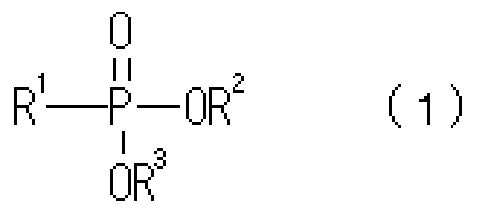 一般式(1)及び(2)中のR1は、置換基を有するか又は非置換の炭素原子数1~20のアルキル基、若しくは、置換基を有するか又は非置換の炭素原子数7~20のアラルキル基であり、R2及びR3は、各々独立して、炭素原子数1~8のアルキル基又は水素原子であって、R2及びR3の少なくとも一方は前記炭素原子数1~8のアルキル基である。
- 前記不揮発性の酸が硫酸又はヘテロポリ酸である、請求項1に記載されたホスホン酸の製造方法。
- 請求項1又は2に記載された工程(A)の後に、前記一般式(2)で表されるアルキルホスホン酸又はアラルキルホスホン酸を精製することなく、アミンを添加する工程(B)を有することを特徴とするアルキルホスホン酸アミン塩又はアラルキルホスホン酸アミン塩の製造方法。
- 請求項1又は2に記載された工程(A)の後に、前記一般式(2)で表されるアルキルホスホン酸又はアラルキルホスホン酸を精製することなく、アルカリ金属水酸化物を添加する工程(C)を有することを特徴とする、アルキルホスホン酸アルカリ金属塩又はアラルキルホスホン酸アルカリ金属塩の製造方法。
- 請求項4に記載された工程(C)の後に、アルカリ金属以外の金属塩化物を添加して、塩交換反応させる工程(D)を有することを特徴とする、アルキルホスホン酸金属塩又はアラルキルホスホン酸金属塩の製造方法。
Priority Applications (2)
| Application Number | Priority Date | Filing Date | Title |
|---|---|---|---|
| KR1020137020877A KR20140039156A (ko) | 2011-02-14 | 2012-01-31 | 알킬포스폰산, 아랄킬포스폰산 및 이들의 염의 제조 방법 |
| CN2012800086251A CN103384675A (zh) | 2011-02-14 | 2012-01-31 | 烷基膦酸、芳烷基膦酸及它们的盐的制备方法 |
Applications Claiming Priority (2)
| Application Number | Priority Date | Filing Date | Title |
|---|---|---|---|
| JP2011-028176 | 2011-02-14 | ||
| JP2011028176A JP5729862B2 (ja) | 2011-02-14 | 2011-02-14 | アルキルホスホン酸、アラルキルホスホン酸及びこれらの塩の製造方法 |
Publications (1)
| Publication Number | Publication Date |
|---|---|
| WO2012111265A1 true WO2012111265A1 (ja) | 2012-08-23 |
Family
ID=46672212
Family Applications (1)
| Application Number | Title | Priority Date | Filing Date |
|---|---|---|---|
| PCT/JP2012/000610 Ceased WO2012111265A1 (ja) | 2011-02-14 | 2012-01-31 | アルキルホスホン酸、アラルキルホスホン酸及びこれらの塩の製造方法 |
Country Status (5)
| Country | Link |
|---|---|
| JP (1) | JP5729862B2 (ja) |
| KR (1) | KR20140039156A (ja) |
| CN (1) | CN103384675A (ja) |
| TW (1) | TW201233683A (ja) |
| WO (1) | WO2012111265A1 (ja) |
Families Citing this family (2)
| Publication number | Priority date | Publication date | Assignee | Title |
|---|---|---|---|---|
| JP7210350B2 (ja) * | 2019-03-25 | 2023-01-23 | 丸善石油化学株式会社 | ホスホン酸誘導体の製造方法 |
| CN112645979A (zh) * | 2019-10-09 | 2021-04-13 | 中国石油天然气股份有限公司 | 一种烷基膦酸酯自催化水解制备烷基膦酸的方法 |
Citations (4)
| Publication number | Priority date | Publication date | Assignee | Title |
|---|---|---|---|---|
| JPH11193292A (ja) * | 1997-01-28 | 1999-07-21 | Nissan Chem Ind Ltd | フェニルホスホン酸誘導体及びその製造方法 |
| JPH11279185A (ja) * | 1997-12-25 | 1999-10-12 | Nissan Chem Ind Ltd | ビス(トリフルオロメチル)フェニルホスホン酸化合物及びその製造方法 |
| US20070004937A1 (en) * | 2005-06-29 | 2007-01-04 | Ferro Corporation | Methods for the preparation of phosphonic acid derivatives |
| JP2010024214A (ja) * | 2008-07-24 | 2010-02-04 | Daihachi Chemical Industry Co Ltd | ホスホン酸の製造方法 |
Family Cites Families (2)
| Publication number | Priority date | Publication date | Assignee | Title |
|---|---|---|---|---|
| NL7510054A (nl) * | 1974-08-31 | 1976-03-02 | Hoechst Ag | Werkwijze voor het bereiden van fosfon- en fos- finzuren. |
| DE4128758A1 (de) * | 1991-08-29 | 1993-03-04 | Boehme Chem Fab Kg | Verfahren zur herstellung von alkanphosphonsaeuren |
-
2011
- 2011-02-14 JP JP2011028176A patent/JP5729862B2/ja not_active Expired - Fee Related
-
2012
- 2012-01-31 CN CN2012800086251A patent/CN103384675A/zh active Pending
- 2012-01-31 KR KR1020137020877A patent/KR20140039156A/ko not_active Withdrawn
- 2012-01-31 WO PCT/JP2012/000610 patent/WO2012111265A1/ja not_active Ceased
- 2012-02-10 TW TW101104373A patent/TW201233683A/zh unknown
Patent Citations (4)
| Publication number | Priority date | Publication date | Assignee | Title |
|---|---|---|---|---|
| JPH11193292A (ja) * | 1997-01-28 | 1999-07-21 | Nissan Chem Ind Ltd | フェニルホスホン酸誘導体及びその製造方法 |
| JPH11279185A (ja) * | 1997-12-25 | 1999-10-12 | Nissan Chem Ind Ltd | ビス(トリフルオロメチル)フェニルホスホン酸化合物及びその製造方法 |
| US20070004937A1 (en) * | 2005-06-29 | 2007-01-04 | Ferro Corporation | Methods for the preparation of phosphonic acid derivatives |
| JP2010024214A (ja) * | 2008-07-24 | 2010-02-04 | Daihachi Chemical Industry Co Ltd | ホスホン酸の製造方法 |
Also Published As
| Publication number | Publication date |
|---|---|
| JP5729862B2 (ja) | 2015-06-03 |
| KR20140039156A (ko) | 2014-04-01 |
| CN103384675A (zh) | 2013-11-06 |
| TW201233683A (en) | 2012-08-16 |
| JP2012167044A (ja) | 2012-09-06 |
Similar Documents
| Publication | Publication Date | Title |
|---|---|---|
| CN101870711B (zh) | 一种三(三甲基硅基)磷酸酯的合成方法 | |
| JP6788253B2 (ja) | アルケニルリン化合物の製造方法 | |
| EP4001251A1 (en) | Method for producing binaphthyls | |
| JP2013032340A (ja) | 四級アンモニウム塩、それから得られる酸化触媒、及び該触媒を用いるエポキシ誘導体の製造方法 | |
| JP5729862B2 (ja) | アルキルホスホン酸、アラルキルホスホン酸及びこれらの塩の製造方法 | |
| CN102209723B (zh) | 制备6-氯二苯并[d,f][1,3,2]-二氧杂磷杂环庚二烯的方法 | |
| RU2015103314A (ru) | Способ синтеза N-фосфонометилиминодиуксусной кислоты | |
| KR101249361B1 (ko) | 고순도 트리스(트리알킬실릴)포스파이트의 제조 방법 | |
| CN103374039A (zh) | 替诺福韦的合成方法 | |
| JPH11193292A (ja) | フェニルホスホン酸誘導体及びその製造方法 | |
| JP2015506914A5 (ja) | ||
| CN105273005B (zh) | 羟烷基膦酸的制备 | |
| JP4553104B2 (ja) | カルボキシフェニルホスホン酸モノエステル化合物の製造法 | |
| KR20230007149A (ko) | 비스(트리메틸실릴)아민(bis(trimethylsilyl)amine)을 이용한 고순도 리튬 디플루오로비스(옥살라토)인산염 (lithium Difluoro bis(oxlato)phospholate, LDFBOP)의 제조방법 | |
| JP6706247B2 (ja) | アルキルホスホン酸の製造方法 | |
| KR101178142B1 (ko) | 알코올성 하이드록시기를 가지는 포스포네이트의 제조방법 | |
| JP4526275B2 (ja) | テトラ置換ホスホニウムテトラキスアロイルオキシボレート及びその前駆体の製造方法 | |
| CN102448973A (zh) | 用于制备二烷基亚磷酸盐的方法 | |
| CN104725414B (zh) | 三烃基硅基丙烯酸酯或三烃基硅基甲基丙烯酸酯的制备方法 | |
| JP4132327B2 (ja) | フェニレンビス(ホスホン酸)化合物及びその製造方法 | |
| CN1907990B (zh) | 3,9-双[4-(1-甲基-1-苯乙基)苯氧基]-2,4,8,10-四氧杂-3,9-二磷螺[5.5]十一烷的制备方法 | |
| JP2013180965A (ja) | 2−ジ置換ホスホリル−1,4−ジヒドロキシナフタレン化合物及びその製造法 | |
| JP2007039357A (ja) | 有機ホスフィン酸ハライドの製造方法 | |
| SU1616922A1 (ru) | Способ получени этилового эфира дифенилфосфинилуксусной кислоты | |
| JP6760075B2 (ja) | ブチロラクトン化合物及び製造方法 |
Legal Events
| Date | Code | Title | Description |
|---|---|---|---|
| 121 | Ep: the epo has been informed by wipo that ep was designated in this application |
Ref document number: 12747702 Country of ref document: EP Kind code of ref document: A1 |
|
| ENP | Entry into the national phase |
Ref document number: 20137020877 Country of ref document: KR Kind code of ref document: A |
|
| NENP | Non-entry into the national phase |
Ref country code: DE |
|
| 122 | Ep: pct application non-entry in european phase |
Ref document number: 12747702 Country of ref document: EP Kind code of ref document: A1 |