WO2012043725A1 - プログラム、支払方法、情報記録媒体、及び、携帯端末 - Google Patents
プログラム、支払方法、情報記録媒体、及び、携帯端末 Download PDFInfo
- Publication number
- WO2012043725A1 WO2012043725A1 PCT/JP2011/072391 JP2011072391W WO2012043725A1 WO 2012043725 A1 WO2012043725 A1 WO 2012043725A1 JP 2011072391 W JP2011072391 W JP 2011072391W WO 2012043725 A1 WO2012043725 A1 WO 2012043725A1
- Authority
- WO
- WIPO (PCT)
- Prior art keywords
- payment
- information
- unit
- electronic money
- settlement
- Prior art date
- Legal status (The legal status is an assumption and is not a legal conclusion. Google has not performed a legal analysis and makes no representation as to the accuracy of the status listed.)
- Ceased
Links
Images




Classifications
-
- G—PHYSICS
- G06—COMPUTING OR CALCULATING; COUNTING
- G06Q—INFORMATION AND COMMUNICATION TECHNOLOGY [ICT] SPECIALLY ADAPTED FOR ADMINISTRATIVE, COMMERCIAL, FINANCIAL, MANAGERIAL OR SUPERVISORY PURPOSES; SYSTEMS OR METHODS SPECIALLY ADAPTED FOR ADMINISTRATIVE, COMMERCIAL, FINANCIAL, MANAGERIAL OR SUPERVISORY PURPOSES, NOT OTHERWISE PROVIDED FOR
- G06Q20/00—Payment architectures, schemes or protocols
- G06Q20/30—Payment architectures, schemes or protocols characterised by the use of specific devices or networks
- G06Q20/32—Payment architectures, schemes or protocols characterised by the use of specific devices or networks using wireless devices
- G06Q20/322—Aspects of commerce using mobile devices [M-devices]
- G06Q20/3224—Transactions dependent on location of M-devices
Definitions
- the present invention relates to a program, a payment method, an information recording medium, and a mobile terminal, and more particularly to payment in a mobile terminal that can use a plurality of electronic settlement means.
- Patent Document 1 discloses a system that performs payment by selecting one of credit card payment, bank transfer, price transfer, and the like in electronic commerce.
- the present invention solves the above-described problems, and is suitable for a simple payment in a portable terminal that can use a plurality of electronic payment means, a program, a payment method, an information recording medium, and a portable
- the purpose is to provide a terminal.
- the program according to the first aspect of the present invention is: A portable computer equipped with multiple types of electronic payment means and capable of communicating with a payment device.
- a sensing unit for sensing payment device information identifying the payment device;
- An acquisition unit for acquiring payment means information stored in association with the sensed payment device information;
- a payment unit that designates a payment means determined based on the acquired payment means information, communicates with the payment apparatus, and causes the payment apparatus to perform payment settlement;
- the payment means information for specifying the determined payment means is made to function as a storage unit that stores the payment means information in association with the detected payment apparatus information.
- the portable computer further functions as a selection unit that allows a user who wants to make a payment to select one of the plurality of types of payment means
- the payment unit may be configured to designate the selected payment means and communicate with the payment apparatus, and cause the payment apparatus to perform payment payment.
- the selection unit may be configured to select one of the plurality of types of settlement means by providing a priority order based on the history of the settlement means selected by the user in the past.
- the storage unit stores, for each user, the payment device information and the selected payment method information in a predetermined server in association with each other,
- the acquisition unit may be configured to acquire payment means information associated with the payment apparatus information from the predetermined server.
- the acquisition unit acquires priority information of payment means determined based on a history of payment means selected by other users in the past from the predetermined server
- the selection unit may be configured to select one of the plurality of types of settlement means based on the acquired priority order information by providing a priority order.
- the priority order information may be configured to be determined based on a history of users similar to the user who intends to make the payment among the other users.
- the sensing unit inquires the predetermined server device for identification information of the settlement device detected from the settlement device, and obtains an industry ID of the settlement device,
- the payment apparatus information may be configured to be the acquired business type ID.
- the payment apparatus information can be configured to be position information of the portable computer sensed by the portable computer.
- the payment apparatus information may be configured to be identification information of the payment apparatus detected from the payment apparatus.
- the payment method is: A payment method executed by a mobile terminal that includes a sensing unit, an acquisition unit, a payment unit, and a storage unit, is equipped with a plurality of types of electronic payment means, and can communicate with a payment device, A sensing step in which the sensing unit senses payment device information identifying the payment device; An acquisition step in which the acquisition unit acquires payment means information stored in association with the sensed payment device information; A payment step in which the payment unit communicates with the payment apparatus by designating a payment means determined based on the acquired payment means information, and causes the payment apparatus to settle payment;
- the storage unit includes a storage step of storing payment means information for specifying the determined payment means in association with the sensed payment apparatus information.
- An information recording medium is: A portable computer equipped with multiple types of electronic payment means and capable of communicating with a payment device.
- a sensing unit for sensing payment device information identifying the payment device;
- An acquisition unit for acquiring payment means information stored in association with the sensed payment device information;
- a payment unit that designates a payment means determined based on the acquired payment means information, communicates with the payment apparatus, and causes the payment apparatus to perform payment settlement;
- a program is recorded that causes payment means information for specifying the determined payment means to function as a storage unit that stores the payment means information in association with the sensed payment apparatus information.
- a mobile terminal is: A portable terminal equipped with a plurality of types of electronic payment means and capable of communicating with a payment device, A sensing unit for sensing payment device information identifying the payment device; An acquisition unit for acquiring payment means information stored in association with the sensed payment device information; A payment unit that designates a payment means determined based on the acquired payment means information, communicates with the payment apparatus, and causes the payment apparatus to perform payment settlement; A storage unit that stores payment means information for specifying the determined payment means in association with the sensed payment apparatus information.
- program of the present invention can be distributed and sold via a computer communication network independently of the computer on which the program is executed.
- the information recording medium can be distributed and sold independently of the computer.
- a mobile terminal that can use a plurality of electronic settlement means (for example, an electronic money function, a mobile credit function, etc.), a program, a payment method, an information recording medium, And a portable terminal can be provided.
- a plurality of electronic settlement means for example, an electronic money function, a mobile credit function, etc.
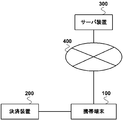
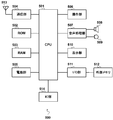
- FIG. 1 It is a figure which shows the relationship between the portable terminal which concerns on embodiment of this invention, a payment apparatus, and a server. It is a figure which shows schematic structure of the typical portable information processing apparatus with which the portable terminal which concerns on embodiment of this invention is implement
- FIG. 1 shows a portable terminal 100 realized by executing a program according to an embodiment of the present invention.
- the mobile terminal 100 is connected to a network 400 such as the Internet.
- the server apparatus 300 is connected to the network 400, and the mobile terminal 100 can communicate with the server apparatus 300 via the network 400.
- the mobile terminal 100 can pay with electronic money, and a plurality of types of electronic money are set.
- the settlement apparatus 200 includes a reader / writer capable of reading and writing such as a non-contact IC card and a POS (Point-of-Sales) apparatus, and is capable of non-contact communication with the mobile terminal 100.
- POS Point-of-Sales
- the portable information processing apparatus 500 includes, for example, a CPU (Central Processing Unit) 501, a ROM (Read only Memory) 502, a RAM (Random Access Memory) 503, a communication unit 504, a power supply, and the like.
- Unit 505 operation unit 506, audio processing unit 507, speaker 508, microphone 509, display unit 510, I / O unit 511, external memory 512, antenna 513, and IC unit 514.
- the CPU 501 controls the entire portable information processing apparatus 500 according to an operating system (OS) and a control program stored in the ROM 502.
- the CPU 501 transmits a control signal and data to each of the above-described units via the system bus and receives a response signal and data from each unit as necessary for control.
- OS operating system
- ROM 502. read-only memory
- the ROM 502 is a non-volatile memory that stores an OS, a program, and the like necessary for controlling the entire portable information processing apparatus 500.
- the CPU 501 reads the OS and programs stored in the ROM 502 into the RAM 503 and executes them.
- the RAM 503 temporarily stores data and programs necessary for processing performed by the CPU 501.
- a part of the storage area of the RAM 503 is composed of a flash memory, and stores an address book used for telephone calls and mails, a call history, setting values of various functions, and the like.
- the communication unit 504 modulates an audio signal input by the microphone 509 and converted by an A / D (Analog / Digital) converter (not shown) included in the audio processing unit 507, and an antenna 513 connected to the communication unit 504. To the other party (receiving side). Alternatively, an audio signal or the like is received using the antenna 513, and the input audio signal is demodulated. The demodulated audio signal is input to the audio processing unit 507. Further, the communication unit 504 exchanges information with a radio base station or a GPS (Global Positioning System) satellite, and acquires position information of the portable information processing apparatus 500.
- GPS Global Positioning System
- the communication unit 504 acquires the latitude, longitude, and altitude of the portable information processing device 500 and the location information of the wireless base station that captured the portable information processing device 500. Further, the portable information processing device 500 performs data communication processing for accessing the server device 300 and the like.
- the communication unit 504 can use a plurality of communication methods such as CDMA (Code Division Multiple Access), EV-DO (Evolution-Data Only), and wireless LAN.
- the power supply unit 505 is a power supply for driving the portable information processing apparatus 500.
- the operation unit 506 includes a pressable button, a touch panel, and the like, and accepts an operation from the user.
- the CPU 501 performs a predetermined process based on the operation input to the operation unit 506.
- the voice processing unit 507 collects a user's voice and the like by a microphone 509 connected to the voice processing unit 507, converts the sound into a voice signal by an A / D converter included in the voice processing unit 507, and outputs the voice signal.
- the voice processing unit 507 outputs a call sound demodulated by a D / A (Digital / Analog) converter (not shown) included in the voice processing unit 507 to a speaker 508 connected to the voice processing unit 507.
- the voice processing unit 507 converts voice data such as a ringing melody stored in the external memory 512 or the like into a voice signal and outputs the voice signal.
- the display unit 510 includes a display such as an LCD (Liquid Crystal Display) or an organic EL (Electroluminescence).
- the display unit 510 processes the image data by a CPU 501 or an image arithmetic processor (not shown) provided in the display unit 510 and then records the processed image data in an output buffer (not shown) provided in the display unit 510.
- the image information recorded in the output buffer is converted into an image signal at a predetermined synchronization timing and output to the display.
- the display unit 510 displays various screens necessary for using the functions of the portable information processing device 500 such as a power state, a telephone number, an e-mail, and a connected internet screen on the display.
- the I / O unit 511 is connected to an external memory 512 such as a detachable flash memory card to input / output data.
- the portable information processing device 500 is connected to an external device such as a personal computer by USB (Universal Serial Bus) connection, and data is input / output to / from the external device.
- USB Universal Serial Bus
- An interface for connecting and communicating with other external devices such as an infrared communication interface can also be provided.
- the IC unit 514 pays electronic money by communicating with an external device such as a reader / writer. At this time, the IC unit 514 exchanges information regarding payment of electronic money, such as the payment destination, payment date, payment amount, or identifier of the external device, with the external device.
- the IC unit 514 includes a loop antenna, a memory, and the like. When the portable information processing apparatus 500 is placed over a reader / writer, power is generated in the loop antenna, and the IC unit 514 operates by this power. Note that it is also possible to operate with electric power supplied from the power supply unit 505. Information relating to payment of electronic money is stored in the memory provided in the IC unit 514.
- FIG. 3 shows a configuration of the mobile terminal 100 realized by executing the program of the present embodiment.
- the portable terminal 100 includes a sensing unit 101, an acquisition unit 102, a selection unit 103, a payment unit 104, and a storage unit 105, and is configured as follows.
- the sensing unit 101 senses payment device information that identifies the payment device 200.
- the payment device information includes (a) location information of the mobile terminal 100, (b) an identifier assigned to the payment device 200 (hereinafter referred to as “payment device ID”), or (c) the payment device 200.
- the business type ID of the store in question includes (a) location information of the mobile terminal 100, (b) an identifier assigned to the payment device 200 (hereinafter referred to as “payment device ID”), or (c) the payment device 200.
- the business type ID of the store in question includes (a) location information of the mobile terminal 100, (b) an identifier assigned to the payment device 200 (hereinafter referred to as “payment device ID”), or (c) the payment device 200.
- the business type ID of the store in question includes (a) location information of the mobile terminal 100, (b) an identifier assigned to the payment device 200 (hereinafter referred to as “payment device ID”), or (c) the payment device 200.
- the sensing unit 101 detects the payment apparatus information as follows.
- the sensing unit 101 acquires the longitude, latitude, and altitude where the mobile terminal 100 is located by the GPS function.
- the sensing unit 101 acquires location information of a wireless base station with which the mobile terminal 100 communicates.
- the sensing unit 101 detects the payment apparatus information as follows.
- the sensing unit 101 requests the payment apparatus 200 to transmit a payment apparatus ID, and receives the payment apparatus ID from the payment apparatus 200.
- the sensing unit 101 detects the payment apparatus information as follows.
- the server apparatus 300 stores a business type table 300a shown in FIG.
- “settlement device ID” and “industry ID” for example, industry name, industry identifier, etc.
- the sensing unit 101 receives the payment apparatus ID “a1” of the payment apparatus 200 from the payment apparatus 200.
- the sensing unit 101 transmits the received information about the settlement apparatus ID “a1” to the server apparatus 300, and inquires about the business type ID corresponding to the settlement apparatus ID.
- the server device 300 obtains the business type ID corresponding to the settlement device ID “a1” received from the sensing unit 101 with reference to the business type table 300a.
- the server apparatus 300 stores the industry ID “convenience store” in the sensing unit 101. Send information. In this way, the sensing unit 101 acquires the business type ID corresponding to the settlement apparatus ID.
- the payment apparatus information is (c) the industry ID of the store where the payment apparatus 200 is installed.
- the CPU 501, the communication unit 504, and the IC unit 514 cooperate to function as the sensing unit 101.
- the acquisition unit 102 attempts to acquire electronic money information (an example of “payment means information” in the present invention) stored in association with the payment apparatus information for a user who is making a payment.
- the acquisition unit 102 tries to acquire the electronic money information from the server device 300.
- the server device 300 stores a user history table 300b shown in FIG.
- “user ID” for example, an arbitrary character string (user account name), identification information of the mobile terminal 100, identification information of the IC unit 514, etc.
- “Attribute” for example, an arbitrary character string (user account name), identification information of the mobile terminal 100, identification information of the IC unit 514, etc.
- “Attribute” for example, an arbitrary character string (user account name), identification information of the mobile terminal 100, identification information of the IC unit 514, etc.
- “Attribute” for example, an arbitrary character string (user account name), identification information of the mobile terminal 100, identification information of the IC unit 514, etc.
- “Attribute” for example, an arbitrary character string (user account name), identification information of the mobile terminal 100, identification information of the IC unit 514, etc.
- “Attribute” for example, an arbitrary character string (user account name), identification information of the mobile terminal 100, identification
- the sensing unit 101 acquires the business type ID “convenience store” of the payment apparatus 200 and sends the acquired business type ID information to the acquisition unit 102.
- the acquisition unit 102 sends the received business type ID “convenience store” and user ID “A” to the server device 300 to inquire about electronic money information.
- the server device 300 obtains electronic money information corresponding to the business type ID “convenience store” and the user ID “A” received from the acquisition unit 102 with reference to the user history table 300b. Since the electronic history information corresponding to the user ID “A” and the payment device information (business type ID) “convenience store” is registered as “X” in the user history table 300 b, the server device 300 stores in the acquisition unit 102. The electronic money information “X” is transmitted. In this way, the acquisition unit 102 acquires electronic money information used for payment.
- the acquisition unit 102 when the acquisition unit 102 cannot acquire the electronic money information, that is, when the user ID and the business type ID information are transmitted to the server device 300 but the electronic money information is not received from the server device 300, the acquisition unit 102 102 obtains priority information of electronic money from the server device 300.
- the priority order information is information in which electronic money is ranked in descending order of possibility of being used preferentially in the industry indicated by the industry ID.
- the priority order information is obtained from the user history table 300b.
- the priority order information is determined based on the history of a user similar to the user who wants to pay among the users registered in the user history table 300b. Whether or not users are similar is determined by whether or not the attributes of the users are the same.
- a specific example for obtaining the priority information will be described.
- the acquisition unit 102 stores the electronic money information corresponding to the user ID “A” and the business type ID “restaurant” on the server device 300.
- the acquisition unit 102 acquires the electronic money information. Can not do it.
- the server apparatus 300 extracts all the histories of users having the same attributes as the user A (age “20s”, occupation “student”) from the user history table 300b (for example, the user B).
- the server apparatus 300 analyzes the electronic money used in the restaurant by a user having the same attribute as the user A. That is, the server apparatus 300 aggregates the electronic money information associated with the settlement apparatus information “restaurant” for each type of electronic money for the extracted history. Then, the server apparatus 300 ranks the types of electronic money in descending order based on the aggregation result.
- the server apparatus 300 when the server apparatus 300 has a plurality of users having the same attribute as the user A, the most frequently used electronic money type is “Z”, and the second most frequently used electronic money type is “X”. Assume that the third most frequently used electronic money type is “Y”.
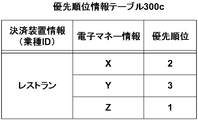
- the server device 300 transmits information on the ranking of these electronic money (priority information) to the acquisition unit 102. For example, the priority information is transmitted to the acquisition unit 102 in the format of the priority information table 300c shown in FIG.
- the acquisition unit 102 Upon receiving the priority order information table 300 c from the server device 300, the acquisition unit 102 sends the table to the selection unit 103.
- the CPU 501 and the communication unit 504 work together to function as the acquisition unit 102.
- the selection unit 103 causes the user to select one of a plurality of electronic money set in the mobile terminal 100 when the acquisition unit 102 cannot acquire the electronic money information. At this time, the selection unit 103 causes the priority information received from the acquisition unit 102 to be displayed on the display provided in the display unit 510 of the mobile terminal 100 and allows the user to select one of the electronic money. And the selection part 103 receives selection of electronic money from a user.
- FIG. 7 shows an example in which the selection unit 103 displays priority information on the display 515 of the mobile terminal 100. The user selects one of the electronic money by operating the button 516 or the like from the displayed electronic money of the priority information.
- the CPU 501, the operation unit 506, and the display unit 510 cooperate to function as the selection unit 103.
- the payment unit 104 designates the electronic money specified by the electronic money information, communicates with the settlement apparatus 200, and causes the settlement apparatus 200 to perform payment settlement.
- the payment unit 104 designates the electronic money selected by the selection unit 103, communicates with the payment apparatus 200, and causes the payment apparatus 200 to perform payment settlement.
- the business type ID of the payment apparatus 200 that the user A intends to make payment is “convenience store”, and the acquisition unit 102 acquires electronic money information “X” corresponding to the payment apparatus information “convenience store”.
- the payment unit 104 makes payment using the electronic money “X” and causes the settlement apparatus 200 to settle the payment.
- the business type ID of the settlement apparatus 200 to which the user A is to pay is “restaurant”, the acquisition unit 102 cannot acquire the electronic money information, and the priority information is presented to the user A by the selection unit 103. (FIG. 7). If the user A selects electronic money “Z”, the payment unit 104 makes payment using the electronic money “Z” and causes the settlement apparatus 200 to settle the payment.
- the payment unit 104 designates electronic money that causes the payment apparatus 200 to perform payment settlement based on the electronic money information acquired by the acquisition unit 102 or selected by the selection unit 103.
- the settlement apparatus 200 has registered electronic money information that can be used for settlement of payment in the settlement apparatus 200 in a predetermined list (hereinafter referred to as “payable list”).
- the settlement apparatus 200 has a payable list in which electronic money information “X”, “Y”, and “Z” is registered.
- the electronic money information acquired by the acquisition unit 102 or selected by the selection unit 103 is “Z”.
- the payment unit 104 writes the electronic money information acquired by the acquisition unit 102 or selected by the selection unit 103 in a predetermined area of the payment unit 104, and the settlement apparatus 200 stores the predetermined area. By designating, the electronic money used for settlement is designated.
- the payment apparatus 200 transmits a polling command for capturing a communication partner system.
- a system is a reference unit treated as a logical single card, and a plurality of systems can be defined in one IC unit 514.
- the system of the IC unit 514 is specified by the system code.
- the system code is assigned for each business operator or purpose of use. Therefore, the polling command includes a system code and the like.
- the payment unit 104 receives the polling command from the payment apparatus 200, the payment unit 104 transmits a response including information such as a manufacturing ID and a manufacturing parameter of the system specified by the system code to the payment apparatus 200. In this way, the settlement apparatus 200 identifies the communication partner system.
- the payment unit 104 is placed in a predetermined area of the IC unit 514.
- the electronic money information “Z” is written.
- the predetermined area is an area in which information for specifying electronic money to be paid by the mobile terminal 100 is stored, and is assumed to be a predetermined area.
- the memory area of the IC unit 514 is divided into minimum units called “blocks”. A set of blocks is called a “service”, and a method for accessing data stored in the block is defined for each service.
- the predetermined area is specified by specifying a service code and a block number for specifying the service.
- the settlement apparatus 200 transmits an inquiry command including a service code and a block number corresponding to the predetermined area to the payment unit 104 in order to obtain electronic money information of electronic money used for settlement.
- the payment unit 104 Upon receiving the inquiry command, the payment unit 104 transmits the electronic money information “Z” stored in the designated service code and block number to the settlement apparatus 200.
- the settlement apparatus 200 Upon receiving the electronic money information “Z”, the settlement apparatus 200 transmits, for example, a command in which the electronic money information “Z” and the payment amount are specified to the payment unit 104. As a result, settlement with the acquired or selected electronic money is performed.
- the payment unit 104 invalidates (hides) the memory area other than the memory area in which the electronic money information or the like acquired by the acquisition unit 102 or selected by the selection unit 103 is stored. Electronic money that has not been invalidated is designated as electronic money used for settlement.
- the electronic money program that can be used in the mobile terminal 100 and information such as the balance are stored in the memory of the IC unit 514 for each type of electronic money.
- electronic money related information of the electronic money “X” is stored in the first system.
- the second system is a common area where electronic money related information of a plurality of types of electronic money can be stored, and electronic money related information of electronic money “Y” and “Z” is stored. It is assumed that electronic money related information of electronic money “Y” and “Z” stored in the same system can be specified by a service code.
- the settlement apparatus 200 When the settlement apparatus 200 tries to settle with the electronic money “X” of the portable terminal 100, the system code of the first system is designated, and when the settlement with the electronic money “Y” or “Z” is performed, the second Specify the system code and service code of your system.
- the payment unit 104 includes electronic money related information other than the electronic money specified by the electronic money information (that is, When electronic money “Z” is acquired or selected, access to electronic money “X”, “Y” electronic money related information) is not permitted (a memory area in which the electronic money related information is stored) Disable).
- the settlement apparatus 200 sequentially transmits a polling command to the mobile terminal 100 for each of the electronic money “X”, “Y”, and “Z” described in the payable list. . Then, when a valid response is obtained with respect to the polling command, the settlement apparatus 200 ends the sequential transmission of the polling command and settles the payment with the electronic money specified by the response.
- the payment unit 104 when the payment unit 104 receives the polling command including the system code of the first system, the memory area storing the electronic money related information of the electronic money “X” is invalidated. It does not respond to anything.
- the payment unit 104 receives the polling command including the system code of the second system, the memory area storing the electronic money related information of the electronic money “Y” is invalidated, but the electronic money “Y” Since the memory area storing the electronic money related information of Z ′′ is not invalidated, a response including the manufacturing ID of the second system is transmitted to the settlement apparatus 200.
- the settlement apparatus 200 When the settlement apparatus 200 receives the response, it next transmits a request command designating the service code of electronic money “Y” or “Z”. When the memory area storing the electronic money related information of the electronic money specified by the service code is not invalidated, the payment unit 104 sends a response including the key version to the request command to the payment apparatus 200. Send. On the other hand, when the memory area storing the electronic money related information of the electronic money specified by the service code is invalidated, the payment unit 104 transmits a response that does not include the key version to the settlement apparatus 200.
- the key version is a value for identifying which generation of the key value is used when performing encrypted communication.
- the payment unit 104 when the payment unit 104 receives a request command in which a service code of electronic money “Y” is specified, a response that does not include a key version is transmitted to the payment apparatus 200. On the other hand, when the payment unit 104 receives a request command in which the service code of the electronic money “Z” is specified, the payment unit 104 transmits a response including the key version to the settlement apparatus 200.
- the settlement apparatus 200 When the settlement apparatus 200 receives the response including the key version, the settlement apparatus 200 transmits a command for settlement of payment to the payment unit 104 using the electronic money “Z” specified by the response. As a result, settlement with the acquired or selected electronic money is performed.
- the payment unit 104 stores information on the priority order in which electronic money is used (hereinafter referred to as “priority registration information”), and the priority order registration information and the payment stored in the settlement apparatus 200 are stored.
- the electronic money used for the settlement is designated based on the result of comparing the possible lists.
- the priority registration information stored in the payment unit 104 may be the same as or different from the priority information acquired from the server device 300 by the acquisition unit 102. In the present embodiment, it is assumed that they are different.
- electronic money information that can be paid in the mobile terminal 100 is registered with a priority in advance.
- the payment unit 104 registers the electronic money of the electronic money information as having the highest priority. At this time, the priority order of the second or lower electronic money may be changed.
- the settlement apparatus 200 transmits information on the payable list to the payment unit 104.
- the payment unit 104 compares the payable list with the priority registration information. For example, in the priority order registration information, electronic money information “Z”, “X”, “Y” is registered in order of priority, and in the payable list, the electronic money information “X”, Assume that “Y” is registered. The payment unit 104 determines whether or not the electronic money information “Z” having a high priority is included in the payable list. In this case, since the electronic money information “Z” is not included in the payable list, the payment unit 104 determines whether the electronic money information “X” is included in the payable list.
- the payment unit 104 determines that the electronic money for settlement of payment is “X”, and the electronic money information (electronic money) of the electronic money “X”.
- a response including the “X” identifier) is transmitted to the settlement apparatus 200.
- the settlement apparatus 200 receives the response, the settlement apparatus 200 transmits a command for performing settlement with the electronic money “X” to the payment unit 104 to perform the settlement.
- the CPU 501, the display unit 510, and the IC unit 514 function as the payment unit 104 in cooperation.
- the storage unit 105 stores electronic money information specifying the electronic money in association with the sensed payment apparatus information.
- the storage unit 105 stores the electronic money information and the payment apparatus information in the server apparatus 300 in association with each other.
- the storage unit 105 associates the payment device information (business type ID) “convenience store” sensed by the sensing unit 101 with the electronic money information “Z”, and the server device 300 stores these pieces of information. Register in the history table 300b.
- the CPU 501 functions as the storage unit 105.
- the sensing unit 101 determines whether or not the payment device ID information of the payment device 200 has been received (step S101). When the sensing unit 101 determines that the payment device ID information has been received (step S101; Yes), the sensing unit 101 inquires of the server device 300 about payment device information (business type ID) corresponding to the payment device ID (step S101). S102). On the other hand, if the sensing unit 101 determines that it has not received the payment device ID information (step S101; No), it waits as it is.
- the sensing unit 101 receives the information about the payment device ID “a1” from the payment device 200, the sensing unit 101 transmits the information about the payment device ID “a1” to the server device 300, and sends the information about the payment device ID to the payment device ID. Queries the corresponding industry ID. On the other hand, when the sensing unit 101 does not receive the payment device ID information from the settlement device 200, the sensing unit 101 stands by as it is.
- the sensing unit 101 determines whether or not payment device information (business type ID) is received from the server device 300 (step S103). When the sensing unit 101 determines that the payment device information (business type ID) has been received (step S103; Yes), the acquisition unit 102 attempts to acquire electronic money information associated with the payment device information (step S104). On the other hand, when the sensing unit 101 determines that the payment apparatus information (business type ID) has not been received (step S103; No), the sensing unit 101 stands by as it is.
- the acquisition unit 102 sends the business type ID to the server device 300. Request to send electronic money information corresponding to.
- the sensing unit 101 waits as it is.
- the acquisition unit 102 determines whether or not electronic money information has been acquired (step S105).
- the payment unit 104 uses the electronic money specified by the information of the electronic money to make a payment, and sends the payment to the settlement apparatus 200. Payment is settled (step S106).
- the acquisition unit 102 determines that the electronic money information has not been acquired (step S105; No)
- the acquisition unit 102 acquires priority order information from the server device 300 (step S107).
- the acquisition unit 102 acquires the electronic money information “X” corresponding to the payment device information (business type ID) “convenience store” for the user A from the server device 300
- the payment unit 104 determines that the electronic money “X”. The payment is made, and the settlement apparatus 200 is caused to settle the payment.
- the acquisition unit 102 receives the payment device information from the server device 300.
- Industry ID Electronic money priority information on “restaurant” is acquired.
- the selection unit 103 presents the priority information to the user (step S108).
- the acquisition unit 102 acquires a table (FIG. 6, priority information table 300 c) in which the priority order of electronic money corresponding to the payment apparatus information is described. Based on the table, the selection unit 103 displays priority information on the display 515 of the mobile terminal 100 as shown in FIG. Then, the user is prompted to select from electronic money displayed on the display 515.
- a table FIG. 6, priority information table 300 c
- the selection unit 103 determines whether or not electronic money has been selected by the user (step S109).
- the payment unit 104 uses the electronic money selected by the user to make a payment, and the payment device 200 settles the payment. (Step S110).
- the selection unit 103 determines that the electronic money has not been selected by the user (step S109; No)
- the selection unit 103 stands by as it is.
- priority order information is displayed on the display 515 of the mobile terminal 100 (FIG. 7), and the user A operates the button 516 of the mobile terminal 100 to select the electronic money “Z”.
- the payment unit 104 pays with the electronic money “Z” and causes the payment apparatus 200 to settle the payment.
- the selection unit 103 stands by while displaying the priority information.
- the storage unit 105 associates the electronic money information of the electronic money with the payment device information (business type ID) sensed by the sensing unit 101. And stored in the server apparatus 300.
- the sensing unit 101 senses payment device information (business type ID) “restaurant” and the user A selects electronic money “Z” from the electronic money displayed on the display 515
- the storage unit 105 In the user history table 300 b stored in the device 300, the payment device information (business type ID) “restaurant” and the electronic money information “Z” are stored in association with each other for the user A.
- step S106 When the payment is completed in step S106 or the saving in the server device 300 is completed in step S111, the payment process performed by the portable terminal 100 is completed.
- payment can be performed without performing an operation of selecting a plurality of electronic money to be used for payment in a mobile terminal that can use a plurality of electronic money. Further, it is possible to make payment by an optimal payment means according to the payee.
- the priority order information is determined based on the history of a user similar to the user who intends to pay, but the present invention is not limited to this.
- the priority information may be determined based on the history of all users registered in the user history table 300b.
- the priority order of electronic money presented to the user is acquired when the acquisition unit 102 inquires the server device 300, but the present invention is not limited to this.
- the mobile terminal 100 stores a history of electronic money information used by the user of the mobile terminal 100. Then, based on the history, electronic money may be ranked in descending order of use frequency and presented to the user as the priority of electronic money. In this case, the priority order of electronic money can be presented according to the payment device ID acquired from the payment device 200.
- the user history table 300b associates the electronic money information of the electronic money used in the payment of step S106 with the payment device information of the payment device 200 that has made the payment. You may make it register to. By doing in this way, when calculating
- the CPU 501 displays the electronic money information acquired by the acquisition unit 102 on the display 515 and performs payment with the electronic money indicated by the electronic money information before the process of step S106 in the flowchart of FIG. You may make it approve of no. And when a user does not approve the payment with the said electronic money, you may make it progress to step S107. In this case, the electronic money information of the electronic money that has not been approved is presented to the user as electronic money having the lowest priority.
- a mobile terminal that can use a plurality of electronic settlement means (electronic money function, mobile credit function, etc.), a program, a payment method, an information recording medium, and A portable terminal can be provided.
- electronic settlement means electronic money function, mobile credit function, etc.
Landscapes
- Engineering & Computer Science (AREA)
- Business, Economics & Management (AREA)
- Computer Networks & Wireless Communication (AREA)
- Accounting & Taxation (AREA)
- Strategic Management (AREA)
- Physics & Mathematics (AREA)
- General Business, Economics & Management (AREA)
- General Physics & Mathematics (AREA)
- Theoretical Computer Science (AREA)
- Financial Or Insurance-Related Operations Such As Payment And Settlement (AREA)
Abstract
本発明のプログラムは携帯端末(100)を以下のように機能させる。感知部(101)は、決済装置(200)を特定する決済装置情報を感知する。取得部(102)は、支払を行おうとするユーザについて、感知された決済装置情報に対応付けられた電子マネー情報の取得を試みる。選択部(103)は、電子マネー情報が取得されなかった場合、複数の種類の電子マネーからいずれかをユーザに選択させる。支払部(104)は、選択された電子マネーを指定して、あるいは、取得された電子マネーを指定して、決済装置(200)と通信することにより支払を行う。保存部(105)は、ユーザについて、選択された電子マネーを特定する電子マネー情報を感知された決済装置情報に対応付けて保存する。
Description
本発明は、プログラム、支払方法、情報記録媒体、及び、携帯端末に関し、特に、複数の電子的決済手段が利用可能な携帯端末おける支払に関するものである。
近年、商品を購入する際に、ユーザが複数の支払方法からいずれかを指定し、指定された支払方法で商品の決済を行う手法が普及している。例えば、特許文献1には、電子商取引において、クレジットカード払い、銀行振り込み、代金引替等の中から一つを選択して決済を行うシステムが開示されている。
携帯電話においても複数の電子マネーが設定され、その中から一つを指定して、コンビニエンスストアなどの実在店舗で商品の支払を行うことがある。このような場合、ユーザが決済機器の操作部(タッチパネル、ボタン等)を操作して、支払を行う電子マネーを指定するか、あるいは、実在店舗の店員に支払を行う電子マネーを伝え、店員が当該電子マネーで決済をするための決済機器を準備するのが一般的である。しかしながら、ユーザにとって、支払を行う度に上記のような操作を行うことや準備を待つのは煩わしく、簡易な方法で支払を行いたいという要望がある。
本発明は、上記のような課題を解決するもので、複数の電子的決済手段を利用できる携帯端末において、簡易に支払を行うのに好適な、プログラム、支払方法、情報記録媒体、及び、携帯端末を提供することを目的とする。
本発明の第1の観点に係るプログラムは、
複数の種類の電子的な決済手段を搭載し、決済装置と通信可能な携帯型コンピュータを、
前記決済装置を特定する決済装置情報を感知する感知部、
前記感知された決済装置情報に対応付けて保存された決済手段情報を取得する取得部、
前記取得された決済手段情報に基づいて決定される決済手段を指定して前記決済装置と通信し、当該決済装置に支払の決済を行わせる支払部、
前記決定された決済手段を特定する決済手段情報を前記感知された決済装置情報に対応付けて保存する保存部
として機能させることを特徴とする。
複数の種類の電子的な決済手段を搭載し、決済装置と通信可能な携帯型コンピュータを、
前記決済装置を特定する決済装置情報を感知する感知部、
前記感知された決済装置情報に対応付けて保存された決済手段情報を取得する取得部、
前記取得された決済手段情報に基づいて決定される決済手段を指定して前記決済装置と通信し、当該決済装置に支払の決済を行わせる支払部、
前記決定された決済手段を特定する決済手段情報を前記感知された決済装置情報に対応付けて保存する保存部
として機能させることを特徴とする。
また、本発明のプログラムにおいて、
前記決済手段情報が取得されなかった場合、前記複数の種類の決済手段からいずれかを、支払を行おうとするユーザに選択させる選択部、として前記携帯型コンピュータをさらに機能させ、
前記支払部は、前記選択された決済手段を指定して前記決済装置と通信し、当該決済装置に支払の決済を行わせる
ように構成することができる。
前記決済手段情報が取得されなかった場合、前記複数の種類の決済手段からいずれかを、支払を行おうとするユーザに選択させる選択部、として前記携帯型コンピュータをさらに機能させ、
前記支払部は、前記選択された決済手段を指定して前記決済装置と通信し、当該決済装置に支払の決済を行わせる
ように構成することができる。
また、本発明のプログラムにおいて、
前記選択部は、前記ユーザが過去に選択した決済手段の履歴に基づいて、前記複数の種類の決済手段に優先順位を設けて提示して、いずれかを選択させる
ように構成することができる。
前記選択部は、前記ユーザが過去に選択した決済手段の履歴に基づいて、前記複数の種類の決済手段に優先順位を設けて提示して、いずれかを選択させる
ように構成することができる。
また、本発明のプログラムにおいて、
前記保存部は、前記ユーザごとに、前記決済装置情報と、前記選択された決済手段情報とを、対応付けて所定のサーバに保存し、
前記取得部は、前記決済装置情報に対応付けられた決済手段情報を、前記所定のサーバから取得する
ように構成することができる。
前記保存部は、前記ユーザごとに、前記決済装置情報と、前記選択された決済手段情報とを、対応付けて所定のサーバに保存し、
前記取得部は、前記決済装置情報に対応付けられた決済手段情報を、前記所定のサーバから取得する
ように構成することができる。
また、本発明のプログラムにおいて、
前記決済手段情報が取得されなかった場合、前記取得部は、他のユーザが過去に選択した決済手段の履歴に基づいて定められる決済手段の優先順位情報を、前記所定のサーバから取得し、
前記選択部は、前記取得された優先順位情報に基づいて、前記複数の種類の決済手段に優先順位を設けて提示して、いずれかを選択させる
ように構成することができる。
前記決済手段情報が取得されなかった場合、前記取得部は、他のユーザが過去に選択した決済手段の履歴に基づいて定められる決済手段の優先順位情報を、前記所定のサーバから取得し、
前記選択部は、前記取得された優先順位情報に基づいて、前記複数の種類の決済手段に優先順位を設けて提示して、いずれかを選択させる
ように構成することができる。
また、本発明のプログラムにおいて、
前記優先順位情報は、前記他のユーザのうち前記支払を行おうとするユーザと類似するユーザの履歴に基づいて定められる
ように構成することができる。
前記優先順位情報は、前記他のユーザのうち前記支払を行おうとするユーザと類似するユーザの履歴に基づいて定められる
ように構成することができる。
また、本発明のプログラムにおいて、
前記感知部は、前記決済装置から感知された当該決済装置の識別情報を前記所定のサーバ装置に問い合わせて、当該決済装置の業種IDを取得し、
前記決済装置情報は、前記取得された業種IDである
ように構成することができる。
前記感知部は、前記決済装置から感知された当該決済装置の識別情報を前記所定のサーバ装置に問い合わせて、当該決済装置の業種IDを取得し、
前記決済装置情報は、前記取得された業種IDである
ように構成することができる。
また、本発明のプログラムにおいて、
前記決済装置情報は、前記携帯型コンピュータにより感知された当該携帯型コンピュータの位置情報である
ように構成することができる。
前記決済装置情報は、前記携帯型コンピュータにより感知された当該携帯型コンピュータの位置情報である
ように構成することができる。
また、本発明のプログラムにおいて、
前記決済装置情報は、前記決済装置から感知された当該決済装置の識別情報である
ように構成することができる。
前記決済装置情報は、前記決済装置から感知された当該決済装置の識別情報である
ように構成することができる。
本発明の第2の観点に係る支払方法は、
感知部と、取得部と、支払部と、保存部と、を備え、複数の種類の電子的な決済手段を搭載し、決済装置と通信可能な携帯端末が実行する支払方法であって、
前記感知部が、前記決済装置を特定する決済装置情報を感知する感知工程と、
前記取得部が、前記感知された決済装置情報に対応付けて保存された決済手段情報を取得する取得工程と、
前記支払部が、前記取得された決済手段情報に基づいて決定される決済手段を指定して前記決済装置と通信し、当該決済装置に支払の決済を行わせる支払工程と、
前記保存部が、前記決定された決済手段を特定する決済手段情報を前記感知された決済装置情報に対応付けて保存する保存工程と
を備えることを特徴とする。
感知部と、取得部と、支払部と、保存部と、を備え、複数の種類の電子的な決済手段を搭載し、決済装置と通信可能な携帯端末が実行する支払方法であって、
前記感知部が、前記決済装置を特定する決済装置情報を感知する感知工程と、
前記取得部が、前記感知された決済装置情報に対応付けて保存された決済手段情報を取得する取得工程と、
前記支払部が、前記取得された決済手段情報に基づいて決定される決済手段を指定して前記決済装置と通信し、当該決済装置に支払の決済を行わせる支払工程と、
前記保存部が、前記決定された決済手段を特定する決済手段情報を前記感知された決済装置情報に対応付けて保存する保存工程と
を備えることを特徴とする。
本発明の第3の観点に係る情報記録媒体は、
複数の種類の電子的な決済手段を搭載し、決済装置と通信可能な携帯型コンピュータを、
前記決済装置を特定する決済装置情報を感知する感知部、
前記感知された決済装置情報に対応付けて保存された決済手段情報を取得する取得部、
前記取得された決済手段情報に基づいて決定される決済手段を指定して前記決済装置と通信し、当該決済装置に支払の決済を行わせる支払部、
前記決定された決済手段を特定する決済手段情報を前記感知された決済装置情報に対応付けて保存する保存部
として機能させることを特徴とするプログラムを記録する。
複数の種類の電子的な決済手段を搭載し、決済装置と通信可能な携帯型コンピュータを、
前記決済装置を特定する決済装置情報を感知する感知部、
前記感知された決済装置情報に対応付けて保存された決済手段情報を取得する取得部、
前記取得された決済手段情報に基づいて決定される決済手段を指定して前記決済装置と通信し、当該決済装置に支払の決済を行わせる支払部、
前記決定された決済手段を特定する決済手段情報を前記感知された決済装置情報に対応付けて保存する保存部
として機能させることを特徴とするプログラムを記録する。
本発明の第4の観点に係る携帯端末は、
複数の種類の電子的な決済手段を搭載し、決済装置と通信可能な携帯端末であって、
前記決済装置を特定する決済装置情報を感知する感知部と、
前記感知された決済装置情報に対応付けて保存された決済手段情報を取得する取得部と、
前記取得された決済手段情報に基づいて決定される決済手段を指定して前記決済装置と通信し、当該決済装置に支払の決済を行わせる支払部と、
前記決定された決済手段を特定する決済手段情報を前記感知された決済装置情報に対応付けて保存する保存部と
を備えることを特徴とする。
複数の種類の電子的な決済手段を搭載し、決済装置と通信可能な携帯端末であって、
前記決済装置を特定する決済装置情報を感知する感知部と、
前記感知された決済装置情報に対応付けて保存された決済手段情報を取得する取得部と、
前記取得された決済手段情報に基づいて決定される決済手段を指定して前記決済装置と通信し、当該決済装置に支払の決済を行わせる支払部と、
前記決定された決済手段を特定する決済手段情報を前記感知された決済装置情報に対応付けて保存する保存部と
を備えることを特徴とする。
なお、本発明のプログラムは、プログラムが実行されるコンピュータとは独立して、コンピュータ通信網を介して配布・販売することができる。また、上記情報記録媒体は、コンピュータとは独立して配布・販売することができる。
本発明によれば、複数の電子的決済手段(例えば、電子マネー機能、携帯クレジット機能など)を利用できる携帯端末において、簡易に支払を行うのに好適な、プログラム、支払方法、情報記録媒体、及び、携帯端末を提供することができる。
本発明の実施形態のプログラムが実行されることにより実現する携帯端末100を、図1に示す。携帯端末100は、インターネット等のネットワーク400に接続される。また、ネットワーク400にはサーバ装置300が接続され、携帯端末100はネットワーク400を介してサーバ装置300と通信が可能である。携帯端末100は、電子マネーによる支払が可能であり、複数の種類の電子マネーが設定されている。
図1の決済装置200は、一般的にコンビニエンスストアやスーパー等の実在店舗に設置されるものである。決済装置200は、非接触ICカード等の読み書きが可能なリーダライタ及びPOS(Point of Sales)装置等から構成され、携帯端末100と非接触通信が可能である。ユーザは、携帯端末100を決済装置200に翳すと、携帯端末100に設定されている電子マネーで支払を行うことができる。
以下、本発明の実施形態に係る携帯端末100が実現される典型的な携帯型情報処理装置500について説明する。
(1.携帯型情報処理装置の概要構成)
携帯型情報処理装置500は、図2に示すように、例えば、CPU(Central Processing Unit)501と、ROM(Read only Memory)502と、RAM(Random Access Memory)503と、通信部504と、電源部505と、操作部506と、音声処理部507と、スピーカ508と、マイクロフォン509と、表示部510と、I/O部511と、外部メモリ512と、アンテナ513と、IC部514と、を備える。
携帯型情報処理装置500は、図2に示すように、例えば、CPU(Central Processing Unit)501と、ROM(Read only Memory)502と、RAM(Random Access Memory)503と、通信部504と、電源部505と、操作部506と、音声処理部507と、スピーカ508と、マイクロフォン509と、表示部510と、I/O部511と、外部メモリ512と、アンテナ513と、IC部514と、を備える。
CPU 501は、ROM 502に記憶されたオペレーティングシステム(OS)や制御プログラムに従って、携帯型情報処理装置500全体の制御を行う。CPU 501は、制御の必要に応じて、上述した各部にシステムバスを介して制御信号及びデータを送信したり、各部から応答信号やデータを受信したりする。
ROM 502は、携帯型情報処理装置500全体の制御に必要なOSやプログラム等を記憶する不揮発性メモリである。CPU 501は、ROM 502に記憶されたOSやプログラム等をRAM 503に読み出して実行する。
RAM 503は、CPU 501が行う処理に必要なデータやプログラム等を一時的に記憶する。また、RAM 503の記憶領域の一部はフラッシュメモリから構成され、電話やメールに使用するアドレス帳、通話の履歴、各種機能の設定値等を記憶する。
通信部504は、マイクロフォン509により入力され、音声処理部507が備えるA/D(Analog/Digital)コンバータ(図示せず)により変換された音声信号を変調し、通信部504に接続されるアンテナ513を用いて相手(受信側)に送信する。あるいは、アンテナ513を用いて音声信号等を受信し、入力された音声信号を復調する。復調された音声信号は音声処理部507に入力される。また、通信部504は、無線基地局や、GPS(Global Positioning System)衛星と情報のやり取りを行い、携帯型情報処理装置500の位置情報を取得する。例えば、通信部504は、携帯型情報処理装置500の緯度、経度、及び高度や、携帯型情報処理装置500を捕捉した無線基地局の所在地情報を取得する。さらに、携帯型情報処理装置500が、サーバ装置300等にアクセスするためのデータ通信処理等も行う。通信部504は、例えば、CDMA(Code Division Multiple Access)、EV-DO(Evolution-Data Only)、無線LAN等の複数の通信方式を利用可能である。
電源部505は、携帯型情報処理装置500を駆動させるための電源である。
操作部506は、押圧可能なボタンやタッチパネル等から構成され、ユーザからの操作を受け付ける。CPU 501は、操作部506に入力された操作に基づき所定の処理を行う。
音声処理部507は、ユーザの発声音等を音声処理部507に接続されるマイクロフォン509により集音し、音声処理部507が備えるA/Dコンバータにより音声信号に変換し音声信号を出力する。あるいは、音声処理部507は、音声処理部507に接続されるスピーカ508に、音声処理部507が備えるD/A(Digital/Analog)コンバータ(図示せず)により復調された通話音を出力する。このほか、音声処理部507は、外部メモリ512等に記憶された着信メロディなどの音声データを音声信号に変換して出力する。
表示部510は、LCD(Liquid Crystal Display)や有機EL(Electroluminescence)等のディスプレイを備える。表示部510は、CPU 501や表示部510が備える画像演算プロセッサ(図示せず)によって画像データを加工処理した後、表示部510が備える出力バッファ(図示せず)に記録する。出力バッファに記録された画像情報は、所定の同期タイミングで画像信号に変換され、ディスプレイに出力される。表示部510は、例えば、電源状態、電話番号、電子メール、及び、接続されたインターネット画面等、携帯型情報処理装置500の機能を利用するために必要な様々な画面を、ディスプレイに表示する。
I/O部511は、着脱可能なフラッシュメモリカード等の外部メモリ512との接続を行いデータの入出力を行う。また、例えば、USB(Universal Serial Bus)接続により携帯型情報処理装置500とパーソナルコンピュータ等の外部機器とを接続して、外部機器との間でデータの入出力を行う。赤外線通信インタフェースなど他の外部機器と接続して通信するためのインタフェースを備えることもできる。
IC部514は、リーダライタ等の外部装置と通信を行うことにより電子マネーの支払を行う。この時、IC部514は、外部装置との間で、電子マネーの支払先、支払日、支払金額、又は、外部装置の識別子等の電子マネーの支払に関する情報をやり取りする。IC部514は、ループアンテナやメモリ等を備える。携帯型情報処理装置500をリーダライタに翳すと、ループアンテナに電力が発生し、この電力によりIC部514は動作する。なお、電源部505から供給される電力によって動作することも可能である。IC部514に備わるメモリには、電子マネーの支払に関する情報が記憶される。
以下、上記携帯型情報処理装置500において実現される携帯端末100の概要構成について、図1乃至8を参照して説明する。携帯型情報処理装置500の電源を投入することにより、本実施形態に係るプログラムが実行され、本実施形態に係る携帯端末100が実現する。
(2.携帯端末の概要構成)
図3に、本実施形態のプログラムが実行されることにより実現する携帯端末100の構成を示す。携帯端末100は、感知部101と、取得部102と、選択部103と、支払部104と、保存部105と、を備え、以下のように構成する。
図3に、本実施形態のプログラムが実行されることにより実現する携帯端末100の構成を示す。携帯端末100は、感知部101と、取得部102と、選択部103と、支払部104と、保存部105と、を備え、以下のように構成する。
感知部101は、決済装置200を特定する決済装置情報を感知する。例えば、決済装置情報は、(a)携帯端末100の位置情報、(b)決済装置200に割り当てられた識別子(以下、「決済装置ID」という)、あるいは、(c)決済装置200が設置されている店舗の業種ID、とすることができる。
決済装置情報が(a)携帯端末100の位置情報の場合、感知部101は、以下のように決済装置情報を感知する。
ユーザが携帯端末100を決済装置200に翳すと、感知部101は、GPS機能により携帯端末100が位置する経度・緯度・高度を取得する。又は、感知部101は、携帯端末100が通信を行う無線基地局の所在地の情報を取得する。
ユーザが携帯端末100を決済装置200に翳すと、感知部101は、GPS機能により携帯端末100が位置する経度・緯度・高度を取得する。又は、感知部101は、携帯端末100が通信を行う無線基地局の所在地の情報を取得する。
決済装置情報が(b)決済装置200に割り当てられた決済装置IDの場合、感知部101は、以下のように決済装置情報を感知する。
ユーザが携帯端末100を決済装置200に翳すと、感知部101は決済装置200に決済装置IDを送信するよう要求し、決済装置200から決済装置IDを受信する。
ユーザが携帯端末100を決済装置200に翳すと、感知部101は決済装置200に決済装置IDを送信するよう要求し、決済装置200から決済装置IDを受信する。
決済装置情報が(c)決済装置200が設置されている店舗の業種IDである場合、感知部101は、以下のように決済装置情報を感知する。
サーバ装置300には、図4に示す業種テーブル300aが格納されている。業種テーブル300aには、「決済装置ID」と「業種ID」(例えば、業種名、業種の識別子等)とが対応付けて登録されている。ユーザが決済装置200に携帯端末100を翳すと、感知部101は決済装置200から、決済装置200の決済装置ID“a1”を受信する。感知部101は、受信した決済装置ID“a1”の情報をサーバ装置300に送信して、当該決済装置IDに対応する業種IDを問い合わせる。サーバ装置300は、感知部101から受信した決済装置ID“a1”に対応する業種IDを、業種テーブル300aを参照して求める。業種テーブル300a(図4)には、決済装置ID“a1”に対応する業種IDは“コンビニエンスストア”と登録されているので、サーバ装置300は、感知部101に、業種ID“コンビニエンスストア”の情報を送信する。このようにして感知部101は決済装置IDに対応する業種IDを取得する。
サーバ装置300には、図4に示す業種テーブル300aが格納されている。業種テーブル300aには、「決済装置ID」と「業種ID」(例えば、業種名、業種の識別子等)とが対応付けて登録されている。ユーザが決済装置200に携帯端末100を翳すと、感知部101は決済装置200から、決済装置200の決済装置ID“a1”を受信する。感知部101は、受信した決済装置ID“a1”の情報をサーバ装置300に送信して、当該決済装置IDに対応する業種IDを問い合わせる。サーバ装置300は、感知部101から受信した決済装置ID“a1”に対応する業種IDを、業種テーブル300aを参照して求める。業種テーブル300a(図4)には、決済装置ID“a1”に対応する業種IDは“コンビニエンスストア”と登録されているので、サーバ装置300は、感知部101に、業種ID“コンビニエンスストア”の情報を送信する。このようにして感知部101は決済装置IDに対応する業種IDを取得する。
本実施形態では、決済装置情報は(c)決済装置200が設置されている店舗の業種IDであるとする。
本実施形態において、CPU 501、通信部504、及びIC部514が協働して、感知部101として機能する。
取得部102は、支払を行おうとするユーザについて、決済装置情報に対応付けられて保存された電子マネー情報(本発明における「決済手段情報」の一例)の取得を試みる。ここで、取得部102は、サーバ装置300から当該電子マネー情報の取得を試みる。
例えば、サーバ装置300には、図5に示すユーザ履歴テーブル300bが格納されているとする。ユーザ履歴テーブル300bには、電子マネーを利用するユーザの「ユーザID」(例えば、任意の文字列(ユーザアカウント名)、携帯端末100の識別情報、IC部514の識別情報等)と、ユーザの「属性」と、ユーザが過去に支払を行った決済装置の「決済装置情報」と、当該決済装置での支払に使用した電子マネーの「電子マネー情報」と、が対応付けて登録されている。ユーザAがコンビニエンスストアに設置された決済装置200に携帯端末100を翳して電子マネーによる支払を行ったとする。この場合、感知部101は、決済装置200の業種ID“コンビニエンスストア”を取得し、取得した業種IDの情報を取得部102に送る。取得部102は、受け付けた業種ID“コンビニエンスストア”及びユーザID“A”をサーバ装置300に送信して、電子マネー情報を問い合わせる。サーバ装置300は、取得部102から受信した業種ID“コンビニエンスストア”及びユーザID“A”に対応する電子マネー情報を、ユーザ履歴テーブル300bを参照して求める。ユーザ履歴テーブル300bには、ユーザID“A”及び決済装置情報(業種ID)“コンビニエンスストア”に対応する電子マネー情報は“X”と登録されているので、サーバ装置300は、取得部102に、電子マネー情報“X”を送信する。このようにして、取得部102は、支払に使用する電子マネー情報を取得する。
一方、取得部102が電子マネー情報を取得できなかった場合、すなわち、サーバ装置300にユーザID及び業種IDの情報を送信したが、サーバ装置300から電子マネー情報を受信しなかった場合、取得部102は、電子マネーの優先順位情報をサーバ装置300から取得する。ここで、優先順位情報は、業種IDが示す業種において、優先して使用される可能性の高い順に電子マネーを順位付けた情報であるとする。本実施形態では、優先順位情報は、ユーザ履歴テーブル300bから求められる。例えば、優先順位情報は、ユーザ履歴テーブル300bに登録されたユーザのうち、支払を行おうとするユーザと類似するユーザの履歴に基づいて定められる。ユーザ同士が類似するか否かは、ユーザの属性が同じか否かにより判断されることとする。以下、優先順位情報を求める具体例について説明する。
例えば、ユーザAがレストランに設置されている決済装置200に携帯端末100を翳すと、取得部102は、ユーザID“A”及び業種ID“レストラン”に対応する電子マネー情報を、サーバ装置300に問い合わせる。しかし、サーバ装置300が参照するユーザ履歴テーブル300bには、ユーザAについて決済装置情報(業種ID)“レストラン”に対応する電子マネー情報の履歴はないので、取得部102は、電子マネー情報を取得することができない。この場合、サーバ装置300は、例えば、ユーザAと同じ属性(年代“20代”、職業“学生”)を持つユーザの履歴をユーザ履歴テーブル300bから全て抽出する(例えば、ユーザB等)。
次に、サーバ装置300は、ユーザAと同じ属性を持つユーザにより、レストランで使用された電子マネーについて分析する。すなわち、サーバ装置300は、抽出した履歴について、決済装置情報“レストラン”に対応付けられている電子マネー情報を電子マネーの種類毎に集計する。そして、サーバ装置300は、当該集計結果に基づいて、電子マネーの種類について数の多い順に順位を付ける。
サーバ装置300が、例えば、ユーザAと同じ属性を持つ複数のユーザによりレストランで最も多く使用された電子マネーの種類を“Z”、2番目に多く使用された電子マネーの種類を“X”、3番目に多く使用された電子マネーの種類を“Y”と求めたとする。サーバ装置300は、これらの電子マネーの順位の情報(優先順位情報)を、取得部102に送信する。優先順位情報は、例えば、図6に示す優先順位情報テーブル300cの形式で、取得部102に送信される。優先順位情報テーブル300cには、ユーザAが支払を行おうとする決済装置200の「決済装置情報(業種ID)」と、当該業種において使用されたことのある電子マネーの「電子マネー情報」と、履歴の集計により求められた電子マネーの「優先順位」とが対応付けて記録されている。取得部102は、サーバ装置300から優先順位情報テーブル300cを受信すると、当該テーブルを選択部103に送る。
本実施形態において、CPU 501及び通信部504が協働して、取得部102として機能する。
選択部103は、取得部102が電子マネー情報を取得できなかった場合、携帯端末100に設定されている複数の電子マネーからいずれかをユーザに選択させる。この際、選択部103は、取得部102から受け付けた優先順位情報を携帯端末100の表示部510に備わるディスプレイに表示させて、いずれかの電子マネーをユーザに選択させる。そして、選択部103は、ユーザから電子マネーの選択を受け付ける。図7に、選択部103が携帯端末100のディスプレイ515に優先順位情報を表示させた例を示す。ユーザは、表示された優先順位情報の電子マネーから、ボタン516等を操作することにより、いずれかの電子マネーを選択する。
本実施形態において、CPU 501、操作部506及び表示部510が協働して、選択部103として機能する。
支払部104は、電子マネー情報が取得された場合、当該電子マネー情報により特定される電子マネーを指定して決済装置200と通信し、当該決済装置200に支払の決済を行わせる。一方、支払部104は、電子マネー情報が取得されなかった場合、選択部103により選択された電子マネーを指定して決済装置200と通信し、当該決済装置200に支払の決済を行わせる。
例えば、ユーザAが支払を行おうとする決済装置200の業種IDが“コンビニエンスストア”であり、取得部102が決済装置情報“コンビニエンスストア”に対応する電子マネー情報“X”を取得したとする。この場合、支払部104は、電子マネー“X”を使用して支払を行い、決済装置200に支払の決済を行わせる。一方、ユーザAが支払を行おうとする決済装置200の業種IDが“レストラン”であり、取得部102が電子マネー情報を取得できず、選択部103により優先順位情報がユーザAに提示されたとする(図7)。ユーザAが電子マネー“Z”を選択したとすると、支払部104は、電子マネー“Z”を使用して支払を行い、決済装置200に支払の決済を行わせる。
この他、支払部104が、取得部102により取得された、又は、選択部103により選択された電子マネー情報に基づいて、決済装置200に支払いの決済を行わせる電子マネーを指定する手法について、3つ例を挙げて説明する。以下の例では、決済装置200は、当該決済装置200において支払いの決済を行うことが可能な電子マネー情報を、所定のリスト(以下、「支払可能リスト」という)に登録しているものとする。例えば、決済装置200は、電子マネー情報“X”、“Y”、“Z”が登録された支払可能リストを有する。また、以下の例では、取得部102により取得された、又は、選択部103により選択された電子マネー情報を、“Z”とする。
第1の手法は、支払部104が、取得部102により取得された、又は、選択部103により選択された電子マネー情報を支払部104の所定の領域に書き込み、決済装置200が当該所定の領域を指定することにより、決済に使用する電子マネーを指定するものである。
まず、ユーザが携帯端末100を決済装置200に翳すと、決済装置200は通信相手のシステムを捕捉するためのポーリングコマンドを発信する。システムとは、論理的な1枚のカードとして扱われる基準単位であり、1つのIC部514には複数のシステムを定義することができる。IC部514のシステムは、システムコードにより特定される。システムコードは、事業者又は使用目的ごとに割り当てられるものである。したがって、ポーリングコマンドには、システムコード等が含まれる。支払部104は、決済装置200からポーリングコマンドを受信すると、システムコードにより特定されるシステムの製造IDや製造パラメータ等の情報を含むレスポンスを決済装置200に送信する。このようにして、決済装置200は、通信相手のシステムを特定する。
ユーザが携帯端末100を決済装置200に翳し、システムが決済装置200により捕捉された後、電子マネー情報“Z”が取得又は選択されると、支払部104は、IC部514の所定の領域に当該電子マネー情報“Z”を書き込む。ここで所定の領域とは、携帯端末100が支払いを行う電子マネーを特定するための情報が格納される領域であり、予め決められた領域であるとする。IC部514のメモリ領域は、「ブロック」という最小単位に区切られる。そして、ブロックの集合は「サービス」とよばれ、当該サービスごとにブロックに格納されるデータへアクセスする方式が規定される。所定の領域は、サービスを特定するためのサービスコード及びブロック番号を指定することにより特定される。
決済装置200は、決済で使用する電子マネーの電子マネー情報を得るために、支払部104に当該所定の領域に対応するサービスコード及びブロック番号を含む問合せコマンドを送信する。支払部104は、当該問合せコマンドを受信すると、指定されたサービスコード及びブロック番号に格納された電子マネー情報“Z”を、決済装置200に送信する。決済装置200は、電子マネー情報“Z”を受信すると、例えば、電子マネー情報“Z”及び支払い金額が指定されたコマンドを、支払部104に送信する。これにより、取得又は選択された電子マネーによる決済が行われる。
第2の手法は、支払部104が、取得部102により取得された、又は、選択部103により選択された電子マネー情報等が格納されるメモリ領域以外を無効化(隠蔽)し、メモリ領域の無効化が行われていない電子マネーを、決済に使用する電子マネーとして指定するものである。
携帯端末100で使用できる電子マネーのプログラムや残金等の情報(以下、「電子マネー関連情報」という)は、電子マネーの種類ごとに、IC部514のメモリに格納される。ここで、IC部514には複数のシステムが定義されているとする。例えば、第1のシステムには、電子マネー“X”の電子マネー関連情報が格納される。また、例えば、第2のシステムは、複数種類の電子マネーの電子マネー関連情報を格納できる共通領域であり、電子マネー“Y”及び“Z”の電子マネー関連情報が格納される。同一のシステムに格納された電子マネー“Y”及び“Z”の電子マネー関連情報はサービスコードにより特定できるものとする。決済装置200が、携帯端末100の電子マネー“X”による決済を試みる場合は、第1のシステムのシステムコードを指定し、電子マネー“Y”又は“Z”による決済を行う場合は、第2のシステムのシステムコード及びサービスコードを指定する。
取得部102により電子マネー情報が取得され、又は、選択部103により電子マネー情報が選択されると、支払部104は、当該電子マネー情報で特定される電子マネー以外の電子マネー関連情報(すなわち、電子マネー“Z”が取得又は選択された場合は、電子マネー“X”、“Y”の電子マネー関連情報)へアクセスが許可されない状態にする(当該電子マネー関連情報が格納されるメモリ領域を無効化する)。
メモリ領域の無効化が行われた後、決済装置200は、支払可能リストに記載された電子マネー“X”、“Y”、“Z”のそれぞれについて、携帯端末100にポーリングコマンドを順次送信する。そして、決済装置200は、ポーリングコマンドに対して正当なレスポンスが得られると、ポーリングコマンドの順次送信を終了し、レスポンスより特定される電子マネーにより、支払いの決済を行う。
例えば、支払部104は、第1のシステムのシステムコードが含まれるポーリングコマンドを受信すると、電子マネー“X”の電子マネー関連情報が格納されたメモリ領域は無効化されているので、ポーリングコマンドに対して何も応答しない。一方、支払部104は、第2のシステムのシステムコードが含まれるポーリングコマンドを受信すると、電子マネー“Y”の電子マネー関連情報が格納されたメモリ領域は無効化されているが、電子マネー“Z”の電子マネー関連情報が格納されたメモリ領域は無効化されていないので、第2のシステムの製造ID等が含まれるレスポンスを決済装置200に送信する。
決済装置200は当該レスポンスを受信すると、次に、電子マネー“Y”又は“Z”のサービスコードを指定したリクエストコマンドを送信する。支払部104は、サービスコードで指定された電子マネーの電子マネー関連情報が格納されたメモリ領域が無効化されていない場合、当該リクエストコマンドに対して鍵バージョンが含まれたレスポンスを決済装置200に送信する。一方、支払部104は、サービスコードで指定された電子マネーの電子マネー関連情報が格納されたメモリ領域が無効化されている場合、鍵バージョンが含まれないレスポンスを決済装置200に送信する。ここで、鍵バージョンとは、暗号化通信を行う際にどの世代の鍵値を用いるのかを識別する値である。すなわち、支払部104が電子マネー“Y”のサービスコードが指定されたリクエストコマンドを受信した場合、鍵バージョンを含まないレスポンスを決済装置200に送信する。一方、支払部104が電子マネー“Z”のサービスコードが指定されたリクエストコマンドを受信した場合、鍵バージョンを含むレスポンスを決済装置200に送信する。
決済装置200は、鍵バージョンを含むレスポンスを受信すると、当該レスポンスで特定される電子マネー“Z”により支払いの決済を行うためのコマンドを、支払部104に送信する。これにより、取得又は選択された電子マネーによる決済が行われる。
第3の手法は、支払部104が、電子マネーを使用する優先順位の情報(以下、「優先順位登録情報」という)を格納し、当該優先順位登録情報と、決済装置200に格納された支払可能リストを比較した結果に基づいて、決済に使用する電子マネーを指定するものである。
支払部104に格納される優先順位登録情報は、取得部102によりサーバ装置300から取得される優先順位情報と同じでも、あるいは、異なっていてもよい。本実施形態では、異なるものであるとする。優先順位登録情報には、携帯端末100において支払いすることが可能な電子マネー情報が、予め優先順位を付けて登録されている。取得部102により電子マネー情報が取得され、又は、選択部103により電子マネー情報が選択されると、支払部104は、当該電子マネー情報の電子マネーを最も優先順位の高いものとして登録する。なお、この際に2位以下の電子マネーの優先順位を変更してもよい。
電子マネー情報が取得又は選択されると、決済装置200は、支払可能リストの情報を支払部104に送信する。支払部104は、当該支払可能リストの情報を受信すると、当該支払可能リストと優先順位登録情報と比較する。例えば、優先順位登録情報には、電子マネー情報“Z”、“X”、“Y”の順で優先順位が高いように登録されており、支払可能リストには、電子マネー情報“X”、“Y”が登録されているとする。支払部104は、優先順位の高い電子マネー情報“Z”が支払可能リストに含まれるか否かを判断する。この場合、電子マネー情報“Z”は支払可能リストに含まれないので、支払部104は次に、電子マネー情報“X”が支払可能リストに含まれるか否かを判断する。この場合、電子マネー情報“X”は支払可能リストに含まれるので、支払部104は、支払いの決済を行う電子マネーを“X”に決定し、電子マネー“X”の電子マネー情報(電子マネー“X”の識別子)が含まれるレスポンスを決済装置200に送信する。決済装置200は、当該レスポンスを受信すると、支払部104に電子マネー“X”により決済を行うためのコマンドを支払部104に送信し、決済が行われる。
このように、決済を行う電子マネーを決定することにより、取得又は選択された電子マネーが、ユーザが支払いを行おうとする決済装置200で使用できない場合でも、その他の電子マネーにより支払いの決済を行うことができる。
本実施形態において、CPU 501、表示部510、及びIC部514が協働して、支払部104として機能する。
保存部105は、選択部103により電子マネーが選択された場合、当該電子マネーを特定する電子マネー情報を、感知された決済装置情報に対応付けて保存する。ここで、保存部105は、電子マネー情報と決済装置情報とを対応付けて、サーバ装置300に保存する。
例えば、ユーザAがレストランに設置された決済装置200に携帯端末100を翳し、携帯端末100の表示部510が備えるディスプレイ515に優先順位情報が提示されたとする(図7)。そして、ユーザAがボタン516を操作して電子マネー“Z”を選択したとする。この場合、保存部105は、感知部101により感知された決済装置情報(業種ID)“コンビニエンスストア”と、電子マネー情報“Z”を対応付けて、これらの情報をサーバ装置300が格納するユーザ履歴テーブル300bに登録する。
本実施形態において、CPU 501が保存部105として機能する。
(3.携帯端末の動作)
次に、携帯端末100の各部が行う動作について図8のフローチャートを用いて説明する。ユーザが携帯端末100を決済装置200に翳すと、CPU 501が図8のフローチャートに示す支払処理を開始する。以下、ユーザAが支払を行う場合を例に説明する。
次に、携帯端末100の各部が行う動作について図8のフローチャートを用いて説明する。ユーザが携帯端末100を決済装置200に翳すと、CPU 501が図8のフローチャートに示す支払処理を開始する。以下、ユーザAが支払を行う場合を例に説明する。
感知部101は、決済装置200の決済装置IDの情報を受信したか否かを判断する(ステップS101)。感知部101が決済装置IDの情報を受信したと判断した場合(ステップS101;Yes)、感知部101は、サーバ装置300に、決済装置IDに対応する決済装置情報(業種ID)を問い合わせる(ステップS102)。一方、感知部101が決済装置IDの情報を受信しなかったと判断した場合(ステップS101;No)、そのまま待機する。
例えば、感知部101が決済装置200から決済装置ID“a1”の情報を受信したとすると、感知部101はサーバ装置300に決済装置ID“a1”の情報を送信して、当該決済装置IDに対応する業種IDを問い合わせる。一方、感知部101が決済装置200から決済装置IDの情報を受信しない場合、感知部101は、そのまま待機する。
感知部101は、サーバ装置300から決済装置情報(業種ID)を受信したか否かを判断する(ステップS103)。感知部101が決済装置情報(業種ID)を受信したと判断した場合(ステップS103;Yes)、取得部102は当該決済装置情報に対応付けられる電子マネー情報の取得を試みる(ステップS104)。一方、感知部101が決済装置情報(業種ID)を受信しなかったと判断した場合(ステップS103;No)、感知部101はそのまま待機する。
例えば、感知部101が、決済装置200が設置されている店舗の業種ID(例えば、“コンビニエンスストア”)の情報をサーバ装置300から受信した場合、取得部102は、サーバ装置300に当該業種IDに対応する電子マネー情報を送信するよう要求する。一方、感知部101が、決済装置200が設置されている店舗の業種IDに関する情報を受信しなかった場合、感知部101はそのまま待機する。
次に、取得部102は、電子マネー情報を取得したか否かを判断する(ステップS105)。取得部102が電子マネー情報を取得したと判断した場合(ステップS105;Yes)、支払部104は、当該電子マネーの情報により特定される電子マネーを使用して支払を行い、決済装置200に当該支払の決済を行わせる(ステップS106)。一方、取得部102が電子マネー情報を取得しなかったと判断した場合(ステップS105;No)、取得部102は、サーバ装置300から優先順位情報を取得する(ステップS107)。
例えば、取得部102が、サーバ装置300から、ユーザAについて決済装置情報(業種ID)“コンビニエンスストア”に対応する電子マネー情報“X”を取得した場合、支払部104は、電子マネー“X”で支払を行い、決済装置200に当該支払の決済を行わせる。一方、取得部102が、サーバ装置300から、ユーザAについて決済装置情報(業種ID)“レストラン”に対応する電子マネー情報を取得しなかった場合、取得部102は、サーバ装置300から決済装置情報(業種ID)“レストラン”に関する電子マネーの優先順位情報を取得する。
取得部102が優先順位情報を取得すると(ステップS107)、選択部103は、当該優先順位情報をユーザに提示する(ステップS108)。
例えば、取得部102が決済装置情報に対応する電子マネーの優先順位が記載されたテーブル(図6、優先順位情報テーブル300c)を取得したとする。選択部103は、当該テーブルに基づいて、図7に示すように、携帯端末100のディスプレイ515に優先順位情報を表示させる。そして、ユーザに、ディスプレイ515に表示された電子マネーの中から選択するように促す。
選択部103は、ユーザにより電子マネーが選択されたか否かを判断する(ステップS109)。選択部103が、ユーザにより電子マネーが選択されたと判断した場合(ステップS109;Yes)、支払部104はユーザより選択された電子マネーを使用して支払を行い、決済装置200に当該支払の決済を行わせる(ステップS110)。一方、選択部103がユーザにより電子マネーが選択されなかったと判断した場合(ステップS109;No)、選択部103はそのまま待機する。
例えば、携帯端末100のディスプレイ515に優先順位情報が表示され(図7)、ユーザAが携帯端末100のボタン516を操作して、電子マネー“Z”を選択したとする。この場合、支払部104は、電子マネー“Z”で支払を行い、決済装置200に当該支払の決済を行わせる。一方、ユーザAがいずれの電子マネーも選択しなかった場合、選択部103は、優先順位情報を表示したまま待機する。
選択部103により電子マネーが選択された場合(ステップS109;Yes)、保存部105は、当該電子マネーの電子マネー情報と感知部101により感知された決済装置情報(業種ID)とを対応付けて、サーバ装置300に保存する。
例えば、感知部101が決済装置情報(業種ID)“レストラン”を感知し、ユーザAがディスプレイ515に表示された電子マネーの中から電子マネー“Z”を選択した場合、保存部105は、サーバ装置300が格納するユーザ履歴テーブル300bに、ユーザAについて、決済装置情報(業種ID)“レストラン”と電子マネー情報“Z”とを対応付けて保存する。
ステップS106において決済が終了し、又は、ステップS111においてサーバ装置300への保存が完了すると、携帯端末100が行う支払処理は終了する。
本実施形態によれば、複数の電子マネーが使用可能な携帯端末において、支払に使用する電子マネーを複数の中から選択する操作を行うことなく、支払を行うことができる。また、支払先に応じて最適な支払い手段にて支払いを行うことが可能である。
なお、本実施形態において、優先順位情報は、支払を行おうとするユーザと類似するユーザの履歴に基づいて定められるとしたが、これに限らない。例えば、優先順位情報は、ユーザ履歴テーブル300bに登録されているすべてのユーザの履歴に基づいて定められることとしてもよい。
また、本実施形態において、ユーザに提示される電子マネーの優先順位は、取得部102がサーバ装置300に問い合わせることにより取得されるとしたが、これに限らない。例えば、携帯端末100に、携帯端末100のユーザが使用した電子マネー情報の履歴を記憶させる。そして、当該履歴に基づいて、電子マネーを使用頻度の高い順に順位を付けて、電子マネーの優先順位としてユーザに提示するようにしてもよい。この場合、決済装置200から取得した決済装置IDに応じて、電子マネーの優先順位を提示することも可能である。
また、図8のフローチャートのステップS106の処理の後に、ステップS106の支払で使用された電子マネーの電子マネー情報と、決済を行った決済装置200の決済装置情報とを対応付けてユーザ履歴テーブル300bに登録するようにしてもよい。このようにすることにより、他のユーザから優先順位情報を求める際に、電子マネーの使用頻度を利用することもできる。
また、図8のフローチャートのステップS106の処理の前に、CPU 501が、取得部102により取得された電子マネー情報をディスプレイ515に表示して、当該電子マネー情報が示す電子マネーによる支払を行うか否かの承認を行うようにしてもよい。そして、ユーザが当該電子マネーでの支払を承認しない場合は、ステップS107に進むようにしてもよい。この場合、承認されなかった当該電子マネーの電子マネー情報は、最も優先順位が低い電子マネーとしてユーザに提示される。
なお、上記の実施形態は、説明のためのものであり、本願発明の範囲を制限するものではない。また、本願発明は、上記実施形態で示したような、特定の技術仕様への適用に限られるものではない。したがって、当業者であれば本願の各要素もしくは全要素をこれと均等なものに置換した実施形態を採用することが可能であるが、これらの実施形態も本発明の範囲に含まれる。
本発明は、2010年9月30日に出願された日本国特許出願2010-222936号に基づく。本明細書中に日本国特許出願2010-222936号の明細書、特許請求の範囲、図面全体を参照として取り込むものとする。
本発明によれば、複数の電子的決済手段(電子マネー機能、携帯クレジット機能など)を利用できる携帯端末において、簡易に支払を行うのに好適な、プログラム、支払方法、情報記録媒体、及び、携帯端末を提供することができる。
100 携帯端末
200 決済装置
300 サーバ装置
400 ネットワーク
500 携帯型情報処理装置
501 CPU
502 ROM
503 RAM
504 通信部
505 電源部
506 操作部
507 音声処理部
508 スピーカ
509 マイクロフォン
510 表示部
511 I/O部
512 外部メモリ
513 アンテナ
514 IC部
515 ディスプレイ
516 ボタン
200 決済装置
300 サーバ装置
400 ネットワーク
500 携帯型情報処理装置
501 CPU
502 ROM
503 RAM
504 通信部
505 電源部
506 操作部
507 音声処理部
508 スピーカ
509 マイクロフォン
510 表示部
511 I/O部
512 外部メモリ
513 アンテナ
514 IC部
515 ディスプレイ
516 ボタン
Claims (12)
- 複数の種類の電子的な決済手段を搭載し、決済装置と通信可能な携帯型コンピュータを、
前記決済装置を特定する決済装置情報を感知する感知部、
前記感知された決済装置情報に対応付けて保存された決済手段情報を取得する取得部、
前記取得された決済手段情報に基づいて決定される決済手段を指定して前記決済装置と通信し、当該決済装置に支払の決済を行わせる支払部、
前記決定された決済手段を特定する決済手段情報を前記感知された決済装置情報に対応付けて保存する保存部
として機能させることを特徴とするプログラム。 - 請求項1に記載のプログラムであって、
前記決済手段情報が取得されなかった場合、前記複数の種類の決済手段からいずれかを、支払を行おうとするユーザに選択させる選択部、として前記携帯型コンピュータをさらに機能させ、
前記支払部は、前記選択された決済手段を指定して前記決済装置と通信し、当該決済装置に支払の決済を行わせる
ことを特徴とするプログラム。 - 請求項2に記載のプログラムであって、
前記選択部は、前記ユーザが過去に選択した決済手段の履歴に基づいて、前記複数の種類の決済手段に優先順位を設けて提示して、いずれかを選択させる
ことを特徴とするプログラム。 - 請求項2又は3に記載のプログラムであって、
前記保存部は、前記ユーザごとに、前記決済装置情報と、前記選択された決済手段情報とを、対応付けて所定のサーバに保存し、
前記取得部は、前記決済装置情報に対応付けられた決済手段情報を、前記所定のサーバから取得する
ことを特徴とするプログラム。 - 請求項4に記載のプログラムであって、
前記決済手段情報が取得されなかった場合、前記取得部は、他のユーザが過去に選択した決済手段の履歴に基づいて定められる決済手段の優先順位情報を、前記所定のサーバから取得し、
前記選択部は、前記取得された優先順位情報に基づいて、前記複数の種類の決済手段に優先順位を設けて提示して、いずれかを選択させる
ことを特徴とするプログラム。 - 請求項5に記載のプログラムであって、
前記優先順位情報は、前記他のユーザのうち前記支払を行おうとするユーザと類似するユーザの履歴に基づいて定められる
ことを特徴とするプログラム。 - 請求項4乃至6のいずれか1項に記載のプログラムであって、
前記感知部は、前記決済装置から感知された当該決済装置の識別情報を前記所定のサーバ装置に問い合わせて、当該決済装置の業種IDを取得し、
前記決済装置情報は、前記取得された業種IDである
ことを特徴とするプログラム。 - 請求項1乃至6のいずれか1項に記載のプログラムであって、
前記決済装置情報は、前記携帯型コンピュータにより感知された当該携帯型コンピュータの位置情報である
ことを特徴とするプログラム。 - 請求項1乃至6のいずれか1項に記載のプログラムであって、
前記決済装置情報は、前記決済装置から感知された当該決済装置の識別情報である
ことを特徴とするプログラム。 - 感知部と、取得部と、支払部と、保存部と、を備え、複数の種類の電子的な決済手段を搭載し、決済装置と通信可能な携帯端末が実行する支払方法であって、
前記感知部が、前記決済装置を特定する決済装置情報を感知する感知工程と、
前記取得部が、前記感知された決済装置情報に対応付けて保存された決済手段情報を取得する取得工程と、
前記支払部が、前記取得された決済手段情報に基づいて決定される決済手段を指定して前記決済装置と通信し、当該決済装置に支払の決済を行わせる支払工程と、
前記保存部が、前記決定された決済手段を特定する決済手段情報を前記感知された決済装置情報に対応付けて保存する保存工程と
を備えることを特徴とする支払方法。 - 複数の種類の電子的な決済手段を搭載し、決済装置と通信可能な携帯型コンピュータを、
前記決済装置を特定する決済装置情報を感知する感知部、
前記感知された決済装置情報に対応付けて保存された決済手段情報を取得する取得部、
前記取得された決済手段情報に基づいて決定される決済手段を指定して前記決済装置と通信し、当該決済装置に支払の決済を行わせる支払部、
前記決定された決済手段を特定する決済手段情報を前記感知された決済装置情報に対応付けて保存する保存部
として機能させることを特徴とするプログラムを記録したコンピュータ読み取り可能な情報記録媒体。 - 複数の種類の電子的な決済手段を搭載し、決済装置と通信可能な携帯端末であって、
前記決済装置を特定する決済装置情報を感知する感知部と、
前記感知された決済装置情報に対応付けて保存された決済手段情報を取得する取得部と、
前記取得された決済手段情報に基づいて決定される決済手段を指定して前記決済装置と通信し、当該決済装置に支払の決済を行わせる支払部と、
前記決定された決済手段を特定する決済手段情報を前記感知された決済装置情報に対応付けて保存する保存部と
を備えることを特徴とする携帯端末。
Priority Applications (1)
| Application Number | Priority Date | Filing Date | Title |
|---|---|---|---|
| JP2012536548A JP5504348B2 (ja) | 2010-09-30 | 2011-09-29 | プログラム、支払方法、配布方法、及び、携帯端末 |
Applications Claiming Priority (2)
| Application Number | Priority Date | Filing Date | Title |
|---|---|---|---|
| JP2010-222936 | 2010-09-30 | ||
| JP2010222936 | 2010-09-30 |
Publications (1)
| Publication Number | Publication Date |
|---|---|
| WO2012043725A1 true WO2012043725A1 (ja) | 2012-04-05 |
Family
ID=45893163
Family Applications (1)
| Application Number | Title | Priority Date | Filing Date |
|---|---|---|---|
| PCT/JP2011/072391 Ceased WO2012043725A1 (ja) | 2010-09-30 | 2011-09-29 | プログラム、支払方法、情報記録媒体、及び、携帯端末 |
Country Status (3)
| Country | Link |
|---|---|
| JP (1) | JP5504348B2 (ja) |
| TW (1) | TWI466041B (ja) |
| WO (1) | WO2012043725A1 (ja) |
Cited By (15)
| Publication number | Priority date | Publication date | Assignee | Title |
|---|---|---|---|---|
| JP2015215697A (ja) * | 2014-05-08 | 2015-12-03 | 任天堂株式会社 | 決済システム、ユーザ端末装置、販売サーバ装置、決済サーバ装置、決済方法、コンピュータプログラム及びサーバプログラム |
| JP2017097755A (ja) * | 2015-11-27 | 2017-06-01 | 沖電気工業株式会社 | 情報処理システム、情報処理装置、情報処理方法、及びプログラム |
| JP2018511856A (ja) * | 2015-02-13 | 2018-04-26 | ソニー株式会社 | 通貨取引を処理するための方法およびシステム |
| JP2018181379A (ja) * | 2018-08-08 | 2018-11-15 | 東芝テック株式会社 | 決済端末およびプログラム |
| JP6946595B1 (ja) * | 2021-03-05 | 2021-10-06 | ファーストアカウンティング株式会社 | データ処理装置、データ処理方法及びプログラム |
| JP2022032781A (ja) * | 2020-08-14 | 2022-02-25 | Tis株式会社 | プログラム、電子的価値管理装置及び電子的価値管理方法 |
| JP2022105019A (ja) * | 2015-06-05 | 2022-07-12 | アップル インコーポレイテッド | ロイヤルティアカウント及びプライベートラベルアカウント用のユーザインタフェース |
| US11733055B2 (en) | 2014-09-02 | 2023-08-22 | Apple Inc. | User interactions for a mapping application |
| US11783305B2 (en) | 2015-06-05 | 2023-10-10 | Apple Inc. | User interface for loyalty accounts and private label accounts for a wearable device |
| US11836725B2 (en) | 2014-05-29 | 2023-12-05 | Apple Inc. | User interface for payments |
| US11922518B2 (en) | 2016-06-12 | 2024-03-05 | Apple Inc. | Managing contact information for communication applications |
| US12088755B2 (en) | 2013-10-30 | 2024-09-10 | Apple Inc. | Displaying relevant user interface objects |
| US12218894B2 (en) | 2019-05-06 | 2025-02-04 | Apple Inc. | Avatar integration with a contacts user interface |
| US12299263B2 (en) | 2019-06-01 | 2025-05-13 | Apple Inc. | User interfaces for location-related communications |
| US12363505B2 (en) | 2019-06-01 | 2025-07-15 | Apple Inc. | User interfaces for location-related communications |
Citations (4)
| Publication number | Priority date | Publication date | Assignee | Title |
|---|---|---|---|---|
| JP2006221351A (ja) * | 2005-02-09 | 2006-08-24 | Casio Hitachi Mobile Communications Co Ltd | 残高照会装置びプログラム |
| JP2008146421A (ja) * | 2006-12-12 | 2008-06-26 | Hitachi Ltd | 店舗検索方法及び装置 |
| JP2009099076A (ja) * | 2007-10-19 | 2009-05-07 | Casio Hitachi Mobile Communications Co Ltd | 携帯端末装置および携帯端末処理プログラム |
| JP2010212805A (ja) * | 2009-03-06 | 2010-09-24 | Fuji Electric Retail Systems Co Ltd | 決済処理セキュリティ情報配信方法、決済処理セキュリティ情報配信システム、そのセンタ装置、サーバ装置、決済端末、及びプログラム |
Family Cites Families (4)
| Publication number | Priority date | Publication date | Assignee | Title |
|---|---|---|---|---|
| US20040006536A1 (en) * | 2001-06-11 | 2004-01-08 | Takashi Kawashima | Electronic money system |
| JP2006301780A (ja) * | 2005-04-18 | 2006-11-02 | Sanden Corp | 電子マネー端末 |
| JP2008234252A (ja) * | 2007-03-20 | 2008-10-02 | Sanden Corp | 電子マネー入金機 |
| JP4667488B2 (ja) * | 2008-06-25 | 2011-04-13 | 日立オムロンターミナルソリューションズ株式会社 | 決済処理システム、決済処理方法、及び決済処理装置 |
-
2011
- 2011-09-29 WO PCT/JP2011/072391 patent/WO2012043725A1/ja not_active Ceased
- 2011-09-29 JP JP2012536548A patent/JP5504348B2/ja active Active
- 2011-09-30 TW TW100135594A patent/TWI466041B/zh active
Patent Citations (4)
| Publication number | Priority date | Publication date | Assignee | Title |
|---|---|---|---|---|
| JP2006221351A (ja) * | 2005-02-09 | 2006-08-24 | Casio Hitachi Mobile Communications Co Ltd | 残高照会装置びプログラム |
| JP2008146421A (ja) * | 2006-12-12 | 2008-06-26 | Hitachi Ltd | 店舗検索方法及び装置 |
| JP2009099076A (ja) * | 2007-10-19 | 2009-05-07 | Casio Hitachi Mobile Communications Co Ltd | 携帯端末装置および携帯端末処理プログラム |
| JP2010212805A (ja) * | 2009-03-06 | 2010-09-24 | Fuji Electric Retail Systems Co Ltd | 決済処理セキュリティ情報配信方法、決済処理セキュリティ情報配信システム、そのセンタ装置、サーバ装置、決済端末、及びプログラム |
Non-Patent Citations (1)
| Title |
|---|
| NARUAKI TOMA: "Report of clustering for e-money customers and analyzed results: Clustering with self organizing map and collaborative filtering", IEICE TECHNICAL REPORT, vol. 105, 6 March 2006 (2006-03-06), pages 19 - 24 * |
Cited By (22)
| Publication number | Priority date | Publication date | Assignee | Title |
|---|---|---|---|---|
| US12088755B2 (en) | 2013-10-30 | 2024-09-10 | Apple Inc. | Displaying relevant user interface objects |
| JP2015215697A (ja) * | 2014-05-08 | 2015-12-03 | 任天堂株式会社 | 決済システム、ユーザ端末装置、販売サーバ装置、決済サーバ装置、決済方法、コンピュータプログラム及びサーバプログラム |
| US11836725B2 (en) | 2014-05-29 | 2023-12-05 | Apple Inc. | User interface for payments |
| US11733055B2 (en) | 2014-09-02 | 2023-08-22 | Apple Inc. | User interactions for a mapping application |
| JP7158856B2 (ja) | 2015-02-13 | 2022-10-24 | ソニーグループ株式会社 | 通貨取引を処理するための方法およびシステム |
| JP2018511856A (ja) * | 2015-02-13 | 2018-04-26 | ソニー株式会社 | 通貨取引を処理するための方法およびシステム |
| US11783305B2 (en) | 2015-06-05 | 2023-10-10 | Apple Inc. | User interface for loyalty accounts and private label accounts for a wearable device |
| JP2022105019A (ja) * | 2015-06-05 | 2022-07-12 | アップル インコーポレイテッド | ロイヤルティアカウント及びプライベートラベルアカウント用のユーザインタフェース |
| JP7303923B2 (ja) | 2015-06-05 | 2023-07-05 | アップル インコーポレイテッド | ロイヤルティアカウント及びプライベートラベルアカウント用のユーザインタフェース |
| US11734708B2 (en) | 2015-06-05 | 2023-08-22 | Apple Inc. | User interface for loyalty accounts and private label accounts |
| US12456129B2 (en) | 2015-06-05 | 2025-10-28 | Apple Inc. | User interface for loyalty accounts and private label accounts |
| US12333509B2 (en) | 2015-06-05 | 2025-06-17 | Apple Inc. | User interface for loyalty accounts and private label accounts for a wearable device |
| JP2017097755A (ja) * | 2015-11-27 | 2017-06-01 | 沖電気工業株式会社 | 情報処理システム、情報処理装置、情報処理方法、及びプログラム |
| US11922518B2 (en) | 2016-06-12 | 2024-03-05 | Apple Inc. | Managing contact information for communication applications |
| JP2018181379A (ja) * | 2018-08-08 | 2018-11-15 | 東芝テック株式会社 | 決済端末およびプログラム |
| US12218894B2 (en) | 2019-05-06 | 2025-02-04 | Apple Inc. | Avatar integration with a contacts user interface |
| US12299263B2 (en) | 2019-06-01 | 2025-05-13 | Apple Inc. | User interfaces for location-related communications |
| US12363505B2 (en) | 2019-06-01 | 2025-07-15 | Apple Inc. | User interfaces for location-related communications |
| JP2022032781A (ja) * | 2020-08-14 | 2022-02-25 | Tis株式会社 | プログラム、電子的価値管理装置及び電子的価値管理方法 |
| JP7580223B2 (ja) | 2020-08-14 | 2024-11-11 | Tis株式会社 | プログラム、電子的価値管理装置及び電子的価値管理方法 |
| WO2022185528A1 (ja) * | 2021-03-05 | 2022-09-09 | ファーストアカウンティング株式会社 | データ処理装置、データ処理方法及びプログラム |
| JP6946595B1 (ja) * | 2021-03-05 | 2021-10-06 | ファーストアカウンティング株式会社 | データ処理装置、データ処理方法及びプログラム |
Also Published As
| Publication number | Publication date |
|---|---|
| JPWO2012043725A1 (ja) | 2014-02-24 |
| JP5504348B2 (ja) | 2014-05-28 |
| TWI466041B (zh) | 2014-12-21 |
| TW201232437A (en) | 2012-08-01 |
Similar Documents
| Publication | Publication Date | Title |
|---|---|---|
| JP5504348B2 (ja) | プログラム、支払方法、配布方法、及び、携帯端末 | |
| US11017458B2 (en) | User terminal device for providing electronic shopping service and methods thereof | |
| JP5662632B2 (ja) | 電子決済システム、携帯端末、電子決済端末、電子決済方法およびコンピュータ・プログラム | |
| JP7126951B2 (ja) | 情報処理装置およびプログラム | |
| JP2014109964A (ja) | 広告配信サーバ、広告配信方法、プログラム、及び広告配信システム | |
| JP7053034B2 (ja) | 電子レシートの管理をするための方法、プログラム、情報処理装置およびサーバ装置 | |
| CN101192285A (zh) | 通信系统、通信终端和通信方法 | |
| JP2019139341A (ja) | 寄付申請端末、端末プログラム、寄付申請支援システム及び処理プログラム | |
| US20160140592A1 (en) | Benefit awarding system, server device, and benefit awarding method | |
| JP2012063970A (ja) | サーバ装置、電子機器、商品購入システム、商品購入方法、及びプログラム | |
| JP6138975B2 (ja) | クーポン発行装置、クーポン発行システム、クーポン発行方法およびプログラム | |
| JP5336214B2 (ja) | 利用者登録システム、サーバ、利用者登録方法、及びプログラム | |
| JPWO2006090460A1 (ja) | 携帯情報端末 | |
| US20180144379A1 (en) | Image forming apparatus and sales support system | |
| JP4632824B2 (ja) | 携帯端末装置およびプログラム | |
| JP5610189B2 (ja) | 店舗決済支援システム | |
| JP2002373304A (ja) | 無線通信端末および無線通信システム | |
| JP2009251981A (ja) | 提携カード管理システム、及びリーダライタ | |
| JP5869615B2 (ja) | クーポン発行装置、クーポン発行システム、クーポン発行方法およびプログラム | |
| JPWO2019225142A1 (ja) | 情報処理装置及び情報処理方法 | |
| JP2009159592A (ja) | 地図情報提供方法及びシステム | |
| JP2023094385A (ja) | 携帯端末、その制御方法、ならびに、支払プログラム | |
| JP2014197283A (ja) | 店舗情報提供システム | |
| JP5686865B2 (ja) | サーバ、サービス情報送信方法、及びプログラム | |
| JP4389789B2 (ja) | 情報閲覧システム、情報閲覧方法およびプログラム |
Legal Events
| Date | Code | Title | Description |
|---|---|---|---|
| 121 | Ep: the epo has been informed by wipo that ep was designated in this application |
Ref document number: 11829278 Country of ref document: EP Kind code of ref document: A1 |
|
| ENP | Entry into the national phase |
Ref document number: 2012536548 Country of ref document: JP Kind code of ref document: A |
|
| NENP | Non-entry into the national phase |
Ref country code: DE |
|
| 122 | Ep: pct application non-entry in european phase |
Ref document number: 11829278 Country of ref document: EP Kind code of ref document: A1 |