WO2012043710A1 - Auroraキナーゼプロモーターを含む増殖制御型ウイルスベクター - Google Patents
Auroraキナーゼプロモーターを含む増殖制御型ウイルスベクター Download PDFInfo
- Publication number
- WO2012043710A1 WO2012043710A1 PCT/JP2011/072357 JP2011072357W WO2012043710A1 WO 2012043710 A1 WO2012043710 A1 WO 2012043710A1 JP 2011072357 W JP2011072357 W JP 2011072357W WO 2012043710 A1 WO2012043710 A1 WO 2012043710A1
- Authority
- WO
- WIPO (PCT)
- Prior art keywords
- promoter
- cancer
- aurora kinase
- virus
- vector
- Prior art date
- Legal status (The legal status is an assumption and is not a legal conclusion. Google has not performed a legal analysis and makes no representation as to the accuracy of the status listed.)
- Ceased
Links
Images



Classifications
-
- C—CHEMISTRY; METALLURGY
- C12—BIOCHEMISTRY; BEER; SPIRITS; WINE; VINEGAR; MICROBIOLOGY; ENZYMOLOGY; MUTATION OR GENETIC ENGINEERING
- C12N—MICROORGANISMS OR ENZYMES; COMPOSITIONS THEREOF; PROPAGATING, PRESERVING, OR MAINTAINING MICROORGANISMS; MUTATION OR GENETIC ENGINEERING; CULTURE MEDIA
- C12N15/00—Mutation or genetic engineering; DNA or RNA concerning genetic engineering, vectors, e.g. plasmids, or their isolation, preparation or purification; Use of hosts therefor
- C12N15/09—Recombinant DNA-technology
- C12N15/63—Introduction of foreign genetic material using vectors; Vectors; Use of hosts therefor; Regulation of expression
- C12N15/79—Vectors or expression systems specially adapted for eukaryotic hosts
- C12N15/85—Vectors or expression systems specially adapted for eukaryotic hosts for animal cells
- C12N15/86—Viral vectors
-
- A—HUMAN NECESSITIES
- A61—MEDICAL OR VETERINARY SCIENCE; HYGIENE
- A61K—PREPARATIONS FOR MEDICAL, DENTAL OR TOILETRY PURPOSES
- A61K35/00—Medicinal preparations containing materials or reaction products thereof with undetermined constitution
- A61K35/66—Microorganisms or materials therefrom
- A61K35/76—Viruses; Subviral particles; Bacteriophages
-
- A—HUMAN NECESSITIES
- A61—MEDICAL OR VETERINARY SCIENCE; HYGIENE
- A61P—SPECIFIC THERAPEUTIC ACTIVITY OF CHEMICAL COMPOUNDS OR MEDICINAL PREPARATIONS
- A61P35/00—Antineoplastic agents
-
- A—HUMAN NECESSITIES
- A61—MEDICAL OR VETERINARY SCIENCE; HYGIENE
- A61P—SPECIFIC THERAPEUTIC ACTIVITY OF CHEMICAL COMPOUNDS OR MEDICINAL PREPARATIONS
- A61P35/00—Antineoplastic agents
- A61P35/02—Antineoplastic agents specific for leukemia
-
- A—HUMAN NECESSITIES
- A61—MEDICAL OR VETERINARY SCIENCE; HYGIENE
- A61P—SPECIFIC THERAPEUTIC ACTIVITY OF CHEMICAL COMPOUNDS OR MEDICINAL PREPARATIONS
- A61P37/00—Drugs for immunological or allergic disorders
- A61P37/02—Immunomodulators
- A61P37/04—Immunostimulants
-
- C—CHEMISTRY; METALLURGY
- C12—BIOCHEMISTRY; BEER; SPIRITS; WINE; VINEGAR; MICROBIOLOGY; ENZYMOLOGY; MUTATION OR GENETIC ENGINEERING
- C12N—MICROORGANISMS OR ENZYMES; COMPOSITIONS THEREOF; PROPAGATING, PRESERVING, OR MAINTAINING MICROORGANISMS; MUTATION OR GENETIC ENGINEERING; CULTURE MEDIA
- C12N7/00—Viruses; Bacteriophages; Compositions thereof; Preparation or purification thereof
-
- C—CHEMISTRY; METALLURGY
- C12—BIOCHEMISTRY; BEER; SPIRITS; WINE; VINEGAR; MICROBIOLOGY; ENZYMOLOGY; MUTATION OR GENETIC ENGINEERING
- C12N—MICROORGANISMS OR ENZYMES; COMPOSITIONS THEREOF; PROPAGATING, PRESERVING, OR MAINTAINING MICROORGANISMS; MUTATION OR GENETIC ENGINEERING; CULTURE MEDIA
- C12N9/00—Enzymes; Proenzymes; Compositions thereof; Processes for preparing, activating, inhibiting, separating or purifying enzymes
- C12N9/10—Transferases (2.)
- C12N9/12—Transferases (2.) transferring phosphorus containing groups, e.g. kinases (2.7)
-
- C—CHEMISTRY; METALLURGY
- C12—BIOCHEMISTRY; BEER; SPIRITS; WINE; VINEGAR; MICROBIOLOGY; ENZYMOLOGY; MUTATION OR GENETIC ENGINEERING
- C12N—MICROORGANISMS OR ENZYMES; COMPOSITIONS THEREOF; PROPAGATING, PRESERVING, OR MAINTAINING MICROORGANISMS; MUTATION OR GENETIC ENGINEERING; CULTURE MEDIA
- C12N2710/00—MICROORGANISMS OR ENZYMES; COMPOSITIONS THEREOF; PROPAGATING, PRESERVING, OR MAINTAINING MICROORGANISMS; MUTATION OR GENETIC ENGINEERING; CULTURE MEDIA dsDNA viruses
- C12N2710/00011—Details
- C12N2710/10011—Adenoviridae
- C12N2710/10311—Mastadenovirus, e.g. human or simian adenoviruses
- C12N2710/10332—Use of virus as therapeutic agent, other than vaccine, e.g. as cytolytic agent
-
- C—CHEMISTRY; METALLURGY
- C12—BIOCHEMISTRY; BEER; SPIRITS; WINE; VINEGAR; MICROBIOLOGY; ENZYMOLOGY; MUTATION OR GENETIC ENGINEERING
- C12N—MICROORGANISMS OR ENZYMES; COMPOSITIONS THEREOF; PROPAGATING, PRESERVING, OR MAINTAINING MICROORGANISMS; MUTATION OR GENETIC ENGINEERING; CULTURE MEDIA
- C12N2830/00—Vector systems having a special element relevant for transcription
- C12N2830/008—Vector systems having a special element relevant for transcription cell type or tissue specific enhancer/promoter combination
Definitions
- the present invention relates to a therapeutic or prophylactic vector containing an Aurora kinase promoter, in particular, a growth control virus vector. More particularly, the present invention includes an adenoviral vector that specifically propagates in cancer cells and / or a vector that specifically expresses cytotoxic or therapeutic factors in cancer cells by including an Aurora kinase promoter. About. The present invention also relates to a pharmaceutical composition for treating cancer comprising a vector carrying an Aurora kinase promoter.
- Patent Document 1 The development of cancer gene therapy technology using these adenovirus vectors is underway (Patent Document 2).
- Aurora kinase is known as a kinase that controls various events during cell division, and Aurora-A, B, and C have been identified at present. It has been reported that this kinase is highly expressed in many human cancer cells compared to normal cells (Non-Patent Documents 1 to 4). There is no report that the Aurora kinase promoter was examined from the viewpoint of gene therapy. Until now, there has been no known gene therapy technique using a vector containing an Aurora kinase promoter, and there is no prior example using this promoter itself for other therapeutic uses.
- the cancer virus therapy and gene therapy for cancer that have been developed so far have problems in terms of specificity and effect, so the tools for virus therapy and gene therapy with higher specificity and stronger anti-cancer action Is desired.
- the inventor has provided that when the Aurora kinase promoter is operably linked to a nucleic acid encoding a factor essential for viral replication or assembly under its control and / or a cytotoxic factor and / or therapeutic factor, It has been found that it has a transcriptional activity that is sufficient for cancer cell-specific and sufficient anticancer activity, and by using this, it has succeeded in producing a cancer-specific therapeutic or preventive vector.
- the present invention provides: [1] An expression cassette comprising an Aurora kinase promoter operably linked to a nucleic acid encoding a cytotoxic factor or therapeutic factor. [2] A vector comprising the expression cassette according to [1].
- An exogenous promoter different from the Aurora kinase promoter is a promoter of a factor whose expression is enhanced specifically in an organ, a promoter of a factor whose expression is enhanced specifically in a cancer cell, or constantly in mammals.
- the promoter of the factor whose expression is specifically increased is albumin, ⁇ -fetoprotein, prostate specific antigen (PSA), mitochondrial creatine kinase (MCK), myelin basic protein (MB), glial fiber
- the viral vector according to [6] which is a promoter of acidic protein (GFAP) or nerve specific enolase (NSE).
- the promoter of the factor whose expression is specifically increased in cancer cells is telomerase reverse transcriptase (TERT), carcinoembryonic antigen (CEA), hypoxia responsive region (HRE), Grp78, L-
- the viral vector according to [6] which is a promoter of plastin, hexokinase II, or survivin.
- the viral vector according to [6], wherein the promoter that can be constitutively expressed in mammals is a cytomegalovirus immediate early gene promoter (CMV).
- CMV cytomegalovirus immediate early gene promoter
- the method further comprises an expression cassette comprising an Aurora kinase promoter or an exogenous promoter different from the Aurora kinase promoter operably linked to a nucleic acid encoding a cytotoxic factor or therapeutic factor.
- An exogenous promoter different from the Aurora kinase promoter is a promoter of a factor whose expression is specifically enhanced in an organ, a promoter of a factor whose expression is specifically enhanced in a cancer cell, or constantly in mammals.
- the promoter of the factor whose expression is specifically increased is albumin, ⁇ -fetoprotein, prostate specific antigen (PSA), mitochondrial creatine kinase (MCK), myelin basic protein (MB), glial fiber
- the viral vector according to [14] which is a promoter of acidic protein (GFAP) or nerve-specific enolase (NSE).
- the promoter of a factor whose expression is specifically increased in cancer cells is telomerase reverse transcriptase (TERT), carcinoembryonic antigen (CEA), hypoxia responsive region (HRE), Grp78, L-
- the viral vector according to [14] which is a promoter of plastin, hexokinase II, or survivin.
- the viral vector according to [14], wherein the promoter capable of being constitutively expressed in mammals is a cytomegalovirus immediate early gene promoter (CMV).
- CMV cytomegalovirus immediate early gene promoter
- the Aurora kinase promoter comprises at least the nucleotide sequence from 1363 to 1840 in the nucleotide sequence shown in SEQ ID NO: 1, or the nucleotide sequence from at least 1595 to 2140 in the nucleotide sequence shown in SEQ ID NO: 3.
- a cancer therapeutic agent comprising the vector according to any one of [2] to [20].
- a method for treating cancer comprising administering an effective amount of the vector according to any one of [2] to [20] to a mammal having cancer.
- the diagnostic agent according to [23], which is for cancer diagnosis. I will provide a.
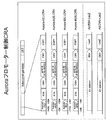
- FIG. 1 It is a schematic diagram which shows the structure of the plasmid used for multifactor cancer specific growth control type adenovirus (m-CRA) preparation.
- Cancer-specific growth-regulated adenovirus (CRA) gene structure whose viral growth is controlled by the Aurora promoter, and non-proliferating (E1-deficient) type and expressing LacZ under the control of a constitutive expression promoter
- CRA cancer-specific growth-regulated adenovirus
- Ad.RSV-LacZ and Ad.CMV-LacZ Ad.RSV-LacZ
- Ad.CMV-LacZ Ad.RSV-LacZ
- TM endogenous Aurora
- the vector of the present invention encodes a nucleic acid promoter encoding a factor essential for at least one viral replication or assembly, and / or encodes a cytotoxic factor and / or therapeutic factor. Characterized in that the nucleic acid comprises an expression cassette operably linked to the Aurora kinase promoter.
- the promoters of the human Aurora kinase A and Aurora kinase B genes have been isolated (Tanaka, M. et al., J. Biol. Chem., 277 (12): 10719-26, 2002; Kimura, M. et al., Biochem. Biophys. Res.
- the Aurora kinase promoter is a viral vector in which the promoter of a nucleic acid encoding a factor essential for viral replication or assembly is replaced with an Aurora kinase promoter, or a nucleic acid encoding a protein or RNA that is involved in cytotoxicity or has therapeutic activity
- vectors ligated so that they can be controlled, and the therapeutic or prophylactic effects of these vectors.
- the Aurora kinase promoter was expected to act on normal cells as well as human cancer cells.
- the Aurora kinase promoter incorporated in the vector of the present invention and introduced exogenously was ligated very specifically downstream in target disease cells such as cancer cells. While it drives gene expression, it does not show transcriptional activity that can be detected in normal cells (see, eg, FIG. 4).
- target disease cells such as cancer cells.
- Such a high specificity of the Aurora kinase promoter is unpredictable from the endogenous expression pattern of the kinase.
- “specific” is not limited to the case where no transcription activity is shown in normal cells as shown in FIG. 4, but in normal cells within a therapeutically acceptable range. Also included are cases of driving gene expression.
- the Aurora kinase promoter used in the vector of the present invention is not particularly limited as long as it is a promoter derived from a gene belonging to the Aurora kinase family.
- a Drosophila Aurora-A, -B and -C gene mammal for example, (Human, monkey, cow, horse, pig, dog, cat, sheep, goat, rabbit, mouse, rat, etc.)
- a promoter of Aurora kinase A gene or Aurora kinase B gene derived from a human or other mammal is preferable, and a promoter of human Aurora kinase A gene or human Aurora kinase B gene is more preferable.
- the nucleotide sequence length of the Aurora kinase promoter is specific to the target disease cell (eg, cancer cell) and activates transcription of the downstream linked gene to the extent that it exhibits sufficient therapeutic activity for the target disease. As long as it can be converted, there is no particular limitation.
- the nucleotide sequence at positions -124 to +354 (nucleotide sequence shown in SEQ ID NO: 2; 1363 to 1840th in the nucleotide sequence shown in SEQ ID NO: 1 with the transcription start point being +1)
- the nucleotide sequence at positions ⁇ 185 to +361 (the nucleotide sequence shown in SEQ ID NO: 4; 1595 in the nucleotide sequence shown in SEQ ID NO: 3), where the transcription start point is +1
- the desired specificity and transcriptional activity can be obtained (for example, see FIG. 4).
- the human Aurora kinase promoter used in the vector of the present invention is at least nucleotides 1363 to 1840 in the nucleotide sequence shown in SEQ ID NO: 1, or at least 1595 to 2140 in the nucleotide sequence shown in SEQ ID NO: 3.
- the upper limit of the nucleotide sequence length of the Aurora kinase promoter is not particularly limited, but if the length of the 5 'upstream region is too large, it may adversely affect the transcription activity and specificity of the promoter.
- nucleotide sequence at positions -1486 to +354 (nucleotide sequence shown in SEQ ID NO: 1), where the transcription start point is +1
- the transcription start point is +1
- nucleotide sequence at positions -1779 to +361 (nucleotide sequence shown in SEQ ID NO: 3) is defined as +1, the desired specificity and transcriptional activity can be obtained (see, for example, FIG. 4).
- the 5 ′ end of the human Aurora kinase promoter used in the vector of the present invention is the nucleotides 1 to 1363 in the nucleotide sequence shown in SEQ ID NO: 1, or the nucleotide shown in SEQ ID NO: 3. Examples include nucleotides 1 to 1595 in the sequence.
- a preferable region can be selected in the same manner.
- the Aurora kinase promoter also includes a nucleic acid that can hybridize under stringent conditions with a natural mammalian Aurora kinase promoter and has substantially the same characteristics as the natural promoter.
- “Substantially the same property” means a property that drives gene expression specific to a target disease cell such as a cancer cell, and the degree of transcriptional activity is equivalent (for example, about 0.5 to about 2 times).
- the quantitative factors may be different as long as they can drive gene expression to the extent that sufficient therapeutic activity can be exerted against the target disease.
- nucleic acid capable of hybridizing under stringent conditions with a complementary strand sequence of the nucleotide sequence shown in SEQ ID NO: 1 or 3 is exemplified.
- a nucleic acid for example, about 80% or more, preferably about 90% or more, more preferably about 95% or more, particularly preferably about 97% or more, most preferably, the nucleotide sequence shown in SEQ ID NO: 1 or 3 Include nucleic acids containing nucleotide sequences having about 98% or more homology.
- Hybridization can be performed according to a method known per se or a method analogous thereto, for example, the method described in Molecular Cloning, 2nd ed. (J. Sambrook et al., Cold Spring Harbor Lab. Press, 1989). When a commercially available library is used, hybridization can be performed according to the method described in the attached instruction manual. Hybridization can be preferably performed according to highly stringent conditions.
- Stringent conditions include: (1) low ionic strength and high temperature for washing, for example, 0.015 M sodium chloride / 0.0015 M sodium citrate / 0.1% sodium dodecyl sulfate at 50 ° C, and (2) formamide 50% (v / v) with a denaturant, for example, 0.1% bovine serum albumin / 0.1% Ficoll / 0.1% polyvinylpyrrolidone / 750 mM sodium chloride, 50 mM sodium phosphate buffer (pH 6.5) containing 75 mM sodium citrate.
- v Reaction conditions characterized by using formamide at 42 ° C are exemplified.
- stringent conditions include 50% formamide, 5xSSC (0.75 M NaCl, 0.075 M sodium citrate), 50 mM sodium phosphate (pH 6.8), 0.1% sodium pyrophosphate, 5x Denhardt's solution, sonicated sperm DNA (50 mg / ml), 0.1% SDS, and 10% dextran sulfate at 42 ° C, washed with 0.2xSSC and 50% formaldehyde at 55 ° C, followed by 0.1xSSC containing EDTA at 55 ° C High stringency washing may be performed.
- a person skilled in the art can easily achieve a desired stringency by appropriately adjusting the temperature during the hybridization reaction and / or washing, the ionic strength of the buffer, and the like according to factors such as the probe length.
- Aurora kinase promoter is known from genomic DNA extracted from cells and tissues derived from humans or other mammals (eg monkeys, cows, horses, pigs, dogs, cats, sheep, goats, rabbits, mice, rats, etc.) Aurora kinase gene promoter sequences (eg Tanaka, M. et al., J. Biol. Chem., 277 (12): 10719-26, 2002; Kimura, M. et al., Biochem. Biophys. Res.
- mammals eg monkeys, cows, horses, pigs, dogs, cats, sheep, goats, rabbits, mice, rats, etc.
- Aurora kinase gene promoter sequences eg Tanaka, M. et al., J. Biol. Chem., 277 (12): 10719-26, 2002; Kimura, M. et al., Biochem. Biophys. Res.
- a genomic DNA containing the promoter region is cloned, and a DNA fragment containing a desired partial promoter sequence using a DNA-degrading enzyme, for example, an appropriate restriction enzyme It can be prepared by collecting the desired band and purifying the DNA after separation by gel electrophoresis and separation by gel electrophoresis.
- a DNA-degrading enzyme for example, an appropriate restriction enzyme
- the Aurora kinase promoter partial sequence is amplified and isolated by PCR using the above crude cell extract or genomic DNA isolated therefrom as a template and primers synthesized based on the known Aurora kinase gene promoter sequence
- the Aurora kinase promoter is a commercially available DNA / DNA based on a known Aurora kinase gene promoter sequence (for example, the nucleotide sequence represented by SEQ ID NO: 1 or 3). It can also be obtained by chemical synthesis using an automatic RNA synthesizer.
- the present invention relates to an expression cassette comprising an Aurora kinase promoter operably linked to a nucleic acid encoding a cytotoxic factor or therapeutic factor, and a vector having the expression cassette.
- a nucleic acid encoding a cytotoxic factor under the control of the Aurora kinase promoter used in the vector of the present invention is, for example, directly or indirectly to a cell when the nucleic acid is transcribed (and translated). Any protein or RNA may be encoded as long as it causes death or at least growth inhibition.
- a therapeutic factor under the control of the Aurora kinase promoter used in the vector of the present invention can directly or indirectly act on a target disease by an action other than cytotoxic action when the gene is transcribed (and translated). Any protein (or RNA) may be encoded as long as it provides a therapeutic effect.
- cytotoxic factors or therapeutic factors include tumor suppressor genes (p53, p21, etc.), cytokine genes (GM-CSF, IL-2, IL-4, IFN, etc.), apoptosis induction Genes (eg Fas), genes coding for ion channel (eg sodium channels), proteins that can damage cells by converting prodrugs into poisons (suicide genes) (HSV-thymidine kinase, cytosine deaminase) ), Antisense nucleic acid against cancer-causing genes (antisense nucleic acid against TGF- ⁇ , antisense nucleic acid against survivin, etc.), angiogenesis inhibitory gene (platelet factor IV, angiostatin, endostatin, soluble VEGF receptor, etc.), MiRNA with tumor suppressor action or its mimic, or cancer promoting action MiRNA antisense nucleic acids, aptamers, ribozymes and the like.
- tumor suppressor genes p53, p21, etc.
- a nucleic acid encoding a cytotoxic factor or therapeutic factor can be isolated as cDNA from a cell / tissue producing it by a method known per se, and can be operably linked downstream of the Aurora kinase promoter.
- An expression cassette comprising a nucleic acid encoding a cytotoxic or therapeutic factor under the control of an Aurora kinase promoter preferably comprises a suitable polyadenylation sequence downstream of the nucleic acid or gene.
- a vector having an expression cassette comprising an Aurora kinase promoter operably linked to a nucleic acid encoding a cytotoxic factor or therapeutic factor of the present invention comprises a nucleic acid encoding a protein required for viral replication or assembly comprising the Aurora kinase promoter or It may be placed under the control of an exogenous promoter different from the Aurora kinase promoter.
- a promoter that can be constitutively expressed in mammals as a foreign promoter different from the Aurora kinase promoter a cytomegalovirus (CMV) -derived promoter (e.g., CMV immediate early promoter), human immunodeficiency virus (HIV ) Promoters (e.g.
- HIV LTR Rous sarcoma virus (RSV) promoters (e.g. RSV LTR), mouse mammary tumor virus (MMTV) promoters (e.g. MMTV LTR), Moloney murine leukemia virus (MoMLV) promoters ( Example: MoMLV LTR), herpes simplex virus (HSV) -derived promoter (example: HSV thymidine kinase (TK) promoter), SV40-derived promoter (example: SV40 early promoter), Epstein-Barr virus (EBV) -derived promoter, adeno-associated virus ( AAV) derived promoter (eg AAV p5 promoter), adenovirus (Ad V) Constitutive promoters such as derived promoters (Ad2 or Ad5 major late promoter) and the like, and gene promoters of mammalian constituent proteins such as ⁇ -actin gene promoter, PGK gene promoter, transferrin gene promoter and the
- a promoter of a gene that can be specifically expressed in a target disease cell a promoter of a factor whose expression is specifically increased in a target organ, or an inducible promoter can also be used.
- promoters of factors whose expression is specifically increased in organs are, for example, albumin and ⁇ -fetoprotein promoters specific to liver, prostate specific antigen (PSA) promoter specific to prostate, muscle and brain Mitochondrial creatine kinase (MCK) promoter specific to various organs, and myelin basic protein (MB), glial fibrillary acidic protein (GFAP) and neuron specific enolase (specific to the nervous system such as the brain) NSE) promoter and the like.
- PSA prostate specific antigen
- MCK myelin basic protein
- GFAP glial fibrillary acidic protein
- neuron specific enolase specific to the nervous system such as the brain
- CEA Carcinoembryonic antigen, carcinoembryonic antigen
- E2F promoter Nemaize, adenosine-phosphate
- OC osteocalcin promoter
- FLK-1 promoter Xie, B. et al., Br. J. Cancer, 81, 1335-1343, 1999
- VEGF promoter specific for lung cancer Koshikawa, N.
- a metallothionein-1 gene promoter etc. can be used, for example.
- heavy metals such as gold, zinc, and cadmium
- steroids such as dexamethasone
- alkylating agents such as chelating agents
- inducers such as cytokines
- the present invention relates to a target disease-specific proliferating virus characterized in that the promoter of a nucleic acid encoding an element essential for at least one viral replication or assembly is replaced with an Aurora kinase promoter. It relates to a vector (conditionally replicating virus: CRV) (hereinafter also referred to as “Aurora kinase promoter-dependent CRV”). That is, the present invention relates to a vector characterized in that it specifically grows in a target disease cell such as a cancer cell (advantageously over a normal cell).
- CRV conditionally replicating virus
- the Aurora kinase promoter-dependent CRV of the present invention can be constructed by placing a nucleic acid encoding a protein required for replication or assembly of at least one virus under the control of the Aurora kinase promoter.
- a factor essential for viral replication or assembly refers to a gene that encodes one of the proteins essential for the virus to self-replicate, such as a viral structural protein, or a virus that is essential for the virus to perform the assembly. Means a gene that encodes one of the proteins. More specifically, factors essential for viral replication or assembly vary depending on the virus species used. For example, in the case of adenovirus, an early gene (which acts for transcriptional control of viral proteins after transcription is initiated from the early stage of infection ( E1A, E1B, E2 and E4, which are early genes), or Rb-binding region-deficient E1A (E1A ⁇ 24) and p53-binding region-deficient E1B (E1B ⁇ 55K) described later.
- E1A, E1B, E2 and E4 which are early genes
- E1A is transcribed first after infection with adenovirus, and subsequent viral replication does not occur unless E1A is expressed. Therefore, Aurora kinase promoter is used to control virus growth specifically for target diseases such as cancer. Although it is a very suitable gene, the same effect can be obtained by controlling other early genes essential for virus replication.
- the late genes L1, L2, L3, L4, and L5 of the nucleic acid encoding the structural gene of adenovirus are transcribed at the later stage of cell division after infection, and constitute the viral structure. However, even if the expression of these late genes is controlled by the Aurora kinase promoter, virus growth can be controlled specifically for a target disease such as cancer.
- the gene encoding the viral protein whose expression is controlled by the Aurora kinase promoter is any viral gene that is essential for viral replication or assembly. But you can.
- Such an Aurora kinase promoter-dependent propagation type viral vector can be obtained by replacing the endogenous promoter of a nucleic acid encoding a protein required for viral replication or assembly with an Aurora kinase promoter.
- a nucleic acid encoding E1A and / or E1B is placed under the control of the Aurora kinase promoter. Since the Aurora kinase promoter-dependent CRV of the present invention introduced into a cell cannot grow in an environment where the Aurora kinase promoter is not activated (for example, a normal cell), the cell is not damaged.
- the Aurora kinase promoter-dependent CRV of the present invention enters the environment where the Aurora kinase promoter is activated (for example, target disease cells), the virus grows there, and the cells are damaged by the cytotoxicity of the viral protein. The The virus released from the lysed cells infects neighboring cells not introduced with the vector one after another, and the same steps are repeated.
- the proliferative virus vector of the present invention can be introduced into all diseased cells in the lesion. If at least one of the nucleic acids encoding proteins required for viral replication or assembly is under the control of the Aurora kinase promoter, viral propagation or assembly is limited to the environment in which the Aurora kinase promoter is activated.
- nucleic acids encoding proteins required for other viral replication or assembly may be placed under the control of a foreign promoter that is different from any Aurora kinase promoter.
- a promoter that can be constitutively expressed in mammals as a foreign promoter different from the Aurora kinase promoter, a cytomegalovirus (CMV) -derived promoter (e.g., CMV immediate early promoter), human immunodeficiency virus (HIV ) Promoters (e.g. HIV LTR), Rous sarcoma virus (RSV) promoters (e.g. RSV LTR), mouse mammary tumor virus (MMTV) promoters (e.g.
- CMV cytomegalovirus
- HMV human immunodeficiency virus
- RSV Rous sarcoma virus
- MMTV mouse mammary tumor virus
- MoMLV LTR Moloney murine leukemia virus
- MoMLV LTR Moloney murine leukemia virus
- HSV herpes simplex virus
- TK herpes simplex virus
- SV40-derived promoter example: SV40 early promoter
- Epstein-Barr virus (EBV) -derived promoter adeno-associated virus ( AAV) derived promoter
- AAV adeno-associated virus
- Ad V Constitutive promoters such as derived promoters (Ad2 or Ad5 major late promoter) and the like, and gene promoters of mammalian constituent proteins such as ⁇ -actin gene promoter, PGK gene promoter, transferrin gene promoter and the like can be used.
- a promoter of a gene that can be specifically expressed in a target disease cell a promoter of a factor whose expression is specifically increased in a target organ, or an inducible promoter can also be used.
- promoters of factors whose expression is specifically increased in organs are, for example, albumin and ⁇ -fetoprotein promoters specific to liver, prostate specific antigen (PSA) promoter specific to prostate, muscle and brain Mitochondrial creatine kinase (MCK) promoter specific to various organs, and myelin basic protein (MB), glial fibrillary acidic protein (GFAP) and neuron specific enolase (specific to the nervous system such as the brain) NSE) promoter and the like.
- PSA prostate specific antigen
- MCK myelin basic protein
- GFAP glial fibrillary acidic protein
- neuron specific enolase specific to the nervous system such as the brain
- CEA Carcinoembryonic antigen, carcinoembryonic antigen
- E2F promoter Nemaize, adenosine-phosphate
- OC osteocalcin promoter
- FLK-1 promoter Xie, B. et al., Br. J. Cancer, 81, 1335-1343, 1999
- VEGF promoter specific for lung cancer Koshikawa, N.
- HRE cancer specific hypoxia responsive region
- Grp78 cancer specific hypoxia responsive region
- L-plastin promoter various cancer specific hypoxia responsive region
- hexokinase II examples include promoters and survivin promoters.
- the inducible promoter for example, a metallothionein-1 gene promoter can be used.
- a metallothionein-1 gene promoter heavy metals such as gold, zinc, and cadmium, steroids such as dexamethasone, alkylating agents, chelating agents, and inducers such as cytokines are locally administered to target disease cells at a desired time.
- the promoters used may be the same or different.
- the Aurora kinase A promoter and the Aurora kinase B promoter can be used together in one vector.
- the Aurora kinase promoter-dependent CRV may further comprise an expression cassette containing an Aurora kinase promoter operably linked to a nucleic acid encoding a cytotoxic factor or therapeutic factor.
- the viral vector of the present invention is essential for inducing the cellular environment necessary for viral growth of the virus protein in normal cells, but may lack a region that is not necessary for virus growth in the target disease cell. .
- the target disease is cancer
- the E1A24KDa region is deleted (E1A ⁇ 24), the E1B55KDa region is deleted (E1B ⁇ 55K), or the E1B19KDa region is deleted (E1B ⁇ 19).
- This type of viral vector allows cancer cell-specific growth even if the nucleic acid encoding the protein required for viral replication is not under the control of a cancer cell-specific promoter such as the Aurora kinase promoter. Can wake up.
- the present invention is essential for inducing the cellular environment necessary for the growth of the virus in normal cells without any nucleic acid encoding a protein required for viral replication or assembly under the control of the Aurora kinase promoter
- Vectors to which nucleic acids encoding factors or therapeutic factors are operably linked are included.
- a region that is essential for inducing the cellular environment necessary for virus growth in normal cells but that is not required for virus growth in target disease cells eg, E1A24KDa region, E1B55KDa region, and / or E1B19KDa
- the nucleic acid encoding the viral protein deficient in the region (2) may be placed under the control of the Aurora kinase promoter, or any of the nucleic acids encoding proteins necessary for virus replication other than the defective viral protein Or under the control of the Aurora kinase promoter.
- regions that are essential for inducing the cellular environment necessary for virus growth in normal cells but are not required for virus growth in target disease cells eg, E1A24KDa region, E1B55KDa region, and / or Or a nucleic acid encoding a viral protein deficient in the E1B19KDa region
- an Aurora kinase promoter or any of nucleic acids encoding a protein necessary for virus replication other than the defective viral protein
- the propagating viral vector of the present invention does not necessarily need to further comprise a therapeutic factor under the control of the Aurora kinase promoter.
- the vector of the present invention imparts resistance to a replication origin for autonomous amplification in host cells and a selection marker gene for selection of transformed cells (tetracycline, ampicillin, kanamycin, hygromycin, phosphinothricin, etc.) Or a gene that complements an auxotrophic mutation, etc.).
- a selection marker gene for selection of transformed cells (tetracycline, ampicillin, kanamycin, hygromycin, phosphinothricin, etc.) Or a gene that complements an auxotrophic mutation, etc.).
- the disease in which the vector of the present invention can be used as a therapeutic vector is a disease in which the Aurora kinase promoter is a disease caused by a cell that exhibits promoter activity capable of driving gene expression sufficient to treat the disease.
- the Aurora kinase promoter is a disease caused by a cell that exhibits promoter activity capable of driving gene expression sufficient to treat the disease.
- the Aurora kinase promoter is a disease caused by a cell that exhibits promoter activity capable of driving gene expression sufficient to treat the disease.
- it is a cancer.
- cancer examples include renal cell carcinoma, fibrosarcoma, myxosarcoma, liposarcoma, chondrosarcoma, osteosarcoma, chordoma, hemangiosarcoma, endothelial sarcoma, lymphangiosarcoma, lymphatic endothelial sarcoma, synovial tumor, medium Dermatoma, Ewing tumor, leiomyosarcoma, rhabdomyosarcoma, colon cancer, pancreatic cancer, breast cancer, ovarian cancer, prostate cancer, squamous cell carcinoma, basal cell carcinoma, adenocarcinoma, sweat gland carcinoma , Sebaceous gland cancer, papillary cancer, papillary gland cancer, cystadenocarcinoma, medullary cancer, primary bronchial cancer, liver cancer, bile duct cancer, choriocarcinoma, seminoma, embryonic period Cancer, Wilms tumor, cervical cancer, testicular cancer, lung cancer,
- the vector of the present invention may be a viral vector or a non-viral vector, but is preferably an adenovirus, a retrovirus, an adeno-associated virus, a herpes virus, a herpes simplex virus, a lentivirus, a vaccinia virus, a poxvirus, Virus vectors such as poliovirus, Sindbis virus, Sendai virus.
- Adenoviruses have such advantages that gene transfer efficiency is extremely high, they can be introduced into non-dividing cells, and integration of the transgene into the host chromosome is extremely rare.
- a gutted (gutless) vector that replaces almost the entire length of the adenovirus genome other than the packaging signal ( ⁇ ) ⁇ with the transgene has solved the problem of immunogenicity in the first generation vector, and as a result transgene expression Long-term sustainability was realized.
- adeno-associated virus has relatively high gene transfer efficiency, can be introduced into non-dividing cells, and it is known that transgene expression persists for a long time by in vivo administration in animal experiments.
- a multifactor cancer-specific growth-regulated recombinant adenovirus system developed by the present inventors As part of the Aurora kinase promoter.
- m-CRA multifactor cancer-specific growth-regulated recombinant adenovirus system developed by the present inventors
- FIG. 1 An example of a plasmid vector suitably used for construction of m-CRA is presented in FIG.
- the Aurora kinase promoter is used as the promoter A and / or the promoter B, and the promoter C of the plasmid vector P2 (controls the expression of cytotoxic factor or therapeutic factor) or Aurora kinase promoter or another Any other promoter such as a target tissue specific promoter or a constitutive promoter can be used.
- the target tissue-specific promoter include the above-mentioned various promoters that are specifically expressed only in cancer cells if the target tissue is cancer cells.
- the cytotoxic factor or therapeutic factor controlled by the promoter C include the various cytotoxic factors or therapeutic factors described above if the target disease is cancer.
- the E1A gene operably linked to the Aurora kinase promoter (which may lack the 24 KDa region), and a constitutive promoter (such as a CMV promoter)
- a constitutive promoter such as a CMV promoter
- a plasmid vector P1 containing a linked E1B gene (which may lack the 19 KDa or 55 KDa region), a reporter gene (cytotoxic factor or therapeutic factor model system) operably linked to a constitutive promoter (such as a CMV promoter)
- a backbone vector P2 containing an adenoviral genome (which may have a target cell specific mutation in the fiber gene) lacking the E1 region.
- plasmids are appropriately combined, plasmid fusion using the Cre recombinase loxP system, and selection of the target plasmid using the drug resistance gene and ori loaded on each plasmid, the Aurora kinase promoter-E1A expression cassette, constitutive A cancer cell-specific proliferating adenovirus (CRA) vector plasmid carrying a promoter-E1B expression cassette and a constitutive promoter-cytotoxic factor or therapeutic factor expression cassette is generated. Subsequently, using this vector, a CRA vector can be prepared by transfection into a cell line (eg, 293 cells) complementary to E1A. In the m-CRA vector shown in FIG.
- a cell line eg, 293 cells
- the growth of the vector is controlled by two factors: a promoter (Aurora-A or -B) that controls E1A expression and an E1B gene (E1B ⁇ 55K). Promoters that control the expression of genes, promoters that control the expression of cytotoxic factors or therapeutic factors, cytotoxic factors or therapeutic factors, and even multi-factor advanced growth by replacing the backbone fiber gene with other elements And expression control becomes possible.
- the non-viral vector of the present invention comprises an expression cassette containing a cytotoxic or therapeutic factor under the control of the Aurora kinase promoter.
- plasmids derived from E. coli e.g., pBR322, pBR325, pUC12, pUC13
- plasmids derived from Bacillus subtilis e.g., pUB110, pTP5, pC194
- yeast-derived plasmids e.g., pSH19, pSH15
- animal cell expression plasmids (Examples: pA1-11, pXT1, pRc / CMV, pRc / RSV, pcDNAI / Neo) and the like can be used.
- cytotoxic factor and “therapeutic factor” have the same meaning as described above.
- the target disease is cancer
- the above-mentioned various cancer therapeutic factors are exemplified.
- the non-viral vector of the present invention in addition to the above, those containing an enhancer, a splicing signal, a poly A addition signal, a selection marker, an SV40 replication origin, and the like can be used as desired.
- the selection marker include dihydrofolate reductase (dhfr) gene [methotrexate (MTX) resistance], ampicillin resistance (Amp r ) gene, neomycin resistance (Neo r ) gene (G418 resistance) and the like.
- the vector can be introduced using a polymer carrier such as a poly L-lysine-nucleic acid complex or encapsulated in liposomes.
- Liposomes are capsules made of phospholipid and having a particle size of several tens to several hundreds of nanometers, and can enclose vectors such as plasmids containing cytotoxic factors or therapeutic factors under the control of the Aurora kinase promoter.
- the vector can be directly introduced into the target cell using the particle gun method.
- a target disease-specific growth virus vector or Aurora kinase promoter wherein the promoter of a nucleic acid encoding a factor essential for replication or assembly of at least one virus of the present invention is replaced with an Aurora kinase promoter
- the underlying vectors containing cytotoxic factors and / or therapeutic factors are necessary because they can be specifically propagated or expressed in target disease cells such as cancer cells Depending on the condition, it may be mixed with a pharmacologically acceptable carrier to form various preparations such as injections, and then used as a therapeutic agent for the target disease, preferably cancer.
- the pharmacologically acceptable carrier various organic or inorganic carrier substances commonly used as pharmaceutical materials are used, and excipients, lubricants, binders, disintegrants in solid preparations; solvents in liquid preparations, It is blended as a solubilizer, suspending agent, isotonic agent, buffer, soothing agent and the like. Further, if necessary, preparation additives such as preservatives, antioxidants, colorants, sweeteners and the like can be used.
- excipients include lactose, sucrose, D-mannitol, D-sorbitol, starch, pregelatinized starch, dextrin, crystalline cellulose, low-substituted hydroxypropylcellulose, sodium carboxymethylcellulose, gum arabic, pullulan, light
- Anhydrous silicic acid, synthetic aluminum silicate, magnesium aluminate metasilicate and the like can be mentioned.
- Preferable examples of the lubricant include magnesium stearate, calcium stearate, talc, colloidal silica and the like.
- Preferred examples of the binder include pregelatinized starch, sucrose, gelatin, gum arabic, methylcellulose, carboxymethylcellulose, sodium carboxymethylcellulose, crystalline cellulose, sucrose, D-mannitol, trehalose, dextrin, pullulan, hydroxypropylcellulose, hydroxy Examples thereof include propylmethylcellulose and polyvinylpyrrolidone.
- Preferable examples of the disintegrant include lactose, sucrose, starch, carboxymethyl cellulose, carboxymethyl cellulose calcium, croscarmellose sodium, carboxymethyl starch sodium, light anhydrous silicic acid, low substituted hydroxypropyl cellulose and the like.
- the solvent include water for injection, physiological saline, Ringer's solution, alcohol, propylene glycol, polyethylene glycol, sesame oil, corn oil, olive oil, cottonseed oil and the like.
- solubilizers include polyethylene glycol, propylene glycol, D-mannitol, trehalose, benzyl benzoate, ethanol, trisaminomethane, cholesterol, triethanolamine, sodium carbonate, sodium citrate, sodium salicylate, sodium acetate. Etc.
- suspending agent examples include surfactants such as stearyltriethanolamine, sodium lauryl sulfate, laurylaminopropionic acid, lecithin, benzalkonium chloride, benzethonium chloride, glyceryl monostearate, such as polyvinyl alcohol, polyvinyl Examples include pyrrolidone, sodium carboxymethylcellulose, methylcellulose, hydroxymethylcellulose, hydroxyethylcellulose, hydroxypropylcellulose and other hydrophilic polymers, polysorbates, and polyoxyethylene hydrogenated castor oil.
- isotonic agent include sodium chloride, glycerin, D-mannitol, D-sorbitol, glucose and the like.
- Preferable examples of the buffer include buffers such as phosphate, acetate, carbonate and citrate.
- Preferable examples of the soothing agent include benzyl alcohol.
- Preferable examples of the preservative include p-hydroxybenzoates, chlorobutanol, benzyl alcohol, phenethyl alcohol, dehydroacetic acid, sorbic acid and the like.
- Preferable examples of the antioxidant include sulfite and ascorbate.
- Suitable examples of the colorant include water-soluble edible tar dyes (eg, edible dyes such as edible red Nos. 2 and 3, edible yellows Nos. 4 and 5, and edible blue Nos.
- water-insoluble lake dyes (Example: Aluminum salt of water-soluble edible tar pigment, etc.), natural pigment (eg, ⁇ -carotene, chlorophyll, Bengala, etc.).
- natural pigment eg, ⁇ -carotene, chlorophyll, Bengala, etc.
- sweetening agent include saccharin sodium, dipotassium glycyrrhizinate, aspartame, stevia and the like.
- Administration of the disease therapeutic agent containing the vector of the present invention is carried out by removing the target cell cage of the animal to be treated (or cells in the animal of the same or different type or different from the animal to be treated) outside the body, introducing it after culturing, and introducing it into the body. It is performed by either the ex vivo method of returning to (or transplanting) and the in vivo method of introducing the vector directly into the body of the administration subject, preferably the in ⁇ ⁇ ⁇ ⁇ vivo method.
- the vector can be introduced into the target cells by a microinjection method, a calcium phosphate coprecipitation method, a PEG method, an electroporation method, or the like.
- the preparation can be administered, for example, by injection, catheter, balloon catheter, local injection, transplantation of an implant incorporating the vector of the present invention into a lesion.
- the dosage of the disease therapeutic agent containing the vector of the present invention is as follows: vector type, promoter activity in target cells, therapeutic factor type, administration route, severity of disease, animal species to be administered, drug to be administered
- vector type a cancer-specific proliferating adenovirus
- virus particles (1x10 10 to 10 12 particles) are used in conventional clinical trials for cancer gene therapy. Since the safety has been confirmed using particle / tumor, the same amount is a guide for administration (Molecular Therapy, 18: 429-434, 2010).
- a single adult dose is about 2 to about 10 mg, preferably about 5 to about 8 mg.
- the present invention also provides a clinical diagnostic agent containing a vector containing an Aurora kinase promoter.
- Diseases that can be diagnosed using the diagnostic agent of the present invention are those in which the exogenously introduced Aurora kinase promoter specifically drives the expression of a gene that is operably linked downstream downstream of normal cells. There is no particular limitation as long as it is a disease caused by such cells, but cancer is preferred.
- the gene operably linked downstream of the Aurora kinase promoter is not particularly limited as long as the expression of the gene can be easily monitored.
- a luciferase gene, a green fluorescent protein (GFP) gene, ⁇ -galactosidase Examples include, but are not limited to, various reporter genes such as the (LacZ) gene.
- gene expression can be monitored by using a proliferative virus vector used as a therapeutic agent for the disease, with cytotoxicity as an index.
- a proliferative virus vector used as a therapeutic agent for the disease, with cytotoxicity as an index.
- cytotoxicity as an index.
- a vector containing an Aurora kinase promoter into a cell collected from a lesion of a subject suspected of cancer, and preferably detecting the expression of the reporter gene and the solubility of the cell in the cell, preferably the control
- the control Compared to the case where the vector is introduced into normal cells, when the expression level of the reporter gene and the solubility of the cells are significantly higher than those in normal cells, the subject is more likely to develop cancer. Can be diagnosed.
- Ad.Aurora-LacZ “Non” -propagating adenovirus vector (Ad.Aurora-LacZ) that expresses the marker LacZ gene under the control of the Aurora kinase promoter, as well as cancer-specific “growth whose virus growth is controlled depending on the Aurora kinase promoter activity
- Ad.Aurora-LacZ Ad.Aurora-LacZ is created for preliminary verification experiments, “Can cancer-specific gene expression be induced?” .
- Aurora.CRA which was subsequently produced, the virus was induced specifically in cancer cells that highly express Aurora kinase (dominant), and was thereby amplified specifically in cancer cells.
- Virus proteins cause cancer cell-specific cell death, and further proliferating viruses continuously infect cancer cells specifically (dominantly) and induce cell death to specifically kill cancer cells. It is the subject of the present invention that “Aurora.CRA can be a cancer therapeutic drug”, that is, a verification experiment of “the effects of cancer-specific virus growth and cell death induction and cancer therapeutic effects” This is an experiment. In this way, two types of adenovirus vectors having completely different purposes and structures were prepared as follows.
- the human Aurora-A (S) promoter (SEQ ID NO: 2; 478 bp; -124 to +354) is a primer (sense: 5'-TCAGTAGGGCCCCAGCTGTGGGACTGCCACAGGTCTGGCTGG-3 '(SEQ ID NO: 5); antisense: 5'-ATCTAGTCTAGACAGCTGCTCTAGCTGTAATAAGTAACAAGC-3 '(SEQ ID NO: 6) was amplified from pGL3-1486 by PCR, cloned into an appropriate plasmid vector, cut out using ApaI / XbaI restriction sites, and blunt-ended.
- the human Aurora-B (L) promoter (SEQ ID NO: 3; 2140 bp; -1779 to +361) was excised from pGL3-1879 using XhoI / HindIII restriction sites and blunt-ended.
- the human Aurora-B (S) promoter (SEQ ID NO: 4; 546 bp; -185 to +361) was excised from pGL-187 (provided by Gifu University, Dr. Kimura) using the XhoI / HindIII restriction sites and blunt-ended. did.
- These four types of promoters were used for the production of the following Ad.Aurora-LacZ and Aurora.CRA.
- shuttle vector plasmids By subcloning these shuttle vector plasmids at the restriction enzyme site of I-CeuI / PI-SceI into plasmid pAd.HM4 having an adenovirus genome lacking the E1 region, four types of adenovirus vector plasmids pAd.Aurora-A (S), pAd.Aurora-A (L), pAd.Aurora-B (S), and pAd.Aurora-B (L) were prepared.
- S pAd.Aurora-A
- L pAd.Aurora-A
- S pAd.Aurora-B
- L pAd.Aurora-B
- a cancer-specific “growth control” type adenovirus vector plasmid (pAurora.CRA) whose virus growth is controlled depending on the Aurora kinase promoter activity p ⁇ Pr, a growth control type plasmid (P1 plasmid in FIG. 1) -wtE1A-CMV-E1B ⁇ 55KD (Patent No. 4478775, Nagano S et al. Gene Ther 12: 1385-1393, 2005) was cleaved with restriction enzyme NotI, blunt-ended with T4 DNA polymerase, and treated with CIP enzyme.
- NotI restriction enzyme
- the four types of promoter sequences obtained in 1.1 above were added to this shuttle vector plasmid.
- human Aurora-A (L), human Aurora-A (S), human Aurora-B (L) and human Aurora-B (S) were added to this shuttle vector plasmid.
- pAurora-A (L) -wtE1A-CMV-E1B ⁇ 55KD By ligating the DNA fragments of SEQ ID NOs: 1 to 4) and inserting them into the upstream of E1A of p ⁇ Pr-wtE1A-CMV-E1B ⁇ 55KD respectively, and pAurora-A (L) -wtE1A-CMV-E1B ⁇ 55KD, pAurora-A (S) -wtE1A-CMV-E1B ⁇ 55KD, pAurora-B (L) -wtE1A-CMV-E1B ⁇ 55KD, and pAurora-B (S) -w
- a DNA fragment of the E1 region required at the I-CeuI / PI-SceI restriction site was excised from the four types of “growth control plasmids” (P1 plasmids) thus obtained, and the “adenovirus vector plasmid” (FIG. 1).
- the adenovirus vector (CRA) plasmid in which the Aurora kinase promoter was incorporated upstream of the E1A gene was prepared by ligation to the I-CeuI / PI-SceI restriction site of pAd.HM4 of P3).
- the “treatment (marker) gene cloning plasmid” (P2 plasmid in FIG. 1) (Kamizono J et al.
- the four types of growth-regulated adenovirus vector plasmids (pAurora.CRA), pAdAurora-A (L) -wtE1A-CMV-E1B ⁇ 55KD / CMV-EGFP, pAdAurora-A (S) -wtE1A-CMV-E1B ⁇ 55KD / CMV-EGFP, pAdAurora-B (L) -wtE1A-CMV-E1B ⁇ 55KD / CMV-EGFP, and pAdAurora-B (S) -wtE1A-CMV-E1B ⁇ 55KD / CMV-EGFP other than the E1 and E3 regions of the adenovirus genome A portion, an E1A region operably linked to the Aurora kinase promoter, an E1B region operably linked to the CMV promoter, and an EGFP coding sequence operably linked to the CMV promoter.
- Ad.Aurora-A (L) -LacZ Ad.Aurora-A (S) -LacZ
- Ad.Aurora-B (L) -LacZ Ad.Aurora-B (S) -LacZ
- Ad.Aurora-B (S) -LacZ Ad.Aurora-B
- Ad.Aurora-B (S) -LacZ adenoviruses expressing LacZ under the control of the constitutive promoters Rous sarcoma virus LTR (RSV) and CMV promoter
- RSV Rous sarcoma virus LTR
- CMV promoter Ad.RSV-LacZ and Ad.CMV-LacZ, respectively
- Ad ⁇ E1 an adenovirus lacking the E1 region
- the non-propagation type adenovirus vector and the growth control type adenovirus vector have completely different purposes, structures, and methods for preparing adenovirus vector plasmids.
- the experimental process for preparing the virus after preparing the adenovirus vector plasmid is the same. That is, a virus is produced by transfecting each adenovirus vector plasmid into 293 cells, and details thereof are as follows. For culture of 293 cells, DMEM supplemented with 10% FBS was used. Transfection was performed according to the calcium phosphate method (Current Protocols in Molecular Biology, John Wiley & Sons, Inc., 9.1.4-9.1.9, 1999).
- plaques appeared about one week after transfection the plaques were collected together with the solid medium, suspended in the medium and stored at ⁇ 80 ° C. (virus seed solution). Next, freezing and thawing were repeated three times for the obtained virus seed solution to release the virus from the cells, and this was used to infect 293 cells in culture. The denatured cells were collected together with the medium and infected with new 293 cells. The scale was gradually expanded, and finally, 293 cells of 40 15 cm dishes were infected, and the denatured cells were collected together with the medium.
- the cells were collected together with the medium, centrifuged at 1,000 rpm, the supernatant was removed, suspended in 24 mL of phosphate buffered saline (PBS), and stored at ⁇ 80 ° C. The cell suspension is frozen and thawed three times, centrifuged at 1,000 rpm, and the supernatant is collected.
- a cesium chloride density gradient centrifugation is first carried out at 10 ° C. and 35,000 rpm for 1 hour, followed by 10 ° C., It carried out at 35,000 rpm for 18 hours, and collect
- the resulting virus solution was further purified with a desalting column.
- virus production, amplification, concentration, and purification can be performed for both non-proliferating adenoviruses and growth-regulated adenoviruses.
- the structures of the prepared non-propagating adenoviral vector and the growth controlling adenoviral vector are shown in FIG.
- PCR reaction conditions are as follows: 94 ° C., 10 seconds; 58 ° C., 30 seconds and 72 ° C., 30 seconds, 40 cycles. Rotor-Gene3000 (Corbett) was used for the reaction.
- the primer sequences are as follows: Aurora-A (220 bp): Sense: 5'-TCTTTTGGGTGTTATTCAGTGGC-3 '(SEQ ID NO: 7), Antisense: 5'-TTTTCTGTTTTGATGCCAGTTCC-3' (SEQ ID NO: 8); Aurora -B (167 bp): Sense: 5'-AGAACTCCTACCCCTGGCCCTAC-3 '(SEQ ID NO: 9), antisense: 5'-ATGCTCCACGCCCTCCTTCTCT-3' (SEQ ID NO: 10).
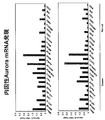
- the results are shown in FIG.
- the amount of mRNA in each cell is corrected with respect to the amount of mRNA of the type II polymerase gene, and is expressed as a ratio where the value in HeLa cells is 1. It can be seen that the endogenous expression of Aurora-A and Aurora-B is significantly higher in some of the cancer cell lines shown on the left side of the graph and lower in the normal cell line shown on the right side. This indicates that the Aurora kinase promoter used in the present invention is endogenously specifically activated in some cancer cells.
- the promoter activity of the promoter activity assay isolated Aurora kinase promoter was compared in cancer cell lines (HepG2 cells and HOS-MNNG cells) and normal cell lines (WI-38 cells). Promoter activity was detected by measuring ⁇ -galactosidase activity using ⁇ -Galactosidase Enzyme Assay System (Promega).
- HepG2 cells (derived from human liver cancer), HOS-MNNG cells (derived from human osteosarcoma), or WI-38 cells (human fetal lung fibroblasts: normal control), Ad.Aurora-A (L) -LacZ, Ad.Aurora-A (S) -LacZ, Ad.Aurora-B (L) -LacZ, Ad.Aurora-B (S) -LacZ, Ad.RSV-LacZ, and Ad.CMV-LacZ are each MOI ( Multiplicity of infection) for 1 hour at 10 minutes, MOI 100 for 1 hour, or MOI 30 for 24 hours. These conditions resulted in nearly identical gene transfer efficiencies for each cell type with no apparent cytotoxicity.
- MOI Multiplicity of infection
- ⁇ -galactosidase activity due to LacZ expression from the Aurora kinase promoter used in the present invention was not detected at all.
- ⁇ -galactosidase activity was detected in any cell line when infected with Ad.CMV-LacZ expressing LacZ under the control of the CMV promoter. From this, it was shown that the Aurora kinase promoter used in the present invention is specifically activated in cancer cells, resulting in the expression of downstream genes. As shown in FIG. 3, Aurora kinase is endogenously slightly expressed in normal cells including WI-38, but in this way, an appropriate region is taken out as a promoter to express foreign genes.
- cytotoxic effect The cytotoxic effect of the viral vector of the present invention carrying the Aurora kinase promoter was evaluated. Cell viability was quantified as follows. Cells in 96 well plates were infected with 4 types of Aurora.CRA or Ad ⁇ E1 at MOI 0.01-1. Cell viability was quantified by WST-8 assay 2-6 days after adenovirus infection using Cell Count Reagent SF (Nacalai Tesque) according to manufacturer's instructions. The WST-8 assay is briefly based on the detection of mitochondrial enzyme activity as a color reaction using a compound that is converted by an enzyme in the mitochondria and displays color.
- the absorbance of the sample at 450 nm and, as a reference, at 690 nm was measured using a Microplate Reader Model 550 (Bio-Rad).
- the results of cytotoxicity specific to cancer cells are shown in FIG. Particularly noteworthy from the results on day 4 with HepG2 cells and day 6 with HOS-MNNG cells, these cancer cell lines compared to the control Ad ⁇ E1 (replication-deficient adenovirus) infected cells.
- Ad ⁇ E1 replication-deficient adenovirus
- the growth control-type virus vector of the present invention has a cytopathic effect specifically in cancer cells and can specifically damage cancer in vivo.
- Hep3B cells of another different hepatoma cell line, as well as breast cancer cells to show that this cancer cell damaging ability (cancer therapeutic effect) occurs in a wide variety of cancers, that is, cancers in general.
- a similar experiment was performed using MCF-7 cells as a strain. The results are shown in FIG.
- Each virus was infected at an MOI of 0.01 to 10, and the cell viability was similarly quantified by the WST-8 assay on the sixth day. Although there are some differences in the degree of killing effect of each Aurora.CRA depending on the type of cancer cell, all four types of Aurora.CRA are markedly more cancerous than the control (Ad ⁇ E1: replication-defective adenovirus). Cytotoxic effect was shown. From this, it has been clarified that the growth control virus vector of the present invention exhibits a cytotoxic effect on all types of cancer regardless of the type of cancer cells, and thus can be a therapeutic agent for all types of cancer.
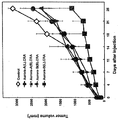
- Hepatoma cell Hep3B was injected into the left dorsal skin of an 8 week old female BALB / C nude mouse, adjusted to 10 7 cells (adjusted with PBS to a total volume of 200 ⁇ l). After tumor formation (7-12 mm), various The virus was injected twice (2 days apart) at 5.0 ⁇ 10 8 pfu / 100 ⁇ l / tumor. After the second injection, the tumor size was measured 4, 7, 11, 18, 21, 25 days later, and the mouse was euthanized 25 days later to collect a tumor (tumor part).
- a highly specific and effective tool for cancer treatment is provided, so that the present invention has utility in the medical field.
- SEQ ID NO: 1 human Aurora-A (L) promoter
- SEQ ID NO: 2 human Aurora-A (S) promoter
- SEQ ID NO: 3 human Aurora-B (L) promoter
- SEQ ID NO: 4 human Aurora-B (S) promoter
- SEQ ID NO: 5-10 Primer
Landscapes
- Health & Medical Sciences (AREA)
- Life Sciences & Earth Sciences (AREA)
- Chemical & Material Sciences (AREA)
- Genetics & Genomics (AREA)
- Engineering & Computer Science (AREA)
- Organic Chemistry (AREA)
- Bioinformatics & Cheminformatics (AREA)
- Zoology (AREA)
- Wood Science & Technology (AREA)
- General Health & Medical Sciences (AREA)
- Medicinal Chemistry (AREA)
- General Engineering & Computer Science (AREA)
- Biotechnology (AREA)
- Biomedical Technology (AREA)
- Microbiology (AREA)
- Biochemistry (AREA)
- Virology (AREA)
- Pharmacology & Pharmacy (AREA)
- Immunology (AREA)
- Veterinary Medicine (AREA)
- Public Health (AREA)
- Animal Behavior & Ethology (AREA)
- Molecular Biology (AREA)
- Nuclear Medicine, Radiotherapy & Molecular Imaging (AREA)
- General Chemical & Material Sciences (AREA)
- Chemical Kinetics & Catalysis (AREA)
- Physics & Mathematics (AREA)
- Biophysics (AREA)
- Plant Pathology (AREA)
- Mycology (AREA)
- Epidemiology (AREA)
- Hematology (AREA)
- Oncology (AREA)
- Medicines Containing Material From Animals Or Micro-Organisms (AREA)
- Medicines That Contain Protein Lipid Enzymes And Other Medicines (AREA)
- Measuring Or Testing Involving Enzymes Or Micro-Organisms (AREA)
- Micro-Organisms Or Cultivation Processes Thereof (AREA)
- Medicines Containing Antibodies Or Antigens For Use As Internal Diagnostic Agents (AREA)
Abstract
Description
最近、本発明者らは、独自に、次世代のがん特異的増殖型ウイルスというべき、多因子制御によるがん特異的アデノウイルスベクターを効率的に作製できる技術を開発し(特許文献1)、これらのアデノウイルスベクターによるがんの遺伝子治療技術の開発を進めている(特許文献2)。
具体的には、本発明は:
[1]細胞毒性因子または治療因子をコードする核酸と機能的に結合したAuroraキナーゼプロモーターを含む発現カセット。
[2][1]に記載の発現カセットを包含するベクター。
[3]ベクターがウイルスベクターである、[2]に記載のベクター。
[4]更に、少なくとも1つのウイルスの複製またはアッセンブリに必須の因子をコードする核酸のプロモーターがAuroraキナーゼプロモーターまたはAuroraキナーゼプロモーターとは異なる外来性プロモーターで置換されていることを特徴とする、[3]に記載のウイルスベクター。
[5]少なくとも1つのウイルスの複製またはアッセンブリに必須の因子が、E1A、E1AΔ24、E1B、またはE1BΔ55Kである、[4]に記載のウイルスベクター。
[6]Auroraキナーゼプロモーターとは異なる外来性プロモーターが、臓器特異的に発現が亢進している因子のプロモーター、がん細胞特異的に発現が亢進している因子のプロモーター、または哺乳類において恒常的に発現し得るプロモーターである、[4]に記載のウイルスベクター。
[7]臓器特異的に発現が亢進している因子のプロモーターが、アルブミン、α-フェトプロテイン、前立腺特異的抗原(PSA)、ミトコンドリア型クレアチンキナーゼ(MCK)、ミエリン塩基性タンパク質(MB)、グリア繊維酸性タンパク質(GFAP)、または神経特異的エノラーゼ(NSE)のプロモーターである、[6]に記載のウイルスベクター。
[8]がん細胞特異的に発現が亢進している因子のプロモーターが、テロメラーゼ逆転写酵素(TERT)、がん胎児性抗原(CEA)、低酸素応答性領域(HRE)、Grp78、L-プラスチン、ヘキソキナーゼII、またはサバイビンのプロモーターである、[6]に記載のウイルスベクター。
[9]哺乳類において恒常的に発現し得るプロモーターが、サイトメガロウイルス前初期遺伝子プロモーター(CMV)である、[6]に記載のウイルスベクター。
[10]少なくとも1つのウイルスの複製またはアッセンブリに必須の因子をコードする核酸のプロモーターがAuroraキナーゼプロモーターで置換されていることを特徴とするウイルスベクター。
[11]更に、少なくとも1つの他のウイルスの複製またはアッセンブリに必須の因子をコードする核酸のプロモーターがAuroraキナーゼプロモーターとは異なる外来性プロモーターで置換されていることを特徴とする、[10]に記載のウイルスベクター。
[12]少なくとも1つのウイルスの複製またはアッセンブリに必須の因子が、E1A、E1AΔ24、E1B、およびE1BΔ55Kから選択される因子である、[10]または[11]に記載のウイルスベクター。
[13]更に、細胞毒性因子または治療因子をコードする核酸と機能的に結合した、AuroraキナーゼプロモーターまたはAuroraキナーゼプロモーターとは異なる外来性プロモーターを含む発現カセットを包含する[10]~[12]のいずれか1つに記載のウイルスベクター。
[14]Auroraキナーゼプロモーターとは異なる外来性プロモーターが、臓器特異的に発現が亢進している因子のプロモーター、がん細胞特異的に発現が亢進している因子のプロモーター、または哺乳類において恒常的に発現し得るプロモーターである、[11]または[13]に記載のウイルスベクター。
[15]臓器特異的に発現が亢進している因子のプロモーターが、アルブミン、α-フェトプロテイン、前立腺特異的抗原(PSA)、ミトコンドリア型クレアチンキナーゼ(MCK)、ミエリン塩基性タンパク質(MB)、グリア繊維酸性タンパク質(GFAP)、または神経特異的エノラーゼ(NSE)のプロモーターである、[14]に記載のウイルスベクター。
[16]がん細胞特異的に発現が亢進している因子のプロモーターが、テロメラーゼ逆転写酵素(TERT)、がん胎児性抗原(CEA)、低酸素応答性領域(HRE)、Grp78、L-プラスチン、ヘキソキナーゼII、またはサバイビンのプロモーターである、[14]に記載のウイルスベクター。
[17]哺乳類において恒常的に発現し得るプロモーターが、サイトメガロウイルス前初期遺伝子プロモーター(CMV)である、[14]に記載のウイルスベクター。
[18]ウイルスベクターが、細胞溶解性ウイルスベクターである、[3]~[17]のいずれか1つに記載のウイルスベクター。
[19]細胞溶解性ウイルスベクターがアデノウイルスベクターである、[18]に記載のウイルスベクター。
[20]Auroraキナーゼプロモーターが、配列番号1に示されるヌクレオチド配列中少なくとも1363~1840番目のヌクレオチド配列、または配列番号3に示されるヌクレオチド配列中少なくとも1595~2140番目のヌクレオチド配列を含む、[2]~[19]のいずれか1つに記載のベクター。
[21][2]~[20]のいずれか1つに記載のベクターを含有する癌治療剤。
[22]有効量の[2]~[20]のいずれか1つに記載のベクターを、がんを有する哺乳動物に投与することを含む、がんの治療方法。
[23]Auroraキナーゼプロモーターを含むベクターを含有する臨床診断剤。
[24]がんの診断用である、[23]記載の診断剤。
を提供する。
ヒトのAuroraキナーゼAおよびAuroraキナーゼB遺伝子のプロモーターは単離されており(Tanaka, M. et al., J. Biol. Chem., 277(12): 10719-26, 2002; Kimura, M. et al., Biochem. Biophys. Res. Commun., 316: 930-6, 2004)、これらのプロモーターの下流にレポーター遺伝子を挿入した、プロモーター機能の解析のためのプラスミドベクターは報告されている。しかし、ウイルスの複製またはアッセンブリに必須の因子をコードする核酸のプロモーターをAuroraキナーゼプロモーターで置換したウイルスベクターや、細胞毒性に関与したり、治療活性を有するタンパク質やRNAをコードする核酸がAuroraキナーゼプロモーターと制御が可能であるように連結されているベクター、ならびに、これらのベクターの治療または予防効果については報告が無かった。また、マーカー遺伝子をAuroraキナーゼプロモーターと制御が可能であるように連結したベクターを利用した診断用途は報告されていない。特には、がん細胞などの標的疾患細胞において特異的に発現するタンパク質が多く報告されている中で、Auroraキナーゼの特異的な発現に着目して、Auroraキナーゼ依存的にウイルス増殖を引き起こし標的疾患細胞を特異的に殺傷するという、標的疾患特異的、特にはがん特異的な増殖制御型ウイルスの作製のためにAuroraキナーゼを用いた例は、いかようなものも報告されていない。
特に、内因性Auroraキナーゼはいくつかのヒトがん細胞で高発現しているが、正常細胞においても若干の発現が見られる(例えば、図3参照)。よって、Auroraキナーゼプロモーターは、ヒトがん細胞の他、正常細胞においても作用することが予想されていた。しかしながら、本発明者が見出した発明によれば、本発明のベクターに搭載され、外因的に導入されたAuroraキナーゼプロモーターは、がん細胞などの標的疾患細胞で極めて特異的に下流に連結された遺伝子の発現を駆動する一方、正常細胞では検出し得る程度の転写活性を示さない(例えば、図4参照)。このようなAuroraキナーゼプロモーターの高度な特異性は、内因的な該キナーゼの発現パターンからは予測不可能なものである。尚、本明細書において「特異的」であるとは、図4に示されるように正常細胞で全く転写活性を示さない場合に限定されるわけではなく、治療上許容される範囲で正常細胞においても遺伝子発現を駆動する場合も包含される。
ハイブリダイゼーションは、自体公知の方法あるいはそれに準じる方法、例えば、Molecular Cloning, 2nd ed. (J. Sambrook et al., Cold Spring Harbor Lab. Press, 1989) に記載の方法などに従って行なうことができる。また、市販のライブラリーを使用する場合、ハイブリダイゼーションは、添付の使用説明書に記載の方法に従って行なうことができる。ハイブリダイゼーションは、好ましくは、ハイストリンジェントな条件に従って行なうことができる。ストリンジェントな条件としては、(1) 洗浄に低イオン強度および高温、例えば、50℃で0.015 M 塩化ナトリウム/0.0015 M クエン酸ナトリウム/0.1% 硫酸ドデシルナトリウムを使用し、(2) ホルムアミドのような変性剤、例えば、0.1% ウシ血清アルブミン/0.1% フィコール/0.1% ポリビニルピロリドン/750 mM 塩化ナトリウム、75 mM クエン酸ナトリウムを含む50 mM リン酸ナトリウム緩衝液 (pH 6.5) とともに、50% (v/v) ホルムアミドを42℃で使用することを特徴とする反応条件が例示される。あるいは、ストリンジェントな条件は、50% ホルムアミド、5xSSC (0.75 M NaCl、0.075 M クエン酸ナトリウム)、50 mM リン酸ナトリウム (pH 6.8)、0.1% ピロ燐酸ナトリウム、5xデンハート溶液、超音波処理鮭精子DNA (50 mg/ml)、0.1% SDS、及び10% 硫酸デキストランを42℃で使用し、0.2xSSC及び50% ホルムアルデヒドで55℃で洗浄し、続いて55℃でEDTAを含有する0.1xSSCからなる高ストリンジェント洗浄を行うものであってもよい。当業者は、プローブ長等のファクターに応じて、ハイブリダイゼーション反応および/または洗浄時の温度、緩衝液のイオン強度等を適宜調節することにより、容易に所望のストリンジェンシーを実現することができる。
また、Auroraキナーゼプロモーターは、公知のAuroraキナーゼ遺伝子プロモーター配列(例えば、配列番号1または3で表されるヌクレオチド配列)を基に、そのヌクレオチド配列の全部または一部を含む核酸を、市販のDNA/RNA自動合成装置を用いて化学合成することによっても得ることができる。
本発明の、細胞毒性因子または治療因子をコードする核酸と機能的に結合したAuroraキナーゼプロモーターを含む発現カセットを有するベクターは、ウイルスの複製またはアッセンブリに必要なタンパク質をコードする核酸がAuroraキナーゼプロモーターまたはAuroraキナーゼプロモーターとは異なる外来性プロモーターの制御下に置かれていてもよい。例えば、Auroraキナーゼプロモーターとは異なる外来性プロモーターとして、哺乳類において恒常的に発現し得るプロモーターを使用する場合、サイトメガロウイルス (CMV) 由来プロモーター (例: CMV前初期プロモーター)、ヒト免疫不全ウイルス (HIV) 由来プロモーター (例: HIV LTR)、ラウス肉腫ウイルス (RSV) 由来プロモーター (例: RSV LTR)、マウス乳癌ウイルス (MMTV) 由来プロモーター (例: MMTV LTR)、モロニーマウス白血病ウイルス (MoMLV) 由来プロモーター (例: MoMLV LTR)、単純ヘルペスウイルス (HSV) 由来プロモーター (例: HSVチミジンキナーゼ(TK) プロモーター)、SV40由来プロモーター (例: SV40初期プロモーター)、エプスタインバーウイルス(EBV) 由来プロモーター、アデノ随伴ウイルス (AAV) 由来プロモーター (例: AAV p5プロモーター)、アデノウイルス (AdV) 由来プロモーター (Ad2またはAd5主要後期プロモーター) など、ならびにβ-アクチン遺伝子プロモーター、PGK遺伝子プロモーター、トランスフェリン遺伝子プロモーター等の哺乳動物の構成タンパク質の遺伝子プロモーターなどの構成的プロモーターを用いることができる。Auroraキナーゼプロモーターとは異なる外来性プロモーターとしては、標的疾患細胞で特異的に発現し得る遺伝子のプロモーター、標的臓器特異的に発現が亢進している因子のプロモーターや誘導性プロモーターを用いることもできる。臓器特異的に発現が亢進している因子のプロモーターとしては、例えば、肝臓などに特異的なアルブミンおよびα-フェトプロテインのプロモーター、前立腺に特異的な前立腺特異的抗原(PSA)のプロモーター、筋肉や脳など様々な臓器に特異的なミトコンドリア型クレアチンキナーゼ(MCK)のプロモーター、ならびに、脳などの神経系に特異的なミエリン塩基性タンパク質(MB)、グリア繊維酸性タンパク質(GFAP)および神経特異的エノラーゼ(NSE)のプロモーターなどを例示できる。また、例えば、標的疾患ががんの場合、Auroraキナーゼプロモーターとは異なる外来性プロモーターとして、がん細胞特異的に発現が亢進している因子のプロモーターを用いることができ、例えば、がん細胞でのみ特異的に発現するCEA(Carcinoembryonic antigen、がん胎児性抗原)プロモーター(Mol. Cell. Biol., 10(6), 2738-2748, 1990)、E2Fプロモーター(Neuman, E. et al., Mol. Cell. Biol., 14(10), 6607-6615, 1994)、OC(オステオカルシン)プロモーター(Morrison, N.A. et al., Science, 246, 1158-1161, 1989)、悪性黒色腫、線維肉腫などに特異的なFLK-1プロモーター(Xie, B. et al., Br. J. Cancer, 81, 1335-1343, 1999)、肺がんなどに特異的なVEGFプロモーター(Koshikawa, N. et al., Cancer Res., 60, 2936-2941, 2000)、小細胞肺がんなどに特異的なc-Mycプロモーター(Kumagai, T. et al., Cancer Res., 354-358, 1996)、肺がん、卵巣がんなどに特異的なSLPIプロモーター(Garver, R.I. et al., Gene Ther., 1, 46-50, 1994)、前立腺がんに特異的なPSAプロモーター(Latham, J.P. et al., Cancer Res., 60, 334-342, 2000)、悪性黒色腫などに特異的なTyrosinaseプロモーター(Vile, R.G. et al., Cancer Res., 53, 962-967, 1993)、乳がんに特異的なAP-2プロモーター(Pandha,H.S. et al., J. Clin. Oncol., 17, 2180-2189, 1999)、脳腫瘍をはじめ多くのがんに特異的なテロメラーゼ逆転写酵素(TERT)プロモーター(Takakura, M. et al., Cancer Res., 59, 551-557, 1999)、ならびに、様々ながんに特異的な低酸素応答性領域(HRE)プロモーター、Grp78プロモーター、L-プラスチンプロモーター、ヘキソキナーゼIIプロモーター、およびサバイビンプロモーターなどを例示できる。また、誘導性プロモーターとしては、例えば、メタロチオネイン-1遺伝子プロモーターなどを用いることができる。メタロチオネイン-1遺伝子プロモーターを用いた場合、金、亜鉛、カドミウム等の重金属、デキサメサゾン等のステロイド、アルキル化剤、キレート剤またはサイトカインなどの誘導物質を、所望の時期に標的疾患細胞の位置に局所投与することにより、任意の時期に標的疾患細胞特異的にウイルスタンパク質の発現を誘導することができる。
本発明のAuroraキナーゼプロモーター依存性CRVは、少なくとも1つのウイルスの複製またはアッセンブリに必要なタンパク質をコードする核酸をAuroraキナーゼプロモーターの制御下におくことにより構築することができる。「ウイルスの複製またはアッセンブリに必須の因子」とは、ウイルスの構造タンパク質などの、ウイルスが自己複製を行うために必須のタンパク質のいずれかをコードする遺伝子、またはウイルスがアッセンブリを行うために必須のタンパク質のいずれかをコードする遺伝子を意味する。より具体的には、ウイルスの複製またはアッセンブリに必須の因子は,用いるウイルス種によって異なるが、例えばアデノウイルスの場合、感染初期から転写が開始された後のウイルスタンパク質の転写制御に働く初期遺伝子(Early gene)であるE1A、E1B、E2およびE4、または後述のRb結合領域欠損型E1A(E1AΔ24)、p53結合領域欠損型E1B(E1BΔ55K)などが挙げられる。特にE1Aは、アデノウイルスの感染後最初に転写され、E1Aの発現がなければその後のウイルス複製が起こらないことより、Auroraキナーゼプロモーターでがんなどの標的疾患特異的にウイルス増殖制御を行なう目的に非常に適している遺伝子であるが、ウイルスの複製に必須のその他の初期遺伝子を制御することでも同様の効果を得ることができる。また、アデノウイルスの構造遺伝子をコードする核酸の後期遺伝子(Late gene)のL1、L2、L3、L4およびL5などは、感染後の細胞分裂が起こる後期に転写されて、ウイルス構造を構成するタンパク質であるが、これらの後期遺伝子をAuroraキナーゼプロモーターで発現制御してもがんなどの標的疾患特異的にウイルス増殖制御を行なうことができる。このように、本発明のAuroraキナーゼプロモーター依存性増殖型ウイルスベクターにおいてAuroraキナーゼプロモーターで発現制御されるウイルスタンパク質をコードする遺伝子は、ウイルスの複製またはアッセンブリに必須のウイルス遺伝子であれば、いずれのものでもよい。かかるAuroraキナーゼプロモーター依存性増殖型ウイルスベクターは、ウイルスの複製またはアッセンブリに必要なタンパク質をコードする核酸の内因性プロモーターをAuroraキナーゼプロモーターで置換することにより得ることができる。好ましくは、本発明の増殖型アデノウイルスベクターにおいて、E1Aおよび/またはE1Bをコードする核酸、より好ましくは少なくともE1Aをコードする核酸がAuroraキナーゼプロモーターの制御下におかれる。
細胞内に導入された本発明のAuroraキナーゼプロモーター依存性CRVは、Auroraキナーゼプロモーターが活性化されない環境下(例えば、正常細胞)では増殖できないため、当該細胞は傷害を受けない。一方、本発明のAuroraキナーゼプロモーター依存性CRVが、Auroraキナーゼプロモーターが活性化される環境(例えば、標的疾患細胞)内に侵入すると、そこでウイルスが増殖し、ウイルスタンパク質の細胞毒性により細胞が傷害される。溶解した細胞から放出されたウイルスは周辺のベクター未導入の細胞に次々と感染し、同様のステップが繰り返される。こうして、最終的には病巣内のすべての疾患細胞に本発明の増殖型ウイルスベクターが導入され得る。
ウイルスの複製またはアッセンブリに必要なタンパク質をコードする核酸の少なくとも1つがAuroraキナーゼプロモーターの制御下におかれていれば、ウイルスの増殖またはアッセンブリはAuroraキナーゼプロモーターが活性化される環境下に限定されるので、他のウイルスの複製またはアッセンブリに必要なタンパク質をコードする核酸は任意のAuroraキナーゼプロモーターとは異なる外来性プロモーターの制御下に置かれてよい。例えば、Auroraキナーゼプロモーターとは異なる外来性プロモーターとして、哺乳類において恒常的に発現し得るプロモーターを使用する場合、サイトメガロウイルス (CMV) 由来プロモーター (例: CMV前初期プロモーター)、ヒト免疫不全ウイルス (HIV) 由来プロモーター (例: HIV LTR)、ラウス肉腫ウイルス (RSV) 由来プロモーター (例: RSV LTR)、マウス乳癌ウイルス (MMTV) 由来プロモーター (例: MMTV LTR)、モロニーマウス白血病ウイルス (MoMLV) 由来プロモーター (例: MoMLV LTR)、単純ヘルペスウイルス (HSV) 由来プロモーター (例: HSVチミジンキナーゼ(TK) プロモーター)、SV40由来プロモーター (例: SV40初期プロモーター)、エプスタインバーウイルス(EBV) 由来プロモーター、アデノ随伴ウイルス (AAV) 由来プロモーター (例: AAV p5プロモーター)、アデノウイルス (AdV) 由来プロモーター (Ad2またはAd5主要後期プロモーター) など、ならびにβ-アクチン遺伝子プロモーター、PGK遺伝子プロモーター、トランスフェリン遺伝子プロモーター等の哺乳動物の構成タンパク質の遺伝子プロモーターなどの構成的プロモーターを用いることができる。Auroraキナーゼプロモーターとは異なる外来性プロモーターとしては、標的疾患細胞で特異的に発現し得る遺伝子のプロモーター、標的臓器特異的に発現が亢進している因子のプロモーターや誘導性プロモーターを用いることもできる。臓器特異的に発現が亢進している因子のプロモーターとしては、例えば、肝臓などに特異的なアルブミンおよびα-フェトプロテインのプロモーター、前立腺に特異的な前立腺特異的抗原(PSA)のプロモーター、筋肉や脳など様々な臓器に特異的なミトコンドリア型クレアチンキナーゼ(MCK)のプロモーター、ならびに、脳などの神経系に特異的なミエリン塩基性タンパク質(MB)、グリア繊維酸性タンパク質(GFAP)および神経特異的エノラーゼ(NSE)のプロモーターなどを例示できる。また、例えば、標的疾患ががんの場合、Auroraキナーゼプロモーターとは異なる外来性プロモーターとして、がん細胞特異的に発現が亢進している因子のプロモーターを用いることができ、例えば、がん細胞でのみ特異的に発現するCEA(Carcinoembryonic antigen、がん胎児性抗原)プロモーター(Mol. Cell. Biol., 10(6), 2738-2748, 1990)、E2Fプロモーター(Neuman, E. et al., Mol. Cell. Biol., 14(10), 6607-6615, 1994)、OC(オステオカルシン)プロモーター(Morrison, N.A. et al., Science, 246, 1158-1161, 1989)、悪性黒色腫、線維肉腫などに特異的なFLK-1プロモーター(Xie, B. et al., Br. J. Cancer, 81, 1335-1343, 1999)、肺がんなどに特異的なVEGFプロモーター(Koshikawa, N. et al., Cancer Res., 60, 2936-2941, 2000)、小細胞肺がんなどに特異的なc-Mycプロモーター(Kumagai, T. et al., Cancer Res., 354-358, 1996)、肺がん、卵巣がんなどに特異的なSLPIプロモーター(Garver, R.I. et al., Gene Ther., 1, 46-50, 1994)、前立腺がんに特異的なPSAプロモーター(Latham, J.P. et al., Cancer Res., 60, 334-342, 2000)、悪性黒色腫などに特異的なTyrosinaseプロモーター(Vile, R.G. et al., Cancer Res., 53, 962-967, 1993)、乳がんに特異的なAP-2プロモーター(Pandha,H.S. et al., J. Clin. Oncol., 17, 2180-2189, 1999)、脳腫瘍をはじめ多くのがんに特異的なテロメラーゼ逆転写酵素(TERT)プロモーター(Takakura, M. et al., Cancer Res., 59, 551-557, 1999)、ならびに、様々ながんに特異的な低酸素応答性領域(HRE)プロモーター、Grp78プロモーター、L-プラスチンプロモーター、ヘキソキナーゼIIプロモーター、およびサバイビンプロモーターなどを例示できる。また、誘導性プロモーターとしては、例えば、メタロチオネイン-1遺伝子プロモーターなどを用いることができる。メタロチオネイン-1遺伝子プロモーターを用いた場合、金、亜鉛、カドミウム等の重金属、デキサメサゾン等のステロイド、アルキル化剤、キレート剤またはサイトカインなどの誘導物質を、所望の時期に標的疾患細胞の位置に局所投与することにより、任意の時期に標的疾患細胞特異的にウイルスタンパク質の発現を誘導することができる。
また、2以上のウイルスの複製またはアッセンブリに必要なタンパク質をコードする核酸をAuroraキナーゼプロモーターの制御下におく場合、用いるプロモーターは同一のプロモーターであってもよいし、異なるものであってもよい。例えば、AuroraキナーゼAプロモーターとAuroraキナーゼBプロモーターとを、1つのベクター内で併用することもできる。また、Auroraキナーゼプロモーター依存性CRVが、更に細胞毒性因子または治療因子をコードする核酸と機能的に結合したAuroraキナーゼプロモーターを含む発現カセットを備えていてもよい。
本発明のベクターは、宿主細胞で自律増幅するための複製起点や、形質転換細胞選択のための選択マーカー遺伝子(テトラサイクリン、アンピシリン、カナマイシン、ハイグロマイシン、ホスフィノスリシン等の薬剤に対する抵抗性を付与する遺伝子、栄養要求性変異を相補する遺伝子等) をさらに含有することもできる。
後述の実施例に示した具体的な実施形態では、Auroraキナーゼプロモーターと機能的に連結したE1A遺伝子(24KDa領域を欠損していてもよい)、および構成的プロモーター(CMVプロモーターなど)と機能的に連結したE1B遺伝子(19KDaまたは55KDa領域を欠損していてもよい)を含むプラスミドベクターP1、構成的プロモーター(CMVプロモーターなど)と機能的に連結されたレポーター遺伝子(細胞毒性因子または治療因子のモデル系として)を含むプラスミドベクターP2、ならびにE1領域を欠失するアデノウイルスゲノム(ファイバー遺伝子内に標的細胞特異的な変異を有していてもよい)を含むバックボーンプラスミドP3が提供される。これら3種のプラスミドを適宜組み合わせ、CreリコンビナーゼloxPシステムを用いてプラスミド融合と、各プラスミドに搭載された薬剤耐性遺伝子とoriを利用した目的プラスミドの選択により、Auroraキナーゼプロモーター-E1A発現カセット、構成的プロモーター-E1B発現カセットおよび構成的プロモーター-細胞毒性因子または治療因子発現カセットを搭載した、がん細胞特異的増殖型アデノウイルス(CRA)ベクタープラスミドを作製する。続いて該ベクターを用いて、E1Aを相補する細胞株(例:293細胞)にトランスフェクションすることにより、CRAベクターを作製することができる。図2に示したm-CRAベクターは、E1Aの発現を制御するプロモーター(Aurora-Aまたは-B)、E1B遺伝子(E1BΔ55K)の2因子でベクターの増殖が制御されているが、E1A遺伝子、E1Bの発現を制御するプロモーター、細胞毒性因子または治療因子の発現を制御するプロモーター、細胞毒性因子または治療因子、さらにはバックボーンのファイバー遺伝子を他の要素に置換することにより、さらに多因子による高度な増殖および発現制御が可能となる。
本発明の非ウイルスベクターは、上記の他に、所望によりエンハンサー、スプライシングシグナル、ポリA付加シグナル、選択マーカー、SV40複製起点などを含有しているものを用いることができる。選択マーカーとしては、例えば、ジヒドロ葉酸還元酵素 (dhfr) 遺伝子 [メソトレキセート (MTX) 耐性]、アンピシリン耐性(Ampr) 遺伝子、ネオマイシン耐性 (Neor) 遺伝子 (G418耐性) 等が挙げられる。
非ウイルスベクターを使用する場合、該ベクターの導入は、ポリL-リジン-核酸複合体などの高分子キャリアーを用いるか、リポソームに被包して行うことができる。リポソームはリン脂質からなる数10~数100 nmの粒径のカプセルで、その内部にAuroraキナーゼプロモーターの制御下にある細胞毒性因子または治療因子を含むプラスミド等のベクターを封入できる。あるいは、パーティクルガン法を用いてベクターを標的細胞に直接導入することもできる。
滑沢剤の好適な例としては、ステアリン酸マグネシウム、ステアリン酸カルシウム、タルク、コロイドシリカなどが挙げられる。
結合剤の好適な例としては、α化デンプン、ショ糖、ゼラチン、アラビアゴム、メチルセルロース、カルボキシメチルセルロース、カルボキシメチルセルロースナトリウム、結晶セルロース、白糖、D-マンニトール、トレハロース、デキストリン、プルラン、ヒドロキシプロピルセルロース、ヒドロキシプロピルメチルセルロース、ポリビニルピロリドンなどが挙げられる。
崩壊剤の好適な例としては、乳糖、白糖、デンプン、カルボキシメチルセルロース、カルボキシメチルセルロースカルシウム、クロスカルメロースナトリウム、カルボキシメチルスターチナトリウム、軽質無水ケイ酸、低置換度ヒドロキシプロピルセルロースなどが挙げられる。
溶剤の好適な例としては、注射用水、生理的食塩水、リンゲル液、アルコール、プロピレングリコール、ポリエチレングリコール、ゴマ油、トウモロコシ油、オリーブ油、綿実油などが挙げられる。
溶解補助剤の好適な例としては、ポリエチレングリコール、プロピレングリコール、D-マンニトール、トレハロース、安息香酸ベンジル、エタノール、トリスアミノメタン、コレステロール、トリエタノールアミン、炭酸ナトリウム、クエン酸ナトリウム、サリチル酸ナトリウム、酢酸ナトリウムなどが挙げられる。
懸濁化剤の好適な例としては、ステアリルトリエタノールアミン、 ラウリル硫酸ナトリウム、 ラウリルアミノプロピオン酸、 レシチン、 塩化ベンザルコニウム、 塩化ベンゼトニウム、 モノステアリン酸グリセリンなどの界面活性剤、例えばポリビニルアルコール、 ポリビニルピロリドン、 カルボキシメチルセルロースナトリウム、 メチルセルロース、 ヒドロキシメチルセルロース、 ヒドロキシエチルセルロース、 ヒドロキシプロピルセルロースなどの親水性高分子、ポリソルベート類、ポリオキシエチレン硬化ヒマシ油などが挙げられる。
等張化剤の好適な例としては、塩化ナトリウム、グリセリン、D-マンニトール、D-ソルビトール、ブドウ糖などが挙げられる。
緩衝剤の好適な例としては、リン酸塩、酢酸塩、炭酸塩、クエン酸塩などの緩衝液などが挙げられる。
無痛化剤の好適な例としては、ベンジルアルコールなどが挙げられる。
防腐剤の好適な例としては、パラオキシ安息香酸エステル類、クロロブタノール、ベンジルアルコール、フェネチルアルコール、デヒドロ酢酸、ソルビン酸などが挙げられる。
抗酸化剤の好適な例としては、亜硫酸塩、アスコルビン酸塩などが挙げられる。
着色剤の好適な例としては、水溶性食用タール色素(例: 食用赤色2号および3号、食用黄色4号および5号、食用青色1号および2号などの食用色素)、水不溶性レーキ色素 (例: 前記水溶性食用タール色素のアルミニウム塩など)、天然色素 (例: β-カロチン、クロロフィル、ベンガラなど) などが挙げられる。
甘味剤の好適な例としては、サッカリンナトリウム、グリチルリチン酸二カリウム、アスパルテーム、ステビアなどが挙げられる。
例えば、被験者の、がんが疑われる病変部から採取した細胞に、Auroraキナーゼプロモーターを含むベクターを導入し、該細胞におけるレポーター遺伝子の発現や該細胞の溶解性を検出することにより、好ましくは対照正常細胞に該ベクターを導入した場合と比較することにより、正常細胞よりも有意にレポーター遺伝子の発現レベルや細胞の溶解性が高い場合に、被験者はがんを発症している可能性が高いと診断することができる。
本発明を以下の実施例を用いてさらに詳細に説明するが、本発明の範囲はこれらの実施例によってなんら限定されるものではない。
Ad.Aurora-LacZは、「がん特異的な目的遺伝子の発現が誘導できるか」という予備的な検証実験のために作製されるものである。最終的には、続いて作製するAurora.CRAを用いて、「Auroraキナーゼを高発現するがん細胞に特異的(優位)にウイルス増殖を誘導し、それによりがん細胞特異的に増幅されたウイルスタンパク質ががん細胞特異的に細胞死を引き起こし、さらに増殖するウイルスが連続的にがん細胞に特異的(優位)に感染して細胞死を誘導してがん細胞を特異的に殺傷していく」という、「がん特異的なウイルス増殖および細胞死の誘導という作用ならびにがん治療効果」の検証実験、すなわち「Aurora.CRAががん治療薬となり得る」という本発明の主題となる実験を行なうものである。このように目的と構造が全く異なる2種類のアデノウイルスベクターを以下のように作製した。
ヒトAurora-A(L)プロモーター(配列番号1; 1840 bp; -1486~+354)は、pGL3-1486(横浜市立大学、上田博士より供与)からMluI/BsmI制限部位を用いて切り出し、平滑末端化した。ヒトAurora-A(S)プロモーター(配列番号2; 478 bp; -124~+354)は、プライマー(センス: 5’-TCAGTAGGGCCCCAGCTGTGGGACTGCCACAGGTCTGGCTGG-3’ (配列番号5); アンチセンス: 5’-ATCTAGTCTAGACAGCTGCTCTAGCTGTAATAAGTAACAAGC-3’ (配列番号6))を用いてpGL3-1486からPCRにて増幅し、適当なプラスミドベクターにクローニングした後、ApaI/XbaI制限部位を用いて切り出し、平滑末端化した。ヒトAurora-B(L)プロモーター(配列番号3; 2140 bp; -1779~+361)は、pGL3-1879からXhoI/HindIII制限部位を用いて切り出し、平滑末端化した。ヒトAurora-B(S)プロモーター(配列番号4; 546 bp; -185~+361)は、pGL-187(岐阜大学、木村博士から供与)からXhoI/HindIII制限部位を用いて切り出し、平滑末端化した。これらの4種類のプロモーターを、以下のAd.Aurora-LacZおよびAurora.CRAの作製に用いた。
プラスミドpHMΔPr-LacZをApaI制限酵素で切り出し、平滑末端化し、CIP酵素で処理した。このプラスミドベクターに、上記のように切り出し平滑末端化した4種類のAuroraキナーゼプロモーターをライゲーションすることで、Aurora-A(S)、Aurora-A(L)、Aurora-B(S)、Aurora-B(L)の各AuroraキナーゼプロモーターからマーカーのLacZ遺伝子を発現する4種類のシャトルベクタープラスミド、pHM.Aurora-A(S)、pHM.Aurora-A(L)、pHM.Aurora-B(S)、pHM.Aurora-B(L)を作製した。
これらのシャトルベクタープラスミドを、E1領域欠損のアデノウイルスゲノムを持つプラスミドpAd.HM4にI-CeuI/PI-SceIの制限酵素部位でサブクローニングすることで、4種類のアデノウイルスベクタープラスミドpAd.Aurora-A(S)、pAd.Aurora-A(L)、pAd.Aurora-B(S)、pAd.Aurora-B(L)を作製した。後述するように、これらのアデノウイルスベクタープラスミドを293細胞にトランスフェクションして、各Auroraキナーゼプロモーターの制御下にマーカーのLacZ遺伝子を発現する「非」増殖型アデノウイルスベクターを、最終的に4種類作製した。
増殖制御型プラスミド(図1のP1プラスミド)であるpΔPr-wtE1A-CMV-E1BΔ55KD(特許第4478775号、Nagano S et al. Gene Ther 12: 1385-1393, 2005)を制限酵素NotIで切断し、T4DNAポリメラーゼで平滑末端化し、CIP酵素で処理した。このシャトルベクタープラスミドに、上記1.1で得た4種類のプロモーター配列(ヒトAurora-A(L)、ヒトAurora-A(S)、ヒトAurora-B(L)およびヒトAurora-B(S); 配列番号1~4)のDNA断片をライゲーションすることで、それらをpΔPr-wtE1A-CMV-E1BΔ55KDのE1Aの上流にそれぞれ挿入し、pAurora-A(L)-wtE1A-CMV-E1BΔ55KD、pAurora-A(S)-wtE1A-CMV-E1BΔ55KD、pAurora-B(L)-wtE1A-CMV-E1BΔ55KD、およびpAurora-B(S)-wtE1A-CMV-E1BΔ55KDを得た。
上記1.2で得られたプラスミド(pAd.Aurora-LacZ)をヒト胎児腎細胞由来の293細胞にトランスフェクションすることにより、Auroraキナーゼプロモーターの制御下にマーカーのLacZ遺伝子を発現する「非」増殖型アデノウイルスベクターを4種類(Ad.Aurora-A(L)-LacZ、Ad.Aurora-A(S)-LacZ、Ad.Aurora-B(L)-LacZ、およびAd.Aurora-B(S)-LacZ)作製した。また、陽性コントロールとして、恒常的発現プロモーターであるラウス肉腫ウイルスLTR(RSV)およびCMVプロモーターのそれぞれ制御下にLacZを発現するアデノウイルス(それぞれ、Ad.RSV-LacZおよびAd.CMV-LacZ)、ならびに、陰性コントロールとして、E1領域を欠損したアデノウイルス(AdΔE1)も、同様に作製した。
上記1.3で得られた増殖制御型アデノウイルスベクタープラスミドを293細胞にトランスフェクションすることにより、4種類のAuroraキナーゼプロモーター依存性増殖制御型アデノウイルスベクター、AdAurora-A(L)-wtE1A-CMV-E1BΔ55KD/CMV-EGFP、AdAurora-A(S)-wtE1A-CMV-E1BΔ55KD/CMV-EGFP、AdAurora-B(L)-wtE1A-CMV-E1BΔ55KD/CMV-EGFP、およびAdAurora-B(S)-wtE1A-CMV-E1BΔ55KD/CMV-EGFPを作製した。
上記のように、非増殖型アデノウイルスベクターおよび増殖制御型アデノウイルスベクターは、目的も構造もアデノウイルスベクタープラスミドの作製法も全く異なるものである。しかし、アデノウイルスベクタープラスミドを作製した後のウイルスを作製する実験過程は同一である。つまり、それぞれのアデノウイルスベクタープラスミドを293細胞にトランスフェクションすることにより、ウイルスを作製するものであり、その詳細は以下の通りである。
293細胞の培養には、10% FBS添加DMEMを用いた。トランスフェクションは、リン酸カルシウム法(Current Protocols in Molecular Biology, John Wiley & Sons, Inc., 9.1.4-9.1.9, 1999)に従って行った。具体的には、1.5 mLのHEPES緩衝生理食塩液(pH 7.1)に上記アデノウイルスゲノムを含む直鎖状DNA 20 μg、サケ精子DNA(SIGMA)20 μgの合計40 μgのDNAを加え、2.5 M CaCl2 75 μLを撹拌しながら滴下し、室温で30分間静置した後、培養液を撹拌しながら293細胞に滴下した。CO2インキュベーター中で細胞を4時間半静置した後、10% FBS添加α-MEMと1% アガロースゲル溶液を等量混合した溶液を培養ディッシュに重層し、固形培地中で293細胞の培養を続けた。アデノウイルスが産生されると、293細胞は細胞変性し、プラークを形成する。
トランスフェクション後1週間程度でプラークが出現したので、固形培地ごとプラークを回収し、培地に懸濁して-80℃で保存した(ウイルスシード液)。
次に、得られたウイルスシード液に対して凍結・融解を3回繰り返して、細胞からウイルスを放出させ、これを用いて培養中の293細胞に感染させた。変性細胞を培地ごと回収し、これを新たな293細胞に感染させた。徐々にスケールを拡大して、最終的には15 cmディッシュ40枚の293細胞に感染させ、変性細胞を培地ごと回収した。細胞変性後、培地ごと細胞を回収して、1,000 rpmで遠心し、上清を除去して24 mLのリン酸緩衝生理食塩液(PBS)に懸濁し、-80℃で保存した。
この細胞浮遊液に対して凍結・融解を3回繰り返し、1,000 rpmで遠心して上清を回収し、塩化セシウム密度勾配遠心を、まず10℃、35,000 rpmで1時間実施し、続いて10℃、35,000 rpmで18時間実施し、ウイルスが含まれるバンドを回収した。得られたウイルス液を、脱塩カラムでさらに精製した。この一連の過程で、非増殖型アデノウイルスおよび増殖制御型アデノウイルスのいずれについても、ウイルス作製、増幅、濃縮、精製を行なうことができる。
作製した非増殖型アデノウイルスベクターおよび増殖制御型アデノウイルスベクターの構造を図2に示す。
種々の細胞株における内因的なAuroraキナーゼのmRNA発現を、定量的RT-PCR解析により解析した。
セパゾールキット(ナカライテスク)を用いて、各種細胞からトータルRNAを回収し、DNaseIで処理した。1 μgのトータルRNAを、SuperScriptIIリバーストランスクリプターゼ(Invitrogen)およびランダムプライマー(Invitrogen)を用いて逆転写し、得られたcDNAの100分の1を、DyNAmoTMHS SYBR(登録商標)Green qPCRキット(FINZYMES)を用いるリアルタイムPCRに供した。PCRの反応条件は、以下のとおりである:94℃、10秒間;58℃、30秒間および72℃、30秒間を40サイクル。反応にはRotor-Gene3000(Corbett)を用いた。プライマー配列は、以下のとおりである:Aurora-A (220 bp): センス: 5’-TCTTTTGGGTGTTATTCAGTGGC-3’ (配列番号7)、アンチセンス: 5’-TTTTCTGTTTTGATGCCAGTTCC-3’ (配列番号8); Aurora-B (167 bp): センス: 5’-AGAACTCCTACCCCTGGCCCTAC-3’ (配列番号9)、アンチセンス: 5’-ATGCTCCACGCCCTCCTTCTCT-3’ (配列番号10)。
結果を図3に示す。各細胞でのmRNA量は、II型ポリメラーゼ遺伝子のmRNA量に対して補正し、HeLa細胞での値を1とする比として表している。Aurora-AおよびAurora-Bの内因性発現は、グラフの左側に示したがん細胞株の一部で顕著に高く、右側に示した正常細胞株では低いことが見て取れる。このことから、本発明で用いるAuroraキナーゼプロモーターが、内因的に、一部のがん細胞で特異的に活性化されていることが示された。
単離されたAuroraキナーゼプロモーターのプロモーター活性を、がん細胞株(HepG2細胞およびHOS-MNNG細胞)および正常細胞株(WI-38細胞)で比較した。
プロモーター活性は、β-Galactosidase Enzyme Assay System(Promega)を用いてβ-ガラクトシダーゼ活性を測定することにより検出した。HepG2細胞(ヒト肝臓がん由来)、HOS-MNNG細胞(ヒト骨肉腫由来)、またはWI-38細胞(ヒト胎児肺線維芽細胞:正常対照)に、Ad.Aurora-A(L)-LacZ、Ad.Aurora-A(S)-LacZ、Ad.Aurora-B(L)-LacZ、Ad.Aurora-B(S)-LacZ、Ad.RSV-LacZ、およびAd.CMV-LacZを、それぞれMOI(Multiplicity of infection)10にて1時間、MOI 100にて1時間、またはMOI 30にて24時間感染させた。これらの条件は、それぞれの細胞タイプに対して、明らかな細胞毒性を示さずに、ほぼ同一の遺伝子導入効率をもたらした。アデノウイルス感染の48時間後に細胞を回収し、上記のアッセイシステムを製造業者の取扱説明書にしたがって用いて、β-ガラクトシダーゼ活性を測定した。活性は、既定濃度のβ-ガラクトシダーゼについての標準曲線にしたがって算出した。
結果を図4に示す。肝臓がん細胞株であるHepG2細胞および骨肉腫由来細胞であるHOS-MNNG細胞では、本発明で用いるAuroraキナーゼプロモーター(Aurora-A(L)、Aurora-A(S)、Aurora-B(L)およびAurora-B(S))からのLacZ発現によるβ-ガラクトシダーゼ活性が高いレベルで検出された。一方で、正常細胞由来のWI-38細胞では、本発明で用いるAuroraキナーゼプロモーターからのLacZ発現によるβ-ガラクトシダーゼ活性がまったく検出されなかった。対照的に、CMVプロモーターの制御下にLacZを発現するAd.CMV-LacZを感染させた場合には、いずれの細胞株においてもβ-ガラクトシダーゼ活性が検出された。
このことから、本発明で用いるAuroraキナーゼプロモーターは、がん細胞で特異的に活性化され、下流の遺伝子の発現をもたらすことが示された。図3に示されるように、Auroraキナーゼは内因的にはWI-38を含む正常細胞正常細胞においても若干の発現が見られるが、しかしこのように適切な領域をプロモーターとして取り出して外来遺伝子の発現に利用する場合には、さらに内因性のAuroraキナーゼ遺伝子のがん特異的遺伝子発現パターンを遥かに凌駕する極めて高度ながん特異性がみられることがわかった。つまり、このようなAuroraキナーゼプロモーターを外来遺伝子の発現に使用した場合に非常に高度ながん細胞特異的な発現が得られるということは、単なるAuroraキナーゼの内因性発現パターンのみからは全く予測することができなかったものである。
Auroraキナーゼプロモーターを担持する本発明のウイルスベクターによる細胞毒性効果を評価した。
以下のようにして細胞生存率を定量した。96ウェルプレート中の細胞に、4種類のAurora.CRA、またはAdΔE1を、MOI 0.01~1で感染させた。アデノウイルス感染の2~6日後に、Cell Count Reagent SF(ナカライテスク)を製造業者の取扱説明書にしたがって用いて、WST-8アッセイにより細胞生存率を定量化した。WST-8アッセイは、簡潔には、ミトコンドリア内の酵素によって変換され、呈色を示す化合物を用いて、ミトコンドリア酵素活性を呈色反応として検出することに基づく。サンプルの450 nmでの吸収、および参照として690 nmでの吸収は、Microplate Reader Model 550(Bio-Rad)を用いて計測した。
がん細胞特異的な細胞傷害能の結果を図5に示す。特にHepG2細胞での4日目、およびHOS-MNNG細胞での6日目の結果から顕著なように、これらのがん細胞株では、対照であるAdΔE1(複製欠損型アデノウイルス)感染細胞に比べて、本発明の増殖制御型ウイルスベクター感染細胞の生存率が低く、本発明の増殖制御型ウイルスベクターによる細胞変性効果を示している。これに対して、正常細胞であるWI-38では、対照ウイルスと本発明のウイルスとの間にほとんど差が見られない。
このことから、本発明の増殖制御型ウイルスベクターが、がん細胞で特異的に細胞変性効果を示し、したがって、生体内のがんを特異的に傷害し得るものであることが明らかとなった。
さらに、このがん細胞障害能(がん治療効果)が、多種多様ながん、つまりがん全般に起こることを示すべく、さらにもう一種の異なる肝がん細胞株のHep3B細胞、ならびに乳がん細胞株であるMCF-7細胞を用い、同様の実験を行った。結果を図6に示す。各ウイルスの感染をMOI 0.01~10で感染行い、6日目に同様にWST-8アッセイで細胞生存率を定量化した。がん細胞の種類によって各Aurora.CRAの殺傷効果の程度には若干の違いはあるものの、4種類全てのAurora.CRAがコントロール(AdΔE1: 複製欠損型アデノウイルス)に比べて著明ながん細胞傷害効果を示した。このことから、本発明の増殖制御型ウイルスベクターが、がん細胞の種類を問わずがん全般に細胞傷害効果を示し、従ってがん全般の治療薬となり得ることが明らかとなった。
4種類全てのAurora.CRAの実際のがん疾患に対する治療効果を調べるため、がん動物モデルにて、前臨床的ながん治療効果を調べた。肝がん細胞Hep3Bを107 細胞(総量200 μlになるようPBSで調整)、8週齢の雌BALB/Cヌードマウスの左背部皮下に注入し、腫瘤形成後 (7-12 mm)、各種ウイルスを5.0×10⁸ pfu/100 μl/tumorで2回(2日空けて)注射を行った。2回注射後、4, 7, 11, 18, 21, 25日後に腫瘤サイズを計測し、25日後にマウスを安楽死させて腫瘍(腫瘤部)を採取した。図7には腫瘤サイズの経過を示しているが、いずれのAurora.CRAにおいても、コントロールと比べて著明な腫瘤径の増大の抑制、すなわち腫瘍増殖の抑制効果がみられた。さらに25日目で病理組織解析したところ、コントロールではがん細胞死はごく一部にみられるに過ぎないのに対し、いずれのAurora.CRAでも、コントロールに比べて非常に顕著ながん細胞死の像がみられた。よって単に腫瘤径を表した図6だけでも、コントロールに対して全てのAurora.CRAが腫瘍抑制効果があることは明確であるが、さらに病理組織像からは、コントロールでの腫瘤部を構成する大部分の細胞は生存したがん細胞であるのに対し、いずれのAurora.CRAで治療したマウスの腫瘤も、多くは死んでいるがん細胞、あるいはそれに伴う出血などによって構成されていることがわかった。つまり腫瘤の大きさを示す図6でみられるよりも、実際にはいずれのAurora.CRAでもさらに著明ながん細胞殺傷効果を示しているものであり、この動物実験により全てのAurora.CRAが著明ながん治療効果を示すことが明確となった。
ここで述べられた特許および特許出願明細書を含む全ての刊行物に記載された内容は、ここに引用されたことによって、その全てが明示されたと同程度に本明細書に組み込まれるものである。
本出願は、2010年9月30日付で日本国に出願された特願2010-223150を基礎としており、それらの内容は全て本明細書に包含される。
配列番号2:ヒトAurora-A(S)プロモーター
配列番号3:ヒトAurora-B(L)プロモーター
配列番号4:ヒトAurora-B(S)プロモーター
配列番号5~10:プライマー
Claims (24)
- 細胞毒性因子または治療因子をコードする核酸と機能的に結合したAuroraキナーゼプロモーターを含む発現カセット。
- 請求項1に記載の発現カセットを包含するベクター。
- ベクターがウイルスベクターである、請求項2に記載のベクター。
- 更に、少なくとも1つのウイルスの複製またはアッセンブリに必須の因子をコードする核酸のプロモーターが(a)Auroraキナーゼプロモーターまたは(b)Auroraキナーゼプロモーターとは異なる外来性プロモーターで置換されていることを特徴とする、請求項3に記載のウイルスベクター。
- 少なくとも1つのウイルスの複製またはアッセンブリに必須の因子が、E1A、E1AΔ24、E1B、またはE1BΔ55Kである、請求項4に記載のウイルスベクター。
- Auroraキナーゼプロモーターとは異なる外来性プロモーターが、臓器特異的に発現が亢進している因子のプロモーター、がん細胞特異的に発現が亢進している因子のプロモーター、または哺乳類において恒常的に発現し得るプロモーターである、請求項4に記載のウイルスベクター。
- 臓器特異的に発現が亢進している因子のプロモーターが、アルブミン、α-フェトプロテイン、前立腺特異的抗原(PSA)、ミトコンドリア型クレアチンキナーゼ(MCK)、ミエリン塩基性タンパク質(MB)、グリア繊維酸性タンパク質(GFAP)、または神経特異的エノラーゼ(NSE)のプロモーターである、請求項6に記載のウイルスベクター。
- がん細胞特異的に発現が亢進している因子のプロモーターが、テロメラーゼ逆転写酵素(TERT)、がん胎児性抗原(CEA)、 低酸素応答性領域(HRE)、Grp78、L-プラスチン、ヘキソキナーゼII、またはサバイビンのプロモーターである、請求項6に記載のウイルスベクター。
- 哺乳類において恒常的に発現し得るプロモーターが、サイトメガロウイルス前初期遺伝子プロモーター(CMV)である、請求項6に記載のウイルスベクター。
- 少なくとも1つのウイルスの複製またはアッセンブリに必須の因子をコードする核酸のプロモーターがAuroraキナーゼプロモーターで置換されていることを特徴とするウイルスベクター。
- 更に、少なくとも1つの他のウイルスの複製またはアッセンブリに必須の因子をコードする核酸のプロモーターがAuroraキナーゼプロモーターとは異なる外来性プロモーターで置換されていることを特徴とする、請求項10に記載のウイルスベクター。
- 少なくとも1つのウイルスの複製またはアッセンブリに必須の因子が、E1A、E1AΔ24、E1B、およびE1BΔ55Kから選択される因子である、請求項10または11に記載のウイルスベクター。
- 更に、細胞毒性因子または治療因子をコードする核酸と機能的に結合した、AuroraキナーゼプロモーターまたはAuroraキナーゼプロモーターとは異なる外来性プロモーターを含む発現カセットを包含する請求項10~12のいずれか1項に記載のウイルスベクター。
- Auroraキナーゼプロモーターとは異なる外来性プロモーターが、臓器特異的に発現が亢進している因子のプロモーター、がん細胞特異的に発現が亢進している因子のプロモーター、または哺乳類において恒常的に発現し得るプロモーターである、請求項11または13に記載のウイルスベクター。
- 臓器特異的に発現が亢進している因子のプロモーターが、アルブミン、α-フェトプロテイン、前立腺特異的抗原(PSA)、ミトコンドリア型クレアチンキナーゼ(MCK)、ミエリン塩基性タンパク質(MB)、グリア繊維酸性タンパク質(GFAP)、または神経特異的エノラーゼ(NSE)のプロモーターである、請求項14に記載のウイルスベクター。
- がん細胞特異的に発現が亢進している因子のプロモーターが、テロメラーゼ逆転写酵素(TERT)、がん胎児性抗原(CEA)、 低酸素応答性領域(HRE)、Grp78、L-プラスチン、ヘキソキナーゼII、またはサバイビンのプロモーターである、請求項14に記載のウイルスベクター。
- 哺乳類において恒常的に発現し得るプロモーターが、サイトメガロウイルス前初期遺伝子プロモーター(CMV)である、請求項14に記載のウイルスベクター。
- ウイルスベクターが、細胞溶解性ウイルスベクターである、請求項3~17のいずれか1項に記載のウイルスベクター。
- 細胞溶解性ウイルスベクターがアデノウイルスベクターである、請求項18に記載のウイルスベクター。
- Auroraキナーゼプロモーターが、配列番号1に示されるヌクレオチド配列中少なくとも1363~1840番目のヌクレオチド配列、または配列番号3に示されるヌクレオチド配列中少なくとも1595~2140番目のヌクレオチド配列を含む、請求項2~19のいずれか1項に記載のベクター。
- 請求項2~20のいずれか1項に記載のベクターを含有する癌治療剤。
- 有効量の請求項2~20のいずれか1項に記載のベクターを、がんを有する哺乳動物に投与することを含む、がんの治療方法。
- Auroraキナーゼプロモーターを含むベクターを含有する臨床診断剤。
- がんの診断用である、請求項23記載の診断剤。
Priority Applications (2)
| Application Number | Priority Date | Filing Date | Title |
|---|---|---|---|
| JP2012536543A JP5963363B2 (ja) | 2010-09-30 | 2011-09-29 | Auroraキナーゼプロモーターを含む増殖制御型ウイルスベクター |
| US13/876,916 US10738324B2 (en) | 2010-09-30 | 2011-09-29 | Growth-regulated viral vector containing the aurora kinase promoter |
Applications Claiming Priority (2)
| Application Number | Priority Date | Filing Date | Title |
|---|---|---|---|
| JP2010-223150 | 2010-09-30 | ||
| JP2010223150 | 2010-09-30 |
Publications (1)
| Publication Number | Publication Date |
|---|---|
| WO2012043710A1 true WO2012043710A1 (ja) | 2012-04-05 |
Family
ID=45893149
Family Applications (1)
| Application Number | Title | Priority Date | Filing Date |
|---|---|---|---|
| PCT/JP2011/072357 Ceased WO2012043710A1 (ja) | 2010-09-30 | 2011-09-29 | Auroraキナーゼプロモーターを含む増殖制御型ウイルスベクター |
Country Status (3)
| Country | Link |
|---|---|
| US (1) | US10738324B2 (ja) |
| JP (2) | JP5963363B2 (ja) |
| WO (1) | WO2012043710A1 (ja) |
Cited By (2)
| Publication number | Priority date | Publication date | Assignee | Title |
|---|---|---|---|---|
| JP2014039516A (ja) * | 2012-08-23 | 2014-03-06 | Kagoshima Univ | シノビオリンプロモーターを含む増殖制御型ウイルスベクター |
| WO2019093435A1 (ja) * | 2017-11-08 | 2019-05-16 | 国立大学法人 鹿児島大学 | 安全を確保しながら転移性がんまで効果的に治療可能な、搭載する免疫誘導遺伝子の最適発現レベルを与える発現制御システムを有する腫瘍溶解性ウイルス(腫瘍溶解性免疫治療) |
Families Citing this family (1)
| Publication number | Priority date | Publication date | Assignee | Title |
|---|---|---|---|---|
| WO2012043710A1 (ja) * | 2010-09-30 | 2012-04-05 | 国立大学法人 鹿児島大学 | Auroraキナーゼプロモーターを含む増殖制御型ウイルスベクター |
Citations (2)
| Publication number | Priority date | Publication date | Assignee | Title |
|---|---|---|---|---|
| JP2005046101A (ja) * | 2003-07-31 | 2005-02-24 | Nagoya Industrial Science Research Inst | 増殖制御型組換えアデノウイルスベクターの効率的な作製方法及びその作製用キット |
| WO2005115476A1 (ja) * | 2004-05-25 | 2005-12-08 | Univ Kurume | サービビン(Survivin)プロモーターを含む増殖型ベクターを有効成分とする医薬 |
Family Cites Families (6)
| Publication number | Priority date | Publication date | Assignee | Title |
|---|---|---|---|---|
| WO2003025190A1 (en) * | 2001-09-14 | 2003-03-27 | The New Industry Research Organization | Tumor-specific promoter and use thereof |
| US7482156B2 (en) * | 2003-10-15 | 2009-01-27 | Cell Genesys, Inc. | Hepatocellular carcinoma specific promoter and uses thereof |
| ITMI20032020A1 (it) | 2003-10-17 | 2005-04-18 | Italfarmaco Spa | Nuovi agenti antifungini azolici con diminuita interazione con i citocromi metabolici |
| DK1737966T3 (da) | 2004-04-02 | 2012-07-09 | Univ Texas | Cancerspecifik promotorer |
| US20100184047A1 (en) * | 2007-03-30 | 2010-07-22 | Oncotherapy Science, Inc. | Screening and therapeutic method for nsclc targeting the cdca8-aurkb complex |
| WO2012043710A1 (ja) * | 2010-09-30 | 2012-04-05 | 国立大学法人 鹿児島大学 | Auroraキナーゼプロモーターを含む増殖制御型ウイルスベクター |
-
2011
- 2011-09-29 WO PCT/JP2011/072357 patent/WO2012043710A1/ja not_active Ceased
- 2011-09-29 JP JP2012536543A patent/JP5963363B2/ja active Active
- 2011-09-29 US US13/876,916 patent/US10738324B2/en active Active
-
2016
- 2016-06-27 JP JP2016126283A patent/JP6238485B2/ja active Active
Patent Citations (2)
| Publication number | Priority date | Publication date | Assignee | Title |
|---|---|---|---|---|
| JP2005046101A (ja) * | 2003-07-31 | 2005-02-24 | Nagoya Industrial Science Research Inst | 増殖制御型組換えアデノウイルスベクターの効率的な作製方法及びその作製用キット |
| WO2005115476A1 (ja) * | 2004-05-25 | 2005-12-08 | Univ Kurume | サービビン(Survivin)プロモーターを含む増殖型ベクターを有効成分とする医薬 |
Non-Patent Citations (9)
| Title |
|---|
| BISCHOFF, J. R. ET AL.: "A homologue of Drosophila aurora kinase is oncogenic and amplified in human colorectal cancers", THE EMBO JOURNAL, vol. 17, no. 11, 1998, pages 3052 - 3065, XP002929005, DOI: doi:10.1093/emboj/17.11.3052 * |
| CARVAJAL, R. D. ET AL.: "Aurora kinases: new targets for cancer therapy", CLIN CANCER RES, vol. 12, no. 23, 2006, pages 6869 - 6875, XP002513512, DOI: doi:10.1158/1078-0432.CCR-06-1405 * |
| KIMURA, M. ET AL.: "Cell cycle-dependent regulation of the human aurora B promoter", BIOCHEMICAL AND BIOPHYSICAL RESEARCH COMMUNICATIONS, vol. 316, 2004, pages 930 - 936, XP004495978, DOI: doi:10.1016/j.bbrc.2004.01.178 * |
| MUROFUSHI, Y. ET AL.: "Kakushinteki Gan Chiryoyaku to naru Idenshi-Virus Chiryoyaku to Kanshikkan eno Saisei Iryo", CHEMICAL ENGINEERING, vol. 54, no. 1, 2009, pages 32 - 38 * |
| TANAKA, M. ET AL.: "Cell-cycle-dependent regulation of human aurora A transcription is mediated by periodic repression of E4TF1", THE JOURNAL OF BIOLOGICAL CHEMISTRY, vol. 277, no. 12, 2002, pages 10719 - 10726 * |
| TANAKA, T. ET AL.: "Centrosomal kinase AIK1 is overexpressed in invasive ductal carcinoma of the breast", CANCER RESEARCH, vol. 59, 1999, pages 2041 - 2044, XP002230542 * |
| TATSUKA, M. ET AL.: "Multinuclearity and increased ploidy caused by overexpression of the aurora- and Ipll-like midbody-associated protein mitotic kinase in human cancer cells", CANCER RESEARCH, vol. 58, 1998, pages 4811 - 4816 * |
| WAKAHARA, K. ET AL.: "EWS-Flil up-regulates expression of the aurora A and aurora B kinases", MOL CANCER RES, vol. 6, no. 12, 2008, pages 1937 - 1945 * |
| ZHOU, H. ET AL.: "Tumour amplified kinase STK15/ BTAK induces centrosome amplification, aneuploidy and transformation", NATURE GENETICS, vol. 20, 1998, pages 189 - 193, XP002111655 * |
Cited By (7)
| Publication number | Priority date | Publication date | Assignee | Title |
|---|---|---|---|---|
| JP2014039516A (ja) * | 2012-08-23 | 2014-03-06 | Kagoshima Univ | シノビオリンプロモーターを含む増殖制御型ウイルスベクター |
| WO2019093435A1 (ja) * | 2017-11-08 | 2019-05-16 | 国立大学法人 鹿児島大学 | 安全を確保しながら転移性がんまで効果的に治療可能な、搭載する免疫誘導遺伝子の最適発現レベルを与える発現制御システムを有する腫瘍溶解性ウイルス(腫瘍溶解性免疫治療) |
| JPWO2019093435A1 (ja) * | 2017-11-08 | 2020-11-19 | 国立大学法人 鹿児島大学 | 安全を確保しながら転移性がんまで効果的に治療可能な、搭載する免疫誘導遺伝子の最適発現レベルを与える発現制御システムを有する腫瘍溶解性ウイルス(腫瘍溶解性免疫治療) |
| JP7277926B2 (ja) | 2017-11-08 | 2023-05-19 | 国立大学法人 鹿児島大学 | 安全を確保しながら転移性がんまで効果的に治療可能な、搭載する免疫誘導遺伝子の最適発現レベルを与える発現制御システムを有する腫瘍溶解性ウイルス(腫瘍溶解性免疫治療) |
| JP2023099090A (ja) * | 2017-11-08 | 2023-07-11 | 国立大学法人 鹿児島大学 | 安全を確保しながら転移性がんまで効果的に治療可能な、搭載する免疫誘導遺伝子の最適発現レベルを与える発現制御システムを有する腫瘍溶解性ウイルス(腫瘍溶解性免疫治療) |
| US11896635B2 (en) | 2017-11-08 | 2024-02-13 | Kagoshima University | Oncolytic virus (oncolytic immunotherapy) capable of effectively treating even metastatic cancer while ensuring safety, with expression control system providing optimal expression level of mounted immunogenic gene |
| JP7675451B2 (ja) | 2017-11-08 | 2025-05-13 | 国立大学法人 鹿児島大学 | 安全を確保しながら転移性がんまで効果的に治療可能な、搭載する免疫誘導遺伝子の最適発現レベルを与える発現制御システムを有する腫瘍溶解性ウイルス(腫瘍溶解性免疫治療) |
Also Published As
| Publication number | Publication date |
|---|---|
| JP5963363B2 (ja) | 2016-08-03 |
| JPWO2012043710A1 (ja) | 2014-02-24 |
| US20130309203A1 (en) | 2013-11-21 |
| JP6238485B2 (ja) | 2017-11-29 |
| US10738324B2 (en) | 2020-08-11 |
| JP2017023135A (ja) | 2017-02-02 |
Similar Documents
| Publication | Publication Date | Title |
|---|---|---|
| US11413315B2 (en) | Neural stem cell-mediated cancer treatment | |
| JP6072414B2 (ja) | 腫瘍選択的e1aおよびe1b変異体 | |
| US11850215B2 (en) | Recombinant adenoviruses and stem cells comprising same | |
| CN106471125A (zh) | 包括白蛋白结合部分的腺病毒 | |
| US10280420B2 (en) | Cancer specific-splicing ribozyme and use thereof | |
| NO321454B1 (no) | Defektiv, rekombinant adenovirus inneholdende en heterolog DNA-sekvens hvis ekspresjon i en malcelle tillater i det minste partielt a inhibere celledeling, anvendelser og farmasoytisk preparat derav. | |
| WO2012046943A2 (ko) | 재조합된 유전자발현 조절서열을 가지는 종양 특이적 발현이 개선된 유전자 전달체 | |
| US20140286905A1 (en) | Recombinant adenovirus comprising trans-splicing ribozyme and cancer-treating gene, and use thereof | |
| JP6238485B2 (ja) | Auroraキナーゼプロモーターを含む増殖制御型ウイルスベクター | |
| JP2003189887A (ja) | 筋肉細胞での発現を制御するためのキメラプロモーター | |
| JP2008048621A (ja) | キメラ型アデノウイルスとその作製方法並びにそれを用いた医薬 | |
| US20240165175A1 (en) | Muc16 promoter containing virus | |
| JP4478775B2 (ja) | 増殖制御型組換えアデノウイルスベクターの効率的な作製方法及びその作製用キット | |
| EP4048798B1 (en) | Adenovirus comprising a modified adenovirus hexon protein | |
| JP7816735B2 (ja) | 腫瘍溶解性ウイルス及びそれを用いたがん治療 | |
| Chaurasiya et al. | Adenoviral vector construction I: mammalian systems | |
| WO2011118819A1 (ja) | サービビンプロモーターを含む増殖制御型ウイルスベクターによる造血器腫瘍の遺伝子治療 | |
| JP6099121B2 (ja) | 遺伝子導入効率を高めたウイルスベクター及びその利用 | |
| JP2014039516A (ja) | シノビオリンプロモーターを含む増殖制御型ウイルスベクター | |
| US20220154218A1 (en) | Oncolytic adenoviral vector expressing peptidylarginine deiminase and tissue inhibitor of metalloproteinase | |
| CN114438128A (zh) | 一种增强型溶瘤腺病毒及其应用 | |
| Sostoa Pomés | Oncolytic adenoviruses expressing transgenes targeting the tumor stroma to enhance the antitumor efficacy | |
| WO2014050927A1 (ja) | Va遺伝子破壊アデノウイルスベクターおよびそれを調製するための前駆体ベクター |
Legal Events
| Date | Code | Title | Description |
|---|---|---|---|
| 121 | Ep: the epo has been informed by wipo that ep was designated in this application |
Ref document number: 11829263 Country of ref document: EP Kind code of ref document: A1 |
|
| DPE1 | Request for preliminary examination filed after expiration of 19th month from priority date (pct application filed from 20040101) | ||
| ENP | Entry into the national phase |
Ref document number: 2012536543 Country of ref document: JP Kind code of ref document: A |
|
| WWE | Wipo information: entry into national phase |
Ref document number: 13876916 Country of ref document: US |
|
| NENP | Non-entry into the national phase |
Ref country code: DE |
|
| 122 | Ep: pct application non-entry in european phase |
Ref document number: 11829263 Country of ref document: EP Kind code of ref document: A1 |