WO2012029906A1 - 医療器具洗浄方法および医療器具洗浄装置 - Google Patents
医療器具洗浄方法および医療器具洗浄装置 Download PDFInfo
- Publication number
- WO2012029906A1 WO2012029906A1 PCT/JP2011/069905 JP2011069905W WO2012029906A1 WO 2012029906 A1 WO2012029906 A1 WO 2012029906A1 JP 2011069905 W JP2011069905 W JP 2011069905W WO 2012029906 A1 WO2012029906 A1 WO 2012029906A1
- Authority
- WO
- WIPO (PCT)
- Prior art keywords
- cleaning
- ozone gas
- medical device
- liquid
- medical
- Prior art date
- Legal status (The legal status is an assumption and is not a legal conclusion. Google has not performed a legal analysis and makes no representation as to the accuracy of the status listed.)
- Ceased
Links
Images
Classifications
-
- B—PERFORMING OPERATIONS; TRANSPORTING
- B08—CLEANING
- B08B—CLEANING IN GENERAL; PREVENTION OF FOULING IN GENERAL
- B08B7/00—Cleaning by methods not provided for in a single other subclass or a single group in this subclass
-
- A—HUMAN NECESSITIES
- A61—MEDICAL OR VETERINARY SCIENCE; HYGIENE
- A61B—DIAGNOSIS; SURGERY; IDENTIFICATION
- A61B90/00—Instruments, implements or accessories specially adapted for surgery or diagnosis and not covered by any of the groups A61B1/00 - A61B50/00, e.g. for luxation treatment or for protecting wound edges
- A61B90/70—Cleaning devices specially adapted for surgical instruments
-
- A—HUMAN NECESSITIES
- A61—MEDICAL OR VETERINARY SCIENCE; HYGIENE
- A61L—METHODS OR APPARATUS FOR STERILISING MATERIALS OR OBJECTS IN GENERAL; DISINFECTION, STERILISATION OR DEODORISATION OF AIR; CHEMICAL ASPECTS OF BANDAGES, DRESSINGS, ABSORBENT PADS OR SURGICAL ARTICLES; MATERIALS FOR BANDAGES, DRESSINGS, ABSORBENT PADS OR SURGICAL ARTICLES
- A61L2/00—Disinfection or sterilisation of materials or objects, in general; Accessories therefor
- A61L2/16—Disinfection or sterilisation of materials or objects, in general; Accessories therefor using chemical substances
- A61L2/20—Gaseous substances, e.g. vapours
- A61L2/202—Ozone
-
- B—PERFORMING OPERATIONS; TRANSPORTING
- B08—CLEANING
- B08B—CLEANING IN GENERAL; PREVENTION OF FOULING IN GENERAL
- B08B3/00—Cleaning by methods involving the use or presence of liquid or steam
- B08B3/04—Cleaning involving contact with liquid
- B08B3/08—Cleaning involving contact with liquid the liquid having chemical or dissolving effect
-
- A—HUMAN NECESSITIES
- A61—MEDICAL OR VETERINARY SCIENCE; HYGIENE
- A61L—METHODS OR APPARATUS FOR STERILISING MATERIALS OR OBJECTS IN GENERAL; DISINFECTION, STERILISATION OR DEODORISATION OF AIR; CHEMICAL ASPECTS OF BANDAGES, DRESSINGS, ABSORBENT PADS OR SURGICAL ARTICLES; MATERIALS FOR BANDAGES, DRESSINGS, ABSORBENT PADS OR SURGICAL ARTICLES
- A61L2103/00—Materials or objects being the target of disinfection or sterilisation
- A61L2103/15—Laboratory, medical or dentistry appliances, e.g. catheters or sharps
-
- B—PERFORMING OPERATIONS; TRANSPORTING
- B08—CLEANING
- B08B—CLEANING IN GENERAL; PREVENTION OF FOULING IN GENERAL
- B08B2203/00—Details of cleaning machines or methods involving the use or presence of liquid or steam
- B08B2203/005—Details of cleaning machines or methods involving the use or presence of liquid or steam the liquid being ozonated
Definitions
- the present invention relates to a cleaning method for a medical device and a cleaning device for a medical device that can suitably carry out the method. More specifically, the present invention relates to a cleaning method that is effective for removing dirt formed of proteins and has excellent bactericidal activity. Relates to the device.
- a pre-cleaning process is provided before the cleaning process in order to easily remove dirt adhered to the medical device.
- This pre-cleaning step is a step of immersing the medical device in a cleaning solution containing a proteolytic enzyme and stirring the cleaning solution. According to this method, by immersing the medical device in a cleaning solution having a proteolytic enzyme in the preliminary cleaning step, dirt is easily removed in the cleaning step, and the protein remains attached to the medical device as a cleaning residue. It can be prevented.
- Patent Document 1 the method for cleaning a medical device described in Patent Document 1 requires a large amount of detergent and cleaning water.
- the cleaning liquid may not reach a portion with a fine structure, and there is a possibility that protein may remain in a portion where the cleaning liquid does not reach. Since the protein adheres with the passage of time, it becomes difficult to fall off even after washing.
- the cleaning time is lengthened, the remaining cleaning is reduced, but more detergent and cleaning water are required, and the processing time itself is longer, which is inefficient.
- the present invention has been made in view of the above-described problems, and an object of the present invention is to provide a medical instrument cleaning method and a medical instrument cleaning apparatus capable of efficiently cleaning even a fine portion of the medical instrument. .
- the present invention is a method for cleaning a medical instrument characterized by cleaning the medical instrument by bringing ozone gas into contact with the medical instrument.
- the medical device cleaning method according to the present invention preferably further includes a liquid cleaning step of cleaning the medical device with a cleaning liquid.
- the medical device cleaning method according to the present invention preferably includes a step of storing the cleaning liquid used in the liquid cleaning step, and the cleaning liquid stored in the water storage step is preferably reused in the liquid cleaning step.
- the medical device cleaning method according to the present invention preferably further includes a step of filling the water storage tank with ozone gas in the water storage step.
- the medical device cleaning method according to the present invention preferably further includes a step of mixing ozone gas with the cleaning liquid in the water storage tank.
- the present invention also includes a liquid cleaning process for cleaning a medical instrument with a cleaning liquid; And a ozone gas cleaning step of cleaning the medical device by bringing ozone gas into contact with the medical device cleaned in the liquid cleaning step.
- the present invention provides an ozone gas cleaning step for cleaning the medical instrument by bringing the medical instrument into contact with ozone gas; And a liquid cleaning step of cleaning the medical device cleaned in the ozone gas cleaning step with a cleaning liquid.
- the present invention includes an ozone gas generation unit that generates ozone gas
- a medical instrument cleaning apparatus comprising: a cleaning unit that cleans the medical instrument using the ozone gas.
- the medical instrument cleaning apparatus further includes a control unit that controls the concentration of the ozone gas.
- the medical instrument cleaning apparatus further includes a gas processing unit that performs processing to exhaust the ozone gas.
- the present invention it is possible to realize a medical device cleaning method and a medical device cleaning device that can efficiently and surely clean the details of the medical device and contribute to infection prevention.
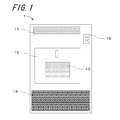
- FIG. 1 is a front view of a medical instrument cleaning apparatus 1 according to the present embodiment.
- the medical instrument cleaning apparatus 1 is provided in an intake port 11 for taking in air for generating ozone gas, a cleaning tank door 12 into which a medical instrument to be cleaned is placed, and a cleaning tank door 12.
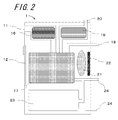
- FIG. 2 is a schematic sectional view of the medical instrument cleaning apparatus 1 as viewed from the side.
- the medical instrument cleaning apparatus 1 further includes an ozone generation unit 16, a cleaning tank 17, a gas processing unit 19, a fan 21, a heater 22, and a water storage tank 23.
- the ozone generation unit 16 generates ozone gas using the air taken from the intake port 11.
- the ozone generation unit 16 corresponds to an ozone gas generation unit.
- oxygen may be taken directly from an oxygen cylinder or the like.
- As a method for generating ozone gas various methods such as a silent discharge method, an electrolysis method, a photoreaction method, a high-frequency electrolysis method, and a solid polymer electrolysis method can be used.
- the ozone generation unit 16 is provided with a concentration meter (not shown) that controls the concentration of ozone gas, and controls the ozone gas concentration to be appropriate for processing.
- the cleaning tank 17 is a unit for storing medical instruments to be cleaned.
- the cleaning tank 17 corresponds to a cleaning unit.
- the washing tank 17 has an inner wall with a concave or convex shape, like a general dishwasher, so that it can be easily washed even with small shapes such as forceps and scissors used for medical treatment. A structure using a basket or the like may be used.
- the cleaning tank 17 is connected to the ozone generation unit 16, and ozone gas generated from the ozone generation unit 16 is sent to the cleaning tank 17, and the medical instrument is cleaned.
- the cleaning tank 17 is provided with a concentration meter (not shown) for controlling the concentration of ozone gas and a temperature controller (not shown) for controlling the temperature.
- the densitometer corresponds to the control unit.
- the cleaning tank 17 is connected to a water supply port 18 that supplies water used for liquid cleaning.
- the gas treatment unit 19 treats ozone gas used for cleaning the medical instrument to a concentration that is harmless to the human body and exhausts it from the exhaust port 20.
- the gas processing unit 19 corresponds to a gas processing unit.
- the gas processing unit 19 is also provided with a densitometer (not shown), and is controlled so that ozone gas having a concentration harmful to the human body is not discharged to the outside.
- the fan 21 is provided adjacent to the cleaning tank 17 and dries the medical device after the liquid cleaning by blowing air from the fan 21.
- the heater 22 warms the air blown by the fan 21 to warm air to efficiently dry the medical instrument.
- the water storage tank 23 is temporarily stored in order to reuse the cleaning liquid used in the liquid cleaning process.
- the cleaning liquid is stored in the water storage tank 23 and used for the next cleaning.
- the water storage tank 23 is connected to the cleaning tank 17 and the ozone generation unit 16, and the ozone gas used in the cleaning tank 17 or the ozone gas generated in the ozone generation unit 16 is filled into the water storage tank 23, or the cleaning liquid is filled with ozone gas.
- bacteria such as bacteria are prevented from breeding in the cleaning liquid stored in the water storage tank 23.
- the cleaning liquid that is no longer needed after cleaning and rinsing is drained from the drain port 24.
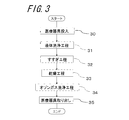
- FIG. 3 shows an example of the cleaning process of the medical device according to the present invention.
- the used medical instrument is input from the cleaning tank door 12 of the medical instrument cleaning apparatus 1 to the internal cleaning tank 17.
- washing is performed with a liquid in which medical detergent, alkaline detergent or the like is dissolved.
- the detergent may be manually added together with the medical instrument to be input in the input process 30.
- the detergent is preliminarily stored in the medical instrument cleaning apparatus 1 and automatically cleaned during liquid cleaning.
- a detergent may be introduced.
- the detergent is dissolved in the water supplied from the water supply port 18, and the cleaning nozzle (not shown) is applied to the medical device for cleaning.
- a method of immersing a medical device in a liquid obtained by dissolving a detergent in water supplied from the water supply port 18 and stirring and washing the solution may be used.
- the cleaning liquid is preferably warm water.
- the cleaning liquid used in the liquid cleaning step 31 may be reused.
- the used cleaning liquid is temporarily stored in the water storage tank 23 for reuse and used for the next cleaning.
- the cleaning liquid stored in the water storage tank 23 is sent to the cleaning tank 17 using a pump (not shown) and used in the liquid cleaning step 31. Since ozone gas has a sterilizing action, it is preferable to fill the space of the water storage tank 23 with ozone gas or to prevent the growth of bacteria such as bacteria through ozone gas in the cleaning liquid.
- the dirty cleaning water that has been reused several times is drained at the drain port 24.
- the emptied water storage tank is washed with tap water or ozone water and then filled with ozone gas to keep bacteria from growing until the next use.
- the cleaning liquid adhering to the medical device cleaned in the liquid cleaning step 31 is washed away.
- the rinse water is preferably warm water.
- the water used for rinsing is drained from the drain port 24.
- the process proceeds to the drying step 33.
- the medical instrument is dried by the air sent by the fan 21.
- the wind sent by the fan 21 causes water droplets on the surface of the medical device to be blown off or evaporated to accelerate drying.
- the medical device can be dried in a shorter time by installing the heater 22 in the vicinity of the fan 21 and making the air to be blown warm.
- the drying process 33 is not indispensable, when ozone gas is applied to the surface of the medical instrument in the ozone gas cleaning process 34, which is the next process, if excessive water droplets are attached, the ozone gas may not sufficiently hit the medical instrument. Therefore, it is desirable to include the step of the drying step 33.
- the medical instrument is cleaned.
- the cleaning tank 17 containing the dried medical instrument is filled with the ozone gas generated by the ozone generation unit 16, and the medical instrument is brought into contact with the ozone gas.
- the cleaning liquid is a liquid, so the molecules are large, the cleaning liquid does not reach the details, Leftovers may occur.
- Ozone gas which is a gas
- Ozone gas penetrates into intricate details of medical devices that did not reach with liquid, and the remaining washing in liquid cleaning is cleaned by the cleaning power of ozone gas Can do.
- Ozone gas is a gas having self-degradability, and in an environment of extremely high temperature and high humidity, it is more self-decomposed and the gas concentration is lowered, and the protein degradation effect is lowered.
- protein degradation by ozone gas originates from a chemical reaction due to the strong oxidizing action of ozone gas, so it is possible to activate this ozone gas and promote the reaction by raising the temperature in the cleaning tank to room temperature or higher. is there. For this reason, more effective cleaning is possible by controlling the temperature in the tank to an appropriate temperature and maintaining the balance between the above-mentioned conflicting self-decomposition and reaction promotion.
- the concentration of ozone gas is desirably 5 to 9 Vol%, and may be adjusted as appropriate depending on the degree of contamination. Further, the time for contacting the ozone gas with the medical device is preferably 5 to 20 minutes, but may be appropriately adjusted depending on the degree of contamination.
- the ozone gas used in the ozone gas cleaning step 34 is processed by the gas processing unit 19 to a concentration (0.2 ppm or less) that does not affect the human body, and is exhausted to the outside through the exhaust port 20.
- the ozone gas used in the ozone gas cleaning step 34 may be used for cleaning and sterilizing the water storage tank 23 described above. The cleaned medical instrument is taken out from the cleaning tank door 12 of the medical instrument cleaning apparatus 1 in step 35.
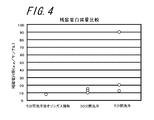
- FIG. 4 shows the measurement results of the residual protein in each sample.
- the vertical axis in FIG. 4 indicates the amount of residual protein.
- the sample contacted with ozone gas for 5 minutes has a residual protein of 10 ⁇ g or less, and if washed for 30 minutes only, the residual protein is 10-20 ⁇ g. Although it was 90 ⁇ g in many cases, there was a large variation of about 10 ⁇ g in small quantities.
- the sample that was contacted with ozone gas after 5 minutes cleaning had no variation and the residual protein was less than 10 ⁇ g in all samples.
- ozone gas in combination with cleaning liquid, reliable cleaning can be expected.
- ozone gas alone is considered effective for cleaning. From the above measurement results, it was confirmed that proteins such as blood adhering to a medical instrument can be effectively removed in a short time by washing with ozone gas contact.
- ozone gas which is a gas
- ozone gas penetrates into complicated intricate details of the medical device, and it was possible to clean the unwashed details that could not be removed by liquid cleaning.
- ozone gas cleaning is performed after liquid cleaning.
- the contact time of ozone gas can be shortened.
- a method may be used in which ozone gas cleaning is performed first and liquid cleaning is performed later. When ozone gas cleaning is performed first, the molecular weight of the protein is reduced, and the time for liquid cleaning can be shortened.
- the present invention can be implemented in various other forms without departing from the spirit or main features thereof.
Landscapes
- Health & Medical Sciences (AREA)
- Life Sciences & Earth Sciences (AREA)
- Chemical & Material Sciences (AREA)
- Animal Behavior & Ethology (AREA)
- Surgery (AREA)
- General Chemical & Material Sciences (AREA)
- Chemical Kinetics & Catalysis (AREA)
- Veterinary Medicine (AREA)
- Public Health (AREA)
- General Health & Medical Sciences (AREA)
- Biomedical Technology (AREA)
- Molecular Biology (AREA)
- Medical Informatics (AREA)
- Heart & Thoracic Surgery (AREA)
- Pathology (AREA)
- Nuclear Medicine, Radiotherapy & Molecular Imaging (AREA)
- Engineering & Computer Science (AREA)
- Oral & Maxillofacial Surgery (AREA)
- Epidemiology (AREA)
- Apparatus For Disinfection Or Sterilisation (AREA)
- Cleaning By Liquid Or Steam (AREA)
- Cleaning In General (AREA)
Abstract
医療器具の細部まで効率よく洗浄するため、液体洗浄工程(31)を実施した後、オゾンガス洗浄工程(34)を実施する。
Description
本発明は、医療器具の洗浄方法、および該方法を好適に実施しうる医療器具の洗浄装置に関し、さらに詳細には蛋白質で形成された汚れ除去に有効で、殺菌力にも優れた洗浄方法及び装置に関する。
病院等の医療機関や検査機関における検査数、治療数の増大に伴い、検査や治療による感染事故が国内外で多数報告されている。これら感染例の多くは、内視鏡、管状カテーテル類、鉗子類、剪刀類などの医療器具の不十分な洗浄消毒によることが原因とされており、検査や治療に伴う感染の完全な防止方法の確立が求められている。
特許文献1では、医療器具に付着した汚れを落ちやすくさせるために、洗浄工程の前に予備洗浄工程を設けている。この予備洗浄工程は、蛋白質分解酵素を含有する洗浄液中に医療器具を浸漬するとともに、洗浄液を攪拌する工程としている。この方法によれば、予備洗浄工程において蛋白質分解酵素を有する洗浄液中に医療器具を浸漬することで、洗浄工程において汚れが落ちやすくなり、医療器具に蛋白質が洗浄残りとして付着したままになることを防止できることとなる。
しかしながら、上記特許文献1に記載されている医療器具の洗浄方法は、多くの洗剤及び洗浄水が必要となる。また、複雑な形状を持つ医療器具や、細い管状の医療器具に対しては、構造が細かい部分には洗浄液が届かない可能性があり、この洗浄液が届かない部分に蛋白質が残る虞がある。蛋白質は時間経過に伴い固着するため、さらに洗浄しても落ちにくくなる。これに対して、洗浄時間を長くすると洗浄残りは減るが、さらに多くの洗剤及び洗浄水が必要となり、かつ処理時間自体も長くなり、効率が悪い。
本発明は、上記の問題点に鑑みてなされたものであり、その目的は、効率よく、かつ医療器具の細部分まで洗浄できる医療器具の洗浄方法および医療器具の洗浄装置を提供することにある。
本発明は、医療器具にオゾンガスを接触させることにより、医療器具を洗浄することを特徴とする医療器具洗浄方法である。
また、本発明に係る医療器具洗浄方法は、医療器具を洗浄液で洗浄する液体洗浄工程をさらに含むことが好ましい。
また、本発明に係る医療器具洗浄方法は、前記液体洗浄工程で用いた洗浄液を貯水する工程を含み、前記貯水工程で貯水された洗浄液を前記液体洗浄工程で再利用することが好ましい。
また、本発明に係る医療器具洗浄方法は、前記貯水工程における貯水タンク内をオゾンガスで充填する工程をさらに含むことが好ましい。
また、本発明に係る医療器具洗浄方法は、前記貯水タンク内の洗浄液にオゾンガスを混合する工程をさらに含むことが好ましい。
また、本発明は、医療器具を洗浄液で洗浄する液体洗浄工程と、
前記液体洗浄工程で洗浄された医療器具にオゾンガスを接触させることにより、前記医療器具を洗浄するオゾンガス洗浄工程とを含むことを特徴とする医療器具洗浄方法である。
前記液体洗浄工程で洗浄された医療器具にオゾンガスを接触させることにより、前記医療器具を洗浄するオゾンガス洗浄工程とを含むことを特徴とする医療器具洗浄方法である。
また、本発明は、医療器具にオゾンガスを接触させることにより、前記医療器具を洗浄するオゾンガス洗浄工程と、
前記オゾンガス洗浄工程で洗浄された医療器具を洗浄液で洗浄する液体洗浄工程とを含むことを特徴とする医療器具洗浄方法である。
前記オゾンガス洗浄工程で洗浄された医療器具を洗浄液で洗浄する液体洗浄工程とを含むことを特徴とする医療器具洗浄方法である。
また、本発明は、オゾンガスを発生させるオゾンガス発生部と、
前記オゾンガスを利用して前記医療器具を洗浄する洗浄部とを備えることを特徴とする医療器具洗浄装置である。
前記オゾンガスを利用して前記医療器具を洗浄する洗浄部とを備えることを特徴とする医療器具洗浄装置である。
また、本発明に係る医療器具洗浄装置は、前記オゾンガスの濃度を制御する制御部をさらに備えることが好ましい。
また、本発明に係る医療器具洗浄装置は、前記オゾンガスを排気するために処理するガス処理部をさらに備えることが好ましい。
本発明によれば、効率よく、かつ医療器具の細部まで確実に洗浄でき、感染予防に貢献できる医療器具の洗浄方法および医療器具の洗浄装置を実現することができる。
本発明の目的、特色、および利点は、下記の詳細な説明と図面とからより明確になるであろう。
以下、本発明の実施形態について図1~図4を用いて以下に説明する。なお、図面において、同一の参照符号は、同一部分または相当部分を表わすものとする。
図1は、本実施形態に係る医療器具洗浄装置1の正面図である。医療器具洗浄装置1は、オゾンガスを発生させるための空気を取り入れる吸気口11と、洗浄する医療器具を投入する洗浄槽用扉12と、洗浄槽用扉12に設けられ、医療器具の洗浄状況を外部から確認できる窓13と、液体洗浄用の洗浄液を保管する貯水タンクの出し入れをする貯水タンク用扉14と、医療器具洗浄装置1の起動、停止、その他の稼動を指示する操作パネル15とを備えている。
図2は、医療器具洗浄装置1を横から見た概略断面図である。医療器具洗浄装置1は、オゾン発生ユニット16と、洗浄槽17と、ガス処理ユニット19と、ファン21と、ヒーター22と、貯水タンク23とをさらに備えている。オゾン発生ユニット16は、吸気口11から取り入れた空気を用いてオゾンガスを発生させる。オゾン発生ユニット16は、オゾンガス発生部に対応する。なお、吸気口11から空気を取り入れる以外に、酸素ボンベ等から酸素を直接取り入れてもよい。オゾンガスを発生させる方法としては、無声放電法、電解法、光反応法、高周波電解法、固体高分子電解法等、種々の方法が利用できる。オゾン発生ユニット16にはオゾンガスの濃度を制御する濃度計(図示せず)が設けられ、処理に適切なオゾンガス濃度となるように制御している。
洗浄槽17は、洗浄する医療器具を入れるユニットである。洗浄槽17は、洗浄部に対応する。洗浄槽17は、医療に用いられる鉗子類、剪刀類のように、小さな形状のものも洗浄しやすいように、一般の食器洗浄機の内部のように、内壁を凹凸形状にしたり、網目状のバスケットのようなものを用いた構造にしてもよい。洗浄槽17は、オゾン発生ユニット16と接続されており、オゾン発生ユニット16より発生されたオゾンガスが洗浄槽17に送り込まれ、医療器具が洗浄される。洗浄槽17において、オゾンガスの濃度を制御する濃度計(図示せず)や温度を制御する温度制御計(図示せず)が設けられる。濃度計は、制御部に対応する。また、洗浄槽17は、液体洗浄で用いる給水を行う給水口18と接続されている。
ガス処理ユニット19は、医療器具の洗浄に用いられたオゾンガスを人体に無害な濃度に処理し、排気口20より排気する。ガス処理ユニット19は、ガス処理部に対応する。ガス処理ユニット19においても濃度計(図示せず)が設けられ、人体に有害な濃度のオゾンガスが外部に排出されないように制御している。
ファン21は、洗浄槽17に隣接して設けられ、液体洗浄後の医療器具をファン21の送風によって乾燥させる。また、ヒーター22は、ファン21の送風を温めて温風にし、効率よく医療器具を乾燥させる。
貯水タンク23は、液体洗浄工程で用いられた洗浄液を再利用するために一時的に保管しておくものである。液体洗浄工程において、医療器具の汚れの度合いにより、洗浄液がさほど汚れず、再利用できる場合は、この貯水タンク23に洗浄液を保管し、次回の洗浄の際に利用する。貯水タンク23は、洗浄槽17、オゾン発生ユニット16と接続されており、洗浄槽17で用いられたオゾンガス、または、オゾン発生ユニット16で発生されたオゾンガスを貯水タンク23に充填、あるいは洗浄液にオゾンガスを通して混合することにより、貯水タンク23で保管された洗浄液にバクテリア等の細菌が繁殖することを防止している。洗浄、およびすすぎで不要になった洗浄液は、排水口24から排水される。
図3は、本発明における医療器具の洗浄工程の一例を示している。投入工程30において、使用後の医療器具は、医療器具洗浄装置1の洗浄槽用扉12から、内部の洗浄槽17に投入される。次に、液体洗浄工程31において、医療用洗剤、アルカリ性洗剤などを溶かした液体にて洗浄される。洗剤は、投入工程30において投入される医療器具とともに、手動で投入されてもよいし、医療器具洗浄装置1の内部に、洗剤をあらかじめ洗剤をまとめて保存し、液体洗浄の際に自動的に洗剤が投入されるようにしてもよい。液体洗浄工程31では、給水口18より給水された水に洗剤を溶かし、洗浄ノズル(図示せず)で、医療器具に当てて洗浄する。あるいは、給水口18より給水された水に洗剤を溶かした液体に医療器具を浸漬し、溶液を攪拌して洗浄する方法などでもよい。なお、洗浄液は、温水であることが望ましい。
ここで、上述したように、洗浄される医療器具の汚れが少なかった場合は、液体洗浄工程31にて使用された洗浄液を再利用してもよい。使用済みの洗浄液は再利用のための貯水タンク23に一時保管しておき、次回の洗浄に利用する。ポンプ(図示せず)を用いて、貯水タンク23に貯水された洗浄液を洗浄槽17に送り、液体洗浄工程31にて使用する。オゾンガスには殺菌作用があるので、貯水タンク23の空間には、オゾンガスを充填したり、あるいは洗浄液にオゾンガスを通してバクテリアなどの細菌の繁殖を防ぐようにするとよい。何度か再利用され、汚れた洗浄水は排水口24にて排水される。空になった貯水タンクは、水道水もしくは、オゾン水を用いて洗浄されたのち、オゾンガスを充填されて次回の使用まで細菌の発生を防いだ状態が保たれている。
次に、すすぎ工程32にて液体洗浄工程31にて洗浄された医療器具に付着した洗浄液を洗い流す。給水口18より給水された水をすすぎ水噴射ノズル(図示せず)によって医療器具に噴射し、洗剤を洗い流す方法、あるいは、給水された水を貯水し、その中に医療器具を浸してすすぐ方法など、医療器具に付着した洗浄液を洗い流す方法であればどのような方法でも構わない。なお、すすぎ水は温水であることが望ましい。すすぎで用いられた水は、排水口24から排水される。
次いで、乾燥工程33に移る。ここでは、ファン21にて送られてくる送風により医療器具を乾燥させる。ファン21にて送られてくる風により、医療器具の表面にある水滴が吹き飛ばされたり蒸発されたりして乾燥が促進される。なお、ファン21の近傍にヒーター22を設置し、送風される風を温風にすることで、さらに短時間で医療器具を乾燥させることができる。なお、乾燥工程33は必須ではないが、次の工程であるオゾンガス洗浄工程34において、医療器具の表面にオゾンガスを当てる際に、余分な水滴がついているとオゾンガスが十分に医療器具に当たらない虞があるので、乾燥工程33の工程を含むことが望ましい。
次に、オゾンガス洗浄工程34にて、医療器具の洗浄を行う。この工程では、液体洗浄工程31にて洗浄後も、医療器具の細かな部分に洗浄されずに残った微細な洗い残しを洗浄する。液体洗浄後、乾燥された医療器具の入った洗浄槽17にオゾン発生ユニット16にて発生されたオゾンガスを充填し、医療器具にオゾンガスを接触させる。液体洗浄では、管状カテーテルなどの細い管状の医療器具や、鉗子類、内視鏡など複雑な構造の医療器具を洗浄する際、洗浄液は液体であるため分子が大きく、洗浄液が細部まで行き渡らず、洗い残しが生じる可能性がある。ここで、オゾンガスを用いることにより、気体であるオゾンガスが、液体では届かなかった医療器具の、複雑に入り組んだ細部にまで侵入し、オゾンガスの洗浄力により、液体洗浄での洗い残しを洗浄することができる。オゾンガスは自己分解性を持つガスであり、極度の高温や高湿度の環境下ではより自己分解しガス濃度が低下し、蛋白質の分解効果は低下してしまう。一方、オゾンガスによる蛋白質の分解はオゾンガスのもつ強い酸化作用からの化学反応に由来する為、洗浄槽内の温度を常温以上にすることで、このオゾンガスを活性化し、反応を促進することが可能である。このため槽内の温度を適正な温度に制御し、上記の相反する自己分解と反応促進の均衡を保つことで、より効果的な洗浄が可能である。
オゾンガスの濃度は5~9Vol%が望ましく、汚れの度合いによって適宜調整すればよい。また、医療器具にオゾンガスを接触させる時間は、5~20分間が望ましいが、汚れの度合いによって適宜調整すればよい。オゾンガス洗浄工程34にて使用されたオゾンガスは、ガス処理ユニット19にて、人体に影響を及ぼさない濃度(0.2ppm以下)に処理され、排気口20より外部に排気される。なお、オゾンガス洗浄工程34にて使用されたオゾンガスを、上述した貯水タンク23の洗浄、殺菌に用いても構わない。洗浄された医療器具は、工程35において、医療器具洗浄装置1の洗浄槽用扉12より取り出される。
上記の医療器具洗浄装置1を用いて、洗浄効果を確認するための実験を行った。医療器具に羊血を塗布後、図3に示した工程にて洗浄を行った。洗浄液としては、0.5%のアルカリ洗剤を用いて5分間洗浄し、オゾンガス濃度が9Vol%のオゾンガスを医療器具に5分間接触させた。また、比較例として、上記と同様の洗浄液を用いて、羊血を塗布後の医療器具を5分間洗浄したものと、30分間洗浄し、それぞれ乾燥させたものを用意し、全てのサンプルの残留蛋白質をクーマシー法にて測定した。
図4は、それぞれのサンプルの残留蛋白質の測定結果である。図4の縦軸は残留蛋白質量を示している。5分間洗浄後、5分間オゾンガスを接触させたサンプルは、残留蛋白質が10μg以下であり、30分間洗浄のみの場合は、残留蛋白質が10~20μgであり、5分間の洗浄のみでは、残留蛋白質が多いもので90μgであったものの、少ないものでは、10μg程度と大きなばらつきがあった。5分間洗浄後オゾンガスを接触させたものと5分間洗浄のみのものを比較した場合、5分間洗浄後オゾンガスを接触させたものは、ばらつきなく全てのサンプルにおいて残留蛋白質が10μg以下であったことより、洗浄液による洗浄にオゾンガスを併用することにより、確実な洗浄が期待できる。また、オゾンガス単独でも洗浄に効果があると考えられる。以上の測定結果より、オゾンガス接触による洗浄により、医療器具に付着した血液などの蛋白質を短時間で効果的に除去することができることを確認した。
液体洗浄のみでは、管状カテーテルなどの細い管状の医療器具や、鉗子類、内視鏡など複雑な医療器具を洗浄する際に、洗浄液が細部まで行き渡らず、十分な洗浄ができない可能性があったが、オゾンガスを用いて洗浄することにより、気体であるオゾンガスが医療器具の複雑に入り組んだ細部にまで侵入し、液体洗浄では落としきれなかった細部の洗い残しを洗浄することができた。オゾンガス洗浄と液体洗浄を組み合わせることで、医療器具を短時間で効果的に洗浄することができた。
本発明は、上記実施形態のものに限定されるものではなく、その要旨を逸脱しない範囲で個々の変形例が考えられる。たとえば、上記実施形態では、液体洗浄後にオゾンガス洗浄を行ったが、この場合は、液体洗浄での洗い残りをオゾンガスで洗浄するため、オゾンガスの接触時間を短縮することができる。逆に先にオゾンガス洗浄を行い、後から液体洗浄を行う方法であってもよい。先にオゾンガス洗浄を行った場合は、蛋白質の分子量が小さくなり、液体洗浄の時間を短縮することができる。
本発明は、その精神または主要な特徴から逸脱することなく、他のいろいろな形態で実施できる。したがって、前述の実施形態はあらゆる点で単なる例示に過ぎず、本発明の範囲は特許請求の範囲に示すものであって、明細書本文には何ら拘束されない。さらに、特許請求の範囲に属する変形や変更は全て本発明の範囲内のものである。
本発明は、その精神または主要な特徴から逸脱することなく、他のいろいろな形態で実施できる。したがって、前述の実施形態はあらゆる点で単なる例示に過ぎず、本発明の範囲は特許請求の範囲に示すものであって、明細書本文には何ら拘束されない。さらに、特許請求の範囲に属する変形や変更は全て本発明の範囲内のものである。
1 医療器具洗浄装置
11 吸気口
12 洗浄槽用扉
13 窓
14 貯水タンク用扉
15 操作パネル
16 オゾン発生ユニット
17 洗浄槽
18 給水口
19 ガス処理ユニット
20 排気口
21 ファン
22 ヒーター
23 貯水タンク
24 排水口
11 吸気口
12 洗浄槽用扉
13 窓
14 貯水タンク用扉
15 操作パネル
16 オゾン発生ユニット
17 洗浄槽
18 給水口
19 ガス処理ユニット
20 排気口
21 ファン
22 ヒーター
23 貯水タンク
24 排水口
Claims (10)
- 医療器具にオゾンガスを接触させることにより、前記医療器具を洗浄することを特徴とする医療器具洗浄方法。
- 医療器具を洗浄液で洗浄する液体洗浄工程をさらに含むことを特徴とする請求項1に記載の医療器具洗浄方法。
- 前記液体洗浄工程で用いた洗浄液を貯水する貯水工程を含み、
前記貯水工程で貯水された洗浄液を前記液体洗浄工程で再利用することを特徴とする請求項2に記載の医療器具洗浄方法。 - 前記貯水工程における貯水タンク内をオゾンガスで充填する工程をさらに含むことを特徴とする請求項3に記載の医療器具洗浄方法。
- 前記貯水タンク内の洗浄液にオゾンガスを混合する工程をさらに含むことを特徴とする請求項4に記載の医療器具洗浄方法。
- 医療器具を洗浄液で洗浄する液体洗浄工程と、
前記液体洗浄工程で洗浄された医療器具にオゾンガスを接触させることにより、前記医療器具を洗浄するオゾンガス洗浄工程とを含むことを特徴とする医療器具洗浄方法。 - 医療器具にオゾンガスを接触させることにより、前記医療器具を洗浄するオゾンガス洗浄工程と、
前記オゾンガス洗浄工程で洗浄された医療器具を洗浄液で洗浄する液体洗浄工程とを含むことを特徴とする医療器具洗浄方法。 - 医療器具を洗浄する洗浄装置であって、
オゾンガスを発生させるオゾンガス発生部と、
前記オゾンガスを利用して前記医療器具を洗浄する洗浄部とを備えることを特徴とする医療器具洗浄装置。 - 前記オゾンガスの濃度を制御する制御部をさらに備えることを特徴とする請求項8に記載の医療器具洗浄装置。
- 前記オゾンガスを排気するために処理するガス処理部をさらに備えることを特徴とする請求項8または9に記載の医療器具洗浄装置。
Priority Applications (1)
| Application Number | Priority Date | Filing Date | Title |
|---|---|---|---|
| CN2011800347007A CN102985026A (zh) | 2010-09-01 | 2011-09-01 | 医疗器具清洗方法及医疗器具清洗装置 |
Applications Claiming Priority (2)
| Application Number | Priority Date | Filing Date | Title |
|---|---|---|---|
| JP2010-195418 | 2010-09-01 | ||
| JP2010195418A JP2012050666A (ja) | 2010-09-01 | 2010-09-01 | 医療器具洗浄方法および医療器具洗浄装置 |
Publications (1)
| Publication Number | Publication Date |
|---|---|
| WO2012029906A1 true WO2012029906A1 (ja) | 2012-03-08 |
Family
ID=45772981
Family Applications (1)
| Application Number | Title | Priority Date | Filing Date |
|---|---|---|---|
| PCT/JP2011/069905 Ceased WO2012029906A1 (ja) | 2010-09-01 | 2011-09-01 | 医療器具洗浄方法および医療器具洗浄装置 |
Country Status (4)
| Country | Link |
|---|---|
| JP (1) | JP2012050666A (ja) |
| CN (1) | CN102985026A (ja) |
| TW (1) | TW201212956A (ja) |
| WO (1) | WO2012029906A1 (ja) |
Cited By (1)
| Publication number | Priority date | Publication date | Assignee | Title |
|---|---|---|---|---|
| CN102877074A (zh) * | 2012-09-26 | 2013-01-16 | 淮安市天达医疗器械有限公司 | 医疗刀片的清洁方法及清洗剂和漂洗剂 |
Families Citing this family (3)
| Publication number | Priority date | Publication date | Assignee | Title |
|---|---|---|---|---|
| JP2016064018A (ja) * | 2014-09-25 | 2016-04-28 | 三洋テクノソリューションズ鳥取株式会社 | 卓上滅菌器 |
| JP2016064017A (ja) * | 2014-09-25 | 2016-04-28 | 三洋テクノソリューションズ鳥取株式会社 | 卓上滅菌器および卓上滅菌器用の貯水タンク |
| CN105214984B (zh) * | 2015-09-29 | 2018-02-02 | 芜湖宏景电子股份有限公司 | 汽车音响pcb板消毒除尘装置 |
Citations (5)
| Publication number | Priority date | Publication date | Assignee | Title |
|---|---|---|---|---|
| JPH0197432A (ja) * | 1987-10-08 | 1989-04-14 | Olympus Optical Co Ltd | 内視鏡用洗浄消毒装置 |
| JPH03111026A (ja) * | 1989-09-26 | 1991-05-10 | Olympus Optical Co Ltd | 内視鏡洗浄消毒装置 |
| JPH03221196A (ja) * | 1990-01-29 | 1991-09-30 | Japan Steel Works Ltd:The | オゾン水製造装置 |
| JPH0489045A (ja) * | 1990-07-30 | 1992-03-23 | Agency Of Ind Science & Technol | 身体内挿入医療器具の殺菌洗浄方法 |
| JPH11105834A (ja) * | 1997-09-30 | 1999-04-20 | Ishikawajima Harima Heavy Ind Co Ltd | オゾン洗浄滅菌装置およびその洗浄滅菌方法 |
Family Cites Families (4)
| Publication number | Priority date | Publication date | Assignee | Title |
|---|---|---|---|---|
| DE69929960T2 (de) * | 1998-04-17 | 2007-12-06 | Tommy Busted | Verfahren und vorrichtung zum sterilisieren von bauteilen |
| CN1220522C (zh) * | 2002-10-14 | 2005-09-28 | 王安国 | 一种器械的消毒灭菌方法及其清洗消毒灭菌设备 |
| CN100586486C (zh) * | 2003-04-18 | 2010-02-03 | 朗福德Ic系统有限公司 | 适于难于清洁和消毒使用的补充臭氧处理方法 |
| JP4503426B2 (ja) * | 2004-11-30 | 2010-07-14 | 野村マイクロ・サイエンス株式会社 | 洗浄装置 |
-
2010
- 2010-09-01 JP JP2010195418A patent/JP2012050666A/ja active Pending
-
2011
- 2011-09-01 WO PCT/JP2011/069905 patent/WO2012029906A1/ja not_active Ceased
- 2011-09-01 TW TW100131620A patent/TW201212956A/zh unknown
- 2011-09-01 CN CN2011800347007A patent/CN102985026A/zh active Pending
Patent Citations (5)
| Publication number | Priority date | Publication date | Assignee | Title |
|---|---|---|---|---|
| JPH0197432A (ja) * | 1987-10-08 | 1989-04-14 | Olympus Optical Co Ltd | 内視鏡用洗浄消毒装置 |
| JPH03111026A (ja) * | 1989-09-26 | 1991-05-10 | Olympus Optical Co Ltd | 内視鏡洗浄消毒装置 |
| JPH03221196A (ja) * | 1990-01-29 | 1991-09-30 | Japan Steel Works Ltd:The | オゾン水製造装置 |
| JPH0489045A (ja) * | 1990-07-30 | 1992-03-23 | Agency Of Ind Science & Technol | 身体内挿入医療器具の殺菌洗浄方法 |
| JPH11105834A (ja) * | 1997-09-30 | 1999-04-20 | Ishikawajima Harima Heavy Ind Co Ltd | オゾン洗浄滅菌装置およびその洗浄滅菌方法 |
Cited By (1)
| Publication number | Priority date | Publication date | Assignee | Title |
|---|---|---|---|---|
| CN102877074A (zh) * | 2012-09-26 | 2013-01-16 | 淮安市天达医疗器械有限公司 | 医疗刀片的清洁方法及清洗剂和漂洗剂 |
Also Published As
| Publication number | Publication date |
|---|---|
| TW201212956A (en) | 2012-04-01 |
| JP2012050666A (ja) | 2012-03-15 |
| CN102985026A (zh) | 2013-03-20 |
Similar Documents
| Publication | Publication Date | Title |
|---|---|---|
| JP3232090B2 (ja) | 医療機器の洗浄及び消毒 | |
| JP3736587B2 (ja) | 洗浄殺菌ユニット | |
| US6858181B2 (en) | Method for cleaning and sterilizing medical equipment after use | |
| KR102121220B1 (ko) | 의료기구용 초음파 세척장치 | |
| JP2002065606A (ja) | 医療機器類の洗浄消毒装置 | |
| KR20100114699A (ko) | 심장 초음파진단기용 탐촉자 자동세정기 및 보관장치 | |
| CN107999462A (zh) | 一种医疗器械清洗盛放装置 | |
| CN106729822A (zh) | 一种技术服务领域下医疗器械循环灌流清洗方法 | |
| WO2012029906A1 (ja) | 医療器具洗浄方法および医療器具洗浄装置 | |
| JP4469577B2 (ja) | 治療器具の洗浄消毒方法 | |
| JP2010530251A (ja) | 再使用可能な医療品を機械的処理するための方法 | |
| JP2006141505A (ja) | 医療器具洗浄消毒装置および医療器具の洗浄消毒方法 | |
| CN218391693U (zh) | 一种口腔印模的清洗消毒装置 | |
| CN210750399U (zh) | 一种护理科用器械消毒装置 | |
| JP2527915B2 (ja) | 医療器具消毒装置 | |
| JP2006167088A (ja) | 外科用医用具洗浄装置 | |
| JP4010534B2 (ja) | 内視鏡洗浄消毒方法、その内視鏡洗浄消毒装置及び内視鏡洗浄消毒に用いる消毒液 | |
| JPH03176022A (ja) | 内視鏡用洗浄消毒装置 | |
| US7594971B2 (en) | Method of cleaning and sterilizing medical instruments | |
| CN217017620U (zh) | 一种应用于医用止血带的自动浸泡清洗干燥机 | |
| JP4294128B2 (ja) | 内視鏡洗浄装置及び内視鏡 | |
| GB2500866A (en) | Method for decontamination of medical instruments | |
| JP2006043332A (ja) | 器具洗浄方法および装置 | |
| CN213723783U (zh) | 一种兽医诊疗用消毒装置 | |
| JP2683425B2 (ja) | 内視鏡洗浄消毒装置 |
Legal Events
| Date | Code | Title | Description |
|---|---|---|---|
| WWE | Wipo information: entry into national phase |
Ref document number: 201180034700.7 Country of ref document: CN |
|
| 121 | Ep: the epo has been informed by wipo that ep was designated in this application |
Ref document number: 11821921 Country of ref document: EP Kind code of ref document: A1 |
|
| NENP | Non-entry into the national phase |
Ref country code: DE |
|
| 122 | Ep: pct application non-entry in european phase |
Ref document number: 11821921 Country of ref document: EP Kind code of ref document: A1 |