WO2011126332A2 - 크로마토그래피 질량분석을 이용한 인삼 연근 판별 방법 - Google Patents
크로마토그래피 질량분석을 이용한 인삼 연근 판별 방법 Download PDFInfo
- Publication number
- WO2011126332A2 WO2011126332A2 PCT/KR2011/002466 KR2011002466W WO2011126332A2 WO 2011126332 A2 WO2011126332 A2 WO 2011126332A2 KR 2011002466 W KR2011002466 W KR 2011002466W WO 2011126332 A2 WO2011126332 A2 WO 2011126332A2
- Authority
- WO
- WIPO (PCT)
- Prior art keywords
- ginseng
- analysis
- lotus root
- root
- metabolites
- Prior art date
- Legal status (The legal status is an assumption and is not a legal conclusion. Google has not performed a legal analysis and makes no representation as to the accuracy of the status listed.)
- Ceased
Links
Images














Classifications
-
- G—PHYSICS
- G01—MEASURING; TESTING
- G01N—INVESTIGATING OR ANALYSING MATERIALS BY DETERMINING THEIR CHEMICAL OR PHYSICAL PROPERTIES
- G01N33/00—Investigating or analysing materials by specific methods not covered by groups G01N1/00 - G01N31/00
- G01N33/48—Biological material, e.g. blood, urine; Haemocytometers
- G01N33/483—Physical analysis of biological material
- G01N33/487—Physical analysis of biological material of liquid biological material
- G01N33/48707—Physical analysis of biological material of liquid biological material by electrical means
-
- G—PHYSICS
- G01—MEASURING; TESTING
- G01N—INVESTIGATING OR ANALYSING MATERIALS BY DETERMINING THEIR CHEMICAL OR PHYSICAL PROPERTIES
- G01N30/00—Investigating or analysing materials by separation into components using adsorption, absorption or similar phenomena or using ion-exchange, e.g. chromatography or field flow fractionation
- G01N30/02—Column chromatography
- G01N30/04—Preparation or injection of sample to be analysed
- G01N30/06—Preparation
-
- G—PHYSICS
- G01—MEASURING; TESTING
- G01N—INVESTIGATING OR ANALYSING MATERIALS BY DETERMINING THEIR CHEMICAL OR PHYSICAL PROPERTIES
- G01N30/00—Investigating or analysing materials by separation into components using adsorption, absorption or similar phenomena or using ion-exchange, e.g. chromatography or field flow fractionation
- G01N30/02—Column chromatography
- G01N30/62—Detectors specially adapted therefor
- G01N30/72—Mass spectrometers
-
- G—PHYSICS
- G01—MEASURING; TESTING
- G01N—INVESTIGATING OR ANALYSING MATERIALS BY DETERMINING THEIR CHEMICAL OR PHYSICAL PROPERTIES
- G01N30/00—Investigating or analysing materials by separation into components using adsorption, absorption or similar phenomena or using ion-exchange, e.g. chromatography or field flow fractionation
- G01N30/02—Column chromatography
- G01N30/86—Signal analysis
- G01N30/8675—Evaluation, i.e. decoding of the signal into analytical information
- G01N30/8682—Group type analysis, e.g. of components having structural properties in common
-
- G—PHYSICS
- G01—MEASURING; TESTING
- G01N—INVESTIGATING OR ANALYSING MATERIALS BY DETERMINING THEIR CHEMICAL OR PHYSICAL PROPERTIES
- G01N30/00—Investigating or analysing materials by separation into components using adsorption, absorption or similar phenomena or using ion-exchange, e.g. chromatography or field flow fractionation
- G01N30/02—Column chromatography
- G01N30/04—Preparation or injection of sample to be analysed
- G01N30/06—Preparation
- G01N2030/062—Preparation extracting sample from raw material
-
- G—PHYSICS
- G01—MEASURING; TESTING
- G01N—INVESTIGATING OR ANALYSING MATERIALS BY DETERMINING THEIR CHEMICAL OR PHYSICAL PROPERTIES
- G01N30/00—Investigating or analysing materials by separation into components using adsorption, absorption or similar phenomena or using ion-exchange, e.g. chromatography or field flow fractionation
- G01N30/02—Column chromatography
- G01N30/26—Conditioning of the fluid carrier; Flow patterns
- G01N30/28—Control of physical parameters of the fluid carrier
- G01N30/34—Control of physical parameters of the fluid carrier of fluid composition, e.g. gradient
-
- G—PHYSICS
- G01—MEASURING; TESTING
- G01N—INVESTIGATING OR ANALYSING MATERIALS BY DETERMINING THEIR CHEMICAL OR PHYSICAL PROPERTIES
- G01N33/00—Investigating or analysing materials by specific methods not covered by groups G01N1/00 - G01N31/00
- G01N33/02—Food
-
- H—ELECTRICITY
- H01—ELECTRIC ELEMENTS
- H01J—ELECTRIC DISCHARGE TUBES OR DISCHARGE LAMPS
- H01J49/00—Particle spectrometers or separator tubes
- H01J49/0027—Methods for using particle spectrometers
- H01J49/0036—Step by step routines describing the handling of the data generated during a measurement
Definitions
- the present invention relates to a method for discriminating ginseng lotus root using chromatography-mass spectrometry. More specifically, the present invention provides accurate analysis of ginseng lotus root by analyzing the metabolites of ginseng using metabolic analysis using liquid chromatography-mass spectrometry (LC / MS) or gas chromatography-mass spectrometry (GC / MS). The present invention relates to a method that can accurately and quickly determine the reliability of ginseng distribution by providing an objective verification system for the management of ginseng lotus root.
- LC / MS liquid chromatography-mass spectrometry
- GC / MS gas chromatography-mass spectrometry
- Ginseng is a perennial herb that grows in the deep mountainous region of the Araliaceae, and is commonly cultivated. Its height is 60cm, short root length, straight or oblique, bellflower roots develop from the bottom, one stem comes out from the root end, 3 ⁇ Four leaves are rotative, with five long lobes at the end of long lobe. The lobules are ovate or obovate, pointed at the end, narrow at the bottom, with fine hairs on the surface veins, with fine teeth on the edges. Flowers bloom in April, light green, hang on umbel, and one inflorescence comes out from the center of Yun Saeng-yeop. Calyxes, petals, and stamens are 5 each, pistils are 2, fruits are round, and several are gathered in umbel and run red. Medicinal roots (Korean Plant Book, 1993).
- Ginseng has been widely used as an herbal medicine since ancient times. It is known to be used for rejuvenation, physical weakness, boredom, fatigue, anorexia, vomiting and diarrhea.
- the pharmacological action of ginseng has been reported to have cerebral cortex excitement and inhibition, equilibrium, antifatigue, anti-aging, immune enhancement, heart contraction, gonadotropin, hyperglycemia suppression, protein synthesis, homeostasis, anticancer, detoxification.
- the root of ginseng cultivated in Korea is hypertrophic root, which is composed of one root and two to five roots. It is a strong branching plant whose roots differ in age, and the harvest is done in about 4-6 years. Six years old is used as a raw material for red ginseng, a Korean monopoly. 6 years old root is 7 ⁇ 10cm long, 2.5cm in diameter, root length is 34cm, and weight is about 80g. Ginseng sprouts from the underground stem every year, and stems and leaves die in autumn.
- Ginseng is mainly distributed 4 ⁇ 6 years old, the medicinal effect of 6 years old ginseng grown in autumn is said to be the best. Based on this, the distribution of ginseng is also mainly focused on 6 years old, which is not enough supply compared to 4 years old and 5 years old. However, contrary to the reality of production, where supply is absolutely insufficient compared to demand, ginseng is overflowing on the market for 6 years. This is because the ginseng is deceived into 6 years old and sold for 4 and 5 years old. However, even though this happens frequently, systematic management is difficult because there is no clear lotus root discrimination and management system.
- the existing lotus root discrimination of ginseng is mainly characterized by the external shape of the ginseng root, by the identification of traces of stems, by the development of the root muscles, by the body shape, and by the experimental determination of the rings by dyeing. Although it has been attempted to discriminate in accordance with, and to determine the lotus root by NIR analysis or NMR in recent years, accurate determination is limited and difficult to apply because it is destructive or takes a long time. Considering the recent increase in reports on illegal distribution of ginseng in the media, it is urgent to establish a systematic management system of distribution by preparing accurate discrimination criteria for ginseng roots.
- Metabolomics analyzes life phenomena by analyzing the composition and concentration of low molecular weight metabolites (metabolome) in cells or tissues under various genetic and environmental conditions using various analytical methods such as mass and NMR.
- metabolome low molecular weight metabolites
- an object of the present invention is to provide a precise and accurate ginseng lotus root determination method by analyzing the metabolites of ginseng by applying LC / MS or GC / MS metabolism, ginseng It is to improve the reliability of ginseng distribution by establishing an objective verification system for the management of lotus root.
- Another object of the present invention is to provide a ginseng lotus root discrimination method that can determine the ginseng lotus root in a very short time by minimizing the loss of the root by a non-destructive method.
- the present invention comprises a first step of extracting a metabolite from a ginseng sample; A second step of analyzing the extracted metabolites using liquid chromatography-mass spectrometry (LC / MS); Converting the result of the liquid chromatography-mass spectrometry (LC / MS) analysis into numerical values capable of being statistically processed; And a fourth step of determining ginseng lotus root by analyzing the statistical value using the converted numerical value.
- LC / MS liquid chromatography-mass spectrometry
- the first step it can be applied to a known extraction method in the art to which the present invention belongs for analyzing the object of the ginseng sample, it can be extracted using 70% MeOH as the optimal extraction method.
- an extraction amount, an analysis concentration, an injection amount, etc. may be established with reference to the existing literature.
- two kinds of mobile phases having different polarities may be used.
- One type (mobile phase A) may use a buffer solution
- the other type (mobile phase B) may use an organic solvent, and it is preferable to use them in a state having a concentration gradient with time.
- Mobile phase A is preferably water used to which 0.1% formic acid is added.
- the mobile phase B may use an organic solvent having a high polarity, and may use, but not limited to, acetonitrile added with 0.1% formic acid, and those skilled in the art may use a conventional organic solvent for any purpose.
- the flow rate of the mobile phase can be used for the column 200 ⁇ 600 ⁇ L / min, in the experiment 500 ⁇ L / min was set to the flow rate suitable for analysis.
- the total analysis time is 12 minutes and the ratio of B is maintained at 10% for the first 0.5 minutes, 30% up to 2.5 minutes, 60% up to 6 minutes, up to 90% up to 9 minutes and 100% up to 10.5 minutes It is preferable to stabilize the initial conditions by flowing at an initial condition of 10%.
- the temperature of the column may be maintained at 35 ° C.
- the components separated by the difference in adsorption or partition coefficient between the fixed and mobile phases of the analytical column of the liquid chromatography have a difference in retention time.
- the introduced sample is removed from the mobile phase by the ionizer and the analytes are ionized.
- the analyte can be preferably detected by using an inverted column as the analysis column in the second step.
- C18 and C8 columns may be used as the reversed phase column, and C18 columns may be preferably used. In this case, resolution and intensity may be increased, thereby improving detection sensitivity.
- the sample separated by passing through the analysis column of the liquid chromatography may be introduced into a mass spectrometer and ionized using an electrospray ionizer mounted on the mass spectrometer.
- the quantification in the MRM (multiple reaction monitoring) mode of the mass spectrometer is to improve the signal to noise ratio.
- mass spectrometers establishes optimal conditions for ginseng metabolite analysis in negative and positive modes, respectively.
- the conditions in negative mode are as follows; capillary voltage 2800, cone voltage 30, collision energy 6, desolvation temperature 300 °C, source temperature 120 °C.
- the statistical method may be principal component analysis (Principal Component Analysis, PCA) or hierarchical cluster analysis (HCA).
- PCA Principal component analysis
- HCA hierarchical cluster analysis
- the principal component analysis (PCA) is a statistical technique aimed at finding a new principal component represented by a linear combination of original variables, thereby summarizing and facilitating interpretation of the data. In other words, it is an analysis method that provides a means for future analysis.
- Hierarchical Cluster Analysis is a method in which all objects form one cluster, and then cluster the most similar objects sequentially to form a similar cluster, and finally, all the objects are grouped into one cluster. to be.
- the ginseng sample is the main root, characterized in that for determining 1-3 years root. According to the present invention, it is possible to accurately classify 1-3 years old root of ginseng by using only LC / MS analysis raw data separated from the main root sample of ginseng, thereby providing a quick and easy advantage.
- the ginseng sample is characterized in that it is three years old and discriminating 4-6 years old. According to the present invention, only the LC / MS analysis raw data separated from the root muscle sample of ginseng can accurately distinguish 4-6 years old root of ginseng. Using the ginseng root as described above, it is possible to determine the ginseng lotus root while minimizing the loss of ginseng to be determined, which is expected to have high utilization in the market.
- the method may further include a feature selection step of selecting and analyzing a metabolite having a meaningful influence among the metabolites.
- RF Random Forest, Y. Qiu et al. Metabolomics (2008) 4: 337-346
- PAM Prediction Analysis for Microarray, Y. Qiu et al. Metabolomics ( 2008) 4: 337-346
- PLSDA Partial Least Square-Discriminant Analysis, Y. Qiu et al. Metabolomics (2008) 4: 337-346
- Feature selection methods selected metabolites by assigning importance scores to the metabolites according to their own algorithms.
- RF uses the Importance Score to evaluate the rank of metabolites.
- PAM evaluates the rank of metabolites by calculating the difference between class centroid and overall centroid, and calculates the average and total average for each metabolite, and the larger the difference, the greater the score. For example, calculate the mean at three years, the average at four years, the average at five years, and the average at six years of Metabolite No. 1, and then the average over the entire sample. Differences from samples were calculated and considered to be influential metabolites as these differences were greater.
- PLSDA evaluates the rank of metabolites using weighted sum of the regression coefficients. PLS regression analysis results in a regression coefficient for each metabolite. The larger the absolute value of the regression coefficient, the more important the metabolite. Here, the regression coefficient is a quantification of the influence of the metabolite on group identification.
- the ginseng sample is the main root and metabolites using the Partial Least Squre-Discriminant Analysis (PLS-DA) method in the feature selection step to determine the 4-6 years root Ginseng lotus root can be accurately determined by selecting and analyzing.
- PLS-DA Partial Least Squre-Discriminant Analysis
- the ginseng sample is a main root and 4-6 years old in the feature selection step (Random Forest), PAM (Predicion Analysis for Microarray) and PLS-DA
- PAM Predicion Analysis for Microarray
- PLS-DA PLS-DA
- the ginseng sample is a ternary root and 4-6 years old to determine the (Random Forest), PAM (Predicion Analysis for Microarray) and PLS-DA in the feature selection step
- Ginseng lotus root can be determined by selecting and analyzing metabolites using one or more methods selected from the group consisting of Partial Least Squre-Discriminant Analysis.
- the ginseng sample is a triceps, 4-6 years old to determine the (Random Forest), PAM (Predicion Analysis for Microarray) and PLS-DA in the feature selection step (feature selection) Ginseng lotus root can be accurately determined by analyzing the metabolites commonly selected by two or more methods selected from the group consisting of (Partial Least Squre-Discriminant Analysis).
- the metabolite has a retention time (min.) And ions (ion, m / z ) of 4.1 and 1105, 3.2 and 1436, 4.4 and 971, 2.2 and 499, 3.6 and 883, 4.4 and 971, 4.2 and 841, 4.3 and 1143, 2.9 and 861 (see Table 14).
- min. retention time
- ions ion, m / z
- the present invention provides a memory for storing reference data including retention time and molecular weight previously obtained by a liquid chromatography-mass spectrometer with respect to metabolites separated from the ginseng sample and the reference data. And an analysis means for comparing the measured data including the retention time and molecular weight obtained by the liquid chromatography-mass spectrometer with respect to the ginseng sample to be discriminated.
- ginseng lotus root can be determined accurately and quickly by analyzing a few metabolites.
- the ginseng lotus root can be immediately determined using the cartilage in the field regardless of the place.
- the metabolites are preferably the metabolites listed in Table 14.
- the present invention comprises a first step of extracting a metabolite from a ginseng sample; A second step of analyzing the extracted metabolites using gas chromatography-mass spectrometry (GC / MS); Converting the results of gas chromatography-mass spectrometry (GC / MS) analysis into numerical values capable of being statistically processed; And a fourth step of determining ginseng lotus root by analyzing the statistical value using the converted numerical value.
- GC / MS gas chromatography-mass spectrometry
- the metabolite analysis using GC / MS in the first step can be applied by known extraction methods in the art to which the present invention belongs, and can be extracted using CHCl 3 : MeOH (1: 1) as the optimal extraction method. have.
- an extraction amount, an analysis concentration, an injection volume, etc. may be established with reference to the existing literature.
- this experiment which attempts to find out the difference of lotus roots, it is possible to increase the detection rate of trace components by subtracting the experimental value between 23 minutes and 24 minutes and 50 seconds, which is the time when excess common major compound is detected. It is preferable.
- the sample is analyzed by using gas chromatography and mass spectrometry in the second step, the components separated by using the adsorption or distribution coefficient difference between the stationary and mobile phases of the capillary separation tube mounted on the gas chromatography remain. It is introduced into the mass spectrometer with a time difference. The introduced sample is ionized by the ionizer.
- the statistical method may be principal component analysis (Principal Component Analysis, PCA) or hierarchical cluster analysis (HCA).
- PCA Principal Component Analysis
- HCA hierarchical cluster analysis
- the ginseng sample is characterized by discriminating one year or five years.
- the method may further include a feature selection step of selecting and analyzing a metabolite having a meaningful influence among the metabolites.
- the ginseng sample is a main root and 4-6 years old in the feature selection step (Random Forest), PAM (Predicion Analysis for Microarray) and PLS-DA Ginseng lotus root can be determined by analysis using a metabolite commonly selected by the Partial Least Squre-Discriminant Analysis method.
- the ginseng sample is cartilage and metabolite using PLS-DA (Partial Least Squre-Discriminant Analysis) method in the feature selection step to determine 4-6 years old root Select and analyze to determine ginseng lotus root.
- PLS-DA Partial Least Squre-Discriminant Analysis
- the ginseng sample is a triceps, 4-6 years old to determine the (Random Forest), PAM (Predicion Analysis for Microarray) and PLS-DA in the feature selection step (feature selection)
- Ginseng lotus root can be determined by analysis using a metabolite commonly selected by two or more methods selected from the group consisting of (Partial Least Squre-Discriminant Analysis).
- the metabolite has a retention time (min.) And ions (ion, m / z ) of 16.4 and 73, 26.0 and 204, 9.5 and 73, 20.8 and 204, respectively, 26.5 and 73, 6.2 and 57, 3.4 and 244, 31.8 and 217, 9.5 and 147, 11.3 and 147, 22.4 and 73, 19.0 and 149, 16.6 and 71, 7.5 and 57, 3.7 and 171, 32.0 and 441, 30.5 and 217, 18.3 and 73, 12.7 and 73, 9.8 and 133, 11.0 and 142 (see Table 28).
- ginseng lotus root can be objectively, accurately and quickly determined using 21 metabolites.
- the present invention relates to a memory for storing reference data including retention time and molecular weight previously obtained by a gas chromatography-mass spectrometer with respect to metabolites separated from the ginseng sample. And an analysis means for comparing measured data including the retention time and molecular weight obtained by the gas chromatography-mass spectrometer with respect to the ginseng sample to be discriminated.
- ginseng lotus root can be determined accurately and quickly by analyzing a few metabolites.
- the ginseng lotus root can be immediately determined using the cartilage in the field regardless of the place.
- the metabolites are preferably the metabolites listed in Table 28.
- the present invention To determine the ginseng lotus root with scientifically accurate, rapid and minimal loss of ginseng, LC / MS or GC / MS were able to analyze the metabolites of ginseng roots and roots under optimal analytical conditions. As a result, based on the analyzed data, we tried to discriminate lotus root through statistical analysis. 1) Using LC / MS, 1 ⁇ 3 year root was clearly identified, and 4 ⁇ 6 year root feature selection. After the process, the lotus root could be accurately determined. In case of main roots, 4 ⁇ 6 years old roots could be discriminated after the feature selection process. 4) In the case of long roots, 4 ⁇ 6 years old roots were accurately identified after the feature selection process using GC / MS. Can.
- the present invention has developed a technology that can accurately and accurately determine the root of ginseng by analyzing the metabolites of ginseng using LC / MS or GC / MS metabolic analysis method to manage the root of ginseng By establishing an objective verification system, it is possible to improve the reliability of ginseng distribution.
- the ginseng lotus root determination method of the present invention can use the geuneungi can minimize the loss of ginseng and can accurately determine the ginseng lotus root in a very small amount.
- the method of determining ginseng lotus root of the present invention can accurately determine ginseng lotus root within a short time of about 2 hours using LC / MS or GC / MS metabolic analytical method, and thus will have high utilization in the market.
- Figure 1 shows a sample ginseng root and the root for the sample used in the present invention.
- 3a and 3b shows the LC / MS analysis conditions by the ginseng lotus root determination method using the LC / MS of the present invention.
- Figure 4 is a schematic flowchart showing a sample preparation step for GC / MS analysis by the ginseng lotus root determination method of the present invention.
- 6a to 6c show the LC / MS analysis of the whole ion chromatogram of the main root (a, b) and the root (c) of ginseng by the method of discriminating ginseng lotus root using LC / MS of the present invention.
- Figure 7 shows a PCA plot (PCA plot) of the total metabolites (metabolites) of the main root 1-6 years by the ginseng lotus root discrimination method using the LC / MS of the present invention.
- Figure 8 shows the HCA plot (HCA plot) for the total metabolites (metabolites) of the main root 1-6 years by the ginseng lotus root determination method using the LC / MS of the present invention.
- Figure 9 shows a PCA plot of the total metabolites (metabolites) of the main root 4-6 years by the ginseng lotus root determination method using the LC / MS of the present invention.
- Figure 10 shows the HCA plot (HCA plot) for the total metabolites (metabolites) of the main root 4-6 years by the ginseng lotus root discrimination method using the LC / MS of the present invention.
- 11a and 11b are 2D (a) and 3D (metaolites) selected by the RF, PAM, PLSDA method of the main root 4-6 years by the ginseng lotus root determination method using LC / MS of the present invention b) represents a PCA plot.
- Figure 12 shows the HCA plot (HCA plot) for the metabolites (metabolites) selected by the RF, PAM, PLSDA method of the main root 4-6 years by the ginseng lotus root discrimination method using the LC / MS of the present invention.
- 13A and 13B show 2D (a) and 3D (b) PCA plots of the whole metabolites of the four-ten-year-old muscles by the ginseng lotus root discrimination method using LC / MS of the present invention.
- Figure 14 shows the HCA plot (HCA plot) for the total metabolites of the four-year-old muscle root by the ginseng lotus root determination method using the LC / MS of the present invention.
- Figures 15a and 15b are 2D (a) and 3D (metabolites) selected by the RF, PAM, PLSDA method of the four-year-old muscle root by the ginseng lotus root determination method using LC / MS of the present invention b) represents a PCA plot.
- Figure 16 shows the HCA plot (HCA plot) for metabolites (metabolites) selected by the RF, PAM, PLSDA method of 4-6 years old root by the ginseng lotus root discrimination method using LC / MS of the present invention.
- 17A and 17B show GC / MS analysis total ion chromatograms of main roots (a) and roots (b) of ginseng by ginseng lotus root discrimination method using GC / MS of the present invention.
- FIG. 18 shows a PCA plot of total metabolites (metabolites) of main root 1-6 years by the ginseng lotus root discrimination method using GC / MS of the present invention.
- Figure 19 shows the HCA plot (HCA plot) for the total metabolites (metabolites) of the main root 1-6 years by the ginseng lotus root determination method using the GC / MS of the present invention.
- Figure 21 shows the HCA plot (HCA plot) for the total metabolites (metabolites) of the main root 4-6 years by the ginseng lotus root discrimination method using GC / MS of the present invention.
- 22A and 22B illustrate 2D (a) and 3D (metaolites) of metabolites selected by RF, PAM, and PLSDA methods of the main root 4-6 years by the ginseng lotus root discrimination method using GC / MS of the present invention.
- b) represents a PCA plot.
- 24A and 24B show 2D (a) and 3D (b) PCA plots of the whole metabolites of 4-6 years old roots by the ginseng lotus root discrimination method using GC / MS of the present invention.
- Figure 25 shows the HCA plot (HCA plot) for the total metabolites of the four-year-old muscle root by the ginseng lotus root determination method using GC / MS of the present invention.
- FIG. 26A and FIG. 26B illustrate 2D (a) and 3D (metaolites) of metabolites selected by RF, PAM, and PLSDA methods of 4-6 years old roots by the ginseng lotus root determination method using GC / MS of the present invention.
- b) represents a PCA plot.
- Figure 27 shows the HCA plot (HCA plot) for the metabolites (metabolites) selected by the RF, PAM, PLSDA method of 4-6 years old root by the ginseng lotus root determination method using GC / MS of the present invention.
- LC / MS was performed using UPLC / Q-ToF MS. Sample preparation, conditions and statistical analysis for LC / MS analysis were as follows.
- Extraction was performed using 70% aqueous MeOH as the optimal extraction method for metabolite analysis using LC / MS. Determining the Appropriate Sample for LC / MS Analysis Extraction, assay concentration, injection volume, etc. were established with reference to existing literature. Immediately after collection, lyophilized and pulverized, 50 mg was sonicated with 500 ⁇ l of 70% aqueous MeOH for 20 minutes, and then centrifuged at 2,000 rpm for 10 minutes. The supernatant was filtered using a 0.2 ⁇ m GHP membrane filter and diluted to a final concentration of 2 mg / ml.
- the Q-TOF Micro mass detector (Waters, Manchester, UK) was used to establish the optimal conditions for ginseng metabolite analysis in negative and positive modes, respectively.
- the conditions in negative mode are as follows; capillary voltage 2800, cone voltage 30, collision energy 6, desolvation temperature 300 °C, source temperature 120 °C.
- Feature selection also known as variable selection, is the process of selecting variables (metabolites) for better results when using the classification method.
- variables metabolites
- RF random forest
- PAM prediction analysis for microarray
- PLSDA partial Least square-discriminant analysis
- PLSDA evaluates the rank of metabolites using weighted sum of the regression coefficients. PLS regression analysis results in a regression coefficient for each metabolite. The larger the absolute value of the regression coefficient, the more important the metabolite.
- the regression coefficient is a quantification of the influence of the metabolite on group identification.
- the optimal extraction method for metabolite analysis using GC / MS was extracted using CHCl 3 : MeOH (1: 1).
- the extraction amount, analytical concentration, injection volume, etc. were established with reference to the existing literature, and 5 repeated experiment samples were prepared.
- 10 mg of a powder sample stored at -80 ° C was extracted by sonication with CHCl 3 : MeOH (1: 1) for 1 minute for 40 minutes, and extracted at 10,000 rpm. After centrifugation for 5 minutes, 200 ⁇ l of the supernatant was concentrated, 200 ⁇ l of BSTFA was added, and the mixture was heated for 40 minutes in a water bath at 70 ° C. to proceed with silylation.
- the mass value was not detected to reduce the crowding of the device by the solvent.
- the temperature of the oven is maintained at 70 ° C. for 5 minutes and then raised to 10 ° C./min up to 280 ° C. and then to 20 ° C./min from 280 ° C. to 300 ° C.
- the ion source temperature was 200 ° C and the injection volume was injected by diluting 1 ⁇ l of the injection volume with a split ratio of 20: 1.
- the mass detection range was set to m / z 50-550. For data analyzed for 1 minute 50 seconds from 23 minutes to 24 minutes 50 seconds in the analyzed total ion chromatogram, the major compound is a very high abundance compared to other peaks.
- PCA is an unsupervised clustering method that is the most widely used multivariate statistical analysis method. It can identify the differences between experimental groups, and HCA groups the individuals into several groups with similar characteristics and identifies the characteristics of each group. Analyze the relationship between
- Table 1 shows the main root 1-6 lotus root classification accuracy by the RF, PAM, PLS-DA method of ginseng root
- Table 2 is the confusion table for each root of 1-6 lotus root of RF classification method
- Table 3 The main root 1-6 lotus root confusion table
- Table 4 is the PLS-DA classification method of main root 1-6 lotus root confusion table.
- Table 5-8 shows the accuracy of classification of 4-6 lotus roots by RF, PAM, and PLS-DA methods of Ginseng root
- Table 6 is a confusion table for each of 4-6 roots of RF classification method
- Table 7 shows the classification of PAM classification method.
- Table 4 shows the confusion tables for the main roots of 4-6 lotus roots.
- PCA and HCA analysis was performed using 606 metabolites (Table 9) selected from at least two methods of RF, PAM, and PLSDA methods among the metabolite analysis data of 4 to 6 years old roots. Six years old roots could be accurately distinguished (see FIGS. 11A, 11B and 12).
- Table 10-13 shows the lotus root classification accuracy by the RF, PAM, and PLS-DA methods of ginseng roots
- Table 11 is the confusion table for each of the four roots of the RF classification method
- Table 12 shows the four roots of the PAM classification method.
- Lotus root confusion table, and Table 13 is the 4-6 root root confusion table of the PLS-DA classification method.
- PCA is an unsupervised clustering method that is the most widely used multivariate statistical analysis method. It can identify the differences between experimental groups, and HCA groups the individuals into several groups with similar characteristics and identifies the characteristics of each group. Analyze the relationship between
- PCA and HCA were performed using the metabolite analysis data of the main root of ginseng from 1 to 6 years old, respectively, and the 1 and 5 year old roots were well distinguished only by GC / MS analysis data (FIGS. 18 and 19).
- Table 15-18 The classification accuracy of each lotus root was analyzed using three feature selection methods such as RF, PAM, and PLS-DA, using the metabolite analysis data of each root from 1 to 6 years of ginseng. Lotus root could be classified as (Table 15-18).
- Table 15 shows the accuracy of classification of freckles 1-6 lotus root by RF, PAM and PLS-DA methods of ginseng root
- Table 16 is a confusion table for each of the roots 1-6 lotus root of RF classification method
- Table 17 shows the classification of PAM classification method.
- Table 18 is the PLS-DA classification method of main root 1-6 lotus root confusion table.
- Table 19-22 shows the accuracy of 4-6 lotus root classification by RF, PAM, and PLS-DA methods of ginseng root
- Table 20 is a confusion table for each of 4-6 roots of RF classification method
- Table 21 shows the classification of PAM classification method
- Table 4 shows the confusion tables for the main roots of 4-6 lotus roots
- Table 22 shows the confusion tables for the main roots of 4-6 lotus roots of the PLS-DA classification method.
- Table 24-27 shows the cartilage 4-6 lotus root classification accuracy by RF, PAM, PLS-DA method of ginseng root
- Table 25 is the confusion table of 4-6 root muscle of the RF classification method
- Table 26 Cartilage 4-6 lotus root confusion table
- Table 27 is the PLS-DA classification method of 4-6 lotus root confusion table.
- PCA and HCA analysis was performed using 21 metabolites (Table 28) selected from at least two methods of RF, PAM and PLSDA among total metabolite of 4-6 years old ginseng roots. 4 to 6 years old can be distinguished with great significance (FIGS. 26A, 26B and 27).
Landscapes
- Health & Medical Sciences (AREA)
- Life Sciences & Earth Sciences (AREA)
- Physics & Mathematics (AREA)
- Chemical & Material Sciences (AREA)
- Analytical Chemistry (AREA)
- Biochemistry (AREA)
- General Health & Medical Sciences (AREA)
- General Physics & Mathematics (AREA)
- Immunology (AREA)
- Pathology (AREA)
- Engineering & Computer Science (AREA)
- Biomedical Technology (AREA)
- Library & Information Science (AREA)
- Biophysics (AREA)
- Hematology (AREA)
- Molecular Biology (AREA)
- Urology & Nephrology (AREA)
- Food Science & Technology (AREA)
- Medicinal Chemistry (AREA)
- Other Investigation Or Analysis Of Materials By Electrical Means (AREA)
Abstract
본 발명은 인삼 시료로부터 대사체를 추출하는 제1단계; 상기 추출된 대사체를 LC/MS 또는 GC/MS를 이용하여 분석하는 제2단계; 상기 LC/MS 또는 GC/MS 분석 결과를 통계처리 가능한 수치로 변환하는 제3단계; 및 상기 변환된 수치를 이용하여 통계학적 방법으로 분석하여 인삼 연근을 판별하는 제4단계를 포함하여 구성되는 크로마토그래피-질량분석을 이용하는 인삼 연근 판별 방법에 관한 것이다. 본 발명은 LC/MS 또는 GC/MS를 이용한 대사체학 분석기법을 이용하여 인삼의 대사체를 분석함으로써 인삼의 연근을 단시간 내에 정확하고 정밀하게 판별할 수 있고, 세근을 이용할 경우 인삼 뿌리의 손실을 최소화할 수 있는 이점이 있다.
Description
본 발명은 크로마토그래피-질량분석을 이용한 인삼 연근 판별 방법에 관한 것이다. 더욱 상세하게 본 발명은 액체크로마토그래피-질량분석 (LC/MS) 또는 기체크로마토그래피-질량분석 (GC/MS)을 이용한 대사체학 분석기법을 이용하여 인삼의 대사체를 분석함으로써 인삼의 연근을 정확하고 정밀하고 신속하게 판별할 수 있는 방법에 관한 것으로, 이를 이용하여 인삼의 연근 관리에 객관적인 검증 시스템을 마련함으로써 인삼 유통에 대한 신뢰성을 향상시킬 수 있다.
인삼은 두릅나무과 (Araliaceae)의 깊은 산악지에서 자라는 다년초로서 흔히 재배하고 있으며 높이가 60cm에 달하고 근경은 짧으며 곧거나 비스듬히 서고 밑에서 도라지같은 뿌리가 발달하며 근경 끝에서 1개의 원줄기가 나오고 끝에서 3~4개의 잎이 윤생하며 긴 엽병 끝에 5개의 장상복엽이 달린다. 소엽은 난형 또는 도란형이고 끝이 뾰족하며 밑부분이 좁고 표면맥 위에 잔털이 약간 있으며 가장자리에 잔톱니가 있다. 꽃은 4월에 피고 연한 녹색이며 산형화서에 달리고 화서는 윤생엽의 중앙부에서 1개가 나온다. 꽃받침, 꽃잎 및 수술은 각각 5개이며 암술대는 2개이고 열매는 둥글며 여러 개가 산형화서에 모여 달리고 적색으로 익는다. 뿌리를 약용으로 한다 (대한식물도감, 1993).
인삼은 예로부터 한방약재로 널리 쓰이며 원기를 보하고 신체허약, 권태, 피로, 식욕부진, 구토, 설사에 쓰이며 폐기능을 도우며 진액을 생성하고 안신작용 및 신기능을 높여 준다고 알려져 있다. 인삼의 약리작용은 대뇌피질흥분과 억제, 평형, 항피로, 항노화, 면역증강, 심장수축, 성선촉진, 고혈당억제, 단백질합성촉진, 항상성유지, 항암, 해독작용 등이 보고되었다.
한국에서 재배되는 인삼의 뿌리는 비대근으로 원뿌리와 2~5개의 지근(支根)으로 되어 있고 미황백색이다. 분지성이 강한 식물이며 그 뿌리의 형태는 나이에 따라 차이가 있고 수확은 4~6년근 때에 한다. 한국 전매품인 홍삼의 원료로 쓰이는 것은 모두 6년근이다. 6년근은 길이 7~10cm, 지름 2.5cm 내외이고 뿌리 길이는 34cm, 무게 80g 정도이다. 인삼은 매년 땅속줄기에서 싹이 나오고 가을에는 줄기와 잎이 고사한다.
인삼은 4~6년근이 주로 유통되는데, 가을에 재배한 6년근 인삼의 약효가 최고조라고 한다. 이를 바탕으로 인삼의 유통 역시 6년근을 위주로 이루어지는데, 4년근과 5년근에 비해 공급량이 턱없이 부족한 현실이다. 하지만 수요량에 비해 공급량이 절대적으로 부족한 생산 현실과는 반대로 시중에서는 6년근 인삼이 넘쳐나고 있다. 이는 4, 5년근 인삼을 6년근으로 속여서 팔기 때문이다. 하지만 이러한 일이 빈번하게 일어남에도 아직까지 뚜렷한 연근 판별 및 관리 제도가 없기 때문에 체계적인 관리가 힘든 실정이다.
기존의 인삼의 연근 판별은 인삼뿌리의 머리, 줄기 흔적 확인에 의한 판별, 지근 발달에 의한 판별, 체형에 의한 판별 등의 육안 판별 방법과 염색에 의한 나이테 판별의 실험적 판별 방법 등의 주로 외부형태 특징에 의존한 판별을 하고, 근래 NIR 분석법 또는 NMR에 의한 연근 판별을 시도하고 있으나, 정확한 판별에는 한계가 있고 파괴적이거나 장시간이 소요되어 적용이 어렵다. 최근 언론에서도 인삼의 불법 유통에 관한 보도가 증가되는 등의 상황을 고려해 볼 때, 인삼의 연근에 대한 정확한 판별기준을 마련하여 유통의 체계적인 관리 시스템을 확립하는 것이 시급하다.
한편, 대사체학 (metabolomics)은 다양한 유전적, 환경적 조건에서 세포나 조직 내에 존재하는 저분자량 대사물질 (metabolome)의 구성과 농도를 Mass나 NMR과 같은 다양한 분석기법을 사용하여 분석함으로써 생명현상을 총체적으로 연구하기 위한 새로운 학문으로서, 총체적 대사체 분석/프로파일 구축, 해독 및 이용 기술을 적용하여, 기존의 지노믹스 (genomics) 및 프로티오믹스 (proteomics) 기술을 실현하고, 보다 직접적이고 구체적인 이용 방법을 수립할 수 있다.
본 발명은 상술한 문제점을 해결하기 위해 안출된 것으로서, 본 발명의 목적은 LC/MS 또는 GC/MS 대사체학을 응용하여 인삼의 대사체를 분석함으로써 정밀하고 정확한 인삼 연근 판별 방법을 제공하여, 인삼의 연근 관리에 객관적인 검증 시스템을 마련함으로써 인삼 유통에 대한 신뢰성을 향상시키는 것이다.
본 발명의 다른 목적은 비파괴적인 방법으로 뿌리의 손실을 최소화하여 극소량으로 단시간 내에 인삼 연근을 판별할 수 있는 인삼 연근 판별 방법을 제공하는 것이다.
본 발명의 다른 목적 및 이점은 하기의 발명의 상세한 설명, 청구범위 및 도면에 의해 더욱 명확하게 된다.
본 발명의 일 양태에 의하면, 본 발명은 인삼 시료로부터 대사체를 추출하는 제1단계; 상기 추출된 대사체를 액체크로마토그래피-질량분석(LC/MS)을 이용하여 분석하는 제2단계; 상기 액체크로마토그래피-질량분석(LC/MS) 분석 결과를 통계처리 가능한 수치로 변환하는 제3단계; 및 상기 변환된 수치를 이용하여 통계학적 방법으로 분석하여 인삼 연근을 판별하는 제4단계를 포함하여 구성되는 크로마토그래피-질량분석을 이용한 인삼 연근 판별 방법을 제공한다.
본 발명에 의하면 크로마토그래피-질량분석 및 통계학적 방법을 이용하여 누구든지 최소의 시료로 과학적이며 정확하게 인삼 연근을 신속히 판별할 수 있는 이점이 있다.
상기 제1단계에서 상기 인삼 시료의 대상체 분석을 위해 본 발명이 속하는 기술 분야의 공지된 추출법으로 적용할 수 있으며, 최적의 추출법으로 70% MeOH를 이용하여 추출할 수 있다.
상기 제2단계에서 LC/MS 분석을 위한 적정량의 시료를 결정하기 하기 위해 기존 문헌을 참고하여 추출량, 분석농도, 주입량 등을 확립할 수 있다. 또한, 상기 제2단계에서 2 종류의 극성이 다른 이동상을 사용할 수 있다. 한 종류(이동상 A)는 완충용액을 사용하고, 다른 한 종류(이동상 B)는 유기용매를 사용할 수 있으며, 이들을 시간에 따라 농도구배를 가지는 상태로 사용하는 것이 바람직하다. 이동상 A는 0.1% 포름산이 첨가된 물을 사용하는 것이 바람직하다. 이동상 B는 극성이 높은 유기 용매를 사용할 수 있으며, 0.1% 포름산이 첨가된 아세토니트릴을 사용할 수 있지만 이에 한정되는 것은 아니며, 당업자는 임의의 목적에 따라 통상적인 유기 용매를 사용할 수 있다. 이동상의 유량은 해당 컬럼의 경우 200~600μL/min을 사용할 수 있으며, 해당실험에서는 500μL/min가 분석에 적합한 유량으로 설정되었다. 총 분석시간은 12분으로 B의 비율을 처음 0.5분간 10%로 유지하고, 2.5분까지 30%, 6분까지 60%, 9분까지 90%로 올려주고 10.5분까지 100%로 유지하며 12분까지 초기 조건인 10%로 흘려 초기 조건으로 안정화 시키는 것이 바람직하다. 이때 컬럼의 온도는 35℃를 유지할 수 있다.
한편, 고성능 액체크로마토그래피-질량분석기를 이용하여 시료를 분석하는 경우, 먼저 액체크로마토그래피의 분석컬럼의 고정상과 이동상 사이에서 흡착성 또는 분배계수의 차를 이용하여 분리된 성분들은 머무름 시간의 차이를 두고 질량분석기로 도입된다. 도입된 시료는 이온화 장치에 의하여 이동상은 제거되고 분석물질들이 이온화된다. 본 발명에서는 상기 제2단계에서 분석컬럼으로 역상컬럼을 사용함으로써, 분석물질을 바람직하게 검출할 수 있다. 이때 역상컬럼으로는 C18과 C8 컬럼을 사용할 수 있으며, C18 컬럼을 사용하는 것이 바람직하며, 이를 사용하는 경우, 분리능(resolution)과 인텐서티의 증가를 이룰 수 있어 검출감도 개선을 제공한다. 상기 액체크로마토그래피의 분석컬럼을 통과하여 분리된 시료는 질량분석기로 도입하여 질량분석기에 장착된 전자분무(electrospray) 이온화장치를 이용하여 이온화시킬 수 있다. 상기 질량분석기로 분석하는 단계에서 정량분석시 질량분석기의 MRM(multiple reaction monitoring) 모드에서 정량하는 것은 신호대잡음비(signal to noise ratio)를 개선하기 위한 것이다.
또한, 질량분석기를 사용하는 경우 네거티브 (negative) 와 포지티브 모드 (positive mode)에서 각각 인삼 대사체 분석을 위한 최적의 조건을 확립한다. 예를 들어 네거티브 모드 (Negative mode)에서의 조건은 다음과 같다; capillary voltage 2800, cone voltage 30, collision energy 6, desolvation temperature 300℃, source temperature 120℃.
본 발명의 구체적인 일 양태에 의하면, 상기 통계적인 방법은 주성분 분석 (Principal Component Analysis, PCA) 또는 계층적군집 분석 (Hierarchical Cluster Analysis, HCA)인 것을 특징으로 한다. 상기 주성분 분석 (PCA)이란 원래 변수들의 선형결합으로 표시되는 새로운 주성분을 찾고, 이를 통하여 자료의 요약과 용이한 해석을 목적으로 하는 통계적 기법이다. 즉 차후의 분석을 위한 수단을 제공하여 주는 분석방법이다. 계층적군집 분석(HCA)이란 모든 대상들이 각각 하나의 군집을 이루고 있는 상태에서 출발하여 순차적으로 가장 유사한 대상들끼리 군집화함으로써 유사성이 높은 군집을 이루며, 최종적으로 모든 대상이 하나의 군집으로 묶여지는 방법이다.
본 발명의 구체적인 일 양태에 의하면, 상기 인삼 시료는 주근이며 1-3년근을 판별하는 것을 특징으로 한다. 본 발명에 의하면, 상기 인삼의 주근 시료로부터 분리된 LC/MS 분석 원 데이터만으로도 인삼의 1-3년근을 정확하게 구분할 수 있어, 신속하고 간편한 이점이 있다.
본 발명의 구체적인 일 양태에 의하면, 상기 인삼 시료는 세근이며 4-6년근을 판별하는 것을 특징으로 한다. 본 발명에 의하면, 상기 인삼의 세근 시료로부터 분리된 LC/MS 분석 원 데이터만으로도 인삼의 4-6년근을 정확하게 구분할 수 있다. 상기와 같이 인삼의 세근을 이용하면 판별하고자 하는 인삼의 손실을 최소화하면서 인삼 연근을 판별할 수 있고 이로 인해 시장에서 활용도가 높을 것으로 기대된다.
본 발명의 구체적인 일 양태에 의하면, 상기 대사체 중 의미 있는 영향력을 주는 대사체를 선택하여 분석하는 특징 선택 (feature selection) 단계를 더 포함하는 것을 특징으로 한다. 대사체의 일부만을 선택하여 보다 정확하고 신속하게 인삼 연근을 판별할 수 있는 이점이 있다.
본 발명의 보다 구체적인 일 양태에 의하면, 본 발명에서는 RF (Random Forest, Y. Qiu et al. Metabolomics (2008) 4:337-346), PAM (Prediction Analysis for Microarray, Y. Qiu et al. Metabolomics (2008) 4:337-346), PLSDA (Partial Least Square-Discriminant Analysis, Y. Qiu et al. Metabolomics (2008) 4:337-346) 등 세 가지의 특징 선택 (feature selection) 방법들을 사용하였고, 각 특징 선택 (feature selection) 방법들은 각 방법의 고유한 알고리즘에 따라 대사체들에 중요도 점수를 부여하여 대사체를 선택하였다. RF는 Importance Score를 이용하여 대사체의 순위를 평가하는 것으로, 각 대사체마다 자신의 importance라는 값을 갖게 되고 importance값은 그 대사체가 인삼의 연근을 판별하는 정확도에 얼마나 큰 영향을 주는지를 수치화한다. PAM은 class centroid와 overall centroid와의 차이를 계산하여 대사체의 순위를 평가하는 것으로, 각 대사체마다 연근별 평균과 전체 평균을 계산하고 이들의 차이가 클수록 큰 점수를 준다. 예를 들어, 1번 대사체의 3년근에서의 평균, 4년근에서의 평균, 5년근에서의 평균, 6년근에서의 평균을 계산하고 전체 샘플에서의 평균을 계산한 다음, 연근별 평균과 전체 샘플과의 차이를 계산하고 이 차이가 클수록 영향력 있는 대사체라고 간주하였다. PLSDA는 회귀계수의 가중합을 이용하여 대사체의 순위를 평가하는 것으로, PLS 회귀분석을 하면 각 대사체 마다 회귀계수가 나오게 되고, 이 회귀계수의 절대값이 클수록 중요한 대사체라고 할 수 있다. 여기서 회귀계수는 대사체가 그룹을 판별하는데 미치는 영향력을 수치화 한 것이다.
본 발명의 보다 구체적인 일 양태에 의하면, 상기 인삼 시료는 주근이며 4-6년근을 판별하기 위해 상기 특징 선택 (feature selection) 단계에서 PLS-DA(Partial Least Squre-Discriminant Analysis) 방법을 이용하여 대사체를 선택하고 분석하여 인삼 연근을 정확하게 판별할 수 있다.
본 발명의 보다 구체적인 일 양태에 의하면, 상기 인삼 시료는 주근이며 4-6년근을 판별하기 위해 상기 특징 선택 (feature selection) 단계에서 RF (Random Forest), PAM (Predicion Analysis for Microarray) 및 PLS-DA (Partial Least Squre-Discriminant Analysis)로 이루어진 그룹에서 선택되는 2 이상의 방법에 의해 공통으로 선택된 대사체를 이용하여 분석하여 인삼 연근을 정확하게 판별할 수 있다.
본 발명의 보다 구체적인 일 양태에 의하면, 상기 인삼 시료는 세근이고 4-6년근을 판별하기 위해 상기 특징 선택 (feature selection) 단계에서 RF (Random Forest), PAM (Predicion Analysis for Microarray) 및 PLS-DA (Partial Least Squre-Discriminant Analysis)로 이루어진 그룹에서 선택되는 1 이상의 방법을 이용하여 대사체를 선택하고 분석하여 인삼 연근을 판별할 수 있다.
본 발명의 보다 구체적인 일 양태에 의하면, 상기 인삼 시료는 세근이며 4-6년근을 판별하기 위해 상기 특징 선택 (feature selection) 단계에서 RF (Random Forest), PAM (Predicion Analysis for Microarray) 및 PLS-DA (Partial Least Squre-Discriminant Analysis)로 이루어진 그룹에서 선택되는 2 이상의 방법에 의해 공통으로 선택된 대사체를 이용하여 분석하여 인삼 연근을 정확하게 판별할 수있다.
본 발명의 보다 구체적인 일 양태에 의하면, 상기 대사체는 머무름 시간(retention time, min.) 및 이온(ion, m/z)이 각각 4.1 및 1105, 3.2 및 1436, 4.4 및 971, 2.2 및 499, 3.6 및 883, 4.4 및 971, 4.2 및 841, 4.3 및 1143, 2.9 및 861인 것을 특징으로 한다 (표 14 참조). 상기와 같은 구성에 의하면 9개의 대사체를 이용하여 인삼 연근을 객관적이며 정확하고 신속하게 판별할 수 있다.
본 발명의 다른 양태에 의하면, 본 발명은 상기 인삼 시료로부터 분리된 대사체들에 대하여 액체크로마토그래피-질량분석 장치에 의해 미리 구한 머무름 시간 및 분자량을 포함하는 기준데이터를 기억하는 메모리 및 상기 기준데이터와, 판별대상인 인삼시료에 대하여 액체크로마토그래피-질량분석 장치에 의해 구한 머무름 시간 및 분자량을 포함하는 측정데이터를 비교하는 분석수단을 포함하여 구성되는 것을 특징으로 하는 인삼 연근 판별 장치를 제공한다. 상기한 구성에 의하면, 소수개의 대사체를 분석하여 정확하고 신속하게 인삼 연근을 판별할 수 있다. 나아가 상기 장치를 휴대용으로 제작하면 장소에 구애받지 않고 현장에서 세근을 이용하여 인삼 연근을 바로 판별할 수도 있다. 상기 대사체들은 표 14에 기재된 대사체들인 것이 바람직하다.
본 발명의 다른 양태에 따르면, 본 발명은 인삼 시료로부터 대사체를 추출하는 제1단계; 상기 추출된 대사체를 가스크로마토그래피-질량분석 (GC/MS)을 이용하여 분석하는 제2단계; 상기 가스크로마토그래피-질량분석 (GC/MS) 분석 결과를 통계처리 가능한 수치로 변환하는 제3단계; 및 상기 변환된 수치를 이용하여 통계학적 방법으로 분석하여 인삼 연근을 판별하는 제4단계를 포함하여 구성되는 크로마토그래피-질량분석을 이용한 인삼 연근 판별 방법을 제공한다.
상기 제1단계에서 GC/MS를 이용한 대사체 분석을 위해 본 발명이 속하는 기술 분야의 공지된 추출법으로 적용할 수 있으며, 최적의 추출법으로 CHCl3: MeOH (1:1) 를 이용하여 추출할 수 있다.
상기 제2단계에서 GC/MS 분석을 위한 적정량의 시료를 결정하기 위해 기존 문헌을 참고하여 추출량, 분석농도, 주입량 (injection volume) 등을 확립할 수 있다. 연근별 상이성을 밝혀내고자 하는 이 실험에서는 과량의 공통 주성분 (major compound)이 검출 (detection)되는 시간인 23분부터 24분 50초 사이의 실험값을 제외함으로써 미량 성분들의 검출 (detection) 비율을 높이는 것이 바람직하다. 상기 제2단계에서 기체크로마토그래피와 질량분석기를 이용하여 시료를 분석하는 경우, 먼저 기체크로마토그래피에 장착된 모세분리관의 고정상과 이동상 사이에서 흡착성 또는 분배계수의 차를 이용하여 분리된 성분들은 머무름 시간의 차이를 두고 질량분석기로 도입된다. 도입된 시료는 이온화 장치에 의하여 분석물질들이 이온화된다.
본 발명의 구체적인 일 양태에 의하면, 상기 통계적인 방법은 주성분 분석 (Principal Component Analysis, PCA) 또는 계층적군집 분석 (Hierarchical Cluster Analysis, HCA)인 것을 특징으로 한다.
본 발명의 구체적인 일 양태에 의하면, 상기 인삼 시료는 주근이며 1년근 또는 5년근을 판별하는 것을 특징으로 한다.
본 발명의 구체적인 일 양태에 의하면, 상기 대사체 중 의미 있는 영향력을 주는 대사체를 선택하여 분석하는 특징 선택 (feature selection) 단계를 더 포함하는 것을 특징으로 한다.
본 발명의 보다 구체적인 일 양태에 의하면, 상기 인삼 시료는 주근이며 4-6년근을 판별하기 위해 상기 특징 선택 (feature selection) 단계에서 PLS-DA(Partial Least Squre-Discriminant Analysis) 방법을 이용하여 대사체를 선택하고 분석하여 인삼 연근을 판별할 수 있다.
본 발명의 보다 구체적인 일 양태에 의하면, 상기 인삼 시료는 주근이며 4-6년근을 판별하기 위해 상기 특징 선택 (feature selection) 단계에서 RF (Random Forest), PAM (Predicion Analysis for Microarray) 및 PLS-DA (Partial Least Squre-Discriminant Analysis) 방법에 의해 공통으로 선택된 대사체를 이용하여 분석하여 인삼 연근을 판별할 수 있다.
본 발명의 보다 구체적인 일 양태에 의하면, 상기 인삼 시료는 세근이고 4-6년근을 판별하기 위해 상기 특징 선택 (feature selection) 단계에서 PLS-DA (Partial Least Squre-Discriminant Analysis) 방법을 이용하여 대사체를 선택하여 분석하여 인삼 연근을 판별할 수 있다.
본 발명의 보다 구체적인 일 양태에 의하면, 상기 인삼 시료는 세근이며 4-6년근을 판별하기 위해 상기 특징 선택 (feature selection) 단계에서 RF (Random Forest), PAM (Predicion Analysis for Microarray) 및 PLS-DA (Partial Least Squre-Discriminant Analysis)로 이루어진 그룹에서 선택되는 2 이상의 방법에 의해 공통으로 선택된 대사체를 이용하여 분석하여 인삼 연근을 판별할 수 있다.
본 발명의 보다 구체적인 일 양태에 의하면, 상기 대사체는 머무름 시간(retention time, min.) 및 이온(ion, m/z)이 각각 16.4 및 73, 26.0 및 204, 9.5 및 73, 20.8 및 204, 26.5 및 73, 6.2 및 57, 3.4 및 244, 31.8 및 217, 9.5 및 147, 11.3 및 147, 22.4 및 73, 19.0 및 149, 16.6 및 71, 7.5 및 57, 3.7 및 171, 32.0 및 441, 30.5 및 217, 18.3 및 73, 12.7 및 73, 9.8 및 133, 11.0 및 142인 것을 특징으로 한다(표 28 참조). 상기와 같은 구성에 의하면 21개의 대사체를 이용하여 인삼 연근을 객관적이며 정확하고 신속하게 판별할 수 있다.
본 발명의 다른 양태에 의하면, 본 발명은 상기 인삼 시료로부터 분리된 대사체들에 대하여 기체크로마토그래피-질량분석 장치에 의해 미리 구한 머무름 시간 및 분자량을 포함하는 기준데이터를 기억하는 메모리 및 상기 기준데이터와, 판별대상인 인삼시료에 대하여 기체크로마토그래피-질량분석 장치에 의해 구한 머무름 시간 및 분자량을 포함하는 측정데이터를 비교하는 분석수단을 포함하여 구성되는 것을 특징으로 하는 인삼 연근 판별 장치를 제공한다. 상기한 구성에 의하면, 소수개의 대사체를 분석하여 정확하고 신속하게 인삼 연근을 판별할 수 있다. 나아가 상기 장치를 휴대용으로 제작하면 장소에 구애받지 않고 현장에서 세근을 이용하여 인삼 연근을 바로 판별할 수도 있다. 상기 대사체들은 표 28에 기재된 대사체들인 것이 바람직하다.
상술한 바와 같이, 본 발명은 과학적으로 정확하고 신속하며 인삼의 손실을 최소화하면서 인삼 연근을 판별하기 위해 LC/MS 또는 GC/MS를 이용해 최적의 분석 조건 하에서 인삼 주근 및 세근의 대사체를 분석할 수 있었다. 그 결과 분석된 데이터를 바탕으로 통계학적 분석을 통해 연근 판별을 시도하여 1) LC/MS을 이용하여 주근의 경우 1~3년근은 뚜렷이 판별되었고, 4~6년근의 경우 특징 선택 (feature selection) 과정을 거친 후에 연근을 정확하게 판별할 수 있었고, 2) LC/MS을 이용하여 세근의 경우 특징 선택 (feature selection) 과정 없이도 4~6년근을 정확하게 판별할 수 있었고, 3) GC/MS을 이용하여 주근의 경우 특징 선택 (feature selection) 과정을 거친 후에 4~6년근 판별할 수 있었고, 4) GC/MS을 이용하여 세근의 경우 특징 선택 (feature selection) 과정을 거친 후에 4~6년근을 정확하게 판별할 수 있었다.
상술한 바와 같이, 본 발명은 LC/MS 또는 GC/MS 대사체학 분석기법을 이용하여 인삼의 대사체를 분석함으로써 인삼의 연근을 정확하고 정밀하게 판별할 수 있는 기술을 개발하여 인삼의 연근 관리에 객관적인 검증 시스템을 마련함으로써 인삼 유통에 대한 신뢰성을 향상시킬 수 있는 효과를 도모할 수 있다.
또한, 본 발명의 인삼 연근 판별 방법은 세근을 이용할 수 있으므로 인삼의 손실을 최소화할 수 있고 극소량으로 인삼 연근을 정확하게 판별할 수 있다.
나아가, 본 발명의 인삼 연근 판별 방법은 LC/MS 또는 GC/MS 대사체학 분석기법을 이용하여 2시간 정도의 단시간 내에 인삼 연근을 정확하게 판별할 수 있어 시장에서 활용도가 높다 할 것이다.
도 1은 본 발명에 이용된 시료용 인삼 주근 및 세근을 나타낸다.
도 2는 본 발명의 LC/MS를 이용한 인삼 연근 판별 방법을 개략적으로 나타내는 개략적 순서도이다.
도 3a 및 도 3b는 본 발명의 LC/MS를 이용한 인삼 연근 판별 방법에 의한 LC/MS 분석 조건을 나타낸다.
도 4는 본 발명의 인삼 연근 판별 방법에 의한 GC/MS 분석용 시료 준비 단계를 나타내는 개략적 순서도이다.
도 5는 본 발명의 인삼 연근 판별 방법에 의한 GC/MS 분석 조건을 나타낸다.
도 6a ~ 도 6c 본 발명의 LC/MS를 이용한 인삼 연근 판별 방법에 의한 인삼의 주근(a,b) 및 세근(c)의 LC/MS 분석 전체 이온 크로마토그램을 나타낸다.
도 7은 본 발명의 LC/MS를 이용한 인삼 연근 판별 방법에 의한 주근 1-6년근의 전체 대사체(metabolites)에 대한 PCA 플롯(PCA plot)을 나타낸다.
도 8은 본 발명의 LC/MS를 이용한 인삼 연근 판별 방법에 의한 주근 1-6년근의 전체 대사체(metabolites)에 대한 HCA 플롯(HCA plot)을 나타낸다.
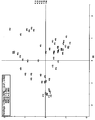
도 9는 본 발명의 LC/MS를 이용한 인삼 연근 판별 방법에 의한 주근 4-6년근의 전체 대사체(metabolites)에 대한 PCA 플롯(PCA plot)을 나타낸다.
도 10은 본 발명의 LC/MS를 이용한 인삼 연근 판별 방법에 의한 주근 4-6년근의 전체 대사체(metabolites)에 대한 HCA 플롯(HCA plot)을 나타낸다.
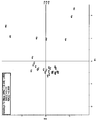
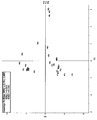
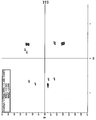
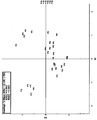
도 11a 및 도 11b는 본 발명의 LC/MS를 이용한 인삼 연근 판별 방법에 의한 주근 4-6년근의 RF, PAM, PLSDA 방법에 의해 선정된 대사체(metabolites)에 대한 2D(a) 및 3D(b) PCA 플롯(PCA plot)을 나타낸다.
도 12는 본 발명의 LC/MS를 이용한 인삼 연근 판별 방법에 의한 주근 4-6년근의 RF, PAM, PLSDA 방법에 의해 선정된 대사체(metabolites)에 대한 HCA 플롯(HCA plot)을 나타낸다.
도 13a 및 도 13b는 본 발명의 LC/MS를 이용한 인삼 연근 판별 방법에 의한 세근 4-6년근의 전체 대사체에 대한 2D(a) 및 3D(b) PCA 플롯(PCA plot)을 나타낸다.
도 14는 본 발명의 LC/MS를 이용한 인삼 연근 판별 방법에 의한 세근 4-6년근의 전체 대사체에 대한 HCA 플롯(HCA plot)을 나타낸다.
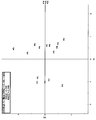
도 15a 및 도 15b는 본 발명의 LC/MS를 이용한 인삼 연근 판별 방법에 의한 세근 4-6년근의 RF, PAM, PLSDA 방법에 의해 선정된 대사체(metabolites)에 대한 2D(a) 및 3D(b) PCA 플롯(PCA plot)을 나타낸다.
도 16은 본 발명의 LC/MS를 이용한 인삼 연근 판별 방법에 의한 세근 4-6년근의 RF, PAM, PLSDA 방법에 의해 선정된 대사체(metabolites)에 대한 HCA 플롯(HCA plot)을 나타낸다.
도 17a 및 도 17b는 본 발명의 GC/MS를 이용한 인삼 연근 판별 방법에 의한 인삼의 주근(a) 및 세근(b)의 GC/MS 분석 전체 이온 크로마토그램을 나타낸다.
도 18은 본 발명의 GC/MS를 이용한 인삼 연근 판별 방법에 의한 주근 1-6년근의 전체 대사체(metabolites)에 대한 PCA 플롯(PCA plot)을 나타낸다.
도 19는 본 발명의 GC/MS를 이용한 인삼 연근 판별 방법에 의한 주근 1-6년근의 전체 대사체(metabolites)에 대한 HCA 플롯(HCA plot)을 나타낸다.
도 20은 본 발명의 GC/MS를 이용한 인삼 연근 판별 방법에 의한 주근 4-6년근의 전체 대사체(metabolites)에 대한 PCA 플롯(PCA plot)을 나타낸다.
도 21은 본 발명의 GC/MS를 이용한 인삼 연근 판별 방법에 의한 주근 4-6년근의 전체 대사체(metabolites)에 대한 HCA 플롯(HCA plot)을 나타낸다.
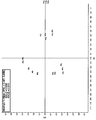
도 22a 및 도 22b는 본 발명의 GC/MS를 이용한 인삼 연근 판별 방법에 의한 주근 4-6년근의 RF, PAM, PLSDA 방법에 의해 선정된 대사체(metabolites)에 대한 2D(a) 및 3D(b) PCA 플롯(PCA plot)을 나타낸다.
도 23은 본 발명의 GC/MS를 이용한 인삼 연근 판별 방법에 의한 주근 4-6년근의 RF, PAM, PLSDA 방법에 의해 선정된 대사체(metabolites)에 대한 HCA 플롯(HCA plot)을 나타낸다.
도 24a 및 도 24b는 본 발명의 GC/MS를 이용한 인삼 연근 판별 방법에 의한 세근 4-6년근의 전체 대사체에 대한 2D(a) 및 3D(b) PCA 플롯(PCA plot)을 나타낸다.
도 25는 본 발명의 GC/MS를 이용한 인삼 연근 판별 방법에 의한 세근 4-6년근의 전체 대사체에 대한 HCA 플롯(HCA plot)을 나타낸다.
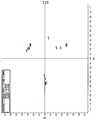
도 26a 및 도 26b는 본 발명의 GC/MS를 이용한 인삼 연근 판별 방법에 의한 세근 4-6년근의 RF, PAM, PLSDA 방법에 의해 선정된 대사체(metabolites)에 대한 2D(a) 및 3D(b) PCA 플롯(PCA plot)을 나타낸다.
도 27은 본 발명의 GC/MS를 이용한 인삼 연근 판별 방법에 의한 세근 4-6년근의 RF, PAM, PLSDA 방법에 의해 선정된 대사체(metabolites)에 대한 HCA 플롯(HCA plot)을 나타낸다.
이하, 실시예를 통해 본 발명을 상세히 설명한다. 그러나 하기 실시예들은 본 발명을 설명하기 위한 것으로, 본 발명의 권리범위가 하기 실시예들에 의하여 한정되는 것은 아니다.
실시예 1. 인삼 시료의 준비(도 1 참조)
2007년 01월 12일 대한민국 수원 농촌진흥청 포장에서 천풍산 고려인삼 1~6 년근 주근 각 10 개체와 천풍산 고려인삼 4~6 년근 세근 각 10 개체를 각각 채집하였다.
실시예 2. LC/MS 분석용 시료의 준비
LC/MS는 UPLC/Q-ToF MS를 이용하여 실시하였다. LC/MS 분석용 시료 준비, 조건 및 통계분석은 다음과 같았다.
1) LC/MS 분석용 시료 준비 (도 2 참조)
LC/MS를 이용한 대사체 분석을 위한 최적으로 추출법으로 70% aqueous MeOH를 이용하여 추출하였다. LC/MS 분석을 위한 적정량의 시료를 결정하기 기존 문헌을 참고하여 추출량, 분석농도, 주입량 (injection volume) 등을 확립하였다. 채집 후 바로 동결 건조한 후 분쇄하여 50㎎을 70% aqueous MeOH 500㎕로 20분간 초음파 처리 (sonication)한 후 2,000rpm에서 10분간 원심분리 (centrifugation)를 하였다. 상등액을 0.2㎛ GHP 멤브레인 필터 (membrane filter)를 이용해 여과 (filtration)를 하고, 최종 농도 2㎎/㎖이 되도록 희석하였다.
2) LC/MS 조건 확립 (도 3a 및 도 3b 참조)
(1) UPLC
Waters ACQUITY UPLCTM system (Waters Corp., MA, USA)을 이용해 수행하였다. ACQUITY UPLC BEH C18 (2.1 x 100mm, 1.7) 컬럼 (column)을 사용하고 이동상으로는 0.1% 포름산 (formic acid)이 첨가된 물 (A)과 0.1% 포름산 (formic acid)이 첨가된 아세토니트릴 (acetonitrile; B)을 사용하였다. 총 분석시간은 12분으로 B의 비율을 처음 0.5분간 10%로 유지하고, 2.5분까지 30%, 6분까지 60%, 9분까지 90%로 올려주었고 10.5분까지 100%로 유지하였으며 12분까지 초기 조건인 10%로 흘려 초기 조건으로 안정화 시켰다. 유속은 500㎕/min, 주입량은 2㎕, 컬럼 온도는 35℃를 유지하였다.
(2) Q-ToF MS
Q-TOF Micro mass detector (Waters, Manchester, UK)를 사용해 네거티브 (negative) 와 포지티브 모드 (positive mode)에서 각각 인삼 대사체 분석을 위한 최적의 조건을 확립하였다. 네거티브 모드 (Negative mode)에서의 조건은 다음과 같다; capillary voltage 2800, cone voltage 30, collision energy 6, desolvation temperature 300℃, source temperature 120℃.
3) 통계분석
LC/MS 로 분석한 원 데이터와 특징 선택 (feature selection) 과정을 거친 데이터는 MarkerLynx XS (Waters, Manchester, UK)와 R version 2.6.1 (R Foundation for Statistical Computing, Vienna, Austria)을 이용해 주성분분석 (Principal Component Analysis, PCA)과 계층적군집분석 (Hierarchical Cluster Analysis, HCA) 을 실시하여 연근판별을 시도하였다.
특징 선택 (Feature selection)은 변수 선택 (variable selection)이라고도 하는데, 분류 (classification) 방법을 사용할 때 보다 나은 결과를 얻기 위해 변수 (대사체) 를 선택하는 과정이다. 즉, 인삼의 연근을 판별하는데 있어 별 영향을 주지 못하는 대사체는 제거하고, 의미 있는 영향력을 주는 대사체를 선택하여 분석을 하였다.
본 발명에서는 RF (Random Forest), PAM (Prediction Analysis for Microarray), PLSDA (Partial Least Square-Discriminant Analysis) 등 세 가지의 특징 선택 (feature selection) 방법들을 사용하였고, 각 특징 선택 (feature selection) 방법들은 각 방법의 고유한 알고리즘에 따라 대사체들에 중요도 점수를 부여하여 대사체를 선택하였다. RF는 Importance Score를 이용하여 대사체의 순위를 평가하는 것으로, 각 대사체마다 자신의 importance라는 값을 갖게 되고 importance값은 그 대사체가 인삼의 연근을 판별하는 정확도에 얼마나 큰 영향을 주는지를 수치화하였다. PAM은 class centroid와 overall centroid와의 차이를 계산하여 대사체의 순위를 평가하는 것으로, 각 대사체마다 연근별 평균과 전체 평균을 계산하고 이들의 차이가 클수록 큰 점수를 주었다. 예를 들어, 1번 대사체의 3년근에서의 평균, 4년근에서의 평균, 5년근에서의 평균, 6년근에서의 평균을 계산하고 전체 샘플에서의 평균을 계산한 다음, 연근별 평균과 전체 샘플과의 차이를 계산하고 이 차이가 클수록 영향력 있는 대사체라고 간주하였다. PLSDA는 회귀계수의 가중합을 이용하여 대사체의 순위를 평가하는 것으로, PLS 회귀분석을 하면 각 대사체 마다 회귀계수가 나오게 되고, 이 회귀계수의 절대값이 클수록 중요한 대사체라고 할 수 있다. 여기서 회귀계수는 대사체가 그룹을 판별하는데 미치는 영향력을 수치화 한 것이다.
실시예 3. GC/MS 분석용 시료의 준비
GC/MS는 GC/MSD를 이용하여 실시하였다. GC/MS 분석용 시료 준비 및 조건은 다음과 같았다.
1) GC/MS 분석용 시료 준비 (도 4)
GC/MS를 이용한 대사체 분석을 위한 최적의 추출법으로 CHCl3: MeOH (1:1) 를 이용하여 추출하였다. GC/MS 분석을 위한 적정량의 시료를 결정하기 위해 기존 문헌을 참고하여 추출량, 분석농도, 주입량 (injection volume) 등을 확립하였고 각각 5반복 실험 샘플 (sample)을 준비하였다. 먼저 채집 후 바로 동결 건조한 뒤 -80℃에 보관한 분말 (powder) 상태의 샘플 (sample) 10mg을 CHCl3: MeOH (1:1) 1ml 로 40분간 초음파처리 (sonication) 하여 추출하고, 10,000 rpm에서 5분간 원심분리하여 상등액 200μl를 농축하고 200μl의 BSTFA를 첨가하여 70℃의 수조 (water bath) 에서 40분 동안 가열하여 시릴레이션 (silylation)을 진행하였다.
2) GC/MS 조건 확립 (도 5)
샘플이 주입된 후 5분간은 용매 (solvent)에 의한 기기의 무리를 감소시키기 위하여 매스 (mass)값을 검출 (detection)하지 않았다. 오븐 (oven)의 온도는 70℃에서 5분간 유지하다가 10℃/min 씩 280℃까지 올린 후 280℃에서 300℃까지 20℃/min씩 올린다. ion source temperature는 200℃이고 주입량 (injection volume) 1㎕를 split ratio 20:1로 희석하여 주입하며 분자량 측정 범위 (mass detection range)는 m/z 50-550까지 설정하였다. 분석된 전체 이온 크로마토그램 (ion chromatogram)에서 23분부터 24분 50초의 1분 50초간 분석되는 데이터 (data)의 경우 주성분 (major compound)으로 다른 피크 (peak) 들에 비해 상대적으로 매우 높은 abundance값을 나타내기 때문에 이외의 화합물 (compound)들의 abundance값이 너무 적게 표현된다. 따라서 연근별 상이성을 밝혀내고자 하는 이 실험에서는 과량의 공통 주성분 (major compound)이 검출 (detection)되는 시간인 23분부터 24분 50초 사이의 실험값을 제외함으로써 미량 성분들의 검출 (detection) 비율을 높일 수 있음을 확인하였다.
3) 통계분석
LC/MS 분석과 마찬가지로 GC/MS로 분석한 원 데이터는 Auto Mass Spectral Deconvolution & Identification System와 Spectconnect (http// spectconnect.mit.edu/)에 의해 deconvolution, assignment 되고 특징 선택 (feature selection) 과정 (RF, PAM, PLSDA)을 거쳐 MarkerLynx XS (Waters, Manchester, UK)와 R version 2.6.1 (R Foundation for Statistical Computing, Vienna, Austria) 을 이용해 주성분분석 (Principal Component Analysis, PCA)과 계층적군집분석 (Hierarchical Cluster Analysis, HCA) 을 실시하여 연근판별을 시도하였다.
실시예 4. LC/MS의 데이터를 이용하여 인삼 연근 판별 분석
1) LC/MS 분석 결과
인삼 주근과 세근 시료를 개체별로 LC/MS 분석 결과를 검토해 본 결과 육안으로 각 연근별 차이를 판별하기는 어려움이 있었다 (도 6a ~ 도 6c).
2) LC/MS 데이터의 통계분석 (chemometric analysis)
인삼 주근과 세근 시료의 LC/MS 분석 대사체를 개체별로 분석하여 PCA와 HCA 방법으로 분석하였다. PCA는 다변량 통계 분석방법 중 가장 많이 쓰이는 unsupervised clustering method의 한 방법으로, 실험 그룹 간의 차이를 확인할 수 있고, HCA는 개체를 유사한 성격을 가지는 몇 개의 그룹으로 집단화하고 각 그룹의 특성을 파악하여 그룹들 사이의 관계를 분석할 수 있다.
(1) 인삼 주근의 대사체 LC/MS 데이터 분석
인삼 1년근에서 6년근까지 각각 주근의 대사체 분석 데이터를 이용해 PCA와 HCA를 실시한 결과, 1~3년근은 LC/MS 분석 원 데이터만으로도 각각 구분이 잘 되었다(도 7 및 8)
인삼 1년근에서 6년근까지 각각 주근의 대사체 분석 데이터를 이용해 각 연근의 분류 정확도를 RF, PAM, PLS-DA 등 세 가지의 특징 선택 (feature selection) 방법들을 사용하여 분석하였으며 대략 90% 이상의 확률로 연근을 분류할 수 있었다 (표 1-4). 표 1은 인삼 주근의 RF, PAM, PLS-DA 방법에 의한 주근 1-6 연근 분류 정확도를 나타내고, 표 2는 RF 분류방법의 주근 1-6 연근별 confusion table이고, 표 3은 PAM 분류방법의 주근 1-6 연근별 confusion table이고, 표 4는 PLS-DA 분류방법의 주근 1-6 연근별 confusion table이다.
표 1 
표 2 
표 3 
표 4 
인삼 연근 판별의 주 관심 부분인 4~6년근 만의 데이터(data)를 선별하여 위에서 수행한 통계분석을 실시하였으나, 전체 대사체 데이터로 완벽하게 4~6년근을 구분하기에는 다소 어려움이 있었다 (도 9 및 도 10 참조).
그러나, 인삼 4~6년근 각각 주근의 대사체 분석 데이터를 이용해 각 연근의 분류 정확도를 RF, PAM, PLS-DA 등 세 가지의 특징 선택 (feature selection) 방법들을 사용하여 분석한 결과 PLS-DA 방법으로 4~6년근을 정확히 분류할 수 있었다 (표 5-8). 표 5는 인삼 주근의 RF, PAM, PLS-DA 방법에 의한 주근 4-6 연근 분류 정확도를 나타내고, 표 6은 RF 분류방법의 주근 4~6 연근별 confusion table이고, 표 7은 PAM 분류방법의 주근 4~6 연근별 confusion table이고, 표 8은 PLS-DA 분류방법의 주근 4~6 연근별 confusion table이다.
표 5 
표 6 
표 7 
표 8 
또한, 인삼 4~6년근 각각 주근의 대사체 분석 데이터 중 RF, PAM, PLSDA 방법들에서 적어도 두 가지 방법에 의해 선택된 606개의 대사체 (표 9)를 이용하여 PCA 및 HCA분석을 수행하여 4~6년근을 정확히 구분할 수 있었다 (도 11a, 도 11b 및 도 12 참조).
표 9 


(2) 인삼 세근의 대사체 LC/MS 데이터 분석
이에 반해 세근의 경우 LC/MS 분석하여 얻어진 전체 대사체 (total metabolites) 를 이용하여 PCA 및 HCA를 실시하였을 때 4~6년근 각각의 시료가 명확히 분리되었다 (도 13a, 도 13b 및 도 14 참조).
역시, 인삼 4~6년근 각각 세근의 대사체 분석 데이터를 이용해 각 연근의 분류 정확도를 RF, PAM, PLS-DA등 세 가지의 특징 선택 (feature selection) 방법들을 사용하여 분석한 결과 사용한 모든 방법으로 4~6년근을 정확히 분류되었다 (표 10-13). 표 10은 인삼 세근의 RF, PAM, PLS-DA 방법에 의한 연근 분류 정확도를 나타내고, 표 11은 RF 분류방법의 세근 4-6 연근별 confusion table이고, 표 12는 PAM 분류방법의 세근 4-6 연근별 confusion table이고, 표 13은 PLS-DA 분류방법의 세근 4-6 연근별 confusion table이다.
표 10 
표 11 
표 12 
표 13 
또한, 인삼 세근 4~6년근의 전체 대사체 (total metabolite) 중 RF, PAM, PLSDA 방법들에서 적어도 두 가지 방법에 의해 선택된 9개의 대사체 (표 14)를 이용하여 PCA 및 HCA 분석을 수행한 결과 아주 유의성 있게 4~6년근을 구분할 수 있었다 (도 15a, 도 15b 및 도 16 참조).
표 14 
실시예 5. GC/MS의 데이터를 이용하여 인삼 연근 판별 분석
1) GC/MS 분석 결과
인삼 주근과 세근 시료를 개체별로 GC/MS 분석 결과를 검토해 본 결과 육안으로 각 연근별 차이를 판별하기는 어려움이 있었다 (도 17a 및 도 17b).
2) GC/MS 데이터의 통계분석 (chemometric analysis)
인삼 주근과 세근 시료의 GC/MS 분석 대사체를 개체별로 분석하여 PCA와 HCA 방법으로 분석하였다. PCA는 다변량 통계 분석방법 중 가장 많이 쓰이는 unsupervised clustering method의 한 방법으로, 실험 그룹 간의 차이를 확인할 수 있고, HCA는 개체를 유사한 성격을 가지는 몇 개의 그룹으로 집단화하고 각 그룹의 특성을 파악하여 그룹들 사이의 관계를 분석할 수 있다.
(1) 인삼 주근의 대사체 GC/MS 데이터 분석
인삼 1년근에서 6년근까지 각각 주근의 대사체 분석 데이터를 이용해 PCA와 HCA를 실시한 결과, 1년근과 5년근은 GC/MS 분석 원 데이터만으로도 각각 구분이 잘 되었다 (도 18 및 도 19).
인삼 1년근에서 6년근까지 각각 주근의 대사체 분석 데이터를 이용해 각 연근의 분류 정확도를 RF, PAM, PLS-DA 등 세 가지의 특징 선택 (feature selection) 방법들을 사용하여 분석하였으며 대략 80% 이상의 확률로 연근을 분류할 수 있었다 (표 15-18). 표 15는 인삼 주근의 RF, PAM, PLS-DA 방법에 의한 주근 1-6 연근 분류 정확도를 나타내고, 표 16은 RF 분류방법의 주근 1-6 연근별 confusion table이고, 표 17은 PAM 분류방법의 주근 1-6 연근별 confusion table이고, 표 18은 PLS-DA 분류방법의 주근 1-6 연근별 confusion table이다.
표 15 
표 16 
표 17 
표 18 
인삼 연근 판별의 주 관심 부분인 4~6년근만의 데이터를 선별하여 위에서 수행한 통계분석을 실시하였으나 전체 대사체의 데이터로 완벽하게 4~6년근을 구분하는 데에는 다소 어려움이 있었다 (도 20 및 도 21).
그러나 인삼 4~6년근 각각 주근의 대사체 분석 데이터를 이용해 각 연근의 분류 정확도를 RF, PAM, PLS-DA등 세 가지의 특징 선택 (feature selection) 방법들을 사용하여 분석 한 결과 PLS-DA방법으로 4~6년근을 정확히 분류할 수 있었다 (표 19-22). 표 19는 인삼 주근의 RF, PAM, PLS-DA 방법에 의한 주근 4-6 연근 분류 정확도를 나타내고, 표 20은 RF 분류방법의 주근 4~6 연근별 confusion table이고, 표 21은 PAM 분류방법의 주근 4~6 연근별 confusion table이고, 표 22는 PLS-DA 분류방법의 주근 4~6 연근별 confusion table이다.
표 19 
표 20 
표 21 
표 22 
또한, 인삼 4~6년근 각각 주근의 대사체 분석 데이터 중 RF, PAM, PLSDA 방법들에서 세 가지 방법 모두에 의해 선택된 13개의 대사체 (표 23)를 이용하여 PCA 및 HCA분석을 수행하여 4~6년근을 정확히 구분할 수 있었다 (도 22a, 도 22b 및 도 23).
표 23 
(2) 인삼 세근의 대사체 GC/MS 데이터 분석
이에 반해 세근의 경우 GC/MS 분석하여 얻어진 전체 대사체 (total metabolites)를 이용하여 PCA 및 HCA를 실시하였으나 완벽한 4~6년근의 구분에는 다소 어려움이 있었다 (도 24a, 도 24b 및 도 25).
역시, 인삼 4~6년근 각각 세근의 대사체 분석 데이터를 이용해 각 연근의 분류 정확도를 RF, PAM, PLS-DA등 세 가지의 특징 선택 (feature selection) 방법들을 사용하여 분석 한 결과 PLS-DA 방법으로 4~6년근을 정확히 분류할 수 있었다 (표 24-27). 표 24는 인삼 세근의 RF, PAM, PLS-DA 방법에 의한 세근 4-6 연근 분류 정확도를 나타내고, 표 25는 RF 분류방법의 세근 4-6 연근별 confusion table이고, 표 26은 PAM 분류방법의 세근 4-6 연근별 confusion table이고, 표 27은 PLS-DA 분류방법의 세근 4-6 연근별 confusion table이다.
표 24 
표 25 
표 26 
표 27 
또한, 인삼 세근 4~6년근의 전체 대사체 (total metabolite) 중 RF, PAM, PLSDA 방법들에서 적어도 두 방법에 의해 선택된 21개의 대사체 (표 28)를 이용하여 PCA 및 HCA분석을 수행한 결과 아주 유의성 있게 4~6년근을 구분할 수 있었다 (도 26a, 도 26b 및 도 27).
표 28 
Claims (19)
- 인삼 시료로부터 대사체를 추출하는 제1단계;상기 추출된 대사체를 액체크로마토그래피-질량분석(LC/MS)을 이용하여 분석하는 제2단계;상기 액체크로마토그래피-질량분석(LC/MS) 분석 결과를 통계처리 가능한 수치로 변환하는 제3단계; 및상기 변환된 수치를 이용하여 통계학적 방법으로 분석하여 인삼 연근을 판별하는 제4단계를 포함하여 구성되는 크로마토그래피-질량분석을 이용한 인삼 연근 판별 방법.
- 제1항에 있어서, 상기 통계적인 방법은 주성분 분석 (Principal Component Analysis, PCA) 또는 계층적군집 분석 (Hierarchical Cluster Analysis, HCA)인 것을 특징으로 인삼 연근 판별 방법.
- 제1항 또는 제2항에 있어서, 상기 인삼 시료는 주근이며 1-3년근을 판별하는 것을 특징으로 하는 인삼 연근 판별 방법.
- 제1항 또는 제2항에 있어서, 상기 인삼 시료는 세근이며 4-6년근을 판별하는 것을 특징으로 하는 인삼 연근 판별 방법.
- 제1항 또는 제2항에 있어서, 상기 대사체 중 의미 있는 영향력을 주는 대사체를 선택하여 분석하는 특징 선택 (feature selection) 단계를 더 포함하는 것을 특징으로 하는 인삼 연근 판별 방법.
- 제5항에 있어서, 상기 인삼 시료는 주근이며 4-6년근을 판별하기 위해 상기 특징 선택 (feature selection) 단계에서 PLS-DA(Partial Least Squre-Discriminant Analysis) 방법을 이용하여 대사체를 선택하고 분석하여 인삼 연근을 판별하는 것을 특징으로 하는 인삼 연근 판별 방법.
- 제5항에 있어서, 상기 인삼 시료는 주근이며 4-6년근을 판별하기 위해 상기 특징 선택 (feature selection) 단계에서 RF (Random Forest), PAM (Predicion Analysis for Microarray) 및 PLS-DA (Partial Least Squre-Discriminant Analysis)로 이루어진 그룹에서 선택되는 2이상의 방법에 의해 공통으로 선택된 대사체를 이용하여 분석하여 인삼 연근을 판별하는 것을 특징으로 하는 인삼 연근 판별 방법.
- 제5항에 있어서, 상기 인삼 시료는 세근이고 4-6년근을 판별하기 위해 상기 특징 선택 (feature selection) 단계에서 RF (Random Forest), PAM (Predicion Analysis for Microarray) 및 PLS-DA (Partial Least Squre-Discriminant Analysis)로 이루어진 그룹에서 선택되는 1 이상의 방법을 이용하여 대사체를 선택하고 분석하여 인삼 연근을 판별하는 것을 특징으로 하는 인삼 연근 판별 방법.
- 제5항에 있어서, 상기 인삼 시료는 세근이며 4-6년근을 판별하기 위해 상기 특징 선택 (feature selection) 단계에서 RF (Random Forest), PAM (Predicion Analysis for Microarray) 및 PLS-DA (Partial Least Squre-Discriminant Analysis)로 이루어진 그룹에서 선택되는 2 이상의 방법에 의해 공통으로 선택된 대사체를 이용하여 분석하여 인삼 연근을 판별하는 것을 특징으로 하는 인삼 연근 판별 방법.
- 인삼 시료로부터 분리된 대사체들에 대하여 액체크로마토그래피-질량분석 장치에 의해 미리 구한 머무름 시간 및 분자량을 포함하는 기준데이터를 기억하는 메모리; 및상기 기준데이터와, 판별대상인 인삼시료에 대하여 액체크로마토그래피-질량분석 장치에 의해 구한 머무름 시간 및 분자량을 포함하는 측정데이터를 비교하는 분석수단을 포함하여 구성되는 것을 특징으로 하는 인삼 연근 판별 장치.
- 인삼 시료로부터 대사체를 추출하는 제1단계;상기 추출된 대사체를 가스크로마토그래피-질량분석 (GC/MS)을 이용하여 분석하는 제2단계;상기 가스크로마토그래피-질량분석 (GC/MS) 분석 결과를 통계처리 가능한 수치로 변환하는 제3단계; 및상기 변환된 수치를 이용하여 통계학적 방법으로 분석하여 인삼 연근을 판별하는 제4단계를 포함하여 구성되는 크로마토그래피-질량분석을 이용하는 인삼 연근 판별 방법.
- 제11항에 있어서, 상기 통계적인 방법은 주성분 분석 (Principal Component Analysis, PCA) 또는 계층적군집 분석 (Hierarchical Cluster Analysis, HCA)인 것을 특징으로 인삼 연근 판별 방법.
- 제11항 또는 제12항에 있어서, 상기 인삼 시료는 주근이며 1년근 또는 5년근을 판별하는 것을 특징으로 하는 인삼 연근 판별 방법.
- 제11항 또는 제12항에 있어서, 상기 대사체 중 의미 있는 영향력을 주는 대사체를 선택하여 분석하는 특징 선택 (feature selection) 단계를 더 포함하는 것을 특징으로 하는 인삼 연근 판별 방법.
- 제14항에 있어서, 상기 인삼 시료는 주근이며 4-6년근을 판별하기 위해 상기 특징 선택 (feature selection) 단계에서 PLS-DA(Partial Least Squre-Discriminant Analysis) 방법을 이용하여 대사체를 선택하고 분석하여 인삼 연근을 판별하는 것을 특징으로 하는 인삼 연근 판별 방법.
- 제14항에 있어서, 상기 인삼 시료는 주근이며 4-6년근을 판별하기 위해 상기 특징 선택 (feature selection) 단계에서 RF (Random Forest), PAM (Predicion Analysis for Microarray) 및 PLS-DA (Partial Least Squre-Discriminant Analysis) 방법에 의해 공통으로 선택된 대사체를 이용하여 분석하여 인삼 연근을 판별하는 것을 특징으로 하는 인삼 연근 판별 방법.
- 제14항에 있어서, 상기 인삼 시료는 세근이고 4-6년근을 판별하기 위해 상기 특징 선택 (feature selection) 단계에서 PLS-DA (Partial Least Squre-Discriminant Analysis) 방법을 이용하여 대사체를 선택하여 분석하여 인삼 연근을 판별하는 것을 특징으로 하는 인삼 연근 판별 방법.
- 제14항에 있어서, 상기 인삼 시료는 세근이며 4-6년근을 판별하기 위해 상기 특징 선택 (feature selection) 단계에서 RF (Random Forest), PAM (Predicion Analysis for Microarray) 및 PLS-DA (Partial Least Squre-Discriminant Analysis)로 이루어진 그룹에서 선택되는 2이상의 방법에 의해 공통으로 선택된 대사체를 이용하여 분석하여 인삼 연근을 판별하는 것을 특징으로 하는 인삼 연근 판별 방법.
- 인삼 시료로부터 분리된 대사체들에 대하여 기체크로마토그래피-질량분석 장치에 의해 미리 구한 머무름 시간 및 분자량을 포함하는 기준데이터를 기억하는 메모리; 및상기 기준데이터와, 판별대상인 인삼시료에 대하여 기체크로마토그래피-질량분석 장치에 의해 구한 머무름 시간 및 분자량을 포함하는 측정데이터를 비교하는 분석수단을 포함하여 구성되는 것을 특징으로 하는 인삼 연근 판별 장치.
Priority Applications (1)
| Application Number | Priority Date | Filing Date | Title |
|---|---|---|---|
| US13/648,228 US20130273595A1 (en) | 2010-04-09 | 2012-10-09 | Method for determining age of ginseng roots using chromatogramphy-mass spectroscopy |
Applications Claiming Priority (2)
| Application Number | Priority Date | Filing Date | Title |
|---|---|---|---|
| KR1020100032980A KR101149236B1 (ko) | 2010-04-09 | 2010-04-09 | 크로마토그래피?질량분석을 이용한 인삼 연근 판별 방법 |
| KR10-2010-0032980 | 2010-04-09 |
Related Child Applications (1)
| Application Number | Title | Priority Date | Filing Date |
|---|---|---|---|
| US13/648,228 Continuation US20130273595A1 (en) | 2010-04-09 | 2012-10-09 | Method for determining age of ginseng roots using chromatogramphy-mass spectroscopy |
Publications (2)
| Publication Number | Publication Date |
|---|---|
| WO2011126332A2 true WO2011126332A2 (ko) | 2011-10-13 |
| WO2011126332A3 WO2011126332A3 (ko) | 2012-03-15 |
Family
ID=44763429
Family Applications (1)
| Application Number | Title | Priority Date | Filing Date |
|---|---|---|---|
| PCT/KR2011/002466 Ceased WO2011126332A2 (ko) | 2010-04-09 | 2011-04-07 | 크로마토그래피 질량분석을 이용한 인삼 연근 판별 방법 |
Country Status (3)
| Country | Link |
|---|---|
| US (1) | US20130273595A1 (ko) |
| KR (1) | KR101149236B1 (ko) |
| WO (1) | WO2011126332A2 (ko) |
Cited By (2)
| Publication number | Priority date | Publication date | Assignee | Title |
|---|---|---|---|---|
| CN103776911A (zh) * | 2012-10-22 | 2014-05-07 | 中国科学院大连化学物理研究所 | 一种用于微量组织中代谢物组和脂质组同时提取分析的方法 |
| CN109212121A (zh) * | 2018-09-10 | 2019-01-15 | 华润三九(雅安)药业有限公司 | 红参药材指纹图谱及其与制剂成分关联性的构建方法 |
Families Citing this family (12)
| Publication number | Priority date | Publication date | Assignee | Title |
|---|---|---|---|---|
| KR101928802B1 (ko) * | 2012-08-09 | 2018-12-17 | (주)아모레퍼시픽 | 인삼의 재배조건 구분용 바이오마커의 선정방법 |
| KR101402607B1 (ko) * | 2012-08-27 | 2014-06-03 | 주식회사 유니베라 | 여러 크기의 알로에 베라의 질량 분광법 기반 대사체 프로파일링 및 그 바이오마커 |
| KR101444579B1 (ko) * | 2013-02-01 | 2014-09-30 | 중앙대학교 산학협력단 | 인삼 연근 판별용 바이오마커 조성물 |
| CN103675131A (zh) * | 2013-12-05 | 2014-03-26 | 柳州联海科技有限公司 | 气相色谱-质谱检测细胞内糖的方法 |
| CN103675132B (zh) * | 2013-12-05 | 2016-05-11 | 张绪伟 | 气相色谱-质谱检测细胞内中氨基酸、糖、有机酸的方法 |
| CN104820043B (zh) * | 2015-05-25 | 2017-03-08 | 江苏耐雀生物工程技术有限公司 | 一种茶树精油的gc色谱分析方法 |
| US10825567B1 (en) * | 2015-08-21 | 2020-11-03 | Food2Life, LLC | Apparatus and method for informed personal well-being decision making |
| CN105588908B (zh) * | 2015-12-09 | 2017-07-28 | 中山市中广测协同创新中心 | 基于指纹图谱的微损鉴别刺猬紫檀种属的方法 |
| KR102552779B1 (ko) | 2016-08-17 | 2023-07-10 | (주)아모레퍼시픽 | 유기산을 이용한 유기농 인삼의 판별 방법 |
| KR101965293B1 (ko) * | 2016-08-29 | 2019-04-03 | 서울대학교산학협력단 | 한국산과 중국산 백미 판별용 Biomarker 및 이를 이용한 판별 모델 |
| KR102430947B1 (ko) | 2020-11-11 | 2022-08-09 | 대한민국 | 근적외선분광분석기를 이용한 인삼 및 가공인삼의 연근 판별방법 |
| CN112684029B (zh) * | 2020-12-05 | 2022-11-04 | 云南省烟草农业科学研究院 | 一种基于烟叶差异代谢物含量快速检测烟叶成熟度的方法及装置 |
Family Cites Families (10)
| Publication number | Priority date | Publication date | Assignee | Title |
|---|---|---|---|---|
| US6083932A (en) * | 1997-04-18 | 2000-07-04 | Cv Technologies Inc. | Pharmaceutical compositions derived from ginseng and methods of treatment using same |
| WO2003017177A2 (en) * | 2001-08-13 | 2003-02-27 | Beyong Genomics, Inc. | Method and system for profiling biological systems |
| KR20020074435A (ko) * | 2002-08-27 | 2002-09-30 | 신순식 | 산삼의 감정 방법 |
| KR20040034332A (ko) * | 2003-03-28 | 2004-04-28 | (주)바이오피아 | 고려인삼과 외국삼의 단일염기다형성을 이용한 판별방법 |
| KR20040034354A (ko) * | 2003-06-12 | 2004-04-28 | (주)바이오피아 | 원산지 품질인증을 위한 마커 및 분석시스템의 개발 |
| KR100673066B1 (ko) * | 2004-08-13 | 2007-01-22 | 대구한의대학교산학협력단 | 인삼의 종간 유전자 감별 방법 |
| KR100740582B1 (ko) | 2006-09-27 | 2007-07-19 | 한국과학기술연구원 | 가스크로마토그래피-질량분석기를 이용한 두 생체시료군 간대사체 차별성 분석 방법 |
| CA2699516A1 (en) * | 2007-09-14 | 2009-03-19 | Albert Y. Leung | System and method for assessing traditional medicines |
| US20110189680A1 (en) * | 2008-05-30 | 2011-08-04 | The University Of British Columbia | Methods of Diagnosing Rejection of a Kidney Allograft Using Genomic or Proteomic Expression Profiling |
| KR101073000B1 (ko) * | 2008-08-18 | 2011-10-12 | 대한민국 | Sts 프라이머를 이용한 인삼 품종 판별 방법 |
-
2010
- 2010-04-09 KR KR1020100032980A patent/KR101149236B1/ko active Active
-
2011
- 2011-04-07 WO PCT/KR2011/002466 patent/WO2011126332A2/ko not_active Ceased
-
2012
- 2012-10-09 US US13/648,228 patent/US20130273595A1/en not_active Abandoned
Cited By (2)
| Publication number | Priority date | Publication date | Assignee | Title |
|---|---|---|---|---|
| CN103776911A (zh) * | 2012-10-22 | 2014-05-07 | 中国科学院大连化学物理研究所 | 一种用于微量组织中代谢物组和脂质组同时提取分析的方法 |
| CN109212121A (zh) * | 2018-09-10 | 2019-01-15 | 华润三九(雅安)药业有限公司 | 红参药材指纹图谱及其与制剂成分关联性的构建方法 |
Also Published As
| Publication number | Publication date |
|---|---|
| WO2011126332A3 (ko) | 2012-03-15 |
| KR20110113531A (ko) | 2011-10-17 |
| KR101149236B1 (ko) | 2012-05-25 |
| US20130273595A1 (en) | 2013-10-17 |
Similar Documents
| Publication | Publication Date | Title |
|---|---|---|
| WO2011126332A2 (ko) | 크로마토그래피 질량분석을 이용한 인삼 연근 판별 방법 | |
| Muccilli et al. | Proteome analysis of Citrus sinensis L.(Osbeck) flesh at ripening time | |
| Patel et al. | Introduction to hyphenated techniques and their applications in pharmacy | |
| Qian et al. | Metabolic fingerprinting of Angelica sinensis during growth using UPLC-TOFMS and chemometrics data analysis | |
| CN106855552B (zh) | 一种利用非靶标代谢组学技术鉴别蜂蜜品种的方法 | |
| Benavides et al. | Catechin derivatives in Jatropha macrantha stems: Characterisation and LC/ESI/MS/MS quali–quantitative analysis | |
| CN106645538B (zh) | 一种利用非靶标代谢组学技术鉴别洋槐蜜产地的方法 | |
| Zhang et al. | Qualitative and quantitative determination of Atractylodes rhizome using ultra‐performance liquid chromatography coupled with linear ion trap–Orbitrap mass spectrometry with data‐dependent processing | |
| Mncwangi et al. | What the devil is in your phytomedicine? Exploring species substitution in Harpagophytum through chemometric modeling of 1H-NMR and UHPLC-MS datasets | |
| ATE343221T1 (de) | Dynamische signalauswahl in einem chromatographie-/massenspektometrie-/massenspek rometriesystem | |
| KR101152532B1 (ko) | 크로마토그래피-질량분석을 이용한 아르테미시아 종 및 애엽 분류 방법 | |
| Masson et al. | A metabolomic approach to quality determination and authentication of raw plant material in the fragrance field. Iris rhizomes: A case study | |
| CN114624317A (zh) | 一种基于直接进样质谱的定性和定量分析方法 | |
| Singh et al. | Quantitative determination of isoquinoline alkaloids and chlorogenic acid in Berberis species using ultra high performance liquid chromatography with hybrid triple quadrupole linear ion trap mass spectrometry | |
| Sturm et al. | Analysis of Central European Corydalis species by nonaqueous capillary electrophoresis–electrospray ion trap mass spectrometry | |
| CN111398497B (zh) | 犬尿喹啉酸在鉴别中蜂蜂蜜和意蜂蜂蜜中的应用 | |
| WO2018176808A1 (zh) | 与重度少弱精子症相关的生物标志物的筛选与应用 | |
| CN102332387B (zh) | 生物组织直接喷雾质谱装置及生物组织直接喷雾质谱分析方法 | |
| Wang et al. | Integrated HPLC fingerprinting and multivariate analysis differentiates between wild and cultivated Hedyotis diffusa Willd | |
| Liu et al. | Chemical fingerprinting and multivariate analysis of Paeonia ostii leaves based on HPLC-DAD and UPLC-ESI-Q/TOF-MS/MS | |
| CN111398499A (zh) | 3-氨基-2-萘甲酸在鉴别中蜂蜂蜜和意蜂蜂蜜中的应用 | |
| Yang et al. | The influence of ripening stage and region on the chemical compounds in mulberry fruits (Morus atropurpurea Roxb.) based on UPLC-QTOF-MS | |
| Long et al. | A simple and effective method for identification of Fraxini Cortex from different sources by multi‐mode fingerprint combined with chemometrics | |
| Wu et al. | Simultaneous quantitative analysis of 11 constituents in Viticis Fructus by HPLC‐HRMS and HPLC‐DAD combined with chemometric methods | |
| Xiao et al. | Integrating LC-MS based molecular networks and comparative metabolomics for variety identification and origin tracing of Zanthoxylum nitidum (Roxb.) DC |
Legal Events
| Date | Code | Title | Description |
|---|---|---|---|
| 121 | Ep: the epo has been informed by wipo that ep was designated in this application |
Ref document number: 11766183 Country of ref document: EP Kind code of ref document: A2 |
|
| NENP | Non-entry into the national phase |
Ref country code: DE |
|
| 122 | Ep: pct application non-entry in european phase |
Ref document number: 11766183 Country of ref document: EP Kind code of ref document: A2 |