WO2011111671A1 - アルデヒドの製造方法、触媒及びその製造方法 - Google Patents
アルデヒドの製造方法、触媒及びその製造方法 Download PDFInfo
- Publication number
- WO2011111671A1 WO2011111671A1 PCT/JP2011/055285 JP2011055285W WO2011111671A1 WO 2011111671 A1 WO2011111671 A1 WO 2011111671A1 JP 2011055285 W JP2011055285 W JP 2011055285W WO 2011111671 A1 WO2011111671 A1 WO 2011111671A1
- Authority
- WO
- WIPO (PCT)
- Prior art keywords
- gold
- platinum
- crosslinkable functional
- functional group
- producing
- Prior art date
- Legal status (The legal status is an assumption and is not a legal conclusion. Google has not performed a legal analysis and makes no representation as to the accuracy of the status listed.)
- Ceased
Links
Images

Classifications
-
- B—PERFORMING OPERATIONS; TRANSPORTING
- B01—PHYSICAL OR CHEMICAL PROCESSES OR APPARATUS IN GENERAL
- B01J—CHEMICAL OR PHYSICAL PROCESSES, e.g. CATALYSIS OR COLLOID CHEMISTRY; THEIR RELEVANT APPARATUS
- B01J37/00—Processes, in general, for preparing catalysts; Processes, in general, for activation of catalysts
- B01J37/16—Reducing
-
- B—PERFORMING OPERATIONS; TRANSPORTING
- B01—PHYSICAL OR CHEMICAL PROCESSES OR APPARATUS IN GENERAL
- B01J—CHEMICAL OR PHYSICAL PROCESSES, e.g. CATALYSIS OR COLLOID CHEMISTRY; THEIR RELEVANT APPARATUS
- B01J23/00—Catalysts comprising metals or metal oxides or hydroxides, not provided for in group B01J21/00
- B01J23/38—Catalysts comprising metals or metal oxides or hydroxides, not provided for in group B01J21/00 of noble metals
- B01J23/40—Catalysts comprising metals or metal oxides or hydroxides, not provided for in group B01J21/00 of noble metals of the platinum group metals
- B01J23/42—Platinum
-
- B—PERFORMING OPERATIONS; TRANSPORTING
- B01—PHYSICAL OR CHEMICAL PROCESSES OR APPARATUS IN GENERAL
- B01J—CHEMICAL OR PHYSICAL PROCESSES, e.g. CATALYSIS OR COLLOID CHEMISTRY; THEIR RELEVANT APPARATUS
- B01J23/00—Catalysts comprising metals or metal oxides or hydroxides, not provided for in group B01J21/00
- B01J23/38—Catalysts comprising metals or metal oxides or hydroxides, not provided for in group B01J21/00 of noble metals
- B01J23/48—Silver or gold
- B01J23/52—Gold
-
- B—PERFORMING OPERATIONS; TRANSPORTING
- B01—PHYSICAL OR CHEMICAL PROCESSES OR APPARATUS IN GENERAL
- B01J—CHEMICAL OR PHYSICAL PROCESSES, e.g. CATALYSIS OR COLLOID CHEMISTRY; THEIR RELEVANT APPARATUS
- B01J31/00—Catalysts comprising hydrides, coordination complexes or organic compounds
- B01J31/02—Catalysts comprising hydrides, coordination complexes or organic compounds containing organic compounds or metal hydrides
- B01J31/06—Catalysts comprising hydrides, coordination complexes or organic compounds containing organic compounds or metal hydrides containing polymers
-
- B—PERFORMING OPERATIONS; TRANSPORTING
- B01—PHYSICAL OR CHEMICAL PROCESSES OR APPARATUS IN GENERAL
- B01J—CHEMICAL OR PHYSICAL PROCESSES, e.g. CATALYSIS OR COLLOID CHEMISTRY; THEIR RELEVANT APPARATUS
- B01J31/00—Catalysts comprising hydrides, coordination complexes or organic compounds
- B01J31/16—Catalysts comprising hydrides, coordination complexes or organic compounds containing coordination complexes
- B01J31/24—Phosphines, i.e. phosphorus bonded to only carbon atoms, or to both carbon and hydrogen atoms, including e.g. sp2-hybridised phosphorus compounds such as phosphabenzene, phosphole or anionic phospholide ligands
-
- B—PERFORMING OPERATIONS; TRANSPORTING
- B01—PHYSICAL OR CHEMICAL PROCESSES OR APPARATUS IN GENERAL
- B01J—CHEMICAL OR PHYSICAL PROCESSES, e.g. CATALYSIS OR COLLOID CHEMISTRY; THEIR RELEVANT APPARATUS
- B01J35/00—Catalysts, in general, characterised by their form or physical properties
- B01J35/40—Catalysts, in general, characterised by their form or physical properties characterised by dimensions, e.g. grain size
- B01J35/45—Nanoparticles
-
- B—PERFORMING OPERATIONS; TRANSPORTING
- B01—PHYSICAL OR CHEMICAL PROCESSES OR APPARATUS IN GENERAL
- B01J—CHEMICAL OR PHYSICAL PROCESSES, e.g. CATALYSIS OR COLLOID CHEMISTRY; THEIR RELEVANT APPARATUS
- B01J37/00—Processes, in general, for preparing catalysts; Processes, in general, for activation of catalysts
- B01J37/02—Impregnation, coating or precipitation
- B01J37/0201—Impregnation
- B01J37/0203—Impregnation the impregnation liquid containing organic compounds
-
- B—PERFORMING OPERATIONS; TRANSPORTING
- B01—PHYSICAL OR CHEMICAL PROCESSES OR APPARATUS IN GENERAL
- B01J—CHEMICAL OR PHYSICAL PROCESSES, e.g. CATALYSIS OR COLLOID CHEMISTRY; THEIR RELEVANT APPARATUS
- B01J37/00—Processes, in general, for preparing catalysts; Processes, in general, for activation of catalysts
- B01J37/02—Impregnation, coating or precipitation
- B01J37/0201—Impregnation
- B01J37/0211—Impregnation using a colloidal suspension
-
- C—CHEMISTRY; METALLURGY
- C07—ORGANIC CHEMISTRY
- C07C—ACYCLIC OR CARBOCYCLIC COMPOUNDS
- C07C45/00—Preparation of compounds having >C = O groups bound only to carbon or hydrogen atoms; Preparation of chelates of such compounds
- C07C45/27—Preparation of compounds having >C = O groups bound only to carbon or hydrogen atoms; Preparation of chelates of such compounds by oxidation
- C07C45/32—Preparation of compounds having >C = O groups bound only to carbon or hydrogen atoms; Preparation of chelates of such compounds by oxidation with molecular oxygen
- C07C45/37—Preparation of compounds having >C = O groups bound only to carbon or hydrogen atoms; Preparation of chelates of such compounds by oxidation with molecular oxygen of >C—O—functional groups to >C=O groups
- C07C45/38—Preparation of compounds having >C = O groups bound only to carbon or hydrogen atoms; Preparation of chelates of such compounds by oxidation with molecular oxygen of >C—O—functional groups to >C=O groups being a primary hydroxyl group
-
- B—PERFORMING OPERATIONS; TRANSPORTING
- B01—PHYSICAL OR CHEMICAL PROCESSES OR APPARATUS IN GENERAL
- B01J—CHEMICAL OR PHYSICAL PROCESSES, e.g. CATALYSIS OR COLLOID CHEMISTRY; THEIR RELEVANT APPARATUS
- B01J21/00—Catalysts comprising the elements, oxides, or hydroxides of magnesium, boron, aluminium, carbon, silicon, titanium, zirconium, or hafnium
- B01J21/18—Carbon
-
- B—PERFORMING OPERATIONS; TRANSPORTING
- B01—PHYSICAL OR CHEMICAL PROCESSES OR APPARATUS IN GENERAL
- B01J—CHEMICAL OR PHYSICAL PROCESSES, e.g. CATALYSIS OR COLLOID CHEMISTRY; THEIR RELEVANT APPARATUS
- B01J2231/00—Catalytic reactions performed with catalysts classified in B01J31/00
- B01J2231/70—Oxidation reactions, e.g. epoxidation, (di)hydroxylation, dehydrogenation and analogues
-
- B—PERFORMING OPERATIONS; TRANSPORTING
- B01—PHYSICAL OR CHEMICAL PROCESSES OR APPARATUS IN GENERAL
- B01J—CHEMICAL OR PHYSICAL PROCESSES, e.g. CATALYSIS OR COLLOID CHEMISTRY; THEIR RELEVANT APPARATUS
- B01J31/00—Catalysts comprising hydrides, coordination complexes or organic compounds
- B01J31/26—Catalysts comprising hydrides, coordination complexes or organic compounds containing in addition, inorganic metal compounds not provided for in groups B01J31/02 - B01J31/24
-
- B—PERFORMING OPERATIONS; TRANSPORTING
- B01—PHYSICAL OR CHEMICAL PROCESSES OR APPARATUS IN GENERAL
- B01J—CHEMICAL OR PHYSICAL PROCESSES, e.g. CATALYSIS OR COLLOID CHEMISTRY; THEIR RELEVANT APPARATUS
- B01J31/00—Catalysts comprising hydrides, coordination complexes or organic compounds
- B01J31/26—Catalysts comprising hydrides, coordination complexes or organic compounds containing in addition, inorganic metal compounds not provided for in groups B01J31/02 - B01J31/24
- B01J31/28—Catalysts comprising hydrides, coordination complexes or organic compounds containing in addition, inorganic metal compounds not provided for in groups B01J31/02 - B01J31/24 of the platinum group metals, iron group metals or copper
- B01J31/30—Halides
Definitions
- the present invention relates to a method for producing an aldehyde by oxidation of a primary alcohol, a catalyst suitably used in the production method, and a method for producing the catalyst.
- Non-patent Document 1 The oxygen oxidation reaction using gold nanosize clusters as a catalyst was reported in 1989 by Haruta et al. As being very highly active in the low temperature carbon monoxide oxidation reaction (Non-patent Document 1).
- Non-patent Document 2 As for the oxidation reaction of alcohol to aldehyde, ketone and carboxylic acid by a metal catalyst using oxygen as an oxidizing agent, many examples using ruthenium or palladium catalyst have been reported for both homogeneous and solid phase catalysts. In recent years, many examples using gold clusters as catalysts have been reported (Non-patent Document 2).
- Non-Patent Documents 3 to 4, Patent Document 1 The inventors of the present application have found that a highly active catalyst can be produced in palladium or platinum by supporting a transition metal nanosize cluster on a styrenic polymer using a microencapsulation method. Further, it has been reported that a carbonyl compound is produced by an oxidation reaction for a gold catalyst (Patent Document 2).
- An object of the present invention is to provide a method for producing an aldehyde by oxidation of a primary alcohol with high selectivity and a high conversion rate, a catalyst suitably used for the production method, and a production method thereof.
- the present invention provides a carrier obtained by crosslinking the crosslinkable functional group of a styrenic polymer having a side chain containing a crosslinkable functional group, a gold-platinum nanosize cluster and carbon black supported on the carrier.
- a method for producing an aldehyde comprising a step of obtaining an aldehyde by oxidation of a primary alcohol in the presence of a catalyst having the same.
- the styrenic polymer preferably contains an epoxy group and a hydroxyl group as the crosslinkable functional group.
- the above steps can be performed in the absence of a base.
- the above step can be performed in the presence of a base.
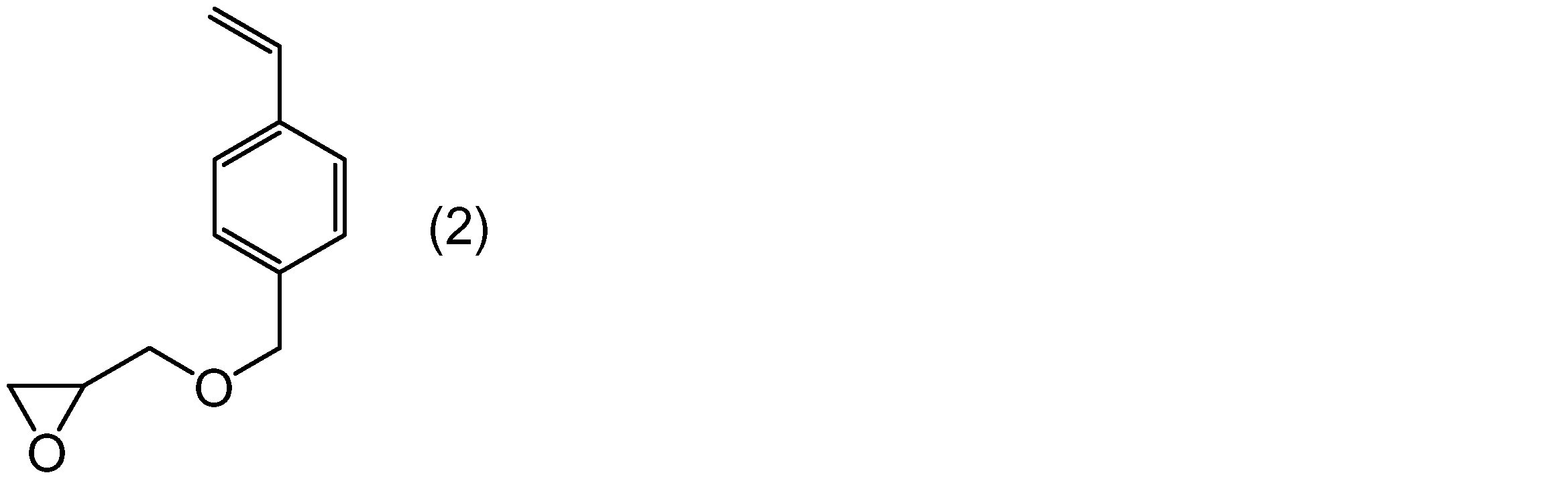
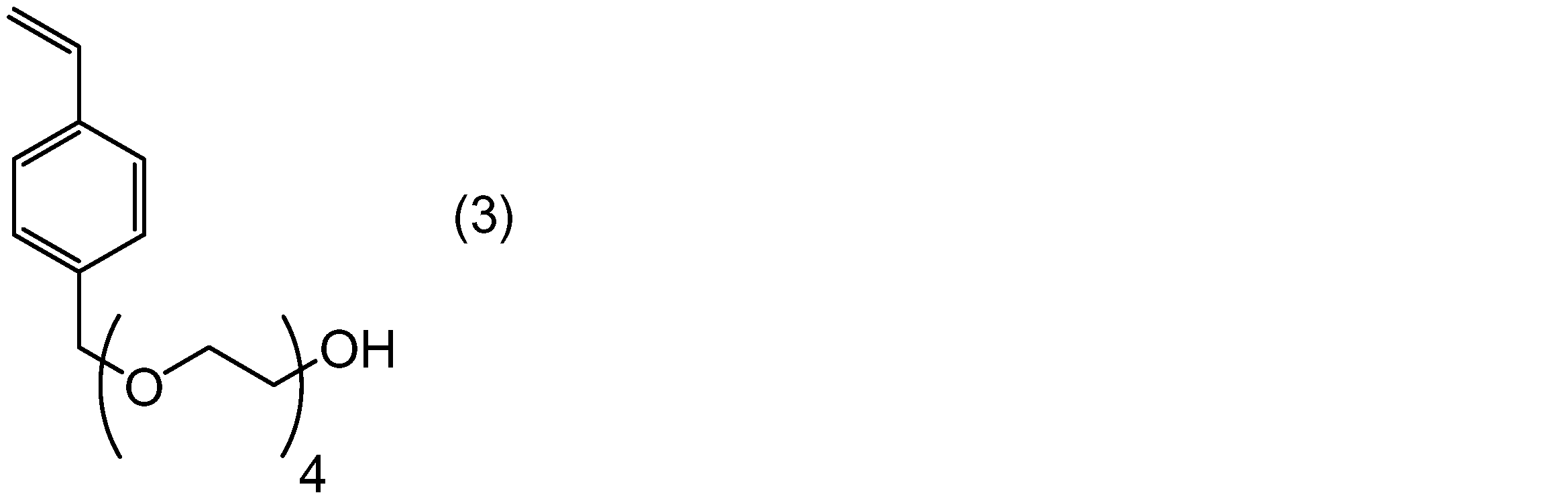
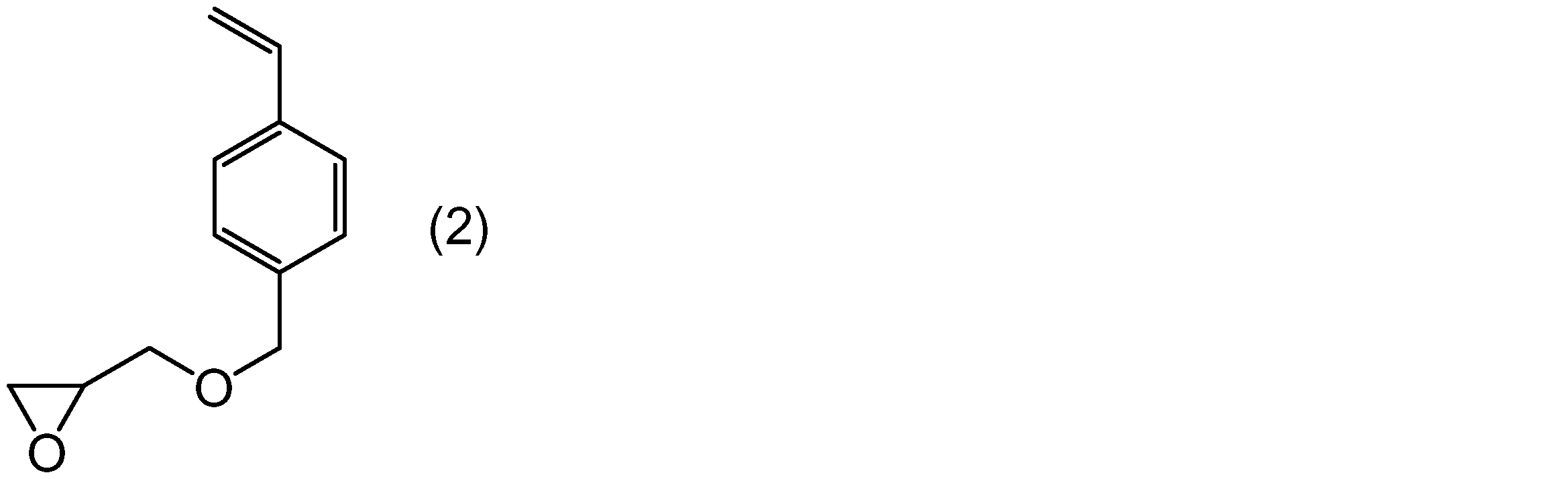
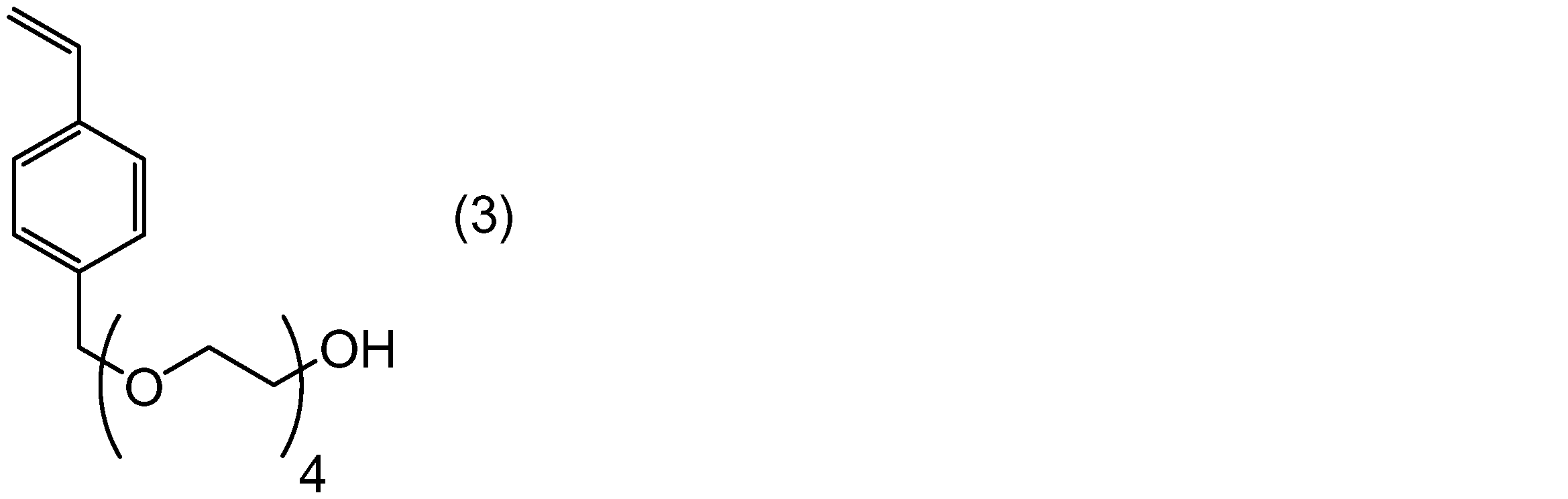
- the styrenic polymer includes a polymerizable monomer represented by the following formula (1), a polymerizable monomer represented by the following formula (2), and a polymerizability represented by the following formula (3).
- a polymer with a monomer is preferable.
- the present invention provides a carrier obtained by crosslinking the crosslinkable functional group of a styrenic polymer having a side chain containing a crosslinkable functional group, a gold-platinum nanosize cluster and carbon black supported on the carrier.
- a catalyst is provided.
- the present invention also provides a monovalent or trivalent gold compound and a divalent or tetravalent platinum compound by a reducing agent in a solution containing a styrene polymer having a side chain containing a crosslinkable functional group and carbon black.
- a method for producing a catalyst which obtains a catalyst comprising a support obtained by crosslinking a crosslinkable functional group, a gold-platinum nanosize cluster and carbon black supported on the support.
- the weight average molecular weight of the styrene polymer is preferably 10,000 to 150,000.
- the crosslinkable functional group of the styrenic polymer is preferably crosslinked by heating.
- the reducing agent is preferably a borohydride compound, an aluminum hydride compound or a silicon hydride compound.
- the gold compound is preferably a gold halide or a triphenylphosphine complex of gold halide.
- the platinum compound is preferably platinum halide or a triphenylphosphine complex of platinum halide.
- the gold compound is preferably AuCl (PPh 3 ), and the platinum compound is preferably Na 2 PtCl 6 .
- the present invention it is possible to provide a method for producing an aldehyde by oxidation of a primary alcohol with high selectivity and a high conversion rate, a catalyst suitably used in the production method, and a method for producing the same.
- FIG. 6 is a schematic diagram showing a flow system used for reactions in Examples 4 to 9.
- the catalyst according to the present embodiment includes a support obtained by crosslinking the crosslinkable functional group of a styrenic polymer having a side chain containing a crosslinkable functional group, a gold-platinum nanosize cluster supported on the support, and Carbon black.
- the catalyst production method includes a monovalent or trivalent gold compound and a divalent or tetravalent platinum compound, a styrenic polymer having a side chain containing a crosslinkable functional group, and carbon black.
- a side chain containing a crosslinkable functional group is passed through a second step of supporting the molecule and a third step of crosslinking the crosslinkable functional group of the styrenic polymer after the second step.
- a catalyst having a carrier obtained by crosslinking the crosslinkable functional group of a styrene polymer having the polymer, a gold-platinum nanosize cluster and carbon black supported on the carrier is obtained.
- a monovalent or trivalent gold compound and a divalent or tetravalent platinum compound; Styrenic polymer and carbon black are a) dissolved in a suitable polar good solvent and mixed with a reducing agent and then aggregated with a suitable nonpolar poor solvent, or b) a suitable nonpolar or low polarity good It is carried out by dissolving in a solvent, mixing with a reducing agent, and then aggregating with a poor solvent having an appropriate polarity.
- the gold-platinum cluster is supported by the interaction with the aromatic ring of the styrene polymer.
- Examples of good polar solvents include tetrahydrofuran (THF), dioxane, acetone, N, N-dimethylformamide (DMF), N-methyl-2-pyrrolidone (NMP), and the like.
- THF tetrahydrofuran
- DMF dioxane
- NMP N-methyl-2-pyrrolidone
- toluene, dichloromethane, chloroform and the like can be used.
- Examples of the polar poor solvent include methanol, ethanol, butanol, and amyl alcohol
- examples of the nonpolar poor solvent include hexane, heptane, and octane.
- the polymer concentration when the gold-platinum cluster is supported on the crosslinkable polymer varies depending on the solvent used and the molecular weight of the polymer, but is about 5.0 to 200 mg / mL, preferably 10 to 100 mg / ml.
- the monovalent or trivalent gold compound is used in an amount of 0.01 to 0.5 mmol, preferably 0.03 to 0.2 mmol, relative to 1 g of the polymer.
- the divalent or tetravalent platinum compound is used in an amount of 0.01 to 0.5 mmol, preferably 0.05 to 0.2 mmol, relative to 1 g of the polymer.
- the reducing agent is used in an amount of 1 to 10 equivalents necessary for the reduction.
- the sodium borohydride is a gold compound and 0.5 to 5 moles of the platinum compound is preferred.
- the temperature and time required for the reduction depend on the kind of gold compound, platinum compound and reducing agent, but are usually between 0 ° C. and 50 ° C., preferably at room temperature for 1 to 24 hours.
- the poor solvent for phase separation is used in an amount of 1 to 10 (v / v), preferably 2 to 5 times the amount of the good solvent, and is added dropwise in about 0.5 to 5 hours.
- a gold halide or a triphenylphosphine complex of gold halide is preferable.
- AuCl (PPh 3 ) is preferable.
- platinum halide or a triphenylphosphine complex of platinum halide is preferable.
- Na 2 PtCl 6 is preferable.
- Examples of carbon black include ketjen black.
- a borohydride compound an aluminum hydride compound or a silicon hydride compound, preferably sodium borohydride or borane can be used.
- the styrene polymer has a side chain containing a crosslinkable functional group.
- the crosslinkable functional group preferably contains an epoxy group and a hydroxyl group.
- the side chain containing a crosslinkable functional group may be composed of only a crosslinkable functional group, or may be one in which a crosslinkable functional group is bonded to a divalent group.
- the upper divalent group may be a relatively short alkylene group, for example, an alkylene group having about 1 to 6 carbon atoms, but —R 1 (OR 2 ) w —, —R 1 (COOR 2 ) x -, or -R 1 (COOR 2) y ( oR 2) z - ( wherein, R 1 represents a covalent bond or 1 to 6 carbon atoms, preferably represents a covalent bond or an alkylene group having 1 or 2 carbon atoms , R 2 each independently represents an alkylene group having 2 to 4 carbon atoms, preferably 2 carbon atoms, w, x and z are integers of 1 to 10 and y represents 1 or 2. Those having a main chain are preferred because they are hydrophilic. Examples of such a preferable divalent group include —CH 2 (OC 2 H 4 ) 4 — and —CO (OC 2 H 4 ) 4 —.
- a styrenic polymer for example, the following formula (4): (Wherein X a represents an alkylene group or an alkylene group containing an ether bond) or the following formula (5): (Wherein X b represents an alkylene group or an alkylene group containing an ether bond), the monomer having a structure represented by the formula: (Wherein X c represents an alkylene group or an alkylene group containing an ether bond) or the following formula (7): (Wherein X d represents an alkylene group or an alkylene group containing an ether bond), the monomer having the structure represented by 10 to 60% is contained in all the monomers, and the total of these is 100% or less. In addition, when the total of these is less than 100%, a styrenic polymer obtained by copolymerizing a monomer mixture containing a styrene monomer as the balance may be mentioned.
- a polymerizable monomer represented by the following formula (1) As a preferred styrenic polymer, a polymerizable monomer represented by the following formula (1), a polymerizable monomer represented by the following formula (2), and a polymerizable monomer represented by the following formula (3) And a polymer with a monomer.
- the styrenic polymer preferably contains 5 to 60%, more preferably 10 to 50%, of the polymerizable monomer represented by the formula (2). Further, the polymerizable monomer represented by the formula (3) is preferably contained in an amount of 10 to 60%, more preferably 20 to 50%. Moreover, it is preferable to include so that the sum total of the polymerizable monomer represented by Formula (2) and (3) may be less than 100%, and to contain the styrene monomer represented by Formula (1) as a remainder.
- the weight average molecular weight of the styrene polymer is preferably 10,000 to 150,000.
- the weight average molecular weight can be measured by gel permeation chromatography (GPC).
- the gold compound and platinum compound are first reduced.
- a ligand is bonded to the gold compound and the platinum compound, the ligand is detached at that time.
- Reduced gold and platinum are incorporated as a cluster into the hydrophobic part of the polymer and are stabilized even in a microscopic state by receiving electrons from the aromatic ring of the polymer.
- the styrenic polymer carrying the gold-platinum cluster and the carbon black can be phase-separated.
- the average diameter of one gold-platinum cluster supported on a styrene polymer together with carbon black is 20 nm or less, preferably 0.3 to 20 nm, more preferably 0.3 to 10 nm, still more preferably 0.3 to 5 nm. More preferably, the thickness is 0.3 to 2 nm, and most preferably 0.3 to 1 nm.
- Many gold-platinum clusters are uniformly dispersed in the hydrophobic portion of the micelle (the aromatic ring of the styrenic polymer). It is considered to exist. Thus, since the metal is a minute cluster (minute metal lump), high catalytic activity can be exhibited.
- the surrounding environment such as the diameter and valence of the gold-platinum cluster can be measured with a transmission electron microscope (TEM) or an extended X-ray absorption fine structure (EXAFS).
- TEM transmission electron microscope
- EXAFS extended X-ray absorption fine structure
- the crosslinkable functional groups of the styrenic polymer carrying the gold-platinum cluster and carbon black are crosslinked as described above.
- the gold-platinum cluster is stabilized and insolubilized in various solvents, and leakage of the supported gold-platinum cluster can be prevented.
- polymer chains carrying gold-platinum clusters can be bonded to each other, or can be bonded to an appropriate carrier such as a material having a crosslinking group.
- the crosslinking reaction is carried out by reacting the crosslinkable functional group under heating and ultraviolet irradiation, preferably by heating, in a solvent-free condition.
- the crosslinking reaction is a conventionally known method for crosslinking a linear organic polymer compound to be used.
- a method using a crosslinking agent, a radical polymerization catalyst such as a peroxide or an azo compound This method can also be carried out according to a method of using an acid, a method of heating by adding an acid or a base, for example, a method of reacting by combining a dehydrating condensing agent such as carbodiimide and an appropriate crosslinking agent.
- the temperature at which the crosslinkable functional group is crosslinked by heating is usually 50 to 200 ° C, preferably 70 to 180 ° C, more preferably 100 to 160 ° C.
- the reaction time for the heat crosslinking reaction is usually 0.1 to 100 hours, preferably 1 to 50 hours, more preferably 2 to 10 hours.
- the polymer-supported gold-platinum cluster produced as described above can be made into a lump or membrane, or fixed to a carrier.
- a crosslinkable functional group for example, a hydroxyl group or amino group
- a carrier such as glass, silica gel, or resin
- the polymer-supported gold-platinum cluster becomes a carrier. It is firmly fixed on the surface.
- the polymer-supported gold-platinum cluster composition is immobilized on the surface of a reaction vessel made of an appropriate resin or glass using the crosslinkable functional groups of micelles, the catalyst-supported reaction is easier to reuse. Can be used as a container.
- cross-linked gold-platinum-containing polymer micelle has many pores and swells with an appropriate solvent to increase the surface area.
- the supported gold and platinum form very small clusters of several nanometers or less.
- the method for producing an aldehyde according to the present embodiment includes a carrier obtained by crosslinking the crosslinkable functional group of a styrene polymer having a side chain containing a crosslinkable functional group, and a gold-platinum nanoparticle supported on the carrier.
- an aldehyde can be produced by oxidation of a primary alcohol with high selectivity and high conversion.
- the above steps can be performed in the absence of a base.
- the above step is performed in the absence of a base, the progress of further oxidation reaction from the generated aldehyde to the carboxylic acid can be suppressed.
- the above steps can be performed in the presence of a base.
- a base alkali metal carbonates, alkali metal carboxylates and hydroxide salts are suitable.
- the amount of the base is preferably 0.05 to 3 equivalents relative to the substrate.
- the base is preferably used as an aqueous solution.
- the primary alcohol is a substrate, when expressed in R 3 CH 2 OH, R 3 represents an aliphatic group, an alicyclic aliphatic group, or an aromatic group, may contain hetero atoms.
- the method for producing an aldehyde according to the present embodiment is particularly effective when R 3 represents an alkyl group having 1 to X carbon atoms. In this case, R 3 may be linear or branched.
- Oxygen gas or air can be used as the oxidant used in the method for producing aldehyde according to the present embodiment.
- the reaction solvent may be a single solvent or a mixed solvent as long as it can swell the polymer and dissolve the substrate alcohol.
- a mixed solvent of water and an organic solvent may be effective.
- the organic solvent include benzotrifluoride (BTF) and methyl ethyl ketone.
- BTF benzotrifluoride
- methyl ethyl ketone benzotrifluoride
- the mixing ratio of water and organic solvent is preferably 1: 1 to 1:10 (volume ratio).
- the catalyst amount is preferably 0.1 to 10% (mol / mol) as gold and 0.1 to 10% (mol / mol) as platinum with respect to the substrate.
- the concentration of the substrate is 0.01 to 1 mmol / ml, preferably 0.05 to 0.5 mmol / ml.
- the reaction temperature is 0 to 80 ° C., preferably room temperature to 60 ° C., and the reaction time is 1 to 50 hours.
- 4-vinylbenzyl glycidyl ether was synthesized according to the method described in Patent Document 1. As other compounds, commercially available products were purified as necessary. The yield of aldehyde obtained by the oxidation reaction was quantified by gas chromatography using an internal standard. GC-17A manufactured by Shimadzu Corporation was used as a gas chromatograph.
- a catalyst (PI-CB / Au-Pt) was produced as follows. 500.0 mg of Polymer A obtained in Production Example 2 was dissolved in 32 mL of diglyme (made by Wako Pure Chemical Industries, Ltd., special grade), cooled to 0 ° C., and then 500.0 mg of Ketjen Black (Lion Corporation, carbon ECP) was added. added. The mixture was stirred at 0 ° C. for 15 minutes, and then a solution of 87 mg of sodium borohydride dissolved in 8 mL of diglyme was slowly added to the mixture. The mixture was stirred at 0 ° C.
- PI-CB / Au-Pt black powder
- PI-CB / Au-Pt 10-20 mg was heated in a mixture of sulfuric acid and nitric acid in a weight ratio of 1: 1 at 200 ° C. for 3 hours. After returning to room temperature, aqua regia was added. When the contents of gold and platinum in the catalyst were measured by ICP analysis of this solution, they were Au: 0.1196 mmol / g and Pt: 0.1764 mmol / g.
- Example 1 1-octanol (Tokyo Kasei Co., Ltd., special grade) (32.6 mg, 0.25 mmol), PI-CB / Au—Pt (20.9 mg, Au content 0.1196 mmol / g, 1 mol% in terms of Au), water ( 2.0 mL) and benzotrifluoride (manufactured by Kanto Chemical Co., Ltd., special grade) (2.0 mL) were mixed in a round bottom flask. After stirring for 24 hours at room temperature under an oxygen atmosphere, the catalyst was recovered by filtration and washing with acetone. The yield was determined by gas chromatography using anisole as an internal standard substance. The reaction formula is shown below. The reaction results (aldehyde yield, carboxylic acid yield, alcohol recovery rate) are shown in Table 1.
- Example 2 and 3 In Examples 2 and 3, oxidation was performed in the same manner as in Example 1 except that the substrate (0.25 mmol) shown in Table 1 was used instead of 1-octanol (0.25 mmol) in Example 1. Reaction was performed. The reaction results (aldehyde yield, carboxylic acid yield, alcohol recovery rate) are shown in Table 1.
- Example 4 the reaction was performed by the following procedure using the flow system apparatus shown in FIG.
- lines L1, L2 and L3 are connected to the top (upstream side) of a glass column 1 (inner diameter 5 mm, total length 100 mm), and the other ends of the lines L1, L2 and L3 are connected.
- a line L4 is connected to the bottom (downstream side) of the glass column 1, and a container 5 is connected to the other end of the line L4.
- the column 1 is heated to 60 ° C., and benzotrifluoride 0.0070 mL / min in which 0.108 mmol / mL 1-octanol (manufactured by Tokyo Kasei Co., Ltd.) from the container 3 is dissolved, and water from the container 4 is added.
- Oxygen gas from the oxygen cylinder 2 at 0.0070 mL / min and 1 mL / min was introduced into the column 1 using a pump and a mass flow controller, respectively, and an oxidation reaction was performed in the flow system.
- the liquid phase that passed through the column 1 was collected in the container 5 and diluted with acetone.
- the yield was determined by gas chromatography using anisole as an internal standard substance.
- the reaction results (aldehyde yield, carboxylic acid yield, alcohol recovery rate) are shown in Table 2.
- Example 5 The oxidation reaction was carried out in the same manner as in Example 5 except that the substrate (0.25 mmol) shown in Table 2 was used instead of 1-octanol (0.25 mmol) in Example 4. It was.
- the reaction results (aldehyde yield, carboxylic acid yield, alcohol recovery rate) are shown in Table 2.
- Example 6 to 9 In Examples 6 to 9, the substrate (0.25 mmol) shown in Table 2 was used instead of 1-octanol (0.25 mmol) in Example 1, and potassium hydroxide (Wako Pure Chemical Industries) was used instead of water. Other than using water in which 0.324 mmol / L was dissolved, the flow rate of benzotrifluoride and water was 0.0140 mL / min, and the flow rate of oxygen gas was 7 mL / min, An oxidation reaction was performed in the same manner as in Example 4. The reaction results (aldehyde yield, carboxylic acid yield, alcohol recovery rate) are shown in Table 2.
Landscapes
- Chemical & Material Sciences (AREA)
- Organic Chemistry (AREA)
- Engineering & Computer Science (AREA)
- Materials Engineering (AREA)
- Chemical Kinetics & Catalysis (AREA)
- Inorganic Chemistry (AREA)
- Organic Low-Molecular-Weight Compounds And Preparation Thereof (AREA)
- Catalysts (AREA)
- Low-Molecular Organic Synthesis Reactions Using Catalysts (AREA)
Abstract
本発明は、架橋性官能基を含む側鎖を有するスチレン系高分子の架橋性官能基を架橋させてなる担体と、担体に担持された金-白金のナノサイズクラスター及びカーボンブラックとを有する触媒の存在下、一級アルコールの酸化によりアルデヒドを得る工程を備えるアルデヒドの製造方法を提供する。
Description
本発明は一級アルコールの酸化によりアルデヒドを製造する方法、並びに当該製造方法に好適に使用される触媒及びその製造方法に関する。
金ナノサイズクラスターを触媒として用いる酸素酸化反応は1989年Harutaらによって、低温一酸化炭素酸化反応において非常に高活性であると報告された(非特許文献1)。
一方、酸素を酸化剤として用いた金属触媒によるアルコールのアルデヒド、ケトン、カルボン酸への酸化反応は、ルテニウムやパラジウム触媒等を用いる例が、均一系触媒、固相触媒ともに多数報告されている。また、近年、金クラスターを触媒として用いる例も多数報告されている(非特許文献2)。
本願発明者らは、マイクロカプセル化法を用いてスチレン系高分子に遷移金属ナノサイズクラスターを担持することにより、パラジウムや白金に於いて非常に高活性な触媒の製造ができることを見出してきた(非特許文献3~4、特許文献1)。また、金触媒についても、酸化反応でカルボニル化合物が生成することが報告されている(特許文献2)。
J.Catal.1989,115,301-309.
Chem.Rev.2004,104,3037-3058.
J.Am.Chem.Soc.2005,127,2125-2135.
Synlett 2005,813-816.
これまで、金クラスターを触媒として用いる例が多数報告されているが、適用可能な基質が限られていることや、選択性が悪いといった問題点が残っている。
本発明は、高い選択性及び高い転化率をもって、一級アルコールの酸化によりアルデヒドを製造する方法、並びに、当該製造方法に好適に使用される触媒及びその製造方法を提供することを目的とする。
本発明は、架橋性官能基を含む側鎖を有するスチレン系高分子の該架橋性官能基を架橋させてなる担体と、該担体に担持された金-白金のナノサイズクラスター及びカーボンブラックとを有する触媒の存在下、一級アルコールの酸化によりアルデヒドを得る工程を備えるアルデヒドの製造方法を提供する。
本発明のアルデヒドの製造方法においては、上記スチレン系高分子が上記架橋性官能基としてエポキシ基及び水酸基を含むことが好ましい。
本発明のアルデヒドの製造方法においては、上記工程を塩基の非存在下で行うことができる。
また、本発明のアルデヒドの製造方法においては、上記工程を塩基の存在下で行うことができる。
上記スチレン系高分子は、下記式(1)で表される重合性単量体と、下記式(2)で表される重合性単量体と、下記式(3)で表される重合性単量体との重合体であることが好ましい。

本発明は、架橋性官能基を含む側鎖を有するスチレン系高分子の該架橋性官能基を架橋させてなる担体と、該担体に担持された金-白金のナノサイズクラスター及びカーボンブラックとを有する触媒を提供する。
また、本発明は、1価又は3価の金化合物及び2価又は4価の白金化合物を、架橋性官能基を含む側鎖を有するスチレン系高分子及びカーボンブラックを含む溶液中で還元剤により還元する第1の工程と、上記溶液に、上記スチレン系高分子に対する貧溶媒を加えて相分離させることにより金-白金のナノサイズクラスター及び上記カーボンブラックをスチレン系高分子に担持する第2の工程と、上記第2の工程の後で上記スチレン系高分子の上記架橋性官能基を架橋させる第3の工程と、を経て、架橋性官能基を含む側鎖を有するスチレン系高分子の該架橋性官能基を架橋させてなる担体と、該担体に担持された金-白金のナノサイズクラスター及びカーボンブラックとを有する触媒を得る触媒の製造方法を提供する。
上記スチレン系高分子の重量平均分子量は1万~15万であることが好ましい。
また、上記第3の工程において、上記スチレン系高分子の上記架橋性官能基を加熱により架橋させることが好ましい。
また、上記還元剤は、水素化ホウ素化合物、水素化アルミニウム化合物又は水素化ケイ素化合物であることが好ましい。
また、上記金化合物は、ハロゲン化金又はハロゲン化金のトリフェニルホスフィン錯体であることが好ましい。
さらに、上記白金化合物は、ハロゲン化白金又はハロゲン化白金のトリフェニルホスフィン錯体であることが好ましい。
また、上記金化合物はAuCl(PPh3)であることが好ましく、上記白金化合物はNa2PtCl6であることが好ましい。
本発明によれば、高い選択性及び高い転化率をもって、一級アルコールの酸化によりアルデヒドを製造する方法、並びに、当該製造方法に好適に使用される触媒及びその製造方法を提供することができる。
以下に、本発明の好適な実施形態について詳細に説明する。
本実施形態に係る触媒は、架橋性官能基を含む側鎖を有するスチレン系高分子の該架橋性官能基を架橋させてなる担体と、該担体に担持された金-白金のナノサイズクラスター及びカーボンブラックとを有する。
また、本実施形態に係る触媒の製造方法は、1価又は3価の金化合物及び2価又は4価の白金化合物を、架橋性官能基を含む側鎖を有するスチレン系高分子及びカーボンブラックを含む溶液中で還元剤により還元する第1の工程と、上記溶液に、上記スチレン系高分子に対する貧溶媒を加えて相分離させることにより金-白金のナノサイズクラスター及び上記カーボンブラックをスチレン系高分子に担持する第2の工程と、上記第2の工程の後で上記スチレン系高分子の上記架橋性官能基を架橋させる第3の工程と、を経て、架橋性官能基を含む側鎖を有するスチレン系高分子の該架橋性官能基を架橋させてなる担体と、該担体に担持された金-白金のナノサイズクラスター及びカーボンブラックとを有する触媒を得るものである。
上記第1及び第2の工程で、金-白金のナノサイズクラスター及びカーボンブラックをスチレン系高分子に担持するには、1価又は3価の金化合物及び2価又は4価の白金化合物と、スチレン系高分子及びカーボンブラックとを、a)適当な極性の良溶媒に溶解し還元剤と混合した後適当な非極性の貧溶媒で凝集させる、又はb)適当な非極性又は低極性の良溶媒に溶解し還元剤と混合した後適当な極性の貧溶媒で凝集させる、ことにより行われる。金-白金クラスターはスチレン系高分子の芳香環との相互作用により担持される。
尚、極性の良溶媒としてはテトラヒドロフラン(THF)、ジオキサン、アセトン、N,N-ジメチルホルムアミド(DMF)、N-メチル-2-ピロリドン(NMP)などがあり、非極性又は低極性の良溶媒としてはトルエン、ジクロロメタン、クロロホルムなどが使用できる。極性の貧溶媒としてはメタノール、エタノール、ブタノール、アミルアルコールなどがあり、非極性の貧溶媒としてはヘキサン、ヘプタン、オクタンなどが使用できる。
金-白金クラスターを架橋性ポリマーに担持する際のポリマーの濃度は、用いる溶媒やポリマーの分子量によっても異なるが、約5.0~200mg/mL、好ましくは10~100mg/mlである。1価又は3価の金化合物は、ポリマー1gに対して、0.01~0.5mmol、好ましくは0.03~0.2mmol使用する。2価又は4価の白金化合物は、ポリマー1gに対して、0.01~0.5mmol、好ましくは0.05~0.2mmol使用する。還元剤は、還元に必要な量の1~10当量使用するが、例えば1価の金化合物及び4価の白金化合物を、水素化ホウ素ナトリウムで還元する場合の水素化ホウ素ナトリウムは、金化合物及び白金化合物の0.5~5倍モルが好適である。還元に必要な温度および時間は金化合物、白金化合物及び還元剤の種類によるが、通常は0℃~50℃の間、好ましくは室温で、1~24時間で行われる。相分離する際の貧溶媒は、良溶媒に対して1~10(v/v)倍量、好ましくは2~5倍量使用し、0.5~5時間程度で滴下する。
1価又は3価の金化合物としては、ハロゲン化金や、ハロゲン化金のトリフェニルホスフィン錯体が好ましい。特に、AuCl(PPh3)が好ましい。
2価又は4価の白金化合物としては、ハロゲン化白金や、ハロゲン化白金のトリフェニルホスフィン錯体が好ましい。特に、Na2PtCl6が好ましい。
カーボンブラックとしては、ケッチェンブラック等が挙げられる。
還元剤としては、水素化ホウ素化合物、水素化アルミニウム化合物又は水素化ケイ素化合物、好ましくは水素化ホウ素ナトリウム又はボランを用いることができる。
スチレン系高分子は、架橋性官能基を含む側鎖を有する。上記架橋性官能基としてエポキシ基及び水酸基を含むことが好ましい。架橋性官能基を含む側鎖としては、架橋性官能基のみから成るものであっても、二価の基に架橋性官能基が結合したものでもよい。
上基二価の基としては、比較的短いアルキレン基、例えば、炭素数が1~6程度のアルキレン基であってもよいが、-R1(OR2)w-、-R1(COOR2)x-、又は-R1(COOR2)y(OR2)z-(式中、R1は共有結合又は炭素数1~6、好ましくは共有結合又は炭素数1~2のアルキレン基を表し、R2はそれぞれ独立して炭素数2~4、好ましくは炭素数2のアルキレン基を表し、w、x及びzは1~10の整数、yは1又は2を表す。)で表される主鎖をもつものが親水性であるため好ましい。このような好ましい二価の基として、-CH2(OC2H4)4-や-CO(OC2H4)4-等が挙げられる。
このようなスチレン系高分子として、例えば、下記式(4):

(式中、Xaはアルキレン基又はエーテル結合を含むアルキレン基を表す。)又は下記式(5):

(式中、Xbはアルキレン基又はエーテル結合を含むアルキレン基を表す。)で表される構造を有するモノマーを全モノマー中に5~60%含み、下記式(6):
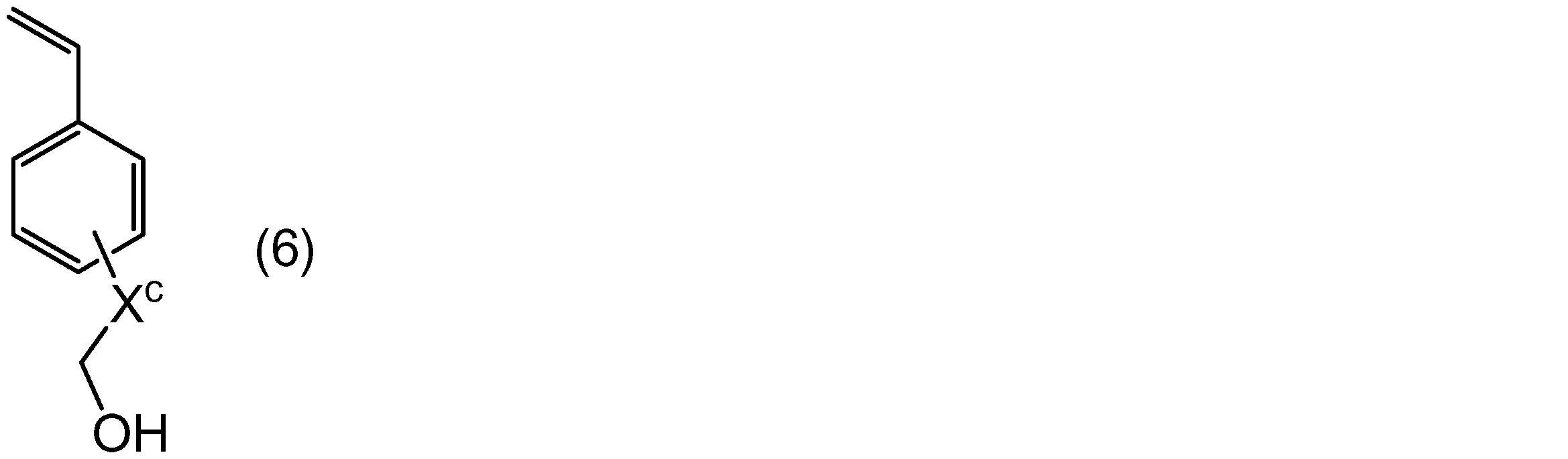
(式中、Xcはアルキレン基又はエーテル結合を含むアルキレン基を表す。)又は下記式(7):

(式中、Xdはアルキレン基又はエーテル結合を含むアルキレン基を表す。)で表される構造を有するモノマーを全モノマー中に10~60%含み、かつこれらの合計が100%以下となるように含み、更にこれらの合計が100%未満の場合には残部としてスチレンモノマーを含むモノマー混合物を共重合して得られたスチレン系高分子が挙げられる。
好ましいスチレン系高分子として下記式(1)で表される重合性単量体と、下記式(2)で表される重合性単量体と、下記式(3)で表される重合性単量体との重合体が挙げられる。

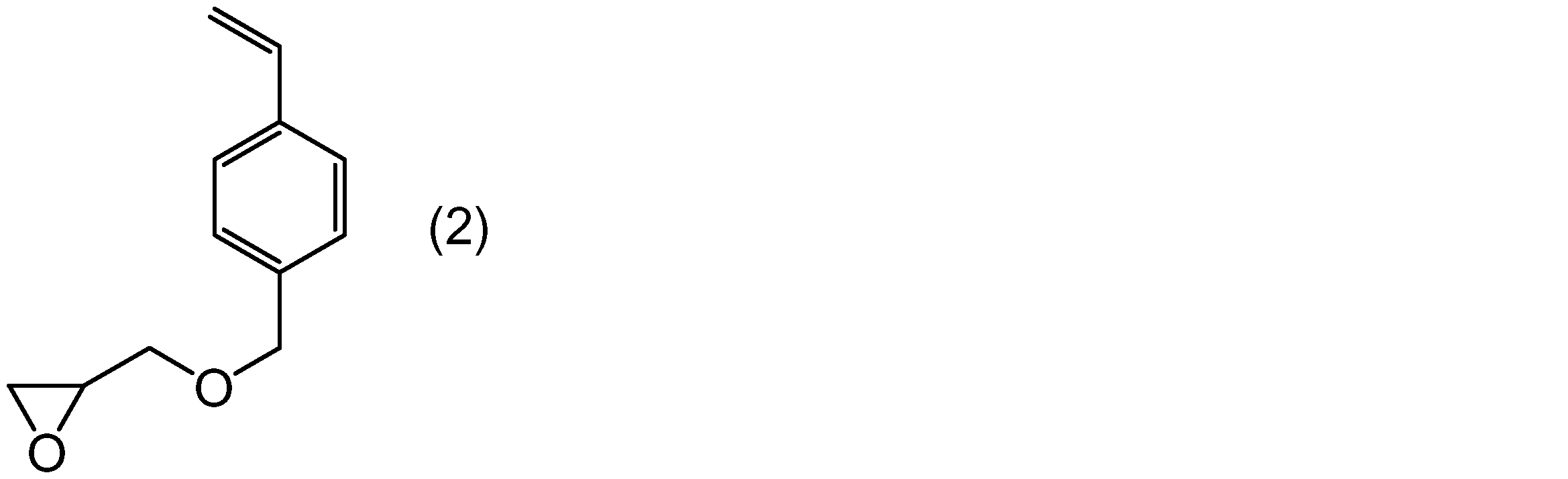
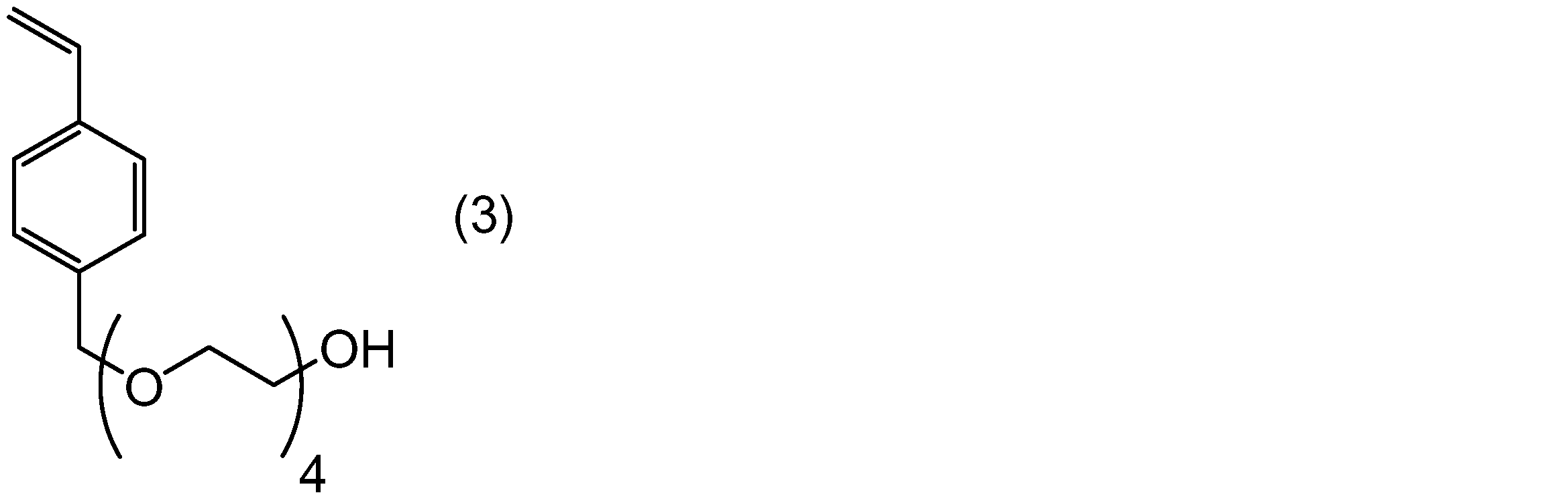
上記スチレン系高分子は、式(2)で表される重合性単量体を、全単量体中に5~60%含むことが好ましく、10~50%含むことがより好ましい。また、式(3)で表される重合性単量体を、10~60%含むことが好ましく、20~50%含むことがより好ましい。また、式(2)及び(3)で表される重合性単量体の合計が100%未満となるように含み、残部として式(1)で表されるスチレンモノマーを含むことが好ましい。
スチレン系高分子の重量平均分子量は、1万から15万であることが好ましい。重量平均分子量は、ゲルパーミエーションクロマトグラフィー(GPC)により測定することができる。
上述したようなスチレン系高分子、カーボンブラック、金化合物及び白金化合物を、上記のような適当な溶媒に還元剤と共に溶解すると、金化合物及び白金化合物がまず還元を受ける。金化合物及び白金化合物に配位子が結合していた場合は、その際に配位子が脱離する。還元された金及び白金はクラスターとして高分子の疎水性部分に取り込まれ、高分子の芳香環から電子供与を受け微小な状態でも安定化される。その後、高分子に対する貧溶媒を加えることにより、金-白金クラスター及びカーボンブラックを担持した、スチレン系高分子を相分離させることができる。
カーボンブラックと共にスチレン系高分子に担持されている金-白金クラスター1個の平均径は20nm以下、好ましくは0.3~20nm、より好ましくは0.3~10nm、更に好ましくは0.3~5nm、より更に好ましくは0.3~2nm、最も好ましいのは0.3~1nmであり、数多くの金-白金クラスターがミセルの疎水性部分(スチレン系高分子の芳香環)に均一に分散して存在していると考えられる。このように金属が微小なクラスター(微小金属塊)となっているため、高い触媒活性を示すことができる。
金-白金クラスターの径及び価数等の周辺環境は、透過型電子顕微鏡(TEM)又は拡張X線吸収微細構造(EXAFS)で測定することができる。
上記第3の工程では、上述のように金-白金クラスター及びカーボンブラックを担持したスチレン系高分子の架橋性官能基を架橋させる。架橋により金-白金クラスターは安定化すると共に種々の溶剤に対して不溶化し、担持した金-白金クラスターの漏れを防止することができる。架橋反応により、金-白金クラスターを担持した高分子鎖同士を結合させることや、架橋基を有する材料など適当な担体に結合させることもできる。架橋反応は、無溶媒条件で、加熱や紫外線照射、好ましくは加熱により架橋性官能基を反応させることにより行う。架橋反応は、これらの方法以外にも、使用する直鎖型有機高分子化合物を架橋するための従来公知の方法である、例えば架橋剤を用いる方法、過酸化物やアゾ化合物等のラジカル重合触媒を用いる方法、酸又は塩基を添加して加熱する方法、例えばカルボジイミド類のような脱水縮合剤と適当な架橋剤を組み合わせて反応させる方法等に準じても行うことができる。
架橋性官能基を加熱により架橋させる際の温度は、通常50~200℃、好ましくは70~180℃、より好ましくは100~160℃である。加熱架橋反応させる際の反応時間は、通常0.1~100時間、好ましくは1~50時間、より好ましくは2~10時間である。
上記の様にして製造した、高分子担持金-白金クラスターは、塊や膜としたり、担体に固定することもできる。ガラス、シリカゲル、樹脂などの担体表面の架橋性官能基(例えば、水酸基やアミノ基など)と金-白金含有ポリマーの架橋性官能基とを架橋反応させると、高分子担持金-白金クラスターは担体表面に強固に固定される。また、適当な樹脂やガラスで出来た反応容器の表面に、ミセルの架橋性官能基を使用して高分子担持金-白金クラスター組成物を固定化してやれば、より再使用が簡便な触媒担持反応容器として使用できる。
このようにして得られた架橋型金-白金含有ポリマーミセルは多くの空孔を有しており、適当な溶剤で膨潤して表面積を拡大する。また担持された金及び白金は数ナノメートル以下の非常に小さいクラスターを形成する。
本実施形態に係るアルデヒドの製造方法は、架橋性官能基を含む側鎖を有するスチレン系高分子の該架橋性官能基を架橋させてなる担体と、該担体に担持された金-白金のナノサイズクラスター及びカーボンブラックとを有する触媒の存在下、一級アルコールの酸化によりアルデヒドを得る工程を備える。上記製造方法を用いると、高い選択性及び高い転化率をもって、一級アルコールの酸化によりアルデヒドを製造することができる。
本実施形態に係るアルデヒドの製造方法においては、上記工程を塩基の非存在下で行うことができる。上記工程を塩基の非存在下で行うと、生成したアルデヒドからカルボン酸への更なる酸化反応の進行を抑制することができる。
また、本実施形態に係るアルデヒドの製造方法においては、上記工程を塩基の存在下で行うことができる。上記工程を塩基の存在下で行うと、一級アルコールの酸化反応が一層促進され、転化率をさらに高めることができる。塩基としては、アルカリ金属炭酸塩、アルカリ金属カルボン酸塩や水酸化物塩が好適であり、具体的には、水酸化カリウム、水酸化ナトリウム、炭酸カリウム、炭酸ナトリウム、炭酸水素カリウム、炭酸水素ナトリウム、炭酸セシウム、酢酸ナトリウム、酢酸カリウムなどが挙げられる。塩基の量は、基質に対して0.05~3当量用いることが好ましい。また、塩基は、水溶液として用いることが好ましい。
基質である一級アルコールを、R3CH2OHで表した場合、R3は脂肪族基、脂環式脂肪族基、又は芳香族基を示し、ヘテロ原子が含まれていてもよい。本実施形態に係るアルデヒドの製造方法は、特にR3が炭素数1~Xのアルキル基を示す場合に効果的である。この場合、R3は直鎖状でも分岐状でも良い。
本実施形態に係るアルデヒドの製造方法で用いる酸化剤としては、酸素ガス、又は空気を用いることができる。反応溶媒としては、高分子を膨潤させ基質アルコールを溶解するものであれば、単一溶媒でも混合溶媒でも使用できる。水と有機溶媒の混合溶媒が有効な場合もある。有機溶媒としてはベンゾトリフルオリド(BTF)や、メチルエチルケトンなどが挙げられる。混合溶媒を用いる場合、水と有機溶媒の混合比は1:1~1:10(容積比)であることが好ましい。触媒量は、基質に対して、金として0.1~10%(mol/mol)、白金として0.1~10%(mol/mol)であることが好ましい。基質の濃度は、0.01~1mmol/ml、好ましくは0.05~0.5mmol/mlである。反応温度は、0~80℃、好ましくは室温~60℃であり、反応時間は、1~50時間である。
以下、実施例にて本発明を例証するが本発明を限定することを意図するものではない。4-ビニルベンジルグリシジルエーテルは特許文献1に記載の方法に従って合成した。他の化合物は市販品を必要に応じて精製して使用した。酸化反応で得られたアルデヒドの収率は内部標準を用いたガスクロマトグラフィーで定量した。ガスクロマトグラフとして、島津製作所(株)製GC-17Aを用いた。
[製造例1]
150mLのTHFにソジウムハイドライド(60% in mineral oil,5.2g)を加え、0℃にてその反応液にテトラエチレングリコール(25.4g,131mmol)を加えた。室温で1時間撹拌した後、1-クロロメチル-4-ビニルベンゼン(13.3g,87.1mmol)を加え、さらに12時間撹拌を続けた。0℃に冷却しジエチルエーテルを加え、飽和塩化アンモニウム水溶液を加え、反応を停止した。水相をエーテルで抽出した後、併せた有機相を無水硫酸ナトリウムで乾燥した後、溶媒を減圧下留去した。得られた残さをシリカゲルカラムクロマトグラフィーにて精製し、2-(2-(2-(2-(4-vinylbenzyloxy)ethoxy)ethoxy)ethoxy)ethanolを得た(20.6g,66.2mmol,76%)。
1H-NMR(CDCl3) δ2.55-2.59(m,1H),3.59-3.73(m,16H),4.55(s,2H),5.25(d,1H,J=6.4Hz),5.53(d,1H,J=18Hz),6.71(dd,1H,J=11.0,17.9Hz),7.22-7.27(m,3H),7.31-7.39(m,2H);
13C-NMR δ61.8,69.5,70.5,70.69,70.74,72.6,73.0,113.8,126.3,128.0,136.0,137.1,138.0。
150mLのTHFにソジウムハイドライド(60% in mineral oil,5.2g)を加え、0℃にてその反応液にテトラエチレングリコール(25.4g,131mmol)を加えた。室温で1時間撹拌した後、1-クロロメチル-4-ビニルベンゼン(13.3g,87.1mmol)を加え、さらに12時間撹拌を続けた。0℃に冷却しジエチルエーテルを加え、飽和塩化アンモニウム水溶液を加え、反応を停止した。水相をエーテルで抽出した後、併せた有機相を無水硫酸ナトリウムで乾燥した後、溶媒を減圧下留去した。得られた残さをシリカゲルカラムクロマトグラフィーにて精製し、2-(2-(2-(2-(4-vinylbenzyloxy)ethoxy)ethoxy)ethoxy)ethanolを得た(20.6g,66.2mmol,76%)。
1H-NMR(CDCl3) δ2.55-2.59(m,1H),3.59-3.73(m,16H),4.55(s,2H),5.25(d,1H,J=6.4Hz),5.53(d,1H,J=18Hz),6.71(dd,1H,J=11.0,17.9Hz),7.22-7.27(m,3H),7.31-7.39(m,2H);
13C-NMR δ61.8,69.5,70.5,70.69,70.74,72.6,73.0,113.8,126.3,128.0,136.0,137.1,138.0。
[製造例2]
スチレン(2.6g、25mmol)、4-ビニルベンジルグリシジルエーテル(WO2005/085307に記載の方法に従って合成したもの)(4.75g、25mmol)、製造例1で得た2-(2-(2-(2-(4-vinylbenzyloxy)ethoxy)ethoxy)ethoxy)ethanol(7.67g、25mmol)、及び重合開始剤(和光純薬工業社製V-70、308mg、1mmol)をクロロホルム(15ml)に溶解させ、脱気操作後アルゴン中で室温、72時間攪拌した。反応液を室温まで冷却した後、THF100mlを加えた反応液をジエチルエーテル1l中に室温にてゆっくりと滴下し、得られた沈殿物を濾過分取した後、ジエチルエーテルにて十分に洗浄した。その後、室温にて減圧乾燥させ透明ガム状固体として下式のスチレン系高分子(高分子A)(8.98g、x:y:z=29:35:36)を得た。コポリマーのモノマー成分の比は1H-NMRにより決定した。

スチレン(2.6g、25mmol)、4-ビニルベンジルグリシジルエーテル(WO2005/085307に記載の方法に従って合成したもの)(4.75g、25mmol)、製造例1で得た2-(2-(2-(2-(4-vinylbenzyloxy)ethoxy)ethoxy)ethoxy)ethanol(7.67g、25mmol)、及び重合開始剤(和光純薬工業社製V-70、308mg、1mmol)をクロロホルム(15ml)に溶解させ、脱気操作後アルゴン中で室温、72時間攪拌した。反応液を室温まで冷却した後、THF100mlを加えた反応液をジエチルエーテル1l中に室温にてゆっくりと滴下し、得られた沈殿物を濾過分取した後、ジエチルエーテルにて十分に洗浄した。その後、室温にて減圧乾燥させ透明ガム状固体として下式のスチレン系高分子(高分子A)(8.98g、x:y:z=29:35:36)を得た。コポリマーのモノマー成分の比は1H-NMRにより決定した。
[製造例3]
以下のようにして、触媒(PI-CB/Au-Pt)を製造した。
製造例2で得た高分子A500.0mgをジグライム(和光純薬工業社製、特級)32mLに溶解させ、0℃まで冷却した後、ケッチェンブラック(ライオン社製、カーボンECP)500.0mgを加えた。この混合液を0℃で15分間攪拌した後に、この混合液へ水素化ホウ素ナトリウム87mgのジグライム8mLに溶解させた溶液をゆっくり加えた。この混合液を0℃で15分間攪拌した後に、この混合液へAuClPPh3(Strem社製、特級)141.0mg及びNa2PtCl6(Alderich社製、特級)158.0mgのジグライム20mLに溶解させた溶液をゆっくり加えた。この混合液を0℃から室温で12時間攪拌した後に、ジエチルエーテル120mLを室温でゆっくり加えた。分散した金属を包み込んだ内包した黒色の粉末(触媒カプセル)が生じた。この触媒カプセルをジエチルエーテルで数回洗浄し、室温で乾燥した。次にこの触媒カプセルを無溶媒条件で120℃で5時間加熱し、生成した黒色粉末を塩化メチレンと水とテトラヒドロフランで洗浄し、室温で乾燥することで黒色粉末1.036gが生成した(以下「PI-CB/Au-Pt」という。)。
PI-CB/Au-Pt 10-20mgを硫酸及び硝酸の重量比1:1の混合液中で200℃で3時間加熱し、室温に戻した後に王水を加えた。この溶液のICP分析により触媒中の金と白金の含量を測定したところ、Au:0.1196mmol/g,Pt:0.1764mmol/gであった。
以下のようにして、触媒(PI-CB/Au-Pt)を製造した。
製造例2で得た高分子A500.0mgをジグライム(和光純薬工業社製、特級)32mLに溶解させ、0℃まで冷却した後、ケッチェンブラック(ライオン社製、カーボンECP)500.0mgを加えた。この混合液を0℃で15分間攪拌した後に、この混合液へ水素化ホウ素ナトリウム87mgのジグライム8mLに溶解させた溶液をゆっくり加えた。この混合液を0℃で15分間攪拌した後に、この混合液へAuClPPh3(Strem社製、特級)141.0mg及びNa2PtCl6(Alderich社製、特級)158.0mgのジグライム20mLに溶解させた溶液をゆっくり加えた。この混合液を0℃から室温で12時間攪拌した後に、ジエチルエーテル120mLを室温でゆっくり加えた。分散した金属を包み込んだ内包した黒色の粉末(触媒カプセル)が生じた。この触媒カプセルをジエチルエーテルで数回洗浄し、室温で乾燥した。次にこの触媒カプセルを無溶媒条件で120℃で5時間加熱し、生成した黒色粉末を塩化メチレンと水とテトラヒドロフランで洗浄し、室温で乾燥することで黒色粉末1.036gが生成した(以下「PI-CB/Au-Pt」という。)。
PI-CB/Au-Pt 10-20mgを硫酸及び硝酸の重量比1:1の混合液中で200℃で3時間加熱し、室温に戻した後に王水を加えた。この溶液のICP分析により触媒中の金と白金の含量を測定したところ、Au:0.1196mmol/g,Pt:0.1764mmol/gであった。
[実施例1]
1-オクタノール(東京化成社製、特級)(32.6mg,0.25mmol)、PI-CB/Au-Pt(20.9mg、Au含量0.1196mmol/g,Au換算で1mol%)、水(2.0mL)、ベンゾトリフルオリド(関東化学社製、特級)(2.0mL)を丸底フラスコ内で混合した。酸素雰囲気下、室温で24時間撹拌した後、触媒を濾過してアセトンで洗浄することによって回収した。収率は、アニソールを内部標準物質としてガスクロマトグラフィーで決定した。反応式を下式に示す。また、反応結果(アルデヒド収率、カルボン酸収率、アルコール回収率)を表1に示す。

1-オクタノール(東京化成社製、特級)(32.6mg,0.25mmol)、PI-CB/Au-Pt(20.9mg、Au含量0.1196mmol/g,Au換算で1mol%)、水(2.0mL)、ベンゾトリフルオリド(関東化学社製、特級)(2.0mL)を丸底フラスコ内で混合した。酸素雰囲気下、室温で24時間撹拌した後、触媒を濾過してアセトンで洗浄することによって回収した。収率は、アニソールを内部標準物質としてガスクロマトグラフィーで決定した。反応式を下式に示す。また、反応結果(アルデヒド収率、カルボン酸収率、アルコール回収率)を表1に示す。
[実施例2、3]
実施例2、3においては、実施例1における1-オクタノール(0.25mmol)に代えて、それぞれ表1に示す基質(0.25mmol)を用いたこと以外は、実施例と同様にして、酸化反応を行った。反応結果(アルデヒド収率、カルボン酸収率、アルコール回収率)を表1に示す。
実施例2、3においては、実施例1における1-オクタノール(0.25mmol)に代えて、それぞれ表1に示す基質(0.25mmol)を用いたこと以外は、実施例と同様にして、酸化反応を行った。反応結果(アルデヒド収率、カルボン酸収率、アルコール回収率)を表1に示す。

[実施例4]
本実施例では、図1に示す流通系装置を用いて、以下の手順で反応を行った。
図1に示す流通系装置において、ガラス製カラム1(内径5mm、全長100mm)の頂部(上流側)にはラインL1、L2及びL3が連結されており、ラインL1、L2及びL3の他端にはそれぞれ酸素ボンベ2並びに容器3、4が連結されている。また、ガラス製カラム1の底部(下流側)にはラインL4が連結されており、ラインL4の他端には容器5が連結されている。
PI-CB/Au-Pt(Au含量0.1196mmol/g)200mg、セライト(関東化学社製)760mgを混合し、カラム1に充填した。また、1-オクタノール(東京化成社製、特級)を0.108mmol/mL溶解させたベンゾトリフルオリドを容器3に、水を容器4にそれぞれ収容した。次にカラム1を60℃に加熱し、容器3からの1-オクタノール(東京化成社製、特級)を0.108mmol/mL溶解させたベンゾトリフルオリド0.0070mL/min、容器4からの水を0.0070mL/min、酸素ボンベ2からの酸素ガスを1mL/minで、それぞれポンプおよびマスフローコントローラーを用いてカラム1に導入し、流通系での酸化反応を行った。カラム1を通過した液相を容器5に回収し、アセトンで希釈した。収率は、アニソールを内部標準物質としてガスクロマトグラフィーで決定した。また、反応結果(アルデヒド収率、カルボン酸収率、アルコール回収率)を表2に示す。
本実施例では、図1に示す流通系装置を用いて、以下の手順で反応を行った。
図1に示す流通系装置において、ガラス製カラム1(内径5mm、全長100mm)の頂部(上流側)にはラインL1、L2及びL3が連結されており、ラインL1、L2及びL3の他端にはそれぞれ酸素ボンベ2並びに容器3、4が連結されている。また、ガラス製カラム1の底部(下流側)にはラインL4が連結されており、ラインL4の他端には容器5が連結されている。
PI-CB/Au-Pt(Au含量0.1196mmol/g)200mg、セライト(関東化学社製)760mgを混合し、カラム1に充填した。また、1-オクタノール(東京化成社製、特級)を0.108mmol/mL溶解させたベンゾトリフルオリドを容器3に、水を容器4にそれぞれ収容した。次にカラム1を60℃に加熱し、容器3からの1-オクタノール(東京化成社製、特級)を0.108mmol/mL溶解させたベンゾトリフルオリド0.0070mL/min、容器4からの水を0.0070mL/min、酸素ボンベ2からの酸素ガスを1mL/minで、それぞれポンプおよびマスフローコントローラーを用いてカラム1に導入し、流通系での酸化反応を行った。カラム1を通過した液相を容器5に回収し、アセトンで希釈した。収率は、アニソールを内部標準物質としてガスクロマトグラフィーで決定した。また、反応結果(アルデヒド収率、カルボン酸収率、アルコール回収率)を表2に示す。
[実施例5]
実施例4における1-オクタノール(0.25mmol)に代えて、表2に示す基質(0.25mmol)を用いたこと以外は実施例4と同様にして、実施例5と同様に酸化反応を行った。反応結果(アルデヒド収率、カルボン酸収率、アルコール回収率)を表2に示す。
実施例4における1-オクタノール(0.25mmol)に代えて、表2に示す基質(0.25mmol)を用いたこと以外は実施例4と同様にして、実施例5と同様に酸化反応を行った。反応結果(アルデヒド収率、カルボン酸収率、アルコール回収率)を表2に示す。
[実施例6~9]
実施例6~9においては、実施例1における1-オクタノール(0.25mmol)に代えて、それぞれ表2に示す基質(0.25mmol)を用いたこと、水の代わりに水酸化カリウム(和光純薬・特級)0.324mmol/Lを溶解させた水を用いたこと、ベンゾトリフルオリドおよび水の流量を0.0140mL/minとしたこと、酸素ガスの流量を7mL/minとしたこと以外は、実施例4と同様にして、酸化反応を行った。反応結果(アルデヒド収率、カルボン酸収率、アルコール回収率)を表2に示す。
実施例6~9においては、実施例1における1-オクタノール(0.25mmol)に代えて、それぞれ表2に示す基質(0.25mmol)を用いたこと、水の代わりに水酸化カリウム(和光純薬・特級)0.324mmol/Lを溶解させた水を用いたこと、ベンゾトリフルオリドおよび水の流量を0.0140mL/minとしたこと、酸素ガスの流量を7mL/minとしたこと以外は、実施例4と同様にして、酸化反応を行った。反応結果(アルデヒド収率、カルボン酸収率、アルコール回収率)を表2に示す。

1・・・カラム、2・・・酸素ボンベ、3、4、5・・・容器。
Claims (13)
- 架橋性官能基を含む側鎖を有するスチレン系高分子の該架橋性官能基を架橋させてなる担体と、該担体に担持された金-白金のナノサイズクラスター及びカーボンブラックとを有する触媒の存在下、一級アルコールの酸化によりアルデヒドを得る工程を備えるアルデヒドの製造方法。
- 前記スチレン系高分子が前記架橋性官能基としてエポキシ基及び水酸基を含む、請求項1に記載のアルデヒドの製造方法。
- 前記工程は塩基の非存在下で行われる、請求項1又は2に記載のアルデヒドの製造方法。
- 前記工程は塩基の存在下で行われる、請求項1又は2に記載のアルデヒドの製造方法。
- 前記スチレン系高分子が下記式(1)で表される重合性単量体と、下記式(2)で表される重合性単量体と、下記式(3)で表される重合性単量体との重合体である、請求項1~4のいずれか一項に記載の製造方法。

- 架橋性官能基を含む側鎖を有するスチレン系高分子の該架橋性官能基を架橋させてなる担体と、該担体に担持された金-白金のナノサイズクラスター及びカーボンブラックとを有する触媒。
- 1価又は3価の金化合物及び2価又は4価の白金化合物を、架橋性官能基を含む側鎖を有するスチレン系高分子及びカーボンブラックを含む溶液中で還元剤により還元する第1の工程と、
前記溶液に、前記スチレン系高分子に対する貧溶媒を加えて相分離させることにより金-白金のナノサイズクラスター及び前記カーボンブラックをスチレン系高分子に担持する第2の工程と、
前記第2の工程の後で前記スチレン系高分子の前記架橋性官能基を架橋させる第3の工程と、
を経て、架橋性官能基を含む側鎖を有するスチレン系高分子の該架橋性官能基を架橋させてなる担体と、該担体に担持された金-白金のナノサイズクラスター及びカーボンブラックとを有する触媒を得る、触媒の製造方法。 - 前記スチレン系高分子の重量平均分子量が1万~15万である、請求項7に記載の触媒の製造方法。
- 前記第3の工程において、前記スチレン系高分子の前記架橋性官能基を加熱により架橋させる、請求項7又は8に記載の触媒の製造方法。
- 前記還元剤が水素化ホウ素化合物、水素化アルミニウム化合物又は水素化ケイ素化合物である、請求項7~9のいずれか一項に記載の触媒の製造方法。
- 前記金化合物が、ハロゲン化金又はハロゲン化金のトリフェニルホスフィン錯体である、請求項7~10のいずれか一項に記載の触媒の製造方法。
- 前記白金化合物が、ハロゲン化白金又はハロゲン化白金のトリフェニルホスフィン錯体である、請求項7~11のいずれか一項に記載の触媒の製造方法。
- 前記金化合物がAuCl(PPh3)であり、前記白金化合物がNa2PtCl6である、請求項7~12のいずれか一項に記載の触媒の製造方法。
Applications Claiming Priority (2)
| Application Number | Priority Date | Filing Date | Title |
|---|---|---|---|
| JP2010-053400 | 2010-03-10 | ||
| JP2010053400A JP5590299B2 (ja) | 2010-03-10 | 2010-03-10 | アルデヒドの製造方法、触媒及びその製造方法 |
Publications (1)
| Publication Number | Publication Date |
|---|---|
| WO2011111671A1 true WO2011111671A1 (ja) | 2011-09-15 |
Family
ID=44563472
Family Applications (1)
| Application Number | Title | Priority Date | Filing Date |
|---|---|---|---|
| PCT/JP2011/055285 Ceased WO2011111671A1 (ja) | 2010-03-10 | 2011-03-07 | アルデヒドの製造方法、触媒及びその製造方法 |
Country Status (2)
| Country | Link |
|---|---|
| JP (1) | JP5590299B2 (ja) |
| WO (1) | WO2011111671A1 (ja) |
Citations (5)
| Publication number | Priority date | Publication date | Assignee | Title |
|---|---|---|---|---|
| WO2005085307A1 (ja) * | 2004-03-08 | 2005-09-15 | Japan Science And Technology Agency | 高分子担持金属クラスター組成物 |
| JP2007237116A (ja) * | 2006-03-10 | 2007-09-20 | Japan Science & Technology Agency | 酸化反応用高分子担持金クラスター触媒 |
| JP2009090204A (ja) * | 2007-10-09 | 2009-04-30 | Japan Science & Technology Agency | 高分子担持二元金属クラスター触媒 |
| JP2009213993A (ja) * | 2008-03-10 | 2009-09-24 | Japan Science & Technology Agency | 酸化反応用高分子担持金クラスター触媒、それを用いたカルボニル化合物の製法 |
| JP2010017696A (ja) * | 2008-07-14 | 2010-01-28 | National Institute Of Advanced Industrial & Technology | 金属ナノ粒子触媒及び酸素酸化方法 |
-
2010
- 2010-03-10 JP JP2010053400A patent/JP5590299B2/ja not_active Expired - Fee Related
-
2011
- 2011-03-07 WO PCT/JP2011/055285 patent/WO2011111671A1/ja not_active Ceased
Patent Citations (5)
| Publication number | Priority date | Publication date | Assignee | Title |
|---|---|---|---|---|
| WO2005085307A1 (ja) * | 2004-03-08 | 2005-09-15 | Japan Science And Technology Agency | 高分子担持金属クラスター組成物 |
| JP2007237116A (ja) * | 2006-03-10 | 2007-09-20 | Japan Science & Technology Agency | 酸化反応用高分子担持金クラスター触媒 |
| JP2009090204A (ja) * | 2007-10-09 | 2009-04-30 | Japan Science & Technology Agency | 高分子担持二元金属クラスター触媒 |
| JP2009213993A (ja) * | 2008-03-10 | 2009-09-24 | Japan Science & Technology Agency | 酸化反応用高分子担持金クラスター触媒、それを用いたカルボニル化合物の製法 |
| JP2010017696A (ja) * | 2008-07-14 | 2010-01-28 | National Institute Of Advanced Industrial & Technology | 金属ナノ粒子触媒及び酸素酸化方法 |
Also Published As
| Publication number | Publication date |
|---|---|
| JP2011184397A (ja) | 2011-09-22 |
| JP5590299B2 (ja) | 2014-09-17 |
Similar Documents
| Publication | Publication Date | Title |
|---|---|---|
| Dong et al. | Nanosilver as a new generation of silver catalysts in organic transformations for efficient synthesis of fine chemicals | |
| CN104844408B (zh) | 一种催化α-蒎烯加氢制备顺式蒎烷的方法 | |
| JP4792559B2 (ja) | 酸化反応用高分子担持金クラスター触媒 | |
| JP4689691B2 (ja) | 酸化反応用高分子担持金クラスター触媒、それを用いたカルボニル化合物の製法 | |
| CN103657643B (zh) | 一种制备纳米钯金属催化剂的方法 | |
| Sha et al. | Selective oxidation of fatty alcohol ethoxylates with H2O2 over Au catalysts for the synthesis of alkyl ether carboxylic acids in alkaline solution | |
| JP5322422B2 (ja) | 高分子担持二元金属クラスター触媒 | |
| JP5776066B2 (ja) | カルボン酸エステルの製造方法、触媒及びその製造方法 | |
| CN109453814A (zh) | 含磺酸基和膦配体多级孔聚合物固载铑催化剂及制备和应用 | |
| CN106854159A (zh) | 一种苯乙炔羰基化合成不饱和芳香酯的方法 | |
| JP5590299B2 (ja) | アルデヒドの製造方法、触媒及びその製造方法 | |
| JP5299992B2 (ja) | 金属ナノ粒子触媒及び酸素酸化方法 | |
| JP2008222584A (ja) | イミン化合物の製法 | |
| CN108212214B (zh) | 温控相转移手性催化体系及其应用 | |
| JP5534132B2 (ja) | カルボニル化合物の製造方法、触媒及びその製造方法 | |
| JP5692704B2 (ja) | アミド化合物の製造方法とその触媒 | |
| JP5580613B2 (ja) | 高分子担持金クラスター触媒を用いた非対称エステルの製法 | |
| CN106146276A (zh) | 一种苯酚类化合物催化氧化合成苯醌类化合物的方法 | |
| CN109134201A (zh) | 高效降解氟代苯酚类化合物的多相催化加氢脱氟处理方法 | |
| CN103230794A (zh) | 用于甲醇、乙醇燃料电池及催化反应的氧化石墨烯负载双金属纳米颗粒及制备方法 | |
| CN108636423A (zh) | 一种负载型纳米金催化剂的制备方法与应用 | |
| CN112898326A (zh) | 有机硼化合物的制备方法及应用、β-羟基化合物的制备方法及应用 | |
| CN112812082B (zh) | 一种两步法催化果糖制备2,5-呋喃二甲醛的方法 | |
| CN105601962B (zh) | 一种内部交联胶束稳定的金属纳米粒子及其制备方法和在催化中的应用 | |
| CN114276221A (zh) | 一种烷基取代的二醚型给电子体的制备方法 |
Legal Events
| Date | Code | Title | Description |
|---|---|---|---|
| 121 | Ep: the epo has been informed by wipo that ep was designated in this application |
Ref document number: 11753329 Country of ref document: EP Kind code of ref document: A1 |
|
| NENP | Non-entry into the national phase |
Ref country code: DE |
|
| 122 | Ep: pct application non-entry in european phase |
Ref document number: 11753329 Country of ref document: EP Kind code of ref document: A1 |