WO2010104044A1 - Co2透過抑制膜 - Google Patents
Co2透過抑制膜 Download PDFInfo
- Publication number
- WO2010104044A1 WO2010104044A1 PCT/JP2010/053809 JP2010053809W WO2010104044A1 WO 2010104044 A1 WO2010104044 A1 WO 2010104044A1 JP 2010053809 W JP2010053809 W JP 2010053809W WO 2010104044 A1 WO2010104044 A1 WO 2010104044A1
- Authority
- WO
- WIPO (PCT)
- Prior art keywords
- group
- polymer
- formula
- membrane
- optionally substituted
- Prior art date
- Legal status (The legal status is an assumption and is not a legal conclusion. Google has not performed a legal analysis and makes no representation as to the accuracy of the status listed.)
- Ceased
Links
Classifications
-
- C—CHEMISTRY; METALLURGY
- C08—ORGANIC MACROMOLECULAR COMPOUNDS; THEIR PREPARATION OR CHEMICAL WORKING-UP; COMPOSITIONS BASED THEREON
- C08F—MACROMOLECULAR COMPOUNDS OBTAINED BY REACTIONS ONLY INVOLVING CARBON-TO-CARBON UNSATURATED BONDS
- C08F38/00—Homopolymers and copolymers of compounds having one or more carbon-to-carbon triple bonds
-
- B—PERFORMING OPERATIONS; TRANSPORTING
- B01—PHYSICAL OR CHEMICAL PROCESSES OR APPARATUS IN GENERAL
- B01D—SEPARATION
- B01D53/00—Separation of gases or vapours; Recovering vapours of volatile solvents from gases; Chemical or biological purification of waste gases, e.g. engine exhaust gases, smoke, fumes, flue gases, aerosols
- B01D53/22—Separation of gases or vapours; Recovering vapours of volatile solvents from gases; Chemical or biological purification of waste gases, e.g. engine exhaust gases, smoke, fumes, flue gases, aerosols by diffusion
- B01D53/228—Separation of gases or vapours; Recovering vapours of volatile solvents from gases; Chemical or biological purification of waste gases, e.g. engine exhaust gases, smoke, fumes, flue gases, aerosols by diffusion characterised by specific membranes
-
- B—PERFORMING OPERATIONS; TRANSPORTING
- B01—PHYSICAL OR CHEMICAL PROCESSES OR APPARATUS IN GENERAL
- B01D—SEPARATION
- B01D71/00—Semi-permeable membranes for separation processes or apparatus characterised by the material; Manufacturing processes specially adapted therefor
- B01D71/06—Organic material
- B01D71/44—Polymers obtained by reactions only involving carbon-to-carbon unsaturated bonds, not provided for in a single one of groups B01D71/26-B01D71/42
Definitions
- the present invention relates to a CO 2 permeation suppression membrane.
- a diphenylacetylene polymer is known as a functional polymer having gas separation ability, and application of such a functional polymer to a gas separation membrane has been studied (see Patent Document 1).
- an object of the present invention is to provide a CO 2 transmission suppressing film excellent oxygen selectively ability to transmit and ability to inhibit the transmission of carbon dioxide.
- the present invention provides a CO 2 permeation suppression membrane made of a polymer containing a repeating unit represented by the following formula (1).
- R 1 represents a hydrogen atom, a halogen atom, an optionally substituted alkyl group, an optionally substituted aromatic hydrocarbon group, an optionally substituted aromatic heterocyclic group, tri Represents an alkylsilyl group or a trialkylgermyl group
- R 2 is represented by the following formula (3), m is an integer of 0 or more and 5 or less, and when there are a plurality of R 2 , they are the same or different from each other. May be.
- p is an integer of 0 to 15.
- the CO 2 permeation suppression membrane of the present invention is composed of the polymer containing the above-mentioned repeating unit, so that it has the ability to selectively permeate oxygen and the ability to suppress permeation of carbon dioxide, that is, oxygen / carbon dioxide permeation permeation. Excellent in properties.
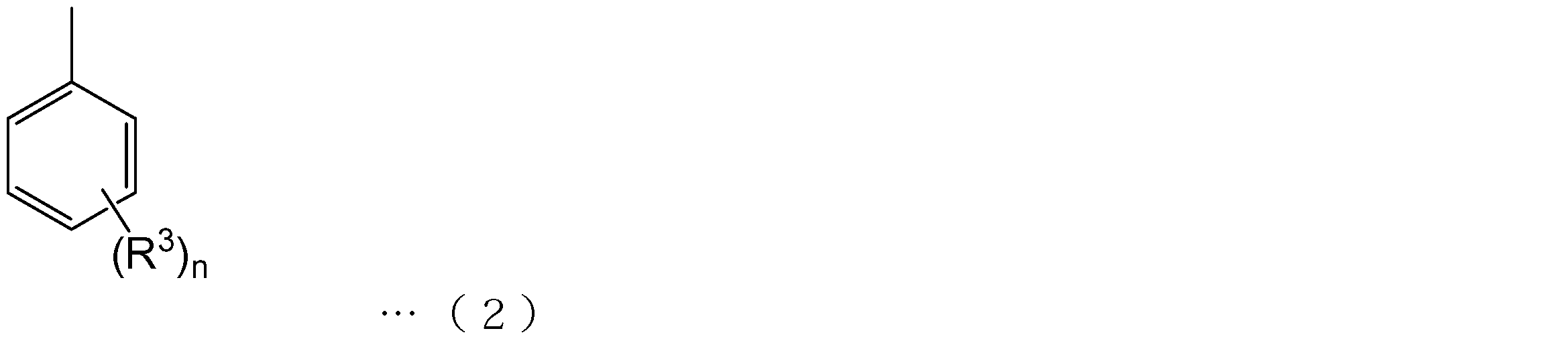
- R 1 is preferably a phenyl group or a substituted phenyl group represented by the following formula (2).
- R 3 represents an arbitrary monovalent group
- n is an integer of 0 or more and 5 or less, and when there are a plurality of R 3 , they may be the same or different from each other.
- R 1 has such a structure, the oxygen / carbon dioxide selective permeability of the CO 2 permeation suppression membrane can be further improved, and the change over time of the polymer can be suppressed. Can be obtained.
- R 3 represents a hydrogen atom, a halogen atom, an optionally substituted alkyl group, an optionally substituted aromatic hydrocarbon group, an optionally substituted aromatic heterocyclic group, a trialkylsilyl group, or A trialkylgermyl group is preferred.
- the oxygen / carbon dioxide selective permeability of the CO 2 permeation suppression membrane can be further improved, and the change with time of the polymer can be suppressed.
- a membrane can be obtained.
- R 3 is more preferably a hydrogen atom, a halogen atom, an optionally substituted alkyl group, or a trialkylsilyl group, and R 3 is more preferably a hydrogen atom, a fluorine atom, or a trimethylsilyl group.
- a trimethylsilyl group is preferable, and a trimethylsilyl group is particularly preferable.
- p is more preferably an integer of 5 or more and 15 or less.
- CO 2 permeation suppression membrane The CO 2 permeation suppression membrane of the present invention is made of a polymer containing a repeating unit represented by the following formula (1).
- R 1 represents a hydrogen atom, a halogen atom, an optionally substituted alkyl group, an optionally substituted aromatic hydrocarbon group, an optionally substituted aromatic heterocyclic group, tri Represents an alkylsilyl group or a trialkylgermyl group
- R 2 is represented by the following formula (3)
- m is an integer of 0 or more and 5 or less, and when there are a plurality of R 2 , they are the same or different from each other. May be.
- a plurality of repeating units represented by formula (1) may be reversed in the positions of R 1 and the phenyl group.
- the repeating unit represented by the formula (1) contained in the polymer may be independently a cis type or a trans type. The cis type and trans type can be identified by Raman spectroscopic measurement of a polymer film.
- p is an integer of 0 to 15.
- the CO 2 permeation suppression membrane of the present invention has the polymer containing the above-mentioned repeating unit, thereby being capable of selectively permeating oxygen and suppressing permeation of carbon dioxide, that is, oxygen / carbon dioxide selective permeation. Excellent in properties.
- the aromatic hydrocarbon group means the remaining atomic group excluding one hydrogen atom bonded to the carbon atom constituting the aromatic ring of the aromatic hydrocarbon
- the aromatic heterocyclic group The term “means an atomic group remaining after removing one hydrogen atom bonded to a carbon atom or a hetero atom constituting an aromatic heterocyclic ring of an aromatic heterocyclic compound”.
- an aromatic heterocyclic compound is not only a carbon atom but also an oxygen atom, a sulfur atom, a nitrogen atom, a phosphorus atom, boron as an element constituting a ring among organic compounds having an aromatic cyclic structure.
- a substance containing a heteroatom such as an atom, silicon atom, selenium atom, tellurium atom or arsenic atom.
- m in Formula (1) is preferably 1 or more.
- p in Formula (3) is preferably 5 or more and 15 or less, more preferably 6 or more and 15 or less, and still more preferably 8 or more and 15 or less.
- Examples of the halogen atom of R 1 in the formula (1) include a fluorine atom, a chlorine atom, a bromine atom, and an iodine atom. Among these, a fluorine atom and a chlorine atom are preferable.
- Examples of the optionally substituted alkyl group represented by R 1 in the formula (1) include a methyl group, an ethyl group, a propyl group, a butyl group, a pentyl group, a hexyl group, an isopropyl group, an isobutyl group, a tertiary butyl group, 1- Methylpropyl group, isopentyl group, 1-methylbutyl group, 2-methylbutyl group, 1,1-dimethylpropyl group, 1-methylpentyl group, 1,1-dimethylpentyl group, 2-methylpentyl group, or hydrogen thereof Those in which a part or all of them are substituted with a halogen atom.
- substituted alkyl groups include chloromethyl, chloroethyl, chloropropyl, dichloromethyl, dichloroethyl, trichloromethyl, bromomethyl, bromoethyl, bromopropyl, dibromomethyl, dibromoethyl, mono Fluoromethyl group, monofluoroethyl group, trifluoromethyl group, perfluoroethyl group, perfluoropropyl group, perfluoroisopropyl group, perfluoroisobutyl group, perfluoro-1-methylpropyl group, perfluoropentyl group, perfluoro Butyl group, perfluoroisopentyl group, perfluorohexyl group, perfluoroheptyl group, perfluorooctyl group, perfluorononanyl group, perfluorodecyl group, perfluoroundecyl group, perfluorododecyl group,
- Examples of the optionally substituted aromatic hydrocarbon group represented by R 1 in the formula (1) include an unsubstituted aromatic hydrocarbon group, a halogen atom, an alkoxy group, an alkyl group, a trialkylsilyl group, and a trialkylgermyl group. And an aromatic hydrocarbon group substituted with.
- the aromatic hydrocarbon group includes those having a condensed ring and those having two or more independent benzene rings or condensed rings bonded by a single bond or a divalent organic group.
- the number of carbon atoms in the aromatic hydrocarbon group is usually 6 to 60, preferably 6 to 30, and more preferably 6 to 20.
- Examples of the aromatic hydrocarbon group include a phenyl group, a C 1 -C 12 alkoxyphenyl group, a C 1 -C 12 alkylphenyl group, a trialkylsilylphenyl group, a trialkylgermylphenyl group, and a 1-naphthyl group.
- 2-naphthyl group 1-anthryl group, 2-anthryl group, 9-anthryl group, pyrenyl group, perylenyl group, pentafluorophenyl group, etc., among which phenyl group, C 1 -C 12 alkylphenyl group, A trialkylsilylphenyl group is preferred.
- Examples of the optionally substituted aromatic heterocyclic group represented by R 1 in the formula (1) include an unsubstituted monovalent aromatic heterocyclic group and a monovalent aromatic heterocyclic group substituted with a substituent such as an alkyl group.
- a cyclic group is mentioned.
- the number of carbon atoms of the monovalent aromatic heterocyclic group is usually 4 to 60, preferably 4 to 30, more preferably about 4 to 20, excluding the number of carbon atoms of the substituent.
- Examples of the monovalent aromatic heterocyclic group include thienyl group, C 1 to C 12 alkylthienyl group, pyroyl group, furyl group, pyridyl group, C 1 to C 12 alkylpyridyl group, pyridazyl group, pyrimidyl group, and pyrazinyl. Groups and the like.
- Examples of the trialkylsilyl group of R 1 in the formula (1) include trimethylsilyl group, triethylsilyl group, tri-isopropylsilyl group, dimethyl-isopropylsilyl group, diethyl-isopropylsilyl group, pentyldimethylsilyl group, hexyldimethylsilyl group, Heptyldimethylsilyl group, octyldimethylsilyl group, octyldiethylsilyl group, 2-ethylhexyldimethylsilyl group, nonyldimethylsilyl group, decyldimethylsilyl group, 3,7-dimethyloctyl-dimethylsilyl group, dodecyldimethylsilyl group, etc. It is done.
- trialkylgermyl group of R 1 in the formula (1) examples include trimethylgermyl group, triethylgermyl group, tri-isopropylgermyl group, dimethyl-isopropylgermyl group, diethyl-isopropylgermyl group, pentyldimethylgel.
- Mill group hexyl dimethyl gel mill group, heptyl dimethyl gel mill group, octyl dimethyl gel mill group, octyl diethyl gel mill group, 2-ethylhexyl dimethyl gel mill group, nonyl dimethyl gel mill group, decyl dimethyl gel mill group, 3, 7 -Dimethyloctyl-dimethylgermyl group, dodecyldimethylgermyl group and the like.
- R 1 is preferably a phenyl group or a substituted phenyl group represented by the following formula (2).
- R 3 represents an arbitrary monovalent group
- n is an integer of 0 or more and 5 or less, and when there are a plurality of R 3 , they may be the same or different from each other.
- R 1 has such a structure, the oxygen / carbon dioxide selective permeability of the CO 2 permeation suppression membrane can be further improved, and the change over time of the polymer can be suppressed. Can be obtained.
- R 3 in the formula (2) As an arbitrary monovalent group of R 3 in the formula (2), a hydrogen atom, a halogen atom, an optionally substituted alkyl group, an optionally substituted aromatic hydrocarbon group, or an optionally substituted group.
- An aromatic heterocyclic group, a trialkylsilyl group, or a trialkylgermyl group is preferred.
- the oxygen / carbon dioxide selective permeability of the CO 2 permeation suppression membrane can be further improved, and the change with time of the polymer can be suppressed.
- a membrane can be obtained.
- Examples of the halogen atom of R 3 in the formula (2) include a fluorine atom, a chlorine atom, a bromine atom, and an iodine atom, and preferably a fluorine atom and a chlorine atom.
- Examples of the optionally substituted alkyl group represented by R 3 in the formula (2) include methyl group, ethyl group, propyl group, butyl group, pentyl group, hexyl group, isopropyl group, isobutyl group, tertiary butyl group, 1- Methylpropyl group, isopentyl group, 1-methylbutyl group, 2-methylbutyl group, 1,1-dimethylpropyl group, 1-methylpentyl group, 1,1-dimethylpentyl group, 2-methylpentyl group, or hydrogen thereof Those in which a part or all of them are substituted with a halogen atom.
- substituted alkyl groups include chloromethyl, chloroethyl, chloropropyl, dichloromethyl, dichloroethyl, trichloromethyl, bromomethyl, bromoethyl, bromopropyl, dibromomethyl, dibromoethyl, mono Fluoromethyl group, monofluoroethyl group, trifluoromethyl group, perfluoroethyl group, perfluoropropyl group, perfluoroisopropyl group, perfluoroisobutyl group, perfluoro-1-methylpropyl group, perfluoropentyl group, perfluoro Butyl group, perfluoroisopentyl group, perfluorohexyl group, perfluoroheptyl group, perfluorooctyl group, perfluorononanyl group, perfluorodecyl group, perfluoroundecyl group, perfluorododecyl group,
- Examples of the optionally substituted aromatic hydrocarbon group represented by R 3 in the formula (2) include an unsubstituted aromatic hydrocarbon group, a halogen atom, an alkoxy group, an alkyl group, a trialkylsilyl group, and a trialkylgermyl group. And an aromatic hydrocarbon group substituted with.
- the aromatic hydrocarbon group includes those having a condensed ring and those having two or more independent benzene rings or condensed rings bonded by a single bond or a divalent organic group.
- the number of carbon atoms in the aromatic hydrocarbon group is usually 6 to 60, preferably 6 to 30, and more preferably 6 to 20.
- aromatic hydrocarbon group examples include a phenyl group, a C 1 -C 12 alkoxyphenyl group, a C 1 -C 12 alkylphenyl group, a trialkylsilylphenyl group, a trialkylgermylphenyl group, and a 1-naphthyl group.
- Examples of the optionally substituted aromatic heterocyclic group represented by R 3 in the formula (2) include an unsubstituted monovalent aromatic heterocyclic group and a monovalent aromatic heterocyclic group substituted with a substituent such as an alkyl group.
- a cyclic group is mentioned.
- the number of carbon atoms of the monovalent aromatic heterocyclic group is usually 4 to 60, preferably 4 to 30, more preferably about 4 to 20, excluding the number of carbon atoms of the substituent.
- Examples of the monovalent aromatic heterocyclic group include thienyl group, C 1 to C 12 alkylthienyl group, pyroyl group, furyl group, pyridyl group, C 1 to C 12 alkylpyridyl group, pyridazyl group, pyrimidyl group, and pyrazinyl. Groups and the like.
- trialkylsilyl group represented by R 3 in the formula (2) include trimethylsilyl group, triethylsilyl group, tri-isopropylsilyl group, dimethyl-isopropylsilyl group, diethyl-isopropylsilyl group, pentyldimethylsilyl group, hexyl.
- Dimethylsilyl group Dimethylsilyl group, heptyldimethylsilyl group, octyldimethylsilyl group, octyldiethylsilyl group, 2-ethylhexyldimethylsilyl group, nonyldimethylsilyl group, decyldimethylsilyl group, 3,7-dimethyloctyl-dimethylsilyl group, dodecyldimethylsilyl group Group, preferably trimethylsilyl group, triethylsilyl group, tri-isopropylsilyl group, dimethyl-isopropylsilyl group, diethyl-isopropylsilyl group, more preferably trimethylsilyl group.
- Examples include a ryl group and a triethylsilyl group.
- trialkylgermyl group represented by R 3 in the formula (2) include trimethylgermyl group, triethylgermyl group, tri-isopropylgermyl group, dimethyl-isopropylgermyl group, and diethyl-isopropylgermyl group.
- Pentyldimethylgermyl group hexyldimethylgermyl group, heptyldimethylgermyl group, octyldimethylgermyl group, octyldiethylgermyl group, 2-ethylhexyldimethylgermyl group, nonyldimethylgermyl group, decyldimethylgermyl group 3,7-dimethyloctyl-dimethylgermyl group, dodecyldimethylgermyl group, etc., preferably trimethylgermyl group, triethylgermyl group, tri-isopropylgermyl group, dimethyl-isopropylgermyl group, Diethyl-isopropylgermi Group, more preferably a trimethylgermyl group and a triethylgermyl group.
- R 3 is a hydrogen atom, a halogen atom, an optionally substituted alkyl group, or a trialkylsilyl. It is preferably a group, more preferably a hydrogen atom, a fluorine atom or a trimethylsilyl group, and even more preferably a trimethylsilyl group.
- the polymer in the CO 2 permeation suppression membrane of the present invention may contain a repeating unit other than the repeating unit represented by the formula (1), but from the viewpoint of further enhancing the effect of oxygen / carbon dioxide selective permeability.
- the content of the repeating unit represented by the formula (1) is preferably 1% by weight or more, more preferably 10% by weight or more and 100% by weight or less, based on all the repeating units, and 50% by weight. % To 100% by weight is more preferable.
- the CO 2 permeation suppression membrane of the present invention is oxygen / Nitrogen selective permeability is also excellent.
- the weight average molecular weight (M w ) of the polymer is preferably 1 ⁇ 10 3 or more and 5 ⁇ 10 7 or less, and preferably 1 ⁇ 10 4 or more and 2 ⁇ 10 7 or less. More preferably, it is 1 ⁇ 10 5 or more and 1 ⁇ 10 7 or less.
- the number average molecular weight (M n ) of the polymer is preferably 1 ⁇ 10 3 or more and 2 ⁇ 10 7 or less, and preferably 1 ⁇ 10 4 or more and 1 ⁇ 10 7 or less. More preferably, it is 1 ⁇ 10 5 or more and 5 ⁇ 10 6 or less.
- the dispersion ratio (M w / M n ) representing the degree of molecular weight distribution of the polymer is preferably 1.0 or more and 10.0 or less, and more preferably 1.1 or more and 8.0 or less. Preferably, it is 1.1 or more and 5.0 or less.
- the weight average molecular weight (M w ), number average molecular weight (M n ) and dispersion ratio (M w / M n ) of the polymer are determined in terms of polystyrene by chromatography using tetrahydrofuran as a solvent. As the column, “GPC KF-807L” of Shodex KF-800 series may be used.
- the 5% weight loss temperature (T d5 ) of the polymer is preferably 380 ° C. or more and 550 ° C. or less, more preferably 390 ° C. or more and 500 ° C. or less, and 400 More preferably, it is at least 490 ° C and at most 490 ° C.
- the 5% weight loss temperature of the polymer refers to a value measured by thermogravimetry (a differential heat / thermogravimetry apparatus, manufactured by Shimadzu Corporation, model: DTG-60 / 60H). The temperature elevation rate during measurement is 10 ° C./min, and the temperature is elevated in a nitrogen atmosphere.
- the film thickness of the CO 2 permeation suppression film is not particularly limited, but is preferably 0.1 ⁇ m or more and 100 ⁇ m or less from the viewpoint of suppressing the transmission of carbon dioxide and water vapor and ensuring oxygen permeability. More preferably, it is 50 ⁇ m or less.
- the film thickness can be measured with a micrometer or the like.
- CO particular limitation on the shape of the second transmission suppressing film is not, it may be an appropriate shape according to the intended use, purpose.
- Examples of the shape of the CO 2 permeation suppression membrane include a plate shape and a hollow fiber fiber shape (tubular shape).
- the CO 2 permeation suppression membrane may be a porous membrane or an asymmetric membrane, but is preferably a homogeneous membrane from the viewpoint of suppressing moisture permeation.
- the CO 2 transmission suppressing layer since a high oxygen / carbon dioxide selective permeability, is deployable in a variety of applications.
- it can be used as an oxygen permeable membrane for the following uses.
- the membrane of the present invention has high oxygen permeability and is suitable for the following uses. (1) A refining device for producing air or oxygen obtained by removing carbon dioxide from air. (2) An air intake mechanism for an air cell or a fuel cell that takes in oxygen in the air to generate electric power.
- the CO 2 permeation suppression film is prepared by, for example, mixing a polymer containing the repeating unit represented by the above formula (1) with a solvent to prepare a film-forming coating solution, and then coating the coating solution on a substrate. It can be formed by a method of evaporating the solvent.
- the solvent used for preparing the coating solution for film formation is preferably a solvent having the above-mentioned polymer dissolving ability.
- a solvent include organic solvents such as toluene, anisole, chlorobenzene, dichlorobenzene, chloroform, and tetrahydrofuran.
- the polymer containing the repeating unit represented by the above formula (1) is, for example, a method of polymerizing a monomer represented by the following formula (A) or a monomer represented by the following formula (B). of the polymer obtained by, it can be produced by a method of adding the necessary R 2.
- the polymerization of the monomers represented by the formulas (A) and (B) is performed, for example, by a method of reacting at 40 to 100 ° C. for 2 to 24 hours in the presence of a transition metal catalyst.
- R 2 is, for example, a mixed solvent of (perfluoroalkyl) phenyliodonium trifluoromethanesulfonate with chloroform / acetonitrile. It is carried out by a method of immersing in.
- a CO 2 permeation suppression membrane (polymer membrane) was formed by the following two methods.
- Synthesis Method 1 Metal of polymerizing from monomer and forming film: Example 1) A method of polymerizing a predetermined acetylene monomer with a transition metal catalyst to form a film
- Synthesis method 2 a method of forming a polymer and synthesizing it in a film state: Examples 2 and 3) A method of synthesizing a base polymer after film formation and reacting in the film state
- Tetra-n-butyltin (215 ⁇ L, 6.55 ⁇ 10 ⁇ 2 mmol) was added to a solution of tantalum pentachloride (143 mg, 0.399 mmol) in toluene (17.1 mL) under a nitrogen atmosphere, and the mixture was stirred at 80 ° C. for 10 minutes. did.
- Separately prepared toluene solution (4.27 mL) of 4-trimethylsilyldiphenylacetylene (1.07 g, 4.27 mmol) was added to the above toluene solution and stirred at 80 ° C. for 3 hours to obtain product A.
- the desired polymer was precipitated.
- the precipitate was collected by filtration and dried under reduced pressure overnight to obtain a reddish brown polymer in a yield of 67.8% (0.725 g).
- the obtained polymer was soluble in common organic solvents such as toluene, chloroform, and tetrahydrofuran (hereinafter sometimes referred to as “THF”).
- THF tetrahydrofuran
- M w 11.3 ⁇ 10 6
- M n 5.89 ⁇ 10 6
- Mw / Mn 1.92
- T d5 399 ° C.
- a toluene solution was prepared for the obtained polymer (1.0 wt%), cast into a glass petri dish, and the solvent was slowly evaporated at room temperature. After the solvent was evaporated and dried, the film was peeled off to obtain a self-supporting polymer film (polymer film of Example 1). The thickness of the polymer film determined by a micrometer was 69 ⁇ m.
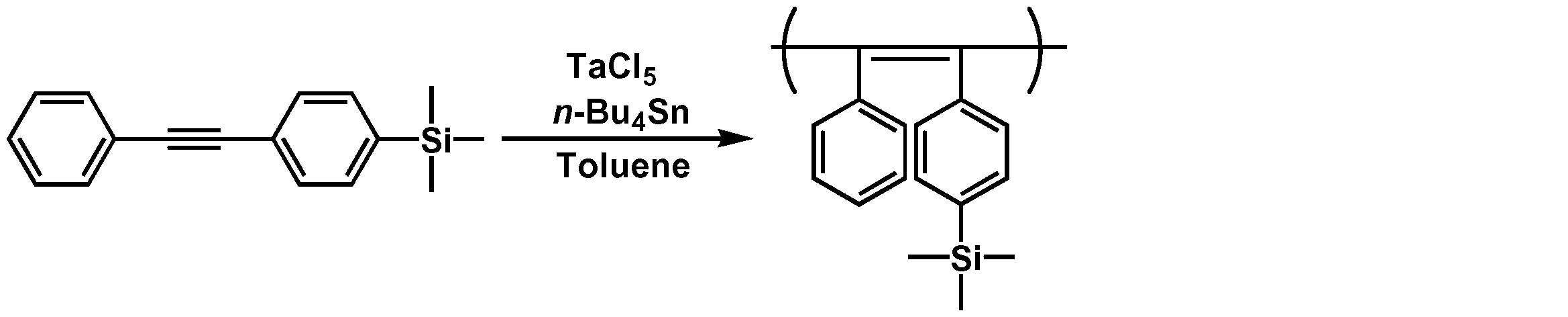
- the main reaction formula of Example 1 is shown below.
- Example 2 Under a nitrogen atmosphere, tetra-n-butyltin (115 ⁇ L, 0.349 mmol) was added to a solution of tantalum pentachloride (62.5 mg, 0.175 mmol) in toluene (5 mL), and the mixture was stirred at 80 ° C. for 10 minutes. A separately prepared toluene solution (3.27 mL) of 4-trimethylsilylphenyl-2,5-difluorophenylacetylene (500 mg, 1.75 mmol) was added to the above toluene solution, and the mixture was stirred at 80 ° C. for 3 hours. Got.
- the precipitate was collected by filtration and dried under reduced pressure overnight to obtain a reddish brown polymer in a yield of 75.6% (0.378 g).
- the obtained polymer was soluble in common organic solvents such as toluene, chloroform and THF.
- the 1 H NMR spectrum of the obtained polymer showed a very broad peak. In addition, it was difficult to observe 13 C NMR.
- M w 2.6 ⁇ 10 6
- M n 4.64 ⁇ 10 5
- M w / M n 5.6
- T d5 369 ° C.
- a toluene solution was prepared for the obtained polymer (1.0 wt%), cast into a glass petri dish, and the solvent was slowly evaporated at room temperature. After the solvent was evaporated and dried, the film was peeled off to obtain a self-supporting polymer film.
Landscapes
- Chemical & Material Sciences (AREA)
- Chemical Kinetics & Catalysis (AREA)
- Health & Medical Sciences (AREA)
- Medicinal Chemistry (AREA)
- Polymers & Plastics (AREA)
- Organic Chemistry (AREA)
- Engineering & Computer Science (AREA)
- Analytical Chemistry (AREA)
- General Chemical & Material Sciences (AREA)
- Oil, Petroleum & Natural Gas (AREA)
- Separation Using Semi-Permeable Membranes (AREA)
Abstract
下記式(1)で表される繰り返し単位を含有する重合体からなるCO2透過抑制膜。 [式(1)中、R1は、水素原子、ハロゲン原子、置換されていてもよいアルキル基、置換されていてもよい芳香族炭化水素基、置換されていてもよい芳香族ヘテロ環基、トリアルキルシリル基またはトリアルキルゲルミル基を表し、R2は、下記式(3)で表され、mは0以上5以下の整数であり、R2が複数ある場合、それらは互いに同じでも異なっていてもよい。式(3)中、pは、0以上15以下の整数である。]
Description
本発明はCO2透過抑制膜に関する。
高分子の応用範囲の拡大に伴い、気体分離能など、様々な機能を備えた機能性高分子が検討されている。気体分離能を有する機能性高分子として、ジフェニルアセチレン系重合体が知られており、このような機能性高分子の気体分離膜への適用が、検討されている(特許文献1参照)。
しかしながら、上記においては、酸素を選択的に透過する能力及び二酸化炭素の透過を抑制する能力の双方を満足することのできる気体分離膜についての検討はなされていない。
そこで、本発明は、酸素を選択的に透過する能力及び二酸化炭素の透過を抑制する能力に優れるCO2透過抑制膜を提供することを目的とする。
本発明は、下記式(1)で表される繰り返し単位を含有する重合体からなるCO2透過抑制膜を提供する。
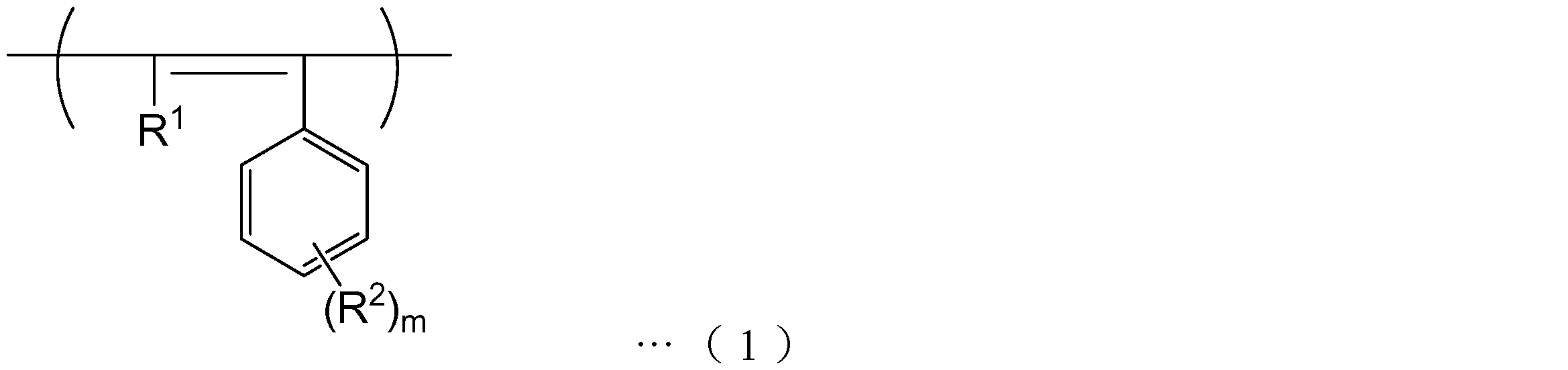
式(1)中、R1は、水素原子、ハロゲン原子、置換されていてもよいアルキル基、置換されていてもよい芳香族炭化水素基、置換されていてもよい芳香族ヘテロ環基、トリアルキルシリル基またはトリアルキルゲルミル基を表し、R2は、下記式(3)で表され、mは0以上5以下の整数であり、R2が複数ある場合、それらは互いに同じでも異なっていてもよい。

式(3)中、pは、0以上15以下の整数である。
本発明のCO2透過抑制膜は、上述の繰り返し単位を含有する重合体からなることにより、酸素を選択的に透過する能力及び二酸化炭素の透過を抑制する能力、すなわち、酸素/二酸化炭素選択透過性に優れる。
上記R1は、下記式(2)で表される、フェニル基または置換フェニル基であることが好ましい。
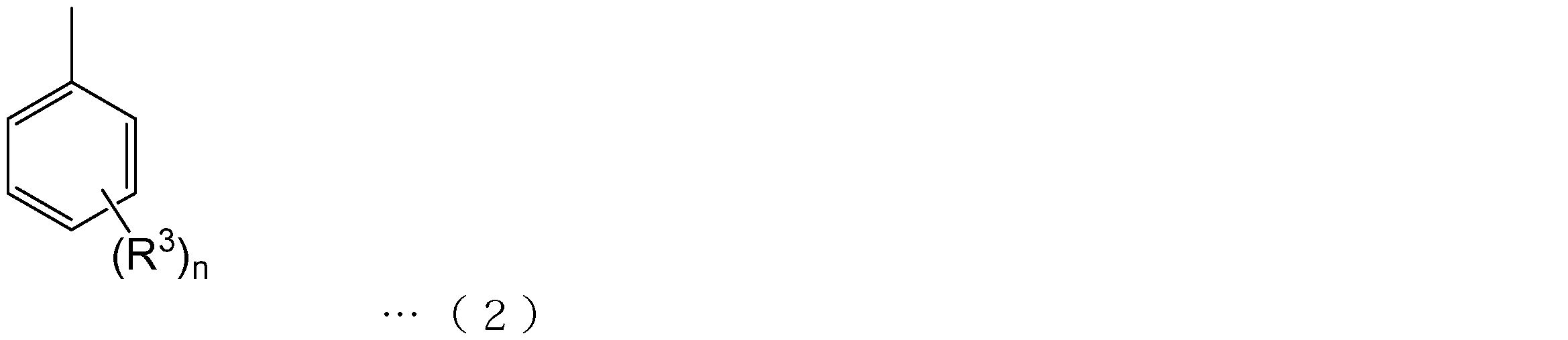
式(2)中、R3は、任意の一価の基を表し、nは0以上5以下の整数であり、R3が複数ある場合、それらは互いに同じでも異なっていてもよい。
上記R1がこのような構造であると、CO2透過抑制膜の酸素/二酸化炭素選択透過性が一層向上し、また、重合体の経時変化を抑えることもできることから、長期にわたって使用可能な膜を得ることができる。
上記R3は、水素原子、ハロゲン原子、置換されていてもよいアルキル基、置換されていてもよい芳香族炭化水素基、置換されていてもよい芳香族ヘテロ環基、トリアルキルシリル基、又はトリアルキルゲルミル基であることが好ましい。
上記R3がこのような構造であると、CO2透過抑制膜の酸素/二酸化炭素選択透過性がより一層向上し、また、重合体の経時変化を抑えることもできることから、長期にわたって使用可能な膜を得ることができる。
上記R3は、水素原子、ハロゲン原子、置換されていてもよいアルキル基、又はトリアルキルシリル基であることがより好ましく、上記R3は、水素原子、フッ素原子又はトリメチルシリル基であることが更に好ましく、トリメチルシリル基であることが特に好ましい。上記R3をこのようにすることにより、CO2透過抑制膜の酸素/二酸化炭素選択透過性がより一層向上し、また、重合体の経時変化を抑えることもできることから、長期にわたって使用可能な膜を得ることができ、さらには、重合体は、種々の有機溶媒に溶解し易いことから、容易に膜を得ることができる。
式(3)中のpは、5以上15以下の整数であることがより好ましい。pをこのような範囲にすることにより、CO2透過抑制膜の酸素/二酸化炭素選択透過性をより一層向上させることができ、また、重合体の経時変化を抑えることもできることから、長期にわたって使用可能な膜を得ることができ、さらには、重合体は、種々の有機溶媒に溶解し易いことから、容易に膜を得ることができる。また、熱安定性、撥水性、疎水性にも優れる膜とすることができる。
本発明によれば、酸素/二酸化炭素選択透過性に優れるCO2透過抑制膜を提供することができる。
以下、本発明について詳細に説明する。
[CO2透過抑制膜]
本発明のCO2透過抑制膜は、下記式(1)で表される繰り返し単位を含有する重合体からなるものである。
本発明のCO2透過抑制膜は、下記式(1)で表される繰り返し単位を含有する重合体からなるものである。
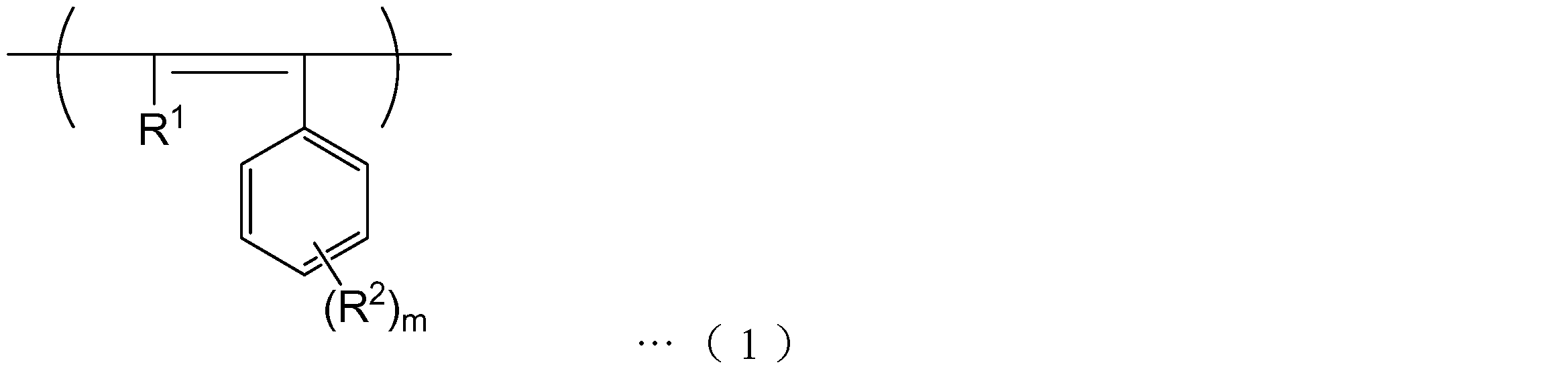
式(1)中、R1は、水素原子、ハロゲン原子、置換されていてもよいアルキル基、置換されていてもよい芳香族炭化水素基、置換されていてもよい芳香族ヘテロ環基、トリアルキルシリル基又はトリアルキルゲルミル基を表し、R2は、下記式(3)で表され、mは0以上5以下の整数であり、R2が複数ある場合、それらは互いに同じでも異なっていてもよい。なお、上記重合体において複数含まれる式(1)で表される繰り返し単位は、互いにR1とフェニル基との位置が左右反転していてもよい。また、上記重合体において複数含まれる式(1)で表される繰り返し単位は、それぞれ独立にシス型であってもトランス型であってもよい。シス型、トランス型については、重合体膜のラマン分光測定などにより、同定することができる。

式(3)において、pは、0以上15以下の整数である。
本発明のCO2透過抑制膜は、上述の繰り返し単位を含有する重合体を有することにより、酸素の選択的に透過する能力及び二酸化炭素の透過を抑制する能力、すなわち、酸素/二酸化炭素選択透過性に優れる。
なお、本明細書において、芳香族炭化水素基とは、芳香族炭化水素の芳香環を構成する炭素原子に結合した水素原子1個を除いた残りの原子団を意味し、芳香族ヘテロ環基とは、芳香族ヘテロ環式化合物の芳香族ヘテロ環を構成する炭素原子又はヘテロ原子に結合した水素原子1個を除いた残りの原子団を意味する。なお、芳香族へテロ環式化合物とは、芳香族環式構造を持つ有機化合物のうち、環を構成する元素として、炭素原子だけでなく、酸素原子、硫黄原子、窒素原子、リン原子、ホウ素原子、ケイ素原子、セレン原子、テルル原子、ヒ素原子などのヘテロ原子を含むものをいう。
酸素/二酸化炭素選択透過性を向上させる観点及び水分の透過を抑制する観点からは、式(1)におけるmは1以上であることが好ましい。同様の観点から、式(3)におけるpは、5以上15以下であることが好ましく、6以上15以下であることがより好ましく、8以上15以下であることが更に好ましい。
式(1)のR1のハロゲン原子としては、フッ素原子、塩素原子、臭素原子、ヨウ素原子が挙げられる。中でも、フッ素原子、塩素原子が好ましい。
式(1)のR1の置換されていてもよいアルキル基としては、メチル基、エチル基、プロピル基、ブチル基、ペンチル基、ヘキシル基、イソプロピル基、イソブチル基、ターシャリーブチル基、1-メチルプロピル基、イソペンチル基、1-メチルブチル基、2-メチルブチル基、1,1-ジメチルプロピル基、1-メチルペンチル基、1,1-ジメチルペンチル基、2-メチルペンチル基、又はそれらの水素の一部又は全部がハロゲン原子で置換されたものが挙げられる。置換されたアルキル基としては、クロロメチル基、クロロエチル基、クロロプロピル基、ジクロロメチル基、ジクロロエチル基、トリクロロメチル基、ブロモメチル基、ブロモエチル基、ブロモプロピル基、ジブロモメチル基、ジブロモエチル基、モノフルオロメチル基、モノフルオロエチル基、トリフルオロメチル基、パーフルオロエチル基、パーフルオロプロピル基、パーフルオロイソプロピル基、パーフルオロイソブチル基、パーフルオロ-1-メチルプロピル基、パーフルオロペンチル基、パーフルオロブチル基、パーフルオロイソペンチル基、パーフルオロヘキシル基、パーフルオロヘプチル基、パーフルオロオクチル基、パーフルオロノナニル基、パーフルオロデシル基、パーフルオロウンデシル基、パーフルオロドデシル基などがその具体例として示される。中でも、パーフルオロ置換体が好ましい。
式(1)のR1の置換されていてもよい芳香族炭化水素基としては、非置換の芳香族炭化水素基及びハロゲン原子、アルコキシ基、アルキル基、トリアルキルシリル基、トリアルキルゲルミル基で置換された芳香族炭化水素基が挙げられる。
芳香族炭化水素基には、縮合環を持つもの、独立したベンゼン環又は縮合環2個以上が単結合又は2価の有機基で結合したものも含まれる。芳香族炭化水素基の炭素原子数は、通常6~60であり、好ましくは6~30であり、より好ましくは6~20である。芳香族炭化水素基としては、例えば、フェニル基、C1~C12のアルコキシフェニル基、C1~C12のアルキルフェニル基、トリアルキルシリルフェニル基、トリアルキルゲルミルフェニル基、1-ナフチル基、2-ナフチル基、1-アントリル基、2-アントリル基、9-アントリル基、ピレニル基、ペリレニル基、ペンタフルオロフェニル基などが挙げられ、中でもフェニル基、C1~C12のアルキルフェニル基、トリアルキルシリルフェニル基が好ましい。
式(1)のR1の置換されていてもよい芳香族ヘテロ環基としては、非置換の1価の芳香族ヘテロ環基及びアルキル基などの置換基で置換された1価の芳香族ヘテロ環基が挙げられる。
1価の芳香族ヘテロ環基の炭素原子数は、置換基の炭素原子数を含めないで、通常4~60であり、好ましくは4~30であり、より好ましくは4~20程度である。1価の芳香族ヘテロ環基としては、チエニル基、C1~C12のアルキルチエニル基、ピロイル基、フリル基、ピリジル基、C1~C12のアルキルピリジル基、ピリダジル基、ピリミジル基、ピラジニル基などが挙げられる。
式(1)のR1のトリアルキルシリル基としては、トリメチルシリル基、トリエチルシリル基、トリ-イソプロピルシリル基、ジメチル-イソプロピルシリル基、ジエチル-イソプロピルシリル基、ペンチルジメチルシリル基、ヘキシルジメチルシリル基、ヘプチルジメチルシリル基、オクチルジメチルシリル基、オクチルジエチルシリル基、2-エチルヘキシルジメチルシリル基、ノニルジメチルシリル基、デシルジメチルシリル基、3,7-ジメチルオクチル-ジメチルシリル基、ドデシルジメチルシリル基などが挙げられる。
式(1)のR1のトリアルキルゲルミル基としては、トリメチルゲルミル基、トリエチルゲルミル基、トリ-イソプロピルゲルミル基、ジメチル-イソプロピルゲルミル基、ジエチル-イソプロピルゲルミル基、ペンチルジメチルゲルミル基、ヘキシルジメチルゲルミル基、ヘプチルジメチルゲルミル基、オクチルジメチルゲルミル基、オクチルジエチルゲルミル基、2-エチルヘキシルジメチルゲルミル基、ノニルジメチルゲルミル基、デシルジメチルゲルミル基、3,7-ジメチルオクチル-ジメチルゲルミル基、ドデシルジメチルゲルミル基などが挙げられる。
上記R1は、下記式(2)で表される、フェニル基又は置換フェニル基であることが好ましい。

式(2)中、R3は、任意の一価の基を表し、nは0以上5以下の整数であり、R3が複数ある場合、それらは互いに同じでも異なっていてもよい。
上記R1がこのような構造であると、CO2透過抑制膜の酸素/二酸化炭素選択透過性が一層向上し、また、重合体の経時変化を抑えることもできることから、長期にわたって使用可能な膜を得ることができる。
式(2)のR3の任意の1価の基としては、水素原子、ハロゲン原子、置換されていてもよいアルキル基、置換されていてもよい芳香族炭化水素基、置換されていてもよい芳香族ヘテロ環基、トリアルキルシリル基、又はトリアルキルゲルミル基が好ましい。
上記R3がこのような構造であると、CO2透過抑制膜の酸素/二酸化炭素選択透過性がより一層向上し、また、重合体の経時変化を抑えることもできることから、長期にわたって使用可能な膜を得ることができる。
式(2)のR3のハロゲン原子としては、フッ素原子、塩素原子、臭素原子、ヨウ素原子が挙げられ、好ましくは、フッ素原子、塩素原子が挙げられる。
式(2)のR3の置換されていてもよいアルキル基としては、メチル基、エチル基、プロピル基、ブチル基、ペンチル基、ヘキシル基、イソプロピル基、イソブチル基、ターシャリーブチル基、1-メチルプロピル基、イソペンチル基、1-メチルブチル基、2-メチルブチル基、1,1-ジメチルプロピル基、1-メチルペンチル基、1,1-ジメチルペンチル基、2-メチルペンチル基、又はそれらの水素の一部又は全部がハロゲン原子で置換されたものが挙げられる。置換されたアルキル基としては、クロロメチル基、クロロエチル基、クロロプロピル基、ジクロロメチル基、ジクロロエチル基、トリクロロメチル基、ブロモメチル基、ブロモエチル基、ブロモプロピル基、ジブロモメチル基、ジブロモエチル基、モノフルオロメチル基、モノフルオロエチル基、トリフルオロメチル基、パーフルオロエチル基、パーフルオロプロピル基、パーフルオロイソプロピル基、パーフルオロイソブチル基、パーフルオロ-1-メチルプロピル基、パーフルオロペンチル基、パーフルオロブチル基、パーフルオロイソペンチル基、パーフルオロヘキシル基、パーフルオロヘプチル基、パーフルオロオクチル基、パーフルオロノナニル基、パーフルオロデシル基、パーフルオロウンデシル基、パーフルオロドデシル基などがその具体例として示される。中でも、パーフルオロ置換体が好ましい。
式(2)のR3の置換されていてもよい芳香族炭化水素基としては、非置換の芳香族炭化水素基及びハロゲン原子、アルコキシ基、アルキル基、トリアルキルシリル基、トリアルキルゲルミル基で置換された芳香族炭化水素基が挙げられる。芳香族炭化水素基には、縮合環を持つもの、独立したベンゼン環又は縮合環2個以上が単結合又は2価の有機基で結合したものも含まれる。芳香族炭化水素基の炭素原子数は、通常6~60であり、好ましくは6~30であり、より好ましくは6~20である。芳香族炭化水素基としては、例えば、フェニル基、C1~C12のアルコキシフェニル基、C1~C12のアルキルフェニル基、トリアルキルシリルフェニル基、トリアルキルゲルミルフェニル基、1-ナフチル基、2-ナフチル基、1-アントリル基、2-アントリル基、9-アントリル基、ピレニル基、ペリレニル基、ペンタフルオロフェニル基などが挙げられ、中でもフェニル基、C1~C12のアルキルフェニル基、トリアルキルシリルフェニル基が好ましい。
式(2)のR3の置換されていてもよい芳香族ヘテロ環基としては、非置換の1価の芳香族ヘテロ環基及びアルキル基などの置換基で置換された1価の芳香族ヘテロ環基が挙げられる。1価の芳香族ヘテロ環基の炭素原子数は、置換基の炭素原子数を含めないで、通常4~60であり、好ましくは4~30であり、より好ましくは4~20程度である。1価の芳香族ヘテロ環基としては、チエニル基、C1~C12のアルキルチエニル基、ピロイル基、フリル基、ピリジル基、C1~C12のアルキルピリジル基、ピリダジル基、ピリミジル基、ピラジニル基などが挙げられる。
式(2)のR3のトリアルキルシリル基としては、具体的にはトリメチルシリル基、トリエチルシリル基、トリ-イソプロピルシリル基、ジメチル-イソプロピルシリル基、ジエチル-イソプロピルシリル基、ペンチルジメチルシリル基、ヘキシルジメチルシリル基、ヘプチルジメチルシリル基、オクチルジメチルシリル基、オクチルジエチルシリル基、2-エチルヘキシルジメチルシリル基、ノニルジメチルシリル基、デシルジメチルシリル基、3,7-ジメチルオクチル-ジメチルシリル基、ドデシルジメチルシリル基などが挙げられ、好ましくは、トリメチルシリル基、トリエチルシリル基、トリ-イソプロピルシリル基、ジメチル-イソプロピルシリル基、ジエチル-イソプロピルシリル基が挙げられ、より好ましくはトリメチルシリル基、トリエチルシリル基が挙げられる。
式(2)のR3のトリアルキルゲルミル基としては、具体的にはトリメチルゲルミル基、トリエチルゲルミル基、トリ-イソプロピルゲルミル基、ジメチル-イソプロピルゲルミル基、ジエチル-イソプロピルゲルミル基、ペンチルジメチルゲルミル基、ヘキシルジメチルゲルミル基、ヘプチルジメチルゲルミル基、オクチルジメチルゲルミル基、オクチルジエチルゲルミル基、2-エチルヘキシルジメチルゲルミル基、ノニルジメチルゲルミル基、デシルジメチルゲルミル基、3,7-ジメチルオクチル-ジメチルゲルミル基、ドデシルジメチルゲルミル基などが挙げられ、好ましくは、トリメチルゲルミル基、トリエチルゲルミル基、トリ-イソプロピルゲルミル基、ジメチル-イソプロピルゲルミル基、ジエチル-イソプロピルゲルミル基が挙げられ、より好ましくはトリメチルゲルミル基、トリエチルゲルミル基が挙げられる。
酸素/二酸化炭素選択透過性、重合体の経時変化抑制効果、重合体の製膜性の観点からは、R3は、水素原子、ハロゲン原子、置換されていてもよいアルキル基、又はトリアルキルシリル基であることが好ましく、水素原子、フッ素原子又はトリメチルシリル基であることがより好ましく、トリメチルシリル基であることが更に好ましい。
本発明のCO2透過抑制膜における重合体は、式(1)で表される繰り返し単位以外の繰り返し単位を含有することもできるが、酸素/二酸化炭素選択透過性の効果をより高める観点からは、式(1)で表される繰り返し単位の含有量は、全繰り返し単位に対して、1重量%以上であることが好ましく、10重量%以上100重量%以下であることがより好ましく、50重量%以上100重量%以下であることが更に好ましい。
前記重合体の式(1)で表される繰り返し単位の含有量が、全繰り返し単位に対して、20重量%以上60重量%以下である場合、本発明のCO2透過抑制膜は、酸素/窒素選択透過率も優れる。
また、製膜性の観点から、上記重合体の重量平均分子量(Mw)は、1×10³以上5×10⁷以下であることが好ましく、1×10⁴以上2×10⁷以下であることがより好ましく、1×10⁵以上1×10⁷以下であることが更に好ましい。また、同様の観点から、上記重合体の数平均分子量(Mn)は、1×10³以上2×10⁷以下であることが好ましく、1×10⁴以上1×10⁷以下であることがより好ましく、1×10⁵以上5×10⁶以下であることが更に好ましい。また、上記重合体の分子量分布の程度を表す分散比(Mw/Mn)は、1.0以上10.0以下であることが好ましく、1.1以上8.0以下であることがより好ましく、1.1以上5.0以下であることが更に好ましい。本発明において、重合体の重量平均分子量(Mw)、数平均分子量(Mn)及び分散比(Mw/Mn)は、溶媒としてテトラヒドロフランを用いたクロマトグラフィーにより、ポリスチレン換算で求める。カラムとしては、Shodex製KF-800シリーズの「GPC KF-807L」を用いればよい。
さらに、熱安定性の観点から、上記重合体の5%重量減少温度(Td5)は、380℃以上550℃以下であることが好ましく、390℃以上500℃以下であることがより好ましく、400℃以上490℃以下であることが更に好ましい。ここで、重合体の5%重量減少温度は、熱重量測定(装置としては、示差熱・熱重量測定装置、島津製作所製、型式:DTG-60/60H)によって測定された値をいう。測定時の昇温速度は10℃/分とし、窒素雰囲気下で昇温する。
CO2透過抑制膜の膜厚に特に制限はないが、二酸化炭素及び水蒸気の透過を抑制し、酸素透過性を確保する観点からは、0.1μm以上100μm以下であることが好ましく、0.1μm以上50μm以下であることがより好ましい。なお、膜厚は、マイクロメータなどにより測定することができる。
CO2透過抑制膜の形状に特に制限はなく、使用目的、用途に応じて適宜な形状とすることができる。CO2透過抑制膜の形状としては、例えば、板状や中空糸繊維状(管状)が挙げられる。また、CO2透過抑制膜は、多孔質膜や非対称膜であってもよいが、水分の透過を抑制する観点からは、均質膜であることが好ましい。
以上、本発明のCO2透過抑制膜について説明したが、当該CO2透過抑制膜は、酸素/二酸化炭素選択透過性が高いことから、様々な用途に展開可能である。例えば、以下の用途の酸素透過膜として用いることができる。本発明の膜は酸素透過性も高く、下記の用途に好適である。
(1)空気から二酸化炭素を除去した空気や酸素を製造する精製装置。
(2)空気中の酸素を取り込んで発電する空気電池や燃料電池の空気取り入れ機構。
(1)空気から二酸化炭素を除去した空気や酸素を製造する精製装置。
(2)空気中の酸素を取り込んで発電する空気電池や燃料電池の空気取り入れ機構。
なお、これらの用途は例示に過ぎず、本発明の適用可能範囲はこれらに限定されるものではない。
[CO2透過抑制膜の製造方法]
CO2透過抑制膜は、例えば、上記式(1)で表される繰り返し単位を含有する重合体を溶媒に混合し、膜形成用塗布液を調製した後、当該塗布液を基板上に塗布し溶媒を蒸発させる方法などにより形成できる。
CO2透過抑制膜は、例えば、上記式(1)で表される繰り返し単位を含有する重合体を溶媒に混合し、膜形成用塗布液を調製した後、当該塗布液を基板上に塗布し溶媒を蒸発させる方法などにより形成できる。
ここで、膜形成用塗布液の調製に用いる溶媒としては、上記重合体の溶解能を有するものが好ましい。このような溶媒としては、例えば、トルエン、アニソール、クロロベンゼン、ジクロロベンゼン、クロロホルム、テトラヒドロフランなどの有機溶媒等が挙げられる。
なお、上記式(1)で表される繰り返し単位を含有する重合体は、例えば、下記式(A)で表されるモノマーを重合する方法や、下記式(B)で表されるモノマーを重合して得た重合体に対して、必要に応じR2を付加する方法などによって製造することができる。

ここで、式(A)及び(B)で表されるモノマーの重合は、例えば、遷移金属触媒の存在下において、40~100℃で、2~24時間反応させる方法により行われる。
また、下記式(B)で表されるモノマーを重合して得た重合体に対するR2の付加は、例えば、当該重合体を(パーフルオロアルキル)フェニルヨードニウムトリフルオロメタンスルホナートのクロロホルム/アセトニトリル混合溶媒に浸漬する方法などにより行われる。
以下、本発明を実施例及び比較例に基づいて具体的に説明するが、本発明は以下の実施例に限定されるものではない。
本実施例においては、以下の2方式によりCO2透過抑制膜(重合体膜)を形成した。
(1)合成法1(モノマーから重合し、製膜する方法:実施例1)
所定のアセチレンモノマーを、遷移金属触媒により重合を行い、製膜する方法
(2)合成法2(重合体を製膜し、膜状態で合成する方法:実施例2,3)
基盤となる重合体を製膜後、膜状態で反応を行うことで合成する方法
(1)合成法1(モノマーから重合し、製膜する方法:実施例1)
所定のアセチレンモノマーを、遷移金属触媒により重合を行い、製膜する方法
(2)合成法2(重合体を製膜し、膜状態で合成する方法:実施例2,3)
基盤となる重合体を製膜後、膜状態で反応を行うことで合成する方法
以下、具体的条件及び結果について説明する。
[実施例1]
窒素雰囲気下、五塩化タンタル(143mg,0.399mmol)のトルエン(17.1mL)溶液に、テトラ-n-ブチルスズ(215μL,6.55×10-2mmol)を加え、80℃で10分間攪拌した。別途用意した4-トリメチルシリルジフェニルアセチレン(1.07g,4.27mmol)のトルエン溶液(4.27mL)を上述のトルエン溶液に添加し、80℃で3時間攪拌し、生成物Aを得た。さらに、クロロホルム(400mL)を加え、生成物Aを溶解し、アセトン/クロロホルム混合液(アセトン:クロロホルム=1:5(体積比))2400mLに、上記生成物Aの溶解したクロロホルム溶液を加えることにより、目的とする重合体を沈殿させた。ろ過により沈殿物を回収し、一晩減圧乾燥を行い、赤褐色重合体を収率67.8%(0.725g)で得た。得られた重合体は、トルエン、クロロホルム、テトラヒドロフラン(以下、「THF」ということがある。)などの一般的な有機溶媒に可溶であった。
窒素雰囲気下、五塩化タンタル(143mg,0.399mmol)のトルエン(17.1mL)溶液に、テトラ-n-ブチルスズ(215μL,6.55×10-2mmol)を加え、80℃で10分間攪拌した。別途用意した4-トリメチルシリルジフェニルアセチレン(1.07g,4.27mmol)のトルエン溶液(4.27mL)を上述のトルエン溶液に添加し、80℃で3時間攪拌し、生成物Aを得た。さらに、クロロホルム(400mL)を加え、生成物Aを溶解し、アセトン/クロロホルム混合液(アセトン:クロロホルム=1:5(体積比))2400mLに、上記生成物Aの溶解したクロロホルム溶液を加えることにより、目的とする重合体を沈殿させた。ろ過により沈殿物を回収し、一晩減圧乾燥を行い、赤褐色重合体を収率67.8%(0.725g)で得た。得られた重合体は、トルエン、クロロホルム、テトラヒドロフラン(以下、「THF」ということがある。)などの一般的な有機溶媒に可溶であった。
得られた重合体の1H NMRスペクトルは非常にブロードなピークを示した。また、13C NMRを観測することは困難であった。IRスペクトルは以下に示すとおりである。:IR(Film) ν=3053(νC-H)cm-1,3016~2897(νPh-H)cm-1,1596(νC=C)cm-1,1492~1387(νPh C=C)cm-1,1247(δSiC-H)cm-1,1117(νSi-CH3)cm-1,854(1,4-Ph)cm-1,834(νSi-CH3)cm-1,689(νSi-Ph)cm-1,552(νPh C-H)cm-1
また、得られた重合体のMw、Mn、Mw/Mn、及び、5%重量減少温度(Td5)はそれぞれ、次のとおりであった。
Mw=11.3×10⁶
Mn=5.89×10⁶
Mw/Mn=1.92
Td5=399℃
Mw=11.3×10⁶
Mn=5.89×10⁶
Mw/Mn=1.92
Td5=399℃
得られた重合体についてトルエン溶液を調製し(1.0wt%)、ガラスシャーレにキャストし室温でゆっくりと溶媒を蒸発させた。溶媒を蒸発させ乾燥した後、膜をはがし、自立した重合体膜(実施例1の重合体膜)を得た。また、マイクロメータにより求めたこの重合体膜の厚みは69μmであった。実施例1の主な反応式を以下に示す。
[実施例2]
窒素雰囲気下、五塩化タンタル(62.5mg,0.175mmol)のトルエン(5mL)溶液にテトラ-n-ブチルスズ(115μL,0.349mmol)を加え、80℃で10分間攪拌した。別途用意した4-トリメチルシリルフェニル-2,5-ジフルオロフェニルアセチレン(500mg,1.75mmol)のトルエン溶液(3.27mL)を上述のトルエン溶液に添加し、80℃で3時間攪拌し、生成物Bを得た。さらに、クロロホルム(400mL)を加え、生成物Bを溶解し、アセトン/クロロホルム混合液(アセトン:クロロホルム=1:5(体積比))2400mLに、上記生成物Bの溶解したクロロホルム溶液を加えることにより、目的とする重合体を沈殿させた。ろ過により沈殿物を回収し、一晩減圧乾燥を行い、赤褐色重合体を収率75.6%(0.378g)で得た。得られた重合体は、トルエン、クロロホルム、THFなどの一般的な有機溶媒に可溶であった。
窒素雰囲気下、五塩化タンタル(62.5mg,0.175mmol)のトルエン(5mL)溶液にテトラ-n-ブチルスズ(115μL,0.349mmol)を加え、80℃で10分間攪拌した。別途用意した4-トリメチルシリルフェニル-2,5-ジフルオロフェニルアセチレン(500mg,1.75mmol)のトルエン溶液(3.27mL)を上述のトルエン溶液に添加し、80℃で3時間攪拌し、生成物Bを得た。さらに、クロロホルム(400mL)を加え、生成物Bを溶解し、アセトン/クロロホルム混合液(アセトン:クロロホルム=1:5(体積比))2400mLに、上記生成物Bの溶解したクロロホルム溶液を加えることにより、目的とする重合体を沈殿させた。ろ過により沈殿物を回収し、一晩減圧乾燥を行い、赤褐色重合体を収率75.6%(0.378g)で得た。得られた重合体は、トルエン、クロロホルム、THFなどの一般的な有機溶媒に可溶であった。
得られた重合体の1H NMRスペクトルは非常にブロードなピークを示した。また、13C NMRを観測することは困難であった。IRスペクトルは以下に示すとおりである。:IR (Film) ν=3073,3015(ring C-H),2956,2898(C-H),1618,1590,1491,1416(ring C=C),1247(δSiC-H),1115(νSi-CH3),852,816(δSi-CH3)cm-1
また、得られた重合体のMw、Mn、Mw/Mn、及び、5%重量減少温度(Td5)はそれぞれ、次のとおりであった。
Mw=2.6×10⁶
Mn=4.64×10⁵
Mw/Mn=5.6
Td5=369℃
Mw=2.6×10⁶
Mn=4.64×10⁵
Mw/Mn=5.6
Td5=369℃
得られた重合体についてトルエン溶液を調製し(1.0wt%)、ガラスシャーレにキャストし室温でゆっくりと溶媒を蒸発させた。溶媒を蒸発させ乾燥した後、膜をはがし、自立した重合体膜を得た。
得られた重合体膜について、脱シリル化反応を行った。具体的には、膜をトリフルオロ酢酸/ヘキサン(トリフルオロ酢酸:ヘキサン=1:1(体積比))の混合溶液に24時間浸漬し、次にトリエチルアミン/ヘキサン(トリエチルアミン:ヘキサン=1:1(体積比))の混合溶液に24時間浸漬した。最後にメタノールに24時間浸した後、室温で膜を乾燥した。上述のようにして、脱シリル化した重合体膜(実施例2の重合体膜)を得た。また、マイクロメータにより求めたこの膜の厚みは43μmであった。実施例2の主な反応式を以下に示す。

[実施例3]
実施例1の重合体膜(8.23mg,0.0329mmol)を、空気雰囲気下、(パーフルオロデシル)フェニルヨードニウムトリフルオロメタンスルホナート(24.3mg,0.0329mmol)およびピリジン(2.67μL、0.0329mmol)を添加したジクロロメタン/アセトニトリル混合溶液(ジクロロメタン:アセトニトリル=3:2(体積比))0.66mLに、80℃で5分間浸漬させた。膜を上記混合溶液から取り出し、さらにメタノールに1時間浸漬後、室温で乾燥し、実施例3の重合体膜を得た。また、マイクロメータにより求めたこの膜の厚みは87μmであった。
実施例1の重合体膜(8.23mg,0.0329mmol)を、空気雰囲気下、(パーフルオロデシル)フェニルヨードニウムトリフルオロメタンスルホナート(24.3mg,0.0329mmol)およびピリジン(2.67μL、0.0329mmol)を添加したジクロロメタン/アセトニトリル混合溶液(ジクロロメタン:アセトニトリル=3:2(体積比))0.66mLに、80℃で5分間浸漬させた。膜を上記混合溶液から取り出し、さらにメタノールに1時間浸漬後、室温で乾燥し、実施例3の重合体膜を得た。また、マイクロメータにより求めたこの膜の厚みは87μmであった。
得られた重合体膜は、IRスペクトルからCF結合由来のピークが1200cm-1に確認された。また一般的な有機溶媒に不溶であった。実施例3の主な反応式を以下に示す。

[比較例1]
厚み50μmのポリジメチルシロキサン膜(アズワン株式会社、商品名:シリコンフィルム6-9085-01)を準備した。
厚み50μmのポリジメチルシロキサン膜(アズワン株式会社、商品名:シリコンフィルム6-9085-01)を準備した。
[比較例2]
厚み45μmのポリイミド膜(宇部興産株式会社製、商品名:ユーピレックス-S(登録商標))を準備した。
厚み45μmのポリイミド膜(宇部興産株式会社製、商品名:ユーピレックス-S(登録商標))を準備した。
[重合体膜の評価(気体透過試験)]
実施例1~3及び比較例1,2の重合体膜を、気体透過率測定装置(GTRテック社製、GTR-30X)を用いて、23℃、湿度60%における酸素及び二酸化炭素の気体透過係数(PO2及びPCO2、単位はcm3(STP)・cm/cm2・sec・cmHgである。)を測定した。また、測定したPO2,PCO2より、酸素/二酸化炭素選択透過性を示すαO2/CO2(PO2/PCO2)を算出した。実施例1~3及び比較例1,2の膜の評価結果を表1に示す。
実施例1~3及び比較例1,2の重合体膜を、気体透過率測定装置(GTRテック社製、GTR-30X)を用いて、23℃、湿度60%における酸素及び二酸化炭素の気体透過係数(PO2及びPCO2、単位はcm3(STP)・cm/cm2・sec・cmHgである。)を測定した。また、測定したPO2,PCO2より、酸素/二酸化炭素選択透過性を示すαO2/CO2(PO2/PCO2)を算出した。実施例1~3及び比較例1,2の膜の評価結果を表1に示す。

以上の結果から、実施例1~3の重合体膜は、比較例1及び2の重合体膜と比較して、酸素/二酸化炭素選択透過性に優れることを確認した。
[実施例4]
実施例1の重合体膜(35.5mg,0.143mmol)を、空気雰囲気下、(パーフルオロデシル)フェニルヨードニウムトリフルオロメタンスルホナート(124mg,0.172mmol)およびピリジン(13.6μL、0.176mmol)を添加したジクロロメタン/アセトニトリル混合溶液(ジクロロメタン:アセトニトリル=3:2(体積比))16.6mLに、80℃で5分間浸漬させた。膜を上記混合溶液から取り出し、さらにメタノールに1時間浸漬後、室温で乾燥し、実施例4の重合体膜を得た。また、マイクロメータにより求めたこの膜の厚みは133μmであった。
実施例1の重合体膜(35.5mg,0.143mmol)を、空気雰囲気下、(パーフルオロデシル)フェニルヨードニウムトリフルオロメタンスルホナート(124mg,0.172mmol)およびピリジン(13.6μL、0.176mmol)を添加したジクロロメタン/アセトニトリル混合溶液(ジクロロメタン:アセトニトリル=3:2(体積比))16.6mLに、80℃で5分間浸漬させた。膜を上記混合溶液から取り出し、さらにメタノールに1時間浸漬後、室温で乾燥し、実施例4の重合体膜を得た。また、マイクロメータにより求めたこの膜の厚みは133μmであった。
得られた重合体膜は、IRスペクトルからCF結合由来のピークが1218cm-1に確認された。また一般的な有機溶媒に不溶であった。元素分析により、重合体中のモノマー単位において、24%のモノマー単位にパーフルオロドデシル基が導入されたことを確認した。
[実施例5]
実施例1の重合体膜(21.1mg,0.0843mmol)を、空気雰囲気下、(パーフルオロデシル)フェニルヨードニウムトリフルオロメタンスルホナート(73.5mg,0.0843mmol)およびピリジン(6.8μL、0.0843mmol)を添加したジクロロメタン/アセトニトリル混合溶液(ジクロロメタン:アセトニトリル=3:2(体積比))16.6mLに、80℃で5分間浸漬させた。膜を上記混合溶液から取り出し、さらにメタノールに1時間浸漬後、室温で乾燥し、実施例5の重合体膜を得た。また、マイクロメータにより求めたこの膜の厚みは37μmであった。
実施例1の重合体膜(21.1mg,0.0843mmol)を、空気雰囲気下、(パーフルオロデシル)フェニルヨードニウムトリフルオロメタンスルホナート(73.5mg,0.0843mmol)およびピリジン(6.8μL、0.0843mmol)を添加したジクロロメタン/アセトニトリル混合溶液(ジクロロメタン:アセトニトリル=3:2(体積比))16.6mLに、80℃で5分間浸漬させた。膜を上記混合溶液から取り出し、さらにメタノールに1時間浸漬後、室温で乾燥し、実施例5の重合体膜を得た。また、マイクロメータにより求めたこの膜の厚みは37μmであった。
得られた重合体膜は、IRスペクトルからCF結合由来のピークが1218cm-1に確認された。また一般的な有機溶媒に不溶であった。元素分析により、重合体中のモノマー単位において、41%のモノマー単位にパーフルオロドデシル基が導入されたことを確認した。
[実施例6]
実施例1の重合体膜(28.2mg,0.133mmol)を、空気雰囲気下、(パーフルオロデシル)フェニルヨードニウムトリフルオロメタンスルホナート(491mg,0.563mmol)およびピリジン(45.3μL、0.563mmol)を添加したジクロロメタン/アセトニトリル混合溶液(ジクロロメタン:アセトニトリル=3:2(体積比))16.6mLに、80℃で5分間浸漬させた。膜を上記混合溶液から取り出し、さらにメタノールに1時間浸漬後、室温で乾燥し、実施例6の重合体膜を得た。また、マイクロメータにより求めたこの膜の厚みは135μmであった。
実施例1の重合体膜(28.2mg,0.133mmol)を、空気雰囲気下、(パーフルオロデシル)フェニルヨードニウムトリフルオロメタンスルホナート(491mg,0.563mmol)およびピリジン(45.3μL、0.563mmol)を添加したジクロロメタン/アセトニトリル混合溶液(ジクロロメタン:アセトニトリル=3:2(体積比))16.6mLに、80℃で5分間浸漬させた。膜を上記混合溶液から取り出し、さらにメタノールに1時間浸漬後、室温で乾燥し、実施例6の重合体膜を得た。また、マイクロメータにより求めたこの膜の厚みは135μmであった。
得られた重合体膜は、IRスペクトルからCF結合由来のピークが1218cm-1に確認された。また一般的な有機溶媒に不溶であった。元素分析により、重合体中のモノマー単位において、59%のモノマー単位にパーフルオロドデシル基が導入されたことを確認した。
[実施例7]
実施例1の重合体膜(27.8mg,0.111mmol)を、空気雰囲気下、(パーフルオロデシル)フェニルヨードニウムトリフルオロメタンスルホナート(484mg,0.555mmol)およびピリジン(43.9μL、0.555mmol)を添加したジクロロメタン/アセトニトリル混合溶液(ジクロロメタン:アセトニトリル=3:2(体積比))16.6mLに、80℃で5分間浸漬させた。膜を上記混合溶液から取り出し、さらにメタノールに1時間浸漬後、室温で乾燥し、実施例7の重合体膜を得た。また、マイクロメータにより求めたこの膜の厚みは134μmであった。
実施例1の重合体膜(27.8mg,0.111mmol)を、空気雰囲気下、(パーフルオロデシル)フェニルヨードニウムトリフルオロメタンスルホナート(484mg,0.555mmol)およびピリジン(43.9μL、0.555mmol)を添加したジクロロメタン/アセトニトリル混合溶液(ジクロロメタン:アセトニトリル=3:2(体積比))16.6mLに、80℃で5分間浸漬させた。膜を上記混合溶液から取り出し、さらにメタノールに1時間浸漬後、室温で乾燥し、実施例7の重合体膜を得た。また、マイクロメータにより求めたこの膜の厚みは134μmであった。
得られた重合体膜は、IRスペクトルからCF結合由来のピークが1218cm-1に確認された。また一般的な有機溶媒に不溶であった。元素分析により、重合体中のモノマー単位において、62%のモノマー単位にパーフルオロドデシル基が導入されたことを確認した。
[重合体膜の評価(気体透過試験)]
実施例4~7の重合体膜を、気体透過率測定装置(GTRテック社製、GTR-30X)を用いて、23℃における酸素及び窒素の気体透過係数(PO2及びPN2、単位はcm3(STP)・cm/cm2・sec・cmHgである。)を測定した。また、測定したPO2,PN2より、酸素/窒素選択透過性を示すαO2/N2(PO2/PN2)を算出した。実施例4~7の膜の評価結果を表2に示す。
実施例4~7の重合体膜を、気体透過率測定装置(GTRテック社製、GTR-30X)を用いて、23℃における酸素及び窒素の気体透過係数(PO2及びPN2、単位はcm3(STP)・cm/cm2・sec・cmHgである。)を測定した。また、測定したPO2,PN2より、酸素/窒素選択透過性を示すαO2/N2(PO2/PN2)を算出した。実施例4~7の膜の評価結果を表2に示す。

Claims (7)
- 下記式(1)で表される繰り返し単位を含有する重合体からなるCO2透過抑制膜。


- 前記R1が、下記式(2)で表される、フェニル基または置換フェニル基である請求項1に記載のCO2透過抑制膜。
- 前記R3が、水素原子、ハロゲン原子、置換されていてもよいアルキル基、置換されていてもよい芳香族炭化水素基、置換されていてもよい芳香族ヘテロ環基、トリアルキルシリル基、又はトリアルキルゲルミル基である請求項2に記載のCO2透過抑制膜。
- 前記R3が、水素原子、ハロゲン原子、置換されていてもよいアルキル基、又はトリアルキルシリル基である請求項2又は3に記載のCO2透過抑制膜。
- 前記R3が、水素原子、フッ素原子又はトリメチルシリル基である請求項2~4のいずれか一項に記載のCO2透過抑制膜。
- 前記R3が、トリメチルシリル基である請求項2~5のいずれか一項に記載のCO2透過抑制膜。
- 前記pが、5以上15以下の整数である請求項1~6のいずれか一項に記載のCO2透過抑制膜。
Applications Claiming Priority (2)
| Application Number | Priority Date | Filing Date | Title |
|---|---|---|---|
| JP2009055642 | 2009-03-09 | ||
| JP2009-055642 | 2009-03-09 |
Publications (1)
| Publication Number | Publication Date |
|---|---|
| WO2010104044A1 true WO2010104044A1 (ja) | 2010-09-16 |
Family
ID=42728333
Family Applications (1)
| Application Number | Title | Priority Date | Filing Date |
|---|---|---|---|
| PCT/JP2010/053809 Ceased WO2010104044A1 (ja) | 2009-03-09 | 2010-03-08 | Co2透過抑制膜 |
Country Status (2)
| Country | Link |
|---|---|
| JP (1) | JP2010234365A (ja) |
| WO (1) | WO2010104044A1 (ja) |
Citations (4)
| Publication number | Priority date | Publication date | Assignee | Title |
|---|---|---|---|---|
| JPS6135824A (ja) * | 1984-07-27 | 1986-02-20 | Matsushita Electric Ind Co Ltd | 気体透過膜 |
| JPH05271338A (ja) * | 1992-03-27 | 1993-10-19 | Nippon Zeon Co Ltd | 二置換ジフェニルアセチレン系重合体 |
| JPH09894A (ja) * | 1995-06-14 | 1997-01-07 | Sumitomo Electric Ind Ltd | 酸素選択透過膜およびそれを用いた電池 |
| JP2006265511A (ja) * | 2005-02-25 | 2006-10-05 | Kyoto Univ | ハロゲン含有ポリ(ジフェニルアセチレン)誘導体およびハロゲン含有ジフェニルアセチレン化合物 |
-
2010
- 2010-03-08 JP JP2010050936A patent/JP2010234365A/ja active Pending
- 2010-03-08 WO PCT/JP2010/053809 patent/WO2010104044A1/ja not_active Ceased
Patent Citations (4)
| Publication number | Priority date | Publication date | Assignee | Title |
|---|---|---|---|---|
| JPS6135824A (ja) * | 1984-07-27 | 1986-02-20 | Matsushita Electric Ind Co Ltd | 気体透過膜 |
| JPH05271338A (ja) * | 1992-03-27 | 1993-10-19 | Nippon Zeon Co Ltd | 二置換ジフェニルアセチレン系重合体 |
| JPH09894A (ja) * | 1995-06-14 | 1997-01-07 | Sumitomo Electric Ind Ltd | 酸素選択透過膜およびそれを用いた電池 |
| JP2006265511A (ja) * | 2005-02-25 | 2006-10-05 | Kyoto Univ | ハロゲン含有ポリ(ジフェニルアセチレン)誘導体およびハロゲン含有ジフェニルアセチレン化合物 |
Also Published As
| Publication number | Publication date |
|---|---|
| JP2010234365A (ja) | 2010-10-21 |
Similar Documents
| Publication | Publication Date | Title |
|---|---|---|
| US11267939B2 (en) | Tröger's base-linked poly(crown ethers)s | |
| EP3472170B1 (en) | Troger's base-based monomers, and polymers, methods of making and uses thereof | |
| US20090012190A1 (en) | Polymeric Media Comprising Polybenzimidazoles N-substituted with Organic-Inorganic Hybrid Moiety | |
| JP5524654B2 (ja) | 空気電池 | |
| WO2011021568A1 (ja) | 重合体、気体分離膜、及び重合体の製造方法 | |
| WO2010104045A1 (ja) | 重合体 | |
| JP5406627B2 (ja) | 空気電池 | |
| US4746334A (en) | Poly(disubstituted acetylene)/polyorganosiloxane graftcopolymer and membrane for gas separation | |
| JP7306313B2 (ja) | (ポリ)チオフェン-(ポリ)シロキサンブロックコポリマー及びその製造方法 | |
| Sakaguchi et al. | Synthesis and properties of halogen-or methyl-containing poly (diphenylacetylene) membranes | |
| JP2010234365A (ja) | Co2透過抑制膜 | |
| JP5553305B2 (ja) | 重合体及び重合体の製造方法 | |
| JP5223193B2 (ja) | ポリカルボシラン及びその製造方法並びに絶縁性材料 | |
| Hu et al. | Synthesis and gas permeation properties of poly (diphenylacetylenes) having bulky alkyl/silyl and hydroxy groups | |
| Hu et al. | Synthesis and properties of poly (diphenylacetylenes) containing siloxy and halogen/methyl groups and their desilylated membranes | |
| Hu et al. | Synthesis and gas permeation properties of various Si-containing poly (diarylacetylene) s and their desilylated membranes | |
| US4755561A (en) | Poly(disubstituted acetylene)/polyorganosiloxane graft copolymer and membrane for gas separation | |
| JPS61430A (ja) | 選択性ガス透過膜 | |
| Hu et al. | Synthesis and properties of substituted polyacetylenes having cyclohexyl groups | |
| JP2006265511A (ja) | ハロゲン含有ポリ(ジフェニルアセチレン)誘導体およびハロゲン含有ジフェニルアセチレン化合物 | |
| JPS6168106A (ja) | 超薄膜の製造方法 | |
| KR102041379B1 (ko) | 폴리에테르에테르케톤 계열의 공중합체를 포함하는 기체분리막 및 이의 제조방법 | |
| JP2024132926A (ja) | ブロック共重合体及び有機膜 | |
| JP2010209187A (ja) | ハロゲン基を有する重合体膜の製造方法 | |
| JPH08325379A (ja) | 架橋型ケイ素系化合物及びその製造方法 |
Legal Events
| Date | Code | Title | Description |
|---|---|---|---|
| 121 | Ep: the epo has been informed by wipo that ep was designated in this application |
Ref document number: 10750797 Country of ref document: EP Kind code of ref document: A1 |
|
| NENP | Non-entry into the national phase |
Ref country code: DE |
|
| 122 | Ep: pct application non-entry in european phase |
Ref document number: 10750797 Country of ref document: EP Kind code of ref document: A1 |