WO2009136609A1 - イオン液体 - Google Patents
イオン液体 Download PDFInfo
- Publication number
- WO2009136609A1 WO2009136609A1 PCT/JP2009/058581 JP2009058581W WO2009136609A1 WO 2009136609 A1 WO2009136609 A1 WO 2009136609A1 JP 2009058581 W JP2009058581 W JP 2009058581W WO 2009136609 A1 WO2009136609 A1 WO 2009136609A1
- Authority
- WO
- WIPO (PCT)
- Prior art keywords
- group
- cation
- ocf
- ionic liquid
- ionic
- Prior art date
- Legal status (The legal status is an assumption and is not a legal conclusion. Google has not performed a legal analysis and makes no representation as to the accuracy of the status listed.)
- Ceased
Links
Classifications
-
- C—CHEMISTRY; METALLURGY
- C07—ORGANIC CHEMISTRY
- C07F—ACYCLIC, CARBOCYCLIC OR HETEROCYCLIC COMPOUNDS CONTAINING ELEMENTS OTHER THAN CARBON, HYDROGEN, HALOGEN, OXYGEN, NITROGEN, SULFUR, SELENIUM OR TELLURIUM
- C07F5/00—Compounds containing elements of Groups 3 or 13 of the Periodic Table
- C07F5/02—Boron compounds
-
- C—CHEMISTRY; METALLURGY
- C07—ORGANIC CHEMISTRY
- C07D—HETEROCYCLIC COMPOUNDS
- C07D233/00—Heterocyclic compounds containing 1,3-diazole or hydrogenated 1,3-diazole rings, not condensed with other rings
- C07D233/54—Heterocyclic compounds containing 1,3-diazole or hydrogenated 1,3-diazole rings, not condensed with other rings having two double bonds between ring members or between ring members and non-ring members
- C07D233/56—Heterocyclic compounds containing 1,3-diazole or hydrogenated 1,3-diazole rings, not condensed with other rings having two double bonds between ring members or between ring members and non-ring members with only hydrogen atoms or radicals containing only hydrogen and carbon atoms, attached to ring carbon atoms
- C07D233/58—Heterocyclic compounds containing 1,3-diazole or hydrogenated 1,3-diazole rings, not condensed with other rings having two double bonds between ring members or between ring members and non-ring members with only hydrogen atoms or radicals containing only hydrogen and carbon atoms, attached to ring carbon atoms with only hydrogen atoms or radicals containing only hydrogen and carbon atoms, attached to ring nitrogen atoms
-
- H—ELECTRICITY
- H01—ELECTRIC ELEMENTS
- H01G—CAPACITORS; CAPACITORS, RECTIFIERS, DETECTORS, SWITCHING DEVICES, LIGHT-SENSITIVE OR TEMPERATURE-SENSITIVE DEVICES OF THE ELECTROLYTIC TYPE
- H01G11/00—Hybrid capacitors, i.e. capacitors having different positive and negative electrodes; Electric double-layer [EDL] capacitors; Processes for the manufacture thereof or of parts thereof
- H01G11/54—Electrolytes
- H01G11/58—Liquid electrolytes
- H01G11/62—Liquid electrolytes characterised by the solute, e.g. salts, anions or cations therein
-
- H—ELECTRICITY
- H01—ELECTRIC ELEMENTS
- H01M—PROCESSES OR MEANS, e.g. BATTERIES, FOR THE DIRECT CONVERSION OF CHEMICAL ENERGY INTO ELECTRICAL ENERGY
- H01M10/00—Secondary cells; Manufacture thereof
- H01M10/05—Accumulators with non-aqueous electrolyte
- H01M10/056—Accumulators with non-aqueous electrolyte characterised by the materials used as electrolytes, e.g. mixed inorganic/organic electrolytes
- H01M10/0564—Accumulators with non-aqueous electrolyte characterised by the materials used as electrolytes, e.g. mixed inorganic/organic electrolytes the electrolyte being constituted of organic materials only
- H01M10/0566—Liquid materials
-
- H—ELECTRICITY
- H01—ELECTRIC ELEMENTS
- H01M—PROCESSES OR MEANS, e.g. BATTERIES, FOR THE DIRECT CONVERSION OF CHEMICAL ENERGY INTO ELECTRICAL ENERGY
- H01M8/00—Fuel cells; Manufacture thereof
- H01M8/14—Fuel cells with fused electrolytes
- H01M8/144—Fuel cells with fused electrolytes characterised by the electrolyte material
-
- H—ELECTRICITY
- H01—ELECTRIC ELEMENTS
- H01M—PROCESSES OR MEANS, e.g. BATTERIES, FOR THE DIRECT CONVERSION OF CHEMICAL ENERGY INTO ELECTRICAL ENERGY
- H01M10/00—Secondary cells; Manufacture thereof
- H01M10/05—Accumulators with non-aqueous electrolyte
- H01M10/052—Li-accumulators
-
- H—ELECTRICITY
- H01—ELECTRIC ELEMENTS
- H01M—PROCESSES OR MEANS, e.g. BATTERIES, FOR THE DIRECT CONVERSION OF CHEMICAL ENERGY INTO ELECTRICAL ENERGY
- H01M2300/00—Electrolytes
- H01M2300/0017—Non-aqueous electrolytes
-
- H—ELECTRICITY
- H01—ELECTRIC ELEMENTS
- H01M—PROCESSES OR MEANS, e.g. BATTERIES, FOR THE DIRECT CONVERSION OF CHEMICAL ENERGY INTO ELECTRICAL ENERGY
- H01M2300/00—Electrolytes
- H01M2300/0088—Composites
- H01M2300/0091—Composites in the form of mixtures
-
- Y—GENERAL TAGGING OF NEW TECHNOLOGICAL DEVELOPMENTS; GENERAL TAGGING OF CROSS-SECTIONAL TECHNOLOGIES SPANNING OVER SEVERAL SECTIONS OF THE IPC; TECHNICAL SUBJECTS COVERED BY FORMER USPC CROSS-REFERENCE ART COLLECTIONS [XRACs] AND DIGESTS
- Y02—TECHNOLOGIES OR APPLICATIONS FOR MITIGATION OR ADAPTATION AGAINST CLIMATE CHANGE
- Y02E—REDUCTION OF GREENHOUSE GAS [GHG] EMISSIONS, RELATED TO ENERGY GENERATION, TRANSMISSION OR DISTRIBUTION
- Y02E60/00—Enabling technologies; Technologies with a potential or indirect contribution to GHG emissions mitigation
- Y02E60/10—Energy storage using batteries
-
- Y—GENERAL TAGGING OF NEW TECHNOLOGICAL DEVELOPMENTS; GENERAL TAGGING OF CROSS-SECTIONAL TECHNOLOGIES SPANNING OVER SEVERAL SECTIONS OF THE IPC; TECHNICAL SUBJECTS COVERED BY FORMER USPC CROSS-REFERENCE ART COLLECTIONS [XRACs] AND DIGESTS
- Y02—TECHNOLOGIES OR APPLICATIONS FOR MITIGATION OR ADAPTATION AGAINST CLIMATE CHANGE
- Y02E—REDUCTION OF GREENHOUSE GAS [GHG] EMISSIONS, RELATED TO ENERGY GENERATION, TRANSMISSION OR DISTRIBUTION
- Y02E60/00—Enabling technologies; Technologies with a potential or indirect contribution to GHG emissions mitigation
- Y02E60/13—Energy storage using capacitors
-
- Y—GENERAL TAGGING OF NEW TECHNOLOGICAL DEVELOPMENTS; GENERAL TAGGING OF CROSS-SECTIONAL TECHNOLOGIES SPANNING OVER SEVERAL SECTIONS OF THE IPC; TECHNICAL SUBJECTS COVERED BY FORMER USPC CROSS-REFERENCE ART COLLECTIONS [XRACs] AND DIGESTS
- Y02—TECHNOLOGIES OR APPLICATIONS FOR MITIGATION OR ADAPTATION AGAINST CLIMATE CHANGE
- Y02E—REDUCTION OF GREENHOUSE GAS [GHG] EMISSIONS, RELATED TO ENERGY GENERATION, TRANSMISSION OR DISTRIBUTION
- Y02E60/00—Enabling technologies; Technologies with a potential or indirect contribution to GHG emissions mitigation
- Y02E60/30—Hydrogen technology
- Y02E60/50—Fuel cells
-
- Y—GENERAL TAGGING OF NEW TECHNOLOGICAL DEVELOPMENTS; GENERAL TAGGING OF CROSS-SECTIONAL TECHNOLOGIES SPANNING OVER SEVERAL SECTIONS OF THE IPC; TECHNICAL SUBJECTS COVERED BY FORMER USPC CROSS-REFERENCE ART COLLECTIONS [XRACs] AND DIGESTS
- Y02—TECHNOLOGIES OR APPLICATIONS FOR MITIGATION OR ADAPTATION AGAINST CLIMATE CHANGE
- Y02P—CLIMATE CHANGE MITIGATION TECHNOLOGIES IN THE PRODUCTION OR PROCESSING OF GOODS
- Y02P70/00—Climate change mitigation technologies in the production process for final industrial or consumer products
- Y02P70/50—Manufacturing or production processes characterised by the final manufactured product
Definitions
- the present invention relates to an ionic liquid, and more particularly to an ionic liquid having a low viscosity, a low melting point, and a high conductivity.
- the present invention also relates to a lithium battery (particularly a lithium secondary battery), a dye-sensitized solar cell and an electric double layer capacitor containing the ionic liquid.
- Ionic liquids have received special attention in recent years due to their potential application as electrolytes, reaction media, and catalysts for organic synthesis for various electrochemical devices such as lithium secondary batteries, solar cells, actuators and electric double layer capacitors Have gathered.
- the main advantages of ionic liquids as electrolytes are non-flammability, non-volatility and high thermal stability.
- bistrifluoromethylsulfonylimide [(CF 3 SO 2) 2 N] -)
- tetrafluoroborate BF 4 -
- Patent Document 3 An anion of an ionic liquid represented by [(nC n F 2n + 1 ) BF 3 ] ⁇ (n is 1, 2, 3, or 4) is also known (Patent Document 3).
- ionic liquids containing these anions have problems such as low conductivity at low temperatures.
- An object of the present invention is to provide an ionic liquid having a low viscosity, a low melting point and high conductivity by improving an anionic component.
- this invention provides the following ionic liquid and its anion, its manufacturing method, and a capacitor using the same.
- Item 1. [CF 3 OCF 2 CF 2 BF 3] - ionic anion for liquid producing consisting.
- [CF 3 OCF 2 CF 2 BF 3] consisting anion and at least one organic onium ion comprising an ionic liquid.
- Item 3. Item 3.
- An electric double layer capacitor comprising the ionic liquid according to Item 2.
- Item 5. [CF 3 OCF 2 CF 2 BF 3] - a compound with the preparation of ionic liquids, which comprises mixing a compound containing at least one organic onium compound containing as anionic component.
- the ionic liquid of the present invention is suitable as an electrochemical device such as a lithium secondary battery, a fuel cell, a solar cell, and an electric double layer capacitor, a solvent for chemical reaction, and a lubricating oil.
- the melting point of the ionic liquid used in the present invention is usually 100 ° C. or lower, preferably 65 ° C. or lower, more preferably 45 ° C. or lower, further preferably 25 ° C. or lower, particularly preferably 0 ° C. or lower.
- ionic liquids of 100 ° C. or lower can be widely used.
- an energy device such as a solar cell, a lithium battery, or a capacitor
- an electrochemical device such as an electrochromic device or an electrochemical sensor
- the melting point of the ionic liquid is preferably room temperature (25 ° C.) or less, more preferably 0 ° C. or less. preferable.
- the glass transition temperature is ⁇ 20 ° C. or lower, preferably ⁇ 50 ° C. or lower, more preferably ⁇ 80 ° C. or lower, and still more preferably. If the temperature is ⁇ 100 ° C. or lower, the ionic liquid can be handled in the same manner as an ionic liquid having a melting point at the same temperature.
- the present invention uses [CF 3 OCF 2 CF 2 BF 3 ] ⁇ as the anion component of the ionic liquid.
- the anion is a novel compound, and PhMgBr was added dropwise to a stirred solution of CF 3 OCF 2 CF 2 I in anhydrous Et 2 O under N 2 atmosphere at ⁇ 78 ° C. for 1 hour, followed by further stirring at ⁇ 78 ° C. B (OCH 3 ) 3 was added and the reaction mixture was kept stirring at ⁇ 78 ° C. for 2 hours, then allowed to warm to room temperature and the resulting suspension was poured into 48% HF aqueous solution (100 ml) previously cooled to 0 ° C. After stirring vigorously overnight and saturating with KF at 0 ° C., the ether phase can be separated, dried, evaporated and evaporated to recrystallize.
- ion-exchange resin [CF 3 OCF 2 CF 2 BF 3] - and H + salt, (organo-onium) + (OH) - salt were mixed, by removing water, [ An ionic liquid composed of CF 3 OCF 2 CF 2 BF 3 ] ⁇ and an organic onium ion can be preferably obtained.
- the salt exchange reaction for obtaining the ionic liquid can be performed by a solvent extraction method when a desired molten salt can be extracted.
- organic onium ion examples include ammonium, guanidinium, phosphonium, oxonium, and sulfonium, preferably ammonium, guanidinium, phosphonium, sulfonium, more preferably ammonium, guanidinium, phosphonium, and particularly preferably ammonium. It is done.
- Only one kind of organic onium ions may be used, but by combining two or more kinds of organic onium ions, it is possible to further lower the melting point of the ionic liquid and further reduce the viscosity.
- R 1 , R 2 and R 3 may be the same or different and each may be a hydrogen atom, an alkyl group, a haloalkyl group, an alkoxy group, an alkylthio group, a polyether group or a substituted group.
- R 4 represents an alkyl group, a haloalkyl group, an alkoxy group, a polyether group, an optionally substituted aryl group, an optionally substituted aralkyl group or an alkoxyalkyl group; a functional organic functional group having redox properties; or A group derived from a volatile organic solvent is shown.
- Guanidinium represented by the general formula (Ic)
- R 1 and R 2 are the same as defined in formula (Ia).
- R 1 and R 2 together with the oxygen atom may form a 5- to 8-membered optionally substituted oxygen-containing heterocyclic group.
- organic onium compounds include organic onium cations, halogen ions, nitrate ions, sulfate ions, phosphate ions, perchlorate ions, methanesulfonate ions, toluenesulfonate ions, and the like.
- alkyl group examples include methyl, ethyl, n-propyl, isopropyl, n-butyl, sec-butyl, isobutyl, t-butyl, pentyl, hexyl, heptyl, octyl, nonyl, decyl, undecyl, dodecyl, tridecyl, tetradecyl, hexadecyl And a straight or branched alkyl group having 1 to 20 carbon atoms such as octadecyl and eicosyl.
- haloalkyl group examples include haloalkyl groups having 1 to 20 carbon atoms in which at least one hydrogen atom of the above alkyl group is substituted with a halogen atom (chlorine, bromine, fluorine, iodine), particularly a fluorine atom.
- a halogen atom chlorine, bromine, fluorine, iodine
- alkoxy group examples include straight-chain or branched alkoxy groups having 1 to 20 carbon atoms having an (O-alkyl) structure.
- alkylthio group examples include straight-chain or branched alkoxy groups having 1 to 20 carbon atoms having the (S-alkyl) structure.
- aryl group examples include aryl groups having 6 to 14 carbon atoms such as phenyl group, toluyl group, xylyl group, ethylphenyl group, 1,3,5-trimethylphenyl group, naphthyl group, anthranyl group, and phenanthryl group.
- aralkyl group examples include aralkyl groups having 7 to 15 carbon atoms such as benzyl, phenethyl and naphthylmethyl.
- the alkoxy group and the alkyl group of the alkoxyalkyl group are the same as described above, and a linear or branched alkyl group having 1 to 20 carbon atoms substituted with a linear or branched alkoxy group having 1 to 20 carbon atoms is
- methoxymethyl group (-CH 2 OCH 3 ) methoxyethyl group (-CH 2 CH 2 OCH 3 ), ethoxymethyl group (-CH 2 OCH 2 CH 3 ), ethoxyethyl group (-CH 2 CH 2 OCH 2 CH 3 ) is exemplified.
- polyether group examples include- (CH 2 ) n1 -O- (CH 2 CH 2 O) n2- (C 1 -C 4 alkyl), or- (CH 2 ) n1 -O- (CH 2 CH (CH 3 ) O) a group represented by n2- (C 1 -C 4 alkyl), where n1 is an integer of 1 to 4, n2 is an integer of 1 to 4, and C 1 -C 4 alkyl is methyl, Examples are ethyl, n-propyl, isopropyl, n-butyl, isobutyl, sec-butyl, tert-butyl.
- R 1 and R 2 together with the nitrogen atom to which they are bonded are a 5- to 8-membered, preferably 5- or 6-membered nitrogen-containing heterocyclic group (pyrrolidinium, piperidinium, pyrrolinium) , Pyridinium, etc.).
- Examples of the substituent for the aryl group and aralkyl group include a halogen atom (F, Cl, Br, I), a hydroxyl group, a methoxy group, a nitro group, an acetyl group, and an acetylamino group.
- a halogen atom F, Cl, Br, I
- a hydroxyl group a methoxy group, a nitro group, an acetyl group, and an acetylamino group.
- One or more of —O—, —COO—, and —CO— may be interposed between the C—C single bond at any position of the alkyl group or alkenyl group to form an ether, ester, or ketone structure.
- ionic liquid of the formula (I) in which R 4 is a functional organic functional group having redox properties include compounds of the following formulas (II) to (VIII).
- R 1 , R 2 and R 3 may be the same or different, and may be an alkyl group, a haloalkyl group, an alkoxy group, or a substituted group. An aryl group, an optionally substituted aralkyl group or an alkoxyalkyl group is shown, and R 1 and R 2 may be combined with a nitrogen atom to form a 5- to 8-membered nitrogen-containing cyclic group.
- R is the same or different and is a halogen atom, alkyl group, alkoxy group, alkanoyl group, hydroxy group, carboxyl (COOH) group, alkoxycarbonyl group, nitro group, cyano (CN) group, acetylamino group, phenyl R, which represents a group, a benzyl group or a perfluoroalkyl group, or which are adjacent to each other, may be combined with the carbon atom to which they are bonded to form a benzene ring.
- R 1A represents NR 1b R 2b R 3b , and the other represents the same or different R.
- R 1b , R 2b and R 3b are the same or different and each represents an alkyl group, a haloalkyl group, an alkoxy group, an optionally substituted aryl group, an optionally substituted aralkyl group or an alkoxyalkyl group, and R 1b And R 2b may combine with a nitrogen atom to form a 5- to 8-membered nitrogen-containing cyclic group.
- M is a transition metal atom such as Fe, Co, Ni, Zn, Cu, Cr, V, Cd, As, Mn, Ti, Zr, Sn, Ag, In, Hg, W, Pt, Au, Ga, Ge, Ru, preferably Fe.
- halogen atom examples include a chlorine atom, a fluorine atom, a bromine atom, and an iodine atom.
- the alkanoyl group is a straight chain or branched chain having 2 to 21 carbon atoms represented by the formula: —CO— (alkyl) (alkyl is as defined above), such as acetyl, propionyl, butyryl and the like.
- the alkanoyl group which has is mentioned.
- As the alkoxycarbonyl group a straight chain having 2 to 21 carbon atoms represented by the formula: —CO—O (alkyl) (alkyl is as defined above) such as methoxycarbonyl, ethoxycarbonyl, butoxycarbonyl and the like. Or the alkoxycarbonyl group which has a branch is mentioned.
- perfluoroalkyl group examples include groups in which all the hydrogen atoms of the alkyl group are substituted with fluorine atoms, such as a group represented by C n F 2n + 1 (n represents an integer of 1 to 20). Is done.
- R 4 is a group derived from a volatile organic solvent
- the cationic group is introduced into the organic solvent via an alkylene group as necessary.
- the organic solvent include compounds having a boiling point at normal pressure of ⁇ 100 ° C. to 300 ° C., preferably 30 ° C. to 300 ° C., and are solid or liquid at room temperature, and specifically include the following compounds.
- R Ethers: diethyl ether, tetrahydrofuran, tetrahydropyran, diisopropyl ether, diphenyl ether, anisole, phenetol, guaiacol, etc .; Alkylene glycols: ethylene glycol, propylene glycol, butylene glycol, diethylene glycol, triethylene glycol, etc .; Alkylene glycol monoalkyl ethers: ethylene glycol monomethyl ether, ethylene glycol monoethyl ether, propylene glycol monomethyl ether, propylene glycol monoethyl ether, butylene glycol monomethyl ether, butylene glycol monoethyl ether, diethylene glycol monomethyl ether, diethylene glycol monoethyl ether, etc .; Alkylene glycol dialkyl ethers: ethylene glycol dimethyl ether (DME), ethylene glycol diethyl ether, propylene glycol dimethyl ether,
- R a is .R showing an alkyl group which may have a substituent, a hydrogen atom or an optionally substituted alkyl group X represents a leaving group.
- alkyl group which may have a substituent represented by R and R a include alkyl groups having 1 to 3 carbon atoms such as a methyl group, an ethyl group, an n-propyl group and an isopropyl group, The alkyl group may be substituted with a group such as a fluorine atom, a methoxy group, or a cyano group.
- X represents a leaving group, and specific examples include a chlorine atom, a bromine atom, an iodine atom, a methanesulfonyl group, and a p-toluenesulfonyl group.
- the present invention introduces a quaternary ammonium group into a low boiling, highly volatile solvent leading to an ionic liquid. As described above, quaternary ammoniumation may be performed by reacting a leaving group with a tertiary amine, or the amino group of a solvent containing an amino group may be quaternized.
- the above cationic component may be a single component, but may be used in combination of two or more components, and the blending ratio thereof is arbitrary.
- organic onium ions that can be suitably used in the present invention include symmetrical ammonium cations such as tetramethylammonium cation, tetraethylammonium cation, and tetrapropylammonium cation; ethyltrimethylammonium cation, vinyltrimethylammonium cation, triethylmethylammonium cation, Triethylpropylammonium cation, diethyldimethylammonium cation, tributylethylammonium cation, triethylisopropylammonium cation, butyldiethylmethylammonium cation (N1224), N, N-dimethylpyrrolidinium cation, N-methyl-N-ethylpyrrolidinium cation N-methyl-N-propylpyrrolidinium cation (Py13), N-methyl N-butylpyrroli
- ammonium cations (hereinafter also referred to as pseudo-symmetry); trimethylpropylammonium cation, trimethylisopropylammonium cation, butyltrimethylammonium cation, allyltrimethylammonium cation
- Asymmetric ammonium cations such as hexyltrimethylammonium cation, octyltrimethylammonium cation, dodecyltrimethylammonium cation, triethylmethoxyethoxymethylammonium cation and dimethyldipropylammonium cation; divalent ammonium cations such as hexamethonium cation; Symmetric imidazolium cations such as dimethylimidazolium cation, 1,3-diethylimidazolium cation, 1,3-dipropylimidazolium cation, 1,3-dipropylimidazolium cation; 1-e
- Symmetrical phosphonium cations such as trimethylethylphosphonium cation and triethylmethylphosphonium cation; and asymmetric phosphonium cations such as hexyltrimethylphosphonium cation and trimethyloctylphosphonium cation.
- Viscosity Viscosity was measured using a viscometer (Brookfield model DV-III +) with a 0.6 mL sample at 25 ° C.
- An average weight sample of 5 mg was placed in a sealed platinum pan and measured in a range of about -150 to 250 ° C. at a rate of 10 ° C./min under a helium stream. Samples that show only the glass transition point and do not show the melting point under these measurement conditions are described as only the glass transition point (Tg only), but this is only the result under these measurement conditions and shows the melting point when the measurement conditions are different. It cannot be said that there is no case.
- the obtained suspension was poured into a 48% HF aqueous solution (100 ml) previously cooled to 0 ° C. and stirred vigorously overnight. After saturation with KF at 0 ° C., the ether phase was separated and the aqueous phase was extracted with Et 2 O. The combined ether extracts were washed with aqueous KHCO 3 solution and dried.
- EMI [CF 3 OCF 2 CF 2 BF 3 ] To a stirred aqueous solution (35 ml) of K [CF 3 OCF 2 CF 2 BF 3 ] (1.10 g, 3.8 mmol), 1-ethyl-3-methylimidazolium chloride (EMICl) (0.54 g, 3.7 mmol) was added at room temperature. added. The reaction mixture was stirred for an additional 6 hours. The lower phase was separated and dissolved in CH 2 Cl 2 . The CH 2 Cl 2 phase was separated and the aqueous phase was extracted with CH 2 Cl 2 . The CH 2 Cl 2 extracts were combined and washed with water.
- EMICl 1-ethyl-3-methylimidazolium chloride
- DEME [CF 3 OCF 2 CF 2 BF 3 ] (0.36 g, 65.5%)
- DEME [CF 3 OCF 2 CF 2 BF 3 ] was obtained from K [CF 3 OCF 2 CF 2 BF 3 ] and a bromide salt of DEME.
- the ionic liquids EMI [CF 3 OCF 2 CF 2 BF 3 ], DEME [CF 3 OCF 2 CF 2 BF 3 ], N1224 [CF 3 OCF 2 CF 2 BF 3 ] and Py13 [CF 3 OCF 2 CF 2 BF 3 ] corresponds to conventional [CF 2 CF 2 CF 2 CF 3 BF 3 ], [CF 2 CF 2 CF 3 BF 3 ], [BF 4 ], [CF 3 BF 3 ] and It was revealed that both the viscosity and the melting point were low compared to the salts of [C 2 F 5 BF 3 ]. Also, the conductivity is highest except for Py 13 [CF 3 BF 3 ].
- the ionic liquids of the present invention EMI [CF 3 OCF 2 CF 2 BF 3 ], DEME [CF 3 OCF 2 CF 2 BF 3 ], N1224 [CF 3 OCF 2 CF 2 BF 3 ] and Py13 [ CF 3 OCF 2 CF 2 BF 3 ] has high electrical conductivity, low melting point characteristics and low viscosity, and has been found to have excellent properties as a solvent for electrochemical devices and organic reactions.
- Reference 1 Z. B. Zhou, M. Takeda, M. Ue, J Fluorine Chem. 2003, 123, 127-131.
- Reference 2 Z. B. Zhou, H. Matsumoto, K. Tatsumi, Chem. Lett.
Landscapes
- Chemical & Material Sciences (AREA)
- Organic Chemistry (AREA)
- Chemical Kinetics & Catalysis (AREA)
- Electrochemistry (AREA)
- Engineering & Computer Science (AREA)
- Power Engineering (AREA)
- Manufacturing & Machinery (AREA)
- General Chemical & Material Sciences (AREA)
- Microelectronics & Electronic Packaging (AREA)
- Inorganic Chemistry (AREA)
- General Physics & Mathematics (AREA)
- Condensed Matter Physics & Semiconductors (AREA)
- Physics & Mathematics (AREA)
- Life Sciences & Earth Sciences (AREA)
- Sustainable Development (AREA)
- Sustainable Energy (AREA)
- Secondary Cells (AREA)
- Electric Double-Layer Capacitors Or The Like (AREA)
- Organic Low-Molecular-Weight Compounds And Preparation Thereof (AREA)
Abstract
Description
項1. [CF3OCF2CF2BF3]-からなるイオン性液体製造用のアニオン。
項2. [CF3OCF2CF2BF3]-からなるアニオンと少なくとも1種の有機オニウムイオンからなるイオン性液体。
項3. 項2に記載のイオン性液体を含むリチウム電池。
項4. 項2に記載のイオン性液体を含む電気二重層キャパシタ。
項5. [CF3OCF2CF2BF3]-をアニオン成分として含む化合物と少なくとも1種の有機オニウム化合物を含む化合物を混合することを特徴とするイオン性液体の製造法。
(1)一般式(Ia)または(Ib)で表されるアンモニウム
[R4-NR1R2R3]+ (Ia)

(2)一般式(Ic)で表されるグアニジニウム

(3)一般式(Id)で表されるフォスフォニウム
[R4-PR1R2R3]+ (Id)
〔式中、R1,R2,R3、R4は、式(Ia)における定義と同じである。但し、R1及びR2はリン原子と一緒になって5~8員環の置換されていてもよい含リン複素環基を形成してもよい。〕
(4)一般式(Ie)で表されるオキソニウム
[R4-OR1R2]+ (Ie)
〔式中、R1,R2,R4は、式(Ia)における定義と同じである。但し、R1及びR2は酸素原子と一緒になって5~8員環の置換されていてもよい含酸素複素環基を形成してもよい。〕
(5)一般式(If)で表されるスルホニウム
[R4-SR1R2]+ (If)
〔式中、R1,R2,R4は、式(Ia)における定義と同じである。但し、R1及びR2は硫黄原子と一緒になって5~8員環の置換されていてもよい含硫黄複素環基を形成してもよい。〕
なお、有機オニウム化合物としては、有機オニウムカチオンと、ハロゲンイオン、硝酸イオン、硫酸イオン、リン酸イオン、過塩素酸イオン、メタンスルホン酸イオン、トルエンスルホン酸イオンなどが例示される。

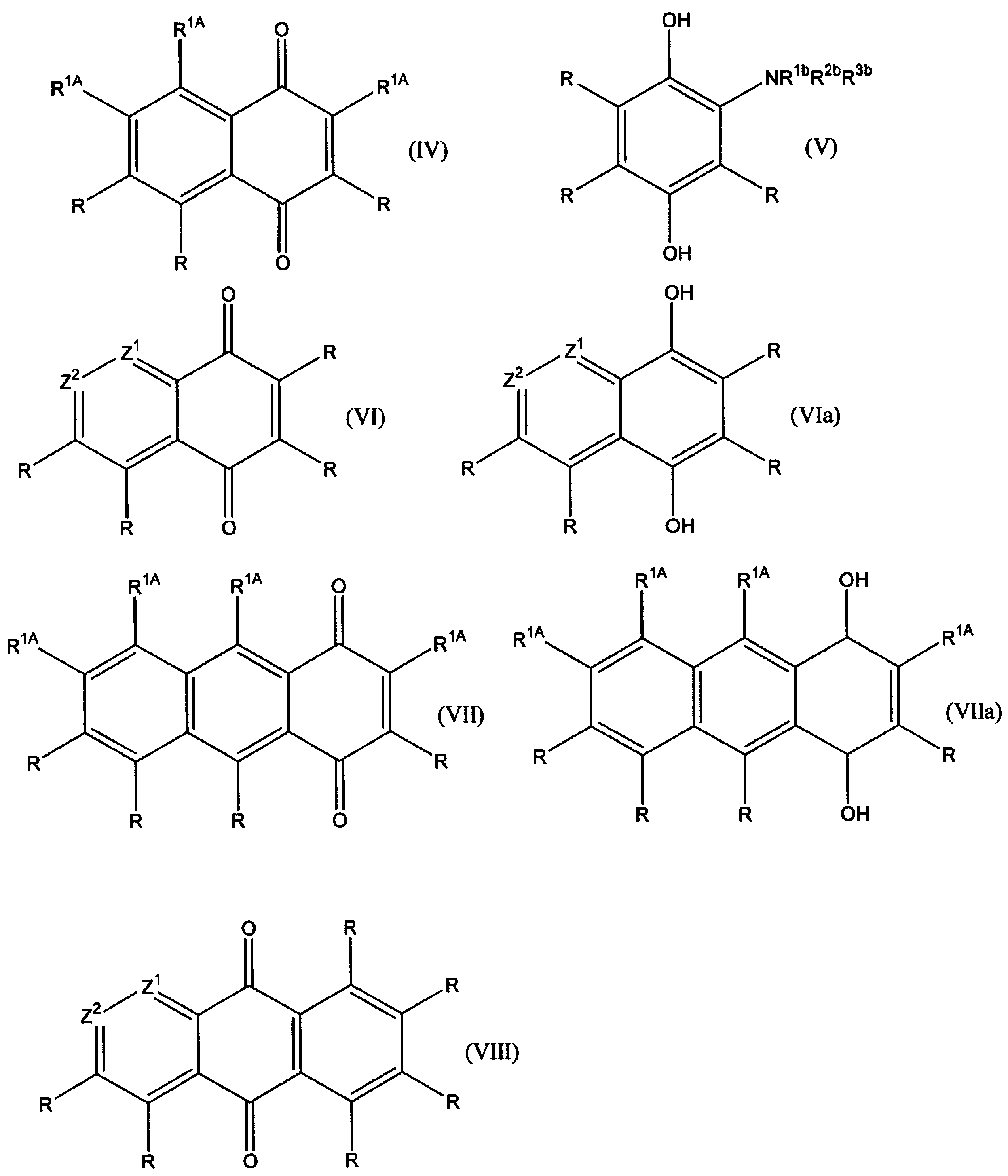
Mは、遷移金属原子、例えばFe,Co,Ni,Zn,Cu,Cr,V,Cd,As,Mn,Ti,Zr,Sn,Ag,In,Hg,W,Pt,Au,Ga,Ge,Ru、を示し、好ましくはFeである。
アルコキシカルボニル基としては、メトキシカルボニル、エトキシカルボニル、ブトキシカルボニルなどの式:-CO-O(アルキル)(アルキルは前記に定義されるとおりである。)で表される炭素数2~21の直鎖又は分枝を有するアルコキシカルボニル基が挙げられる。
エーテル類:ジエチルエーテル、テトラヒドロフラン、テトラヒドロピラン、ジイソプロピルエーテル、ジフェニルエーテル、アニソール、フェネトール、グアイアコールなど;
アルキレングリコール類:エチレングリコール、プロピレングリコール、ブチレングリコール、ジエチレングリコール、トリエチレングリコールなど;
アルキレングリコールモノアルキルエーテル類:エチレングリコールモノメチルエーテル、エチレングリコールモノエチルエーテル、プロピレングリコールモノメチルエーテル、プロピレングリコールモノエチルエーテル、ブチレングリコールモノメチルエーテル、ブチレングリコールモノエチルエーテル、ジエチレングリコールモノメチルエーテル、ジエチレングリコールモノエチルエーテルなど;
アルキレングリコールジアルキルエーテル類:エチレングリコールジメチルエーテル(DME)、エチレングリコールジエチルエーテル、プロピレングリコールジメチルエーテル、プロピレングリコールジエチルエーテル、ブチレングリコールジメチルエーテル、ブチレングリコールジエチルエーテル、ジエチレングリコールジメチルエーテル、ジエチレングリコールジエチルエーテルなど;
エステル類:酢酸メチル、酢酸エチル、酢酸プロピル、酢酸ブチル、プロピオン酸メチル、プロピオン酸エチル、プロピオン酸プロピル、プロピオン酸ブチル、ギ酸メチル、ギ酸エチル、ギ酸プロピル、ギ酸ブチル、安息香酸メチル、安息香酸エチル、安息香酸プロピル、安息香酸ブチルなど;
ラクトン類:γブチロラクトン(GBL)など
ケトン類:アセトン(ATN)、アセチルアセトン、メチルエチルケトン、シクロヘキサノン、シクロペンタノンなど;
ヘテロ芳香族炭化水素:ピリジンなど
脂環式炭化水素:シクロペンタン、シクロヘキサン、メチルシクロヘキサンなど:
ヘテロ脂環式化合物:ジオキサン、モルホリン、ピロリジンなど;
スルフィド類:ジメチルスルフィド、ジエチルスルフィド、ジ-n-プロピルスルフィド、ジイソプロピルスルフィドなど;
炭酸エステル類:エチレンカーボネート(EC)、プロピレンカーボネート(PC)、ブチレンカーボネート、ジエチルカーボネート(DEC)、ジメチルカーボネートなど;
アルコール類;エタノール、n-プロパノール、イソプロパノール、n-ブタノール、イソブタノール、sec-ブタノール、tert-ブタノールなど;
このような有機溶媒にカチオン性基を導入する方法としては、以下の方法が挙げられる。

R,Raで表される置換基を有していてもよいアルキル基としては、メチル基、エチル基、n-プロピル基、イソプロピル基などの炭素数1~3のアルキル基が例示され、該アルキル基は、フッ素原子、メトキシ基、シアノ基などの基で置換されていてもよい。
Xは脱離基を表し、具体的には、塩素原子、臭素原子、ヨウ素原子、メタンスルホニル基、p-トルエンスルホニル基などが挙げられる。
好ましい1つの実施形態において、本発明は、低沸点、高揮発性の溶媒に4級アンモニウム基を導入して、イオン液体に導く。4級アンモニウム化は、上記のように、脱離基と第三級アミンを反応させて行っても良く、アミノ基を含む溶媒のアミノ基を四級化してもよい。
化合物の同定について、JEOL ECA-500 FT-NMRスペクトロメータを用いて、1H NMR (500.2MHz), 19F NMR (470.6 MHz)及び11B NMR (160.5MHz)スペクトルを測定した。
密度: イオン液体の密度は、25℃で1.0 mL のイオン液体の重量を3回測定することにより決定した。
比導電率(比導電率):ニート(無溶媒)のイオン液体のイオン導電率(κ)は、密閉導電セル中で、導電率計(Radiometer Analytical, model CDM230)を用いて測定した。
粘度:粘度は、25℃で0.6 mLのサンプルを使用して粘度計(Brookfield model DV-III+)を用いて測定した。
熱重量分析(TGA): TGAは熱分析システム(Seiko Instruments, TG/DTA 6200)を用いて行った。5mgの平均重量サンプルをプラチナパンに配置し、窒素気流下に10℃/minの割合で約40~600℃に加熱した。分解の開始は、分解温度(Td)として定義した。
示差走査型熱分析(DSC): DSCは熱分析システム(Perkin Elmer, Pyris 1)に液体窒素低温調節装置を取り付けて行った。5mgの平均重量サンプルをシール型プラチナパンに配置し、ヘリウム気流下に10℃/minの割合で約-150~250℃の範囲内で測定した。この測定条件においてガラス転移点のみを示し融点を示さないサンプルについては、ガラス転移点のみ(Tgのみ)と記載したが、あくまでこの測定条件での結果であり、測定条件が異なる場合に融点を示す場合も無いとは言えない。
使用するすべての原材料は、市販品であり、さらに精製することなく使用した。
無水Et2O (300 ml)中のCF3OCF2CF2I (15.8 g, 50.7 mmol)の撹拌溶液にN2 雰囲気下、-78℃で1時間PhMgBr (Et2O中3.0M, 17.5 ml)を滴下した。-78℃で1.5時間撹拌した後、B(OCH3)3(6.2 g, 60 mmol)を10分かけて加えた。反応混合物を-78℃で2時間撹拌を続け、次いで2時間かけて室温まで暖めた。得られた懸濁液を予め0℃に冷却した48 %HF水溶液(100 ml)に注ぎ、終夜激しく撹拌した。0℃においてKFで飽和させた後、エーテル相を分離し、水相をEt2Oで抽出した。合わせたエーテル抽出液をKHCO3水溶液で洗浄し、乾燥した。溶媒を真空下で除去し、MeOH/CHCl3 で再結晶して表題化合物を得た(7.7 g, 52.0 %)
19F NMR (CD3OD, CFCl3, 470.6 MHz) δ -54.9 (t, J = 10.8 Hz, 3F), -88.4 (s, 2F), -136.4 (q, J = 19.5 Hz, 2F), -154.3 (q, J = 40.0 Hz, 3F); 11B NMR (CD3OD, H3BO3, 160.5 MHz) δ -19.8 (m, 1B); MS m/z (%) 253 (100) [CF3OCF2CF2BF3]-, 545 (100) [2M-K]-;
K[CF3OCF2CF2BF3] (1.10 g, 3.8 mmol)の撹拌水溶液(35 ml)に、1-エチル-3-メチルイミダゾリウムクロリド(EMICl) (0.54 g, 3.7 mmol)を室温で加えた。反応混合物をさらに6時間撹拌した。下相を分離しCH2Cl2に溶解した。CH2Cl2 相を分離し、水相をCH2Cl2 で抽出した。CH2Cl2抽出液を合わせ、水で洗浄した。80℃、0.02 Torrで24時間真空脱気して、イオン液体を得た(0.90 g, 67.2 %)
1H NMR (CD3OD, TMS, 500.2 MHz) δ 1.54 (t, J = 7.5 Hz, 3H), 3.93 (s, 3H), 4.26 (q, J = 7.5 Hz, 2H), 7.52 (s, 1H), 7.59 (s, 1H), 8.82 (s, 1H); 19F NMR (CD3OD, CFCl3, 470.6 MHz) δ -54.7 (t, J = 11.1 Hz, 3F), -88.3 (s, 2F), -136.4 (m, 2F), -154.1 (q, J = 40.0 Hz, 3F); 11B NMR (CD3OD H3BO3, 160.5 MHz) δ -19.8 (m, 1B) ; MS m/z (%) 111 (100) [EMI]+,253 (100) [CF3OCF2CF2BF3]-; Anal Calcd. for C9H11N2F10OB: C,29.70; H, 3.05; N,7.70; Found : C, 29.60; H, 3.04; N, 8.00; Density: 1.478 g/mL; Specific conductivity: 9.10 mS/cm; Viscosity: 27.8 cP; Decomposition temperature: 286℃.
上記と同様にして、K[CF3OCF2CF2BF3]とDEMEの臭化物塩から、DEME[CF3OCF2CF2BF3]を得た。
1H NMR (CD3OD, TMS, 500.2 MHz) δ 1.34 (t, J = 7.3 Hz, 6H), 3.04 (s, 3H), 3.39 (s, 3H), 3.43 (q, J= 7.3 Hz, 4H), 3.51 (t, J = 4.5 Hz, 2H), 3.79 (m, 2H); 19F NMR (CD3OD, CFCl3, 470.6 MHz) δ -54.7 (m, 3F), -88.2 (s, 2F), -136.1 (q, J = 18.2 Hz, 2F), -153.5 (q,J = 40.0 Hz, 3F); 11B NMR (CD3OD H3BO3, 160.5 MHz) δ -19.6 (m, 1B); MS m/z (%) 146 (100) [DEME]+, 253 (100) [CF3OCF2CF2BF3]-; Anal Calcd. for C11H20NF10O2B: C,33.11; H, 5.05; N,3.51; Found : C, 33.11; H, 4.76; N, 3.78; Density: 1.40g/mL; Specific conductivity: 2.5 mS/cm; Viscosity: 63 cP; Decomposition temperature: 312℃.
そのほかに、N1224の塩、Py13の塩を各々用い、上記と同様にしてN1224[CF3OCF2CF2BF3]、Py13 [CF3OCF2CF2BF3]を得た。
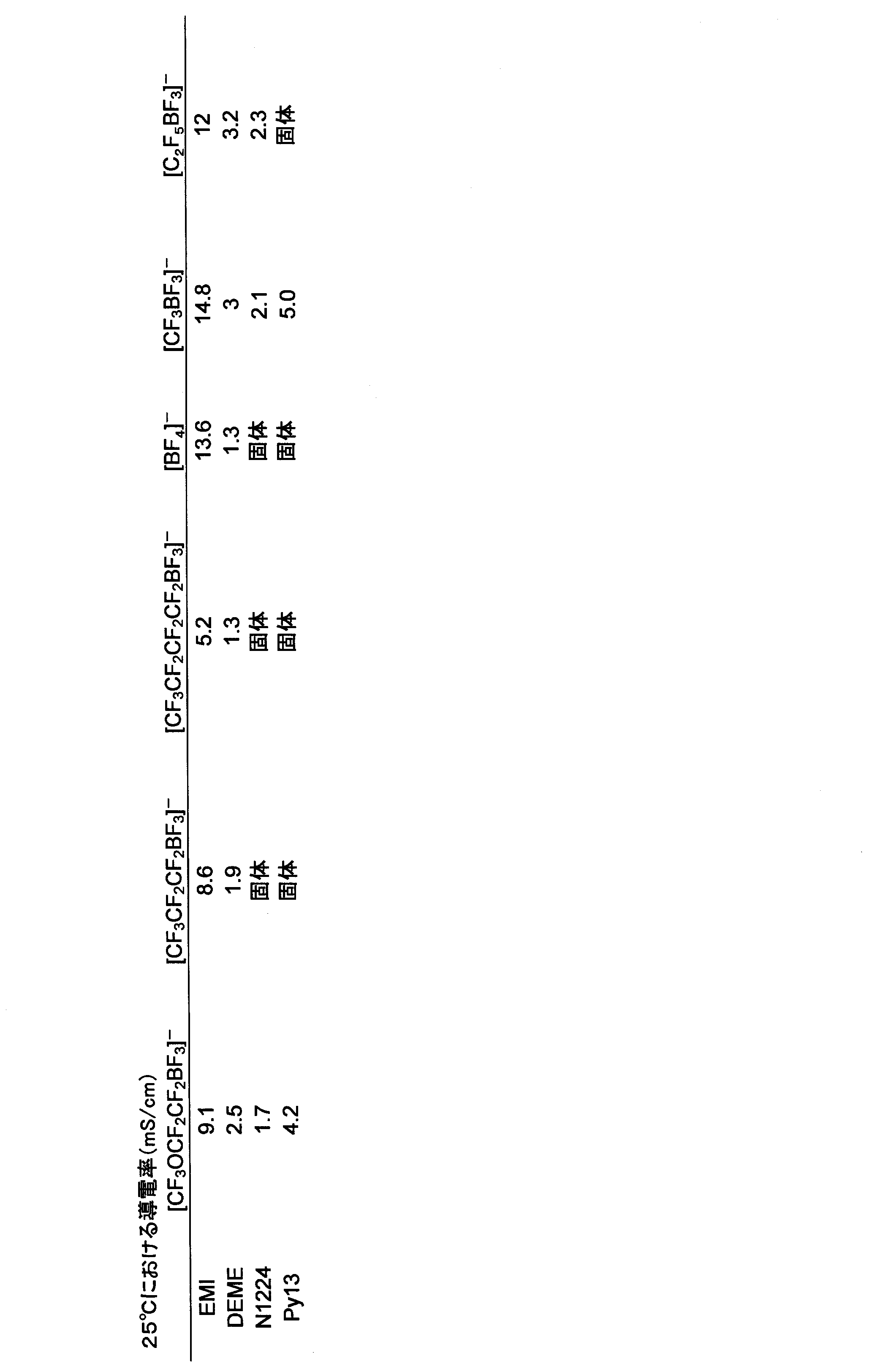


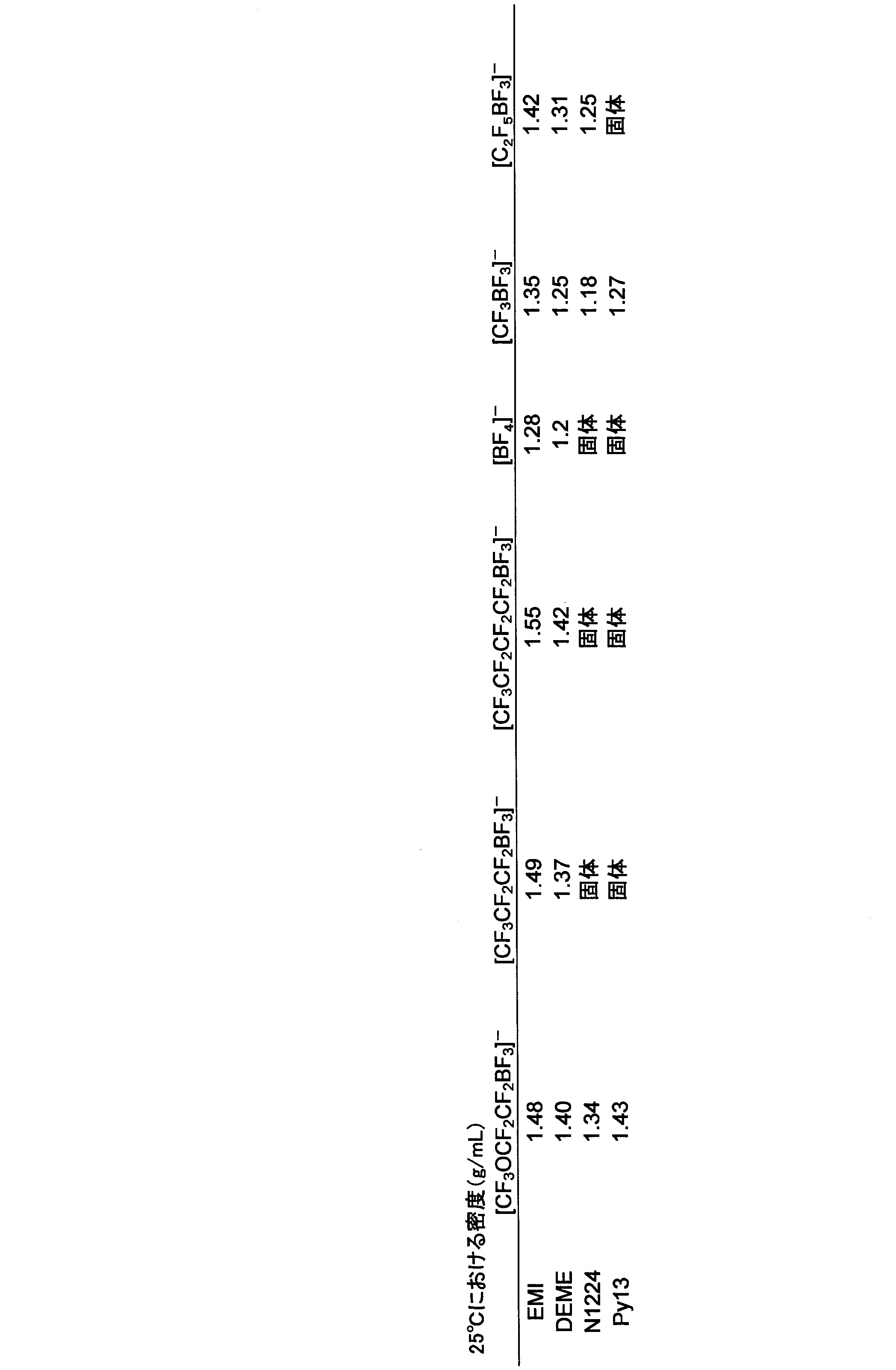
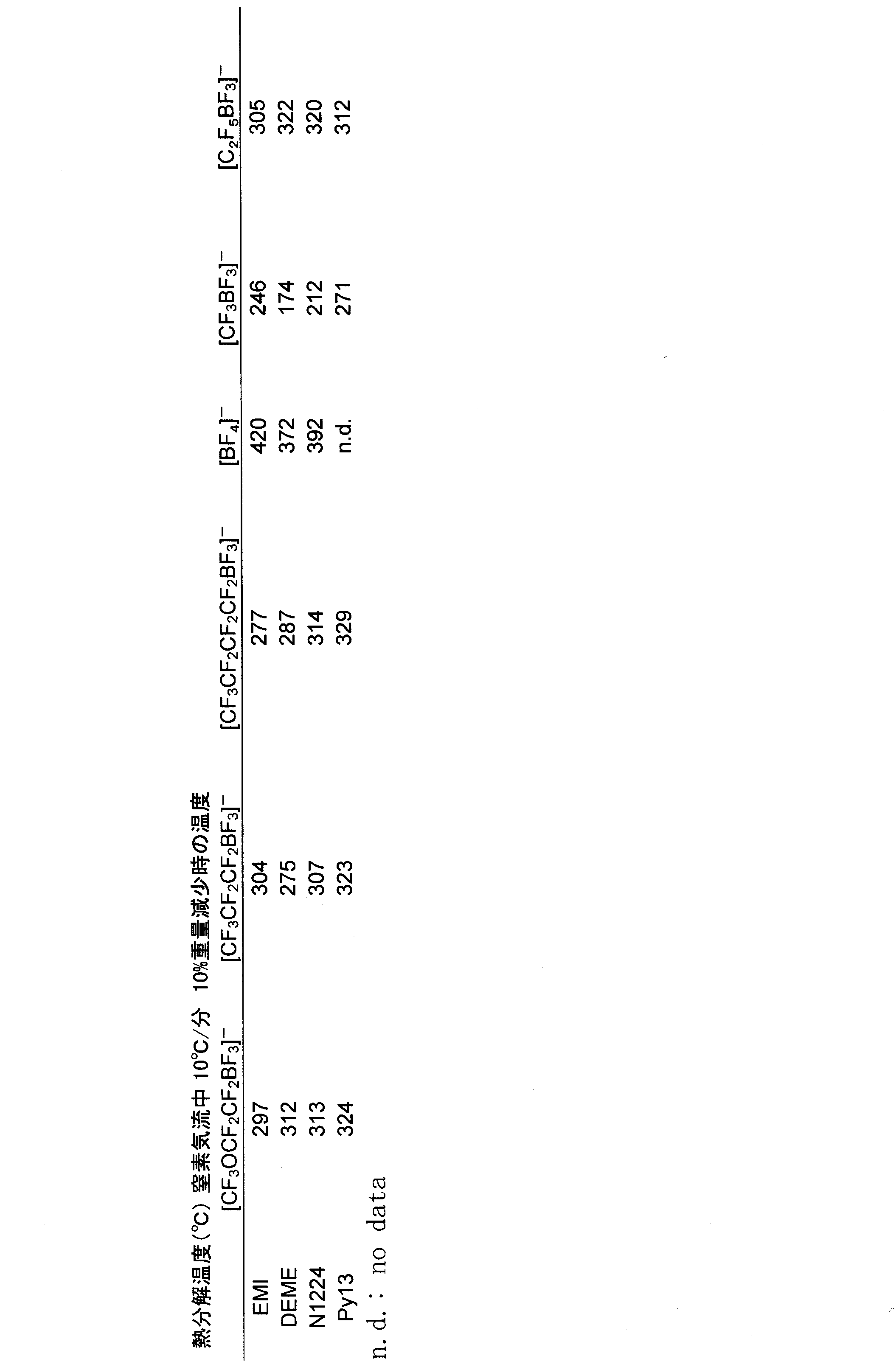
参考文献1) Z. B. Zhou, M. Takeda, M. Ue, J Fluorine Chem. 2003, 123, 127-131.
参考文献2) Z. B. Zhou, H. Matsumoto, K. Tatsumi, Chem.lett. 2004, 33, 1636-1637.
参考文献3) Z. B. Zhou, H. Matsumoto, K. Tatsumi, Chem.Eur. J.2004, 10, 6581-6591.
参考文献4) Z. B. Zhou, H. Matsumoto, K. Tatsumi, Chem.Eur. J.2005, 11, 752-766.
参考文献5) Z. B. Zhou, H. Matsumoto, K. Tatsumi, Chem.Eur. J.2006, 8, 2196-2212.
参考文献6) S.Forsyth, J.Golding, D.R.MacFalrane, M. Forsyth, Electrochim. Acta., 2001, 46, 1753-1757.
Claims (5)
- [CF3OCF2CF2BF3]-からなるイオン性液体製造用のアニオン。
- [CF3OCF2CF2BF3]-からなるアニオンと少なくとも1種の有機オニウムイオンからなるイオン性液体。
- 請求項2に記載のイオン性液体を含むリチウム電池。
- 請求項2に記載のイオン性液体を含む電気二重層キャパシタ。
- [CF3OCF2CF2BF3]-をアニオン成分として含む化合物と少なくとも1種の有機オニウム化合物を含む化合物を混合することを特徴とするイオン性液体の製造法。
Priority Applications (2)
| Application Number | Priority Date | Filing Date | Title |
|---|---|---|---|
| US12/991,577 US8765296B2 (en) | 2008-05-09 | 2009-05-01 | Ionic liquid |
| JP2010511071A JP5268007B2 (ja) | 2008-05-09 | 2009-05-01 | イオン液体 |
Applications Claiming Priority (2)
| Application Number | Priority Date | Filing Date | Title |
|---|---|---|---|
| JP2008123630 | 2008-05-09 | ||
| JP2008-123630 | 2008-05-09 |
Publications (1)
| Publication Number | Publication Date |
|---|---|
| WO2009136609A1 true WO2009136609A1 (ja) | 2009-11-12 |
Family
ID=41264665
Family Applications (1)
| Application Number | Title | Priority Date | Filing Date |
|---|---|---|---|
| PCT/JP2009/058581 Ceased WO2009136609A1 (ja) | 2008-05-09 | 2009-05-01 | イオン液体 |
Country Status (3)
| Country | Link |
|---|---|
| US (1) | US8765296B2 (ja) |
| JP (1) | JP5268007B2 (ja) |
| WO (1) | WO2009136609A1 (ja) |
Citations (1)
| Publication number | Priority date | Publication date | Assignee | Title |
|---|---|---|---|---|
| WO2005063773A1 (ja) * | 2003-12-26 | 2005-07-14 | National Institute Of Advanced Industrial Science And Technology | イオン性液体、その製造法、それを含む二重層キャパシタおよびリチウム電池 |
Family Cites Families (7)
| Publication number | Priority date | Publication date | Assignee | Title |
|---|---|---|---|---|
| JP3472810B2 (ja) | 2000-09-22 | 2003-12-02 | 独立行政法人産業技術総合研究所 | 常温溶融塩を用いた湿式エレクトロクロミックデバイス |
| US6740413B2 (en) * | 2001-11-05 | 2004-05-25 | 3M Innovative Properties Company | Antistatic compositions |
| JP3962806B2 (ja) | 2002-05-16 | 2007-08-22 | 独立行政法人産業技術総合研究所 | 常温溶融塩及び常温溶融塩を用いたリチウム二次電池 |
| KR20060039924A (ko) * | 2003-07-31 | 2006-05-09 | 가부시키가이샤 가네카 | 이온성 액체를 사용한 금속 표면 산화 피막 형성 방법,전해콘덴서 및 그 전해질 |
| JP4706067B2 (ja) * | 2004-12-27 | 2011-06-22 | 独立行政法人産業技術総合研究所 | イオン液体 |
| JP2006236829A (ja) * | 2005-02-25 | 2006-09-07 | Nisshinbo Ind Inc | イオン液体、蓄電デバイス用非水電解液および蓄電デバイス |
| JP4651114B2 (ja) * | 2006-09-13 | 2011-03-16 | 国立大学法人静岡大学 | リチウム塩の製造方法 |
-
2009
- 2009-05-01 JP JP2010511071A patent/JP5268007B2/ja not_active Expired - Fee Related
- 2009-05-01 WO PCT/JP2009/058581 patent/WO2009136609A1/ja not_active Ceased
- 2009-05-01 US US12/991,577 patent/US8765296B2/en not_active Expired - Fee Related
Patent Citations (1)
| Publication number | Priority date | Publication date | Assignee | Title |
|---|---|---|---|---|
| WO2005063773A1 (ja) * | 2003-12-26 | 2005-07-14 | National Institute Of Advanced Industrial Science And Technology | イオン性液体、その製造法、それを含む二重層キャパシタおよびリチウム電池 |
Non-Patent Citations (2)
| Title |
|---|
| FROHN ET AL.: "The unusual reactivity of C3F7OCF= CF2 with PBu3 and the complex hydrides M[EH4] (M: Li, Na; E: B, Al); preparation of potassium perfluoro-2-propoxyeth-1-enyltrifluoroborate K[C3F7OCF=CFBF3]", JOURNAL OF FLUORINE CHEMISTRY, vol. 123, no. 1, 2003, pages 43 - 49 * |
| TERASAWA N. ET AL.: "Ether-sanso Gan'yu Perfluoroalkyl Trifluoro Borate kara naru Ion Ekitai no Bussei to Denki Kagaku Tokusei", THE ELECTROCHEMICAL SOCIETY OF JAPAN DAI 76 KAI TAIKAI KOEN YOSHISHU, 29 March 2009 (2009-03-29), pages 248 * |
Also Published As
| Publication number | Publication date |
|---|---|
| JPWO2009136609A1 (ja) | 2011-09-08 |
| US20110091769A1 (en) | 2011-04-21 |
| US8765296B2 (en) | 2014-07-01 |
| JP5268007B2 (ja) | 2013-08-21 |
Similar Documents
| Publication | Publication Date | Title |
|---|---|---|
| JP5339542B2 (ja) | イオン液体 | |
| Lee et al. | Ionic liquids containing an ester group as potential electrolytes | |
| EP2274291B1 (de) | Reaktive ionische flüssigkeiten | |
| EP1698631B1 (en) | Ionic liquid, method for producing same, double layer capacitor comprising same, and lithium battery | |
| EP2780346B1 (de) | Verfahren zur herstellung von metalldifluorochelatoboraten und verwendung als batterieelektrolyte oder additive in galvanischen zellen | |
| Han et al. | Ionic liquids and plastic crystals based on tertiary sulfonium and bis (fluorosulfonyl) imide | |
| JP4706067B2 (ja) | イオン液体 | |
| JP2005139100A (ja) | 常温溶融塩 | |
| García et al. | Conductivity and viscosity properties of associated ionic liquids phosphonium orthoborates | |
| Chen et al. | Dialkoxy functionalized quaternary ammonium ionic liquids as potential electrolytes and cellulose solvents | |
| EP1205480A2 (de) | Tetrakisfluoroalkylborat-Salze und deren Verwendung als Leitsalze | |
| JP5583899B2 (ja) | イオン性化合物の製造方法 | |
| JP5780484B2 (ja) | イオン液体 | |
| EP2945956A1 (en) | Low symmetry molecules and phosphonium salts, methods of making and devices formed there from | |
| KR20180136947A (ko) | 규소 함유 황산 에스터염 | |
| US8318037B2 (en) | Organosilicon glycol-based electrolytes with a hydroxy terminus | |
| US8345407B2 (en) | Low viscosity ionic liquids | |
| JP4478790B2 (ja) | 常温溶融塩及び電気化学デバイス | |
| JP2005104846A (ja) | 4級アンモニウム系常温溶融塩及びその製造法 | |
| JP5268007B2 (ja) | イオン液体 | |
| Yue et al. | Synthesis and physical properties of new low-viscosity sulfonium ionic liquids | |
| JP6010252B2 (ja) | 双性イオン化合物およびイオン伝導体 | |
| US9196424B2 (en) | Double-center bipyridyl cationic ion liquid, preparation method therefor and use thereof | |
| WO2014153642A1 (en) | Synthesis of protic ionic liquids | |
| JP2004262896A (ja) | 4級アンモニウム系常温溶融塩及び該化合物の製造法 |
Legal Events
| Date | Code | Title | Description |
|---|---|---|---|
| 121 | Ep: the epo has been informed by wipo that ep was designated in this application |
Ref document number: 09742733 Country of ref document: EP Kind code of ref document: A1 |
|
| WWE | Wipo information: entry into national phase |
Ref document number: 2010511071 Country of ref document: JP |
|
| WWE | Wipo information: entry into national phase |
Ref document number: 12991577 Country of ref document: US |
|
| NENP | Non-entry into the national phase |
Ref country code: DE |
|
| 122 | Ep: pct application non-entry in european phase |
Ref document number: 09742733 Country of ref document: EP Kind code of ref document: A1 |