WO2006129649A1 - 光学活性ppar活性化化合物及びその製造中間体の製造法 - Google Patents
光学活性ppar活性化化合物及びその製造中間体の製造法 Download PDFInfo
- Publication number
- WO2006129649A1 WO2006129649A1 PCT/JP2006/310755 JP2006310755W WO2006129649A1 WO 2006129649 A1 WO2006129649 A1 WO 2006129649A1 JP 2006310755 W JP2006310755 W JP 2006310755W WO 2006129649 A1 WO2006129649 A1 WO 2006129649A1
- Authority
- WO
- WIPO (PCT)
- Prior art keywords
- group
- chemical
- formula
- alkyl
- following formula
- Prior art date
- Legal status (The legal status is an assumption and is not a legal conclusion. Google has not performed a legal analysis and makes no representation as to the accuracy of the status listed.)
- Ceased
Links
Classifications
-
- C—CHEMISTRY; METALLURGY
- C07—ORGANIC CHEMISTRY
- C07D—HETEROCYCLIC COMPOUNDS
- C07D413/00—Heterocyclic compounds containing two or more hetero rings, at least one ring having nitrogen and oxygen atoms as the only ring hetero atoms
- C07D413/02—Heterocyclic compounds containing two or more hetero rings, at least one ring having nitrogen and oxygen atoms as the only ring hetero atoms containing two hetero rings
- C07D413/12—Heterocyclic compounds containing two or more hetero rings, at least one ring having nitrogen and oxygen atoms as the only ring hetero atoms containing two hetero rings linked by a chain containing hetero atoms as chain links
-
- A—HUMAN NECESSITIES
- A61—MEDICAL OR VETERINARY SCIENCE; HYGIENE
- A61P—SPECIFIC THERAPEUTIC ACTIVITY OF CHEMICAL COMPOUNDS OR MEDICINAL PREPARATIONS
- A61P29/00—Non-central analgesic, antipyretic or antiinflammatory agents, e.g. antirheumatic agents; Non-steroidal antiinflammatory drugs [NSAID]
-
- A—HUMAN NECESSITIES
- A61—MEDICAL OR VETERINARY SCIENCE; HYGIENE
- A61P—SPECIFIC THERAPEUTIC ACTIVITY OF CHEMICAL COMPOUNDS OR MEDICINAL PREPARATIONS
- A61P3/00—Drugs for disorders of the metabolism
- A61P3/06—Antihyperlipidemics
-
- A—HUMAN NECESSITIES
- A61—MEDICAL OR VETERINARY SCIENCE; HYGIENE
- A61P—SPECIFIC THERAPEUTIC ACTIVITY OF CHEMICAL COMPOUNDS OR MEDICINAL PREPARATIONS
- A61P3/00—Drugs for disorders of the metabolism
- A61P3/08—Drugs for disorders of the metabolism for glucose homeostasis
- A61P3/10—Drugs for disorders of the metabolism for glucose homeostasis for hyperglycaemia, e.g. antidiabetics
-
- A—HUMAN NECESSITIES
- A61—MEDICAL OR VETERINARY SCIENCE; HYGIENE
- A61P—SPECIFIC THERAPEUTIC ACTIVITY OF CHEMICAL COMPOUNDS OR MEDICINAL PREPARATIONS
- A61P43/00—Drugs for specific purposes, not provided for in groups A61P1/00-A61P41/00
-
- A—HUMAN NECESSITIES
- A61—MEDICAL OR VETERINARY SCIENCE; HYGIENE
- A61P—SPECIFIC THERAPEUTIC ACTIVITY OF CHEMICAL COMPOUNDS OR MEDICINAL PREPARATIONS
- A61P9/00—Drugs for disorders of the cardiovascular system
-
- A—HUMAN NECESSITIES
- A61—MEDICAL OR VETERINARY SCIENCE; HYGIENE
- A61P—SPECIFIC THERAPEUTIC ACTIVITY OF CHEMICAL COMPOUNDS OR MEDICINAL PREPARATIONS
- A61P9/00—Drugs for disorders of the cardiovascular system
- A61P9/10—Drugs for disorders of the cardiovascular system for treating ischaemic or atherosclerotic diseases, e.g. antianginal drugs, coronary vasodilators, drugs for myocardial infarction, retinopathy, cerebrovascula insufficiency, renal arteriosclerosis
-
- C—CHEMISTRY; METALLURGY
- C07—ORGANIC CHEMISTRY
- C07D—HETEROCYCLIC COMPOUNDS
- C07D263/00—Heterocyclic compounds containing 1,3-oxazole or hydrogenated 1,3-oxazole rings
- C07D263/52—Heterocyclic compounds containing 1,3-oxazole or hydrogenated 1,3-oxazole rings condensed with carbocyclic rings or ring systems
- C07D263/54—Benzoxazoles; Hydrogenated benzoxazoles
- C07D263/58—Benzoxazoles; Hydrogenated benzoxazoles with hetero atoms or with carbon atoms having three bonds to hetero atoms with at the most one bond to halogen, e.g. ester or nitrile radicals, directly attached in position 2
Definitions
- the present invention relates to a PPAR (peroxisome proliferator-activated receptor) activating compound useful as a prophylactic and Z or therapeutic agent for diseases such as hyperlipidemia, arteriosclerosis, diabetes, and intermediates for producing the same Relates to the manufacturing method.
- PPAR peroxisome proliferator-activated receptor
- PPAR is known as one of the nuclear receptor families, and the existence of three subtypes ( ⁇ , ⁇ , ⁇ ) is known to date (Non-Patent Documents 1 to 5). Of these, PPAR ⁇ is mainly expressed in the liver, and is active by plasticizers and fibrates, such as Wyl4643 and drugs already marketed as clofibrate, fenofibrate, bezafibrate, and gemfibrozil. It is known to be deceived (Non-Patent Documents 6-7)
- PPAR ⁇ activity increases ⁇ -oxidation of fatty acids and lowers blood triglycerides in mammals, and low-density lipoprotein (LDL) cholesterol and ultra-low-density lipoprotein (VLDL) in humans.
- LDL low-density lipoprotein
- VLDL ultra-low-density lipoprotein
- PPARa activator suppresses the increase of high density lipoprotein (HDL) cholesterol and the expression of VCAM-1, which is a cell adhesion factor in blood vessels. It is also considered useful for the prevention and Z or treatment of inflammatory diseases, heart diseases, etc.
- Non-patent Document 13 the activity of PPAR ⁇ increases fat in humans and has an undesirable effect of increasing body weight and causing obesity. It has also been reported that PAR ⁇ antagonists may improve insulin resistance (Non-Patent Documents 14 to 16). In addition, it has been suggested that the activity of PPAR ⁇ leads to lipid accumulation (Non-patent Document 17). Therefore, PPAR ⁇ and ⁇ low activity ⁇ PPAR a selective activators are not associated with weight gain, obesity, hyperlipidemia, arteriosclerosis, diabetes, sugar It is considered useful as a preventive and Z or therapeutic agent for urinary complications, inflammation, heart disease, etc.
- R and R are the same or different and each represents a hydrogen atom, a methyl group or an ethyl group;
- R 1, R 2 and R are the same or different and each represents a hydrogen atom, a halogen atom, a nitro group, a hydroxyl group,
- D is an oxygen atom, sulfur atom or N—R (R is hydrogen
- E represents an oxygen atom, S (O) group (t represents a number of 0 to 2), a carbo group, a carbolumino group, an aminocarbo group, a sulfo-lumino group or G represents CH or N; p represents a number of 1 to 6; q represents a number of 2 to 6] or a salt thereof, which selectively selects PPAR a It has been found to be useful as a preventive and Z or therapeutic agent for hyperlipidemia, arteriosclerosis, diabetes, diabetic complications, inflammation, heart disease, etc. without active weight gain, weight gain, obesity, A patent application was filed (Patent Document 1).
- the production of the phenol moiety of the compound represented by the formula (A) can be carried out by subjecting a phenolic compound to a phenol ether as shown below.
- a phenol etherification reaction in which phenol and 2-halogenated carboxylic acid ester are reacted in the presence of a base (reaction process formulas A-1, B-2, C3, D-1, E-3) 2) Hydroxyl group of 2-hydroxycarboxylic acid ester by mesylylation or tosylation Is converted to a leaving group such as methanesulfo-luoxy group or para-toluenesulfo-luoxy group, and reacted with phenolic form in the presence of a base (reaction process formulas F4, J4), 3) phenolic form It is disclosed that Mitsunobu reaction and the like can be applied using 2-hydroxycarboxylic acid ester.
- R and R are as defined above; R represents an alkyl group or the like]
- Patent Document 1 International Patent Publication No. 05Z23777 Pamphlet
- Non-Patent Document 1 Nature, 347, 645-650, 1990
- Non-Patent Document 2 Cell, 68, pp879-887, 1992
- Non-Patent Document 3 Cell, 97, ppl61-163, 1999
- Non-patent literature 4 Biochim. Biophys. Acta., 1302, ⁇ 93—109, 1996 Non-patent literature 5 Journal of Medicinal Chemistry, 43, pp527-550, 2000 Non-patent literature 6 Journal of the National Cancer Institute, 90, 1702— 170 9, 1998
- Non-Patent Document 7 Current Opinion in Lipidology, 10, pp245-257, 1999
- Non-Patent Document 8 Journal of Atherosclerosis and Thrombosis, 3, pp81-89, 1996
- Non-patent literature 9 Current Pharmaceutical Design, 3, ppl—14, 1997
- Non-patent literature 10 Current Opinion in Lipidology, 10, ppl51—159, 1999
- Non-patent literature ll The Lancet, 354, ppl41-148, 1999
- Non-Patent Document 12 Journal of Cardiovascular Risk, 8, ppl95— 201, 2001
- Non-Patent Document 13 The Lancet, 349, pp952, 1997
- Non-Patent Document 14 Proc. Natl. Acad. Sci., 96, pp6102— 6106, 1999
- Non-Patent Document 15 The Journal of Biological Chemistry, 275, ppl873-187
- Non-Patent Document 16 Clin. Invest., 108, 1001— 1013, 2001
- Non-Patent Document 17 Proc. Natl. Acad. Sci., 99, pp303—308, 2002
- An object of the present invention is to provide a method for obtaining an optically active butyric acid compound included in the above formula (A) and a production intermediate thereof in high yield and high optical purity.
- R la , R lb , R 2a and R 2b are the same or different and each represents a hydrogen atom, a halogen atom, a nitro group, a C alkyl group, a trifluoromethyl group, a C alkoxy group, or a di-C alkylamino group.
- R la and R lb or R 2a and R 2b are combined to represent an alkylenedioxy group;
- R 4 is a C alkyl group or a C aryl C alkyl X represents oxygen radical
- R 3 represents a hydrogen atom or a C alkyl group.
- Y is an oxygen atom, S (O) group (1 represents the number of 0 or 2), carbo group or carbo group
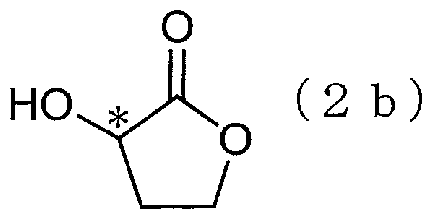
- the present invention relates to a force for reacting compound (1) with optically active 2-trifluoromethanesulfonoxylate rataton (2a) in the presence of a base, or optically active 2-hydroxybutyrate rataton ( This relates to a method for producing compound (3), characterized in that 2b) is reacted under Mitsunobu reaction conditions.
- the present invention also relates to a force for reacting the compound (1) with the optically active 2-trifluoromethanesulfo-oxyxoxylate rataton (2a) in the presence of a base, or the optically active 2-hydroxypetite. Mouth rataton (2b) is reacted under Mitsunobu reaction conditions to give compound (3), which is then reacted with an alcohol represented by R 4 —0 H (where R 4 is the same as defined above).
- the present invention relates to a method for producing a compound (4) characterized by reacting a halogenated reagent.
- the present invention provides a compound or a reaction force between the compound (1) and the optically active 2-trifluoromethanesulfo-loxypropyl latatatone (2a) in the presence of a base, or the optically active 2-hydroxypetit ralatotone (2b ) and the Mitsunobu compound is reacted under the reaction conditions (3), to which R 4 -0 H (wherein then, R 4 is an alcohol and Harogeni ⁇ agent represented by.) indicating the same as the
- the present invention relates to a method for producing a compound (5) characterized in that a compound (4) is obtained by reacting and then dehalogenated.
- the present invention provides a compound or a reaction force between the compound (1) and optically active 2-trifluoromethanesulfo-loxypoxy oral rataton (2a) in the presence of a base, or optically active 2-hydroxypetite oral rataton (2b ) and the Mitsunobu compound is reacted under the reaction conditions (3), to which R 4 -0 H (wherein then, R 4 is an alcohol and Harogeni ⁇ agent represented by.) indicating the same as the Compound (4) by reacting, and then dehalogenating it to give compound (5), and then deesterifying it with It is.
- the present invention also relates to compound (3).
- the present invention also relates to compound (4).
- PPARa is a selective activator, and does not involve weight gain or obesity, and does not involve hyperlipidemia, arteriosclerosis, diabetes, diabetic complications, inflammation, heart
- An optically active butyric acid compound (6) capable of preventing and / or treating diseases and the like and a production intermediate thereof can be produced with high yield and high optical purity.
- Examples of the hydrogen atom and the rogen atom include a fluorine atom and a chlorine atom.
- the C alkyl group includes a methyl group, an ethyl group, an n-propyl group, an isopropyl group, n A butyl group etc. are mentioned, Among these, a methyl group is especially preferable.
- the C alkoxy group includes a methoxy group, an ethoxy group, an n-propoxy group, and an isopropoxy group.
- Ci group, n-butoxy group and the like can be mentioned, among which methoxy group is particularly preferable.
- Examples of the di-C alkylamino group include a dimethylamino group, a jetylamino group, and a diisopropyl ester.
- Examples include a pyramino group, and among them, a dimethylamino group is particularly preferred!
- Examples of the C alkylsulfoxy group include a methylsulfoxy group and an ethyl group.
- Examples thereof include a sulfoloxy group, and among them, a methylsulfoloxy group is particularly preferable.
- Examples of the C alkylsulfur group include a methylsulfol group and an ethylsulfol group.
- a methylsulfur group is particularly preferred.
- Examples of the C alkylthio group include a methylthio group, an ethylthio group, and the like.
- the methylthio group is particularly preferred.
- alkylene O alkoxy group which may be bonded R la and R lb or R 2a and R 2b are, methylene Jiokishi group, Echirenjiokishi group, and the like, these Mechirenjiokishi group is particularly favorable preferable.
- Alkyl groups include benzyl, phenethyl, phenylpropyl, naphthyl
- a til group etc. are mentioned, A phenethyl group is preferable.
- examples of the halogen atom represented by Z include a chlorine atom, a bromine atom, and an iodine atom, and among these, an iodine atom that is preferably a bromine atom and an iodine atom is particularly preferred. Is preferable.
- X is an oxygen atom, a sulfur atom or N—R 3 (where R 3 is a hydrogen atom) Atom represents a C alkyl group), but an oxygen atom is preferred.
- Y is an oxygen atom
- S (O) group (1 is a force indicating the number of 0 or 2, particularly 2 is preferable)
- a carbonyl group or a carbonylamino group is preferred.
- An oxygen atom is preferred.
- n represents a number of 1 to 6, In particular, a number of 1 to 3 is preferable.
- M is a force 2 to 4 indicating a number of 2 to 6, particularly 2 or 3.
- the compounds represented by the formulas (1), (3), (4), (5) and (6) are, in particular, R la and R lb are both hydrogen atoms, R 2a and It is preferable that either one of R 2b is a hydrogen atom and the other is a methoxy group, X and Y are both oxygen atoms, m is 3, and n is 1 (4) and
- the compound represented by formula (4) which is more preferably an R 4 carbyl group, an ethyl group or a phenethyl group, further represents Z as a bromine atom or an iodine atom. I prefer something that is.
- This process involves reacting a phenol compound (compound (1)) with an optically active 2-trifluoromethanesulfonyl oxypeptidyl ratatotone (2a) in the presence of a base in a phenyl ether reaction to form a rataton compound (compound (3) )).
- Suitable solvents include dichloromethane, chloroform, 1,2-dichloroethane, acetonitrile, propio-tolyl, etc., dichloromethane, chloroform, acetonitrile, Dichloromethane and black mouth form are particularly preferred, with propio-tolyl being more preferred.
- Examples of the base include organic bases such as pyridine, triethylamine, diisopropylethylamine, and inorganic bases such as sodium carbonate, potassium carbonate, cesium carbonate, and triethylamine, diisopropylethylamine, sodium carbonate, carbonate. Triethylamine, which is preferred for potassium, is particularly preferred.
- the reaction temperature may be 0 ° C to 50 ° C, preferably 10 ° C to 40 ° C, particularly preferably 20 ° C to 30 ° C.
- the reaction time is 1 to 24 hours, preferably 2 to 6 hours.
- this reaction can be carried out in an inert gas atmosphere such as argon or nitrogen if necessary.
- (2a) is a novel compound not described in any document, and this compound is trifluoromethanesulfuryl chloride or trifluoromethanesulfonic acid anhydride in the presence of a base in optically active 2-hydroxybutyrolatathone in a solvent. (Production example 1) reference).
- Examples of the solvent used here include dichloromethane, chloroform, 1,2-dichloroethane, and the like, and dichloromethane and chloroform are preferred.
- Examples of the base include organic bases such as pyridine, picoline, lutidine, collidine, triethylamine, diisopropylethylamine and the like, and pyridine and lutidine, which are preferable pyridine, lutidine, and triethylamine, are particularly preferable.
- the reaction temperature can be 78 ° C to 25 ° C, preferably 30 ° C to 10 ° C, particularly preferably 10 ° C to 0 ° C.
- the reaction time is 0.5 to 4 hours, preferably 0.5 to 1.5 hours.
- This step is a step for producing a rataton body (compound (3)) by reacting a phenol body (compound (1)) with optically active 2-hydroxy petit ratatone (2b) under Mitsunobu reaction conditions.
- the Mitsunobu reaction is a dehydrative condensation of alcohol and nucleophile in the presence of a azo reagent and a phosphorus reagent.
- This reaction is carried out in a suitable solvent, and suitable solvents include toluene, tetrahydrofuran, dioxane, tert butyl methyl ether, acetonitrile, propio-tolyl, N, N dimethylformamide, N, N dimethyl-2-imidazoli. Dinone and the like can be mentioned, and toluene and tetrahydrofuran are more preferred, with toluene being particularly preferred.
- Examples of the phosphorus reagent include triphenylphosphine, tri-tolylphosphine, tri-p-fluorophenylphosphine, tris 2, 4, 6 trimethoxyphenylphosphine, trimethylphosphine, tri-n-butylphosphine, and the like. Triphenylphosphine is particularly preferred.
- azo reagents include jetylazodicarboxylate (DEAD), diisopropyl azodicarboxylate (DIAD), di tert butylazodicarboxylate (DBAD), tetramethylazodicarboxamide (TMAD), tetraisopropyl azodicarboxamide (TIPA), azodicarbodipiperidine (ADDP), dimethylhexahydrotetrazocine dione (DHTD), etc.
- Ditertbutylazodicarboxylate and tetramethylazodicarboxamide are preferred, and diisopropylazodicarboxylate and ditertbutylazodicarboxylate are particularly preferred.
- the reaction temperature may be 0 ° C to 100 ° C, preferably 20 ° C to 60 ° C, particularly preferably 30 ° C to 50 ° C.
- the reaction time is 1 to 60 hours, preferably 24 to 48 hours.
- this reaction can be carried out in an inert gas atmosphere such as argon or nitrogen if necessary.
- the Mitsunobu reaction carried out in this step can also be carried out using cyanomethylene tributylphosphorane or cyanomethylenetrimethylphosphorane instead of the phosphorus reagent and azo reagent.
- Examples of the solvent used here include toluene, tetrahydrofuran, dioxane, tert-butyl methyl ether, and the like.
- Preferred reaction temperatures of toluene and tetrahydrofuran are 0 ° C to 100 ° C, and 20 ° C. ⁇ 60 ° C is preferred 30 ° C to 50 ° C is particularly preferred.
- the reaction time is 1 to 60 hours, preferably 24 to 48 hours.
- this reaction can be carried out in an inert gas atmosphere such as argon or nitrogen if necessary.
- This step is a step for producing a halogen compound (compound (4)) by ring-opening the latatane compound (compound (3)).
- compound (4) is produced by reacting compound (3) with an alcohol represented by R 4 —OH (where R 4 is the same as described above) and a halogen reagent. be able to.
- examples of the halogen reagent include Lewis acids such as halogen trialkyl cages, boron tribromide, and aluminum chloride, and it is preferable to use trialkyl cages.
- halogenated trialkyl ketones include trimethyl iodide, trimethyl iodide bromide
- trimethyl cage iodide trimethyl cage iodide is preferred, and trimethyl cage iodide and trimethyl bromide bromide are preferred.
- Lewis acid it is more preferable to use boron tribromide.
- Alcohols represented by R 4 —OH include methanol, ethanol, n -propanol, isopropyl alcohol, and n-butyl alcohol.
- the reaction using the above-mentioned halogenated trialkyl cage as the halogenating reagent is carried out by adding a necessary amount of alcohol in the solvent solution of the compound (3), and then adding the necessary amount of the halogenated trialkyl to this. This can be done by adding a cage.
- reaction solvent it is preferable to use dichloromethane, black mouth form, 1,2 dichloro mouth ethane, or the like, and it is more preferable to use dichloromethane or black mouth form.
- the reaction temperature may be 0 ° C to 50 ° C, preferably 10 ° C to 40 ° C, particularly preferably 20 ° C to 30 ° C.
- the reaction time is 1 to 24 hours, preferably 3 to 12 hours.
- reaction using the above Lewis acid as a halogenating reagent is performed by reacting with a required amount of Lewis acid in a solvent solution of the compound (3) and then reacting with the required amount of alcohol. be able to.
- reaction solvent examples include black mouth form, dichloromethane, tetrasalt carbon, etc., with dichloromethane being preferred, with dichloromethane being preferred.
- the reaction temperature may be 30 ° C to 50 ° C, preferably 0 ° C to 30 ° C.
- the reaction time is 1 to 24 hours, preferably 6 to 10 hours.
- these reactions can be reacted under an inert gas atmosphere such as argon or nitrogen if necessary.
- the halogen compound (compound (4)) is dehalogenated to produce an ester compound (compound (5)).
- compound (5) can be produced by hydrogenolysis of compound (4) in the presence or absence of a base using a reduction catalyst.
- Examples of the solvent used in this reaction include alcohols such as methanol, ethanol, n-propanol and isopropyl alcohol; esters such as methyl acetate, ethyl acetate and isopropyl acetate; ethers such as 1,4 dioxane. Methanol, ethanol, n-propanol, isopropyl alcohol, and ethyl acetate are preferred. Tanol is particularly preferred.
- Preferred bases in the presence of a base include organic bases such as triethylamine and diisopropylethylamine; inorganic bases such as sodium hydrogen carbonate and potassium carbonate; and triethylamine, diisopropylethylamine and potassium carbonate.
- organic bases such as triethylamine and diisopropylethylamine
- inorganic bases such as sodium hydrogen carbonate and potassium carbonate
- triethylamine, diisopropylethylamine and potassium carbonate is particularly preferred.
- Examples of the reduction catalyst include palladium carbon, platinum oxide, palladium black and the like, and palladium carbon is preferable.
- the reaction temperature can be 10 ° C to 50 ° C, preferably 20 ° C to 30 ° C.
- the reaction time is 1 to 12 hours, preferably 3 to 6 hours.
- This step is a step for producing an optically active butyric acid compound (I compound (6)) by deesterifying the ester compound (I compound (5)).
- the deesterification reaction can be carried out according to conventional methods such as hydrolysis and hydrogenolysis (reduction).
- any of the reaction conditions used for the ester hydrolysis reaction can be applied, for example, an inorganic base such as lithium hydroxide, sodium hydroxide, potassium hydroxide, sodium carbonate, potassium carbonate; hydrochloric acid, Mineral acids such as sulfuric acid and hydrobromic acid; p Toluene
- organic acids such as sulfonic acid, water; alcohols such as methanol, ethanol and propanol; ethers such as tetrahydrofuran and dioxane; acetone, methyl ethyl ketone, etc.
- Ketones in a solvent such as acetic acid or a mixed solvent thereof.
- the reaction is usually carried out at 0 to 100 ° C., preferably 10 to 50 ° C., and the reaction time is usually 0.5 to 24 hours, preferably 1 to 12 hours.
- Hydrogenolysis is performed in, for example, an inert solvent (for example, ethers such as tetrahydrofuran, dioxane, dimethoxetane, and jetyl ether; alcohols such as methanol, ethanol, isopropyl alcohol; amides such as dimethylformamide).
- an inert solvent for example, ethers such as tetrahydrofuran, dioxane, dimethoxetane, and jetyl ether; alcohols such as methanol, ethanol, isopropyl alcohol; amides such as dimethylformamide).
- Inorganic acids eg, hydrochloric acid, sulfuric acid, hypochlorous acid, etc.
- organic acids in the presence of reduction catalysts (eg, palladium carbon, palladium black, palladium, palladium hydroxide, platinum-carbon, platinum oxide, Raney nickel, etc.)
- reduction catalysts eg, palladium carbon, palladium black, palladium, palladium hydroxide, platinum-carbon, platinum oxide, Raney nickel, etc.
- acetic acid, trifluoroacetic acid, formic acid, etc. is carried out in a hydrogen atmosphere under normal pressure or under pressure in the presence or absence.
- the reaction is usually carried out at 0 to 30 ° C, preferably 10 to 25 ° C, and the reaction time is usually 5 minutes to 24 hours, preferably 1 to 12 hours.
- the compound (6) can be obtained in high yield while maintaining the high optical purity of the compounds (3) to (5).
- the target product in each reaction of the present invention is isolated, if necessary, by a purification method commonly used in organic synthetic chemistry, for example, filtration, washing, drying, recrystallization, various chromatography, and the like. Just do it.
- the compound (3) can be produced with high yield and high optical purity, and the compound (6) is maintained while maintaining the optical purity. Can be manufactured.
- compound (3) was produced using a phenol compound and various alkyl sulfonate esters or aryl sulfonate derivatives of optically active 2-hydroxybutyrolatatatone, the chemical yield and optical purity were reduced. Either both or! /, The difference is greatly reduced.
- the method of the present invention is highly useful as a practical method for producing the compound (6) or a production intermediate thereof.
- triphenylphosphine (1.3 g) and di tert-butyl azodicarboxylate (1. lg) were added at 40 ° C, and the mixture was stirred at the same temperature. Stir for hours.
- the reaction solution was returned to room temperature, water was added, the mixture was extracted with ethyl acetate, washed with saturated brine, and dried over anhydrous sodium sulfate.
Landscapes
- Health & Medical Sciences (AREA)
- Chemical & Material Sciences (AREA)
- Organic Chemistry (AREA)
- General Health & Medical Sciences (AREA)
- Veterinary Medicine (AREA)
- Public Health (AREA)
- Chemical Kinetics & Catalysis (AREA)
- General Chemical & Material Sciences (AREA)
- Medicinal Chemistry (AREA)
- Nuclear Medicine, Radiotherapy & Molecular Imaging (AREA)
- Bioinformatics & Cheminformatics (AREA)
- Pharmacology & Pharmacy (AREA)
- Life Sciences & Earth Sciences (AREA)
- Animal Behavior & Ethology (AREA)
- Engineering & Computer Science (AREA)
- Diabetes (AREA)
- Hematology (AREA)
- Heart & Thoracic Surgery (AREA)
- Obesity (AREA)
- Cardiology (AREA)
- Vascular Medicine (AREA)
- Urology & Nephrology (AREA)
- Emergency Medicine (AREA)
- Endocrinology (AREA)
- Pain & Pain Management (AREA)
- Rheumatology (AREA)
- Organic Low-Molecular-Weight Compounds And Preparation Thereof (AREA)
- Plural Heterocyclic Compounds (AREA)
- Pharmaceuticals Containing Other Organic And Inorganic Compounds (AREA)
- Heterocyclic Carbon Compounds Containing A Hetero Ring Having Nitrogen And Oxygen As The Only Ring Hetero Atoms (AREA)
Description
明 細 書
光学活性 PPAR活性化化合物及びその製造中間体の製造法
技術分野
[oooi] 本発明は、高脂血症、動脈硬化症、糖尿病等の疾患の予防及び Z又は治療薬と して有用な PPAR (ペルォキシゾーム増殖剤応答性受容体)活性化化合物及びその 製造中間体の製造法に関する。
背景技術
[0002] PPARは核内受容体ファミリーの一つとして知られており、現在までに 3つのサブタ ィプ(α、 γ、 δ )の存在が知られている(非特許文献 1〜5)。このうち、 PPAR αは 主に肝臓に発現しており、可塑剤及びフイブレート系薬剤、例えば Wyl4643や既に 医薬品として市販されているクロフイブレート、フエノフイブレート、ベザフイブレート、 ゲムフイブロジル等の薬剤により活性ィ匕されることが知られている(非特許文献 6〜7)
[0003] PPAR αの活性ィ匕は、哺乳動物においては、脂肪酸の β酸化を亢進し、血中トリグ リセリドを低下し、ヒトでは低密度リポ蛋白(LDL)コレステロール、超低密度リポ蛋白( VLDL)コレステロール等の血中脂質の低下が起こることが知られており、 PPAR a 活性化剤は高脂血症等の予防及び Z又は治療剤として有用であると考えられている 。また、 PPAR a活性化剤は高密度リポ蛋白(HDL)コレステロールの上昇、血管内 においては細胞接着因子である VCAM— 1の発現を抑制するので、動脈硬化等の 予防及び Z又は治療剤、糖尿病や炎症性疾患、さらには心疾患等の予防及び Z又 は治療に有用であるとも考えられている(非特許文献 5, 7〜14)。
[0004] 一方、 PPAR γの活性ィ匕は、ヒトにおいて脂肪を増加し、体重の増加や肥満を起こ すという好ましくない作用を有する事が報告されており(非特許文献 13)、最近では Ρ PAR γの拮抗剤によってもインスリン抵抗性改善の可能性を示す報告もされている( 非特許文献 14〜16)。また、 PPAR δの活性ィ匕は、脂質蓄積作用に繋がることが示 唆されて!/、る(非特許文献 17)。従って、 PPAR γ及び δ活性の低!ヽ PPAR a選択 的な活性化剤が、体重増加、肥満を伴わずに、高脂血症、動脈硬化症、糖尿病、糖
尿病合併症、炎症、心疾患等の予防及び Z又は治療剤として有用であると考えられ ている。
[0005] 斯カる状況の下、本出願人は、下記式 (A):
[0006] [化 1]

[0007] 〔式中、 R及び Rは同一又は異なって水素原子、メチル基又はェチル基を示し; R
1 2 3a
、R 、R 及び R は同一又は異なって水素原子、ハロゲン原子、ニトロ基、水酸基、
3b 4a 4b
C アルキル基、トリフルォロメチル基、 C アルコキシ基、ジ—C アルキルアミノ
1 -4 1 -4 1 -4
基、 C アルキルスルフォニルォキシ基、 C アルキルスルフォニル基、 C アルキ
1 -4 1 -4 1 -4 ルスルフィニル基又は C アルキルチオ基を示す力 R と R 或いは R と R が結
1 -4 3a 3b 4a 4b 合してアルキレンジォキシ基を示し; Dは酸素原子、硫黄原子又は N— R (Rは水素
5 5 原子、 C アルキル基、 C アルキルスルフォニル基又は C アルキルォキシカル
1 -4 1 -4 1 -4
ボニル基を示す)を示し; Eは酸素原子、 S (O)基 (tは 0〜2の数を示す)、カルボ- ル基、カルボ-ルァミノ基、ァミノカルボ-ル基、スルホ -ルァミノ基又はアミノスルホ -ル基を示し; Gは CH又は Nを示し; pは 1〜6の数を示し; qは 2〜6の数を示す〕 で表わされる化合物又はその塩が、 PPAR aを選択的に活性ィ匕し、体重増加、肥満 を伴わずに、高脂血症、動脈硬化症、糖尿病、糖尿病合併症、炎症、心疾患等の予 防及び Z又は治療剤として有用であることを見出し、特許出願した (特許文献 1)。
[0008] ここで、式 (A)で表される化合物のフエ-ルエーテル部位の製造は、以下に示すよ うに、フエノール体をフエ-ルエーテルィ匕することにより行うことができ、特許文献 1に は、 1)フヱノール体と 2—ハロゲン化カルボン酸エステルを塩基の存在下に反応させ るフエ-ルエーテル化反応(反応工程式 A— 1、 B— 2、 C 3、 D— 1、 E— 3)や、 2) 2 ヒドロキシカルボン酸エステルの水酸基をメシルイ匕若しくはトシル化等して水酸基
をメタンスルホ -ルォキシ基やパラトルエンスルホ -ルォキシ基等の脱離基に変換し 、塩基の存在下、フ ノール体と反応させるフ ニルエーテルィヒ反応 (反応工程式 F 4、 J 4)、 3)フエノール体と 2 ヒドロキシカルボン酸エステルを用 、た光延反応 等を適用できることが開示されている。
[0009] [化 2]

[0010] 〔式中、 R及び Rは前記と同一であり; Rはじ アルキル基等を示す〕
1 2 6 1-4
特許文献 1:国際特許公開第 05Z23777号パンフレット
非特許文献 1 : Nature, 347, 645-650, 1990
非特許文献 2 : Cell, 68, pp879-887, 1992
非特許文献 3 : Cell, 97, ppl61 - 163, 1999
非特許文献 4: Biochim. Biophys. Acta. , 1302, ρρ93— 109, 1996 非特許文献 5 Journal of Medicinal Chemistry, 43, pp527- 550, 2000 非特許文献 6 Journal of the National Cancer Institute, 90, 1702—170 9, 1998
非特許文献 7 : Current Opinion in Lipidology, 10, pp245- 257, 1999 非特許文献 8 Journal of Atherosclerosis and Thrombosis, 3, pp81— 89 , 1996
非特許文献 9 : Current Pharmaceutical Design, 3, ppl— 14, 1997 非特許文献 10 : Current Opinion in Lipidology, 10, ppl51— 159, 1999 非特許文献 ll :The Lancet, 354, ppl41 - 148, 1999
非特許文献 12 Journal of Cardiovascular Risk, 8, ppl95— 201, 2001 非特許文献 13 : The Lancet, 349, pp952, 1997
非特許文献 14: Proc. Natl. Acad. Sci. , 96, pp6102— 6106, 1999 非特許文献 15 :The Journal of Biological Chemistry, 275, ppl873- 187
7, 2000
非特許文献 16 : Clin. Invest. , 108, 1001— 1013, 2001
非特許文献 17 : Proc. Natl. Acad. Sci. , 99, pp303— 308, 2002
発明の開示
発明が解決しょうとする課題
[0011] 本発明は、上記式 (A)に包含される光学活性な酪酸ィ匕合物及びその製造中間体 を高収率且つ高光学純度で得る方法を提供することを目的とする。
課題を解決するための手段
[0012] 本発明者らは、式 (6)で示される光学活性酪酸化合物の有用な製造法につ!ヽて鋭 意研究を行った結果、下記反応式に示すように、光学活性 2—トリフルォロメタンスル ホニルォキシプチ口ラタトン(2a)を用い、これと化合物(1)とを塩基の存在下にてフエ -ルエーテルィ匕する力、或いは光学活性 2—ヒドロキシブチロラタトン(2b)を用い、こ れと化合物(1)とを光延反応の条件下にてフエニルエーテル化することにより、化合 物(3)を高収率且つ高光学純度で得ることができ(工程— 1)、さらにラ外ンを開環し て化合物 (4)に変換後(工程— 2)、これを脱ハロゲン化することにより化合物(5)とし た後(工程 3)、これを脱エステルイ匕することで (工程 4)、光学純度を損なうことな く化合物 (6)を製造できることを見出した。
[0013] [化 3]

[0014] 〔式中、 Rla、 Rlb、 R2a及び R2bは同一又は異なって水素原子、ハロゲン原子、ニトロ基 、 C アルキル基、トリフルォロメチル基、 C アルコキシ基、ジ— C アルキルアミ
1-4 1-4 1-4 ノ基、 C アルキルスルフォ-ルォキシ基、 C アルキルスルフォ-ル基、又は C
1-4 1-4 1 -4 アルキルチオ基を示すカゝ、 Rlaと Rlb或いは R2aと R2bが結合してアルキレンジォキシ基 を示し; R4は C アルキル基又は C ァリール C アルキル基を示し; Xは酸素原
1-4 6-10 1-3
子、硫黄原子又は N—R3 (ここで、 R3は水素原子又は C アルキル基を示す)を示
1-4
し; Yは酸素原子、 S (O)基 (1は 0又は 2の数を示す)、カルボ-ル基又はカルボ-ル
1
アミノ基を示し; Zはハロゲン原子を示し; nは 1〜6の数を示し; mは 2〜6の数を示し、
*は S又は R配置の不斉を示す。〕
[0015] すなわち本発明は、化合物(1)と、光学活性 2—トリフルォロメタンスルホ二ルォキ シブチ口ラタトン(2a)を塩基の存在下に反応させる力、或いは光学活性 2—ヒドロキ シブチ口ラタトン(2b)を光延反応条件下に反応させることを特徴とする化合物(3)の 製造法に係るものである。
[0016] また本発明は、化合物(1)と、光学活性 2—トリフルォロメタンスルホ -ルォキシプチ 口ラタトン(2a)を塩基の存在下に反応させる力、或いは光学活性 2—ヒドロキシプチ
口ラタトン (2b)を光延反応条件下に反応させて化合物(3)とし、次いでこれに R4—0 H (ここで、 R4は前記と同一のものを示す。)で表されるアルコールとハロゲンィ匕試薬 を反応させることを特徴とする化合物 (4)の製造法に係るものである。
[0017] また本発明は、化合物(1)と、光学活性 2—トリフルォロメタンスルホ -ルォキシプチ 口ラタトン(2a)を塩基の存在下に反応させる力、或いは光学活性 2—ヒドロキシプチ 口ラタトン (2b)を光延反応条件下に反応させて化合物(3)とし、次いでこれに R4—0 H (ここで、 R4は前記と同一のものを示す。)で表されるアルコールとハロゲンィ匕試薬 を反応させることによりィ匕合物 (4)とし、次いでこれを脱ハロゲンィ匕することを特徴とす る化合物(5)の製造法に係るものである。
[0018] また本発明は、化合物(1)と、光学活性 2—トリフルォロメタンスルホ -ルォキシプチ 口ラタトン(2a)を塩基の存在下に反応させる力、或いは光学活性 2—ヒドロキシプチ 口ラタトン (2b)を光延反応条件下に反応させて化合物(3)とし、次いでこれに R4—0 H (ここで、 R4は前記と同一のものを示す。)で表されるアルコールとハロゲンィ匕試薬 を反応させることにより化合物 (4)とし、次 、でこれを脱ハロゲンィ匕して化合物(5)とし 、次 、でこれを脱エステルイ匕することを特徴とする化合物(6)の製造法に係るもので ある。
[0019] また本発明は、化合物(3)に係るものである。
[0020] また本発明は、化合物 (4)に係るものである。
発明の効果
[0021] 本発明の方法によれば、 PPAR a選択的な活性化剤であり、体重増加、肥満を伴 わずに、高脂血症、動脈硬化症、糖尿病、糖尿病合併症、炎症、心疾患等の予防及 び Z又は治療が可能な光学活性酪酸化合物 (6)及びその製造中間体を高収率且 つ高光学純度で製造できる。
発明を実施するための最良の形態
[0022] 本発明の式(1)、 (3)、 (4)、(5)及び (6)において、 Rla、 Rlb、 R2a及び R2bで示され る各置換基の好適な例を以下に示す。
ノ、ロゲン原子としては、フッ素原子及び塩素原子が挙げられる。
[0023] C アルキル基としては、メチル基、ェチル基、 n—プロピル基、イソプロピル基、 n
ブチル基等が挙げられ、このうちメチル基が特に好ましい。
[0024] C アルコキシ基としては、メトキシ基、エトキシ基、 n—プロポキシ基、イソプロポキ
1-4
シ基、 n—ブトキシ基等が挙げられ、このうちメトキシ基が特に好ましい。
[0025] ジ C アルキルアミノ基としては、ジメチルァミノ基、ジェチルァミノ基、ジイソプロ
1-4
ピルアミノ基等が挙げられ、このうちジメチルァミノ基が特に好まし!/、。
[0026] C アルキルスルフォ-ルォキシ基としては、メチルスルフォ-ルォキシ基、ェチル
1-4
スルフォ-ルォキシ基等が挙げられ、このうちメチルスルフォ-ルォキシ基が特に好 ましい。
[0027] C アルキルスルフォ-ル基としては、メチルスルフォ-ル基、ェチルスルフォ-ル
1-4
基等が挙げられ、このうちメチルスルフォ-ル基が特に好まし 、。
[0028] C アルキルチオ基としては、メチルチオ基、ェチルチオ基等が挙げられ、このうち
1-4
メチルチオ基が特に好まし 、。
[0029] Rlaと Rlbあるいは R2aと R2bが結合してできるアルキレンジォキシ基としては、メチレン ジォキシ基、エチレンジォキシ基等が挙げられ、このうちメチレンジォキシ基が特に好 ましい。
[0030] 本発明の式 (4)及び(5)にお!/、て R4で示される C アルキル基としては、メチル基
1-4
、ェチル基、 n プロピル基、イソプロピル基、 n ブチル基、イソブチル基、 tーブチ ル基等が挙げられ、このうちメチル基及びェチル基が特に好ましぐ C ァリール C
6-10 1 アルキル基としては、ベンジル基、フエネチル基、フエニルプロピル基、ナフチルェ
-3
チル基等が挙げられ、フエネチル基が好ましい。
[0031] 本発明の式 (4)にお 、て Zで示されるハロゲン原子としては、塩素原子、臭素原子 、ヨウ素原子が挙げられ、このうち臭素原子とヨウ素原子が好ましぐヨウ素原子が特 に好ましい。
[0032] 本発明の式(1)、(3)、(4)、(5)及び (6)において、 Xは、酸素原子、硫黄原子又 は N—R3 (ここで、 R3は水素原子、 C アルキル基を示す)を示すが、酸素原子が好
1-4
ましい。また、 Yは酸素原子、 S (O)基 (1は 0又は 2の数を示す力 特に 2が好ましい)
1
、カルボニル基、カルボニルァミノ基を示す力 酸素原子が好ましい。
[0033] また本発明の式(1)、(3)、(4)、(5)及び(6)において、 nは 1〜6の数を示すが、
特に 1〜3の数が好ましぐ mは 2〜6の数を示す力 2〜4、特に 2又は 3が好ましい。
[0034] 本発明において、式(1)、(3)、(4)、 (5)及び (6)で示される化合物は、特に、 Rla 及び Rlbが共に水素原子であり、 R2a及び R2bのいずれか一方が水素原子で他方がメ トキシ基であり、 X及び Yが共に酸素原子であり、 mが 3であり、 nが 1であるものが好ま しぐ式 (4)及び(5)で示される化合物については、さらに R4カ^チル基、ェチル基又 はフ ネチル基であるものが好ましぐ式 (4)で示される化合物については、さらに Z が臭素原子又はヨウ素原子であるものが好まし 、。
[0035] 以下、本発明製造法の各反応工程につ!、て説明する。
1.工程 1 a
本工程は、フエノール体 (ィ匕合物(1) )と光学活性 2—トリフルォロメタンスルホニル ォキシプチ口ラタトン(2a)を塩基の存在下にフエニルエーテルィ匕反応させてラタトン 体 (化合物(3) )を製造する工程である。
本反応は、適当な溶媒中で行われるが、好適な溶媒としては、ジクロロメタン、クロ口 ホルム、 1, 2—ジクロロエタン、ァセトニトリル、プロピオ-トリル等が挙げられ、ジクロ ロメタン、クロ口ホルム、ァセトニトリル、プロピオ-トリルがより好ましぐジクロロメタンと クロ口ホルムが特に好まし 、。
[0036] 塩基としては、ピリジン、トリェチルァミン、ジイソプロピルェチルァミン等の有機塩基 、炭酸ナトリウム、炭酸カリウム、炭酸セシウム等の無機塩基が挙げられ、トリェチルァ ミン、ジイソプロピルェチルァミン、炭酸ナトリウム、炭酸カリウムが好ましぐトリェチル ァミンが特に好ましい。
[0037] 反応温度は、 0°C〜50°Cで行うことができ、 10°C〜40°Cが好ましぐ 20°C〜30°C が特に好ましい。反応時間は 1〜24時間、好ましくは 2〜6時間である。
また本反応は、必要であればアルゴン、窒素等の不活性ガス雰囲気下で反応させ ることがでさる。
[0038] 本工程で使用される光学活性 2 トリフルォロメタンスルホ-ルォキシブチロラタトン
(2a)は、文献未記載の新規化合物であり、この化合物は、溶媒中、光学活性 2—ヒド ロキシブチロラタトンに塩基の存在下、トリフルォロメタンスルホユルクロリド又はトリフ ルォロメタンスルホン酸無水物を反応させることにより製造することができる (製造例 1
参照)。
ここで用いられる溶媒としては、例えばジクロロメタン、クロ口ホルム、 1, 2—ジクロロ ェタン等が挙げられ、ジクロロメタン、クロ口ホルムが好ましい。塩基としては、ピリジン 、ピコリン、ルチジン、コリジン、トリエチルァミン、ジイソプロピルェチルァミン等の有機 塩基が挙げられ、ピリジン、ルチジン、トリェチルァミンが好ましぐピリジン、ルチジン が特に好ましい。反応温度は、 78°C〜25°Cで行うことができ、 30°C〜10°Cが 好ましぐ 10°C〜0°Cが特に好ましい。反応時間は 0. 5〜4時間、好ましくは 0. 5 〜1. 5時間である。
[0039] 2.工程—l—b
本工程は、フエノール体 (化合物( 1) )と光学活性 2—ヒドロキシプチ口ラタトン(2b) を光延反応条件下に反応させてラタトン体 (化合物(3) )を製造する工程である。 光延反応とはァゾ系試薬とリン試薬の存在下にアルコールと求核試薬を脱水的に 縮合するものである。本反応は、適当な溶媒中で行われるが、好適な溶媒としては、 トルエン、テトラヒドロフラン、ジォキサン、 tert ブチルメチルエーテル、ァセトニトリ ル、プロピオ-トリル、 N, N ジメチルホルムアミド、 N, N ジメチルー 2—イミダゾリ ジノン等が挙げられ、トルエン、テトラヒドロフランがより好ましぐトルエンが特に好まし い。
[0040] リン試薬としては、トリフエ-ルホスフィン、トリ o トリルホスフィン、トリ p フルオロフ ェニルホスフィン、トリス 2, 4, 6 トリメトキシフエ二ルホスフィン、トリメチルホスフィン、 トリ n—ブチルホスフィン等が挙げられ、トリフエ-ルホスフィンが特に好ましい。
[0041] ァゾ系試薬としては、ジェチルァゾジカルボキシレート(DEAD)、ジイソプロピルァ ゾジカルボキシレート(DIAD)、ジ tert ブチルァゾジカルボキシレート(DBAD)、 テトラメチルァゾジカルボキサミド(TMAD)、テトライソプロピルァゾジカルボキサミド( TIPA)、ァゾジカルボ-ルジピペリジン (ADDP)、ジメチルへキサヒドロテトラゾシン ジオン(DHTD)等が挙げられ、ジェチルァゾジカルボキシレート、ジイソプロピルァ ゾジカルボキシレート、ジ tert ブチルァゾジカルボキシレート、テトラメチルァゾジカ ルボキサミドが好ましく、ジイソプロピルァゾジカルボキシレート、ジ tert ブチルァゾ ジカルボキシレートが特に好まし 、。
[0042] 反応温度は、 0°C〜100°Cで行うことができ、 20°C〜60°Cが好ましぐ 30°C〜50 °Cが特に好ましい。反応時間は 1〜60時間、好ましくは 24〜48時間である。
また本反応は、必要であればアルゴン、窒素等の不活性ガス雰囲気下で反応させ ることがでさる。
[0043] 本工程で行われる光延反応としては、上記リン試薬及びァゾ系試薬に代えて、シァ ノメチレントリブチルホスホランゃシァノメチレントリメチルホスホランを用いて行うことも できる。
ここで用いられる溶媒としては、例えばトルエン、テトラヒドロフラン、ジォキサン、 ter t ブチルメチルエーテル等が挙げられ、トルエン、テトラヒドロフランが好ましい反応 温度は、 0°C〜100°Cで行うことができ、 20°C〜60°Cが好ましぐ 30°C〜50°Cが特 に好ましい。反応時間は 1〜60時間、好ましくは 24〜48時間である。
また本反応は、必要であればアルゴン、窒素等の不活性ガス雰囲気下で反応させ ることがでさる。
[0044] 3.工程— 2
本工程は、ラタトン体 (化合物(3) )のラタトンを開環してハロゲン体 (化合物 (4) )を 製造する工程である。
すなわち、化合物(3)に R4— OH (ここで、 R4は前記と同一のものを示す)で表され るアルコールとハロゲンィ匕試薬を反応させることによりィ匕合物 (4)を製造することがで きる。
[0045] ここで、ハロゲンィ匕試薬としては、ハロゲンィ匕トリアルキルケィ素や三臭化ホウ素、塩 化アルミニウム等のルイス酸が挙げられ、ハロゲン化トリアルキルケィ素を用いるのが 好ましい。
ハロゲン化トリアルキルケィ素としては、ヨウ化トリメチルケィ素、臭化トリメチルケィ素
、塩ィ匕トリメチルケィ素等が挙げられ、このうち、ヨウ化トリメチルケィ素、臭化トリメチル ケィ素が好ましぐヨウ化トリメチルケィ素が特に好ましい。
ルイス酸としては、三臭化ホウ素を用いるのがより好まし 、。
[0046] R4—OH (ここで、 R4は前記と同一のものを示す)で表されるアルコールとしては、メ タノール、エタノール、 n—プロパノール、イソプロピルアルコール、 n ブチルアルコ
ール、イソブチルアルコール、 t ブチルアルコール、ベンジルアルコール、フエネチ ルアルコール、フエ-ルプロピルアルコール、ナフチルエチルアルコール等が挙げら れ、メタノール、エタノール、フエネチルアルコールが好ましい。
[0047] ハロゲン化試薬として上記のハロゲンィ匕トリアルキルケィ素を用いた反応は、化合 物(3)の溶媒溶液中に必要量のアルコールをカ卩えた後、これに必要量のハロゲンィ匕 トリアルキルケィ素を添加することにより行うことができる。
[0048] 反応溶媒としては、ジクロロメタン、クロ口ホルム、 1, 2 ジクロ口エタン等を使用する のが好ましぐジクロロメタン、クロ口ホルムを使用するのがより好ましい。
[0049] 反応温度は 0°C〜50°Cで行うことができ、 10°C〜40°Cが好ましぐ 20°C〜30°Cが 特に好ましい。反応時間は 1〜24時間、好ましくは 3〜12時間である。
[0050] ハロゲン化試薬として上記のルイス酸を用いた反応は、化合物(3)の溶媒溶液中 で必要量のルイス酸と反応させた後、これに必要量のアルコールを反応させることに より行うことができる。
[0051] 反応溶媒としては、クロ口ホルム、ジクロロメタン、四塩ィ匕炭素等が挙げられ、クロ口 ホルム、ジクロロメタンが好ましぐジクロロメタンが特に好ましい。
[0052] 反応温度は、 30°C〜50°Cで行うことができ、 0°C〜30°Cが好ましい。反応時間 は 1〜24時間、好ましくは 6〜10時間である。
また、これらの反応は、必要であればアルゴン、窒素等の不活性ガス雰囲気下で反 応させることができる。
[0053] 4.工程 3
本工程は、ハロゲン体 (化合物 (4) )を脱ハロゲンィ匕してエステル体 (化合物(5) )を 製造する工程である。
すなわち、化合物 (4)を塩基の存在下又は非存在下、還元触媒を用いて加水素分 解することにより、化合物(5)を製造することができる。
[0054] 本反応に使用する溶媒としては、メタノール、エタノール、 n—プロパノール、イソプ 口ピルアルコール等のアルコール類;酢酸メチル、酢酸ェチル、酢酸イソプロピル等 のエステル類; 1, 4 ジォキサン等のエーテル類が挙げられ、メタノール、エタノール 、 n—プロパノール、イソプロピルアルコール、酢酸ェチルが好ましぐメタノール、ェ
タノールが特に好ましい。
[0055] 塩基が存在する場合の好ましい塩基としては、トリェチルァミン、ジイソプロピルェチ ルァミン等の有機塩基;炭酸水素ナトリウム、炭酸カリウム等の無機塩基が挙げられ、 トリェチルァミン、ジイソプロピルェチルァミン、炭酸カリウムが好ましぐトリェチルアミ ンが特に好ましい。
[0056] 還元触媒としては、パラジウム炭素、酸化白金、パラジウム黒等が挙げられ、パラジ ゥム炭素が好ましい。
[0057] 反応温度は、 10°C〜50°Cで行うことができ、 20°C〜30°Cが好ましい。反応時間は 1〜12時間、好ましくは 3〜6時間である。
[0058] 5.工程 4
本工程は、エステル体 (ィ匕合物(5) )を脱エステルイ匕し、光学活性酪酸化合物 (ィ匕 合物(6) )を製造する工程である。
脱エステル化反応は、加水分解、加水素分解 (還元)等の常法に従って実施するこ とができる。加水分解は、エステルの加水分解反応に用いられる反応条件のいずれ もが適用でき、例えば、水酸化リチウム、水酸化ナトリウム、水酸ィ匕カリウム、炭酸ナト リウム、炭酸カリウム等の無機塩基;塩酸、硫酸、臭化水素酸等の鉱酸; p トルエン スルホン酸等の有機酸等の存在下、水;メタノール、エタノール、プロパノール等のァ ルコール類;テトラヒドロフラン、ジォキサン等のエーテル類;アセトン、メチルェチルケ トン等のケトン類;酢酸等の溶媒又はこれらの混合溶媒中で行われる。
反応は、通常 0〜100°C、好ましくは 10〜50°Cで行われ、反応時間は通常 0. 5〜 24時間、好ましくは 1〜12時間である。
[0059] 加水素分解は、例えば不活性溶媒 (例えば、テトラヒドロフラン、ジォキサン、ジメト キシェタン、ジェチルエーテル等のエーテル類;メタノール、エタノール、イソプロピル アルコール等のアルコール類;ジメチルホルムアミド等のアミド類等)中、還元触媒( 例えば、パラジウム炭素、パラジウム黒、パラジウム、水酸化パラジウム、白金—炭素 、酸化白金、ラネーニッケル等)の存在下、無機酸 (例えば、塩酸、硫酸、次亜塩素 酸等)または有機酸 (例えば、酢酸、トリフルォロ酢酸、ギ酸等)の存在下または非存 在下、常圧または加圧下の水素雰囲気下で行われる。
反応は、通常 0〜30°C、好ましくは 10〜25°Cで行われ、反応時間は通常 5分〜 24 時間、好ましくは 1〜12時間である。
[0060] 上記の工程 2〜4においては、化合物(3)〜(5)の高光学純度を維持しながら、 化合物(6)を高収率で得ることができる。
[0061] 尚、本発明の各反応における目的物の単離は、必要に応じて、有機合成化学で常 用される精製法、例えば濾過、洗浄、乾燥、再結晶、各種クロマトグラフィー等により 行えばよい。
[0062] 後記実施例に示すように、本発明の方法によれば、高収率且つ高光学純度で化合 物(3)を製造でき、その光学純度を維持したままィ匕合物(6)を製造することができる。 一方、フエノール体と光学活性 2—ヒドロキシブチロラタトンの種々のアルキルスルホ ン酸エステル又はァリールスルホン酸エステル誘導体を用いて化合物(3)を製造し た場合には、化学収率及び光学純度の双方或いは!/、ずれか一方が大幅に低下する 。同様に、特許文献 1に示された、フエノール体と 2—ハロゲン化カルボン酸エステル によるフエ-ルエーテル化反応、フエノール体と 2—ヒドロキシカルボン酸エステルの スルホン酸エステル誘導体とによるフヱ-ルエーテル化反応及びフヱノール体と 2— ヒドロキシカルボン酸エステルを用いた光延反応を適用して化合物(6)を製造した場 合も、化学収率及び光学純度の双方或いはいずれか一方が大幅に低下する。従つ て、従来の製造方法では、化合物(6)を高い化学収率と高光学純度で得ることはで きない。
かように、本発明の方法は、化合物(6)又はその製造中間体の実用的製法として 有用性が高い。
[0063] 以下に実施例を用いて本発明を更に詳細に説明する。
実施例
[0064] 製造例 1
(S) 2—トリフルォロメタンスルホ二ルォキシブチロラクトンの合成
ピリジン(0. 83mL)のジクロロメタン(10mL)溶液に、 0°Cにてトリフルォロメタンス ルホン酸無水物(1. 65mL)をゆっくり加え、同温度にて 5分間攪拌した。次に、 0°C にて(S)— 2—ヒドロキシプチ口ラタトン(1. Og)を 10分間で滴下し、同温度にて 12時
間攪拌した。反応液をセライトでろ過し、ろ液を減圧濃縮後、シリカゲルカラムクロマト グラフィー(へキサン Z酢酸ェチル =2Zl)で精製し、無色油状物を得た(1.40g,

[0065] 'H-NMR (400MHz, CDC1 ) 6ppm:2.57— 2.67 (m, 1H), 2.82 2.90
3
(m, 1H), 4.37(dt, J=10.6Hz, 1H), 4.55(dt, J = 9.3Hz, 1H), 5.46 (t, J = 9Hz, 1H).
[0066] 実施例 1
(R)— 2—「3—「N— (ベンズォキサゾール一 2 —ィル) N— (3— (4 メトキシフ エノキシ)プロピル)アミノメチル Ίフエニルォキシ Ίブチロラクトン (化合物(3) )の合成 アルゴン雰囲気下、 N— (ベンズォキサゾールー 2 ィル) N— (3—(4ーメトキシ フエノキシ)プロピル) 3 ヒドロキシベンジルァミン(200mg)をジクロロメタン(1.5 mL)に溶解し、室温にてトリエチルァミン (0. llmL)を滴下した。同温度にて 5分間 攪拌後、室温にて(S)—2 トリフルォロメタンスルホ-ルォキシブチロラタトン(174 mg)のジクロロメタン(lmL)溶液を 10分間で滴下し、同温度にて 5時間撹拌した。反 応液を水(50mL)に加え、酢酸ェチル(30mLX3)で抽出した。有機層を併せて飽 和食塩水で洗浄し、無水硫酸ナトリウムで乾燥して減圧濃縮した。残渣をシリカゲル カラムクロマトグラフィー(へキサン Z酢酸ェチル = 1/1)で精製し、無色油状物を得 た(242mg, 100%, 98. l%ee)。
[0067] 光学純度;
測定条件 (HPLC)
カラム: CHIRALPAK AS
カラム温度: 35°C
溶媒: n— Hexane/EtOH = 60/40
'. lmLz mm.
保持時間: 9.37min. (S 体; 6.86min. )
[0068] 'H-NMR (400MHz, CDC1 ) 6ppm:2.14 (quintet, J = 7Hz, 2H), 2.36
3
-2.44 (m, 1H), 2.60— 2.67 (m, 1H), 3.71 (t, J = 7Hz, 2H), 3.76 (s, 3 H), 3.96(t, J = 6Hz, 2H), 4.25—4.31 (m, 1H), 4.43—4.49 (m, 1H), 4
.77 (s, 2H), 4.89(t, J = 8Hz, 1H), 6.81 (s, 4H), 6.95— 7.03 (m, 4H), 7. 17(t, J = 8Hz, 1H), 7.22— 7.28 (m, 2H), 7.37(d, J = 8Hz, 1H) .
[0069] 実施例 2
(R) -2-Γ3-ΓΝ- (ベンズォキサゾール一 2—ィル) N— (3- (4 メトキシフエ ノキシ)プロピル)アミノメチル 1フエニルォキシ Ίプチロラクトン (化合物( 3) )の合成 アルゴン雰囲気下、 N— (ベンズォキサゾールー 2 ィル) N— (3—(4ーメトキシ フエノキシ)プロピル)一 3 ヒドロキシベンジルァミン(2.0g)、(S)— 2 ヒドロキシブ チロラタトン(1.0g)、トリフエ-ルホスフィン(2.6g)をトルエン(30mL)に溶解し、 0 °Cにてジ tert ブチルァゾジカルボキシレート(2.3g)のトルエン溶液(10mL)を滴 下した。 40°Cにて 24時間撹拌後、さらにトリフエ-ルホスフィン(1.3g)とジ tert—ブ チルァゾジカルボキシレート(1. lg)を 40°Cにてカ卩え、同温にて 24時間撹拌した。 反応液を室温に戻して水を加え、酢酸ェチルで抽出し、飽和食塩水で洗浄して無水 硫酸ナトリウムで乾燥した。反応液をろ過し、減圧濃縮後、シリカゲルカラムクロマトグ ラフィー(へキサン Z酢酸ェチル =1Z1)で精製し、無色油状物を得た。 (2.2g, 92 %, 98%ee)
[0070] 光学純度;
測定条件 (HPLC)
カラム: CHIRALPAK AS
カラム温度: 35°C
溶媒: n— Hexane/EtOH = 60/40
'. lmLz mm.
保持時間: 9.37min. (S 体; 6.86min. )
[0071] 'H-NMR (400MHz, CDC1 ) 6ppm:2.14 (quintet, J = 7Hz, 2H), 2.36
3
-2.44 (m, 1H), 2.60— 2.67 (m, 1H), 3.71 (t, J = 7Hz, 2H), 3.76 (s, 3 H), 3.96(t, J = 6Hz, 2H), 4.25—4.31 (m, 1H), 4.43—4.49 (m, 1H), 4 .77 (s, 2H), 4.89(t, J = 8Hz, 1H), 6.81 (s, 4H), 6.95— 7.03 (m, 4H), 7. 17(t, J = 8Hz, 1H), 7.22— 7.28 (m, 2H), 7.37(d, J = 8Hz, 1H) .
[0072] 実施例 3
(R) -2-Γ3-ΓΝ- (ベンズォキサゾール一 2—ィル) N— (3- (4 メトキシフエ ノキシ)プロピル)アミノメチル Ίフエニルォキシ Ί 4 ョード酪酸ェチル (化合物(4) ) の合成
(R) -2- [3— [N— (ベンズォキサゾール— 2—ィル) N— (3- (4—メトキシフ エノキシ)プロピル)アミノメチル]フエ-ルォキシ]ブチロラタトン(34.3g)をクロ口ホル ム(350mL)に溶解し、エタノール(21mL)をカ卩えた。次にアルゴン雰囲気下、 0°C にて、ヨウ化トリメチルケィ素(26mL)をゆっくり加え、 30分後、室温にて 6時間撹拌し た。反応液を 2%亜硫酸水素ナトリウム水溶液、水、飽和食塩水の順で洗浄した。反 応液を無水硫酸ナトリウムで乾燥し、減圧濃縮後、シリカゲルカラムクロマトグラフィー (へキサン Z酢酸ェチル =3Zl)で精製し、無色油状物を得た (41.9g, 93%) o [0073] 1H—NMR (400MHz, CDC1 ) 6ppm:l.78(t, J = 7Hz, 3H), 2.14 (quinte
3
t, J = 7Hz, 2H), 2.37-2.43 (m, 2H), 3.33(t, J = 7Hz, 2H), 3.70 (t, J = 7Hz, 2H), 3.76 (s, 3H), 3.96(t, J = 6Hz, 2H), 4.09—4.18 (m, 2H), 4. 70(dd, J = 8, 5Hz, 1H), 4.76 (s, 2H), 6.76— 6.81 (m, 5H), 6.89 (s, 1H ), 6.93(d, J = 8Hz, 1H), 7.01(t, J = 8Hz, 1H), 7. 16(t, J = 8Hz, 1H), 7. 22-7.26 (m, 2H), 7.37(d, J = 8Hz, 1H) .
[0074] 実施例 4
(R) -2-Γ3-ΓΝ- (ベンズォキサゾール— 2—ィル) N— (3- (4 メトキシフエ ノキシ)プロピル)アミノメチル Ίフエニルォキシ Ί 酸ヱチル (化合物 (5) )の合成
(R) -2- [3— [N— (ベンズォキサゾール— 2—ィル) N— (3- (4—メトキシフ エノキシ)プロピル)アミノメチル]フエ-ルォキシ]ー4 ョード酪酸ェチル(33.6g)と トリェチルァミン(22mL)をエタノール(350mL)に溶解し、アルゴン雰囲気下、 10% パラジウム炭素(3g)のエタノール(30mL)懸濁液をカ卩えた。次に水素で置換し、室 温にて 3時間撹拌した。反応液をセライトろ過し、減圧濃縮後、シリカゲルカラムクロ マトグラフィー(へキサン Z酢酸ェチル =1Z1で精製し、無色油状物を得た(27.8g , 100%) o
[0075] 'H-NMR (400MHz, CDC1 ) 6ppm:l.05(t, J = 7Hz, 3H), 1.17(t, J = 7
3
Hz, 3H), 1.96 (quintet, J = 7Hz, 2H) , 2.14 (quintet, J = 7Hz, 2H), 3.70
(t, J = 7Hz, 2H), 3.76 (s, 3H), 3.96(t, J = 6Hz, 2H), 4.04—4.18 (m, 2 H), 4.51(t, J = 6Hz, 1H), 4.75 (s, 2H), 6.77— 6.81 (m, 5H), 6.86 (s, 1H), 6.90(d, J = 8Hz, 1H), 7.01(dt, J = 8Hz, 1H), 7.16(t, J = 8Hz, 1H ), 7.21-7.26 (m, 2H), 7.37(d, J = 8Hz, 1H) .
[0076] 実施例 5
(R) -2-Γ3-ΓΝ- (ベンズォキサゾール一 2—ィル) N— (3- (4 メトキシフエ ノキシ)プロピル)アミノメチル 1フ ニルォキシ Ί酪酸 (化合物(6) )の合成
(R) -2- [3— [N— (ベンズォキサゾール— 2—ィル) N— (3- (4—メトキシフ エノキシ)プロピル)アミノメチル]フエ-ルォキシ]酪酸ェチル(26. Og)をエタノール( 200mL)に溶解し、 1.5N— NaOH(50mL)をカ卩え、室温にて 1時間撹拌した。反 応液をジェチルエーテルで洗浄し、水層を氷冷下にて 4 - N塩酸を用 、て酸性とし た。酢酸ェチルで抽出し、水、飽和食塩水で洗浄後、無水硫酸ナトリウムで乾燥した 。減圧濃縮後、シリカゲルカラムクロマトグラフィー(クロ口ホルム Zメタノール =10Zl )で精製し、 目的物を得た(21.3g, 87%, 98%ee)0
[0077] 光学純度;
測定条件 (HPLC)
カラム: CHIRALPAK AD
溶媒: n— HexaneZlPAZTFA=100Z30Z〇.1
: 2 L/ mm.
保持時間: 4. 19min. (S 体; 3.68min. )
[0078] 'H-NMR (400MHz, CD OD) 6ppm:0.94(t, J = 7Hz, 3H), 1.81 (m, 2
3
H), 1.99 (quintet, J = 6Hz, 2H), 3.60(t, J = 7Hz, 2H), 3.61 (s, 3H), 3. 85(t, J = 6Hz, 2H), 4.40 (t, J = 6Hz, 1H), 4.65 (s, 2H), 6.69— 6.80 (m , 7H), 6.91(dt, J = 7.1Hz, 1H), 7.05(dt, J = 7. 1Hz, 1H), 7.12— 7. 18 (m, 4H) .
[0079] 製造例 2
(S)_— 2— p トルエンスルホニルォキシブチロラクトンの合成
(S) 2—ヒドロキシブチロラクトン(1501118)のジクロロメタン(20111 溶液に、 0°C
にてトリェチルァミン(223mg)を加え、次に同温にて p トルエンスルホユルクロリド( 420mg)をゆっくり加え、室温にて 36時間攪拌した。反応液に水を加えた後クロロホ ルムで抽出を行い、クロ口ホルム層を飽和食塩水で洗浄した。抽出液を無水硫酸ナト リウムで乾燥後、減圧濃縮し、シリカゲルカラムクロマトグラフィー(へキサン Z酢酸ェ チル =1Z1)で精製し、白色固体を得た。 (236mg, 62.7%)
[0080] 'H-NMR (400MHz, CDC1 ) 6ppm:2.46 (s, 3H), 2.49— 2.54 (m, 1H)
3
, 2.67-2.76 (m, 1H), 4.26(td, J = 9, 6Hz, 1H), 4.46(td, J = 9, 3Hz, 1 H), 5.07(t, J = 8Hz, 1H), 7.37(d, J = 8Hz, 2H), 7.86 (d, J = 8Hz, 2H) .
[0081] 製造例 2と同様の操作を行い、以下の製造例 3〜5の化合物を合成した。
製造例 3
(S)— 2— Ό クロ口ベンゼンスルホ二ルォキシブチロラクトン
'H-NMR (400MHz, CDC1 ) 6ppm:2.44— 2.50 (m, 1H), 2.71— 2.76 (
3
m, 1H), 4.29(td, J = 9, 7Hz, 1H), 4.41—4.45 (m, 1H), 5.14(t, J = 9H z, 1H), 7.56(dt, J = 9, 2Hz, 2H), 7.93(dt, J = 9, 2Hz, 2H) .
[0082] 製造例 4
(S)-2-p-ブロモベンゼンスルホ二ルォキシブチロラクトン
'H-NMR (400MHz, CDC1 ) 6ppm:2.44— 2.50 (m, 1H), 2.70— 2.75 (
3
m, 1H), 4.28(td, J = 9, 6Hz, 1H), 4.42—4.48 (m, 1H), 5.17(t, J = 9H z, 1H), 7.73(dt, J = 9, 2Hz, 2H), 7.84(dt, J = 9, 2Hz, 2H) .
[0083] 製造例 5
(S) 2—メタンスルホ二ルォキシブチロラクトン
'H-NMR (400MHz, CDC1 ) 6ppm:2.52— 2.60 (m, 1H), 2.74— 2.81
3
(m, 1H), 3.27 (s, 3H), 4.34(td, J=10, 6Hz, 1H), 4.52(td, J = 9, 3Hz, 1H), 5.33(t, J = 9Hz, 1H) .
[0084] 実施例 6 化学収率及び光学純度
以下に、化合物(3x)について本発明の方法を用いて製造した場合 (表 l:Nol、 N o2)と、化合物(3x)を光学活性 2 ヒドロキシブチロラタトンの種々のスルホン酸エス テル誘導体を用いて製造した場合 (表 1: No3〜8)、さらに(5y)及び (6y)につ 、て
、特許文献 1に開示された方法により製造した場合 (表 2)の化学収率及び光学純度 を比較した (表 1、表 2)。
表 1及び表 2の結果より、本発明の製造法である表 1中の Nol及び No2は、光学活 性酪酸化合物及びその製造中間体を高収率かつ高光学純度で得る為の非常に優 れた方法といえる。
[表 1]


化合物(3 x )の *は R配置を示す
D B A D : ジ tert-プチルァゾジカルボキシレート [表 2]

N o 光学純度
R2 r B V 氺 収率 (%)
(%ee)
1 MeO 1 S — Me CI 1 K2C03 R 38 13
2 MeO 1 S PhCH2CH2 4-CH3PhS03 1 co3 R 73 92
3 CI 1 s 'Bu OH 1 DEAD, Ph3P R 44 96
4 F 1 s 'Bu OH 1 DEAD, Ph3P R 52 96
5 MeO 2 s lBu OH 1 DEAD, Ph3P R 60 94
6 H 2 s fBu OH 1 DEAD, Ph3P R 42 95
7 F 2 s lBu OH 1 DEAD, Ph3P R 37 92
8 CI 1 R 'Bu OH 1 DEAD, Ph3P S 35 96
9 F 1 R 'Bu OH 1 DEAD, Ph3P S 32 94
1 0 MeO 2 R lBu OH 1 DEAD, Ph3P S 52 91
1 1 H 2 R *Bu OH 1 DEAD, Ph3P S 30 一
1 2 MeO 2 S Et OH 0 DEAD, Ph3P R 60 ―
:未測定
DEAD : ジェチルァゾジカルボキシレート
Claims
[化 1]

〔式中、 Rla、 Rlb、 R a及び R bは同一又は異なって水素原子、ハロゲン原子、ニトロ基 、 C アルキル基、トリフルォロメチル基、 C アルコキシ基、ジ— C アルキルアミ
1-4 1-4 1-4 ノ基、 C アルキルスルフォ-ルォキシ基、 C アルキルスルフォ-ル基、又は C
1-4 1-4 1 -4 アルキルチオ基を示すカゝ、 Rlaと Rlb或いは R2aと R2bが結合してアルキレンジォキシ基 を示し; Xは酸素原子、硫黄原子又は N—R3 (ここで、 R3は水素原子又は C アルキ
1-4 ル基を示す)を示し; Yは酸素原子、 S (O)基 (1は 0又は 2の数を示す)、カルボニル
1
基又はカルボ-ルァミノ基を示し; nは 1〜6の数を示し; mは 2〜6の数を示す。〕 で表される化合物と、下記式(2a):
[化 2]

〔式中、 *は S又は R配置の不斉を示す。〕
で表される光学活性 2 -トリフルォロメタンスルホ-ルォキシブチロラタトンを塩基の存 在下に反応させるか、或いは下記式(2b):
[化 3]
( 2 b )

で表される光学活性 2—ヒドロキシプチ口ラタトンを光延反応条件下に反応させること を特徴とする下記式 (3) :
[化 4]

〔式中、 Rla、 Rlb、 Rz Rz X、 Y、 m、 n及び *は前記と同一のものを示す。〕で表さ れる化合物の製造法。
[2] 下記式(1) :
[化 5]

〔式中、 Rla、 Rlb、 R a及び R bは同一又は異なって水素原子、ハロゲン原子、ニトロ基 、 C アルキル基、トリフルォロメチル基、 C アルコキシ基、ジ— C アルキルアミ
1-4 1-4 1-4 ノ基、 C アルキルスルフォ-ルォキシ基、 C アルキルスルフォ-ル基、又は C
1-4 1-4 1 -4 アルキルチオ基を示すカゝ、 Rlaと Rlb或いは R2aと R2bが結合してアルキレンジォキシ基 を示し; Xは酸素原子、硫黄原子又は N—R3 (ここで、 R3は水素原子又は C アルキ
1-4 ル基を示す)を示し; Yは酸素原子、 S (O)基 (1は 0又は 2の数を示す)、カルボニル
1
基又はカルボニルァミノ基を示し; nは 1〜6の数を示し; mは 2〜6の数を示す。〕
で表される化合物と、下記式(2a):
[化 6]

〔式中、 *は S又は R配置の不斉を示す。〕
で表される光学活性 2 -トリフルォロメタンスルホ-ルォキシブチロラタトンを塩基の存 在下に反応させるか、或いは下記式(2b):
[化 7]
〔式中、 *は S又は R配置の不斉を示す。〕
で表される光学活性 2—ヒドロキシプチ口ラタトンを光延反応条件下に反応させて下 記式(3) :
[化 8]

〔式中、 Rla、 Rlb、 Rz Rz X、 Y、 m、 n及び *は前記と同一のものを示す。〕で表さ れる化合物とし、次いでこれに R4— OH (ここで、 R4は C アルキル基又は C ァリ
1-4 6-10 ール C アルキル基を示す。)で表されるアルコールとハロゲン化試薬を反応させる
1 -3
ことを特徴とする下記式 (4) :
[化 9]

〔式中、 Rla、 R 、 R 、 R 、 R、 X、 Y、 m、 n及び *は前記と同一のものを示し; Zは ハロゲン原子を示す。〕
で表される化合物の製造法。
下記式(1) :
[化 10]

〔式中、 Rla、 Rlb、 R a及び R bは同一又は異なって水素原子、ハロゲン原子、ニトロ基 、 C アルキル基、トリフルォロメチル基、 C アルコキシ基、ジ— C アルキルアミ
1-4 1-4 1-4
ノ基、 C アルキルスルフォ-ルォキシ基、 C アルキルスルフォ-ル基、又は C
1-4 1-4 1 -4 アルキルチオ基を示すカゝ、 Rlaと Rlb或いは R2aと R2bが結合してアルキレンジォキシ基 を示し; Xは酸素原子、硫黄原子又は N—R3 (ここで、 R3は水素原子又は C アルキ
1-4 ル基を示す)を示し; Yは酸素原子、 S (O)基 (1は 0又は 2の数を示す)、カルボニル
1
基又はカルボ-ルァミノ基を示し; nは 1〜6の数を示し; mは 2〜6の数を示す。〕 で表される化合物と、下記式(2a):
[化 11]

〔式中、 *は S又は R配置の不斉を示す。〕
で表される光学活 2 -トリフルォロメタンスルホ-ルォキシブチロラタトンを塩基の存 在下に反応させるか、或いは下記式(2b):
[化 12]

〔式中、 *は S又は R配置の不斉を示す。〕
で表される光学活性 2—ヒドロキシプチ口ラタトンを光延反応条件下に反応させて下 記式(3) :
[化 13]

〔式中、 Rla、 Rlb、 Rz Rz X、 Y、 m、 n及び *は前記と同一のものを示す。〕で表さ れる化合物とし、次いでこれに R4— OH (ここで、 R4は C アルキル基又は C ァリ
1-4 6-10 ール C アルキル基を示す。)で表されるアルコールとハロゲン化試薬を反応させて
1 -3
下記式 (4) :
[化 14]

〔式中、 Rla、 Rlb、 R2a、 R2b、 R4、 X、 Y、 m、 n及び *は前記と同一のものを示し; Zは ハロゲン原子を示す。〕
で表される化合物とし、次いでこれを脱ハロゲン化することを特徴とする下記式(5):
[化 15]

〔式中、 Rla、 Rlb、 R2 R 、 R4、 X、 Y、 m、 n及び *は前記と同一のものを示す。〕 で表される化合物の製造法。
下記式(1) :
[化 16]

1-4 1-4 1-4
ノ基、 C アルキルスルフォ-ルォキシ基、 C アルキルスルフォ-ル基、又は C
1-4 1-4 1 -4 アルキルチオ基を示すカゝ、 Rlaと Rlb或いは R2aと R2bが結合してアルキレンジォキシ基 を示し; Xは酸素原子、硫黄原子又は N—R3 (ここで、 R3は水素原子又は C アルキ
1-4 ル基を示す)を示し; Yは酸素原子、 S (O)基 (1は 0又は 2の数を示す)、カルボニル
1
基又はカルボ-ルァミノ基を示し; nは 1〜6の数を示し; mは 2〜6の数を示す。〕 で表される化合物と、下記式(2a):
[化 17]

〔式中、 *は S又は R配置の不斉を示す。〕
で表される光学活性 2 -トリフルォロメタンスルホ-ルォキシブチロラタトンを塩基の存 在下に反応させるか、或いは下記式(2b):
[化 18]

〔式中、 *は S又は R配置の不斉を示す。〕
で表される光学活性 2—ヒドロキシプチ口ラタトンを光延反応条件下に反応させて下 記式(3) :
[化 19]

〔式中、 Rla、 Rlb、 Rz Rz X、 Y、 m、 n及び *は前記と同一のものを示す。〕で表さ れる化合物とし、次いでこれに R4— OH (ここで、 R4は C アルキル基又は C ァリ
1-4 6-10 ール C アルキル基を示す。)で表されるアルコールとハロゲン化試薬を反応させて
1 -3
下記式 (4) :
[化 20]

〔式中、 Rla、 Rlb、 R2a、 R2b、 R X、 Y、 m、 n及び *は前記と同一のものを示し; Zは ハロゲン原子を示す。〕
で表される化合物とし、次いでこれを脱ハロゲン化して下記式(5):
[化 21]

〔式中、 Rla、 Rlb、 R2a、 R2b、 R X、 Y、 m、 n及び *は前記と同一のものを示す。〕 で表される化合物とし、次いで脱エステル化することを特徴とする下記式 (6):
[化 22]

〔式中、 Rla、 RlD、 Rz Rz X、 Y、 m、 n及び *は前記と同一のものを示す。〕で示さ れる化合物の製造法。
[5] 下記式 (3) :
[化 23]

〔式中、 Rla、 Rlb、 R2a及び R2bは同一又は異なって水素原子、ハロゲン原子、ニトロ基
、 C アルキル基、トリフルォロメチル基、 C アルコキシ基、ジ— C アルキルアミ
1-4 1-4 1-4
ノ基、 C アルキルスルフォ-ルォキシ基、 C アルキルスルフォ-ル基、又は C
1-4 1-4 1 -4 アルキルチオ基を示すカゝ、 Rlaと Rlb或いは R2aと R2bが結合してアルキレンジォキシ基 を示し; Xは酸素原子、硫黄原子又は N—R3 (ここで、 R3は水素原子又は C アルキ
1-4 ル基を示す)を示し; Yは酸素原子、 S (O)基 (1は 0又は 2の数を示す)、カルボニル
1
基又はカルボ-ルァミノ基を示し; nは 1〜6の数を示し; mは 2〜6の数を示し、 *は S 又は R配置の不斉を示す。〕
で表される化合物。
下記式 (4) :
[化 24]
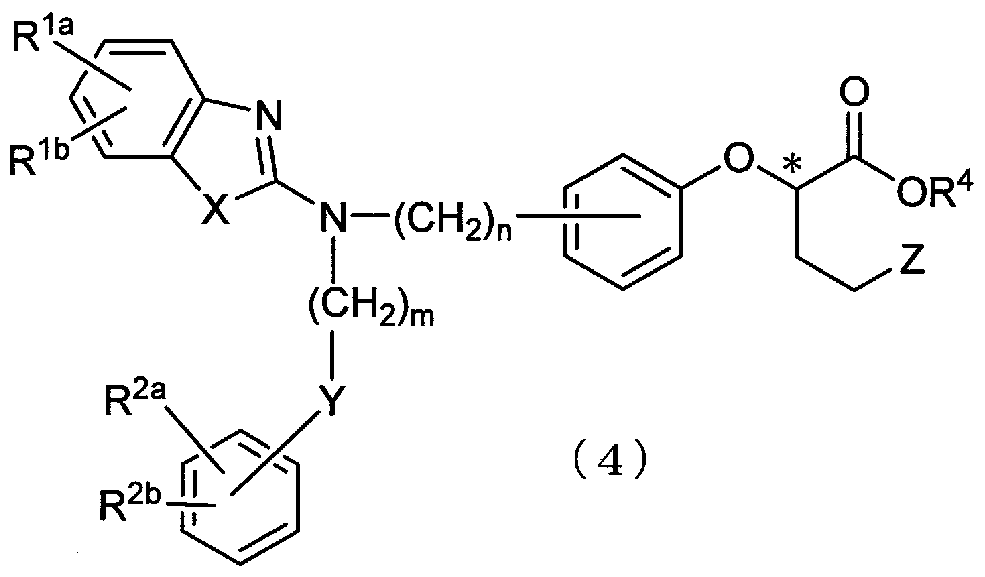
〔式中、 Rla、 Rlb、 R2a及び R2bは同一又は異なって水素原子、ハロゲン原子、ニトロ基 、 C アルキル基、トリフルォロメチル基、 C アルコキシ基、ジ— C アルキルアミ
1-4 1-4 1-4
ノ基、 C アルキルスルフォ-ルォキシ基、 C アルキルスルフォ-ル基、又は C
1-4 1-4 1 -4 アルキルチオ基を示すカゝ、 Rlaと Rlb或いは R2aと R2bが結合してアルキレンジォキシ基 を示し; R4は C アルキル基又は C ァリール C アルキル基を示し; Xは酸素原
1-4 6-10 1-3
子、硫黄原子又は N—R3 (ここで、 R3は水素原子又は C アルキル基を示す)を示
1-4
し; Yは酸素原子、 S (O)基 (1は 0又は 2の数を示す)、カルボ-ル基又はカルボ-ル
1
アミノ基を示し; Zはハロゲン原子を示し; nは 1〜6の数を示し; mは 2〜6の数を示し、 *は S又は R配置の不斉を示す。〕
で表される化合物。
Priority Applications (4)
| Application Number | Priority Date | Filing Date | Title |
|---|---|---|---|
| DE602006013815T DE602006013815D1 (de) | 2005-05-31 | 2006-05-30 | Verfahren zur herstellung von optisch aktiven ppar-aktivierenden verbindungen und zwischenprodukte für die herstellung |
| EP06746983A EP1887005B1 (en) | 2005-05-31 | 2006-05-30 | Processes for production of optically active ppar-activating compounds and intermediates for production thereof |
| US11/912,811 US7714141B2 (en) | 2005-05-31 | 2006-05-30 | Processes for production of optically active PPAR-activating compounds and intermediates for production thereof |
| JP2007519001A JP4926955B2 (ja) | 2005-05-31 | 2006-05-30 | 光学活性ppar活性化化合物及びその製造中間体の製造法 |
Applications Claiming Priority (4)
| Application Number | Priority Date | Filing Date | Title |
|---|---|---|---|
| JP2005-159261 | 2005-05-31 | ||
| JP2005159261 | 2005-05-31 | ||
| JP2005-176663 | 2005-06-16 | ||
| JP2005176663 | 2005-06-16 |
Publications (1)
| Publication Number | Publication Date |
|---|---|
| WO2006129649A1 true WO2006129649A1 (ja) | 2006-12-07 |
Family
ID=37481578
Family Applications (1)
| Application Number | Title | Priority Date | Filing Date |
|---|---|---|---|
| PCT/JP2006/310755 Ceased WO2006129649A1 (ja) | 2005-05-31 | 2006-05-30 | 光学活性ppar活性化化合物及びその製造中間体の製造法 |
Country Status (6)
| Country | Link |
|---|---|
| US (1) | US7714141B2 (ja) |
| EP (1) | EP1887005B1 (ja) |
| JP (1) | JP4926955B2 (ja) |
| DE (1) | DE602006013815D1 (ja) |
| ES (1) | ES2342319T3 (ja) |
| WO (1) | WO2006129649A1 (ja) |
Cited By (1)
| Publication number | Priority date | Publication date | Assignee | Title |
|---|---|---|---|---|
| WO2014157607A1 (ja) | 2013-03-29 | 2014-10-02 | 興和株式会社 | 2-ヒドロキシカルボン酸又はその誘導体の光学純度向上法 |
Families Citing this family (1)
| Publication number | Priority date | Publication date | Assignee | Title |
|---|---|---|---|---|
| CN115477588B (zh) * | 2022-09-30 | 2023-11-17 | 中国药科大学 | 一种基于胆固醇逆转运途径的调血脂化合物、合成方法及用途 |
Citations (3)
| Publication number | Priority date | Publication date | Assignee | Title |
|---|---|---|---|---|
| WO2005023777A1 (ja) * | 2003-09-03 | 2005-03-17 | Kowa Co., Ltd. | Ppar活性化化合物及びこれを含有する医薬組成物 |
| JP2005510450A (ja) * | 2001-02-14 | 2005-04-21 | アボット・ラボラトリーズ | 糖質コルチコイド受容体調節剤 |
| JP2005515882A (ja) * | 2002-02-01 | 2005-06-02 | コミツサリア タ レネルジー アトミーク | ガスを混合するための方法及び装置 |
Family Cites Families (2)
| Publication number | Priority date | Publication date | Assignee | Title |
|---|---|---|---|---|
| TR199900191T2 (xx) * | 1996-07-29 | 1999-04-21 | Warner-Lambert Company | (S)-3,4-Dihidroksibutirik asitin korumal� esterlerinin sentezi i�in geli�tirilmi� proses. |
| US6653334B1 (en) | 2002-12-27 | 2003-11-25 | Kowa Co., Ltd. | Benzoxazole compound and pharmaceutical composition containing the same |
-
2006
- 2006-05-30 DE DE602006013815T patent/DE602006013815D1/de active Active
- 2006-05-30 EP EP06746983A patent/EP1887005B1/en active Active
- 2006-05-30 WO PCT/JP2006/310755 patent/WO2006129649A1/ja not_active Ceased
- 2006-05-30 ES ES06746983T patent/ES2342319T3/es active Active
- 2006-05-30 US US11/912,811 patent/US7714141B2/en not_active Expired - Fee Related
- 2006-05-30 JP JP2007519001A patent/JP4926955B2/ja not_active Expired - Fee Related
Patent Citations (3)
| Publication number | Priority date | Publication date | Assignee | Title |
|---|---|---|---|---|
| JP2005510450A (ja) * | 2001-02-14 | 2005-04-21 | アボット・ラボラトリーズ | 糖質コルチコイド受容体調節剤 |
| JP2005515882A (ja) * | 2002-02-01 | 2005-06-02 | コミツサリア タ レネルジー アトミーク | ガスを混合するための方法及び装置 |
| WO2005023777A1 (ja) * | 2003-09-03 | 2005-03-17 | Kowa Co., Ltd. | Ppar活性化化合物及びこれを含有する医薬組成物 |
Non-Patent Citations (1)
| Title |
|---|
| See also references of EP1887005A4 * |
Cited By (2)
| Publication number | Priority date | Publication date | Assignee | Title |
|---|---|---|---|---|
| WO2014157607A1 (ja) | 2013-03-29 | 2014-10-02 | 興和株式会社 | 2-ヒドロキシカルボン酸又はその誘導体の光学純度向上法 |
| US9682913B2 (en) | 2013-03-29 | 2017-06-20 | Kowa Company, Ltd. | Method for improving optical purity of 2-hydroxycarboxylic acid or derivative thereof |
Also Published As
| Publication number | Publication date |
|---|---|
| EP1887005B1 (en) | 2010-04-21 |
| US20090076280A1 (en) | 2009-03-19 |
| DE602006013815D1 (de) | 2010-06-02 |
| EP1887005A4 (en) | 2009-08-12 |
| JP4926955B2 (ja) | 2012-05-09 |
| JPWO2006129649A1 (ja) | 2009-01-08 |
| ES2342319T3 (es) | 2010-07-05 |
| EP1887005A1 (en) | 2008-02-13 |
| US7714141B2 (en) | 2010-05-11 |
Similar Documents
| Publication | Publication Date | Title |
|---|---|---|
| JP4226005B2 (ja) | Ppar活性化化合物及びこれを含有する医薬組成物 | |
| EP0648212B1 (en) | Benzoxazole and benzothiazole derivatives as pharmaceutical | |
| CN1186315C (zh) | o-茴香酰胺衍生物 | |
| ES2530235T3 (es) | Compuestos para el tratamiento de trastornos metabólicos | |
| WO1995017394A1 (en) | Heterocyclic derivatives and their use in pharmaceuticals | |
| WO2010127208A1 (en) | Inhibitors of acetyl-coa carboxylase | |
| WO2006129649A1 (ja) | 光学活性ppar活性化化合物及びその製造中間体の製造法 | |
| EP1852426B1 (en) | Process for production of optically active ppar-activating compound and intermediate of the same | |
| RU2708243C1 (ru) | Способ получения фенилаланинового соединения | |
| JP4914827B2 (ja) | 光学活性ppar活性化化合物中間体及びその製造法 | |
| WO2024201358A1 (en) | A process for the preparation of pemafibrate and intermediates thereof | |
| JPWO2019151241A1 (ja) | Aldh2活性化剤 | |
| WO2013039140A1 (ja) | 縮合へテロ環誘導体 | |
| CN101824030A (zh) | 一种伊潘立酮的制备方法 | |
| JP4220827B2 (ja) | 安息香酸誘導体及びこれを含有する医薬 | |
| ES2357060T3 (es) | Compuesto activador de ppar y composición farmacéutica que contiene el compuesto. | |
| HK1028600A (en) | Heterocyclic compounds as pharmaceuticals | |
| CA2327689A1 (en) | Process for producing indolmycins | |
| EP1857447A1 (en) | Ppar-activating compound |
Legal Events
| Date | Code | Title | Description |
|---|---|---|---|
| 121 | Ep: the epo has been informed by wipo that ep was designated in this application | ||
| WWE | Wipo information: entry into national phase |
Ref document number: 2007519001 Country of ref document: JP |
|
| WWE | Wipo information: entry into national phase |
Ref document number: 2006746983 Country of ref document: EP |
|
| WWE | Wipo information: entry into national phase |
Ref document number: 11912811 Country of ref document: US |
|
| NENP | Non-entry into the national phase |
Ref country code: DE |
|
| NENP | Non-entry into the national phase |
Ref country code: RU |
|
| WWP | Wipo information: published in national office |
Ref document number: 2006746983 Country of ref document: EP |