US9687348B2 - Method of making a personalized bone graft - Google Patents
Method of making a personalized bone graft Download PDFInfo
- Publication number
- US9687348B2 US9687348B2 US13/148,735 US201013148735A US9687348B2 US 9687348 B2 US9687348 B2 US 9687348B2 US 201013148735 A US201013148735 A US 201013148735A US 9687348 B2 US9687348 B2 US 9687348B2
- Authority
- US
- United States
- Prior art keywords
- scaffold
- bone
- bioreactor
- perfusate
- cells
- Prior art date
- Legal status (The legal status is an assumption and is not a legal conclusion. Google has not performed a legal analysis and makes no representation as to the accuracy of the status listed.)
- Active
Links
Images




Classifications
-
- A—HUMAN NECESSITIES
- A61—MEDICAL OR VETERINARY SCIENCE; HYGIENE
- A61F—FILTERS IMPLANTABLE INTO BLOOD VESSELS; PROSTHESES; DEVICES PROVIDING PATENCY TO, OR PREVENTING COLLAPSING OF, TUBULAR STRUCTURES OF THE BODY, e.g. STENTS; ORTHOPAEDIC, NURSING OR CONTRACEPTIVE DEVICES; FOMENTATION; TREATMENT OR PROTECTION OF EYES OR EARS; BANDAGES, DRESSINGS OR ABSORBENT PADS; FIRST-AID KITS
- A61F2/00—Filters implantable into blood vessels; Prostheses, i.e. artificial substitutes or replacements for parts of the body; Appliances for connecting them with the body; Devices providing patency to, or preventing collapsing of, tubular structures of the body, e.g. stents
- A61F2/02—Prostheses implantable into the body
- A61F2/28—Bones
-
- A—HUMAN NECESSITIES
- A61—MEDICAL OR VETERINARY SCIENCE; HYGIENE
- A61F—FILTERS IMPLANTABLE INTO BLOOD VESSELS; PROSTHESES; DEVICES PROVIDING PATENCY TO, OR PREVENTING COLLAPSING OF, TUBULAR STRUCTURES OF THE BODY, e.g. STENTS; ORTHOPAEDIC, NURSING OR CONTRACEPTIVE DEVICES; FOMENTATION; TREATMENT OR PROTECTION OF EYES OR EARS; BANDAGES, DRESSINGS OR ABSORBENT PADS; FIRST-AID KITS
- A61F2/00—Filters implantable into blood vessels; Prostheses, i.e. artificial substitutes or replacements for parts of the body; Appliances for connecting them with the body; Devices providing patency to, or preventing collapsing of, tubular structures of the body, e.g. stents
- A61F2/02—Prostheses implantable into the body
- A61F2/30—Joints
- A61F2/3094—Designing or manufacturing processes
- A61F2/30942—Designing or manufacturing processes for designing or making customized prostheses, e.g. using templates, CT or NMR scans, finite-element analysis or CAD-CAM techniques
-
- A—HUMAN NECESSITIES
- A61—MEDICAL OR VETERINARY SCIENCE; HYGIENE
- A61F—FILTERS IMPLANTABLE INTO BLOOD VESSELS; PROSTHESES; DEVICES PROVIDING PATENCY TO, OR PREVENTING COLLAPSING OF, TUBULAR STRUCTURES OF THE BODY, e.g. STENTS; ORTHOPAEDIC, NURSING OR CONTRACEPTIVE DEVICES; FOMENTATION; TREATMENT OR PROTECTION OF EYES OR EARS; BANDAGES, DRESSINGS OR ABSORBENT PADS; FIRST-AID KITS
- A61F2/00—Filters implantable into blood vessels; Prostheses, i.e. artificial substitutes or replacements for parts of the body; Appliances for connecting them with the body; Devices providing patency to, or preventing collapsing of, tubular structures of the body, e.g. stents
- A61F2/02—Prostheses implantable into the body
- A61F2/30—Joints
- A61F2/30988—Other joints not covered by any of the groups A61F2/32 - A61F2/4425
- A61F2/3099—Other joints not covered by any of the groups A61F2/32 - A61F2/4425 for temporo-mandibular [TM, TMJ] joints
-
- C—CHEMISTRY; METALLURGY
- C12—BIOCHEMISTRY; BEER; SPIRITS; WINE; VINEGAR; MICROBIOLOGY; ENZYMOLOGY; MUTATION OR GENETIC ENGINEERING
- C12M—APPARATUS FOR ENZYMOLOGY OR MICROBIOLOGY; APPARATUS FOR CULTURING MICROORGANISMS FOR PRODUCING BIOMASS, FOR GROWING CELLS OR FOR OBTAINING FERMENTATION OR METABOLIC PRODUCTS, i.e. BIOREACTORS OR FERMENTERS
- C12M21/00—Bioreactors or fermenters specially adapted for specific uses
- C12M21/08—Bioreactors or fermenters specially adapted for specific uses for producing artificial tissue or for ex-vivo cultivation of tissue
-
- C—CHEMISTRY; METALLURGY
- C12—BIOCHEMISTRY; BEER; SPIRITS; WINE; VINEGAR; MICROBIOLOGY; ENZYMOLOGY; MUTATION OR GENETIC ENGINEERING
- C12M—APPARATUS FOR ENZYMOLOGY OR MICROBIOLOGY; APPARATUS FOR CULTURING MICROORGANISMS FOR PRODUCING BIOMASS, FOR GROWING CELLS OR FOR OBTAINING FERMENTATION OR METABOLIC PRODUCTS, i.e. BIOREACTORS OR FERMENTERS
- C12M25/00—Means for supporting, enclosing or fixing the microorganisms, e.g. immunocoatings
- C12M25/14—Scaffolds; Matrices
-
- C—CHEMISTRY; METALLURGY
- C12—BIOCHEMISTRY; BEER; SPIRITS; WINE; VINEGAR; MICROBIOLOGY; ENZYMOLOGY; MUTATION OR GENETIC ENGINEERING
- C12M—APPARATUS FOR ENZYMOLOGY OR MICROBIOLOGY; APPARATUS FOR CULTURING MICROORGANISMS FOR PRODUCING BIOMASS, FOR GROWING CELLS OR FOR OBTAINING FERMENTATION OR METABOLIC PRODUCTS, i.e. BIOREACTORS OR FERMENTERS
- C12M29/00—Means for introduction, extraction or recirculation of materials, e.g. pumps
- C12M29/10—Perfusion
-
- A—HUMAN NECESSITIES
- A61—MEDICAL OR VETERINARY SCIENCE; HYGIENE
- A61F—FILTERS IMPLANTABLE INTO BLOOD VESSELS; PROSTHESES; DEVICES PROVIDING PATENCY TO, OR PREVENTING COLLAPSING OF, TUBULAR STRUCTURES OF THE BODY, e.g. STENTS; ORTHOPAEDIC, NURSING OR CONTRACEPTIVE DEVICES; FOMENTATION; TREATMENT OR PROTECTION OF EYES OR EARS; BANDAGES, DRESSINGS OR ABSORBENT PADS; FIRST-AID KITS
- A61F2/00—Filters implantable into blood vessels; Prostheses, i.e. artificial substitutes or replacements for parts of the body; Appliances for connecting them with the body; Devices providing patency to, or preventing collapsing of, tubular structures of the body, e.g. stents
- A61F2/02—Prostheses implantable into the body
- A61F2/30—Joints
- A61F2/3094—Designing or manufacturing processes
- A61F2/30942—Designing or manufacturing processes for designing or making customized prostheses, e.g. using templates, CT or NMR scans, finite-element analysis or CAD-CAM techniques
- A61F2002/30957—Designing or manufacturing processes for designing or making customized prostheses, e.g. using templates, CT or NMR scans, finite-element analysis or CAD-CAM techniques using a positive or a negative model, e.g. moulds
Definitions
- the present disclosure relates generally to tissue engineering and, more particularly, to methods, devices, and systems for bone tissue engineering.
- Bone reconstructions often involve autologous tissue grafting.
- bone from one part of a patient is used to replace missing or damaged bone in another part of the patient.
- the bone graft is taken from the patient's own body, there is a reduced risk of the patient's body rejecting the graft.
- autologous tissue may be limited due to harvesting difficulties, donor site morbidity, and/or a clinician's ability to contour delicate three dimensional shapes.
- an anatomically-shaped, human bone graft may be cultivated ex vivo using a bioreactor capable of perfusing large complex porous scaffolds. Scaffolds derived from image-based modeling of a target can be seeded with human mesenchymal stem cells (hMSCs) and cultivated. The bioreactor encloses the scaffold and controls flow for perfusion of the cells. Dense uniform cellular growth can be attained throughout the entire construct as a result of the medium perfusion.
- the bioreactor has a mold into which perfusion medium is pumped under pressure and ports at multiple sites through which the medium can enter and/or exit the mold.
- a method of making a bone graft can include shaping a scaffold according to a target shape of bone to be replaced, forming a support with a cavity which closely conforms to the scaffold resulting from the shaping, and pumping a perfusate into the cavity while simultaneously receiving perfused perfusate through outlets sealed at multiple points to and about the scaffold.
- the multiple points can be separated and arranged such that the perfusate enters the scaffold over a substantial surface thereof and exits the scaffold at the multiple points.
- a bone graft can include a scaffold having cells.
- the cells can be arranged such that they have a density pattern that is responsive to a flow pattern of perfusate through the scaffold.
- the flow pattern can include a gradient of decreasing cell density stemming from focuses at a surface of the scaffold.
- a method of making a tissue structure can include forming an image of a target tissue structure, shaping a three-dimensional scaffold responsively to the image, and seeding the scaffold with cells.
- the method can also include delivering nutrients to the cells within and on the surface of the scaffold by flowing a nutrient fluid into a tightly conforming vessel holding the scaffold, through multiple first surface portions of the scaffold, and out through at least one second surface portion.
- a tissue engineering system can include a machining device, a bioreactor, and a flow mechanism.
- the machining device can be configured to machine a three-dimensional vessel with an internal surface closely following a shape of a target anatomy of a patient.
- the bioreactor can have a recess configured to receive said vessel and outlet ports configured to accept at least one lumen and to permit flow communication between the at least one lumen and an internal volume defined by the internal surface of said vessel.
- the flow mechanism can be configured to remove a perfusate from the at least one lumen and return it to the internal volume of the vessel.
- a method for making a bone tissue structure can include seeding a porous scaffold with mesenchymal stem cells, and perfusing culture medium throughout an interstitial volume of the porous scaffold for a period of time such that the mesenchymal stem cells develop lamellae of bone tissue which fills pore spaces of the scaffold.
- FIGS. 1A-1B are an images of a human jawbone showing a location of a TMJ condyle with respect thereto.
- FIG. 1C is an image of a de-cellularized scaffold, according to one or more embodiments of the disclosed subject matter.
- FIG. 1D is an image of an assembled bioreactor, according to one or more embodiments of the disclosed subject matter.
- FIG. 1E is a schematic diagram showing a bioreactor with a scaffold contained therein, according to one or more embodiments of the disclosed subject matter.
- FIG. 1F is a side view of a three-dimensional model of a bioreactor with a scaffold contained therein, according to one or more embodiments of the disclosed subject matter.
- FIGS. 1G-1H and 1J show various steps in the assembly of a bioreactor, according to one or more embodiments of the disclosed subject matter.
- FIG. 1K is a schematic diagram of an apparatus for perfusion support for a bioreactor, according to one or more embodiments of the disclosed subject matter.
- FIG. 2 is a chart showing cultivated cell count under various conditions, according to one or more embodiments of the disclosed subject matter.
- FIGS. 3A through 3H are images of exemplary bone constructs formed under various conditions, according to one or more embodiments of the disclosed subject matter.
- FIGS. 4A through 4C are images of a bone scaffold illustrating changes in the scaffold due to perfusion over time, according to one or more embodiments of the disclosed subject matter.
- FIGS. 5A-5B show computational models of perfused flow in a scaffold in the bioreactor, according to one or more embodiments of the disclosed subject matter.
- FIGS. 5C through 5F are images showing characteristics of cultivated tissue grafts, according to one or more embodiments of the disclosed subject matter.
- FIG. 6A is an image showing a von Kossa stain of histological sections of pellets cultured under osteogenic conditions, according to one or more embodiments of the disclosed subject matter.
- FIG. 6B is a chart showing calcium content normalized to DNA values of cell pellets cultured for four weeks in osteogenic (ost), chondrogenic (ch), or control (ctr) media.
- FIG. 6C is an image showing alcian blue stains of cell pellets cultured under chondrogenic conditions.
- FIG. 6D is an image showing oil Red 0 stains of lipid droplets in pellets cultured under adipogenic conditions.
- FIG. 7A is an image of a spinner-flask apparatus used to seed cells into scaffolds, according to one or more embodiments of the disclosed subject matter.
- FIG. 7B is an image showing H & E stains of scaffolds one day after seeding.
- FIG. 7C is an image showing live-dead stains of scaffolds one day after seeding.
- FIGS. 8A through 8D are images showing the effects of perfusion flow rate on cell density, according to one or more embodiments of the disclosed subject matter.
- Bone grafts engineered from a patient's own stem cells has the potential to alter the way bone defects are currently treated. Bone grafts with a high degree of shape fidelity can be produced, which have a low risk of rejection by the patient's body.
- the functionality of engineered bone grafts can be evaluated by the mechanical properties and the ability of cells to make tissue specific proteins. Craniofacial bone grafts also have the characteristic that their functionality is linked to their overall geometry.
- Bone grafts of high utility for reconstructive surgery can be based on “designer scaffolds” shaped into gross geometries specific to the patient and the defect being treated.
- Anatomically shaped, viable human bone grafts can be engineered using human mesenchymal stem cells (hMSCs) and a “biomimetic” scaffold bioreactor system.
- the disclosed techniques may be used to engineer tissue structures such as bone grafts, including but not limited to autografts.
- the hMSCs may be suited for use in cranial and maxillofacial applications due to their easy accessibility, capability for in vitro proliferation, and the potential to form cartilage, bone, adipose and vascular tissues.
- the potential of hMSCs for differentiation potential along mesenchymal lineages may be characterized for each batch of cells by culturing cell pellets under osteogenic, chondrogenic, and adipogenic conditions for a culture period of time, for example, four weeks.
- FIG. 6A shows a von Kossa stain of histological section of hMSC pellets cultured under osteogenic conditions.
- FIG. 6B is a graph illustrating the calcium content of hMSC pellets cultured for four weeks in osteogenic (ost), chondrogenic (ch), or control (ctr) medium. The data in FIG. 6B has been normalized with respect to DNA values.
- FIG. 6A shows a von Kossa stain of histological section of hMSC pellets cultured under osteogenic conditions.
- FIG. 6B is a graph illustrating the calcium content of hMSC pellets cultured for four weeks in osteogenic (ost), chondrogenic (ch), or control (ctr) medium. The data in FIG
- FIG. 6C represents an alcian blue stain of hMSC pellets cultured under chondrogenic conditions
- FIG. 6D is an image of an oil red O stain of liquid droplets of hMSC cell pellets cultured under adipogenic conditions.
- hMSCs have been pre-differentiated along chondrogenic and osteogenic lineages.
- the hMSCs can form distinct osseous and cartilaginous regions.
- other types of stem cells may also be used according to one or more contemplated embodiments.
- hMSCs can be induced to form bone on a de-cellularized scaffold that has the exact geometry of the desired bone structure.
- the desired bone structure may be a temporomandibular joint (TMJ) condylar bone, as circled in FIGS. 1A-1B .
- TMJ temporomandibular joint
- the hMSCs can be induced to form bone on the scaffold using an “anatomical” bioreactor with control of interstitial flow.
- Flow patterns associated with the complex geometry of the bone graft provide a unique opportunity to correlate the architecture of the forming bone with interstitial flow characteristics, under controllable in vitro conditions. This approach can help provide a variety of anatomically shaped bone grafts designed to meet the needs of a specific patient and a specific craniofacial or orthopedic reconstruction. Other applications will also be evident from the present disclosure.
- anatomically-shaped scaffolds may be generated by CNC machining fully de-cellularized (e.g., trabecular) bone based on digitized images of the desired bone structure.
- the trabecular bone may be derived from the subchondral region of the knee joint of a calf and subsequently treated to remove any cellular material.
- the bone may be washed with high velocity water to remove marrow and then subject to a wash for 1 hour in PBS with 0.1% EDTA (w/v) at room temperature.
- the bone may then be subject to sequential washes in hypotonic buffer (10 mM Tris, 0.1% EDTA (w/v)) overnight at 4° C., detergent (10 mM Tris, 0.5% SDS (w/v)) for 24 hours at room temperature, and enzymatic solution (50 U/mL DNAse, 1 U/mL RNAse, 10 mM Tris) for 3-6 hours at 37° C. to remove any remaining cellular material.
- hypotonic buffer (10 mM Tris, 0.1% EDTA (w/v)
- detergent mM Tris, 0.5% SDS (w/v)
- enzymatic solution 50 U/mL DNAse, 1 U/mL RNAse, 10 mM Tris
- the scaffold may be formed from other naturally occurring material such as coral, a synthetic material such as a ceramic or polymer, and/or other natural or synthetic porous structures.
- the de-cellularized trabecular bone can be seeded with hMSCs and cultured with interstitial flow of culture medium.
- a bioreactor with an internal chamber in the exact shape of the desired human bone e.g., a human TMJ
- tissue growth can be evidenced by the formation of confluent layers of lamellar bone (by scanning electron microscopy), markedly increased volume of mineralized matrix (by quantitative microcomputer tomography), and the formation of osteoids (histologically).
- a cultivation period e.g., 5 weeks
- tissue growth can be evidenced by the formation of confluent layers of lamellar bone (by scanning electron microscopy), markedly increased volume of mineralized matrix (by quantitative microcomputer tomography), and the formation of osteoids (histologically).
- a cultivation period e.g., 5 weeks
- tissue growth can be evidenced by the formation of confluent layers of lamellar bone (by scanning electron microscopy), markedly increased volume of mineralized matrix (by quantitative
- the anatomical shape of a bone structure for example the TMJ of a patient
- the TMJ has clinical importance and a complex shape, which may be desirable for evaluating and demonstrating the tissue engineering techniques and devices described herein.
- the shape of the bone structure can be faithfully reproduced by machining a de-cellularized trabecular bone scaffold.
- the scaffold can be prepared by milling the de-cellularized bone based on clinical computerized tomography (CT) images of the patient representing the exact geometry of the human TMJ condyle.
- CT computerized tomography
- FIG. 1C An example of such a milled scaffold for a TMJ condyle is shown in FIG. 1C .
- the CT image data can be fed to an appropriate computer-assisted machining device in order to form an appropriately shaped scaffold from fully de-cellularized trabecular bone.
- an appropriate computer-assisted machining device in order to form an appropriately shaped scaffold from fully de-cellularized trabecular bone.
- shape of a TMJ condyle has been shown and discussed for the scaffold, other shapes are of course possible depending on the desired bone graft.
- the hMSCs may be cultured up to the 3 rd passage and then used for seeding the scaffolds.
- the scaffolds may be cultured with osteogenic medium, such as Dulbecco's Minimal Essential Medium (DMEM) supplemented with 10% fetal bovine serum (FBS), 1% penicillin-streptomycin, 100 nM dexamethasone, 10 mM beta-glycerophosphate, and 50 mM ascorbic acid-2-phosphate.
- the machined scaffold can be seeded in a stirred suspension of hMSCs, for example, at a density of 10 6 cells/ml.
- the scaffold may then be precultured statically for an additional period of time, for example, 1 week, to allow for cell attachment.
- the cell-seeded scaffolds may then be transferred into the “anatomical” bioreactor chambers and hydrodynamic shear applied by starting the medium perfusion. Perfusion using the bioreactor can then be performed for an additional period of time, for example, 4
- FIGS. 1D-1F illustrate a perfusion bioreactor system according to an embodiment of the present disclosure.
- the perfusion bioreactor system is designed to control the perfusion path through a geometrically complex scaffold 100 .
- An anatomically shaped mold 102 holds the scaffold 100 .
- the bioreactor chambers can accommodate different geometries by simply inserting a different mold 102 of appropriate shape, created, for example, by using digitized medical images.
- the bioreactor can be made from materials which allow for noninvasive visualization and monitoring of medium distribution within the tissue scaffolds throughout the cultivation period
- the interior of the bioreactor is designed to conform to the surface of the scaffold.
- the interior of the bioreactor can be formed using a polydimethylsiloxane (PDMS) mold.
- the PDMS mold can be created by pouring PDMS around a CNC-milled piece of delrin (acetal copolymer) generated from the digital images so as to exactly duplicate the shape of the bone scaffold 100 . Once the PDMS has cured, the delrin is removed.
- the scaffold 100 can then be placed into the PDMS mold 102 and inserted into the bioreactor.
- the PDMS mold 102 thus forms an inner cavity within inner chamber 108 for holding the scaffold 100 therein.
- a system providing software for generating machine instructions for fabricating the scaffold and/or the holding fixture may also be provided.
- the software may take images of the target anatomy and produce instructions for machining the holding fixture or vessel to have close conforming walls as described with respect to mold 102 above.
- the system could also be provided with a milling device for making a positive structure to create the mold or a negative structure for the mold itself.
- Other types of “machining” are also possible, such as, but not limited to, 3-D printing or rapid prototyping/fabrication systems (e.g., computer guided photopolymerizing device).
- FIGS. 1G-1H and 1J show steps in the assembly of the exemplary bioreactor.
- a bone scaffold 100 is assembled with the mold 102 and placed into the inner chamber casing 108 of the bioreactor.
- the inner chamber casing 108 may be made of, for example, polypropylene or polystyrene.
- a metal rod 106 is placed through preformed holes in the mold 102 and inner chamber casing 108 so as to align the assembly with groove 110 in outer chamber 112 .
- Outer chamber 112 may be made of, for example, clear acrylic.
- the outer chamber of the bioreactor can have an external diameter of 7.5 cm and a height of 5 cm. However, other suitable materials and sizes may also be used for the bioreactor according to one or more contemplated embodiments.
- the assembly and the scaffold therein can be maintained in the correct orientation, as shown in FIG. 1H .
- the assembly of the scaffold 100 , mold 102 , and inner chamber casing 108 is inserted into the outer chamber 112 , which is then tightly capped with a top 114 .
- the top 114 may be made of, for example, polyetherimide (PEI).
- Top 114 may also have a groove therein so as to accommodate rod 106 when sealing the inner chamber 108 and outer chamber 112 .
- the outer chamber 112 and cap 114 also serve to compress mold 102 around the scaffold 100 , thereby forcing culture medium to flow through the entire scaffold rather than channeling around the periphery thereof.
- the outer chamber 112 can have a plurality of radial cylindrical ports, for example, holes 104 .
- the outer chamber 112 can have six ports arranged equidistant around the circumference of the outer chamber (i.e., at 60° intervals).
- Each of the cylindrical ports can serve as a guide for controlling the exact position and depth for the insertion of a needle 116 into scaffold 100 , the purpose of which is discussed in greater detail below.
- needle 116 may be a 23 gauge needle. Snugly fitting delrin rings may be placed into each hole 104 .
- the center of the delrin rings may be tapped so as to accommodate nylon screws which have been cored to fit the 23 gauge needles therein.
- the needles may be place into the nylon screws such that the ends of the needles protrude from the screws.
- the nylon screw assembly allows the needle to penetrate into the scaffold in the inner chamber to serve as an inlet/outlet port for medium flow.
- one or more outlet ports of may be provided in and around the scaffold to evenly distribute fluid through the scaffold and allow full perfusion of the interstitial areas of the scaffold. Such outlet ports may be smaller than the inlet port.
- one or more of the needle ports 116 can serve as an inlet while connector 118 simultaneously serves as an outlet for perfusing the scaffold.
- one or more of the needle ports 116 can serve as an inlet while connector 118 simultaneously serves as an inlet for perfusing the scaffold.
- each hole 104 may be determined, for example, using computer-aided design based on a three-dimensional reconstruction of the desired bone structure.
- three of the six ports 104 can be used as outlets.
- An additional port, aligned with the central axis of the inner chamber 108 can be connected to tubing 122 via a connector 118 (e.g., a luer connector).
- This central port can serve as a single inlet for medium to enter scaffold 100 .
- flow can enter via tubing 122 into the inner chamber 108 , perfuse through scaffold 100 , and exit through three (or more) needle outlets 116 .
- Tubing 120 connected to the needle outlets 116 can convey the perfused fluid therefrom.
- the flow of medium may be reversed such that culture medium enters the mold 102 through needles 116 , perfuses through scaffold 100 , and exits via tubing 122 .
- the flow rate of medium exiting through outlet ports 104 via tubing 120 can be regulated such that the flow rate for each outlet is equal. Such regulation may be accomplished, for example, by adjusting clamps on tubing 120 . Alternatively, inline flow regulators or valves may be used to control the flow rate of each outlet. Of course, other flow regulation mechanisms are also possible according to one or more contemplated embodiments. Moreover, the flow rate for each outlet need not be equal. Rather, the flow rate may be controlled to achieve a desired flow profile conducive to cell growth as determined from computer-aided flow modeling and/or experimentation.
- culture medium perfused through the bioreactor 1004 can be conveyed via pump 1010 back into a reservoir 1002 for reuse.
- the reservoir 1002 may also serve as a bubble trap with an air outlet 1008 .
- the pump 1010 which may be, for example, a low-flow multi-channel digital peristaltic pump, can recirculate the culture medium from the reservoir 1002 into the bioreactor.
- the medium in the reservoir 1002 may be changed periodically through port 1006 of the reservoir.
- a syringe can be attached to port 1006 to sterilely remove culture medium from and add culture medium to the reservoir without disturbing the operation of the bioreactor 1004 .
- the reservoir may contain an initial volume of, for example, 40 ml of culture medium. Half of the culture medium in the reservoir may be replaced, for example, every three days.
- Tissue engineering of large bone constructs requires flow through the interstices and/or pores of the scaffold for efficient transport of nutrients and waste materials between the cells and culture medium.
- interstitial flow allows for direct exposure of cells to hydrodynamic shear, which may be important for osteogenesis.
- the volumetric flow-rate (e.g., 1.8 ml/min) and the corresponding superficial velocity (e.g., an average of 0.06 cm/s) can be selected to sustain dense tissue growth throughout the scaffold.
- the flow-rates may be selected so as to be within the range of flow-rates and superficial velocities that stimulate osteogenic differentiation of hMSCs.
- the cells can be cultured in a scaffold that has the structural, biochemical and mechanical properties of native bone and the actual geometry of the final graft.
- the scaffold can be formed from fully de-cellularized bone, which has been machined, for example, by image-guided fabrication, to achieve the desired geometry of the final graft.
- the void volume of such a de-cellularized bone was determined by micro-CT analysis to be greater than 80%.
- SEM and histological analysis of de-cellularized bone also revealed pore sizes of approximately 1 mm.
- Such structural features may enable efficient and spatially uniform dynamic seeding of hMSCs into the scaffolds. Histological evaluation of freshly seeded scaffolds demonstrated that hMSCs lined the internal pore walls, while leaving pore spaces unobstructed.
- FIG. 7A a spinner flask (cap shown with TMJ constructs) can be used to seed cells into TMJ scaffolds.
- FIG. 7B show a hemotoxylin and eosin (H&E) stain of a scaffold one day after seeding. As is evident from FIG. 7B , pore spaces in the scaffold remain open, and cells can be found only along the walls of the pores (see arrows in FIG. 7B ).
- FIG. 7C shows a live-dead stain of a scaffold one day after seeding. As is evident from FIG. 7C , a high percentage of viable cells can be retained throughout the seeding process.
- H&E hemotoxylin and eosin
- the seeding efficiency was found to be 34.0 ⁇ 7.1%, resulting in approximately 3.4 ⁇ 10 6 cells per construct attaching in a spatially uniform manner.
- Scaffolds were cultured statically for one week prior to placing in the bioreactors, enabling firm cell attachment and deposition of extracellular matrix before the exposure to hydrodynamic shear forces.
- other methods and devices for seeding of the scaffolds are contemplated.
- the scaffold may be assembled under sterile conditions into the bioreactor, as discussed with respect to FIGS. 1G-1H and 1J .
- Quick assembly can maintain cell viability in the scaffold throughout the process.
- culture medium can be perfused throughout the entire scaffold.
- equal outlet flow rates are maintained at each of the three outlets, although differential outlet flow rates are also possible.
- the optimal inlet flow rate could be determined based on fluid flow analysis, computer-aided modeling, or experimental data.
- the inlet flow rate may be between 0.4 ml/min and 1.8 ml/min. Experimental evaluation of cell density and distribution after 5 weeks of culture suggests that 1.8 ml/min may yield the best cell distribution and most rapid tissue development for the disclosed bioreactor.
- the average cross-sectional area through the scaffolds in the direction of flow was determined to be 0.5 cm 2 .
- the 1.8 ml/min inlet flow rate corresponds to an average superficial flow velocity of 0.06 cm/s.
- other flow rates and/or superficial flow velocities may be chosen depending on, for example, bioreactor geometry, stem cell type, scaffold size, scaffold type, and/or pore size.
- hMSCs Due to the complex distribution of flow within the tissue scaffolds, flow rates as high as 0.15 cm/s are possible in certain scaffold regions, and as low as 0.0001 cm/s in other scaffold regions. In the whole range of these flow velocities, hMSCs may maintain complete viability and exhibit characteristics of osteogenic differentiation. There is also no apparent threshold in fluid flow rate after which perfusion becomes detrimental to hMSCs. It is therefore possible that tissue growth can be further improved by increasing the flow rates in the bioreactor above the 1.8 ml/min inlet flow rate described above.
- FIGS. 8A through 8D the effects of perfusion flow rate on cell density in a scaffold are shown.
- FIGS. 8A-8D are H&E stains of the central regions of scaffolds cultivated for 5 weeks under various flow conditions.
- FIG. 8A was cultivated under a static (i.e., no flow) condition.
- FIG. 8B was cultivated under a 0.4 ml/min inlet flow rate.
- FIG. 8C was cultivated under a 0.8 ml/min inlet flow rate.
- FIG. 8D was cultivated under a 1.8 ml/min inlet flow rate.
- increasing the flow rate led to increasingly dense matrix deposition in the pore spaces.
- cells are able to proliferate in the scaffold so as to form a viable bone graft.
- cells proliferated extensively over the first week of culture, as evidenced by an approximately 7.5-fold increase in DNA content.
- the DNA content continued to increase throughout the cultivation period under both static (4.5 fold increase) and perfused (10 fold increase) culture conditions resulting in overall 37 and 75 fold increases, respectively, in cell numbers relative to initial seeding values.
- FIG. 2 cell numbers increased with time of culture and medium perfusion. From day 1 to day 7, the cell numbers increased 7.5-fold, from 3.4 ⁇ 10 6 to 25 ⁇ 10 6 cells/scaffold. Over the subsequent 4 weeks, cell numbers in static culture increased 4.5-fold, to approximately 110 ⁇ 10 6 cells/scaffold, whereas the increase in perfused bioreactor culture was 10-fold, to approximately 250 ⁇ 10 6 cells/scaffold.
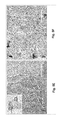
- FIGS. 3A through 3H bone formation was also markedly enhanced by perfusion in a manner responsive to the fluid flow pattern.
- FIGS. 3A-3D show scaffolds cultured under static conditions while FIGS. 3E-3H show scaffolds cultured with medium perfusion in the disclosed bioreactor.
- FIGS. 3A and 3E show trichrome staining of entire cross-sections of scaffolds, which illustrate differences in the new matrix distribution compared to the original scaffold for the static ( FIG. 3A ) and perfused ( FIG. 3E ) culture groups.
- significant differences can be observed in osteoid formation (arrows) in the central regions of scaffolds cultured statically ( FIG. 3B ) and in perfusion ( FIG. 3F ).
- FIGS. 3C, 3D, 3G, and 3H are SEM images of the central scaffold regions.
- FIGS. 3C and 3D show that statically cultured scaffolds exhibit empty pore spaces and loosely packed cells.
- FIGS. 3G and 3H show that scaffolds cultured in perfusion demonstrate formation of dense and confluent lamellae of bone tissue that filled the entire pore spaces. Measured increases in cell numbers with time and culture regimen have been corroborated with imaging data. Scaffolds cultivated under static conditions formed new matrix primarily at the periphery ( FIG. 3A ), whereas bioreactor-grown scaffolds displayed new tissue growth throughout their volumes ( FIG. 3E ).
- FIGS. 3B and 3F Histological sections demonstrated stark contrast in cell growth and osteoid formation patterns in the central regions between the two culture groups.
- the new osteoid area normalized to existing bone trabeculae in the central regions of static scaffolds was 0.031 ⁇ 0.013 mm 2 /mm 2 as compared to 0.210 ⁇ 0.022 mm 2 /mm 2 for perfused scaffolds (i.e., a 7-fold increase due to perfusion).
- SEM images of the inner regions of the tissue scaffolds corroborated these findings yet were uniquely instructive.
- the inner regions of static scaffolds showed pore spaces that were empty or only loosely packed with the cells and matrix ( FIGS. 3C and 3D ), in contrast to perfused scaffolds, which showed densely packed pore spaces throughout their entire volumes ( FIGS. 3G and 3H ).
- FIGS. 4A through 4C are reconstructed images of a bone scaffold taken by a three-dimensional micro-CT illustrating changes in the scaffold for various perfusion times.
- FIG. 4A was taken at a time at the beginning of the perfusion process, FIG. 4B in the middle of the perfusion process, and FIG. 4C near the end of the perfusion process.
- FIG. 4A was taken at a time at the beginning of the perfusion process, FIG. 4B in the middle of the perfusion process, and FIG. 4C near the end of the perfusion process.
- FIGS. 4A through 4C are reconstructed images of a bone scaffold taken by a three-dimensional micro-CT illustrating changes in the scaffold for various perfusion times.
- FIG. 4A was taken at a time at the beginning of the perfusion process
- FIG. 4B in the middle of the perfusion process
- FIG. 4C near the end of the perfusion process.
- FIGS. 4A through 4C illustrate the development of the architecture of the mineralized bone matrix of the scaffold over time
- FIGS. 5A-5B An example of such a computer model for a TMJ scaffold in the disclosed bioreactor is shown in FIGS. 5A-5B .
- theoretical modeling of the flow in the scaffold indicated a wide distribution in the magnitude (0 to 0.15 cm/s) and directions of flow velocities within the constructs.
- the flow rates were highest in the inlet and outlet regions, adjacent to the needle ports. Due to the complex geometry of the scaffold, its flat base is not at the center of the chamber, resulting in spatial gradients of flow distribution across the base.
- the lowest flow rates occurred at far-right and far-left projections of the scaffolds with the velocity vector computation indicating near zero flow at the extremities ( FIG. 5A ), since the outlet needle was not placed at the tip of the projection.
- Dye studies showed that medium does in fact perfuse these extreme regions. Histological analysis of 5-week scaffolds clearly demonstrated cell survival and matrix production in these regions.
- FIGS. 5A-5F bone matrix morphology has been correlated to the patterns of medium perfusion flow.
- FIG. 5A shows color-coded velocity vectors indicating the magnitude and direction of flow through the entire scaffold based on experimentally measured parameters.
- FIG. 5B is digitally sectioned, and the color-coded contours are used to indicate the magnitude of flow in the inner regions.
- Scanning electron microscopy (SEM) images demonstrated morphological variations in the tissue morphology with the variation in fluid flow pattern. For example, in the middle regions where the fluid flow is unidirectional, tissue appears smooth and aligned, and the crystalline structures can be easily seen on the surface ( FIGS. 5C-5D ).
- the approach disclosed herein demonstrates that it is possible to create bone grafts using a bioreactor that (i) houses anatomically shaped tissue scaffolds with complex geometries, (ii) provides controlled interstitial flow of culture media through the pore spaces of the scaffolds, and (iii) enables the establishment of cultivation protocols for engineering large human bone grafts.
- tissue engineering operations may be employed including, but not limited to: (i) imaging guided fabrication of anatomical scaffolds; (ii) use of de-cellularized bone as an osteo-inductive scaffold; (iii) use of multi-potent mesenchymal stem cell populations, applicable in either autologous or allogeneic fashion; (iv) perfusion based environmental control and biophysical stimulation of cultured bone constructs; and (v) a computational modeling optimization of bioreactor design.
- a method for bone tissue engineering can include, separately or in combination: (i) imaging at least a portion of a patient for a desired bone graft; (ii) machining a porous scaffold into the shape of the desired bone graft; (iii) seeding the porous scaffold with hMSCs; and (iv) perfusing culture medium throughout an interstitial volume of the porous scaffold for a period of time such that the hMSCs develop lamellae of bone tissue which fill the pore spaces of the scaffold.
- the methods, systems, and devices for tissue engineering described herein thus enable the formation of geometrically complex bone constructs of high structural and biological fidelity. Computational modeling of fluid flow may also provide important insights into tissue responses to biophysical stimuli. Although particular configurations have been discussed herein, other configurations can also be employed. Furthermore, the foregoing descriptions apply, in some cases, to examples generated in a laboratory, but these examples can be extended to production techniques. For example, where quantities and techniques apply to the laboratory examples, they should not be understood as limiting. In addition, although the production of bone tissue grafts have been specifically described herein, the techniques described herein are applicable to other tissues as well.
Landscapes
- Health & Medical Sciences (AREA)
- Engineering & Computer Science (AREA)
- Life Sciences & Earth Sciences (AREA)
- Biomedical Technology (AREA)
- Zoology (AREA)
- Organic Chemistry (AREA)
- Bioinformatics & Cheminformatics (AREA)
- Chemical & Material Sciences (AREA)
- Wood Science & Technology (AREA)
- General Health & Medical Sciences (AREA)
- Genetics & Genomics (AREA)
- Microbiology (AREA)
- Sustainable Development (AREA)
- Biochemistry (AREA)
- General Engineering & Computer Science (AREA)
- Biotechnology (AREA)
- Orthopedic Medicine & Surgery (AREA)
- Veterinary Medicine (AREA)
- Public Health (AREA)
- Cardiology (AREA)
- Oral & Maxillofacial Surgery (AREA)
- Transplantation (AREA)
- Heart & Thoracic Surgery (AREA)
- Vascular Medicine (AREA)
- Animal Behavior & Ethology (AREA)
- Immunology (AREA)
- Molecular Biology (AREA)
- Plastic & Reconstructive Surgery (AREA)
- Physics & Mathematics (AREA)
- Geometry (AREA)
- Manufacturing & Machinery (AREA)
- Materials For Medical Uses (AREA)
- Micro-Organisms Or Cultivation Processes Thereof (AREA)
Priority Applications (1)
| Application Number | Priority Date | Filing Date | Title |
|---|---|---|---|
| US13/148,735 US9687348B2 (en) | 2009-03-03 | 2010-03-03 | Method of making a personalized bone graft |
Applications Claiming Priority (5)
| Application Number | Priority Date | Filing Date | Title |
|---|---|---|---|
| US15701909P | 2009-03-03 | 2009-03-03 | |
| US25016609P | 2009-10-09 | 2009-10-09 | |
| US24999909P | 2009-10-09 | 2009-10-09 | |
| US13/148,735 US9687348B2 (en) | 2009-03-03 | 2010-03-03 | Method of making a personalized bone graft |
| PCT/US2010/026120 WO2010102059A1 (en) | 2009-03-03 | 2010-03-03 | Methods, devices, and systems for bone tissue engineering using a bioreactor |
Related Parent Applications (1)
| Application Number | Title | Priority Date | Filing Date |
|---|---|---|---|
| PCT/US2010/026120 A-371-Of-International WO2010102059A1 (en) | 2009-03-03 | 2010-03-03 | Methods, devices, and systems for bone tissue engineering using a bioreactor |
Related Child Applications (1)
| Application Number | Title | Priority Date | Filing Date |
|---|---|---|---|
| US15/633,317 Division US10517731B2 (en) | 2009-03-03 | 2017-06-26 | Tissue engineering system for making personalized bone graft |
Publications (2)
| Publication Number | Publication Date |
|---|---|
| US20120035742A1 US20120035742A1 (en) | 2012-02-09 |
| US9687348B2 true US9687348B2 (en) | 2017-06-27 |
Family
ID=42709998
Family Applications (4)
| Application Number | Title | Priority Date | Filing Date |
|---|---|---|---|
| US13/148,735 Active US9687348B2 (en) | 2009-03-03 | 2010-03-03 | Method of making a personalized bone graft |
| US15/633,317 Active US10517731B2 (en) | 2009-03-03 | 2017-06-26 | Tissue engineering system for making personalized bone graft |
| US16/719,848 Active 2030-12-12 US11464640B2 (en) | 2009-03-03 | 2019-12-18 | Method of making a personalized bone graft |
| US17/890,322 Pending US20230026247A1 (en) | 2009-03-03 | 2022-08-18 | Method of making a personalized bone graft |
Family Applications After (3)
| Application Number | Title | Priority Date | Filing Date |
|---|---|---|---|
| US15/633,317 Active US10517731B2 (en) | 2009-03-03 | 2017-06-26 | Tissue engineering system for making personalized bone graft |
| US16/719,848 Active 2030-12-12 US11464640B2 (en) | 2009-03-03 | 2019-12-18 | Method of making a personalized bone graft |
| US17/890,322 Pending US20230026247A1 (en) | 2009-03-03 | 2022-08-18 | Method of making a personalized bone graft |
Country Status (6)
| Country | Link |
|---|---|
| US (4) | US9687348B2 (pl) |
| EP (2) | EP3103415B1 (pl) |
| DK (1) | DK2408401T3 (pl) |
| ES (1) | ES2580804T3 (pl) |
| PL (1) | PL2408401T3 (pl) |
| WO (1) | WO2010102059A1 (pl) |
Cited By (1)
| Publication number | Priority date | Publication date | Assignee | Title |
|---|---|---|---|---|
| US10780197B1 (en) * | 2012-10-29 | 2020-09-22 | Nuvasive, Inc. | Malleable, cryopreserved osteogenic compositions with viable cells |
Families Citing this family (30)
| Publication number | Priority date | Publication date | Assignee | Title |
|---|---|---|---|---|
| PL2408401T3 (pl) | 2009-03-03 | 2016-10-31 | Sposoby, urządzenia i układy dla inżynierii tkanki kostnej z wykorzystaniem bioreaktora | |
| US9206383B2 (en) * | 2009-12-07 | 2015-12-08 | The Trustees Of Columbia University In The City Of New York | Bioreactor, devices, systems and methods |
| US20140302480A1 (en) * | 2011-11-09 | 2014-10-09 | The General Hospital Corporation | Composite tissue graft and materials and methods for its production and use |
| WO2014141136A1 (en) | 2013-03-13 | 2014-09-18 | Association For The Advancement Of Tissue Engineering And Cell Based Technologies And Therapies - A4Tec | Rotational dual chamber bioreactor: methods and uses thereof |
| EP2986705B1 (en) * | 2013-04-18 | 2020-03-25 | The Trustees of Columbia University in the City of New York | Perfusion bioreactor with tissue flow control and live imaging compatibility |
| US20160168542A1 (en) * | 2013-08-02 | 2016-06-16 | The Trustees Of Columbia Unicersity In The City Of New York | Tissue engineered models of cancers |
| US10883083B2 (en) | 2013-08-02 | 2021-01-05 | The Trustees Of Columbia University In The City Of New York | Tissue-engineered three-dimensional model for tumor analysis |
| EP3089707B1 (en) | 2013-12-30 | 2021-06-30 | New York Stem Cell Foundation, Inc. | Tissue grafts and methods of making and using the same |
| US10214714B2 (en) * | 2013-12-30 | 2019-02-26 | New York Stem Cell Foundation, Inc. | Perfusion bioreactor |
| WO2016090297A1 (en) * | 2014-12-04 | 2016-06-09 | The New York Stem Cell Foundation | Perfusion bioreactor |
| EP3247281B1 (en) | 2015-01-23 | 2020-12-02 | The University of North Carolina at Chapel Hill | Apparatuses, systems, and methods for preclinical ultrasound imaging of subjects |
| WO2016161311A1 (en) * | 2015-04-02 | 2016-10-06 | The New York Stem Cell Foundation | In vitro methods for assessing tissue compatibility of a material |
| WO2016203409A1 (en) | 2015-06-15 | 2016-12-22 | University Of New South Wales | Engineered materials and methods of forming |
| US11788042B2 (en) * | 2015-07-31 | 2023-10-17 | Redwire Space Technologies, Inc. | Biomanufacturing system, method, and 3D bioprinting hardware in a reduced gravity environment |
| JP6995369B2 (ja) * | 2015-11-18 | 2022-01-14 | スライブ バイオサイエンス, インコーポレイテッド | 器具リソーススケジューリング |
| CA3019383A1 (en) | 2016-04-01 | 2017-10-05 | New York Stem Cell Foundation, Inc. | Customized hybrid bone-implant grafts |
| AU2017204355B2 (en) * | 2016-07-08 | 2021-09-09 | Mako Surgical Corp. | Scaffold for alloprosthetic composite implant |
| US20190242896A1 (en) * | 2016-09-02 | 2019-08-08 | The University Of North Carolina At Chapel Hill | System and method for noninvasively assessing bioengineered organs |
| CA3054272C (en) * | 2017-02-27 | 2023-01-24 | I Peace, Inc. | Cell processing system and cell processing apparatus |
| KR102447734B1 (ko) * | 2017-04-07 | 2022-09-28 | 에피본, 인크. | 접종 및 배양용 시스템 및 방법 |
| US11045584B2 (en) * | 2017-08-15 | 2021-06-29 | The Board Of Regents Of The University Of Oklahoma | Producing bone tissue engineered constructs |
| CN109943471A (zh) * | 2017-12-21 | 2019-06-28 | 北京中原合聚经贸有限公司 | 一种间充质干细胞过滤灌流培养制备装置 |
| WO2019173435A1 (en) | 2018-03-06 | 2019-09-12 | Epibone, Inc. | Injectable off-the- shelf cartilage, tendon, and ligament repair compositions and methods of use |
| JP6530874B1 (ja) * | 2019-03-20 | 2019-06-12 | 剛士 田邊 | 細胞処理システム及び細胞処理装置 |
| JP6530577B1 (ja) * | 2019-03-20 | 2019-06-12 | 剛士 田邊 | 細胞処理システム及び細胞処理装置 |
| JP7090337B2 (ja) * | 2019-03-20 | 2022-06-24 | アイ ピース,インコーポレイテッド | 細胞処理システム及び細胞処理装置 |
| WO2020231954A1 (en) | 2019-05-10 | 2020-11-19 | The University Of North Carolina At Chapel Hill Office Of Technology Commercialization | Methods, systems, and computer readable media for generating images of microvasculature using ultrasound |
| ES3004536T3 (en) * | 2019-09-16 | 2025-03-12 | Regemat 3D S L | Method for generating a tissue |
| CN111040949B (zh) * | 2020-01-19 | 2022-05-24 | 中国人民解放军联勤保障部队第九四0医院 | 串联式批量生产大段组织工程骨的灌注式生物反应器 |
| WO2022061121A1 (en) * | 2020-09-17 | 2022-03-24 | Carnegie Mellon University | Shape-complementing, porosity-matching perfusion bioreactor system for engineering geometrically complex tissue grafts |
Citations (42)
| Publication number | Priority date | Publication date | Assignee | Title |
|---|---|---|---|---|
| US6030358A (en) | 1997-08-08 | 2000-02-29 | Odland; Rick Matthew | Microcatheter and method for site specific therapy |
| US6197575B1 (en) * | 1998-03-18 | 2001-03-06 | Massachusetts Institute Of Technology | Vascularized perfused microtissue/micro-organ arrays |
| US6294041B1 (en) | 1998-02-06 | 2001-09-25 | Osteotech, Inc. | Method for an osteoimplant manufacture |
| US6372257B1 (en) * | 1999-06-29 | 2002-04-16 | J. Alexander Marchosky | Compositions and methods for forming and strengthening bone |
| US20020110905A1 (en) | 2001-02-15 | 2002-08-15 | Emilio Barbera-Guillem | Perfusion system for cultured cells |
| US20020171178A1 (en) * | 2001-04-19 | 2002-11-21 | David Dean | Fabrication of a polymeric prosthetic implant |
| US20030006534A1 (en) * | 2001-06-22 | 2003-01-09 | Taboas Juan M. | Controlled local/global and micro/macro-porous 3D plastic, polymer and ceramic/cement composite scaffold fabrication and applications thereof |
| US6544788B2 (en) | 2001-02-15 | 2003-04-08 | Vijay Singh | Disposable perfusion bioreactor for cell culture |
| US20030161816A1 (en) * | 2001-12-07 | 2003-08-28 | Fraser John K. | Systems and methods for treating patients with processed lipoaspirate cells |
| US6632651B1 (en) | 1999-07-06 | 2003-10-14 | Ramot At Tel Aviv University Ltd. | Tissue maintenance system that applies rhythmic pulses of pressure |
| EP1359214A1 (en) | 2002-05-03 | 2003-11-05 | IsoTis N.V. | Bioreactor |
| US20040091459A1 (en) * | 2001-09-10 | 2004-05-13 | Nimni Marcel E. | Bone graft material incorporating demineralized bone matrix and lipids |
| US20040219659A1 (en) | 2002-04-22 | 2004-11-04 | Altman Gregory H. | Multi-dimensional strain bioreactor |
| US20050002910A1 (en) * | 2003-05-01 | 2005-01-06 | Lifenet | Vitro growth of tissues suitable to the formation of bone and bone forming tissue formed thereby |
| WO2005116186A1 (en) * | 2004-05-26 | 2005-12-08 | Millenium Biologix Inc. | Advanced tissue engineering system |
| US7195394B2 (en) | 2004-07-19 | 2007-03-27 | Vijay Singh | Method for resonant wave mixing in closed containers |
| US20070233272A1 (en) * | 1999-02-23 | 2007-10-04 | Boyce Todd M | Shaped load-bearing osteoimplant and methods of making same |
| US20090035856A1 (en) | 2007-07-30 | 2009-02-05 | Xcellerex, Inc. | Continuous perfusion bioreactor system |
| US20090298173A1 (en) * | 2005-05-17 | 2009-12-03 | Minoru Ueda | Method of preparing cell for bone tissue formation and application of cell for bone tissue formation |
| US7629167B2 (en) | 2004-06-04 | 2009-12-08 | Xcellerex, Inc. | Disposable bioreactor systems and methods |
| US7635586B2 (en) | 2003-11-26 | 2009-12-22 | Broadley-James Corporation | Integrated bio-reactor monitor and control system |
| US20100128961A1 (en) | 2007-05-07 | 2010-05-27 | Geert Kalusche | System and method for the automated analysis of cellular assays and tissues |
| US7738682B2 (en) | 2003-10-22 | 2010-06-15 | Medtrain Technologies, Llc | Tissue engineered construct analytical imaging system and method of obtaining and analyzing images of tissue engineered constructs |
| WO2010102059A1 (en) | 2009-03-03 | 2010-09-10 | The Trustees Of Columbia University In The City Of New York | Methods, devices, and systems for bone tissue engineering using a bioreactor |
| US7819934B2 (en) | 2006-07-14 | 2010-10-26 | Xcellerex, Inc. | Environmental containment systems |
| US20110136225A1 (en) | 2009-12-07 | 2011-06-09 | The Trustees Of Columbia University In The City Of New York | Bioreactor, devices, systems and methods |
| US20110151552A1 (en) | 2009-12-23 | 2011-06-23 | Ge Healthcare Bio-Sciences Corp. | Bioreactors |
| US20110151551A1 (en) | 2009-12-22 | 2011-06-23 | Ge Healthcare Bio-Sciences Corp. | Bioreactors |
| US20110212500A1 (en) | 2009-12-03 | 2011-09-01 | Boronyak Steven M | Flow-stretch-flexure bioreactor |
| US20120003185A1 (en) | 2008-04-10 | 2012-01-05 | Shai Meretzki | Bone-like prosthetic implants |
| US20120028234A1 (en) | 2009-04-03 | 2012-02-02 | Guertin Patrick M | Tissue and organ graft bioreactor and method of operation |
| US20120122220A1 (en) | 1999-02-04 | 2012-05-17 | Pluristem Ltd | Method and apparatus for maintenance and expansion of hemopoietic stem cells and/or progenitor cells |
| US20120206155A1 (en) | 2006-11-21 | 2012-08-16 | Ge Healthcare Bio-Sciences Corp. | System for assembling and utilizing sensors in containers |
| US8298054B2 (en) | 2004-02-03 | 2012-10-30 | Xcellerex, Inc. | System and method for manufacturing |
| US20130017131A1 (en) | 2004-02-03 | 2013-01-17 | Xcellerex, Inc. | Single-use controlled environment module |
| US8367410B2 (en) | 2003-06-20 | 2013-02-05 | Massachusetts Institute Of Technology | Application of electrical stimulation for functional tissue engineering in vitro and in vivo |
| US8381780B2 (en) | 2008-05-22 | 2013-02-26 | Xcellerex, Inc. | Lift and support assemblies and methods for collapsible bag containers of vessels and bioreactors |
| US20130089925A1 (en) | 2008-03-25 | 2013-04-11 | Xcellerex, Inc. | Temperature controlling surfaces and support structures |
| US8468871B2 (en) | 2006-05-26 | 2013-06-25 | Ge Healthcare Bio-Sciences Corp. | System and method for monitoring parameters in containers |
| US8492135B2 (en) | 2009-04-03 | 2013-07-23 | Tissue Growth Technologies Corporation | Deformable transportable bioreactor chamber |
| US8608801B2 (en) | 2008-07-06 | 2013-12-17 | The Trustees Of Columbia University In The City Of New York | Osteochondral implants, arthroplasty methods, devices, and systems |
| US20140106403A1 (en) | 2009-07-23 | 2014-04-17 | Xcellerex, Inc. | Drain down and re-feed of microcarrier bioreactor |
Family Cites Families (36)
| Publication number | Priority date | Publication date | Assignee | Title |
|---|---|---|---|---|
| EP0070310B1 (en) | 1981-01-27 | 1986-05-07 | Minnesota Mining And Manufacturing Company | Dry culture media |
| US5416022A (en) | 1988-08-10 | 1995-05-16 | Cellex Biosciences, Inc. | Cell culture apparatus |
| US5827729A (en) | 1996-04-23 | 1998-10-27 | Advanced Tissue Sciences | Diffusion gradient bioreactor and extracorporeal liver device using a three-dimensional liver tissue |
| JP3865354B2 (ja) | 2000-03-02 | 2007-01-10 | 高木産業株式会社 | 細胞又は組織の培養方法 |
| US6772026B2 (en) * | 2000-04-05 | 2004-08-03 | Therics, Inc. | System and method for rapidly customizing design, manufacture and/or selection of biomedical devices |
| WO2003087292A2 (en) * | 2002-04-08 | 2003-10-23 | Millenium Biologix Inc. | Automated tissue engineering system |
| US20040241835A1 (en) | 2003-02-06 | 2004-12-02 | Hutmacher Dietmar W. | Dual axis bioreactor, system and method for growing cell or tissue cultures |
| US8639484B2 (en) | 2003-11-14 | 2014-01-28 | Drexel University | Method and apparatus for computer-aided tissue engineering for modeling, design and freeform fabrication of tissue scaffolds, constructs, and devices |
| WO2005065396A2 (en) | 2003-12-31 | 2005-07-21 | Osteotech, Inc. | Improved bone matrix compositions and methods |
| US7662615B2 (en) | 2004-07-27 | 2010-02-16 | Chung Yuan Christian University | System and method for cultivating cells |
| US9427496B2 (en) | 2005-02-18 | 2016-08-30 | Drexel University | Method for creating an internal transport system within tissue scaffolds using computer-aided tissue engineering |
| US8673640B2 (en) | 2005-09-20 | 2014-03-18 | National Institute For Materials Science | Porous scaffold, method of producing the same and method of using the porous scaffold |
| EP2029059A2 (en) * | 2006-05-25 | 2009-03-04 | Spinemedica Corporation | Patient-specific spinal implants and related systems and methods |
| US20080033572A1 (en) * | 2006-08-03 | 2008-02-07 | Ebi L.P. | Bone graft composites and methods of treating bone defects |
| US20110202142A1 (en) * | 2007-07-02 | 2011-08-18 | The Trustees Of Columbia University In The City Of New York | Biologically derived composite tissue engineering |
| US9410113B2 (en) | 2007-10-26 | 2016-08-09 | St3 Development Corporation | Bioreactor system for three-dimensional tissue stimulator |
| CA2613945A1 (en) | 2007-12-12 | 2009-06-12 | The Hospital For Sick Children | Bladder bioreactor |
| JP2012506733A (ja) | 2008-10-24 | 2012-03-22 | ウォーソー・オーソペディック・インコーポレーテッド | 骨形成を促進するための組成物および方法 |
| US8865199B2 (en) | 2008-11-17 | 2014-10-21 | Ingeneron, Inc. | Biomatrix composition and methods of biomatrix seeding |
| US8906362B2 (en) | 2009-03-23 | 2014-12-09 | Wake Forest University Health Sciences | Tissue engineered meniscus scaffolds and methods of use |
| EP2438153A1 (en) | 2009-06-03 | 2012-04-11 | Aarhus Universitet | Submerged perfusion bioreactor |
| US20110171732A1 (en) | 2010-01-12 | 2011-07-14 | Corrado Mandoli | Highly porous solid material made of biodegradable polymer and method of fabricating, processing, and cell-seeding the same |
| US9163212B2 (en) | 2010-01-25 | 2015-10-20 | Warsaw Orthopedic, Inc. | Osteogenic cell delivery matrix |
| CN102296029B (zh) | 2010-06-28 | 2013-01-30 | 裴国献 | 灌注式生物反应器系统 |
| CN103403148A (zh) | 2010-10-01 | 2013-11-20 | 纽约市哥伦比亚大学理事会 | 通过细胞产生牙本质、牙骨质和牙釉质 |
| US20120089238A1 (en) | 2010-10-06 | 2012-04-12 | Hyun-Wook Kang | Integrated organ and tissue printing methods, system and apparatus |
| US9938502B2 (en) | 2010-11-10 | 2018-04-10 | Wake Forest University Health Sciences | Tissue-specific extracellular matrix with or without tissue protein components for cell culture |
| CN102304476B (zh) | 2011-08-22 | 2013-10-09 | 陕西师范大学 | 三维细胞动态培养反应器 |
| CA2863967C (en) | 2012-02-07 | 2021-02-09 | Lifenet Health | Liquefaction of bone matrix |
| WO2014145292A1 (en) | 2013-03-15 | 2014-09-18 | Harvard Apparatus Regenerative Technology, Inc. | Bioreactor connectors |
| WO2016024566A1 (ja) | 2014-08-13 | 2016-02-18 | 三井化学株式会社 | 医療器具、細胞培養方法、フッ素含有環状オレフィンポリマー、フッ素含有環状オレフィンポリマー組成物、および培養細胞 |
| WO2016073989A2 (en) | 2014-11-07 | 2016-05-12 | The Trustees Of Columbia University In The City Of New York | Osteochondroreticular stem cells for bone and cartilage regeneration |
| US10864234B2 (en) | 2014-11-10 | 2020-12-15 | University of Pittsburgh—of the Commonwealth System of Higher Education | Stem cell-based technologies for avian skeletal tissue engineering and regeneration |
| EP3349814B1 (en) | 2015-09-18 | 2021-03-17 | University of Pittsburgh- Of the Commonwealth System of Higher Education | Non-gelling soluble extracellular matrix with biological activity |
| JP6942361B2 (ja) | 2016-02-04 | 2021-09-29 | マサチューセッツ インスティテュート オブ テクノロジー | 統合された圧送、レベリングおよび感知を備えたモジュール式器官マイクロ生理学的システム |
| EP4235750A3 (en) | 2016-02-15 | 2023-09-06 | Newport Corporation | Method of selectively varying the wetting characteristics of a surface |
-
2010
- 2010-03-03 PL PL10749299.3T patent/PL2408401T3/pl unknown
- 2010-03-03 DK DK10749299.3T patent/DK2408401T3/en active
- 2010-03-03 US US13/148,735 patent/US9687348B2/en active Active
- 2010-03-03 EP EP16169070.6A patent/EP3103415B1/en active Active
- 2010-03-03 ES ES10749299.3T patent/ES2580804T3/es active Active
- 2010-03-03 EP EP10749299.3A patent/EP2408401B1/en not_active Not-in-force
- 2010-03-03 WO PCT/US2010/026120 patent/WO2010102059A1/en not_active Ceased
-
2017
- 2017-06-26 US US15/633,317 patent/US10517731B2/en active Active
-
2019
- 2019-12-18 US US16/719,848 patent/US11464640B2/en active Active
-
2022
- 2022-08-18 US US17/890,322 patent/US20230026247A1/en active Pending
Patent Citations (44)
| Publication number | Priority date | Publication date | Assignee | Title |
|---|---|---|---|---|
| US6030358A (en) | 1997-08-08 | 2000-02-29 | Odland; Rick Matthew | Microcatheter and method for site specific therapy |
| US6294041B1 (en) | 1998-02-06 | 2001-09-25 | Osteotech, Inc. | Method for an osteoimplant manufacture |
| US6197575B1 (en) * | 1998-03-18 | 2001-03-06 | Massachusetts Institute Of Technology | Vascularized perfused microtissue/micro-organ arrays |
| US20120122220A1 (en) | 1999-02-04 | 2012-05-17 | Pluristem Ltd | Method and apparatus for maintenance and expansion of hemopoietic stem cells and/or progenitor cells |
| US20070233272A1 (en) * | 1999-02-23 | 2007-10-04 | Boyce Todd M | Shaped load-bearing osteoimplant and methods of making same |
| US6372257B1 (en) * | 1999-06-29 | 2002-04-16 | J. Alexander Marchosky | Compositions and methods for forming and strengthening bone |
| US6632651B1 (en) | 1999-07-06 | 2003-10-14 | Ramot At Tel Aviv University Ltd. | Tissue maintenance system that applies rhythmic pulses of pressure |
| US20020110905A1 (en) | 2001-02-15 | 2002-08-15 | Emilio Barbera-Guillem | Perfusion system for cultured cells |
| US6544788B2 (en) | 2001-02-15 | 2003-04-08 | Vijay Singh | Disposable perfusion bioreactor for cell culture |
| US20020171178A1 (en) * | 2001-04-19 | 2002-11-21 | David Dean | Fabrication of a polymeric prosthetic implant |
| US20030006534A1 (en) * | 2001-06-22 | 2003-01-09 | Taboas Juan M. | Controlled local/global and micro/macro-porous 3D plastic, polymer and ceramic/cement composite scaffold fabrication and applications thereof |
| US20040091459A1 (en) * | 2001-09-10 | 2004-05-13 | Nimni Marcel E. | Bone graft material incorporating demineralized bone matrix and lipids |
| US20030161816A1 (en) * | 2001-12-07 | 2003-08-28 | Fraser John K. | Systems and methods for treating patients with processed lipoaspirate cells |
| US20040219659A1 (en) | 2002-04-22 | 2004-11-04 | Altman Gregory H. | Multi-dimensional strain bioreactor |
| EP1359214A1 (en) | 2002-05-03 | 2003-11-05 | IsoTis N.V. | Bioreactor |
| US20050002910A1 (en) * | 2003-05-01 | 2005-01-06 | Lifenet | Vitro growth of tissues suitable to the formation of bone and bone forming tissue formed thereby |
| US8367410B2 (en) | 2003-06-20 | 2013-02-05 | Massachusetts Institute Of Technology | Application of electrical stimulation for functional tissue engineering in vitro and in vivo |
| US7738682B2 (en) | 2003-10-22 | 2010-06-15 | Medtrain Technologies, Llc | Tissue engineered construct analytical imaging system and method of obtaining and analyzing images of tissue engineered constructs |
| US7635586B2 (en) | 2003-11-26 | 2009-12-22 | Broadley-James Corporation | Integrated bio-reactor monitor and control system |
| US20130274929A1 (en) | 2004-02-03 | 2013-10-17 | Xcellerex, Inc. | System and method for manufacturing |
| US20130017131A1 (en) | 2004-02-03 | 2013-01-17 | Xcellerex, Inc. | Single-use controlled environment module |
| US8298054B2 (en) | 2004-02-03 | 2012-10-30 | Xcellerex, Inc. | System and method for manufacturing |
| US20080113426A1 (en) | 2004-05-26 | 2008-05-15 | Millenium Biologix Inc | Advanced Tissue Engineering System |
| WO2005116186A1 (en) * | 2004-05-26 | 2005-12-08 | Millenium Biologix Inc. | Advanced tissue engineering system |
| US7629167B2 (en) | 2004-06-04 | 2009-12-08 | Xcellerex, Inc. | Disposable bioreactor systems and methods |
| US7195394B2 (en) | 2004-07-19 | 2007-03-27 | Vijay Singh | Method for resonant wave mixing in closed containers |
| US20090298173A1 (en) * | 2005-05-17 | 2009-12-03 | Minoru Ueda | Method of preparing cell for bone tissue formation and application of cell for bone tissue formation |
| US8468871B2 (en) | 2006-05-26 | 2013-06-25 | Ge Healthcare Bio-Sciences Corp. | System and method for monitoring parameters in containers |
| US7819934B2 (en) | 2006-07-14 | 2010-10-26 | Xcellerex, Inc. | Environmental containment systems |
| US20120206155A1 (en) | 2006-11-21 | 2012-08-16 | Ge Healthcare Bio-Sciences Corp. | System for assembling and utilizing sensors in containers |
| US20100128961A1 (en) | 2007-05-07 | 2010-05-27 | Geert Kalusche | System and method for the automated analysis of cellular assays and tissues |
| US20090035856A1 (en) | 2007-07-30 | 2009-02-05 | Xcellerex, Inc. | Continuous perfusion bioreactor system |
| US20130089925A1 (en) | 2008-03-25 | 2013-04-11 | Xcellerex, Inc. | Temperature controlling surfaces and support structures |
| US20120003185A1 (en) | 2008-04-10 | 2012-01-05 | Shai Meretzki | Bone-like prosthetic implants |
| US8381780B2 (en) | 2008-05-22 | 2013-02-26 | Xcellerex, Inc. | Lift and support assemblies and methods for collapsible bag containers of vessels and bioreactors |
| US8608801B2 (en) | 2008-07-06 | 2013-12-17 | The Trustees Of Columbia University In The City Of New York | Osteochondral implants, arthroplasty methods, devices, and systems |
| WO2010102059A1 (en) | 2009-03-03 | 2010-09-10 | The Trustees Of Columbia University In The City Of New York | Methods, devices, and systems for bone tissue engineering using a bioreactor |
| US8492135B2 (en) | 2009-04-03 | 2013-07-23 | Tissue Growth Technologies Corporation | Deformable transportable bioreactor chamber |
| US20120028234A1 (en) | 2009-04-03 | 2012-02-02 | Guertin Patrick M | Tissue and organ graft bioreactor and method of operation |
| US20140106403A1 (en) | 2009-07-23 | 2014-04-17 | Xcellerex, Inc. | Drain down and re-feed of microcarrier bioreactor |
| US20110212500A1 (en) | 2009-12-03 | 2011-09-01 | Boronyak Steven M | Flow-stretch-flexure bioreactor |
| US20110136225A1 (en) | 2009-12-07 | 2011-06-09 | The Trustees Of Columbia University In The City Of New York | Bioreactor, devices, systems and methods |
| US20110151551A1 (en) | 2009-12-22 | 2011-06-23 | Ge Healthcare Bio-Sciences Corp. | Bioreactors |
| US20110151552A1 (en) | 2009-12-23 | 2011-06-23 | Ge Healthcare Bio-Sciences Corp. | Bioreactors |
Non-Patent Citations (12)
| Title |
|---|
| Bancroft et al. "Fluid flow increases mineralized matrix deposition in 3D perfusion culture of marrow stromal osteoblasts in a dose-dependent manner." Proc Natl Acad Sci U S A. Oct. 1, 2002; 99(20):12600-5. * |
| Bhumiratana, S et al. "Controlling Tissue Matrix Assembly of Human Mesenchymal Stem Cells Toward Engineering Native-Like Bone, Cartilage, and Osteochondral Grafts." Columbia University, 2012. |
| Braccini et al. "Three-dimensional perfusion culture of human bone marrow cells and generation of osteoinductive grafts." Stem Cells. Sep. 2005; 23(8):1066-72. * |
| Cao et al. "Transplantation of chondrocytes utilizing a polymer-cell construct to produce tissue-engineered cartilage in the shape of a human ear." Plast Reconstr Surg. Aug. 1997;100(2):297-302; discussion 303-4. * |
| Ding et al, Chinese Journal of Clinical Rehabilitation, 2006, vol. 10, Issue 5:178-181. * |
| International Application No. PCT/US2010/026120-International Search Report and Written Opinion of the International Searching Authority mailed Jun. 17, 2010. |
| International Application No. PCT/US2010/026120—International Search Report and Written Opinion of the International Searching Authority mailed Jun. 17, 2010. |
| International Search Report PCT/US14/34559. |
| Porter et al, Biomaterials, 2007, 28:2525-2533. * |
| Porter et al, Journal of Biomechanics, 2005, 38:543-549. * |
| Warnke et al. "Growth and transplantation of a custom vascularised bone graft in a man." Lancet. Aug. 28-Sep. 3, 2004;364(9436):766-70. * |
| Zhao et al. "Effects of shear stress on 3-D human mesenchymal stem cell construct development in a perfusion bioreactor system: Experiments and hydrodynamic modeling." Biotechnol Bioeng. Feb. 15, 2007;96(3):584-95. * |
Cited By (2)
| Publication number | Priority date | Publication date | Assignee | Title |
|---|---|---|---|---|
| US10780197B1 (en) * | 2012-10-29 | 2020-09-22 | Nuvasive, Inc. | Malleable, cryopreserved osteogenic compositions with viable cells |
| US11633522B1 (en) | 2012-10-29 | 2023-04-25 | Nuvasive, Inc. | Malleable, cryopreserved osteogenic compositions with viable cells |
Also Published As
| Publication number | Publication date |
|---|---|
| WO2010102059A1 (en) | 2010-09-10 |
| US11464640B2 (en) | 2022-10-11 |
| EP2408401A1 (en) | 2012-01-25 |
| EP2408401A4 (en) | 2014-10-01 |
| US20200121464A1 (en) | 2020-04-23 |
| US10517731B2 (en) | 2019-12-31 |
| DK2408401T3 (en) | 2016-07-18 |
| EP3103415B1 (en) | 2020-12-16 |
| US20120035742A1 (en) | 2012-02-09 |
| US20230026247A1 (en) | 2023-01-26 |
| ES2580804T3 (es) | 2016-08-26 |
| US20170290665A1 (en) | 2017-10-12 |
| EP2408401B1 (en) | 2016-05-11 |
| PL2408401T3 (pl) | 2016-10-31 |
| EP3103415A1 (en) | 2016-12-14 |
Similar Documents
| Publication | Publication Date | Title |
|---|---|---|
| US11464640B2 (en) | Method of making a personalized bone graft | |
| US20250368937A1 (en) | Perfusion bioreactor | |
| CA2599823C (en) | Reverse-flow perfusion of three-dimensional scaffolds | |
| Du et al. | Fabrication and perfusion culture of anatomically shaped artificial bone using stereolithography | |
| Ball et al. | 3D printed vascular networks enhance viability in high-volume perfusion bioreactor | |
| Gharravi et al. | Design and fabrication of anatomical bioreactor systems containing alginate scaffolds for cartilage tissue engineering | |
| US20110091926A1 (en) | Perfusable bioreactor for the production of human or animal tissues | |
| US20190330582A1 (en) | Perfusion bioreactor | |
| Thangadurai et al. | Emerging perspectives on 3D printed bioreactors for clinical translation of engineered and bioprinted tissue constructs | |
| Partap et al. | Bioreactors in tissue engineering | |
| JP5727174B2 (ja) | 細胞培養用中空糸モジュールおよび細胞培養方法 | |
| WO2016090297A1 (en) | Perfusion bioreactor | |
| JP2004283010A (ja) | 細胞の培養方法、細胞培養物及び医用生体材料 | |
| McLoughlin et al. | Bioreactors and scale-up in bone tissue engineering | |
| CN114196536B (zh) | 用于工程几何形状复杂的骨移植物的形状互补且孔隙率匹配的灌注生物反应器系统 | |
| DE102010026369B4 (de) | Verfahren und Druck-Drehbett-Bioreaktor zur dynamischen Expansion und/oder Differenzierung von Stammzellen oder primären Zellen humanen und tierischen Ursprungs | |
| Ko et al. | Potential of 3D bioprinting techniques in tissue engineering | |
| Mekala et al. | Review on bioreactors in tissue engineering | |
| Xie et al. | Bioreactors for Bone Tissue Engineering | |
| JP2015156823A (ja) | 細胞培養用中空糸モジュールおよび細胞培養方法 | |
| Janssen | A bioreactor system for clinically relevant bone tissue engineering | |
| Bergemann et al. | Research Article Cellular Nutrition in Complex Three-Dimensional Scaffolds: A Comparison between Experiments and Computer Simulations | |
| Kalyanaraman | Bioreactors to Demonstrate Process Automation and Regulate Physiology of Engineered Skin Substitutes | |
| JP2016104046A (ja) | 細胞培養用中空糸モジュールおよび細胞培養方法 | |
| JP2016106636A (ja) | 細胞培養用中空糸モジュールおよび細胞培養方法 |
Legal Events
| Date | Code | Title | Description |
|---|---|---|---|
| AS | Assignment |
Owner name: NATIONAL INSTITUTES OF HEALTH (NIH), U.S. DEPT. OF Free format text: CONFIRMATORY LICENSE;ASSIGNOR:COLUMBIA UNIV NEW YORK MORNINGSIDE;REEL/FRAME:025783/0792 Effective date: 20110204 |
|
| AS | Assignment |
Owner name: THE TRUSTEES OF COLUMBIA UNIVERSITY IN THE CITY OF Free format text: ASSIGNMENT OF ASSIGNORS INTEREST;ASSIGNORS:VUNJAK-NOVAKOVIC, GORDANA;GRAYSON, WARREN L.;YEAGER, KEITH;SIGNING DATES FROM 20110912 TO 20110920;REEL/FRAME:027142/0984 |
|
| AS | Assignment |
Owner name: NATIONAL INSTITUTES OF HEALTH (NIH), U.S. DEPT. OF Free format text: CONFIRMATORY LICENSE;ASSIGNOR:COLUMBIA UNIV NEW YORK MORNINGSIDE;REEL/FRAME:027531/0272 Effective date: 20120111 |
|
| STCF | Information on status: patent grant |
Free format text: PATENTED CASE |
|
| MAFP | Maintenance fee payment |
Free format text: PAYMENT OF MAINTENANCE FEE, 4TH YR, SMALL ENTITY (ORIGINAL EVENT CODE: M2551); ENTITY STATUS OF PATENT OWNER: SMALL ENTITY Year of fee payment: 4 |
|
| FEPP | Fee payment procedure |
Free format text: MAINTENANCE FEE REMINDER MAILED (ORIGINAL EVENT CODE: REM.); ENTITY STATUS OF PATENT OWNER: SMALL ENTITY |
|
| FEPP | Fee payment procedure |
Free format text: 7.5 YR SURCHARGE - LATE PMT W/IN 6 MO, SMALL ENTITY (ORIGINAL EVENT CODE: M2555); ENTITY STATUS OF PATENT OWNER: SMALL ENTITY |
|
| MAFP | Maintenance fee payment |
Free format text: PAYMENT OF MAINTENANCE FEE, 8TH YR, SMALL ENTITY (ORIGINAL EVENT CODE: M2552); ENTITY STATUS OF PATENT OWNER: SMALL ENTITY Year of fee payment: 8 |