US9132184B2 - Stabilization of vaccines by lyophilization - Google Patents
Stabilization of vaccines by lyophilization Download PDFInfo
- Publication number
- US9132184B2 US9132184B2 US12/513,935 US51393507A US9132184B2 US 9132184 B2 US9132184 B2 US 9132184B2 US 51393507 A US51393507 A US 51393507A US 9132184 B2 US9132184 B2 US 9132184B2
- Authority
- US
- United States
- Prior art keywords
- composition
- flavivirus
- encephalitis
- lactose
- virus
- Prior art date
- Legal status (The legal status is an assumption and is not a legal conclusion. Google has not performed a legal analysis and makes no representation as to the accuracy of the status listed.)
- Active, expires
Links
Images


Classifications
-
- A—HUMAN NECESSITIES
- A61—MEDICAL OR VETERINARY SCIENCE; HYGIENE
- A61K—PREPARATIONS FOR MEDICAL, DENTAL OR TOILETRY PURPOSES
- A61K39/00—Medicinal preparations containing antigens or antibodies
- A61K39/12—Viral antigens
-
- A—HUMAN NECESSITIES
- A61—MEDICAL OR VETERINARY SCIENCE; HYGIENE
- A61K—PREPARATIONS FOR MEDICAL, DENTAL OR TOILETRY PURPOSES
- A61K47/00—Medicinal preparations characterised by the non-active ingredients used, e.g. carriers or inert additives; Targeting or modifying agents chemically bound to the active ingredient
- A61K47/06—Organic compounds, e.g. natural or synthetic hydrocarbons, polyolefins, mineral oil, petrolatum or ozokerite
- A61K47/16—Organic compounds, e.g. natural or synthetic hydrocarbons, polyolefins, mineral oil, petrolatum or ozokerite containing nitrogen, e.g. nitro-, nitroso-, azo-compounds, nitriles, cyanates
- A61K47/18—Amines; Amides; Ureas; Quaternary ammonium compounds; Amino acids; Oligopeptides having up to five amino acids
- A61K47/183—Amino acids, e.g. glycine, EDTA or aspartame
-
- A—HUMAN NECESSITIES
- A61—MEDICAL OR VETERINARY SCIENCE; HYGIENE
- A61K—PREPARATIONS FOR MEDICAL, DENTAL OR TOILETRY PURPOSES
- A61K47/00—Medicinal preparations characterised by the non-active ingredients used, e.g. carriers or inert additives; Targeting or modifying agents chemically bound to the active ingredient
- A61K47/06—Organic compounds, e.g. natural or synthetic hydrocarbons, polyolefins, mineral oil, petrolatum or ozokerite
- A61K47/26—Carbohydrates, e.g. sugar alcohols, amino sugars, nucleic acids, mono-, di- or oligo-saccharides; Derivatives thereof, e.g. polysorbates, sorbitan fatty acid esters or glycyrrhizin
-
- A—HUMAN NECESSITIES
- A61—MEDICAL OR VETERINARY SCIENCE; HYGIENE
- A61K—PREPARATIONS FOR MEDICAL, DENTAL OR TOILETRY PURPOSES
- A61K47/00—Medicinal preparations characterised by the non-active ingredients used, e.g. carriers or inert additives; Targeting or modifying agents chemically bound to the active ingredient
- A61K47/30—Macromolecular organic or inorganic compounds, e.g. inorganic polyphosphates
- A61K47/42—Proteins; Polypeptides; Degradation products thereof; Derivatives thereof, e.g. albumin, gelatin or zein
-
- A—HUMAN NECESSITIES
- A61—MEDICAL OR VETERINARY SCIENCE; HYGIENE
- A61P—SPECIFIC THERAPEUTIC ACTIVITY OF CHEMICAL COMPOUNDS OR MEDICINAL PREPARATIONS
- A61P1/00—Drugs for disorders of the alimentary tract or the digestive system
- A61P1/16—Drugs for disorders of the alimentary tract or the digestive system for liver or gallbladder disorders, e.g. hepatoprotective agents, cholagogues, litholytics
-
- A—HUMAN NECESSITIES
- A61—MEDICAL OR VETERINARY SCIENCE; HYGIENE
- A61P—SPECIFIC THERAPEUTIC ACTIVITY OF CHEMICAL COMPOUNDS OR MEDICINAL PREPARATIONS
- A61P31/00—Antiinfectives, i.e. antibiotics, antiseptics, chemotherapeutics
- A61P31/12—Antivirals
-
- A—HUMAN NECESSITIES
- A61—MEDICAL OR VETERINARY SCIENCE; HYGIENE
- A61P—SPECIFIC THERAPEUTIC ACTIVITY OF CHEMICAL COMPOUNDS OR MEDICINAL PREPARATIONS
- A61P31/00—Antiinfectives, i.e. antibiotics, antiseptics, chemotherapeutics
- A61P31/12—Antivirals
- A61P31/14—Antivirals for RNA viruses
-
- A—HUMAN NECESSITIES
- A61—MEDICAL OR VETERINARY SCIENCE; HYGIENE
- A61P—SPECIFIC THERAPEUTIC ACTIVITY OF CHEMICAL COMPOUNDS OR MEDICINAL PREPARATIONS
- A61P31/00—Antiinfectives, i.e. antibiotics, antiseptics, chemotherapeutics
- A61P31/12—Antivirals
- A61P31/14—Antivirals for RNA viruses
- A61P31/16—Antivirals for RNA viruses for influenza or rhinoviruses
-
- A—HUMAN NECESSITIES
- A61—MEDICAL OR VETERINARY SCIENCE; HYGIENE
- A61P—SPECIFIC THERAPEUTIC ACTIVITY OF CHEMICAL COMPOUNDS OR MEDICINAL PREPARATIONS
- A61P31/00—Antiinfectives, i.e. antibiotics, antiseptics, chemotherapeutics
- A61P31/12—Antivirals
- A61P31/20—Antivirals for DNA viruses
-
- A—HUMAN NECESSITIES
- A61—MEDICAL OR VETERINARY SCIENCE; HYGIENE
- A61P—SPECIFIC THERAPEUTIC ACTIVITY OF CHEMICAL COMPOUNDS OR MEDICINAL PREPARATIONS
- A61P37/00—Drugs for immunological or allergic disorders
- A61P37/02—Immunomodulators
- A61P37/04—Immunostimulants
-
- C—CHEMISTRY; METALLURGY
- C07—ORGANIC CHEMISTRY
- C07K—PEPTIDES
- C07K14/00—Peptides having more than 20 amino acids; Gastrins; Somatostatins; Melanotropins; Derivatives thereof
- C07K14/005—Peptides having more than 20 amino acids; Gastrins; Somatostatins; Melanotropins; Derivatives thereof from viruses
-
- A—HUMAN NECESSITIES
- A61—MEDICAL OR VETERINARY SCIENCE; HYGIENE
- A61K—PREPARATIONS FOR MEDICAL, DENTAL OR TOILETRY PURPOSES
- A61K39/00—Medicinal preparations containing antigens or antibodies
- A61K2039/51—Medicinal preparations containing antigens or antibodies comprising whole cells, viruses or DNA/RNA
- A61K2039/525—Virus
- A61K2039/5254—Virus avirulent or attenuated
-
- A—HUMAN NECESSITIES
- A61—MEDICAL OR VETERINARY SCIENCE; HYGIENE
- A61K—PREPARATIONS FOR MEDICAL, DENTAL OR TOILETRY PURPOSES
- A61K39/00—Medicinal preparations containing antigens or antibodies
- A61K2039/70—Multivalent vaccine
-
- A—HUMAN NECESSITIES
- A61—MEDICAL OR VETERINARY SCIENCE; HYGIENE
- A61K—PREPARATIONS FOR MEDICAL, DENTAL OR TOILETRY PURPOSES
- A61K9/00—Medicinal preparations characterised by special physical form
- A61K9/14—Particulate form, e.g. powders, Processes for size reducing of pure drugs or the resulting products, Pure drug nanoparticles
- A61K9/19—Particulate form, e.g. powders, Processes for size reducing of pure drugs or the resulting products, Pure drug nanoparticles lyophilised, i.e. freeze-dried, solutions or dispersions
-
- C—CHEMISTRY; METALLURGY
- C12—BIOCHEMISTRY; BEER; SPIRITS; WINE; VINEGAR; MICROBIOLOGY; ENZYMOLOGY; MUTATION OR GENETIC ENGINEERING
- C12N—MICROORGANISMS OR ENZYMES; COMPOSITIONS THEREOF; PROPAGATING, PRESERVING, OR MAINTAINING MICROORGANISMS; MUTATION OR GENETIC ENGINEERING; CULTURE MEDIA
- C12N2770/00—MICROORGANISMS OR ENZYMES; COMPOSITIONS THEREOF; PROPAGATING, PRESERVING, OR MAINTAINING MICROORGANISMS; MUTATION OR GENETIC ENGINEERING; CULTURE MEDIA ssRNA viruses positive-sense
- C12N2770/00011—Details
- C12N2770/24011—Flaviviridae
- C12N2770/24111—Flavivirus, e.g. yellow fever virus, dengue, JEV
- C12N2770/24122—New viral proteins or individual genes, new structural or functional aspects of known viral proteins or genes
-
- C—CHEMISTRY; METALLURGY
- C12—BIOCHEMISTRY; BEER; SPIRITS; WINE; VINEGAR; MICROBIOLOGY; ENZYMOLOGY; MUTATION OR GENETIC ENGINEERING
- C12N—MICROORGANISMS OR ENZYMES; COMPOSITIONS THEREOF; PROPAGATING, PRESERVING, OR MAINTAINING MICROORGANISMS; MUTATION OR GENETIC ENGINEERING; CULTURE MEDIA
- C12N2770/00—MICROORGANISMS OR ENZYMES; COMPOSITIONS THEREOF; PROPAGATING, PRESERVING, OR MAINTAINING MICROORGANISMS; MUTATION OR GENETIC ENGINEERING; CULTURE MEDIA ssRNA viruses positive-sense
- C12N2770/00011—Details
- C12N2770/24011—Flaviviridae
- C12N2770/24111—Flavivirus, e.g. yellow fever virus, dengue, JEV
- C12N2770/24134—Use of virus or viral component as vaccine, e.g. live-attenuated or inactivated virus, VLP, viral protein
-
- Y—GENERAL TAGGING OF NEW TECHNOLOGICAL DEVELOPMENTS; GENERAL TAGGING OF CROSS-SECTIONAL TECHNOLOGIES SPANNING OVER SEVERAL SECTIONS OF THE IPC; TECHNICAL SUBJECTS COVERED BY FORMER USPC CROSS-REFERENCE ART COLLECTIONS [XRACs] AND DIGESTS
- Y02—TECHNOLOGIES OR APPLICATIONS FOR MITIGATION OR ADAPTATION AGAINST CLIMATE CHANGE
- Y02A—TECHNOLOGIES FOR ADAPTATION TO CLIMATE CHANGE
- Y02A50/00—TECHNOLOGIES FOR ADAPTATION TO CLIMATE CHANGE in human health protection, e.g. against extreme weather
- Y02A50/30—Against vector-borne diseases, e.g. mosquito-borne, fly-borne, tick-borne or waterborne diseases whose impact is exacerbated by climate change
Definitions
- This invention relates to pharmaceutical compositions, such as vaccines, and methods of making and using such compositions.
- Vaccination is one of the greatest achievements of medicine, and has spared millions of people the effects of devastating diseases.
- infectious diseases killed thousands of children and adults each year in the United States alone, and so many more worldwide.
- Vaccination is widely used to prevent and treat infection by bacteria, viruses, and other pathogens, and also is an approach that is used in the prevention and treatment of cancer.
- Several different approaches are used in vaccination, including the administration of killed pathogen, live-attenuated pathogen, and inactive pathogen subunits.
- live vaccines In the case of viral infection, live vaccines have been found to confer the most potent and durable protective immune responses.
- Flaviviruses are small, enveloped, positive-strand RNA viruses that are generally transmitted by infected mosquitoes and ticks.
- the Flavivirus genus of the Flaviviridae family includes approximately 70 viruses, many of which, such as yellow fever (YF), dengue (DEN), Japanese encephalitis (JE), and tick-borne encephalitis (TBE) viruses, are major human pathogens (rev. in Burke and Monath, Fields Virology, 4 th Ed., 1043-1126, 2001).
- Flavivirus proteins are produced by translation of a single, long open reading frame to generate a polyprotein, which is followed by a complex series of post-translational proteolytic cleavages of the polyprotein by a combination of host and viral proteases to generate mature viral proteins (Amberg et al., J. Virol. 73:8083-8094, 1999; Rice, “Flaviviridae,” In Virology , Fields (ed.), Raven-Lippincott, New York, 1995, Volume I, p. 937).
- the virus structural proteins are arranged in the polyprotein in the order C-prM-E, where “C” is capsid, “prM” is a precursor of the viral envelope-bound M protein, and “E” is the envelope protein. These proteins are present in the N-terminal region of the polyprotein, while the non-structural proteins (NS1, NS2A, NS2B, NS3, NS4A, NS4B, and NS5) are located in the C-terminal region of the polyprotein.
- Chimeric flaviviruses have been made that include structural and non-structural proteins from different flaviviruses .
- the so-called ChimeriVaxTM technology employs the yellow fever 17D virus capsid and nonstructural proteins to deliver the envelope proteins (prM and E) of other flaviviruses (see, e.g., Chambers et al., J. Virol. 73:3095-3101, 1999).
- This technology has been used to develop vaccine candidates against dengue, Japanese encephalitis (JE), West Nile (WN), and St.
- Lyophilization is an approach involved in the processing of some vaccine products, and is essentially a freeze-drying process that, under low pressures, removes water through sublimation, and leaves the product as a dried cake with a small amount of moisture. This process can be advantageous to vaccines, including chimeric flavivirus vaccines as described above, because such vaccines tend to be more stable in a low moisture environment. Lyophilization can also increase the storage temperature of the product and make it easier to transport. A critical factor impacting the efficacy of the lyophilization process is the formulation of the vaccine.
- a vaccine formulation will contain any or all of the following components: a bulking agent (e.g., a sugar), a stabilizer (e.g., a sugar or a protein), and a buffer.
- a bulking agent e.g., a sugar
- a stabilizer e.g., a sugar or a protein
- the invention provides compositions including one or more live, attenuated flavivirus vaccines, one or more stabilizers, one or more bulking agents, and one or more buffer components.
- the stabilizer is human serum albumin (HSA) (e.g., non-recombinant human serum albumin (HSA) or recombinant human serum albumin (rHA)) (e.g., about 0.05-2.0% or 0.1%).
- compositions of the invention examples include lactose (e.g., about 2-10% or 4%) and/or mannitol (e.g., about 2-10% or 5%), while examples of buffer components that can be included in the compositions are histidine (e.g., about 1-20 mM or 10 mM) and/or potassium glutamate (e.g., about 20-80 mM or 50 mM).
- the compositions can be in freeze-dried form or in liquid form, prior to freeze-drying. Further, the pH of the compositions can be, e.g., 6-10, 7-9, 7.5-8.5, or 7.9-8.1.
- the live, attenuated flavivirus vaccines included in the compositions of the invention can be, for example, chimeric flaviviruses , such as chimeric flaviviruses that include structural proteins of a first flavivirus and non-structural proteins of a second, different flavivirus .
- a chimeric flavivirus includes pre-membrane/membrane and envelope proteins of the first flavivirus and capsid and non-structural proteins of the second, different flavivirus.
- the first and second flaviviruses can be, independently, selected from the group consisting of yellow fever (e.g., YF17D), Japanese encephalitis, dengue-1, dengue-2, dengue-3, dengue-4, Murray Valley encephalitis, St. Louis encephalitis, West Nile, Kunjin, Rocio encephalitis, Ilheus, Central European encephalitis, Siberian encephalitis, Russian Spring-Summer encephalitis, Kyasanur Forest Disease, Alkhurma, Omsk Hemorrhagic fever, Louping ill, Powassan, Negishi, Absettarov, Hansalova, acea, and Hypr viruses.
- the first flavivirus is a Japanese encephalitis virus or a West Nile virus
- the second flavivirus is a yellow fever virus (e.g., YF17D).
- the virus-based pharmaceutical product includes a smallpox vaccine (e.g., a vaccinia virus or an attenuated vaccinia virus, such as, for example, ACAM1000, ACAM2000, or Modified Vaccinia Ankara (MVA)).
- a smallpox vaccine e.g., a vaccinia virus or an attenuated vaccinia virus, such as, for example, ACAM1000, ACAM2000, or Modified Vaccinia Ankara (MVA)
- the protein-based pharmaceutical product comprises a Hepatitis B virus core protein fusion (e.g., a Hepatitis B virus core protein fusion further including one or more influenza M2e peptides).
- the protein-based pharmaceutical product includes a toxin or toxoid of Clostridium difficile.
- This process can involve the steps of freezing, primary drying, and secondary drying.
- the freezing step involves freezing at about ⁇ 50° C. for about 120 minutes.
- the freezing step can involve freezing at about ⁇ 40° C. for about 60 minutes.
- the primary drying step can involve ramp steps including ramping at about +0.5° C./minute to a shelf temperature of about ⁇ 5° C., holding for about 300 minutes; and ramping at about ⁇ 0.5° C./minute to a shelf temperature of about ⁇ 0° C., holding for about 300 minutes.
- the secondary drying step can involve ramp steps including ramping at about +0.2° C./minute to a shelf temperature of about +30° C., holding for about 600 minutes; and ramping at about ⁇ 1.0° C./minute to a shelf temperature of about +5° C., holding for about 9999 minutes.
- compositions including protein and/or virus components, such as vaccines, that the compositions remain stable under varying conditions of shipment and storage.
- present invention provides formulations and processing steps that result in the preparation of compositions with enhanced stability.
- FIG. 1 is a graph showing titer loss from 37° C. storage in experiment JEPD-018.
- FIG. 3 is a graph showing stability with and without potassium glutamate at 37° C. in experiment WNPD-045.
- FIG. 5 is a graph showing the stability of single sugar formulations as compared to a mannitol/lactose combination at 37° C.
- FIG. 7 is a thermalgram of a 4% lactose solution, which has a glass transition of ⁇ 32.6° C.
- FIG. 11 is a thermalgram of a sample from JEPD-172 that showed sufficient resolution without using modulated scanning.
- FIG. 12 is a graph showing the correlation of stability to residual moisture of lyophilized ChimeriVaxTM in the indicated experiments.
- compositions and methods that can be used for the preparation of viral and/or protein-based pharmaceutical products, including live viral vaccines, as described further below.
- the compositions of the invention include components (e.g., particular stabilizers, bulking agents, and buffers) that, as described below, we have found to be advantageous in the preparation of vaccines, while the methods include steps, which involve lyophilization, that also provide advantages.
- the invention also provides prophylactic and therapeutic methods employing the compositions described herein.
- the compositions and methods of the invention are described further, as follows.
- Stabilizers that can be present in compositions of the invention include serum albumin proteins.
- a preferred serum albumin protein is human serum albumin (HSA), whether in non-recombinant or recombinant form.
- HSA human serum albumin
- An additional example of a serum albumin protein that can be included in the compositions invention is bovine serum albumin.
- other stabilizers that can be included in the compositions of the invention are gelatins, such as human gelatin (e.g., a recombinant human gelatin, which may be wild-type or engineered) and porcine gelatin, casein, PVP, and combinations of any of stabilizers mentioned herein (or others known in the art).
- the amount of this component can be, e.g., about 0.05-2.0%, 0.075-1.0%, or 0.1%.
- the compositions of the invention can include buffer components, such as amino acids, which may serve to contribute to the maintenance of, e.g., a particular pH level or range, and/or product stability.
- buffer components such as amino acids
- One example of a buffer component that can be included in the compositions of the invention is histidine, which may be present in the compositions in a concentration of about, e.g., 1-20, 5-15, or 10 mM.
- Another example of a buffer component is glutamic acid alkali metal salts, such as sodium or potassium glutamate, which may be present in the compositions in a concentration of about 10-100, 25-75, or 50 mM.
- the compositions are generally of a pH of, e.g., 6-10, 7-9, 7.5-8.5, or 7.9-8.1.
- compositions of the invention also include one or more active, therapeutic components, which can be peptide or protein-based therapeutic agents, as well as viruses, such as live, attenuated virus vaccines.
- active, therapeutic components which can be peptide or protein-based therapeutic agents, as well as viruses, such as live, attenuated virus vaccines.
- viruses such as live, attenuated virus vaccines.
- flavivirus vaccines such as yellow fever virus vaccines.
- a specific example of such a yellow fever virus vaccine is the YF17D vaccine strain (Smithburn et al., “Yellow Fever Vaccination,” World Health Org., p. 238, 1956; Freestone, in Plotkin et al. (eds.), Vaccines, 2 nd edition, W. B. Saunders, Philadelphia, 1995).
- yellow fever virus strains e.g., YF17DD (GenBank Accession No. U 17066) and YF 17D-213 (GenBank Accession No. U17067) (dos Santos et al., Virus Res. 35:35-41, 1995), YF17D-204 France (X15067, X15062), YF17D-204, 234 US (Rice et al., Science 229:726-733, 1985; Rice et al., New Biologist 1:285-296, 1989; C 03700, K 02749), and yellow fever virus strains described by Galler et al., Vaccine 16 (9/10):1024-1028, 1998, can also be present in the compositions of the invention.
- chimeric flaviviruses can also be included in the compositions of the invention.
- These chimeras can consist of a flavivirus (i.e., a backbone flavivirus ) in which a structural protein (or proteins) has been replaced with a corresponding structural protein (or proteins) of a second virus (i.e., a test or a predetermined virus, such as a flavivirus ; see, e.g., U.S. Pat. No. 6,696,281; U.S. Pat. No. 6,184,024; U.S. Pat. No. 6,676,936; and U.S. Pat. No. 6,497,884).
- a flavivirus i.e., a backbone flavivirus
- a second virus i.e., a test or a predetermined virus, such as a flavivirus ; see, e.g., U.S. Pat. No. 6,696,281; U.S. Pat. No. 6,184,
- the chimeras can consist of a backbone flavivirus (e.g., a yellow fever virus) in which the membrane and envelope proteins of the flavivirus have been replaced with the membrane and envelope of a second, test virus (e.g., West Nile virus, a dengue virus (serotype 1, 2, 3, or 4), Japanese encephalitis virus, or another virus, such as any of those mentioned herein).
- a backbone flavivirus e.g., a yellow fever virus
- test virus e.g., West Nile virus, a dengue virus (serotype 1, 2, 3, or 4), Japanese encephalitis virus, or another virus, such as any of those mentioned herein.
- the chimeric viruses can be made from any combination of viruses, but typically the virus against which immunity is sought is the source of the inserted structural protein(s).
- a specific example of a type of chimeric virus that can be included in the compositions of the invention is the yellow fever human vaccine strain, YF17D, in which the membrane protein and the envelope protein have been replaced with the membrane protein and the envelope protein of another flavivirus , such as a West Nile virus, dengue virus (serotype 1, 2, 3, or 4), Japanese encephalitis virus, St. Louis encephalitis virus, Murray Valley encephalitis virus, or any other flavivirus , such as one of those listed above. Chimeric flaviviruses made using this approach have been designated as so-called “ChimeriVax” viruses.
- chimeric flaviviruses which were made using the ChimeriVaxTM technology and deposited with the American Type Culture Collection (ATCC) in Manassas, Va., U.S.A. under the terms of the Budapest Treaty and granted a deposit date of Jan. 6, 1998, can be used to make viruses of the invention: Chimeric Yellow Fever 17D/Dengue Type 2 Virus (YF/DEN-2; ATCC accession number ATCC VR-2593) and Chimeric Yellow Fever 17D/Japanese Encephalitis SA14-14-2 Virus (YF/JE A1.3; ATCC accession number ATCC VR-2594).
- ATCC American Type Culture Collection
- chimeric viruses that can be used in the invention are provided, for example, in the following publications: WO 98/37911; WO 01/39802; Chambers et al., J. Virol. 73:3095-3101, 1999; WO 03/103571; WO 2004/045529; U.S. Pat. No. 6,696,281; U.S. Pat. No. 6,184,024; U.S. Pat. No. 6,676,936; and U.S. Pat. No. 6,497,884.
- chimeric flaviviruses that can be present in the compositions of the invention, and which may include particular attenuating mutations, are described for example in WO 02/072835, WO 02/102828, WO 03/103571, WO 2004/045529, WO 2005/082020, WO 2006/044857, WO 2006/116182, and U.S. Pat. No. 6,589,531.
- Additional virus vaccines that can be present in the compositions of the invention include smallpox vaccines (e.g., vaccines based on vaccinia viruses, including ACAM1000, ACAM2000, Modified Vaccinia Ankara (MVA), and Lister, and vaccines based on monkeypox), and Herpes Viruses and vaccines (e.g., HSV-1 and recombinants thereof and HSV-2 and recombinants thereof) (see, e.g., U.S. Pat. No. 7,115,270).
- smallpox vaccines e.g., vaccines based on vaccinia viruses, including ACAM1000, ACAM2000, Modified Vaccinia Ankara (MVA), and Lister, and vaccines based on monkeypox
- Herpes Viruses and vaccines e.g., HSV-1 and recombinants thereof and HSV-2 and recombinants thereof
- compositions of the invention can also include therapeutic or vaccine peptides or proteins such as, for example, Hepatitis B core protein fusion constructs (e.g., Hepatitis B core proteins fused to one or more influenza peptides, such as M2e; see, e.g., WO 2005/055957), and C. difficile toxoid vaccines (including, e.g., toxoids A and/or B).
- Hepatitis B core protein fusion constructs e.g., Hepatitis B core proteins fused to one or more influenza peptides, such as M2e; see, e.g., WO 2005/055957
- C. difficile toxoid vaccines including, e.g., toxoids A and/or B.
- compositions described above and elsewhere herein can be in a freeze-dried form, or in the form of a liquid, such as before or after a freeze-drying process.
- the compositions of the invention are particularly advantageous because of the stability of the active components, which is due in large part to the formulation and the process by which the product is prepared, which involves lyophilization.
- this process includes the following steps: freezing, primary drying, secondary drying, and stoppering. The process is described in further detail below, in the experimental examples, but an example of the process is as follows.
- the lyophilizer shelves are pre-cooled to ⁇ 50° C. Once all trays are loaded, the shelves are held at ⁇ 50° C. for 120 minutes.
- the vacuum is set to 25 mT, and the following ramp steps are carried out: ramp at +0.1° C./minute to a shelf temperature of ⁇ 40° C., hold for 500 minutes; ramp at +0.1° C./minute to a shelf temperature of ⁇ 35° C., hold for 500 minutes; ramp at +0.1° C./minute to a shelf temperature of ⁇ 30° C., hold for 500 minutes, and ramp at +0.1° C./minute to a shelf temperature of ⁇ 25° C., hold for 800 minutes.
- the vacuum remains at 25 mT, and a ramp step is carried out such that ramping is at +0.1° C./minute to a shelf temperature of +20° C., hold for 800 minute. If necessary, the product can be held at +20° C., 25 mT up to 24 additional hours before stoppering.
- the stoppering step the chamber is outgassed with 0.22 ⁇ m filtered, dry, nitrogen gas, the vacuum is set to 800 mbar (slight vacuum), and stoppers are pushed into vials.
- the methods of the invention can involve freezing at or to about, for example,
- ⁇ 70° C. to ⁇ 30° C. e.g., ⁇ 60° C. to ⁇ 40° C., or ⁇ 50° C.
- the freezing can be carried out for about 30 to 240 minutes (e.g., 60 to 120 minutes) or longer.
- the material can then be subject to one or more drying steps, as described herein. In these steps, a vacuum can be applied (e.g., 25 mT) and the temperature can be changed gradually (e.g., 0.1 to 1.0° C./minute, or 0.5° C./minute), over the course of a period of time (such as, 100-1000 minutes, e.g., 200-600 or 300-500 minutes).
- the temperature may be raised to or about, for example, ⁇ 30° C. to +10° C., e.g., ⁇ 20° C. to +5° C. or ⁇ 15° C. to 0° C.
- the temperature may be changed to, for example, +5° C. to +35° C., e.g., 10° C. to 30° C., or 15° C. to 20° C.
- these parameters e.g., temperatures, hold times, ramp rates, and vacuum levels
- these parameters can be changed based on, for example, results obtained.
- viruses that may be included in the compositions of the invention can be made using standard methods in the art.
- an RNA molecule corresponding to the genome of a virus can be introduced into primary cells, chick embryos, or diploid cell lines, from which (or the supernatants of which) progeny virus can then be purified.
- Another method that can be used to produce the viruses employs heteroploid cells, such as Vero cells (Yasumura et al., Nihon Rinsho 21:1201-1215, 1963).
- a nucleic acid molecule e.g., an RNA molecule
- virus is harvested from the medium in which the cells have been cultured
- harvested virus is treated with a nuclease (e.g., an endonuclease that degrades both DNA and RNA, such as BenzonaseTM; U.S. Pat. No. 5,173,418)
- the nuclease-treated virus is concentrated (e.g., by use of ultrafiltration using a filter having a molecular weight cut-off of, e.g., 500 kDa), and the concentrated virus is formulated for the purposes of vaccination. Details of this method are provided in WO 03/060088 A2, which is incorporated herein by reference.
- the vaccine compositions of the invention can be administered as primary prophylactic agents to those at risk of infection, or can be used as secondary agents for treating infected patients. Because the viruses in some of these compositions are attenuated, they are particularly well suited for administration to “at risk individuals” such as the elderly, children, or HIV infected persons. Such vaccines can also be used in veterinary contexts, e.g., in the vaccination of horses against West Nile virus infection, or in the vaccination of birds (e.g., valuable, endangered, or domestic birds, such as flamingos, bald eagles, and geese, respectively). Further, the vaccines of the invention can include a virus, such as a chimeric virus, including a particular mutation, in a mixture with viruses lacking such mutations.
- the vaccines of the invention can be administered using methods that are well known in the art, and appropriate amounts of the vaccines to be administered can readily be determined by those of skill in the art. What is determined to be an appropriate amount of virus to administer can be determined by consideration of factors such as, e.g., the size and general health of the subject to whom the virus is to be administered.
- the viruses of the invention can be formulated as sterile aqueous solutions containing between 10 2 and 10 8 , e.g., 10 3 to 10 7 , infectious units (e.g., plaque-forming units or tissue culture infectious doses) in a dose volume of 0.1 to 1.0 ml, to be administered by, for example, intramuscular, subcutaneous, or intradermal routes.
- flaviviruses may be capable of infecting the human host via mucosal routes, such as the oral route (Gresikova et al., “Tick-borne Encephalitis,” In The Arboviruses, Ecology and Epidemiology , Monath (ed.), CRC Press, Boca Raton, Fla., 1988, Volume IV, 177-203), flavivirus -based vaccines of the invention can be administered by mucosal routes as well. Further, the vaccines of the invention can be administered in a single dose or, optionally, administration can involve the use of a priming dose followed by a booster dose that is administered, e.g., 2-6 months later, as determined to be appropriate by those of skill in the art.
- a priming dose followed by a booster dose that is administered, e.g., 2-6 months later, as determined to be appropriate by those of skill in the art.
- ChimeriVaxTM-WN chimeric flavivirus including yellow fever virus capsid and non-structural proteins and West Nile virus pre-membrane/membrane and envelope proteins
- ChimeriVaxTM-JE chimeric flavivirus including yellow fever virus capsid and non-structural proteins and Japanese Encephalitis virus pre-membrane/membrane and envelope proteins
- a formulation of the invention includes 10 mM histidine (amino acid), 50 mM potassium glutamate (amino acid), 0.1% HSA (Human Serum Albumin, USP), 5% mannitol, and 4% lactose, pH 7.9-8.1.
- lyophilization is carried out as follows. Lyophilizer shelves are pre-cooled to ⁇ 50° C., and once all of the trays are loaded, the shelves are held at ⁇ 50° C. for 120 minutes.
- the vacuum is set to 25 mT, and the steps include: ramp at +0.1° C./minute to a shelf temperature of ⁇ 40° C., hold for 500 minutes; ramp at +0.1° C./minute to a shelf temperature of ⁇ 35° C., hold for 500 minutes; ramp at +0.1° C./minute to a shelf temperature of ⁇ 30° C., hold for 500 minutes; and ramp at +0.1° C./minute to a shelf temperature of ⁇ 25° C., hold for 800 minutes.
- the vacuum remains at 25 mT, and ramp at +0.1° C./minute to a shelf temperature of +20° C., hold for 800 minutes.
- the product can be held at +20° C., 25 mT, up to 24 additional hours before stoppering.
- a stoppering step the chamber is outgassed with 0.22 ⁇ m filtered, dry, nitrogen gas, the vacuum is set to 800 mbar (slight vacuum), and stoppers are pushed into vials.
- the basis for this example, as well as other formulations and methods included in the invention is provided, in part, below.
- Virus was formulated by performing a 1:100 dilution of WNPD-001 Clarified Bulk into the formulation buffers. Formulation was done in a BSC. The lyophilization was carried out under the following conditions: ramp at 0.5° C./minute to a shelf temperature of ⁇ 55° C. and hold for 120 minutes; when product temperature reaches ⁇ 50° C., hold for 15 minutes; dry with chamber at 150 mT and foreline at 100 mT; ramp at 0.2° C./minute to a shelf temperature of ⁇ 20° C. and hold for 1034 minutes at 50 mT; and ramp at 0.53° C./minute to a shelf temperature of 20° C. at 50 mT and hold for roughly 862 minutes. This lyophilization cycle was completed in approximately 38 hours.
- the formulations with recombinant human gelatin, rHG-272 did not produce results that were as good as those for HSA, but may improve if the 0.1% concentration is increased. These formulations showed low yields when frozen at ⁇ 80° C. This supports data seen in WNPD-033 (see below), which had low recoveries after freezing in a rHG-272 formulation.
- the formulations with recombinant gelatin also showed losses (>1 log) in the stability studies at 37° C. after 14 days.
- This example describes the development and characterization of a formulation suitable for ChimeriVaxTM-WN and ChimeriVaxTM-JE vaccines, as well as the development and optimization of a lyophilization cycle for these vaccines.
- lyophilizations were performed using a FTS DuraStop MP system. Beginning with JEPD-145, a Kinetics LyoStar II system was used. Lyophilization parameters were varied according to the experimental plan. 3 mL vials were used for all experiments. Typically, a 0.5 mL fill volume was used, however, a 0.3 mL fill volume was experimented with and will be noted when applicable.
- Lyophilized ChimeriVaxTM-WN samples were reconstituted with either water for injection (WFI) or 0.9% sodium chloride for injection.
- the reconstituted samples were diluted in WN PFU Media. Dilutions were plated 100 ⁇ l per well on O-Vero plates seeded at 2 ⁇ 10 5 cells per well. Plates were incubated for 1 hour at 37° C. and 5% CO 2 and then overlayed with methyl cellulose overlay. Plates were incubated for 96 ⁇ 12 hours at 37° C. and 5% CO 2 and then stained with 1% crystal violet in 70% methanol. Stained plates are rinsed and then counted. Acceptable dilutions had between 10-120 plaques per well and have a relative standard deviation of ⁇ 40% for all wells counted for each dilution.
- a plaque assay was used to assess the viral recoveries of the lyophilization process and the stability studies.
- Lyophilized ChimeriVaxTM-JE samples were reconstituted with either water for injection (WFI) or 0.9% sodium chloride for injection.
- the reconstituted samples were diluted in JE PFU Media. Dilutions were plated 100 ⁇ l per well on O-Vero plates seeded at 3 ⁇ 10 5 cells per well. Plates were incubated for 1 hour at 37° C. and 5% CO 2 and then overlayed with methyl cellulose overlay. Plates were incubated for 96 ⁇ 12 hours at 37° C. and 5% CO 2 and then stained with 1% crystal violet in 70% methanol. Stained plates are rinsed and then counted. Acceptable dilutions had between 10-120 plaques per well and have a relative standard deviation of ⁇ 40% for all wells counted for each dilution.
- Stability studies were conducted at a number of temperatures. Accelerated stability studies were done in a 37° C. incubator. Samples were also kept at ambient temperature (15-30° C.), 25° C., 2-8° C., and ⁇ 20° C. Time zero samples were stored at ⁇ 80° C. In some instances, samples were pulled from elevated temperatures on specific days and stored at ⁇ 80° C. to be assayed at a later date.
- Residual moisture analysis was performed using direct sample injection into a Coulometric Karl Fischer. The testing was done by Acambis' Quality Control group in Canton, Mass. according to US02-FRM-158-02.
- Differential Scanning Calorimetry was performed using a TA Instruments Q1000. Liquid samples were cooled to ⁇ 70° C. and then ramped to 20° C. When higher resolution was necessary, a modulated method was used. These methods produced glass transition temperatures for the formulation buffer candidates. Solid samples were ramped from 0° C. to 120° C. This method was used to evaluate the glass transition temperature of lyophilized material and to determine the storage conditions.
- Components initially screened include: sorbitol, mannitol, sucrose, dextran, lactose, glycine, Heatstarch, Pentastarch, PEG 3350, PVP 40K, sodium chloride, potassium chloride, Tween-80, histidine, alanine, HEPES, TRIS, potassium glutamate, tripolyphosphate, and potassium phosphate.
- Some formulations failed to produce acceptable cakes and had very low viral recoveries (less than 30%) after being lyophilized. Viral recoveries began to improve with the addition of HSA to formulations as a stabilizer.
- a plaque assay showed the following yields upon reconstitution with WFI.
- Recombinant stabilizers were also evaluated to explore the possibility of eliminating HSA.
- Experiment JEPD-080 examined the use of Delta Biologics' Recombinant HSA and Fibrogen's recombinant Human Gelatin (2 strains—a wild type and an engineered).
- the recombinant Human Gelatin (rHG) products were used at concentrations of 0.5% and 1%. All stabilizers were used in a base formulation of 5% mannitol, 4% lactose, 10 mM histidine, and 50 mM potassium glutamate.
- the recombinant HSA performed comparable to the non-recombinant, however, the gelatin products generally had poor lyophilization recoveries and exhibited poor stability in studies at 37° C.
- Lactose was first investigated as a formulation component in WNPD-021. This experiment produced encouraging lyophilization yields, shown in Table 5, and lactose was further investigated in JEPD-018 and showed very promising results in accelerated stability studies (Table 6 and FIG. 1 ).
- lactose concentration was varied. Concentrations of 2% lactose, 3% lactose, and 4% lactose were all lyophilized in combination with 5% mannitol, 0.1% HSA, 10 mM histidine, and 50 mM potassium glutamate. This experiment showed that 3% and 4% lactose behaved similarly, but 2% lactose was performed less well in the accelerated stability study ( FIG. 4 ). Since there was no perceived advantage in using 3% lactose, studies were continued using 4% as the lactose concentration.
- the lactose/mannitol formulation performed well. It had excellent recovery after lyophilization, and showed only 0.15 log loss in titer after two weeks at 37° C. This was selected as a candidate for further research. It was hoped that the crystallizing properties of mannitol could be used to speed up the lyophilization cycle.
- WNPD-030 examined formulations containing only mannitol or sucrose. Lactose was investigated in WNPD-047. These formulations were compared to a formulation containing the two-sugar combination of 5% mannitol and 4% lactose from WNPD-045. The stability of the WNPD-045 formulation (5% mannitol, 4% lactose, 0.1% HSA, 10 mM histidine, 50 mM potassium glutamate) fax exceeded that of any of the single sugar formulations. All of the single sugar formulations showed viral titer losses greater than 0.9 log after 14 days at 37° C. The mannitol/lactose formulation only had 0.46 log loss in the same time period. This is illustrated in FIG. 5 .
- Annealing was attempted in two lyophilization experiments, JEPD-166 and JEPD-172.
- the vials were frozen at ⁇ 50° C. and then raised at 0.8° C./minute to ⁇ 15° C. and held for 180 minutes to anneal.
- the temperature was lowered at 0.8° C./minutes to ⁇ 50° C. and held for an additional 120 minutes before starting the primary drying.
- FIG. 7 shows a thermalgram of a 4% lactose solution, which has a glass transition of ⁇ 32.6° C.
- FIG. 8 shows that when 5% mannitol is added to the formulation, the glass transition temperature is depressed approximately 6° C. to ⁇ 38° C.
- annealing enables the mannitol to crystallize and restores the glass transition temperature to the range seen in the lactose-only thermalgram. The disappearance of this glass transition depression confirms that the mannitol has entirely crystallized.
- FIG. 10 shows a thermalgram from a WNPD-045 sample. This was analyzed using modulated DSC to improve resolution.
- FIG. 11 is a sample from JEPD-172 that showed sufficient resolution without using the modulated scanning. Both samples show a low glass transition temperature (by midpoint) in the range of ⁇ 38- ⁇ 40° C.
- FIG. 12 presents data collected from experiments JEPD-072, JEPD-087, JEPD-145, JEPD-147, and JEPD-151, and shows the loss in titer compared to the percentage of residual moisture.
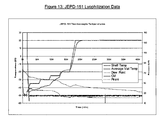
- JEPD-151 had the highest yield after lyophilization, the best stability after 2 weeks at 37° C., the lowest residual moisture, and produced some of the best cakes from an aesthetic standpoint ( FIG. 13 ).
- the lyophilization cycle from this experiment served as the model for the technical specifications that were given to the contract manufacturer.
- the data presented in this example outline the selection and development of a formulation intended for the lyophilization of ChimeriVaxTM products.
- the formulation has been thoroughly characterized, and has shown adequate stability in liquid form, and excellent recovery and stability after lyophilization.
- the formulated vaccine Prior to lyophilization, can be stored in liquid form at ⁇ 80° C. without any significant affect on titer.
- This example also captures the development and optimization of a lyophilization cycle for a 0.5 mL fill in a 3 mL vial. This cycle should produce cakes of acceptable appearance, high recovery of virus (>70%), and low residual moisture ( ⁇ 2%).
- the lyophilized product has demonstrated excellent stability at elevated temperature, and will likely show no significant titer loss when stored at the storage conditions of ⁇ 10° C.
Landscapes
- Health & Medical Sciences (AREA)
- Life Sciences & Earth Sciences (AREA)
- Chemical & Material Sciences (AREA)
- Medicinal Chemistry (AREA)
- General Health & Medical Sciences (AREA)
- Virology (AREA)
- Public Health (AREA)
- Veterinary Medicine (AREA)
- Pharmacology & Pharmacy (AREA)
- Animal Behavior & Ethology (AREA)
- Organic Chemistry (AREA)
- General Chemical & Material Sciences (AREA)
- Chemical Kinetics & Catalysis (AREA)
- Epidemiology (AREA)
- Molecular Biology (AREA)
- Immunology (AREA)
- Engineering & Computer Science (AREA)
- Nuclear Medicine, Radiotherapy & Molecular Imaging (AREA)
- Proteomics, Peptides & Aminoacids (AREA)
- Communicable Diseases (AREA)
- Oncology (AREA)
- Gastroenterology & Hepatology (AREA)
- Microbiology (AREA)
- Mycology (AREA)
- Biochemistry (AREA)
- Bioinformatics & Cheminformatics (AREA)
- Biophysics (AREA)
- Genetics & Genomics (AREA)
- Oil, Petroleum & Natural Gas (AREA)
- Pulmonology (AREA)
- Biotechnology (AREA)
- Inorganic Chemistry (AREA)
- Medicines Containing Antibodies Or Antigens For Use As Internal Diagnostic Agents (AREA)
- Medicinal Preparation (AREA)
- Medicines That Contain Protein Lipid Enzymes And Other Medicines (AREA)
Priority Applications (1)
| Application Number | Priority Date | Filing Date | Title |
|---|---|---|---|
| US12/513,935 US9132184B2 (en) | 2006-11-07 | 2007-11-07 | Stabilization of vaccines by lyophilization |
Applications Claiming Priority (3)
| Application Number | Priority Date | Filing Date | Title |
|---|---|---|---|
| US85742406P | 2006-11-07 | 2006-11-07 | |
| US12/513,935 US9132184B2 (en) | 2006-11-07 | 2007-11-07 | Stabilization of vaccines by lyophilization |
| PCT/US2007/023421 WO2008057550A2 (en) | 2006-11-07 | 2007-11-07 | Stabilization of vaccines by lyophilization |
Publications (2)
| Publication Number | Publication Date |
|---|---|
| US20100247573A1 US20100247573A1 (en) | 2010-09-30 |
| US9132184B2 true US9132184B2 (en) | 2015-09-15 |
Family
ID=39365126
Family Applications (1)
| Application Number | Title | Priority Date | Filing Date |
|---|---|---|---|
| US12/513,935 Active 2029-10-24 US9132184B2 (en) | 2006-11-07 | 2007-11-07 | Stabilization of vaccines by lyophilization |
Country Status (14)
| Country | Link |
|---|---|
| US (1) | US9132184B2 (enExample) |
| EP (3) | EP2086581B1 (enExample) |
| JP (1) | JP5687836B2 (enExample) |
| CN (2) | CN101808657A (enExample) |
| AR (1) | AR063606A1 (enExample) |
| AU (1) | AU2007317847B2 (enExample) |
| BR (1) | BRPI0718548A2 (enExample) |
| CA (1) | CA2668834C (enExample) |
| CL (1) | CL2007003209A1 (enExample) |
| IL (1) | IL198563A0 (enExample) |
| MX (1) | MX2009004862A (enExample) |
| RU (1) | RU2541784C2 (enExample) |
| TW (1) | TWI417113B (enExample) |
| WO (1) | WO2008057550A2 (enExample) |
Cited By (2)
| Publication number | Priority date | Publication date | Assignee | Title |
|---|---|---|---|---|
| US20150150964A1 (en) * | 2012-05-21 | 2015-06-04 | Sanofi Pasteur Limited | Herpesvirus compositions and related methods |
| US20160331832A1 (en) * | 2012-01-09 | 2016-11-17 | Sanofi Pasteur Biologics, Llc | Purification of herpes virus |
Families Citing this family (19)
| Publication number | Priority date | Publication date | Assignee | Title |
|---|---|---|---|---|
| CA2668834C (en) | 2006-11-07 | 2016-10-11 | Sanofi Pasteur Biologics Co. | Stabilization of vaccines by lyophilization |
| CN101855336B (zh) | 2007-09-14 | 2019-07-30 | 赛诺菲巴斯德生物制剂有限责任公司 | 含艰难梭菌类毒素a和b的药物组合物 |
| EP2254594B1 (en) | 2008-03-05 | 2015-06-03 | Sanofi Pasteur | Process for stabilizing an adjuvant containing vaccine composition |
| EP2143440A1 (fr) | 2008-07-09 | 2010-01-13 | Sanofi Pasteur | Agent stabilisant et composition vaccinale comprenant un ou plusieurs flavivirus vivants atténués |
| US7998488B2 (en) | 2008-11-14 | 2011-08-16 | Baxter International Inc. | Vaccine formulations and uses thereof |
| MY184482A (en) * | 2009-04-08 | 2021-04-01 | Eu Yan Sang International Ltd | Uses of red yeast rice in treating dengue virus infection |
| CN102260351A (zh) * | 2010-05-25 | 2011-11-30 | 吉林圣元科技有限责任公司 | 流感病毒M2e蛋白的制备及其在抗甲型流感病毒中的应用 |
| WO2012075376A2 (en) | 2010-12-02 | 2012-06-07 | Oncolytics Biotech Inc. | Lyophilized viral formulations |
| EA201390810A1 (ru) * | 2010-12-02 | 2013-09-30 | Онколитикс Байотек Инк. | Жидкие вирусные составы |
| ES2769425T3 (es) * | 2010-12-22 | 2020-06-25 | Wyeth Llc | Composiciones inmunogénicas estables de antígenos de Staphylococcus aureus |
| SI2741740T1 (sl) * | 2011-08-12 | 2017-08-31 | Merial, Inc. | Vakuumsko konzerviranje bioloških proizvodov, zlasti cepiv |
| MX361342B (es) * | 2013-03-14 | 2018-12-04 | Takeda Vaccines Inc | Composiciones y metodos para formulaciones de alfavirus vivos atenuados. |
| WO2017056101A1 (en) | 2015-09-30 | 2017-04-06 | Panacea Biotec Limited | Stable live attenuated recombinant dengue vaccine |
| TW202309276A (zh) | 2016-08-03 | 2023-03-01 | 美商武田疫苗股份有限公司 | 用於與經改良之調配物一起穩定黃病毒的組成物及方法 |
| RU2637634C1 (ru) * | 2016-10-21 | 2017-12-05 | Владимир Иосифович Лозинский | Антибактериальная белковая губка для химиотерапии инфицированных ран и способ ее получения |
| CN116421734A (zh) * | 2021-12-30 | 2023-07-14 | 深圳复诺健生物科技有限公司 | 适用于溶瘤病毒的冻干保护剂及其应用 |
| WO2024195868A1 (ja) * | 2023-03-23 | 2024-09-26 | デンカ株式会社 | ノロウイルスワクチン組成物 |
| WO2025027616A1 (en) * | 2023-08-01 | 2025-02-06 | Serum Institute Of India Private Limited | Freeze-dried viral vaccine compositions and method of manufacturing thereof |
| CN120173893B (zh) * | 2025-05-21 | 2025-08-12 | 宁波三生生物科技股份有限公司 | 一种锦鲤疱疹病毒的低温冻存保护液及其制备方法和应用 |
Citations (45)
| Publication number | Priority date | Publication date | Assignee | Title |
|---|---|---|---|---|
| US4337242A (en) | 1980-02-05 | 1982-06-29 | Merck & Co., Inc. | Vaccine stabilizer containing L-glutamic acid and L-arginine |
| US4500512A (en) * | 1981-05-13 | 1985-02-19 | Institut Pasteur | Stabilizing agents for live viruses for preparing vaccines, and stabilized vaccines containing said stabilizing agents |
| EP0290197A2 (en) | 1987-05-04 | 1988-11-09 | Merck & Co. Inc. | Stable lyophilized live herpes virus vaccine |
| EP0353108A1 (fr) | 1988-06-30 | 1990-01-31 | Pasteur Merieux Serums Et Vaccins | Procédé de stabilisation des vaccins et associations de vaccins à virus atténués conservés sous forme lyophilisée, et compositions obtenues |
| US5173418A (en) | 1985-05-10 | 1992-12-22 | Benzon Pharma, A/S | Production in Escherichia coli of extracellular Serratia spp. hydrolases |
| JPH0853361A (ja) | 1994-05-04 | 1996-02-27 | Sanofi Sa | 安定なタンパク含有凍結乾燥製剤およびアッセイキット |
| WO1998037911A1 (en) | 1997-02-28 | 1998-09-03 | Oravax, Inc. | Chimeric flavivirus vaccines |
| US6051238A (en) | 1996-12-20 | 2000-04-18 | Merck & Co., Inc. | Stabilizers for lyophilized mumps vaccines |
| WO2000048635A1 (en) | 1999-02-22 | 2000-08-24 | Baxter International Inc. | Novel albumin-free factor viii formulations |
| US6184024B1 (en) | 1988-07-14 | 2001-02-06 | The United States Of America As Represented By The Department Of Health And Human Services | Chimeric and/or growth-restricted flaviviruses |
| US6210683B1 (en) | 1997-09-05 | 2001-04-03 | Merck & Co., Inc. | Stabilizers containing recombinant human serum albumin for live virus vaccines |
| WO2001039802A1 (en) | 1999-12-01 | 2001-06-07 | Oravax, Inc. | Chimeric flavivirus vaccines |
| US6284277B1 (en) * | 1995-11-03 | 2001-09-04 | Sanofi-Synthelabo | Stable freeze-dried pharmaceutical formulation |
| US6290967B1 (en) | 1996-12-20 | 2001-09-18 | Merck & Co., Inc. | Stabilizers for lyophilized vaccines |
| WO2002072835A1 (en) | 2001-03-09 | 2002-09-19 | Fundacão Oswaldo Cruz - Fiocruz | Use of flavivirus for the expression of protein epitopes and development of new live attenuated vaccine virus to immune against flavivirus and other infectious agents |
| US6497884B1 (en) | 1997-10-08 | 2002-12-24 | The United States Of America As Represented By The Department Of Health & Human Services | Chimeric vaccine against tick-borne encephalitis virus |
| WO2002102828A2 (en) | 2001-06-01 | 2002-12-27 | Acambis, Inc. | Chimeric flavivirus vectors |
| US6562350B1 (en) | 1998-11-12 | 2003-05-13 | Changchun Institute Of Biological Products, Ministry Of Public Health | Combined vaccine against both HAV and measles virus and method of producing it |
| WO2003048184A2 (en) | 2001-12-04 | 2003-06-12 | Bavarian Nordic A/S | Flavivirus ns1 subunit vaccine |
| US6589531B1 (en) | 2000-01-21 | 2003-07-08 | The Regents Of The University Of California | Recombinant yellow fever virus and method of use thereof |
| WO2003060088A2 (en) | 2002-01-15 | 2003-07-24 | Acambis, Inc. | Viral vaccine production method |
| WO2003066088A2 (de) | 2002-02-06 | 2003-08-14 | Trommsdorff Gmbh & Co. Kg Arzneimittel | Protease-screening und neue verwendung von proteasen |
| US20030219475A1 (en) | 2002-04-11 | 2003-11-27 | Medlmmune Vaccines, Inc. | Preservation of bioactive materials by freeze dried foam |
| US20030226155A1 (en) | 2001-08-30 | 2003-12-04 | Biorexis Pharmaceutical Corporation | Modified transferrin-antibody fusion proteins |
| WO2003103571A2 (en) | 2002-01-15 | 2003-12-18 | Acambis, Inc. | Flavivirus vaccines |
| US6676936B1 (en) | 1988-07-14 | 2004-01-13 | The United States Of America As Represented By The Department Of Health And Human Services. | Chimeric and/or growth-restricted flaviviruses |
| US6696281B1 (en) | 1997-02-28 | 2004-02-24 | Acambis, Inc. | Chimeric flavivirus vaccines |
| WO2004045529A2 (en) | 2002-11-15 | 2004-06-03 | Acambis, Inc. | West nile virus vaccine |
| US20040259224A1 (en) * | 2002-05-31 | 2004-12-23 | Farshad Guirakhoo | Tetravalent Dengue vaccines |
| US20050025782A1 (en) | 2003-07-30 | 2005-02-03 | Vaccine Research Institute Of San Diego | Human hepatitis B virus core proteins as vaccine platforms and methods of use thereof |
| US6884422B1 (en) | 1998-10-19 | 2005-04-26 | Changchun Institute Of Biological Products, Ministry Of Public Health | Freeze-dried hepatitis A attenuated live vaccine and its stabilizer |
| US20050096288A1 (en) | 1997-06-13 | 2005-05-05 | Aragene, Inc. | Lipoproteins as nucleic acid vectors |
| WO2005055957A2 (en) | 2003-12-10 | 2005-06-23 | Apovia, Inc. | Influenza immunogen and vaccine |
| WO2005082020A2 (en) | 2004-02-27 | 2005-09-09 | Acambis Inc. | Flavivirus vaccines |
| WO2005089712A1 (en) | 2004-03-04 | 2005-09-29 | Wyeth | Lyophilization method to improve excipient crystallization |
| US20050255121A1 (en) * | 2003-05-12 | 2005-11-17 | Campbell Robert L | Molecules enhancing dermal delivery of influenza vaccines |
| US20060008519A1 (en) | 2004-07-07 | 2006-01-12 | Statens Serum Institut | Compositions and methods for stabilizing lipid based adjuvant formulations using glycolipids |
| US20060051844A1 (en) | 2004-09-03 | 2006-03-09 | Heavner George A | Human EPO mimetic hinge core mimetibodies, compositions, methods and uses |
| WO2006044857A2 (en) | 2004-10-20 | 2006-04-27 | Acambis Inc. | Vaccines against japanese encephalitis virus and west nile virus |
| US20060121055A1 (en) | 2004-12-06 | 2006-06-08 | Becton, Dickinson And Company, Inc. | Compositions with enhanced immunogenicity |
| WO2006068307A1 (ja) | 2004-12-24 | 2006-06-29 | The Research Foundation For Microbial Diseases Of Osaka University | 弱毒日本脳炎ウイルスの遺伝子をバックボーンとして有する弱毒キメラフラビウイルス |
| US7094411B2 (en) | 2000-02-16 | 2006-08-22 | The United States Of America As Represented By The Department Of Health And Human Services | Avirulent, immunogenic flavivirus chimeras |
| US20060216702A1 (en) | 2002-05-17 | 2006-09-28 | Compans Richard W | Virus-like particles, methods of preparation, and immunogenic compositions |
| US7115270B2 (en) | 2001-04-23 | 2006-10-03 | Acambis Inc. | Smallpox vaccine |
| WO2006116182A1 (en) | 2005-04-24 | 2006-11-02 | Acambis Inc. | Recombinant flavivirus vaccines |
Family Cites Families (6)
| Publication number | Priority date | Publication date | Assignee | Title |
|---|---|---|---|---|
| JPS6013718A (ja) | 1983-07-05 | 1985-01-24 | Chemo Sero Therapeut Res Inst | B型肝炎ワクチン |
| EP0728195A1 (en) | 1993-10-12 | 1996-08-28 | Chiron Corporation | Methods for preserving recombinant viruses |
| DK1133316T3 (da) | 1998-11-16 | 2009-05-25 | Introgen Therapeutics Inc | Adenovirus-formulering til genterapi |
| WO2005066333A1 (en) | 2003-12-30 | 2005-07-21 | Aventis Pasteur, Inc. | Stabilizing compositions for recombinant viruses |
| US20060167022A1 (en) * | 2004-09-08 | 2006-07-27 | Woodward John R | Method of female sexual enhancement |
| CA2668834C (en) | 2006-11-07 | 2016-10-11 | Sanofi Pasteur Biologics Co. | Stabilization of vaccines by lyophilization |
-
2007
- 2007-11-07 CA CA2668834A patent/CA2668834C/en active Active
- 2007-11-07 CN CN200780049359A patent/CN101808657A/zh active Pending
- 2007-11-07 EP EP20070861777 patent/EP2086581B1/en active Active
- 2007-11-07 CL CL2007003209A patent/CL2007003209A1/es unknown
- 2007-11-07 RU RU2009121566/10A patent/RU2541784C2/ru not_active Application Discontinuation
- 2007-11-07 MX MX2009004862A patent/MX2009004862A/es not_active Application Discontinuation
- 2007-11-07 EP EP14180710.7A patent/EP2851087B2/en active Active
- 2007-11-07 US US12/513,935 patent/US9132184B2/en active Active
- 2007-11-07 TW TW96141996A patent/TWI417113B/zh active
- 2007-11-07 EP EP20120177150 patent/EP2535058A3/en not_active Withdrawn
- 2007-11-07 WO PCT/US2007/023421 patent/WO2008057550A2/en not_active Ceased
- 2007-11-07 JP JP2009535362A patent/JP5687836B2/ja active Active
- 2007-11-07 CN CN201710026145.2A patent/CN106890144A/zh active Pending
- 2007-11-07 BR BRPI0718548 patent/BRPI0718548A2/pt not_active IP Right Cessation
- 2007-11-07 AR ARP070104963 patent/AR063606A1/es not_active Application Discontinuation
- 2007-11-07 AU AU2007317847A patent/AU2007317847B2/en active Active
-
2009
- 2009-05-05 IL IL198563A patent/IL198563A0/en unknown
Patent Citations (48)
| Publication number | Priority date | Publication date | Assignee | Title |
|---|---|---|---|---|
| US4337242A (en) | 1980-02-05 | 1982-06-29 | Merck & Co., Inc. | Vaccine stabilizer containing L-glutamic acid and L-arginine |
| US4500512A (en) * | 1981-05-13 | 1985-02-19 | Institut Pasteur | Stabilizing agents for live viruses for preparing vaccines, and stabilized vaccines containing said stabilizing agents |
| US5173418A (en) | 1985-05-10 | 1992-12-22 | Benzon Pharma, A/S | Production in Escherichia coli of extracellular Serratia spp. hydrolases |
| EP0290197A2 (en) | 1987-05-04 | 1988-11-09 | Merck & Co. Inc. | Stable lyophilized live herpes virus vaccine |
| EP0353108A1 (fr) | 1988-06-30 | 1990-01-31 | Pasteur Merieux Serums Et Vaccins | Procédé de stabilisation des vaccins et associations de vaccins à virus atténués conservés sous forme lyophilisée, et compositions obtenues |
| US6184024B1 (en) | 1988-07-14 | 2001-02-06 | The United States Of America As Represented By The Department Of Health And Human Services | Chimeric and/or growth-restricted flaviviruses |
| US6676936B1 (en) | 1988-07-14 | 2004-01-13 | The United States Of America As Represented By The Department Of Health And Human Services. | Chimeric and/or growth-restricted flaviviruses |
| JPH0853361A (ja) | 1994-05-04 | 1996-02-27 | Sanofi Sa | 安定なタンパク含有凍結乾燥製剤およびアッセイキット |
| US5763409A (en) | 1994-05-04 | 1998-06-09 | Sanofi | Stable freeze-dried formulation comprising a protein assay kit |
| US6284277B1 (en) * | 1995-11-03 | 2001-09-04 | Sanofi-Synthelabo | Stable freeze-dried pharmaceutical formulation |
| US6051238A (en) | 1996-12-20 | 2000-04-18 | Merck & Co., Inc. | Stabilizers for lyophilized mumps vaccines |
| US6290967B1 (en) | 1996-12-20 | 2001-09-18 | Merck & Co., Inc. | Stabilizers for lyophilized vaccines |
| WO1998037911A1 (en) | 1997-02-28 | 1998-09-03 | Oravax, Inc. | Chimeric flavivirus vaccines |
| US6696281B1 (en) | 1997-02-28 | 2004-02-24 | Acambis, Inc. | Chimeric flavivirus vaccines |
| US6962708B1 (en) | 1997-02-28 | 2005-11-08 | Acambis, Inc. | Chimeric flavivirus vaccines |
| US20050096288A1 (en) | 1997-06-13 | 2005-05-05 | Aragene, Inc. | Lipoproteins as nucleic acid vectors |
| US6210683B1 (en) | 1997-09-05 | 2001-04-03 | Merck & Co., Inc. | Stabilizers containing recombinant human serum albumin for live virus vaccines |
| US6497884B1 (en) | 1997-10-08 | 2002-12-24 | The United States Of America As Represented By The Department Of Health & Human Services | Chimeric vaccine against tick-borne encephalitis virus |
| US6884422B1 (en) | 1998-10-19 | 2005-04-26 | Changchun Institute Of Biological Products, Ministry Of Public Health | Freeze-dried hepatitis A attenuated live vaccine and its stabilizer |
| US6562350B1 (en) | 1998-11-12 | 2003-05-13 | Changchun Institute Of Biological Products, Ministry Of Public Health | Combined vaccine against both HAV and measles virus and method of producing it |
| WO2000048635A1 (en) | 1999-02-22 | 2000-08-24 | Baxter International Inc. | Novel albumin-free factor viii formulations |
| WO2001039802A1 (en) | 1999-12-01 | 2001-06-07 | Oravax, Inc. | Chimeric flavivirus vaccines |
| US6589531B1 (en) | 2000-01-21 | 2003-07-08 | The Regents Of The University Of California | Recombinant yellow fever virus and method of use thereof |
| US7094411B2 (en) | 2000-02-16 | 2006-08-22 | The United States Of America As Represented By The Department Of Health And Human Services | Avirulent, immunogenic flavivirus chimeras |
| WO2002072835A1 (en) | 2001-03-09 | 2002-09-19 | Fundacão Oswaldo Cruz - Fiocruz | Use of flavivirus for the expression of protein epitopes and development of new live attenuated vaccine virus to immune against flavivirus and other infectious agents |
| US7115270B2 (en) | 2001-04-23 | 2006-10-03 | Acambis Inc. | Smallpox vaccine |
| WO2002102828A2 (en) | 2001-06-01 | 2002-12-27 | Acambis, Inc. | Chimeric flavivirus vectors |
| US20030226155A1 (en) | 2001-08-30 | 2003-12-04 | Biorexis Pharmaceutical Corporation | Modified transferrin-antibody fusion proteins |
| WO2003048184A2 (en) | 2001-12-04 | 2003-06-12 | Bavarian Nordic A/S | Flavivirus ns1 subunit vaccine |
| WO2003060088A2 (en) | 2002-01-15 | 2003-07-24 | Acambis, Inc. | Viral vaccine production method |
| WO2003103571A2 (en) | 2002-01-15 | 2003-12-18 | Acambis, Inc. | Flavivirus vaccines |
| US20030180329A1 (en) | 2002-01-15 | 2003-09-25 | Monath Thomas P. | Viral vaccine production method |
| WO2003066088A2 (de) | 2002-02-06 | 2003-08-14 | Trommsdorff Gmbh & Co. Kg Arzneimittel | Protease-screening und neue verwendung von proteasen |
| US20030219475A1 (en) | 2002-04-11 | 2003-11-27 | Medlmmune Vaccines, Inc. | Preservation of bioactive materials by freeze dried foam |
| US20060216702A1 (en) | 2002-05-17 | 2006-09-28 | Compans Richard W | Virus-like particles, methods of preparation, and immunogenic compositions |
| US20040259224A1 (en) * | 2002-05-31 | 2004-12-23 | Farshad Guirakhoo | Tetravalent Dengue vaccines |
| WO2004045529A2 (en) | 2002-11-15 | 2004-06-03 | Acambis, Inc. | West nile virus vaccine |
| US20050255121A1 (en) * | 2003-05-12 | 2005-11-17 | Campbell Robert L | Molecules enhancing dermal delivery of influenza vaccines |
| US20050025782A1 (en) | 2003-07-30 | 2005-02-03 | Vaccine Research Institute Of San Diego | Human hepatitis B virus core proteins as vaccine platforms and methods of use thereof |
| WO2005055957A2 (en) | 2003-12-10 | 2005-06-23 | Apovia, Inc. | Influenza immunogen and vaccine |
| WO2005082020A2 (en) | 2004-02-27 | 2005-09-09 | Acambis Inc. | Flavivirus vaccines |
| WO2005089712A1 (en) | 2004-03-04 | 2005-09-29 | Wyeth | Lyophilization method to improve excipient crystallization |
| US20060008519A1 (en) | 2004-07-07 | 2006-01-12 | Statens Serum Institut | Compositions and methods for stabilizing lipid based adjuvant formulations using glycolipids |
| US20060051844A1 (en) | 2004-09-03 | 2006-03-09 | Heavner George A | Human EPO mimetic hinge core mimetibodies, compositions, methods and uses |
| WO2006044857A2 (en) | 2004-10-20 | 2006-04-27 | Acambis Inc. | Vaccines against japanese encephalitis virus and west nile virus |
| US20060121055A1 (en) | 2004-12-06 | 2006-06-08 | Becton, Dickinson And Company, Inc. | Compositions with enhanced immunogenicity |
| WO2006068307A1 (ja) | 2004-12-24 | 2006-06-29 | The Research Foundation For Microbial Diseases Of Osaka University | 弱毒日本脳炎ウイルスの遺伝子をバックボーンとして有する弱毒キメラフラビウイルス |
| WO2006116182A1 (en) | 2005-04-24 | 2006-11-02 | Acambis Inc. | Recombinant flavivirus vaccines |
Non-Patent Citations (29)
Cited By (6)
| Publication number | Priority date | Publication date | Assignee | Title |
|---|---|---|---|---|
| US20160331832A1 (en) * | 2012-01-09 | 2016-11-17 | Sanofi Pasteur Biologics, Llc | Purification of herpes virus |
| US10363304B2 (en) | 2012-01-09 | 2019-07-30 | Sanofi Pasteur Biologics, Llc | Purification of herpes virus |
| US11224650B2 (en) | 2012-01-09 | 2022-01-18 | Sanofi Pasteur Biologics, Llc | Purification of herpes virus |
| US20150150964A1 (en) * | 2012-05-21 | 2015-06-04 | Sanofi Pasteur Limited | Herpesvirus compositions and related methods |
| US11260123B2 (en) * | 2012-05-21 | 2022-03-01 | Sanofi Pasteur Limited | Herpesvirus compositions and related methods |
| US12214035B2 (en) | 2012-05-21 | 2025-02-04 | Sanofi Pasteur Limited | Herpesvirus compositions and related methods |
Also Published As
| Publication number | Publication date |
|---|---|
| EP2535058A2 (en) | 2012-12-19 |
| WO2008057550A3 (en) | 2009-04-02 |
| CN106890144A (zh) | 2017-06-27 |
| CL2007003209A1 (es) | 2008-05-09 |
| RU2541784C2 (ru) | 2015-02-20 |
| CN101808657A (zh) | 2010-08-18 |
| EP2086581B1 (en) | 2014-08-13 |
| HK1210410A1 (en) | 2016-04-22 |
| EP2086581A2 (en) | 2009-08-12 |
| CA2668834C (en) | 2016-10-11 |
| EP2851087B1 (en) | 2017-04-19 |
| JP2010509226A (ja) | 2010-03-25 |
| EP2535058A3 (en) | 2013-04-10 |
| EP2851087A1 (en) | 2015-03-25 |
| AR063606A1 (es) | 2009-02-04 |
| BRPI0718548A2 (pt) | 2013-11-12 |
| CA2668834A1 (en) | 2008-05-15 |
| AU2007317847B2 (en) | 2013-10-31 |
| MX2009004862A (es) | 2009-07-17 |
| WO2008057550A2 (en) | 2008-05-15 |
| TW200831132A (en) | 2008-08-01 |
| AU2007317847A8 (en) | 2009-07-30 |
| AU2007317847A1 (en) | 2008-05-15 |
| RU2009121566A (ru) | 2010-12-20 |
| JP5687836B2 (ja) | 2015-03-25 |
| EP2851087B2 (en) | 2025-06-18 |
| TWI417113B (zh) | 2013-12-01 |
| EP2086581A4 (en) | 2010-05-05 |
| US20100247573A1 (en) | 2010-09-30 |
| IL198563A0 (en) | 2011-08-01 |
Similar Documents
| Publication | Publication Date | Title |
|---|---|---|
| US9132184B2 (en) | Stabilization of vaccines by lyophilization | |
| EP1991709B1 (en) | Pseudoinfectious flavivirus and uses thereof | |
| US11883480B2 (en) | Formulations of dengue virus vaccine compositions | |
| US11123420B2 (en) | Stable live attenuated recombinant dengue vaccine | |
| HK1210410B (en) | Stabilization of vaccines by lyophilization | |
| HK1147416A (en) | Stabilization of vaccines by lyophilization |
Legal Events
| Date | Code | Title | Description |
|---|---|---|---|
| AS | Assignment |
Owner name: SANOFI PASTEUR BIOLOGICS, LLC, MASSACHUSETTS Free format text: ASSIGNMENT OF ASSIGNORS INTEREST;ASSIGNORS:VELLOM, DANIEL C.;DEGEORGE, PAUL;CIARAMETARO, PETER;SIGNING DATES FROM 20150722 TO 20150803;REEL/FRAME:036251/0687 |
|
| AS | Assignment |
Owner name: ACAMBIS INC., MASSACHUSETTS Free format text: ASSIGNMENT OF ASSIGNORS INTEREST;ASSIGNOR:WOISZWILLO, JAMES E.;REEL/FRAME:036276/0722 Effective date: 20020528 Owner name: SANOFI PASTEUR BIOLOGICS CO., MASSACHUSETTS Free format text: CHANGE OF NAME;ASSIGNOR:ACAMBIS INC.;REEL/FRAME:036307/0761 Effective date: 20081210 Owner name: SANOFI PASTEUR BIOLOGICS, LLC, MASSACHUSETTS Free format text: CHANGE OF NAME;ASSIGNOR:SANOFI PASTEUR BIOLOGICS CO.;REEL/FRAME:036314/0189 Effective date: 20120125 |
|
| STCF | Information on status: patent grant |
Free format text: PATENTED CASE |
|
| MAFP | Maintenance fee payment |
Free format text: PAYMENT OF MAINTENANCE FEE, 4TH YEAR, LARGE ENTITY (ORIGINAL EVENT CODE: M1551); ENTITY STATUS OF PATENT OWNER: LARGE ENTITY Year of fee payment: 4 |
|
| MAFP | Maintenance fee payment |
Free format text: PAYMENT OF MAINTENANCE FEE, 8TH YEAR, LARGE ENTITY (ORIGINAL EVENT CODE: M1552); ENTITY STATUS OF PATENT OWNER: LARGE ENTITY Year of fee payment: 8 |