US8609731B2 - Substituted tetrahydronaphthalenes, process for the preparation thereof and the use thereof as medicaments - Google Patents
Substituted tetrahydronaphthalenes, process for the preparation thereof and the use thereof as medicaments Download PDFInfo
- Publication number
- US8609731B2 US8609731B2 US12/705,140 US70514010A US8609731B2 US 8609731 B2 US8609731 B2 US 8609731B2 US 70514010 A US70514010 A US 70514010A US 8609731 B2 US8609731 B2 US 8609731B2
- Authority
- US
- United States
- Prior art keywords
- alkyl
- compound
- formula
- combination
- administered
- Prior art date
- Legal status (The legal status is an assumption and is not a legal conclusion. Google has not performed a legal analysis and makes no representation as to the accuracy of the status listed.)
- Expired - Fee Related, expires
Links
- 0 *C1([7*])CC2=C(C([5*])=C([4*])C(C([1*])[2*])=C2[3*])C(*)([6*])C1N([8*])C(C)=O Chemical compound *C1([7*])CC2=C(C([5*])=C([4*])C(C([1*])[2*])=C2[3*])C(*)([6*])C1N([8*])C(C)=O 0.000 description 16
- IHMXVSZXHFTOFN-ZCFIWIBFSA-N CC[C@@H]1CCCO1 Chemical compound CC[C@@H]1CCCO1 IHMXVSZXHFTOFN-ZCFIWIBFSA-N 0.000 description 4
- ROIVSHCNFNHDDZ-BDYUSTAISA-N CC(C)(C)CNCCC1=CC2=C(C=C1)C[C@@H](NC(=O)C1=CC=C(OC[C@@H]3CCCO3)C=C1)CC2 Chemical compound CC(C)(C)CNCCC1=CC2=C(C=C1)C[C@@H](NC(=O)C1=CC=C(OC[C@@H]3CCCO3)C=C1)CC2 ROIVSHCNFNHDDZ-BDYUSTAISA-N 0.000 description 2
- QAMJBKXUQQOLPQ-AQRBRUGDSA-M CC(C)C1=C(/C=C/[C@@H](O)C[C@@H](O)CC(=O)[O-])C(C2=CC=C(F)C=C2)=NC(N(C)C2=NC=NN2C)=N1.[Na+] Chemical compound CC(C)C1=C(/C=C/[C@@H](O)C[C@@H](O)CC(=O)[O-])C(C2=CC=C(F)C=C2)=NC(N(C)C2=NC=NN2C)=N1.[Na+] QAMJBKXUQQOLPQ-AQRBRUGDSA-M 0.000 description 2
- ZVTZGKFCLAKJLQ-JDSNJFFGSA-N CC(C)CC1CCCN1CC1=C/C2=C(\C=C/1)C[C@@H](NC(=O)C1=CC=C(OC[C@@H]3CCCO3)C=C1)CC2 Chemical compound CC(C)CC1CCCN1CC1=C/C2=C(\C=C/1)C[C@@H](NC(=O)C1=CC=C(OC[C@@H]3CCCO3)C=C1)CC2 ZVTZGKFCLAKJLQ-JDSNJFFGSA-N 0.000 description 2
- XUTOJEAWYNLNJX-LMNIDFBRSA-N CC(O)CCOC1=CC=C(C(=O)N[C@H]2COC3=C(C=CC(CN4CCCC4)=C3)C2)C=C1 Chemical compound CC(O)CCOC1=CC=C(C(=O)N[C@H]2COC3=C(C=CC(CN4CCCC4)=C3)C2)C=C1 XUTOJEAWYNLNJX-LMNIDFBRSA-N 0.000 description 2
- PBSXIUHGNJLTQH-PBZMZIQDSA-N CCC(CC)N[C@H](C)C1=CC2=C(C=C1)C[C@@H](NC(=O)C1=CC=C(OC[C@@H]3CCCO3)C=C1)CC2 Chemical compound CCC(CC)N[C@H](C)C1=CC2=C(C=C1)C[C@@H](NC(=O)C1=CC=C(OC[C@@H]3CCCO3)C=C1)CC2 PBSXIUHGNJLTQH-PBZMZIQDSA-N 0.000 description 2
- JKAUCRAJBMNPBM-XCZPVHLTSA-N CCCN(CCC)CC1=CC2=C(C=C1)C[C@@H](NC(=O)C1=CC=C(OC[C@@H]3CCCO3)C=C1)CC2 Chemical compound CCCN(CCC)CC1=CC2=C(C=C1)C[C@@H](NC(=O)C1=CC=C(OC[C@@H]3CCCO3)C=C1)CC2 JKAUCRAJBMNPBM-XCZPVHLTSA-N 0.000 description 2
- ZGGFISZPROXQSZ-BDYUSTAISA-N CCOCCNCC1=CC2=C(C=C1)C[C@@H](N1CCC3=C/C(OC[C@@H]4CCCO4)=C/C=C\3C1=O)CC2 Chemical compound CCOCCNCC1=CC2=C(C=C1)C[C@@H](N1CCC3=C/C(OC[C@@H]4CCCO4)=C/C=C\3C1=O)CC2 ZGGFISZPROXQSZ-BDYUSTAISA-N 0.000 description 2
- FDEWPKYSTLDYMK-YTMVLYRLSA-N CN(CC1=CC=CN=C1)CC1=CC2=C(C=C1)C[C@@H](NC(=O)C1=CC=C(OC[C@@H]3CCCO3)C=C1)CC2 Chemical compound CN(CC1=CC=CN=C1)CC1=CC2=C(C=C1)C[C@@H](NC(=O)C1=CC=C(OC[C@@H]3CCCO3)C=C1)CC2 FDEWPKYSTLDYMK-YTMVLYRLSA-N 0.000 description 2
- CGRAATXYMYORGC-AHWVRZQESA-N CN(CCCO)CC1=CC2=C(C=C1)C[C@@H](NC(=O)C1=CC=C(OC[C@@H]3CCCO3)C=C1)CC2 Chemical compound CN(CCCO)CC1=CC2=C(C=C1)C[C@@H](NC(=O)C1=CC=C(OC[C@@H]3CCCO3)C=C1)CC2 CGRAATXYMYORGC-AHWVRZQESA-N 0.000 description 2
- VSPZRDRKHUFYBE-IGKIAQTJSA-N CN1C=CC(CNCC2=CC3=C(C=C2)C[C@@H](NC(=O)C2=CC=C(OC[C@@H]4CCCO4)C=C2)CC3)=N1 Chemical compound CN1C=CC(CNCC2=CC3=C(C=C2)C[C@@H](NC(=O)C2=CC=C(OC[C@@H]4CCCO4)C=C2)CC3)=N1 VSPZRDRKHUFYBE-IGKIAQTJSA-N 0.000 description 2
- VGIGZZXFJVQQCO-IQGAQJDESA-N COC1CCCN(CC2=CC3=C(C=C2)C[C@@H](NC(=O)C2=CC=C(OC[C@@H]4CCCO4)C=C2)CC3)C1 Chemical compound COC1CCCN(CC2=CC3=C(C=C2)C[C@@H](NC(=O)C2=CC=C(OC[C@@H]4CCCO4)C=C2)CC3)C1 VGIGZZXFJVQQCO-IQGAQJDESA-N 0.000 description 2
- DTBWQQFYPQDXQJ-QBGWGINNSA-N COCC(O)CNCC1=CC2=C(C=C1)C[C@@H](NC(=O)C1=CC=C(OC[C@@H]3CCCO3)C=C1)CC2 Chemical compound COCC(O)CNCC1=CC2=C(C=C1)C[C@@H](NC(=O)C1=CC=C(OC[C@@H]3CCCO3)C=C1)CC2 DTBWQQFYPQDXQJ-QBGWGINNSA-N 0.000 description 2
- CLYGPGIXMFJWTM-RVBRUHEGSA-N C[C@H](C1=CC2=C(C=C1)C[C@@H](NC(=O)C1=CC=C(OC[C@@H]3CCCO3)C=C1)CC2)N1CCCCCC1 Chemical compound C[C@H](C1=CC2=C(C=C1)C[C@@H](NC(=O)C1=CC=C(OC[C@@H]3CCCO3)C=C1)CC2)N1CCCCCC1 CLYGPGIXMFJWTM-RVBRUHEGSA-N 0.000 description 2
- HNODTIITCJEKJY-ZCYQVOJMSA-N O=C(N[C@H]1CCC2=C(/C=C\C(CNCCC3CC3)=C/2)C1)C1=NC=C(OC[C@@H]2CCCO2)C=C1 Chemical compound O=C(N[C@H]1CCC2=C(/C=C\C(CNCCC3CC3)=C/2)C1)C1=NC=C(OC[C@@H]2CCCO2)C=C1 HNODTIITCJEKJY-ZCYQVOJMSA-N 0.000 description 2
- NVKQCANVLYDQKP-JIBYJJDDSA-N O=C(N[C@H]1CCC2=C(C=CC(CCN3CC4CCC3CC4)=C2)C1)C1=CC=C(OC[C@@H]2CCCO2)C=C1 Chemical compound O=C(N[C@H]1CCC2=C(C=CC(CCN3CC4CCC3CC4)=C2)C1)C1=CC=C(OC[C@@H]2CCCO2)C=C1 NVKQCANVLYDQKP-JIBYJJDDSA-N 0.000 description 2
- HBYPBCUUPSRSLN-LWBIIHDLSA-N O=C(N[C@H]1CCC2=C(C=CC(CN3CC4CCC(C4)C3)=C2)C1)C1=CC=C(OC[C@@H]2CCCO2)C=C1 Chemical compound O=C(N[C@H]1CCC2=C(C=CC(CN3CC4CCC(C4)C3)=C2)C1)C1=CC=C(OC[C@@H]2CCCO2)C=C1 HBYPBCUUPSRSLN-LWBIIHDLSA-N 0.000 description 2
- NSTMJGGUOVTABA-AHWVRZQESA-N O=C(N[C@H]1CCC2=C(C=CC(CN3CCC(F)(F)CC3)=C2)C1)C1=CC=C(OC[C@@H]2CCCO2)C=C1 Chemical compound O=C(N[C@H]1CCC2=C(C=CC(CN3CCC(F)(F)CC3)=C2)C1)C1=CC=C(OC[C@@H]2CCCO2)C=C1 NSTMJGGUOVTABA-AHWVRZQESA-N 0.000 description 2
- IJGYLXMJUYLTAR-XICMLOBYSA-N O=C(N[C@H]1CCC2=C(C=CC(CN3CCCC(F)C3)=C2)C1)C1=CC=C(OC[C@@H]2CCCO2)C=C1 Chemical compound O=C(N[C@H]1CCC2=C(C=CC(CN3CCCC(F)C3)=C2)C1)C1=CC=C(OC[C@@H]2CCCO2)C=C1 IJGYLXMJUYLTAR-XICMLOBYSA-N 0.000 description 2
- QFVOKUZZJKYREI-AHWVRZQESA-N O=C(N[C@H]1CCC2=C(C=CC(CNC3CCC3)=C2)C1)C1=CC=C(OC[C@@H]2CCCO2)C=C1 Chemical compound O=C(N[C@H]1CCC2=C(C=CC(CNC3CCC3)=C2)C1)C1=CC=C(OC[C@@H]2CCCO2)C=C1 QFVOKUZZJKYREI-AHWVRZQESA-N 0.000 description 2
- JKZJMTCDIZVYPA-YTMVLYRLSA-N O=C(N[C@H]1CCC2=C(C=CC(CNC3CCCCCC3)=C2)C1)C1=CC=C(OC[C@@H]2CCCO2)C=C1 Chemical compound O=C(N[C@H]1CCC2=C(C=CC(CNC3CCCCCC3)=C2)C1)C1=CC=C(OC[C@@H]2CCCO2)C=C1 JKZJMTCDIZVYPA-YTMVLYRLSA-N 0.000 description 2
- LINJWJAVEVYXNH-OGUPFJCYSA-N O=C(N[C@H]1CCC2=C(C=CC(CNC3CCCCNC3=O)=C2)C1)C1=CC=C(OC[C@@H]2CCCO2)C=C1 Chemical compound O=C(N[C@H]1CCC2=C(C=CC(CNC3CCCCNC3=O)=C2)C1)C1=CC=C(OC[C@@H]2CCCO2)C=C1 LINJWJAVEVYXNH-OGUPFJCYSA-N 0.000 description 2
- MWQNOAHMAIAAAJ-MFXHTCIWSA-N O=C(N[C@H]1CCC2=C(C=CC(CNCC(O)CO)=C2)C1)C1=CC=C(OC[C@@H]2CCCO2)C=C1 Chemical compound O=C(N[C@H]1CCC2=C(C=CC(CNCC(O)CO)=C2)C1)C1=CC=C(OC[C@@H]2CCCO2)C=C1 MWQNOAHMAIAAAJ-MFXHTCIWSA-N 0.000 description 2
- SFFYACZUNGBQMK-XCZPVHLTSA-N O=C(N[C@H]1CCC2=C(C=CC(CNCCNC3CCC3)=C2)C1)C1=CC=C(OC[C@@H]2CCCO2)C=C1 Chemical compound O=C(N[C@H]1CCC2=C(C=CC(CNCCNC3CCC3)=C2)C1)C1=CC=C(OC[C@@H]2CCCO2)C=C1 SFFYACZUNGBQMK-XCZPVHLTSA-N 0.000 description 2
- HXCDBZQTBSEKKY-FKHAVUOCSA-N O=C(N[C@H]1COC2=C(C=CC(CN3CCCC3)=C2)C1)C1=CC=C(N2N=C3CCCC3C2=O)C=C1 Chemical compound O=C(N[C@H]1COC2=C(C=CC(CN3CCCC3)=C2)C1)C1=CC=C(N2N=C3CCCC3C2=O)C=C1 HXCDBZQTBSEKKY-FKHAVUOCSA-N 0.000 description 2
- LFWPWEHCAMHLOM-GMKZXUHWSA-N O=C(N[C@H]1COC2=C(C=CC(CN3CCCC3)=C2)C1)C1=CC=C(O[C@@H]2CCC[C@H]2O)C=C1 Chemical compound O=C(N[C@H]1COC2=C(C=CC(CN3CCCC3)=C2)C1)C1=CC=C(O[C@@H]2CCC[C@H]2O)C=C1 LFWPWEHCAMHLOM-GMKZXUHWSA-N 0.000 description 2
- VFXAMILTGLRPNK-PMNVKRLCSA-N C#CC#CC#CC#CC#CC#CC#CC#CC#CC#CC#CC#CC#CC#CC#CC#CC#CC#CC#CC#CC#CC#CC#CC#CC#CC#CC#CC#CC#CC#CC#CC#CC#CC#CC#CC#CC#CC.C=C1C(=O)OC(CCCCCCCC)C1C(=O)O.CC(C)C1=C(O)C=CC(OC2=C(Cl)C=C(CC(=O)O)C=C2Cl)=C1.CC1=CC=CC(C(C)(C)C(=O)N[C@H]2C3CC4CC2C[C@](O)(C4)C3)=C1.CCCC1C(=O)N2C[C@@H](CC3=CC=CC=C3)N=C2C2=C1N=C(C1CCCC1)N2.CCCCN1C(=O)C(NC(=O)NC2=C(C(C)C)C=C(N)C=C2C(C)C)=C(C2=CC(OCCCO)=CC=C2)C2=C1N=CC=C2.NC1=NC(N)=C(C2=CC=C(NCC3=CC=C(Cl)C=C3)C=C2)C(COCC2=CC=CC=C2)=N1.[H]Cl.[H][C@]12CC[C@]3(C)C(=O)CC[C@@]3([H])[C@]1([H])CCC1=CC(OC(=O)CCCCCCC/C=C\CCCCCCCC)=CC=C12 Chemical compound C#CC#CC#CC#CC#CC#CC#CC#CC#CC#CC#CC#CC#CC#CC#CC#CC#CC#CC#CC#CC#CC#CC#CC#CC#CC#CC#CC#CC#CC#CC#CC#CC#CC#CC#CC#CC#CC.C=C1C(=O)OC(CCCCCCCC)C1C(=O)O.CC(C)C1=C(O)C=CC(OC2=C(Cl)C=C(CC(=O)O)C=C2Cl)=C1.CC1=CC=CC(C(C)(C)C(=O)N[C@H]2C3CC4CC2C[C@](O)(C4)C3)=C1.CCCC1C(=O)N2C[C@@H](CC3=CC=CC=C3)N=C2C2=C1N=C(C1CCCC1)N2.CCCCN1C(=O)C(NC(=O)NC2=C(C(C)C)C=C(N)C=C2C(C)C)=C(C2=CC(OCCCO)=CC=C2)C2=C1N=CC=C2.NC1=NC(N)=C(C2=CC=C(NCC3=CC=C(Cl)C=C3)C=C2)C(COCC2=CC=CC=C2)=N1.[H]Cl.[H][C@]12CC[C@]3(C)C(=O)CC[C@@]3([H])[C@]1([H])CCC1=CC(OC(=O)CCCCCCC/C=C\CCCCCCCC)=CC=C12 VFXAMILTGLRPNK-PMNVKRLCSA-N 0.000 description 1
- ZEZKWIDGLPNKAH-QRXNSUTFSA-N C.C.CCC1CCOCC1.OCC1CCCCO1.OCC1CCCOC1.OCC1CCO1.OCC1COC1.OCC1OCCO1.OC[C@@H]1CCCO1.OC[C@@H]1CCOC1.OC[C@@H]1COCO1.OC[C@H]1CCCO1.OC[C@H]1CCOC1.OC[C@H]1COCO1 Chemical compound C.C.CCC1CCOCC1.OCC1CCCCO1.OCC1CCCOC1.OCC1CCO1.OCC1COC1.OCC1OCCO1.OC[C@@H]1CCCO1.OC[C@@H]1CCOC1.OC[C@@H]1COCO1.OC[C@H]1CCCO1.OC[C@H]1CCOC1.OC[C@H]1COCO1 ZEZKWIDGLPNKAH-QRXNSUTFSA-N 0.000 description 1
- YEJDBLXGJHPKAG-UHFFFAOYSA-N C.CC1=CC=C(C)C=C1.CC1=CC=C(C)N=C1.CC1=CN=C(C)C=C1 Chemical compound C.CC1=CC=C(C)C=C1.CC1=CC=C(C)N=C1.CC1=CN=C(C)C=C1 YEJDBLXGJHPKAG-UHFFFAOYSA-N 0.000 description 1
- QEXPIFFIIWMKEZ-UQGHXFOMSA-N C1=CC([C@H]2C[C@@H](CN3CCOCC3)C2)=CC=C1CN1CCCC1.CCC1=C(C(=O)C(N)=O)C2=C(OCC(=O)OC)C=CC=C2N1CC1=CC=CC=C1.CCN(CC)CCN(CC1=CC=C(C2=CC=C(C(F)(F)F)C=C2)C=C1)C(=O)CN1C(SCC2=CC=C(F)C=C2)=NC(=O)C2=C1CCC2.O=C(NC1=C(C2=CN3C(CN4CCNCC4)=CSC3=N2)C=CC=C1)C1=CN=C2C=CC=CC2=N1.O=C(NC1=CC=CC=C1)NC1=CC=C(C2=CC=C(C(=O)[C@@H]3CCC[C@H]3C(=O)O)C=C2)C=C1.O=C(O)CCC1=CC(I)=C(OC2=CC=C(O)C=C2)C(I)=C1.[H][C@@](NC(=O)[C@H](CC1=CNC=N1)NC(=O)[C@@H](N)C(C)C)(C(=O)N[C@@H](CC(=O)O)C(N)=O)[C@@H](C)O.[H][C@@]12CCC3=CC(=O)CCC3=C1[C@@H](C1=CC=C(N(C)CCO[C@H]3CC[C@]4(C)[C@@]5([H])C[C@H](O)[C@@]6(C)[C@@]([H])(CC[C@]6([H])[C@H](C)CCC(=O)O)[C@]5([H])[C@H](O)C[C@]4([H])C3)C=C1)C[C@]1(C)[C@](O)(C#CC)CC[C@@]21[H] Chemical compound C1=CC([C@H]2C[C@@H](CN3CCOCC3)C2)=CC=C1CN1CCCC1.CCC1=C(C(=O)C(N)=O)C2=C(OCC(=O)OC)C=CC=C2N1CC1=CC=CC=C1.CCN(CC)CCN(CC1=CC=C(C2=CC=C(C(F)(F)F)C=C2)C=C1)C(=O)CN1C(SCC2=CC=C(F)C=C2)=NC(=O)C2=C1CCC2.O=C(NC1=C(C2=CN3C(CN4CCNCC4)=CSC3=N2)C=CC=C1)C1=CN=C2C=CC=CC2=N1.O=C(NC1=CC=CC=C1)NC1=CC=C(C2=CC=C(C(=O)[C@@H]3CCC[C@H]3C(=O)O)C=C2)C=C1.O=C(O)CCC1=CC(I)=C(OC2=CC=C(O)C=C2)C(I)=C1.[H][C@@](NC(=O)[C@H](CC1=CNC=N1)NC(=O)[C@@H](N)C(C)C)(C(=O)N[C@@H](CC(=O)O)C(N)=O)[C@@H](C)O.[H][C@@]12CCC3=CC(=O)CCC3=C1[C@@H](C1=CC=C(N(C)CCO[C@H]3CC[C@]4(C)[C@@]5([H])C[C@H](O)[C@@]6(C)[C@@]([H])(CC[C@]6([H])[C@H](C)CCC(=O)O)[C@]5([H])[C@H](O)C[C@]4([H])C3)C=C1)C[C@]1(C)[C@](O)(C#CC)CC[C@@]21[H] QEXPIFFIIWMKEZ-UQGHXFOMSA-N 0.000 description 1
- VPNAHQDJHSTGES-MRFDUITASA-N C1=CN=C2C=C3C(=CC2=N1)[C@H]1CNC[C@@H]3C1.CC(C)(C)OC(=O)N1CCC(OCC2=NC(C3=CC=NC=C3)=NO2)CC1.CC1(C)CC(=O)C(C2C3=C(CC(C)(C)CC3=O)OC3CCCCC32)C(=O)C1.CCOC(=O)[C@H](C)NP(=O)(N[C@@H](C)C(=O)OCC)C1=CC=C(C2=C(CC(C)C)SC(N)=N2)O1.CN1C(=O)C=C(N2CCC[C@@H](N)C2)N(CC2=CC=CC=C2C#N)C1=O.C[C@H]1CNCCC2=CC=C(Cl)C=C21.N#C[C@@H]1CC[C@H](C#N)N1C(=O)CNC1(CO)CCCC1.O=C(O)C1=CC=CC(C2=CC(NCCNC[C@H](O)C3=CC=CC(Cl)=C3)=CC=C2)=C1.O=C(O)[C@H](O)[C@@H](O)C(=O)O.[H][C@]12CC[C@@]3(C)[C@@]([H])(CC[C@]3([H])[C@H](C)CC[C@@H](OS(=O)(=O)O)C(C)C)[C@]1([H])[C@H](O)C[C@@]1([H])C[C@@H](NCCCNCCCCNCCCN)CC[C@]21C Chemical compound C1=CN=C2C=C3C(=CC2=N1)[C@H]1CNC[C@@H]3C1.CC(C)(C)OC(=O)N1CCC(OCC2=NC(C3=CC=NC=C3)=NO2)CC1.CC1(C)CC(=O)C(C2C3=C(CC(C)(C)CC3=O)OC3CCCCC32)C(=O)C1.CCOC(=O)[C@H](C)NP(=O)(N[C@@H](C)C(=O)OCC)C1=CC=C(C2=C(CC(C)C)SC(N)=N2)O1.CN1C(=O)C=C(N2CCC[C@@H](N)C2)N(CC2=CC=CC=C2C#N)C1=O.C[C@H]1CNCCC2=CC=C(Cl)C=C21.N#C[C@@H]1CC[C@H](C#N)N1C(=O)CNC1(CO)CCCC1.O=C(O)C1=CC=CC(C2=CC(NCCNC[C@H](O)C3=CC=CC(Cl)=C3)=CC=C2)=C1.O=C(O)[C@H](O)[C@@H](O)C(=O)O.[H][C@]12CC[C@@]3(C)[C@@]([H])(CC[C@]3([H])[C@H](C)CC[C@@H](OS(=O)(=O)O)C(C)C)[C@]1([H])[C@H](O)C[C@@]1([H])C[C@@H](NCCCNCCCCNCCCN)CC[C@]21C VPNAHQDJHSTGES-MRFDUITASA-N 0.000 description 1
- AQNXSHHXCPCFGU-HIPLIUMYSA-M CC#CCN1C(N2CCCC(N)C2)=NC2C1C(=O)N(CC1=NC3=CC=CC=C3C(C)=N1)C(=O)N2C.CC(C)(C)NC(=O)C1=C(C[C@H](O)[C@H](N)CC2=C(F)C=C(F)C(F)=C2)N=C(C(F)(F)F)C=C1.CC(C)(OC1=CC=C(C(=O)C2=CC=C(Cl)C=C2)C=C1)C(=O)[O-].CCC1=C(C2=CC=CC=C2)C(C2=CC=CC=C2)=NN1C1=CC=CC=C1C1=CC(OCC(=O)O)=CC=C1.CCN(CC)CC1=CC=C(C(=O)N(CCC2=C(OC)C=CC=C2)[C@@H]2CCNC2)C=C1.COC(=O)N(CC(=O)O)CC1=CC(OCC2=C(C)OC(C3=CC=C(Cl)C=C3)=N2)=CC=C1F.COC1=CC=C(CN2C(CCC3=CC=CC=C3)=NN=C2[C@@H](CC2=CNC3=CC=CC=C23)NC(=O)C2CCNCC2)C=C1.CS(=O)C1=CC=C(OCCC2CCN(C(=O)OC(C)(C)C)CC2)C=C1F.C[N+](C)(C)CCO.N#CC1CC(F)(F)CN1C(=O)CNC1(CO)CCC2(CCOCC2)CC1.[H]N1C(=O)SC(CC2=CC=C(OCC3=NC4=CC=CC=C4C(=O)N3C)C=C2)C1=O.[H]N1C(C2=CN(C(F)F)C(=O)C=C2)=N[C@@](C2=CC=C(F)C=C2)(C2=CN=C(F)C=C2)[C@@H]1C.[H][C@@]1(C2=CC(CC3=CC=C(OCC)C=C3)=C(Cl)C=C2)O[C@H](CO)[C@@H](O)[C@H](O)[C@H]1O Chemical compound CC#CCN1C(N2CCCC(N)C2)=NC2C1C(=O)N(CC1=NC3=CC=CC=C3C(C)=N1)C(=O)N2C.CC(C)(C)NC(=O)C1=C(C[C@H](O)[C@H](N)CC2=C(F)C=C(F)C(F)=C2)N=C(C(F)(F)F)C=C1.CC(C)(OC1=CC=C(C(=O)C2=CC=C(Cl)C=C2)C=C1)C(=O)[O-].CCC1=C(C2=CC=CC=C2)C(C2=CC=CC=C2)=NN1C1=CC=CC=C1C1=CC(OCC(=O)O)=CC=C1.CCN(CC)CC1=CC=C(C(=O)N(CCC2=C(OC)C=CC=C2)[C@@H]2CCNC2)C=C1.COC(=O)N(CC(=O)O)CC1=CC(OCC2=C(C)OC(C3=CC=C(Cl)C=C3)=N2)=CC=C1F.COC1=CC=C(CN2C(CCC3=CC=CC=C3)=NN=C2[C@@H](CC2=CNC3=CC=CC=C23)NC(=O)C2CCNCC2)C=C1.CS(=O)C1=CC=C(OCCC2CCN(C(=O)OC(C)(C)C)CC2)C=C1F.C[N+](C)(C)CCO.N#CC1CC(F)(F)CN1C(=O)CNC1(CO)CCC2(CCOCC2)CC1.[H]N1C(=O)SC(CC2=CC=C(OCC3=NC4=CC=CC=C4C(=O)N3C)C=C2)C1=O.[H]N1C(C2=CN(C(F)F)C(=O)C=C2)=N[C@@](C2=CC=C(F)C=C2)(C2=CN=C(F)C=C2)[C@@H]1C.[H][C@@]1(C2=CC(CC3=CC=C(OCC)C=C3)=C(Cl)C=C2)O[C@H](CO)[C@@H](O)[C@H](O)[C@H]1O AQNXSHHXCPCFGU-HIPLIUMYSA-M 0.000 description 1
- BZAOFEKYBJORFM-YTMVLYRLSA-N CC(=O)N1CCC(NCC2=CC3=C(C=C2)C[C@@H](NC(=O)C2=CC=C(OC[C@@H]4CCCO4)C=C2)CC3)CC1 Chemical compound CC(=O)N1CCC(NCC2=CC3=C(C=C2)C[C@@H](NC(=O)C2=CC=C(OC[C@@H]4CCCO4)C=C2)CC3)CC1 BZAOFEKYBJORFM-YTMVLYRLSA-N 0.000 description 1
- XIZPBVWABSMXJU-XCZPVHLTSA-N CC(=O)N1CCN(CC2=CC3=C(C=C2)C[C@@H](NC(=O)C2=CC=C(OC[C@@H]4CCCO4)C=C2)CC3)CC1 Chemical compound CC(=O)N1CCN(CC2=CC3=C(C=C2)C[C@@H](NC(=O)C2=CC=C(OC[C@@H]4CCCO4)C=C2)CC3)CC1 XIZPBVWABSMXJU-XCZPVHLTSA-N 0.000 description 1
- SDYOXDMYWWALCI-ZEJIAQGSSA-N CC(=O)NC1CCN(CC2=CC3=C(C=C2)C[C@@H](NC(=O)C2=CC=C(OC[C@@H]4CCCO4)C=C2)CC3)C1 Chemical compound CC(=O)NC1CCN(CC2=CC3=C(C=C2)C[C@@H](NC(=O)C2=CC=C(OC[C@@H]4CCCO4)C=C2)CC3)C1 SDYOXDMYWWALCI-ZEJIAQGSSA-N 0.000 description 1
- JNJZBBXFXUVTAV-AHWVRZQESA-N CC(=O)NCCNCC1=CC2=C(C=C1)C[C@@H](NC(=O)C1=CC=C(OC[C@@H]3CCCO3)C=C1)CC2 Chemical compound CC(=O)NCCNCC1=CC2=C(C=C1)C[C@@H](NC(=O)C1=CC=C(OC[C@@H]3CCCO3)C=C1)CC2 JNJZBBXFXUVTAV-AHWVRZQESA-N 0.000 description 1
- ZOUDFVAUZWUGHZ-JDJIVTLHSA-O CC(=O)N[C@@H](CS)C(=O)O.CC(C[N+](C)(C)C)OC(N)=O.CC1=NC2=CC=C(C3=CC=C(Cl)C=C3)C=C2C(=O)N1C[C@H]1CCCN(C(C)C)C1.CC1=NC2=CC=C(OC3=CC=C(F)C=C3)C=C2C(=O)N1C[C@H]1CCCN(C(C)C)C1.CCOCCN1CCC2=C(C)C(NS(N)(=O)=O)=C(C)C(NC(=O)C(C)(C)C)=C21.COC(=O)N(CC(=O)O)CC1=CC(OCC2=C(C)OC(C3=CC=C(Cl)C=C3)=N2)=CC=C1.COC1=C(OC)C(C(C)NC2=C(S(C)(=O)=O)C=CC(N3CCNCC3)=C2)=CC(Cl)=C1.COC1=C(OC)C(OC)=C(CN2CCN(CCOC(=O)NCCC3=CC=CC=C3)CC2)C=C1.ClC1=CC=C(C23CNCC2C3)C=C1Cl.O=C(NC1CCN(CCCCC2(C(=O)NCC(F)(F)F)C3=CC=CC=C3C3=C2C=CC=C3)CC1)C1=CC=CC=C1C1=CC=C(C(F)(F)F)C=C1.[Cl-] Chemical compound CC(=O)N[C@@H](CS)C(=O)O.CC(C[N+](C)(C)C)OC(N)=O.CC1=NC2=CC=C(C3=CC=C(Cl)C=C3)C=C2C(=O)N1C[C@H]1CCCN(C(C)C)C1.CC1=NC2=CC=C(OC3=CC=C(F)C=C3)C=C2C(=O)N1C[C@H]1CCCN(C(C)C)C1.CCOCCN1CCC2=C(C)C(NS(N)(=O)=O)=C(C)C(NC(=O)C(C)(C)C)=C21.COC(=O)N(CC(=O)O)CC1=CC(OCC2=C(C)OC(C3=CC=C(Cl)C=C3)=N2)=CC=C1.COC1=C(OC)C(C(C)NC2=C(S(C)(=O)=O)C=CC(N3CCNCC3)=C2)=CC(Cl)=C1.COC1=C(OC)C(OC)=C(CN2CCN(CCOC(=O)NCCC3=CC=CC=C3)CC2)C=C1.ClC1=CC=C(C23CNCC2C3)C=C1Cl.O=C(NC1CCN(CCCCC2(C(=O)NCC(F)(F)F)C3=CC=CC=C3C3=C2C=CC=C3)CC1)C1=CC=CC=C1C1=CC=C(C(F)(F)F)C=C1.[Cl-] ZOUDFVAUZWUGHZ-JDJIVTLHSA-O 0.000 description 1
- YMMBSTOICPTPQO-DMHRKKQYSA-N CC(C)(C)C(=O)OCOP(=O)(OCOC(=O)C(C)(C)C)C(CCCC1=CC=CC(OC2=CC=CC=C2)=C1)S(=O)(=O)O.CC(C)(CCCCOCCCCC(C)(C)C(=O)O)C(=O)O.CC1=CC(C)=C(C)C(CN2C=CC3=C(/C=N/NC(=O)C4=CC=C(O)C(C#N)=C4)C=CC=C32)=C1C.CCC(CC)CC1(C(=O)NC2=C(SC(=O)C(C)C)C=CC=C2)CCCCC1.CCCCCCCCCCCCCCCCOC1=NC2=C(C=C(C)C=C2)C(=O)O1.CCOP(=O)(CC1=CC=C(C(=O)NC2=C(C#N)C=C(Br)C=C2)C=C1)OCC.COC1=CC(N2CCN(CC(=O)NC3C4=C(CC3(C)C)C(C)=CC(C)=C4O)CC2)=CC=C1.O=C(O)C[C@H](OC(=O)/C=C/C1=CC=C(O)C=C1)[C@@H](OC(=O)/C=C/C1=CC=C(O)C=C1)C(=O)O.O=C(O)C[C@]1(O)C[C@H](CCCCCCC2=C(Cl)C=C(Cl)C=C2)OC1=O Chemical compound CC(C)(C)C(=O)OCOP(=O)(OCOC(=O)C(C)(C)C)C(CCCC1=CC=CC(OC2=CC=CC=C2)=C1)S(=O)(=O)O.CC(C)(CCCCOCCCCC(C)(C)C(=O)O)C(=O)O.CC1=CC(C)=C(C)C(CN2C=CC3=C(/C=N/NC(=O)C4=CC=C(O)C(C#N)=C4)C=CC=C32)=C1C.CCC(CC)CC1(C(=O)NC2=C(SC(=O)C(C)C)C=CC=C2)CCCCC1.CCCCCCCCCCCCCCCCOC1=NC2=C(C=C(C)C=C2)C(=O)O1.CCOP(=O)(CC1=CC=C(C(=O)NC2=C(C#N)C=C(Br)C=C2)C=C1)OCC.COC1=CC(N2CCN(CC(=O)NC3C4=C(CC3(C)C)C(C)=CC(C)=C4O)CC2)=CC=C1.O=C(O)C[C@H](OC(=O)/C=C/C1=CC=C(O)C=C1)[C@@H](OC(=O)/C=C/C1=CC=C(O)C=C1)C(=O)O.O=C(O)C[C@]1(O)C[C@H](CCCCCCC2=C(Cl)C=C(Cl)C=C2)OC1=O YMMBSTOICPTPQO-DMHRKKQYSA-N 0.000 description 1
- CGZOECCGAPHPMH-KCRBBIKOSA-N CC(C)(C)C1CCCN1CC1=C/C2=C(\C=C/1)C[C@@H](NC(=O)C1=CC=C(OC[C@@H]3CCCO3)C=C1)CC2 Chemical compound CC(C)(C)C1CCCN1CC1=C/C2=C(\C=C/1)C[C@@H](NC(=O)C1=CC=C(OC[C@@H]3CCCO3)C=C1)CC2 CGZOECCGAPHPMH-KCRBBIKOSA-N 0.000 description 1
- LZCHZVXJHVUVHC-JDXGNMNLSA-N CC(C)(C)C1CCN(CC2=C/C3=C(\C=C/2)C[C@@H](NC(=O)C2=CC=C(OC[C@@H]4CCCO4)C=C2)CC3)CC1 Chemical compound CC(C)(C)C1CCN(CC2=C/C3=C(\C=C/2)C[C@@H](NC(=O)C2=CC=C(OC[C@@H]4CCCO4)C=C2)CC3)CC1 LZCHZVXJHVUVHC-JDXGNMNLSA-N 0.000 description 1
- LNJBRULAOXJUST-BDYUSTAISA-N CC(C)(C)CCNCC1=C/C2=C(\C=C/1)C[C@@H](NC(=O)C1=CC=C(OC[C@@H]3CCCO3)C=C1)CC2 Chemical compound CC(C)(C)CCNCC1=C/C2=C(\C=C/1)C[C@@H](NC(=O)C1=CC=C(OC[C@@H]3CCCO3)C=C1)CC2 LNJBRULAOXJUST-BDYUSTAISA-N 0.000 description 1
- CESFPUVESOXFQU-JDXGNMNLSA-N CC(C)(C)CN(CC1=CC2=C(C=C1)C[C@@H](NC(=O)C1=CC=C(OC[C@@H]3CCCO3)C=C1)CC2)CC1CC1 Chemical compound CC(C)(C)CN(CC1=CC2=C(C=C1)C[C@@H](NC(=O)C1=CC=C(OC[C@@H]3CCCO3)C=C1)CC2)CC1CC1 CESFPUVESOXFQU-JDXGNMNLSA-N 0.000 description 1
- AAQGTNSDKVQTMW-UNRZKBSHSA-N CC(C)(C)CN1CCC[C@@H](C2=CC3=C(C=C2)C[C@@H](NC(=O)C2=CC=C(OC[C@@H]4CCCO4)C=C2)CC3)C1 Chemical compound CC(C)(C)CN1CCC[C@@H](C2=CC3=C(C=C2)C[C@@H](NC(=O)C2=CC=C(OC[C@@H]4CCCO4)C=C2)CC3)C1 AAQGTNSDKVQTMW-UNRZKBSHSA-N 0.000 description 1
- AAQGTNSDKVQTMW-XEVVZDEMSA-N CC(C)(C)CN1CCC[C@H](C2=CC3=C(C=C2)C[C@@H](NC(=O)C2=CC=C(OC[C@@H]4CCCO4)C=C2)CC3)C1 Chemical compound CC(C)(C)CN1CCC[C@H](C2=CC3=C(C=C2)C[C@@H](NC(=O)C2=CC=C(OC[C@@H]4CCCO4)C=C2)CC3)C1 AAQGTNSDKVQTMW-XEVVZDEMSA-N 0.000 description 1
- XBFVIKXXHVPELL-BDYUSTAISA-N CC(C)(C)CNC(C)(C)C1=CC2=C(C=C1)C[C@@H](NC(=O)C1=CC=C(OC[C@@H]3CCCO3)C=C1)CC2 Chemical compound CC(C)(C)CNC(C)(C)C1=CC2=C(C=C1)C[C@@H](NC(=O)C1=CC=C(OC[C@@H]3CCCO3)C=C1)CC2 XBFVIKXXHVPELL-BDYUSTAISA-N 0.000 description 1
- URGAZQPXTXIRPY-UPVQGACJSA-N CC(C)(C)CNCC1=C/C2=C(\C=C/1)C[C@@H](NC(=O)C1=NC=C(OC[C@@H]3CCCO3)C=C1)CC2 Chemical compound CC(C)(C)CNCC1=C/C2=C(\C=C/1)C[C@@H](NC(=O)C1=NC=C(OC[C@@H]3CCCO3)C=C1)CC2 URGAZQPXTXIRPY-UPVQGACJSA-N 0.000 description 1
- BTSWZBKMBQOCKN-BDYUSTAISA-N CC(C)(C)CNCC1=CC2=C(C=C1)C[C@@H](N1CCC3=C/C(OC[C@@H]4CCCO4)=C/C=C\3C1=O)CC2 Chemical compound CC(C)(C)CNCC1=CC2=C(C=C1)C[C@@H](N1CCC3=C/C(OC[C@@H]4CCCO4)=C/C=C\3C1=O)CC2 BTSWZBKMBQOCKN-BDYUSTAISA-N 0.000 description 1
- KTKWRORMYBNKOJ-AHWVRZQESA-N CC(C)(C)CNCC1=CC2=C(C=C1)C[C@@H](NC(=O)C1=CC=C(OC[C@@H]3CCCO3)C=C1)CC2 Chemical compound CC(C)(C)CNCC1=CC2=C(C=C1)C[C@@H](NC(=O)C1=CC=C(OC[C@@H]3CCCO3)C=C1)CC2 KTKWRORMYBNKOJ-AHWVRZQESA-N 0.000 description 1
- QDSYBTCZCCFEED-ZCYQVOJMSA-N CC(C)(C)NCC1=CC2=C(C=C1)C[C@@H](NC(=O)C1=CC=C(OC[C@@H]3CCCO3)C=C1)CC2 Chemical compound CC(C)(C)NCC1=CC2=C(C=C1)C[C@@H](NC(=O)C1=CC=C(OC[C@@H]3CCCO3)C=C1)CC2 QDSYBTCZCCFEED-ZCYQVOJMSA-N 0.000 description 1
- SZONNTXPTBKOIF-XCZPVHLTSA-N CC(C)(C)OCCCNCC1=C/C2=C(\C=C/1)C[C@@H](NC(=O)C1=CC=C(OC[C@@H]3CCCO3)C=C1)CC2 Chemical compound CC(C)(C)OCCCNCC1=C/C2=C(\C=C/1)C[C@@H](NC(=O)C1=CC=C(OC[C@@H]3CCCO3)C=C1)CC2 SZONNTXPTBKOIF-XCZPVHLTSA-N 0.000 description 1
- FYBKQJAHEAWNFG-FIRVBDGDSA-N CC(C)(N)C(=O)N[C@H](CC1=CNC2=CC=CC=C12)C1=NN=C(CCC/C2=C/NC3=CC=CC=C32)N1CC1=CC=CC=C1.CC1=CC(OCP(=O)(O)O)=CC(C)=C1CC1=CC(C(C)C)=C(O)C=C1.CC1=CC(OC[P@@]2(=O)OCC[C@@H](C3=CC(Cl)=CC=C3)O2)=CC(C)=C1CC1=CC(C(C)C)=C(O)C=C1.CCCN1CCN(C(=O)[C@H](C2=CC=C(CN3C4=CC=CC=C4C4=C3N=C(C)C(CCC(=O)O)=C4C)C=C2)C2CCOCC2)CC1.COC1=C(OC)C([C@H]2O[C@H](CC(=O)N3CCC(CC(=O)O)CC3)C(=O)N(CC(C)(C)COC(C)=O)C3=CC=C(Cl)C=C32)=CC=C1.COC1=CC=C(CN2C(CCC3=CC=CC=C3)=NN=C2[C@@H](CC2=CNC3=CC=CC=C23)NC(=O)C2=CC=CC=N2)C(OC)=C1.COC1=CC=C(CN2C(CCC3=CC=CC=C3)=NN=C2[C@@H](CC2=CNC3=CC=CC=C23)NC(=O)CN)C=C1.COC1=CC=C(OC2=NC=NC(N(C)CCOC3=CC=C(CC4SC(=O)NC4=O)C=C3)=C2)C=C1.CS(=O)(=O)N(C1=CC(F)=CC(F)=C1)C1CN(C(C2=CC=C(Cl)C=C2)C2=CC=C(Cl)C=C2)C1 Chemical compound CC(C)(N)C(=O)N[C@H](CC1=CNC2=CC=CC=C12)C1=NN=C(CCC/C2=C/NC3=CC=CC=C32)N1CC1=CC=CC=C1.CC1=CC(OCP(=O)(O)O)=CC(C)=C1CC1=CC(C(C)C)=C(O)C=C1.CC1=CC(OC[P@@]2(=O)OCC[C@@H](C3=CC(Cl)=CC=C3)O2)=CC(C)=C1CC1=CC(C(C)C)=C(O)C=C1.CCCN1CCN(C(=O)[C@H](C2=CC=C(CN3C4=CC=CC=C4C4=C3N=C(C)C(CCC(=O)O)=C4C)C=C2)C2CCOCC2)CC1.COC1=C(OC)C([C@H]2O[C@H](CC(=O)N3CCC(CC(=O)O)CC3)C(=O)N(CC(C)(C)COC(C)=O)C3=CC=C(Cl)C=C32)=CC=C1.COC1=CC=C(CN2C(CCC3=CC=CC=C3)=NN=C2[C@@H](CC2=CNC3=CC=CC=C23)NC(=O)C2=CC=CC=N2)C(OC)=C1.COC1=CC=C(CN2C(CCC3=CC=CC=C3)=NN=C2[C@@H](CC2=CNC3=CC=CC=C23)NC(=O)CN)C=C1.COC1=CC=C(OC2=NC=NC(N(C)CCOC3=CC=C(CC4SC(=O)NC4=O)C=C3)=C2)C=C1.CS(=O)(=O)N(C1=CC(F)=CC(F)=C1)C1CN(C(C2=CC=C(Cl)C=C2)C2=CC=C(Cl)C=C2)C1 FYBKQJAHEAWNFG-FIRVBDGDSA-N 0.000 description 1
- XJGHHZLCGKHWBD-GMAHTHKFSA-N CC(C)(N)C1=CC2=C(C=C1)C[C@@H](NC(=O)C1=CC=C(OC[C@@H]3CCCO3)C=C1)CC2 Chemical compound CC(C)(N)C1=CC2=C(C=C1)C[C@@H](NC(=O)C1=CC=C(OC[C@@H]3CCCO3)C=C1)CC2 XJGHHZLCGKHWBD-GMAHTHKFSA-N 0.000 description 1
- NHWUNCKUSWCNHP-JDXGNMNLSA-N CC(C)(O)C1CCN(CC2=CC3=C(C=C2)C[C@@H](N2CCC4=C/C(OC[C@@H]5CCCO5)=C/C=C\4C2=O)CC3)CC1 Chemical compound CC(C)(O)C1CCN(CC2=CC3=C(C=C2)C[C@@H](N2CCC4=C/C(OC[C@@H]5CCCO5)=C/C=C\4C2=O)CC3)CC1 NHWUNCKUSWCNHP-JDXGNMNLSA-N 0.000 description 1
- IGVJVKBYWRLMJT-YTMVLYRLSA-N CC(C)(O)C1CCN(CC2=CC3=C(C=C2)C[C@@H](NC(=O)C2=CC=C(OC[C@@H]4CCCO4)C=C2)CC3)CC1 Chemical compound CC(C)(O)C1CCN(CC2=CC3=C(C=C2)C[C@@H](NC(=O)C2=CC=C(OC[C@@H]4CCCO4)C=C2)CC3)CC1 IGVJVKBYWRLMJT-YTMVLYRLSA-N 0.000 description 1
- VMGVJMCOBYPIAT-ZCYQVOJMSA-N CC(C)(O)CNCC1=CC2=C(C=C1)C[C@@H](NC(=O)C1=CC=C(OC[C@@H]3CCCO3)C=C1)CC2 Chemical compound CC(C)(O)CNCC1=CC2=C(C=C1)C[C@@H](NC(=O)C1=CC=C(OC[C@@H]3CCCO3)C=C1)CC2 VMGVJMCOBYPIAT-ZCYQVOJMSA-N 0.000 description 1
- IMTKWKJIUVYOSU-OAQYLSRUSA-N CC(C)(O)COC1=CC=C(C(=O)N[C@H]2COC3=C(C=CC(CN4CCCC4)=C3)C2)C=C1 Chemical compound CC(C)(O)COC1=CC=C(C(=O)N[C@H]2COC3=C(C=CC(CN4CCCC4)=C3)C2)C=C1 IMTKWKJIUVYOSU-OAQYLSRUSA-N 0.000 description 1
- UGZUPMAEQVXNTF-PVPHFMNASA-N CC(C)(SC1=CC(C(C)(C)C)=C(O)C(C(C)(C)C)=C1)SC1=CC(C(C)(C)C)=C(OC(=O)CCC(=O)O)C(C(C)(C)C)=C1.CC(C)CC1=C(C2=CC=C(P(=O)(O)O)O2)N=C(N)S1.CC(C)OC(=O)C1=CN(C(=O)C2=CC=C(F)C(F)=C2)CC(C)(C)C2=C1NC1=C2C=CC=C1.CC1=CC(OCC(=O)O)=CC(C)=C1CC1=CC(C(C)C)=C(O)C=C1.CCC(CC)CC1(C(=O)NC2=C(SC(=O)C(C)C)C=CC=C2)CCCCC1.CCNC1(C(N)=O)CCN(C2=NC=NC3=C2N=C(C2=CC=CC=C2Cl)N3C2=CC=C(Cl)C=C2)CC1.CCOC(=O)C(C)(C)NP(=O)(NC(C)(C)C(=O)OCC)C1=CC=C(C2=C(CC(C)C)SC(N)=N2)O1.O=C(OC1=C(O)C=CC=C1)C1=C(O)C=CC=C1.O=S(=O)(NC1=CC(Cl)=C(OC2=CC3=CC=CC=C3N=C2)C(Cl)=C1)C1=C(Cl)C=C(Cl)C=C1.O=S(=O)(NC1=CC=C(SC2=NC3=C(C=CC(Cl)=C3)S2)C(Cl)=C1)C1=C(Cl)C=C(C(F)(F)F)C=C1.O=S(=O)(O)C1=CC=CC=C1.O=S(=O)(O)C1=CC=CC=C1.[H]Cl.[H][C@]12CCN(CCC3(C(=O)O)CCCCC3)C[C@]1([H])[C@@H](C)C1=C(C2)NC2=CC=C(C(F)(F)F)C=C21 Chemical compound CC(C)(SC1=CC(C(C)(C)C)=C(O)C(C(C)(C)C)=C1)SC1=CC(C(C)(C)C)=C(OC(=O)CCC(=O)O)C(C(C)(C)C)=C1.CC(C)CC1=C(C2=CC=C(P(=O)(O)O)O2)N=C(N)S1.CC(C)OC(=O)C1=CN(C(=O)C2=CC=C(F)C(F)=C2)CC(C)(C)C2=C1NC1=C2C=CC=C1.CC1=CC(OCC(=O)O)=CC(C)=C1CC1=CC(C(C)C)=C(O)C=C1.CCC(CC)CC1(C(=O)NC2=C(SC(=O)C(C)C)C=CC=C2)CCCCC1.CCNC1(C(N)=O)CCN(C2=NC=NC3=C2N=C(C2=CC=CC=C2Cl)N3C2=CC=C(Cl)C=C2)CC1.CCOC(=O)C(C)(C)NP(=O)(NC(C)(C)C(=O)OCC)C1=CC=C(C2=C(CC(C)C)SC(N)=N2)O1.O=C(OC1=C(O)C=CC=C1)C1=C(O)C=CC=C1.O=S(=O)(NC1=CC(Cl)=C(OC2=CC3=CC=CC=C3N=C2)C(Cl)=C1)C1=C(Cl)C=C(Cl)C=C1.O=S(=O)(NC1=CC=C(SC2=NC3=C(C=CC(Cl)=C3)S2)C(Cl)=C1)C1=C(Cl)C=C(C(F)(F)F)C=C1.O=S(=O)(O)C1=CC=CC=C1.O=S(=O)(O)C1=CC=CC=C1.[H]Cl.[H][C@]12CCN(CCC3(C(=O)O)CCCCC3)C[C@]1([H])[C@@H](C)C1=C(C2)NC2=CC=C(C(F)(F)F)C=C21 UGZUPMAEQVXNTF-PVPHFMNASA-N 0.000 description 1
- IYZAOLFFIYJVRG-LETIRJCYSA-N CC(C)C(O)COC1=CC=C(C(=O)N[C@H]2COC3=C(C=CC(CN4CCCC4)=C3)C2)C=C1 Chemical compound CC(C)C(O)COC1=CC=C(C(=O)N[C@H]2COC3=C(C=CC(CN4CCCC4)=C3)C2)C=C1 IYZAOLFFIYJVRG-LETIRJCYSA-N 0.000 description 1
- SDADUGVXAHNNED-CVYBXRIJSA-N CC(C)C1CCCCN1CC1=C/C2=C(\C=C/1)C[C@@H](NC(=O)C1=CC=C(OC[C@@H]3CCCO3)C=C1)CC2 Chemical compound CC(C)C1CCCCN1CC1=C/C2=C(\C=C/1)C[C@@H](NC(=O)C1=CC=C(OC[C@@H]3CCCO3)C=C1)CC2 SDADUGVXAHNNED-CVYBXRIJSA-N 0.000 description 1
- LCGXTEIRAXQKCG-ZCYQVOJMSA-N CC(C)CCNCC1=C/C2=C(\C=C/1)C[C@@H](NC(=O)C1=NC=C(OC[C@@H]3CCCO3)C=C1)CC2 Chemical compound CC(C)CCNCC1=C/C2=C(\C=C/1)C[C@@H](NC(=O)C1=NC=C(OC[C@@H]3CCCO3)C=C1)CC2 LCGXTEIRAXQKCG-ZCYQVOJMSA-N 0.000 description 1
- BINYGHSRDZXVJW-XCZPVHLTSA-N CC(C)CCNCC1=CC2=C(C=C1)C[C@@H](N1CCC3=C/C(OC[C@@H]4CCCO4)=C/C=C\3C1=O)CC2 Chemical compound CC(C)CCNCC1=CC2=C(C=C1)C[C@@H](N1CCC3=C/C(OC[C@@H]4CCCO4)=C/C=C\3C1=O)CC2 BINYGHSRDZXVJW-XCZPVHLTSA-N 0.000 description 1
- UGBCFEYFODPFAD-BDYUSTAISA-N CC(C)CCNCC1=CC2=C(C=C1)C[C@@H](NC(=O)C1=CC=C(OC[C@@H]3CCCO3)C=C1)CC2 Chemical compound CC(C)CCNCC1=CC2=C(C=C1)C[C@@H](NC(=O)C1=CC=C(OC[C@@H]3CCCO3)C=C1)CC2 UGBCFEYFODPFAD-BDYUSTAISA-N 0.000 description 1
- RQLKZENHVSBJCA-LARUCZGFSA-N CC(C)CCN[C@H](C)C1=CC2=C(C=C1)C[C@@H](NC(=O)C1=CC=C(OC[C@@H]3CCCO3)C=C1)CC2 Chemical compound CC(C)CCN[C@H](C)C1=CC2=C(C=C1)C[C@@H](NC(=O)C1=CC=C(OC[C@@H]3CCCO3)C=C1)CC2 RQLKZENHVSBJCA-LARUCZGFSA-N 0.000 description 1
- QMTAITIZNTZFQZ-BDYUSTAISA-N CC(C)CN(C)CC1=CC2=C(C=C1)C[C@@H](NC(=O)C1=CC=C(OC[C@@H]3CCCO3)C=C1)CC2 Chemical compound CC(C)CN(C)CC1=CC2=C(C=C1)C[C@@H](NC(=O)C1=CC=C(OC[C@@H]3CCCO3)C=C1)CC2 QMTAITIZNTZFQZ-BDYUSTAISA-N 0.000 description 1
- ZJHWKNQEFFQSRD-AVKNQKEWSA-N CC(C)CN(CC(C)C)[C@H](C)C1=CC2=C(C=C1)C[C@@H](NC(=O)C1=CC=C(OC[C@@H]3CCCO3)C=C1)CC2 Chemical compound CC(C)CN(CC(C)C)[C@H](C)C1=CC2=C(C=C1)C[C@@H](NC(=O)C1=CC=C(OC[C@@H]3CCCO3)C=C1)CC2 ZJHWKNQEFFQSRD-AVKNQKEWSA-N 0.000 description 1
- XYYHKOMKANJOMO-JDXGNMNLSA-N CC(C)CN(CC1=CC2=C(C=C1)C[C@@H](NC(=O)C1=CC=C(OC[C@@H]3CCCO3)C=C1)CC2)CC(C)C Chemical compound CC(C)CN(CC1=CC2=C(C=C1)C[C@@H](NC(=O)C1=CC=C(OC[C@@H]3CCCO3)C=C1)CC2)CC(C)C XYYHKOMKANJOMO-JDXGNMNLSA-N 0.000 description 1
- RTPIIWIKPGBPOI-BIPIZLCXSA-N CC(C)CN1CCCC(C2=CC3=C(C=C2)C[C@@H](NC(=O)C2=CC=C(OC[C@@H]4CCCO4)C=C2)CC3)C1 Chemical compound CC(C)CN1CCCC(C2=CC3=C(C=C2)C[C@@H](NC(=O)C2=CC=C(OC[C@@H]4CCCO4)C=C2)CC3)C1 RTPIIWIKPGBPOI-BIPIZLCXSA-N 0.000 description 1
- HAMPCSDJPFCXMK-UPVQGACJSA-N CC(C)CNCC1=C/C2=C(\C=C/1)C[C@@H](NC(=O)C1=NC=C(OC[C@@H]3CCCO3)C=C1)CC2 Chemical compound CC(C)CNCC1=C/C2=C(\C=C/1)C[C@@H](NC(=O)C1=NC=C(OC[C@@H]3CCCO3)C=C1)CC2 HAMPCSDJPFCXMK-UPVQGACJSA-N 0.000 description 1
- UQLSSJIDHNUUJD-BDYUSTAISA-N CC(C)CNCCC1=CC2=C(C=C1)C[C@@H](NC(=O)C1=CC=C(OC[C@@H]3CCCO3)C=C1)CC2 Chemical compound CC(C)CNCCC1=CC2=C(C=C1)C[C@@H](NC(=O)C1=CC=C(OC[C@@H]3CCCO3)C=C1)CC2 UQLSSJIDHNUUJD-BDYUSTAISA-N 0.000 description 1
- ZXYUOBGJRMQQRG-RAHIQWLESA-N CC(C)CN[C@H](C)C1=CC2=C(C=C1)C[C@@H](NC(=O)C1=CC=C(OC[C@@H]3CCCO3)C=C1)CC2 Chemical compound CC(C)CN[C@H](C)C1=CC2=C(C=C1)C[C@@H](NC(=O)C1=CC=C(OC[C@@H]3CCCO3)C=C1)CC2 ZXYUOBGJRMQQRG-RAHIQWLESA-N 0.000 description 1
- NYNWUBJWJFADSG-XCZPVHLTSA-N CC(C)N(CC1=CC2=C(C=C1)C[C@@H](NC(=O)C1=CC=C(OC[C@@H]3CCCO3)C=C1)CC2)C(C)C Chemical compound CC(C)N(CC1=CC2=C(C=C1)C[C@@H](NC(=O)C1=CC=C(OC[C@@H]3CCCO3)C=C1)CC2)C(C)C NYNWUBJWJFADSG-XCZPVHLTSA-N 0.000 description 1
- KRQKPBYLLAXFOR-NAUKPKSFSA-N CC(C)N1CCCC(C2=CC3=C(C=C2)C[C@@H](NC(=O)C2=CC=C(OC[C@@H]4CCCO4)C=C2)CC3)C1 Chemical compound CC(C)N1CCCC(C2=CC3=C(C=C2)C[C@@H](NC(=O)C2=CC=C(OC[C@@H]4CCCO4)C=C2)CC3)C1 KRQKPBYLLAXFOR-NAUKPKSFSA-N 0.000 description 1
- URWZCYFMIDGFDW-ZCYQVOJMSA-N CC(C)NCC1=CC2=C(C=C1)C[C@@H](NC(=O)C1=CC=C(OC[C@@H]3CCCO3)C=C1)CC2 Chemical compound CC(C)NCC1=CC2=C(C=C1)C[C@@H](NC(=O)C1=CC=C(OC[C@@H]3CCCO3)C=C1)CC2 URWZCYFMIDGFDW-ZCYQVOJMSA-N 0.000 description 1
- UCOCWZUKGIRMJV-YOSQAMIOSA-N CC(C1=CC2=C(C=C1)C[C@@H](NC(=O)C1=CC=C(OC[C@@H]3CCCO3)C=C1)CC2)N1CCCC1 Chemical compound CC(C1=CC2=C(C=C1)C[C@@H](NC(=O)C1=CC=C(OC[C@@H]3CCCO3)C=C1)CC2)N1CCCC1 UCOCWZUKGIRMJV-YOSQAMIOSA-N 0.000 description 1
- PTBMMUHVMWXYTH-KWHVIBKZSA-N CC(NC1CCCCC1)C1=CC2=C(C=C1)C[C@@H](NC(=O)C1=CC=C(OC[C@@H]3CCCO3)C=C1)CC2 Chemical compound CC(NC1CCCCC1)C1=CC2=C(C=C1)C[C@@H](NC(=O)C1=CC=C(OC[C@@H]3CCCO3)C=C1)CC2 PTBMMUHVMWXYTH-KWHVIBKZSA-N 0.000 description 1
- IUSVDOAFIQCXBQ-YOSQAMIOSA-N CC(NCC1=CC2=C(C=C1)C[C@@H](NC(=O)C1=CC=C(OC[C@@H]3CCCO3)C=C1)CC2)C(C)(C)C Chemical compound CC(NCC1=CC2=C(C=C1)C[C@@H](NC(=O)C1=CC=C(OC[C@@H]3CCCO3)C=C1)CC2)C(C)(C)C IUSVDOAFIQCXBQ-YOSQAMIOSA-N 0.000 description 1
- PXLHXLNEUBVRDO-HFKVKABFSA-N CC(O)CCNCC1=CC2=C(C=C1)C[C@@H](NC(=O)C1=CC=C(OC[C@@H]3CCCO3)C=C1)CC2 Chemical compound CC(O)CCNCC1=CC2=C(C=C1)C[C@@H](NC(=O)C1=CC=C(OC[C@@H]3CCCO3)C=C1)CC2 PXLHXLNEUBVRDO-HFKVKABFSA-N 0.000 description 1
- JFCHWZPFPVNHNU-BOQFIEIISA-N CC(O)CNCC1=CC2=C(C=C1)C[C@@H](NC(=O)C1=CC=C(OC[C@@H]3CCCO3)C=C1)CC2 Chemical compound CC(O)CNCC1=CC2=C(C=C1)C[C@@H](NC(=O)C1=CC=C(OC[C@@H]3CCCO3)C=C1)CC2 JFCHWZPFPVNHNU-BOQFIEIISA-N 0.000 description 1
- NQKMBFGFCVZZEV-CTMINEIOSA-N CC.CC(C)(C)C(=O)CCCCNC(C)(C)C(=O)N[C@@H](CCCNC(=N)N)C(N)=O.CC1(NCC(=O)N2[C@H](C#N)CC[C@@H]2C#N)CCO(C2=CC(C(=O)O)=CC=N2)CC1.CCOC1=NC2=C(C(C(=O)O)=CC=C2)N1CC1=CC=C(C2=C(C3=NC(=O)ON3)C=CC=C2)C=C1.CCOC[C@@H]1[C@@H](C2=CC=C(Cl)C(Cl)=C2)C[C@@H]2CC[C@H]1N2.CN(C)CCC1=CNC2=CC=C(NS(=O)(=O)C3=CC=C4C(Cl)=CC=CC4=C3)C=C12.COC1=C(NS(=O)(=O)C2=CC3=C(OC=C3)C(OC3CCNCC3)=C2)C=C(C)C=C1.C[C@H](CC1=CC=C2O[C@@H](C(=O)O)COC2=C1)NC[C@H](O)C1=CC(Cl)=CC=C1.C[C@H](NC(=O)C(C)(C)OC1=CC=C(C(F)(F)F)C=N1)[C@@H](CC1=CC=C(Cl)C=C1)C1=CC(C#N)=CC=C1.N[C@H]1CC(C(=O)N2CCN3C(=NN=C3C(F)(F)F)C2)=CC[C@@H]1C1=CC(F)=C(F)C=C1F Chemical compound CC.CC(C)(C)C(=O)CCCCNC(C)(C)C(=O)N[C@@H](CCCNC(=N)N)C(N)=O.CC1(NCC(=O)N2[C@H](C#N)CC[C@@H]2C#N)CCO(C2=CC(C(=O)O)=CC=N2)CC1.CCOC1=NC2=C(C(C(=O)O)=CC=C2)N1CC1=CC=C(C2=C(C3=NC(=O)ON3)C=CC=C2)C=C1.CCOC[C@@H]1[C@@H](C2=CC=C(Cl)C(Cl)=C2)C[C@@H]2CC[C@H]1N2.CN(C)CCC1=CNC2=CC=C(NS(=O)(=O)C3=CC=C4C(Cl)=CC=CC4=C3)C=C12.COC1=C(NS(=O)(=O)C2=CC3=C(OC=C3)C(OC3CCNCC3)=C2)C=C(C)C=C1.C[C@H](CC1=CC=C2O[C@@H](C(=O)O)COC2=C1)NC[C@H](O)C1=CC(Cl)=CC=C1.C[C@H](NC(=O)C(C)(C)OC1=CC=C(C(F)(F)F)C=N1)[C@@H](CC1=CC=C(Cl)C=C1)C1=CC(C#N)=CC=C1.N[C@H]1CC(C(=O)N2CCN3C(=NN=C3C(F)(F)F)C2)=CC[C@@H]1C1=CC(F)=C(F)C=C1F NQKMBFGFCVZZEV-CTMINEIOSA-N 0.000 description 1
- CMVJXRMNVCCITM-YTMVLYRLSA-N CC1(C)CCC(NCC2=CC3=C(C=C2)C[C@@H](NC(=O)C2=CC=C(OC[C@@H]4CCCO4)C=C2)CC3)CC1 Chemical compound CC1(C)CCC(NCC2=CC3=C(C=C2)C[C@@H](NC(=O)C2=CC=C(OC[C@@H]4CCCO4)C=C2)CC3)CC1 CMVJXRMNVCCITM-YTMVLYRLSA-N 0.000 description 1
- FMUUVWKTIOEWPM-XCZPVHLTSA-N CC1(C)CCCN(CC2=CC3=C(C=C2)C[C@@H](NC(=O)C2=CC=C(OC[C@@H]4CCCO4)C=C2)CC3)C1 Chemical compound CC1(C)CCCN(CC2=CC3=C(C=C2)C[C@@H](NC(=O)C2=CC=C(OC[C@@H]4CCCO4)C=C2)CC3)C1 FMUUVWKTIOEWPM-XCZPVHLTSA-N 0.000 description 1
- LDBDQXYGGYUJAG-AHWVRZQESA-N CC1(C)CCN(CC2=C/C3=C(\C=C/2)C[C@@H](NC(=O)C2=NC=C(OC[C@@H]4CCCO4)C=C2)CC3)CC1 Chemical compound CC1(C)CCN(CC2=C/C3=C(\C=C/2)C[C@@H](NC(=O)C2=NC=C(OC[C@@H]4CCCO4)C=C2)CC3)CC1 LDBDQXYGGYUJAG-AHWVRZQESA-N 0.000 description 1
- UXPGLRURFXGQNH-XCZPVHLTSA-N CC1(C)CCN(CC2=CC3=C(C=C2)C[C@@H](NC(=O)C2=CC=C(OC[C@@H]4CCCO4)C=C2)CC3)CC1 Chemical compound CC1(C)CCN(CC2=CC3=C(C=C2)C[C@@H](NC(=O)C2=CC=C(OC[C@@H]4CCCO4)C=C2)CC3)CC1 UXPGLRURFXGQNH-XCZPVHLTSA-N 0.000 description 1
- RVXRSAICRNZLSY-BDYUSTAISA-N CC1(C)CN(CC2=C/C3=C(\C=C/2)C[C@@H](NC(=O)C2=CC=C(OC[C@@H]4CCCO4)C=C2)CC3)CCO1 Chemical compound CC1(C)CN(CC2=C/C3=C(\C=C/2)C[C@@H](NC(=O)C2=CC=C(OC[C@@H]4CCCO4)C=C2)CC3)CCO1 RVXRSAICRNZLSY-BDYUSTAISA-N 0.000 description 1
- IECOMPNROIBSKO-BDYUSTAISA-N CC1(C)CN(CC2=CC3=C(C=C2)C[C@@H](NCC2=CC=C(OC[C@@H]4CCCO4)C=C2)CC3)C=N1 Chemical compound CC1(C)CN(CC2=CC3=C(C=C2)C[C@@H](NCC2=CC=C(OC[C@@H]4CCCO4)C=C2)CC3)C=N1 IECOMPNROIBSKO-BDYUSTAISA-N 0.000 description 1
- YYKWXRFRJWBGIQ-XCZPVHLTSA-N CC1(CNCC2=C/C3=C(\C=C/2)C[C@@H](NC(=O)C2=CC=C(OC[C@@H]4CCCO4)C=C2)CC3)CCCC1 Chemical compound CC1(CNCC2=C/C3=C(\C=C/2)C[C@@H](NC(=O)C2=CC=C(OC[C@@H]4CCCO4)C=C2)CC3)CCCC1 YYKWXRFRJWBGIQ-XCZPVHLTSA-N 0.000 description 1
- PXUDIBHDZDGUPZ-AHWVRZQESA-N CC1(CNCC2=C/C3=C(\C=C/2)C[C@@H](NC(=O)C2=NC=C(OC[C@@H]4CCCO4)C=C2)CC3)CCCC1 Chemical compound CC1(CNCC2=C/C3=C(\C=C/2)C[C@@H](NC(=O)C2=NC=C(OC[C@@H]4CCCO4)C=C2)CC3)CCCC1 PXUDIBHDZDGUPZ-AHWVRZQESA-N 0.000 description 1
- VONKXTVZZIHFQW-SANMLTNESA-N CC1(COC2=CC=C(C(=O)N[C@H]3CCC4=C(C=CC(CN5CCCCCC5)=C4)C3)C=C2)COC1 Chemical compound CC1(COC2=CC=C(C(=O)N[C@H]3CCC4=C(C=CC(CN5CCCCCC5)=C4)C3)C=C2)COC1 VONKXTVZZIHFQW-SANMLTNESA-N 0.000 description 1
- UAHOGLSVELXMRU-XCZPVHLTSA-N CC1(O)CCN(CCC2=CC3=C(C=C2)C[C@@H](NC(=O)C2=CC=C(OC[C@@H]4CCCO4)C=C2)CC3)CC1 Chemical compound CC1(O)CCN(CCC2=CC3=C(C=C2)C[C@@H](NC(=O)C2=CC=C(OC[C@@H]4CCCO4)C=C2)CC3)CC1 UAHOGLSVELXMRU-XCZPVHLTSA-N 0.000 description 1
- WVZSPYSVBRNKSW-VUANXHCGSA-N CC1=C(CCOC2=CC=C(C[C@](C)(OC3=CC=CC=C3)C(=O)O)C=C2)N=C(C2=CC=CS2)O1.CC1=CC(SCC2=C(C)N=C(C3=CC=C(C(F)(F)F)C=C3)S2)=CC=C1OCC(=O)O.CC1=CC=C(CN2N=C(CCCC3=CC=C(OC(C)(C)C(=O)O)C=C3)NC2=O)C=C1.CC[C@@H](C)N1N=CN(C2=CC=C(N3CCN(C4=CC=C(OC[C@@H]5CO[C@@](CSC6=NN=CN6C)(C6=CC=C(Cl)C=C6)O5)C=C4)CC3)C=C2)C1=O.CC[C@@H](CC1=CC=C(OC)C(C(=O)NCC2=CC=C(OC3=CC=C(F)C=C3)C=C2)=C1)C(=O)O.O=C(NC1CCN(CCCCC2(C(=O)NCC(F)(F)F)C3=C(C=CC=C3)C3=C2C=CC=C3)CC1)C1=CC=CC=C1C1=CC=C(C(F)(F)F)C=C1 Chemical compound CC1=C(CCOC2=CC=C(C[C@](C)(OC3=CC=CC=C3)C(=O)O)C=C2)N=C(C2=CC=CS2)O1.CC1=CC(SCC2=C(C)N=C(C3=CC=C(C(F)(F)F)C=C3)S2)=CC=C1OCC(=O)O.CC1=CC=C(CN2N=C(CCCC3=CC=C(OC(C)(C)C(=O)O)C=C3)NC2=O)C=C1.CC[C@@H](C)N1N=CN(C2=CC=C(N3CCN(C4=CC=C(OC[C@@H]5CO[C@@](CSC6=NN=CN6C)(C6=CC=C(Cl)C=C6)O5)C=C4)CC3)C=C2)C1=O.CC[C@@H](CC1=CC=C(OC)C(C(=O)NCC2=CC=C(OC3=CC=C(F)C=C3)C=C2)=C1)C(=O)O.O=C(NC1CCN(CCCCC2(C(=O)NCC(F)(F)F)C3=C(C=CC=C3)C3=C2C=CC=C3)CC1)C1=CC=CC=C1C1=CC=C(C(F)(F)F)C=C1 WVZSPYSVBRNKSW-VUANXHCGSA-N 0.000 description 1
- AQUNAWJYEUCXCN-ICRYEKDOSA-N CC1=C(Cl)C=CC=C1S(=O)(=O)NC1=NC(CC(=O)N2CCN(C)CC2)=CS1.CN1CCN[C@H](C(=O)N[C@H](CC2=CC=C(F)C=C2)C(=O)N2CCC(C(=O)NC(C)(C)C)(C3CCCCC3)CC2)C1.CN1C[C@@H]2CC[C@H]1C(C(=O)N[C@H](CC1=CC=C(F)C=C1)C(=O)N1CCC(C(=O)NC(C)(C)C)(C3CCCCC3)CC1)C2.COC1=CC=CC=C1OC1=C(OC)N=C(C2=CC=NC=C2)N=C1NS(=O)(=O)C1=NC=C(C)C=C1.COC[C@H](C)OC1=CC(C(=O)NC2=NC=C(C(=O)O)C=C2)=CC(O[C@@H](C)C2=CC=CC=C2)=C1.CS(=O)(=O)C1=CC=C([C@@]2(C(=O)NC3=NC=CS3)C[C@H]2C2CCCCC2)C=C1.O=C(C1=CC=CC=C1Cl)N1C[C@@H](COC2=CC=C(Cl)C=C2)OC1C1=CC(Cl)=C(Cl)C=C1.O=C(N[C@H](CC1=CC=C(Cl)C=C1)C(=O)N1CCC(CN2C=NC=N2)(C2CCCCC2)CC1)[C@H]1CC2=C(C=CC=C2)CN1.[3H-48]=[SH][K].[H]Cl.[H][C@@]1(OC2=C(C(=O)CCC3=CC4=C(C=C3)OC=C4)C(O)=CC(C)=C2)O[C@H](COC(=O)OC)[C@@H](O)[C@H](O)[C@H]1O.[H][C@]12C[C@](C)(O)C[C@@H](C)[C@]1([H])[C@@](C)(C(=O)/C=C\O)[C@@]([H])([C@@H](CC)COC(=O)C/C(C)=C/C(=O)O)[C@](C)(O)C2=O.[H][C@]12C[C@]3(O)C[C@]([H])(C1)C[C@]([C@H](N)C(=O)N1[C@H](C#N)C[C@]4([H])C[C@]14[H])(C2)C3 Chemical compound CC1=C(Cl)C=CC=C1S(=O)(=O)NC1=NC(CC(=O)N2CCN(C)CC2)=CS1.CN1CCN[C@H](C(=O)N[C@H](CC2=CC=C(F)C=C2)C(=O)N2CCC(C(=O)NC(C)(C)C)(C3CCCCC3)CC2)C1.CN1C[C@@H]2CC[C@H]1C(C(=O)N[C@H](CC1=CC=C(F)C=C1)C(=O)N1CCC(C(=O)NC(C)(C)C)(C3CCCCC3)CC1)C2.COC1=CC=CC=C1OC1=C(OC)N=C(C2=CC=NC=C2)N=C1NS(=O)(=O)C1=NC=C(C)C=C1.COC[C@H](C)OC1=CC(C(=O)NC2=NC=C(C(=O)O)C=C2)=CC(O[C@@H](C)C2=CC=CC=C2)=C1.CS(=O)(=O)C1=CC=C([C@@]2(C(=O)NC3=NC=CS3)C[C@H]2C2CCCCC2)C=C1.O=C(C1=CC=CC=C1Cl)N1C[C@@H](COC2=CC=C(Cl)C=C2)OC1C1=CC(Cl)=C(Cl)C=C1.O=C(N[C@H](CC1=CC=C(Cl)C=C1)C(=O)N1CCC(CN2C=NC=N2)(C2CCCCC2)CC1)[C@H]1CC2=C(C=CC=C2)CN1.[3H-48]=[SH][K].[H]Cl.[H][C@@]1(OC2=C(C(=O)CCC3=CC4=C(C=C3)OC=C4)C(O)=CC(C)=C2)O[C@H](COC(=O)OC)[C@@H](O)[C@H](O)[C@H]1O.[H][C@]12C[C@](C)(O)C[C@@H](C)[C@]1([H])[C@@](C)(C(=O)/C=C\O)[C@@]([H])([C@@H](CC)COC(=O)C/C(C)=C/C(=O)O)[C@](C)(O)C2=O.[H][C@]12C[C@]3(O)C[C@]([H])(C1)C[C@]([C@H](N)C(=O)N1[C@H](C#N)C[C@]4([H])C[C@]14[H])(C2)C3 AQUNAWJYEUCXCN-ICRYEKDOSA-N 0.000 description 1
- VBEKHBLIAZXJTE-UHFFFAOYSA-N CC1=CC(C)=NN1.CC1=CC=C(C)C=C1.CC1=CC=C(C)N=C1.CC1=CC=C(C)O1.CC1=CC=C(C)S1.CC1=CC=CC(C)=C1.CC1=CN=C(C)C=C1.CC1=CN=C(C)S1.CC1=CSC(C)=C1.CC1=CSC(C)=N1 Chemical compound CC1=CC(C)=NN1.CC1=CC=C(C)C=C1.CC1=CC=C(C)N=C1.CC1=CC=C(C)O1.CC1=CC=C(C)S1.CC1=CC=CC(C)=C1.CC1=CN=C(C)C=C1.CC1=CN=C(C)S1.CC1=CSC(C)=C1.CC1=CSC(C)=N1 VBEKHBLIAZXJTE-UHFFFAOYSA-N 0.000 description 1
- WLOJOSYBRLGSCX-IGKIAQTJSA-N CC1=CC(CNCC2=CC3=C(C=C2)C[C@@H](NC(=O)C2=CC=C(OC[C@@H]4CCCO4)C=C2)CC3)=NO1 Chemical compound CC1=CC(CNCC2=CC3=C(C=C2)C[C@@H](NC(=O)C2=CC=C(OC[C@@H]4CCCO4)C=C2)CC3)=NO1 WLOJOSYBRLGSCX-IGKIAQTJSA-N 0.000 description 1
- RZKUREQWKAXOFY-UHFFFAOYSA-N CC1=CC=C(C)C=C1.CC1=CC=C(C)N=C1.CC1=CN=C(C)C=C1 Chemical compound CC1=CC=C(C)C=C1.CC1=CC=C(C)N=C1.CC1=CN=C(C)C=C1 RZKUREQWKAXOFY-UHFFFAOYSA-N 0.000 description 1
- UBRSSSAKTIATEJ-LSYYVWMOSA-N CC1=CC=C(CNCC2=CC3=C(C=C2)C[C@@H](NC(=O)C2=CC=C(OC[C@@H]4CCCO4)C=C2)CC3)O1 Chemical compound CC1=CC=C(CNCC2=CC3=C(C=C2)C[C@@H](NC(=O)C2=CC=C(OC[C@@H]4CCCO4)C=C2)CC3)O1 UBRSSSAKTIATEJ-LSYYVWMOSA-N 0.000 description 1
- WLDIJNFTKMXXLW-LSYYVWMOSA-N CC1=CN=C(CNCC2=CC3=C(C=C2)C[C@@H](NC(=O)C2=CC=C(OC[C@@H]4CCCO4)C=C2)CC3)C=N1 Chemical compound CC1=CN=C(CNCC2=CC3=C(C=C2)C[C@@H](NC(=O)C2=CC=C(OC[C@@H]4CCCO4)C=C2)CC3)C=N1 WLDIJNFTKMXXLW-LSYYVWMOSA-N 0.000 description 1
- GXSPIMSRZAWXTQ-LWBIIHDLSA-N CC1CC(C)CN(CC2=C/C3=C(\C=C/2)C[C@@H](NC(=O)C2=CC=C(OC[C@@H]4CCCO4)C=C2)CC3)C1 Chemical compound CC1CC(C)CN(CC2=C/C3=C(\C=C/2)C[C@@H](NC(=O)C2=CC=C(OC[C@@H]4CCCO4)C=C2)CC3)C1 GXSPIMSRZAWXTQ-LWBIIHDLSA-N 0.000 description 1
- VDAZSUMIFZOXED-KAITVKJSSA-N CC1CC(NCC2=CC3=C(C=C2)C[C@@H](NC(=O)C2=CC=C(OC[C@@H]4CCCO4)C=C2)CC3)CC(C)(C)C1 Chemical compound CC1CC(NCC2=CC3=C(C=C2)C[C@@H](NC(=O)C2=CC=C(OC[C@@H]4CCCO4)C=C2)CC3)CC(C)(C)C1 VDAZSUMIFZOXED-KAITVKJSSA-N 0.000 description 1
- KFXYPBITPLTKMN-LJNJGMTMSA-N CC1CCC(C)N1CC1=CC2=C(C=C1)C[C@@H](NC(=O)C1=CC=C(OC[C@@H]3CCCO3)C=C1)CC2 Chemical compound CC1CCC(C)N1CC1=CC2=C(C=C1)C[C@@H](NC(=O)C1=CC=C(OC[C@@H]3CCCO3)C=C1)CC2 KFXYPBITPLTKMN-LJNJGMTMSA-N 0.000 description 1
- KKJMSHYPTQZFJX-HOIOEWMKSA-N CC1CCC(NCC2=CC3=C(C=C2)C[C@@H](NC(=O)C2=CC=C(OC[C@@H]4CCCO4)C=C2)CC3)CC1 Chemical compound CC1CCC(NCC2=CC3=C(C=C2)C[C@@H](NC(=O)C2=CC=C(OC[C@@H]4CCCO4)C=C2)CC3)CC1 KKJMSHYPTQZFJX-HOIOEWMKSA-N 0.000 description 1
- FHDRXSQCJAMPPO-YOSQAMIOSA-N CC1CCCN1CC1=CC2=C(C=C1)C[C@@H](NC(=O)C1=CC=C(OC[C@@H]3CCCO3)C=C1)CC2 Chemical compound CC1CCCN1CC1=CC2=C(C=C1)C[C@@H](NC(=O)C1=CC=C(OC[C@@H]3CCCO3)C=C1)CC2 FHDRXSQCJAMPPO-YOSQAMIOSA-N 0.000 description 1
- NVGYDXYOQCVYHM-XMMPIXPASA-N CC1CCN(C2=CC=C(C(=O)N[C@H]3COC4=C(C=CC(CN5CCCC5)=C4)C3)C=C2)CC1 Chemical compound CC1CCN(C2=CC=C(C(=O)N[C@H]3COC4=C(C=CC(CN5CCCC5)=C4)C3)C=C2)CC1 NVGYDXYOQCVYHM-XMMPIXPASA-N 0.000 description 1
- FHGDOVCLULVALY-AHWVRZQESA-N CC1CCN(CC2=C/C3=C(\C=C/2)C[C@@H](NC(=O)C2=NC=C(OC[C@@H]4CCCO4)C=C2)CC3)CC1 Chemical compound CC1CCN(CC2=C/C3=C(\C=C/2)C[C@@H](NC(=O)C2=NC=C(OC[C@@H]4CCCO4)C=C2)CC3)CC1 FHGDOVCLULVALY-AHWVRZQESA-N 0.000 description 1
- VFKJQPDNMKEBDD-YTMVLYRLSA-N CC1CCN(CC2=CC3=C(C=C2)C[C@@H](N2CCC4=C/C(OC[C@@H]5CCCO5)=C/C=C\4C2=O)CC3)CC1 Chemical compound CC1CCN(CC2=CC3=C(C=C2)C[C@@H](N2CCC4=C/C(OC[C@@H]5CCCO5)=C/C=C\4C2=O)CC3)CC1 VFKJQPDNMKEBDD-YTMVLYRLSA-N 0.000 description 1
- NMPVAECMGWOAOA-XCZPVHLTSA-N CC1CCN(CC2=CC3=C(C=C2)C[C@@H](NC(=O)C2=CC=C(OC[C@@H]4CCCO4)C=C2)CC3)CC1 Chemical compound CC1CCN(CC2=CC3=C(C=C2)C[C@@H](NC(=O)C2=CC=C(OC[C@@H]4CCCO4)C=C2)CC3)CC1 NMPVAECMGWOAOA-XCZPVHLTSA-N 0.000 description 1
- GIOOZTPMMOLWJZ-YTMVLYRLSA-N CC1CCN(CCC2=CC3=C(C=C2)C[C@@H](NC(=O)C2=CC=C(OC[C@@H]4CCCO4)C=C2)CC3)CC1 Chemical compound CC1CCN(CCC2=CC3=C(C=C2)C[C@@H](NC(=O)C2=CC=C(OC[C@@H]4CCCO4)C=C2)CC3)CC1 GIOOZTPMMOLWJZ-YTMVLYRLSA-N 0.000 description 1
- URISNSHBQKEWQO-RVBRUHEGSA-N CC1CCN([C@H](C)C2=CC3=C(C=C2)C[C@@H](NC(=O)C2=CC=C(OC[C@@H]4CCCO4)C=C2)CC3)CC1 Chemical compound CC1CCN([C@H](C)C2=CC3=C(C=C2)C[C@@H](NC(=O)C2=CC=C(OC[C@@H]4CCCO4)C=C2)CC3)CC1 URISNSHBQKEWQO-RVBRUHEGSA-N 0.000 description 1
- LBAXDNZIIHFBKZ-AHWVRZQESA-N CCC(C)(C)NCC1=CC2=C(C=C1)C[C@@H](NC(=O)C1=CC=C(OC[C@@H]3CCCO3)C=C1)CC2 Chemical compound CCC(C)(C)NCC1=CC2=C(C=C1)C[C@@H](NC(=O)C1=CC=C(OC[C@@H]3CCCO3)C=C1)CC2 LBAXDNZIIHFBKZ-AHWVRZQESA-N 0.000 description 1
- TVOMTJUMMRVJHZ-HFKVKABFSA-N CCC(C)NCC1=CC2=C(C=C1)C[C@@H](NC(=O)C1=CC=C(OC[C@@H]3CCCO3)C=C1)CC2 Chemical compound CCC(C)NCC1=CC2=C(C=C1)C[C@@H](NC(=O)C1=CC=C(OC[C@@H]3CCCO3)C=C1)CC2 TVOMTJUMMRVJHZ-HFKVKABFSA-N 0.000 description 1
- MUAHKDNQVCBJSW-BDYUSTAISA-N CCC(CC)NCC1=CC2=C(C=C1)C[C@@H](NC(=O)C1=CC=C(OC[C@@H]3CCCO3)C=C1)CC2 Chemical compound CCC(CC)NCC1=CC2=C(C=C1)C[C@@H](NC(=O)C1=CC=C(OC[C@@H]3CCCO3)C=C1)CC2 MUAHKDNQVCBJSW-BDYUSTAISA-N 0.000 description 1
- INKBUUFUGHMWII-MIHMCVIASA-N CCC(O)C#CC1=CC=C(C(=O)N[C@H]2COC3=C(C=CC(CN4CCCC4)=C3)C2)C=C1 Chemical compound CCC(O)C#CC1=CC=C(C(=O)N[C@H]2COC3=C(C=CC(CN4CCCC4)=C3)C2)C=C1 INKBUUFUGHMWII-MIHMCVIASA-N 0.000 description 1
- UMFSMABKJIHDAM-QBGWGINNSA-N CCC(O)CNCC1=CC2=C(C=C1)C[C@@H](NC(=O)C1=CC=C(OC[C@@H]3CCCO3)C=C1)CC2 Chemical compound CCC(O)CNCC1=CC2=C(C=C1)C[C@@H](NC(=O)C1=CC=C(OC[C@@H]3CCCO3)C=C1)CC2 UMFSMABKJIHDAM-QBGWGINNSA-N 0.000 description 1
- RHPFJBHLJIHTII-QGWOSTIUSA-N CCC1CCCCN1CC1=CC2=C(C=C1)C[C@@H](NC(=O)C1=CC=C(OC[C@@H]3CCCO3)C=C1)CC2 Chemical compound CCC1CCCCN1CC1=CC2=C(C=C1)C[C@@H](NC(=O)C1=CC=C(OC[C@@H]3CCCO3)C=C1)CC2 RHPFJBHLJIHTII-QGWOSTIUSA-N 0.000 description 1
- QHPAFZYRDYJQEK-ZEJIAQGSSA-N CCC1CCCN1CC1=CC2=C(C=C1)C[C@@H](NC(=O)C1=CC=C(OC[C@@H]3CCCO3)C=C1)CC2 Chemical compound CCC1CCCN1CC1=CC2=C(C=C1)C[C@@H](NC(=O)C1=CC=C(OC[C@@H]3CCCO3)C=C1)CC2 QHPAFZYRDYJQEK-ZEJIAQGSSA-N 0.000 description 1
- AIORDJLVZOSCDC-YLTISZRWSA-N CCC1CCCOC1.OCC1CCCCO1.OCC1CCCCO1.OCC1CCCOC1.OCC1CCO1.OCC1CCOCC1.OCC1COC1.OCC1OCCO1.OCC1OCCO1.OC[C@@H]1CCCO1.OC[C@@H]1CCCO1.OC[C@@H]1CCOC1.OC[C@@H]1CCOC1.OC[C@@H]1COCO1.OC[C@H]1CCCO1.OC[C@H]1CCCO1.OC[C@H]1CCOC1.OC[C@H]1CCOC1.OC[C@H]1COCO1 Chemical compound CCC1CCCOC1.OCC1CCCCO1.OCC1CCCCO1.OCC1CCCOC1.OCC1CCO1.OCC1CCOCC1.OCC1COC1.OCC1OCCO1.OCC1OCCO1.OC[C@@H]1CCCO1.OC[C@@H]1CCCO1.OC[C@@H]1CCOC1.OC[C@@H]1CCOC1.OC[C@@H]1COCO1.OC[C@H]1CCCO1.OC[C@H]1CCCO1.OC[C@H]1CCOC1.OC[C@H]1CCOC1.OC[C@H]1COCO1 AIORDJLVZOSCDC-YLTISZRWSA-N 0.000 description 1
- VSUIHCVVJWJQLQ-DUDBVELDSA-N CCC1CCCOC1.OCC1CCCCO1.OCC1OCCO1.OC[C@@H]1CCCO1.OC[C@@H]1CCOC1.OC[C@H]1CCCO1.OC[C@H]1CCOC1 Chemical compound CCC1CCCOC1.OCC1CCCCO1.OCC1OCCO1.OC[C@@H]1CCCO1.OC[C@@H]1CCOC1.OC[C@H]1CCCO1.OC[C@H]1CCOC1 VSUIHCVVJWJQLQ-DUDBVELDSA-N 0.000 description 1
- ARJAZPPLMLJCNP-WTQRLHSKSA-N CCCC(O)COC1=CC=C(C(=O)N[C@H]2COC3=C(C=CC(CN4CCCC4)=C3)C2)C=C1 Chemical compound CCCC(O)COC1=CC=C(C(=O)N[C@H]2COC3=C(C=CC(CN4CCCC4)=C3)C2)C=C1 ARJAZPPLMLJCNP-WTQRLHSKSA-N 0.000 description 1
- DEJGPNFSSXMIPW-JDXGNMNLSA-N CCCC1CCN(CC2=C/C3=C(\C=C/2)C[C@@H](NC(=O)C2=CC=C(OC[C@@H]4CCCO4)C=C2)CC3)CC1 Chemical compound CCCC1CCN(CC2=C/C3=C(\C=C/2)C[C@@H](NC(=O)C2=CC=C(OC[C@@H]4CCCO4)C=C2)CC3)CC1 DEJGPNFSSXMIPW-JDXGNMNLSA-N 0.000 description 1
- RFOKZJRBLHIJFN-JOCHJYFZSA-N CCCCC1=CN=C(C(=O)N[C@H]2COC3=C(C=CC(CN4CCC(OC)CC4)=C3)C2)C=C1 Chemical compound CCCCC1=CN=C(C(=O)N[C@H]2COC3=C(C=CC(CN4CCC(OC)CC4)=C3)C2)C=C1 RFOKZJRBLHIJFN-JOCHJYFZSA-N 0.000 description 1
- BTHMCVUROLNAAE-BDYUSTAISA-N CCCCN(C)CC1=CC2=C(C=C1)C[C@@H](NC(=O)C1=CC=C(OC[C@@H]3CCCO3)C=C1)CC2 Chemical compound CCCCN(C)CC1=CC2=C(C=C1)C[C@@H](NC(=O)C1=CC=C(OC[C@@H]3CCCO3)C=C1)CC2 BTHMCVUROLNAAE-BDYUSTAISA-N 0.000 description 1
- PVTUAJRWVQEURF-JDXGNMNLSA-N CCCCN(CCCC)CC1=CC2=C(C=C1)C[C@@H](NC(=O)C1=CC=C(OC[C@@H]3CCCO3)C=C1)CC2 Chemical compound CCCCN(CCCC)CC1=CC2=C(C=C1)C[C@@H](NC(=O)C1=CC=C(OC[C@@H]3CCCO3)C=C1)CC2 PVTUAJRWVQEURF-JDXGNMNLSA-N 0.000 description 1
- UTYSKLQHHJBLET-JOCHJYFZSA-N CCCCOC1=C(Cl)C=C(C(=O)N[C@H]2COC3=C(C=CC(CN4CCC(OC)CC4)=C3)C2)C=C1 Chemical compound CCCCOC1=C(Cl)C=C(C(=O)N[C@H]2COC3=C(C=CC(CN4CCC(OC)CC4)=C3)C2)C=C1 UTYSKLQHHJBLET-JOCHJYFZSA-N 0.000 description 1
- KIUQXUPXKPDQID-JOCHJYFZSA-N CCCCOC1=C(OC)C=C(C(=O)N[C@H]2COC3=C(C=CC(CN4CCC(OC)CC4)=C3)C2)C=N1 Chemical compound CCCCOC1=C(OC)C=C(C(=O)N[C@H]2COC3=C(C=CC(CN4CCC(OC)CC4)=C3)C2)C=N1 KIUQXUPXKPDQID-JOCHJYFZSA-N 0.000 description 1
- GNLNJACWYKAJQQ-HSZRJFAPSA-N CCCCOC1=CC=C(C(=O)N[C@H]2COC3=C(C=CC(CN4CCC(OC)CC4)=C3)C2)C(C)=C1 Chemical compound CCCCOC1=CC=C(C(=O)N[C@H]2COC3=C(C=CC(CN4CCC(OC)CC4)=C3)C2)C(C)=C1 GNLNJACWYKAJQQ-HSZRJFAPSA-N 0.000 description 1
- XLCGYLPPCHGYOP-JOCHJYFZSA-N CCCCOC1=CC=C(C(=O)N[C@H]2COC3=C(C=CC(CN4CCCC4)=C3)C2)C=C1 Chemical compound CCCCOC1=CC=C(C(=O)N[C@H]2COC3=C(C=CC(CN4CCCC4)=C3)C2)C=C1 XLCGYLPPCHGYOP-JOCHJYFZSA-N 0.000 description 1
- MSIAHFZCBMBACA-OAQYLSRUSA-N CCCCOC1=CN=C(C(=O)N[C@H]2COC3=C(C=CC(CN4CCC(OC)CC4)=C3)C2)C=C1 Chemical compound CCCCOC1=CN=C(C(=O)N[C@H]2COC3=C(C=CC(CN4CCC(OC)CC4)=C3)C2)C=C1 MSIAHFZCBMBACA-OAQYLSRUSA-N 0.000 description 1
- HWTUWEQZHXSPSX-AHWVRZQESA-N CCCN(C)CC1=CC2=C(C=C1)C[C@@H](NC(=O)C1=CC=C(OC[C@@H]3CCCO3)C=C1)CC2 Chemical compound CCCN(C)CC1=CC2=C(C=C1)C[C@@H](NC(=O)C1=CC=C(OC[C@@H]3CCCO3)C=C1)CC2 HWTUWEQZHXSPSX-AHWVRZQESA-N 0.000 description 1
- DUPBOUOHQCPTPA-YTMVLYRLSA-N CCCN(CC1=C/C2=C(\C=C/1)C[C@@H](NC(=O)C1=CC=C(OC[C@@H]3CCCO3)C=C1)CC2)CC1CC1 Chemical compound CCCN(CC1=C/C2=C(\C=C/1)C[C@@H](NC(=O)C1=CC=C(OC[C@@H]3CCCO3)C=C1)CC2)CC1CC1 DUPBOUOHQCPTPA-YTMVLYRLSA-N 0.000 description 1
- IKGSJIYXSMZDMF-YTMVLYRLSA-N CCCN(CC1=CC2=C(C=C1)C[C@@H](NC(=O)C1=CC=C(OC[C@@H]3CCCO3)C=C1)CC2)CC(C)(C)C Chemical compound CCCN(CC1=CC2=C(C=C1)C[C@@H](NC(=O)C1=CC=C(OC[C@@H]3CCCO3)C=C1)CC2)CC(C)(C)C IKGSJIYXSMZDMF-YTMVLYRLSA-N 0.000 description 1
- CZYRPOPMXNRNBV-NAUKPKSFSA-N CCCN1CCCC(C2=CC3=C(C=C2)C[C@@H](NC(=O)C2=CC=C(OC[C@@H]4CCCO4)C=C2)CC3)C1 Chemical compound CCCN1CCCC(C2=CC3=C(C=C2)C[C@@H](NC(=O)C2=CC=C(OC[C@@H]4CCCO4)C=C2)CC3)C1 CZYRPOPMXNRNBV-NAUKPKSFSA-N 0.000 description 1
- XURBQFOJZKBHIM-ZCYQVOJMSA-N CCN(C)CC1=CC2=C(C=C1)C[C@@H](NC(=O)C1=CC=C(OC[C@@H]3CCCO3)C=C1)CC2 Chemical compound CCN(C)CC1=CC2=C(C=C1)C[C@@H](NC(=O)C1=CC=C(OC[C@@H]3CCCO3)C=C1)CC2 XURBQFOJZKBHIM-ZCYQVOJMSA-N 0.000 description 1
- VIURXXJGCNQVDL-BDYUSTAISA-N CCN(CC)CC1=CC2=C(C=C1)C[C@@H](N1CCC3=C/C(OC[C@@H]4CCCO4)=C/C=C\3C1=O)CC2 Chemical compound CCN(CC)CC1=CC2=C(C=C1)C[C@@H](N1CCC3=C/C(OC[C@@H]4CCCO4)=C/C=C\3C1=O)CC2 VIURXXJGCNQVDL-BDYUSTAISA-N 0.000 description 1
- HFNRCWSACLRICX-AHWVRZQESA-N CCN(CC)CC1=CC2=C(C=C1)C[C@@H](NC(=O)C1=CC=C(OC[C@@H]3CCCO3)C=C1)CC2 Chemical compound CCN(CC)CC1=CC2=C(C=C1)C[C@@H](NC(=O)C1=CC=C(OC[C@@H]3CCCO3)C=C1)CC2 HFNRCWSACLRICX-AHWVRZQESA-N 0.000 description 1
- XTOCZUSONHEBNO-FIBWVYCGSA-N CCN(CC1=C/C2=C(\C=C/1)C[C@@H](NC(=O)C1=CC=C(OC[C@@H]3CCCO3)C=C1)CC2)C1CCCCC1 Chemical compound CCN(CC1=C/C2=C(\C=C/1)C[C@@H](NC(=O)C1=CC=C(OC[C@@H]3CCCO3)C=C1)CC2)C1CCCCC1 XTOCZUSONHEBNO-FIBWVYCGSA-N 0.000 description 1
- HUMYPLYKKCEFHM-BDYUSTAISA-N CCN(CC1=CC2=C(C=C1)C[C@@H](NC(=O)C1=CC=C(OC[C@@H]3CCCO3)C=C1)CC2)C(C)C Chemical compound CCN(CC1=CC2=C(C=C1)C[C@@H](NC(=O)C1=CC=C(OC[C@@H]3CCCO3)C=C1)CC2)C(C)C HUMYPLYKKCEFHM-BDYUSTAISA-N 0.000 description 1
- HIDAHCNGCIOOHP-XCZPVHLTSA-N CCN(CC1=CC2=C(C=C1)C[C@@H](NC(=O)C1=CC=C(OC[C@@H]3CCCO3)C=C1)CC2)CC(C)(C)C Chemical compound CCN(CC1=CC2=C(C=C1)C[C@@H](NC(=O)C1=CC=C(OC[C@@H]3CCCO3)C=C1)CC2)CC(C)(C)C HIDAHCNGCIOOHP-XCZPVHLTSA-N 0.000 description 1
- VAKIZERDUNHDFO-BDYUSTAISA-N CCN(CCOC)CC1=CC2=C(C=C1)C[C@@H](NC(=O)C1=CC=C(OC[C@@H]3CCCO3)C=C1)CC2 Chemical compound CCN(CCOC)CC1=CC2=C(C=C1)C[C@@H](NC(=O)C1=CC=C(OC[C@@H]3CCCO3)C=C1)CC2 VAKIZERDUNHDFO-BDYUSTAISA-N 0.000 description 1
- MXPKLCYJUVGPBZ-NCBXOPRKSA-N CCOC(=O)OC[C@H]1O[C@@H](OC2=C(CC3=CC=C(OC)C=C3)C=CC=C2)[C@H](O)[C@@H](O)[C@@H]1O.CN/C(=N\S(=O)(=O)C1=CC=C(Cl)C=C1)N1C[C@H](C2=CC=CC=C2)C(C2=CC=C(Cl)C=C2)=N1 Chemical compound CCOC(=O)OC[C@H]1O[C@@H](OC2=C(CC3=CC=C(OC)C=C3)C=CC=C2)[C@H](O)[C@@H](O)[C@@H]1O.CN/C(=N\S(=O)(=O)C1=CC=C(Cl)C=C1)N1C[C@H](C2=CC=CC=C2)C(C2=CC=C(Cl)C=C2)=N1 MXPKLCYJUVGPBZ-NCBXOPRKSA-N 0.000 description 1
- OOLDVCNOIBKNKO-WNJJXGMVSA-N CCOC1CCN(CC2=C/C3=C(\C=C/2)C[C@@H](NC(=O)C2=CC=C(OC[C@@H]4CCCO4)C=C2)CC3)CC1 Chemical compound CCOC1CCN(CC2=C/C3=C(\C=C/2)C[C@@H](NC(=O)C2=CC=C(OC[C@@H]4CCCO4)C=C2)CC3)CC1 OOLDVCNOIBKNKO-WNJJXGMVSA-N 0.000 description 1
- GBWLLUKFBOLSDX-IGKIAQTJSA-N CCOC1CCN(CC2=C/C3=C(\C=C/2)C[C@@H](NC(=O)C2=NC=C(OC[C@@H]4CCCO4)C=C2)CC3)CC1 Chemical compound CCOC1CCN(CC2=C/C3=C(\C=C/2)C[C@@H](NC(=O)C2=NC=C(OC[C@@H]4CCCO4)C=C2)CC3)CC1 GBWLLUKFBOLSDX-IGKIAQTJSA-N 0.000 description 1
- JXDUPTFAKYMCIY-BDYUSTAISA-N CCOCCCNCC1=CC2=C(C=C1)C[C@@H](NC(=O)C1=CC=C(OC[C@@H]3CCCO3)C=C1)CC2 Chemical compound CCOCCCNCC1=CC2=C(C=C1)C[C@@H](NC(=O)C1=CC=C(OC[C@@H]3CCCO3)C=C1)CC2 JXDUPTFAKYMCIY-BDYUSTAISA-N 0.000 description 1
- VRUDAWBZQXZEFO-AHWVRZQESA-N CCOCCNCC1=CC2=C(C=C1)C[C@@H](NC(=O)C1=CC=C(OC[C@@H]3CCCO3)C=C1)CC2 Chemical compound CCOCCNCC1=CC2=C(C=C1)C[C@@H](NC(=O)C1=CC=C(OC[C@@H]3CCCO3)C=C1)CC2 VRUDAWBZQXZEFO-AHWVRZQESA-N 0.000 description 1
- VGZCGLWRYMXDKJ-FGZHOGPDSA-N CC[C@@H](O)COC1=CC=C(C(=O)N[C@H]2COC3=C(C=CC(CN4CCCC4)=C3)C2)C=C1 Chemical compound CC[C@@H](O)COC1=CC=C(C(=O)N[C@H]2COC3=C(C=CC(CN4CCCC4)=C3)C2)C=C1 VGZCGLWRYMXDKJ-FGZHOGPDSA-N 0.000 description 1
- VGZCGLWRYMXDKJ-YADHBBJMSA-N CC[C@H](O)COC1=CC=C(C(=O)N[C@H]2COC3=C(C=CC(CN4CCCC4)=C3)C2)C=C1 Chemical compound CC[C@H](O)COC1=CC=C(C(=O)N[C@H]2COC3=C(C=CC(CN4CCCC4)=C3)C2)C=C1 VGZCGLWRYMXDKJ-YADHBBJMSA-N 0.000 description 1
- JSPRWOIIVCIDEP-CLFWOEFHSA-N CC[C@H]1CC[C@H](NCC2=C/C3=C(\C=C/2)C[C@@H](NC(=O)C2=CC=C(OC[C@@H]4CCCO4)C=C2)CC3)CC1 Chemical compound CC[C@H]1CC[C@H](NCC2=C/C3=C(\C=C/2)C[C@@H](NC(=O)C2=CC=C(OC[C@@H]4CCCO4)C=C2)CC3)CC1 JSPRWOIIVCIDEP-CLFWOEFHSA-N 0.000 description 1
- AEJBQZBDBHBKEX-BDYUSTAISA-N CN(C(=O)C1=CC=C(OC[C@@H]2CCCO2)C=C1)[C@H]1CCC2=C(C=CC(CN3CCCC3)=C2)C1 Chemical compound CN(C(=O)C1=CC=C(OC[C@@H]2CCCO2)C=C1)[C@H]1CCC2=C(C=CC(CN3CCCC3)=C2)C1 AEJBQZBDBHBKEX-BDYUSTAISA-N 0.000 description 1
- OFQPHLMCKJZXBL-ZCYQVOJMSA-N CN(C)C(C)(C)C1=CC2=C(C=C1)C[C@@H](NC(=O)C1=CC=C(OC[C@@H]3CCCO3)C=C1)CC2 Chemical compound CN(C)C(C)(C)C1=CC2=C(C=C1)C[C@@H](NC(=O)C1=CC=C(OC[C@@H]3CCCO3)C=C1)CC2 OFQPHLMCKJZXBL-ZCYQVOJMSA-N 0.000 description 1
- QNJDZCSYVFYDSB-OWAIZYRLSA-N CN(C)C1=C2C=CC=CC2=NC(N[C@H]2CC[C@@H](NC(=O)C3=CC(F)=C(F)C=C3)CC2)=N1.CN(C)C[C@@H]1CCC2=C(C=CC(NC(=O)C3=CC=C(C4=CC=C(F)C=C4)C=C3)=C2)C1.COC1=C(OCCN2CCCC2)C=CC(N2C=NC3=C(SC(C4=CC=C(Cl)C=C4)=C3)C2=O)=C1.COC1=CC(F)=C(CCNC(=O)C2=CC=C(N/C(=N/C3C[C@H]4C[C@@H]([C@@H]3C)C4(C)C)N3CCN[C@@H](C)C3)C=C2)C=C1.O=C(O)/C=C\C(=O)O.O=C1C=C(C(=O)NC2CCN(CC3=CC4=C(C=C3)OCO4)CC2)OC2=C1C=CC(F)=C2.O=C1C=C(NC2CCN(CC3=CC4=C(C=C3)OCO4)CC2)C2=CC(Cl)=CC=C2O1.[H][C@@](NC(=O)[C@H](CCCNC(=N)N)NC(=O)[C@@H](N)CC(C)C)(C(=O)N[C@H](C(=O)N[C@@H](CCC(N)=O)C(=O)N[C@@H](CS)C(=O)N[C@@H](CCCNC(=N)N)C(=O)N[C@@H](CO)C(=O)N[C@H](C(=O)N[C@@H](CCC(=O)O)C(=O)NCC(=O)N[C@@H](CO)C(=O)N[C@@H](CS)C(=O)NCC(=O)N[C@@H](CC1=CC=CC=C1)C(=O)N[C@@H](CC1=CC=C(O)C=C1)C(=O)O)C(C)C)C(C)C)[C@@H](C)CC Chemical compound CN(C)C1=C2C=CC=CC2=NC(N[C@H]2CC[C@@H](NC(=O)C3=CC(F)=C(F)C=C3)CC2)=N1.CN(C)C[C@@H]1CCC2=C(C=CC(NC(=O)C3=CC=C(C4=CC=C(F)C=C4)C=C3)=C2)C1.COC1=C(OCCN2CCCC2)C=CC(N2C=NC3=C(SC(C4=CC=C(Cl)C=C4)=C3)C2=O)=C1.COC1=CC(F)=C(CCNC(=O)C2=CC=C(N/C(=N/C3C[C@H]4C[C@@H]([C@@H]3C)C4(C)C)N3CCN[C@@H](C)C3)C=C2)C=C1.O=C(O)/C=C\C(=O)O.O=C1C=C(C(=O)NC2CCN(CC3=CC4=C(C=C3)OCO4)CC2)OC2=C1C=CC(F)=C2.O=C1C=C(NC2CCN(CC3=CC4=C(C=C3)OCO4)CC2)C2=CC(Cl)=CC=C2O1.[H][C@@](NC(=O)[C@H](CCCNC(=N)N)NC(=O)[C@@H](N)CC(C)C)(C(=O)N[C@H](C(=O)N[C@@H](CCC(N)=O)C(=O)N[C@@H](CS)C(=O)N[C@@H](CCCNC(=N)N)C(=O)N[C@@H](CO)C(=O)N[C@H](C(=O)N[C@@H](CCC(=O)O)C(=O)NCC(=O)N[C@@H](CO)C(=O)N[C@@H](CS)C(=O)NCC(=O)N[C@@H](CC1=CC=CC=C1)C(=O)N[C@@H](CC1=CC=C(O)C=C1)C(=O)O)C(C)C)C(C)C)[C@@H](C)CC QNJDZCSYVFYDSB-OWAIZYRLSA-N 0.000 description 1
- OYMZPNDPYDPXDO-UPVQGACJSA-N CN(C)CC1=CC2=C(C=C1)C[C@@H](NC(=O)C1=CC=C(OC[C@@H]3CCCO3)C=C1)CC2 Chemical compound CN(C)CC1=CC2=C(C=C1)C[C@@H](NC(=O)C1=CC=C(OC[C@@H]3CCCO3)C=C1)CC2 OYMZPNDPYDPXDO-UPVQGACJSA-N 0.000 description 1
- OJAOEKQNPHAXLM-BDYUSTAISA-N CN(C)CCCNCC1=CC2=C(C=C1)C[C@@H](NC(=O)C1=CC=C(OC[C@@H]3CCCO3)C=C1)CC2 Chemical compound CN(C)CCCNCC1=CC2=C(C=C1)C[C@@H](NC(=O)C1=CC=C(OC[C@@H]3CCCO3)C=C1)CC2 OJAOEKQNPHAXLM-BDYUSTAISA-N 0.000 description 1
- LIEZAGMBBXQQHT-BDYUSTAISA-N CN(C)CCN(C)CC1=CC2=C(C=C1)C[C@@H](NC(=O)C1=CC=C(OC[C@@H]3CCCO3)C=C1)CC2 Chemical compound CN(C)CCN(C)CC1=CC2=C(C=C1)C[C@@H](NC(=O)C1=CC=C(OC[C@@H]3CCCO3)C=C1)CC2 LIEZAGMBBXQQHT-BDYUSTAISA-N 0.000 description 1
- DZKWOABOYNLEQM-LSYYVWMOSA-N CN(CC1=CC2=C(C=C1)C[C@@H](NC(=O)C1=CC=C(OC[C@@H]3CCCO3)C=C1)CC2)C1CCCC1 Chemical compound CN(CC1=CC2=C(C=C1)C[C@@H](NC(=O)C1=CC=C(OC[C@@H]3CCCO3)C=C1)CC2)C1CCCC1 DZKWOABOYNLEQM-LSYYVWMOSA-N 0.000 description 1
- KADJRJATLDDTNE-WNJJXGMVSA-N CN(CC1=CC2=C(C=C1)C[C@@H](NC(=O)C1=CC=C(OC[C@@H]3CCCO3)C=C1)CC2)C1CCCCC1 Chemical compound CN(CC1=CC2=C(C=C1)C[C@@H](NC(=O)C1=CC=C(OC[C@@H]3CCCO3)C=C1)CC2)C1CCCCC1 KADJRJATLDDTNE-WNJJXGMVSA-N 0.000 description 1
- CAQHOHNNCDXELX-BDYUSTAISA-N CN(CC1=CC2=C(C=C1)C[C@@H](NC(=O)C1=CC=C(OC[C@@H]3CCCO3)C=C1)CC2)CC(C)(C)C Chemical compound CN(CC1=CC2=C(C=C1)C[C@@H](NC(=O)C1=CC=C(OC[C@@H]3CCCO3)C=C1)CC2)CC(C)(C)C CAQHOHNNCDXELX-BDYUSTAISA-N 0.000 description 1
- SENCNCQLYGJKMI-JDXGNMNLSA-N CN(CC1=CC=CC=C1)CC1=CC2=C(C=C1)C[C@@H](NC(=O)C1=CC=C(OC[C@@H]3CCCO3)C=C1)CC2 Chemical compound CN(CC1=CC=CC=C1)CC1=CC2=C(C=C1)C[C@@H](NC(=O)C1=CC=C(OC[C@@H]3CCCO3)C=C1)CC2 SENCNCQLYGJKMI-JDXGNMNLSA-N 0.000 description 1
- VTACLAJRKXCCEV-ZCYQVOJMSA-N CN(CCO)CC1=CC2=C(C=C1)C[C@@H](NC(=O)C1=CC=C(OC[C@@H]3CCCO3)C=C1)CC2 Chemical compound CN(CCO)CC1=CC2=C(C=C1)C[C@@H](NC(=O)C1=CC=C(OC[C@@H]3CCCO3)C=C1)CC2 VTACLAJRKXCCEV-ZCYQVOJMSA-N 0.000 description 1
- WYAZRFHWZUWCAL-XICMLOBYSA-N CN1CCCC(C2=CC3=C(C=C2)C[C@@H](NC(=O)C2=CC=C(OC[C@@H]4CCCO4)C=C2)CC3)C1 Chemical compound CN1CCCC(C2=CC3=C(C=C2)C[C@@H](NC(=O)C2=CC=C(OC[C@@H]4CCCO4)C=C2)CC3)C1 WYAZRFHWZUWCAL-XICMLOBYSA-N 0.000 description 1
- MBZQCOBSWISVNN-OGUPFJCYSA-N CN1CCCCC1C1=CC2=C(C=C1)C[C@@H](NC(=O)C1=CC=C(OC[C@@H]3CCCO3)C=C1)CC2 Chemical compound CN1CCCCC1C1=CC2=C(C=C1)C[C@@H](NC(=O)C1=CC=C(OC[C@@H]3CCCO3)C=C1)CC2 MBZQCOBSWISVNN-OGUPFJCYSA-N 0.000 description 1
- HDBIHBNPUKCLTF-BDYUSTAISA-N CN1CCN(CC2=CC3=C(C=C2)C[C@@H](NC(=O)C2=CC=C(OC[C@@H]4CCCO4)C=C2)CC3)CC1 Chemical compound CN1CCN(CC2=CC3=C(C=C2)C[C@@H](NC(=O)C2=CC=C(OC[C@@H]4CCCO4)C=C2)CC3)CC1 HDBIHBNPUKCLTF-BDYUSTAISA-N 0.000 description 1
- GGZDILWRFPIJPR-XCZPVHLTSA-N COC(=O)C1CCN(CC2=CC3=C(C=C2)C[C@@H](NC(=O)C2=CC=C(OC[C@@H]4CCCO4)C=C2)CC3)CC1 Chemical compound COC(=O)C1CCN(CC2=CC3=C(C=C2)C[C@@H](NC(=O)C2=CC=C(OC[C@@H]4CCCO4)C=C2)CC3)CC1 GGZDILWRFPIJPR-XCZPVHLTSA-N 0.000 description 1
- BSVIIWGPAZYVHT-UPVQGACJSA-N COC(=O)CNCC1=CC2=C(C=C1)C[C@@H](NC(=O)C1=CC=C(OC[C@@H]3CCCO3)C=C1)CC2 Chemical compound COC(=O)CNCC1=CC2=C(C=C1)C[C@@H](NC(=O)C1=CC=C(OC[C@@H]3CCCO3)C=C1)CC2 BSVIIWGPAZYVHT-UPVQGACJSA-N 0.000 description 1
- PAAPRRANDBNBBJ-XCZPVHLTSA-N COC1=CC=C(CNCC2=CC3=C(C=C2)C[C@@H](NC(=O)C2=CC=C(OC[C@@H]4CCCO4)C=C2)CC3)C=N1 Chemical compound COC1=CC=C(CNCC2=CC3=C(C=C2)C[C@@H](NC(=O)C2=CC=C(OC[C@@H]4CCCO4)C=C2)CC3)C=N1 PAAPRRANDBNBBJ-XCZPVHLTSA-N 0.000 description 1
- HHIWUWAYHIOXMV-OZXSUGGESA-N COC1CCN(CC2=C/C3=C(\C=C/2)C[C@@H](NC(=O)C2=NC=C(OC[C@@H]4CCCO4)C=C2)CC3)CC1 Chemical compound COC1CCN(CC2=C/C3=C(\C=C/2)C[C@@H](NC(=O)C2=NC=C(OC[C@@H]4CCCO4)C=C2)CC3)CC1 HHIWUWAYHIOXMV-OZXSUGGESA-N 0.000 description 1
- CLROLADJIXMDFY-WNJJXGMVSA-N COC1CCN(CC2=CC3=C(C=C2)C[C@@H](N2C=CC4=CC(OC[C@@H]5CCCO5)=CC=C4C2=O)CC3)CC1 Chemical compound COC1CCN(CC2=CC3=C(C=C2)C[C@@H](N2C=CC4=CC(OC[C@@H]5CCCO5)=CC=C4C2=O)CC3)CC1 CLROLADJIXMDFY-WNJJXGMVSA-N 0.000 description 1
- UGIBMISSGRTKHI-WNJJXGMVSA-N COC1CCN(CC2=CC3=C(C=C2)C[C@@H](N2CCC4=CC(OC[C@@H]5CCCO5)=CC=C4C2=O)CC3)CC1 Chemical compound COC1CCN(CC2=CC3=C(C=C2)C[C@@H](N2CCC4=CC(OC[C@@H]5CCCO5)=CC=C4C2=O)CC3)CC1 UGIBMISSGRTKHI-WNJJXGMVSA-N 0.000 description 1
- UQQUKFZAEGPTOY-RUZDIDTESA-N COC1CCN(CC2=CC3=C(C=C2)C[C@@H](NC(=O)C2=CC=C(OC4CCCCCC4)C=C2)CO3)CC1 Chemical compound COC1CCN(CC2=CC3=C(C=C2)C[C@@H](NC(=O)C2=CC=C(OC4CCCCCC4)C=C2)CO3)CC1 UQQUKFZAEGPTOY-RUZDIDTESA-N 0.000 description 1
- LPIIGXMPRHVLPS-JOCHJYFZSA-N COC1CCN(CC2=CC3=C(C=C2)C[C@@H](NC(=O)C2=CC=C(OCC(C)C)N=C2)CO3)CC1 Chemical compound COC1CCN(CC2=CC3=C(C=C2)C[C@@H](NC(=O)C2=CC=C(OCC(C)C)N=C2)CO3)CC1 LPIIGXMPRHVLPS-JOCHJYFZSA-N 0.000 description 1
- IRRIURCEGSCJOB-VNBODJOOSA-N COC1CCN(CC2=CC3=C(C=C2)C[C@@H](NC(=O)C2=CC=C(OC[C@@H]4CCCO4)C=C2)CC3)C1 Chemical compound COC1CCN(CC2=CC3=C(C=C2)C[C@@H](NC(=O)C2=CC=C(OC[C@@H]4CCCO4)C=C2)CC3)C1 IRRIURCEGSCJOB-VNBODJOOSA-N 0.000 description 1
- ROHUIWJKZXVODL-LSYYVWMOSA-N COC1CCN(CC2=CC3=C(C=C2)C[C@@H](NC(=O)C2=CC=C(OC[C@@H]4CCCO4)C=C2)CC3)CC1 Chemical compound COC1CCN(CC2=CC3=C(C=C2)C[C@@H](NC(=O)C2=CC=C(OC[C@@H]4CCCO4)C=C2)CC3)CC1 ROHUIWJKZXVODL-LSYYVWMOSA-N 0.000 description 1
- RIZJDJFNJXPJIM-WNJJXGMVSA-N COC1CCN(CCC2=CC3=C(C=C2)C[C@@H](NC(=O)C2=CC=C(OC[C@@H]4CCCO4)C=C2)CC3)CC1 Chemical compound COC1CCN(CCC2=CC3=C(C=C2)C[C@@H](NC(=O)C2=CC=C(OC[C@@H]4CCCO4)C=C2)CC3)CC1 RIZJDJFNJXPJIM-WNJJXGMVSA-N 0.000 description 1
- GBQMIJYECKRRLY-HFKVKABFSA-N COCC(C)NCC1=CC2=C(C=C1)C[C@@H](NC(=O)C1=CC=C(OC[C@@H]3CCCO3)C=C1)CC2 Chemical compound COCC(C)NCC1=CC2=C(C=C1)C[C@@H](NC(=O)C1=CC=C(OC[C@@H]3CCCO3)C=C1)CC2 GBQMIJYECKRRLY-HFKVKABFSA-N 0.000 description 1
- JZFOHOMDQZFFRV-QGWOSTIUSA-N COCC1CCCCN1CC1=CC2=C(C=C1)C[C@@H](NC(=O)C1=CC=C(OC[C@@H]3CCCO3)C=C1)CC2 Chemical compound COCC1CCCCN1CC1=CC2=C(C=C1)C[C@@H](NC(=O)C1=CC=C(OC[C@@H]3CCCO3)C=C1)CC2 JZFOHOMDQZFFRV-QGWOSTIUSA-N 0.000 description 1
- AAXJPFWYHZFWBB-YTMVLYRLSA-N COCC1CCN(CC2=CC3=C(C=C2)C[C@@H](NC(=O)C2=CC=C(OC[C@@H]4CCCO4)C=C2)CC3)CC1 Chemical compound COCC1CCN(CC2=CC3=C(C=C2)C[C@@H](NC(=O)C2=CC=C(OC[C@@H]4CCCO4)C=C2)CC3)CC1 AAXJPFWYHZFWBB-YTMVLYRLSA-N 0.000 description 1
- BCZLWPAJFFVTAB-AHWVRZQESA-N COCCCNCC1=CC2=C(C=C1)C[C@@H](NC(=O)C1=CC=C(OC[C@@H]3CCCO3)C=C1)CC2 Chemical compound COCCCNCC1=CC2=C(C=C1)C[C@@H](NC(=O)C1=CC=C(OC[C@@H]3CCCO3)C=C1)CC2 BCZLWPAJFFVTAB-AHWVRZQESA-N 0.000 description 1
- NRLLBTXSTQOURQ-BDYUSTAISA-N COCCCNCCC1=CC2=C(C=C1)C[C@@H](NC(=O)C1=CC=C(OC[C@@H]3CCCO3)C=C1)CC2 Chemical compound COCCCNCCC1=CC2=C(C=C1)C[C@@H](NC(=O)C1=CC=C(OC[C@@H]3CCCO3)C=C1)CC2 NRLLBTXSTQOURQ-BDYUSTAISA-N 0.000 description 1
- AHJSVLSJFKEJRN-AHWVRZQESA-N COCCN(C)CC1=CC2=C(C=C1)C[C@@H](NC(=O)C1=CC=C(OC[C@@H]3CCCO3)C=C1)CC2 Chemical compound COCCN(C)CC1=CC2=C(C=C1)C[C@@H](NC(=O)C1=CC=C(OC[C@@H]3CCCO3)C=C1)CC2 AHJSVLSJFKEJRN-AHWVRZQESA-N 0.000 description 1
- BHVLQQTXXUYMQN-ZCYQVOJMSA-N COCCNCC1=CC2=C(C=C1)C[C@@H](NC(=O)C1=CC=C(OC[C@@H]3CCCO3)C=C1)CC2 Chemical compound COCCNCC1=CC2=C(C=C1)C[C@@H](NC(=O)C1=CC=C(OC[C@@H]3CCCO3)C=C1)CC2 BHVLQQTXXUYMQN-ZCYQVOJMSA-N 0.000 description 1
- MMFOGBZIXBOUKJ-AHWVRZQESA-N COCCNCCC1=CC2=C(C=C1)C[C@@H](NC(=O)C1=CC=C(OC[C@@H]3CCCO3)C=C1)CC2 Chemical compound COCCNCCC1=CC2=C(C=C1)C[C@@H](NC(=O)C1=CC=C(OC[C@@H]3CCCO3)C=C1)CC2 MMFOGBZIXBOUKJ-AHWVRZQESA-N 0.000 description 1
- BJLOJHDWAJEZPP-OAQYLSRUSA-N COCCOC1=CC=C(C(=O)N[C@H]2COC3=C(C=CC(CN4CCCC4)=C3)C2)C=C1 Chemical compound COCCOC1=CC=C(C(=O)N[C@H]2COC3=C(C=CC(CN4CCCC4)=C3)C2)C=C1 BJLOJHDWAJEZPP-OAQYLSRUSA-N 0.000 description 1
- UNRGAGSZFBSGOM-REUBFRLUSA-N COC[C@H]1CCCN1CC1=CC2=C(C=C1)C[C@@H](NC(=O)C1=CC=C(OC[C@@H]3CCCO3)C=C1)CC2 Chemical compound COC[C@H]1CCCN1CC1=CC2=C(C=C1)C[C@@H](NC(=O)C1=CC=C(OC[C@@H]3CCCO3)C=C1)CC2 UNRGAGSZFBSGOM-REUBFRLUSA-N 0.000 description 1
- IFYNXWOTOMIQKJ-OGUPFJCYSA-N CS(=O)(=O)C1CCN(CC2=CC3=C(C=C2)C[C@@H](NC(=O)C2=CC=C(OC[C@@H]4CCCO4)C=C2)CC3)C1 Chemical compound CS(=O)(=O)C1CCN(CC2=CC3=C(C=C2)C[C@@H](NC(=O)C2=CC=C(OC[C@@H]4CCCO4)C=C2)CC3)C1 IFYNXWOTOMIQKJ-OGUPFJCYSA-N 0.000 description 1
- AFSFNPPEIYMQTM-ZCYQVOJMSA-N CS(=O)(=O)CCNCC1=CC2=C(C=C1)C[C@@H](NC(=O)C1=CC=C(OC[C@@H]3CCCO3)C=C1)CC2 Chemical compound CS(=O)(=O)CCNCC1=CC2=C(C=C1)C[C@@H](NC(=O)C1=CC=C(OC[C@@H]3CCCO3)C=C1)CC2 AFSFNPPEIYMQTM-ZCYQVOJMSA-N 0.000 description 1
- IUSVDOAFIQCXBQ-RAHIQWLESA-N C[C@@H](NCC1=C/C2=C(\C=C/1)C[C@@H](NC(=O)C1=CC=C(OC[C@@H]3CCCO3)C=C1)CC2)C(C)(C)C Chemical compound C[C@@H](NCC1=C/C2=C(\C=C/1)C[C@@H](NC(=O)C1=CC=C(OC[C@@H]3CCCO3)C=C1)CC2)C(C)(C)C IUSVDOAFIQCXBQ-RAHIQWLESA-N 0.000 description 1
- PUMDYFOCOZUDCK-JPDBUEETSA-N C[C@@H](NCC1=C/C2=C(\C=C/1)C[C@@H](NC(=O)C1=CC=C(OC[C@@H]3CCCO3)C=C1)CC2)C1CCCCC1 Chemical compound C[C@@H](NCC1=C/C2=C(\C=C/1)C[C@@H](NC(=O)C1=CC=C(OC[C@@H]3CCCO3)C=C1)CC2)C1CCCCC1 PUMDYFOCOZUDCK-JPDBUEETSA-N 0.000 description 1
- RBUPXSSHTGCUCJ-LJQNWDROSA-N C[C@@H](NCC1CCCC1)C1=CC2=C(C=C1)C[C@@H](NC(=O)C1=CC=C(OC[C@@H]3CCCO3)C=C1)CC2 Chemical compound C[C@@H](NCC1CCCC1)C1=CC2=C(C=C1)C[C@@H](NC(=O)C1=CC=C(OC[C@@H]3CCCO3)C=C1)CC2 RBUPXSSHTGCUCJ-LJQNWDROSA-N 0.000 description 1
- MWLBEAXHISNZRZ-LARUCZGFSA-N C[C@@H]1CCCCN1CC1=C/C2=C(\C=C/1)C[C@@H](NC(=O)C1=CC=C(OC[C@@H]3CCCO3)C=C1)CC2 Chemical compound C[C@@H]1CCCCN1CC1=C/C2=C(\C=C/1)C[C@@H](NC(=O)C1=CC=C(OC[C@@H]3CCCO3)C=C1)CC2 MWLBEAXHISNZRZ-LARUCZGFSA-N 0.000 description 1
- MOVIXGALSAAQIP-AVPJRLCVSA-N C[C@@]1(O)CCC[C@H]1OC1=CC=C(C(=O)N[C@H]2COC3=C(C=CC(CN4CCCC4)=C3)C2)C=C1 Chemical compound C[C@@]1(O)CCC[C@H]1OC1=CC=C(C(=O)N[C@H]2COC3=C(C=CC(CN4CCCC4)=C3)C2)C=C1 MOVIXGALSAAQIP-AVPJRLCVSA-N 0.000 description 1
- WSBFUJUTOOZBGO-HSARQWDWSA-N C[C@H](C1=CC2=C(C=C1)C[C@@H](NC(=O)C1=CC=C(OC[C@@H]3CCCO3)C=C1)CC2)N(CC1CCCC1)CC1CCCC1 Chemical compound C[C@H](C1=CC2=C(C=C1)C[C@@H](NC(=O)C1=CC=C(OC[C@@H]3CCCO3)C=C1)CC2)N(CC1CCCC1)CC1CCCC1 WSBFUJUTOOZBGO-HSARQWDWSA-N 0.000 description 1
- FZZWWOYCJRMNJS-YROCYRMSSA-N C[C@H](N)C1=CC2=C(C=C1)C[C@@H](NC(=O)C1=CC=C(OC[C@@H]3CCCO3)C=C1)CC2 Chemical compound C[C@H](N)C1=CC2=C(C=C1)C[C@@H](NC(=O)C1=CC=C(OC[C@@H]3CCCO3)C=C1)CC2 FZZWWOYCJRMNJS-YROCYRMSSA-N 0.000 description 1
- PTBMMUHVMWXYTH-SSKOMTKWSA-N C[C@H](NC1CCCCC1)C1=CC2=C(C=C1)C[C@@H](NC(=O)C1=CC=C(OC[C@@H]3CCCO3)C=C1)CC2 Chemical compound C[C@H](NC1CCCCC1)C1=CC2=C(C=C1)C[C@@H](NC(=O)C1=CC=C(OC[C@@H]3CCCO3)C=C1)CC2 PTBMMUHVMWXYTH-SSKOMTKWSA-N 0.000 description 1
- BKUOSMYVUXUUKW-OICBGKIFSA-N C[C@H](NCC(C)(C)C)C1=CC2=C(C=C1)C[C@@H](NC(=O)C1=CC=C(OC[C@@H]3CCCO3)C=C1)CC2 Chemical compound C[C@H](NCC(C)(C)C)C1=CC2=C(C=C1)C[C@@H](NC(=O)C1=CC=C(OC[C@@H]3CCCO3)C=C1)CC2 BKUOSMYVUXUUKW-OICBGKIFSA-N 0.000 description 1
- IUSVDOAFIQCXBQ-OICBGKIFSA-N C[C@H](NCC1=C/C2=C(\C=C/1)C[C@@H](NC(=O)C1=CC=C(OC[C@@H]3CCCO3)C=C1)CC2)C(C)(C)C Chemical compound C[C@H](NCC1=C/C2=C(\C=C/1)C[C@@H](NC(=O)C1=CC=C(OC[C@@H]3CCCO3)C=C1)CC2)C(C)(C)C IUSVDOAFIQCXBQ-OICBGKIFSA-N 0.000 description 1
- PUMDYFOCOZUDCK-XFHDSQNASA-N C[C@H](NCC1=CC2=C(C=C1)C[C@@H](NC(=O)C1=CC=C(OC[C@@H]3CCCO3)C=C1)CC2)C1CCCCC1 Chemical compound C[C@H](NCC1=CC2=C(C=C1)C[C@@H](NC(=O)C1=CC=C(OC[C@@H]3CCCO3)C=C1)CC2)C1CCCCC1 PUMDYFOCOZUDCK-XFHDSQNASA-N 0.000 description 1
- XUYWYBDRZBVAKE-NJNPRVFISA-N C[C@H](O)[C@@H](C)OC1=CC=C(C(=O)N[C@H]2COC3=C(C=CC(CN4CCCC4)=C3)C2)C=C1 Chemical compound C[C@H](O)[C@@H](C)OC1=CC=C(C(=O)N[C@H]2COC3=C(C=CC(CN4CCCC4)=C3)C2)C=C1 XUYWYBDRZBVAKE-NJNPRVFISA-N 0.000 description 1
- LJDYFRNXABETNH-UHFFFAOYSA-N Cc1ccc(CCc2ccc(CCc3ccc(C)nc3)[o]2)[s]1 Chemical compound Cc1ccc(CCc2ccc(CCc3ccc(C)nc3)[o]2)[s]1 LJDYFRNXABETNH-UHFFFAOYSA-N 0.000 description 1
- FNMKQGMVQZEFSE-UHFFFAOYSA-N Cc1n[nH]c(CCc2nc(CCc3ncc(C)[s]3)c[s]2)c1 Chemical compound Cc1n[nH]c(CCc2nc(CCc3ncc(C)[s]3)c[s]2)c1 FNMKQGMVQZEFSE-UHFFFAOYSA-N 0.000 description 1
- RBFIYJRLKRIEGX-XCZPVHLTSA-N N#CC1CCN(CC2=CC3=C(C=C2)C[C@@H](NC(=O)C2=CC=C(OC[C@@H]4CCCO4)C=C2)CC3)CC1 Chemical compound N#CC1CCN(CC2=CC3=C(C=C2)C[C@@H](NC(=O)C2=CC=C(OC[C@@H]4CCCO4)C=C2)CC3)CC1 RBFIYJRLKRIEGX-XCZPVHLTSA-N 0.000 description 1
- OPHXGIPUJWBLJI-RSXGOPAZSA-N O=C(N[C@@H]1CCC2=C(C=CC(CN3CCCC3)=C2)C1)C1=CC=C(OC[C@@H]2CCCO2)C=C1 Chemical compound O=C(N[C@@H]1CCC2=C(C=CC(CN3CCCC3)=C2)C1)C1=CC=C(OC[C@@H]2CCCO2)C=C1 OPHXGIPUJWBLJI-RSXGOPAZSA-N 0.000 description 1
- SQZBJSHIRAWGIE-QORGCAQBSA-N O=C(N[C@H]1CCC2=C(/C=C\C(CN3CC4CCC3C4)=C/2)C1)C1=NC=C(OC[C@@H]2CCCO2)C=C1 Chemical compound O=C(N[C@H]1CCC2=C(/C=C\C(CN3CC4CCC3C4)=C/2)C1)C1=NC=C(OC[C@@H]2CCCO2)C=C1 SQZBJSHIRAWGIE-QORGCAQBSA-N 0.000 description 1
- PSXZEBTZPVPFGU-WYFYRLFHSA-N O=C(N[C@H]1CCC2=C(/C=C\C(CN3CC4CCC3CC4)=C/2)C1)C1=NC=C(OC[C@@H]2CCCO2)C=C1 Chemical compound O=C(N[C@H]1CCC2=C(/C=C\C(CN3CC4CCC3CC4)=C/2)C1)C1=NC=C(OC[C@@H]2CCCO2)C=C1 PSXZEBTZPVPFGU-WYFYRLFHSA-N 0.000 description 1
- DGNCYYMQYJZFAM-SPSLYSOASA-N O=C(N[C@H]1CCC2=C(/C=C\C(CN3CC4CCCC4C3)=C/2)C1)C1=NC=C(OC[C@@H]2CCCO2)C=C1 Chemical compound O=C(N[C@H]1CCC2=C(/C=C\C(CN3CC4CCCC4C3)=C/2)C1)C1=NC=C(OC[C@@H]2CCCO2)C=C1 DGNCYYMQYJZFAM-SPSLYSOASA-N 0.000 description 1
- PGQPYKZQCFFMCC-XCZPVHLTSA-N O=C(N[C@H]1CCC2=C(/C=C\C(CN3CCC4(CC3)CC4)=C/2)C1)C1=CC=C(OC[C@@H]2CCCO2)C=C1 Chemical compound O=C(N[C@H]1CCC2=C(/C=C\C(CN3CCC4(CC3)CC4)=C/2)C1)C1=CC=C(OC[C@@H]2CCCO2)C=C1 PGQPYKZQCFFMCC-XCZPVHLTSA-N 0.000 description 1
- KBKQMJRJLVLRIN-YTMVLYRLSA-N O=C(N[C@H]1CCC2=C(/C=C\C(CN3CCC4(CCCC4)C3)=C/2)C1)C1=CC=C(OC[C@@H]2CCCO2)C=C1 Chemical compound O=C(N[C@H]1CCC2=C(/C=C\C(CN3CCC4(CCCC4)C3)=C/2)C1)C1=CC=C(OC[C@@H]2CCCO2)C=C1 KBKQMJRJLVLRIN-YTMVLYRLSA-N 0.000 description 1
- JQLUZNREGIMBKB-BDYUSTAISA-N O=C(N[C@H]1CCC2=C(/C=C\C(CN3CCC4(CCCC4)C3)=C/2)C1)C1=NC=C(OC[C@@H]2CCCO2)C=C1 Chemical compound O=C(N[C@H]1CCC2=C(/C=C\C(CN3CCC4(CCCC4)C3)=C/2)C1)C1=NC=C(OC[C@@H]2CCCO2)C=C1 JQLUZNREGIMBKB-BDYUSTAISA-N 0.000 description 1
- ZYOLVACPHACZBV-UPVQGACJSA-N O=C(N[C@H]1CCC2=C(/C=C\C(CN3CCCC3)=C/2)C1)C1=NC=C(OC[C@@H]2CCCO2)C=C1 Chemical compound O=C(N[C@H]1CCC2=C(/C=C\C(CN3CCCC3)=C/2)C1)C1=NC=C(OC[C@@H]2CCCO2)C=C1 ZYOLVACPHACZBV-UPVQGACJSA-N 0.000 description 1
- HKSKOZRDQVKMOB-ZCYQVOJMSA-N O=C(N[C@H]1CCC2=C(/C=C\C(CN3CCCCC3)=C/2)C1)C1=NC=C(OC[C@@H]2CCCO2)C=C1 Chemical compound O=C(N[C@H]1CCC2=C(/C=C\C(CN3CCCCC3)=C/2)C1)C1=NC=C(OC[C@@H]2CCCO2)C=C1 HKSKOZRDQVKMOB-ZCYQVOJMSA-N 0.000 description 1
- CGEJYQXKMILESZ-YTMVLYRLSA-N O=C(N[C@H]1CCC2=C(/C=C\C(CN3CCCCCCC3)=C/2)C1)C1=CC=C(OC[C@@H]2CCCO2)C=C1 Chemical compound O=C(N[C@H]1CCC2=C(/C=C\C(CN3CCCCCCC3)=C/2)C1)C1=CC=C(OC[C@@H]2CCCO2)C=C1 CGEJYQXKMILESZ-YTMVLYRLSA-N 0.000 description 1
- BNHZPCOHNRAPDP-ZFUGNCTFSA-N O=C(N[C@H]1CCC2=C(/C=C\C(CNC3CC4CCC3C4)=C/2)C1)C1=NC=C(OC[C@@H]2CCCO2)C=C1 Chemical compound O=C(N[C@H]1CCC2=C(/C=C\C(CNC3CC4CCC3C4)=C/2)C1)C1=NC=C(OC[C@@H]2CCCO2)C=C1 BNHZPCOHNRAPDP-ZFUGNCTFSA-N 0.000 description 1
- LZBFIAJHVBEQGT-AHWVRZQESA-N O=C(N[C@H]1CCC2=C(/C=C\C(CNC3CCCCC3)=C/2)C1)C1=NC=C(OC[C@@H]2CCCO2)C=C1 Chemical compound O=C(N[C@H]1CCC2=C(/C=C\C(CNC3CCCCC3)=C/2)C1)C1=NC=C(OC[C@@H]2CCCO2)C=C1 LZBFIAJHVBEQGT-AHWVRZQESA-N 0.000 description 1
- RNEODSBIQGBLBI-UPVQGACJSA-N O=C(N[C@H]1CCC2=C(/C=C\C(CNCC3CC3)=C/2)C1)C1=NC=C(OC[C@@H]2CCCO2)C=C1 Chemical compound O=C(N[C@H]1CCC2=C(/C=C\C(CNCC3CC3)=C/2)C1)C1=NC=C(OC[C@@H]2CCCO2)C=C1 RNEODSBIQGBLBI-UPVQGACJSA-N 0.000 description 1
- UZMIUJPXNLVLMY-AHWVRZQESA-N O=C(N[C@H]1CCC2=C(/C=C\C(CNCC3CCCC3)=C/2)C1)C1=NC=C(OC[C@@H]2CCCO2)C=C1 Chemical compound O=C(N[C@H]1CCC2=C(/C=C\C(CNCC3CCCC3)=C/2)C1)C1=NC=C(OC[C@@H]2CCCO2)C=C1 UZMIUJPXNLVLMY-AHWVRZQESA-N 0.000 description 1
- BDMHQWZWFOKPFI-ZCYQVOJMSA-N O=C(N[C@H]1CCC2=C(/C=C\C(CNCCCC(F)(F)F)=C/2)C1)C1=CC=C(OC[C@@H]2CCCO2)C=C1 Chemical compound O=C(N[C@H]1CCC2=C(/C=C\C(CNCCCC(F)(F)F)=C/2)C1)C1=CC=C(OC[C@@H]2CCCO2)C=C1 BDMHQWZWFOKPFI-ZCYQVOJMSA-N 0.000 description 1
- XSUFYUHTGPCRGB-BRVRNLPISA-N O=C(N[C@H]1CCC2=C(C=CC(C3CCCCN3)=C2)C1)C1=CC=C(OC[C@@H]2CCCO2)C=C1 Chemical compound O=C(N[C@H]1CCC2=C(C=CC(C3CCCCN3)=C2)C1)C1=CC=C(OC[C@@H]2CCCO2)C=C1 XSUFYUHTGPCRGB-BRVRNLPISA-N 0.000 description 1
- YLFQOEBMZQWCSK-CVYBXRIJSA-N O=C(N[C@H]1CCC2=C(C=CC(C3CCCCN3CC3CC3)=C2)C1)C1=CC=C(OC[C@@H]2CCCO2)C=C1 Chemical compound O=C(N[C@H]1CCC2=C(C=CC(C3CCCCN3CC3CC3)=C2)C1)C1=CC=C(OC[C@@H]2CCCO2)C=C1 YLFQOEBMZQWCSK-CVYBXRIJSA-N 0.000 description 1
- HDJHINUDLLUAFL-BIPIZLCXSA-N O=C(N[C@H]1CCC2=C(C=CC(C3CCCN(CC4CC4)C3)=C2)C1)C1=CC=C(OC[C@@H]2CCCO2)C=C1 Chemical compound O=C(N[C@H]1CCC2=C(C=CC(C3CCCN(CC4CC4)C3)=C2)C1)C1=CC=C(OC[C@@H]2CCCO2)C=C1 HDJHINUDLLUAFL-BIPIZLCXSA-N 0.000 description 1
- MMZJZBDTZJWXIM-VNNQTNQMSA-N O=C(N[C@H]1CCC2=C(C=CC(C3CCCNC3)=C2)C1)C1=CC=C(OC[C@@H]2CCCO2)C=C1 Chemical compound O=C(N[C@H]1CCC2=C(C=CC(C3CCCNC3)=C2)C1)C1=CC=C(OC[C@@H]2CCCO2)C=C1 MMZJZBDTZJWXIM-VNNQTNQMSA-N 0.000 description 1
- AIFHFHSBDAVXNO-OZXSUGGESA-N O=C(N[C@H]1CCC2=C(C=CC(CCN3CC(O)C3)=C2)C1)C1=CC=C(OC[C@@H]2CCCO2)C=C1 Chemical compound O=C(N[C@H]1CCC2=C(C=CC(CCN3CC(O)C3)=C2)C1)C1=CC=C(OC[C@@H]2CCCO2)C=C1 AIFHFHSBDAVXNO-OZXSUGGESA-N 0.000 description 1
- OYPZFXDDOOIJMW-SYFQUZJUSA-N O=C(N[C@H]1CCC2=C(C=CC(CCN3CC4CCC(C4)C3)=C2)C1)C1=CC=C(OC[C@@H]2CCCO2)C=C1 Chemical compound O=C(N[C@H]1CCC2=C(C=CC(CCN3CC4CCC(C4)C3)=C2)C1)C1=CC=C(OC[C@@H]2CCCO2)C=C1 OYPZFXDDOOIJMW-SYFQUZJUSA-N 0.000 description 1
- AELJJWCKEFIBAN-LSYYVWMOSA-N O=C(N[C@H]1CCC2=C(C=CC(CCN3CCC(O)CC3)=C2)C1)C1=CC=C(OC[C@@H]2CCCO2)C=C1 Chemical compound O=C(N[C@H]1CCC2=C(C=CC(CCN3CCC(O)CC3)=C2)C1)C1=CC=C(OC[C@@H]2CCCO2)C=C1 AELJJWCKEFIBAN-LSYYVWMOSA-N 0.000 description 1
- VZDVMJGSVWXTPL-BDYUSTAISA-N O=C(N[C@H]1CCC2=C(C=CC(CCN3CCCC3)=C2)C1)C1=CC=C(OC[C@@H]2CCCO2)C=C1 Chemical compound O=C(N[C@H]1CCC2=C(C=CC(CCN3CCCC3)=C2)C1)C1=CC=C(OC[C@@H]2CCCO2)C=C1 VZDVMJGSVWXTPL-BDYUSTAISA-N 0.000 description 1
- XUAPHOORVVLUNQ-BDYUSTAISA-N O=C(N[C@H]1CCC2=C(C=CC(CCNC3CCC3)=C2)C1)C1=CC=C(OC[C@@H]2CCCO2)C=C1 Chemical compound O=C(N[C@H]1CCC2=C(C=CC(CCNC3CCC3)=C2)C1)C1=CC=C(OC[C@@H]2CCCO2)C=C1 XUAPHOORVVLUNQ-BDYUSTAISA-N 0.000 description 1
- HCEMBBQAQRITPQ-YTMVLYRLSA-N O=C(N[C@H]1CCC2=C(C=CC(CCNC3CCCCC3)=C2)C1)C1=CC=C(OC[C@@H]2CCCO2)C=C1 Chemical compound O=C(N[C@H]1CCC2=C(C=CC(CCNC3CCCCC3)=C2)C1)C1=CC=C(OC[C@@H]2CCCO2)C=C1 HCEMBBQAQRITPQ-YTMVLYRLSA-N 0.000 description 1
- ZOQSCRKFQQZRFQ-XCZPVHLTSA-N O=C(N[C@H]1CCC2=C(C=CC(CCNC3CCOCC3)=C2)C1)C1=CC=C(OC[C@@H]2CCCO2)C=C1 Chemical compound O=C(N[C@H]1CCC2=C(C=CC(CCNC3CCOCC3)=C2)C1)C1=CC=C(OC[C@@H]2CCCO2)C=C1 ZOQSCRKFQQZRFQ-XCZPVHLTSA-N 0.000 description 1
- VWGZZUXFGLBGRW-BDYUSTAISA-N O=C(N[C@H]1CCC2=C(C=CC(CCNCC3CC3)=C2)C1)C1=CC=C(OC[C@@H]2CCCO2)C=C1 Chemical compound O=C(N[C@H]1CCC2=C(C=CC(CCNCC3CC3)=C2)C1)C1=CC=C(OC[C@@H]2CCCO2)C=C1 VWGZZUXFGLBGRW-BDYUSTAISA-N 0.000 description 1
- YVEHZNMXIHPYMW-ASVGVZQUSA-N O=C(N[C@H]1CCC2=C(C=CC(CN3C4CCC3CC(O)C4)=C2)C1)C1=CC=C(OC[C@@H]2CCCO2)C=C1 Chemical compound O=C(N[C@H]1CCC2=C(C=CC(CN3C4CCC3CC(O)C4)=C2)C1)C1=CC=C(OC[C@@H]2CCCO2)C=C1 YVEHZNMXIHPYMW-ASVGVZQUSA-N 0.000 description 1
- ZTFGQWZLRSKIHL-PTBAOQQASA-N O=C(N[C@H]1CCC2=C(C=CC(CN3C4CCCC3CC4)=C2)C1)C1=CC=C(OC[C@@H]2CCCO2)C=C1 Chemical compound O=C(N[C@H]1CCC2=C(C=CC(CN3C4CCCC3CC4)=C2)C1)C1=CC=C(OC[C@@H]2CCCO2)C=C1 ZTFGQWZLRSKIHL-PTBAOQQASA-N 0.000 description 1
- SSIWIHJSYVMKJB-DHLKQENFSA-N O=C(N[C@H]1CCC2=C(C=CC(CN3CC(O)C3)=C2)C1)C1=CC=C(OC[C@@H]2CCCO2)C=C1 Chemical compound O=C(N[C@H]1CCC2=C(C=CC(CN3CC(O)C3)=C2)C1)C1=CC=C(OC[C@@H]2CCCO2)C=C1 SSIWIHJSYVMKJB-DHLKQENFSA-N 0.000 description 1
- WZETWNXOTHFDMS-TUOYVSMPSA-N O=C(N[C@H]1CCC2=C(C=CC(CN3CC4CCC3C4)=C2)C1)C1=CC=C(OC[C@@H]2CCCO2)C=C1 Chemical compound O=C(N[C@H]1CCC2=C(C=CC(CN3CC4CCC3C4)=C2)C1)C1=CC=C(OC[C@@H]2CCCO2)C=C1 WZETWNXOTHFDMS-TUOYVSMPSA-N 0.000 description 1
- MMLKPXZUFVRHLK-VYUPJMSVSA-N O=C(N[C@H]1CCC2=C(C=CC(CN3CC4CCC3CC4)=C2)C1)C1=CC=C(OC[C@@H]2CCCO2)C=C1 Chemical compound O=C(N[C@H]1CCC2=C(C=CC(CN3CC4CCC3CC4)=C2)C1)C1=CC=C(OC[C@@H]2CCCO2)C=C1 MMLKPXZUFVRHLK-VYUPJMSVSA-N 0.000 description 1
- QVSDSJIIFJMEHY-XELBMSLBSA-N O=C(N[C@H]1CCC2=C(C=CC(CN3CC4CCCC4C3)=C2)C1)C1=CC=C(OC[C@@H]2CCCO2)C=C1 Chemical compound O=C(N[C@H]1CCC2=C(C=CC(CN3CC4CCCC4C3)=C2)C1)C1=CC=C(OC[C@@H]2CCCO2)C=C1 QVSDSJIIFJMEHY-XELBMSLBSA-N 0.000 description 1
- VMUZBYVAMVRAAD-BDYUSTAISA-N O=C(N[C@H]1CCC2=C(C=CC(CN3CCC(F)CC3)=C2)C1)C1=CC=C(OC[C@@H]2CCCO2)C=C1 Chemical compound O=C(N[C@H]1CCC2=C(C=CC(CN3CCC(F)CC3)=C2)C1)C1=CC=C(OC[C@@H]2CCCO2)C=C1 VMUZBYVAMVRAAD-BDYUSTAISA-N 0.000 description 1
- YVTBWCLSAOGTKE-IGKIAQTJSA-N O=C(N[C@H]1CCC2=C(C=CC(CN3CCC(O)CC3)=C2)C1)C1=CC=C(OC[C@@H]2CCCO2)C=C1 Chemical compound O=C(N[C@H]1CCC2=C(C=CC(CN3CCC(O)CC3)=C2)C1)C1=CC=C(OC[C@@H]2CCCO2)C=C1 YVTBWCLSAOGTKE-IGKIAQTJSA-N 0.000 description 1
- GTBNIPCBLWXJQF-ZCYQVOJMSA-N O=C(N[C@H]1CCC2=C(C=CC(CN3CCC3)=C2)C1)C1=CC=C(OC[C@@H]2CCCO2)C=C1 Chemical compound O=C(N[C@H]1CCC2=C(C=CC(CN3CCC3)=C2)C1)C1=CC=C(OC[C@@H]2CCCO2)C=C1 GTBNIPCBLWXJQF-ZCYQVOJMSA-N 0.000 description 1
- XKBCZRXNPZATGF-XCZPVHLTSA-N O=C(N[C@H]1CCC2=C(C=CC(CN3CCC4(CC3)OCCO4)=C2)C1)C1=CC=C(OC[C@@H]2CCCO2)C=C1 Chemical compound O=C(N[C@H]1CCC2=C(C=CC(CN3CCC4(CC3)OCCO4)=C2)C1)C1=CC=C(OC[C@@H]2CCCO2)C=C1 XKBCZRXNPZATGF-XCZPVHLTSA-N 0.000 description 1
- XMOIKIZVCBHWMD-SMCANUKXSA-N O=C(N[C@H]1CCC2=C(C=CC(CN3CCC4=C(C=CC=C4)C3)=C2)C1)C1=CC=C(OC[C@@H]2CCCO2)C=C1 Chemical compound O=C(N[C@H]1CCC2=C(C=CC(CN3CCC4=C(C=CC=C4)C3)=C2)C1)C1=CC=C(OC[C@@H]2CCCO2)C=C1 XMOIKIZVCBHWMD-SMCANUKXSA-N 0.000 description 1
- OAGZVTWTAXGIPW-OYLCDDCGSA-N O=C(N[C@H]1CCC2=C(C=CC(CN3CCCC(O)C3)=C2)C1)C1=CC=C(OC[C@@H]2CCCO2)C=C1 Chemical compound O=C(N[C@H]1CCC2=C(C=CC(CN3CCCC(O)C3)=C2)C1)C1=CC=C(OC[C@@H]2CCCO2)C=C1 OAGZVTWTAXGIPW-OYLCDDCGSA-N 0.000 description 1
- OPHXGIPUJWBLJI-AHWVRZQESA-N O=C(N[C@H]1CCC2=C(C=CC(CN3CCCC3)=C2)C1)C1=CC=C(OC[C@@H]2CCCO2)C=C1 Chemical compound O=C(N[C@H]1CCC2=C(C=CC(CN3CCCC3)=C2)C1)C1=CC=C(OC[C@@H]2CCCO2)C=C1 OPHXGIPUJWBLJI-AHWVRZQESA-N 0.000 description 1
- SIWQNNFHXLXYPE-BDYUSTAISA-N O=C(N[C@H]1CCC2=C(C=CC(CN3CCCCC3)=C2)C1)C1=CC=C(OC[C@@H]2CCCO2)C=C1 Chemical compound O=C(N[C@H]1CCC2=C(C=CC(CN3CCCCC3)=C2)C1)C1=CC=C(OC[C@@H]2CCCO2)C=C1 SIWQNNFHXLXYPE-BDYUSTAISA-N 0.000 description 1
- NCZIRYCCBRLALW-UIOOFZCWSA-N O=C(N[C@H]1CCC2=C(C=CC(CN3CCCCCC3)=C2)C1)C1=CC(F)=C(OC[C@@H]2CCCO2)C=C1 Chemical compound O=C(N[C@H]1CCC2=C(C=CC(CN3CCCCCC3)=C2)C1)C1=CC(F)=C(OC[C@@H]2CCCO2)C=C1 NCZIRYCCBRLALW-UIOOFZCWSA-N 0.000 description 1
- FFPSXIADFMLZFF-BVOOQYFDSA-N O=C(N[C@H]1CCC2=C(C=CC(CN3CCCCCC3)=C2)C1)C1=CC=C(OCC2CCCCO2)C=C1 Chemical compound O=C(N[C@H]1CCC2=C(C=CC(CN3CCCCCC3)=C2)C1)C1=CC=C(OCC2CCCCO2)C=C1 FFPSXIADFMLZFF-BVOOQYFDSA-N 0.000 description 1
- BJUYRARLMGAADF-NDEPHWFRSA-N O=C(N[C@H]1CCC2=C(C=CC(CN3CCCCCC3)=C2)C1)C1=CC=C(OCC2CCOCC2)C=C1 Chemical compound O=C(N[C@H]1CCC2=C(C=CC(CN3CCCCCC3)=C2)C1)C1=CC=C(OCC2CCOCC2)C=C1 BJUYRARLMGAADF-NDEPHWFRSA-N 0.000 description 1
- AXYIWAWHNRYZKZ-VWLOTQADSA-N O=C(N[C@H]1CCC2=C(C=CC(CN3CCCCCC3)=C2)C1)C1=CC=C(OCC2OCCO2)C=C1 Chemical compound O=C(N[C@H]1CCC2=C(C=CC(CN3CCCCCC3)=C2)C1)C1=CC=C(OCC2OCCO2)C=C1 AXYIWAWHNRYZKZ-VWLOTQADSA-N 0.000 description 1
- IIVXJALMQSZFTJ-XCZPVHLTSA-N O=C(N[C@H]1CCC2=C(C=CC(CN3CCCCCC3)=C2)C1)C1=CC=C(OC[C@@H]2CCCO2)C=C1 Chemical compound O=C(N[C@H]1CCC2=C(C=CC(CN3CCCCCC3)=C2)C1)C1=CC=C(OC[C@@H]2CCCO2)C=C1 IIVXJALMQSZFTJ-XCZPVHLTSA-N 0.000 description 1
- IIVXJALMQSZFTJ-XTEPFMGCSA-N O=C(N[C@H]1CCC2=C(C=CC(CN3CCCCCC3)=C2)C1)C1=CC=C(OC[C@H]2CCCO2)C=C1 Chemical compound O=C(N[C@H]1CCC2=C(C=CC(CN3CCCCCC3)=C2)C1)C1=CC=C(OC[C@H]2CCCO2)C=C1 IIVXJALMQSZFTJ-XTEPFMGCSA-N 0.000 description 1
- MTHSCUWKBMANMQ-AHWVRZQESA-N O=C(N[C@H]1CCC2=C(C=CC(CN3CCCCCC3)=C2)C1)C1=NC=C(OC[C@@H]2CCCO2)C=C1 Chemical compound O=C(N[C@H]1CCC2=C(C=CC(CN3CCCCCC3)=C2)C1)C1=NC=C(OC[C@@H]2CCCO2)C=C1 MTHSCUWKBMANMQ-AHWVRZQESA-N 0.000 description 1
- LYSONIZACIHUNW-BDYUSTAISA-N O=C(N[C@H]1CCC2=C(C=CC(CN3CCCOCC3)=C2)C1)C1=CC=C(OC[C@@H]2CCCO2)C=C1 Chemical compound O=C(N[C@H]1CCC2=C(C=CC(CN3CCCOCC3)=C2)C1)C1=CC=C(OC[C@@H]2CCCO2)C=C1 LYSONIZACIHUNW-BDYUSTAISA-N 0.000 description 1
- LCUGLNKPJFAERP-KLJDGLGGSA-N O=C(N[C@H]1CCC2=C(C=CC(CN3CCC[C@H]3CO)=C2)C1)C1=CC=C(OC[C@@H]2CCCO2)C=C1 Chemical compound O=C(N[C@H]1CCC2=C(C=CC(CN3CCC[C@H]3CO)=C2)C1)C1=CC=C(OC[C@@H]2CCCO2)C=C1 LCUGLNKPJFAERP-KLJDGLGGSA-N 0.000 description 1
- GQEALYLFBUHXDY-AHWVRZQESA-N O=C(N[C@H]1CCC2=C(C=CC(CN3CCN4C=NN=C4C3)=C2)C1)C1=CC=C(OC[C@@H]2CCCO2)C=C1 Chemical compound O=C(N[C@H]1CCC2=C(C=CC(CN3CCN4C=NN=C4C3)=C2)C1)C1=CC=C(OC[C@@H]2CCCO2)C=C1 GQEALYLFBUHXDY-AHWVRZQESA-N 0.000 description 1
- CIPYHQNAQRVWRB-AHWVRZQESA-N O=C(N[C@H]1CCC2=C(C=CC(CN3CCOCC3)=C2)C1)C1=CC=C(OC[C@@H]2CCCO2)C=C1 Chemical compound O=C(N[C@H]1CCC2=C(C=CC(CN3CCOCC3)=C2)C1)C1=CC=C(OC[C@@H]2CCCO2)C=C1 CIPYHQNAQRVWRB-AHWVRZQESA-N 0.000 description 1
- WILNJNMZGREWGY-AHWVRZQESA-N O=C(N[C@H]1CCC2=C(C=CC(CN3CCS(=O)(=O)CC3)=C2)C1)C1=CC=C(OC[C@@H]2CCCO2)C=C1 Chemical compound O=C(N[C@H]1CCC2=C(C=CC(CN3CCS(=O)(=O)CC3)=C2)C1)C1=CC=C(OC[C@@H]2CCCO2)C=C1 WILNJNMZGREWGY-AHWVRZQESA-N 0.000 description 1
- DCRUFTKXLMXLMD-AHWVRZQESA-N O=C(N[C@H]1CCC2=C(C=CC(CN3CCSCC3)=C2)C1)C1=CC=C(OC[C@@H]2CCCO2)C=C1 Chemical compound O=C(N[C@H]1CCC2=C(C=CC(CN3CCSCC3)=C2)C1)C1=CC=C(OC[C@@H]2CCCO2)C=C1 DCRUFTKXLMXLMD-AHWVRZQESA-N 0.000 description 1
- PCRPOFMAZNRZAM-USZFVNFHSA-N O=C(N[C@H]1CCC2=C(C=CC(CN3CC[C@@H](F)C3)=C2)C1)C1=CC=C(OC[C@@H]2CCCO2)C=C1 Chemical compound O=C(N[C@H]1CCC2=C(C=CC(CN3CC[C@@H](F)C3)=C2)C1)C1=CC=C(OC[C@@H]2CCCO2)C=C1 PCRPOFMAZNRZAM-USZFVNFHSA-N 0.000 description 1
- IXDBSNJUYPZCIM-GSLIJJQTSA-N O=C(N[C@H]1CCC2=C(C=CC(CN3CC[C@@H](O)C3)=C2)C1)C1=CC=C(OC[C@@H]2CCCO2)C=C1 Chemical compound O=C(N[C@H]1CCC2=C(C=CC(CN3CC[C@@H](O)C3)=C2)C1)C1=CC=C(OC[C@@H]2CCCO2)C=C1 IXDBSNJUYPZCIM-GSLIJJQTSA-N 0.000 description 1
- PCRPOFMAZNRZAM-GNKBHMEESA-N O=C(N[C@H]1CCC2=C(C=CC(CN3CC[C@H](F)C3)=C2)C1)C1=CC=C(OC[C@@H]2CCCO2)C=C1 Chemical compound O=C(N[C@H]1CCC2=C(C=CC(CN3CC[C@H](F)C3)=C2)C1)C1=CC=C(OC[C@@H]2CCCO2)C=C1 PCRPOFMAZNRZAM-GNKBHMEESA-N 0.000 description 1
- IXDBSNJUYPZCIM-GNKBHMEESA-N O=C(N[C@H]1CCC2=C(C=CC(CN3CC[C@H](O)C3)=C2)C1)C1=CC=C(OC[C@@H]2CCCO2)C=C1 Chemical compound O=C(N[C@H]1CCC2=C(C=CC(CN3CC[C@H](O)C3)=C2)C1)C1=CC=C(OC[C@@H]2CCCO2)C=C1 IXDBSNJUYPZCIM-GNKBHMEESA-N 0.000 description 1
- OOZGRXQBEUNWJX-DHLKQENFSA-N O=C(N[C@H]1CCC2=C(C=CC(CNC(CO)CO)=C2)C1)C1=CC=C(OC[C@@H]2CCCO2)C=C1 Chemical compound O=C(N[C@H]1CCC2=C(C=CC(CNC(CO)CO)=C2)C1)C1=CC=C(OC[C@@H]2CCCO2)C=C1 OOZGRXQBEUNWJX-DHLKQENFSA-N 0.000 description 1
- NWJCCTRRLFEPRW-ZCYQVOJMSA-N O=C(N[C@H]1CCC2=C(C=CC(CNC3CC3)=C2)C1)C1=CC=C(OC[C@@H]2CCCO2)C=C1 Chemical compound O=C(N[C@H]1CCC2=C(C=CC(CNC3CC3)=C2)C1)C1=CC=C(OC[C@@H]2CCCO2)C=C1 NWJCCTRRLFEPRW-ZCYQVOJMSA-N 0.000 description 1
- MFYXXFYOOZHTNC-DOEKRREGSA-N O=C(N[C@H]1CCC2=C(C=CC(CNC3CCC4=C3C=CC=C4)=C2)C1)C1=CC=C(OC[C@@H]2CCCO2)C=C1 Chemical compound O=C(N[C@H]1CCC2=C(C=CC(CNC3CCC4=C3C=CC=C4)=C2)C1)C1=CC=C(OC[C@@H]2CCCO2)C=C1 MFYXXFYOOZHTNC-DOEKRREGSA-N 0.000 description 1
- DPOLWOGXZWATOA-BDYUSTAISA-N O=C(N[C@H]1CCC2=C(C=CC(CNC3CCCC3)=C2)C1)C1=CC=C(OC[C@@H]2CCCO2)C=C1 Chemical compound O=C(N[C@H]1CCC2=C(C=CC(CNC3CCCC3)=C2)C1)C1=CC=C(OC[C@@H]2CCCO2)C=C1 DPOLWOGXZWATOA-BDYUSTAISA-N 0.000 description 1
- CPSCQUXXXCHWBY-XCZPVHLTSA-N O=C(N[C@H]1CCC2=C(C=CC(CNC3CCCCC3)=C2)C1)C1=CC=C(OC[C@@H]2CCCO2)C=C1 Chemical compound O=C(N[C@H]1CCC2=C(C=CC(CNC3CCCCC3)=C2)C1)C1=CC=C(OC[C@@H]2CCCO2)C=C1 CPSCQUXXXCHWBY-XCZPVHLTSA-N 0.000 description 1
- VBKDFOMIXLPXHI-CJYPUVKASA-N O=C(N[C@H]1CCC2=C(C=CC(CNC3CCCCC3O)=C2)C1)C1=CC=C(OC[C@@H]2CCCO2)C=C1 Chemical compound O=C(N[C@H]1CCC2=C(C=CC(CNC3CCCCC3O)=C2)C1)C1=CC=C(OC[C@@H]2CCCO2)C=C1 VBKDFOMIXLPXHI-CJYPUVKASA-N 0.000 description 1
- GASMSPGHQDOXOI-OYLCDDCGSA-N O=C(N[C@H]1CCC2=C(C=CC(CNC3CCCOC3)=C2)C1)C1=CC=C(OC[C@@H]2CCCO2)C=C1 Chemical compound O=C(N[C@H]1CCC2=C(C=CC(CNC3CCCOC3)=C2)C1)C1=CC=C(OC[C@@H]2CCCO2)C=C1 GASMSPGHQDOXOI-OYLCDDCGSA-N 0.000 description 1
- MHXQAPZBHBPPHJ-BDYUSTAISA-N O=C(N[C@H]1CCC2=C(C=CC(CNC3CCOCC3)=C2)C1)C1=CC=C(OC[C@@H]2CCCO2)C=C1 Chemical compound O=C(N[C@H]1CCC2=C(C=CC(CNC3CCOCC3)=C2)C1)C1=CC=C(OC[C@@H]2CCCO2)C=C1 MHXQAPZBHBPPHJ-BDYUSTAISA-N 0.000 description 1
- WENFXSDCTMBKPO-GMAHTHKFSA-N O=C(N[C@H]1CCC2=C(C=CC(CNCC(F)(F)F)=C2)C1)C1=CC=C(OC[C@@H]2CCCO2)C=C1 Chemical compound O=C(N[C@H]1CCC2=C(C=CC(CNCC(F)(F)F)=C2)C1)C1=CC=C(OC[C@@H]2CCCO2)C=C1 WENFXSDCTMBKPO-GMAHTHKFSA-N 0.000 description 1
- FQWNDYRJSJMDNV-GMAHTHKFSA-N O=C(N[C@H]1CCC2=C(C=CC(CNCC(F)F)=C2)C1)C1=CC=C(OC[C@@H]2CCCO2)C=C1 Chemical compound O=C(N[C@H]1CCC2=C(C=CC(CNCC(F)F)=C2)C1)C1=CC=C(OC[C@@H]2CCCO2)C=C1 FQWNDYRJSJMDNV-GMAHTHKFSA-N 0.000 description 1
- GXXHPAPXSPYHHP-GXBCDIMNSA-N O=C(N[C@H]1CCC2=C(C=CC(CNCC(O)C(F)(F)F)=C2)C1)C1=CC=C(OC[C@@H]2CCCO2)C=C1 Chemical compound O=C(N[C@H]1CCC2=C(C=CC(CNCC(O)C(F)(F)F)=C2)C1)C1=CC=C(OC[C@@H]2CCCO2)C=C1 GXXHPAPXSPYHHP-GXBCDIMNSA-N 0.000 description 1
- LDUBWRJPBBWILD-AHWVRZQESA-N O=C(N[C@H]1CCC2=C(C=CC(CNCC3CC3)=C2)C1)C1=CC=C(OC[C@@H]2CCCO2)C=C1 Chemical compound O=C(N[C@H]1CCC2=C(C=CC(CNCC3CC3)=C2)C1)C1=CC=C(OC[C@@H]2CCCO2)C=C1 LDUBWRJPBBWILD-AHWVRZQESA-N 0.000 description 1
- HTJGBKLHOXGNNI-BDYUSTAISA-N O=C(N[C@H]1CCC2=C(C=CC(CNCC3CCC3)=C2)C1)C1=CC=C(OC[C@@H]2CCCO2)C=C1 Chemical compound O=C(N[C@H]1CCC2=C(C=CC(CNCC3CCC3)=C2)C1)C1=CC=C(OC[C@@H]2CCCO2)C=C1 HTJGBKLHOXGNNI-BDYUSTAISA-N 0.000 description 1
- XKALHMZMWOOBJK-XCZPVHLTSA-N O=C(N[C@H]1CCC2=C(C=CC(CNCC3CCCC3)=C2)C1)C1=CC=C(OC[C@@H]2CCCO2)C=C1 Chemical compound O=C(N[C@H]1CCC2=C(C=CC(CNCC3CCCC3)=C2)C1)C1=CC=C(OC[C@@H]2CCCO2)C=C1 XKALHMZMWOOBJK-XCZPVHLTSA-N 0.000 description 1
- PYUKPBFTDPZKAG-YTMVLYRLSA-N O=C(N[C@H]1CCC2=C(C=CC(CNCC3CCCCC3)=C2)C1)C1=CC=C(OC[C@@H]2CCCO2)C=C1 Chemical compound O=C(N[C@H]1CCC2=C(C=CC(CNCC3CCCCC3)=C2)C1)C1=CC=C(OC[C@@H]2CCCO2)C=C1 PYUKPBFTDPZKAG-YTMVLYRLSA-N 0.000 description 1
- UOKPPRZRMJTEPC-JDXGNMNLSA-N O=C(N[C@H]1CCC2=C(C=CC(CNCC3CCCCCC3)=C2)C1)C1=CC=C(OC[C@@H]2CCCO2)C=C1 Chemical compound O=C(N[C@H]1CCC2=C(C=CC(CNCC3CCCCCC3)=C2)C1)C1=CC=C(OC[C@@H]2CCCO2)C=C1 UOKPPRZRMJTEPC-JDXGNMNLSA-N 0.000 description 1
- ZZXYGOBRISUTIY-VNBODJOOSA-N O=C(N[C@H]1CCC2=C(C=CC(CNCC3CCCO3)=C2)C1)C1=CC=C(OC[C@@H]2CCCO2)C=C1 Chemical compound O=C(N[C@H]1CCC2=C(C=CC(CNCC3CCCO3)=C2)C1)C1=CC=C(OC[C@@H]2CCCO2)C=C1 ZZXYGOBRISUTIY-VNBODJOOSA-N 0.000 description 1
- UBQSKNNFMSQSBM-XCZPVHLTSA-N O=C(N[C@H]1CCC2=C(C=CC(CNCC3CCOCC3)=C2)C1)C1=CC=C(OC[C@@H]2CCCO2)C=C1 Chemical compound O=C(N[C@H]1CCC2=C(C=CC(CNCC3CCOCC3)=C2)C1)C1=CC=C(OC[C@@H]2CCCO2)C=C1 UBQSKNNFMSQSBM-XCZPVHLTSA-N 0.000 description 1
- JPWZYSRQQOMUTR-OGUPFJCYSA-N O=C(N[C@H]1CCC2=C(C=CC(CNCC3COCCO3)=C2)C1)C1=CC=C(OC[C@@H]2CCCO2)C=C1 Chemical compound O=C(N[C@H]1CCC2=C(C=CC(CNCC3COCCO3)=C2)C1)C1=CC=C(OC[C@@H]2CCCO2)C=C1 JPWZYSRQQOMUTR-OGUPFJCYSA-N 0.000 description 1
- PPMJMCPWEILHIG-ZCYQVOJMSA-N O=C(N[C@H]1CCC2=C(C=CC(CNCC3OCCO3)=C2)C1)C1=CC=C(OC[C@@H]2CCCO2)C=C1 Chemical compound O=C(N[C@H]1CCC2=C(C=CC(CNCC3OCCO3)=C2)C1)C1=CC=C(OC[C@@H]2CCCO2)C=C1 PPMJMCPWEILHIG-ZCYQVOJMSA-N 0.000 description 1
- REKMZNXWWKXQHD-JDXGNMNLSA-N O=C(N[C@H]1CCC2=C(C=CC(CNCCC3=CC=CC=C3)=C2)C1)C1=CC=C(OC[C@@H]2CCCO2)C=C1 Chemical compound O=C(N[C@H]1CCC2=C(C=CC(CNCCC3=CC=CC=C3)=C2)C1)C1=CC=C(OC[C@@H]2CCCO2)C=C1 REKMZNXWWKXQHD-JDXGNMNLSA-N 0.000 description 1
- FRJBWZGLKHMJHY-JDXGNMNLSA-N O=C(N[C@H]1CCC2=C(C=CC(CNCCC3=CCCCC3)=C2)C1)C1=CC=C(OC[C@@H]2CCCO2)C=C1 Chemical compound O=C(N[C@H]1CCC2=C(C=CC(CNCCC3=CCCCC3)=C2)C1)C1=CC=C(OC[C@@H]2CCCO2)C=C1 FRJBWZGLKHMJHY-JDXGNMNLSA-N 0.000 description 1
- NKUUSNFNOCHUTE-BDYUSTAISA-N O=C(N[C@H]1CCC2=C(C=CC(CNCCC3CC3)=C2)C1)C1=CC=C(OC[C@@H]2CCCO2)C=C1 Chemical compound O=C(N[C@H]1CCC2=C(C=CC(CNCCC3CC3)=C2)C1)C1=CC=C(OC[C@@H]2CCCO2)C=C1 NKUUSNFNOCHUTE-BDYUSTAISA-N 0.000 description 1
- DMCNVAXKXMDWTN-ZCYQVOJMSA-N O=C(N[C@H]1CCC2=C(C=CC(CNCCCF)=C2)C1)C1=CC=C(OC[C@@H]2CCCO2)C=C1 Chemical compound O=C(N[C@H]1CCC2=C(C=CC(CNCCCF)=C2)C1)C1=CC=C(OC[C@@H]2CCCO2)C=C1 DMCNVAXKXMDWTN-ZCYQVOJMSA-N 0.000 description 1
- ZXUGXHAEFUKLKX-XCZPVHLTSA-N O=C(N[C@H]1CCC2=C(C=CC(CNCCCN3C=CN=C3)=C2)C1)C1=CC=C(OC[C@@H]2CCCO2)C=C1 Chemical compound O=C(N[C@H]1CCC2=C(C=CC(CNCCCN3C=CN=C3)=C2)C1)C1=CC=C(OC[C@@H]2CCCO2)C=C1 ZXUGXHAEFUKLKX-XCZPVHLTSA-N 0.000 description 1
- ZHPKYUYUYWPHDC-XCZPVHLTSA-N O=C(N[C@H]1CCC2=C(C=CC(CNCCCN3CCCC3=O)=C2)C1)C1=CC=C(OC[C@@H]2CCCO2)C=C1 Chemical compound O=C(N[C@H]1CCC2=C(C=CC(CNCCCN3CCCC3=O)=C2)C1)C1=CC=C(OC[C@@H]2CCCO2)C=C1 ZHPKYUYUYWPHDC-XCZPVHLTSA-N 0.000 description 1
- UKBURROYCCXFST-UPVQGACJSA-N O=C(N[C@H]1CCC2=C(C=CC(CNCCF)=C2)C1)C1=CC=C(OC[C@@H]2CCCO2)C=C1 Chemical compound O=C(N[C@H]1CCC2=C(C=CC(CNCCF)=C2)C1)C1=CC=C(OC[C@@H]2CCCO2)C=C1 UKBURROYCCXFST-UPVQGACJSA-N 0.000 description 1
- KTARQQURNQHWJH-AHWVRZQESA-N O=C(N[C@H]1CCC2=C(C=CC(CNCCN3CCNC3=O)=C2)C1)C1=CC=C(OC[C@@H]2CCCO2)C=C1 Chemical compound O=C(N[C@H]1CCC2=C(C=CC(CNCCN3CCNC3=O)=C2)C1)C1=CC=C(OC[C@@H]2CCCO2)C=C1 KTARQQURNQHWJH-AHWVRZQESA-N 0.000 description 1
- MTKMSLPEZBBOES-FIBWVYCGSA-N O=C(N[C@H]1CCC2=C(C=CC(CNCCOC3=CC=CC=C3)=C2)C1)C1=CC=C(OC[C@@H]2CCCO2)C=C1 Chemical compound O=C(N[C@H]1CCC2=C(C=CC(CNCCOC3=CC=CC=C3)=C2)C1)C1=CC=C(OC[C@@H]2CCCO2)C=C1 MTKMSLPEZBBOES-FIBWVYCGSA-N 0.000 description 1
- GVSRPIXGBXOSRY-CYPWOGTMSA-N O=C(N[C@H]1CCC2=C(C=CC(CN[C@@H]3C4=C(C=CC=C4)C[C@H]3O)=C2)C1)C1=CC=C(OC[C@@H]2CCCO2)C=C1 Chemical compound O=C(N[C@H]1CCC2=C(C=CC(CN[C@@H]3C4=C(C=CC=C4)C[C@H]3O)=C2)C1)C1=CC=C(OC[C@@H]2CCCO2)C=C1 GVSRPIXGBXOSRY-CYPWOGTMSA-N 0.000 description 1
- GVSRPIXGBXOSRY-XRCDWDDJSA-N O=C(N[C@H]1CCC2=C(C=CC(CN[C@H]3C4=C(C=CC=C4)C[C@H]3O)=C2)C1)C1=CC=C(OC[C@@H]2CCCO2)C=C1 Chemical compound O=C(N[C@H]1CCC2=C(C=CC(CN[C@H]3C4=C(C=CC=C4)C[C@H]3O)=C2)C1)C1=CC=C(OC[C@@H]2CCCO2)C=C1 GVSRPIXGBXOSRY-XRCDWDDJSA-N 0.000 description 1
- KQBRCDDNEKDEQL-MNUOIFNESA-N O=C(N[C@H]1CCC2=C(C=CC(CN[C@H]3CCC[C@@H]3O)=C2)C1)C1=CC=C(OC[C@@H]2CCCO2)C=C1 Chemical compound O=C(N[C@H]1CCC2=C(C=CC(CN[C@H]3CCC[C@@H]3O)=C2)C1)C1=CC=C(OC[C@@H]2CCCO2)C=C1 KQBRCDDNEKDEQL-MNUOIFNESA-N 0.000 description 1
- VVVLNQAUAGHCEO-OBXRUURASA-N O=C(N[C@H]1CCC2=C(C=CC(CN[C@H]3CC[C@H](O)CC3)=C2)C1)C1=CC=C(OC[C@@H]2CCCO2)C=C1 Chemical compound O=C(N[C@H]1CCC2=C(C=CC(CN[C@H]3CC[C@H](O)CC3)=C2)C1)C1=CC=C(OC[C@@H]2CCCO2)C=C1 VVVLNQAUAGHCEO-OBXRUURASA-N 0.000 description 1
- NJDHLGGAFLGTKY-PRMIEGHPSA-N O=C(N[C@H]1CCC2=C(C=CC([C@@H]3CCCN(C4CCCCC4)C3)=C2)C1)C1=CC=C(OC[C@@H]2CCCO2)C=C1 Chemical compound O=C(N[C@H]1CCC2=C(C=CC([C@@H]3CCCN(C4CCCCC4)C3)=C2)C1)C1=CC=C(OC[C@@H]2CCCO2)C=C1 NJDHLGGAFLGTKY-PRMIEGHPSA-N 0.000 description 1
- YWJKHVHCYHMPNL-XHWIWGEHSA-N O=C(N[C@H]1CCC2=C(C=CC([C@@H]3CCCN(C4CCOCC4)C3)=C2)C1)C1=CC=C(OC[C@@H]2CCCO2)C=C1 Chemical compound O=C(N[C@H]1CCC2=C(C=CC([C@@H]3CCCN(C4CCOCC4)C3)=C2)C1)C1=CC=C(OC[C@@H]2CCCO2)C=C1 YWJKHVHCYHMPNL-XHWIWGEHSA-N 0.000 description 1
- NJDHLGGAFLGTKY-OLWNVYNHSA-N O=C(N[C@H]1CCC2=C(C=CC([C@H]3CCCN(C4CCCCC4)C3)=C2)C1)C1=CC=C(OC[C@@H]2CCCO2)C=C1 Chemical compound O=C(N[C@H]1CCC2=C(C=CC([C@H]3CCCN(C4CCCCC4)C3)=C2)C1)C1=CC=C(OC[C@@H]2CCCO2)C=C1 NJDHLGGAFLGTKY-OLWNVYNHSA-N 0.000 description 1
- YWJKHVHCYHMPNL-QYDYLWNGSA-N O=C(N[C@H]1CCC2=C(C=CC([C@H]3CCCN(C4CCOCC4)C3)=C2)C1)C1=CC=C(OC[C@@H]2CCCO2)C=C1 Chemical compound O=C(N[C@H]1CCC2=C(C=CC([C@H]3CCCN(C4CCOCC4)C3)=C2)C1)C1=CC=C(OC[C@@H]2CCCO2)C=C1 YWJKHVHCYHMPNL-QYDYLWNGSA-N 0.000 description 1
- FXICHUCTFHAEMJ-RUZDIDTESA-N O=C(N[C@H]1COC2=C(C=CC(CN3CCCC3)=C2)C1)C1=CC=C(C2CCCCC2)C=C1 Chemical compound O=C(N[C@H]1COC2=C(C=CC(CN3CCCC3)=C2)C1)C1=CC=C(C2CCCCC2)C=C1 FXICHUCTFHAEMJ-RUZDIDTESA-N 0.000 description 1
- CKDZEOUIWJXKEN-XMMPIXPASA-N O=C(N[C@H]1COC2=C(C=CC(CN3CCCC3)=C2)C1)C1=CC=C(NC(=O)C2=CCCC2)C=C1 Chemical compound O=C(N[C@H]1COC2=C(C=CC(CN3CCCC3)=C2)C1)C1=CC=C(NC(=O)C2=CCCC2)C=C1 CKDZEOUIWJXKEN-XMMPIXPASA-N 0.000 description 1
- ALXJBNIVWVEKJG-XMMPIXPASA-N O=C(N[C@H]1COC2=C(C=CC(CN3CCCC3)=C2)C1)C1=CC=C(NC(=O)C2CCCC2)C=C1 Chemical compound O=C(N[C@H]1COC2=C(C=CC(CN3CCCC3)=C2)C1)C1=CC=C(NC(=O)C2CCCC2)C=C1 ALXJBNIVWVEKJG-XMMPIXPASA-N 0.000 description 1
- OSQROPHPTKSHFT-JOCHJYFZSA-N O=C(N[C@H]1COC2=C(C=CC(CN3CCCC3)=C2)C1)C1=CC=C(OC2CCCC2)C=C1 Chemical compound O=C(N[C@H]1COC2=C(C=CC(CN3CCCC3)=C2)C1)C1=CC=C(OC2CCCC2)C=C1 OSQROPHPTKSHFT-JOCHJYFZSA-N 0.000 description 1
- ZXEDXKXHJAGEJV-LETIRJCYSA-N O=C(N[C@H]1COC2=C(C=CC(CN3CCCC3)=C2)C1)C1=CC=C(OC2CCCOC2)C=C1 Chemical compound O=C(N[C@H]1COC2=C(C=CC(CN3CCCC3)=C2)C1)C1=CC=C(OC2CCCOC2)C=C1 ZXEDXKXHJAGEJV-LETIRJCYSA-N 0.000 description 1
- GGVUHSOMQRWVBL-LCQOSCCDSA-N O=C(N[C@H]1COC2=C(C=CC(CN3CCCC3)=C2)C1)C1=CC=C(OCC(O)C(F)(F)F)C=C1 Chemical compound O=C(N[C@H]1COC2=C(C=CC(CN3CCCC3)=C2)C1)C1=CC=C(OCC(O)C(F)(F)F)C=C1 GGVUHSOMQRWVBL-LCQOSCCDSA-N 0.000 description 1
- ZATKSXOMXANVNY-JOCHJYFZSA-N O=C(N[C@H]1COC2=C(C=CC(CN3CCCC3)=C2)C1)C1=CC=C(OCC2CC2)C=C1 Chemical compound O=C(N[C@H]1COC2=C(C=CC(CN3CCCC3)=C2)C1)C1=CC=C(OCC2CC2)C=C1 ZATKSXOMXANVNY-JOCHJYFZSA-N 0.000 description 1
- VQMWGTLVERFQTN-HSZRJFAPSA-N O=C(N[C@H]1COC2=C(C=CC(CN3CCCC3)=C2)C1)C1=CC=C(OCCN2CCCC2=O)C=C1 Chemical compound O=C(N[C@H]1COC2=C(C=CC(CN3CCCC3)=C2)C1)C1=CC=C(OCCN2CCCC2=O)C=C1 VQMWGTLVERFQTN-HSZRJFAPSA-N 0.000 description 1
- AZMBXWHYSMMXHM-VWNXMTODSA-N O=C(N[C@H]1COC2=C(C=CC(CN3CCCC3)=C2)C1)C1=CC=C(OC[C@@H]2CCCO2)C=C1 Chemical compound O=C(N[C@H]1COC2=C(C=CC(CN3CCCC3)=C2)C1)C1=CC=C(OC[C@@H]2CCCO2)C=C1 AZMBXWHYSMMXHM-VWNXMTODSA-N 0.000 description 1
- AZMBXWHYSMMXHM-ISKFKSNPSA-N O=C(N[C@H]1COC2=C(C=CC(CN3CCCC3)=C2)C1)C1=CC=C(OC[C@H]2CCCO2)C=C1 Chemical compound O=C(N[C@H]1COC2=C(C=CC(CN3CCCC3)=C2)C1)C1=CC=C(OC[C@H]2CCCO2)C=C1 AZMBXWHYSMMXHM-ISKFKSNPSA-N 0.000 description 1
- GTBNIPCBLWXJQF-LFQPHHBNSA-N O=C(c(cc1)ccc1OCC1OCCC1)N[C@@H](CC1)Cc2c1cc(CN1CCC1)cc2 Chemical compound O=C(c(cc1)ccc1OCC1OCCC1)N[C@@H](CC1)Cc2c1cc(CN1CCC1)cc2 GTBNIPCBLWXJQF-LFQPHHBNSA-N 0.000 description 1
- ZZXYGOBRISUTIY-NNTRXQOJSA-N O=C(c(cc1)ccc1OCC1OCCC1)N[C@@H]1Cc2ccc(CNCC3OCCC3)cc2CC1 Chemical compound O=C(c(cc1)ccc1OCC1OCCC1)N[C@@H]1Cc2ccc(CNCC3OCCC3)cc2CC1 ZZXYGOBRISUTIY-NNTRXQOJSA-N 0.000 description 1
- UUSUIRKKQLOJGY-BHCZWRPHSA-N O=C1C2=C/C=C(OC[C@@H]3CCCO3)/C=C\2CCN1[C@H]1CCC2=C(C=CC(CN3CC4CCC3C4)=C2)C1 Chemical compound O=C1C2=C/C=C(OC[C@@H]3CCCO3)/C=C\2CCN1[C@H]1CCC2=C(C=CC(CN3CC4CCC3C4)=C2)C1 UUSUIRKKQLOJGY-BHCZWRPHSA-N 0.000 description 1
- XNRMPURQVXWHMH-FYYCDXOSSA-N O=C1C2=C/C=C(OC[C@@H]3CCCO3)/C=C\2CCN1[C@H]1CCC2=C(C=CC(CN3CC4CCC3CC4)=C2)C1 Chemical compound O=C1C2=C/C=C(OC[C@@H]3CCCO3)/C=C\2CCN1[C@H]1CCC2=C(C=CC(CN3CC4CCC3CC4)=C2)C1 XNRMPURQVXWHMH-FYYCDXOSSA-N 0.000 description 1
- RSWOOWFVCGVGKK-XCZPVHLTSA-N O=C1C2=C/C=C(OC[C@@H]3CCCO3)/C=C\2CCN1[C@H]1CCC2=C(C=CC(CN3CCCCC3)=C2)C1 Chemical compound O=C1C2=C/C=C(OC[C@@H]3CCCO3)/C=C\2CCN1[C@H]1CCC2=C(C=CC(CN3CCCCC3)=C2)C1 RSWOOWFVCGVGKK-XCZPVHLTSA-N 0.000 description 1
- HJURHESGTWOFLV-YTMVLYRLSA-N O=C1C2=C/C=C(OC[C@@H]3CCCO3)/C=C\2CCN1[C@H]1CCC2=C(C=CC(CN3CCCCCC3)=C2)C1 Chemical compound O=C1C2=C/C=C(OC[C@@H]3CCCO3)/C=C\2CCN1[C@H]1CCC2=C(C=CC(CN3CCCCCC3)=C2)C1 HJURHESGTWOFLV-YTMVLYRLSA-N 0.000 description 1
- VZWWQGTVDXKLKJ-YTMVLYRLSA-N O=C1C2=C/C=C(OC[C@@H]3CCCO3)/C=C\2CCN1[C@H]1CCC2=C(C=CC(CNC3CCCCC3)=C2)C1 Chemical compound O=C1C2=C/C=C(OC[C@@H]3CCCO3)/C=C\2CCN1[C@H]1CCC2=C(C=CC(CNC3CCCCC3)=C2)C1 VZWWQGTVDXKLKJ-YTMVLYRLSA-N 0.000 description 1
- NSHRJSQQEYOVDN-XCZPVHLTSA-N O=C1C2=C/C=C(OC[C@@H]3CCCO3)/C=C\2CCN1[C@H]1CCC2=C(C=CC(CNC3CCOCC3)=C2)C1 Chemical compound O=C1C2=C/C=C(OC[C@@H]3CCCO3)/C=C\2CCN1[C@H]1CCC2=C(C=CC(CNC3CCOCC3)=C2)C1 NSHRJSQQEYOVDN-XCZPVHLTSA-N 0.000 description 1
- AXCHADCPEVNUHT-BDYUSTAISA-N O=C1C2=C/C=C(OC[C@@H]3CCCO3)/C=C\2CCN1[C@H]1CCC2=C(C=CC(CNCC3CC3)=C2)C1 Chemical compound O=C1C2=C/C=C(OC[C@@H]3CCCO3)/C=C\2CCN1[C@H]1CCC2=C(C=CC(CNCC3CC3)=C2)C1 AXCHADCPEVNUHT-BDYUSTAISA-N 0.000 description 1
- PHJTUZBBIMGEGN-XCZPVHLTSA-N O=C1C2=C/C=C(OC[C@@H]3CCCO3)/C=C\2CCN1[C@H]1CCC2=C(C=CC(CNCC3CCC3)=C2)C1 Chemical compound O=C1C2=C/C=C(OC[C@@H]3CCCO3)/C=C\2CCN1[C@H]1CCC2=C(C=CC(CNCC3CCC3)=C2)C1 PHJTUZBBIMGEGN-XCZPVHLTSA-N 0.000 description 1
- IEBAZJZTXTXOEB-YTMVLYRLSA-N O=C1C2=C/C=C(OC[C@@H]3CCCO3)/C=C\2CCN1[C@H]1CCC2=C(C=CC(CNCC3CCCC3)=C2)C1 Chemical compound O=C1C2=C/C=C(OC[C@@H]3CCCO3)/C=C\2CCN1[C@H]1CCC2=C(C=CC(CNCC3CCCC3)=C2)C1 IEBAZJZTXTXOEB-YTMVLYRLSA-N 0.000 description 1
- FGAZYLPZJAESIT-YTMVLYRLSA-N O=C1C2=C/C=C(OC[C@@H]3CCCO3)/C=C\2CCN1[C@H]1CCC2=C(C=CC(CNCC3CCOCC3)=C2)C1 Chemical compound O=C1C2=C/C=C(OC[C@@H]3CCCO3)/C=C\2CCN1[C@H]1CCC2=C(C=CC(CNCC3CCOCC3)=C2)C1 FGAZYLPZJAESIT-YTMVLYRLSA-N 0.000 description 1
- WDYZLWOZNVQIJW-BDYUSTAISA-N O=C1C2=CC=C(OC[C@@H]3CCCO3)C=C2CCN1[C@H]1CCC2=C(C=CC(CN3CCCC3)=C2)C1 Chemical compound O=C1C2=CC=C(OC[C@@H]3CCCO3)C=C2CCN1[C@H]1CCC2=C(C=CC(CN3CCCC3)=C2)C1 WDYZLWOZNVQIJW-BDYUSTAISA-N 0.000 description 1
- UWWOMXIZTHMDJH-NOZRDPDXSA-N O=C1C2=CC=C(OC[C@@H]3CCCO3)C=C2CCN1[C@H]1COC2=C(C=CC(CN3CCCC3)=C2)C1 Chemical compound O=C1C2=CC=C(OC[C@@H]3CCCO3)C=C2CCN1[C@H]1COC2=C(C=CC(CN3CCCC3)=C2)C1 UWWOMXIZTHMDJH-NOZRDPDXSA-N 0.000 description 1
- CHGGKUAYMQNZMI-ZCYQVOJMSA-N O=C1CN(CC2=CC3=C(C=C2)C[C@@H](NC(=O)C2=CC=C(OC[C@@H]4CCCO4)C=C2)CC3)CCN1 Chemical compound O=C1CN(CC2=CC3=C(C=C2)C[C@@H](NC(=O)C2=CC=C(OC[C@@H]4CCCO4)C=C2)CC3)CCN1 CHGGKUAYMQNZMI-ZCYQVOJMSA-N 0.000 description 1
- BSYVTEYKTMYBMK-YFKPBYRVSA-N OC[C@H]1OCCC1 Chemical compound OC[C@H]1OCCC1 BSYVTEYKTMYBMK-YFKPBYRVSA-N 0.000 description 1
- WZETWNXOTHFDMS-NABNVEFZSA-N [H][C@@]12CC[C@@]([H])(CN1CC1=CC3=C(C=C1)C[C@@H](NC(=O)C1=CC=C(OC[C@@H]4CCCO4)C=C1)CC3)C2 Chemical compound [H][C@@]12CC[C@@]([H])(CN1CC1=CC3=C(C=C1)C[C@@H](NC(=O)C1=CC=C(OC[C@@H]4CCCO4)C=C1)CC3)C2 WZETWNXOTHFDMS-NABNVEFZSA-N 0.000 description 1
- XJWPVGPRISNXHP-NLALRGLNSA-N [H][C@@]12CC[C@@]([H])(CN1CCC1=CC3=C(C=C1)C[C@@H](NC(=O)C1=CC=C(OC[C@@H]4CCCO4)C=C1)CC3)C2 Chemical compound [H][C@@]12CC[C@@]([H])(CN1CCC1=CC3=C(C=C1)C[C@@H](NC(=O)C1=CC=C(OC[C@@H]4CCCO4)C=C1)CC3)C2 XJWPVGPRISNXHP-NLALRGLNSA-N 0.000 description 1
- OSZYSFKKLNUVFR-ZDVRLKTHSA-N [H][C@@]12CC[C@]3([H])CC13C2CCNCC1=C/C2=C(\C=C/1)C[C@@H](NC(=O)C1=CC=C(OC[C@@H]3CCCO3)C=C1)CC2 Chemical compound [H][C@@]12CC[C@]3([H])CC13C2CCNCC1=C/C2=C(\C=C/1)C[C@@H](NC(=O)C1=CC=C(OC[C@@H]3CCCO3)C=C1)CC2 OSZYSFKKLNUVFR-ZDVRLKTHSA-N 0.000 description 1
- OROGTFYLBIWVNA-OSWHCFOWSA-N [H][C@]12CCCC[C@]1([H])CCCN2CC1=CC2=C(C=C1)C[C@@H](NC(=O)C1=CC=C(OC[C@@H]3CCCO3)C=C1)CC2 Chemical compound [H][C@]12CCCC[C@]1([H])CCCN2CC1=CC2=C(C=C1)C[C@@H](NC(=O)C1=CC=C(OC[C@@H]3CCCO3)C=C1)CC2 OROGTFYLBIWVNA-OSWHCFOWSA-N 0.000 description 1
- OQMBHKBYLRYPDB-VXKPSODKSA-N [H][C@]12CCCC[C@]1([H])CCN(CC1=CC3=C(C=C1)C[C@@H](NC(=O)C1=CC=C(OC[C@@H]4CCCO4)C=C1)CC3)C2 Chemical compound [H][C@]12CCCC[C@]1([H])CCN(CC1=CC3=C(C=C1)C[C@@H](NC(=O)C1=CC=C(OC[C@@H]4CCCO4)C=C1)CC3)C2 OQMBHKBYLRYPDB-VXKPSODKSA-N 0.000 description 1
- BUCOCQMYVQYYLK-VVMOGKABSA-N [H][C@]12CC[C@@]3([H])[C@@H](NCCC4=CC5=C(C=C4)C[C@@H](NC(=O)C4=CC=C(OC[C@@H]6CCCO6)C=C4)CC5)C13C2 Chemical compound [H][C@]12CC[C@@]3([H])[C@@H](NCCC4=CC5=C(C=C4)C[C@@H](NC(=O)C4=CC=C(OC[C@@H]6CCCO6)C=C4)CC5)C13C2 BUCOCQMYVQYYLK-VVMOGKABSA-N 0.000 description 1
- BUCOCQMYVQYYLK-FSBAKMJTSA-N [H][C@]12CC[C@@]3([H])[C@H](NCCC4=CC5=C(C=C4)C[C@@H](NC(=O)C4=CC=C(OC[C@@H]6CCCO6)C=C4)CC5)C13C2 Chemical compound [H][C@]12CC[C@@]3([H])[C@H](NCCC4=CC5=C(C=C4)C[C@@H](NC(=O)C4=CC=C(OC[C@@H]6CCCO6)C=C4)CC5)C13C2 BUCOCQMYVQYYLK-FSBAKMJTSA-N 0.000 description 1
- WZETWNXOTHFDMS-HMZPFFFMSA-N [H][C@]12CC[C@]([H])(C1)N(CC1=CC3=C(C=C1)C[C@@H](NC(=O)C1=CC=C(OC[C@@H]4CCCO4)C=C1)CC3)C2 Chemical compound [H][C@]12CC[C@]([H])(C1)N(CC1=CC3=C(C=C1)C[C@@H](NC(=O)C1=CC=C(OC[C@@H]4CCCO4)C=C1)CC3)C2 WZETWNXOTHFDMS-HMZPFFFMSA-N 0.000 description 1
- QBCBWWBWHNLWQW-IQTZWRCFSA-N [H][C@]12CC[C@]([H])(C1)[C@H](NCC1=CC3=C(C=C1)C[C@@H](NC(=O)C1=CC=C(OC[C@@H]4CCCO4)C=C1)CC3)C2 Chemical compound [H][C@]12CC[C@]([H])(C1)[C@H](NCC1=CC3=C(C=C1)C[C@@H](NC(=O)C1=CC=C(OC[C@@H]4CCCO4)C=C1)CC3)C2 QBCBWWBWHNLWQW-IQTZWRCFSA-N 0.000 description 1
- WJFJLWJHHGGJHW-VAPSASEMSA-N [H][C@]12CC[C@]([H])(CC1)CN(CC1=CC3=C(C=C1)C[C@@H](NC(=O)C1=CC=C(OC[C@@H]4CCCO4)C=C1)CC3)C2 Chemical compound [H][C@]12CC[C@]([H])(CC1)CN(CC1=CC3=C(C=C1)C[C@@H](NC(=O)C1=CC=C(OC[C@@H]4CCCO4)C=C1)CC3)C2 WJFJLWJHHGGJHW-VAPSASEMSA-N 0.000 description 1
- HLXZIWFWGPNVRA-NAVOWQOKSA-N [H][C@]12CC[C@]([H])(CC1)N2CC1=C/C2=C(\C=C/1)C[C@@H](NC(=O)C1=CC=C(OC[C@@H]3CCCO3)C=C1)CC2 Chemical compound [H][C@]12CC[C@]([H])(CC1)N2CC1=C/C2=C(\C=C/1)C[C@@H](NC(=O)C1=CC=C(OC[C@@H]3CCCO3)C=C1)CC2 HLXZIWFWGPNVRA-NAVOWQOKSA-N 0.000 description 1
- UEGYMHIVLBRONT-QFVIIZQESA-N [H][C@]12CN(C(C)=O)[C@]([H])(CN1CC1=CC3=C(C=C1)C[C@@H](NC(=O)C1=CC=C(OC[C@@H]4CCCO4)C=C1)CC3)C2 Chemical compound [H][C@]12CN(C(C)=O)[C@]([H])(CN1CC1=CC3=C(C=C1)C[C@@H](NC(=O)C1=CC=C(OC[C@@H]4CCCO4)C=C1)CC3)C2 UEGYMHIVLBRONT-QFVIIZQESA-N 0.000 description 1
- YBKGWZWCNYGMMB-XLXZRNDBSA-N [H][C@]12CN(CC3=CC4=C(C=C3)C[C@@H](NC(=O)C3=CC=C(OC[C@@H]5CCCO5)C=C3)CC4)[C@]([H])(CN1)C2 Chemical compound [H][C@]12CN(CC3=CC4=C(C=C3)C[C@@H](NC(=O)C3=CC=C(OC[C@@H]5CCCO5)C=C3)CC4)[C@]([H])(CN1)C2 YBKGWZWCNYGMMB-XLXZRNDBSA-N 0.000 description 1
- XPAASYHCDGVJJA-DROSFRCNSA-N [H][C@]12CN(CC3=CC4=C(C=C3)C[C@@H](NC(=O)C3=CC=C(OC[C@@H]5CCCO5)C=C3)CC4)[C@]([H])(CO1)C2 Chemical compound [H][C@]12CN(CC3=CC4=C(C=C3)C[C@@H](NC(=O)C3=CC=C(OC[C@@H]5CCCO5)C=C3)CC4)[C@]([H])(CO1)C2 XPAASYHCDGVJJA-DROSFRCNSA-N 0.000 description 1
Classifications
-
- C—CHEMISTRY; METALLURGY
- C07—ORGANIC CHEMISTRY
- C07D—HETEROCYCLIC COMPOUNDS
- C07D405/00—Heterocyclic compounds containing both one or more hetero rings having oxygen atoms as the only ring hetero atoms, and one or more rings having nitrogen as the only ring hetero atom
- C07D405/02—Heterocyclic compounds containing both one or more hetero rings having oxygen atoms as the only ring hetero atoms, and one or more rings having nitrogen as the only ring hetero atom containing two hetero rings
- C07D405/12—Heterocyclic compounds containing both one or more hetero rings having oxygen atoms as the only ring hetero atoms, and one or more rings having nitrogen as the only ring hetero atom containing two hetero rings linked by a chain containing hetero atoms as chain links
-
- A—HUMAN NECESSITIES
- A61—MEDICAL OR VETERINARY SCIENCE; HYGIENE
- A61K—PREPARATIONS FOR MEDICAL, DENTAL OR TOILETRY PURPOSES
- A61K31/00—Medicinal preparations containing organic active ingredients
- A61K31/33—Heterocyclic compounds
- A61K31/395—Heterocyclic compounds having nitrogen as a ring hetero atom, e.g. guanethidine or rifamycins
- A61K31/397—Heterocyclic compounds having nitrogen as a ring hetero atom, e.g. guanethidine or rifamycins having four-membered rings, e.g. azetidine
-
- A—HUMAN NECESSITIES
- A61—MEDICAL OR VETERINARY SCIENCE; HYGIENE
- A61K—PREPARATIONS FOR MEDICAL, DENTAL OR TOILETRY PURPOSES
- A61K31/00—Medicinal preparations containing organic active ingredients
- A61K31/33—Heterocyclic compounds
- A61K31/395—Heterocyclic compounds having nitrogen as a ring hetero atom, e.g. guanethidine or rifamycins
- A61K31/40—Heterocyclic compounds having nitrogen as a ring hetero atom, e.g. guanethidine or rifamycins having five-membered rings with one nitrogen as the only ring hetero atom, e.g. sulpiride, succinimide, tolmetin, buflomedil
- A61K31/4025—Heterocyclic compounds having nitrogen as a ring hetero atom, e.g. guanethidine or rifamycins having five-membered rings with one nitrogen as the only ring hetero atom, e.g. sulpiride, succinimide, tolmetin, buflomedil not condensed and containing further heterocyclic rings, e.g. cromakalim
-
- A—HUMAN NECESSITIES
- A61—MEDICAL OR VETERINARY SCIENCE; HYGIENE
- A61K—PREPARATIONS FOR MEDICAL, DENTAL OR TOILETRY PURPOSES
- A61K31/00—Medicinal preparations containing organic active ingredients
- A61K31/33—Heterocyclic compounds
- A61K31/395—Heterocyclic compounds having nitrogen as a ring hetero atom, e.g. guanethidine or rifamycins
- A61K31/435—Heterocyclic compounds having nitrogen as a ring hetero atom, e.g. guanethidine or rifamycins having six-membered rings with one nitrogen as the only ring hetero atom
- A61K31/44—Non condensed pyridines; Hydrogenated derivatives thereof
- A61K31/445—Non condensed piperidines, e.g. piperocaine
- A61K31/4523—Non condensed piperidines, e.g. piperocaine containing further heterocyclic ring systems
- A61K31/4525—Non condensed piperidines, e.g. piperocaine containing further heterocyclic ring systems containing a five-membered ring with oxygen as a ring hetero atom
-
- A—HUMAN NECESSITIES
- A61—MEDICAL OR VETERINARY SCIENCE; HYGIENE
- A61K—PREPARATIONS FOR MEDICAL, DENTAL OR TOILETRY PURPOSES
- A61K31/00—Medicinal preparations containing organic active ingredients
- A61K31/33—Heterocyclic compounds
- A61K31/395—Heterocyclic compounds having nitrogen as a ring hetero atom, e.g. guanethidine or rifamycins
- A61K31/435—Heterocyclic compounds having nitrogen as a ring hetero atom, e.g. guanethidine or rifamycins having six-membered rings with one nitrogen as the only ring hetero atom
- A61K31/47—Quinolines; Isoquinolines
- A61K31/4709—Non-condensed quinolines and containing further heterocyclic rings
-
- A—HUMAN NECESSITIES
- A61—MEDICAL OR VETERINARY SCIENCE; HYGIENE
- A61K—PREPARATIONS FOR MEDICAL, DENTAL OR TOILETRY PURPOSES
- A61K31/00—Medicinal preparations containing organic active ingredients
- A61K31/33—Heterocyclic compounds
- A61K31/395—Heterocyclic compounds having nitrogen as a ring hetero atom, e.g. guanethidine or rifamycins
- A61K31/495—Heterocyclic compounds having nitrogen as a ring hetero atom, e.g. guanethidine or rifamycins having six-membered rings with two or more nitrogen atoms as the only ring heteroatoms, e.g. piperazine or tetrazines
- A61K31/496—Non-condensed piperazines containing further heterocyclic rings, e.g. rifampin, thiothixene or sparfloxacin
-
- A—HUMAN NECESSITIES
- A61—MEDICAL OR VETERINARY SCIENCE; HYGIENE
- A61K—PREPARATIONS FOR MEDICAL, DENTAL OR TOILETRY PURPOSES
- A61K31/00—Medicinal preparations containing organic active ingredients
- A61K31/33—Heterocyclic compounds
- A61K31/395—Heterocyclic compounds having nitrogen as a ring hetero atom, e.g. guanethidine or rifamycins
- A61K31/535—Heterocyclic compounds having nitrogen as a ring hetero atom, e.g. guanethidine or rifamycins having six-membered rings with at least one nitrogen and one oxygen as the ring hetero atoms, e.g. 1,2-oxazines
- A61K31/5375—1,4-Oxazines, e.g. morpholine
- A61K31/5377—1,4-Oxazines, e.g. morpholine not condensed and containing further heterocyclic rings, e.g. timolol
-
- A—HUMAN NECESSITIES
- A61—MEDICAL OR VETERINARY SCIENCE; HYGIENE
- A61K—PREPARATIONS FOR MEDICAL, DENTAL OR TOILETRY PURPOSES
- A61K31/00—Medicinal preparations containing organic active ingredients
- A61K31/33—Heterocyclic compounds
- A61K31/395—Heterocyclic compounds having nitrogen as a ring hetero atom, e.g. guanethidine or rifamycins
- A61K31/54—Heterocyclic compounds having nitrogen as a ring hetero atom, e.g. guanethidine or rifamycins having six-membered rings with at least one nitrogen and one sulfur as the ring hetero atoms, e.g. sulthiame
- A61K31/541—Non-condensed thiazines containing further heterocyclic rings
-
- A—HUMAN NECESSITIES
- A61—MEDICAL OR VETERINARY SCIENCE; HYGIENE
- A61K—PREPARATIONS FOR MEDICAL, DENTAL OR TOILETRY PURPOSES
- A61K31/00—Medicinal preparations containing organic active ingredients
- A61K31/33—Heterocyclic compounds
- A61K31/395—Heterocyclic compounds having nitrogen as a ring hetero atom, e.g. guanethidine or rifamycins
- A61K31/55—Heterocyclic compounds having nitrogen as a ring hetero atom, e.g. guanethidine or rifamycins having seven-membered rings, e.g. azelastine, pentylenetetrazole
-
- A—HUMAN NECESSITIES
- A61—MEDICAL OR VETERINARY SCIENCE; HYGIENE
- A61K—PREPARATIONS FOR MEDICAL, DENTAL OR TOILETRY PURPOSES
- A61K31/00—Medicinal preparations containing organic active ingredients
- A61K31/33—Heterocyclic compounds
- A61K31/395—Heterocyclic compounds having nitrogen as a ring hetero atom, e.g. guanethidine or rifamycins
- A61K31/55—Heterocyclic compounds having nitrogen as a ring hetero atom, e.g. guanethidine or rifamycins having seven-membered rings, e.g. azelastine, pentylenetetrazole
- A61K31/553—Heterocyclic compounds having nitrogen as a ring hetero atom, e.g. guanethidine or rifamycins having seven-membered rings, e.g. azelastine, pentylenetetrazole having at least one nitrogen and one oxygen as ring hetero atoms, e.g. loxapine, staurosporine
-
- A—HUMAN NECESSITIES
- A61—MEDICAL OR VETERINARY SCIENCE; HYGIENE
- A61K—PREPARATIONS FOR MEDICAL, DENTAL OR TOILETRY PURPOSES
- A61K45/00—Medicinal preparations containing active ingredients not provided for in groups A61K31/00 - A61K41/00
- A61K45/06—Mixtures of active ingredients without chemical characterisation, e.g. antiphlogistics and cardiaca
-
- A—HUMAN NECESSITIES
- A61—MEDICAL OR VETERINARY SCIENCE; HYGIENE
- A61P—SPECIFIC THERAPEUTIC ACTIVITY OF CHEMICAL COMPOUNDS OR MEDICINAL PREPARATIONS
- A61P3/00—Drugs for disorders of the metabolism
-
- A—HUMAN NECESSITIES
- A61—MEDICAL OR VETERINARY SCIENCE; HYGIENE
- A61P—SPECIFIC THERAPEUTIC ACTIVITY OF CHEMICAL COMPOUNDS OR MEDICINAL PREPARATIONS
- A61P3/00—Drugs for disorders of the metabolism
- A61P3/04—Anorexiants; Antiobesity agents
-
- A—HUMAN NECESSITIES
- A61—MEDICAL OR VETERINARY SCIENCE; HYGIENE
- A61P—SPECIFIC THERAPEUTIC ACTIVITY OF CHEMICAL COMPOUNDS OR MEDICINAL PREPARATIONS
- A61P3/00—Drugs for disorders of the metabolism
- A61P3/06—Antihyperlipidemics
-
- A—HUMAN NECESSITIES
- A61—MEDICAL OR VETERINARY SCIENCE; HYGIENE
- A61P—SPECIFIC THERAPEUTIC ACTIVITY OF CHEMICAL COMPOUNDS OR MEDICINAL PREPARATIONS
- A61P3/00—Drugs for disorders of the metabolism
- A61P3/08—Drugs for disorders of the metabolism for glucose homeostasis
-
- A—HUMAN NECESSITIES
- A61—MEDICAL OR VETERINARY SCIENCE; HYGIENE
- A61P—SPECIFIC THERAPEUTIC ACTIVITY OF CHEMICAL COMPOUNDS OR MEDICINAL PREPARATIONS
- A61P3/00—Drugs for disorders of the metabolism
- A61P3/08—Drugs for disorders of the metabolism for glucose homeostasis
- A61P3/10—Drugs for disorders of the metabolism for glucose homeostasis for hyperglycaemia, e.g. antidiabetics
-
- A—HUMAN NECESSITIES
- A61—MEDICAL OR VETERINARY SCIENCE; HYGIENE
- A61P—SPECIFIC THERAPEUTIC ACTIVITY OF CHEMICAL COMPOUNDS OR MEDICINAL PREPARATIONS
- A61P43/00—Drugs for specific purposes, not provided for in groups A61P1/00-A61P41/00
-
- C—CHEMISTRY; METALLURGY
- C07—ORGANIC CHEMISTRY
- C07D—HETEROCYCLIC COMPOUNDS
- C07D307/00—Heterocyclic compounds containing five-membered rings having one oxygen atom as the only ring hetero atom
- C07D307/02—Heterocyclic compounds containing five-membered rings having one oxygen atom as the only ring hetero atom not condensed with other rings
- C07D307/04—Heterocyclic compounds containing five-membered rings having one oxygen atom as the only ring hetero atom not condensed with other rings having no double bonds between ring members or between ring members and non-ring members
- C07D307/10—Heterocyclic compounds containing five-membered rings having one oxygen atom as the only ring hetero atom not condensed with other rings having no double bonds between ring members or between ring members and non-ring members with substituted hydrocarbon radicals attached to ring carbon atoms
- C07D307/12—Radicals substituted by oxygen atoms
Definitions
- the invention relates to substituted tetrahydronaphthalenes and derivatives thereof, and also to the physiologically compatible salts and physiologically functional derivatives thereof, to preparation thereof, to medicaments comprising at least one inventive substituted tetrahydronaphthalene or derivative thereof, and to the use of the inventive substituted tetrahydronaphthalenes and derivatives thereof as medicaments.
- the invention therefore relates to compounds of the formula I
- the compounds of the formula I are notable in that they have an improved solubility in aqueous media as compared with structurally similar compounds with MCH-antagonistic action (especially in physiologically relevant buffer systems) coupled with simultaneously high activity. Moreover, preferred inventive compounds are notable for low blockage of the hERG channel. Furthermore, preferred inventive compounds have an improved metabolic stability as compared with prior art compounds.
- alkyl, alkenyl and alkynyl radicals in the substituents R1, R2, R3, R4, R5, R6, R6′′, R7, R7′′, R8, R9, R10, R11, R12, R13, R14, R15, R16, R17, R18, R19, R20, R21, R22, R23, R24, R25, R26, R27, R28, R29, R30, R31, R32, R33, R34, R35, R36, R37, R38, R39, R40, R41, R42, R43, R43′′, R44, R45, R54, R55, R56, R57, R58, R59, R60, R61, R62, R63, R64 may be either straight-chain, branched and/or optionally substituted by substituents such as (C 1 -C 4 )-alkoxy or halogen.
- alkyl, alkenyl and alkynyl radicals are part of another group, for example part of an alkoxy group (such as (C 1 -C 4 )-alkoxy-(C 1 -C 4 )-alkyl)).
- Suitable halogens are fluorine, chlorine, bromine and iodine, preferably fluorine, chlorine and bromine, particularly preferably fluorine.
- alkyl groups are: methyl, ethyl, propyl, butyl, pentyl, hexyl, heptyl and octyl. Included therein are both the n-isomers of these radicals and branched isomers such as isopropyl, isobutyl, isopentyl, sec-butyl, tert-butyl, neopentyl, 3,3-dimethylbutyl, etc.
- alkyl additionally also includes alkyl radicals which are unsubstituted or optionally substituted by one or more further radicals, for example by 1, 2, 3 or 4 identical or different radicals such as (C 1 -C 4 )-alkoxy or halogen.
- alkyl groups substituted by halogen are fluorinated alkyl groups such as CF 3 , CHF 2 , CH 2 F, 3-fluoroprop-1-yl, 2,2,1,1-tetrafluoroethyl. It is moreover possible for the additional substituents to appear in any desired position of the alkyl radical.
- the alkyl radicals are preferably unsubstituted.
- Cycloalkyl means in the context of the present application cycloalkyl and cycloalkylalkyl (alkyl which is in turn substituted by cycloalkyl), where cycloalkyl has at least 3 carbon atoms.
- cycloalkyl radicals are: cyclopropyl, cyclobutyl, cyclopentyl, cyclohexyl, cycloheptyl, cyclooctyl, cyclononyl and cyclodecyl.
- Polycyclic ring systems are also possible where appropriate, such as decalinyl, norbornanyl, bornanyl or adamantanyl.
- cycloalkyl radicals may be unsubstituted or optionally substituted by one or more further radicals as listed by way of example above for the alkyl radicals. Unless defined otherwise, the cycloalkyl radicals are preferably unsubstituted.
- alkenyl and alkynyl groups are: vinyl, 1-propenyl, 2-propenyl (allyl), 2-butenyl, 2-methyl-2-propenyl, 3-methyl-2-butenyl, ethynyl, 2-propynyl (propargyl), 2-butynyl or 3-butynyl.
- Cycloalkenyl means in the context of the present application cycloalkenyl radicals and cycloalkenylalkyl radicals (alkyl which is substituted by cycloalkenyl), which comprise at least three carbon atoms.
- Examples of cycloalkenyl are: cyclopentenyl, cyclohexenyl, cycloheptenyl and cyclooctenyl.
- the alkenyl radicals and cycloalkenyl radicals may have one to three conjugated or non-conjugated double bonds (i.e. also alkadienyl and alkatrienyl radicals), preferably one double bond in a linear or branched chain. The same applies to the triple bonds for alkynyl radicals.
- the alkenyl and alkynyl radicals may be unsubstituted or optionally substituted by one or more further radicals as listed by way of example above for the alkyl radicals. Unless defined otherwise, the alkenyl and alkynyl radicals are preferably unsubstituted.
- Aryl refers in the present invention to radicals which are derived from monocyclic or bicyclic aromatic compounds comprising no ring heteroatoms. Where aryl refers to systems which are not monocyclic, the saturated form (perhydro form) or the partly unsaturated form (for example the dihydro form or tetrahydro form) is also possible for the second ring when the respective forms are known and stable.
- aryl also includes in the present invention for example bicyclic radicals in which both rings are aromatic and bicyclic radicals in which only one ring is aromatic.
- aryl examples include: phenyl, naphthyl, indanyl, 1,2-dihydronaphthenyl, 1,4-dihydronaphthenyl, indenyl or 1,2,3,4-tetrahydronaphthyl. Unless defined otherwise, the aryl radicals are preferably unsubstituted.
- Aryl is particularly preferably phenyl or naphthyl.
- Heteroaryl radicals mean radicals derived from monocyclic or bicyclic aromatic compounds which comprise ring heteroatoms, preferably N, O or S. Otherwise, the statements made about aryl radicals apply to heteroaryl radicals.
- a “tricycle” means structures having 3 rings which are linked together by more than one bond. Examples of such systems are fused systems with 3 rings and spirocycles with fused-on ring system.
- a polycyclic group means in the context of the present application a group which is derived from spiranes, fused ring systems or bridged ring systems.
- the spiranes are notable for two rings having only one carbon atom in common and the ring planes of the two rings being perpendicular to one another.
- the fused ring systems two rings are linked together in such a way that they have two atoms in common. This type of linkage involves an “ortho fusion”.
- Bridged ring systems are ring systems having a bridge of carbon atoms and/or heteroatoms between two nonadjacent atoms of a ring.
- a “chemically viable radical” means in the context of the present invention a radical which is stable at room temperature and atmospheric pressure.
- a “chemically viable radical” in the definition of group A in compounds of the formula I preferably means groups which have no heteroatom-heteroatom bonds between the individual members of the groups.
- a “nonaromatic” ring means in the context of the present application preferably a ring which is saturated or partly unsaturated.
- a partly unsaturated ring according to the present application has one or, where appropriate, a plurality of double bonds, but the partly unsaturated ring is not aromatic.
- the term “nonaromatic” in the context of the present application also includes “nonheteroaromatic” rings.
- the compounds of the formula I may have one or more centers of asymmetry.
- the compounds of the formula I may therefore exist in the form of their racemates, enantiomer-enriched mixtures, pure enantiomers, diastereomers and mixtures of diastereomers.
- the present invention encompasses all these isomeric forms of the compounds of the formula I. These isomeric forms may be obtained by known methods, even if not expressly described in some cases.
- Suitable pharmaceutically acceptable acid addition salts of the compounds of the invention are salts of inorganic acids such as hydrochloric acid, hydrobromic acid, phosphoric acid, metaphosphoric acid, nitric acid and sulfuric acid, and of organic acids, for example acetic acid, benzenesulfonic acid, benzoic acid, citric acid, ethanesulfonic acid, fumaric acid, gluconic acid, glycolic acid, isethionic acid, lactic acid, lactobionic acid, maleic acid, malic acid, methanesulfonic acid, succinic acid, p-toluenesulfonic acid and tartaric acid.
- inorganic acids such as hydrochloric acid, hydrobromic acid, phosphoric acid, metaphosphoric acid, nitric acid and sulfuric acid
- organic acids for example acetic acid, benzenesulfonic acid, benzoic acid, citric acid, ethanesulfonic acid, fumaric acid, glu
- Suitable pharmaceutically acceptable basic salts are ammonium salts, alkali metal salts (such as sodium and potassium salts), alkaline earth metal salts (such as magnesium and calcium salts) and salts of trometamol (2-amino-2-hydroxymethyl-1,3-propanediol), diethanolamine, lysine or ethylenediamine.
- Salts with a pharmaceutically unacceptable anion for example trifluoroacetate, likewise belong within the framework of the invention as useful intermediates for the preparation or purification of pharmaceutically acceptable salts and/or for use in nontherapeutic, for example in vitro, applications.
- physiologically functional derivative refers to any physiologically tolerated derivative of a compound of the formula I of the invention, for example an ester, which on administration to a mammal, for example a human, is able to form (directly or indirectly) a compound of the formula I or an active metabolite thereof.
- Physiologically functional derivatives also include prodrugs of the compounds of the invention, as described, for example, in H. Okada et al., Chem. Pharm. Bull. 1994, 42, 57-61. Such prodrugs can be metabolized in vivo to a compound of the invention. These prodrugs may themselves be active or not.
- the compounds of the invention may also exist in various polymorphous forms, for example as amorphous and crystalline polymorphous forms. All polymorphous forms of the compounds of the invention belong within the framework of the invention and are a further aspect of the invention.
- radicals or substituents can occur more than once in the compounds of the formula I, they may each independently be defined as specified and be the same or different.
- a particular aspect of the invention is that of compounds of the formula II
- a further particular aspect of the invention is that of compounds of the formula IIa
- the invention relates to compounds of the formula III
- R1, R2, R3, R4, R8, A, L1, L3 and B are each as defined for formula I.
- the invention relates to compounds of the formula IV
- R1, R2, R3, R4, X, L1, L3 and B are each as defined for formula I.
- the broken line indicates an optional double bond, such that both dihydroisoquinolinones and isoquinolinones are encompassed by the formula IV.
- inventive compounds of the general formula I can be prepared analogously to processes known to those skilled in the art. Suitable processes for preparing the inventive compounds of the general formula I are mentioned below by way of example (see especially methods A, B, C, D, E, F, G, H, I, J, K, L, M, N, O, P and schemes 1 to 3).
- This invention further relates to the use of compounds of the formula I and pharmaceutical compositions thereof as MCH receptor ligands.
- the inventive MCH receptor ligands are suitable especially as modulators of the activity of MCH R1
- MCH antagonists can have a beneficial influence on centrally related disorders such as, for example, anxiety neuroses and depressions (Borowsky, B. et al. Nature Medicine 2002, 8, 825-30; Reviews: G. Hervieu, Expert Opin. Ther. Targets 2003, 7, 495-511; Chaki, S. et al., Drug Dev. Res. 2005, 65, 278-290; Dyck, B., Drug Dev. Res. 2005, 65, 291-300; Shimazaki, T., CNS Drugs 2006, 20, 801-11; Drugs Fut. 2007, 32, 809-822).
- Compounds of this type are particularly suitable for the treatment and/or prevention of
- the amount of a compound of formula I necessary to achieve the desired biological effect depends on a number of factors, for example the specific compound chosen, the intended use, the mode of administration and the clinical condition of the patient.
- the daily dose is generally in the range from 0.001 mg to 100 mg (typically from 0.01 mg to 50 mg) per day and per kilogram of body weight, for example 0.1-10 mg/kg/day.
- An intravenous dose may be, for example, in the range from 0.001 mg to 1.0 mg/kg, which can suitably be administered as infusion of 10 ng to 100 ng per kilogram and per minute.
- Suitable infusion solutions for these purposes may contain, for example, from 0.1 ng to 10 mg, typically from 1 ng to 10 mg, per milliliter.
- Single doses may contain, for example, from 1 mg to 10 g of the active ingredient.
- ampoules for injections may contain, for example, from 1 mg to 100 mg
- single-dose formulations which can be administered orally, such as, for example, tablets or capsules may contain, for example, from 0.05 to 1000 mg, typically from 0.5 to 600 mg.
- the compounds of formula I may be used as the compound itself, but they are preferably in the form of a pharmaceutical composition with an acceptable carrier.
- the carrier must, of course, be acceptable in the sense that it is compatible with the other ingredients of the composition and is not harmful for the patient's health.
- the carrier may be a solid or a liquid or both and is preferably formulated with the compound as a single dose, for example as a tablet, which may contain from 0.05% to 95% by weight of the active ingredient.
- Other pharmaceutically active substances may likewise be present, including other compounds of formula I.
- the pharmaceutical compositions of the invention can be produced by one of the known pharmaceutical methods, which essentially consist of mixing the ingredients with pharmacologically acceptable carriers and/or excipients.
- compositions of the invention are those suitable for oral, rectal, topical, peroral (for example sublingual) and parenteral (for example subcutaneous, intramuscular, intradermal or intravenous) administration, although the most suitable mode of administration depends in each individual case on the nature and severity of the condition to be treated and on the nature of the compound of formula I used in each case.
- Coated formulations and coated slow-release formulations also belong within the framework of the invention. Preference is given to acid- and gastric juice-resistant formulations. Suitable coatings resistant to gastric juice comprise cellulose acetate phthalate, polyvinyl acetate phthalate, hydroxypropylmethylcellulose phthalate and anionic polymers of methacrylic acid and methyl methacrylate.
- Suitable pharmaceutical preparations for oral administration may be in the form of separate units such as, for example, capsules, cachets, suckable tablets or tablets, each of which contains a defined amount of at least one compound of formula I; as powders or granules; as solution or suspension in an aqueous or nonaqueous liquid; or as an oil-in-water or water-in-oil emulsion.
- These compositions may, as already mentioned, be prepared by any suitable pharmaceutical method which includes a step in which the active ingredient and the carrier (which may consist of one or more additional ingredients) are brought into contact.
- the compositions are generally produced by uniform and homogeneous mixing of the active ingredient with a liquid and/or finely divided solid carrier, after which the product is shaped if necessary.
- a tablet can be produced by compressing or molding a powder or granules of the compound, where appropriate with one or more additional ingredients.
- Compressed tablets can be produced by tableting the compound in free-flowing form such as, for example, a powder or granules, where appropriate mixed with a binder, glidant, inert diluent and/or one (or more) surface-active/dispersing agent(s) in a suitable machine.
- Molded tablets can be produced by molding the compound, which is in powder form and is moistened with an inert liquid diluent, in a suitable machine.
- compositions which are suitable for peroral (sublingual) administration comprise suckable tablets which contain at least one compound of formula I with a flavoring, normally sucrose and gum arabic or tragacanth, and pastilles which comprise the compound in an inert base such as gelatin and glycerol or sucrose and gum arabic.
- compositions suitable for parenteral administration comprise preferably sterile aqueous preparations of at least one compound of formula I, which are preferably isotonic with the blood of the intended recipient. These preparations are preferably administered intravenously, although administration may also take place by subcutaneous, intramuscular or intradermal injection. These preparations can preferably be produced by mixing the compound with water and making the resulting solution sterile and isotonic with blood. Injectable compositions of the invention generally contain from 0.1 to 5% by weight of the active compound.
- compositions suitable for rectal administration are preferably in the form of single-dose suppositories. These can be produced by mixing at least one compound of the formula I with one or more conventional solid carriers, for example cocoa butter, and shaping the resulting mixture.
- compositions suitable for topical use on the skin are preferably in the form of ointment, cream, lotion, paste, spray, aerosol or oil.
- Carriers which can be used are petrolatum, lanolin, polyethylene glycols, alcohols and combinations of two or more of these substances.
- the active ingredient is generally present in a concentration of from 0.1 to 15% by weight of the composition, for example from 0.5 to 2%.
- compositions suitable for transdermal uses can be in the form of single patches which are suitable for long-term close contact with the patient's epidermis. Such patches suitably contain the active ingredient in an aqueous solution which is buffered where appropriate, dissolved and/or dispersed in an adhesive or dispersed in a polymer.
- a suitable active ingredient concentration is about 1% to 35%, preferably about 3% to 15%.
- a particular possibility is for the active ingredient to be released by electrotransport or iontophoresis as described, for example, in Pharmaceutical Research, 2(6): 318 (1986).
- the compounds of the formula I are distinguished by beneficial effects on lipid metabolism, and they are particularly suitable for weight reduction and for maintaining a reduced weight after weight reduction has taken place in mammals and as anorectic agents.
- the compounds are distinguished as selective MCH1R antagonists by their low toxicity, the small effect on metabolizing enzymes and their few side effects.
- preferred compounds of the invention are notable for low blockade of the hERG channel.
- preferred compounds of the formula I are noticeably soluble in aqueous systems and thus particularly suitable for pharmaceutical development. The pharmacological effect is moreover achieved in in vivo test models after oral administration from well-tolerated vehicles.
- the compounds can be employed alone or in combination with other weight-reducing or anorectic active ingredients.
- Further anorectic active ingredients of this type are mentioned, for example, in the Rote Liste, chapter 01 under weight-reducing agents/appetite suppressants, and may also include active ingredients which increase the energy turnover of the organism and thus lead to weight reduction or else those which influence the general metabolism of the organism in such a way that an increased calorie intake does not lead to an enlargement of the fat depots and a normal calorie intake leads to a reduction of the fat depots of the organism.
- the compounds are suitable for the prophylaxis and, in particular, for the treatment of excessive weight or obesity.
- the compounds are further suitable for the prophylaxis and, in particular, for the treatment of type II diabetes, of arteriosclerosis and for normalizing lipid metabolism and for the treatment of high blood pressure.
- the compounds of the invention can be administered alone or in combination with one or more further pharmacologically active substances which have, for example, beneficial effects on metabolic disturbances or disorders frequently associated therewith.
- further pharmacologically active substances which have, for example, beneficial effects on metabolic disturbances or disorders frequently associated therewith. Examples of such medicaments are
- the active ingredient combination can be administered either by separate administration of the active ingredients to the patient or in the form of combination products in which a plurality of active ingredients are present in one pharmaceutical preparation.
- the active ingredient combination can be administered either by separate administration of the active ingredients to the patient or in the form of combination products in which a plurality of active ingredients are present in one pharmaceutical preparation. If the active ingredients are administered separately, this can be done simultaneously or successively. Most of the active ingredients mentioned hereinafter are disclosed in the USP Dictionary of USAN and International Drug Names, US Pharmacopeia, Rockville 2006.
- Antidiabetics include insulin and insulin derivatives, for example LANTUS® (insulin glargine, also see www.lantus.com) or HMR 1964 or LEVEMIR® (insulin detemir), HUMALOG® (Insulin Lispro), HUMULIN®, VIAJECTTM, SULIXEN® or those as described in WO2005005477 (Novo Nordisk), fast-acting insulins (see U.S. Pat. No.
- inhalable insulins for example EXUBERA®, NASULINTM, or oral insulins, for example IN-105 (Nobex) or ORAL-LYNTM (Generex Biotechnology), or TECHNOSPHERE® Insulin (MannKind) or COBALAMINTM oral insulin, or insulins as described in WO2007128815, WO2007128817, WO2008034881, WO2008049711, or insulins which can be administered transdermally; GLP-1 derivatives and GLP-1 agonists, for example exenatide or specific formulations thereof, as described, for example, in WO2008061355, liraglutide, taspoglutide or those which have been disclosed in WO 98/08871, WO2005027978, WO2006037811, WO2006037810 by Novo Nordisk A/S, in WO 01/04156 by Zealand or in WO 00/34331 by Beaufour-Ipsen, pramlintide
- Antidiabetics also include agonists of the glucose-dependent insulinotropic polypeptide (GIP) receptor, as described, for example, in WO2006121860.
- GIP glucose-dependent insulinotropic polypeptide
- Antidiabetics also include the glucose-dependent insulinotropic polypeptide (GIP), and also analogous compounds, as described, for example, in WO2008021560.
- GIP glucose-dependent insulinotropic polypeptide
- Antidiabetics also include analogs and derivatives of fibroblast growth factor 21 (FGF-21).
- FGF-21 fibroblast growth factor 21
- the orally active hypoglycemic ingredients preferably include
- the compound of the formula I is administered in combination with insulin.
- the compound of the formula I is administered in combination with an active ingredient which acts on the ATP-dependent potassium channel of the beta cells, for example sulfonylureas, for example tolbutamide, glibenclamide, glipizide, gliclazide or glimepiride.
- an active ingredient which acts on the ATP-dependent potassium channel of the beta cells, for example sulfonylureas, for example tolbutamide, glibenclamide, glipizide, gliclazide or glimepiride.
- the compound of the formula I is administered in combination with a tablet which comprises both glimepiride, which is released rapidly, and metformin, which is released over a longer period (as described, for example, in US2007264331, WO2008050987).
- the compound of the formula I is administered in combination with a biguanide, for example metformin.
- a biguanide for example metformin.
- the compound of the formula I is administered in combination with a meglitinide, for example repaglinide, nateglinid or mitiglinide.
- a meglitinide for example repaglinide, nateglinid or mitiglinide.
- the compound of the formula I is administered with a combination of mitiglinide with a glitazone, e.g. pioglitazone hydrochloride.
- the compound of the formula I is administered with a combination of mitiglinide with an alpha-glucosidase inhibitor.
- the compound of the formula I is administered in combination with antidiabetic compounds, as described in WO2007095462, WO2007101060, WO2007105650.
- the compound of the formula I is administered in combination with antihypoglycemic compounds, as described in WO2007137008.
- the compound of the formula I is administered in combination with a thiazolidinedione, for example troglitazone, ciglitazone, pioglitazone, rosiglitazone or the compounds disclosed in WO 97/41097 by Dr. Reddy's Research Foundation, especially 5-[[4-[(3,4-dihydro-3-methyl-4-oxo-2-quinazolinyl-methoxy]phenyl]methyl]-2,4-thiazolidinedione.
- a thiazolidinedione for example troglitazone, ciglitazone, pioglitazone, rosiglitazone or the compounds disclosed in WO 97/41097 by Dr. Reddy's Research Foundation, especially 5-[[4-[(3,4-dihydro-3-methyl-4-oxo-2-quinazolinyl-methoxy]phenyl]methyl]-2,4-thiazolidinedione.
- the compound of the formula I is administered in combination with a PPAR gamma agonist, for example rosiglitazone, pioglitazone, JTT-501, GI 262570, R-483, CS-011 (rivoglitazone), DRL-17564, DRF-2593 (Balaglitazon), INT-131, T-2384, or those as described in WO2005086904, WO2007060992, WO2007100027, WO2007103252, WO2007122970, WO2007138485, WO2008006319, WO2008006969, WO2008010238, WO2008017398, WO2008028188.
- a PPAR gamma agonist for example rosiglitazone, pioglitazone, JTT-501, GI 262570, R-483, CS-011 (rivoglitazone), DRL-17564, DRF-2593 (Balaglitazon), INT-131, T-
- the compound of the formula I is administered in combination with CompetactTM, a solid combination of pioglitazone hydrochloride with metformin hydrochloride.
- the compound of the formula I is administered in combination with TandemactTM, a solid combination of pioglitazone with glimepiride.
- the compound of the formula I is administered in combination with a solid combination of pioglitazone hydrochloride with an angiotensin II agonist, for example TAK-536.
- the compound of the formula I is administered in combination with a PPAR alpha agonist or mixed PPAR alpha/PPAR delta agonist, for example GW9578, GW-590735, K-111, LY-674, KRP-101, DRF-10945, LY-518674, CP-900691, BMS-687453, BMS-711939, or those as described in WO2001040207, WO2002096894, WO2005097076, WO2007056771, WO2007087448, WO2007089667, WO2007089557, WO2007102515, WO2007103252, JP2007246474, WO2007118963, WO2007118964, WO2007126043, WO2008006043, WO2008006044, WO2008012470, WO2008035359.
- a PPAR alpha agonist or mixed PPAR alpha/PPAR delta agonist for example GW9578, GW-590735, K-111
- the compound of the formula I is administered in combination with a mixed PPAR alpha/gamma agonisn, for example naveglitazar, LY-510929, ONO-5129, E-3030, AVE 8042, AVE 8134, AVE 0847, CKD-501 (lobeglitazone sulfate), MBX-213, KY-201 or as described in WO 00/64888, WO 00/64876, WO03/020269, WO2004024726, WO2007099553, US2007276041, WO2007085135, WO2007085136, WO2007141423, WO2008016175, WO2008053331 or in J. P. Berger et al., TRENDS in Pharmacological Sciences 28(5), 244-251, 2005.
- a mixed PPAR alpha/gamma agonisn for example naveglitazar, LY-510929, ONO-5129, E-3030, AVE 8042, AVE 8134
- the compound of the formula I is administered in combination with a PPAR delta agonist, for example GW-501516, or as described in WO2006059744, WO2006084176, WO2006029699, WO2007039172-WO2007039178, WO2007071766, WO2007101864, US2007244094, WO2007119887, WO2007141423, US2008004281, WO2008016175.
- a PPAR delta agonist for example GW-501516, or as described in WO2006059744, WO2006084176, WO2006029699, WO2007039172-WO2007039178, WO2007071766, WO2007101864, US2007244094, WO2007119887, WO2007141423, US2008004281, WO2008016175.
- the compound of the formula I is administered in combination with a pan-SPPARM (selective PPAR modulator alpha, gamma, delta), for example GFT-505, or those as described in WO2008035359.
- a pan-SPPARM selective PPAR modulator alpha, gamma, delta
- the compound of the formula I is administered in combination with metaglidasen or with MBX-2044 or other partial PPAR gamma agonists/antagonists.
- the compound of the formula I is administered in combination with an ⁇ -glucosidase inhibitor, for example miglitol or acarbose, or those as described, for example, in WO2007114532, WO2007140230, US2007287674, US2008103201.
- an ⁇ -glucosidase inhibitor for example miglitol or acarbose, or those as described, for example, in WO2007114532, WO2007140230, US2007287674, US2008103201.
- the compound of the formula I is administered in combination with an inhibitor of glycogen phosphorylase, for example PSN-357 or FR-258900, or those as described in WO2003084922, WO2004007455, WO2005073229-31, WO2005067932.
- an inhibitor of glycogen phosphorylase for example PSN-357 or FR-258900, or those as described in WO2003084922, WO2004007455, WO2005073229-31, WO2005067932.
- the compound of the formula I is administered in combination with glucagon receptor antagonists, for example A-770077 or NNC-25-2504 or as described in WO2004100875, WO2005065680, WO2006086488, WO2007047177, WO2007106181, WO2007111864, WO2007120270, WO2007120284, WO2007123581, WO2007136577, WO2008042223.
- glucagon receptor antagonists for example A-770077 or NNC-25-2504 or as described in WO2004100875, WO2005065680, WO2006086488, WO2007047177, WO2007106181, WO2007111864, WO2007120270, WO2007120284, WO2007123581, WO2007136577, WO2008042223.
- the compound of the formula I is administered in combination with an antisense compound, e.g. ISIS-325568, which inhibits the production of the glucagon receptor.
- an antisense compound e.g. ISIS-325568, which inhibits the production of the glucagon receptor.
- the compound of the formula I is administered in combination with activators of glucokinase, for example LY-2121260 (WO2004063179), PSN-105, PSN-110, GKA-50, or those as described, for example, in WO2004072031, WO2004072066, WO2005080360, WO2005044801, WO2006016194, WO2006058923, WO2006112549, WO2006125972, WO2007017549, WO2007017649, WO2007007910, WO2007007040-42, WO2007006760-61, WO2007006814, WO2007007886, WO2007028135, WO2007031739, WO2007041365, WO2007041366, WO2007037534, WO2007043638, WO2007053345, WO2007051846, WO2007051845, WO2007053765, WO2007051847, WO2007061923, WO20070758
- the compound of the formula I is administered in combination with an inhibitor of gluconeogenesis, as described, for example, in FR-225654, WO2008053446.
- the compound of the formula I is administered in combination with inhibitors of fructose 1,6-bisphosphatase (FBPase), for example MB-07729, CS-917 (MB-06322) or MB-07803, or those as described in WO2006023515, WO2006104030, WO2007014619, WO2007137962, WO2008019309, WO2008037628.
- FBPase fructose 1,6-bisphosphatase
- the compound of the formula I is administered in combination with modulators of glucose transporters 4 (GLUT4), for example KST-48 (D.-O. Lee et al.: Arzneim.-Forsch. Drug Res. 54 (12), 835 (2004)).
- GLUT4 modulators of glucose transporters 4
- KST-48 D.-O. Lee et al.: Arzneim.-Forsch. Drug Res. 54 (12), 835 (2004).
- the compound of the formula I is administered in combination with inhibitors of glutamine:fructose-6-phosphate amidotransferase (GFAT), as described, for example, in WO2004101528.
- GFAT glutamine:fructose-6-phosphate amidotransferase
- the compound of the formula I is administered in combination with inhibitors of dipeptidyl peptidase IV (DPP-IV), for example vildagliptin (LAF-237), sitagliptin (MK-0431), sitagliptin phosphate, saxagliptin ((BMS-477118), GSK-823093, PSN-9301, SYR-322, SYR-619, TA-6666, TS-021, GRC-8200 (Melogliptin), GW-825964 ⁇ , KRP-104, DP-893, ABT-341, ABT-279 or another salt thereof, S-40010, S-40755, PF-00734200, BI-1356, PHX-1149, alogliptin, or those compounds as described in WO2003074500, WO2003106456, WO2004037169, WO200450658, WO2005037828, WO2005058901, WO2005012312, WO
- the compound of the formula I is administered in combination with JanumetTM, a solid combination of sitagliptin phosphate with metformin hydrochloride.
- the compound of the formula I is administered in combination with Eucreas®, a solid combination of vildagliptin with metformin hydrochloride.
- the compound of the formula I is administered in combination with a solid combination of a salt of sitagliptin with metformin hydrochloride.
- the compound of the formula I is administered in combination with a combination of a DPP-IV inhibitors with omega-3 fatty acids or omega-3 fatty acid esters, as described, for example, in WO2007128801.
- the compound of the formula I is administered in combination with a substance which enhances insulin secretion, for example KCP-265 (WO2003097064), or those as described in WO2007026761, WO2008045484.
- a substance which enhances insulin secretion for example KCP-265 (WO2003097064), or those as described in WO2007026761, WO2008045484.
- the compound of the formula I is administered in combination with agonists of the glucose-dependent insulinotropic receptor (GDIR), for example APD-668.
- GDIR glucose-dependent insulinotropic receptor
- the compound of the formula I is administered in combination with an ATP citrate lyase inhibitor, for example SB-204990.
- the compound of the formula I is administered in combination with modulators of the sodium-dependent glucose transporter 1 or 2 (SGLT1, SGLT2), for example KGA-2727, T-1095, SGL-0010, AVE 2268, SAR 7226, SGL-5083, SGL-5085, SGL-5094, ISIS-388626, sergliflozin or dapagliflozin, or as described, for example, in WO2004007517, WO200452903, WO200452902, PCT/EP2005/005959, WO2005085237, JP2004359630, WO2005121161, WO2006018150, WO2006035796, WO2006062224, WO2006058597, WO2006073197, WO2006080577, WO2006087997, WO2006108842, WO2007000445, WO2007014895, WO2007080170, WO2007093610, WO2007126117, WO2007128480,
- the compound of the formula I is administered in combination with inhibitors of 11-beta-hydroxysteroid dehydrogenase 1 (11 ⁇ -HSD1), for example BVT-2733, JNJ-25918646, INCB-13739, INCB-20817, D10-92 (( ⁇ )-ketoconazole) or those as described, for example, in WO200190090-94, WO200343999, WO2004112782, WO200344000, WO200344009, WO2004112779, WO2004113310, WO2004103980, WO2004112784, WO2003065983, WO2003104207, WO2003104208, WO2004106294, WO2004011410, WO2004033427, WO2004041264, WO2004037251, WO2004056744, WO2004058730, WO2004065351, WO2004089367, WO2004089380, WO2004089470-71, WO20040898
- the compound of the formula I is administered in combination with inhibitors of protein tyrosine phosphatase 1B (PTP-1B), as described, for example, in WO200119830-31, WO200117516, WO2004506446, WO2005012295, WO2005116003, WO2005116003, WO2006007959, DE 10 2004 060542.4, WO2007009911, WO2007028145, WO2007067612-615, WO2007081755, WO2007115058, US2008004325, WO2008033455, WO2008033931, WO2008033932, WO2008033934.
- PTP-1B protein tyrosine phosphatase 1B
- the compound of the formula I is administered in combination with an agonist of GPR109A (HM74A receptor agonists; NAR agonists (nicotinic acid receptor agonists)), for example nicotinic acid or “extended release niacin” in conjunction with MK-0524A (laropiprant) or MK-0524, or those compounds as described in WO2004041274, WO2006045565, WO2006045564, WO2006069242, WO2006085108, WO2006085112, WO2006085113, WO2006124490, WO2006113150, WO2007017261, WO2007017262, WO2007017265, WO2007015744, WO2007027532, WO2007092364, WO2007120575, WO2007134986, WO2007150025, WO2007150026, WO2008016968, WO2008051403.
- GPR109A HM74A receptor agonists
- the compound of the formula I is administered in combination with a solid combination of niacin with simvastatin.
- the compound of the formula I is administered in combination with nicotinic acid or “extended release niacin” in conjunction with MK-0524A (laropiprant).
- the compound of the formula I is administered in combination with nicotinic acid or “extended release niacin” in conjunction with MK-0524A (laropiprant) and with simvastatin.
- the compound of the formula I is administered in combination with nicotinic acid or another nicotinic acid receptor agonist and a prostaglandin DP receptor antagonist, for example those as described in WO2008039882.
- the compound of the formula I is administered in combination with an agonist of GPR116, as described, for example, in WO2006067531, WO2006067532.
- the compound of the formula I is administered in combination with modulators of GPR40, as described, for example, in WO2007013689, WO2007033002, WO2007106469, US2007265332, WO2007123225, WO2007131619, WO2007131620, WO2007131621, US2007265332, WO2007131622, WO2007136572, WO2008001931, WO2008030520, WO2008030618, WO2008054674, WO2008054675.
- the compound of the formula I is administered in combination with modulators of GPR119 (G-protein-coupled glucose-dependent insulinotropic receptor), for example PSN-119-1, PSN-821, MBX-2982, or those as described, for example, in WO2005061489 (PSN-632408), WO2004065380, WO2007003960-62 and WO2007003964, WO2007116229, WO2007116230, WO2008005569, WO2008005576, WO2008008887, WO2008008895, WO2008025798, WO2008025799, WO2008025800, WO2007035355, WO2006083491, WO200807692, WO2008076243.
- GPR119 G-protein-coupled glucose-dependent insulinotropic receptor
- the compound of the formula I is administered in combination with modulators of GPR120, as described, for example, in EP1688138.
- the compound of the formula I is administered in combination with inhibitors of hormone-sensitive lipase (HSL) and/or phospholipases, as described, for example, in WO2005073199, WO2006074957, WO2006087309, WO2006111321, WO2007042178, WO2007119837.
- HSL hormone-sensitive lipase
- the compound of the formula I is administered in combination with inhibitors of endothelial lipase, as described, for example, in WO2006111321, WO2006131233, WO2006131232, WO2006131231, WO2007042178, WO2007045392, WO2007045393, WO2007110216, WO2007110215.
- the compound of the formula I is administered in combination with a phospholipase A2 inhibitor, for example darapladib or A-002, or those as described in WO2008048866, WO20080488867.
- a phospholipase A2 inhibitor for example darapladib or A-002, or those as described in WO2008048866, WO20080488867.
- the compound of the formula I is administered in combination with myricitrin, a lipase inhibitor (WO2007119827).
- the compound of the formula I is administered in combination with an inhibitor of glycogen synthase kinase-3 beta (GSK-3 beta), as described, for example, in US2005222220, WO2005085230, WO2005111018, WO2003078403, WO2004022544, WO2003106410, WO2005058908, US2005038023, WO2005009997, US2005026984, WO2005000836, WO2004106343, EP1460075, WO2004014910, WO2003076442, WO2005087727, WO2004046117, WO2007073117, WO2007083978, WO2007120102, WO2007122634, WO2007125109, WO2007125110, US2007281949, WO2008002244, WO2008002245, WO2008016123, WO2008023239, WO2008044700, WO2008056266, WO2008057940.
- GSK-3 beta glycogen synthase
- the compound of the formula I is administered in combination with an inhibitor of phosphoenolpyruvate carboxykinase (PEPCK), for example those as described in WO2004074288.
- PPCK phosphoenolpyruvate carboxykinase
- the compound of the formula I is administered in combination with an inhibitor of phosphoinositide kinase-3 (PI3K), for example those as described in WO2008027584.
- PI3K phosphoinositide kinase-3
- the compound of the formula I is administered in combination with an inhibitor of serum/glucocorticoid-regulated kinase (SGK), as described, for example, in WO2006072354, WO2007093264, WO2008009335.
- SGK serum/glucocorticoid-regulated kinase
- the compound of the formula I is administered in combination with a modulator of the glucocorticoid receptor, as described, for example, in WO2008057855, WO2008057856, WO2008057857, WO2008057859, WO2008057862.
- the compound of the formula I is administered in combination with an inhibitor of protein kinase C beta (PKC beta), for example ruboxistaurin.
- PLC beta protein kinase C beta
- the compound of the formula I is administered in combination with an activator of the AMP-activated protein kinase (AMPK), as described, for example, in WO2007062568, WO2008006432, WO2008016278, WO2008016730.
- AMPK AMP-activated protein kinase
- the compound of the formula I is administered in combination with an inhibitor of ceramide kinase, as described, for example, in WO2007112914, WO2007149865.
- the compound of the formula I is administered in combination with an inhibitor of MAPK-interacting kinase 1 or 2 (MNK1 or 2), as described, for example, in WO2007104053, WO2007115822, WO2008008547.
- MNK1 or 2 an inhibitor of MAPK-interacting kinase 1 or 2
- the compound of the formula I is administered in combination with inhibitors of “I-kappaB kinase” (IKK inhibitors), as described, for example, in WO2001000610, WO2001030774, WO2004022057, WO2004022553, WO2005097129, WO2005113544, US2007244140.
- IKK inhibitors inhibitors of “I-kappaB kinase”
- the compound of the formula I is administered in combination with inhibitors of NF-kappaB (NFKB) activation, for example salsalate.
- NFKB NF-kappaB
- the compound of the formula I is administered in combination with inhibitors of ASK-1 (apoptosis signal-regulating kinase 1), as described, for example, in WO2008016131.
- ASK-1 apoptosis signal-regulating kinase 1
- the compound of the formula I is administered in combination with an HMG-CoA reductase inhibitor such as simvastatin, fluvastatin, pravastatin, lovastatin, atorvastatin, cerivastatin, rosuvastatin, L-659699, BMS-644950, or those as described in US2007249583.
- an HMG-CoA reductase inhibitor such as simvastatin, fluvastatin, pravastatin, lovastatin, atorvastatin, cerivastatin, rosuvastatin, L-659699, BMS-644950, or those as described in US2007249583.
- the compound of the formula I is administered in combination with a farnesoid X receptor (FXR) modulator, for example WAY-362450 or those as described in WO2003099821, WO2005056554, WO2007052843, WO2007070796, WO2007092751, JP2007230909, WO2007095174, WO2007140174, WO2007140183, WO2008000643, WO2008002573, WO2008025539, WO2008025540.
- FXR farnesoid X receptor
- the compound of the formula I is administered in combination with a ligand of the liver X receptor (LXR), as described, for example, in WO2007092965, WO2008041003, WO2008049047.
- LXR liver X receptor
- the compound of the formula I is administered in combination with a fibrate, for example fenofibrate, clofibrate, bezafibrate.
- the compound of the formula I is administered in combination with fibrates, for example the choline salt of fenofibrate (SLV-348).
- fibrates for example the choline salt of fenofibrate (SLV-348).
- the compound of the formula I is administered in combination with fibrates, for example the choline salt of fenofibrate and an HMG-CoA reductase inhibitor, for example rosuvastatin.
- fibrates for example the choline salt of fenofibrate and an HMG-CoA reductase inhibitor, for example rosuvastatin.
- the compound of the formula I is administered in combination with bezafibrate and diflunisal.
- the compound of the formula I is administered in combination with a solid combination of fenofibrate or a salt thereof with simvastatin, rosuvastatin, fluvastatin, lovastatin, cerivastatin, pravastatin or atorvastatin.
- the compound of the formula I is administered in combination with Synordia®, a solid combination of fenofibrate with metformin.
- the compound of the formula I is administered in combination with a cholesterol reabsorption inhibitor, for example ezetimibe, tiqueside, pamaqueside, FM-VP4 (sitostanol/campesterol ascorbyl phosphate; Forbes Medi-Tech, WO2005042692, WO2005005453), MD-0727 (Microbia Inc., WO2005021497, WO2005021495) or with compounds as described in WO2002066464, WO2005000353 (Kotobuki Pharmaceutical Co.
- a cholesterol reabsorption inhibitor for example ezetimibe, tiqueside, pamaqueside, FM-VP4 (sitostanol/campesterol ascorbyl phosphate; Forbes Medi-Tech, WO2005042692, WO2005005453), MD-0727 (Microbia Inc., WO2005021497, WO2005021495) or with compounds as described in WO2002066464, WO2005000353 (Kotobuki Pharmaceutical
- the compound of the formula I is administered in combination with an NPC1L1 antagonist, for example those as described in WO2008033464, WO2008033465.
- the compound of the formula I is administered in combination with VytorinTM, a solid combination of ezetimibe with simvastatin.
- the compound of the formula I is administered in combination with a solid combination of ezetimibe with atorvastatin.
- the compound of the formula I is administered in combination with a solid combination of ezetimibe with fenofibrate.
- the further active ingredient is a diphenylazetidinone derivative, as described, for example, in U.S. Pat. Nos. 6,992,067 or 7,205,290.
- the further active ingredient is a diphenylazetidinone derivative, as described, for example, in U.S. Pat. Nos. 6,992,067 or 7,205,290, combined with a statin, for example simvastatin, fluvastatin, pravastatin, lovastatin, cerivastatin, atorvastatin or rosuvastatin.
- a statin for example simvastatin, fluvastatin, pravastatin, lovastatin, cerivastatin, atorvastatin or rosuvastatin.
- the compound of the formula I is administered in combination with a solid combination of lapaquistat, a squalene synthase inhibitor, with atorvastatin.
- the compound of the formula I is administered in combination with a CETP inhibitor, for example torcetrapib, anacetrapib or JTT-705 (dalcetrapib), or those as described in WO2006002342, WO2006010422, WO2006012093, WO2006073973, WO2006072362, WO2007088996, WO2007088999, US2007185058, US2007185113, US2007185154, US2007185182, WO2006097169, WO2007041494, WO2007090752, WO2007107243, WO2007120621, US2007265252, US2007265304, WO2007128568, WO2007132906, WO2008006257, WO2008009435, WO2008018529, WO2008058961, WO2008058967.
- a CETP inhibitor for example torcetrapib, anacetrapib or JTT-705 (dalcetrapib), or those as described in WO20060023
- the compound of the formula I is administered in combination with bile acid reabsorption inhibitor (see, for example, U.S. Pat. Nos. 6,245,744, 6,221,897 or WO00/61568), for example HMR 1741, or those as described in DE 10 2005 033099.1 and DE 10 2005 033100.9, DE 10 2006 053635, DE 10 2006 053637, WO2007009655-56, WO2008058628, WO2008058629, WO2008058630, WO2008058631.
- bile acid reabsorption inhibitor see, for example, U.S. Pat. Nos. 6,245,744, 6,221,897 or WO00/61568, for example HMR 1741, or those as described in DE 10 2005 033099.1 and DE 10 2005 033100.9, DE 10 2006 053635, DE 10 2006 053637, WO2007009655-56, WO2008058628, WO2008058629, WO2008058630, WO200805
- the compound of the formula I is administered in combination with agonists of GPBAR1 (G-protein-coupled bile acid receptor-1; TGR5), as described, for example, in WO2007110237, WO2007127505, WO2008009407.
- GPBAR1 G-protein-coupled bile acid receptor-1
- the compound of the formula I is administered in combination with a polymeric bile acid adsorber, for example cholestyramine, colesevelam hydrochloride.
- a polymeric bile acid adsorber for example cholestyramine, colesevelam hydrochloride.
- the compound of the formula I is administered in combination with colesevelam hydrochloride and metformin or a sulfonylurea or insulin.
- the compound of the formula I is administered in combination with a chewing gum comprising phytosterols (ReductolTM)
- the compound of the formula I is administered in combination with an inhibitor of the microsomal triglyceride transfer proteins (MTP inhibitor), for example implitapide, BMS-201038, R-103757, AS-1552133, SLx-4090, AEGR-733, or those as described in WO2005085226, WO2005121091, WO2006010423, WO2006113910, WO2007143164, WO2008049806, WO2008049808.
- MTP inhibitor microsomal triglyceride transfer proteins
- the compound of the formula I is administered in combination with a combination of a cholesterol absorption inhibitor, for example ezetimibe, and an inhibitor of the triglyceride transfer proteins (MTP inhibitor), for example implitapide, as described in WO2008030382.
- a cholesterol absorption inhibitor for example ezetimibe
- MTP inhibitor inhibitor of the triglyceride transfer proteins
- the compound of the formula I is administered in combination with an active antihypertriglyceridemic ingredient, for example those as described in WO2008032980.
- the compound of the formula I is administered in combination with an antagonist of the somatostatin 5 receptor (SST5 receptor), for example those as described in WO2006094682.
- SST5 receptor somatostatin 5 receptor
- the compound of the formula I is administered in combination with an ACAT inhibitor, for example avasimibe, SMP-797 or KY-382.
- an ACAT inhibitor for example avasimibe, SMP-797 or KY-382.
- the compound of the formula I is administered in combination with an inhibitor of liver carnitine palmitoyltransferase 1 (L-CPT1), as described, for example, in WO2007063012, WO2007096251 (ST-3473), WO2008015081, US2008103182.
- L-CPT1 liver carnitine palmitoyltransferase 1
- the compound of the formula I is administered in combination with a modulator of serine palmitoyltransferase (SPT), as described, for example, in WO2008031032, WO2008046071.
- SPT serine palmitoyltransferase
- the compound of the formula I is administered in combination with a squalene synthetase inhibitor, for example BMS-188494, TAK-475 (lapaquistat acetate), or as described in WO2005077907, JP2007022943, WO2008003424.
- a squalene synthetase inhibitor for example BMS-188494, TAK-475 (lapaquistat acetate), or as described in WO2005077907, JP2007022943, WO2008003424.
- the compound of the formula I is administered in combination with ISIS-301012 (mipomersen), an antisense oligonucleotide which is capable of regulating the apolipoprotein B gene.
- the compound of the formula I is administered in combination with an LDL receptor inducer (see U.S. Pat. No. 6,342,512), for example HMR1171, HMR1586, or those as described in WO2005097738, WO2008020607.
- an LDL receptor inducer see U.S. Pat. No. 6,342,512
- HMR1171, HMR1586 or those as described in WO2005097738, WO2008020607.
- the compound of the formula I is administered in combination with an HDL cholesterol-elevating agent, for example those as described in WO2008040651.
- the compound of the formula I is administered in combination with an ABCA1 expression enhancer, as described, for example, in WO2006072393.
- the compound of the formula I is administered in combination with a lipoproteinlipase modulator, for example ibrolipim (NO-1886).
- a lipoproteinlipase modulator for example ibrolipim (NO-1886).
- the compound of the formula I is administered in combination with a lipoprotein(a) antagonist, for example gemcabene (CI-1027).
- a lipoprotein(a) antagonist for example gemcabene (CI-1027).
- the compound of the formula I is administered in combination with a lipase inhibitor, for example orlistat or cetilistat (ATL-962).
- a lipase inhibitor for example orlistat or cetilistat (ATL-962).
- the compound of the formula I is administered in combination with an adenosine A1 receptor agonist (adenosine A1 R), as described, for example, in EP1258247, EP1375508, WO2008028590.
- an adenosine A1 receptor agonist as described, for example, in EP1258247, EP1375508, WO2008028590.
- the compound of the formula I is administered in combination with an adenosine A2B receptor agonist (adenosine A2B R), for example ATL-801.
- adenosine A2B R adenosine A2B receptor agonist
- the compound of the formula I is administered in combination with a modulator of adenosine A2A and/or adenosine A3 receptors, as described, for example, in WO2007111954, WO2007121918, WO2007121921, WO2007121923.
- the compound of the formula I is administered in combination with an adenosine A2B receptor antagonist (adenosine A2B R), as described in US2007270433, WO2008027585.
- an adenosine A2B receptor antagonist adenosine A2B R
- the compound of the formula I is administered in combination with inhibitors of acetyl-CoA carboxylase (ACC1 and/or ACC2), for example those as described in WO199946262, WO200372197, WO2003072197, WO2005044814, WO2005108370, JP2006131559, WO2007011809, WO2007011811, WO2007013691, WO2007095601-603, WO2007119833.
- ACC1 and/or ACC2 inhibitors of acetyl-CoA carboxylase
- the compound of the formula I is administered in combination with modulators of microsomal acyl-CoA:glycerol-3-phosphate acyltransferase 3 (GPAT3, described in WO2007100789) or with modulators of microsomal acyl-CoA:glycerol-3-phosphate acyltransferase 4 (GPAT4, described in WO2007100833).
- modulators of microsomal acyl-CoA:glycerol-3-phosphate acyltransferase 3 GPAT3, described in WO2007100789
- modulators of microsomal acyl-CoA:glycerol-3-phosphate acyltransferase 4 GPAT4, described in WO2007100833
- the compound of the formula I is administered in combination with modulators of xanthine oxidoreductase (XOR).
- the compound of the formula I is administered in combination with inhibitors of soluble epoxide hydrolase (sEH), as described, for example, in WO2008051873, WO2008051875.
- SEH soluble epoxide hydrolase
- the compound of the formula I is administered in combination with CART modulators (see “Cocaine-amphetamine-regulated transcript influences energy metabolism, anxiety and gastric emptying in mice” Asakawa, A. et al.: Hormone and Metabolic Research (2001), 33(9), 554-558);
- the compound of the formula I is administered in combination with a combination of epotirome with ezetimibe.
- the compound of the formula I is administered in combination with an inhibitor of site-1 protease (S1P), for example PF-429242.
- S1P site-1 protease
- the compound of the formula I is administered in combination with an RNAi therapeutic agent directed against PCSK9 (proprotein convertase subtilisin/kexin type 9).
- the compound of the formula I is administered in combination with Omacor® or LovazaTM (omega-3 fatty acid ester; highly concentrated ethyl ester of eicosapentaenoic acid and of docosahexaenoic acid).
- Omacor® or LovazaTM omega-3 fatty acid ester; highly concentrated ethyl ester of eicosapentaenoic acid and of docosahexaenoic acid.
- the compound of the formula I is administered in combination with lycopene.
- the compound of the formula I is administered in combination with an antioxidant, for example OPC-14117, AGI-1067 (succinobucol), probucol, tocopherol, ascorbic acid, ⁇ -carotene or selenium.
- an antioxidant for example OPC-14117, AGI-1067 (succinobucol), probucol, tocopherol, ascorbic acid, ⁇ -carotene or selenium.
- the compound of the formula I is administered in combination with a vitamin, for example Vitamin B6 or Vitamin B12.
- the compound of the formula I is administered in combination with more than one of the aforementioned compounds, for example in combination with a sulfonylurea and metformin, a sulfonylurea and acarbose, repaglinide and metformin, insulin and a sulfonylurea, insulin and metformin, insulin and troglitazone, insulin and lovastatin, etc.
- the compound of the formula I is administered in combination with an inhibitor of carboanhydrase type 2 (carbonic anhydrase type 2), for example those as described in WO2007065948.
- carboanhydrase type 2 carbonic anhydrase type 2
- the compound of the formula I is administered in combination with topiramat or a derivative thereof, as described in WO2008027557.
- the compound of the formula I is administered in combination with a solid combination of topiramat with phentermin (QnexaTM)
- the compound of the formula I is administered in combination with an antisense compound, e.g. ISIS-377131, which inhibits the production of the glucocorticoid receptor.
- an antisense compound e.g. ISIS-377131
- the compound of the formula I is administered in combination with an aldosterone synthase inhibitor and an antagonist of the glucocorticoid receptor, a cortisol synthesis inhibitor and/or an antagonist of the corticotropin releasing factor, as described, for example, in EP1886695.
- the compound of the formula I is administered in combination with an agonist of the RUP3 receptor, as described, for example, in WO2007035355, WO2008005576.
- the compound of the formula I is administered in combination with an activator of the gene which codes for ataxia telangiectasia mutated (ATM) protein kinase, for example chloroquine.
- ATM telangiectasia mutated
- the compound of the formula I is administered in combination with a tau protein kinase 1 inhibitor (TPK1 inhibitor), as described, for example, in WO2007119463.
- TPK1 inhibitor tau protein kinase 1 inhibitor
- the compound of the formula I is administered in combination with a “c-Jun N-terminal kinase” inhibitor (JNK inhibitor), as described, for example, in WO2007125405, WO2008028860.
- JNK inhibitor c-Jun N-terminal kinase inhibitor
- the compound of the formula I is administered in combination with an endothelin A receptor antagonist, for example avosentan (SPP-301).
- an endothelin A receptor antagonist for example avosentan (SPP-301).
- the compound of the formula I is administered in combination with modulators of the glucocorticoid receptor (GR), for example KB-3305 or those compounds as described, for example, in WO2005090336, WO2006071609, WO2006135826, WO2007105766.
- GR glucocorticoid receptor
- the further active ingredient is varenicline tartrate, a partial agonist of the alpha 4-beta 2 nicotinic acetylcholine receptor.
- the further active ingredient is trodusquemine.
- the further active ingredient is a modulator of the enzyme SIRT1 (an NAD + -dependent protein deacetylase); this active ingredient may, for example, be resveratrol in suitable formulations, or those compounds as specified in WO2007019416 (e.g. SRT-1720).
- SIRT1 an NAD + -dependent protein deacetylase
- the further active ingredient is DM-71 (N-acetyl-L-cysteine with bethanechol).
- the compound of the formula I is administered in combination with antihypercholesterolemic compounds, as described, for example, in WO2007107587, WO2007111994.
- the compound of the formula I is administered in combination with a cyclic peptide agonist of the VPAC2 receptor, as described, for example, in WO2007101146, WO2007133828.
- the compound of the formula I is administered in combination with an agonist of the endothelin receptor, as described, for example, in WO2007112069.
- the compound of the formula I is administered in combination with AKP-020 (bis(ethylmaltolato)oxovanadium (IV)).
- the compound of the formula I is administered in combination with tissue-selective androgen receptor modulators (SARM), as described, for example, in WO2007099200, WO2007137874.
- SARM tissue-selective androgen receptor modulators
- the compound of the formula I is administered in combination with an AGE (advanced glycation end product) inhibitor, as described, for example, in JP2008024673.
- AGE advanced glycation end product
- the further active ingredient is leptin; see, for example, “Perspectives in the therapeutic use of leptin”, Salvador, Javier; Gomez-Ambrosi, Javier; Fruhbeck, Gema, Expert Opinion on Pharmacotherapy (2001), 2(10), 1615-1622.
- the further active ingredient is metreleptin (recombinant methionyl-leptin) combined with pramlintide.
- the further active ingredient is the tetrapeptide ISF-402.
- the further active ingredient is dexamphetamine or amphetamine.
- the further active ingredient is fenfluramin or dexfenfluramin.
- the further active ingredient is sibutramine or those derivatives as described in WO2008034142.
- the further active ingredient is mazindol or phentermin.
- the further active ingredient is geniposidic acid (WO2007100104) or derivatives thereof (JP2008106008).
- the further active ingredient is a nasal calcium channel blocker, for example diltiazem, or those as described in U.S. Pat. No. 7,138,107.
- the further active ingredient is an inhibitor of sodium-calcium ion exchange, for example those as described in WO2008028958.
- the further active ingredient is a blocker of calcium channels, for example of CaV3.2, as described in WO2008033431, WO2008033447, WO2008033356, WO2008033460, WO2008033464, WO2008033465, WO2008033468.
- the further active ingredient is a blocker of the “T-type calcium channel”, as described, for example, in WO2008033431.
- the further active ingredient is an inhibitor of KCNQ potassium channel 2 or 3, for example those as described in US2008027049, US2008027090.
- the further active ingredient is an inhibitor of the potassium Kv1.3 ion channel, for example those as described in WO2008040057, WO2008040058, WO2008046065.
- the further active ingredient is a modulator of the MCP-1 receptor (monocyte chemoattractant protein-1 (MCP-1)), for example those as described in WO2008014360, WO2008014381.
- MCP-1 receptor monocyte chemoattractant protein-1 (MCP-1)
- the further active ingredient is a modulator of somatostatin receptor 5 (SSTR5), for example those as described in WO2008019967, US2008064697.
- SSTR5 somatostatin receptor 5
- the further active ingredient is a modulator of somatostatin receptor 2 (SSTR2), for example those as described in WO2008051272.
- SSTR2 somatostatin receptor 2
- the further active ingredient is an erythropoietin-mimetic peptide which acts as an erythropoietin (EPO) receptor agonist.
- EPO erythropoietin
- the further active ingredient is an anorectic/a hypoglycemic compound, for example those as described in WO2008035305, WO2008035306, WO2008035686.
- the further active ingredient is an inductor of lipoic acid synthetase, for example those as described in WO2008036966, WO2008036967.
- the further active ingredient is a stimulator of endothelial nitric oxide synthase (eNOS), for example those as described in WO2008058641.
- eNOS endothelial nitric oxide synthase
- the further active ingredient is a modulator of carbohydrate and/or lipid metabolism, for example those as described in WO2008059023, WO2008059024, WO2008059025, WO2008059026.
- the further active ingredient is an angiotensin II receptor antagonist, for example those as described in WO2008062905.
- the further active ingredient is an agonist of the sphingosine-1-phosphate receptor (S1P), for example those as described in WO2008064315.
- S1P sphingosine-1-phosphate receptor
- the compound of the formula I is administered in combination with bulking agents, preferably insoluble bulking agents (see, for example, Carob/Caromax® (Zunft H J; et al., Carob pulp preparation for treatment of hypercholesterolemia, ADVANCES IN THERAPY (2001 September-October), 18(5), 230-6).
- Caromax is a carob-containing product from Nutrinova, Nutrition Specialties & Food Ingredients GmbH, Industriepark availability, 65926 Frankfurt/Main).
- Combination with Caromax® is possible in one preparation or by separate administration of compounds of the formula I and Caromax®.
- Caromax® can in this connection also be administered in the form of food products such as, for example, in bakery products or muesli bars.
- the compounds of the formula I are administered in combination with medicaments with effects on the cardiovascular system and the blood vessel system, for example ACE inhibitors (e.g. ramipril), medicaments which act on the angiotensin renin system, calcium antagonists, beta-blockers, etc.
- ACE inhibitors e.g. ramipril
- medicaments which act on the angiotensin renin system calcium antagonists, beta-blockers, etc.
- the compounds of the formula I are administered in combination with antiinflammatory medicaments.
- the compounds of the formula I are administered in combination with medicaments which are used for cancer treatment and cancer prevention.
- the compounds of the invention show a significant inhibition (>30%) of the signal induced by the agonist at a concentration of 100 ⁇ M, preferably at 10 ⁇ M, particularly preferably at 1 ⁇ M, very particularly preferably at 100 nM and very very particularly preferably at 10 nM.
- Preferred compounds of the invention show an IC50 of less than 1 ⁇ M, particularly preferably of less than 100 nM, very particularly preferably of less than 10 nM and very very particularly preferably of less than 1 nM.
- the anorectic effect is tested on female NMRI mice. After withdrawal of feed for 24 hours, the test substance is administered intraperitoneally or preferably orally by gavage. The animals are housed singly with free access to drinking water and, 30 minutes after administration of product, are offered condensed milk. The condensed milk consumption is determined every half hour for 7 hours, and the general condition of the animals is observed. The measured milk consumption is compared with the vehicle-treated control animals.
- Preferred tolerated vehicles for the administration are, for example, hydroxyethylcellulose (0.5% in water) or Solutol HS15 (5% in hydroxyethylcellulose (0.5% in water)).
- mice 5 weeks old are accustomed either to a standard maintenance diet or to a high-fat and thus high-energy diet.
- the normally fed, slim mice have typically reached a body weight of about 25 g, and the fat-fed mice have reached one of about 35 g.
- the animals are housed singly, and the feed intake and water intake are determined individually. There is free access to feed and water during the experiment.
- test substances are administered orally in a vehicle and always tested by comparison with the vehicle control which is included in parallel.
- vehicle itself has no influence on the feed intake, and is normally hydroxyethylcellulose (0.5% in water) or Solutol HS15 (5% in hydroxyethylcellulose (0.5% in water)).
- a corresponding group of slim mice is kept for each group of diet-induced obese mice.
- Feed consumption and water consumption are determined each day in the first week and then once per week by reweighing the offered feed and water, respectively. The body weight is measured each day.
- Blood samples are taken before and at the end of the treatment in order to determine serum parameters which provide information about changes in intermediary metabolism. It is additionally possible to determine the body fat content on the living animal by means of an impedance measurement (TOBEC method).
- TOBEC method impedance measurement
- an antagonist of MCH1R has sufficient brain penetration (for example determined as the ratio of the compound level in the brain tissue and in the blood serum attained at one time) (on this subject, see, for example, J. Pharmacol. Exp. Thera. 2008, 324, 206-213).
- Preferred compounds of the invention have a ratio of brain to serum levels of at least 0.3. Further preferred compounds have a ratio of at least 0.6. Particularly preferred compounds exhibit a ratio of at least 1.0.
- the aim of the micronucleus test is to examine whether a test compound has the potential to elicit the formation of micronuclei (small membrane-bound DNA fragments) in various cell lines or primary cultures, with or without metabolic activation by S9 liver homogenate.
- the test system allows differentiation between the clastogenic and aneugenic potential of a test compound by an immunochemical labeling of the kinetochores or by staining the DNA fragments by the FISH (fluorescence in situ hybridization) method.
- the cells are treated in a 96-well microtiter plate with the test compound.
- the treatment time is typically 3 hours with metabolic activation or 24 hours without metabolic activation.
- Twenty-four hours after the end of the treatment the cells are isolated, fixed and stained.
- the cytotoxicity of the test compound is assessed according to the relative cell growth expressed as percentage growth or taking account of the doubling time as population doubling compared with the negative control.
- the highest test concentration should show not less than 30% surviving cells, or should be the concentration at which a precipitate of the test compound is observed. Duplicate determinations should be carried out with each test concentration. An accurate detailed description of the experiment is to be found in Kirsch-Volders et al. (Mutation Res. 2003, 540, 153-163).
- a positive control must show a clear statistically significant effect by comparison with the negative control.
- Preferred compounds of the invention are negative in the micronucleus test.
- the aim of the AMES II test is to examine whether a test compound has mutagenic potential.
- a mixed bacterial strain (mixed strains, 6 different Salmonella typhimurium strains with in each case a missence point mutation in the histidine operon) and the Salmonella typhimurium strain TA98 for detecting frame shift mutations is treated in a 384-well microtiter plate with various concentrations of the test substance with or without metabolic activation through addition of S9 liver homogenate (accurate descriptions of the experiment are to be found in the literature: P. Gee, D. M. Maron, B. N. Ames; Proc. Natl. Acad. Sci. USA 1994, 91, 11606 and Fluckiger-Isler et al.; Mutation Res. 2004, 558, 181 and cit. lit.).
- Mutagenic test compounds cause back-mutations and thus restore the functionality of endogenous histidine biosynthesis. Mutated bacteria are thus able to divide and expand to bacterial colonies.
- Preferred compounds of the invention are negative in the AMES II test.
- LDH lactate dehydrogenase
- the LDH activity which enters the cell supernatant from the cytosol due to cell damage is measured by colorimetry.
- the cells are treated with the test compound.
- Fifty microliters of the culture supernatant are removed and mixed with the reaction solution (LDH kit, Roche, Mannheim) in accordance with the manufacturer's information.
- LDH catalyzes the conversion of lactate into pyruvate.
- NAD+ is reduced to NADH/H+.
- the latter in turn reduces, under the influence of the added diaphorase, a likewise added yellow tetrazolium salt to the red formazan.
- the formazan is quantified by measuring the absorption at 492 nM (e.g. with TECAN SPECTRAFluor Plus).
- Preferred compounds of the invention show no significant increase in LDH activity at concentrations below 10 ⁇ M. Particularly preferred compounds show no increase below a concentration of 50 ⁇ M. Even further preferred compounds show no increase below a concentration of 250 ⁇ M.
- the aim of the test is to determine the total intracellular ATP content, which is a measure of the energy level and thus the vitality of a cell.
- 100 ⁇ l of cell culture medium are mixed in a well of a microtiter plate with 100 ⁇ l of the CellTiter-Glo reagent (following the manufacturer's instructions: Promega Technical Bulletin No. 228, CellTiter-Glo Luminesent Cell Viability Assay).
- the cultures are shaken at room temperature for 2 minutes and then incubated for 10 minutes until the luminescence signal has stabilized.
- Preferred compounds of the invention show no significant reduction in the ATP levels at concentrations below 10 ⁇ M. Particularly preferred compounds show no reduction below a concentration of 50 ⁇ M. Even further preferred compounds show no reduction below a concentration of 250 ⁇ M.
- the aim of the test is to measure the uptake of neutral red (NR) into the lysosomes/endosomes and vacuoles of living cells, which is a quantitative measure of the number and vitality of the cells.
- NR neutral red
- the cells are washed with 150 ⁇ l of a preheated phosphate buffer solution (PBS) and incubated with 100 ⁇ l of the NR medium at 37° C. in a humidified atmosphere with 7.5% carbon dioxide for 3 hours. After the incubation, the NR medium is removed and the cells are washed with 150 ⁇ l of PBS. Removal of the PBS is followed by addition of exactly 150 ⁇ l of an ethanol/glacial acetic acid solution. After shaking for 10 minutes, the dye is extracted from the cells to give a homogeneous dye solution. An exact description of the test is to be found in the literature (E. Borenfreund, J. A. Puerner, Toxicol. Lett. 1985, 24(2-3), 119-124).
- PBS preheated phosphate buffer solution
- the absorption of the dye solution is determined at 540 nM using a microtiter plate reader as difference from the absorption of the ethanol/glacial acetic acid solution.
- the aim of the test is to determine the concentration range in which the test compound blocks the cardiac hERG channel. Blockade of the hERG channel, which is responsible for the Ikr current in the human heart, is associated with potentially fatal arrhythmias.
- cDNA For expression of the cDNA encoding the hERG channel it was cloned into the pcDNA3 vector (Invitrogen).
- Chinese hamster oocytes (CHO, American Type Culture Collection, Rockville, Md.) were transfected using lipofectamine (GIBCO/BRL, Grand Island, N.Y.) with the hERG cDNA and selected using G418 (GIBCO/BRL, Grand Island, N.Y.; 500 ⁇ g/ml).
- CHO cells with stable expression of the hERG channel were cultured on a HAM F-12 medium which was supplemented with 10% native bovine serum, 1 ⁇ penicillin/streptomycin and 500 ⁇ g/ml G418 in an atmosphere of 95% air/5% carbon dioxide.
- the cells selected for the patch clamp experiment are seeded on a plastic support 18-24 hours before the experiment.
- HERG channel currents are recorded at room temperature by the whole-cell variant of the patch clamp technique using an Axopatch 200B amplifier (Axon Instruments, Foster City, Calif.).
- the electrodes (3-6 megaohms resistance) are prepared from TW150F glass capillaries (World Precision Instruments, Sarasota, Fla.) and filled with the pipette solution (120 mM potassium aspartate, 20 mM KCl, 4 mM Na2ATP, 5 mM HEPES, 1 mM MgCl2; adjusted to pH 7.2 with KOH).
- the hERG channel currents are induced by a positive voltage pulse (20 mV) followed by a negative pulse ( ⁇ 40 mV) and are recorded for later analysis.
- the hERG channel current of the cell flushed with the control solution 130 mM, 5 mM KCl, 2.8 mM NaOAc, 1 mM MgCl2, 10 mM HEPES; 10 mM glucose, 1 mM CaCl2; adjusted to pH 7.4 with NaOH
- the cell is perfused with the test compound dissolved in the above control solution (by dilution of a 10 or 100 mM DMSO solution of the test compound so that the DMSO content is no more than 0.1%).
- the current is followed continuously until no further changes occur.
- the same procedure is repeated with increasing concentrations of the test compound.
- the maximum amplitude of the hERG current is measured in picoAmperes (pA) for each concentration and for each cell.
- the maximum amplitude in pA for each concentration of the test compound is compared with that of the pure control solution in the same cell and calculated as % of the control value.
- test compound is tested at various concentrations in 3-5 CHO cells which express the hERG channel.
- IC50 is obtained by use of nonlinear least squares regression (GraphPAD Software, San Diego, Calif.).
- the compounds of the invention of the formula I exhibit, as selective MCH1R antagonists, selectivity factors of at least 30, preferably of 100, more preferably of 300 and even more preferably of 1000 vis á vis the affinity to other proteins.
- selectivity factors e.g. the 5-HT2a receptor
- muscarine receptor subtypes e.g. the M1 receptor
- adrenergic receptor subtypes e.g. AR alpha1a
- sodium and calcium channels e.g. the L-type calcium channel.
- Solubility in aqueous systems can be determined by various methods. Suitable examples are solution precipitation methods (“kinetic solubility”) and methods which investigate the dissolution of a solid sample until an equilibrium is set up (“thermodynamic solubility”).
- a DMSO solution of the test compound (2.5 mM; 0.5 ⁇ l) is pipetted into 200 ⁇ l of an aqueous test solution (e.g. phosphate-buffered saline, 10 ⁇ , 1M, Sigma, adjusted to 10 mM, pH 7.4) in a 96-well microtiter plate, and the turbidity is measured at the resulting theoretical concentration for the test compound of 6.25 ⁇ M using a nephelometer (e.g. Nephelostar Galaxy, BMG Labtech). The concentration of the test compound in the aqueous test solution is then raised to a theoretical 12.5 ⁇ M by adding further DMSO solution (2.5 mM; 0.5 ⁇ l), and the turbidity measurement is repeated.
- an aqueous test solution e.g. phosphate-buffered saline, 10 ⁇ , 1M, Sigma, adjusted to 10 mM, pH 7.4
- a nephelometer e.g. Nep
- Preferred compounds of the invention show a kinetic solubility in phosphate buffer (pH 7.4) of at least 12.5 ⁇ M; more preferably of at least 50 ⁇ M and even more preferably of at least 250 ⁇ M.
- the integrated UV absorption from HPLC UV measurement of serial dilutions of the test compound in DMSO shows a linear correlation with the concentration in a calibration line.
- the test compound (500 ⁇ g) is shaken together with the aqueous test solution (250 ⁇ l) in a closed vessel (capacity: 1.5 ml) for 16 hours (Eppendorf thermoshaker, 1400 rpm, 25° C., covering to protect from light).
- the sample is then centrifuged at maximum rotational speed, and the supernatant is finally filtered.
- a sample of the filtered supernatant is analyzed directly by HPLC UV measurement (see above).
- a further sample is analyzed after dilution (1 part by volume of supernatant, 39 parts by volume of test solution).
- the concentration of the test compound in the undiluted supernatant is calculated from the resulting integrated UV absorptions of the supernatant samples on the basis of the constructed calibration lines and stated as solubility of the test compound in the respective aqueous test solution.
- aqueous test solutions are deionized water or aqueous phosphate buffer with various pH values (e.g. pH 1.2; pH 4.0; pH 6.8; pH 7.4; pH 9.0) which can be prepared from the commercial solution (phosphate buffered saline, 10 ⁇ , Sigma) by dilution and adjustment with phosphoric acid or sodium hydroxide solution by standard methods.
- pH 1.2; pH 4.0; pH 6.8; pH 7.4; pH 9.0 phosphated saline, 10 ⁇ , Sigma
- Preferred compounds of the invention show a solubility in phosphate buffer (pH 7.4) of at least 12.5 ⁇ M; more preferably of at least 50 ⁇ M and even more preferably of at least 250 ⁇ M.
- the test for permeability is carried out in CACO-2/TC7 cells which have been cultured (DMEM/Glutamax I/Gibco with high glucose content, HEPES 25 mM, 1% NEAA, 10% FBS, 40 ⁇ g/ml gentamycin; 37° C. surrounding temperature; 95% humidity and 10% CO 2 content) on Becton Dickinson filters (24-well, uncoated) for 21 days.
- the permeability is tested at a concentration of 20 ⁇ M for the test compound (1% DMSO in HBSS) with a pH gradient (apical: pH 6.5 and 0.5% BSA; basolateral: pH 7.4 and 5% BSA). Analysis takes place by means of LCMS/MS. Further descriptions of the test system and references for the experimental procedure are to be found in Balimane, P.V.; Drug Discovery Today 2005, 10(5), 335-343.
- CYP enzymes The inhibition of CYP enzymes is determined on recombinant enzymes (obtained from Becton Dickinson) and fluorescent substrates (BD/Gentest) as recommended by the manufacturer (see Website http://www.bdbiosciences.com). Further descriptions of the test system and references for the experimental procedure are to be found in Zlokarnik, G.; Drug Discovery Today 2005, 10(21), 1443-1450.
- the metabolic stability is determined by incubating the test compound (5 ⁇ M) with microsomal liver fractions (1 mg/ml protein with 0.1% w/v BSA; 1 mM NADPH, 0.5% DMSO) at 37° C. Analysis at an incubation time of 0 and 20 minutes takes place by means of LCMS/MS. Further descriptions of the test system and references for the experimental procedure are to be found in Plant, N.; Drug Discovery Today 2004, 9(7), 328-336 and Lau, Y. Y. et al.; Pharmaceutical Res. 2002, 19(11), 1606-1610.
- the inventive compounds of the formula I can be prepared with the aid of reactions known in principle.
- an amino acid of the structure Z1 can first be protected selectively (for example by method D with Boc2O).
- the subsequent reaction with an amine (HNR1R2) can advantageously be carried out using a commonly known coupling reagent (for example by method A-1 with HATU or by method A-2 with EDC/HOBt).
- Removal of the protecting group for example by method C with hydrochloric acid
- subsequent reduction for example by method B with lithium aluminum hydride
- the inventive compounds of the formula Ia can be obtained by reducing the amine Z2 with an acid of the structure B-L3-A-L2-CO2H (for example by method A-1 or A-2) (scheme 1).
- ketones Z3 which are commercially available, or can be prepared by known methods (see, for example, synthesis 2004, 121; J. Org. Chem. 1995, 60, 4324). Acid-catalyzed condensation of the ketones Z3 with amides (B-L3-A-L2-CONH2) and subsequent (optionally asymmetric) catalytic hydrogenation of the resulting enamides under known conditions (see, for example, Adv. Synth. Catal. 2003, 345, 230; Tetrahedron: Asymmetry 1999, 10, 3467; J. Org. Chem. 1995, 60, 4324) gives rise to the aryl bromides Z4.
- Stereochemically defined compounds of type Ib* can be formed, for example, by condensation of the intermediates Z5′ with chiral sulfinylamides (for example by method M), addition of Grignard reagents (for example by method L), hydrolysis (for example by method K) and optional reductive alkylation, for example by method H-2 (scheme 2-1).
- the intermediates Z4 can also be used to synthesize other compounds of the formula I.
- the dian ions obtained by sequential treatment of Z4 with MeLi and then n-BuLi can be reacted with ketones (R34COR35).
- the resulting tertiary alcohols can be converted under the conditions of the Ritter reaction (e.g. TMSCN, H2SO4/HOAc to amides which then, after hydrolysis and optional reductive amination, give rise to compounds of the structure Ib-1 (scheme 2-2).
- the intermediates Z4 can also be reacted by means of transition metal complexes (for example those of Pd and Ni) catalyzed with pyridyl compounds (e.g. pyridyltrialkyltin compounds, pyridylboronic acid (derivatives) or pyridine N-oxides).
- pyridyl compounds e.g. pyridyltrialkyltin compounds, pyridylboronic acid (derivatives) or pyridine N-oxides.
- suitable catalysts e.g. PtO2 in HOAc; method J-1
- optional reductive alkylation gives rise to the structures Ib-2 (scheme 2-2).
- the intermediates Z4 are reacted with allyl-metal compounds (e.g. allyltributyltin) under palladium catalysis, then the double bond is cleaved oxidatively (for example with OsO4/NaIO 4 ), and the aldehydes thus obtained are reacted with amines HNR1R2 in the sense of a reductive amination (scheme 2-2).
- allyl-metal compounds e.g. allyltributyltin
- a further preparation process for other compounds of the formula I again consists in reacting dichlorides of the Z6 type or isochromenones of the Z7 type with amines Z8 by processes known in principle (scheme 3).
- the dichlorides Z6 required can be obtained from ortho-methylbenzoic acids by double metalation, for example with lithium diisopropylamide (LDA), scavenging of the dianion with formaldehyde (for example in the form of paraformaldehyde) and final dichlorination.
- (dihydro)isoquinolinones of the formula I it is also to possible to cleave the amide bond of the intermediates Z4 under appropriate conditions (for example with HBr/methanesulfonic acid).
- the amines thus obtained can be reacted with the dichlorides Z6 (or the isochromenones Z7).
- the bromides Z9 thus prepared can then be converted further to inventive compounds analogously to the intermediates Z4 (preferably by means of the transition metal-catalyzed reactions specified there).
- the bromides Z9 can be reductively carbonylated and the aldehydes thus obtained can be converted to compounds of the Ie type by means of a reductive amination (scheme 3-1).
- inventive compounds are bases and can form salts with correspondingly strong acid.
- the compounds after HPLC purification using an eluent comprising trifluoroacetic acid, may be present in the form of hydrotrifluoroacetates. These can be converted to the free bases shown by simple treatment of a solution of the salts, for example with sodium carbonate solution.
- the unit of the molecular weights reported is “g/mol”. Peaks observed in the mass spectrum are reported as the integer quotient of the molar molecular ion mass and the charge of the molecular ion (m/z).
- N-((R)-6-formyl-1,2,3,4-tetrahydronaphthalen-2-yl)-4-[(S)-1-(tetrahydrofuran-2-yl)methoxy]benzamide was prepared from N-((R)-6-bromo-1,2,3,4-tetrahydronaphthalen-2-yl)-4-[(S)-1-(tetrahydrofuran-2-yl)methoxy]benzamide.
- N-((S)-6-bromo-1,2,3,4-tetrahydronaphthalen-2-yl)-4-hydroxybenzamide was reacted with methanesulfonic acid (S)-1-(tetrahydrofuran-2-yl)methyl ester.
- the product was thus obtained with the molecular weight of 430.35 (C22H24BrNO3); MS (ESI): 430 (M+H+).
- (S)-6-bromo-1,2,3,4-tetrahydronaphthalen-2-ylamine was reacted with 5-hydroxypyridine-2-carboxylic acid.
- the amide obtained was alkylated by method F with (S)-1-(tetrahydrofuran-2-yl)methyl methanesulfonate and converted to the desired aldehyde by method I.
- the product was thus obtained with the molecular weight of 380.45 (C22H24N2O4); MS (ESI): 381 (M+H+).
- N-((S)-6-azepan-1-ylmethyl-1,2,3,4-tetrahydronaphthalen-2-yl)-4-hydroxybenzamide was obtained by reacting 4-hydroxybenzoic acid with (S)-6-azepan-1-ylmethyl-1,2,3,4-tetrahydronaphthalen-2-ylamine.
- the reaction mixture was admixed with water, then the THF was removed under reduced pressure and then the aqueous phase was extracted with diethyl ether. The aqueous phase was acidified with conc. HCl, and the resulting precipitate was filtered off and washed repeatedly with water. The product was thus obtained with the molecular weight of 178.06 (C10H10O3); MS (ESI): 179 (M+H+).
- 6-methoxyisochroman-1-one was treated with boron tribromide.
- Table 7 lists examples with an aminochromane base skeleton, which can be prepared by the processes described above by way of example.
- inventive compounds for example, by the process described in Scheme 2 or by way of example in Example 3-1, it is possible to proceed, for example, from 7-bromochroman-3-one, which is supplied commercially (Anichem LLC; 195 Black Horse Lane; North Brunswick, N.J., 08902; USA) or by the following route:
Landscapes
- Health & Medical Sciences (AREA)
- Chemical & Material Sciences (AREA)
- Life Sciences & Earth Sciences (AREA)
- Animal Behavior & Ethology (AREA)
- General Health & Medical Sciences (AREA)
- Veterinary Medicine (AREA)
- Public Health (AREA)
- Medicinal Chemistry (AREA)
- Pharmacology & Pharmacy (AREA)
- Organic Chemistry (AREA)
- Epidemiology (AREA)
- Diabetes (AREA)
- General Chemical & Material Sciences (AREA)
- Chemical Kinetics & Catalysis (AREA)
- Bioinformatics & Cheminformatics (AREA)
- Nuclear Medicine, Radiotherapy & Molecular Imaging (AREA)
- Engineering & Computer Science (AREA)
- Hematology (AREA)
- Obesity (AREA)
- Emergency Medicine (AREA)
- Endocrinology (AREA)
- Child & Adolescent Psychology (AREA)
- Pharmaceuticals Containing Other Organic And Inorganic Compounds (AREA)
- Acyclic And Carbocyclic Compounds In Medicinal Compositions (AREA)
- Organic Low-Molecular-Weight Compounds And Preparation Thereof (AREA)
- Nitrogen Condensed Heterocyclic Rings (AREA)
- Medicines That Contain Protein Lipid Enzymes And Other Medicines (AREA)
- Furan Compounds (AREA)
- Plural Heterocyclic Compounds (AREA)
- Saccharide Compounds (AREA)
Abstract
Description

in which
- R1, R2 are each independently H, (C1-C8)-alkyl, (C1-C4)-alkoxy-(C1-C4)-alkyl, (C3-C8)-alkenyl, (C3-C8)-alkynyl, CO(R9), (C(R10)(R11))q-R12, CO(C(R13)(R14))r-R15, CO—O(C1-C8)-alkyl, CO(C(R13)(R14))r-N(R16)(R17);
or - R1 and R2, together with the nitrogen atom to which they are bonded, form a 4- to 10-membered mono-, bi- or spirocyclic ring which, apart from the nitrogen atom, may include from 0 to 3 additional heteroatoms selected from the group of oxygen, nitrogen and sulfur, where the heterocyclic ring system may additionally be substituted by F, Cl, Br, CF3, CN, (C1-C6)-alkyl, (C3-C8)-cycloalkyl, O—(C1-C8)-alkyl, (C1-C4)-alkoxy-(C1-C4)-alkyl, hydroxy-(C1-C6)-alkyl, oxo, CO(R18), CON(R19)(R20), hydroxyl, COO(R21), N(R22)CO(C1-C6)-alkyl, N(R23)(R24) or SO2(C1-C6)-alkyl;
- R10, R11 are each independently H, (C1-C6)-alkyl, hydroxy-(C1-C2)-alkyl, F, OH;
- R9, R13, R14, R16, R17, R18, R19, R20, R21, R22, R23, R24, are each independently H, (C1-C6)-alkyl;
or - R16 and R17, R23 and R24 form, optionally together with the nitrogen atom to which they are bonded, a 5-6-membered ring which, apart from the nitrogen atom, may also include 0-1 further heteroatom from the group of NH, N—(C1-C6)-alkyl, oxygen and sulfur;
- q, r are each independently 0, 1, 2, 3, 4, 5, 6;
- R12, R15 are each independently H, OH, F, O—(C1-C6)-alkyl, S—(C1-C6)-alkyl, O-phenyl, CN, COO(R25), N(R26)CO(C1-C6)-alkyl, N(R27)(R28), CON(R29)(R30), SO2(C1-C6)-alkyl, 3-12-membered mono-, bi- or spirocyclic ring which may contain one to four heteroatoms from the group of N, O and S, and the 3-12-membered ring may contain further substituents such as F, Cl, Br, OH, CF3, NO2, CN, OCF3, oxo, O—(C1-C6)-alkyl, (C1-C4)-alkoxy-(C1-C4)-alkyl, S—(C1-C6)-alkyl, (C1-C6)-alkyl, (C2-C6)-alkenyl, (C3-C8)-cycloalkyl, O—(C3-C8)-cycloalkyl, (C3-C8)-cycloalkenyl, O—(C3-C8)-cycloalkenyl, (C2-C6)-alkynyl, N(R31)(R32), COO(R33), SO2(C1-C6)-alkyl and COOH;
- R25, R26, R27, R28, R29, R30, R31, R32, R33 are each independently H, (C1-C8)-alkyl;
or - R27 and R28, R29 and R30, R31 and R32 each independently form, optionally together with the nitrogen atom to which they are bonded, a 5-6-membered ring which, apart from the nitrogen atom, may also include 0-1 further heteroatom from the group of NH, N—(C1-C6)-alkyl, oxygen and sulfur;
- L1 is C(R34)(R35), C(R36)(R37)C(R38)(R39), (C3-C6)-cycloalkyl;
- optionally, R1 may be joined to one of the R34, R35, R36, R37, R38 or R39 radicals, so as to form a 5-6-membered ring;
- R34, R35, R36, R37, R38, R39 are each independently H, (C1-C8)-alkyl;
- R3, R4, R5 are each independently H, F, Cl, Br, I, OH, CF3, NO2, CN, OCF3, O—(C1-C8)-alkyl, S—(C1-C8)-alkyl, O—(C1-C4)-alkoxy-(C1-C4)-alkyl, (C1-C6)-alkyl, CON(R40)(R41), CO(R42);
- R40, R41, R42 are each independently H, (C1-C8)-alkyl;
or - R40 and R41 each independently form, optionally together with the nitrogen atom to which they are bonded, a 5-6-membered ring which, apart from the nitrogen atom, may also include 0-1 further heteroatom from the group of NH, N—(C1-C8)-alkyl, oxygen and sulfur;
- X is O, C(R43)(R43′);
- R6, R6′, R7, R7′, R43, R43′ are each independently H, F, (C1-C8)-alkyl, OH, O—(C1-C8)-alkyl;
or- R6 and R6′, or R43 and R43′ together are optionally oxo;
- R8 is H, (C1-C8)-alkyl;
- L2 is a bond, C(R44)(R45);
- R44, R45 are each independently H, (C1-C8)-alkyl;
- A is a 5-6-membered aromatic ring which may include up to 2 heteroatoms selected from the group of nitrogen, oxygen and sulfur, and may be substituted by one or more of the substituents H, F, Cl, Br, I, OH, CF3, NO2, CN, OCF3, O—(C1-C6)-alkyl, O—(C1-C4)-alkoxy-(C1-C4)-alkyl, (C1-C6)-alkyl, N(R54)(R55), SO2—CH3, CON(R56)(R57), N(R58)CO(R59), CO(R60);
- in the case that L2=a bond, C(O)NR8 may be joined to an ortho substituent of A via a bridge containing one or two elements from the group of carbon and nitrogen, so as to form a 9- to 10-membered bicyclic ring overall;
- R54, R55, R56, R57, R58, R59, R60 are each independently H, (C1-C8)-alkyl;
or - R54 and R55, R56 and R57 each independently form, optionally together with the nitrogen atom to which they are bonded, a 5-6-membered ring which, apart from the nitrogen atom, may also include 0-1 further heteroatom from the group of NH, N—(C1-C6)-alkyl, oxygen and sulfur;
- L3 is a bond or a linker having from 1 to 4 members, where the members are selected from the group consisting of O, S, SO2, N(R61), CO, C(R62)(R63), C≡C, to give rise to a chemically viable radical, and the linker does not have any O—CO or COO groups;
- B is (C1-C6)-alkyl, (C1-C4)-alkoxy-(C1-C4)-alkyl, hydroxy-(C1-C6)-alkyl, a 3 to 10-membered mono-, bi- or spirocyclic nonaromatic ring which may include from 0 to 3 heteroatoms selected from the group of oxygen, nitrogen and sulfur, where the ring system may additionally be substituted by one or more of the following substituents: F, CF3, (C1-C6)-alkyl, O—(C1-C8)-alkyl, (C1-C4)-alkoxy-(C1-C4)-alkyl, hydroxy-(C1-C4)-alkyl, oxo, CO(R64), hydroxyl;
- R61, R62, R63, R64 are each independently H, (C1-C8)-alkyl;
where, in the case that X═C(R43)(R43′) - L3 is C(R62)(R63)O, and
- B is a 4- to 10-membered mono-, bi- or spirocyclic nonaromatic ring which includes from 1 to 3 heteroatoms selected from the group of oxygen, nitrogen and sulfur, where the ring system may additionally be substituted by one or more of the following substituents: F, CF3, (C1-C6)-alkyl, O—(C1-C8)-alkyl, (C1-C4)-alkoxy-(C1-C4)-alkyl, hydroxy-(C1-C4)-alkyl, oxo, CO(R64), hydroxyl.
- R1, R2
- are each independently H, (C1-C8)-alkyl, (C1-C4)-alkoxy-(C1-C4)-alkyl, (C3-C8)-alkenyl, (C3-C8)-alkynyl, CO(R9), (C(R10)(R11))q-R12, CO(C(R13)(R14))r-R15, CO—O(C1-C8)-alkyl, CO(C(R13)(R14))rN(R16)(R17);
- R1 is preferably:
- H, (C1-C8)-alkyl, (C(R10)(R11))q-R12, (C1-C4)-alkoxy-(C1-C4)-alkyl, (C3-C8)-alkenyl, (C3-C8)-alkynyl, CO—(C1-C8)-alkyl, CO—O(C1-C8)-alkyl, CO(C(R13)(R14))rN(R16)(R17);
- R2 is preferably:
- R1 and R2, together with the nitrogen atom to which they bonded, form a 4- to 10-membered mono-, bi- or spirocyclic ring which, apart from the nitrogen atom, may include from 0 to 3 additional heteroatoms selected from the group of oxygen, nitrogen and sulfur, where the heterocyclic ring system may additionally be substituted by F, Cl, Br, CF3, CN, (C1-C6)-alkyl, (C3-C8)-cycloalkyl, O—(C1-C8)-alkyl, (C1-C4)-alkoxy-(C1-C4)-alkyl, hydroxy-(C1-C6)-alkyl, oxo, CO(R18), CON(R19)(R20), hydroxyl, COO(R21), N(R22)CO(C1-C6)-alkyl, N(R23)(R24) or SO2(C1-C6)-alkyl;
- more preferably, R1, R2 are:
- (C1-C8)-alkyl, (C(R10)(R11))q-R12, (C1-C4)-alkoxy-(C1-C4)-alkyl; or R1 and R2, together with the nitrogen atom to which they are bonded, form a 4- to 10-membered mono-, bi- or spirocyclic ring which, apart from the nitrogen, may include from 0 to 2 additional heteroatoms selected from the group of oxygen, nitrogen and sulfur, where the heterocyclic ring system may additionally be substituted by F, Cl, Br, CF3, (C1-C6)-alkyl, O—(C1-C8)-alkyl, (C3-C8)-cycloalkyl, (C1-C4)-alkoxy-(C1-C4)-alkyl, hydroxy-(C1-C6)-alkyl, oxo, CO(R18), hydroxyl, N(R22)CO(C1-C6)-alkyl, or SO2(C1-C6)-alkyl;
- most preferably, R1 and R2, together with the nitrogen atom to which they are bonded, form a 4- to 10-membered mono-, bi- or spirocyclic ring which, apart from the nitrogen atom, may include from 0 to 2 additional heteroatoms selected from the group of oxygen, nitrogen and sulfur, where the heterocyclic ring system may additionally be substituted by F, Cl, Br, CF3, (C1-C6)-alkyl, O—(C1-C8)-alkyl, (C3-C8)-cycloalkyl, (C1-C4)-alkoxy-(C1-C4)-alkyl, hydroxy-(C1-C6)-alkyl, oxo, CO(R18), hydroxyl, N(R22)CO(C1-C6)-alkyl, or SO2(C1-C6)-alkyl;
- R10, R11
- are each independently H, (C1-C6)-alkyl, hydroxy-(C1-C2)-alkyl, F, OH;
- R9, R13, R14, R16, R17, R18, R19, R20, R21, R22, R23, R24,
- are each independently H, (C1-C6)-alkyl;
or
- are each independently H, (C1-C6)-alkyl;
- R16 and R17, R23 and R24 form, optionally together with the nitrogen atom to which they are bonded, a 5-6-membered ring which, apart from the nitrogen atom, may also include 0-1 further heteroatom from the group of NH, N—(C1-C6)-alkyl, oxygen and sulfur;
- q, r are each independently 0, 1, 2, 3, 4, 5, 6; preferably 0, 1, 2, 3, 4;
- R12, R15 are each independently H, OH, F, O—(C1-C6)-alkyl, S—(C1-C6)-alkyl, O-phenyl, CN, COO(R25), N(R26)CO(C1-C6)-alkyl, N(R27)(R28), CON(R29)(R30), SO2(C1-C6)-alkyl, 3-12-membered mono-, bi- or spirocyclic ring which may contain one to four heteroatoms from the group of N, O and S, and the 3-12-membered ring may contain further substituents such as F, Cl, Br, OH, CF3, NO2, CN, OCF3, oxo, O—(C1-C6)-alkyl, (C1-C4)-alkoxy-(C1-C4)-alkyl, S—(C1-C6)-alkyl, (C1-C6)-alkyl, (C2-C6)-alkenyl, (C3-C8)-cycloalkyl, O—(C3-C8)-cycloalkyl, (C3-C8)-cycloalkenyl, O—(C3-C8)-cycloalkenyl, (C2-C6)-alkynyl, N(R31)(R32), COO(R33), SO2(C1-C6)-alkyl and COOH;
- preferably H, OH, F, O—(C1-C6)-alkyl, N(R26)CO(C1-C6)-alkyl, SO2(C1-C6)-alkyl, 3-12 membered mono-, bi- or spirocyclic ring which may contain one to three heteroatoms from the group of N, O and S, and the 3-12-membered ring may contain further substituents such as F, Cl, Br, OH, CF3, NO2, CN, OCF3, oxo, O—(C1-C6)-alkyl, (C1-C4)-alkoxy-(C1-C4)-alkyl, (C1-C6)-alkyl, (C2-C6)-alkenyl, (C2-C6)-alkynyl, N(R31)(R32) and SO2(C1-C6)-alkyl;
- R25, R26, R27, R28, R29, R30, R31, R32, R33 are each independently H, (C1-C8)-alkyl;
or - R27 and R28, R29 and R30, R31 and R32 each independently form, optionally together with the nitrogen atom to which they are bonded, a 5-6-membered ring which, apart from the nitrogen atom, may also include 0-1 further heteroatom from the group of NH, N—(C1-C6)-alkyl, oxygen and sulfur;
- L1 is C(R34)(R35), C(R36)(R37)C(R38)(R39), (C3-C6)-cycloalkyl;
- preferably C(R34)(R35);
- optionally, R1 may be joined to one of the R34, R35, R36, R37, R38 or R39 radicals, so as to form a 5-6-membered ring;
- R34, R35, R36, R37, R38, R39 are each independently H, (C1-C8)-alkyl;
- R3, R4, R5 are each independently H, F, Cl, Br, I, OH, CF3, NO2, CN, OCF3, O—(C1-C6)-alkyl, S—(C1-C6)-alkyl, O—(C1-C4)-alkoxy-(C1-C4)-alkyl, (C1-C6)-alkyl, CON(R40)(R41), CO(R42);
- preferably each independently H, F, Cl, Br, CF3, CN, OCF3, O—(C1-C6)-alkyl, (C1-C4)-alkoxy-(C1-C4)-alkyl, (C1-C6)-alkyl, CO(C1-C6)-alkyl;
- more preferably each independently H, F, Cl, Br, CF3, CN, OCF3, O—(C1-C6)-alkyl, (C1-C4)-alkoxy-(C1-C4)-alkyl, (C1-C6)-alkyl;
- even more preferably each independently H, F, Cl, O—(C1-C6)-alkyl, (C1-C6)-alkyl;
- very especially preferably H;
- where preferably at least two or all R3, R4 and R5 radicals are H;
- R40, R41, R42 are each independently H, (C1-C8)-alkyl;
or - R40 and R41 each independently form, optionally together with the nitrogen atom to which they are bonded, a 5-6-membered ring which, apart from the nitrogen atom, may also include 0-1 further heteroatom from the group of NH, N—(C1-C6)-alkyl, oxygen and sulfur;
- X is O, C(R43)(R43′);
- R6, R6′, R7, R7′, R43, R43′ are each independently H, F, (C1-C8)-alkyl, OH, O—(C1-C6)-alkyl;
- preferably H;
or - R6 and R6′, or R43 and R43′ together are optionally oxo;
- preferably H;
- R8 is H, (C1-C8)-alkyl;
- L2 is a bond, C(R44)(R45);
- preferably a bond;
- R44, R45 are each independently H, (C1-C8)-alkyl;
- A is a 5-6-membered aromatic ring which may include up to 2 heteroatoms selected from the group of nitrogen, oxygen and sulfur, and may be substituted by one or more of the substituents H, F, Cl, Br, I, OH, CF3, NO2, CN, OCF3, O—(C1-C6)-alkyl, O—(C1-C4)-alkoxy-(C1-C4)-alkyl, (C1-C6)-alkyl, N(R54)(R55), SO2—CH3, CON(R56)(R57), N(R58)CO(R59), CO(R60); preferably H, F, Cl, Br, I, OH, CF3, NO2, CN, OCF3, O—(C1-C6)-alkyl, (C1-C4)-alkoxy-(C1-C4)-alkyl, (C1-C6)-alkyl; more preferably H, F, Cl, Br, CF3, CN, OCF3, O—(C1-C6)-alkyl, (C1-C4)-alkoxy-(C1-C4)-alkyl, (C1-C6)-alkyl; even more preferably H, F, Cl, O—(C1-C6)-alkyl, (C1-C6)-alkyl; very especially preferably H;
- the 5-6-membered aromatic ring is preferably selected from the group consisting of

-
- more preferably

- in the case that L2=a bond, C(O)NR8 may be joined to an ortho substituent of A via a bridge containing one or two elements from the group of carbon and nitrogen, so as to form a 9- to 10-membered bicyclic ring overall;
- the bridge preferably contains two carbon elements, so as to form an isoquinolinone or a dihydroisoquinolinone overall;
- R54, R55, R56, R57, R58, R59, R60 are each independently H, (C1-C8)-alkyl;
or - R54 and R55, R56 and R57 each independently form, optionally together with the nitrogen atom to which they are bonded, a 5-6-membered ring which, apart from the nitrogen atom, may also include 0-1 further heteroatom from the group of NH, N—(C1-C6)-alkyl, oxygen and sulfur;
- L3 is a bond or a linker having from 1 to 4 members, where the members are selected from the group consisting of O, S, SO2, N(R61), CO, C(R62)(R63), C≡C, to give rise to a chemically viable radical, and the linker does not have any O—CO or COO groups;
- preferably a bond or a linker having from 1 to 4 members, where the members are selected from the group consisting of O, N(R61), CO, C(R62)(R63), to give rise to a chemically viable radical, and the linker does not have any O—CO or COO groups;
- more preferably a bond, O, C(R62)(R63)O;
- B is (C1-C6)-alkyl, (C1-C4)-alkoxy-(C1-C4)-alkyl, hydroxy-(C1-C6)alkyl, a 3- to 10-membered mono-, bi- or spirocyclic nonaromatic ring which includes from 0 to 3 heteroatoms selected from the group of oxygen, nitrogen and sulfur, where the ring system may additionally be substituted by one or more of the following substituents: F, CF3, (C1-C6)-alkyl, O—(C1-C8)-alkyl, (C1-C4)-alkoxy-(C1-C4)-alkyl, hydroxy-(C1-C4)-alkyl, oxo, CO(R64), hydroxyl;
- preferably a 4- to 6-membered nonaromatic ring which includes from 1 to 2 oxygen atoms, where the ring system may additionally be substituted by one or more of the following substituents: F, (C1-C6)-alkyl, O—(C1-C8)-alkyl, (C1-C4)-alkoxy-(C1-C4)-alkyl, oxo, hydroxyl, preferably (C1-C6)-alkyl or hydroxyl;
- the combined element B-L3 is more preferably selected from the group of

-
- more preferably

- R61, R62, R63, R64 are each independently H, (C1-C8)-alkyl;
where, in the case that X═C(R43)(R43′) - L3 is C(R62)(R63)O, and
- B is a 4- to 10-membered mono-, bi- or spirocyclic nonaromatic ring which includes from 1 to 3 heteroatoms selected from the group of oxygen, nitrogen and sulfur, where the ring system may additionally be substituted by one or more of the following substituents: F, CF3, (C1-C6)-alkyl, O—(C1-C8)-alkyl, (C1-C4)-alkoxy-(C1-C4)-alkyl, hydroxy-(C1-C4)-alkyl, oxo, CO(R64), hydroxyl.

in which the variables R1, R2, L1, R3, R4 and R8 are each as defined above and
- R, R′, R″, R′″
- are each independently H, F, Cl, Br, I, OH, CF3, NO2, CN, OCF3, O—(C1-C6)-alkyl, O—(C1-C4)-alkoxy-(C1-C4)-alkyl, (C1-C6)-alkyl, N(R54)(R55), SO2—CH3, CON(R56)(R57), N(R58)CO(R59), CO(R60);
- preferably each independently H, F, Cl, Br, I, OH, CF3, NO2, CN, OCF3, O —(C1-C6)-alkyl, (C1-C4)-alkoxy-(C1-C4)-alkyl, (C1-C6)-alkyl;
- more preferably each independently H, F, Cl, Br, CF3, CN, OCF3, O—(C1-C6)-alkyl, (C1-C4)-alkoxy-(C1-C4)-alkyl, (C1-C6)-alkyl;
- even more preferably each independently H, F, Cl, O—(C1-C6)-alkyl, (C1-C6)-alkyl;
- very especially preferably H;
- L3 is CH2O;
- B is a 4- to 6-membered nonaromatic ring which includes from 1 to 2 oxygen atoms, where the ring system may additionally be substituted by one or more of the following substituents: F, (C1-C6)-alkyl, O—(C1-C8)-alkyl, (C1-C4)-alkoxy-(C1-C4)-alkyl, oxo, hydroxyl, preferably (C1-C6)-alkyl or hydroxyl;
- the combined element B-L3 is preferably selected from the group of

- more preferably

- especially preferably


in which the variables R1, R2, L1, R3, R4, R8, R′, R″, R″, L3 and B are each as defined above.

in which R1, R2, R3, R4, R8, A, L1, L3 and B are each as defined for formula I.

in which R1, R2, R3, R4, X, L1, L3 and B are each as defined for formula I. The broken line indicates an optional double bond, such that both dihydroisoquinolinones and isoquinolinones are encompassed by the formula IV.
- 1. Obesity
- 2. Diabetes mellitus, especially type 2 diabetes, including the prevention of the sequelae associated therewith.
- Particular aspects in this connection are
- hyperglycemia,
- improvement in insulin resistance,
- improvement in glucose tolerance,
- protection of the pancreatic β cells
- prevention of macro- and microvascular disorders
- 3. Dyslipidemias and the sequelae thereof such as, for example, atherosclerosis, coronary heart disease, cerebrovascular disorders etc., especially (but not restricted to) those which are characterized by one or more of the following factors:
- high plasma triglyceride concentrations, high postprandial plasma triglyceride concentrations
- low HDL cholesterol concentration
- 4. Fatty liver, especially nonalcoholic fatty liver and variants thereof,
- steatosis
- steatohepatitis
- cirrhosis.
- 5. Various other conditions which may be associated with the metabolic syndrome, such as:
- thromboses, hypercoagulable and prothrombotic stages (arterial and venous)
- high blood pressure
- heart failure such as, for example (but not restricted thereto), following myocardial infarction, hypertensive heart disease or cardiomyopathy
- 6. Psychiatric indications such as
- depressions
- anxiety states
- disturbances of the circadian rhythm
- affection disorders
- schizophrenia
- addictive disorders
- 7. Sleep disorders such as
- sleep apnea
- narcolepsy
- 8. Inflammation disorders such as
- inflammatory bowel disease
- Crohn's disease
Formulations
-
- 1. medicaments which lower blood glucose, antidiabetics,
- 2. active ingredients for the treatment of dyslipidemias,
- 3. antiatherosclerotic medicaments,
- 4. antiobesity agents,
- 5. antiinflammatory active ingredients
- 6. active ingredients for the treatment of malignant tumors
- 7. antithrombotic active ingredients
- 8. active ingredients for the treatment of high blood pressure
- 9. active ingredients for the treatment of heart failure and
- 10. active ingredients for the treatment and/or prevention of complications caused by diabetes or associated with diabetes.
- sulfonylureas,
- biguanidines,
- meglitinides,
- oxadiazolidfinediones,
- thiazolidinediones,
- PPAR and RXR modulators,
- glucosidase inhibitors,
- inhibitors of glycogen phosphorylase,
- glucagon receptor antagonists,
- glucokinase activators,
- inhibitors of fructose 1,6-bisphosphatase
- modulators of glucose transporter 4 (GLUT4),
- inhibitors of glutamine-fructose-6-phosphate amidotransferase (GFAT),
- GLP-1 agonists,
- potassium channel openers, for example pinacidil, cromakalim, diazoxide, or those as described in R. D. Carr et al., Diabetes 52, 2003, 2513.2518, in J. B. Hansen et al, Current Medicinal Chemistry 11, 2004, 1595-1615, in T. M. Tagmose et al., J. Med. Chem. 47, 2004, 3202-3211 or in M. J. Goghlan et al., J. Med. Chem. 44, 2001, 1627-1653, or those which have been disclosed in WO 97/26265 and WO 99/03861 by Novo Nordisk A/S,
- active ingredients which act on the ATP-dependent potassium channel of the beta cells,
- inhibitors of dipeptidylpeptidase IV (DPP-IV),
- insulin sensitizers,
- inhibitors of liver enzymes involved in stimulating gluconeogenesis and/or glycogenolysis,
- modulators of glucose uptake, of glucose transport and of glucose reabsorption,
- modulators of sodium-dependent glucose transporter 1 or 2 (SGLT1, SGLT2),
- inhibitors of 11-beta-hydroxysteroid dehydrogenase-1 (11β-HSD1),
- inhibitors of protein tyrosine phosphatase 1B (PTP-1B),
- nicotinic acid receptor agonists,
- inhibitors of hormone-sensitive or endothelial lipases,
- inhibitors of acetyl-CoA carboxylase (ACC1 and/or ACC2) or
- inhibitors of GSK-3 beta.
- HMGCoA reductase inhibitors,
- farnesoid X receptor (FXR) modulators,
- fibrates,
- cholesterol reabsorption inhibitors,
- CETP inhibitors,
- bile acid reabsorption inhibitors,
- MTP inhibitors,
- agonists of estrogen receptor gamma (ERRγ agonists),
- sigma-1 receptor antagonists,
- antagonists of the somatostatin 5 receptor (SST5 receptor);
- compounds which reduce food intake, and
- compounds which increase thermogenesis.
- NPY antagonists, for example N-{4-[(4-aminoquinazolin-2-ylamino)methyl]-cyclohexylmethyl}naphthalene-1-sulfonamide hydrochloride (CGP 71683A);
- NPY-5 receptor antagonists, such as L-152804 or the compound “NPY-5-BY” from Banyu, or as described, for example, in WO2006001318, WO2007103295, WO2007125952, WO2008026563, WO2008026564, WO2008052769;
- NPY-4 receptor antagonists, as described, for example, in WO2007038942;
- NPY-2 receptor antagonists, as described, for example, in WO2007038943;
- peptide YY 3-36 (PYY3-36) or analogous compounds, for example CJC-1682 (PYY3-36 conjugated with human serum albumin via Cys34) or CJC-1643 (derivative of PYY3-36, which is conjugated in vivo to serum albumin), or those as described in WO2005080424, WO2006095166, WO2008003947;
- derivatives of the peptide obestatin, as described by WO2006096847;
- CB1R (cannabinoid receptor 1) antagonists, for example rimonabant, surinabant (SR147778), SLV-319 (ibipinabant), AVE-1625, taranabant (MK-0364) or salts thereof, otenabant (CP-945,598), V-24343 or those compounds as described in, for example, EP 0656354, WO 00/15609, WO2001/64632-64634, WO 02/076949, WO2005080345, WO2005080328, WO2005080343, WO2005075450, WO2005080357, WO200170700, WO2003026647-48, WO200302776, WO2003040107, WO2003007887, WO2003027069, U.S. Pat. No. 6,509,367, WO200132663, WO2003086288, WO2003087037, WO2004048317, WO2004058145, WO2003084930, WO2003084943, WO2004058744, WO2004013120, WO2004029204, WO2004035566, WO2004058249, WO2004058255, WO2004058727, WO2004069838, US20040214837, US20040214855, US20040214856, WO2004096209, WO2004096763, WO2004096794, WO2005000809, WO2004099157, US20040266845, WO2004110453, WO2004108728, WO2004000817, WO2005000820, US20050009870, WO200500974, WO2004111033-34, WO200411038-39, WO2005016286, WO2005007111, WO2005007628, US20050054679, WO2005027837, WO2005028456, WO2005063761-62, WO2005061509, WO2005077897, WO2006018662, WO2006047516, WO2006060461, WO2006067428, WO2006067443, WO2006087480, WO2006087476, WO2006100208, WO2006106054, WO2006111849, WO2006113704, WO2007009705, WO2007017124, WO2007017126, WO2007018459, WO2007018460, WO2007016460, WO2007020502, WO2007026215, WO2007028849, WO2007031720, WO2007031721, WO2007036945, WO2007038045, WO2007039740, US20070015810, WO2007046548, WO2007047737, WO2007057687, WO2007062193, WO2007064272, WO2007079681, WO2007084319, WO2007084450, WO2007086080, EP1816125, US2007213302, WO2007095513, WO2007096764, US2007254863, WO2007119001, WO2007120454, WO2007121687, WO2007123949, US2007259934, WO2007131219, WO2007133820, WO2007136571, WO2007136607, WO2007136571, U.S. Pat. No. 7,297,710, WO2007138050, WO2007139464, WO2007140385, WO2007140439, WO2007146761, WO2007148061, WO2007148062, US2007293509, WO2008004698, WO2008017381, US2008021031, WO2008024284, WO2008031734, WO2008032164, WO2008034032, WO2008035356, WO2008036021, WO2008036022, WO2008039023, WO2998043544, WO2008044111, WO2008048648, EP 1921072-A1, WO2008053341, WO2008056377, WO2008059207, WO2008059335;
- cannabinoid receptor 1/cannabinoid receptor 2 (CB1/CB2) modulating compounds, for example delta-9-tetrahydrocannabivarin, or those as described, for example, in WO2007001939, WO2007044215, WO2007047737, WO2007095513, WO2007096764, WO2007112399, WO2007112402;
- modulators of FAAH (fatty acid amide hydrolase), as described, for example, in WO2007140005, WO2008019357, WO2008021625, WO2008023720, WO2008030532;
- vanilloid-1 receptor modulators (modulators of TRPV1), as described, for example, in WO2007091948, WO2007129188, WO2007133637, WO2008007780, WO2008010061, WO2008007211, WO2008010061, WO2008015335, WO2008018827, WO2008024433, WO2008024438, WO2008032204, WO2008050199, WO2008059370;
- antagonists or inverse agonists of the opioid receptors, as described, for example, in WO2008021849, WO2008021851, WO2008032156;
- agonists of the prostaglandin receptor, for example bimatoprost or those compounds as described in WO2007111806;
- MC4 receptor agonists (melanocortin-4 receptor agonists, MC4R agonists, for example N-[2-(3a-benzyl-2-methyl-3-oxo-2,3,3a,4,6,7-hexahydropyrazolo[4,3-c]-pyridin-5-yl)-1-(4-chlorophenyl)-2-oxoethyl]-1-amino-1,2,3,4-tetrahydronaphthalene-2-carboxamide; (WO 01/91752)) or LB53280, LB53279, LB53278 or THIQ, MB243, RY764, CHIR-785, PT-141, MK-0493, or those as described in WO2005060985, WO2005009950, WO2004087159, WO2004078717, WO2004078716, WO2004024720, US20050124652, WO2005051391, WO2004112793, WOUS20050222014, US20050176728, US20050164914, US20050124636, US20050130988, US20040167201, WO2004005324, WO2004037797, WO2005042516, WO2005040109, WO2005030797, US20040224901, WO200501921, WO200509184, WO2005000339, EP1460069, WO2005047253, WO2005047251, WO2005118573, EP1538159, WO2004072076, WO2004072077, WO2006021655-57, WO2007009894, WO2007015162, WO2007041061, WO2007041052, JP2007131570, EP-1842846, WO2007096186, WO2007096763, WO2007141343, WO2008007930, WO2008017852, WO2008039418;
- orexin receptor 1 antagonists (OX1R antagonists), orexin receptor 2 antagonists (OX2R antagonists) or mixed OX1R/OX2R antagonists (e.g. 1-(2-methyl-benzoxazol-6-yl)-3-[1,5]naphthyridin-4-ylurea hydrochloride (SB-334867-A), or those as described, for example, in WO200196302, WO200185693, WO2004085403, WO2005075458, WO2006067224, WO2007085718, WO2007088276, WO2007116374; WO2007122591, WO2007126934, WO2007126935, WO2008008517, WO2008008518, WO2008008551, WO2008020405, WO2008026149, WO2008038251);
- histamine H3 receptor antagonists/inverse agonists (e.g. 3-cyclohexyl-1-(4,4-dimethyl-1,4,6,7-tetrahydroimidazo[4,5-c]pyridin-5-yl)propan-1-one oxalic acid salt (WO 00/63208), or those as described in WO200064884, WO2005082893, US2005171181 (e.g. PF-00389027), WO2006107661, WO2007003804, WO2007016496, WO2007020213, WO2007049798, WO2007055418, WO2007057329, WO2007065820, WO2007068620, WO2007068641, WO2007075629, WO2007080140, WO2007082840, WO2007088450, WO2007088462, WO2007094962, WO2007099423, WO2007100990, WO2007105053, WO2007106349, WO2007110364, WO2007115938, WO2007131907, WO2007133561, US2007270440, WO2007135111, WO2007137955, US2007281923, WO2007137968, WO2007138431, WO2007146122, WO2008005338, WO2008012010, WO2008015125, WO2008045371);
- histamine H1/histamine H3 modulators, for example betahistine or its dihydrochloride;
- modulators of the histamine H3 transporter or of the histamine H3/serotonin transporter, as described, for example, in WO2008002816, WO2008002817, WO2008002818, WO2008002820;
- histamine H4 modulators, as described, for example, in WO2007117399;
- CRF antagonists (e.g. [2-methyl-9-(2,4,6-trimethylphenyl)-9H-1,3,9-triazafluoren-4-yl]dipropylamine (WO 00/66585) or those CRF1 antagonists as described in WO2007105113, WO2007133756, WO2008036541, WO2008036579);
- CRF BP antagonists (e.g. urocortin);
- urocortin agonists;
- agonists of the beta-3 adrenoceptor, for example 1-(4-chloro-3-methanesulfonylmethylphenyl)-2-[2-(2,3-dimethyl-1H-indol-6-yloxy)ethylamino]-ethanol hydrochloride (WO 01/83451) or solabegron (GW-427353) or N-5984 (KRP-204), or those as described in JP2006111553, WO2002038543, WO2002038544, WO2007048840-843, WO2008015558;
- MSH (melanocyte-stimulating hormone) agonists;
- MCH (melanine-concentrating hormone) receptor antagonists (for example NBI-845, A-761, A-665798, A-798, ATC-0175, T-226296, T-71 (AMG-071, AMG-076), GW-803430, GW-856464, NGD-4715, ATC-0453, ATC-0759 or those compounds as described in WO2005085200, WO2005019240, WO2004011438, WO2004012648, WO2003015769, WO2004072025, WO2005070898, WO2005070925, WO2004039780, WO2004092181, WO2003033476, WO2002006245, WO2002089729, WO2002002744, WO2003004027, FR2868780, WO2006010446, WO2006038680, WO2006044293, WO2006044174, JP2006176443, WO2006018280, WO2006018279, WO2006118320, WO2006130075, WO2007018248, WO2007012661, WO2007029847, WO2007024004, WO2007039462, WO2007042660, WO2007042668, WO2007042669, US2007093508, US2007093509, WO2007048802, JP2007091649, WO2007092416; WO2007093363-366, WO2007114902, WO2007114916, WO2007141200, WO2007142217, US2007299062, WO2007146758, WO2007146759, WO200800116, WO2008016811, WO2008020799, WO2008022979, WO2008038692, WO2008041090, WO2008044632, WO2008047544, JP2008088120, WO2008065021, WO2008068265, WO2008061109, WO2008076562, WO2008071646);
- CCK-A (CCK-1) agonists (for example {2-[4-(4-chloro-2,5-dimethoxyphenyl)-5-(2-cyclohexylethyl)thiazol-2-ylcarbamoyl]-5,7-dimethylindol-1-yl}acetic acid trifluoro-acetic acid salt (WO 99/15525) or SR-146131 (WO 0244150) or SSR-125180), or those as described in WO2005116034, WO2007120655, WO2007120688, WO2007120718;
- serotonin reuptake inhibitors (e.g. dexfenfluramine), or those as described in WO2007148341, WO2008034142;
- mixed serotonin/dopamine reuptake inhibitors (e.g. bupropion), or those as described in WO2008063673, or solid combinations of bupropion with naltrexone or bupropion with zonisamide;
- mixed reuptake inhibitors, for example DOV-21947;
- mixed serotoninergic and noradrenergic compounds (e.g. WO 00/71549);
- 5-HT receptor agonists, for example 1-(3-ethylbenzofuran-7-yl)piperazine oxalic acid salt (WO 01/09111);
- mixed dopamine/norepinephrine/acetylcholine reuptake inhibitors (e.g. tesofensine), or those as described, for example, in WO2006085118;
- norepinephrine reuptake inhibitors, as described, for example, in US2008076724;
- 5-HT2A receptor antagonists, as described, for example, in WO2007138343;
- 5-HT2C receptor agonists (for example lorcaserine hydrochloride (APD-356) or BVT-933, or those as described in WO200077010, WO200077001-02, WO2005019180, WO2003064423, WO200242304, WO2005035533, WO2005082859, WO2006004937, US2006025601, WO2006028961, WO2006077025, WO2006103511, WO2007028132, WO2007084622, US2007249709; WO2007132841, WO2007140213, WO2008007661, WO2008007664, WO2008009125, WO2008010073);
- 5-HT6 receptor modulators, for example E-6837, BVT-74316 or PRX-07034, or those as described, for example, in WO2005058858, WO2007054257, WO2007107373, WO2007108569, WO2007108742-744, WO2008003703, WO2008027073, WO2008034815, WO2008054288;
- agonists of estrogen receptor gamma (ERRγ agonists), as described, for example, in WO2007131005, WO2008052709;
- sigma-1 receptor antagonists, as described, for example, in WO2007098953, WO2007098961, WO2008015266, WO2008055932, WO2008055933;
- muscarin 3 receptor (M3R) antagonists, as described, for example, in WO2007110782, WO2008041184;
- bombesin receptor agonists (BRS-3 agonists), as described, for example, in WO2008051404, WO2008051405, WO2008051406;
- galanin receptor antagonists;
- growth hormone (e.g. human growth hormone or AOD-9604);
- growth hormone releasing compounds (tert-butyl 6-benzyloxy-1-(2-diisopropylaminoethylcarbamoyl)-3,4-dihydro-1H-isoquinoline-2-carboxylate (WO 01/85695));
- growth hormone secretagogue receptor antagonists (ghrelin antagonists), for example A-778193, or those as described in WO2005030734, WO2007127457, WO2008008286;
- growth hormone secretagogue receptor modulators, for example JMV-2959, JMV-3002, JMV-2810, JMV-2951, or those as described in WO2006012577 (e.g. YIL-781 or YIL-870), WO2007079239;
- TRH agonists (see, for example, EP 0 462 884);
- decoupling protein 2 or 3 modulators;
- leptin agonists (see, for example, Lee, Daniel W.; Leinung, Matthew C.; Rozhayskaya-Arena, Marina; Grasso, Patricia. Leptin agonists as a potential approach to the treatment of obesity. Drugs of the Future (2001), 26(9), 873-881);
- DA agonists (bromocriptin, doprexin);
- lipase/amylase inhibitors (e.g. WO 00/40569);
- inhibitors of diacylglycerol O-acyltransferases (DGATs), for example BAY-74-4113, or as described, for example, in US2004/0224997, WO2004094618, WO200058491, WO2005044250, WO2005072740, JP2005206492, WO2005013907, WO2006004200, WO2006019020, WO2006064189, WO2006082952, WO2006120125, WO2006113919, WO2006134317, WO2007016538, WO2007060140, JP2007131584, WO2007071966, WO2007126957, WO2007137103, WO2007137107, WO2007138304, WO2007138311, WO2007141502, WO2007141517, WO2007141538, WO2007141545, WO2007144571, WO2008011130, WO2008011131, WO2008039007, WO2008048991;
- inhibitors of monoacylglycerol acyltransferase (2-acylglycerol O-acyltransferase; MGAT), as described, for example, in WO2008038768;
- inhibitors of fatty acid synthase (FAS), for example C75, or those as described in WO2004005277, WO2008006113;
- inhibitors of stearoyl-CoA delta9 desaturase (SCD1), as described, for example, in WO2007009236, WO2007044085, WO2007046867, WO2007046868, WO20070501124, WO2007056846, WO2007071023, WO2007130075, WO2007134457, WO2007136746, WO2007143597, WO2007143823, WO2007143824, WO2008003753, WO2008017161, WO2008024390, WO2008029266, WO2008036715, WO2008043087, WO2008044767, WO2008046226, WO2008056687;
- hypoglycemic/hypertriglyceridemic indoline compounds, as described in WO2008039087;
- inhibitors of “adipocyte fatty acid-binding protein aP2”, for example BMS-309403; activators of adiponectin secretion, as described, for example, in WO2006082978; promoters of adiponectin secretion, as described, for example, in WO2007125946, WO2008038712;
- oxyntomodulin or analogs thereof;
- oleoyl-estrone
- or agonists or partial agonists of the thyroid hormone receptor (thyroid hormone receptor agonists), for example: KB-2115 (eprotirome), QRX-431 (sobetirome) or DITPA, or those as described in WO20058279, WO200172692, WO200194293, WO2003084915, WO2004018421, WO2005092316, WO2007003419, WO2007009913, WO2007039125, WO2007110225, WO2007110226, WO2007128492, WO2007132475, WO2007134864, WO2008001959
- or agonists of the thyroid hormone receptor beta (TR-beta), for example MB-07811 or MB-07344.


- all antiepileptics specified in the Rote Liste 2007, chapter 15;
- all antihypertensives specified in the Rote Liste 2007, chapter 17;
- all hypotonics specified in the Rote Liste 2007, chapter 19;
- all anticoagulants specified in the Rote Liste 2007, chapter 20;
- all arteriosclerosis drugs specified in the Rote Liste 2007, chapter 25;
- all beta receptors, calcium channel blockers and inhibitors of the renin angiotensin system specified in the Rote Liste 2007, chapter 27;
- all diuretics and perfusion-promoting drugs specified in the Rote Liste 2007, chapter 36 and 37;
- all withdrawal drugs/drugs for the treatment of addictive disorders specified in the Rote Liste 2007, chapter 39;
- all coronary drugs and gastrointestinal drugs specified in the Rote Liste 2007, chapter 55 and 60;
- all migraine drugs, neuropathy preparations and Parkinson's drugs specified in the Rote Liste 2007, chapter 61, 66 and 70.
-
- a) the increase in the number of cells with micronuclei is significant by comparison with the negative control (solvent or untreated), or
- b) the number of micronuclei is increased to a biologically relevant extent, concentration-dependently by comparison with the negative control.
- a) LDH Release
- b) Intracellular ATP Content
- c) Neutral Red Uptake


- method A-1, B, C, D, E, F, G in example 1;
- method H, I in example 2;
- method J-1 in example 4;
- method K, L, M-1 in example 6;
- method H-2 in example 8-1;
- method A-2 in example 9-1;
- method N in example 13;
- method O in example 14;
- method P in example 15.
General Explanations - a) Drawing of the Structural Formulae
- b) Salt Forms
- c) Units of the Characterization Data
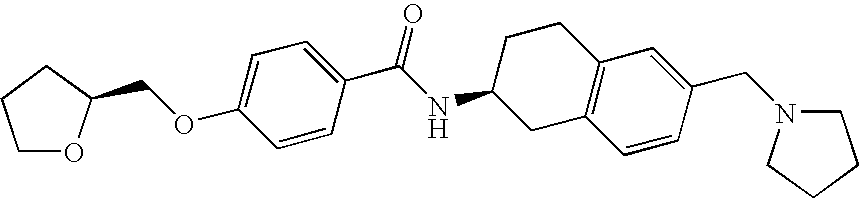
Method A-1


Method H-1
| TABLE 1 | |||
| ESI- | |||
| Ex. | Molecular- | MS | |
| No. | Structure | weight | [M + H]+ |
| 3-2 |
 |
434.58 | 435 |
| 3-3 |
 |
436.59 | 437 |
| 3-4 |
 |
448.60 | 449 |
| 3-5 |
 |
448.60 | 449 |
| 3-6 |
 |
462.63 | 463 |
| 3-7 |
 |
462.63 | 463 |
| 3-8 |
 |
462.63 | 463 |
| 3-9 |
 |
466.59 | 467 |
| 3-10 |
 |
484.58 | 485 |
| 3-11 |
 |
452.57 | 453 |
| 3-12 |
 |
460.61 | 461 |
| 3-13 |
 |
502.70 | 503 |
| 3-14 |
 |
474.64 | 475 |
| 3-15 |
 |
464.65 | 465 |
| 3-16 |
 |
448.60 | 449 |
| 3-17 |
 |
492.66 | 493 |
| 3-18 |
 |
492.66 | 493 |
| 3-19 |
 |
466.62 | 467 |
| 3-20 |
 |
484.64 | 485 |
| 3-21 |
 |
420.55 | 421 |
| 3-22 |
 |
450.58 | 451 |
| 3-23 |
 |
462.51 | 463 |
| 3-24 |
 |
422.57 | 423 |
| 3-25 |
 |
438.57 | 439 |
| 3-26 |
 |
452.55 | 453 |
| 3-27 |
 |
434.58 | 435 |
| 3-28 |
 |
434.58 | 435 |
| 3-29 |
 |
466.64 | 467 |
| 3-30 |
 |
452.59 | 453 |
| 3-31 |
 |
465.59 | 466 |
| 3-32 |
 |
488.63 | 489 |
| 3-33 |
 |
505.66 | 506 |
| 3-34 |
 |
450.62 | 451 |
| 3-35 |
 |
450.62 | 451 |
| 3-36 |
 |
465.63 | 466 |
| 3-37 |
 |
463.62 | 464 |
| 3-38 |
 |
450.62 | 451 |
| 3-39 |
 |
496.65 | 497 |
| 3-40 |
 |
464.60 | 465 |
| 3-41 |
 |
464.60 | 465 |
| 3-42 |
 |
464.60 | 465 |
| 3-43 |
 |
464.60 | 465 |
| 3-44 |
 |
491.63 | 492 |
| 3-45 |
 |
462.63 | 463 |
| 3-46 |
 |
450.62 | 451 |
| 3-47 |
 |
496.65 | 497 |
| 3-48 |
 |
488.67 | 489 |
| 3-49 |
 |
478.63 | 479 |
| 3-50 |
 |
461.60 | 462 |
| 3-51 |
 |
474.60 | 475 |
| 3-52 |
 |
476.66 | 477 |
| 3-53 |
 |
478.63 | 479 |
| 3-54 |
 |
452.59 | 453 |
| 3-55 |
 |
491.63 | 492 |
| 3-56 |
 |
492.62 | 493 |
| 3-57 |
 |
450.58 | 451 |
| 3-58 |
 |
454.56 | 455 |
| 3-59 |
 |
420.55 | 421 |
| 3-60 |
 |
502.70 | 503 |
| 3-61 |
 |
466.58 | 467 |
| 3-62 |
 |
478.63 | 479 |
| 3-63 |
 |
486.61 | 487 |
| 3-64 |
 |
486.63 | 487 |
| 3-65 |
 |
454.56 | 455 |
| 3-66 |
 |
450.58 | 451 |
| 3-67 |
 |
450.62 | 451 |
| 3-68 |
 |
478.63 | 479 |
| 3-69 |
 |
464.60 | 465 |
| 3-70 |
 |
492.54 | 493 |
| 3-71 |
 |
475.59 | 476 |
| 3-72 |
 |
463.58 | 464 |
| 3-73 |
 |
444.52 | 445 |
| 3-74 |
 |
452.59 | 453 |
| 3-75 |
 |
436.55 | 437 |
| 3-76 |
 |
452.59 | 453 |
| 3-77 |
 |
464.60 | 465 |
| 3-78 |
 |
468.59 | 469 |
| 3-79 |
 |
492.66 | 493 |
| 3-80 |
 |
478.63 | 479 |
| 3-81 |
 |
498.64 | 499 |
| 3-82 |
 |
474.60 | 475 |
| 3-83 |
 |
460.61 | 461 |
| 3-84 |
 |
473.61 | 474 |
| 3-85 |
 |
464.60 | 465 |
| 3-86 |
 |
452.57 | 453 |
| 3-87 |
 |
478.63 | 479 |
| 3-88 |
 |
506.68 | 507 |
| 3-89 |
 |
466.59 | 467 |
| 3-90 |
 |
512.65 | 513 |
| 3-91 |
 |
484.64 | 485 |
| 3-92 |
 |
422.57 | 423 |
| 3-93 |
 |
438.57 | 439 |
| 3-94 |
 |
438.57 | 439 |
| 3-95 |
 |
466.62 | 467 |
| 3-96 |
 |
512.65 | 513 |
| 3-97 |
 |
462.63 | 463 |
| 3-98 |
 |
506.64 | 507 |
| 3-99 |
 |
452.59 | 453 |
| 3-100 |
 |
462.59 | 463 |
| 3-101 |
 |
512.67 | 513 |
| 3-102 |
 |
464.60 | 465 |
| 3-103 |
 |
501.62 | 502 |
| 3-104 |
 |
480.60 | 481 |
| 3-105 |
 |
465.63 | 466 |
| 3-106 |
 |
476.66 | 477 |
| 3-107 |
 |
464.65 | 465 |
| 3-108 |
 |
452.59 | 453 |
| 3-109 |
 |
436.59 | 437 |
| 3-110 |
 |
506.64 | 507 |
| 3-111 |
 |
436.59 | 437 |
| 3-112 |
 |
500.64 | 501 |
| 3-113 |
 |
476.66 | 477 |
| 3-114 |
 |
485.63 | 486 |
| 3-115 |
 |
466.62 | 467 |
| 3-116 |
 |
491.63 | 492 |
| 3-117 |
 |
464.60 | 465 |
| 3-118 |
 |
474.64 | 475 |
| 3-119 |
 |
505.66 | 506 |
| 3-120 |
 |
487.60 | 488 |
| 3-121 |
 |
452.59 | 453 |
| 3-122 |
 |
440.56 | 441 |
| 3-123 |
 |
452.59 | 453 |
| 3-124 |
 |
426.53 | 427 |
| 3-125 |
 |
476.66 | 477 |
| 3-126 |
 |
448.60 | 449 |
| 3-127 |
 |
450.62 | 451 |
| 3-128 |
 |
476.66 | 477 |
| 3-129 |
 |
452.59 | 453 |
| 3-130 |
 |
476.66 | 477 |
| 3-131 |
 |
448.60 | 449 |
| 3-132 |
 |
478.63 | 479 |
| 3-133 |
 |
478.63 | 479 |
| 3-134 |
 |
450.58 | 451 |
| 3-135 |
 |
464.65 | 465 |
| 3-136 |
 |
448.60 | 449 |
| 3-137 |
 |
448.60 | 449 |
| 3-138 |
 |
448.60 | 449 |
| 3-139 |
 |
462.63 | 463 |
| 3-140 |
 |
408.54 | 409 |
| 3-141 |
 |
450.62 | 451 |
| 3-142 |
 |
436.59 | 437 |
| 3-143 |
 |
461.60 | 462 |
| 3-144 |
 |
490.64 | 491 |
| 3-145 |
 |
474.64 | 475 |
| 3-146 |
 |
503.64 | 504 |
| 3-147 |
 |
460.61 | 461 |
| 3-148 |
 |
460.61 | 461 |
| 3-149 |
 |
474.64 | 475 |
| 3-150 |
 |
474.64 | 475 |
| 3-151 |
 |
488.67 | 489 |
| 3-152 |
 |
448.60 | 449 |
| 3-153 |
 |
488.67 | 489 |
| 3-154 |
 |
488.67 | 489 |
| 3-155 |
 |
488.67 | 489 |
| 3-156 |
 |
474.64 | 475 |
| 3-157 |
 |
492.70 | 493 |
| 3-158 |
 |
476.66 | 477 |
| 3-159 |
 |
488.67 | 489 |
| 3-160 |
 |
476.66 | 477 |
| 3-161 |
 |
490.68 | 491 |
| 3-162 |
 |
490.68 | 491 |
| 3-163 |
 |
477.65 | 478 |
| 3-164 |
 |
476.66 | 477 |
| 3-165 |
 |
504.71 | 505 |
| 3-166 |
 |
476.66 | 477 |
| 3-167 |
 |
490.68 | 491 |
| 3-168 |
 |
464.65 | 465 |
| 3-169 |
 |
492.66 | 493 |
| 3-170 |
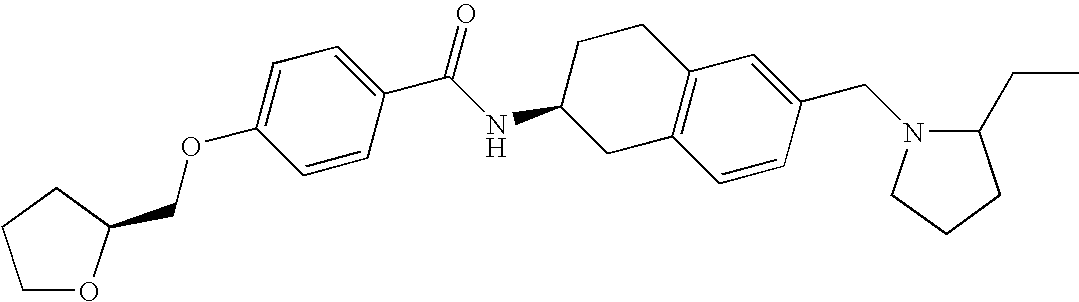 |
462.63 | 463 |
| 3-171 |
 |
492.70 | 493 |
| 3-172 |
 |
462.63 | 463 |
| 3-173 |
 |
476.66 | 477 |
| 3-174 |
 |
476.66 | 477 |
| 3-175 |
 |
490.68 | 491 |
| 3-176 |
 |
490.68 | 491 |
| 3-177 |
 |
494.67 | 495 |
| 3-178 |
 |
490.68 | 491 |
| 3-179 |
 |
490.68 | 491 |
| 3-180 |
 |
502.70 | 503 |
| 3-181 |
 |
464.65 | 465 |
| 3-182 |
 |
474.64 | 475 |
| 3-183 |
 |
490.56 | 491 |
| 3-184 |
 |
502.70 | 503 |
| 3-185 |
 |
490.68 | 491 |
| 3-186 |
 |
490.68 | 491 |
| 3-187 |
 |
464.65 | 465 |
| 3-188 |
 |
464.65 | 465 |
| 3-189 |
 |
504.71 | 505 |
| 3-190 |
 |
476.66 | 477 |
| 3-191 |
 |
478.63 | 479 |
| 3-192 |
 |
490.68 | 491 |
| 3-193 |
 |
492.66 | 493 |
| 3-194 |
 |
488.67 | 489 |
| 3-195 |
 |
476.66 | 477 |
| 3-196 |
 |
463.63 | 464 |
| 3-197 |
 |
477.65 | 478 |
| 3-198 |
 |
451.61 | 452 |
| 3-199 |
 |
489.66 | 490 |
| 3-200 |
 |
477.65 | 478 |
| 3-201 |
 |
463.63 | 464 |
| 3-202 |
 |
463.63 | 464 |
| 3-203 |
 |
475.64 | 476 |
| 3-204 |
 |
479.62 | 480 |
| 3-205 |
 |
493.65 | 494 |
| 3-206 |
 |
451.61 | 452 |
| 3-207 |
 |
437.59 | 438 |
| 3-208 |
 |
435.57 | 436 |
| 3-209 |
 |
449.60 | 450 |
| 3-210 |
 |
461.61 | 462 |
| 3-211 |
 |
475.64 | 476 |
| 3-212 |
 |
475.64 | 476 |
| 3-213 |
 |
435.57 | 436 |
| 3-214 |
 |
449.60 | 450 |

Method J-1


Method K


Method H-2
| TABLE 2 | |||
| ESI- | |||
| Ex. | Molecular | MS | |
| No. | Structure | weight | [M + H]+ |
| 8-2 |
 |
436.27 | 437 |
| 8-3 |
 |
490.32 | 491 |
| 8-4 |
 |
488.30 | 489 |
| 8-5 |
 |
476.30 | 477 |
| 8-6 |
 |
448.27 | 449 |
| 8-7 |
 |
476.30 | 477 |
| 8-8 |
 |
448.27 | 449 |
| 8-9 |
 |
488.30 | 489 |
| 8-10 |
 |
464.30 | 465 |
| 8-11 |
 |
478.32 | 479 |
| 8-12 |
 |
492.34 | 493 |
| 8-13 |
 |
504.34 | 505 |
| 8-14 |
 |
464.30 | 465 |
| 8-15 |
 |
476.30 | 477 |
| 8-16 |
 |
464.30 | 465 |
| 8-17 |
 |
476.30 | 477 |
| 8-18 |
 |
464.30 | 465 |
| 8-19 |
 |
450.29 | 451 |
| 8-20 |
 |
558.38 | 559 |
| 8-21 |
 |
464.30 | 465 |
| 8-22 |
 |
506.35 | 507 |
| 8-23 |
 |
518.31 | 519 |
| 8-24 |
 |
516.34 | 517 |
| 8-25 |
 |
504.34 | 505 |
| 8-26 |
 |
518.31 | 519 |
| 8-27 |
 |
516.34 | 517 |
| 8-28 |
 |
504.34 | 505 |

| TABLE 3 | |||
| Ex. | Molecular- | ESI-MS | |
| No. | Structure | weight | [M+ H]+ |
| 9-2 |
 |
462.63 | 463 |
| 9-3 |
 |
464.60 | 465 |
| 9-4 |
 |
476.66 | 477 |
| 9-5 |
 |
476.66 | 477 |
| 9-6 |
 |
462.64 | 463 |


| TABLE 4 | |||
| ESI- | |||
| Ex. | Molecular | MS | |
| No. | Structure | weight | [M +H]+ |
| 15-2 |
 |
488.68 | 489 |
| 15-3 |
 |
460.62 | 461 |
| 15-4 |
 |
476.66 | 477 |
| 15-5 |
 |
532.73 | 533 |
| 15-6 |
 |
476.66 | 477 |
| 15-7 |
 |
490.65 | 491 |
| 15-8 |
 |
462.64 | 463 |
| 15-9 |
 |
488.68 | 489 |
| 15-10 |
 |
486.66 | 487 |
| 15-11 |
 |
488.68 | 489 |
| 15-12 |
 |
504.68 | 505 |
| 15-13 |
 |
478.64 | 479 |
| 15-14 |
 |
474.65 | 475 |
| 15-15 |
 |
474.65 | 475 |
| 15-16 |
 |
488.68 | 489 |
| 15-17 |
 |
500.69 | 501 |
| TABLE 5 | |||
| IC50/ | |||
| Ex. No. | μM | ||
| 1 | 0.09 | ||
| 2 | 0.67 | ||
| 3-2 | 3.29 | ||
| 3-14 | 0.10 | ||
| 3-26 | 0.36 | ||
| 3-32 | 0.13 | ||
| 3-33 | 0.27 | ||
| 3-34 | 0.10 | ||
| 3-37 | 0.34 | ||
| 3-40 | 0.18 | ||
| 3-44 | 0.31 | ||
| 3-48 | 0.21 | ||
| 3-51 | 0.19 | ||
| 3-61 | 0.30 | ||
| 3-64 | 0.18 | ||
| 3-71 | 0.75 | ||
| 3-72 | 1.85 | ||
| 3-77 | 0.12 | ||
| 3-84 | 0.17 | ||
| 3-86 | 0.12 | ||
| 3-100 | 0.33 | ||
| 3-103 | 0.20 | ||
| 3-120 | 2.41 | ||
| 3-135 | 0.15 | ||
| 3-166 | 0.11 | ||
| 3-194 | 0.09 | ||
| 3-195 | 0.11 | ||
| 8-1 | 0.24 | ||
| 8-3 | 0.23 | ||
| 8-8 | 0.18 | ||
| 8-16 | 0.12 | ||
| 8-26 | 0.23 | ||
| 9-2 | 1.28 | ||
| 9-3 | 0.17 | ||
| 9-4 | 0.44 | ||
| 9-5 | 0.31 | ||
| 10 | 0.11 | ||
| 12 | 0.30 | ||
| 13 | 1.40 | ||
| 14 | 0.63 | ||
| TABLE 6 | ||
| Ex. | hERG Inh. | Neph. sol. |
| No. | IC50/μM | pH 7.4/μM |
| 1 | >30 | >500 |
| 3-6 | >10 | >500 |
| 3-34 | >30 | 50 |
| 3-83 | >30 | >500 |
| 3-154 | >10 | >500 |
| 3-166 | >10 | 450 |
| 14 | >10 | >500 |
| TABLE 7 | |||
| Ex. | Molecular- | Calc. | |
| No. | Structure | weight | [M + H]+ |
| 1-1 |
 |
436.55 | 437 |
| 1-2 |
 |
436.55 | 437 |
| 1-3 |
 |
408.54 | 409 |
| 1-4 |
 |
406.53 | 407 |
| 1-5 |
 |
424.54 | 425 |
| 1-6 |
 |
424.54 | 425 |
| 1-7 |
 |
424.54 | 425 |
| 1-8 |
 |
438.57 | 439 |
| 1-9 |
 |
424.54 | 425 |
| 1-10 |
 |
438.57 | 439 |
| 1-11 |
 |
424.54 | 425 |
| 1-12 |
 |
464.48 | 464 |
| 1-13 |
 |
410.51 | 411 |
| 1-14 |
 |
420.55 | 421 |
| 1-15 |
 |
436.55 | 437 |
| 1-16 |
 |
450.58 | 451 |
| 1-17 |
 |
436.55 | 437 |
| 1-18 |
 |
463.58 | 464 |
| 1-19 |
 |
418.58 | 419 |
| 1-20 |
 |
433.60 | 434 |
| 1-21 |
 |
458.56 | 459 |
| 1-22 |
 |
418.54 | 419 |
| 1-23 |
 |
447.58 | 448 |
| 1-24 |
 |
445.56 | 446 |
| 1-25 |
 |
437.58 | 438 |
| 1-26 |
 |
453.58 | 454 |
| 1-27 |
 |
453.58 | 454 |
| 1-28 |
 |
487.04 | 487 |
| 1-29 |
 |
482.62 | 483 |
| 1-30 |
 |
466.62 | 467 |
| 1-31 |
 |
492.66 | 493 |
| 1-32 |
 |
462.59 | 463 |
Claims (19)


Priority Applications (1)
| Application Number | Priority Date | Filing Date | Title |
|---|---|---|---|
| US14/094,976 US20140088077A1 (en) | 2007-08-15 | 2013-12-03 | Novel substituted tetrahydronaphthalenes, process for the preparation thereof and the use thereof as medicaments |
Applications Claiming Priority (4)
| Application Number | Priority Date | Filing Date | Title |
|---|---|---|---|
| EP07291010.2 | 2007-08-15 | ||
| EP07291010 | 2007-08-15 | ||
| EP07291010A EP2025674A1 (en) | 2007-08-15 | 2007-08-15 | Substituted tetra hydro naphthalines, method for their manufacture and their use as drugs |
| PCT/EP2008/006700 WO2009021740A2 (en) | 2007-08-15 | 2008-08-14 | Substituted tetrahydronaphthalenes, process for the preparation thereof and the use thereof as medicaments |
Related Parent Applications (1)
| Application Number | Title | Priority Date | Filing Date |
|---|---|---|---|
| PCT/EP2008/006700 Continuation WO2009021740A2 (en) | 2007-08-15 | 2008-08-14 | Substituted tetrahydronaphthalenes, process for the preparation thereof and the use thereof as medicaments |
Related Child Applications (1)
| Application Number | Title | Priority Date | Filing Date |
|---|---|---|---|
| US14/094,976 Division US20140088077A1 (en) | 2007-08-15 | 2013-12-03 | Novel substituted tetrahydronaphthalenes, process for the preparation thereof and the use thereof as medicaments |
Publications (2)
| Publication Number | Publication Date |
|---|---|
| US20100249097A1 US20100249097A1 (en) | 2010-09-30 |
| US8609731B2 true US8609731B2 (en) | 2013-12-17 |
Family
ID=38823517
Family Applications (2)
| Application Number | Title | Priority Date | Filing Date |
|---|---|---|---|
| US12/705,140 Expired - Fee Related US8609731B2 (en) | 2007-08-15 | 2010-02-12 | Substituted tetrahydronaphthalenes, process for the preparation thereof and the use thereof as medicaments |
| US14/094,976 Abandoned US20140088077A1 (en) | 2007-08-15 | 2013-12-03 | Novel substituted tetrahydronaphthalenes, process for the preparation thereof and the use thereof as medicaments |
Family Applications After (1)
| Application Number | Title | Priority Date | Filing Date |
|---|---|---|---|
| US14/094,976 Abandoned US20140088077A1 (en) | 2007-08-15 | 2013-12-03 | Novel substituted tetrahydronaphthalenes, process for the preparation thereof and the use thereof as medicaments |
Country Status (26)
| Country | Link |
|---|---|
| US (2) | US8609731B2 (en) |
| EP (2) | EP2025674A1 (en) |
| JP (1) | JP2010535827A (en) |
| KR (1) | KR20100063700A (en) |
| CN (1) | CN101784536A (en) |
| AR (1) | AR068059A1 (en) |
| AU (1) | AU2008286316A1 (en) |
| BR (1) | BRPI0815206A2 (en) |
| CA (1) | CA2695955A1 (en) |
| CL (1) | CL2008002414A1 (en) |
| CO (1) | CO6331303A2 (en) |
| CR (1) | CR11235A (en) |
| DO (1) | DOP2010000059A (en) |
| EC (1) | ECSP109967A (en) |
| MA (1) | MA31611B1 (en) |
| MX (1) | MX2010001503A (en) |
| NI (1) | NI201000024A (en) |
| PA (1) | PA8793401A1 (en) |
| PE (1) | PE20090986A1 (en) |
| RU (1) | RU2010109416A (en) |
| SV (1) | SV2010003480A (en) |
| TN (1) | TN2010000075A1 (en) |
| TW (1) | TW200930711A (en) |
| UY (1) | UY31288A1 (en) |
| WO (1) | WO2009021740A2 (en) |
| ZA (1) | ZA201000520B (en) |
Families Citing this family (6)
| Publication number | Priority date | Publication date | Assignee | Title |
|---|---|---|---|---|
| WO2009123194A1 (en) * | 2008-04-01 | 2009-10-08 | 武田薬品工業株式会社 | Heterocyclic compound |
| WO2010087454A1 (en) * | 2009-01-30 | 2010-08-05 | 武田薬品工業株式会社 | Quinoline derivative |
| UY32443A (en) | 2009-02-13 | 2010-09-30 | Sanofi Aventis | NEW TETRAHYDRONAFTALENES, PROCESSES FOR THE PREPARATION AND USE OF THE SAME AS A MEDICINAL PRODUCT. |
| US8642770B2 (en) * | 2010-01-06 | 2014-02-04 | Takeda Pharmaceutical Company Limited | Indole derivative |
| WO2017172505A1 (en) * | 2016-03-29 | 2017-10-05 | Merck Sharp & Dohme Corp. | Antidiabetic bicyclic compounds |
| CN118994009A (en) * | 2023-05-19 | 2024-11-22 | 中国石油化工股份有限公司 | Preparation method of mono-benzyl amino caprolactam, application thereof and functional nylon-6 |
Citations (24)
| Publication number | Priority date | Publication date | Assignee | Title |
|---|---|---|---|---|
| WO2000051970A1 (en) | 1999-02-26 | 2000-09-08 | Fujisawa Pharmaceutical Co., Ltd. | Amide compounds for the potentiation of cholinergic activity |
| WO2001021577A2 (en) | 1999-09-20 | 2001-03-29 | Takeda Chemical Industries, Ltd. | Melanin concentrating hormone antagonist |
| WO2002002744A2 (en) | 2000-07-05 | 2002-01-10 | Synaptic Pharmaceutical Corporation | Dna encoding a human melanin concentrating hormone receptor (mch1) and uses thereof |
| WO2002006245A1 (en) | 2000-07-05 | 2002-01-24 | Synaptic Pharmarceutical Corporation | Selective melanin concentrating hormone-1 (mch1) receptor antagonists and uses thereof |
| WO2002010146A1 (en) | 2000-07-31 | 2002-02-07 | Smithkline Beecham P.L.C. | Carboxamide compounds and their use as antagonists of a human 11cby receptor |
| WO2002057233A1 (en) | 2000-12-01 | 2002-07-25 | Schering Corporation | Mch antagonists and their use in the treatment of obesity |
| WO2002064565A1 (en) | 2001-02-13 | 2002-08-22 | Aventis Pharma Deutschland Gmbh | Acylated 1,2,3,4-tetrahydronaphthyl amines and their use as pharmaceutical |
| WO2002089729A2 (en) | 2001-05-04 | 2002-11-14 | Tularik Inc. | Fused heterocyclic compounds |
| WO2003035624A1 (en) | 2001-10-25 | 2003-05-01 | Takeda Chemical Industries, Ltd. | Quinoline compound |
| WO2003045313A2 (en) | 2001-11-27 | 2003-06-05 | Merck & Co. Inc. | 2-aminoquinoline compounds |
| WO2003087046A1 (en) | 2002-04-09 | 2003-10-23 | 7Tm Pharma A/S | Novel aminotetraline compounds for use in mch receptor related disorders |
| WO2003087044A2 (en) | 2002-04-09 | 2003-10-23 | 7Tm Pharma A/S | Novel carboxamide compounds for use in mch receptor related disorders |
| WO2003097047A1 (en) | 2002-05-13 | 2003-11-27 | Eli Lilly And Company | Multicyclic compounds for use as melanin concentrating hormone antagonists in the treatment of obesity and diabetes |
| WO2004024702A1 (en) | 2002-08-24 | 2004-03-25 | Boehringer Ingelheim Pharma Gmbh & Co. Kg | Novel carboxamide compounds having an mch-antagonistic effect, medicaments containing said compounds, and methods for the production thereof |
| WO2004092181A1 (en) | 2003-04-11 | 2004-10-28 | Smithkline Beecham Corporation | Heterocyclic mchr1 antagonists |
| US20040242572A1 (en) | 2002-08-24 | 2004-12-02 | Boehringer Ingelheim International Gmbh | New carboxamide compounds having melanin concentrating hormone antagonistic activity, pharmaceutical preparations comprising these compounds and process for their manufacture |
| US20050075324A1 (en) | 2003-10-01 | 2005-04-07 | The Procter & Gamble Company | Melanin concentrating hormone antagonists |
| WO2005047293A1 (en) | 2003-11-07 | 2005-05-26 | Neurocrine Biosciences, Inc. | Melanin-concentrating hormone receptor antagonists and compositions and methods related thereto |
| WO2005103039A1 (en) | 2004-04-15 | 2005-11-03 | Neurocrine Biosciences, Inc. | 2- (3-aminopyrrolidin-1-yl) pyridines as melanin-concentrating hormone receptor an tagonists |
| WO2006044293A2 (en) | 2004-10-12 | 2006-04-27 | Pharmacopeia Drug Discovery, Inc. | Bicyclic compounds as selective melanin concentrating hormone receptor antagonists for the treatment of obesity and related disorders |
| US20060247239A1 (en) | 2003-10-01 | 2006-11-02 | Hu Xiufeng E | Melanin concentrating hormone antagonists |
| WO2008002575A1 (en) | 2006-06-26 | 2008-01-03 | The Procter & Gamble Company | Melanin concentrating hormone antagonists |
| WO2008001160A1 (en) | 2006-06-23 | 2008-01-03 | The Procter & Gamble Company | Melanin concentrating hormone antagonists |
| US7524882B2 (en) * | 2002-07-30 | 2009-04-28 | Merck & Co., Inc. | PPAR alpha selective compounds for the treatment of dyslipidemia and other lipid disorders |
Family Cites Families (947)
| Publication number | Priority date | Publication date | Assignee | Title |
|---|---|---|---|---|
| EP0111551B1 (en) | 1982-06-14 | 1987-05-06 | MERRILL, Edward W. | Process and apparatus for measuring blood viscosity directly and rapidly |
| FR2713225B1 (en) | 1993-12-02 | 1996-03-01 | Sanofi Sa | Substituted N-piperidino-3-pyrazolecarboxamide. |
| US7396814B2 (en) | 1995-06-07 | 2008-07-08 | Palatin Technologies, Inc. | Metallopeptide compositions for treatment of sexual dysfunction |
| CZ220498A3 (en) | 1996-01-17 | 1998-11-11 | Novo Nordisk A/S | 1,2,4-thiadiazine and 1,4-thiazine derivatives, preparation and use |
| DE122010000020I1 (en) | 1996-04-25 | 2010-07-08 | Prosidion Ltd | Method for lowering the blood glucose level in mammals |
| JP3149958B2 (en) | 1996-08-30 | 2001-03-26 | ノボ ノルディスク アクティーゼルスカブ | GLP-1 derivative |
| DE69723869T2 (en) | 1996-12-31 | 2004-04-22 | Dr. Reddy's Laboratories Ltd. | HETEROCYCLIC COMPOUNDS, METHOD FOR THEIR PRODUCTION, PHARMACEUTICAL COMPOSITIONS THAT CONTAIN THEIR AND THEIR APPLICATION IN THE TREATMENT OF DIABETIS AND RELATED DISEASES |
| DE19726167B4 (en) | 1997-06-20 | 2008-01-24 | Sanofi-Aventis Deutschland Gmbh | Insulin, process for its preparation and pharmaceutical preparation containing it |
| EP1000066A1 (en) | 1997-07-16 | 2000-05-17 | Novo Nordisk A/S | Fused 1,2,4-thiadiazine derivatives, their preparation and use |
| EP2823812A1 (en) | 1998-02-02 | 2015-01-14 | Trustees Of Tufts College | Dipeptidylpeptidase IV inhibitors for use in the treatment of Type II diabetes |
| AU756965B2 (en) | 1998-03-12 | 2003-01-30 | Microbial Chemistry Research Foundation | Benzofurylpyrone derivatives |
| US6221897B1 (en) | 1998-06-10 | 2001-04-24 | Aventis Pharma Deutschland Gmbh | Benzothiepine 1,1-dioxide derivatives, a process for their preparation, pharmaceuticals comprising these compounds, and their use |
| FR2783246B1 (en) | 1998-09-11 | 2000-11-17 | Aventis Pharma Sa | AZETIDINE DERIVATIVES, THEIR PREPARATION AND THE MEDICINES CONTAINING THEM |
| DE19845405C2 (en) | 1998-10-02 | 2000-07-13 | Aventis Pharma Gmbh | Aryl-substituted propanolamine derivatives and their use |
| WO2000034331A2 (en) | 1998-12-07 | 2000-06-15 | Societe De Conseils De Recherches Et D'applications Scientifiques Sas | Analogues of glp-1 |
| WO2000063208A1 (en) | 1999-04-16 | 2000-10-26 | Novo Nordisk A/S | Substituted imidazoles, their preparation and use |
| WO2000064884A1 (en) | 1999-04-26 | 2000-11-02 | Novo Nordisk A/S | Piperidyl-imidazole derivatives, their preparations and therapeutic uses |
| IL145922A0 (en) | 1999-04-28 | 2002-07-25 | Aventis Pharma Gmbh | Di-aryl acid derivatives as ppar receptor ligands |
| PT1177176E (en) | 1999-04-28 | 2006-08-31 | Aventis Pharma Gmbh | DERIVATIVES OF TRIARILIC ACIDS AS LIGANDS OF PPAR RECEPTORS. |
| CA2371271A1 (en) | 1999-04-30 | 2000-11-09 | Neurogen Corporation | 9h-pyrimido[4,5-b]indole derivatives: crf1 specific ligands |
| KR100718830B1 (en) | 1999-06-23 | 2007-05-17 | 사노피-아벤티스 도이칠란트 게엠베하 | Substituted benzimidazole and preparation method thereof |
| US7235625B2 (en) | 1999-06-29 | 2007-06-26 | Palatin Technologies, Inc. | Multiple agent therapy for sexual dysfunction |
| EP1076066A1 (en) | 1999-07-12 | 2001-02-14 | Zealand Pharmaceuticals A/S | Peptides for lowering blood glucose levels |
| BR0013727A (en) | 1999-09-01 | 2002-05-07 | Aventis Pharma Gmbh | Sulfonylcarboxamide derivatives, process for their preparation and use as a medicine |
| WO2001019831A1 (en) | 1999-09-10 | 2001-03-22 | Novo Nordisk A/S | MODULATORS OF PROTEIN TYROSINE PHOSPHATASES (PTPases) |
| WO2001019830A1 (en) | 1999-09-10 | 2001-03-22 | Novo Nordisk A/S | MODULATORS OF PROTEIN TYROSINE PHOSPHATASES (PTPases) |
| EP1214060A2 (en) | 1999-09-10 | 2002-06-19 | Novo Nordisk A/S | Method of inhibiting protein tyrosine phosphatase 1b and/or t-cell protein tyrosine phosphatase and/or other ptpases with an asp residue at position 48 |
| DE19951360A1 (en) | 1999-10-26 | 2001-05-03 | Aventis Pharma Gmbh | Substituted indoles |
| FR2800375B1 (en) | 1999-11-03 | 2004-07-23 | Sanofi Synthelabo | TRICYCLIC DERIVATIVES OF PYRAZOLECARBOXYLIC ACID, THEIR PREPARATION, THE PHARMACEUTICAL COMPOSITIONS CONTAINING THEM |
| PE20011010A1 (en) | 1999-12-02 | 2001-10-18 | Glaxo Group Ltd | OXAZOLES AND THIAZOLES REPLACED AS AGONIST OF THE RECEPTOR ACTIVATED BY THE HUMAN PEROXISOMAS PROLIFERATOR |
| FR2805817B1 (en) | 2000-03-03 | 2002-04-26 | Aventis Pharma Sa | PHARMACEUTICAL COMPOSITIONS CONTAINING AZETIDINE DERIVATIVES, NOVEL AZETIDINE DERIVATIVES AND THEIR PREPARATION |
| FR2805818B1 (en) | 2000-03-03 | 2002-04-26 | Aventis Pharma Sa | AZETIDINE DERIVATIVES, THEIR PREPARATION AND THE PHARMACEUTICAL COMPOSITIONS CONTAINING THEM |
| JP2004500401A (en) | 2000-03-23 | 2004-01-08 | ソルベイ・フアーマシユーチカルズ・ベー・ブイ | 4,5-Dihydro-1H-pyrazole derivatives having CB1-antagonistic activity |
| PT1277736E (en) | 2000-04-28 | 2007-10-12 | Asahi Kasei Pharma Corp | Novel bicyclic compounds |
| CA2408343A1 (en) | 2000-05-11 | 2002-11-07 | Banyu Pharmaceutical Co., Ltd. | N-acyltetrahydroisoquinoline derivatives |
| SE0001899D0 (en) | 2000-05-22 | 2000-05-22 | Pharmacia & Upjohn Ab | New compounds |
| AU2001264977B2 (en) | 2000-05-30 | 2005-04-14 | Merck & Co., Inc. | Melanocortin receptor agonists |
| AU2001272476A1 (en) | 2000-06-16 | 2001-12-24 | Smithkline Beecham Plc | Piperidines for use as orexin receptor antagonists |
| ATE329901T1 (en) | 2000-11-10 | 2006-07-15 | Lilly Co Eli | 3-SUBSTITUTED OXINDOL DERIVATIVES AS BETA-3 AGONISTS |
| HRP20030501A2 (en) | 2000-12-21 | 2005-04-30 | Aventis Pharma Deutschland Gmbh | Diphenyl azetidinone derivatives, method for the production thereof, medicaments containing these compounds, and their use |
| IL156552A0 (en) | 2000-12-21 | 2004-01-04 | Aventis Pharma Gmbh | Diphenyl azetidinone derivatives, method for the production thereof, medicaments containing these compounds, and their use |
| HUP0401081A3 (en) | 2000-12-21 | 2010-06-28 | Sanofi Aventis Deutschland | Novel 1,2-diphenzylazetidinones, method for producing the same, medicaments containing said compounds, and their use |
| EP1345925B1 (en) | 2000-12-21 | 2006-05-17 | Vertex Pharmaceuticals Incorporated | Pyrazole compounds useful as protein kinase inhibitors |
| TWI291957B (en) | 2001-02-23 | 2008-01-01 | Kotobuki Pharmaceutical Co Ltd | Beta-lactam compounds, process for repoducing the same and serum cholesterol-lowering agents containing the same |
| ATE284872T1 (en) | 2001-03-22 | 2005-01-15 | Solvay Pharm Bv | 4,5-DIHYDRO-1H-PYRAZOLE DERIVATIVES WITH CB1 ANTAGONISTIC EFFECT |
| EP1258247A1 (en) | 2001-05-14 | 2002-11-20 | Aventis Pharma Deutschland GmbH | Adenosine analogues for the treatment of insulin resistance syndrome and diabetes |
| GB0113233D0 (en) | 2001-05-31 | 2001-07-25 | Glaxo Group Ltd | Chemical compounds |
| WO2003002776A2 (en) | 2001-06-28 | 2003-01-09 | Algat Sherutey Gimur Teufati | Method of anodizing of magnesium and magnesium alloys and producing conductive layers on an anodized surface |
| WO2003007887A2 (en) | 2001-07-20 | 2003-01-30 | Merck & Co., Inc. | Substituted imidazoles as cannabinoid receptor modulators |
| CA2462200A1 (en) | 2001-08-10 | 2003-02-20 | Palatin Technologies, Inc. | Peptidomimetics of biologically active metallopeptides |
| US7655658B2 (en) | 2001-08-10 | 2010-02-02 | Palatin Technologies, Inc. | Thieno [2,3-D]pyrimidine-2,4-dione melanocortin-specific compounds |
| US7732451B2 (en) | 2001-08-10 | 2010-06-08 | Palatin Technologies, Inc. | Naphthalene-containing melanocortin receptor-specific small molecule |
| US7718802B2 (en) | 2001-08-10 | 2010-05-18 | Palatin Technologies, Inc. | Substituted melanocortin receptor-specific piperazine compounds |
| JP4436129B2 (en) | 2001-08-31 | 2010-03-24 | サノフィ−アベンティス・ドイチュラント・ゲゼルシャフト・ミット・ベシュレンクテル・ハフツング | Diarylcycloalkyl derivatives, process for their preparation and their use as PPAR-activators |
| US7109216B2 (en) | 2001-09-21 | 2006-09-19 | Solvay Pharmaceuticals B.V. | 1H-imidazole derivatives having CB1 agonistic, CB1 partial agonistic or CB1-antagonistic activity |
| ES2272809T3 (en) | 2001-09-21 | 2007-05-01 | Solvay Pharm Bv | NEW DERIVATIVES OF 4,5-DIHIDRO-1H-PIRAZOL WITH ANTAGONIST ACTIVITY OF CB1. |
| US6974810B2 (en) | 2001-09-21 | 2005-12-13 | Solvay Pharmaceuticals B.V. | 4,5-Dihydro-1H-pyrazole derivatives having potent CB1-antagonistic activity |
| US6509367B1 (en) | 2001-09-22 | 2003-01-21 | Virginia Commonwealth University | Pyrazole cannabinoid agonist and antagonists |
| MXPA04002438A (en) | 2001-09-24 | 2004-06-29 | Bayer Pharmaceuticals Corp | Preparation and use of pyrrole derivatives for treating obesity. |
| GT200200188A (en) | 2001-09-24 | 2003-06-25 | PREPARATION AND USE OF IMIDAZOL DERIVATIVES FOR THE TREATMENT OF OBESITY | |
| BR0214344A (en) | 2001-11-22 | 2004-09-14 | Biovitrum Ab | 11 - Beta - Hydroxy Steroid Dehydrogenase Inhibitors Type 1 |
| EP1461325B1 (en) | 2001-11-22 | 2010-05-26 | Biovitrum Ab | Inhibitors of 11-beta-hydroxy steroid dehydrogenase type 1 |
| IL160630A0 (en) | 2001-11-22 | 2004-07-25 | Biovitrum Ab | Inhibitors of 11-beta-hydroxy steroid dehydrogenase type 1 |
| AU2003207717B9 (en) | 2002-02-01 | 2009-05-07 | Merck & Co., Inc. | 11-beta-hydroxysteroid dehydrogenase 1 inhibitors useful for the treatment of diabetes, obesity and dyslipidemia |
| US20050124652A1 (en) | 2002-02-04 | 2005-06-09 | Rustum Boyce | Guanidino compounds |
| NZ534582A (en) | 2002-02-27 | 2006-03-31 | Pfizer Prod Inc | ACC inhibitors |
| CA2477967C (en) | 2002-03-05 | 2010-08-10 | Eli Lilly And Company | Purine derivatives as kinase inhibitors |
| HUP0200849A2 (en) | 2002-03-06 | 2004-08-30 | Sanofi-Synthelabo | N-aminoacetyl-pyrrolidine-2-carbonitrile derivatives, pharmaceutical compositions containing them and process for producing them |
| FR2836915B1 (en) | 2002-03-11 | 2008-01-11 | Aventis Pharma Sa | AMINOINDAZOLE DERIVATIVES, PREPARATION METHOD AND INTERMEDIATES THEREOF AS MEDICAMENTS AND PHARMACEUTICAL COMPOSITIONS COMPRISING THE SAME |
| AU2003226149A1 (en) | 2002-04-05 | 2003-10-27 | Merck & Co., Inc. | Substituted aryl amides |
| FR2838439B1 (en) | 2002-04-11 | 2005-05-20 | Sanofi Synthelabo | TERPHENYL DERIVATIVES, THEIR PREPARATION, PHARMACEUTICAL COMPOSITIONS CONTAINING THEM |
| FR2838438A1 (en) | 2002-04-11 | 2003-10-17 | Sanofi Synthelabo | DIPHENYLPYRIDINE DERIVATIVES, THEIR PREPARATION, THE PHARMACEUTICAL COMPOSITIONS CONTAINING THE SAME |
| DE10215907A1 (en) | 2002-04-11 | 2003-11-06 | Aventis Pharma Gmbh | Acyl-4-carboxyphenyl-urea derivatives, processes for their preparation and their use |
| JP4459629B2 (en) | 2002-04-12 | 2010-04-28 | メルク エンド カムパニー インコーポレーテッド | Bicyclic amide |
| JPWO2003097064A1 (en) | 2002-05-17 | 2005-09-15 | 協和醗酵工業株式会社 | Diabetes treatment |
| US7595311B2 (en) | 2002-05-24 | 2009-09-29 | Exelixis, Inc. | Azepinoindole derivatives as pharmaceutical agents |
| TWI329111B (en) | 2002-05-24 | 2010-08-21 | X Ceptor Therapeutics Inc | Azepinoindole and pyridoindole derivatives as pharmaceutical agents |
| AR040241A1 (en) | 2002-06-10 | 2005-03-23 | Merck & Co Inc | INHIBITORS OF 11-BETA-HYDROXIESTEROID DEHYDROGRENASE 1 FOR THE TREATMENT OF DIABETES OBESITY AND DISLIPIDEMIA |
| DE10226462A1 (en) | 2002-06-13 | 2003-12-24 | Aventis Pharma Gmbh | Fluorinated cycloalkyl-derivatized benzoylguanidines, process for their preparation, their use as medicament, and medicament containing them |
| HUP0202001A2 (en) | 2002-06-14 | 2005-08-29 | Sanofi-Aventis | Azabicyclo-octane and nonane derivatives with ddp-iv inhibiting activity |
| DE10227506A1 (en) | 2002-06-19 | 2004-01-08 | Aventis Pharma Deutschland Gmbh | Ring-substituted diphenylazetidinones, processes for their preparation, pharmaceutical compositions containing them and their use |
| DE10227508A1 (en) | 2002-06-19 | 2004-01-08 | Aventis Pharma Deutschland Gmbh | Acid group-substituted diphenylazetidinones, processes for their preparation, pharmaceutical compositions containing them and their use |
| DE10227507A1 (en) | 2002-06-19 | 2004-01-08 | Aventis Pharma Deutschland Gmbh | Cationically substituted diphenylazetidinones, processes for their preparation, medicaments containing these compounds and their use |
| US20040002524A1 (en) | 2002-06-24 | 2004-01-01 | Richard Chesworth | Benzimidazole compounds and their use as estrogen agonists/antagonists |
| EP1375508A1 (en) | 2002-06-27 | 2004-01-02 | Aventis Pharma Deutschland GmbH | N6-substituted adenosine analogues and their use as pharmaceutical agents |
| AU2003248888A1 (en) | 2002-07-09 | 2004-01-23 | Palatin Technologies, Inc. | Peptide composition for treatment of sexual dysfunction |
| DE10231370B4 (en) | 2002-07-11 | 2006-04-06 | Sanofi-Aventis Deutschland Gmbh | Thiophene glycoside derivatives, medicaments containing these compounds and methods of making these medicaments |
| ATE452879T1 (en) | 2002-07-12 | 2010-01-15 | Sanofi Aventis Deutschland | HETEROCYCLIC SUBSTITUTED BENZOYL UREASES, METHOD FOR THEIR PRODUCTION AND THEIR USE AS MEDICINAL PRODUCTS |
| JP2005533858A (en) | 2002-07-27 | 2005-11-10 | アストラゼネカ アクチボラグ | Compound |
| MXPA05000962A (en) | 2002-07-29 | 2005-05-16 | Hoffmann La Roche | Novel benzodioxoles. |
| BR0313262A (en) | 2002-08-07 | 2005-07-12 | Mitsubishi Pharma Corp | Dihydropyrazolepyridine Compounds |
| DE10237723A1 (en) | 2002-08-17 | 2004-07-08 | Aventis Pharma Deutschland Gmbh | Use of IKappaB kinase inhibitors in pain therapy |
| DE10237722A1 (en) | 2002-08-17 | 2004-08-19 | Aventis Pharma Deutschland Gmbh | Indole or benzimidazole derivatives for the modulation of IKappaB kinase |
| KR101166745B1 (en) | 2002-09-05 | 2012-07-23 | 아방티 파르마 소시에테 아노님 | Novel aminoindazole derivatives as medicines and pharmaceutical compositions containing same |
| WO2004024720A1 (en) | 2002-09-11 | 2004-03-25 | Merck & Co., Inc. | Piperazine urea derivatives as melanocortin-4 receptor agonists |
| NZ537979A (en) | 2002-09-12 | 2007-08-31 | Hoffmann La Roche | N-substituted-1H-indol-5-propionic acid compounds as PPAR agonists useful for the treatment of diabetes |
| EP1546115A4 (en) | 2002-09-27 | 2010-08-04 | Merck Sharp & Dohme | SUBSTITUTED PYRIMIDINES |
| KR20050051691A (en) | 2002-10-11 | 2005-06-01 | 아스트라제네카 아베 | 1,4-disubstituted piperidine derivatives and their use as 11-betahsd1 inhibitors |
| DK1556362T3 (en) | 2002-10-18 | 2008-06-09 | Merck & Co Inc | Heterocyclic beta-aminodipeptidyl peptidase inhibitors for the treatment or prevention of diabetes |
| AU2003267728A1 (en) | 2002-10-18 | 2004-05-04 | Pfizer Products Inc. | Cannabinoid receptor ligands and uses thereof |
| TW200504033A (en) | 2002-10-23 | 2005-02-01 | Procter & Gamble | Melanocortin receptor ligands |
| PL376301A1 (en) | 2002-10-24 | 2005-12-27 | Sterix Limited | Inhibitors of 11-beta-hydroxy steroid dehydrogenase type 1 and type 2 |
| AU2003291342A1 (en) | 2002-11-05 | 2004-06-07 | Arena Pharmaceuticals, Inc. | Benzotriazoles and methods of prophylaxis or treatment of metabolic-related disorders thereof |
| EP1562574A1 (en) | 2002-11-07 | 2005-08-17 | Astrazeneca AB | 2-oxo-ethanesulfonamide derivates |
| FR2847253B1 (en) | 2002-11-19 | 2007-05-18 | Aventis Pharma Sa | NOVEL DERIVATIVES OF PYRIDAZINONES AS MEDICAMENTS AND PHARMACEUTICAL COMPOSITIONS COMPRISING THEM |
| MY134457A (en) | 2002-11-22 | 2007-12-31 | Merck & Co Inc | Substituted amides |
| GB0227813D0 (en) | 2002-11-29 | 2003-01-08 | Astrazeneca Ab | Chemical compounds |
| UY28103A1 (en) | 2002-12-03 | 2004-06-30 | Boehringer Ingelheim Pharma | NEW IMIDAZO-PIRIDINONAS REPLACED, ITS PREPARATION AND ITS EMPLOYMENT AS MEDICATIONS |
| DE10258008B4 (en) | 2002-12-12 | 2006-02-02 | Sanofi-Aventis Deutschland Gmbh | Heterocyclic fluoroglycoside derivatives, medicaments containing these compounds and methods of making these medicaments |
| DE10258007B4 (en) | 2002-12-12 | 2006-02-09 | Sanofi-Aventis Deutschland Gmbh | Aromatic fluoroglycoside derivatives, medicaments containing these compounds and methods for the preparation of these medicaments |
| EP1575901B1 (en) | 2002-12-19 | 2012-10-10 | Merck Sharp & Dohme Corp. | Substituted amides |
| WO2004058727A1 (en) | 2002-12-20 | 2004-07-15 | Bayer Pharmaceuticals Corporation | Substituted 3,5-dihydro-4h-imidazol-4-ones for the treatment of obesity |
| JO2397B1 (en) | 2002-12-20 | 2007-06-17 | ميرك شارب اند دوم كوربوريشن | Triazole Derivatives As Inhibitors Of 11-Beta -Hydroxysteriod Dehydrogenase-1 |
| FR2849032B1 (en) | 2002-12-23 | 2006-04-28 | Sanofi Synthelabo | 5- (4-BROMOPHENYL) -1- (2,4-DICHLOROPHENYL) -4-ETHYL-N - (PIPERIDIN-1-YL) -1H-PYRAZOLE-3-CARBOXAMIDE DERIVATIVE, ITS PREPARATION, ITS THERAPEUTIC APPLICATION |
| WO2004056744A1 (en) | 2002-12-23 | 2004-07-08 | Janssen Pharmaceutica N.V. | Adamantyl acetamides as hydroxysteroid dehydrogenase inhibitors |
| GB0230087D0 (en) | 2002-12-24 | 2003-01-29 | Astrazeneca Ab | Therapeutic agents |
| GB0230088D0 (en) | 2002-12-24 | 2003-01-29 | Astrazeneca Ab | Therapeutic agents |
| WO2004063179A1 (en) | 2003-01-06 | 2004-07-29 | Eli Lilly And Company | Substituted arylcyclopropylacetamides as glucokinase activators |
| CN102558155A (en) | 2003-01-14 | 2012-07-11 | 阿伦纳药品公司 | Aryl and heteroaryl derivatives as modulators of metabolism and the prophylaxis and treatment of diseases related thereto, such as diabetes and hyperglycemia |
| TW200503994A (en) | 2003-01-24 | 2005-02-01 | Novartis Ag | Organic compounds |
| US7176210B2 (en) | 2003-02-10 | 2007-02-13 | Pfizer Inc. | Cannabinoid receptor ligands and uses thereof |
| PL378117A1 (en) | 2003-02-11 | 2006-03-06 | Prosidion Limited | Tri(cyclo) substituted amide compounds |
| EP1594863A1 (en) | 2003-02-11 | 2005-11-16 | Prosidion Limited | Tri(cyclo) substituted amide glucokinase activator compounds |
| RU2005128499A (en) | 2003-02-13 | 2006-01-27 | Санофи-Авентис Дойчланд Гмбх (De) | NITROGEN DERIVATED HEXAHYDROPYRAZINO (1,2-A) PYRIMIDIN-4, 7-DIONE DERIVATIVES, METHOD FOR PRODUCING THEM AND USE THEM AS A MEDICINAL PRODUCT |
| KR20050111588A (en) | 2003-02-13 | 2005-11-25 | 사노피-아벤티스 도이칠란트 게엠베하 | Substituted hexahydropyrazino[1,2-a]pyrimidin-4,7-dion derivatives, method for the production and use thereof as medicaments |
| CN100361992C (en) | 2003-02-19 | 2008-01-16 | 霍夫曼-拉罗奇有限公司 | Sulfonamide-substituted xanthines as PEPCK inhibitors |
| AR043434A1 (en) | 2003-03-03 | 2005-07-27 | Merck & Co Inc | PIPERIZACINE DERIVATIVES ACILATED AS AGELISTS OF THE RECEIVER OF MELANOCORTINA-4. PHARMACEUTICAL COMPOSITIONS AND USES |
| EP1460069A1 (en) | 2003-03-20 | 2004-09-22 | MyoContract Ltd. | Substituted cyclohexyl and piperidinyl derivatives as melanocortin-4 receptor modulators |
| EP1460075A1 (en) | 2003-03-21 | 2004-09-22 | Sanofi-Synthelabo | Substituted 8-Pyridinyl-6,7,8,9-Tetrahydropyrimido[1,2-a]Pyrimidin-4-one and 8-Phenyl-6-7,8,9-Tetrahydropyrimido[1,2-a]Pyrimidin-4-one derivatives |
| AU2004224156B2 (en) | 2003-03-26 | 2010-08-12 | Actelion Pharmaceuticals Ltd. | Tetrahydroisoquinolyl acetamide derivatives for use as orexin receptor antagonists |
| CN1764458A (en) | 2003-03-26 | 2006-04-26 | 麦克公司 | Bicyclic piperidine derivatives as melanocortin-4 receptor agonists |
| DE10314610A1 (en) | 2003-04-01 | 2004-11-04 | Aventis Pharma Deutschland Gmbh | New diphenylazetidinone with improved physiological properties, process for its preparation, medicaments containing these compounds and its use |
| JP2006522747A (en) | 2003-04-11 | 2006-10-05 | ノボ ノルディスク アクティーゼルスカブ | Pharmaceutical use of condensed 1,2,4-triazole |
| ATE482747T1 (en) | 2003-04-11 | 2010-10-15 | High Point Pharmaceuticals Llc | NEW AMIDE DERIVATIVES AND THEIR PHARMACEUTICAL USES |
| WO2004089367A1 (en) | 2003-04-11 | 2004-10-21 | Novo Nordisk A/S | Pharmaceutical use of substituted 1,2,4-triazoles |
| WO2004089471A2 (en) | 2003-04-11 | 2004-10-21 | Novo Nordisk A/S | NEW PYRAZOLO[1,5-a] PYRIMIDINES DERIVATIVES AND PHARMACEUTICAL USE THEREOF |
| US7268133B2 (en) | 2003-04-23 | 2007-09-11 | Pfizer, Inc. Patent Department | Cannabinoid receptor ligands and uses thereof |
| US7145012B2 (en) | 2003-04-23 | 2006-12-05 | Pfizer Inc. | Cannabinoid receptor ligands and uses thereof |
| US20040214856A1 (en) | 2003-04-23 | 2004-10-28 | Pfizer Inc | Cannabinoid receptor ligands and uses thereof |
| US7049323B2 (en) | 2003-04-25 | 2006-05-23 | Bristol-Myers Squibb Company | Amidoheterocycles as modulators of the melanocortin-4 receptor |
| US20060200534A1 (en) | 2003-04-25 | 2006-09-07 | Takahiro Nagai | Multi-medium information sharing system |
| KR20060017763A (en) | 2003-05-01 | 2006-02-27 | 베르날리스 리서치 리미티드 | Use of azetidinecarboxamide derivatives for use in therapy |
| DE602004024880D1 (en) | 2003-05-01 | 2010-02-11 | Vernalis Res Ltd | AZETIDINCARBOXAMIDE DERIVATIVES FOR THE USE OF THE TREATMENT OF CB1-RECEPTOR-MEDIATED DISEASES |
| EP1618105A1 (en) | 2003-05-01 | 2006-01-25 | Vernalis Research Limited | Azetidinecarboxamide derivatives and their use in the treatment of cb1 receptor mediated disorders |
| EP1622876A1 (en) | 2003-05-07 | 2006-02-08 | Pfizer Products Inc. | Cannabinoid receptor ligands and uses thereof |
| CN1784226A (en) | 2003-05-09 | 2006-06-07 | 麦克公司 | Benzimidazole compounds, compositions containing benzimidazole compounds, and methods of use |
| US7067529B2 (en) | 2003-05-19 | 2006-06-27 | Hoffmann-La Roche Inc. | Glutamine fructose-y-phosphate amidotransferase (GFAT) inhibitors |
| EP1631558A1 (en) | 2003-05-21 | 2006-03-08 | Biovitrum Ab | Inhibitors of 11-beta-hydroxy steroid dehydrogenase type i |
| KR20060018217A (en) | 2003-05-23 | 2006-02-28 | 카이론 코포레이션 | Guanidino-substituted quinazolinone compounds as Mc4-R agonists |
| WO2004106294A2 (en) | 2003-05-29 | 2004-12-09 | Merck & Co., Inc. | Triazole derivatives as inhibitors of 11-beta hydroxysteroid dehydrogenase-1 |
| WO2004106343A2 (en) | 2003-05-30 | 2004-12-09 | Ufc Limited | Agelastatin derivatives of antitumour and gsk-3beta-inhibiting alkaloids |
| JP2004359630A (en) | 2003-06-06 | 2004-12-24 | Yamanouchi Pharmaceut Co Ltd | Difluorodiphenylmethane derivatives and their salts |
| US7232823B2 (en) | 2003-06-09 | 2007-06-19 | Pfizer, Inc. | Cannabinoid receptor ligands and uses thereof |
| AU2004252109B2 (en) | 2003-06-11 | 2010-04-08 | Merck Sharp & Dohme Corp. | Substituted 3-alkyl and 3-alkenyl azetidine derivatives |
| BRPI0411366A (en) | 2003-06-13 | 2006-07-25 | Janssen Pharmaceutica Nv | indazolyl (indolyl) maleimide derivatives substituted as kinase inhibitors |
| US20040259887A1 (en) | 2003-06-18 | 2004-12-23 | Pfizer Inc | Cannabinoid receptor ligands and uses thereof |
| JP2006527770A (en) | 2003-06-18 | 2006-12-07 | アストラゼネカ アクチボラグ | 2-Substituted 5,6-diaryl-pyrazine derivatives as CB1 modulators |
| GB0314049D0 (en) | 2003-06-18 | 2003-07-23 | Astrazeneca Ab | Therapeutic agents |
| GB0314057D0 (en) | 2003-06-18 | 2003-07-23 | Astrazeneca Ab | Therapeutic agents |
| AU2004251616A1 (en) | 2003-06-19 | 2005-01-06 | Eli Lilly And Company | Melanocortin receptor 4(MC4) agonists and their uses |
| GB0314261D0 (en) | 2003-06-19 | 2003-07-23 | Astrazeneca Ab | Therapeutic agents |
| CA2528785A1 (en) | 2003-06-20 | 2005-01-06 | Matthias Heinrich Nettekoven | 2-amidobenzothiazoles as cb1 receptor inverse agonists |
| SE0301888D0 (en) | 2003-06-25 | 2003-06-25 | Biovitrum Ab | New use VII |
| WO2004113310A1 (en) | 2003-06-25 | 2004-12-29 | Biovitrum Ab | Use of an inhibitor of 11-b-hydroxysteroid dehydrogenase type 1 compounds for promoting wound healing |
| FR2856683A1 (en) | 2003-06-25 | 2004-12-31 | Sanofi Synthelabo | 4-CYANOPYRAZOLE-3-CARBOXAMIDE DERIVATIVES, THEIR PREPARATION AND THEIR THERAPEUTIC APPLICATION |
| SE0301882D0 (en) | 2003-06-25 | 2003-06-25 | Biovitrum Ab | New use I |
| SE0301886D0 (en) | 2003-06-25 | 2003-06-25 | Biovitrum Ab | New use V |
| US7029524B2 (en) | 2003-06-27 | 2006-04-18 | Day-Glo Color Corp. | Water-based spray marking composition |
| JP2005015434A (en) | 2003-06-27 | 2005-01-20 | Kotobuki Seiyaku Kk | Serum cholesterol lowering agent or preventive or therapeutic agent for atherosclerosis |
| CN100555588C (en) | 2003-06-27 | 2009-10-28 | 日本电气株式会社 | Thin film transistor, thin film transistor substrate, electronic device, and method for manufacturing polycrystalline semiconductor thin film |
| KR20060052792A (en) | 2003-07-09 | 2006-05-19 | 포비스 메디-테크 인코포레이티드 | Compositions comprising the novel compounds and sterols and / or stanol and cholesterol biosynthesis inhibitors and their use to treat or prevent various diseases and symptoms |
| EP1644411A2 (en) | 2003-07-11 | 2006-04-12 | Novo Nordisk A/S | Stabilised insulin compositions |
| US7276608B2 (en) | 2003-07-11 | 2007-10-02 | Bristol-Myers Squibb Company | Tetrahydroquinoline derivatives as cannabinoid receptor modulators |
| FR2857570A1 (en) | 2003-07-18 | 2005-01-21 | Didier Leandri | Device for suspending stemmed glasses around drinks bucket comprises clamp hooked on bucket upper edge and bracket with suspension head connected to clamp lower end enables hooking of upturned stemmed glass |
| US7419990B2 (en) | 2003-07-22 | 2008-09-02 | Merck & Co., Inc. | Piperidine derivatives as melanocortin-4 receptor agonists |
| PE20050249A1 (en) | 2003-07-25 | 2005-06-01 | Aventis Pharma Gmbh | NEW CYANOPYRROLIDES AND PROCEDURE FOR THEIR PREPARATION AS MEDICINES |
| DE10333935A1 (en) | 2003-07-25 | 2005-02-24 | Aventis Pharma Deutschland Gmbh | New bicyclic cyano-heterocycles, process for their preparation and their use as pharmaceuticals |
| DE10334309A1 (en) | 2003-07-28 | 2005-03-03 | Aventis Pharma Deutschland Gmbh | Substituted thiazole-Benzoisothiazoldioxidderivate, processes for their preparation and their use |
| US20050026984A1 (en) | 2003-07-29 | 2005-02-03 | Aventis Pharma S.A. | Substituted thieno [2,3-c] pyrazoles and their use as medicinal products |
| US7008953B2 (en) | 2003-07-30 | 2006-03-07 | Agouron Pharmaceuticals, Inc. | 3, 5 Disubstituted indazole compounds, pharmaceutical compositions, and methods for mediating or inhibiting cell proliferation |
| CN1832741A (en) | 2003-08-07 | 2006-09-13 | 默克公司 | Pyrazole carboxamides as inhibitors of 11-beta-hydroxysteroid dehydrogenase-1 |
| US7326706B2 (en) | 2003-08-15 | 2008-02-05 | Bristol-Myers Squibb Company | Pyrazine modulators of cannabinoid receptors |
| US20070072812A1 (en) | 2003-08-25 | 2007-03-29 | Microbia, Inc. | Quaternary salt derivatives of 1,4-diphenylazetidin-2-ones |
| US20070161577A1 (en) | 2003-08-28 | 2007-07-12 | Martinez Eduardo J | Tethered dimers and trimers of 1,4-diphenylazetidin-2-ones |
| JP2007521322A (en) | 2003-09-18 | 2007-08-02 | メルク エンド カムパニー インコーポレーテッド | Substituted sulfonamides |
| SA04250288B1 (en) | 2003-09-19 | 2008-07-19 | سولفاي فارماسوتيكالز بي . في | Thiazole derivatives as receptor modulators for cannabinoid chemical components |
| KR101241862B1 (en) | 2003-09-19 | 2013-03-13 | 노보 노르디스크 에이/에스 | Novel glp-1 derivatives |
| MXPA06003474A (en) | 2003-09-30 | 2006-06-05 | Novo Nordisk As | Melanocortin receptor agonists. |
| EP1522541A1 (en) | 2003-10-07 | 2005-04-13 | Lipideon Biotechnology AG | Novel hypocholesterolemic compounds |
| TW200519105A (en) | 2003-10-20 | 2005-06-16 | Lg Life Science Ltd | Novel inhibitors of DPP-IV, methods of preparing the same, and pharmaceutical compositions containing the same as an active agent |
| US20050192286A1 (en) | 2003-10-22 | 2005-09-01 | Neurocrine Biosciences, Inc. | Ligands of melanocortin receptors and compositions and methods related thereto |
| US20050119252A1 (en) | 2003-10-22 | 2005-06-02 | Neurocrine Biosciences, Inc. | Ligands of melanocortin receptors and compositions and methods related thereto |
| US20070135357A1 (en) | 2003-10-30 | 2007-06-14 | Sings Heather L | Anti-hypercholesterolemic compounds |
| WO2005042692A2 (en) | 2003-10-31 | 2005-05-12 | Forbes Medi-Tech Inc. | A method of inhibiting the expression of genes which mediate cellular cholesterol influx in animal cells and inhibiting the production of proteins resulting from the expression of such genes using cholesterol absorption inhibitors |
| GB0325402D0 (en) | 2003-10-31 | 2003-12-03 | Astrazeneca Ab | Compounds |
| DE602004008959T2 (en) | 2003-11-07 | 2008-06-19 | F. Hoffmann-La Roche Ag | BENZOÄBÜÄ1,4ÜDIOXEPINDERIVATE |
| DE602004008100T2 (en) | 2003-11-10 | 2008-04-30 | Microbia Inc., Cambridge | 4-BIARYLYL-1-phenylazetidin-2-ONE |
| KR20050045927A (en) | 2003-11-12 | 2005-05-17 | 주식회사 엘지생명과학 | Melanocortin receptor agonists |
| CA2545644C (en) | 2003-11-12 | 2011-11-01 | Lg Life Sciences Ltd. | Melanocortin receptor agonists |
| EP1686996A4 (en) | 2003-11-19 | 2008-11-12 | Novartis Vaccines & Diagnostic | QUINAZOLINONE COMPOUNDS WITH REDUCED BIOACCUMULATION |
| EP1688138A4 (en) | 2003-11-26 | 2008-01-16 | Takeda Pharmaceutical | AGENT FOR REGULATING THE FUNCTION OF A RECEIVER |
| EP1538159A1 (en) | 2003-12-05 | 2005-06-08 | Santhera Pharmaceuticals (Schweiz) GmbH | Substituted N-benzyl-lactam derivatives as melanocortin-4 receptor agonists |
| EP1694348A4 (en) | 2003-12-10 | 2009-07-01 | Merck & Co Inc | VOLUNTARY INHIBITION OF CONSUMPTION OF ETHANOL USING MELANOCORTIN RECEPTOR 4 RECEPTOR AGONISTS |
| DE10359098A1 (en) | 2003-12-17 | 2005-07-28 | Boehringer Ingelheim Pharma Gmbh & Co. Kg | Novel 2- (piperazin-1-yl) and 2 - ([1,4] diazepan-1-yl) imidazo [4,5-d] pyridazin-4-ones, their preparation and their use as pharmaceuticals |
| EP1557417B1 (en) | 2003-12-19 | 2007-03-07 | Sanofi-Aventis | Substituted 8'-pyri(mi)dinyl-dihydrospiro-[cycloalkylamine]-pyrimido[1,2-a] pyrimidin-6-one derivatives |
| HRP20070241T3 (en) | 2003-12-19 | 2007-07-31 | Bristol-Myers Squibb Company | AZABICYCLIC HETEROCYCLES AS CANABINOID RECEPTOR MODULATORS |
| US7301036B2 (en) | 2003-12-19 | 2007-11-27 | Merck & Co., Inc. | Cyclic guanidines, compositions containing such compounds and methods of use |
| ES2284081T3 (en) | 2003-12-19 | 2007-11-01 | Bristol-Myers Squibb Company | AZABICICLIC HETEROCICLES AS MODULAR CANABINOID RECEPTORS. |
| TW200530246A (en) | 2003-12-19 | 2005-09-16 | Bristol Myers Squibb Co | Azabicyclic heterocycles as cannabinoid receptor modulators |
| CA2548309A1 (en) | 2003-12-22 | 2005-07-14 | Amgen Inc. | Aryl sulfonamide compounds and uses related thereto |
| WO2005062824A2 (en) | 2003-12-23 | 2005-07-14 | Merck & Co., Inc. | Anti-hypercholesterolemic compounds |
| GB0329778D0 (en) | 2003-12-23 | 2004-01-28 | Astrazeneca Ab | Chemical compounds |
| CA2550215A1 (en) | 2003-12-23 | 2005-07-07 | Astrazeneca Ab | Diphenylazetidinone derivates possessing cholesterol absorption inhibitory activity |
| BRPI0418149A (en) | 2003-12-24 | 2007-04-17 | Prosidion Ltd | heterocyclic derivatives as gprc receptor agonists |
| CA2551639A1 (en) | 2004-01-06 | 2005-07-28 | Janssen Pharmaceutica N.V. | (3-oxo-3, 4-dihydro-quinoxalin-2-yl-amino) -benzamide derivatives and related compound as glycogen phosphorylase inhibitors for the treatment of diabetes and obesity |
| CN100572375C (en) | 2004-01-28 | 2009-12-23 | 霍夫曼-拉罗奇有限公司 | Spiro-benzene and dioxole and as the application of CB1 antagonist |
| AU2005209365A1 (en) | 2004-01-31 | 2005-08-11 | Sanofi-Aventis Deutschland Gmbh | 7-phenylamino-4-quinolone-3-carboxylic acid derivatives, methods for production and use thereof as medicaments |
| DE102004005172A1 (en) | 2004-02-02 | 2005-08-18 | Aventis Pharma Deutschland Gmbh | Indazole derivatives as inhibitors of the hormone sensitive lipase |
| BRPI0507374A (en) | 2004-02-02 | 2007-07-10 | Pfizer Prod Inc | histamine-3 receptor modulators |
| DE102004006325A1 (en) | 2004-02-10 | 2005-08-25 | Bayer Healthcare Ag | New benzazepine derivatives useful for treating or preventing dyslipidemia, arteriosclerosis, restenosis and ischemia |
| HUP0400405A3 (en) | 2004-02-10 | 2009-03-30 | Sanofi Synthelabo | Pyrimidine derivatives, process for producing them, their use, pharmaceutical compositions containing them and their intermediates |
| FR2866340B1 (en) | 2004-02-13 | 2006-11-24 | Sanofi Synthelabo | OXAZOLE DERIVATIVES, THEIR PREPARATION AND THEIR USE IN THERAPEUTICS. |
| BRPI0507801A (en) | 2004-02-17 | 2007-07-10 | Esteve Labor Dr | substituted azetidine compounds, process for preparing substituted azetidine compounds, medicament and use of at least one substituted azetidine compound |
| CA2554686A1 (en) | 2004-02-18 | 2005-09-01 | Astrazeneca Ab | Compounds |
| DK1725536T3 (en) | 2004-02-19 | 2009-02-16 | Solvay Pharm Bv | Imidazoline derivatives with CB1 antagonistic activity |
| GB0403780D0 (en) | 2004-02-20 | 2004-03-24 | Astrazeneca Ab | Therapeutic agents |
| BRPI0507786A (en) | 2004-02-20 | 2007-07-17 | Astrazeneca Ab | compound and pharmaceutically acceptable salts thereof, pharmaceutical formulation, use of a compound, method of treating a disease, and process for preparing compounds |
| EP1718671A2 (en) | 2004-02-23 | 2006-11-08 | Rheoscience A/S | Peptide yy analogues |
| EP1720861A2 (en) | 2004-02-25 | 2006-11-15 | Eli Lilly And Company | Histamine h3 receptor antagonists, preparation and therapeutic uses |
| DE102004010194A1 (en) | 2004-03-02 | 2005-10-13 | Aventis Pharma Deutschland Gmbh | 4-Benzimidazol-2-yl-pyridazin-3-one derivatives, their preparation and use in medicaments |
| WO2005085237A1 (en) | 2004-03-04 | 2005-09-15 | Kissei Pharmaceutical Co., Ltd. | Fused heterocycle derivative, medicinal composition containing the same, and medicinal use thereof |
| US20050250820A1 (en) | 2004-03-08 | 2005-11-10 | Amgen Inc. | Therapeutic modulation of PPARgamma activity |
| JP4846709B2 (en) | 2004-03-10 | 2011-12-28 | ジヤンセン・フアーマシユーチカ・ナームローゼ・フエンノートシヤツプ | MTP-inhibiting arylpiperidine or piperazine substituted with a 5-membered heterocycle |
| DE102004012068A1 (en) | 2004-03-12 | 2005-09-29 | Boehringer Ingelheim Pharma Gmbh & Co. Kg | New alkyl-containing 5-acylindolinones, their preparation and their use as pharmaceuticals |
| CA2560314A1 (en) | 2004-03-29 | 2005-10-20 | Merck & Co., Inc. | Diaryltriazoles as inhibitors of 11-beta-hydroxysteroid dehydrogenase-1 |
| EP1586318A1 (en) | 2004-04-05 | 2005-10-19 | Neuropharma S.A.U. | Thiadiazolidinones as GSK-3 inhibitors |
| JP2007531744A (en) | 2004-04-05 | 2007-11-08 | 武田薬品工業株式会社 | 6-azaindole compounds |
| JPWO2005097738A1 (en) | 2004-04-06 | 2008-02-28 | 大日本住友製薬株式会社 | New sulfonamide derivatives |
| EP1734930A2 (en) | 2004-04-09 | 2006-12-27 | Smithkline Beecham Corporation | Low dose pharmaceutical products |
| WO2005108370A1 (en) | 2004-04-16 | 2005-11-17 | Ajinomoto Co., Inc. | Benzene compounds |
| CN1950359A (en) | 2004-05-12 | 2007-04-18 | 安万特药物公司 | Substantially pure 2-{[2-(2-methylamino-pyrimidin-4-yl)-1h-indole-5-carbonyl]-amino}-3-(phenylpyridin-2-yl-amino)-propionic acid as an IKB kinase inhibitor |
| EP1604988A1 (en) | 2004-05-18 | 2005-12-14 | Sanofi-Aventis Deutschland GmbH | Pyridazinone derivatives, methods for producing them and their use as pharmaceuticals |
| US7442693B2 (en) | 2004-05-28 | 2008-10-28 | Smithkline Beecham Corporation | Diazepine compounds as ligands of the melanocortin 1 and/or 4 receptors |
| DE102004026532A1 (en) | 2004-05-29 | 2006-01-05 | Sanofi-Aventis Deutschland Gmbh | Substituted Oxazole Benzoisothiazoldioxidderivate, process for their preparation and their use |
| FR2871463B1 (en) | 2004-06-11 | 2006-09-22 | Merck Sante Soc Par Actions Si | AROYL-O-PIPERIDINE-STRUCTURED DERIVATIVES, PROCESSES FOR THEIR PREPARATION, PHARMACEUTICAL COMPOSITIONS CONTAINING THEM AND THERAPEUTIC APPLICATIONS THEREOF |
| DE102004028241B4 (en) | 2004-06-11 | 2007-09-13 | Sanofi-Aventis Deutschland Gmbh | New fluoroglycoside derivatives of pyrazoles, medicines containing these compounds and manufacture of these medicines |
| JP2008504266A (en) | 2004-06-24 | 2008-02-14 | イーライ リリー アンド カンパニー | Compounds and methods for treating dyslipidemia |
| BRPI0512615A (en) | 2004-06-24 | 2008-03-25 | Shionogi & Co | sulfonamide compounds |
| WO2006012227A2 (en) | 2004-06-24 | 2006-02-02 | Incyte Corporation | Amido compounds and their use as pharmaceuticals |
| US20050288317A1 (en) | 2004-06-24 | 2005-12-29 | Wenqing Yao | Amido compounds and their use as pharmaceuticals |
| WO2006017257A2 (en) | 2004-07-12 | 2006-02-16 | Phenomix Corporation | Azetidinone derivatives |
| DE102004034697A1 (en) | 2004-07-17 | 2006-02-09 | Sanofi-Aventis Deutschland Gmbh | Salicylthiazoles substituted with diphenylamine or diphenylamine derivatives, process for their preparation and their use |
| FR2873368B1 (en) | 2004-07-26 | 2008-01-04 | Merck Sante Soc Par Actions Si | GUANIDINE DERIVATIVES AND THEIR USES IN THERAPEUTICS |
| FR2873694B1 (en) | 2004-07-27 | 2006-12-08 | Merck Sante Soc Par Actions Si | NEW AZA-INDOLES INHIBITORS OF MTP AND APOB |
| RU2374239C2 (en) | 2004-07-28 | 2009-11-27 | Ф.Хоффманн-Ля Рош Аг | Arylpyridine derivatives |
| FR2873693B1 (en) | 2004-07-29 | 2006-09-15 | Sanofi Synthelabo | AMINO-TROPANE DERIVATIVES, THEIR PREPARATION AND THEIR THERAPEUTIC APPLICATION |
| FR2873690B1 (en) | 2004-07-29 | 2006-10-13 | Sanofi Synthelabo | OXOPIPERIDINE DERIVATIVES, THEIR PREPARATION AND THEIR THERAPEUTIC APPLICATION |
| DE102004037554A1 (en) | 2004-08-03 | 2006-03-16 | Sanofi-Aventis Deutschland Gmbh | Substituted 8-aminoalkylthio-xanthines, process for their preparation and their use as medicaments |
| DE102004038269A1 (en) | 2004-08-06 | 2006-03-16 | Sanofi-Aventis Deutschland Gmbh | Substituted bicyclic 8-piperidino-xanthines, process for their preparation and their use as pharmaceuticals |
| DE102004038270A1 (en) | 2004-08-06 | 2006-03-16 | Sanofi-Aventis Deutschland Gmbh | Substituted bicyclic 8-amino-xanthines, process for their preparation and their use as medicaments |
| DE602005022089D1 (en) | 2004-08-06 | 2010-08-12 | Merck Sharp & Dohme | SULFONYL COMPOUNDS AS INHIBITORS OF 11-BETA-HYDROXYSTEROIDDEHYDROGENASE-1 |
| DE102004038268A1 (en) | 2004-08-06 | 2006-03-16 | Sanofi-Aventis Deutschland Gmbh | Substituted, bicyclic 8-pyrrolidino-xanthines, process for their preparation and their use as medicaments |
| WO2006018150A1 (en) | 2004-08-11 | 2006-02-23 | Boehringer Ingelheim International Gmbh | D-xylopyranosyl-phenyl-substituited cyclene, medicaments containing said compounds, use thereof and method for the production thereof |
| AU2005271016A1 (en) | 2004-08-12 | 2006-02-16 | Prosidion Limited | Substituted phenylacetamides and their use as glucokinase activators |
| DE102004039507A1 (en) | 2004-08-14 | 2006-03-02 | Sanofi-Aventis Deutschland Gmbh | Substituted 8-aminoalkoxi-xanthines, process for their preparation and their use as medicaments |
| JP2008509982A (en) | 2004-08-16 | 2008-04-03 | プロシディオン・リミテッド | Aryl urea derivatives |
| WO2006023515A2 (en) | 2004-08-18 | 2006-03-02 | Metabasis Therapeutics, Inc. | Novel thiazole inhibitors of fructose 1,6-bisphosphatase |
| BRPI0515121A (en) | 2004-08-30 | 2008-07-08 | Janssen Pharmaceutica Nv | n-2 adamantyl-2-phenoxy acetamide derivatives as 11-beta hydroxysteroid dehydrogenase inhibitors |
| MX2007002689A (en) | 2004-09-11 | 2007-05-16 | Sanofi Aventis Deutschland | 7-azaindoles and their use as ppar agonists. |
| NZ553849A (en) | 2004-09-29 | 2010-04-30 | Hoffmann La Roche | Indozolone derivatives as 11B-HSD1 inhibitors |
| JP5046370B2 (en) | 2004-09-29 | 2012-10-10 | キッセイ薬品工業株式会社 | 1- (β-D-glycopyranosyl) -3-substituted nitrogen-containing heterocyclic compound, pharmaceutical composition containing the same, and pharmaceutical use thereof |
| EP1796669B1 (en) | 2004-10-01 | 2010-09-22 | Merck Sharp & Dohme Corp. | Aminopiperidines as dipeptidyl peptidase-iv inhibitors for the treatment or prevention of diabetes |
| JP2008515856A (en) | 2004-10-07 | 2008-05-15 | ノボ ノルディスク アクティーゼルスカブ | Delayed GLP-1 compound |
| EP2330126B1 (en) | 2004-10-07 | 2015-12-23 | Novo Nordisk A/S | Protracted exendin-4 compounds |
| US8138342B2 (en) | 2004-10-12 | 2012-03-20 | High Point Pharmacueticals, LLC | 11β-hydroxysteroid dehydrogenase type 1 active spiro compounds |
| JP2006111553A (en) | 2004-10-13 | 2006-04-27 | Dainippon Sumitomo Pharma Co Ltd | Sulfonyloxyindole derivatives and pharmaceutical compositions containing the same |
| JP2008517029A (en) | 2004-10-22 | 2008-05-22 | スミスクライン・ビーチャム・コーポレイション | Xanthine derivatives having HM74A receptor activity |
| WO2006045564A1 (en) | 2004-10-22 | 2006-05-04 | Smithkline Beecham Corporation | Xanthine derivatives with hm74a receptor activity |
| AR051596A1 (en) | 2004-10-26 | 2007-01-24 | Irm Llc | CONDENSED HETEROCICLIC COMPOUNDS NITROGENATED AS INHIBITORS OF THE ACTIVITY OF THE CANABINOID RECEIVER 1; PHARMACEUTICAL COMPOSITIONS THAT CONTAIN THEM AND THEIR EMPLOYMENT IN THE PREPARATION OF MEDICINES FOR THE TREATMENT OF FOOD DISORDERS |
| ES2318577T3 (en) | 2004-10-29 | 2009-05-01 | Eli Lilly And Company | DERIVATIVES OF CYCLALKYL LACTAMA AS INHIBITORS OF 11-BETA-HYDROXIESTEROID DEHYDROGENASE 1 '. |
| US20090093463A1 (en) | 2004-11-02 | 2009-04-09 | Agouron Pharmaceuticals Inc. | Novel compounds of substituted and unsubtituted adamantyl amides |
| JP2006131559A (en) | 2004-11-05 | 2006-05-25 | Takeda Chem Ind Ltd | Nitrogen-containing heterocyclic compound |
| EP1666467A1 (en) | 2004-11-08 | 2006-06-07 | Evotec AG | 11Beta-HSD1 Inhibitors |
| EP1659113A1 (en) | 2004-11-08 | 2006-05-24 | Evotec AG | Inhibitors of 11beta-hydroxy steroid dehydrogenase type 1 (11beta-HSD1) |
| WO2006051662A1 (en) | 2004-11-09 | 2006-05-18 | Taisho Pharmaceutical Co., Ltd. | Thiazole derivative |
| JP2006160733A (en) | 2004-11-15 | 2006-06-22 | Taisho Pharmaceut Co Ltd | Pharmaceuticals containing cyanofluoropyrrolidine derivatives as active ingredients |
| EP1819674B1 (en) | 2004-11-29 | 2011-10-05 | Merck Sharp & Dohme Corp. | Fused aminopiperidines as dipeptidyl peptidase-iv inhibitors for the treatment or prevention of diabetes |
| JPWO2006059744A1 (en) | 2004-11-30 | 2008-06-05 | 日本ケミファ株式会社 | Activator of peroxisome proliferator activated receptor δ |
| DE102004058449A1 (en) | 2004-12-03 | 2006-06-14 | Merck Patent Gmbh | tetrahydropyran |
| WO2006060461A1 (en) | 2004-12-03 | 2006-06-08 | Schering Corporation | Substituted piperazines as cb1 antagonists |
| US8148412B2 (en) | 2004-12-03 | 2012-04-03 | Novo Nordisk A/S | Heteroaromatic glucokinase activators |
| JP2008007405A (en) | 2004-12-07 | 2008-01-17 | Takeda Chem Ind Ltd | Carboxamide derivative |
| WO2006065826A2 (en) | 2004-12-15 | 2006-06-22 | Merck & Co., Inc. | Process to chiral beta amino acid derivatives by asymmetric hydrogenation |
| DE102004060542A1 (en) | 2004-12-16 | 2006-07-06 | Sanofi-Aventis Deutschland Gmbh | Hydroxybiphenyl carboxylic acids and derivatives, process for their preparation and their use |
| JP2008524244A (en) | 2004-12-17 | 2008-07-10 | タケダ サン ディエゴ インコーポレイテッド | Hydroxyl steroid dehydrogenase inhibitor |
| KR20070090192A (en) | 2004-12-18 | 2007-09-05 | 바이엘 헬스케어 아게 | (5S) -3-[(S) -fluoro (4-trifluoromethylphenyl) methyl] -5,6,7,8-tetrahydroquinolin-5-ol derivative and its use as a CE inhibitor |
| PE20060949A1 (en) | 2004-12-23 | 2006-10-11 | Arena Pharm Inc | FUSED DERIVATIVES OF PIRAZOLE AS NIACIN RECEPTOR AGONISTS |
| AR054417A1 (en) | 2004-12-23 | 2007-06-27 | Astrazeneca Ab | IMIDAZOL DERIVATIVES PROCESS OF OBTAINING AND PHARMACEUTICAL COMPOSITIONS. |
| WO2006067224A2 (en) | 2004-12-23 | 2006-06-29 | Biovitrum Ab (Publ) | Spiro-benzodioxole and spiro-benzodioxane compounds as orexin receptor antagonists |
| JP2008525404A (en) | 2004-12-23 | 2008-07-17 | アストラゼネカ アクチボラグ | Therapeutic agent |
| WO2006067531A1 (en) | 2004-12-24 | 2006-06-29 | Prosidion Ltd | G-protein coupled receptor (gpr116) agonists and use thereof for treating obesity and diabetes |
| AU2005320134B2 (en) | 2004-12-24 | 2011-04-28 | Dainippon Sumitomo Pharma Co., Ltd. | Bicyclic pyrrole derivatives |
| EP1838706A1 (en) | 2004-12-24 | 2007-10-03 | Prosidion Limited | G-protein coupled receptor agonists |
| US7635699B2 (en) | 2004-12-29 | 2009-12-22 | Bristol-Myers Squibb Company | Azolopyrimidine-based inhibitors of dipeptidyl peptidase IV and methods |
| DK1848430T3 (en) | 2004-12-31 | 2017-11-06 | Dr Reddys Laboratories Ltd | NEW BENZYLAMINE DERIVATIVES AS CETP INHIBITORS |
| DE102005000666B3 (en) | 2005-01-04 | 2006-10-05 | Sanofi-Aventis Deutschland Gmbh | Sulfonylpyrrolidines, process for their preparation and their use as pharmaceuticals |
| KR101496190B1 (en) | 2005-01-05 | 2015-02-26 | 애브비 인코포레이티드 | Adamantyl derivatives as inhibitors of 11-beta-hydroxysteroid dehydrogenase type 1 enzyme |
| DE102005001053A1 (en) | 2005-01-07 | 2006-07-20 | Merck Patent Gmbh | Square acid derivatives |
| TW200637839A (en) | 2005-01-07 | 2006-11-01 | Taisho Pharmaceutical Co Ltd | 1-thio-d-glucitol derivatives |
| WO2006073167A1 (en) | 2005-01-07 | 2006-07-13 | Ono Pharmaceutical Co., Ltd. | Pyrrolidine derivatives |
| MY148521A (en) | 2005-01-10 | 2013-04-30 | Arena Pharm Inc | Substituted pyridinyl and pyrimidinyl derivatives as modulators of metabolism and the treatment of disorders related thereto |
| DE102005002130A1 (en) | 2005-01-17 | 2006-07-27 | Sanofi-Aventis Deutschland Gmbh | New substituted aminomethylene sulfonamides useful as hormone sensitive lipase inhibitors in medicaments for treatment and/or prevention of non-insulin dependent diabetes mellitus, diabetic syndrome or obesity |
| ATE448229T1 (en) | 2005-01-19 | 2009-11-15 | Merck & Co Inc | BICYCLIC PYRIMIDINES AS DIPEPTIDYLPEPTIDASE IV INHIBITORS FOR THE TREATMENT OR PREVENTION OF DIABETES |
| JP2008100916A (en) | 2005-01-24 | 2008-05-01 | Dainippon Sumitomo Pharma Co Ltd | Indoles and pharmaceutical compositions containing them |
| AR053329A1 (en) | 2005-01-31 | 2007-05-02 | Tanabe Seiyaku Co | INDOL DERIVATIVES USEFUL AS INHIBITORS OF GLUCOSE CONVEYORS DEPENDENT ON SODIUM (SGLT) |
| CN101141957A (en) | 2005-02-03 | 2008-03-12 | Irm责任有限公司 | Compounds and compositions as PPAR modulators |
| WO2006086562A2 (en) | 2005-02-09 | 2006-08-17 | Microbia, Inc. | Phenylazetidinone derivatives |
| WO2006085685A1 (en) | 2005-02-09 | 2006-08-17 | Takeda Pharmaceutical Company Limited | Pyrazole compound |
| PL1856090T3 (en) | 2005-02-11 | 2010-02-26 | Lilly Co Eli | Substituted thiophene derivatives as glucagon receptor antagonists, preparation and therapeutic uses |
| GB0503056D0 (en) | 2005-02-14 | 2005-03-23 | Smithkline Beecham Corp | Chemical compounds |
| US20080221108A1 (en) | 2005-02-14 | 2008-09-11 | Richard Hatley | Anthranilic Acid Derivatives As Hm74A Receptor Agonists |
| GB0503053D0 (en) | 2005-02-14 | 2005-03-23 | Smithkline Beecham Corp | Chemical compounds |
| RU2007128987A (en) | 2005-02-15 | 2009-03-27 | Ново Нордиск А/С (DK) | 5,4-AMINOPYRIDIN-2-2-Sulfur esters of 3,4-dihydro-1H-isoquinoline-2-carboxylic acid |
| DE602006019825D1 (en) | 2005-02-15 | 2011-03-10 | Kissei Pharmaceutical | 1-SUBSTITUTED-7- (B-D-GLYCOPYRANOSYLOXY) (AZA) INDOL COMPOUND AND PHARMACEUTICALS CONTAINING THEM |
| FR2882054B1 (en) | 2005-02-17 | 2007-04-13 | Sanofi Aventis Sa | 1,5-DIARYLPYRROLE DERIVATIVES, THEIR PREPARATION AND THEIR THERAPEUTIC APPLICATION |
| FR2882365B1 (en) | 2005-02-21 | 2007-09-07 | Sanofi Aventis Sa | 2- (1,5-DIPHENYL-1H-PYRAZOL-3-YL) -1,3,4-OXADIAZOLE DERIVATIVES AND THEIR PREPARATION AND THERAPEUTIC USE |
| AU2006217677A1 (en) | 2005-02-25 | 2006-08-31 | Takeda Pharmaceutical Company Limited | Pyridyl acetic acid compounds |
| WO2006096847A1 (en) | 2005-03-09 | 2006-09-14 | The Board Of Trustees Of The Leland Stanford Junior University | Obestatin and its uses |
| KR100925307B1 (en) | 2005-03-09 | 2009-11-04 | 에프. 호프만-라 로슈 아게 | Benzothiazole, thiazolopyridine, benzooxazole and oxazolopyridine derivatives as antidiabetic compounds |
| GB0504857D0 (en) | 2005-03-09 | 2005-04-13 | Imp College Innovations Ltd | Novel compounds and their effects on feeding behaviour |
| FR2883000B1 (en) | 2005-03-14 | 2007-06-01 | Merck Sante Soc Par Actions Si | TRIFLUOROMETHYLBENZAMIDE DERIVATIVES AND THEIR USES IN THERAPEUTICS |
| DE102005012874A1 (en) | 2005-03-19 | 2006-09-21 | Sanofi-Aventis Deutschland Gmbh | Amide-substituted 8-N-benzimidazoles, process for their preparation and their use as pharmaceuticals |
| DE102005012873B4 (en) | 2005-03-19 | 2007-05-03 | Sanofi-Aventis Deutschland Gmbh | Aminocarbonyl-substituted 8-N-benzimidazoles, process for their preparation and their use as pharmaceuticals |
| TW200700387A (en) | 2005-03-21 | 2007-01-01 | Akzo Nobel Nv | 1-benzylindole-2-carboxamide derivatives |
| WO2006102674A2 (en) | 2005-03-24 | 2006-09-28 | Microbia, Inc. | Diphenylheterocycle cholesterol absorption inhibitors |
| TW200722432A (en) | 2005-03-25 | 2007-06-16 | Sankyo Co | Thiazole compounds |
| WO2006107661A1 (en) | 2005-04-01 | 2006-10-12 | Eli Lilly And Company | Histamine h3 receptor agents, preparation and therapeutic uses |
| TWI357902B (en) | 2005-04-01 | 2012-02-11 | Lg Life Science Ltd | Dipeptidyl peptidase-iv inhibiting compounds, meth |
| BRPI0609685A2 (en) | 2005-04-06 | 2010-04-20 | Hoffmann La Roche | compounds, process for their manufacture, pharmaceutical compositions comprising them, method for treating and / or prophylaxis of diseases that are associated with modulating cb1 receptors, and using them |
| WO2006106423A2 (en) | 2005-04-07 | 2006-10-12 | Pfizer Inc. | Amino sulfonyl derivatives as inhibitors of human 11-.beta.-hydrosysteroid dehydrogenase |
| AU2006236939A1 (en) | 2005-04-13 | 2006-10-26 | Merck Sharp & Dohme Corp. | Niacin receptor agonists, compositions containing such compounds and methods of treatment |
| ATE453656T1 (en) | 2005-04-15 | 2010-01-15 | Boehringer Ingelheim Int | GLUCOPYRANOSYL-SUBSTITUTED (HETEROARYLOXY-BENZYL)-BENZENE DERIVATIVES AS SGLT INHIBITORS |
| DE102005017605B4 (en) | 2005-04-16 | 2007-03-15 | Sanofi-Aventis Deutschland Gmbh | Substituted 2-aminoalkylthio-benzimidazoles, process for their preparation and their use as medicaments |
| AR053712A1 (en) | 2005-04-18 | 2007-05-16 | Neurogen Corp | HETEROARILOS SUBSTITUTED, ANTAGONISTS OF CB1 (RECEIVER 1 CANABINOID) |
| EA024768B1 (en) | 2005-04-19 | 2016-10-31 | Сюрфэйс Лоджикс, Инк. | Inhibitors of microsomal triglyceride transfer protein and apo-b secretion |
| CA2605479A1 (en) | 2005-04-20 | 2006-10-26 | Pfizer Products Inc. | Acylaminobicyclic heteroaromatic compounds and uses thereof |
| JP5094394B2 (en) | 2005-04-20 | 2012-12-12 | 武田薬品工業株式会社 | Fused heterocyclic compounds |
| DE102005018389A1 (en) | 2005-04-20 | 2006-10-26 | Sanofi-Aventis Deutschland Gmbh | Azole derivatives as inhibitors of lipases and phospholipases |
| JP2008539255A (en) | 2005-04-26 | 2008-11-13 | マイクロビア インコーポレーテッド | 4-Bialyl-1-phenylazetidin-2-one glucuronide derivatives for hypercholesterolemia |
| WO2006121861A2 (en) | 2005-05-05 | 2006-11-16 | Microbia, Inc. | Biphenylazetidinone cholesterol absorption inhibitors |
| JP2008539735A (en) | 2005-05-06 | 2008-11-20 | バイエル・フアーマシユーチカルズ・コーポレーシヨン | Glucagon-like peptide 1 (GLP-1) receptor antagonists and methods for their pharmacological use |
| FR2885627B3 (en) | 2005-05-10 | 2007-06-22 | Espace Production Internationa | METHOD FOR MANUFACTURING SOIL COATING BLADES AND BLADES THEREOF, DECORATED SHEET FOR FLOOR COVERING PANELS |
| WO2006122186A2 (en) | 2005-05-10 | 2006-11-16 | Microbia, Inc. | 1,4-diphenyl-3-hydroxyalkyl-2-azetidinone derivatives for treating hypercholestrolemia |
| JP2008540557A (en) | 2005-05-11 | 2008-11-20 | マイクロビア インコーポレーテッド | Process for producing phenol-type 4-biphenylylazetidin-2-one |
| CN101166545B (en) | 2005-05-13 | 2011-06-15 | 伊莱利利公司 | Glp-1 pegylated compounds |
| US7723342B2 (en) | 2005-05-17 | 2010-05-25 | Schering Corporation | Heterocycles as nicotinic acid receptor agonists for the treatment of dyslipidemia |
| AU2006249905A1 (en) | 2005-05-25 | 2006-11-30 | Microbia, Inc. | Processes for production of 4-(biphenylyl)azetidin-2-one phosphonic acids |
| US7906649B2 (en) | 2005-05-25 | 2011-03-15 | Merck Sharp & Dohme Corp. | Aminocyclohexanes as dipeptidyl peptidase-IV inhibitors for the treatment of diabetes |
| TW200714597A (en) | 2005-05-27 | 2007-04-16 | Astrazeneca Ab | Chemical compounds |
| EP1889842A4 (en) | 2005-06-08 | 2009-07-29 | Japan Tobacco Inc | Heterocyclic compound |
| DE102005026808A1 (en) | 2005-06-09 | 2006-12-14 | Sanofi-Aventis Deutschland Gmbh | Benzooxazol-2-one derivatives as inhibitors of lipases and phospholipases |
| US7579360B2 (en) | 2005-06-09 | 2009-08-25 | Bristol-Myers Squibb Company | Triazolopyridine 11-beta hydroxysteroid dehydrogenase type I inhibitors |
| DE102005026762A1 (en) | 2005-06-09 | 2006-12-21 | Sanofi-Aventis Deutschland Gmbh | Azolopyridin-2-one derivatives as inhibitors of lipases and phospholipases |
| DE102005026809A1 (en) | 2005-06-09 | 2006-12-14 | Sanofi-Aventis Deutschland Gmbh | Benzothiazol-2-one derivatives as inhibitors of lipases and phospholipases |
| US7696177B2 (en) | 2005-06-15 | 2010-04-13 | Merck Sharp & Dohme Corp. | Anti-hypercholesterolemic compounds |
| EA200702498A1 (en) | 2005-06-16 | 2008-06-30 | Пфайзер Инк. | N- (PYRIDIN-2-IL) SULPHONAMIDE DERIVATIVES |
| WO2006134481A1 (en) | 2005-06-16 | 2006-12-21 | Pfizer Inc. | Inhibitors of 11-beta hydroxysteroid dehydrogenase type 1 |
| TW200726765A (en) | 2005-06-17 | 2007-07-16 | Bristol Myers Squibb Co | Triazolopyridine cannabinoid receptor 1 antagonists |
| EP1928859A1 (en) | 2005-06-17 | 2008-06-11 | Carex SA | Pyrazole derivates as cannabinoid receptor modulators |
| US7605289B2 (en) | 2005-06-17 | 2009-10-20 | Amgen, Inc. | Benzamide derivatives and uses related thereto |
| UY29607A1 (en) | 2005-06-20 | 2007-01-31 | Astrazeneca Ab | CHEMICAL COMPOUNDS |
| SA06270191B1 (en) | 2005-06-22 | 2010-03-29 | استرازينيكا ايه بي | Novel 2-Azetidinone Derivatives as Cholesterol Absorption Inhibitors for the Treatment of Hyperlipidaemic Conditions |
| AR054482A1 (en) | 2005-06-22 | 2007-06-27 | Astrazeneca Ab | DERIVATIVES OF AZETIDINONE FOR THE TREATMENT OF HYPERLIPIDEMIAS |
| KR100970055B1 (en) | 2005-06-22 | 2010-07-16 | 에프. 호프만-라 로슈 아게 | 6- (Fluoro-benzo [1,3] dioxylyl) -morpholin-4-yl-methanone and its use as CVII ligands |
| AR057380A1 (en) | 2005-06-22 | 2007-11-28 | Astrazeneca Ab | CHEMICAL COMPOUNDS DERIVED FROM 2-AZETIDINONE AND THERAPEUTIC USE OF THE SAME |
| AR056866A1 (en) | 2005-06-22 | 2007-10-31 | Astrazeneca Ab | CHEMICAL COMPOUNDS DERIVED FROM 2-AZETIDINONE, A PHARMACEUTICAL FORMULATION AND A COMPOSITE PREPARATION PROCESS |
| AR057383A1 (en) | 2005-06-22 | 2007-12-05 | Astrazeneca Ab | CHEMICAL COMPOUNDS DERIVED FROM 2-AZETIDINONE, PHARMACEUTICAL FORMULATION AND A COMPOUND PREPARATION PROCESS |
| MY148538A (en) | 2005-06-22 | 2013-04-30 | Astrazeneca Ab | Novel 2-azetidinone derivatives as cholesterol absorption inhibitors for the treatment of hyperlipidaemic conditions |
| WO2007001939A1 (en) | 2005-06-27 | 2007-01-04 | Janssen Pharmaceutica N.V. | Tetrahydro-pyranopyrazole compounds displaying cannabinoid modulating activities |
| WO2007000445A1 (en) | 2005-06-29 | 2007-01-04 | Boehringer Ingelheim International Gmbh | Glucopyranosyl-substituted benzyl-benzene derivatives, medicaments containing such compounds, their use and process for their manufacture |
| NZ564759A (en) | 2005-06-30 | 2011-08-26 | Prosidion Ltd | GPCR agonists |
| WO2007003960A1 (en) | 2005-06-30 | 2007-01-11 | Prosidion Limited | Gpcr agonists |
| US20090203676A1 (en) | 2005-06-30 | 2009-08-13 | Oscar Barba | G-protein Coupled Receptor Agonists |
| JP4787321B2 (en) | 2005-07-05 | 2011-10-05 | エフ.ホフマン−ラ ロシュ アーゲー | Pyridazine derivatives |
| JP2009500378A (en) | 2005-07-08 | 2009-01-08 | ノボ・ノルデイスク・エー/エス | Dicycloalkylcarbamoylureas as glucokinase activators |
| KR20080024211A (en) | 2005-07-08 | 2008-03-17 | 노보 노르디스크 에이/에스 | Dicycloalkyl Urea Glucokinase Activator |
| WO2007007688A1 (en) | 2005-07-08 | 2007-01-18 | Mochida Pharmaceutical Co., Ltd. | 3,5-diamino-1,2,4-triazole derivative |
| US20110053910A1 (en) | 2005-07-09 | 2011-03-03 | Mckerrecher Darren | 2 -heterocyclyloxybenzoyl amino heterocyclyl compounds as modulators of glucokinase for the treatment of type 2 diabetes |
| NZ564608A (en) | 2005-07-09 | 2009-09-25 | Astrazeneca Ab | Heteroaryl benzamide derivatives for use as GLK activators in the treatment of diabetes |
| EP2027113A1 (en) | 2005-07-09 | 2009-02-25 | AstraZeneca AB | Heteroaryl benzamide derivatives for use as glk activators in the treatment of diabetes |
| AR057661A1 (en) | 2005-07-11 | 2007-12-12 | Tanabe Seiyaku Co | A DERIVATIVE OF OXIMA AND ITS PREPARATIONS |
| JP2007022943A (en) | 2005-07-13 | 2007-02-01 | Dai Ichi Seiyaku Co Ltd | Squalene synthesis enzyme inhibitor |
| CA2614544C (en) | 2005-07-13 | 2013-09-10 | Banyu Pharmaceutical Co., Ltd. | Heterocycle-substituted benzimidazole derivative |
| BRPI0612996A2 (en) | 2005-07-14 | 2010-12-14 | Novo Nordisk As | urea glucokinase activators |
| EP1757587A1 (en) | 2005-07-15 | 2007-02-28 | Laboratorios Del Dr. Esteve, S.A. | Substituted pyrazoline compounds, their preparation and use as medicaments |
| WO2007009705A1 (en) | 2005-07-15 | 2007-01-25 | Laboratorios Del Dr. Esteve, S.A. | (rac)-n-piperidinyl-5-(4-chlorophenyl)-1-(2,4-dichlorophenyl)-4,5-dihydr0-1h-pyrazole-3-carboxamide hydrates |
| DE102005033100B3 (en) | 2005-07-15 | 2007-01-25 | Sanofi-Aventis Deutschland Gmbh | Novel 1,4-benzothiazepine-1,1-dioxide derivative with improved properties, drugs containing this compound and methods for their preparation |
| DE102005033099A1 (en) | 2005-07-15 | 2007-01-18 | Sanofi-Aventis Deutschland Gmbh | Novel 1,4-benzothiazepine 1,1-dioxide derivative with improved properties, process for its preparation, medicines containing it and its use |
| ES2326461B1 (en) | 2005-07-15 | 2010-04-19 | Laboratorios Del Dr. Esteve, S.A. | POLYMORPH OF N-PRIPERIDINIL-5- (4-CHLOROPHENYL) -1- (2,4-DICLOFORENIL) -4,5-DIHYDRO-1H-PIRAZOL-3-CARBOXAMIDE AND ITS USE AS A CANNABINOID RECEPTOR MODULATOR. |
| CA2616583A1 (en) | 2005-07-18 | 2007-01-25 | Novo-Nordisk A/S | Peptides for use in the treatment of obesity |
| KR20080036041A (en) | 2005-07-19 | 2008-04-24 | 머크 앤드 캄파니 인코포레이티드 | Spirochromenone Derivatives as Acetyl Coenzyme Carboxylase (ACC) Inhibitors |
| DE602006007012D1 (en) | 2005-07-20 | 2009-07-09 | Lilly Co Eli | PYRIDINE DERIVATIVES AS DIPEPTEDYL-PEPTIDASE INHIBITORS |
| WO2007009911A1 (en) | 2005-07-21 | 2007-01-25 | F. Hoffmann-La Roche Ag | PYRIDO [2 , 3-D] PYRIMIDINE-2 , 4-DIAMINE COMPOUNDS AS PTPlB INHIBITORS |
| WO2007015744A1 (en) | 2005-07-21 | 2007-02-08 | Incyte Corporation | Disubstituted thienyl compounds and their use as pharmaceuticals |
| UY29694A1 (en) | 2005-07-28 | 2007-02-28 | Boehringer Ingelheim Int | METHODS TO PREVENT AND TREAT METABOLIC AND NEW DISORDERS DERIVED FROM PIRAZOL-O-GLUCOSIDO |
| WO2007013691A1 (en) | 2005-07-29 | 2007-02-01 | Takeda Pharmaceutical Company Limited | Spiro-cyclic compound |
| ES2326357B1 (en) | 2005-07-29 | 2010-04-21 | Laboratorios Del Dr. Esteve, S.A. | AMORFA PHASE OF A REPLACED PIRAZOLINE, ITS PREPARATION AND ITS USE AS A MEDICINAL PRODUCT. |
| WO2007016460A2 (en) | 2005-07-29 | 2007-02-08 | Mayo Foundation For Medical Education And Research | Skin pressure reduction by partial magnetic levitation |
| EP1916234B1 (en) | 2005-07-29 | 2014-11-12 | Takeda Pharmaceutical Company Limited | Cyclopropanecarboxylic acid compound |
| FR2889190A1 (en) | 2005-08-01 | 2007-02-02 | Merck Sante Soc Par Actions Si | New imidazole carboxamides, useful to treat e.g. pathologies associated with the insulin resistance syndrome, are fructose-1,6-biphosphatase inhibitors |
| AU2006275568A1 (en) | 2005-08-02 | 2007-02-08 | Neurogen Corporation | Dipiperazinyl ketones and related analogues |
| ES2267400B1 (en) | 2005-08-04 | 2008-03-01 | Universitat De Valencia | PIGMENTARY COMPOSITIONS IN WATER BASED FOR POLYCHROMATIC MARKING OF INORGANIC MATERIALS WITH LASER. |
| WO2007015162A1 (en) | 2005-08-04 | 2007-02-08 | Pfizer Limited | Piperidinoyl-pyrrolidine and piperidinoyl-piperidine compounds |
| WO2007018460A1 (en) | 2005-08-08 | 2007-02-15 | Astrazeneca Ab | Therapeutic agents |
| WO2007018459A1 (en) | 2005-08-08 | 2007-02-15 | Astrazeneca Ab | Therapeutic agents |
| US20100160286A1 (en) | 2005-08-09 | 2010-06-24 | Astrazeneca Uk Limited Ab | Heteroarylcarbamoylbenzene derivatives for the treatment of diabetes |
| JP5112316B2 (en) | 2005-08-10 | 2013-01-09 | グラクソスミスクライン・リミテッド・ライアビリティ・カンパニー | Xanthine derivatives as selective HM74A agonists |
| GB0516462D0 (en) | 2005-08-10 | 2005-09-14 | Smithkline Beecham Corp | Novel compounds |
| WO2007020502A2 (en) | 2005-08-16 | 2007-02-22 | Pharmacia & Upjohn Company Llc | Cannabinoid receptor ligands and uses thereof |
| EP1945635B1 (en) | 2005-08-18 | 2009-05-06 | F.Hoffmann-La Roche Ag | Thiazolyl piperidine derivatives useful as h3 receptor modulators |
| EP1921917B1 (en) | 2005-08-26 | 2012-03-21 | Merck Sharp & Dohme Corp. | Fused aminopiperidines as dipeptidyl peptidase-iv inhibitors for the treatment or prevention of diabetes |
| JP2009507791A (en) | 2005-08-29 | 2009-02-26 | メルク エンド カムパニー インコーポレーテッド | Niacin receptor agonists, compositions containing such compounds, and methods of treatment |
| WO2007026215A1 (en) | 2005-08-29 | 2007-03-08 | Glenmark Pharmaceuticals S.A. | Pyrazole derivatives as cannabinoid receptor ligands, pharmaceutical compositions containing? them, and processes for their preparation |
| EP1921074A1 (en) | 2005-08-31 | 2008-05-14 | Astellas Pharma Inc. | Thiazole derivative |
| JP2007063225A (en) | 2005-09-01 | 2007-03-15 | Takeda Chem Ind Ltd | Imidazopyridine compound |
| WO2007028145A2 (en) | 2005-09-02 | 2007-03-08 | Dara Biosciences, Inc. | Agents and methods for reducing protein tyrosine phosphatase 1b activity in the central nervous system |
| WO2007029086A2 (en) | 2005-09-05 | 2007-03-15 | Ranbaxy Laboratories Limited | Derivatives of 3-azabicyclo[3.1.0]hexane as dipeptidyl peptidase-iv inhibitors |
| MXPA05009633A (en) | 2005-09-08 | 2007-03-07 | Silanes Sa De Cv Lab | Stable pharmaceutical composition comprising immediate-release glimepiride and delayed-release metformin. |
| GB2429975A (en) | 2005-09-08 | 2007-03-14 | Univ Edinburgh | 1,5-substituted-1H-tetrazole 11beta-hydroxysteroid dehydrogenase type 1 inhibitors |
| ES2289888B1 (en) | 2005-09-08 | 2008-12-16 | Consejo Superior Investig. Cientificas | DERIVATIVES OF PIRAZOLCARBOXAMIDA, ITS PROCESSING PROCEDURE AND ITS APPLICATIONS AS INVESTED ANTAGONISTS / AGONISTS OF THE CANNABINOID CB1 AND OPIOID MU. |
| EP1924546A1 (en) | 2005-09-14 | 2008-05-28 | Amgen, Inc | Conformationally constrained 3- (4-hydroxy-phenyl) - substituted-propanoic acids useful for treating metabolic disorders |
| EP2073810B1 (en) | 2006-09-13 | 2011-08-31 | Takeda Pharmaceutical Company Limited | Use of 2-6-(3-amino-piperidin-1-yl)-3-methyl-2,4-dioxo-3,4-dihydro-2h-pyrimidin-1-ylmethyl-4-fluoro-benzonitrile for treating diabetes, cancer, autoimmune disorders and hiv infection |
| GB0518817D0 (en) | 2005-09-15 | 2005-10-26 | Astrazeneca Ab | Therapeutic agents |
| GB0518819D0 (en) | 2005-09-15 | 2005-10-26 | Astrazeneca Ab | Therapeutic agents |
| JP2009508832A (en) | 2005-09-16 | 2009-03-05 | アストラゼネカ アクチボラグ | Heterobicyclic compounds as glucokinase activators |
| GEP20104966B (en) | 2005-09-16 | 2010-04-26 | Arena Pharm Inc | Modulators of metabolism and the treatment of disorders related thereto |
| EA200800875A1 (en) | 2005-09-21 | 2008-08-29 | 7ТиЭм ФАРМА А/С | RECEPTOR AGONISTS, SELECTIVE TO Y2 RECEPTOR, FOR TREATMENT EXPOSURE |
| EA200800874A1 (en) | 2005-09-21 | 2008-08-29 | 7ТиЭм ФАРМА А/С | RECEPTOR AGONISTS, SELECTIVE TO Y4 RECEPTOR, FOR TREATMENT EXPOSURE |
| EP1931652A2 (en) | 2005-09-21 | 2008-06-18 | Incyte Corporation | Amido compounds and their use as pharmaceuticals |
| PL1931335T3 (en) | 2005-09-23 | 2010-07-30 | Janssen Pharmaceutica Nv | Hexahydro cyclooctyl pyrazole cannabinoid modulators |
| CN101312724A (en) | 2005-09-23 | 2008-11-26 | 詹森药业有限公司 | Tetrahydro-indazolyl cannabinoid modulators |
| WO2007039172A1 (en) | 2005-09-29 | 2007-04-12 | Sanofi-Aventis | Phenyl- and pyridyl-i, 2 , 4 -oxadiazolone derivatives with phenyl group, processes for their preparation and their use as pharmaceuticals |
| KR20080048502A (en) | 2005-09-29 | 2008-06-02 | 머크 앤드 캄파니 인코포레이티드 | Acylated spiropiperidine derivatives as melanocortin-4 receptor modulators |
| GT200600429A (en) | 2005-09-30 | 2007-04-30 | ORGANIC COMPOUNDS | |
| CA2623958C (en) | 2005-09-30 | 2013-05-28 | Banyu Pharmaceutical Co., Ltd. | 2-heteroaryl-substituted indole derivative |
| GT200600428A (en) | 2005-09-30 | 2007-05-21 | ORGANIC COMPOUNDS | |
| CA2624032A1 (en) | 2005-09-30 | 2007-04-12 | Merck & Co., Inc. | Cholesteryl ester transfer protein inhibitors |
| AU2006297452A1 (en) | 2005-09-30 | 2007-04-12 | Merck Sharp & Dohme Corp. | Acylated piperidine derivatives as melanocortin-4 receptor agonists |
| CA2624535A1 (en) | 2005-09-30 | 2007-04-05 | Compugen Ltd. | Hepatocyte growth factor receptor splice variants and methods of using same |
| AR056560A1 (en) | 2005-10-06 | 2007-10-10 | Astrazeneca Ab | PIRROLOPIRIDINONES AS MODULATORS CB1 |
| DE102005048897A1 (en) | 2005-10-12 | 2007-04-19 | Sanofi-Aventis Deutschland Gmbh | Diacylindazole derivatives as inhibitors of lipases and phospholipases |
| TW200745031A (en) | 2005-10-13 | 2007-12-16 | Merck & Co Inc | Acyl indoles, compositions containing such compounds and methods of use |
| JP2009013065A (en) | 2005-10-14 | 2009-01-22 | Astellas Pharma Inc | Fused heterocyclic compounds |
| EP1937677A1 (en) | 2005-10-17 | 2008-07-02 | Arcadia Pharmaceuticals Inc. | Cb-1 modulating compounds and their use |
| DE102005049954A1 (en) | 2005-10-19 | 2007-05-31 | Sanofi-Aventis Deutschland Gmbh | Triazolopyridine derivatives as inhibitors of lipases and phospholipases |
| DE102005049953A1 (en) | 2005-10-19 | 2007-04-26 | Sanofi-Aventis Deutschland Gmbh | Carbamoylbenzotriazole derivatives as inhibitors of lipases and phospholipases |
| JP5036722B2 (en) | 2005-10-20 | 2012-09-26 | メルク・シャープ・エンド・ドーム・コーポレイション | Triazole derivatives as 11-beta-hydroxysteroid dehydrogenase-1 inhibitors |
| KR101071438B1 (en) | 2005-10-21 | 2011-10-10 | 미쓰비시 타나베 파마 코퍼레이션 | PYRAZOLO[1,5-a]PYRIMIDINE COMPOUNDS AS CANNABINOID RECEPTOR ANTAGONISTS |
| CA2627139A1 (en) | 2005-10-27 | 2007-05-03 | Banyu Pharmaceutical Co., Ltd. | Novel benzoxathiin derivative |
| DE102005052101A1 (en) | 2005-10-28 | 2007-05-03 | Boehringer Ingelheim Pharma Gmbh & Co. Kg | New beta-agonists, process for their preparation and their use as medicines |
| WO2007053765A2 (en) | 2005-11-01 | 2007-05-10 | Janssen Pharmaceutica N.V. | Substituted cycloalkylpyrrolones as allosteric modulators of glucokinase |
| KR20080076916A (en) | 2005-11-01 | 2008-08-20 | 트랜스테크 파르마, 인크. | Pharmaceutical Use of Substituted Amides |
| ATE521608T1 (en) | 2005-11-01 | 2011-09-15 | Array Biopharma Inc | GLUCOKINASE ACTIVATORS |
| JP2009513611A (en) | 2005-11-01 | 2009-04-02 | ハイ ポイント ファーマシューティカルズ,リミティド ライアビリティ カンパニー | Pharmaceutical use of substituted amides |
| US20080293741A1 (en) | 2005-11-03 | 2008-11-27 | Matthew Colin Thor Fyfe | Tricyclo Substituted Amides as Glucokinase Modulators |
| EP1948645A1 (en) | 2005-11-03 | 2008-07-30 | Prosidion Limited | Tricyclo substituted amides |
| JP2009514835A (en) | 2005-11-03 | 2009-04-09 | プロシディオン・リミテッド | Tricyclo-substituted amide |
| WO2007052843A1 (en) | 2005-11-04 | 2007-05-10 | Takeda Pharmaceutical Company Limited | Heterocyclic amide compound and use thereof |
| JP2007131570A (en) | 2005-11-09 | 2007-05-31 | Mitsubishi Pharma Corp | Novel aminopyrrolidine derivatives |
| UA95613C2 (en) | 2005-11-09 | 2011-08-25 | Уеллстат Терепьютикс Корпорейшн | Compounds for the treatment of metabolic disorders |
| ES2381205T3 (en) | 2005-11-10 | 2012-05-24 | Msd K.K. | Aza-substituted spiro derivative |
| SI1951661T1 (en) | 2005-11-17 | 2012-11-30 | Lilly Co Eli | Glucagon receptor antagonists, preparation and therapeutic uses |
| DK1951658T3 (en) | 2005-11-17 | 2012-10-15 | Lilly Co Eli | GLUCAGON RECEPTOR ANTAGONISTS, MANUFACTURING AND THERAPEUTIC APPLICATIONS |
| WO2007057768A2 (en) | 2005-11-18 | 2007-05-24 | Pfizer Products Inc. | Sulfonyl derivatives |
| US20070197532A1 (en) | 2005-11-18 | 2007-08-23 | Cao Sheldon X | Glucokinase activators |
| RU2417226C2 (en) | 2005-11-18 | 2011-04-27 | Ф.Хоффманн-Ля Рош Аг | Azaindole-2-carboxamide derivatives |
| GB0523609D0 (en) | 2005-11-19 | 2005-12-28 | Vernalis R&D Ltd | Piperazine derivatives |
| WO2007058346A1 (en) | 2005-11-21 | 2007-05-24 | Shionogi & Co., Ltd. | HETEROCYCLIC COMPOUND HAVING INHIBITORY ACTIVITY ON 11-β-HYDROXYSTEROID DEHYDROGENASE TYPE I |
| CA2629172C (en) | 2005-11-22 | 2014-05-06 | Eli Lilly And Company | Glucagon receptor antagonists, preparation and therapeutic uses |
| EP1951696A2 (en) | 2005-11-22 | 2008-08-06 | Amgen Inc. | Inhibitors of 11-beta-hydroxy steroid dehydrogenase type 1 |
| JP5140599B2 (en) | 2005-11-23 | 2013-02-06 | イーライ リリー アンド カンパニー | Glucagon receptor antagonists and their preparation and therapeutic use |
| DE102005055726A1 (en) | 2005-11-23 | 2007-08-30 | Sanofi-Aventis Deutschland Gmbh | Hydroxy-substituted diphenylazetidinones, processes for their preparation, medicaments containing these compounds and their use |
| WO2007060992A1 (en) | 2005-11-25 | 2007-05-31 | Kaneka Corporation | Agent for preventing or improving metabolic syndrome or insulin-resistance syndrome |
| AR058199A1 (en) | 2005-11-28 | 2008-01-23 | Merck & Co Inc | DERIVATIVES OF 3- RENTED ALQUILAZETIDINA WITH HETEROCICLOS |
| WO2007064272A1 (en) | 2005-11-29 | 2007-06-07 | Astrazeneca Ab | Benzhydryl amide derivatives as cannabinoid receptor antagonists or inverse agonists |
| WO2007063928A1 (en) | 2005-11-30 | 2007-06-07 | Toray Industries, Inc. | Novel noncyclic amine carboxamide derivative and salt thereof |
| DE602006011363D1 (en) | 2005-12-01 | 2010-02-04 | Hoffmann La Roche | Heteroaryl-substituted steroid derivatives as L-CPT1 inhibitors |
| CN1978445B (en) | 2005-12-02 | 2010-09-01 | 中国科学院上海药物研究所 | A compound that can be used as an activator of human adenosine mononucleotide-activated protein kinase and its preparation method and application |
| UA94921C2 (en) | 2005-12-08 | 2011-06-25 | Новартис Аг | 1-orthofluorophenyl substituted 1, 2, 5-thiazolidinedione derivatives as ptp-as inhibitors |
| UA94724C2 (en) | 2005-12-08 | 2011-06-10 | Новартис Аг | Thiadiazolidinone derivatives as antidiabetic agents |
| WO2007065820A1 (en) | 2005-12-09 | 2007-06-14 | F. Hoffmann-La Roche Ag | Tricyclic amide derivatives useful for treating obesity |
| WO2007070506A2 (en) | 2005-12-14 | 2007-06-21 | Amgen Inc. | Diaza heterocyclic sulfonamide derivatives and their uses |
| US7943615B2 (en) | 2005-12-14 | 2011-05-17 | Merck Sharp & Dohme Corp. | Fused aminopiperidines as dipeptidyl peptidase-4 inhibitors for the treatment or prevention of diabetes |
| CA2633243C (en) | 2005-12-15 | 2014-05-27 | Exelixis, Inc. | Azepinoindole derivatives as pharmaceutical agents |
| WO2007068620A1 (en) | 2005-12-15 | 2007-06-21 | F. Hoffmann-La Roche Ag | Pyrrolo[2,3-c]pyridine derivatives |
| EP1801098A1 (en) | 2005-12-16 | 2007-06-27 | Merck Sante | 2-Adamantylurea derivatives as selective 11B-HSD1 inhibitors |
| JP2009519293A (en) | 2005-12-16 | 2009-05-14 | エフ.ホフマン−ラ ロシュ アーゲー | Pyrrolo [2,3-b] pyridine derivatives as H3 receptor modulators |
| JP5270369B2 (en) | 2005-12-19 | 2013-08-21 | タフツ ユニバーシティー/トラスティーズ オブ タフツ カレッジ | Soft protease inhibitor and its pro-soft type |
| JP2009520825A (en) | 2005-12-20 | 2009-05-28 | 武田薬品工業株式会社 | Glucokinase activator |
| EP1976848A2 (en) | 2005-12-21 | 2008-10-08 | Schering Corporation | Phenoxypiperidines and analogs thereof useful as histamine h3 antagonists |
| JP2009520742A (en) | 2005-12-21 | 2009-05-28 | エフ.ホフマン−ラ ロシュ アーゲー | Novel salts and polymorphs of DPP-IV inhibitors |
| CA2633740A1 (en) | 2005-12-22 | 2007-06-28 | Crystalgenomics, Inc. | Aminopyrimidine derivatives inhibiting protein kinase activity, method for the preparation thereof and pharmaceutical composition containing same |
| EA201101084A1 (en) | 2005-12-22 | 2012-04-30 | ХАЙ ПОЙНТ ФАРМАСЬЮТИКАЛЗ, ЭлЭлСи | PHENOXYACIC ACIDS AS PPAR DELTA ACTIVATORS |
| WO2007071738A1 (en) | 2005-12-23 | 2007-06-28 | Novartis Ag | Condensed heterocyclic compounds useful as dpp-iv inhibitors |
| US20090156465A1 (en) | 2005-12-30 | 2009-06-18 | Sattigeri Jitendra A | Derivatives of beta-amino acid as dipeptidyl peptidase-iv inhibitors |
| WO2007081755A2 (en) | 2006-01-09 | 2007-07-19 | Metabasis Therapeutics, Inc. | Indole-benzimidazole and indazole inhibitors of tyrosine phosphatases |
| UY30082A1 (en) | 2006-01-11 | 2007-08-31 | Boehringer Ingelheim Int | CRYSTAL FORM OF 1- (1-METHYLETHYL) -4` - ((2-FLUORO-4-METOXIFENIL) METHYL) -5`- METHYL-1H-PIRAZOL-3`-OBD-GLUCOPYRANOSIDE, A METHOD FOR PREPARATION AND USE OF THE SAME TO PREPARE MEDICATIONS |
| CN100999517B (en) | 2006-01-11 | 2010-12-15 | 北京摩力克科技有限公司 | Pyrazole carboxamide derivative, pharmaceutical composition and preparation method thereof |
| WO2007084319A2 (en) | 2006-01-13 | 2007-07-26 | Schering Corporation | Diaryl piperidines as cb1 modulators |
| CA2635211A1 (en) | 2006-01-13 | 2007-08-02 | Merck & Co., Inc. | Triazole derivatives as inhibitors of 11-beta-hydroxysteroid dehydrogenase-1 |
| CA2635719A1 (en) | 2006-01-13 | 2007-07-19 | F. Hoffmann-La Roche Ag | Cyclohexyl piperazinyl methanone derivatives and their use as histamine h3 receptor modulators |
| BRPI0706623A2 (en) | 2006-01-18 | 2011-04-12 | Schering Corp | cannabinoid receptor modulators |
| US20110178112A1 (en) | 2006-01-18 | 2011-07-21 | Evolva Sa | PPAR Modulators |
| WO2007133820A2 (en) | 2006-01-19 | 2007-11-22 | Neurogen Corporation | Diaryl triazolones as cb1 antagonists |
| EA200801551A1 (en) | 2006-01-20 | 2009-02-27 | Смитклайн Бичем Корпорейшн | USE OF SULPHONAMIDE DERIVATIVES IN THE TREATMENT OF METABOLISM AND NERVOUS SYSTEM DISORDERS |
| DE602007008831D1 (en) | 2006-01-23 | 2010-10-14 | Hoffmann La Roche | CYCLOHEXYL-SULFONAMIDE DERIVATIVES WITH H3 RECEPTOR ACTIVITY |
| US20090170847A1 (en) | 2006-01-23 | 2009-07-02 | Seung Chul Lee | Imidazopyridine Derivatives Inhibiting Protein Kinase Activity, Method for the Preparation Thereof and Pharmaceutical Composition Containing Same |
| CN101007798B (en) | 2006-01-24 | 2011-01-26 | 中国人民解放军军事医学科学院毒物药物研究所 | Benzodioxole derivatives and their preparation method and medicinal uses |
| CN101007804B (en) | 2006-01-25 | 2011-05-11 | 中国人民解放军军事医学科学院毒物药物研究所 | 1,3-benzodioxole-2,2-dicarboxylic acid derivatives and their preparation method and medicinal uses |
| WO2007087231A2 (en) | 2006-01-25 | 2007-08-02 | Merck & Co., Inc. | Aminocyclohexanes as dipeptidyl peptidase-iv inhibitors for the treatment or prevention of diabetes |
| FR2896798A1 (en) | 2006-01-27 | 2007-08-03 | Sanofi Aventis Sa | SULFONAMIDE DERIVATIVES, THEIR PREPARATION AND THEIR THERAPEUTIC APPLICATION |
| ES2378704T3 (en) | 2006-01-27 | 2012-04-17 | Array Biopharma, Inc. | Glucokinase activators |
| AU2007210076A1 (en) | 2006-01-30 | 2007-08-09 | Irm Llc | Polycyclic 1, 2, 3, 4 -tetrahydro- isoquinoline derivatives and compositions comprising them as PPAR modulators |
| DE602007002792D1 (en) | 2006-01-30 | 2009-11-26 | Irm Llc | COMPOUNDS AND COMPOSITIONS AS PPAR MODULATORS |
| KR20080081359A (en) | 2006-01-30 | 2008-09-09 | 아이알엠 엘엘씨 | Spiroimidazole Derivatives As PPA Regulators |
| WO2007086080A2 (en) | 2006-01-30 | 2007-08-02 | Glenmark Pharmaceuticals Limited | NOVEL IMIDAZO[1,2-a]PYRIDINE CANNABINOID RECEPTOR LIGANDS AND PHARMACEUTICAL COMPOSITIONS CONTAINING THEM |
| KR20080091503A (en) | 2006-01-31 | 2008-10-13 | 인사이트 코포레이션 | Amido Compounds and Uses thereof as Pharmaceuticals |
| UY30118A1 (en) | 2006-01-31 | 2007-06-29 | Tanabe Seiyaku Co | AMIS TRISUSTITUDE COMPUTER |
| UY30117A1 (en) | 2006-01-31 | 2007-06-29 | Tanabe Seiyaku Co | AMIS TRISUSTITUDED COMPOUND |
| WO2007088462A1 (en) | 2006-02-01 | 2007-08-09 | Pfizer Products Inc. | Spirochromane antagonists of the h-3 receptor |
| WO2007088450A2 (en) | 2006-02-01 | 2007-08-09 | Pfizer Products Inc. | Chromane antagonist of the h-3 receptor |
| EP1816125A1 (en) | 2006-02-02 | 2007-08-08 | Ranbaxy Laboratories, Ltd. | Novel crystalline forms of an antagonist of CB1 cannabinoid receptor and preparation method thereof |
| FR2896799B1 (en) | 2006-02-02 | 2008-03-28 | Sanofi Aventis Sa | SULFONAMIDE DERIVATIVES, THEIR PREPARATION AND THEIR THERAPEUTIC APPLICATION |
| JP5301286B2 (en) | 2006-02-03 | 2013-09-25 | イーライ リリー アンド カンパニー | Compounds and methods for modulating FX receptors |
| US7572823B2 (en) | 2006-02-07 | 2009-08-11 | Hoffmann-La Roche Inc. | Heteroaryl carboxamide compounds |
| US7745477B2 (en) | 2006-02-07 | 2010-06-29 | Hoffman-La Roche Inc. | Heteroaryl and benzyl amide compounds |
| US7678818B2 (en) | 2006-02-07 | 2010-03-16 | Hoffmann-La Roche Inc. | Anthranilamide and 2-amino-heteroarene-carboxamide compounds |
| CN101415713A (en) | 2006-02-07 | 2009-04-22 | 阿斯利康(瑞典)有限公司 | New spiro [imidazolidine-4, 3'-indole]-2,2',5 (1'H)-trione useful for the treatment of vanilloid receptor 1-related disorders |
| US7632838B2 (en) | 2006-02-07 | 2009-12-15 | Wyeth | 11-beta HSD1 inhibitors |
| WO2007092364A2 (en) | 2006-02-07 | 2007-08-16 | Merck & Co., Inc. | Niacin receptor agonists, compositions containing such compounds and methods of treatment |
| US7691876B2 (en) | 2006-02-07 | 2010-04-06 | Hoffmann-La Roche Inc. | Heterobicyclic amide compounds |
| WO2007090749A2 (en) | 2006-02-07 | 2007-08-16 | F. Hoffmann-La Roche Ag | Benzamide and heteroarene derivatives as cetp inhibitors |
| DK1988777T3 (en) | 2006-02-09 | 2012-01-16 | Athersys Inc | Pyrazoles for the treatment of obesity and other cns disorders |
| CA2642159A1 (en) | 2006-02-10 | 2007-08-16 | Gunderboom, Inc. | Filter cartridges for fluid intake systems |
| CA2637884A1 (en) | 2006-02-13 | 2007-08-23 | Wellstat Therapeutics Corporation | Compounds for the treatment of metabolic disorders |
| WO2007095513A1 (en) | 2006-02-14 | 2007-08-23 | Janssen Pharmaceutica, Nv | Tetrahydr0-2h-indaz0le derivatives for use as cannabinoid modulators |
| DE102006006648A1 (en) | 2006-02-14 | 2007-08-23 | Merck Patent Gmbh | Mandelsäurehydrazide |
| WO2007095174A2 (en) | 2006-02-14 | 2007-08-23 | Intercept Pharmaceuticals, Inc. | Bile acid derivatives as fxr ligands for the prevention or treatment of fxr-mediated diseases or conditions |
| EP1996567B1 (en) | 2006-02-15 | 2013-09-18 | AbbVie Inc. | Novel acetyl-coa carboxylase (acc) inhibitors and their use in diabetes, obesity and metabolic syndrome |
| CN101384568B (en) | 2006-02-15 | 2012-12-12 | 雅培制药有限公司 | Acetyl-CoA carboxylase (ACC) inhibitors and their use in diabetes, obesity and metabolic syndrome |
| JP5161795B2 (en) | 2006-02-15 | 2013-03-13 | メルク・シャープ・エンド・ドーム・コーポレイション | Aminotetrahydropyran as a dipeptidyl peptidase IV inhibitor for the treatment or prevention of diabetes |
| AU2007216452A1 (en) | 2006-02-15 | 2007-08-23 | Boehringer Ingelheim International Gmbh | Glucopyranosyl-substituted benzonitrile derivatives, pharmaceutical compositions containing such compounds, their use and process for their manufacture |
| ITRM20060090A1 (en) | 2006-02-22 | 2007-08-23 | Sigma Tau Ind Farmaceuti | NEW COMPOUNDS CPT INHIBITORS AT LEVEL OF THE SNC AS ANTI-DIABETIC AND OR ANTI-BESIDE DRUGS |
| WO2007096186A1 (en) | 2006-02-23 | 2007-08-30 | Santhera Pharmaceuticals (Schweiz) Ag | Substituted phenylpiperidine derivatives as melanocortin-4 receptor modulators |
| AP2008004602A0 (en) | 2006-02-23 | 2008-10-31 | Pfizer Ltd | Melanocortin type 4 receptor agonist piperidinoylpyrrolidines |
| WO2007100789A2 (en) | 2006-02-24 | 2007-09-07 | Wyeth | Gpat3 encodes a mammalian, microsomal acyl-coa:glycerol 3-phosphate acyltransferase |
| US7728031B2 (en) | 2006-02-24 | 2010-06-01 | Abbott Laboratories | Octahydro-pyrrolo[3,4-b]pyrrole derivatives |
| WO2007100833A2 (en) | 2006-02-24 | 2007-09-07 | Wyeth | Gpat4 encodes a mammalian, microsomal acyl-coa:glycerol 3-phosphate acyltransferase |
| WO2007096764A2 (en) | 2006-02-27 | 2007-08-30 | Glenmark Pharmaceuticals S.A. | Bicyclic heteroaryl derivatives as cannabinoid receptor modulators |
| WO2007099553A2 (en) | 2006-02-27 | 2007-09-07 | Cadila Healthcare Limited | 1,3-dioxane carboxylic acids |
| US20100227901A1 (en) | 2006-02-28 | 2010-09-09 | Wellstat Therapeutics Corporation | Compounds for the treatment of metabolic disorders |
| JP2007230909A (en) | 2006-03-01 | 2007-09-13 | Univ Of Tokyo | Substituted isoxazole derivatives |
| WO2007099385A1 (en) | 2006-03-01 | 2007-09-07 | Glenmark Pharmaceuticals S.A. | Dipeptidyl peptidase iv inhibitor compounds and compositions |
| US7834178B2 (en) | 2006-03-01 | 2010-11-16 | Bristol-Myers Squibb Company | Triazine 11-beta hydroxysteroid dehydrogenase type 1 inhibitors |
| WO2007099423A1 (en) | 2006-03-02 | 2007-09-07 | Pfizer Products Inc. | 1-pyrrolidine indane derivatives as histamine-3 receptor antagonists |
| TW200745099A (en) | 2006-03-02 | 2007-12-16 | Sankyo Co | Optically active thiazolidinedione derivatives |
| US20070213311A1 (en) | 2006-03-02 | 2007-09-13 | Yun-Long Li | Modulators of 11-beta hydroxyl steroid dehydrogenase type 1, pharmaceutical compositions thereof, and methods of using the same |
| WO2007103719A2 (en) | 2006-03-03 | 2007-09-13 | Incyte Corporation | MODULATORS OF 11-β HYDROXYL STEROID DEHYDROGENASE TYPE 1, PHARMACEUTICAL COMPOSITIONS THEREOF, AND METHODS OF USING THE SAME |
| US20090264473A1 (en) | 2006-03-03 | 2009-10-22 | Zhiguo Jake Song | Novel Crystalline Forms of Antidiabetic Compounds |
| US20070270492A1 (en) | 2006-03-06 | 2007-11-22 | Avestha Gengraine Technologies Pvt. Ltd. | Nananoic acid derivatives as dipeptidyl peptidase inhibitors |
| US20080051452A1 (en) | 2006-03-06 | 2008-02-28 | Avestha Gengraine Technologies Pvt. Ltd. | Hexanoic acid derivatives as dipeptidyl peptidase inhibitors |
| TW200800979A (en) | 2006-03-07 | 2008-01-01 | Lundbeck & Co As H | Halogenated sulfonamide derivatives |
| JP2009132620A (en) | 2006-03-07 | 2009-06-18 | Astellas Pharma Inc | Phenylthiazole derivative |
| US8034822B2 (en) | 2006-03-08 | 2011-10-11 | Takeda San Diego, Inc. | Glucokinase activators |
| KR20080107466A (en) | 2006-03-09 | 2008-12-10 | 파마코페이아, 인코포레이티드 | 8-Heteroarylpurine MN2 Inhibitor for Treatment of Metabolic Disorders |
| JP2009529512A (en) | 2006-03-09 | 2009-08-20 | ハイ ポイント ファーマシューティカルズ,リミティド ライアビリティ カンパニー | Novel compounds, methods for their production and use |
| WO2007105650A1 (en) | 2006-03-10 | 2007-09-20 | Ajinomoto Co., Inc. | 4-hydroxyisoleucine derivative and process for producing the derivative |
| JP2009531314A (en) | 2006-03-10 | 2009-09-03 | ニューロジェン・コーポレーション | Piperazinyloxoalkyltetrahydroisoquinolines and related analogs |
| CN101437398A (en) | 2006-03-10 | 2009-05-20 | 詹里恩探索公司 | Cannabinoid receptor antagonists/inverse agonists for the treatment of obesity |
| US20090163482A1 (en) | 2006-03-13 | 2009-06-25 | Mchardy Stanton Furst | Tetralines antagonists of the h-3 receptor |
| CA2646430A1 (en) | 2006-03-14 | 2007-09-20 | Amgen Inc. | Bicyclic carboxylic acid derivatives useful for treating metabolic disorders |
| JP5252435B2 (en) | 2006-03-15 | 2013-07-31 | ノボ・ノルデイスク・エー/エス | Amylin derivatives |
| ZA200807451B (en) | 2006-03-16 | 2010-01-27 | Astellas Pharma Inc | A triazole derivative or salt thereof |
| EP1834641A1 (en) | 2006-03-16 | 2007-09-19 | Sanofi-Aventis | Use of CRF1 receptor antagonists for preparing a drug for treating metabolic syndrome and/or obesity and/or dyslipoproteinemia |
| JP5243696B2 (en) | 2006-03-17 | 2013-07-24 | 田辺三菱製薬株式会社 | Benzene derivatives |
| DE102006012548A1 (en) | 2006-03-18 | 2007-09-20 | Bayer Healthcare Ag | Substituted chromanol derivatives and their use |
| EP2007722A1 (en) | 2006-03-21 | 2008-12-31 | High Point Pharmaceuticals, LLC | Adamantane derivatives for the treatment of the metabolic syndrome |
| SI1999114T1 (en) | 2006-03-22 | 2015-10-30 | F. Hoffmann-La Roche Ag | Pyrazoles as 11-beta-hsd-1 |
| US7666912B2 (en) | 2006-03-23 | 2010-02-23 | Massachusetts Eye And Ear Infirmary | Compositions and methods for reducing body fat |
| AU2007229463A1 (en) | 2006-03-23 | 2007-10-04 | Inotek New Zealand Limited | Purine compounds and methods of use thereof |
| EP2001472A2 (en) | 2006-03-23 | 2008-12-17 | Merck and Co., Inc. | Glucagon receptor antagonist compounds, compositions containing such compounds and methods of use |
| AU2007231594A1 (en) | 2006-03-23 | 2007-10-04 | Amgen Inc. | 1-phenylsulfonyl-diaza heterocyclic amide compounds and their uses as modulators of hydroxsteroid dehydrogenases |
| FR2898892A1 (en) | 2006-03-24 | 2007-09-28 | Genfit Sa | New poly-substituted N-(phenethyl)benzamide derivatives are peroxisome proliferator activated receptor activators useful to treat e.g. type-2 diabetes, insulin-resistance, metabolic disorders, atherosclerosis and cardiovascular diseases |
| EP2543667B1 (en) | 2006-03-24 | 2015-01-28 | Array Biopharma, Inc. | A method of preparing 2-aminopyridine analogs as glucokinase activators |
| FR2898894B1 (en) | 2006-03-24 | 2008-06-06 | Genfit Sa | SUBSTITUTED N- (PHENETHYL) BENZAMIDE DERIVATIVE COMPOUNDS, PREPARATION AND USES |
| JP2007291075A (en) | 2006-03-27 | 2007-11-08 | Sankyo Co Ltd | New compound sterenin and method for producing the same |
| US8012957B2 (en) | 2006-03-27 | 2011-09-06 | Janssen Pharmaceutica Nv | Tetrahydro-1H-1,2,6-triaza-azulene cannabinoid modulators |
| US20070254911A1 (en) | 2006-03-27 | 2007-11-01 | Mingde Xia | Tetrahydro-Pyrazolo[3,4-c]Pyridine Cannabinoid Modulators |
| DE102006014685A1 (en) | 2006-03-28 | 2007-10-04 | Sanofi-Aventis | Imidazo-pyridin-2-one derivatives as inhibitors of lipases and phospholiphases |
| US20100261758A1 (en) | 2006-03-28 | 2010-10-14 | Novartis Ag | Heterocyclic amides for use as pharmaceuticals |
| DE102006014688A1 (en) | 2006-03-28 | 2007-10-04 | Sanofi-Aventis | Azolopyridin-3-one derivatives as inhibitors of lipases and phospholipases |
| TW200806669A (en) | 2006-03-28 | 2008-02-01 | Merck & Co Inc | Aminotetrahydropyrans as dipeptidyl peptidase-IV inhibitors for the treatment or prevention of diabetes |
| WO2007112347A1 (en) | 2006-03-28 | 2007-10-04 | Takeda Pharmaceutical Company Limited | Dipeptidyl peptidase inhibitors |
| US8394842B2 (en) | 2006-03-28 | 2013-03-12 | High Point Pharmaceuticals, Llc | Benzothiazoles having histamine H3 receptor activity |
| US8685961B2 (en) | 2006-03-29 | 2014-04-01 | Merck Sharp & Dohme Corp. | Diazepan orexin receptor antagonists |
| US20090105318A1 (en) | 2006-03-29 | 2009-04-23 | Coleman Paul J | Amidoethylthioether Orexin Receptor Antagonists |
| US8722691B2 (en) | 2006-03-30 | 2014-05-13 | Irm Llc | Azolopyrimidines as inhibitors of cannabinoid 1 activity |
| GB0606429D0 (en) | 2006-03-30 | 2006-05-10 | Novartis Ag | Organic compounds |
| MX2008012617A (en) | 2006-03-31 | 2008-10-10 | Novartis Ag | Organic compounds. |
| WO2007117399A2 (en) | 2006-03-31 | 2007-10-18 | Janssen Pharmaceutica N.V. | Benzoimidazol-2-yl pyrimidines and pyrazines as modulators of the histamine h4 receptor |
| AU2007233251A1 (en) | 2006-03-31 | 2007-10-11 | Novartis Ag | Thiadiazolidinone inhibitors of PTPase |
| US7985759B2 (en) | 2006-04-03 | 2011-07-26 | Matrix Laboratories Ltd. | Dipeptidyl peptidase IV inhibitors and processes for their preparation and pharmaceutical compositions containing them |
| US7645748B2 (en) | 2006-04-03 | 2010-01-12 | Forbes Medi-Tech Inc. | Sterol/stanol phosphorylnitroderivatives and use thereof |
| US7851654B2 (en) | 2006-04-03 | 2010-12-14 | Industry-Academic Cooperation Foundation Gyeongsang National University | Chalcone derivatives, pharmaceutically acceptable salt, method for preparation and uses thereof |
| CN101050194B (en) | 2006-04-05 | 2013-08-21 | 上海恒瑞医药有限公司 | Derivative of bicyclo-octanes class, preparation method, and application of medicine |
| NZ571869A (en) | 2006-04-06 | 2011-11-25 | Prosidion Ltd | Heterocyclic GPCR agonists |
| KR20090014347A (en) | 2006-04-07 | 2009-02-10 | 하이 포인트 파마슈티칼스, 엘엘씨 | 11β-hydroxysteroid dehydrogenase type 1 active compound |
| US7435833B2 (en) | 2006-04-07 | 2008-10-14 | Abbott Laboratories | Inhibitors of the 11-beta-hydroxysteroid dehydrogenase Type 1 enzyme |
| EP1842846A1 (en) | 2006-04-07 | 2007-10-10 | Santhera Pharmaceuticals (Schweiz) AG | Phenylpiperidine derivatives as melanocortin-4 receptor modulators |
| JP5302883B2 (en) | 2006-04-07 | 2013-10-02 | ベーリンガー インゲルハイム インターナショナル ゲゼルシャフト ミット ベシュレンクテル ハフツング | Thienopyrimidine having MNK1 / MNK2 inhibitory activity for pharmaceutical composition |
| US20100029716A1 (en) | 2006-04-10 | 2010-02-04 | Concert Pharmaceuticals, Inc. | Novel 1,2,3,4- tetrahydroquinoline derivatives |
| CN101460453B (en) | 2006-04-11 | 2012-10-03 | 埃科特莱茵药品有限公司 | Novel sulfonamide compounds |
| MX2008013137A (en) | 2006-04-11 | 2008-10-21 | Novartis Ag | Organic compounds. |
| GB0607196D0 (en) | 2006-04-11 | 2006-05-17 | Prosidion Ltd | G-protein coupled receptor agonists |
| JP2009533436A (en) | 2006-04-11 | 2009-09-17 | メルク エンド カムパニー インコーポレーテッド | Niacin receptor agonists, compositions containing such compounds, and therapeutic methods |
| MX2008013203A (en) | 2006-04-12 | 2008-10-22 | Wyeth Corp | Anilino-pyrimidine phenyl and benzothiophene analogs. |
| BRPI0709984A2 (en) | 2006-04-12 | 2011-08-02 | Probiodrug Ag | enzyme inhibitors |
| AU2007236052A1 (en) | 2006-04-12 | 2007-10-18 | F. Hoffmann-La Roche Ag | 5-amido-2-carboxamide indoles |
| EP2015769A4 (en) | 2006-04-13 | 2013-12-25 | Ipsen Pharma | Pharmaceutical compositions of hglp-1, exendin-4 and analogs thereof |
| FR2899899A1 (en) | 2006-04-14 | 2007-10-19 | Sanofi Aventis Sa | AMINOMETHYL PYRIDINE DERIVATIVES, THEIR PREPARATION AND THERAPEUTIC USE THEREOF |
| JP2007284090A (en) | 2006-04-14 | 2007-11-01 | Dic Plastics Inc | Lid locking structure and container |
| WO2007119837A1 (en) | 2006-04-14 | 2007-10-25 | Ajinomoto Co., Inc. | Lipase inhibitor |
| JPWO2007119833A1 (en) | 2006-04-14 | 2009-08-27 | 武田薬品工業株式会社 | Nitrogen-containing heterocyclic compounds |
| UY30288A1 (en) | 2006-04-18 | 2007-08-31 | Janssen Pharmaceutica Nv | DERIVATIVES OF BENZOAZEPIN-OXI-ACETIC ACID AS PPAR-DELTA AGONISTS USED TO INCREASE HDL-C. REDUCE LDL-C AND REDUCE CHOLESTEROL |
| ZA200809148B (en) | 2006-04-18 | 2010-01-27 | Nippon Chemiphar Co | Activating agent for peroxisome proliferator activated receptor delta |
| WO2007120102A1 (en) | 2006-04-19 | 2007-10-25 | Astrazeneca Ab | New substituted oxindole derivatives |
| AU2007240313B2 (en) | 2006-04-20 | 2012-02-02 | Amgen Inc. | GLP-1 compounds |
| WO2007122970A1 (en) | 2006-04-20 | 2007-11-01 | Osaka University | Ligand capable of binding to nuclear receptor |
| EP2463283B1 (en) | 2006-04-20 | 2014-06-11 | Pfizer Products Inc. | Fused phenyl Amido heterocyclic compounds for the prevention and treatment of glucokinase-mediated diseases |
| US20070254952A1 (en) | 2006-04-21 | 2007-11-01 | Yuguang Wang | Cannabinoid receptor modulators |
| GB0607954D0 (en) | 2006-04-21 | 2006-05-31 | Novartis Ag | Organic compounds |
| GB0607951D0 (en) | 2006-04-21 | 2006-05-31 | Novartis Ag | Organic compounds |
| CA2647677C (en) | 2006-04-21 | 2014-03-18 | Eli Lilly And Company | Cyclohexylpyrazole-lactam derivatives as inhibitors of 11-beta-hydroxysteroid dehydrogenase 1 |
| CN101541747B (en) | 2006-04-21 | 2012-11-14 | 伊莱利利公司 | Biphenyl amide lactam derivatives as inhibitors of 11- beta-hydroxysteroid dehydrogenase 1 |
| GB0607953D0 (en) | 2006-04-21 | 2006-05-31 | Novartis Ag | Organic compounds |
| AU2007240450B2 (en) | 2006-04-21 | 2011-12-22 | Eli Lilly And Company | Cyclohexylimidazole lactam derivatives as inhibitors of 11-beta-hydroxysteroid dehydrogenase 1 |
| AU2007244960B2 (en) | 2006-04-24 | 2012-03-01 | Eli Lilly And Company | Substituted pyrrolidinones as inhibitors of 11-beta-hydroxysteroid dehydrogenase 1 |
| AU2007244955B2 (en) | 2006-04-24 | 2011-12-08 | Eli Lilly And Company | Inhibitors of 11-beta-hydroxysteroid dehydrogenase 1 |
| WO2007122634A2 (en) | 2006-04-24 | 2007-11-01 | Jubilant Biosys Limited | Pyrimidinediones as tyrosine kinase inhibitors |
| TW200815377A (en) | 2006-04-24 | 2008-04-01 | Astellas Pharma Inc | Oxadiazolidinedione compound |
| EA016415B1 (en) | 2006-04-24 | 2012-04-30 | Эли Лилли Энд Компани | Inhibitors of 11-beta-hydroxysteroid dehydrogenase 1 |
| US7659281B2 (en) | 2006-04-25 | 2010-02-09 | Bristol-Myers Squibb Company | HMG-CoA reductase inhibitors |
| EP2016071B1 (en) | 2006-04-25 | 2013-07-24 | Eli Lilly And Company | Inhibitors of 11-beta-hydroxysteroid dehydrogenase 1 |
| BRPI0710050A2 (en) | 2006-04-25 | 2011-08-02 | Lilly Co Eli | compound, pharmaceutical composition, and intermediate |
| ATE471311T1 (en) | 2006-04-25 | 2010-07-15 | Lilly Co Eli | INHIBITORS OF 11-BETA-HYDROXYSTEROID DEHYDROGENASE 1 |
| ATE496051T1 (en) | 2006-04-26 | 2011-02-15 | Actelion Pharmaceuticals Ltd | PYRAZOLOTETRAHYDROPYRIDINE DERIVATIVES AS OREXIN RECEPTOR ANTAGONISTS |
| WO2007122411A1 (en) | 2006-04-26 | 2007-11-01 | Astrazeneca Ab | Diazepan-1-yl-sulfonyl derivatives for the treatment of metabolic syndrome |
| WO2007121687A1 (en) | 2006-04-26 | 2007-11-01 | Institute Of Pharmacology And Toxicology Academy Of Military Medical Sciences P.L.A. China | 4-methyl-1h-diaryl pyrazole derivatives and their uses as medicament |
| AR060623A1 (en) | 2006-04-27 | 2008-07-02 | Astrazeneca Ab | COMPOUNDS DERIVED FROM 2-AZETIDINONE AND A PREPARATION METHOD |
| WO2007126043A1 (en) | 2006-04-27 | 2007-11-08 | Mitsubishi Tanabe Pharma Corporation | Use as drugs of carboxylic acid derivatives having thiazole rings |
| US20070254863A1 (en) | 2006-04-27 | 2007-11-01 | Jochen Antel | Use of CBx cannabinoid receptor modulators as potassium channel modulators |
| BRPI0710469A2 (en) | 2006-04-28 | 2011-08-16 | Lilly Co Eli | compound, pharmaceutical composition, and intermediate |
| NZ572381A (en) | 2006-04-28 | 2011-01-28 | Shionogi & Co | Amine derivative having npy y5 receptor antagonist activity |
| CA2649577A1 (en) | 2006-04-28 | 2007-11-08 | Transtech Pharma, Inc. | Benzamide glucokinase activators |
| US8211925B2 (en) | 2006-04-28 | 2012-07-03 | Transtech Pharma, Inc. | Benzamide glucokinase activators |
| EP1849785A1 (en) | 2006-04-28 | 2007-10-31 | Neuropharma, S.A. | N-(2-Thiazolyl)-amide derivatives as GSK-3 inhibitors |
| US20070293529A1 (en) | 2006-05-01 | 2007-12-20 | Yun-Long Li | Tetrasubstituted ureas as modulators of 11-beta hydroxyl steroid dehydrogenase type 1 |
| JP2009167104A (en) | 2006-05-02 | 2009-07-30 | Taisho Pharmaceutical Co Ltd | Phenyl 5-thioglycoside compound |
| EP1854806A1 (en) | 2006-05-02 | 2007-11-14 | MPG Max-Planck-Gesellschaft zur Förderung der Wissenschaften e.V. | Thioglycosides as pharmaceutically active agents |
| JP2009167103A (en) | 2006-05-02 | 2009-07-30 | Taisho Pharmaceutical Co Ltd | Pyrazolyl 5-thioglycoside compound |
| EP1852108A1 (en) | 2006-05-04 | 2007-11-07 | Boehringer Ingelheim Pharma GmbH & Co.KG | DPP IV inhibitor formulations |
| CN102838599A (en) | 2006-05-04 | 2012-12-26 | 贝林格尔.英格海姆国际有限公司 | Polymorphs |
| DK2021472T3 (en) | 2006-05-05 | 2011-09-19 | Isis Pharmaceuticals Inc | Compounds and Methods for Modeling Gene Expression |
| JP5561720B2 (en) | 2006-05-05 | 2014-07-30 | ジェンリン ディスカバリー | Cannabinoid receptor antagonist / inverse agonist useful for treating cardiovascular disorders including obesity and diabetes |
| WO2007128801A1 (en) | 2006-05-08 | 2007-11-15 | Novartis Ag | Combination of organic compounds |
| US20080247964A1 (en) | 2006-05-08 | 2008-10-09 | Yuelian Xu | Substituted azaspiro derivatives |
| BRPI0712041A2 (en) | 2006-05-09 | 2011-12-27 | Novo Nordisk As | insulin derivative |
| US8796205B2 (en) | 2006-05-09 | 2014-08-05 | Novo Nordisk A/S | Insulin derivative |
| WO2007128568A1 (en) | 2006-05-10 | 2007-11-15 | Novartis Ag | Bicyclic derivatives as cetp inhibitors |
| WO2007129188A1 (en) | 2006-05-10 | 2007-11-15 | Pfizer Japan Inc. | Cyclopropanecarboxamide compound |
| CA2651871A1 (en) | 2006-05-10 | 2007-11-22 | Renovis, Inc. | Amide derivatives as ion-channel ligands and pharmaceutical compositions and methods of using the same |
| DE102006021872B4 (en) | 2006-05-11 | 2008-04-17 | Sanofi-Aventis | 4,5-Diphenyl-pyrimidinyl-oxy or -mercapto substituted carboxylic acids, process for their preparation and their use as medicaments |
| DE102006021878A1 (en) | 2006-05-11 | 2007-11-15 | Sanofi-Aventis | Phenylamino-benzoxazole substituted carboxylic acids, process for their preparation and their use as medicaments |
| US7928238B2 (en) | 2006-05-11 | 2011-04-19 | Janssen Pharmaceutica Nv | 1,2,3,4-tetrahydro-quinoline derivatives as CETP inhibitors |
| DE102006021874B4 (en) | 2006-05-11 | 2008-03-27 | Sanofi-Aventis | 4,5-diphenyl-pyrimidinyl-amino substituted carboxylic acids, process for their preparation and their use as medicaments |
| BRPI0711447A2 (en) | 2006-05-11 | 2011-11-08 | Novartis Ag | organic compounds |
| WO2007134149A2 (en) | 2006-05-11 | 2007-11-22 | Janssen Pharmaceutica N.V. | 3,4-dihydro-2h-benzo[1,4]oxazine and thiazine derivatives as cetp inhibitors |
| CN101421248A (en) | 2006-05-11 | 2009-04-29 | 塞诺菲-安万特股份有限公司 | 4,5-diphenyl-pyrimidinyl substituted carboxylic acids, method for the production and use thereof as medicaments |
| US7851468B2 (en) | 2006-05-15 | 2010-12-14 | Cephalon, Inc. | Substituted pyrazolo[3,4-d]pyrimidines |
| WO2007136571A1 (en) | 2006-05-15 | 2007-11-29 | Merck & Co., Inc. | Pro-drugs of tertiary alcohols |
| ATE552245T1 (en) | 2006-05-15 | 2012-04-15 | Merck Sharp & Dohme | ANTIDIABETIC BICYCLIC COMPOUNDS |
| TW200812588A (en) | 2006-05-15 | 2008-03-16 | Neurogen Corp | CRF1 receptor ligands comprising heteroaryl fused bicycles |
| US7432255B2 (en) | 2006-05-16 | 2008-10-07 | Hoffmann-La Roche Inc. | 1H-indol-5-yl-piperazin-1-yl-methanone derivatives |
| JP2009537525A (en) | 2006-05-16 | 2009-10-29 | メルク エンド カムパニー インコーポレーテッド | Glucagon receptor antagonist compounds, compositions containing such compounds and methods of use |
| JP5167250B2 (en) | 2006-05-16 | 2013-03-21 | メルク・シャープ・エンド・ドーム・コーポレイション | Aminotetrahydropyran as a dipeptidyl peptidase IV inhibitor for the treatment or prevention of diabetes |
| WO2007137066A2 (en) | 2006-05-17 | 2007-11-29 | Incyte Corporation | HETEROCYCLIC INHIBITORS OF 11-β HYDROXYL STEROID DEHYDROGENASE TYPE I AND METHODS OF USING THE SAME |
| KR20090010035A (en) | 2006-05-18 | 2009-01-28 | 웰스태트 테러퓨틱스 코포레이션 | Compounds for the treatment of metabolic disorders |
| WO2007134958A1 (en) | 2006-05-18 | 2007-11-29 | F. Hoffmann-La Roche Ag | Thiazolo-pyramidine / pyridine urea derivatives as adenosine a2b receptor antagonists |
| CA2652259A1 (en) | 2006-05-18 | 2007-11-29 | Merck & Co., Inc. | Substituted esters as cannabinoid-1 receptor modulators |
| EP2027086B1 (en) | 2006-05-19 | 2011-11-16 | Wyeth LLC | N-benzoyl-pyrrolidin-3-ylamines as histamine-3 antagonists |
| TW200812995A (en) | 2006-05-19 | 2008-03-16 | Taisho Pharmaceutical Co Ltd | C-phenyl glycitol compound |
| US7803778B2 (en) | 2006-05-23 | 2010-09-28 | Theracos, Inc. | Glucose transport inhibitors and methods of use |
| JP2009537596A (en) | 2006-05-23 | 2009-10-29 | ハイ ポイント ファーマシューティカルズ,リミティド ライアビリティ カンパニー | 6- (4-Cyclopropylpiperidin-1-yl) -2'-methyl- [3,4 ']-bipyridine and its pharmaceutical use |
| WO2007135427A1 (en) | 2006-05-23 | 2007-11-29 | Astrazeneca Ab | 1,4-disubstituted piperazine and 1,4-disubstituted azepane as 11 -beta-hydroxysteroid dehydrogenase 1 inhibitors |
| CA2651573C (en) | 2006-05-23 | 2011-12-06 | F. Hoffmann-La Roche Ag | Pyridopyrimidinone derivatives |
| DK2029547T3 (en) | 2006-05-24 | 2010-07-26 | Lilly Co Eli | FXR agonists |
| AU2007267692B2 (en) | 2006-05-24 | 2012-06-14 | Eli Lilly And Company | Compounds and methods for modulating FXR |
| JP5105297B2 (en) | 2006-05-25 | 2012-12-26 | 味の素株式会社 | PPAR activity regulator |
| EP2023728A4 (en) | 2006-05-26 | 2010-11-24 | Janssen Pharmaceutica Nv | Oxazolyl piperidine modulators of fatty acid amide hydrolase |
| TW200806625A (en) | 2006-05-26 | 2008-02-01 | Astrazeneca Ab | Therapeutic compounds |
| WO2007140230A2 (en) | 2006-05-26 | 2007-12-06 | Nestec S.A. | Methods of use and nutritional compositions of touchi extract |
| RU2008150752A (en) | 2006-05-26 | 2010-07-10 | Новартис АГ (CH) | ALDOSTEROSYNTHASE AND / OR 11-HYDROXYLASE INHIBITORS |
| EP2079732B9 (en) | 2006-05-29 | 2012-03-21 | High Point Pharmaceuticals, LLC | 3- (1, 3-benz0di0x0l-5-yl) -6- (4-cyclopropylpiperazin-1-yl) -pyridazine, its salts and solvates and its use as histamine h3 receptor antagonist |
| US7902184B2 (en) | 2006-05-30 | 2011-03-08 | Hoffmann-La Roche Inc. | Piperazinyl pyrimidine derivatives |
| KR101372941B1 (en) | 2006-05-30 | 2014-03-14 | 얀센 파마슈티카 엔.브이. | Substituted pyridyl amide compounds as modulators of the histamine h3 receptor |
| WO2007138431A2 (en) | 2006-05-30 | 2007-12-06 | Pfizer Products Inc. | Azabicyclic ether histamine-3 antagonists |
| CA2650622A1 (en) | 2006-05-31 | 2007-12-06 | Solvay Pharmaceuticals B.V. | Sulphur containing pyrazole derivatives as selective cannabinoid cb1 receptor antagonists |
| EP2038266A2 (en) | 2006-05-31 | 2009-03-25 | Abbott Laboratories | Compounds as cannabinoid receptor ligands and uses thereof |
| JP5386350B2 (en) | 2006-05-31 | 2014-01-15 | タケダ カリフォルニア インコーポレイテッド | Indazole and isoindole derivatives as glucokinase activators |
| CN101448800A (en) | 2006-05-31 | 2009-06-03 | 艾博特公司 | Novel compounds as cannabinoid receptor ligands and uses thereof |
| EP2032548A1 (en) | 2006-06-01 | 2009-03-11 | F.Hoffmann-La Roche Ag | Thiazole derivatives |
| EP2037929A4 (en) | 2006-06-02 | 2010-02-17 | Univ San Diego State Res Found | COMPOSITIONS AND METHODS FOR IMPROVING HYPERLIPIDEMIA |
| FR2901792A1 (en) | 2006-06-06 | 2007-12-07 | Negma Lerads Soc Par Actions S | PPAR ACTIVATOR DERIVATIVES, PREPARATION METHOD AND THERAPEUTIC APPLICATION |
| JP2009190971A (en) | 2006-06-06 | 2009-08-27 | Mitsubishi Tanabe Pharma Corp | 2-Cyanopyrrolidine derivatives |
| TW200808695A (en) | 2006-06-08 | 2008-02-16 | Amgen Inc | Benzamide derivatives and uses related thereto |
| ATE476418T1 (en) | 2006-06-08 | 2010-08-15 | Amgen Inc | BENZAMIDE DERIVATIVES AND ASSOCIATED USES |
| US20070287674A1 (en) | 2006-06-08 | 2007-12-13 | Hej Research Institute Of Chemistry | New treatment of diabetes mellitus |
| US20080051387A1 (en) | 2006-06-09 | 2008-02-28 | Yuelian Xu | Tetrahydropyrido[3,4-d]pyrimidines and related analogues |
| EP2348016B1 (en) | 2006-06-09 | 2016-02-17 | SynAct Pharma ApS | Phenyl pyrrole aminoguanidine derivatives |
| WO2008035359A2 (en) | 2006-06-12 | 2008-03-27 | Cadila Healthcare Limited | Oximinophenoxyalkanoic acid and phenylalkanoic acid derivatives |
| WO2007146761A2 (en) | 2006-06-12 | 2007-12-21 | Neurogen Corporation | Diaryl pyrimidinones and related compounds |
| JP2009539937A (en) | 2006-06-16 | 2009-11-19 | ハイ ポイント ファーマシューティカルズ,リミティド ライアビリティ カンパニー | Pharmaceutical use of substituted piperidine carboxamides |
| US20100048714A1 (en) | 2006-06-19 | 2010-02-25 | University Of Utah Research Foundation | Methods and Compositions Related to Inhibition of Ceramide Synthesis |
| US7629346B2 (en) | 2006-06-19 | 2009-12-08 | Hoffmann-La Roche Inc. | Pyrazinecarboxamide derivatives as CB1 antagonists |
| CN101472896A (en) | 2006-06-20 | 2009-07-01 | 阿斯利康(瑞典)有限公司 | Therapeutic agents |
| US20100234438A1 (en) | 2006-06-20 | 2010-09-16 | Leifeng Cheng | Therapeutic agents |
| WO2007148185A2 (en) | 2006-06-21 | 2007-12-27 | Pfizer Products Inc. | Substituted 3 -amino- pyrrolidino-4 -lactams as dpp inhibitors |
| DE102006028862A1 (en) | 2006-06-23 | 2007-12-27 | Merck Patent Gmbh | 3-amino-imidazo [1,2-a] pyridine |
| ATE486874T1 (en) | 2006-06-23 | 2010-11-15 | Incyte Corp | PURINONE DERIVATIVES AS HM74A AGONISTS |
| AR061625A1 (en) | 2006-06-23 | 2008-09-10 | Incyte Corp | DERIVATIVES OF PURINONA AS AGONISTS OF HM74A |
| PE20080344A1 (en) | 2006-06-27 | 2008-06-09 | Sanofi Aventis | 8-AZABICYCLE COMPOUNDS [3.2.1] OCT-8-IL-1,2,3,4-TETRAHYDROQUINOLINE SUBSTITUTED AS INHIBITORS 11B-HSD1 |
| TW200815417A (en) | 2006-06-27 | 2008-04-01 | Astrazeneca Ab | New compounds II |
| CN101096363B (en) | 2006-06-27 | 2011-05-11 | 中国人民解放军军事医学科学院毒物药物研究所 | 2,4,5-three-substituted thiazole compound, preparation method, medicament composition and pharmacy use thereof |
| CN101522703B (en) | 2006-06-27 | 2013-04-17 | 英特塞普特医药品公司 | Bile acid derivatives and its uses in the prevention or treatment of fxr-mediated diseases or conditions |
| CL2007001873A1 (en) | 2006-06-27 | 2008-01-04 | Takeda Pharmaceutical | ((3s)) - 6 - ((¨2,6-dimethyl-4- (3- (methylsulfonyl) -propoxy) biphenyl-3-yl) methoxy-2,3-dihydro-1-benzofuran-3-yl acid ) acetic or salt thereof |
| TW200811158A (en) | 2006-06-27 | 2008-03-01 | Sanofi Aventis | Piperidine or pyrrolidine urea derivatives, their preparation and their therapeutic application |
| TW200815418A (en) | 2006-06-27 | 2008-04-01 | Astrazeneca Ab | New compounds I |
| US7919598B2 (en) | 2006-06-28 | 2011-04-05 | Bristol-Myers Squibb Company | Crystal structures of SGLT2 inhibitors and processes for preparing same |
| US20080004281A1 (en) | 2006-06-28 | 2008-01-03 | Kalypsys, Inc. | Methods for the modulation of crp by the selective modulation of ppar delta |
| US20080045507A1 (en) | 2006-06-29 | 2008-02-21 | Allison Brett D | Substituted benzamide modulators of the histamine h3 receptor |
| WO2008005338A1 (en) | 2006-06-29 | 2008-01-10 | Arena Pharmaceuticals, Inc. | Modulators of the histamine h3-receptor useful for the treatment of disorders related thereto |
| US20080004325A1 (en) | 2006-06-29 | 2008-01-03 | Wyeth | PTP1B inhibitors |
| US7767666B2 (en) | 2006-06-29 | 2010-08-03 | Janssen Pharmaceutica Nv | Butyl and butynyl benzyl amine compounds |
| CN101479249B (en) | 2006-06-29 | 2012-10-10 | 霍夫曼-拉罗奇有限公司 | Benzimidazole derivatives, processes for their preparation, their use as FXR agonists and pharmaceutical preparations containing them |
| CA2655937A1 (en) | 2006-06-29 | 2008-01-03 | Taisho Pharmaceutical Co., Ltd. | C-phenyl 1-thioglucitol compound |
| EP2046747A1 (en) | 2006-06-29 | 2009-04-15 | Janssen Pharmaceutica N.V. | Substituted aminomethyl benzamide compounds |
| JP2009544579A (en) | 2006-06-29 | 2009-12-17 | ジヤンセン・フアーマシユーチカ・ナームローゼ・フエンノートシヤツプ | Substituted benzylamine compounds |
| GB0613196D0 (en) | 2006-07-03 | 2006-08-09 | Imp Innovations Ltd | Novel compounds and their effects on feeding behaviour |
| AR061793A1 (en) | 2006-07-05 | 2008-09-24 | Mitsubishi Tanabe Pharma Corp | PIRAZOLO COMPOUND [1,5-A] PYRIMIDINE AND PHARMACEUTICAL COMPOSITION |
| RU2417989C2 (en) | 2006-07-05 | 2011-05-10 | Ф.Хоффманн-Ля Рош Аг | ALKYL-PYRIDAZINE DERIVATIVES AS INHIBITORS OF 11β-HYDROXYSTEROID DEHYDROGENASE TYPE 1(11β-HSD 1) |
| TW200811147A (en) | 2006-07-06 | 2008-03-01 | Arena Pharm Inc | Modulators of metabolism and the treatment of disorders related thereto |
| US7888504B2 (en) | 2006-07-06 | 2011-02-15 | Bristol-Myers Squibb Company | Glucokinase activators and methods of using same |
| TW200811140A (en) | 2006-07-06 | 2008-03-01 | Arena Pharm Inc | Modulators of metabolism and the treatment of disorders related thereto |
| WO2008005910A2 (en) | 2006-07-06 | 2008-01-10 | Bristol-Myers Squibb Company | Pyridone/hydroxypyridine 11-beta hydroxysteroid dehydrogenase type i inhibitors |
| US7910747B2 (en) | 2006-07-06 | 2011-03-22 | Bristol-Myers Squibb Company | Phosphonate and phosphinate pyrazolylamide glucokinase activators |
| JP5194588B2 (en) | 2006-07-06 | 2013-05-08 | 大正製薬株式会社 | Diabetes preventive or therapeutic agent containing 1-thio-D-glucitol derivative as an active ingredient |
| DE102006031176A1 (en) | 2006-07-06 | 2008-01-10 | Bayer Healthcare Ag | Substituted benzoxepinoisoxazoles and their use |
| CN101100458A (en) | 2006-07-07 | 2008-01-09 | 上海艾力斯医药科技有限公司 | Bibenzimidazole derivative with PPARgamma exciting agent activity and application thereof |
| US20080009534A1 (en) | 2006-07-07 | 2008-01-10 | Bristol-Myers Squibb Company | Substituted acid derivatives useful as antidiabetic and antiobesity agents and method |
| US7795291B2 (en) | 2006-07-07 | 2010-09-14 | Bristol-Myers Squibb Company | Substituted acid derivatives useful as anti-atherosclerotic, anti-dyslipidemic, anti-diabetic and anti-obesity agents and method |
| US7803799B2 (en) | 2006-07-07 | 2010-09-28 | National Health Research Institutes | Selenophene compounds |
| FR2903404B1 (en) | 2006-07-10 | 2008-08-22 | Servier Lab | NOVEL TETRACYCLIC DERIVATIVES, PROCESS FOR THEIR PREPARATION AND PHARMACEUTICAL COMPOSITIONS CONTAINING SAME |
| US8134004B2 (en) | 2006-07-11 | 2012-03-13 | Pfizer Inc. | Substituted N-bicyclicalkyl bicycliccarboxyamide compounds |
| US7297710B1 (en) | 2006-07-12 | 2007-11-20 | Sanofi-Aventis | Derivatives of N-[(1,5-diphenyl-1H-pyrazol-3-yl)methyl]sulfonamide, their preparation and their application in therapeutics |
| JP2009543805A (en) | 2006-07-13 | 2009-12-10 | スミスクライン ビーチャム コーポレーション | Indoline derivatives and GPR119 agonists |
| US8048908B2 (en) | 2006-07-13 | 2011-11-01 | High Point Pharmaceuticals, Llc | 11β-hydroxysteroid dehydrogenase type 1 active compounds |
| EP1878721A1 (en) | 2006-07-13 | 2008-01-16 | Novo Nordisk A/S | 4-Piperidylbenzamides as 11-beta-hydroxysteroid dehydrogenase type 1 inhibitors |
| FR2903695B1 (en) | 2006-07-13 | 2008-10-24 | Merck Sante Soc Par Actions Si | USE OF AMPAP ACTIVATOR IMIDAZOLE DERIVATIVES, PROCESS FOR PREPARING THEM AND PHARMACEUTICAL COMPOSITIONS CONTAINING THEM |
| EP2050734A1 (en) | 2006-07-13 | 2009-04-22 | Kyowa Hakko Kirin Co., Ltd. | Pentadienamide derivative |
| EP2049110B1 (en) | 2006-07-14 | 2014-08-20 | Merck Sharp & Dohme Corp. | Bridged diazepan orexin receptor antagonists |
| CA2657552A1 (en) | 2006-07-14 | 2008-01-17 | Merck & Co., Inc. | Substituted diazepan orexin receptor antagonists |
| AU2007272795A1 (en) | 2006-07-14 | 2008-01-17 | Merck & Co., Inc. | 2-substituted proline bis-amide orexin receptor antagonists |
| TWI332501B (en) | 2006-07-14 | 2010-11-01 | Lg Life Sciences Ltd | Melanocortin receptor agonists |
| JP5372318B2 (en) | 2006-07-14 | 2013-12-18 | パナソニック株式会社 | Method for manufacturing electrochemical capacitor |
| US20100010530A1 (en) | 2006-07-14 | 2010-01-14 | Ams Research Corporation | Balloon Dilation for Implantable Prosthesis |
| WO2008010061A2 (en) | 2006-07-17 | 2008-01-24 | Glenmark Pharmaceuticals S.A. | 3-azabicyclo [3.1.0] hexane vanilloid receptor ligands, pharmaceutical compositions containing them, and processes for their preparation |
| RU2009105179A (en) | 2006-07-17 | 2010-08-27 | Новартис АГ (CH) | SULFONILAMINOCARBONYL DERIVATIVES OF CHOLIC ACID AMIDES FOR APPLICATION AS IMMUNOMODULATORS |
| DE102006033140A1 (en) | 2006-07-18 | 2008-01-24 | Merck Patent Gmbh | Aminoindazolharnstoffderivate |
| US20090286790A1 (en) | 2006-07-20 | 2009-11-19 | Hidetomo Imase | Organic compounds |
| AU2007275301A1 (en) | 2006-07-20 | 2008-01-24 | Amgen Inc. | Substituted azole aromatic heterocycles as inhibitors of 11-beta-HSD-1 |
| US8594202B2 (en) | 2006-07-21 | 2013-11-26 | Vidyo, Inc. | Systems and methods for signaling and performing temporal level switching in scalable video coding |
| GB2454615A (en) | 2006-07-21 | 2009-05-13 | Lupin Ltd | Antidiabetic azabicyclo (3.1.0) hexan compounds |
| FR2903984B1 (en) | 2006-07-24 | 2008-10-03 | Genfit Sa | SUBSTITUTED IMIDAZOLONE DERIVATIVES, PREPARATION AND USES |
| US20100009969A1 (en) | 2006-07-27 | 2010-01-14 | Ucb Pharma, S.A. | Fused Oxazoles & Thiazoles As Histamine H3- Receptor Ligands |
| TWI403516B (en) | 2006-07-27 | 2013-08-01 | Chugai Pharmaceutical Co Ltd | To replace spirocyclic alcohol derivatives, and its use as a therapeutic agent for diabetes |
| TWI432446B (en) | 2006-07-27 | 2014-04-01 | Chugai Pharmaceutical Co Ltd | Fused ring spiroketal derivative and use thereof as anti-diabetic drug |
| TWI418556B (en) | 2006-07-27 | 2013-12-11 | Mitsubishi Tanabe Pharma Corp | Indole derivatives |
| JP2008031064A (en) | 2006-07-27 | 2008-02-14 | Astellas Pharma Inc | Diacyl piperazine derivatives |
| US20100022589A1 (en) | 2006-07-27 | 2010-01-28 | Mccoull William | Pyridine-3-carboxamide compounds and their use for inhibiting 11-beta-hydroxysteroid dehydrogenase |
| US20080027014A1 (en) | 2006-07-28 | 2008-01-31 | Tanabe Seiyaku Co., Ltd. | Novel SGLT inhibitors |
| FR2904316B1 (en) | 2006-07-31 | 2008-09-05 | Sanofi Aventis Sa | N- (AMINO-HETEROARYL) -1H-INDOLE-2-CARBOXAMIDE DERIVATIVES, THEIR PREPARATION AND THEIR THERAPEUTIC USE. |
| EP2046734A1 (en) | 2006-08-02 | 2009-04-15 | SIGMA-TAU Industrie Farmaceutiche Riunite S.p.A. | Derivatives of 4-trimethylammonium-3-aminobutyrate and 4-trimethylphosphonium-3-aminobutyrate as cpt-inhibitors |
| WO2008016730A2 (en) | 2006-08-02 | 2008-02-07 | Targeted Molecular Diagnostics, Llc | Compositions and methods for reducing cellular fat |
| US7514433B2 (en) | 2006-08-03 | 2009-04-07 | Hoffmann-La Roche Inc. | 1H-indole-6-yl-piperazin-1-yl-methanone derivatives |
| JPWO2008016175A1 (en) | 2006-08-03 | 2009-12-24 | 日本ケミファ株式会社 | Peroxisome proliferator-activated receptor activator |
| AU2007281212B8 (en) | 2006-08-03 | 2013-02-28 | Trustees Of Tufts College | Non-flushing niacin analogues, and methods of use thereof |
| US8492378B2 (en) | 2006-08-03 | 2013-07-23 | Takeda Pharmaceutical Company Limited | GSK-3β inhibitor |
| KR100826108B1 (en) | 2006-08-04 | 2008-04-29 | 한국화학연구원 | Furan-2-carboxylic acid derivative and its manufacturing method |
| US20100029619A1 (en) | 2006-08-04 | 2010-02-04 | Takeda Pharmaceutical Company Limted | Fused heterocyclic compound |
| WO2008019309A1 (en) | 2006-08-04 | 2008-02-14 | Metabasis Therapeutics, Inc. | Novel inhibitors of fructose 1,6-bisphosphatase |
| TW200817424A (en) | 2006-08-04 | 2008-04-16 | Daiichi Sankyo Co Ltd | Benzylphenyl glucopyranoside derivatives |
| EP2049520A4 (en) | 2006-08-07 | 2011-01-05 | Ironwood Pharmaceuticals Inc | Indole compounds |
| EP1887006A1 (en) | 2006-08-07 | 2008-02-13 | Krka | Polymorphic forms of rosiglitazone base |
| EP2057160A1 (en) | 2006-08-08 | 2009-05-13 | Boehringer Ingelheim International GmbH | Pyrrolo [3, 2 -d]pyrimidines as dpp-iv inhibitors for the treatment of diabetes mellitus |
| BRPI0715160A2 (en) | 2006-08-08 | 2013-06-11 | Sanofi Aventis | arylamimoaryl-alkyl-substituted imidazolidine-2,4-diones, process for preparing them, drugs comprising these compounds, and their use |
| CN101522614B (en) | 2006-08-09 | 2014-06-25 | 史密丝克莱恩比彻姆公司 | Compounds that are antagonists or inverse agonists of opioid receptors |
| JP2010500372A (en) | 2006-08-09 | 2010-01-07 | スミスクライン ビーチャム コーポレーション | Novel compounds as antagonists or inverse agonists for opioid receptors |
| WO2008022015A2 (en) | 2006-08-11 | 2008-02-21 | Trustees Of Tufts College | Retro-inverso incretin analogues, and methods of use thereof |
| US7750019B2 (en) | 2006-08-11 | 2010-07-06 | Kowa Company, Ltd. | Pyrimidine compound having benzyl(pyridylmethyl)amine structure and medicament comprising the same |
| WO2008017852A1 (en) | 2006-08-11 | 2008-02-14 | Palatin Technologies, Inc. | Diamine-containing, tetra- substituted piperazine compounds as melanocortin receptor modulators |
| TWI433839B (en) | 2006-08-11 | 2014-04-11 | Neomed Inst | Novel benzimidazole derivatives 290 |
| CA2656847A1 (en) | 2006-08-15 | 2008-02-21 | Boehringer Ingelheim International Gmbh | Glucopyranosyl-substituted cyclopropylbenzene derivatives, pharmaceutical compositions containing such compounds, their use as sglt inhibitors and process for their manufacture |
| CA2659299A1 (en) | 2006-08-15 | 2008-02-21 | Actelion Pharmaceuticals Ltd | Azetidine compounds |
| WO2008021560A2 (en) | 2006-08-17 | 2008-02-21 | Amylin Pharmaceuticals, Inc. | Dpp-iv resistant gip hybrid polypeptides with selectable properties |
| JP2009256208A (en) | 2006-08-17 | 2009-11-05 | Dainippon Sumitomo Pharma Co Ltd | Phthalide derivative or pharmaceutically acceptable salt of the same |
| US20080045513A1 (en) | 2006-08-18 | 2008-02-21 | N.V. Organon | Combination faah inhibitor and analgesic, anti-inflammatory or anti-pyretic agent |
| EP2056828A4 (en) | 2006-08-21 | 2010-06-23 | Merck Sharp & Dohme | SULFONYLATED PIPERAZINES AS MODULATORS OF THE CANNABINOID-1 RECEPTOR |
| WO2008024438A2 (en) | 2006-08-23 | 2008-02-28 | Neurogen Corporation | 2-phenoxy pyrimidinone analogues |
| MX2009001913A (en) | 2006-08-23 | 2009-03-06 | Pfizer Prod Inc | Pyrimidone compounds as gsk-3 inhibitors. |
| WO2008023720A1 (en) | 2006-08-23 | 2008-02-28 | Astellas Pharma Inc. | Urea compound or salt thereof |
| EP2061470A4 (en) | 2006-08-23 | 2010-10-06 | Neurogen Corp | Haloalkyl-substituted pyrimidinone derivatives |
| US7727978B2 (en) | 2006-08-24 | 2010-06-01 | Bristol-Myers Squibb Company | Cyclic 11-beta hydroxysteroid dehydrogenase type I inhibitors |
| EP2064187A2 (en) | 2006-08-25 | 2009-06-03 | Vitae Pharmaceuticals, Inc. | Inhibitors of 11beta-hydroxysteroid dehydrogenase type 1 |
| WO2008026149A1 (en) | 2006-08-28 | 2008-03-06 | Actelion Pharmaceuticals Ltd | 1,4,5,6, 7,8-hexahydro-i^1s-triaza-azulene derivatives as orexin receptor antagonists |
| EP1894924A1 (en) | 2006-08-29 | 2008-03-05 | Phenex Pharmaceuticals AG | Heterocyclic FXR binding compounds |
| EP1894928A1 (en) | 2006-08-29 | 2008-03-05 | PheneX Pharmaceuticals AG | Heterocyclic fxr binding compounds |
| WO2008029217A2 (en) | 2006-08-29 | 2008-03-13 | Orchid Research Laboratories Limited | Dipeptidyl peptidase iv inhibitors |
| CL2007002499A1 (en) | 2006-08-30 | 2008-03-14 | Phenomix Corp | SALES CITRATE AND TARTRATE OF COMPOUNDS DERIVED FROM PIRROLIDINILAMINOACETILPIRROLIDINBORONICO ACID, DPP-IV INHIBITORS; PREPARATION METHOD; SOLID FORM; PHARMACEUTICAL COMBINATION, USEFUL FOR THE TREATMENT OF DIABETES. |
| EP2062878A4 (en) | 2006-08-30 | 2010-09-08 | Shionogi & Co | Hydrazine amide derivative |
| WO2008026564A1 (en) | 2006-08-30 | 2008-03-06 | Shionogi & Co., Ltd. | Urea derivative |
| CA2661371A1 (en) | 2006-08-30 | 2008-03-06 | Biovitrum Ab (Publ) | Pyrimidine compounds for treating gpr119 related disorders |
| WO2008028188A2 (en) | 2006-09-01 | 2008-03-06 | The Ticket Reserve | Demand aggregation for future items contingent upon threshold demand |
| AU2007290359B2 (en) | 2006-09-01 | 2012-09-20 | Vertex Pharmaceuticals Incorporated | 5- (2-furyl)-1, 3-thiazole derivatives useful as inhibitors of phosphatidylinositol 3-kinase |
| US7470697B2 (en) | 2006-09-01 | 2008-12-30 | Adenosine Therapeutics, Llc | Pyrrolo[3,2-D] pyrimidines that are selective antagonists of A2B adenosine receptors |
| US20080103122A1 (en) | 2006-09-05 | 2008-05-01 | Schering Corporation | Pharmaceutical combinations for lipid management and in the treatment of atherosclerosis and hepatic steatosis |
| JP2008063256A (en) | 2006-09-06 | 2008-03-21 | Astellas Pharma Inc | β-amino acid derivatives |
| US7687526B2 (en) | 2006-09-07 | 2010-03-30 | Amgen Inc. | Benzo-fused compounds for use in treating metabolic disorders |
| WO2008031032A2 (en) | 2006-09-07 | 2008-03-13 | Transition Therapeutics Inc. | Compounds for and methods of treating insulin resistance and inflammation |
| WO2008028662A1 (en) | 2006-09-07 | 2008-03-13 | Santhera Pharmaceuticals (Schweiz) Ag | N-[1-(3-amino-4-phenyl-butyryl)-4-hydroxy-pyrrolidin-2-ylmethyl}-propionamide and related compounds as dpp-iv inhibitors for the treatment of type 2 diabetes mellitus |
| AU2007293028B2 (en) | 2006-09-07 | 2012-05-31 | Amgen Inc. | Heterocyclic GPR40 modulators |
| CA2662766C (en) | 2006-09-08 | 2011-08-09 | Pfizer Products Inc. | Diaryl ether derivatives and uses thereof |
| DE102006042143A1 (en) | 2006-09-08 | 2008-03-27 | Bayer Healthcare Aktiengesellschaft | Novel substituted bipyridine derivatives and their use |
| EP2068862A2 (en) | 2006-09-08 | 2009-06-17 | The Scripps Research Institute | Substituted oxazole ketone modulators of fatty acid amide hydrolase |
| CA2663189A1 (en) | 2006-09-12 | 2008-03-20 | Pfizer Products Inc. | Benzimidazolone derivatives |
| KR100886466B1 (en) | 2006-09-12 | 2009-03-04 | (주)한국씨엔에스팜 | Novel stigmasterol derivatives or pharmaceutically acceptable salts thereof, preparation methods thereof, and compositions for preventing and treating obesity or hyperlipidemia comprising the same |
| WO2008033455A2 (en) | 2006-09-13 | 2008-03-20 | The Institutes For Pharmaceutical Discovery, Llc | Biphenyl and heteroaryl phenyl derivatives as protein tyrosine phosphatases inhibitors |
| WO2008033932A2 (en) | 2006-09-13 | 2008-03-20 | The Institutes For Pharmaceutical Discovery, Llc | Biarylthiazole carboxylic acid derivatives as protein tyrosine phosphatase-ib inhibitors |
| WO2008033934A1 (en) | 2006-09-13 | 2008-03-20 | The Institutes For Pharmaceutical Discovery, Llc | Substituted heteroaryl carboxylic acid derivatives as ptb-1b inhibitors |
| WO2008033931A1 (en) | 2006-09-13 | 2008-03-20 | The Institutes For Pharmaceutical Discovery, Llc | Para-xylylene carboxylic acids and isothiazolones useful as protein tyrosine phosphatases (ptps) in particular ptp-ib |
| US20100016274A1 (en) | 2006-09-14 | 2010-01-21 | Koppel Gary A | Beta-lactam cannabinoid receptor modulators |
| US7781593B2 (en) | 2006-09-14 | 2010-08-24 | Hoffmann-La Roche Inc. | 5-phenyl-nicotinamide derivatives |
| CA2663503A1 (en) | 2006-09-15 | 2008-03-20 | Schering Corporation | Azetidinone derivatives and methods of use thereof |
| EP2069302B1 (en) | 2006-09-15 | 2010-08-25 | Pfizer Inc. | Substituted pyridylmethyl bicyclocarboxyamide compounds |
| US20080070890A1 (en) | 2006-09-15 | 2008-03-20 | Burnett Duane A | Spirocyclic Azetidinone Compounds and Methods of Use Thereof |
| MX2009002921A (en) | 2006-09-15 | 2009-04-01 | Schering Corp | Azetidinone derivatives for the treatment of disorders of the lipid metabolism. |
| WO2008036022A1 (en) | 2006-09-20 | 2008-03-27 | Astrazeneca Ab | Tetrahydro-lh-pyrido[3,4-b] indole derivatives as cb1 receptor ligands |
| WO2008036021A1 (en) | 2006-09-20 | 2008-03-27 | Astrazeneca Ab | Tetrahydro-lh-pyrido [3,4 -b] indole derivatives as cbl receptor ligands |
| CA2662000C (en) | 2006-09-20 | 2013-01-08 | Eli Lilly And Company | Thiophene pyrazolopyrimidine compounds |
| UA96458C2 (en) | 2006-09-20 | 2011-11-10 | Эли Лилли Энд Компани | Thiazole pyrazolopyrimidines as crf1 receptor antagonists |
| WO2008035356A2 (en) | 2006-09-20 | 2008-03-27 | Glenmark Pharmaceuticals Limited | Novel cannabinoid receptor ligands, pharmaceutical compositions containing them, and process for their preparation |
| US7858587B2 (en) | 2006-09-21 | 2010-12-28 | Boehringer Ingelheim International Gmbh | Glucopyranosyl-substituted difluorobenzyl-benzene derivates, medicaments containing such compounds, their use and process for their manufacture |
| HUE029512T2 (en) | 2006-09-22 | 2017-03-28 | Novo Nordisk As | Protease resistant insulin analogues |
| EP2068867A2 (en) | 2006-09-27 | 2009-06-17 | Merck & Co., Inc. | Acylated piperidine derivatives as melanocortin-4 receptor modulators |
| KR101077309B1 (en) | 2006-09-29 | 2011-10-26 | 에프. 호프만-라 로슈 아게 | Sulfonamide derivatives |
| WO2008039023A1 (en) | 2006-09-29 | 2008-04-03 | Green Cross Corporation | Heteroaryl-pyrazole derivatives as cannabinoid cb1 receptor antagonists |
| CL2007002809A1 (en) | 2006-09-29 | 2008-04-18 | Actelion Pharmaceuticals Ltd | COMPOUNDS DERIVED FROM 3-AZA BICICLO [3.1.0] HEXANO; AND ITS USE IN THE TREATMENT OF SUCH DISEASES AS PSYCHOTIC AND ANXIETY DISORDERS, DISORDERS OF THE SOUND, USE AND ABUSE OF PSYCHOACTIVE SUBSTANCES, DEMENTIA AND DETERIORATION OF COGNITIVE FUNCTIONS |
| TWI499414B (en) | 2006-09-29 | 2015-09-11 | Lexicon Pharmaceuticals Inc | Inhibitors of sodium glucose co-transporter 2 and methods of their use |
| WO2008039882A1 (en) | 2006-09-30 | 2008-04-03 | Sanofi-Aventis U.S. Llc | A combination of niacin and a prostaglandin d2 receptor antagonist |
| TW200821284A (en) | 2006-10-03 | 2008-05-16 | Merck & Co Inc | Glucagon receptor antagonist compounds, compositions containing such compounds and methods of use |
| RU2454405C2 (en) | 2006-10-04 | 2012-06-27 | Ф.Хоффманн-Ля Рош Аг | 3-pyridine carboxamide and 2-pyrazine carboxamide derivatives as hdl-cholesterol raising agents |
| GB0619860D0 (en) | 2006-10-06 | 2006-11-15 | Birkeland Innovasjon As | Treatment of insulin resistance and disorders associated therewith |
| AR063028A1 (en) | 2006-10-06 | 2008-12-23 | Banyu Pharma Co Ltd | HETEROCICLIC DERIVATIVES OF PIRIDIN-2-CARBOXAMIDE GLUCOKINASE ACTIVATORS, USEFUL FOR THE TREATMENT OF DIABETES AND OBESITY AND PHARMACEUTICAL COMPOSITIONS CONTAINING THEM. |
| PE20081152A1 (en) | 2006-10-06 | 2008-08-10 | Wyeth Corp | N-SUBSTITUTED AZACYCLYLAMINES AS HISTAMINE-3 ANTAGONISTS |
| WO2008044656A1 (en) | 2006-10-06 | 2008-04-17 | Taisho Pharmaceutical Co., Ltd. | Imidazolidinone derivative |
| WO2008040974A1 (en) | 2006-10-07 | 2008-04-10 | Peakdale Molecular Limited | Indoles for use as dpp-iv inhibitors |
| JP2010505957A (en) | 2006-10-10 | 2010-02-25 | アムゲン インコーポレイティッド | N-arylpyrazole compounds used for diabetes |
| WO2008044700A1 (en) | 2006-10-11 | 2008-04-17 | Takeda Pharmaceutical Company Limited | GSK-3β INHIBITOR |
| EP1911747A1 (en) | 2006-10-11 | 2008-04-16 | Laboratorios del Dr. Esteve S.A. | Sulfonamide substituted pyrazoline compounds, their preparation and use as CB1 modulators |
| US20080139455A1 (en) | 2006-10-12 | 2008-06-12 | Forbes Medi-Tech (Research), Inc. | Compounds and methods of treating metabolic syndrome and inflammation |
| US20080107725A1 (en) | 2006-10-13 | 2008-05-08 | Albano Antonio A | Pharmaceutical Solid Dosage Forms Comprising Amorphous Compounds Micro-Embedded in Ionic Water-Insoluble Polymers |
| US7705005B2 (en) | 2006-10-13 | 2010-04-27 | Glaxo Group Limited | Bicyclic heteroaromatic compounds |
| CN101522699A (en) | 2006-10-13 | 2009-09-02 | 中外制药株式会社 | Thioglucose spiroketal derivative and use thereof as therapeutic agent for diabetes |
| WO2008044111A1 (en) | 2006-10-13 | 2008-04-17 | Pfizer Products Inc. | Pharmaceutical formulation tablet |
| DE102006048728A1 (en) | 2006-10-16 | 2008-04-17 | Merck Patent Gmbh | 3-amino-imidazo {1,2-a] pyridine |
| WO2008048648A2 (en) | 2006-10-17 | 2008-04-24 | Acadia Pharmaceuticals Inc. | Cb1-modulating compounds and their use |
| TW200825054A (en) | 2006-10-18 | 2008-06-16 | Wyeth Corp | Quinoline compounds |
| US8492405B2 (en) | 2006-10-18 | 2013-07-23 | Takeda Pharmaceutical Company Limited | Glucokinase-activating fused heterocyclic compounds and methods of treating diabetes and obesity |
| RU2439062C2 (en) | 2006-10-19 | 2012-01-10 | Ф.Хоффманн-Ля Рош Аг | Imidazolone and imidazolidinone derivatives as 11b-hsd1 inhibitors for diabetes |
| UA97257C2 (en) | 2006-10-19 | 2012-01-25 | Такеда Фармасьютикал Компани Лимитед | Indole derivatives |
| JP2010506915A (en) | 2006-10-20 | 2010-03-04 | メルク エンド カムパニー インコーポレーテッド | Niacin receptor agonists, compositions comprising such compounds, and therapeutic methods |
| MX2009004089A (en) | 2006-10-20 | 2009-07-10 | Arete Therapeutics Inc | Phenylurea compounds as soluble epoxide hydrolase inhibitors. |
| JP2010507587A (en) | 2006-10-20 | 2010-03-11 | アレテ セラピューティクス, インコーポレイテッド | Soluble epoxide hydrolase inhibitor |
| KR100812538B1 (en) | 2006-10-23 | 2008-03-11 | 한올제약주식회사 | Drug-controlled metformin-glymepiride combination |
| CA2666539A1 (en) | 2006-10-23 | 2008-05-02 | Pfizer Inc. | Substituted phenylmethyl bicyclocarboxyamide compounds |
| TW200825063A (en) | 2006-10-23 | 2008-06-16 | Astrazeneca Ab | Chemical compounds |
| JO2653B1 (en) | 2006-10-24 | 2012-06-17 | شركة جانسين فارماسوتيكا ان. في | Piperidine Or Piperazine Substituted Tetrahydro-Naphthalene-1-Carboxylic Acid Mtp Inhibiting Compounds.apoB |
| JP5525261B2 (en) | 2006-10-24 | 2014-06-18 | ジヤンセン・フアーマシユーチカ・ナームローゼ・フエンノートシヤツプ | MTP-inhibiting tetrahydro-naphthalene-1-carboxylic acid derivative |
| US20080103201A1 (en) | 2006-10-26 | 2008-05-01 | Wijayabandara Mirihanage Don J | Novel alpha-Glucosidase inhibitor from Tabernaemontana dichotoma |
| SA07280576B1 (en) | 2006-10-26 | 2011-06-22 | استرازينيكا ايه بي | Benzoyl amino heterocyclyl compounds as glucokinase (GLK) activators |
| EP2086991A1 (en) | 2006-10-27 | 2009-08-12 | Boehringer Ingelheim International GmbH | CRYSTALLINE FORM OF 4-(ß-D-GLUCOPYRANOS-1-YL)-1-METHYL-2-[4-((S)-TETRAHYDROFURAN-3-YLOXY)-BENZYL]-BENZENE, A METHOD FOR ITS PREPARATION AND THE USE THEREOF FOR PREPARING MEDICAMENTS |
| WO2008049711A1 (en) | 2006-10-27 | 2008-05-02 | Novo Nordisk A/S | Peptide extended insulins |
| WO2008054674A2 (en) | 2006-10-31 | 2008-05-08 | Merck & Co., Inc. | Antidiabetic bicyclic compounds |
| WO2008054675A2 (en) | 2006-10-31 | 2008-05-08 | Merck & Co., Inc. | Antidiabetic bicyclic compounds |
| WO2008057855A2 (en) | 2006-11-01 | 2008-05-15 | Bristol-Myers Squibb Company | Heterocyclic compounds as modulators of glucocorticoid receptor, ap-i, and/or np-kappa-b activity |
| US8067447B2 (en) | 2006-11-01 | 2011-11-29 | Bristol-Myers Squibb Company | Modulators of glucocorticoid receptor, AP-1, and/or NF-κB activity and use thereof |
| CN101573340A (en) | 2006-11-01 | 2009-11-04 | 百时美施贵宝公司 | Modulators of glucocorticoid receptor AP-1 and/or NF-kB activity and uses thereof |
| EP2089355A2 (en) | 2006-11-01 | 2009-08-19 | Brystol-Myers Squibb Company | Modulators of glucocorticoid receptor, ap-1, and/or nf- kappa b activity and use thereof |
| JP5552313B2 (en) | 2006-11-01 | 2014-07-16 | プロノヴァ・バイオファーマ・ノルゲ・アーエス | Lipid compounds |
| US7858645B2 (en) | 2006-11-01 | 2010-12-28 | Hoffmann-La Roche Inc. | Indazole derivatives |
| WO2008057859A2 (en) | 2006-11-01 | 2008-05-15 | Bristol-Myers Squibb Company | Modulators of glucocorticoid receptor, ap-i and/or nf-kappab activity and use thereof |
| AU2007318058A1 (en) | 2006-11-02 | 2008-05-15 | Merck Sharp & Dohme Corp. | Heterocyclyl-substituted anti-hypercholesterolemic compounds |
| MX2009004807A (en) | 2006-11-02 | 2009-06-15 | Vertex Pharma | Aminopyridines and aminopyrimidines useful as inhibitors of protein kinases. |
| EP2077846B1 (en) | 2006-11-02 | 2011-10-12 | Piramal Life Sciences Limited | Benzoxazepine compounds, their preparation and use |
| WO2008052658A1 (en) | 2006-11-02 | 2008-05-08 | Sanofi-Aventis Deutschland Gmbh | Novel diphenylazetidinone substituted by piperazine-1-sulfonic acid having improved pharmacological properties |
| EP1918281A1 (en) | 2006-11-02 | 2008-05-07 | Laboratorios del Dr. Esteve S.A. | Phenylamino-substituted piperidine compounds, their preparation and use as medicaments |
| EP1918285A1 (en) | 2006-11-03 | 2008-05-07 | Merck Sante | Diazepane-acetamide derivatives as selective 11beta-HSD1 inhibitors |
| CA2668491A1 (en) | 2006-11-03 | 2008-05-08 | Glenmark Pharmaceuticals S.A. | Novel cannabinoid receptor ligands, pharmaceutical compositions containing them, and processes for their preparation |
| TW200827346A (en) | 2006-11-03 | 2008-07-01 | Astrazeneca Ab | Chemical compounds |
| US7879806B2 (en) | 2006-11-06 | 2011-02-01 | Boehringer Ingelheim International Gmbh | Glucopyranosyl-substituted benzyl-benzonitrile derivates, medicaments containing such compounds, their use and process for their manufacture |
| WO2008056377A2 (en) | 2006-11-06 | 2008-05-15 | Cadila Healthcare Limited | Polymorphic forms of rimonabant |
| EP1921080B1 (en) | 2006-11-07 | 2009-08-05 | Sanofi-Aventis | Subsitituted 8-piperidinyl-2-pyridinyl-pyrimido(1,2-a)pyrimidin-6-one and 8-piperidinyl-2-pyrimidinyl-pyrimido(1,2-a)pyrimidin-6-one derivatives |
| EP2081569A2 (en) | 2006-11-09 | 2009-07-29 | Boehringer Ingelheim International GmbH | Combination therapy with sglt-2 inhibitors and their pharmaceutical compositions |
| JP2010043001A (en) | 2006-11-09 | 2010-02-25 | Sanwa Kagaku Kenkyusho Co Ltd | Glp-1 derivative and use thereof |
| EP1921072A1 (en) | 2006-11-10 | 2008-05-14 | Laboratorios del Dr. Esteve S.A. | 1,2,3-Triazole derivatives as cannabinoid-receptor modulators |
| GB0622569D0 (en) | 2006-11-11 | 2006-12-20 | 7Tm Pharma As | Cannabinoid receptor modulators |
| CA2669311C (en) | 2006-11-13 | 2011-09-20 | Pfizer Products Inc. | Diaryl, dipyridinyl and aryl-pyridinyl derivatives and uses thereof |
| DE102006053635B4 (en) | 2006-11-14 | 2011-06-30 | Sanofi-Aventis Deutschland GmbH, 65929 | Novel benzyl-substituted 1,4-benzothiepine-1,1-dioxide derivatives, drugs containing these compounds and their use |
| WO2008058631A1 (en) | 2006-11-14 | 2008-05-22 | Sanofi-Aventis Deutschland Gmbh | Novel 1,4-benzothiepin-1,1-dioxide derivatives with improved properties, method for producing the same, drugs containing said compounds and use thereof |
| DE102006053637B4 (en) | 2006-11-14 | 2011-06-30 | Sanofi-Aventis Deutschland GmbH, 65929 | Novel fluorine-substituted 1,4-benzothiepine-1,1-dioxide derivatives, pharmaceutical compositions containing them and their use |
| DE102006053636B4 (en) | 2006-11-14 | 2008-09-18 | Sanofi-Aventis Deutschland Gmbh | New cyclohexyl substituted 1,4-benzothiepine 1,1-dioxide derivatives and their use |
| CN101535293A (en) | 2006-11-15 | 2009-09-16 | 诺瓦提斯公司 | Heterocyclic derivatives as CETP inhibitors |
| MX2009005249A (en) | 2006-11-15 | 2009-05-28 | Novartis Ag | Organic compounds. |
| JP5633952B2 (en) | 2006-11-17 | 2014-12-03 | 松谷化学工業株式会社 | Promoter of transition from nuclease to cytoplasm of glucokinase containing D-psicose as an active ingredient |
| JP2010510202A (en) | 2006-11-17 | 2010-04-02 | ファイザー株式会社 | Substituted bicyclocarboxamide compounds |
| US7723355B2 (en) | 2006-11-20 | 2010-05-25 | Bristol-Myers Squibb Company | 7,8-dihydro-1,6-naphthyridin-5(6H)-ones and related bicyclic compounds as inhibitors of dipeptidyl peptidase IV and methods |
| WO2008061355A1 (en) | 2006-11-24 | 2008-05-29 | Matregen Corp. | Glp-1 depot systems, and methods of manufacture and uses thereof |
| US8399485B2 (en) | 2006-12-14 | 2013-03-19 | Merck Sharp & Dohme Corp. | Acyl bipiperidinyl compounds useful as GPR 119 agonists |
-
2007
- 2007-08-15 EP EP07291010A patent/EP2025674A1/en not_active Withdrawn
-
2008
- 2008-08-13 AR ARP080103527A patent/AR068059A1/en unknown
- 2008-08-13 TW TW097130748A patent/TW200930711A/en unknown
- 2008-08-13 UY UY31288A patent/UY31288A1/en not_active Application Discontinuation
- 2008-08-13 PE PE2008001371A patent/PE20090986A1/en not_active Application Discontinuation
- 2008-08-14 CA CA2695955A patent/CA2695955A1/en not_active Abandoned
- 2008-08-14 RU RU2010109416/04A patent/RU2010109416A/en not_active Application Discontinuation
- 2008-08-14 CN CN200880103619A patent/CN101784536A/en active Pending
- 2008-08-14 JP JP2010520492A patent/JP2010535827A/en active Pending
- 2008-08-14 KR KR1020107003293A patent/KR20100063700A/en not_active Withdrawn
- 2008-08-14 MX MX2010001503A patent/MX2010001503A/en not_active Application Discontinuation
- 2008-08-14 AU AU2008286316A patent/AU2008286316A1/en not_active Abandoned
- 2008-08-14 CL CL2008002414A patent/CL2008002414A1/en unknown
- 2008-08-14 BR BRPI0815206 patent/BRPI0815206A2/en not_active Application Discontinuation
- 2008-08-14 EP EP08827286.9A patent/EP2188273B1/en active Active
- 2008-08-14 PA PA20088793401A patent/PA8793401A1/en unknown
- 2008-08-14 WO PCT/EP2008/006700 patent/WO2009021740A2/en not_active Ceased
-
2010
- 2010-01-22 ZA ZA201000520A patent/ZA201000520B/en unknown
- 2010-01-25 CR CR11235A patent/CR11235A/en not_active Application Discontinuation
- 2010-02-05 NI NI201000024A patent/NI201000024A/en unknown
- 2010-02-12 SV SV2010003480A patent/SV2010003480A/en unknown
- 2010-02-12 MA MA32620A patent/MA31611B1/en unknown
- 2010-02-12 US US12/705,140 patent/US8609731B2/en not_active Expired - Fee Related
- 2010-02-12 DO DO2010000059A patent/DOP2010000059A/en unknown
- 2010-02-12 EC EC2010009967A patent/ECSP109967A/en unknown
- 2010-02-12 TN TNP2010000075A patent/TN2010000075A1/en unknown
- 2010-02-15 CO CO10016564A patent/CO6331303A2/en not_active Application Discontinuation
-
2013
- 2013-12-03 US US14/094,976 patent/US20140088077A1/en not_active Abandoned
Patent Citations (26)
| Publication number | Priority date | Publication date | Assignee | Title |
|---|---|---|---|---|
| WO2000051970A1 (en) | 1999-02-26 | 2000-09-08 | Fujisawa Pharmaceutical Co., Ltd. | Amide compounds for the potentiation of cholinergic activity |
| WO2001021577A2 (en) | 1999-09-20 | 2001-03-29 | Takeda Chemical Industries, Ltd. | Melanin concentrating hormone antagonist |
| WO2002002744A2 (en) | 2000-07-05 | 2002-01-10 | Synaptic Pharmaceutical Corporation | Dna encoding a human melanin concentrating hormone receptor (mch1) and uses thereof |
| WO2002006245A1 (en) | 2000-07-05 | 2002-01-24 | Synaptic Pharmarceutical Corporation | Selective melanin concentrating hormone-1 (mch1) receptor antagonists and uses thereof |
| WO2002010146A1 (en) | 2000-07-31 | 2002-02-07 | Smithkline Beecham P.L.C. | Carboxamide compounds and their use as antagonists of a human 11cby receptor |
| WO2002057233A1 (en) | 2000-12-01 | 2002-07-25 | Schering Corporation | Mch antagonists and their use in the treatment of obesity |
| WO2002064565A1 (en) | 2001-02-13 | 2002-08-22 | Aventis Pharma Deutschland Gmbh | Acylated 1,2,3,4-tetrahydronaphthyl amines and their use as pharmaceutical |
| WO2002089729A2 (en) | 2001-05-04 | 2002-11-14 | Tularik Inc. | Fused heterocyclic compounds |
| WO2003035624A1 (en) | 2001-10-25 | 2003-05-01 | Takeda Chemical Industries, Ltd. | Quinoline compound |
| US20050209213A1 (en) | 2001-10-25 | 2005-09-22 | Takeda Chemical Industries, Ltd. | Quinoline compound |
| WO2003045313A2 (en) | 2001-11-27 | 2003-06-05 | Merck & Co. Inc. | 2-aminoquinoline compounds |
| WO2003087046A1 (en) | 2002-04-09 | 2003-10-23 | 7Tm Pharma A/S | Novel aminotetraline compounds for use in mch receptor related disorders |
| WO2003087044A2 (en) | 2002-04-09 | 2003-10-23 | 7Tm Pharma A/S | Novel carboxamide compounds for use in mch receptor related disorders |
| WO2003097047A1 (en) | 2002-05-13 | 2003-11-27 | Eli Lilly And Company | Multicyclic compounds for use as melanin concentrating hormone antagonists in the treatment of obesity and diabetes |
| US7524882B2 (en) * | 2002-07-30 | 2009-04-28 | Merck & Co., Inc. | PPAR alpha selective compounds for the treatment of dyslipidemia and other lipid disorders |
| US20040242572A1 (en) | 2002-08-24 | 2004-12-02 | Boehringer Ingelheim International Gmbh | New carboxamide compounds having melanin concentrating hormone antagonistic activity, pharmaceutical preparations comprising these compounds and process for their manufacture |
| WO2004024702A1 (en) | 2002-08-24 | 2004-03-25 | Boehringer Ingelheim Pharma Gmbh & Co. Kg | Novel carboxamide compounds having an mch-antagonistic effect, medicaments containing said compounds, and methods for the production thereof |
| WO2004092181A1 (en) | 2003-04-11 | 2004-10-28 | Smithkline Beecham Corporation | Heterocyclic mchr1 antagonists |
| US20050075324A1 (en) | 2003-10-01 | 2005-04-07 | The Procter & Gamble Company | Melanin concentrating hormone antagonists |
| WO2005033063A2 (en) | 2003-10-01 | 2005-04-14 | The Procter & Gamble Company | Melanin concentrating hormone antagonists |
| US20060247239A1 (en) | 2003-10-01 | 2006-11-02 | Hu Xiufeng E | Melanin concentrating hormone antagonists |
| WO2005047293A1 (en) | 2003-11-07 | 2005-05-26 | Neurocrine Biosciences, Inc. | Melanin-concentrating hormone receptor antagonists and compositions and methods related thereto |
| WO2005103039A1 (en) | 2004-04-15 | 2005-11-03 | Neurocrine Biosciences, Inc. | 2- (3-aminopyrrolidin-1-yl) pyridines as melanin-concentrating hormone receptor an tagonists |
| WO2006044293A2 (en) | 2004-10-12 | 2006-04-27 | Pharmacopeia Drug Discovery, Inc. | Bicyclic compounds as selective melanin concentrating hormone receptor antagonists for the treatment of obesity and related disorders |
| WO2008001160A1 (en) | 2006-06-23 | 2008-01-03 | The Procter & Gamble Company | Melanin concentrating hormone antagonists |
| WO2008002575A1 (en) | 2006-06-26 | 2008-01-03 | The Procter & Gamble Company | Melanin concentrating hormone antagonists |
Non-Patent Citations (37)
| Title |
|---|
| Audinot, Valerie et al., "[125l]-S36057: a new and highly potent radioligand for the melanin-concentrating hormone receptor," British Journal of Pharmacology (2001), vol. 133, pp. 371-378. |
| Audinot, Valerie et al., "Structure-Activity Relationship Studies of Melanin-concentrating Hormone (MCH)-related Peptide Ligands at SLC-1, the Human MCH Receptor," The Journal of Biological Chemistry (2001), vol. 276, No. 17, pp. 13554-13562. |
| Balimane, Praveen V. et al., "Cell culture-based models for intestinal permeability: a critique," Drug Discovery Today (2005), vol. 10, No. 5, pp. 335-343. |
| Benjahad, Abdellah et al., "4-Benzyl and 4-Benzoy1-3-dimethylaminopyridin-2(1H)-ones: In Vitro Evaluation of New C-3-Amino-Substituted and C-5,6-Alkyl-Substituted Analogues against Clinically Important HIV Mutant Strains," Journal of Medicinal Chemistry (2005), vol. 48, pp. 1948-1964. |
| Borenfreund, Ellen et al., "Toxicity Determined In Vitro by Morphological Alterations and Neutral Red Absorption," Toxicology Letters (1985), vol. 24, pp. 119-124. |
| Borowsky, Beth et al., "Antidepressant, anxiolytic and anorectic effects of a melanin-concentrating hormone-1 receptor antagonist," Nature Medicine (2002), vol. 8, No. 8, pp. 825-830. |
| Chaki, Shigeyuki et al., "Melanin-Concentrating Hormone Receptor 1 Antagonists for the Treatment of Depression and Anxiety," Drug Development Research (2005), vol. 65, pp. 278-290. |
| Chen, Yanyun et al., "Targeted Disruption of the Melanin-Concentrating Hormone Receptor-1 Results in Hyperphagia and Resistance to Diet-Induced Obesity," Endocrinology (2002), vol. 143, No. 7, pp. 2469-2477. |
| Dyck, Brian, "Small Molecule Melanin-Concentrating Hormone Receptor 1 (MCH1R) Antagonists as Anxiolytic and Antidepressive Agents," Drug Development Research (2005), vol. 65, pp. 291-300. |
| Flueckiger-Isler, S. et al., "Assessment of the performance of the Ames IITM assay: a collaborative study with 19 coded compounds," Mutation Research (2004), vol. 558, pp. 181-197. |
| Gee, Pauline et al., "Detection and classification of mutagens: A set of base-specific Salmonella tester strains," Proceedings of the National Academy of Sciences (1994), vol. 91, pp. 11606-11610. |
| Hertzog, D. L., et. al., Biphenyl Amides and Isosteres as MCH R1 Antagonists, Current Topics in Medicinal Chemistry, vol. 7, pp. 1455-1470, (2007). |
| Hervieu, Guillaume, "Melanin-concentrating hormone functions in the nervous system: food intake and stress," Expert Opinion on Therapeutic Targets (2003), vol. 7, No. 4, pp. 495-511. |
| Holzapfel, Cedric W. et al., "Palladium-Catalysed Cyclisation of Chiral Carbohydrate-Derived Geminal Diacetates," Tetrahedron (1999), vol. 55, pp. 3467-3478. |
| Kelly, T. Ross et al., "A Rationally Designed Prototype of a Molecular Motor," Journal of the American Chemical Society (2000), vol. 122, pp. 6935-6949. |
| Kirsch-Volders, Micheline et al., "Report from the in vitro micronucleus assay working group," Mutation Research (2003), vol. 540, pp. 153-163. |
| Klaus, Stefan et al., "A General and Efficient Method for the Formylation of Aryl and Heteroaryl Bromides," Angewandte Chemie International Edition (2006), vol. 45, pp. 154-158. |
| Lau, Yau Yi et al., "The Use of in Vitro Metabolic Stability for Rapid Selection of Compounds in Early Discovery Based on Their Expected Hepatic Extraction Ratios," Pharmaceutical Research (2002), vol. 19, No. 11, pp. 1606-1610. |
| McBriar, M. D., et. al., Melanin Concentrating Hormone Receptor Antagonists as Antiobesity Agents: From M2 to MCHR-1, Current Topics in Medicinal Chemistry, vol. 7, pp. 1440-1454, (2007). |
| Mendez-Andino, J. L., et. al., The Efficacy and Cardiac Evaluation of Aminomethyl Tetrahydronaphthalene Ketopiperazines: A Novel Class of Potent MCH-R1 Antagonists, Bioorganic & Medicinal Chemistry, vol. 15, (2007), pp. 2092-2105. |
| Meyers, K. M. et. al.,, Aminomethyl Tetrahydronaphthalene Biphenyl Carboxamide MCH-R1 Antagonists-Increasing Selectivity Over HERG, Bioorganic & Medicinal Chemistry Letters, vol. 17, pp. 814-818, (2007). |
| Meyers, K. M., et. al., Aminomethyl Tetrahydronaphtalene Ketopiperazine MCH-R1 Antagonists-Increasing Selectivity over HERG, Biorganic & Medicinal Chemistry Letters, vol. 17, pp. 819-822, (2007). |
| Okada, Hiroshi et al., "Synthesis and Antitumor Activities of Prodrugs of Benzoylphenylureas," Chemical and Pharmaceutical Bulletin (1994), vol. 42, No. 1, pp. 57-61. |
| Pereira, Marcio et al., "Hypothalamic Melanin-Concentrating Hormone is Induced by Cold Exposure and Participates in the Control of Energy Expenditure in Rats," Endocrinology (2003), vol. 144, No. 11, pp. 4831-4840. |
| Pissios, Pavlos et al., "Expanding the Scales: The Multiple Roles of MCH in Regulating Energy Balance and Other Biological Functions," Endocrine Reviews (2006), vol. 27, No. 6, pp. 606-620. |
| Plant, Nick, "Strategies for using in vitro screens in drug metabolism," Drug Discovery Today (2004), vol. 9, No. 7, pp. 328-336. |
| Qu, Daqing et al., "A role for melanin-concentrating hormone in the central regulation of feeding behaviour," Nature (1996), vol. 380, pp. 243-247. |
| Renaud, J. L. et al., "Ruthenium-Catalysed Enantioselective Hydrogenation of Trisubstituted Enamides Derived from 2-Tetralone and 3-Chromanone: Influence of Substitution on the Amide Arm and the Aromatic Ring," Advanced Synthesis and Catalysis (2003), vol. 345, pp. 230-238. |
| Rokosz, L. L. et al., Discovery and Development of Melanin-Concentrating Hormone Receptor 1 Antagonists for the Treatment of Obesity, Expert Opinion on Drug Discovery, vol. 2, No. 10, pp. 1301-1327, (2007). |
| Rolland, Catherine et al., "G-Protein-Coupled Receptor Affinity Prediction Based on the Use of a Profiling Dataset: QSAR Design, Synthesis, and Experimental Validation," Journal of Medicinal Chemistry (2005), vol. 48, pp. 6563-6574. |
| Shi, Yuguang, "Beyond skin color: emerging roles of melanin-concentrating hormone in energy homeostasis and other physiological functions," Peptides (2004), vol. 25, pp. 1605-1611. |
| Shimada, Masako et al., "Mice lacking melanin-concentrating hormone are hypophagic and lean," Nature (1998), vol. 396, pp. 670-674. |
| Shimazaki, Toshiharu et al., "Melanin-Concentrating Hormone MCH1 Receptor Antagonist," CNS Drugs (2006), vol. 20, No. 10, pp. 801-811. |
| Tschaen, David M. et al., "Asymmetric Synthesis of MK-0499," Journal of Organic Chemistry (1995), vol. 60, pp. 4324-4330. |
| Tyle, Praveen, "Iontophoretic Devices for Drug Delivery," Pharmaceutical Research (1986), vol. 3, No. 6, pp. 318-326. |
| Whitebread, Steven et al., "In vitro safety pharmacology profiling: an essential tool for successful drug development," Drug Discovery Today (2005), vol. 10, No. 21, pp. 1421-1433. |
| Zlokarnik, Gregor et al., "High throughput P450 inhibition screens in early drug discovery," Drug Discovery Today (2005), vol. 10, No. 21, 1443-1450. |
Also Published As
| Publication number | Publication date |
|---|---|
| ECSP109967A (en) | 2010-03-31 |
| CA2695955A1 (en) | 2009-02-19 |
| WO2009021740A3 (en) | 2009-05-14 |
| CO6331303A2 (en) | 2011-10-20 |
| EP2188273B1 (en) | 2014-10-22 |
| BRPI0815206A2 (en) | 2015-03-31 |
| RU2010109416A (en) | 2011-09-20 |
| CN101784536A (en) | 2010-07-21 |
| PA8793401A1 (en) | 2009-03-31 |
| PE20090986A1 (en) | 2009-08-14 |
| AU2008286316A1 (en) | 2009-02-19 |
| SV2010003480A (en) | 2010-05-26 |
| CR11235A (en) | 2010-05-19 |
| NI201000024A (en) | 2010-07-29 |
| JP2010535827A (en) | 2010-11-25 |
| TN2010000075A1 (en) | 2011-09-26 |
| MA31611B1 (en) | 2010-08-02 |
| US20100249097A1 (en) | 2010-09-30 |
| KR20100063700A (en) | 2010-06-11 |
| CL2008002414A1 (en) | 2009-07-17 |
| TW200930711A (en) | 2009-07-16 |
| MX2010001503A (en) | 2010-03-10 |
| EP2188273A2 (en) | 2010-05-26 |
| AR068059A1 (en) | 2009-11-04 |
| ZA201000520B (en) | 2010-10-27 |
| UY31288A1 (en) | 2009-03-31 |
| US20140088077A1 (en) | 2014-03-27 |
| WO2009021740A2 (en) | 2009-02-19 |
| EP2025674A1 (en) | 2009-02-18 |
| DOP2010000059A (en) | 2010-02-28 |
Similar Documents
| Publication | Publication Date | Title |
|---|---|---|
| US8530413B2 (en) | Heterocyclically substituted methoxyphenyl derivatives with an oxo group, processes for preparation thereof and use thereof as medicaments | |
| US9156796B2 (en) | Benzoimidazole-carboxylic acid amide derivatives as APJ receptor modulators | |
| US8648038B2 (en) | (2-aryloxyacetylamino)phenylpropionic acid derivatives, processes for preparation thereof and use thereof as medicaments | |
| US8841290B2 (en) | Substituted tetrahydronaphthalenes, method for the production thereof, and use thereof as drugs | |
| US8859494B2 (en) | Spirocyclically substituted 1,3-propane dioxide derivatives, processes for preparation thereof and use thereof as a medicament | |
| US8501771B2 (en) | Aminoalcohol-substituted aryldihydroisoquinolinones, process for their preparation and their use as medicaments | |
| US20110059910A1 (en) | Novel aromatic fluoroglycoside derivatives, pharmaceuticals comprising said compounds and the use thereof | |
| KR20130095255A (en) | Aryloxy-alkylene substituted hydroxyphenyl hexynoic acids, methods for the production thereof and use of the same as medicament | |
| US8933024B2 (en) | Azolopyridin-3-one derivatives as inhibitors of lipases and phospholipases | |
| US20130172248A1 (en) | 3-[4-(phenylaminooxalylamino)phenyl]hex-4-ynoic acids, process for preparation thereof and use thereof as a medicament | |
| US20140088077A1 (en) | Novel substituted tetrahydronaphthalenes, process for the preparation thereof and the use thereof as medicaments | |
| US8552199B2 (en) | Substituted indanes, method for the production thereof, and use thereof as drugs | |
| US8809324B2 (en) | Substituted phenyl-oxathiazine derivatives, method for producing them, drugs containing said compounds and the use thereof | |
| US8901114B2 (en) | Oxathiazine derivatives substituted with carbocycles or heterocycles, method for producing same, drugs containing said compounds, and use thereof | |
| US8828995B2 (en) | Branched oxathiazine derivatives, method for the production thereof, use thereof as medicine and drug containing said derivatives and use thereof | |
| US20140024584A1 (en) | Tetrasubstituted oxathiazine derivatives, method for producing them, their use as medicine and drug containing said derivatives and the use thereof | |
| HK1143366A (en) | Substituted tetrahydronaphthalenes, process for the preparation thereof and the use thereof as medicaments |
Legal Events
| Date | Code | Title | Description |
|---|---|---|---|
| AS | Assignment |
Owner name: SANOFI-AVENTIS, FRANCE Free format text: ASSIGNMENT OF ASSIGNORS INTEREST;ASSIGNORS:SCHWINK, LOTHAR;STENGELIN, SIEGFRIED;GOSSEL, MATTHIAS;AND OTHERS;SIGNING DATES FROM 20100423 TO 20100426;REEL/FRAME:025037/0936 |
|
| AS | Assignment |
Owner name: SANOFI, FRANCE Free format text: CHANGE OF NAME;ASSIGNOR:SANOFI-AVENTIS;REEL/FRAME:028413/0927 Effective date: 20110511 |
|
| STCF | Information on status: patent grant |
Free format text: PATENTED CASE |
|
| FPAY | Fee payment |
Year of fee payment: 4 |
|
| FEPP | Fee payment procedure |
Free format text: MAINTENANCE FEE REMINDER MAILED (ORIGINAL EVENT CODE: REM.); ENTITY STATUS OF PATENT OWNER: LARGE ENTITY |
|
| LAPS | Lapse for failure to pay maintenance fees |
Free format text: PATENT EXPIRED FOR FAILURE TO PAY MAINTENANCE FEES (ORIGINAL EVENT CODE: EXP.); ENTITY STATUS OF PATENT OWNER: LARGE ENTITY |
|
| STCH | Information on status: patent discontinuation |
Free format text: PATENT EXPIRED DUE TO NONPAYMENT OF MAINTENANCE FEES UNDER 37 CFR 1.362 |
|
| FP | Lapsed due to failure to pay maintenance fee |
Effective date: 20211217 |